Enjoying traveling in silence

St. Augustine FL
St. Augustine, FL is a favorite destination for us.

By Bruce Stambaugh

My wife and I like to travel. We’re not world travelers by any stretch of the imagination. Mostly we embark on both long and short ventures to visit friends, explore new places, and revisit old haunts.

Given today’s complexity and expense of flying, road trips are our favorite. That means Neva and I spend lots of time together in our vehicle.

Our peers, other retired couples, do the same of course. Most report that they use the road time to chat with one another, plan future activities, and discuss ongoing world events. Not us.

When we travel by motor vehicle, Neva and I have a solemn, implicit pact. We seldom talk. It’s been that way almost from day one of our marriage. I suppose it’s just a habit that we quickly fell into. But we have made it work for us.

From my experience, most folks seem uncomfortable with silence. Neva and I take it in stride, each using the quiet time in different ways. Neva reads, stitches, does word puzzles, or plays games on her iPad. Me? As I drive, I observe, think, and plan. I know that sounds a bit boring, but I find the quiet time refreshing.

We can be spontaneous, though. We don’t necessarily travel from point A to point B. We like to stop if we see something that catches our eye. That’s especially true for me. I’ve even been known to turn around just to photograph a lovely landscape scene or an attractive old building or an eagle snacking in an open field.

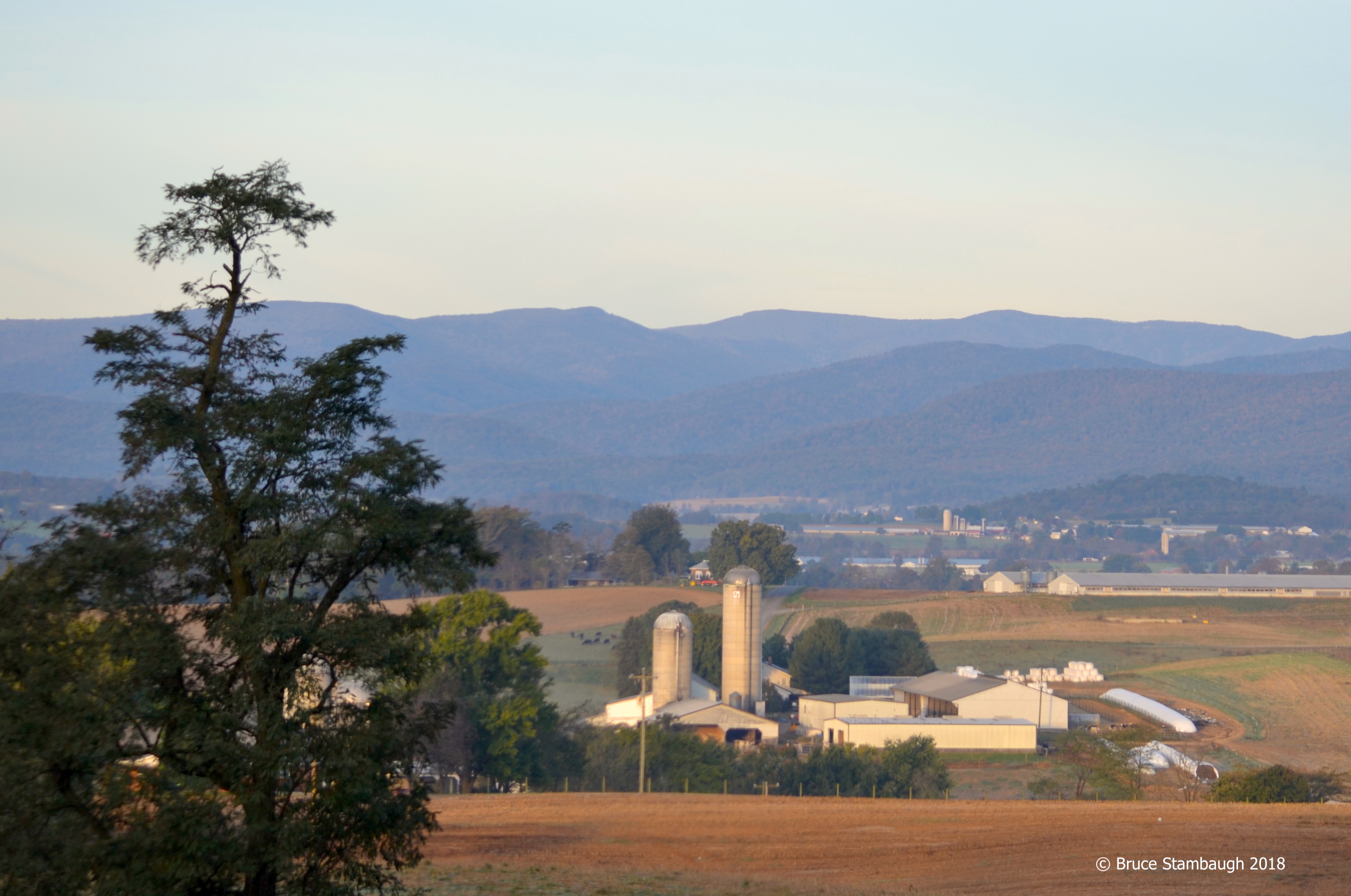
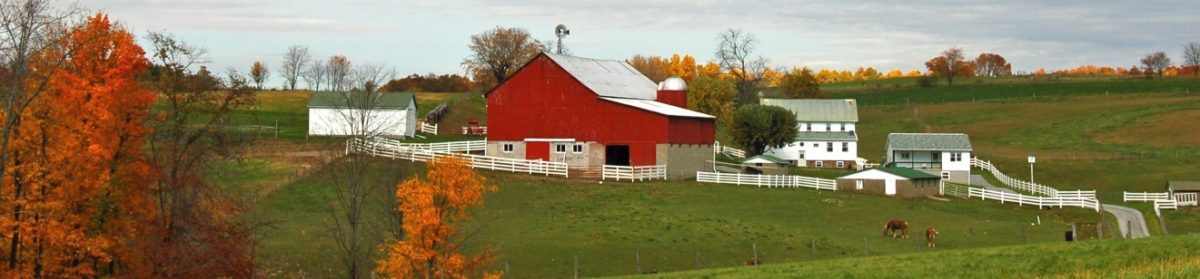
WV farm, cornshed
This farmstead in West Virginia is typical of the scenes I stop to photograph.

When we can, we drive the old surface routes, avoiding expressways and interstate highways, especially if we don’t have to be somewhere at a given time. Doing so makes life so much more interesting for us.

We also traveled with our son and daughter when they were young. That was before cell phones, iPads, iPods, and in-vehicle entertainment centers. We would have the typical family verbal interactions. But on long trips, Neva always had individual activities for the kids to fill the road time.

Those trips weren’t as peaceful as the ones we take now by ourselves. No one would have expected them to be, but our son and daughter weren’t rowdy either.

As we’re driving, every now and then I’ll think of something I meant to ask Neva but forgot. I seem to do that more and more these days. So I’ll ask on the go. She does the same with me. That question may lead to further discussion and a resolution to a dangling participle in our lives. Without long stretches of silence, that unresolved issue might not have even been discussed.

I also find sustained silence helpful in flushing out touchy topics I have avoided for fear of disagreement. After all these years together, we know that it’s better to lay all the cards on the table than secretly hold them to fester. Perhaps a moving vehicle keeps conversations progressing, too.

The happy couple
In my younger years, I was a bit uncomfortable with silence when others were around. I tended to fill the space with words like I loved to hear myself talk. I didn’t. Experience has taught me that listening can be more valuable than speaking.

For Neva and me, sustained silence has strengthened our relationship. It’s a nonverbal equalizer where neither dominates, and we both can participate as we choose. In our specific case, it’s been an essential part of our wedding covenant for 47 years and counting.

© Bruce Stambaugh 2018
Thanks for the award

I am both happy and honored to announce that this blog has been named one of the Top 50 Amish blogs. The award was bestowed upon me by Blog.FeedSpot.com, a content reader website.

When I viewed the other winners, I was pleased to be included in the list. After all, many folks blog about the Amish. The faithful followers of Roadkill Crossing recognize that I do indeed write about the Amish since my wife and I lived for all of our adult lives among the largest Amish population in the world. However, out of respect to the Amish, I have never claimed to write an Amish blog. I write about them and my experiences with the Amish.

Still, I much appreciated the recognition and am happy to share the award with my readers.

© Bruce Stambaugh 2018

There really is no place like home wherever that may be

Holmes Co. OH, sunset, Ohio's Amish country
Holmes Co. hills at sunset.

By Bruce Stambaugh

My wife and I were returning from our winter hiatus on Amelia Island, Florida when I first spotted a glimpse of familiar mountains. We were still well south of Martinsville, Virginia in the folding foothills of North Carolina’s Piedmont region.

As much as we had enjoyed our time in the Sunshine State, we were glad to see those Blue Ridge Mountains that would guide us home. They earned that name long ago with the shadowy, bluish hue they cast from a distance. Their western cousins, the Allegheny Mountains, do the same.

We wound our way through south-central Virginia. We passed my maternal grandmother’s homestead and cruised through Roanoke, a city surrounded by those ancient, rounded ridges. From that point, the primary objective was to stay alive amid the bobbing and weaving strings of traffic on the always congested and dangerous I-81, which dissects the lovely Shenandoah Valley.

Holmes Co. OH, Amish farm
Holmes Co. farmstead.
It was the last stretch that led us home. Less than a year ago, our home was among the lesser but equally charming hills of Holmes County, Ohio. Ironically, they are the westernmost foothills of the Appalachian range that includes both the Blue Ridge and Allegheny Mountains.

Neva and I had spent all of our adult lives living in Holmes County. We had resided in both the county’s western and eastern sections. In west Holmes, the valleys were broader and hills steeper than those in the more gently rolling landscapes of the east that were dotted with Amish farms and family-owned cottage industries. We loved our times in both the east and west.

After a lifetime of arriving home in Holmes County, my emotions felt conflicted, from incongruity to tranquility as we approached our newest county of residence near our grandchildren. Still, we shared the familiar feelings of comfort and security as we approached our Virginia home.

That amalgam of thoughts flooded my mind as Massanutten Mountain came into view. It’s the geographic landmark that juts through the center of Rockingham County and looms to the east of our new hometown, Harrisonburg.

Mole Hill, Harrisonburg VA
Mole Hill.
Exiting the interstate, I pointed the van west towards an even more iconic landmark, Mole Hill. It’s alleged to be a long-dormant volcano, now sprinkled with stands of mixed hardwoods, fertile farm fields, and homey farmsteads. Mole Hill appears to be at the end our street. In reality, it’s a couple of miles west the way the crow flies. Viewing that satisfying scene brought smiles to our faces.

Because we were so deeply rooted in the Holmes County community through schools, church, and local service organizations, it has taken us a while to indeed settle into being Virginians. This return trip from Florida personally sealed the deal.

Please click the photos to enlarge.

I never thought I’d consider any place but Holmes County home. I was wrong. As much as we enjoyed our time in Florida, it was reassuring to be back in the Shenandoah Valley.

A few minor complications arose, however. I couldn’t remember where the cereal bowls were, the bathroom light switch was, and that the wastebasket was under the kitchen sink. The weather also forced us to wear winter coats again.

I have a friend Ava who was born and raised just a few miles from our suburban Virginia home. She now lives in Ohio, and always celebrates returning to these “blue, blue mountains,” as Ava refers to them.

Neva and I now know that same exhilarating feeling. With no disrespect to Holmes County, it was good to be home.

Allegheny Mountains, sunset, Shenandoah Valley VA
Blue at sunset, too.

© Bruce Stambaugh 2018

Why the beach has gone to the dogs

dogs on the beach, Fernandina Beach FL
Dogs on the beach.

By Bruce Stambaugh

Never mind the weather. The dogs must have their way. Rain, sunshine, fog or full on gales, owners walked their dogs on the Florida beach where we holed up for the winter.

Depending on the degree of training, sometimes it was hard to tell if the owner was walking the dog or the other way around. Most were on leashes, the dogs I mean. Taut, loose, stretched, harnessed, or sometimes no tether at all, the dogs were right at home on the beach.

The canines did more than walk, of course. Like their human masters, they liked to play. An older man heaved a bright orange tennis ball as far down the beach as he could several times. In anticipation, his hybrid-mix furry companion sprung and bounced in timing with each cock of her master’s arm. In seconds, the golden doodle returned, dropped the ball at the man’s feet and sat waiting for more. In each of our snowbird years, my wife and I observed similar scenes replicated scores of times.

dogs on the beach, Fernandina Beach FL
The game.
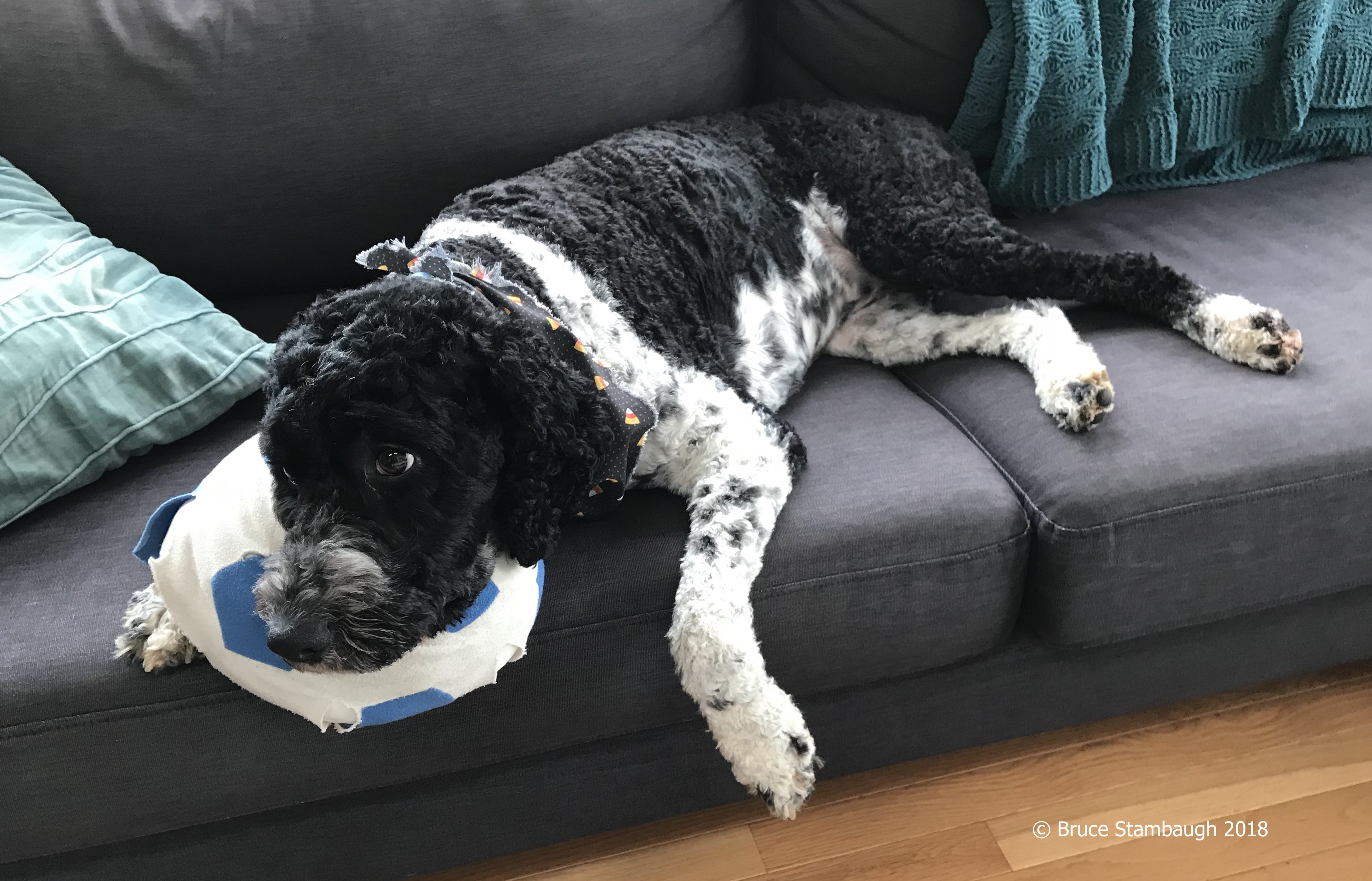
We love dogs. We both had dogs as pets growing up and from time to time during our marriage. Now we just travel too much to own a pet. Instead, we get our personal dog fix by hosting our granddog from time to time.

I fully understand, then, the desire, the human need to have a pet dog. People love dogs as long as they are friendly and not too rambunctious. Research has shown that dogs make excellent companions, especially for the elderly.

Folks regularly walked their canine companions on the beach morning, noon, and evening. They did so, of course, for exercise and to take care of the unpleasant necessaries. I should have invested years ago in the stock of companies that manufacture those little plastic cleanup bags.

Big dogs, little dogs, in-between dogs pulled their masters up and down the beach. Others walked along obediently at the same pace. Still, others ran freely, returning when called. Only on rare occasion did we witness any doggy misbehavior. When you’re on the beach, there’s plenty of opportunities for bird dogs to be bird dogs. The shorebirds just seem to tolerate and toy with them anyhow.

This slideshow requires JavaScript.

A pleasant side effect of dog walking on the beach was the socialization that occurred. Dogs are naturally attracted to other dogs and more often than not the owners are just as cordial to each other.

Sometimes the humans got so involved they failed to notice the incoming tide. An astute pedigree might take advantage of this opportunity to remind its owner of the encroaching sea in hopes of a reward in the form of a treat. With that, the conversations ended, and all parties moved on, up and down the beach stepping in time to the soothing breakers.

On weekends and holidays, teenagers joined the parade. I can’t prove this, but I suspect that both pretty girls and handsome boys use their beloved dogs as bait to lure in some new friends. If true, who can blame them? The results are the same. Both the dogs and the teens get the attention they need and desire.

So did we. I can’t count how many times we stopped on the beach to admire a lovely dog, ask its name, breed, age, or whatever questions came to mind. I’m happy to report that so far during our snowbird stays that only their masters provided the answers.

dog under umbrella, Fernandina Beach FL
Smart dog.

© Bruce Stambaugh 2018

Be the good in life

Florida sunrise, rays of hope
Morning rays of hope.

By Bruce Stambaugh

Our lives are filled with bad news almost daily. Much of it is minor, insignificant. Too much, however, is horrific. News of flooding, earthquake, or another school shooting dominates the feeds on our electronic devices all too often.

Every now and then, however, a piece of good news manages to appear. It’s not always in the headlines of newspapers or featured on the trending social media of the day. Good news occurs nonetheless.

I believe that humans are still good by nature. A few prove me wrong, sometimes in a big way. However, adverse events can generate the best in people, often times spontaneously.

When two New York State Police officers working curbside at New York City’s LaGuardia Airport noticed a young woman sobbing after exiting her ride, they asked if she needed help. That’s when the good news story began to unfold.

Jordana Judson headed to the airport when she heard that a good family friend, Meadow Pollack, had been one of the 17 victims at the mass shooting at Marjory Stoneman Douglas High School in Parkland, Florida. Judson had graduated from that same school.

nature walk, mother and son
A mother hugs her son.
Judson wanted to fly home to attend a vigil for her friend. Only she was so distraught that she could hardly talk when the two officers, Thomas Karasinski and Robert Troy, approached her. Together they directed Judson to the proper counter to purchase her airline ticket.

When Judson was told that the one-way ticket would cost $700, she broke down again, exclaiming that she didn’t have that much money. Still crying, she tried to call her mother. In the process, Karasinski and Troy, who had never worked together before, each reached for their credit cards.

Judson tried to wave them off from making the purchase but was too late. The officers handed her the ticket. Judson said she didn’t know what to say about the officers’ exceptional kindness, but gave them each a hug before boarding her plane. Their instinctive act of kindness enabled Judson to attend the service for her deceased friend.

A spark of hope amid all the despair flickered when I read this marvelous story of compassion by the two police officers towards the distraught Judson. The story was so much more than the purchase of a plane ticket. The officers modeled what it means to be the good in life.

We should follow their lead, and we need not wait for a major tragedy to show kindness. Plenty of opportunities to be the good await us every day. We just need to be alert and respond when they present themselves.

Volunteer at a food pantry. Give your neighbor some flowers. Bake cookies for a friend. Buy coffee for a stranger in line behind you. Hug your spouse, your children. Be kind to yourself.

I was in the midst of writing this when a photographer friend in Florida shared with much excitement how her new day had begun. An anonymous person left a note of appreciation on her car door. Every morning Lea makes a point of photographing the ocean and seashore at sunrise, even if it is cloudy. She posts the results on social media for all her friends to see. Lea was effusive about the unexpected note. She concluded, “The greatest joy is giving joy to others.”

Lea is right. If we want to ensure that virtue occurs in the world, the awareness and compassion have to begin with each one of us.

sunrise, shorebirds, photographer
My friend Lea in action.

© Bruce Stambaugh 2018

Walking with the dolphins

Fernandina Beach FL, bottle-nosed dolphins
The walk begins.

By Bruce Stambaugh

I love it when I can walk with the dolphins.

The time of the day is insignificant. I consider the stroll up or down the beach a blessed and rare privilege. The bottlenose dolphins don’t seem to mind at all. I doubt they are even aware of my presence. The closest ones surface and resurface just beyond the breakers.

If the relentless waves would soften their drumbeat upon the sand, I might even be able to hear the dolphins’ high-pitched squeaking and chatter as they undulate north or south, feeding, playing, the young ones occasionally showing off, jumping out of the water like flying fish. The rest of the pod continues with the business of foraging in the giving sea. The youngsters circle back, never far from mother’s side.

We watch for the dolphins from sunrise to sunset. With below average air and water temperatures this winter, the walks with the dolphins have been fewer than previous snowbird ventures. That only heightened my joy at each opportunity. Once I spot the dolphins, I hurry down the steps, across the wooden walkway to the gritty beach sand and begin my stroll.

This slideshow requires JavaScript.

I walk fast trying my best to stick to the wetted sand where footfalls are firm but pliable. I have learned that my natural striding equals that of the dolphins’ cruising pace unless they change course or have their routine interrupted for some reason. I assure you, if they do, it’s not because of me. I watch them more than where I am going. They, however, don’t know I exist, which is my preference.

When I pass other beachgoers, perhaps walking their dogs or also just out for a morning or afternoon stroll on the beach, I ask, “Did you see the dolphins?” There are only two possible answers, whether verbal or nonverbal. A nod or “Yes” and I smile and keep walking. A “No” often followed by “Where?” and I point and wait until they, too, see the rhythmical appearing and disappearing fins, thank me, and walk on.

dolphins, Atlantic Ocean, Florida
Dolphins playing.
Dolphins are smart. They most often appear when the weather and water agree on calmness rather than a calamity. The dolphins slip through the water silently, hardly making a ripple. We seldom see them during a nor’easter, where the waves and wind collectively and relentlessly crash the shore.

I especially enjoy the walks at low tide when the ocean and the sky join forces to show all their true colors. Even on cloudy days, blues, pinks, purples, tans, greens, and frothy whites chase one another through the never-ending cycles of ebbing and flowing.

Overhead, Forester’s terns and squawking gulls trail the pods like kites on strings. The Forester’s hover and dive to the water’s surface, grabbing breakfast or brunch that have eluded the playful dolphins.

I inhale the sea spray and salty freshness simultaneously, joyfully, though I know my glasses will need a good cleaning once I return to our winter’s nest beyond the seashore dunes.

I stop to investigate a shell or take a photo with my cell phone of some artistic designs the sea and sky have jointly sculpted. I look up, and the dolphins are gone.

I retrace my footsteps, occasionally checking beyond the folding waters for any gray fins or reflective glints of the sun off wetted backs. Seeing none, I walk on, my heart and soul both warmed by the encounter that strengthened not only my muscles but my spirit, too.

That’s why I cherish each chance I get to walk with the dolphins.

natural art, sand, seashore
Seashore art.

© Bruce Stambaugh 2018

What the Olympic athletes can teach us

By Bruce Stambaugh

My wife and I love watching the Winter Olympics on television.

We wonder wide-eyed at the participants bouncing down the mogul runs, throwing in a couple of showy back-flip jumps before zipping across the finish line. I’m always amazed that the skiers and snowboarders have any teeth left as they broadly grin at the in-your-face TV cameras.

Gold medal by Charles Deluvio.
We gasp at the speed of the bobsledders, especially if there is a crash careening the sled and riders down the slippery slope like ragdolls. The same is true with the downhill skiers. Curling is much more my style.

We marvel at the ability of the athletes to overcome mistakes and carry on. Figure ice-skating is a prime example.

Most of the skating athletes are young. I won’t pretend to understand or know the various requirements or vocabulary of the sport. I just know it takes incredible skill and practice to even qualify. The pressure has to be enormous being in the bright lights of the arena, cameras rolling, coaches, family, friends, teammates, and the rest of the electronically tuned-in world watching.

They synchronize their routines with the music the skaters chose. Each performance requires certain moves and skills to positively impress the judges and meet the necessary requirements.

The athletes have practiced and practiced and practiced. And then it happens. On a tricky maneuver, spinning like a human top, the landing is slightly imperfect. The skater falls or at the very least touches the ice with a hand that subtracts precious points.

And still, they carry on as best they can with their routines, desperately trying to regain the rhythm and pace of their choreographed performance. The adrenaline must be pumping. Their minds must be racing, yet they continue, either flawlessly or as too often happens, with further miscues.

Skier by Nicolai Berntsen
No matter what country they represent, my heart goes out to them. All that time, effort, money, and travel, previous competing, sacrificing, just for this moment. In an instant, with a slight stumble or inability to fulfill the required maneuvers, their moments in the spotlights dim.

The cameras zoom in as the performance ends. No forced smiles or automatic hand waves to the appreciative crowds can conceal their emotions. They know they have missed their chance. The despair can’t be hidden.

There is only one thing for them to do. These amateur athletes have to act like professionals. They accept the flowers and gifts that are affectionately showered on them from the audience in anticipation of perfection regardless of the real results.

No doubt their coaches will school their understudies on their errors, encourage them, remind them that they can do it. The athletes get themselves ready for the next event and try again.

Whether they are in the running for a medal or not, the contestants keep on competing. It’s that simple. Their next performance can only be improved upon if they learn from their mistakes, practice, and try, try, try again. Some competitors, however, may have to wait another four years for that opportunity.

Teenagers win gold medals. Veteran Olympian medalists fail to qualify to stand on the coveted awards podium. It indeed is “the thrill of victory and the agony of defeat,” to quote the late Jim McKay.

Failing is a part of life. It’s a way to learn, to improve, and to be a better person, to be resilient. It’s just one of the reasons I enjoy the Olympics as much as I do, especially curling.

© Bruce Stambaugh 2018

Alice always made me smile

By Bruce Stambaugh

Alice.
Alice always made me smile. Oh, she could be annoying. Even when I’d kindly caution her to keep her voice down, that didn’t stop Alice from being Alice. Nor did that stop me from liking her.

I got to know Alice at our little church in Millersburg, Ohio. I can’t even remember how long I’d had the privilege of being Alice’s friend. She was a friend to many, to whomever she met really. Alice just had that kind of outgoing, unabashed personality.

Nothing held Alice back. If she wanted something or wanted you to know something that she knew, she’d share, any place, any time. Tact and appropriateness of timing were never part of Alice’s arsenal. Ironically, consideration of others most certainly was. It’s what motivated her, drove her, caused her to fearlessly blurt out her innermost feelings with no compunction.

Alice could be a pill, even a pest. If she had your number, especially your phone number, Alice would find any old excuse to call you. Alice often rambled on and on if you would let her. That’s how much she loved you.

Alice attended church whenever possible. Other good folks went out of their way to provide transportation for her.

Alice loved Helen Steiner Rice poems. She’d read them aloud every chance she got in church, often in honor of someone’s birthday. Of course, Alice did so long after other announcements had already been made. Spitfire that she was, Alice didn’t need a microphone. She would just shout out her comments, prayer requests, and recitations as the spirit moved.

Alice could pull this off because everyone knew her situation. It wasn’t toleration mind you. It was admiration for her unequivocal love for others and her fierce desire to share whatever was on her mind. Nearly 99 percent of the time, her thoughts and concerns were for others, not herself.

Alice receiving communion.
As Alice did her readings or made her proclamations, knowing smiles radiated from all around the congregation. Every worship leader graciously acknowledged her comments and the service continued without a hitch.

In addition to poems, Alice loved a good joke and prank. Though often silly and uncomplicated, Alice laughed her wicked laugh as she told and retold the punch lines. Once when our infant granddaughter squeezed Alice’s index finger and wouldn’t let go, Alice was in heaven. She joyously reminded me of that incident whenever she could. That was Alice.

Several years ago, I escorted Alice to Texas to visit her only living brother, whose health was failing. People thought I was crazy to take on that formidable task.

Though dependent on a wheelchair, Alice traveled with no problems. The further we got from Millersburg, the quieter she got. The return trip proved just the opposite.

Alice listened to my every instruction. Deep down, she and I both knew just how much this journey, paid for anonymously, meant to her. Witnessing Alice embrace her brother Floyd was one of my lifetime thrills.

Quixotic as she was, Alice married late in life on the most romantic day of the year, Valentines Day, Feb. 14, 1970. She and her husband Charlie lived right behind our church. In recent months, Alice was confined to a nursing home, substantially reducing her mobility. Alice recently died there at age 95.

Alice’s unbridled love for life was an excellent gift to us all. In her memory and in her honor, I hope that same devotion becomes an exemplary measure of living out our own lives.

© Bruce Stambaugh 2018

The Beach Lady’s lasting legacy

American Beach, Amelia Island FL
American Beach today.

By Bruce Stambaugh

In the United States, February has been designated as Black History Month for many years now. Some schools, libraries, and other institutions give the theme only cursory attention while others plan meaningful and memorable events, including art shows, lectures, and dramas.

When my wife and I discovered Amelia Island’s American Beach on one of our Florida snowbird retreats, our interest piqued. We quickly learned a lot about decades of injustices, discrimination, and intolerance of blacks in our society.

Black History Month art
Art for Black History Month.
The American Beach Museum is a tidy, organized, and informative exhibition hall on Julia Street in a secluded historic district on the south end of this Atlantic Coast barrier island. The place may be tiny, but it is packed with facts, stories, relics, and photos that make your head spin trying to absorb it all. The volunteer guides are the most gracious people one would ever want to meet, and gladly help explain and amplify the historical information.

The short video featuring the Beach Lady, MaVynee Betsch, is the highlight of the tour. It makes you want to have been on that tour bus with her to hear her passionate stories of experiencing racism, discrimination, personal career success, her genuine love of nature, history, family, and the Creator who gave us the responsibility for caring for this marvelous earth.

In her case, the Beach Lady cut short a lucrative and professionally successful career as an opera singer in Europe to return to her beloved American Beach to ensure its preservation. She had her ups and downs in that endeavor. In the end, the Beach Lady’s efforts prevailed, even years after her death from cancer.

This slideshow requires JavaScript.

For her persistence and persuasive hard work, MaVynee left her mark everywhere around American Beach. The beach itself is the most obvious result. Its sand dunes are some of the highest in the state. The beach’s sands are white and smooth, much desired by island developers. However, due much in part to the Beach Lady, the National Park Service now supervises the 80 some acres of the area.

American Beach was the only one on which blacks were permitted on Amelia Island. That segregation lasted until 1970. American Beach was founded in 1935 by the Afro American Insurance Co. president A. L. Lewis, the Beach Lady’s grandfather. American Beach provided a place for recreation and relaxation without humiliation during the Jim Crow era. It offered a place of hope in a time of despair for dark-skinned people.

Ironically, the original 100 by 100 ft. plots of land were always integrated. Some of the original buildings still exist, though they are not in the best condition. Evan’s Hall, a gathering place for music and dance, is one of them. Today some of the beachfront houses are worth millions of dollars.

American Beach, Amelia Island FL
Historical marker.
The museum holds photographs, artifacts, and displays of the legacy of the Beach Lady, including her seven-foot length of hair. Some thought her eccentric. Others knew better. Her devotion to family, nature, and her beloved beach remains for all to see today.

Each winter, we always make a point of visiting the museum and American Beach itself. We do so as a personal reminder of segregation in this country, of those who worked so diligently to overcome it and the sacrifices they made in doing so. MaVynee, the museum, and American Beach are testaments to what was, is, and yet needs to be done to indeed guarantee equality for all in this great country of ours.

Amelia Island FL
Volunteer guides at the American Beach Museum.

© Bruce Stambaugh 2018

We can learn a lot from “old” people

running on the beach, sunrise
It’s a new day. Get moving.

By Bruce Stambaugh

When I turned 70, I received lots of celebratory wishes and unsolicited advice. Like a 70-year-old needs advice.

One ditty was the seven and 70 rule. The idea is that seven-year-olds will say anything, and 70 year-olds have earned the right by default to espouse whatever they want. Clearly, I didn’t know or obey that tenet. Wanted or not, I’ve been offering my opinions my entire life.

Nevertheless, I’ve done a lot of thinking since hitting that personal milestone. I feel fortunate, grateful, honored, humbled as I review my life. I have many, many kind people to thank for giving me challenges I didn’t think I could meet, opportunities I never expected, and critiquing I didn’t want to hear but definitely needed. To steal a movie title, it’s been a wonderful life.

Best of all, life continues, but for how long? None of us really knows for sure. As the saying goes, embrace each day as if it were your last. It just might be.

That somber thought used to bother me, scare me even. As a teenager, I thought I’d live forever. I know that’s not going to happen. I read the obituaries every morning, and I find the life summaries of too many people my age or younger.

Death where is thy sting? Many a sermon has already been preached on that topic. I won’t add to that litany.

Instead, I want to share a purposeful phenomenon that seems to resonate with many seniors. Generally speaking, we’re not afraid of death anymore.

After I retired as a public educator, I began my second career in community relations and marketing at a retirement community near my former Ohio home. I wasn’t there long until a common philosophy became apparent among the residents. As they aged, they were happier in their lives, despite increased physical and mental afflictions, reduced agility, and less energy overall. I recently learned that gerontologists confirm these observations. As people’s bodies decline, instead of feeling worse about themselves, they feel better.

horse and buggy
What’s around the corner?
Given their settings and expected elderly ailments, logic would dictate the opposite. Why had death indeed lost its sting for them? In general, they needed less in life and from life. They had given their all and were genuinely happy for that. Also, they looked forward to what they called “going home.”

Regrets? Sure, they had a few, just as I do. But that alone could not deter their enthusiasm for whatever came their way. They still expressed anxiety about all of life’s catastrophes they saw on TV, in the newspapers, and online.

But these were folks who had survived The Great Depression, who knew the value of work, being thrifty, conserving for the future and for future generations. They may not have liked many of the social changes that flew in the face of what they believed. But for the most part, neither did they let that bother them or think less of those who behaved or felt differently than they did. Their knowledge and experience taught them that. In my book, that is the very definition of wisdom.

I admired their gumption, fortitude, love of life, and their focus on being in the presence of each moment. They were ready for whatever came next. I’m trying my best to model that attitude, too, to my wife, my family, my friends, my neighbors, to whomever I meet.

Like my octogenarian friends at the retirement community, I’m ready for the next chapter of my life to unfold, one day, one person, one event, one glorious sunrise, one breathtaking sunset at a time.

Florida, sunset, Amelia River
Even at life’s low tide beauty abounds.

© Bruce Stambaugh 2018

Bay Photos by Donna

Wildlife Photos From The Chesapeake Bay Region

ROAD TO NARA

Culture and Communities at the Heart Of India

K Hertzler Art

Artist and nature journalist in the Shenandoah Valley of Virginia.

Maria Vincent Robinson

Photographer Of Life and moments

Gabriele Romano

Less Noise. More Meaning

Jennifer Murch

Art is the only way to run away without leaving home. -Twyla Tharp

Roadkill Crossing

Writing generated from the rural life

ANJOLI ROY

writer. teacher. podcast cohost.

Casa Alterna

El amor cruza fronteras / Love crosses borders