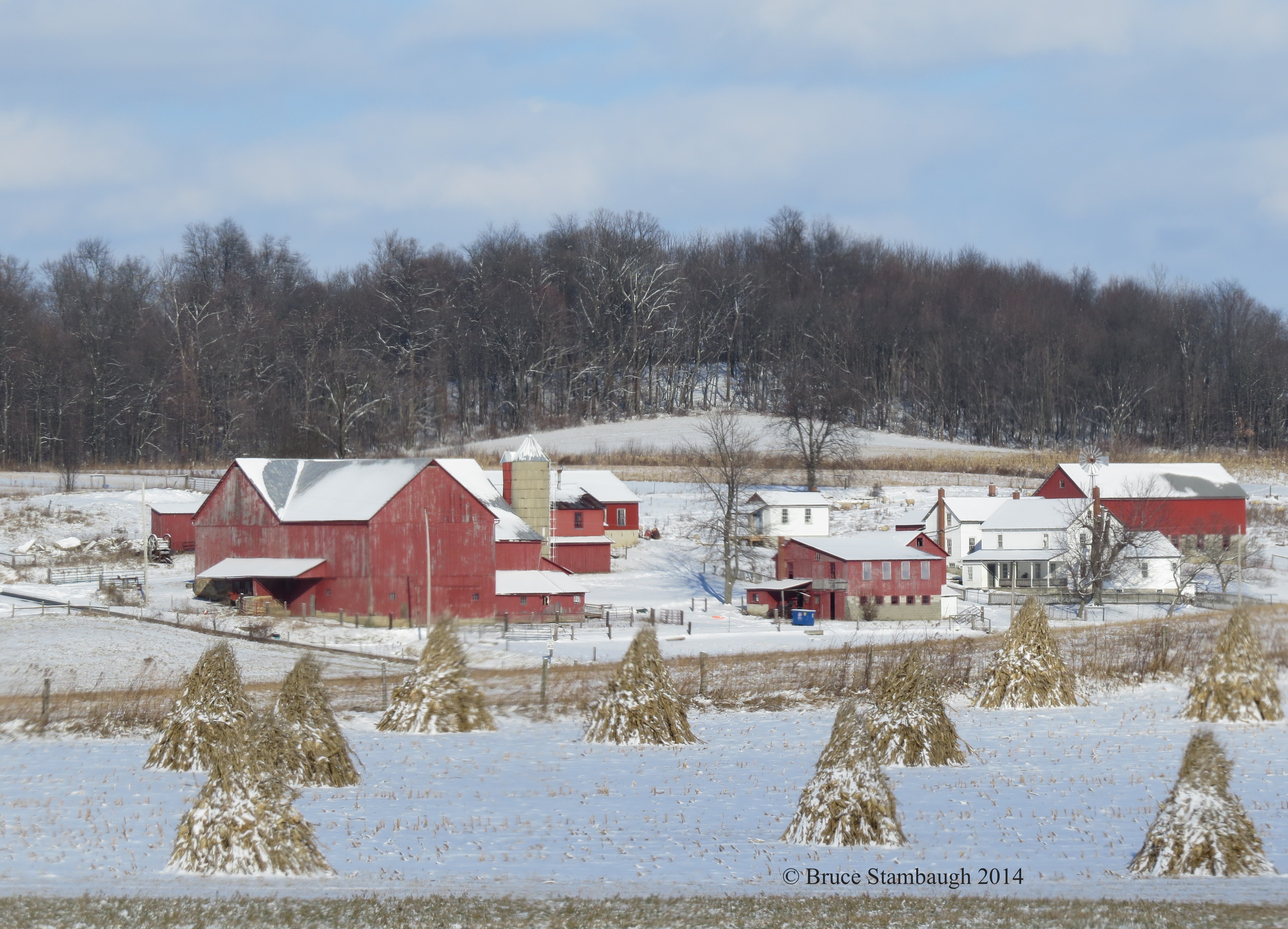
Sweetness found in more than maple syrup

sugarshackbybrucestambaugh
Elmer’s sugar shack.

By Bruce Stambaugh

I left a voicemail message for Elmer, a former elementary student of mine. I told him that I would arrive at his sugar shack between 9 and 10 on Saturday morning.

No longer the fourth grader I fondly remembered, Elmer was now a husband, father, grandfather and entrepreneur. I considered it a privilege to be invited into this unpretentious but productive workplace.

The process of making maple syrup has to be done in a timely fashion. When the sap’s running, it’s time to get busy.

Above the sugar shack, a billowy blend of steam and smoke filtered through barren branches and into the morning’s overcast, and signaled that Elmer and his crew were already hard at work. The smoke meant the wood-fired boiler was stoked. The steam said the sap was boiling.

Strands of thin blue tubing zigzagged downhill from maple tree to maple tree, converging at the weathered wood building. Lid-covered buckets marked the taps on the trees and served as junctions for the plastic tubing.

A lazy, little stream split the handsome, steep hillside farm fields on either side of the hollow. Even after all of the moisture we had had, the creek just trickled softly as if it didn’t want to disturb the bucolic setting. Near the entrance a small sign welcomed one and all to the Yoder’s sugar camp.

The annual effort clearly was a family affair, too. With my arrival, the close quarters of Elmer’s operation soon filled with curious family members. Some were there to work and visit, others, mainly to scope me out.

When he’s not making maple syrup, Elmer has his fingers in several other operations. He makes wooden slats for the interiors of utility trucks as well as nylon pockets for tools and electronic parts.

In addition, Elmer makes wood clocks in the shape of Ohio with each of the state’s 88 counties a different wood. Elmer has developed his own variety of sweet, tart apple. I can attest that they are delicious. Elmer is a multi-talented man.

As Elmer showed me the various aspects of his sugaring operation, I marveled at his ingenuity, and his acute knowledge. He talked while he worked, once using the hydrometer to check the percentage of brix in the bubbling solution.

Outside large stainless steel tanks captured the sweet liquid until it was pumped into the reverse osmosis system that made his sugaring operation so efficient and kept the finished product consistent.

All the while young sons and pretty daughters scurried about their tasks, too. They stoked the fire frequently to maintain the proper temperature to keep the boiling sap boiling.

Elmer demonstrated how syrup is graded by both flavor and color. Apparently, lovers of maple syrup have their preferences.

Soon more family members entered, including two that I should have recognized but did not. Sister Fannie, and younger brother, Harry, arrived just minutes apart. Like Elmer, I had taught them, too. I had no idea they were coming.

That’s when the stories really started to flow faster than the maple sap. They reminded me of events and interactions I had long forgotten. Their smiles told me they had waited a long time for this opportunity.

Teachers live for moments like this. To have former students chatter on and on in heart-felt contentment overwhelmed me with abundant joy.

The apples and syrup each had their own special sweetness. No instrument, however, has yet been made to gauge the sweetness of the hospitality shown to me.

maplesyrupbybrucestambaugh
The signs said it all.

© Bruce Stambaugh 2014

Spring’s first day: Winter coat to no coat

springssunrisebybrucestambaugh
Spring’s sunrise.

By Bruce Stambaugh

Winter just wouldn’t let go, even on the first full day of spring.

The day dawned with glorious anticipation. A rosy sunrise filtered through the cumulous clouds hanging low on the eastern horizon. It was down hill from there for much of the rest of the morning.

After the welcoming daybreak came the discovery of a horseshoe nail in the sidewall of a relatively new tire. It’s just one of the hazards of living in Holmes County, Ohio.

Next came the snow, which the weather forecast seemed to have overlooked. By the time my wife and I had reached our morning’s destination, nearly an inch had fallen.

plowinginthesnowbybrucestambaugh
Plowing in the snow.

A former student of mine had invited us to view his maple sugaring operation at the southern end of the county. It had been a long time since I had seen Elmer, a quiet, studious youngster when I taught him in fourth grade. That was 44 years ago.

Elmer had called earlier in the week to tell me he’d be boiling sap. Unfortunately, this day wasn’t one of them. Instead, we had a very nice visit with Elmer and his wife, reminiscing about those long ago school days.

After a while, Elmer’s mother joined us shortly before we needed to leave. By then an overcast sky had replaced the springtime squalls.

thinningskybybrucestambaugh
Thinning sky.

Up hill, down dale, around curves left and right, the further north we drove towards home, the stronger the sun became. At lunchtime, with the heavens still hazy, the sun hung overhead like a bare light bulb trying to illuminate an entire gymnasium.

I had a couple of appointments to keep in the afternoon, which required further driving. I enjoyed my visits, and was pleased to see no line at the usually busy carwash. I needed to clean off the mud from the morning’s foray.

When I returned home, my workaholic wife was outside cleaning up the yard and flowerbeds. Out of chivalry and my own desire to enjoy the remainder of the day, I donned a light jacket and joined her.

I needed to do my part in collecting winter’s litter. When you propagate a mini-forest of various deciduous and evergreen species, a lot of dead leaves and windblown sticks need to be gathered.

This surge of warmth and sunshine had energized me. I decided to trim some of the wiry lower branches of the jumble of trees and scrubs I had planted over three decades.

afternoonshimmeringbybrucestambaugh
Afternoon shimmering.

I knew when I had snipped a sugar maple limb. The sap dripped like a leaky faucet. Right then and there I decided I would head back to Elmer’s sugar shack the next day. I definitely wanted to see his outfit in operation.

All the while, the afternoon sun grew stronger and stronger. It was good to be outside again enjoying the sights, sounds and odorous whiffs of the springtime countryside.

Every few minutes, the song sparrows let loose a few bars of their cheery chorus. Not to be outdone, the cardinals called, too, first from a fir tree, and then they flitted to the bare branches of the oaks and maples.

I was enjoying myself so much, I pitched my jacket altogether. In a matter of hours, it had gone from a winter coat day to a no coat day.

I was glad that winter had finally let go its hoary hold, even if it was only a brief interlude on spring’s first afternoon.

farvervalleybybrucestambaugh
Farver Valley.

© Bruce Stambaugh 2014

A detour of no inconvenience

snowonthemountainsbybrucestambaugh
Snow on the Appalachian Mountains.

By Bruce Stambaugh

This winter’s wicked weather altered many well-laid plans, especially for travelers. My wife and I were no exception.

We delayed our trip south by a day due to a winter storm in the Appalachian Mountains. The extreme cold air followed us all the way to northern Florida.

As we readied to return home at vacation’s end, yet another major winter storm was chugging up the Ohio Valley. We weighed our options about our return trip. It would have been delightful to remain in place. But we needed to return home. It was time.

gamenightbybrucestambaugh
Game night.
South Carolina and North Carolina were still recovering from one-two punches of unusually extreme wintry weather that downed thousands of trees and caused massive power outages. We didn’t want to risk being stranded there either.

Fortunately, we had an attractive option that would take us well out of the way home. We decided to visit our grandchildren in Virginia’s Shenandoah Valley, a year-round scenic place. It was a big sacrifice, I know.

We hadn’t seen our grandkids since Christmas. It was only logical that we should avoid the storm by detouring to Harrisonburg. It didn’t quite turn out that way.

Oh, we had a lovely two-day drive to their hillside home near the university where their daddy, our son-in-law, works. But the storm detoured, too. The morning after we arrived we awakened to three inches of snow overtop a quarter inch of ice.

closedbybrucestambaugh
The heavy snow even cancelled class at Eastern Mennonite University in Harrisonburg, VA.
It snowed all day, doubling the snowy accumulation. Of course, schools were closed, giving us bonus time with our three grandchildren, Evan, Davis and Maren. It was a vacation within a vacation, like finding a diamond ring in a box of Cracker Jacks.

The backyard where our daughter and her family live is perfect for sled riding. The day we left Ohio a month earlier, it was 15 degrees below zero. So I had plenty of warm clothes to wear, including the pair of waterproof shoes I wore while walking on the beach.

We bundled up, grabbed the day glow orange toboggans, and went out into it. We had a riot. Little Maren, the daring four year-old, really isn’t so little anymore. She laid supine in one of the sleds and zipped down the gentle slope and slid right into the neighbor’s backyard.

The boys whooped, and Maren immediately recognized her amazing accomplishment. She jumped up and screeched with glee, “That was just like a rocket booster.”

That’s pretty much how our two and a half days with them went. We would play outside until the cold drove us inside. As soon as his jacket was off, Evan was setting up the game boards, or dealing the playing cards. He loves table games, not only because he is competitive, but mostly because he usually wins.

Davis was content to unwind and warm up on his own, playing his creative, imaginary games with his Lego people and assembled utilitarian pieces. I hope I’m alive when he is awarded the Noble prize in the sciences.

If she’s not playing with Davis, Maren knows all the buttons to touch on the screens of the iPad or laptop whichever is available to her. When I get over my pride, I’ll have to have her show me how to operate them.

My wife and I may have arrived home a week later than we expected. But in this case, the delay was no inconvenience at all.

deeratsunsetbybrucestambaugh
Deer at sunset.

© Bruce Stambaugh 2014

Three spring things

progressivefieldbybrucestambaugh

By Bruce Stambaugh

At long last, spring has officially arrived. Let’s hope it is a spring to remember, just like the recent winter we’d like to forget.

We could use the emotional and psychological boost of spring’s vernal offerings after winter’s long, cold stranglehold on so much of North America. Winter was simply brutal.

springbybrucestambaugh
Spring!
Spring offers up its joyous splendor in so many ways. The greening of the yards and fields, the welcoming blossoms of trees, plants and flowers that gloriously unfurl intermittently the next few months. All are coaxed by spring’s gradually warming temperatures that tend to also thaw our frosted emotive reservations.

Another springtime blessing for me is the start of baseball season. Baseball is in my blood, always has been, likely always will be. I admire the skills needed to be an all-around good position player, being equally proficient in the field and at bat. I marvel at the abilities of pinpoint pitchers, too.

Since my youth, I have faithfully and humbly followed the checkered history of the Cleveland Indians with both passion and annual disappointment. Count it as a masochistic character flaw.

As a youngster, I played baseball, and collected and traded baseball cards. That hobby was passed on to my son, who bought them by the box load, instead of the pack. I still have a few my cards. Our son still has a whole bunch of his, and his mother and I wish he would come get them.

I will confess, however, that with the recent revelations of steroids and the exorbitant salaries for playing a child’s game, I have grown a bit disillusioned about Major League Baseball. It’s lost its innocent appeal. Come opening day, however, I likely will be glued to the television, and I have already purchased tickets for several Indians games.

Between the official beginning of spring and baseball’s first pitch of the new season, another more significant and meaningful event occurs in my life. My wife and I will soon celebrate 43 years of marriage.

That number alone is hard for me to contemplate. It seems like only yesterday that I accidentally stepped on her wedding train, rightfully earning my first finger pointing. We quickly got over that, but obviously I never forgot it. Neither has my wife.

happycouplebybrucestambaugh
The happy couple.
When you are married that long, there are too many other cherished memories to build on to allow the small, petty disputes to devalue a loving relationship. I feel extremely grateful for the multitude of positive experiences my wife and I have had together over the years.

Yes, like most every other couple, we have had our differences at times. I recognize that I haven’t been the easiest person to live with. Even though she talks while walking away from me and I can’t find my underwear in the underwear drawer, we somehow have survived.

I am not holding our marriage up as a model of perfection, because it hasn’t been. We have, however, held on, embraced each other and each day as one regardless of the circumstances we encounter or what obstacles or disappointments have clogged the way forward.

Indeed, gratitude has far overshadowed grief. Our son and our daughter are grown, successful adults with loving spouses. We have three energetic, creative grandchildren and one ornery grand cat.

For 43 years, we have lived, loved and persevered. That accomplishment alone is more wondrous than any fragrant-filled garden, or even a magical, unlikely World Series win by the Cleveland Indians.

fireworksbybrucestambaugh
Perhaps some day fireworks will celebrate an Indians World Series Championship.

© Bruce Stambaugh 2014

Missing the charm and warmth of Amelia Island

downtownfernandinabeachflbybrucestambaugh
Historic Downtown Fernandina Beach, FL.

By Bruce Stambaugh

I’m glad to be home from vacation. But I have to be honest. I miss Amelia Island, Florida and all the charm and variety it has to offer.

I miss waking early in the day to welcome the sun, or rain or fog, whatever weather greeted me. It often changed quickly from good to bad or bad to good, just like in Ohio.

This slideshow requires JavaScript.

I miss the rising sun painting with its broad brush, constantly rearranging the brilliant arrays of pinks, blues, oranges, yellows and reds on twilight’s canvas. I miss the sun’s shimmering, silver dance on its forever rolling sea stage.

Equally so, I miss the moon, full or half or quarter, glimmering its creamy, seductive light into our night lives. I miss being transfixed by its profound beauty.

I miss seeing the sun sink behind the trees beyond the Intercoastal Waterway. Unless the fog or rain clouds interfered, the alluring sunsets nearly took our breath away. Like the days began, each evening glow was emotionally evocative.

Morning and evening, I miss the dolphins slicing through the hoary sea, first one, then two, then three, then more, fins intermittently marking their gourmet gallop. Their appearing and disappearing mesmerized me.

I miss the slow walks on the beach with my wife. She hunted for seashells and shark’s teeth while I photographed birds, people, and patterns in the sand. Then I’d hustle to catch up.

I miss the delectable seafood meals Neva created. Locally caught, fresh shrimp sautéed in butter and olive oil, a little lemon and a dash of salt and pepper combined with locally made sweet potato pasta and flax seed rolls beat any pricy restaurant entree.

This slideshow requires JavaScript.

I miss the strolls through Egan’s Creek Greenway, a salt marsh wildlife preserve set aside for painters, birders, photographers, joggers, bikers, walkers and admirers of all things nature. The Greenway is home to alligators, snakes, river otters, rabbits, bobcats, deer, wading birds, shorebirds, birds of prey and songbirds.

I miss the drives and walks through well-maintained Ft. Clinch State Park, a marvelous blend of ecosystems and history. It was equally easy on the eyes and wallet. The 3,300 ft. fishing pier that paralleled the inlet to the Amelia River afforded panoramic views and a perfect perch for birding.

I miss the charm of historic downtown Fernandina Beach, the only city on the island, and the nation’s oldest settlement. Founded three years before St. Augustine, the quaint town attracts customers from around the world.

I miss the eclectic mix of Amelia’s people. From tourists to shop owners to fishermen to photographers, everyone, I mean everyone, was friendly, like open books if you took the time to turn their pages.

eightflagsbybrucestambaugh
The Florida House Inn flies the eight flags that have flown over Amelia Island.
I miss the quirkiness of the island that has seen the flags of eight different nations fly over its humble geography. Florida’s oldest continuously operating hotel and bar stand less than a block apart. Businesses boldly display the scores of football games when Georgia’s Bulldogs beat Florida’s Gators.

Those in the know like to say that Fernandina Beach is the East Coast’s western most port. In other words, drive straight north, you run into Cincinnati, Ohio.

Of course, I miss the warmer weather, too. However, warm is a relative word. Our Florida vacation ended the way it began, wearing winter coats. Still, we had it nice compared to what much of eastern North America experienced in our absence.

I like it so much that I could live there. But I won’t. As incredible as Amelia Island and its people are, I like it right here in Holmes County, Ohio even better.

backhomebybrucestambaugh
Back home.

© Bruce Stambaugh 2014

Humbly and gladly joining the snowbird migration

snowrollersbybrucestambaugh
The day we left Ohio it was 15 degrees below zero, and the snow rollers, a rare weather phenomenon, still graced open fields surrounding our home.

By Bruce Stambaugh

I never thought I would ever be a snowbird. Snowbirds are old people that head south to Florida or southwest to southern Texas or to Phoenix for the winter to avoid the chilling temperatures and the harsh weather of northern latitudes.

I wasn’t going to be “one of those people.” I liked winter’s Jekyll and Hyde fickleness. In Ohio, a dull, dirty brunet landscape can be magically transformed overnight into a fluffy, frosted wonderland.

Really, I cherish the change of all the seasons. I never tire of seeing the verdant transition from winter’s dormancy, whether brown or white, to spring’s greening and glorious floral colors. Splashes of vivid feathers of our aviary friends enhance spring’s sparkle.

Of course after spring, summer’s cottony clouds come sailing over maturing crops and rainbow gardens full of nascent flowers and luscious vegetables. Then there is fall’s full blaze of glory amid the many stands of hardwoods to behold, too.

We are fortunate that our area offers diverse landscapes, from steep wooded hills to vital marshy habitats for an array of wildlife. I marvel at the hilly farmlands, with their multihued, flowing ribbons of contoured crops, and smart fields of grazing livestock. Contrasting brushy fencerows stitch the agrarian patchwork quilt together.

At middle age, I began to view winter differently. No longer was it the snowy playground of my youth, but a season to appreciate the beauty of white against earthy sepia browns and blacks, and breathtaking sunrises and sunsets.

Even so, I have to confess that my fondness for winter has waned. During February, my wife and I overlooked a sandy beach that gently sloped down to the ever-rolling Atlantic Ocean.

roomwithaviewbybrucestambaugh
The view from our condo.

Traveling the interstates to the Sunshine State, we saw many other gray-tinged peers migrating, too. Like us, they fled from Indiana, Ohio, Pennsylvania, New York, New England and Canadian provinces alike.

Some drove vehicles like ours, stuffed to the gills with clothes, food, bikes and any other paraphernalia deemed necessary for their extended winter’s stay. Others steered huge recreational vehicles, towing equally crammed cars.

It’s the fourth consecutive year we’ve made the journey to Florida. Our stays have evolved from the original few pleasing days to several weeks in order to maximize the obvious.

I never thought I would ever say that. If I had my preference, I’m a mountain man. But the mountains are cold in the winter, and the cold makes my arthritis ache, and my bones groan. The modest warmth of northern Florida minimizes those maladies.

So there I was, a snowbird, partaking in the many amenities that Amelia Island, Florida had to offer. And believe me, it’s a lot.

This slideshow requires JavaScript.

There I birded without crawling into my insulated coveralls and donning a stocking cap. There we read, wrote, explored, met new friends. There we could stroll the beach for a dozen miles if we wanted. We didn’t.

We were content to walk up and down the same sections of sand, embracing the sounds of the sea crashing the beach, the shorebirds probing for food or skimming the rolling surface for sustenance.

We gathered seashells simply because they were pretty. We embraced sunrises and moon rises shimmering at the ocean’s horizon. A mile west, the harbor sunsets were spectacular.

Our consecutive trips south for part of the winter serve as evidence enough. I readily and happily admit that we are officially now snowbirds.

enjoyinglunchbybrucestambaugh
My wife and I enjoyed our first lunch at Fernandina Beach, Florida outside, and it was Feb. 1.

© Bruce Stambaugh 2014

The winter of our youth has returned

thepushbybrucestambaugh

By Bruce Stambaugh

When it comes to winter weather, the younger generations now have something to brag about. They have finally experienced a good old-fashioned winter.

It’s been a long time coming, too. Sure, we’ve had bitter cold snaps, and heavy snows in the past few decades. But nothing has resembled the winters of my youth or those older then me for that matter.

The worst back-to-back winters that I can recall were those of 1976-77 and 1977-78. They were record breaking, unforgettable winters. Once we went from tornado warnings to blizzard warnings in a matter of minutes. Extreme cold followed the blizzard. Those storms brought wide-ranging effects with no exaggeration needed.

amishsleddingbybrucestambaugh
Amish children sled riding.
We had 22 foot snow drifts behind our house. A front-end loader shoveled the snow out of our driveway. The driver of a semi-tractor trailer truck was buried for days in the cab of his truck. The tip of his radio antenna sticking out of the snow enabled rescuers to find him. Given today’s digital gizmos, do I need to explain what a radio antenna was?

The severe weather closed school for 17 days. Those of you who lived through those fateful winter storms have your own amazing stories.

Of course, I was a young man then, not a youngster. Youth tend to remember the upsides of harsh winters. They leave the negatives for the adults to unravel. I was no different.

When heavy snows hit and extended cold spells settled in when I was a kid, the outdoors was our playground. I’m sure mothers everywhere were grateful for that.

We would bundle up as best we could, layered with jackets, stocking caps, scarves and fur-lined gloves. Off we would go, sledding, ice skating, making snow angels and snowmen, snow forts, and firing volley after volley of snowballs. We never had to worry about running out of ammunition.

We played until we got too cold or too wet or both. We went home, and hung the soaked clothing as close to the furnace as possible where it was likely to dry the quickest. At school, kids’ clothing covered the old steam radiators until the next recess.


These memories weren’t from one-time storms either. This was the way winter went. It was extremely unusual if snow didn’t cover the ground for a majority of the winter.

This wasn’t true for just my youth. I remember seeing pictures and hearing stories from my parents and grandparents about how difficult their winters had persistently been. I recall seeing pictures of gangs of volunteers clearing the state route in Mt. Hope, Ohio by hand with shovels, not plows. The snow was piled well above their heads.

That hasn’t happened in recent years. In fact, records show that nine out of the last 10 years global records have been set for above average annual temperatures. That did not bode well for a sustained winter anywhere.

For a multitude of climatological reasons, that has all changed this winter. Storm after storm, often following similar tracks, have pelted most of North America, especially areas east of the Rocky Mountains.
Snowplows have worked overtime clearing the roads. Road salt has become a precious commodity.

This winter certainly has been a doozy. My guess is it will leave the kind of lasting impressions on the younger generations like it did for my generation and those previous.

There is one minor problem that I hate to even mention. Winter isn’t over yet. More memories may yet be made.

onthetrailbybrucestambaugh
Amish buggies regularly use the Holmes Co. Trail, even in winter.

© Bruce Stambaugh 2014

A happy ending for a confused waterfowl

amishbarnbybrucestambaugh
The Horned Grebe landed on the wet lane behind the barn on the Amish farm in Wayne Co., Ohio.

By Bruce Stambaugh

My good friend Robert phoned again recently. When Robert calls me, I listen.

Known as the go to bird guy, Robert gets all kinds of calls regarding birds, especially rare species since he hosts the rare bird phone alert for Holmes and surrounding counties in Ohio’s Amish Country. Sometimes he even serves as a conduit for rescuing birds.

That was the nature of this call. A bird had landed on a gleaming, long farm lane, obviously mistaking it for a stream or water-filled ditch. The young mother of the family that found the floundering bird had called Robert out of desperation.

The family had easily captured the bird and, recognizing it as a waterfowl species, placed it in a basement utility tub half filled with water. That’s where it still was when Robert, his son and I arrived the next morning.

redbuttonedeyesbybrucestambaughRobert immediately identified the bird as a Horned Grebe all decked out in its spiffy winter plumage. It’s red eyes looked like bright buttons against its clean, white cheeks and charcoal head.

Not only was this an unusual situation, it was an unusual bird for this area for this time of year. Horned Grebes need long stretches of water to get airborne. The shiny, wet driveway had apparently confused the poor bird.

Fortunately, the grebe appeared to be fine. But with the extreme cold of early January, large, open water spaces were scarce. I called another noted area birder who told us she had seen a good section of the Killbuck Creek free of ice near Holmesville in northern Holmes County.

Robert donned his gloves, and carefully lifted the Horned Grebe out of its watery confinement and wrapped the bird in towels to protect it from any human contaminants. Off we went with the grebe perched patiently on Robert’s lap. We’ll discount the several attempts to drill Robert with its thick, pointed bill.

When we arrived at the creek, we found a couple of good release points. We chose a large ice-free spot 100-yards south of the bridge that crosses the Killbuck. It appeared to be the best place to release the bird back to its proper habitat.

Robert slowly approached the creek bank, and gently tossed the grebe toward the stream. The Horned Grebe flapped its way to the murky water. It swam a short distance, pecked the surface as if in disbelief, and made a quick dive to the bottom. Even though the Amish family had dropped bits of frozen fish into the tub’s water, the Horned Grebe was naturally hungry.

This slideshow requires JavaScript.

After a few seconds, the natty bird resurfaced, leaned back, shook its wings and head simultaneously. If birds can express emotions, this fortunate fellow was down right ecstatic.

The Horned Grebe swam and dove, swam and dove. The three of us headed back to the car satisfied that the bird was uninjured and would be just fine.

Once it had gained its strength, the Horned Grebe would likely take its long, running start across the water’s surface and lift into the air. Hopefully, when and wherever it landed, it would pick a real pond or stream this time.

On land, the Horned Grebe was simply helpless, completely out of its element. On water, it was a graceful and stately wonder. As proof, the grebe was placidly floating in the center of the stream as we left.

We took one last glance as we crossed back over the bridge in the car. The grebe was gone. Either it was down for another food forage or it had taken off for another locale.

There is great satisfaction in helping the helpless, confused birds included.

lastlookbybrucestambaugh
This was the last time we saw the Horned Grebe as we walked back to my vehicle.

© Bruce Stambaugh 2014

Chasing the elusive but beautiful Snowy Owls

fromadistancebybrucestambaugh
The Snowy Owl as viewed from the lane north of Mt. Hope, OH.

By Bruce Stambaugh

Birding is one of my many hobbies. I’m not the best birder by any stretch of the imagination. But I consider it a compliment to be called a birder.

I’m not alone. Believe it or not, birding is one of the most popular sports in the world. Birding is an international activity that can be enjoyed by anyone, any age at anytime. All you need are birds and an awareness to see and hear what is flitting right around you.

Birders have long been interconnected. That’s because it’s equally fun witnessing the enthusiasm and excitement of others experiencing the same bird you got to see. Ask my wife. I’ve called her to the kitchen window many a time to view the beauty and antics of our backyard birds.

Today birders connect in many ways. Bird alerts via phone, texts, email and Internet posts keep avid and amateur birders alike apprized of any rarity that arrives. Organizations and clubs also promote birds and birding.

spottedtowheebybrucestambaugh
A Spotted Towhee recently spent several weeks at a feeder at an Amish home west of Holmesville , OH.
Over the years, we’ve had our fair share of rare birds appear in Ohio’s Amish Country. They get noticed here more than other places perhaps because we have so many good birders who live here. Many of them are young Amish folks.

We’ve had Wood Storks, Rufous Hummingbirds, Northern Wheatears, Spotted Towhees and Swallow-tailed Kites. The latest rarity influx has been Snowy Owls.

When my friend, Robert, called just before Christmas and asked if I wanted to see a Snowy Owl that was reported near Mt. Hope, I was elated. I stopped what I was doing, gathered my binoculars and cameras, and picked him up.

Snowy Owls normally winter in southern Canada. Once in a great while, the impressive white birds will wander farther south into Ohio and other states.

sunpillarbybrucestambaugh
The Thanksgiving Day sunrise produced a marvelous sun pillar.

Robert had also called about a Snowy Owl the day before Thanksgiving. It had been seen between Berlin and Walnut Creek. When we arrived at the location given for the bird, it was gone. We drove around scouting for it without success.

As soon as we arrived back home, Robert received another call that the Snowy Owl had returned to its original spot. It was close to dusk, and we both decided not to retrace our tracks, thinking we could see it the next day.

We were wrong. We were up early Thanksgiving morning. It was frigid, but a beautiful sunrise brightened the horizon with a spectacular sun pillar thrown in for good measure. But no Snowy Owl.

I wasn’t about to miss this latest opportunity. When we arrived at the reported location north of Mt. Hope, the Snowy Owl was right where it was supposed to be. The large white bird with gray speckles sat unconcerned in the middle of a corn stubble field. I took several pictures of the astonishing bird while Robert used my cell phone to call others to confirm the bird’s sighting.

snowyowlbybrucestambaugh
The Snowy Owl seen Dec. 23, 2013 near Mt. Hope, OH.
After soaking in the beautiful bird and quietly celebrating our success, we returned to our respective homes. I alerted other birders about the Snowy Owl. Half the fun in birding is sharing what is found.

Since November, several other Snowy Owls have appeared in more than half of Ohio’s 88 counties. Such an invasion of rare birds is called an irruption. People were reporting and photographing Snowy Owls all around Ohio, and even in other states, including Florida.

I’m glad Robert and I got a second chance at the Snowy Owl. I hope you get to see one, too.

© Bruce Stambaugh 2014

Lean into the wind in 2014

Damage left by an EF2 tornado that hit Wooster, Ohio on Sept. 16, 2010.

By Bruce Stambaugh

I never believed much in New Year’s resolutions. I prefer to view the big picture. Besides, by now, I may have already broken half my resolves.

This year, rather than aim to lose five pounds in a month, I want to lean into the wind. That should be easy for me. I’m known to be a little windy from time to time.

You can blame my young pastor for this idea. He’s young because he’s half my age. Pastor Patrick recently preached a sermon about making yourself available and vulnerable to lean into life’s daily situations, good and bad, the way you would brace yourself against a good gale.

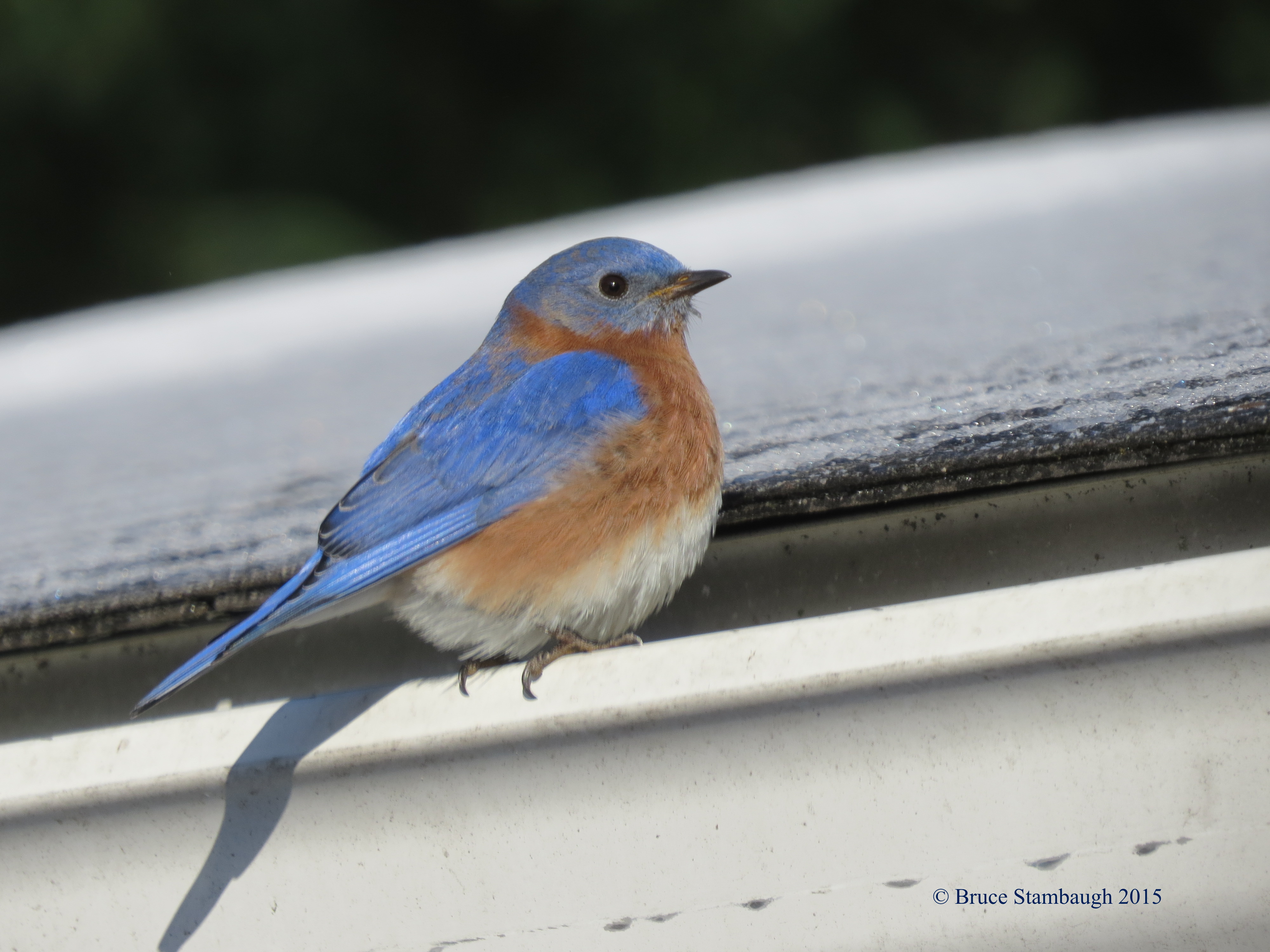
bluebirdbybrucestambaughI liked that image a lot. I’ll share a few ways I plan to apply the concept. I want to challenge myself to embrace all that swirls around me, positive or negative, this year. We learn from either perspective.

Despite my loss of dexterity, I will lean into the wind and hold a child’s hand, steadying her wobbling stroll across a room. Though my hearing is diminished, I will listen attentively to what others have to say, even though I may vehemently disagree with their opinion or decision.

Though my eyesight is aided with bifocal glasses, I will look for the simplest pleasure nature has to offer. A breathtaking sunrise, a singular drop of water hanging perilously at the end a leaf, a brilliant wood warbler migrating north will all be part of my leaning into the wind.

doubletrunkbybrucestambaughEven though my cranky knees limit my mobility, I will do my absolute best to bend low to pick up trash thoughtlessly discarded by others. If someone else is leaning into the wind nearby, maybe they’ll help me back to my feet.

Leaning is an active verb, not passive. Life is a series of winds of various velocities that shift daily. We can only feel the wind. We measure it by the effects on everything the wind touches, whether it does so fiercely or persistently.

Regardless of the velocity, life’s winds affect us all. Leaning in enables us to practice gratitude and joy, the byproducts of vulnerability.

Life offers no guarantees. It is full of pitfalls and mistakes as well as abundant joy and beauty. I want to discard the rose-colored glasses, and recognize the good from the bad. I want to accept them for what they are, and lean into 2014 accordingly.

The blizzard winds of January will eventually subside. Before we know it, invigorating breezes of May, with their warm, sweet fragrances and life-giving rains, will arrive as a blessed balance for us all.

A friend of mine shared a picture of an old apple tree, trunk bent from age and time, some limbs broken and sagging. The caption beneath the old tree defined what I mean by leaning into the wind.

It read, “A little bent by time, shaped by the wind and the seasons, a few branches broken. Today I feel like that old apple tree. But I’m still reaching for the sky, and doing my best to take in what the world gives me and turn it into something good and useful.”

By leaning into the wind, I can anticipate enduring, absorbing and embracing all of the various breezes that life blows my way in 2014.

Who knows? I might even lose five pounds in a month.

brownongoldbybrucestambaugh

© Bruce Stambaugh 2014

Bay Photos by Donna

Wildlife Photos From The Chesapeake Bay Region

ROAD TO NARA

Culture and Communities at the Heart Of India

K Hertzler Art

Artist and nature journalist in the Shenandoah Valley of Virginia.

Maria Vincent Robinson

Photographer Of Life and moments

Gabriele Romano

Personal Blog

Jennifer Murch

Art is the only way to run away without leaving home. -Twyla Tharp

Roadkill Crossing

Writing generated from the rural life

ANJOLI ROY

writer. teacher. podcast cohost.

Casa Alterna

El amor cruza fronteras / Love crosses borders