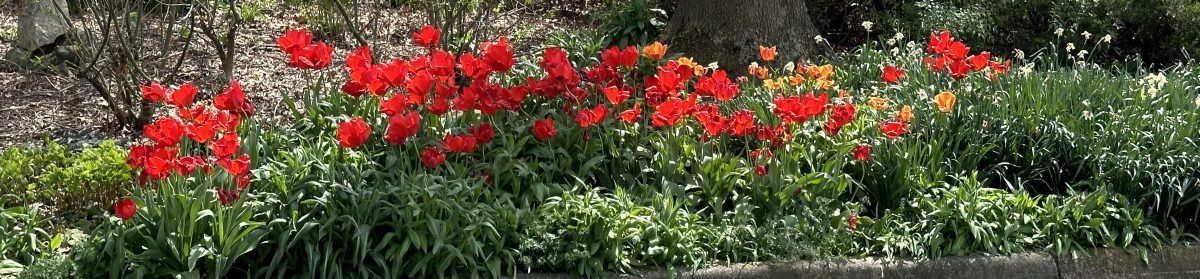
My wife and I came upon this scene on a recent morning walk around the neighborhood. The slanting rays of the early sun perfectly highlighted this patch of Clustered Bellflowers and one lone, brave Lamb’s Ear.
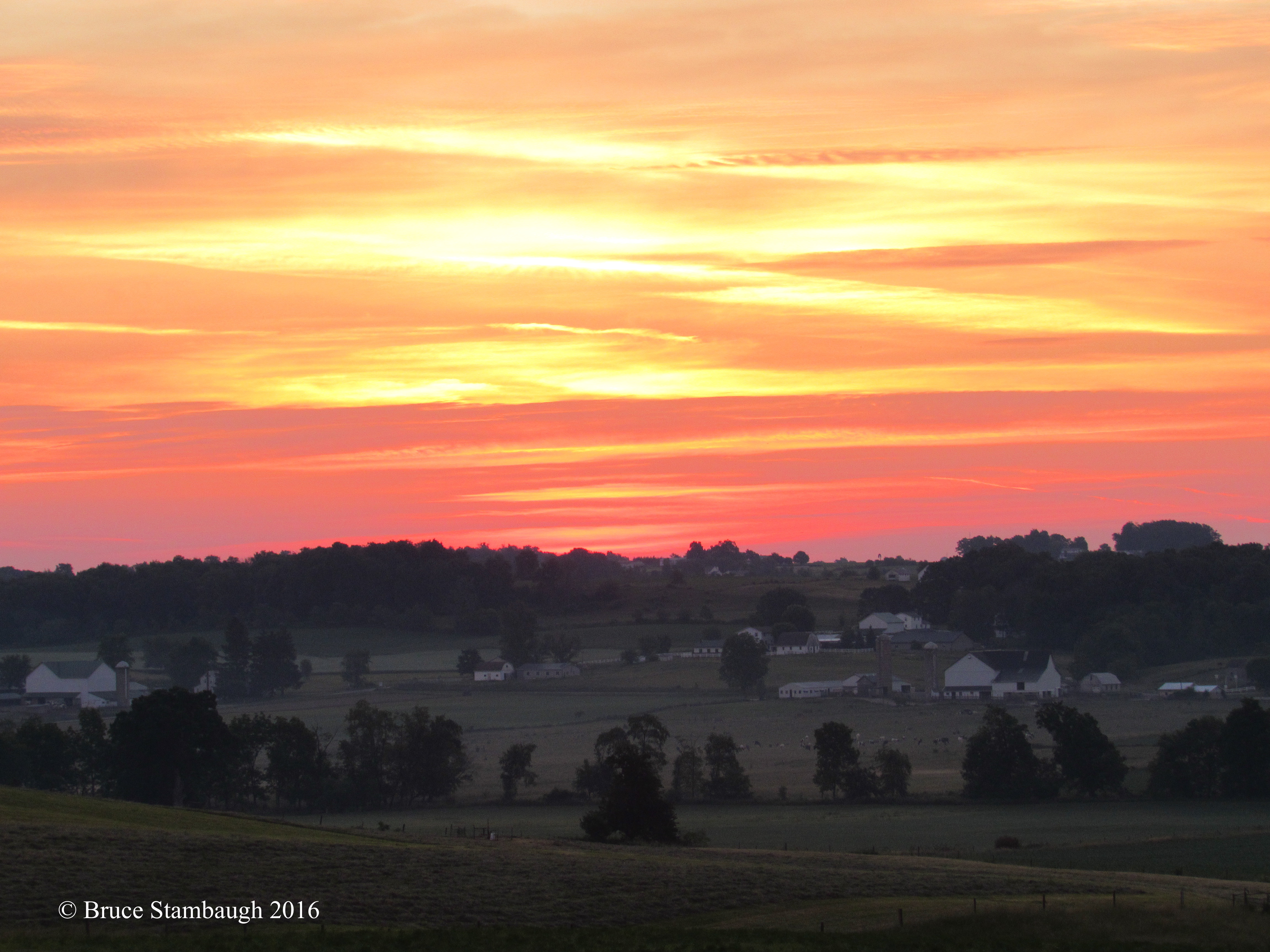
A June sunrise in Ohio’s Amish country.
No calendar is needed to know what month it is. Doors and windows are flung wide open. Summer’s pleasing sounds and pleasant aromas waft in. It must be June.
Sit by a stream where the cottonwoods grow. A summer breeze stirs, and suddenly it’s a blizzard of cottony seeds drifting everywhere. The situation can be as aggravating as it is beautiful.
Once the dew dries, a cacophony of motorized humming ensues, seemingly lasting all day. All the neighbors want to get their lawns mowed before the anticipated rain arrives. It never does. At least the yards are manicured.
To protect their precious eggs, grackles and American robins perform Kamikaze raids on the backyard squirrels who are in search of lunch. The rabbits munch the tender grass undisturbed and unknowing nearby.
The leaves of the deciduous trees appear to have fully unfurled overnight. Contented with their newfound shade, grazing livestock swish their tails, flicking flies left and right, left and right.
Dinner tables brighten with outdoor bouquets brought indoors. Red roses, pink and white peonies, blue salvia, and lavender snapdragons proudly show their colors and intermingle their delicate fragrances.
On the stove, kettles of fresh-picked mint disperse organic menthol. Thirsty throats endure the wait, knowing lunchtime will bring refreshing minty sweetness.
Even the gray catbird pauses for a sip from the birdbath, having warbled all morning from the depths and darkness of the neighbor’s dense yew. The territorial northern mockingbird cuts short that respite, however.
Balmy mornings slip quietly into steamy afternoons. Cumulous clouds build and billow, dappling the landscape with their speeding, oscillating shadows.
By late afternoon, the cooling breezes have retreated. A sultry stillness is ubiquitous. Even the birds grow quiet in anticipation of the coming storms.
A line of darkness fills the western horizon. Soon thunder rumbles the squall line’s approach. Sweaty farmhands work faster still if that is even possible. Saving the first-cutting of hay becomes the day’s primary objective.
After the storm, a double rainbow temporarily shines in the east. Thankful for the cooler air, the rectangular bales stack the haymow higher and higher. Those abandoned in the flattened field will have to wait until they dry.
In the city, waitresses hustle to dry dampened outdoor tables and chairs, all spaced safely according to coronavirus standards. Soon, the customers return, jackets in hand as a precaution for the cooling evening.
In the Allegheny, the Blue Ridge, and the Massanutten Mountain ranges, plump little Louisiana waterthrushes fill the air with luxurious songs. They serve as soliloquies to the music of the rushing mountain streams.
Mountain laurel bushes are at peak bloom, while other wildflowers are only now appearing. The valley-to-mountaintop elevations allow June’s sweetness to thrive all month long.
Honey bees and bumblebees enjoy all the blooms, whether domesticated or wild. They are not picky. Ruby-throated hummingbirds zig and zag at sugar-water feeders to the delight of bird-lovers young and old.
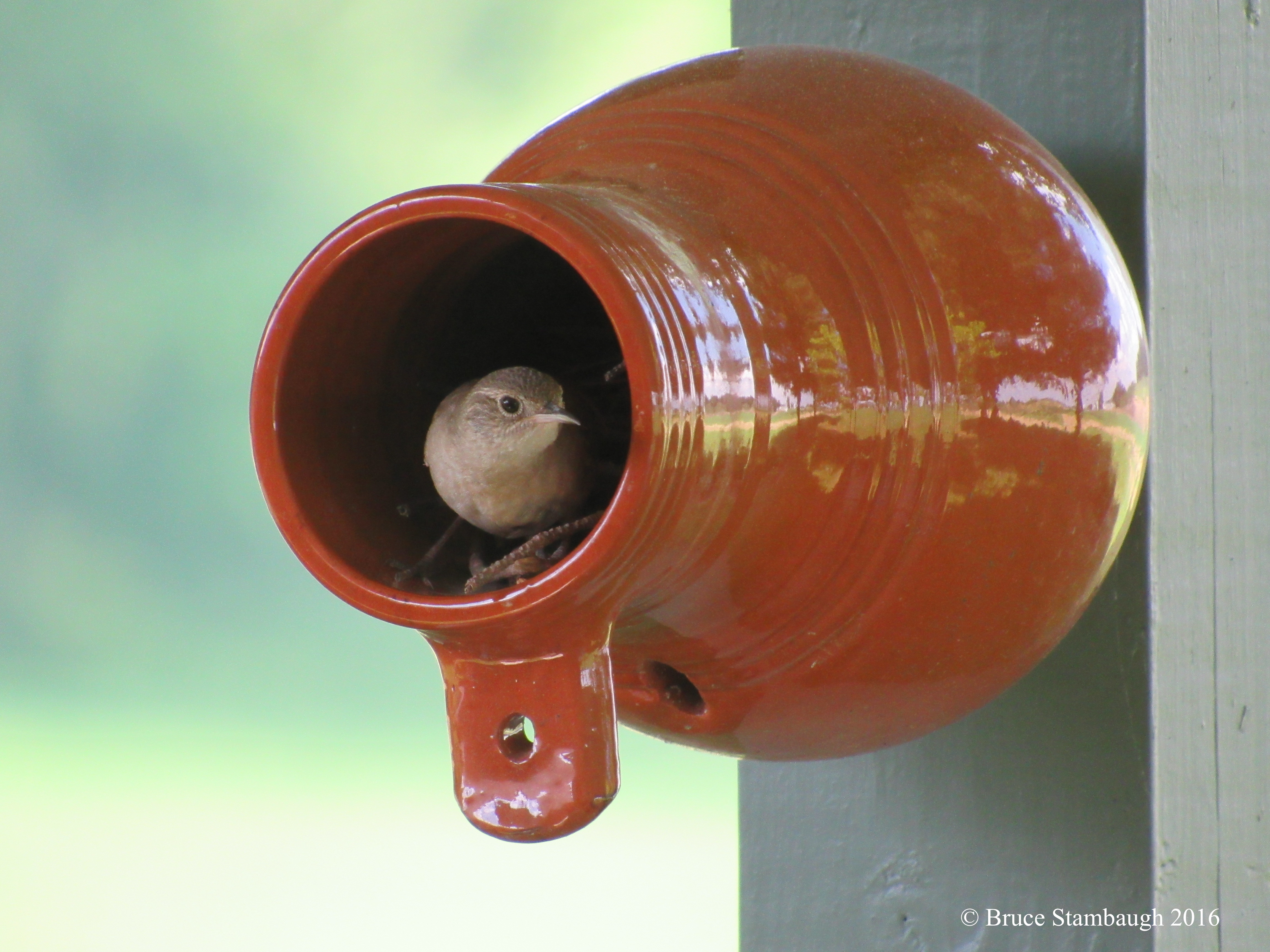
House wrens continue their month-long chatter of courtship, nest-building, incubation, and non-stop feeding. Once the constant rattling goes silent, the brood has fledged, and the cycle begins anew.
We humans of the northern hemisphere enjoy the extended daylight June affords. We work and play all day.
When the sun yields its daytime dominion, the moon, the stars, and the planets light up the heavens. We can enjoy the sparkling show until the neighborhood skunk sends us inside.
There are advantages to staying home. The obvious, of course, is it lowers your risk of acquiring the coronavirus.
There is another positive upshot of being homebound. It can stimulate our mental psyche. We just need to be observant.
Being retired for a few years now, I quickly grew used to being at home. I thought I knew how to relax and make the best use of my time. The COVID-19 crisis taught me differently.
Having to stay at home, I learned to really pay attention, to simply be thankful, even when the weather was damp and cold. We had a lot of that in April and May all across the eastern U.S. The typically sunny Shenandoah Valley didn’t escape the dullness either.
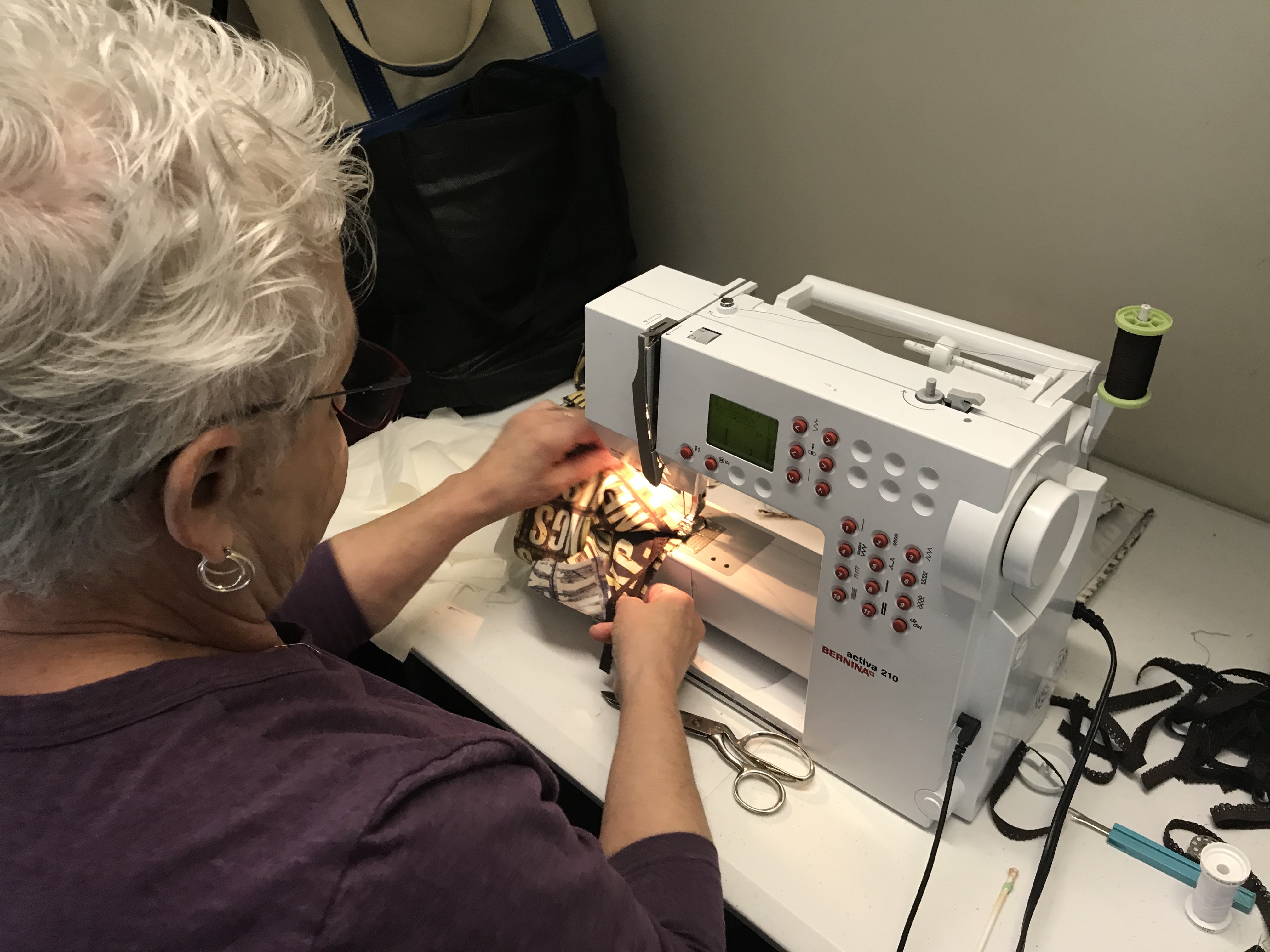
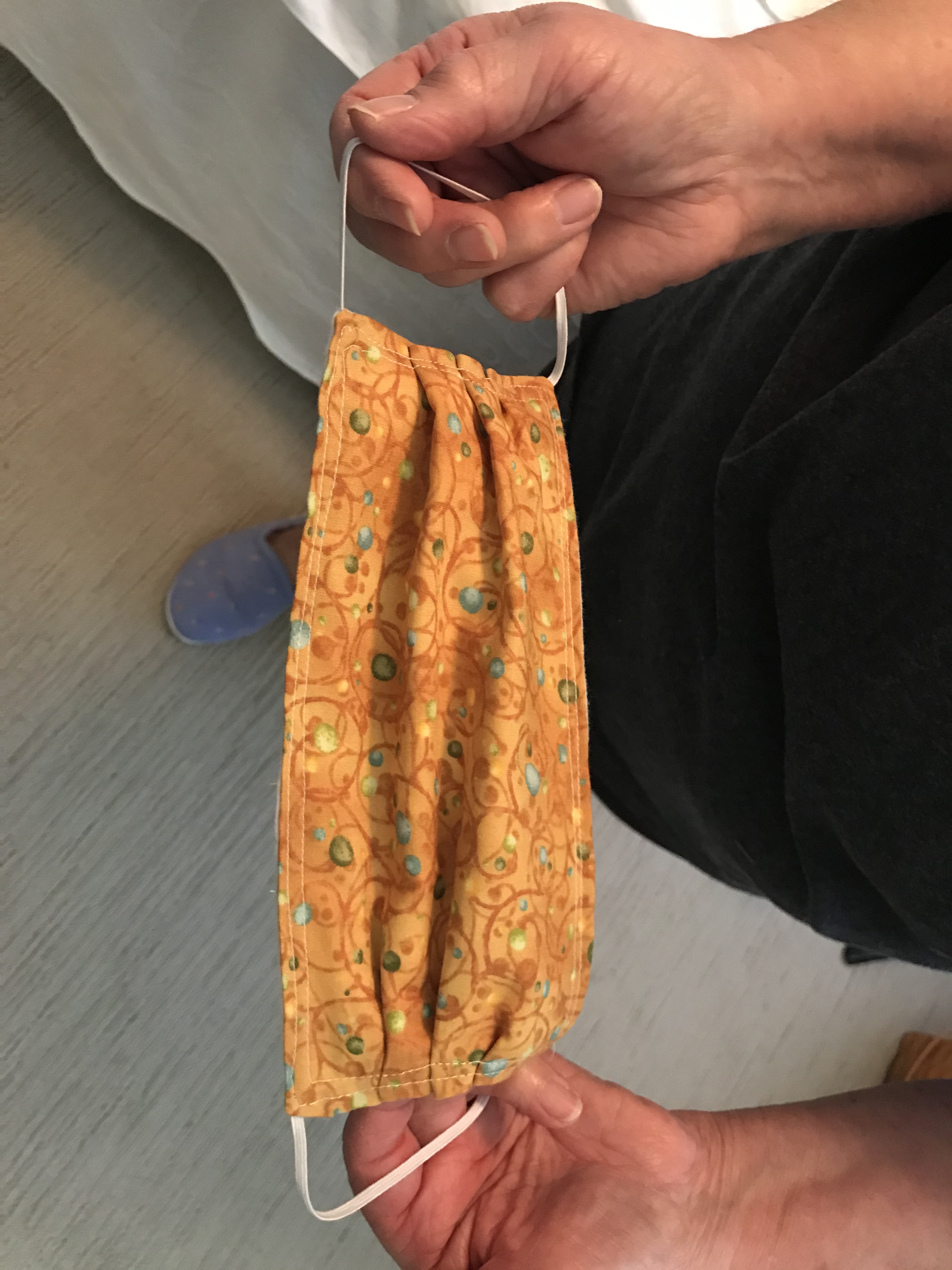
I savored the stillness and the lack of interruptions to my new sequestered routines. The steady hum of my wife’s sewing machine transfixed me at times. Altogether, she has made over 700 face masks. Others have made many more and donated them to businesses, medical facilities, agencies who assist the homeless, local institutions, and Mennonite Disaster Service.
Rather than grumble about being at home so much, I tried to appreciate each moment at hand. I would often sit at my desk where I write. I raised the Venetian blinds and observed whatever came into view.
Despite the weather, I saw kids on bicycles, people walking dogs, dogs walking people, delivery trucks, northern cardinals searching for food, American robins bobbing along, and gathering nesting material.
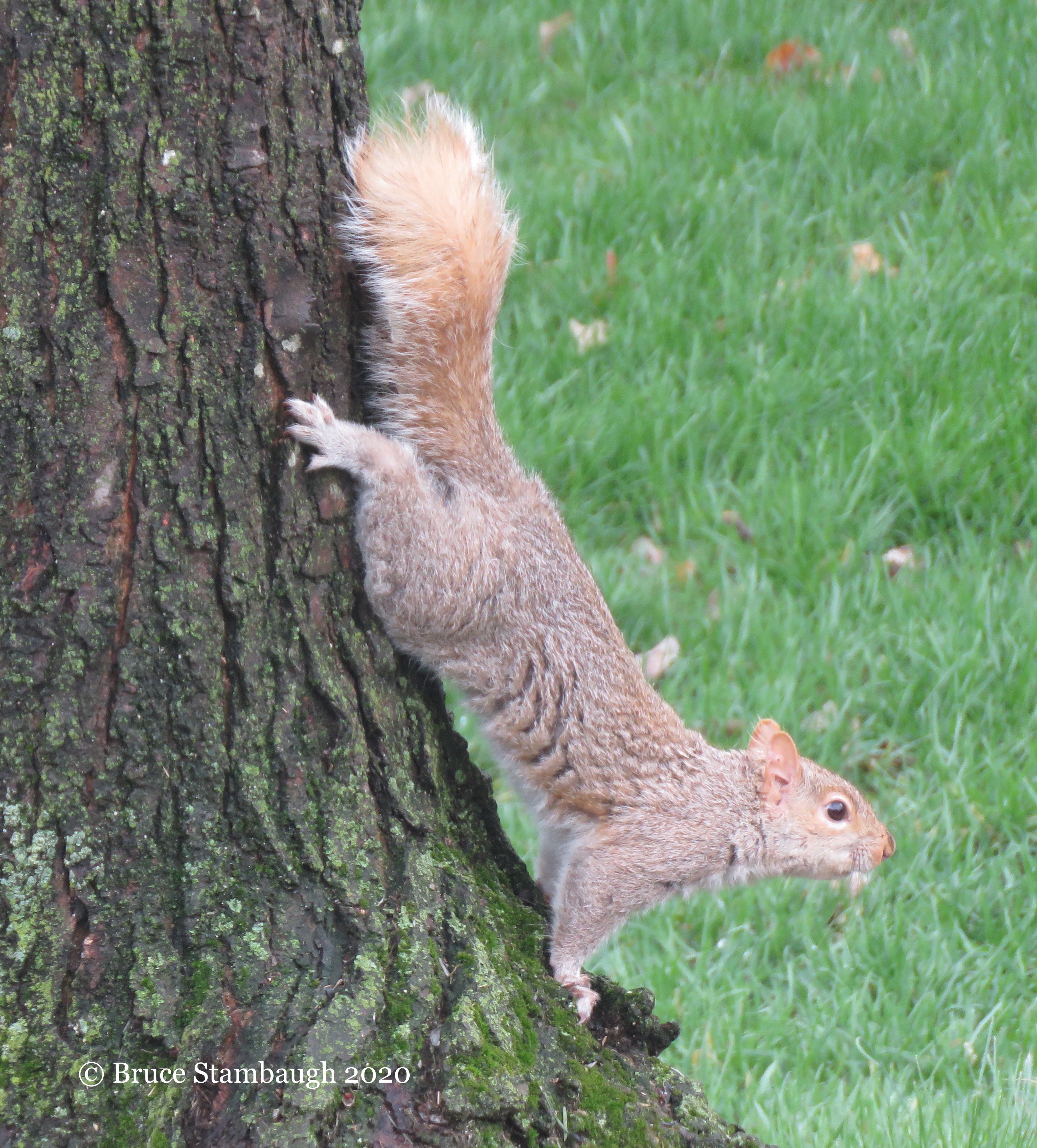
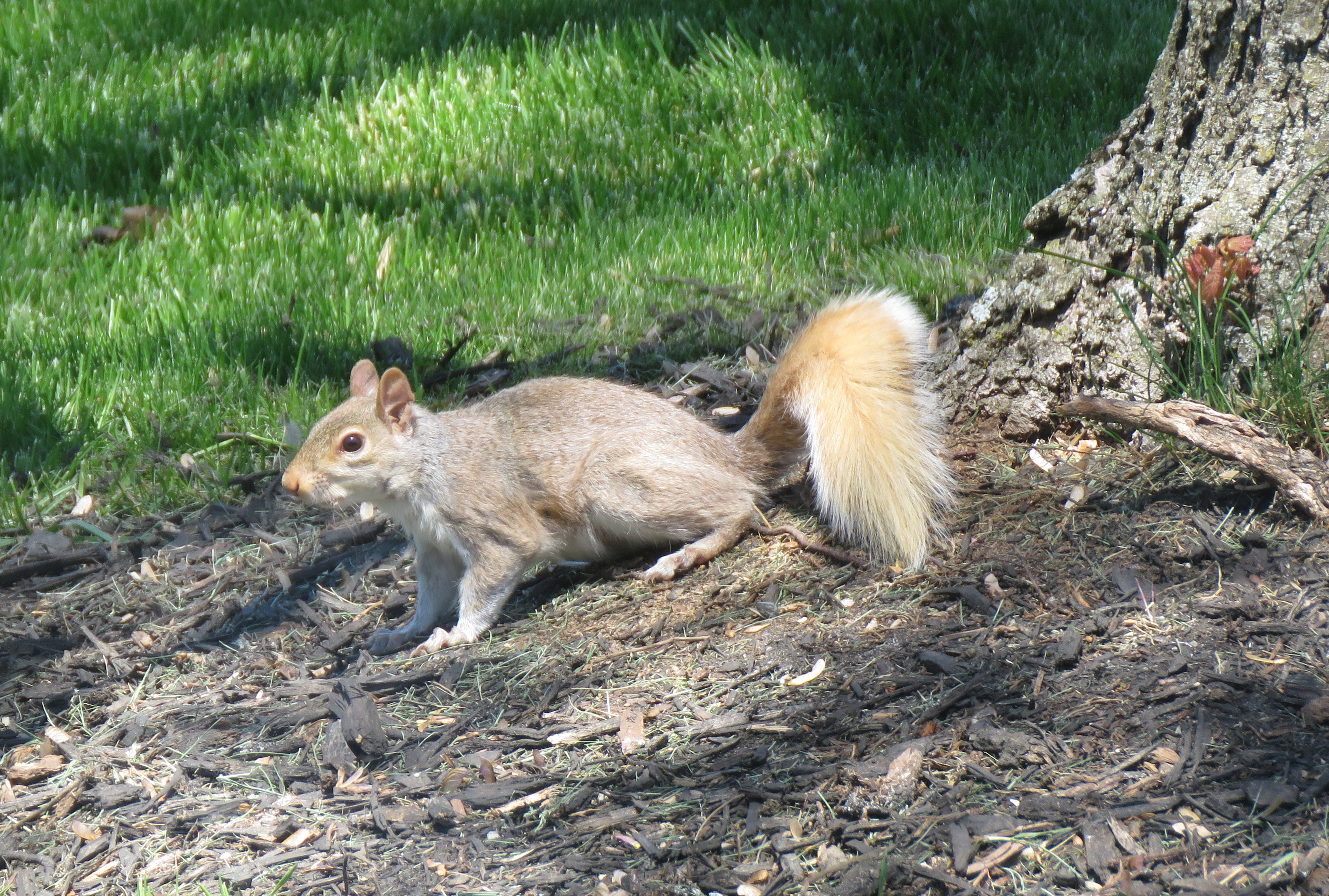
I couldn’t count the number of squirrels that came to dig up their buried food caches. Most of the squirrels are gray busybodies. One particular squirrel, however, stood out.
This squirrel was blond, especially its bushy tail. Its pigmentation had to be an anomaly. The squirrely rodent even acted differently, sometimes like it didn’t have a care in the world.
The sun seemed to bleach the squirrel’s tail as it bounded through neighboring backyards on its way to ours. I had seen the squirrel in late winter searching for morsels beneath our birdfeeders. “Blondie” continued to frequent our yard even after I took down the feeders.
This slideshow requires JavaScript.
The blond squirrel scurried across the open backyard in the middle of the day, its tail flapping in the wind like a golden, glowing flag. The squirrel played at the birdbath, apparently happy for the opportunity to wash its paws and face. Did it somehow know about the coronavirus?
The unusual-looking squirrel felt at home in our maple trees. On the hottest day of the year so far, it stretched out on our green grass, apparently to cool off in the shade of the maple.
Showing off.
Once rested, it returned to its squirrely antics, devouring juicy maple seeds that had just twirled to the ground. Some of its repertoire of poses were almost comical. Its playful personality matched its coloration.
It’s not like the squirrel had it made, however. Other squirrels chased it, not because of its fur color, but because that’s what squirrels do.
The blond always got away unscathed. When the coast was clear, it reappeared looking for food, or another drink, or just to lounge on a crook in the maple tree, taking in the limited sunshine.
I enjoyed the squirrel’s behaviors and resilience. Unlike the gray squirrels, the blond one somehow seemed contented, satisfied, unfettered, detached from the life of the survival of the fittest of all things wild.
There are valuable lessons to be learned from watching this fantastic squirrel. No matter what life throws at you, relax, enjoy each moment, and above all, don’t worry.
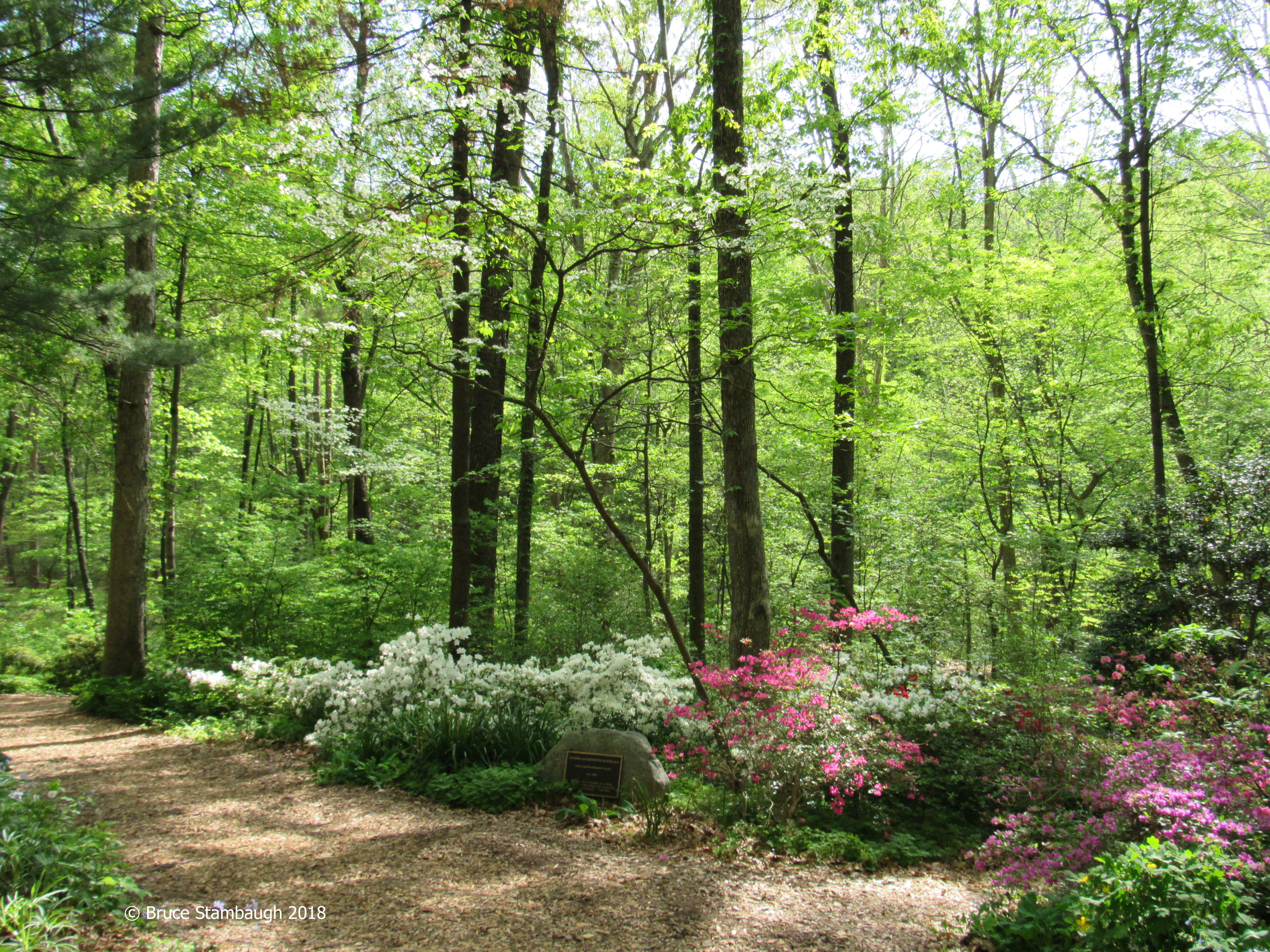
During these days of staying at home, my wife and I occasionally take short trips to break up our routines of being sequestered. Recently, we drove to the Edith J. Carrier Arboretum at James Madison University in Harrisonburg, Virginia, where we live.
We knew the many varieties of flowers and trees would be in bloom, and we wanted to take advantage of the beautiful day. We weren’t alone. Several other folks, young and old, had the same idea. So, we kept the proper social distancing as we strolled around the grounds. I was torn between birding and photographing the many beautiful flowers.
When I came to this scene, I snapped the photo based on its composition as much as its beauty. I loved the backlighting of the leaves and the lacy, delicate blossoms. I found the every-which-way intertangling of the intricate limbs striking. Plus, the tops of the tall pines and the bright blue sky in the background gave the photo the depth it needed.
Viewing the photo on my computer, I realized what a fantastic and challenging jigsaw puzzle this piece would make. So, I chose “The Jigsaw Puzzle” as my Photo of the Week.
Our infant daughter sitting on a 105-pound pumpkin was just one of the old photos we found while sorting.Whether by hook or by crook, our dynamic daughter models many of her mother’s positive qualities. Keeping things tidy and organized through sorting is just one of them.
Our daughter has been cleaning, discarding, donating, organizing, selling, and otherwise giving away items from her home during the pandemic. I suspect you all have to some extent as well.
My wife and I have followed that trend, too, since we have the time during this health crisis sequestering. So far, we have sorted old slides and photos, books, clothes, and files.
My wife and I chuckled at long-forgotten moments captured on slides and photos stuck in boxes buried deep in a closet. The feelings they evoked ran the gamut of emotions.
All of this reordering has stirred memories and even uncovered a mystery. Our daughter found a children’s book published 55 years ago. The author had even signed it.
Carrie couldn’t remember where the book came from but suspected we had given it to her as she began her elementary teaching. Of course, Carrie passed it on to us to contemplate. The book didn’t register with either my wife or me.
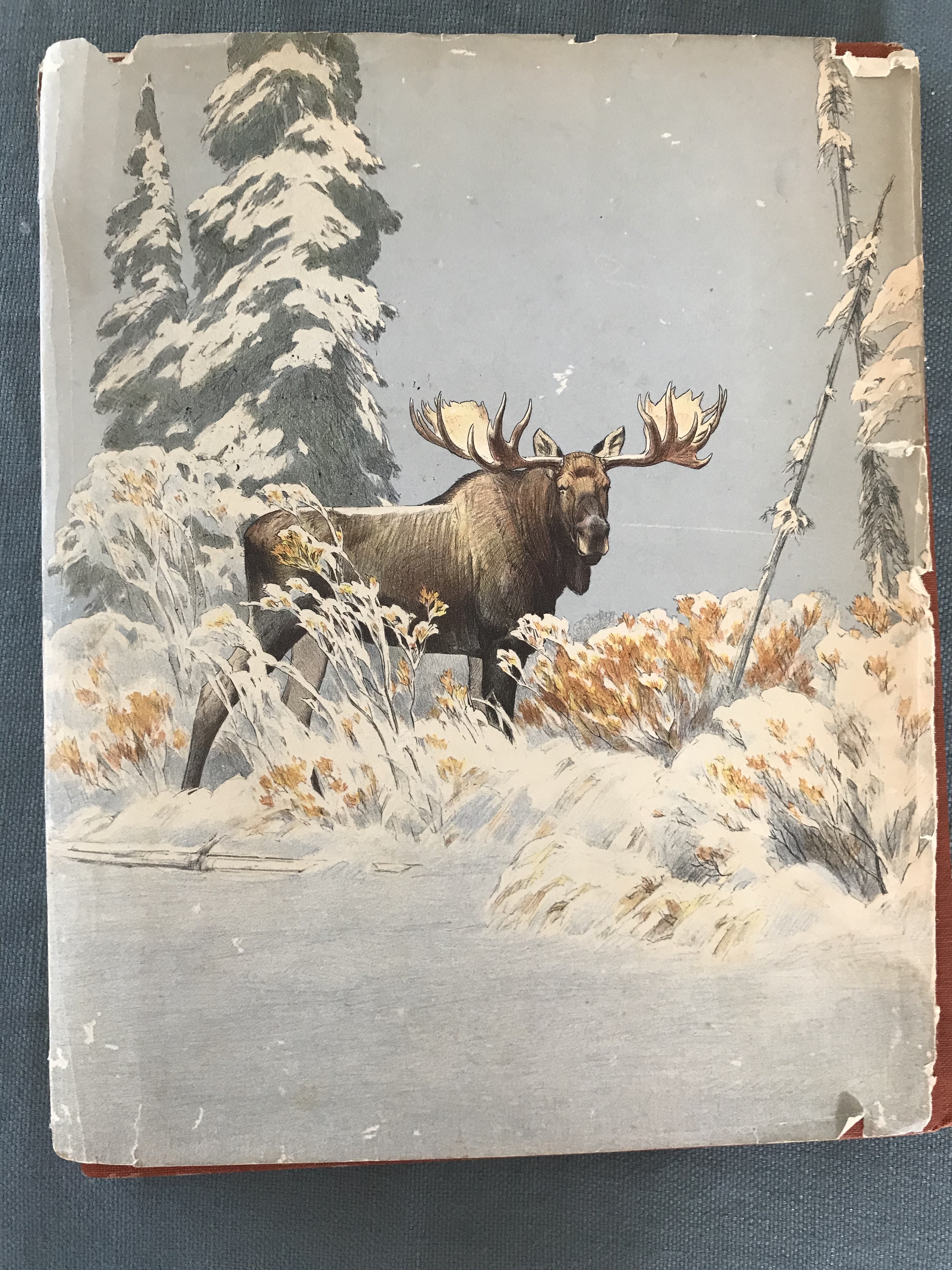
“Deneki: An Alaskan Moose” by William D. Berry had a nicely illustrated jacket cover, which was torn at the binding. I examined the skinny book for clues of its origin. The hardback cover and pages were well-preserved.
I read the enlightening story and enjoyed the many illustrations, also done by the author. The storyline revolved around the encounters of a yearling bull moose near Denali National Park.
The signed inside cover.
A lovely signed title page.
The hardback cover.
It was a first edition book, and I found that Berry had autographed the book twice. One signature was on a card with a moose he had drawn and pasted on the inside right-hand cover. He also signed by his name on the author page.
Neither Neva nor I could remember the book, where we got it, or when. Carrie was sure we had given it to her. Since Neva and I were both educators, there were plenty of options. We just all drew blanks.
Berry’s writing was crisp, the story factual and informative, and his illustrations superb. A signed, first edition book was a treasure. The question was, whose prize was it?
I was intrigued. The setting was near one of the areas where Neva and I had visited last August on our tour of Alaska. I easily imagined the geography and topography the young moose and its mother traversed.
I Googled the author and found he had a studio in Alaska. I clicked on the website and discovered that William D. Berry had died in 1979. Berry’s son, Mark, and his wife Diane now ran the studio, located in Gustavus, Alaska.
I emailed them from their webpage, telling of the book’s discovery, and offered to donate it to them. By morning, I already had a reply.
Mark was thrilled to learn about the book. He said that the studio ironically never had a signed copy of “Deneki.” They had to buy one off of eBay for more than the book had earned in royalties in its initial year of publication.
Mark said he would donate the book to the University of Alaska, Fairbanks, once it reopens from the COVID-19 emergency closures. The university houses an archive of his father’s field sketches and other items.
The book arrived safely in Alaska by U.S. mail. It’s a treasure that might have remained hidden without the methodical house cleaning of our daughter and the foggy memories of her parents.
May’s Flower Full Moon was the last of the three supermoons of 2020. I wanted to photograph the full moon rising over the Massanutten Mountain Range that runs through the heart of Virginia’s Shenandoah Valley. However, my plans changed due to the weather. Spring has been unusually cloudy here this year. With a predicted clear sky on May 7, I was determined to capture shots of the full moon setting over the Allegheny Mountains that serve as the border between Virginia and West Virginia in Rockingham Co.
I had a clear view of the moon from Mole Hill, an ancient volcano, and noted area landmark west of Harrisonburg. Dawn’s early light highlighted Old Order Mennonite farms that dot the landscape all the way to the Allegheny foothills. The rusty silo, the brick farmhouse, the rolling, fertile fields, and the sweeping mountain slopes all take your eye right to the setting moon.
I am always happy when we reach May, especially this year. The beautiful blossoms and warming temperatures spur a sense of gratitude.
During the current COVID-19 pandemic, we all must remain grateful. Given the stealth-like nature of the coronavirus, it would be easy for fear and despair to overwhelm us.
We must not let that happen. Those negative feelings can transition into depression unless we come to accept the ugly situation for what it is.
Now, the COVID-19 condition may not be as dire where you are as it is in other parts of the world. Here in Virginia’s lovely Shenandoah Valley, the deaths and confirmed cases are spiking. That, in part, is due to more accurate testing and proper reporting.
Of course, my wife and I have taken the necessary precautions as recommended by state and local leaders. We are grateful for their specific directives in this uncertain time.
I am also thankful that my niece and friends who live in New York City remain safe. Some of them are treating those infected. I am both grateful and concerned for frontline staff and first-responders everywhere who take extraordinary risks in merely doing their daily jobs.
Pink dogwood.
Rose-breasted Grosbeak.
Gathering hay in Ohio.
In the forest.
Pink azalea.
May sunset.
We can’t take for granted public utilities like electricity, water, and sewer that remain consistent and safe. Having power has permitted us to communicate remotely with family, friends, church members, and even doctors if needed.
I am grateful for local businesses that have prevailed in the face of potentially devastating economic conditions. I appreciate both their curbside and home deliveries. The indefinite length of the closure orders for them, however, is disconcerting for their financial well-being.
I am thankful for people’s resilience, creativity, and patience during their unplanned sequestering. It can’t be easy trying to work from home while teaching active, restless children and simultaneously trying to complete household chores. This perspective became more apparent to me when a friend found her son’s homework in the refrigerator.
I am grateful for our daughter and her family, who regularly check in on us via text messages and with social distancing visits. We celebrated our oldest grandchild’s 16th birthday via FaceTime. Evan seemed as pleased as if we were all actually eating ice cream and cake around their dining room table.
I am also glad our son and his fiancée are both safe and well in another New York hotspot, Rochester.
I am thankful for the garbage workers who continue on their regular routes, not knowing what precisely it is they are hauling. I pray for their continued safety.
I am thankful for people who show their love by sending us notes, text messages, emails, and making phone calls. Doing so keeps us connected and uplifted, even if it is only remotely.
I am thankful for the universal generosity of people who share their gifts most graciously. Using their talents to make personal protective products for strangers who need them is priceless.
I am grateful for a safe and secure home and neighborhood where my wife and I can both hunker down and walk for exercise among nature’s artistry. However, I am most uneasy about those who are not as well-off. More critically, this terrible virus is attacking the poor and minorities at a much higher rate than the rest of the population.
On a personal note, I am grateful for the opportunity to share with all of you. I hope you are well and can find ways to be genuinely thankful, too.
Today is Earth Day’s 50th Anniversary. As we celebrate this milestone, let’s remember the reason we mark the day. Together we all need to admire, enjoy, and care for Creation.
My wife and I have taken the stay-at-home orders quite seriously. At our age and with our medical history, we must do so.
Besides, our loving daughter keeps close tabs on us even though she lives five miles away. Our son in upstate New York checks in, too, digitally. Neva and I have no choice but to behave.
That’s life in 2020’s pandemic world. Technology keeps us connected without the ill-advised but much desired personal contact. What once seemed like an irritant of life by some is now our lifeline.
Neva and I have gotten more phone calls and texts in the last few weeks of being at home than we did in the previous several months. We, too, have made a few calls, sent texts, emails, and posted on social media.
Not to let go of our rural roots, my diligent wife sends cards and notes nearly every day. Somebody has to keep the U.S. Postal Service in business besides Amazon.
Our trips away from home are limited, which is as it should be. After ordering online, we pick up groceries curbside or deliver homemade masks to others. Neva has made more than 300 masks for others and local businesses and organizations.
Consequently, our gasoline bill has plummeted along with the prices at the pump. It’s the old supply and demand principle in action.
I have never washed my hands as often or as well as I have in the last few weeks. Our water bill may offset our reduced gasoline costs.
Since I retired three years ago, I thought every day seemed like Saturday. The quarantine orders have made it even more so universally. The days all just seem to run together.
I find myself smiling as I watch entire families walk by our house or ride by on bicycles. Youngsters on skateboards gleefully enjoy our gently sloping street. When Neva and I walk around the neighborhood, waves, nods, smiles, and hales of “Hello” greet us whether people know us or not. Lilacs and Redbuds.
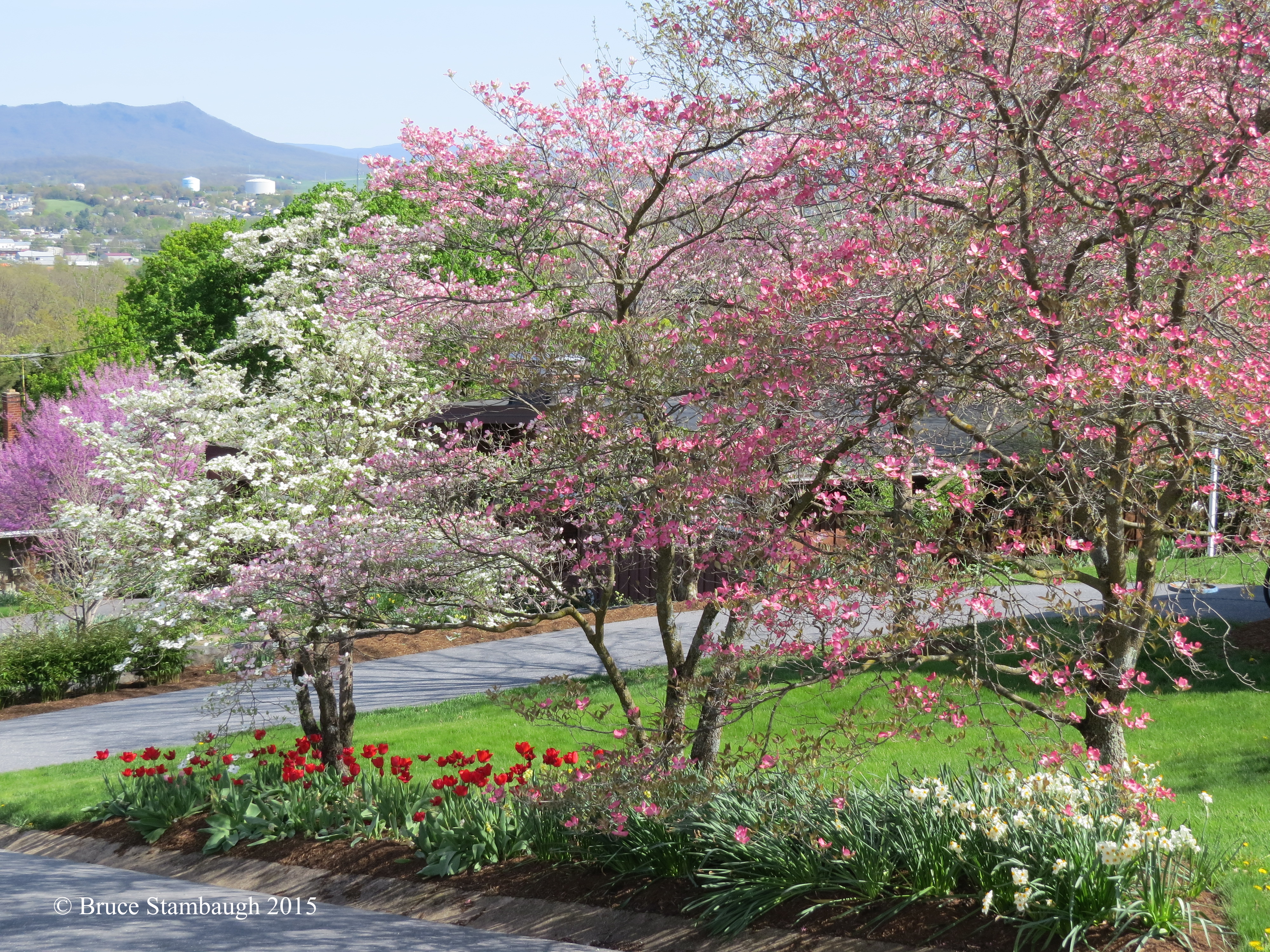
Everything seems to be blooming at once in the Shenandoah Valley. Daffodils and tulips are already fading. Dogwoods and redbuds are painting the bare forests with dabs of white and pink. Irises and lilacs are flowering much too early.
As pretty as all that is, I need to be realistic. Each of us must view the situation beyond our own living space.
With vehicle travel and entire industries shut due to the coronavirus spread, satellite images show global pollution significantly reduced. But with companies and businesses closed, millions of workers have been laid off or furloughed.
The loss of their employment, income, and benefits gives me pause. As my older brother shared in an email, we retirees with monthly pensions have nothing to whine about during this crisis.
The pandemic should serve as a great equalizer. But that isn’t quite the way it is. Statistics show that the COVID-19 epidemic affects millions of people of color and the poor medically and economically the hardest.
These are precarious, vulnerable, stressful times. But we must keep pressing on, following the guidelines, being patient, kind, grateful, and prayerful.
It’s scary trying to protect yourself against an invisible enemy. We can, however, by following the health rules, enjoying the moment at hand, praying for the safety of all, and proper decisions by our leaders.
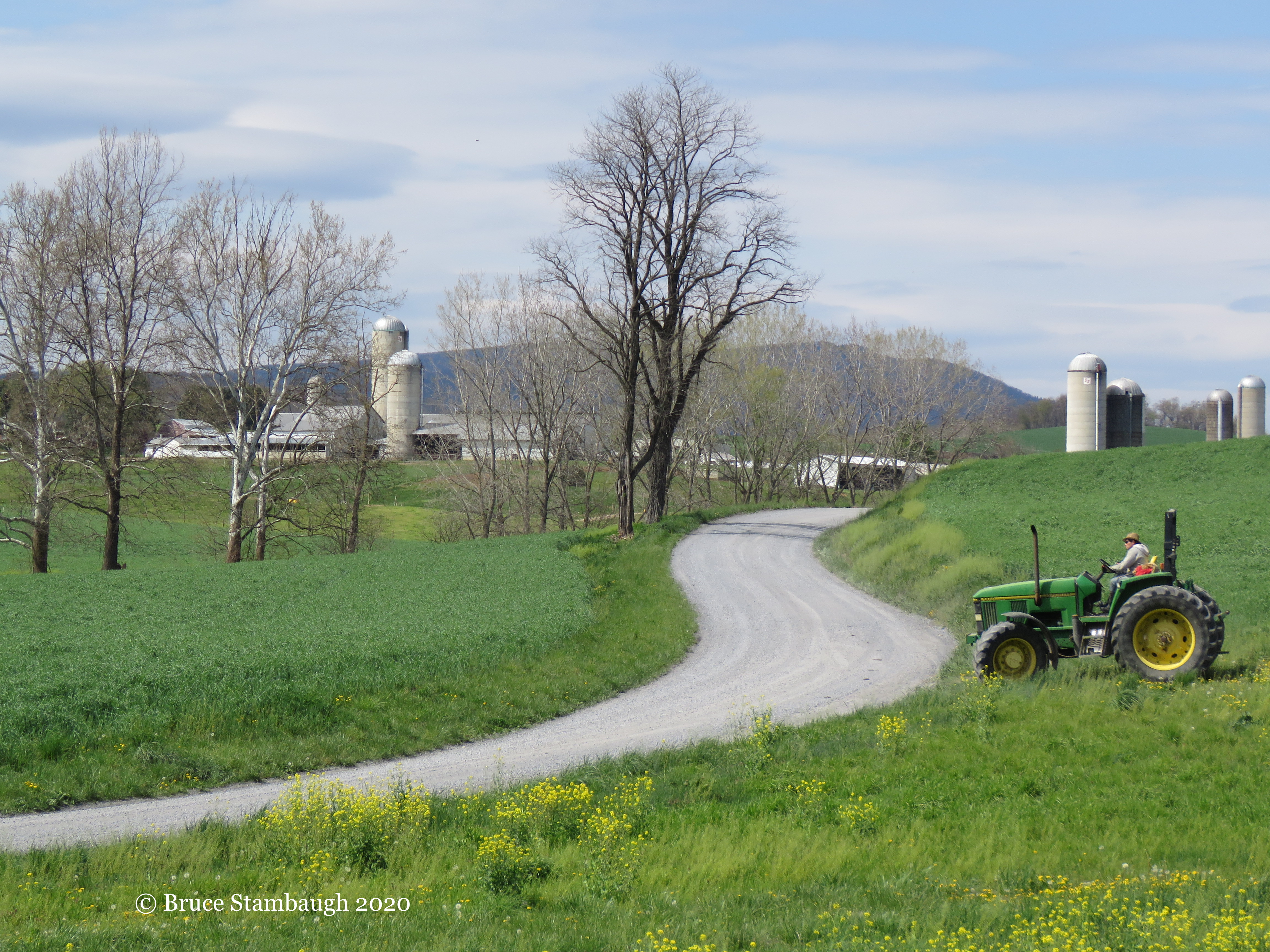
It must be spring! Farmers in Virginia’s pastoral Shenandoah Valley are out and about preparing their fields for this year’s crops. In fact, farmers in Rockingham Co., Virginia, have already made their first cuttings of hay for silage to feed their livestock.
This farmer, riding his ubiquitous John Deere tractor, was heading back to the farm.













 Roadkill Crossing
You must be logged in to post a comment.