Where sunrise meets low tide

low tide, sunrise, dawn, Fernandina Beach FL
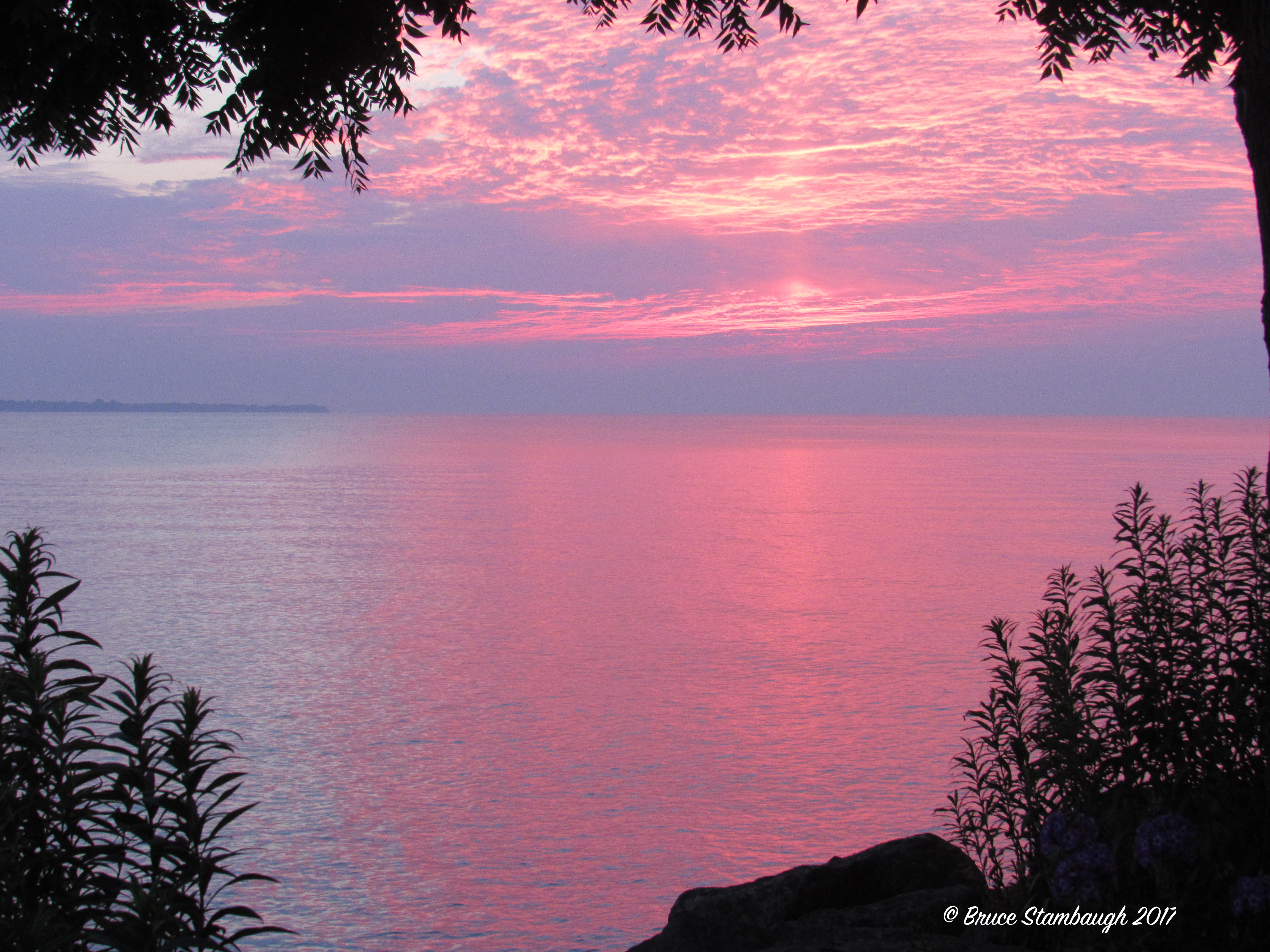
Where sunrise meets low tide.

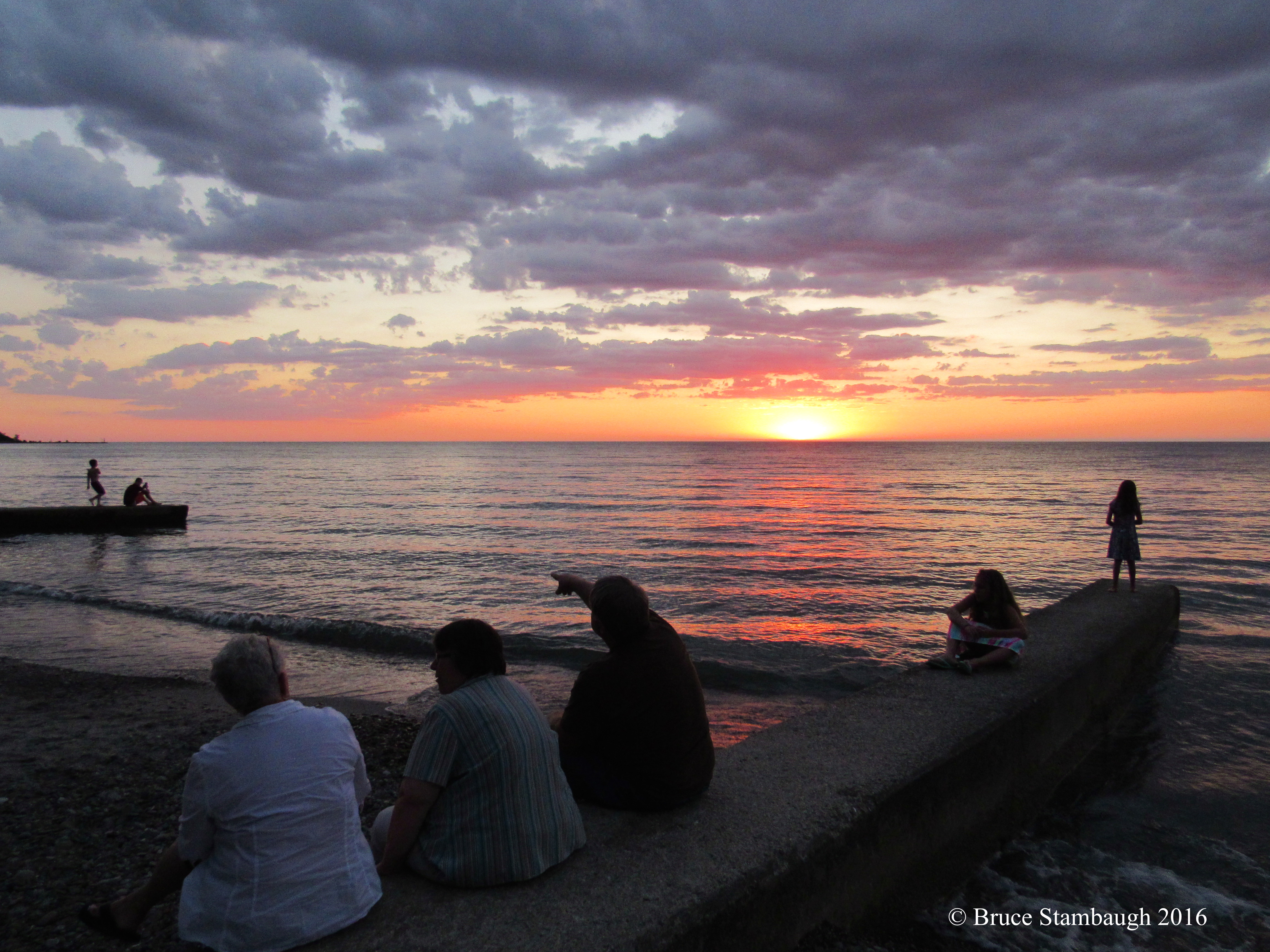
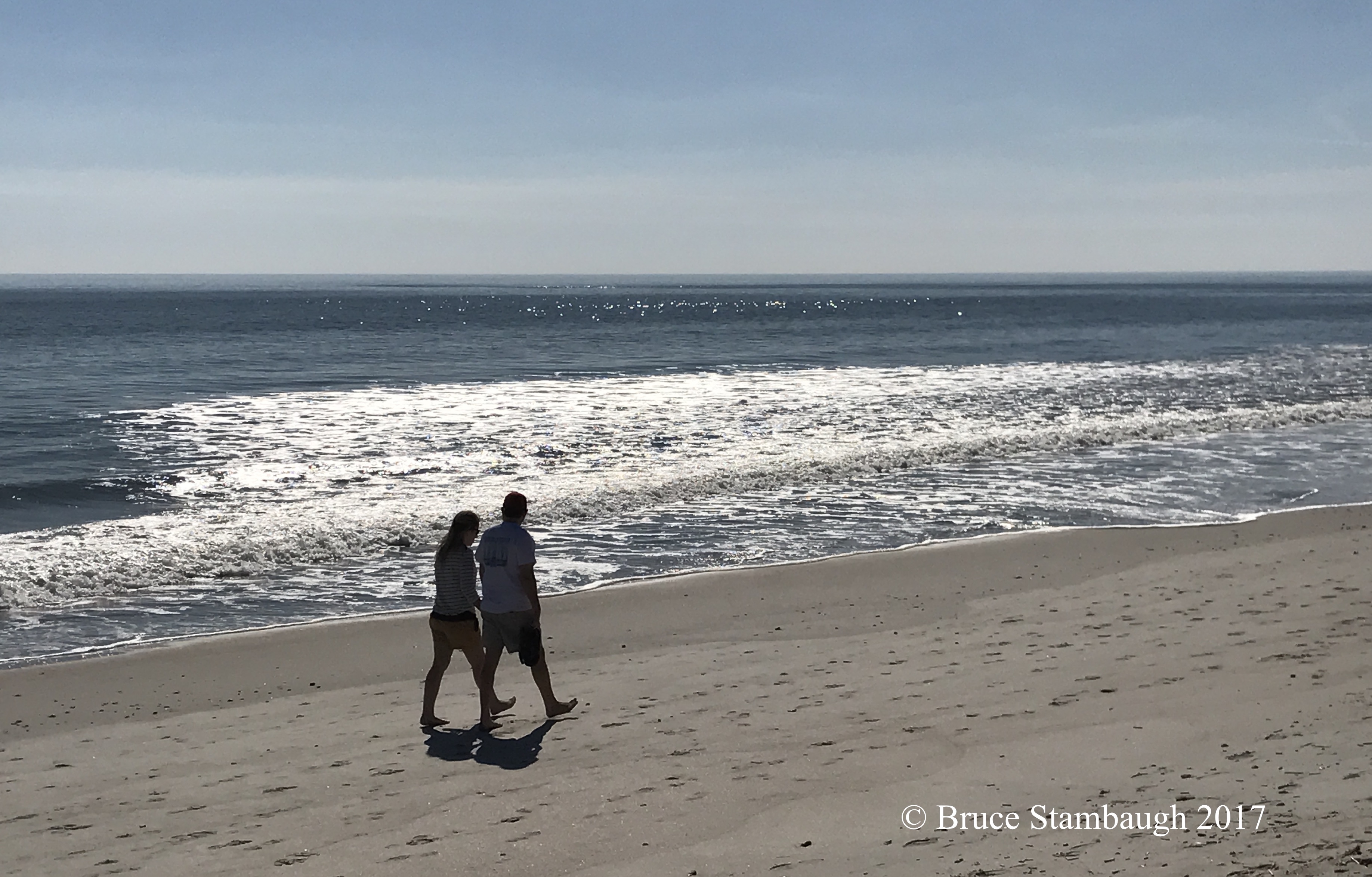
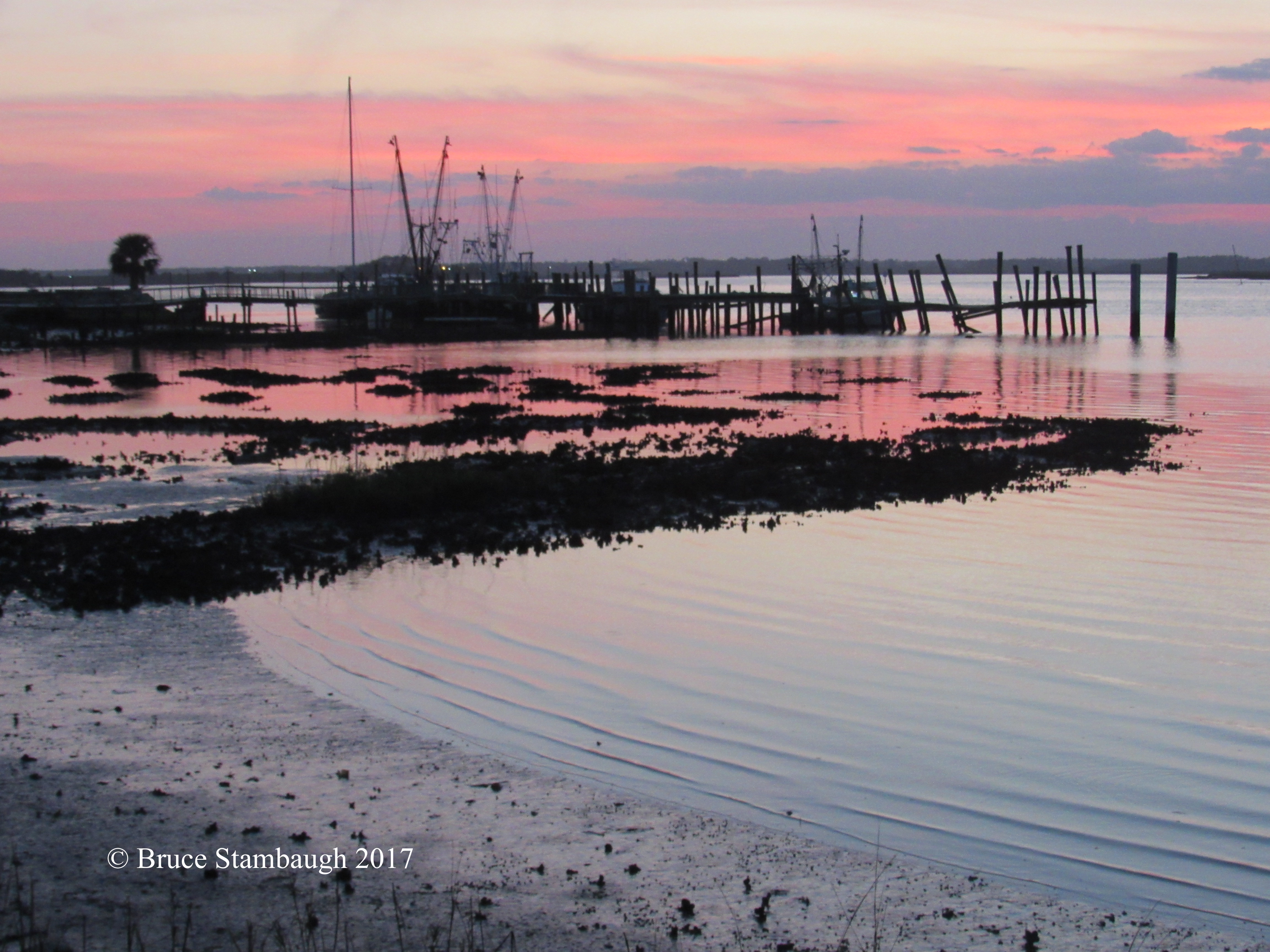
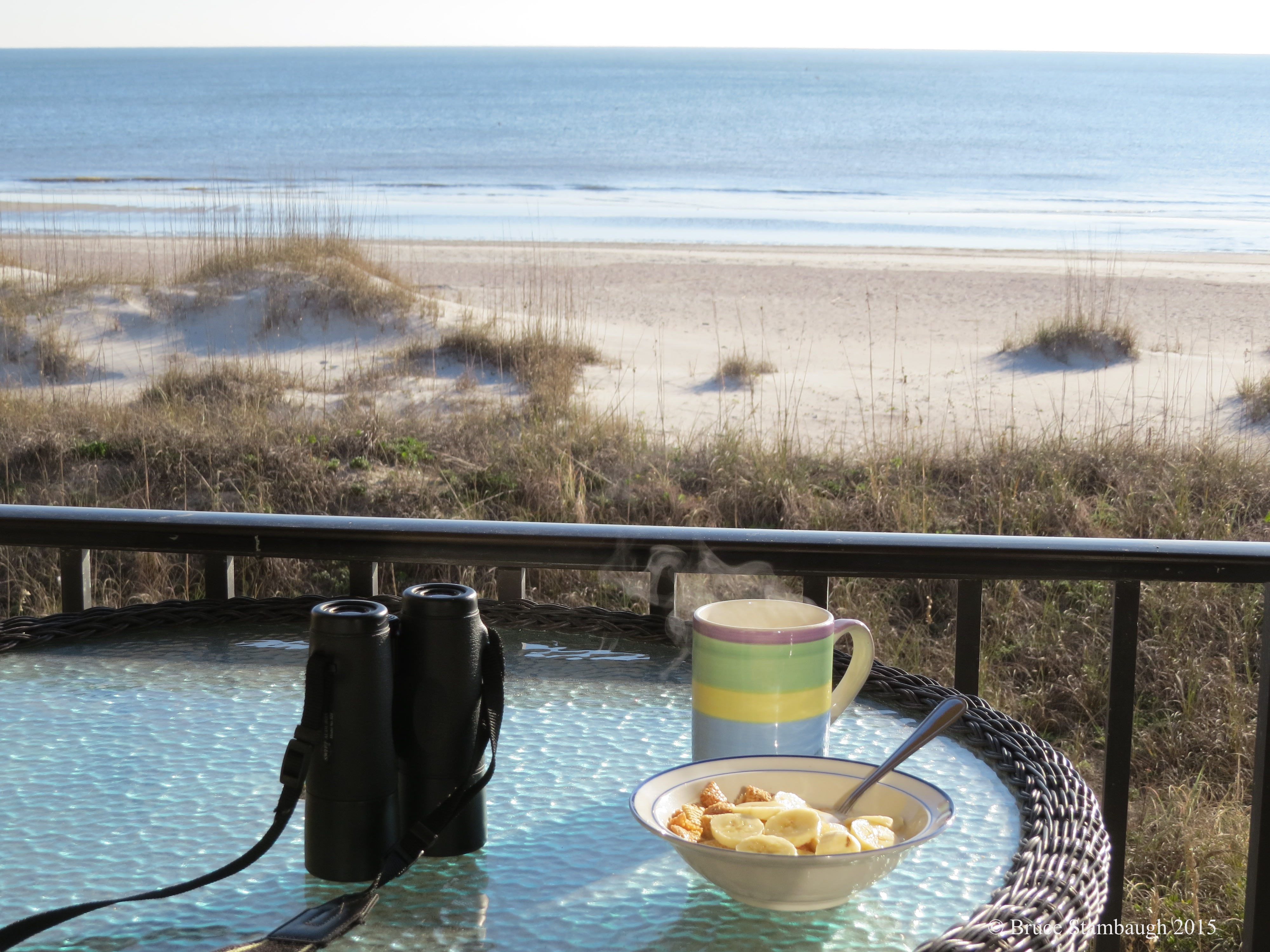
Timing and perspective can combine to create an attractive setting to photograph. Such was the case when the sun rose over the Atlantic Ocean at low tide on Main Beach, Fernandina Beach, FL. The interworking of dawns colors and the patterns and textures sculpted by the retreating tide produced this fascinating picture.

Framing the scene at a downward angle to the beach placed the colorful sunrise at the very top of the photo. Even the usually unwelcome contrail reflected in tidal pool pointed to the rising sun. “Where sunrise meets low tide” is my Photo of the Week.

© Bruce Stambaugh 2017

Autumn, an appropriate metaphor for life

colorful leaves, autumn leaves
The trees near Ivan’s home.

By Bruce Stambaugh

With our numerous stands of mixed hardwoods, I always look forward to fall’s colorful leaf display. In our busied lives, however, the transition from green to gold seems to take forever. But in a flash or a persistent wind, the trees all stand leafless.

That realization confronted me as the autumn leaves reached their vibrant peak when I received word of Ivan’s death in the middle of the afternoon. Ivan was a valued member of the cancer support group to which I belong. I had visited with him in the hospital only a week earlier knowing that his time was near.

Still, when I heard the sad news, tears of sorrow flowed for Ivan and his family. Our intimate group had welcomed him in, and he contributed far more than his usually quiet demeanor would have suggested. Later that same evening, joy overcame my sadness as my favorite team, the Cleveland Indians, claimed Major League Baseball’s American League pennant. It was a bittersweet moment, one that Ivan would have relished with me.

Right after the final out, I called my friend Tim, also an avid Indians fan. He was as giddy as I was. When I invited him to the first game of the World Series, I think he fell over.

I was fortunate to have secured tickets for the opening World Series game long before the Cleveland club even began the postseason. I hoped beyond hope that they would make it, and they had. I wanted Tim to share in the joy of seeing a World Series game in Cleveland with me.

The leaves were still coloring up when I left Virginia’s majestic Shenandoah Valley the next day to return home for Ivan’s viewing. Paying my respects to the family became a personal priority.

This slideshow requires JavaScript.

I had traveled the same roads from Ohio to Virginia just after visiting Ivan the previous week. The leaves in the mountains of western Maryland and northern West Virginia were near their peak. Those in both Ohio and Virginia were turning, but still had a ways to go.

I was amazed at what a difference those few days had made. Patches of red, gold, and burgundy dotted the forested mountain slopes. On the ridges above, giant white windmills twirled in the autumn breezes.

giant wind turbines, fall leaves
Beauty and the beasts.
I thought about Don Quixote jousting with those Dutch windmills. I was satisfied to simply photograph this real live contrast of beauty and the beast and continued on my way.

When I got to Maryland’s mountains highest altitude where I thought the colors would be the brightest, I was disappointed. Many of the leaves had already dropped. Some trees were completely bare.

When I stopped for lunch, I commented to the waiter about my disappointment in missing the peak coloration. I was three days too late, he said.

That happens in life. Our timing just isn’t what it might have been.

It was dark and pelting rain when I arrived at home. But just the illumination from my car’s headlights told me the sturdy sugar maple in my backyard was glowing showy orange.

The combination of rain and wind brought down lots of leaves. But plenty remained for all to enjoy.

Baseball. World Series. Friends. Fall’s coloring contest. I know these precious moments will all wither away like the last leaves of autumn, which passes by us in a vapor.

Life can be like that, too, a hard but applicable metaphorical reality.

orange sugar maple
Our backyard treasure.

© Bruce Stambaugh 2016

Two state advantages

autumn in Virginia, landscape
Appalachian autumn.

By Bruce Stambaugh

I’m no magician, but I feel like it at times. While my energetic and talented wife has camped herself in Virginia’s Shenandoah Valley for the fall, I’ve had one foot in Ohio and the other in Virginia.

Because I still have work duties and responsibilities here at home, I’ve shuttled between Holmes Co. and Harrisonburg, Virginia, where our daughter and her family live. I get to enjoy the amenities of both places. There’s a lot to absorb here, there, and in between.

With the changing leaves, it’s a win-win proposition for me. I have the luxury of observing the colorful transitioning and beauty of each locale. On the drive to and fro, the vividness splashed across the forested mountain slopes is exceptionally enchanting.

My wife, Neva, is having the same experience in a much different role. From August into November, she has dedicated herself 24/7 to assisting our daughter, son-in-law, and the trio of grandkids. Our daughter’s volleyball coaching job is a time demanding, intense position.

volleyball, home-cooked meal
The ladies enjoying another Nana meal.
Neva has the role of assistant coach, assigned to domestic mentoring duties, and whatever else is in the fine print of her contract. From my perspective, she’s doing an ace of a job.

Meanwhile, I know the inspiring circuitous route between the two burgs, Millersburg and Harrisonburg, over hill and dale and mountains all too well. No GPS is needed. Out of necessity, it’s a back and forth life for me.

In a way, this approach is softening the shock of moving. By Neva living for three months in Virginia, and with my multiple round trips, we are phasing ourselves into our new community, and out of the one where we raised our children and honed our vocations. Cut and run was never our modus operandi.

Our goal was to gradually transition from being Buckeyes to Virginians. Neva and I have spent our entire adult lives in the public eye. We were both career educators for the local school districts. We each served in various capacities in several community organizations, plus the necessary involvement in our church.

We recognize that we are replaceable. That’s not the point. We wanted to say goodbye slowly, and help all, including ourselves, let go here and grasp our new surroundings there.

Snail snack, nana
Creating a creative snack.
That is just what is happening. You should see Neva. She is in her glory organizing meals for both our daughter’s family and her volleyball team. She picks up the grandkids at school and runs them to doctor appointments. She cleans, mows, does laundry, walks the dog. On and on it goes.

My official work responsibilities are harder to terminate than Neva’s. There are assignments to complete, and leadership still needed on the boards of trustees on which I serve, and the businesses I consult. The timing had to be just right before I could call it quits.

Since folks have learned of our departing, we have been overwhelmed with well wishes and blessings on our new adventure. Those gestures only cemented our love for the life we have lived here.

We are heartened by the affirming support so graciously expressed to us. Just as joyously, we are reconnecting with old friends and meeting new ones in Harrisonburg.

Having feet planted in two different states has been fun. But eventually, we’ll have to sink new roots into the lovely Shenandoah Valley.

I imagine that, too, will be magical.

changing leaves, Holmes Co. OH
Back home.

© Bruce Stambaugh 2016

In praise of history and historians

Duke of Gloucester Street, Colonial Williamsburg VA
Living history, Colonial Williamsburg, VA.

By Bruce Stambaugh

History is important. I’m forever grateful for folks who emblazoned that maxim upon me way back when. Parents, teachers, professors all collaborated to ensure that I appreciated the value of knowing times past.

My father was instrumental in getting his children involved in amateur archeology. That was in part thanks to my younger brother, who found an arrowhead on the school playground.

As teens, my brother and I assisted Dad and others at various digs like Ohio’s only Revolutionary War site, Fort Laurens in Bolivar. Dad also helped retrace Colonel Bouquet’s Trail into Ohio, which included Holmes Co. Hands-on learning was Dad’s tool of choice when it came to our indigenous tribes and the pioneers who interacted with them in the settling of Ohio.

Gnadenhutten Museum
Worth the visit.
In college, passionate geography and geology instructors explained how various topographic features came to be. In a college Ohio History lecture hall with hundred of other students, I think I got a passing grade because I was the only one who could correctly pronounce Gnadenhutten in neighboring Tuscarawas Co. Again, I have Dad to thank for that as one. We often explored the areas around the tiny historical town.

It was also helpful to live my entire life in geographic regions that played important roles in the development of Ohio. From Flint Ridge to Schoenbrunn to Fort Fizzle, Native Americans, pioneers, soldiers, rebels all forged their presence upon the land on which I lived. That love of what once was still drives me today.

I’m also fortunate to have a wife who appreciates the place history plays in our life today and the future. In other words, Neva enjoys an excellent museum as much as me.

It’s even nicer when you can weave family, vacation, and history into one outing. It helps to have family members who happen to live in prime historical places. We get to visit and explore together.

Williamsburg, Virginia, where my older brother and his wife live, is such a place. We never tire of living history locales like Williamsburg, Yorktown, and Jamestown.

That’s the thing about history. As discoveries continue and new information compiled, history is always changing. I’m not talking about those who would deny the facts and try to twist them to suit their personal beliefs.

History becomes clearer, more defined, better understood the more we explore, the more we learn, the more we know, the more we want to know. Thanks to ongoing research and continued exploration we form new understandings based on new evidence.

At both Colonial Williamsburg and Monticello, for example, tour guides now state clearly the plight of slaves, something conspicuously omitted on previous visits. At Jamestown, archeologists have proved that the original settlement wasn’t washed away after all.

Given the history that is right around us, one doesn’t have to travel far to dig up the past. Novels have been written, movies made, history books published about the history that is all around us. Likely that applies to most anywhere you live. Only the facts, circumstances, and characters change.

Despite what many good books and movies have shown, we really can’t travel back in time. Scientists know that is physically impossible. There is only the present to study history and plan for the future.

We have valued alternatives, however. We can read, explore, study, and visit museums, parks, and historical monuments that help us understand our personal and collective history.

Now that is the way to time travel!

Monticello by Bruce Stambaugh
Pastel blooms accented Monticello’s architectural beauty.

© Bruce Stambaugh 2016

Reflections on life and death

braided stream
Capon Run.

By Bruce Stambaugh

I have a lot of time to think as I drive between our Ohio home and Harrisonburg, Virginia where our daughter and her family live. This trip was no different.

Thanks to superhighways, the folded, old age mountain ridges and their accompanying deep gorges and valleys flipped by like shuffled decks of cards. The leaves of their mixed hardwoods already blushed tinges of autumn’s arrival.

I thought about the lone, purple cottonwood leaf our six-year-old granddaughter plucked from a quiet mountain brook just a couple of days previous. She and I had spent an hour or more exploring, talking, questioning, and enjoying each other’s company in the shallow of a peaceful braided stream.

girl in stream
Pointing the way.
I found Maren’s inquisitiveness as inspiring as our rural, mystical surroundings. Our interactive discussion included but was not limited to geology, theology, erosion, evolution, earthquakes, gravity, rock formations, and bird migration.

I don’t know who was more perplexed, me with Maren’s significant, thoughtful questions or Maren with my confounding answers. Trooper that she is, Maren didn’t seem deterred. In fact, one response only led to another question, and another and another.

I had the time of my life, sitting on these ancient limestone outcroppings, their striations complementing their angular positioning. Maren graciously accepted my academic explanation of how they came to be standing on edge after having once been the bottom of oceans eons ago.

She’d continue her inquiry while simultaneously balancing along the exposed rock layers like a ballerina on a precipice. Patches of the early evening sky filtered through the broken canopy of the maples, oaks, sycamores, and cottonwoods that lined the rocky banks of Capon Run. Despite the string of scorching days, the stream’s clear, quiet waters were cold.

We watched water striders break the stillness of the mirrored surface as the spider-like insects foraged. Then came the leaf, a rich, royal burgundy that caught the quick girl’s eye.

Maren snatched it from its slow journey downstream, held it up, and asked what kind of leaf it was. I found its parent tree upstream and pointed it out to her. She nodded and released the leaf back to the placid water.

braided stream, West Virigina
Where we sat.
I remember remarking to Maren how different that lone leaf was in color compared to the thousands of green ones that still quaked on the massive branches in the afternoon’s warm breeze.

Maren liked that leaf, and so did I. I thought she’d keep it for its rarity. Instead, she let it go, enchanted with its slow twirling atop the crystal water, its impressive ability to avoid the creek bed’s rocks and sticks.

I thought about that leaf, those moments with Maren again as I joined a congregate of others to celebrate and mourn the death of my wife’s cousin. As loving words poured out for Pam, it hit me that she had a lot in common with that glorious leaf.

She, too, had lived a royal, purposeful life for her family, friends, and those whom she served as teacher, principal, and play director. For all who knew and loved her, Pam had fallen much too soon from the tree of life.

My wife and I are grateful for the creativity and joy our grandchildren bring to life. We are equally appreciative, like so many others, of Pam’s leadership and devotion to family, faith, and community.

Just like Maren’s mauve leaf, we had to let Pam go, too. Joyfully her journey ended more blissfully than that serene mountain stream setting.

potted flowers
For Pam.

© Bruce Stambaugh 2016

Christmas in the Mountains

Christmas tree farm, West Virginia
Christmas in the mountains.

I pass by this scene on every trip between Holmes Co., Ohio and Virginia’s Shenandoah Valley. Due to schedules or weather, I never had a chance to photograph the beauty of this Christmas tree farm in the mountains of northern West Virginia. But my latest trip proved the perfect opportunity. I wasn’t disappointed. The early morning sun highlighted the various greens and browns of early September, and the rows of evergreens added a geometric touch to the natural beauty.

“Christmas in the Mountains” is my Photo of the Week.

© Bruce Stambaugh 2016

Can you accidentally buy a house?

Shenandoah Valley, Harrisonburg VA
Morning in the valley.

By Bruce Stambaugh

Is it possible to accidentally buy a house? I suppose so since we did.

I’ve attended auctions where someone has scratched their head or waved to a friend, only to hear the astute auctioneer bellow out, “SOLD!” Once the dust settled, the person embarrassingly explained his way out of the unintentional purchase.

Buying this house didn’t work that way for my lovely wife and I. Nor did we even try to back out. Once the hammer dropped, we enthusiastically signed on the dotted line. And we signed and signed and signed.

It didn’t take long to appreciate the consequences of our unintentional intentional purchase. We were in it for the long haul. “It” is moving to the Commonwealth of Virginia. We had our very personal reasons.

To uncomplicate this complicated story of our apparently surprise transaction, let me begin at the beginning. It might even help me to grasp what has truly transpired.

Our daughter and her family, which includes our only grandchildren, live in Harrisonburg, Virginia. They love it there. They work there. They play there. They even went to school there, Eastern Mennonite University to be exact. Their alma mater employs both our daughter and her husband.

In fact, our daughter is the head coach for the women’s volleyball team. She’s very busy August into November preparing for and playing the season. Of course, we want to watch her team in action. So over the mountains and through the woods we go from our home in Holmes County, Ohio to the magnificent in any season Shenandoah Valley, home to Harrisonburg.

women's volleyball, Eastern Mennonite University
Where we hang out.

In these hectic times, Carrie needs our help, well, at least my wife’s. Neva is the engine that keeps the household humming. With three busy youngsters, someone needs to see they are fed, watered, and clothed. Add in going to doctor appointments, baseball, choir, and soccer practices, and their schedules resemble those of Chicago’s O’Hare International Airport.

Consequently, we spend much of the fall helping in Harrisonburg. We also make several six-hour trips from Ohio to Virginia to attend the grandchildren’s events throughout each year.

We’re not spring chickens anymore. So we began to consider moving to the valley. To see what our money could potentially buy, our realtor friend scheduled some house tours for us.

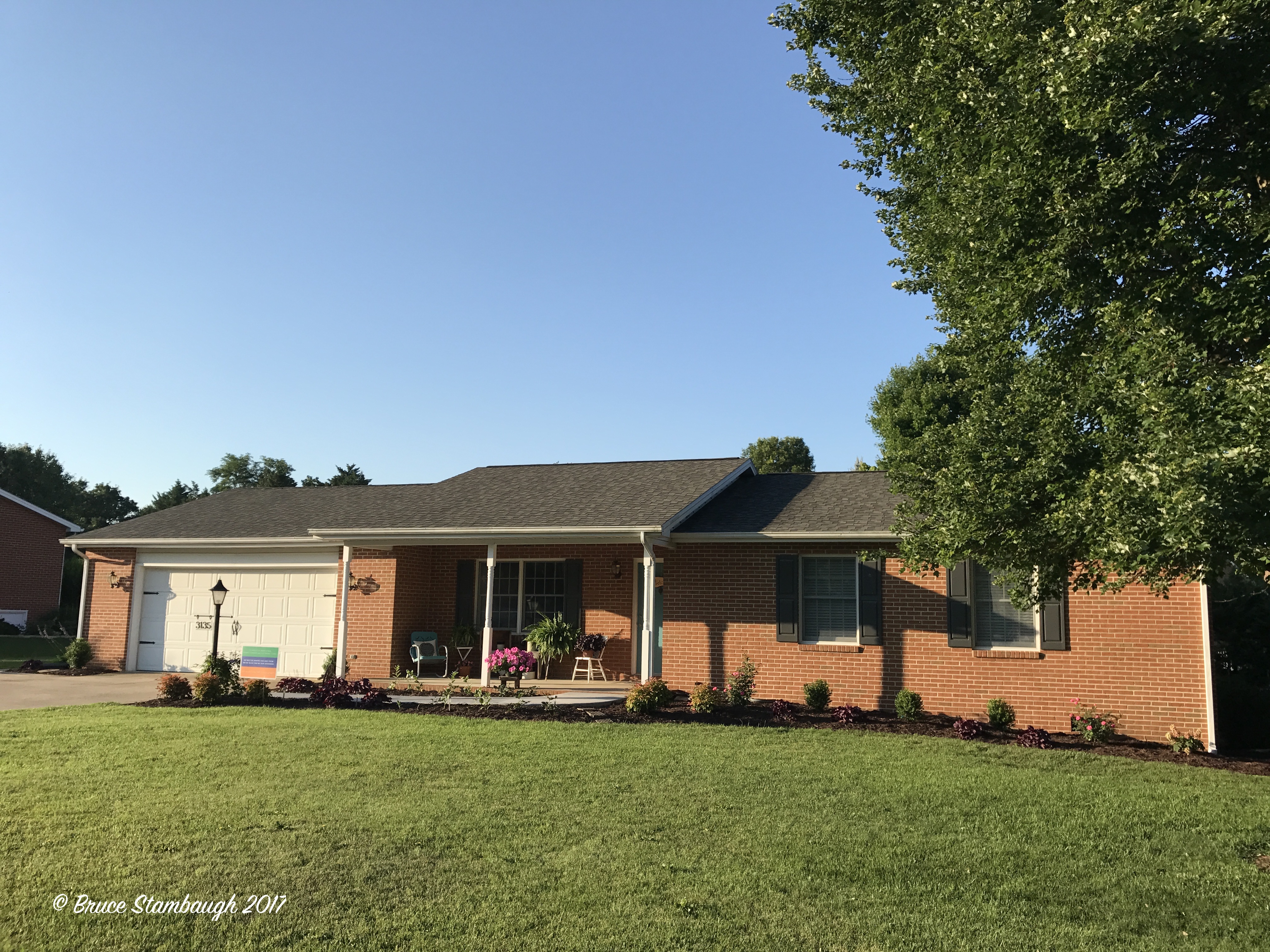
The last place got our attention. We wanted a turnkey home, one floor, no basement, smaller lot, a two-car garage, and municipal sewer and water. This little ranch had it all. The owners had also remodeled it just the way we would have done it ourselves. We immediately felt at home.

There were issues, however. We weren’t exactly ready to buy a home, according to our established moving timeline. At first, that was no problem because another couple had already put in a bid on this house.

However, those potential buyers and the sellers couldn’t agree on a price. Excuse the pun, but that opened the door for us. So we made an offer. In a matter of head-spinning hours, we had a deal. The house was ours. I signed the sales agreement electronically online. Neva signed on the hood of a car in a parking lot at 10:30 at night.

Apparently, we indeed wanted this house. We had better. We now owned it. Intent on keeping to our timeframe, excellent renters were quickly found for our new home.

If everything goes as planned, which it has so far, we will become Virginians by next summer. So there you have it.

Can you accidentally buy a house? Yes. You. Can.

Shenandoah Valley
Looking towards our Ohio home.

© Bruce Stambaugh 2016

A real road trip down history’s highway

Port Washington Rd., historical trail
Following the trail.

By Bruce Stambaugh

If ever there was a road trip, our day outing down history’s lane was it.

We knew we would encounter historical remnants as we drove the length of Port Washington Road, Ohio’s first state highway. We didn’t anticipate the surprises we found.

Port Washington Road was created to connect Millersburg, Ohio with Port Washington, Ohio. That seems logical enough. Nearly 180 years ago, an accessible route was critical to local farmers who wanted to get their goods to market.

Back then travel was tough. The dirt roads that existed were rutted, dusty, and dangerous. Carrying your product to market was extremely problematic.

The opening of the Ohio and Erie Canal to Port Washington in southern Tuscarawas Co. was designed to improve that process. The canal system, hand dug in the 1820s and 1830s, speeded Ohio’s development. In turn, goods were shipped to New Orleans and New York City, enhancing the local economy.

Another couple joined my wife and me on the excursion. I had driven parts of the road many times, but never the full length. With directions secured from literature about the road, we began our trek across from Millersburg Elementary School on a diagonal street, Port Washington Road.

Signs marked the way we should go. It was a good thing, too, because there were more twists and turns, curves and hills than on any of Cedar Point’s many roller coasters.

Our air-conditioned van took us up, down, and around steep grades. I gasped at the thought of driving a team of horses pulling a fully loaded wagon with a season’s harvest aboard. It was hard enough for me to maneuver.

How in the world did they negotiate those hills safely? No wonder it was a two-day trip from Millersburg to the canal. The halfway mark was a layover in Baltic. That’s where we had lunch, in more comfortable accommodations than those early travelers.

We traversed village, township, county, and state highways. We visited curious crossroads romantically named Saltillo, Becks Mills, Meadow Valley, and Fiat.

Most of the roads were hard-surfaced in Holmes Co. But once we headed southeast out of Baltic, gravel roads became the norm.

Not long after leaving Baltic, we came upon a bald eagle foraging on a carcass in freshly cut oats stubble. I imagined sitting on a hard bench seat glad for the beautiful distraction from the dusty, bumpy road. The magnificent bird flew in sweeping loops over the field until we left.

This slideshow requires JavaScript.

The scenery alone was worth the trip. Other than the open areas on high ridges, the landscape likely compared to what those wagon masters must have encountered. We passed through tree tunnels, and by old homesteads long abandoned, well-weathered clapboard siding showing more patina than paint.

We found several cemeteries along the route, too. We couldn’t help but wonder if some of the hopeful farmers didn’t end up deathly disappointed from the ruggedness, and maybe even being waylaid by bandits.

In the middle of nowhere, we discovered a church with a golden dome. The names on cemetery’s tombstones revealed former parishioners. Farther down the road, a sign marked another church cemetery. The structure was long gone.

In the meandering 37 miles we trekked, we had to have traveled in every direction of the compass. The roads were that convoluted. Nevertheless, we made it to our destination, now a sleepy, residential hamlet.

With the actual canal filled in long ago, the only hint of the waterway was a slight depression that paralleled Canal St. Between there, and the Tuscarawas River laid the railroad tracks, the steel trail of the invention that killed the canal.

The steel tracks left the canal to history and the curious to rediscover.

Amish children, pony cart
Pony cart fun.

© Bruce Stambaugh 2016

Summer’s peak is upon us

Amish farm, wheat shocks
Grains of summer.

By Bruce Stambaugh

At this time of year, I especially like to frequent one particular lofty spot a few miles from home in the township where I live in Ohio’s Amish country. The view alone keeps me inspired, thankful and refreshed.

From there I watch the sky dotted with patches of cottony clouds tease the earth. Sun and shadows ripple across golden wheat shocks, lush rows of cornstalks, and ripening honey-colored oats. Green alfalfa already blankets the floor where the shocks stand.

I look west far across the Killbuck Valley to the up sloping hills miles away. Tin topped roofs twinkle in the morning light as the clouds and sun play their game of tag.

eastern bluebird eggs
Eastern Bluebird eggs.
Turning east, Berlin bustles with the business of tourists and locals alike. Even with binoculars, I couldn’t see the money exchanging of course. It just does as cash is traded for fresh peaches and cucumbers and t-shirts.

All the while I unknowingly entertain a family of Barn Swallows teetering and twittering on a power line. Eastern Meadowlarks fly their funny flight from fence post to nest, gurgling all the way.

Back home, the House Wrens begin their second nesting in the ceramic nest bottle hung up for them. The adult Baltimore Orioles lead their fledglings to the grape jelly feeder, encouraging them to partake. The young just squeak and childishly flap their wings.

The Eastern Bluebirds carefully attend their bright blue eggs in the box attached to the old clothesline pole. A bowl of fine grasses and soft pine straw caress the delicate eggs. It’s their second clutch, too.

The Chimney Swifts are as active as any time since they arrived in early April. Their young prattle their pleasure each time the parents swoop into the chimney with a force that rattles the fireplace doors.

The birds made quick work of the ripened black raspberries while we were away for a few days. They left their thank you notes where I was sure to find them, splattered on the sidewalk.

Click on the photos to enlarge them.

At my neighbors, the Purple Martins hold court discussing their eventual departure. Too soon, they’ll join the orioles and others on their long journey.

Other symptoms also point to the fact that we indeed are halfway through the summer. Queen Anne’s Lace, bulbous red clover blossoms, and cerulean chicory blooms decorate even the busiest country road.

Well-attended domestic flower gardens are in full bloom. Roses have replaced tulips, and dainty poppies with pastel crepe paper petals wave in gentle summer breezes. Fragrant milkweed flowers sweeten the air, attracting bees, butterflies, and other assorted insects.

The first tomatoes, like green golf balls, swell on the vines. Warm nights and bright sunshine will soon transform them into juicy redheads if the rains return.

I got a surprise verification of summer’s peak from a rare source. I encountered a small wagon train of folks traveling the local roads. They have done so in early July for 22 years now. The troupe from northwest Ohio camps at local farms always energized by the hearty welcome they receive.

Towns and civic organizations hold annual festivals to celebrate the season of plenty. They also try to make a little money while they’re at it.

The heart of summer beats loud, strong, and sure this time of year. I love to take its pulse. Its healthy palpations are life-giving, uplifting, invigorating, and transforming.

This summit of summer enables us to appreciate all of life’s goodness. Let’s enjoy the momentous moments before they wane.

grain crops, Amish farm
The long view.

© Bruce Stambaugh 2016

The bridges of Ashtabula County, Ohio

covered bridge
Benetka Road Bridge.

By Bruce Stambaugh

I’ve been curious about covered bridges for a long time. I wondered about their purpose other than the obvious one of crossing from one side of a stream to another.

My curiosity got the best of me recently. Accompanied by my wife and another couple, we went exploring all 18 of Ashtabula County’s covered bridges. We discovered that the unique architectural wonders were so much more than a conveyance from one bank to another.

If you’re not familiar with Ashtabula County, it’s Ohio’s northeastern most county. It bumps against both Lake Erie on the north and Pennsylvania to the east.

It’s a big county with varied topography and land usage. Its trail of covered bridges is one of its most distinctive features. Most of the bridges are still in use today.

Covered bridge hobbyists admire the intricate architectural details of the wooden tunnels. I focused my admiration on their individual aesthetic characteristics.

This slideshow requires JavaScript.

Covered bridges were once common across the United States. I wondered why 19th-century builders labored so to simply cover a bridge? I always had heard two main answers to that question.

The bridge had sides and roof so the horses pulling buggies and wagons wouldn’t spook from the sound of rushing water below the bridge or the sudden open space. The other was that the bridge was a respite from foul weather.

Never having driven a horse and buggy, I didn’t question the first reasoning. The second one seemed a bit questionable. I mean you could only get so many horse-drawn vehicles onto a covered bridge during a storm.

Like members of the same family, the bridges had many similar characteristics. Each bridge had its own history and personality.

Some were erected just after the Civil War, with others built more recently. I suspect county leaders recognized the economic value of having a covered bridge trail.

The bridges of Ashtabula County served as living monuments to a bygone era. Hand-hewn timbers joined by wooden pegs spoke of the intensive effort that went into building these nostalgic icons.

The bridges historically contributed to social, political, religious, and economic values of the county. In a way, history was repeating itself.

vandalism, graffiti
Calling card.
Besides the obvious purpose of crossing a stream, covered bridges were quite utilitarian. They indeed quieted horses and became a respite during a storm. Since the bridges were constructed entirely of wood, the covered sides and roof also protected the timbers and flooring from the elements and weathering. They minimized repairs.

The bridges had other callings as well. They served as gathering places for community meetings, political rallies, and religious services. Given the inspiring settings of some of the bridges, I could see why folks would like to linger there.

Unfortunately, other folks had little appreciation for either history or public property. Skid marks on the wood decking of some of the bridges evidenced raucous drivers thrilled with the sound of squealing tires. Others painted graffiti or left personal signatures, including an entire school class on an outing. Perhaps that’s why many of the bridges were outfitted with security lights and fire alarms.

After traversing fairly flat countryside for miles, the rural roads suddenly dipped and curved into steep, wooded ravines. The roads often rounded into and out of bridges, creating limited visibility. Passing motorists chased us to a bridge’s side more than once.

Most were courteous and slowed to a crawl. Likely we weren’t the first curious tourists they had encountered on their daily path across history.

root road covered bridge
Root Road.

© Bruce Stambaugh 2016

Bay Photos by Donna

Wildlife photos from the Chesapeake Bay region

ROAD TO NARA

Culture and Communities at the Heart Of India

K Hertzler Art

Artist and nature journalist in the Shenandoah Valley of Virginia.

Maria Vincent Robinson

Photographer Of Life and moments

Gabriele Romano

Personal Blog

Jennifer Murch

Art is the only way to run away without leaving home. -Twyla Tharp

Roadkill Crossing

Writing generated from the rural life

ANJOLI ROY

writer. teacher. podcast cohost.

Casa Alterna

El amor cruza fronteras / Love crosses borders