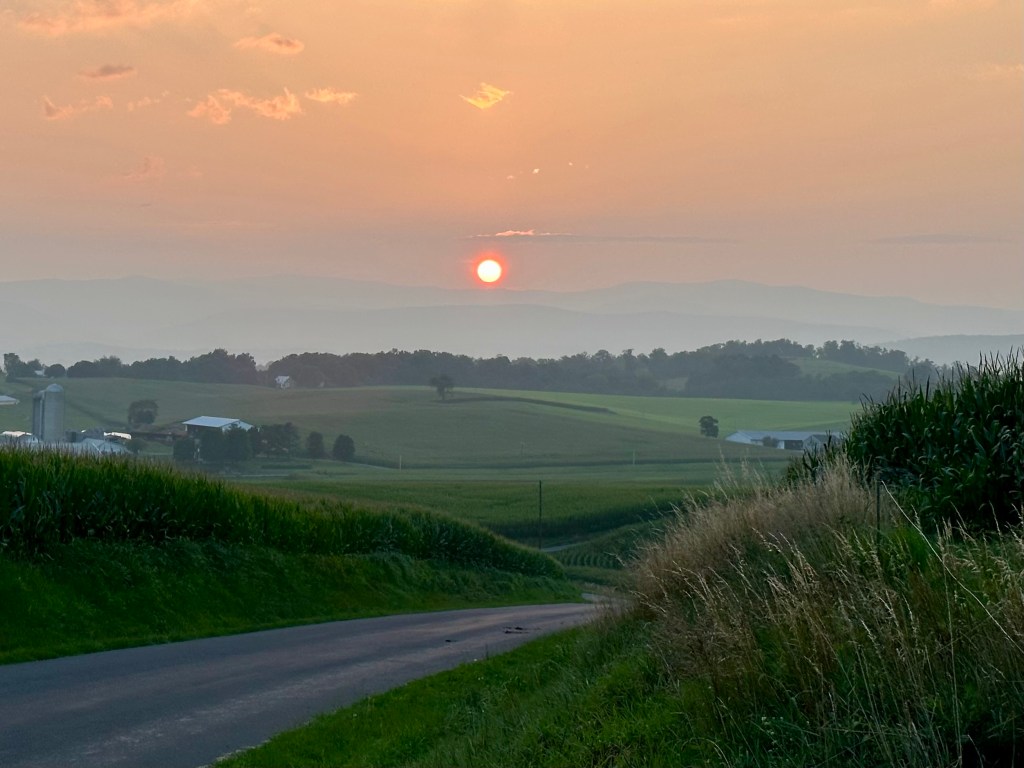
The autumnal equinox arrives at 8:05 p.m. EDT. This means the sun will set due west this evening. In the U.S., tomorrow begins the first full day of fall.
Many people believe that the equinox brings an even amount of daylight and darkness, but that is a myth. This year, that occurs on Saturday, September 26, and is called equilux. The word is drawn from Latin equi (equal) and lux (light).
As hot as it was early on, summer has flown by. Welcome autumn.
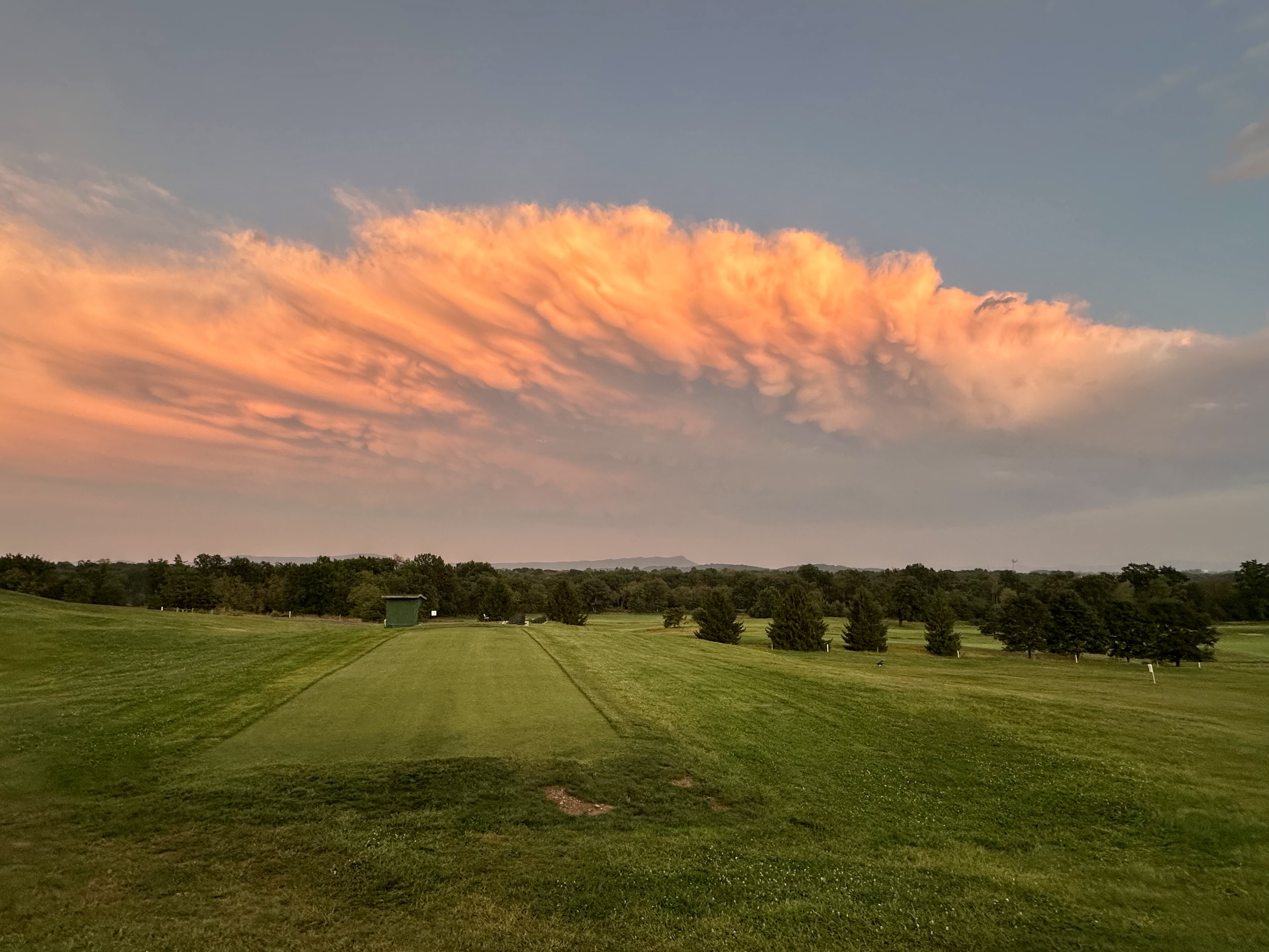
The sun sets due west on the autumnal equinox. Photo by Bruce Stambaugh
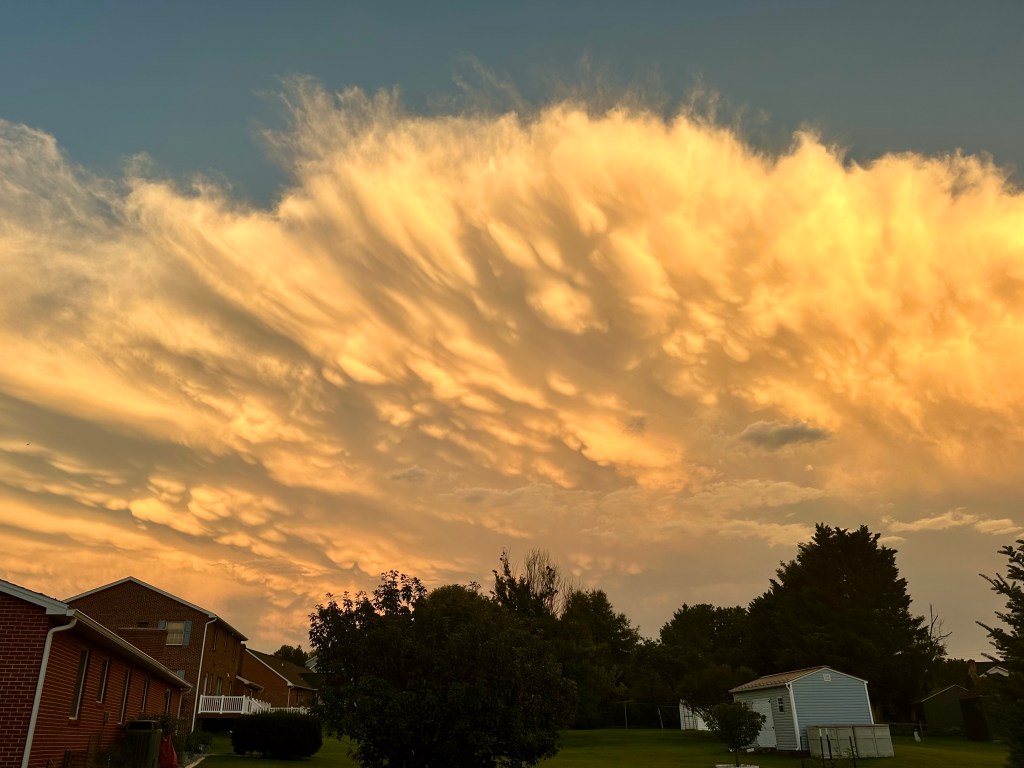
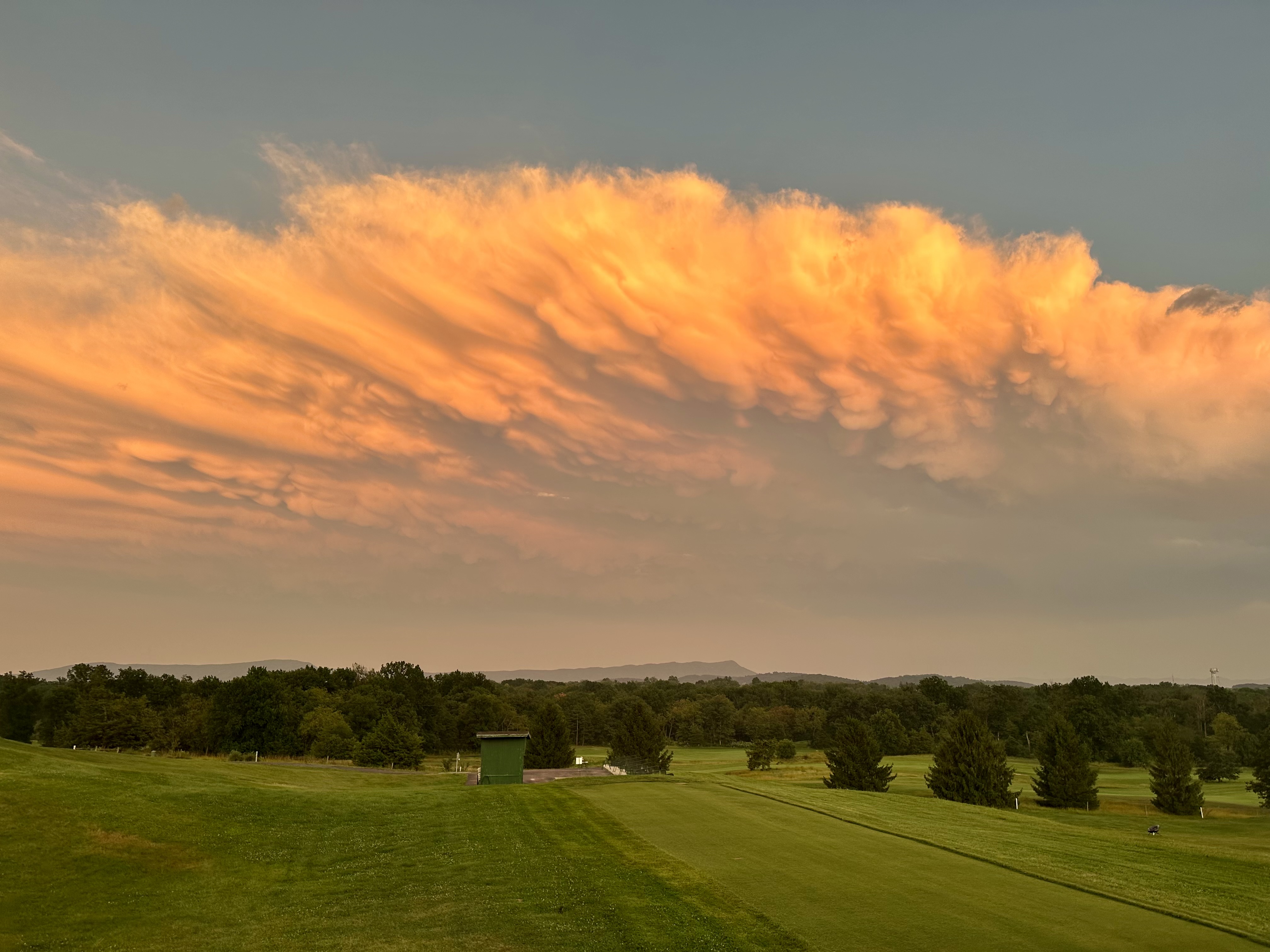
The backside of a severe thunderstorm. Photo by Bruce Stambaugh
After last evening’s storm passed, I stepped out the back door to check my rain gauge when this amazing scene stopped me in my tracks.
We had yet another storm, but it clearly had intensified as it approached the Blue Ridge Mountains and Shenandoah National Park, which serve as the eastern boundary of Rockingham County, Virginia, where we live.
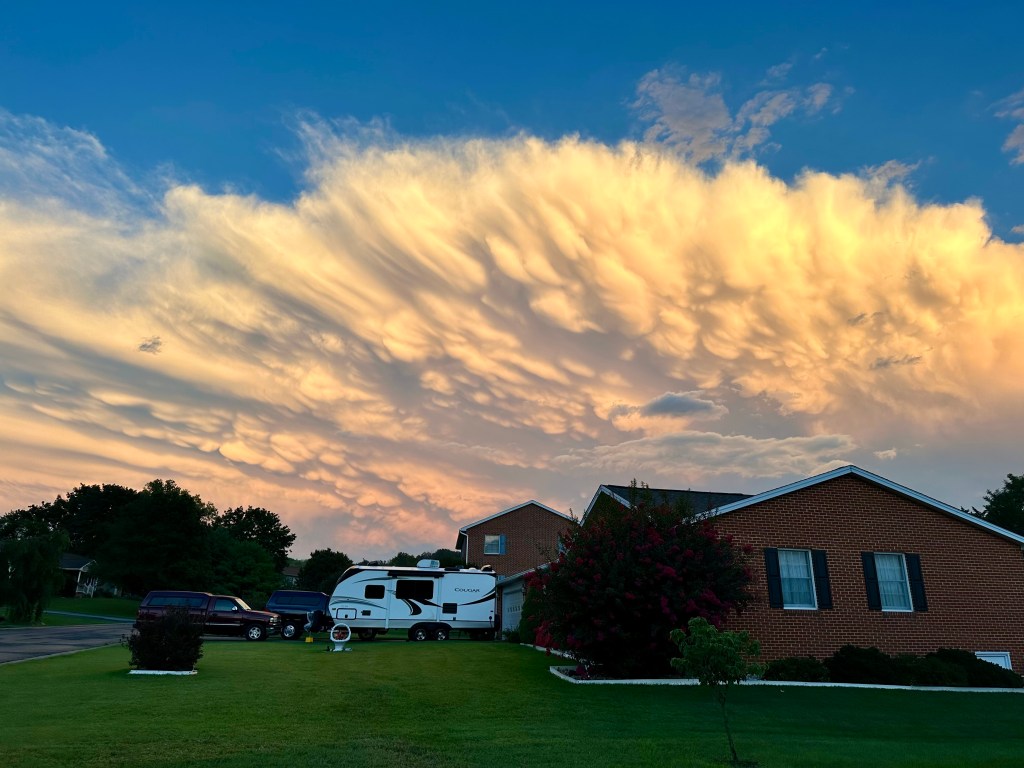
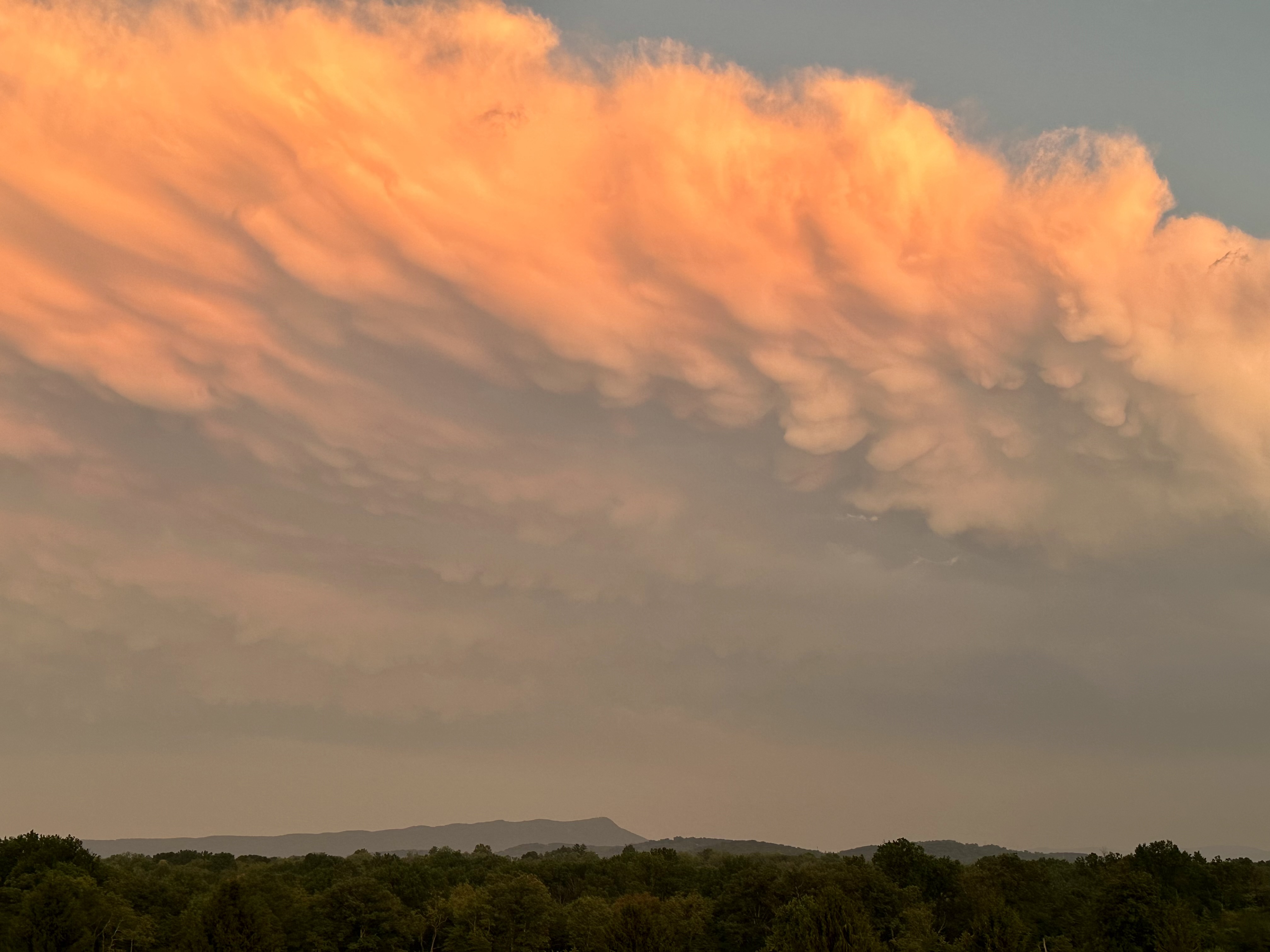
The view of the mammatus clouds from my driveway. Photo by Bruce Stambaugh
The setting sun dramatically illuminated the eastward-moving thunderstorm. The pouch-like clouds are mammatus clouds, formed when colder air aloft sinks into warmer air below.
Mammatus clouds almost always occur either at the lead of a severe thunderstorm or at the rear of the anvil-shaped thunderstorm crown. For meteorologists and those who appreciate and study clouds, spotting mammatus clouds is a rarity.
Since such clouds don’t last long, I wanted a view with a better line of sight. So, I headed to nearby Heritage Oaks Golf Course, behind an elementary school, which gave me an unobstructed view of the fast-moving storm.
As you can see, the turbulent clouds had already changed in the five minutes it took me to arrive at the golf course. Plus, the sun had set behind the Allegheny Mountains 30 miles to the west, changing the intensity and direction of its rays. Consequently, the colors of the clouds mellowed to more orange than white and yellow.
Please click on the photos to enlarge them.
Still, I was ecstatic to capture these shots, so much so that I never did check the rain gauge.
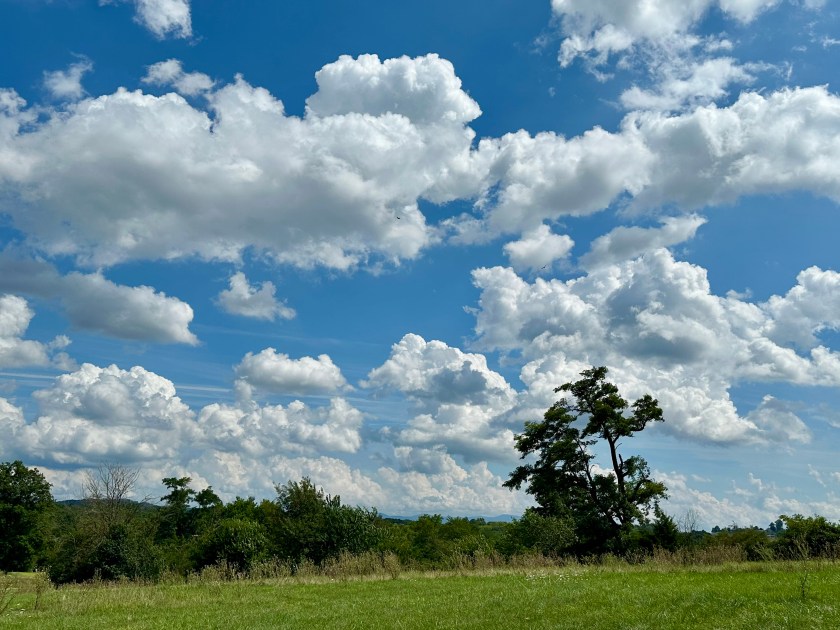
A puffy white cloud August day. Photo by Bruce Stambaugh
When I rose for my morning walk around the neighborhood, it was 47 degrees outside. On August 25!
As I walked in the early morning coolness, I thought more about how this August had been so different in the eastern U.S. The eighth month of 2026 here in Virginia’s lovely Shenandoah Valley has been anything but normal weatherwise.
August behaved normally the first nine years of living here after moving from Ohio’s Amish country. Year after year, August’s sun beat down, and the humidity overwhelmed you.
Usually, large cracks in the hardened, red soil zigzagged like spider webs. The parched grass crunched beneath your feet, devoid of any moisture for days, even weeks on end. Not this year.
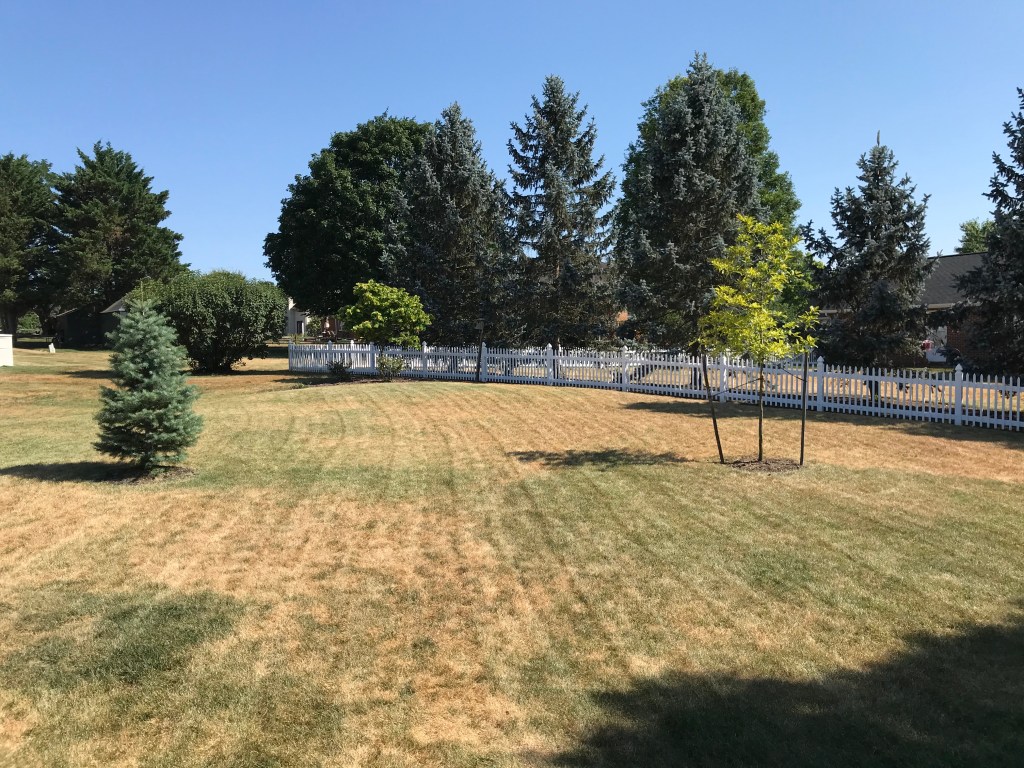
Our burned-out backyard in 2020. Photo by Bruce Stambaugh
Apparently, August masqueraded as April. A few spring flowers bloomed again. With storm after storm, some locales measured inches of rain. A few areas even experienced tornadoes, a rarity in Virginia, with property damage and power outages. Fortunately, no injuries or deaths were reported.
Even then, the area remains abnormally dry, according to the U.S. Drought Monitor. That’s how dry the early weeks of summer were.
Though we didn’t realize it at the time, summer’s dog days fell in June and July. Haze filled the bucolic valley, significantly obscuring the view of the mountains to the east and west.
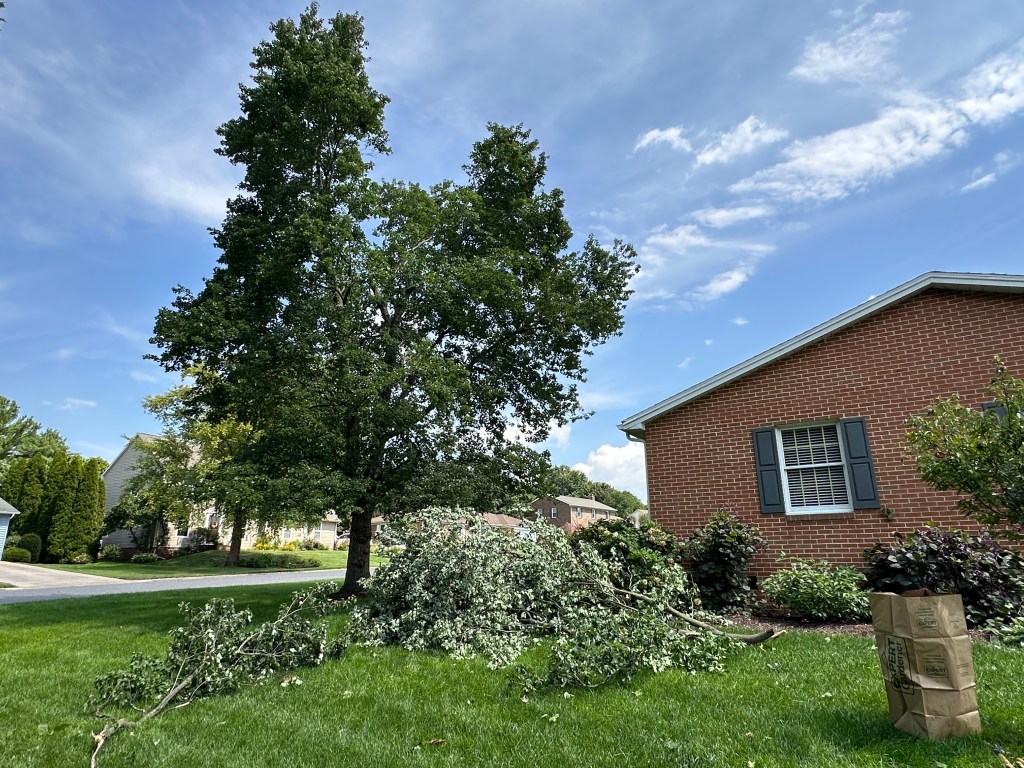
Strong winds in a severe thunderstorm damaged our Red Maple tree. Photo by Bruce Stambaugh
With August’s arrival, puffy white clouds sailed through deep blue August days. When school began again, students donned jackets while waiting for the school bus. They still wore shorts, however.
Instead of parched yards, lawns grew and grew, sometimes requiring mowing twice a week. It was a cash cow for high schoolers mowing lawns.
Unfortunately, the states to the south and west, clear to the Pacific Ocean, blazed and baked under record-high temperatures, extreme heat warnings, and massive wildfires. High winds spread small fires into thousand-acre conflagrations in minutes.
It wasn’t just the U.S. either. Europe and Canada shared in the record heat, dryness, and wildfires. Homes were destroyed, and firefighters were hard-pressed to contain the raging wildfires. The fires spread so rapidly around Las Vegas, Nevada, that residents escaped with only the clothes they wore. Passengers on European river cruises were inconvenienced by having to deboard for buses because the water was so low.
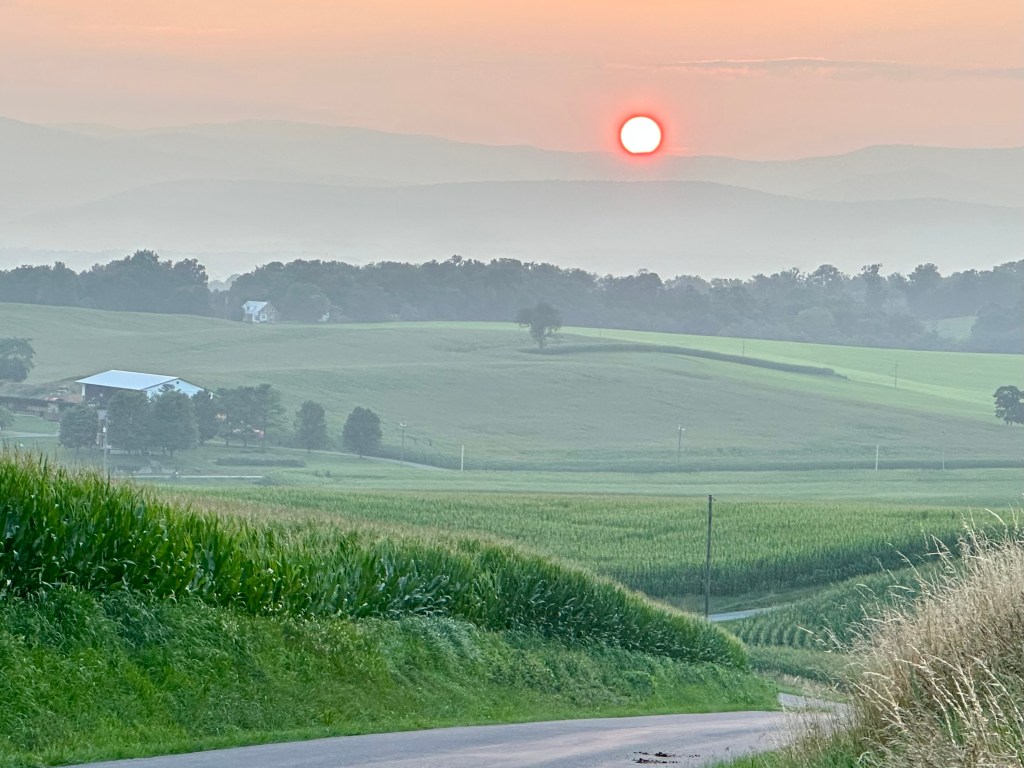
August’s weather has been a double-edged sword. Upper-level winds carried wildfire debris far from the fires’ origins, resulting in air quality issues for millions of folks. That also created glowing, golden sunrises and sunsets as a trade-off for the undesirable smoky smells.
A hazy sunset over the Allegheny Mountains. Photo by Bruce Stambaugh
At the same time, people appreciated the coolness, especially in the morning. Those on their daybreak exercise in my neighborhood have been wearing jackets and sweatshirts instead of T-shirts.
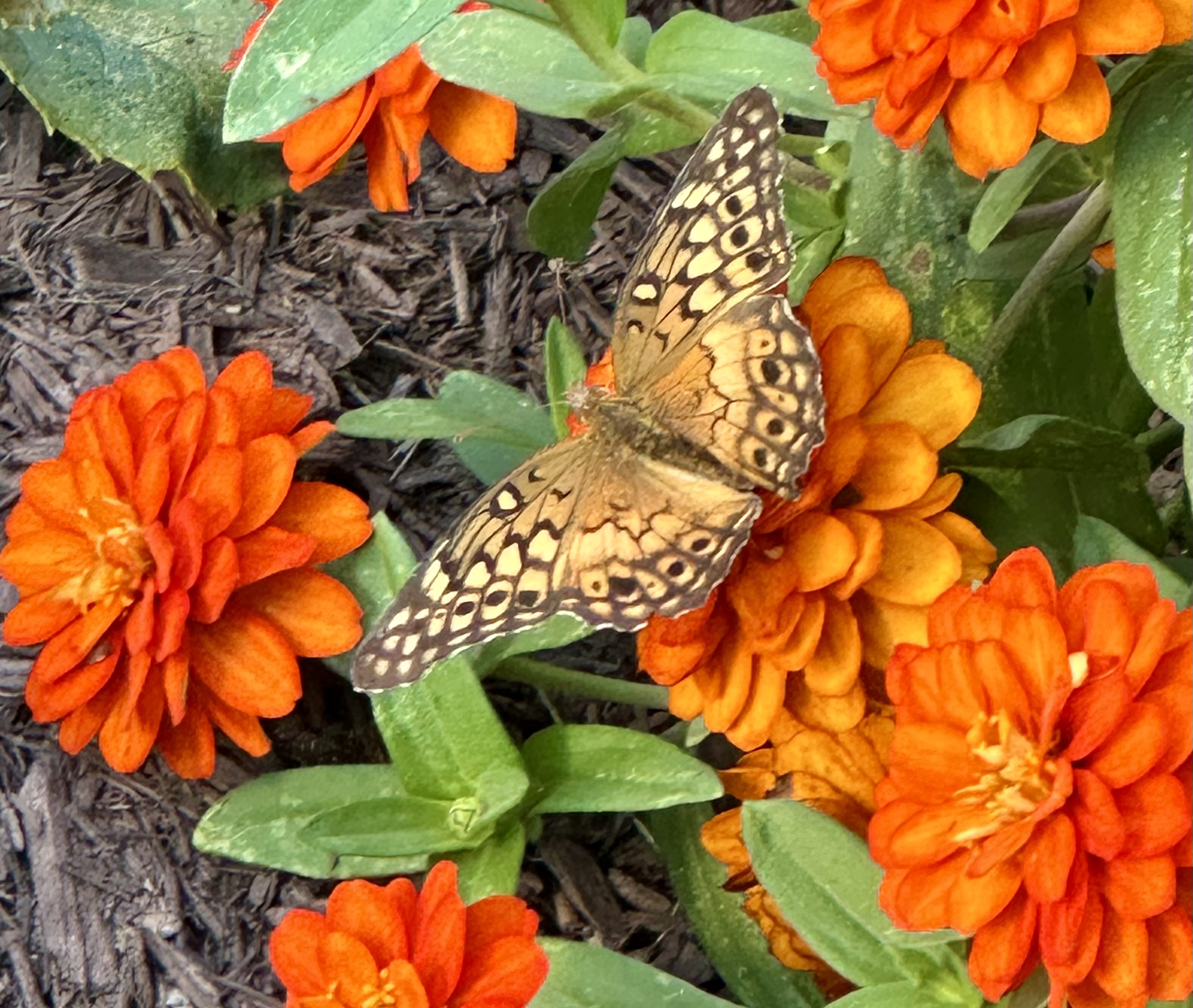
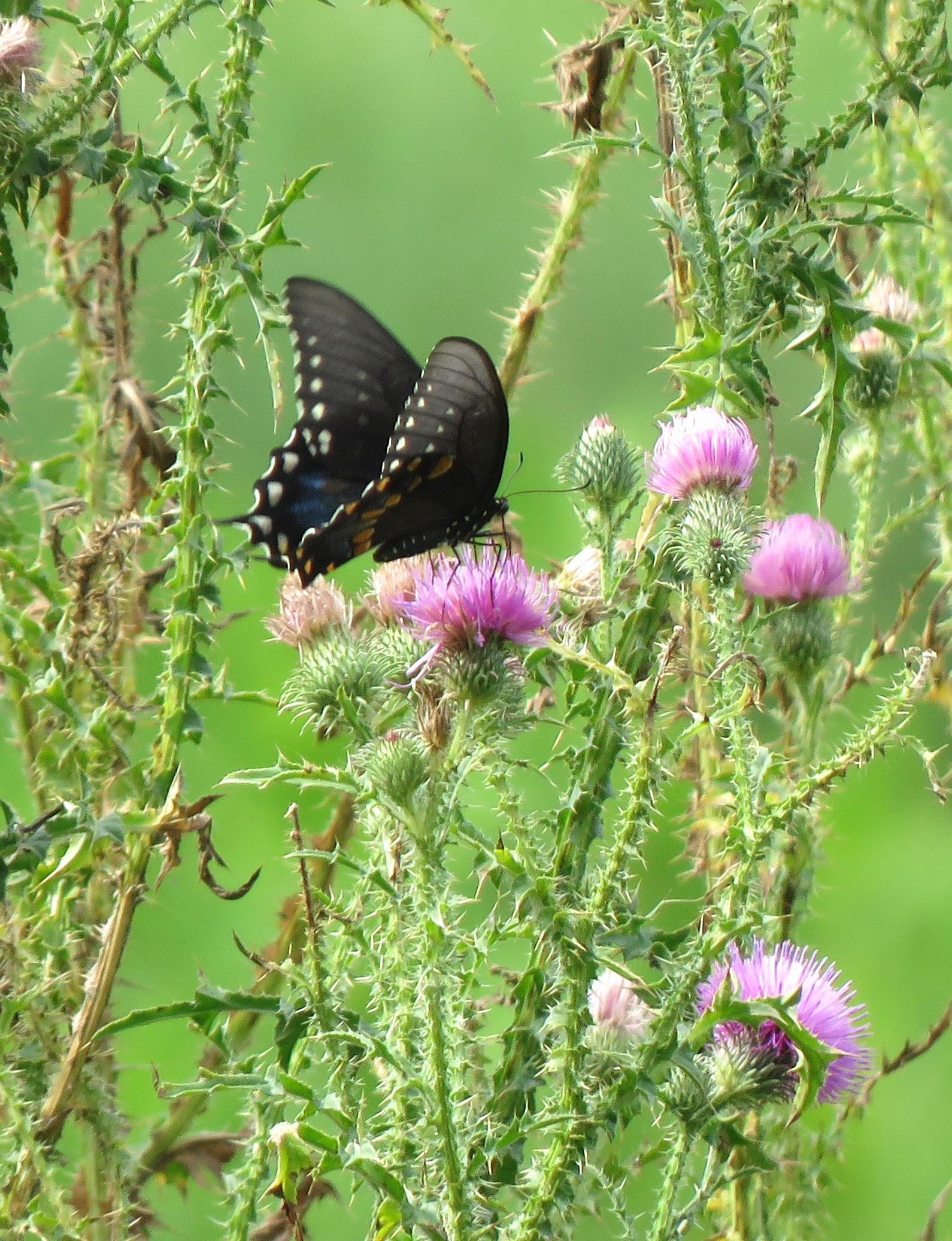
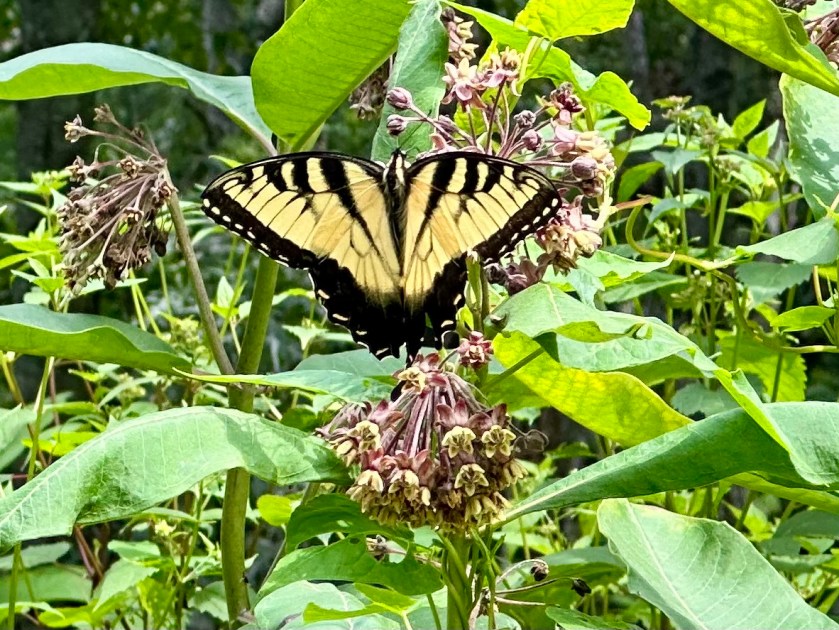
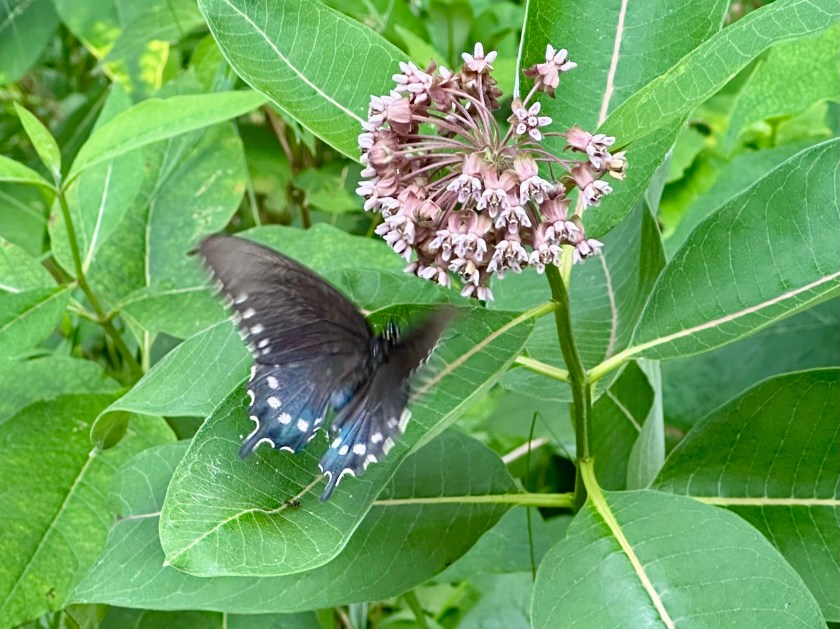
Of course, the regularities of August are still with us no matter the weather. Crickets and katydids lull us to sleep. Monarch, Tiger Swallowtail, Spangled and Variegated Fritillaries, and Pipevine butterflies flit from flower to flower, occasionally stopping for a photo op.
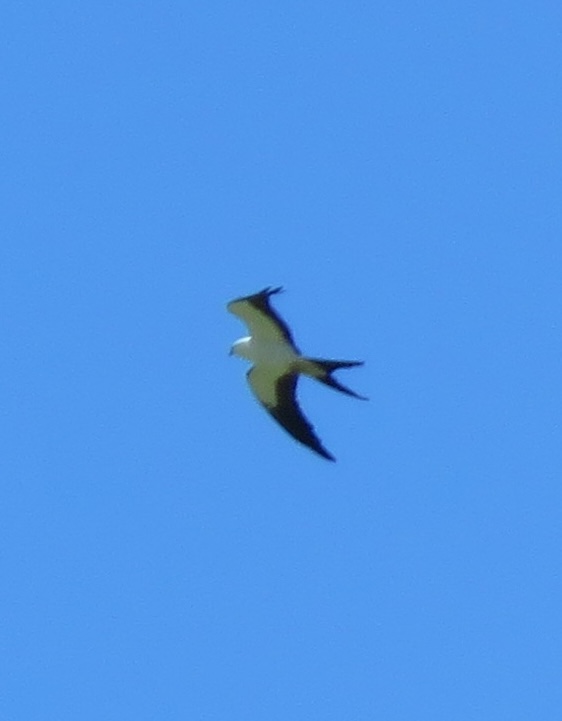
The avian fall migration has begun in earnest. I’ve successfully chased Swallow-tailed Kites and Mississippi Kites, both species far north of their normal range. Warblers and other songbirds have joined them in their quest for appropriate food absent in northern climes in the colder fallow seasons.
Conversely, folks in the southwestern U.S. have been baked in consecutive 100-degree-plus days, weeks in some places. Those are abnormal temperatures for August, even for those areas.
Clearly, geographic location has played a major role in the weather one has experienced this August. That’s the way weather rolls.
Despite the storm-damaged maple tree in my front yard, I’m very thankful we were in the cooler zone of August’s many vagaries.
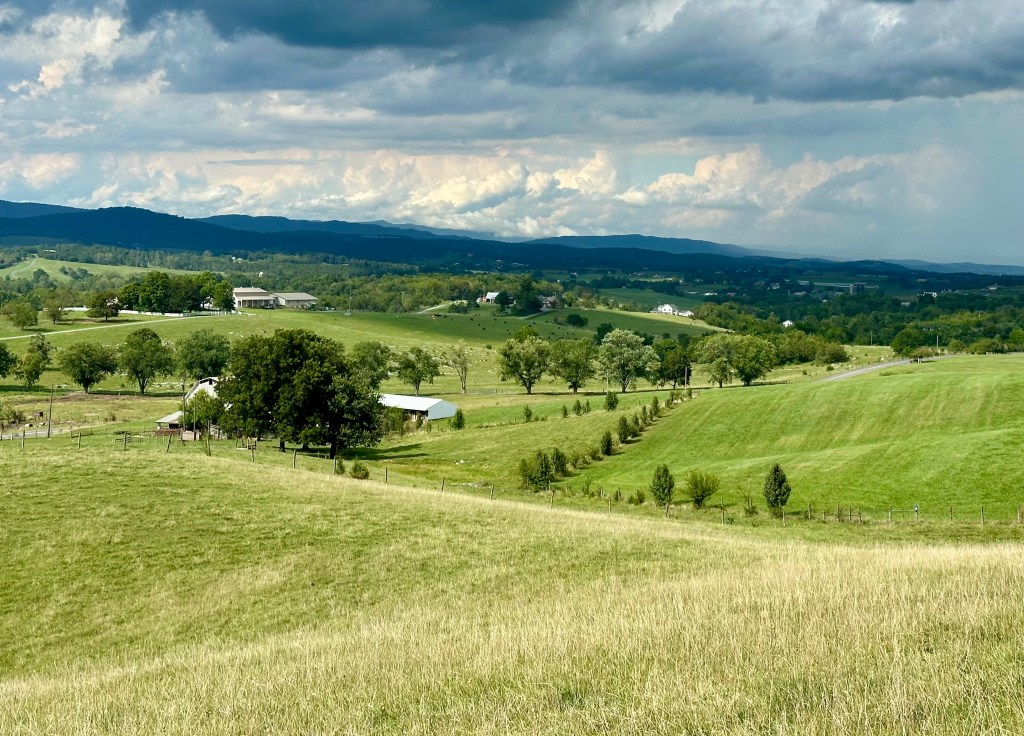
The bucolic Shenandoah Valley. Photo by Bruce Stambaugh
I went out in search of some rare birds for the Shenandoah Valley: Mississippi Kites. Unfortunately, a storm front quickly moved across the Appalachian Mountains and into the valley.
Fortunately, as the storm clouds built, they were north of me a few miles. Unfortunately, that’s where the birds had been sighted. The sun beat upon my back as I trudged through the farm field for a better view of the small valley below me.
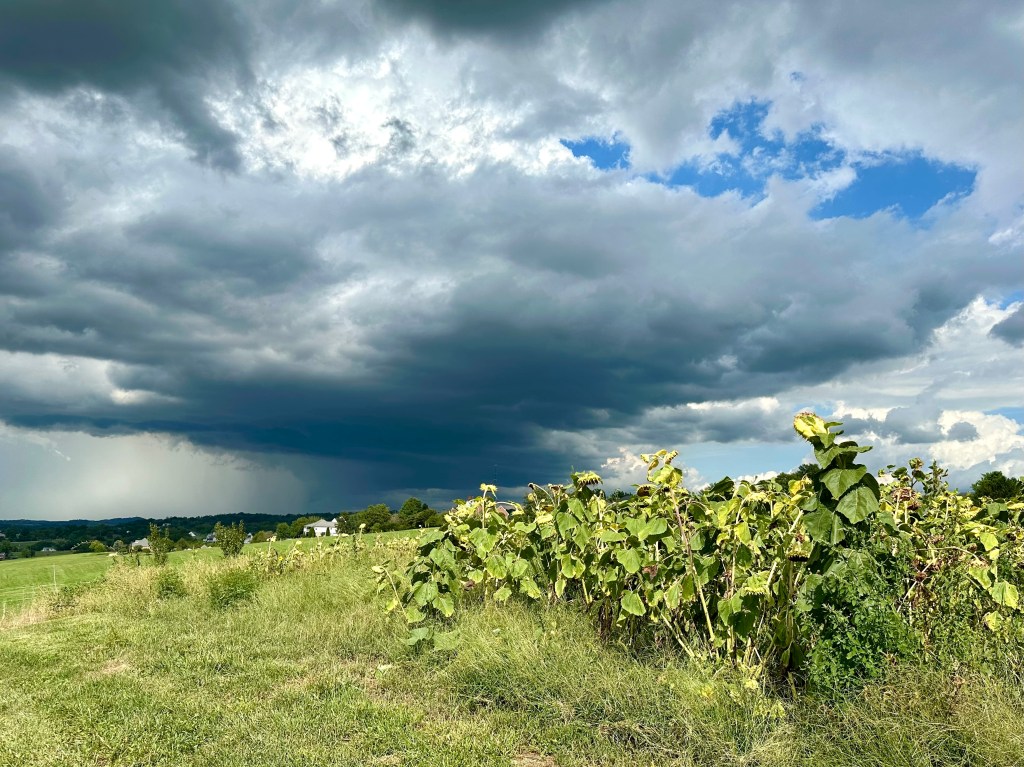
With the Kites nowhere in sight, I turned my attention to the cumulonimbus clouds moving rapidly northeast. The late afternoon sun brightly illuminated them. Shortly after taking this photo, the National Weather Service issued a Severe Thunderstorm Warning for those in the path of the storm.
That’s the way of bird watching. You go in search of one thing, and end up photographing something entirely different, but equally inspiring.
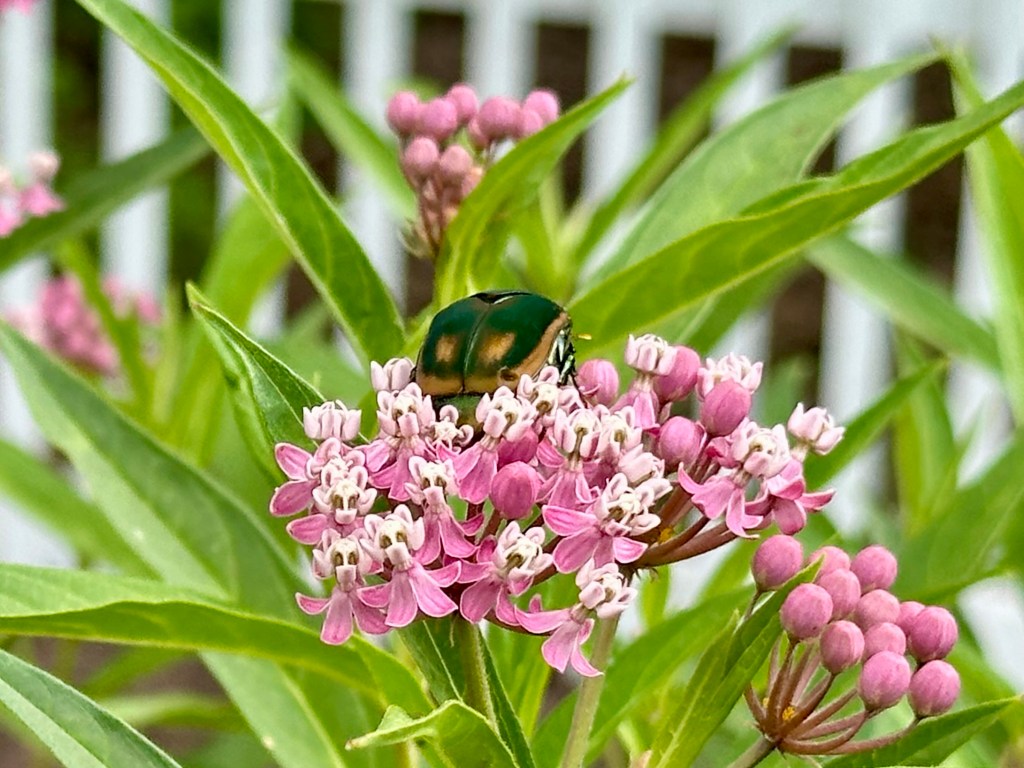
When the Swamp Milkweed plants bloom, I regularly check the blossoms for Monarch Butterflies. On this day, I found Green June Beetles instead.
I shouldn’t have been surprised. Green June Beetles emerge to mate in late July and August. This one was feasting on the nectar of the lovely mauve flowers of the Swamp Milkweed.
The chunky one-inch-long beetles of the southeastern U.S. are commonly seen flying low to the ground in yards in mid to late summer.
My only question is: if they hatch in late July, why are they called Green June Beetles?
A Green June Beetle on Swamp Milkweed blossoms. Photo by Bruce Stambaugh
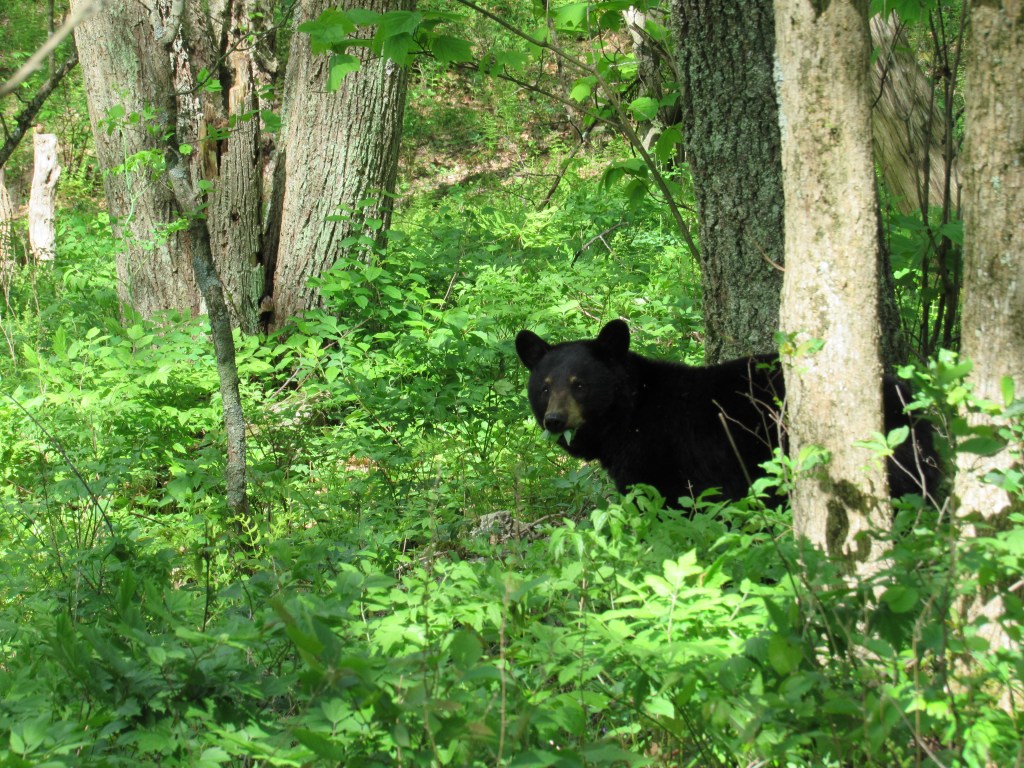
You never know what you’ll happen upon in nature. Photo by Bruce Stambaugh
We live in a stress-filled world with lots of artificial noise, annoying distractions, societal expectations, and short deadlines. There are ways to escape the madness, even if only temporarily.
In my almost 79 years of living, I have made a habit of escaping much of life’s static by getting away. Even in retirement, I feel life’s stresses.
Hiking and bird watching are two excellent ways to forget all of the activities that clutter our lives, especially with 21st-century technology constantly hounding us. Combining exercise with enjoyment helps strengthen my body, foster mindfulness, and recharge my spirit for living.
I add in a third complementary hobby: photography. Snapshots of my outings document where I have been and what I have seen. Then I can share the treasures I have found with others, which only enhances the joy of the experience.
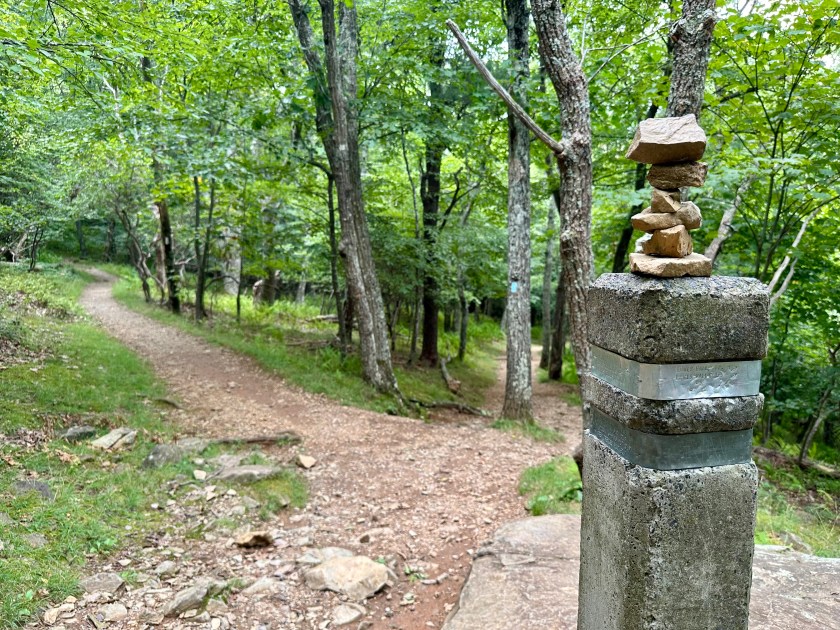
Poet Mary Oliver taught us to “pay attention, be astonished, tell about it.” During my treks, I put this poetic advice into practice. I marvel at a pair of Swallow-tailed Kites foraging for insects over a recently mown field. Walking through a tunnel of blooming Mountain Laurel along the Appalachian Trail stops me in my tracks.
A Swallowtail Kite. Photo by Bruce Stambaugh
A blogger friend of mine who frequents Georgia’s Okefenokee National Wildlife Refuge does so for solitude and renewal by kayaking among alligators. Finding renewal in nature is a personal preference. Making the effort to enjoy the outdoors is what counts.
Recent studies have proven what author Wendell Berry has always known: “For a time, I rest in the grace of the world, and am free.” One study “found evidence for associations between nature exposure and improved cognitive function, brain activity, blood pressure, mental health, physical activity, and sleep.” Another research paper focused on the health benefits of nature in urban areas.
These studies show that everyone, everywhere, should commune with nature. It can be a morning walk in your neighborhood or a long-distance bicycle ride. I walk frequently in our suburban neighborhood in Virginia’s Shenandoah Valley. The melodious bird calls and the fragrance from well-attended flower gardens combine to energize my steps.
I find Berry’s grace under the shady canopy of towering trees, among stands of colorful wildflowers, while viewing wildlife big and small, and in forever mountaintop vistas. So, whether with friends or solo, I enjoy nature in her many forms. Being retired allows me to do so as time allows.
I keep a steady pace until I spot something pretty or intriguing. I pull out my smartphone and photograph it. That documents the time and place to reinforce my memory. It might be another opportunity to share it as well.
I belong to a local bird club, so I can follow up on any rare bird alerts as I can. I don’t always find the bird in question, but I’m not disappointed. I often encounter other birders in search of the same species. We commiserate and share other birding adventures we’ve had. New friends are made in the process.
I’ll occasionally join a scheduled bird hike in a city park or even in Shenandoah National Park 40 miles away. Having multiple pairs of eyes scanning the sky and peering through thickets and woodlots enhances all our chances of seeing a special bird.
I have the privilege of mentoring a high school junior from our church. He also happens to enjoy bird watching, so we occasionally venture out with small groups or another mentor-mentee pair to enjoy the hiking, camaraderie, and all we encounter along the way.
Impatient with our septuagenarian pace, the trustworthy teens forge ahead, exploring on their own. Once, they encountered an unfamiliar rock scramble and rushed back to us, realizing they had missed the turn.
I am most free to enjoy the flora and fauna when I go alone. I travel at my own leisure, stopping to photograph bees and butterflies on flowers, unusual rock formations, and birds if I can spot them in the dense foliage.
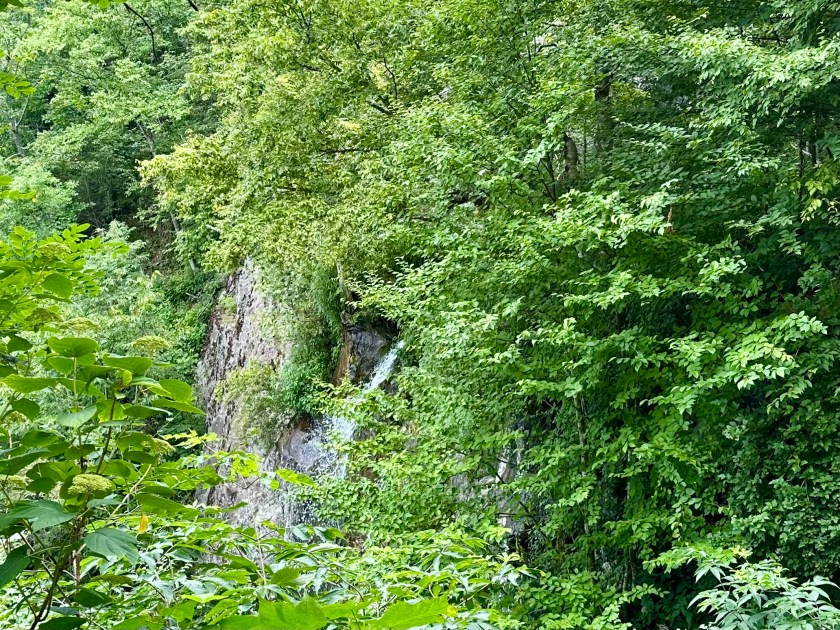
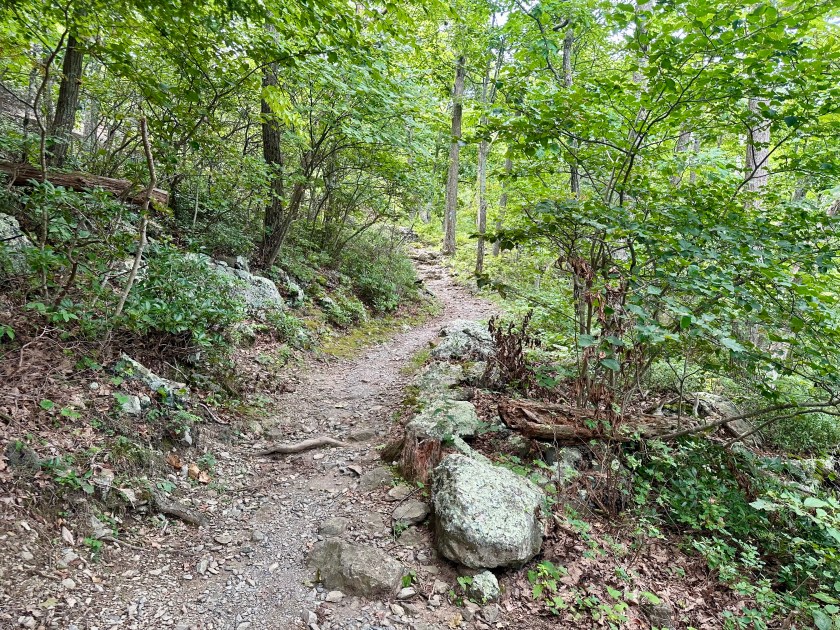
After hiking to a majestic overlook in the Blue Ridge Mountains, I rest a spell, partly to regain my energy and catch my breath, but mostly to inhale the view. The quiet has its rewards: a doe grazing with her fawn, Red-tailed Hawks and Turkey Vultures soaring on thermals with puffy white clouds sailing high overhead in the cerulean sky, a Timber Rattlesnake soaking in the sun on a limestone outcropping.
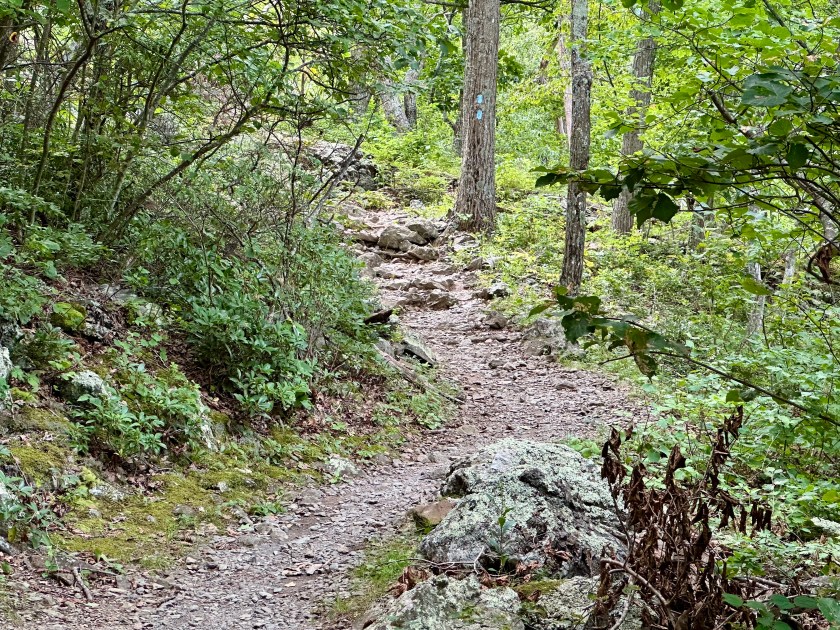
Hydration and nourishment with water and snacks are essential, especially when hiking at higher altitudes. With binoculars hanging from my neck and a camera slung on my shoulder, a pair of walking sticks keeps me steady even on the rockiest of terrain.
Spending time in nature provides many benefits, especially for seniors as we age. It helps improve cardiovascular health and sleep, and reduce inflammation in the body, according to this study by the Elder Care Alliance. My family physician tells me “to keep moving,” so I do.
The essence of being in nature with the wild things gives me all the peace I need. With no signal in remote areas, the cellphone never interrupts.
We often hear about the harbingers of spring, but seldom do we speak of those of autumn. Yet, they certainly exist.
If we look closely, the signs have begun to appear. The vegetation and animals are already giving us hints of what is to come in fall. After all, the Autumnal Equinox is only six weeks away.
Fall migration has already begun for some of our aviary friends. Those with bold spring mating colors now appear much duller and are harder to identify.
If we take time to notice, some leaves of deciduous trees and climbing vines have already begun to change. Maybe the hot, dry summer we had here in Virginia’s Shenandoah Valley had something to do with the early signs of fall.
Whatever the reasons, the gradual transition helps to accept that autumn is just around the corner.
Some leaves on a Virginia Creeper vine have already turned red. Photo by Bruce Stambaugh
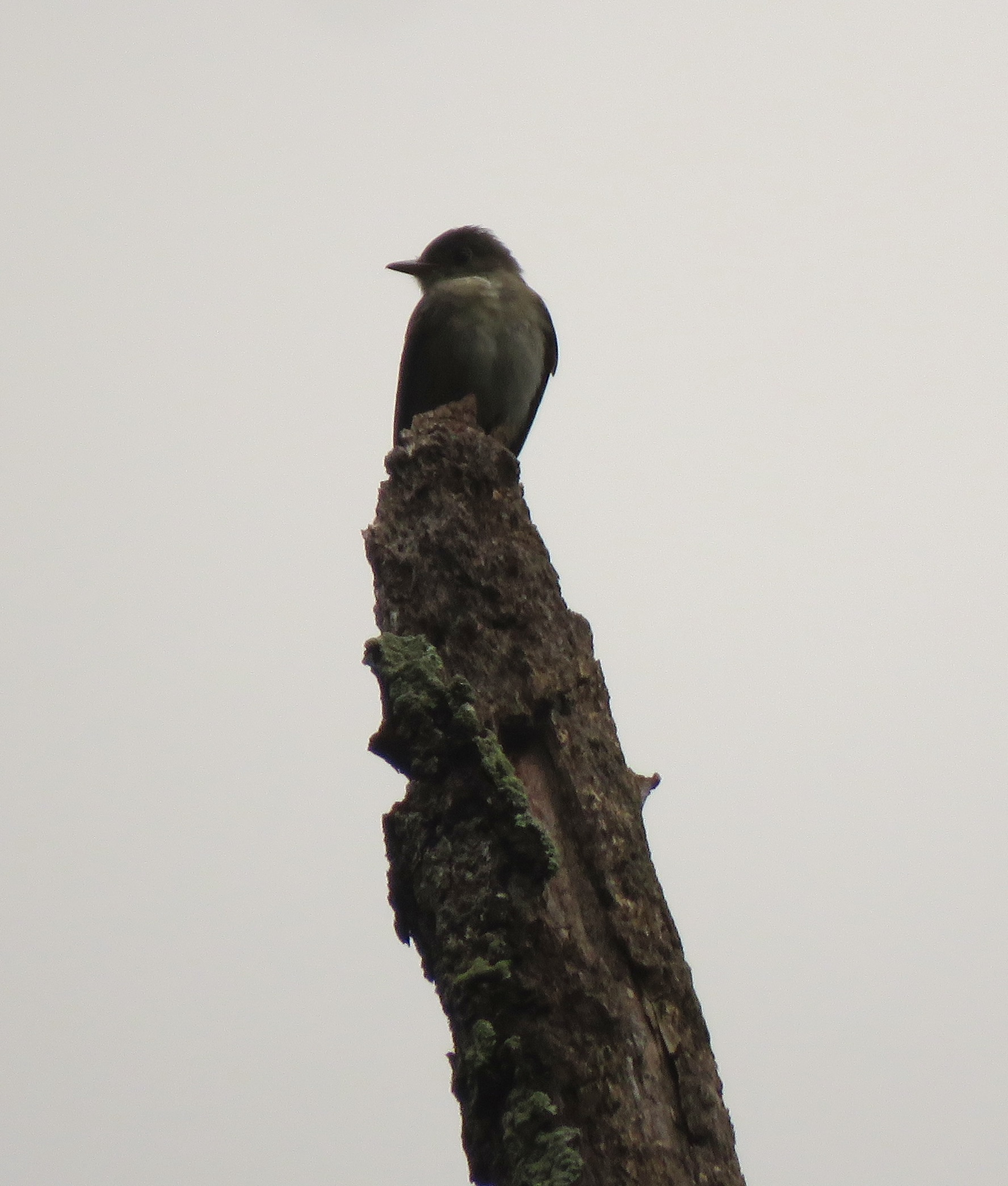
With the sun behind this bird, it may be hard to discern the species. But birders use other clues to identify birds when conditions prevent seeing the bird directly.
When I cleared a hill on a gravel road, I didn’t spot this Eastern Kingbird right away. I stopped my vehicle as smoothly as I could without skidding on the loose gravel.
First, I noted the bird’s size. Secondly, its posture was distinctive for an Eastern Kingbird. In addition, the habitat was right for this species. Eastern Kingbirds love open, weedy fields, which were behind the bird, with trees nearby, which were on the east side of the road.
The white feathers at the tip of its tail were another field mark. When you are birding, you have to take the shots you are given and be happy with that.
As a photographer, I was happy with the composition of this shot, despite the strong backlighting.
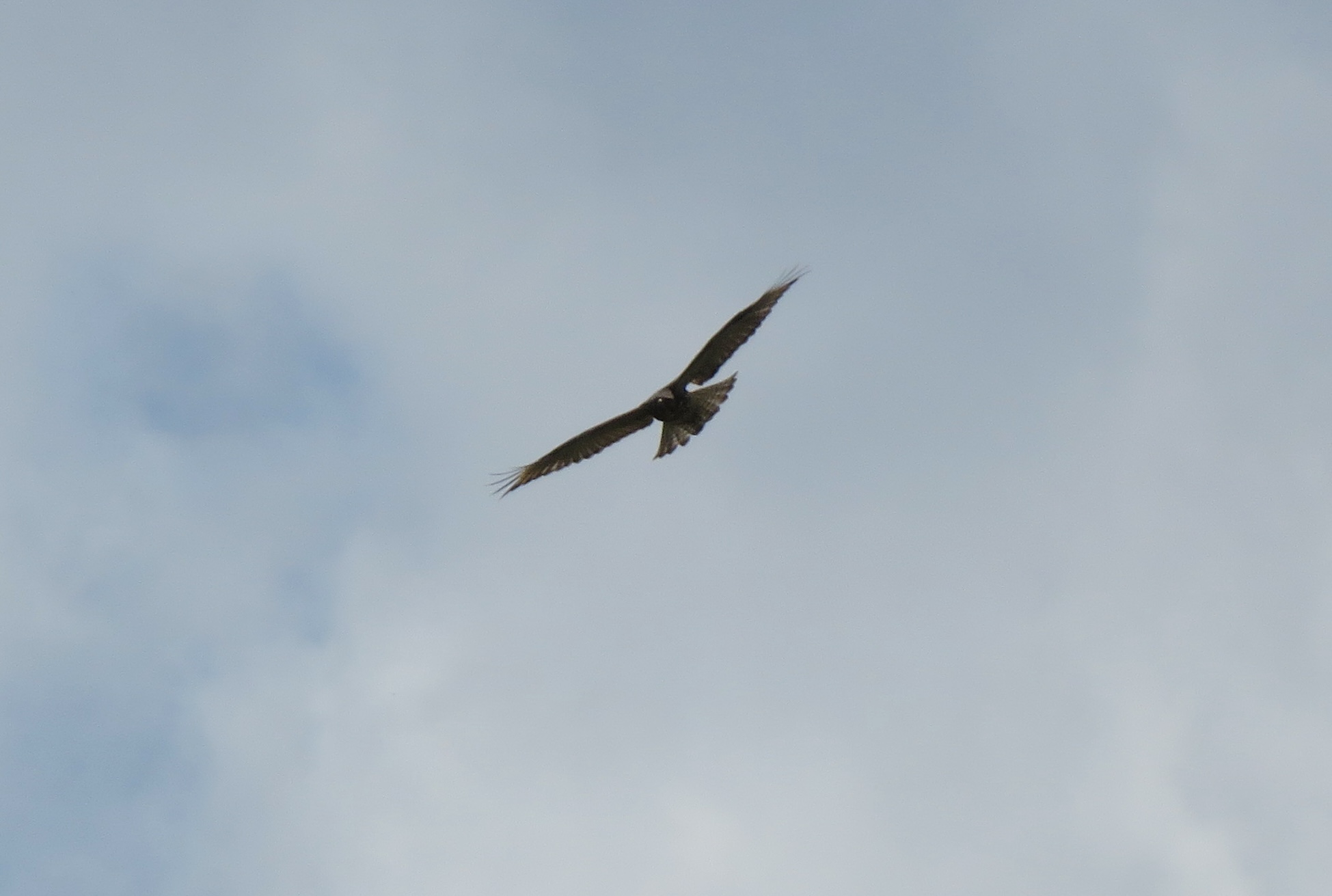
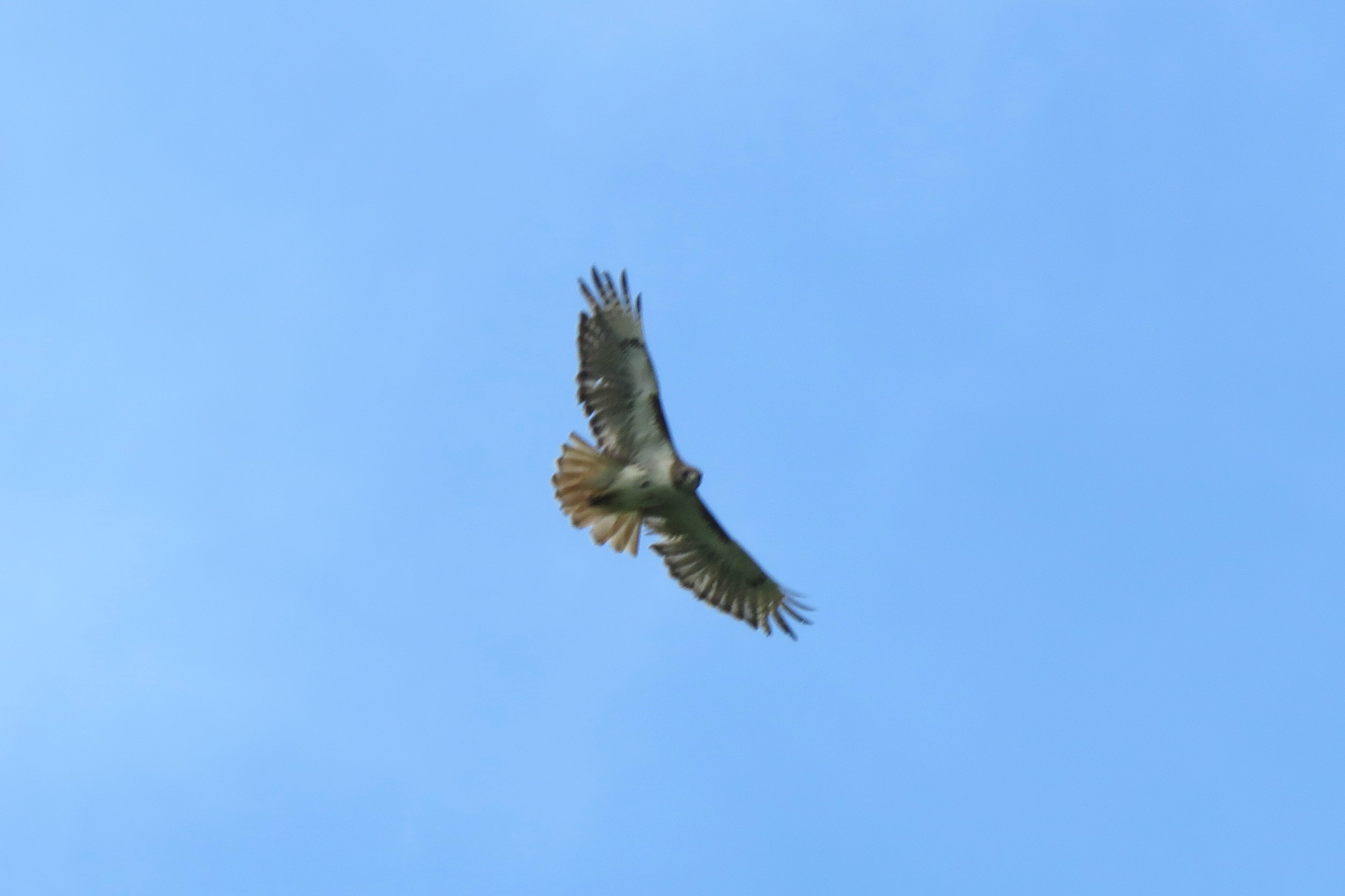
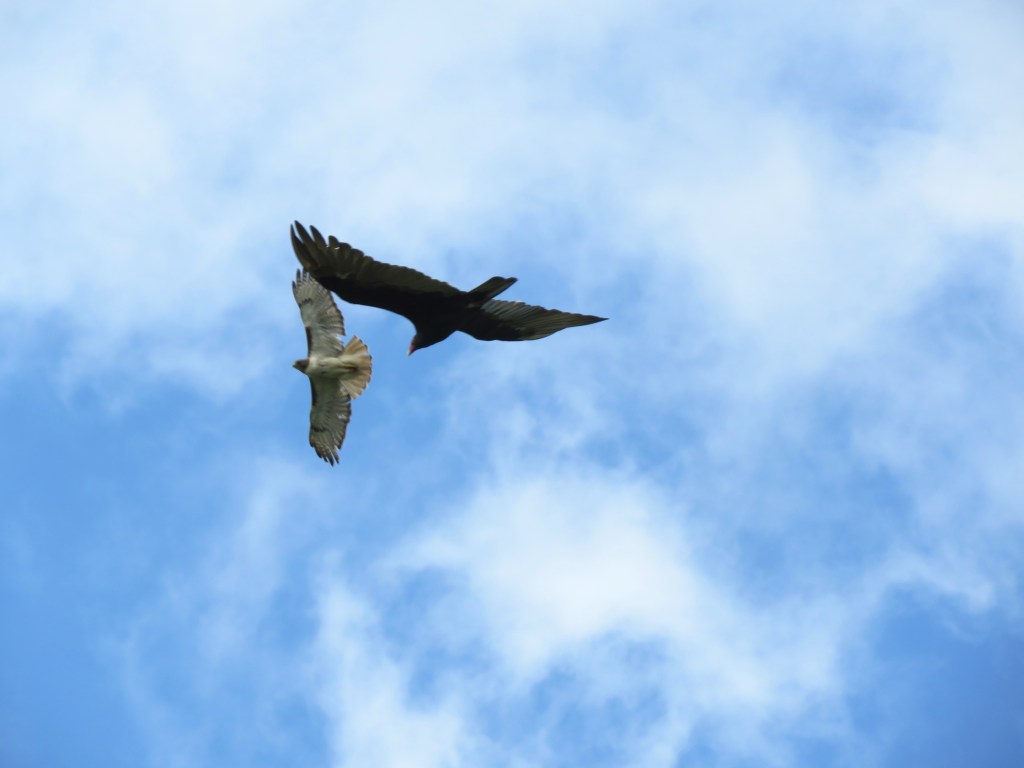
I snapped this photo of a Red-tailed Hawk soaring on a thermal over a fallow farm field. I never saw the Turkey Vulture that photobombed the image until I checked the photo on the camera’s back screen.
Both bird species are common in Virginia’s Shenandoah Valley, one of the leading agricultural counties in the Commonwealth. Most farms supplement their grain and hay crops with milk cows, beef steers, and especially poultry barns.
Consequently, there are plenty of food supplies for both the hawks and the vultures, with dead carcasses sometimes hauled to the back 40 acres for disposal. Deer/vehicle collisions are also common, providing more opportunities for nature’s natural scavengers to feast to the full.
Two birds with one shot. Photo by Bruce Stambaugh
The angle of the seemingly interconnected wings of the two birds also intrigued me. Of course, with the Red-tailed Hawk higher than the sailing vulture, the large black bird was no threat to the Buteo jamaicensis.
It’s hard to believe, but today is the first day of August.
August is notorious for hot, hazy, humid days, better known as the Dog Days of Summer. But as this photo from August 2024 shows, when a cold front pushed through, it used the energy from the heat and humidity, along with the dew point, to create some pop-up thunderstorms.
The cooling after the storms is a welcome relief, but given August’s reputation, the pleasant weather seldom lasts.
Of course, August offers more than uncertain weather. County and state fairs are held. Back-to-school sales entice parents and their offspring to purchase new clothing for their students, who will soon begin a new school year.
Farmers are literally making hay and hoping for rain to quench their grain crops. Golden, hazy sunsets will close out productive August days.
And for the record, August officially begins the fall bird migration, with some birds already molting into their non-breeding plumage.
So, welcome to August, and embrace all that she has to offer.
An August thunderstorm formed over Shenandoah National Park. Photo by Bruce Stambaugh











You must be logged in to post a comment.