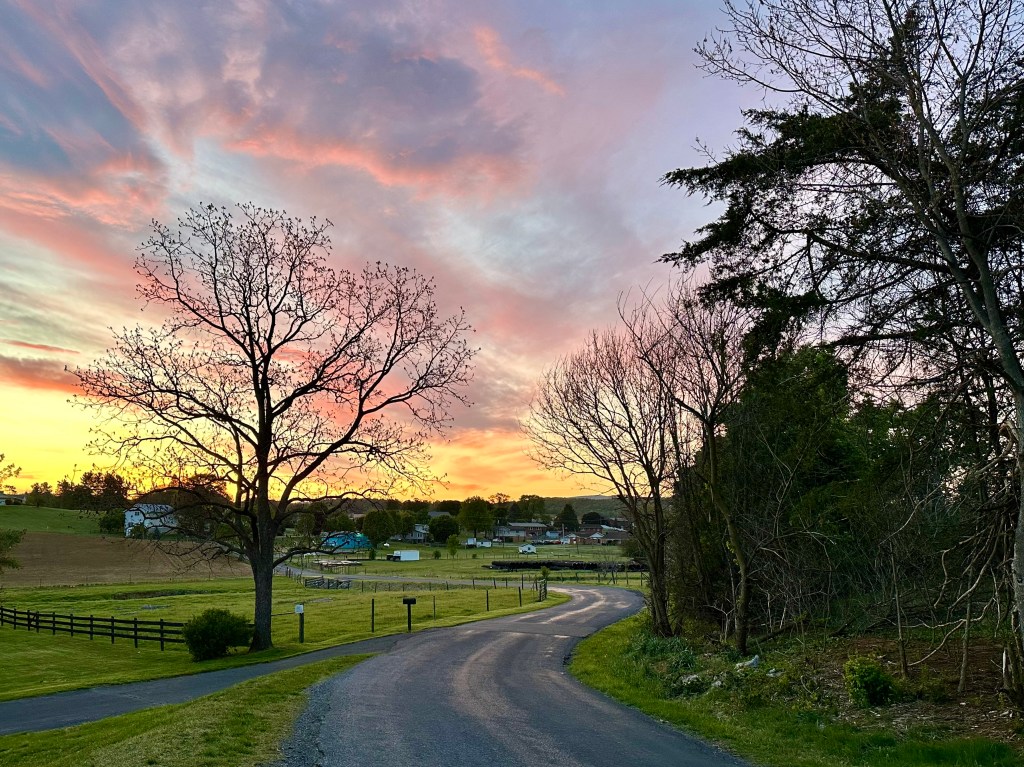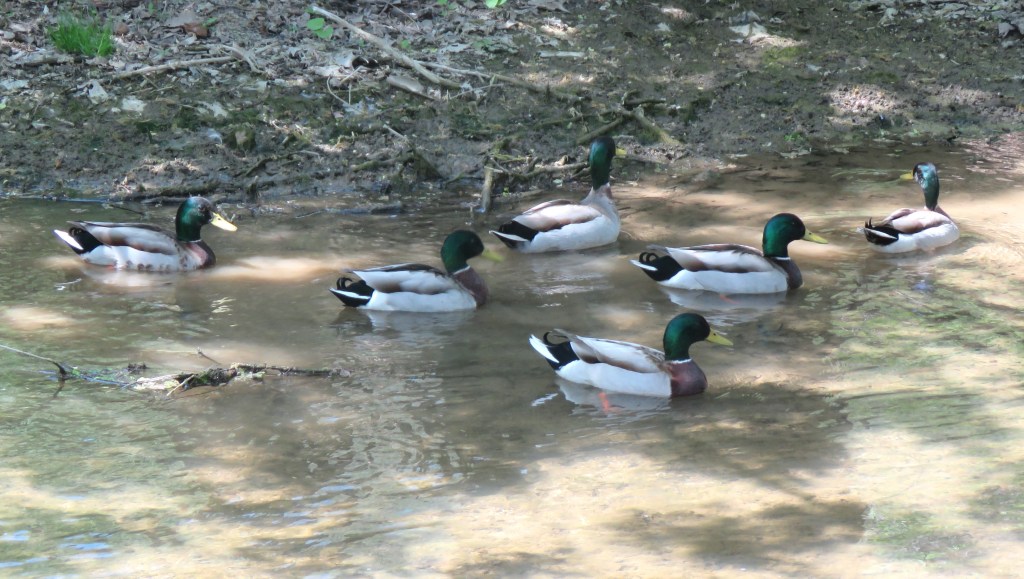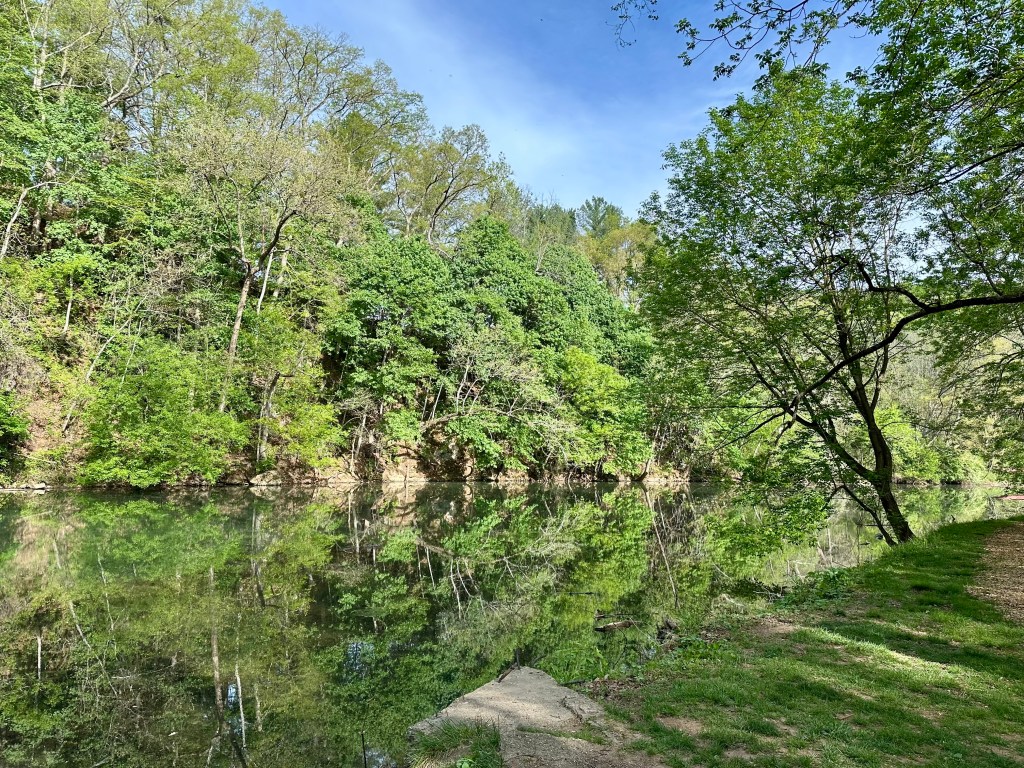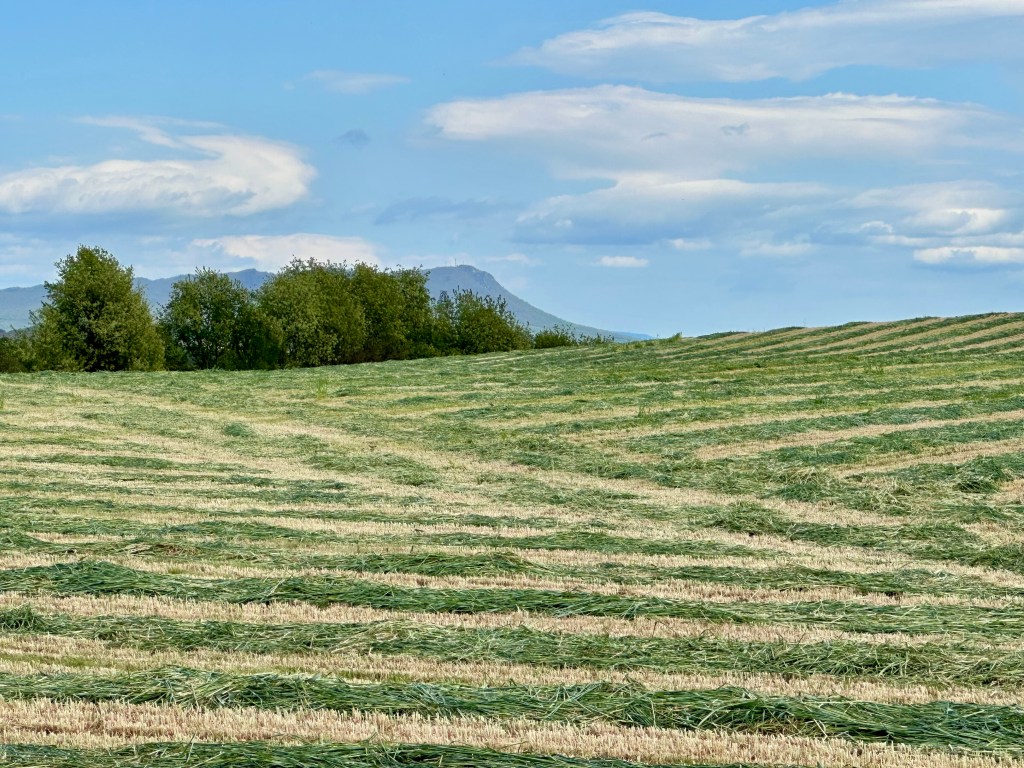
It’s been a dry, dull fall here in Virginia’s Shenandoah Valley. The usual brilliant fall colors of trees and shrubs were only tinged with color, then mostly withered to brown and have fallen to the ground. Only patches of colors have shown brightly instead of entire neighborhoods or mountainsides.
In our recent coming and goings north and back south through the Appalachian Mountains in Virginia, West Virginia, Maryland, and Pennsylvania, much is the same. Dry fields and forest, and mere spots of color could be seen.
This farmstead south of Friendsville, Maryland, was the exception. Autumn’s warm hues of the deciduous tree leaves surrounded all the buildings, with a splash of green thrown in by the evergreen.
I was grateful the morning sunshine highlighted this lovely scene.
I enjoy the progression of a sunset as much as the finale itself. I usually try to arrive well ahead of time, but I occasionally slip up. Like last Saturday, which was a busy one for us, I had settled in to watch a college football game.
I glanced out the front window, which faces north, and noticed a pinkish tinge in the broken clouds to the north. I grabbed my cameras and headed for one of my favorite sunset spots, Silver Lake in the burg of Dayton, Virginia.
Photo by Bruce Stambaugh
A layer of clouds was slowly moving southeast, opening the western sky to the setting sun. The chances for a decent sunset seemed bright. The sun had already dropped below the rippling horizon of the Allegheny Mountains that mark the western boundary of Virginia and West Virginia.
Still, the sky was bright where the sun had disappeared. Areas north and south of that spot showed warmer colors. The shallow lake was its usual calm self, broken only by a few patches of lily pads, seaweed, and miscellaneous debris.
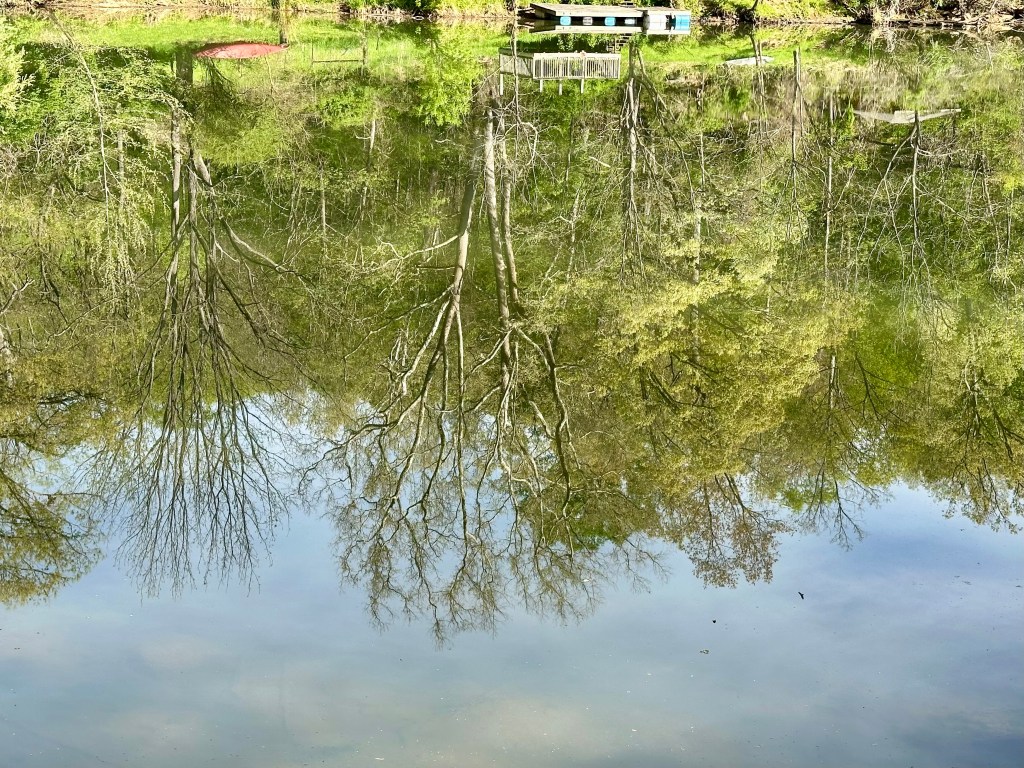
The reflections on the water doubled the beauty. At the south end is the old mill, which now houses a lovely quilt museum. Across the narrow country road stands an old white-washed farmstead, its barn duplicated on the quiet water.
The road turns west around an Old Order Mennonite family’s red brick home, and continues up the hill to another farm, where it bends due north across the ridge. The staggared trees along its edge provide a perspective of depth to each photo.
The road disappears over the hill and behind the old white farmhouse at the lake’s northwest corner. The house and outbuildings, all mirrored on the water, serve as icons in scores of photographs of the landmark lake.
Photo by Bruce Stambaugh 2025
As minutes pass, the tones of the sky grow deeper orange and red as they tint the underbellies of the clouds and brighten the water’s surface. The western sky turns golden with ruby crowns, all reflected on Silver Lake.
Every hilltop object, animate and inanimate, becomes a row of silhouettes against the blazing background. As if brushed by an artist, the clouds display an autumn color palette of browns, grays, and oranges with patches of reds and pinks, their twins staring back at them.
As if on cue, three mallards take flight, their calls seemingly celebrating the day’s glorious ending. Silver Lake never looked prettier.
Imagine yourself standing on a ridge on a beautiful, temperate fall day. Scattered soft clouds float eastward in a pale blue sky. A gentle east wind mellows the strong afternoon sunshine.
The grass is lush after some long-overdue rain. And a lone, giant red oak, its leaves just now turning to their rusty color, looms over the landscape like it has for a century or more. Battered by winds and lightning strikes, the rugged oak stands as a centennial for all who care to notice.
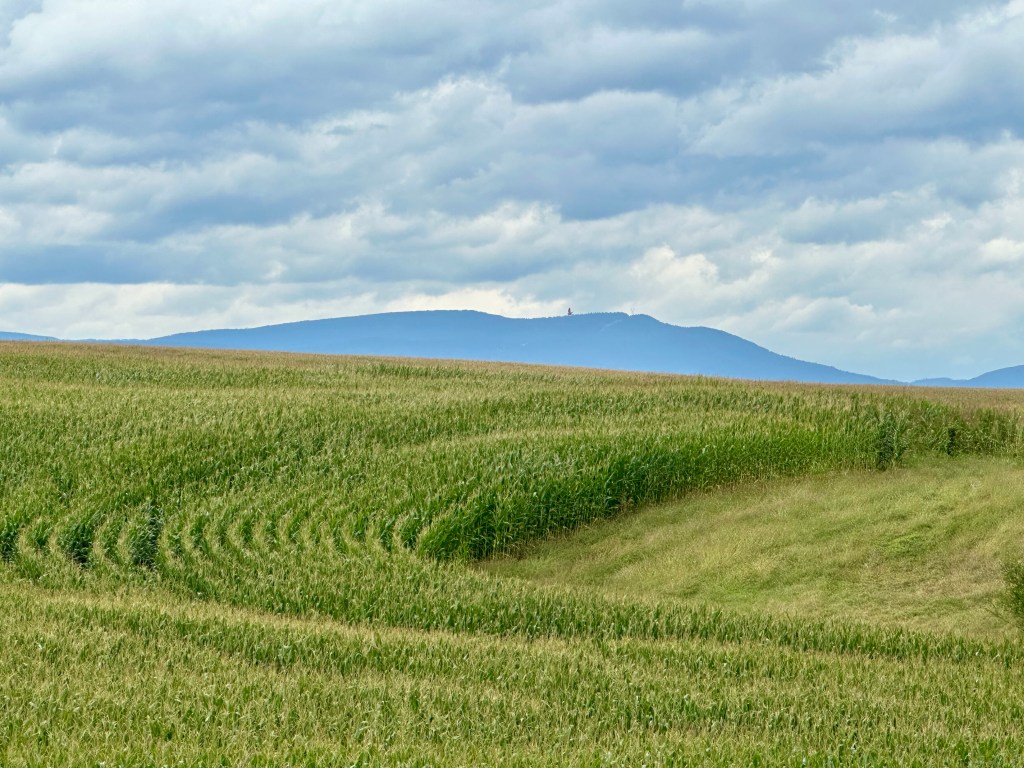
Miles away, the southern slope of Massanutten Mountain glides to the floor of Virginia’s magnificent Shenandoah Valley. Miles farther southeast, the southern section of Shenandoah National Park marks the horizon.
Fortunately for me, imagination became reality a few days ago. I enhaled the entirety of the precious landscape, not wanting to leave. Of course, I had to. Still, even as I view this photo, nature’s glory fills my soul.
You must stay alert while driving the winding, undulating secondary roads in Rockingham County, Virginia, situated at the geographic center of the Shenandoah Valley.
You wind around through forests, past agricultural fields, hilltop homes, abandoned buildings, in valleys with steep hillsides, and suddenly find yourself cruising along a straight stretch of roadway along a ridgeline. There’s always something to see.
On a recent outing with a friend, we emerged from a small valley onto a ridge with farm fields on either side that quickly sloped away from the road. I slowed when I spotted the orange of the pumpkins waiting to be harvested. Then I noticed the view.
The southern section of the town of Broadway peeked out above the treeline beyond the farmstead. In the distance, the Massenutten Mountain range stood steadfast against the cloud-studded cerulean sky.
After a wet spring and an unusually damp June and July, the last half of summer was arid here in Virginia’s Shenandoah Valley. Still, the final weeks of summer produced vibrant colors in all things nature.
From flowers to butterflies to birds to bugs to early-turning leaves, it was colors galore all around the valley. Farm fields, fall displays, and forests all contributed to the subtle transition from August’s dog days to September’s cooler evening temperatures.
Everywhere one turned, colors caught the eye. Landscapes, mountain views, produce stands, and backyard gardens all had their own versions of summer’s transition to autumn.
All the photos presented were taken between August 15 and September 22, 2025.
Our three-year-old grandson, Teddy, invites you to welcome in the Fall season, or if you live in the Southern Hemisphere, Spring. The Autumnal Equinox occurs at 2:19 p.m. EDT on Monday.
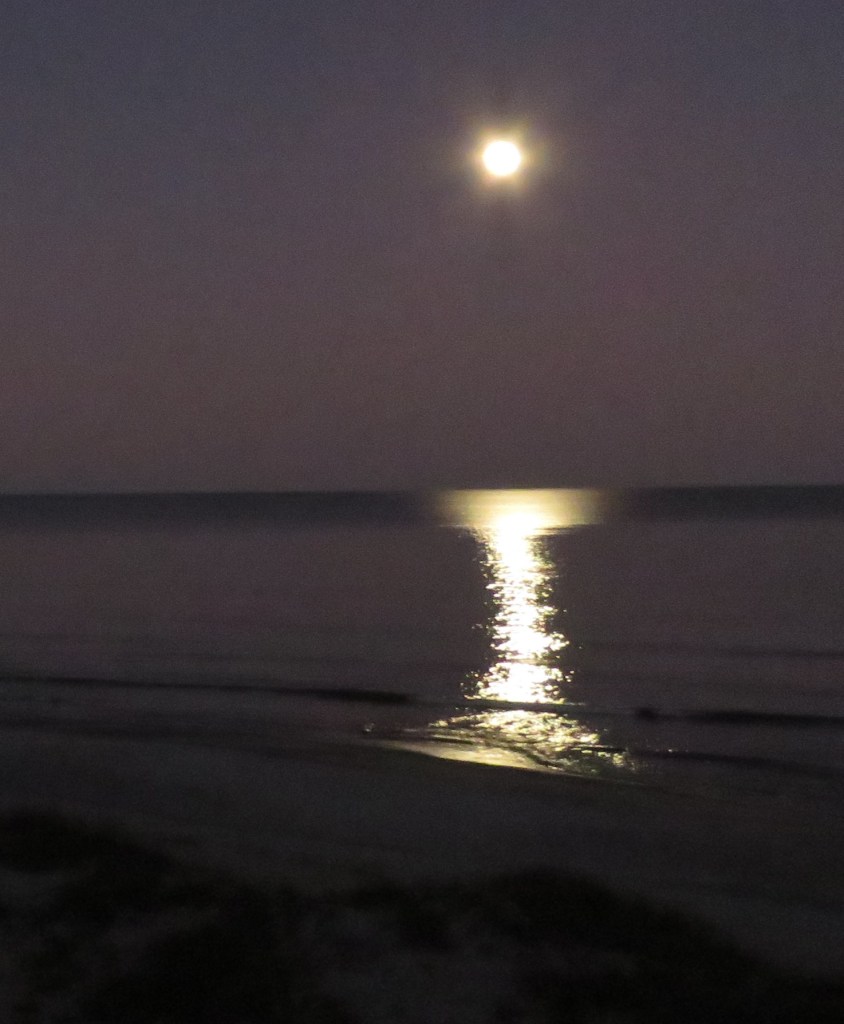
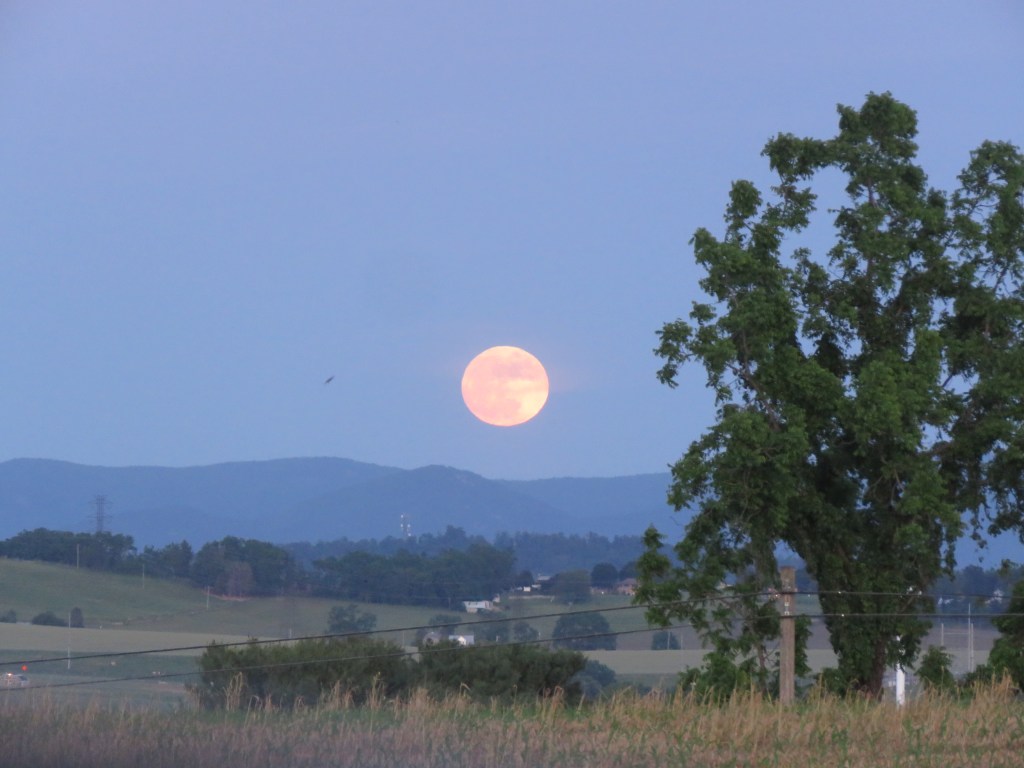
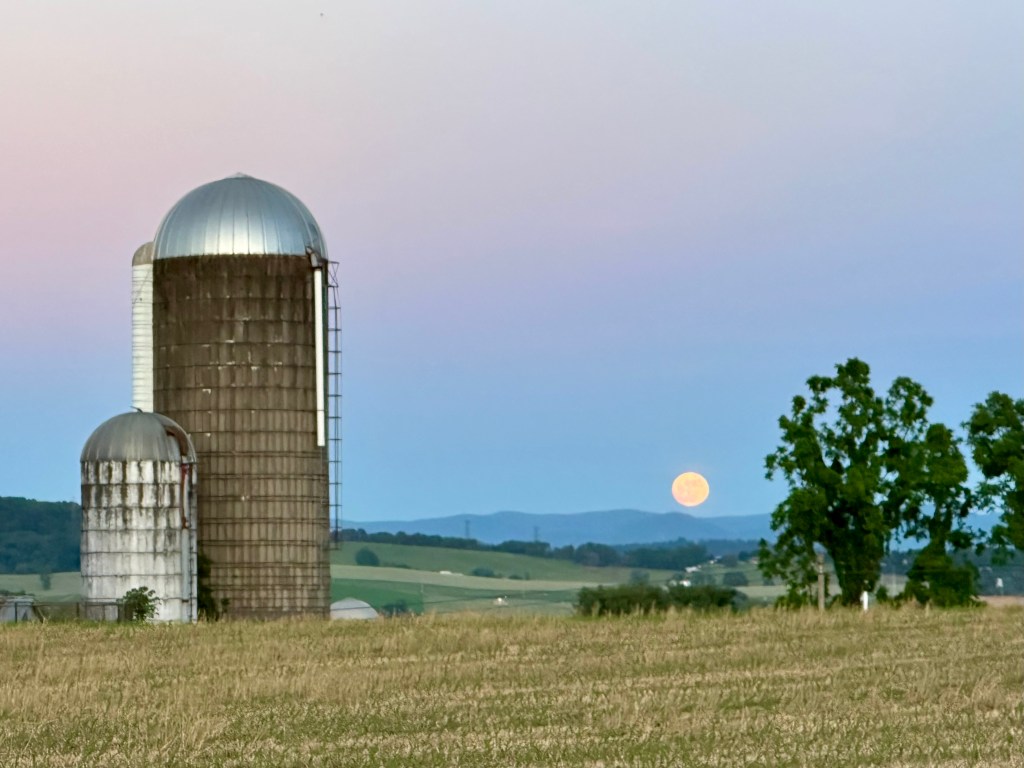
The Full Corn Moon over the Allegheny Mountains. Photo by Bruce Stambaugh
I had hoped to capture the Full Corn Moon setting over the Allegheny Mountains on the morning of September 7. However, the early morning’s sunrays blanched out the moon before it reached the western horizon.
Consequently, this is the best I could do. I hope you can find faint moon in the photo’s top center.
Driving home recently, a haze covered the late evening sun. It looked like a perfect orange ball.
By the time I arrived at a spot with a clear view to the west, the clouds had thickened, creating a surreal, shimmering scene. A minute later, the sun disappeared altogether.
Consequently, I felt fortunate to capture this shot.
My wife and I were enjoying lunch on the back porch the other day when I spotted this lovely butterfly flit by. I had to get a photo, of course.
Variegated Fritillary butterflies fly low and love flowers. So, I stepped onto the patio and waited for this hyper little insect to alight on a blossom. It soon found one of the zinnias that bordered the patio to its liking, near where I was standing. It pumped its wings as it nourished on the flower.
According to Kenn Kaufman’s butterfly guide, the Variegated Fritillary butterfly is widespread over much of the United States. Their common zone for thriving spreads from Arizona to Florida, and as far north as Nebraska and Virginia. Some may find their way as far north as the central Canadian provinces.
It’s migration season, so be on the lookout for these flower-loving beauties.
Swamp Milkweed blooms in June. Photo by Bruce Stambaugh
Finding fruition takes effort and patience. The latter is often the harder of the two.
Four years ago, I planted four swamp milkweed plants in our backyard, hoping to attract Monarch butterflies. In the first year, the seedlings sprouted tender, green shoots. Then, to my surprise, they disappeared.
It didn’t take me long to discover why. No sooner than the greenery emerged, a pair of neighborhood rabbits nibbled the fresh green leaves and stems. A three-foot wire-mesh cage around each plant promptly put a halt to that.
In the second year, the two biggest plants bloomed beautiful and fragrant blooms that only honeybees, bumblebees, and other insects enjoyed. I never saw a single butterfly, including Monarchs, even approach the flowers.
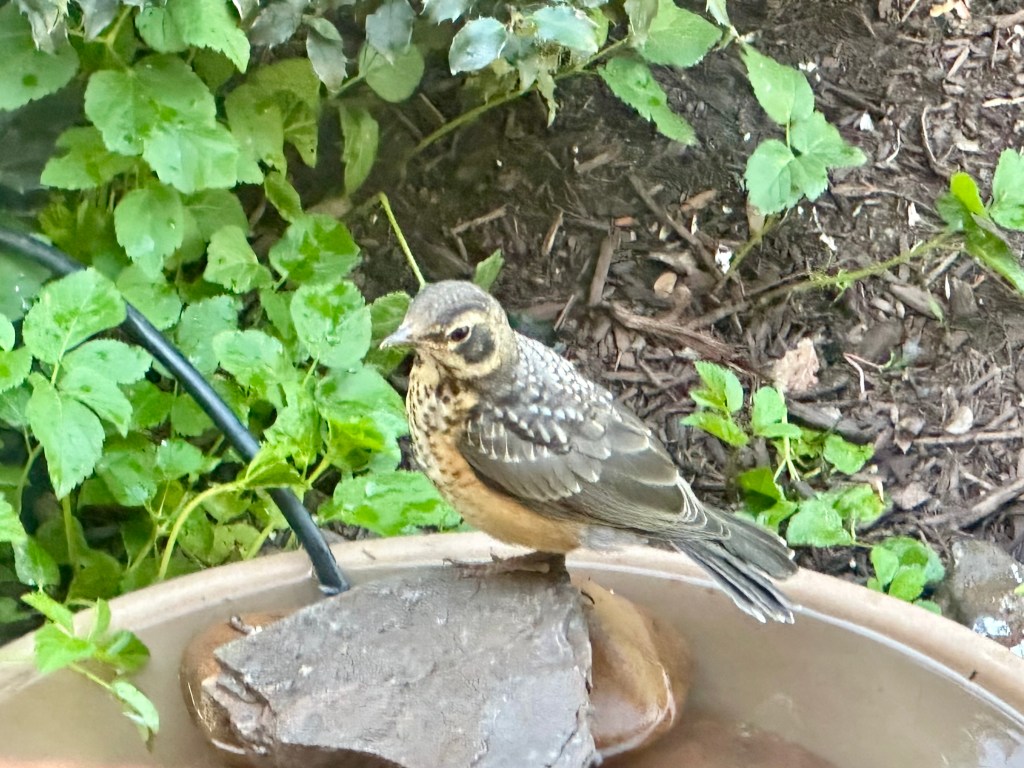
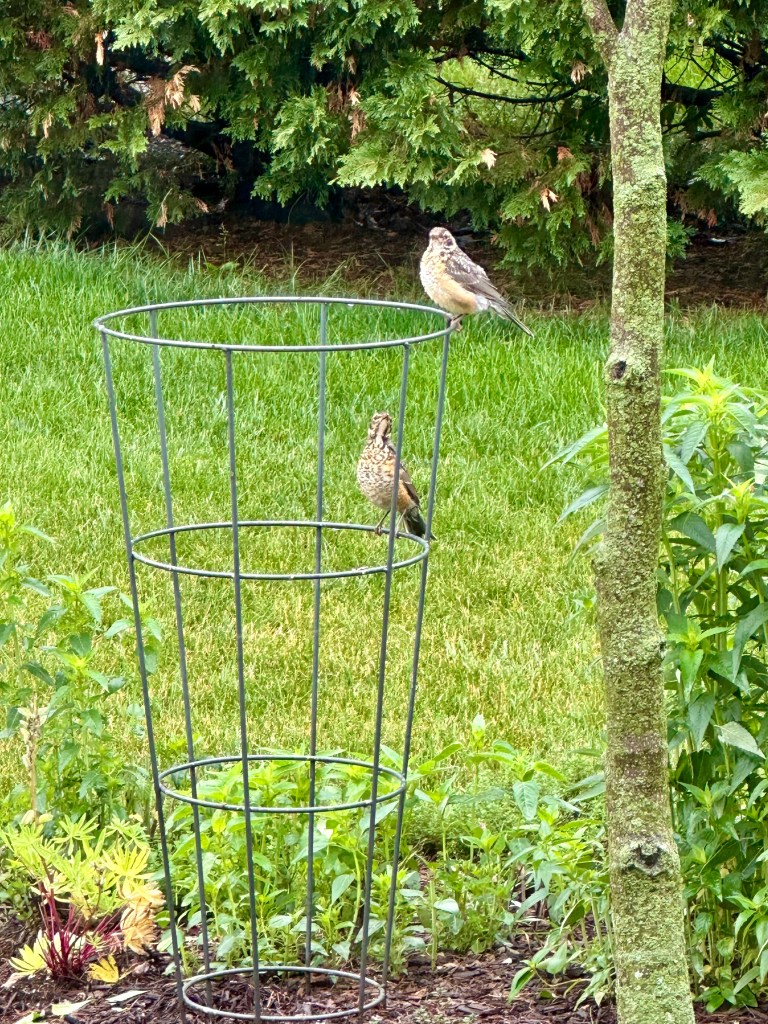
As fall arrived, I let the dried-up stalks stand. In February, I trimmed them back, hoping new branches would appear with spring’s arrival. I also learned that some birds used the thread-like insides of the old stalks for nest building. I smiled when American Robins tugged and tore long pieces and flew off.
The next two springs brought the same results. Beautiful flowers bloomed in June, but no Monarchs arrived. I enjoyed the flowers and insect pollinators, but grew mildly frustrated that none of my favorite butterflies came to the flowers.
This summer, I realized my blindness. The swamp milkweed was more useful to the orange and black-viened butterflies during fall migration.
The mature plants produced flowers, which developed into pods and yielded seeds covered in silvery silk. Large and small milkweed bugs outnumbered the many different insects on the plants.
Two at a time.
Chomping
Climbing
Milkweed bugs and eggs.
Large and small Milkweed bugs
The gang’s all here
A Monarch egg
In mid-August, migrating Monarchs began flitting around the milkweed plants. They landed on the plants just long enough to deposit eggs on the leaves’ undersides. Joy filled my soul.
In a matter of days, small greenish-yellow, white, and black striped caterpillars appeared and began munching on the leaves. More Monarchs repeated the process, and more and more caterpillars emerged. It didn’t take long for them to grow, inches long, in preparation for forming a mint green chrysalis. I counted 14 on the plants one afternoon.
Other insects on the Swamp Milkweed
Soon, a new generation of Monarchs would continue their journey south, overwinter in the central Mexico mountains, and fly back north, stopping along the way when it was time to lay the eggs on more milkweed plants.
In my desire to see Monarchs on the milkweed flowers, I had only envisioned one aspect of the amazing life cycle of these beautiful, useful butterflies. I was ecstatic to find a dozen caterpillars chomping on the milkweed leaves. When ready, they would then crawl off somewhere to form a chrysalis, ensuring the next generation.
Patience proved critical to fulfill my desire to help propagate the Monarch butterflies.
A Monarch butterfly prepares to lay eggs on a Swamp Milkweed leaf. Photo by Bruce Stambaugh
You must be logged in to post a comment.