
I caught these horses grazing in the morning mist at a September dawn a few years ago. The photo was taken in the heart of Ohio’s Amish country in Holmes Co., Ohio.
“Horses in the morning mist” is my Photo of the Week.
© Bruce Stambaugh 2019

I caught these horses grazing in the morning mist at a September dawn a few years ago. The photo was taken in the heart of Ohio’s Amish country in Holmes Co., Ohio.
“Horses in the morning mist” is my Photo of the Week.
© Bruce Stambaugh 2019

Given the crazy assortment of weather we have had in the Shenandoah Valley this summer, photographic sunsets have been hard to comeby. Any hint of a possible colorful evening sky, and I headed to my favorite sunset spot. Too often it was to no avail.
Recently, however, that changed, even with few cumulous clouds to reflect the setting sun. I was glad for this recent sunset, and I am happy to share it with you.
“Shenandoah Sunset” is my Photo of the Week.
© Bruce Stambaugh 2019
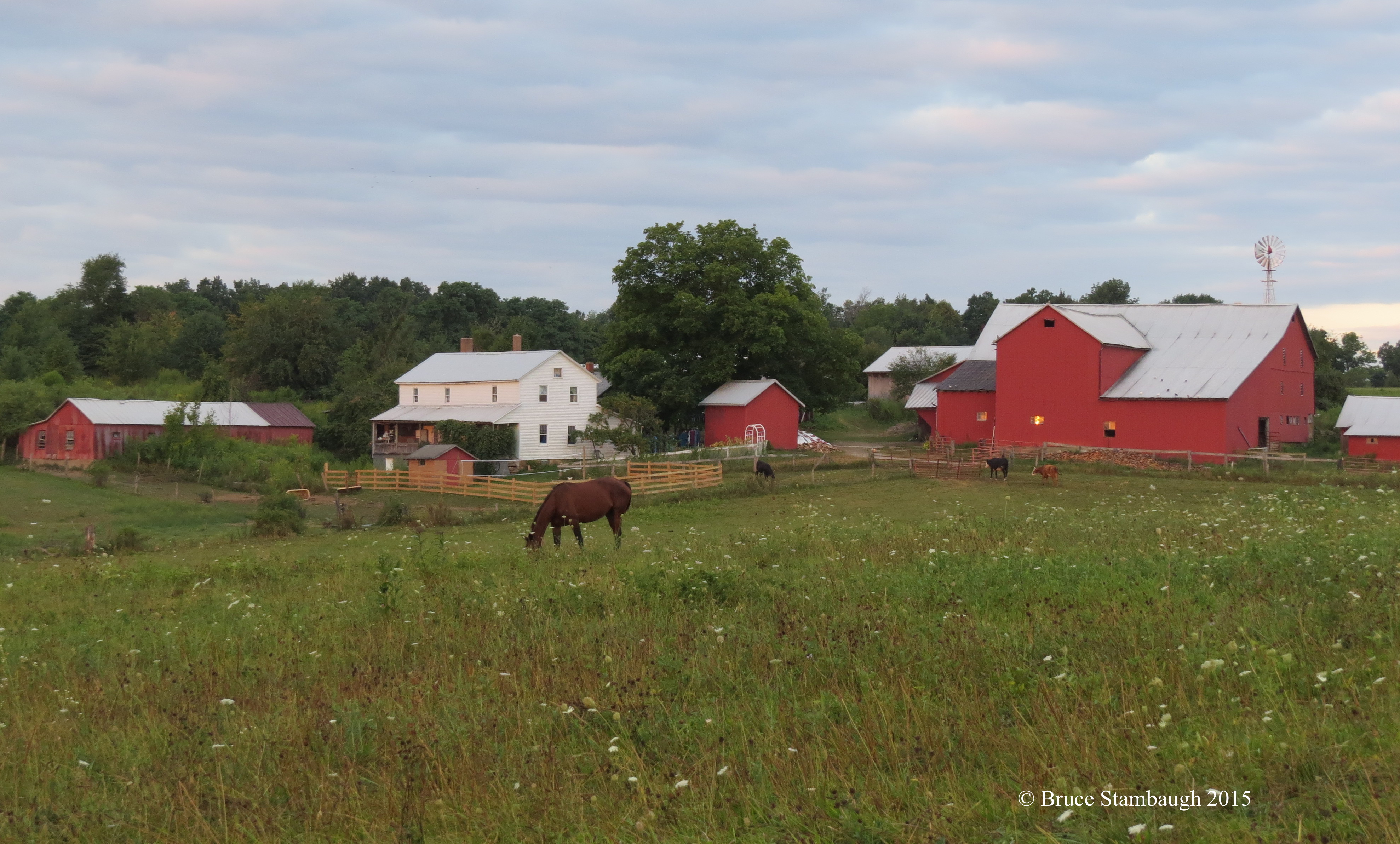
The early morning sunlight is glinting off of the coffin red barn’s windows. The soft rays temporarily paint the white house pink. The laundry is hanging on the washline to dry. The cows are heading back to the pasture. The buggy horse is grazing among the Queen Anne’s Lace. Altogether, it is another August morning down on an Amish farmstead in Holmes County, Ohio.
“Down on the Farm” is my Photo of the Week.
© Bruce Stambaugh 2019
It’s been 20 years since I retired as a public school educator in Holmes County, Ohio. I began teaching fourth grade at Killbuck Elementary School only weeks after the historic and devastating July 4th flood of 1969.
It’s fair to say that neither Killbuck nor I have been the same since. I can’t speak for the town, but for me, that’s a good thing.
I have many fond memories of my time in both West Holmes and East Holmes Local School Districts. I was hired just 10 days before school started. A significant teacher shortage had hit rural areas then. West Holmes still needed 10 more teachers before school started.
I had the two most important requirements needed to teach back then. I had a college degree and a heartbeat. The only education course I was certified to teach was driver education.
I was assigned to a tiny third-floor room in the old high school part of the school complex. I had 28 fourth graders packed into that small space.
I can still name every one of those 28 students. That’s the kind of lasting impression that experience made on me.

To keep teaching each year, I had to complete at least two college education courses. That meant many night classes and summer school for this teacher. It didn’t take me long to realize that this was what I wanted to do for a living. I loved children, and despite some of the silly state and local requirements, I enjoyed teaching.
I liked it so much in fact that I got my Master of Education degree and became an elementary principal in East Holmes. I also worked out of the central office coordinating the expanding federal programs. But it was the kids I enjoyed the most, plus the opportunity to help teachers teach.
I served as principal of Mt. Hope and Winesburg Elementary Schools for 21 years. I also supervised Wise Elementary for three years at the same time. To complete the triangle of visiting each school each day required driving 21 miles.
For me, the best day of each school year was the first. The students were always excited, scared, and ready to learn. Once they settled into the new routines that soon changed.
I marvel at those precious years, those shinny tiled hallways that bustled with the cheerful sounds of children laughing and learning and quietly chatting. I recall trying to chase teachers out of the buildings long after the school day had ended. Sometimes teachers were still there in the evenings grading papers, displaying student work, or planning for future lessons.
I recall marvelous, heartwarming stories involving children, their parents, teachers, and administrators. There were darker times, too, but far and away, the better memories rule.
It is hard to believe that two decades have evaporated since I retired from the profession I loved with all my heart. I know I wasn’t perfect in executing my responsibilities. I simply tried my best to be an educational leader for the community that I served. After all, the schools belonged to the community, not me.
I can say without hesitation that the 30 years that I spent in the hallowed halls of public instruction in Holmes County were some of the best of my life. But for me, now and forever, school is dismissed.

© Bruce Stambaugh 2019

The colors of August captivate me. Living nearly all of my adult life in Holmes County, Ohio gave me a full range of that summer paint pallet.
The pleasing contrasting greens and golds quickly got my attention. I admired the rolling contoured rows of lush green field corn against the toasted waves of winter wheat.
In the eastern part of the county, wheat shocks stood as sentinels guarding the fattening ears of corn nearby. Unfortunately, their presence seldom deterred the deer from nibbling the outer rows to the cob.
The blooming alfalfa brought pretty butterflies, honeybees, and other vital pollinators. The swooping swallows had their own feast, especially when the farmers made their August cuttings whether by tractors or horse-drawn mowers.
August was when the vibrant green leaves of deciduous trees began to curl in the heat, humidity, and parched soil. By month’s end, a few even turned brown or began to color.
I always enjoyed the flowers that bordered blossoming gardens or multiple flowerbeds like my wife cultivated to perfection. Hollyhocks were my favorite until the gladiolas raised their pink, red, yellow, and white flags.
I would be negligent if I failed to mention the summer birds, some of which had already begun their return flight south. Though not as vocal as earlier in the year, most still showed their breeding colors.
The flashing iridescent red on emerald of the male ruby-throated hummingbird and the flashy orange and black of Baltimore orioles spruced up any welcoming yard, if only temporarily. Sometimes the two species vied for dibs at the sugar-water feeders.
By months end, early morning coolness brought silent, silken fog that glowed bronze with the rising sun. If eyes were sharp, silver droplets dotted the dewy threads of spider webs artistically strung from one barbed wire strand to another.
Much of that changed, however, when my wife and I moved to Virginia’s Shenandoah Valley. Like Holmes County, the Valley, as locals like to call it, is the breadbasket of the south. Agriculture still rules the rural areas.
Farming is a bit different here, however. Though the Old Order Mennonites still drive horses and buggies, they man the latest farm machinery invented. As thrifty as their Amish cousins, they often farm right up to the roadway.


Though the topography is similar, strip cropping is seldom used. No-till farming seems to be the in thing here. The result is wide swaths of wheat sown between two fields of field corn or the tallest soybeans I have ever seen. It’s still green and gold, just different species.
With soil that hardly ever freezes and being further south, the growing season is longer. Farmers and gardeners get an earlier start on planting and consequently harvesting. The colors I was used to in August begin to appear in July. Produce stands evidence that.
The produce peak, however, still seems to be August. My wife and I can attest to that thanks to the generosity of our son and daughter’s families. They gifted us a weekly produce box known as CSA, Community Supporting Agriculture.
Happy to merely admire the colors, I almost hate to have Neva slice, dice, fry, cook, and can the colorful lot. I change my mind, however, with the fresh salsa alone.
© Bruce Stambaugh 2019

We enjoy showing visitors the backroads sights of where we live in Rockingham Co., Virginia. We often stop at this dry goods store, which offers all kinds of merchandise for customers. Rocky Cedars is situated among the Old Order Mennonite and Conservative Mennonite folks who populate the countryside in the western section of Virginia’s second-largest county.
The bolts of colorful fabric caught my eye. “Fabricated Rainbow” is my Photo of the Week.
© Bruce Stambaugh 2019

When we lived in Ohio’s Amish country, Sunday was a day of rest. It was a biblical concept that was actually put into practice.
Our house was built on an Amish farmstead. Few in our neighborhood mowed their lawns, washed their cars, or worked in their gardens. There were six other days of the week to do those tasks.
I wasn’t raised that way. Growing up, I knew nothing of Amish and Mennonite ways. Sunday was a day for worship and rest, but that didn’t mean I couldn’t wash and wax my car. I didn’t consider that activity to be work at all. In fact, I found cleaning my vehicle relaxing.
My Mennonite farm girl wife adhered to the Sunday day of rest tradition. I quickly swung to her custom of keeping the Sabbath after our marriage all those years ago. Sunday was church day and frequently involved hosting or visiting with others.
I haven’t looked back, and I haven’t been sorry.
Since we moved to Virginia’s Shenandoah Valley, those quiet Sundays aren’t so quiet anymore. By most standards, our neighborhood of family homes is somewhat subdued. However, the sound of lawnmowers, power washers, and weed eaters echo from street to street any day of the week, including Sundays. We clearly are not in Kansas anymore, Dorothy.

It is vital that people who hold either view respect those who believe differently. It’s the only way we can successfully coexist as friends, neighbors, and viable society. In fact, others observe Sabbath on different days of the week.
That fact became clear to me while planning for our spring trip to New England. I have learned to plan ahead to avoid the stress of any kind of deadline, writing, or otherwise. That is a significant admission from a professional procrastinator. I sense great joy and accomplishment in getting things done correctly ahead of time.
I had several articles due to various publications for which I write around the time we were scheduled to leave. I made it a goal to complete them as thoroughly as possible before their due dates.
Doing so delayed much of the planning for the New England trip. Consequently, I had only done cursory research on places to visit.
Finally, I came to the realization that I only needed to compile an outline itinerary. The day-to-day details would unfold according to the notoriously wet and cool spring New England weather. We packed so we could dress in layers as the weather changed. We only set reservations for a few hotels and guided tours. We used the travel list of attractions as a guide, not an absolute must.
I felt immediate relief. It was 18 hours before we intended to leave, and everything was ready to roll. In my relaxed state, I realized just how important that was to me mentally and physically.
It felt like Sabbath Sunday, but only it was Thursday afternoon.
© Bruce Stambaugh 2019
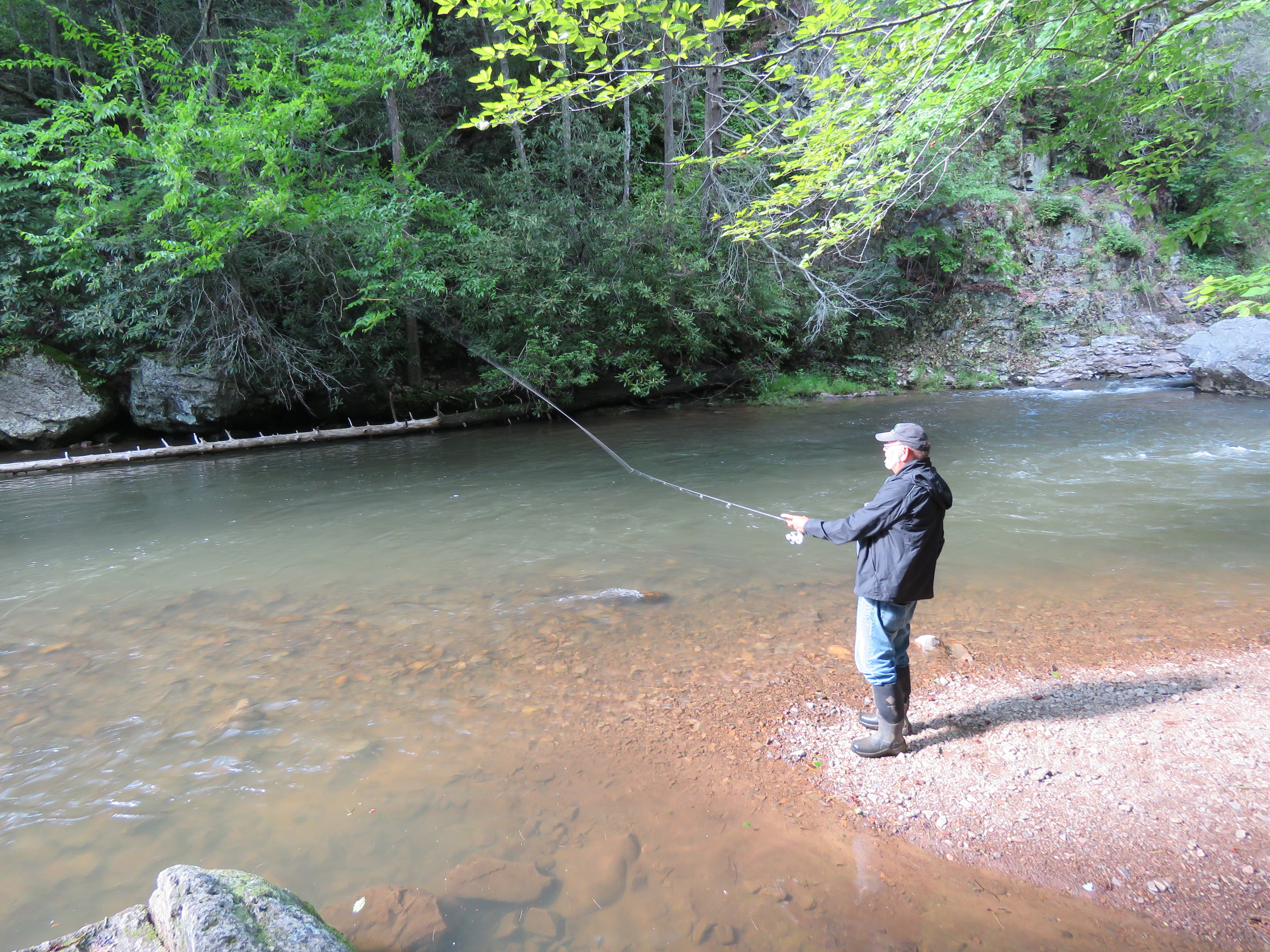
While exploring some rock formations just inside the Tennessee state line south of Damascus, Virginia, I came across this gentlemen casting his line in hopes of luring a rainbow trout. He was kind enough to let me take his photo despite the fact that his fishing expedition had been “slow” as he described it matter-of-factly.
The afternoon light highlighted this fly fisherman as he made another cast, ever the eternal optimist. “The fly fisherman” is my Photo of the Week.
© Bruce Stambaugh 2019
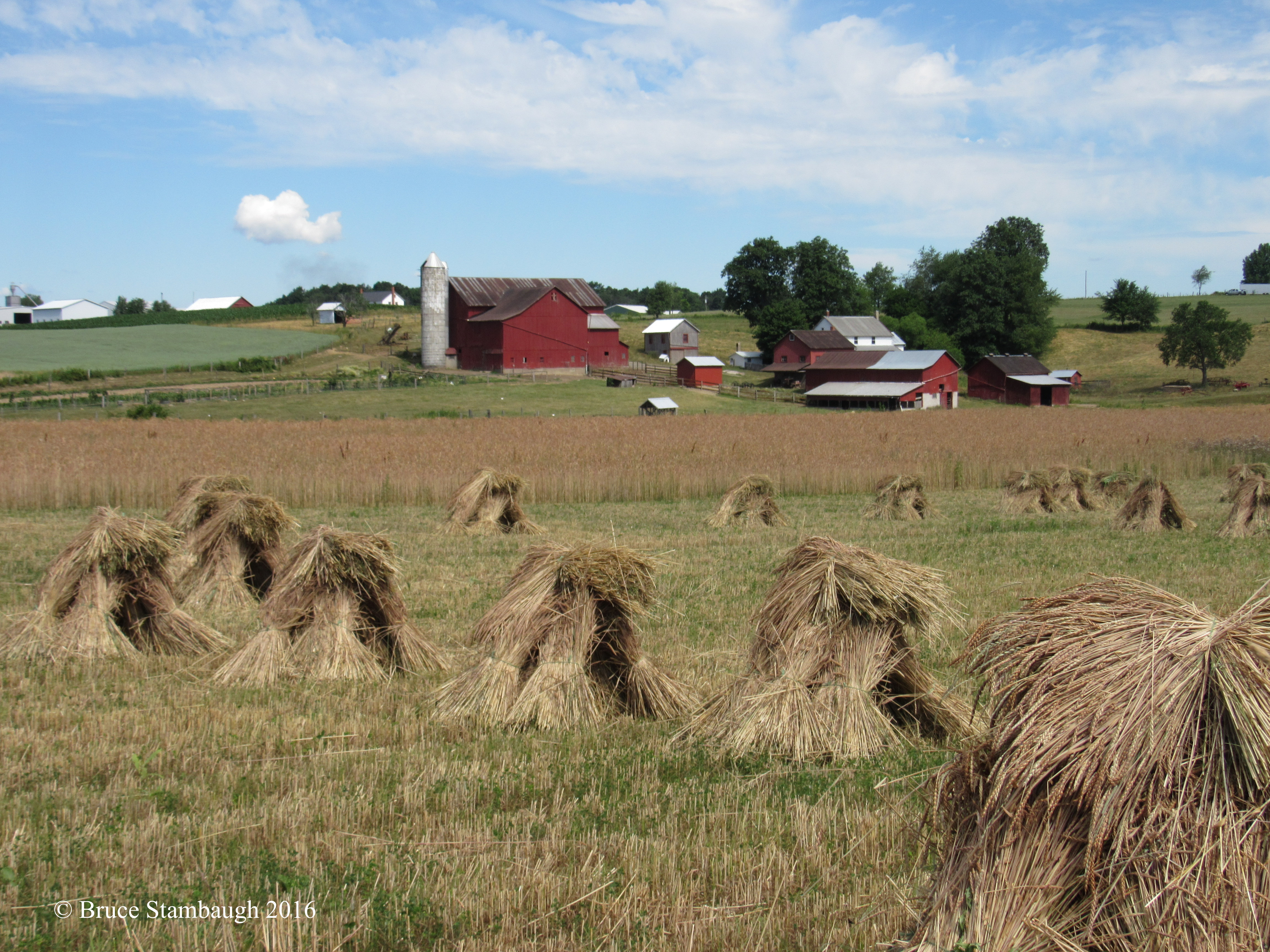
It’s July, and you know what that means. We are already halfway through the year. How can that be?
It seems like only yesterday that it was cold and rainy, and folks from Florida to Ontario were all tired of wearing winter jackets. But here we are at the beginning of July, the year half spent like a jar half full, or is it half empty?
I suppose the answer is a matter of personal perspective. Given all that has happened in 2019 so far, I could respond either way. It’s been that kind of year.

The unruly weather caused miseries more disastrous than prolonged cold spells. Extensive record flooding indiscriminately inundated homes, businesses, fields, and overflowed the largest lakes.
Ohioans came to the aid of their waterlogged Nebraska compatriots. Weeks later, it would be the Buckeyes who watched and waited for their fields to drain. Crops that managed to be planted risked rotting in the soggy soil. Other ground may simply go fallow.
My wife and I have found that the half-fullness overflows with bounteous joys of exploring new places, meeting new people, having others reach out in friendly ways. To say we are grateful would be insufficient in expressing our appreciation for what life in the first half of 2019 has brought us.
In mid-January, a sun pillar brightened the already gorgeous sunrise over the Atlantic Ocean outside our snowbird rental. The ever-changing scene served as a reminder to breathe deeply and to embrace each moment as 2019 unfolded.
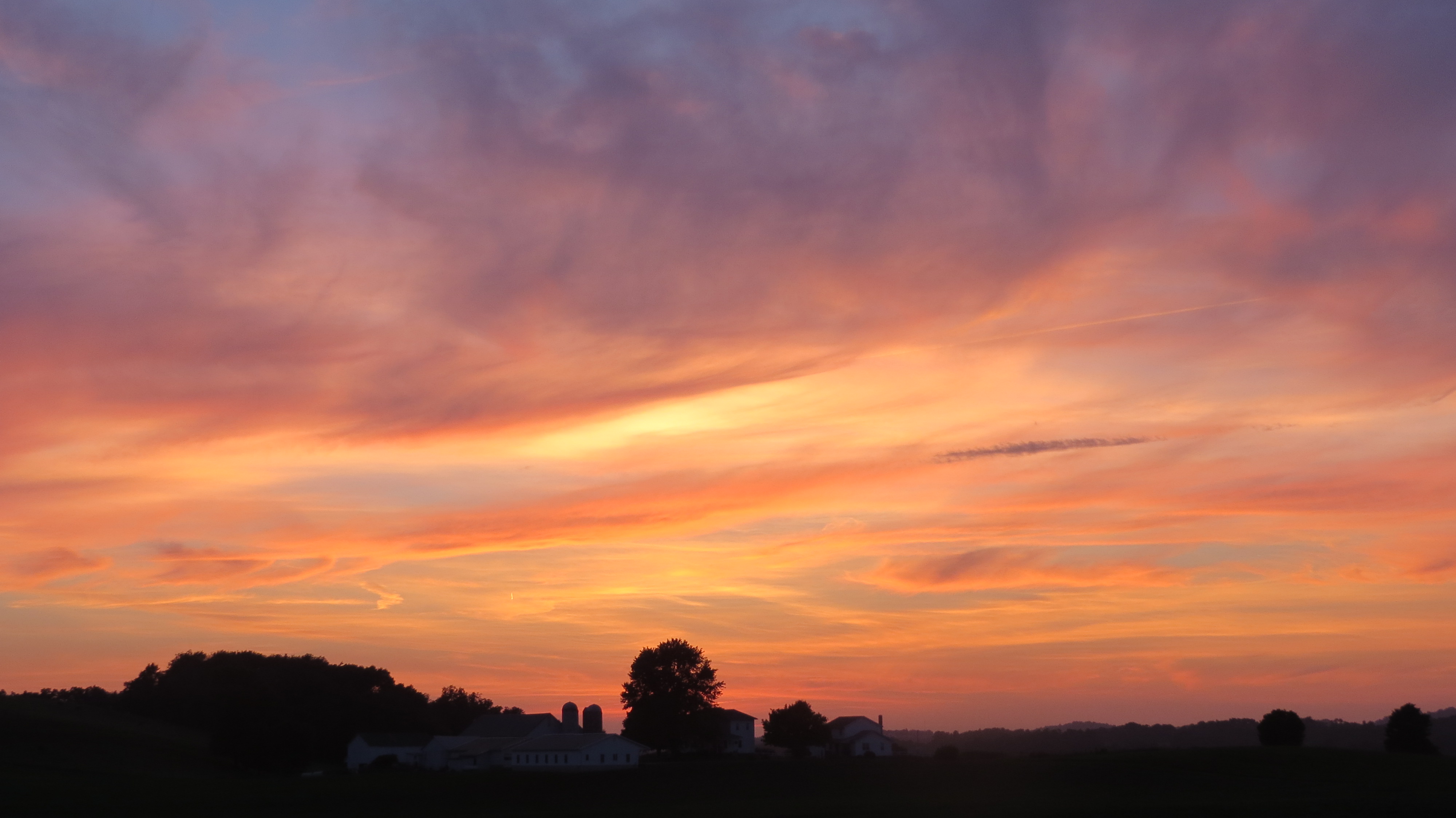
After a light late February snow, the sun strained through trailing clouds and turned the rolling Shenandoah Valley landscapes into a spectacular sparkling winter wonderland.


A pastel March sunset bid us farewell as we said our last goodbyes to the family cottage in Ohio. Generations of family and friends helped fulfill the dreams that my folks had had for their quaint lakeside-gathering place. But as that chilly sunset waned, we shed tears of gratitude and appreciation for the memories made and wished the new owners the very same.
Each spring, I had enjoyed the showy lavender blooms of redbud trees that adorned still barren forests and neighborhood landscapes. However, I had never noticed how each individual blossom so closely resembled tiny hummingbirds on the wing until a kind neighbor showed me in April.
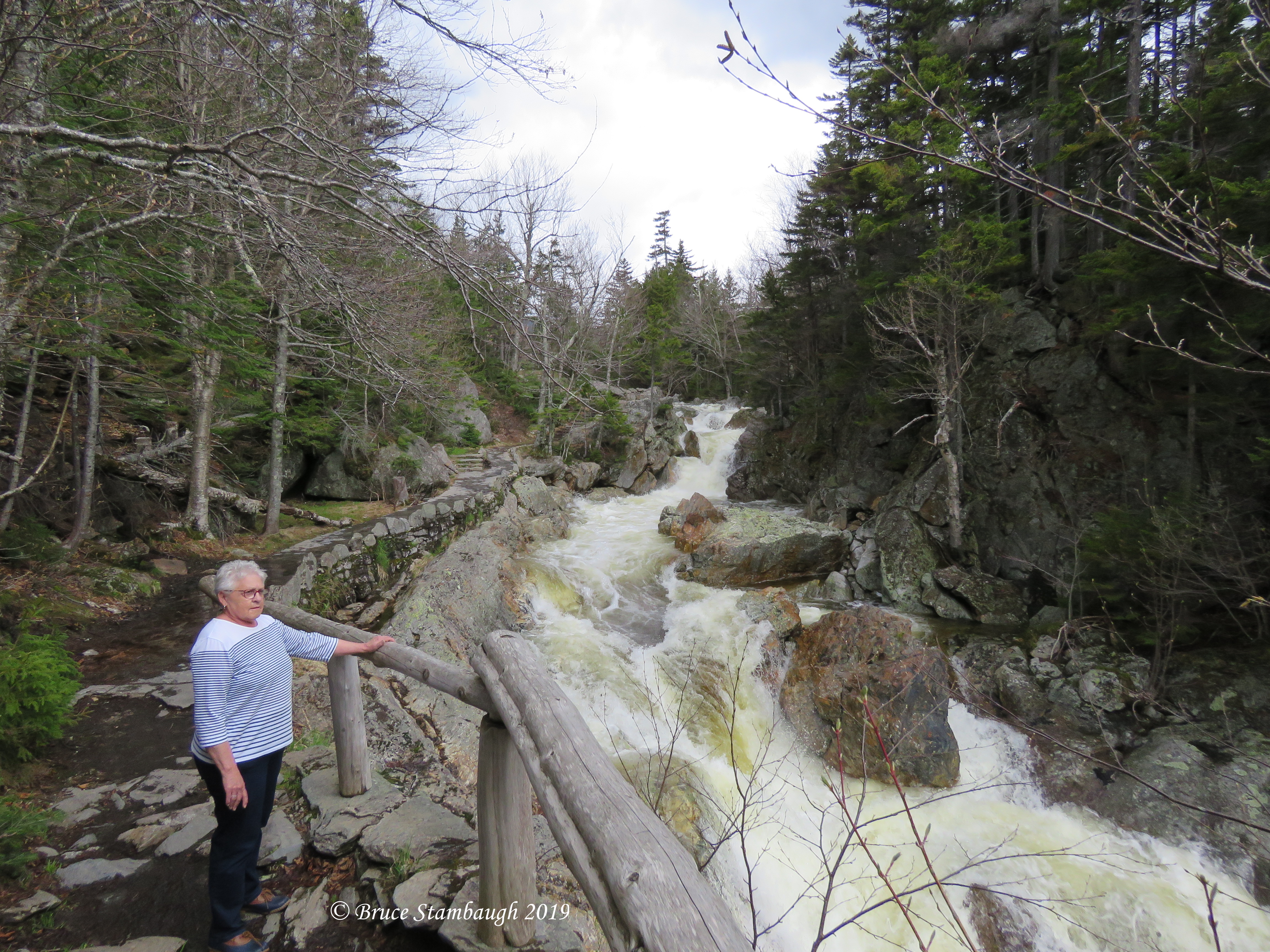
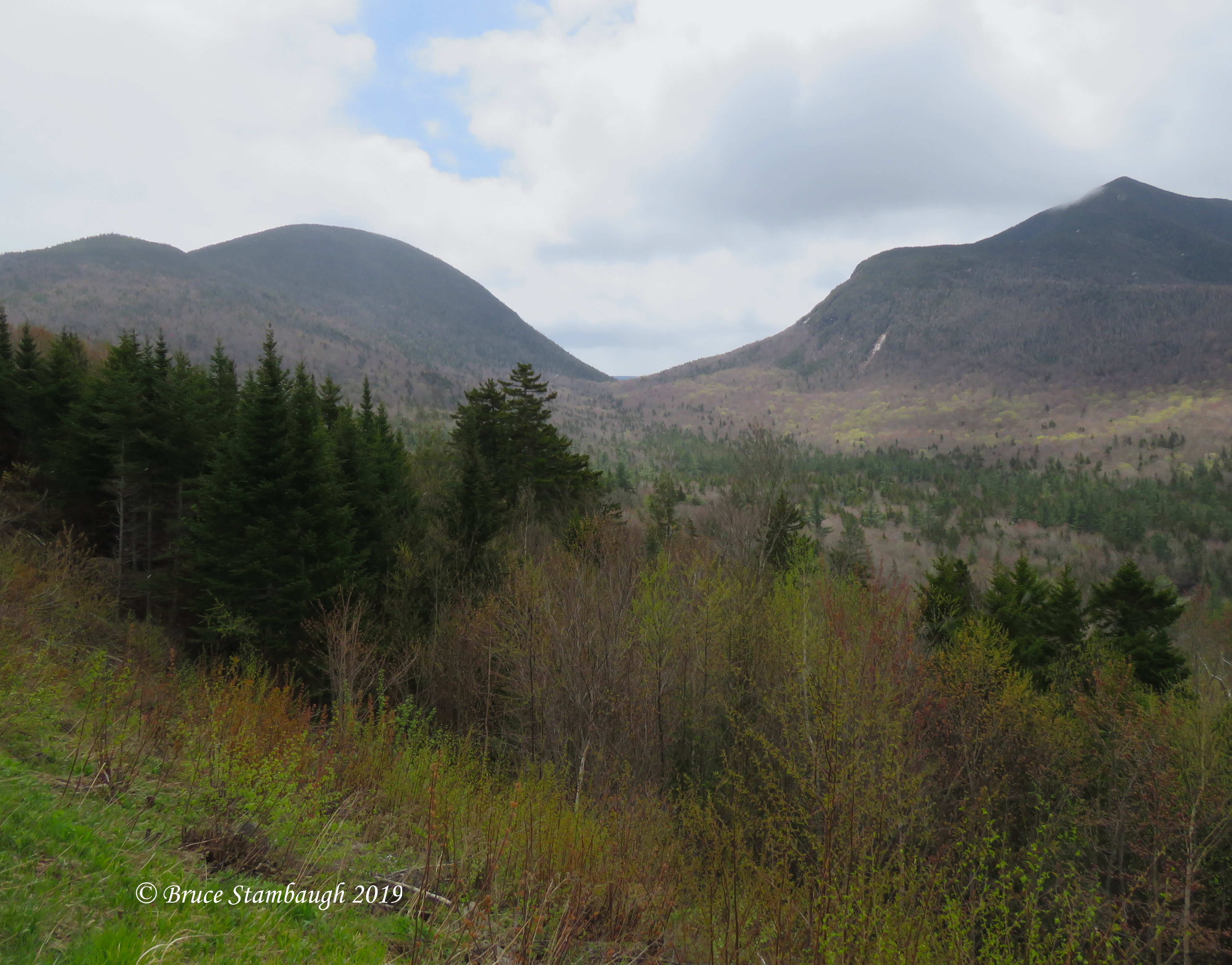
A state bridge engineer directed us to a cascading waterfall we would have surely missed had we stayed on the main highway. In the quintessential New England town of Jackson, New Hampshire, Jackson Falls became one of the many highlights of our May vacation.
The same kind neighbor who pointed out the redbud hummingbirds brought over a couple of puffy pastries she had made using the sour cherries she had recently picked. Her tasty treats made this June day even better than it already was.
You likely have a comparable list. What challenges and surprise blessings are in store for us the rest of 2019? We really don’t know.
Like July is to the calendar, we encounter life’s happenstance experiences at the juncture of our half empty and half fullness. Our job is to be alert to explore and savor those serendipitous, joyous moments.
© Bruce Stambaugh 2019

Clouds hung low over the Blue Ridge Mountains dimming my hope of photographing June’s Strawberry Full Moon as it rose over Shenandoah National Park. A break in the clouds appeared as the moon rose about 30 degrees in the eastern sky. I turned my attention to other options. A farmer’s cornfield was nearby. I leaned against my vehicle and captured this hand-held shot of the moon, cornstalk leaves providing a contrasting foreground in place of old-aged mountains.
It wasn’t the shot that I had hoped for, but it is the one that I got. “June’s Strawberry Moon” is my Photo of the Week.
© Bruce Stambaugh 2019
Wildlife Photos From The Chesapeake Bay Region
Culture and Communities at the Heart Of India
Artist and nature journalist in the Shenandoah Valley of Virginia.
Photographer Of Life and moments
Personal Blog
Art is the only way to run away without leaving home. -Twyla Tharp
Writing generated from the rural life
writer. teacher. podcast cohost.
El amor cruza fronteras / Love crosses borders
 Roadkill Crossing
You must be logged in to post a comment.