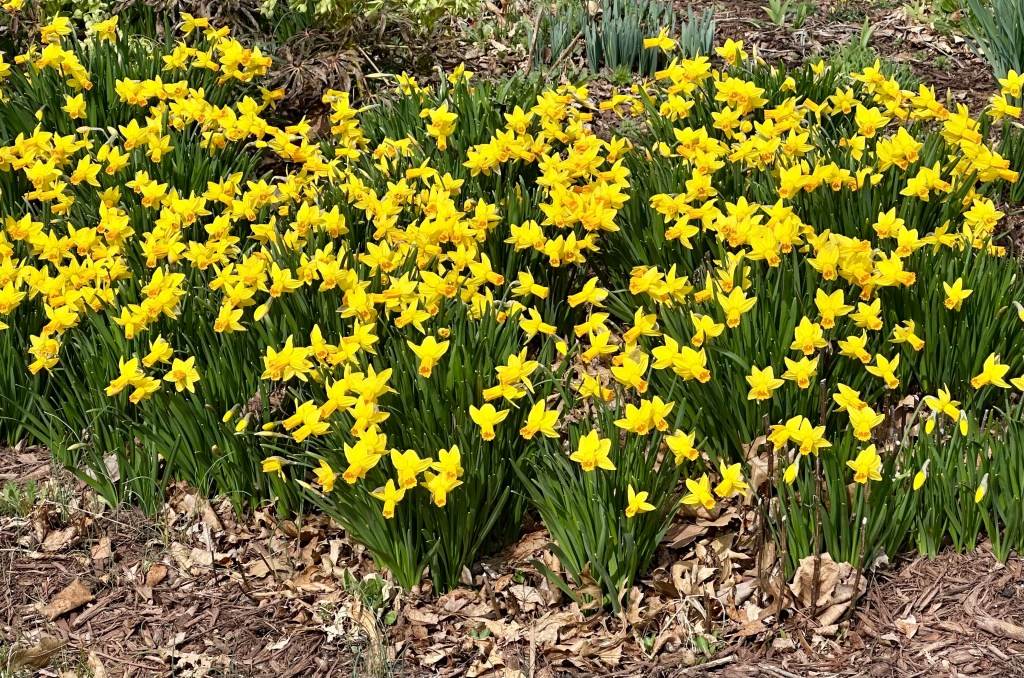
Cloudy or sunny, our neighbor’s daffodils brighten our day. Photo by Bruce Stambaugh
It’s spring! The vernal equinox arrived at 5:01 this morning.
Hopefully, that will put to rest winter’s worst weather. At this time of year, any snowfall won’t last long in Virginia’s Shenandoah Valley.
Of course, nature’s course doesn’t hold to mankind’s arbitrary seasonal demarkations. I have noticed from afar the hint of coloration of the once-dormant trees that populate Mole Hill, a local and revered landmark. The buds of its red maple trees are especially evident.
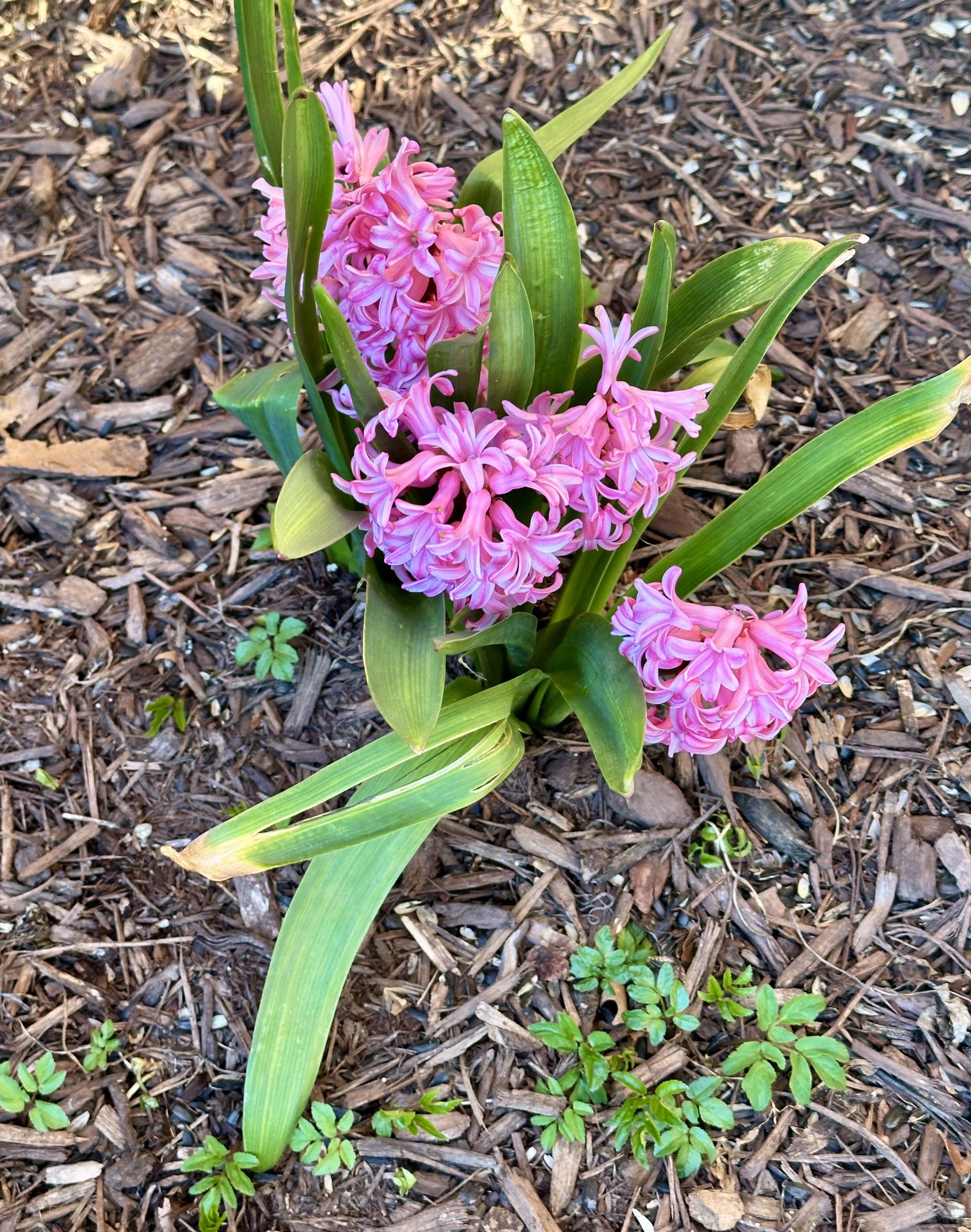
A walk around our yard and neighborhood reveals other signs of springtime. Deciduous tree buds are swelling, if not opening, ornamental trees bloom, and a lone Hyacinth blooms. Lenten Rose plants are also blooming right on time despite their winter-singed leaves. The grass is greening and growing. I’ll have to ready the lawnmower for action.
Tulip leaves have knifed through the chilly soil. Migratory birds are slowly arriving while the year-round residents begin to stake out their nesting territories.
It’s springtime, and I couldn’t be happier as long as my allergy medicines remain effective.
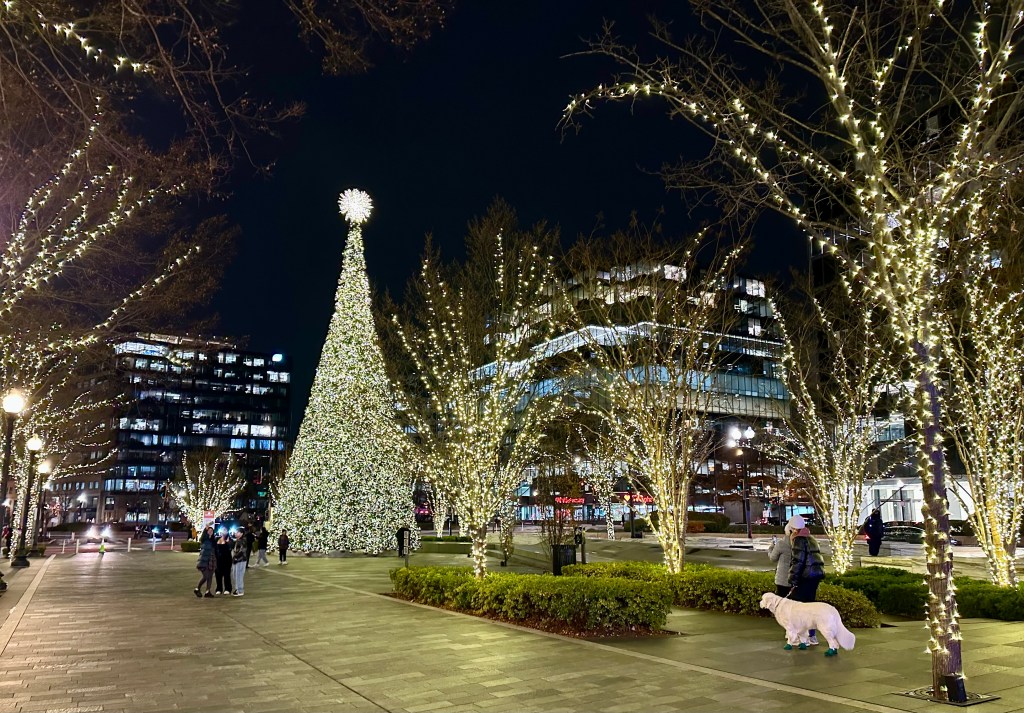
The Park at CityCenter, Washington, D.C. Photo by Bruce Stambaugh
The man sat on the little padded bench in the entrance to the cafe where my family and I had lunch. He was one of dozens of homeless people we had seen during our extended holiday weekend gathering in Washington, D.C.
He sat there silently, bent over from age, the biting cold, and the exhaustion of living on the streets. His hair, scraggly full beard, and disheveled clothes told that tale. I kept glancing at this poor fellow as we waited in line to order.
Our family has established a tradition of meeting in our nation’s capital for the holidays. Our son, his wife, and their toddler son fly in from Upstate New York while our daughter, her family, my wife, and I each drive the two hours to Washington, D.C.
It’s a joyous time together, especially since we see our youngest grandson infrequently. We gather at a hotel and plan out our long weekend together. We try to accommodate everyone in the places we visit and activities we do.
If weather permits, we like to walk to our destinations. If it’s too far or too cold, we ride the Metro.
As we walk, I enjoy observing the people we pass. Everyone always seems to be in a rush, hurriedly stepping along. Several are on their phones, perhaps chatting with spouses, friends, or coworkers.
Others use earbuds to tune out the sounds of the city, the sirens, and the traffic, listening to music, news, or podcasts. Their desire is escape, and they avoid any personal interaction with others.
Then there are the many homeless people, some squatting on cold sidewalks, begging for any amount of money. Some held hand-made signs that were hard to read, scratched onto any piece of cardboard they could find. I seldom saw passersby drop even coins into their containers.
I usually stroll right by them without any acknowledgment that they exist. I do, however, tend to look at them, and most of them notice, hoping I’ll stop with a dollar or two. I prejudicially rationalize that I don’t know what they’ll do with the money.
Still, I don’t feel good about not helping, but there are so many. I can’t help them all. My guilt fades as I walk farther away until I encounter the next one and the next.
Now, here was this lone man. He and I were in the same space. How could I help him? Was this my chance to make a fleeting, spontaneous, compassionate gesture?
My son nudged me back into the moment. I ordered a cup of soup for my wife and a bowl for myself, took my number to our table, and waited for the food. I poured two cups of water from the jug’s spigot near our table. While we waited, I told my wife about the man in the doorway.
The soups soon arrived with a bonus I didn’t expect. A delectable-looking roll accompanied our steaming soups. As soon as I saw that tantalizing butter-glaze, brown-crusted dinner roll, I thought of the man. My innate empathy kicked in.
I hoped he was still there. I grabbed the roll on its napkin and hurried to the entrance across the black-and-white checkered tile floor. I fixed my eyes on the door.
There he still sat, frozen in the same hunched position. Only this time, I indeed saw him for the human he was. His left pant leg hung loose and empty, and a metal crutch slung over what remained of his left thigh. That new insight had me wondering even more about this man. How did he lose the leg? Was he in Vietnam?
I bent down and eased the roll forward into his blank stare. He looked up, and we locked eyes.
“Do you want some food?” I asked.
“Are you sure?” he queried, his voice quivering. Surprised at this response, I merely nodded my head in affirmation.
The man reached out and took the offering with his right hand. He immediately extended his left hand with a $5 bill threaded through his grimy fingers. I surmised someone had recently given him the currency without considering that the money might be his. Plus, he could have purchased more than a roll for that amount.
Stunned, I waved off his humble offer, backed away, and retreated to my table without asking him if he needed anything else. I didn’t even ask his name.
Giving up the roll was not a great sacrifice. Since I am gluten-intolerant, I couldn’t eat it anyway, so it was a small act of kindness, nothing more. Empath that I am, I would have given him the roll even if I could eat gluten.
Still, I felt unsettled for not engaging with him more. I also wished I had offered the man something to drink, even a tiny glass of the cool, clear water.
Only then would our fleeting communion have been complete.
The Marting Luther King, Jr. Memorial in Washington, D.C. Photo by Bruce Stambaugh
Today is Rev. Dr. Martin Luther King, Jr. Day in the United States.
Dr. King was a leader in the civil rights movement in the U.S. from 1955 until he was assassinated on April 4, 1968, in Memphis, Tennessee. He was born on January 15, 1929. Consequently, the federal holiday was designated on the third Monday in January.
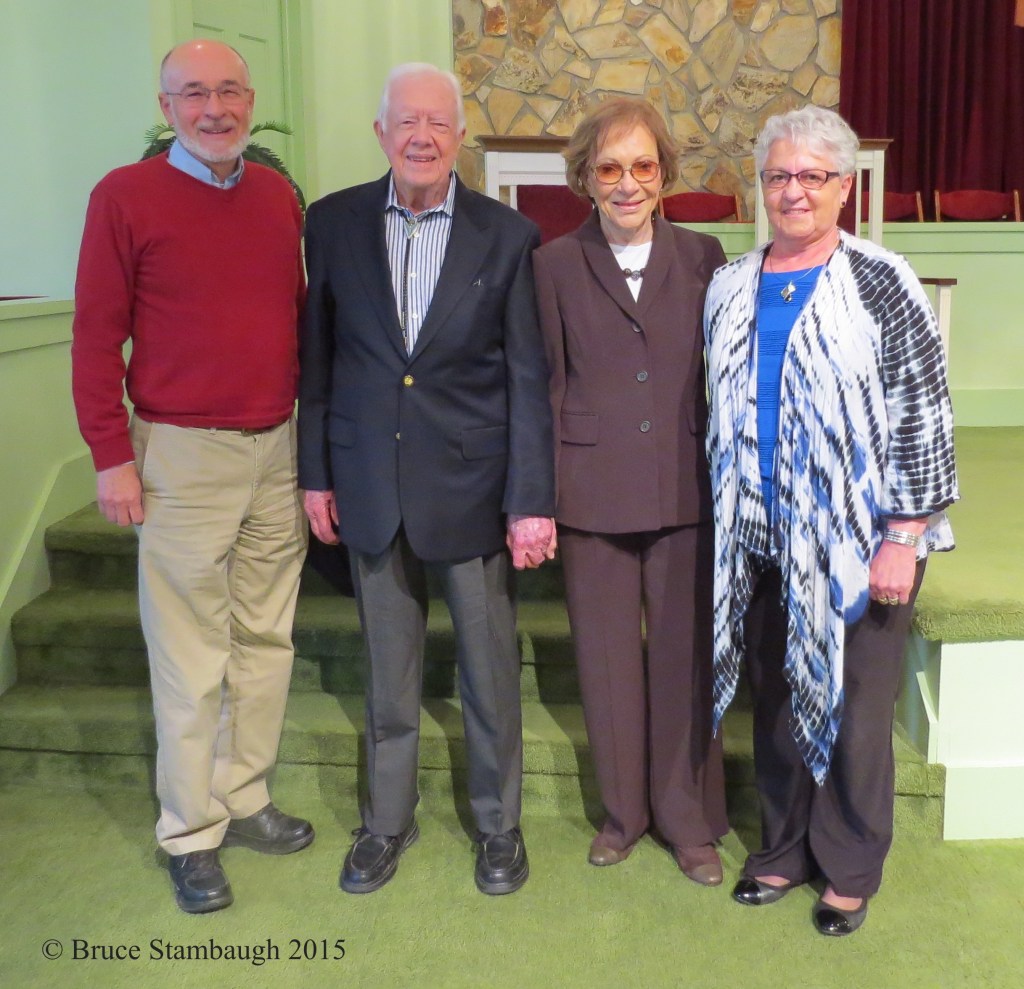
My wife and I with Jimmy and Rosalynn Carter at Maranatha Baptist Church, Plains, Georgia.
Today, the nation says farewell to its 39th president. The state funeral will be held in the National Cathedral in Washington, D.C.. In contrast, a private service will be held tomorrow at Maranatha Baptist Church in Plains, Georgia, where Jimmy and Rosalynn attended and Jimmy taught Sunday school.
That’s where the above photo was taken on March 1, 2015. While vacationing in northeast Florida, Neva and I decided to visit Plains and attend the Sunday school class taught by the former president. At age 90, he was reducing how often he led the class.
Jimmy was scheduled to teach the day after we needed to leave Florida, so we drove the four-and-a-half-hour drive from Fernandina Beach to Plains. When we arrived, we drove around Plains, which didn’t take long given the town’s small size. We also visited the Jimmy Carter National Park, where the visitor’s center is the old Plains High School.
We enjoyed our brief tour there and saw the Nobel Peace Prize that Jimmy was awarded in 2002. The old schoolhouse is much like it was when Jimmy attended there.
We also wanted to stay overnight in Plains, but the bed and breakfast had no vacancies. The perk to staying there gave patrons a front-row seat at the church, where the owner, Miss Jan, also attended. Plus, she was Amy Carter’s third-grade teacher.
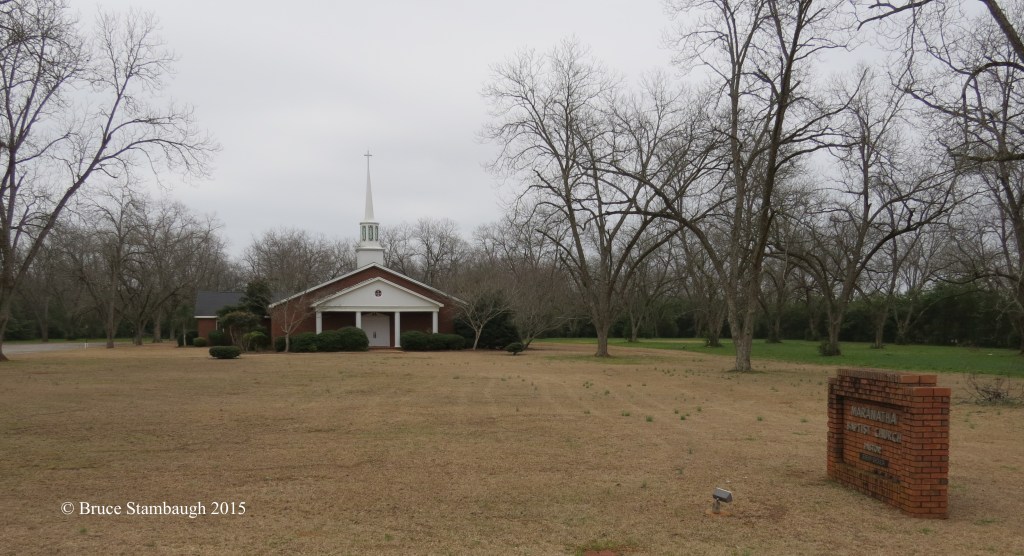
Maranatha Baptist Church, Plains, Georgia.
We met Miss Jan the next day after standing in line for a while. She took charge and barked out the procedures for entering the church, starting with passing through the Secret Service agents’ inspection. Much like filing through TSA at an airport, we emptied our pockets, and agents ran a wand up, down, and around everyone. So, the long line was slow going.
We had arrived early, but many others had arrived earlier. Perhaps they had the same idea. Like us, they had heard the praises of Jimmy’s teaching, and given that he was 90, they wanted an opportunity to listen to this humble former president’s wisdom.
Once in the church, we sat near the back since so many were ahead of us. The modest brick church surrounded by pecan trees wasn’t that large, so we could still see and hear well. Suddenly, Miss Jan appeared again and, like a drill sergeant, metered out the rules of the morning. Once Jimmy began teaching, no photos were permitted.
Since the church was packed, latecomers had to sit in the fellowship hall and watch a live stream of Jimmy Carter’s lesson. That’s how popular his teaching was.
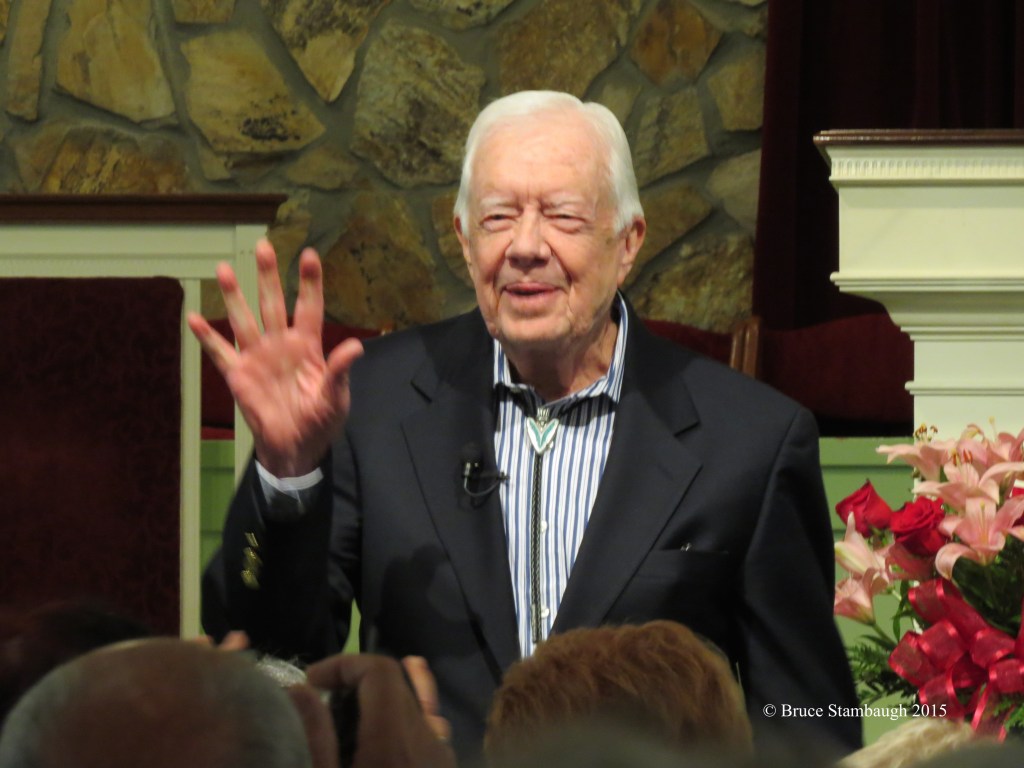
If you wanted a picture with Jimmy and Rosalynn, you had to also stay for the church service. His class was the hour before the worship service. Then, Miss Jan asked us to bow our heads, and she said a lovely prayer. When the “Amen” was announced, we looked up, and Jimmy stood there smiling and waving to the congregation.
Jimmy Carter at Maranatha Baptist Church on March 1, 2015.
A collective “awe” echoed through the sanctuary, and Jimmy began his lesson. I don’t remember the scripture he used, but I can never forget the meaning of his message. Be humble and serve others.
That perfectly summed up Jimmy and Rosalynn’s life after leaving the White House. They established the Carter Center in Atlanta, whose purpose mirrored that of the Carters: peacebuilding, working for democracy in global countries, and improving human rights. Other goals include improving health and economies in third-world countries, ensuring fair elections, and educating people about the effects of climate change.
Jimmy and Rosalynn spent years supporting and assisting on sight Habitat for Humanity projects. They were great humanitarians. From my perspective, Jimmy was the most effective former president the United States ever had.
We stayed for the church service, and afterward, nearly everyone wanted a photo with Jimmy and Rosalynn. Miss Jan had the method down pat, and we got our photo. It was one of the proudest moments of my life to stand next to such loving human beings, an ex-president and a first lady.
This year is about to end. For my recap, I chose one photo per month to represent the daily subjects I encountered.
January
Sunset at Silver Lake. Photo by Bruce Stambaugh
Silver Lake is slightly more than three miles southwest of our home. I visit it often to photograph birds and sunsets. The sunset actually produced more color in the northwestern sky. So, naturally, that’s where I aimed to capture this photo.
February
Iridescence cloud. Photo by Bruce Stambaugh
Imagine my surprise when I stepped outside to refill my birdfeeders. This rare iridescence cloud caught my attention. Formed high in the much colder atmosphere, the pastel colors are created by the sun’s rays highlighting ice crystals in the cloud. This photo is even more unusual since the sun is also visible.
March
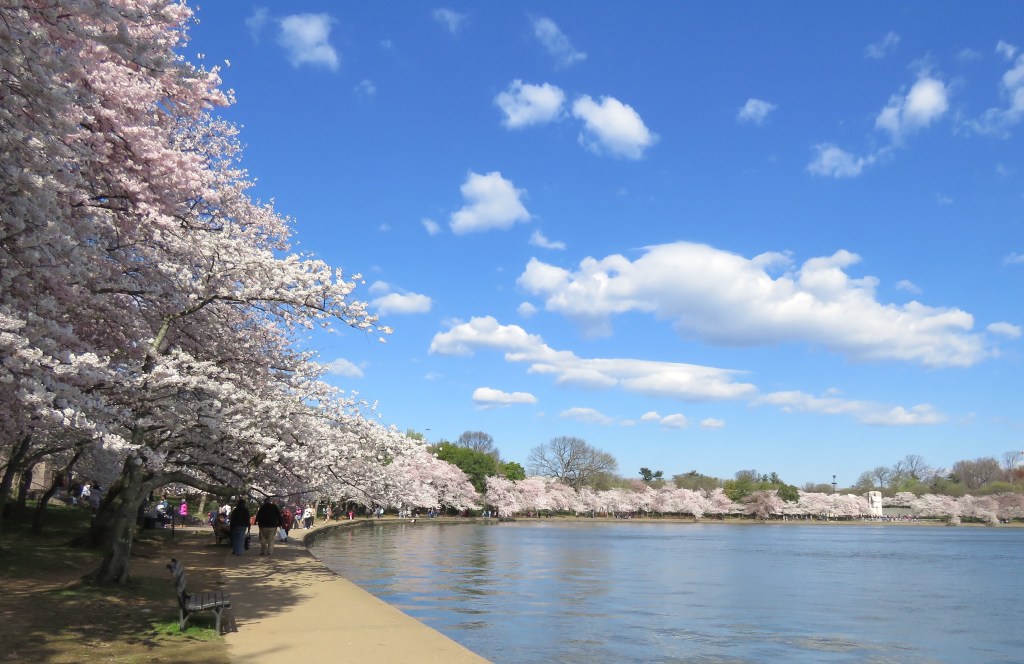
Cherry blossoms around the Tidal Basin, Washington, D.C. Photo by Bruce Stambaugh
I had always wanted to see the cherry blossoms in bloom in Washington, D.C. I never considered going when we lived in Ohio. But once we moved to Virginia’s Shenandoah Valley, I had it on my “to-do list.” When I learned the blooms were peaking earlier than expected, I visited our nation’s capital on a sunny but blustery Wednesday in late March. I was awestruck at their beauty. In this photo, the morning sun highlighted the pale pink petals on the trees planted around the Tidal Basin. The Martin Luther King, Jr. Memorial is on the right-hand side of the photo.
April
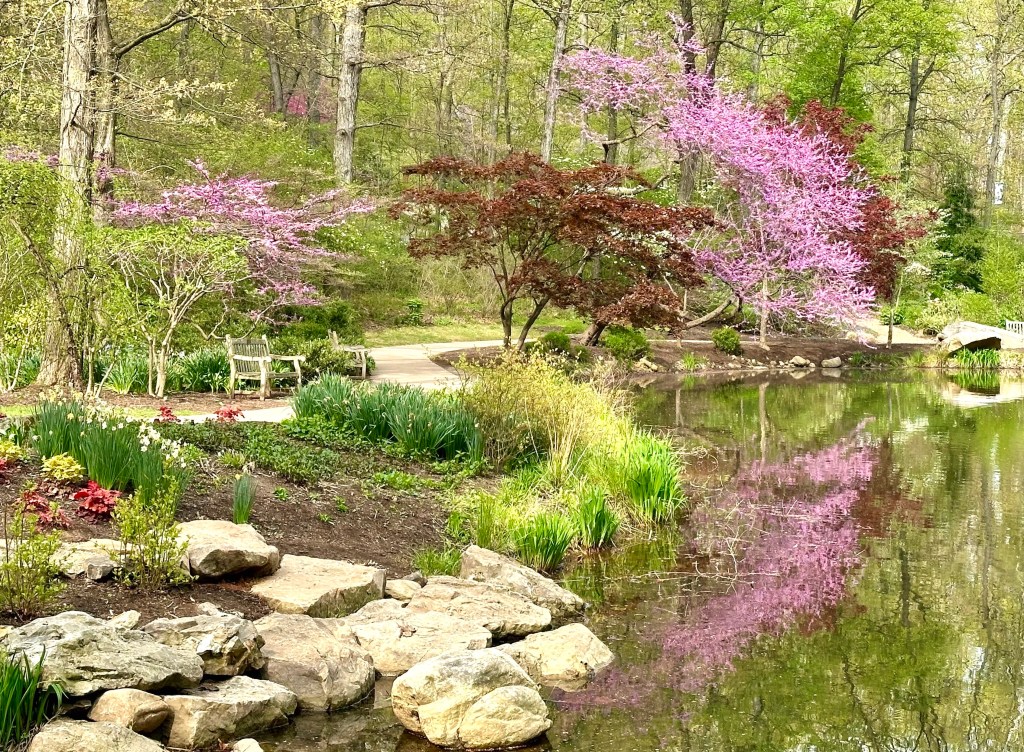
Edith J. Carrier Arboretum, James Madison University. Photo by Bruce Stambaugh
I love to visit the Edith J. Carrier Arboretum on the campus of James Madison University in Harrisonburg, Virginia. It’s a lovely place to seek serenity by connecting with nature’s variety of beauty in any season. Springtime is my favorite. Songbirds, including migrants, are singing and marking their territories. The arboretum’s staff and volunteers ready this remarkable gem for the onslaught of visitors, including many school children and their teachers. I had so many photos to choose from that I called upon my wife to help me decide which picture to share with you. We chose this one because it best represents all that is the arboretum. The blooming daffodils and other plants, plus the giant boulders that secure the pond bank, serve as an attractive, textured foreground for the native redbuds, showy ornamentals, and the dogwood tree, which the pond reflects. The hillside mixed woodlot is an appropriate backdrop for the photo’s main subjects.
May
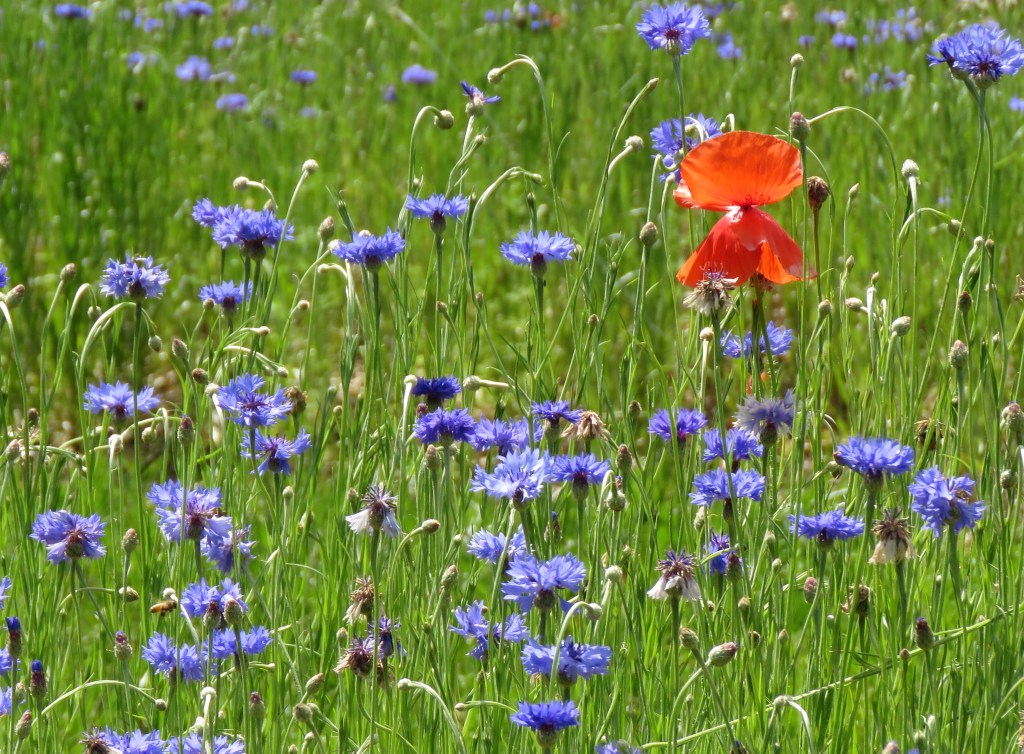
Blue Cornflowers and one orange Poppy. Photo by Bruce Stambaugh
Birding, hiking, and photography are three hobbies I can combine into one outing. I enjoy capturing the unusual, like this field of blue Cornflowers infiltrated by one orange Poppy.
June
Trout fisherman at Rapidan Camp, Shenandoah National Park. Photo by Bruce Stambaugh
Shenandoah National Park is my favorite place to hike. This photo was taken beside Rapiden Camp, President Herbert Hoover’s summer retreat. Hoover loved fishing at the camp to escape from the confines of noisy city life and the country’s politics. This young man caught rainbow trout, just as Hoover had. My friends and I accessed the camp by hiking more than a mile down the Millprong Trail from Skyline Drive. The other way is to book a ranger-guided tour when they are offered and ride the fire road down to the camp.
July
A Great Spangled Fritillary on Hayscented Fern. Photo by Bruce Stambaugh
I never tire of watching the many varieties of butterflies that frequent Shenandoah National Park in the summer. Unless we have a severe drought, wildflowers, dense forests, and the sparkling water of rapidly running streams provide the right habitat for them. I was photographing Turkscap Lilies when this beautiful butterfly flitted past me and landed on this Hayscented Fern plant to bask in the bright morning sunshine. Moments like this keep me returning to the park again and again.
August
Storm clouds brewing. Photo by Bruce Stambaugh
From little on up, clouds have fascinated me. However, I am long over imagining shapes in the clouds. I enjoy their beauty, their constant reconfiguration, and, in the case of severe storms, their power. I was astonished at how quickly these cumulus clouds grew into cumulonimbus clouds, and by the time they reached the Blue Ridge Mountains in the background, a severe thunderstorm warning had been issued. We were glad for the rain since the entire Shenandoah Valley had been in a summer drought.
September
Beauty after the storm. Photo by Bruce Stambaugh
September started off right with a much-needed rainstorm followed by a stunning sunset. Other than that, I’ll let the photo’ beauty draw you in.
October
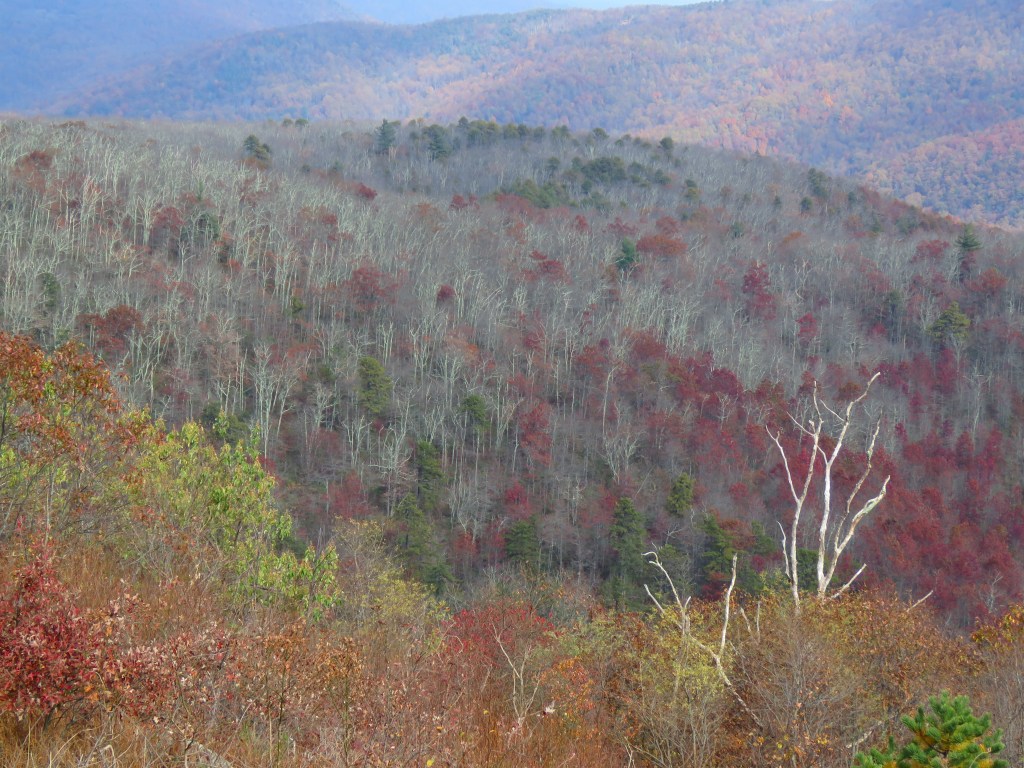
Post-peak splendor. Photo by Bruce Stambaugh
October’s photo was the toughest one to choose. Even with an extended drought, the colors didn’t disappoint this year. Still, we had two celestial stunners in October that could have been selected. I was fortunate to photograph the Aurora Borealis and Comet C-2023 A3, also known as Tsuchinshan-ATLS. Plus, I could have chosen golden maples at the height of their colors. But this photo stood out. The bare white branches of the gray birch trees adjacent to the stands of red oaks guarded by pines and cedars show the glory of Shenandoah National Park even after most of the leaves and tourists have left. Also, note that mountainside forests in the distance at lower altitudes are still holding fast to their lovely leaves. This year, October had it all.
November
Ho’okipa Beach, Maui, Hawaii. Photo by Bruce Stambaugh
November’s shot was nearly as hard to pick as October’s. I was torn between being a birder or a tourist. Obviously, I chose the latter. Ho’okipa Beach is one of Maui’s most famous and popular attractions, not just because of its beautiful blue waters. Surfers clamor for the rolling, long-lasting waves, especially when the tide is high. In the afternoon, people of all ages watch giant Green Sea Turtles come ashore to soak in the afternoon sun that warms the beach. My birding option was a photo of a Snowy Owl, which you will see in a later post.
December
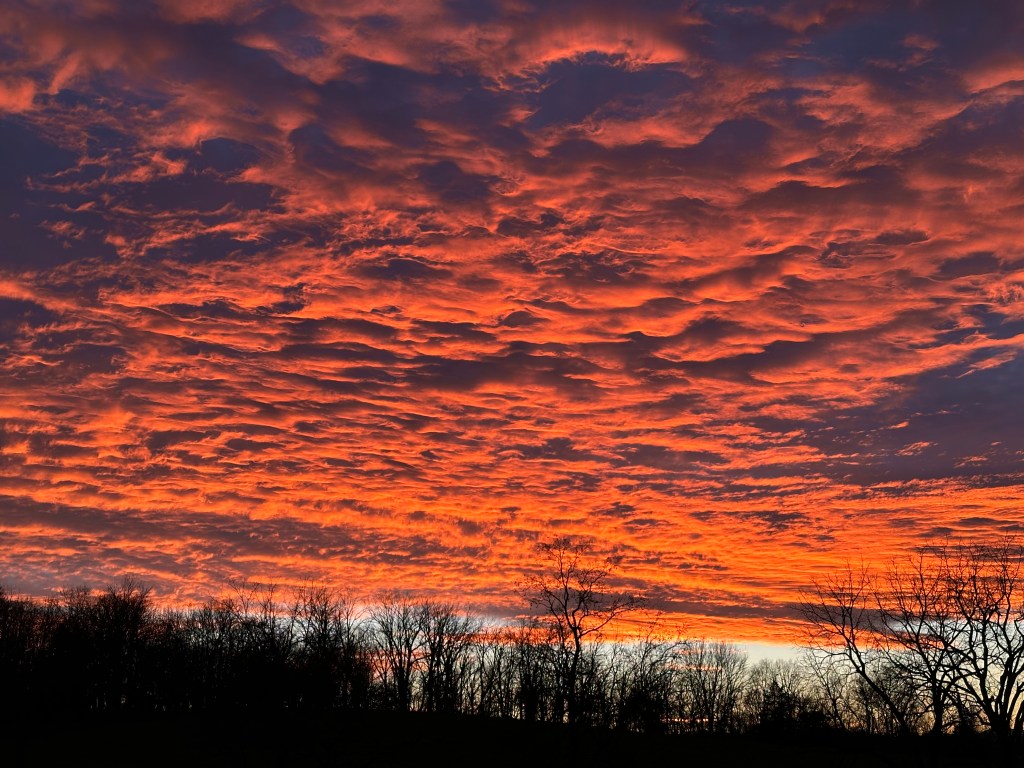
A glorious December sunset. Photo by Bruce Stambaugh
It is only appropriate to close out 2024 with a sunset, a beauty at that. With the low cloud deck, I was ready for this one, which didn’t disappoint.
I greatly appreciate you following this blog all these years. I wish you all the very best in 2025. Happy New Year everyone!
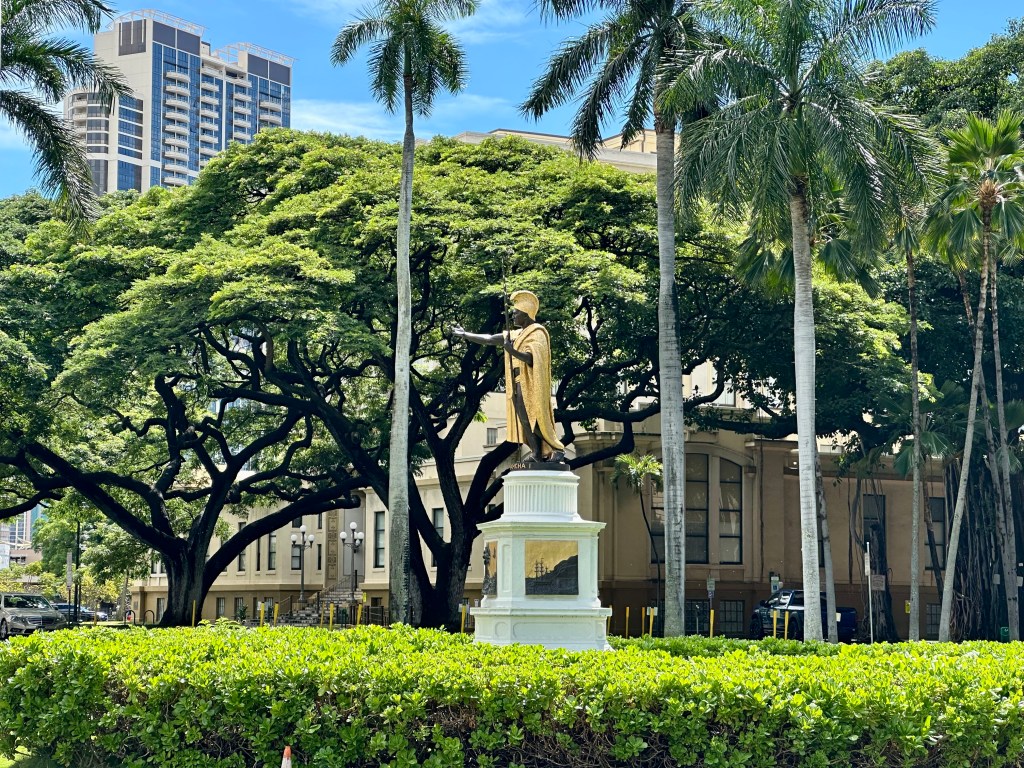
King Kamehameha’s statue near the Hawaiin capitol in Honolulu. Photo by Bruce Stambaugh
My wife and I couldn’t wait to get to Hawaii. Our flight plan took us from Washington, D.C., to Los Angeles, California, to Honolulu. We weren’t looking forward to two long flights.
Little did we know the travel time would become even longer. We rose at 4:30 a.m. for a morning flight to LAX. Despite some turbulence in the west, the flight went well overall. The flight to Honolulu was a different story.
About 10 minutes over the Pacific Ocean, the pilot announced that we were returning to LAX due to a compressor failure that controlled the plane’s hydraulics. Even with the little I knew about commercial aviation, I realized we would be on an emergency return.
One of seven fire trucks met us on the runway on our return to LAX.
We landed fine, but seven fire trucks surrounded the plane to check the brakes and tires for any overheating or fire due to landing heavy. Everything was fine, and we deplaned, wondering what was next.
We waited until another plane and crew arrived. The gate agents announced a later departure time more than once. We were to arrive at our hotel in Honolulu around 6 p.m., but it was actually 11 p.m., so our dream of watching the sunset on Waikiki Beach on our first day was just that—a dream.
There would be other days and sunsets. We were in Hawaii, the 50th state, to join the Union.
Our first full day on Oahu was election day. With all the hype and drama throughout the campaign, I was glad we were far from the mainland. Poor Hawaii. They vote knowing the election has already been called by the time their polls close. That was the case again in 2024.
We met our group and tour guide for an early breakfast. We had chosen a small group tour, meaning the group was limited to 26. However, half of the group had canceled for multiple reasons, so we only had 13, plus Debbie, our guide.
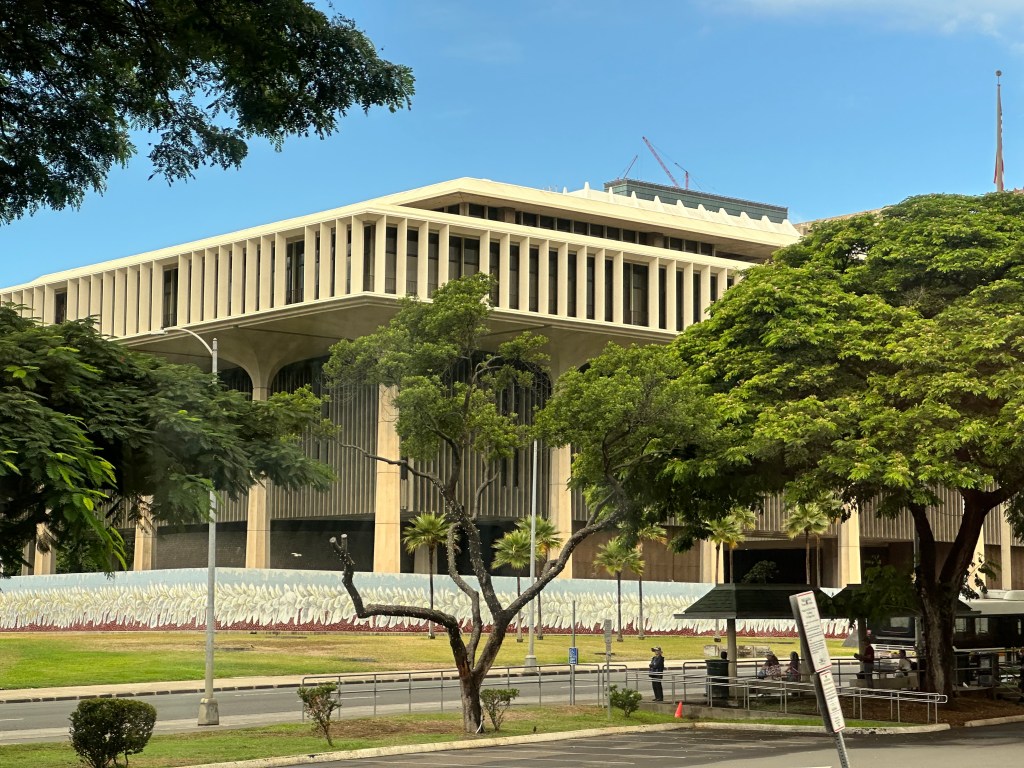
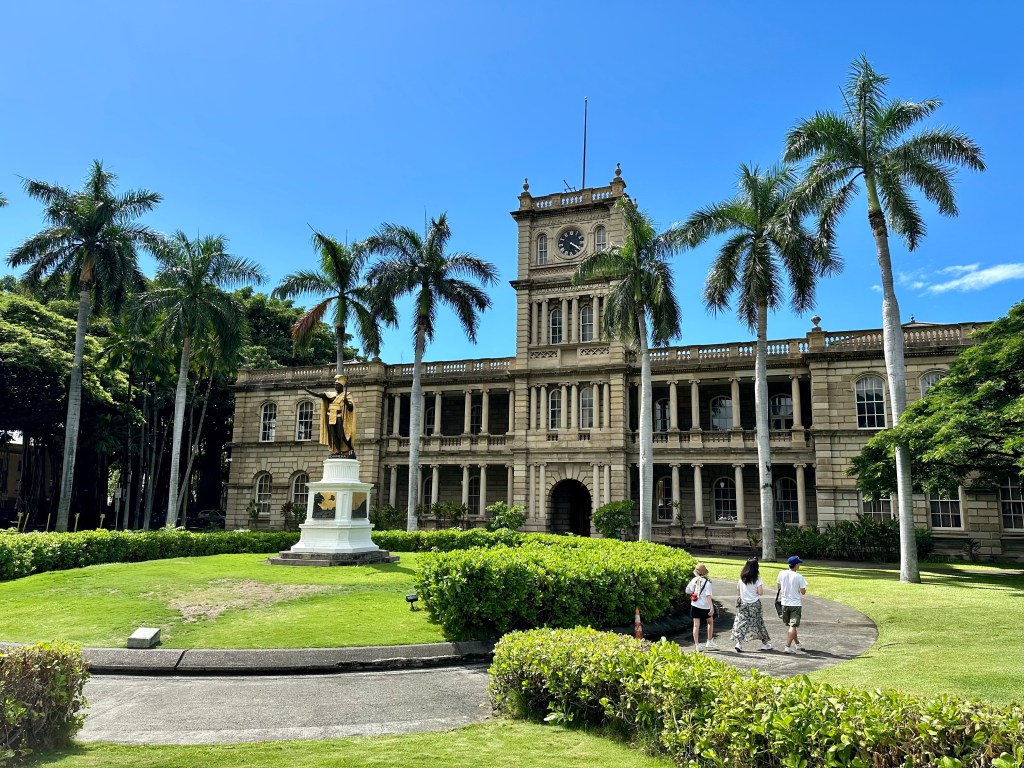
The breakfast was delicious, and our small group climbed onto a 46-passenger bus. We spent significant time touring the Waikiki Beach area of Honolulu, which has many shops, markets, and historic buildings. We saw the Iolani Palace, home of the last reigning Hawaiian royalty. King Kamehameha’s statue was across the street in front of a government office building.
The Hawaiian State Capitol.
King Kamehameha’s statue and government office building.
Iolani Palace.
My wife and me.
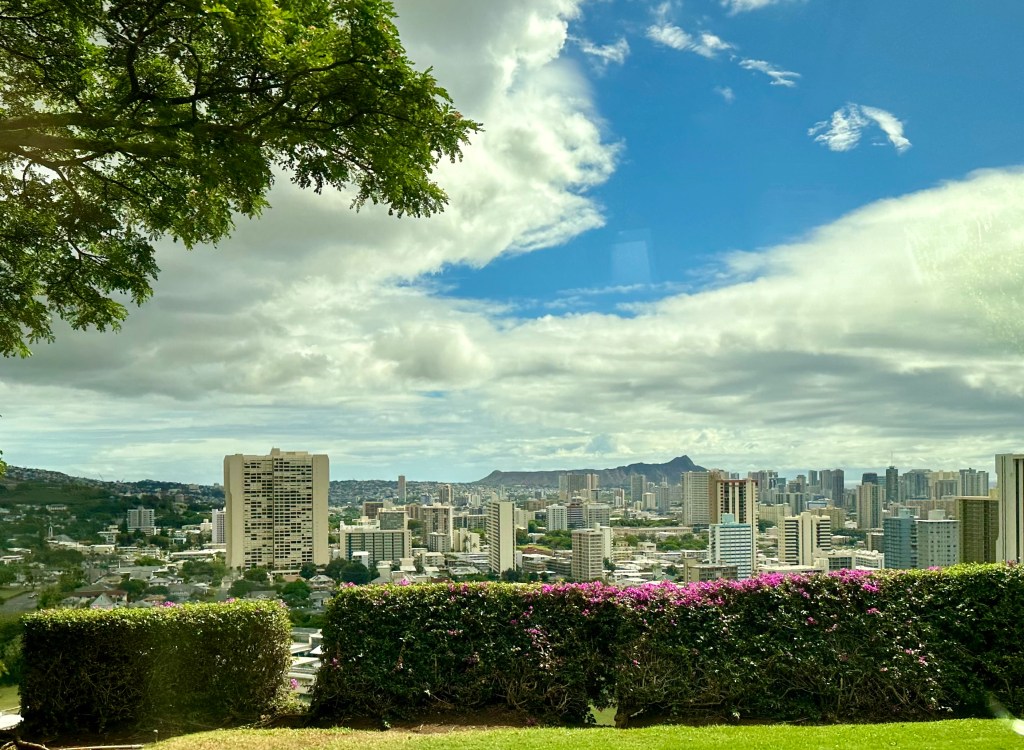
The view of Diamondhead beyond Honolulu on the road to the Punchbowl.
The flat gravestones in the Punchbowl.
The memorial in the Punchbowl to those who died in the Pacific.
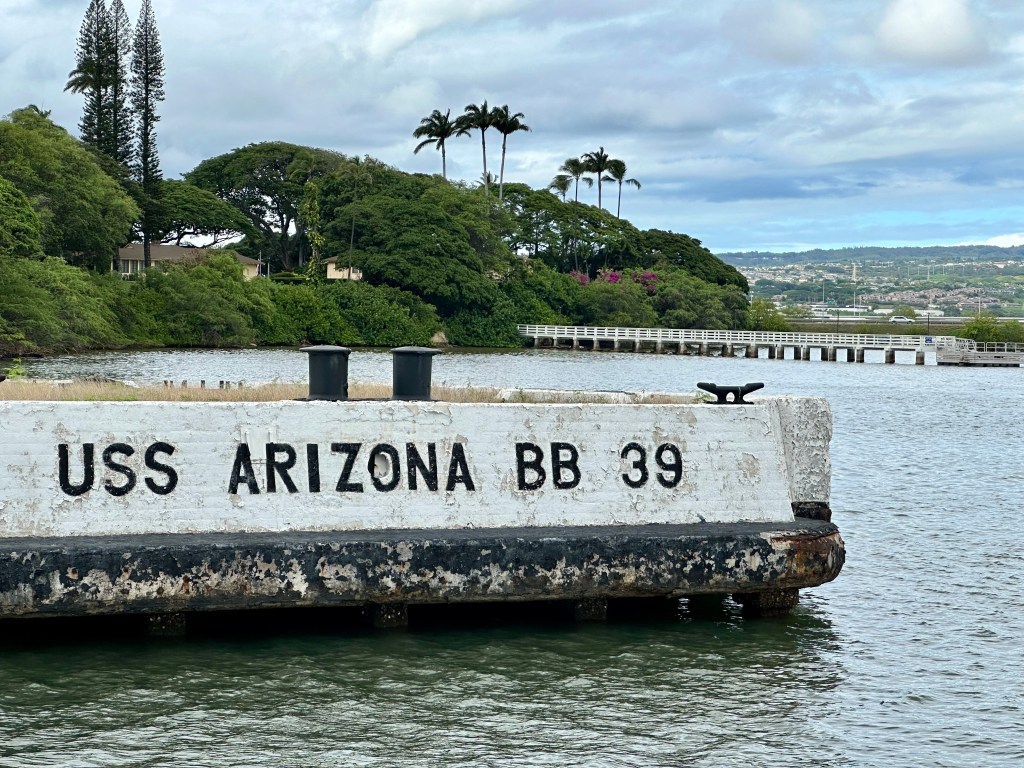
The USS Arizona Memorial, Pearl Harbor.
Names of those who died on the USS Arizona.
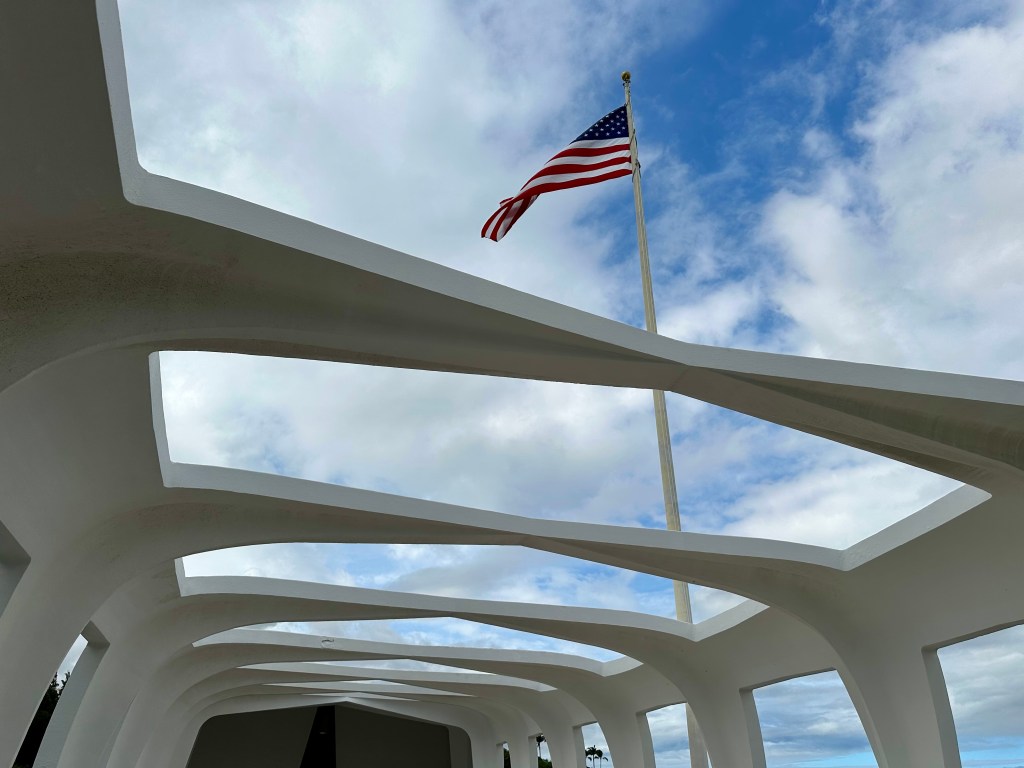
The US flag above the memorial.
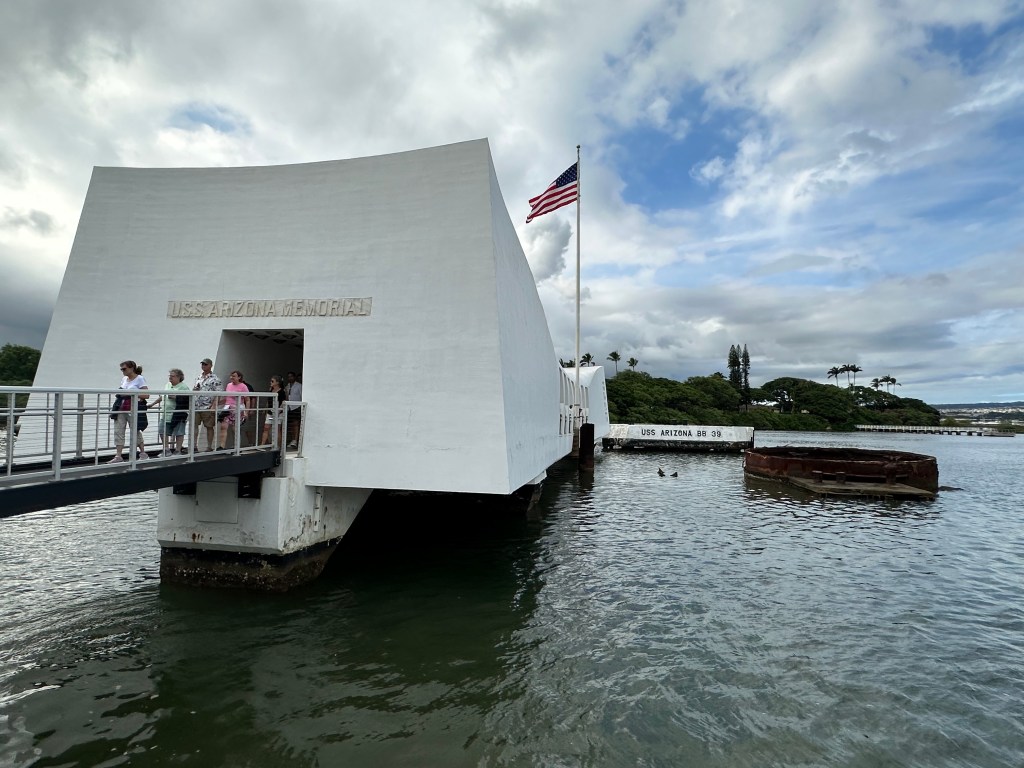
The USS Arizona Memorial.
The Navy boat that shuttled us to and from the memorial.
We drove through the Punchbowl Crater, home to the National Memorial Cemetery of the Pacific, which honors U.S. military members who died serving their country. Since commercial vehicles are prohibited from stopping, we could only view it from the bus.
The solemn respect for those who died continued as we visited Pearl Harbor. We boarded small Navy transport boats to see the U.S. Arizona Memorial. The ship sank during the attack on December 7, 1941, and 1,177 sailors and Marines were buried in the rubble of the battleship. Out of respect, visitors were silent as they walked around the memorial. It was a stark reminder of the brutality of war.
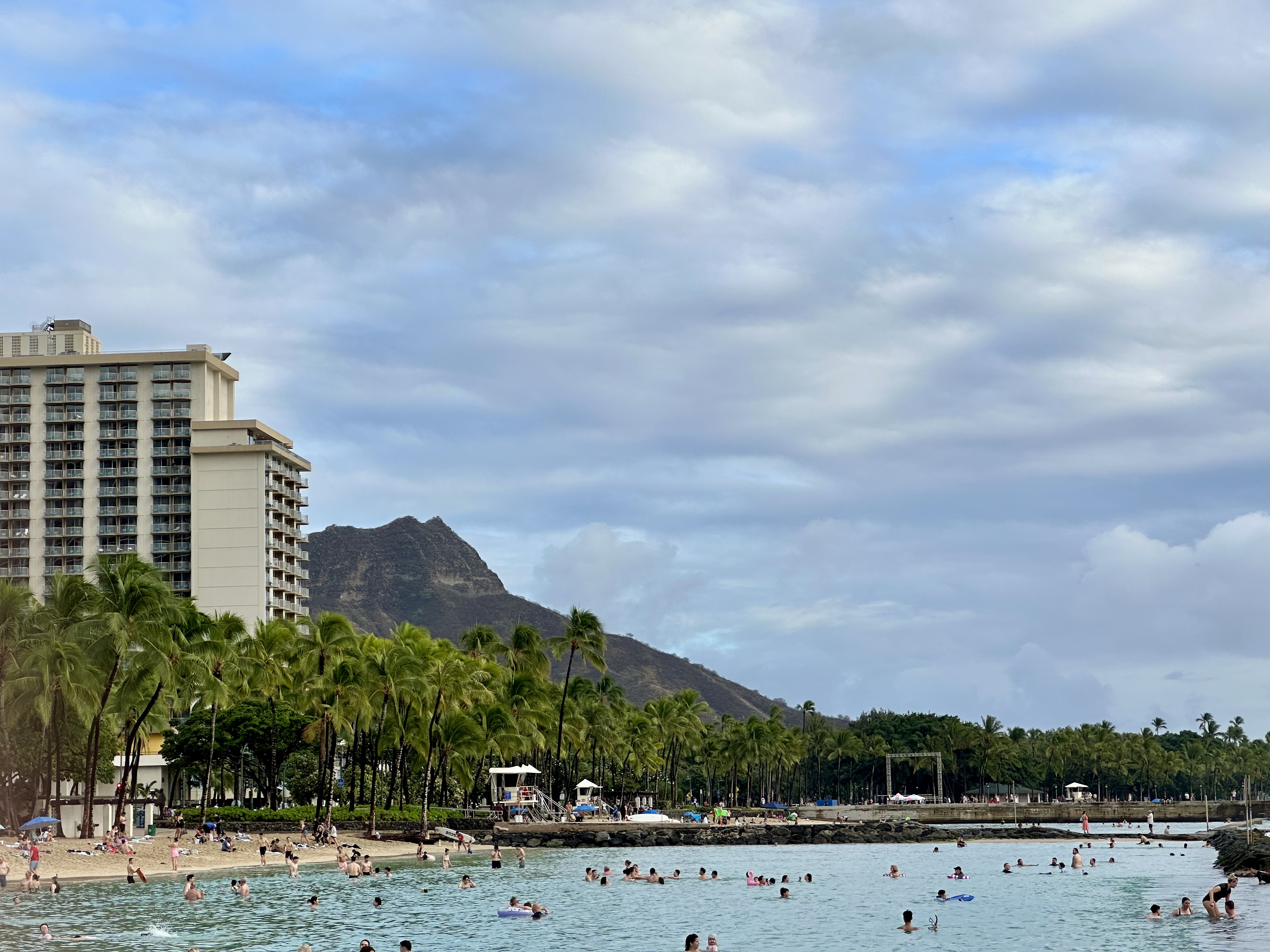
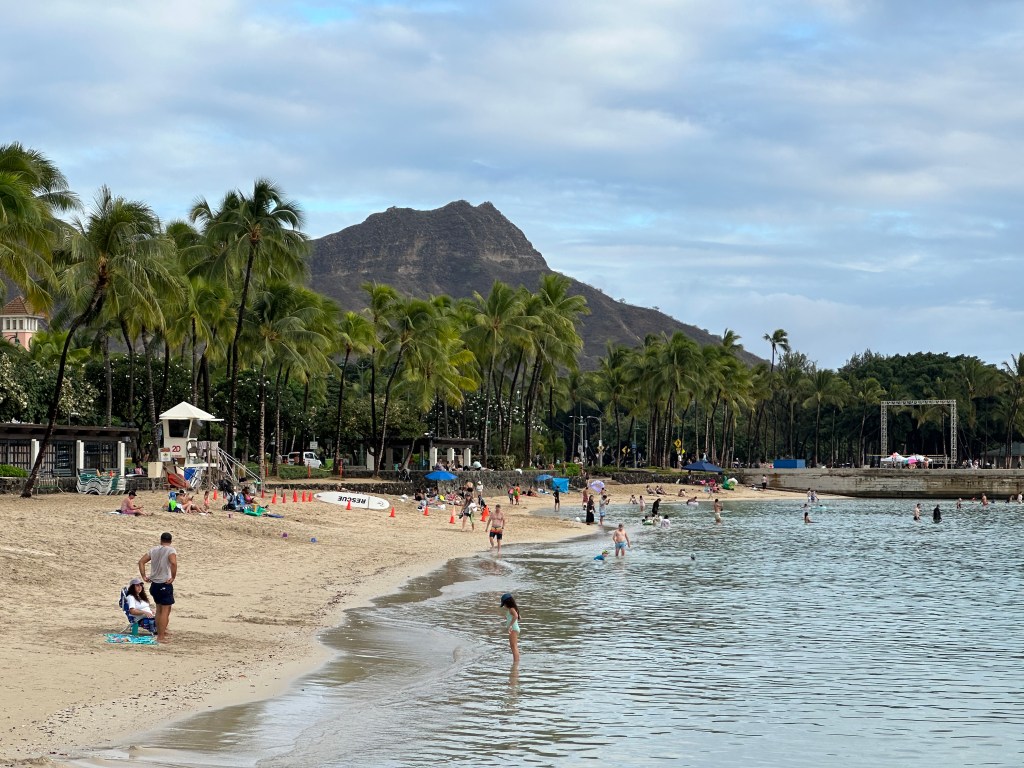
That seemed to drain the strength from us, and I was glad the group headed back to the hotel for the rest of the day. Before dinner, I hustled to get a shot of Diamondhead from the beach before dinner. Hotels are built so close to the beach that it’s hard to get a decent shot of the famous landmark. When I returned to our room, the heat and humidity had soaked my clothes.
We enjoyed our dinner in the hotel’s open-air lobby. We were supposed to dine around the spacious pool, but with rain a possibility, the staff moved us under shelter. We knew the results of the election before our food arrived.
A better view of Diamondhead. Photo by Bruce Stambaugh
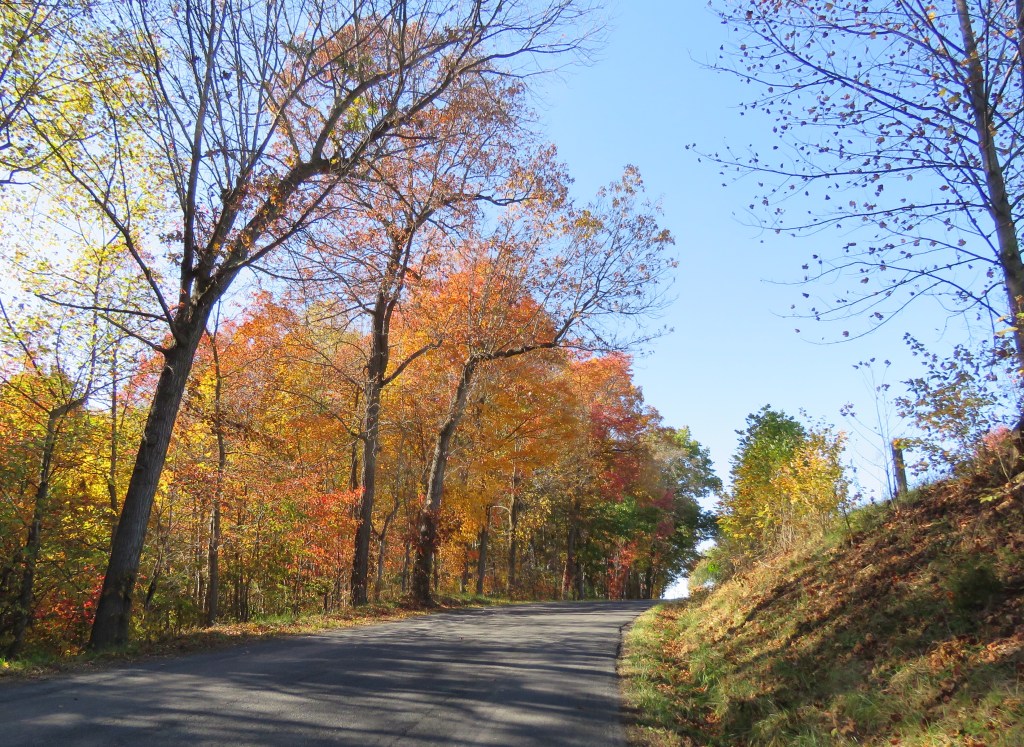
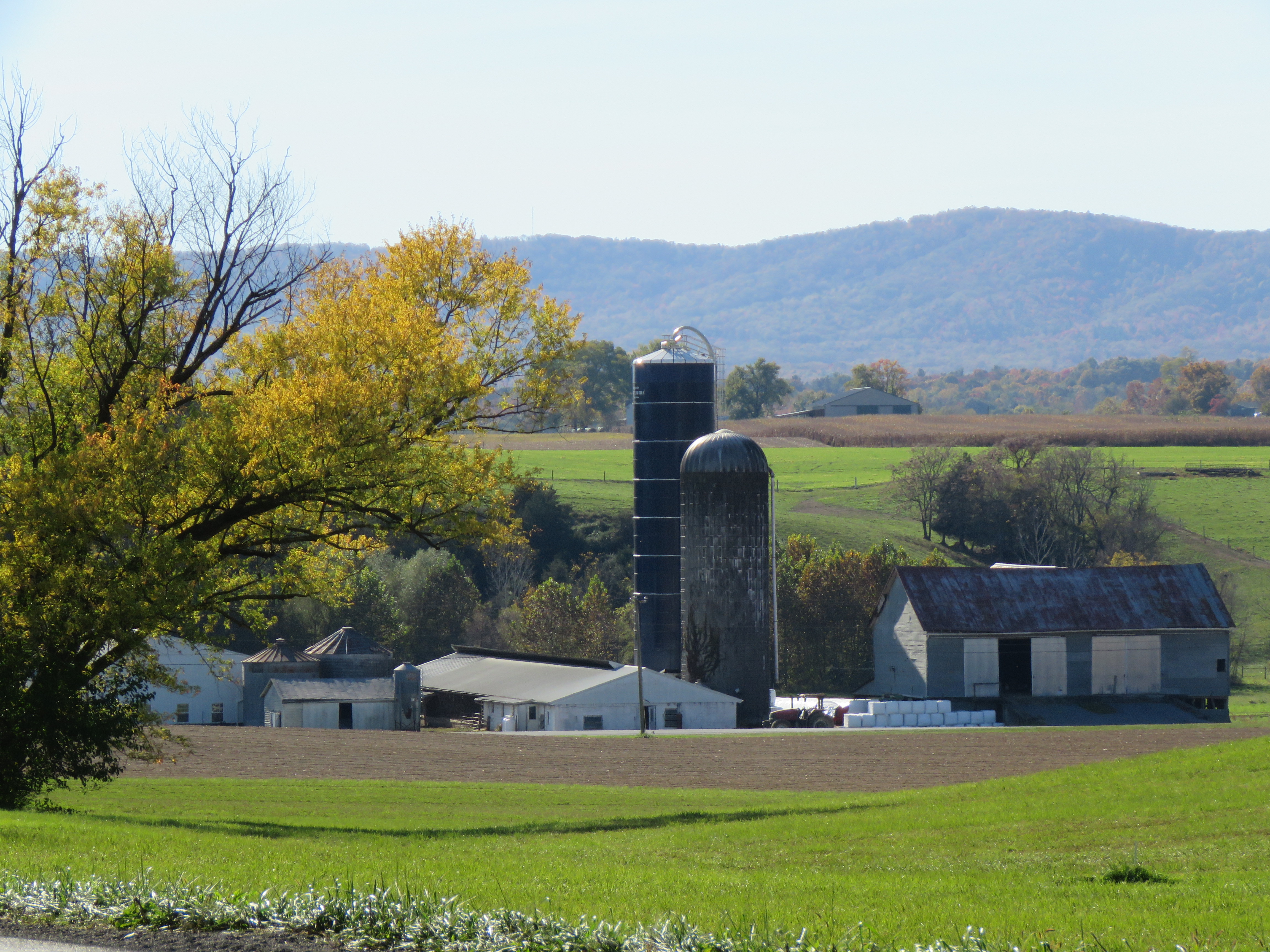
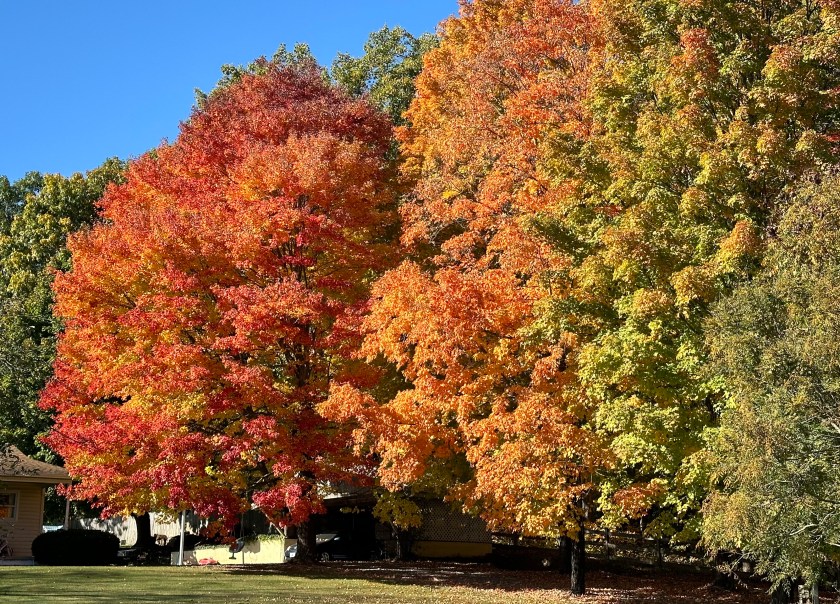
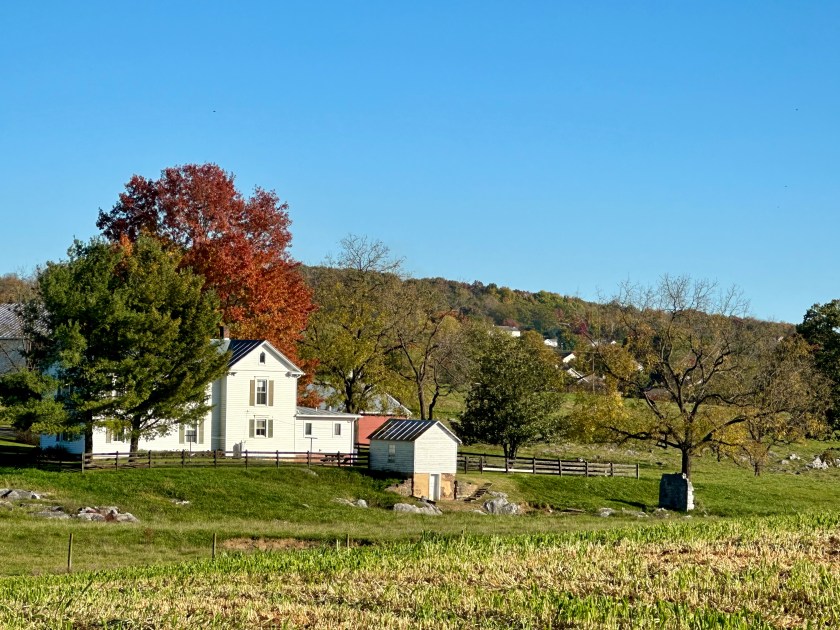
A typical scene in Rockingham Co., Virginia. Photo by Bruce Stambaugh
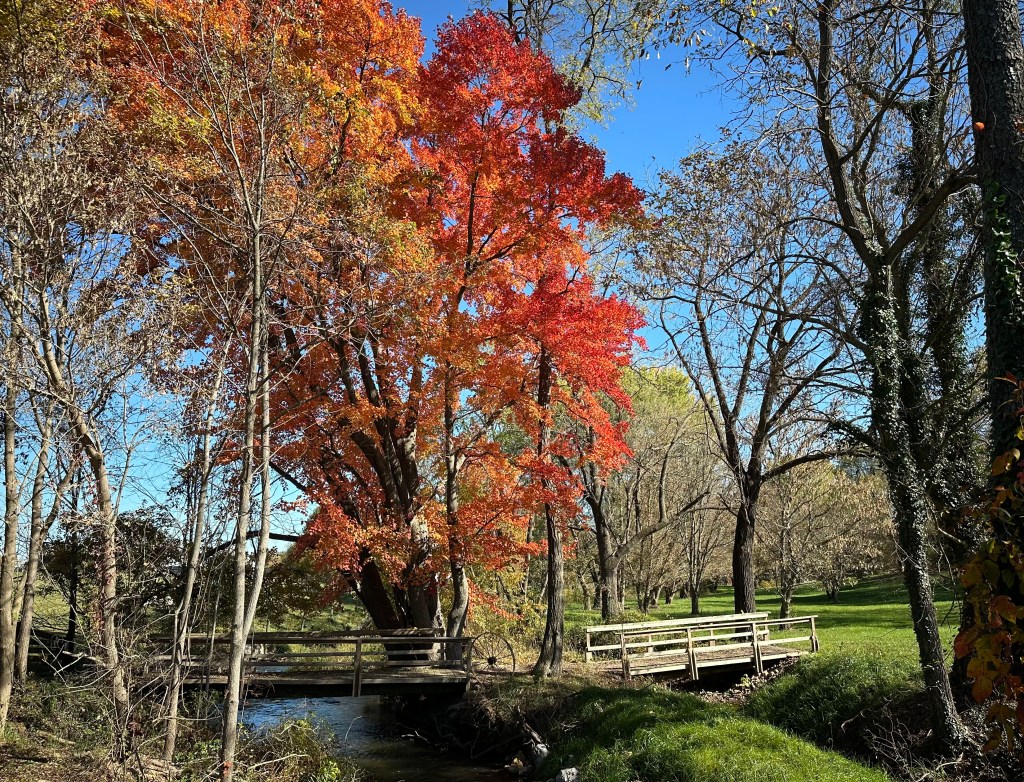
In the fall, traveling the rural roads in Rockingham County, Virginia, reveals Nature’s autumnal beauty. The trees along the highway’s edge bask in the sun’s more direct rays than if they grew more deeply in the forests.
Driving on Skyline Drive in Shenandoah National Park has the same effect. However, it is also much more crowded with global visitors in the fall. Traversing the local roadways usually means less traffic, which makes it safer to pull over, exit your vehicle, and snap away.
Skyline Drive in Shenandoah National Park earlier in October. Photo by Bruce Stambaugh
Doing so allows photographers to capture the fall’s breathtaking beauty. Occasionally, I encounter opportunities to spot some migrating birds and interact with local residents. Once I explained my purpose, I never had an issue. Of course, I choose my spots carefully.
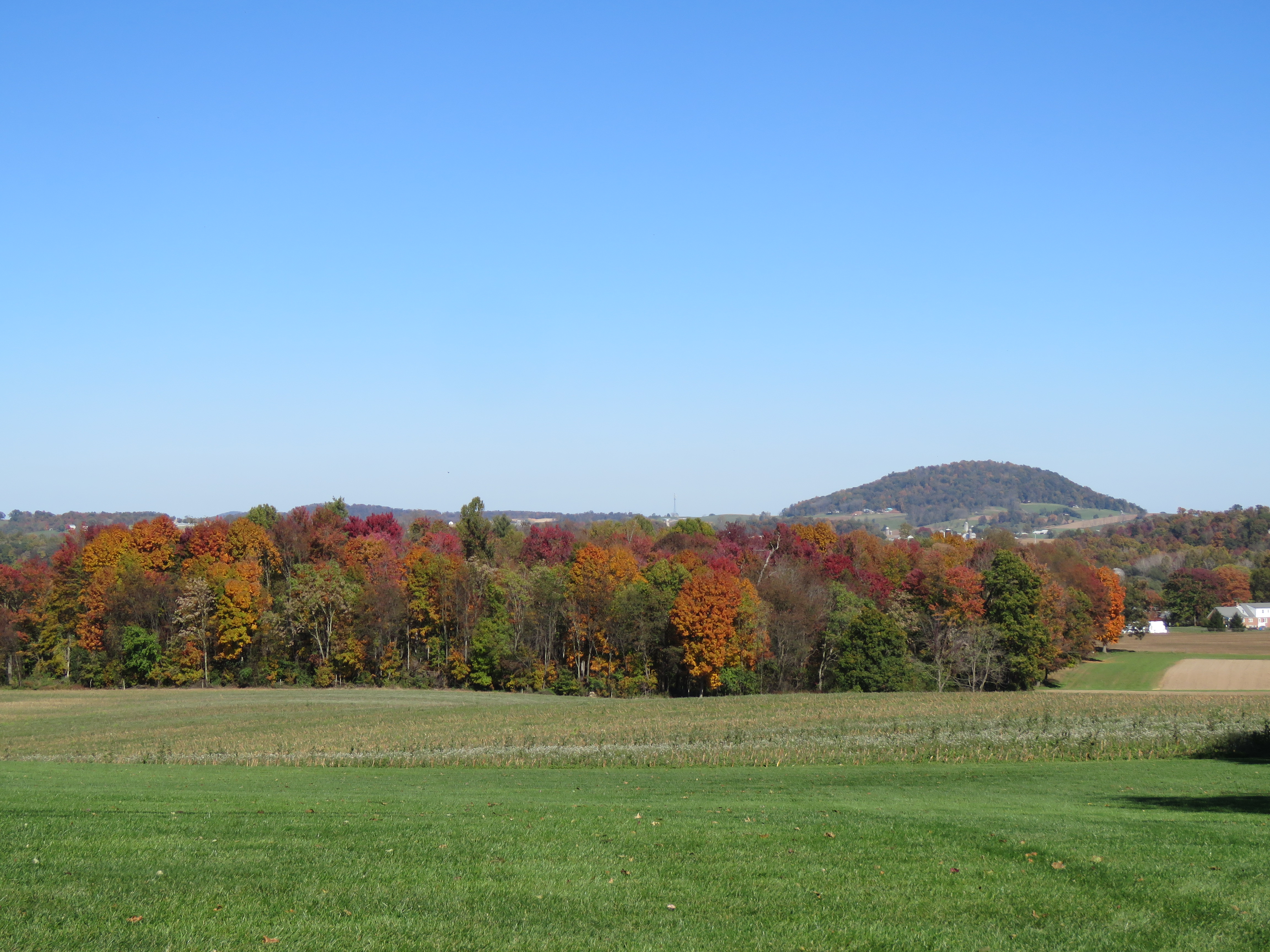
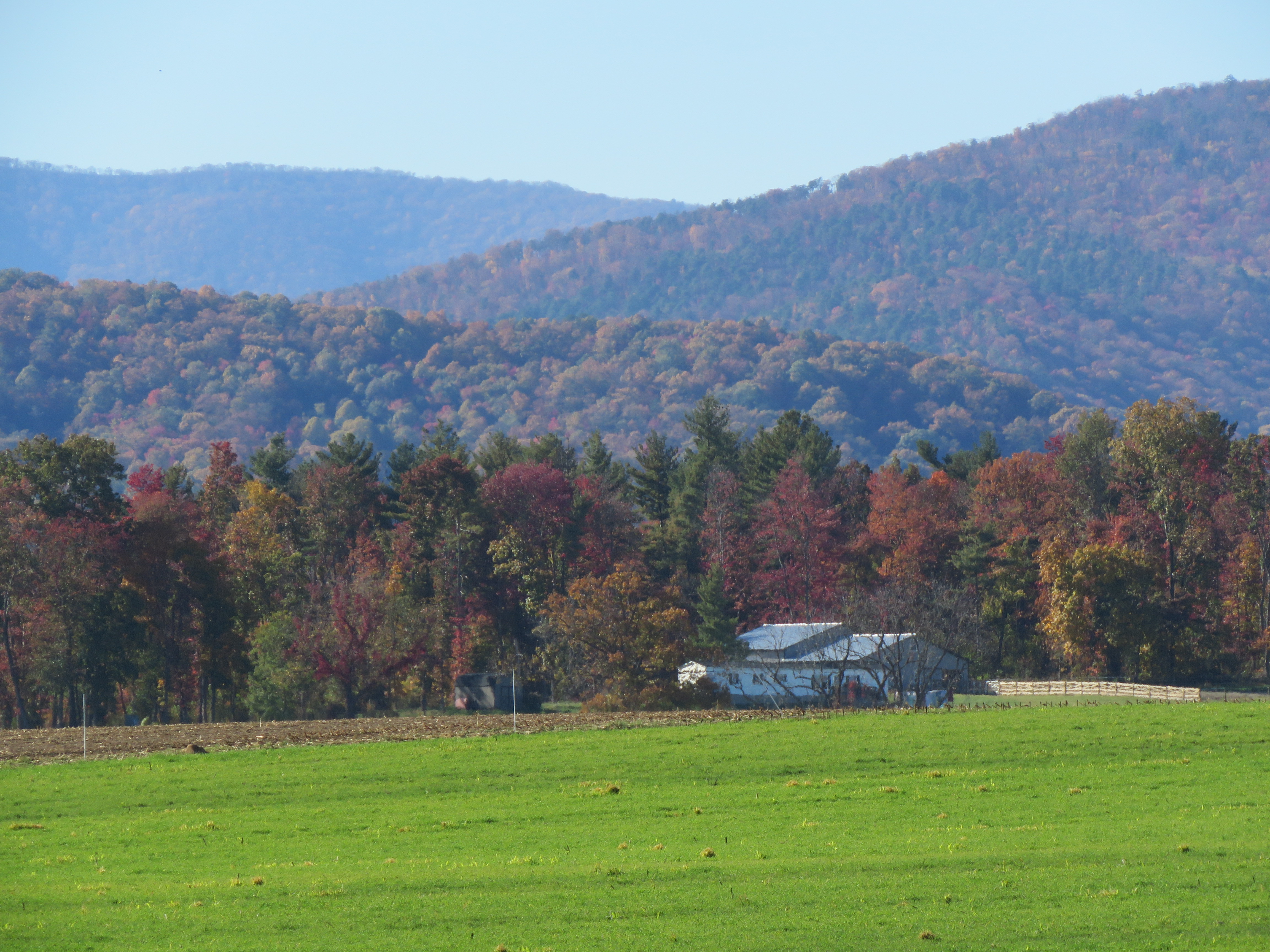
The secondary roads of Rockingham County wind, climb, and descend through the rich agricultural lands that have been farmed for generations, sometimes by the same families and their descendants. I find that fact as rich and satisfying as the colorful leaves.
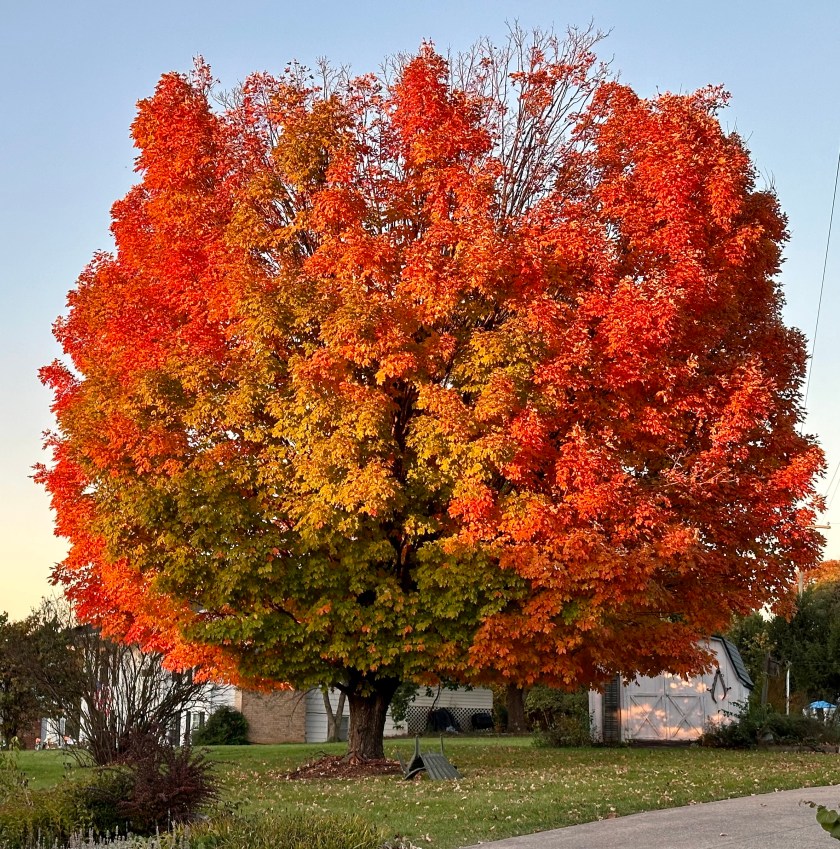
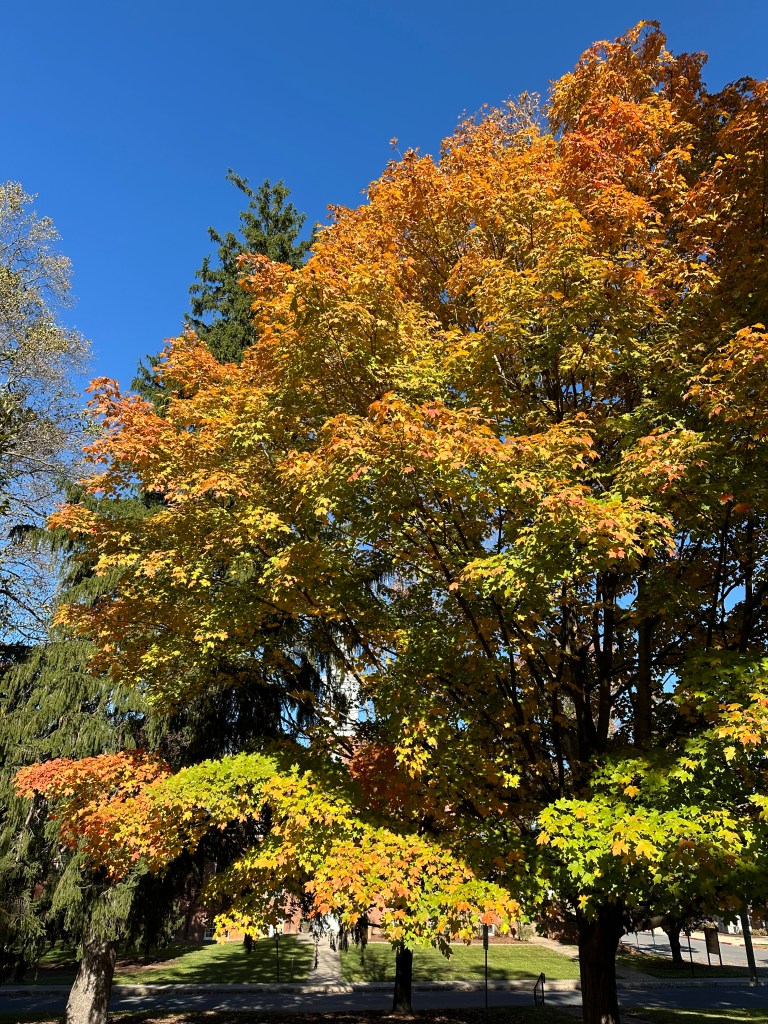
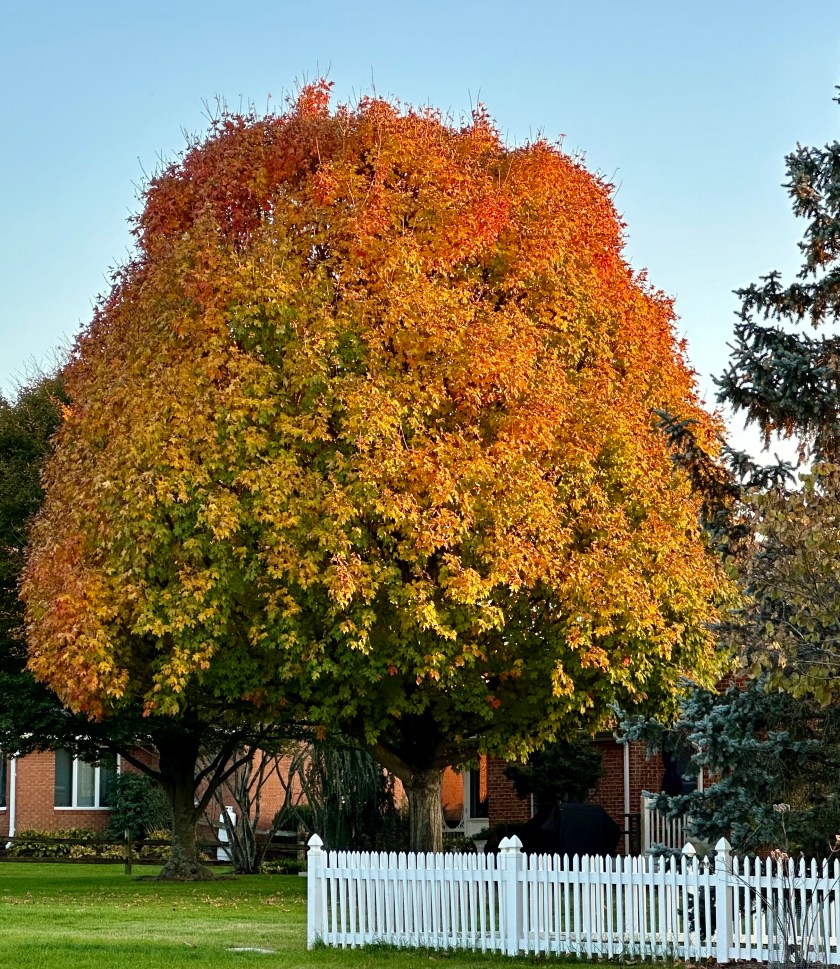
The joy of photographing the glorious fall colors is mainly in the sharing. I hope you enjoy this series of photos of birds, buildings, and leaves at their peak colors.
Please click on the photos to enlarge them.
I often find the brightest colors closer to home. The brilliant leaves show off houses, churches, cemeteries, and roadsides.
Of all the rural roads I traveled, this scene at the little hamlet of Spring Creek took the prize.
“Thinking is difficult. That’s why most people judge.” — Carl Jung
The morning sky was cerulean as I was on my way to deposit three bags of yard waste at the county landfill’s recycling center. When I turned onto Main St., traffic in both southbound lanes was stopped for some reason. I figured it might be a wreck at the next intersection.
Soon, vehicles in the right-hand lane began moving, so I merged into that lane. Then, I saw two Hispanic men walking from a fast-food restaurant to a dump truck five cars ahead. Had they really stopped their vehicle in the left lane to get something to eat? I zipped by the truck on the right and headed to my destination.
When I arrived at the landfill, I drove straight to where tree limbs, shrubs, leaves, and grass clippings were dumped, later to be ground into mulch. As I began unloading the three bags of sticks, leaves, and dead plants, the truck that blocked the road backed in beside me.
The two occupants quickly began to dump the truck’s load onto the huge pile. I kindly asked the driver what had happened where their vehicle had been stopped.
“You mean in front of McDonald’s?” the driver asked. I nodded in the affirmative.
“Oh, the transmission in the car beside us went out,” the man explained. “The lady was crying and didn’t know what to do, so we got out and pushed her car into the parking lot.”
I thanked them for their good deed of kindness and silently chastised myself for wrongly judging them. I was embarrassed by my egocentricity.
Why do we think so negatively when we don’t know all the facts? Why was I so self-centered simply because traffic was stalled? I wasn’t on a timed schedule.
Instead of being unnecessarily judgmental, why wasn’t I more curious about the situation? Jung’s relevant quote spoke to me. Jung was a Swiss psychologist and psychoanalyst in the 20th century.
I pondered all this on my way home. I thought more broadly about the current chaotic state our country is in. Is this the way bias and bigotry start, one little, insignificant episode at a time?
I didn’t consider myself biased toward others or a bigot—most people don’t—but this incident gave me pause. After a 30-year career in public education and a dozen more years in marketing, I always considered myself open-minded and fair toward others.
I wondered how many times in my lifetime I judged situations and other people without comprehending I was doing so. Probably a lot more than I care to recall. I suspect this septuagenarian is not alone in that regard.
So, how do we change our approach to life’s little hindrances? Professional contemplatives suggest starting with the breath: Breathe in, breathe out, breathe in, breathe out, they recommend.
I should have recognized this right away. Instead of long, deep breaths, I imagine my breathing was short and shallow, only adding to my unnecessary frustration and likely increasing my blood pressure.
From experience, I know that contemplative practices have many benefits. According to the Center for Contemplative Practices, they can improve health, mood, sleep, self-awareness, curiosity, and other personal gains.
Had I taken the time to remember and act upon these principles, my day would have started much differently. After all, how much effort does it take to pause, take a deep breath, and relax? The answer is not much.
However, I was bold enough to ask the men about the situation and received a straightforward answer that satisfied my inquisitiveness. Those good samaritans pulling in beside me at the landfill were a godsend. I imagine the women driver felt the same way.
So, the next time I tense up, I’ll try to remember to breathe in and out and not judge. How about you?
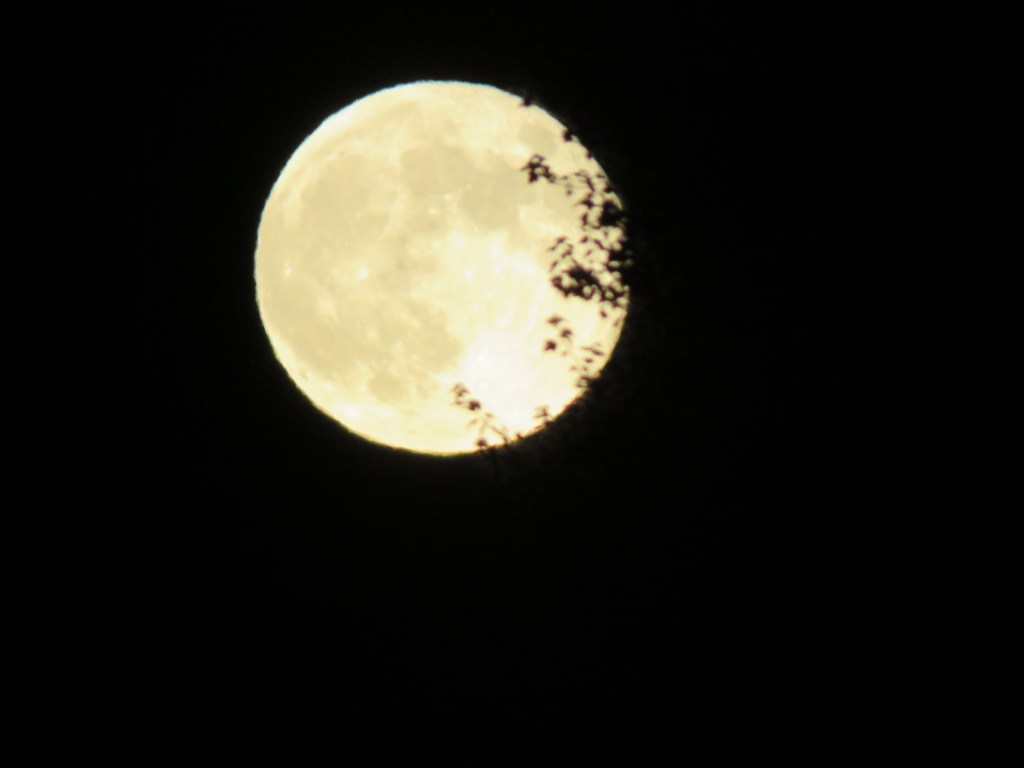
October has blessed us with some fantastic and surprising celestial wonders. The full Hunter Super Moon and the comet Tsuchinshan-ATLAS graced our night skies last week. The comet is still being seen but will soon vanish from sight.
Earlier in the month, the Aurora Borealis danced in the skies across the northern hemisphere, leading the stellar trifecta. Residents in the southernmost regions, like Arizona and Florida, even saw them.
I didn’t have to go far to view any of the trio of events in Virginia’s Shenandoah Valley, where I live. The aurora’s colorful display reminded me of the animated light shows projected onto the American and Canadian Niagara Falls.
However, it’s hard to beat Nature’s heavenly choreography. All I had to do to see the Northern Lights was to step outside my front door. Pinks, reds, and greens played across the sky, dimming and dancing for all to see.
The Aurora Borealis on October 10, Harrisonburg, Virginia. Photo by Bruce Stambaugh
I had only once seen the northern lights as a young man living in Ohio’s Amish Country. The red curtain of zigzagging brilliance danced and sizzled strangely in the southern sky. Yes, I heard an associated zapping sound, but briefly.
I knew the forecasts for the Aurora Borealis were favorable, but I didn’t expect to see such vivid beauty this far south. It was a welcomed surprise that enabled many to cross off seeing the Northern Lights from their bucket list.
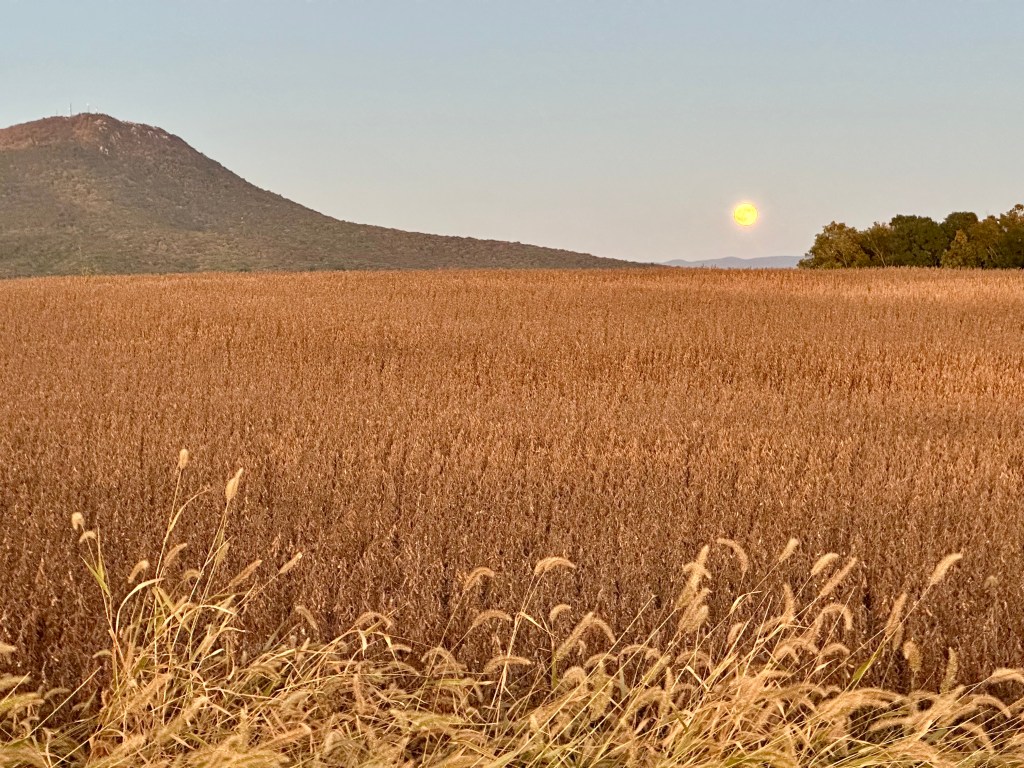
Next up was October’s Hunter Super Full Moon, the fourth consecutive super full moon this year. I like to catch the moon rising over the Blue Ridge Mountains, which also host Shenandoah National Park in central Virginia.
October’s Hunter Super Full Moon over Shenandoah National Park. Photo by Bruce StambaughThe Hunter Super Full Moon followed me home. Photo by Bruce Stambaugh
Because I wasn’t exactly sure where the moon would appear, I was able to snap a few shots just after it rose above the famed mountain range. The rural setting made the picture all the more captivating.
Then came the comet. Like the Northern Lights, the news media informed us of its arrival. The comet was expected to be its brightest on October 14. Unfortunately, fog, haze, and rain clouds obscured our skyward view.
Thursday, October 17, was our first clear night. My wife and I headed to a local landmark, Mole Hill. It’s an extinct volcanic core, long eroded and now covered with farmed fertile soils on its gradual slopes and a thick mixed forest on the steeper portion of the cone.
Mole Hill’s higher elevation didn’t help us find the comet. A hazy sky over the Allegheny Mountains, 30 miles to the west, was the culprit. We looked and looked but returned home disappointed. However, I wasn’t giving up since the comet wouldn’t reappear for 80,000 years.
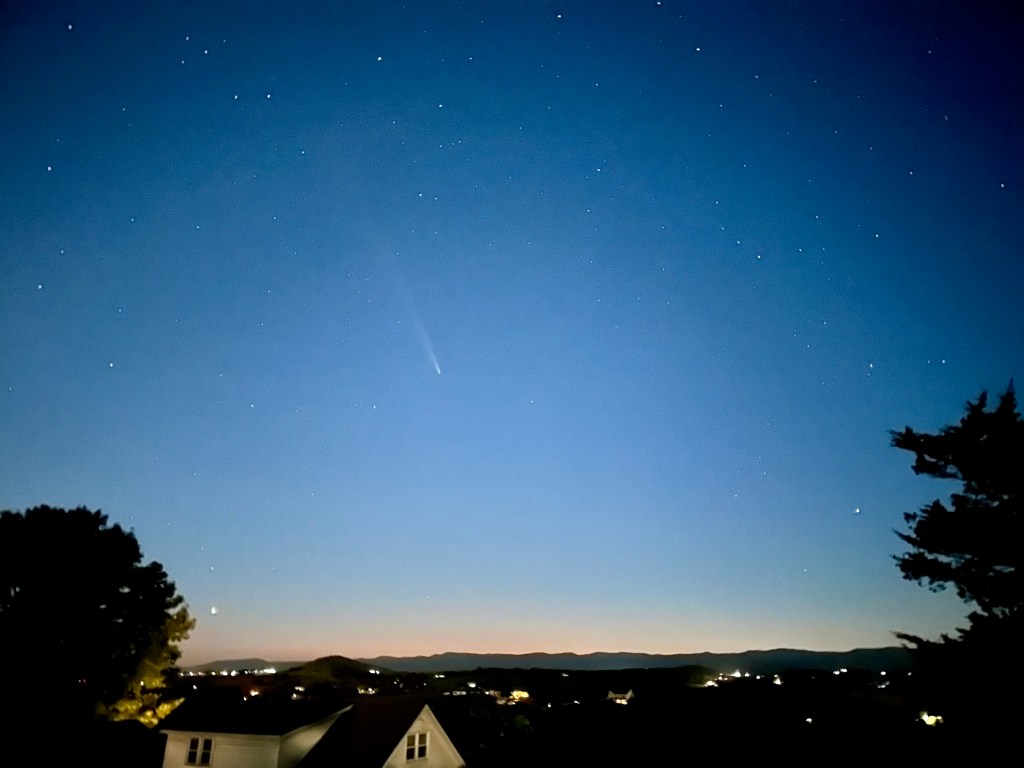
The comet was viewed from Eastern Mennonite University’s hill. Photo by Bruce Stambaugh
The next night, I had success from the hill behind Eastern Mennonite University in Harrisonburg. After viewing photos from my iPhone 14 Pro taken around 7:30 p.m., I spotted a faint streak in the sky. What I couldn’t see with my old naked eyes, my smartphone easily captured for me. I was ecstatic.
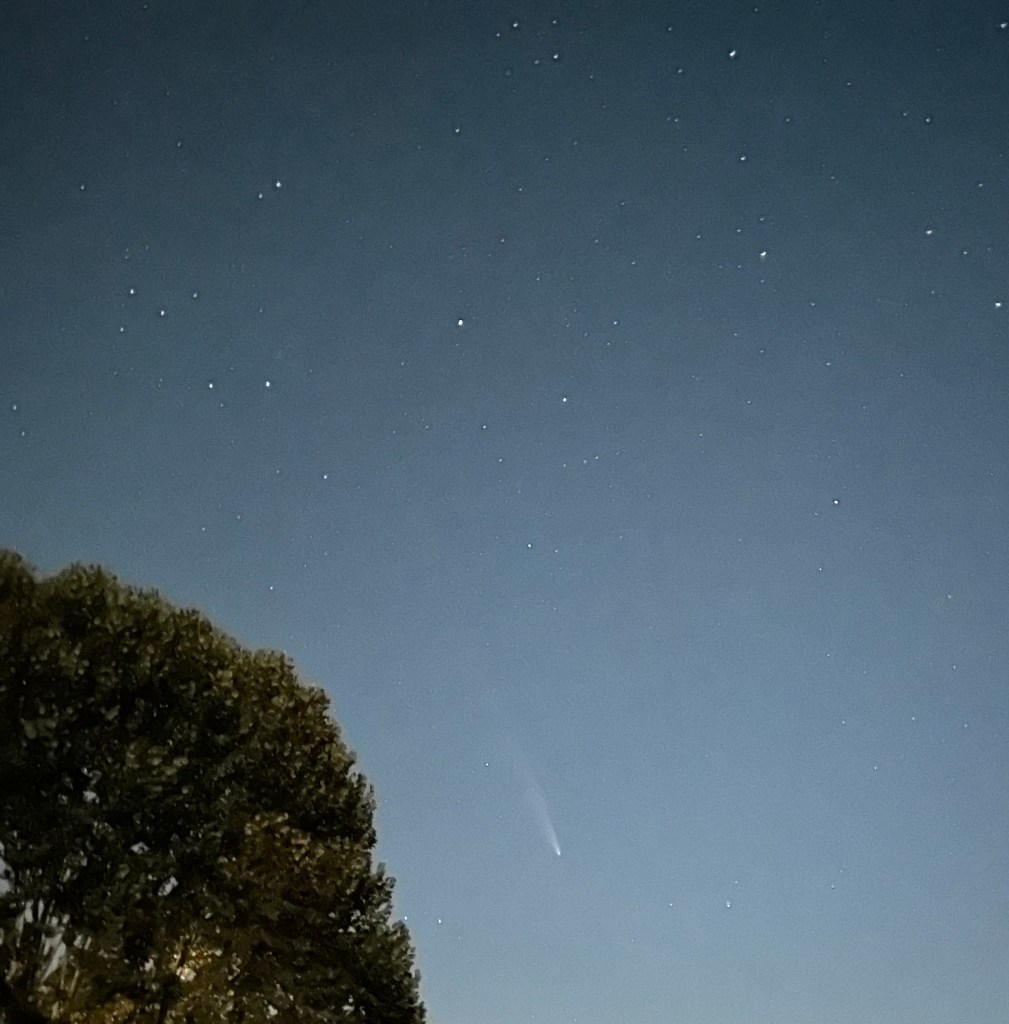
We quickly found the comet standing in the middle of our street. Photo by Bruce Stambaugh
I took a few more photos and returned home to celebrate with my wife by showing her the sequence of images. Afterward, we went outside, stood in our residential street with no street lights, and found the comet about 30 degrees northeast of Venus, which hugged the horizon.
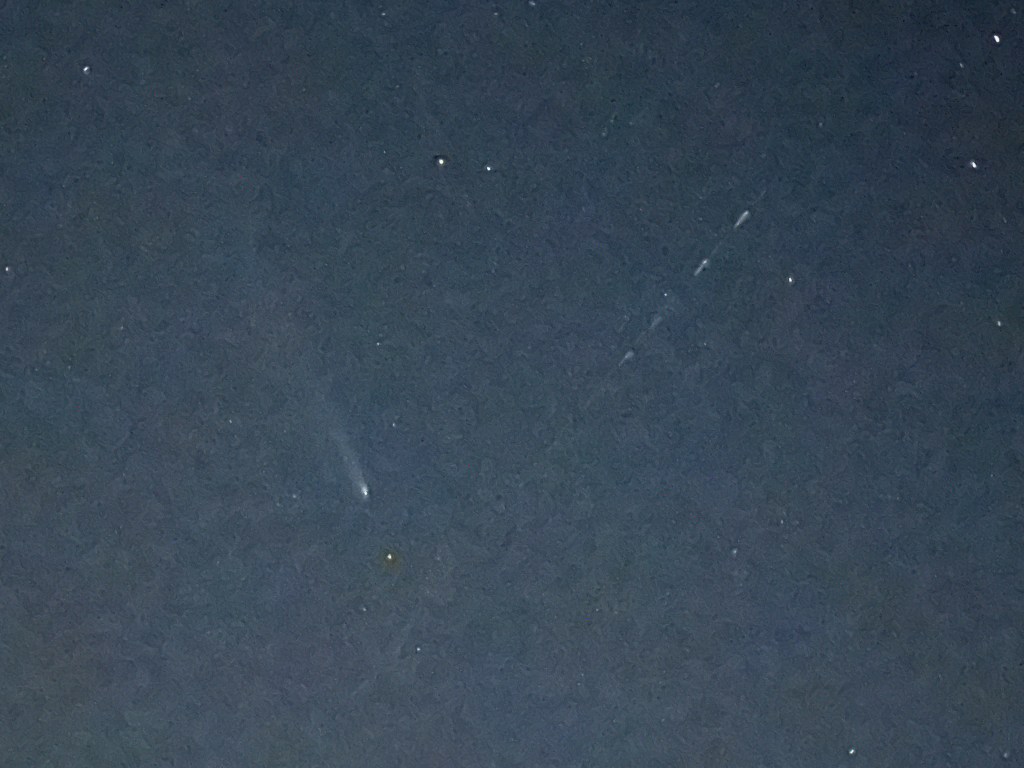
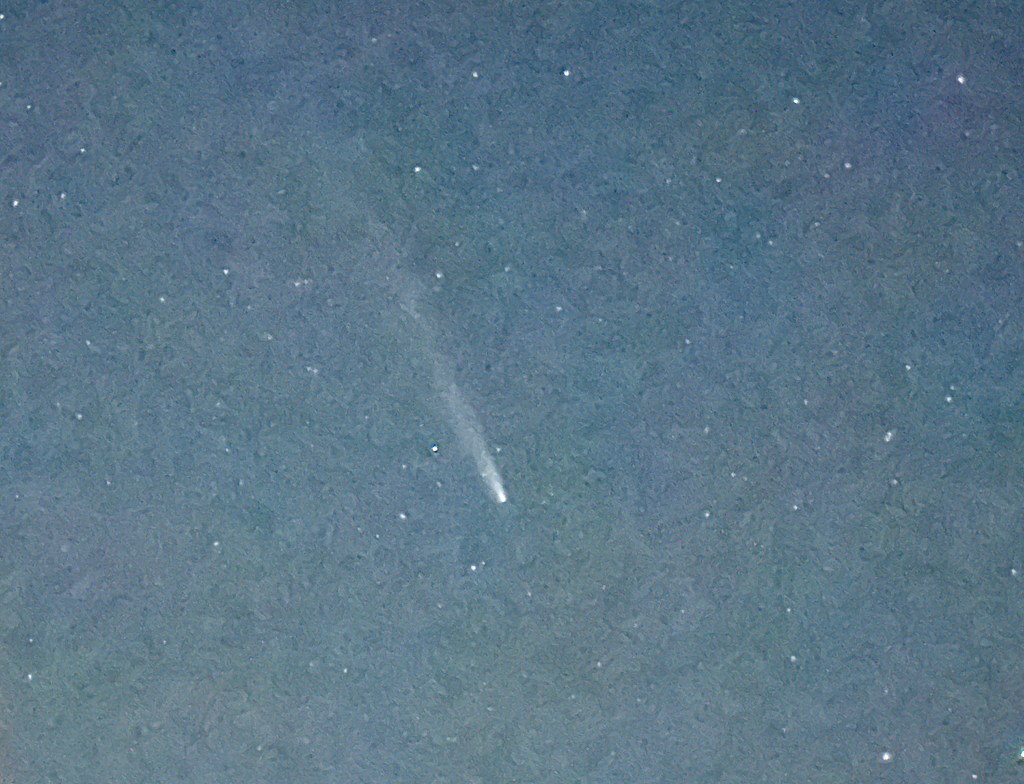
The next night proved even more successful. I zoomed in with the phone’s long lens and captured more than the comet and its long, fuzzy tale. When I looked at the photo, I realized Starlink was streaking across the sky just northeast of the comet.
The Comet and Starlink. Photo by Bruce Stambaugh
October has been good to us so far. I wonder what joyous tricks she’ll offer up by Halloween.
The comet Tsuchinshan-ATLAS. Photo by Bruce Stambaugh































 Roadkill Crossing
You must be logged in to post a comment.