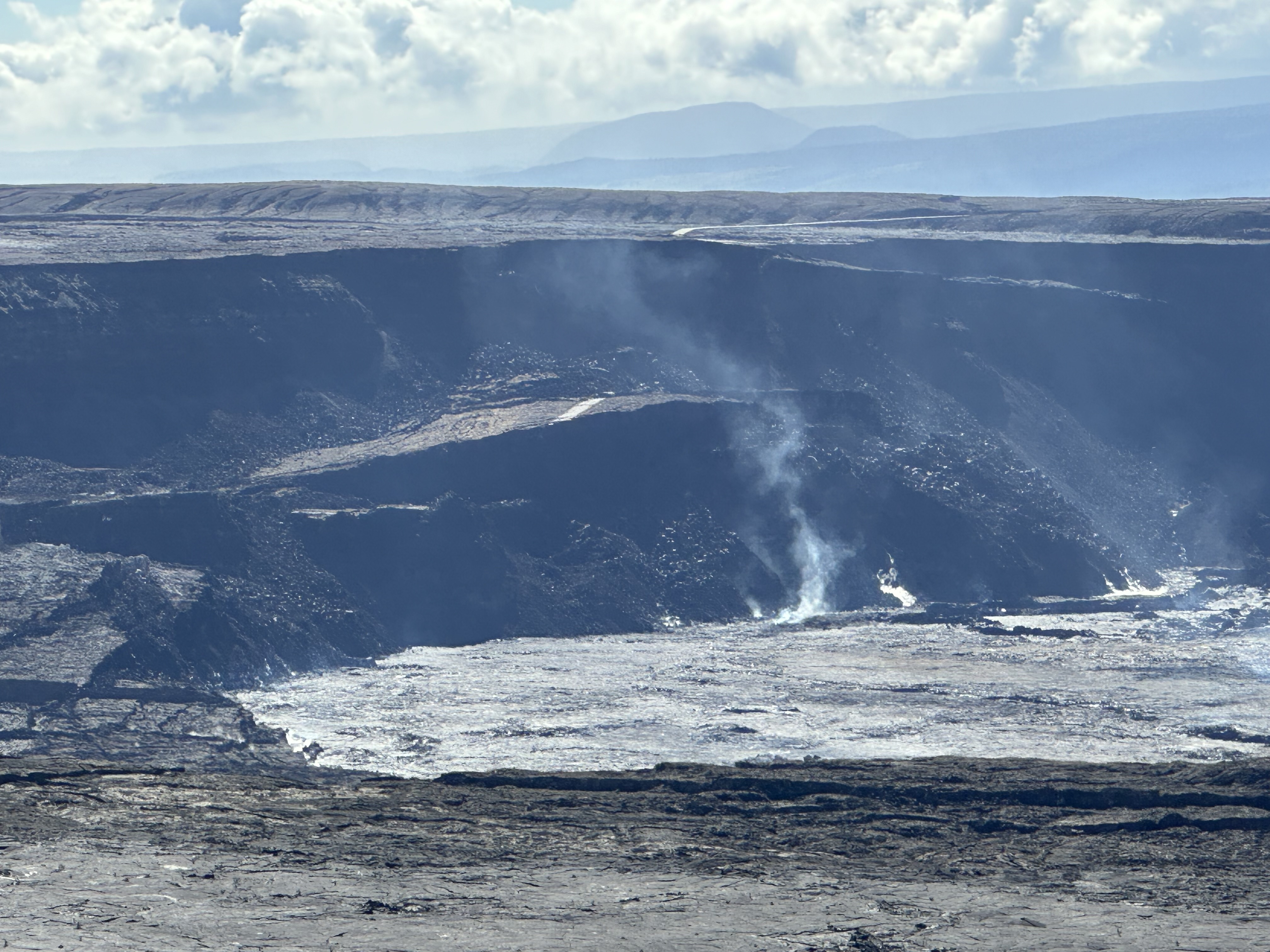
Hawaii – Day 4

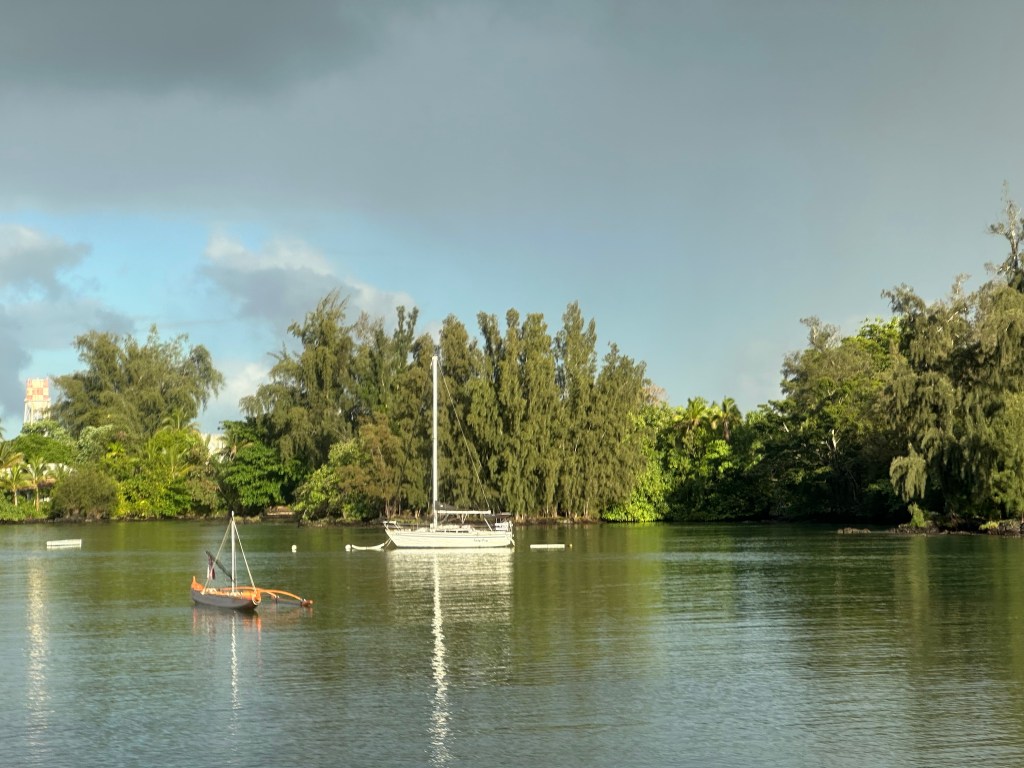
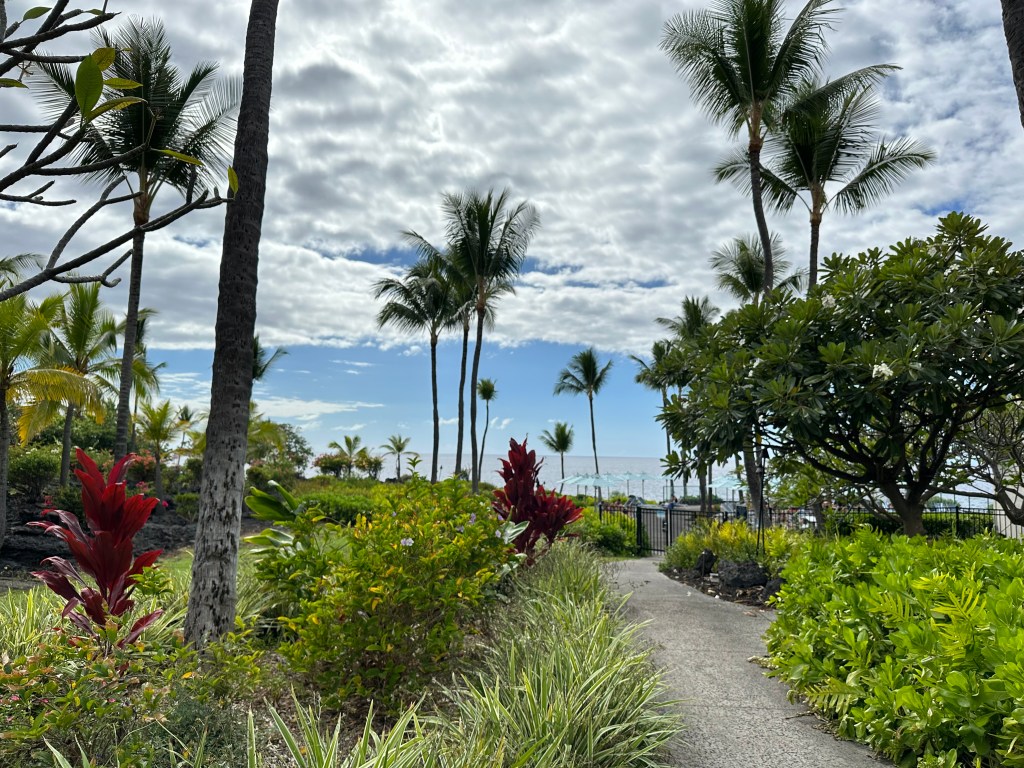
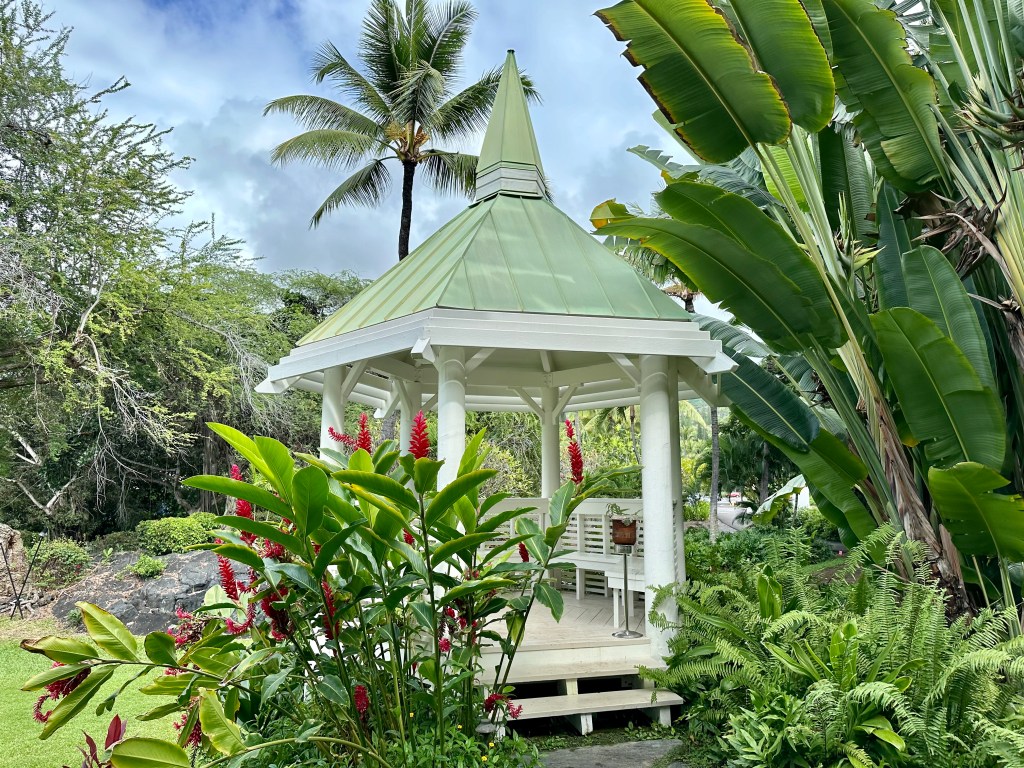
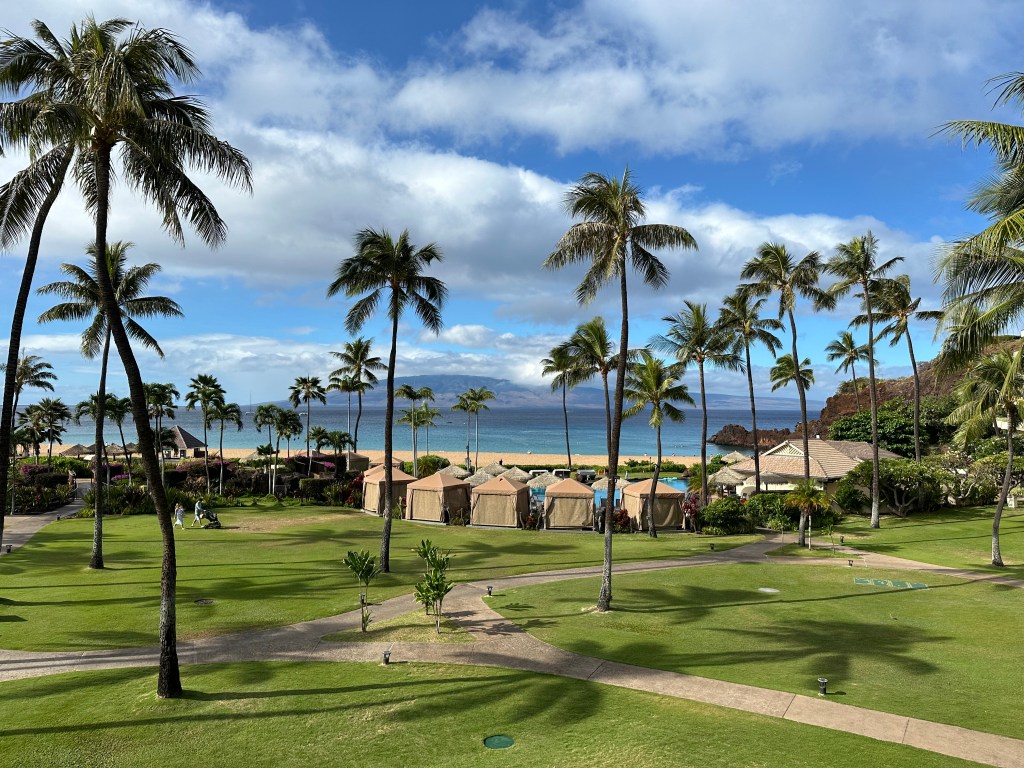
Flowering shrubs, coconut palm trees, and brilliant rainbows were ubiquitous in Hawaii.

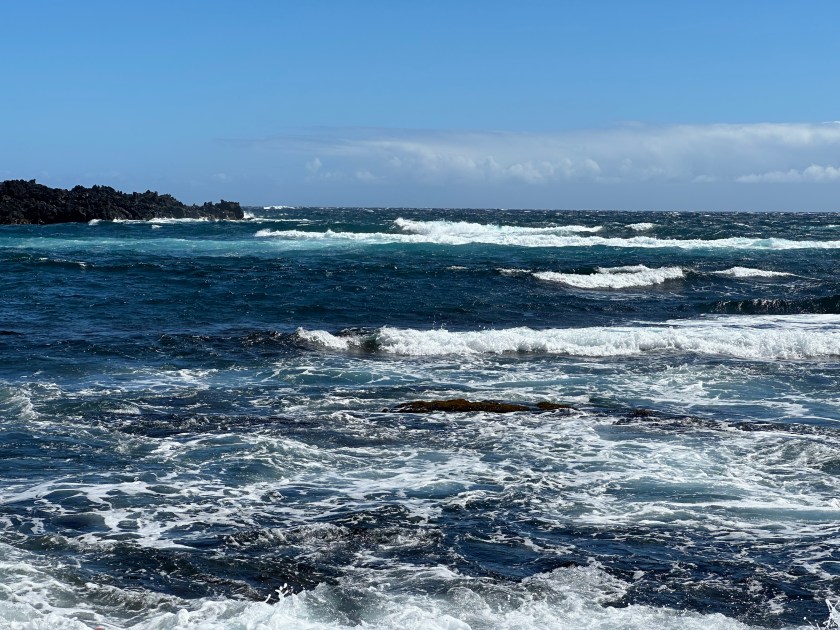
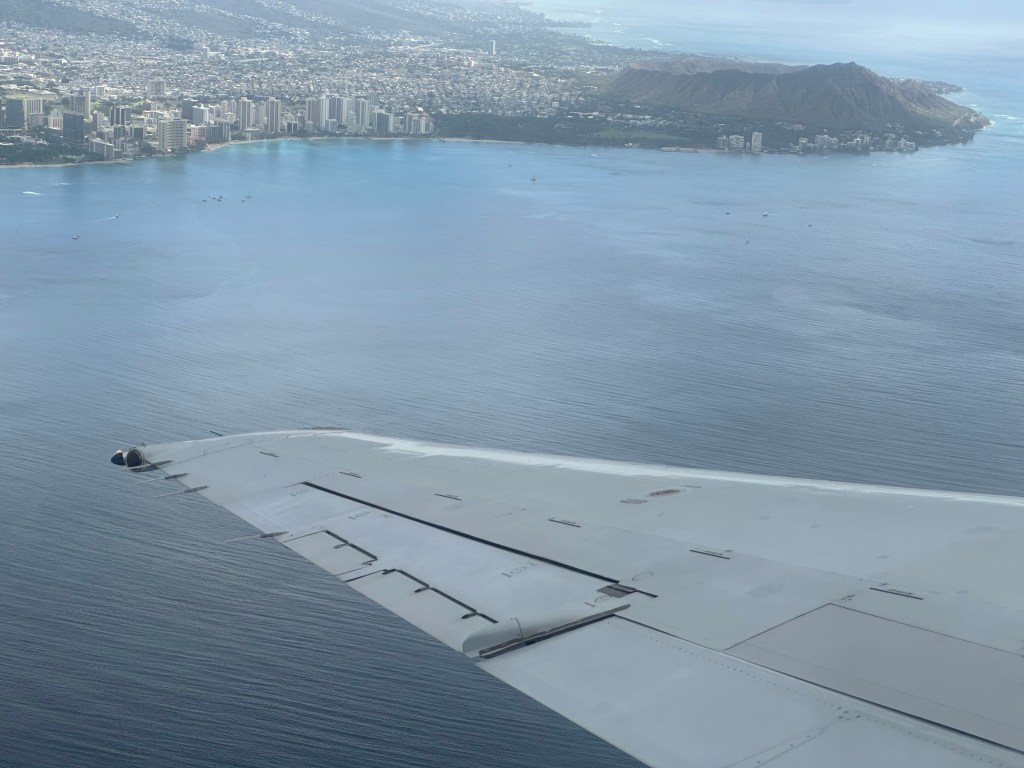
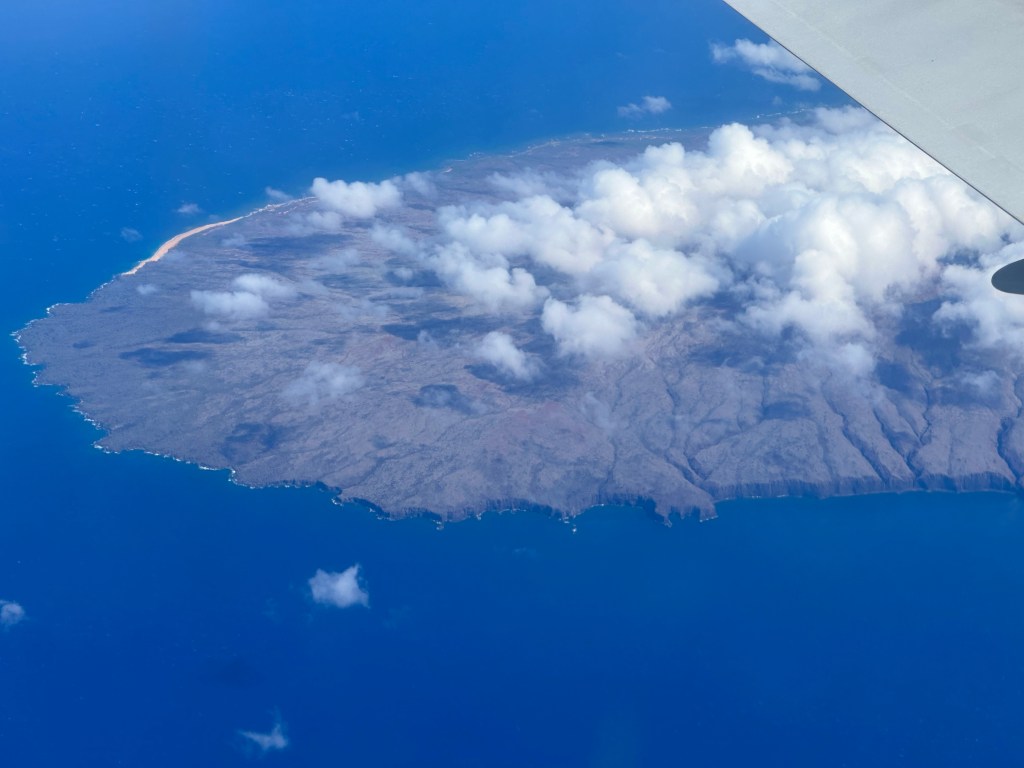
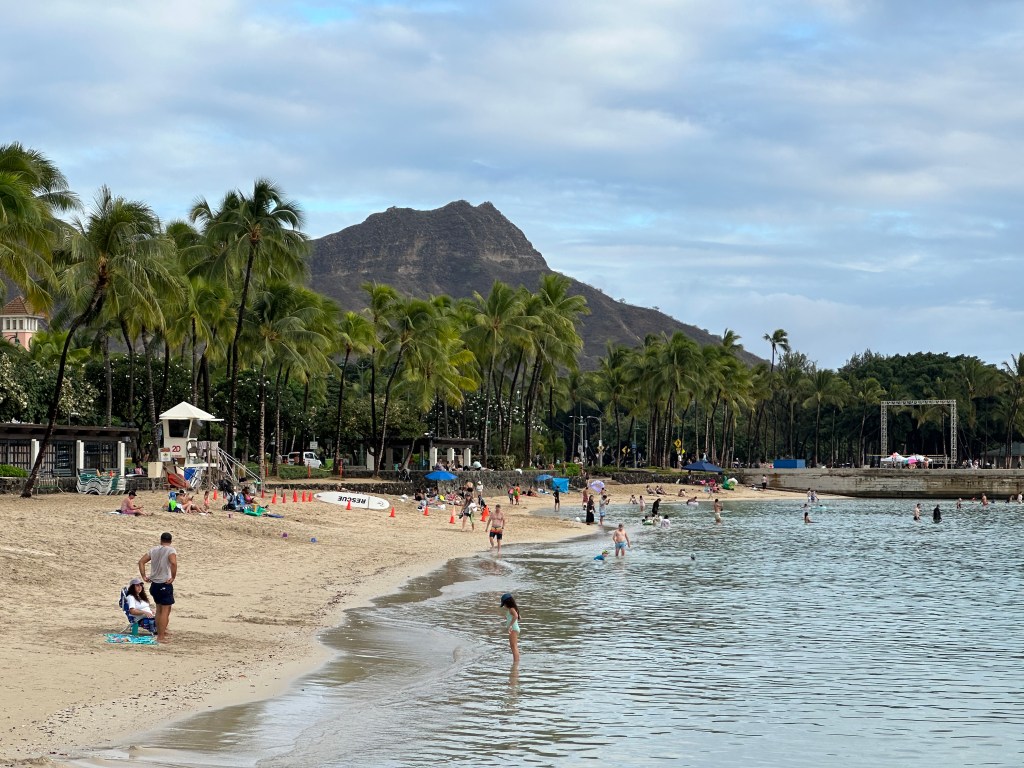
Our tour of Hawaii continued as we flew to the Big Island, which the locals call Kona. As our morning flight left Honolulu, I got a shot of Waikiki Beach and Diamond Head. Flying over other smaller islands, I was amazed at how deep blue the ocean was.

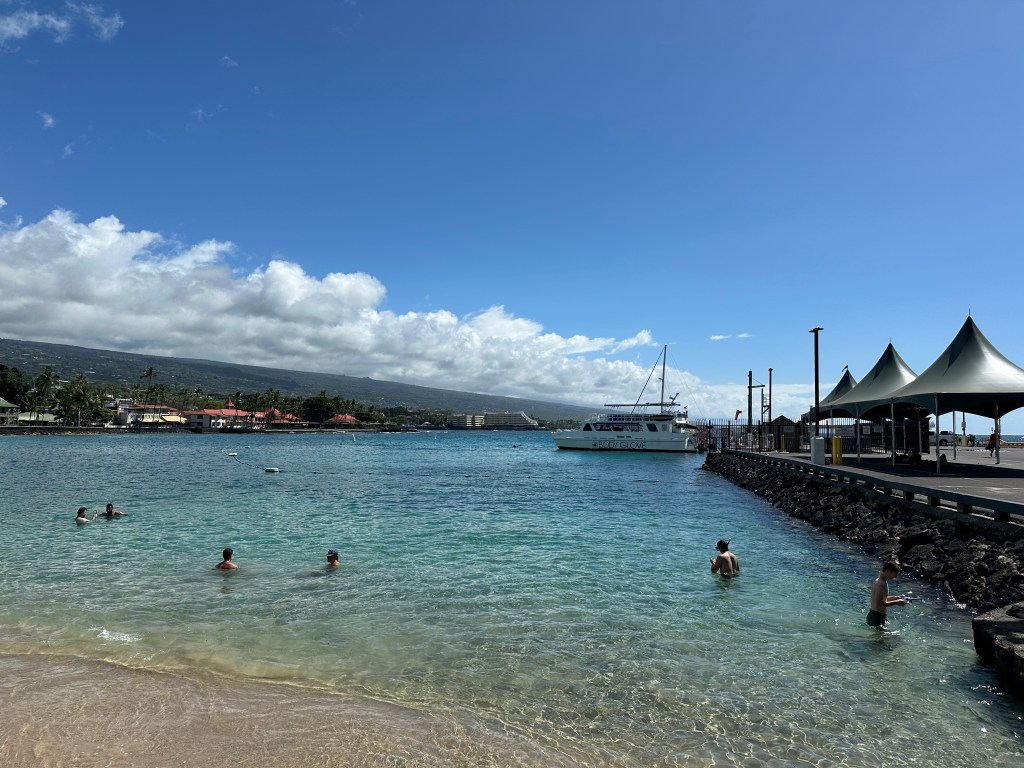
We landed at Kona’s small airport, where the luggage claim carousels are outside but covered with square thatch-like material to resemble native huts. Our small group boarded the bus for Kailu-Kona, where we had lunch. Our guide gave us a heads-up to sit at the bar where the prices were lower and the food just as good. We followed her wise advice and enjoyed our fish tacos.

We strolled around the oceanside town, window-shopping and enjoying the balmy breezes. Still, the sun was hot, so we refreshed ourselves with a cup of tasty shaved ice before boarding the bus again.

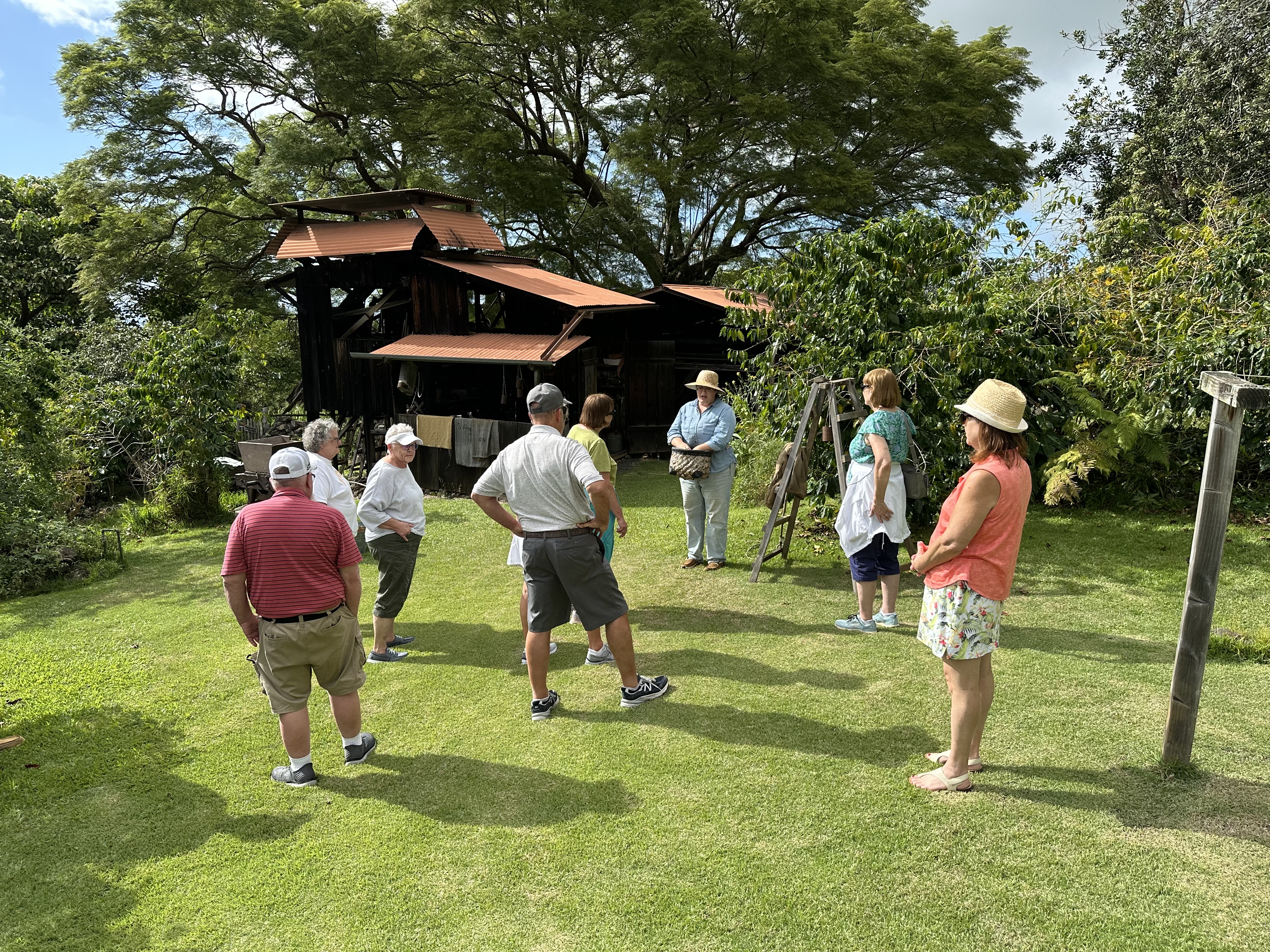
Since Kona has six volcanoes, traveling is either up, down, or around the island. We did all three on our ride to a historic coffee farm, now run by the Kona Historical Society, a non-profit organization. The farm is the only living history coffee farm in the country.

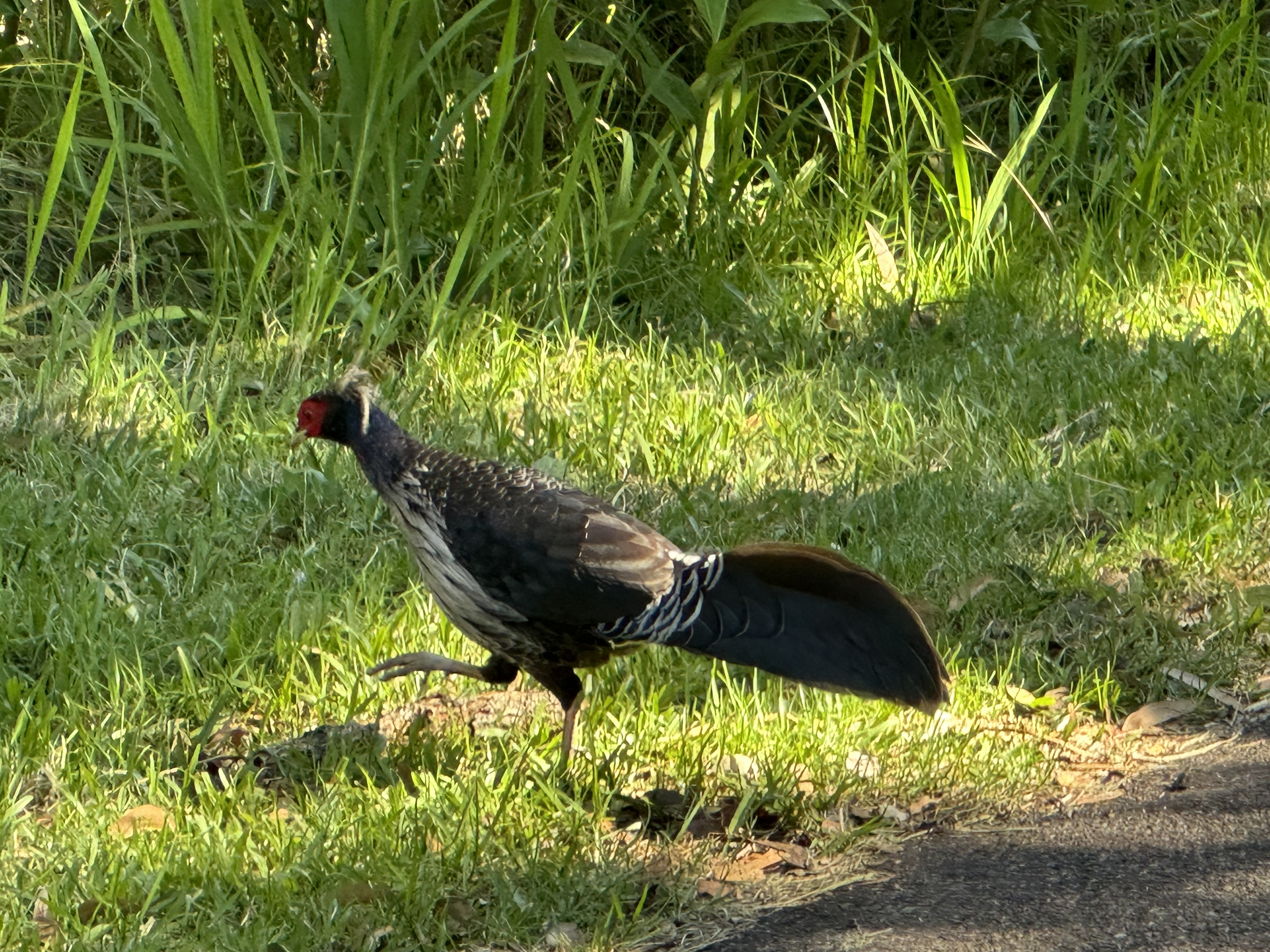
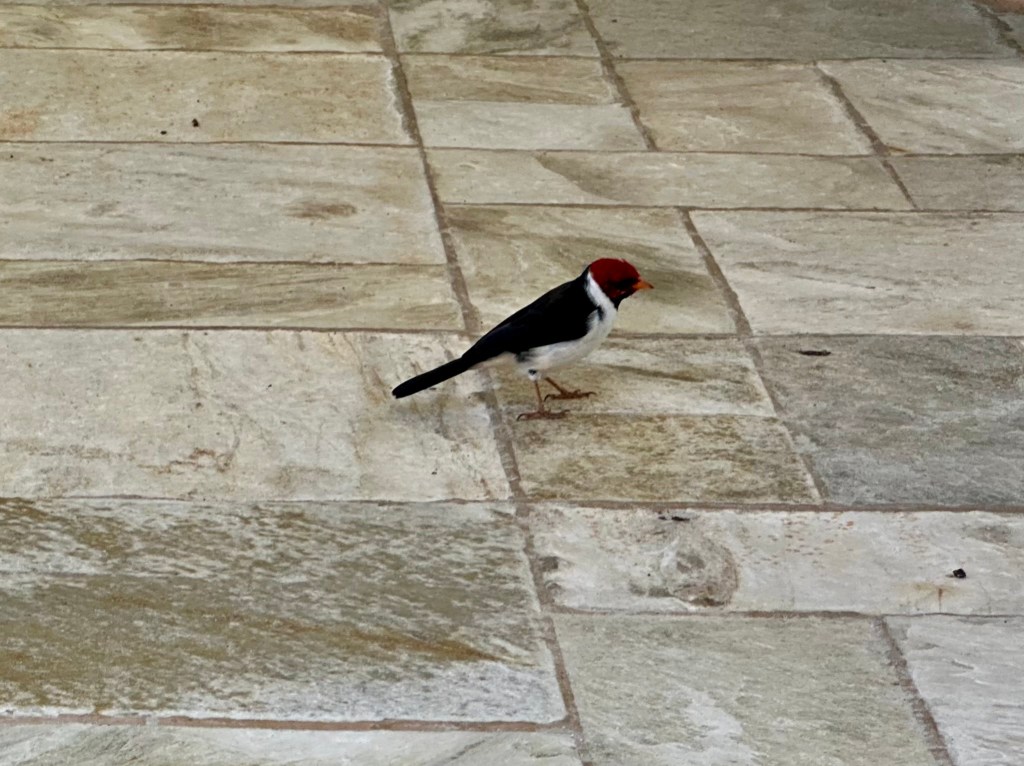
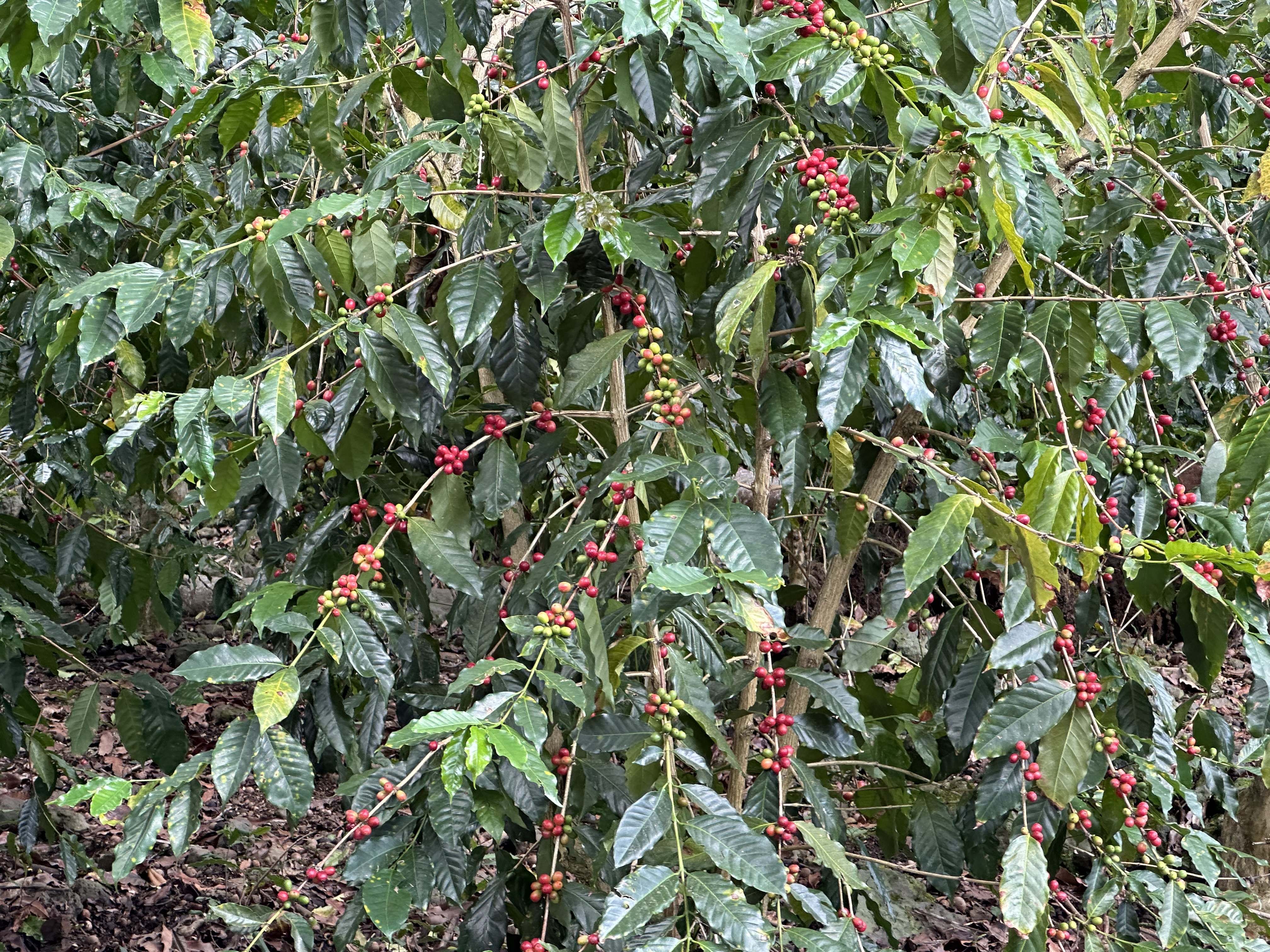
Along the path to the old farmhouse, bright red coffee cherries bent the bows of coffee bushes. Most were nearly ripe for picking. Tropical songbirds flitted from tree to tree, but there was no time to investigate them. A staff member from the historical society greeted us and gave us an overview of our visit.

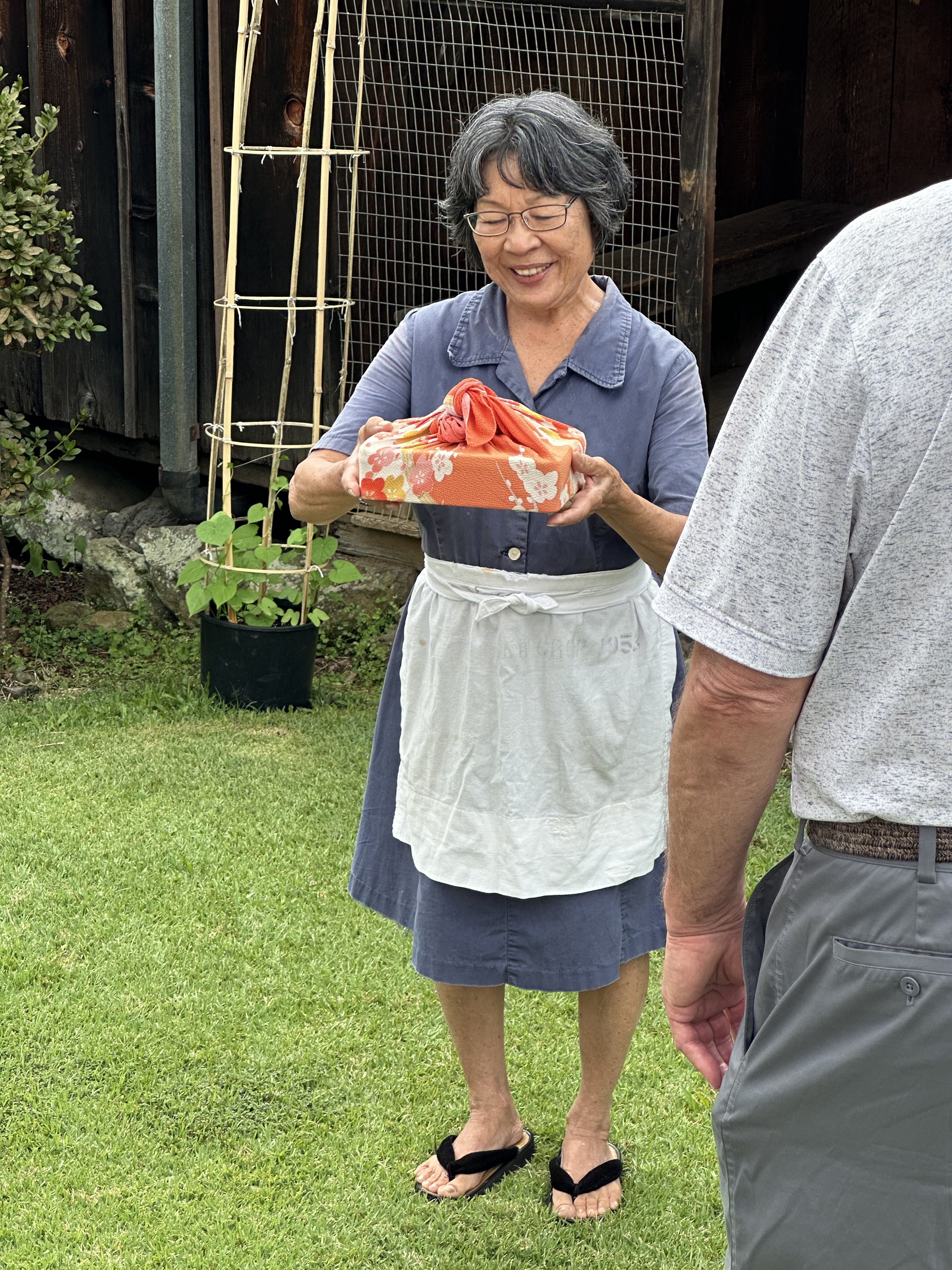
As we neared the old, original farmhouse, an elderly Japanese woman appeared. Tradition calls for visitors to present a gift to the head of the residence. The docent, of course, had one and presented it to our host, Paula, who graciously accepted it.

Paula had a precious and moving story about her life on the farm. When she was four, her parents apprenticed her to the farm, where she mainly assisted in homemaking activities and worked in the garden.

Paula explained the traditions and daily routines the family went through to keep the farm operating. Her personal stories of a child doing an adult’s work moved us all.

Japanese came to this part of Hawaii in the 1920s, when the farm was established. After the bombing of Pearl Harbor, the Japanese were rounded up and placed in detention camps. However, Japanese farmers were not. Consequently, the coffee farms were deemed essential and continued to operate.

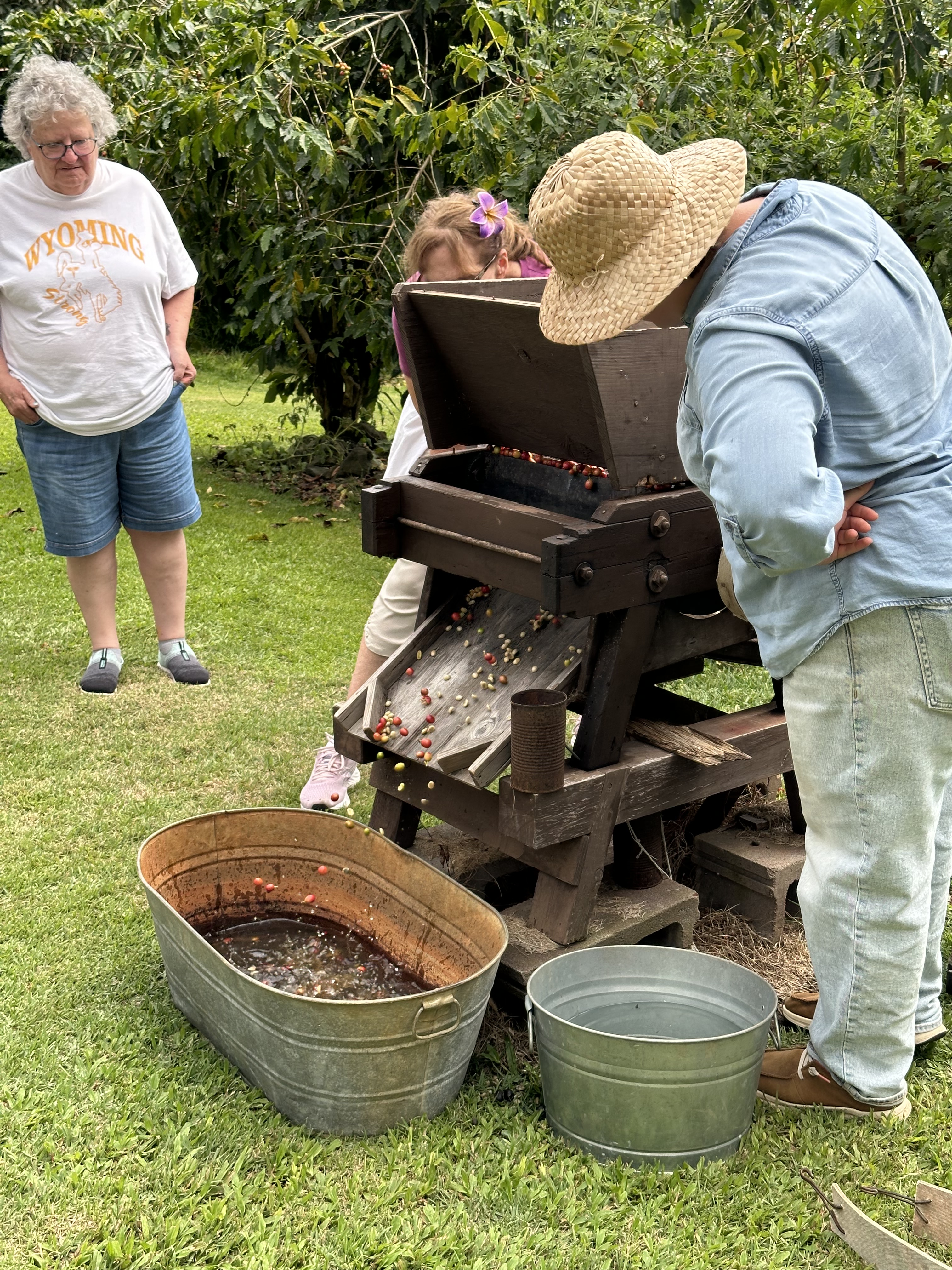
The farm was exquisitely maintained, just as when Paula helped on it. All the buildings were original to the farm, and each operation was explained. Having been to Honduras several times, I had seen the entire process of small coop coffee farms. I even helped pick the coffee cherries. The Japanese methods of growing, harvesting, and processing the cherries and the beans they contained were remarkably similar to what I had experienced.

An exception was the way the beans were dried. In Honduras, beans are often placed on concrete pads or tarps and dried in the sun. The shed where the beans were dried at this historical farm had a slanting roof to prevent the tropical rains from spoiling the crop.

Our group was impressed with Paula and the simple but efficient way of producing the rich Kona coffee. It was a great introduction to the Big Island.

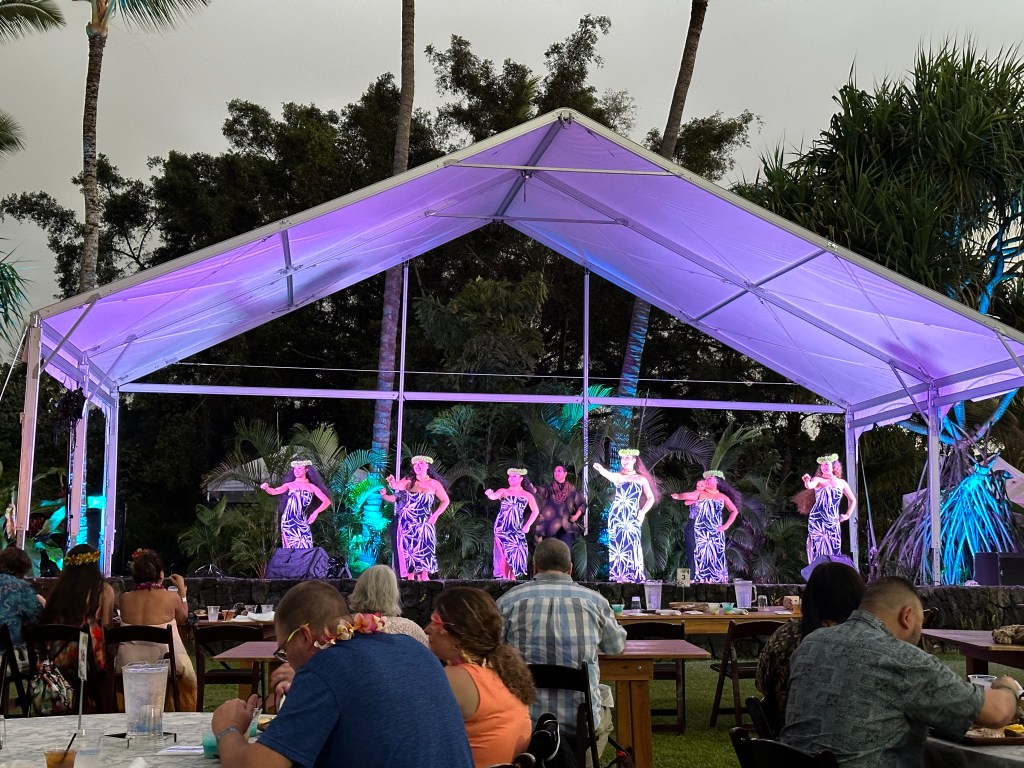
Our day ended with a traditional evening luau with roasted pig, poi, poke, rice, and fresh vegetables and fruits. Lots of singing and acting out historic events followed with dancers and native warriors. Of course, a light rain briefly drizzled us, which is customary and unavoidable.

A gentle rain began to fall, but in such a setting, it didn’t matter. Photo by Bruce Stambaugh

© Bruce Stambaugh 2024

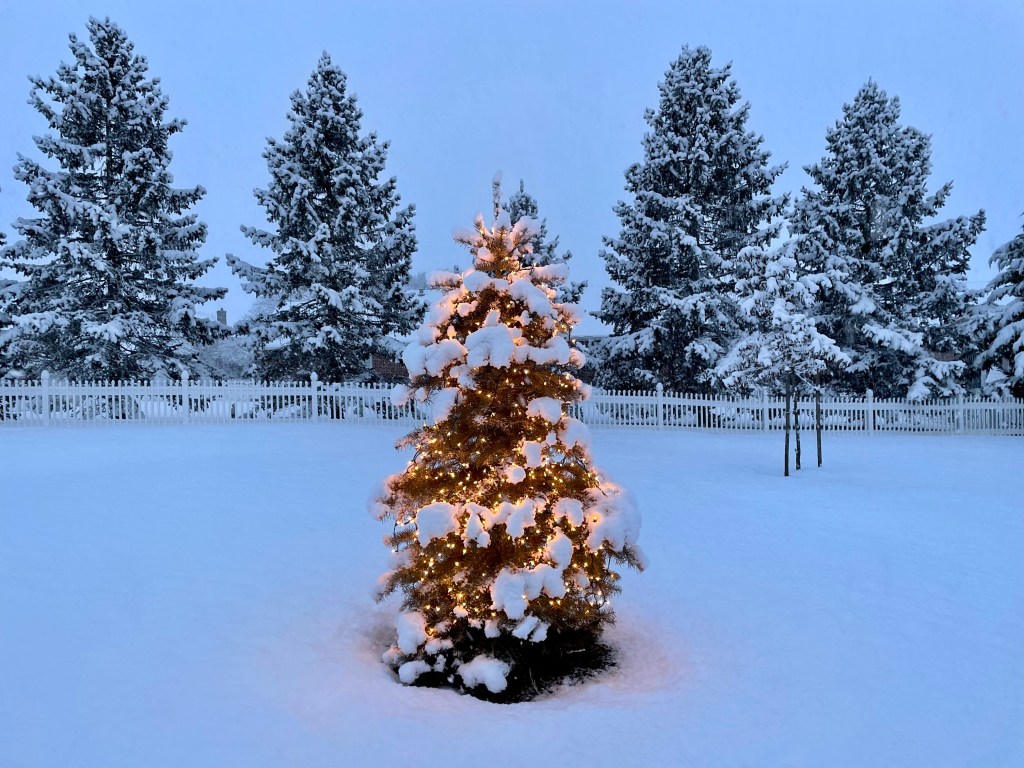
Merry Christmas & Happy Hanukkah!

From my family to yours, Merry Christmas, and Happy Hanukkah to my Jewish friends.

Blessings all around as you celebrate with family.

© Bruce Stambaugh 2024

Hawaii Days 1 & 2

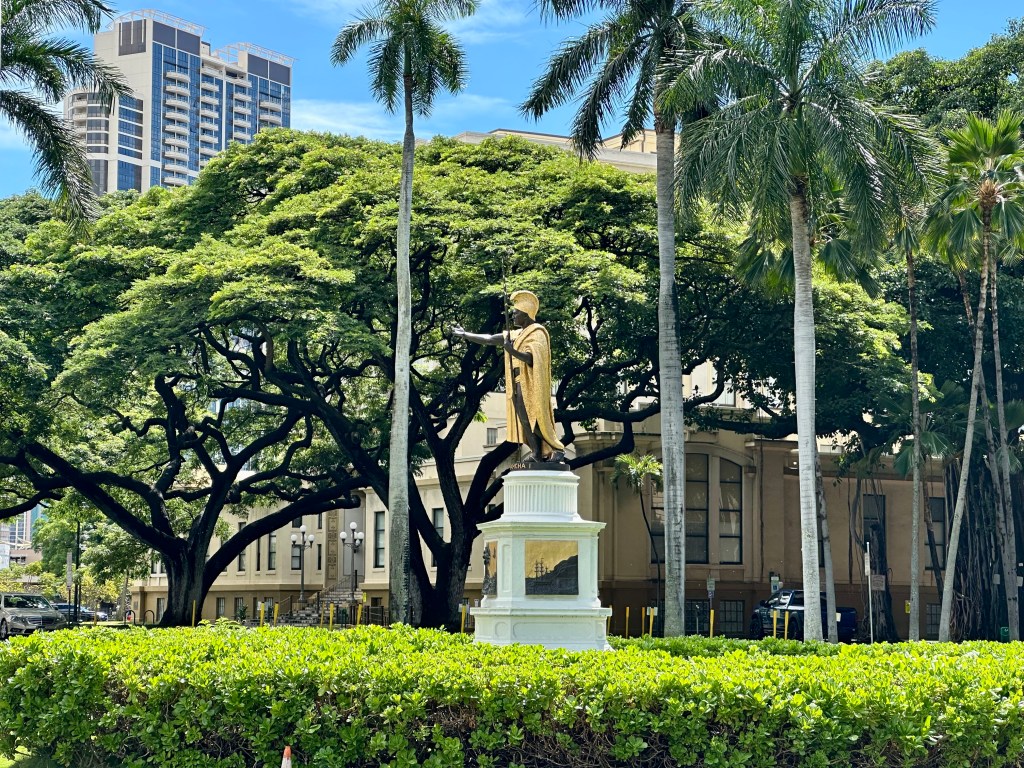
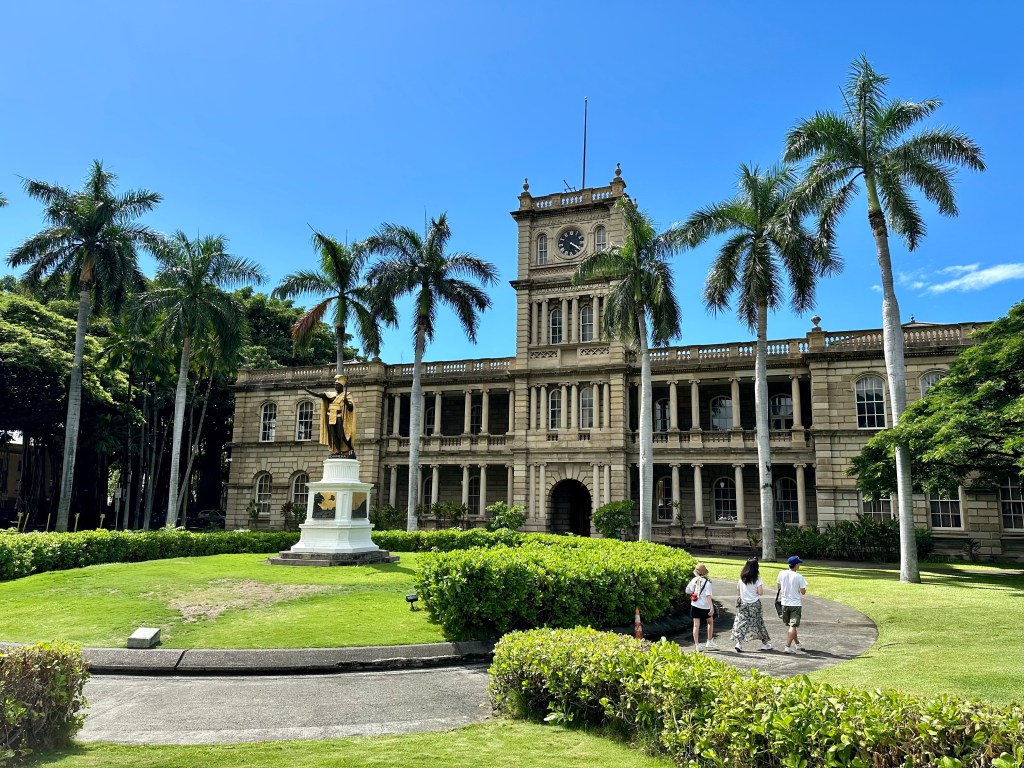
King Kamehameha’s statue near the Hawaiin capitol in Honolulu. Photo by Bruce Stambaugh

My wife and I couldn’t wait to get to Hawaii. Our flight plan took us from Washington, D.C., to Los Angeles, California, to Honolulu. We weren’t looking forward to two long flights.

Little did we know the travel time would become even longer. We rose at 4:30 a.m. for a morning flight to LAX. Despite some turbulence in the west, the flight went well overall. The flight to Honolulu was a different story.

About 10 minutes over the Pacific Ocean, the pilot announced that we were returning to LAX due to a compressor failure that controlled the plane’s hydraulics. Even with the little I knew about commercial aviation, I realized we would be on an emergency return.

One of seven fire trucks met us on the runway on our return to LAX.

We landed fine, but seven fire trucks surrounded the plane to check the brakes and tires for any overheating or fire due to landing heavy. Everything was fine, and we deplaned, wondering what was next.

We waited until another plane and crew arrived. The gate agents announced a later departure time more than once. We were to arrive at our hotel in Honolulu around 6 p.m., but it was actually 11 p.m., so our dream of watching the sunset on Waikiki Beach on our first day was just that—a dream.

There would be other days and sunsets. We were in Hawaii, the 50th state, to join the Union.

Our first full day on Oahu was election day. With all the hype and drama throughout the campaign, I was glad we were far from the mainland. Poor Hawaii. They vote knowing the election has already been called by the time their polls close. That was the case again in 2024.

We met our group and tour guide for an early breakfast. We had chosen a small group tour, meaning the group was limited to 26. However, half of the group had canceled for multiple reasons, so we only had 13, plus Debbie, our guide.

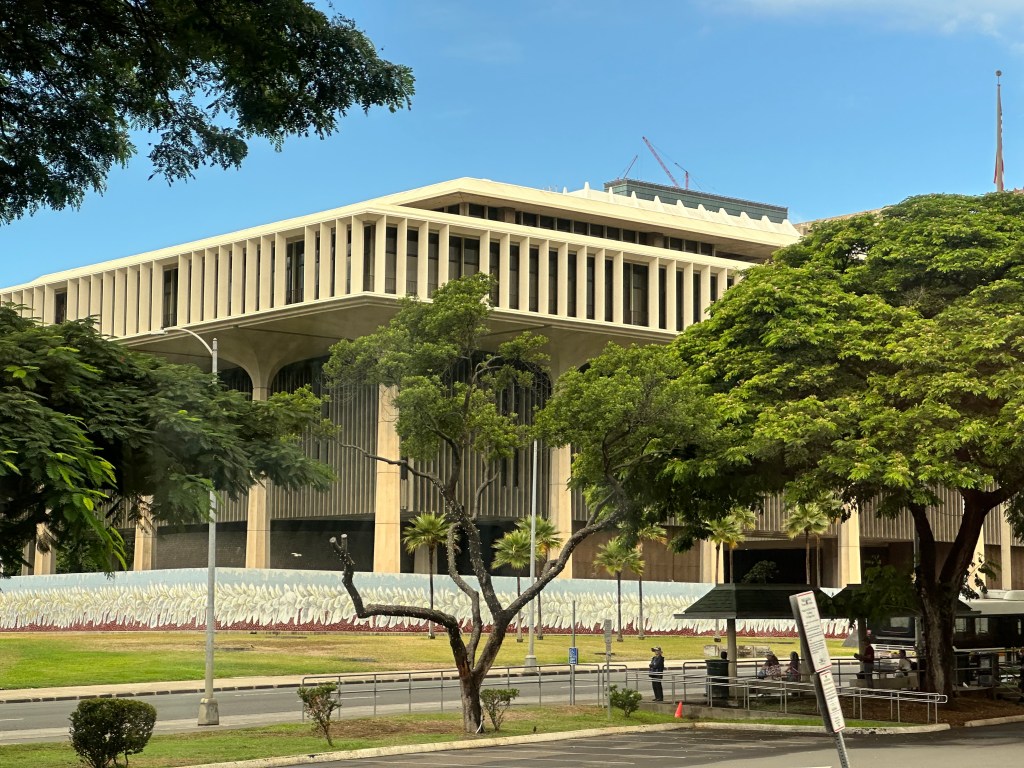
The breakfast was delicious, and our small group climbed onto a 46-passenger bus. We spent significant time touring the Waikiki Beach area of Honolulu, which has many shops, markets, and historic buildings. We saw the Iolani Palace, home of the last reigning Hawaiian royalty. King Kamehameha’s statue was across the street in front of a government office building.

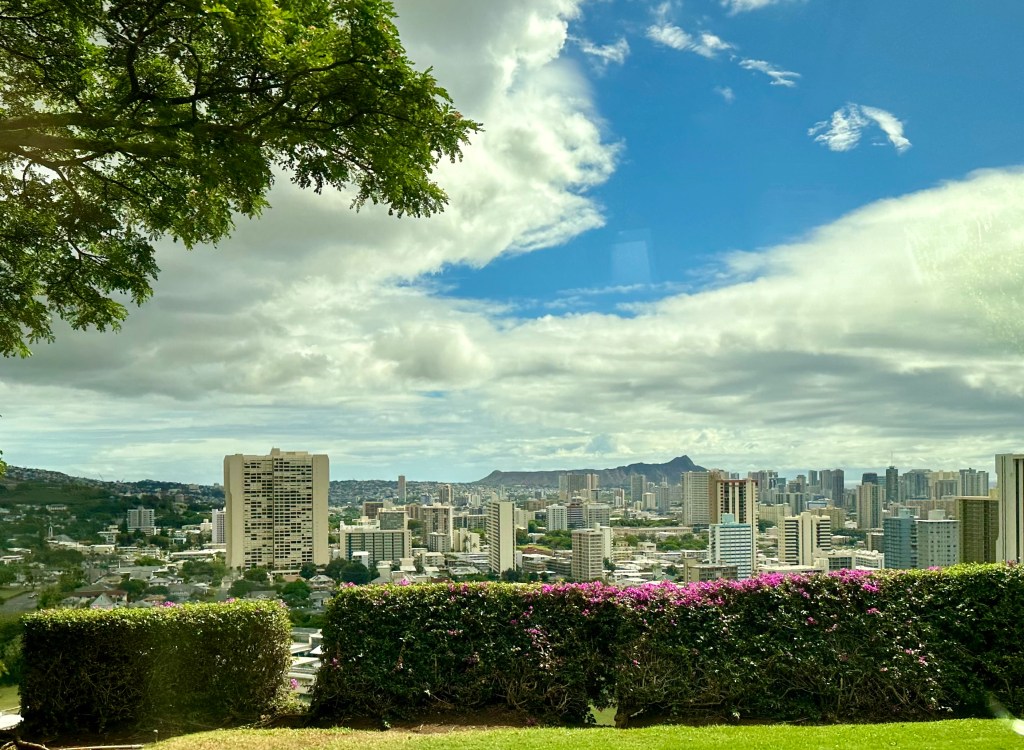
We drove through the Punchbowl Crater, home to the National Memorial Cemetery of the Pacific, which honors U.S. military members who died serving their country. Since commercial vehicles are prohibited from stopping, we could only view it from the bus.

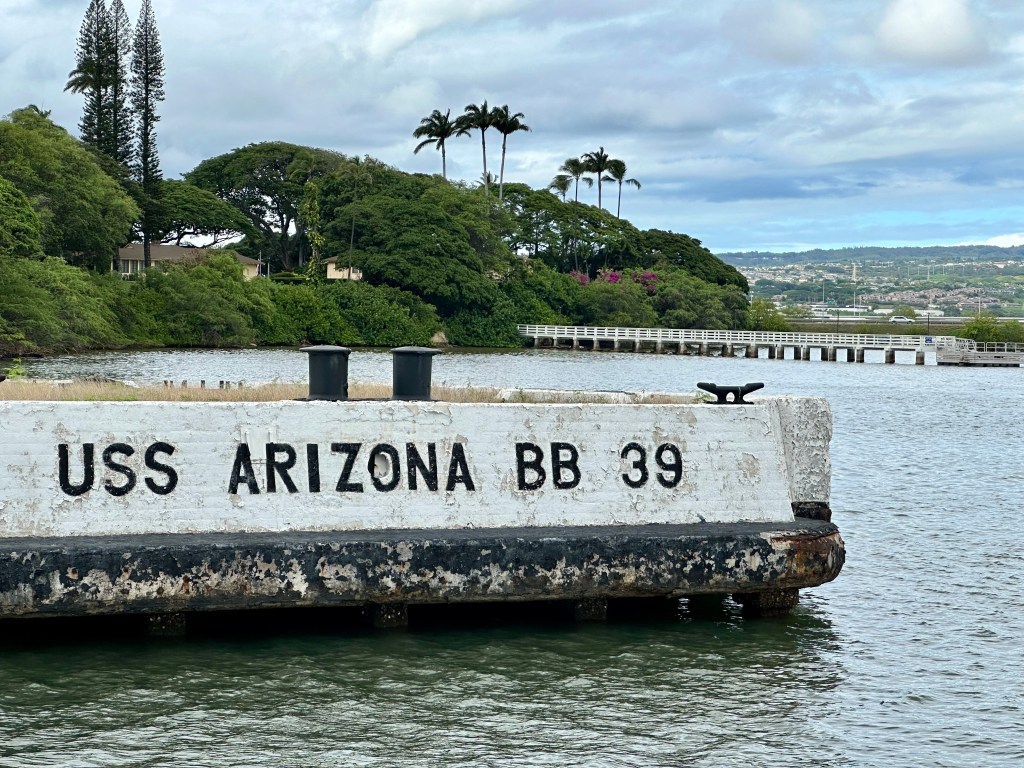
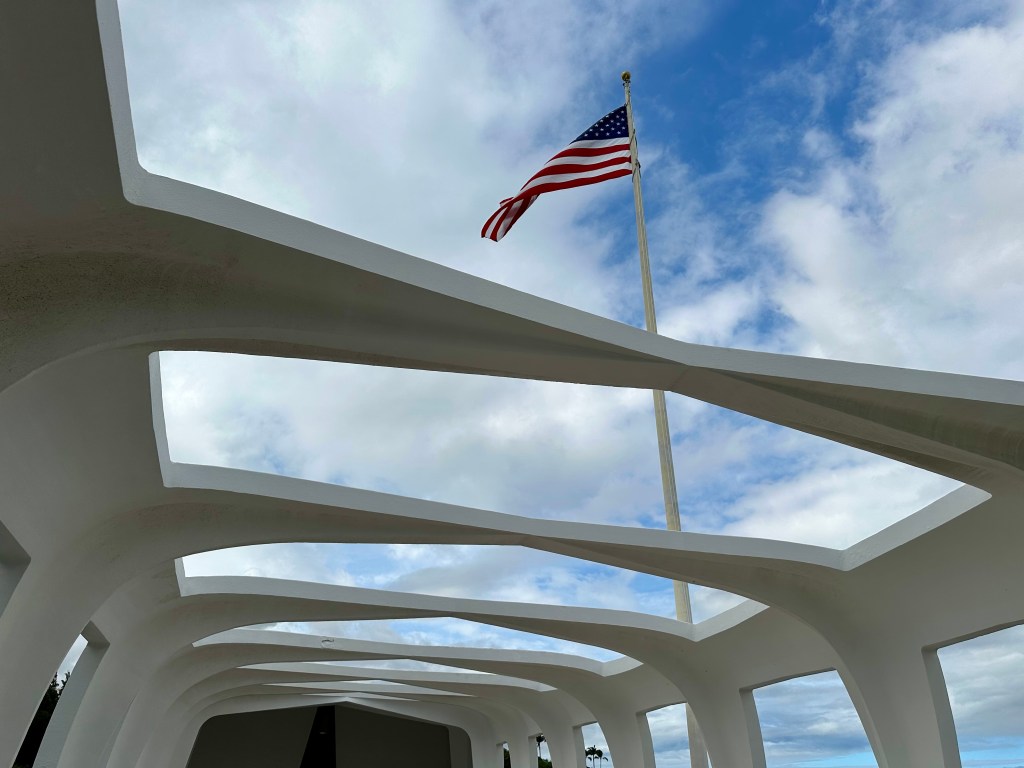
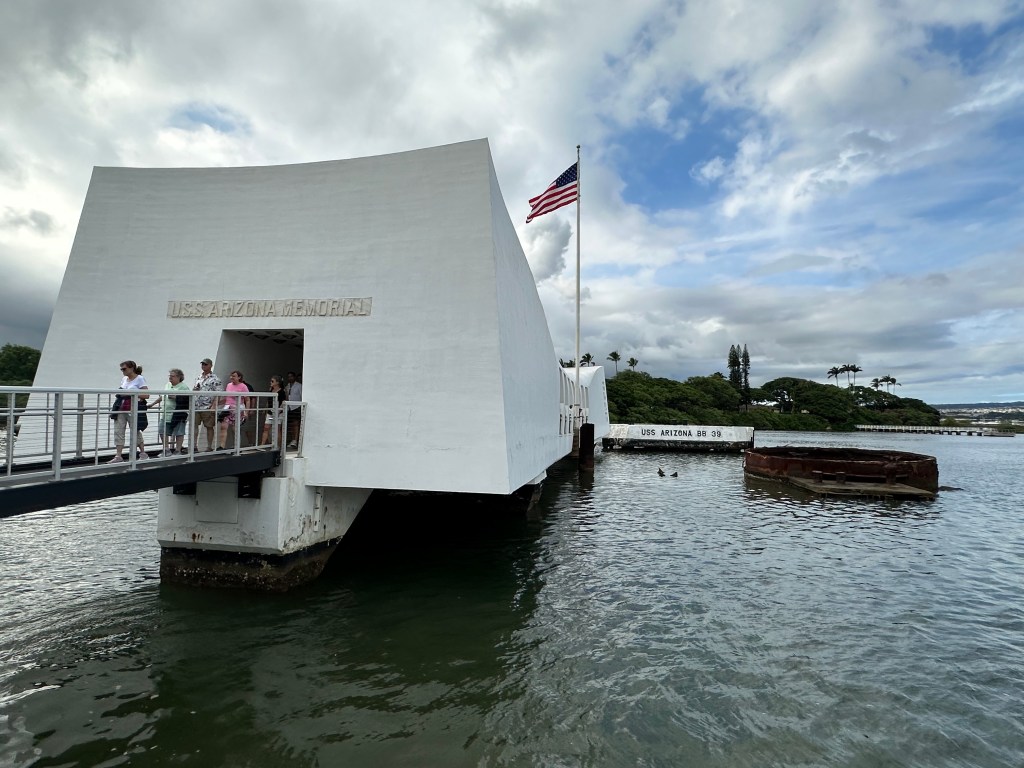
The solemn respect for those who died continued as we visited Pearl Harbor. We boarded small Navy transport boats to see the U.S. Arizona Memorial. The ship sank during the attack on December 7, 1941, and 1,177 sailors and Marines were buried in the rubble of the battleship. Out of respect, visitors were silent as they walked around the memorial. It was a stark reminder of the brutality of war.

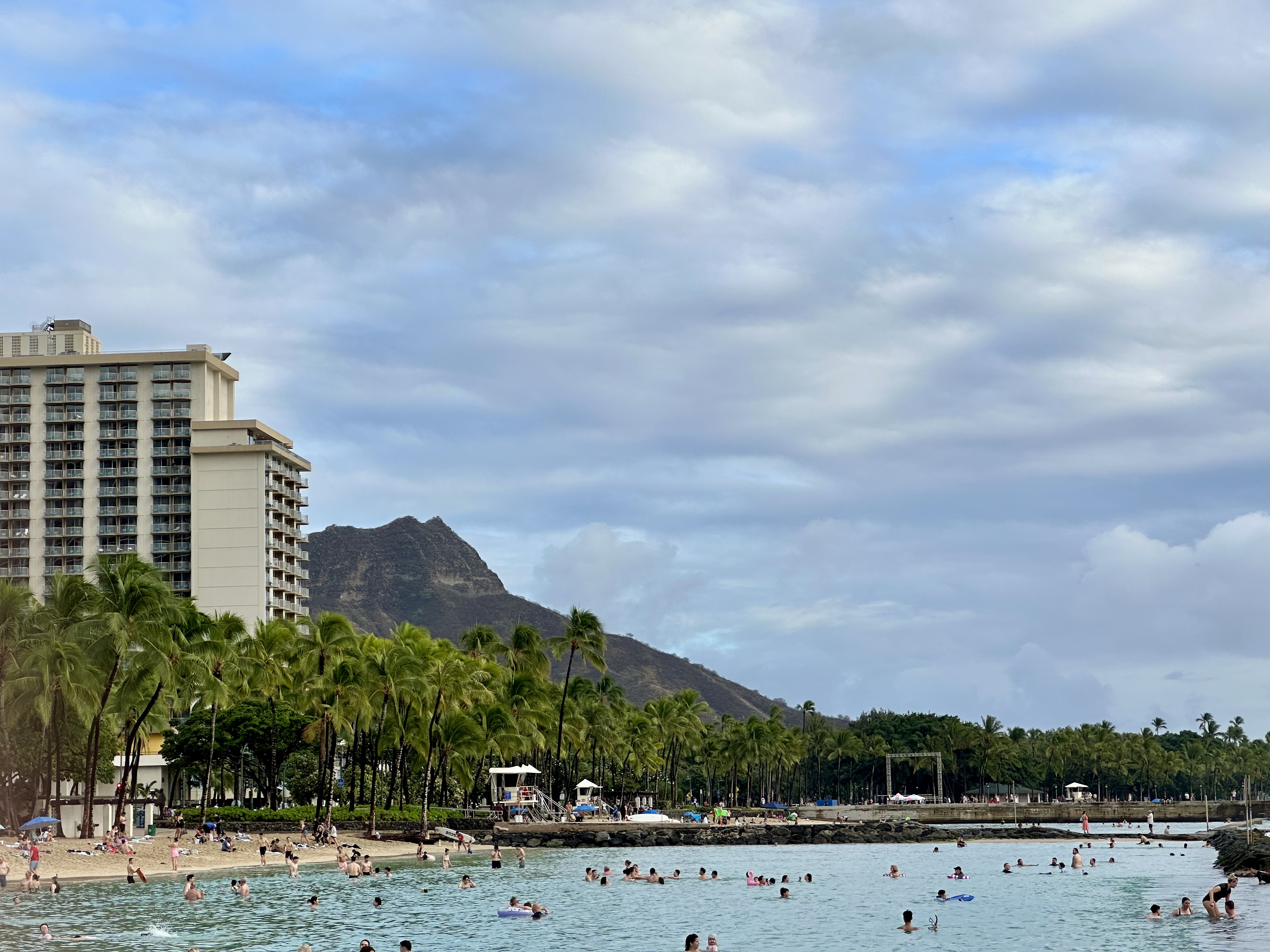
That seemed to drain the strength from us, and I was glad the group headed back to the hotel for the rest of the day. Before dinner, I hustled to get a shot of Diamondhead from the beach before dinner. Hotels are built so close to the beach that it’s hard to get a decent shot of the famous landmark. When I returned to our room, the heat and humidity had soaked my clothes. 

We enjoyed our dinner in the hotel’s open-air lobby. We were supposed to dine around the spacious pool, but with rain a possibility, the staff moved us under shelter. We knew the results of the election before our food arrived.

A better view of Diamondhead. Photo by Bruce Stambaugh

© Bruce Stambaugh 2024

Behold Beautiful Hawaii!

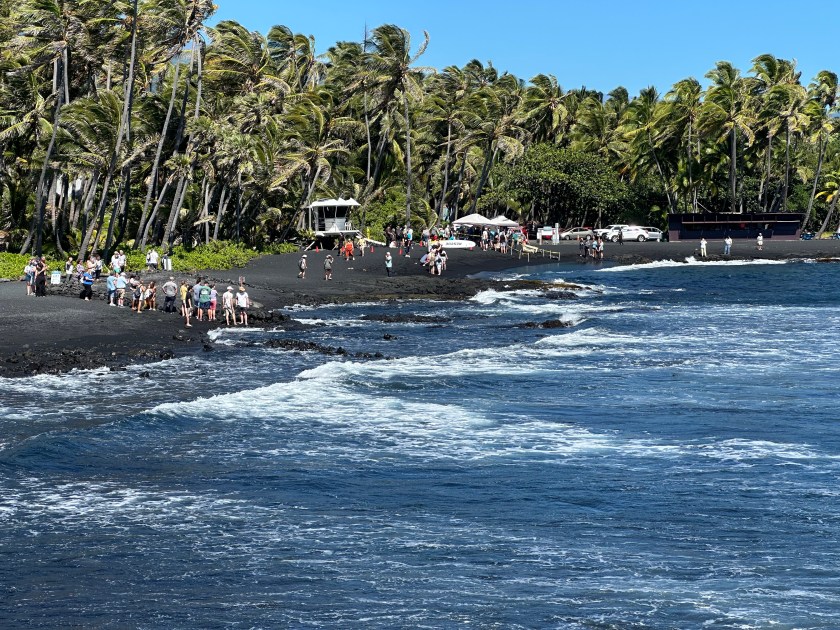
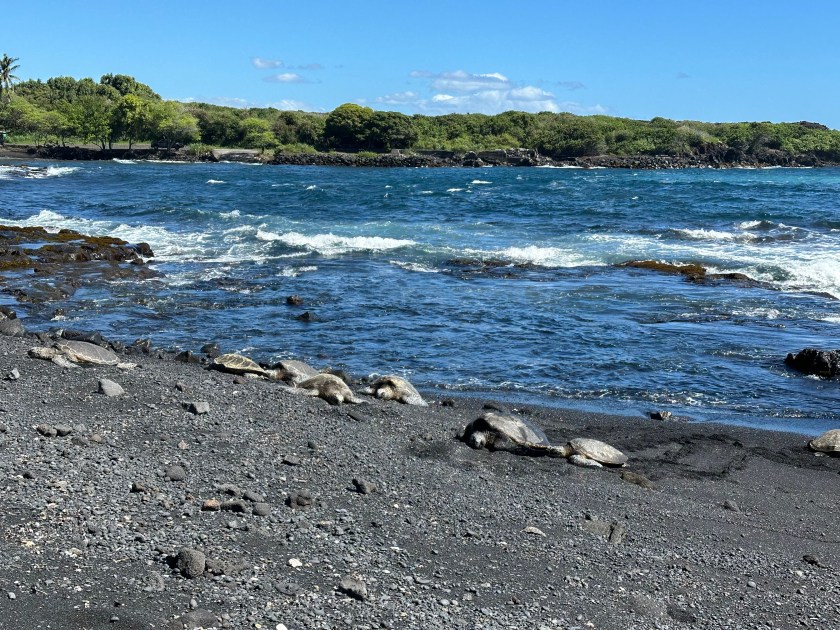
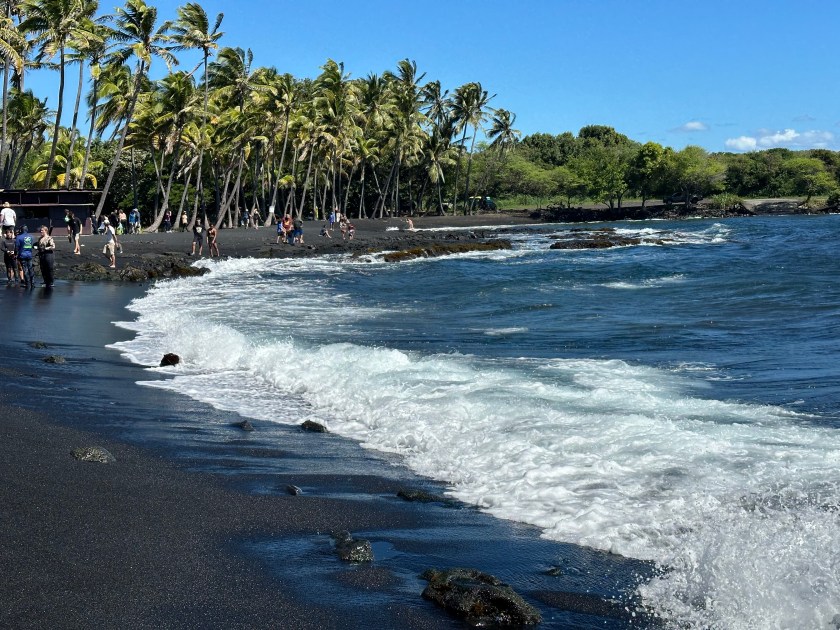
Black Sand Beach, Kona, Hawaii.

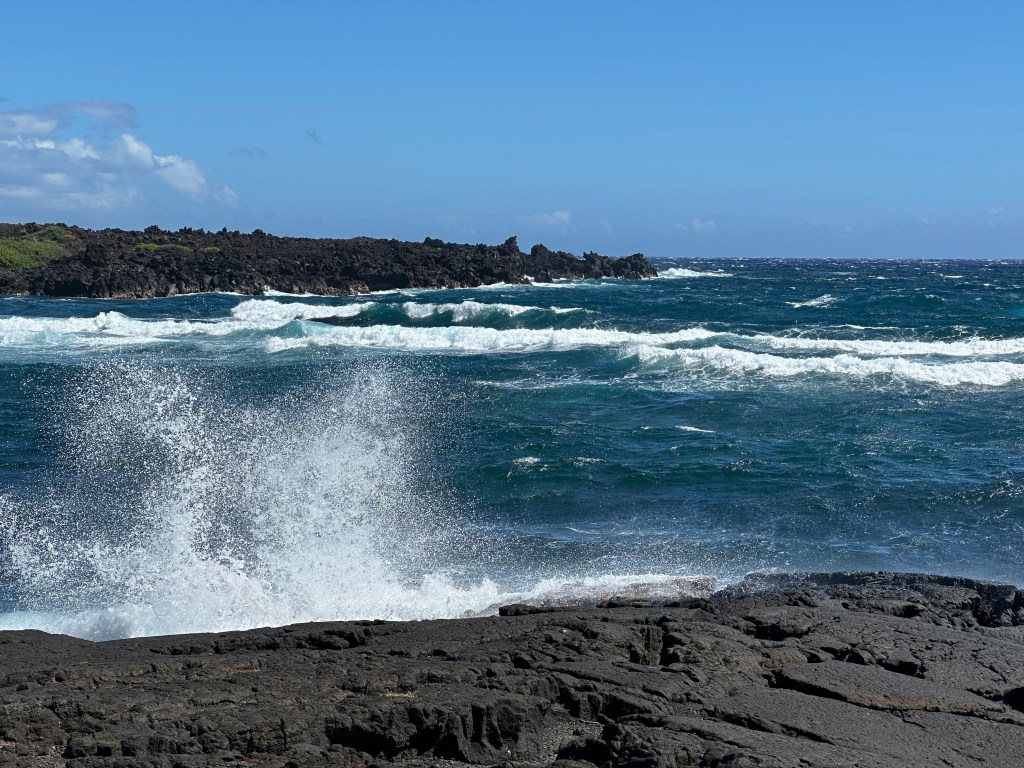
There’s a lot to like about Hawaii: the views, the surf, the coral-blue ocean, the wildlife, the food, the quietness, the history, and the cultures. Each is wondrous to behold.

On a recent vacation there, my wife and I learned that the people of Hawaii make all of those incredible features sparkle all the more. They are a gracious amalgamation of Polynesians, warm, welcoming, and immediately inclusive.

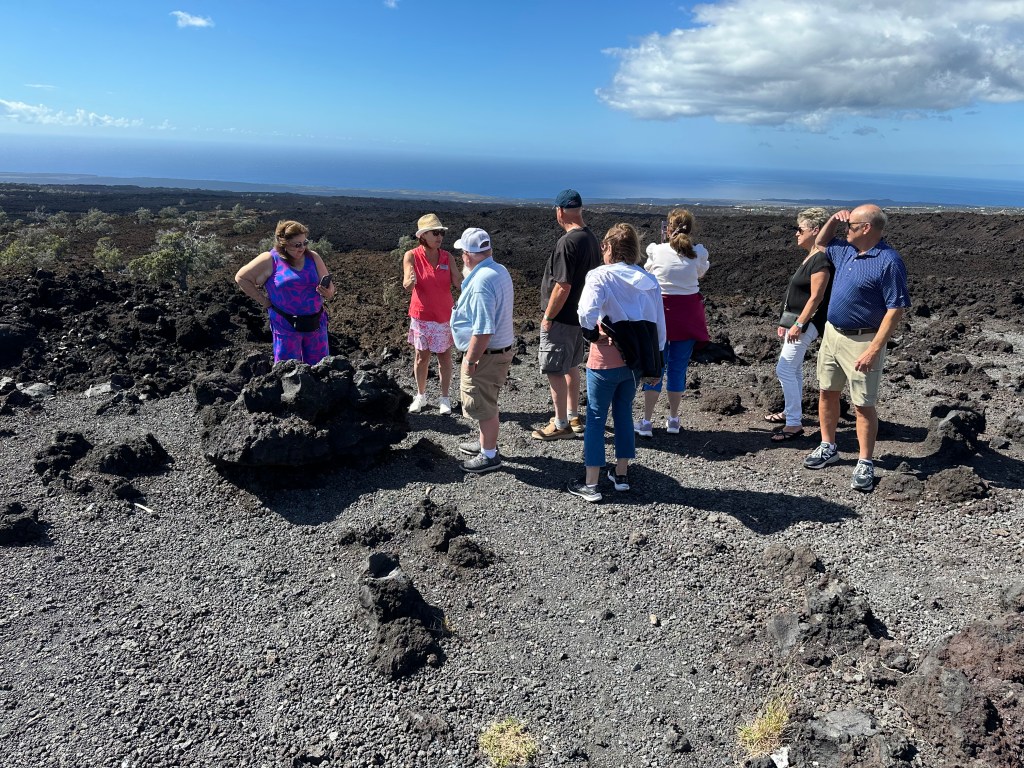
We were among a relatively small group of travelers. None of the 13 senior citizen travelers had met before, but that made no difference to the guides and bus drivers who showed us the beautiful Oahu, Kona, and Maui islands.

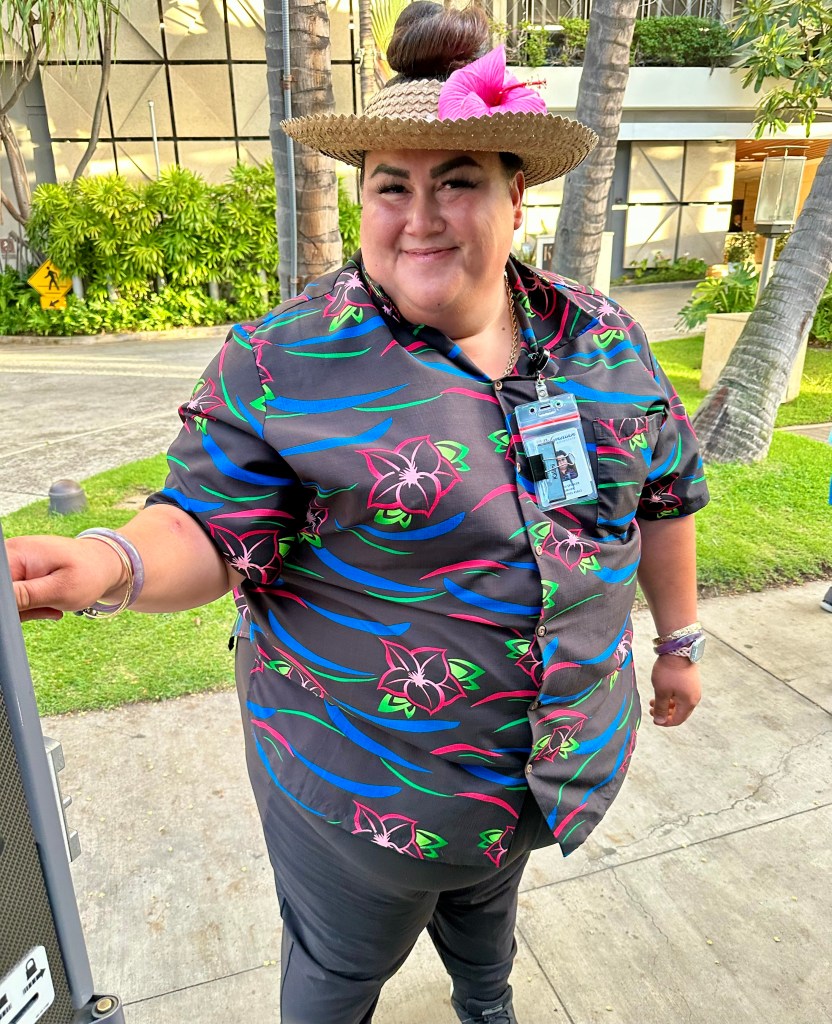
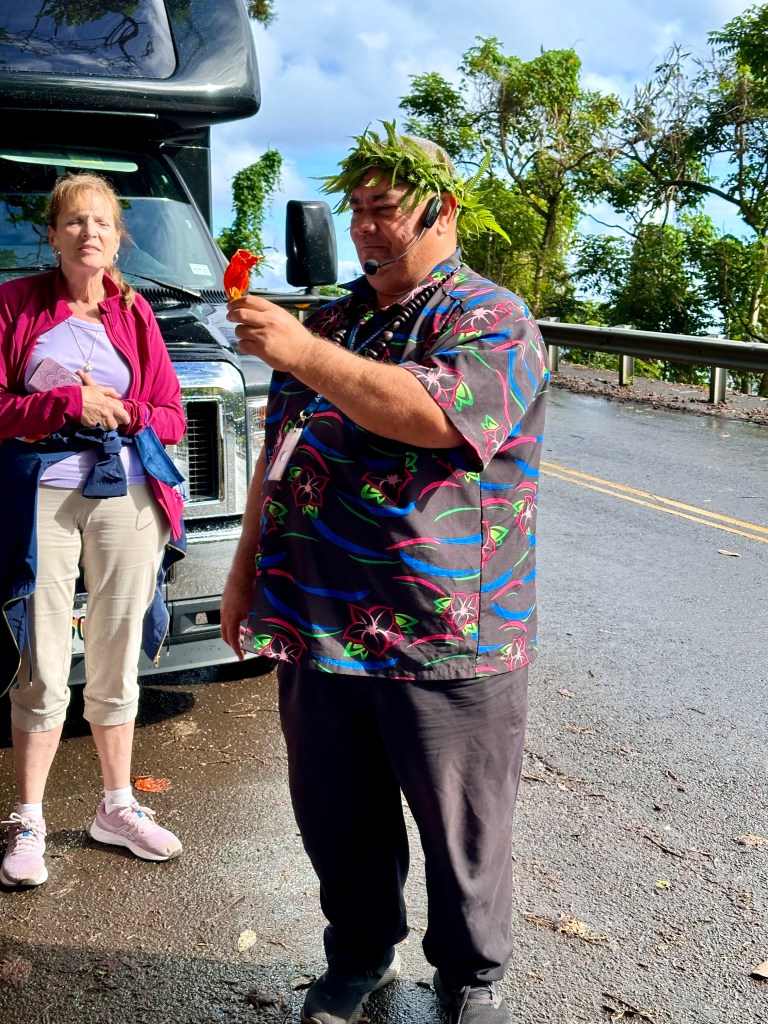
Three of our able and knowledgable bus drivers.

Each one, independent of the other, welcomed us as family. We weren’t tourists. We were cousins. That’s what they called us, and they treated us with the utmost respect, which quickly earned them ours. It set the tone for the entire 10-day trip.

Why would they do this? Native Hawaiians and those who embrace Hawaiian culture understand that we are all connected to each other and to the beautiful world around us.

They know the fragility of life and try to live each day to the full. Hawaiians realize they need one another and us to survive and thrive. It’s in their DNA to do so. Consequently, we felt welcome everywhere we went and by everyone we met.

Each guide and driver shared similar stories, not from a script but from their personal lives and hearts. The drivers took us through areas not on the scheduled itinerary, and in some cases, we passed through their neighborhoods.

They wanted us to experience what they experience daily. When we stopped in small towns, they told us their favorite places to eat and where the best ocean views were and gave us recommendations for shopping.

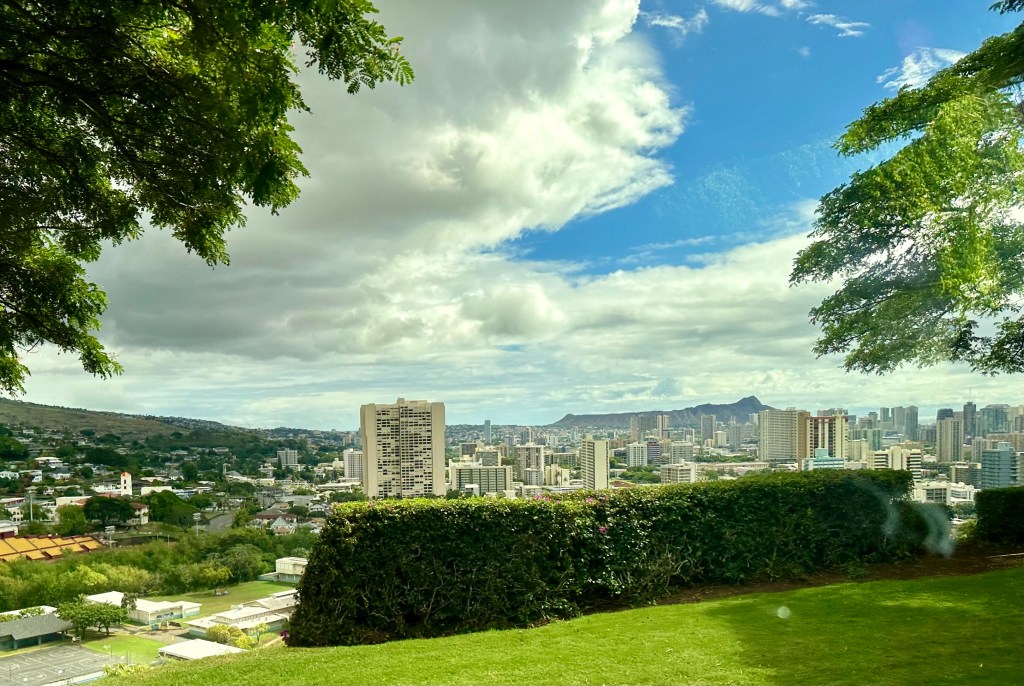
Honolulu from the Punch Bowl with Diamondhead in the background.

They made stops where they knew the owners and where we would experience authentic Hawaiian food, art, and history. Each guide and driver was proud of their history and culture of inclusion and respect for all, their ancestors, and Creation itself.

Polynesians arrived in waves to the Hawaiian Islands from all over the Pacific Ocean, searching for a better life. They didn’t find one but instead made a good life by respecting their differences and embracing their similarities. That tradition continues today.

All of our tour guides shared from their personal lives. They volunteered how they survived the high cost of living in such a paradise as Hawaii.

Individualism isn’t their thing. Community, centering on family, is. Many live communally in households of multiple generations to share the living costs. In one instance, our driver showed us a poorly maintained home on the exterior and asked us to guess the price of the old bungalow. The answer was $1.1 million. The house had two bathrooms and four bedrooms, one family per bedroom.

Hawaiians work hard to enhance their community, no matter which island you are on. They work two, three, or four jobs to make ends meet. They pool their earnings, their joys, their sorrows. Yet, they somehow still keep family central.

The crime rate in Hawaii is low compared to other states. Indeed, we seldom heard sirens blaring, even in congested Honolulu, our first stop. Little graffiti or trash was seen, reflecting their unified regard for nature and the lovely land on which they live.

The view from our Maui hotel room.

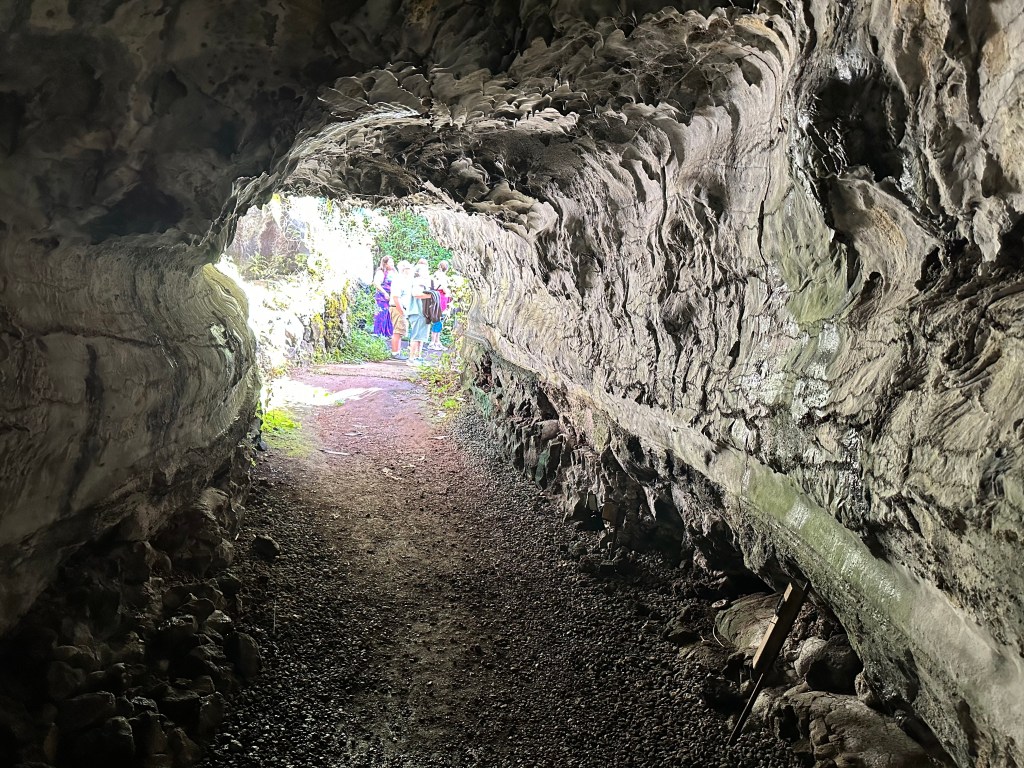
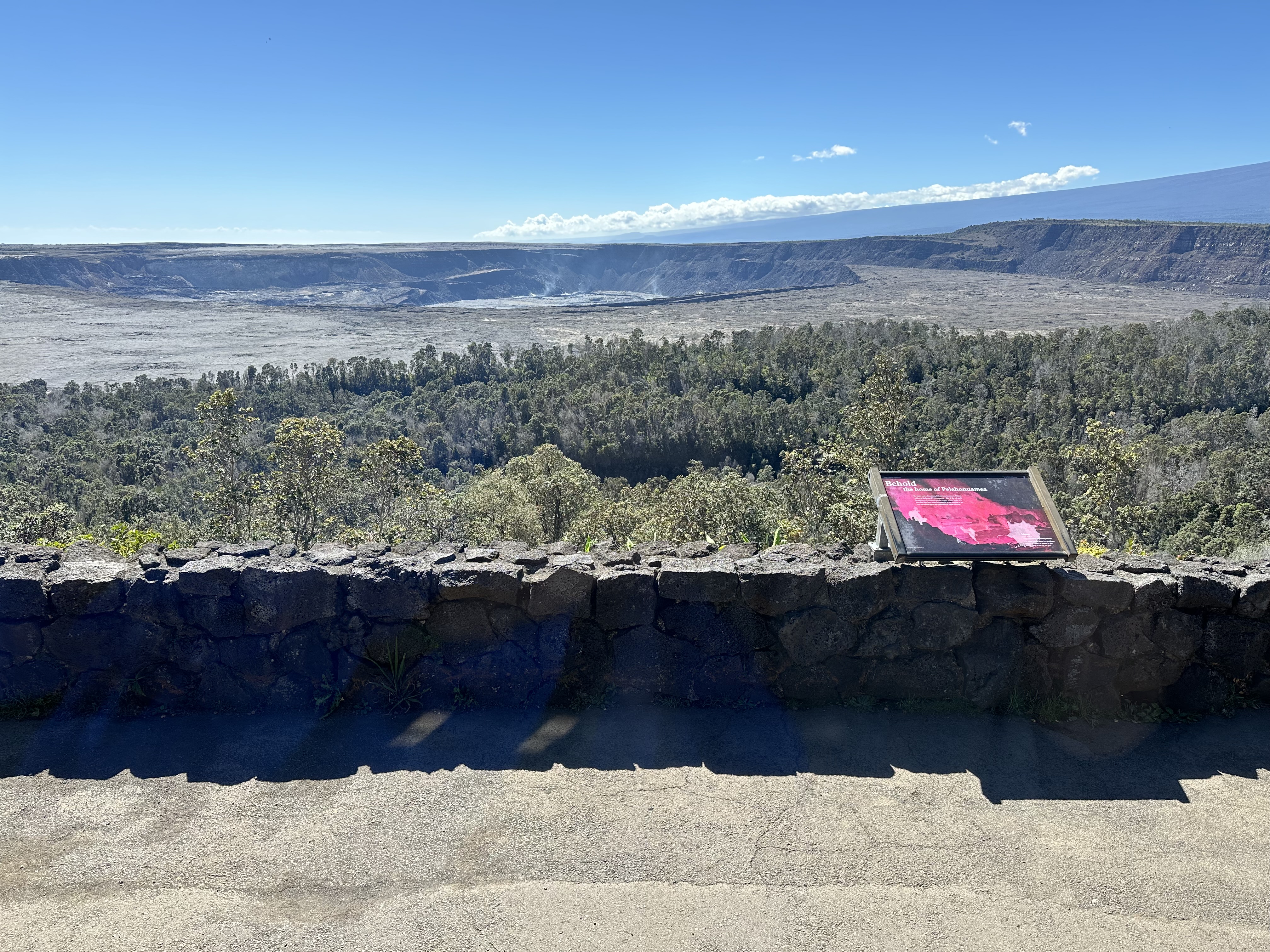
Hawaiians fully understand the natural course of evolution. With each volcanic erruption, their ancient islands continue to grow, sometimes at the peril of residents who inhabit this magical paradise as the roiling lava flows to the sea.

The state of Hawaii consists of 132 islands. Many smaller islands, and even some larger ones, are owned by wealthy individuals, a conglomerate of partners, or corporations. Most islands are uninhabited, mainly because they lack drinking water. That’s especially true if the island is situated where rain is scarce.

The windward and leeward portions of each island we visited were prominent. Where the tropical rains fell regularly, sometimes daily, life thrived. Green was ubiquitous in all shades and shapes. On the leeward sides, trees were fewer and shorter, and vegetation was more sparse.

I will attempt to share the beauty and spirit of our Hawaiian vacation in subsequent posts. I admired how the Hawaiian values reflected the Advent lessons of Hope, Peace, Joy, and Love as we experienced them.

My wife and I, both in our 70s, were most grateful to experience this tropical nirvana and its amazing, humble people. I hope you enjoy the upcoming series that shares more details about our trip.

Our congenial travel group.

© Bruce Stambaugh 2024

Sunrises, Sunsets!

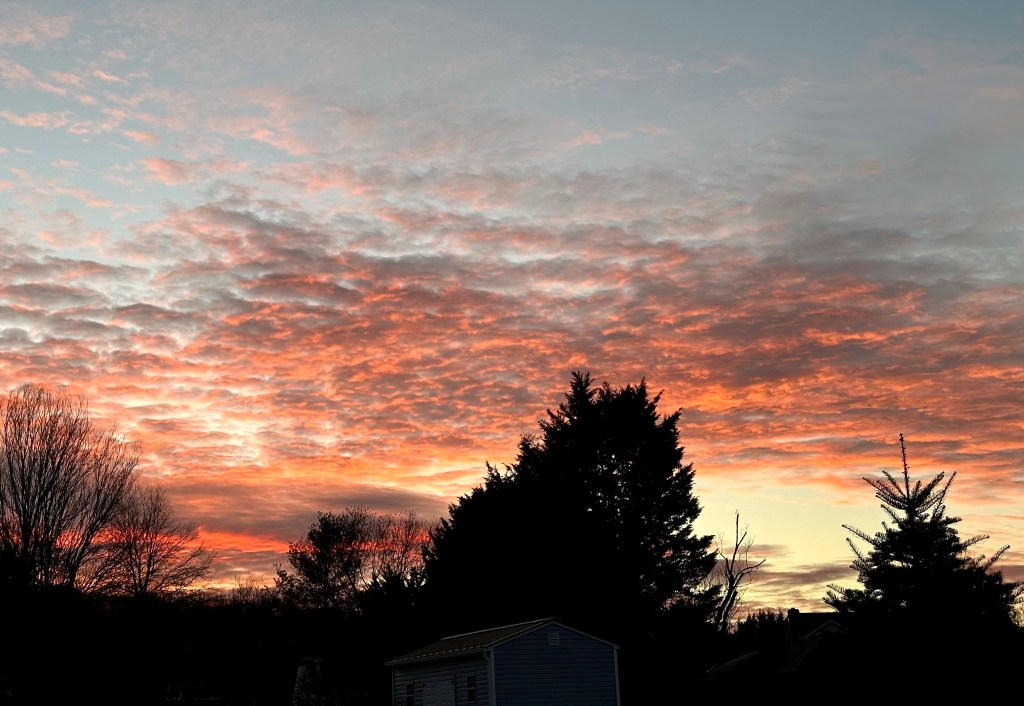
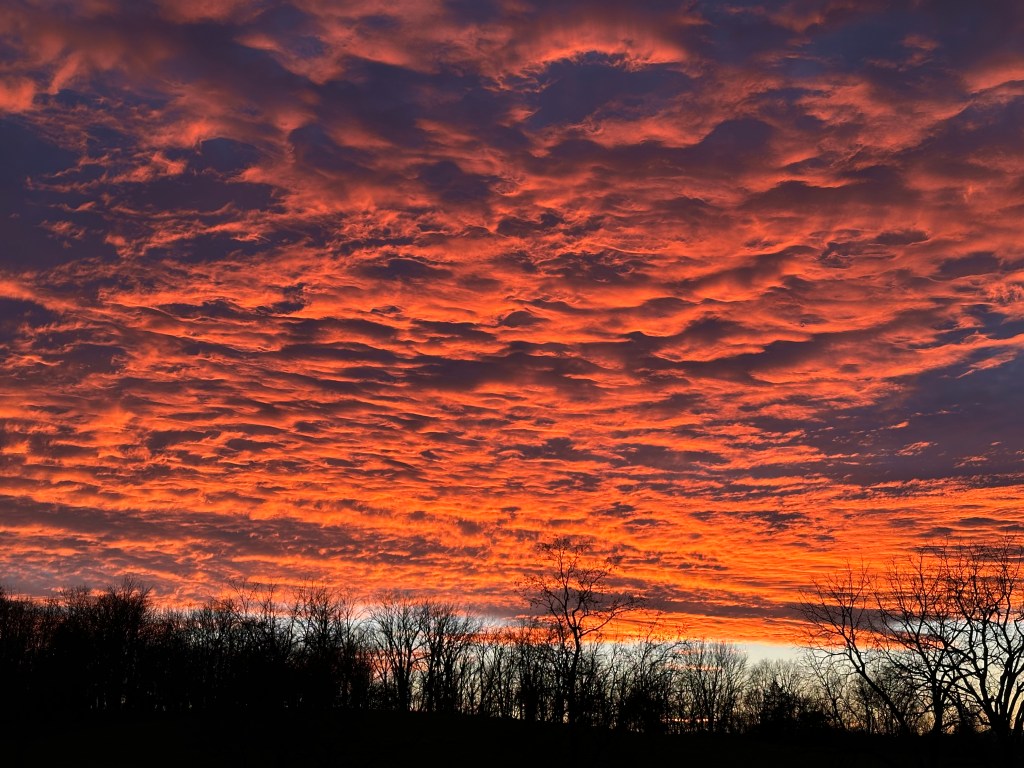
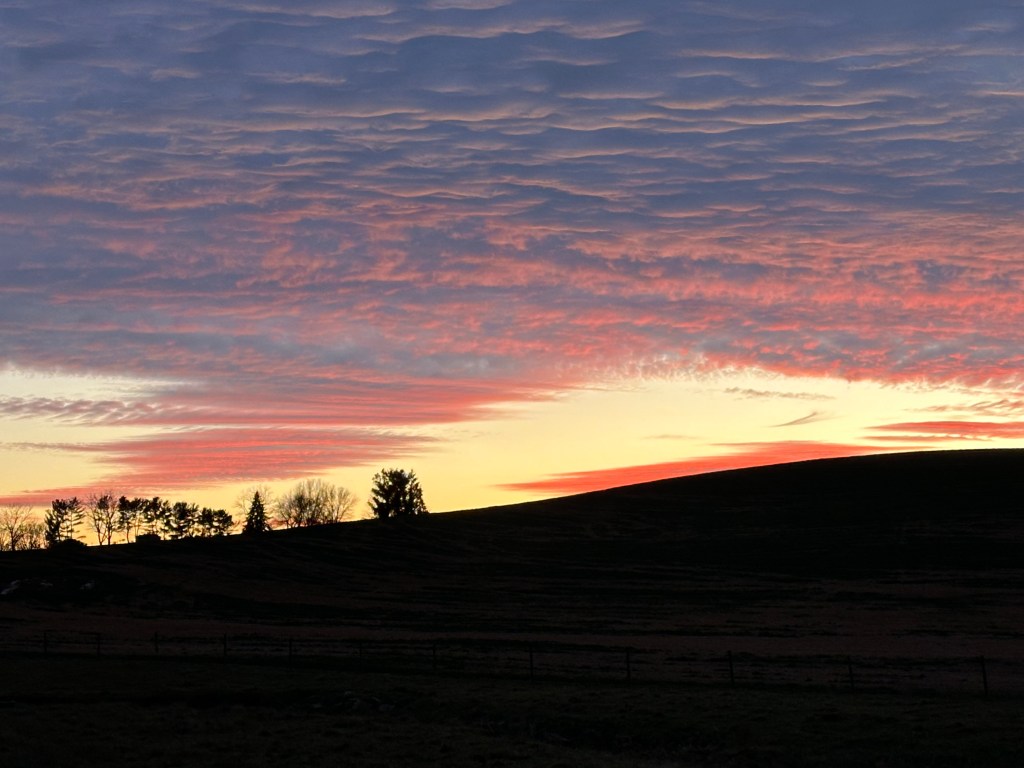
These recent Shenandoah Valley sunrises and sunsets were too beautiful not to share with you, especially on gray, chilly December days.

This glowing sunset on December 2 included a sun pillar. The setting sun’s rays backlit the virga that appeared around the sun pillar.

I rose early enough on my birthday to capture the tale end of a lovely sunrise from the backyard. Red in the morning, sailors take warning proved true. Low rain clouds moved in and blessed us with some much-needed precipitation.

We didn’t get much, but every little bit helps.

The soft pastel sunset on December 4 added to my happy birthday.

In contrast, the December 7 sunset was explosive. As sunsets want to do, the colors transformed minute-by-minute as I changed locations to photograph the gorgeous scenes. This photo was taken from a roadside near my home.

Only six minutes later, the sky had transitioned to bright orange and scalloped grays over a local landmark: Mole Hill, a long-dormant volcanic core.

As I drove farther west, the sun sank behind the old, folded Appalachian Mountains. Still, earth and sky combined to provide photographic offerings.

Finally, it was time to head home, basking in the satisfaction of a marvelous sunset.

The following day, I woke in time to catch the last of a glorious dawn. A high hill blocked our view to the east, so I had to rely on peeking out a window to see what the sky had to offer. A friend who lives on a hill facing east posted the full sunrise on social media, replicating the previous night’s sunset beauty. So, I had to be happy with my backyard shot.

That’s how we live each day. We embrace whatever we discover, capture its essence, and share the blessing with all we meet.

© Bruce Stambaugh 2024

Shenandoah National Park: Before and After the Peak Leaf Colors

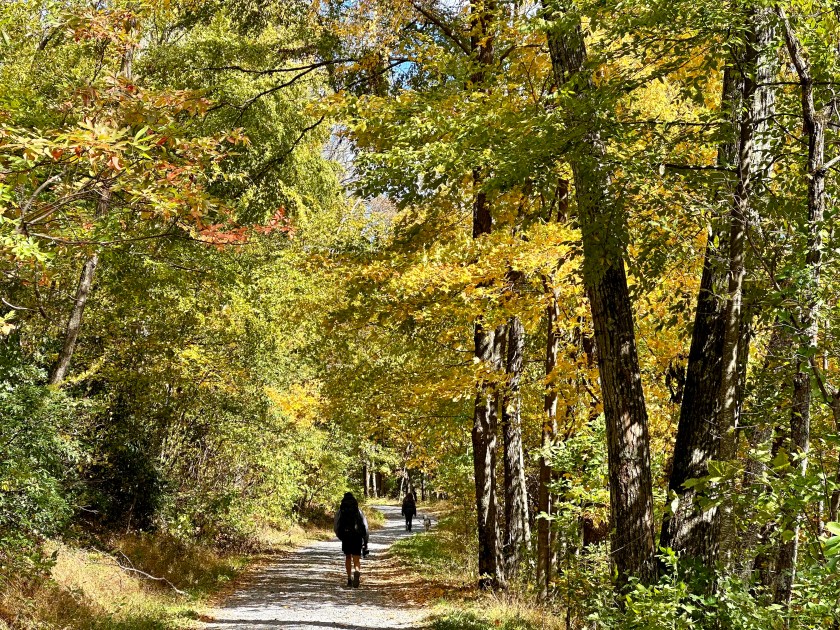
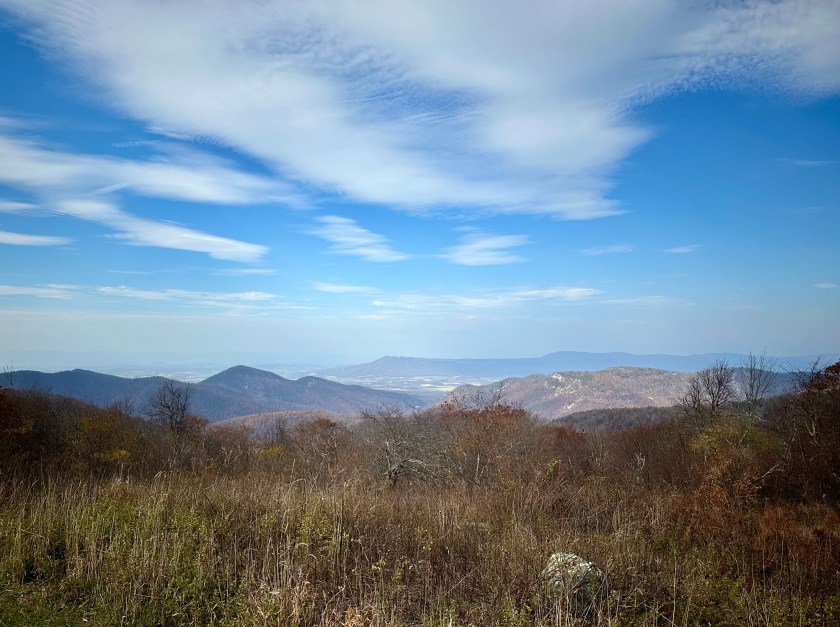
Nature’s beauty reigned even after the peak colors had faded. Photo by Bruce Stambaugh

Fall is a great time to hike, bird, and shoot photos. Shenandoah National Park is my go-to place to combine all three hobbies in one trip.

However, I have learned to avoid the peak color time due to crowds. People from around the world visit the park to admire its autumn glory, which means traffic is also at its peak on the iconic Skyline Drive.

By mid-morning, lines of vehicles form at entrance stations. Overlook parking spaces fill up quickly, forcing people to park along the busy roadway. The same is true for trailhead parking lots.

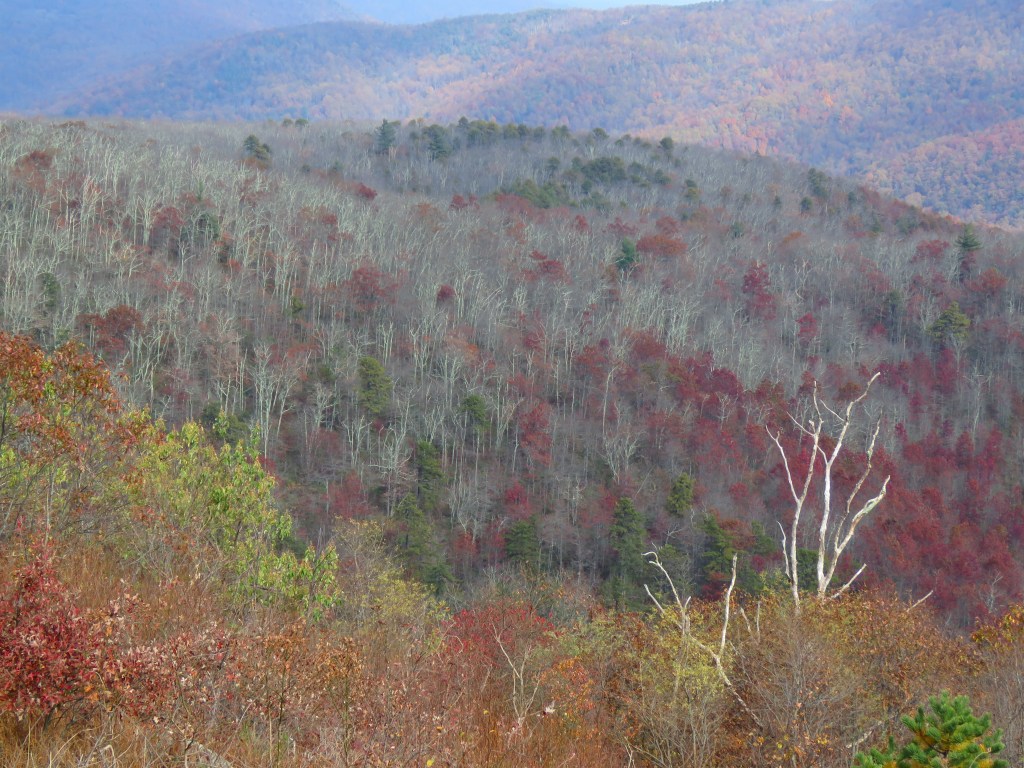
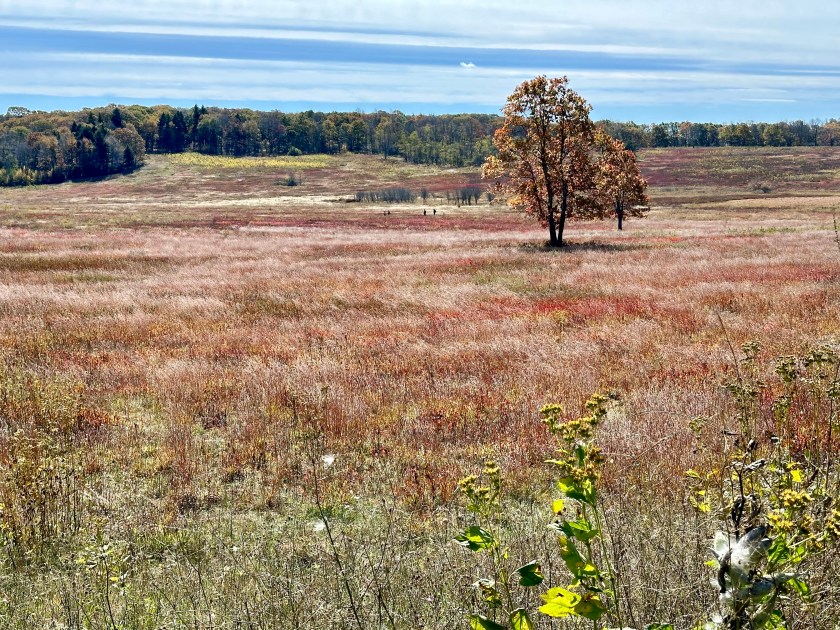
Before the peak of leaf colors.

So, I chose to catch the leaf colors before and after the peak. The park is still busy, but it is tolerable, and I am satisfied with a stirring hike filled with picturesque views, unexpected wildlife, and migrating birds.

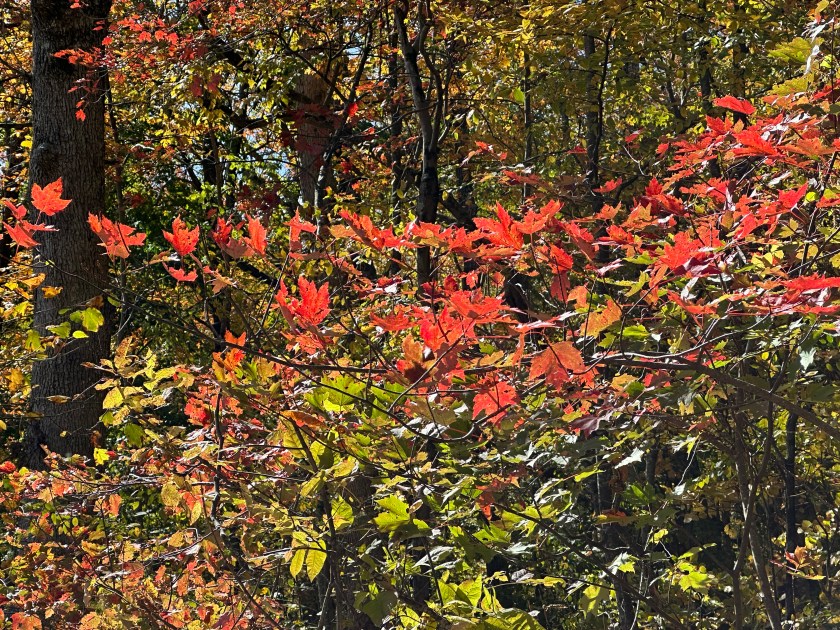
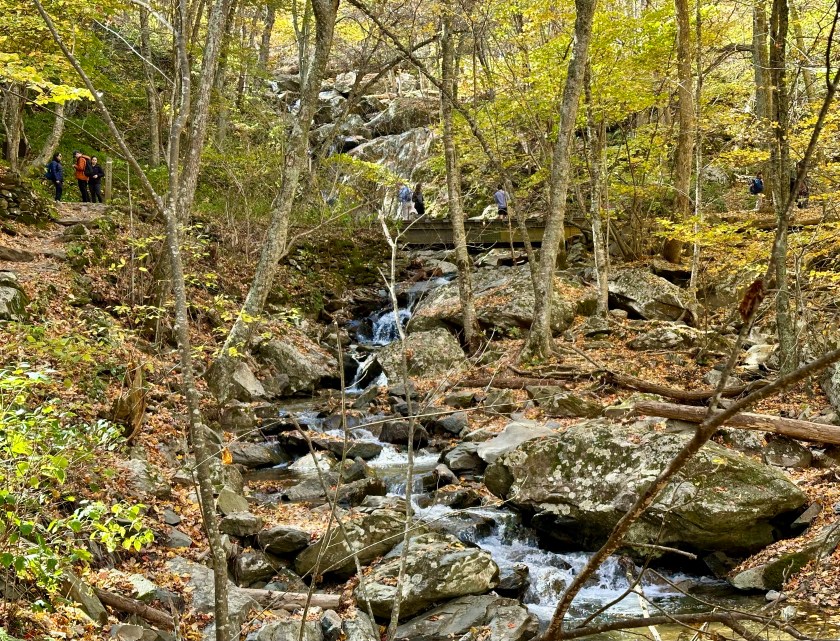
In the mountains, altitude affects the coloring as much as sunshine, cooler nighttime temperatures, and morning frosts. So, the trees might be dull or even bare at the hike’s beginning, and a half mile down the trail, a blaze of color brightens the way.

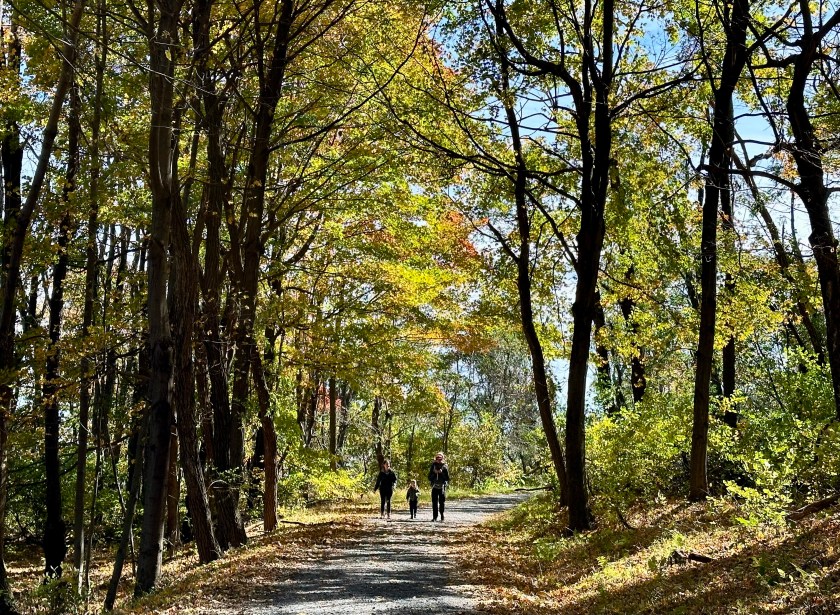
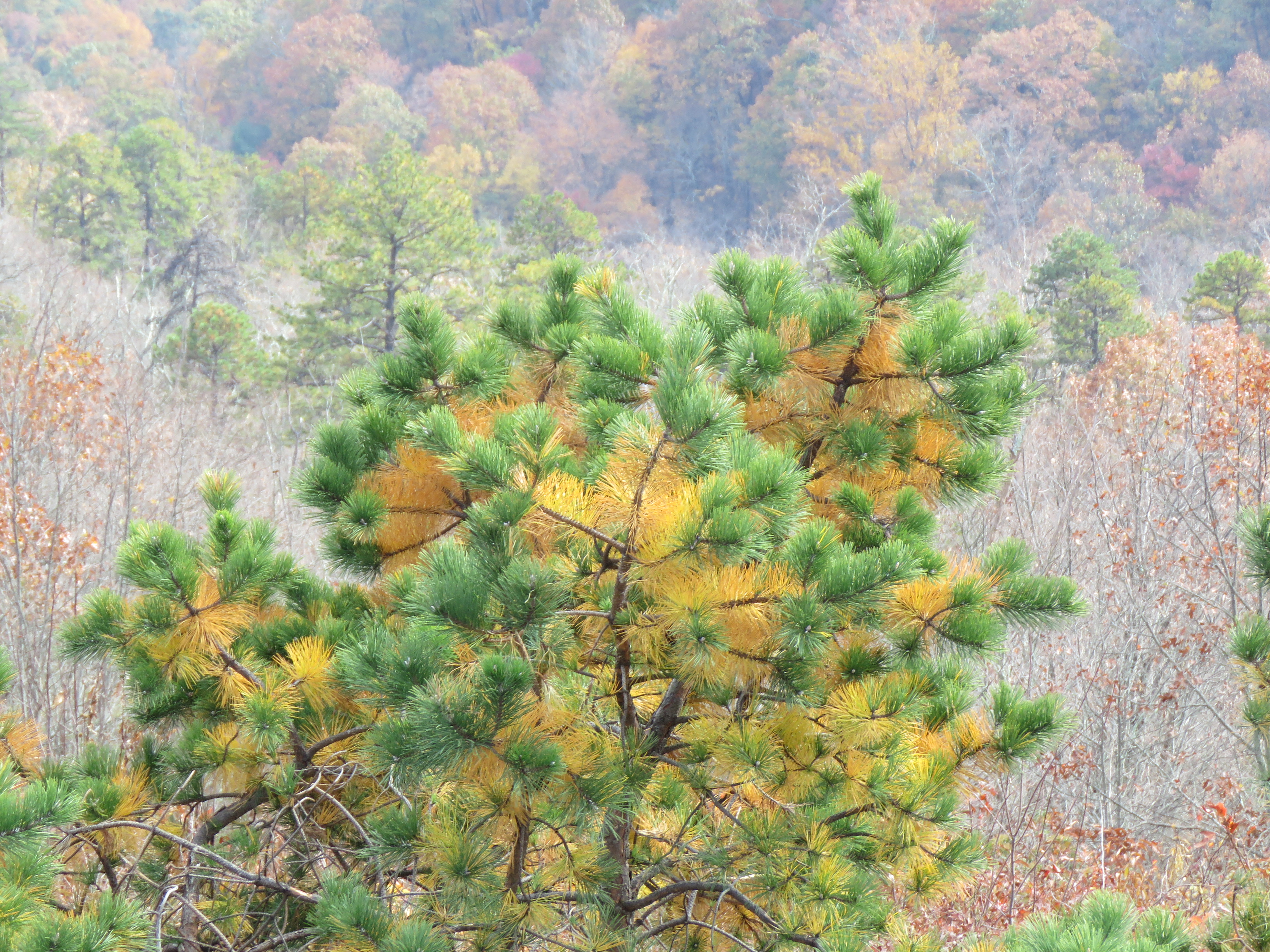
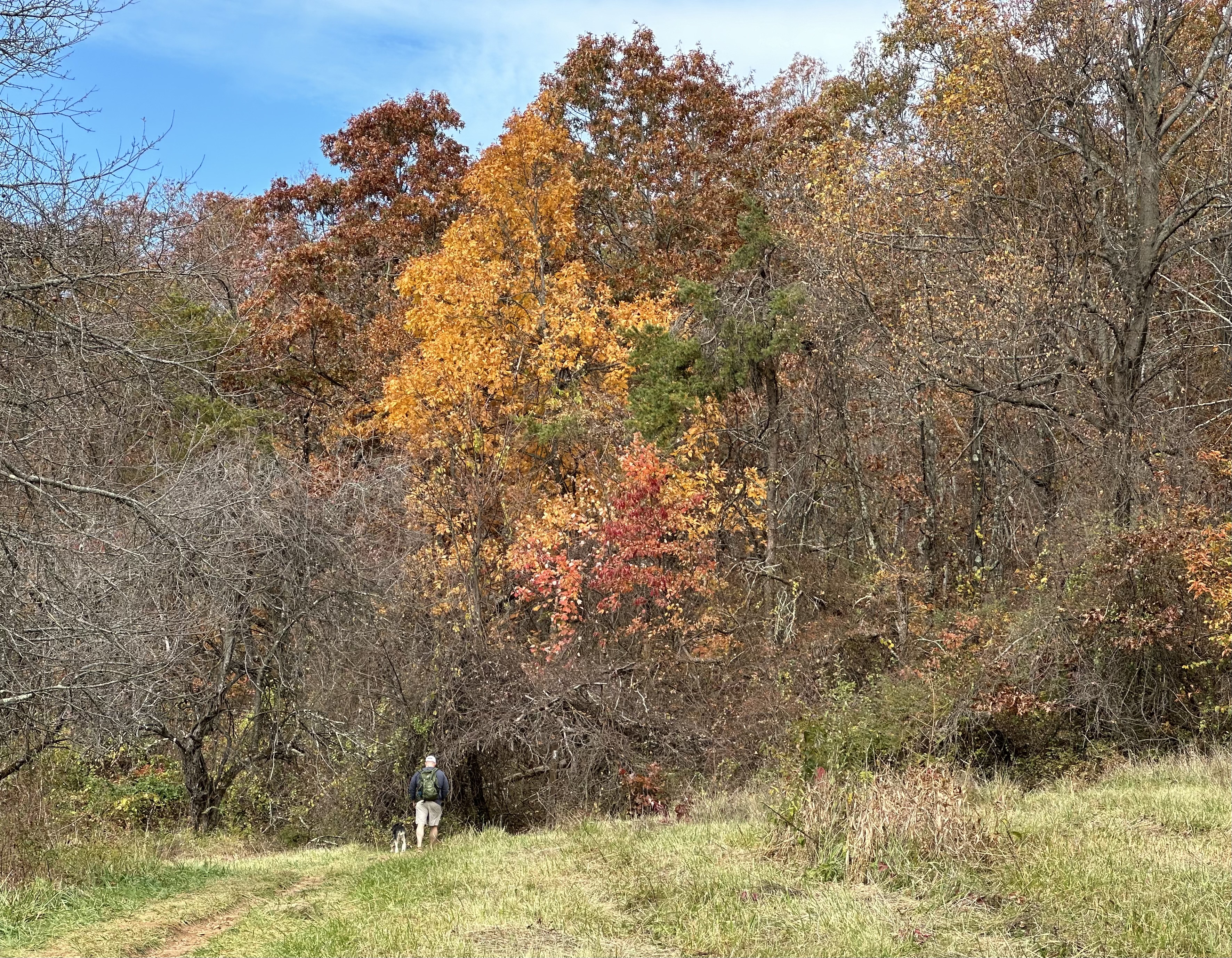
After the peak. Please click on the photos to enlarge them.

Though I have missed the height of the turning leaves, I enjoy the before-and-after with equal zeal. It’s fun to note the differences I discover and meet friendly folks along the way. The park’s beauty has energized them, too.

Besides, I admired nature’s colorful summit in other locales in Virginia’s lovely Shenandoah Valley. It is the perfect place to enjoy hiking, birding, and photography all in one joyous day trip.

A view west into the Shenandoah Valley. Photo by Bruce Stambaugh

© Bruce Stambaugh 2024

Country Roads Reveal Autumn’s Glory

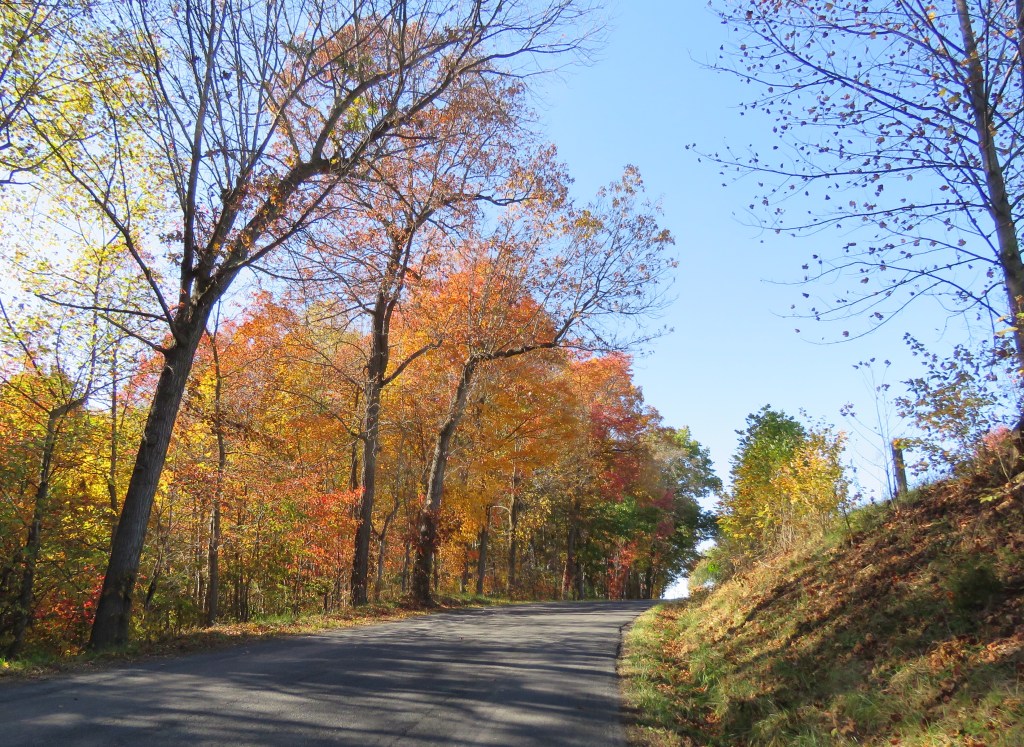
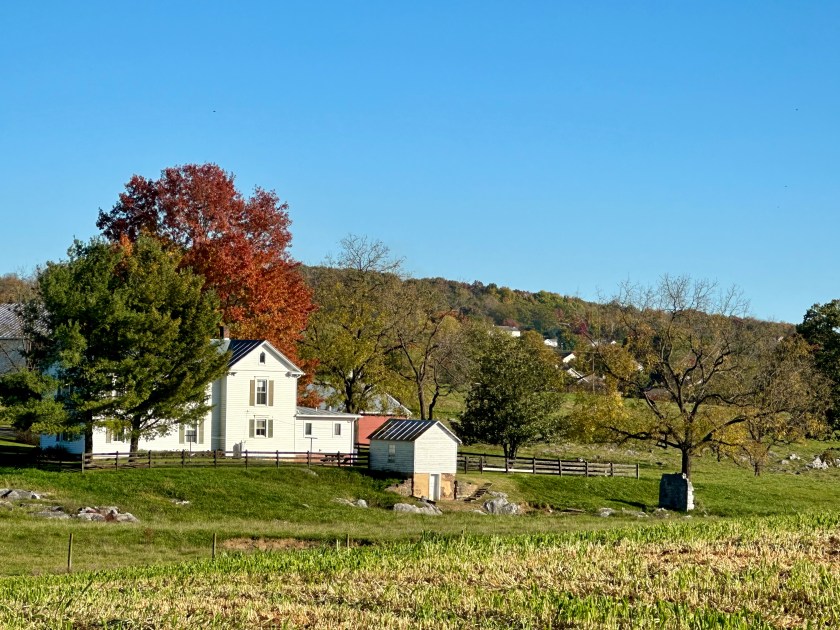
A typical scene in Rockingham Co., Virginia. Photo by Bruce Stambaugh

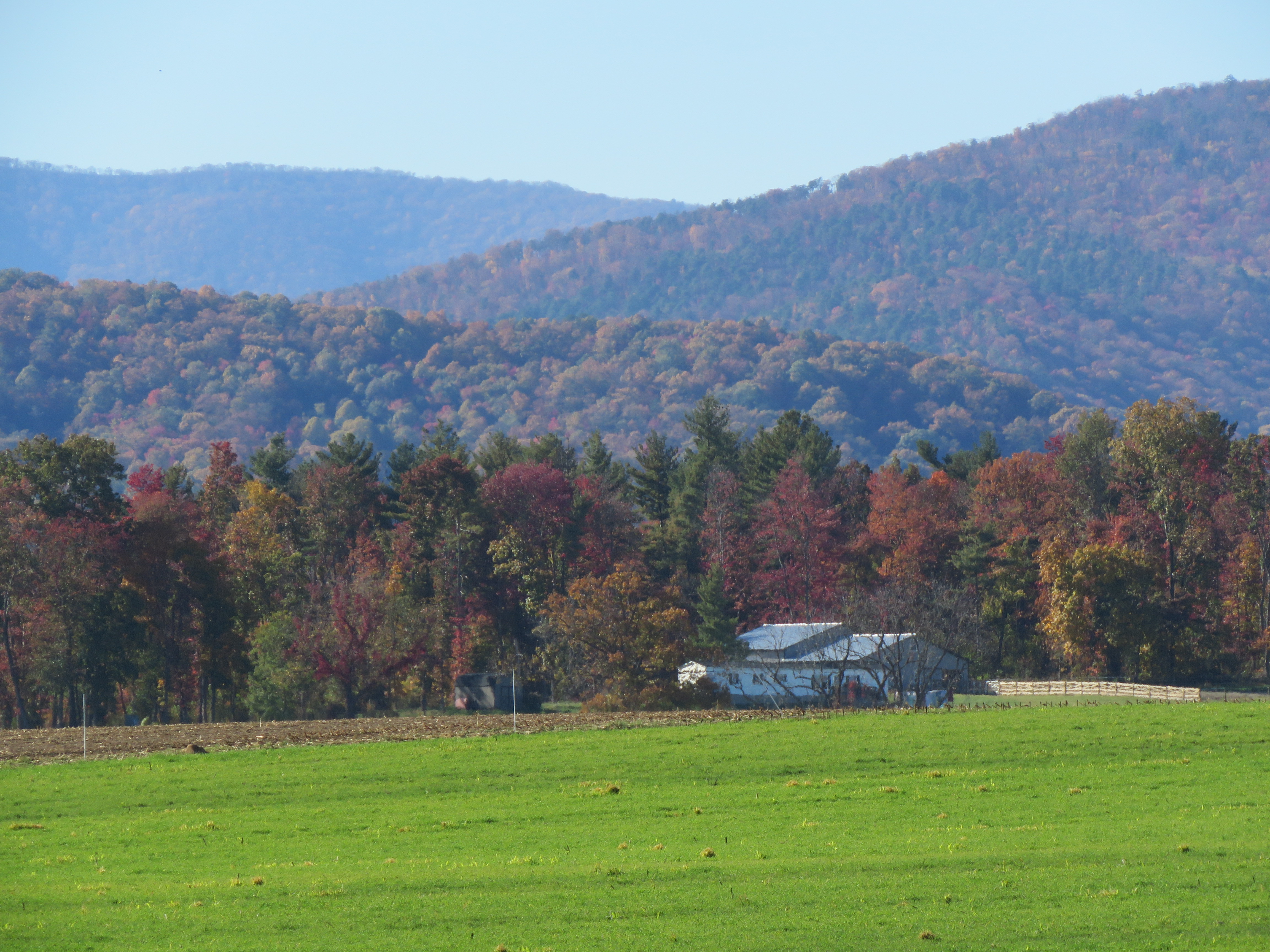
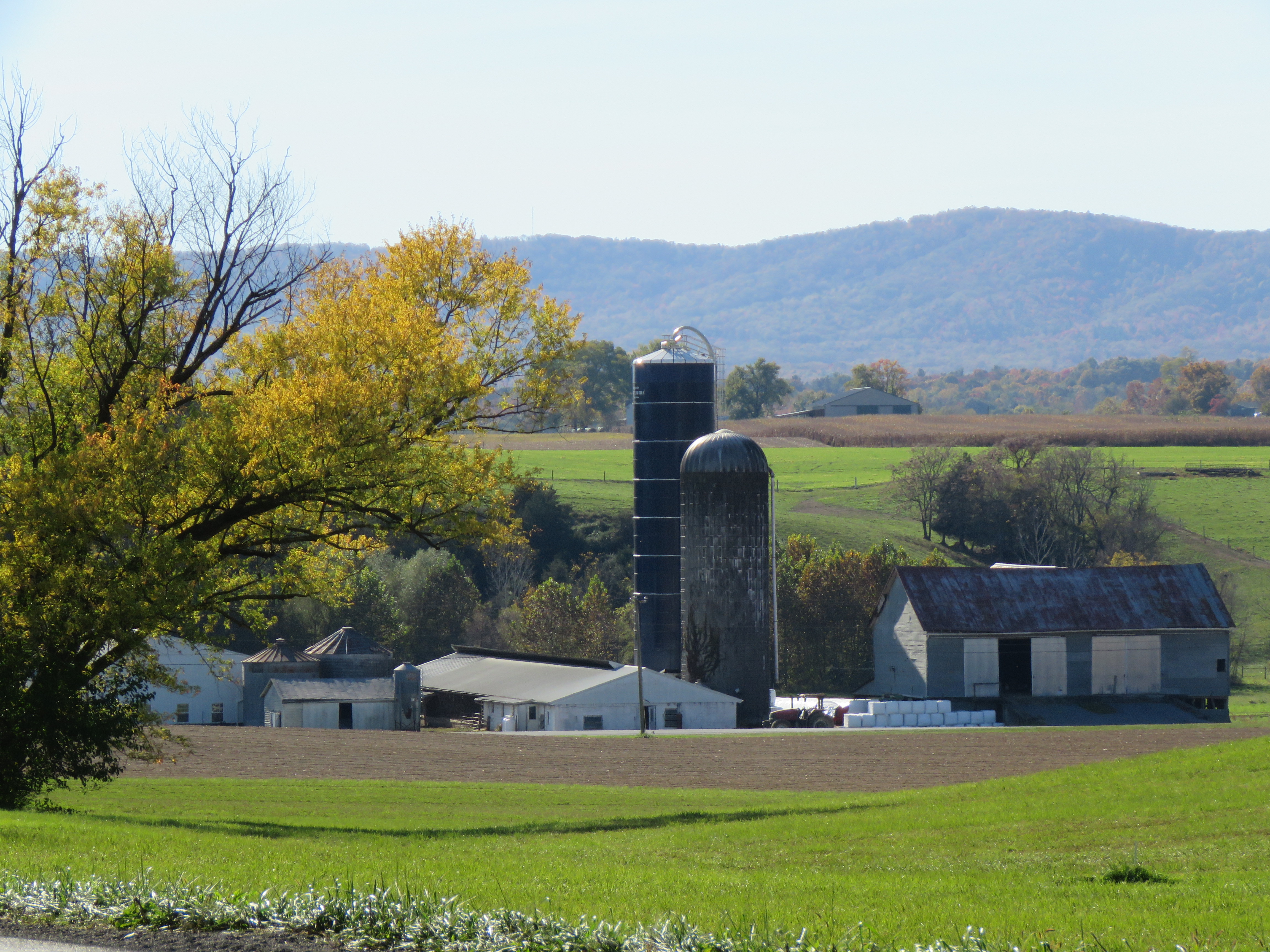
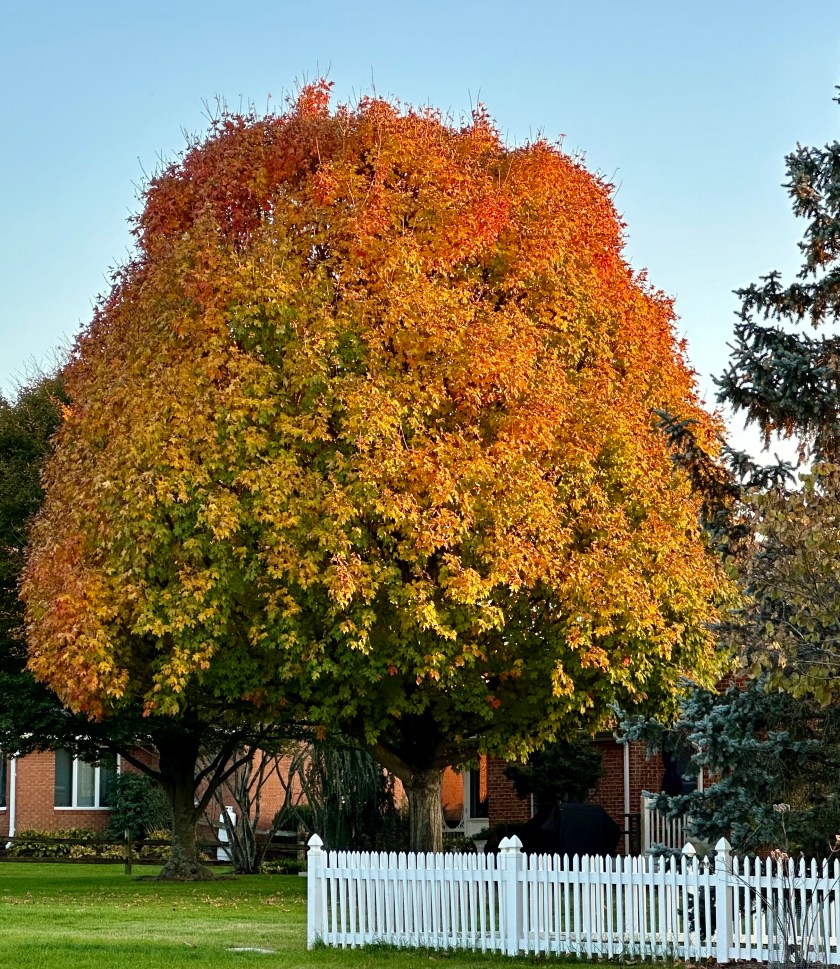
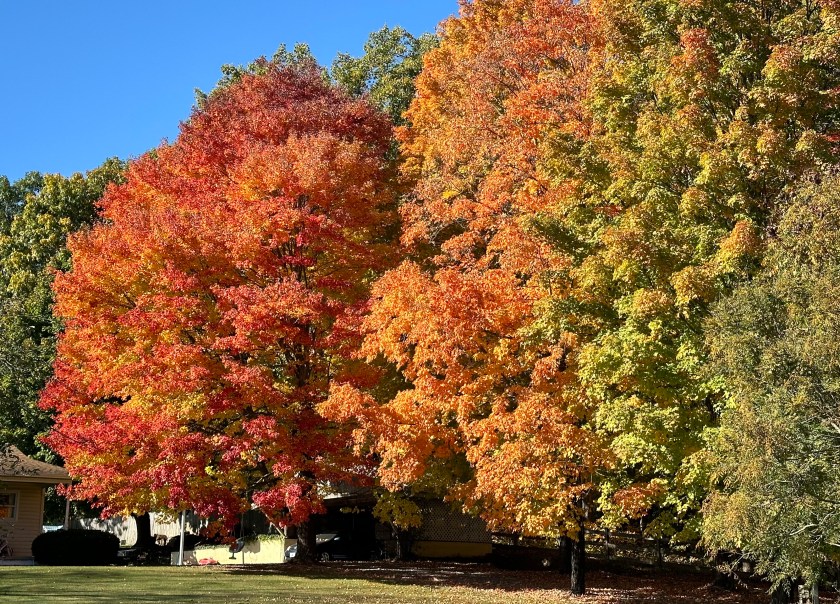
In the fall, traveling the rural roads in Rockingham County, Virginia, reveals Nature’s autumnal beauty. The trees along the highway’s edge bask in the sun’s more direct rays than if they grew more deeply in the forests.

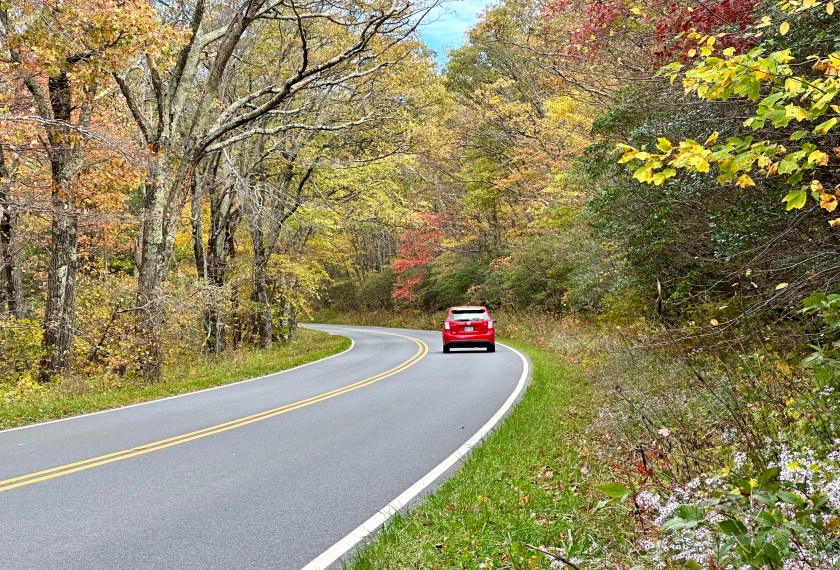
Driving on Skyline Drive in Shenandoah National Park has the same effect. However, it is also much more crowded with global visitors in the fall. Traversing the local roadways usually means less traffic, which makes it safer to pull over, exit your vehicle, and snap away.

Skyline Drive in Shenandoah National Park earlier in October. Photo by Bruce Stambaugh

Doing so allows photographers to capture the fall’s breathtaking beauty. Occasionally, I encounter opportunities to spot some migrating birds and interact with local residents. Once I explained my purpose, I never had an issue. Of course, I choose my spots carefully.

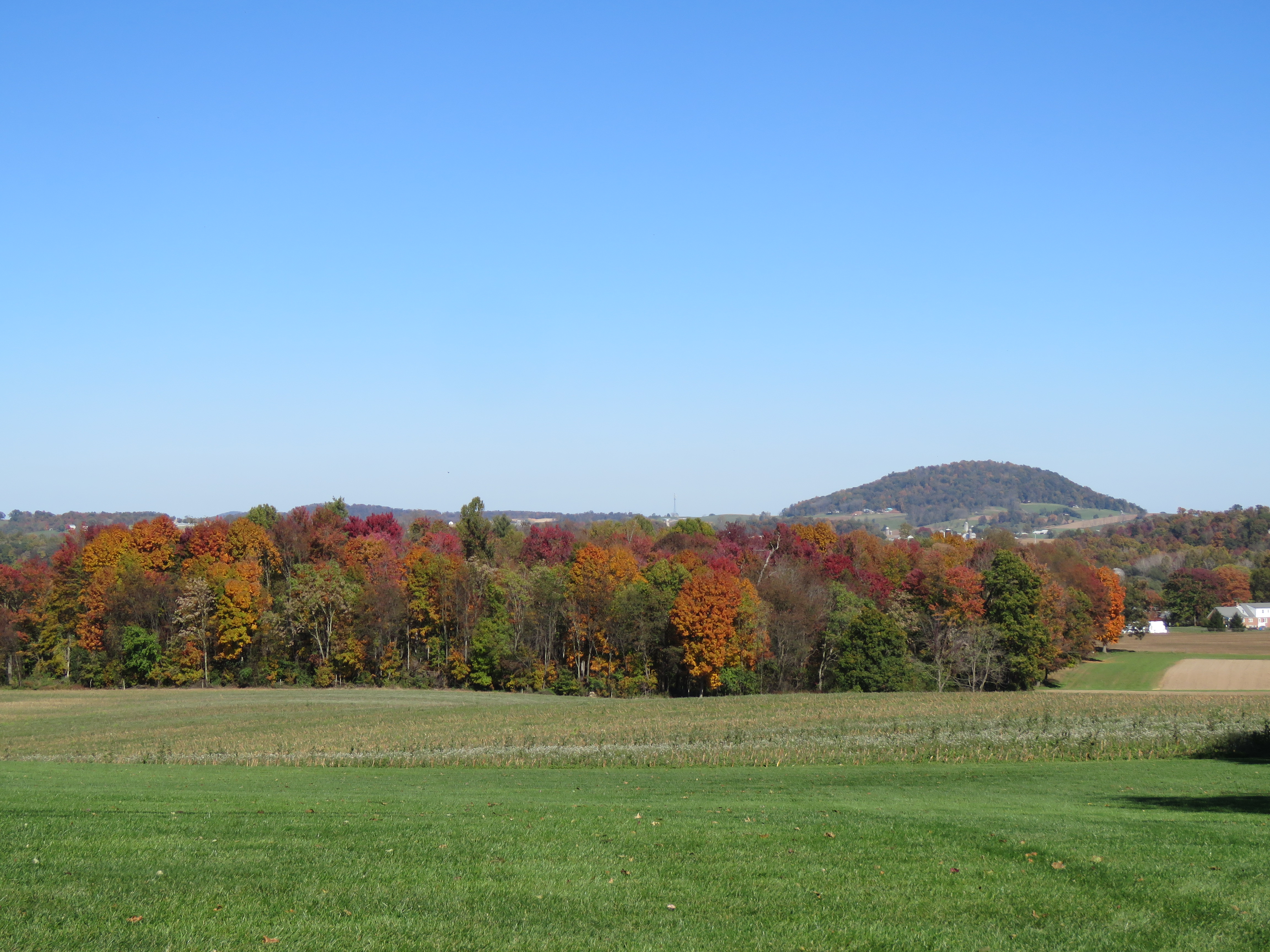
The secondary roads of Rockingham County wind, climb, and descend through the rich agricultural lands that have been farmed for generations, sometimes by the same families and their descendants. I find that fact as rich and satisfying as the colorful leaves.

The joy of photographing the glorious fall colors is mainly in the sharing. I hope you enjoy this series of photos of birds, buildings, and leaves at their peak colors.

Please click on the photos to enlarge them.

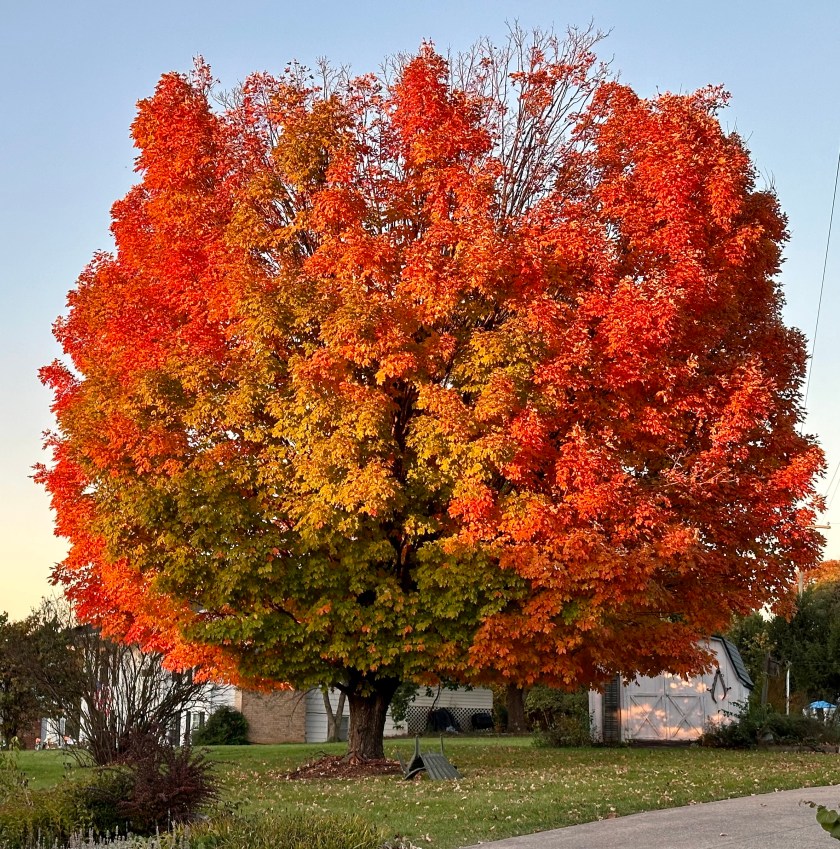
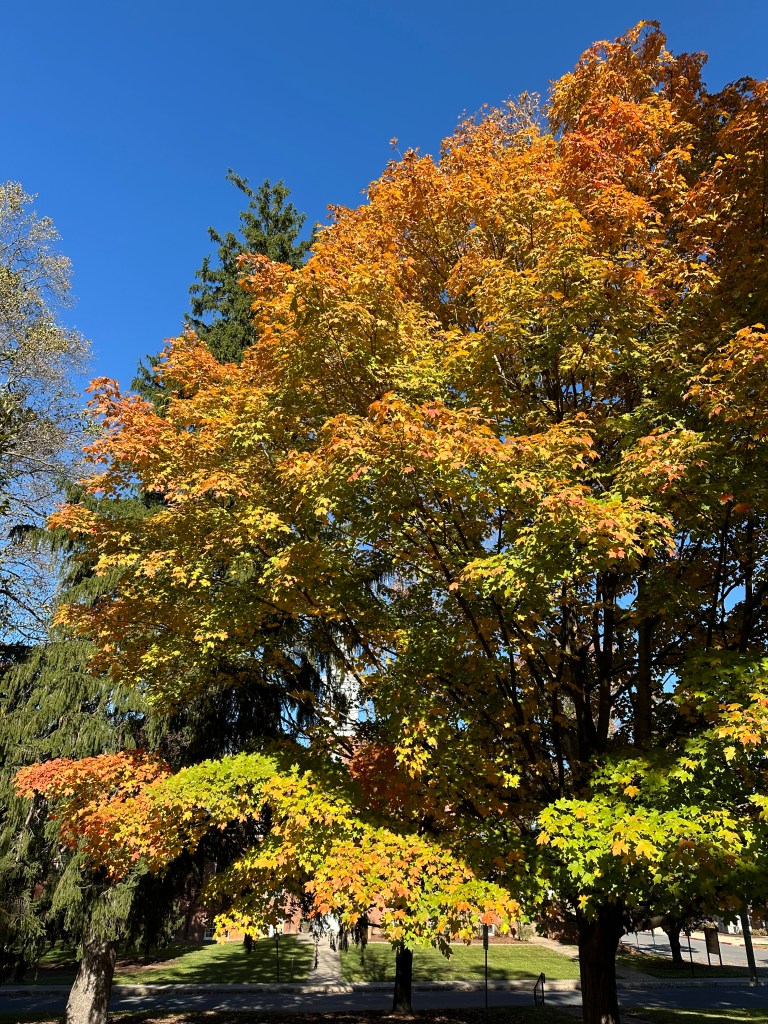
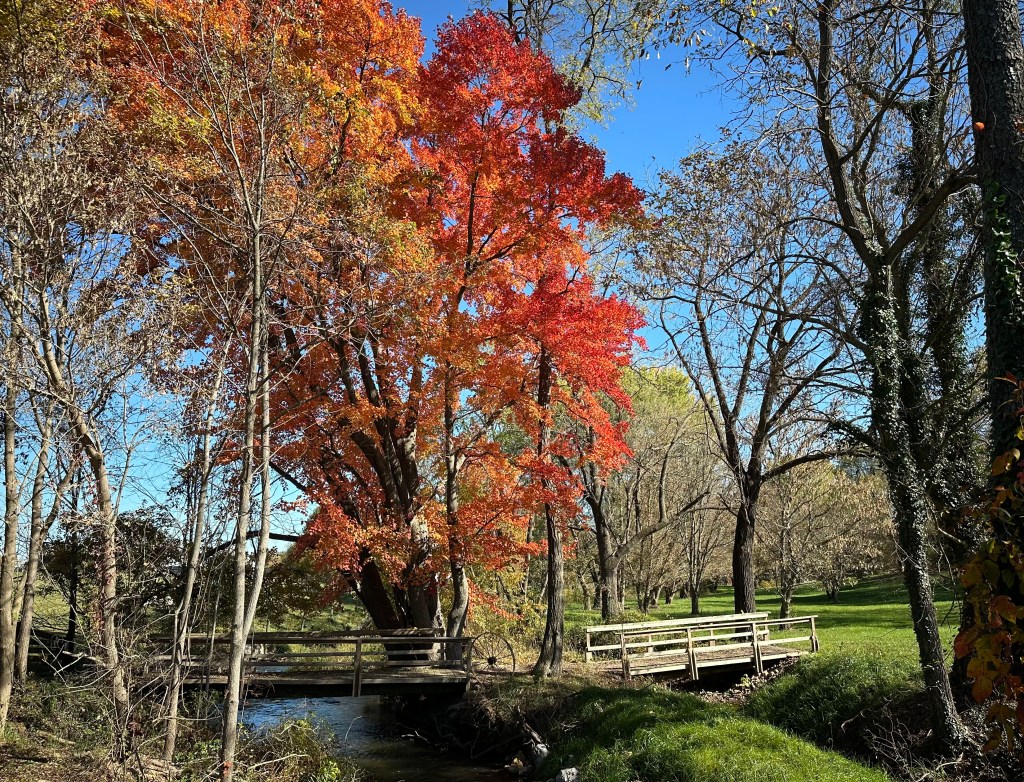
I often find the brightest colors closer to home. The brilliant leaves show off houses, churches, cemeteries, and roadsides.

Of all the rural roads I traveled, this scene at the little hamlet of Spring Creek took the prize.

© Bruce Stambaugh 2024

A Lesson in Judging and Curiosity

Reflections in a Pond. Photo by Bruce Stambaugh

“Thinking is difficult. That’s why most people judge.” — Carl Jung

The morning sky was cerulean as I was on my way to deposit three bags of yard waste at the county landfill’s recycling center. When I turned onto Main St., traffic in both southbound lanes was stopped for some reason. I figured it might be a wreck at the next intersection.

Soon, vehicles in the right-hand lane began moving, so I merged into that lane. Then, I saw two Hispanic men walking from a fast-food restaurant to a dump truck five cars ahead. Had they really stopped their vehicle in the left lane to get something to eat? I zipped by the truck on the right and headed to my destination.

When I arrived at the landfill, I drove straight to where tree limbs, shrubs, leaves, and grass clippings were dumped, later to be ground into mulch. As I began unloading the three bags of sticks, leaves, and dead plants, the truck that blocked the road backed in beside me.

The two occupants quickly began to dump the truck’s load onto the huge pile. I kindly asked the driver what had happened where their vehicle had been stopped.

“You mean in front of McDonald’s?” the driver asked. I nodded in the affirmative.

“Oh, the transmission in the car beside us went out,” the man explained. “The lady was crying and didn’t know what to do, so we got out and pushed her car into the parking lot.”

I thanked them for their good deed of kindness and silently chastised myself for wrongly judging them. I was embarrassed by my egocentricity.

Why do we think so negatively when we don’t know all the facts? Why was I so self-centered simply because traffic was stalled? I wasn’t on a timed schedule.

Instead of being unnecessarily judgmental, why wasn’t I more curious about the situation? Jung’s relevant quote spoke to me. Jung was a Swiss psychologist and psychoanalyst in the 20th century.

I pondered all this on my way home. I thought more broadly about the current chaotic state our country is in. Is this the way bias and bigotry start, one little, insignificant episode at a time?

I didn’t consider myself biased toward others or a bigot—most people don’t—but this incident gave me pause. After a 30-year career in public education and a dozen more years in marketing, I always considered myself open-minded and fair toward others.

I wondered how many times in my lifetime I judged situations and other people without comprehending I was doing so. Probably a lot more than I care to recall. I suspect this septuagenarian is not alone in that regard.

So, how do we change our approach to life’s little hindrances? Professional contemplatives suggest starting with the breath: Breathe in, breathe out, breathe in, breathe out, they recommend.

I should have recognized this right away. Instead of long, deep breaths, I imagine my breathing was short and shallow, only adding to my unnecessary frustration and likely increasing my blood pressure.

From experience, I know that contemplative practices have many benefits. According to the Center for Contemplative Practices, they can improve health, mood, sleep, self-awareness, curiosity, and other personal gains.

Had I taken the time to remember and act upon these principles, my day would have started much differently. After all, how much effort does it take to pause, take a deep breath, and relax? The answer is not much.

However, I was bold enough to ask the men about the situation and received a straightforward answer that satisfied my inquisitiveness. Those good samaritans pulling in beside me at the landfill were a godsend. I imagine the women driver felt the same way.

So, the next time I tense up, I’ll try to remember to breathe in and out and not judge. How about you?

© Bruce Stambaugh 2024

October’s Celestial Wonders

October has blessed us with some fantastic and surprising celestial wonders. The full Hunter Super Moon and the comet Tsuchinshan-ATLAS graced our night skies last week. The comet is still being seen but will soon vanish from sight.

Earlier in the month, the Aurora Borealis danced in the skies across the northern hemisphere, leading the stellar trifecta. Residents in the southernmost regions, like Arizona and Florida, even saw them.

I didn’t have to go far to view any of the trio of events in Virginia’s Shenandoah Valley, where I live. The aurora’s colorful display reminded me of the animated light shows projected onto the American and Canadian Niagara Falls.

However, it’s hard to beat Nature’s heavenly choreography. All I had to do to see the Northern Lights was to step outside my front door. Pinks, reds, and greens played across the sky, dimming and dancing for all to see.

The Aurora Borealis on October 10, Harrisonburg, Virginia. Photo by Bruce Stambaugh

I had only once seen the northern lights as a young man living in Ohio’s Amish Country. The red curtain of zigzagging brilliance danced and sizzled strangely in the southern sky. Yes, I heard an associated zapping sound, but briefly.

I knew the forecasts for the Aurora Borealis were favorable, but I didn’t expect to see such vivid beauty this far south. It was a welcomed surprise that enabled many to cross off seeing the Northern Lights from their bucket list.

Next up was October’s Hunter Super Full Moon, the fourth consecutive super full moon this year. I like to catch the moon rising over the Blue Ridge Mountains, which also host Shenandoah National Park in central Virginia.

October’s Hunter Super Full Moon over Shenandoah National Park. Photo by Bruce Stambaugh
The Hunter Super Full Moon followed me home. Photo by Bruce Stambaugh

Because I wasn’t exactly sure where the moon would appear, I was able to snap a few shots just after it rose above the famed mountain range. The rural setting made the picture all the more captivating.

Then came the comet. Like the Northern Lights, the news media informed us of its arrival. The comet was expected to be its brightest on October 14. Unfortunately, fog, haze, and rain clouds obscured our skyward view.

Thursday, October 17, was our first clear night. My wife and I headed to a local landmark, Mole Hill. It’s an extinct volcanic core, long eroded and now covered with farmed fertile soils on its gradual slopes and a thick mixed forest on the steeper portion of the cone.

Mole Hill’s higher elevation didn’t help us find the comet. A hazy sky over the Allegheny Mountains, 30 miles to the west, was the culprit. We looked and looked but returned home disappointed. However, I wasn’t giving up since the comet wouldn’t reappear for 80,000 years.

The comet was viewed from Eastern Mennonite University’s hill. Photo by Bruce Stambaugh

The next night, I had success from the hill behind Eastern Mennonite University in Harrisonburg. After viewing photos from my iPhone 14 Pro taken around 7:30 p.m., I spotted a faint streak in the sky. What I couldn’t see with my old naked eyes, my smartphone easily captured for me. I was ecstatic.

We quickly found the comet standing in the middle of our street. Photo by Bruce Stambaugh

I took a few more photos and returned home to celebrate with my wife by showing her the sequence of images. Afterward, we went outside, stood in our residential street with no street lights, and found the comet about 30 degrees northeast of Venus, which hugged the horizon.

The next night proved even more successful. I zoomed in with the phone’s long lens and captured more than the comet and its long, fuzzy tale. When I looked at the photo, I realized Starlink was streaking across the sky just northeast of the comet.

The Comet and Starlink. Photo by Bruce Stambaugh

October has been good to us so far. I wonder what joyous tricks she’ll offer up by Halloween.

The comet Tsuchinshan-ATLAS. Photo by Bruce Stambaugh

© Bruce Stambaugh 2024

Beneath the Old Apple Tree

I nearly drove by the two deer. They blended in with the background that well. Fortunately, I spotted them as I passed the old apple tree.

I found the first place to turn around and hoped my hungry subjects would still be there. They were, and I quickly snapped a few shots before they disappeared into the forest.

These two buck deer were on the search for apples. Photo by Bruce Stambaugh

I was on Skyline Drive in Shenandoah National Park. The area between Milam Gap and Big Meadows is peppered with apple trees planted by farmers before the park was established in 1935. The trees still produce apples, and deer forage on them in the fall.

Unfortunately, this pair of bucks was late to the party. All the reachable apples and those on the ground had already been consumed.

Gravity and nature will eventually have their say, enabling the deer to satisfy their taste for bright red apples.

The two bucks before they scampered into the woods. Photo by Bruce Stambaugh

© Bruce Stambaugh 2024

Bay Photos by Donna

Wildlife Photos From The Chesapeake Bay Region

ROAD TO NARA

Culture and Communities at the Heart Of India

K Hertzler Art

Artist and nature journalist in the Shenandoah Valley of Virginia.

Maria Vincent Robinson

Photographer Of Life and moments

Gabriele Romano

Personal Blog

Jennifer Murch

Art is the only way to run away without leaving home. -Twyla Tharp

Roadkill Crossing

Writing generated from the rural life

ANJOLI ROY

writer. teacher. podcast cohost.

Casa Alterna

El amor cruza fronteras / Love crosses borders