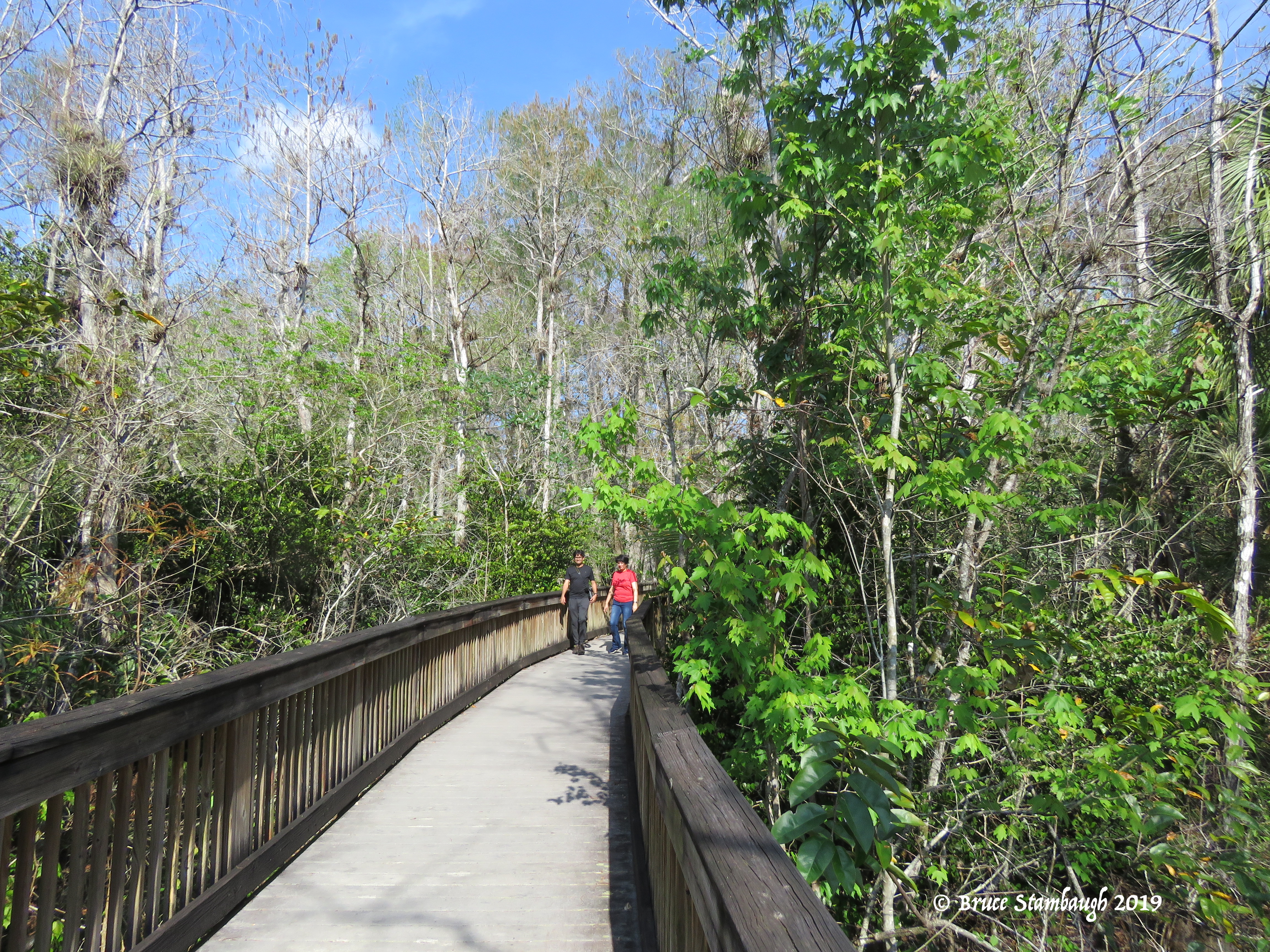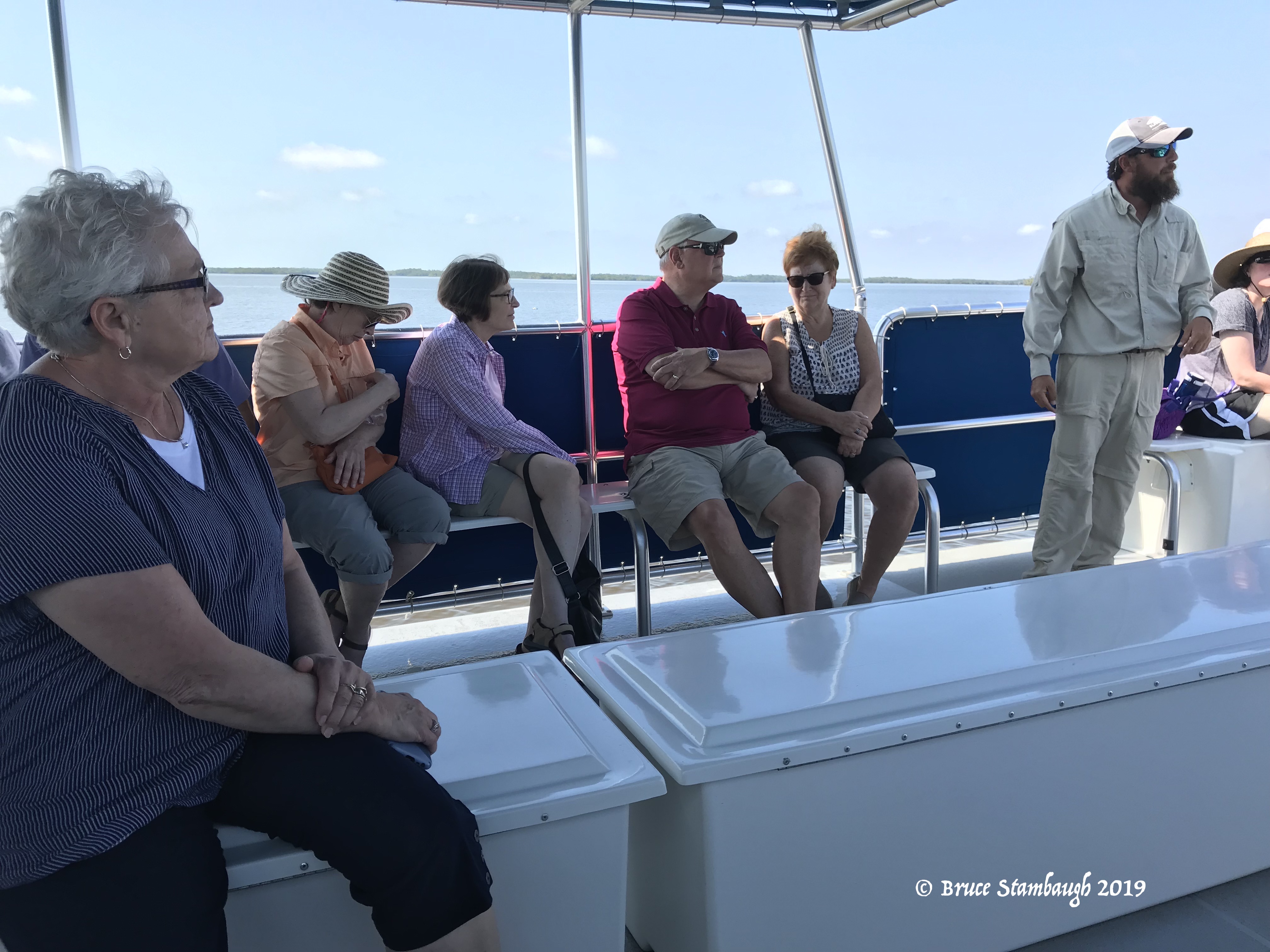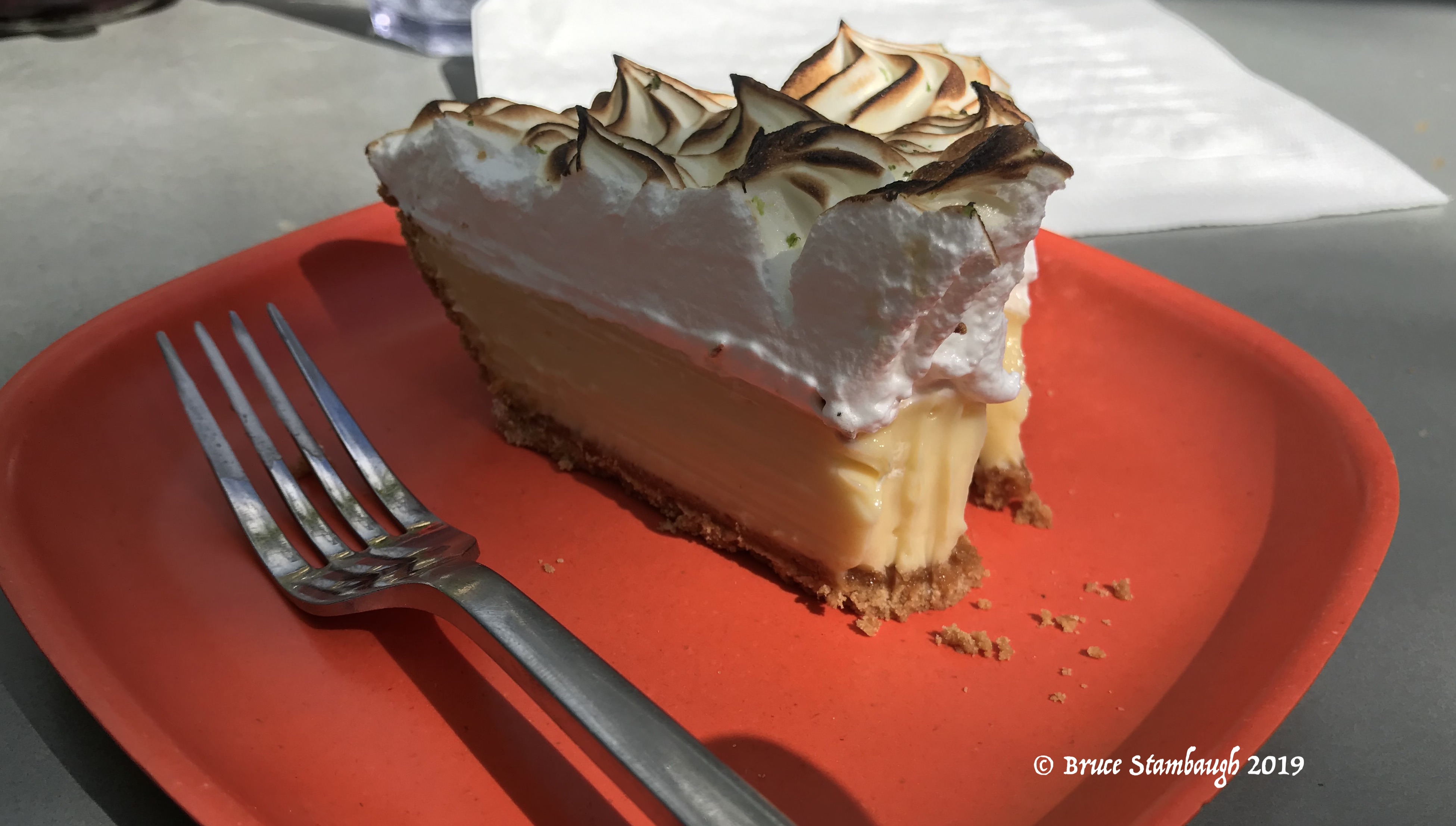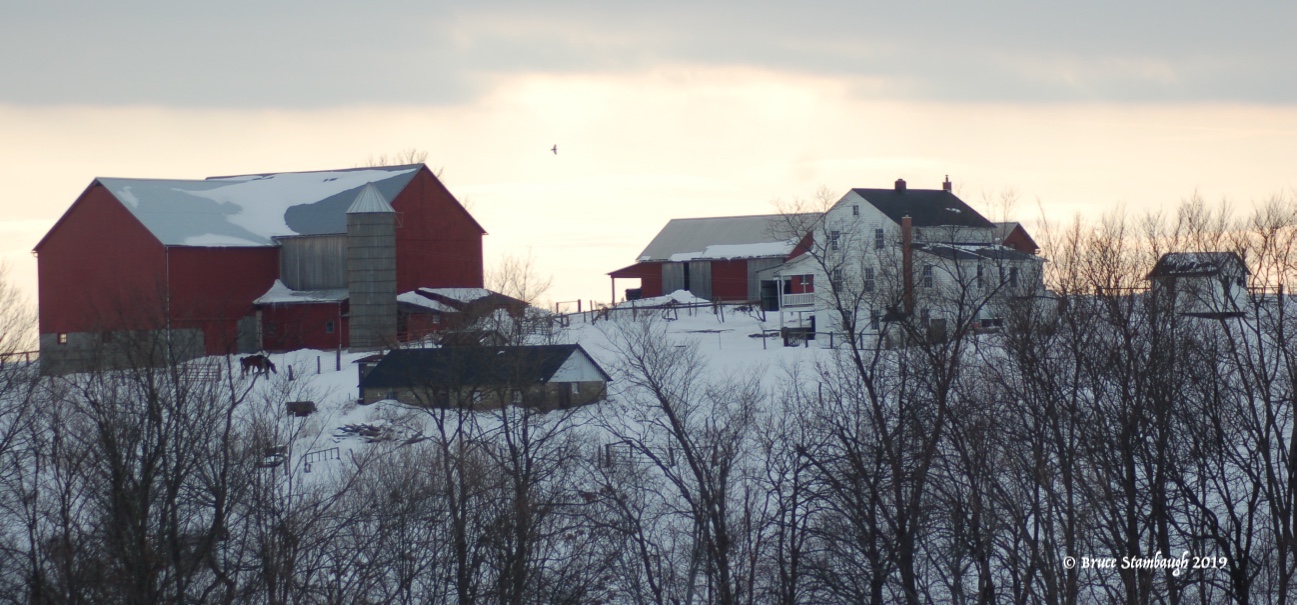
My wife and I visited the Key West Butterfly Conservatory and Museum in Key West, FL. It’s a magical place, full of colorful butterflies and plants and flowers on which they thrive. We arrived right after the business opened, which turned out well for both the butterflies and us.
The staff had just set out plates of over-ripe fruit sprinkled with various nutrients the butterflies needed. Whether intended or accidental, the breakfast offerings for the lovely creatures were themselves works of art.
For the last few years, my wife and I have avoided winter’s harsh weather by escaping to our beloved Amelia Island, Florida. Amelia is a barrier island located as far north in the Sunshine State as you can get. It’s not balmy, but it’s never snowed there either.
We rent a condo on a beach on the Atlantic Ocean. Ideally, that setting should be retreat enough for me. I guess I’m just too fickle for such pleasantries.
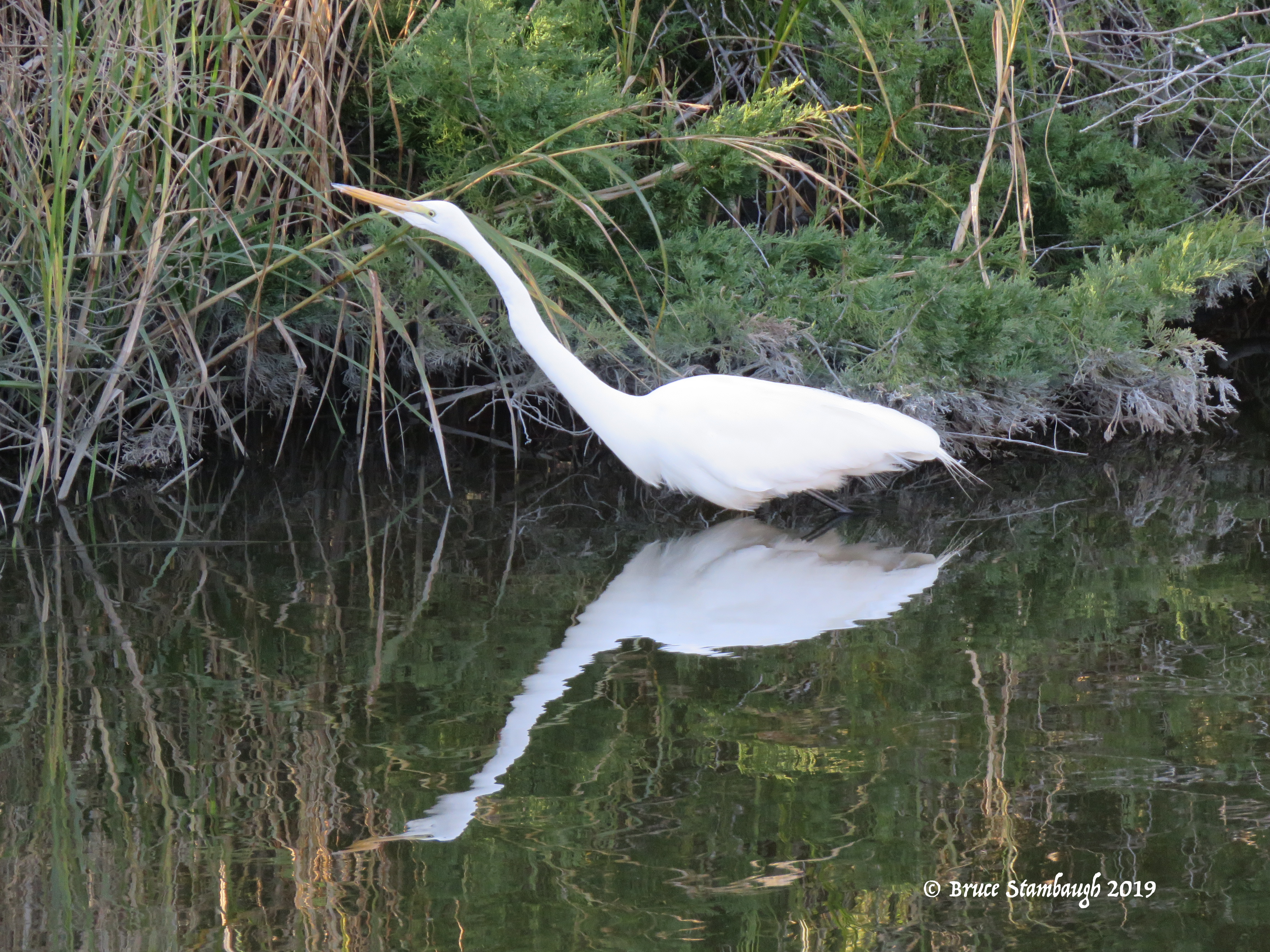
Great Egret.My favored place to commune on Amelia is Egans Creek Greenway. It’s an environmental paradise inside a paradise. Situated in the northeastern section of the 13-mile long island, Egans Creek meanders in multiple channels through a salt marsh wetland of grasses, reeds, and various plants and trees.
The greenway is a dedicated green space designed to protect the original environment for animals great and small. Part marsh, part maritime forest, part waterway, the greenway provides habitat for shorebirds, wading birds, birds of prey, songbirds, and mammals of all kinds.
Of course, it serves as a multi-purpose outdoor recreational gem for us humans as well. The greenway has dedicated paths for bikers, hikers, walkers, birders, and the just plain curious. Benches are placed every so often for people merely to rest and enjoy whatever comes along.
This slideshow requires JavaScript.
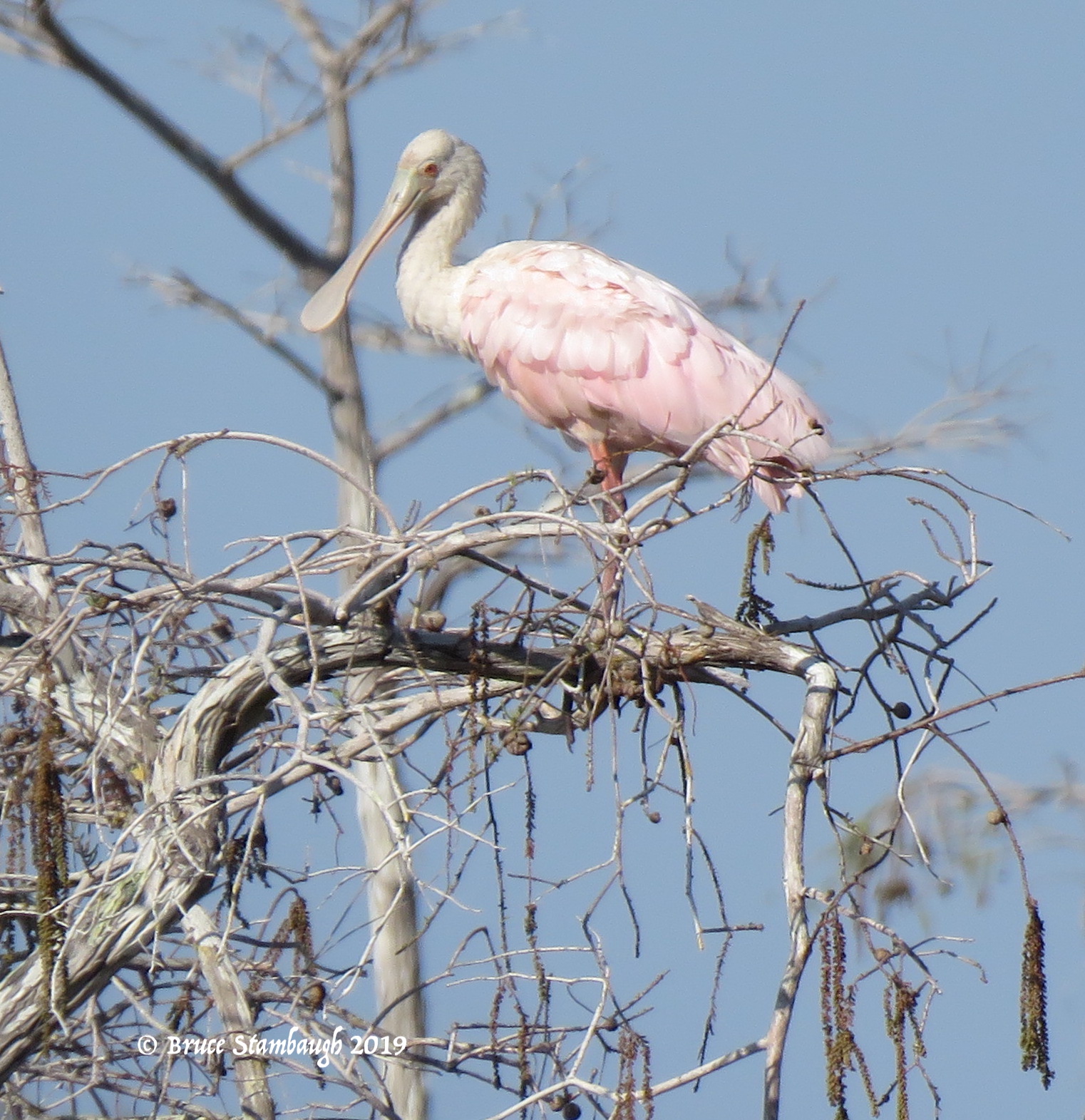
The nature preserve changes character with the tides. It’s brackish waters invite gorgeous birds, like herons, egrets, ibises, and roseate spoonbills.
As you might imagine for any marshland, reptiles thrive as well. On warm January days, I search for sunbathing alligators. Families of turtles and discreet but playful river otters also are fun to watch if you are fortunate to find them. I seldom see snakes.
In all the years we have been vacationing here, this year by far has been the most colorful on the greenway. The hues, however, were a curious mix of spring and fall.
Usually in dormancy for the winter, the greenway grasses showed green, delicate flowers bloomed, and leaf buds swelled pink. Others displayed brilliant yellow and red leaves of autumn. Vivid impressionistic landscapes displayed around every turn.
Gold.
Going to seed.
Fall in winter.
Cedar waxwings trilled high in the trees, waiting on the light blue cedar berries to darken to ripeness. American robins chirped in the thickets, unable to hide their distinctive call. Eastern bluebirds decorated barren branches.
Grey catbirds and northern cardinals shuttled from one bush to another like hyperactive children. A phoebe flicked its tail on an elevated tree limb, took to the air, grabbed an insect, and returned to the same spot.
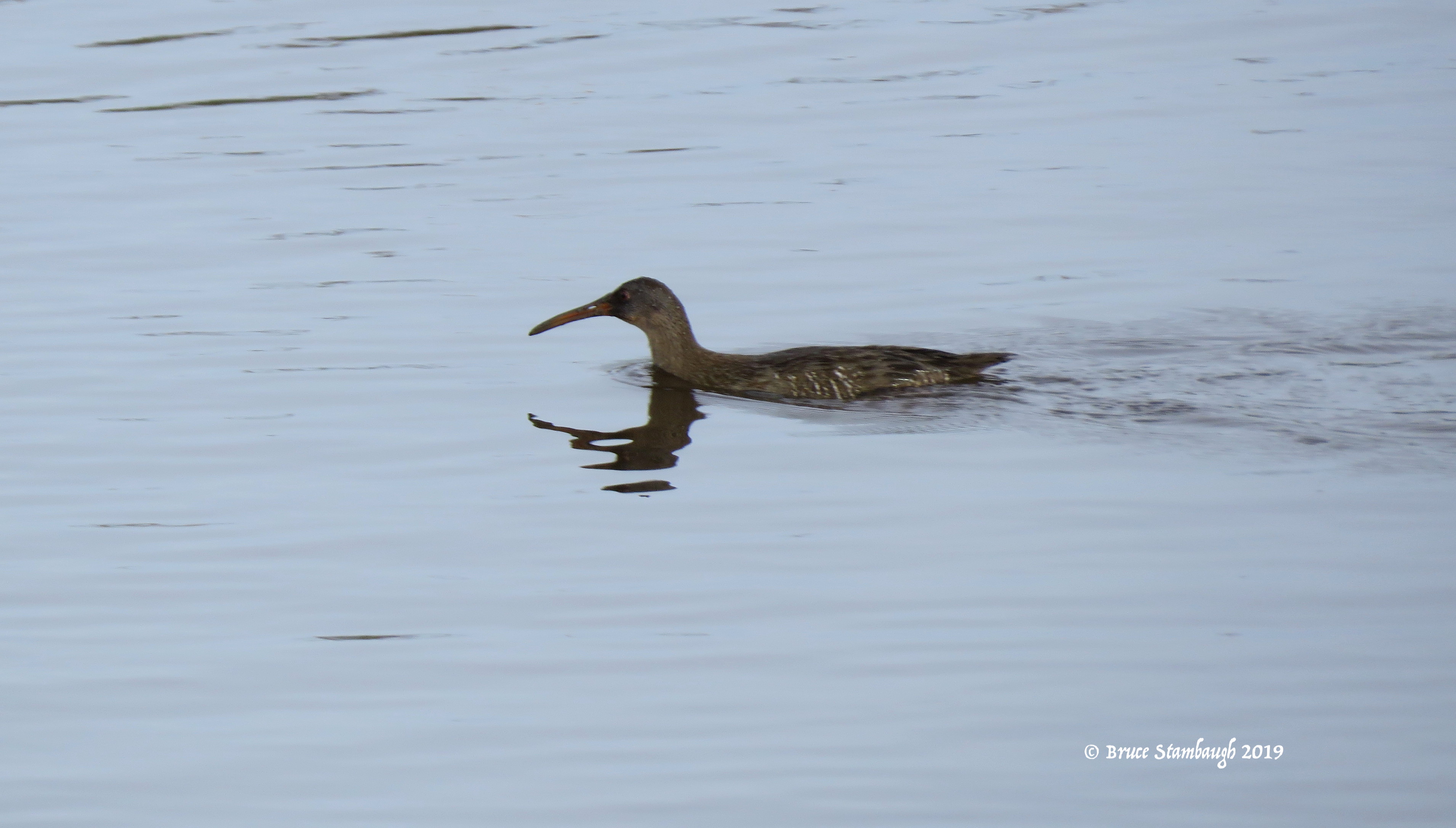
Clapper Rail.At high tide, a clapper rail came out of hiding in the reeds and swam across the creek only to disappear again. A stately osprey hovered silently overhead before snatching a dusky female hooded merganser off the surface of the water.
Thousands of yellow-rumped warblers chipped and darted from cedar to pine to maple and back again. In the shallow waters below, pure white great egrets with their sturdy yellow bills and stick-like, coal black legs waded in search for a fishy lunch.
A red-shouldered hawk perched on a snag in the middle of the marsh, unphased by the two-legged intruders that stood in awe snapping photos or zipping along on bicycles or walking their leashed dogs. With only predatory priorities, the buteo paid no heed.
Viewed altogether, the trees, the flowers, the bushes, the birds, the reptiles, and the bikers, even the dog walkers created living exhibits in an interactive art gallery. They painted the greenway an even lovelier retreat than I had expected.
Writing, birding and photography are a few of my many interests. When I can combine a couple of them into one fabulous moment, I am more than contented.
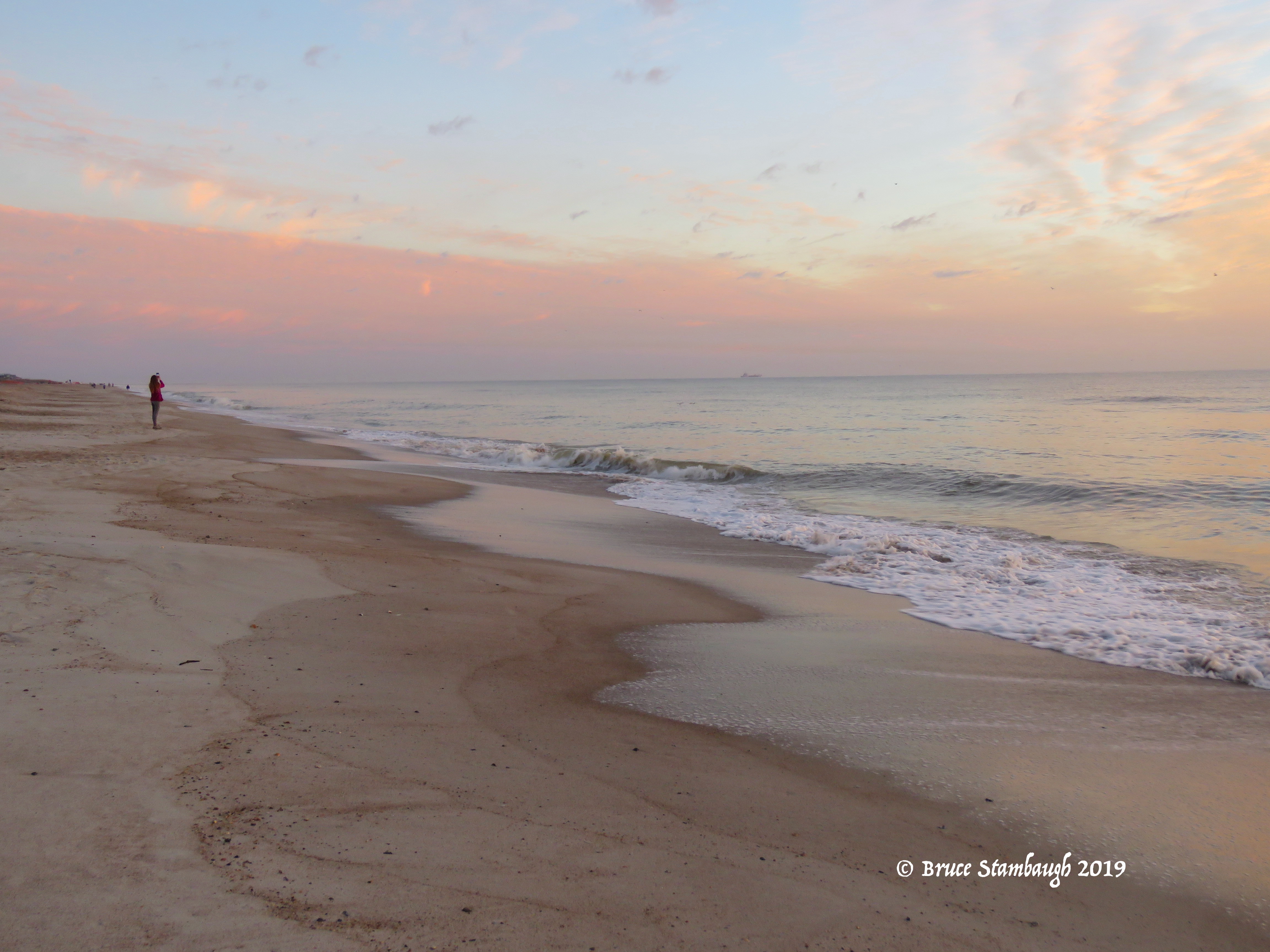
In the process of photographing a gorgeous sunrise over the Atlantic Ocean in northern Florida, a willet wandered into the frame. I love when those unexpected opportunities arise. The shorebird was merely out on its morning breakfast stroll, probing the wetted sand for any tasty morsels along the seashore. For me, however, having the bird enter the scene right as the sun dawned provided a spot of perspective for the colorful seascape. I couldn’t have been happier.
I’m a sunrise junkie. Spending most of my life in bucolic Holmes County, Ohio hooked me.
Sunsets can be gorgeous, too, but there is just something special about watching the blackness of night slowly transform into an explosion of shimmering radiance.
Sunrises usher in a new day, every day. No two are alike. Sunrises paint the horizon in majesty, no artificial coloring, chemicals, or preservatives added. Mornings can be brilliant, sometimes dull, and often obscured by clouds or our personal negligence. Nevertheless, sunrises persist.
Sunrises are free. They literally edify people, whether they realize it or not.
I’ll admit that I didn’t fully appreciate the power and gift of a peaceful, awe-inspiring sunrise. Living in pastoral Holmes County quickly instilled a resounding admiration for the daily occurrence. The rural settings east and west accounted for that.
Sunrises, however, enhanced those inspiring countryside scenes. I thrilled at watching a winter’s dawn filter through the little woods behind our Killbuck home. Yesterday’s snow morphed from white to pink to purple and back to fields of sparkling diamonds in a matter of minutes.
Rural sunrise.
That silent, reverent beauty astounded me, readied me for the day ahead, and fortified me to proceed with whatever I encountered. Naturally, some days were better than others. If I remembered the sunrise, my burden often lightened enough to sustain me.
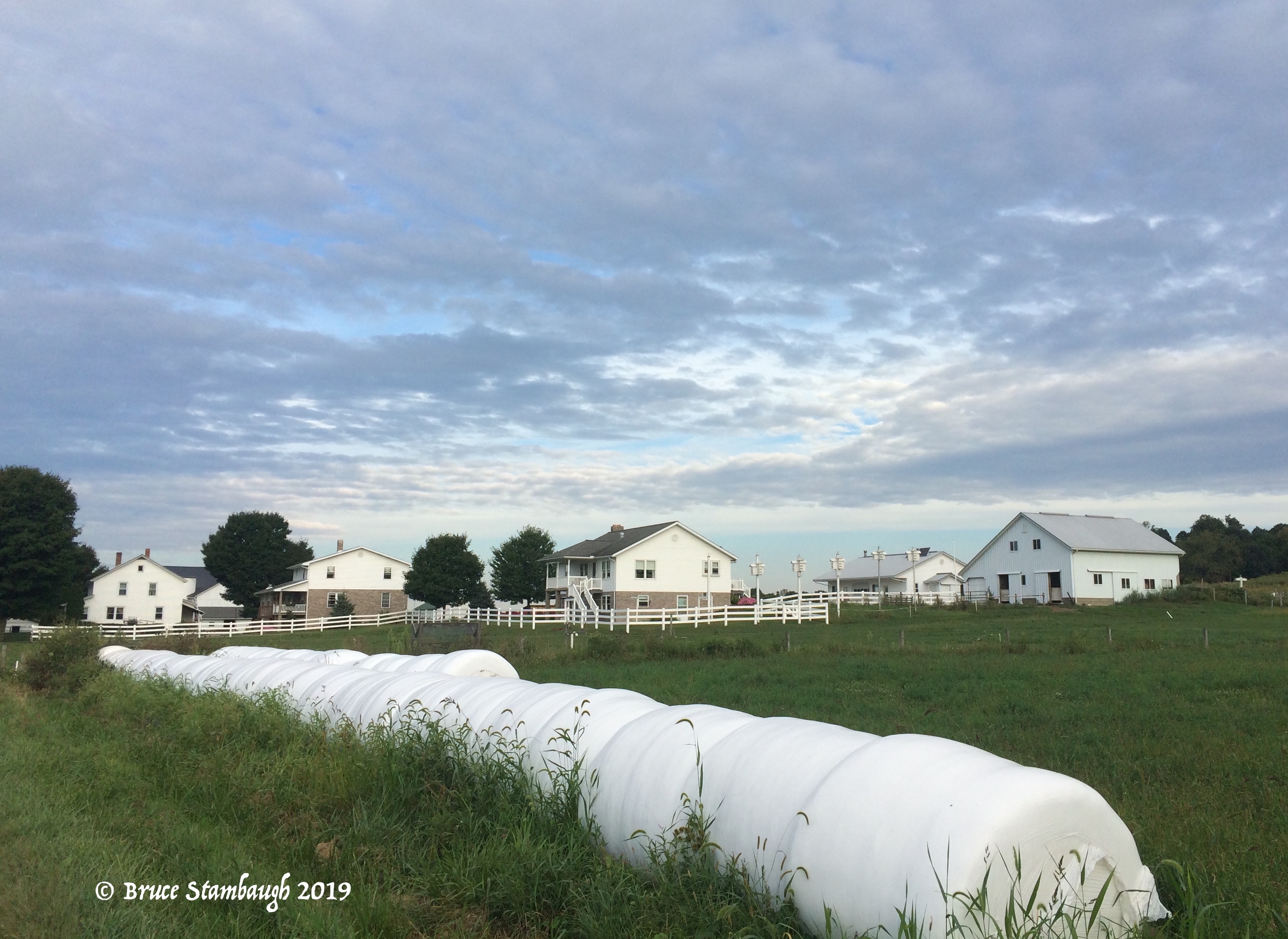
That existentialism increased along with my responsibilities when I became an administrator, and we moved to East Holmes. Our home was built on an Amish farm with incredible views east, north, and west. Spectacular sunrises made them more so.
I rose each day to arrive at school by 7 a.m. More often than not, a sunrise greeted me on my way. In the winter, the sun appeared as the young scholars arrived. The already rosy-cheeked faces became even more so.
Likely, I am romanticizing those long ago moments. No matter. Like the rising sun’s universal effect, the memories whitewash the darker times of anyone’s career that involves daily interacting with people of various ages, traditions, and beliefs. That doesn’t negate nor diminish the recollections.
For something so brief, sunrises serve as powerful reminders of what was, is, and can be. It’s up to the eye of the beholder to discern and employ the light’s soothing warmth with all those we encounter through justice, mercy, and humility. That’s the potential of a single sunrise.
I found it ironic then that all these ardent thoughts tumbled through my mind like crashing waves as dazzling daylight washed over the Atlantic Ocean. That’s the mysterious point of life’s cosmic magic, isn’t it?
This slideshow requires JavaScript.
At first, a hint of paleness divided the dark sky from the sea as billions of celestial jewels sparkled in the heavens above. Soon a thin orange line stretched clear across the distant horizon. Cottony clouds sprinkled high and low caught invisible rays and turned them into a surreal light show that out shown any Disney artificial production.
Black skimmers winged by, flying silhouettes scooping their fishy breakfast from the salt water surface. Forster’s terns hovered, dived, and plopped into the sea for theirs, briefly breaking the glassy waters.
Everything, the sand, the water, the sky turned some shade of purple, lavender, and then pink, orange, and red. I stood frozen and silent on the shore. Awed, I observed, appreciated, absorbed, and offered unspoken words of praise.
My school days have long since passed. Yet, another day was at hand. With each sunrise, I aspire to share the light with anyone anytime I can.
As I was walking along the beach, I came across this scene at hurricane devastated Huguenot Memorial Park along the St. John’s River near Jacksonville, FL. I loved that the straight line angle of the posts met with one of the wading fishermen.
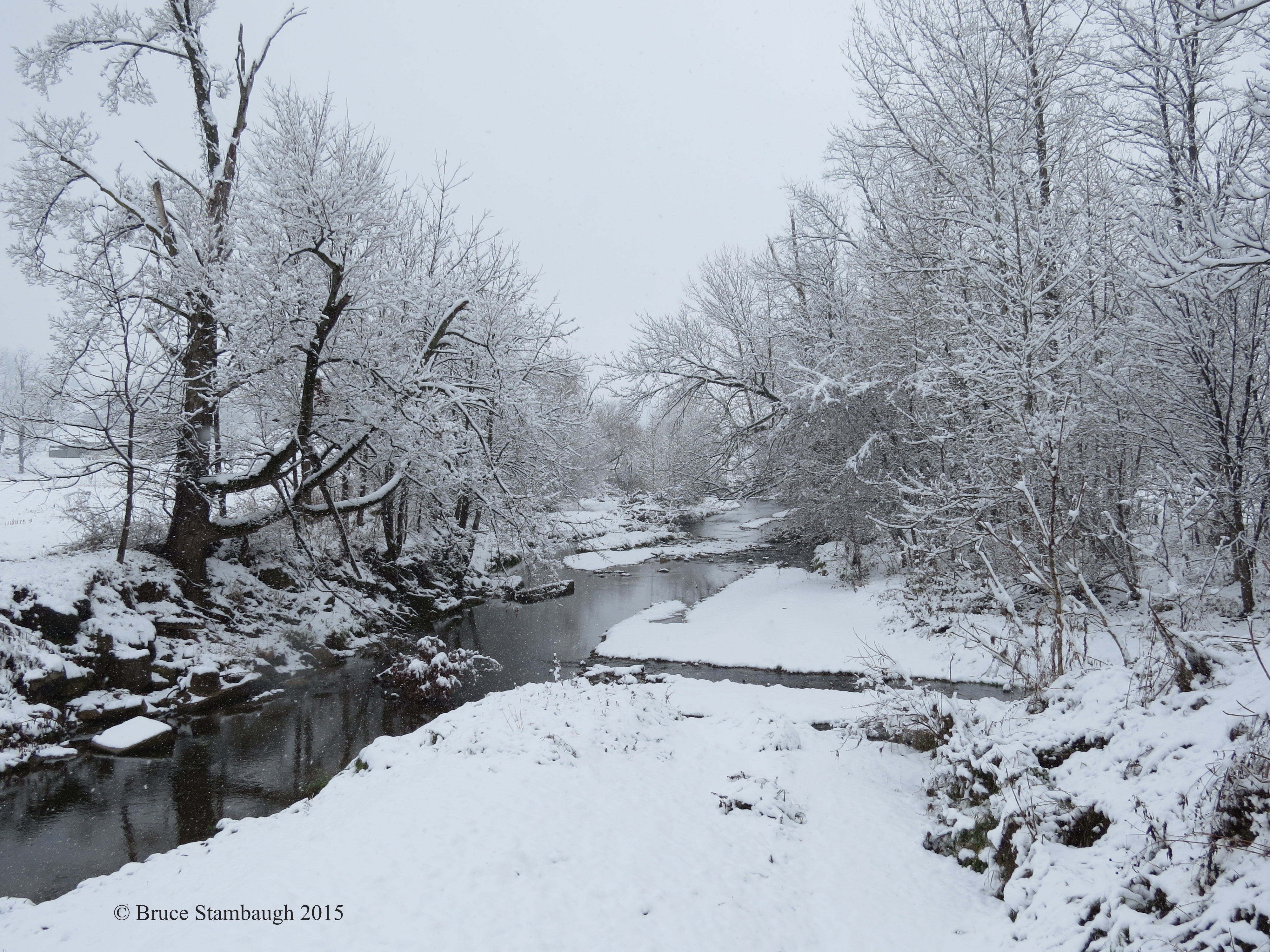
No matter where you live, winter offers a wide variety of colors across its changeable landscapes.
Often, the colors transform with the weather’s latest tantrum. Given the global climate’s bipolar dysfunctions, winter’s color palette has expanded far beyond its usual earth tones and neutral hues. Wetter and warmer winters convert lawns from frosted brown to April’s greens.
Living in Ohio for nearly seven decades, I intimately learned nature’s dormant color schemes. She usually painted under steely skies, which perhaps limited her range of color options.
Growing up in a blue-collar suburb in northeast Ohio, my memory is filled with a canvas of white on white. We sledded down steep hillside paths beneath stately evergreens laden with inches of snow.
Clumps of yellowy prairie grasses waved in the icy wind as we zoomed by shouting and laughing like the kids we were. Our wind-chapped cheeks and red noses were proof of our gold, silver, and bronze successes.
Besides the fun, we relished a good snow cover that blanketed the grit and grime that most winters brought. The fluffy whiteness enlivened the quiescent landscape, the leafless trees with their non-descript brown, gray, and black trunks and branches. The pure white snow on piney coniferous bows highlighted clusters of chestnut pinecones.
Heavy wet snow provided a stark color contrast of white on black. That all shifted in a flash when a wicked winter wind whipped nature’s artwork into layered snowdrifts crusty enough for adventuresome children to walk on.
Ohio winter weather being what it is and always has been, not much changed as I grew into adulthood. Browns and whites alternated dominating the lay of the land with temperature playing the role of the artisan. A mundane scene became a Currier and Ives gem with four inches of overnight snow.
A January thaw altered all that in a hurry. The snow melted into a mushy, muddy mess, and brown soon became the primary color and texture, much to my mother’s chagrin. Usually, though, our inattentive father rightly got the blame for the sticky indoor tracks.
Dealing with both the gooeyness and the frozen precipitation as an adult tendered an entirely different perspective than as a youngster. I hated how everything wore the dirt and grime of winter. That was especially true of driving a filthy automobile. Wash it one day, and it was dirty again the next.
Warm, attractive colors in winter did and do exist of course. Think red holly berries against glossy green leaves powdered with fresh snow.
Each new day brings opportunity. Catch a showy sunrise that may last only a few seconds before succumbing to layers of gray clouds. Sunsets are equally stunning, especially if reflected by lakes and streams, which double the orange, yellow, red, and pink pleasure.
Bright colors come alive literally. Is there anything prettier than northern cardinals perched on evergreens waiting their turn at the bird feeders? If eastern bluebirds also arrive, the winter day becomes all the cheerier.
Moving to Virginia’s Shenandoah Valley has lessened some of the sting and bland of winter. We tend to have more sunny and warmer days than we did in Ohio. When it does snow, the aesthetic results are still the same. However, the white stuff doesn’t last as long.
Winter’s radiant sunshine enhances any locale just as it can brighten all human spirits.
January can be lackluster if you let it. Just look a little harder for any hint of color wherever you live. Like many TV commercial disclaimers, your results may vary.
Photography often teaches me a lot. I love to be out and about in nature, photographing whatever I see and find or that finds me.
In this case, this beautiful butterfly and I seemed to find each other. I was looking for alligators when I spotted this Zebra Longwing Butterfly flitting around a clump of flowers growing along a stream on a warm, sunny morning. Many butterflies zig and zag and fly erratically, making them difficult to shoot. However, this lovely creature almost seemed to pose for its picture. It cooperated perfectly. The morning sunshine perfectly backlit both the butterfly and the heads of lantana blossoms it was enjoying.
I was able to capture several satisfactory shots of its contrasting colors and exceptionally long, thin wingspan. I couldn’t help but note the hole in the left wing and wondered what had caused the deformity.
After downloading the photos on my computer, I discovered that this butterfly had the perfect name. It looked like a zebra, and it had long wings. Also, I learned that the Zebra Longwing Butterfly is Florida’s state butterfly because they are so plentiful in the state.
It’s been another strange year on Planet Earth. So much craziness filled the headlines that some serious faux pas got overshadowed. Never fear. I kept track for you.
Jan. 12 – A British butcher who got locked in a walk-in freezer used a frozen sausage to batter his way out at his store in Totnes, England.
Jan. 16 – Eyelashes froze when the temperature reached 88.6 degrees below zero in Russia’s remote region of Yakutia.
Feb. 9 – An Alliance, Ohio kindergarten student took a loaded handgun to school for show and tell, but had the gun confiscated by his school bus driver when the boy showed the weapon to the only other student on the bus.
Feb. 23 – A third-grade student fired a police officer’s revolver by reaching into the hostler and pulling the trigger during a safety demonstration at a Maplewood, Minnesota elementary school.
Feb. 27 – Entrepreneur.com reported that the three fastest growing franchises in the U.S. were Dunkin Donuts, 7-Eleven, and Planet Fitness.
March 13 – A study by Bar-Llan University showed that the trauma suffered by Holocaust survivors was transferred to their children and grandchildren.
March 14 – A Seaside, California gun safety teacher’s weapon accidentally fired in class, injuring a student.
March 23 – Orange snow fell on much of Europe due to the combination of sandstorm winds mixing with moisture in snowstorms.
April 5 – A report that studied the Sahara Desert from 1920 to 2013 revealed that the desert, defined by areas that receive four inches of rain or less annually, had expanded by 10 percent in that timeframe.
April 9 – Senator Tammy Duckworth of Illinois became the first sitting U.S. Senator to give birth while in office.
April 13 – A photographer in Madeira Beach, Florida captured a shot of an osprey in flight carrying a shark that was eating a fish.
May 2 – A new report indicated that Americans ages 18 to 22 were far more likely than senior citizens to report being lonely and being in ill health.
May 3 – According to federal research released, the rate of people infected by ticks and mosquitoes has tripled in the last 13 years.
May 9 – A new study by researchers at MIT indicated that fasting could dramatically boost stem cells to regenerate.
May 15 – A Gaylord, Michigan couple opened the hood of their car to discover a squirrel had stuffed 50 pounds of pinecones in their engine compartment.
June 7 – A study showed that seven out of 10 Americans were experiencing news fatigue.
June 25 – A kangaroo bounded onto a Canberra, Australia soccer field, interrupting the play between two professional women’s soccer teams for 32 minutes.
July 3 – Mark Hough of Altadena, California found a black bear bobbing in his backyard hot tub and that the bear had finished off the margarita Hough had left behind.
July 10 – Costa Rica became the first country to ban fossil fuels.
July 21 – After receiving a ticket for speeding, an Iowa woman sped away from police who clocked her at 142 m.p.h. and gave her another citation.
July 27 – A pawn shop in Somerville, Massachusetts bought a stolen violin for $50 and discovered from police that its real value was $250,000.
August 1 – A State of the Climate report indicated that 2017 was the third warmest on record globally after 2016 and 2015.
August 5 – Right-handed reliever Oliver Drake became the first Major League Baseball player to pitch for five different teams in the same season.
August 10 – A new scientific study reported that insect-eating birds consume about 400 million tons of insects each year.
September 10- The Smithsonian Migratory Bird Center reported that 600 million birds are killed annually in the U.S. by flying into buildings, most often at night when they are lured by illuminated office windows.
September 14 – New census data reported that Social Security, food stamps, and other government programs kept 44 million Americans out of poverty last year.
September 25 – A record 1,260 dogs attended the baseball game between the Cleveland Indians and the Chicago White Sox during Chicago’s promotional Dogs’ Night Out event.
September 26 – The United Nations Refugee Agency reported that an unprecedented 68.5 million people globally have been forced from their homes.
October 15 – A report by the University of Missouri indicated that honeybees stopped flying during the total solar eclipse of August 21, 2017.
October 31 – The journal Nature published a report that showed over the past quarter-century the Earth’s oceans have retained 60 percent more heat than previously believed.
November 6 – The World Health Organization listed depression as the leading cause of disability in the world, with the U.S. leading the way with 13 percent of its population on anti-depressants.
November 9 – The Center for Disease Control reported that smoking rates in the U.S. at an all-time low, with 14 percent of adults who smoke cigarettes.
November 25 – A Bank of America ATM machine in Houston, Texas dispensed $100 bill instead of $10, and the bank allowed customers to keep the extra money.
December 8 – A 29-year-old Summerville, South Carolina man was arrested for arson after he allegedly burned several of his neighbors’ outdoor Christmas displays.
December 12 – The CDC listed fentanyl as the deadliest drug in the U.S., causing 18,000 deaths from overdoes in 2016.
December 14 – Snopes.com reported that the busiest day of the year for Chinese restaurants in the U.S. is Christmas Day.
Here’s hoping 2019 is a better year for our planet and all its inhabitants.
The end of 2018 is in sight. Given the state of the world today, perhaps we all need a fresh start in life, no matter our age, our situation, our status. A new year brings new hope.
I reflected on all of that during a recent snowstorm that blanketed much of Virginia’s Shenandoah Valley. Shadows of the tree, its limbs, and the bird feeder they held played upon the newly fallen snow in our front yard. The contemplative scene gave pause to my birdwatching, to my reading, to my writing, to all that was happening near and far.
The long shadows cast by the late afternoon sun that had finally broken through gave hope that neither the winter’s frostiness nor the world’s cold calamities could keep us down long. For in the abrupt transition between the snowy brightness and shadowy darkness, light prevails.
Here’s hoping that light will shine warmly for the approaching New Year. “Year-end Shadows” is my Photo of the Week.
While on a recent birding outing, I noticed a spot of yellow nestled among the blades of grass that fell every which way on the grassy path. A pesky weed, this dandelion was well out of season.
You must be logged in to post a comment.