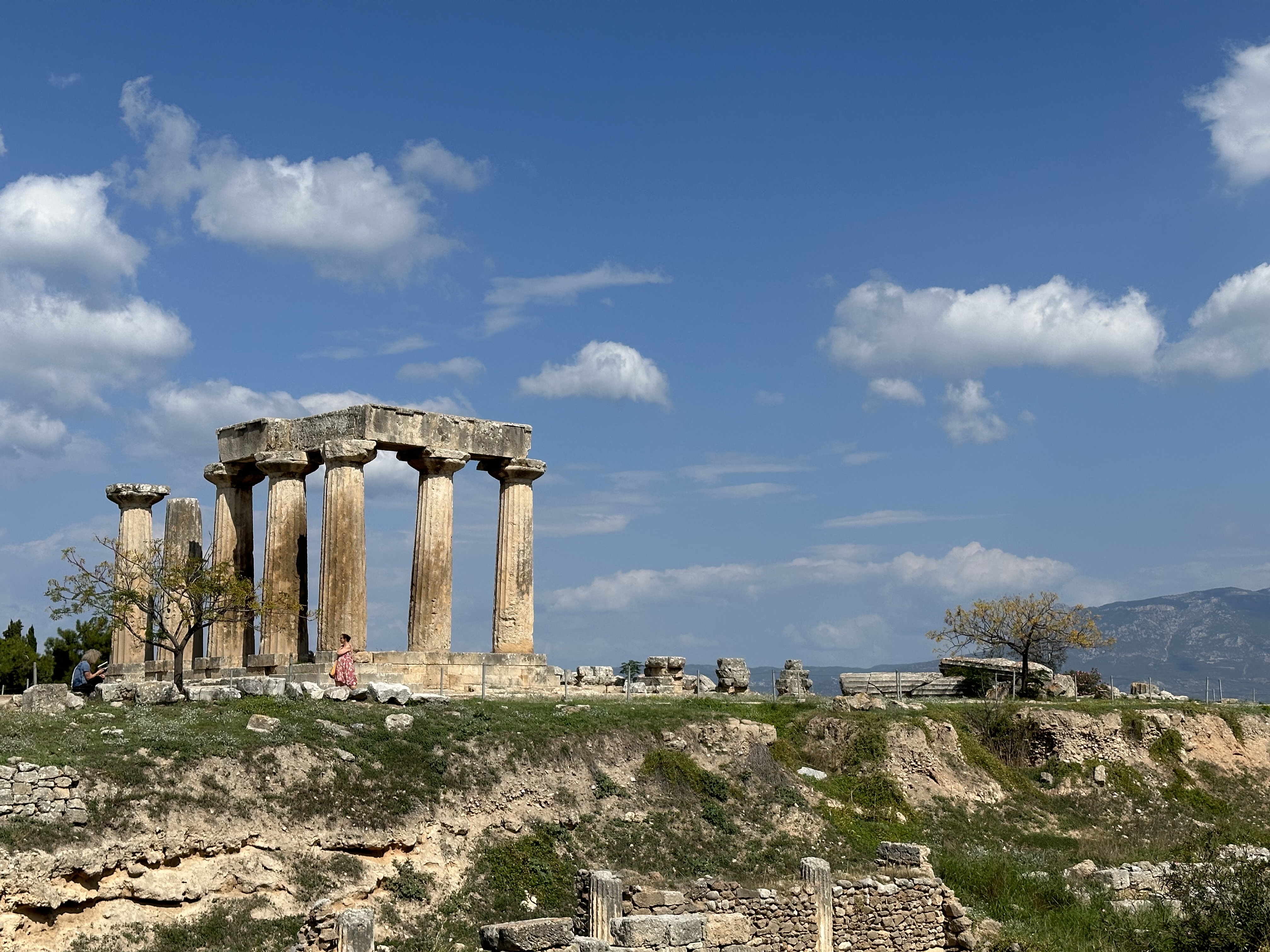
On the third day, we boarded a bus and drove to Ancient Corinth, where the Apostle Paul spent at least a year and a half. He joined Aquila and Priscilla, who were also tentmakers. Emperor Claudius had banned them and all other Jews from Rome, so they fled to Corinth.
In its time, Corinth was a prominent trading port for goods going east and west. Consequently, Corinth buzzed with the wide assortment of folks, many sailors happy to have their feet back on the ground. Paul took note of the various cultures, ethnic groups, and religions represented in this mass of people coming and going.
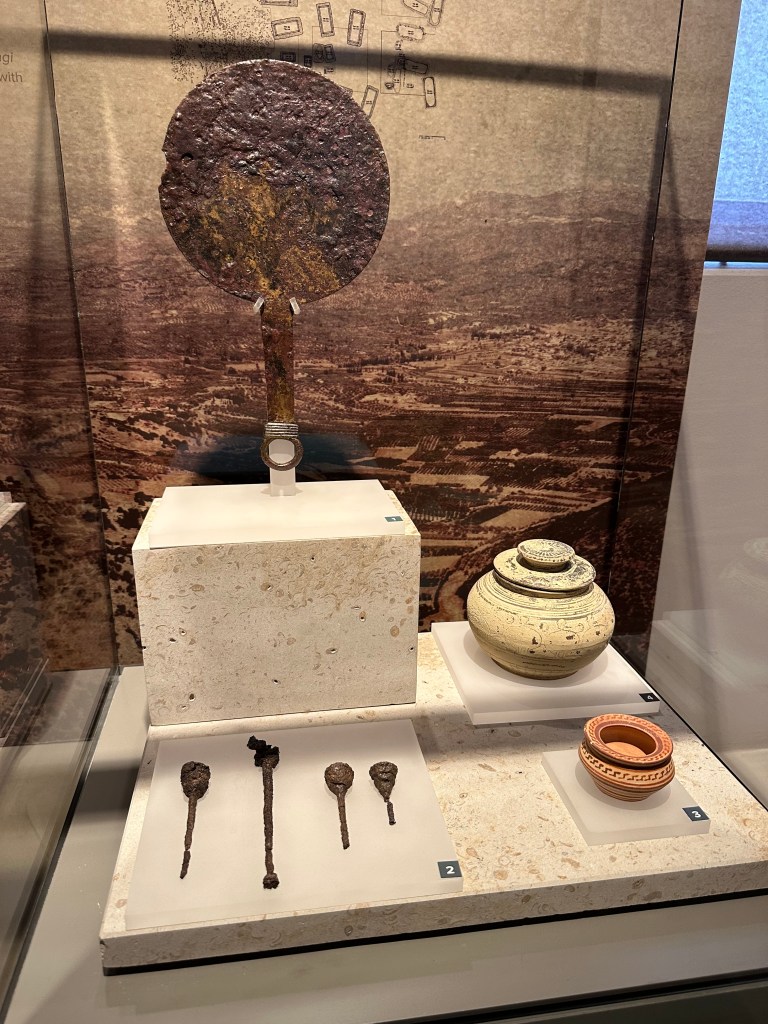
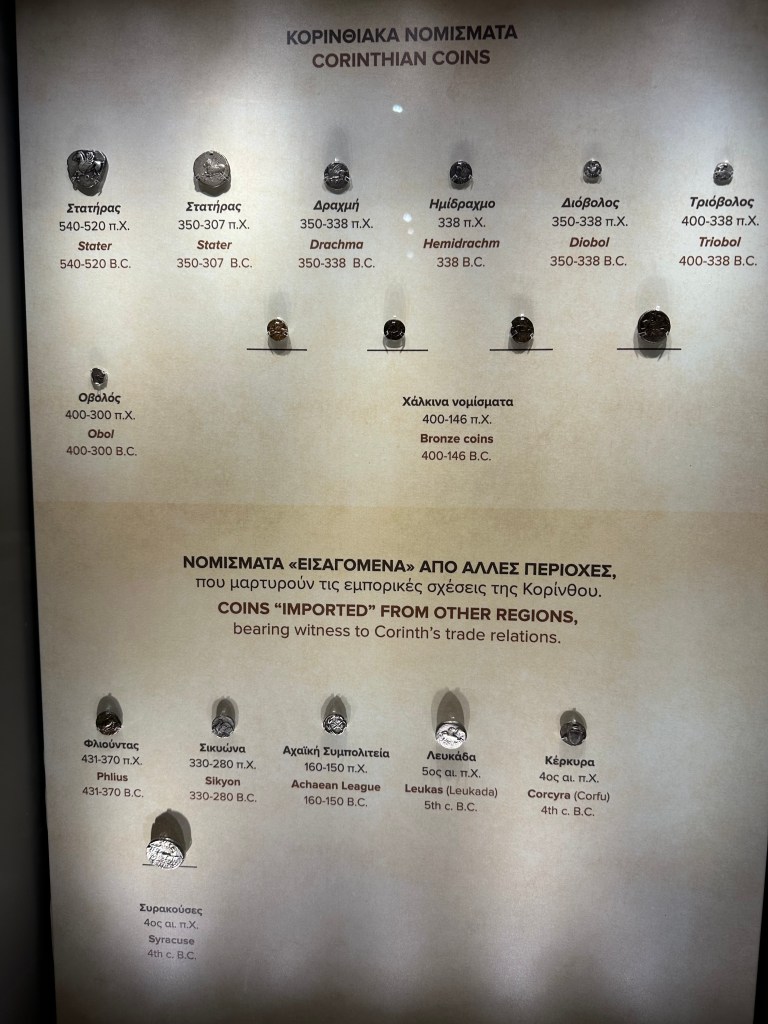
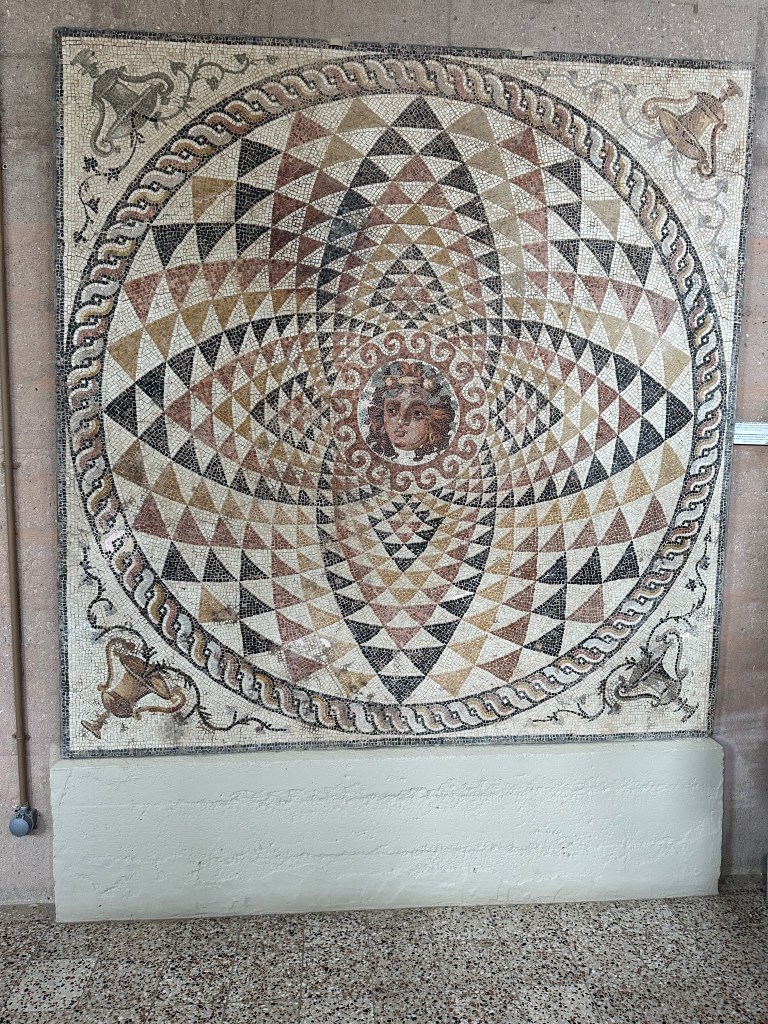
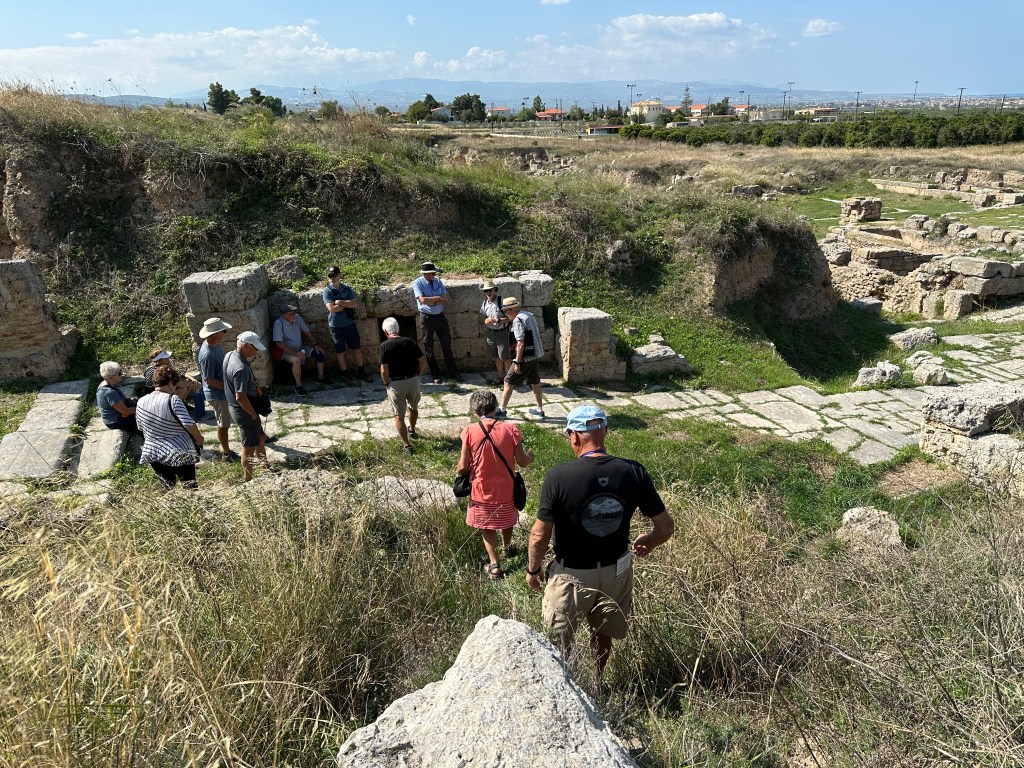
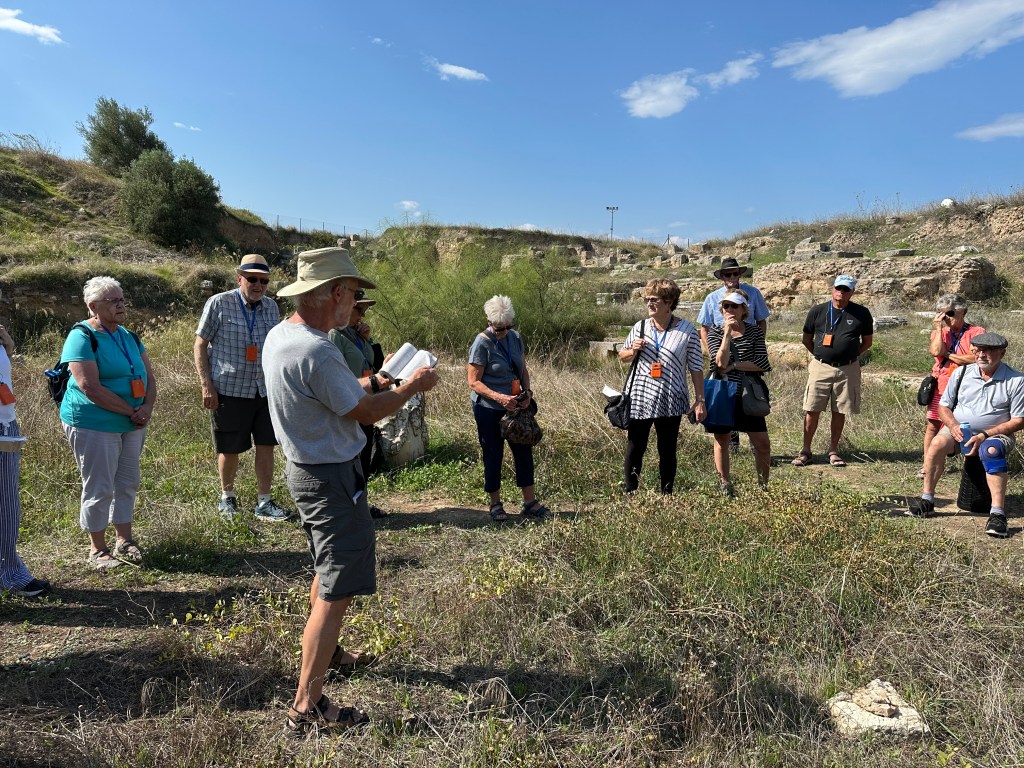
Our local guide gave us a tour of the Corinthian Museum, which displayed many curious artifacts. We sat under the shade of a large tree as our tour guide, Linford, gave us the biblical background and scriptures of Paul’s time in Corinth.
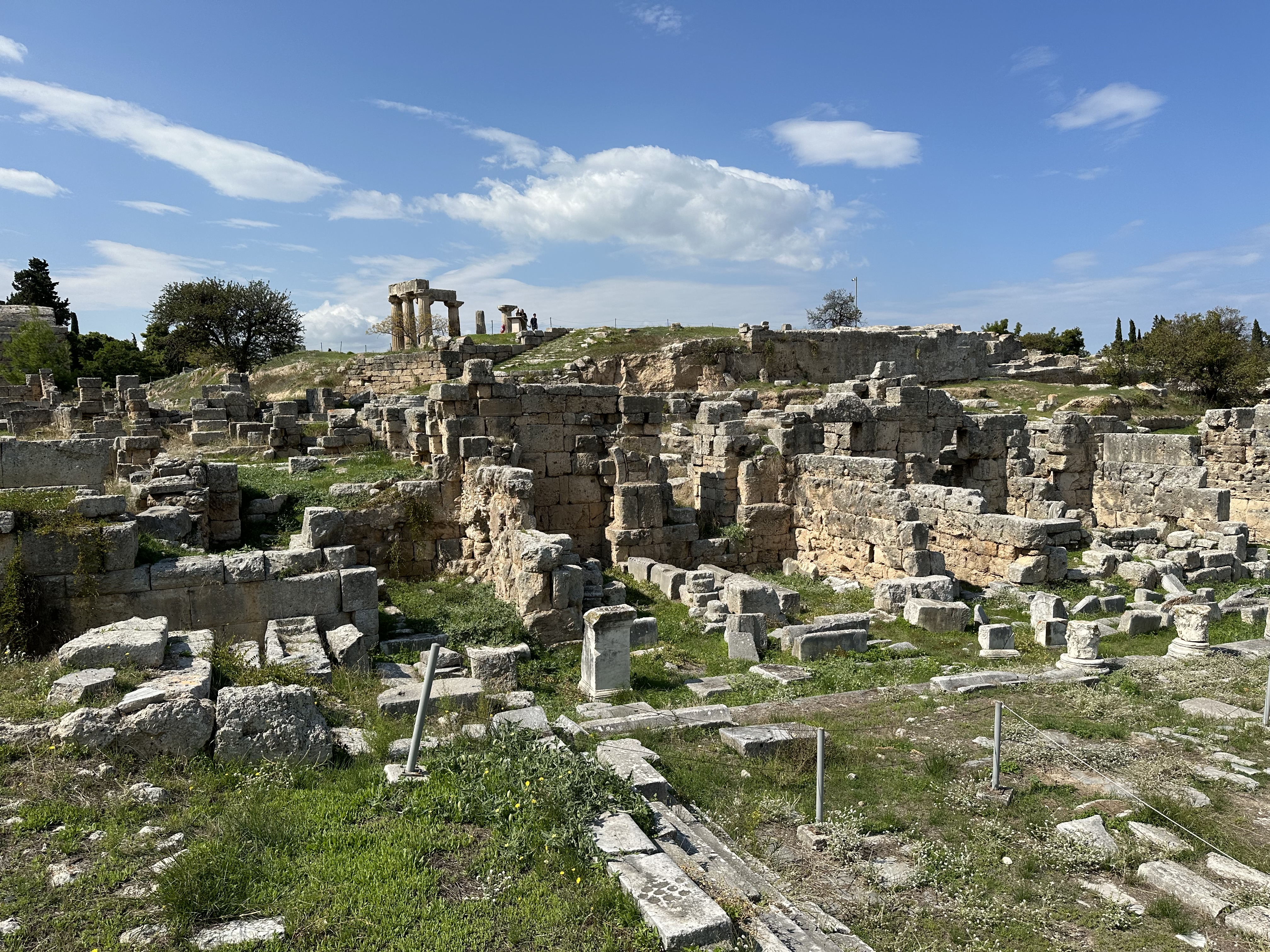
We were then free to roam the ruins under a beautiful blue sky. It was clear that Corinth was booming when Paul lived there in the first century.
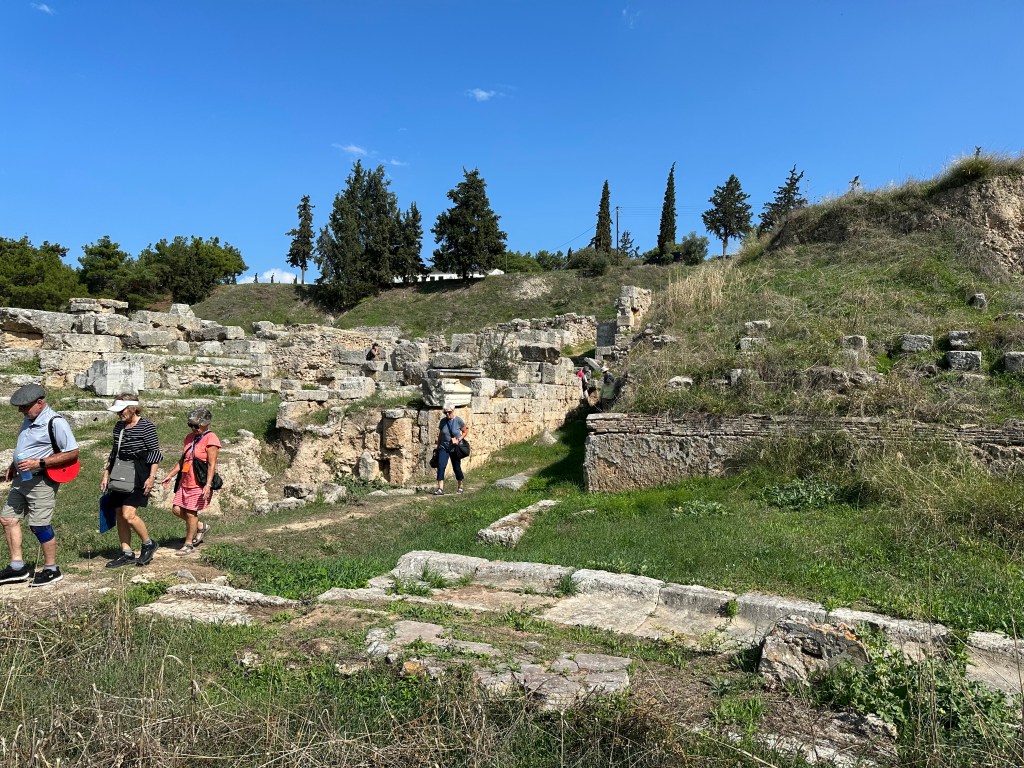
After a light lunch in a family-owned cafe outside the gates of Corinth, Linford led us down a hill towards the Gulf of Corinth. He had a couple surprises for us. We walked across an ancient Roman road into the ruins of an old theater, where the sailors, merchants, and residents were entertained.
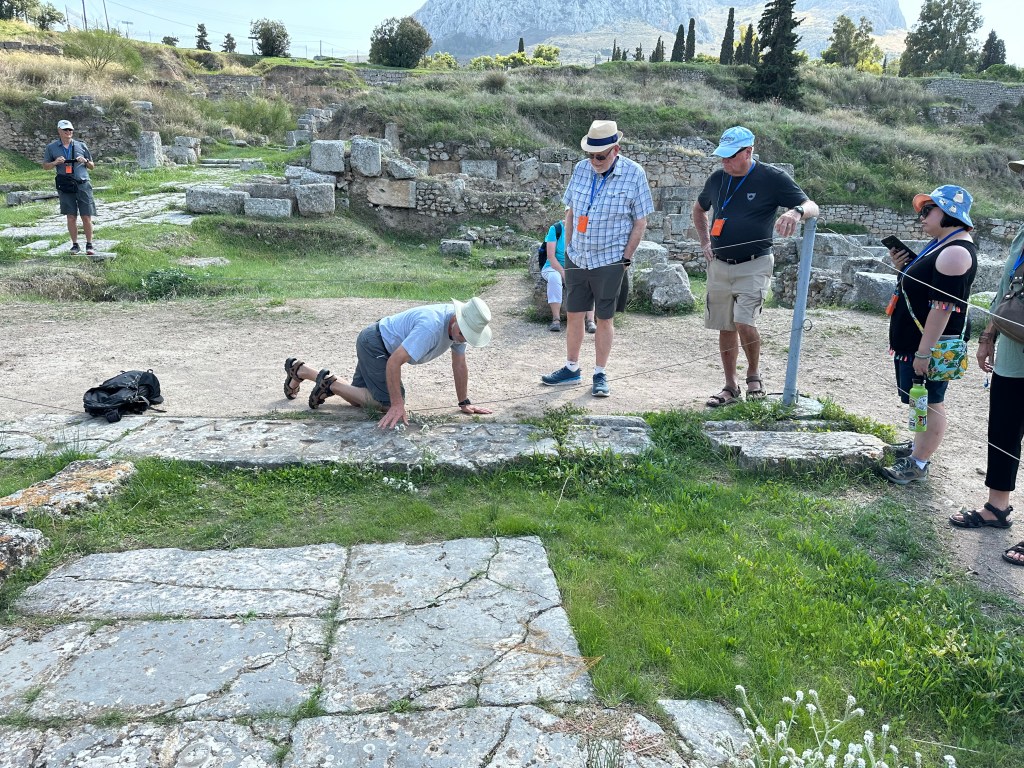
The first surprise was that this theater could be flooded to allow for seafaring-themed performances with which the sailors in the audience could connect. The second surprise was an etching on a large stone that bordered the road just outside the theater.
The engraving honored Erastus, the city’s director of public works. Paul mentioned Erastus in Romans 16:23, giving unequivocal evidence that Paul was indeed in Corinth.
Please click on the photos to enlarge them.
Before leaving the area, the bus took us to the Acrocorinth, a fortification on the mountain beyond Old Corinth. We had a beautiful view of the sea below. On the way to Cornith, we had stopped at the Cornith Canal, a four-mile-long channel cut through solid rock designed to shorten the route for sailing boats.
This was a day I had long anticipated. Neither my wife nor I had ever been to Greece, and I especially looked forward to visiting the Acropolis. Our tour group of two dozen people saw some of the locations the Apostle Paul did on his multiple trips around the Mediterranean Sea. Linford Stutzman, a retired professor from Eastern Mennonite University in Harrisonburg, Virginia, and his wife, Janet, led the trip.
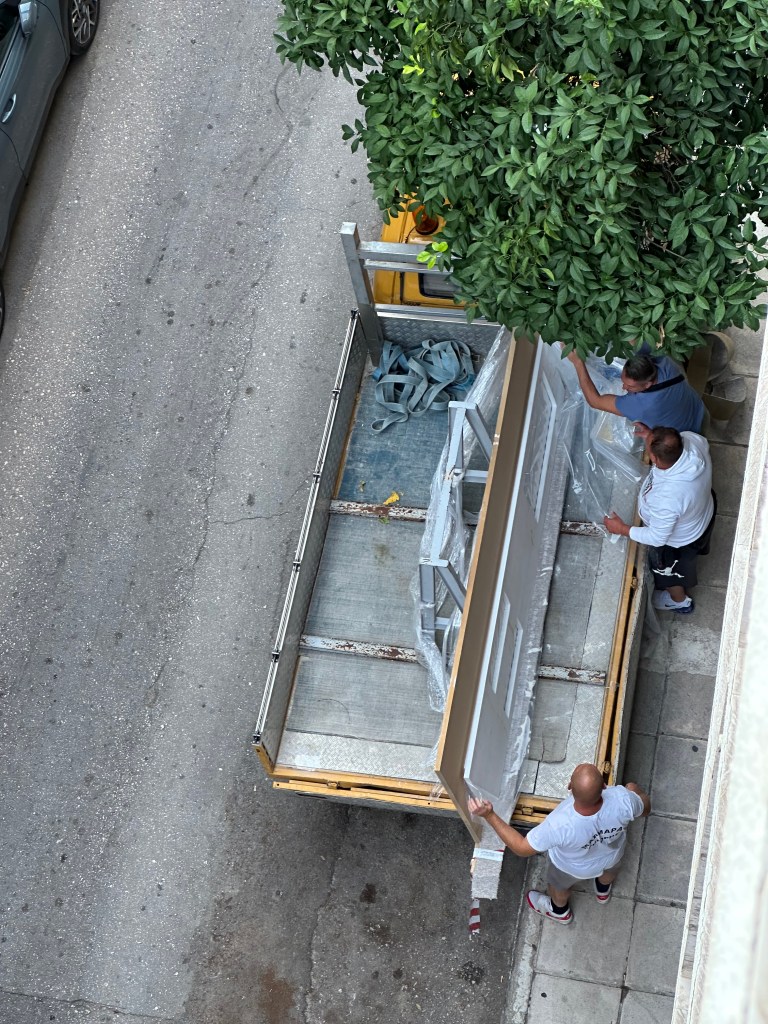
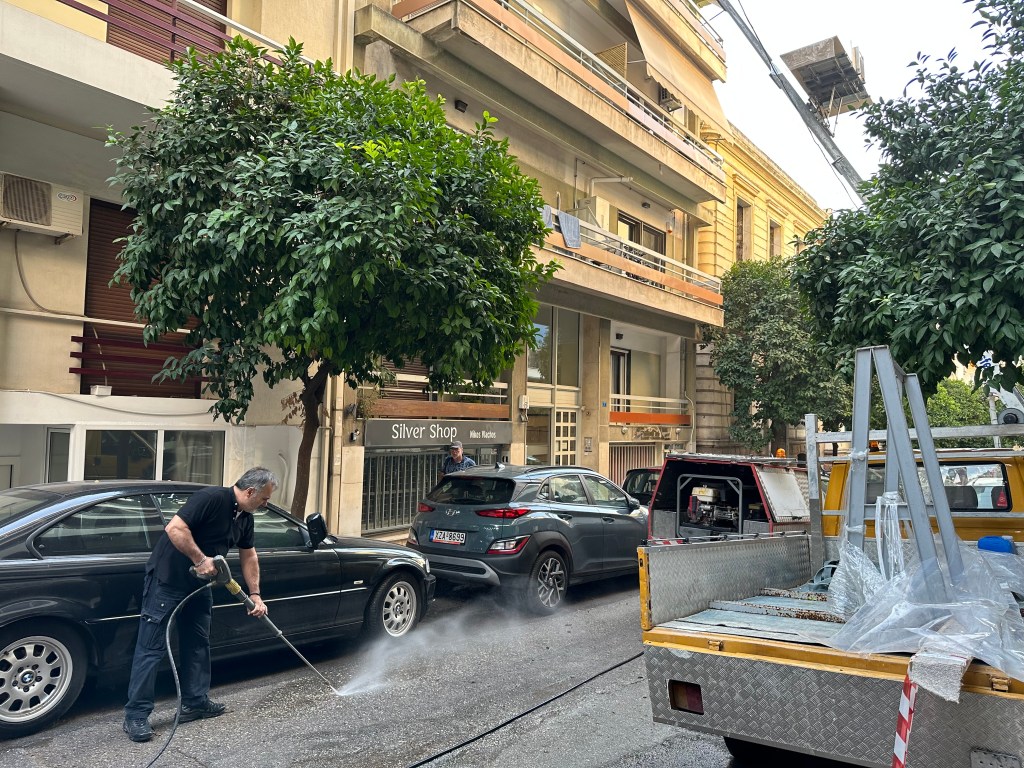
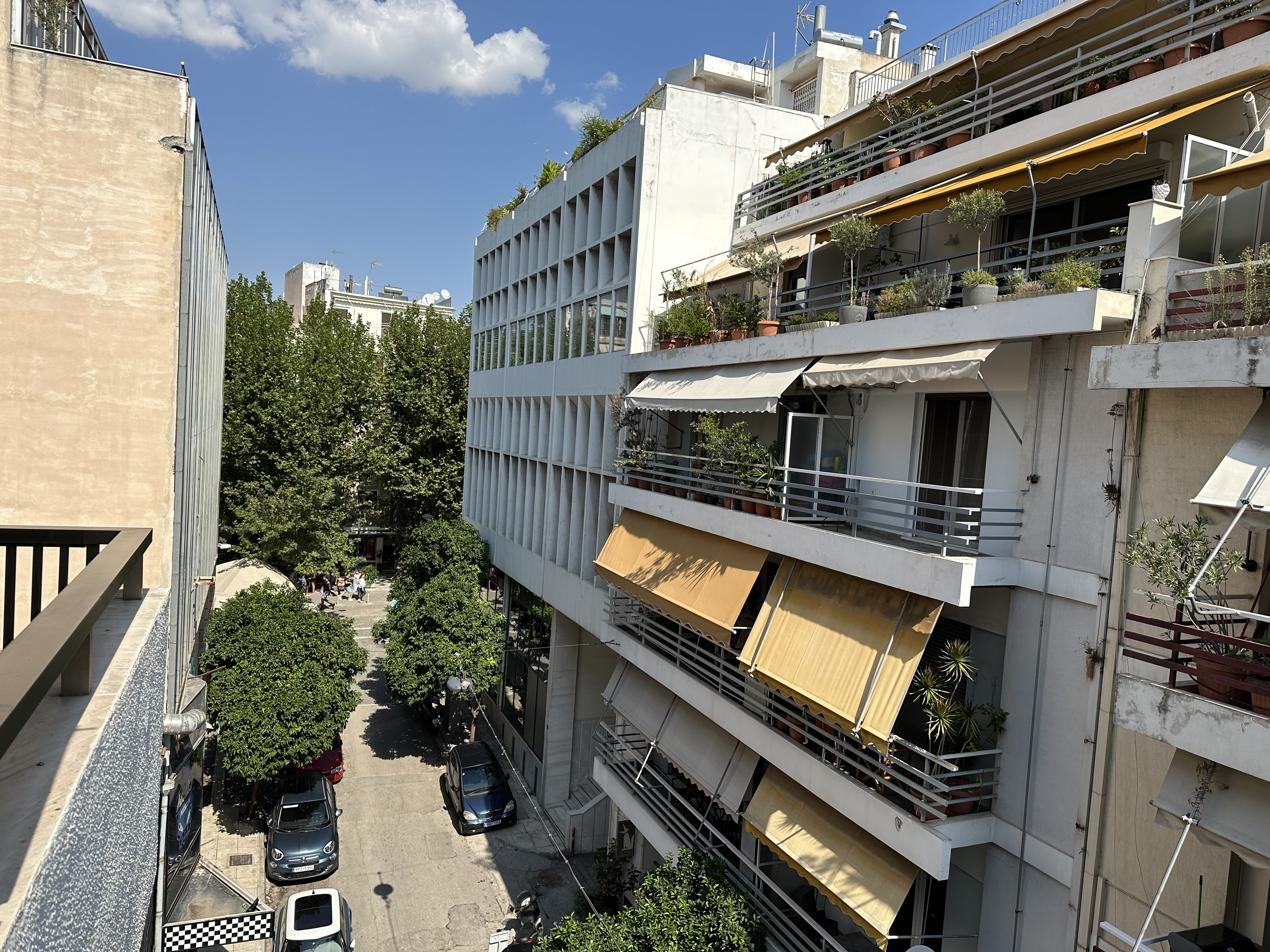
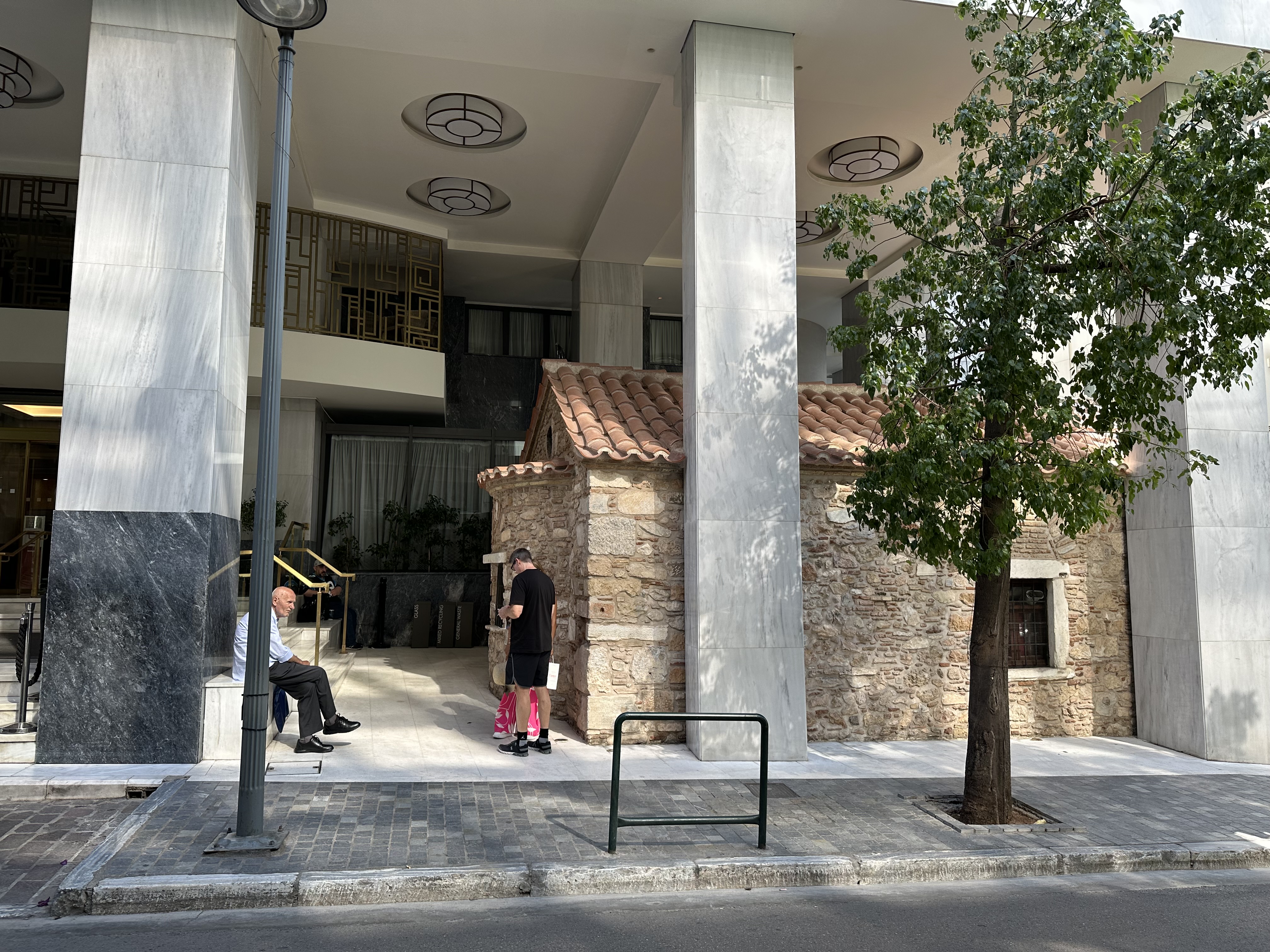
The Acropolis was an easy walk from our hotel in Athens. Before we gathered on the narrow street in front of the hotel, I noticed a large crane extending from our side of the street to the top floor of the apartment building across the way. It was set up to deliver some heavy marble countertops for the kitchen that was being remodeled.
Walking down to street level, I noticed a young woman photographing every step. I asked her if that was her apartment, and she said she was a civil engineer in charge of the project. She was documenting how the crane would get the heavy pieces up to the apartment for another client in London, England, who would do the same thing.
About that time, city workers came down the alley, pressure washing the sidewalks and the street. No construction crew would stop them. They merely worked around them and kept going.
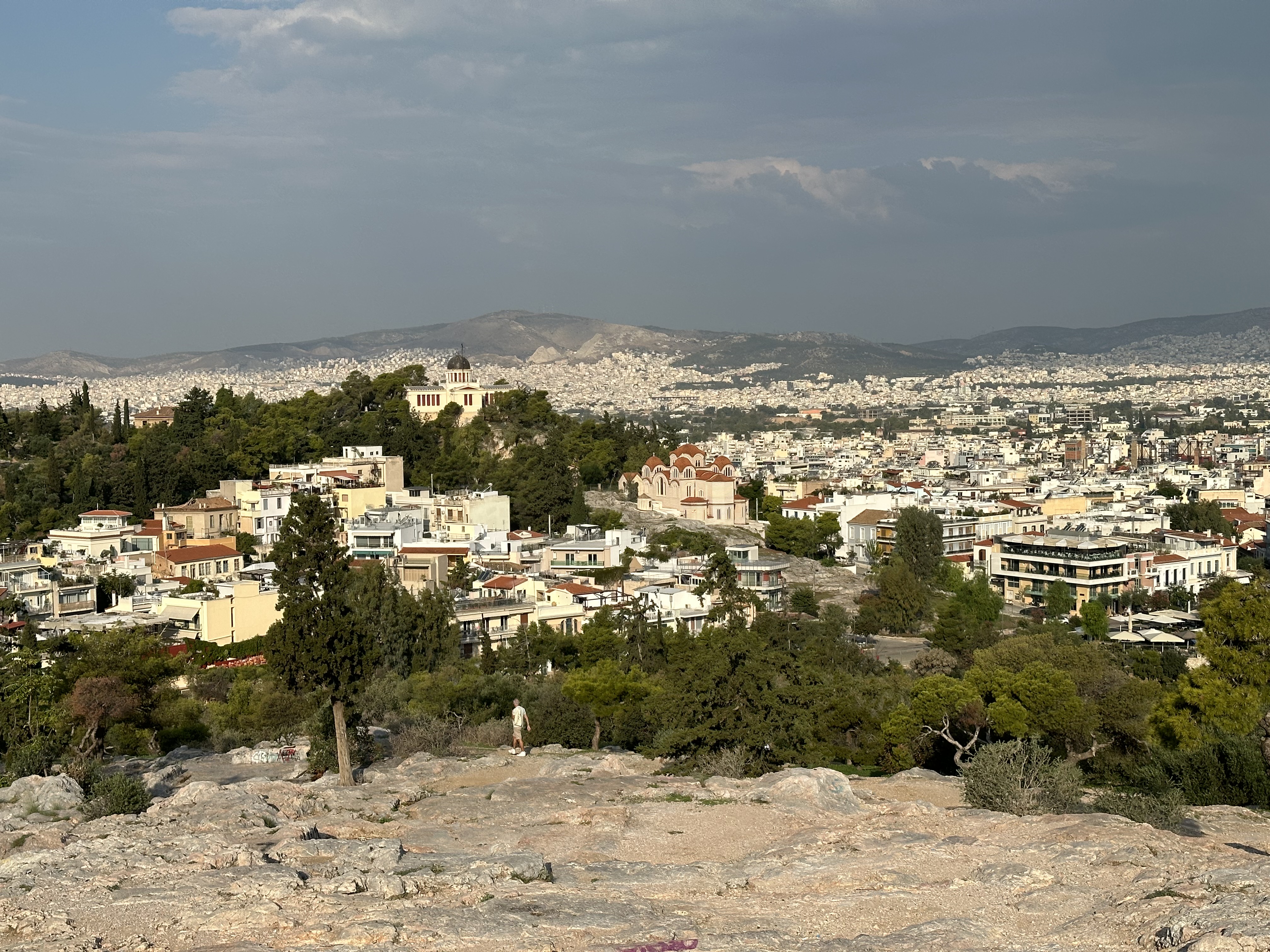
The rest of the group arrived, and we were off for the Acropolis. However, before entering the historic grounds, Linford wanted to give us some background on Paul and the sermon he delivered on Aropagus Hill, sometimes referred to as Mars Hill, as outlined in Acts 17:22–31.
From the hill, we could see the reconstructed Stoa of Attalos next to the Ancient Agora of Athens, where Paul spent time observing and conversing. Beyond was the sprawling city of modern Athens.
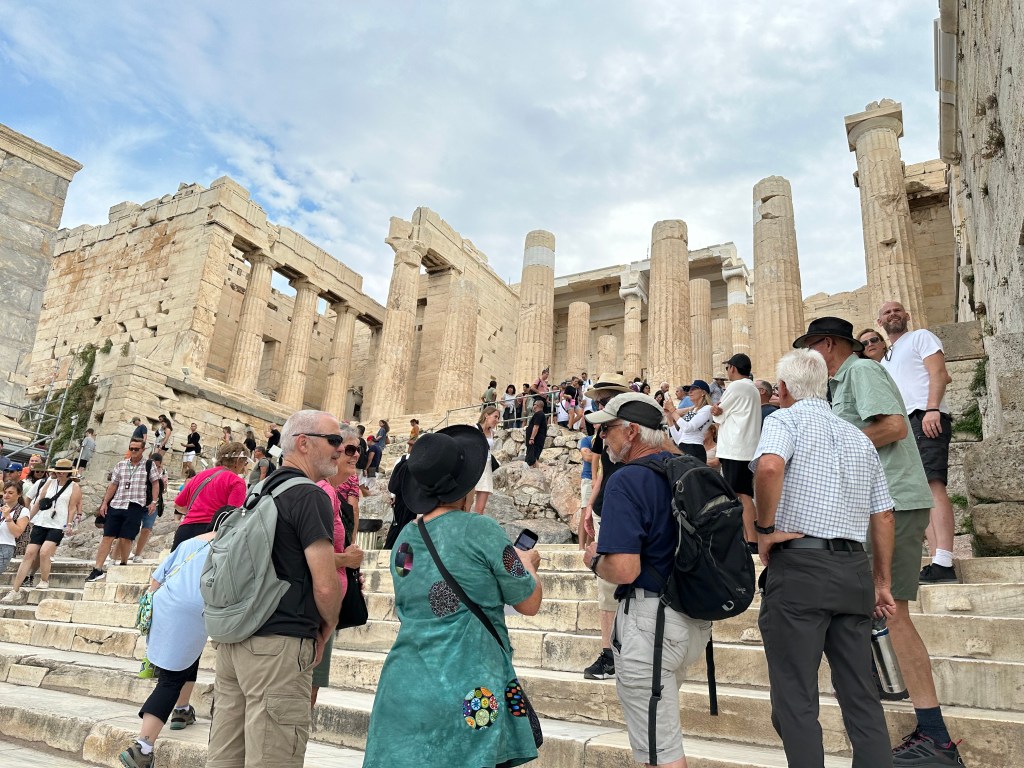
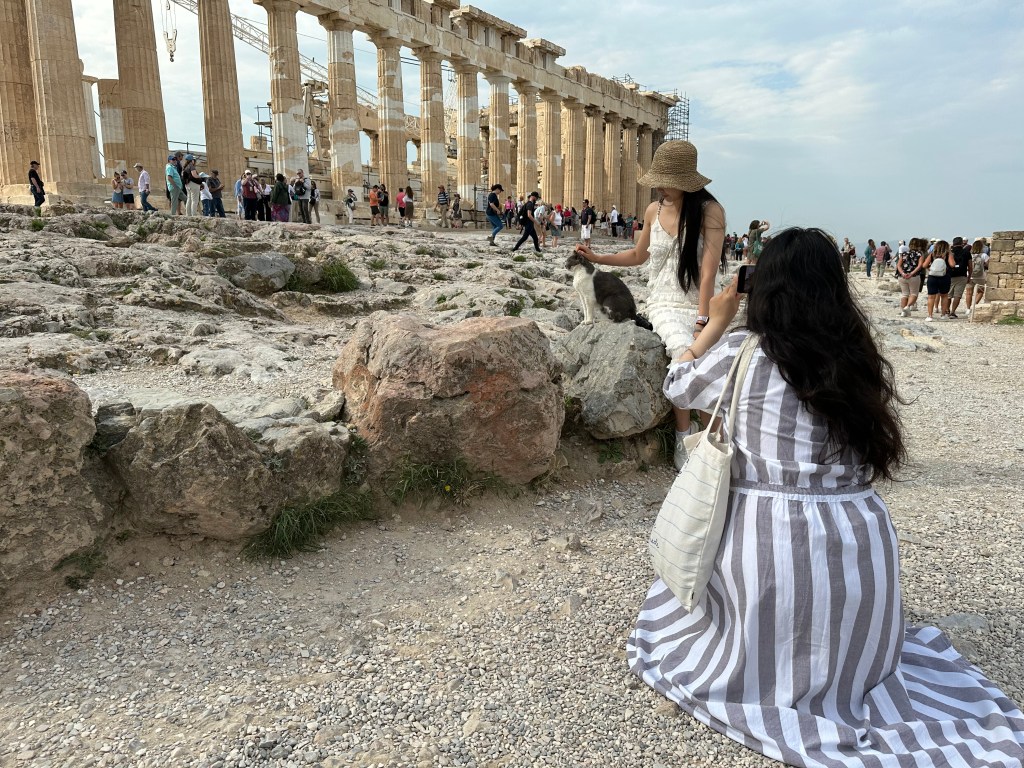
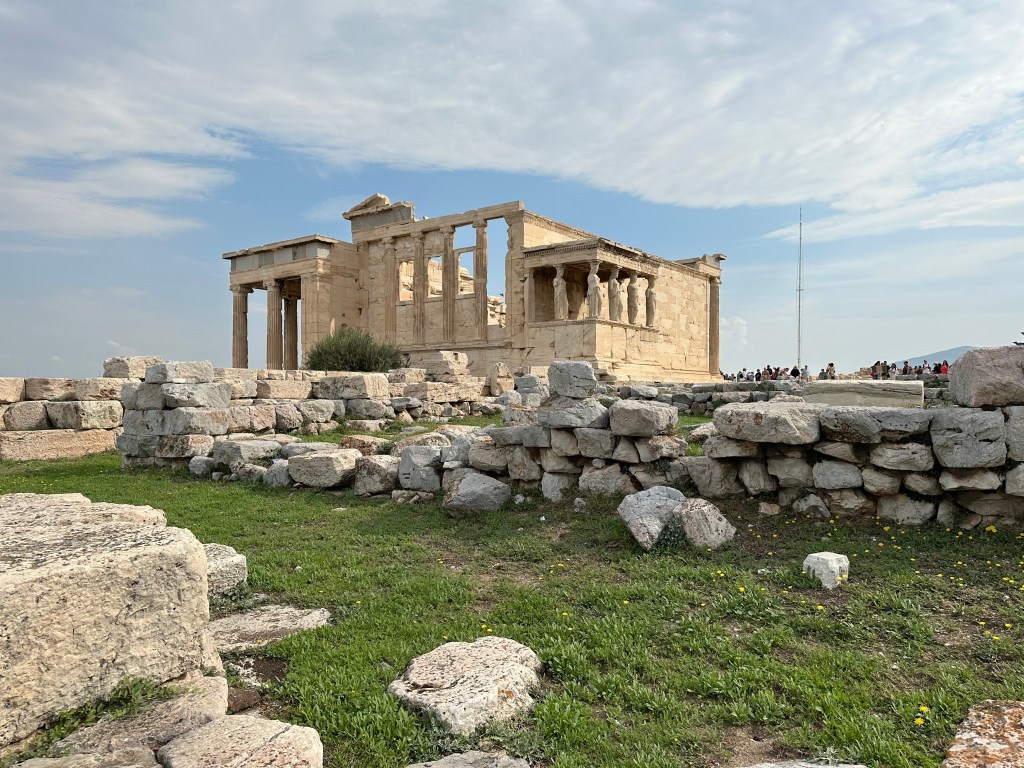
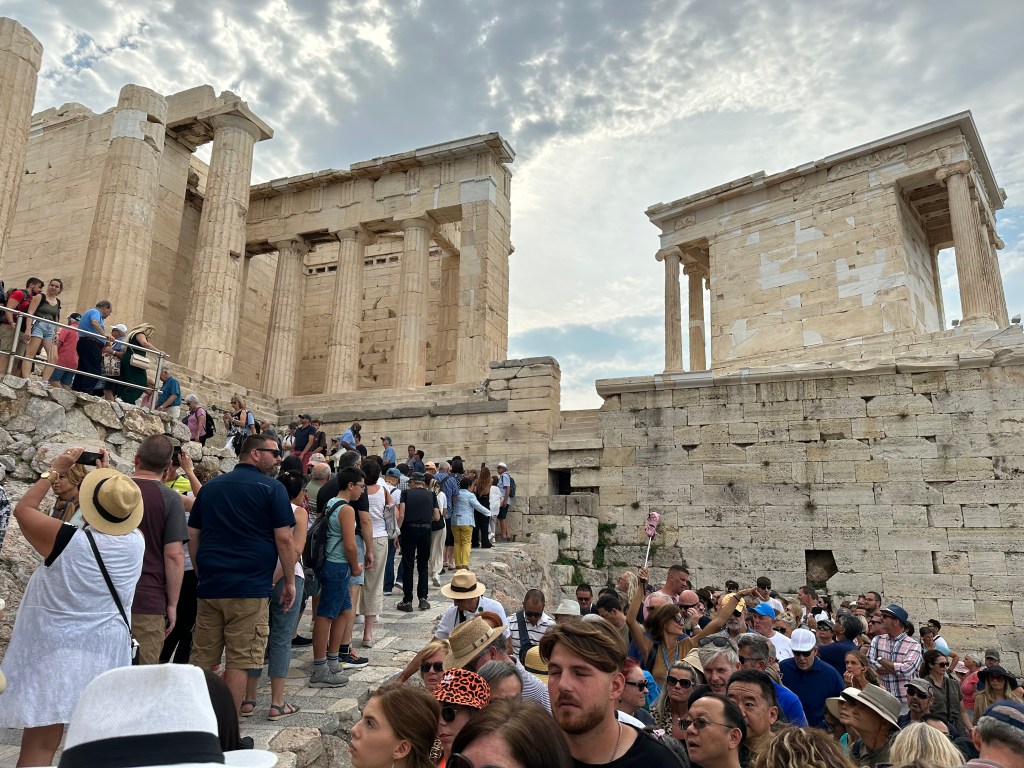
After Linford’s talk, we were free to explore the Acropolis independently. The lines for tickets were long, but since we had tickets for mid-morning, we walked right in. Climbing the steps through and around those ancient columns was thrilling. When we reached the top, the Parthenon dominated the view.
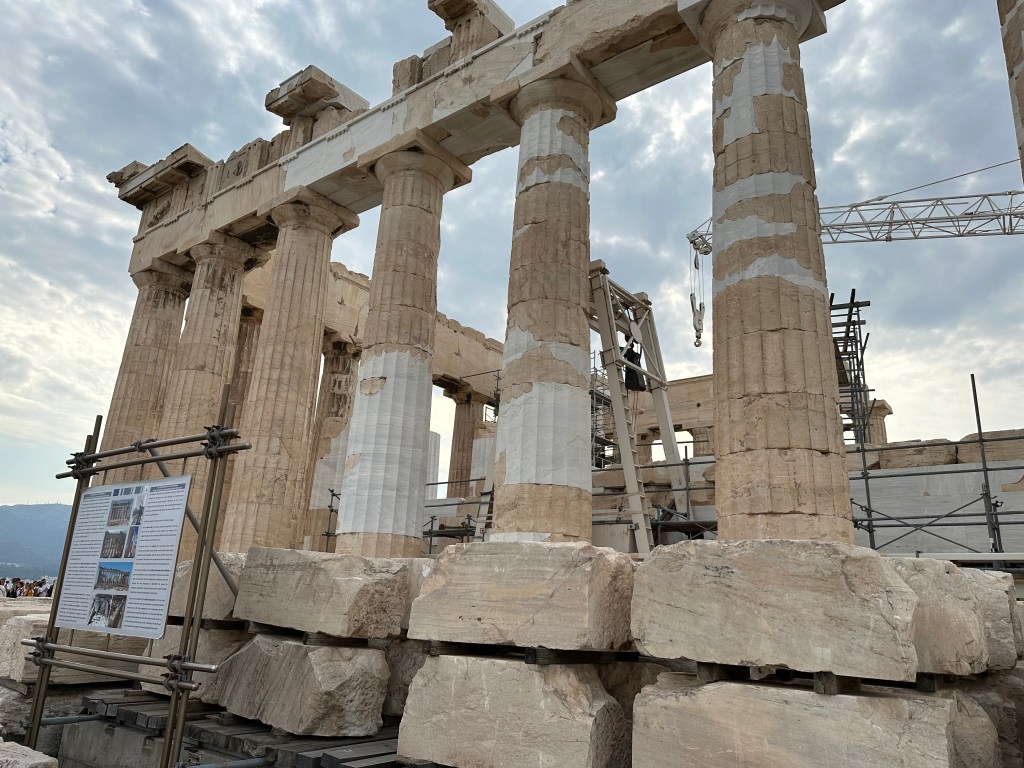
Like many old structures, the Parthenon is being repaired and stabilized for future generations. We had to watch our steps as we went. Old and worn rocks protruded from the walkways or were sunken into them. On the far side of the Parthenon, one elderly lady had fallen because of the uneven footing. Trained emergency personnel were working with her.
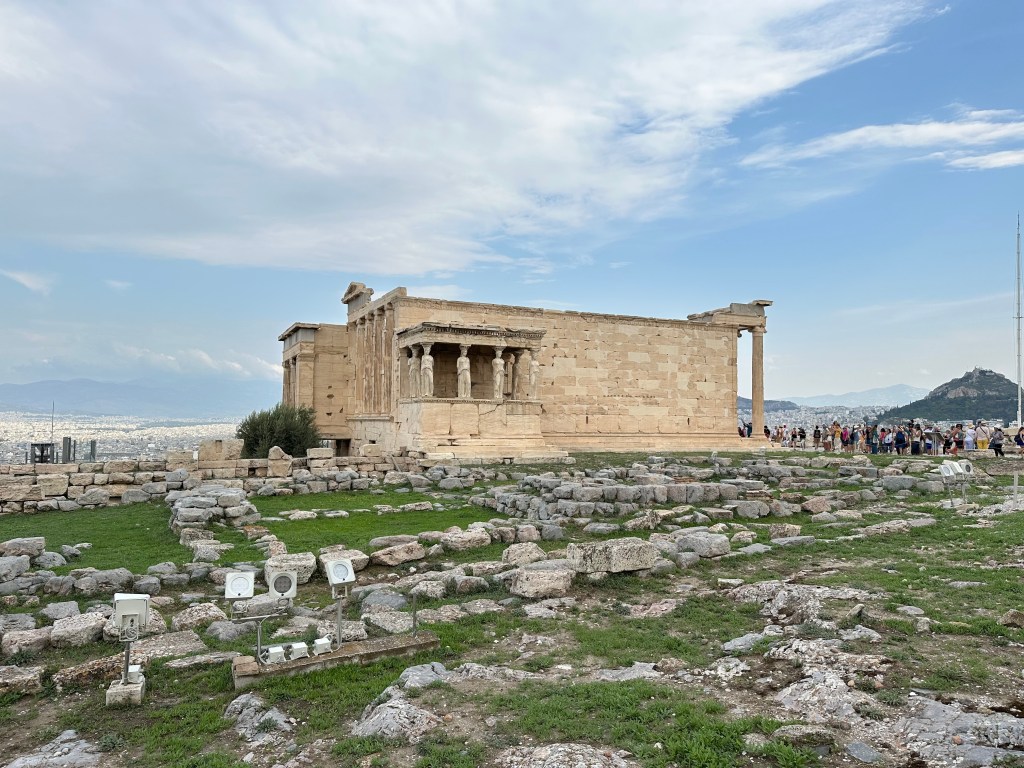
I was amazed at all the broken columns and cornices lying around. Most were roped off so visitors wouldn’t bother them. Many were piled up and cataloged in other areas atop the Acropolis.
As the sun rose higher in the sky, the temperature heated up. We decided to head back down the way we came. I was shocked at the number of people working their way up, making our exit difficult.
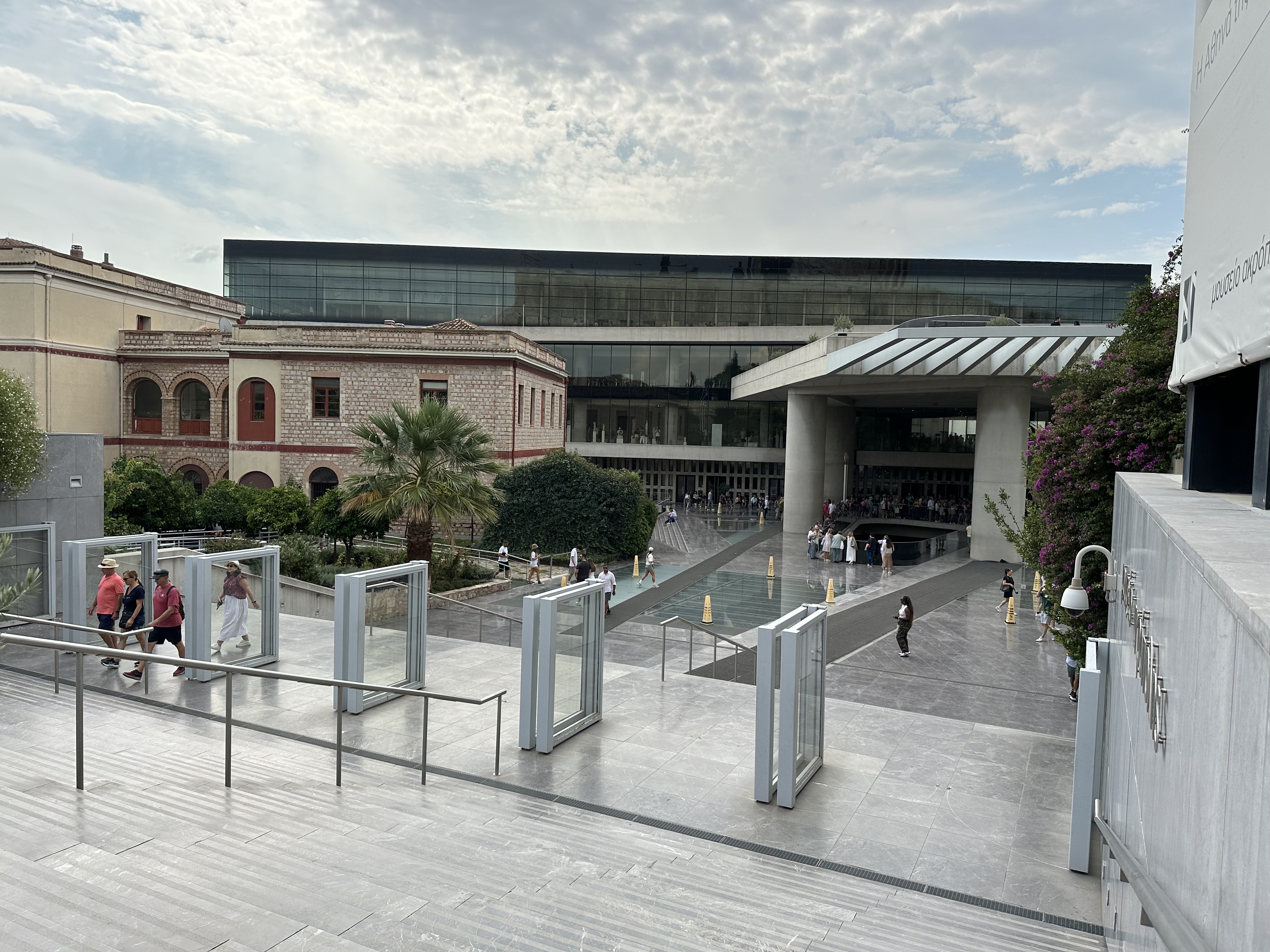
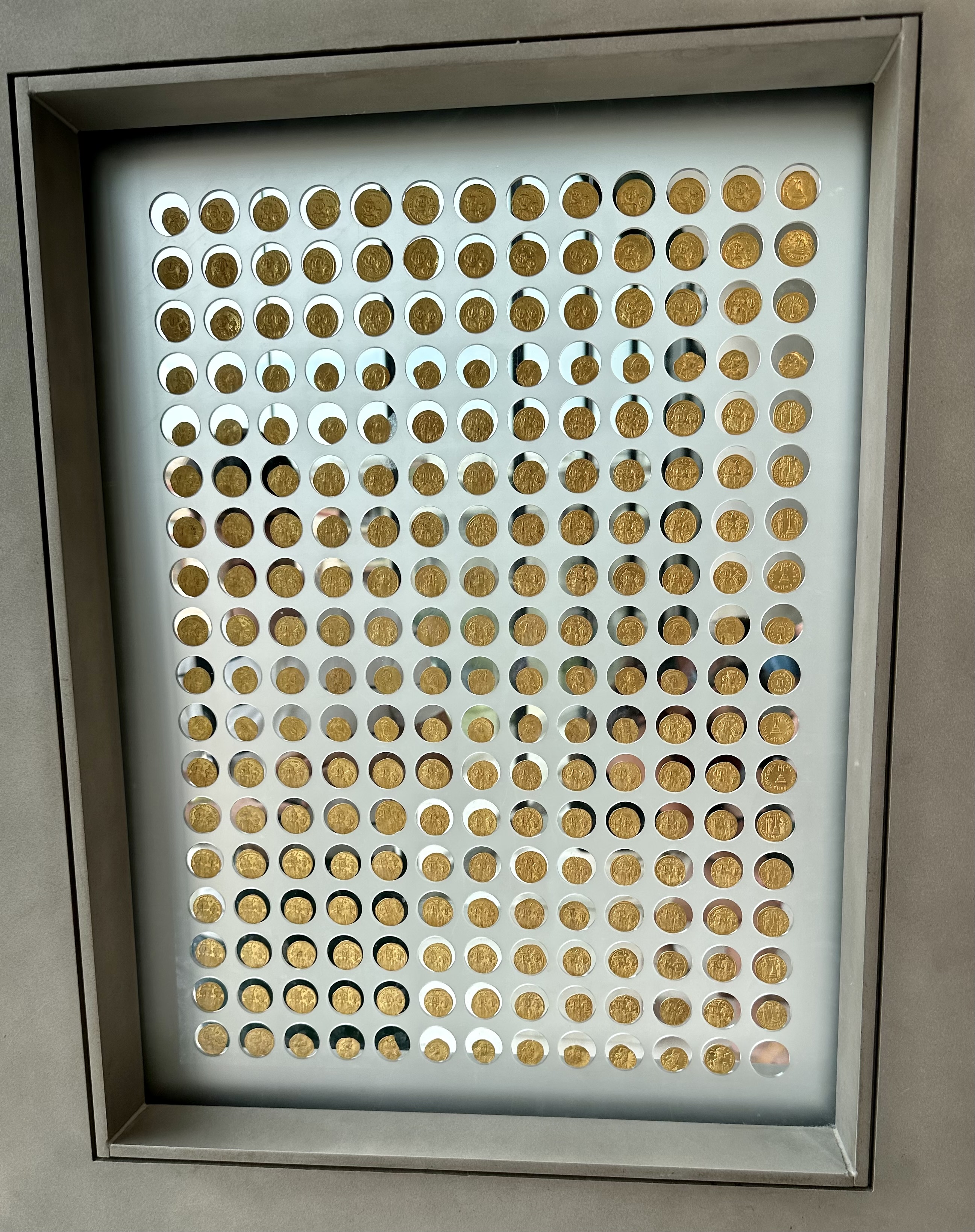
We headed for the Museum of the Acropolis just down the hill. Our first stop was the cafe for a light lunch and to cool off. The museum was huge and had thousands of artifacts from the Acropolis and explanations of their meaning and importance.
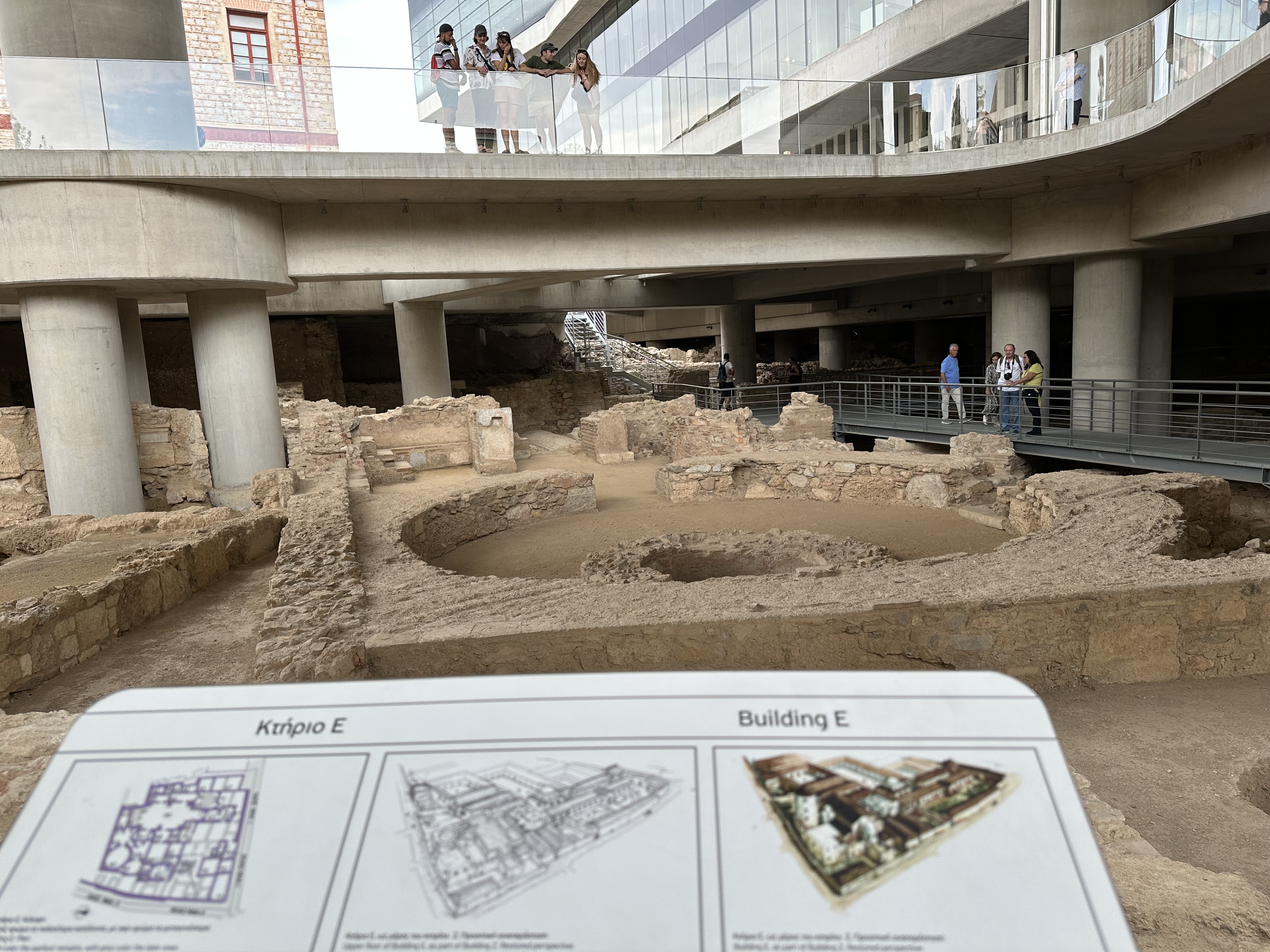
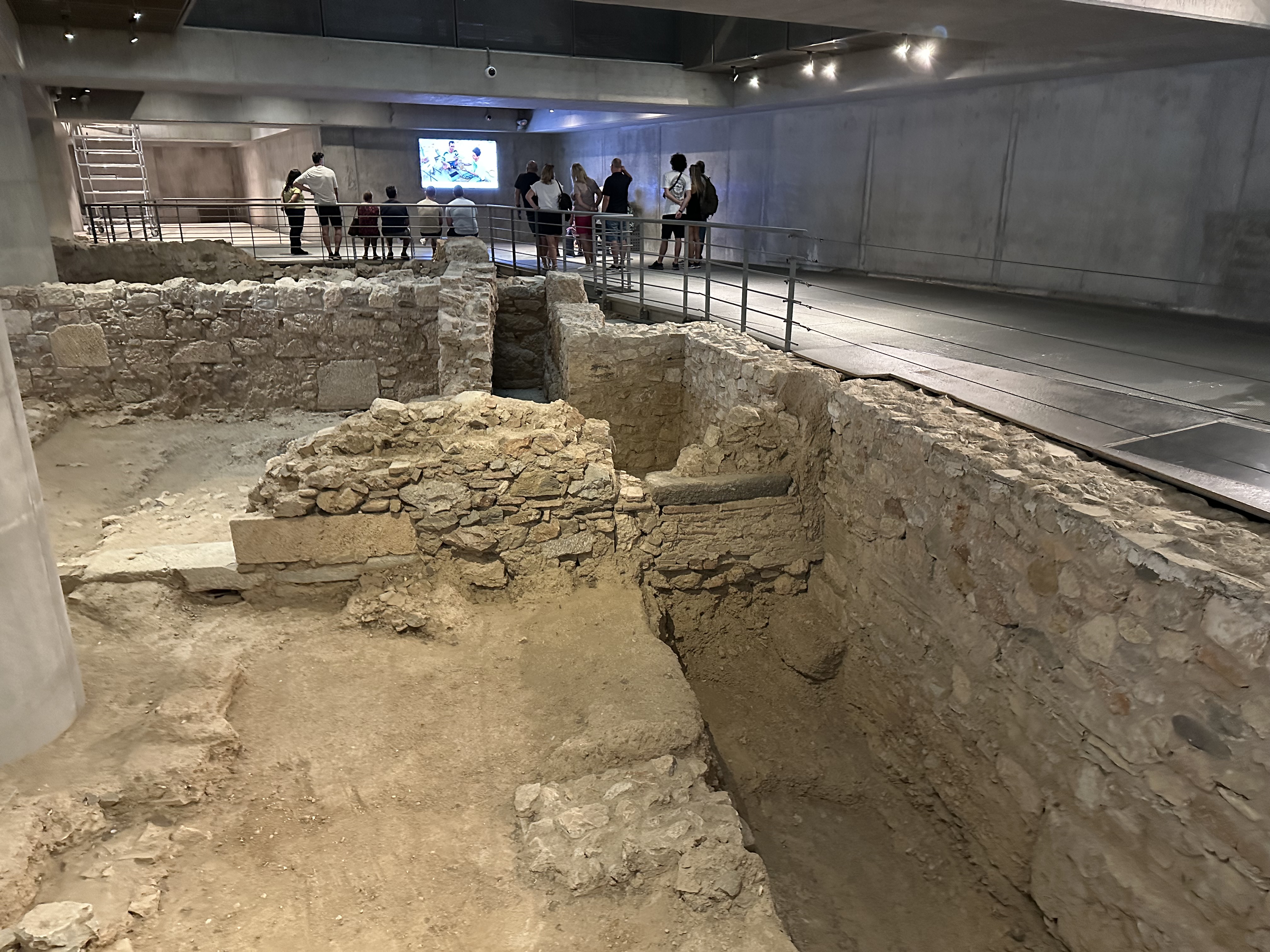
Another interesting feature was that the museum was built over an active archeological dig. I found that fascinating and enjoyed seeing the various rooms of the homes being excavated. The water and sewer systems were equally interesting.
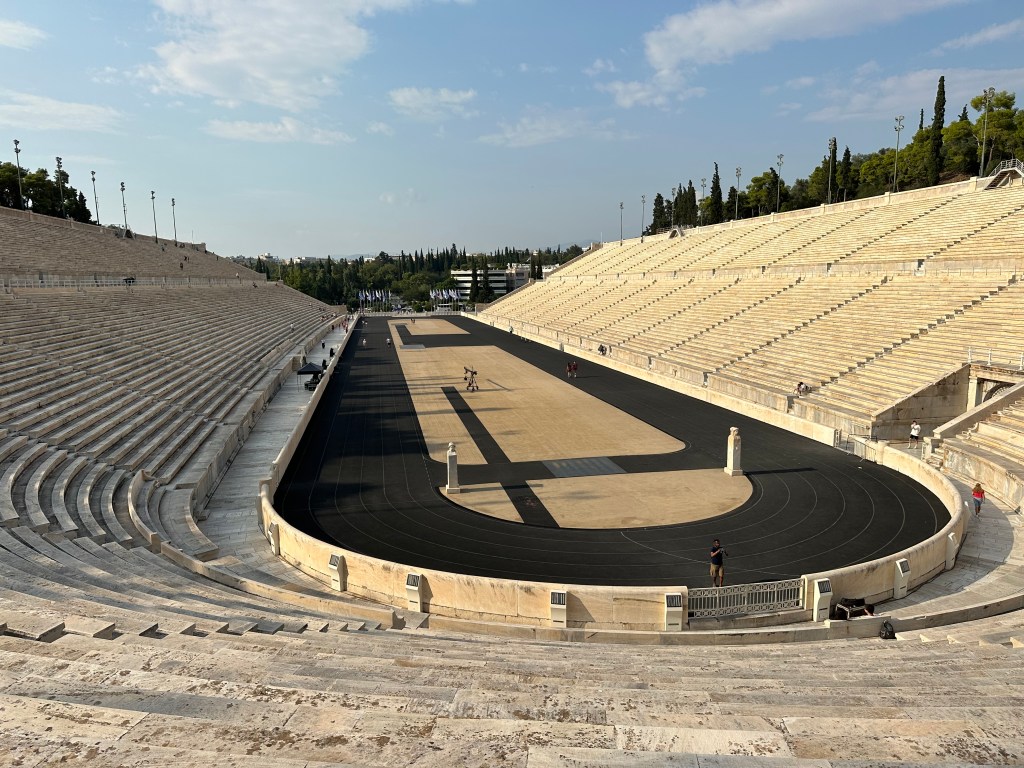
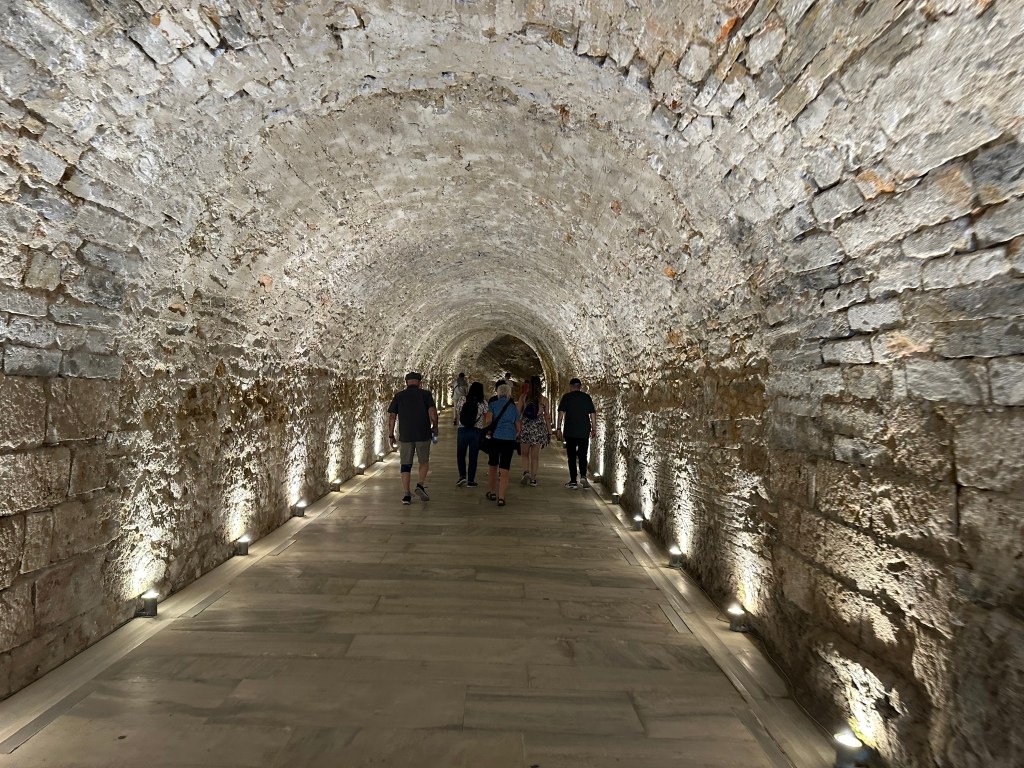
After resting a while, the group hiked to the site of the original modern-day Olympics, which began in 1896. The stadium is now reconstructed but does contain a few pieces of masonry from the original Olympic stadium. Of course, we visited the museum and gift shop. Our group ended the day with a nice meal together.
My wife and I recently returned from a two-week trip to Greece and Rome. I will share our experiences through a series of photo essays beginning today.
The trip’s theme was to follow parts of the Apostle Paul’s three trips between Jerusalem and Rome. Our guides were Linford and Janet Stutzman.
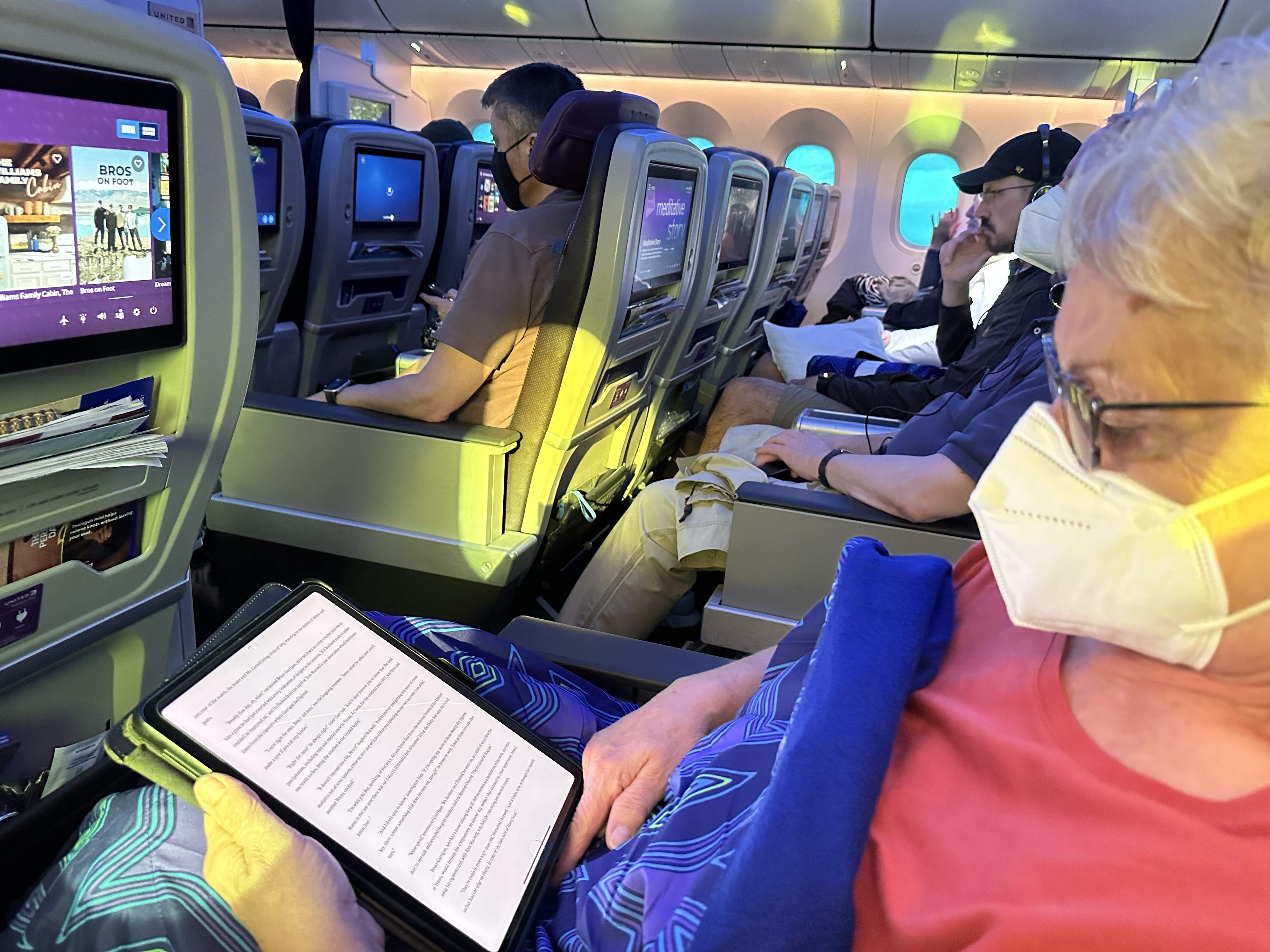
My wife spent part of the nearly 10-hour flight reading.
In 2004, Linford and Janet bought an old sailboat in Greece, fixed it up, and sailed the paths and ports of Paul while on sabbatical from Eastern Mennonite University, where Linford was a professor of religion. Their epic trip led to Linford writing an excellent book about their adventures, SailingActs.
Our itinerary began in Athens, where Paul preached a sermon on Aropagus Hill, just south of the Acropolis and the Parthenon. But first, we had to wait for all 24 group members to arrive, which they did by nightfall.
Consequently, our first day of the trip was spent traveling by air from Washington/Dulles International Airport to Athens. Once on the ground in Greece, our taxi took a circuitous route from the airport to the hotel due to a race for a cancer cure near the Acropolis. Many streets were blocked off for the 40,000 race participants.
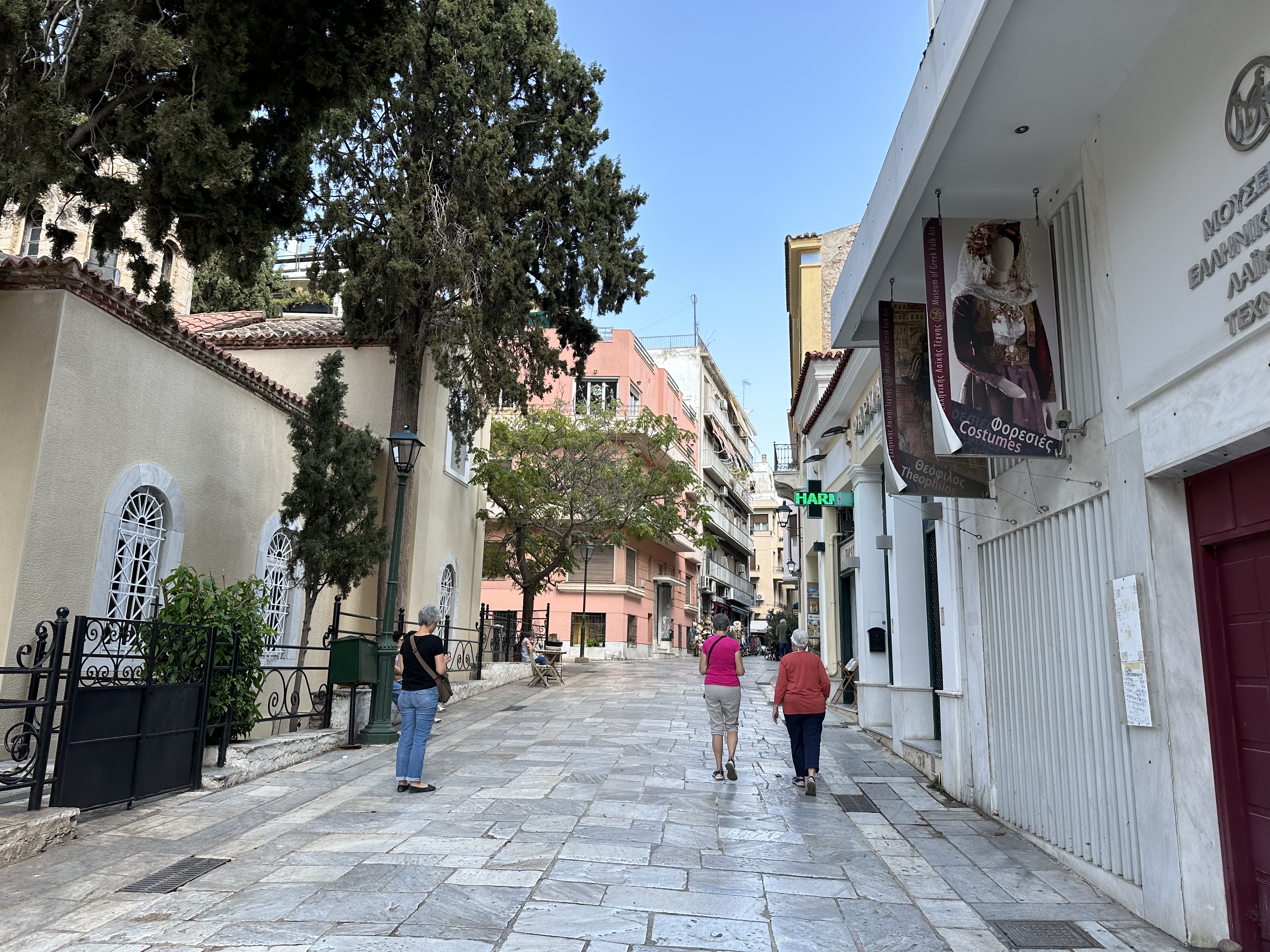
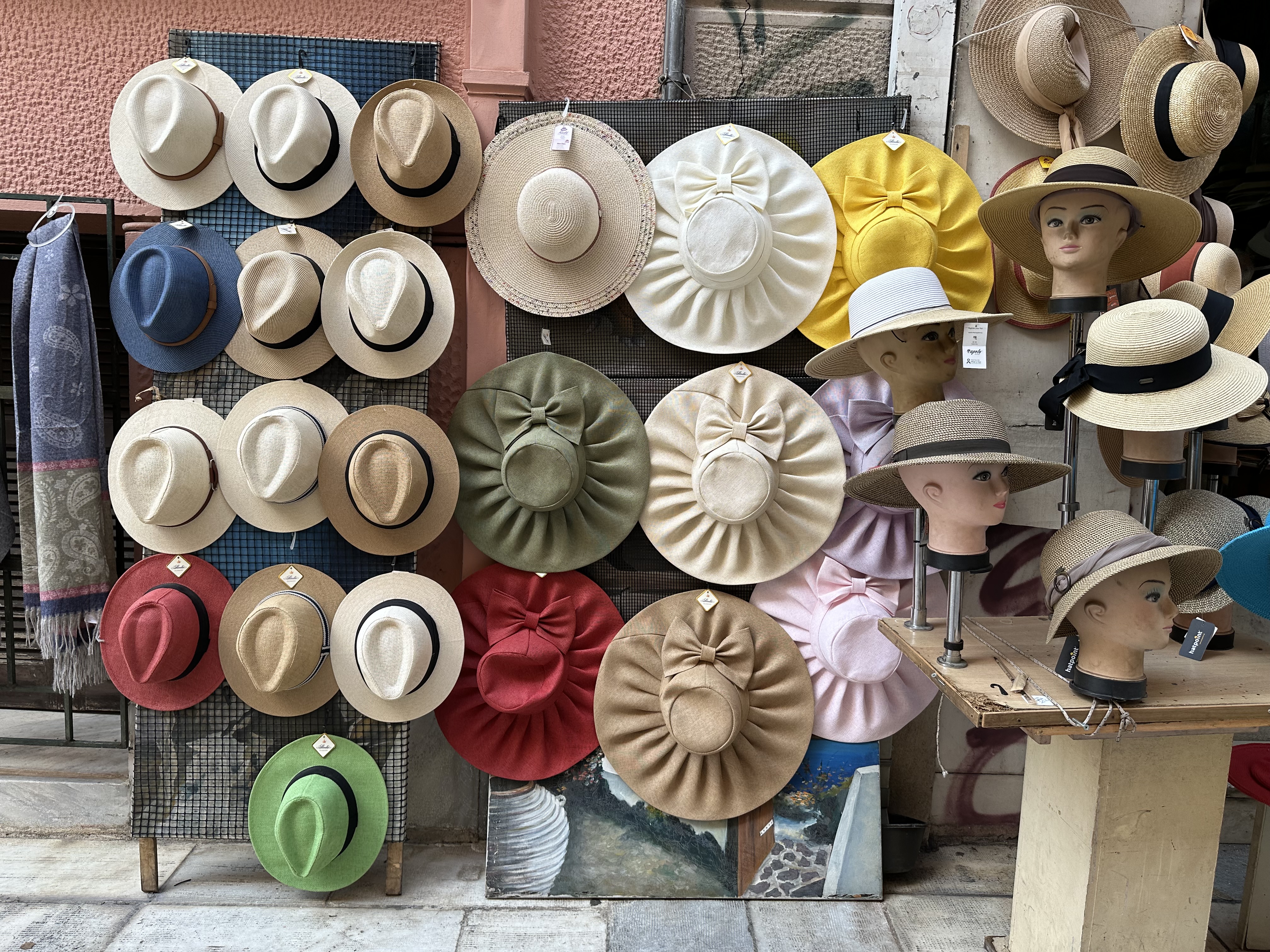
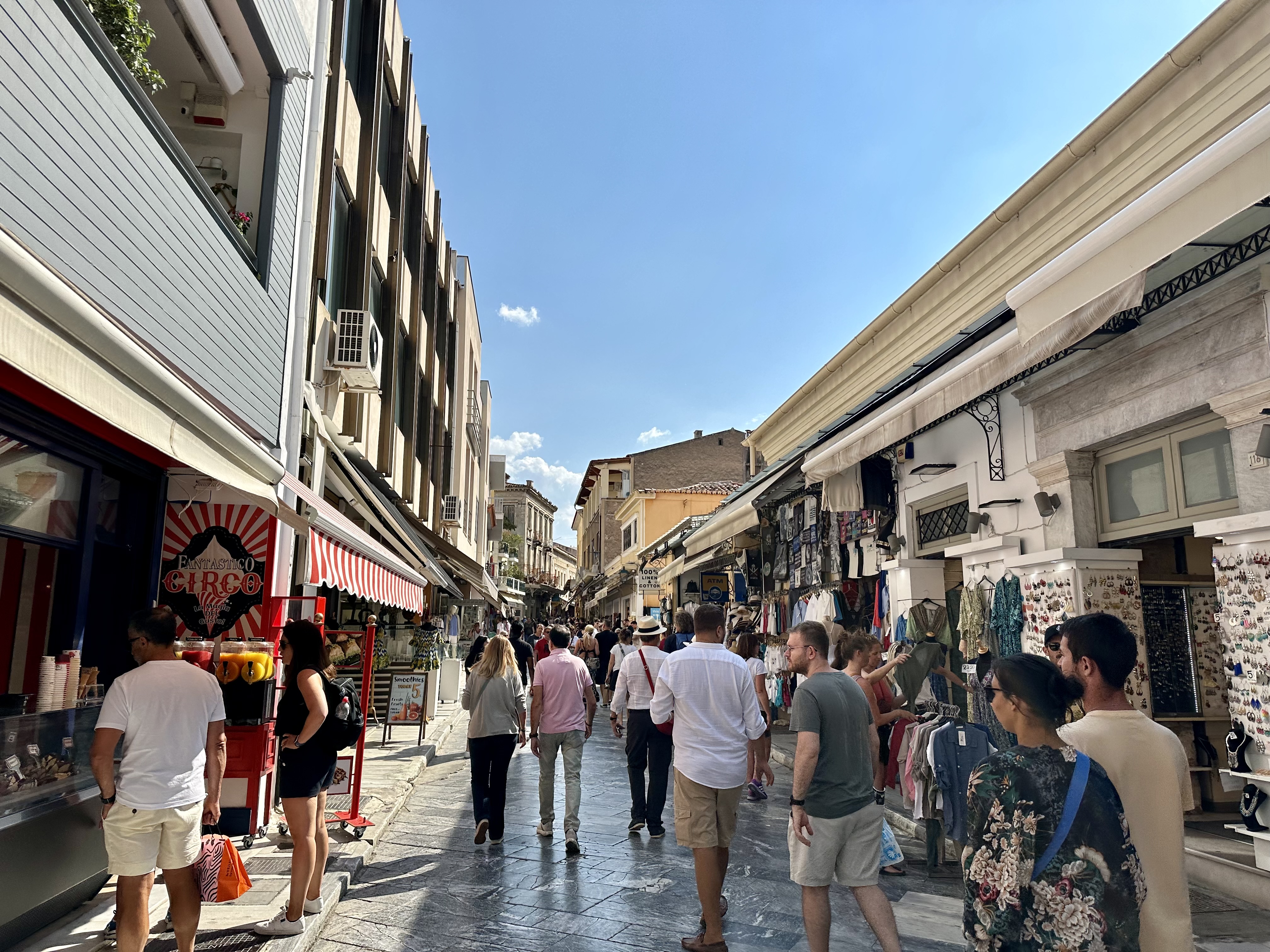
We spent the evening familiarizing ourselves with the area and shopped in the Plaka, a market/restaurant area between the Acropolis and our hotel. On our stroll around the area, we did get our first glimpse of the Acropolis.
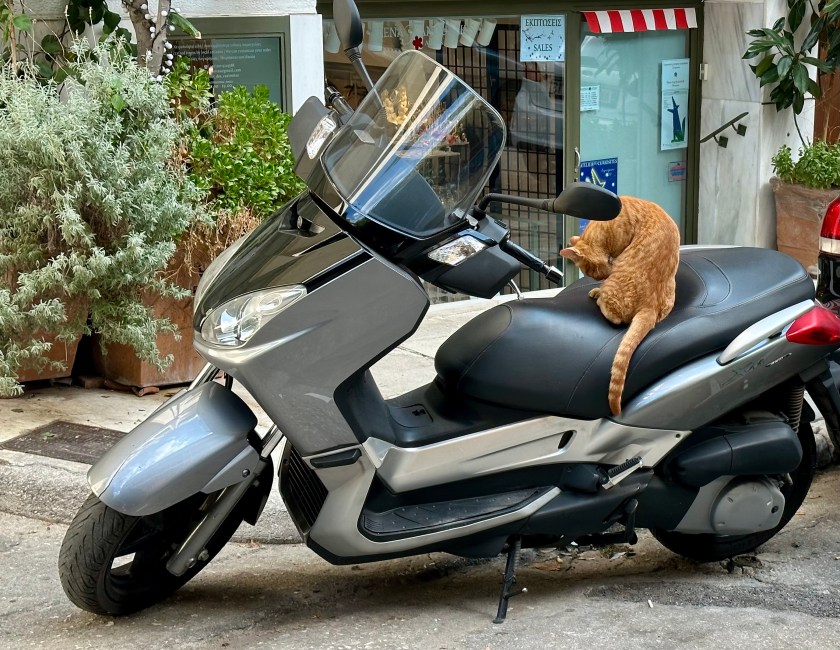
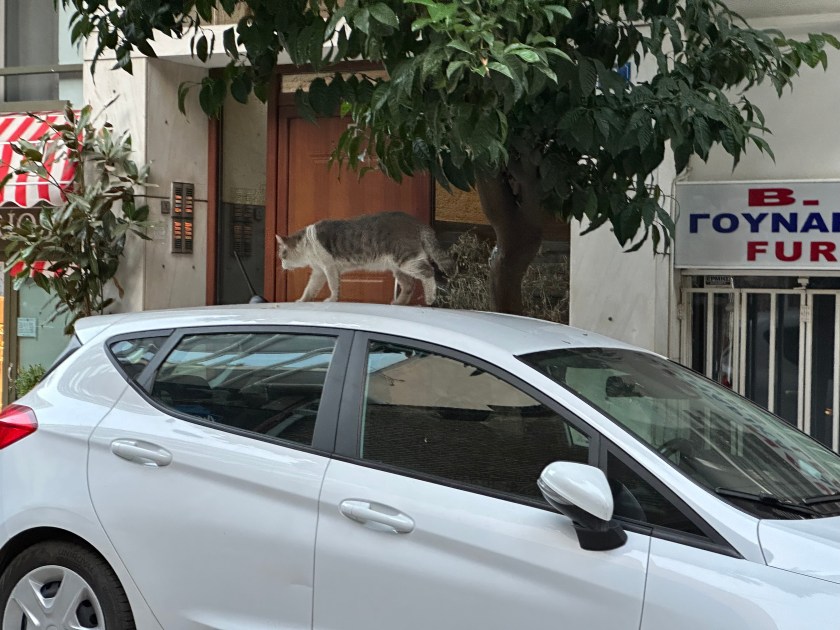
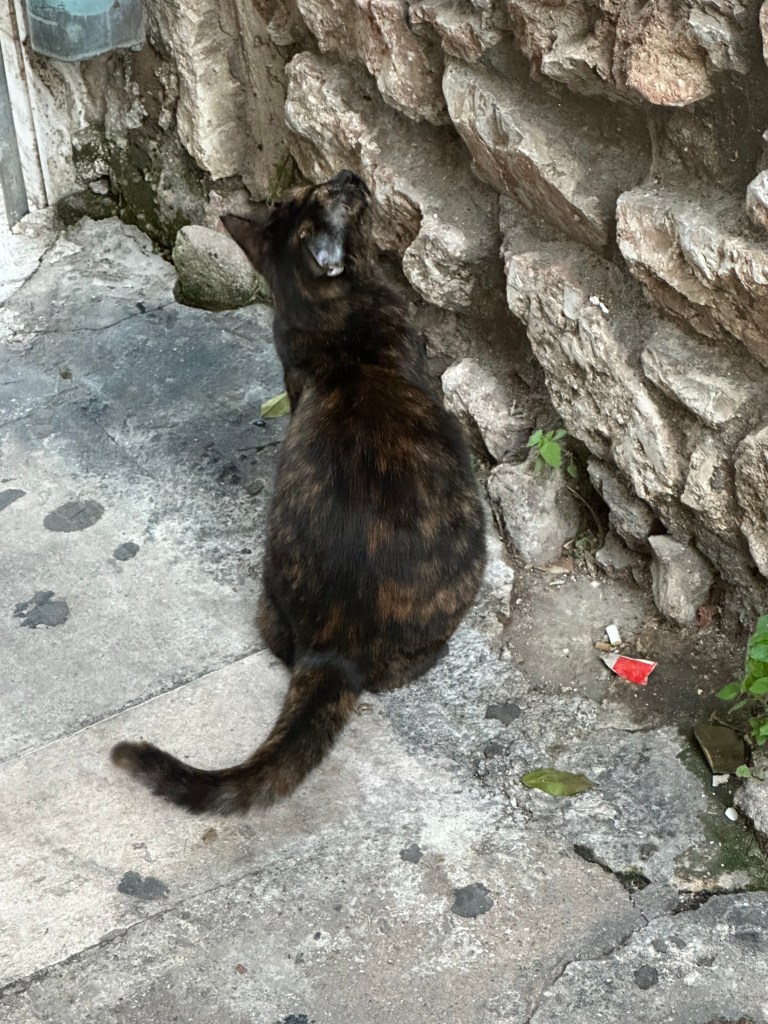
I was surprised to see so many cats running loose in the city. Apparently, felines are revered in Athens and likely help keep the critter population down. Many cats roamed the narrow streets, businesses, apartment buildings, and restaurants.
The view from Grandview Point. Photo by Bruce Stambaugh.
Located east of Beckley, West Virginia, New River Gorge National Park and Preserve is a gem of a place. My wife and I recently visited there for two days. Our goal was to see the New River Gorge Bridge. We experienced much more than that. Also, I finally learned an important life lesson.
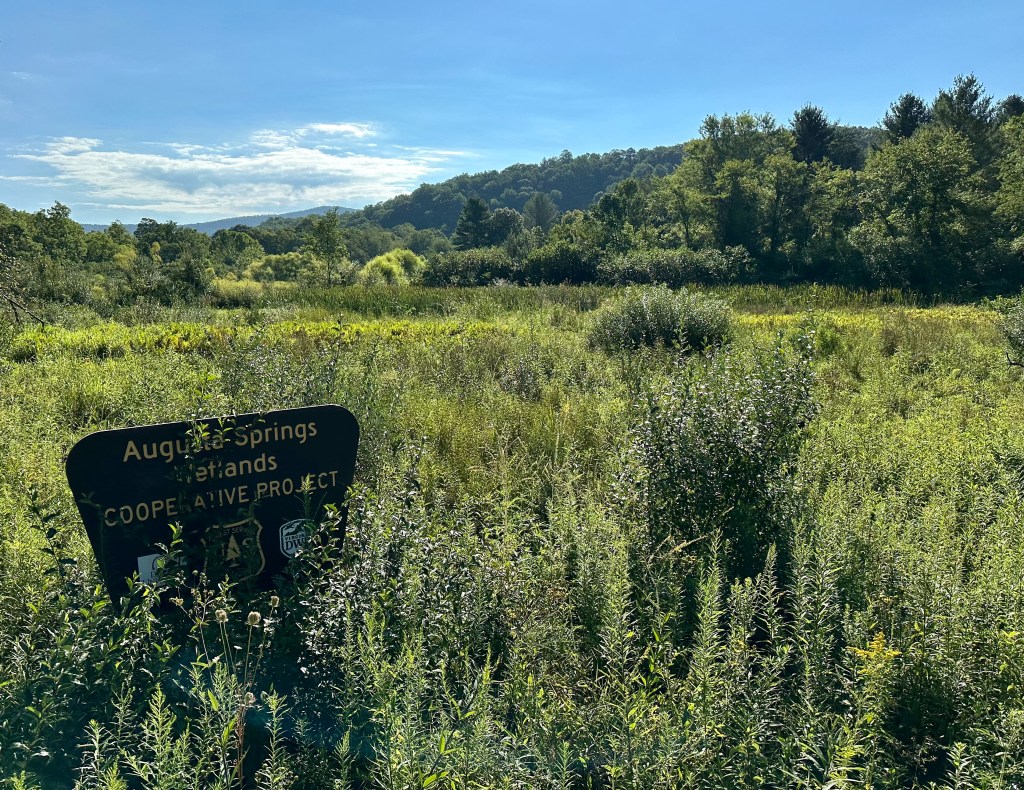
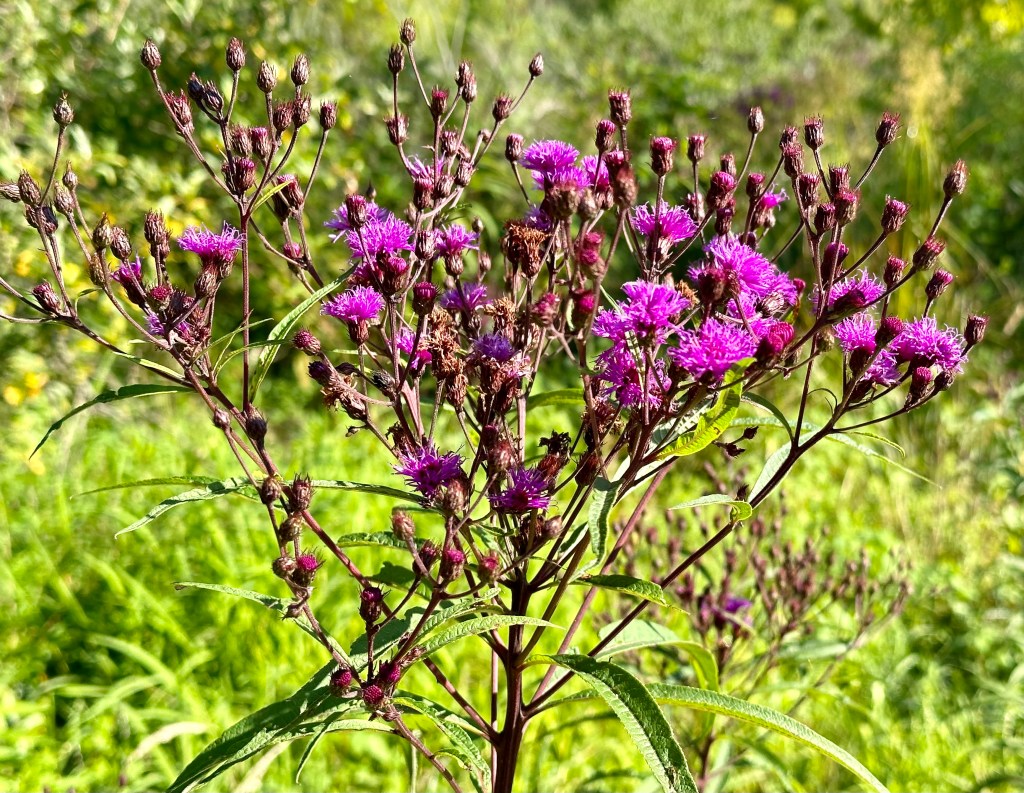
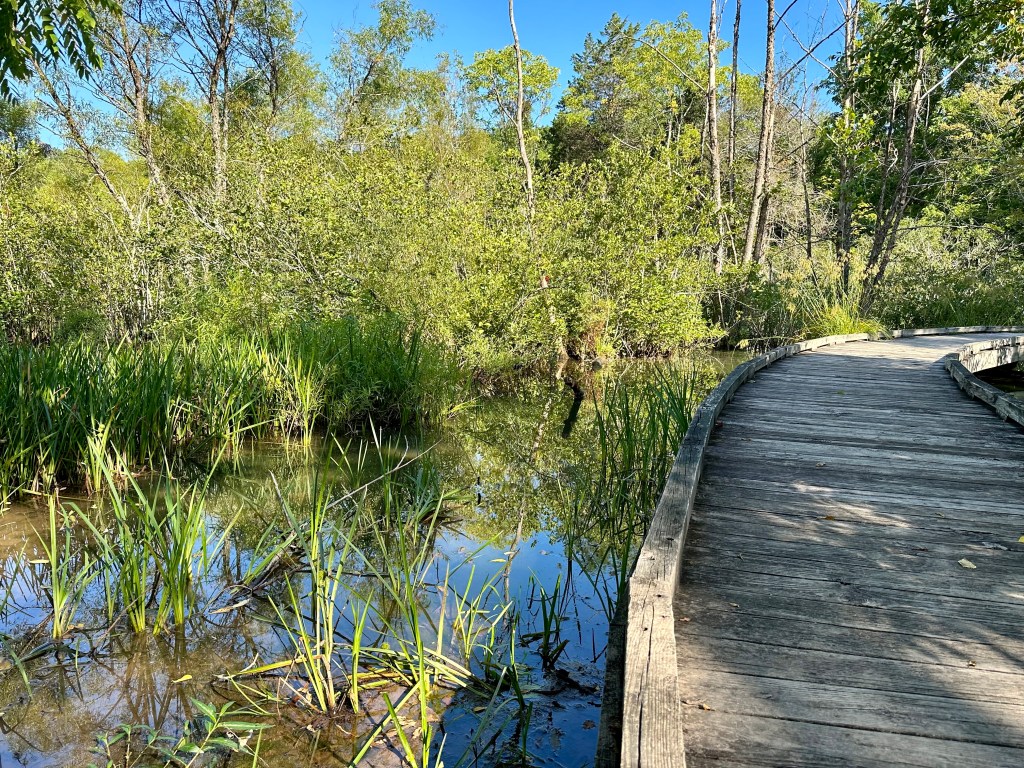
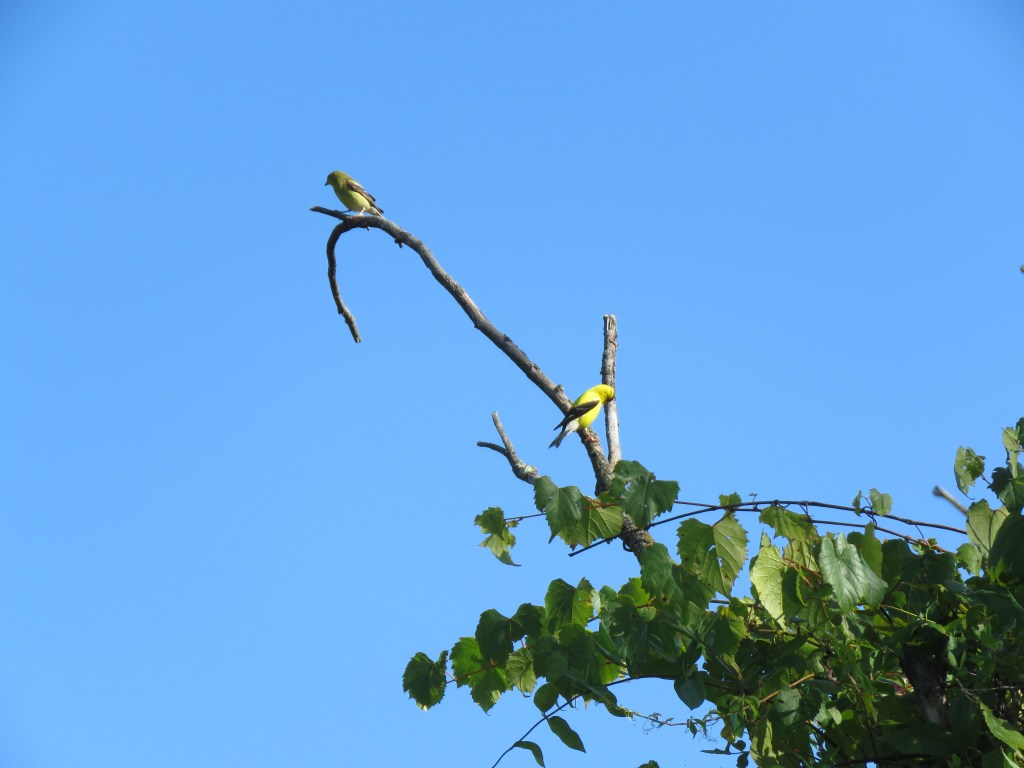
Because we usually avoid driving on I-81, we took Virginia 42 southwest through the Allegheny Highlands’ beautiful hills, valleys, small towns, and mountain gaps. We stopped at Augusta Springs Wetlands to bird along the boardwalk. We saw a number of lovely wildflowers and 21 species of birds. The next stop was the Humpback Covered Bridge west of Covington, Virginia.
Humpback Bridge.
Interior of the Humpback Bridge.
Humpback Bridge
But it was the national park we wanted to see most. The park has four visitor centers because of its mountainous terrain and steep gorge. Sandstone Visitor Center was our first stop just off I-64. The helpful ranger gave us excellent advice on the roads to travel and what to expect.
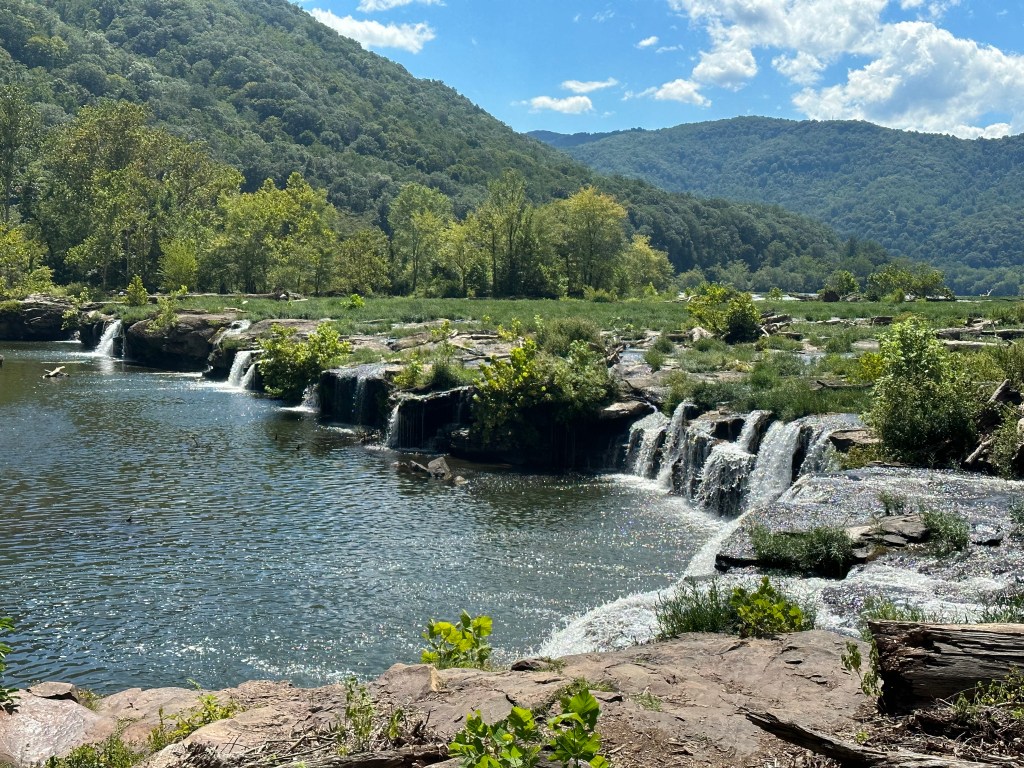
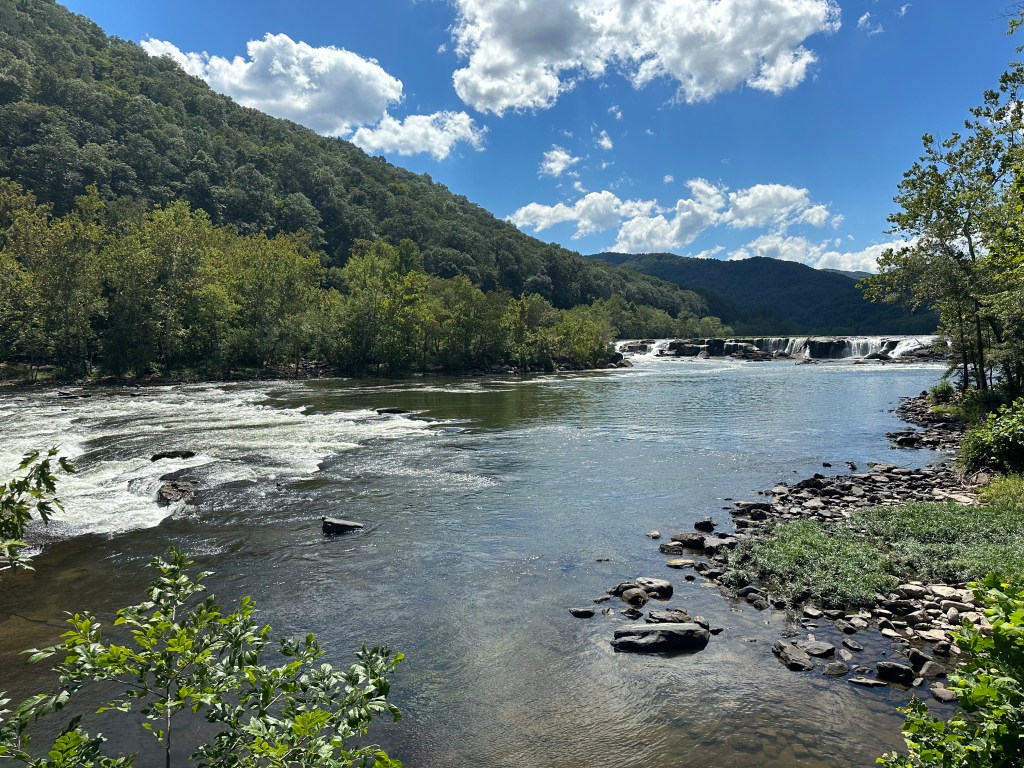
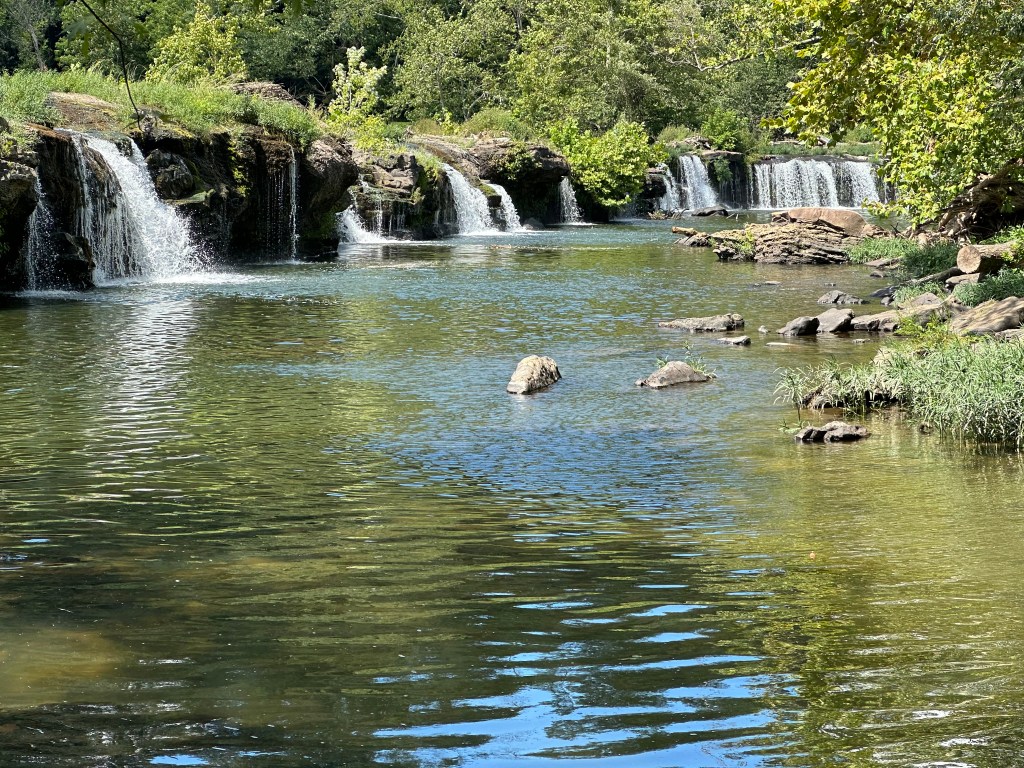
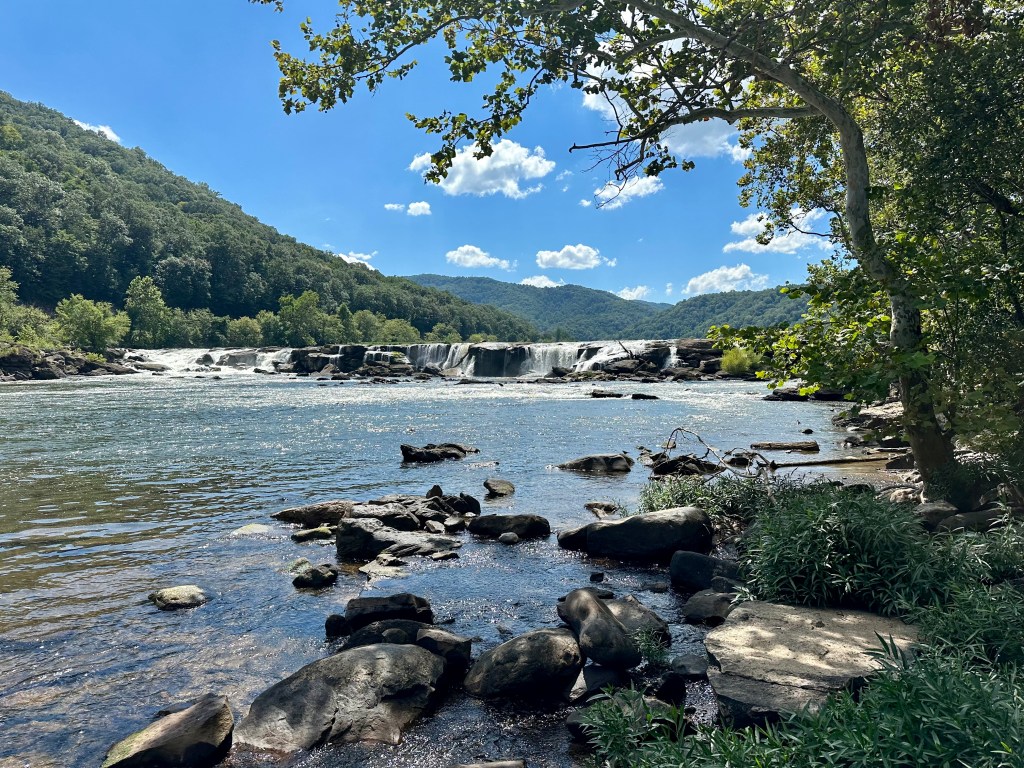
Our first stop was the observation area of Sandstone Falls. They were as beautiful as advertised, but the falls weren’t running at full force with so little rain this summer. We drove along the railroad tracks to the quaint town of Hinton, where we crossed to the west side of the New River. We drove north a few miles to reach the boardwalk that took us near the river’s main flow.
Eastern section of Sandstone Falls.
Rapids and Sandstone Falls.
Eastern side of Sandstone Falls.
Spicebush Swallowtail on Cardinal Flower.
The western section of Sandstone Falls.
Western section of Sandstone Falls.
The fastest flow.
I wanted to get a closer shot, so I headed across an island of ancient debris of huge boulders smoothed by years of flowing water. Scattered among the rocks were large trunks of trees, their bark long scoured away. It finally hit me that I shouldn’t have attempted this trek. I eased my way over rocks and rivulets to the shore of the river’s main course. I got the shots I wanted and returned to the boardwalk via an easier route.
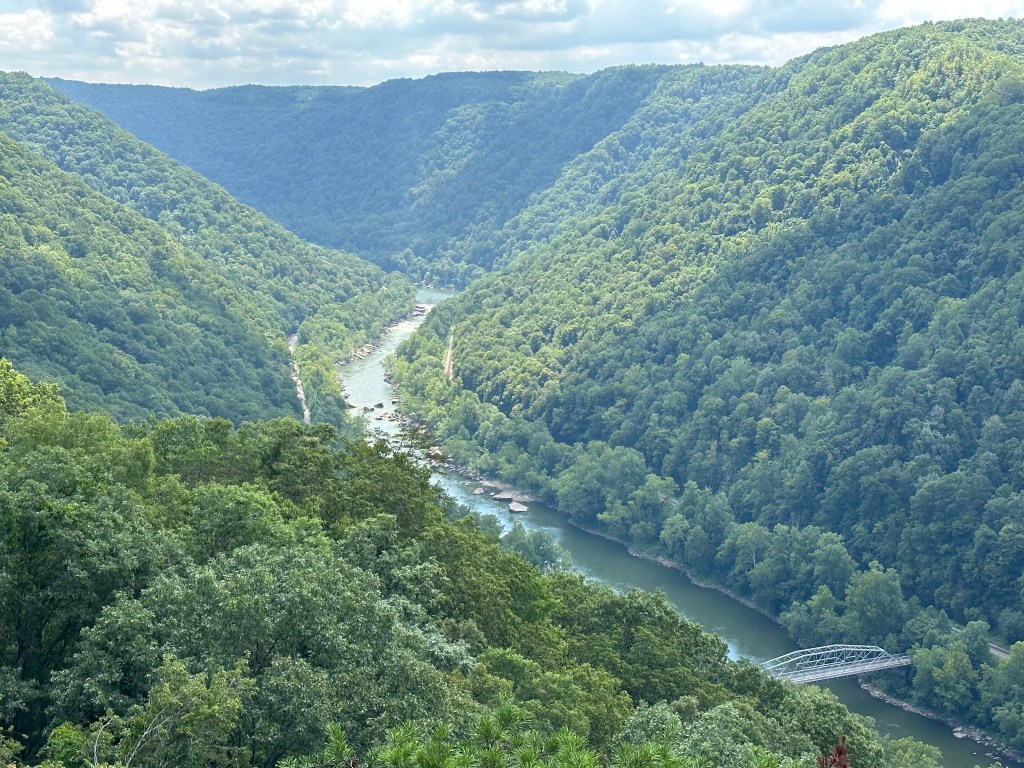
Our next stop was Grandview, and what a view it was. We looked down 1,000 feet to see one of the horseshoe bends of the New River. The sun bathed the hillside forests and illuminated the riverside train tracks.
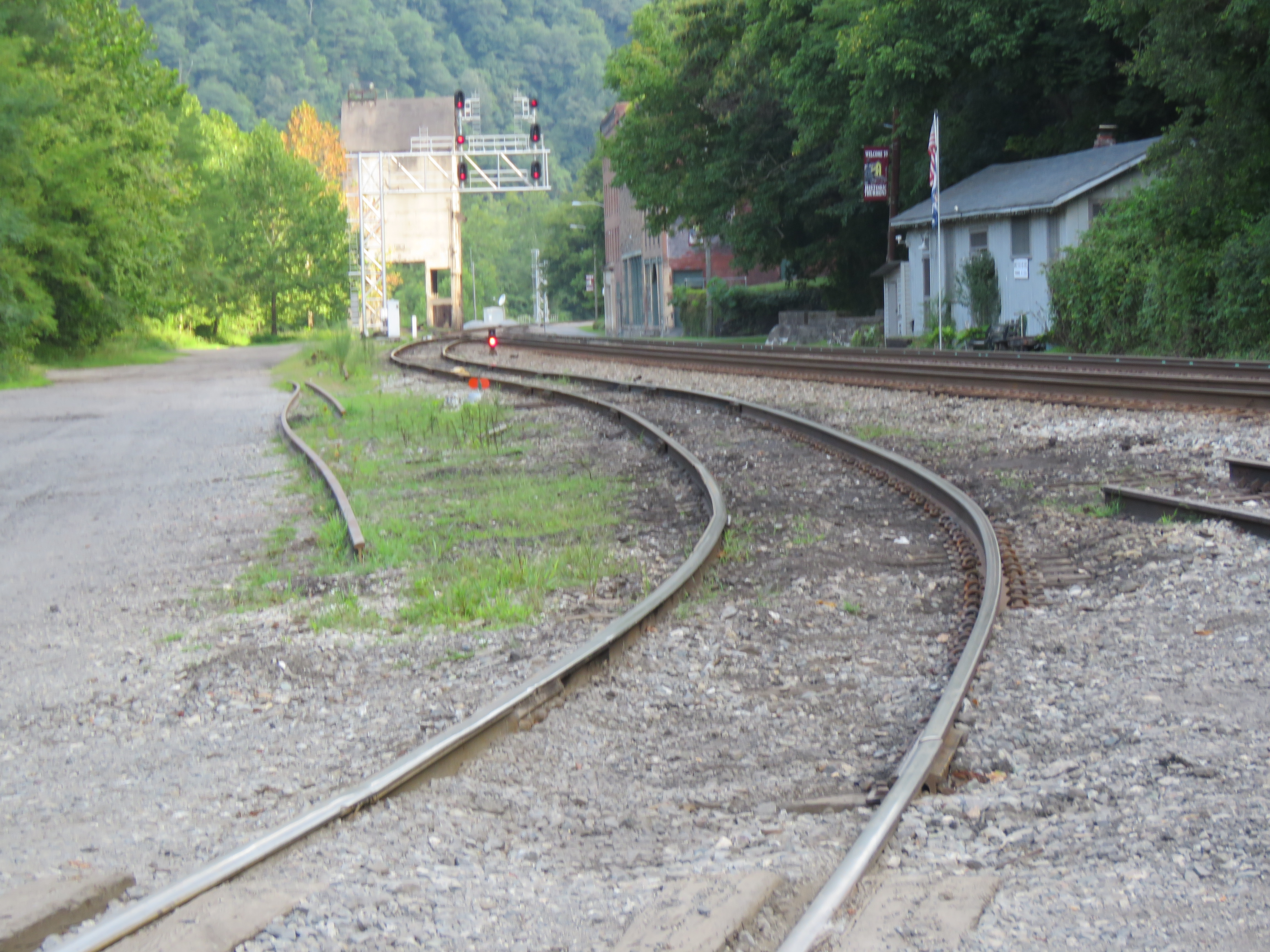
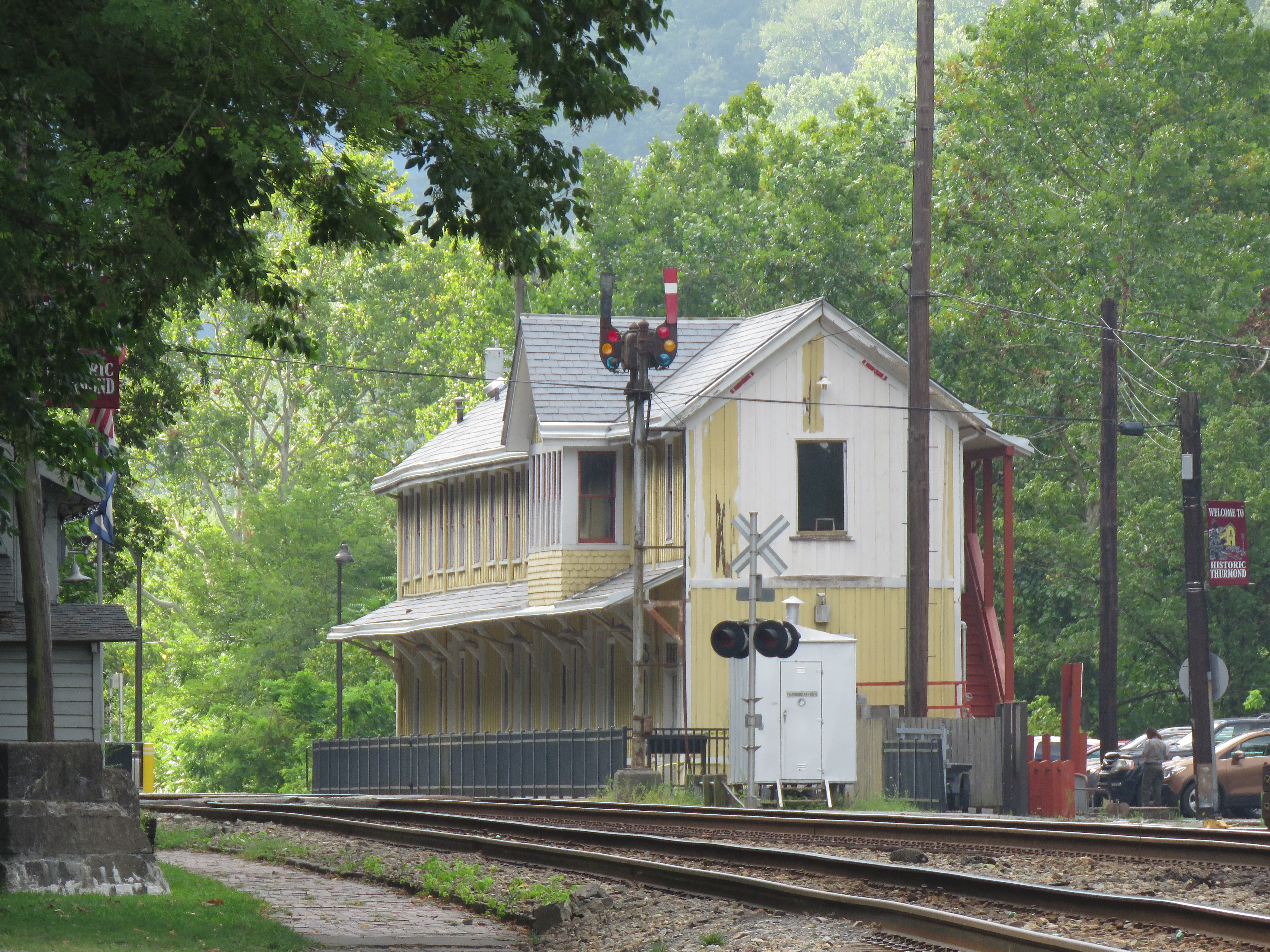
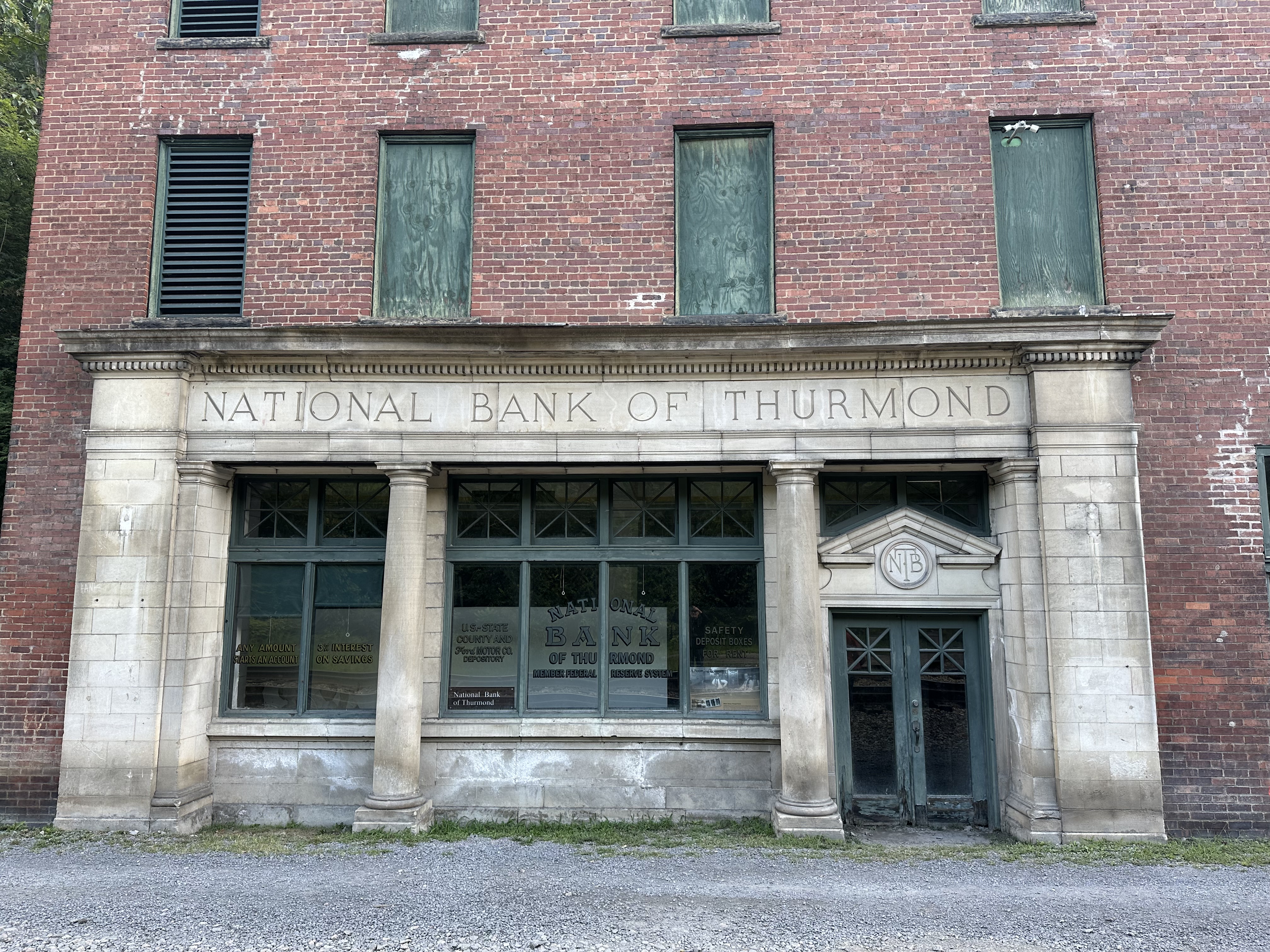
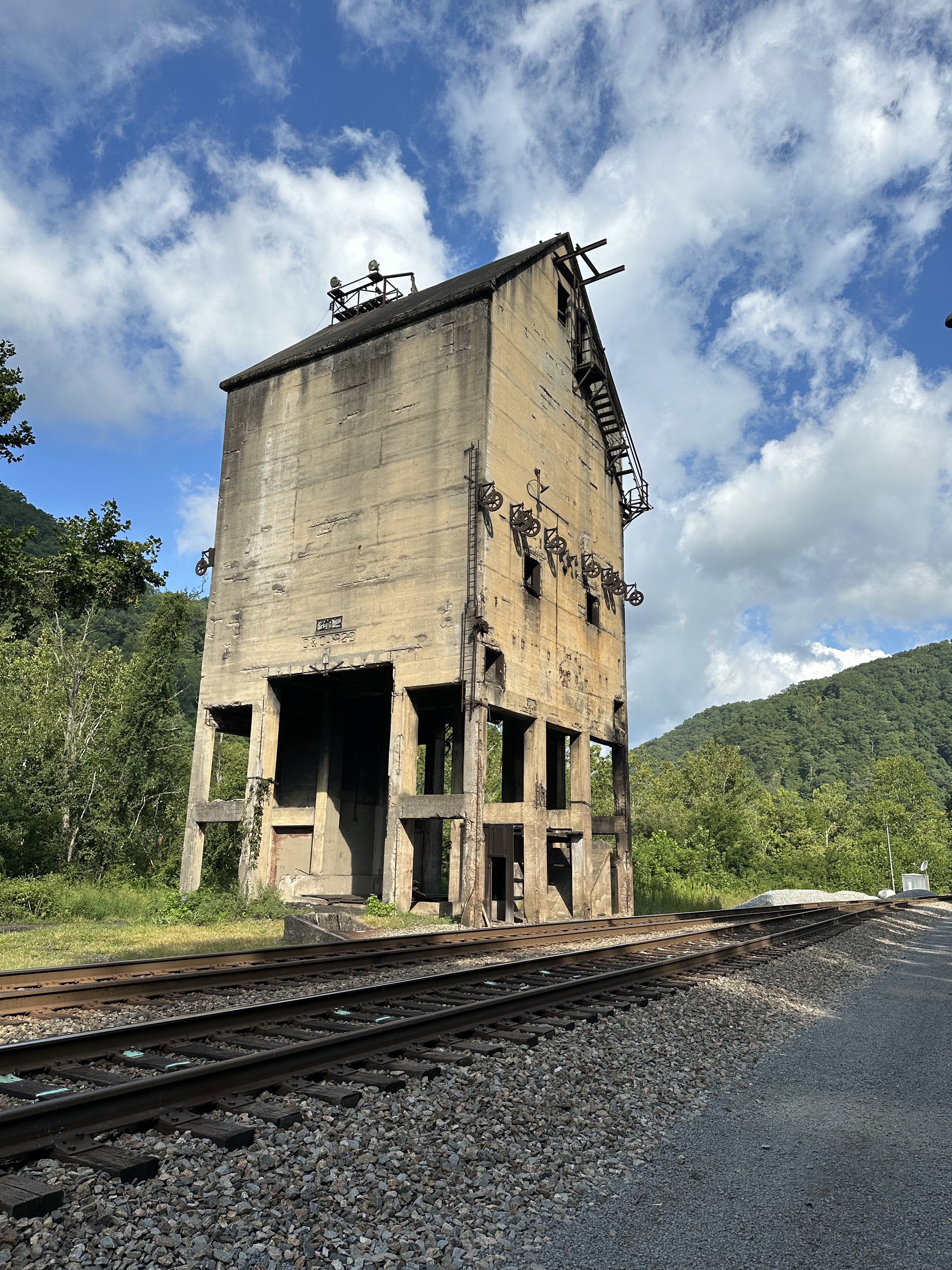
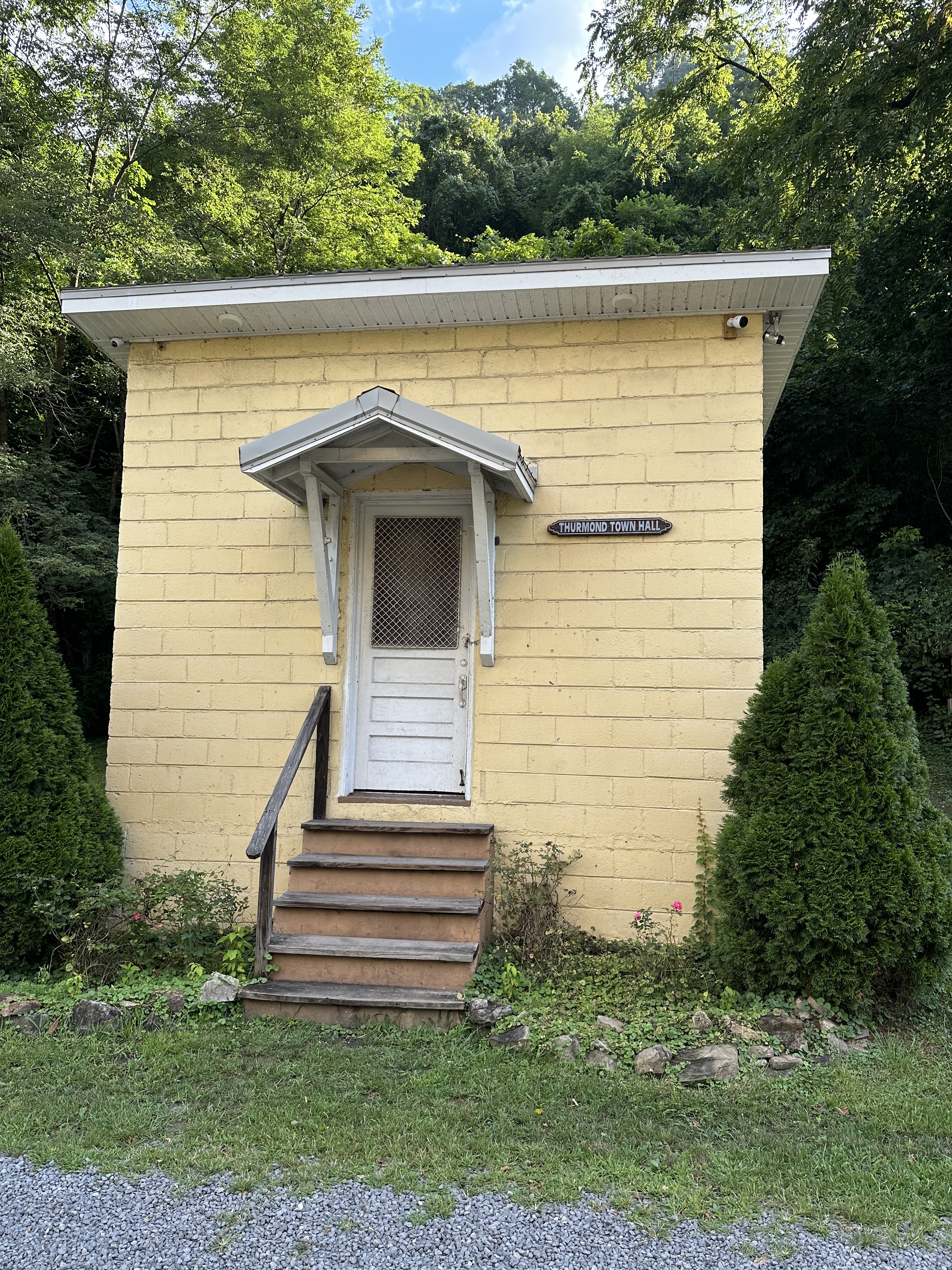
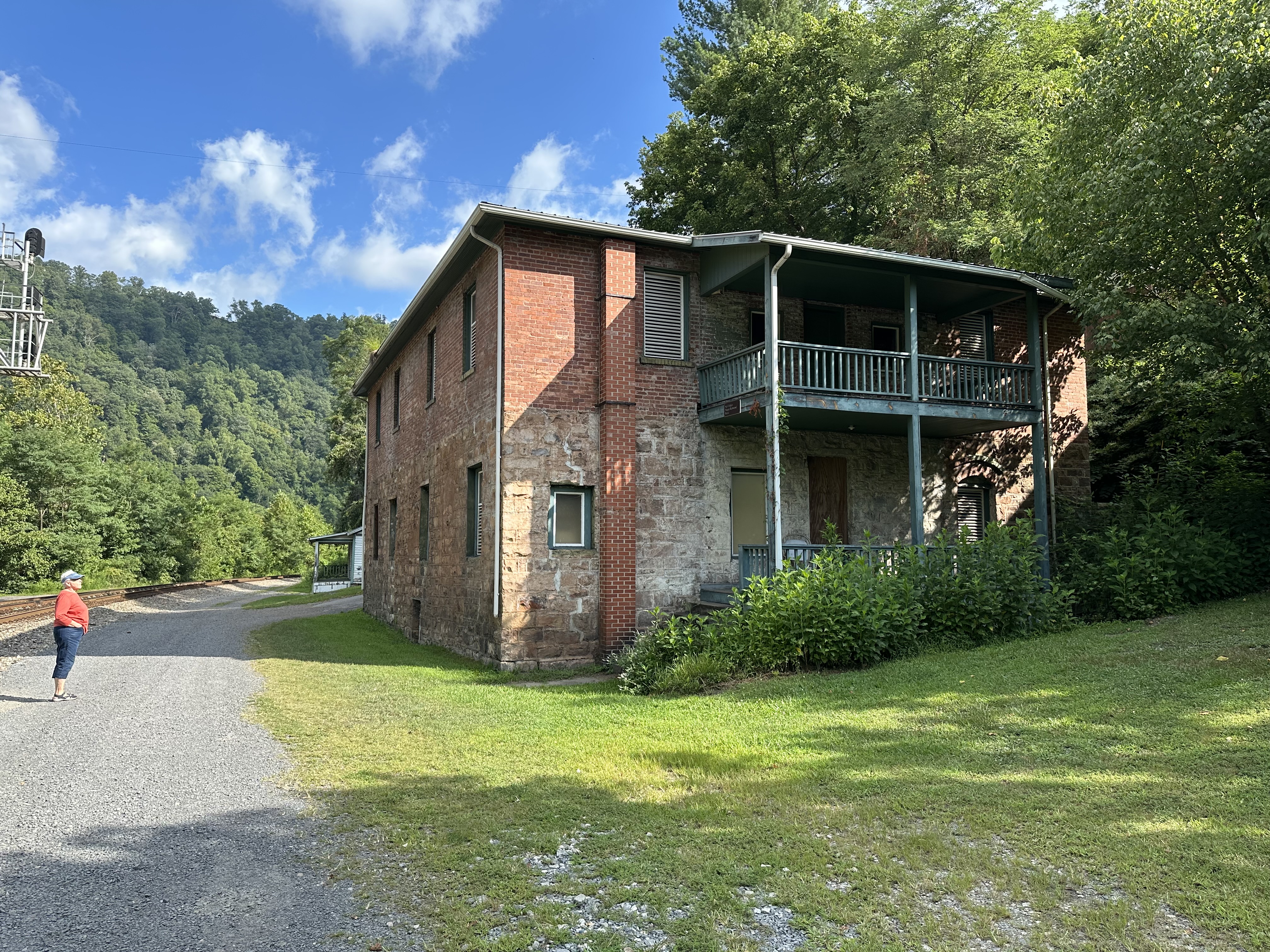
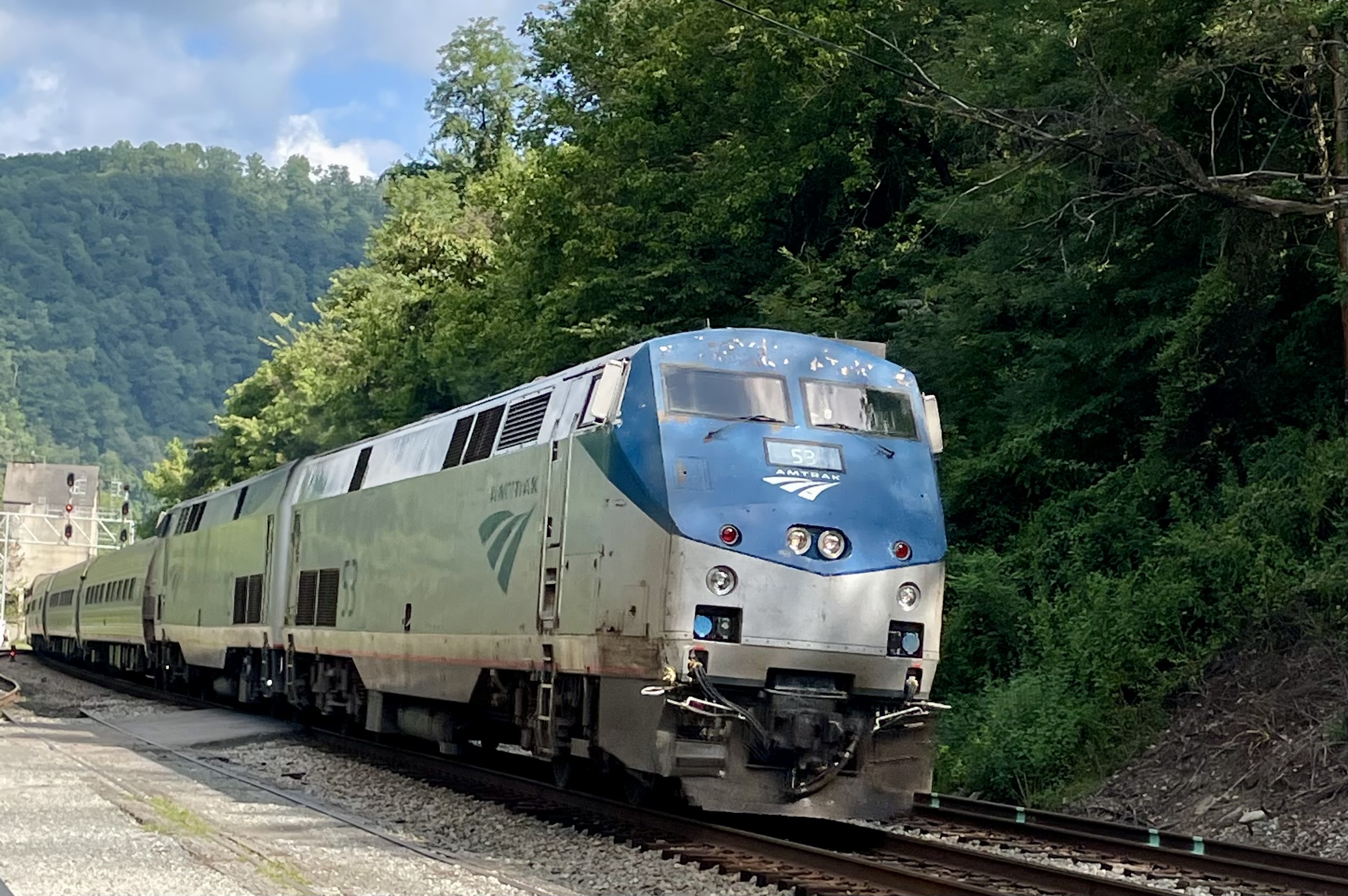
On the second day, we headed to the nearly abandoned town of Thurmond, a boomtown in the coal mining heydays. Today, only five folks live there. They all serve on the town council. One is the mayor, one is the secretary and the other three serve as council members. It was fascinating to walk the town of the once thriving businesses. Fortunately, the daily Amtrak train stopped to pick up a lone passenger while we were there. As the train pulled away, I realized a freight train had stopped on the mainline, allowing the Amtrak train to pass. It was a double treat for this train enthusiast.
On the way out of Thurmond, the road snaked along Dunlop Creek and a train track. Because of the steep descent of the topography, the creek had many rapids and small waterfalls. The sun broke through the thick tree canopy to highlight one of the falls.
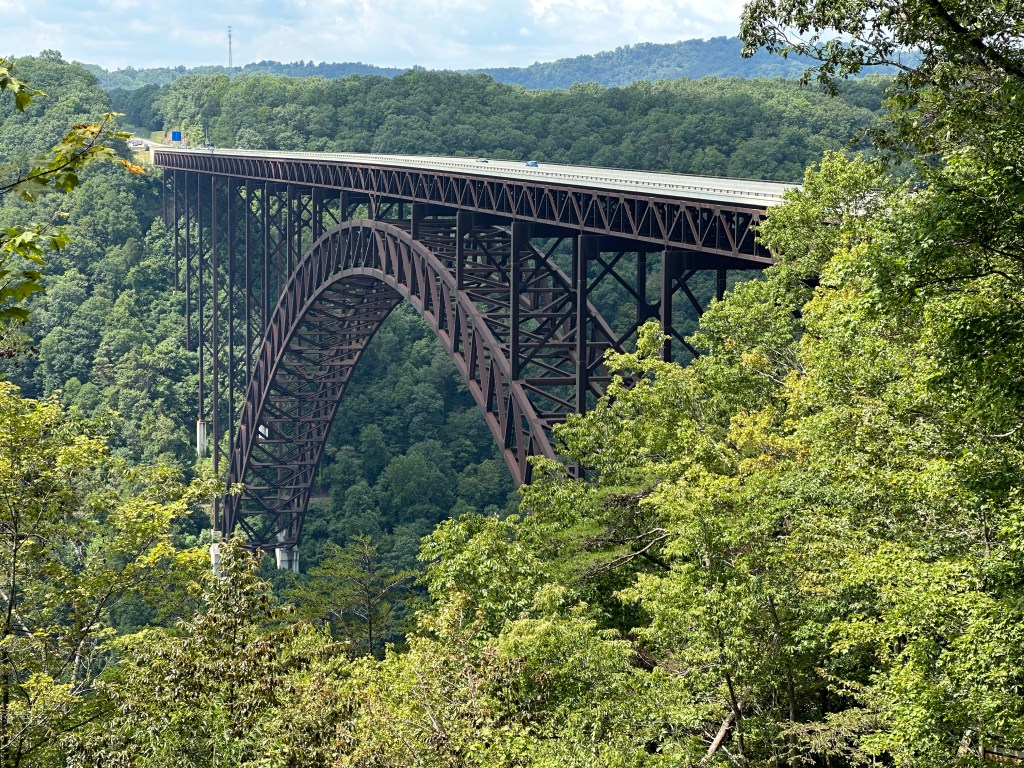
Finally, we took in the magnificence of the historic New River Gorge Bridge. The bridge carries U.S. 19. Consequently, the visitor center and the observation boardwalks were much more crowded than the other locales.
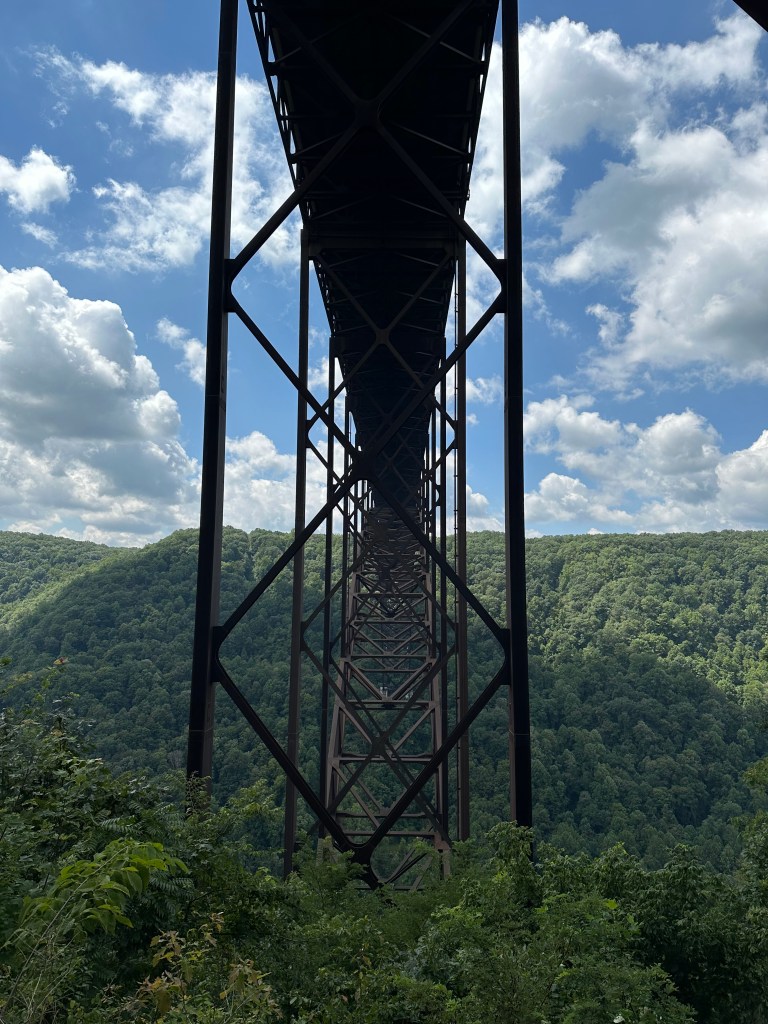
I wanted to get a photo of the bridge from the river view. The only way to do that was to wind our way down narrow roadways with several sharp switchbacks. There were a few places to stop along the way, including one right under the famous bridge.
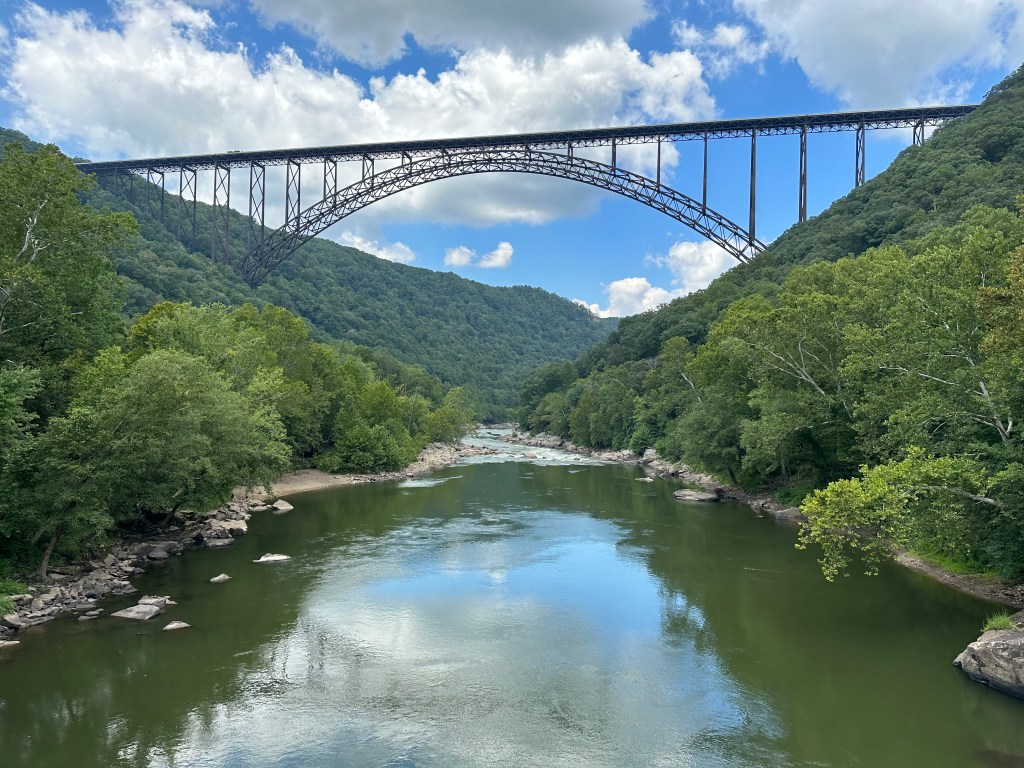
We continued down the twisting road, the river’s rapids on the right, bearing their white teeth. Soon we made a sharp, right-hand turn and drove across the old bridge to the designated parking lot. I told my wife I was heading to the bridge we had just crossed to photograph the New River Gorge Bridge, which spans 3,030 feet across the New River Gorge and is 876 feet above the river. The bridge is the longest single-span arch bridge in the world.
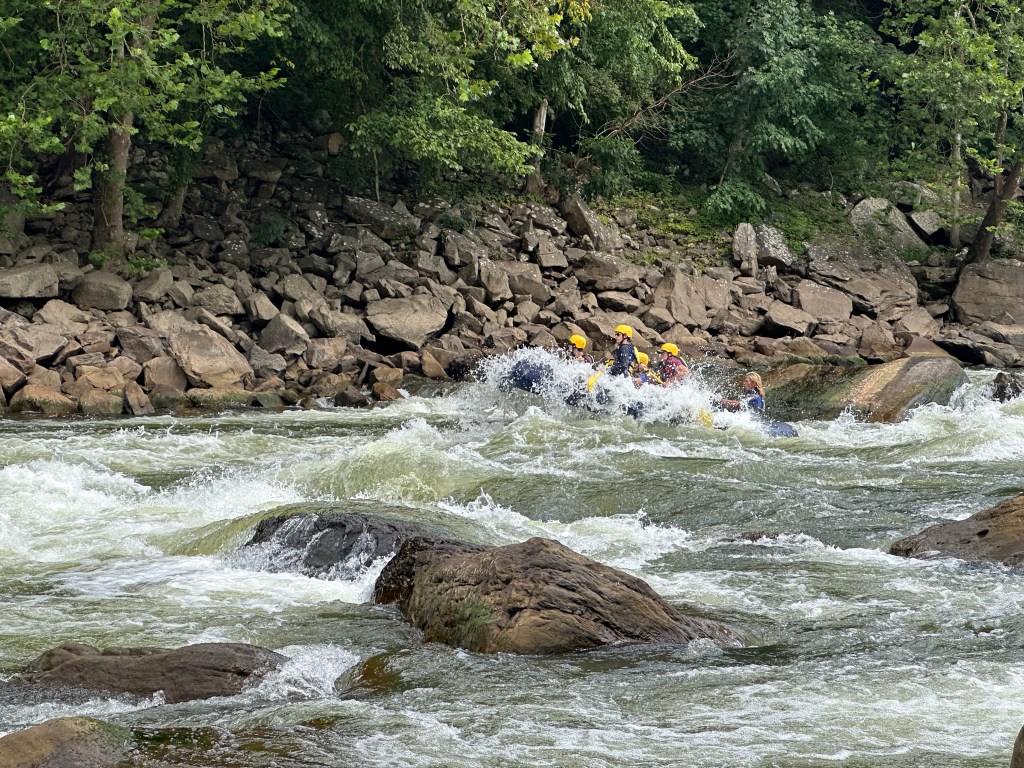
Rafters about to hit the rapids.
The New River Gorge Bridge.
The New River Gorge with the old bridge in the lower right.
Under the bridge.
Rafters and the old bridge.
The size of the boulders and the old bridge.
Running the rapids.
The New River Gorge Bridge taken from the old bridge.
However, I got distracted. I first heard and then saw whitewater rafters running the rapids with others waiting their turn. So, I hustled toward the water’s edge only to discover even bigger boulders than I had at Sandstone Falls. Wanting close-up shots, I scrambled across the rocks as carefully as I could. But the rafters were faster than this 75-year-old grandfather with a bad back and weak knees. Though only 50 feet from the water, I knew I should stop for safety’s sake. I got a few photos, including one lone kayaker who got turned around and bounced through the whitewater backward, just missing a giant rock. As soon as he hit calm water, he headed to the eastern shoreline to compose himself. I was doing the same in preparation for meeting my wife since I had been gone long enough to take the bridge photos and be back already.
After 52 years of marriage, I knew that look when I told her what I had done. I confessed that I should not have gone down there alone on those large slippery rocks. I hustled to get the coveted New River bridge photos. We drove back under the bridge on the switchback narrow roadway until we reached US 19.
The thrills I got from these two days easily could not block out my aches and pains. We learned a lot about the newest national park. And finally, after seven and a half decades, I realized I wasn’t 25 anymore.
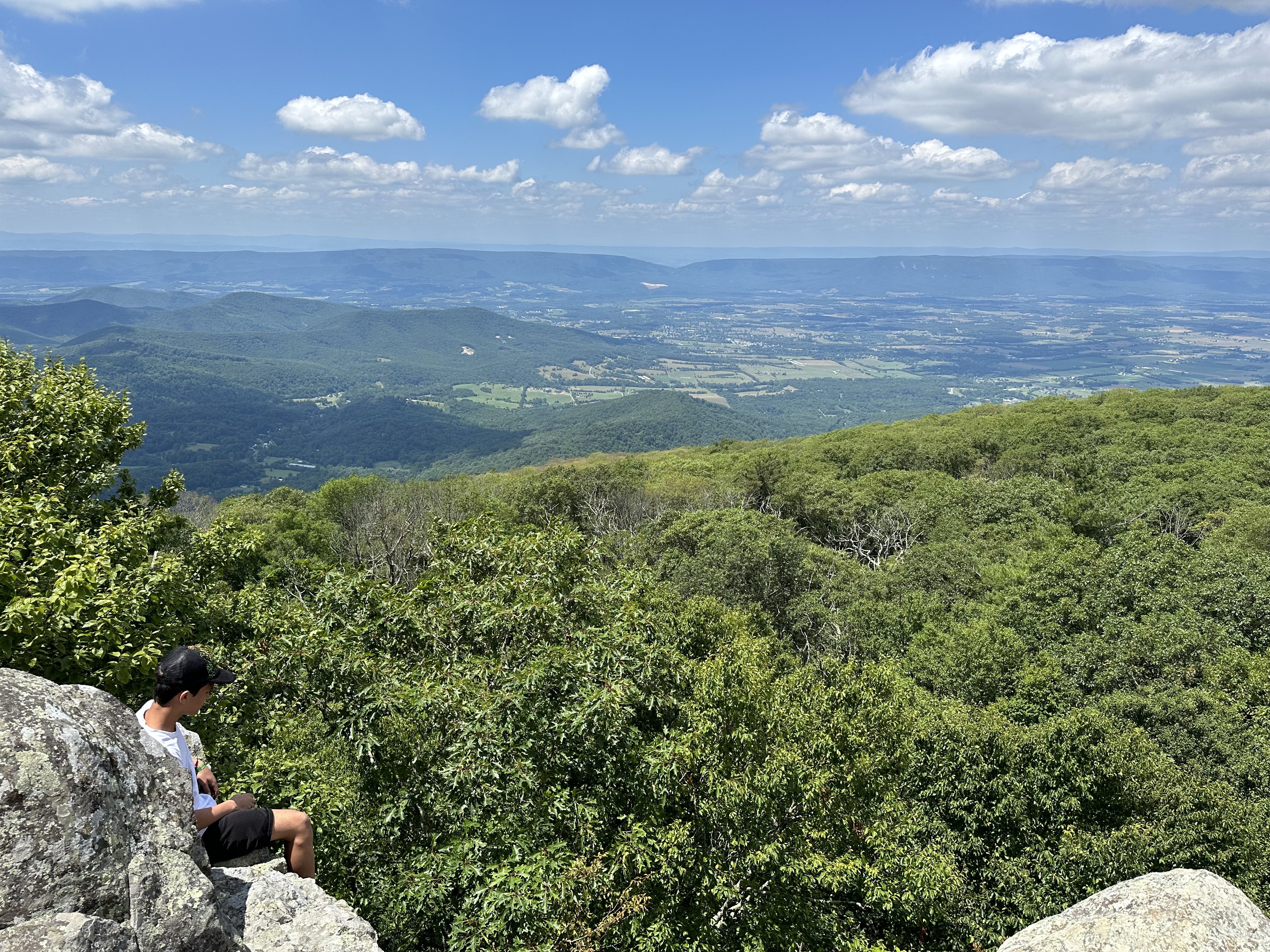
Viewing the Shenandoah Valley from an overlook in Shenandoah National Park.
Several recent studies have proved the obvious. Regularly spending time in and with nature dramatically enhances people’s mental health and appreciation for life.
That wasn’t news to me. Fortunately, I grew up in a family that spent time hunting, fishing, and vacationing in the great outdoors. I continued that pattern with my own family, minus the hunting. I prefer to shoot animals and everything else with cameras. It saves on taxidermy costs.
We moved to Virginia’s lovely Shenandoah Valley six years ago to be close to our grandchildren. Besides spoiling them, I also make regular trips to the nearby mountains. I multitask. On my hikes, I bird and photograph what I encounter.
Every outing, I discover new birds, wildflowers, and paths to explore. I often go alone, but I also enjoy sharing the fun with others. A group trip into the wild affords opportunities to explore nature together.
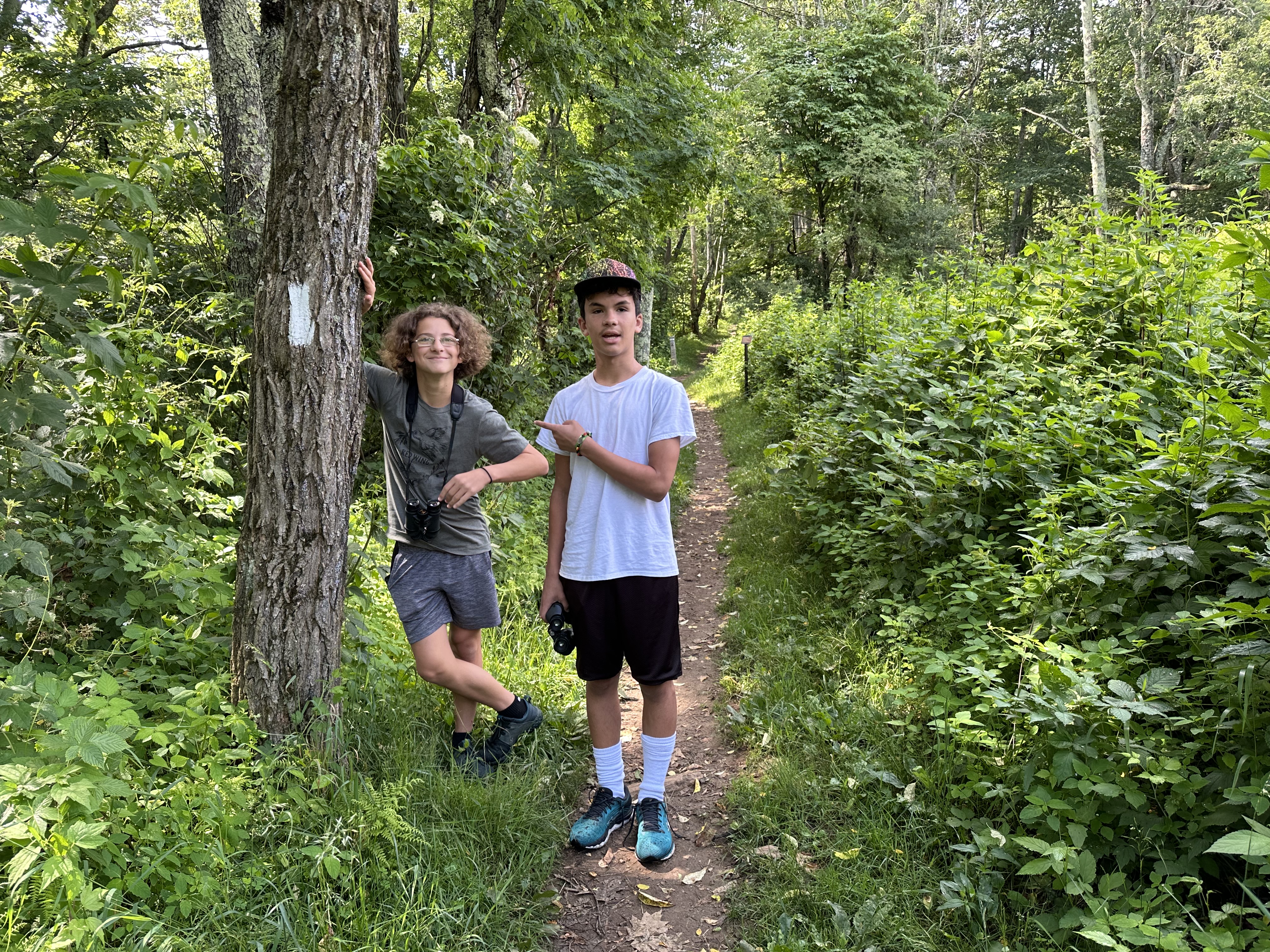
A recent outing to Shenandoah National Park with another senior friend and our teenage mentees from church allowed us to reengage with all the benefits of nature. I don’t know why the boys picked us, but we immediately hit it off. We all enjoy hiking and exploring, so the park was a natural destination for a day trip.
Once in the park, we veered off the famous Skyline Drive to Lewis Mountain Campground. I wanted to show the boys the only location in the park where Blacks were permitted during segregation. Even then, a few Whites complained that they should have access to the entire park.
At Big Meadows, we toured the exhibit of the park’s contentious founding at the Byrd Visitors Center. Not surprisingly, the youngsters showed more interest in the gift shop.
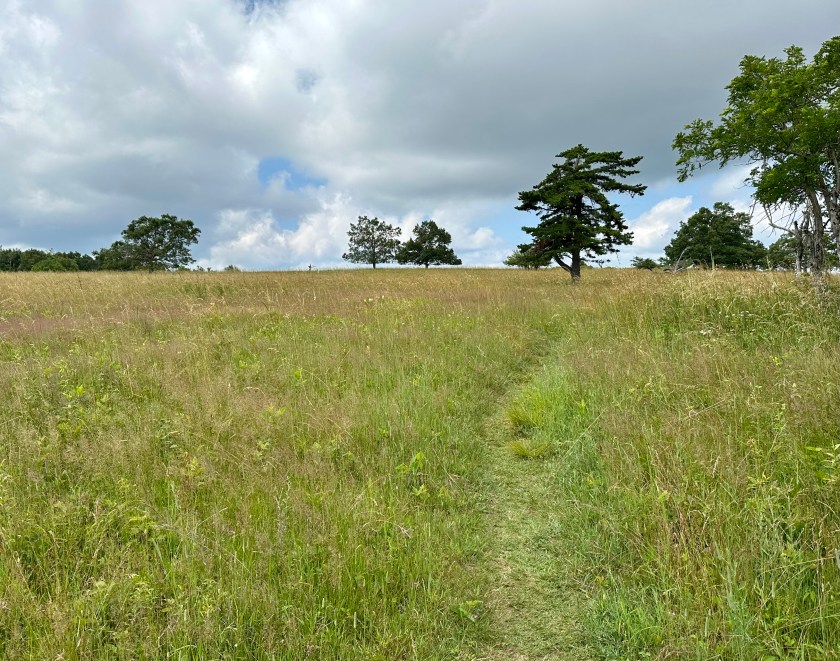
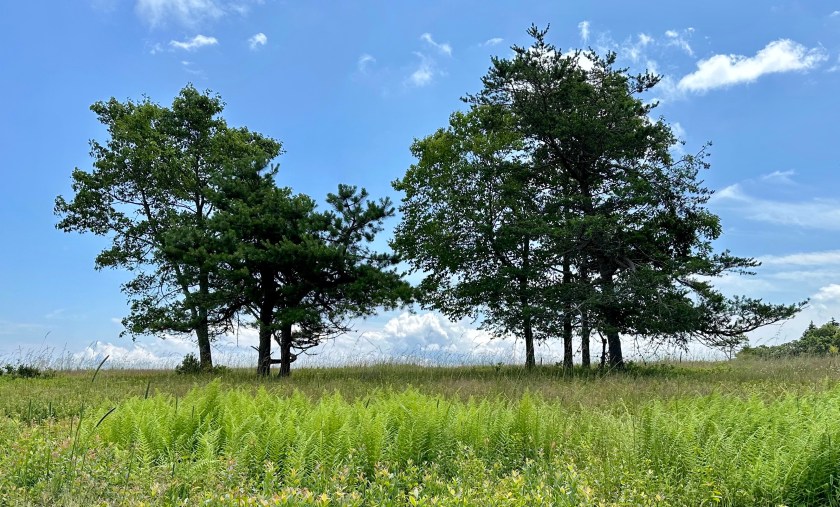
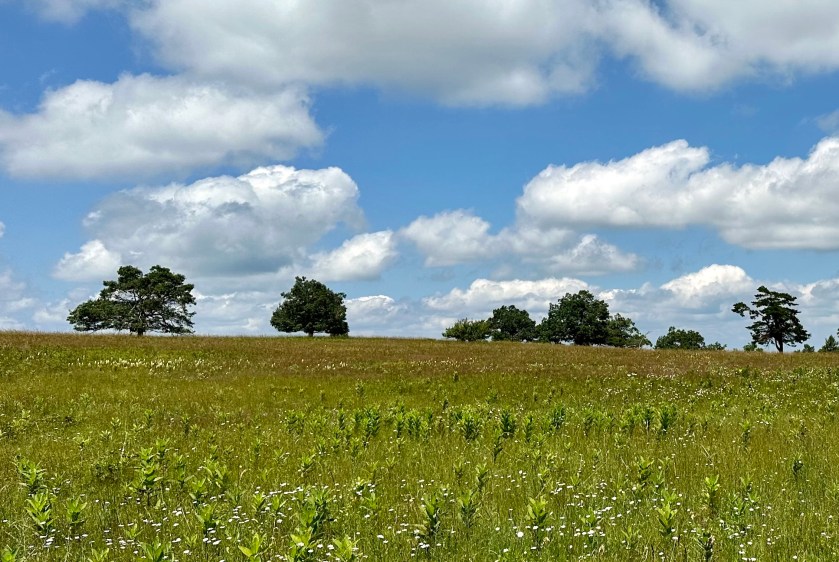
Then we got serious. We walked the southern parameter of the meadow. Its variety of habitats piqued their interest, from stands of trees to prairie grasses to artistic cairns. On the southernmost trail, the view of the Shenandoah Valley was spectacular.
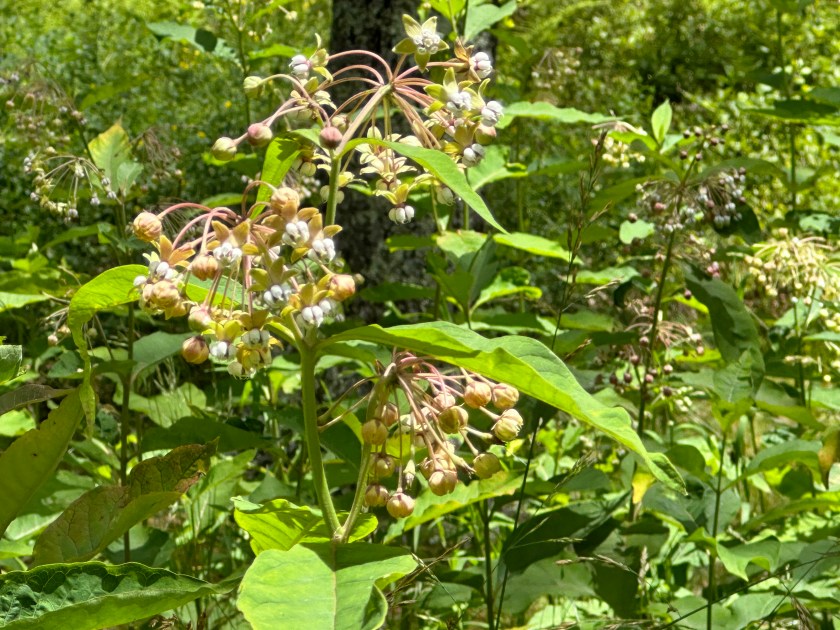
As we walked the cowpath-like trails, we encountered several bird species by sight and song and saw several butterflies that visited the wildflowers growing everywhere. Bright red wild columbines, vibrant woodland sunflowers, and common milkweed showed their colors and aired their fragrances.
Where the meadow met the forest, we spooked twin fawns. They only ran a short distance since they were foraging on shrub leaves. They seemed as intrigued with us as we were with them.
After a picnic lunch, we chose a short but magnificent trail. The Shenandoah Valley glimmered in the afternoon sunshine as we reached the summit and a massive rock outcropping. We basked in the comfortable, crisp 73 degrees of the Blue Ridge Mountains while the valley baked in the humid 80s.
It was good to commune with nature again, especially while sharing it with friends across generations. We breathed in cool, fresh air, were lulled by birdsong, enchanted by colorful flora and fauna, humbled by history, and energized by the needed exercise.
I was also glad we could personally verify the legitimacy of those extensive studies.
A memorial to those displaced when Shenandoah National Park was formed.
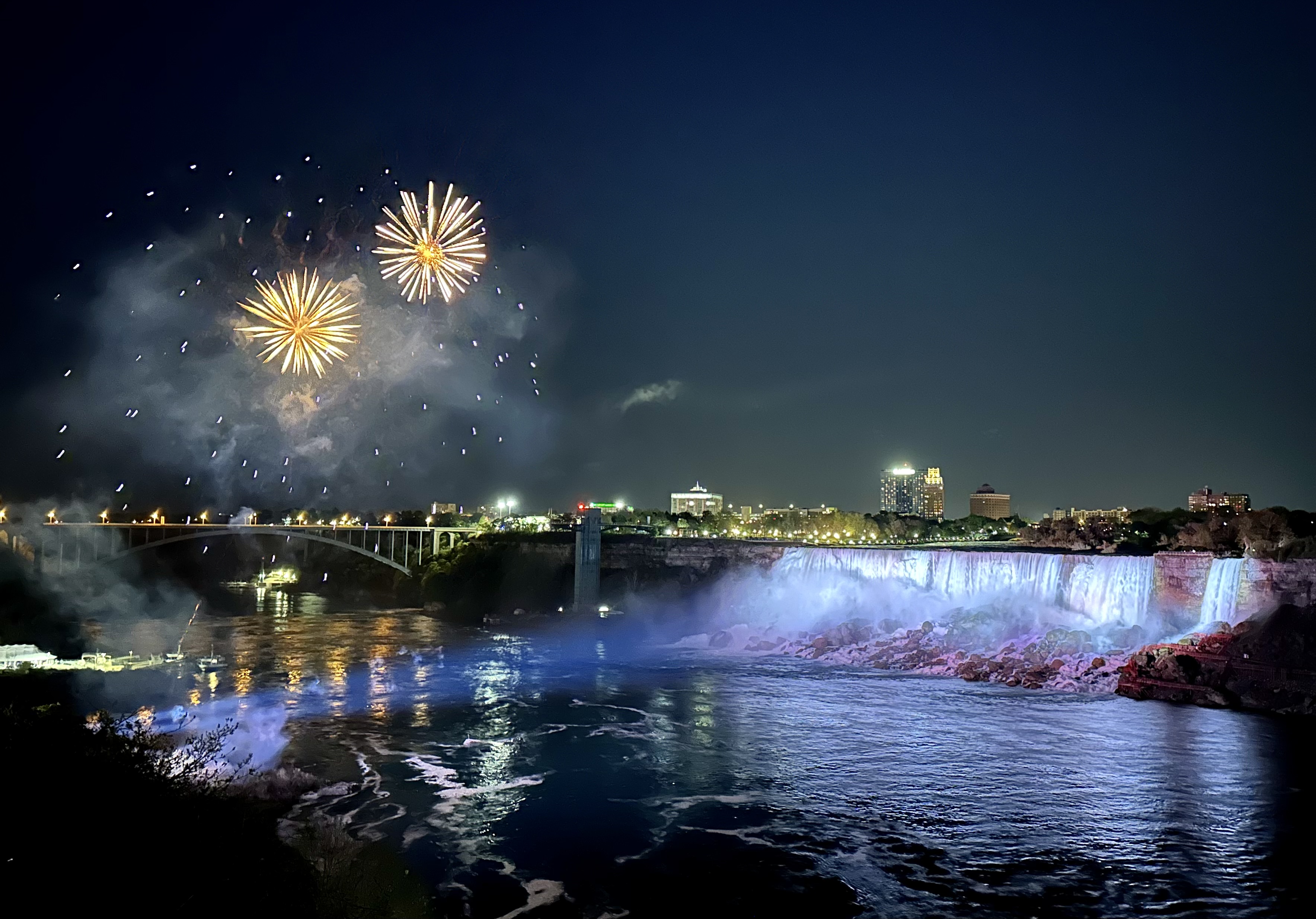
It’s celebration time for both Canada and the United States of America.
July 1 celebrates the anniversary of the Canadian Confederation, which occurred on this date in 1867. Next Tuesday, July 4, the U.S. celebrates the Declaration of Independence, adopted and signed in 1776.
In both countries, picnics, fireworks, parades, barbeques, carnivals, and concerts punctuate each national holiday. So, Happy Canada Day and Happy Fourth of July.
Just a few of the free-range Common Grackles in my front yard.
I don’t know about you, but the Common Grackles have taken over my birdfeeders and birdbaths. If you are interested, I’d gladly sell you a few or all of them.
Of course, you know I’m kidding. I couldn’t resist since April 1 is better known in the U.S. as April Fools Day. When I was a principal, the students loved to fool me on April 1 with all means of shenanigans. I was always glad when April 1 came on the weekend, like today.
So, April Fools Day! And in case you are interested in the grackles, please contact me a.s.a.p.
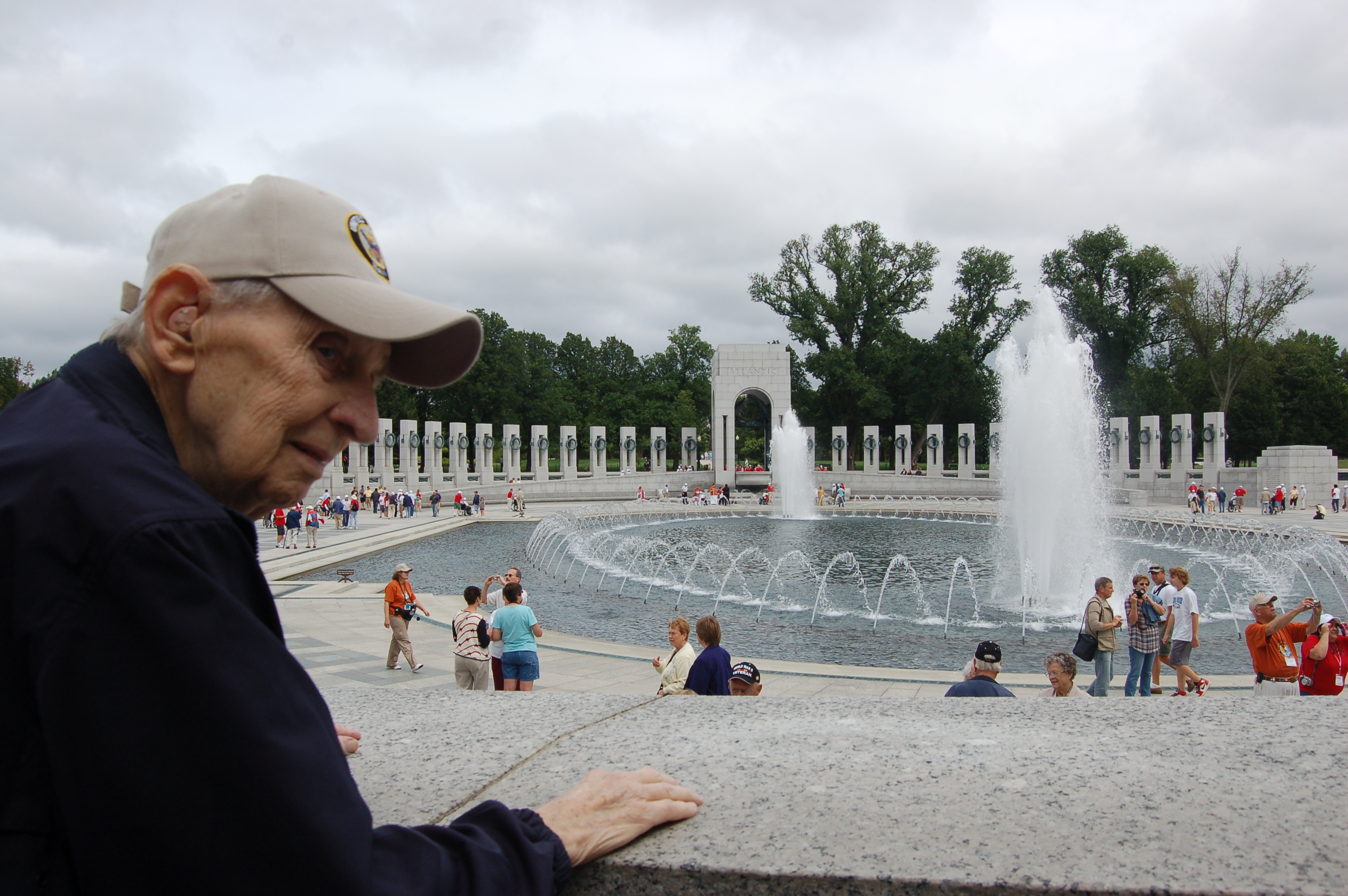
Some time ago, Dr. Lori Drumm contacted me about writing a chapter for her next book, “Serving Heroes.” I shared with her a piece I had written about assisting my father on an Honor Flight to see the World War II Memorial in Washington, D.C.
In an email, Dr. Drumm asked if she could use my article in her forthcoming book. I was honored that she wanted to use what I wrote.
I had come to know Dr. Drumm through my dying father. I often transported my father from Walnut Creek, Ohio, where he lived in a retirement community with my mother. I was always impressed with how well Dr. Drumm listened to my father and reassured him as his prostate cancer returned with a vengeance 17 years after surgery to remove the disease.
At his last visit to the VA clinic in Canton, Ohio, my father pleaded with Dr. Drumm to find a spot for him on the Honor Flight plane. There was a long waiting list, and Dad knew he had little time left.
A few days later, Dad received notice that he was on the Honor Flight from Akron-Canton Regional Airport to Washington, D.C., on September 12, 2009. I agreed to be his guardian since he was on oxygen, had a catheter, and used a wheelchair.
Dr. Drumm had pulled some strings and ensured Dad was on the flight. When I saw what it meant to my father and the other veterans on board, I knew I had to write about it.
My article summed up the day, and I included photos. I sent the link to the article to Dr. Drumm, and she thanked me. I was forever grateful Dr. Drumm worked to get my father on that flight. Dad died three months later.
I never anticipated the story being a chapter in a book. But here it is. “Serving Heroes” is now available on Amazon.com and other book venues.
Richard H. Stambaugh at the World War II Memorial, Washington, D.C., September 12, 2009.
I found this when I checked the potential for a lovely sunrise at 6:30 this morning. With sunrise still 45 minutes away, these clouds should have been turning all shades of pink, orange, and red at this stage.
Instead, the low clouds set a foreboding mood, as if denying the sun its daily duty. Then I noticed the crescent moon in the photo’s upper right-hand corner. And the phrase, “By dawn’s early light,” came to mind.
For citizens of the United States, those words should mean something. They are in the opening line of our national anthem, “The Star Spangled Banner.” The lyrics come from a poem, “In Defence of Fort McHenry,” written on September 14, 1814, by Francis Scott Key during the War of 1812.
I wondered how this sky compared to the one that inspired Key’s patriotic poem. Unlike the scene Key painted, thankfully, no bombs were bursting in the air here in Fernandina Beach, Florida, this morning.
But the mood of this photo, with the splinter of a waning January moon peeking between the clouds, also inspired me. I hope it does the same for you.
Spanish moss and the Live Oak leaves glistened in the afternoon, son.
I’ve never been a beach kind of guy. I prefer the fields, hills, and forests. When we winter in Fernandina Beach, Florida, on Amelia Island, I head to Egans Creek Greenway for peace of mind. That’s a bit ironic since our rented condo is on the beach facing the Atlantic Ocean.
I enjoy watching dolphins swim by and the many birds of prey, shorebirds, and other avian species plying the ocean waters. I also delight in the lovely sunrises, though they have been few and far between this year. I’m not complaining. We’ve had plenty of clear blue skies and above-average temperatures in the two weeks we have been here.
The warmth and fair weather have allowed me to spend enjoyable hours on the Egans Creek Greenway. The Greenway is a preserved wildlife area sandwiched between two busy east-west roadways, including the northernmost section of Florida’s noted A1A Coastal Highway. It’s my sacred place, though it is hardly quiet.
Egans Creek Greenway is a place to discover all of nature’s wonders. Visitors can find alligators, Ospreys, butterflies, river otters, and much more in, on, and among the waters, marshes, and greenery. Opened at the turn of the millennium in 2000, the Greenway is an undeveloped park for conservation and passive recreational use.
Egans Creek runs north through the far northeastern section of this barrier island. Housing developments and commercial buildings like hotels constantly push at the edges, even though the area is designated a preserve. The Greenway is managed by the city’s Parks and Recreation Department, which has its headquarters adjacent at the north end of the marsh.
The Greenway consists of over 300 acres of protected lands, which include slivers of marine woodlands, wetland bushes, and a sizeable briny marsh. Trails for walking, running, biking, and birding wind throughout the Greenway. Maps are available at the Greenway’s entrances, and benches are dotted along the grass-covered paths.
A path in Egans Creek Greenway.
In the dozen years we have been coming here, I have found the Greenway my place to relax, explore, and rest. Its location forces me to focus on what is right in front of me and always watch for surprises. Last year a Northern Harrier swooped low across the marsh. Roseate Spoonbills make rare appearances.
I especially enjoy the creativity it affords me if I only take the time to see it. The stark contrasts of crimson buds of red maple trees against the shiny green leaves of Live Oaks create a festive feel. Or the orange and black of a lone Monarch butterfly settling on a barren stalk keeps me mentally alert and spiritually alive.
Natural abstract.The teeter-totter.Duckweed shadows.Reflections.Red and green.The reunion.
Please click on the photos to enlarge them.
An added enjoyment is meeting new people on the Greenway. Some stop to talk or inquire about what I am seeing. Others just run or bike right on by. Rowdy teenagers occasionally pitch a stick at a sunbathing alligator or spook birds with their boisterous talk.
Nevertheless, these experiences allow me to tune out the human-induced noises that permeate our lives. In the case of the Greenway, commercial jetliners approaching Jacksonville International Airport 30 minutes away buzz overhead. So do smaller planes taking off and landing from the local airport two miles southeast of the Greenway. And then there are the military helicopters flying up and down the beach from Mayport Naval Station in Jacksonville.
Sirens wail away, responding to the next emergency. Trucks, motorcycles, and cars hum along the adjacent streets. Train engine horns from tracks along the riverfront invade the Greenway’s peace and tranquility.
Despite those acoustic interferences, I still find the Greenway a respite, a private sanctuary in a very public place. I accept that I cannot change those annoyances. I can concentrate on solitude and enjoyment in whatever I find each time I walk the Greenway.

























































You must be logged in to post a comment.