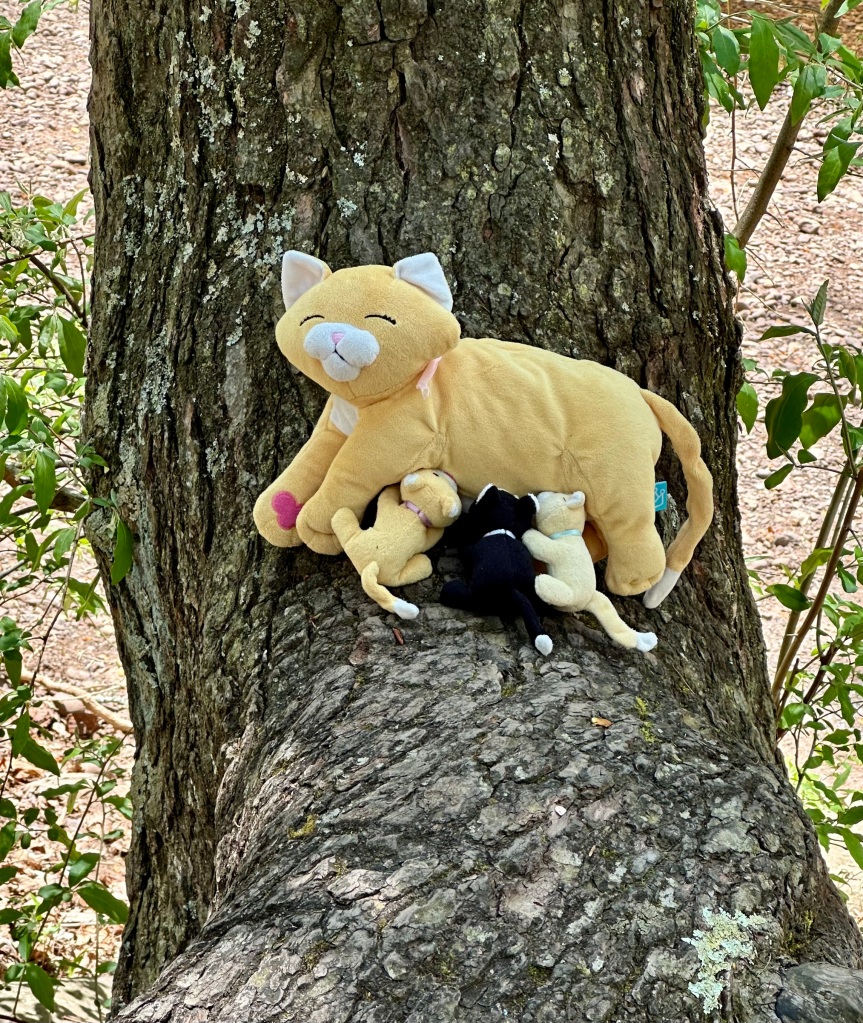
Sometimes, reality is stranger than fantasy. Photo by Bruce Stambaugh
When I happened upon this tender scene, I did a double-take.
My wife and I had joined an entourage from church for a Sunday afternoon of baptisms for three teens in the chilly mountain stream. After the dunkings and the celebratory congratulations shared, I wandered away from the rest of the revelers to see what I could find.
Scores of Pipevine Butterflies and Tiger Swallowtail Butterflies flitted through the woods. They danced carefree from rays of broken sunlight to dense shade, oblivious to the human invaders.
I certainly didn’t expect to find a cat casually nursing three young ones in the forest. And I especially didn’t expect to find a stuffed cat and her young stuffed kittens. But that is exactly what I discovered.
Some children not connected with our group were splashing in the nearby stream. Perhaps one of them thought this wild cherry tree along the banks of the Dry River at the base of Shenandoah Mountain was a lovely and safe haven while romping in the water.
I’ll never know for sure, but this composition of fantasy playthings among nature’s real and evolving habitat was too good not to share.
My wife and I have been cleaning the house item by item for longer than I can remember. And we’ve been married for 53 years.
She has always been ahead of me in the disposing game. I’m finally beginning to understand the joy of discarding items I have clung to for far too long.
Gone is the brown felt stetson cowboy hat my daughter’s family gave me as a gift years ago when they lived in Texas. It was a striking hat, but I seldom wore it. So, why should I keep it?
To be considerate, I asked my daughter if she cared if I gave the hat away. She just smiled and said, “It’s your hat. You can do whatever you want with it.”
Of course, I knew that, but I wanted to be sensitive to her since she had purchased the thing. I could have donated it to a thrift store, but I didn’t.
Guess where the stetson ended up? Back in my daughter’s household. Her second son, 17, jumped at the chance to own it. He hopes to have a hatter stretch it so it fits him.
Knowing that the hat has a familial home has instilled as much pleasure in me as having received it in the first place. Isn’t that the point of decluttering your life, especially when you’re 76?
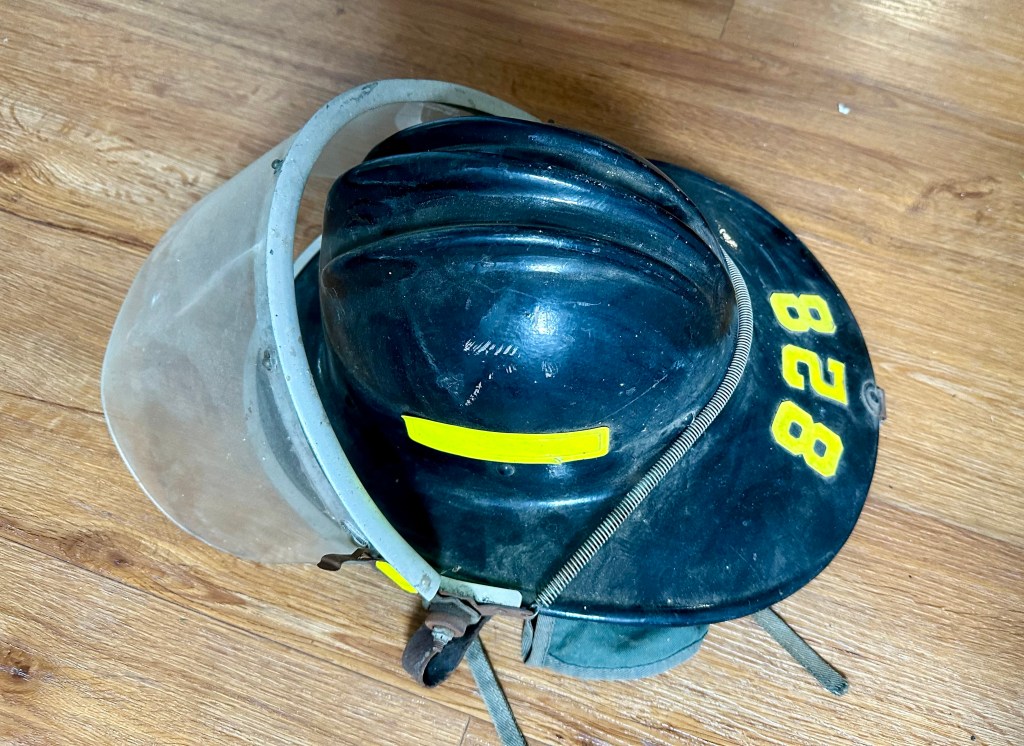
Our two-year-old grandson loves to dress up as a firefighter, among other wholesome job roles. I kept my old helmet from my volunteer firefighting days. The black fiberglass headgear, long lacking necessary safety standards, still has my uniform number, 828, emblazoned on it.
When I offered it to his parents for their son, they declined. I wasn’t either surprised or disappointed. The thing has too many places for tender little fingers to get pinched or cut.
So, the same grandson who confiscated the cowboy hat will also own my helmet. I don’t know what he will do with it, but when I hand it over, I’m sure he’ll ask questions about emergencies to which I responded. I have a storehouse of tales to tell him.
My old fire helmet. Photo by Bruce Stambaugh
Our teenage granddaughter didn’t hesitate when I offered her a t-shirt from a favorite burger place on the island where we wintered in Florida. Our daughter’s family joined us for a few days a couple of times, and the grandkids loved that restaurant, too. Many snowbird memories passed to her in that faded shirt.
When our son and daughter were young, I brought out my old model train set at Christmas and continued that through the toddler years of the grandchildren. Now, our son has it to entertain his son. I don’t have to be there to know and sense the joy of a child and his father connecting one track segment to another until the oval is complete. Just mentally picturing that scene is enough.
A teen I mentor enjoys birding but needed a bird guide. Over the years, I have collected many books on birds, so it was no sacrifice to give this enthusiastic youngster a field guide I cherished so that he could, too.
I have an old black-and-white photo of four of the 28 fourth-grade students from my first year of teaching. I will send it to the one Amish boy in the picture, knowing he would revere it more than me. He will remember and tell his grandchildren when his fourth-grade class created a radio station.
I discover new items daily that equally resurface loving and sad memories. If I don’t need the apparel, souvenirs, or keepsakes, I gladly pass them on to the younger generations for posterity. I’ve already had mine.
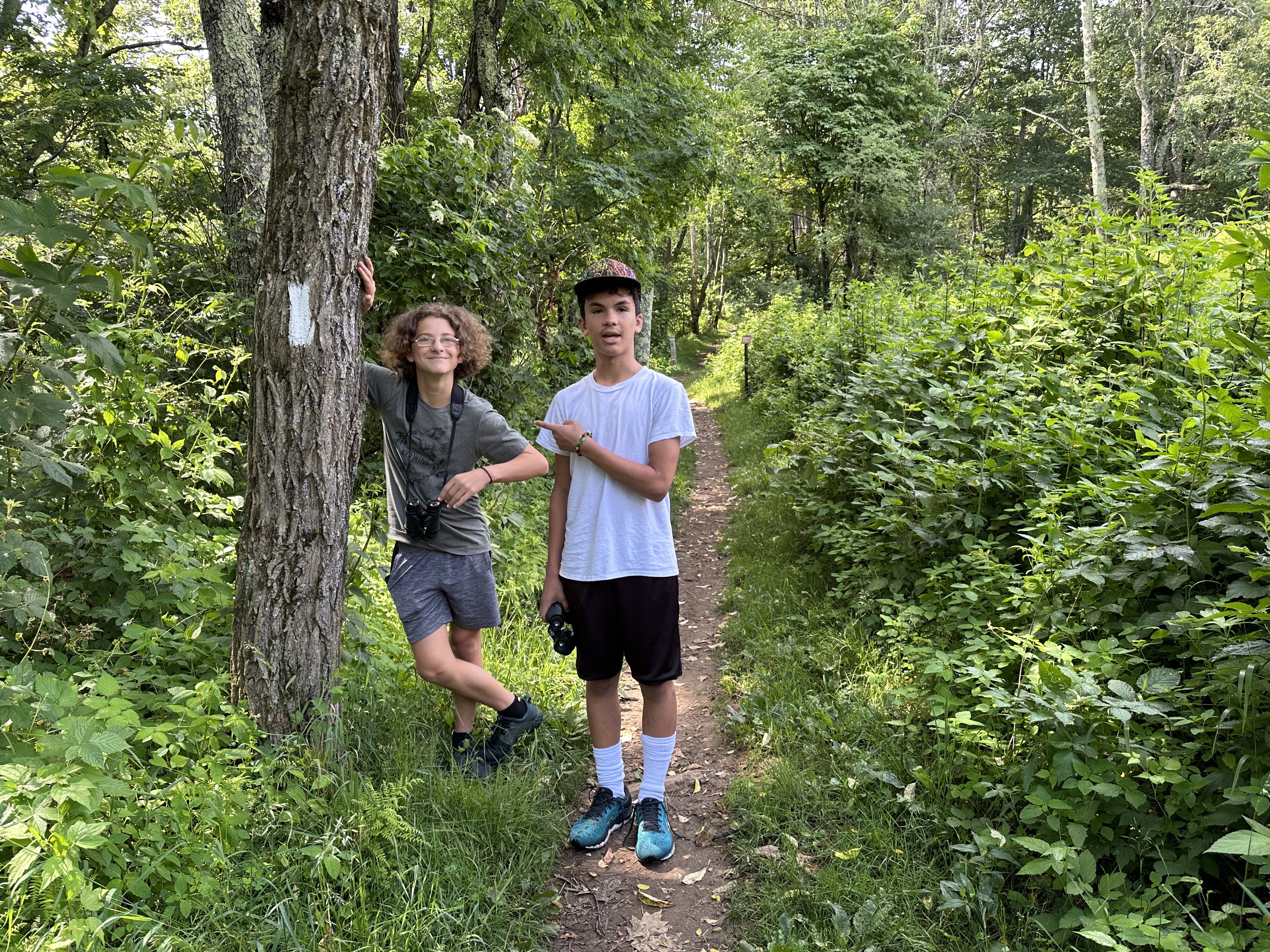
Teens learning about Big Meadows in Shenandoah National Park. Photo by Bruce Stambaugh
This is the third installment of a series celebrating National Park Week.
I often hike alone. But occasionally, I enjoy sharing my love of nature with others.
The church I attend has a mentor/mentee program for youth. A friend and I each serve as mentors for two teenage boys. Knowing we all enjoy the outdoors, we took them for a day trip to Shenandoah National Park last summer. We had a riot.
These energetic young men enjoyed every aspect of the trip. They loved the hikes and the enthralling views. They also identified birds, flowers, and rocks and occasionally pestered one another. A pair of fawns grazing at the edge of Big Meadows startled us as we walked along the union of the meadow and the forest.
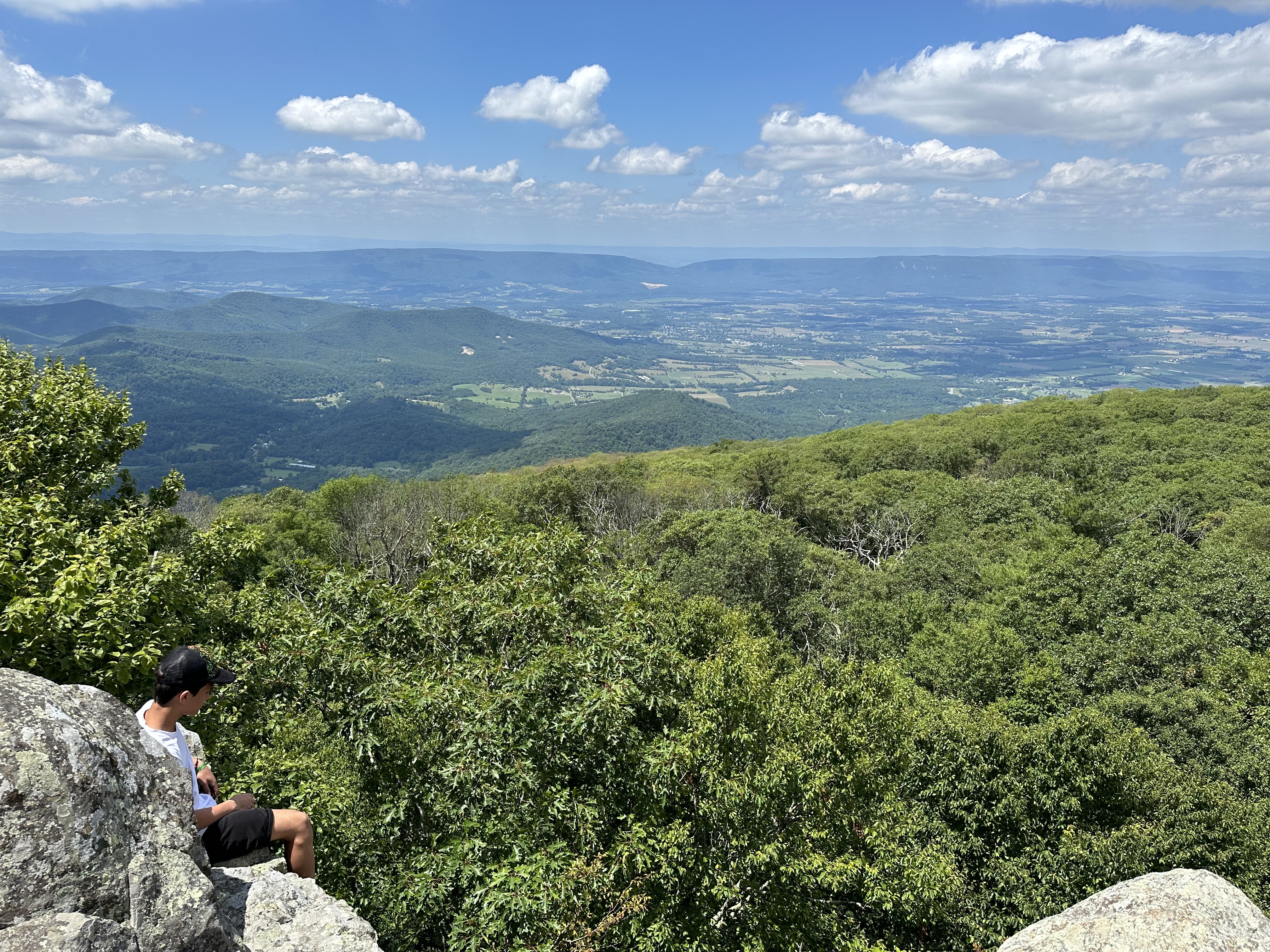
We rested on a rock outcropping overlooking the always lovely Shenandoah Valley. The boys loved scrambling over the ancient rock formation and resting in the warm sunshine, basking in all nature’s glory. Given our generational spans between teens and septuagenarians, I marveled at our common contentment.
But that, in part, is what national parks are for. People of all ages, races, religions, backgrounds, and interests feel at home in our nation’s beautiful national parks.
Our excursion was a perfect example of how to celebrate National Park Week.
Day hiking the Appalachian Trail in Shenandoah National Park. Photo by Bruce Stambaugh
I always needed a clarification. I was the marketing coordinator for a continuous care facility 10 miles from home.
Part of my responsibilities included writing a quarterly newsletter that featured people from every aspect of the campus. I interviewed residents in the nursing home, assisted living, independent living, and even employees.
Most residents welcomed me into their living space, gladly answered my questions, and allowed me to photograph them, often with a piece of quilting or carving they had done. It was the reaction of other residents that threw me off. Some declined when I asked them to be interviewed for the newsletter, while others said they were too busy.
I thought to myself, “They’re in a retirement community. How can they be too busy to be interviewed for half an hour?” So, I asked them for an alternative date. Again, they would offer an excuse that I couldn’t come that day because they had a doctor’s appointment, a friend was coming for a visit, a hair appointment, or some other reason at a specific time.
I stayed persistent and said I could come well before or after their appointment. Most declined, saying to pick another day that suited them. It usually was a day they didn’t have anything planned.
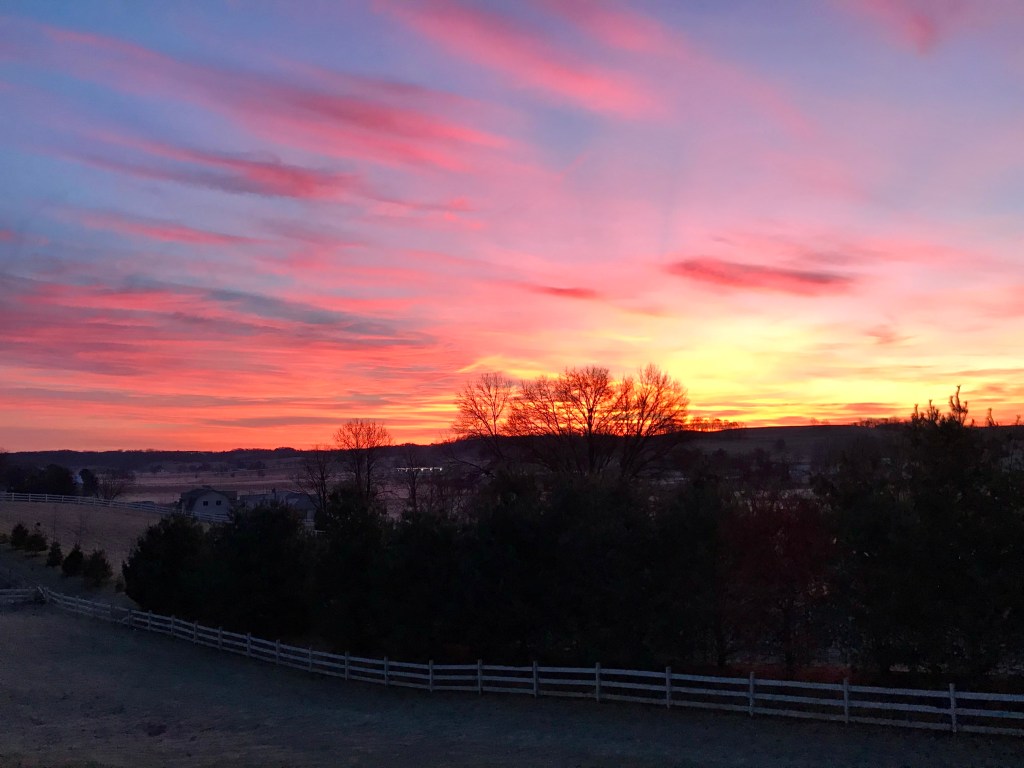
Sunrise at the Ohio retirement community where I worked. Photo by Bruce Stambaugh
That should have been my first hint. Still, I didn’t quite understand why they couldn’t see me in the morning when they had a late afternoon appointment.
I do now. I held that position 20 years ago. At 76, I am the age of some of the folks I interviewed. I find myself repeating their behavior.
My wife and I retired, but not to a retirement community. We live in a ranch home on a third of an acre. We downsized considerably when moving from our long-time Ohio home to Virginia’s lovely Shenandoah Valley to be close to three of our four grandchildren.
I’m done for the day if I mow the yard, which usually takes about an hour and a half, including trimming. Out of sheer fatigue, I readily turn down opportunities to fill in the rest of the day. The only exception is if one of the grandkids has a concert or baseball or volleyball game.
After an exerting project, I am more than content to sit on my lounge chair on our screened-in back porch and read or relax. Even though I exercise regularly, I need to recharge the next day.
I am even careful about scheduling anything other than a doctor’s appointment on a single day. I have to drive across town to get to the medical office. I always wonder what traffic will be like. Our small city hosts two thriving universities, several non-profits, and many businesses and residences, including many townhouses and condos serving as college student housing. Plus, I have to cross an interstate highway that runs right through the middle of the city, with vehicles entering and exiting. As much as I like to drive, it can be stressful.
So, I confess that I didn’t fully realize the effects of aging. In my 50s, I was still raring to go. In 2024, not so much. I still walk, hike, and do photography, and I am an active bird watcher. Those I can combine in one outing. But not if I have another kind of commitment that day. I spread out the activities in which I partake.
So, to all those former residents in the retirement community, I apologize for shaking my head at your excuses. I now guard my daily schedules like you did all those years ago. Thanks for the life lesson, even though I learned it too late.
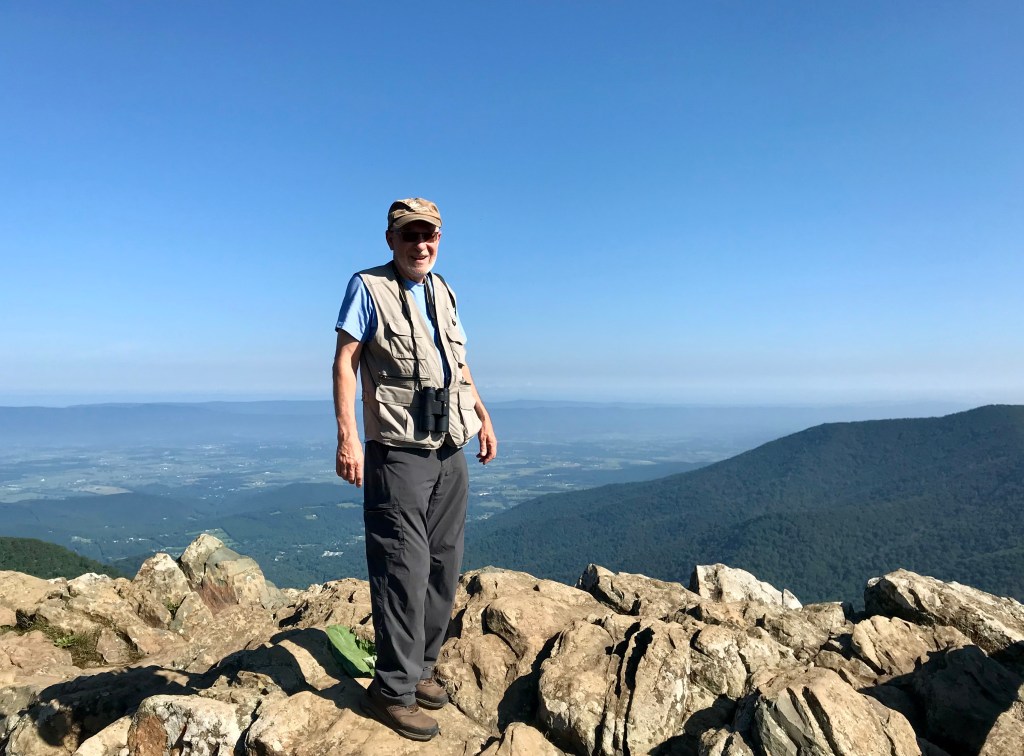
The author at Hawksbill Peak in Shenandoah National Park. Photo by Bruce Stambaugh
A view of the snow-covered West Virginia mountains.
My wife and I spent a wonderful long weekend visiting family and friends in Ohio. With a powerful cold front sweeping across the country, I suspected our return trip might be dicey since we had to travel through several mountain ranges to return to our home in Virginia’s Shenandoah Valley.
To avoid slippery roads, we waited until the warnings and advisories for heavy snow expired before setting out. That still gave us time to arrive home before dark as long as the roads were clear. Fortunately, they were.
The snow appeared as soon as we began to climb in elevation east of Morgantown, West Virginia. The tall, dark, barren trees sprouted from a light snow covering. The beauty would only increase as we progressed southeast.
A snowy scene near Oakland, Maryland.
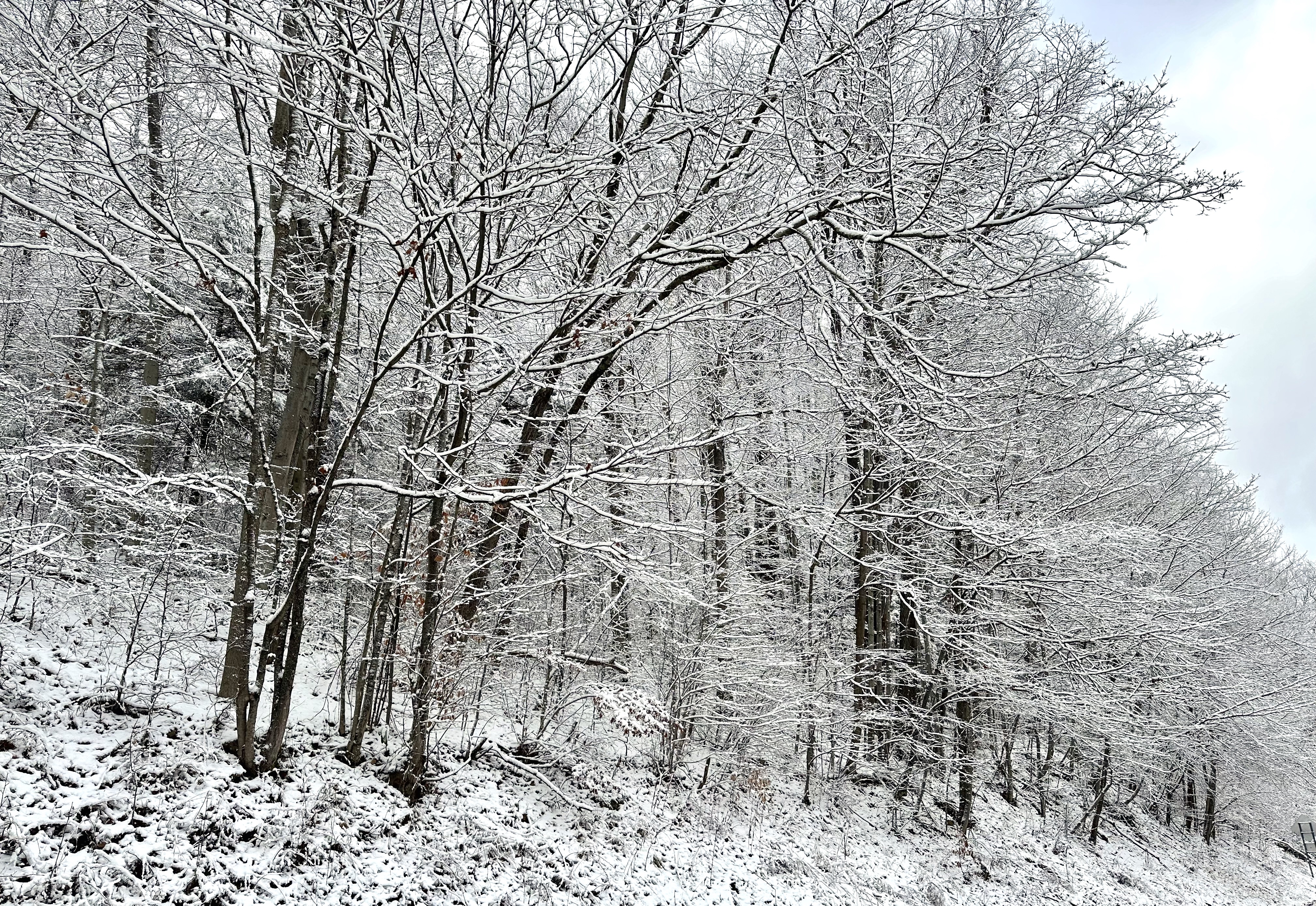
The highways in Maryland traverse mountains that appear all scrunched together. The effect is that you are riding across the mountaintops without ever descending into deep valleys. There, the storm had frosted entire woodlots with powdered sugar. Inches of snow stuck to the tree branches and trunks and covered the forest floor and adjoining farm fields. It was gorgeous.
I stopped several times for photos. However, we saw numerous scenes without a safe place to pull over. Those images will have to remain pleasant memories.
Please click on the photos to enlarge them.
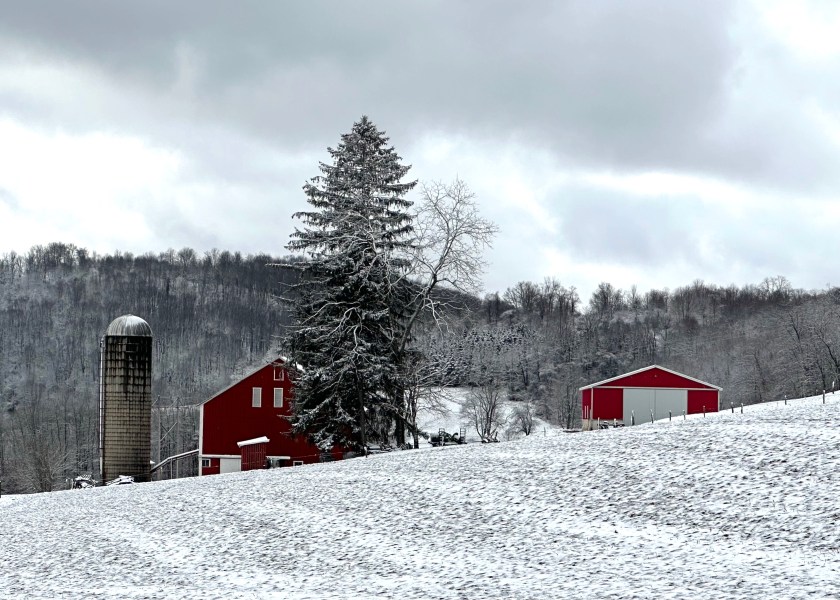
Since I couldn’t stop along the narrow, winding state route, I chose several county roads for photos. I didn’t have to go far. It was like we had driven into a black-and-white movie from the 1950s. Forboding dark clouds enhance that effect.
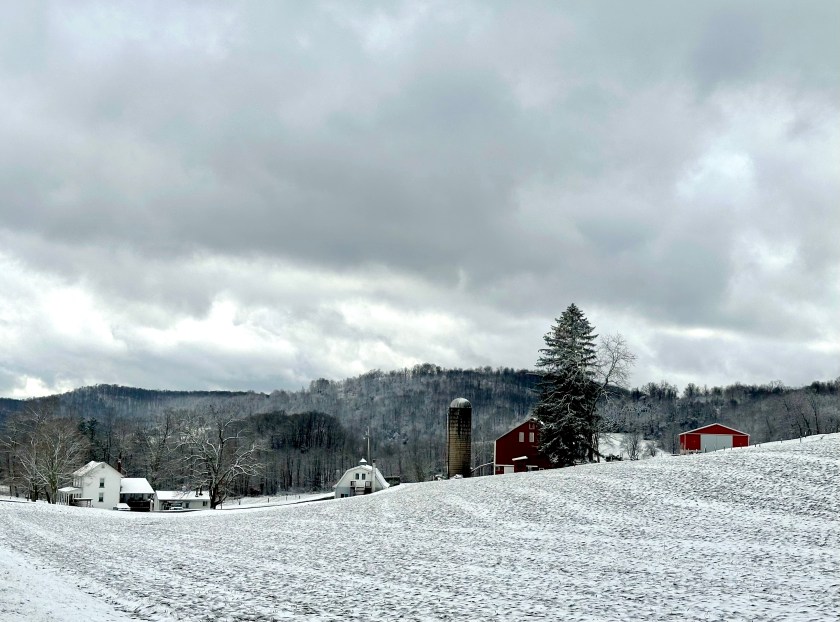
We continued our trek south and east into West Virginia. The snowy, panoramic landscape became wide open once we hit Corridor H, U.S. 48. We took advantage of highway overlooks for thrilling shots.
Please click on the photos to enlarge them.
In Maryland and West Virginia, giant windmills swooped their massive blades round and round. Despite their distance from us, the noise shocked me when I exited the vehicle for photos.
The valleys became more expansive, and the mountains steeper as we continued east. As the National Weather Service predicted, areas above 2.000 feet in elevation received the heaviest snow. The lowland had little to no snow at all.
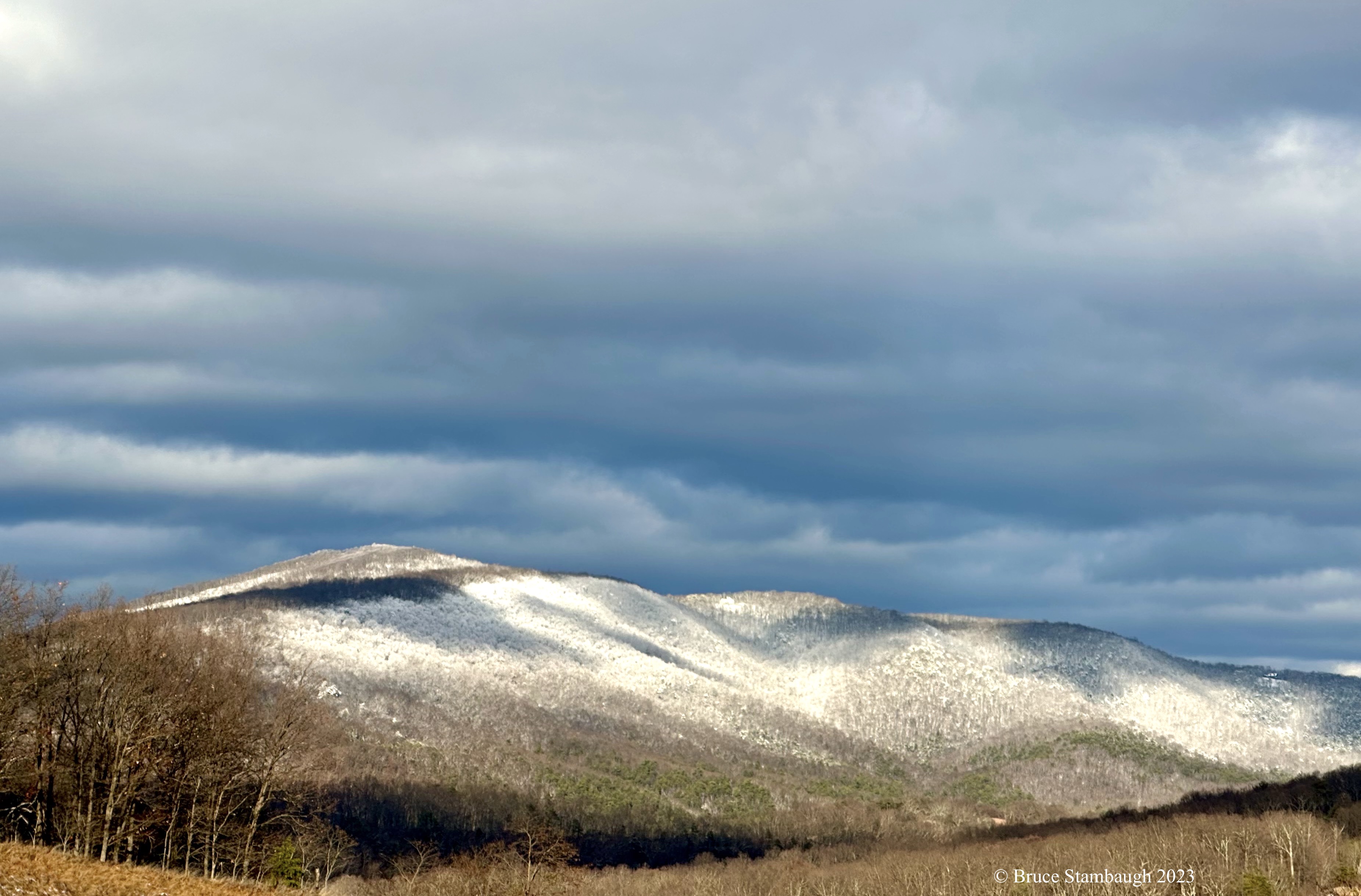
A sunlit mountainside near Baker, West Virginia.
The farther east we traveled, the more frequent the breaks in clouds, which allowed the late afternoon sun to break through. The contrast between the sunlit and shadowed snow created lovely shade and color contrasts.
As we entered our beloved Shenandoah Valley, snow had all but disappeared. Only the higher ridges remained white. The morning photos of friends on social media showed the comeliness of the snowfall in the valley, with the snow-covered old-age mountains as a beautiful backdrop.
Still, we were happy to have seen the snowy sights and thankful for cleared highways, and to be home.
Cattle grazed beneath the snow-covered Allegheny Mountains near Lost City, West Virginia.
I love photography. It keeps me alert for the extraordinary while doing the ordinary. In this case, I was with my wife, her cousin, and her husband, all septuagenarians.
We get together every so often about halfway between our home in Virginia’s lovely Shenandoah Valley and their abode in central North Carolina. Lynchburg is a handy place to meet up, a two-hour drive for each of us.
We like many of the same activities, like playing cards, dominoes, antiques, and birding. We also enjoy casual strolls along city streets and well-marked biking and hiking paths. Lynchburg offers plenty of both.
Since we are not out to set any speed records on our walks, I can wander ahead and find the unusual among the usual rural or urban landscapes. Occasionally, I charge ahead too fast, and the others call me back to see what they have found. Together, we discover much to appreciate, ponder, and enjoy.
Take our most recent excursion, for example. Lynchburg is a city of hills and valleys, with a rich history, old buildings, waterways, sidewalks, cobblestone alleys, and lazy trails often following the winding creeks and the James River. One trail even had an old railroad tunnel, now lighted for bikers and hikers. The city is a paradise for photographers.
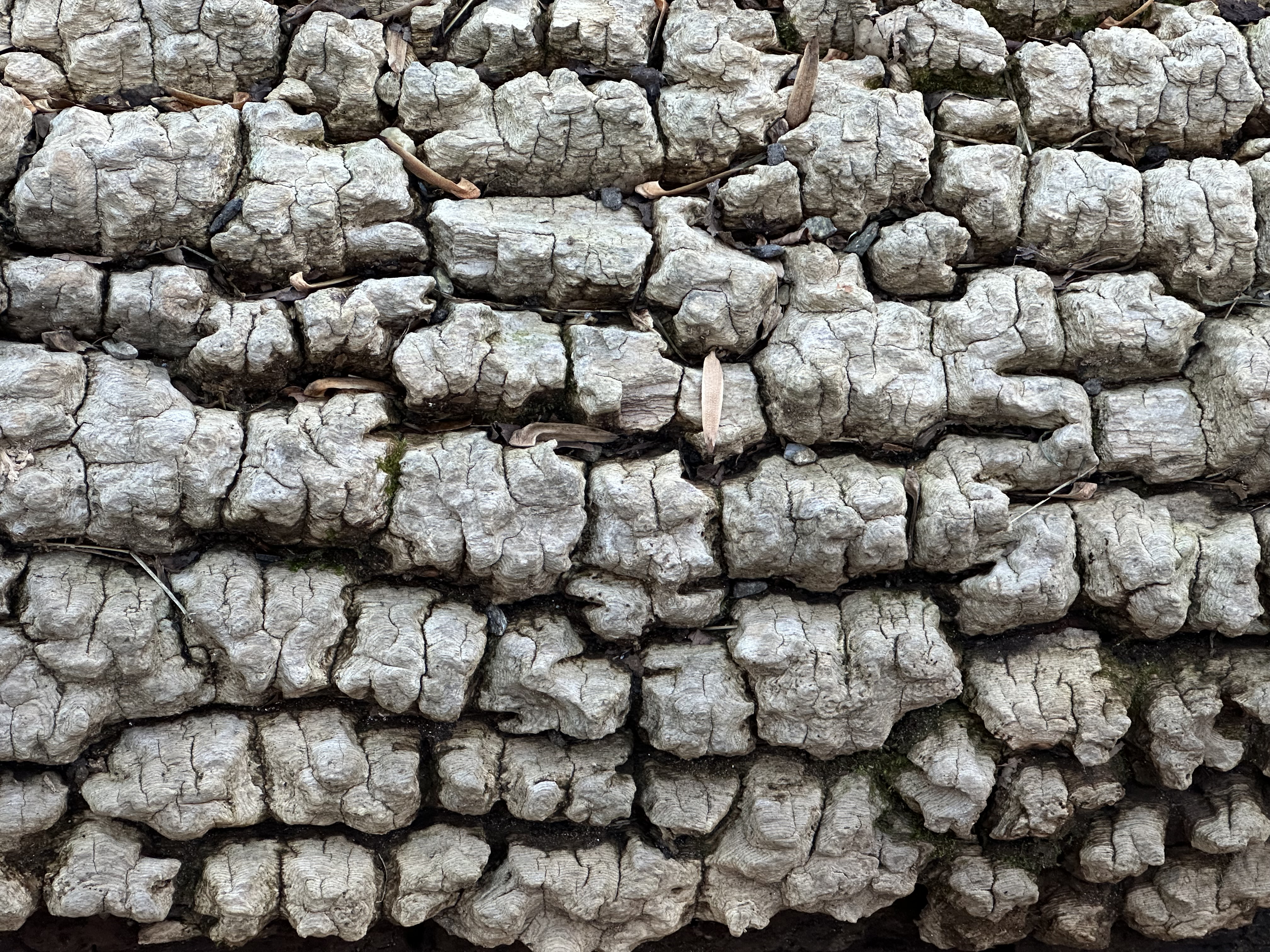
We came upon curious subjects to photograph every path we took. Along a creekside trail, we found this textured object. Any guesses? A tire? An alligator’s back? No to both. There’s a hint in the photo.
This is the closeup of an old fallen tree. The trunk was rotting away while its life-protective bark remained.
Not all photographic opportunities were so secretive. Still, using your imagination is critical. This old snag has stood the test of time, and the elements of four seasons have weathered into a once-living art object. Does anyone else conjure an owl flapping its right wing?
Speaking of living, this diminutive plant waved its once-green leaves red for the holiday season that is upon us. It is a volunteer burning bush, likely deposited by a seed-eating bird. There was no missing the bright color among all the trail-side leaf litter.
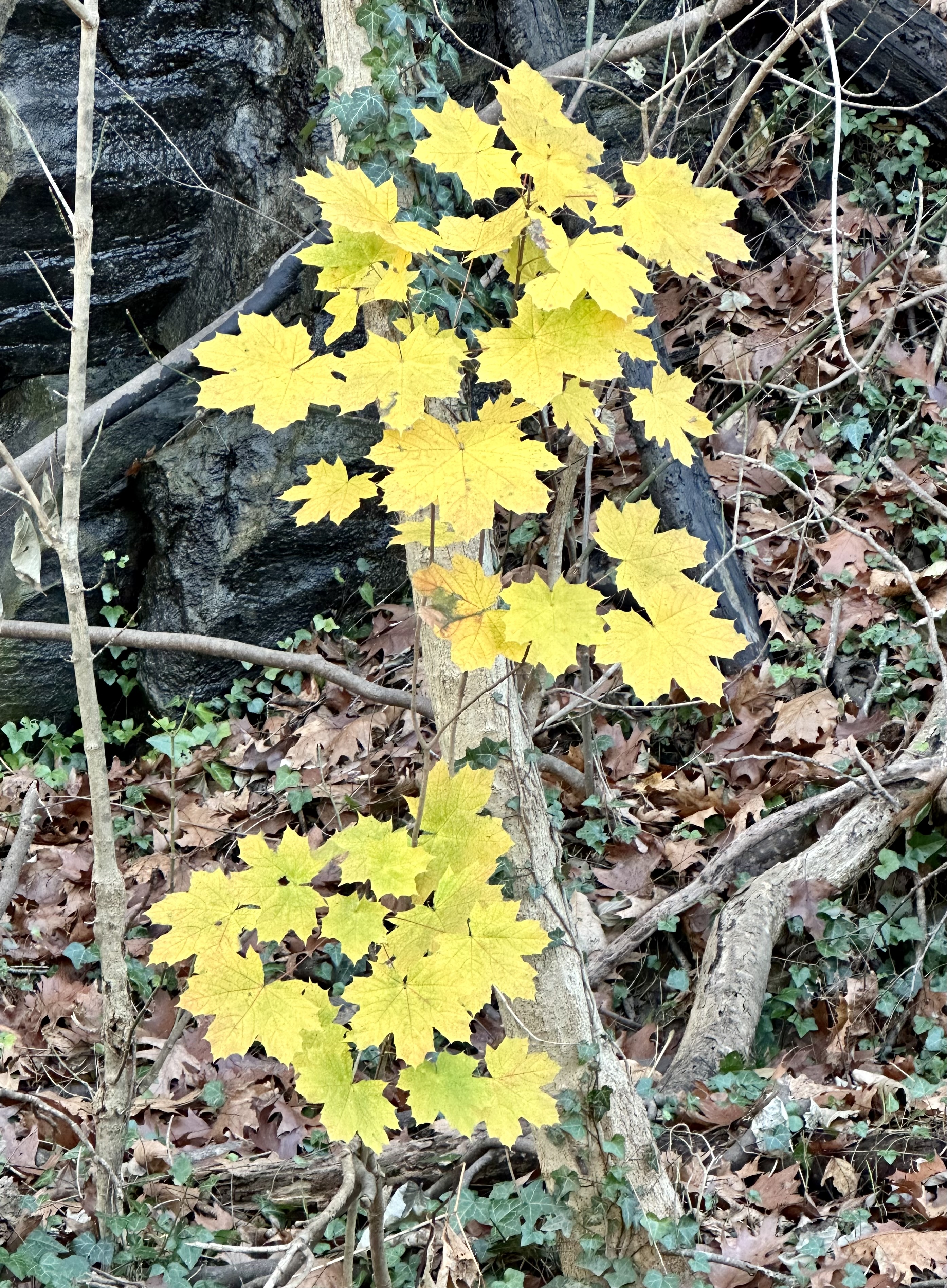
A short distance away, a competitor vied for attention. This sugar maple sapling shown like the sun on this dismal day. It made us all chuckle.
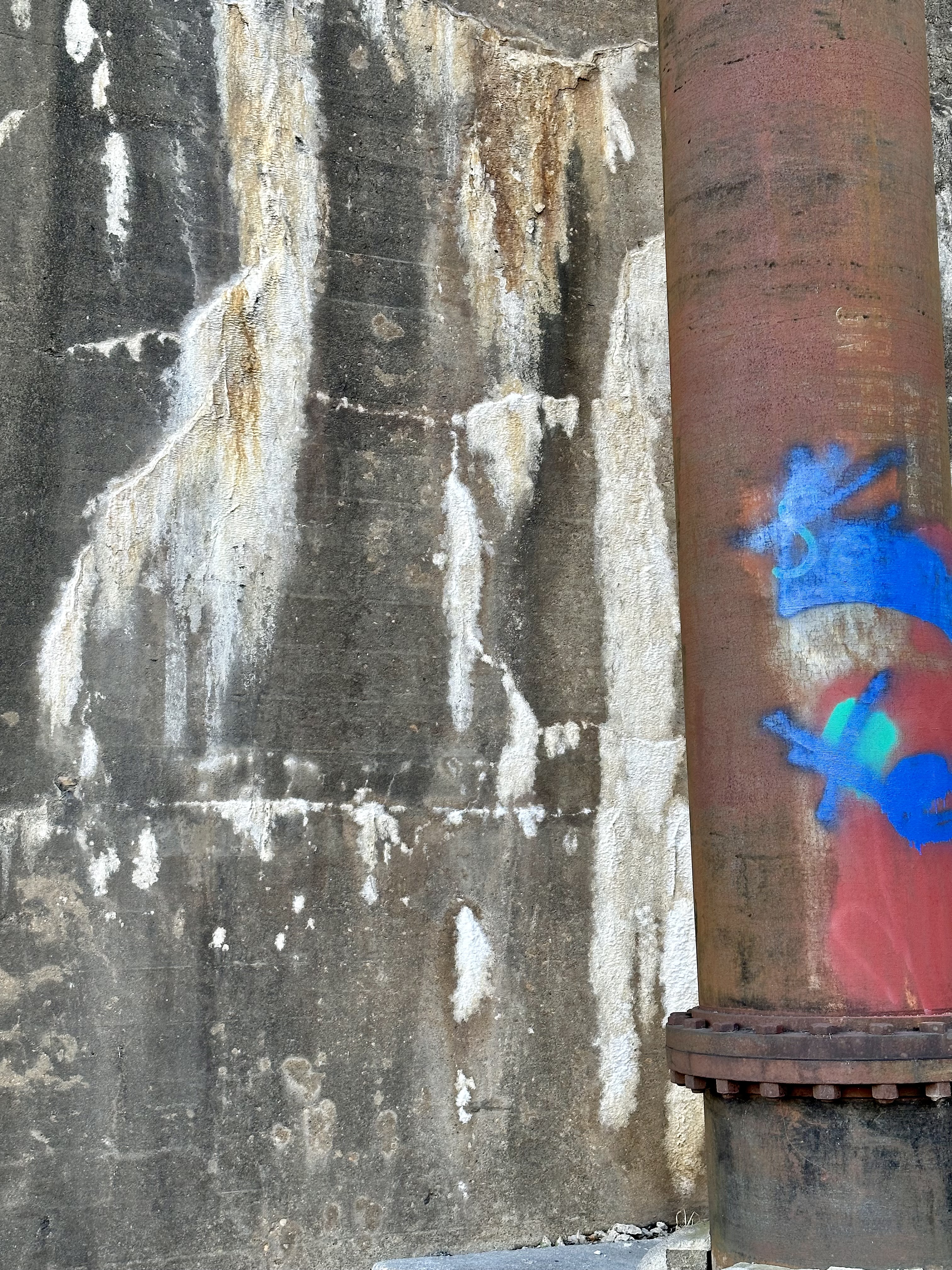
Not everything was so obvious, however. This photo has a complex combination of both natural and human-made actions.
Any idea what this abstract consists of? Look close. What’s on the left side? You are halfway home if you said a rock outcropping leached with calcium-laden groundwater. The right section is an old drainpipe. Some wannabe artists eliminated the plain rusty look by adding some pretty red and blue with a meaning. Those colors covered up some previous graffiti in faded white.
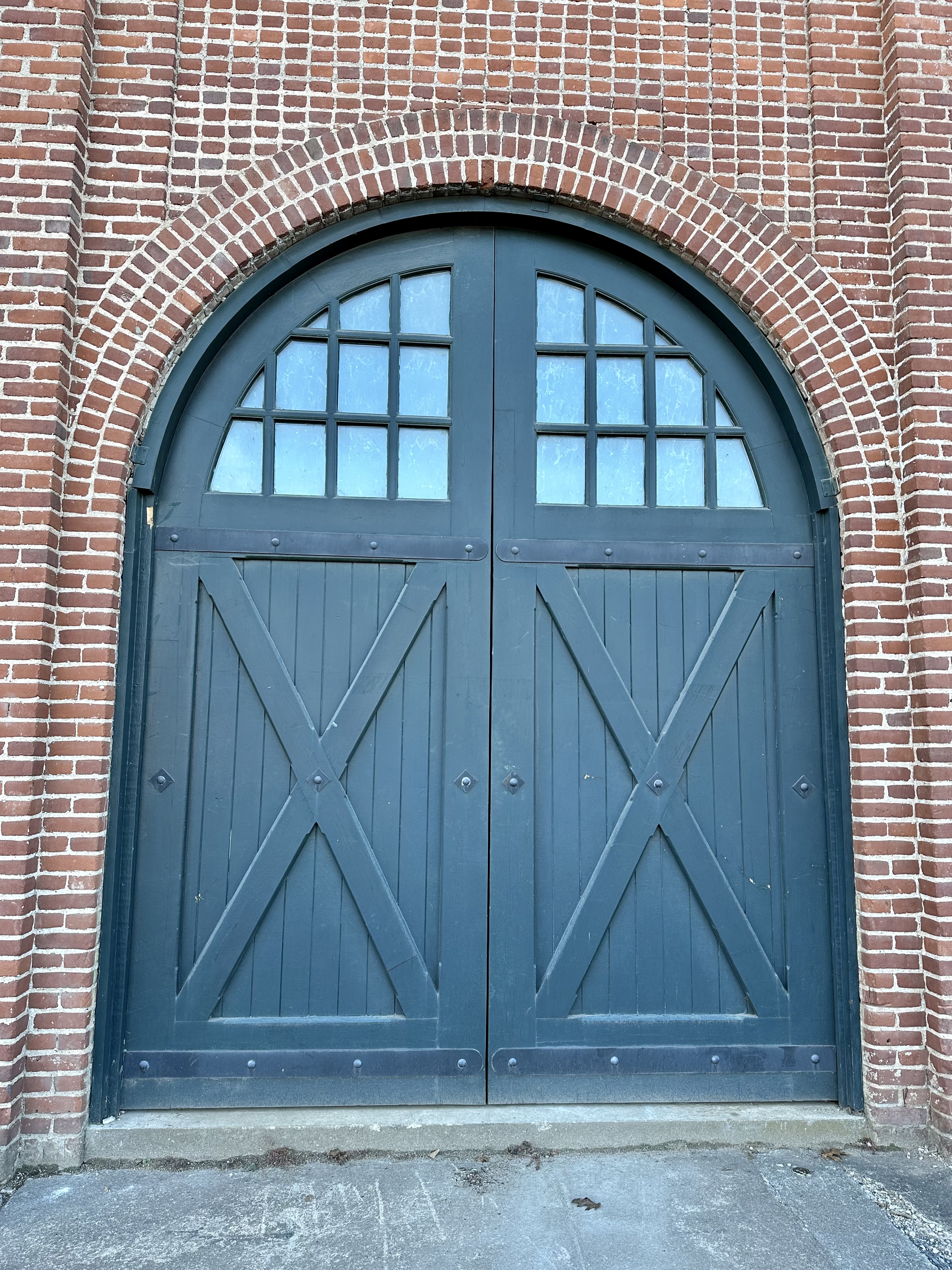
That pipe was a hint for us. The city lay just around the corner. We soon found this intriguing old set of double doors in a two-story brick building, likely once a warehouse during the railroad’s heyday. It faced the James River. The nearby trail was once a rail line.
A few steps away was a nearly block-long mosaic timeline of the history of Lynchburg. The blight of slavery was front and center. It’s an incredible piece of artwork often blocked by parked cars. This photo shows the intricate detail needed to tell the town’s story. I couldn’t imagine the time and effort it took to create this masterpiece.
We headed to the Amtrak train station away from Old Town. The building was magnificently reconstructed and expanded to hold city offices that had nothing to do with trains. We had a look around and came across some interesting finds.
An old luggage hand cart parked against the sturdy brick building caught my eye. No longer used, it can’t help but take train passengers and visitors back in time.
Across the street, an abandoned building seemed frozen in time. Dozens of solar bobbleheads danced behind a window in the late autumn sun. It was a curious collection that seemed abandoned, left to survive without human help.
This wasn’t our first rendezvous in Lynchburg with our friends. Given all there is to do, see, and photograph, it won’t be our last.
We live in a noisy world. It’s hard to find pure silence to simply listen, ignore the busyness of your mind, and relax without interruption.
When I saw an invitation to participate in a Contemplative Sit at the end of the daily devotion I received via email from Richard Rohr, I clicked on it. I instinctively knew I needed the 12-minute exercise to calm my mind, body, and soul. I didn’t realize how hard it would be.
The Reverand Dr. Barbara Holmes led the video presentation. The screen was a lifeless gray, with the title “Contemplative Sit” half grayed out. Once the single chime of a small bell rang to begin the exercise, I closed my eyes, thinking I could better concentrate on breathing in and out. It wasn’t to be.
I thought about last night’s sunset, the high gray clouds reflecting the sun’s warm glow. Our mother star had long since sunk below the Allegheny Mountains. I waited then for the warm beauty of the sky and now for a fulfilling silence.
I heard a crash from the video I knew wasn’t part of the meditation. I opened my eyes and saw the countdown to skipping another YouTube ad. I immediately clicked it away. Then I noticed the words, “We focus on the breath going in and out of the body.” I realized I needed to keep my eyes open to be fully engaged.
At that moment, however, I became acutely aware of all the noise around me. My neighbors across the street were mowing their yard in their usual father-and-son tandem. The sound of the two mowers competed with the tinnitus in my ears. I had buzzing external and internal competition to distract me.
Ironically, only then did I hear the video’s faint ebbing and flowing of wind rustling over a prairie, a desert, through tree limbs. I couldn’t tell, and it didn’t matter. I concentrated on my breathing. I unconsciously rubbed my hands on my thigh bones down to the knees and back to the hem of my kaiki shorts.
A single-engine plane flew a few hundred feet over the house, probably from the local private airport eight miles away. Its sturdy engine soon carried it out of earshot.
Was I failing this intentional time of contemplation? I let go of that judgment and refocused on my breathing. I spied a mother robin bobbing in the grass beneath the red maple tree in our front yard. She had speared an insect, likely to help feed her second brood of the summer.
My cell phone dinged. Another person in the group text commented on my friend Mike’s release from the hospital. I breathed a breath-prayer of thanks and gratitude.
A morning breeze rustled the leaves and bounced the smaller limbs of the maple outside my window. Still, I heard the wind’s faint rhythm coming and going from the video. Two Goldendoodles from the neighbors down the street barked, a regular occurrence. I continued breathing, letting go, and focusing on silence without self-criticism.
A pair of Northern Cardinals flew into the maple tree, and the video bell sounded the meditation’s end. I felt free, rooted, and ready to face the rest of the day.
I hadn’t planned on doing this meditation. But I have always enjoyed spontaneous activities that arouse my senses of the world around me. This morning’s experience was an unexpected but necessary infusion into another day of joyful living.
(I have included the link to the meditation if you are interested.)
Viewing the Shenandoah Valley from an overlook in Shenandoah National Park.
Several recent studies have proved the obvious. Regularly spending time in and with nature dramatically enhances people’s mental health and appreciation for life.
That wasn’t news to me. Fortunately, I grew up in a family that spent time hunting, fishing, and vacationing in the great outdoors. I continued that pattern with my own family, minus the hunting. I prefer to shoot animals and everything else with cameras. It saves on taxidermy costs.
We moved to Virginia’s lovely Shenandoah Valley six years ago to be close to our grandchildren. Besides spoiling them, I also make regular trips to the nearby mountains. I multitask. On my hikes, I bird and photograph what I encounter.
Every outing, I discover new birds, wildflowers, and paths to explore. I often go alone, but I also enjoy sharing the fun with others. A group trip into the wild affords opportunities to explore nature together.
A recent outing to Shenandoah National Park with another senior friend and our teenage mentees from church allowed us to reengage with all the benefits of nature. I don’t know why the boys picked us, but we immediately hit it off. We all enjoy hiking and exploring, so the park was a natural destination for a day trip.
Once in the park, we veered off the famous Skyline Drive to Lewis Mountain Campground. I wanted to show the boys the only location in the park where Blacks were permitted during segregation. Even then, a few Whites complained that they should have access to the entire park.
At Big Meadows, we toured the exhibit of the park’s contentious founding at the Byrd Visitors Center. Not surprisingly, the youngsters showed more interest in the gift shop.
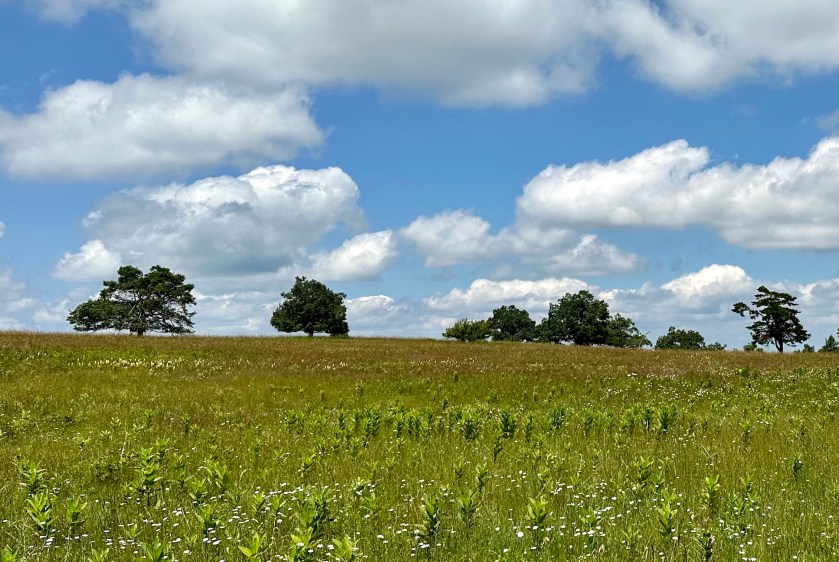
Then we got serious. We walked the southern parameter of the meadow. Its variety of habitats piqued their interest, from stands of trees to prairie grasses to artistic cairns. On the southernmost trail, the view of the Shenandoah Valley was spectacular.
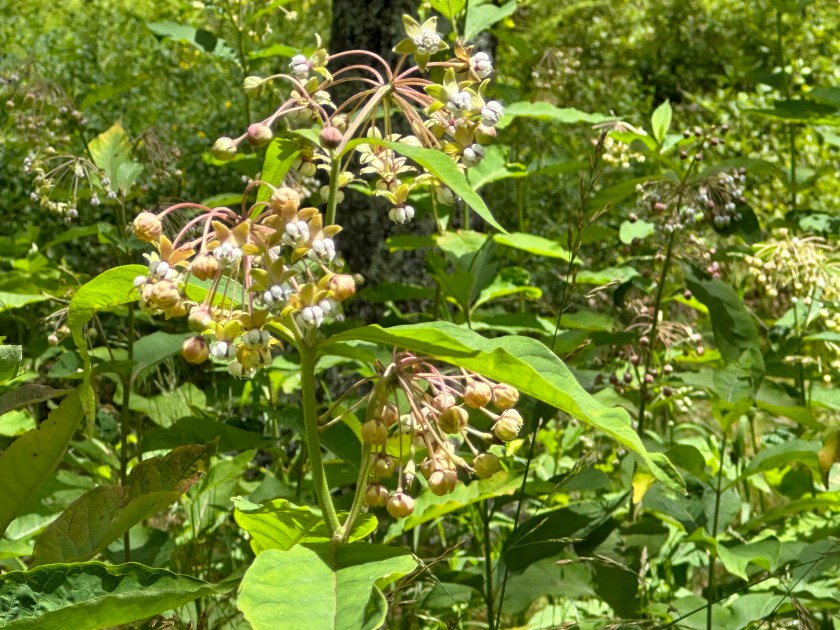
As we walked the cowpath-like trails, we encountered several bird species by sight and song and saw several butterflies that visited the wildflowers growing everywhere. Bright red wild columbines, vibrant woodland sunflowers, and common milkweed showed their colors and aired their fragrances.
Where the meadow met the forest, we spooked twin fawns. They only ran a short distance since they were foraging on shrub leaves. They seemed as intrigued with us as we were with them.
After a picnic lunch, we chose a short but magnificent trail. The Shenandoah Valley glimmered in the afternoon sunshine as we reached the summit and a massive rock outcropping. We basked in the comfortable, crisp 73 degrees of the Blue Ridge Mountains while the valley baked in the humid 80s.
It was good to commune with nature again, especially while sharing it with friends across generations. We breathed in cool, fresh air, were lulled by birdsong, enchanted by colorful flora and fauna, humbled by history, and energized by the needed exercise.
I was also glad we could personally verify the legitimacy of those extensive studies.
A memorial to those displaced when Shenandoah National Park was formed.
Friendships mean a lot to me. I suppose most people feel that way. But as I edge into the last quarter of my life, relationships increase in value. One of the first things I do in the morning is check the obituaries. I see people much younger than me have passed away. Consequently, I sense the urgency of each remaining moment.
As a septuagenarian, I want my friendships to grow more meaningful as I age. That’s especially true for friends separated by geographic distance and borders. The global pandemic and the necessary travel restrictions delayed any notion of crossing into Canada.
Since my wife and I are well into retirement, we visit as many friends as time and money permit. Our time is only constrained by our commitments to gatherings with and transporting our grandchildren as needed and volunteering in church and community activities. We set aside funds for traveling near and far, whether for vacations or visiting friends. We often combine the two.
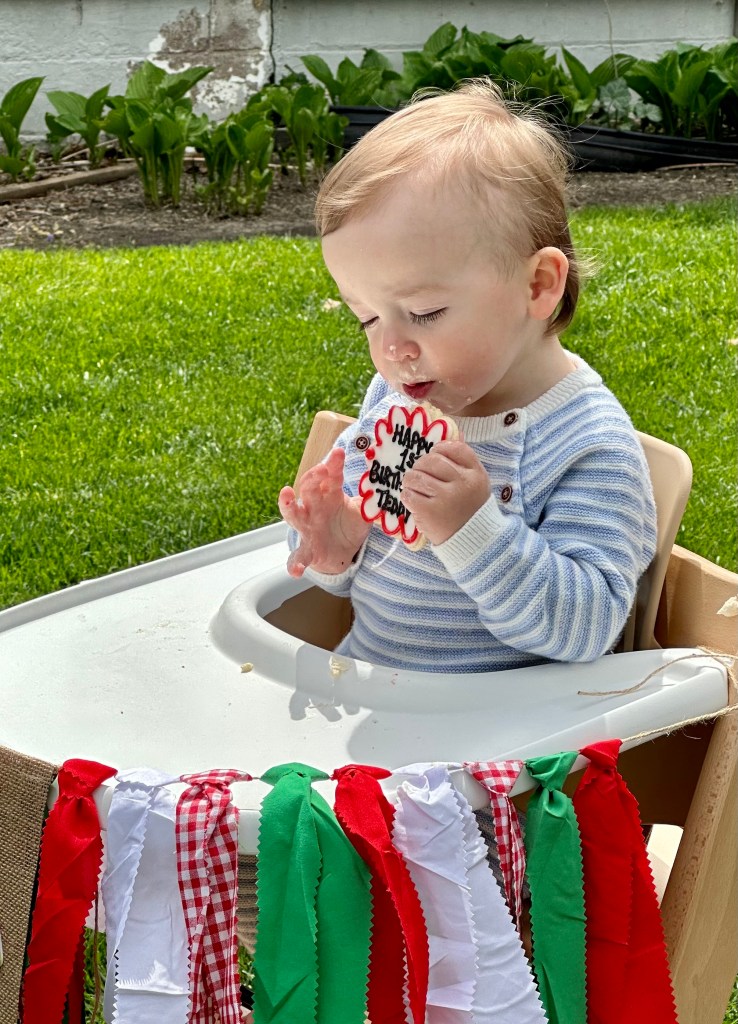
Grandson Teddy tastes sugar cookies for his first birthday.
Such was the case when our newest grandchild had his first birthday. Knowing we would be in upstate New York for that celebration, I checked the distances to friends in Kitchener/Waterloo, Ontario, Canada. I was happily surprised to learn that it was only three hours of travel time from Rochester, New York. If your friends can’t come to you, you go to them. So, we contacted the three families we know in those twin Ontario cities, and they were all available during the times we proposed.
I chose to drive west along the southern shore of Lake Ontario for multiple reasons. The first was less traffic. The second was opportunities to bird along the drive, and thirdly, my wife and I enjoy driving back roads and passing through small towns and communities. We even drove through a small Amish settlement in northwest New York.
With nice weather, we did our birding, toured Old Fort Niagara, and spent a lovely evening in Niagara Falls, Ontario. The following day it was on to see our friends. We easily found our host’s home thanks to GPS. It was less than a mile from one of our other friends.
Eleanor, Mike, and Dave.
We accepted the invitation to stay with Mike and Eleanor, both retired from medical careers. We knew Mike as a teenager. He was in the church youth group where Neva and I were sponsors, though we were not much older than some of the teens. Mike’s father was our pastor for nearly a dozen years. Mike and Eleanor moved to Kitchener to be close to their only grandchild, daughter, and husband.
Our former pastor, Dave, also moved to an assisted living facility in that area. Dave came for supper that first night. He looked much the same as when he was pastor 45 years ago. Dave is now 93 and still has his dry humor. It was clear, though, that he dearly missed his late wife. We enjoyed our meal of shepherd’s pie and the brief visit with Dave. He and I served as co-editors of the church conference bi-monthly magazine all those years ago when “cut and paste” meant scissors and glue.
Dave and I would meet on a Friday afternoon after I finished my day job to assemble the magazine. We made a good team. He was a respected pastor, and I had a degree in journalism, even though I switched to being a teacher and then a school administrator.
We always took a break for dinner at his home. Dave’s gregarious wife, Mary, always fixed a simple but delicious meal. I enjoyed the lively conversations, too, when Mike and his brothers were there. After the meal, we’d head back to the church and work late into the night to finish laying out the magazine. Dave usually mailed it to the publisher the next day. Those were joyous memories.
The next day we went to the home of our long-time friends, Ken and Ruth. Neva had known Ruth in her youth. She stayed with Ruth and her family while attending a church youth conference in Kitchener when they were both teens. They have kept in touch ever since.
We had much in common, values, hobbies, friends, and travel. We visited them when our children were small. They visited us both in Ohio and Virginia. We even vacationed together in Arizona and Florida.
Ken and Ruth invited us over for lunch with the other couple we know in Waterloo, Don and Gail. They were neighbors across the street, and we joined the triangular friendship when we discovered Don and Gail wintered on the same Florida island we did. We’ve had some beautiful times together. Don and I especially hit it off since we were both volunteer firefighters. We’d swapped crazy fire stories while the wiser women went shopping. We all loved sunrises and sunsets. Those, too, are precious memories.
At the restaurant with Don, Ruth, Ken, and Gail.
None of us are getting younger, and we all have our individual medical issues to deal with and talk about. But most of all, it was pure joy to be together again, even for only a day. As it goes with old friends, the time ticked away too quickly. We toured Don and Gail’s modern condo in uptown Waterloo, then walked around the corner and raised a ruckus around a restaurant table.
All too soon, it was time to go. The combination of the goodbye hugs, kisses, and well wishes made the trip more than worthwhile.























 Roadkill Crossing
You must be logged in to post a comment.