I am a writer, author, photographer, birder, walker, hiker, husband, father, grandfather, brother, Anabaptist, and community activist. My life is crammed with all things people and nature and wonder. My late father gave me this penchant for giving and getting the most out of life, my late mother the courtesy, kindness, and creativity to see the joy in life. They both taught me to cherish the people I am with. I try and fail and try again.
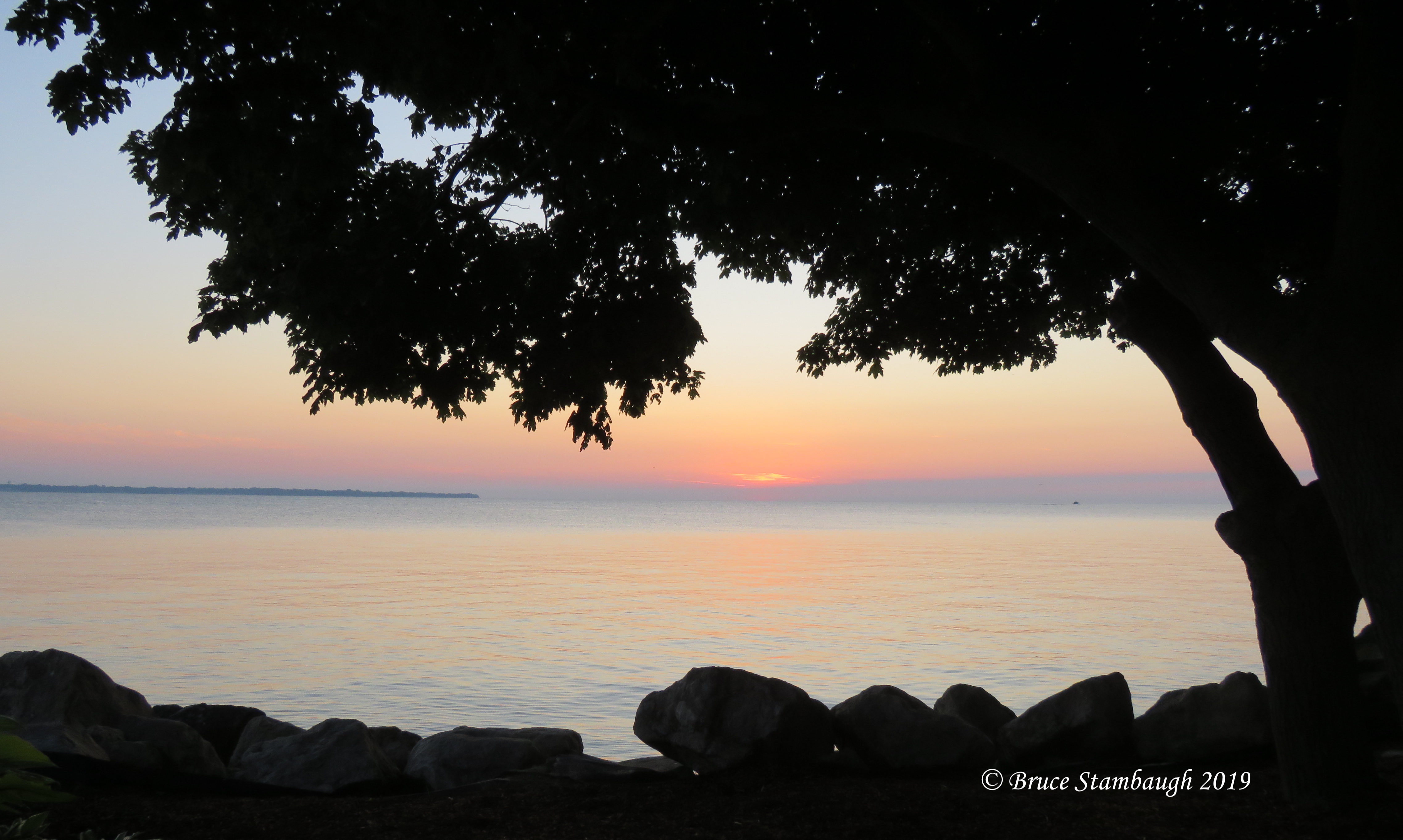
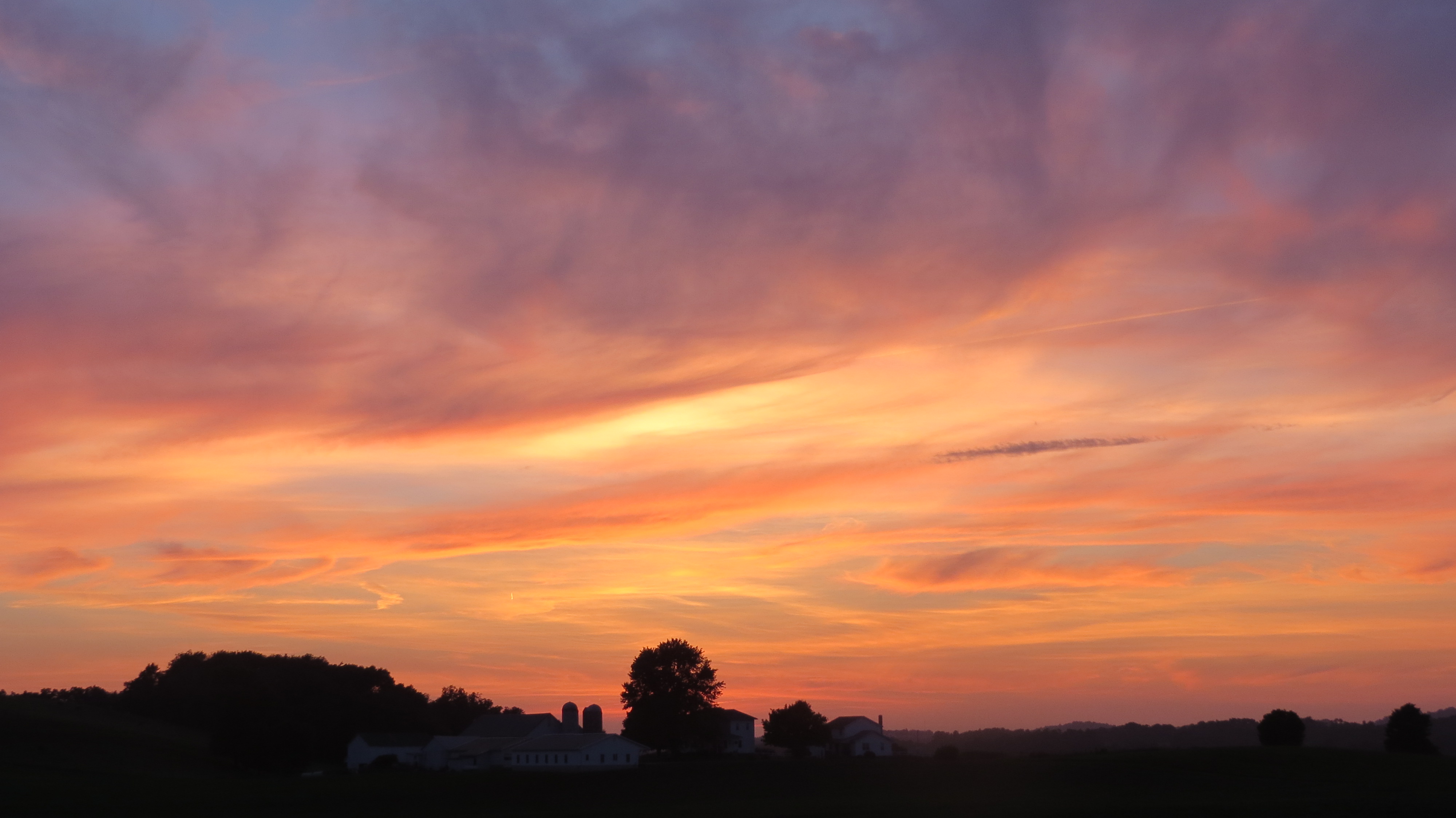
My goal was to capture the vernal equinox sunset. Instead, I came away with a shot that resembled a Claude Monet landscape.
I positioned myself on a hill in northwest Harrisonburg, Virginia in hopes of getting photos of the Super Full Worm Moon rising over the Massanutten Mountains that run north to south in the middle of the Shenandoah Valley. Unfortunately, a layer of rain clouds blocked that attempt. With that foiled, I turned my attention to the setting sun on the first day of spring.
Hazy clouds filled the western horizon as well, though the sun did its best to burn through. Residue smoke from controlled burns in the Jefferson National Forest during the day fuzzed up the view all the more. Sunsets around the equinoxes are the shortest of the year. This one merely melted away behind the blue, blue folds of the Allegheny Mountains.
Edgefield School. (Photo courtesy of Dave Findley.)
Given its age, I shouldn’t have been surprised at the news, but I was. The old elementary school where I attended for the first six years of my formal education will be torn down soon.
The building more than outlived its usefulness. Built in 1915, Edgefield served as an educational institution long after students quit attending several years ago. The county office of education took over the empty building for offices. The Stark County Educational Service Center provided a variety of educational services for multiple local school districts throughout the county and beyond.
Hundreds of baby boomer scholars traipsed through the halls and up and down the three stories of steps at Edgefield, and hundreds more before and after that. I can’t speak for them, but my Edgefield experiences provided lots of fond memories.
The storied school’s staff supplied me with a solid foundation for life. Not that I was ever the best student. But Edgefield instilled in me a love of learning, a respect for teaching, and a joy of being with others.
I began my stint at the old brick building as a first grader at age five. My school district didn’t offer kindergarten back then.
I can remember the name of every teacher that I had in all six grades. I even recall the principal and the affable custodian, Bill Meola. I feared the former and worshiped the latter.
Stonework over the front door.Bill was an excellent custodian and a great human being. All the kids loved him for his kindness and his skill at keeping the building clean. Somehow he ensured Edgefield avoided the usual institutional smell.
His was not an easy job either with the school overflowing with runny-nosed children. The school had a kitchen but no cafeteria. At the appointed time, we lined up, trudged quietly down the steps to the first floor, and filed through a buffet-style line. Only, it wasn’t a buffet by any stretch of the imagination. I haven’t eaten a stewed tomato since.
We just took what was placed onto our compartmentalized light green plastic trays. We retreated back up the steps to eat at our classroom desks. Occasionally someone slipped and spilled their tray. Mr. Meola was right there to clean up the mess.
I don’t want to sentimentalize my experiences at Edgefield. Still, the interconnectedness of the school’s atmosphere, the reliable teachers, the instructional routines we developed, the rules we followed, the games we played at recess, the sense of personal worth that helped formulate who I became, what I appreciated in life, and instilled in me the value of a good education.
All of that must have had a subliminal influence on me. Despite having graduated from college with a journalism degree, I became a public school educator for 30 years. I taught how I was taught.
The ball field we played on had long since been paved over for a parking lot.Classes were large by today’s standards. It wasn’t unusual for 35 to 40 students to pack each self-contained classroom.
In every class, we sat in straight, long rows of wooden desks with steel frames. The teachers taught, and the students obeyed. Those who didn’t felt the sting of the paddle that hung at the front of Mr. Bartley’s sixth-grade classroom.
To this day I can smell those mimeographed worksheets the teachers handed out. Chills still run down my spine at the thought of white chalk screeching on the slate blackboard worn smooth from years of erasing assignments.
In the winter, students would place their wet gloves on the old silver radiators to dry after building snowmen at recess. Throwing snowballs was a no-no of course.
My friend and former Edgefield classmate feigning depression over the demolition news.At Edgefield School, students were taught the three Rs and much more. Being polite and using proper manners were also priorities. In today’s terms, the instruction at this grammar school was basic but holistic. Being a good citizen was paramount.
Nostalgia can interfere with reality. Regardless, old Edgefield can be torn down, but no wrecking crew can ever destroy my cherished school memories.
The one thing that constantly amazes me is how much I learn by taking photos. And often what I learn has more to do with the setting than photography itself. This photo is the perfect example.
Anyone would be happy to take this shot. I certainly was. The late afternoon light was perfect shining on the Blue Ridge Mountains, highlighting the ice-encrusted trees along the undulating summit. This is the southern section of Shenandoah National Park.
I noticed a historical plaque close to where I had stopped to get the shot. So I pulled up to read what the plate said. I was stunned. Here among all these rolling farm fields against the backdrop of the mesmerizing Blue Ridge Mountains a bloody, decisive Civil War battle had been fought. Known as the Battle of Piedmont, Union soldiers defeated Confederate troops. This led to the fall of Staunton and control of the railways in the Shenandoah Valley, known as the Breadbasket of Confederacy.
The combat was costly on both sides. The Union suffered 800 casualties and the South nearly twice as many with 1,500. I wondered if passersby knew of the blood spilled all those decades ago. What did the farmers think as they plowed those fields?
I took the photo with mixed emotions. The scenery was marvelous, the history humbling. Without the marker, this would be just another beautiful rural scene. In reality, it is so much more than that.
“Beautiful view, horrific history” is my Photo of the Week.
Winter weather creates beautiful scenes, but the extended cold gets tiring.
I don’t know about you, but I’m more than ready for spring. It’s been a severe winter all around, and it’s not over yet.
Just last week on three consecutive days the National Weather Service issued Winter Weather Advisories for Virginia’s Shenandoah Valley. Winter assaulted us with an assortment of ammunition from her arsenal. Rain, freezing rain, sleet, and accumulating snow pelted down upon the usually lovely Shenandoah Valley. And then yet another arctic blast settled in.
It was even worse in the Deep South. Massive tornadoes marched across a broad landscape reaping incredible destruction and death. That devastation put our whining about the blustery weather into proper perspective. Still, I’m ready for spring.
When people learned my wife and I planned to move from Holmes County, Ohio to Virginia, we heard a common theme, “At least the weather will be better there.” Well, not necessarily.
Results of the latest freezing rain.We’ve lived in the central Shenandoah Valley now for nearly two years. When it comes to weather, it’s a lot like Ohio. That only stands to reason. We live near Harrisonburg, which is no further south than Cincinnati.
Of course, longitude, latitude, and altitude jointly play leading roles in the weather everywhere. Millersburg, Ohio, our former home, sits at 899 feet above sea level while Harrisonburg’s elevation is 1,325 feet despite being in The Valley.
Thanks to the dangerous combination of an El Nino and a wildly fluctuating northern jet stream, most folks in the United States share my winter weather fatigue. The El Nino off of California’s coast has incubated storm after storm that pounded the Pacific coast. With a rerouted jet stream, those storms have dumped heavy snows in places not accustomed to such stuff. Just ask the good citizens of Seattle, Washington, and Tucson, Arizona.
The jet stream speeds the storms along its southeasterly flow. That results in areas already hit by too much snow getting pounded again and again. If warm air did manage to mingle into the mess, flooding ensued. Rivers all across the country have run high most of the winter. Flood warnings have lasted days on end.
The wild weather hasn’t always been wet, either. Windstorms have caused havoc with power outages and buildings being damaged by downed trees. In Shenandoah National Park, 100 trees per mile were reported down along one section of the Skyline Drive.
Purple Finches stopped to refuel on their way back north.Friends in the Buckeye state have teased me that Ohio’s wintry weather seemed to follow us to The Commonwealth. Friends in Virginia have kiddingly blamed me for the lousy Virginia winter weather. I just shrug my shoulders.
Despite the miserable weather, signs of spring have made themselves known. Birders are ecstatic that migrating birds are once again on the wing. Our neighbor’s forsythia is pushing its yellow buds in competition with trumpeting daffodils. Despite the ugly weather, photos of crocuses blooming flooded social media. Tree buds are ready to unfurl their hidden life.
We take for granted another sign of spring. Daylight hours are increasing daily, although we will “lose” an hour with the return of Daylight Savings Time.
Spring is officially just days away. March’s vernal equinox can’t come soon enough.
Our neighbor’s blooming forsythia covered by snow.Still, there is no guarantee that winter’s harsh hand will let go of its hoary grasp on us. Our only hope is to hang on as best we can until spring’s warm kisses smother us with fragrant bouquets and songbird serenades.
Why has this winter seemed never-ending? Perhaps it is so we will joyously welcome spring’s gentile weather with a renewed appreciation for its refreshing rebirth.
Though cold for early March, bright sunshine bathed the landscape in Virginia’s lovely Shenandoah Valley. This farmer took advantage of the situation and spread a different kind of sunshine.
For those of you not familiar with rural lingo, “spreading sunshine” equals spreading manure. It’s a necessary and important job on a family farm that includes horses, cows, and other livestock. Winter weather, especially this wet winter’s weather, doesn’t always allow farmers to regularly “clean out the barn.”
When the opportunity presents itself, farmers waste no time in getting the job done. When crop fields are frozen enough to support heavy farm equipment, the manure spreaders are loaded with the fertile livestock waste and spread onto the frost-firmed ground.
It can be a stinky job, but someone has to do it. In fact, it is the smell that satirically coined the phrase “spreading sunshine.” When the ground is frozen, its time to rid the barns of all the manure that can be hauled while the conditions are right.
We got to see this beautiful couple at the invitation of friends we made in Florida.
Travel and people. That’s an intriguing combination of which my wife and I never tire.
People are as interesting, unique, and varied as the places we visit. The two are intrinsically intertwined, humanity and landscape, a finely woven rainbow tapestry incarnate.
Neva and I enjoy chance encounters with others as we explore and uncover new locales, cultures, and tradition. Most folks we meet are friendly, courteous, and respectful, transcending race, religion, sect, gender, or avocation.
The couple who told me about the hawk.That proved true again during our latest snowbird experiences this winter. From the time we left home at December’s end until we arrived back in the Shenandoah Valley, we visited fascinating places and met kind earthly citizens wherever we went.
I couldn’t begin to list all the memorable interactions. A sampling of the kindness and hospitality shown to us will have to suffice.
We connected with Rich and Pauline, friends from Holmes County, Ohio as they visited other acquaintances on Amelia Island, Florida. Neva and I reaped the benefits of hospitality from both couples. A beautiful pair of painted buntings visited the backyard feeders of Tim and June, who retired to Fernandina Beach a few years ago.
We found gregarious guides, helpful rangers, and friendly visitors on a junket to south Florida at the end of our stay on Amelia. People offered to take our photo at landmarks. They gave us suggestions on eateries preferred by locals.
The gregarious tour guide who knew his fish.The guide on our Everglades boat tour rattled off scores of fish species that inhabit the waters in and around the national park he so adores. He did the same for the many types of beautiful birds we encountered, too.
Fellow tour-goers we met were equally congenial. We kept running into a recently retired couple from Muncie, Indiana. Their interests in exploring Biscayne and Everglades National Parks mirrored ours. We shared conversations and leisurely walks together.
A ranger at an Everglades visitors’ center was most helpful in highlighting the best birding spots for us. We weren’t disappointed at all as we followed his suggestions.
At one location, we ran into a former college basketball coach from Newark, Ohio who knew Hiland Hawks basketball well. He couldn’t believe it when we told him our son and daughter graduated from Hiland.
At another stop, a young couple on a boardwalk in the Everglades told me about a hawk they had seen. I watched it stalk, kill, and consume its marshy meal.
A tour guide at the Ernest Hemingway House steered us to a tasty piece of Key Lime pie at a local eatery.In Key West, our tour guide of the Ernest Hemingway House and Museum steered us to the perfect nearby restaurant. We took a leisurely lunch outdoors, enjoying our food in the luxurious Florida sunshine.
The Sunshine State couldn’t claim dibs on friendliness, however. The guides at Hunting Island State Park in South Carolina made our visit there most pleasurable. Like us, they were retired educators.
A lady from Michigan who climbed the 167 steps of the Hunting Island Lighthouse chatted away like a long lost friend. Together we watched from atop the lighthouse as dolphins plied the ocean waters for breakfast.
Nor will I forget the affable shuttle bus driver who returned us to our van from the airport. She remembered us right away though she had met hundreds of other travelers in the six days between transporting us.
I learned a lot on our winter trip, and we met many nice people. After all, humans are designed to be relational.
That relationship involves responsible interaction through stewardship, mutual respect, and affirming connectivity. Neva and I were grateful to be in the graces of folks who not only believed that, but lived it, too.
Sunsets, birds, and people were the ingredients that made for an enjoyable vacation.
I wanted to get a shot of my brother-in-law walking his lovely daughter down the aisle at her wedding. Unfortunately, where I was seated didn’t give me much of an opportunity for a decent shot. My only hope was to lean back and take the shot as father and daughter reached the open space where the row of seats behind me met the aisle.
I got the picture. However, in doing so, I saw another all-too-familiar scene. Most of the occupants in the seats behind us had their smartphones up and recording the exciting event. Also, note that a gentleman also stood to take a photo. I had to capture the moment. And yes, I took the photo with my iPhone.
The harsh winter weather has made February seem like a long month.
Every year I get the same sensation. February, the calendar’s shortest month, seems like the longest. A wide range of reasons could account for this annual hunch.
Much of that perception may have to do with February’s unfortunate spot in the calendar birth order. As the year’s second son of 12 siblings, February is bound to have an inferiority complex. Even with an extra day in a leap year, February still can’t measure up.
It certainly doesn’t help to be sandwiched between January and March, each with the maximum 31 days every year. Nor does it help that February is the last full month of winter. By now, humans north of the equator have had it with winter, especially this year. They can’t wait for spring.
Is the shortest month merely clamoring for attention with its temper tantrums of weird and wild weather? To be sure, the weather all across the northern hemisphere has been wicked. A lot of complicated and interconnected reasons account for that. Still, February cannot solely be held responsible.
The polar vortex, which usually calls the Arctic region its winter base, ran away from home this year. It escaped in the waning days of January, and the frigid and frozen effects spilled into February, adding insult to injury.
The latest February weather warning map.The vortex settled into the eastern U.S., forcing the ordinarily westerly jet stream to warp south around it. We all paid the consequences of that detour, including February.
Blustery winds sent wind chills into the danger zone for millions of citizens, making the environmental conditions all the more brutal. When people thought they couldn’t take it any longer, the vortex slunk away, and a warm front helped set the jet stream aright. Soon, vehicles were mired in muck from a rapid thaw.
About that time, weather officials confirmed an El Nino had developed in the Pacific off southern California. Wave after wave of rain and snowstorms blasted the entire west coast, incapacitating major metro areas.
Damaging floods, mudslides, and icy and snow-clogged roads inundated areas not used to extreme winter weather. Even Hawaii got snow.
More rain pelted down in California. Another snowstorm blasted the state of Washington. Additional freeze warnings plagued northern Florida. All this and February still isn’t over yet. How long does it take 28 days to pass?
It would indeed be unfair to lay all of the responsibility for the climatological miseries on poor February. It was merely an accessory to the crimes, guilty by association.
Ignore the weather, and February has a lot to offer for being the shortest month. It boasts about hosting more holidays per diem than any other month.
Abraham Lincoln.
George Washington.
February’s progressive party includes Groundhog Day, Lincoln’s birthday, Valentines Day, Washington’s Birthday, and Presidents’ Day. Of course, all of those human conceived days have morphed into nothing more than flashy marketing ploys for a small town in Pennsylvania and retailers big and small nationwide.
I suppose, however, that much of our February malaise comes from nothing more than cabin fever. Never mind the occasional warm day when you could poke your head outside. As we all know, that was nothing but a February tease. It’s safest to stay inside until March.
Despite February’s chilly temperament, she does offer us at least one advantage besides being the briefest month. From beginning to end, we gain almost an hour of daylight in February.
Winter’s darkness is waning. In that, we find hope, rejoice, and offer February our heartfelt thanks.
It was Thursday, and I hadn’t decided on my Photo of the Week, which I normally do well ahead of time. The last few days have been hectic with family responsibilities, writing deadlines, and yet another winter storm that brought snow, sleet, freezing rain, and rain.
I was thinking about what photo to feature as I drove home from a meeting this morning. When I turned south onto Switchboard Road, this scene grabbed my attention. I looked in my rearview mirror and to the road ahead of me. The narrow, curvy road is a busy thoroughfare, but the coast was clear. Down went the window, and I quickly snapped the scene.
The morning’s sun filtered through the storm’s residual clouds and a streak of rising fog. The rays glinted off of the three inches of snow encrusted with a glaze of ice. It looks black and white with only a hint of light blue showing.
I knew right then and there that “From Switchboard Road” would be my Photo of the Week.
The polar vortex has had its way with most of us in the U.S. again this winter. Once it sank south and east out of the Canadian Arctic area, record cold temperatures and wind chills were set all across the northern states and some far into the south.
My wife and I watched the TV news in sympathy with those freezing in the frigidness of blinding blizzards and well below zero wind chills. We even had freeze warnings in northeast Florida, where we have spent parts of the last few winters.
Thanks to the Arctic air, it was cold there, too, in relative terms of course. Amelia Island is as far north in the Sunshine State as you can get. So when massive cold fronts spawned by the polar vortex invade the eastern U.S., we often feel the effects, too.
Pretty but cold.With an ocean breeze and air temperatures in the 30s, the beach is no place to be either. Neither is the middle of a blizzard. We watched with dismay as TV reports showed the severity of weather conditions from several different stricken areas. Unfortunately, several people died from exposure to the dangerous cold.
I always liked the winter, and mainly snow. But the blizzards of 1977 and 1978 taught me that winter’s punishing harshness better be respected. Staying warm is always paramount.
That’s a primary reason for becoming a snowbird. I’ve said it before. The older I get, the colder I get. Other senior citizens that we met in Florida concurred. It is a natural consequence of the aging process.
Living in the heart of Virginia’s Shenandoah Valley isn’t quite far enough south to avoid winter’s icy blasts. So we continued our snowbird trips after moving from northeast Ohio.
We enjoyed a month’s stay at a rented condo on Amelia Island and then headed to the far south of Florida. We visited the Florida Keys for the first time for a few days and soaked up perfectly warm weather.
With high temperatures in the 70s and 80s, it didn’t take us long to sport a tan. We spent the handful of days we had on the go. We greeted the morning sun and filled each day with as much adventure as possible until well after dark.
This slideshow requires JavaScript.
However, we seldom checked off all the items on our wish list of places to visit. Spontaneity overruled preparation. We took advantage of surprises and vistas we came upon, stopped to enjoy and do some birding, and moved on to the next spot.
We especially enjoyed visiting Biscayne National Park and Everglades National Park. Together they protect much of the delicate habitats of southern Florida, preserving a vast variety of wildlife, flora, fauna, and people, too.
I never thought I would ever venture out onto the open ocean waters in a pontoon boat. But we did in both beautiful parks. The combination of generous sunshine and the joy of adding new birds to my life list warmed me through and through.
However, it wasn’t until we returned home that I encountered genuine radiant warmth. The weather had nothing to do with that.
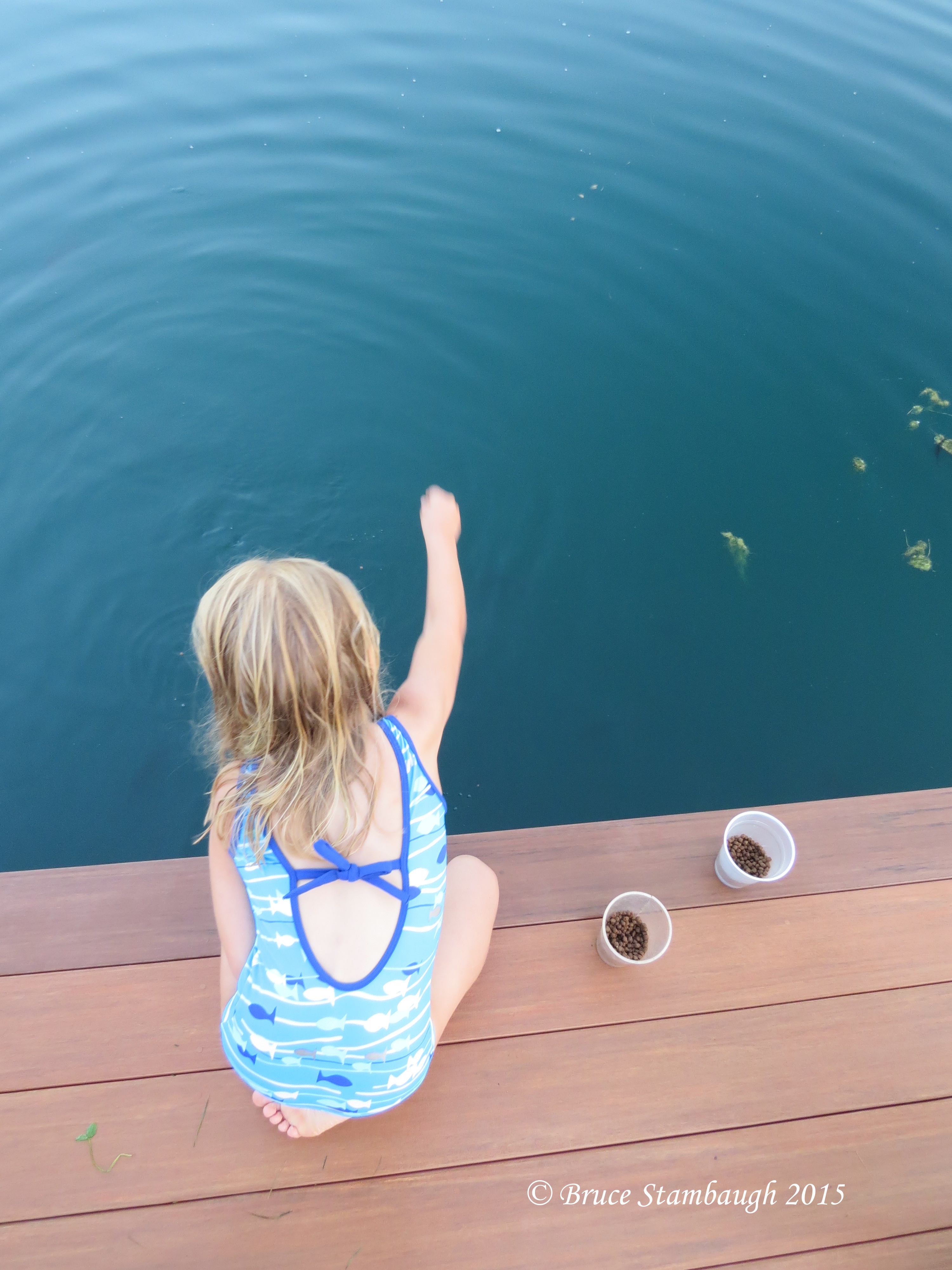
At Sunday dinner, we caught up on our oldest grandson’s basketball season. The middle grandchild chatted on about the books he read and his upcoming band concert, while the youngest seemed contented to merely enjoy her lunch. Our daughter and her husband filled in the happenings in their busy lives, too.
The Florida experiences warmed us physically. That warmth, however, paled in comparison to that of reconnecting with our family.
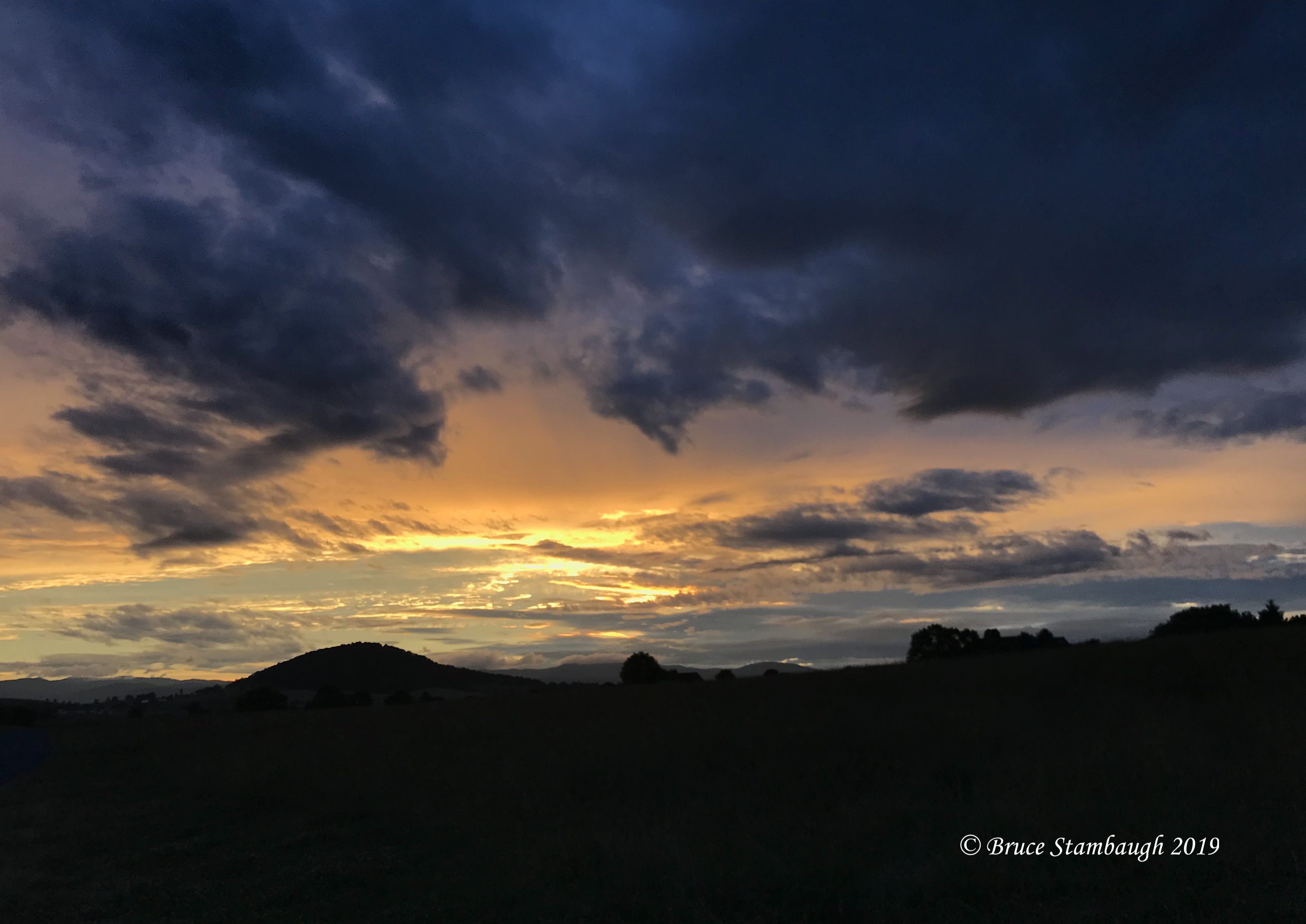
Sunset over Eco Pond, Everglades National Park, FL.
You must be logged in to post a comment.