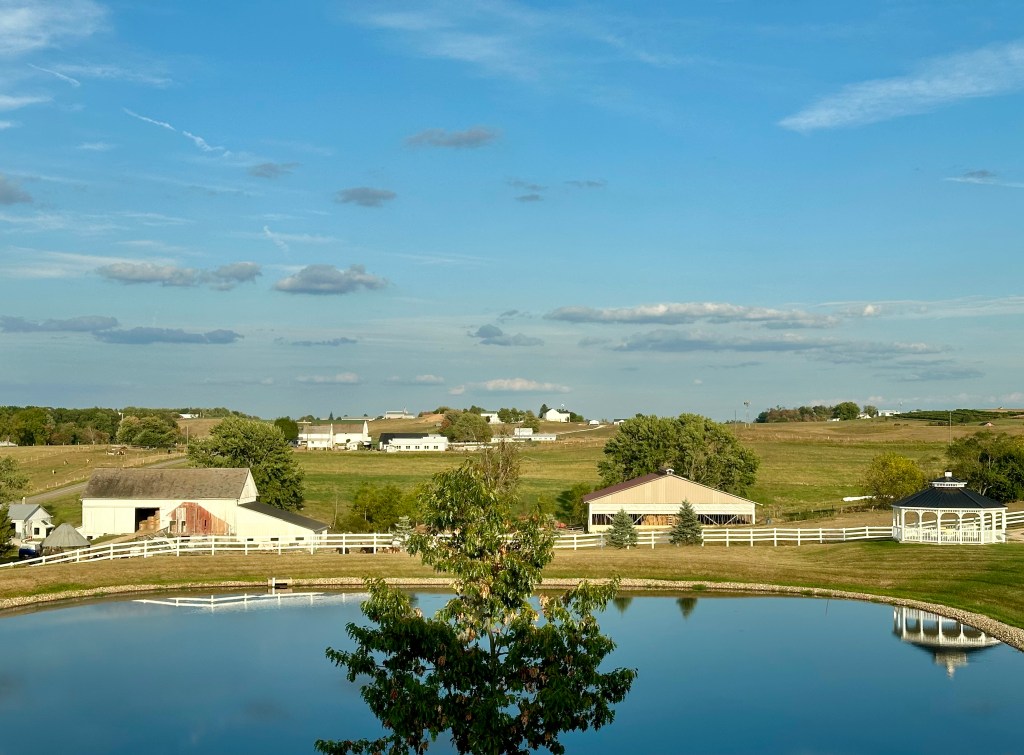
An Amish farmstead near Mt. Hope, Ohio. Photo by Bruce Stambaugh
I recently visited my old stomping grounds in Holmes County, Ohio, home to the world’s largest Amish population. Remnants of snow still covered part of the ground, contrasting with the barren, fallow fields.
I enjoyed finding a few Amish farms, like the one pictured, remaining amid the rapidly expanding tourist businesses scattered throughout the once pristine countryside.
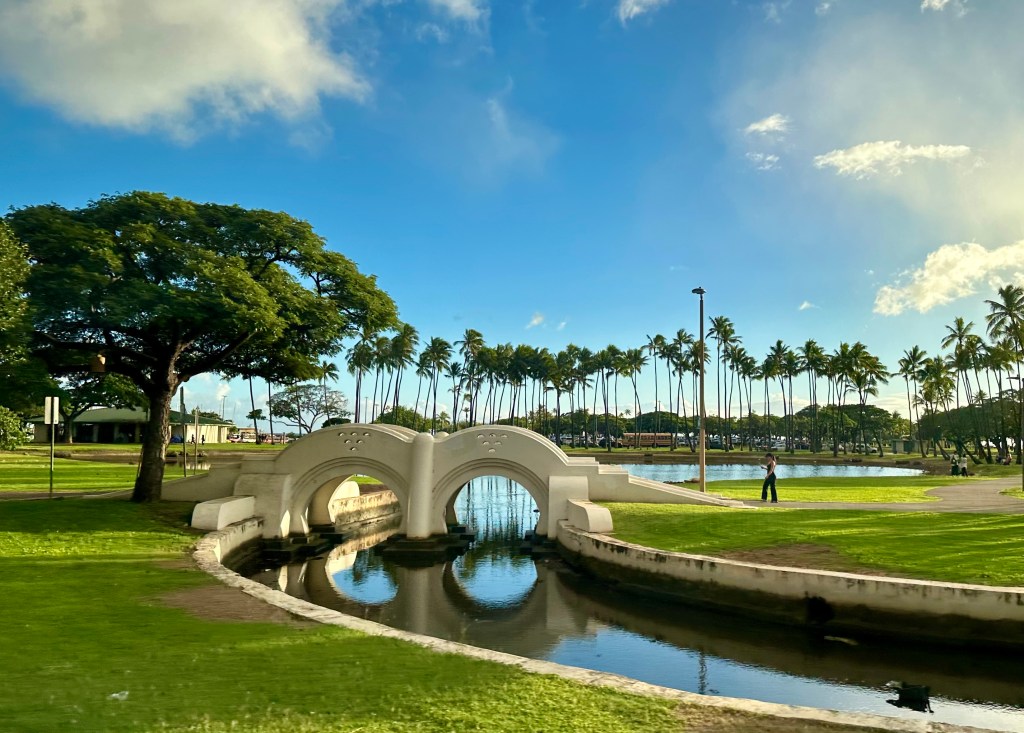
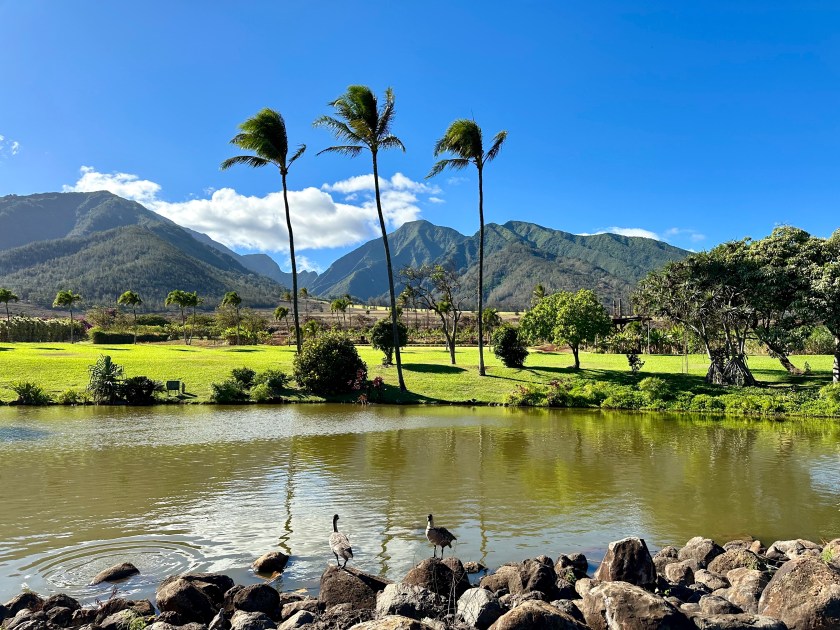
Hawaii preserves its lush vegetation with city, county, and state parks. Photo by Bruce Stambaugh
Turquoise waters, large, rolling waves crashing into coves with hidden pristine beaches, majestic palms, and friendly, inclusive residents who love their history and land are reasons enough to visit Hawaii.
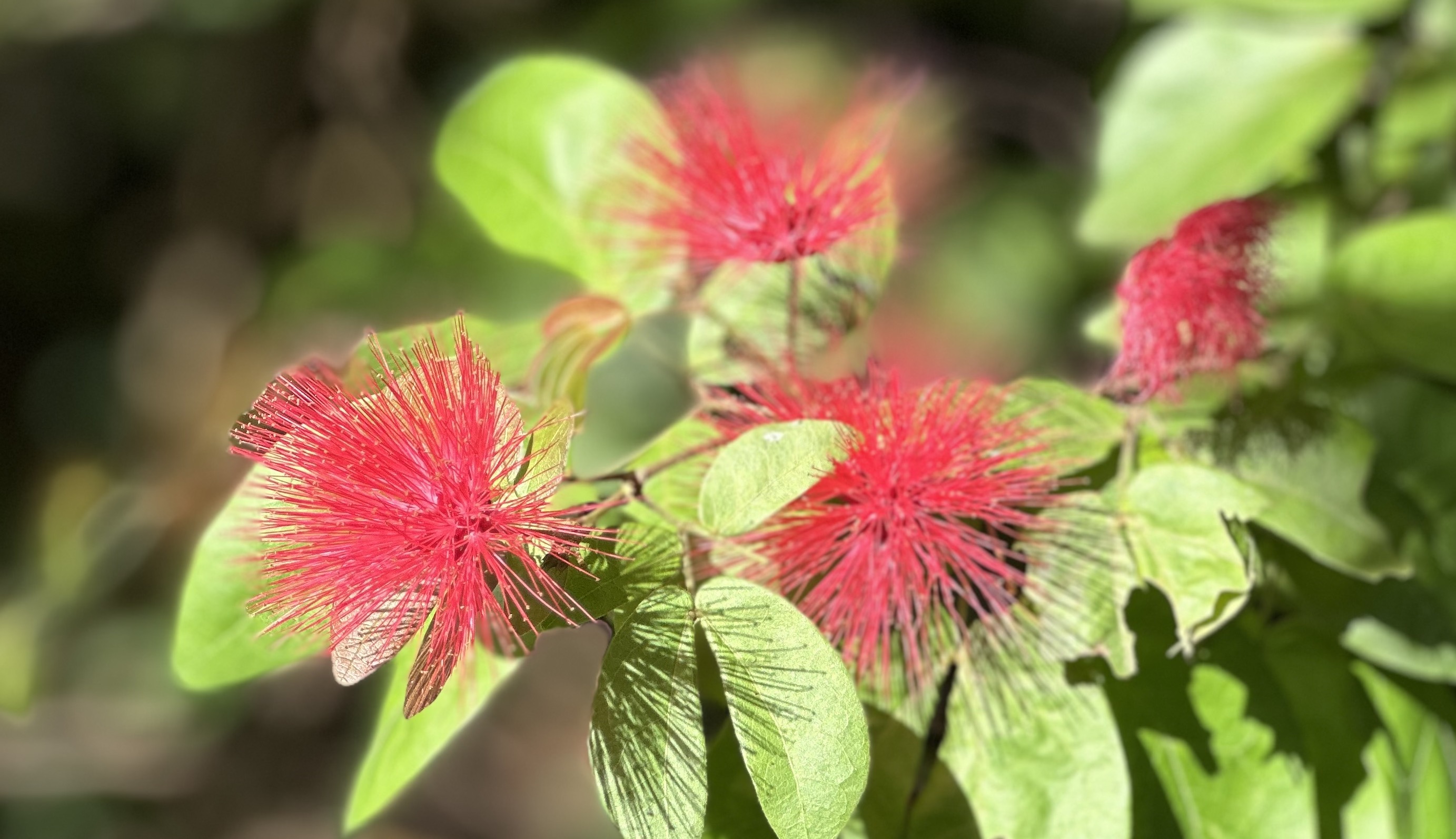
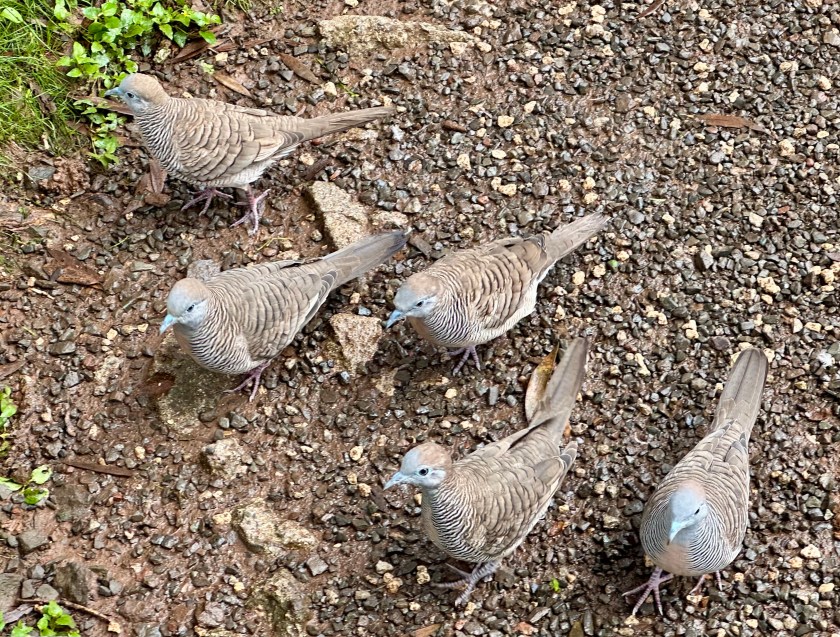
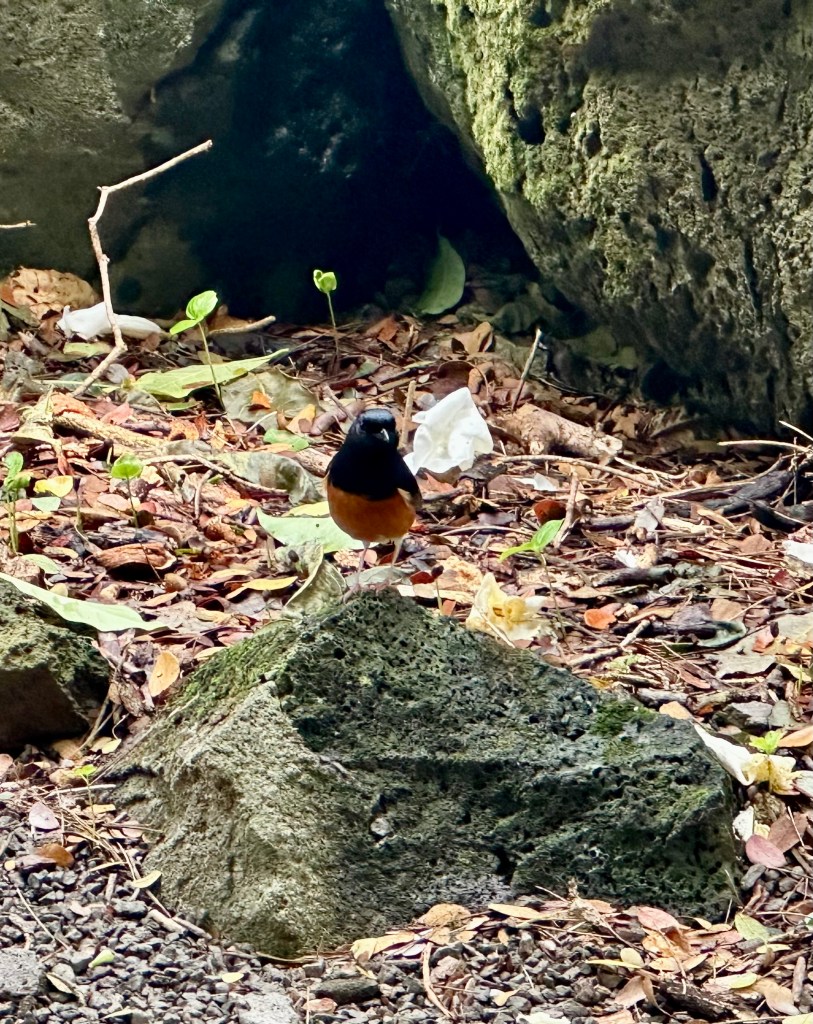
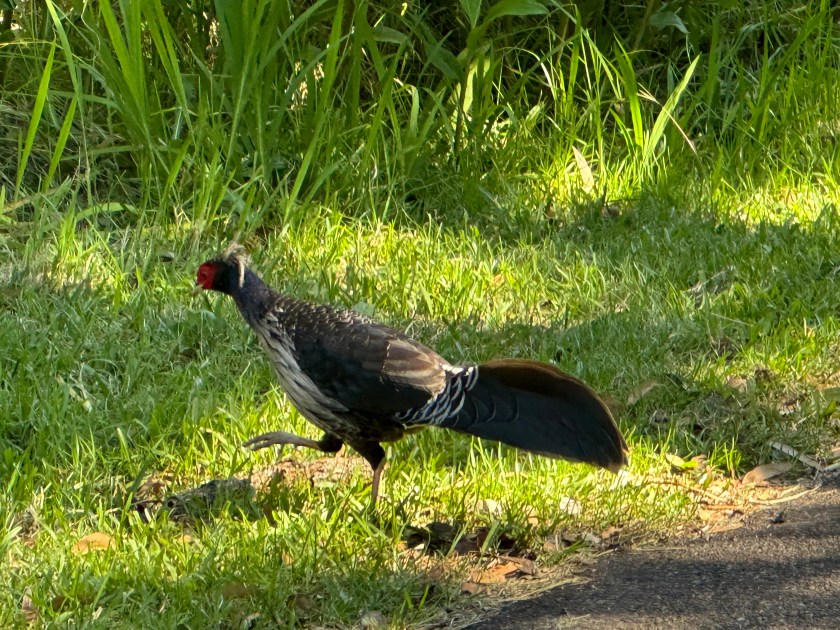
However, our 50th state’s flora and fauna also stand out, as I discovered on a recent trip there. The vegetation, flowers, and wildlife ignited my senses, and I snapped over 1,200 photos. It was that beautiful, and I only visited three islands: Oahu, Kona, and Maui.
You don’t need to be a botanist to appreciate the abundance of lush plants, trees, and flowers on the 132 Hawaiian islands. Hawaii’s wildlife thrives in these varied tropical habitats.
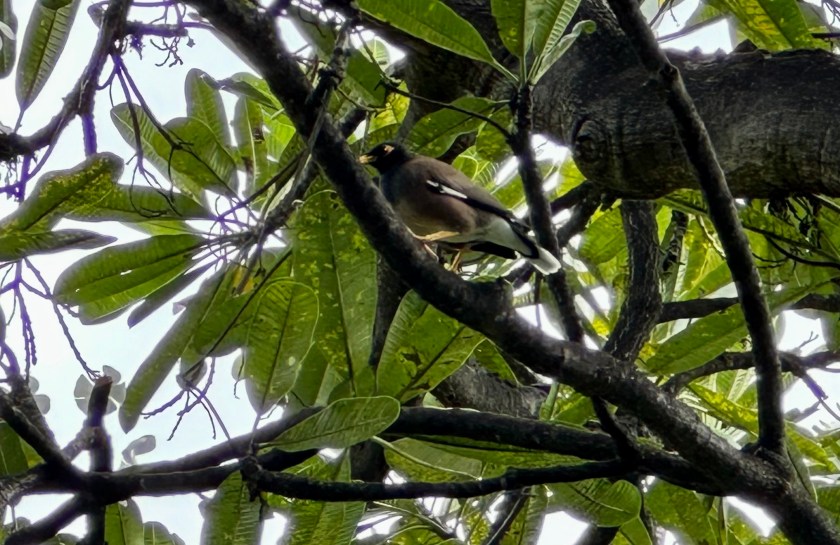
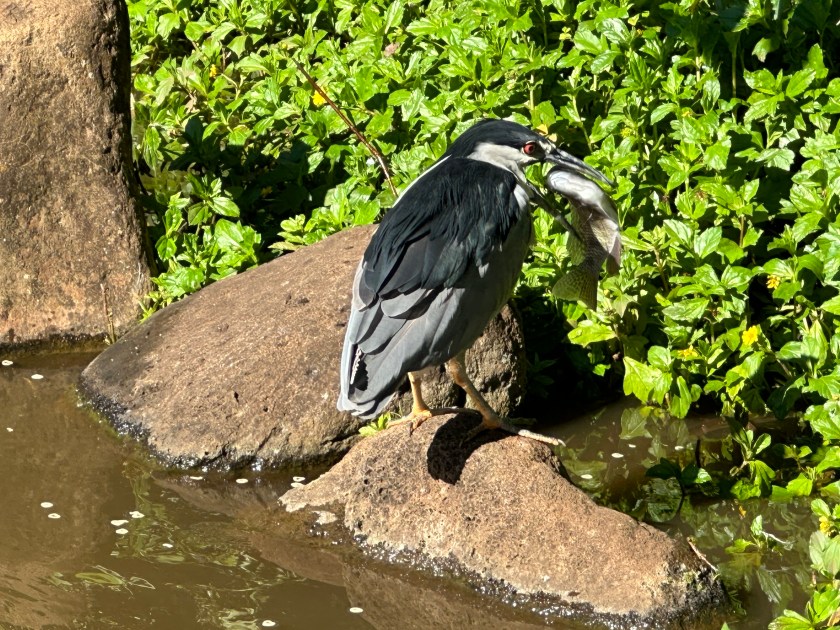
As an avid but amateur birder, I focused on birds. However, since I was on a group tour, my opportunities to do much bird watching were limited. I listened to and looked for birds as much as possible in my free time at the various stops on every excursion.
I was most impressed with how Hawaiians honor sacred lands by caring for them through public parks, wildlife preserves, and national parks. The lack of trash along roadsides, sidewalks, beaches, and in rainforests proved this point.
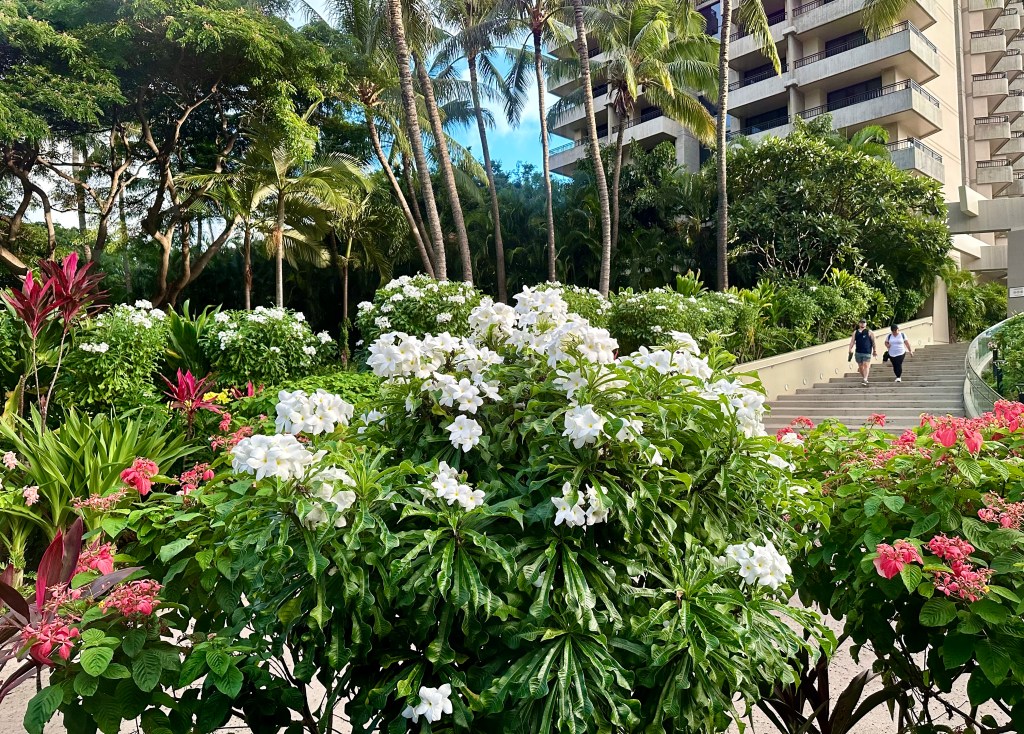
In the capital city of Honolulu, flowers were ubiquitous. They bloomed in neatly manicured flowerbeds, bushes, hedges, and trees, and native flowers filled vases inside nearly every building we entered.
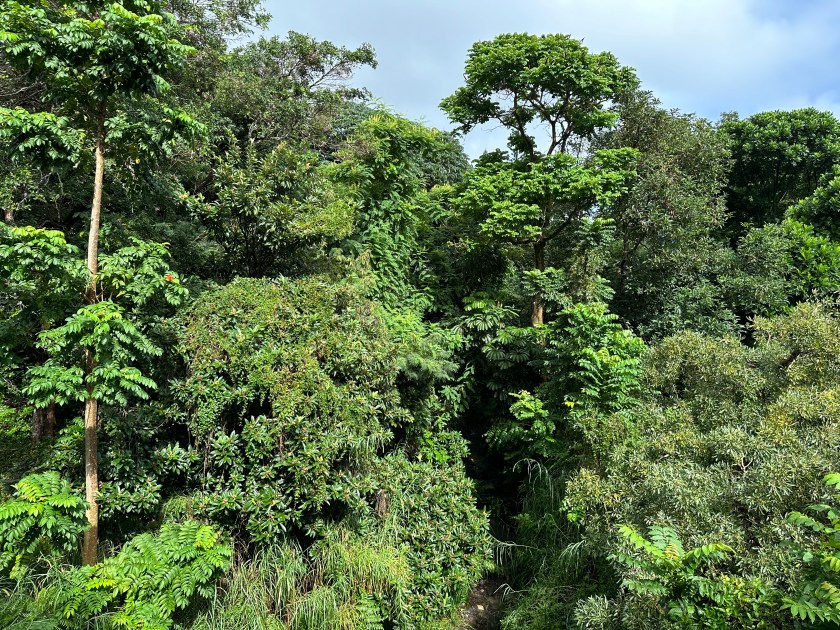
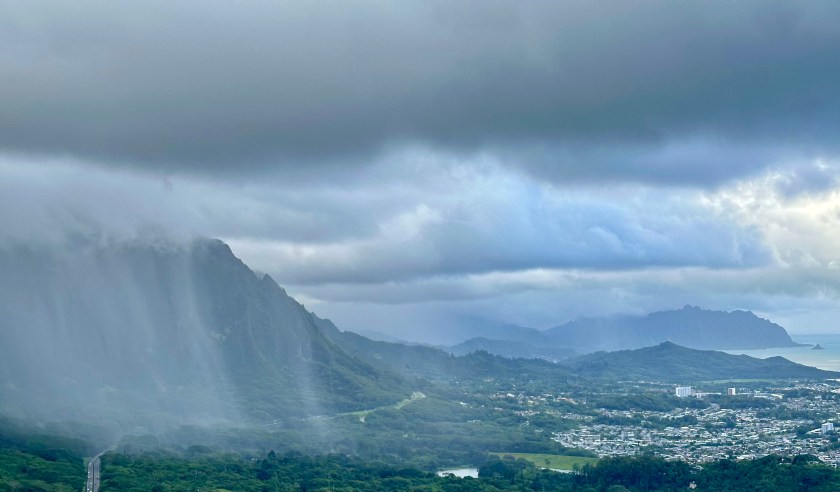
However, the countryside was where the flora and fauna ruled. Thanks to frequent tropical rains, dense rainforests grew on the windward sides of these mountainous islands. Since the clouds had spent their moisture, only scrubby trees, bushes, and grasses grew on the leeward slopes. There was that much difference in the annual rainfall.
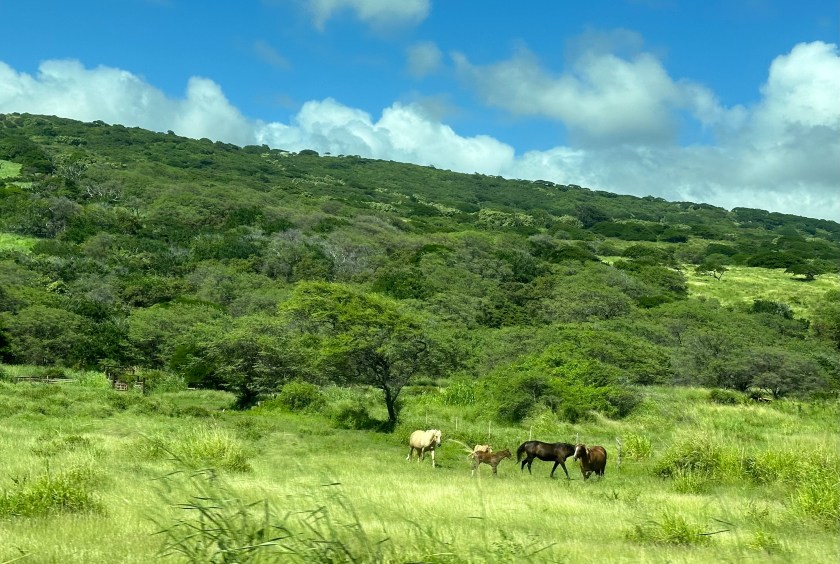
The transition between lush and barren was usually pronounced. However, in some rural locations, ranchers fenced off large, sloping pastures dotted with scrubby trees where cattle, cows, and horses congregated.
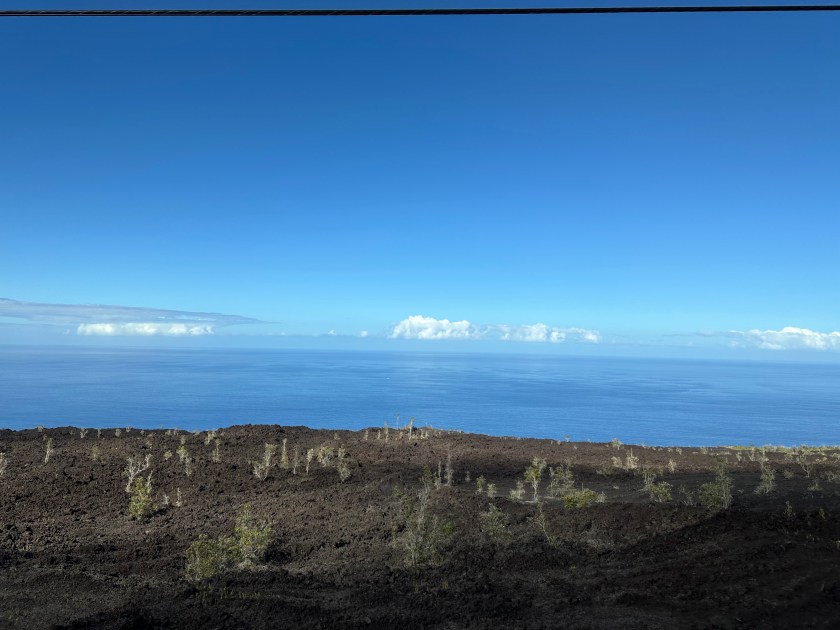
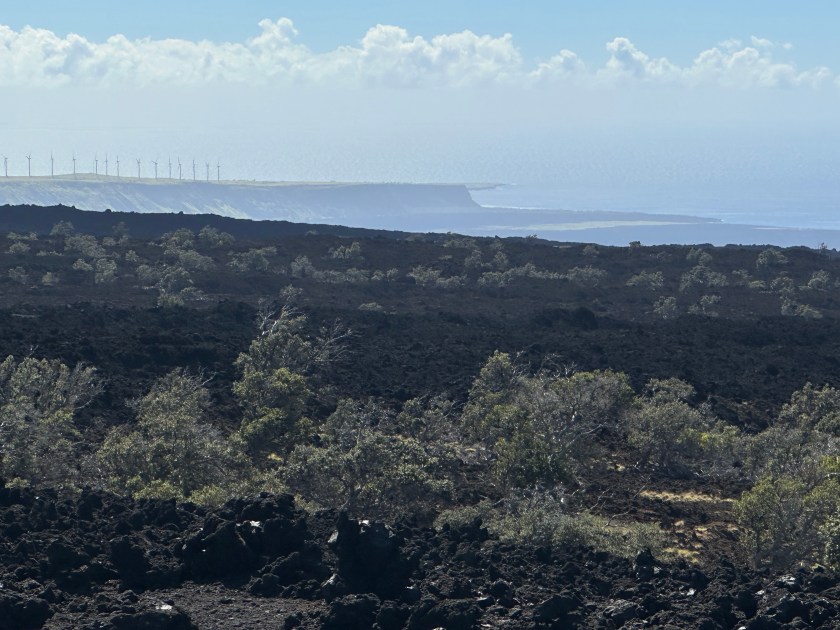
Ancient and recent lava flowed to the sea down the mountainsides, disrupting most plant growth. Still, grasses poked through, helping to break down the rock with assistance from winds and rain.
Lush foliage covered steep, sharp mountains while a half mile to the coast, shorebirds waded for any morsel they could snag. That’s the natural consequence of life on the tip of a submerged volcano that would tower over all land-based mountains, including Mount Everest. Animals and birds flourished all around Hawaii Volcanos National Park.
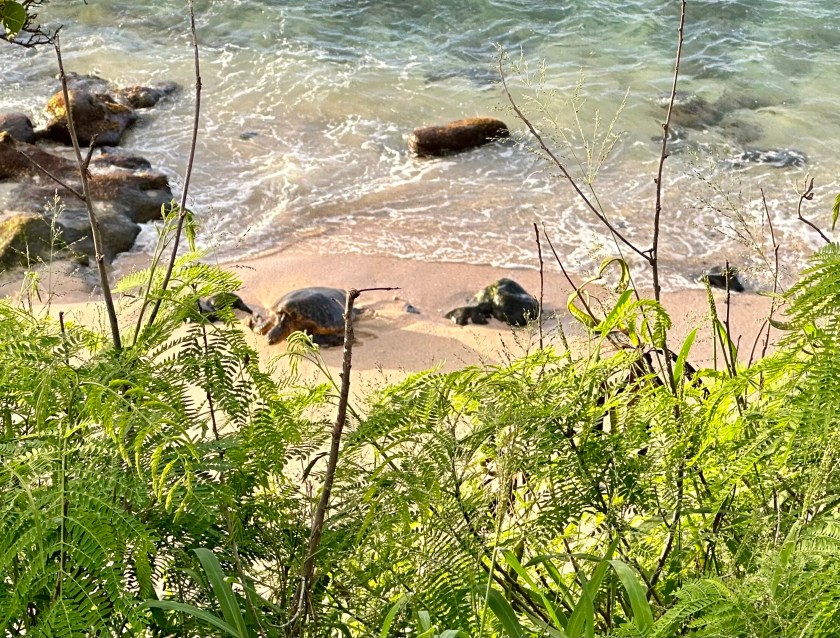
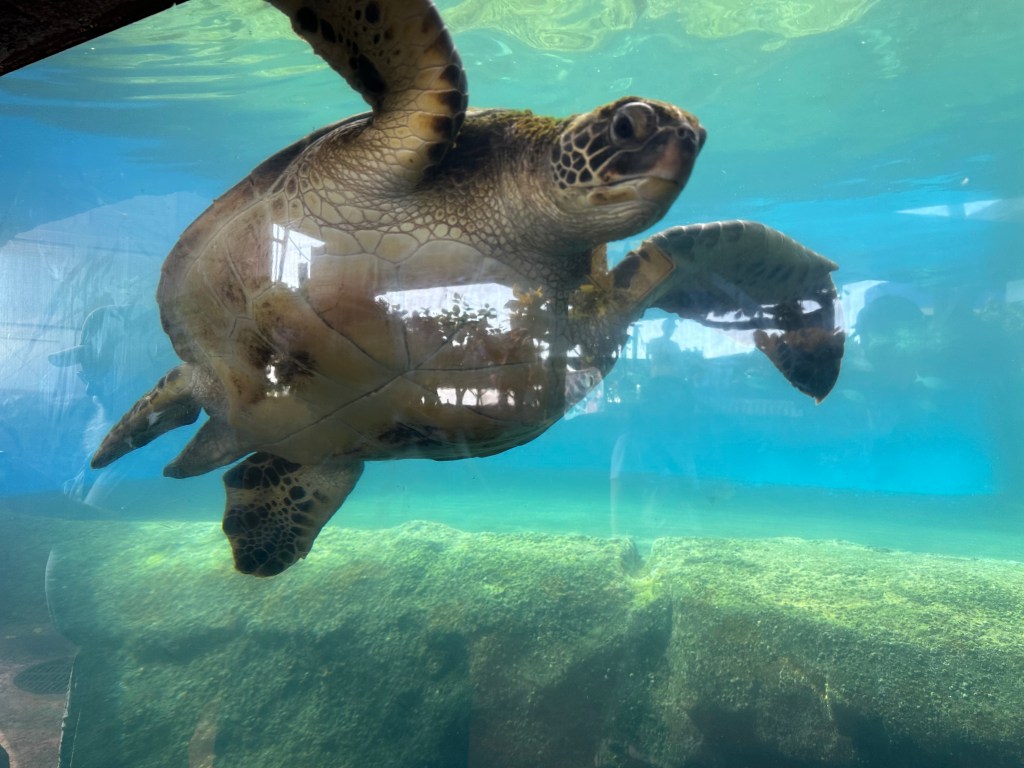
As the vegetation types changed, so did the animal life. In the adjacent ocean waters, manta rays cruised the shorelines for food, and giant Green Sea Turtles basked on sunny beaches to warm themselves.
At a historical coffee plantation, songbirds darted from tree to tree, singing and calling high above the shaded coffee bushes. Years ago, I experienced similar scenes multiple times in Honduran coffee farms.
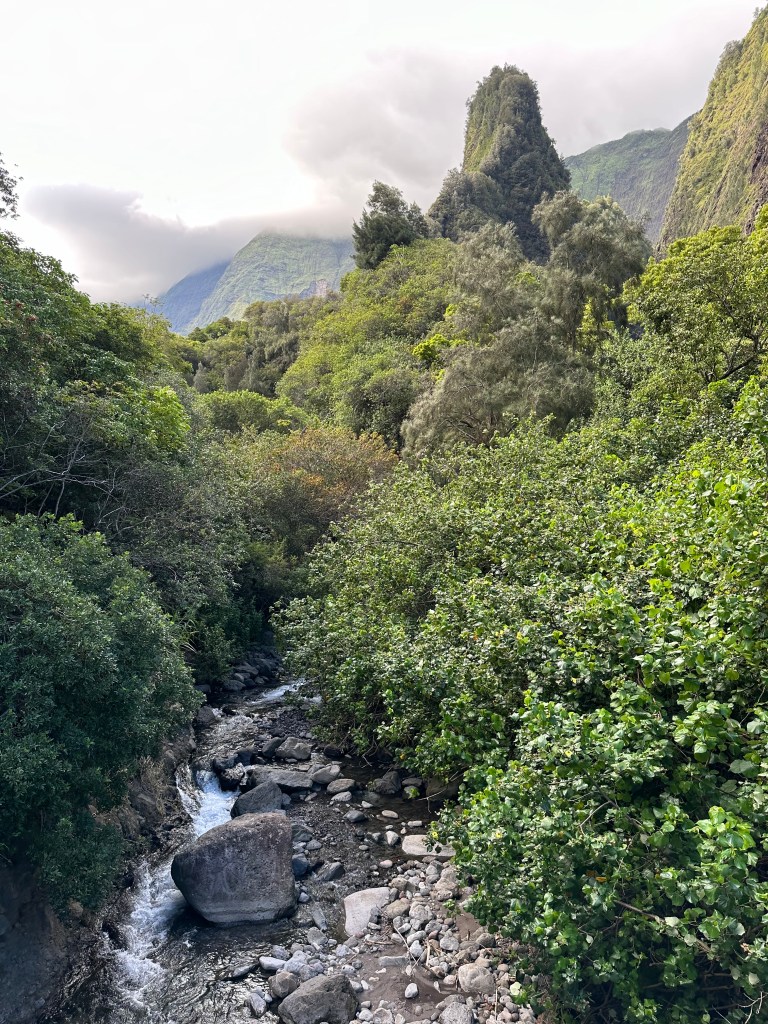
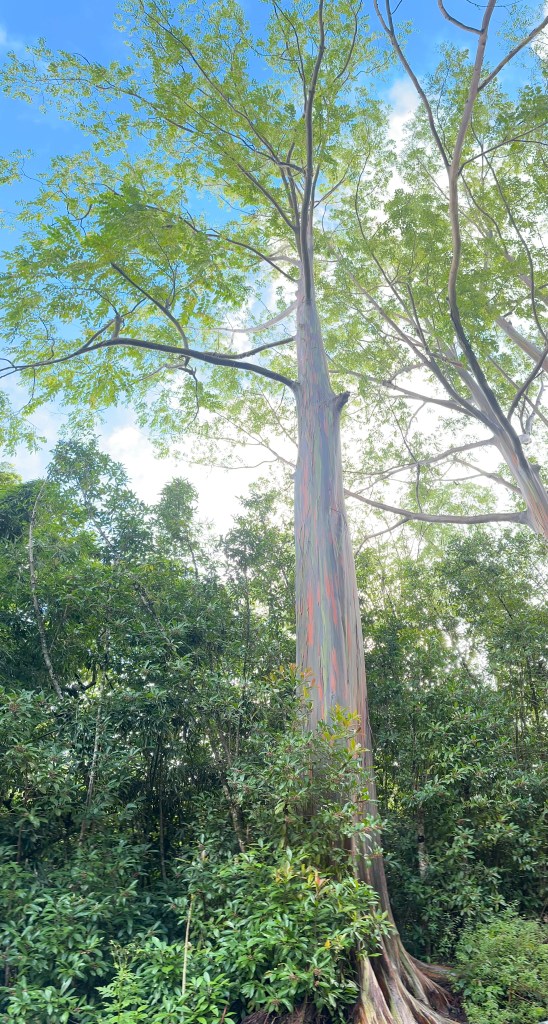
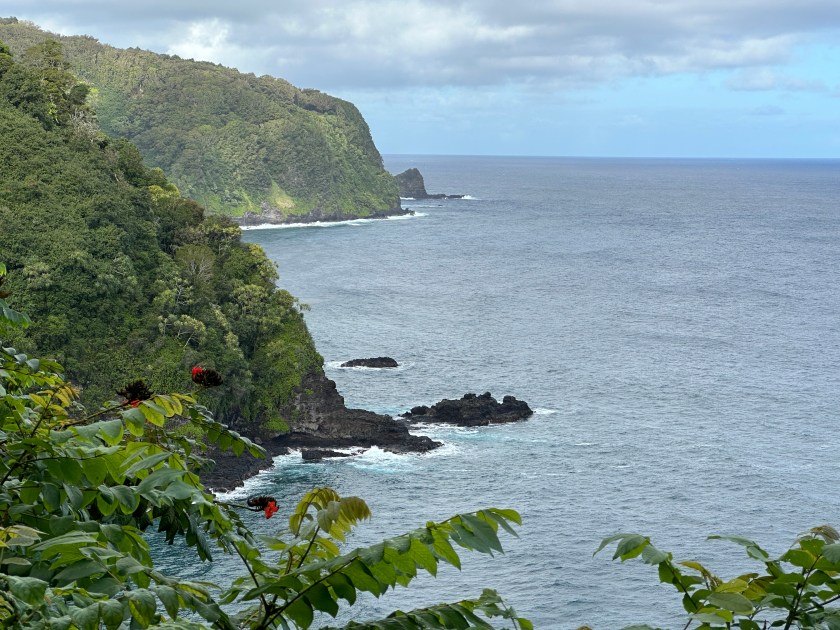
The last full day on Maui proved the most thrilling for scenery and fauna. Driving the Road to Hana and back will do that. Steep mountainsides filled with 50 shades of green surrounded majestic waterfalls, and sharp-angled cliffs dove into inviting waters.
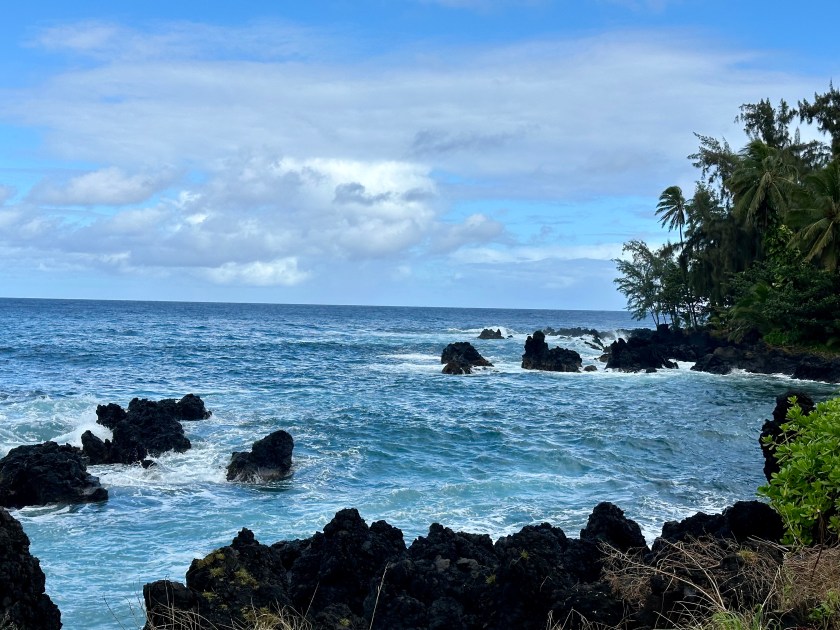
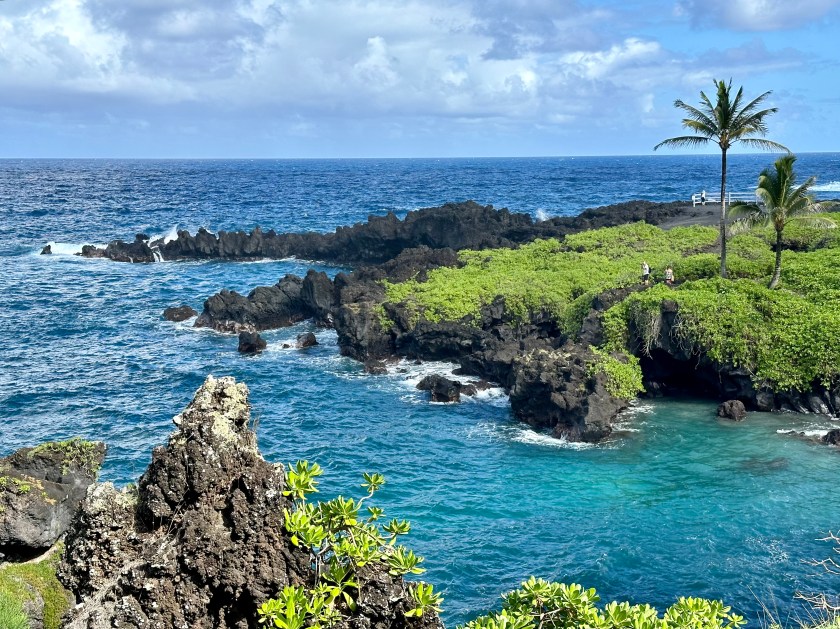
Hidden coves with fine black or white sand beaches held their secrets. Crashing waves instantly transformed into a brilliant white froth that quickly disappeared.
I spied a colony of terns that spend most of the year out to sea fishing. They claimed an old, rugged lava rock that protruded above the sea’s surface, providing a handy, protected nesting sight. Behind me, a small flock of finches waddled through the park’s manicured grasses.
I would be negligent not to mention the free-range hens and roosters roaming the islands. Like many other island animals and plants, they are not native but are now part of the culture.
In my few days in this island paradise, nature’s flora and fauna overwhelmed me with joy. Surrounded by such enchanting environments, who wouldn’t be?
A black sand beach along the Road to Hana. Photo by Bruce Stambaugh
The relaxing view from our lanai. Photo by Bruce Stambaugh
After a hardy breakfast of veggie omelets and fresh fruit, we left for the Maui Ocean Center. We drove through the burned-out section of Lahaina, and I didn’t realize it at first with all the rebuilding that had been done.
However, the many empty lots and scorched concrete block walls bore witness to the devastation. A respectful hush came over the bus. Everyone sensed the apparent dichotomy. As tourists, we embraced the beauty of the islands, its rhythmic language, the friendliness of its handsome people, and pride in their cultures. Yet, they had no homes, and still, they welcomed us. They needed the tourism jobs.
Sections of Lahaina still waiting to be rebuilt. Photos by Bruce Stambaugh
Though we left the hotel early, we arrived at the ocean center late. An accident caused a long traffic jam on the two-lane highway to the bay where the aquarium is located. The bus driver said accidents along this stretch of road are frequent.
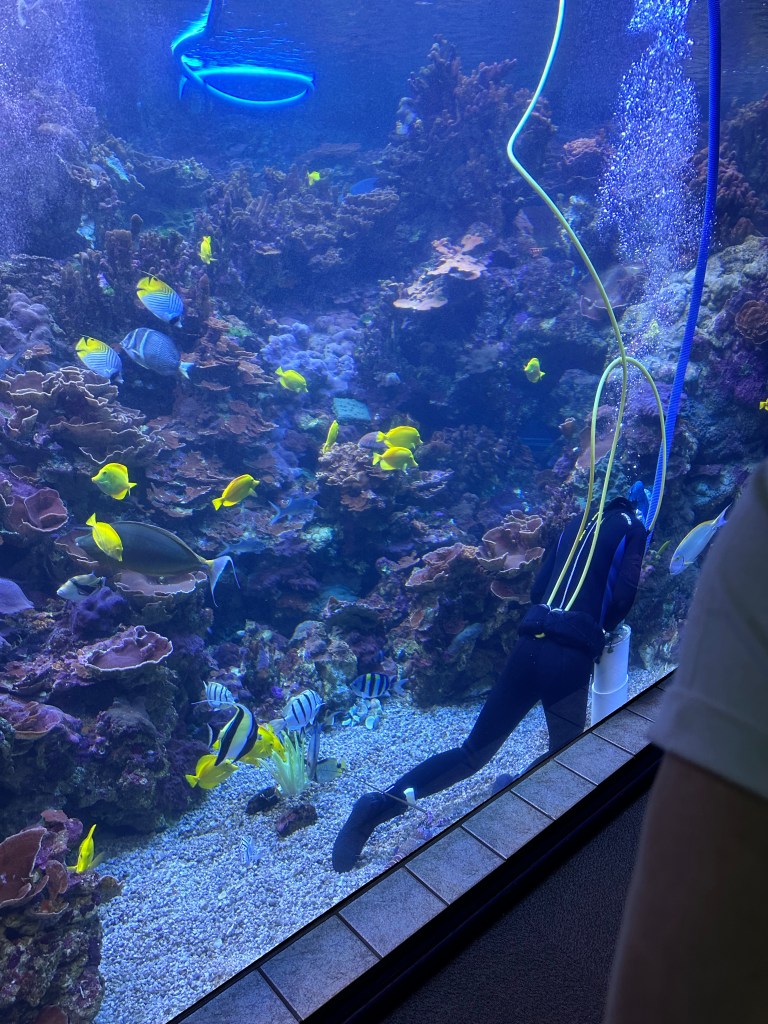
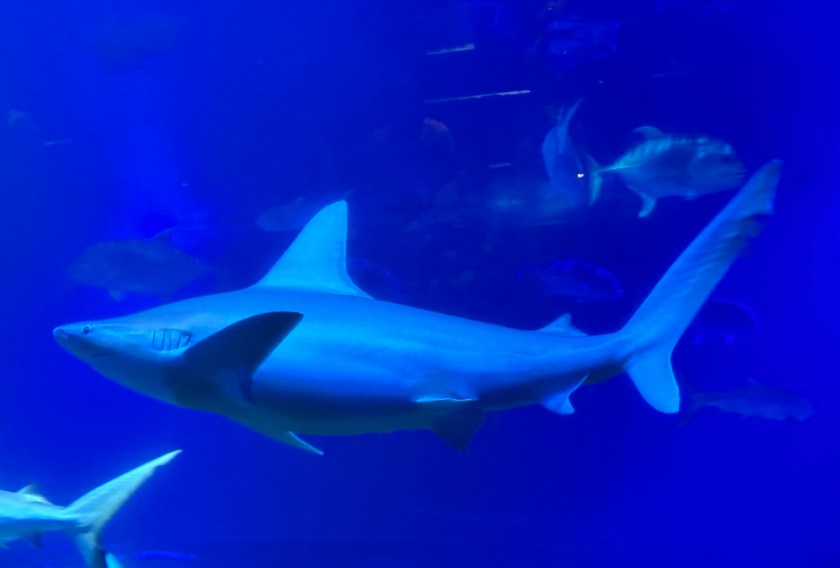
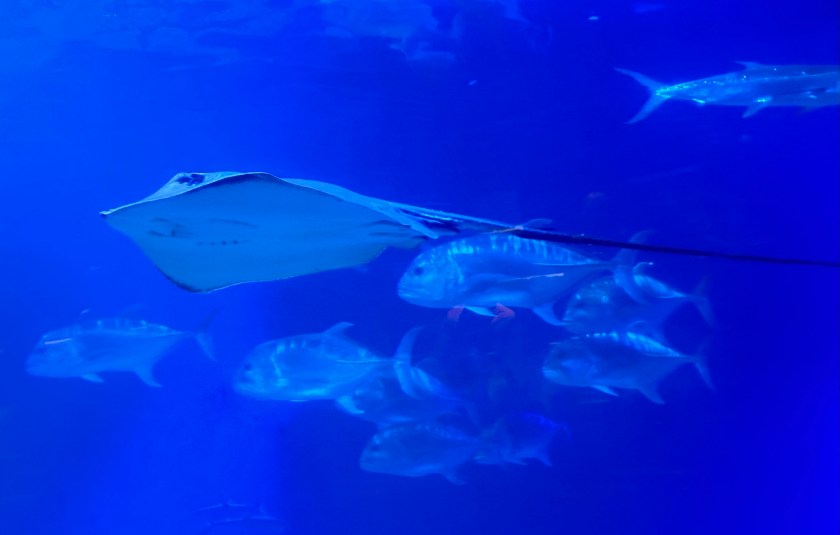
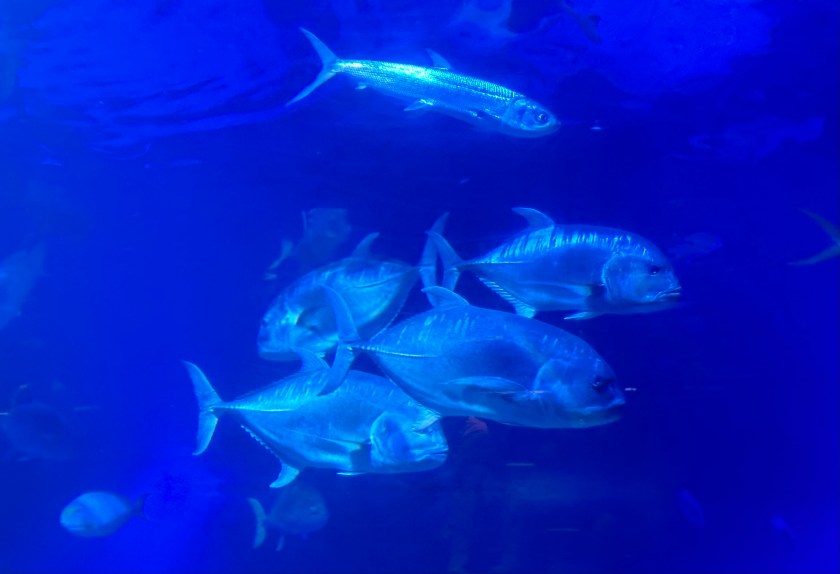
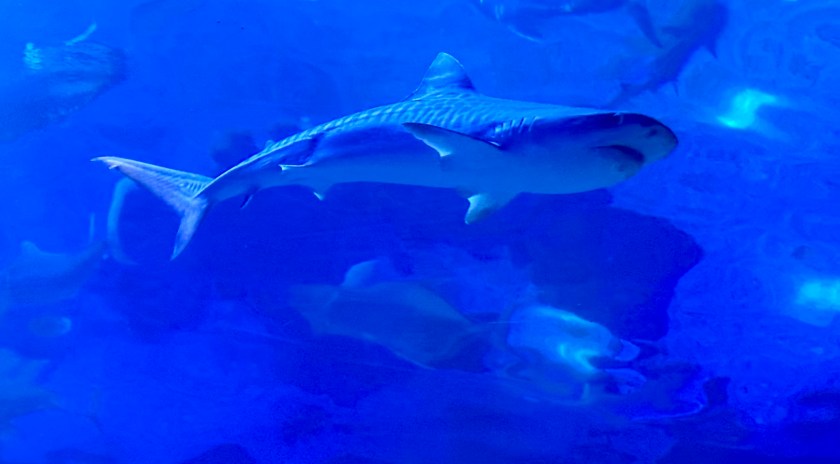
A guided tour of the Maui Ocean Center gave us a good understanding of the sealife around Hawaii. We watched various fish, sharks, and stingrays swim past the aquarium’s large underwater windows. Humpback Whales breed and give birth in the waters off Maui, but we were a little early to see any whales.
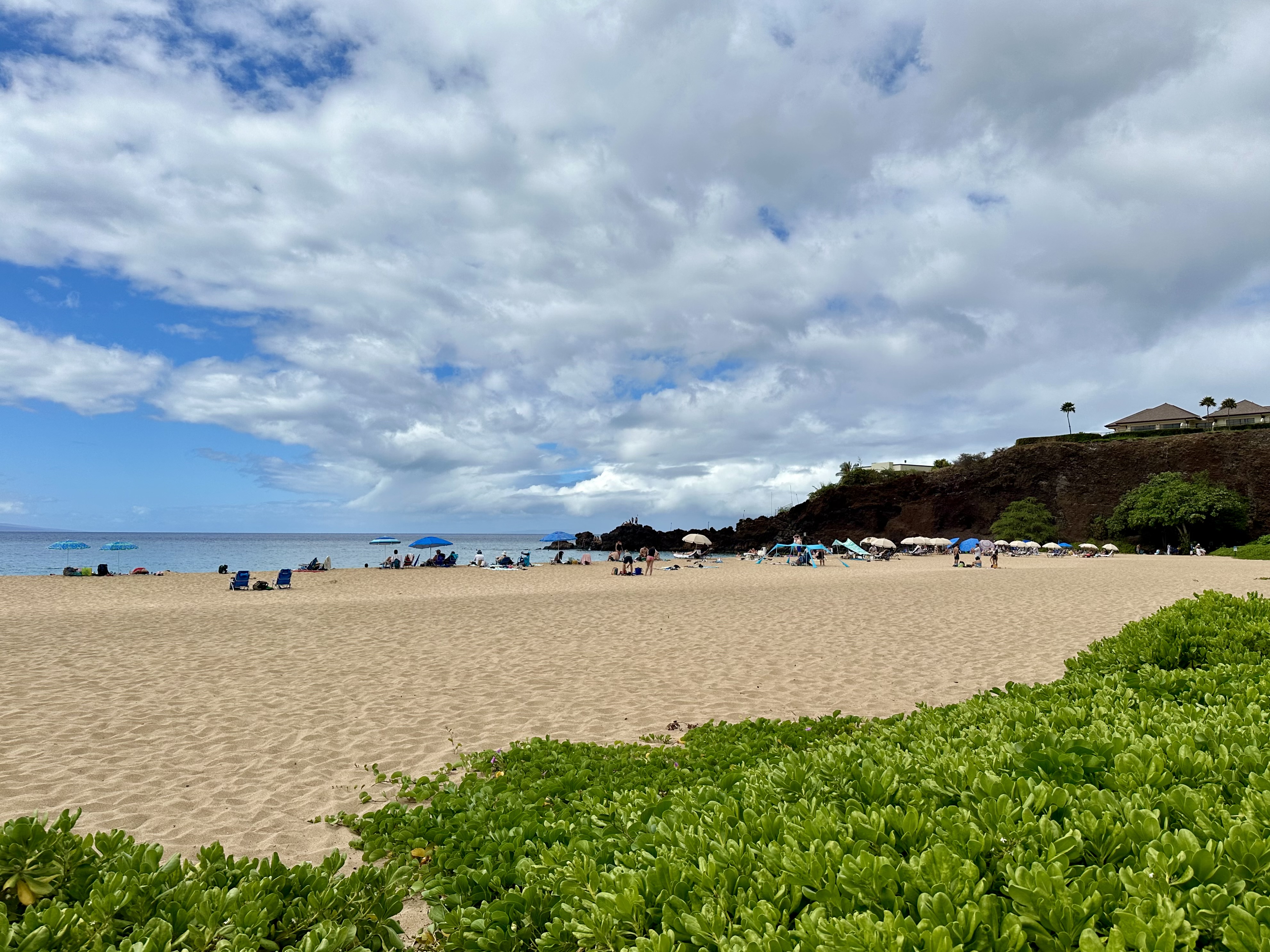
Back at the hotel, we strolled down Black Rock Beach to a seaside restaurant. The locals were getting a headstart on celebrating the holidays. A large Christmas tree stood fully decorated at the end of a walkway to the beach.
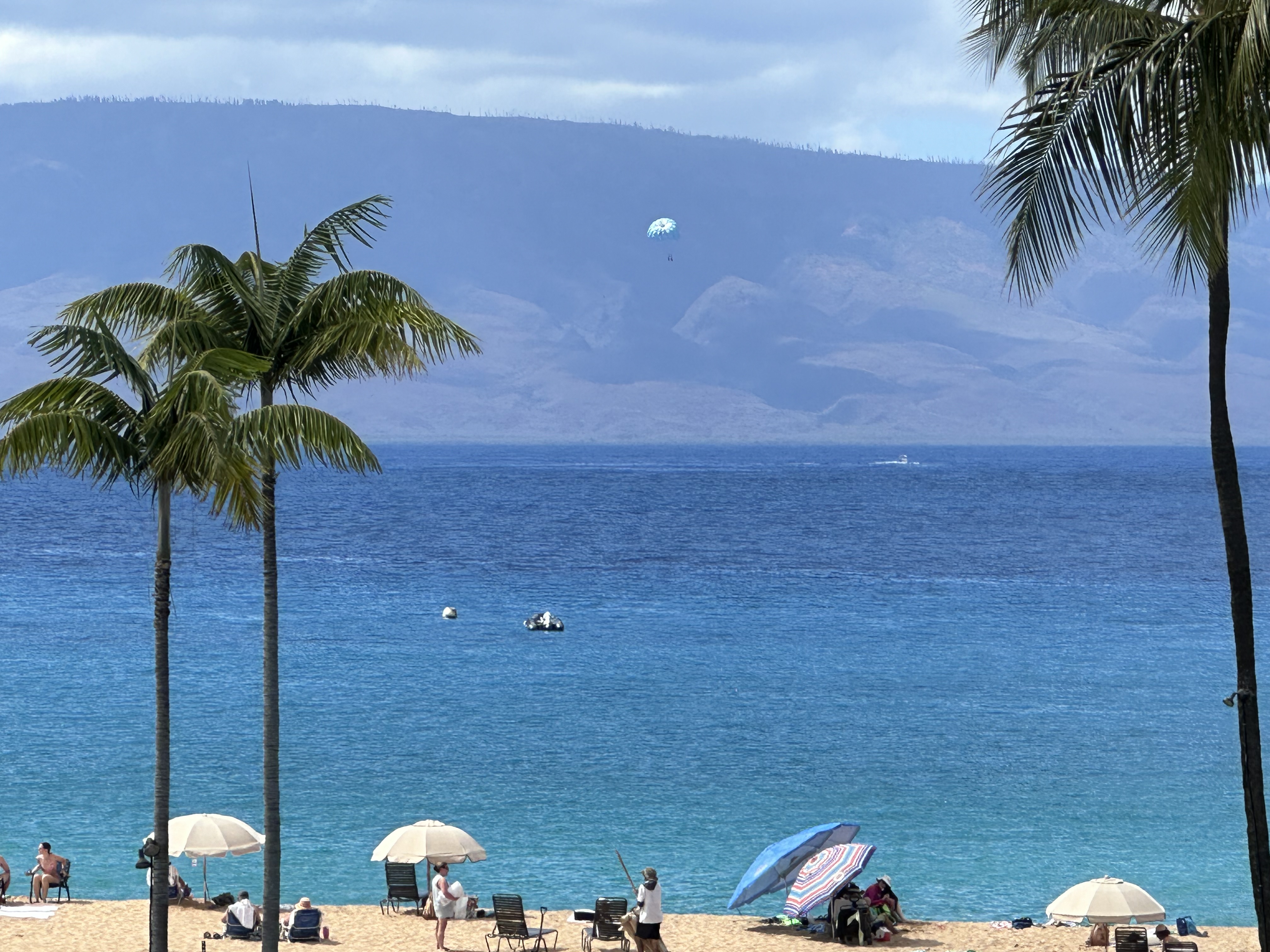
The setting, the views, the flowers—everything was gorgeous. Parasails caught the trade winds offshore and glided high above the intoxicating indigo ocean.
After a bit of shopping, we continued to take it all in. We rested on the balcony of our third-floor room, which gave us great views of the catamarans sailing by, teenage boys taking turns jumping off the black lava rocks, and the soothing tropical breeze. We had to pinch ourselves to ensure we weren’t dreaming.
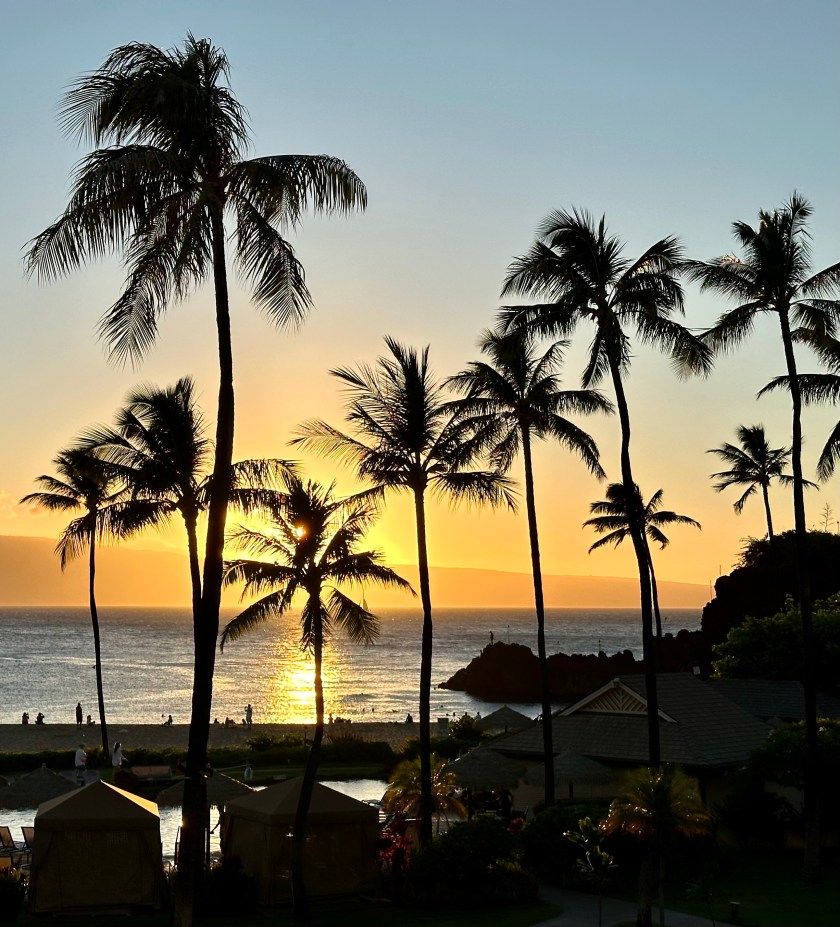
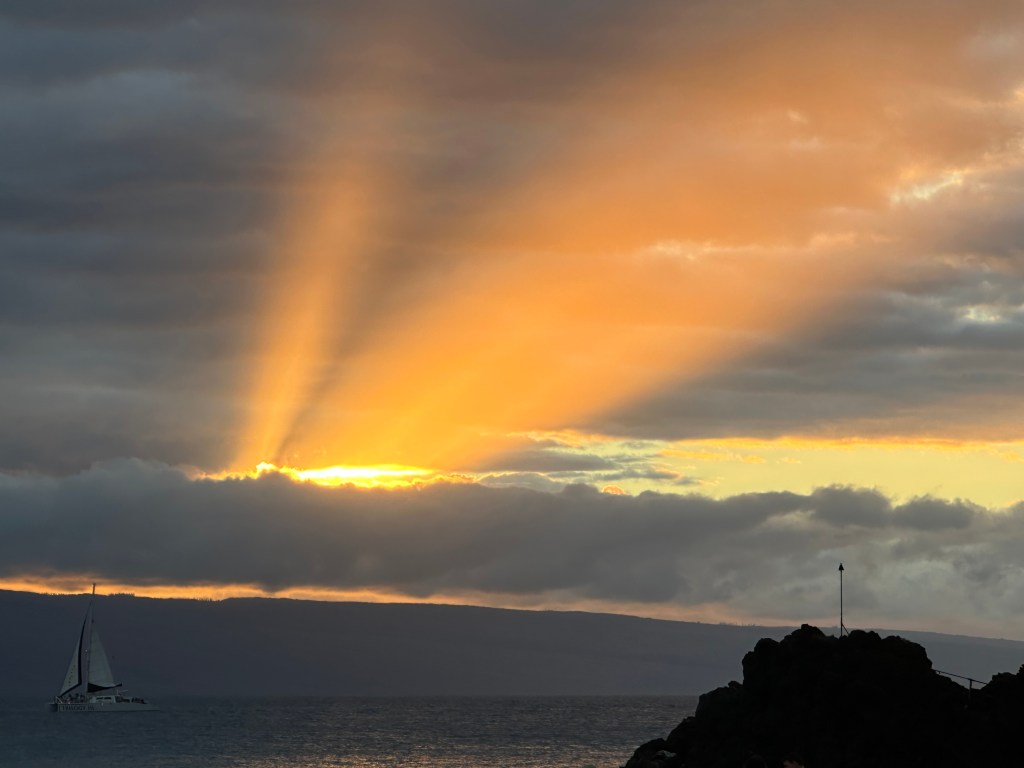
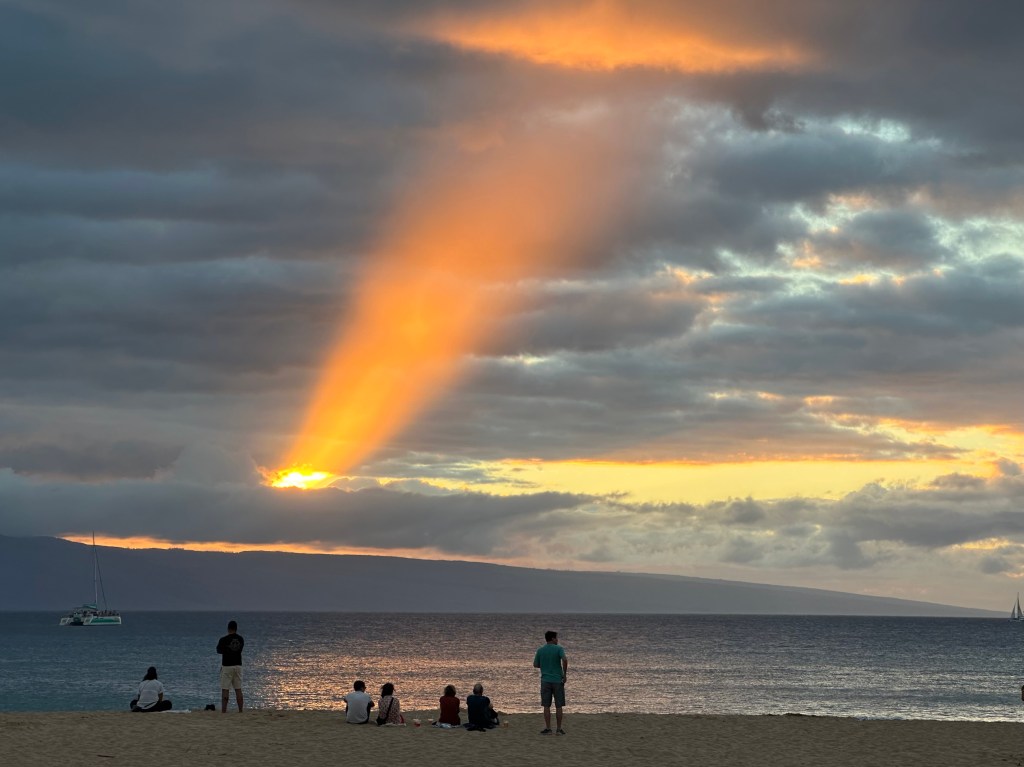
As evening approached, I wanted to get some sunset shots from the beach. I went down early, surprised to see how few people were out and about. Clouds began filling the sky, and I feared the sunset would be a bust. I need not have worried.
Over Pineapple Island, opposite the channel, warm, amber crepuscular rays began to filter through the clouds. They appeared like spotlights against the higher clouds, creating a surreal scene. I wondered what the natives long ago would have thought had they experienced this. Was this a sign from the gods? If so, what did it mean?
I snapped away at my good fortune. Could this vacation get any better? Yes, it did.
Water Lilies bloomed outside the hotel restaurant. Photo by Bruce Stambaugh
This year is about to end. For my recap, I chose one photo per month to represent the daily subjects I encountered.
January
Sunset at Silver Lake. Photo by Bruce Stambaugh
Silver Lake is slightly more than three miles southwest of our home. I visit it often to photograph birds and sunsets. The sunset actually produced more color in the northwestern sky. So, naturally, that’s where I aimed to capture this photo.
February
Iridescence cloud. Photo by Bruce Stambaugh
Imagine my surprise when I stepped outside to refill my birdfeeders. This rare iridescence cloud caught my attention. Formed high in the much colder atmosphere, the pastel colors are created by the sun’s rays highlighting ice crystals in the cloud. This photo is even more unusual since the sun is also visible.
March
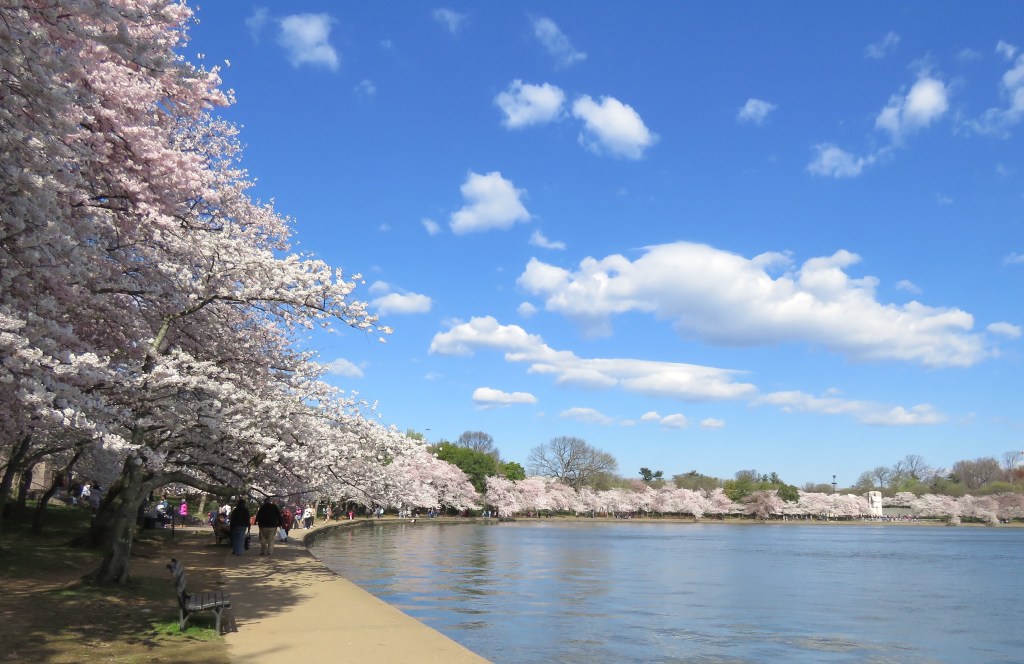
Cherry blossoms around the Tidal Basin, Washington, D.C. Photo by Bruce Stambaugh
I had always wanted to see the cherry blossoms in bloom in Washington, D.C. I never considered going when we lived in Ohio. But once we moved to Virginia’s Shenandoah Valley, I had it on my “to-do list.” When I learned the blooms were peaking earlier than expected, I visited our nation’s capital on a sunny but blustery Wednesday in late March. I was awestruck at their beauty. In this photo, the morning sun highlighted the pale pink petals on the trees planted around the Tidal Basin. The Martin Luther King, Jr. Memorial is on the right-hand side of the photo.
April
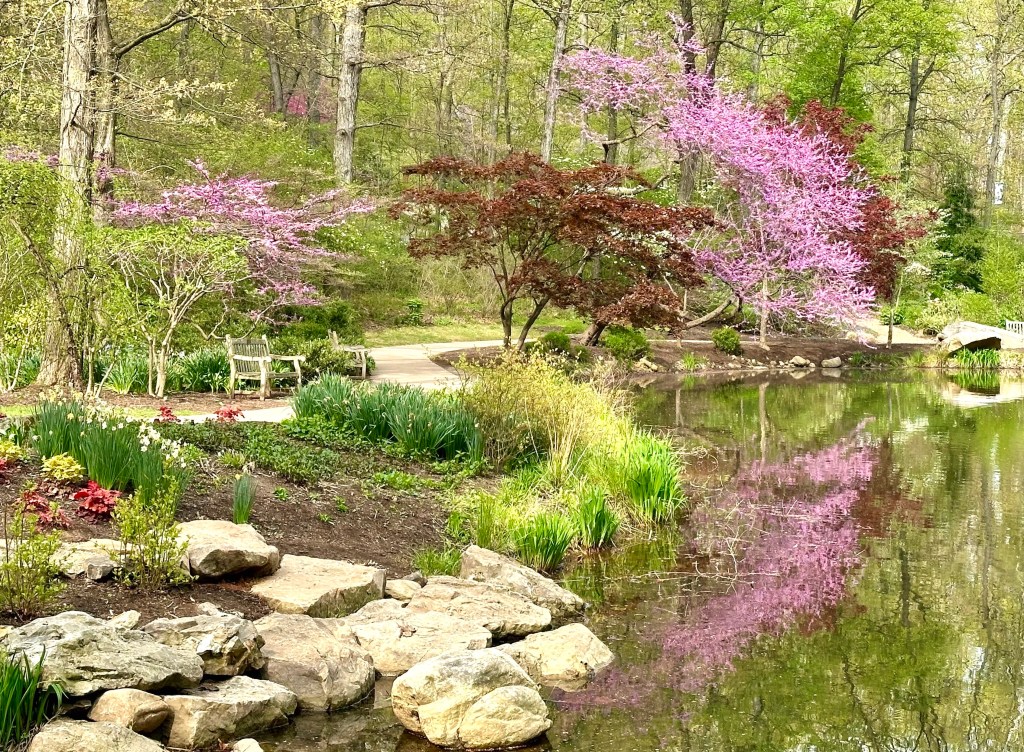
Edith J. Carrier Arboretum, James Madison University. Photo by Bruce Stambaugh
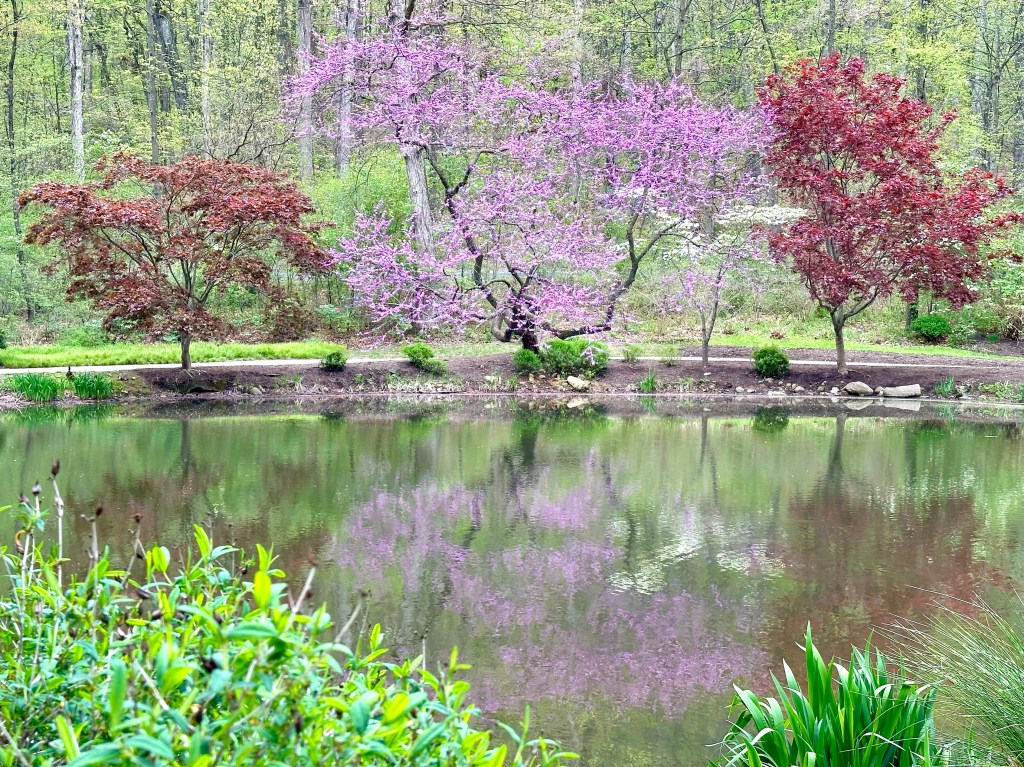
I love to visit the Edith J. Carrier Arboretum on the campus of James Madison University in Harrisonburg, Virginia. It’s a lovely place to seek serenity by connecting with nature’s variety of beauty in any season. Springtime is my favorite. Songbirds, including migrants, are singing and marking their territories. The arboretum’s staff and volunteers ready this remarkable gem for the onslaught of visitors, including many school children and their teachers. I had so many photos to choose from that I called upon my wife to help me decide which picture to share with you. We chose this one because it best represents all that is the arboretum. The blooming daffodils and other plants, plus the giant boulders that secure the pond bank, serve as an attractive, textured foreground for the native redbuds, showy ornamentals, and the dogwood tree, which the pond reflects. The hillside mixed woodlot is an appropriate backdrop for the photo’s main subjects.
May
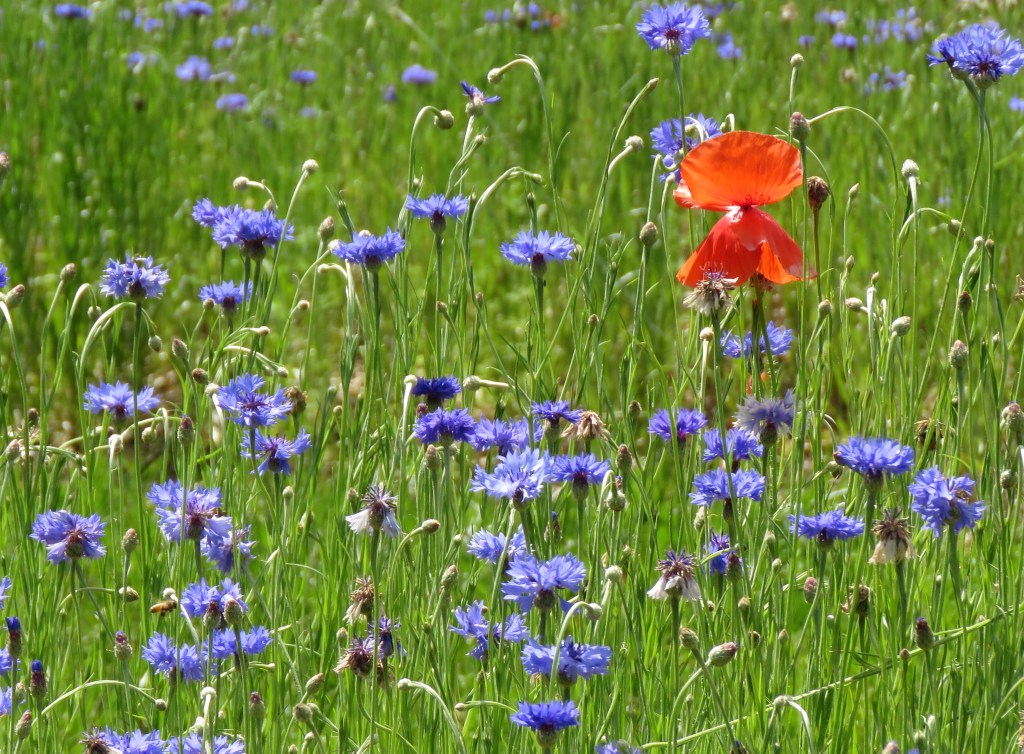
Blue Cornflowers and one orange Poppy. Photo by Bruce Stambaugh
Birding, hiking, and photography are three hobbies I can combine into one outing. I enjoy capturing the unusual, like this field of blue Cornflowers infiltrated by one orange Poppy.
June
Trout fisherman at Rapidan Camp, Shenandoah National Park. Photo by Bruce Stambaugh
Shenandoah National Park is my favorite place to hike. This photo was taken beside Rapiden Camp, President Herbert Hoover’s summer retreat. Hoover loved fishing at the camp to escape from the confines of noisy city life and the country’s politics. This young man caught rainbow trout, just as Hoover had. My friends and I accessed the camp by hiking more than a mile down the Millprong Trail from Skyline Drive. The other way is to book a ranger-guided tour when they are offered and ride the fire road down to the camp.
July
A Great Spangled Fritillary on Hayscented Fern. Photo by Bruce Stambaugh
I never tire of watching the many varieties of butterflies that frequent Shenandoah National Park in the summer. Unless we have a severe drought, wildflowers, dense forests, and the sparkling water of rapidly running streams provide the right habitat for them. I was photographing Turkscap Lilies when this beautiful butterfly flitted past me and landed on this Hayscented Fern plant to bask in the bright morning sunshine. Moments like this keep me returning to the park again and again.
August
Storm clouds brewing. Photo by Bruce Stambaugh
From little on up, clouds have fascinated me. However, I am long over imagining shapes in the clouds. I enjoy their beauty, their constant reconfiguration, and, in the case of severe storms, their power. I was astonished at how quickly these cumulus clouds grew into cumulonimbus clouds, and by the time they reached the Blue Ridge Mountains in the background, a severe thunderstorm warning had been issued. We were glad for the rain since the entire Shenandoah Valley had been in a summer drought.
September
Beauty after the storm. Photo by Bruce Stambaugh
September started off right with a much-needed rainstorm followed by a stunning sunset. Other than that, I’ll let the photo’ beauty draw you in.
October
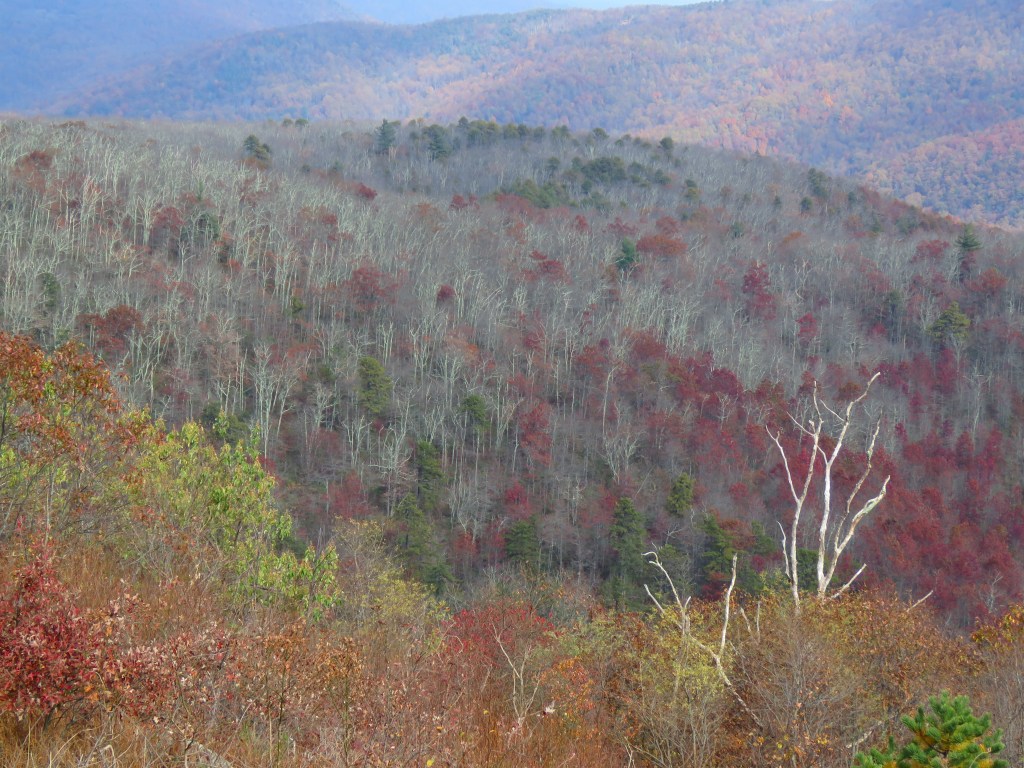
Post-peak splendor. Photo by Bruce Stambaugh
October’s photo was the toughest one to choose. Even with an extended drought, the colors didn’t disappoint this year. Still, we had two celestial stunners in October that could have been selected. I was fortunate to photograph the Aurora Borealis and Comet C-2023 A3, also known as Tsuchinshan-ATLS. Plus, I could have chosen golden maples at the height of their colors. But this photo stood out. The bare white branches of the gray birch trees adjacent to the stands of red oaks guarded by pines and cedars show the glory of Shenandoah National Park even after most of the leaves and tourists have left. Also, note that mountainside forests in the distance at lower altitudes are still holding fast to their lovely leaves. This year, October had it all.
November
Ho’okipa Beach, Maui, Hawaii. Photo by Bruce Stambaugh
November’s shot was nearly as hard to pick as October’s. I was torn between being a birder or a tourist. Obviously, I chose the latter. Ho’okipa Beach is one of Maui’s most famous and popular attractions, not just because of its beautiful blue waters. Surfers clamor for the rolling, long-lasting waves, especially when the tide is high. In the afternoon, people of all ages watch giant Green Sea Turtles come ashore to soak in the afternoon sun that warms the beach. My birding option was a photo of a Snowy Owl, which you will see in a later post.
December
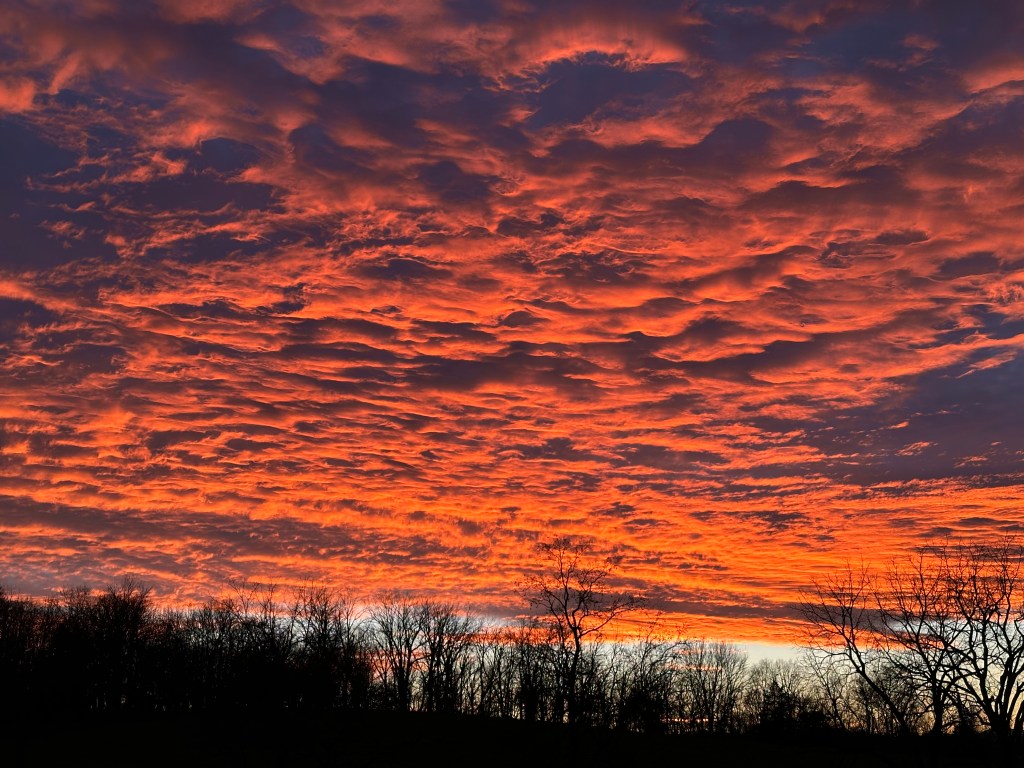
A glorious December sunset. Photo by Bruce Stambaugh
It is only appropriate to close out 2024 with a sunset, a beauty at that. With the low cloud deck, I was ready for this one, which didn’t disappoint.
I greatly appreciate you following this blog all these years. I wish you all the very best in 2025. Happy New Year everyone!
Looking east during the Golden Hour in Berlin, Ohio. Photo by Bruce Stambaugh
This scene caught my attention as my wife and I arrived in Berlin, Ohio, at her sister’s place. The white of the Amish homes and barns glowed in the Golden Hour light.
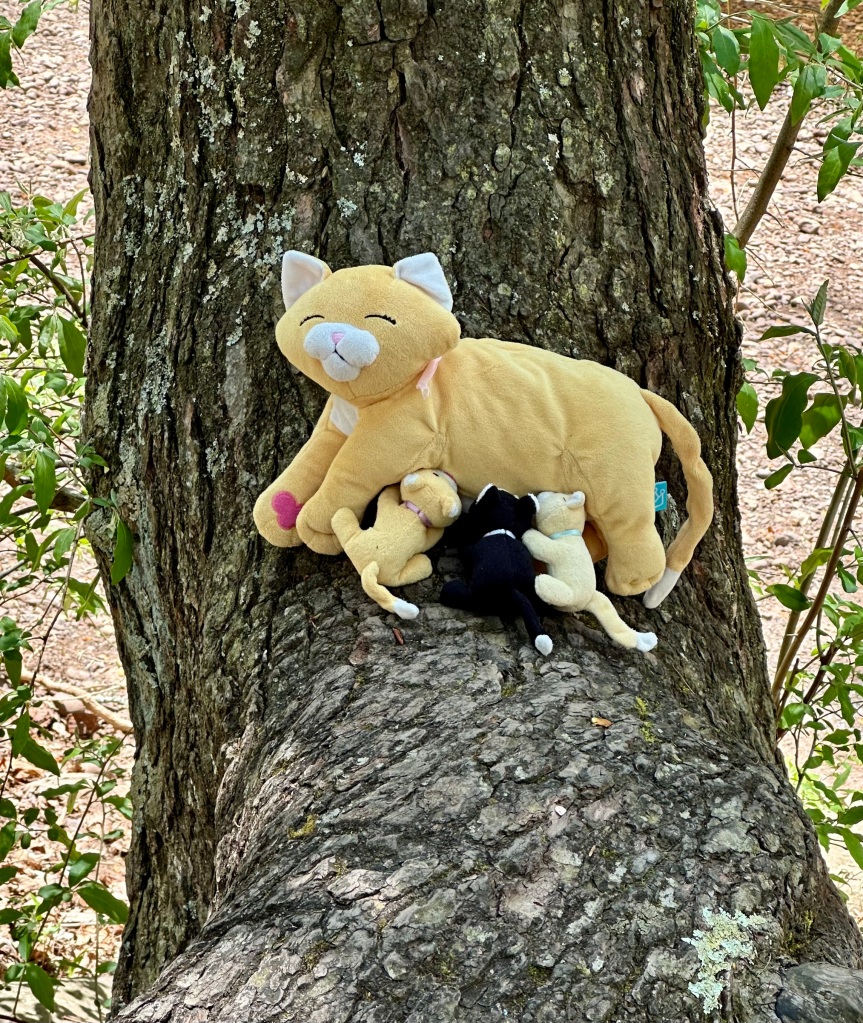
Sometimes, reality is stranger than fantasy. Photo by Bruce Stambaugh
When I happened upon this tender scene, I did a double-take.
My wife and I had joined an entourage from church for a Sunday afternoon of baptisms for three teens in the chilly mountain stream. After the dunkings and the celebratory congratulations shared, I wandered away from the rest of the revelers to see what I could find.
Scores of Pipevine Butterflies and Tiger Swallowtail Butterflies flitted through the woods. They danced carefree from rays of broken sunlight to dense shade, oblivious to the human invaders.
I certainly didn’t expect to find a cat casually nursing three young ones in the forest. And I especially didn’t expect to find a stuffed cat and her young stuffed kittens. But that is exactly what I discovered.
Some children not connected with our group were splashing in the nearby stream. Perhaps one of them thought this wild cherry tree along the banks of the Dry River at the base of Shenandoah Mountain was a lovely and safe haven while romping in the water.
I’ll never know for sure, but this composition of fantasy playthings among nature’s real and evolving habitat was too good not to share.
Teens learning about Big Meadows in Shenandoah National Park. Photo by Bruce Stambaugh
This is the third installment of a series celebrating National Park Week.
I often hike alone. But occasionally, I enjoy sharing my love of nature with others.
The church I attend has a mentor/mentee program for youth. A friend and I each serve as mentors for two teenage boys. Knowing we all enjoy the outdoors, we took them for a day trip to Shenandoah National Park last summer. We had a riot.
These energetic young men enjoyed every aspect of the trip. They loved the hikes and the enthralling views. They also identified birds, flowers, and rocks and occasionally pestered one another. A pair of fawns grazing at the edge of Big Meadows startled us as we walked along the union of the meadow and the forest.
We rested on a rock outcropping overlooking the always lovely Shenandoah Valley. The boys loved scrambling over the ancient rock formation and resting in the warm sunshine, basking in all nature’s glory. Given our generational spans between teens and septuagenarians, I marveled at our common contentment.
But that, in part, is what national parks are for. People of all ages, races, religions, backgrounds, and interests feel at home in our nation’s beautiful national parks.
Our excursion was a perfect example of how to celebrate National Park Week.
The opportunity I had hoped for. Photo by Bruce Stambaugh
This is the second in a series celebrating National Park Week.
On the afternoon of May 23, 2018, I decided to finish my day in Shenandoah National Park by hiking the Rock Spring Cabin trail. According to the park map, the trail wasn’t long, and I was curious to see the cabin.
So, off I went, binoculars around my neck and camera across my shoulder. I soon reached the point where the trail joined the Appalachian Trail (AT), and I hiked on. I could hear birds chirping and singing all around me, but the lushness of the forest prevented me from seeing or photographing most of the birds.
As the AT wound west and north around a hillside, the Rock Creek Cabin trail veered left and down a fairly steep slope. I passed the hiker’s shelter, saw the spring gurgling from beneath giant boulders, and hiked back up the incline to the cabin owned by a local hiking club.
My fascination satisfied, I returned to the skinny dirt incline toward the AT. Just before I arrived at the iconic trail, a pair of Common Ravens croaked and chattered noisily overhead. Their deep-throated gurgling echoed through the dense landscape as they bounced from tree branch to tree branch in my direction.
Thinking I was the intruder who initiated the ravens’ commotion, I started down the trail at a slow pace. I didn’t want to disturb the birds any more than I already had.
The strange thing was, though, that they didn’t really seem to pay me any heed. They swooped lower to another tree ahead of me but continued their conversation.
So, I swallowed my ego and began to pay better attention to what was bothering the birds. A short distance down the AT, I discovered their concern. A young but large black bear was foraging on the lush, green forest floor.
I readied my camera and saw my chance. The bear was approaching a small cluster of trees that separated us. So, I quickened my pace to try to photograph this beautiful creature as it emerged from behind the trees.
I stood quietly on the trail for the bear to appear. I didn’t have to wait long. I aimed and clicked the camera just as the bear spotted me. That one simple noise sent the bear racing headlong down the hill and quickly out of sight.
I got one shot and only one shot of the bear. I was as happy as the bear was scared. I had my first photo of a bear in the wild.
That day, I learned an important lesson: Pay attention and use your senses to see all that a national park offers.
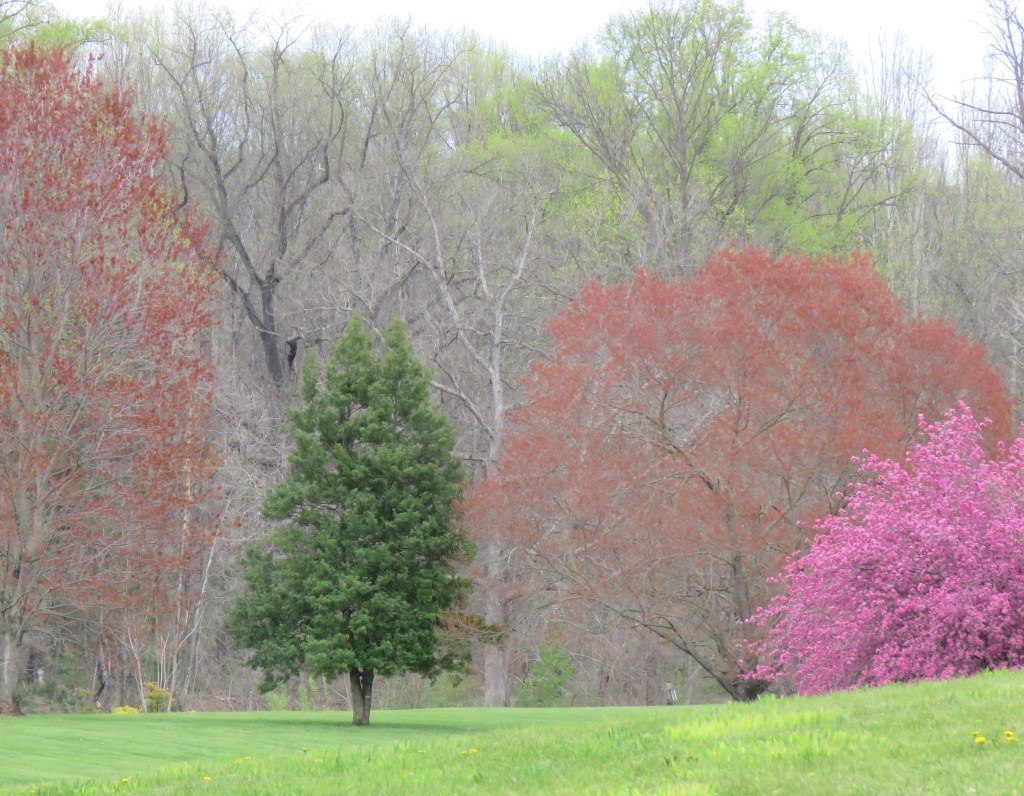
Spring’s colors brighten our days. Photo by Bruce Stambaugh
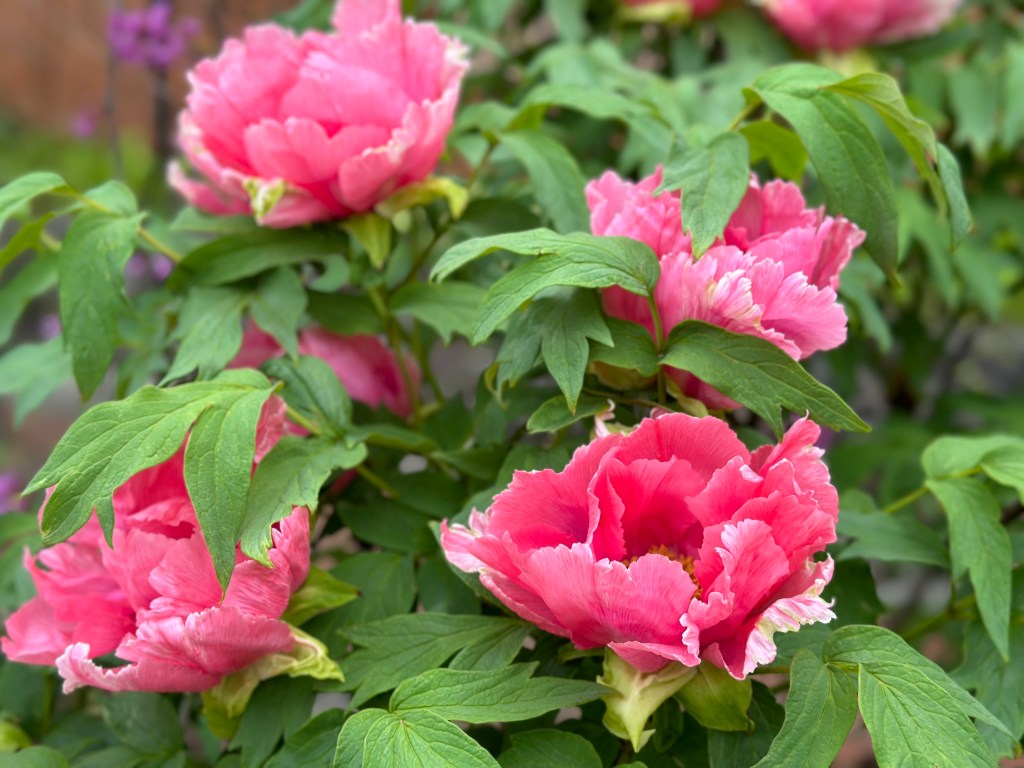
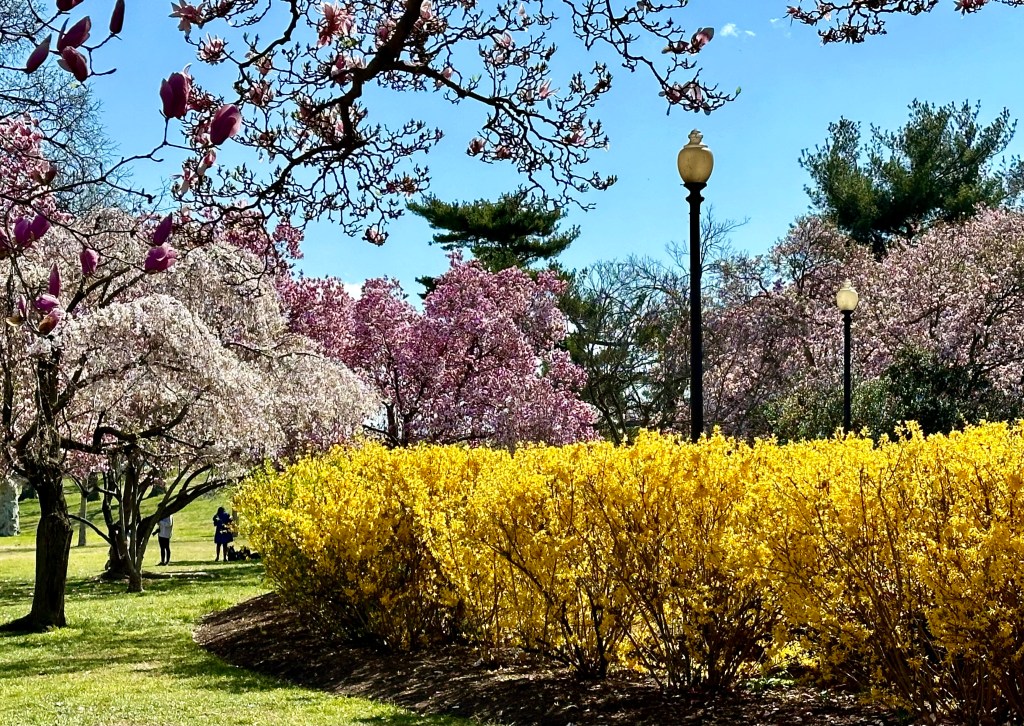
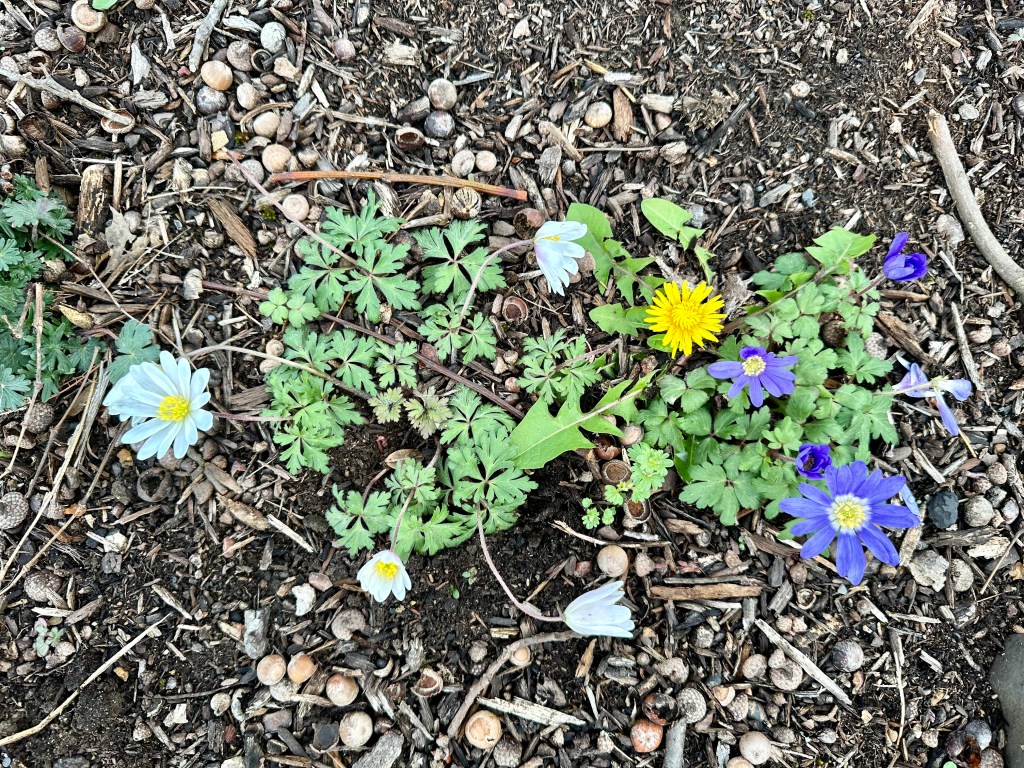
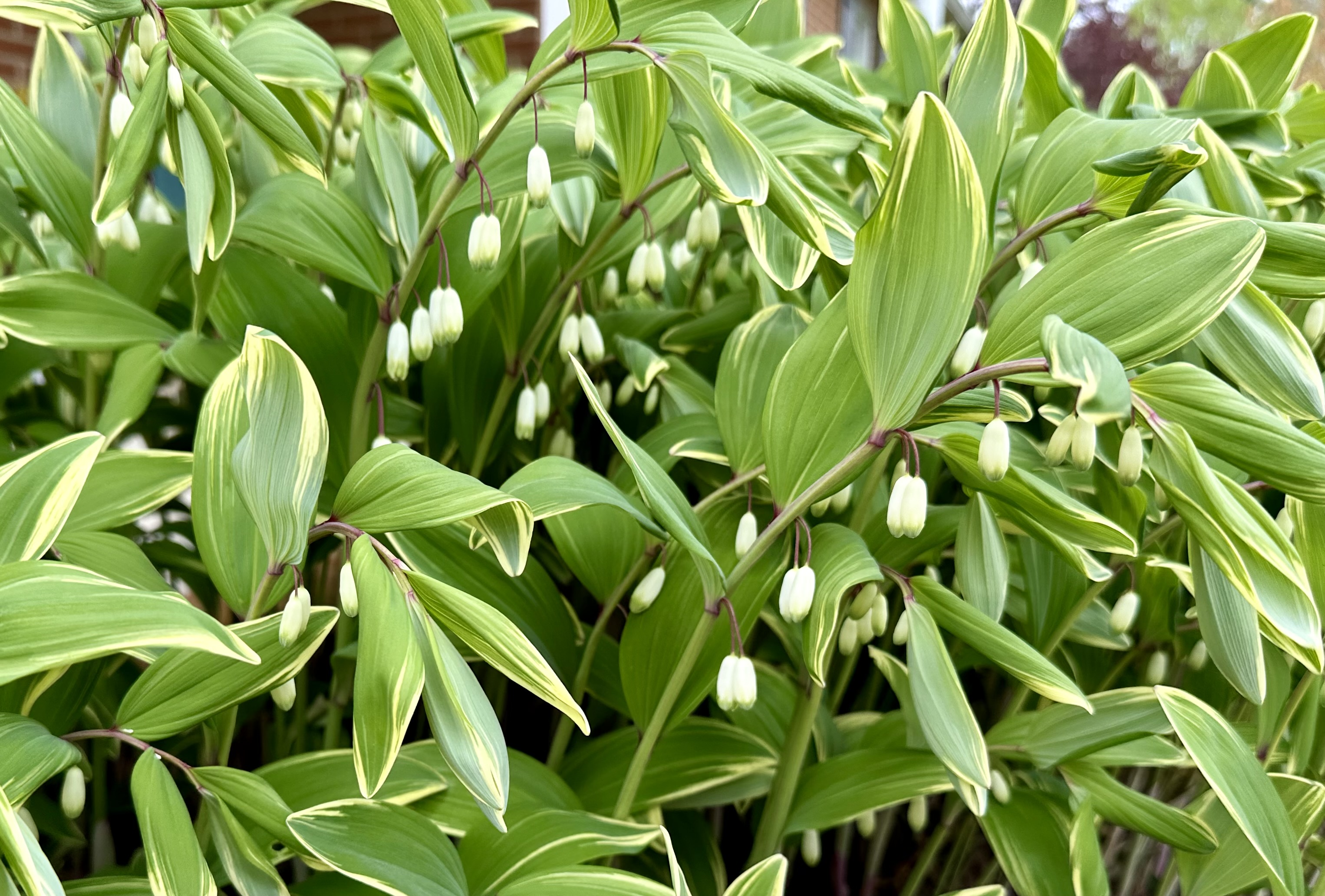
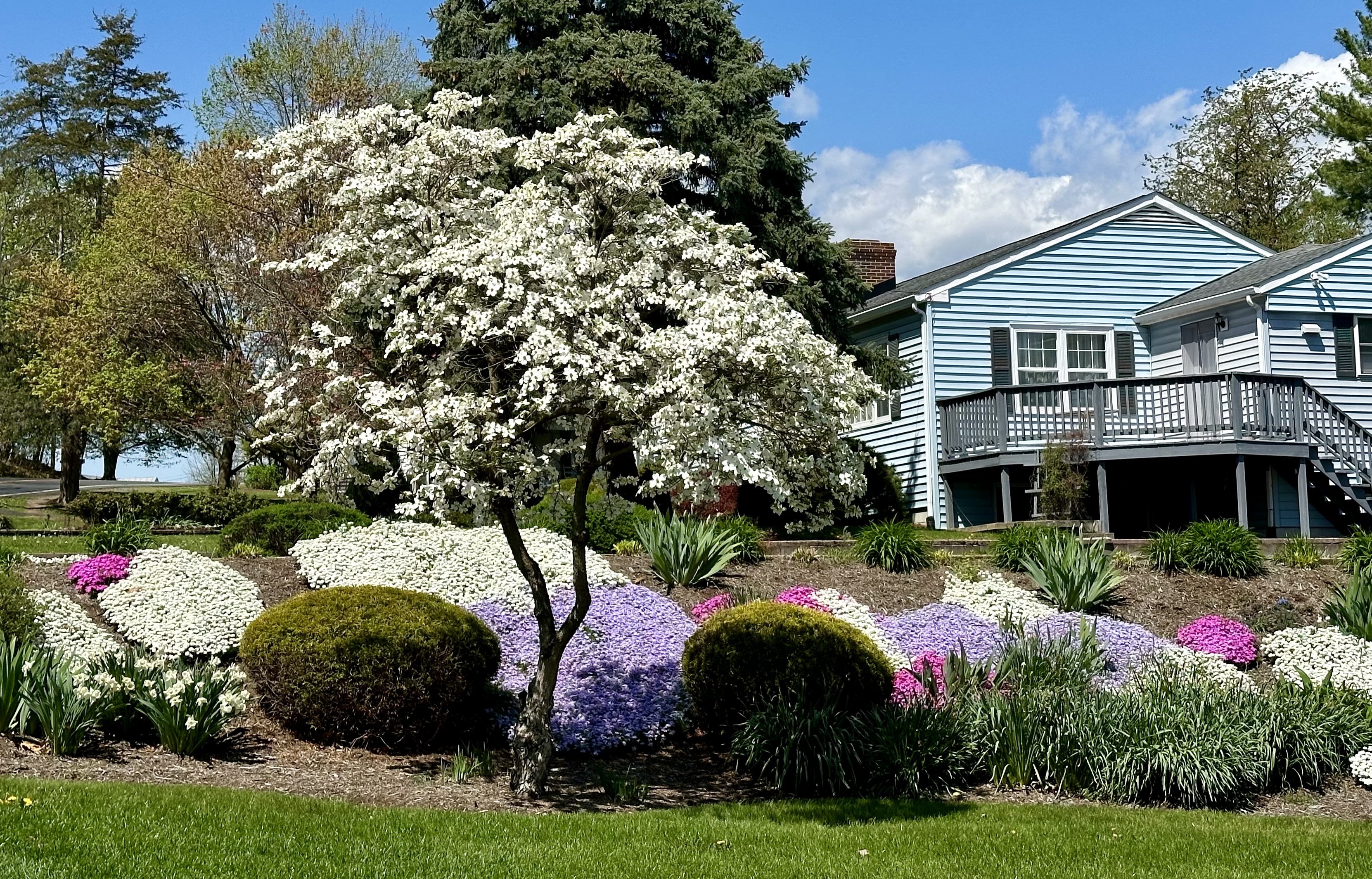
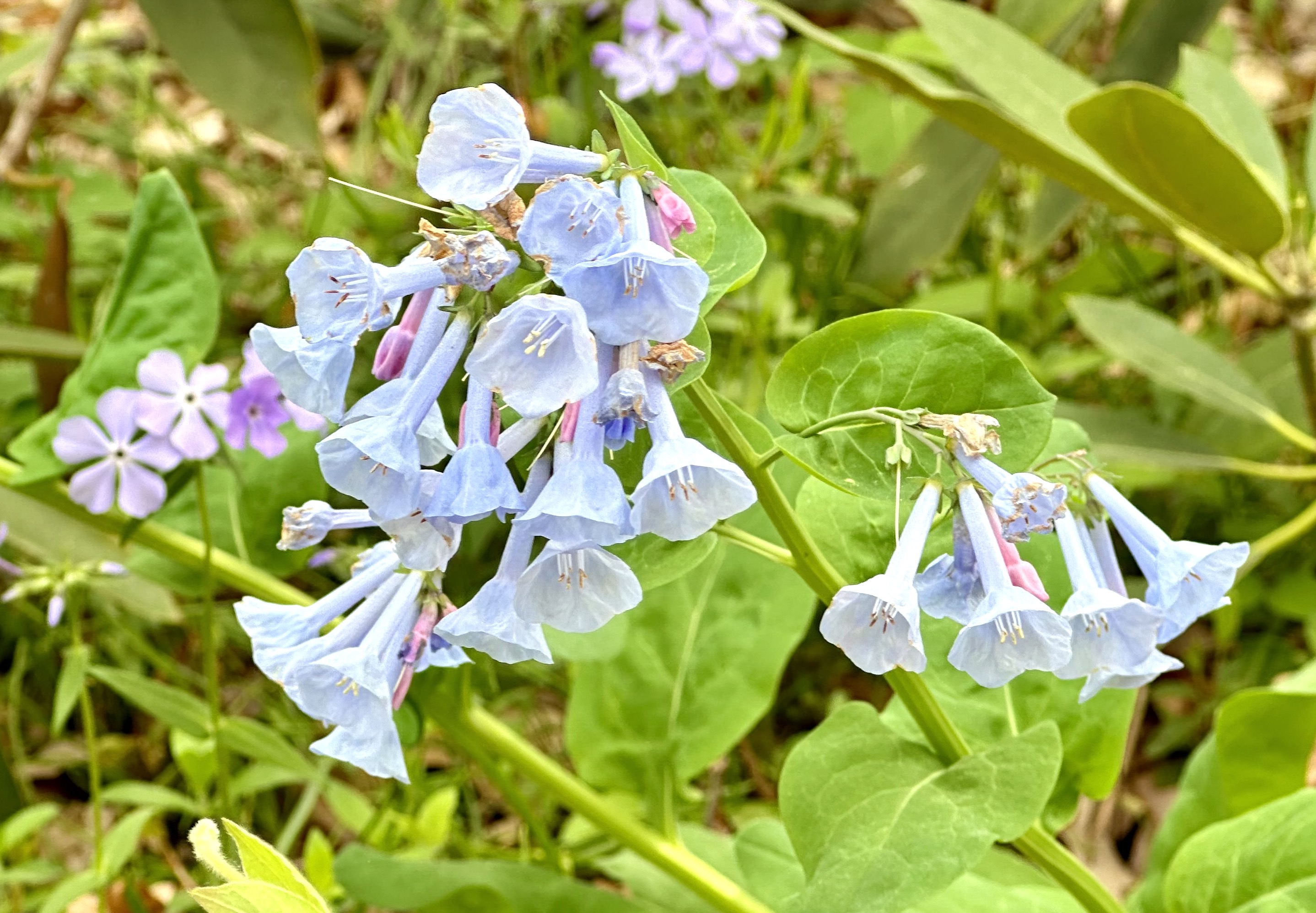
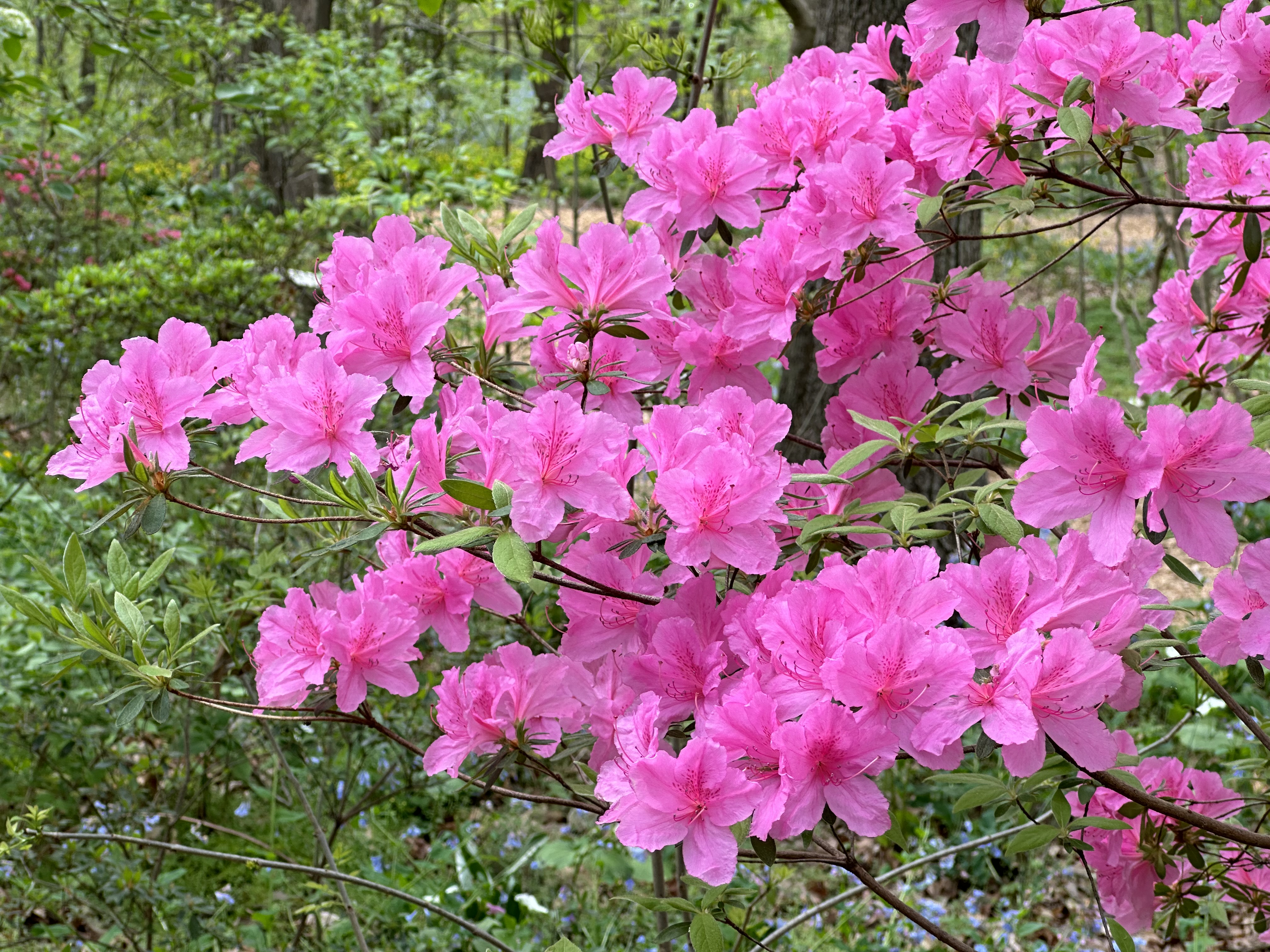
Just in time for Earth Day, spring’s vibrant colors are at their peak here in Virginia’s Shenandoah Valley. Ornamental shrubs, trees, and domestic and wildflowers are putting on a show for our pleasure and their propagation.
This annual phenomenon has a caveat. Conditions change quickly, and weather conditions play a significant role in these rapid transformations. A windstorm or hard frost can instantly paint the landscape much differently.
The tender and pastel leaf buds unfold quickly, exposing their infant beauty. The fresh foliage of red maples shows the reason for the tree’s name. So, too, do their fleshy seeds, which critters like squirrels devour.
Please click on the photos to enlarge them.
Soon, however, the leaves fully unfurl, sometimes overnight, and the russets transform into luscious greens. Through transpiration and photosynthesis, we all can breathe easier. One large tree can produce up to a day’s oxygen supply for four people.
Please click on the photos to enlarge them.
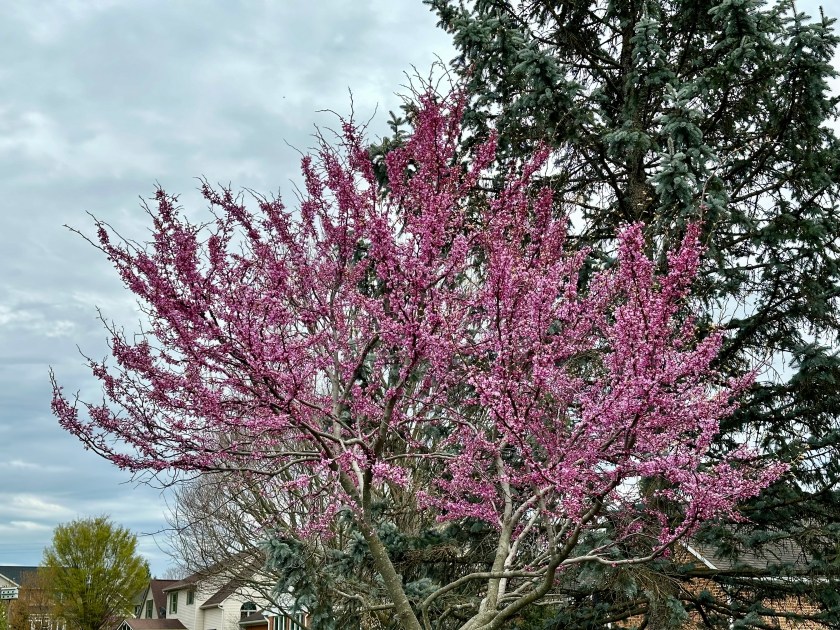
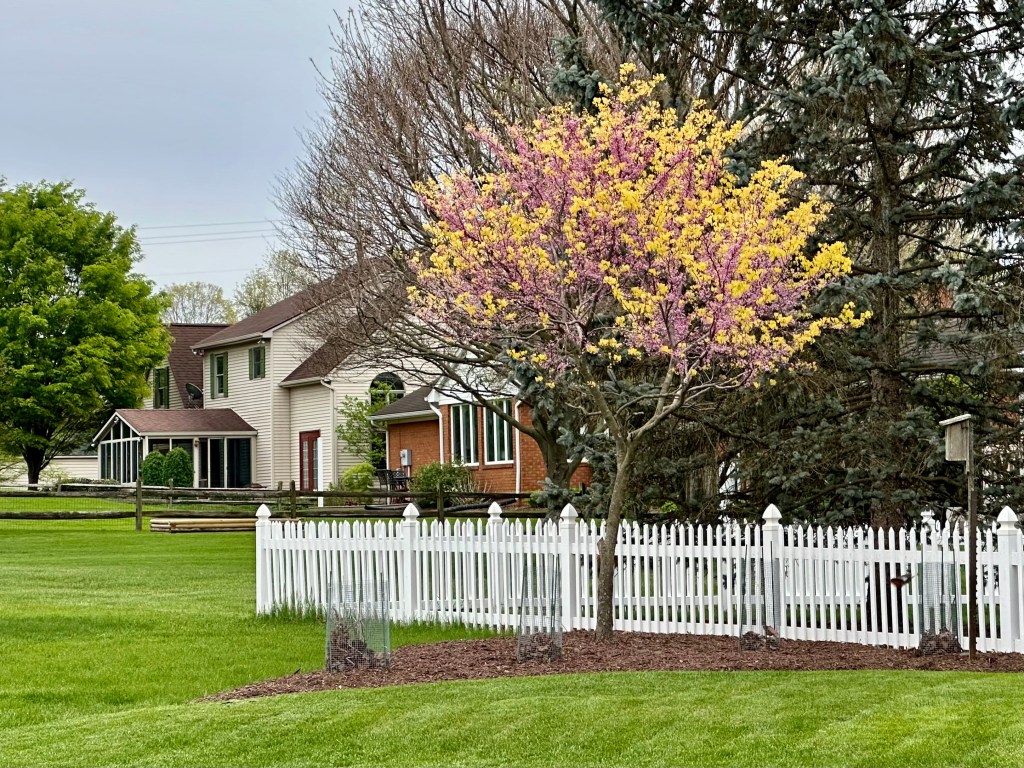
Redbuds can be fickle. Some years, the buds last weeks. This year, the emerging leaves of our backyard Rising Sun Redbud tree have already overtaken the beautiful buds. The young tree went from lavender to bright pink to lime green and pale pink in a few days. Pink polka dots already cover the ground below.
April 10.
April 13.
April 15.
April 16.
April 21.
Given this rapid transformation from bud to bloom, we need to be vigilant in the quest to enjoy nature’s springtime. Doing so has multiple benefits. Exploring the lovely blooms of trees, shrubs, and flowers renews our appreciation for life itself. Enjoying nature’s beauty and birdsong serenades invigorates our spirits. Walking or hiking through it all provides needed exercise.
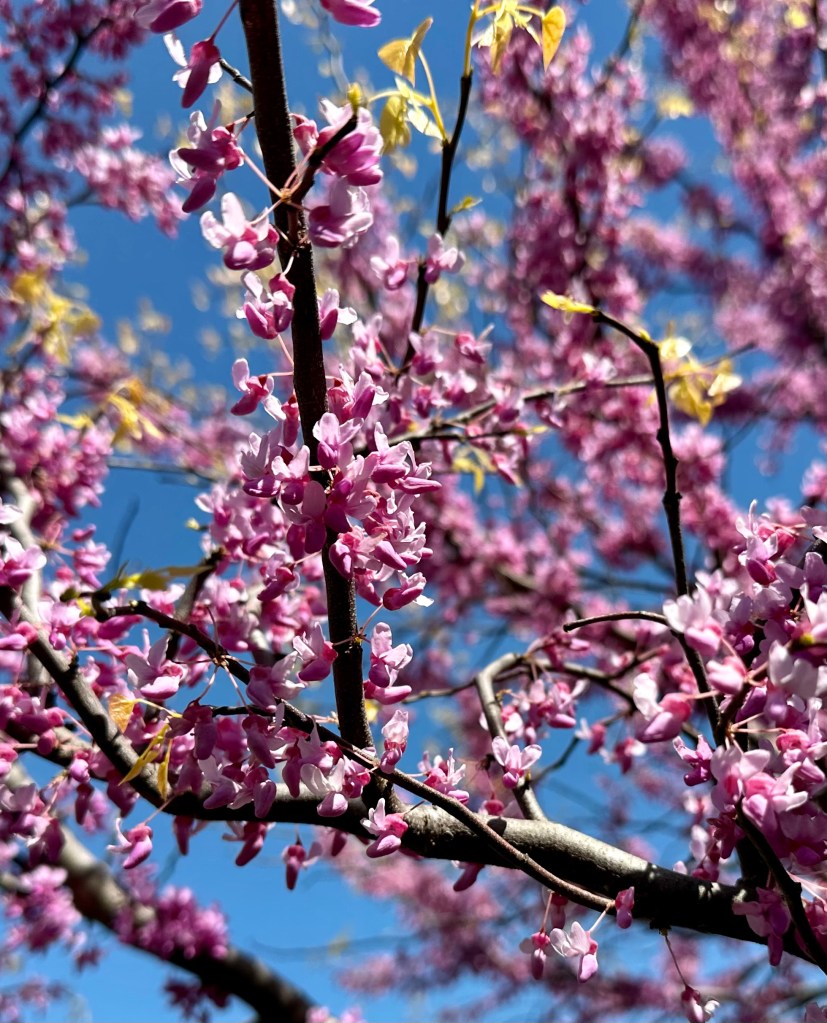
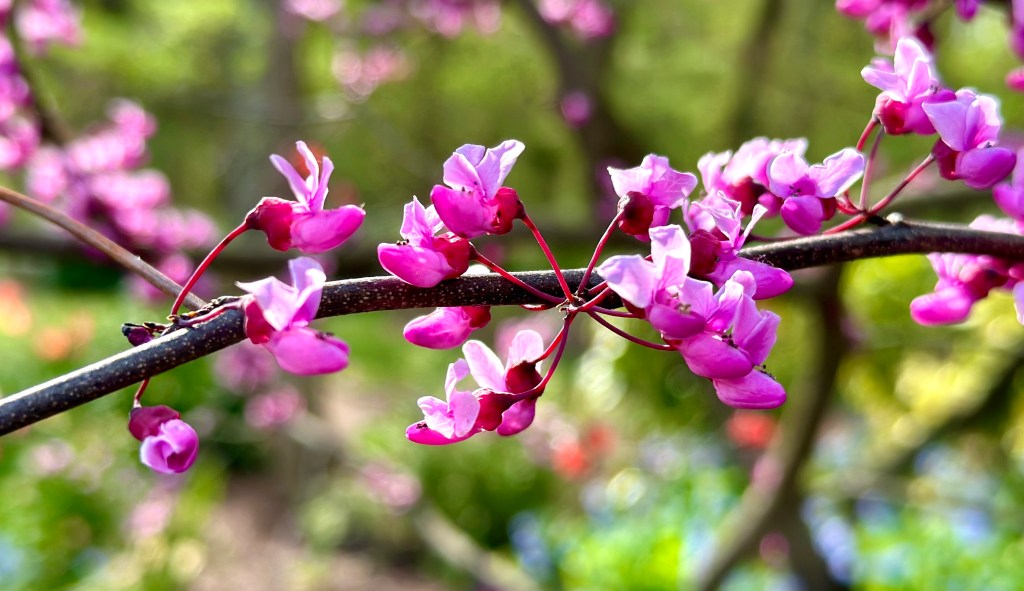
Nature offers another bonus if we are observant. She has lessons for all of us to learn, no matter our age. Do you know redbud blossoms, viewed at the correct angle, resemble hummingbirds feeding?
Can you find the hummingbirds in the redbud blossoms?
Exploring local parks and roadsides offers vivid samples of spring’s changing color schemes. It’s a wonderful way to celebrate Earth Day.
















































You must be logged in to post a comment.