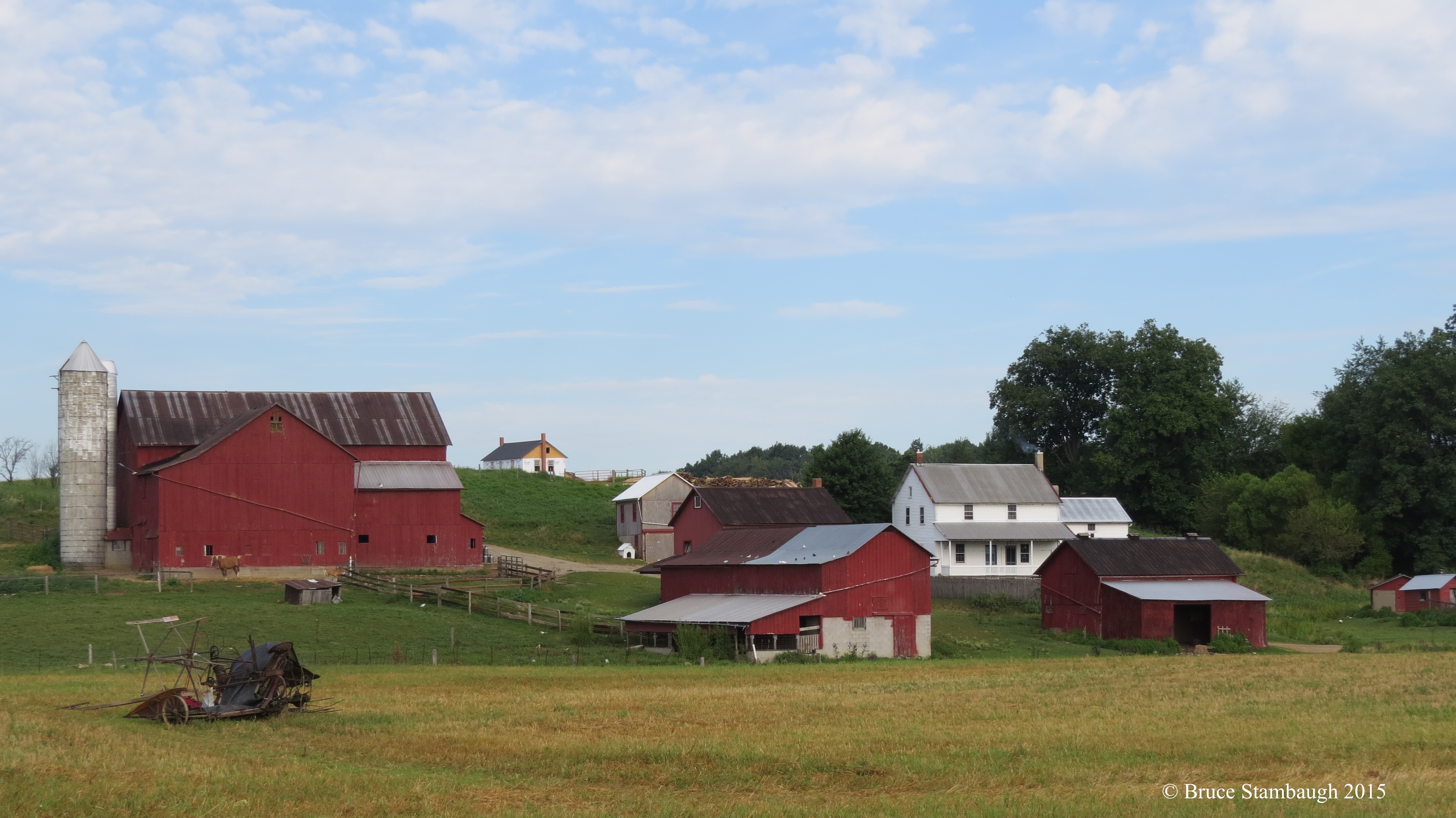
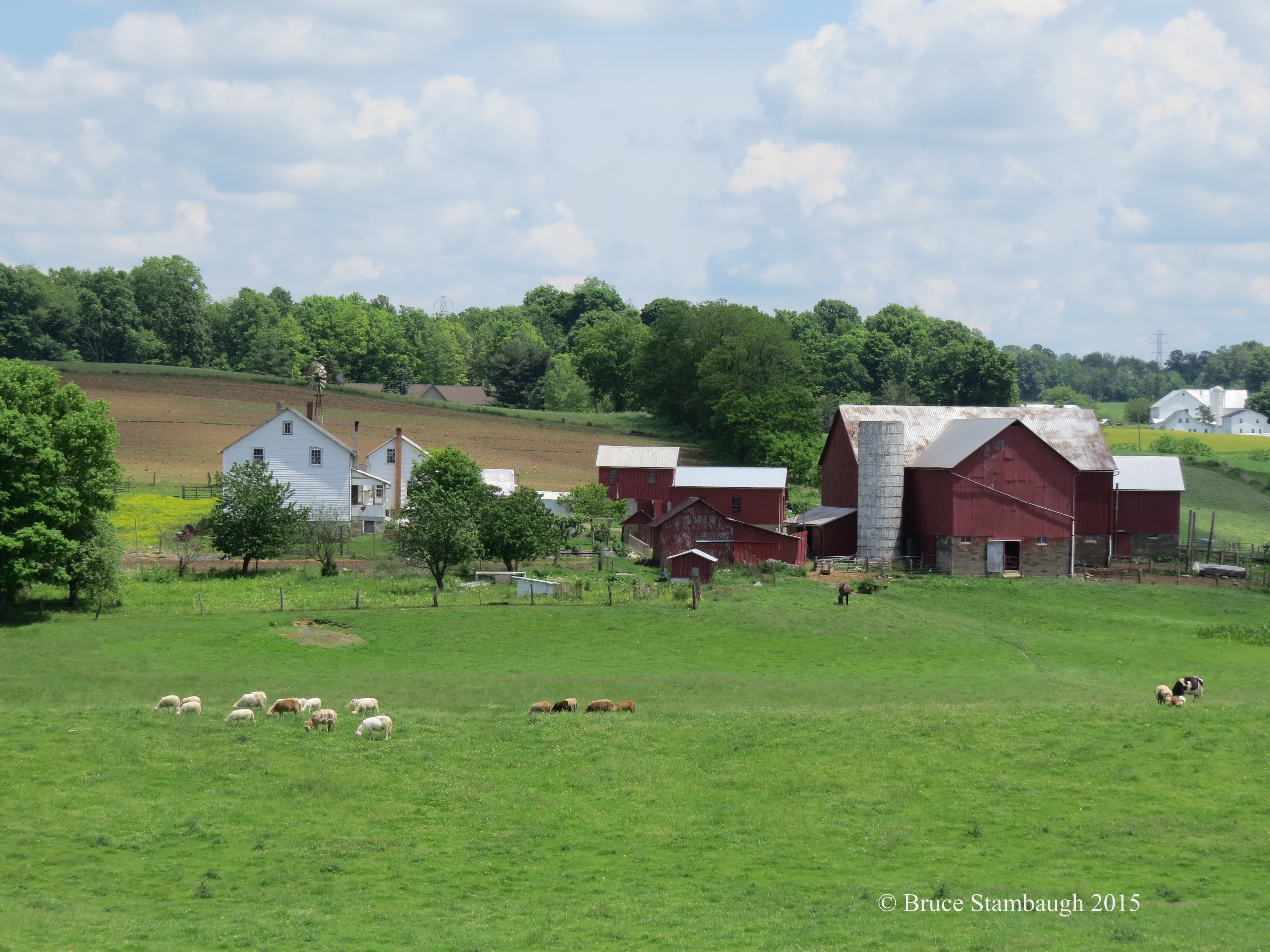
I love to look for patterns in photos. There are plenty on display here, even if you only look at the various textures of the roofs on the congregated buildings. Also note the details that enhance the plain red and white buildings. Did you see the brown horse against the barn wall? How about the Rock Doves, aka pigeons, on the roof of the outbuilding in the foreground? Or the smoke coming out of the chimney?
See how many other details you can find as you explore this photo.
Poor August. Like Rodney Dangerfield, our eighth month just doesn’t seem to get any respect.
August is the forgotten month. No holiday graces its 31 days. Still, we often get lost in all that August has to offer and forget the month itself.
August calls to us daily, appealing to our innate senses. The month tantalizes us with good things to eat, smell, see, touch and hear. August is an equal opportunity sensation.
The beauty is ever changing from month’s beginning to end. Cosmos, gladiolas, and hollyhock replace daylilies and daisies. Roadside royalties like asters and chicory are ubiquitous.
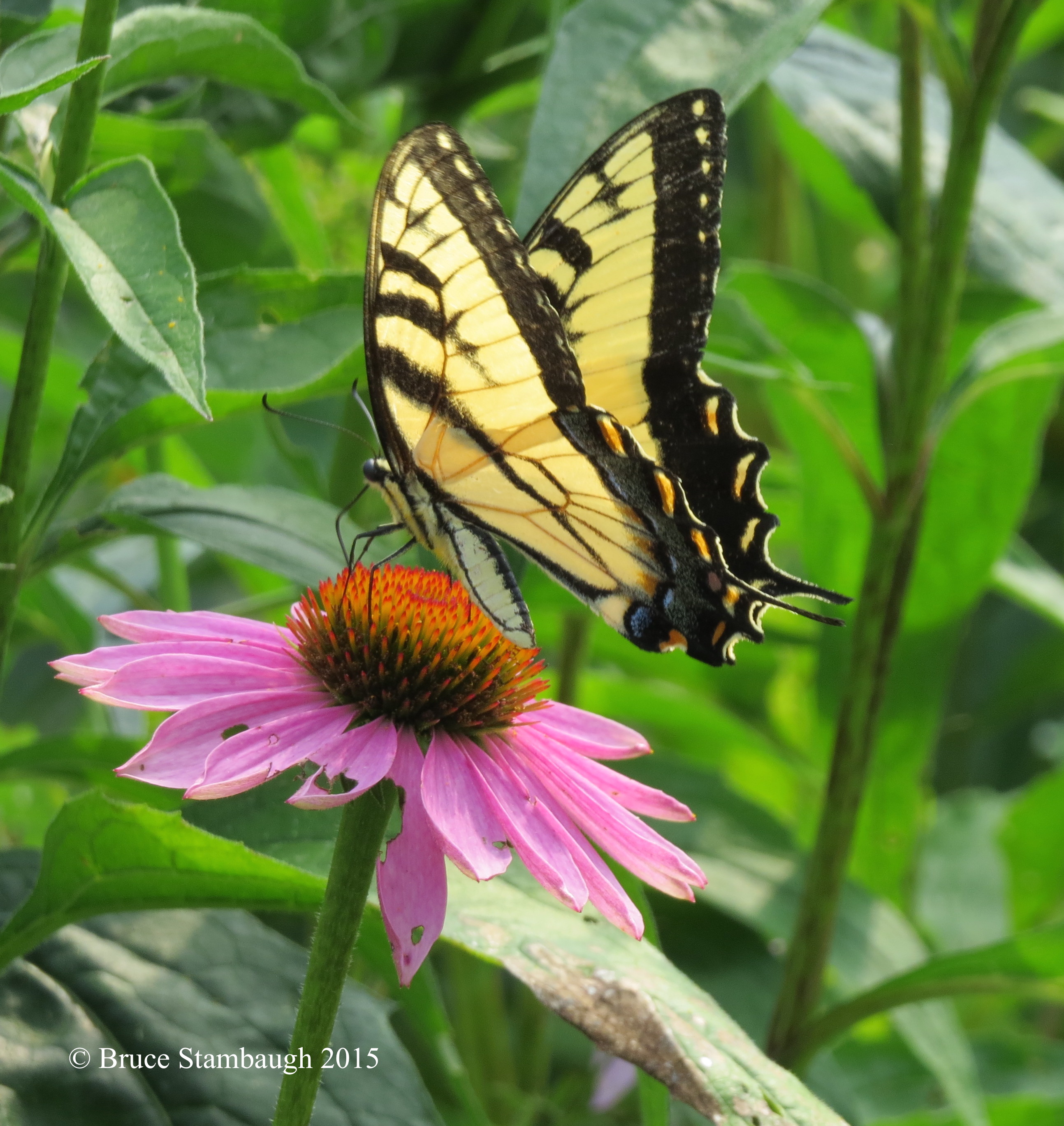
The colors of the floral circus attract fluttering visitors. A variety of gorgeous butterflies and exotically patterned insects help pollinate the blooms and entertain us humans.
Locally, the county fair is in full swing. That means fun and excitement for children both in years and in the heart. It also often means at least one good soaker.
In a properly configured growing season, gardens, orchards, and croplands are yielding an abundant harvest. Despite the late start, this year looks like a bumper crop of color and nutrition except for those poor peaches that were frozen out by two consecutive harsh winters.
All harvesting doesn’t always come from the garden. Picking wild raspberries, elderberries, and even blueberries provides a satisfaction all its own. On a recent jaunt through the West Virginia mountains, I witnessed a few folks staining their hands with those precious fruits.
Commercial and domestic kitchens are abuzz with activity. Jellies, jams, applesauce, salsas and many other seasonal delights are all being cranked out at their demand, not always our convenience.
When they’re ripe, they take priority or there’ll be no goodies to spread on warm bread on a cold January evening. Besides the tasty preserves, generations of families and friends gather for the food frolic.
Back to school shopping makes the August to do list, too. Teachers, students, parents, and grandparents crowd the aisles snapping up pencils, paper, glue, and clothing. If you look closely, you’ll likely find a year’s supply of antacids in the teachers’ carts.
When the calendar flips to August, all of this rushes into our lives. Before we know it, Labor Day weekend will be upon us, and August will be but a memory.
In the evening, choruses of crickets and katydids lull you to sleep. If you awake during the night, you can take in another of August’s wonders. The Perseid meteor showers can entertain you with magical streaks of pure awe.
Only the House Wren, attending its second or perhaps third brood, continues to sing regularly. Other bird species, having done their duties, have mostly grown quiet.
Many migrating birds have already begun their journey south. In the birding world, August is considered the beginning of fall.
Rain or shine, stormy or clear, I love to watch the weather. From foggy sunrises to golden sunsets and any and all weather conditions in between, I’m on it like a tornado to a trailer park.
Yep. I’m stuck on the weather. I’ve always been fascinated by the variety of weather northeast Ohio has to offer spring, summer, fall and winter. I’m cool, however, with never having lived in Lake Erie’s snow belt.
My captivation with the climatological elements goes way back. When I was a kid and a thunderstorm roared I ran to the window, not the closet. The lightning and hail fascinated me the most.
I got a reality check, however, when I thought a 10-year old could outrun a thunderstorm for home. I couldn’t.
From then on, I took better notice of the weather and gave her all the respect she required. I took college classes that taught me much about climate and the weather.
Later, when I became a volunteer firefighter, I trained to be a severe weather observer. I’ve kept my spotter certification current.
One of the first things I do each morning is review the weather forecast. If severe weather is a possibility, I check the radar frequently for rapidly growing storms. For me, safety is a priority.
I remember the first tornado I ever saw. I was a skinny preteen. My father was driving the family car, and I spotted this white, spinning funnel cloud. I warned Dad, but he ignored me and drove right under it. When he heard the whirling noise and saw it pass overhead, Dad sheepishly said, “I guess you were right.”
With that, my amateur weather-watching career was born. When it rains, I record how much. When it snows, I measure the inches that fell. When it hails, I report the size and amount to the weather officials. The same goes for any wind-related damage.
This slideshow requires JavaScript.
There’s a purpose to my weather mania. I want others to be alerted so they too can be safe.
I’m not alone. Thousands of severe weather spotter volunteers are on call across the country. When the weather turns nasty, our adrenaline gets pumping.
Take the other day for example. As a severe thunderstorm moved over the county, weather radar indicated rotation in the storm.
Just as the National Weather Service issued the tornado warning, the power went out at our house. I scampered to be sure everything was secure, gathered my rain gear and camera, and out into the storm I went.
I hadn’t ventured down the road very far until I encountered flash flooding in several locations. I reported the flooding and kept an eye on the sky as best I could as I drove.
I followed the storm through torrential, swirling rain for 15 miles. I finally reached the back of the storm just as it exited into the next county. I relayed that no funnel was seen to the weather service and headed toward home, only to encounter even more flash flooding.
With muddy, debris-laden, bumper high water running rapidly across roadways, drivers still chose to risk it. Even a horse and buggy slogged through the floodwaters. The horse’s high leg kicks indicated that the horse was none too happy.
I’ve always said that if I believed in reincarnation, which I don’t, I probably would come back as either a chiropractor or a meteorologist. Given my penchant for the weather, you can probably guess which one I’d pick.
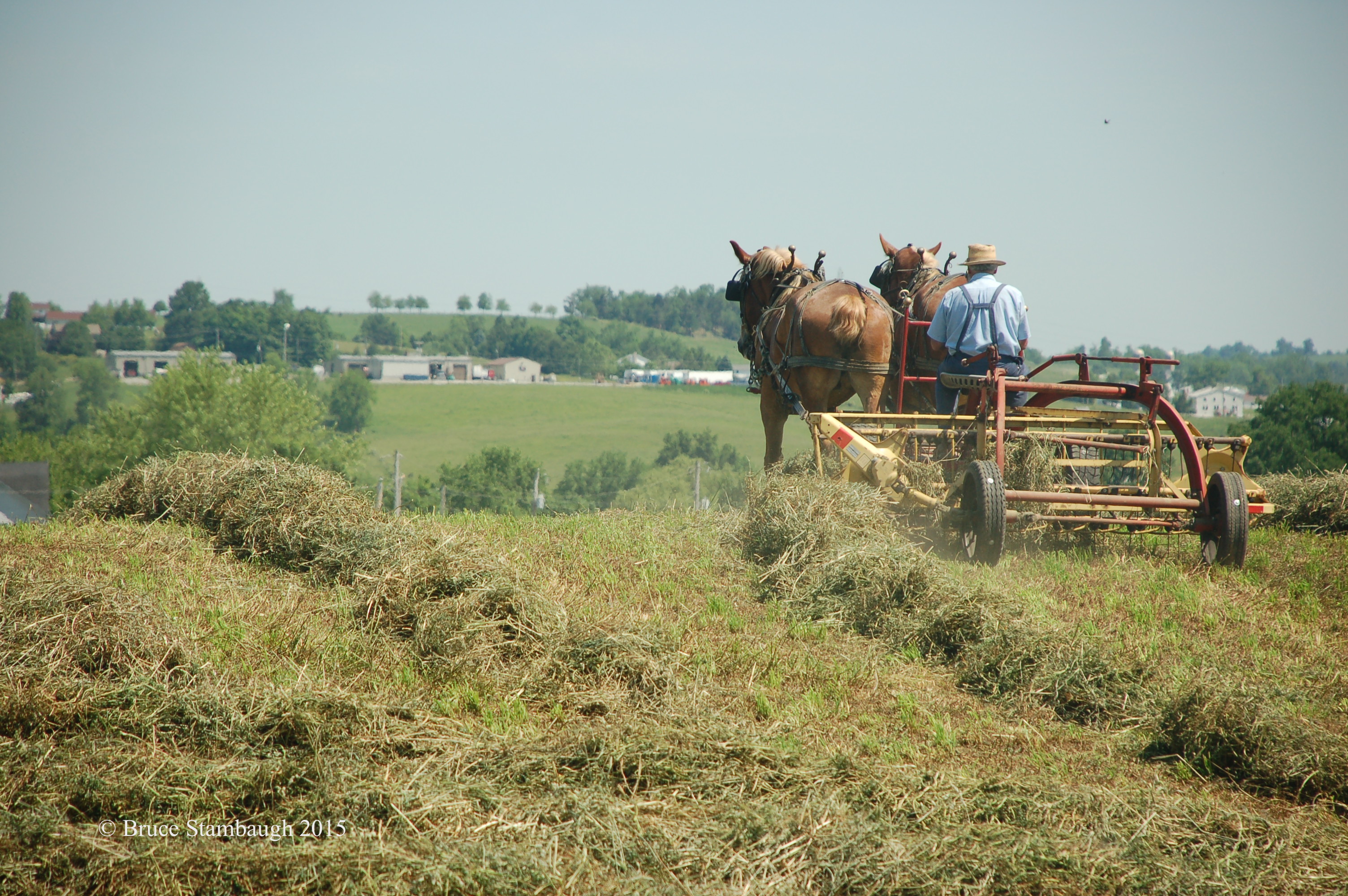
I was on another assignment when I saw this scene recently. I lowered the window of my vehicle and took the photo. It’s the iconic image of Amish gathering hay that most folks envision. The truth is, the way Amish farm has changed drastically in recent years. Most mainline Amish bale hay, either in rectangular bales or big round bales. Only the most conservative of the sect, the Swartzentrubers and those who belong to the Dan Church, continue to use the method pictured to gather hay.
I especially liked that the grandchildren were driving the team of horses while Grandpa properly balanced the huge stack of loose hay.
On my morning walk, my neighbor’s grandsons exited the house well before 9 a.m. They each had their necessary baseball gear in tow, gloves, bat, and ball.
I called out to them, “Baseball for breakfast, boys?”
They just smiled and ran to their imaginary Major League park, the grass groomed immaculately by their grandfather. I walked on, lifted by the sound of bat striking ball.
Because the local greenhouse was having a sale, more traffic than normal traveled the tiny rural road. Believe me, they were busy.
That’s one of the luxuries of living in the country. The sounds of life’s contrasts become all too obvious.
Young Amish girls, all three sisters that I knew, pulled an empty wagon toward the greenhouse.
“Going shopping this morning?” I asked them. A simple “Yes” and a few giggles was their retort. I silently lauded the mother for allowing the girls to pick out the desired plants.
This opportunity gave them responsibility, decision making, and experience in money exchanging, all valuable life skills. It was just one example of raising children in the way they should go.
As I reached Jonas’ farm, his wife walked down the sidewalk to the gravel driveway where her husband waited in the buggy. I waved, and Jonas returned the common greeting.
All the while I strolled and interacted with these good folks, I kept thinking of my friends far away in Syria, Iraq, Honduras, Texas, California, and other foreign countries.
How I wished they could be walking with me to experience this goodness that I take for granted far too often. Instead, some of them were just trying to stay alive, work diligently for peace, help the needy, and recover from massive flooding.
When I reached our property, my heart sang in harmony with the birds. My energetic wife was watering a variety of colorful flowers, some she had purchased at the greenhouse sale earlier that morning.
The Eastern Bluebirds flew from the birdhouse I had put up for them. My heart rejoiced all the more. I was glad they had won out over the pesky House Sparrows. A House Wren chattered atop another birdhouse nearby.
I have a lot for which I am grateful. This walk reminded me that each morning I open my eyes I need to say a joy-filled thanks.
Summertime. Isn’t that an absolutely gorgeous word? Let it roll off of our tongues and past our moist lips slowly, magnificently, joyfully.
Those of us who reside east of the Mississippi River and north of Disney World endured a long, hard, cold, snowy, record-setting winter. It’s truly a blessing to say that lovely word, summertime.
It’s not like we’ve earned summer either. We just have longed for the expected warmer, more pleasant weather, plus its immeasurable benefits.
Though the summer solstice doesn’t officially arrive until June 21, that’s become insignificant, even obsolete. Here in commercialized America, we’re accustomed to the definition of summer as the days between Memorial Day and Labor Day.
I know I am not the only one that is thankful that June is here. With apologies to Walt Whitman, I can indeed see and hear America singing. All I have to do is be attentive.
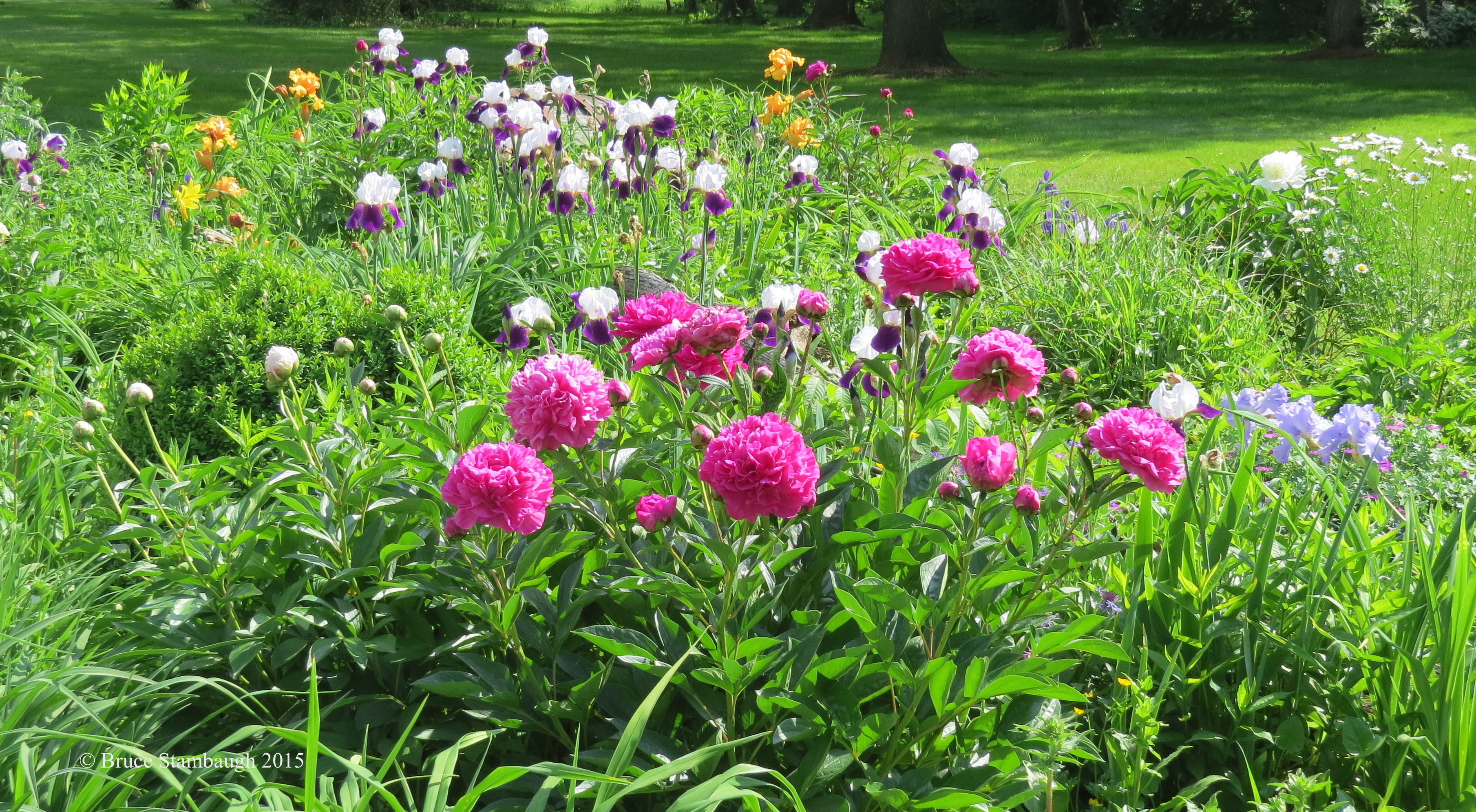
The early summer flowers, the irises, poppies, and petunias are or soon will be blooming. So are the weeds.
Of course as part of America has already experienced, we’ll likely have our share of hazardous weather. That, too, is within the season’s nomenclature.
The first cutting of hay, whether by horse and sickle or tractor and big round baler, has commenced. School years have ended, except for educational institutions that offer additional classes. They are appropriately called summer school.
Soon lightning bugs will be rising from fields and grasses, blinking under spacious, starry skies. It’s a scene of which I hope I never tire. If the grandkids visit, we’ll fill jars and watch the incredible insects glow, and then release them to do their thing, the bugs not the grandkids, that is.
Boats big and small will cut temporary wounds into placid waters, which will heal themselves with no thought whatsoever by either the offender or the offended. The squeals of a toddler’s first catch of the year or the rich laughter of children diving into tepid water at dusk will confirm summer’s presence.
Long-delayed chores can finally be completed. Weathered house siding will be revived with fresh coats of brightness to complement immaculate gardens full of rainbows of color and busy insects and critters.
I’ll sit on my back porch on a luxurious summer’s Sunday evening and listen to the clip-clopping of the horses as they carry home families early and courting teens late. I can hear the latter coming from a half-mile away, boom boxes blaring.
Vacations will bring thousands of tourists to Ohio’s Amish country, where I live, to witness some of those native interactions. Wise locals will flee to beaches or mountains or solitude.
As I write, a framed placard on the wall of the summer home of a friend succinctly summed it up. “Miracles are as close as the heavens above and the blossoms beneath.”
Amen to that and a hardy welcome to all that summer has to offer.
The Marblehead Lighthouse, Marblehead, OH is one of my favorite places to linger. Winter, summer, spring or fall, it doesn’t matter. I love to linger on the lighthouse grounds, enjoying the view, the passing boats, the birds, and the folks I meet there. Most of all, however, I just like to sit on the hard limestone outcroppings and look at the lighthouse. Last evening, I visited my old friend after a day of birding along the Lake Erie shore in northwest OH.
I arrived at the lighthouse near sunset. As soon as I drove into the nearly empty parking lot, my face lit up. As the sun neared the western horizon, it broke through a layer of clouds. A soothing golden light magnificently illuminated the top of the lighthouse. I thought it rather poetic that the natural light bathed the source of the artificial beacon that the historic lighthouse would soon produce.
I came upon this amazing natural phenomenon yesterday while birding with a friend in Goshen, IN. Both trees bent across the Elkhart River mimicked a double rainbow.
This photo titled itself. Doubletree Rainbow” is my Photo of the Week.
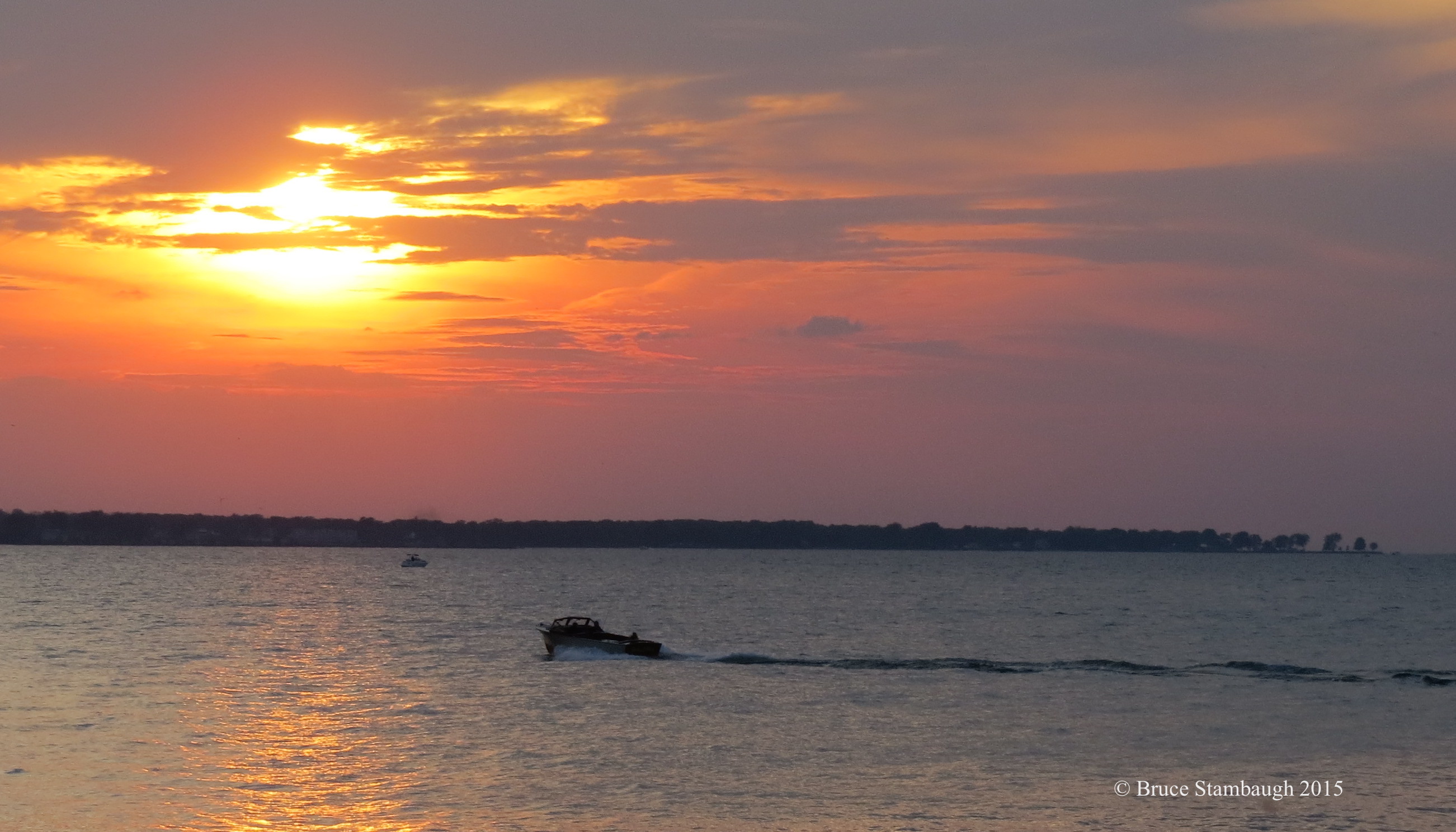
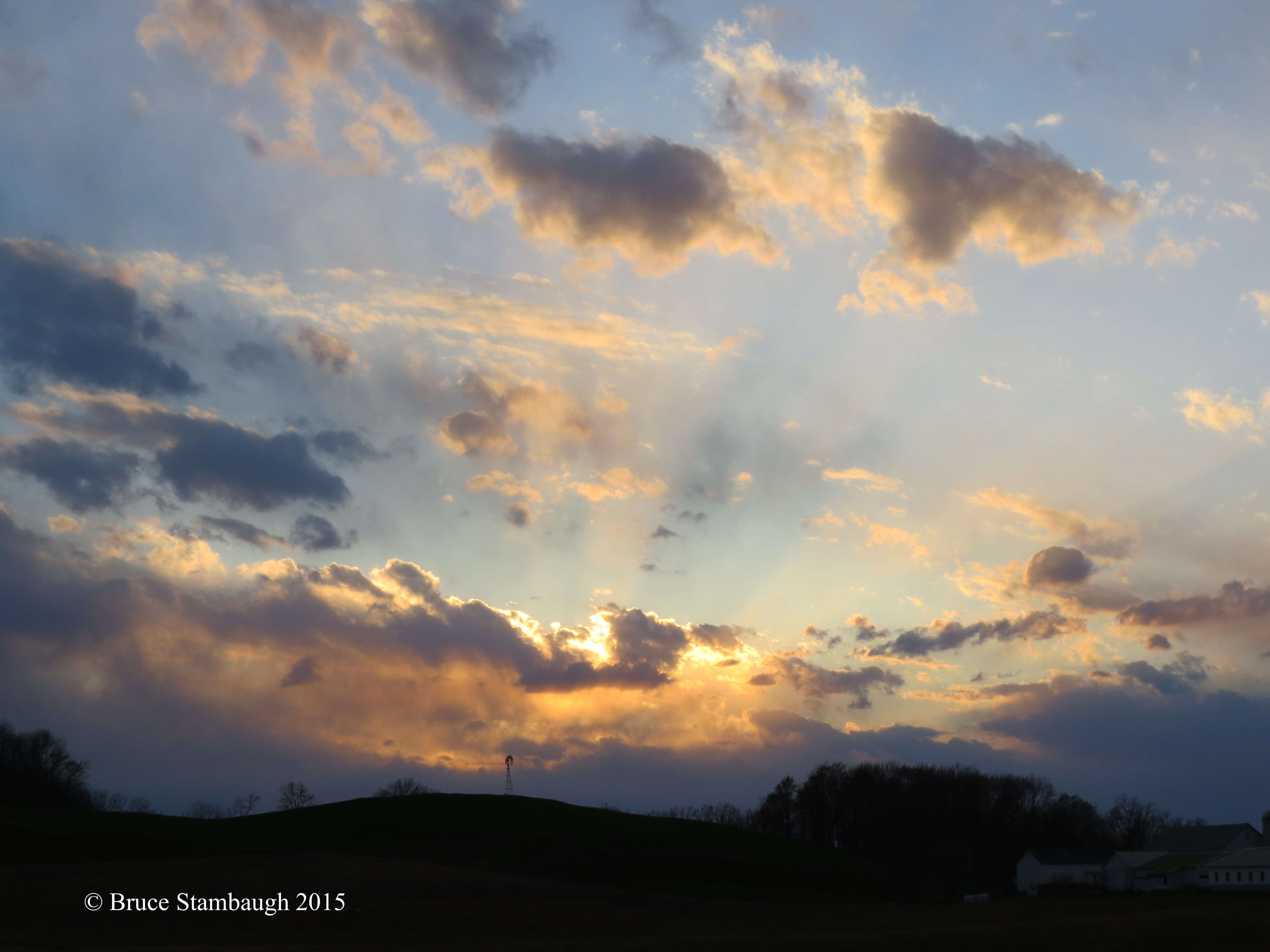
Each evening around sunset, I usually look out the kitchen window to the west to gauge whether the sunset will be colorful or not. After yet another of our cloudy, wet and chilly days here in Ohio’s Amish country, I wasn’t expecting much of a sunset. That was until I took a peek out the window. I grabbed my camera and captured this fast-moving cloud blocking the setting sun.
The deflected rays shooting up, the light and dark contrasts in the cloud made it almost appear to have an angry look about it. Throw in the hill, the windmill, and treeline, all nearly in silhouette, and the cloud seemed to radiate its own personality.
Our backyard looks and sounds a little different than it has in a long time.
We recently bid a fond farewell to our little backyard garden pond. She served us well all these years. It was time to let her go, and allow others to embrace her captivating charm.
I didn’t relish removing the little pond and all its accessories. The artificial pond brought us many genuine joys, far beyond any expectations we could have imagined.
When I retired as elementary principal in 1999, my faithful staff, amiable students and supportive parents presented me with a very special gift. They gave me a hand-hewn birdbath and a gift certificate for a garden pond, something I had wanted for a long time.
I brought the weighty birdbath home and plopped it where the sidewalk curves to the front porch. Surrounded by luscious bubblegum petunias, it enticed many a bird to sip and bathe in the summer sunshine.
I located the pond just steps away from our back porch. It was also easily visible from the windows at the rear of our home.
I’ve had two different ponds over the years. The first was a rubber lining placed in a shallow hole that I had dug out. I added a miniature waterfall constructed out of an assortment of rocks I collected from farm fields and local creeks.
I added goldfish, oxygenating plants, water lilies, snails and non-toxic chemicals to kill the algae and keep the water as clean as possible. Of course, I had to feed the fish and regularly clean the pond pump filters.
Unfortunately, destructive varmints also were drawn to the water feature. Several years ago, I awoke to find that the pond had been nearly drained.
I discovered that some ground moles had created shortcuts to quench their thirst. To prevent a reoccurrence, I switched to a hard plastic pond. In the end, it turned out to be a better option for everybody, pond critters included.
The waterfalls provided practical and esthetic pleasures. The birds loved it, bathing and drinking the refreshing water. The sound of water falling mesmerized anyone who graced our porch.
I enjoyed watching American Goldfinches bringing young to the pond for the first time. I added a heater to keep the falls going in the wintertime. A variety of birds took advantage of the much-needed water when their normal sources froze.
Birds weren’t the only animals attracted to the little pond. Over the years, raccoons, garter snakes, groundhogs, squirrels and even deer came to the pond.
The grandchildren loved the pond, too. They couldn’t wait to feed the fish and count the frogs hiding among the lily pads and their pure white blossoms each time the grandkids visited. My wife and I will always cherish those fine memories.
As much as we loved the pond and its amenities, we needed to give it up. Given our situation, we simply couldn’t maintain the pond properly. A friend’s family is already enjoying its alluring magical sounds. It’s nice to know that another generation will continue the gratification that we received from the little water feature.
To keep a water source for the animals and birds, I relocated the sandstone birdbath from the front to the back and added a couple of others to keep it company. We transplanted hostas and placed several of the rocks leftover from the falls for some natural texture.
The birds have already discovered the water. I only hope the snakes and groundhogs don’t find it as desirable.









You must be logged in to post a comment.