
From my family to yours, Happy Thanksgiving!
© Bruce Stambaugh 2020
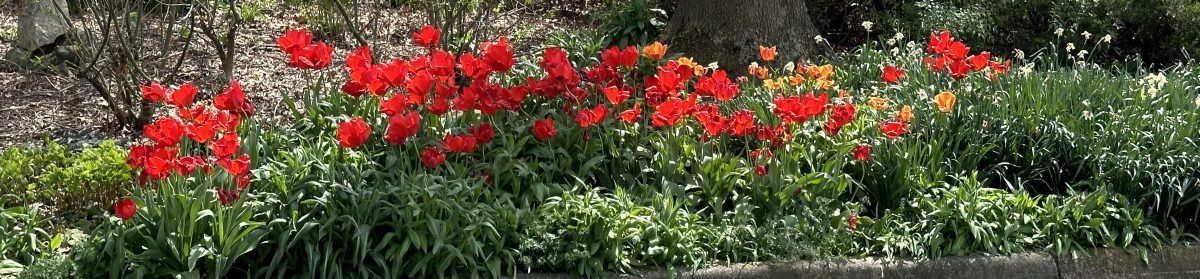
From my family to yours, Happy Thanksgiving!
© Bruce Stambaugh 2020
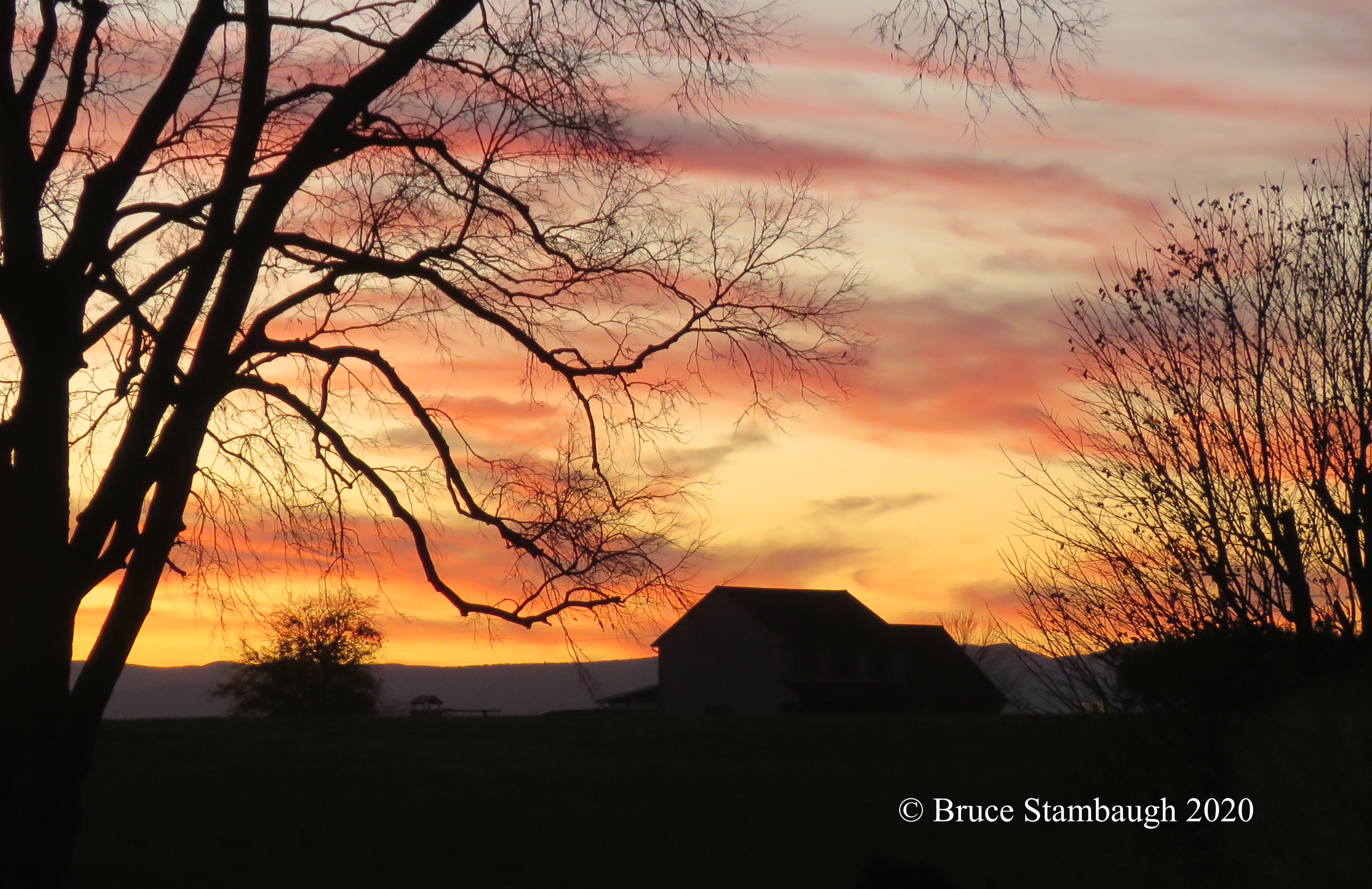
Showy sunsets have been hard to come by recently in the Shenandoah Valley. Either the skies have been clouded over, or there have been no clouds at all. When friends invited us over to view the sunset from their backyard, I was hoping for the best. I got my wish.
As we sat around the fire pit in the coolness of the early evening, the day’s high, thin clouds hung around long enough to provide a colorful show to the waning day. In the foreground, the silhouettes framed the reddish clouds hanging over the Allegheny Mountains, which mark the boundary between the Commonwealth of Virginia and West Virginia.
“Day is Done” is my Photo of the Week.
© Bruce Stambaugh 2020

I’m sitting at my desk, looking out the window, enjoying my favorite pastime. Several winter birds have returned and are feeding on and under the feeders that I hang each fall.
In this case, it’s a flock of chattering pine siskins partaking of black oil sunflower and safflower seeds. I mix the two varieties in a tube feeder that dangles from the lowest red maple branch in our front yard.
That’s what the sociable pine siskins were devouring. They are a dainty bird with a pointy little beak. Unlike other species, the siskins don’t seem to be too competitive. They dine cooperatively. The pesky house finches could learn a lesson from their smaller cousins.
I consider the siskins a real treat, an honor to have them partaking of my offerings. They tend to move around a lot in the colder months. They can be here one day and gone the next. So, I enjoy them and the other birds while they are here. I do hope they stick around.
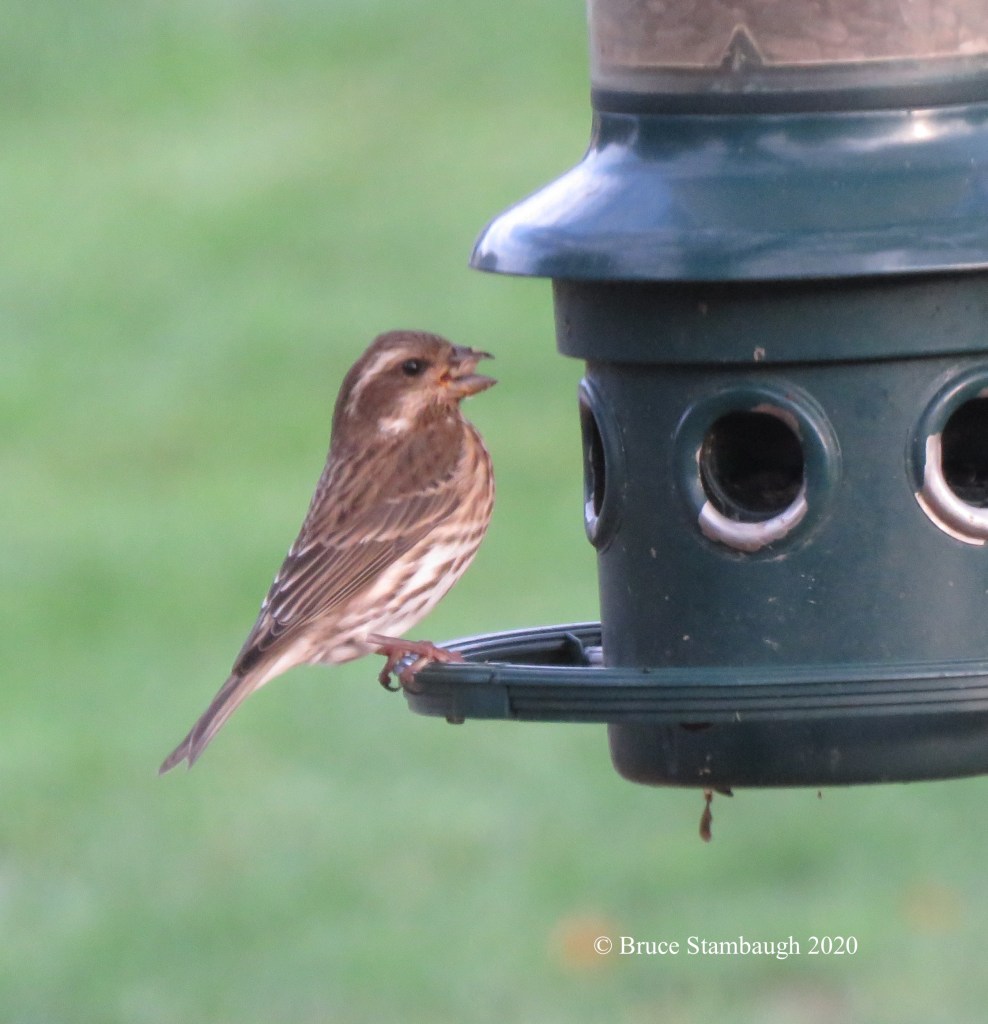
The purple finches have returned, too. Like the siskins, I never know how long they will stay. I just keep filling the feeders and appreciate their beauty. Birders ogle over having purple finches, and the glorious but unpredictable evening grosbeaks even more so.
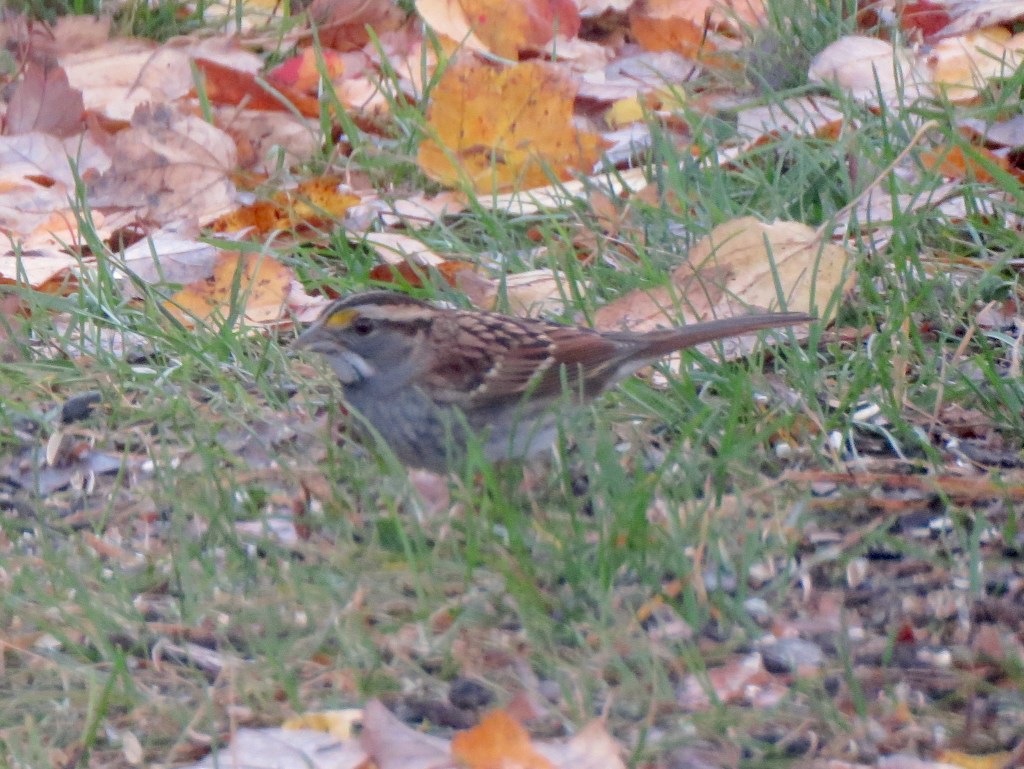
The white-throated sparrows have also arrived for their six-month hiatus from the Canadian provinces and the northeastern forests. They are marvelous birds to both watch and hear. I never tire of their hop and kick approach to feeding on the ground.
The song of the white-throated is the delight of winter. Neva and I hear their distinctive, lyrical whistle when we walk in the morning. Their cheery call quickens our step on chilly mornings.
The dark-eyed juncos and white-crowned sparrows have just begun to arrive. More will likely appear as the weather grows colder.
I enjoy the year-round birds, too. Is there anything more beautiful than a bright red northern cardinal perched on an evergreen branch? If it happened to have snowed, it creates a Christmas card moment for sure.
I can always tell when the neighborhood Cooper’s hawk is on the prowl. Stealth as it is, the songbirds can’t always fly for safety. So, they freeze in place by staying still and low or press tightly against a tree trunk, hoping not to be spotted.
I don’t mind if the sly hawk captures one. It has to eat, too. However, my preference would be to snag a few of the noisy, hoggish European starlings. They devour the suet cakes like they are candy.


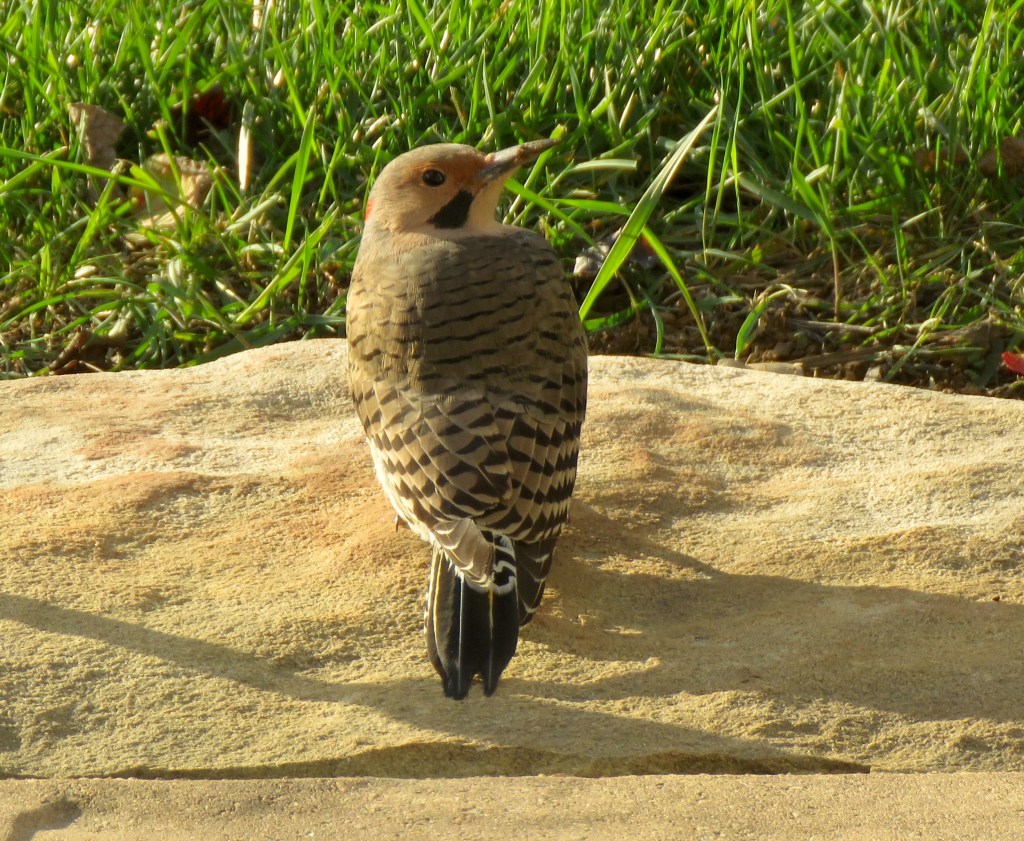
I enjoy the various antics and interactions of my feathered friends. The Carolina wren’s repertoire of songs alerts me to be on the lookout. Sure enough, it bounces around our front porch, checking nooks and crannies for any dead insects.
The wren also partakes of the seeds and suet. Birds need their protein, too. That explains why American robins peck beneath the suet feeder while the starlings sloppily gorge themselves. The robins gobble up the dropped suet pieces from the unruly gang overhead.
I always am pleased when the northern mockingbird makes an appearance at the suet, too. Even the starlings yield to this aggressor.
I marvel at the various woodpeckers that make infrequent stops. The downy is the most faithful, followed by the red-bellied and northern flickers. I’m still waiting on the pileated to make its initial appearance this year.
That’s half the enjoyment of being a birder. You never know what to expect next. You just have to keep watching and appreciate what arrives, starlings excepted.

© Bruce Stambaugh 2020

Like many other locales in the eastern United States, the Shenandoah Valley has been experiencing some marvelous, unseasonably warm weather. After morning fogs burn off, clear blue skies have dominated most days.
Imagine my surprise when I stepped outside one recent afternoon to enjoy the amazing weather. What appeared to be an army of wispy cirrus clouds hung in the eastern sky. Cirrus clouds are ice crystals that form above 20,000 feet in the atmosphere. They often appear bright white and in unusual formations, sometimes resembling human hair or feathers.
I thought their bright white against the deep blue sky created an inspiring scene. “Cirrus Clouds” is my Photo of the Week.
© Bruce Stambaugh 2020

Many moons ago, I remember clearly seeing the Milky Way for the first time in ages. I stood starstruck at the twinkling, gem-like brilliance overhead.
In the evening chill, I gazed transfixed, awestruck. Of course, the setting alone provided that opportunity. I had just stepped out of the historic El Tovar Hotel at the Grand Canyon’s edge in northern Arizona.
I felt like a child again, my mind racing back to forgotten summer nights when I would lay on my back in the coolness of the grass and watch the stars and planets. My family lived in a suburb of a blue-collar steel town in northeast Ohio. We could still see the heavens above.
Back then, light pollution was not an issue. Street lights were fewer, and their incandescent bulbs radiated soft light. I even remember being able to track satellites from our front yard.
Somehow, somewhere we North Americans became afraid of the dark. More and brighter street lights and security lights multiplied, all in the name of blotting out the darkness. Now, light pollution prevents 80 percent of the U.S. population from seeing the stars.
The evolution of lighting up streets, buildings, and entire cities has grown exponentially with urban sprawl. In today’s world, most people have to travel out into the country to see the stars.

Seeing the night sky was one of the benefits of living in a rural area like Holmes County. The air was so clean that Amish buggies rode by at night with no lights on at all until they heard a vehicle coming. Though it wasn’t a safe thing to do, the point was that the horse and driver didn’t need lights to guide them.
We chose the house we now live in near Harrisonburg, Virginia, in the daytime. Being able to see the night sky on a clear night came as a bonus. Our expansive housing development has no street lights.
Light fills our modern night lives, too much of which is bright, blue illumination from all of our electronics. Cell phones, computers, and TV screens stimulate us rather than relax us before bedtime.
Humans need dark nights to get proper sleep. Some people have to use black nightshades to cover their windows to shut out external, artificial light to get some sleep. Sleep deprivation can lead to too many negatives for us humans.
Excessive night lighting disturbs wildlife, too. More than 60% of invertebrates and 30% of vertebrates are nocturnal. Each year, millions of migrating birds die by flying into urban windows illuminated at night long after employees have gone home.
Newly hatched sea turtles crawl to the brightest light, which used to be the stars and moon twinkling over the sea. Now, the turtles turn the wrong way and perish unless the artificial lighting is turned off.
Nighttime photos taken from space of urban areas may look pretty, but such massive lighting causes problems and is extremely expensive. Imagine the money and resources society would save by simply turning off all those unnecessary lights. Plus, too many of the lights point skyward instead of down.
We shouldn’t be afraid of the dark. Nighttime is good for our rest, our bodies, our souls, our ecosystem. As we enter the winter’s season of darkness, we should embrace it, not try to either eliminate or illuminate it.
Yes, darkness arrives early now and will continue to do so into the New Year. Until then, I’ll just steal an opening line from Simon and Garfunkel: “Hello darkness, my old friend…”

© Bruce Stambaugh 2020

The old adage “all that glitters is not gold” couldn’t be more apt for this photo. The early afternoon sun shimmered off of Boley Lake in West Virginia’s Babcock State Park. The woman sitting on the spit of land beneath the leaning tree added to the setting’s charm.
“All that glitters…” is my Photo of the Week.
© Bruce Stambaugh 2020.

My wife and I moved to the Shenandoah Valley more than three years ago to be closer to our three grandchildren. We also drew closer to the Civil War.
I remember studying about the Civil War in school, of course. But places and battles like Antietam, Gettysburg, Manassas, Petersburg, and Appomattox overshadowed any Civil War engagements that occurred in the breadbasket of the Confederacy.
That agricultural label was apt. The Shenandoah Valley, especially the area where we live near Harrisonburg, played a vital role in keeping the Confederate States Army fed. The valley is still one of the prime agricultural regions of the Commonwealth.

Many of the citizens of the valley joined in fighting for the south. Others from the Rockingham County area remained neutral, however, preferring to tend their farms. When troops from both south and north moved through the valley, they often bought or helped themselves to foodstuffs, produce, corn, and even livestock.
I recently completed an online university course on the Civil War in the Shenandoah Valley. I saw the class as an opportunity to learn more about what some locals still call “The War of Northern Aggression.”
Indeed, the class taught me much about the war, local mores and history, and just how much military action occurred on and along roads we regularly travel. At times, it felt eerie to know the exact number of casualties on both sides in settings we frequent.
I sat up straighter in my chair when the instructor shared a map that showed troop encampments around Harrisonburg, the central city in Rockingham County. When he pointed to where one of George A. Custer’s cavalry divisions camped, I took notice. It was the area where we live. A friend who grew up here told me that he only remembered our housing development as a pasture with lots of limestone outcroppings. He said it had never been plowed.

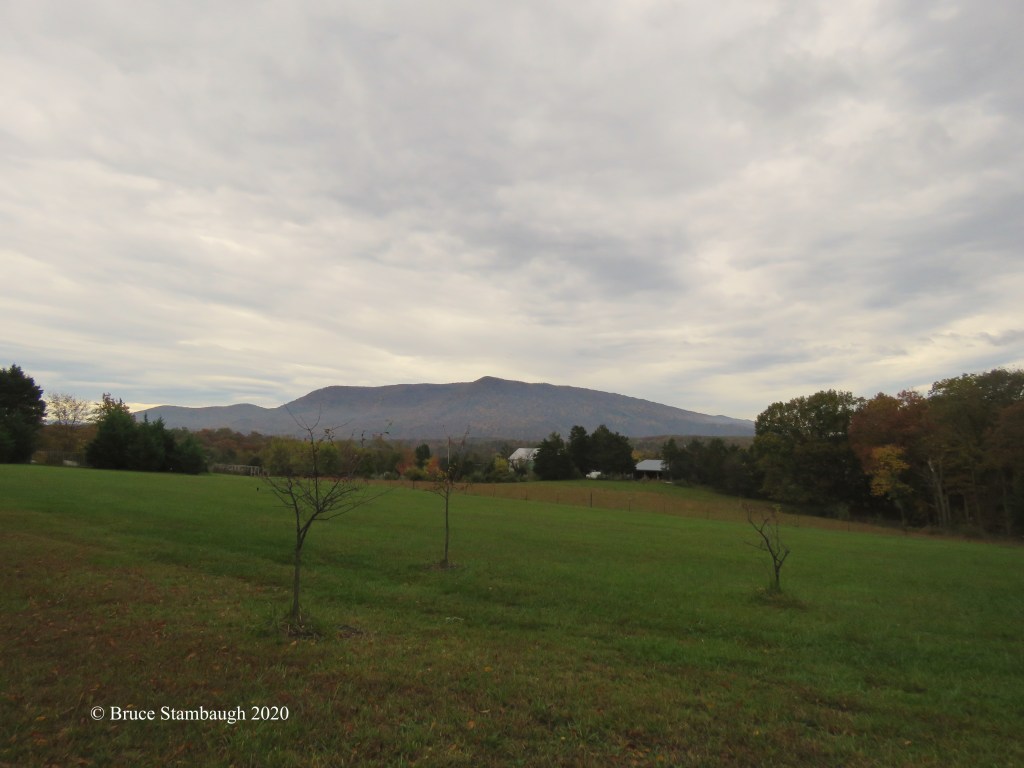


The most significant battles in the valley took place in the northern section near Winchester, where the photos above were taken. Lesser skirmishes happened in and around Rockingham County.
One such engagement happened near Cootes Store along the north branch of the famed Shenandoah River. I have a new reverence for the place that we occasionally drive by now that I know Confederates chased Custer and his cavalry across the river as Union soldiers forded absconded livestock. For the record, Confederate flags still fly all around that location.
The small historical town of Dayton, five minutes south of where we live, played a defining part in one of the valley’s darkest events of the Civil War. General Phillip Sheridan, commander of the Union Army in the valley campaign, learned that one of his top aides, John Rodgers Meigs, had been murdered near Dayton.
In retaliation, Sheridan ordered the burning of barns, mills, homes, and crops in a five-mile radius around the town. Most of the residents there were Mennonite farmers who had remained neutral during the war. Nor did they own slaves.
Another aide to Sheridan, Lt. Col. Thomas E. Wildes, begged the general to rescind the order because the residents had treated Union troops well. Sheridan relented, but only for the Dayton area. In appreciation, a plague was placed in Dayton honoring Wildes. Elsewhere in the valley, the Union Army implemented the burning. This action devastated the residents and crippled the Confederate food supply.
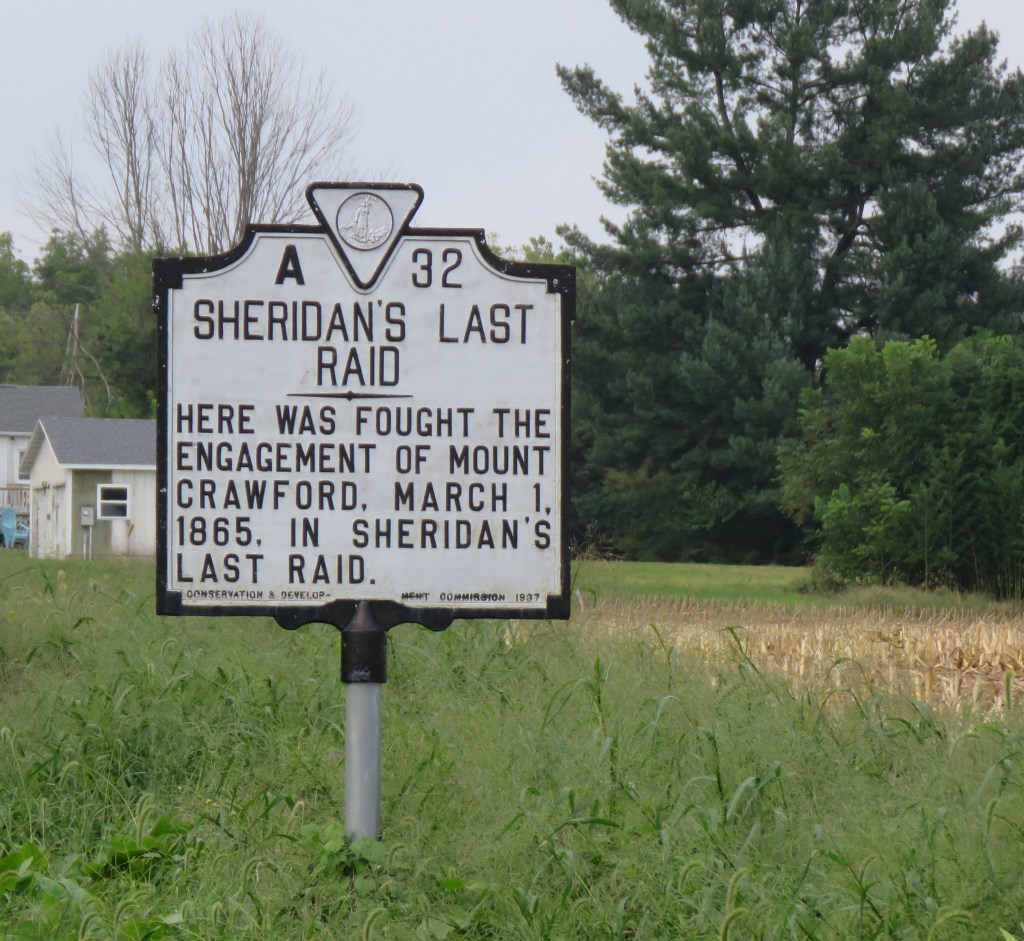
Those events are known as “The Burning.” Not surprisingly, hard feelings remain today. That attitude mirrors the current political animosity in the U.S.
As I viewed some of the local battlefields where thousands of casualties on both sides occurred, I couldn’t help but compare that violence to today’s heated rancor and divisiveness.
So how long should we hang on to hate? Isn’t it time to intentionally be more peaceable with one another?

© Bruce Stambaugh 2020
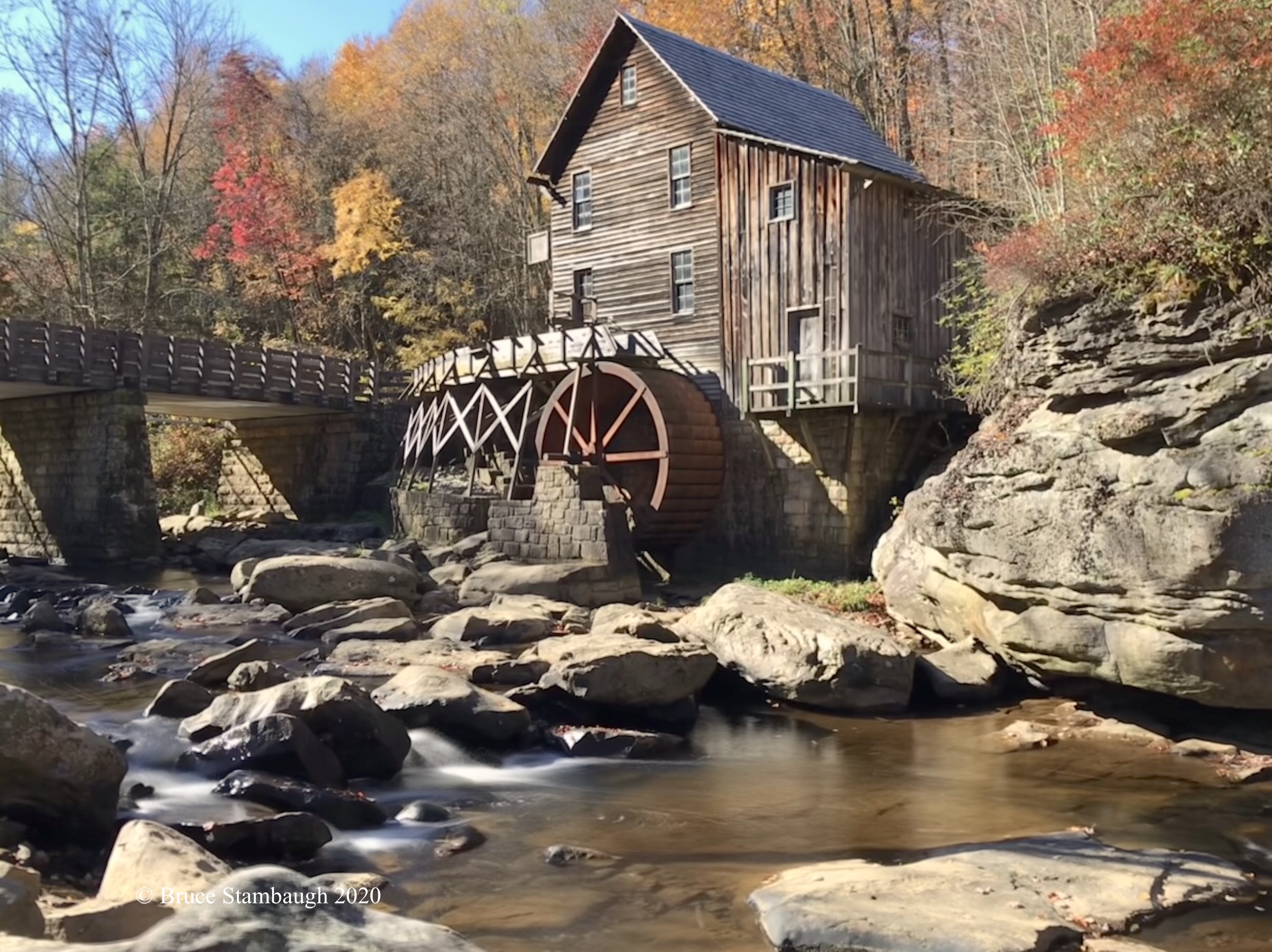
The Glade Creek Grist Mill in West Virginia’s Babcock State Park is on most photographer’s “must do” list. I was no exception, especially since moving to Virginia’s Shenandoah Valley more than three years ago.
The old mill is most often photographed in fall and winter. I missed the peak of the leaf color by just a few days. Still, I was pleased with the residual colors that framed the mill along its namesake stream.
“Autumn Splendor” is my Photo of the Week.
© Bruce Stambaugh 2020

The old saying, “Absence makes the heart grow fonder,” has never been more apt than in the pandemic. It’s one of the realities of following governmental and health restrictions.
The ancient origin of this aphorism referred to lovers. Today’s version also applies to friends and family. My wife and I have missed the gracious person-to-person hospitality and warm congeniality of close friends and family members.
Since early March, Neva and I have taken great pains to follow the recommended health guidelines to avoid passing or contracting the lethal virus. Those precautions include avoiding entering buildings, including homes.
Following those procedures naturally means limitations. Regularly seeing friends and family has undoubtedly been one of the casualties. Relationships mean the world to us, so we have found coping alternatives.
We are fortunate to live nearby our daughter, son-in-law, and three grandchildren. We occasionally commune with them, mostly outdoors.

We have visited and hosted friends, but again, always on patios or well-ventilated venues. With the weather growing colder by the day, that option may soon end.
We are unfortunate in not being able to visit in-person with our son and his wife, who live seven hours north of us in upstate New York. We haven’t physically seen them for a year and a half.
Our siblings, cousins, and close friends fit the same scenario. Virtual connectivity has replaced the real thing.
We so appreciate when folks make special efforts to connect. Unexpected cards, emails, texts, and phone calls from friends and family are great gifts.
Even better is when folks go out of their way to see us face to face. We’ll drive an hour or more to meet long-time friends who are passing through Virginia. We’ll gather at a coffee shop, sit around a table outdoors, and chat for hours about everything from baseball to the weather. We do the same with some local acquaintances monthly.
Though we want to, we don’t shake hands or hug. Elbow bumps and invisible embraces have respectfully replaced the more intimate contact, only for the sake of being safe for all concerned.
For now and the foreseeable future, that’s how we will continue to maintain friendships. Virtual and careful in-person contact will have to suffice until a proven vaccine is available to all. I wish we could do better than that, but that is the way it has to be.
Consequently, my wife and I have spent much more time together than if there were no pandemic. Yes, we still give each other space to breathe and do our own thing. But we also have settled into enjoyable daily routines of just being together quietly.
Am I saying that after nearly 50 years of marriage, I have a newfound and more profound appreciation for my spouse? Yes, I am, and yes, I have. It has taken me a long time to arrive at this station in our marriage. I especially appreciate Neva’s gifts of hospitality and creativity.
If the cautious semi-isolation of the past seven months has taught me anything, let it be this. I love my wife, my children, my grandchildren, my devoted friends more and more each day.

I do so because the pandemic has forced me to finally and fully be aware of each moment as it occurs. I try to minimize idiosyncrasies that I formally found irritating, and instead express my appreciation for those that make my life happier.
Committed and loving relationships with family and friends are critical to everyone’s quality of life. That’s especially true in a pandemic.
© Bruce Stambaugh 2020
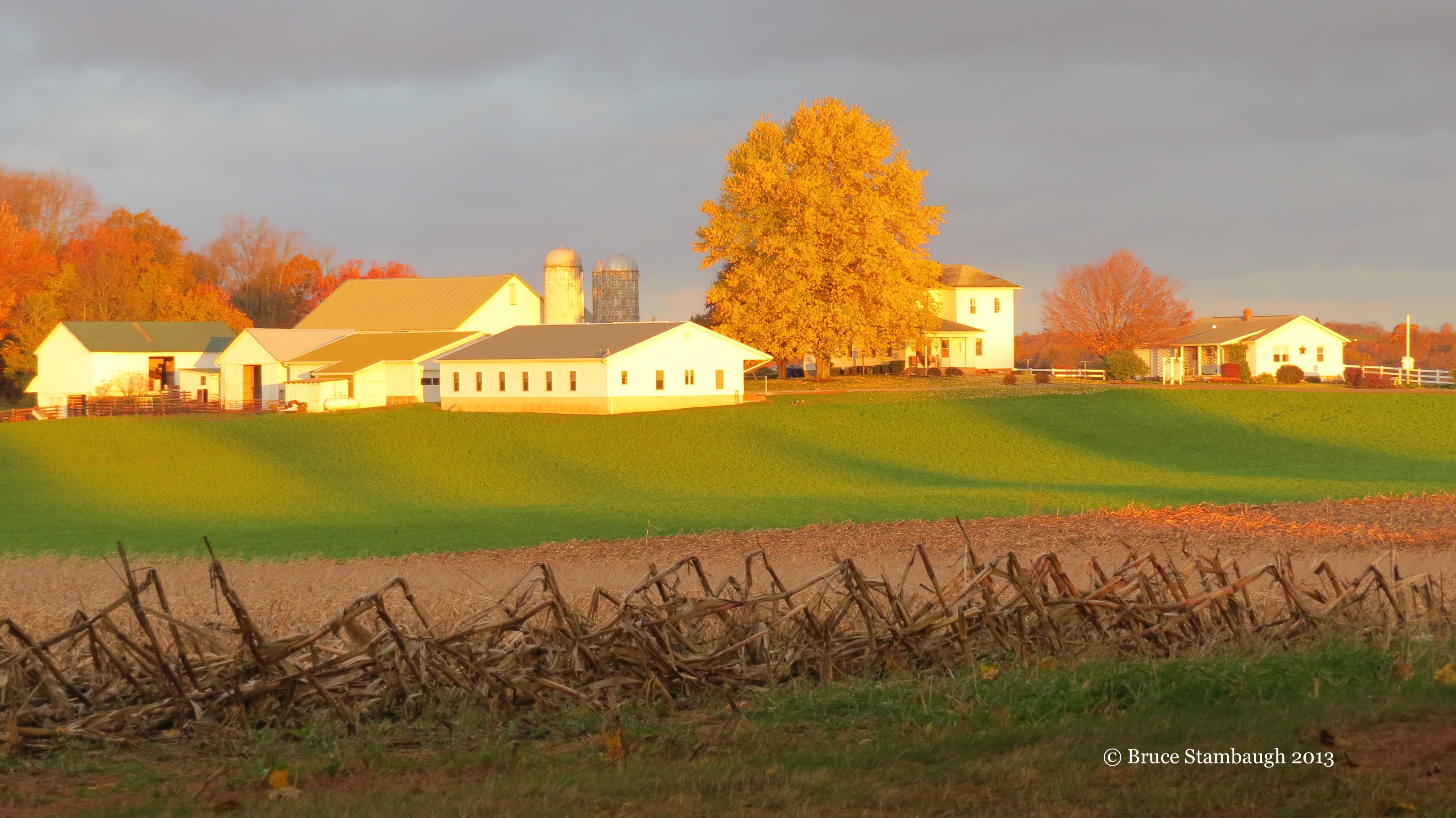
This was our view every fall when we lived in Ohio’s Amish country. I took this shot from our backyard. The sun had just risen above the hills to our east, bathing everything, including the already colorful leaves, in pure gold.
“Pure Gold” is my Photo of the Week.
© Bruce Stambaugh 2020
Wildlife Photos From The Chesapeake Bay Region
Culture and Communities at the Heart Of India
Artist and nature journalist in the Shenandoah Valley of Virginia.
Photographer Of Life and moments
Personal Blog
Art is the only way to run away without leaving home. -Twyla Tharp
Writing generated from the rural life
writer. teacher. podcast cohost.
El amor cruza fronteras / Love crosses borders




 Roadkill Crossing
You must be logged in to post a comment.