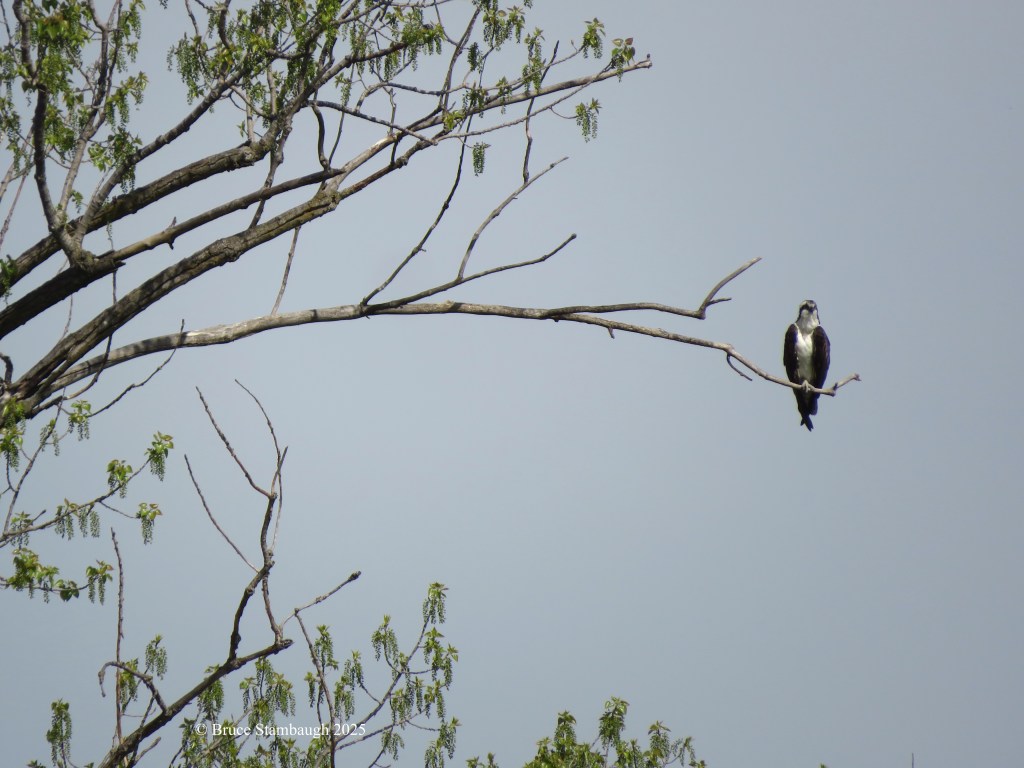
Osprey, Silver Lake, Dayton, Virginia. Photo by Bruce Stambaugh
While birding on Earth Day, this osprey provided several good poses for me to capture. It went from a towering tree snag to the limbs above to this precarious perch on a limb that hung over Silver Lake in Dayton, Virginia.
For the last 38 years, churches in Harrisonburg, Virginia, have joined together on Good Friday at noon to walk the Stations of the Cross. This is an ecumenical service of public prayer and witness on Christianity’s most solemn day.
It was the perfect afternoon to walk in downtown Harrisonburg. With a bright blue sky overhead and the temperatures in the 70s, more than 150 people chose to walk the 10 stations.
I was most impressed by the cross-generational gathering. Toddlers in strollers, teenagers in shorts, parents, and grandparents walked narrow sidewalks and across city streets to the various stations representing the final hours of Jesus’s life.
Luke 22:39-46. Jesus prays on the Mount of Olives.
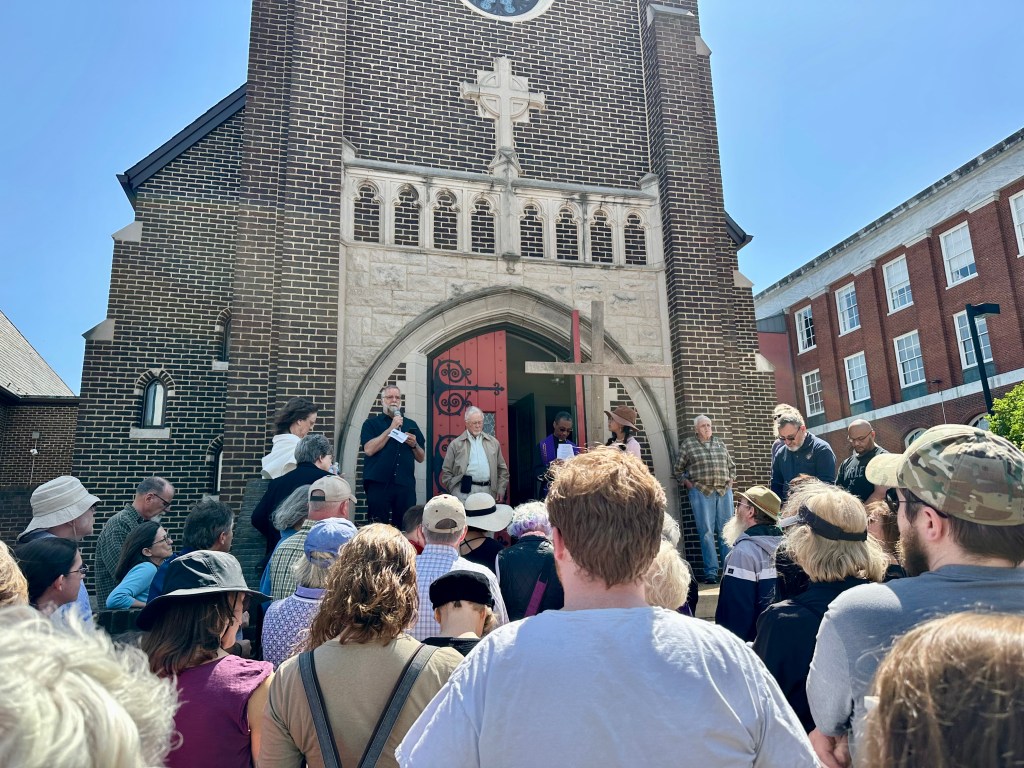
Retired pastor Phil Kniss gave safety instructions to the crowd before the service began on the steps of Blessed Sacrament Catholic Church. Members of the Shenandoah Valley Biblical Storytellers dramatically shared appropriate scriptures at each stop. A prayer by local clergy was recited before proceeding to the next station.
Luke 22:47-53. Jesus is betrayed and arrested.
We didn’t have to go far for the second stop. The U.S. Federal Courthouse was just steps away. Note the court official peering out of the window on the right.
Luke 22:54-62. Peter denies Jesus.
The third stop was just a short distance away at the local television station. Besides places of worship, the walk included stops representing the media and local, state, and federal agencies.
Luke 22:63-71. Jesus is mocked and questioned.
The following two stops brought us to the First Presbyterian Church on Court Square. It is literally the city center. We bathed in the warm sunshine of the early afternoon, listening to the scripture presentation and the prayer.
Luke 23:1-5. Jesus stands before Pilate.
The procession moved across the street to the west side of the Rockingham County Courthouse. Doing so allowed the group to gather without blocking any doorways, as the only public entrance is located on the east side.
Luke 23:6-12. Jesus stands before Herod.
We moved from the courthouse to the jail and administrative building across the street. A few onlookers joined the troupe of walkers.
Luke 23:13-25. Jesus is sentenced to death.
From the jail, the group followed the cross to an open area near Blacks Run, a stream that meanders through the town’s center. While the scripture was shared and the prayer said, an American Goldfinch sang high from a nearby cottonwood tree, and a pair of Mallards swam upstream. The church steeple in the background was the next destination.
Luke 23:26-43. Jesus is nailed to the cross.
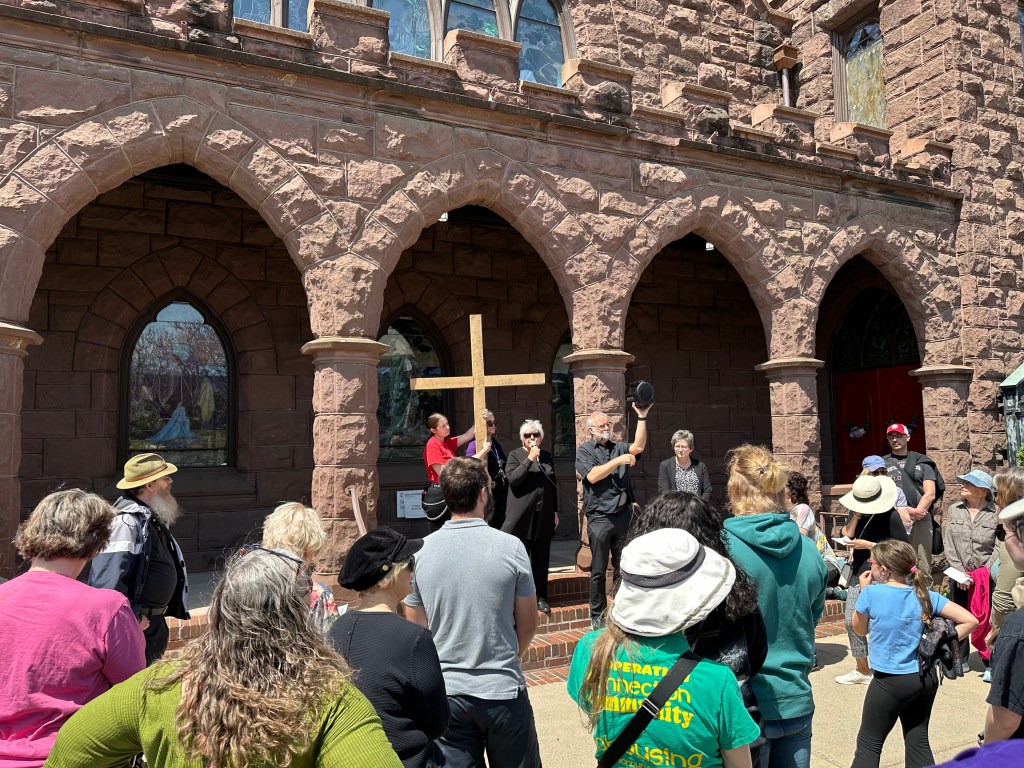
At the historic Asbury United Methodist Church, we heard the hard words of Jesus being nailed to the cross. The walk became more solemn than it had been when we had started a half hour earlier.
The path to the next station.
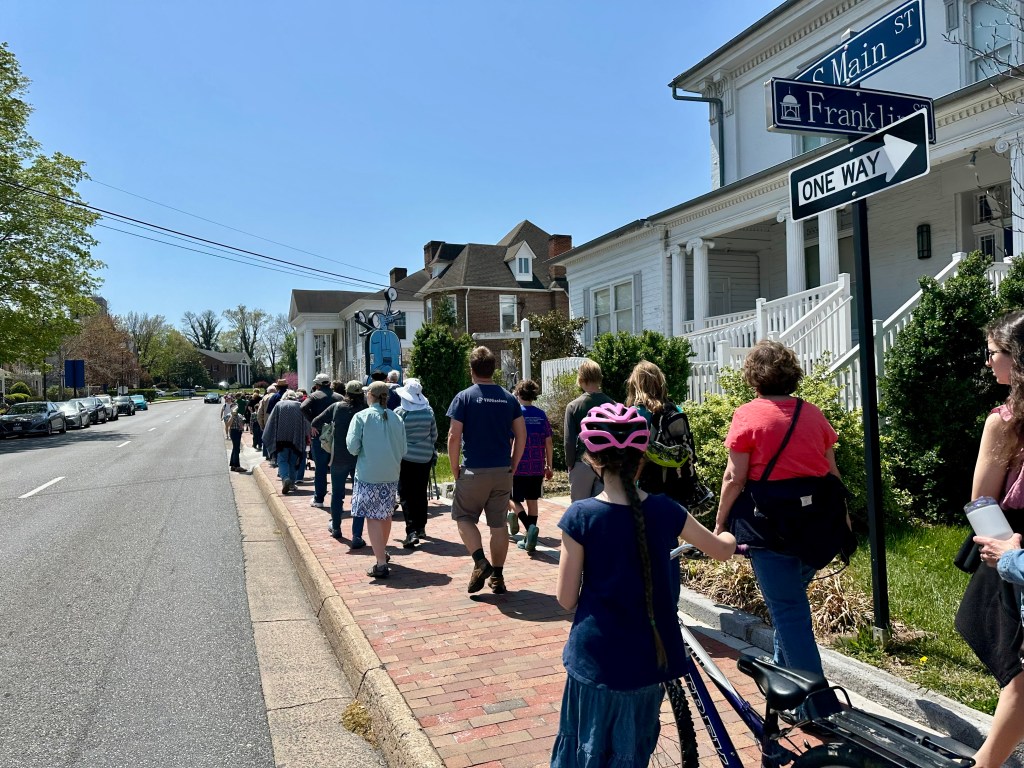
Following the prayer, the participants trekked along South Main St. to City Hall. Fortunately, the street is a one-way, northbound roadway, which allowed excellent visibility for oncoming traffic. The street is also U.S. 11, the old Valley Pike, where Confederate and Union soldiers marched and occasionally fought. The ancient history overshadowed that of the more recent.
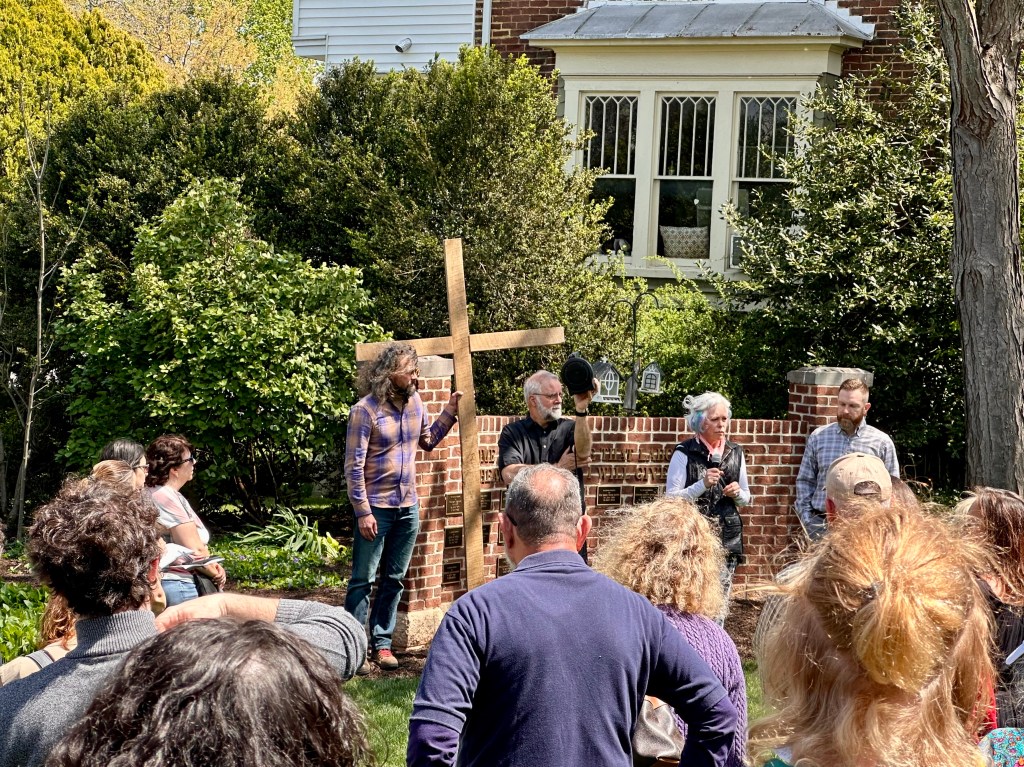
The group crossed S. Main St. to the last stop, the lovely courtyard behind St. Stephen’s United Church of Christ.Luke 23:50-56. Jesus is buried.
The inviting backyard garden of St. Patrick’s United Church of Christ hosted the last scripture and prayer of the afternoon’s commemoration. By now, people were tired from the heat and the walk, which totaled a mile round trip. Still, all were attentive to the cherished story. With the final benediction, the people scattered quietly, individually, pondering all that we had seen and heard.
It’s the best of both worlds. I can work on my laptop and watch the birds simultaneously.
I was gifted a clear plastic birdfeeder that sticks to a window via two suction cups. However, with two birdfeeders hanging nearby from the front yard red maple tree, I doubted birds would be attracted to it. The birds proved me wrong.
The hanging feeders held chipped sunflower seed hearts and black oil sunflower seeds. I filled the window feeder’s floor with safflower seeds to keep squirrels and other birds, such as common grackles and European starlings, away. Most bird species don’t like safflower seeds.
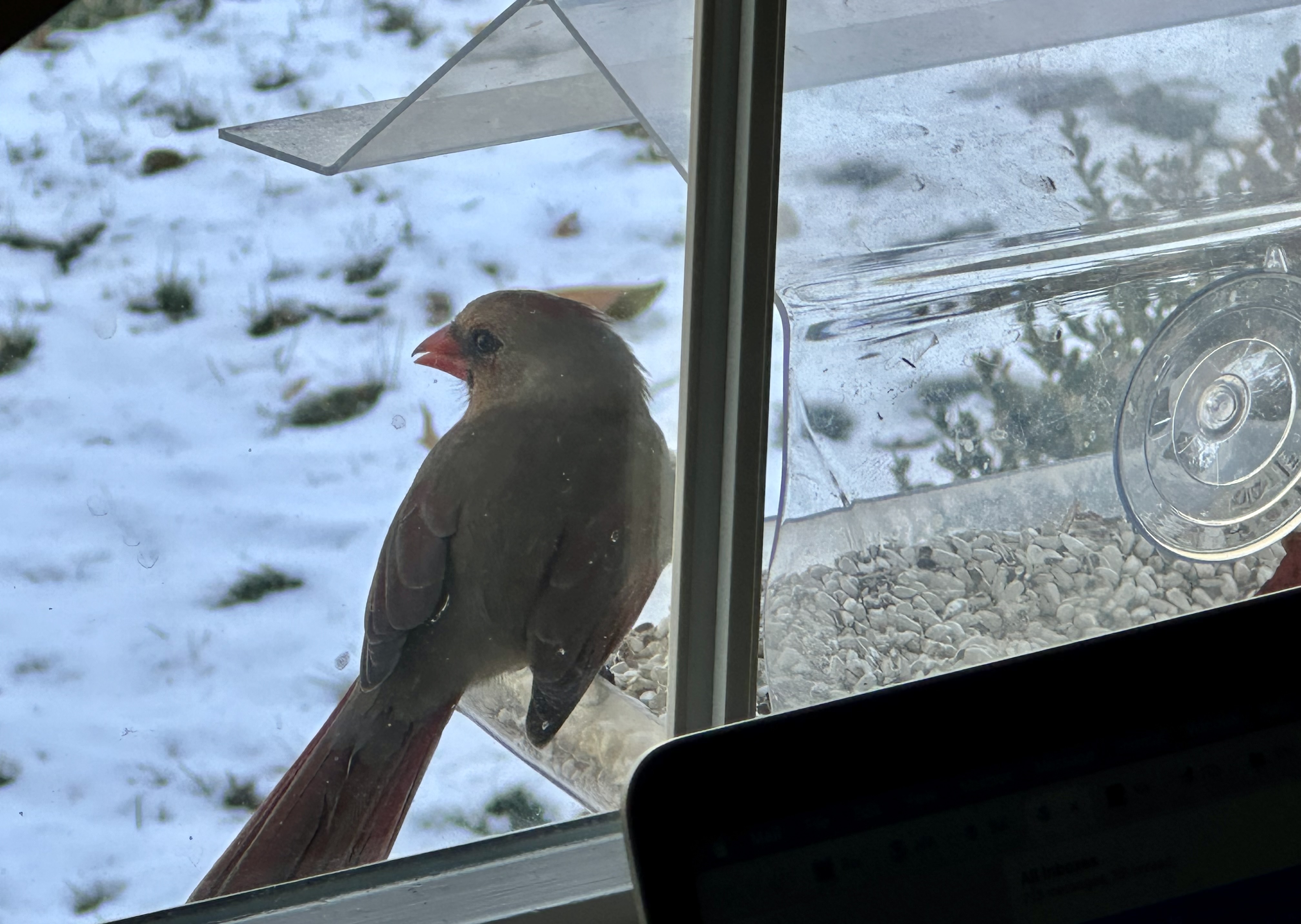
Once birds found the feeder, they kept coming, though irregularly. Northern Cardinals, Carolina Wrens, Carolina Chickadees, House Finches, and Purple Finches are among the species that frequent the feeder.
It’s made my days more enjoyable. The Northern Cardinals are often the first and last to enjoy the seeds daily, coming at the first and last light of the day. It’s a good way to start and end the day while writing or reading on my laptop.
I have learned to sit still and let them eat. Any little movement can startle them. The female and male Northern Cardinals eye the seed, pick one, and roll it rapidly with crushing bills until they reach the seed’s meat. The cracked shells fall to the floor of the feeder, which I regularly clean by hand.
Please click on the photos to enlarge them.
The Carolina Wrens seem to be looking more for morsels of the seed and insects that happened to be in the feeder. The beautiful, busy birds are antsy and cautious as they search the feeder. They seldom stay long.
Only the female Purple Finches have come to the window. Even then, they were skittish and spooked at any movement. Consequently, I have learned to roll my office chair away from my desk and raise my phone with the long lens, ready for any shots I can get. That setting works best since the feeder is less than a foot away. Still, I might only get one shot before the birds dart away.
The feeder sits to the right side of the eight-paned window, less than a foot away from my computer. A pencil holder, a small basket with notes, and small notepads serve as a partial shield for me.
Also, I’ve noticed that the birds seem more comfortable in the feeder than in front of the glass window. Perhaps the birds’ visibility is not as sharp due to the plastic feeder’s large suction cups and the bent, molded sides and roof. Plus, the covered feeder keeps the seeds dry from rain and snow. Partially protected by the window sill and frame, even gusty winds don’t shake the feeder.
I am most grateful for these opportunities to observe and record the many bird behaviors and pecking orders exhibited. I enjoy hearing the House Finches twitter to one another as they eat, and other birds quietly enjoy their meals.
The observations teach me to be patient and still, if I genuinely want to learn from my feathered friends.
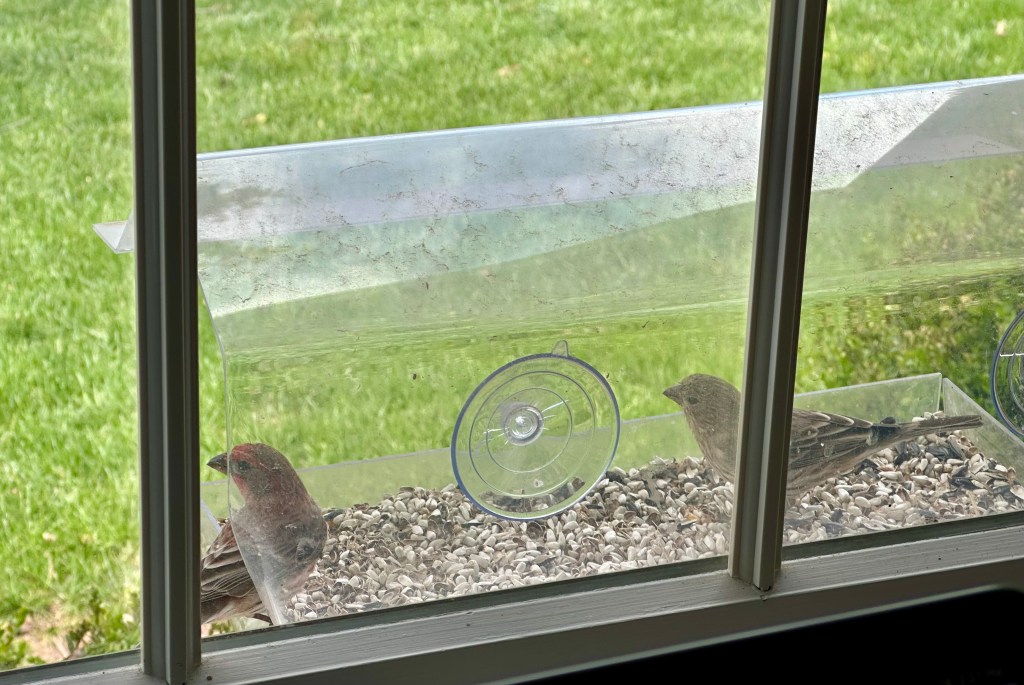
This pair of House Finches flew as soon as I captured the shot. Photo by Bruce Stambaugh
I heard this Eastern Meadowlark before I saw it. The attractive bird sang away on these old fence posts, blending in pretty well. Finding the bird took me a while since I spent most of the time looking in the pastures on either side of the woven wire fence.
The camouflaged bird was a long way off, but the telephoto lens produced the effect of squeezing the fence posts together. They were actually four to six feet apart. I was pleased that the Eastern Meadowlark remained on the fence long enough for me to capture this image.
The pastoral landscape we enjoyed. Photo by Bruce Stambaugh
The weather was similar to the day we married 54 years ago, mostly sunny and warm. So, we decided to celebrate our anniversary by enjoying the scenic outdoors in Virginia’s Shenandoah Valley.
We drove the country roads in two Virginia counties, where Old Order Mennonite farms dominate rolling landscapes at the foot of the Allegheny Mountains. Those families have kept the farms intact for the most part. Generations have raised crops and livestock, including poultry, without selling off their prized road frontage for homes or small businesses. They must enjoy the scenery and quiet, too.
Despite the lack of rainfall, succulent green grasses for beef cattle, dairy cows, and plump sheep brimmed beneath tree-dotted pastures. Cottony clouds sailed overhead in the cerulean sky.
We visited a local birding hotspot across from a plain but pristine Old Order Mennonite church, where the men and women sit in benches on opposite sides after filing through separate doorways. Killdeer, Pectoral Sandpipers, and Canada Geese called and preened in the morning’s warmth, while pairs of Tree Swallows divebombed me for being too close to their birdbox.
Pectoral Sandpipers. Photo by Bruce Stambaugh
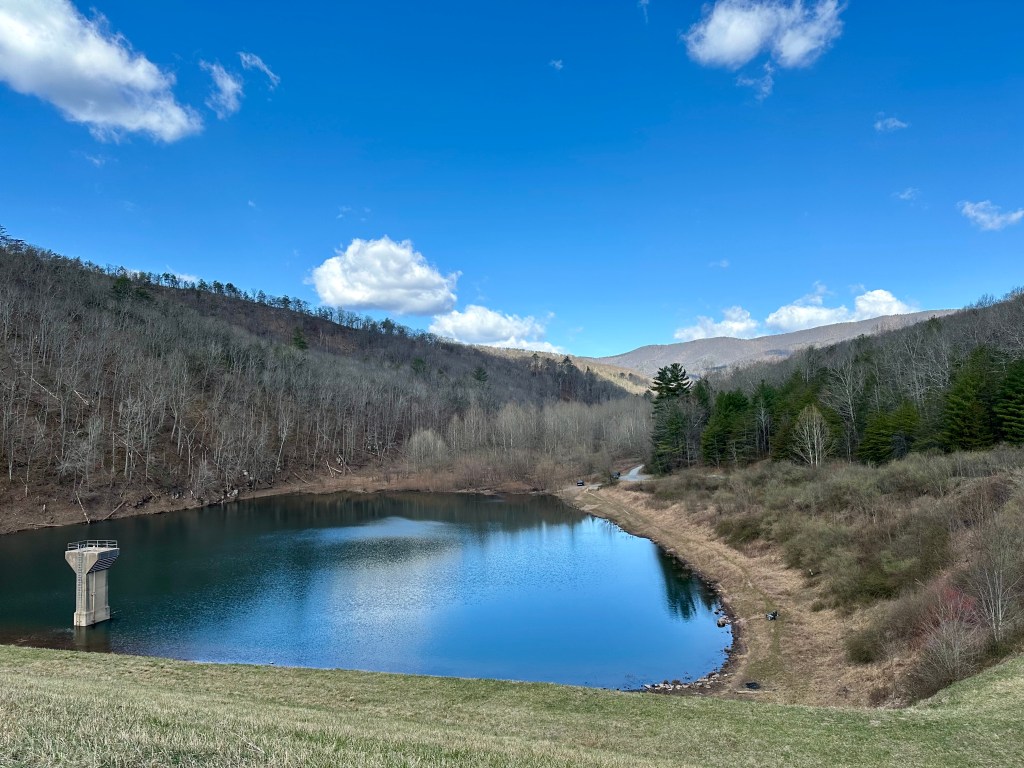
We turned onto a narrow, notoriously bumpy road that led to a mountain reservoir. A stream rushed between the mountains’ steep, forested foothills, marking the boundary between Virginia and West Virginia. Mint-colored leaves had only sprouted, allowing views of rock-filled talus slopes.
At the reservoir, the azure sky commanded the scene. Far below on its shores, fishermen plied the still water that mirrored the blue canopy overhead.
Though in no hurry, we kept driving south to our lunchtime destination. We wound up, down, and around onto primary roads and entered a historic, small southern city where artists and restaurants have replaced millineries, general stores, and saloons. We spied the old railroad station two city blocks away, where Amtrak and excursion trains still stop.
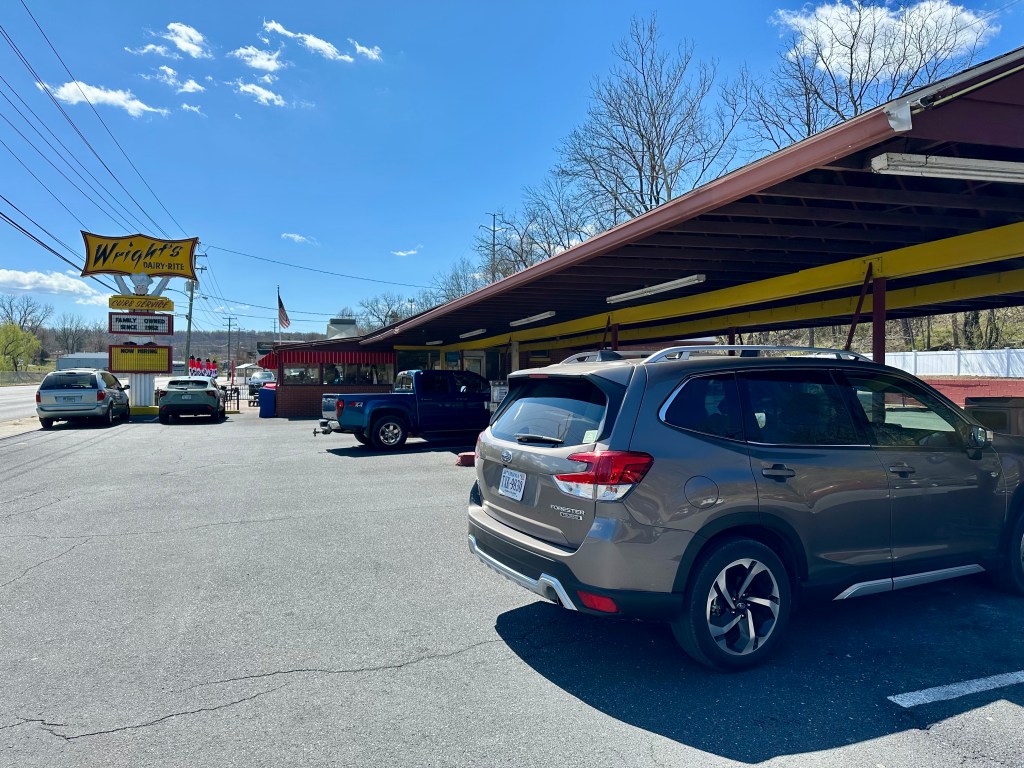
We were delighted to find a restaurant serving fresh seafood and luscious desserts. However, my wife diligently discovered an old-fashioned drive-in a mile away serving the best hot fudge sundaes.
It had been decades since I had to push a button to order food. The speakers looked like those we had at drive-in movie theaters in the 1960s. Our sundaes arrived just as we ordered, with chocolate ice cream.
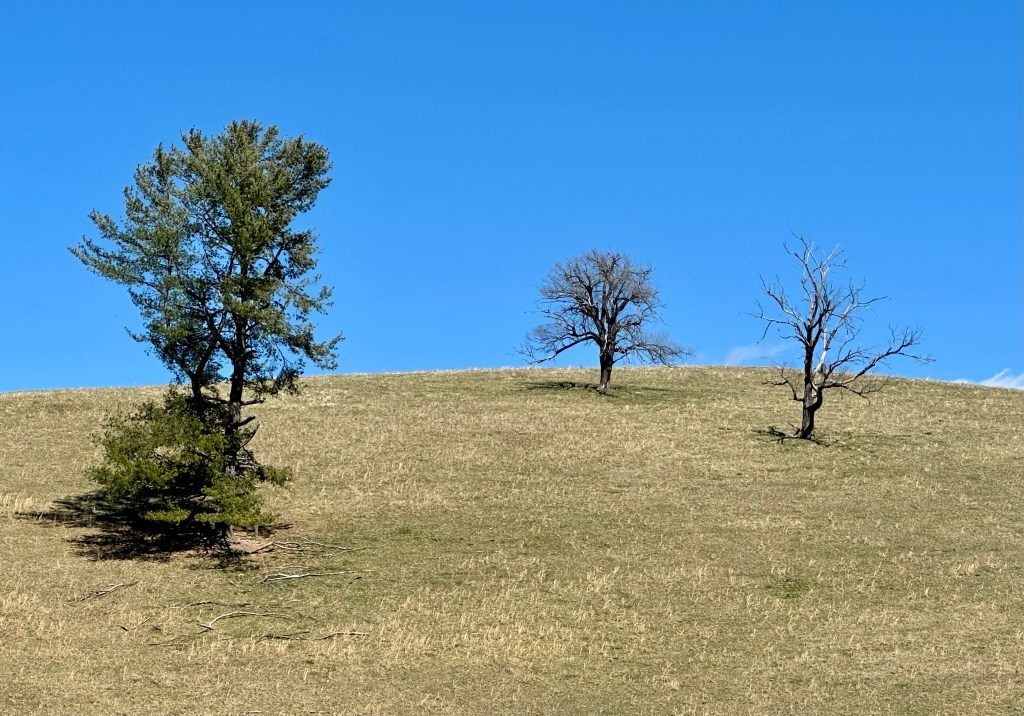
After the nostalgic pleasures, we headed west again toward the mountains before turning north. We passed ranches with lazy brooks snaking through green pastures occasionally speckled with grazing Black Angus cattle. Experienced farmers kept hilltop trees for cattle to gather on hot, humid Virginia days.
Drivers of the few vehicles that passed us waved the familiar index finger hello. If they know you, they point at you as a sign of recognition. We were fine with being admiring strangers.
Abandoned farmsteads stood on steep hillsides surrounded by trees planted ages ago. The houses were weathered and had broken windows, while many old outbuildings and barns had collapsed.
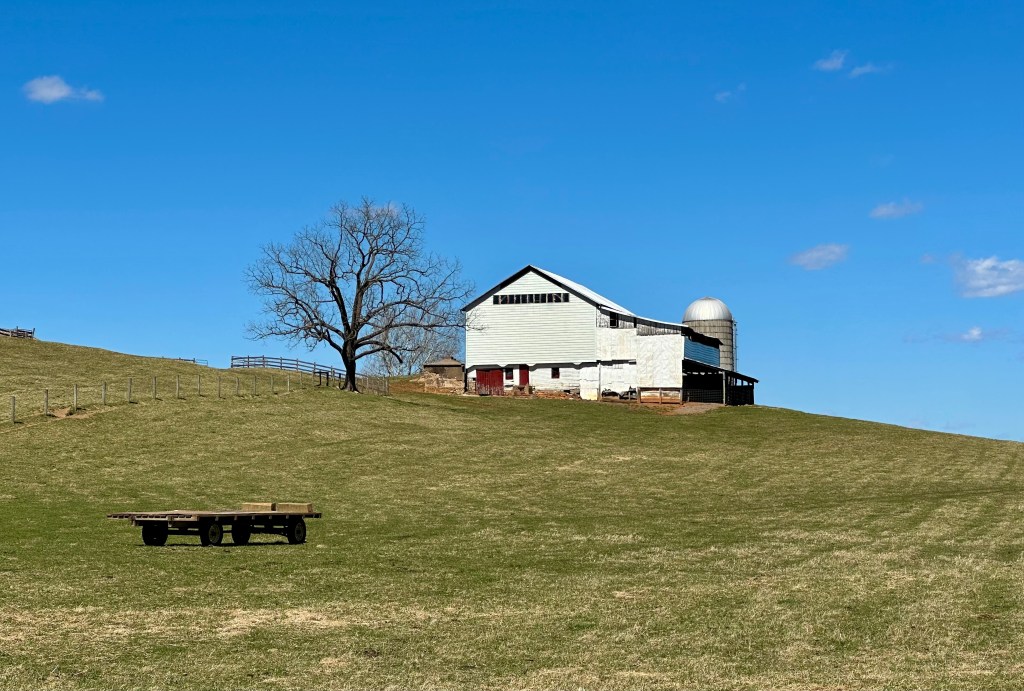
The long farm lanes that ended at white two-story houses and red bank barns reminded me of the happy, innocent Ohio days I drove down to pick up my fiancée. Like her lane, a small ridge of stubble grass divided the tire tracks.
The weather nearly matched the day we married all those years ago. Sunny skies and unseasonably warm temperatures dominated that precious day, too. However, the pungent smell of manure that the farmer had sprayed on the fields across from the country church was missing.
We made our way home happy, contented, and glad we had chosen to renew our vows so quietly, personally, amid welcome familiarity.
Steers graze on greening grass. Photo by Bruce Stambaugh
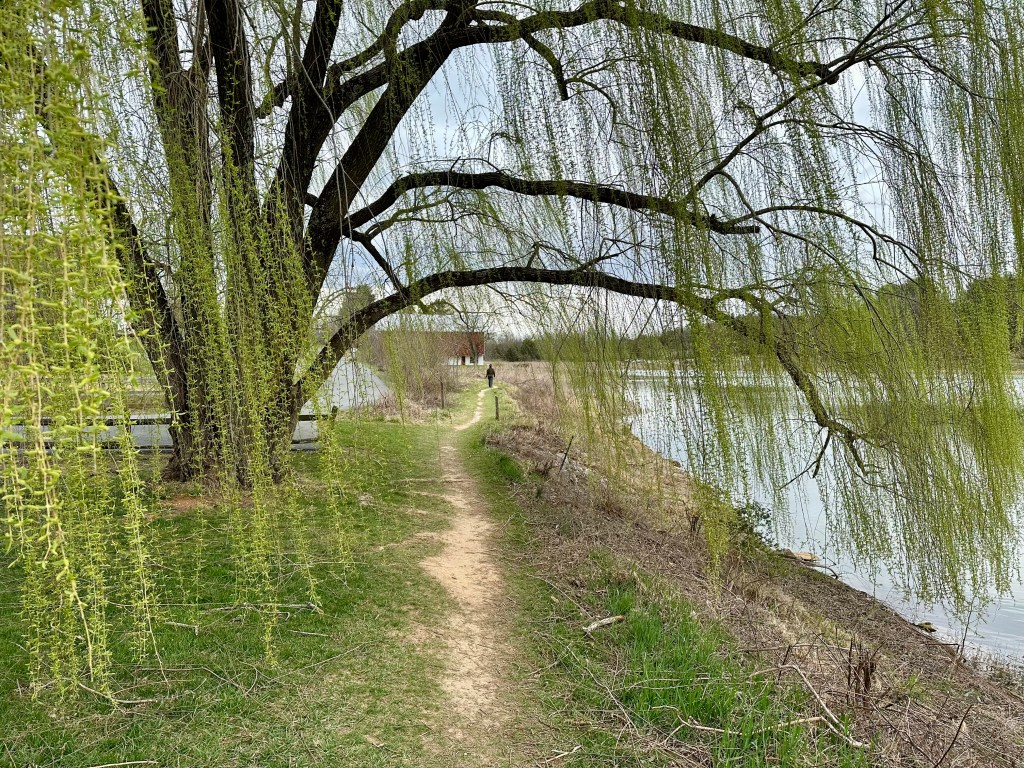
I found this inspiring scene on a recent hike and birding expedition around a local lake. The weeping willow tree’s tender leaves had recently emerged, which stopped me in my tracks.
I loved how the lowest limb arched over the dirt trail, beckoning hikers on no matter which direction they walked. If the young woman in the distance noticed the tree’s artful beauty, she didn’t say anything and kept walking.
If there was one day I dreaded each school year for the three decades I spent in education, it was April 1, better known as April Fool’s Day.
The students and even a few teachers were merciless with their inane April Fools jokes. I only celebrated the day when April 1 fell on a weekend.
But five times out of seven, it did not. As a teacher and then principal, I endured the school-wide silliness. I gave a little more slack to the younger children who dared approach the principal to trick him. I did my best to play along.
I fondly remember their coy smiles and giddy calls of “your shoe’s untied.” I always took the bait, looked down, waited for the giggles, and continued down the hall until the next juvenile ambush.
It was harder for me to tolerate the older students who tried unsuccessfully to be more sophisticated with their trickery. I didn’t have much patience with students who released the distracted teacher’s pet garter snake in the room or those who put tacks on teachers’ seats.
I wondered who invented such a silly day, so I put my curiosity to work and investigated. My due diligence involved a thorough, if not speedy, Google search.
The results didn’t lead to any definite conclusions. However, multiple resources surmised that the antics of the crazy day likely began with the introduction of the Gregorian calendar. This significant change from the Julian calendar, which had to make immigration reform seem simple, revamped the annual timetable of the entire civilized world.
On February 24, 1582, Pope Gregory instituted the switch by issuing a bull, which I found humorously appropriate. A bull is an edict from the Pope. This proclamation created January 1, not April 1, as the beginning of a new year. Of course, there were problems. In the 16th century, communications were not what they are today. Of course, given the state of the current TikTok world, that may have been a good thing.
Another contributing factor was that Protestant countries like England and Scotland didn’t recognize the Pope’s authority and initially refused to make the calendar conversion, religious reference intentional.
Word of the calendar change took several months, even years, to spread throughout Europe and beyond. Not surprisingly, some resisted the change and preferred to maintain the status quo, which included celebrating a new year beginning on March 25 and culminating on April 1. Just imagine New Year’s Eve lasting eight days. It sounds a lot like Mardi Gras to me.
Those who refused to honor January 1 as the beginning of the New Year and continued to use the April 1 demarcation became known as April Fools for their obstinacy and resistance to change. As the lore goes, April 1 was dubbed April Fool’s Day for those who clung to their old ways.
Those poor fools, excuse the pun, who refused to accept the new calendar were sent off on ridiculous errands and were made the butt of practical jokes, like sticking signs on their backs that said: “Kick me.” My former students kept alive such tricks.
Perhaps because the new calendar took so long to be accepted, the practice of nonsense on April 1 became an annual event. The silliness gradually spread to the British and French colonies in America.
Since then, students have pestered teachers, principals, and parents on April’s first day. With that in mind, come April 1, check your seat before you sit down.
Found along the Dry River, which wasn’t dry. Photo by Bruce Stambaugh
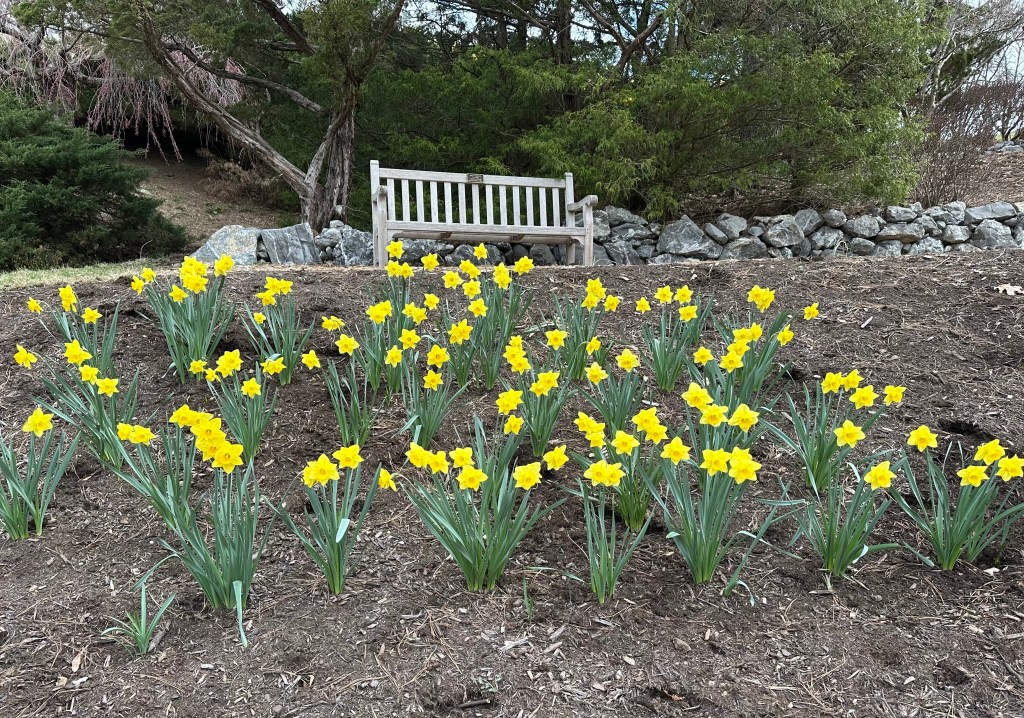
The Daffodil Choir sang an impressive concert at Edith J. Carrier Arboretum yesterday in Harrisonburg, Virginia. Their harmonic voices carried into the valley and reverberated throughout the surrounding woodlots.
Try as it might, no city or Interstate traffic noise could overpower these beautiful, angelic singers. I lost it when their four-part harmony sang “In the Blub There is a Flower.”
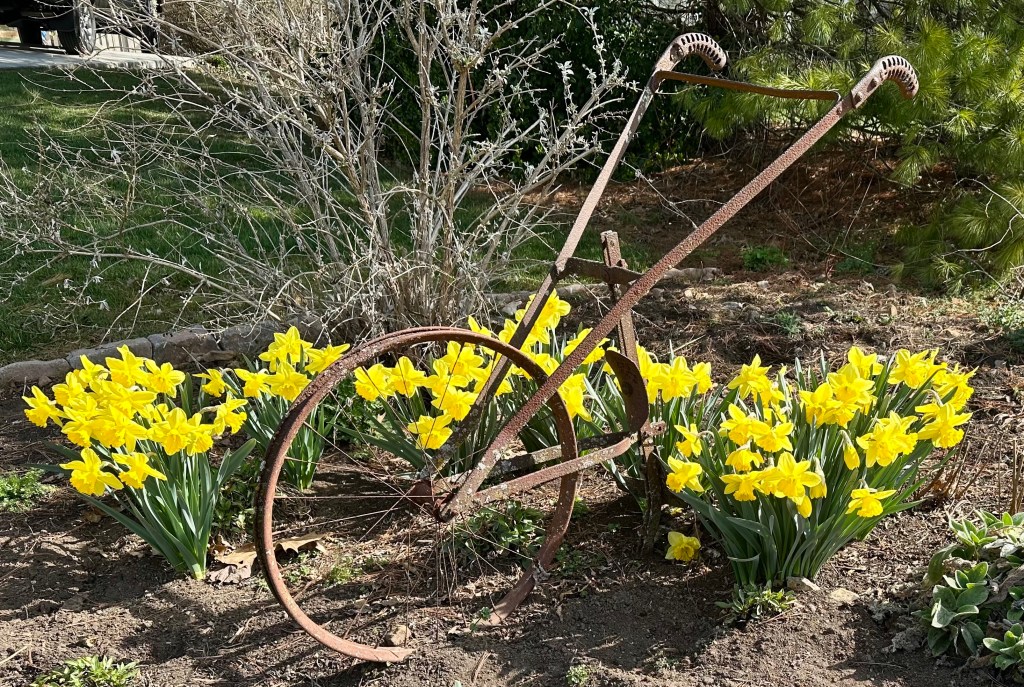
Buttery Daffodils served as a colorful backdrop to this hand cultivator. Photo by Bruce Stambaugh
Our neighbors used this old hand cultivator in a flowerbed beside their driveway. The bright yellow of the Daffodils proved a colorful backdrop to draw passersby’s attention.
Instead of being pushed through a garden to eliminate weeds, creativity brought new life and purpose to this once-handy springtime garden tool.














 Roadkill Crossing
You must be logged in to post a comment.