Spending Earth Day in Nature

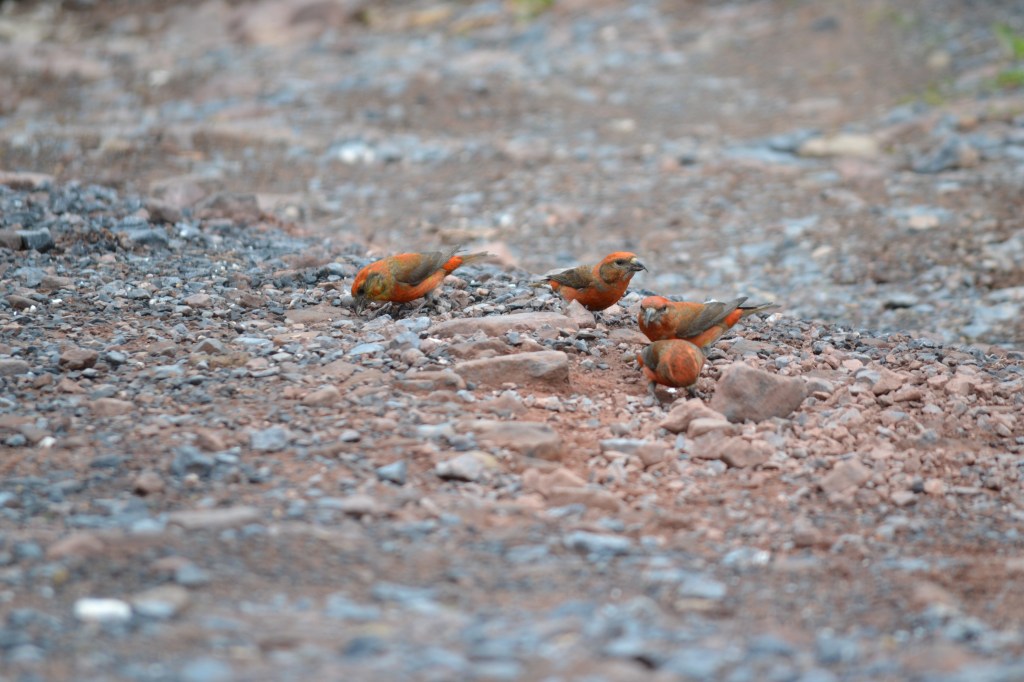
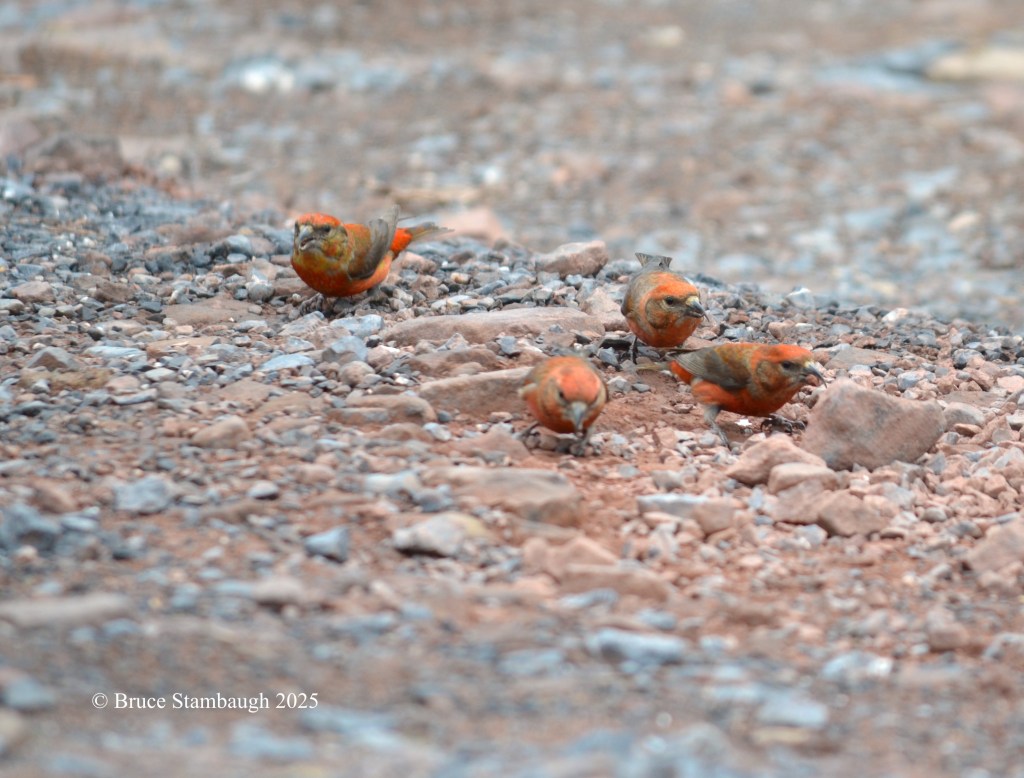
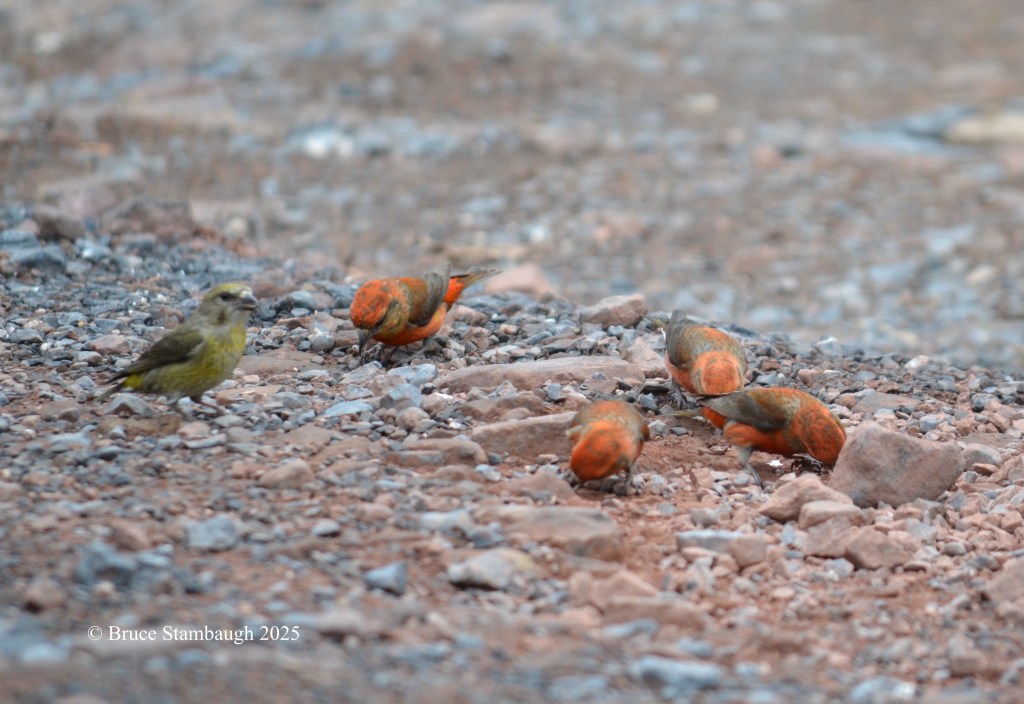
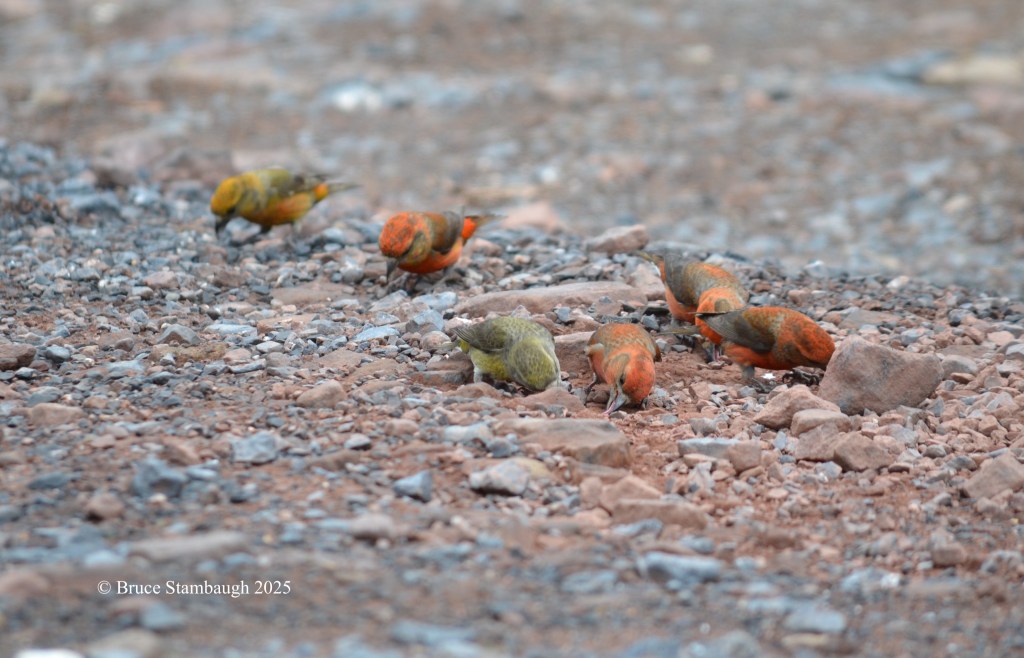
Red Crossbills. Photo by Bruce Stambaugh

Earth Day in Virginia’s Shenandoah Valley dawned with a steely gray overcast sky. It remained that way for the entire day. Still, I ventured out to celebrate the day set to honor Mother Earth.

Recently diagnosed with some unsettling health issues, I spontaneously decided to join the celebration. I hoped doing so would calm my nerves and help me settle my emotions.

I usually plan my daytrips so I’m ready to go at the crack of dawn. Consequently, I lost valuable time in the morning packing my lunch, birding equipment, and attire for the mountains. My destination was Reddish Knob, a peak on the front range of the Allegheny Mountains on the border of Virginia and West Virginia.

With reports of migrating shorebirds and songbirds returning, I wanted to see what I could find. Even though I have been birding for most of my life, I consider myself an average birder. As I age, my hearing has diminished, so I can no longer hear the higher-toned decibels of many songbirds.

I’m grateful for the birding apps on my smartphone. I especially like the Merlin app for identifying bird calls. It’s not always accurate, but it gets the job done for me. Better birders than I, most of whom are younger, are proficient in naming birds upon hearing and seeing them. It’s reason enough to bird in a small group of experienced birders.
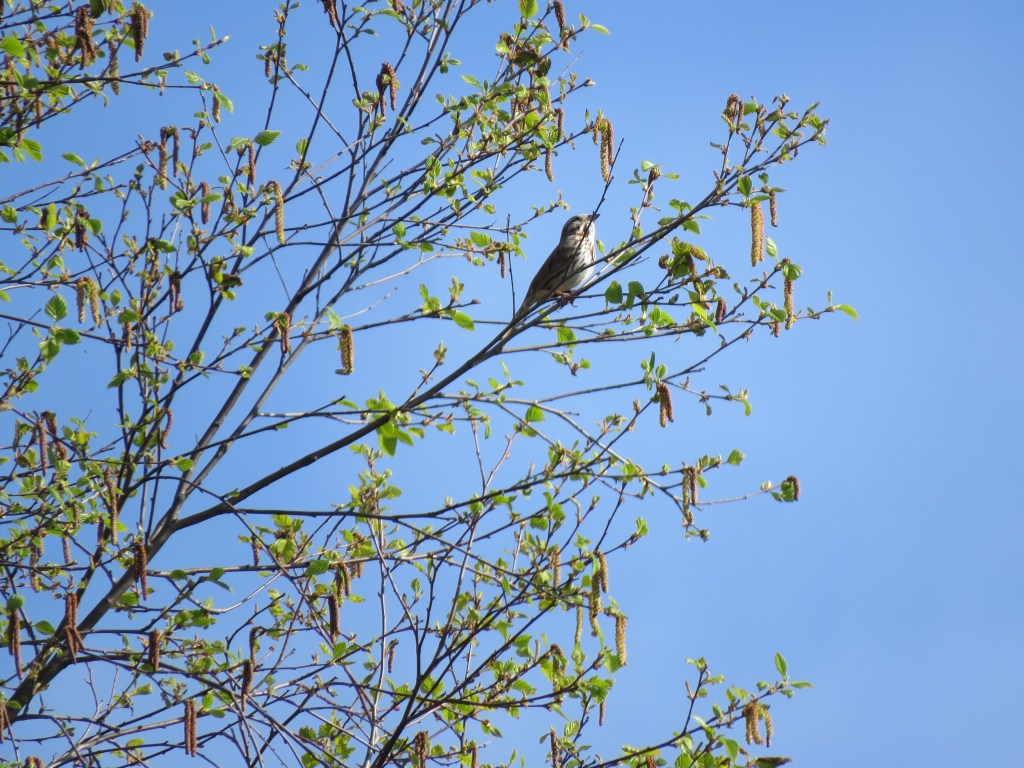
A Song Sparrow sang before I left home. Photo by Bruce Stambaugh

However, today, I chose to go it alone. I needed the solitude and the solace. I did so, knowing that other birders would likely be out searching in the same areas. But it wasn’t to be. I spent the day on my own.

Before I even left, a Song Sparrow sang from a tree across the street. My first stop was a nearby lake renowned for its bird-watching and fishing opportunities. Wind-felled trees provided cover and roosting areas for birds and reptiles.

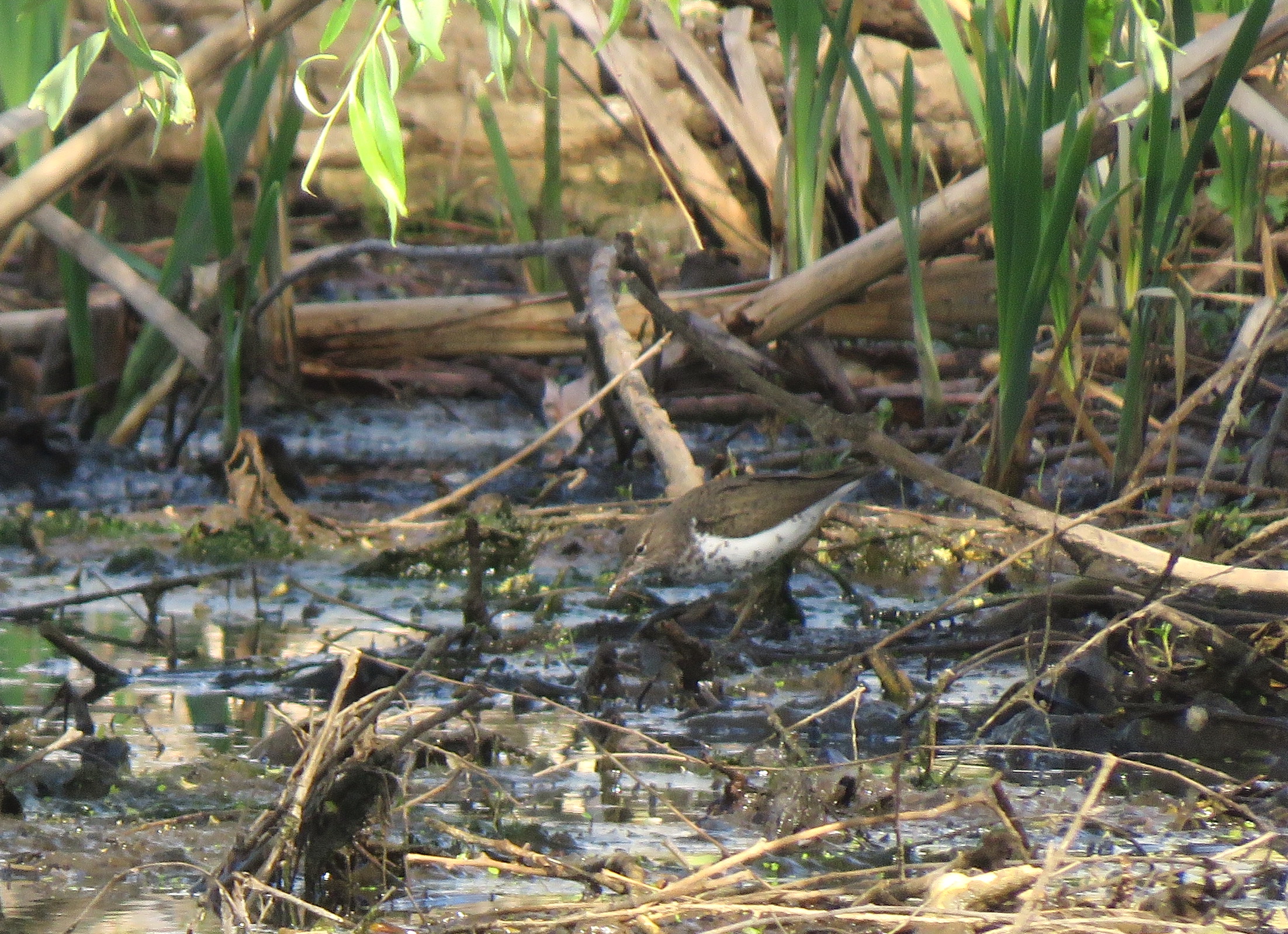
I spotted movement in the shadows along the shallow end of the lake’s shoreline. Beyond a downed tree where turtles rested, a Solitary Sandpiper stealthily stalked its prey. Closer to me, a pair of Spotted Sandpipers waded gingerly among the lily pads, reeds, and downed branches, searching for breakfast.

The lake is a hotspot for migrating ducks and other waterfowl, but there were none today. Above the spillway, however, a pair of Black-crowned Night Herons occupied separate branches on a giant sycamore tree. Soon, a stately-looking Osprey joined them. All eyes were on the lake.

A few miles away, I stopped at a marsh in a farmer’s pasture that allows visibility from the public highway. I heard the familiar calls of Killdeer, and a pair soon landed among the grasses sprouting from the marsh’s muck. Red-winged Blackbirds trilled while Black Vultures sailed silently overhead.

Killdeer at the marsh’s edge. Photo by Bruce Stambaugh

I passed through the rural burg of Briery Branch, and onto Reddish Knob Road. I drove at a snail’s pace with the windows and moonroof open. I turned on the Merlin birding app to listen for calls. When a Louisiana Waterthrush and Blue-headed Vireo popped up, I pulled off the narrow road, turned off the car, grabbed my binoculars, and scanned the tender, emerging leaves for birds. Though they continued to call, I couldn’t find them. The gray sky proved a harsh backdrop.

I continued the slow climb up the mountain. The valley gave way to steep forested hillsides, split by a rushing stream, as I drove higher and higher into the Allegheny Mountains. I stopped whenever a pull-off presented itself and scanned the trees and bushes for birds.

On the right, a recent controlled burn had left the landscape blackened. The underbrush was singed brown, and the needles of young pines hung yellow from the heat. The smell of the fire lingered in the air. Still, I found a Brown Thrasher perched in a tree singing its melodious song high above the scorched earth below.
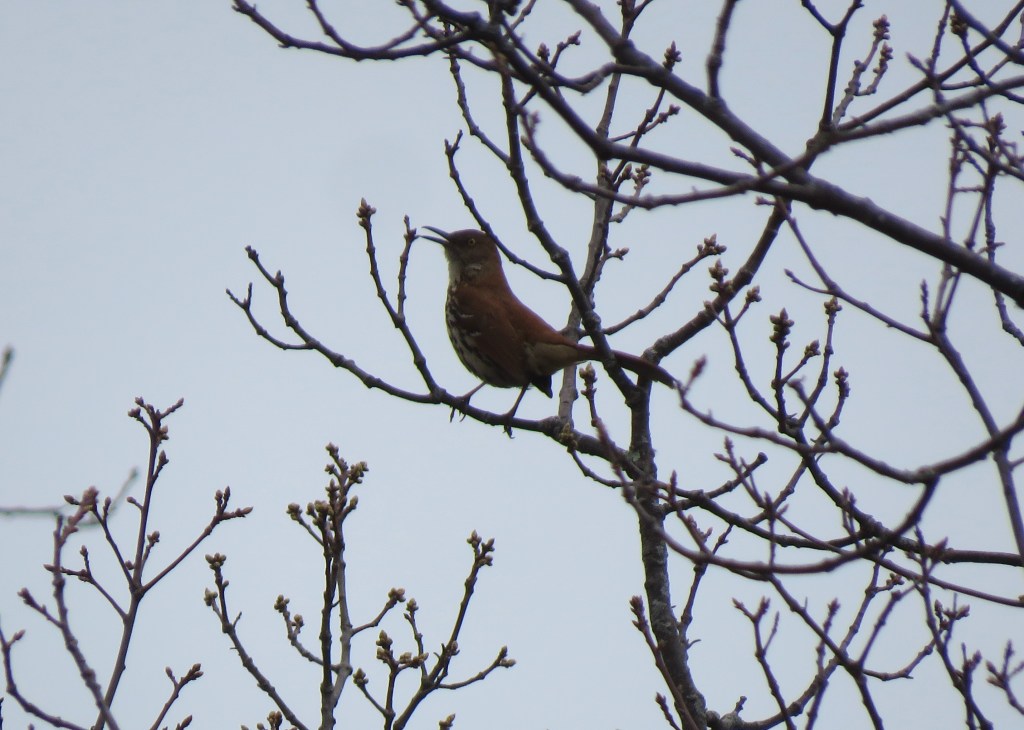
Brown Thrasher singing. Photo by Bruce Stambaugh

Just up the road, I reached my destination, the intersection of Reddish Knob Road and a US Forest Service fire road, which is a mix of dirt and gravel. As I pulled over to park, a small flock of Red Crossbills flew up in front of my vehicle. Those were the birds I had hoped to see and photograph.

I parked my vehicle a few feet away, excitedly exited with my camera, and the birds returned to the same spot on the side of the road. These beautiful birds were what I call “graveling.” Why do these lovely, social birds ingest grit and minerals along roadsides? The pebbles and dirt help them digest the pinecone seeds they eat.
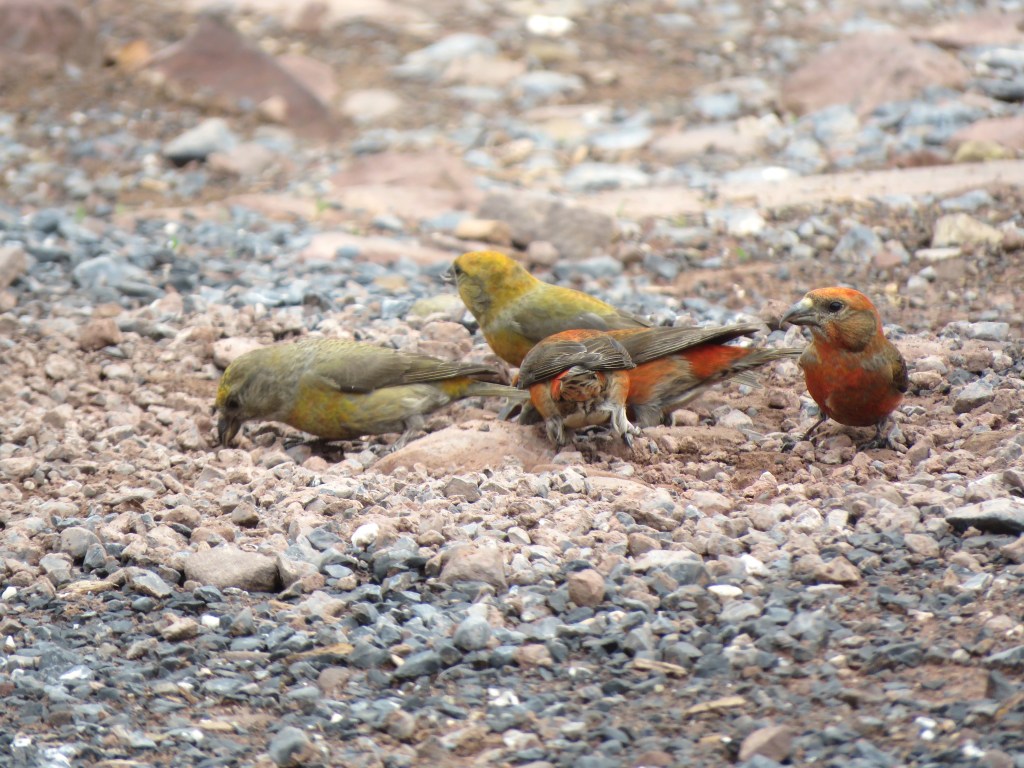
The Red Crossbills gathering grit. Photos by Bruce Stambaugh

The birds settled in as I stayed as still as possible. I captured several photos of these magnificent birds gathering grit. The females are a yellowish-green, while the males are mostly a fire-engine red with dark wings. They can be found year-round in a small geographical area along the front range of the Alleghenies. They are scarce in most other regions of the US except the Rocky Mountains.

All the while, Common Ravens flew back and forth above the ridgeline. Blackburnian and Black-throated Green Warblers sang in the tree tops as they foraged for insects. Ovenbirds, Blue-headed Vireos, and Eastern Towhees joined the chorus. 

Please click on the photos to view them in full size.

On my retreat down the mountain, I stopped at a camping area adjacent to a gurgling mountain stream. I heard many warblers, but saw only a few. I could have used other pairs of eyes to help spot the birds high in the emerging canopies.

Still, it was a fulfilling and satisfying Earth Day for this septuagenarian. I surrendered to my surroundings, the fresh air, the towering evergreens, and the budding deciduous trees. Bird calls replaced motor vehicle and lawnmower noises, and clear mountain streams rushed their way to the valley floor. 

Thanks to the bird song choruses, inspiring mountain views, and the singing brooks, nature’s peace enveloped me. Isn’t that one of the goals of Earth Day?

The mountain stream. Video by Bruce Stambaugh

© Bruce Stambaugh 2025

Street Photography With a Twist

I love photography. It keeps me alert for the extraordinary while doing the ordinary. In this case, I was with my wife, her cousin, and her husband, all septuagenarians.

We get together every so often about halfway between our home in Virginia’s lovely Shenandoah Valley and their abode in central North Carolina. Lynchburg is a handy place to meet up, a two-hour drive for each of us.

We like many of the same activities, like playing cards, dominoes, antiques, and birding. We also enjoy casual strolls along city streets and well-marked biking and hiking paths. Lynchburg offers plenty of both.

Since we are not out to set any speed records on our walks, I can wander ahead and find the unusual among the usual rural or urban landscapes. Occasionally, I charge ahead too fast, and the others call me back to see what they have found. Together, we discover much to appreciate, ponder, and enjoy.

Take our most recent excursion, for example. Lynchburg is a city of hills and valleys, with a rich history, old buildings, waterways, sidewalks, cobblestone alleys, and lazy trails often following the winding creeks and the James River. One trail even had an old railroad tunnel, now lighted for bikers and hikers. The city is a paradise for photographers.

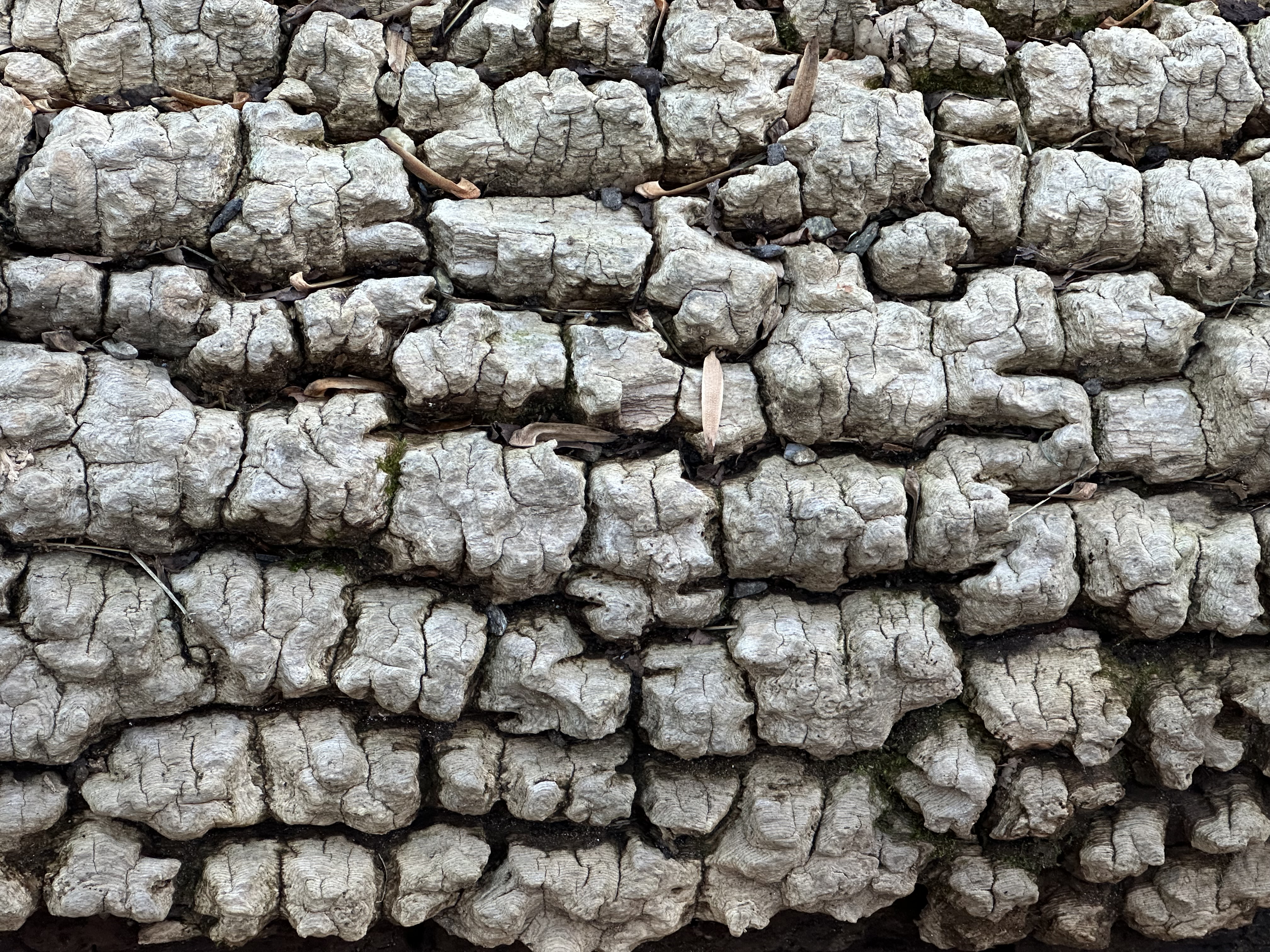
We came upon curious subjects to photograph every path we took. Along a creekside trail, we found this textured object. Any guesses? A tire? An alligator’s back? No to both. There’s a hint in the photo.

This is the closeup of an old fallen tree. The trunk was rotting away while its life-protective bark remained.

Not all photographic opportunities were so secretive. Still, using your imagination is critical. This old snag has stood the test of time, and the elements of four seasons have weathered into a once-living art object. Does anyone else conjure an owl flapping its right wing?

Speaking of living, this diminutive plant waved its once-green leaves red for the holiday season that is upon us. It is a volunteer burning bush, likely deposited by a seed-eating bird. There was no missing the bright color among all the trail-side leaf litter.

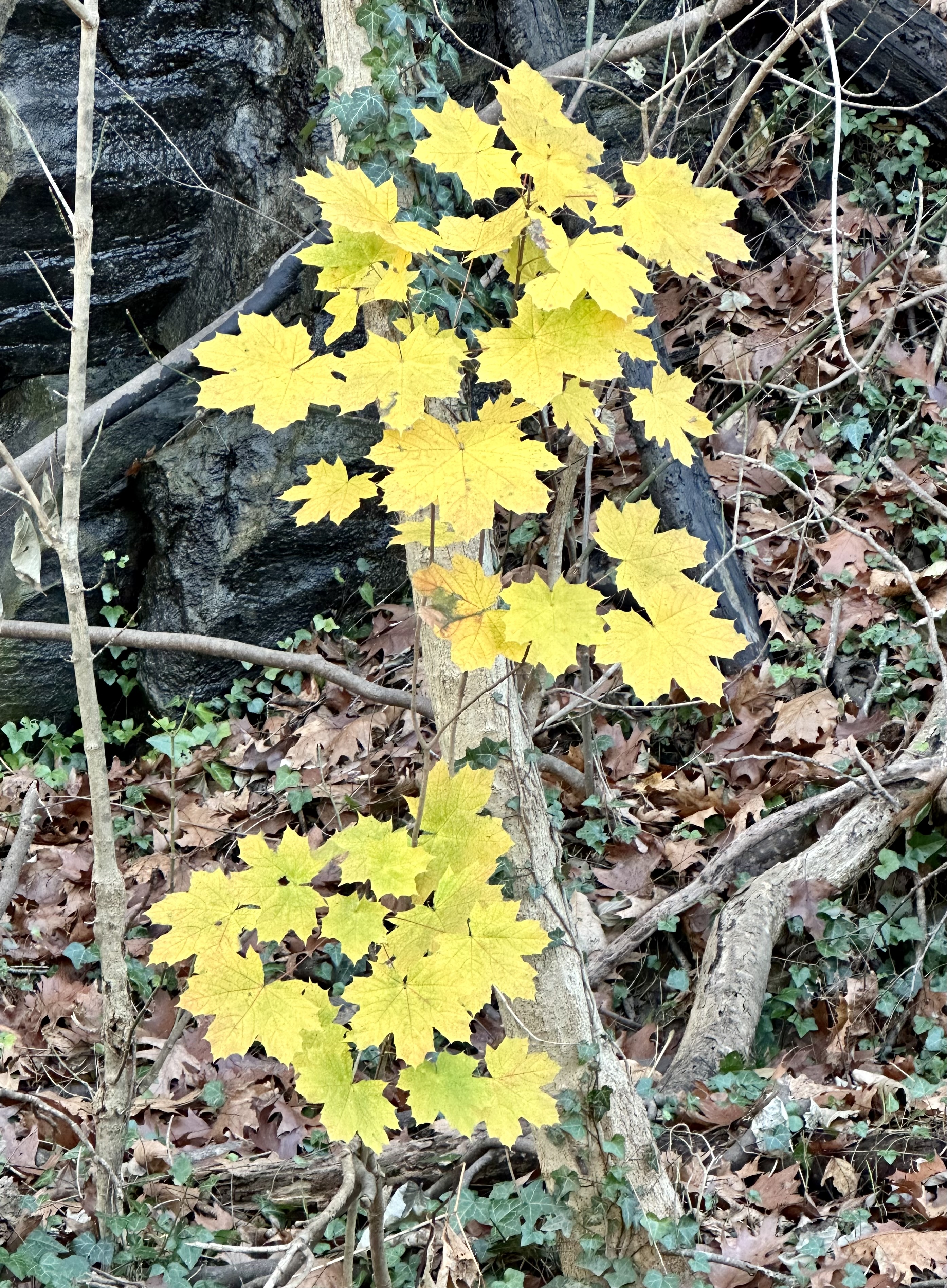
A short distance away, a competitor vied for attention. This sugar maple sapling shown like the sun on this dismal day. It made us all chuckle.

Not everything was so obvious, however. This photo has a complex combination of both natural and human-made actions.

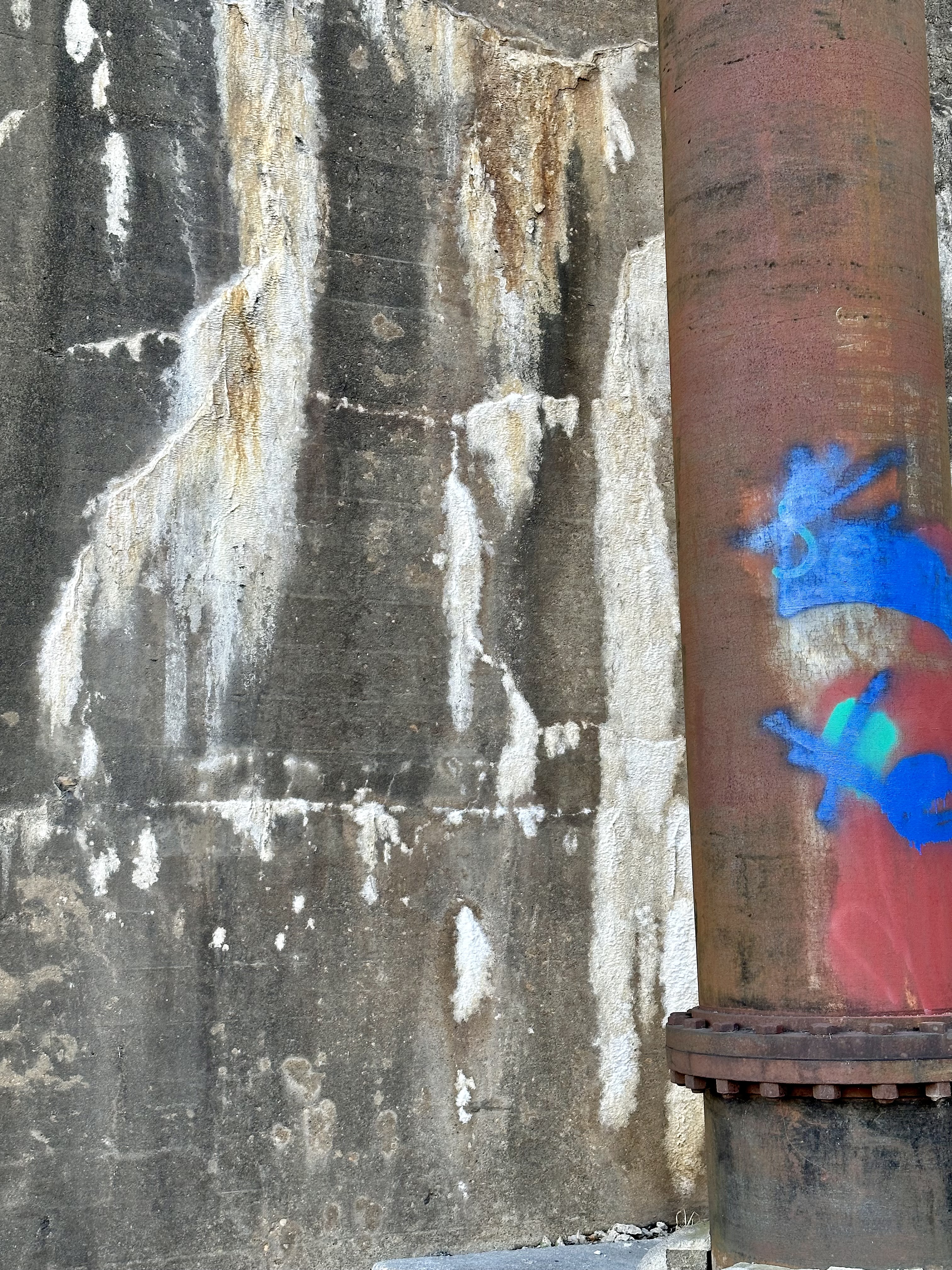
Any idea what this abstract consists of? Look close. What’s on the left side? You are halfway home if you said a rock outcropping leached with calcium-laden groundwater. The right section is an old drainpipe. Some wannabe artists eliminated the plain rusty look by adding some pretty red and blue with a meaning. Those colors covered up some previous graffiti in faded white.

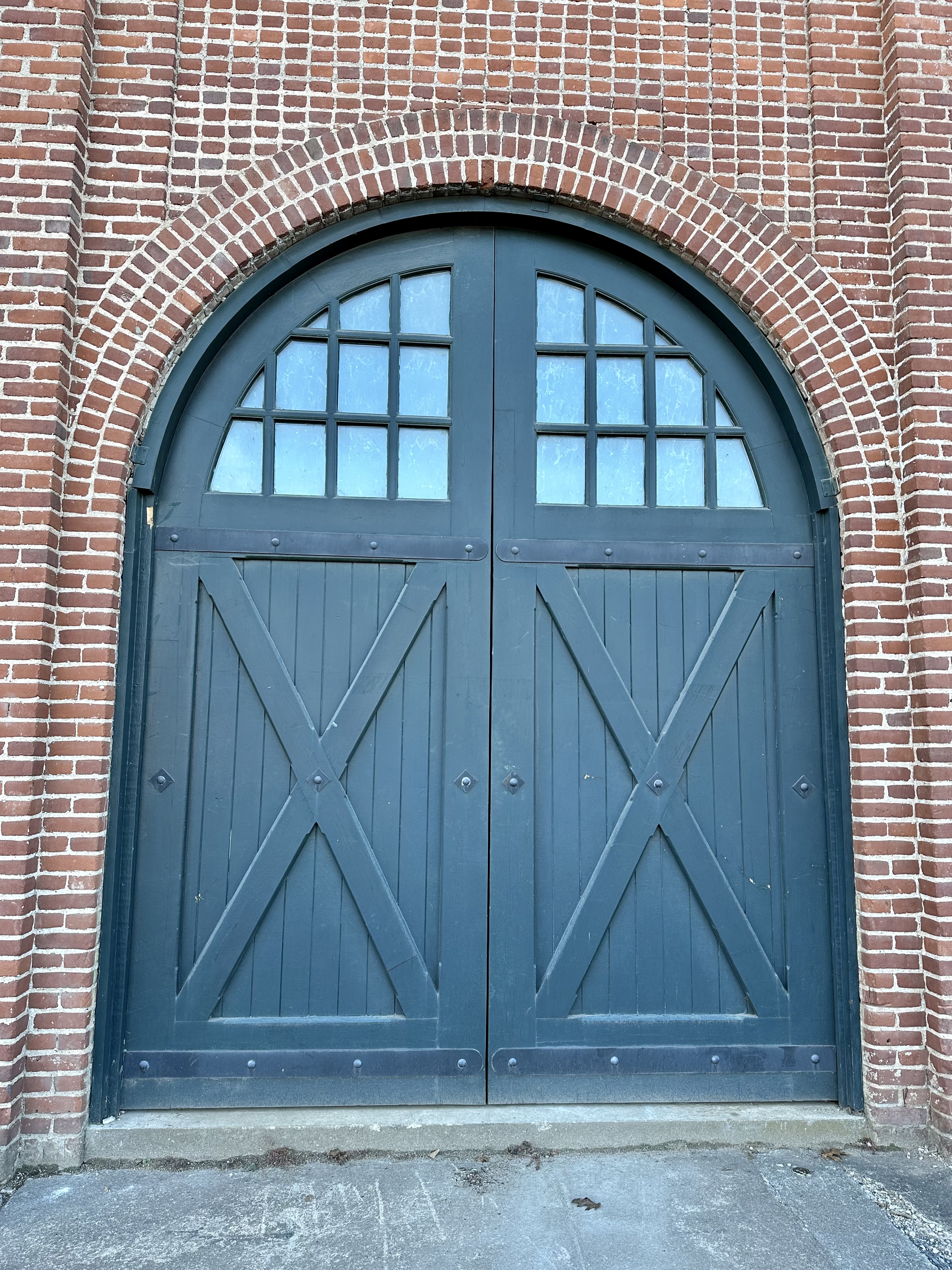
That pipe was a hint for us. The city lay just around the corner. We soon found this intriguing old set of double doors in a two-story brick building, likely once a warehouse during the railroad’s heyday. It faced the James River. The nearby trail was once a rail line.

A few steps away was a nearly block-long mosaic timeline of the history of Lynchburg. The blight of slavery was front and center. It’s an incredible piece of artwork often blocked by parked cars. This photo shows the intricate detail needed to tell the town’s story. I couldn’t imagine the time and effort it took to create this masterpiece.

We headed to the Amtrak train station away from Old Town. The building was magnificently reconstructed and expanded to hold city offices that had nothing to do with trains. We had a look around and came across some interesting finds.

An old luggage hand cart parked against the sturdy brick building caught my eye. No longer used, it can’t help but take train passengers and visitors back in time.

Across the street, an abandoned building seemed frozen in time. Dozens of solar bobbleheads danced behind a window in the late autumn sun. It was a curious collection that seemed abandoned, left to survive without human help.

This wasn’t our first rendezvous in Lynchburg with our friends. Given all there is to do, see, and photograph, it won’t be our last.

© Bruce Stambaugh 2023

Unintended Art


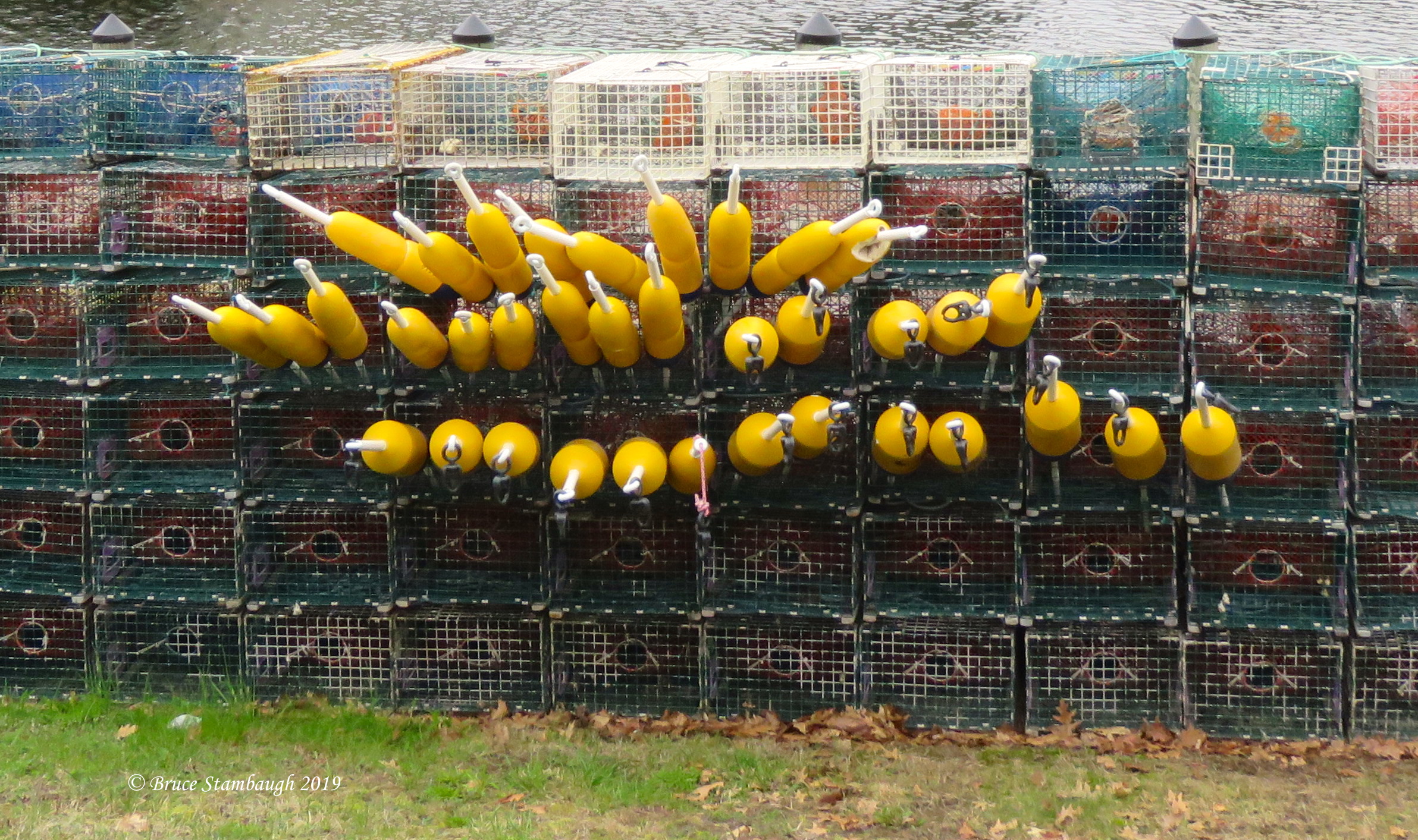
This lobsterman in Boothbay Harbor, Maine had a good eye for design, shape, and form, even if that wasn’t the practical purpose of these colorful patterns. More than likely, the equipment’s owner was merely getting ready for the new lobster season. The traps were arranged in near perfect stacks right next to the dock in the bay. The bright yellow buoys, this lobsterman’s chosen color, seemed to be stuck into the traps simply for easy access. Nevertheless, I thought the scene made a rather artsy composition.

“Unintended Art” is my Photo of the Week.

© Bruce Stambaugh 2019

In memory of a beautiful mother

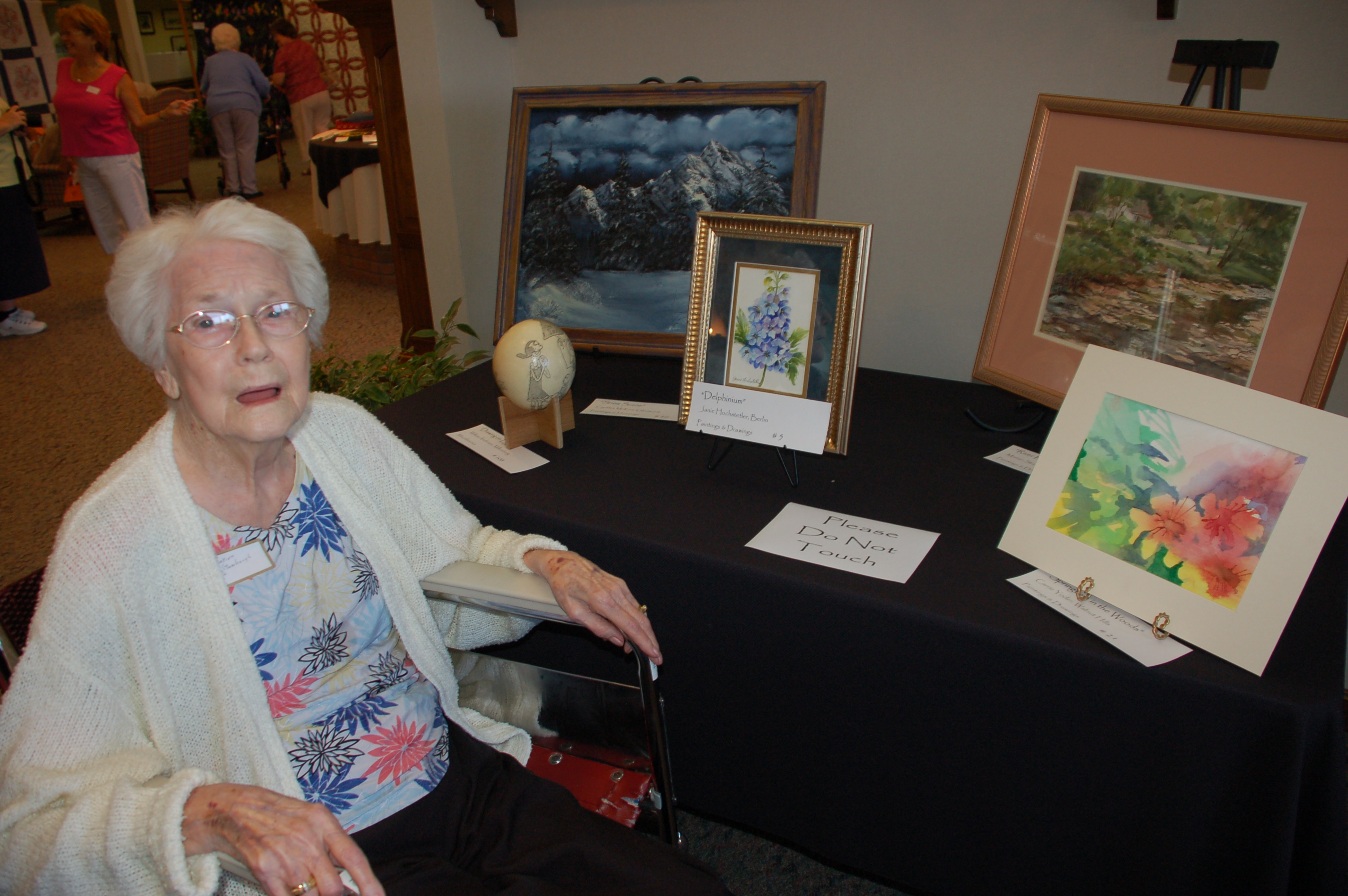
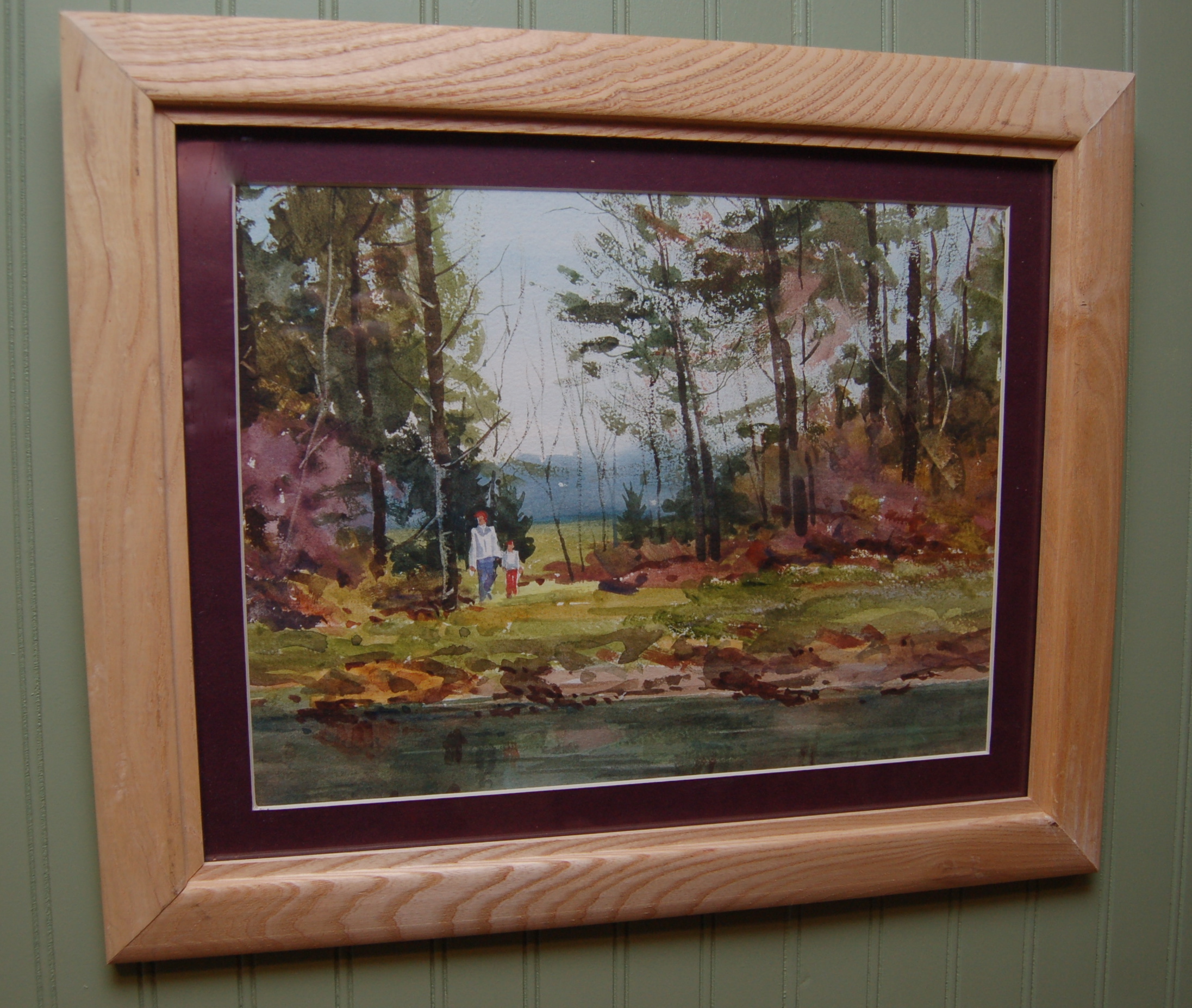
Mom with painting by Bruce Stambaugh
My mother, Marian Stambaugh, with her award-winning painting with the mauve matting, “River Run.” It was painted from a scene near Burnsville, NC.

By Bruce Stambaugh

My mother was a beautiful woman in so many ways.

Mom was a pretty woman to be sure. Yet her graciousness and her colorful paintings revealed her artistic inner beauty. She also modestly disclosed her creativity through her color-coordinated attire.

Mom at 90 by Bruce Stambaugh
Marian Stambaugh just after she turned 90 in June 2011.
Mom died peacefully in her sleep on April 23 after a lengthy trial with Alzheimer’s disease. She was 90.

Though she had lost much of her recall of all things past, Mom still knew who her five children were. She couldn’t always call us by name, but she recognized us. She also lit up when old friends stopped for a visit. Conversation for her, however, was difficult.

My brothers, sisters and I found it intriguing that Mom maintained her pleasant personality throughout her journey with Alzheimer’s. The staff all loved her at both the retirement home, where she lived with Dad before he died in December 2009, and at the nursing home where Mom spent her last year.

Mom was a model resident. She was polite, gracious, kind and asked for little. She didn’t wander, was not a bother to anyone, and maintained her politeness despite her dementia.

In her last days, she had pain, but because of her diminished language skills, was unable to articulate where she hurt. The staff and family could only guess.

At the calling hours and during the funeral, the same descriptive word kept being repeated to define our mother. Beauty. Mom radiated beauty not only in her looks, but in the humble and generous way she lived her life. She was the kind of mother everyone wished for. We were very, very fortunate to have her for so long.

Dad was always very proud of Mom, perhaps even to the point of being a bit overprotective. Early in their marriage, Dad took Mom to a company party. When his male coworkers saw her for the first time, they feigned shock that Dad had such a beautiful wife. They even teased Dad that his wife must have been mad at herself the day they married.
Painting 1 by Bruce Stambaugh
As the preacher at her funeral said, Mom never drew attention to herself. She just drew, and painted. Even when she won awards for her lovely landscapes, Mom would respectfully accept the award, and often declare that some other artist should have won.

Mom also showed her beauty in how she raised her five children in the tumultuous post-World War II era. We had rules to follow, simple household chores to do, and if we didn’t quite respect what should have been done, she judiciously administered a discipline that was appropriate for our age and the offense. She was as fair as she was attractive.

It wasn’t easy to rear five energetic and individualistic children. Since she was a stay-at-home mother, Mom carried the primary responsibility of keeping us clothed, fed, nurtured and behaved. She could have written a book on parenting. Given the beauty of her personality, she probably would have used a pseudonym if she had.
Painting 2 by Bruce Stambaugh
Mom was a wonderful woman, and we will never forget her kindness, gentleness and most of all the exquisiteness she naturally shared in this world through her paintings and her authentic living.

At the funeral, I felt an overwhelming sense of peace about our wonderful mother. It was as if Mom’s gracious, artistic spirit had permeated the service in one last beautiful brush stroke for all to behold.
Painting 3 by Bruce Stambaugh

Painting 4 by Bruce Stambaugh

Painting 5 by Bruce Stambaugh
© Bruce Stambaugh 2012

Admiring children’s creativity, especially the grandchildren’s

Grandkids by Bruce Stambaugh
Our grandchildren, Evan, Davis and Maren.

By Bruce Stambaugh

A painting hangs on a wall in my home office where I spend much of my workday. The artistry isn’t one of my mother’s rich landscape watercolors.

The painting is simple in content, perhaps even a bit juvenile in style. That’s why I like it so much. I purchased the watercolor from a former student.

The sixth-grade artist took a common setting and made it exquisite. She had captured perfectly the daily scene in her classroom. A row of colorful books lined the soldier brick windowsill. The black tattered blinds, cords hanging limp, covered the upper third of the old steel framed windows.

I wanted the painting as a memento. I also wanted to encourage her to keep painting. That was a long time ago, and I don’t know if the girl, now a young woman, still paints or not. I hope she does. She had a creative eye.

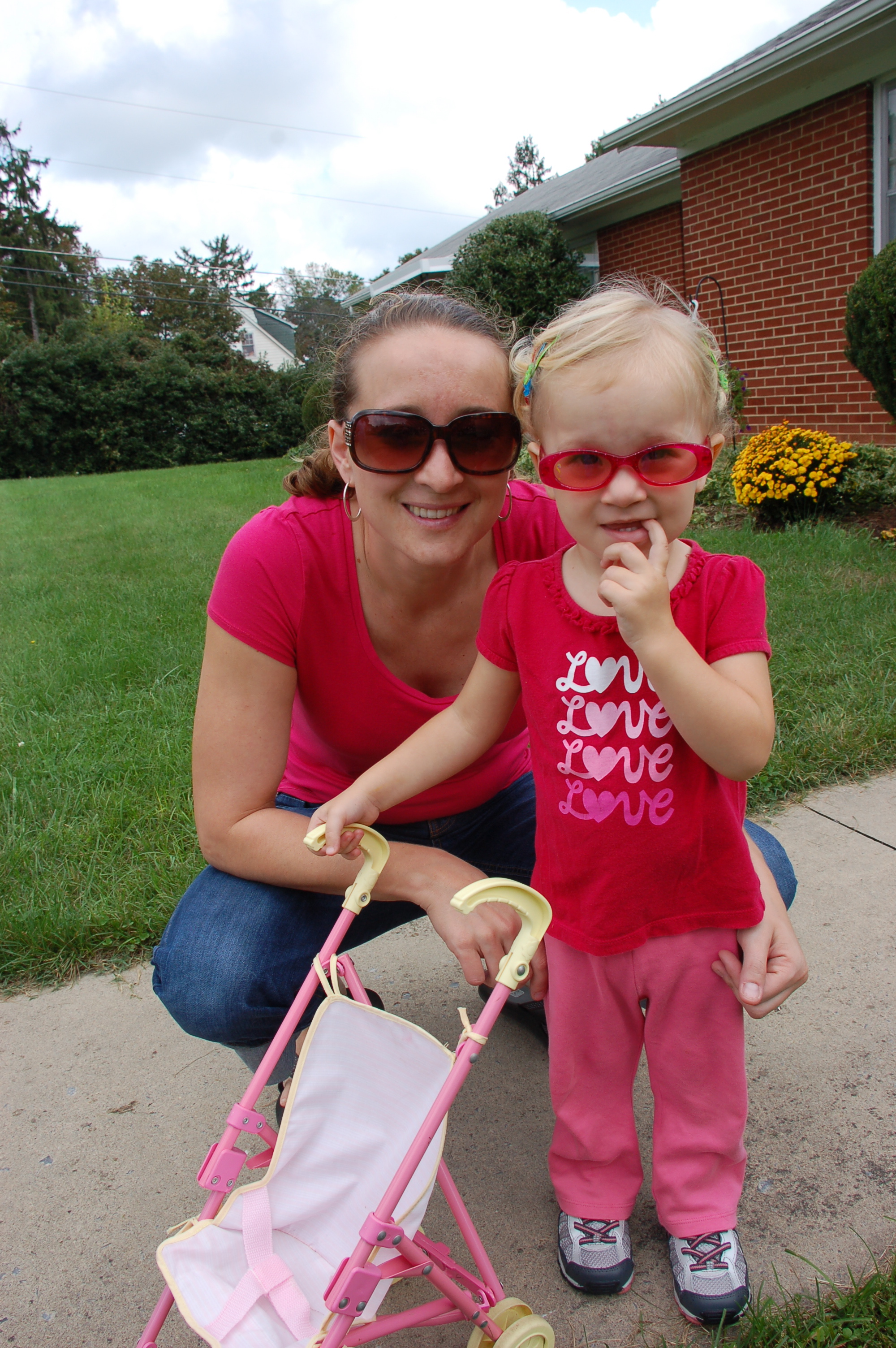
Mother and daughter by Bruce Stambaugh
Maren insisted that I take a picture of her with her mommy and their sunglasses.

My middle grandchild does, too. His older brother by two years, and his 2-year old sister also have their own individual flashes of creativity. But Davis is different for sure. He is left-handed after all.

For a 5-year old, he seems to see patterns that others, myself included, look right through or ignore altogether. Davis may have inherited some of his great-grandmother’s artistic ability.

My wife and I visited recently with our daughter and her family in Virginia’s beautiful Shenandoah Valley. During our stay, Davis’ creativeness burst forth on more than one occasion.

He showed me his rock collection, which is housed on the porch of an unused entrance to their home. Davis uses several characteristics to choose his rocks. Size, color, texture, shape, and weight are all his geologic requisites.

I was honored when he asked me to identify a rock he chose to take to preschool to share with the other students. I told him it was granite, and Nana chimed in that countertops are made of granite. This took us to the Internet for pictures of the coarse-grained igneous rock. Davis was fascinated with all the different types and colors.

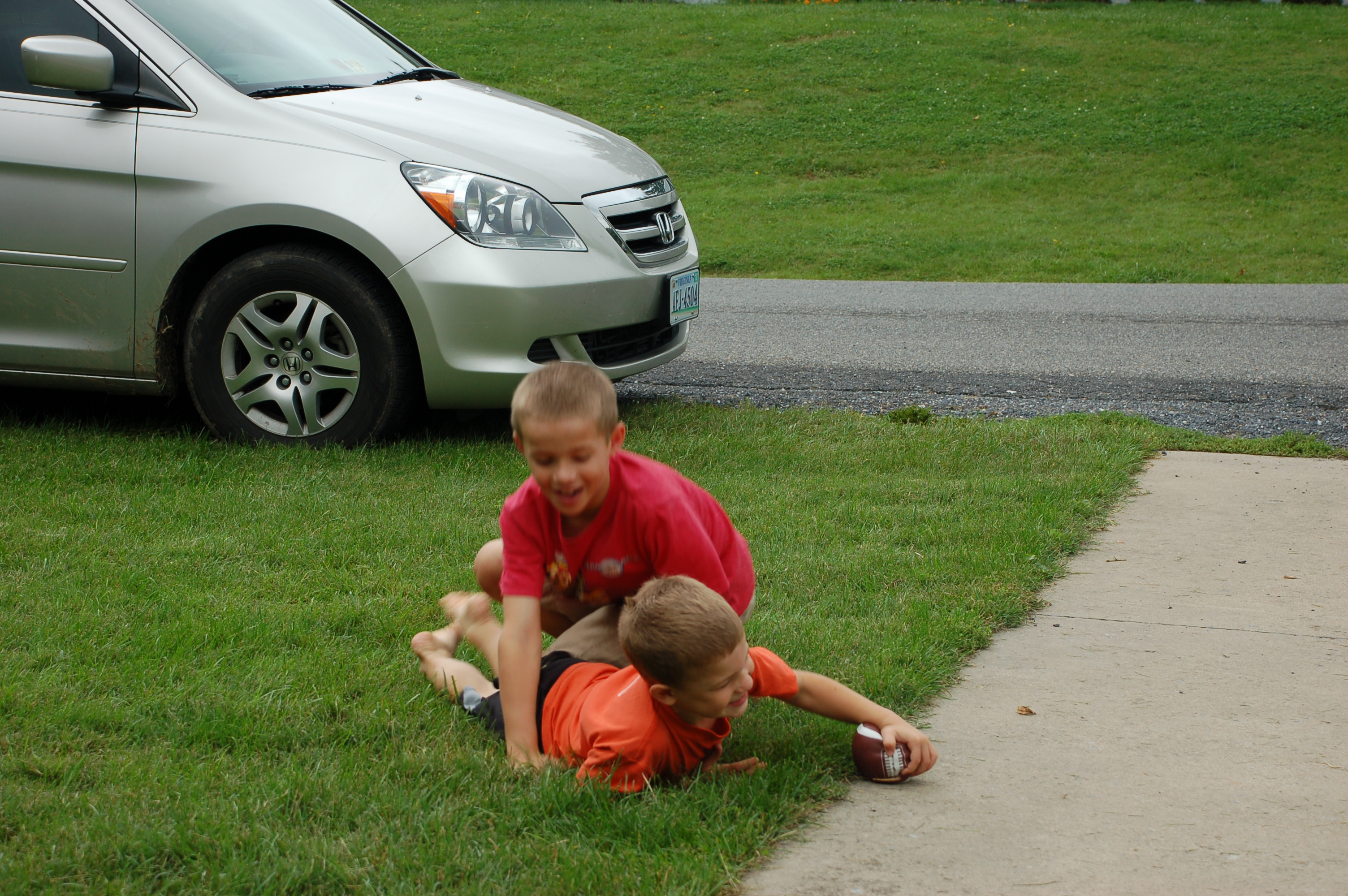
Touchdown by Bruce Stambaugh
The grandsons enjoy their football.

While playing football with him outside, I pointed out a big puffy cloud floating overhead. Davis informed me that it was a dragon. On second glance, I don’t know how I missed that obvious observation.

The sure sign that we may have a budding Picasso in the family was Davis’ intensity while drawing. He stared at the Wii characters on the television screen as his big brother played a game. Davis turned to his drawing paper over and over again, dedicated to replicate what he saw. He didn’t quit until he was satisfied with what he had sketched.

His siblings, Evan and Maren, draw, too. Evan is a meticulous stay-between-the-lines kind of guy, while little Maren is just honing her abstract expressionism. She sent a sample of her early work back to Ohio with us.

Sketching by Bruce Stambaugh
Davis sketching in the pea gravel at the playground.

At the park, Davis discovered a shark designed cleverly onto a section of a gigantic wooden play set. Like the dragon, I didn’t see it until Davis pointed it out. The sharp teeth, the menacing eye, the dorsal fins and the fanned tail were all right there. Creative kid that he is, Davis sat down in the pea gravel and began to outline a replica with his index finger.

I marvel at children who can see the extraordinary in the ordinary. I admire it all the more when the children happen to be youngsters I know well, like my grandchildren.

Shark by Bruce Stambaugh
Davis and his playground shark.

Bay Photos by Donna

Wildlife photos from the Chesapeake Bay region

ROAD TO NARA

Culture and Communities at the Heart Of India

K Hertzler Art

Artist and nature journalist in the Shenandoah Valley of Virginia.

Maria Vincent Robinson

Photographer Of Life and moments

Gabriele Romano

Personal Blog

Jennifer Murch

Art is the only way to run away without leaving home. -Twyla Tharp

Roadkill Crossing

Writing generated from the rural life

ANJOLI ROY

writer. teacher. podcast cohost.

Casa Alterna

El amor cruza fronteras / Love crosses borders