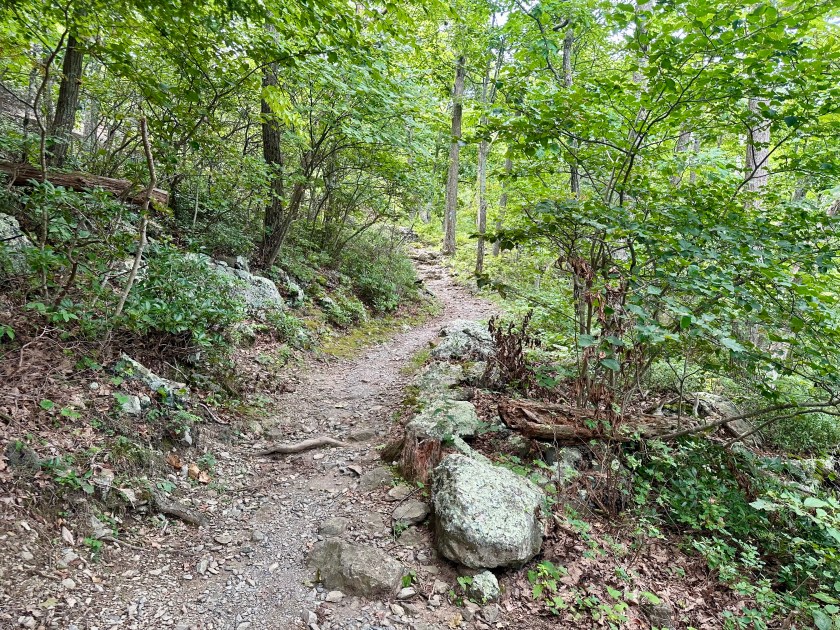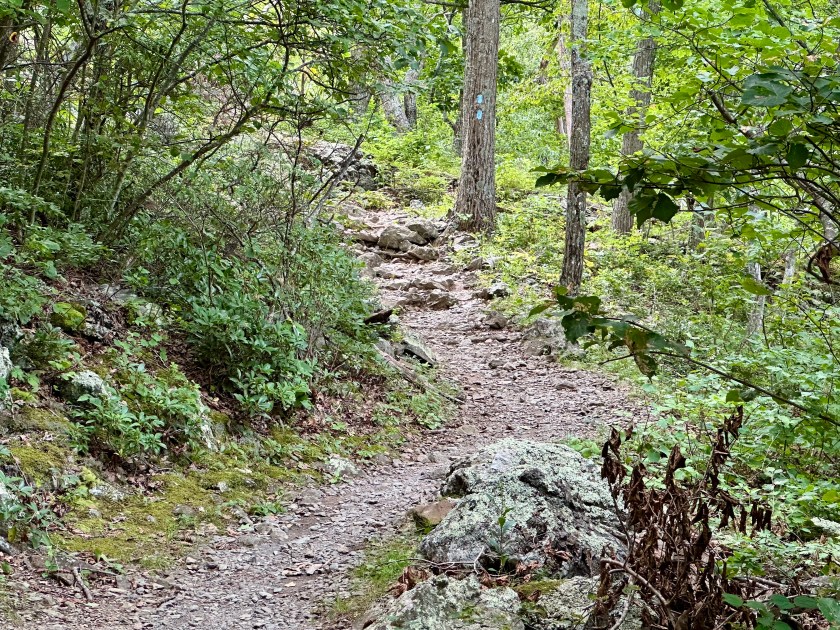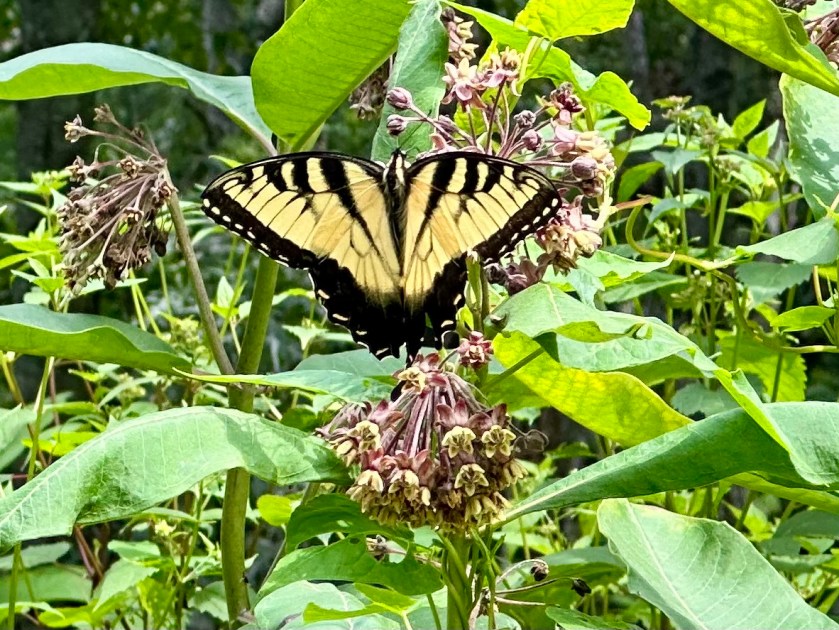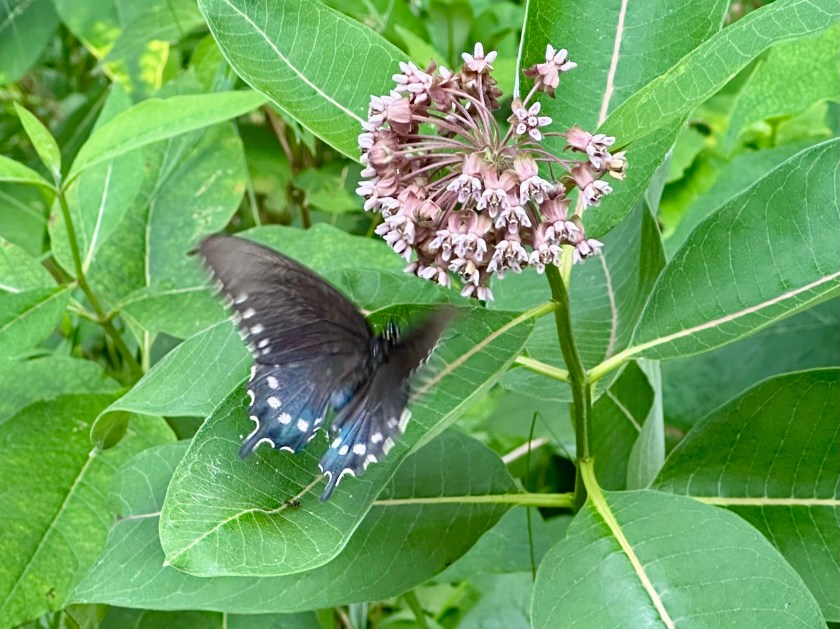
Along New Hampshire Route 16

The Ellis River at Jackson, New Hampshire. Photo by Bruce Stambaugh

There’s a lot to like about driving on Pinkham Notch Road, which is New Hampshire Route 16. We wanted to revisit some of the places we had seen seven years ago, when we initially visited the area.

After leaving the Mt. Washington area, we took the long way around to our hotel in Gorham, New Hampshire. We headed southeast to Pinkham Notch Road.

Our first stop was Jackson, a sleepy resort town on the Ellis River. The historic Honeymoon Covered Bridge, built in 1876, spans the river and is the village’s icon. Jackson also houses cute cottages, tourist businesses, and country inns.

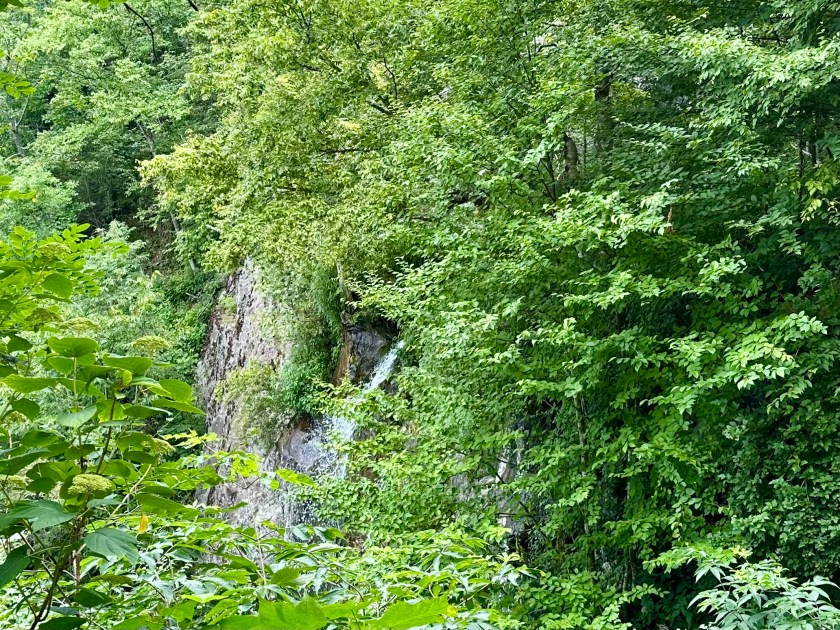
The road basically follows the flow of the Ellis River, whose headwaters begin on Mt. Washington. The Glen Ellis Falls crash down 64 feet in a rock-filled narrow gorge a few miles north of Jackson.

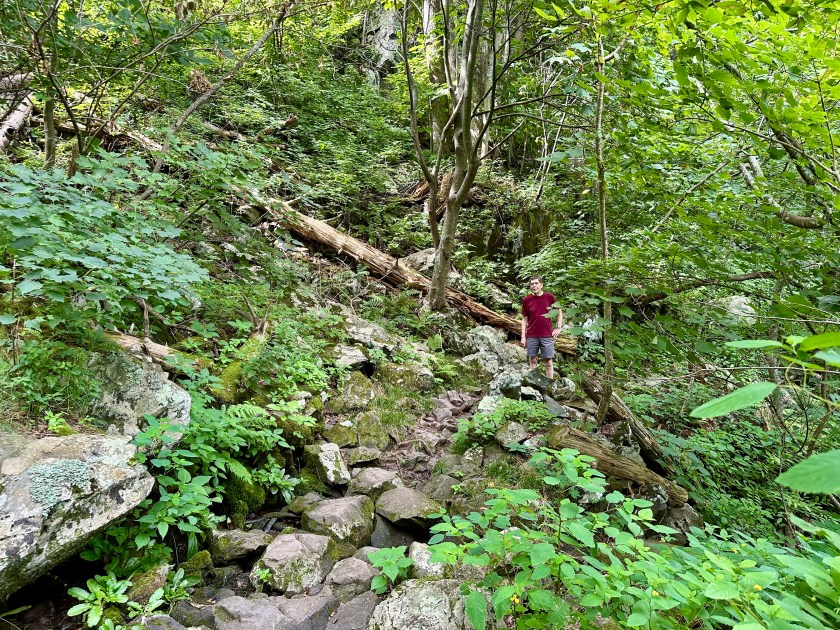
To access the falls, you have to cross through a pedestrian tunnel under Route 16 and wind your way along the river, down rocky steps, and on a trail that’s occasionally muddy in spots. The trek is well worth it, however. Amid a forest of birch trees and evergreens, the rushing waters crash against giant, jagged boulders before falling and continuing down the mountainside.

Just up the road is the AMC Pinkham Notch visitor center. It’s the place for serious hikers to check in, rest, and shower. The Appalachian Trail that descends from Mt. Washington slides behind the center and crosses the road at Pinkham Notch.

The Pinkham Notch visitor center. Photo by Bruce Stambaugh

A little farther up the highway is the entrance to the Wildcat Mountain ski area. If you’re up for it, the auto road to Mt. Washington is right across the road.

If you enjoy the outdoors in any season, the Pinkham Notch area in New Hampshire offers activities for everyone.

Glen Ellis Falls, Gorham, New Hampshire. Video by Bruce Stambaugh

© Bruce Stambaugh 2026

On Top of Mt. Washington

This is how the famous mountain looked after we completed our round-trip excursion. From the left, the Mt. Washington Hotel, the cog railway, and the peak itself. Photo by Bruce Stambaugh

We left our friends’ home in Vermont’s Northeast Kingdom for an hour’s drive to the Cog Railway in Bretton Woods, New Hampshire. We arrived in plenty of time and discovered that we could take the 11 o’clock train instead of the noon one.

The other options for getting to the revered mountaintop are to drive up the private road, pay to ride up in a van, or walk up and back via the Appalachian Trail. My wife ruled out the first two, and our age and physical shape ruled out the other.

After receiving the rules for riding the railway, we boarded our car with the biodiesel engine at the rear to push us up the mountain. We followed two other such “trains” up the tracks.

The seats were slanting forward rather than at a 45-degree angle, which was uncomfortable at first. That soon changed as we chugged forward, and our seats felt comfortable as they adjusted to the mountain’s steep incline.

The fastest we clackety-clacked up the cog rails was five miles per hour. So, it took nearly an hour to get to the top.

When we left the station, we could see the mountain’s top with passing clouds. When we arrived atop Mt. Washington, we were in the clouds with only occasional views and a few hints of sunshine.

We had 50 minutes to eat lunch, which we took along, and to explore the historic mountaintop. Sudden bursts of sunshine interrupted my snack lunch. I rushed outside to capture whatever I could see. The view west was a wall of gray.

Please click on the photos to enlarge them.

I could see east and north, however. I saw the Appalachian Trail, which winds up and down the mountain. Cairns marked its path instead of white blazes on trees. A few hikers trekked amid the cloudy mist.

Having been to that area seven years ago, I could identify the Wildcat Ski area and the scenic New Hampshire Route 16 that runs from Gorham south through Pinkham Notch and down the valley to Conway.

So, the $100-a-piece ride wasn’t a complete bust. However, in the hour it took to return to the base station, the sky had cleared. Mt. Washington stood as handsome as ever above all the other presidential peaks.

Proof we made it to the top. Photo by Bruce Stambaugh

© Bruce Stambaugh 2026

Vermont Scenes

The iconic view of Stowe, VT, without the fall colors. Photo by Bruce Stambaugh

Before visiting friends in Vermont’s Northeast Kingdom, my wife and I enjoyed the eye-pleasing scenery of the Green Mountain State.

After a stop at Cabot’s Cheese, we visited Stowe, Vermont’s tourist magnet. Despite the excessive heat, we weren’t disappointed. The young lady at the visitor center helped us make the most of our limited time there.

The Little River flows behind the Stowe Community Church. Photo by Bruce Stambaugh

We walked through part of the town to photograph the iconic church with its towering steeple and to find the recommended restaurant for a refreshing salad and hydration. We found both.

After lunch, we took the Stowe Hollow self-guiding tour and found some incredible scenes even in summer. I can only imagine these vistas decked out in fall’s brilliant, warm colors.

Even with fifty shades of green all around, we found the countryside surrounding Stowe stunning. From unique barns and homes with views to covered bridges and the Green Mountains as the backdrop, we left Stowe amazed but ready to fellowship with our friends.

© Bruce Stambaugh 2026
An Oddity on the Way to New England

The world’s tallest filing cabinet, Burlington, Vermont. Photo by Bruce Stambaugh

When friends in Ohio learned we would be staying overnight in Burlington, Vermont, they suggested we check out an oddity.

After a smooth drive from the Pocomos to Burlington, my wife and I went looking for a good place for dinner. Our Ohio friends said we should check out the world’s tallest file cabinet. So we did.

I’m not sure how they knew about this unusual landmark, because no signs mark the way to it like other touristy places. There’s not even a sign explaining why, how, or when this “monument” was installed.

Thanks to Google Maps, we found it with ease. This amazing structure stands like an unmarked grave in the corner of the parking lot of a nondescript local business.

Best of all, the restaurant we chose was right next door. I enjoyed my monster smash burger and Vermont maple lemonade to wash it down.

The loaded smash burger. Photo by Bruce Stambaugh

© Bruce Stambaugh 2026
Starting a Vacation With a Bang

My wife and I are in the last leg of our vacation. Yes, retired people take holidays, too.

We started our two-week trip off with a bang. We gathered with our son and his family, our daughter and her husband, and our granddaughter in a cottage on a lake in Pennsylvania’s Pocono Mountain region on July 4.

The community where we stayed shot off its fireworks display from the dam of the lake we stayed on. Of course, neighbors around the lake preempted the real show with their mini-pyrotechnic displays. They couldn’t hold a candle to the sponsored ones, however.

At 9:45 p.m., the fireworks began despite the overcast skies and intermittent drizzle. The show must go on, especially on the country’s 250th celebration of independence.

I stood back and captured our families watching the fireworks. With the low clouds and the misty haze, the sparkly colors echoed off of the atmospheric elements.

In this photo, the brief time-lapse created a glowing red glow all around just as the second burst flashed brilliantly white with a double boom. It was a great way to initiate our time with family and friends on our jaunt into New England.

Fireworks in the Poconos. Photo by Bruce Stambaugh

© Bruce Stambaugh 2026
Spent

On my morning walk, I spotted these spent fireworks cartridges standing in a neighbor’s driveway. In celebration of Independence Day in the U.S., the fireworks did their job the previous evening.

A palette of patriotic colors and occasional booms filled the sky over the street. They wisely left the used containers of mayhem to stand overnight. I’m glad I was able to capture the photo before the spent containers were whisked away.

© Bruce Stambaugh 2026
It Must Be Summer

Rows of Hollyhocks greet me on my morning walk. Photo by Bruce Stambaugh

My morning walks in our suburban neighborhood reap several rewards besides exercise.

I enjoy greeting other walkers, runners, and dog walkers. Though it has lessened recently, I still enjoy hearing the birdsong as I make my way.

Song sparrows, Northern Cardinals, Carolina Wrens, House Wrens, House Finches, American Robins sing away, while the Blue Jays and Common and Fish Crows signal with their various alerts and caws.

As the bird calls grow fewer, the many flower gardens send forth a rainbow of colors from season to season. Summer, of course, is the climax of this natural colorful abundance.

I enjoy the Knockout Roses, Irises, Tulips, and other floral displays that, week by week, transform spring into summer. Of all these beauties, Common Hollyhocks are my favorites.

Their mostly pastel colors welcome me as I turn the corner for home. From deep burgundy to pink to white, they stand tall between the street and an iron fence that keeps a pair of Brittney Spaniels in their spacious backyard.

Each time I see those beds of Hollyhocks, visions of watercolors flash before me from my elementary school days. I remember those lovely illustrations in our reading books from the “Alice and Jerry” series.

With all the troubles of the world swirling around us, it’s nice to be reminded of simpler, less troublesome times.

The early morning sun highlighted the taller stalks of Hollyhocks. Photo by Bruce Stambaugh

© Bruce Stambaugh 2026
Beating the Heat!

This American Robin knows how to beat the heat. It sat in this birdbath cooling off for the longest time. It didn’t splash or move around like the birds usually do while in the birdbath.

The robin just sat and enjoyed the pleasure of being still and cool. It’s a lesson for all of us to stay cool during this prolonged heatwave.

American Robin keeping cool. Photo by Bruce Stambaugh

© Bruce Stambaugh 2026
The “Flying Cigars”

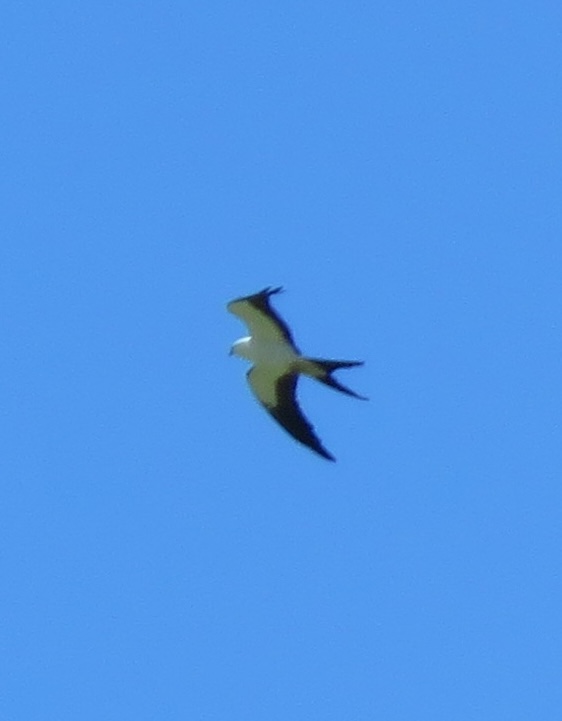
Chimney Swifts in flight. Photo by Bruce Stambaugh

Chimney Swifts are some of my favorite birds. I have adored these magnificent little birds for a long time. Let me count the ways they bring me joy.

More than likely, you’ll hear these gregarious birds before you see them. Their chattering call, while they are furiously flapping their pointy wings, alerts you to their presence.

I find their looping flight patterns intriguing, too. They like to fly overhead, wings furiously flapping, sometimes dipping low, and then back up in a rapid arch.

If you miss them on their first pass, stand still, and they are likely to return, perhaps bringing others with them as they skim the sky for any and all insects. If you have Chimney Swifts in the neighborhood, you likely won’t be bothered much by mosquitoes.

Chimney Swifts are equally at home in cities, suburbs, and rural areas. As long as these chubby-looking birds have a chimney in which to roost, they will make themselves at home.

It’s only appropriate that Chimney Swifts build their nests on the insides of chimneys. Their sooty colored feathers blend perfectly with whatever powdery substances they might pick up as the birds zip in and out of their chosen chimneys.

To clean themselves, Chimney Swifts will zoom over lakes and rivers, suddenly dip into the water’s surface, and then speed off to air-dry themselves.

Before North American colonization, Chimney Swifts originally built their nests in hollowed trees, on cliff faces, and in caves. Once White pioneers built their brick chimneys, the cigar-shaped birds adapted to a new habitat.

They build their nests on the inside of chimneys by using a glue-like saliva secreted from under their tongues. Chimney Swifts use their long claws to cling to the side of chimneys. The birds cannot perch like most other birds.

Some people cap or screen their chimneys to keep birds out. That, coupled with newer chimney designs and sizes, has led to a decline in the Chimney Swift population in recent years.

When we lived in Ohio, our home was built on an Amish farm. We had Chimney Swifts every year, and we lived there for 38 years.

The stubby chimney on our former Ohio home. Photo by Bruce Stambaugh

I greatly enjoyed the aerial antics of the chattering Chimney Swifts. In the evenings, I would stand and watch as the birds swirled in loops over the house, dropping closer with every pass until they would dive into our short chimney.

Before we added air conditioning to the house, I would sometimes sleep on the couch in the lower level of our bilevel home on hot, humid summer days. There, the temperature was cooler.

We had a wood-burning fireplace, and when the Chimney Swifts had young in their nests, it seemed like they would feed all night long. The force of their powerful wings, helping them to brake once they entered the chimney, rattled the glass fireplace doors.

An adult bird once fell into the fireplace because I hadn’t secured the damper all the way closed. I donned thick gloves, carefully removed the bird, and let it fly free outside again.

During the colder months, I loved to sit on the raised hearth in front of the firebox and enjoy the radiant heat and the aromatic aroma of seasoned wild cherry, oak, and ash firewood blazing away. The warmth penetrated my shirt, soothing my aching back.

Once the Chimney Swifts arrived in April, however, no more fires were built until the birds left in early October. The birds spend the winter in northwestern South America.

They migrate north over Central America to all areas of the United States east of the Rocky Mountains, where they breed and raise their young. Come October, they begin their extended journey back to South America.

Our Virginia home doesn’t have a fireplace, but several of the close neighbors do. Consequently, I can continue to enjoy the chitter-chatter of the helpful Chimney Swifts as they zoom around the neighborhood.

© Bruce Stambaugh 2026
First Sunflower

I’m always happy when the first sunflower of the season blooms brightly. The buttery petals that surround the setting-sun center add volunteer beauty to the backyard flower garden.

The birds accidentally plant the seeds that sprout into plants. Despite gleaning by ground-feeding birds and four-legged critters, a few sunflower seeds are overlooked and eventually buried beneath the discarded shells left by birds feeding overhead.

Usually, only one or two sprouts make it to adulthood to produce their flowering sunshine. This year, several competed for the chance to bloom. Though this plant’s stem was twisted by the weight of Common Grackles continually landing on it, being crooked didn’t matter.

I celebrated its success and happily anticipate the American Goldfinches to enjoy its fresh, juicy seeds.

© Bruce Stambaugh 2026

Bay Photos by Donna

Wildlife Photos From The Chesapeake Bay Region

ROAD TO NARA

Culture and Communities at the Heart Of India

K Hertzler Art

Artist and nature journalist in the Shenandoah Valley of Virginia.

Maria Vincent Robinson

Photographer Of Life and moments

Gabriele Romano

Less Noise. More Meaning

Jennifer Murch

Art is the only way to run away without leaving home. -Twyla Tharp

Roadkill Crossing

Writing generated from the rural life

ANJOLI ROY

writer. teacher. podcast cohost.

Casa Alterna

El amor cruza fronteras / Love crosses borders