The mission was simple. I wanted to photograph a few of my wife’s beautiful flowers at their peak summer colors. I did and got so much more.
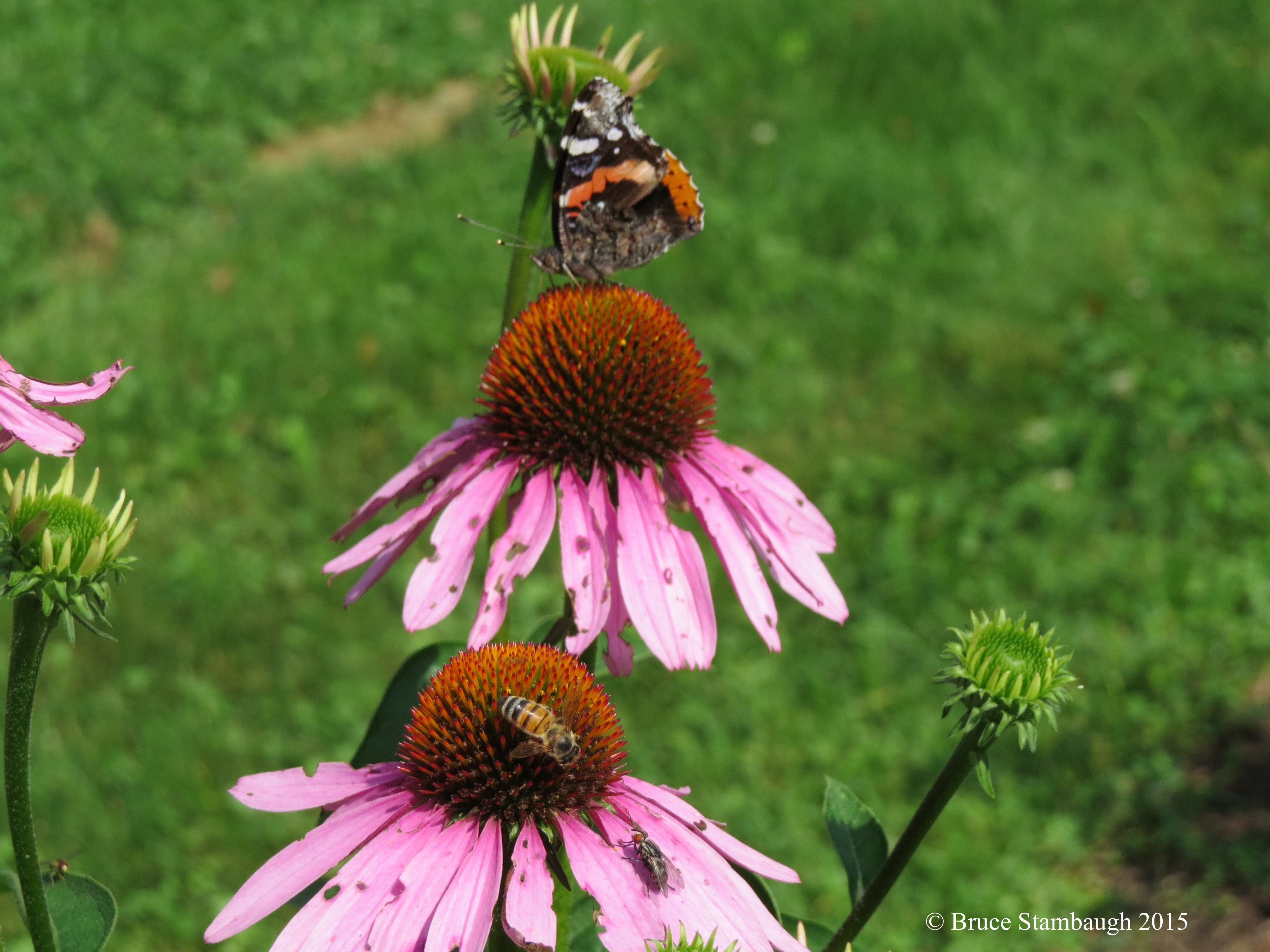
A Red Admiral butterfly sat upon the tallest coneflower. Just as I snapped the picture, a honey bee landed on a lower flower. It wasn’t until I downloaded the photos to my computer that I noticed the Platycheirus, a flower fly. It looks like it’s in a standoff with the bee.
We love our grandchildren. No headline news in that statement, I know.
But since the oldest of the three was born 11 years ago, Nana and Poppy have watched the trio, Evan, Davis and Maren, grow up from afar. All three of our grandchildren were born in Austin, Texas. Nana made sure she was on scene to help at each birth. Poppy arrived once the excitement had waned.
It wasn’t easy having your grandchildren 1,450 miles away. But we managed. We visited as often as we could.
We went for birthday parties at fire stations, helped carve pumpkins at Halloween, and any other time we could manage. The physical changes in the kids between visits were visible.
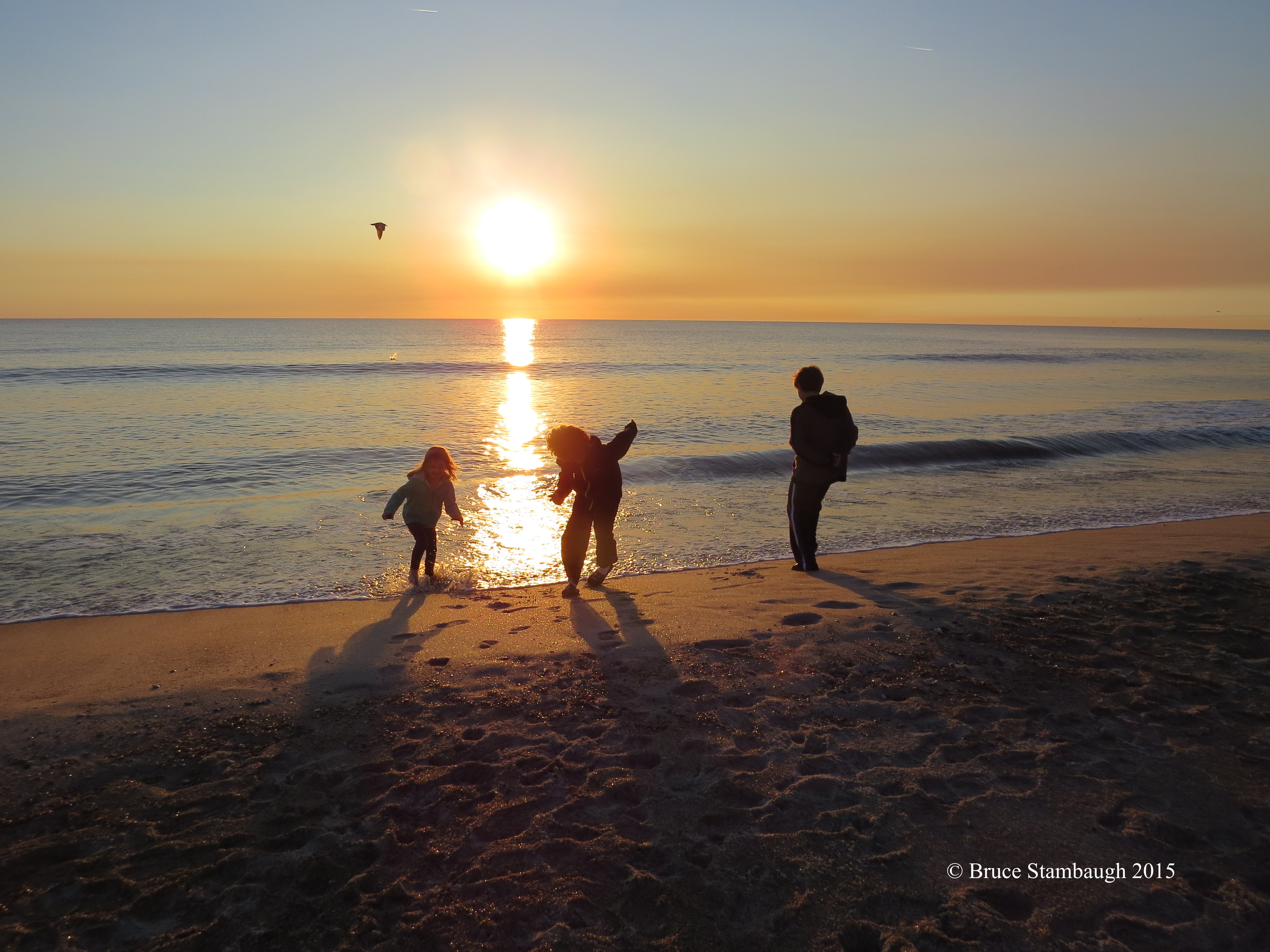
We visit as often as we can, and we still marvel at how all three change, even if it has only been a few weeks since we last saw them. A recent visit drove home that stark reality for me.
Evan is now nearly as tall as Nana. As you might guess, he is as active as any 11-year-old can be. He is a sports fanatic, with baseball his first love. That should be no surprise. From little on up, Evan enjoyed anything that would roll, or he could throw.
Davis is a very inquisitive youngster. You can tell he’s left-handed. Now nine, Davis has a gift to explore and imagine. He’s as happy playing with a stick as he is with an electronic game. How can you not like a boy like that?
At five, Maren is our pink tomboy. She is a girly girl if there ever was one. She enjoys helping Nana bake cookies. She hustles at soccer and baseball, too, even if her long, golden locks occasionally block her vision.
I remember as a youngster how much I loved being around grandparents. Though he had little, Grandpa Merle often brought us candy. Our dentist loved him, too.
I can still hear the hint of that soft, lovely southern Virginia accent in my Grandma Frith’s voice. My lips still smack at the tart taste of her made from scratch lemon meringue pies.
Nana and I want to create those same memories with and for our grandkids, too. It’s just a bit harder with all those old age mountains between us. Still we do what we can.
I’ve always played a guessing game with all three of them. I hide an object in one of my fists, and the kids have to find which hand it’s in. During a recent visit, Maren guessed with such accuracy that I encouraged her to go buy a lottery ticket. Her response? “What’s that?”
It’s been a joy to see each gain confidence. Davis fearlessly dove off a swimming pool diving board. He asks more questions than even I have answers. To me, it seems just yesterday that he was poking holes in Texas fire ant hills.
As the oldest, Evan strives to ensure that he is not usurped of that position as if that were even possible. Still, he’s one smart kid when it comes to mathematics and board games.
It’s nice to see our grandkids progress from diapers to where they are today. I just wish those eight mountain passes weren’t in the way.
When the farmer called me the other morning, I was away from home. He said he had two juvenile Barn Owls sleeping near his barn. My wife and I finally arrived at the Amish farm two miles from our home. The owls were still in the same place. Both were still sound asleep despite being only a few yards from a busy highway.
The owls had recently fledged from their nest box in the farmer’s barn. Rather than be disturbed by their younger siblings, still too young to fly, each owl found a personal, private spot to snooze. This one chose a silver maple tree in the farmer’s yard. The afternoon sun highlighted its breast feathers and some of the tree’s leaves.
After another wonderful summer day with partly sunny skies, pleasant temperatures, light breezes and little humidity, I’m watching the rain pour down.
It’s July. It’s Ohio. It’s the way weather happens here.
After the harsh winter and cool, damp spring, we were ready for an old-fashioned summertime. To be clear, that meant nothing but clear skies and warm sunny weather through September.
Of course, that never really has happened, never will. But we can dream can’t we?
The truth is we need to be honest with ourselves about summer weather in Ohio. We can have good days, better days, and then there’s the rest. Some of Ohio’s summer weather can be downright nasty, if not hazardous.
The consequential weather can be fearsome, and put a kink into your best-laid plans. A picture perfect day can morph into our worst nightmares. Tornadoes, hail storms, damaging thunderstorm winds are among the wicked weather menu options.
This slideshow requires JavaScript.
The July 1969 flood comes to mind. I didn’t live in Holmes County then. Still, the storm was widespread, and I saw damage and destruction. I was an intern reporter for The Plain Dealer in Cleveland. I headed to the Chautauqua Institution near Jamestown, New York for the holiday weekend.
I didn’t stay long. All the activities got rained out. On the way back to my apartment in a western Cleveland suburb, I passed several ConEdison power company trucks in New York heading west on the interstate.
I stopped at the newspaper on the way back and saw photos of boats being bashed against the rocky lakeshore. Power was out in much of the Cleveland area, including my neighborhood. In fact, one of those ConEdison trucks that I had passed was parked in front of my apartment.
Powerful winds drove the pouring rain right through the old, thick brick walls of our building. Huge trees snapped in a nearby park, and teenagers directed traffic at busy intersections.
Six weeks later I saw the damage done in Killbuck, my new home. Folks were still trying to recover from the devastating flood that touched nearly every building in the creekside town.
Weather is to be both appreciated and respected when it interrupts our human plans. When we hear thunder, we need to take cover. Avoid those treacherous floodwaters and find another way around.
As a weather buff, I cringe when I hear of people being struck by lightning playing golf or baseball, and when I learn of youngsters being swept away playing in swollen streams. Those are sad stories that need not have happened.
Weather is a lot like life, isn’t it? A wise Amish farmer once told me, “We just have to take whatever weather comes our way.” I think that philosophy applies to other aspects of our lives as well.
How do we respond when one of life’s happenings strikes us like a lightning bolt?
A surprise medical diagnosis by the doctor, an unexpected budget-breaking bill, a broken relationship, the death of a loved one can all wash over our emotions like a flash flood.
It’s summer in Ohio. Not every day will be sunny, nor will everything that happens to us be fair. We can’t change the weather, and sometimes can’t even alter our personal circumstances.
What we can do is keep on hoping for sunny summer days. It won’t be all cloudy and miserable forever.
It’s July. It’s Ohio. It’s the way weather and life happen here.
I was on another assignment when I saw this scene recently. I lowered the window of my vehicle and took the photo. It’s the iconic image of Amish gathering hay that most folks envision. The truth is, the way Amish farm has changed drastically in recent years. Most mainline Amish bale hay, either in rectangular bales or big round bales. Only the most conservative of the sect, the Swartzentrubers and those who belong to the Dan Church, continue to use the method pictured to gather hay.
I especially liked that the grandchildren were driving the team of horses while Grandpa properly balanced the huge stack of loose hay.
When I was a youngster growing up in a suburb of a blue-collar steel town in northeast Ohio in the 1950s and 60s, I loved summer nights.
Let me be clear that the foremost reason for my affection for summer was that school was out. But it was so much more than that, and still is.
Sure, summer days filled with warm temperatures, fluffy white clouds sailing by and gaggles of my peers running loose made for riotous times. We’d play ball, ride bikes, and explore for hours on end along the little creek that snaked through a woods down over the hill from our brick bungalow.
However, we knew when to come home for lunch and supper, or we wouldn’t eat. It was that simple.
It was a crazy, wonderful era to grow up. Times were changing. Right after supper, we watched the world unfold before us on the nightly news on black and white television. I had trouble reconciling what I saw then with what I had seen just before dinner on the Mickey Mouse Club.
Sputnik.That might have something to do with why I enjoyed and enjoy summer nights so much. Things got quieter after 10 p.m. or so. The noises of life subsided. I escaped into the refreshing darkness, unafraid, in awe of creation, and in search of anything that moved in the sparkling sky.
Since we were on summer vacation from school, my siblings and I were permitted to stay up later. I loved the evening’s coolness, a respite from the daytime heat and humidity. The nighttime air was our air conditioning.
I took full advantage of those cooler opportunities. I loved to view the night sky. Streetlights were scarce in our neighborhood then, allowing us actually to see the constellations and the countless stars.
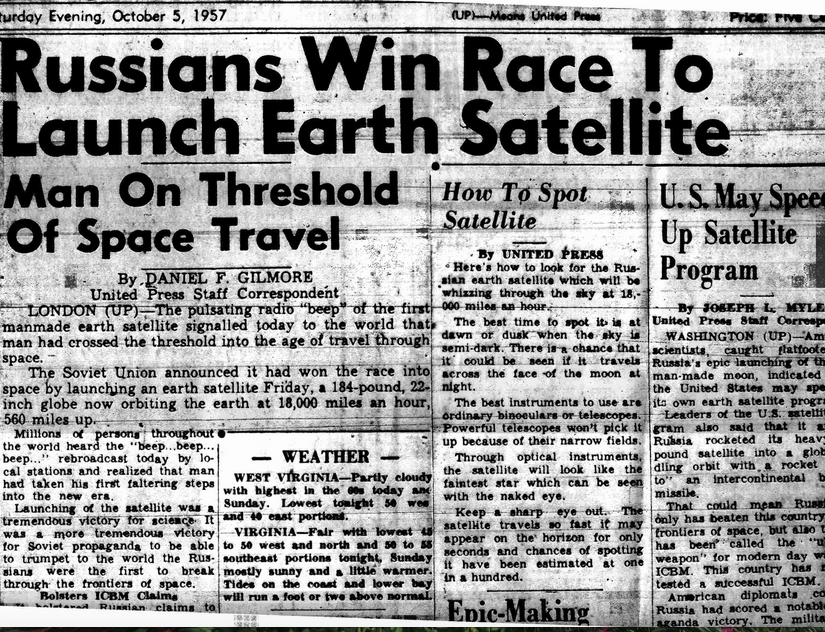
My folks must have noticed that interest, too. I got a telescope, and that allowed me to examine the heavenly hosts up close. It was the beginning of the space age, and once I even was able to follow Sputnik, the first-ever man-made satellite launched by the Soviet Union.
Headlines announcing Sputnik’s launch.Satellites were still so novel that newspapers published the time and flight path of their orbits. When I saw Sputnik, I couldn’t believe its simplicity, a round ball with four protruding antennae.
I liked simpler, natural things, too, like fireflies, the flash of heat lightning in distant storms, an owl hooting. Most of all, I embraced the solitude that summer nights afforded.
Here I am decades later, a grandfather instead of a grandson. I still love the quietness of early summer nights, before the crickets and katydids begin their concerts.
An American Robin will startle me awake long before dawn, perhaps herself startled from her nest. Was it a cat, a flying squirrel, an owl, or did one of her babies grow restless and try an early morning fledgling flight?
I still like the nights before the crickets start choir practice. I still prefer summer’s air conditioning to artificial. I am most appreciative that lightning bugs don’t crackle when they blink.
Each summer solstice, I stand at the northwestern corner of our property here in Ohio’s Amish country and watch the sun sink between the twin silos on our Amish neighbor’s farm. I guess it’s my version of Stonehenge. Normally, if the sky is clear, I often see a golden orange glow. Not this year.
I watched the sunset on the summer solstice again last Sunday evening. As sunsets will do, the colors in the evening sky seemed to change by the minute. I kept shooting and shooting photos. I thought the roses, violets and baby blues painted above the silhouetted farmstead in this shot created an amazing scene.
Recently, I had a couple of days that were exactly that. I helped out a friend by leading a few birding field trips to a local farm.
The target birds were young Barn Owls, a couple of fuzzy baby American Kestrels, and bubbly Bobolinks. In a rather rare situation, both Barn Owls and Kestrels had hatched their young in nesting boxes the farmer had erected in his old bank barn. The meadow across the road remained uncut so the tinkling Bobolinks could frolic and flourish.
The farmer and his family went out of their way to accommodate both the birds and us. Their farmstead was neat as a pin. Flower beds and gardens were nearly pristine. The three generations that called this place home welcomed us with open arms and hearts.
Both the farm’s setting and the intentional agricultural techniques employed accounted for the diversity of birds and other wildlife. Surrounded by rounded hills dotted with emerald woodlots, the land rolled away from the farm buildings more like waves than fields.
This slideshow requires JavaScript.
I imagined in a birdseye view a quilted panorama. Broad patches of variegated greens and tans from forested hills, alternating fields of pasture and croplands stitched together by brushy fencerows created a pastoral patterned effect.
Such a landscape also enhanced the desired habitats and food sources needed for the various avian species. It was obvious the farmer, typical of many in our area, understood the balance between conservation and productivity. Sad to say, some deem that approach as inefficient or even old-fashioned.
The days were precious in so many ways. Cottony clouds hung in salient skies over windswept grasses nearly as tall as the weathered wooden fence posts that delineated their boundaries.
The meadow’s high grasses mingled with seedy weeds, and wildflowers danced in the wind beneath while the Bobolinks, Eastern Meadowlarks, Song and Savannah Sparrows and Red-winged Blackbirds let loose. The birds’ melodious chorus easily drew the attention and appreciation of each group. All the birders, spanning three generations, thought the birds and their songs beautiful and luxurious.
(Click on the photos to enlarge them.)
Male Bobolink.
American Kestrel.
Eastern Meadowlark.
Killdeer near nest.
Up the ladder.
Baby Barn Owls.
Baby kestrels.
Though he said he wasn’t a birder, the kind farmer had erected nesting boxes in his ancient barn for the owls. That is what attracted folks from near and far for this special chance to view the birds. It was indeed rare to have both owls and falcons nesting in the same barn.
Participants hailed from cities. Others lived nearby. Their ages ranged from preschoolers to octogenarians. A courageous woman on crutches in the midst of cancer treatments even ventured forth. I drew strength from their enthusiasm.
Atop wobbly ladders, we viewed the baby birds one by one through a pencil-sized peephole drilled in the plywood boxes made by students at a local vocational school. A small, square hole cut into the barn siding permitted the adults to enter and exit to feed their young.
Below, hushed conversations ensued in each group. Sunlight streamed through the intentional spaces between the horizontal clapboards. Still the barn was dark and steamy.
No one complained whatsoever. All realized what a privilege it was to view the birds and enjoy the genial hospitality of this marvelous family who welcomed all of God’s creatures.
These glorious days were definitely for the birds, obviously in a juxtaposed sense. The smiles on the faces of all the birders declared each visit a joyous success. None of us could have asked for more.
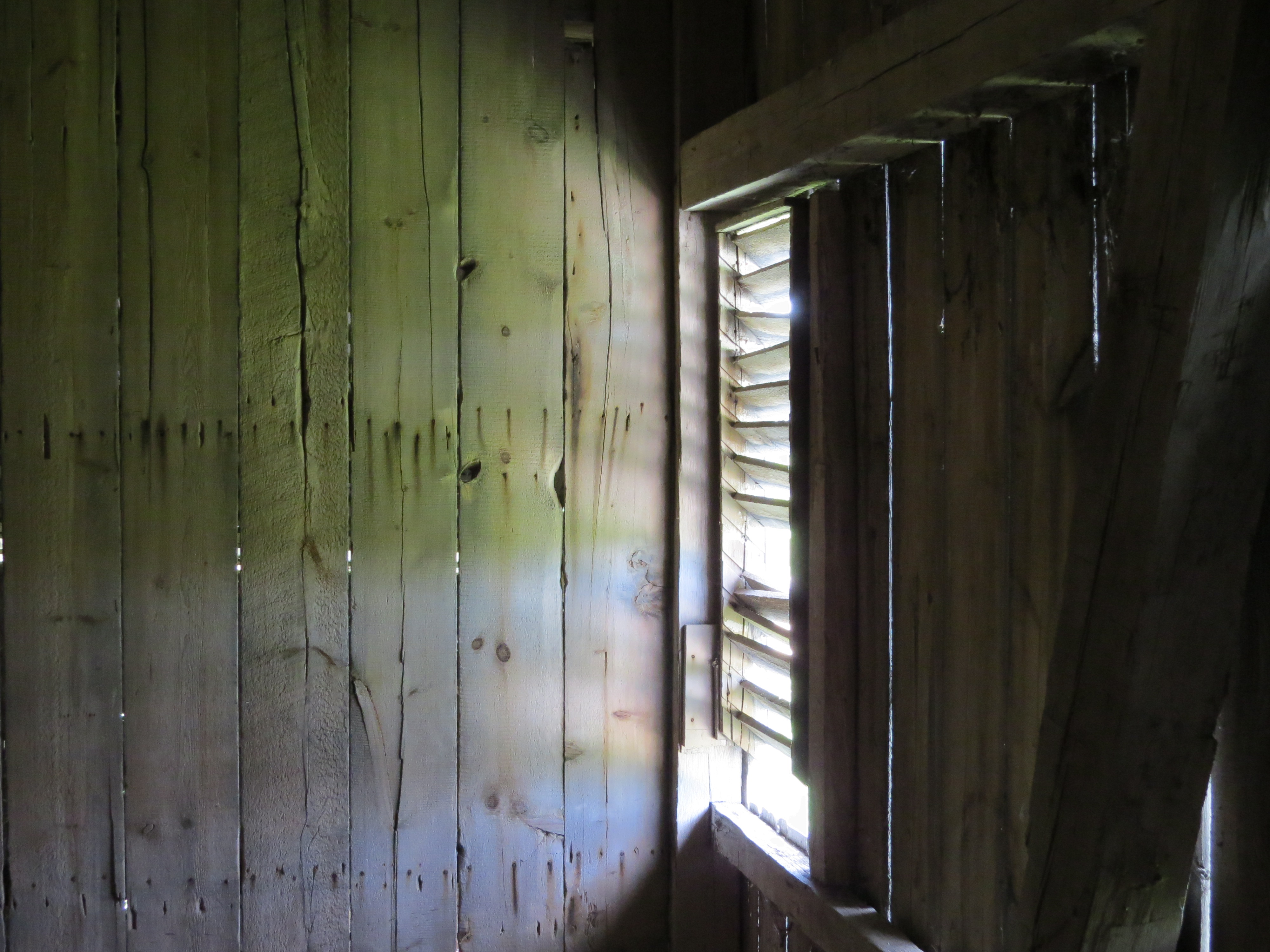
While leading some field trips to view baby barn owls, I happened to catch this scene. The light from the bright outside was streaming through the old broken shutters on a vent that helps air out the barn. Though it was rather dark inside the barn, this natural light played upon the inside wooden wall, revealing every intricate detail of the weathered barn siding.
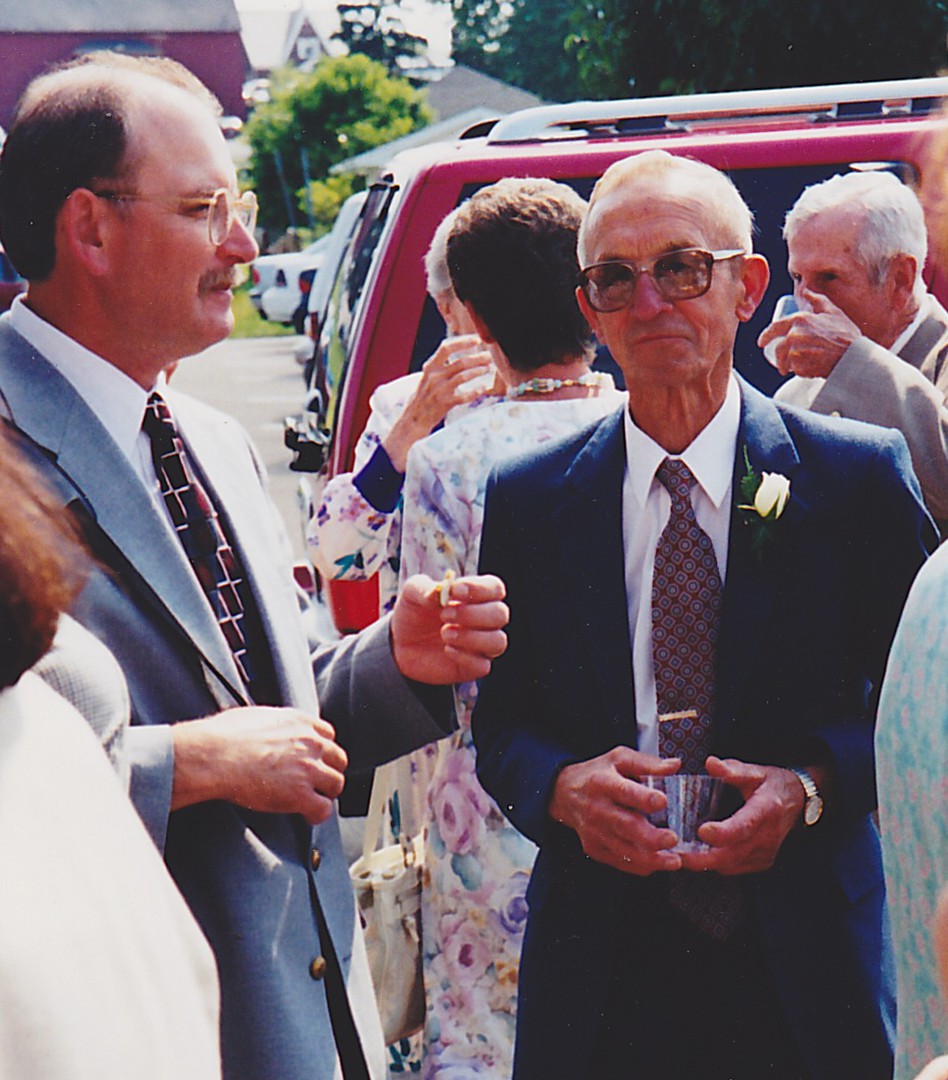
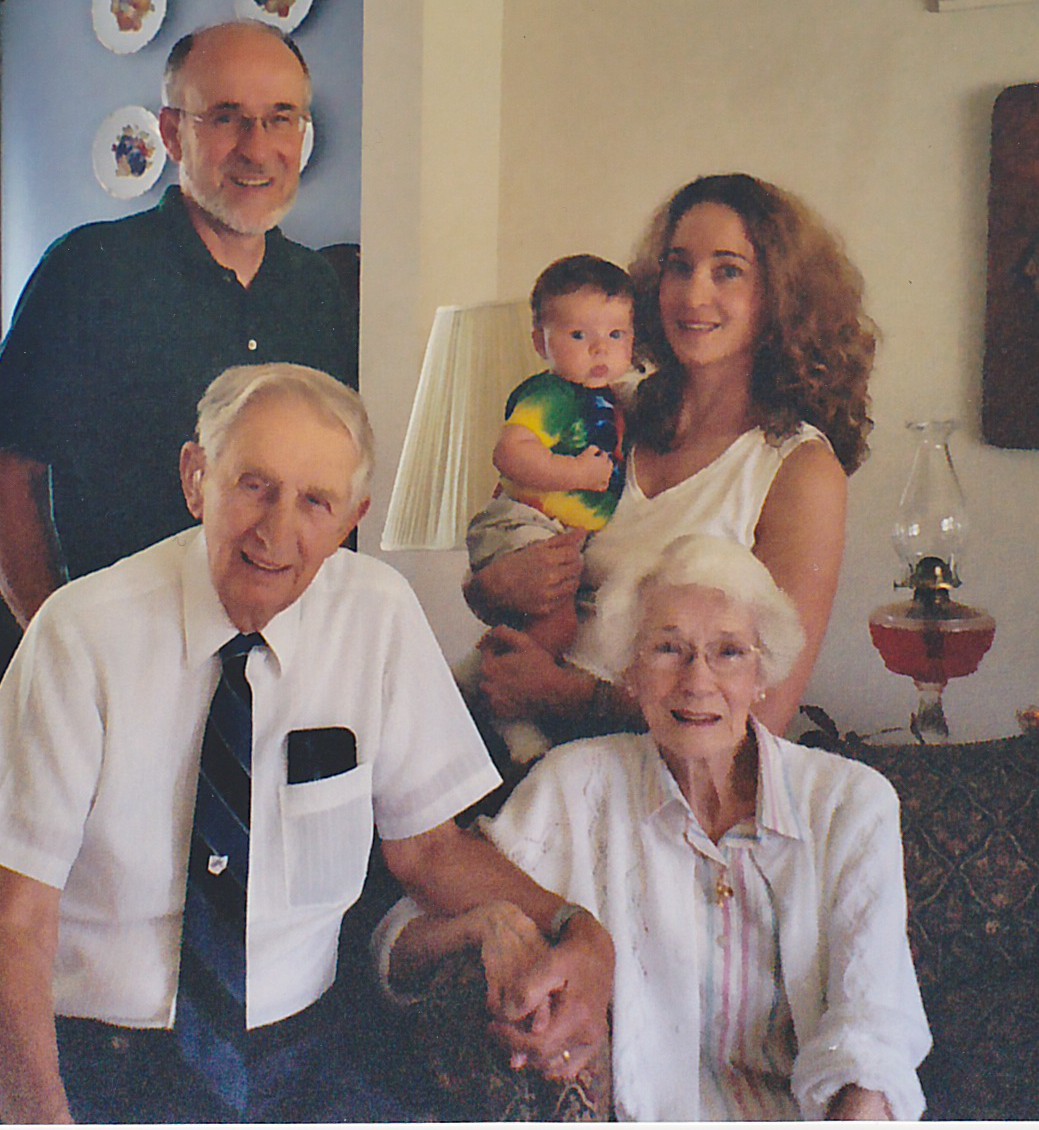
My late father and late father-in-law were clearly different men. But they had a lot in common, too.
Both my father and my father-in-law, Wayne, were genuinely friendly to everyone they met. They each set an example on how to interact and connect with others.
That was especially true when it came to sports. Both men were like little kids if baseball, football or basketball were the topics of conversation. They had a love-hate relationship with all teams Cleveland.
They didn’t just talk athletics either. Dad played three sports in high school and perused his enthusiasm for games well into adulthood. Wayne bowled and played church league softball.
Both found those activities as a means to an end. They got to play, and they thrived on the conversational interplay before, during and after the games.
Of all their commonalities, friendliness was at the top of the list for both Dad and Wayne. In fact, they became good friends, in part because they knew many of the same people.
Wayne and Dad got along famously. In fact, once Neva and I set our wedding date, both men started to invite folks to the ceremony that knew both families. Unfortunately, some of those people weren’t on our invitation list. Is it any wonder we had 400 guests?
I learned early on that Dad liked to meet new people. He’d take us kids along on his excursions exploring farms all over eastern Ohio.
I knew Wayne liked me right away. On my first visit to the Miller farm, he took me straight to the barn to see the pigs. My wife said it normally took other guys two or three visits. I was honored, and our relationship blossomed from there. He treated his other son-in-law with equal love and respect.
Even in death, Wayne and Dad connected. Wayne died on Dec. 22, 2001. Dad died on Dec. 21 eight years later.
It is no wonder that even today people that knew Dad and Wayne describe them both with the same fondness. They use similar complimentary terms to reflect on each man. Both were sociable people, easy to like and admire, they say.
Of course, both Wayne and Dad were human. They each expressed themselves in less than articulate ways at times. But to those who knew them, or maybe only once met either of them, the conclusion was the same.
People remember the genuine congeniality of both Dad and Wayne. That’s a legacy we’d all like to leave.










You must be logged in to post a comment.