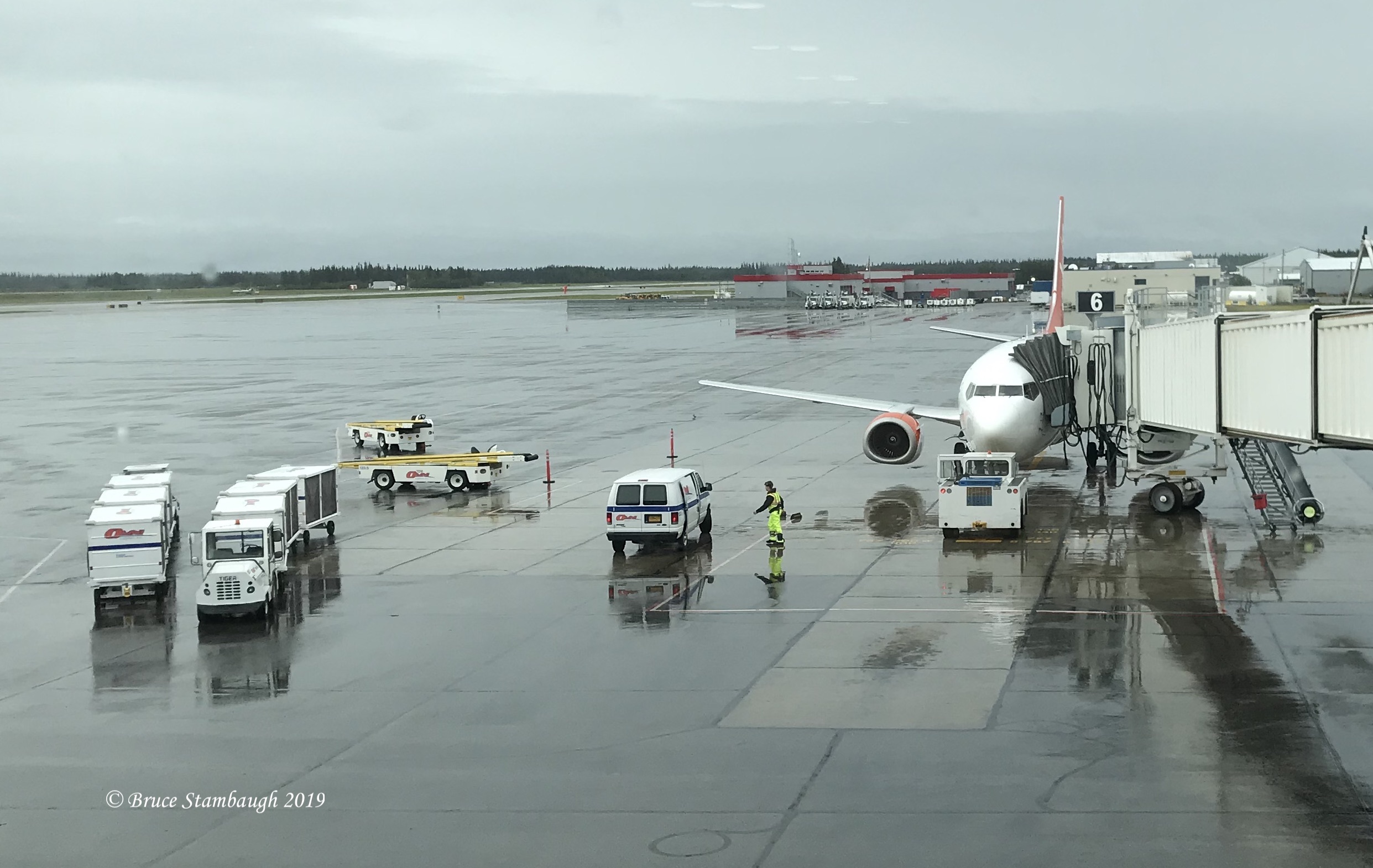
It was a cloudy day all across the U.S.

On the tarmac.

It was a cloudy day all across the United States. My wife and I flew five hours from Vancouver, British Columbia, Canada, to Dulles International Airport near Washington, D.C.

A blanket of gray covered the entire area of the northwestern United States and southwestern Canadian provinces. On liftoff, it didn’t take long for the jetliner to punch through the clouds, and quickly climb above them.

As the plane leveled out at its cruising altitude, splotches of brown and green peeked through the gray and puffy white clouds. Were we over Washington, Idaho, Montana? I didn’t know, and it didn’t matter.
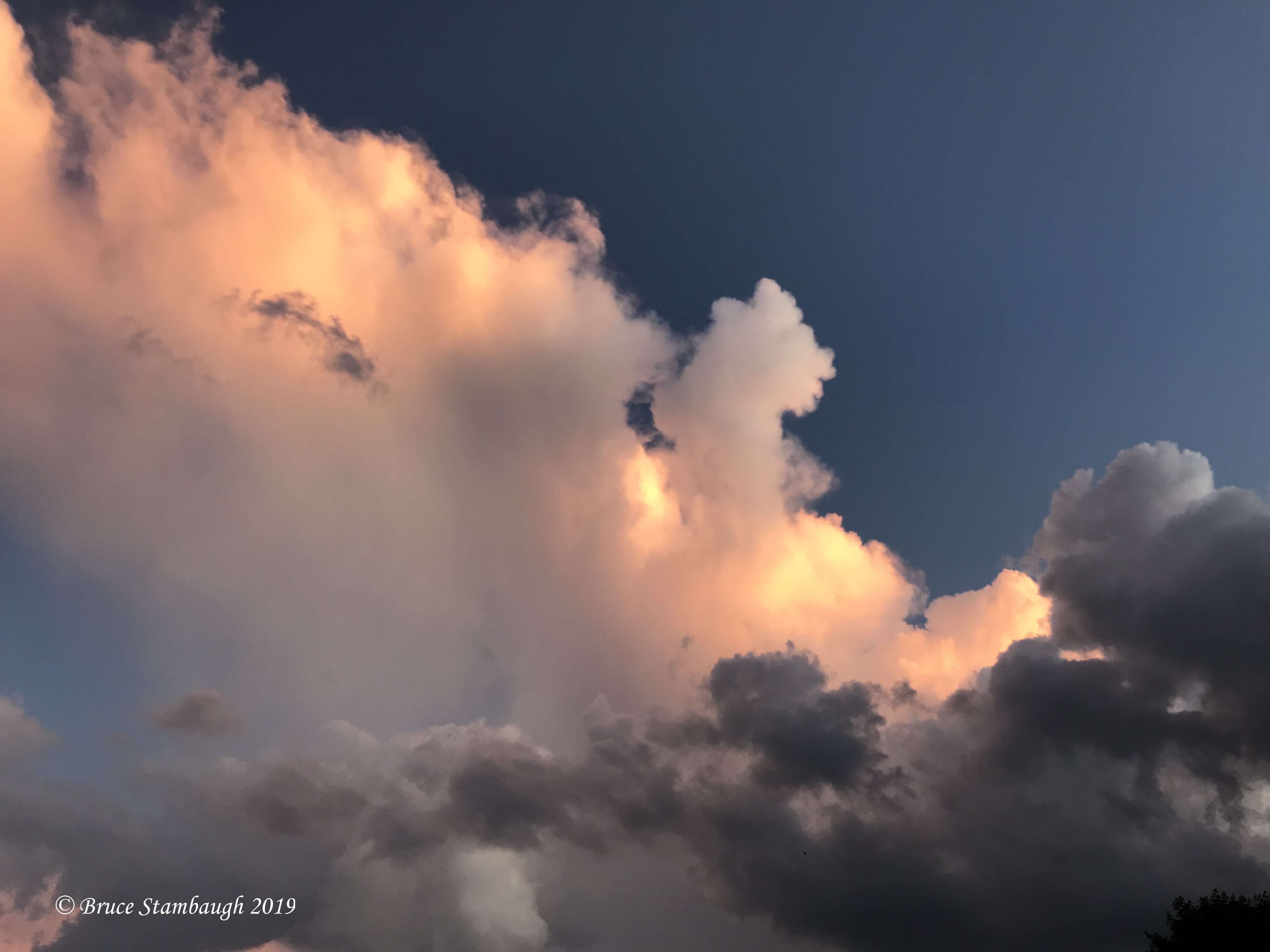
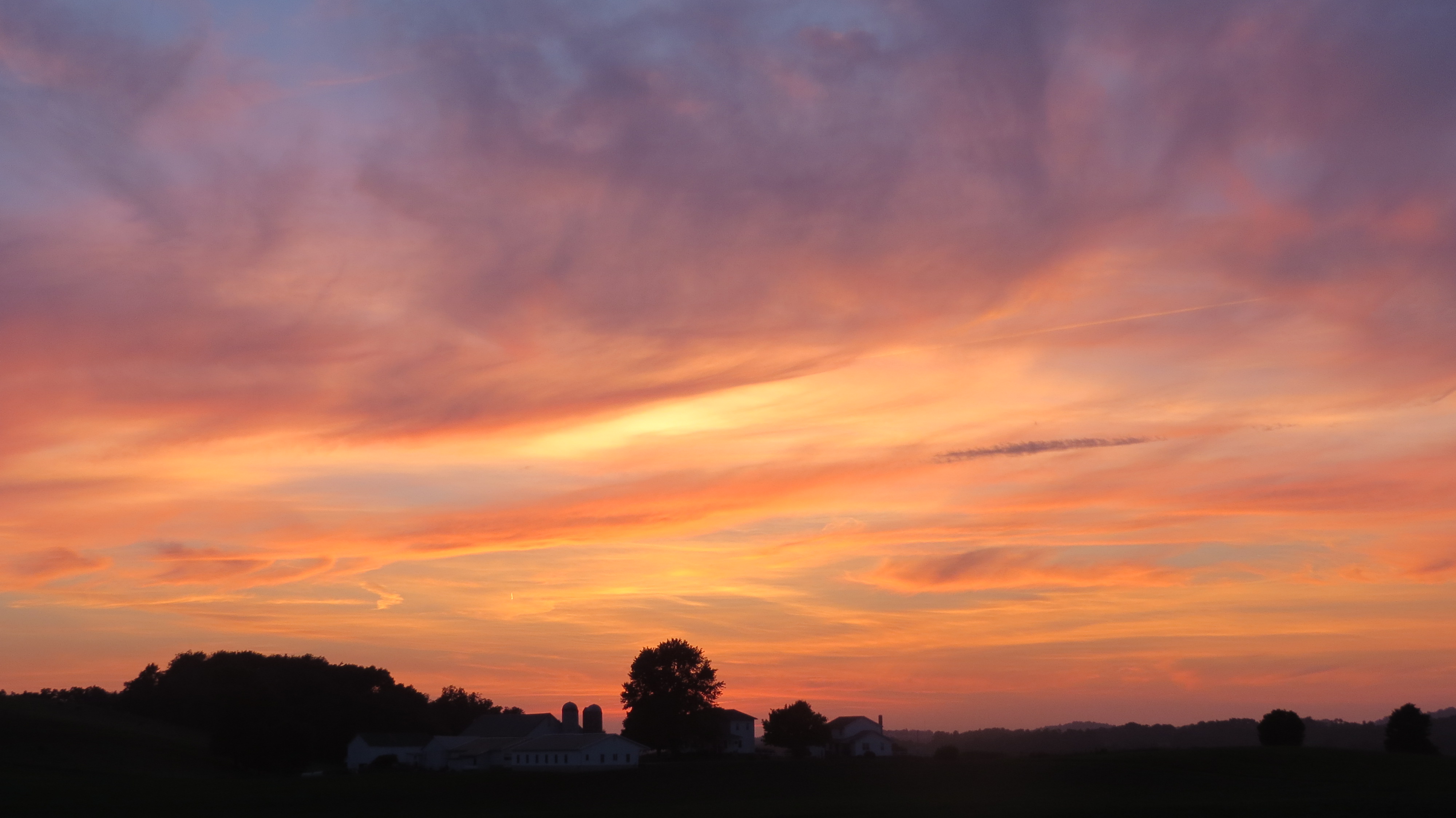
Evening clouds.
We were winging it home after a two-week stint of sampling nearly every type of transportation imaginable. On our extended trip, we hopped on planes, trains, buses, cars, vans, SUVs, boats, old Army troop trucks, ships, and even repurposed school buses. We walked a lot, too. Now we were back on a jet heading home.

It was Alaska or bust for us this time. Unlike too many of the old gold prospectors of long ago, the 49th state was no bust for us. Neither was the Yukon Territory, which geographically mirrored much of Alaska’s towns, mountains, and inland rivers.

We had crossed back and forth between the two countries several times. But now in the sky, borders were insignificant, indefinable. They were unrecognizable as God meant them to be until man intervened and contrived invisible boundary lines. Bees, butterflies, grizzly bears, bald eagles, and migrating birds deemed them meaningless.

The clouds thinned over America’s breadbasket. Their charcoal shadows indiscriminately cast jigsaw-like puzzle pieces onto croplands and the Badlands alike.

Evening clouds.
From the jetliner, more ominous storm clouds appeared, and the earth again disappeared. We flew south of the sharp anvil-shaped thunderheads that towered 20,000 feet higher than the 37,000 feet we reached.

Once clear of the storms, I saw the mighty Mississippi River turn and twist beneath the haze as the plane began to bounce in the turbulence ahead of the weather front we had breached. Fastened seatbelts kept us in place until the skies smoothed and summer’s famous white, fluffy clouds steered us eastward.

The clouds were broken enough for me to finally distinguish details on the ground seven miles below. Jagged rows of giant windmills sprouted in the quilt-patterned patches of midwestern agriculture. I wondered if the farmers regretted or relished the decision to take the money and let the monsters run.

Directly to the north, I could see an airport and a city butted up against the end of a large lake. It had to be Duluth, Minnesota at the western tip of Lake Superior.

East of the Big Muddy, clouds blanketed the states like one continuous unrolled sheet of quilt batting gone ballistic. Then the cottony layer transitioned into cotton balls. I could see Michigan’s western shoreline, even the little inlet to Traverse City.

The plane began its gradual descent. Lake Erie appeared through the summer haziness, then Columbus, and then the squiggly Ohio River. In West Virginia, rows and rows of hundreds of windmills towered above lush hardwood forests on old, folded mountain ridges. John Denver played in my head.

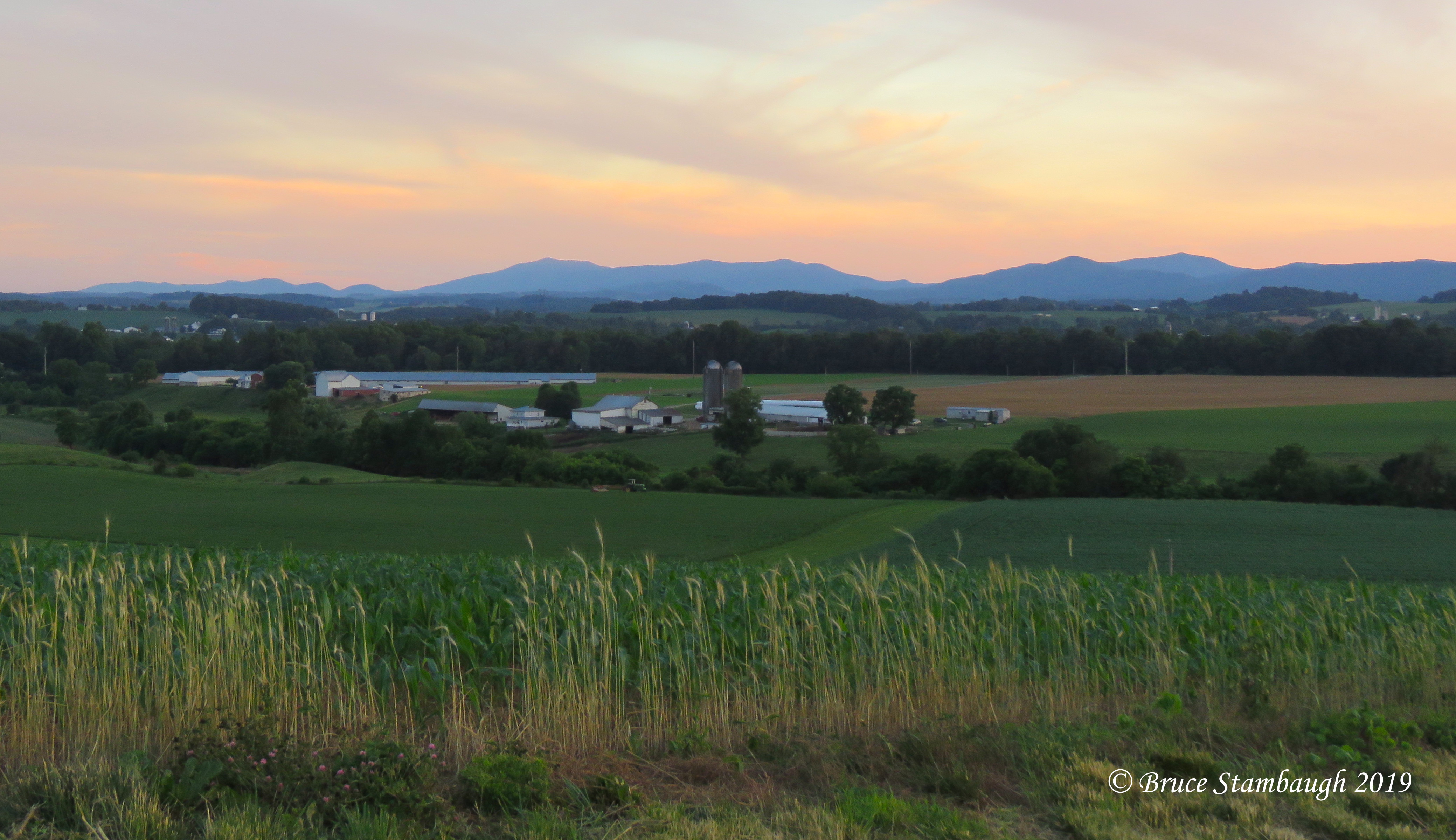
As the sun waned, the plane drew lower and lower. We crossed the Appalachians, the Shenandoah Valley, and the Blue Ridge Mountains, all in less than a minute. Through the haze, we landed with a gentle bounce.

We had had a marvelous trip, but it was good to be home under a cloudless sky.

Home.

© Bruce Stambaugh 2019

Reflections on 30 years in public education

A one-room Amish private school in eastern Holmes Co., OH.

It’s been 20 years since I retired as a public school educator in Holmes County, Ohio. I began teaching fourth grade at Killbuck Elementary School only weeks after the historic and devastating July 4th flood of 1969.

It’s fair to say that neither Killbuck nor I have been the same since. I can’t speak for the town, but for me, that’s a good thing.

I have many fond memories of my time in both West Holmes and East Holmes Local School Districts. I was hired just 10 days before school started. A significant teacher shortage had hit rural areas then. West Holmes still needed 10 more teachers before school started.

I had the two most important requirements needed to teach back then. I had a college degree and a heartbeat. The only education course I was certified to teach was driver education.

I was assigned to a tiny third-floor room in the old high school part of the school complex. I had 28 fourth graders packed into that small space.

I can still name every one of those 28 students. That’s the kind of lasting impression that experience made on me.

A retirement gift from the staff.
Students in the other eight years that I taught at Killbuck were equally enjoyable. I especially appreciated the support of the parents, as well as the camaraderie of the school staff members.

To keep teaching each year, I had to complete at least two college education courses. That meant many night classes and summer school for this teacher. It didn’t take me long to realize that this was what I wanted to do for a living. I loved children, and despite some of the silly state and local requirements, I enjoyed teaching.

I liked it so much in fact that I got my Master of Education degree and became an elementary principal in East Holmes. I also worked out of the central office coordinating the expanding federal programs. But it was the kids I enjoyed the most, plus the opportunity to help teachers teach.

I served as principal of Mt. Hope and Winesburg Elementary Schools for 21 years. I also supervised Wise Elementary for three years at the same time. To complete the triangle of visiting each school each day required driving 21 miles.

For me, the best day of each school year was the first. The students were always excited, scared, and ready to learn. Once they settled into the new routines that soon changed.

I marvel at those precious years, those shinny tiled hallways that bustled with the cheerful sounds of children laughing and learning and quietly chatting. I recall trying to chase teachers out of the buildings long after the school day had ended. Sometimes teachers were still there in the evenings grading papers, displaying student work, or planning for future lessons.

I recall marvelous, heartwarming stories involving children, their parents, teachers, and administrators. There were darker times, too, but far and away, the better memories rule.

It is hard to believe that two decades have evaporated since I retired from the profession I loved with all my heart. I know I wasn’t perfect in executing my responsibilities. I simply tried my best to be an educational leader for the community that I served. After all, the schools belonged to the community, not me.

I can say without hesitation that the 30 years that I spent in the hallowed halls of public instruction in Holmes County were some of the best of my life. But for me, now and forever, school is dismissed.

My last class as an elementary teacher.

© Bruce Stambaugh 2019

The colors of August

Wheat shocks at sunset.

The colors of August captivate me. Living nearly all of my adult life in Holmes County, Ohio gave me a full range of that summer paint pallet.

The pleasing contrasting greens and golds quickly got my attention. I admired the rolling contoured rows of lush green field corn against the toasted waves of winter wheat.

In the eastern part of the county, wheat shocks stood as sentinels guarding the fattening ears of corn nearby. Unfortunately, their presence seldom deterred the deer from nibbling the outer rows to the cob.

The blooming alfalfa brought pretty butterflies, honeybees, and other vital pollinators. The swooping swallows had their own feast, especially when the farmers made their August cuttings whether by tractors or horse-drawn mowers.

August was when the vibrant green leaves of deciduous trees began to curl in the heat, humidity, and parched soil. By month’s end, a few even turned brown or began to color.

This slideshow requires JavaScript.

I always enjoyed the flowers that bordered blossoming gardens or multiple flowerbeds like my wife cultivated to perfection. Hollyhocks were my favorite until the gladiolas raised their pink, red, yellow, and white flags.

I would be negligent if I failed to mention the summer birds, some of which had already begun their return flight south. Though not as vocal as earlier in the year, most still showed their breeding colors.

The flashing iridescent red on emerald of the male ruby-throated hummingbird and the flashy orange and black of Baltimore orioles spruced up any welcoming yard, if only temporarily. Sometimes the two species vied for dibs at the sugar-water feeders.

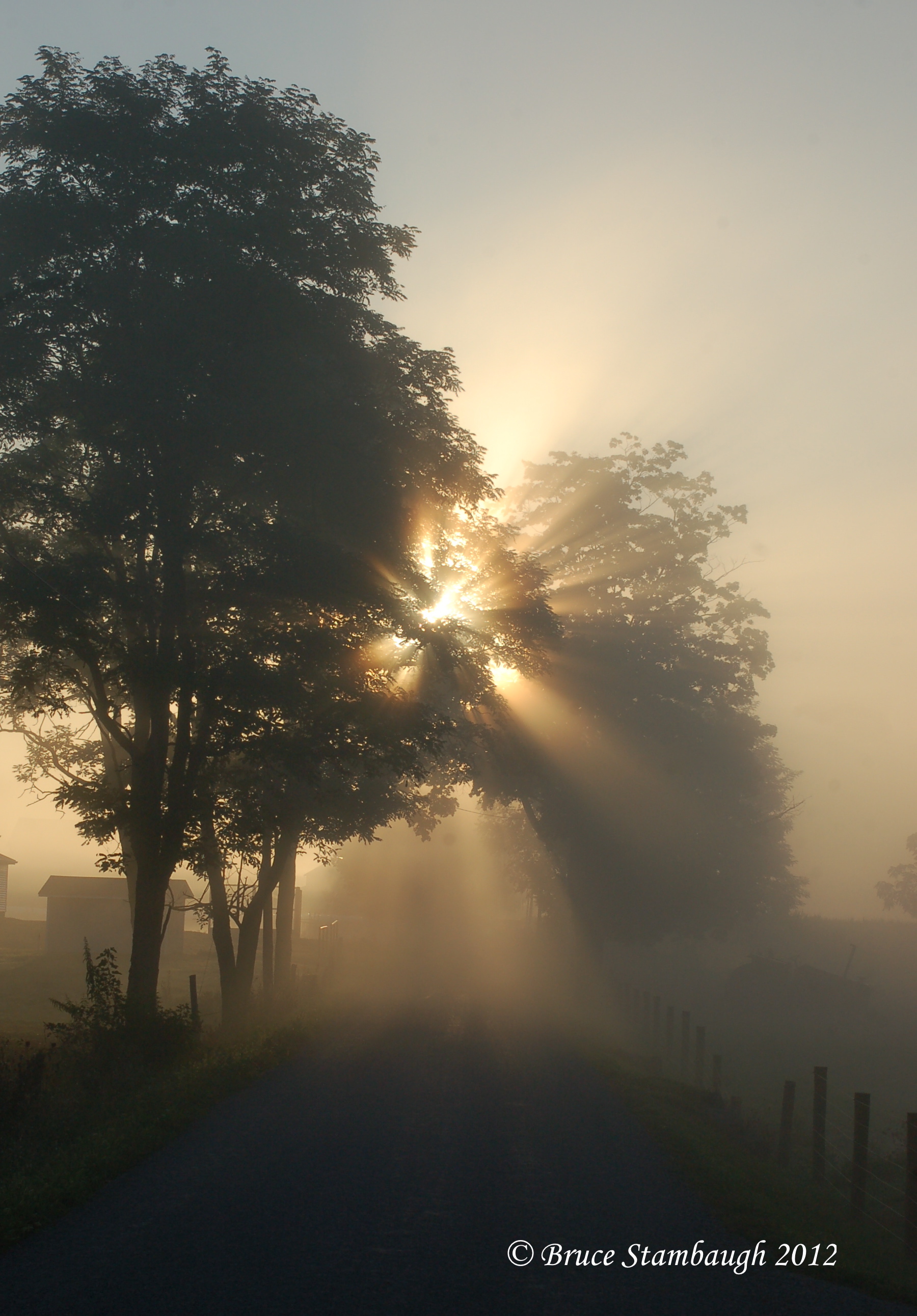
By months end, early morning coolness brought silent, silken fog that glowed bronze with the rising sun. If eyes were sharp, silver droplets dotted the dewy threads of spider webs artistically strung from one barbed wire strand to another.

Much of that changed, however, when my wife and I moved to Virginia’s Shenandoah Valley. Like Holmes County, the Valley, as locals like to call it, is the breadbasket of the south. Agriculture still rules the rural areas.

Farming is a bit different here, however. Though the Old Order Mennonites still drive horses and buggies, they man the latest farm machinery invented. As thrifty as their Amish cousins, they often farm right up to the roadway.

Though the topography is similar, strip cropping is seldom used. No-till farming seems to be the in thing here. The result is wide swaths of wheat sown between two fields of field corn or the tallest soybeans I have ever seen. It’s still green and gold, just different species.

With soil that hardly ever freezes and being further south, the growing season is longer. Farmers and gardeners get an earlier start on planting and consequently harvesting. The colors I was used to in August begin to appear in July. Produce stands evidence that.

The produce peak, however, still seems to be August. My wife and I can attest to that thanks to the generosity of our son and daughter’s families. They gifted us a weekly produce box known as CSA, Community Supporting Agriculture.

End of August morning.
We have already enjoyed weeks’ worth of fresh, organic produce that is as tasty as it is luscious to admire. Mellow yellow summer squash, prickly green pickles, plump red tomatoes, sweet red beets, orange cantaloupe, and juicy red watermelon make our summer meals perfect.

Happy to merely admire the colors, I almost hate to have Neva slice, dice, fry, cook, and can the colorful lot. I change my mind, however, with the fresh salsa alone.

© Bruce Stambaugh 2019

There’s always a pleasant surprise at Lakeside, Ohio

Cottages in early morning light along Ohio’s most beautiful mile in Lakeside, OH.

Upon our return from our most recent stay at Lakeside, Ohio, a friend who had never been there asked me what we liked. “Everything!” I replied immediately. I wasn’t facetious either.

We go for the wholesomeness of the Chautauqua town on Lake Erie. We love the renewal of friendships, the happy buzz of children playing, generations of adults relaxing on front porches of quaint cottages, inspiring sunrises and sunsets, informative presentations, and a variety of nightly entertainment that touches multiple genres in a week.

We stay in the same hospitality house every year, often with some of the same guests, who have become friends over the years. We quickly settle into the same routines.

A two-mile walk around the gated community’s parameter precedes breakfast on the spacious wrap-around front porch. As we enjoy coffee, cereal, and friendly conversation, we people watch. Many folks make donut runs to a restaurant a block away.

The OH Pops stand at the farmers market.
On Tuesdays and Fridays, the farmers’ market vendors assemble and set up their offerings of fresh fruits and vegetables, scrumptious homemade pies, and even doggie treats. The streets fill with customers from 9 a.m. to noon.

When I saw people browsing the various vendors while eating popsicles, I had to wonder where they got them. Friend Jeanne informed me that a new stand offered the cool treats for the hot weather.

Visions of creamsicles from my youth danced in my head. I went to find the source.

Beneath a rainbow-colored umbrella, a thin young man operated a stand that was nothing more than an icebox on wheels designed to be towed behind a bicycle. The young entrepreneur greeted everyone with a welcoming smile.

A sandwich chalkboard listed the luscious and unique flavors available for the day. I bought two different varieties, banana split, and apricot lavender. Of course, I shared with my wife.

One bite of the banana split pop, and I was hooked. The taste and texture of the mini-chocolate chips convinced my taste buds. I had to get the story on these OH Pops, the appropriate and official name of the young man’s business.

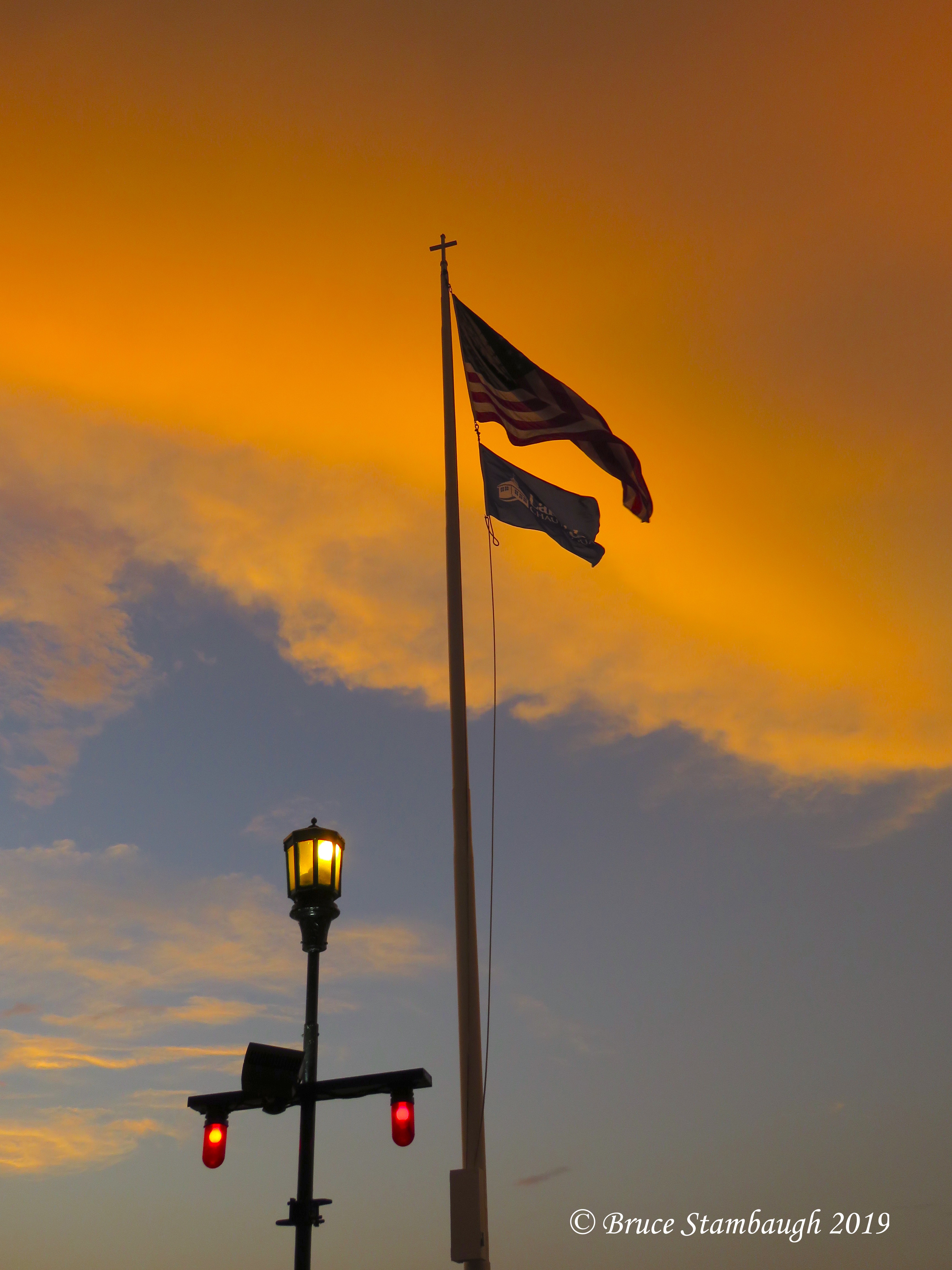
Storm clouds reflect sunset colors on the Lakeside dock.
I dashed back down the street and waited until other customers were served. I introduced myself and learned his name was Derek.

I identified myself as a journalist and wanted to know his story. When he told me, I was in near disbelief.

Derek was 30-years-old. His two nieces, ages seven and 12, live with him. A judge gave him custody of the girls when their mother sadly fell victim to the pandemic opioid crisis. The court decided Derek, their uncle, was the best suitable relative to care for the young girls.

The pair helps Derek make the icy treats, and even suggest the unusual flavors and ingredients. In addition to farmers markets, Derek is hired for special events and wedding receptions.

Derek got the mobile icy pop idea from seeing similar operations in large cities that he visited. He thought, “Why not here?”

Besides his business, Derek works two other jobs to make ends meet.

His vision for both the business and for the welfare of his nieces much impressed me. The combination of this young man’s work ethic and dedication shines as a model for all of us.

If this wasn’t a lesson in humility and compassion, I don’t know what is. Meeting Derek and hearing his heartwarming story was just the latest reason we love to visit Lakeside, Ohio every summer.

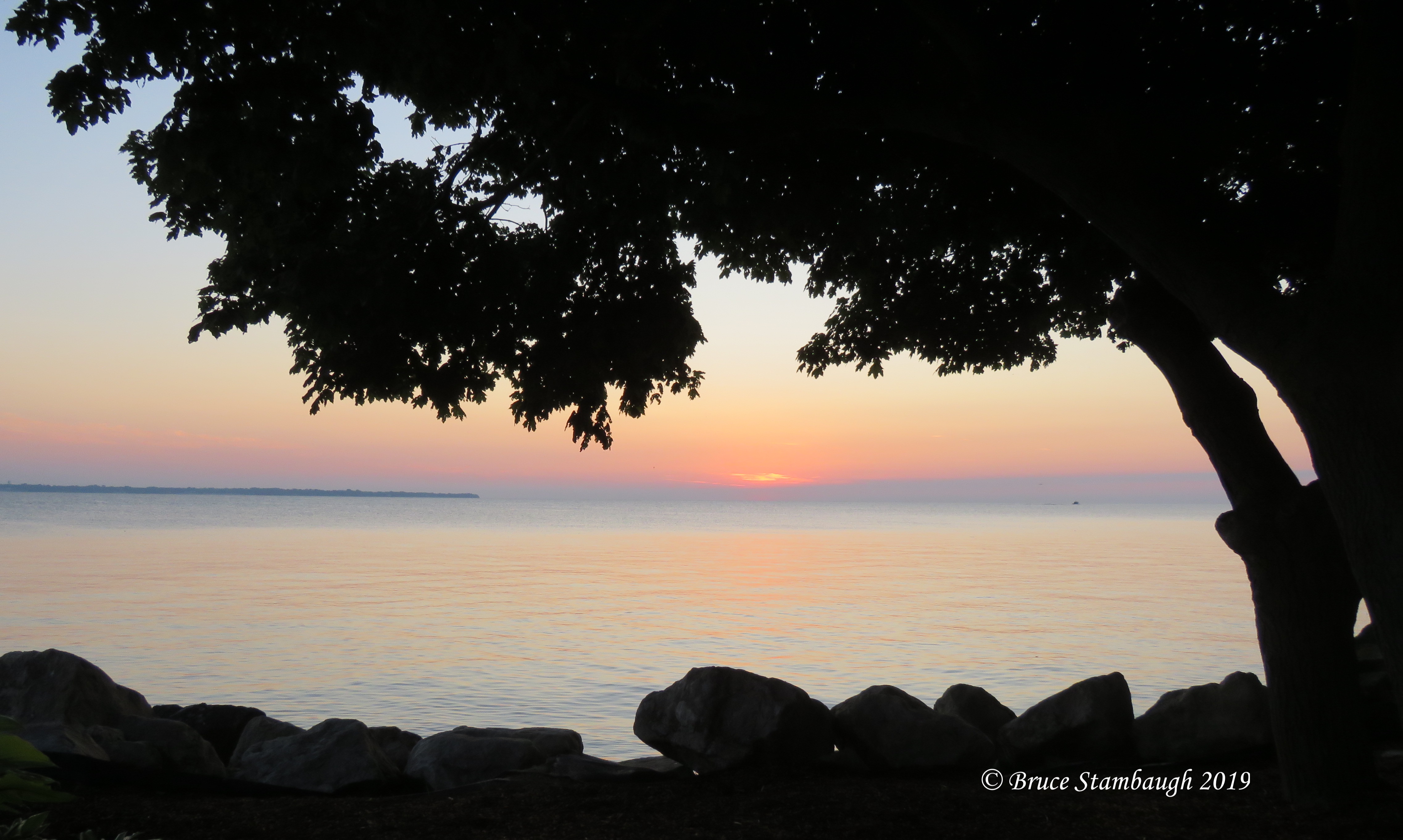
Dawn breaks at Lakeside Chautauqua in Ohio.

© Bruce Stambaugh 2019

Plan ahead for rest and relaxation

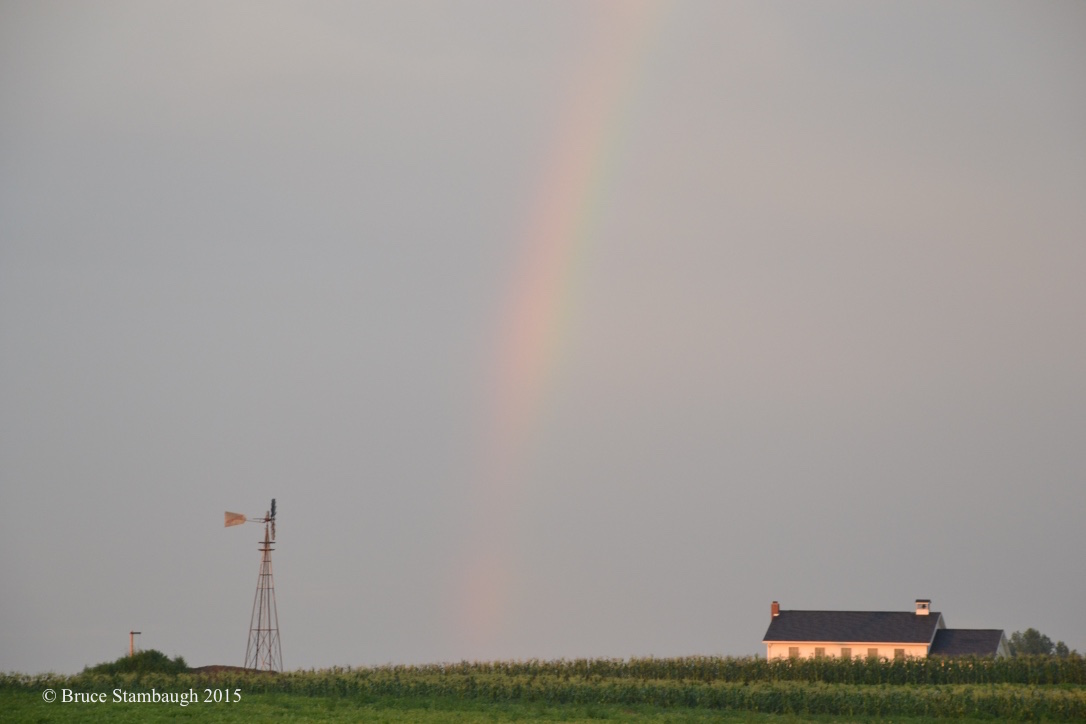
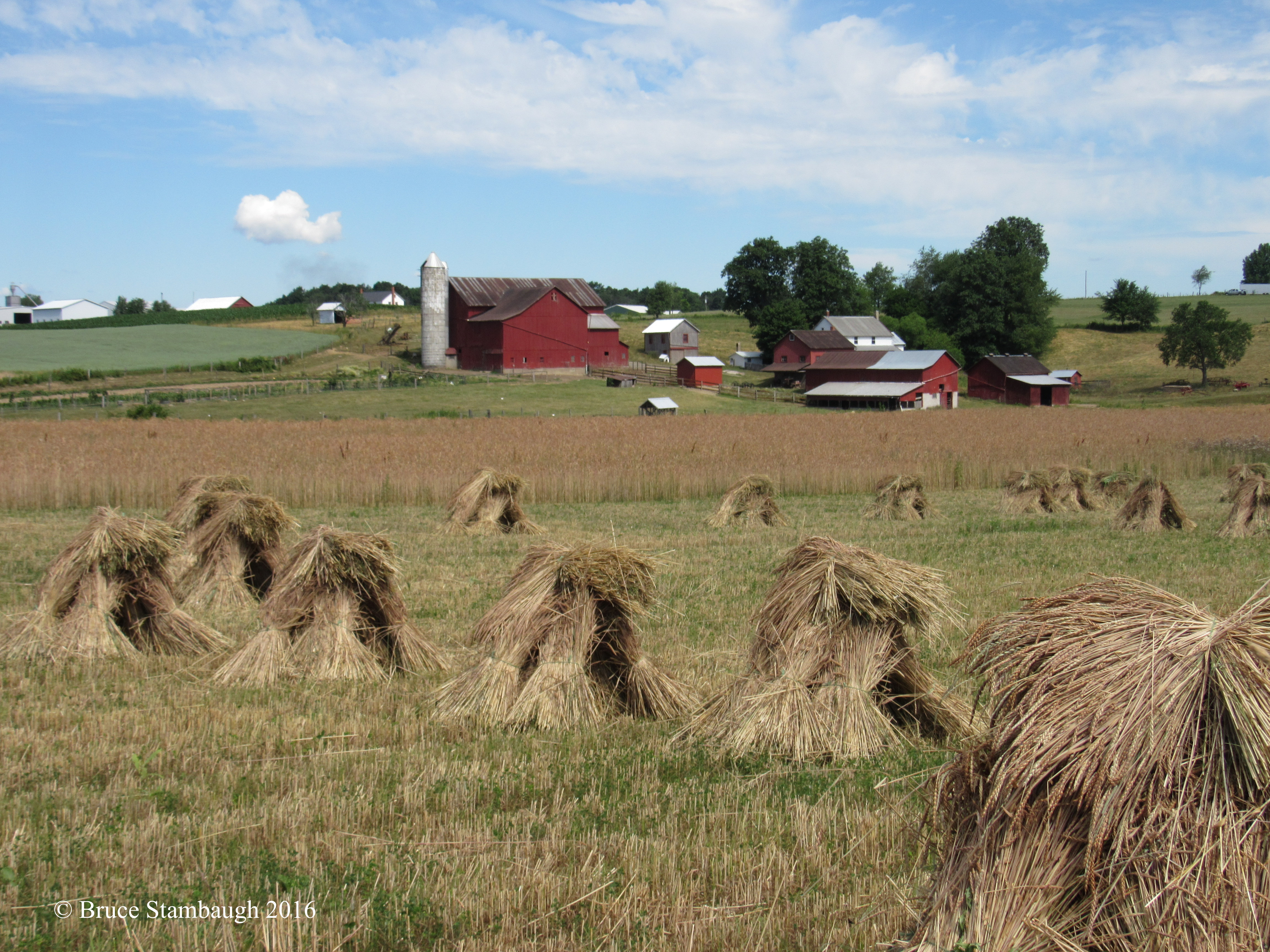
Iconic summer scene in Ohio’s Amish country.

When we lived in Ohio’s Amish country, Sunday was a day of rest. It was a biblical concept that was actually put into practice.

Our house was built on an Amish farmstead. Few in our neighborhood mowed their lawns, washed their cars, or worked in their gardens. There were six other days of the week to do those tasks.

I wasn’t raised that way. Growing up, I knew nothing of Amish and Mennonite ways. Sunday was a day for worship and rest, but that didn’t mean I couldn’t wash and wax my car. I didn’t consider that activity to be work at all. In fact, I found cleaning my vehicle relaxing.

My Mennonite farm girl wife adhered to the Sunday day of rest tradition. I quickly swung to her custom of keeping the Sabbath after our marriage all those years ago. Sunday was church day and frequently involved hosting or visiting with others.

I haven’t looked back, and I haven’t been sorry.

Since we moved to Virginia’s Shenandoah Valley, those quiet Sundays aren’t so quiet anymore. By most standards, our neighborhood of family homes is somewhat subdued. However, the sound of lawnmowers, power washers, and weed eaters echo from street to street any day of the week, including Sundays. We clearly are not in Kansas anymore, Dorothy.

Never on Sunday.
Still, several of our neighbors join Neva and me in holding to our principles. We mean no disrespect or ill will towards those who feel free to do yard work or some other Sunday chore. After all, working in the yard, garden, or flowerbeds can be therapeutic and therefore relaxing. Hiking, fishing, swimming, and other outdoor activities are equally satisfying.

It is vital that people who hold either view respect those who believe differently. It’s the only way we can successfully coexist as friends, neighbors, and viable society. In fact, others observe Sabbath on different days of the week.

That fact became clear to me while planning for our spring trip to New England. I have learned to plan ahead to avoid the stress of any kind of deadline, writing, or otherwise. That is a significant admission from a professional procrastinator. I sense great joy and accomplishment in getting things done correctly ahead of time.

I had several articles due to various publications for which I write around the time we were scheduled to leave. I made it a goal to complete them as thoroughly as possible before their due dates.

Doing so delayed much of the planning for the New England trip. Consequently, I had only done cursory research on places to visit.

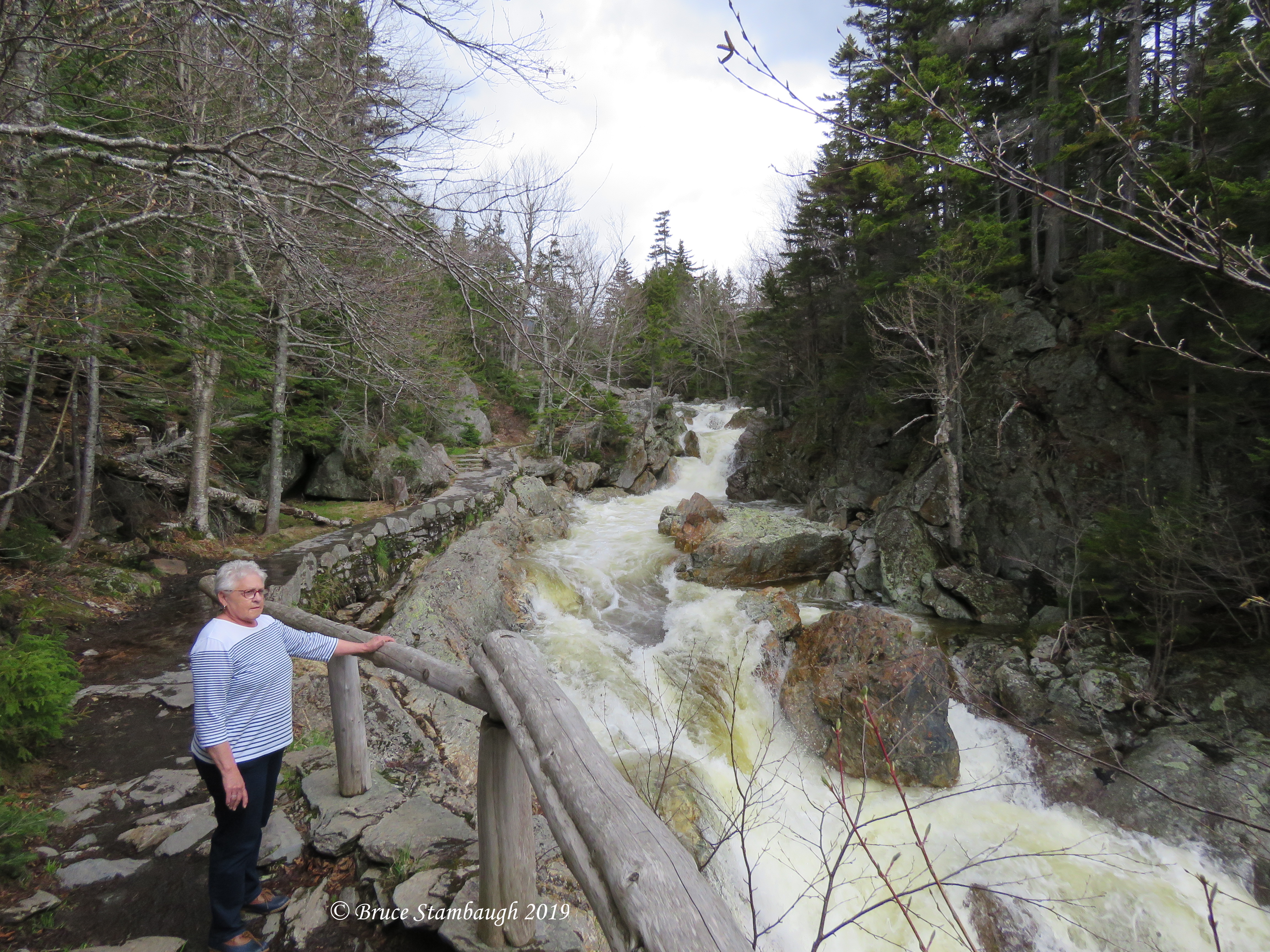
Glen Ellis Falls, Jackson, NH was just one of many recommendations to visit that friends made to us.
Friends who had previously visited or lived in New England had given us excellent tips. I used those as the prologue to our itinerary. I scoured tourism websites, birding hot spot recommendations, perused multiple maps, both online and the physical hold-in-your-hand fold up kind.

Finally, I came to the realization that I only needed to compile an outline itinerary. The day-to-day details would unfold according to the notoriously wet and cool spring New England weather. We packed so we could dress in layers as the weather changed. We only set reservations for a few hotels and guided tours. We used the travel list of attractions as a guide, not an absolute must.

I felt immediate relief. It was 18 hours before we intended to leave, and everything was ready to roll. In my relaxed state, I realized just how important that was to me mentally and physically.

It felt like Sabbath Sunday, but only it was Thursday afternoon.

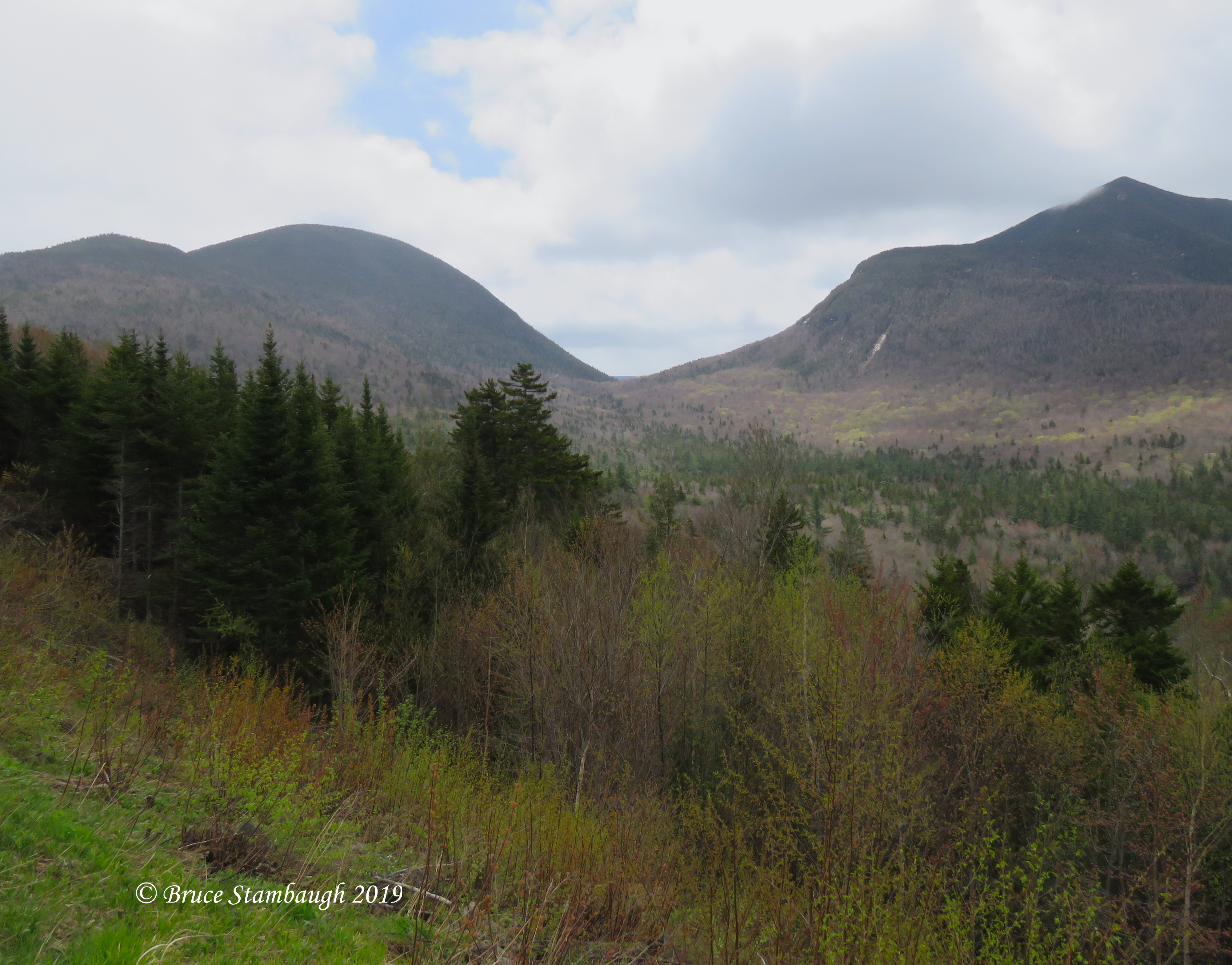
The view from the Kancamagus Highway in New Hampshire.

© Bruce Stambaugh 2019

Half empty and half full’s juncture

An iconic mid-summer scene in Ohio’s Amish country.

It’s July, and you know what that means. We are already halfway through the year. How can that be?

It seems like only yesterday that it was cold and rainy, and folks from Florida to Ontario were all tired of wearing winter jackets. But here we are at the beginning of July, the year half spent like a jar half full, or is it half empty?

I suppose the answer is a matter of personal perspective. Given all that has happened in 2019 so far, I could respond either way. It’s been that kind of year.

Sometimes life is a question mark.
The half emptiness comes from the loss of long-time friends, people who lived productive, generous lives of service. They meant so much to not only me but to so many others that they also touched so tenderly. Others who have passed on were much too young. Their deaths caused heavy, burdensome grief, and raised imploring questions and inquiries of the Almighty about life’s fairness.

The unruly weather caused miseries more disastrous than prolonged cold spells. Extensive record flooding indiscriminately inundated homes, businesses, fields, and overflowed the largest lakes.

Ohioans came to the aid of their waterlogged Nebraska compatriots. Weeks later, it would be the Buckeyes who watched and waited for their fields to drain. Crops that managed to be planted risked rotting in the soggy soil. Other ground may simply go fallow.

My wife and I have found that the half-fullness overflows with bounteous joys of exploring new places, meeting new people, having others reach out in friendly ways. To say we are grateful would be insufficient in expressing our appreciation for what life in the first half of 2019 has brought us.

In mid-January, a sun pillar brightened the already gorgeous sunrise over the Atlantic Ocean outside our snowbird rental. The ever-changing scene served as a reminder to breathe deeply and to embrace each moment as 2019 unfolded.

After a light late February snow, the sun strained through trailing clouds and turned the rolling Shenandoah Valley landscapes into a spectacular sparkling winter wonderland.

A pastel March sunset bid us farewell as we said our last goodbyes to the family cottage in Ohio. Generations of family and friends helped fulfill the dreams that my folks had had for their quaint lakeside-gathering place. But as that chilly sunset waned, we shed tears of gratitude and appreciation for the memories made and wished the new owners the very same.

Each spring, I had enjoyed the showy lavender blooms of redbud trees that adorned still barren forests and neighborhood landscapes. However, I had never noticed how each individual blossom so closely resembled tiny hummingbirds on the wing until a kind neighbor showed me in April.

A state bridge engineer directed us to a cascading waterfall we would have surely missed had we stayed on the main highway. In the quintessential New England town of Jackson, New Hampshire, Jackson Falls became one of the many highlights of our May vacation.

The same kind neighbor who pointed out the redbud hummingbirds brought over a couple of puffy pastries she had made using the sour cherries she had recently picked. Her tasty treats made this June day even better than it already was.

You likely have a comparable list. What challenges and surprise blessings are in store for us the rest of 2019? We really don’t know.

Like July is to the calendar, we encounter life’s happenstance experiences at the juncture of our half empty and half fullness. Our job is to be alert to explore and savor those serendipitous, joyous moments.

An end of June sunset marks a fitting demarkation for any year.

© Bruce Stambaugh 2019

Why I never learned to swim


I don’t remember the trauma I experienced nearly 70 years ago. And yet, I can recall it as if it had happened yesterday.

I was two, four years younger than my older brother. We lived on a channel that connected two glacial lakes southwest of Akron, Ohio. Our father was supposed to be watching us while our mother was away for a while. Dad being Dad, he was preoccupied with something else. I still recall the disdain and anger that our usually gentile mother expressed toward our father as this family story was told and retold over the years.

It was this dramatic retelling that etched a lifetime of fear of water into my psyche. Consequently, I never learned to swim. Shoot, I even take showers just to stay safe. It is my only logical explanation of this unfounded, yet realistic phobia.

It was a lovely summer day, warm but not too warm. So Dad sent my brother and me unattended outside to play. Of course, the first place we headed was to the wooden dock that jutted into the canal that connected North Reservoir with Turkeyfoot Lake. The magnetic dock drew my brother and me as if we were steel ingots, not flesh and bones.

We loved to feed the ducks that frequented the waterway that lazily flowed only a few feet behind our waterfront bungalow. This time, however, my brother and I didn’t have any bread to feed the ducks that swam over to the dock where we stood. We must have bent over to get a closer look at them.

Though I was too young to remember it, the next thing that happened was a plop, plop. My brother and I each fell into the water like rocks. The dock wasn’t magnetic after all.

I know these specifics and this sequence of events because our next-door-neighbor, Mrs. Nussbaum, was outside hanging up her wash on the laundry line. She had heard Craig and me talking but could not see us because of the strings of clothes. But she knew what the double-barrelled splashing sounds meant.

Without knowing exactly where we had fallen into the water, Mrs. Nussbaum rushed to the channel and jumped in, her dress flying up like an umbrella. My brother surfaced just as she entered the water, which made it easy for her to rescue Craig. She placed him safely on the shoreline and returned to search for me in the now murky water.

Mrs. Nussbaum quickly found me. She told my father that I was lying dead still on my back at the bottom of the channel, eyes wide open staring straight ahead. She scooped me up and put me on the shore beside my brother.

The conversation between Mrs. Nussbaum and our father was never revealed to me, or if it was, I didn’t understand the meaning of some of the words. However, without knowing the verbal details, the emotion evoked when our mother arrived back home, and Dad had to confess the nearly tragic accident to her remains with me still.

If only for brevity, let’s just say it wasn’t pretty. Mom, of course, was furious and that fury lasted every time the story was told. As the years passed, a little humor was added, but as I recall, very little. Mom was still upset, and Dad, well, he was still irresponsible when it came to domestic duties.

My brother learned to swim. I never did. To this day, swimming means staying alive while I’m in the water because that long-ago trauma still floats in my head.

© Bruce Stambaugh 2019

Dreaming on a dreamy day

A pleasant June afternoon.

It was only 3 in the afternoon, and I felt like taking a nap.

I had slept well, gone to physical therapy for my cranky back and my bothersome tennis elbow and had my ouchie knee taped. When I got home, I took my morning walk around the neighborhood.

After a light lunch of leftovers, I got busy writing and met my deadline. I grabbed the book I had failed to crack on vacation and headed for the sun-drenched patio adjacent to our back porch. I took a glass of clear, cold water with me and plunked down in a lawn chair with my back to the warming afternoon sun.

Earlier that day, a friend in Ontario, Canada had posted a photo of herself wearing a winter jacket. It was early June. I just chuckled and went on about my day. I was exceedingly glad that yesterday’s front had cleared out the heat and humidity from Virginia’s Shenandoah Valley, giving us this glorious day.

Instead of sleeping, I wanted to take advantage of the pleasant weather. So there I was on the patio, book in hand, my focus elsewhere. The sky was the bluest blue, occasionally interrupted by fluffy cotton balls that lazily floated high overhead.

Backyard color
Given the series of recent damp days, it was nice to sit outside without getting wet. However, at my age, I mind my dermatologist. I wear sunscreen and a broad-brimmed hat in the bright sunshine.

The northwest wind that had brought the below normal temperatures also waft intoxicating floral fragrances from an unknown source in the neighborhood. I knew it wasn’t me. I hadn’t yet showered.

The high-pitched humming of lawnmowers from three different directions buzzed in my ears, grating against the loveliness of the heavens and the sweet-smelling aroma. Life isn’t perfect, I rationalized.

Besides, those necessary but annoying mechanical noises had competition. Northern cardinals sang their repertoire of melodies. I can’t prove it, but I am pretty confident sound engineers mimicked the cardinal calls when they invented electronic emergency vehicle sirens. They just gave them strange, non-avian names like yelp, warble, and power call.

Still, the birds crooned and chased one another. It was nesting season after all, and birds follow their innate instincts to protect their territories and their young. Common grackles attacked a common crow that likely tried to steal one of their babies.

On the wire.
That’s the only way I can explain why one would fly away with a baby rabbit dangling from its bill. Furthermore, the distraught mother bunny desperately hopped in feeble pursuit of the crow. I had recently witnessed the kidnapping unfold in our neighbor’s front lawn.

American robins joined the cardinal chorus as if it were dawn, not mid-afternoon. Chimney swifts twittered overhead. I wanted to reply, but unlike a certain important someone, I don’t tweet.

About then, an American goldfinch lighted briefly at the birdbath right beside me. It flew at my slightest first movement.

One by one, the lawnmowers ceased. Mourning dove coos lulled me back to my book. I read a chapter and headed back inside to take that nap.

It had been a busy day, and I didn’t even mention that I had made a morning trek to the county landfill to deposit yard clippings and recycling. While unloading the cardboard, I chatted briefly with a professional baseball player who lives in the county. He was gracious as usual, but I’ll admit to being mildly disappointed that he never mentioned my Cleveland Indians t-shirt.

It’s great to have fair weather, even if it’s only for a day or two. It’s better, however, to be retired to fully enjoy it.

A dreamy end to a dreamy day.

© Bruce Stambaugh 2019
Spontaneity spices up every trip

I thought the scenery couldn’t get any better than this. I was wrong.

Over the years, my wife and I have found one travel tip to be uniquely useful. As much as you plan, leave room for spontaneity.

We didn’t read that any place. We learned it when traveling with our parents. Both families tended to go in the same mode. Too often, they had precious little time or money for vacations. When they did take one, they each drove from point A to point B regardless of what was in between.

When Neva and I began to travel as a couple, we tried to always leave room for the unexpected. It’s a habit we have happily maintained.

We do a lot of planning for our trips. We research places we want to see in the areas where we are traveling. That includes leaving time for discovery along the way. Of course, now that we are retired, we can really take our time. We often avoid interstates and expressways if at all possible.

Pointing the way.
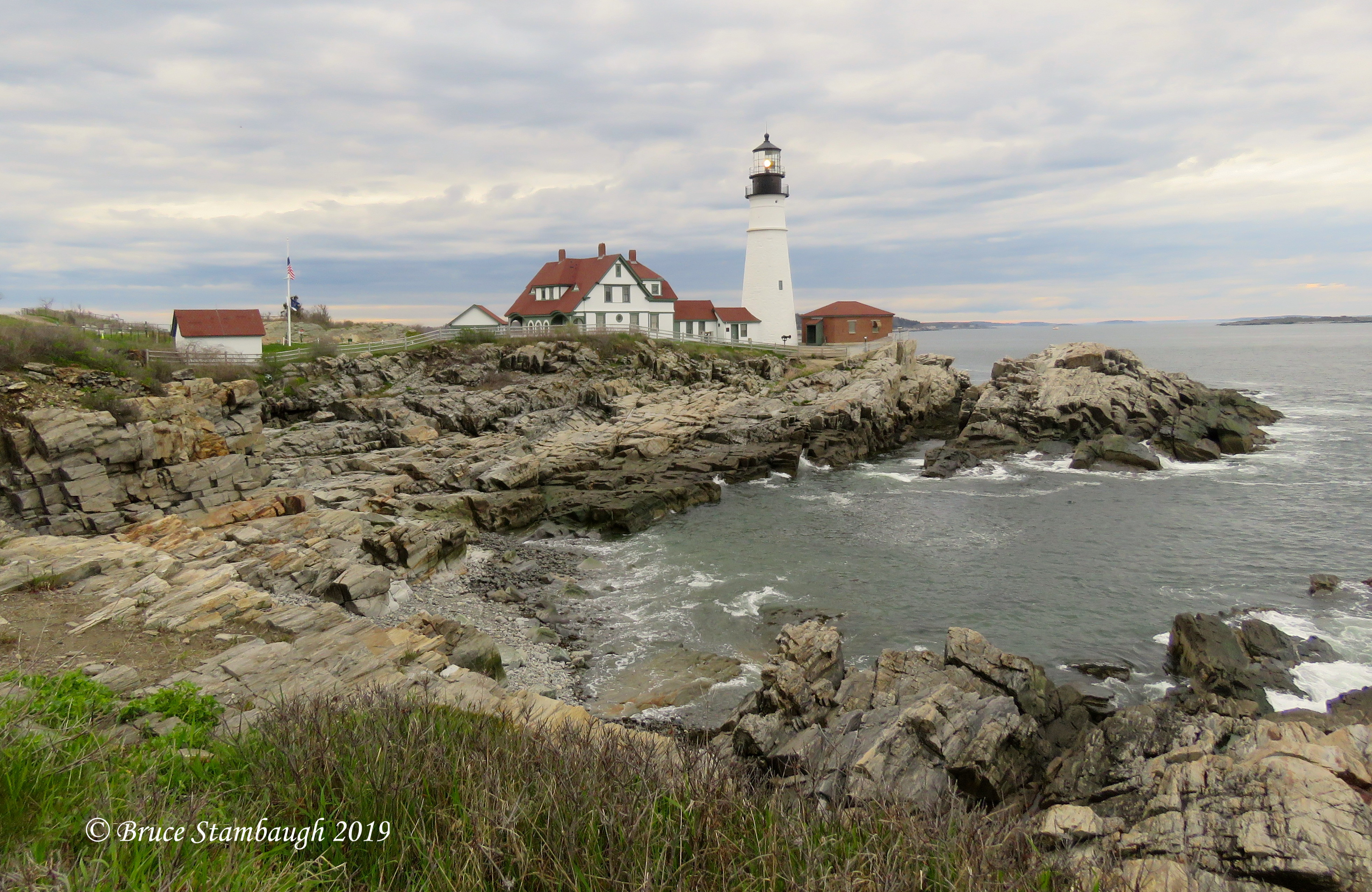
On a recent trip to New England, we were traveling on U.S. 1 along the Maine coast when Neva had an idea. Friends had a summer home somewhere in Maine, so she decided to text her college friend to find out how near we were to their vacation place. It turned out we were really close.

Since I was driving, Neva read aloud the text replies. Our friend said they turn right at the Dairy Queen. I looked up and low and behold there was the DQ. We had to seize this moment that seemed meant to be.

I turned the van around and headed down the road. Meanwhile, Neva was getting the address and specific instructions to their house. They were perfect.

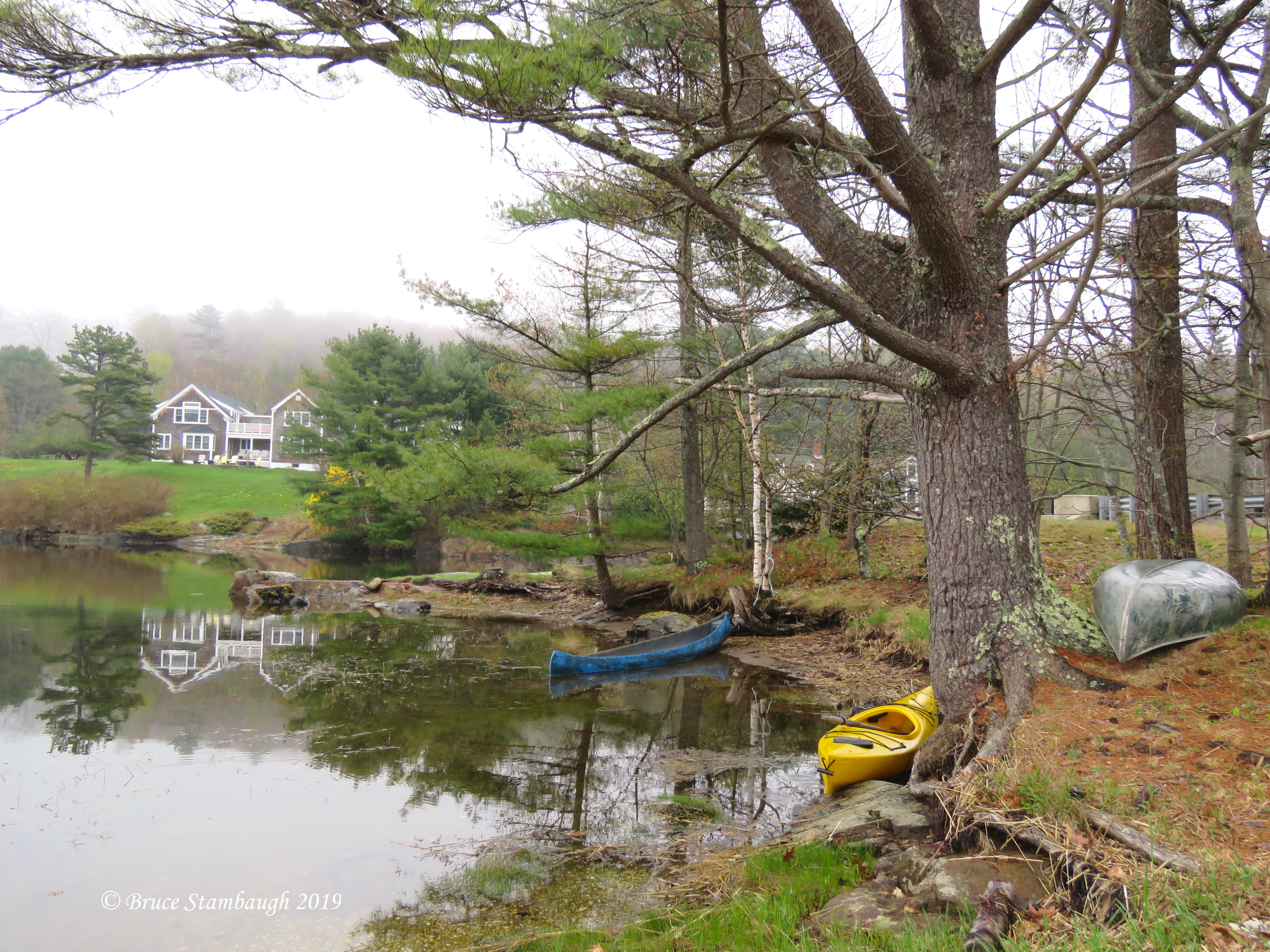
Even in the rain and fog, the sights along the way were breathtaking. We wound our way down the peninsula toward the sea, passing trees, houses, local businesses, streams, marshes, and estuaries.

Along the way, we found calendar-worthy real-life scenes. I noted places I wanted to photograph on the way back to the highway. Our first priority was to find their home. It wasn’t hard. Decorative homemade signs tacked to a tree got my attention, and pointed the way to Little River Road.

This slideshow requires JavaScript.

We had seen photos of the lovely seaside home and its vista before. Even though fog limited our view, we were immediately entranced. Surrounded by birds singing, gulls calling, waves crashing, the mingled fragrance of pines and ocean, we were smitten.

Neva stayed on the deck while the sea drew me down the slight hill. From the rocky beach, I spotted a small flock of common eiders floating offshore. Greater and lesser black-backed gulls claimed a sandy point across the way. It was the place our friends walked to at low tide.

I couldn’t have wiped the smile off my face if I had wanted to. A sense of peace and longing overcame me, and I gladly embraced it. Standing there in person I felt like Walt Whitman.

I didn’t want to leave, but we had no other choice. I stopped several times as we headed back north. I photographed boats moored waiting for their owners, canoes cast aside long ago but resting as if their occupants had stopped for lunch. Forsythia bloomed bright against the fog and reflected mirror-like in the positively calm waters.

I was ecstatic, electrified at the surreal wonderland all around me. I was so glad we had played our hunch and made that U-turn.

Driving a scenic highway was one thing. Spending a little time surrounded by this unexpected beauty was quite another. Once again, spontaneity rewarded us with a sweet, memorable encounter.

Right where they were left.

© Bruce Stambaugh 2019
Reflections on being a father

As I reflect on my seven decades of living, it is only now that I realize just how much I have enjoyed the role of helping to raise a son and a daughter. I recognize that I made many mistakes as a father. I also believe my wife and I got a few things right.

Being a father is a huge responsibility. For me, I didn’t fully appreciate parenting’s magnitude. I flew by the seat of my pants, using others as models. For good or ill, my father was my chief influencer.

Dr. Benjamin Spock aside, us baby boomers basically were on our own when it came to being parents. After all, neither the Internet nor Google had been born.

We were offspring of the silent generation. Even with other parents as role models, not counting Ward and June Cleaver, I heavily relied on common sense and practicality in being a father.

I understand that we didn’t parent alone or in isolation. My wife and I had much help from friends, family, teachers, and the very organizations in which we served.

My wife and I tried to be on the same page when it came to parental decisions, though we weren’t always consistent. Still, together, we managed to raise two healthy youngsters from diapers to diplomas into adulthood, and then let them fly on their own.

As parents, we tried not to alter our lifestyles significantly once our children arrived. We took them to concerts, calling hours, museums, baseball games, and family picnics. We visited cities, state and national parks, hiked and fished, and generally enjoyed showing them the breadth and depths of life, as we knew it.

Being the father of adult children is a whole different ballgame than when they were youngsters. It is difficult to watch them make decisions similar to what their mother and I had done and not say anything unless asked.

However, being a grandfather has given me a clearer perspective on fatherhood. We live in a global world today, just as we always have. Only I didn’t connect those dots then. I do now, and I am so glad to see that both our son and daughter comprehend how interconnected the world in which we live is.

As mother and father, we imperfectly tried to teach and model the precepts of service, humility, fairness, justice, and mercy. Now, as a senior citizen, I am so grateful for the opportunities to observe our “children” in their daily, imperfect walk to make this rough and tumble world a better place.

I have cherished my role as a father. Now I find great joy in listening, observing, and reflecting as I watch our grandchildren grow all too quickly. It’s like being a parent all over again, only without the direct primary responsibility or the tax deductions.

If I had it to do over again, I would work diligently to explore far beyond my own life space, beyond my own comfort zone. I realize, too, the duplicity of my community involvement. Frequently other activities took precedence over that of my family. I also know that participation set examples of service to others for them.

It is gratifying to watch your adult children successfully employ the precepts you labored to teach them. It is equally uplifting to be there when they need assistance in doing so.

I am grateful that our daughter and son have developed into successful, productive, and caring adults. What more could a father want?

© Bruce Stambaugh 2019
Bay Photos by Donna

Wildlife Photos From The Chesapeake Bay Region

ROAD TO NARA

Culture and Communities at the Heart Of India

K Hertzler Art

Artist and nature journalist in the Shenandoah Valley of Virginia.

Maria Vincent Robinson

Photographer Of Life and moments

Gabriele Romano

Less Noise. More Meaning

Jennifer Murch

Art is the only way to run away without leaving home. -Twyla Tharp

Roadkill Crossing

Writing generated from the rural life

ANJOLI ROY

writer. teacher. podcast cohost.

Casa Alterna

El amor cruza fronteras / Love crosses borders