Is October the best month?

Maryland Mountain, fall color
Changing leaves.

By Bruce Stambaugh

Everybody has favorites. From favorite ice cream to a favorite sports team, we humans tend to quantify and qualify most everything.

Months of the year are no different. I’m as guilty as the next person in this category. October is far and away my favored month.

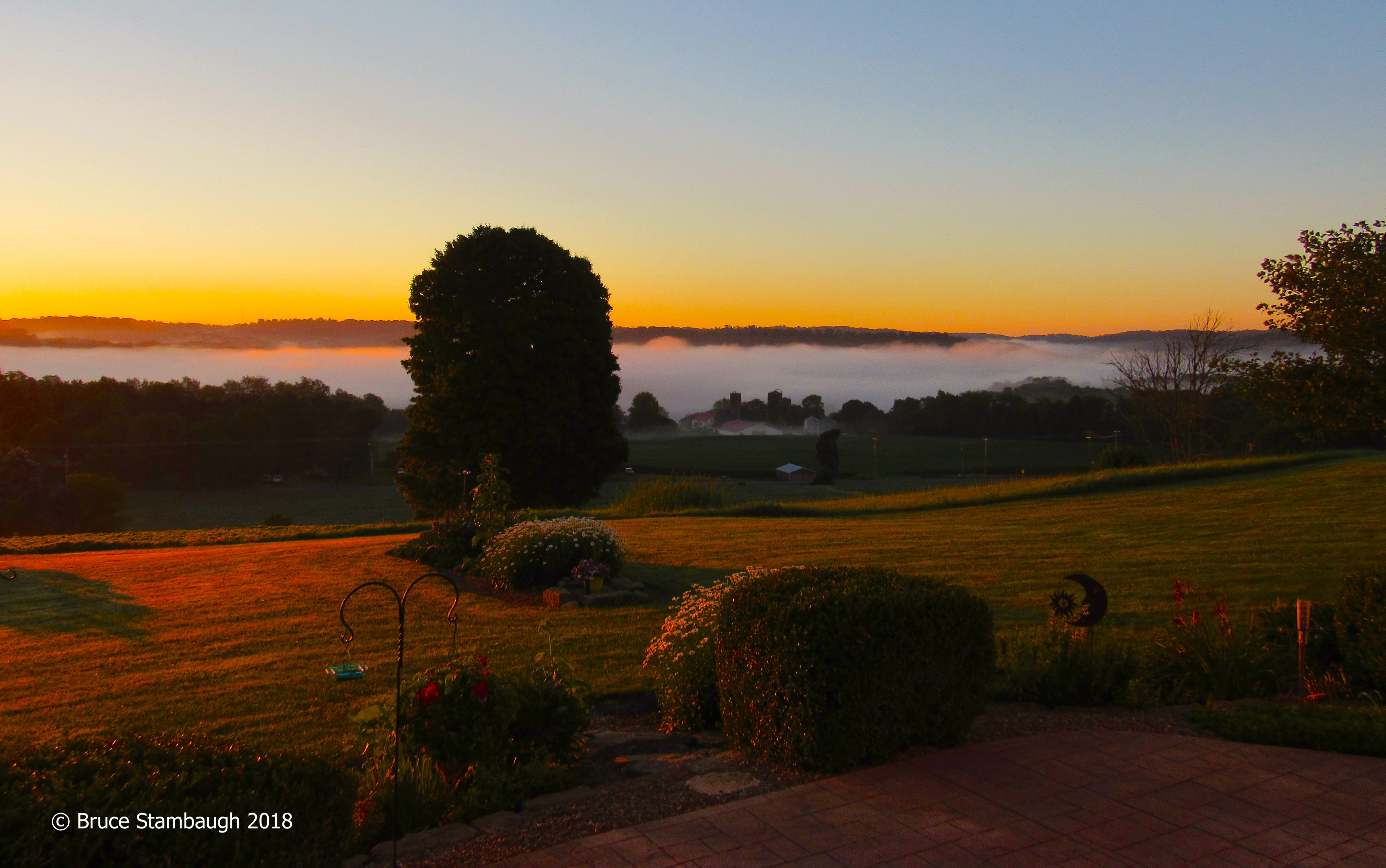
I’m likely not alone in stating the primary reason for liking October so much. The ever-changing color schemes fascinate me. Living all of my life in areas where mixed hardwoods warm the landscape with vivid, fiery colors makes that choice easy.

I hope I never take that annual beautification for granted. That’s because no two autumns are alike. So many factors go into just how colorful the trees will be. Half the fun is anticipating the intensity of the leafy rainbows.

We wonder what effect the persistent wet weather of the summer will have on the colors. Will they be bright or will they be dull? Will the leaves even last long enough to fully color, or will they succumb to gravity’s inevitable tug and prematurely tumble to the ground?

I know that may sound like a silly question. But my wife and I have already noticed that the leaves of the red maples in our yard in Virginia’s Shenandoah Valley began falling days ago. Last year they hung on red and green until well after Halloween.
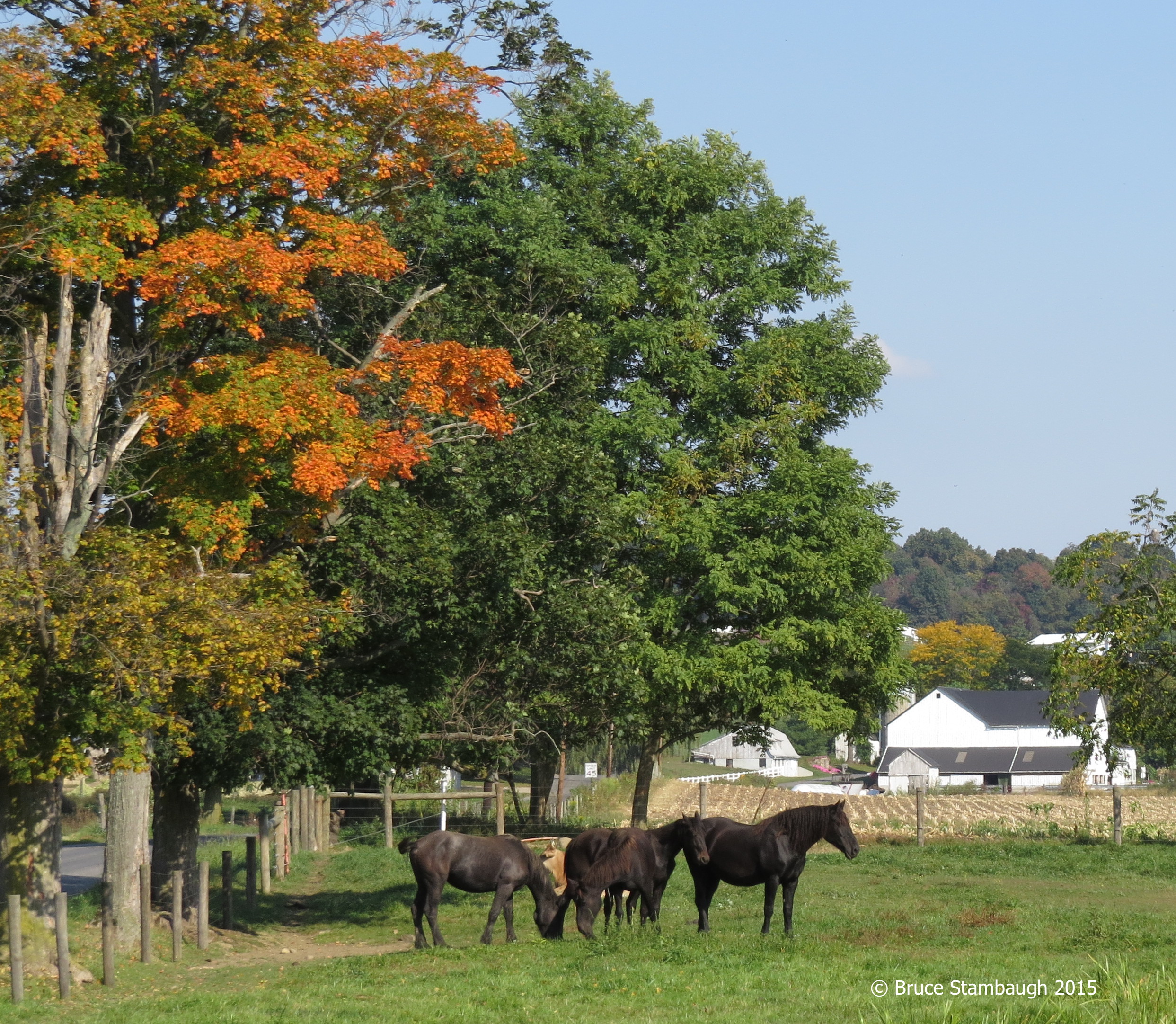
Holmes Co. OH, autumn leaves, sugar maple
Changing colors.
If we pay close attention, nature sometimes offers us a sneak preview. Certain sections of particular trees begin to turn long before the rest of their foliage. Sugar maples are especially prone to this phenomenon. Could it be the compounding effect of the day after day absorption of the sun’s intense first rays during September and October mornings?

Trees aren’t the only canvas on which nature paints though. Fall also displays her colors among the agricultural harvest in the waning days and weeks of the growing season. The warm hues of gourd and squash varieties rule produce stands and supermarkets everywhere.

Those yellows, oranges, and crimsons contrast nicely with their hosts’ rich greens. Mums and sunflowers testify to the validity of these facts, too. The array of fruits and vegetables available also join the splashy seasonal show.

Restaurant menus highlight the food of fall with autumn entrees and beverage offerings alike. However, I’ve not joined the pumpkin-spice-flavored-everything club. I’m happy with my wife’s homemade gluten-free apple crisp washed down with a glass of delicious and locally produced apple cider.

Milder and less humid air is a welcome change from the steady heat and humidity that filled summer and early autumn days, especially here in Virginia. As I have unfortunately discovered in my first year of living in the Commonwealth, invisible pollen particles fill the air awakening allergies I didn’t know I had. So for selfish reasons, I look forward to the first killing frost.

I realize that the end to the growing season means we are closer to the cold and dark of winter days. But the earth still turns on its axis and rotates around the sun. Without winter there can be no spring.

Perhaps I am too taken with the overall aura of October itself. Our North American society has made October a festive month with one community celebration after the other. Consequently, food truck operators work overtime to meet all the demands for their tasty treats.

All in all, October is fall’s time to shine. With the harvest in full swing, October is a celebratory time. For me, that is excuse enough to elevate the tenth month above its jealous siblings.
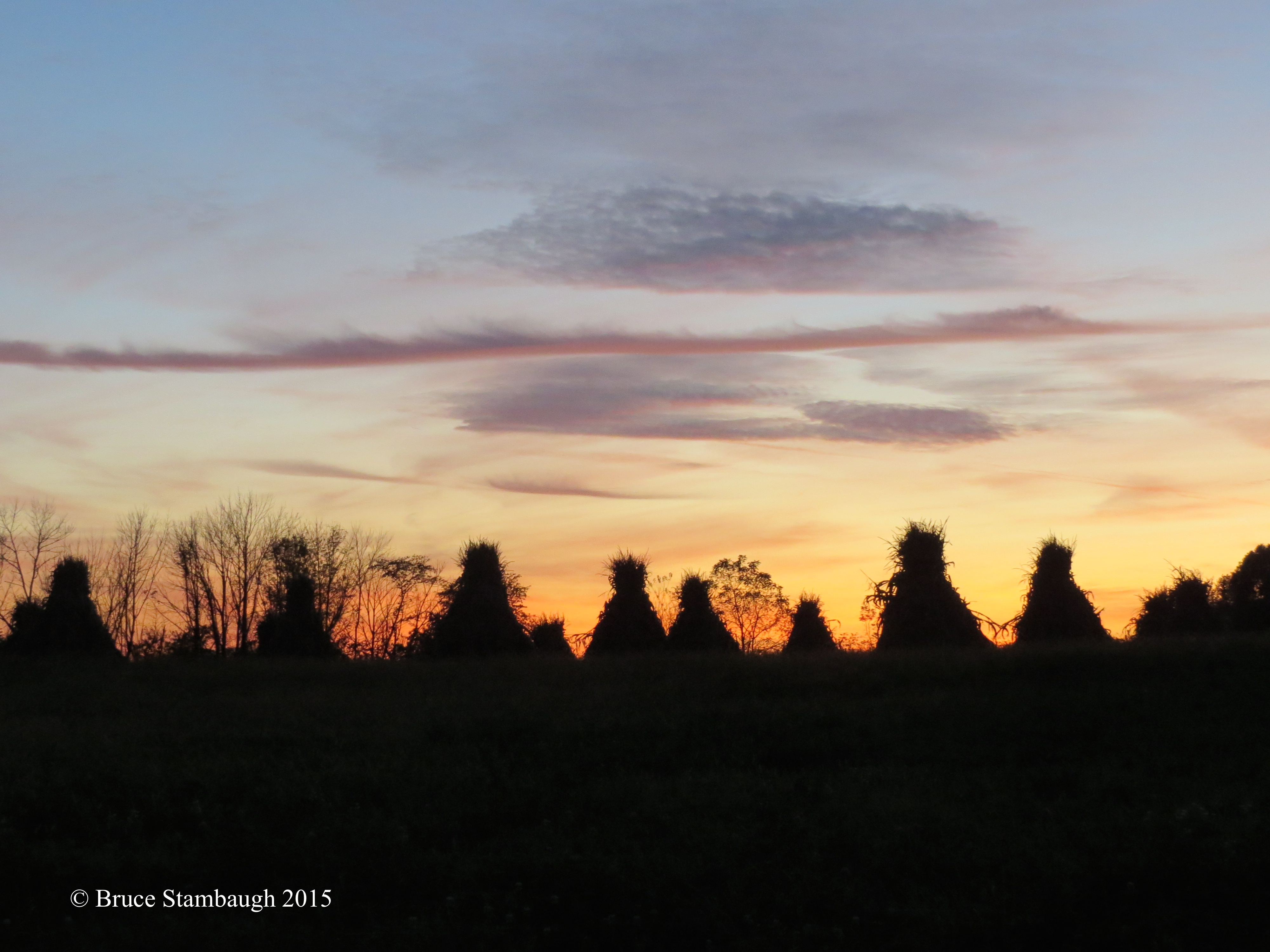
Corn shocks at sunset.

© Bruce Stambaugh 2018

How a pair of leaky boots sent me back in time

flooding, river in my bakcyard
A river ran through it.

By Bruce Stambaugh

Memories often materialize in the most unusual of circumstances.

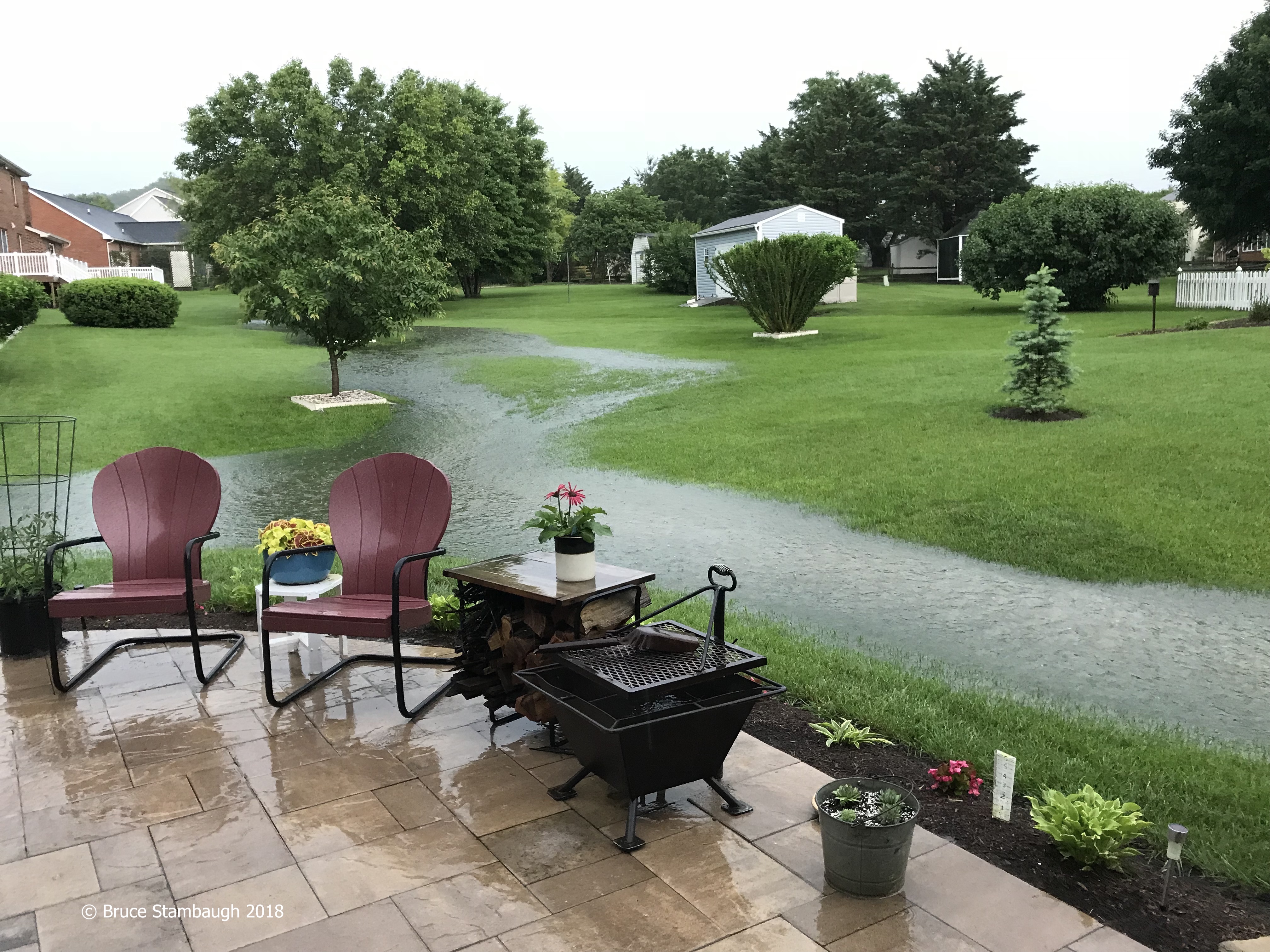
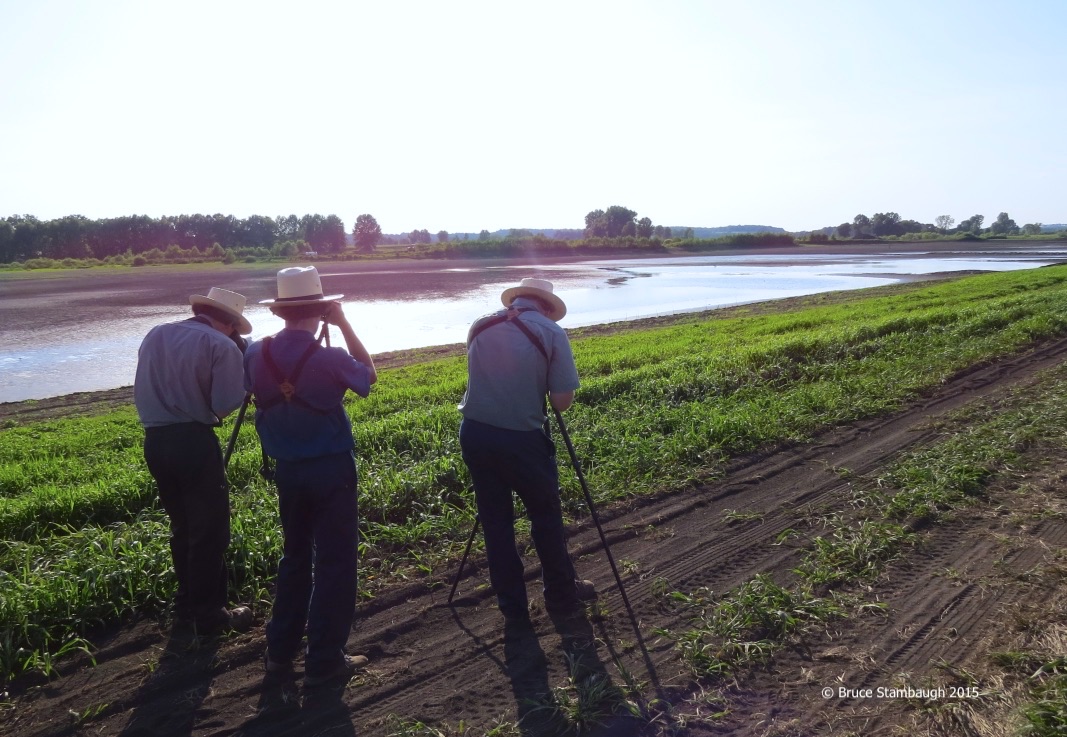
It was early June, and we had endured rainstorm after rainstorm. At times, the rain pelted down at the rate of two inches an hour.

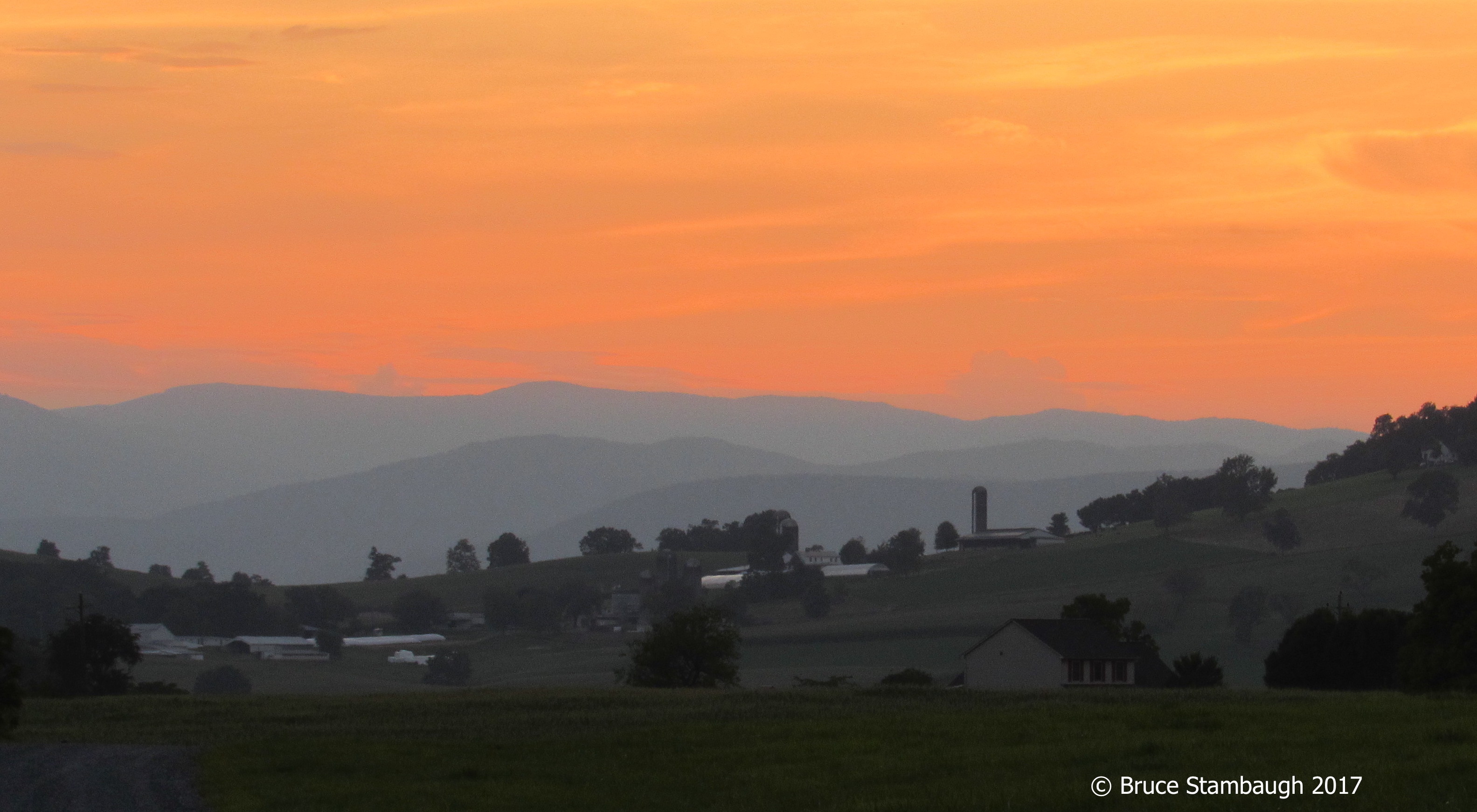
When you live between two mountain ranges and groundwater has already saturated the sticky, red-clay soil, that much precipitation spells trouble. And trouble found lots of folks throughout the picturesque Shenandoah Valley.

High water flooded roadways, keeping fire departments and rescue squads busy with multiple water rescues. It was still pouring when a river of muddy water rushed through our backyard.

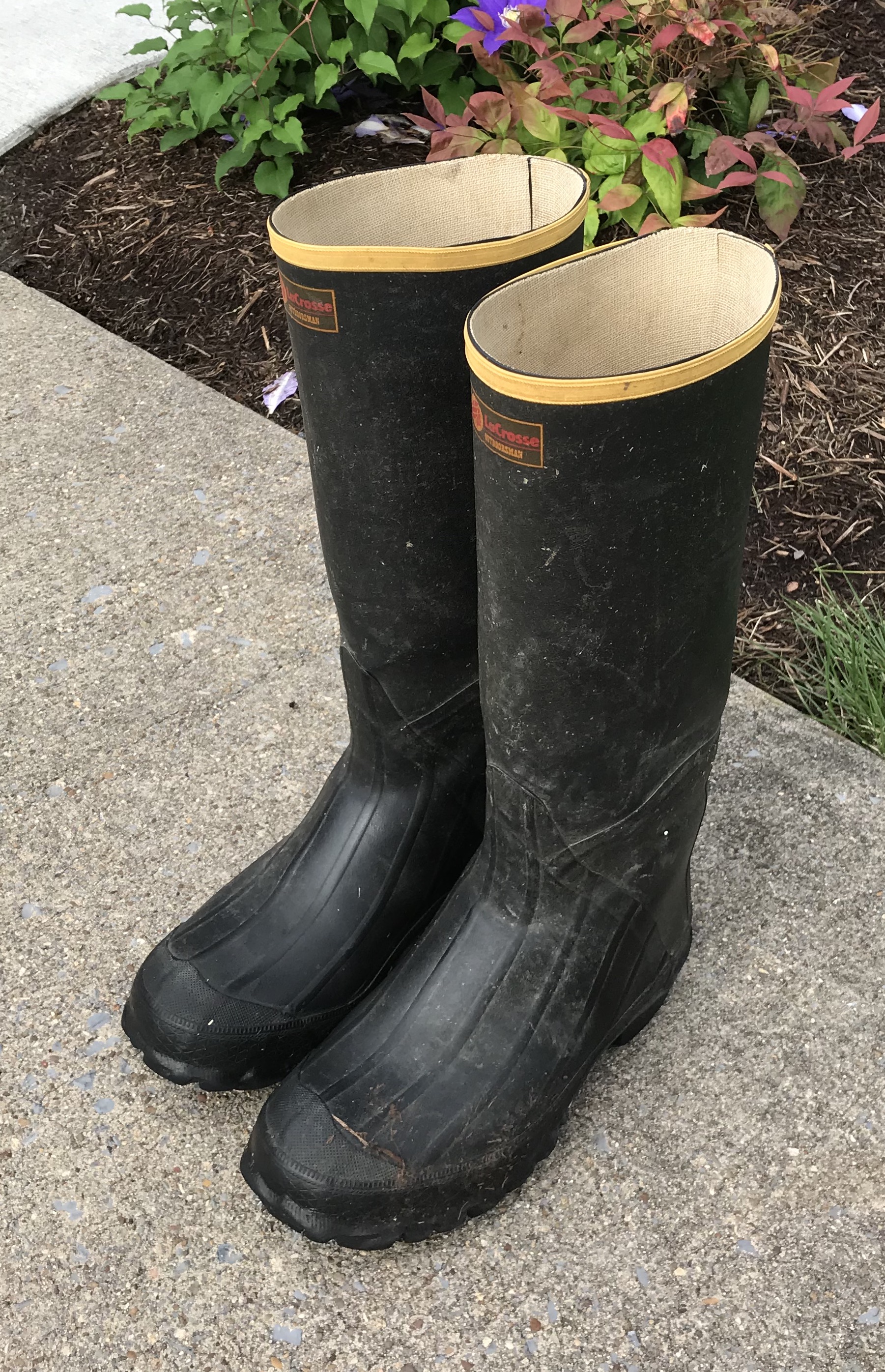
I decided to check the five-foot crawl space beneath our ranch home. I slipped on my old black gumboots and jumped into eight inches of water. Instantly, cold, yucky water surrounded my right foot. The combination of old age and wear and tear had finally taken their toll on my versatile rubber boots.

I was grateful a local plumber was gracious enough to bail us out despite being swamped with other calls. Everything beneath our home seemed to have weathered the storm except my precious boots.

rubber boots, gumboots
My old friends.
Gumboots are knee-high footwear made of rubber and fabric designed for all kinds of outdoor activities. Those boots and I went way back. They had served me well in a variety of conditions over several years.

I remember where I bought them nearly three decades ago at a now-defunct shoe store in Mt. Hope, Ohio. I wore the boots often in many different situations. I had depended on them time and again, often in dire instances.

When a storm hit, I put them on to check my roads as a township trustee. I can’t tell you how many flooded streets and ditches I waded through wearing those boots. I traipsed through many snowstorms with them, too.

Once after a big snow, I spied a grizzled old opossum munching birdseed from a feeder that sat atop a picnic table in our backyard. On went my coveralls and those gumboots. I intended to shoo off the unwanted mammal. As I opened the door, our pet rat terrier Bill shot out the door ahead of me.

Charm OH, Ohio in winter, ice cycles
Scene of the rescue.
Bill’s fearless instincts immediately kicked in when he spotted the opossum. The little dog circled the unimpressed marsupial once, and on his second pass, Bill leaped for the much larger animal’s tail. The opossum hit the ground with a thud, dead on arrival.

Those boots even helped me as a volunteer firefighter and EMT. On one run, I found myself standing in the shallows of a stream holding up an elderly victim who had fallen into the rushing creek. I still remember the fire chief’s surprised expression when he saw me in the water with those black boots.

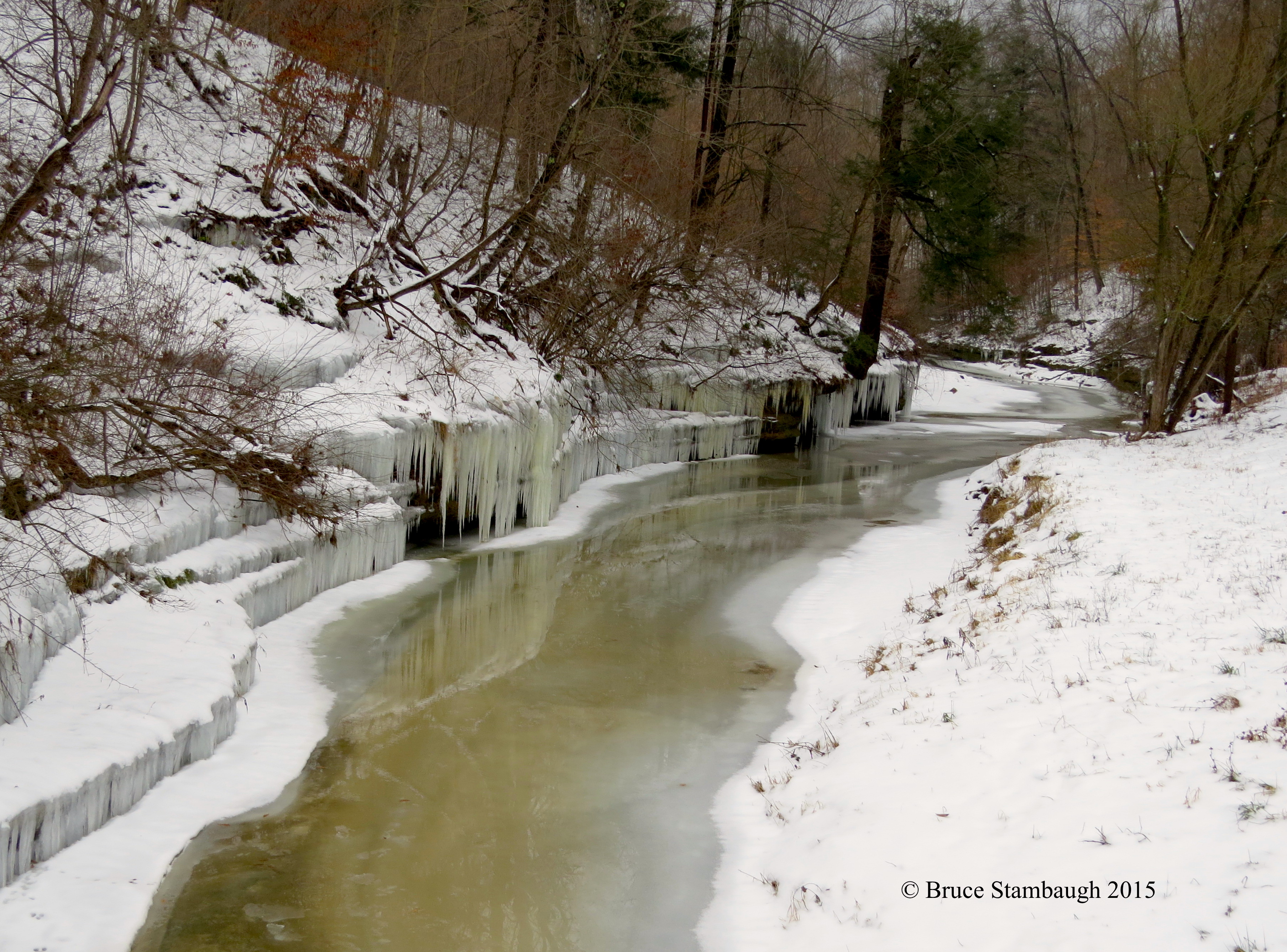
Another time, on an early subzero February morning, I spotted our Amish neighbor heading across frozen farm fields toward our house. Levi was delivering the promised fertilizer for our garden. Steam shimmered in the morning light as it rose from the hardworking draft horses and the load of manure they were pulling in the spreader.

By the time I dressed and pulled on my gumboots, I was too late. Levi and his pitchfork had already deposited a still-steaming pile of manure onto the garden plot. Standing in that frigid, fragrant morning air, I asked him how much I owed for the delivery. Levi just smiled and said wryly, “Nothing. I don’t have anything in it.”

Like I said, sometimes the strangest circumstances stir the fondest memories.

Ohio's Amish country, winter, Holmes Co. OH
Our Ohio backyard winter scene.

© Bruce Stambaugh 2018

The sights and sounds of summer’s end

goldenrod, rural scene
A field of goldenrod.

By Bruce Stambaugh

My wife and I sat on our back porch enjoying a light lunch. A gentle breeze sifted through the backyard as monarch and skipper butterflies flitted about, buoyed by the day’s brightness and coaxed on by instincts humans have yet to understand fully.

The rhythmical hum of neighborhood lawnmowers joined in concert to drown out the hypnotic cadence of the cicadas and katydids. As if they were following instructions, the leaves of red maples and sugar maples were beginning to blush just a tinge of their real color hidden all spring and summer by the chlorophyll.

Try as it might, Daylight Savings Time can’t delay the inevitable. The sun and the moon, the stars and the planets, work their seasonal magic, triggering an unstoppable unfolding of goodness and allergies alike.

Even in the noontime heat and humidity, senior citizens and expectant mothers walk their dogs on the broad neighborhood streets. In some cases, it’s the other way around, leashes fully extended, human arms straining to keep control and still chat on their cell phones.

Dragonflies dart here and there, somehow avoiding being lunch for some hungry migrating birds. Black and turkey vultures circle overhead, letting the convection vortexes carry them higher and higher.

White and yellow Sulphur butterflies zigzag their way past my window as if imitating fallen leaves being blown through the yard. A few grasshoppers jump from one blade of grass to another in short flights like so many commuter planes.

This slideshow requires JavaScript.

Summer’s full corn moon has come and gone in one cool weekend, a pleasant relief from the storms and heat. But come Monday, the late summer swoon returned, ushering in more warm and muggy weather all across the eastern United States.

So intense was the dreaded combination of atmospheric siblings heat and humidity, some schools mercifully canceled or dismissed early. Without air conditioning, students and staff swelter, unable to conduct the proper learning processes.

That weather, however, eventually ends. Sooner or later, September’s customary, soothing elements do return. Blue-sky days precede comfortable evenings followed by starry nights. Unless infiltrated by tropical storm remnants, thunderstorms come and go without catastrophic consequences.

That’s what makes September the jewel in fall’s seasonal crown. It quietly but most assuredly melds August’s stubborn temperament into October’s Technicolor Dreamcoat landscape.

Until the first killing frost, September is the pollinators’ paradise. Squadrons of bees, flies, ants, butterflies, hummingbirds, and hummingbird moths follow the sweetness from fall bloom to fall bloom.

The mums’ warm colors have replaced the showy bubblegum petunias as the go-to domesticated floral display. Melons, gourds, pumpkins, and squash take center stage at produce stands. Thorny thistles and goldenrod populate the rural roadsides until they meet their sickled doom.

The furry critters must note the changes as well. The squirrels and chipmunks are bolder, more aggressive in their foraging, which is only appropriate. Their lives likely depend on the amount they stored if they can remember where they put their cache.

The morning and evening chatter at the backyard bird feeders is diminished to Song Sparrows and Northern Cardinals, with the Carolina wren making an occasional soliloquy. Now and then the northern mockingbird will chip in a few bars, too.

Once the winter migrants show up in a month or so, that scenario will change. Until then, we’ll enjoy the spontaneous choruses of the crickets, katydids, and cicadas. We’ll joyfully anticipate autumn’s arrival while summer’s pleasantries still linger.

Baker WV, West Virginia
A late summer thunderstorm.

© Bruce Stambaugh 2018

A sunrise that made my day

Ohio's Amish Country, Holmes Co. OH
The sunrise at its summit.

By Bruce Stambaugh

I sat in awe at the beauty unfolding before me. What I had seen compelled me out into the dawn of the day.

I had slept restlessly despite having been emotionally and physically drained by the previous days’ activities. I had returned to Ohio to assist our son in preparing to move before the professional movers would shuffle him off beyond Buffalo to upstate New York for his new job.

For two long, hard days, we sorted and packed his items, and cleaned the house he was leaving for a smaller apartment. I would also stuff our van with family heirlooms and thrift store pieces to take back to Virginia. It was hard to see him off, he and I both in tears.

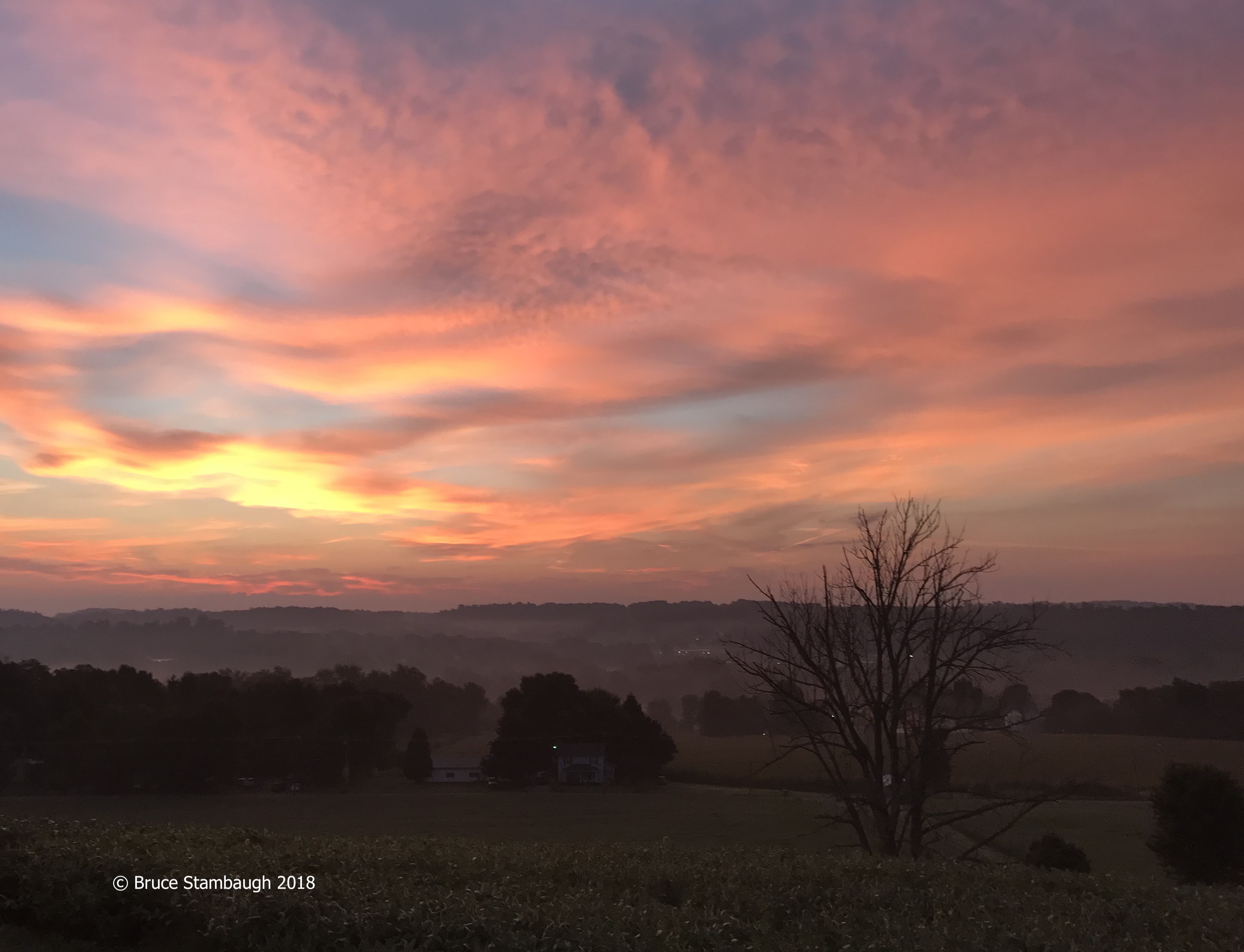
With those emotions still stirring internally, I surrendered to what lured me outdoors. The day was dawning with a broken cluster of wispy gray clouds hanging in the eastern sky. A spot of pink hue peeked at the horizon, giving me hope of a lovely sunrise.

I sat in the morning’s coolness on the patio waiting breathlessly for the show to begin. Would those clouds enhance or hinder a brilliant sunrise? The answer found itself in patience, not my best quality.

Flowers reflect first light.
Nevertheless, I remained nearly alone overlooking Millersburg, Ohio from our friends’ place high on a hill. A light, feathery mist lingered over the hardwoods, farm fields, and commercial properties that filled the Killbuck Valley.

As the sky brightened ever so slightly, a menacing caw, caw, caw punctuated the morning air. I strained in the dim light to find the source of the harshness. Suddenly, a pair of inky figures, their black wings flapping furiously, repeated their raucous call.

The two American crows were on a beeline southwest in hot pursuit of another crow far ahead of them. It was like two undercover cop cars chasing a crook.

The only other sounds were human-induced, the distant hum of a few vehicles, and a dump truck on an early run from the gravel pit down the road. Neither crickets nor katydids had awakened yet.

Then it happened. A silent burst of radiance raised me out of my chair and freed me from my stupor. I danced barefoot into the dewy lawn. I soon found myself at the southeast corner of the yard where I had a better angle to view the sunrise and could ignore the obnoxiousness of an ill-placed cell tower, its red lights annoyingly blinking.

This slideshow requires JavaScript.

Ironically, the only camera in hand was the one on my cell phone. So I hypocritically began snapping photo after photo of the stunning, flowing scene changing second by second.

Those once gray clouds now glowed gold, yellow, orange, red, pink, mauve, and crimson. In the foreground, security lights and streetlights twinkled below the incredible show. One would think I was observing my first ever sunrise the way I clicked away.

Still, I continued to capture the incredible drama before me, not for myself so much as for others. In such a setting, my joy comes as much in the sharing as experiencing the splendor. When the sun finally poked above the horizon, I walked back towards the house.

This sunrise had awakened me as no other had. I felt renewed and refreshed from the emotions and exertions of the previous days. I was ready to begin my journey home.

For most folks, if they saw it, this was just another sunrise. To me, it was a blessed miracle.

Millersburg OH, Holmes Co. OH
Even the northern sky flashed radiance.

© Bruce Stambaugh 2018

Celebrate life’s milestones as they happen

A memorable sunset.

By Bruce Stambaugh

Milestones. We all have them throughout our individual lifetimes.

These life events deserve recognition. There is no better time than the present to acknowledge and celebrate them as they occur.

The start of a new school year is such an occasion, and many of my friends on social media celebrated that event. Multiple posts of children and grandchildren heading off for the first day of school were shared.

I joined the party.

Our oldest grandchild is a child no more. Evan began his high school experience as a freshman recently. His younger brother, Davis, entered his first year in middle school as a sixth grader. Our granddaughter Maren started third grade at her elementary school.

Three students, three different schools, three different time schedules. That’s a family milestone with crisscrossing ramifications. Neva and I are glad we’re close by to help weave the way through that tangled web of unfolding activities.

granddaughter, granddog,
Observing the observers.
Disbelief overtook the significant adults in the lives of the three grandkids. How did we reach this place in time already?

Evan, Davis, and Maren just took it in stride as if it were just another day at school. Perhaps they are the wisest of the group.

With Labor Day upon us, I’m also reminded of the importance of vocational milestones. Being recognized for loyal service to a company for an extended period of time is an honor. Some businesses do a marvelous job of employee recognition while others not so much.

Knowing I had spent my first career as a public educator, a friend asked me about my favorite memories of school. Walking those school hallways for 30 years, I wasn’t sure how to answer at first. I had had so many enriching and endearing personal experiences that I hardly knew where to start.

The moon and Mars.
First of all, I loved my jobs as a teacher and then as an elementary principal. Both positions were most assuredly milestones on my timeline of life.

I remember the joy of watching my very first students file shyly into the fourth-grade classroom, unsure of how to react to their very first male teacher. Given the characters in that crowded classroom, it didn’t take long for their various personalities to emerge.

As a principal, the first day of school was a joy for me. Much of my energy and that of the support staff went into preparing for that day to ensure a smooth start to another school year.

As I reflected further, though, I realized that the most important milestones for me weren’t the first or last days of school. No, the many precious moments on particularly hectic, stressful days are what enriched my life the most. The significant memories for me were the touching ones. Gold watches can’t compete with group hugs from sweaty, sticky kindergartners returning from recess.

Anniversaries, birthdays, retirements, promotions, owning your first home, completing your first marathon race, competing in the special Olympics are but a few of society’s valued milestones. But for me, the most cherished ones can’t be memorialized in any material or monetary form.

Monarch butterfly
A Monarch butterfly making a fuel stop.
The milestones that mean the most are at hand in everyday life happenings that we all experience. A monarch butterfly refueling on a sunflower. The unexpected grasp of a child’s hand around your finger. The moment the full moon peeks over the horizon. A bright double-rainbow arched in the sky after a fierce thunderstorm.

These are but a few of the highlights that I cherish. What are yours?

© Bruce Stambaugh 2018

I don’t know how she does it

By Bruce Stambaugh

August is rapidly coming to a close. For our family, that means that Neva is in her comfort zone doing what she does best.

Neva loves to help others. It’s in her DNA. In the fall, our daughter’s busy family becomes the center of our attention. In part, that is why we moved to the Shenandoah Valley.

Carrie is the women’s volleyball coach at Eastern Mennonite University. Her personal and professional schedules are head-spinners. Practices and meeting with players consume Carrie’s time. Once the regular season starts soon, it gets to be grueling.

canning
Neva spends much of her time in the kitchen preparing meals, frozen sweet corn, and applesauce for others.
Of course, our daughter has a family to care for as well. That’s difficult to do, even with a helpful and talented husband. That’s where we come in, especially my wife.

Before our move from Ohio’s Amish country to the Commonwealth of Virginia, Harrisonburg became our temporary home in the fall. Neva lived there August into November. I shuttled back and forth during those months as work duties called.

Now that we are retired and live just five miles away, we can quickly assist our daughter and her family. When it comes to Neva, “assist” is an understatement.

My energetic wife puts all she has into helping our daughter’s home run as smoothly as possible. It’s a must do situation with three active grandchildren and both of their parents working full-time.

creativity,
Neva added a repurposed screen door to a flowerbed.
With Neva taking the lead, my wife and I gladly step in to do what we can. Me? I do whatever I’m asked or told to do. If you are a betting person, wager on the latter.

Of course, the grandkids and our son-in-law all do their part. We fill in the gaps when work and school schedules preclude household chores being completed.

When it comes to domestic skills, I can’t hold a candle to Neva though. She plans and prepares family meals. I set the table and clean up. Occasionally, Neva prepares food for the entire volleyball team. I’m the gopher. I go for this and go for that.

While Neva is cooking or cleaning or shopping, I might be running the oldest grandchild to the gym for workouts or picking up the middle grandkid from after-school activities or accompanying the youngest to her soccer practice.

See what I mean? All that coming and going keeps us active, energized, and helps us sleep well at night.

In addition to all of this activity, our son has taken a new job in a different state seven hours away from us. With Neva leading the way, we helped him ready for this significant transition in his life, too. We were glad to do what we could.

Why does Neva do all of this? It’s all she knows how to do. It’s how she loves. Her compassion manifests into tasty, nutritious meals, quality time spent sharing her gifts and wisdom with the grandkids, and a sense of security for our son, daughter, and son-in-law.

enjoying an evening
Every now and then, Neva takes a break.
I marvel at Neva’s determination, fortitude, skills, and drive to aid others. It’s definitely that time of year again, and we all reap the benefits of Neva’s generous gift of hospitality.

Our fall schedules are hectic to be sure. Neva and I wouldn’t have it any other way.

To paraphrase the late Arthur Ashe, we do what we can with what we have right where we are. At our age, at any age really, that’s all that can be expected. In Neva’s case, she exceeds any and all expectations.

© Bruce Stambaugh 2018
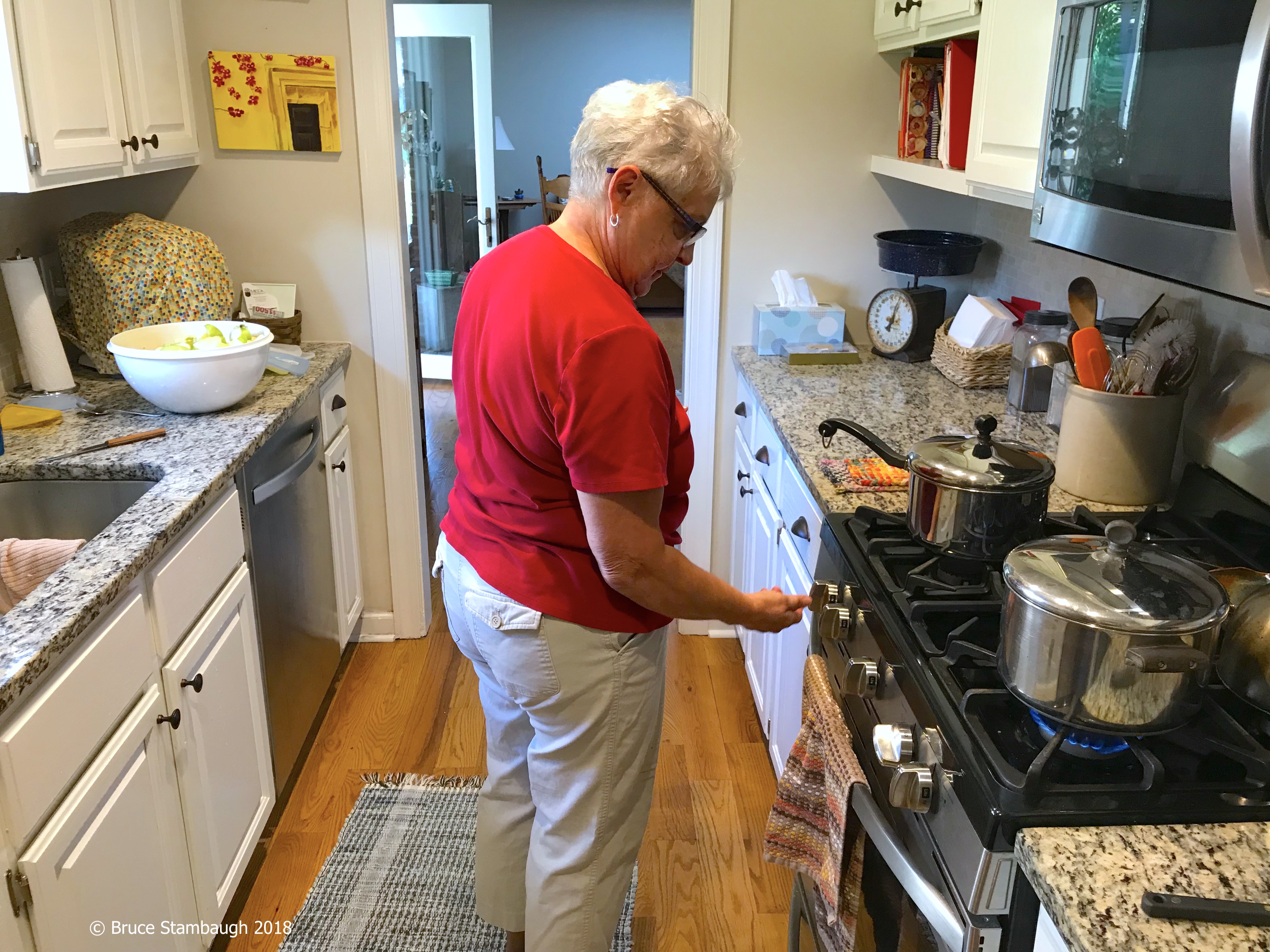
How retirement was meant to be

Virginia sunset, August susnet
Sunset wakes.

By Bruce Stambaugh

There we were, two couples sitting around a table at 10 o’clock on a beautiful but sultry Monday morning playing cards. Our only objective was to win the game.

Nana Neva and I had taken an extended weekend break from our part-time grand-parenting duties to explore a less-familiar area of Virginia with another retired couple.

We had worked all of our lives to reach this point. Playing cards followed by a round of dominoes seemed like the perfect way to begin a new week, especially on a hot and muggy morning.

We played until lunch and then walked down the slanting limestone driveway to a cozy eatery in a marina for some fabulous homemade ice cream. Choosing which flavor became the toughest decision we made all day.

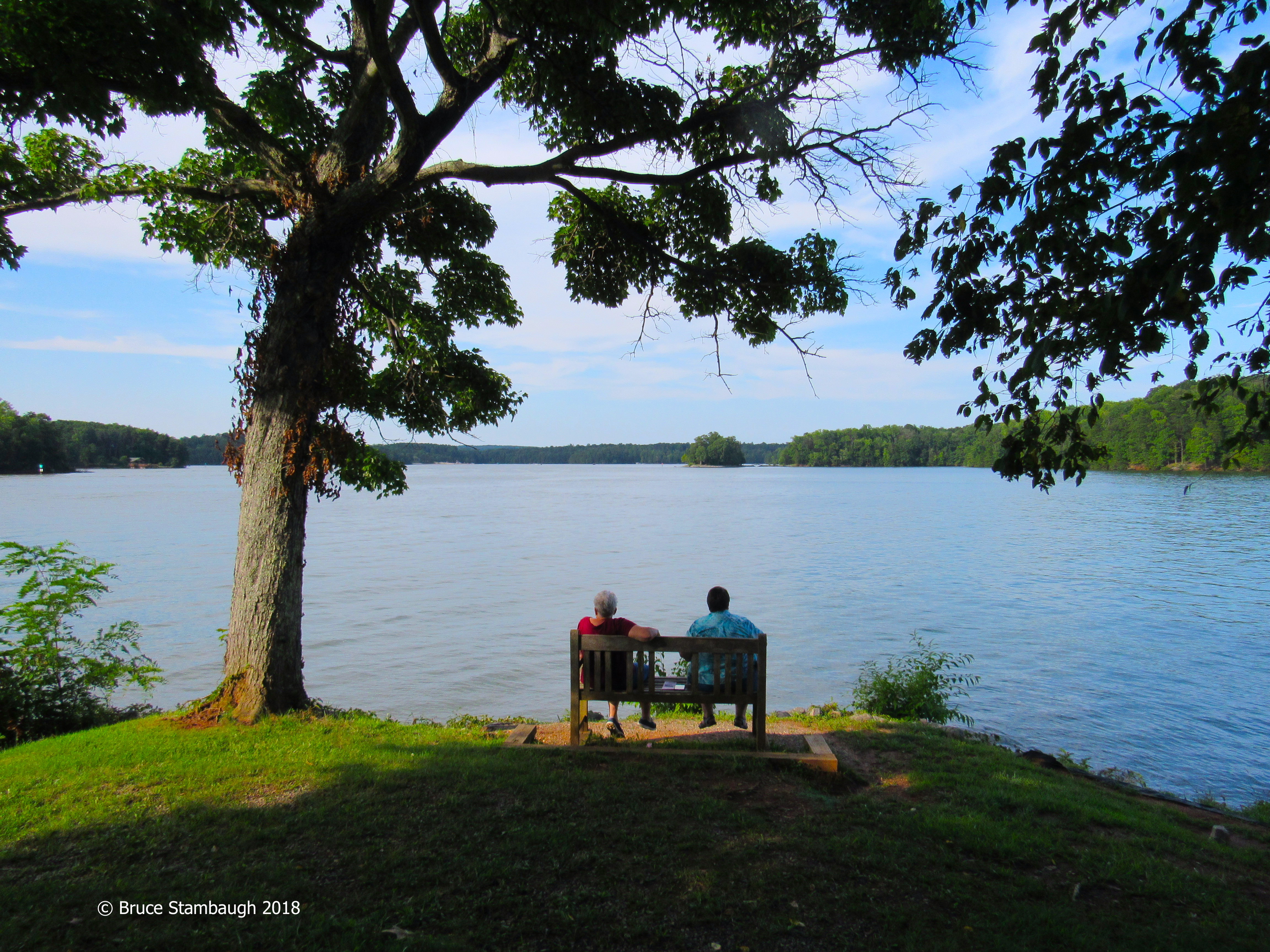
The location had much to do with our buoyant attitude. We had rented a cottage situated on a point overlooking a man-made lake where the dam generated hydroelectricity. The lake was long and narrow, the product of a few creeks damned up to fill steep valleys in southern Virginia.

Such a project brought more natural benefits than producing power. Wildlife thrived.

Each morning and evening a resident bald eagle perched on a favorite snag, often on the same limb a quarter of a mile across the bay from us. We had a perfect view from our deck that faced the water, made murky by a series of recent heavy rains.

Osprey, Virginia
On the watch.
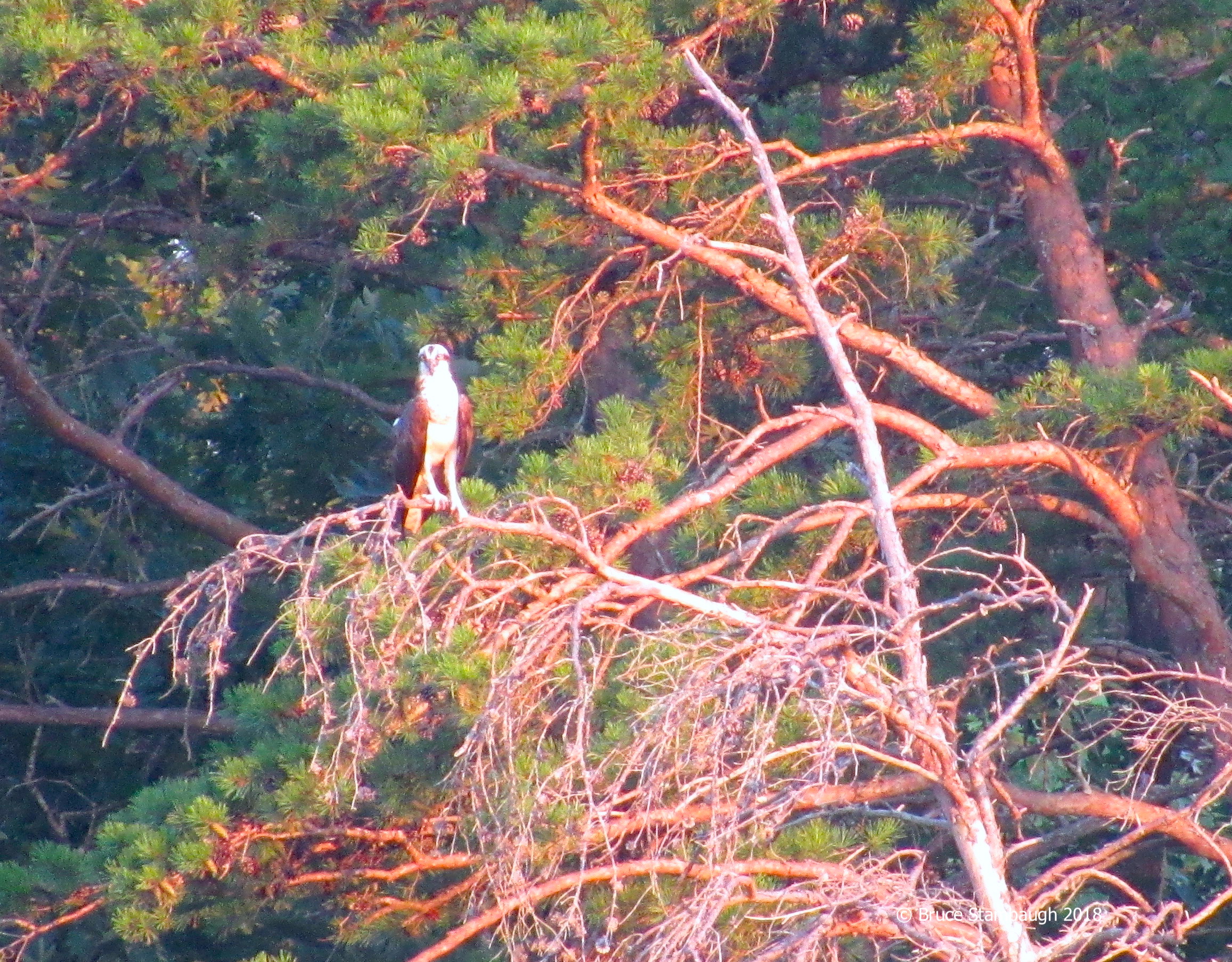
Before breakfast, I spotted an osprey perched on a dead pine farther up the narrow bay. The “fish hawk” stood tall and stately in the morning mist.

Pileated woodpeckers called and flew back and forth across the water, too, landing if only briefly in the sizable wild cherry tree in our front yard along the shoreline. An eastern kingbird, a much smaller species, chased the much larger woodpecker upon every approach. Fierceness is the kingbird’s nature.

The ripe fruit of the lakeside tree drew songbirds, too. The kingbird didn’t seem to be as bothered by the Carolina chickadees, tufted titmice, red-bellied woodpeckers, and even young redheaded woodpeckers. I could have stayed there all day to watch that show.

This slideshow requires JavaScript.

The previous day we ventured to Rocky Mount, the county seat where my maternal grandparents were born. We researched family records in the historical society. The lilt and soft, southern accent of our hostess could have been my grandmother’s.

In the process, I was a boy again, standing in the hot Virginia sun inserting a nickel into a parking meter for my father. Dad had to finish the task because I wasn’t strong enough to turn the knob so the coin would activate the meter. The street meters have long disappeared, just like the department store where a relative had worked.

We visited the Booker T. Washington National Monument where the famous educator was born and freed as a slave. The sweltering heat and humidity made it easy to envision the slaves toiling in the parched fields.

Back at the cottage, boats rippled the reflected sunset as they headed in for the evening. Spiders devoured gnats trapped in the delicate webs on the deck just as a young eagle glided across the dusk’s burnished light.

This is what retirement was meant to be. We are grateful to be at this phase of our lives.

That said a palpable quietude subdued any thought of celebration. Too many others would not know the same joy and appreciation. Empathy should temper our golden years. Compassion must rule the way to ensure a purposeful retirement.

retirement, Smith Mountain Lake SP Virginia
A picture of retirement.

© Bruce Stambaugh 2018

Fall is for the birds

bird migration, Jacksonville FL
American White Pelicans wintering near Jacksonville, FL.

By Bruce Stambaugh

Fall is for the birds.

Now, I love autumn, and birding is one of my favorite hobbies. It’s just that bird seasons don’t quite match up with those designed by us humans.

When the calendar flips to August, fall bird migration season has officially begun. It ends come December.

Migration, of course, isn’t confined to only those months. Some shorebirds started their long journeys south in July. Many of them have a long ways to go. For example, pectoral sandpipers nest in the high Arctic tundra and winter throughout South America. Consequently, they need plenty of time to fly those thousands of miles north to south.

The start of migration varies significantly according to the numerous species. Besides shorebirds, different types of birds of prey, songbirds, and waterfowl all migrate.

warblers, Florida
Yellow-rumped warbler in its duller fall colors.
Those four months are needed to allow all varieties of birds to complete their journeys. Winter in the bird world runs December through February. Spring is March, April, and May. That makes summer the shortest season with just June and July.

It’s not like the birds take notice or even care about months. They behave on natural instincts with recent research indicating that some birds can actually see the earth’s magnetic poles. Stars and the position of the sun in the sky also may motivate our avian friends to embark on their extended trips.

Some birds will migrate only short distances, say from mountainsides to the valleys below. Others migrate medium distances, moving just a few hundred miles south.

Not all birds migrate, however. Some, like American robins, often congregate in flocks once the nesting season is over. Sometimes extreme weather pushes them out of their normal range where they can find the necessary food supply to survive.

eastern bluebird, bird migration
Male Eastern Bluebird.
Other birds, like eastern bluebirds, will also group up for both warmth and safety. It’s not unusual in the throes of winter to find several bluebirds huddling for warmth in one bird box.

Fall and spring are the seasons most birders relish. They long for the opportunity to see birds that are only passing through the area. They may just get a glimpse of a rare and endangered bird like a Kirtland’s warbler, a bird that nests in the jack pines of northern Michigan and winters in the Bahamas.

In the spring, birds are in their brightest mating colors. The males are the most colorful. The females tend to be duller for practical reasons. They need to be subtler so as not to attract attention to their nests.

It’s just the opposite in the fall. With the breeding season over, the birds transform into less noticeable color schemes. They need to blend in with their surroundings as best they can to be less conspicuous to predators.

When it comes to living, birds need the same essential elements as the rest of us. Water, food, and habitat are crucial for birds to survive, whether nesting or on the move. Forests, fields, fencerows, dead trees, mudflats, marshes, ponds, and waterways all serve as vital habitat, depending on the bird species.

barn swallow, insect-eating birds
A barn swallow on its delicate nest in June.
Food is a primary motivator for those that migrate. Swallows and purple martins thrive on insects. That’s why they arrive in the spring and leave when the insect supply diminishes. Of course, they require appropriate shelter, too.

More than half of the 650 species of birds in North America migrate. With migration already underway, it’s why birders everywhere have their binoculars, spotting scopes, and cameras ready for action.

On behalf of birdwatchers everywhere, welcome to fall.

young birders, shorebirds
Young birders scope for shorebirds on mudflats.

© Bruce Stambaugh 2018
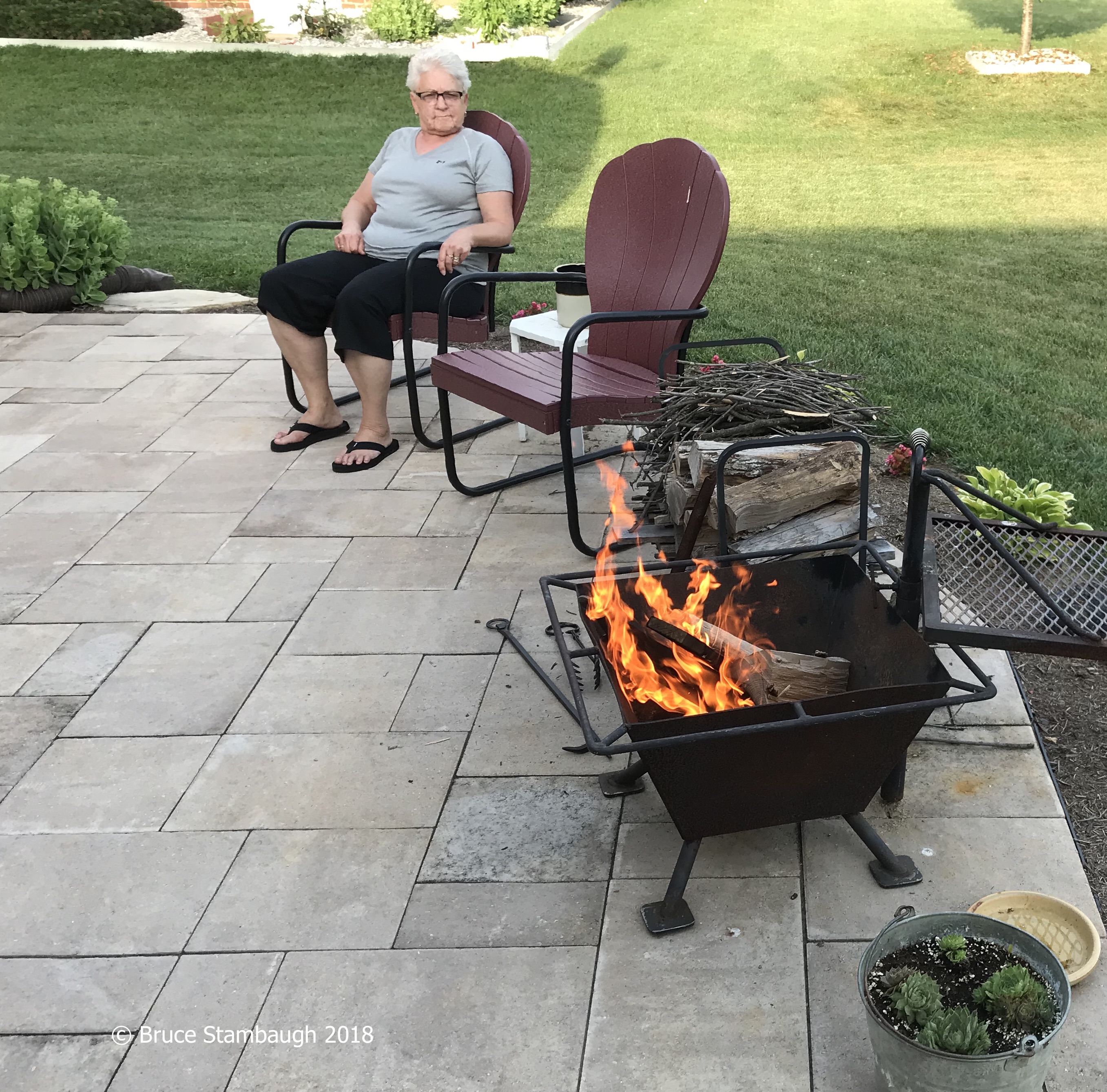
Transforming work into play

Holmes Co. OH, Millersburg OH
The prairie on the hill.

By Bruce Stambaugh

Several years ago, our lifetime friends Dave and Kate built their dream house on a hill overlooking Millersburg, Ohio. They picked the perfect spot.

From that lofty vantage point overlooking a lovely valley, Dave and Kate can see the county courthouse clock tower, the school where they both taught, and the hospital where their children were born.

The setting is marvelous, the view fantastic. Still, through hard work and creativity, the couple has managed to improve their surroundings, not only for themselves but for the wild things, too.

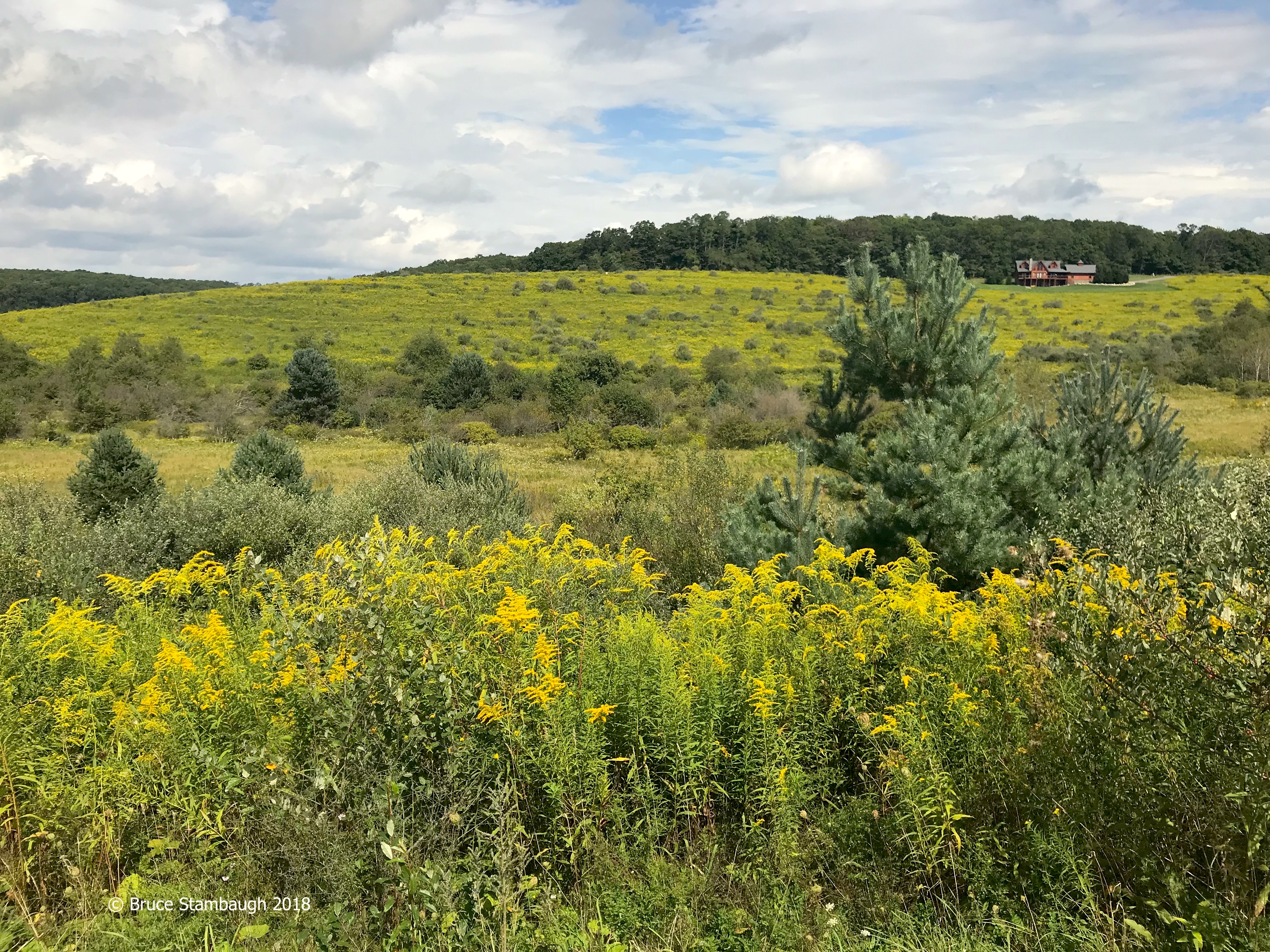
About five years ago, Dave decided to turn work into play so to speak. He kicked the cows out of the five-acre, pastured hillside that surrounded the house. His goal was simply to let nature take her course.

Before the European invasion 300 years ago, a dense, mature forest covered most of what is now Ohio. Dave wanted to test an old theory that the land would replenish itself if allowed to go fallow.

So instead of cows grazing, grasses, plants, and seedlings began to sprout freely. Today, the results are impressive, producing rewards that even the amiable couple could never have imagined.

This slideshow requires JavaScript.

On an all-too-brief return to our Ohio haunts, Dave led me on a walking tour of his mostly-spontaneous prairie. We traversed a looping pattern of mown paths that crisscrossed the rolling hillside topography.

Up and down and around we walked. All the while Dave pointed out some of the changes that had already naturally occurred. In some spots, he had helped things along with saplings and young trees he had planted. He checked on them like a mother hen guarding her chicks.

Of course, he encaged the plantings with wire mesh to stymie the ubiquitous and free-ranging deer that nibble the tender and tasty leaves and stalks. Sometimes it worked.

Wildflowers and plants now flourished in the prairie plots where heifers used to munch. The floral growth attracted appreciative pollinators that flitted and buzzed about while we ambled along. Bees and butterflies, flies, dragonflies, and damselflies all made appearances.

Holmes Co. OH, Millersburg OH
Eastern Bluebirds.
Several pairs of eastern bluebirds tended to their nests in boxes Dave had erected. Some had eggs, some second brood hatchlings. Others were empty. When we cleaned out an old nest from one birdhouse, a bluebird pair began building anew a short time later. Dave’s face glowed.

At the bird feeders, Ohio’s smallest to largest woodpeckers and several species in between vied for the suet offerings. Both pileated and red-bellied even brought their young to learn to forage for the protein.

On the parameters of the property, red-tailed hawks dove from shaded oak perches, unsuccessful in snagging a mammal breakfast. An indigo bunting began its song but stopped short, a typical behavior this late in the summer.

Cedar waxwings preened in the morning sunshine on dead ash snags. American goldfinches harvested thistledown for their late-season nests.

The gnarled, amber trunks of giant Osage orange trees served as living statuaries in the young reclaimed landscape. Their coarse-skin fruit hung lime-green and eerie, like so many Martian brains.

Once dormancy dominates the prairie, Dave will mow down this marvelous and necessary wildlife habitat to eliminate the human-made nuisance multi-flowered rose bushes. Of course, he’ll save the trees, both those he planted and the multitude of volunteers that are thriving.

That adage is coming true. Left to grow on its own, this come-what-may former pasture is an ever-changing habitat for all things bright and beautiful. The environmentally friendly owners couldn’t be more grateful.

Holmes Co. OH, Millersburg OH
Sunrise valley view.

© Bruce Stambaugh 2018

Why I always dreaded August’s return

August, sunset, Virginia
An early August sunset.

By Bruce Stambaugh

August is upon us once again.

As I look back on it, I always dreaded the return of the eighth month. Through my not-so-nostalgic reflections, I realized that my reasons evolved across the decades.

As an elementary school student, I knew all too well what August’s arrival meant. We were down to one month of summer vacation.

Those were the days when agrarian mentality ruled the school year. All scholarly studies were squeezed between Labor Day and Memorial Day. When the county fair gates closed, the school doors opened.

Now, of course, no such luxury exists for students. Back to school shopping has already begun. With August at hand, many students start the daily countdown until the dreaded day arrives.

Don’t get me wrong. I liked school, well, the elementary version at least. However, I enjoyed playing much more so. Summer vacation generated much less stress for youngsters then. Our screen time meant going to the drive-in movie theater on Friday nights. Our phones stayed at home firmly affixed to the wall.

butterfly, wildflowers, Virginia
Male Pipevine Swallowtail butterfly on Cardinal flower.
So when the calendar flipped to August, the neighborhood gang of hooligans started planning our next sleep-out under the stars or our next daytime adventure at the creek down-over-the-hill. Time was a wasting.

In high school and college, it wasn’t playtime but work that got shortened by the start of school. At $2.06 an hour, I needed to work all I could to deter my own educational expenses. With younger siblings and a stay-at-home mother, it was the least I could do to help the family financially. My older brother set that model.

When I started my career in public education, I began to more fully understand the importance of August. It meant readying for another school year, only this time as the teacher and eventually principal.

The late summer days of August always meant sweating it out decorating my classroom before the students arrived. Those old schools didn’t have air conditioning. I could hear the busyness of protégés down the hallways also preparing for the coming school year. We came in early morning and early evening to avoid the afternoon heat.

August, Ohio's Amish country
Come August, summer winds down.
When I joined the administrative ranks, August meant meetings, which I loathed unless they were held on the local golf course. That venue seldom happened, however, despite the chatter around the window table at the locals’ favorite eatery.

I heard samplings of student whining from our son and daughter, who knew too well that the coming of August meant school band camps and fall sports practices. Our son chose wisely. He joined the golf team and scored much better than his father ever could.

Just like their parents’ childhood schedules, once the county fair ended, the school year began for our children, too. By then, however, Labor Day became the first school holiday, not the summer’s last.

Somehow, though, we all survived those August perils. As a retiree, August has lost it sting. I don’t have the self-imposed barriers to hurdle anymore. I can relax in air conditioning as the thermometer hits 90.

Like all the previous years, I anticipate golden sunsets sinking beyond the horizon. I’ll watch for the Perseid meteor shower, hoping that the August haze has faded in the cool of the night.

The fraternal twins of retirement and maturity have a mellowing effect on sour attitudes. Instead of dread, this August I’ll breathe in a deep breath, say a prayer of gratitude for another new month, and enjoy the moments at hand.

Ohio's Amish country, Amish
Back to school.

© Bruce Stambaugh 2018

Bay Photos by Donna

Wildlife Photos From The Chesapeake Bay Region

ROAD TO NARA

Culture and Communities at the Heart Of India

K Hertzler Art

Artist and nature journalist in the Shenandoah Valley of Virginia.

Maria Vincent Robinson

Photographer Of Life and moments

Gabriele Romano

Personal Blog

Jennifer Murch

Art is the only way to run away without leaving home. -Twyla Tharp

Roadkill Crossing

Writing generated from the rural life

ANJOLI ROY

writer. teacher. podcast cohost.

Casa Alterna

El amor cruza fronteras / Love crosses borders