Morning light shines into a darkened kitchen on a historical farm. Photo by Bruce Stambaugh
When I walked into the old farmhouse, the tour guide went right. My head, however, looked left, drawn by the stark contrast of the bright morning light shining into the dark kitchen of this century-old farmhouse.
Paula, our 78-year-old guide, worked in the home and on the farm as a child.
Our guide lived and worked in this home, starting at age four. We couldn’t have had a more authentic authority on how this former family coffee farm operated.
Today, Hawaii’s Kona Historical Society welcomes visitors via reservations to explore the Kona Coffee Living History Farm on Hawaii’s Big Island firsthand. Everything is as it was when Paula began helping around the house and on the farm.
I’ll share additional photos from the farm in a future post as I begin a series on a recent trip to Hawaii, our nation’s 50th state.
Nature’s beauty reigned even after the peak colors had faded. Photo by Bruce Stambaugh
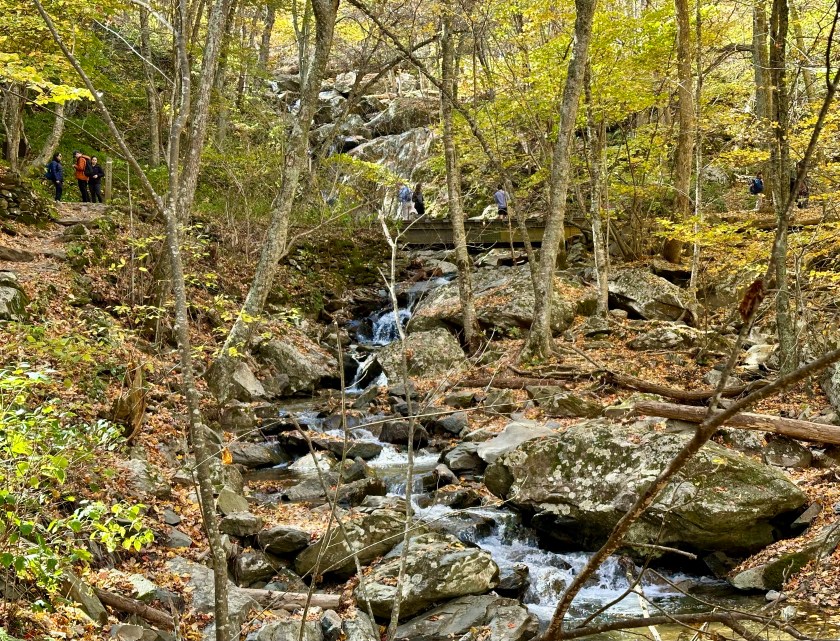
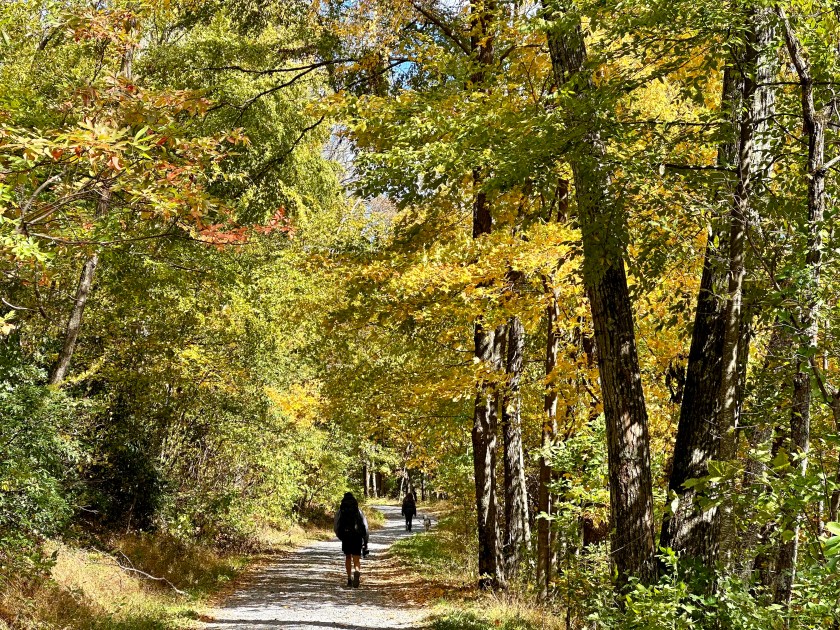
Fall is a great time to hike, bird, and shoot photos. Shenandoah National Park is my go-to place to combine all three hobbies in one trip.
However, I have learned to avoid the peak color time due to crowds. People from around the world visit the park to admire its autumn glory, which means traffic is also at its peak on the iconic Skyline Drive.
By mid-morning, lines of vehicles form at entrance stations. Overlook parking spaces fill up quickly, forcing people to park along the busy roadway. The same is true for trailhead parking lots.
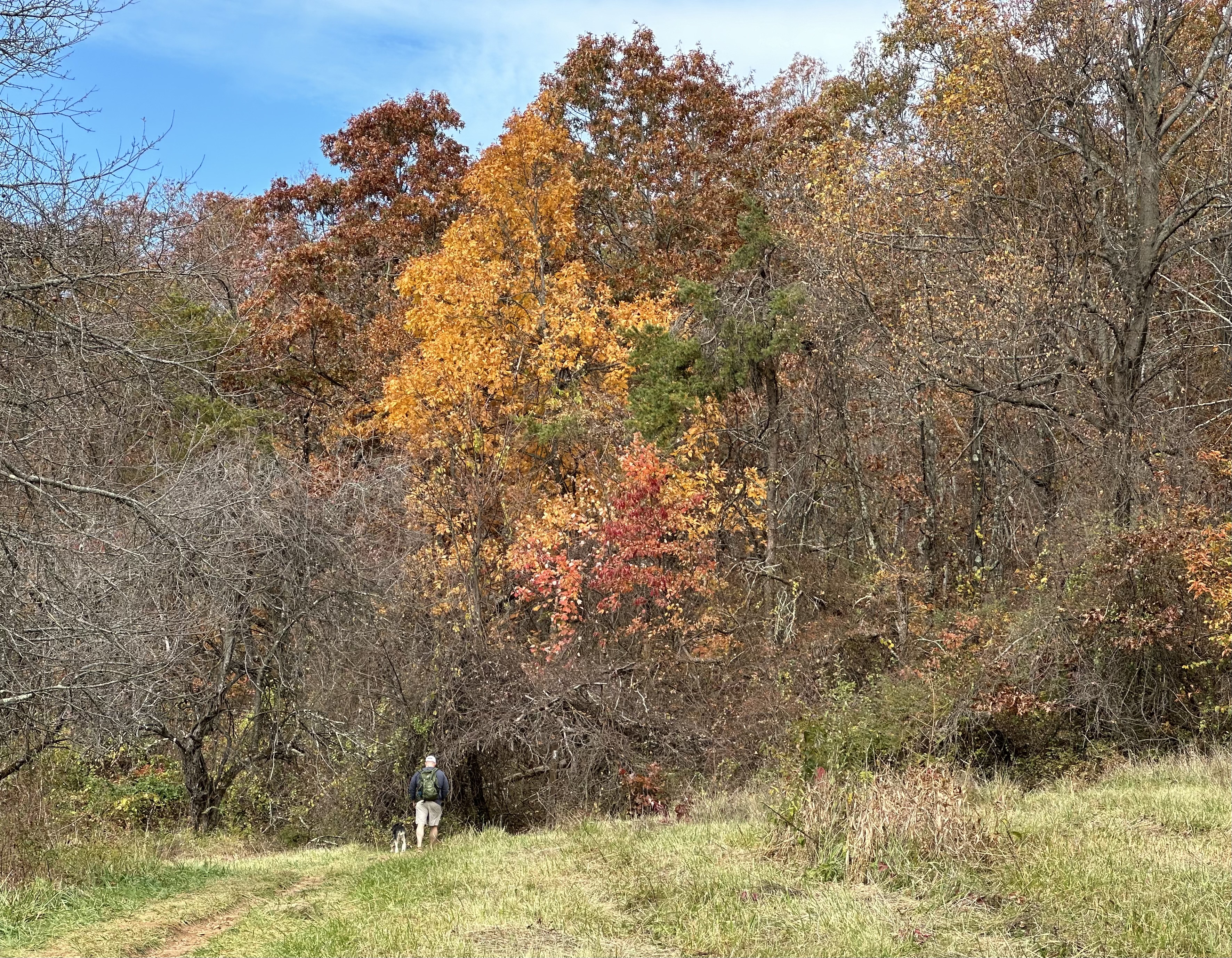
Before the peak of leaf colors.
So, I chose to catch the leaf colors before and after the peak. The park is still busy, but it is tolerable, and I am satisfied with a stirring hike filled with picturesque views, unexpected wildlife, and migrating birds.
In the mountains, altitude affects the coloring as much as sunshine, cooler nighttime temperatures, and morning frosts. So, the trees might be dull or even bare at the hike’s beginning, and a half mile down the trail, a blaze of color brightens the way.
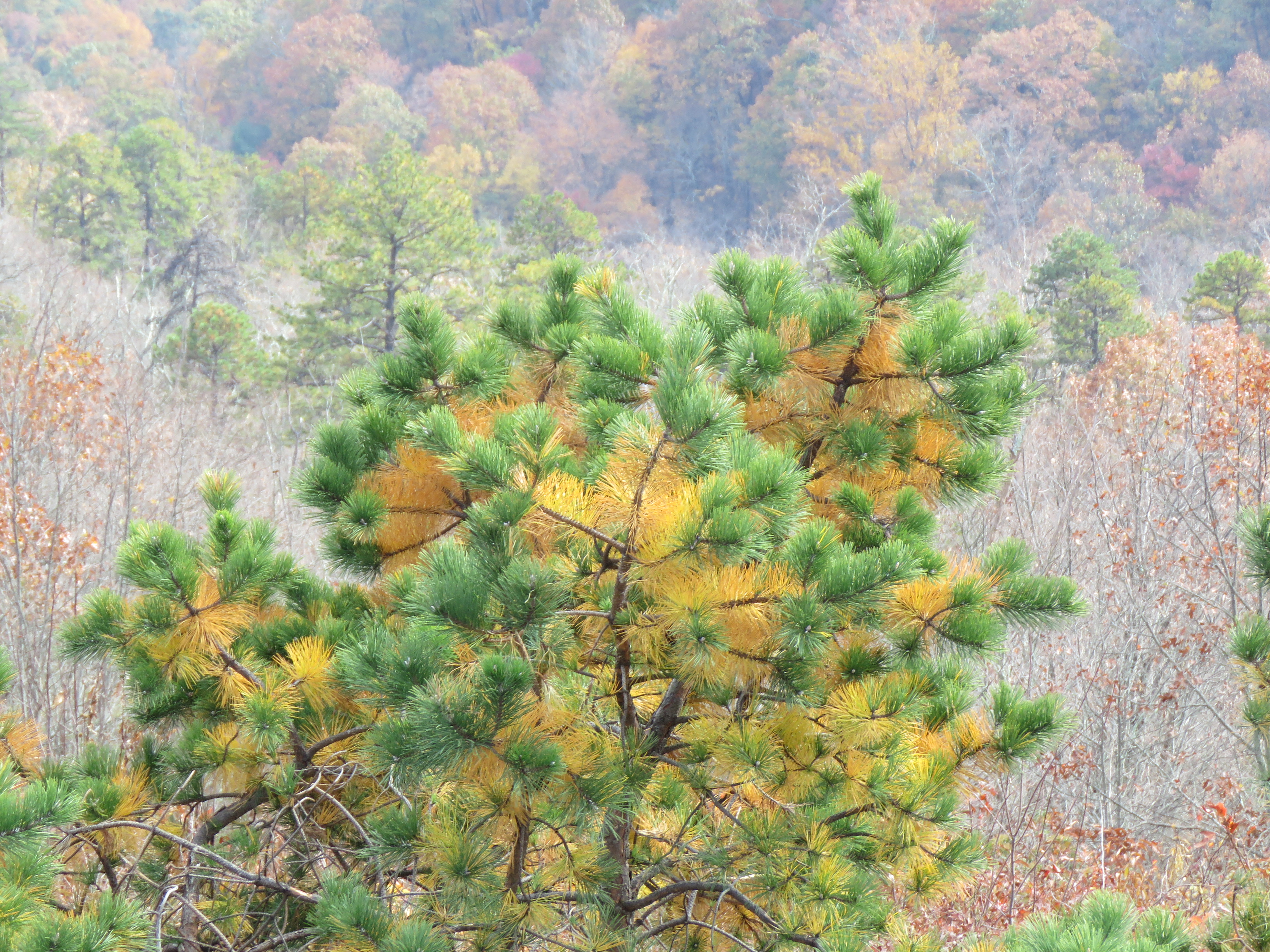
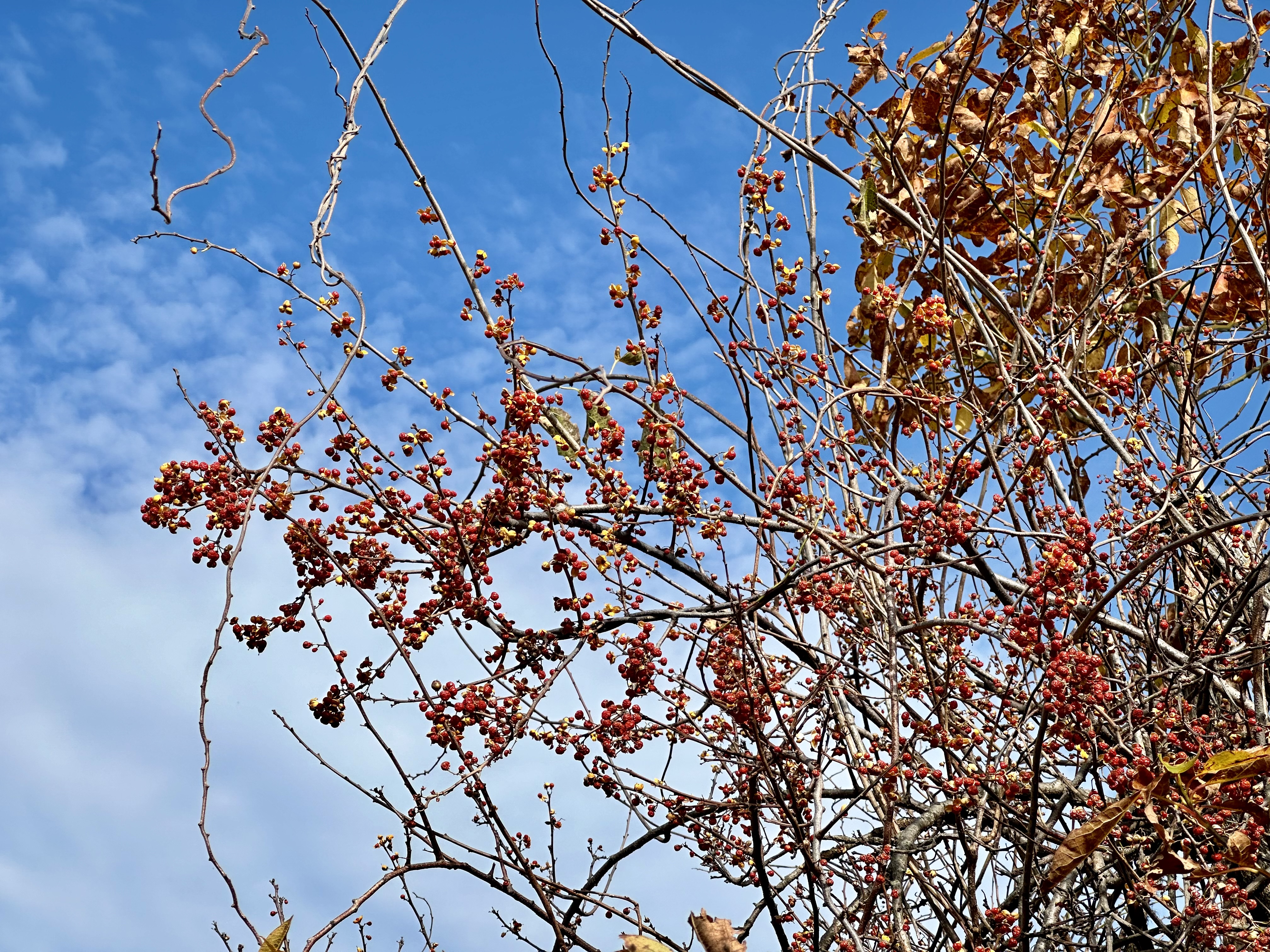
After the peak. Please click on the photos to enlarge them.
Though I have missed the height of the turning leaves, I enjoy the before-and-after with equal zeal. It’s fun to note the differences I discover and meet friendly folks along the way. The park’s beauty has energized them, too.
Besides, I admired nature’s colorful summit in other locales in Virginia’s lovely Shenandoah Valley. It is the perfect place to enjoy hiking, birding, and photography all in one joyous day trip.
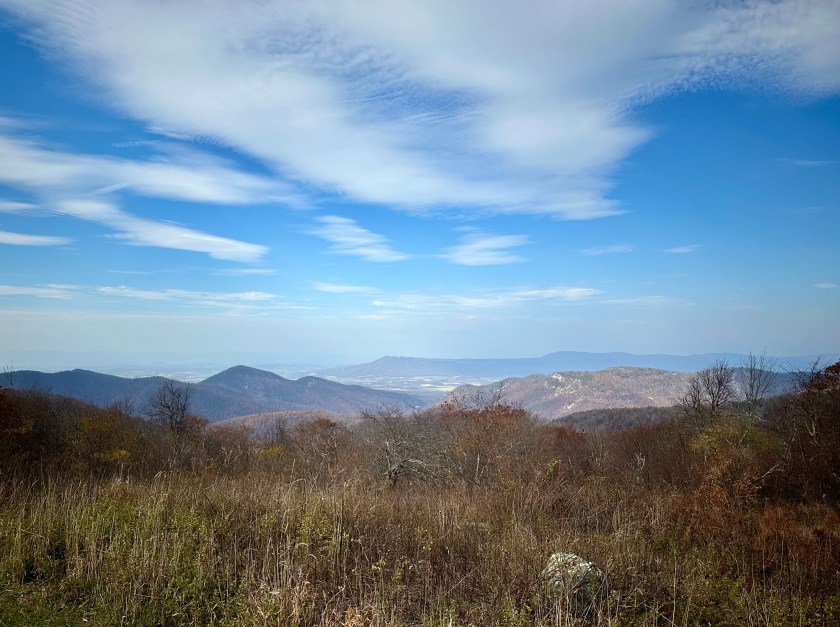
A view west into the Shenandoah Valley. Photo by Bruce Stambaugh
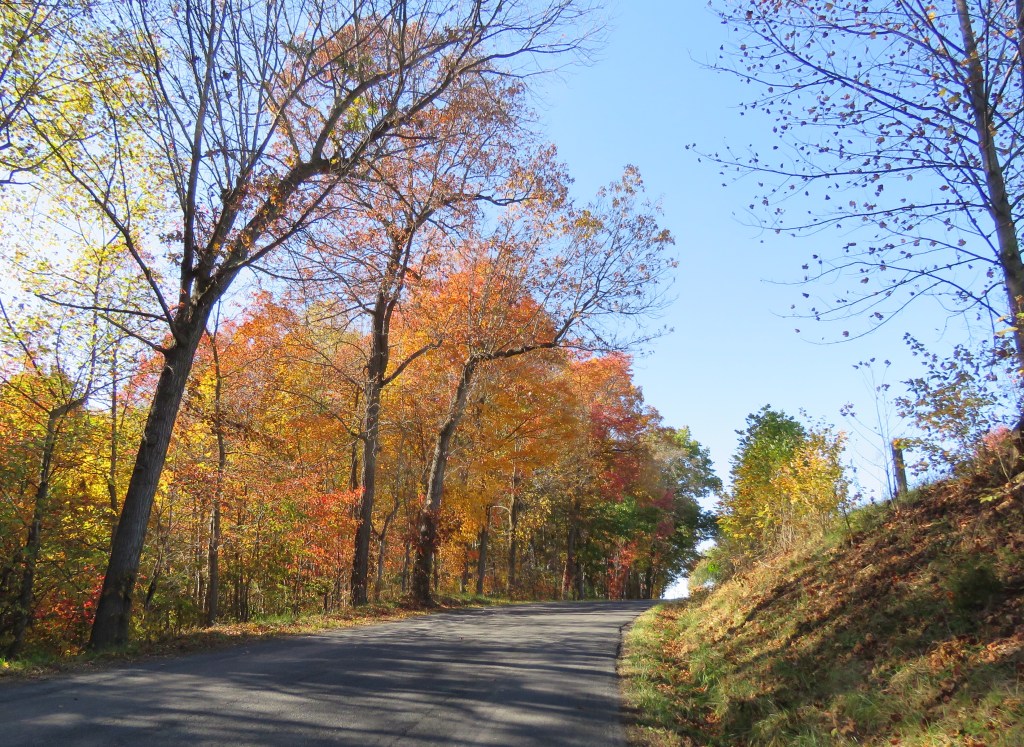
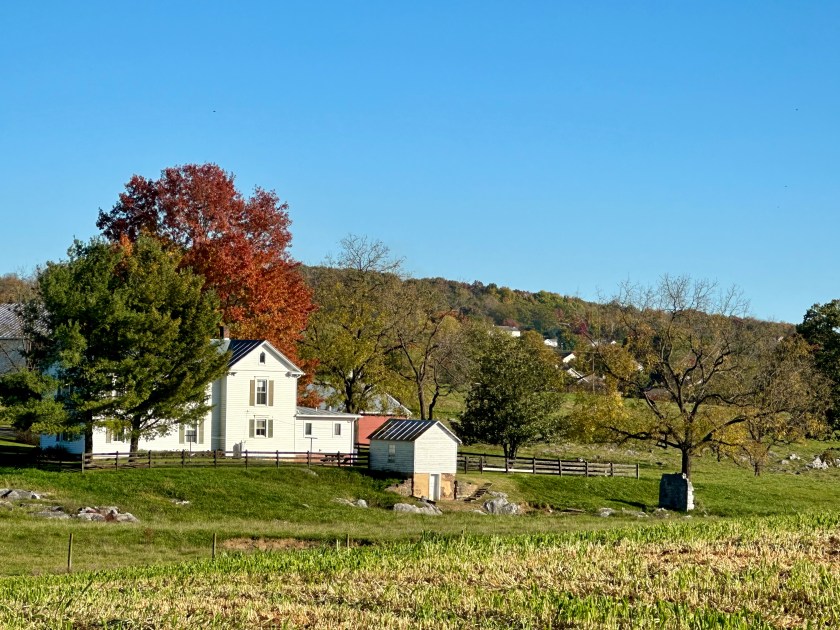
A typical scene in Rockingham Co., Virginia. Photo by Bruce Stambaugh
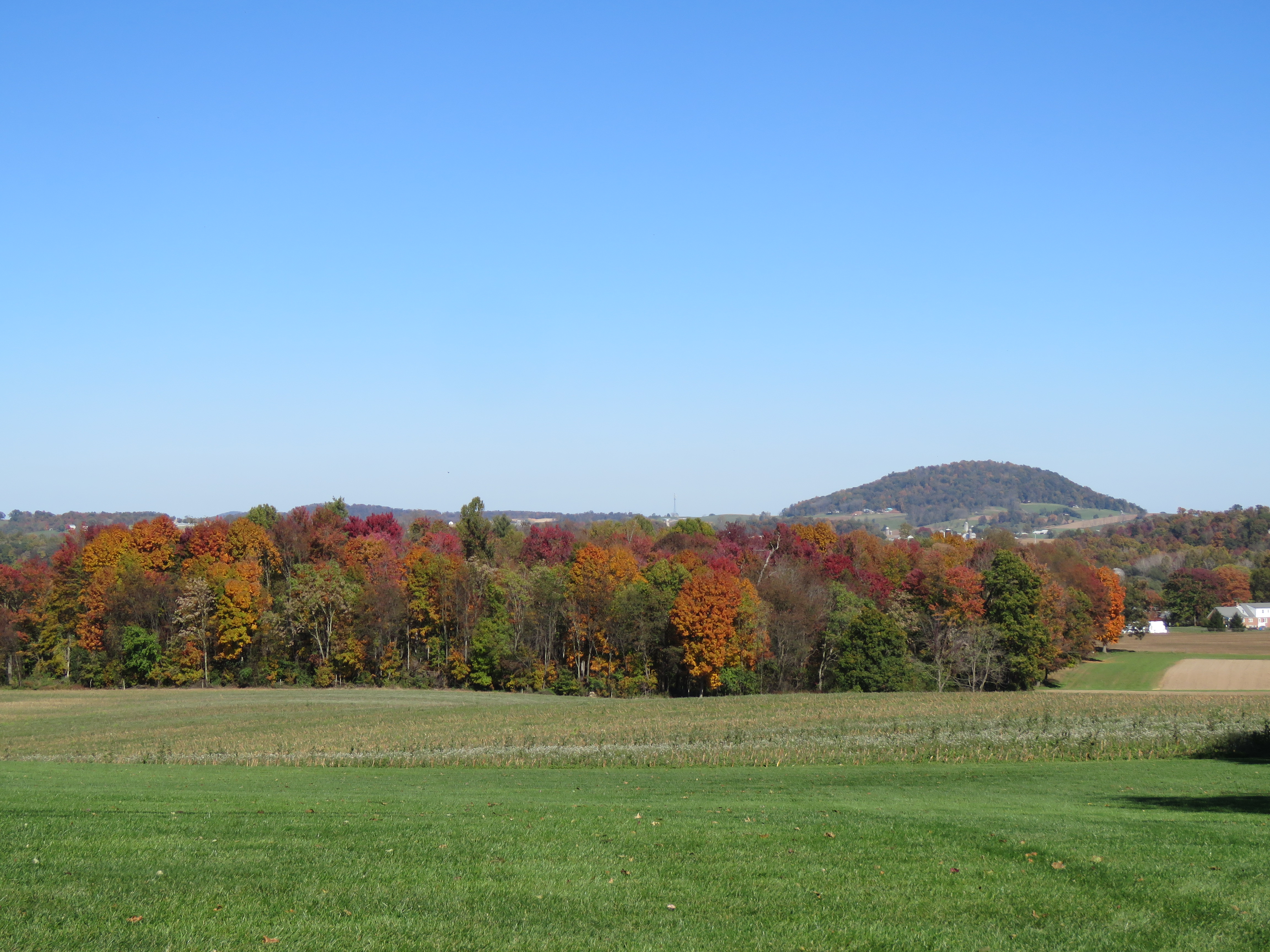
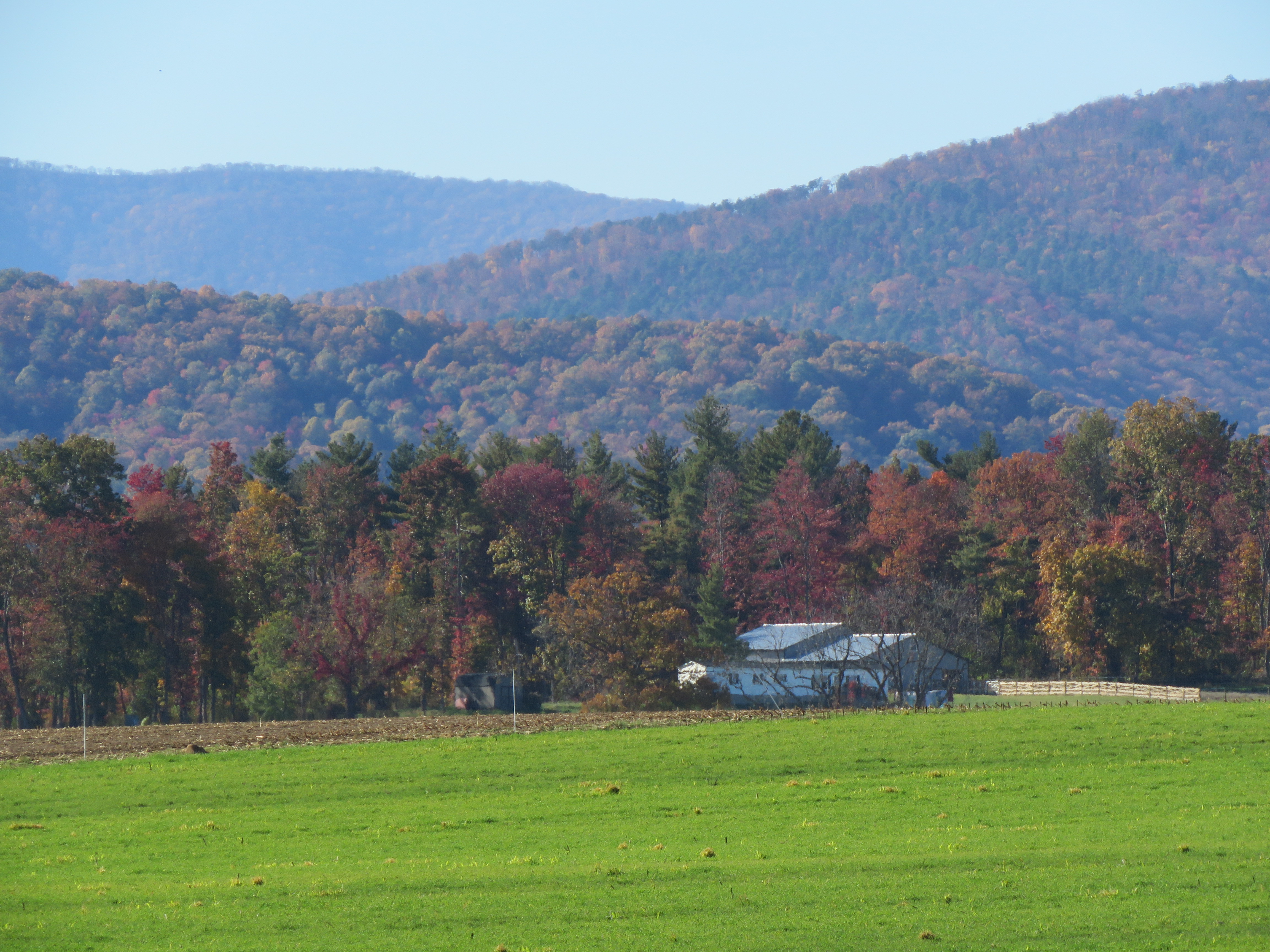
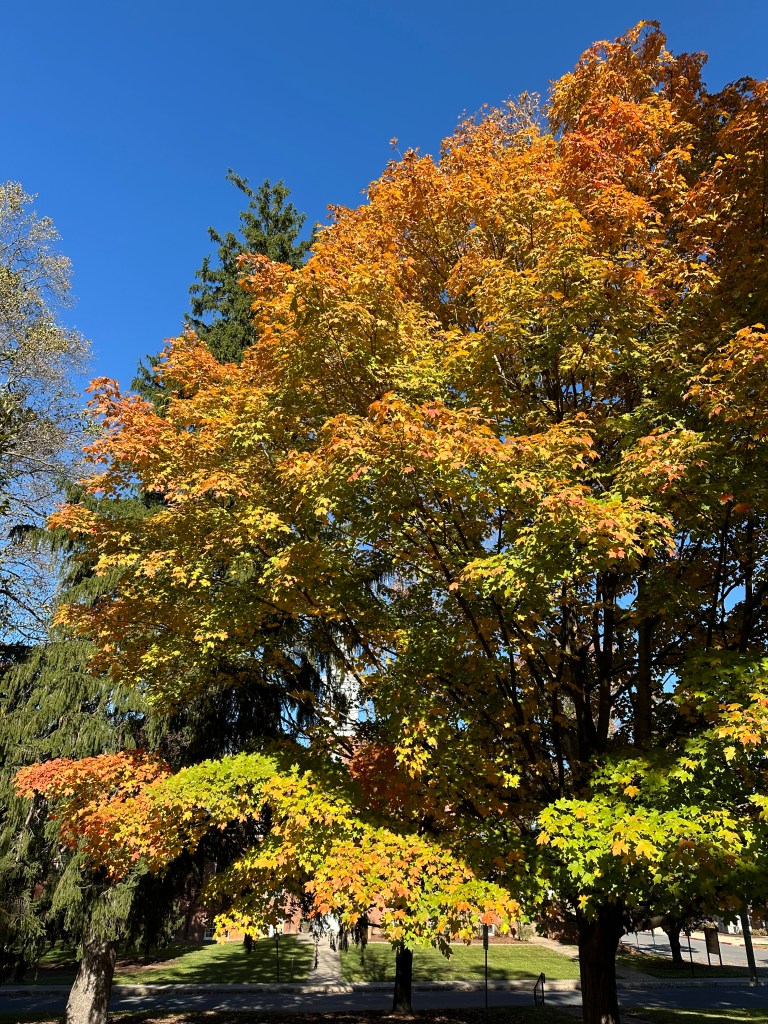
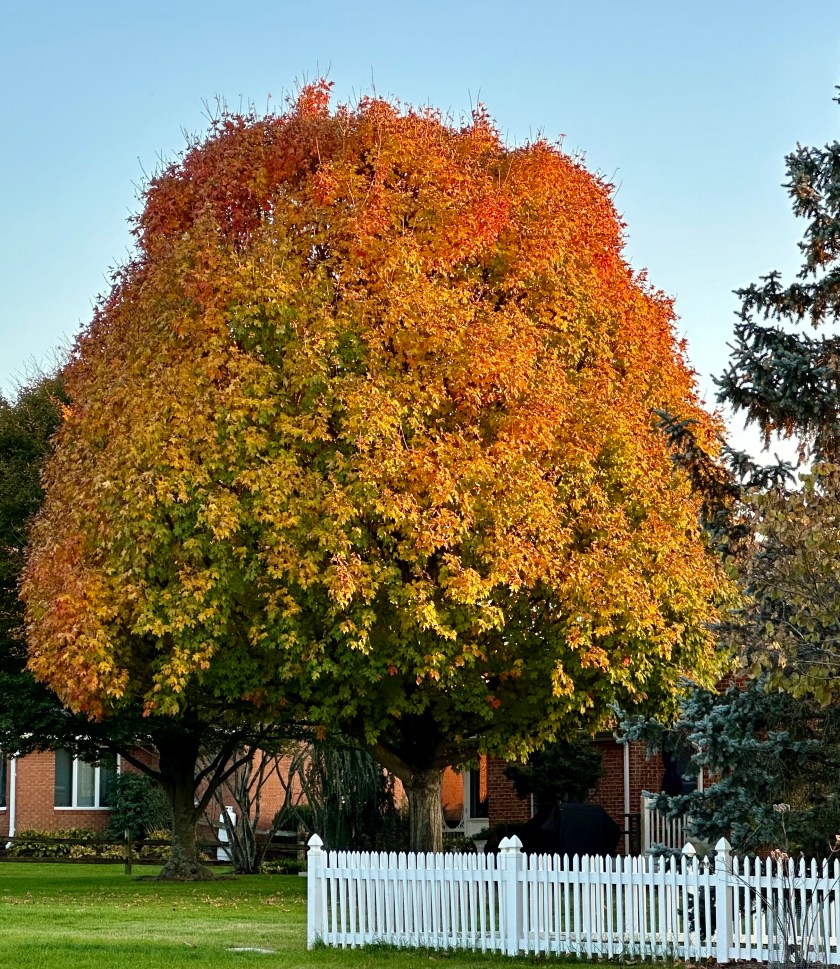
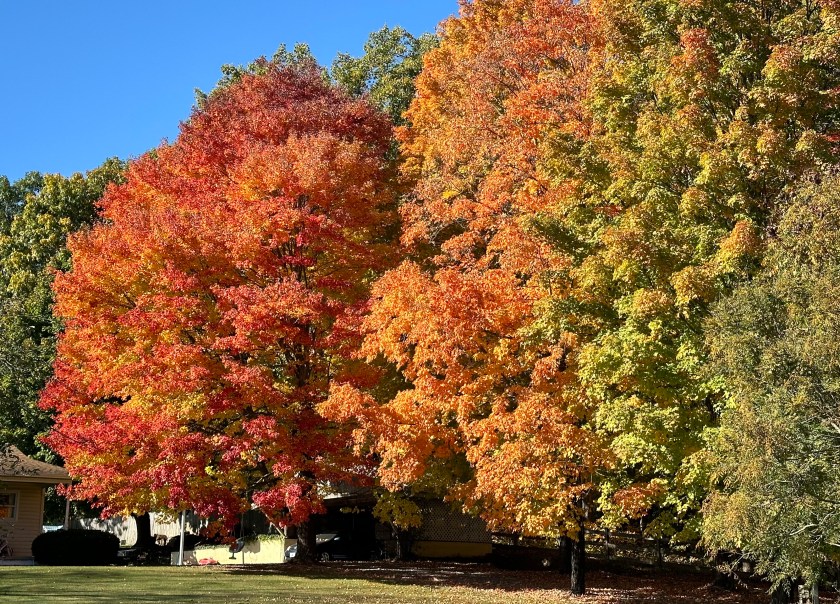
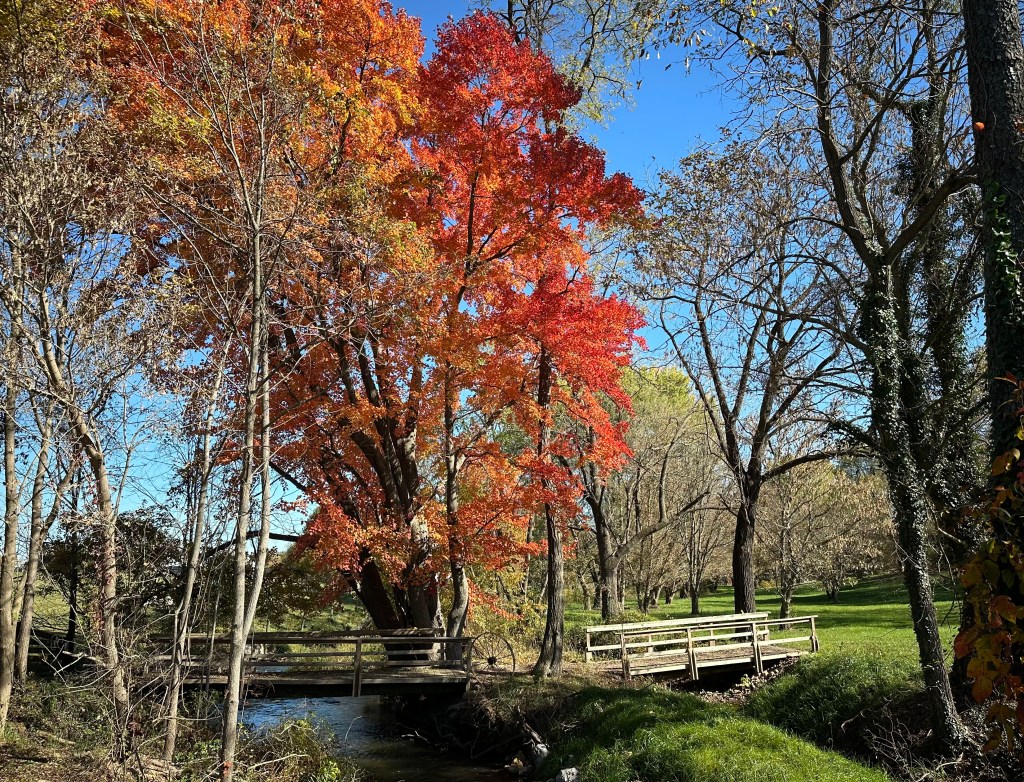
In the fall, traveling the rural roads in Rockingham County, Virginia, reveals Nature’s autumnal beauty. The trees along the highway’s edge bask in the sun’s more direct rays than if they grew more deeply in the forests.
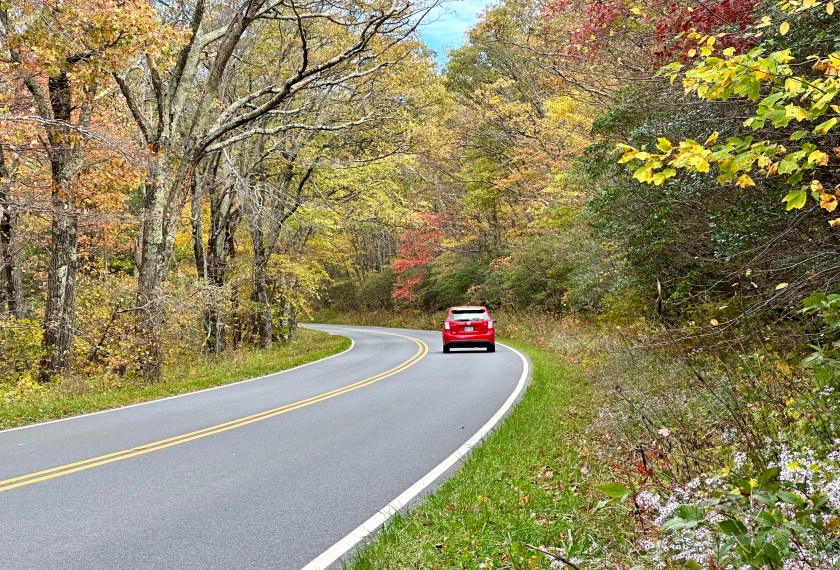
Driving on Skyline Drive in Shenandoah National Park has the same effect. However, it is also much more crowded with global visitors in the fall. Traversing the local roadways usually means less traffic, which makes it safer to pull over, exit your vehicle, and snap away.
Skyline Drive in Shenandoah National Park earlier in October. Photo by Bruce Stambaugh
Doing so allows photographers to capture the fall’s breathtaking beauty. Occasionally, I encounter opportunities to spot some migrating birds and interact with local residents. Once I explained my purpose, I never had an issue. Of course, I choose my spots carefully.
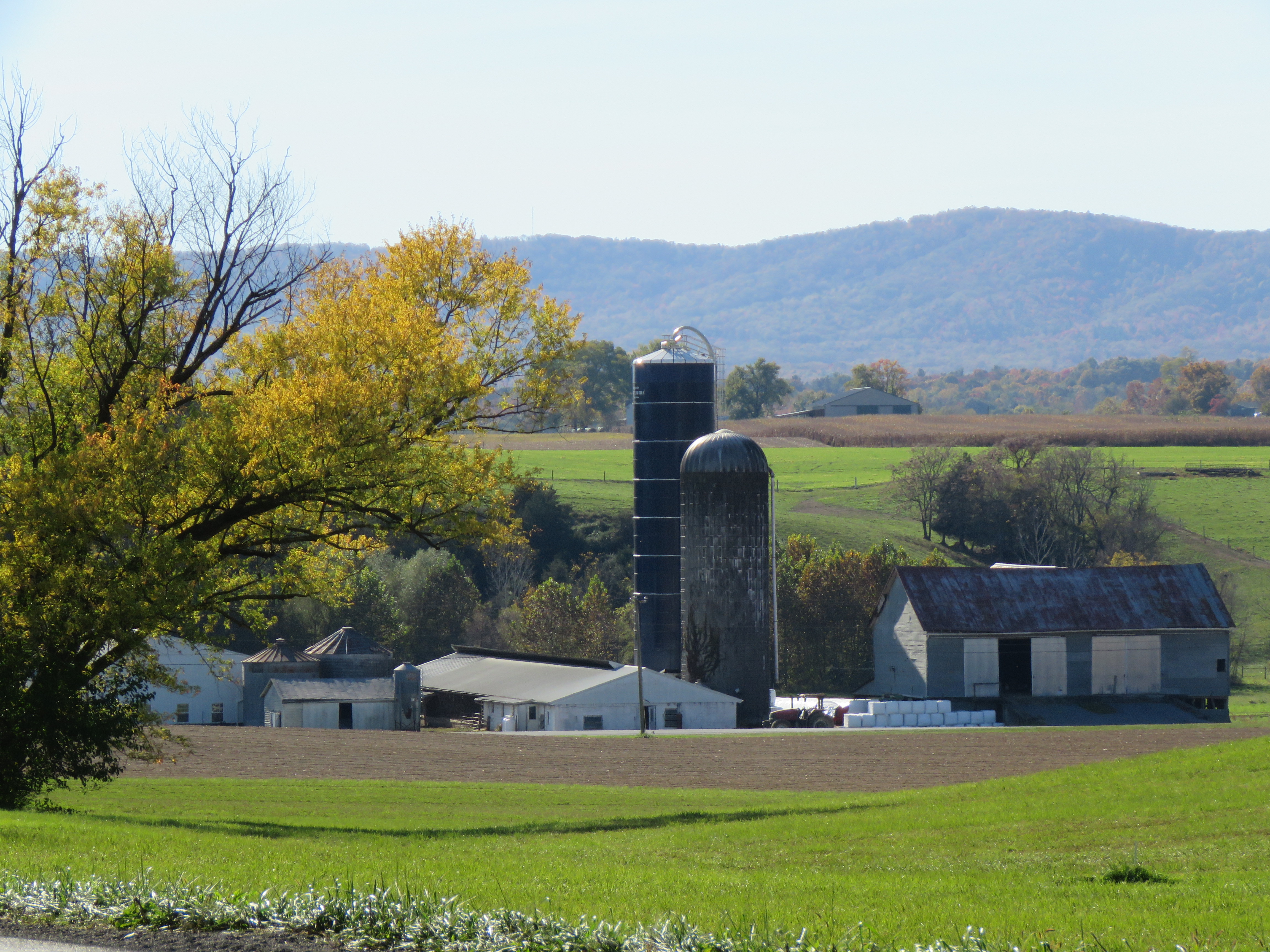
The secondary roads of Rockingham County wind, climb, and descend through the rich agricultural lands that have been farmed for generations, sometimes by the same families and their descendants. I find that fact as rich and satisfying as the colorful leaves.
The joy of photographing the glorious fall colors is mainly in the sharing. I hope you enjoy this series of photos of birds, buildings, and leaves at their peak colors.
Please click on the photos to enlarge them.
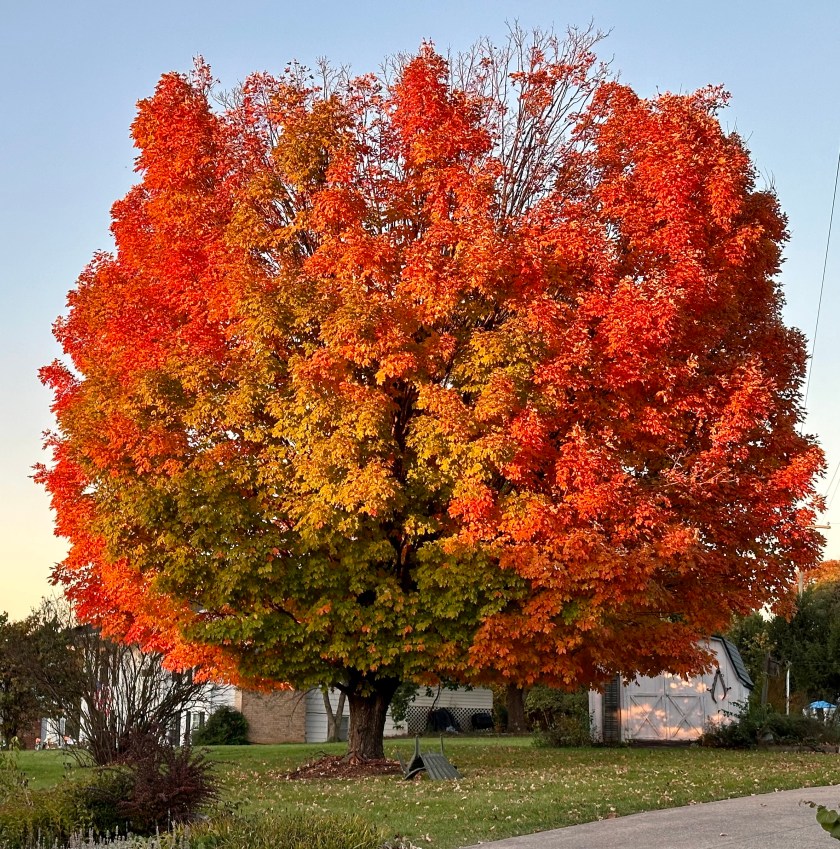
I often find the brightest colors closer to home. The brilliant leaves show off houses, churches, cemeteries, and roadsides.
Of all the rural roads I traveled, this scene at the little hamlet of Spring Creek took the prize.
“Thinking is difficult. That’s why most people judge.” — Carl Jung
The morning sky was cerulean as I was on my way to deposit three bags of yard waste at the county landfill’s recycling center. When I turned onto Main St., traffic in both southbound lanes was stopped for some reason. I figured it might be a wreck at the next intersection.
Soon, vehicles in the right-hand lane began moving, so I merged into that lane. Then, I saw two Hispanic men walking from a fast-food restaurant to a dump truck five cars ahead. Had they really stopped their vehicle in the left lane to get something to eat? I zipped by the truck on the right and headed to my destination.
When I arrived at the landfill, I drove straight to where tree limbs, shrubs, leaves, and grass clippings were dumped, later to be ground into mulch. As I began unloading the three bags of sticks, leaves, and dead plants, the truck that blocked the road backed in beside me.
The two occupants quickly began to dump the truck’s load onto the huge pile. I kindly asked the driver what had happened where their vehicle had been stopped.
“You mean in front of McDonald’s?” the driver asked. I nodded in the affirmative.
“Oh, the transmission in the car beside us went out,” the man explained. “The lady was crying and didn’t know what to do, so we got out and pushed her car into the parking lot.”
I thanked them for their good deed of kindness and silently chastised myself for wrongly judging them. I was embarrassed by my egocentricity.
Why do we think so negatively when we don’t know all the facts? Why was I so self-centered simply because traffic was stalled? I wasn’t on a timed schedule.
Instead of being unnecessarily judgmental, why wasn’t I more curious about the situation? Jung’s relevant quote spoke to me. Jung was a Swiss psychologist and psychoanalyst in the 20th century.
I pondered all this on my way home. I thought more broadly about the current chaotic state our country is in. Is this the way bias and bigotry start, one little, insignificant episode at a time?
I didn’t consider myself biased toward others or a bigot—most people don’t—but this incident gave me pause. After a 30-year career in public education and a dozen more years in marketing, I always considered myself open-minded and fair toward others.
I wondered how many times in my lifetime I judged situations and other people without comprehending I was doing so. Probably a lot more than I care to recall. I suspect this septuagenarian is not alone in that regard.
So, how do we change our approach to life’s little hindrances? Professional contemplatives suggest starting with the breath: Breathe in, breathe out, breathe in, breathe out, they recommend.
I should have recognized this right away. Instead of long, deep breaths, I imagine my breathing was short and shallow, only adding to my unnecessary frustration and likely increasing my blood pressure.
From experience, I know that contemplative practices have many benefits. According to the Center for Contemplative Practices, they can improve health, mood, sleep, self-awareness, curiosity, and other personal gains.
Had I taken the time to remember and act upon these principles, my day would have started much differently. After all, how much effort does it take to pause, take a deep breath, and relax? The answer is not much.
However, I was bold enough to ask the men about the situation and received a straightforward answer that satisfied my inquisitiveness. Those good samaritans pulling in beside me at the landfill were a godsend. I imagine the women driver felt the same way.
So, the next time I tense up, I’ll try to remember to breathe in and out and not judge. How about you?
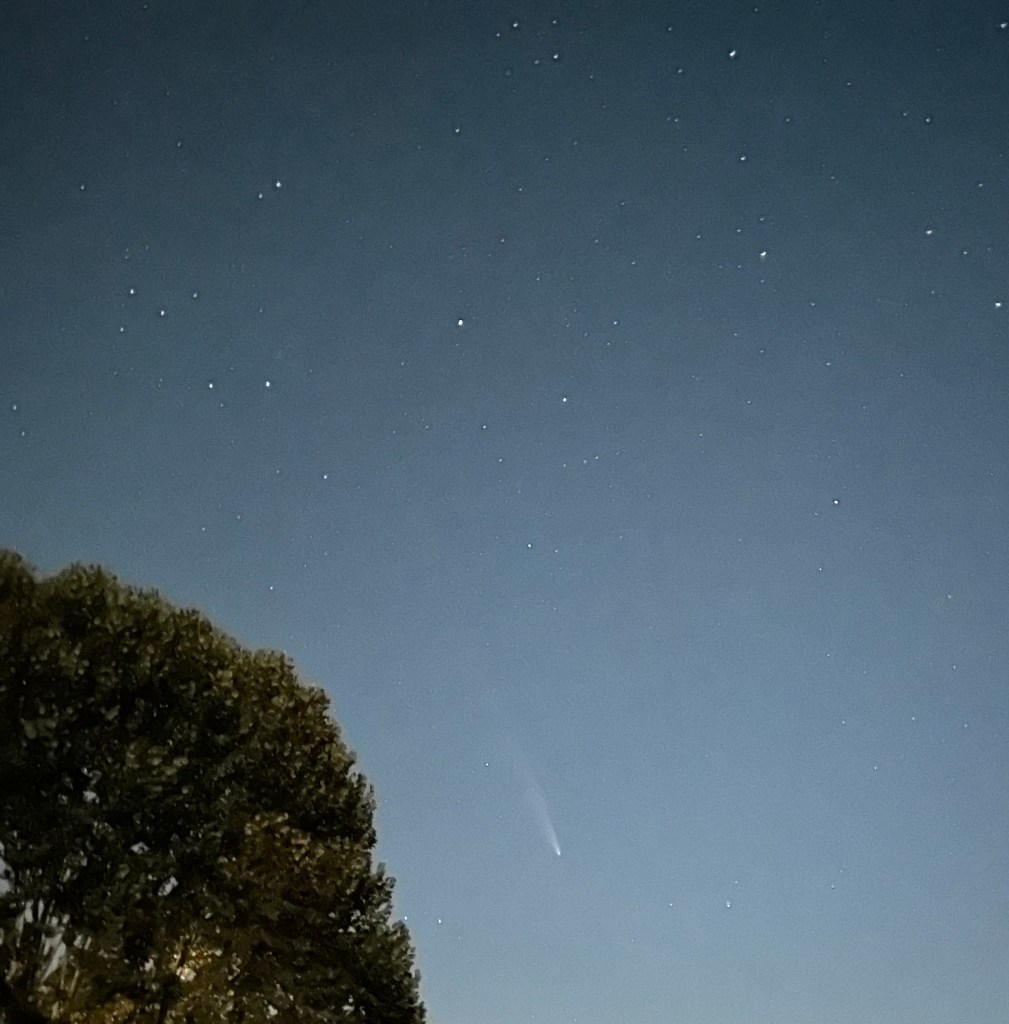
October has blessed us with some fantastic and surprising celestial wonders. The full Hunter Super Moon and the comet Tsuchinshan-ATLAS graced our night skies last week. The comet is still being seen but will soon vanish from sight.
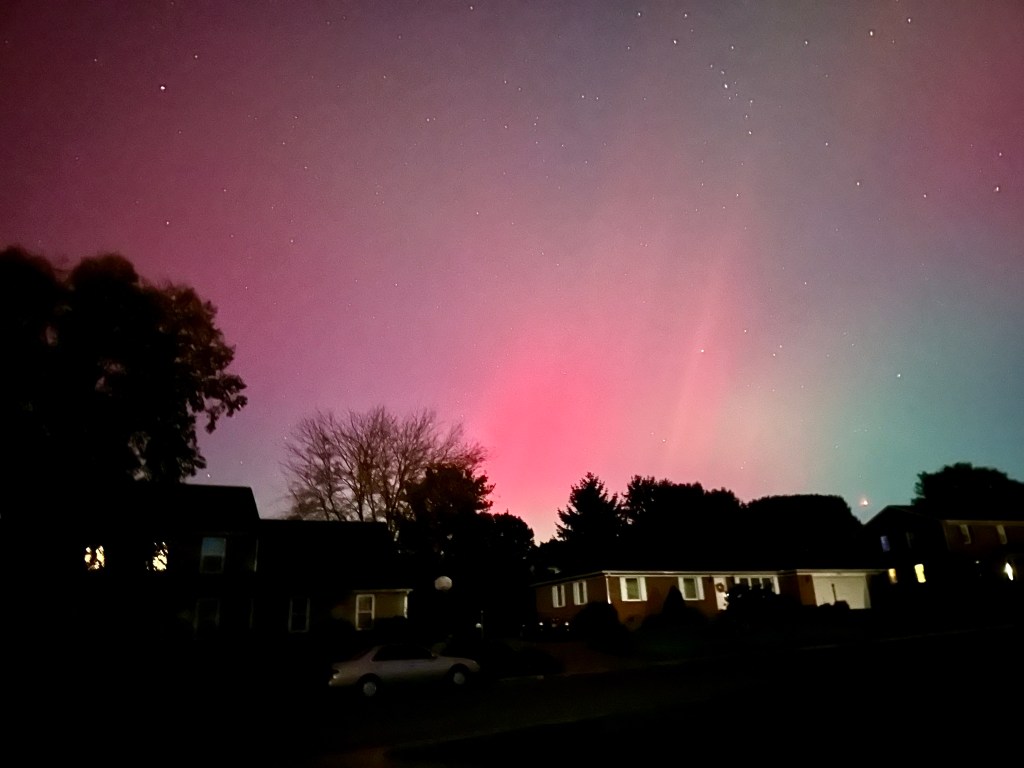
Earlier in the month, the Aurora Borealis danced in the skies across the northern hemisphere, leading the stellar trifecta. Residents in the southernmost regions, like Arizona and Florida, even saw them.
I didn’t have to go far to view any of the trio of events in Virginia’s Shenandoah Valley, where I live. The aurora’s colorful display reminded me of the animated light shows projected onto the American and Canadian Niagara Falls.
However, it’s hard to beat Nature’s heavenly choreography. All I had to do to see the Northern Lights was to step outside my front door. Pinks, reds, and greens played across the sky, dimming and dancing for all to see.
The Aurora Borealis on October 10, Harrisonburg, Virginia. Photo by Bruce Stambaugh
I had only once seen the northern lights as a young man living in Ohio’s Amish Country. The red curtain of zigzagging brilliance danced and sizzled strangely in the southern sky. Yes, I heard an associated zapping sound, but briefly.
I knew the forecasts for the Aurora Borealis were favorable, but I didn’t expect to see such vivid beauty this far south. It was a welcomed surprise that enabled many to cross off seeing the Northern Lights from their bucket list.
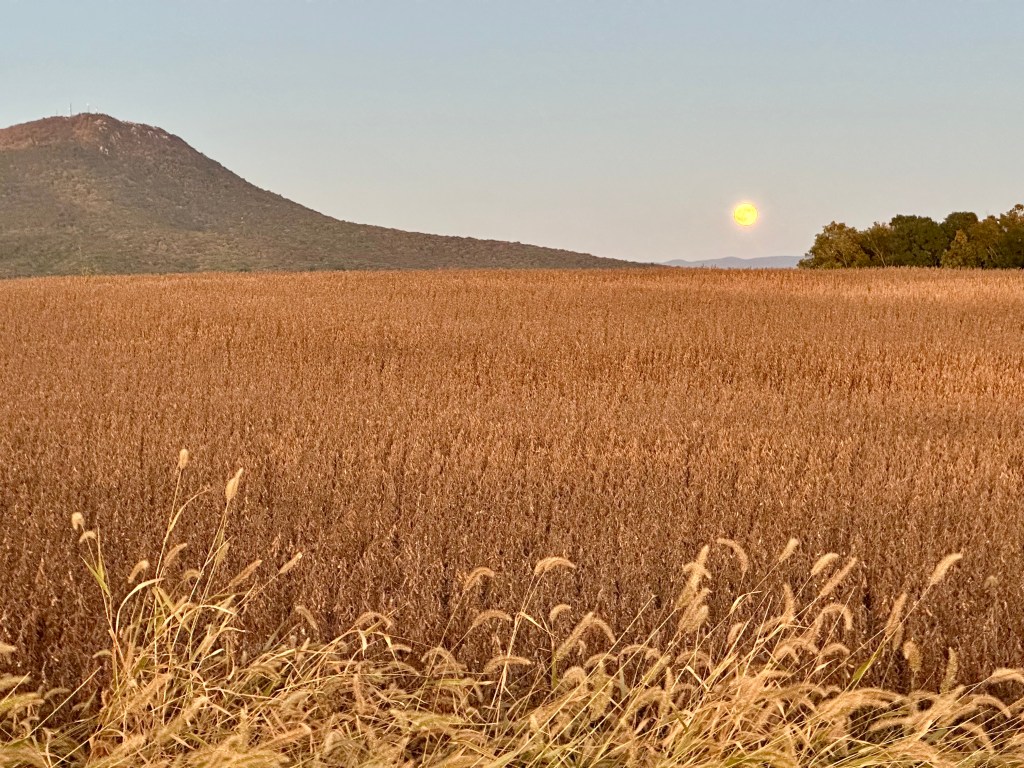
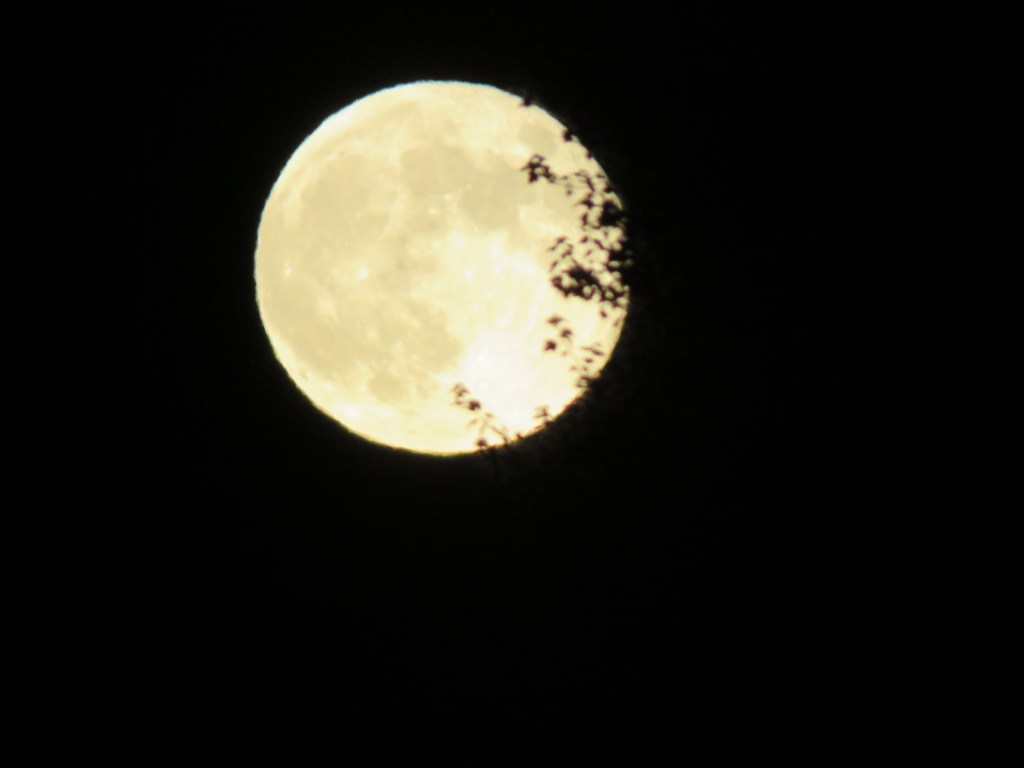
Next up was October’s Hunter Super Full Moon, the fourth consecutive super full moon this year. I like to catch the moon rising over the Blue Ridge Mountains, which also host Shenandoah National Park in central Virginia.
October’s Hunter Super Full Moon over Shenandoah National Park. Photo by Bruce StambaughThe Hunter Super Full Moon followed me home. Photo by Bruce Stambaugh
Because I wasn’t exactly sure where the moon would appear, I was able to snap a few shots just after it rose above the famed mountain range. The rural setting made the picture all the more captivating.
Then came the comet. Like the Northern Lights, the news media informed us of its arrival. The comet was expected to be its brightest on October 14. Unfortunately, fog, haze, and rain clouds obscured our skyward view.
Thursday, October 17, was our first clear night. My wife and I headed to a local landmark, Mole Hill. It’s an extinct volcanic core, long eroded and now covered with farmed fertile soils on its gradual slopes and a thick mixed forest on the steeper portion of the cone.
Mole Hill’s higher elevation didn’t help us find the comet. A hazy sky over the Allegheny Mountains, 30 miles to the west, was the culprit. We looked and looked but returned home disappointed. However, I wasn’t giving up since the comet wouldn’t reappear for 80,000 years.
The comet was viewed from Eastern Mennonite University’s hill. Photo by Bruce Stambaugh
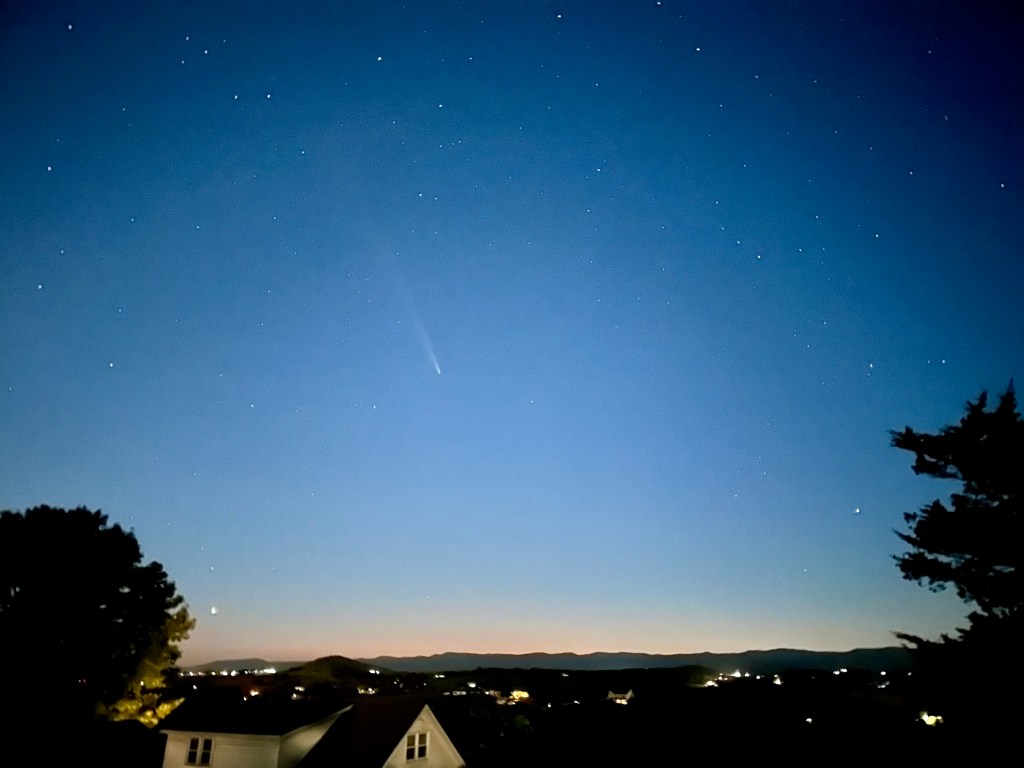
The next night, I had success from the hill behind Eastern Mennonite University in Harrisonburg. After viewing photos from my iPhone 14 Pro taken around 7:30 p.m., I spotted a faint streak in the sky. What I couldn’t see with my old naked eyes, my smartphone easily captured for me. I was ecstatic.
We quickly found the comet standing in the middle of our street. Photo by Bruce Stambaugh
I took a few more photos and returned home to celebrate with my wife by showing her the sequence of images. Afterward, we went outside, stood in our residential street with no street lights, and found the comet about 30 degrees northeast of Venus, which hugged the horizon.
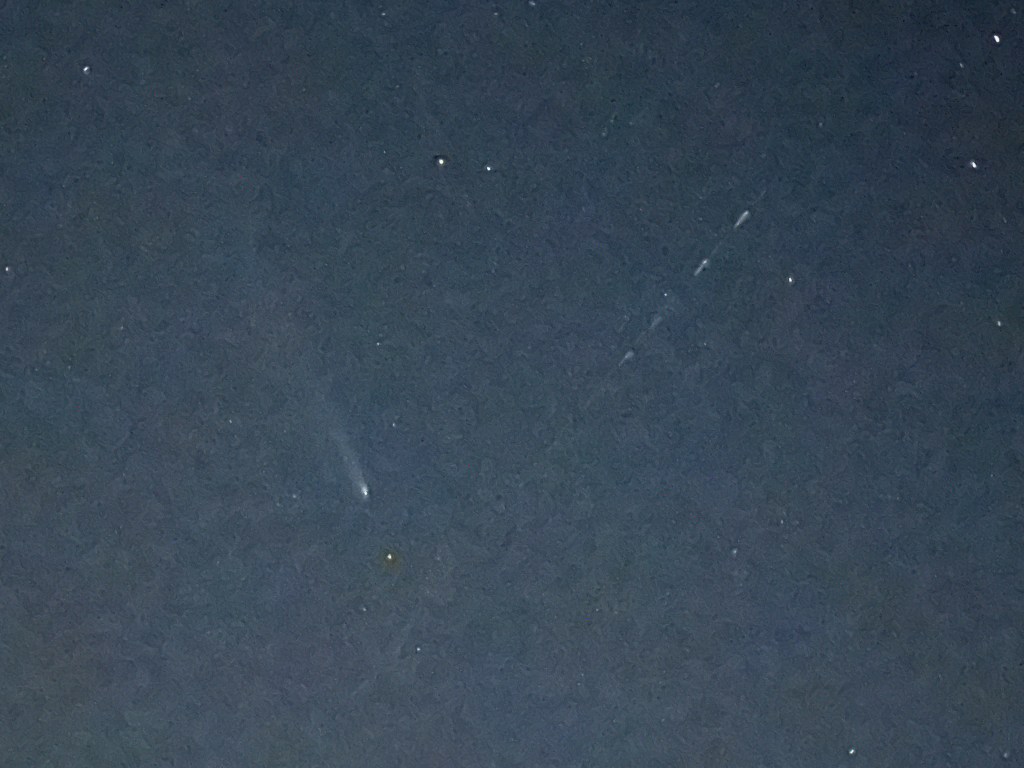
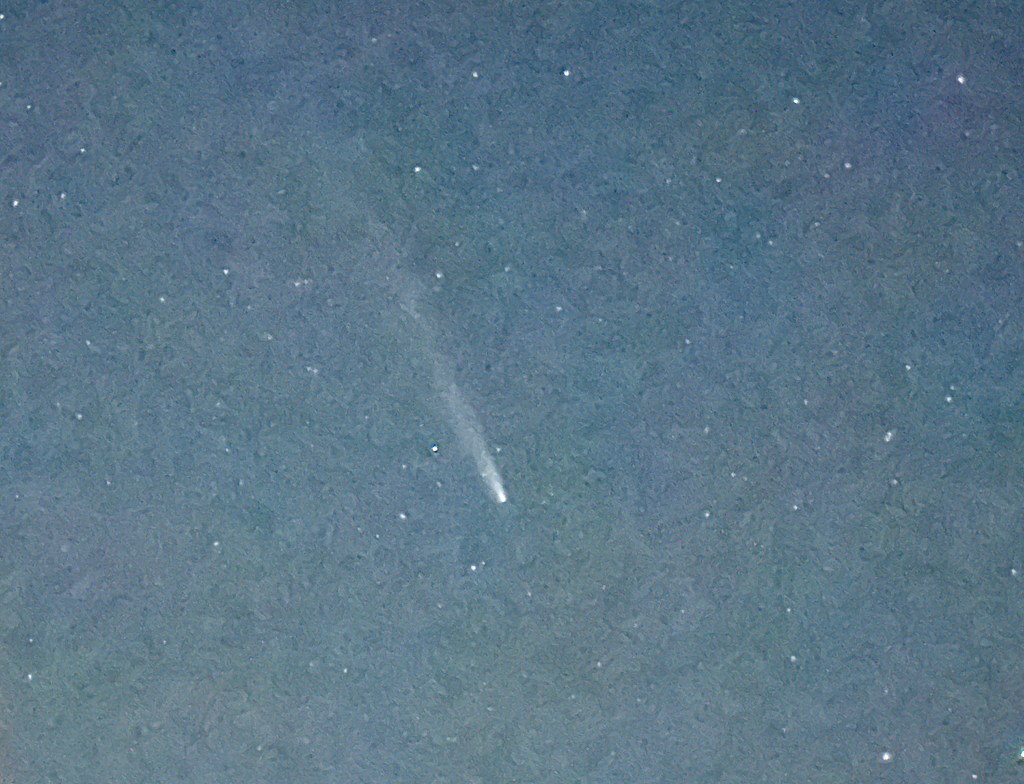
The next night proved even more successful. I zoomed in with the phone’s long lens and captured more than the comet and its long, fuzzy tale. When I looked at the photo, I realized Starlink was streaking across the sky just northeast of the comet.
The Comet and Starlink. Photo by Bruce Stambaugh
October has been good to us so far. I wonder what joyous tricks she’ll offer up by Halloween.
The comet Tsuchinshan-ATLAS. Photo by Bruce Stambaugh
I nearly drove by the two deer. They blended in with the background that well. Fortunately, I spotted them as I passed the old apple tree.
I found the first place to turn around and hoped my hungry subjects would still be there. They were, and I quickly snapped a few shots before they disappeared into the forest.
These two buck deer were on the search for apples. Photo by Bruce Stambaugh
I was on Skyline Drive in Shenandoah National Park. The area between Milam Gap and Big Meadows is peppered with apple trees planted by farmers before the park was established in 1935. The trees still produce apples, and deer forage on them in the fall.
Unfortunately, this pair of bucks was late to the party. All the reachable apples and those on the ground had already been consumed.
Gravity and nature will eventually have their say, enabling the deer to satisfy their taste for bright red apples.
The two bucks before they scampered into the woods. Photo by Bruce Stambaugh
My wife and I were busy last week. Everywhere we went, we saw color, literally and metaphorically. Color dominated, from flowers to birds to people to landscapes to food to sunsets.
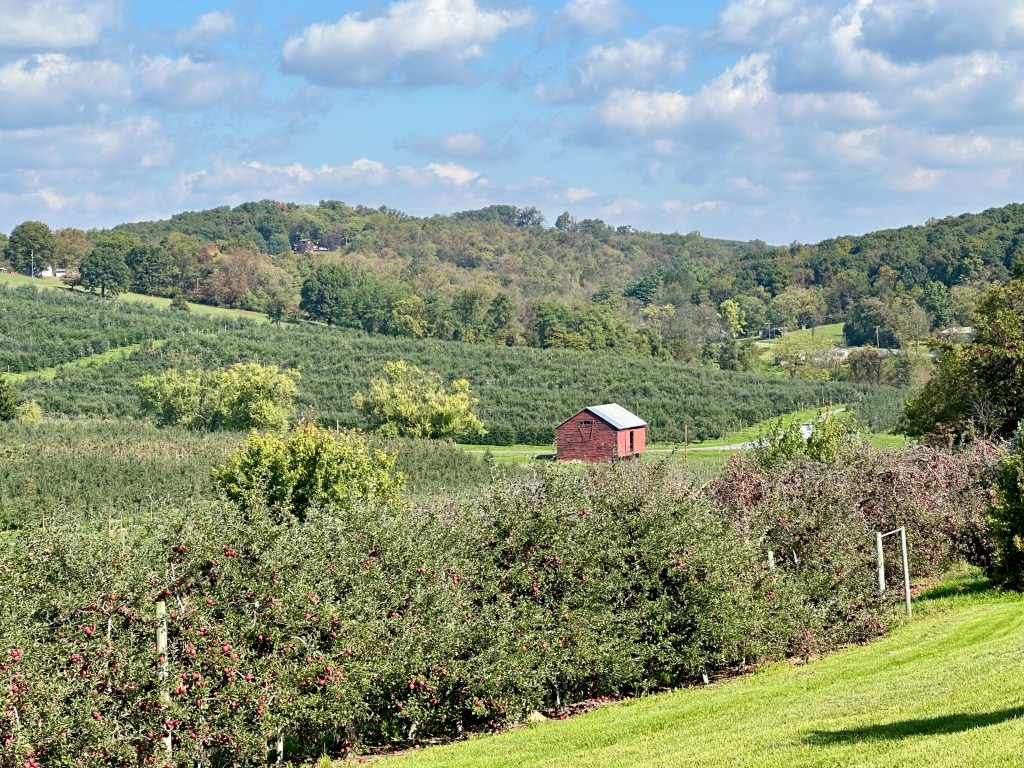
Here are a few samples of the vivid, muted, and impressive hues we encountered as we traveled from Virginia’s Shenandoah Valley to the Piedmont of North Carolina and back.
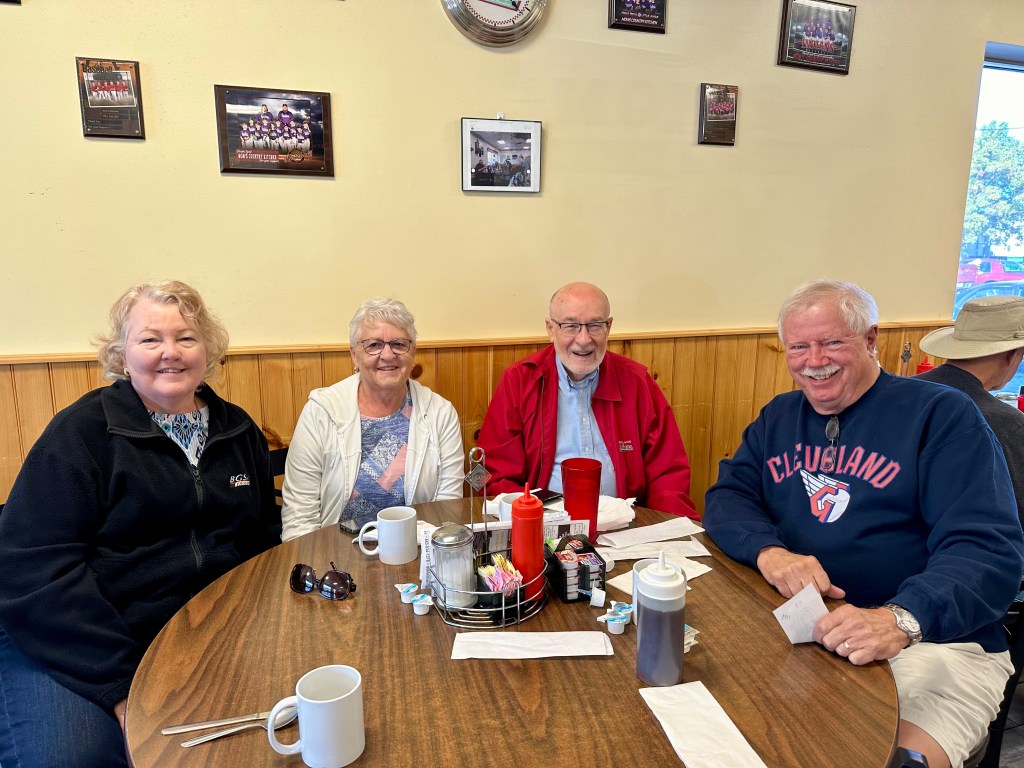
We met good friends from Ohio for breakfast in Front Royal, Virginia.We bought apples and fresh cider at a local orchard.We enjoyed lunch with cousins from California and North Carolina.
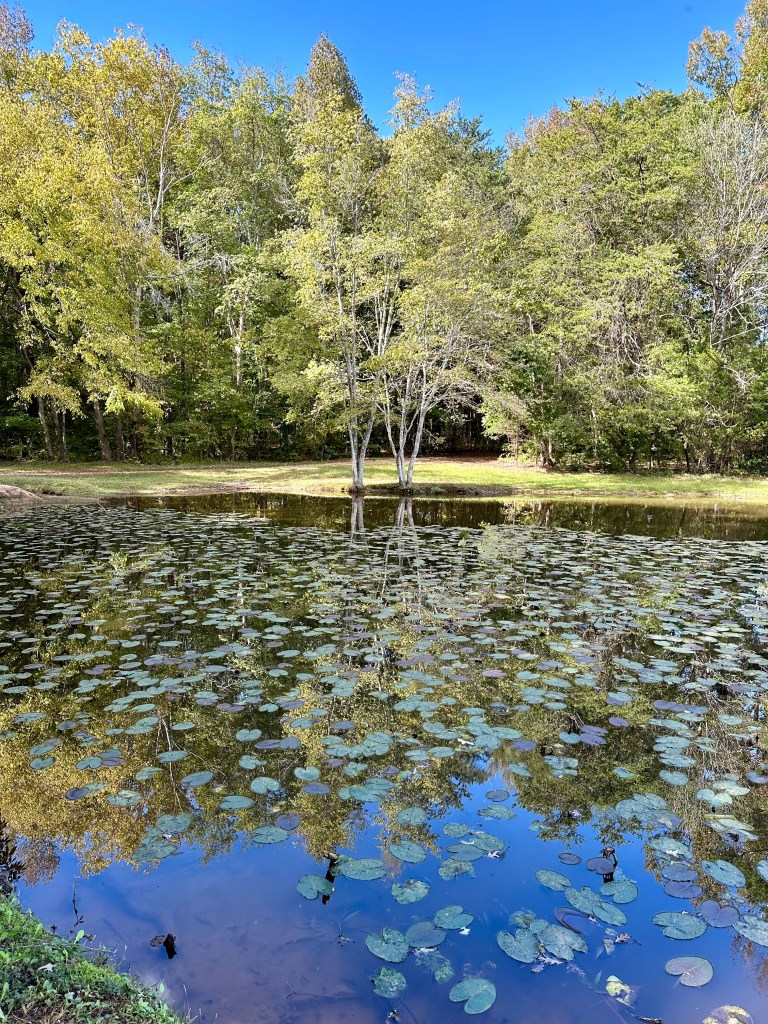
Dan Nicholas Park Lake.
Textures and colors.
The Foot Bridge.
A multitude of greens.
A pristine lake.
Reflections.
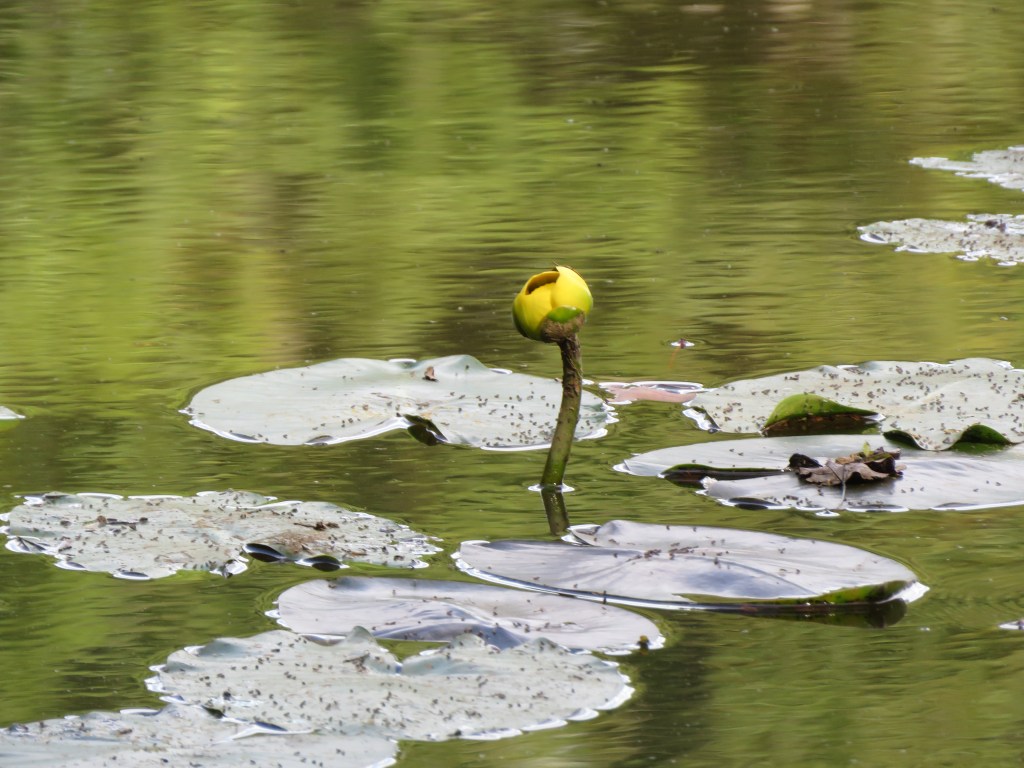
The last lily bloom.
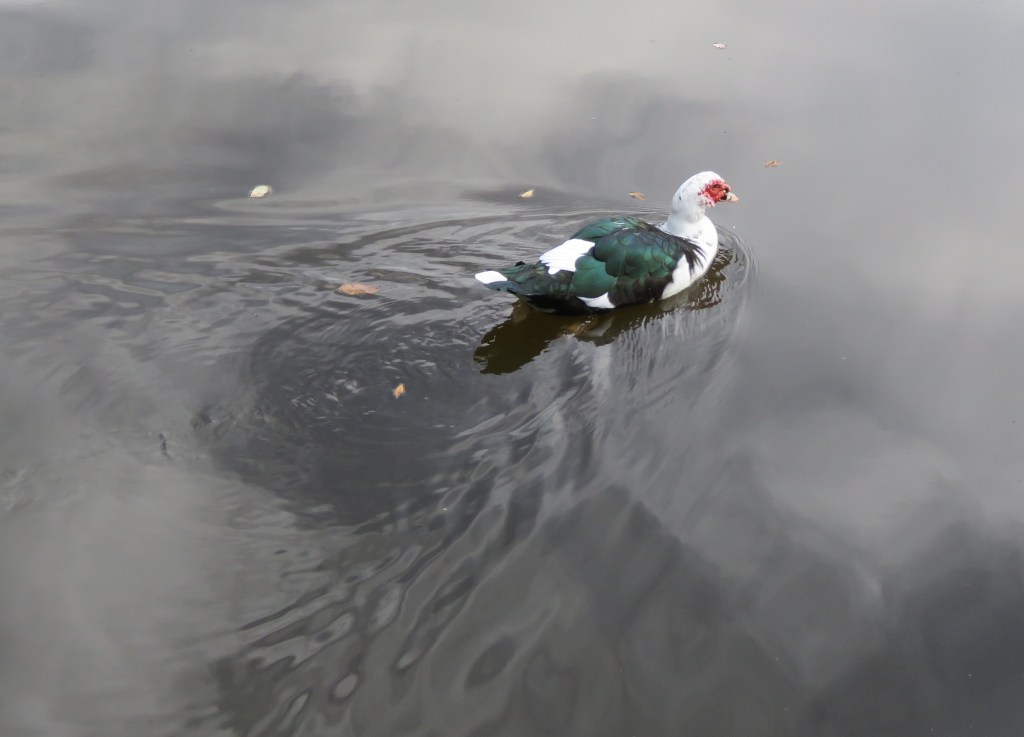
Muscovy Duck.
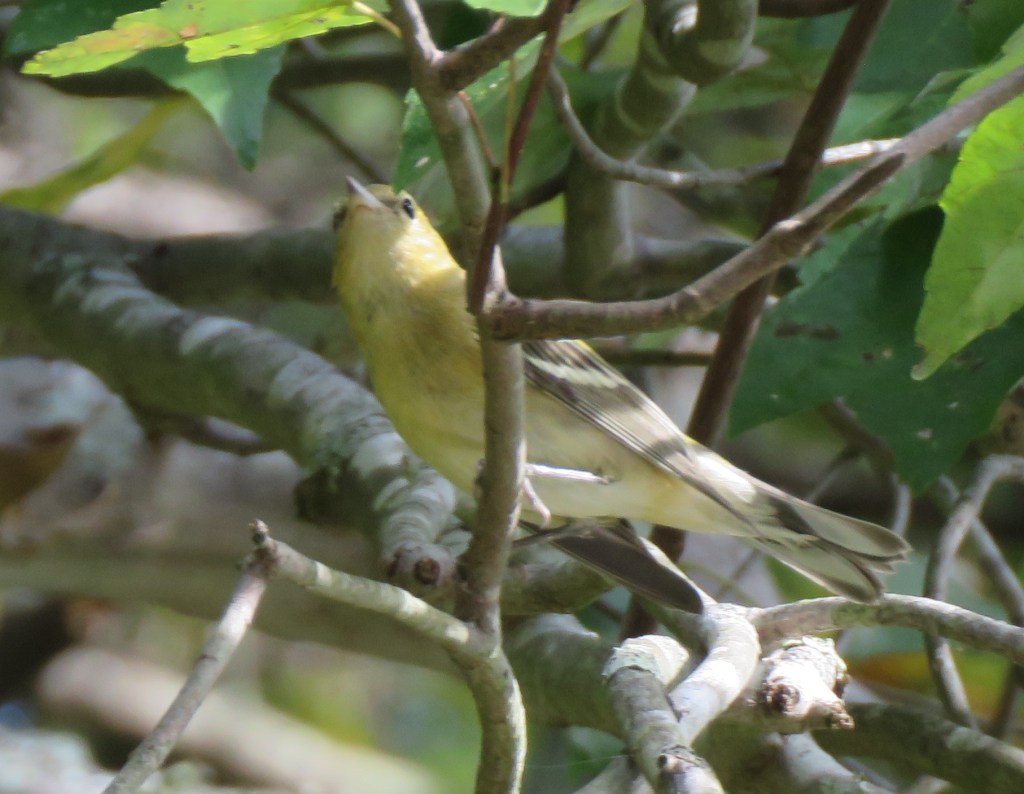
A migrating Bay Breasted Warbler.
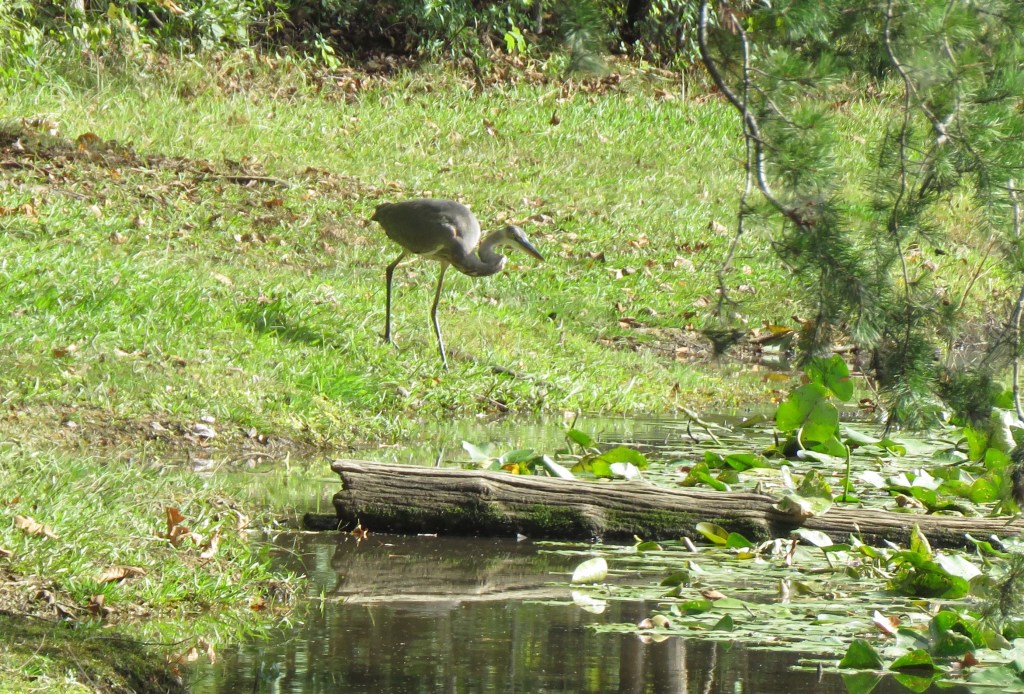
A Great Blue Heron.
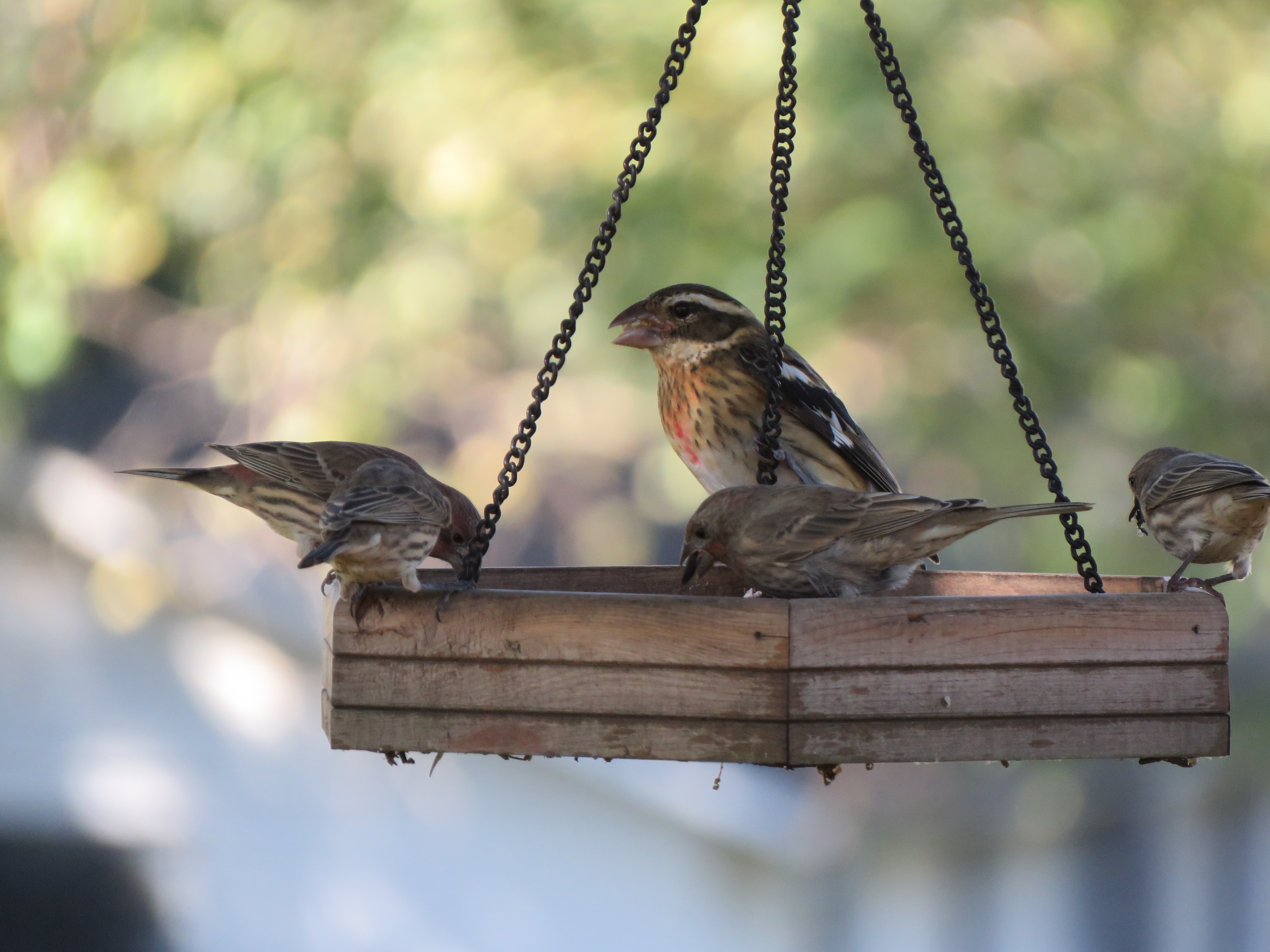
Dan Nicholas Park wasn’t the only place we saw birds. We sat in the shade and chatted while various species of birds visited our hosts’ backyard feeders.
Please click on the photos to enlarge them.
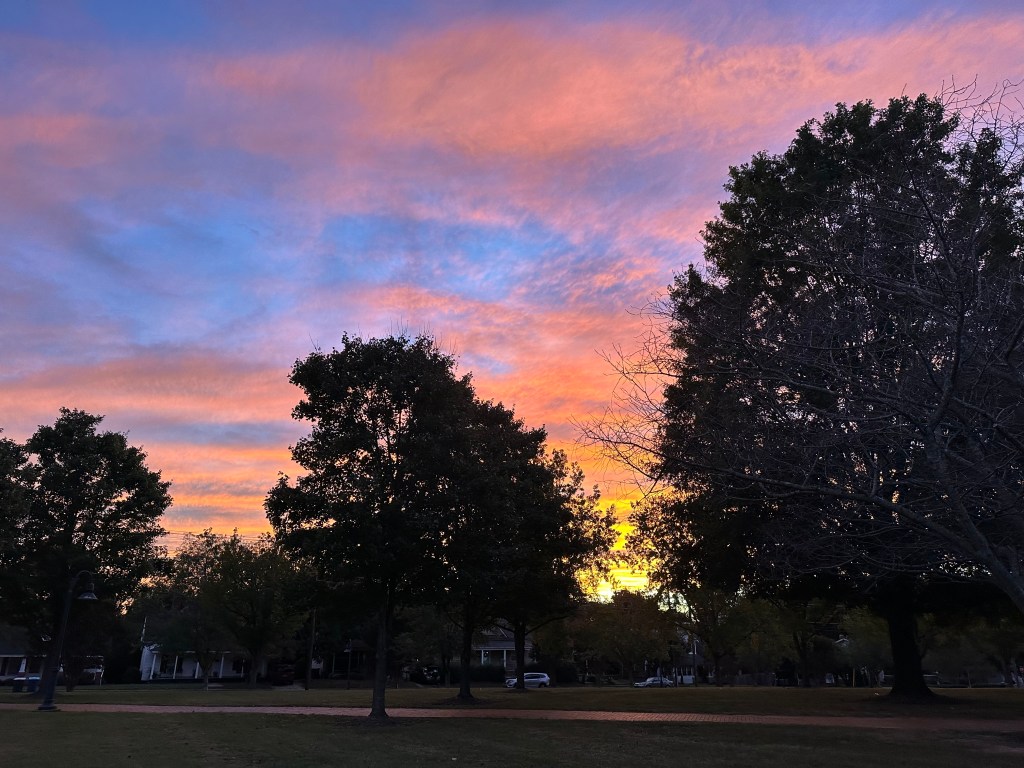
Of course, I had to include a sunset from Cannon Park in Salisbury, North Carolina.
Please click on the photos to enlarge them.
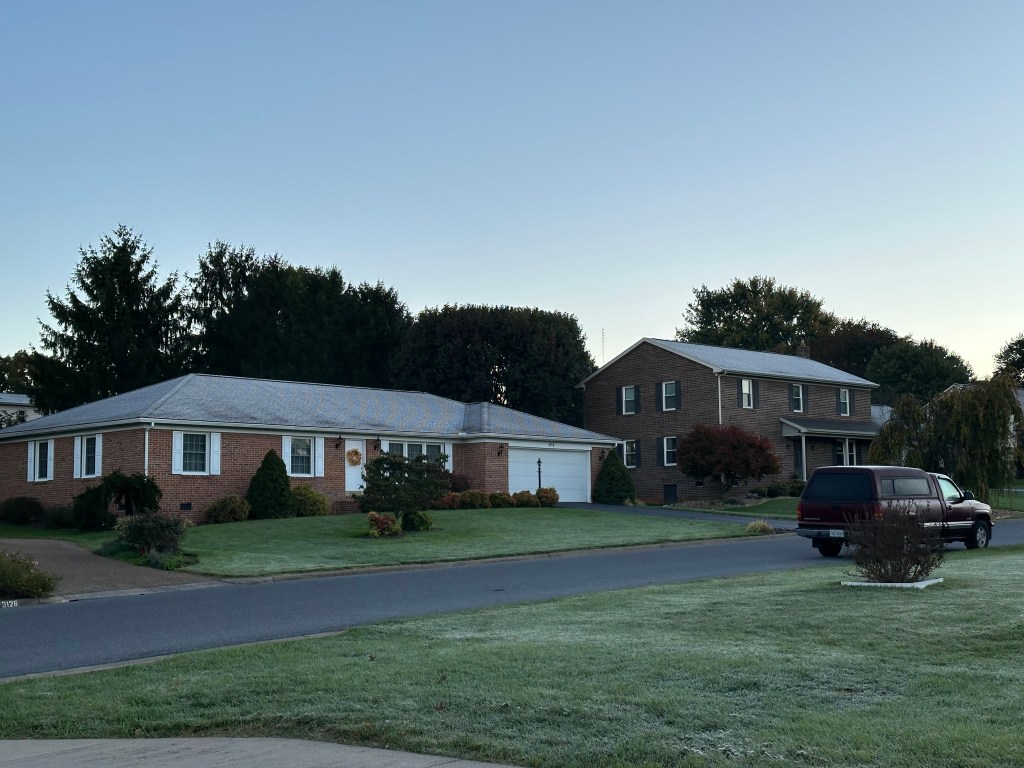
The evening we arrived home in Harrisonburg, Virginia, the aurora borealis brightened the night sky. The following morning, we had the first frost of the season.
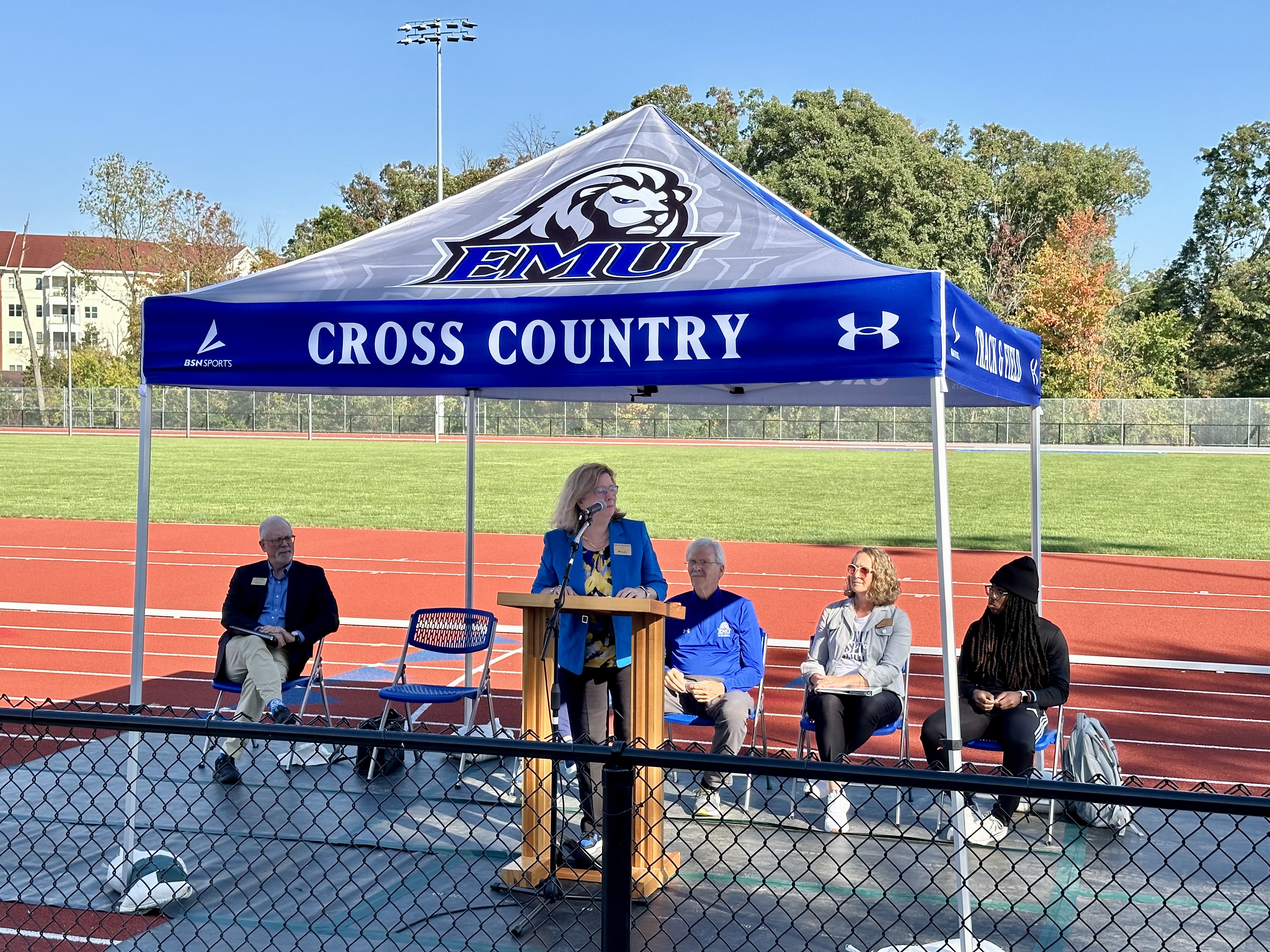
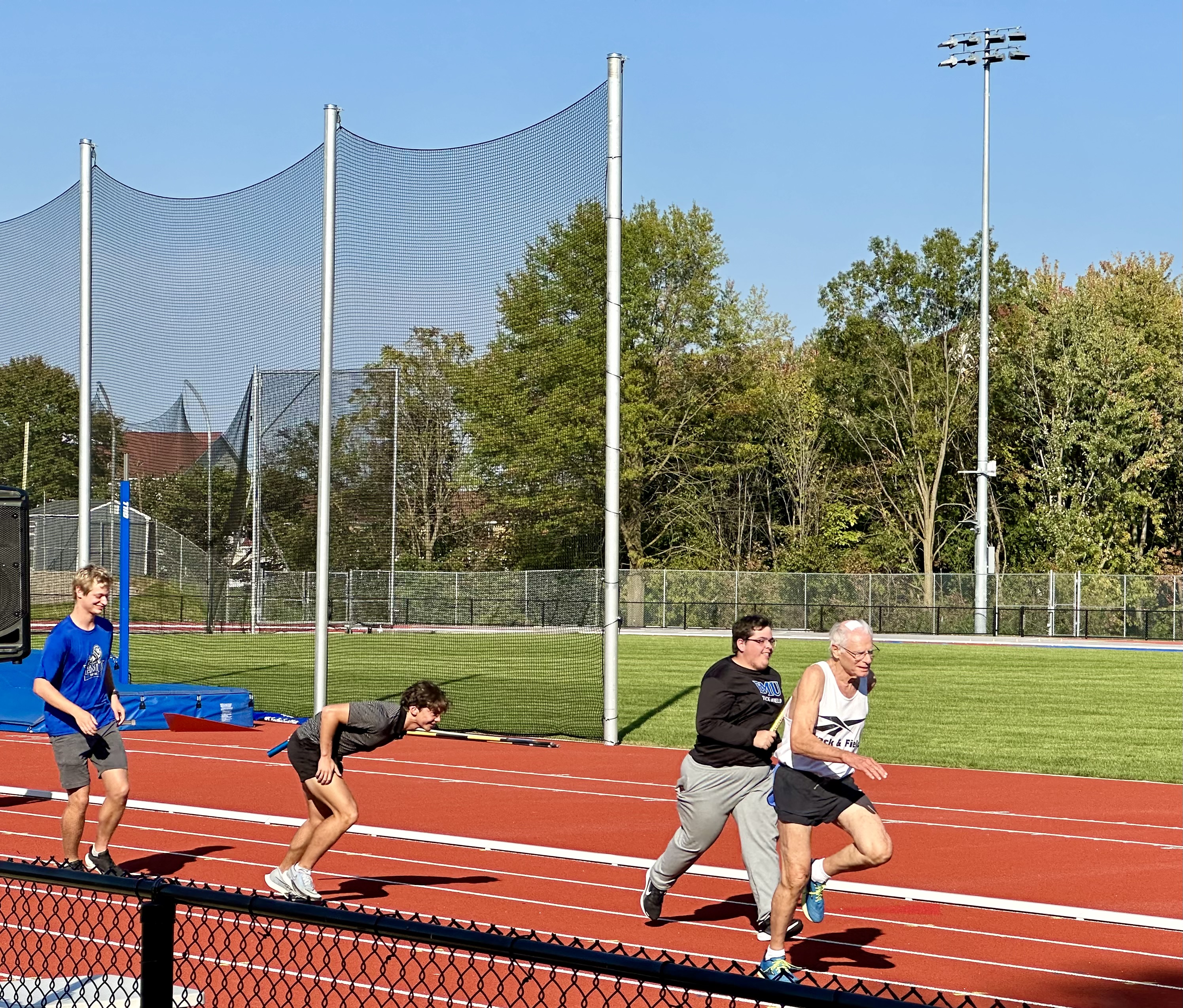
On Saturday, we hustled from one event to another. It was Homecoming at Eastern Mennonite University, where our daughter is the athletic director. The highlight for us was the dedication of the new state-of-the-art track. The ceremonies culminated with a ceremonial lap around the track by significant donors, former track members, and current track members. The oldest participant to run was in his 80s. He runs every day.
Please click on the photos to enlarge them.
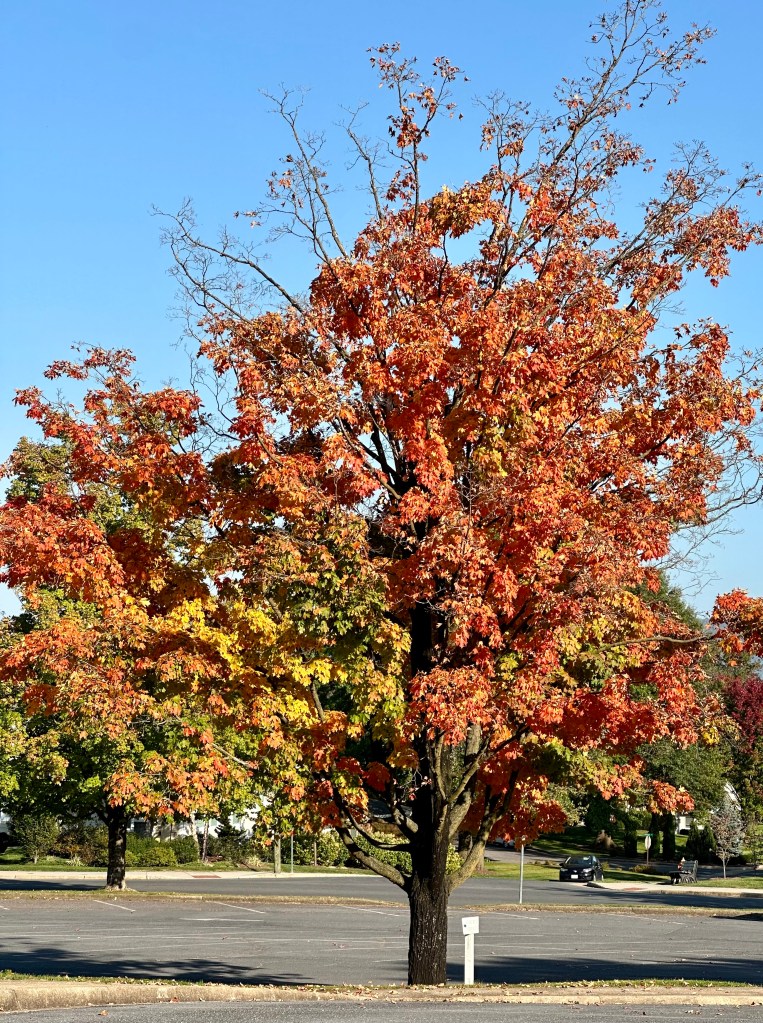
Sugar Maple leaves are peaking.
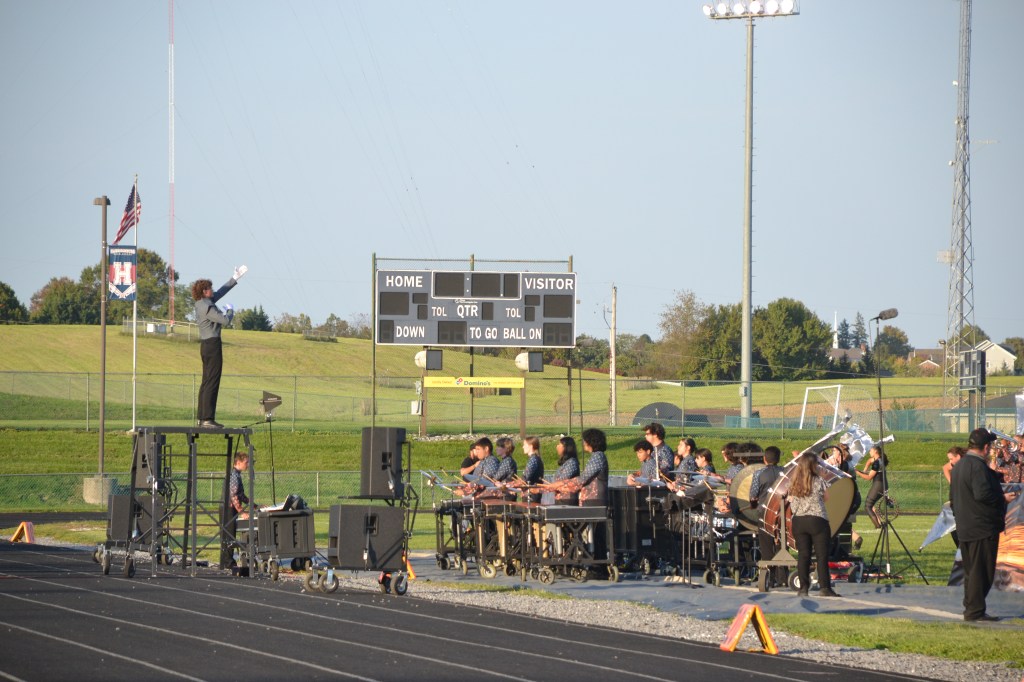
That evening, we watched our grandson lead the Rock City Regime as the drum major at a high school band competition.
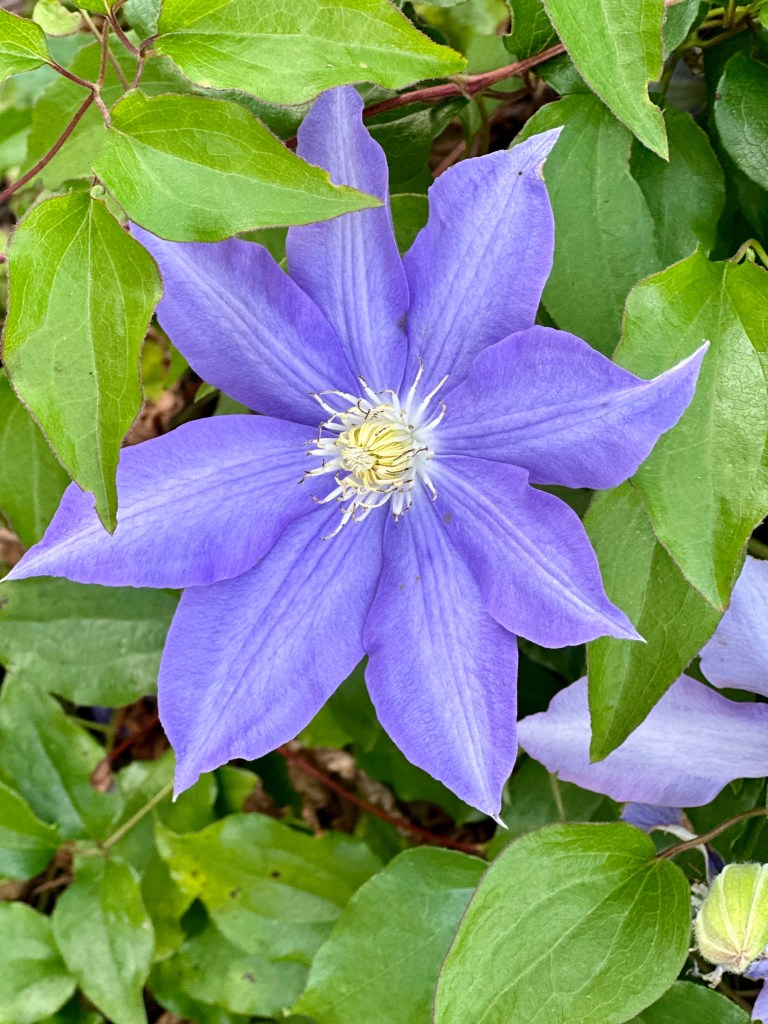
The colorful week ended with a welcome home by late-blooming clematis.
Kirtland’s Warbler, Waynesboro, Virginia. Photo by Bruce Stambaugh
When I opened the email from the birding listserv this morning, I knew I would pursue this rare bird. Fall bird migration was in full swing, and it’s a real rarity when a Kirtland’s Warbler is spotted. Experts estimate that only 1,500 of this species remain today.
It turned out that this bird was in a park only a mile from the wildlife rescue center where I took the injured Cape May Warbler last week. I had never been to the park where the Kirtland’s had been spotted.
My wife and I headed southwest toward Waynesboro, taking familiar back roads. Crossing over I-81 told us we had made the right decision. The busy highway was nearly bumper to bumper in both north and south lanes.
The GPS took us right to the park. The small parking lot was full, but fortunately, a space opened up right after we pulled in. Another birder arrived right after us and wondered where the bird was. I had no idea until we saw a small group emerge from the trees and thicket carrying binoculars and cameras with baseball bat-sized lenses.
They stopped and pointed their cameras and bins toward the thicket as we joined them. They spotted the bird immediately, and as good birders are want to do, they helped newcomers like us find the bird.
My wife had the rare bird in her binoculars before I did. Once it popped into the open, I saw the bird through my binoculars and then tried to capture images on my camera. Documentation is essential in birding, especially rare birds.
The bird darted up and down, in and out of the jungle of vines, saplings, and mature trees. It foraged on insects and berries. The bird finally popped into my viewfinder, and I got this photo and a few other less desirable ones.
Seeing a Kirtland’s Warbler is always exciting, especially if it is a life bird, meaning the first time you have seen the elusive bird. It’s a birder’s dream come true. Indeed, this bird was a lifer for several in the cooperative group.
Birding is all about finding and sharing, which Neva and I experienced today. On our way home, we celebrated with a delicious late lunch at our favorite burger place.
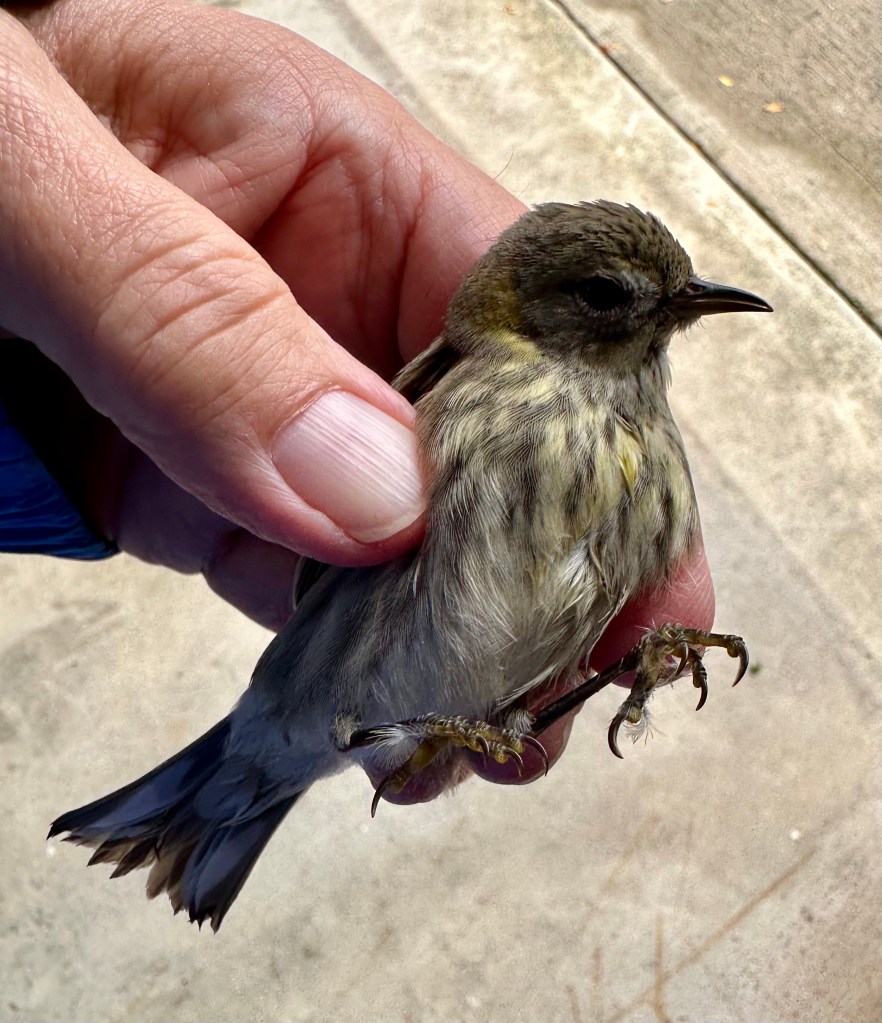
The Cape May Warbler after it hit a window. Photo by Bruce Stambaugh
I had lots to do. My first destination was the pharmacy, where I was to pick up a couple of prescriptions. As I started inside, a little bird stopped me.
The bird lay on the sidewalk upside down, twitching. I looked up and saw a large plate glass window. Another bird strike, I thought to myself.
I decided to leave the bird there. If it were still there when I returned after getting my prescriptions, I would see if I could help the poor critter. The other items on my to-do list could wait.
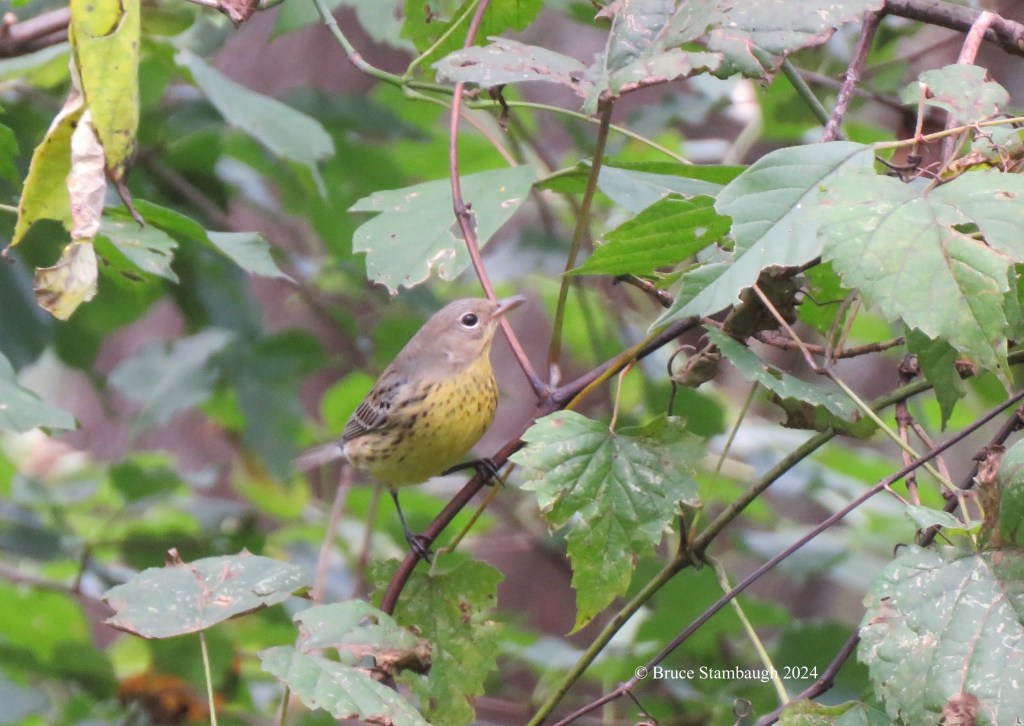
The tiny bird was still in the same spot in the few minutes I was away. It had managed to flop onto its feet but gave every sign of being injured. I bent down and gently picked it up. I thought the stripes on its belly and a faint yellow color indicated a Pine Siskin. I shared a photo of the bird with better birders than me and was happy to learn it was a Cape May Warbler.
This bird’s coloration would be much brighter in springtime, dressed in its mating attire. It was fall migration, and Cape May Warblers, like many other songbirds, turned dull for protection on their way to the Caribbean Islands from their summer nesting grounds in the far north’s spruce forests.
I returned to my vehicle and placed the stunned bird in the only thing I had: a grocery store tote bag. I called the nearest bird rehab center and was instructed to put the bird in a small box with airholes and secure it to keep it in place.
Back home, I found an appropriate box, laid a hand towel in the bottom, and placed another smaller box with slits over it so the bird could breathe. I headed for the rehab center 40 minutes away.
A mile from the rehab center, more rain from the remnants of Hurricane Helene began to fall. This wildlife hospital was in a mountainside woods outside a small city in Virginia’s Shenandoah Valley. I pulled up to the front door, and a volunteer soon arrived. Because I had called, they were waiting for me.
Just like a human hospital, I had forms to fill out. I wrote down my contact information and specific details on where and when I had found the bird. I was handed a card with the patient’s number on it to use should I inquire about the bird’s status. And just like that, I was on my way home.
I emailed the rehab center to correct my misidentification, but I didn’t hear back until two days later when I received a phone call. They thanked me for taking the time to bring them the warbler. The lab tech confirmed that the bird injured itself by hitting the window.
It was having trouble breathing and had internal inflammation. The rehabbers gave it oxygen, water, food, and the proper medication. The bird responded to the expert treatment and was ready for release, and their protocol requested that it be set free close to where it was found.
The caller wanted to know if I would pick up the bird and take it to a park near where I found the warbler. Without hesitation, I again cast aside my plans for the afternoon and gladly drove down to pick up the bird and release it at the park.
Returning with my healed patient, I wondered what my reaction might be. I was glad the bird had recovered, but emotionally, there was more to it than that. As a long-time avid bird watcher, I had found many birds dead from window strikes. I would freeze their bodies until I could take them to a local wilderness education center. The carcasses would be preserved and put on display for schoolchildren to inspect. As a birder and a retired educator, that gave me satisfaction.
But this case was different. I checked both the rescuer and transporter boxes on the form I filled out at the rehab center entrance. I felt joy for the bird and the rehabbers’ successful efforts. As for me, I rejoiced that I had forgone those errands to save the dainty bird.
I wasn’t any avian hero. Still, I was thrilled when I opened the box. After a brief hesitation, the recovered Cape May Warbler beautifully flew into the woods nearby, never to be seen again. I couldn’t stop smiling.
The Cape May Warbler quickly flew to a stand of trees nearby. Photo by Bruce Stambaugh
Low clouds covered much of Massanutten Mountain. Photo by Bruce Stambaugh
Rain finally came to the Shenandoah Valley when summer turned to autumn. It was a pleasant and much-needed transition.
Folks in Virginia’s Shenandoah Valley endured one of the hottest and dryest summers on record. We had so little rain that our yard wasn’t mown for nine weeks. Then came the autumnal equinox and downpour after downpour.
No one was complaining. The rain was a blessing, though a bit too late for most farmers to benefit.
We went from sunny, hot, and humid days to gloomy, wet ones. Clouds loaded with moisture that so often detoured around the parched valley in summer found the lovely valley to their liking. Day after day started and ended with rain. Occasional storms brought wind damage and large hail.
Most of all, the cloud decks were low, hiding the views in every direction. After a rain, fog banks sometimes rose from river valleys and enshrouded nearby mountains beneath the looming, nearly stationary rain clouds.
Though the scenes became regular, their eeriness remained. Fortunately, so did the rains.



































 Roadkill Crossing
You must be logged in to post a comment.