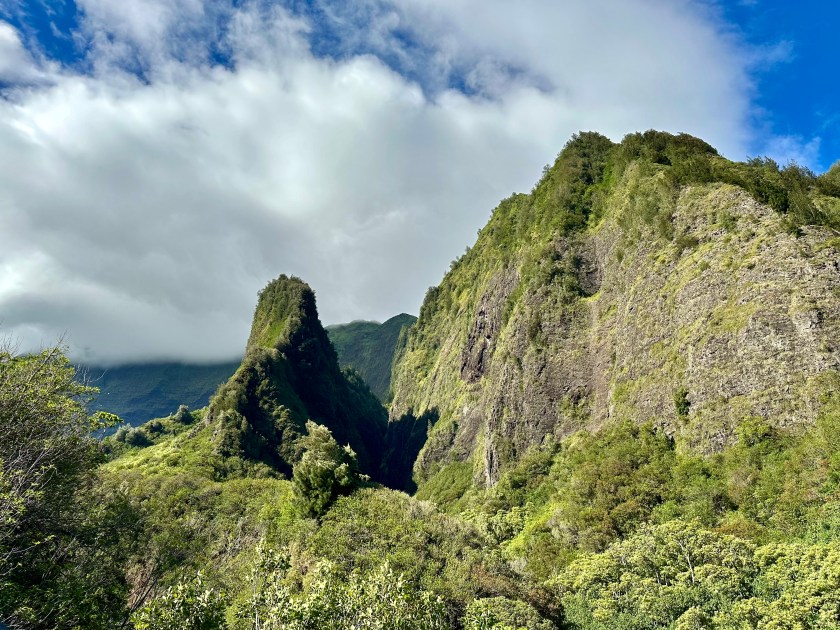

Enshrouded Mountain

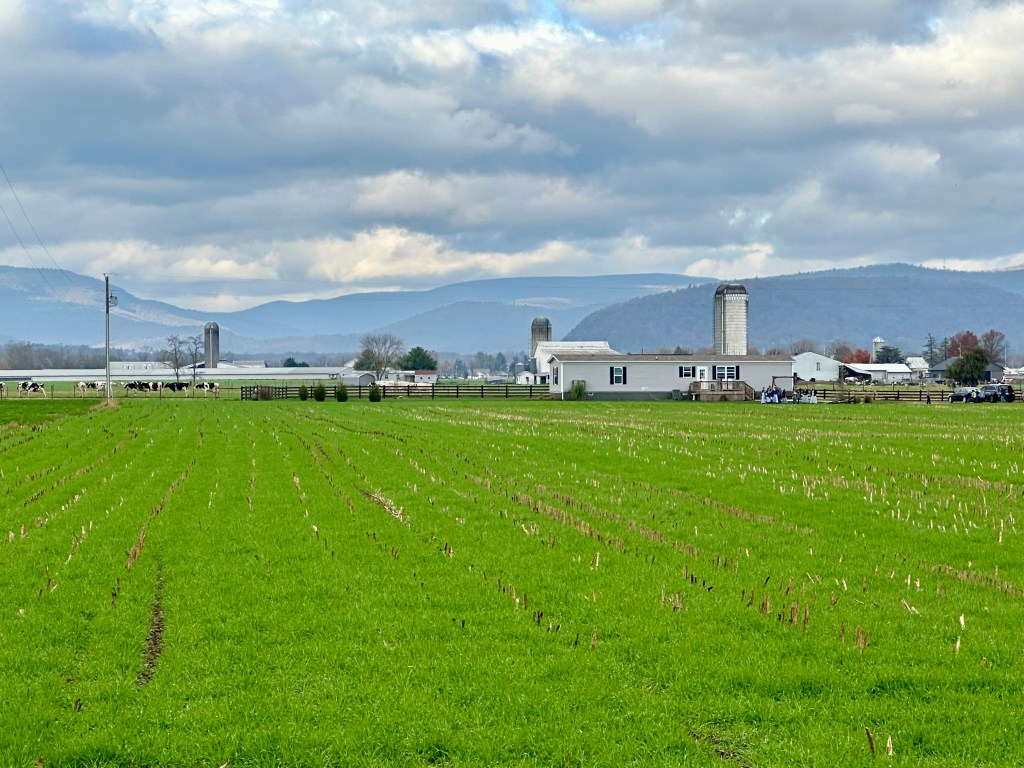
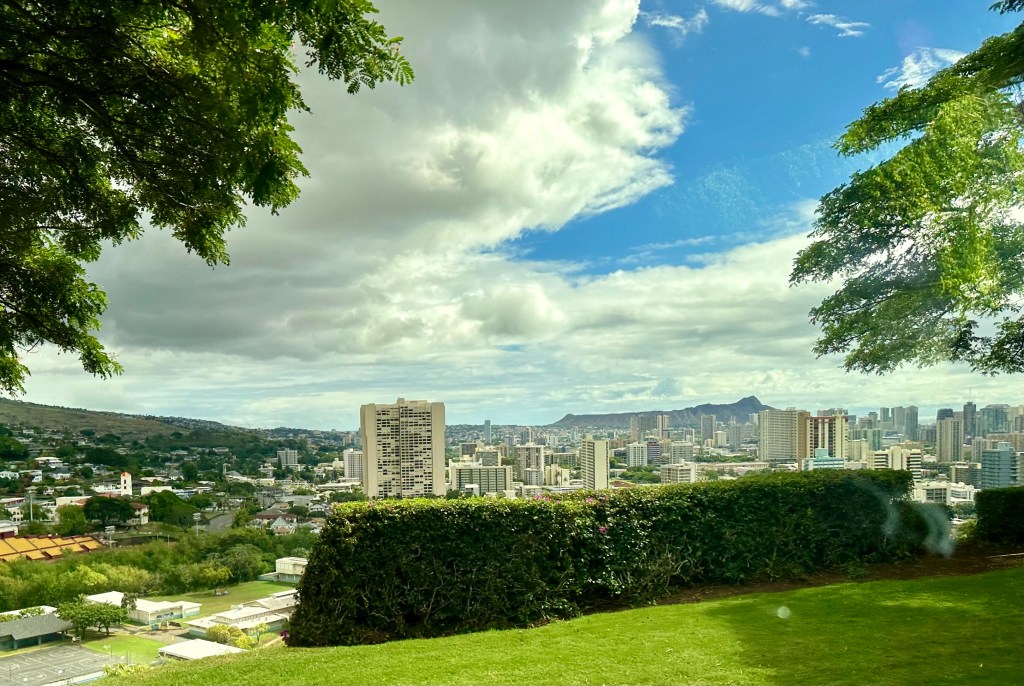
Low clouds covered much of Massanutten Mountain. Photo by Bruce Stambaugh

Rain finally came to the Shenandoah Valley when summer turned to autumn. It was a pleasant and much-needed transition.

Folks in Virginia’s Shenandoah Valley endured one of the hottest and dryest summers on record. We had so little rain that our yard wasn’t mown for nine weeks. Then came the autumnal equinox and downpour after downpour.

No one was complaining. The rain was a blessing, though a bit too late for most farmers to benefit.

We went from sunny, hot, and humid days to gloomy, wet ones. Clouds loaded with moisture that so often detoured around the parched valley in summer found the lovely valley to their liking. Day after day started and ended with rain. Occasional storms brought wind damage and large hail.

Most of all, the cloud decks were low, hiding the views in every direction. After a rain, fog banks sometimes rose from river valleys and enshrouded nearby mountains beneath the looming, nearly stationary rain clouds.

Though the scenes became regular, their eeriness remained. Fortunately, so did the rains.

© Bruce Stambaugh 2024

Signs of Autumn Abound

Morning sunshine tinted Sugar Maple leaves. Photo by Bruce Stambaugh

The signs of fall are everywhere in Virginia’s Shenandoah Valley. Whether hiking in a park, walking around the neighborhood, or taking a country drive, hints of autumn’s imminent arrival catch people’s attention.

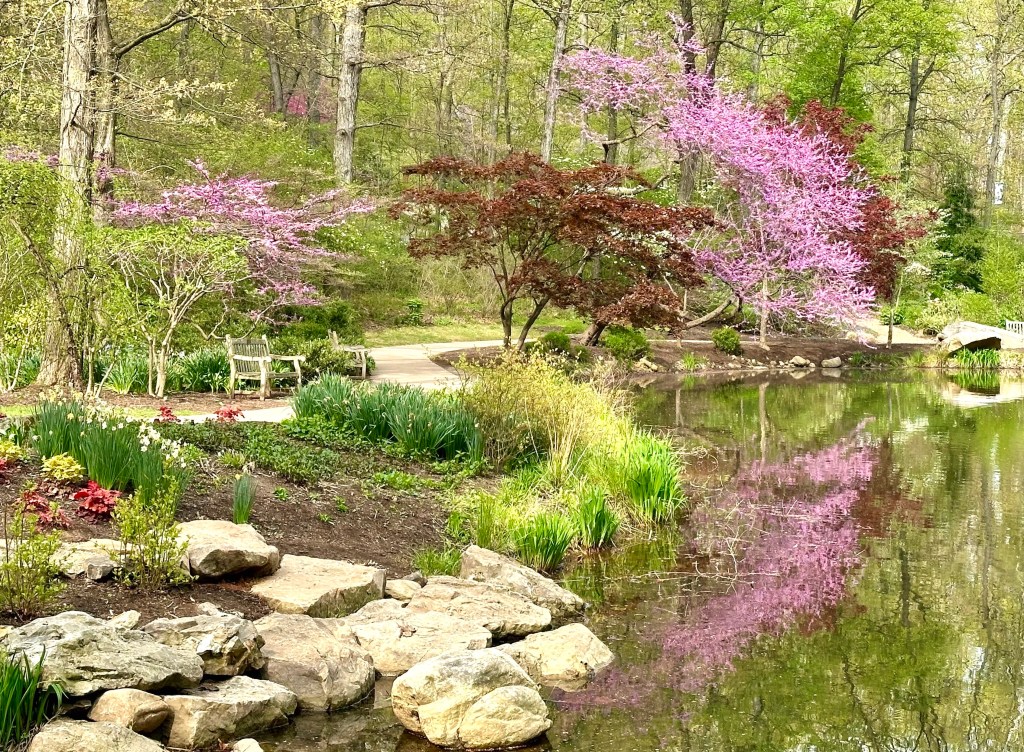
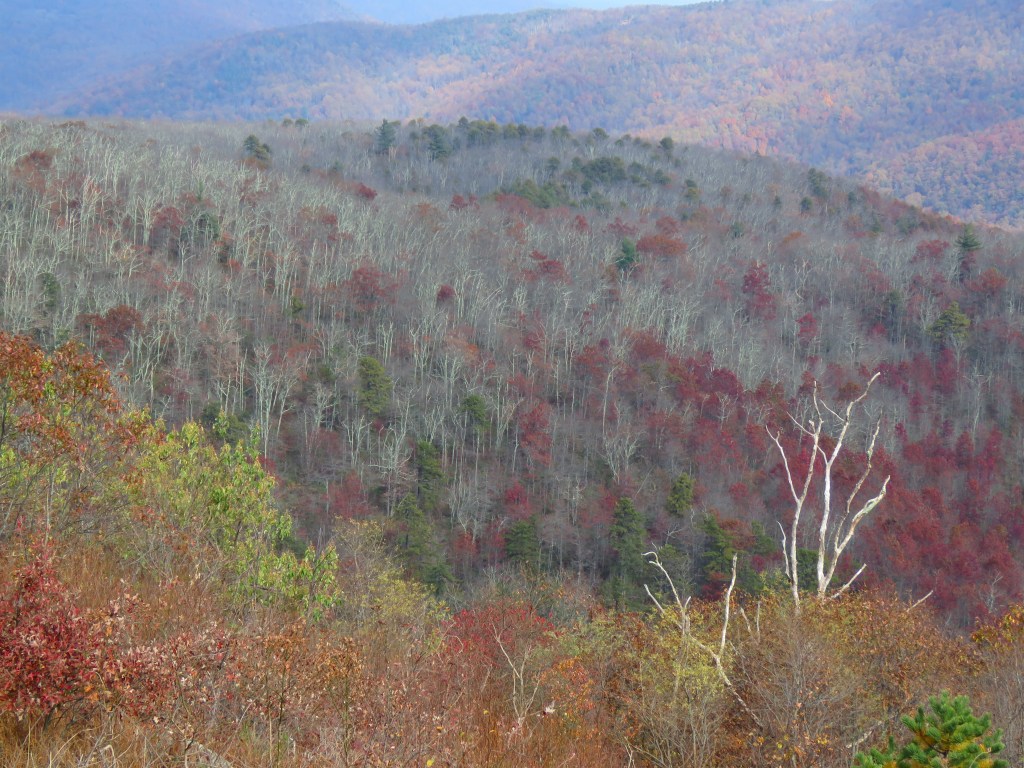
Impatient warm colors tint the once vibrant green of sugar maple leaves. Other maples blush reds on one branch and greens on the rest of the canopy. Scan hillside woodlots, and it’s clear autumn’s rapid approach has infringed on the once variety of hues of greens.

Some of the dulling and browning result from the severe summer drought. Rain has been sparse. Large and small trees continue to be stressed, some to the point of no return.

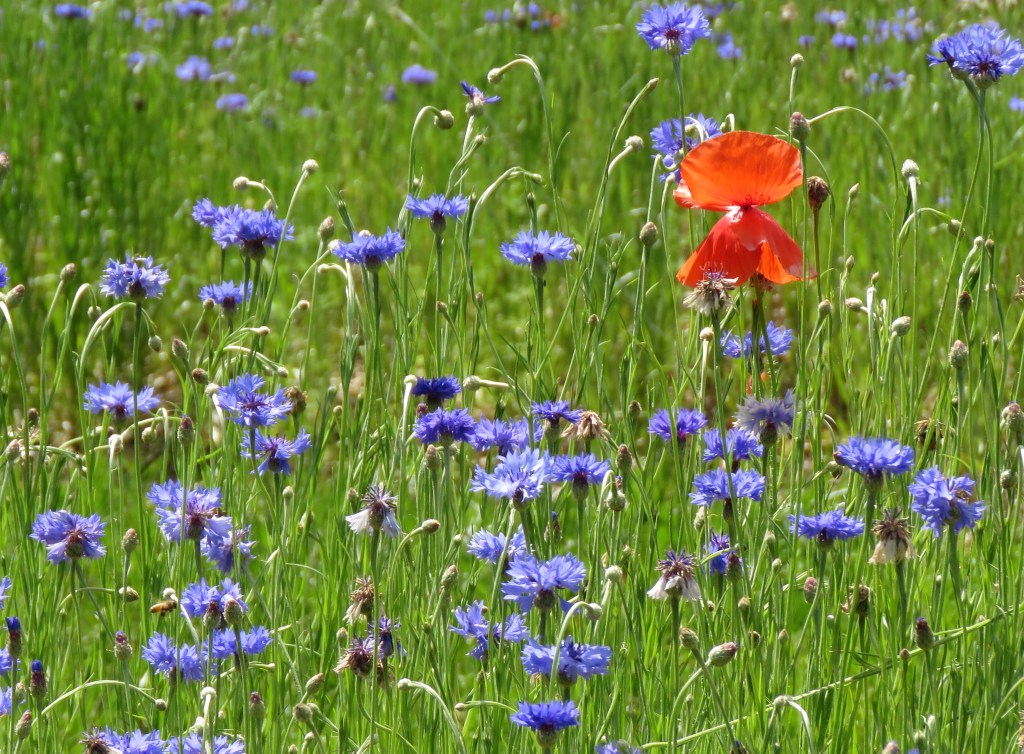
The wildflowers seem bedraggled, save for multiple stands of goldenrods waving in the wind. Still, blossoms persist despite the dryness and display their showy blooms.

The deep purple of wild morning glories contrasts beautifully with the ubiquitous goldenrod blooms. Different species of wildflowers display various versions of yellow only feet apart.

Sunsets come too soon. Even on cloudless days, the western horizon glows golden. Unfortunately, particles from wildfires hundreds of miles away, carried by the jetstreams, subdue the grateful human emotions.

The heat and dryness, not the season’s first frost, have stunted too many stands of cornstalks and singed their long, drooping leaves. Going consecutive weeks with little to no precipitation has that effect.

A hazy sunset. Photo by Bruce Stambaugh

Insects also make their annual fall appearances. Caterpillars gorge on their host plants to prepare for the next phase of the metamorphosis. Praying mantis look for any opportunity to dine among the garden foliage.

The heavy dews of cool mornings reveal the stealthy spider webs with their glistening moisture. As the dew evaporates from the warming air, butterflies search for nector, powering up for their southern journies.

Scores of warbler species dressed in duller, non-breeding colors migrate to their southern haunts. Other species, including singers and shorebirds, also flee for more moderate climes.

It won’t be long until northern snowbirds, primarily the gray-haired versions, follow behind them in cram-packed cars and campers of all shapes, sizes, and colors. Warmer weather attracts all kinds of birds.

Of course, the turning of the leaves, the blooming wildflowers, the trimming of daylight, and cooler temperatures is as it should be. Fall is officially around the corner. The autumnal equinox is Sunday, September 22, at 8:47 a.m. EDT.

Red Maples turning red. Photo by Bruce Stambaugh

© Bruce Stambaugh 2024

September’s First Week in Photos

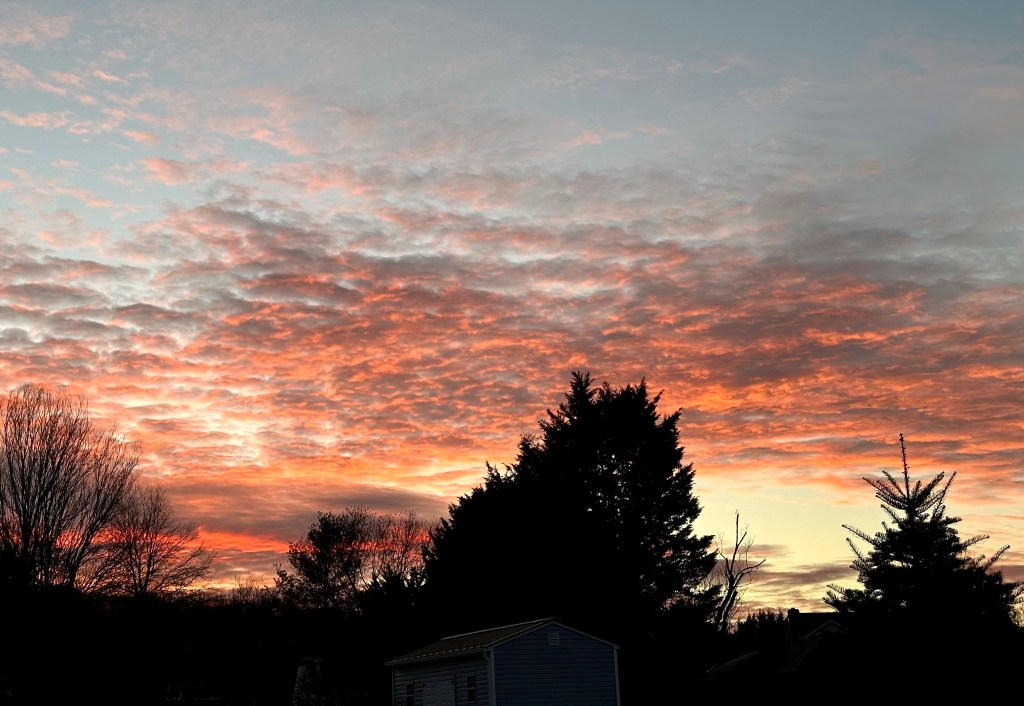
The first week of September brought a variety of photographic opportunities and emotions. I’ll let the week’s activities play out in the photos and captions.

My wife and I spotted this hot air balloon sailing over our neighborhood on our regular morning walk. Photo by Bruce Stambaugh
We celebrated communion at church. Photo by Bruce Stambaugh
A storm front brought much-needed rain Sunday evening, leaving a rainbow spawned by the setting sun’s rays. Photo by Bruce Stambaugh
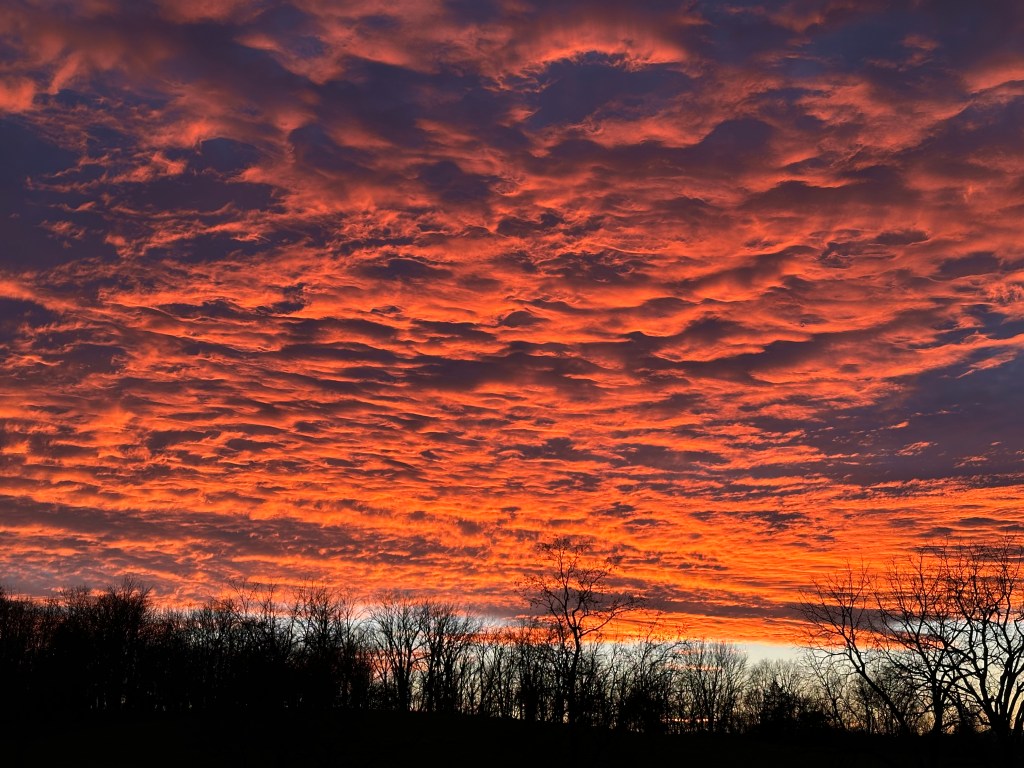
Sunday’s sunset exploded with a multitude of texts and colors. This photo was taken on Sunny Slope Farm. Photo by Bruce Stambaugh
Mole Hill, an extinct volcanic core, always makes an excellent foreground for the sunset over the Allegheny Mountains. Photo by Bruce Stambaugh
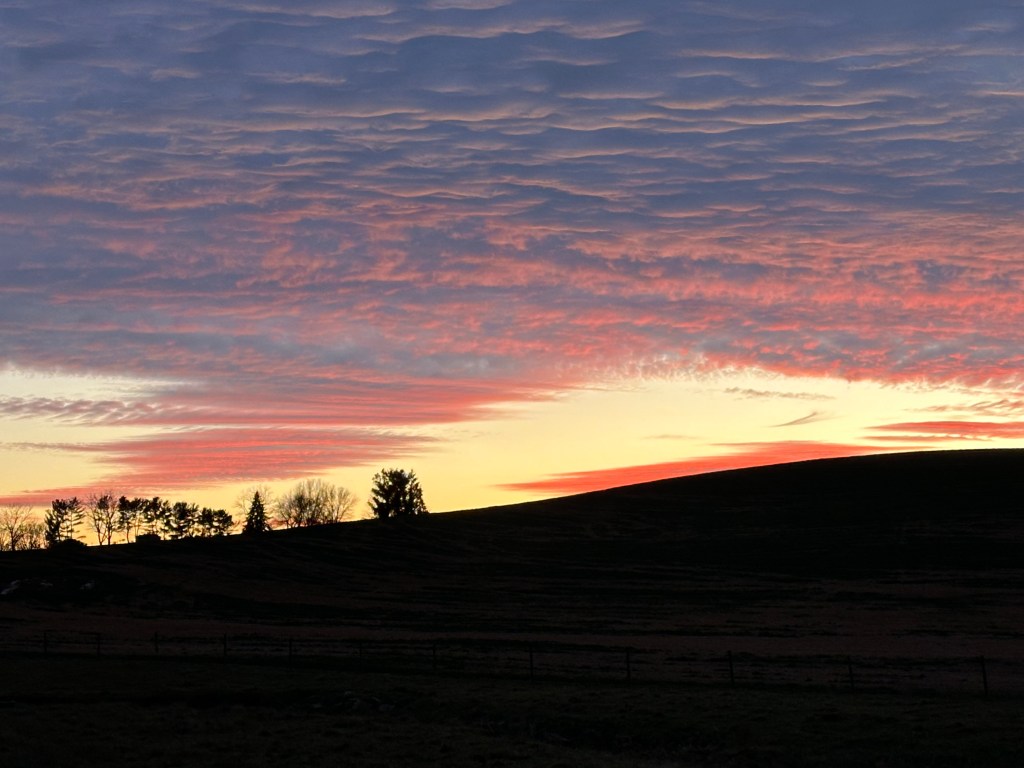
Fog rose from the Dry River in western Rockingham County that Sunday evening while grays and mauves dominated the southwestern sky. Photo by Bruce Stambaugh
The sky’s drama continued as I drove home on September 1. Photo by Bruce Stambaugh
The backyard Hyacinth bean plant was in full bloom in the morning sunshine on September 3. Photo by Bruce Stambaugh
Evening clouds splayed over Silver Lake near Dayton, Virginia, on September 3.
Photo by Bruce Stambaugh
The evening’s thin cirrus clouds made it seem like old Mole Hill was erupting.
Photo by Bruce Stambaugh
On the west side of Mole Hill, the soft sunset seemed to emmite striated clouds.
Photo by Bruce Stambaugh
As I watered our thirsty flowers, shrubs, and trees the following evening, I spotted a Black Swallowtail caterpillar. Photo by Bruce Stambaugh
I attended an excellent lecture and gallery preview by photojournalist and filmmaker Morgan Heim at Eastern Mennonite University on Friday morning. Photo by Bruce Stambaugh
We ended the week by attending our church’s annual retreat at a camp at the base of Massanutten Mountain northeast of Harrisonburg. Photo by Bruce Stambaugh

© Bruce Stambaugh 2024

The Male Ego vs. Common Sense

The yard I foolishly mowed. Photo by Bruce Stambaugh

I sat beneath a spreading canopy of an ornamental tree at my favorite cafe, waiting for my celebratory lunch. It was my reward for a spontaneous decision I wished I hadn’t made.

Early in the late August morning coolness, I had already walked my usual mile in our suburban neighborhood. The humidity neutralized the refreshing temperature.

The forecast showed heavy rain off and on for the next three days. As I walked, I weighed my options. Should I mow our yard or not? The grass was already high, and the rain would only allow it to grow thicker and higher.

Our granddaughter, who usually mows for us, was in school. Plus, I needed more time to request the on-call lawn service, so I was the only option. The truth is that I loved to mow the yard. I enjoy the exercise and the challenge of mowing the grass in different directions each time, creating various patterns in the yard.

Back home, I confidently announced my decision to my wife.

“Are you sure?” she wisely asked with clear doubt and a contorted look. She knew the consequences that I ignored.

I gassed up the mower and charged onto the lawn as my wife left for the morning. It was 68 degrees Fahrenheit when I started and 86 degrees when I finished.

The first 20 minutes went well. I made several passes around the perimeter of our third of an acre and got halfway through the front yard when the reality of why others mow our lawn kicked in.

I’m allergic to grass. Despite my nose running like a baby’s, I followed my male ego’s insistence. I soldiered on as best I could while my wife’s question rattled in my numbed brain. Soon, however, the physical reactions forced this stubborn septuagenarian to take an extra-long break. I needed to rest and hydrate. Plus, I used half a box of facial tissues.

Nevertheless, I pressed on as the temperature spiked and the humidity intensified. With the front yard finished, I retreated to the garage’s shelter to repeat my previous routine: sit, drink, towel away the sweat, and repeatedly blow my nose.

In short, I was miserable and exhausted but still determined to finish the job. My stubborn male ego spurred my misguided desire to do so. Fortunately, with a few more rounds, I completed the mowing. I took another break before cleaning up the mower and blowing off the driveway, sidewalk, and patio. What should have taken an hour turned into two.

I was ecstatic to be finished despite my stupidity. I cleaned up and basked in the comfort of air conditioning.

As the late morning transitioned into the afternoon, I headed to the downtown cafe I loved. I treated myself to my favorite lunchtime dish: a gluten-free waffle with fresh fruit and sweet tea in the dappled shade of that cityscape tree. The delicious food vindicated my miserable morning. At least, that’s what I rationalized.

My celebratory lunch. Photo by Bruce Stambaugh

I spent the afternoon relaxing in a lounge chair in the shade of the back porch. I promptly fell asleep despite the heat, which now had reached 96 degrees. An hour later, I awoke to a new reality. Despite the ongoing drought, the National Weather Service posted a flood watch for northern Virginia. Hopefully, rain was on the way.

The hazy, clear blue sky filled with high cirrus clouds. Soon, a brisk wind sailed lower, more menacing cumulous clouds overhead.

A blessed, gentle rain began by early evening but quickly became a downpour. Lightning flashed in every direction, with some strikes too close for comfort. Ear-splitting booms instantly followed bright bolts.

The evening cooled once the storm front passed, and I settled in for a good night’s sleep, exhausted but happy for the rain and the manicured yard. I confessed my evident male ego stubbornness to my compassionate wife, laughed at my foolishness, and fell into a contented, deep sleep.

In his iconic 1909 craft book “Write It Right,” Ambrose Bierce stated that “good writing” is “clear thinking made visible.” My actions proved that muddled reasoning is just as evident.

© Bruce Stambaugh 2024

Hiding in Plain Sight

A female Ruby-throated Hummingbird. Photo by Bruce Stambaugh

We had a lovely and much-needed inch of rain yesterday and overnight. Much of the lawn greened up right away.

This morning, I was fortunate to catch this female Ruby-throated Hummingbird resting on a shepherd’s hook. The hook holds the hummingbird feeder below the ant mote at the center bottom of the photo.

As I cropped the photo, I realized all the various greens helped hide the little hummingbird. It was like the bird was hiding in plain sight. That’s the way nature works!

© Bruce Stambaugh 2024

Under Summer Skies

A summer evening clouds over Massanutten Mountain, Harrisonburg, Virginia.
Photo by Bruce Stambaugh

It’s been a long, hot, dry summer in Virginia’s Shenandoah Valley. Even after Tropical Storm Debby dropped over five inches of rain, the National Oceanic and Atmospheric Administration kept the valley in the extreme drought category.

Each summer has become hotter and dryer in the seven years we have lived in Virginia. This summer has been the worst. We haven’t mowed our yard for nine weeks. Brown is the new green.

Watering our plants, shrubs, and trees became a daily necessity as the dry days morphed into drier weeks. The trees we planted when we moved look particularly dire.

Our regular morning walks happened just around sunrise when the temperature was tolerable, or they didn’t happen at all. During those early morning strolls, I couldn’t help but notice the beauty above me. Each day, the sky provided an ever-changing array of patterns and colors, heat or no heat.

The sky is easy to take for granted. Too often, we focus on our personal or professional busyness and fail to notice what’s overhead. Our frequent walks helped me appreciate the sky, cloudy or clear, more and more. The heat and humidity often created hazy, overcast days, but even cloudy days brought no rain except for a few teasing five-minute showers.

Then there were the days when white, puffy cumulus clouds floated across the pale blue sky like towering cotton sculptures. They took my mind off the extreme temperatures that brought heat advisories and extreme heat warnings.

I didn’t have to leave my house to enjoy the remarkable sky. A peek out the windows sufficed. I even found the overcast days bearable. Occasional breaks in the clouds brought momentary flashes of bright sunshine.

A five-minute shower. Photo by Bruce Stambaugh

At sunsets, crepuscular rays streamed down from the heavens. My late father would tell his children that the sun was drawing water. I now smirk at the unfounded folklore but not at my gregarious father.

Living in one of the top agricultural areas in Virginia, I felt for the farmers. They labored under both the heat and the anxiety of no rain. In their prayers for moisture, I wondered if the farmers saw the beauty above them as they chopped fields of corn for silage to feed their livestock. Stressed by the drought, the stunted cornstalks curled, their floppy leaves singed brown, and many bore no ears at all.

Field corn struggled to grow in the drought. Photo by Bruce Stambaugh

The farmers who lived along the valley’s many streams and rivers irrigated their crops before the waterways dried up. Then, along came Debby with her drenching rains and ensuing flood warnings. A day later, the streams’ water levels diminished rapidly, and they returned to being braided again, their tumbled-smoothed rocks sending what water remained every which way.

Because of the summer’s heat, we kept our vehicular trips to a minimum. But when we were out, I admired the sky’s variety of moodiness. From clear to cloudy, partly cloudy to mostly cloudy, the heavens revealed all their emotions and, except for Debby, kept the rain for other geographic regions.

From dawn to dusk, nature’s color palette was on full display despite the persistent heat. To view the artistry, we just needed to look up. 

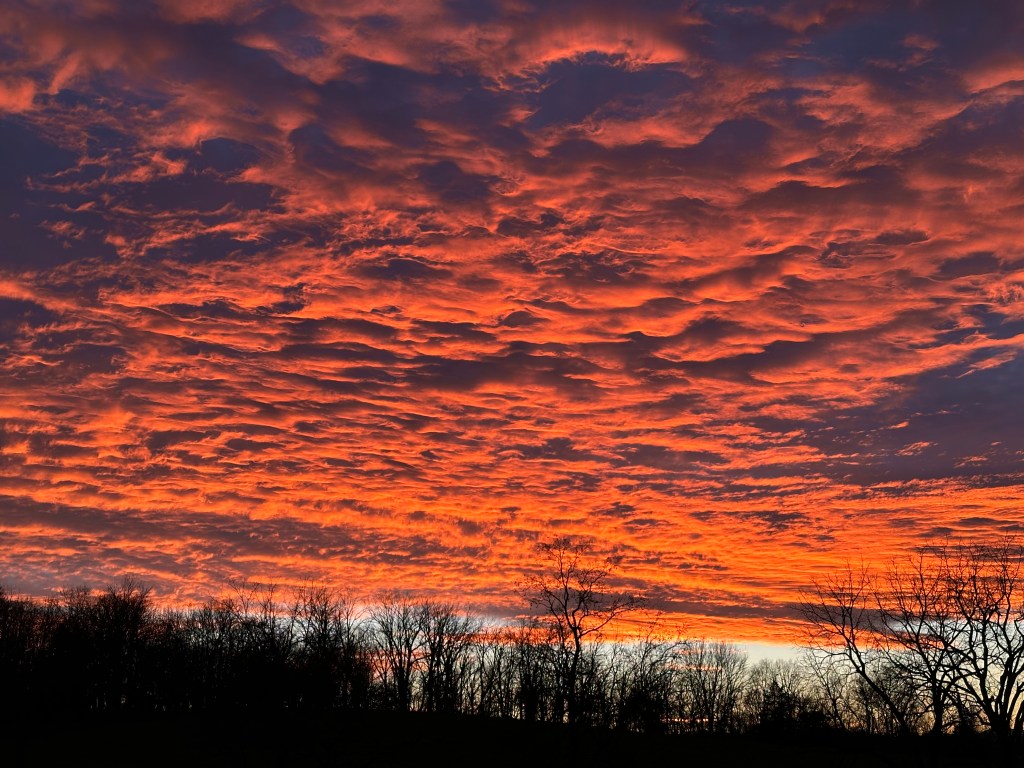
Scalloped clouds at sunrise. Photo by Bruce Stambaugh

© Bruce Stambaugh 2024

Masterful Marketing

A mushroom merchant’s booth at a Farmers Market. Photo by Bruce Stambaugh

When I spotted this booth at a Farmers Market in Rochester, New York, I had to take a photo. The friendly merchant’s smile showed he gladly approved.

And why shouldn’t he? The business name’s double entendre pitched both the product and its purpose. Undoubtedly, “The Fun Guys” owners are as mellow as their mushrooms.

© Bruce Stambaugh 2024

Holes in the Clouds

Altocumulus Clouds. Photo by Bruce Stambaugh

On our morning walk, my wife and I spotted an unusual cloud formation, as seen in the photo above. We first noticed the large hole in the formation of altocumulus clouds. Then, my wife spotted a second one while I focused on the knife blade-looking break to the right of the holes.

Airliners caused all three of these anomalies. You can see the remnants of the contrails left by the speeding planes. Notice how they are spread out in the mid-level atmosphere where altocumulus clouds form. These jets simply punched holes in these vertically climbing clouds. The instability aloft caused the holes and contrails to widen.

The National Weather Service said this about altocumulus clouds: “Altocumulus clouds with some vertical extent may denote the presence of elevated instability, especially in the morning, which could become boundary-layer based and be released into deep convection during the afternoon or evening.”

We are still waiting for the deep convection to produce some much-needed rain here in Virginia.

© Bruce Stambaugh 2024

A Morning Well Spent

Like this Tiger Swallowtail, butterflies are drawn to Turk’s Cap lilies. Photo by Bruce Stambaugh

I visit Shenandoah National Park whenever I can. Being retired has its advantages. I usually go to the park with a purpose in mind.

Recently, I drove the 45 miles from my home in Virginia’s Shenandoah Valley to the Big Meadows area of the popular national park for several reasons. I like to capture butterflies on the impressive Turk’s Cap lilies. Secondly, the temperature in the Blue Ridge Mountains, where the park is located, is usually cooler than the oppressive heat the valley has experienced lately.
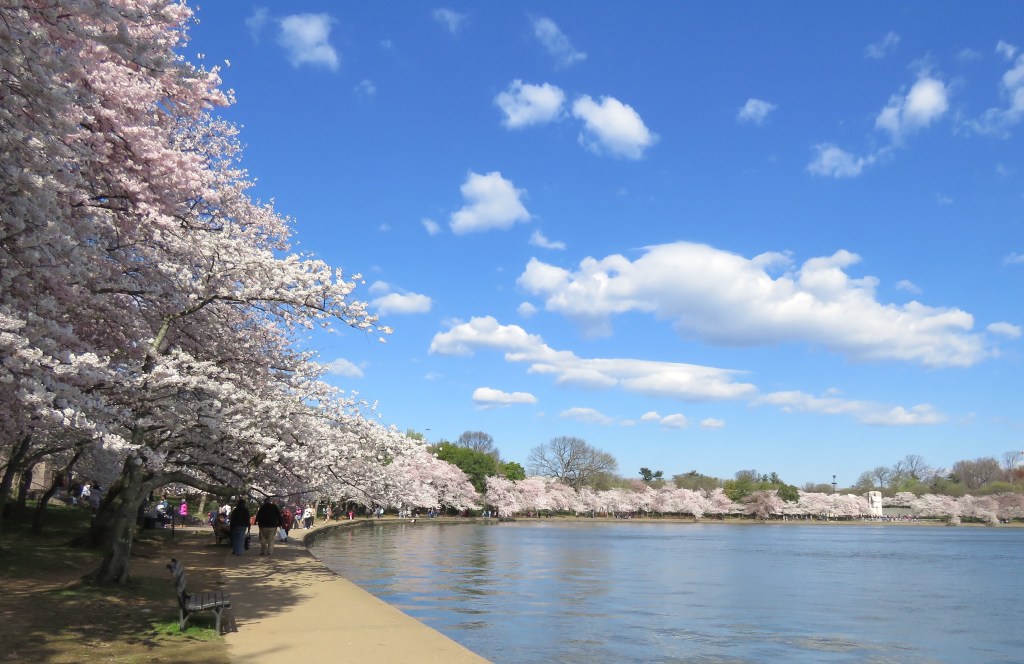
July is when the impressive summer flowers are in full bloom. Butterflies, bees, and other flying insects can’t resist their lure, and alert humans can’t miss the spotted, bright reddish-orange blossoms either.

These photos were all taken along Skyline Drive south of Big Meadows.

It didn’t take me long to spot a few butterflies flitting around. I usually find a group of flowers and wait for the butterflies to arrive. There was a problem with being a stationary human, however. I forgot to take my bug spray along, and between the gnats and the mosquitoes, I spent as much time swatting as I did taking photos. It was a minor sacrifice just to observe nature’s glorious beauty.

At Big Meadows, a ranger guided a small group of tourists on a nature walk. I moved around the sweeping, prairie-type basin. Due to the ongoing severe drought that Virginia is experiencing, the usual array of wildflowers is not as abundant as in previous years. However, as did the Monarchs and other butterflies, I found a few bright Orange Butterfly Weeds and the aromatic Common Milkweed blooming.

Please click on the photos to enlarge them.

I was also impressed with the thousands of honey bees and bumblebees that buzzed and hummed around the area. The Sweet White Clover got most of their attention.

Of course, I can’t go to Shenandoah National Park without taking my binoculars. Songbirds were everywhere, but the dense foliage of the trees made them hard to spot. Did I mention that mosquitoes and gnats were ubiquitous?

By noontime, the heat and humidity sent me back into the valley to the comfort of my air-conditioned home. Still, I felt mentally refreshed and renewed, ready for the rest of the day.

A Great Spangled Fritillary basked in the morning sunlight on a Rattlesnake Fern.

© Bruce Stambaugh 2024

Recalling a Rare Family Vacation

My older brother and I hauled in the walleye. Photo by Bruce Stambaugh

I fondly remember my family vacations in the 1950s and ’60s. I vividly recall them because we didn’t take many. We were a lower-middle-class family from a blue-collar city in northeast Ohio. My folks didn’t have the money to travel around the country too often, especially with five active and vocal children.

My most memorable trip as a youngster was a week on Pelee Island, Ontario, Canada, in Lake Erie. It was the middle of summer, sunny, hot, and humid.

As a 10-year-old, I was excited about our trip for multiple reasons. First, we had to take a ferry from Sandusky, Ohio, to the island. In those days, no passports or IDs were needed. You just paid the ferry fee and boarded the ship. I remember leaning over the side of the boat that foggy morning to watch crew members load cars and trucks onto the ferry.

Our dear mother couldn’t bear to watch because the drivers had to ease the vehicles from the dock to the ship over two unattached, thick wooden planks. I paid particular attention when our 1947 cream-colored, two-door Chevy coupe slipped across the void. Even as a kid, I saw that the car wasn’t centered on the planks. Still, it made it.

Our cousins and their parents accompanied us on the trip, along with our mother’s mother. Their three juveniles were nearly the same age as our three oldest. It was a guaranteed good time.

We enjoyed the voyage around other islands and through Lake Erie’s whitecaps. When we sighted Pelee, our excitement multiplied. From a distance, all I could make out were trees. A little cluster of attractive buildings appeared when the ferry drew closer to the dock. We disembarked and waited for our vehicles. I noted a general store with toys in its nine-pane front window during the downtime.

We piled in the car and headed south and then east on dirt roads, swirling dust clouds into the cerulean sky. As he drove, our outdoorsman father spotted pheasants in fields on the way to our little cottage without slowing down. How we all managed to fit into that two-bedroom, one-bath lake house, I don’t know. As a kid, it wasn’t my problem.

That week’s weather was sunny, hot, and humid, perfect for eight children ages four to 14 to play on the beach that served as our front yard. We enjoyed wading in the warm Lake Erie water when the tide went out. We built sand castles and took turns burying one another in the sand.

We spent hours scouring the beach for sea glass. My young mind couldn’t comprehend how the combination of water and sand could smooth sharp, jagged broken glass. I held the evidence in my hand, nevertheless.

A trio of fishermen rented the cottage south of ours. They used a beautiful wooden Lyman boat with an inboard motor to come and go. One afternoon, the fish must not have been biting because the boat came charging in at low tide.

Even as a kid, I could see by the men’s actions that they were drunk. One guy even fell overboard into the shallow water. Of course, the high-speed approach mired the boat into the wet sand. No matter how hard they tried, the boat wouldn’t budge until the tide came in.

Later, with the boat freed, I moseyed down the beach and found a silver cigarette lighter reflecting the afternoon sun in the clear, shallow water. A cigar lay nearby on the beach. Its paper wrapper with a bright red band still secured the stoggy. My uncle confiscated both when I revealed my treasures at the cottage.

Our father and uncle frequently went fishing for crappies and walleye. When the schools of fish moved a few hundred yards directly offshore of our cabin, my dad and uncle caught enough to feed the entire crew. The delicate white meat of the pan-fried fish filled our hungry bellies.

While our fathers fished, our mothers and grandmother watched us play hour after hour on the sandy beach. Those were the days before sunblock, and apparently, no one remembered to bring along suntan lotion. Before the week was over, the four oldest boys, including me, moaned and groaned in a darkened bedroom. The severe sunburns halted our lakeside romping. We were sore all over, unable to find a comfortable position to rest.

Still, it had been a memorable week. To top it off, our parents remembered the general store with toys. My eyes lit up when I saw the rotating stand displaying several kinds of English-made Matchbox toys. There was no plastic to be found in these miniatures of reality, and they were only a dollar each. I was ecstatic because our parents had given each of their five children a dollar before entering the store. So, I took my time and finally decided on an English-style fire truck as the ferry horn sounded for people to board.

We scurried to the dock across the road, and I carefully clutched my prize, not wanting to crush the colorful cardboard matchbox containing my precious purchase. I bid Pelee farewell as we walked up the ferry’s ramp for the return cruise to Ohio.

It had been a memorable week of fun in the sun, filled with ferry rides, fresh fish, and playing in the water with my siblings and cousins. Those pleasures successfully blocked the short-term memory of my painful sunburn.

These well-worn Matchbox toys are the only ones I have left. Photo by Bruce Stambaugh

© Bruce Stambaugh 2024

Bay Photos by Donna

Wildlife photos from the Chesapeake Bay region

ROAD TO NARA

Culture and Communities at the Heart Of India

K Hertzler Art

Artist and nature journalist in the Shenandoah Valley of Virginia.

Maria Vincent Robinson

Photographer Of Life and moments

Gabriele Romano

Personal Blog

Jennifer Murch

Art is the only way to run away without leaving home. -Twyla Tharp

Roadkill Crossing

Writing generated from the rural life

ANJOLI ROY

writer. teacher. podcast cohost.

Casa Alterna

El amor cruza fronteras / Love crosses borders