Dappled Sunset


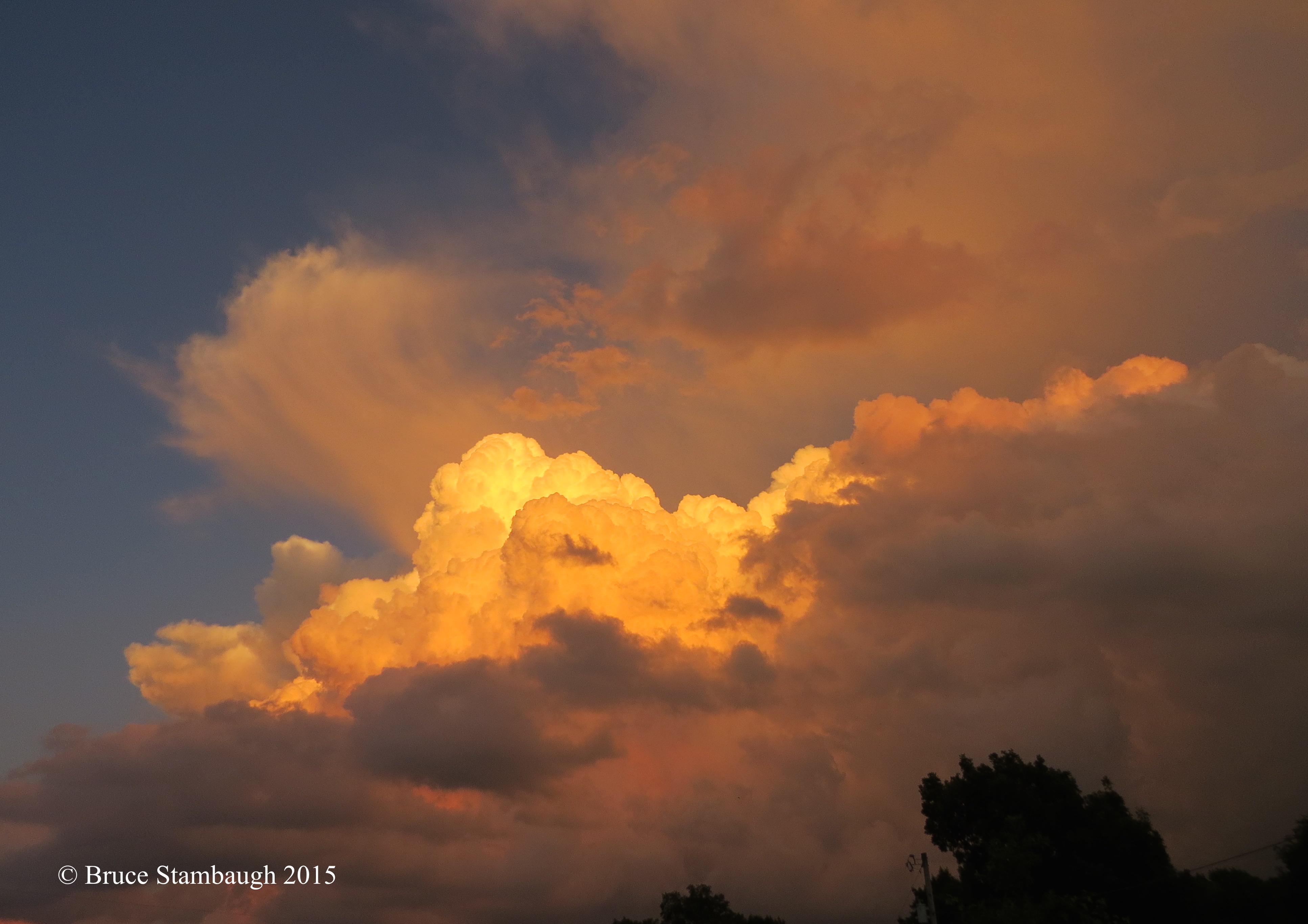
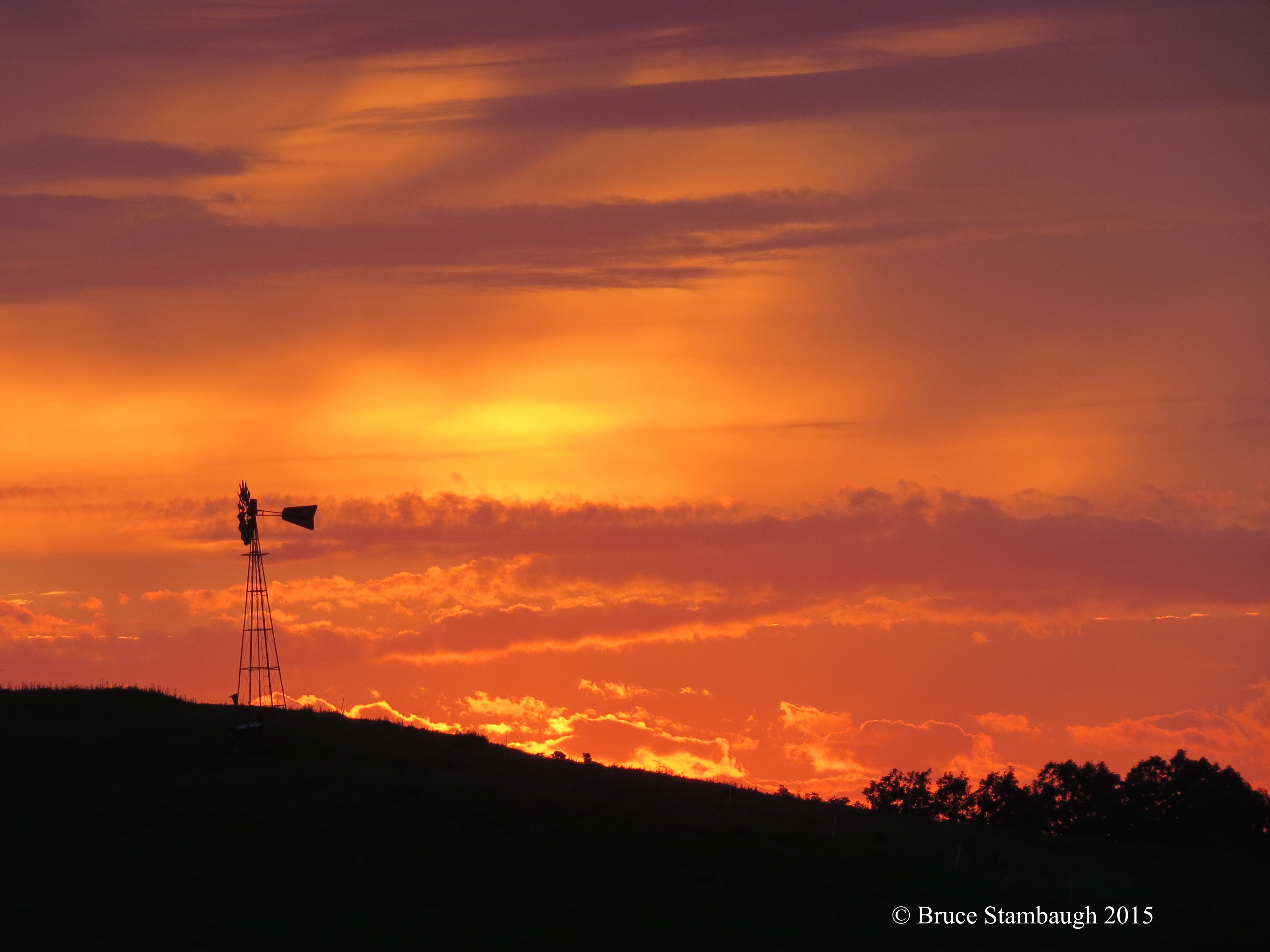
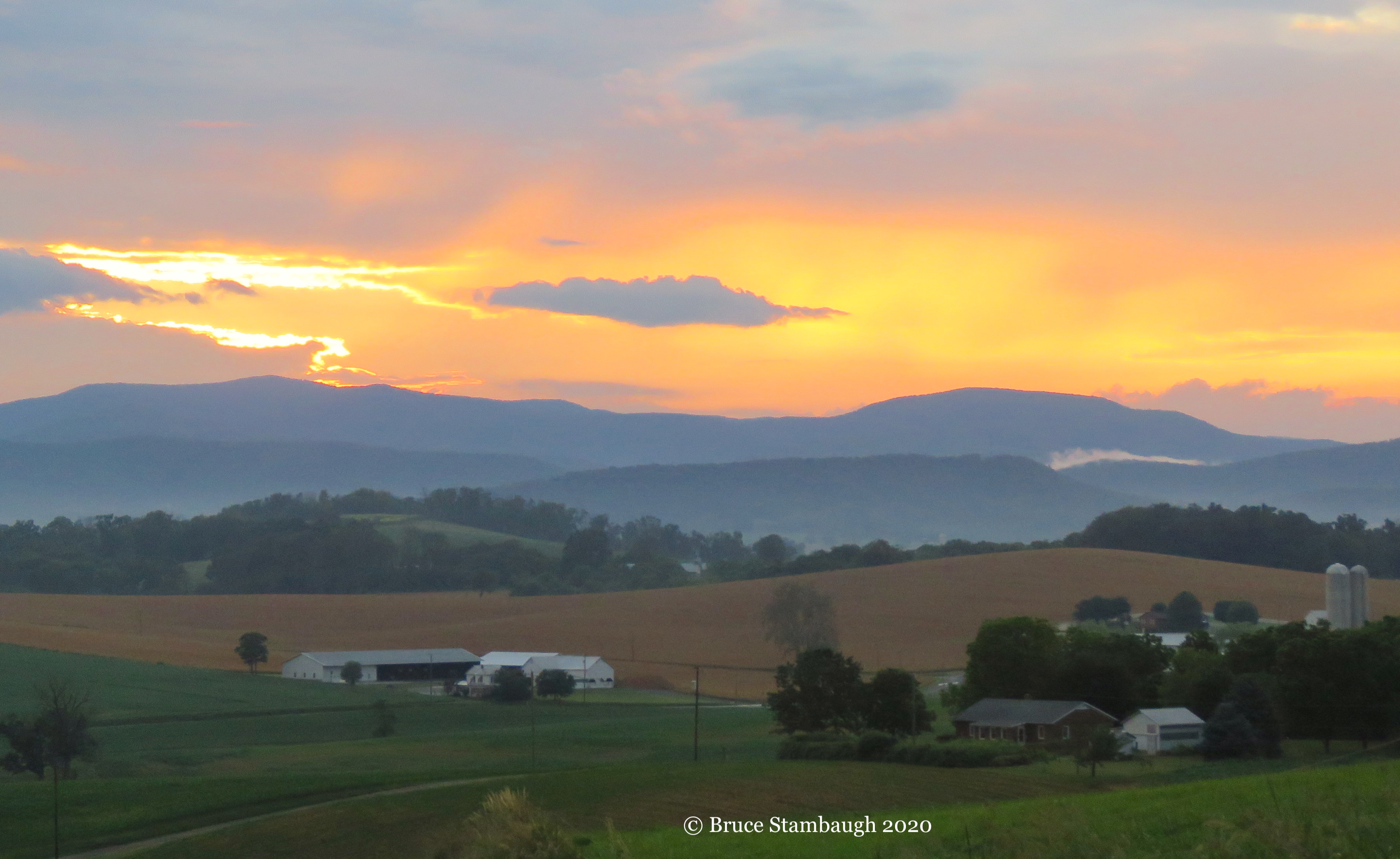
I had given up on this sunset. In fact, I was already heading back to my car from the dock when the sky suddenly changed. I hustled back onto the dock to get a few shots before the sky called it a night. I couldn’t believe my good fortune when an older man with a barking dog cruised into view in a dingy. Their presence added a human element to this painting-like scene.

Rather than wax poetic about all of the aspects and details of the photo, I’ll simply let you enjoy it from your own perspective.

“Dappled Sunset” is my Photo of the Week.

© Bruce Stambaugh 2020
Basking in nature’s unexpected gifts

Raining over the ocean.

I stood on the shoreline alone in joyous disbelief. This wasn’t supposed to be happening, and yet, it was, it did.

“This” was no ordinary sunrise. Our snowbird rental on the Atlantic Ocean northeast of Jacksonville, Florida, affords us striking views, especially at dawn.

The sea mirrored the sky as the celestial kaleidoscope slowly revolved from violets to pinks to oranges to gold to grays. I willingly allowed those siblings of earth and atmosphere to kidnap me.

My initial urge was to shout for joy, but that seemed irreverent, uncouth, and even sacrilegious. For once in my life, I stayed silent, sedated by the aura that engulfed me.

A renegade cumulonimbus cloud hovered miles offshore. Sheets of rain cascaded into the sea.

My eyes drew heavenward. The risen sun, hidden by clouds over the Gulf Stream, illuminated the universe, at least the part that I could see. It was heavenly, indeed.

With each degree that the sun rose into the clouds, the refracted rays altered the colors. As if someone had flipped a light switch, the violet hue transformed into orange, bathing everything it touched.

The scene was surreal. I felt like I had been pulled above the beach, the foamy waves no longer lapping at my feet.

It was then that I more fully appreciated the ocean’s contribution to this original, living painting. The gently swelling sea reflected both the water’s depth and the sky’s variable palate.

This slideshow requires JavaScript.


Dabs of puffy clouds scalloped the sky. The ocean’s choppy undulating created a more linear composition. It was cottony above, corduroy below.

Though the consistencies remained the same, the colors continued to change. The wind scurried the dazzling clouds east while the ocean rolled west.

An instantaneous golden glow ensued when the sun finally peeked through the distant clouds hanging above the horizon. Overhead, the rain clouds just as suddenly converted the gold to gray unapologetically.

With the sky now spritzing droplets, I turned to retreat to the condo. And then I stopped to behold another divine marvel.

A brilliant double rainbow arched above our suntanned building complex. Once again, I was awestruck. I motioned for my wife to go look at the rainbow. She only waved back from the balcony. Desperate, I pointed to the sky, mimed a bow with my right hand, and pointed up.

This time Neva understood and rushed to the back of the condo. She returned before I could even begin to clean the sand from my shoes. Her radiance from seeing the double promise equaled that of the sky, which made me even happier.

By the time I made it back to the condo, the sky had darkened, and the rain pelted down. The morning’s free art exhibit was now washed out.

Other than the rain, none of this was expected. The official forecast had called for precipitation to overrun the northern Florida east coast overnight. But with the rain’s delayed arrival, we were treated to this transformative experience.

This ecclesiastical event seemed to last an eternity. However, the timestamp on the scores of photographs that I took showed only 10 minutes had elapsed.

The magical scene had changed so rapidly that I couldn’t take in all of the finite details as they occurred. A review of my photos revealed the dramatic, atmospheric sequence of changes in that short window of opportunity.

Appreciative is too small of a word to describe my gratitude for having viewed the wondrous display. But most grateful I am.

© Bruce Stambaugh 2020
Mowing snow while mulching leaves

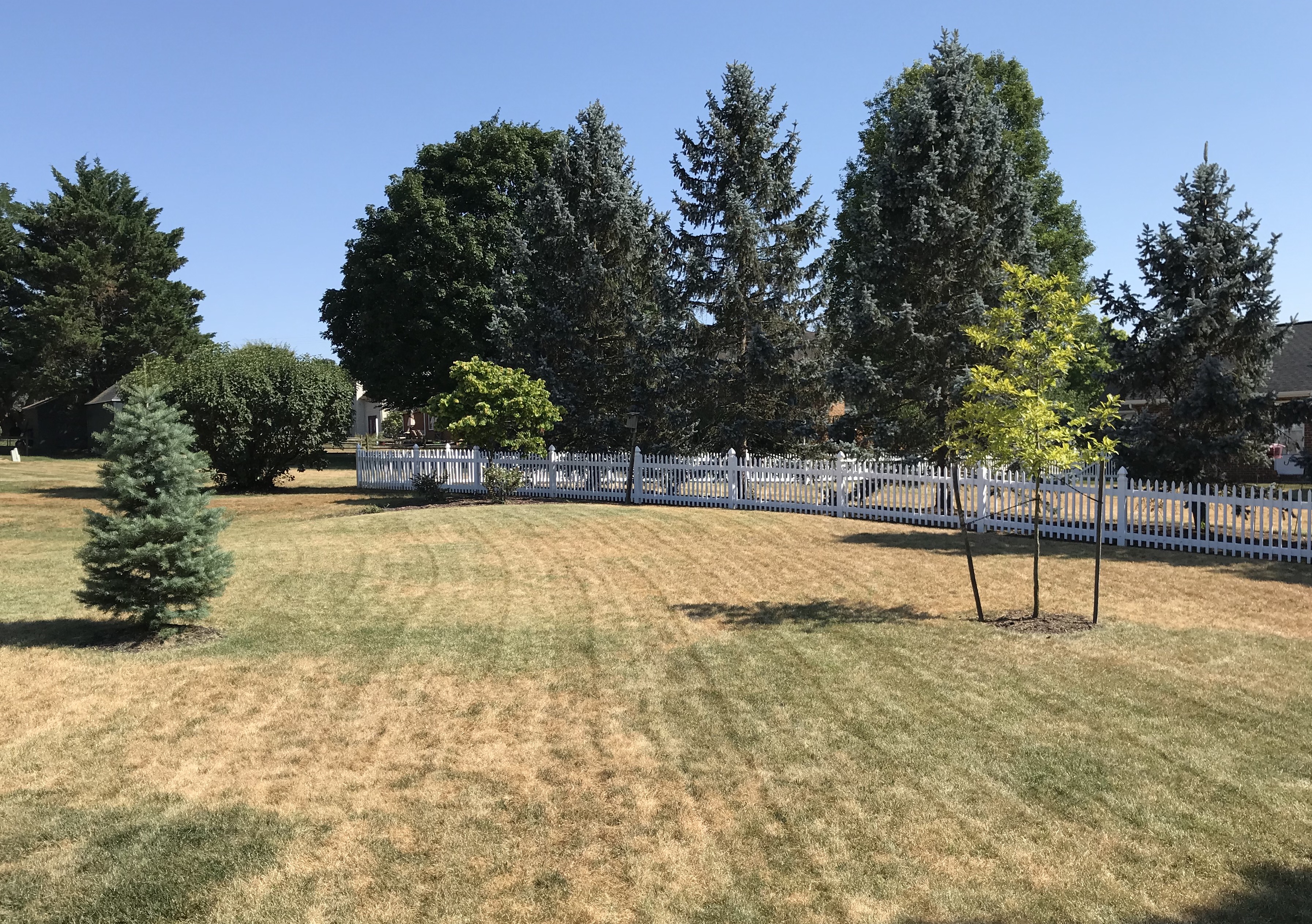
Before the leaves fell.

This time it wasn’t my fault. Every time I went to mulch the accumulation of leaves that covered much of our yard, something or someone else thwarted my good intentions. We all know where that road leads.

First of all, I wanted to wait until all of the red maple leaves in the backyard had fallen. For some reason, they clung like flies to flypaper. The leaves of the front yard red maple had all tumbled weeks earlier.

When the weather was sunny and warmish, which wasn’t that often in the late fall of Virginia’s Shenandoah Valley, we were gone. When we were home, it was too wet, or other commitments kept me from doing the job.

Even with a couple of gusty windstorms, the leaves clung fast to the tree. Meanwhile, the rest of the neighborhood’s assortment of dead foliage swirled around and landed in our yard like it was a leaf magnet.

The turkey.
It was nearly Thanksgiving before the leaves finally succumbed. Even then, it took almost a week before most of them lay on the ground. The leafy blanket was so thick I could hardly see the grass in spots.

Finally, the timing and weather seemed just right. However, because of a heavy frost, I waited until after lunch to make my move. I shouldn’t have.

I had just started the leaf blower when our yardman arrived. Rain was forecast for the next day, and he wanted to get the year’s last organic fertilizer on the grass despite the carpet of leaves.

He assured me that the rain would wash the fertilizer off the leaves and into the ground. I yielded the yard to him. It rained for three days.

After the rain subsided, it turned cold, freezing the leaves in place. I continued to wait and watch the forecast. It was now early December.

A skiff of snow caused another delay. Most of it melted, except for the snow in the north-slanting shadows of our backyard neighbor’s evergreens and the front of our north-facing house.

A storm with freezing rains was approaching. It was now or never to mulch the leaves.

A few of the neighbor’s leaves.
I set the mower to its highest level so that only the tallest growth of grass would be clipped. I donned my insulated coveralls, put on my waterproof shoes, and cranked up the mulching mower.

Around and round I went, reversing course with each completed trip of the yard’s parameter. The piles of dried leaves that I had blown out of the flowerbeds and shrubbery into the grass easily shredded to bits. The backyard leaves were a different story.

A messy mix of chewed up leaves and dirt began to stick to the wheels. The messiness increased when I hit the patches of thin snow. The pulverized blend of icy moisture and leaves turned to sludge. I stubbornly mulched on.

By the time I had finally finished, the poor mower looked like it had endured a motocross mud run. Brown muck covered much of the mower’s bright red body. The wheels were caked in a sticky mixture of chopped leaves and residue of red clay that poses as Virginia topsoil.

Shreds of green grass clippings topped off the muddy mess like colorful sprinkles on an ice cream cone. It was so sad and ugly that I couldn’t even take a picture of it.

But the mulching was done, and I was a happy man. The unusually difficult task of mowing my lawn had become an existential saga. And then the sun came out.

Not this much snow.

© Bruce Stambaugh 2020
Iridescent Cloud


An important characteristic for any photographer is to be observant. By that, I mean to be aware of what is going on around you while you are actually focused on a different task. Doing so allows a photographer to capture that certain event when it occurs.

That was the case for me recently. I was reading on the balcony of our rented condo on the Atlantic Ocean when something caught my eye. An unusual collection of high clouds drifted across the late morning sun’s path. Because this was the day the sun was closest to the earth, the sun’s glare was extra harsh. However, I could see defused color in the mixture of clouds streaming in front of the blazing sun. It certainly wasn’t a rainbow, but the colors were similar only distributed randomly. They also occurred close to the sun.

The weather geek in me said that this was an iridescent cloud. I researched cloud types to confirm my conclusion. Sure enough, it indeed was an iridescent cloud, something not often seen because their appearance is usually short-lived.

Of course, the next duty of a photographer is to share what was captured. So I have. “Iridescent Cloud” is my Photo of the Week.

© Bruce Stambaugh 2020
Noteworthy news that didn’t make the headlines in 2019


Well, we made it. You and I have traveled yet one more year around the sun. True to form, 2019 was full of wonder, mistakes, successes, and a smorgasbord of conundrums and craziness.

As usual, I kept track of a few of the lesser but still extraordinary events and findings during the year.

January 20 – A meteorite was recorded striking the surface of the moon during the Super Full Blood Wolf Moon total lunar eclipse.
January 22 – According to a report from nonprofit Oxfam, the world’s 26 wealthiest people are worth the same amount of money as the world’s poorest 3.8 billion.
January 30 – The temperature dropped to -48 degrees with a wind chill of -65 in Norris Camp, Minnesota, making it the coldest place in the lower 48 states.

Early morning sky, January 31.

February 1 – The BBC reported that January was the hottest month on record in Australia and that five days were among the top 10 on record for the warmest.
February 7 – NASA reported that the last five years have been the hottest since records began being kept in 1880, with 2018 the fourth warmest year.
February 13 – NASA announced that it had declared the Mars rover dead after being unable to communicate with it following a massive dust storm on the red planet.
March 25 – A British Airways flight bound for Dusseldorf, Germany, instead accidentally landed in Edinburgh, Scotland, because the company filed the wrong flight papers.
March 26 – UPS began an experimental delivery system using drones in North Carolina.
March 27 – Airbnb, the online home-sharing site, surpassed Hilton Hotels in annual sales.
April 11 – A standup comedian in England died halfway through his comedy routine, only the audience thought it was part of his act.
April 19 – A 10-year-old Fredrick, Maryland girl born without hands won a national handwriting contest.
April 22 – The BBC reported that 23 million people use 123456 as their password for private online accounts, with 123456789 as the second most popular password.
May 22 – The last known ship to bring slaves to the U.S., the schooner Clotilda, was discovered in a remote branch of Alabama’s Mobile River.
May 23 – Longtime Marietta, Georgia, mail carrier Floyd Martin retired, and on his last route, residents decorated their mailboxes and held a block party after he finished his deliveries.
May 31 – After 20 rounds and running out of hard words, the National Spelling Bee in Washington, D.C., crowned an unprecedented eight co-champions.
June 5 – Tom Rice, 97, of Coronado, California, reenacted his pre-D-Day 1944 jump into Carentan, France, as part of the 75th anniversary of the Allied invasion at Normandy.
June 11 – Kraft announced that it was selling salad frosting, which was French dressing disguised in a colorful bottle to get kids to like it.
June 19 – A survey by YouGov reported that 39 percent of Americans between the ages of 18 and 24 hadn’t used deodorant in the last 30 days.
July 3 – The American Automobile Association estimated that a record 49 million people would be traveling the U.S. highways on the Fourth of July holiday.
July 12 – A report on British roadkill showed that badgers were the mammals most likely to meet their end on the highway, although pheasants led the animal roadway mortality rate.
July 22 – Officials near Sandpoint, Idaho removed turtle crossing signs because thieves kept stealing them as soon as the unique warning signs were replaced.
August 14 – A 12-year-old boy attending a family reunion found a rare Ice Age wooly mammoth tooth by a creek near the Inn at Honey Run near Millersburg, Ohio.
August 15 – A new study released by the U.S. Geological Survey showed that 90 percent of rainwater samples in Colorado included microplastic shards, beads, and fibers.
September 6 – A new international study showed that 90 percent of the time eyewitnesses would assist someone assaulted in public.
September 7 – Miami Marlins pitcher Brian Moran struck out his young brother, Colin, pinch-hitting for the Pittsburgh Pirates.
September 21 – When a car fell on his neighbor pinning him, Zac Clark, a 16-year-old high school football player from Butler, Ohio, rushed over and lifted the 3,000-pound auto, saving the neighbor’s life.
One of my proudest moments.

October 7 – After falling at his home in Plains, Georgia the previous day, former President Jimmy Carter, 95, with a bandage above his left eye and a visible welt below, still helped build a Habitat for Humanity home in Nashville, Tennessee.
October 18 – NASA astronauts Christina Koch and Jessica Meir performed the first all-female spacewalk when they ventured outside the International Space Station for five and a half hours to replace a faulty battery charger.
October 30 – Firefighters in Simi Valley, California successfully saved the Ronald Reagan Presidential Library from a wildfire with assistance from a herd of goats brought in earlier in the year to eat away the brush surrounding the library.
November 3 – When midnight shift workers didn’t show up at a Birmingham Waffle House restaurant, several customers jumped behind the counter to help the lone employee serve 30 other customers.
November 8 – The last survivor of the Hindenburg Disaster, Werner Gustav Doehner, died in Laconia, New Hampshire, at age 90.
November 18 – Police in Goddard, Kansas, discovered a camel, cow, and donkey wandering along a rural road.
December 9 – A New York City man removed and ate a banana from a Miami, Florida art exhibit that had sold for $120,000.
December 10 – A 43-year-old Monroe County, Louisiana man, was arrested for fixing the bingo game he was calling so his relatives could win.
December 20 – Emily Williams, a wildlife ecologist in Alaska, was late for work because a moose was licking the salt off of her car.

Here’s hoping 2020 will give us both a better year and better eyesight in all that is happening around us.

Happy New Year!

© Bruce Stambaugh 2019

A Shadow of Itself


This beautiful male pileated woodpecker was only concerned about one thing: breakfast. The early morning sun, low in the southeastern horizon, brightly highlighted North America’s biggest woodpecker just before the winter solstice of 2014. The angle allowed the bird’s shadow and that of the peanut butter suet feeder to be cast on the trunk of the old sugar maple in our backyard near Mt. Hope, Ohio. The pileated woodpeckers came to our feeders year-round, even bringing their young to our home in Ohio’s Amish country. Those birds would be in the top 10 things that I miss since we moved to Virginia’s Shenandoah Valley two and a half years ago.

“A Shadow of Itself” is my Photo of the Week.

© Bruce Stambaugh 2019

Finding purpose during Advent

Advent is at hand. It is the season of anticipation as we draw an end to another tumultuous year on planet Earth.

I find that both ironic and a touch melancholy. As we approach the winter solstice, a celebratory light should brighten the darkness. Yet, for too many, the light is dim or nonexistent. It doesn’t have to be that way.

Our western world is aglow and abuzz with glitzy television commercials, flashing, and sometimes gaudy light displays in keeping the season. But of what honor is gaudiness when so many among us are sad, tired, distraught, hungry, homeless, and helpless?

Enter Advent. It is the antithesis of the holiday commercialization that pounds our senses in nearly every aspect that the marketing Mad Men conspire to throw at us. We lust for gold, frankincense, and myrrh 21st-century style.

Perhaps we need an epiphany before Epiphany to set the holidays aright. We seem to have turned the once admired axiom, “It’s better to give than to receive” on its head. We need to right the ship before we sink.

Though an exclusive Christian tradition, Advent is an inclusive, active, intentional, iconic time for all. Advent is as much an action as it is a prelude to Christmas. In truth, Advent’s meaning far preceded any contemporary applications.

More than a preparation for “God is with us,” some biblical scholars believe that Advent was 40 days of fasting leading up to Epiphany. That shines a new perspective on an ancient holy day.

I apologize for the sermonette. I hope that with these few words, others will also catch Advent’s meaning of watchfulness, alertness, love, peace, and service.

There is no room in the inn during Advent for greed, power, position, wealth, riches, avarice, and hate. Contemplation, meditation, prayer, thoughtfulness, charity, humility, and assistance to those in desperate need purposely fulfill the Advent message and meaning.

So what’s my point? Back in our former home, Holmes Co., Ohio, Share-A-Christmas was always an excellent first start on the eve of this holiday season. The annual community goodwill effort of providing for the needy set the stage for even more opportunity to personally be kind and generous.

Those of us fortunate enough to live in the wealthiest country in the world can do a world of good more for those among us who are truly low in spirit. Slow down. Take time to notice who they are and where they are. Opportunities abound all around.

Once aware, be bold, and take the next step. Do so in some personal way that satisfies an immediate need for others. It’s really not that difficult.

When it comes to charity and generosity, spontaneity seasons the gifts. Practicality wraps them, makes them intimate.

Here are a few starter suggestions: Visit the sick. Send a note or card to those in nursing homes. Honor the widows and widowers with nothing more than your listening ears. Meet people where they are.

Though too humble to say so, my good wife set a perfect example for us last Christmastime. As we drove our vehicle toward a red light in downtown Harrisonburg, Virginia, on a cold and blustery night, we noticed a homeless woman holding a cardboard sign on the corner sidewalk.

I offered a bottle of water that I usually carry for such an occasion. When Neva saw that the young woman had no gloves, she instantly reacted. Without hesitation, my wife peeled off her own gloves, and I handed them to the woman.

Advent presented itself, and Neva responded. How can we likewise let our light shine in today’s darkness?


© Bruce Stambaugh 2019

When the lost is found


During my morning devotions, I try to include a brief time of meditation. A recent theme focused on observing rather than reacting with anger, fear, or judgment to human interactions.

Little did I know then that before the day would end, I would personally apply that lesson.

The day was foggy in the Shenandoah Valley. Random openings in the haze allowed the morning sunshine to poke through. The Blue Ridge Mountains, however, were socked in. I wanted to go there for one last chance to capture the beauty of a Shenandoah fall.

With the hope that the sun would eventually burn off the overcast, I headed to Shenandoah National Park. By the time I arrived shortly after noontime, that is precisely what happened.

Driving along the park’s extolled Skyline Drive is a joy at any time of the year. It is an absolute privilege to experience the fantastic colors of the fall foliage.


The park burst with scarlet, red, yellow, orange, amber, russet, brown, and crimson. Each hue complemented the others. I drove in the fresh, moist mountain air with the moon roof open and the windows partially down, taking in the autumn’s sights, sounds, and pungent fragrances.

I made several stops to photograph the scenery and finally recognized my fatigue at Big Meadows, where I stopped for lunch. The combination of my emotional exhilaration and the numerous times of exiting and reentering my vehicle had tired me. It was a reminder that my leg still had healing to do.

I retraced my route. Fog still rolled up out of the hollows and dissipated before my eyes. I continued to pull into nearly every overlook to capture the gorgeous splendor.

At my last stop, I reached for my camera, but it wasn’t there. I quickly searched in the vehicle, but the camera was gone. I must have left it on a stone wall at the last overlook where I had paused for an afternoon snack.


This slideshow requires JavaScript.


In the five-mile backtrack, my thoughts ticked off the options. It could still be there. Someone may have turned the camera in, or it was gone.

For most of my life, I have been my own worst critic. I berate myself when I err or let my emotions control my mood because of a negative situation. Not this time.

Remembering the morning’s meditation, I mentally weighed the consequences of my lapse of concentration by leaving the camera. I also accepted the situation without self-judgment.

Where I lost my camera.

I had captured dozens of photos of the incredible scenery. Now, they could be lost. I still had the day’s experience, however. That would be serenity enough, camera or no camera.

When I arrived at the overlook, the camera was nowhere to be found. I used my best option. I returned to the Big Meadows visitors’ center and reported my camera missing.

I headed south again, making a couple of more stops before I arrived at the Swift Run entrance station, where I access the park. I asked the ranger if anyone had turned in a camera. To my amazement, she said a young woman had given her a camera only 30 minutes ago. It was mine!

Of course, I was ecstatic to have the camera back, but not as delighted as I was with my self-control. No anger, no negative thoughts, no self-blame had arisen.

It had been a fulfilling day. A morning lesson, time in nature, a senior moment, a trustworthy person, and a personal watershed breakthrough brought deep contentment. I could not have been happier.

© Bruce Stambaugh 2019

November: The contemplative month

2017-11-20 14.19.03

The fall election is over. Daylight Savings Time has come and gone, and so have most of this fall’s colorful leaves. It must be November.

We can thank the pelting rains and wicked winds of a raucous cold front for dislodging most of the leaves. We can thank Congress for the time change.

I never adjust well to this convoluted toying of time. I wake up early and am ready for bed before dark that Sunday afternoon.

When we lived in the heart of Ohio’s Amish Country, I always chuckled at the various reactions to this contrived notion of messing with clocks to supposedly save energy. The Amish had that down to a science.

Some Amish complied with the change to stay connected with the rest of society. Others compromised and moved the time back a half an hour. Some never changed time in the first place.

2016-11-05 16.28.16

I miss that kind of contrariness. I haven’t checked with local buggy-driving Old Order Mennonite farmers here in Virginia to know if they mess with time in the same manner.

With the time changed and the leaves disappearing, our attention turns to Thanksgiving preparations. At least it should if we aren’t too distracted by all the Christmas gift-giving commercials already on television.

It can be for that very reason alone that I become contemplative in November. I think it’s the colder weather though. I do appreciate the cleaner, clearer air. Thanks to a couple of killing frosts, I can breathe again.

Then, too, the early darkness readies me for bed way before bedtime. These are the days of the earliest sunsets of the year until we get to the winter solstice.

I do appreciate the clear evening skies, too. I love to watch the moon creep across the darkened sky surrounded by sparkling jewels and winking planets.

The month of November ushers in the dormant season. By month’s end, the deciduous trees will be bare. We’ll see things in the landscape we had totally forgotten about, like houses we didn’t remember were there.

cropped-dsc_0555.jpgThe longer evenings give me time to reflect on the activities of the day. I do miss my fireplace, though. There is truly nothing like warming your backside sitting on the hearth in front of a roaring, crackling fire.

I used those evenings to think and reflect on our past, present, and future. With that, we recognize November’s other holiday, Veterans Day.

November is like recess at school. It’s the needed break between all of the action of October and December.

Soon Black Friday advertisements will blitz our mailboxes, newspapers, TV commercials, and annoying social media ads. Thanksgiving will be no more than a prelude to that glorious commercial day. Too bad there’s not an app to eliminate that.

As you might have surmised by now, I’m well into my contemplative shtick. I have a brain. I try to use it every now and then. November’s dark days seem like a good time to do that.

Come to think of it, whatever happened to Indian summer? With nine of the last 10 years the warmest on record globally, maybe the weather gods decided we don’t need it anymore. It’s just a thought.

Everything seems to slow down in November. From my point of view, that’s one of the eleventh month’s purposes. Let’s all take a little time to sit back, relax, talk with your spouse, listen to your children, play with your grandchildren, and be kind to one another.

Christmas is only a few weeks away.

2017-11-27 18.26.53

© Bruce Stambaugh 2019

Testing the limits of my new-found freedom

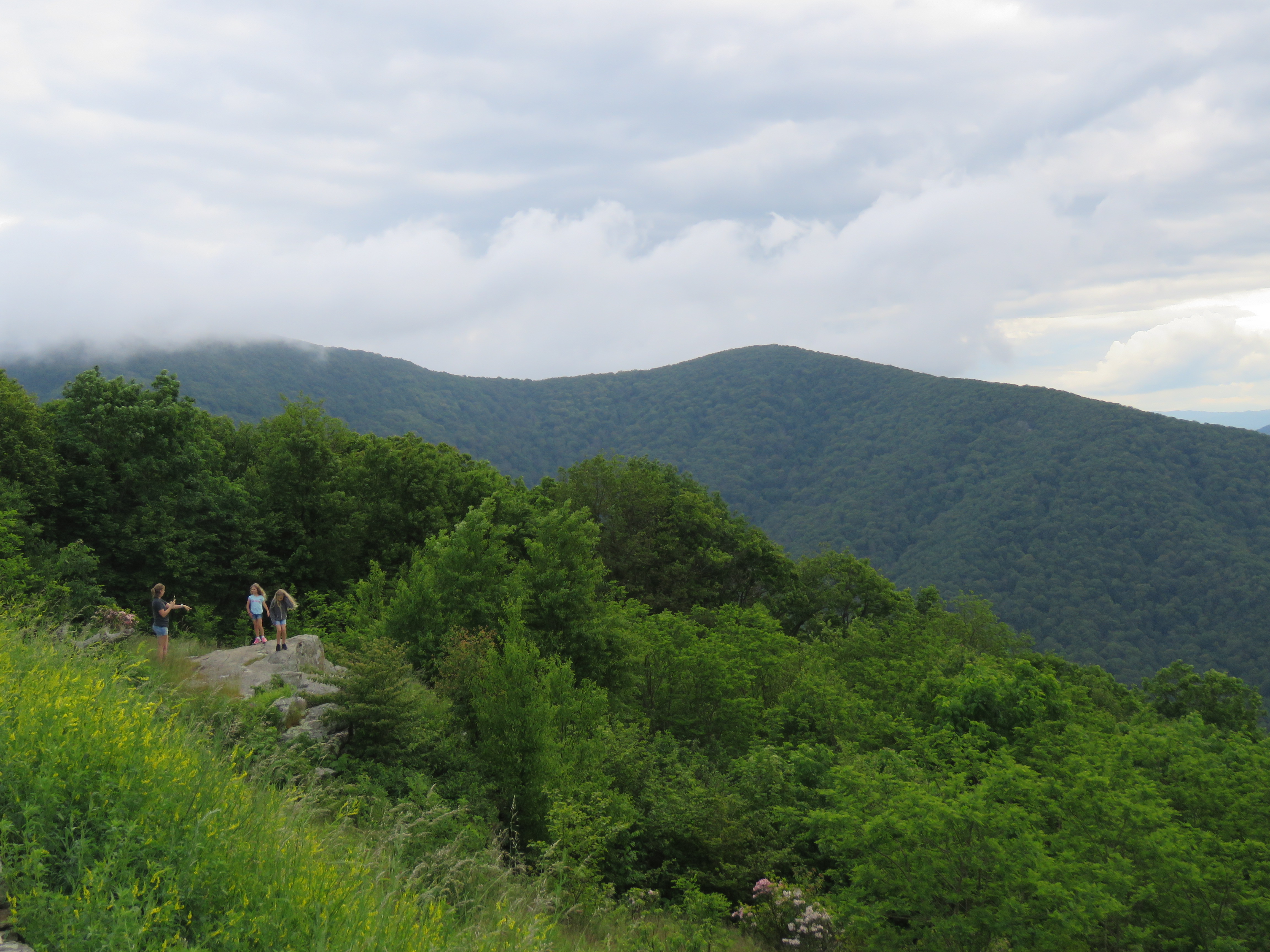
Looking west from the Skyline Drive.

I saw my chance at freedom, and I took it.

The previous day I had met with my orthopedic surgeon seven weeks after my knee replacement surgery. His last comment to me succinctly and professionally summed up his analysis of my progress. “I’ll see you next September,” he said with a broad grin.

I had driven myself the 35 miles south to the doctor’s appointment. Previously, my lovely wife had served as my chauffeur.

I still had a few physical therapy sessions to complete, and the doctor wanted me to return to the gym for some specialized exercises to strengthen my legs. Other than that, I had no restrictions, and I intended to make the most of it.

After an hour session with the physical therapists the next day, I decided to head to Shenandoah National Park. I had seen some beautiful photos of gorgeous fall foliage in the park, and I wanted to experience it myself.

Such an excursion would get me out and about so I could shoot some photographs of my own. My limited mobility had kept me close to home. On this beautiful, bright day, I felt free.

So after lunch, I headed to the park. My initial intentions were to do double-duty. A friend had a short film previewing in Charlottesville not far from the national park’s southern boundary. I figured I could do the Skyline Drive, take a few photos, and make the mid-afternoon screening.

I drove half an hour to the park entrance, where I joined a long line of vehicles. I wasn’t the only one who wanted to enjoy this gorgeous day.

At one of my stops at an overlook on the famous scenic Skyline Drive, reality hit. Altogether, the physical therapy, the driving, the numerous frequent stops had taken their toll. I was exhausted.

This slideshow requires JavaScript.


I altered my plans. I wouldn’t make it to Charlottesville. In fact, driving to the park’s southern entrance was also out.

I continued driving, stopping, and photographing the incredible scenery. The old, folded mountains, dotted with nature’s emerging color-scape, and the clarity of the day had emotionally thrilled me despite my tiredness.

At one turnout, I found complete contentment despite my fatigue. I had observed several monarch butterflies floating on the day’s easy breeze. They looked for any sign of sweet nourishment on their long journey south. A lone monarch flitted around in front of me until it rested on a single fading flower.

The view across the storied Shenandoah Valley was pristine. The atmosphere was so clear that I could easily see from my spot on the Blue Ridge Mountains to the Allegheny Mountains 40 miles to the west. Their summit ridge separates Virginia from West Virginia.

In between lay the iconic valley itself. I spotted Mole Hill, a local landmark. Mole Hill is a long-extinct volcanic dome now capped with a deciduous forest that still showed mostly hunter green.

Earth toned farm fields fanned out from Mole Hill. The afternoon sun highlighted bright white houses and bank barns of Old Order Mennonite farms. From so far away, they appeared as miniatures. With that satisfying scene etched in my mind, it was time to head home.

By realistically reevaluating my situation, I was able to take my time, expend my energy to the max, and enjoy the colorful landscapes. I had passed my first test of independence.

Of course, I exacted a price for exercising my freedom. Fatigue and the day’s pleasantries helped me sleep well that night.

White and Gold.

© Bruce Stambaugh 2019

Bay Photos by Donna

Wildlife Photos From The Chesapeake Bay Region

ROAD TO NARA

Culture and Communities at the Heart Of India

K Hertzler Art

Artist and nature journalist in the Shenandoah Valley of Virginia.

Maria Vincent Robinson

Photographer Of Life and moments

Gabriele Romano

Personal Blog

Jennifer Murch

Art is the only way to run away without leaving home. -Twyla Tharp

Roadkill Crossing

Writing generated from the rural life

ANJOLI ROY

writer. teacher. podcast cohost.

Casa Alterna

El amor cruza fronteras / Love crosses borders