I captured this shot of the Hot Full Moon rising over Shenandoah National Park just after sunset on June 24. You can see outlines of the trees along the Blue Ridge Mountains. Given the recent spell of sweltering weather over much of the U.S., including Virginia, the Native Americans properly named this moon.
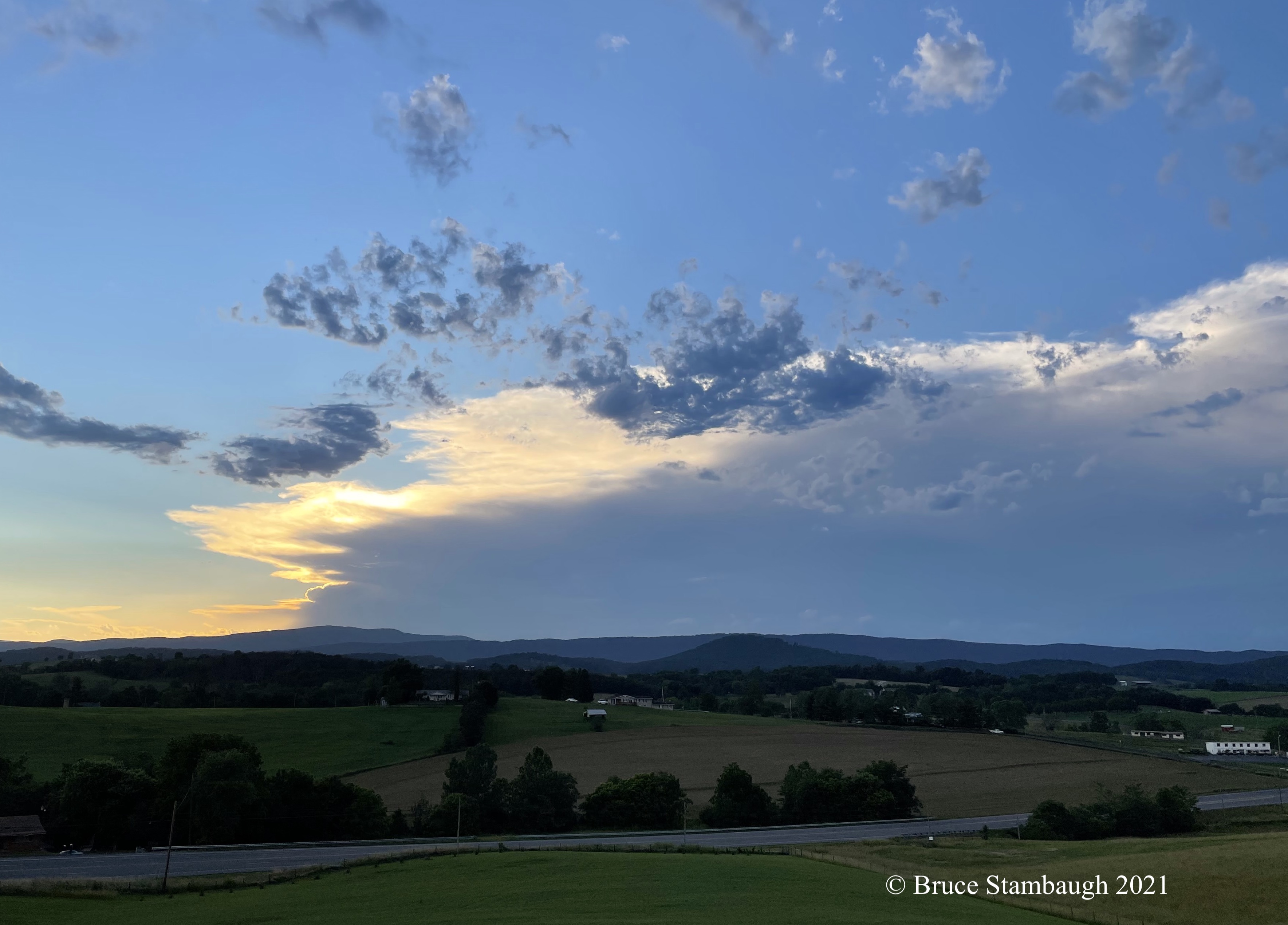
I stood on the eastern side of Mole Hill 30 miles west of the park to take this photo. The darker line in the foreground is the summit of the Massanutten Mountain ridge.
Food, fun, and fellowship is always an excellent combination.
I had waited a long time to take a picture like this. However, I got so wrapped up at the moment that I left my camera at home. So my smartphone camera would have to suffice.
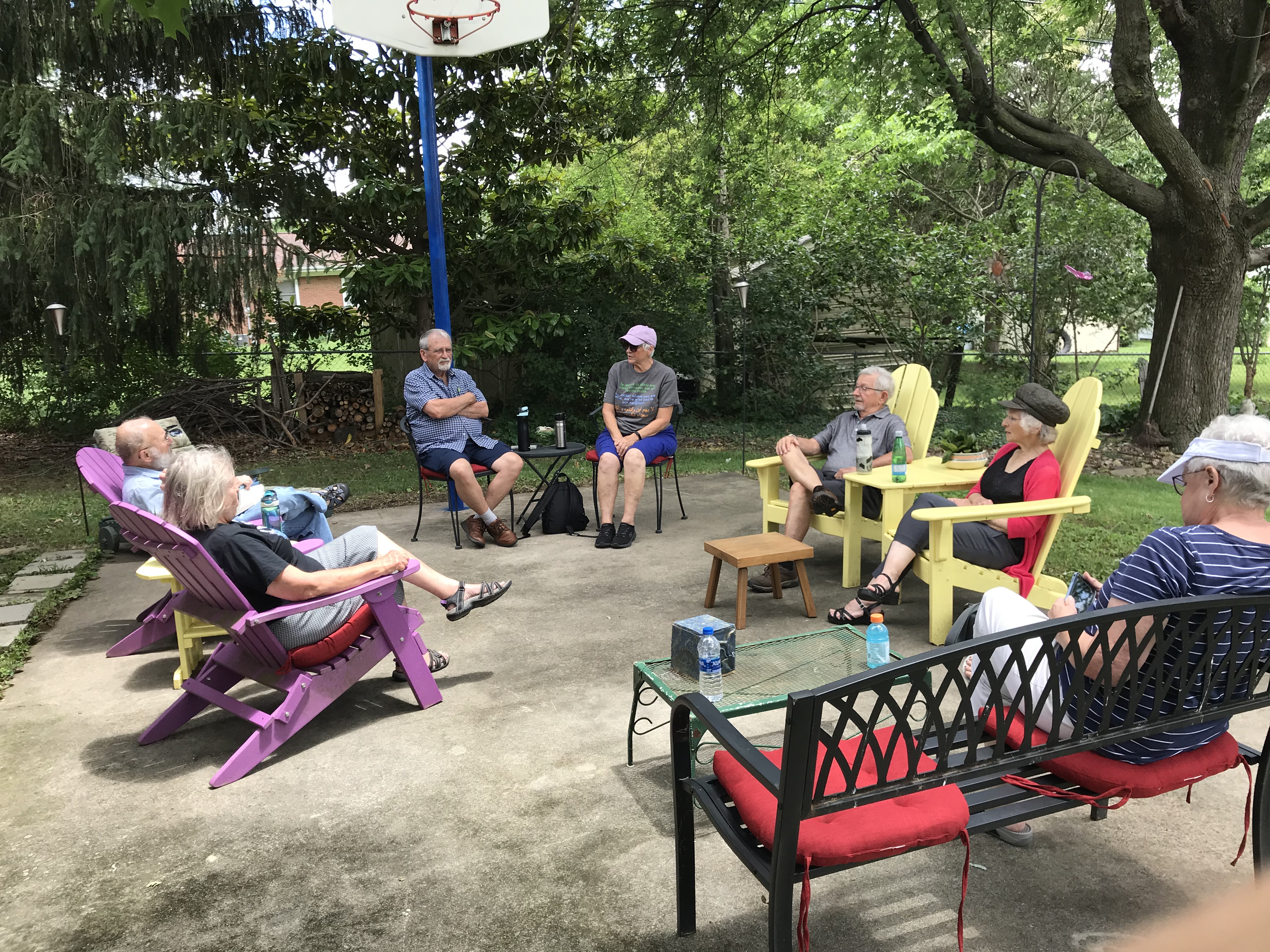
There we all were 40, gray-headed old souls who finally, after more than a year of pandemic restrictions, gathered together to eat, laugh, and share. I had to capture the moment.
The group was our faith formation or Sunday school class. We had only met a couple of times via Zoom since March 2020. So to finally be meeting in person was a taste of heaven on earth.
As a group, we were all on the same page. We followed the recommended health restrictions issued and altered as the coronavirus pandemic unfolded, morphed, and challenged global scientists and medical personnel.
Our hosts had moved to the Harrisonburg, Virginia area from Wayne County, Ohio a year before we moved from a neighboring Ohio county. They had invited the entire class to their rural home nestled into a hill and surrounded by forest and wildlife.
Storms were in the forecast, but this was a determined group. The desire to see each other face-to-face overtook any threat of severe thunderstorms.
Gathered in the garage.
Besides, we met in a sweeping semi-circle in our hosts’ expansive and sparkling clean garage. With east and west doors open, a welcome breeze kept us comfortable.
As the first people arrived, an orphaned fawn hobbled across the emerald grass and plopped down. Soon, it righted itself and wobbled into the woods, likely looking for its mother.
Cars arrived at steady intervals, which allowed some positive personal interaction as guests exited their vehicles. With all safely vaccinated, no face masks were required. The many smiles spoke volumes. Fist bumps and hugs abounded.
An approaching storm.
With the hosts providing the main course, half the class brought salads and the other half desserts. Typical for any Mennonite potluck, the offerings were tasty and satisfying. No one went away hungry.
After lunch, we all found our seats in the garage and began the organized sharing. First, the class coordinator asked each person to share briefly about their pandemic situations. Some spoke at length, while others said only a few words.
Several of the attendees live in a local retirement community with even tighter standards than those who lived independently. They were more than delighted to be sitting with this gray-headed crowd.
One man shared how he had lost all of his siblings. Some deaths were due to COVID-19, others from natural causes. Not being able to gather to mourn in the usual fashion compounded his grieving.
Some told of vacations and weddings canceled. Others beamed at finally physically reconnecting with family and meeting grandchildren, some for the first time.
The eldest of the group stole the show, however. When it was this stateman’s turn to share, Cal simply said, “I’m glad to be here,” parroting late-night TV show guests’ comments. Other one-liners had us all laughing with this soon-to-be 96-year-old.
A thundershower clipped through the conversations, but it didn’t deter these determined folks. The laughter, sharing, and caring continued right on through the distant rumbles of thunder.
We were all grateful for the opportunity to see, hear, and be together again in the flesh. But we were also very thankful for the church and political leaders who have guided us through this unwelcome pandemic storm.
The fellowship of like-minded friends is invaluable. Consequently, our bonding time ended in a grateful halleluiah prayer of thanksgiving.
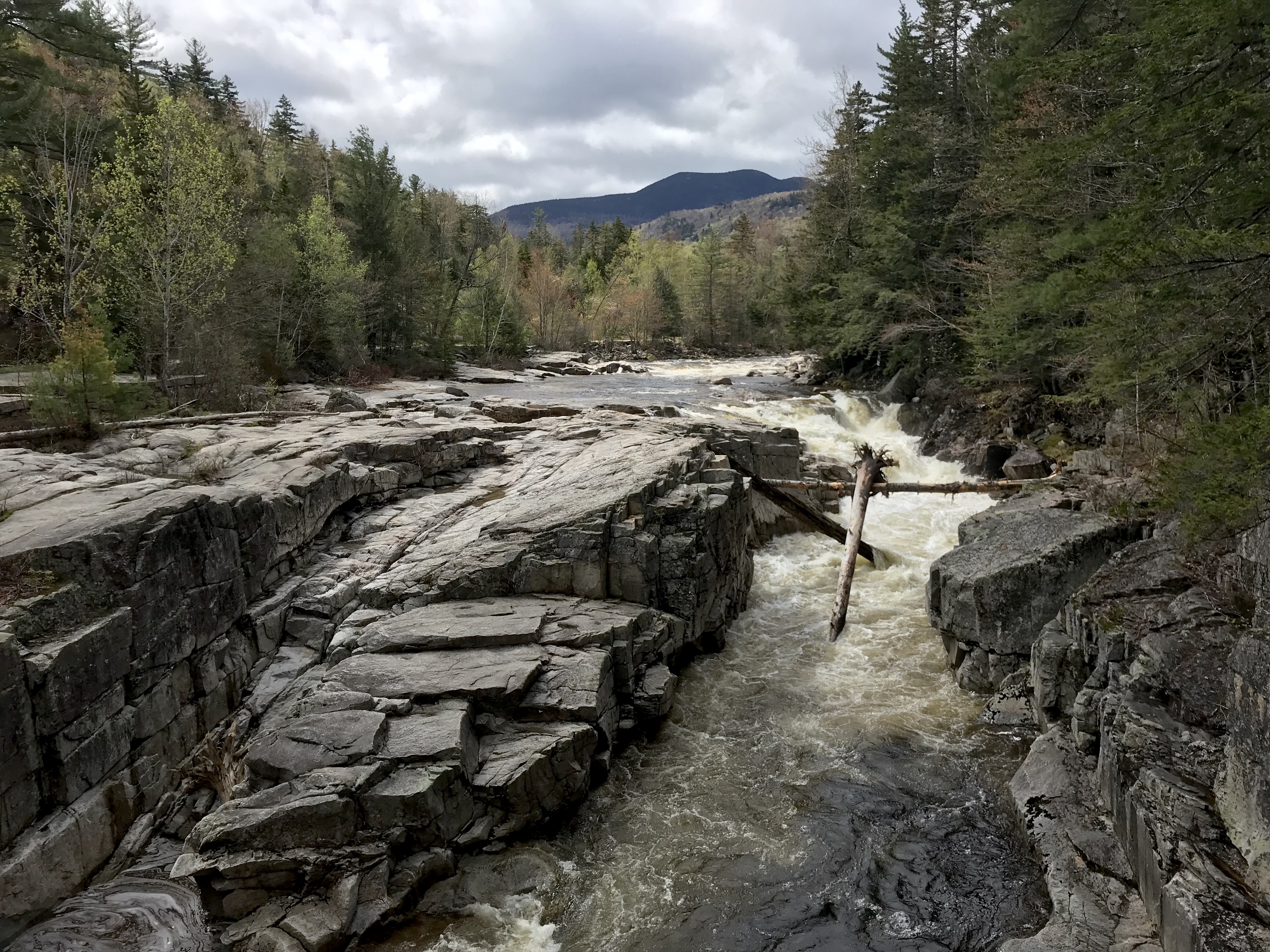
Even in a still photo, you can tell that the Swift River is aptly named. While touring New England a couple of years ago, a friend advised me to travel the length of New Hampshire’s Kancamagus Highway from Conway to Bath. I did, and I wasn’t disappointed in the least.
Recent spring rains and melting snow from the surrounding White Mountains had this river running full. Roaring tributaries with impressive waterfalls added to the river’s rage.
I took this photo from a foot bridge over the river. “Over the Swift River” is my Photo of the week.
We have all been waiting to exhale, especially this year, once June arrived. We had that same perspective a year ago, but we were wrong.
Last year the estimation was that summer’s warmth would lessen the spread of the coronavirus. Just the opposite happened. People gathered, and the virus spread.
This June appears to be different. The fact that nearly two-thirds of American adults have received at least one vaccination makes it so. That has resulted in the waning of the virus here in the U.S. However, other countries continue to struggle as new variants emerge, spread, sicken, and kill.
But in June 2021, a different feeling is in the air. June is that stepping stone into sunshine, smiles, and satisfaction. People in the U.S. are once again getting together, though some are doing so cautiously.
June is the gateway to summer. The summer solstice late on June 20 merely anoints the welcomed season.
June means longer and generally warmer days than previous months. With health restrictions significantly reduced or altogether eliminated, life in June just might help us all feel “normal” again.
Graduations, vacations, weddings, reunions, picnics, and Little League baseball games are a much better bet to occur with June’s arrival. Church congregations that met remotely are beginning to hold in-person services, some outside, others with controlled numbers assembled indoors.
I’ve always welcomed June from adolescence to this day. School often finished around Memorial Day, which turned us outdoor lovers loose. I still feel that way all those decades later.
But there is something sacred about this particular June. It’s more than just the freedom to move about, go swimming, fishing, hiking, or wearing T-shirts and shorts.
The pandemic isn’t over, but here in the U.S., it seems to be subsiding. Still, we are approaching 600,000 deaths in our great country and 3.5 million globally. Those are sobering figures.
I recall the wise advice of a farmer friend from the weeks-long drought that began in June 1988. Local hay crops had failed, and shipments of baled hay arrived from the Midwest. Many farmers bought the imported bales at exorbitant prices.
When they got it home, they discovered that the hay bales that looked good from the outside had more weeds than nourishment on the inside. I asked my friend if he had purchased any of the high-priced, weedy fodder.
I have never forgotten his reply. “My father once told me that when you see others running for something, you should walk.” So, no, he hadn’t.
Consequently, my wife and I will welcome June without much fanfare. We’ll follow our grandson’s traveling baseball team when we can. We will continue to be cautious about eating inside public places, preferring to dine at establishments that offer outside seating.
We have and will continue to visit vaccinated friends. We’ll use June to ease into renewing our travels, including seeing our son and his wife for the first time in two years.
I’ll continue to hike, but I will be careful to choose the days, watch the weather, and avoid weekends. I’m not a snob or prude. Crowded trails are not my thing.
When we do get out and about in June, we need to be cautious for practical reasons. Reports from many eastern states indicate that ticks are thick this year. Once back inside, check yourself, your children, and your pets. The physical effects of tick bites are devastating.
We can rightfully celebrate June’s arrival. But let’s continue to be alert and careful every step of the way.
Since we moved to the Shenandoah Valley four years ago, I have planted two dogwoods in our yard. A white dogwood stands in the front yard between our driveway and the property line with the neighbors to the east. The tree sprouted beautiful silky white blooms six-weeks ago.
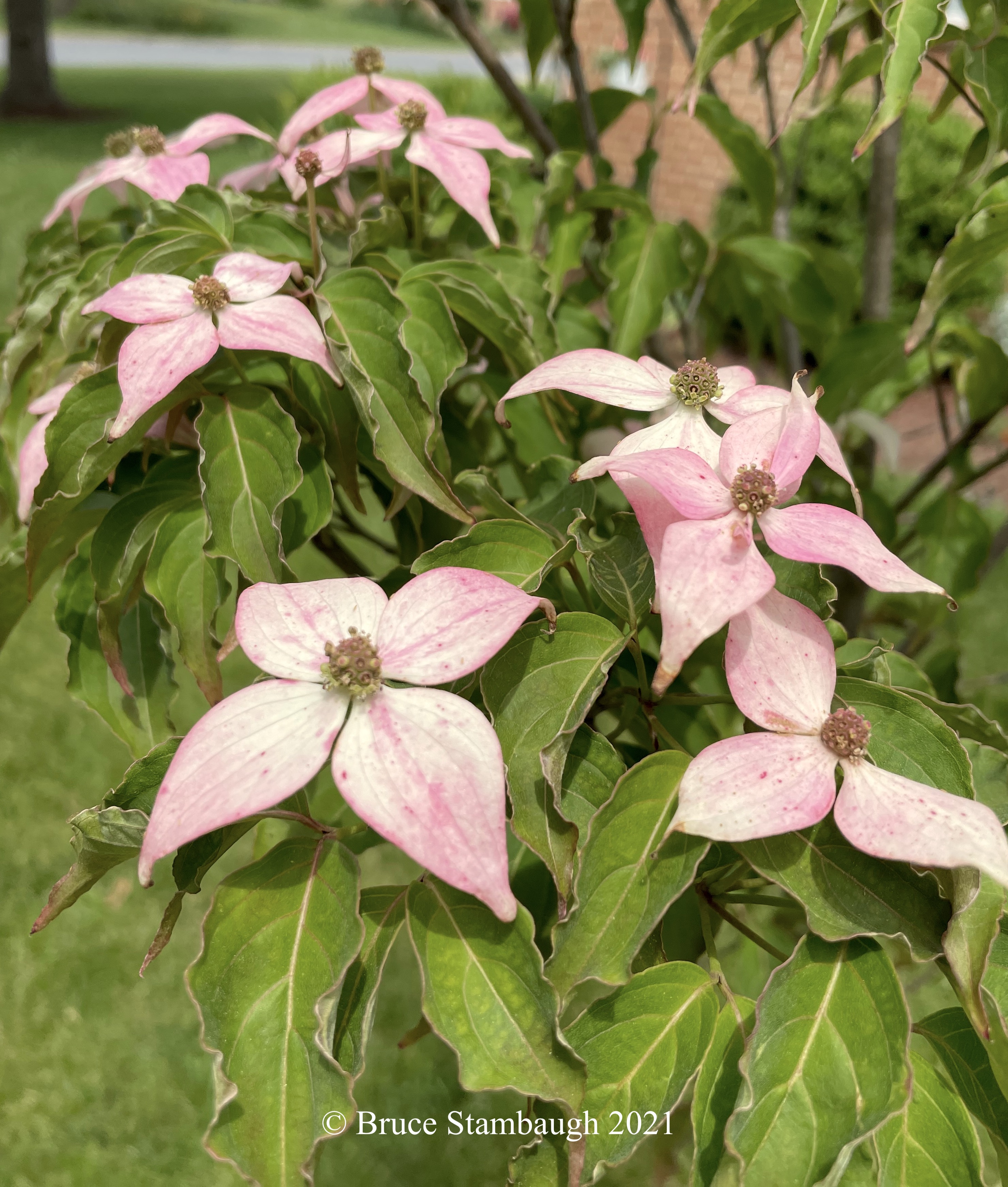
I kept watching for hints of buds on the pink dogwood that I had planted outside our bedroom window. It was a Mother’s Day gift for my wife in 2019, and I had it placed there so my wife could see it each morning as it bloomed. Dogwoods are notorious for not blooming for a few years after being transplanted, however. So, I wasn’t too disappointed when the pink dogwood didn’t bloom when all the other native dogwoods did in April and early May.
But the other day I looked out and tiny pink buds were bursting open to the morning sunshine. At first, they were dainty. But as you can see, the unfurled flowers are gorgeous.
Mole Hill is a landmark in Shenandoah Valley’s Rockingham County. The forested nob is actually the remnants of a volcano’s core. That hasn’t deterred locals from farming and living around its base.
Mole Hill is properly named. The Allegheny Mountains in the western background dwarf it in comparison. Still, Mole Hill attracts birders, bikers, and sunset gazers alike.
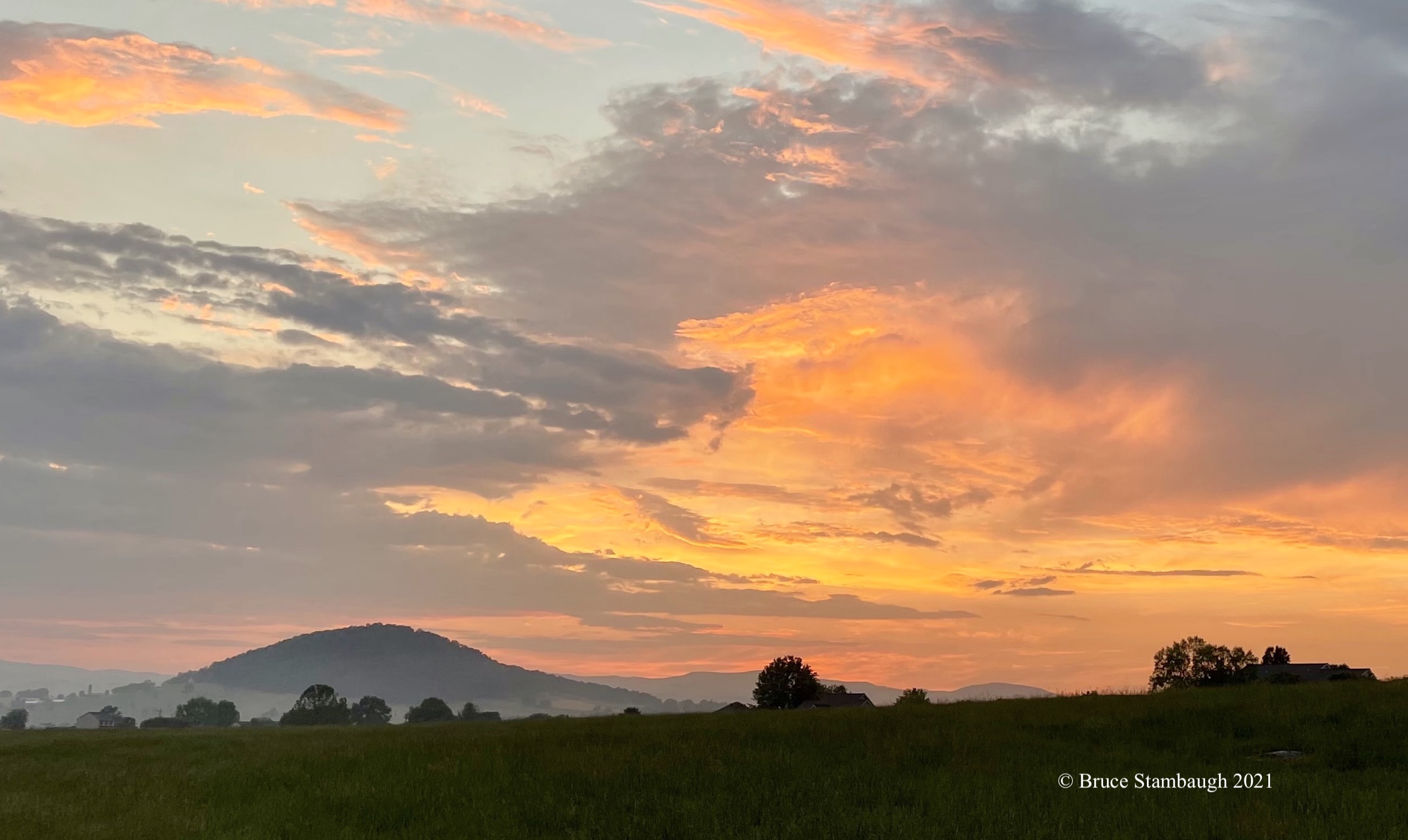
This photo was taken about two miles east of Mole Hill near Harrisonburg, Virginia. With evening fog setting in, the fiery sky looked as if it had recently erupted from this local favorite hotspot.
The bulletin board in the coffee shop caught my attention. I moved closer to read its contents.
I quickly discovered that this billboard that you often see in mom-and-pop establishments was no ordinary advertising venue. The notes posted on it were all different but had a common theme.
This public service space was a pay-it-forward board. Pay-it-forward is when a person pays for something for someone else, usually anonymously. Paying it forward can be contagious. Doing so often leads to others returning the favor for future customers.
The examples pinned to the café corkboard were self-explanatory.
“For a parent,” read one. “For an aspiring archeologist,” and “for a pharmacy technician,” read two others. The notes ran the gamut of the human experience, including medical workers for their efforts in fighting the pandemic.
Situated in a northern Virginia town close to the Appalachian Trail, through-hikers often frequented this café to refuel and refresh themselves. Generous donors recognized their likely needs and provided an opportunity for the trekkers to enjoy a prepaid lunch or latte. Individuals were free to take the specific note or envelope that fit their situation.
Other pay-it-forward messages were for National Park workers who spend their careers helping others enjoy the great outdoors. In this particular case, nearby Shenandoah National Park sprawls 105 miles along Virginia’s famous Blue Ridge Mountains.
The pay-it-forward bulletin board.
Regular visitors to the national park know that these dedicated park employees work hard for the money they earn. Many donate time helping out stranded motorists or searching for lost hikers.
I’m sure recipients appreciated the many kind gestures posted. I suspect that some may have also added their own pay-it-forward envelopes to the crowded board.
Last December, a pay-it-forward event that happened at a Dairy Queen in Brainard, Minnesota, received loads of media coverage. It became known as a chain of kindness.
Genuine benevolence began to flow during the lunch hour on December 3 when a man reached the drive-thru window and said that he wanted to pay for his lunch and the order for the car behind him.
That started a chain reaction of events that lasted into three days and involved 900 cars. Everyone kept paying for the vehicle behind them no matter what they had ordered. The Dairy Queen manager said that all of the kindness had energized her and her staff.
Paying it forward can be a spontaneous experience, too. During the devastating ice storm in Texas last February, the manager of an H.E.B. grocery store made an impromptu, impactful and gracious decision to pay it forward.
Customers seeking to stock up on food and household items to weather the storm and power outages packed the store. Suddenly, the store’s power went off. None of the cash registers worked without electricity.
Store employees asked all of the customers to come to the checkout counters. With shopping carts full, the lines of the crowded store were long. Customers expected an extended checkout when the line began moving.
Cashiers merely waved the customers through to the exit. People started crying when they realized what was happening. No one paid for anything.
In the parking lot, people helped one another load groceries into their vehicles. They, too, began paying it forward.
The grocery chain’s generosity didn’t stop there. H.E.B. donated $1 million in groceries to 18 Texas food banks.
Life offers a myriad of opportunities to pay it forward. As we go into this day and all the days ahead, let’s be alert for those unique chances to anonymously and graciously help others however and wherever we can.
Another beautiful sunrise, another day full of opportunities to pay it forward.
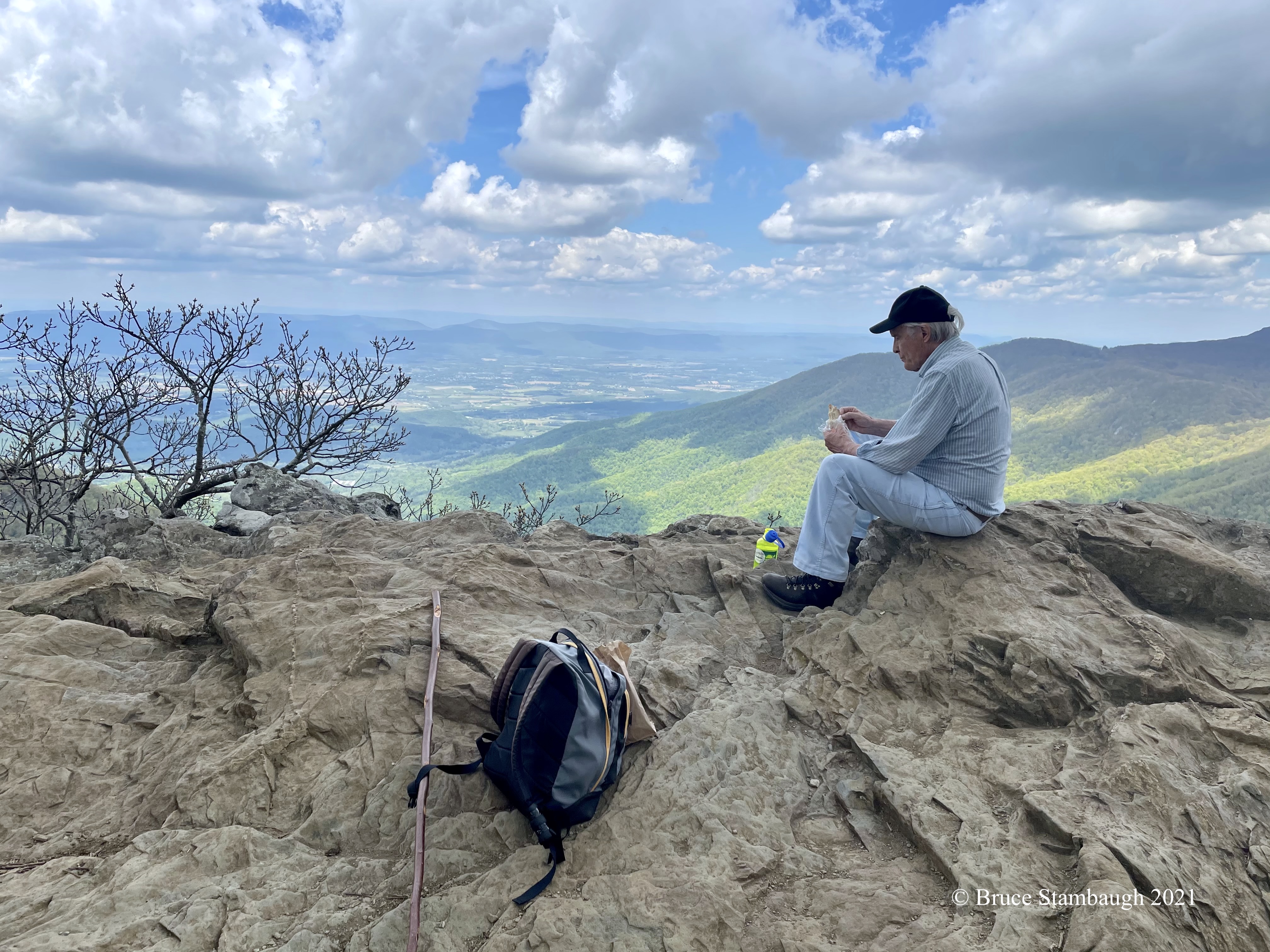
Hiking has its rewards. Reaching the summit of a peak is one of them. Hikers often celebrate with some cool water and a light lunch to refresh their body’s energy. This hiker is doing just that while also enjoying the gorgeous view from Hawksbill Summit, the highest peak in Shenandoah National Park. New Market Gap in the Massanutten Range is in the distance.
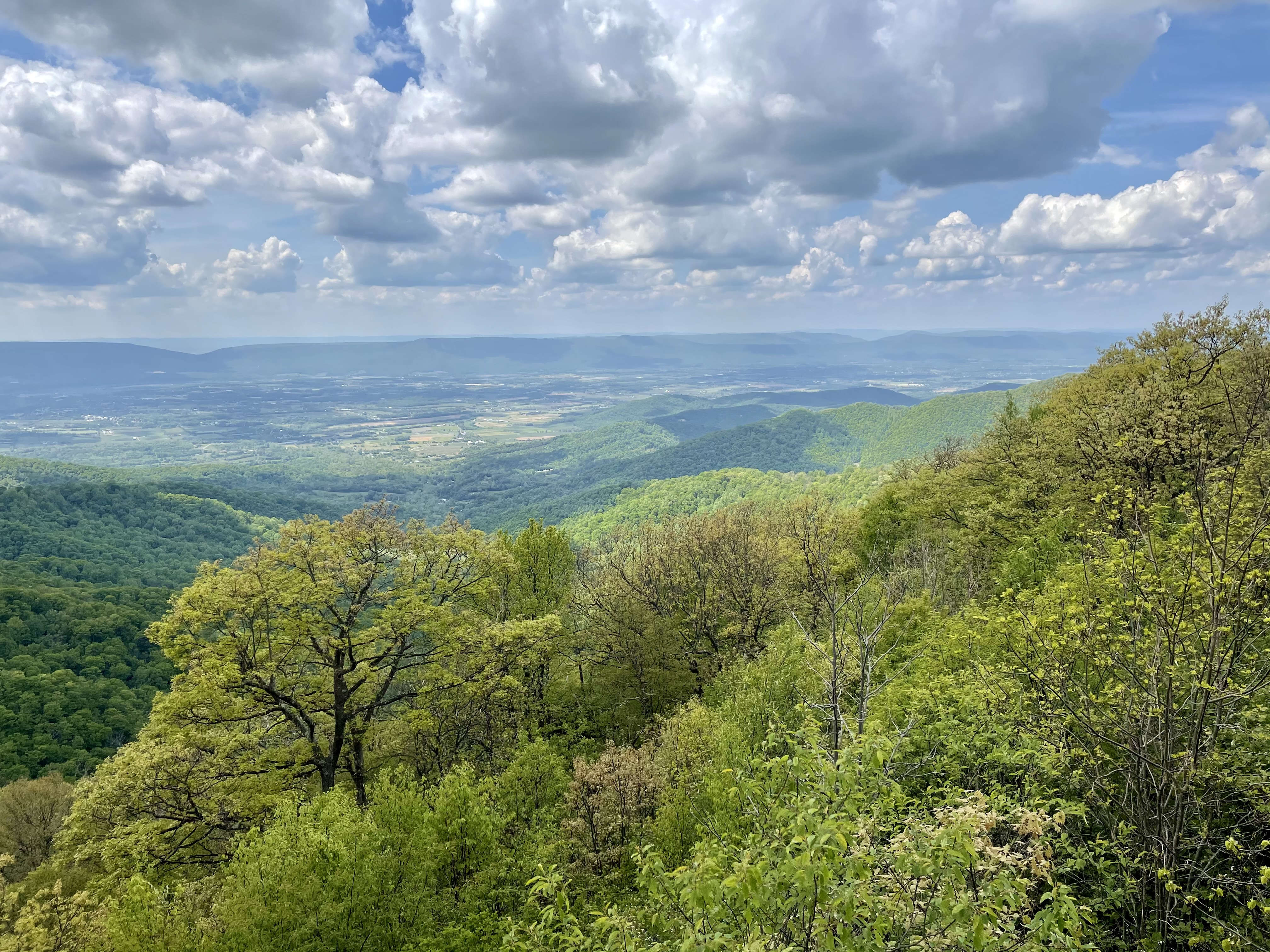
I live in one of the prettiest places in the world. I can be atop the Allegheny Mountains in less than half an hour. They are the mountains in the far distance, center to left in the photo.
In less than an hour, I can be driving on the enchanting Skyline Drive in Shenandoah National Park, which runs 105 miles along the Blue Ridge Mountains. This photo was taken less than a month ago from Rockytop Overlook on Skyline Drive.
The peak in the center of the photo is the southern tip of the Massanutten Mountains east of Harrisonburg, Virginia. These old age mountain ranges can’t compare in beauty to the younger, sharper, snow-covered Rocky Mountains. Nonetheless, I find beauty in the mountains that border and bisect the Shenandoah Valley even on a mostly cloudy day.
Shortly after my wife and I arrived at a local arboretum, the overcast skies began to leak. The raindrops stirred this already murky pond, but the redbuds still reflected their beauty.
“Reflections on a Rainy Day” is my Photo of the Week.
You must be logged in to post a comment.