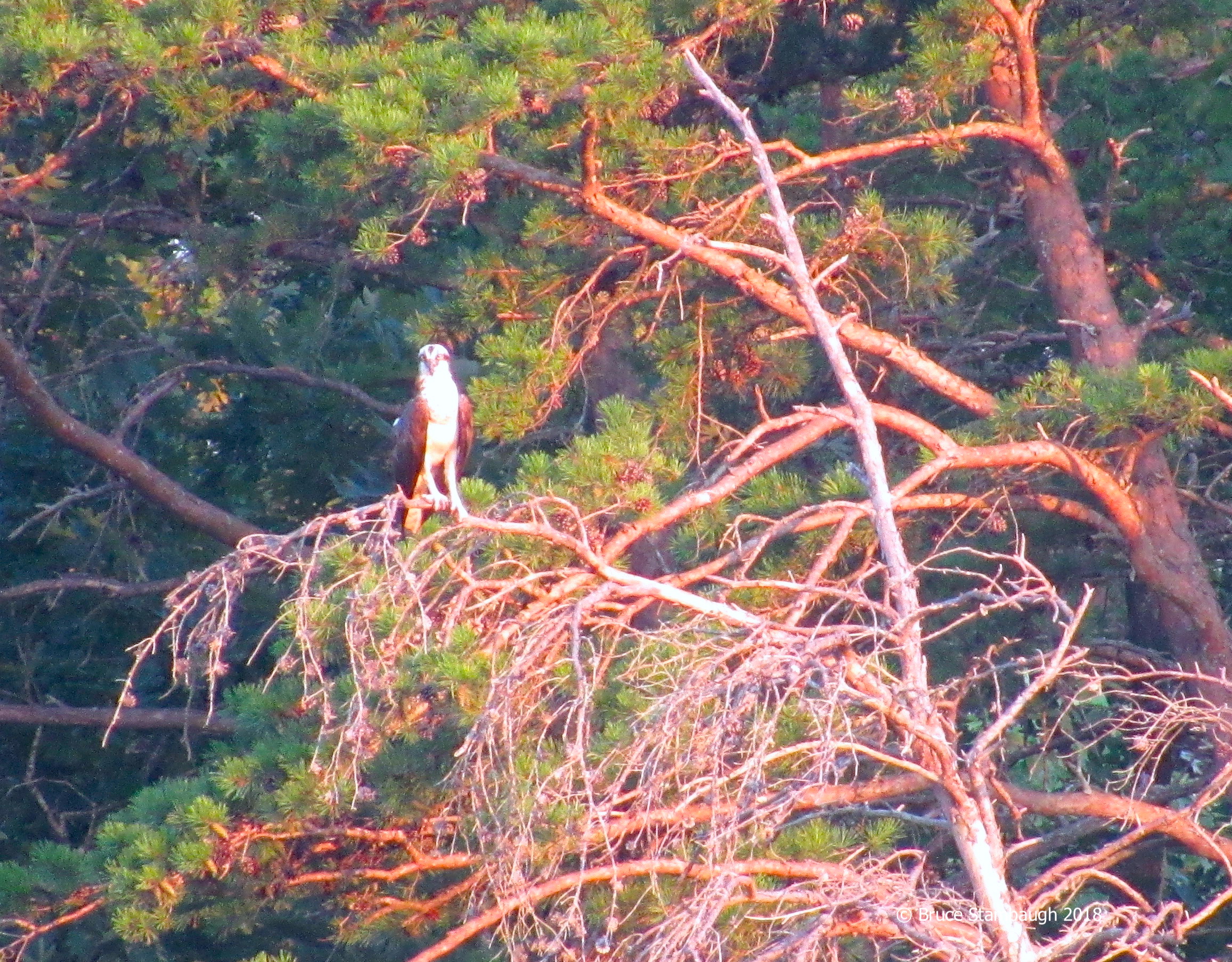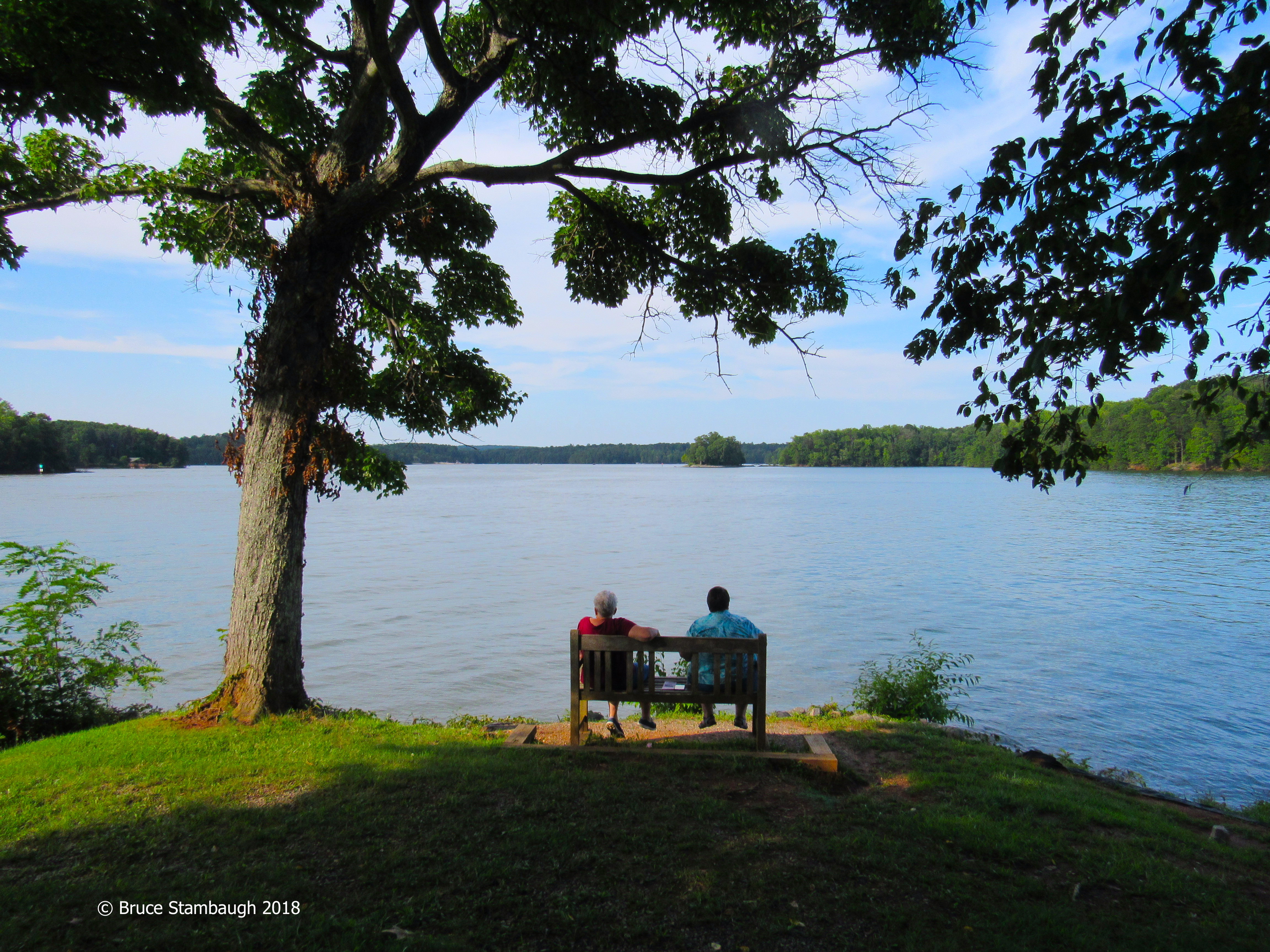
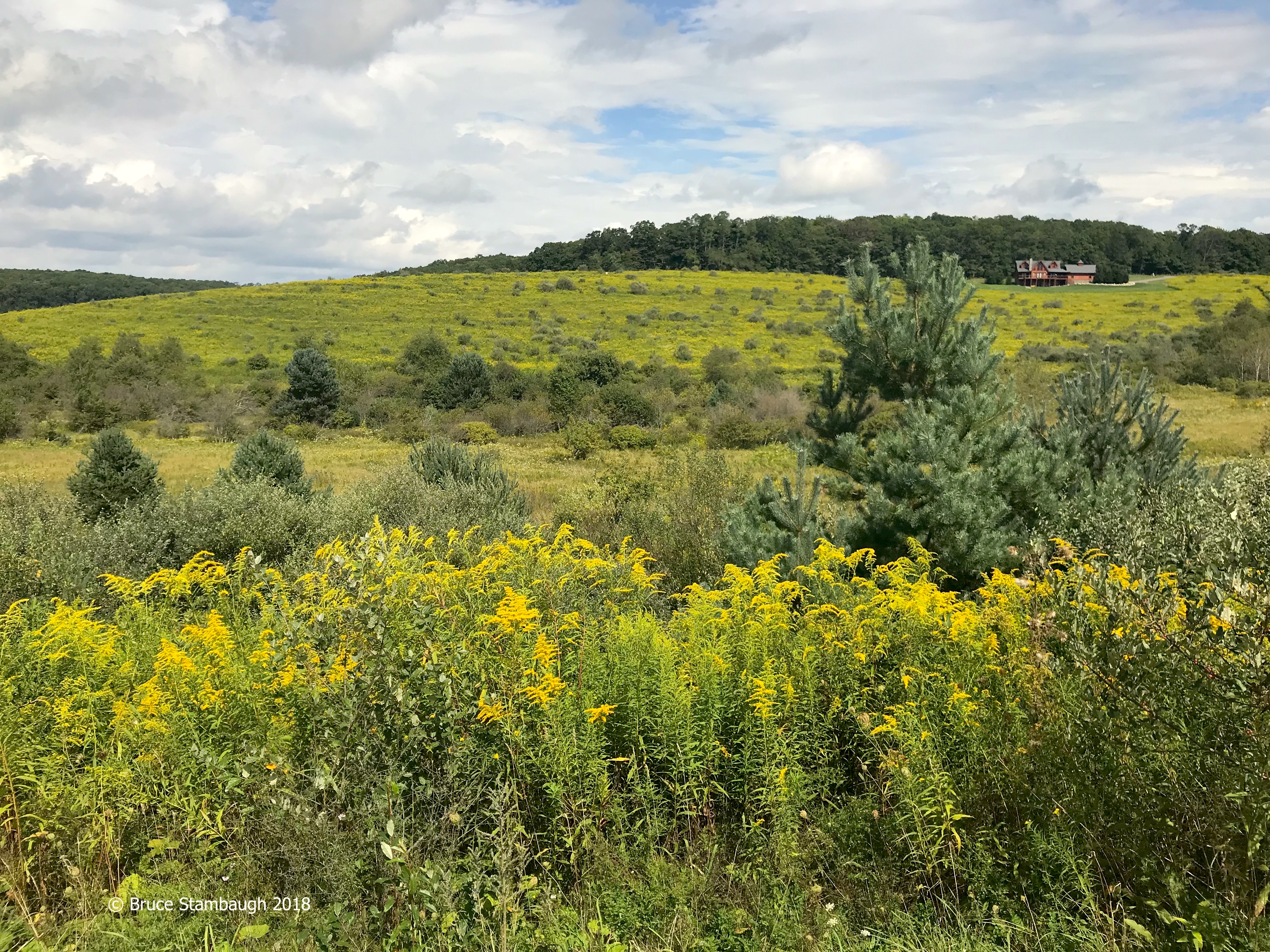
In last week’s Photo of the Week blog post, I featured a teenager photographing flowers. I told her parents how inspiring it was to see a young person so interested in photography, something far beyond selfies. When the young woman joined the conversation, I gave her some advice. I told her to look around when everyone else is looking at the obvious and showed her an example of what I meant. She and her parents thanked me, and we parted ways.
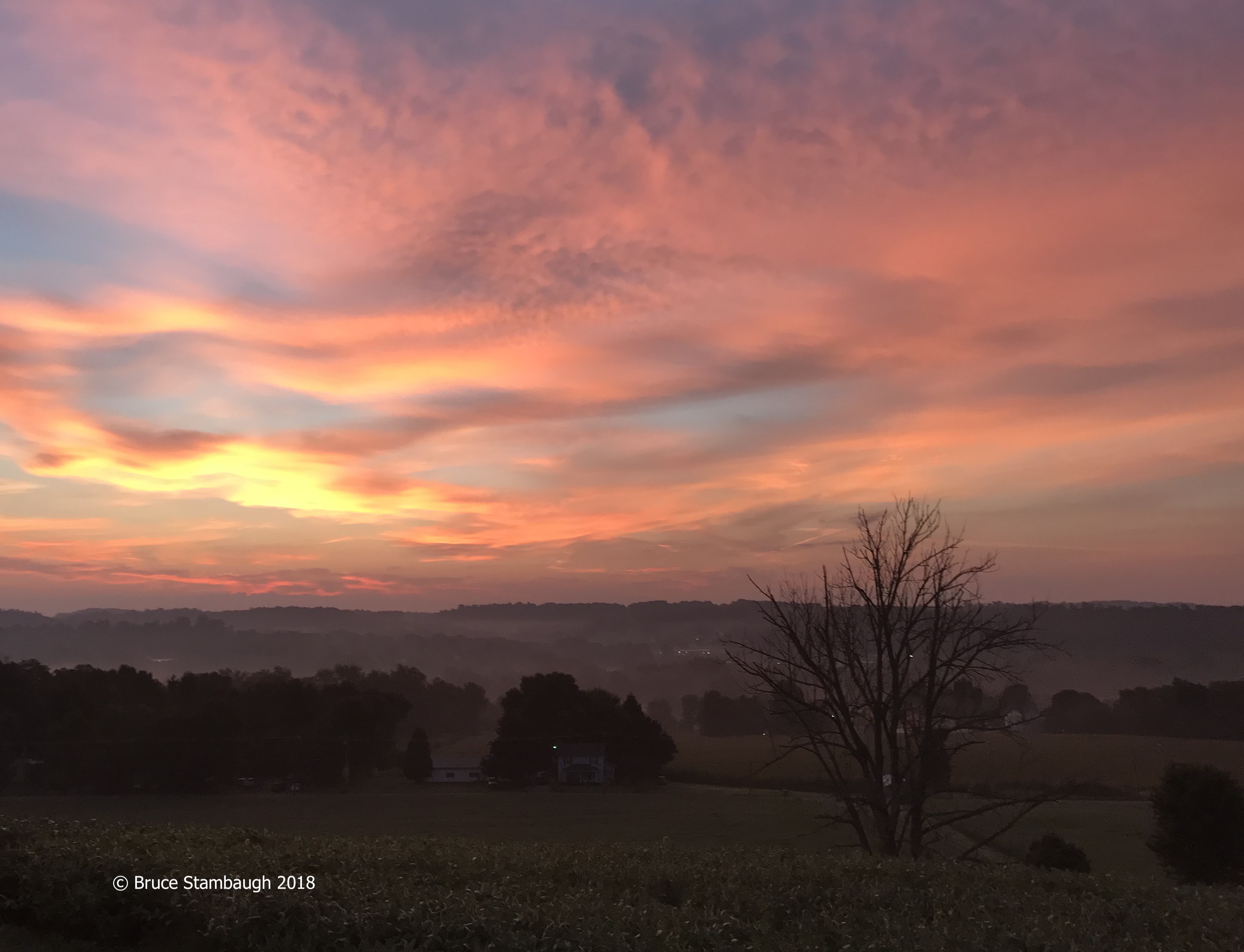
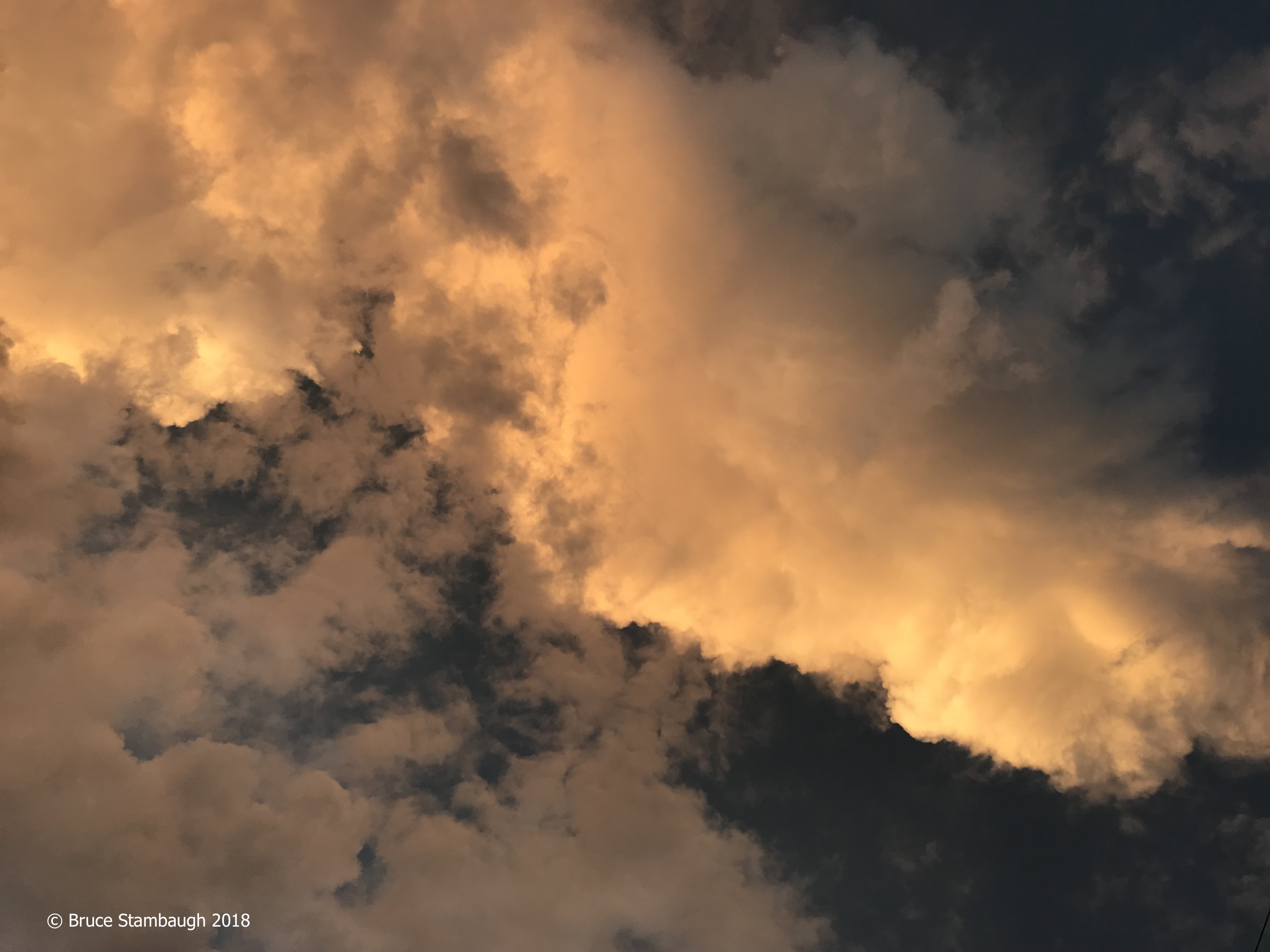
“Looking Up” is an example of taking my own advice, something I too often fail to do. Just ask my patient wife. While recently photographing a sunset after the passage of some summer thunderstorms, I was ready to leave when I happened to look overhead. This is what I saw, the remaining rays of the day highlighting some roiling cumulonimbus clouds.
I couldn’t believe all of the beauty that was right above me while I waited on a spectacular sunset that didn’t materialize. As I told the young photographer, look all around you. You just might find something spectacular to capture and share.
The afternoon’s sun illuminated this already impressive natural wonder near Lexington, Virginia. The unusual rock bridge formation, once owned by Thomas Jefferson, is the critical feature of Natural Bridge State Park.
I particularly liked how the sun’s deflected rays seem to glow beneath the arch of this natural wonder.
There’s an old adage in photography that goes something like this: When others are shooting the obvious, look around, look behind you, look up, look down. I try to remember that when I focus on a particular subject matter, be it a landscape, sunrise, sunset, or wildlife. Another perspective might bring you greater rewards.
Such was the case when I stopped to photograph a church in rural southwestern Virginia. Rolling, high hills lined with Christmas trees served as the backdrop of the distinctive country church, which was outlined in bright, red paint. It made a very satisfactory photo.
However, when I turned to return to the van, I spotted this old, weathered building across the road. I loved its unique character, especially the age-dappled clapboard siding sandwiched between the two tones of green. I wondered about its history. What was its original purpose? Was the building being used for any reason now?
The old building’s aged appearance jumped out at me. “Weathered” is my Photo of the Week.
The night sky was bright and promising, at least where I live west of Harrisonburg, Virginia. It seemed near perfect conditions for photographing June’s Strawberry Full Moon rising over the Blue Ridge and Massanutten Mountains. But it wasn’t to be.
I arrived at my prearranged position high on a hill that overlooks the city and provides an excellent view to the east. I was in for a surprise, however. A broken layer of clouds hovered over the Blue Ridge Mountains. I knew the moon was to rise at 9:05 p.m. EST. As that time came and went, I still could not see even the faintest hint of the full moon.
Finally, just before 10 p.m., the clouds lightened from the moon’s glow. It wasn’t the shot I wanted or had hoped for, but it’s the one I got. I often take photos backlit by the sun. “Veiled beauty,” my Photo of the Week, was backlit by the moon.
I hiked the short trail with one thing in mind. I wanted to find the old cabin and take a photo of its chimney if it indeed had one. As so often happens in life, discovering what I was looking became secondary in this trek.
I took my time on the trail, soaking in all the glorious sights and sounds that I encountered along the way. There was a lot to absorb.
Rock Spring Cabin was a short distance away from a crude hut built for hikers along the Appalachian Trail in Virginia’s Shenandoah National Park. From the cabin’s covered front porch, the Page Valley played out in the patchwork patterns of fields far below.
The cabin at Rock Spring.The primitive log cabin did indeed have a stone chimney. I snapped my picture and headed for the spring of Rock Spring Cabin nearby.
When I arrived, I was stunned at what I saw. I stood there in both amazement and disbelief. There, high in the Blue Ridge Mountains, cold, clean, crystal clear water gurgled from beneath giant boulders as old as time. Human interaction, of course, had to plumb it with a PVC pipe.
Instantly, my mind flashed back to my childhood. I thought of the Old Testament Bible story of Moses striking a rock and water gushing forth for the assembly of disgruntled, thirsty Jews wandering in the desert. That ancient story always struck me as a blend of awe, mystery, and miracle.
I contemplated the moment. I couldn’t help but wonder why here at this spot, more than 3,000 feet above sea level did water run from rocks? The earth does fantastic, mysterious things. Explanations are not always required.
Still, I reckoned the answer to my rhetorical question. Clearly, the rock strata folded long before human history began and forged a channel for the water table below.
Water from a rock.
Cabin to spring.
Yet, there was something mystical about the rock spring, its waters trickling down the steep slope far into the valley below. I mentally traced its path from small stream to a creek that formed a tributary to the Shenandoah River. Farther north, it met the broad Potomac River at Harper’s Ferry, West Virginia, and then flowed east through rapids and placid waters alike, passing the nation’s hectic capital into the Chesapeake Bay and on into the Atlantic Ocean.
Noisy ravens awakened me from my lively daydreaming. Apparently, they viewed me as an intruder. Not wanting that title, I returned to the main trail, warblers, and thrushes flitting and singing in the leafy canopy high overhead.
I walked a short distance down the trail, and the raven followed me, swooped low, and continued its nasal banter. It was only then that I realized that I was not the target of its raucous concern.
A motion drew my eyes downward. Not 30 feet away a young black bear grazed along the forest floor. My head instinctively swiveled in search of the mother bear. I saw only trees, plants, and rocks.
Young black bear.
I gingerly stepped a few feet down the trail where I could get a better view of the cub, likely in its second season given its size. One click of the camera shutter and the bear spied me and bounded down the hill towards the spring. Overflowing with wonder and joy, I headed in the opposite direction for the parking lot.
I went searching for a cabin and found so much more. An emerald forest. Water from a rock. Agitated ravens. A frightened bear cub.
Traveling with friends, we wanted to reach the overlook at Grayson Highlands State Park near Whitetop, VA, before a front moved through bringing heavy rains. We just made it.
We were pleasantly surprised to see not only a marvelous view but that the Mountain Laurel bushes were blooming. No other clumps of them were in blossom as we drove up the mountain. These beauties just made the view all the more impressive.
The mountain range far in the distance is the Blue Ridge.
“Mountain Laurel with a view” is my Photo of the Week.
Spring Sunset.
One thing about photographing sunsets is certain. You have to be at the right place at the right time to capture the beauty.
As I was driving desperately trying to find the perfect spot to capture the quickly fading sunset, the colors suddenly brightened. I pulled in the nearest farm lane, pointed my camera and clicked away. Once was enough, as this shot shows. Seconds later, the western sky went gray over the Allegheny Mountains that create the border between Virginia and West Virginia.
Butterflies and flowers are made for one another. On a recent hike in Virginia’s Shenandoah National Park, many wildflowers were in full bloom, and from their joyous, creative aerial dances the butterflies couldn’t have been happier.
Little skipper butterflies were most abundant. I found this one, which I believe to be a Confused Cloudywing, flitting from bloom to bloom on this patch of Golden Ragwort, a daisy-like flower.
The afternoon sun nicely illuminated this invigorating scene. “Brown on Yellow and Green” is my Photo of the Week.
When is a chimney more than a chimney? I know that sounds like a strange question. The answer, however, might even be more so.
A chimney is more than a chimney when it no longer serves as a chimney. Now, I know you must be really confused. I can gladly explain.
When the Shenandoah National Park was first being conceived decades ago, hundreds of folks lived and farmed the land along the mountain ridges where the park was to be formed. They would have to move to make the park a reality. That became an issue.
In most cases, the government compensated landowners within the designated park boundaries for their property and buildings according to market value in the 1930s. Others received less than they thought they should. However, tenants operated many of the farms and received no reimbursement.
This slideshow requires JavaScript.
Some of the displaced were resettled in nearby towns. Most were on their own, leaving behind fond, treasured memories and subsistent livelihoods.
Adding insult to injury, many of the abandoned homes, having been condemned, were either burned or demolished in developing the new national park. For those displaced folks, more than walls went up in smoke.
Year after year, families returned to where they used to live if only to view the ruins and pay their respects at nearby family cemeteries. In many cases, only the chimney of their former dwelling remained.
Where memories were made.Memories of sitting by a warm fire in the dead of winter, of a mother preparing a family meal using the fireplace, and of looking up from working in the nearby garden and seeing smoke curling out of the chimney were all recalled. Together, the fireplace and the chimney served as the sources of survival.
Knowing that resentment still lingered in local families after all these years, grassroots efforts were begun to help quell that ire. Local non- profit organizations, community volunteers, college students, descendants of those who were displaced, city, and county officials worked collaboratively on a memorial project. They decided to establish monuments in honor of those removed from the parkland.
The chimney was chosen as the most logical symbol to memorialize those on the harsher side of the history of creating the park. To date, six memorials have been built. Two more are planned, which will complete the circuit of all eight counties that have land within the boundaries of Shenandoah National Park.
Walking through history.
The eight counties.
Sharing the truth.
The park owes its existence to its proximity to the populous East Coast.
For its part, the National Park Service created an informative, inclusive and accurate exhibit of the history of Shenandoah National Park at the Byrd Visitors Center at Big Meadows. Chimneys play a prominent role in retelling that story.
The latest of the chimney memorials was just dedicated in Rockingham County’s town of Elkton at the foot of the Blue Ridge Mountains where the Skyline Drive snakes through the park. Volunteers built these chimney memorials using native limestone and granite rocks. I imagine a little blood, a lot of sweat, and tears of both sadness and joy flowed in the process.
With the remaining people who were displaced now in the 90s, the memorials were built to keep the story alive through education about the park’s history, including its dark side. In truth, these chimney memorials serve a more significant, more admirable purpose. These chimneys also help heal those long-held hurts of personal injustices.
When is a chimney more than a chimney? When it serves as both an emotional symbol of history’s good and evil that can’t be changed, only remembered and respected, and one that reconciles.
Ironically, this cabin, complete with a local stone chimney, was built by the National Park in 1936, after many of the original homes were destroyed.
You must be logged in to post a comment.