Please Don’t Hug Me Right Now

Departing Halifax, Nova Scotia, Canada. Photo by Bruce Stambaugh

I love giving and receiving hugs, especially as I age. The fact that my four siblings and I received little physical affection growing up might play a significant role in my desire to be a hugger in my senior years.

There’s nothing better than giving my grandchildren a hearty hug after an athletic event or concert in which they have participated. And too, I melt when they hug me for simply being their grandfather. That momentary embrace says more than any card or note of appreciation.

The same is true for close friends, especially as we endure the aging process with all its expected and unexpected ailments. When we gather in small groups, whether at church or in our homes, the first question often asked is, “How are you?”

My wife and I are in two different small groups of peers, most of whom have Ohio roots like us. We now live in Virginia’s Shenandoah Valley, close to three of our four grandchildren.

When with other seniors, we chat around a meal or a table of snacks and drinks about our health. Sharing and listening become equivalent hugs, emotional squeezes, if you will. As septuagenarians and octogenarians, we all need those affirmations as we deal with our latest ailments.

Our ship, the Zuiderdam, docked at Portland, Maine. Photo by Bruce Stambaugh

However, since we returned from a recent cruise, I’ve had to learn to be happy accepting verbal greetings instead. I cracked three ribs in a freak fall near the end of our trip.

All was going well until our ship approached Halifax, Nova Scotia. Before we left, friends cautioned us not to fall. I had every intention of complying.

As I stepped into the shower, and please don’t try to imagine that, my left foot hit the shower mat just as the ship pitched in the opposite direction. I flew through the air like Superman, only not as gracefully.

My arm stopped my flight by hitting the sink, and I crashed to the floor with a loud thud. Excruciating pain shot through my right side. My wife said I made noises she had never heard before from any creature.

After the initial shock, I composed myself and finished getting ready for the day. However, after breakfast, my ribs pained me greatly. We headed to guest services, and I was immediately wheeled to the ship’s medical center.

The friendly and competent medical staff quizzed me, took my vitals, and gave me medication to ease the pain. X-rays showed a cracked rib, but the doctor wanted me to go ashore to the hospital. Doing so would effectively end our vacation, and I didn’t want that to happen.

Painful as it was, a cracked rib wasn’t a life-or-death situation. We enjoyed Halifax as best we could from our veranda. I checked in the next two mornings for additional shots of pain medication, and we were able to fly home on schedule.

But because I had also hit my head in the crazy fall, we went to our local hospital’s emergency room after we arrived home. CT scans showed not issues with my head, though my wife questioned those results. I did, however, have three cracked ribs, not one.

We took it easy the next few days before I felt like venturing out. Friends who didn’t know about my accident greeted us with the usual hugs, but I politely waved them off and explained.

I have developed a new appreciation for the importance of the rib cage to the rest of the body. I measure my moves and watch my steps. I also recognize that three cracked ribs are insignificant when compared to more consequential diagnosis of cancer and other diseases of friends and family.

I’m still healing and greatly looking forward to when I can once again hug and be hugged without pain. Until then, a fist bump will do.

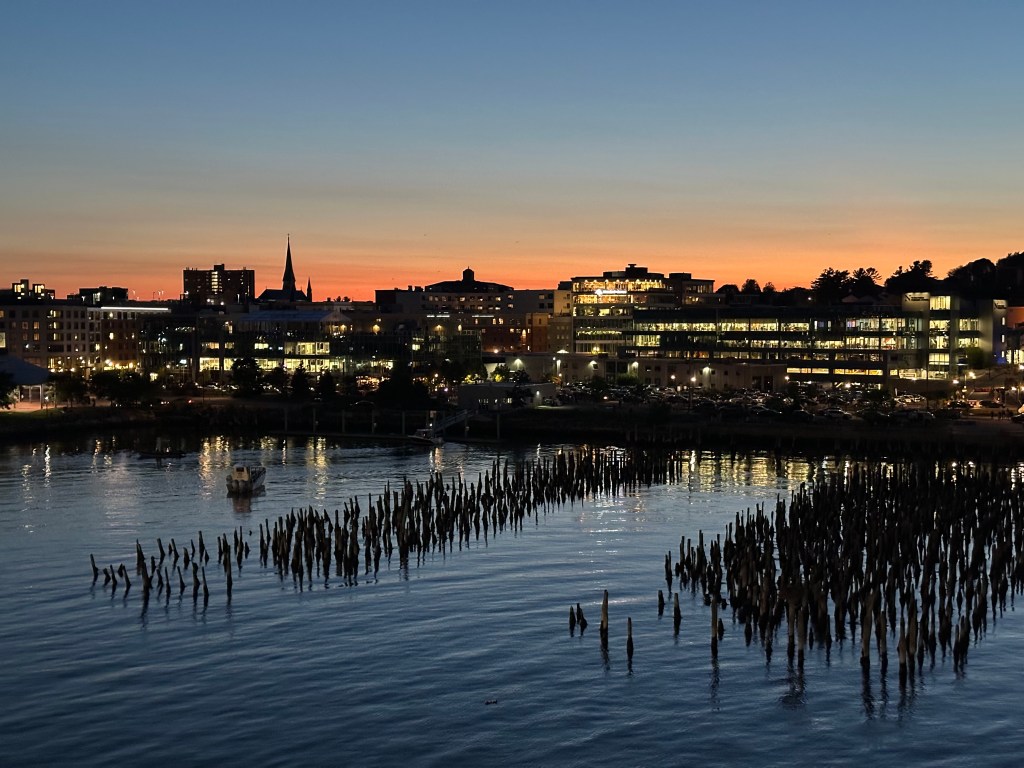
The Portland, Maine waterfront at dusk. Photo by Bruce Stambaugh

© Bruce Stambaugh 2025

Riding into the Sunset

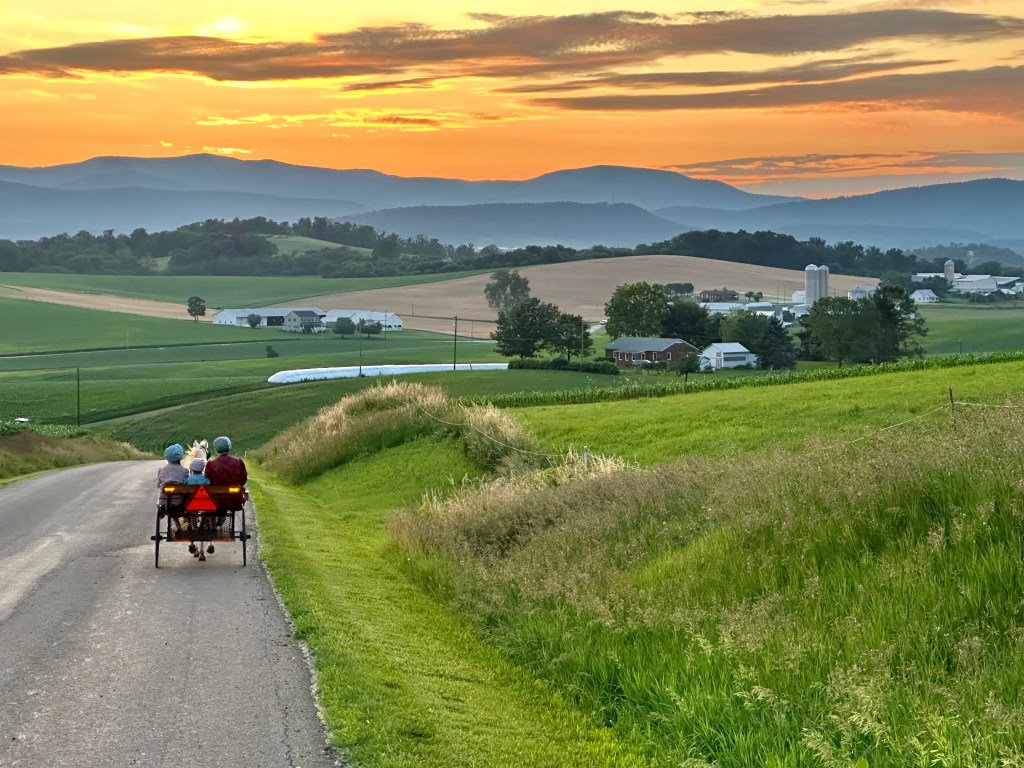
Sunset from Mole Hill, Dayton, Virginia. Photo by Bruce Stambaugh

Being at the right place at the right time is an essential part of photography. That’s what happened recently when I went to photograph the sunset from my favorite location, Mole Hill, near Dayton, Virginia.

When I arrived on the west side of Mole Hill, a noted area landmark, I discovered I was not alone. Several cars were stopped ahead of me on the gradual downhill slope. But once the sun sank behind the Allegheny Mountains, the vehicles continued on.

On my way up the road, I noticed a horse-drawn cart with an Old Order Mennonite young woman and two girls sitting on the wooden bench. They were parked beneath a walnut tree, admiring the various colors of the quickly changing landscape.

Imagine my surprise when I heard the clip-clop of horse hooves on the road’s surface. I turned around and saw the cart coming my way. I couldn’t believe my good fortune.

Out of respect to them, I waited until they were well past me before I took the photo. Like the Amish, Old Order Mennonites do not want their pictures taken for religious reasons.

Their little cart, with their yellow caution lights flashing, made this ho-hum sunset spectacular. I’m grateful I was there at the right time to capture the scene.

© Bruce Stambaugh 2025

Kiss at Sunset

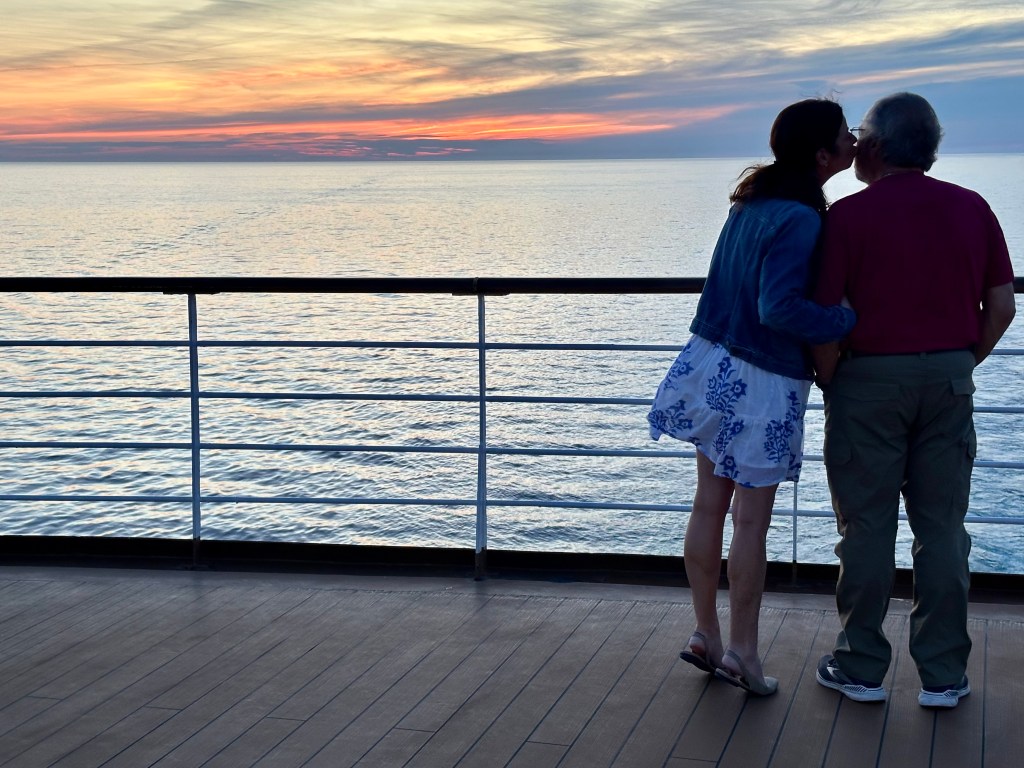
I went to the aft of our cruise ship to photograph the sunset over the Gulf of St. Lawrence. Of course, other passengers did the same.

As the evening quickly cooled, most people returned inside the ship after the sun set behind distant clouds. A few people lingered, including the couple pictured. I intended to use them as foreground silhouettes when the woman spontaneously stood on her tiptoes, leaned in, and kissed her partner.

It was the kind of photo I love to capture. I had planned to shoot one thing and ended up with something entirely different: a spontaneous, fleeting, loving moment. A picturesque sunset over the Gulf of St. Lawrence, sweetened by a sudden romantic gesture.

© Bruce Stambaugh 2025

One of these is not the same as the others

Sailboats on the Charles River, Boston, Massachusetts. Photo by Bruce Stambaugh

My wife and I had a lovely view overlooking the Charles River in Boston, Massachusetts. I chuckled when I saw this lone sailboat with the white sail when all the others were red. I’m sure the colors had some meaning, but I wasn’t able to discover what it was.

Being different is really insignificant. Regardless of the sails’ color, they still got the sailors where they want to be.

© Bruce Stambaugh 2025

Juneteenth!

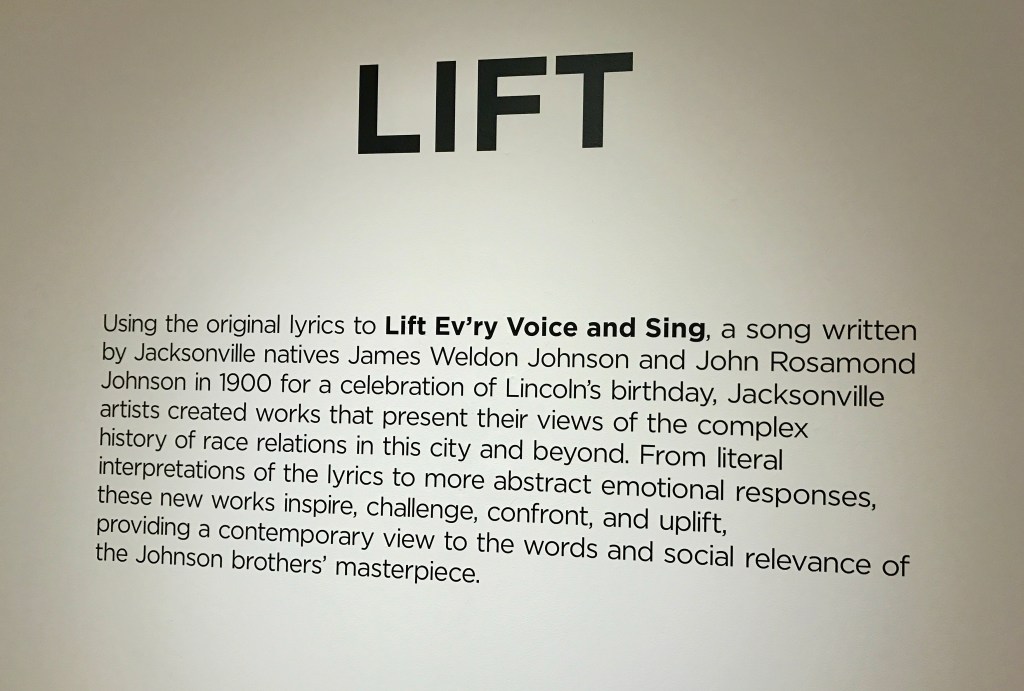
An artistic presentation of “Lift Every Voice and Sing.” Photo by Bruce Stambaugh

When I took this photo at an art museum in Jacksonville, Florida, several years ago, I had no idea of the depth of the meaning of the song. It’s known as the Black National Anthem. The song was initially composed to celebrate Abraham Lincoln’s birthday, but quickly became popular in Black communities. It was adopted by the NAACP in 1919 for its powerful lyrics about resistance and hope. Consequently, it resonated with those involved in the Civil Rights Movement in the 1950s and 1960s.

The song celebrates its 125th Anniversary this year. I was happy to learn that “Lift Every Voice and Sing” is in our church hymnal. Sheryl Lee Ralph performed my favorite rendition of the song at Super Bowl LVII. You can look it up on YouTube, as I am not permitted to post it here.

© Bruce Stambaugh 2025

Late Spring Flowers

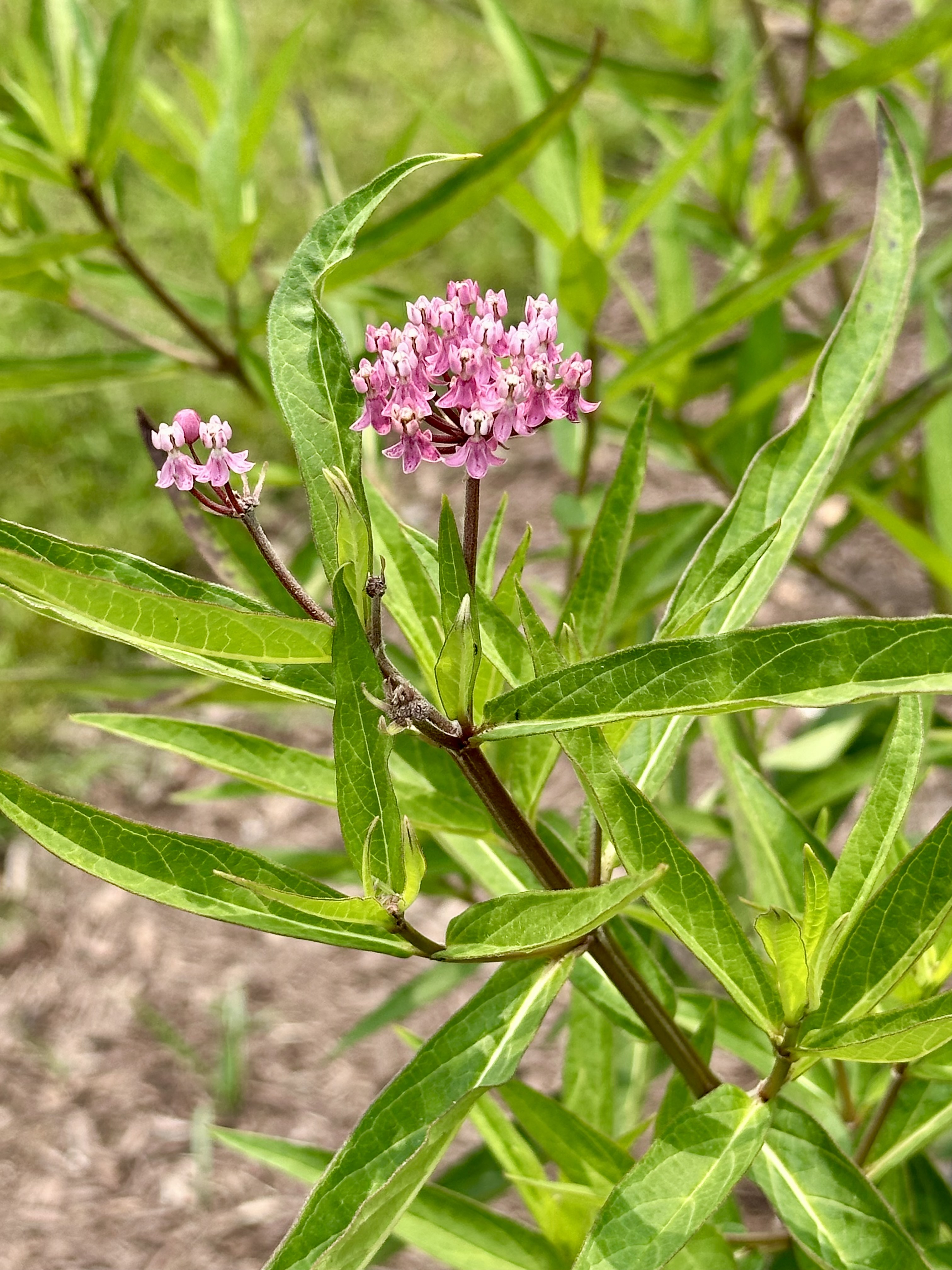
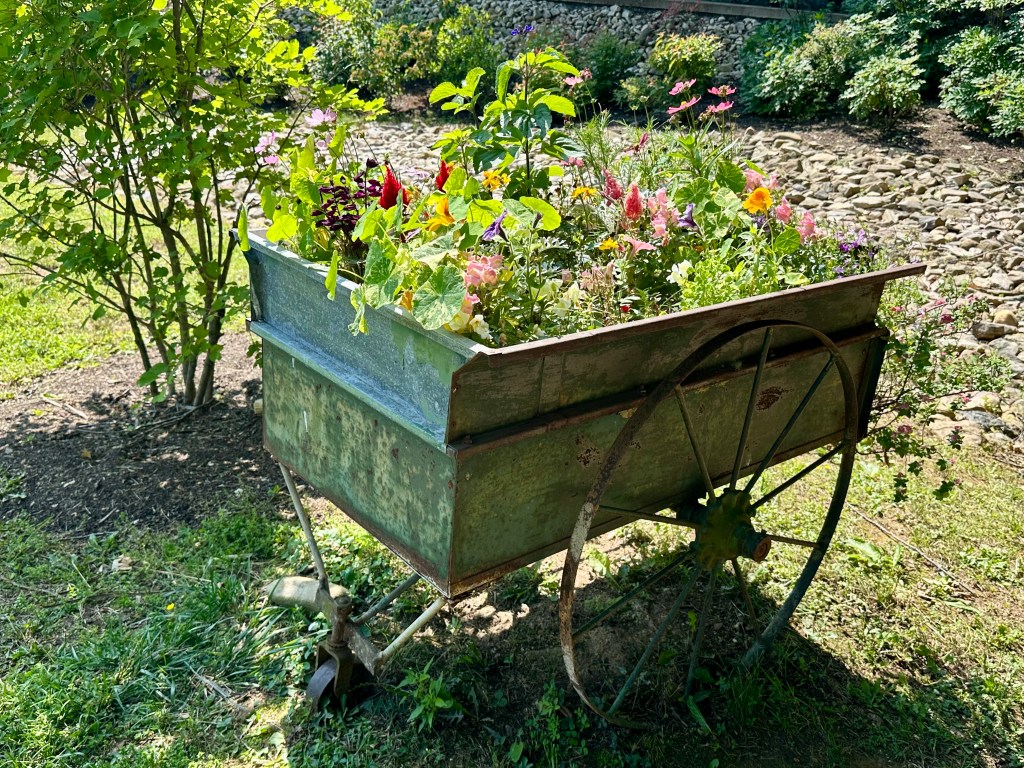
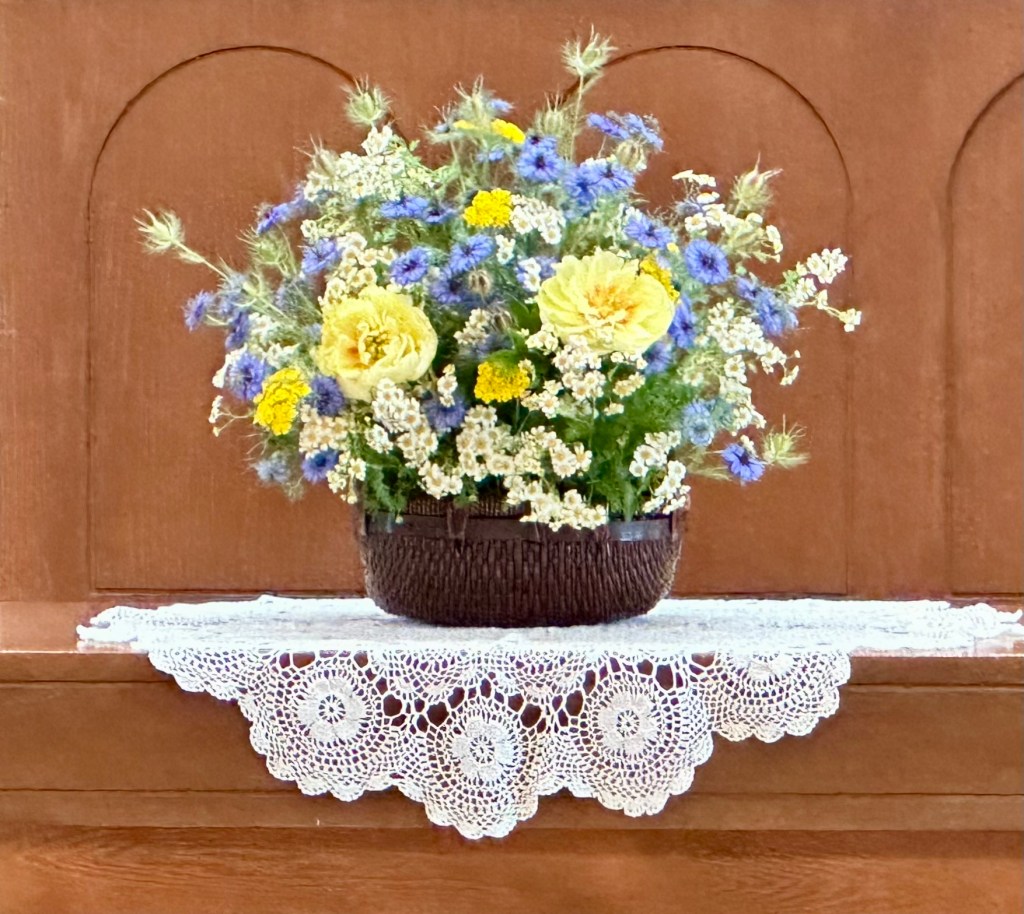
Flowers, wild or propagated, flourish this time of year. With warmer temperatures, cooler nights, and well-watered fields and forests, floral colors brighten neighborhoods, countrysides, and forest floors.

Here are a few photos of flowers I spotted wherever I went.

Around our house.

Wildflowers.

Cultivated.

© Bruce Stambaugh 2025

In Search of Mountain Laurel

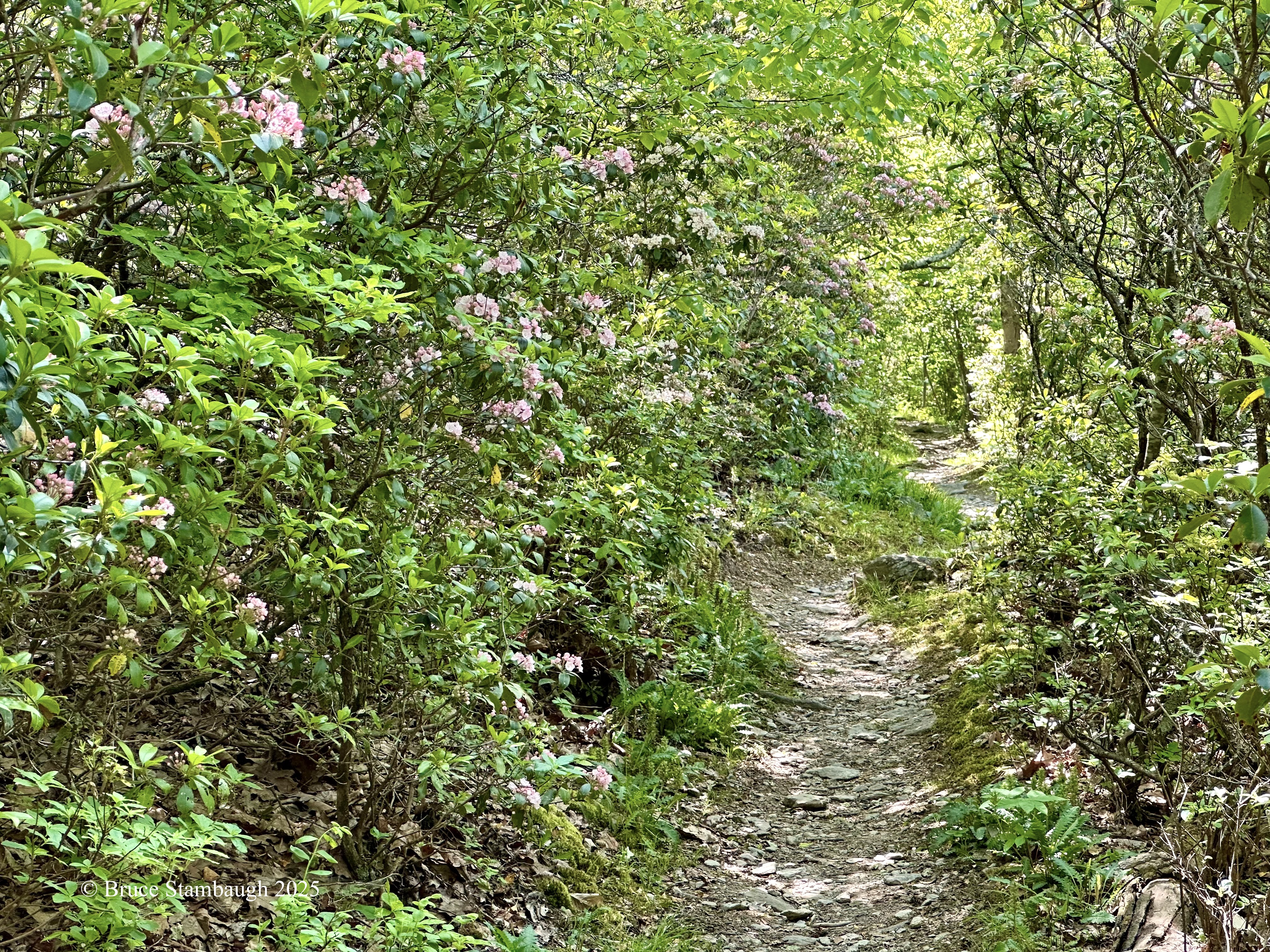
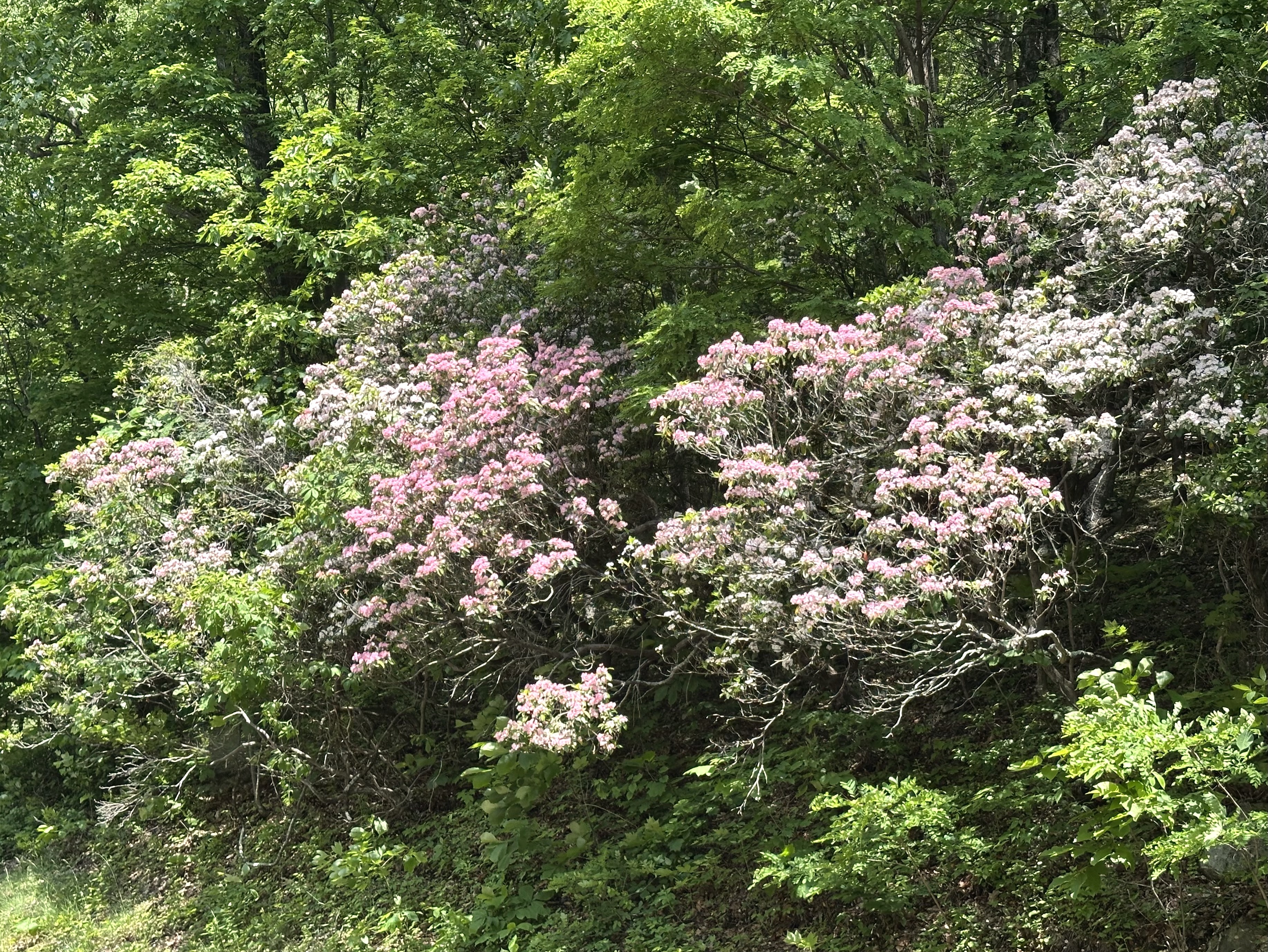
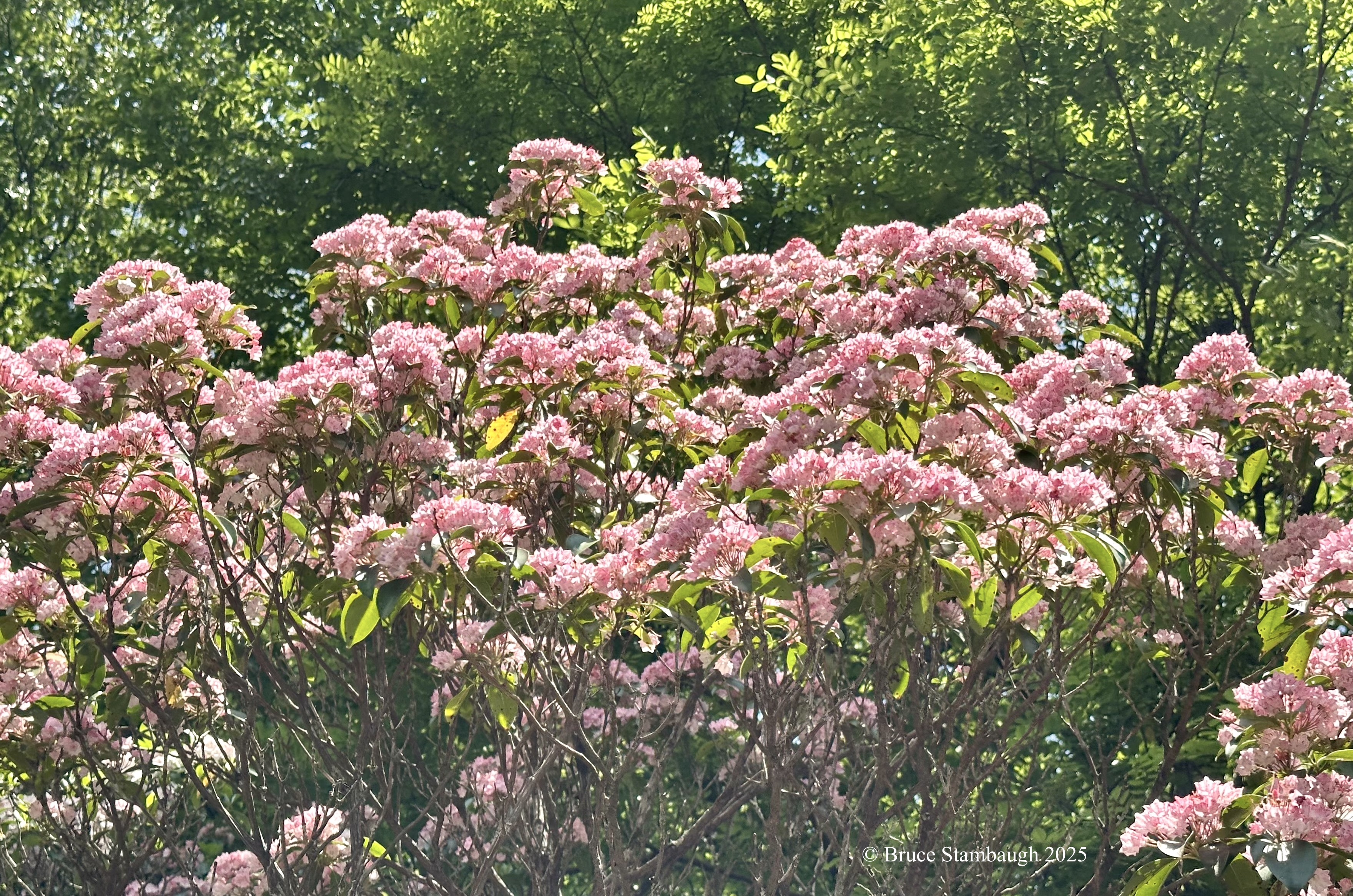
Mountain Laurel blossoms. Photo by Bruce Stambaugh

I went for the birds and the blossoms, but forgot about the bugs. They didn’t deter me, however.

My neighbor had told me that the Mountain Laurel bushes were blooming at various locations in Shenandoah National Park, just a short drive from my home. The laurel blooms from late May into mid-June, depending on elevation.

Of course, I had to see for myself. I fixed a hiker’s lunch, packed my binoculars, camera, and a couple of jackets, and headed out. It’s often 10 degrees or more cooler in the mountains than in the Shenandoah Valley, where I live.

I didn’t need to bother with the jackets. The temperature was 70 degrees when I arrived, and it was humid, with little to no breeze. It was 79 when I left.

A small black bear cub greeted me not long after I entered the park. Fortunately, it scampered back off the old stone wall away from the road and into the forest.

I soon reached my first destination. Just a short distance off Skyline Drive, I reached the Appalachian Trail, which crossed a fire road. I didn’t see any Mountain Laurel, but songbirds were plentiful. So were the knats and mosquitoes.

A male Eastern Towhee. Photo by Bruce Stambaugh

I strolled along the AT, swatting at the pesky bugs and trying to locate the many warblers I was hearing and recording on my smartphone’s birding app. Singing its unmistakable “drink your tea” melody, a male Eastern Towhee posed for a photo on a limb hanging right over the trail.

I met a lone through-hiker from South Carolina. She hoped to reach Mt. Kadadhin in Maine by mid-September. She told me she had passed many stands of Mountain Laurel on her hike so far, which began at the Appalachian Trail’s traditional starting point, Springer Mountain, in Georgia.

She headed north while I retraced my steps to my vehicle. The birdsong was terrific, but the forest’s full foliage made it challenging for this old guy to spot the warblers as they flitted from one branch to another, munching on their insect smorgasbord.

Besides, my main goal was to photograph the blooming Mountain Laurel. I followed my neighbor’s directions to another section of the AT, where the Mountain Laurel was so prolific that it formed a floral tunnel.

The laurels were in all stages of blooming, from tight pink buds to hexagonal flowers in full bloom. In places, the sun filtered through the forest canopy, highlighting the beauty before me.

The laurel blooms offered no fragrance, and I never saw an insect of any kind on any of the hundreds of blossoms. There was a good reason for that. As pretty as the prized flowers are, they are poisonous to any living creature. Every part of the plant is toxic.

So, if someone offers you Mountain Laurel honey, politely decline. Merely enjoy the flowers with their evergreen leaves. If you go, make sure you take your favorite bug spray.

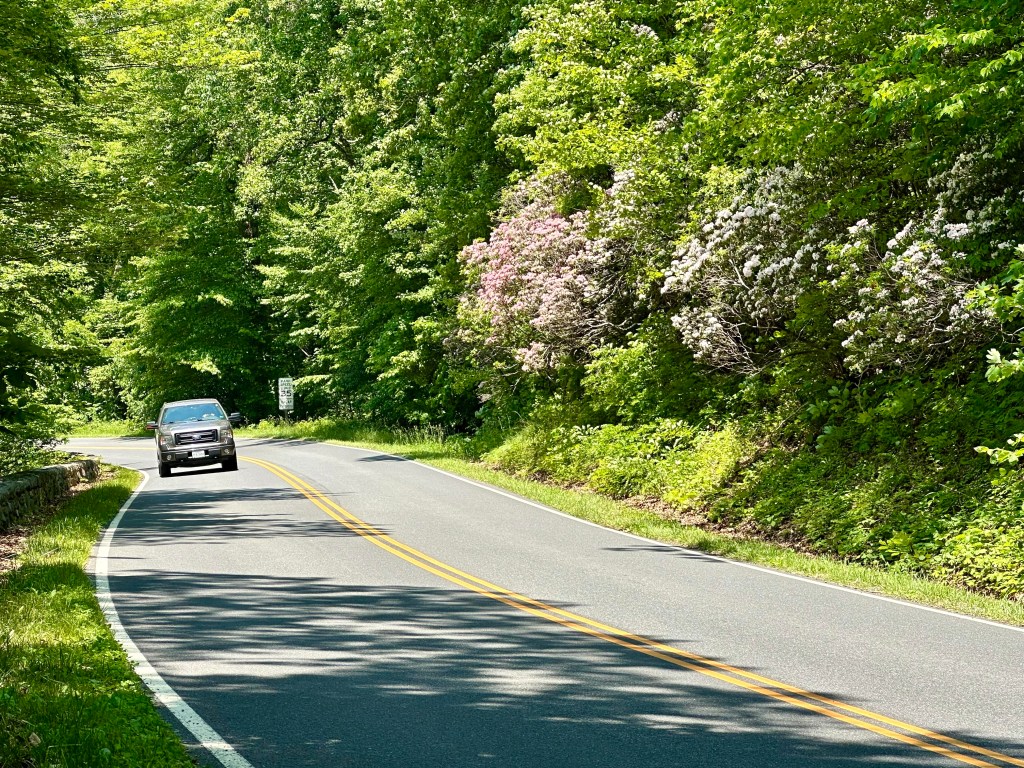
Mountain Laurel grows along the Skyline Drive in several locations. Photo by Bruce Stambaugh

© Bruce Stambaugh 2025

Prickly But Pretty

Appalachian Blackberry blossoms. Photo by Bruce Stambaugh

On a recent day hike on the Appalachian Trail in Shenandoah National Park, I came upon these lovely flowers. They are the blooms that, in a month or so, will turn into Appalachian Blackberries. With all the birds and black bears around, they likely won’t last long.

© Bruce Stambaugh 2025
A Morning Walk in the Woods

Where I walked. Photo by Bruce Stambaugh

After an 8 a.m. doctor’s appointment, I took a long and much-needed walk in the woods. It happened that the doctor’s office was adjacent to one of my favorite places in the Shenandoah Valley.

The Edith J. Carrier Arboretum on the James Madison University campus in Harrisonburg, Virginia, is a life-giving oasis among 21st-century din. There, birdsong, blossoms, and the verdant forest provide a temporary sanctuary from life’s bustling and boisterous busyness.

To be sure, you still hear the sirens, the traffic’s hum on the interstate that cuts the campus and town in half, the train horns, even the airliners cruising into airports two hours away.

The forest canopy covers you with its sacred, healing goodness. It’s life’s true purpose. Use your senses to enjoy the rapturous unfolding.

A late-migrating Wilson’s Warbler flits and feeds on insects deep in the recesses of dense elderberry bushes. Wood Thrushes sing their multiphased cheery song in the shadows of the mixed deciduous woodlots. American Robins scold one another as they defend their nesting territory.

A Wood Thrust sheltered in the shade of a hickory tree. Photo by Bruce Stambaugh

A slight mist rises from the forest floor, beckoned by the strengthening morning light. White-breasted Nuthatches, Eastern Wood-Pewees, Tufted Titmice, Northern Cardinals, Carolina Wrens, and Song Sparrows fill the wooded ravine with glorious, variegated tunes. A Red-bellied Woodpecker’s vocalization echoes deep from the hillside woodlot while an American Crow sails through the trees, cawing from one perch to the other.

Each in their own way, joggers, birders, parents with toddlers, grandparents, and college students enjoy this preserved paradise. Time in the arboretum is an equal opportunity home with a smorgasbord of enjoyment. Some are passing through. Some are exploring the flora and fauna. Others simply sit, look, listen, and smile.

A lone rhododendron holds onto its precious purple blossoms along a wood-chipped path in the shade of the congregation of hardwoods. Here and there, morning light filters through the giants’ canopy, speckling the forest floor.

The broad leaves of huge hosta plants invite you to explore, hike, relax, reflect, listen, and admire all that nature has to offer. A well-located bench beckons you to sit a spell and breathe in the cool freshness before summer’s heat and humidity arrive.

My only shot of a reclusive male Wilson’s Warbler. Photo by Bruce Stambaugh

© Bruce Stambaugh 2025

A Man and His Dog

This scene stopped me in my tracks.

My wife and I enjoyed a walk around the Genesee Country Village and Museum on Mother’s Day with our son, his wife, and their three-year-old grandson. Jess’s family also joined us on the lovely Sunday.

With wide open spaces and many attractions to investigate, several of us scattered to do our own thing. That’s when I spotted this gentleman, dressed in 19th-century attire, basking in the late-morning sunshine. His obedient dog did the same. Along with the setting and their positioning, they made the perfect composition that fit the setting.

The Genesee Country Village and Museum is a living history museum near Mumford, New York.

© Bruce Stambaugh 2025

Bay Photos by Donna

Wildlife Photos From The Chesapeake Bay Region

ROAD TO NARA

Culture and Communities at the Heart Of India

K Hertzler Art

Artist and nature journalist in the Shenandoah Valley of Virginia.

Maria Vincent Robinson

Photographer Of Life and moments

Gabriele Romano

Less Noise. More Meaning

Jennifer Murch

Art is the only way to run away without leaving home. -Twyla Tharp

Roadkill Crossing

Writing generated from the rural life

ANJOLI ROY

writer. teacher. podcast cohost.

Casa Alterna

El amor cruza fronteras / Love crosses borders