Yesterday, the western sky was hazy in the late afternoon. After supper, I kept watch and headed to my favorite spots for sunset photography in Rockingham County, Virginia.
Colorful sunsets aren’t always easy to come by here in the Shenandoah Valley. It may look promising early on, but clouds tend to hang over the Allegheny Mountains that mark the state line between Virginia and West Virginia.
Then, just when you want to give up, boom, the pinks and oranges glow, if only briefly. Other times, it’s a complete bust. Nevertheless, I’d rather be patient than miss a stunning sunset.
Last evening, I changed locations several times until the western sky popped with color. I wasn’t in the most desirable spot, but I am not complaining after capturing this muted beauty.
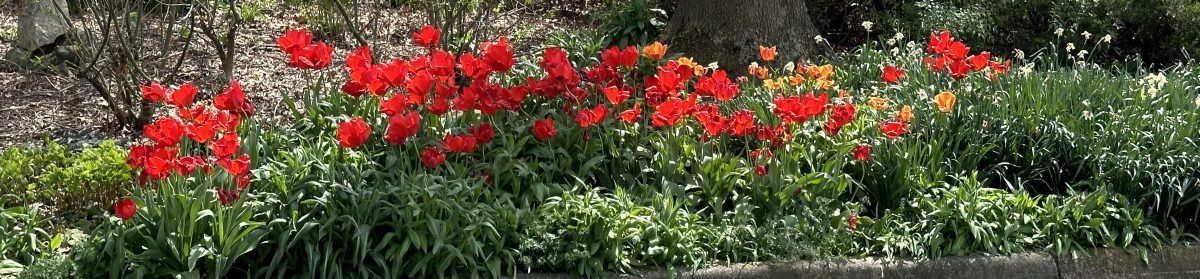
One of these is not the same as the others. Photo by Bruce Stambaugh
Our across-the-street neighbors have lovely flower gardens for all who pass by to enjoy. Since their house faces south, the winter sun, when it shines, warms the front yard.
This, in turn, encourages flowers to bloom when the days warm into the 50s and 60s, like they have for the last few days. I went over to photograph the Snow Drops and discovered that a lone Hyacinth had joined dainty white flowers in showing off its lavender beauty.
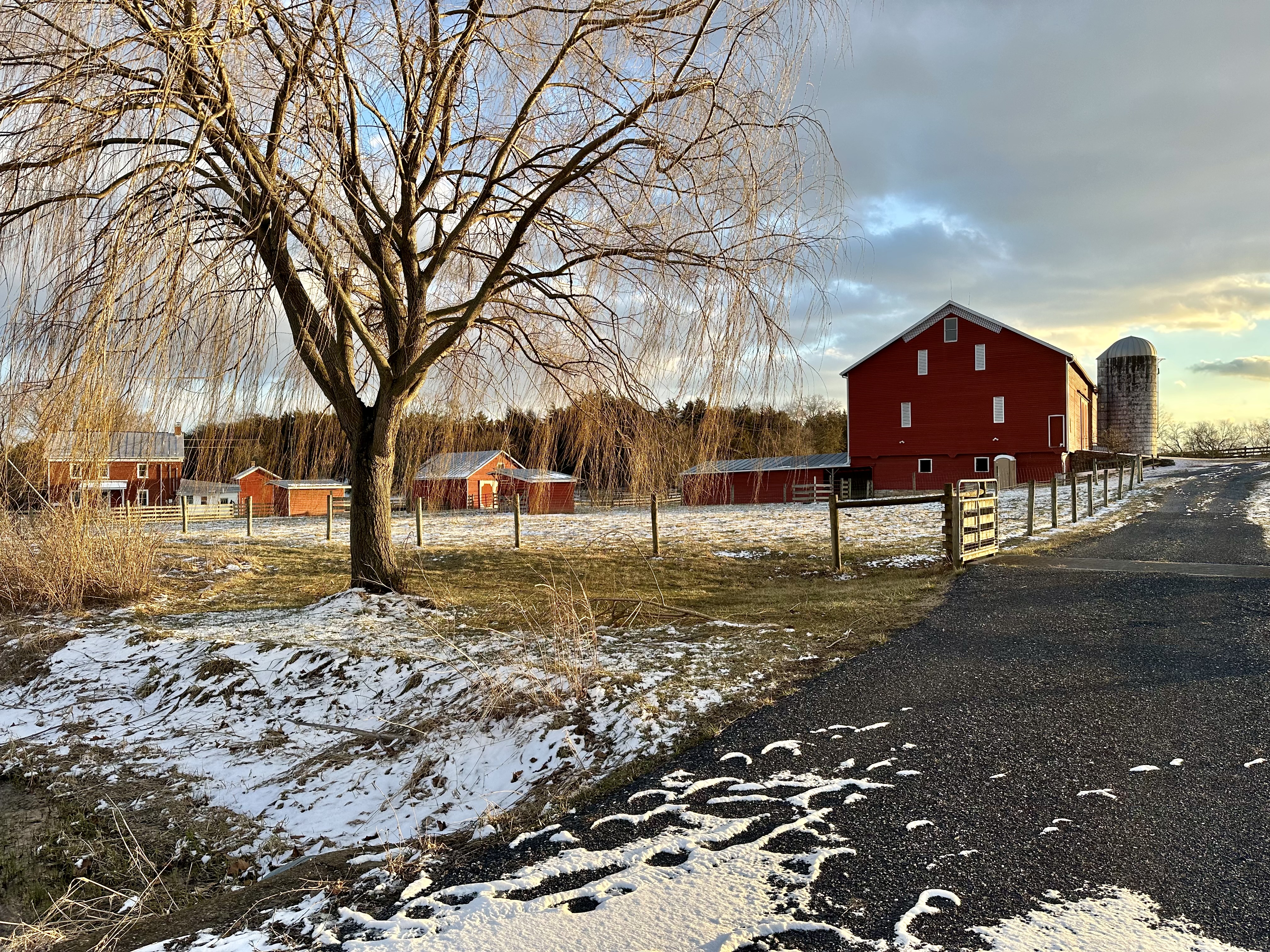
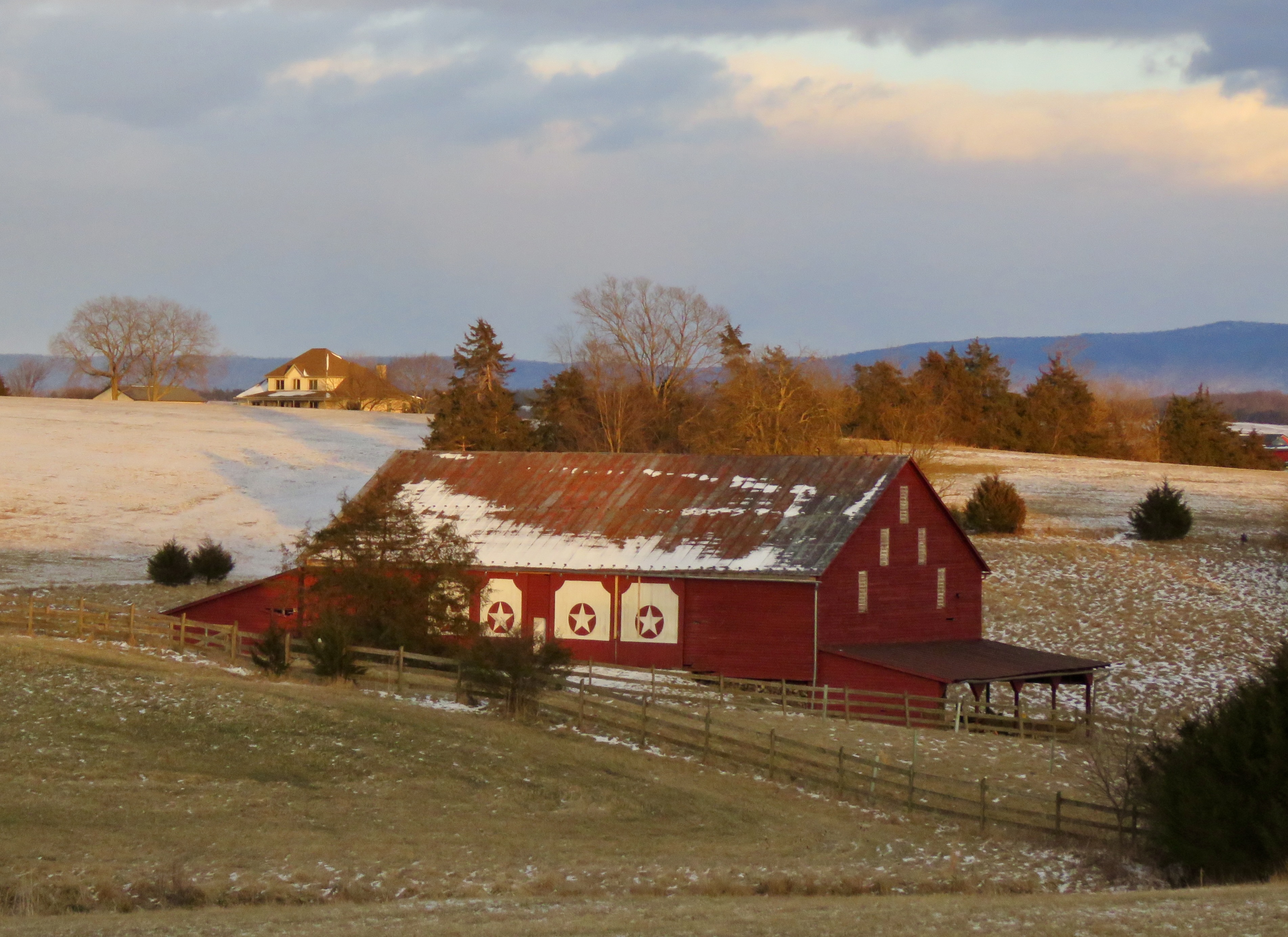
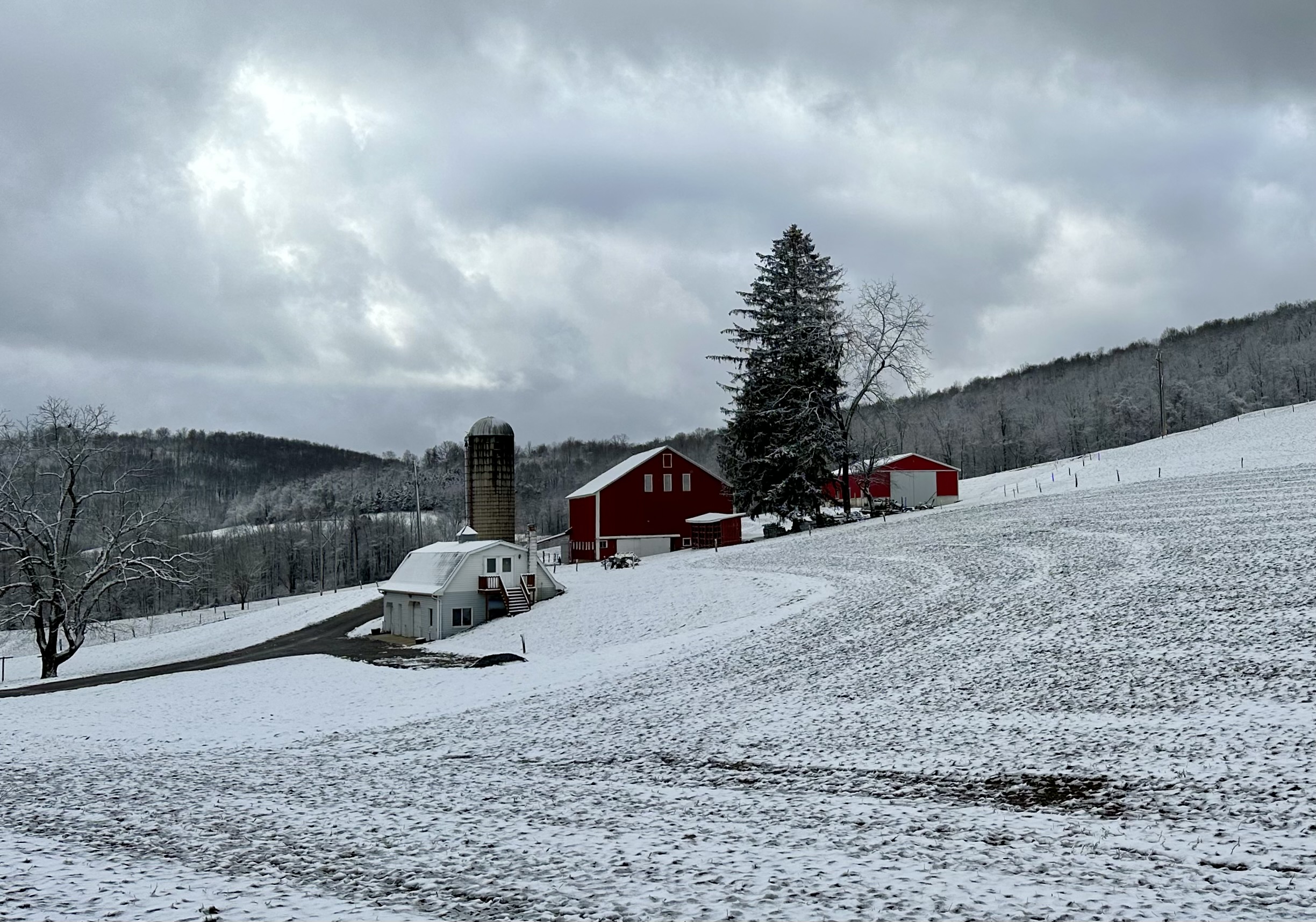
Barns have always intrigued me. The various sizes, shapes, colors, conditions, purposes, and settings combine to make photogenic captures. Wintertime is no exception.
Our 18-year-old grandson came to our house the other day for a surprising reason. He had texted my wife, his Nana, to ask if she would teach him how to sew.
Imagine that—a senior in high school requesting to sew. We weren’t surprised. We moved from our native Ohio to Virginia’s Shenandoah Valley for reasons like this. Helping our daughter and her family has become our primary purpose in retirement.
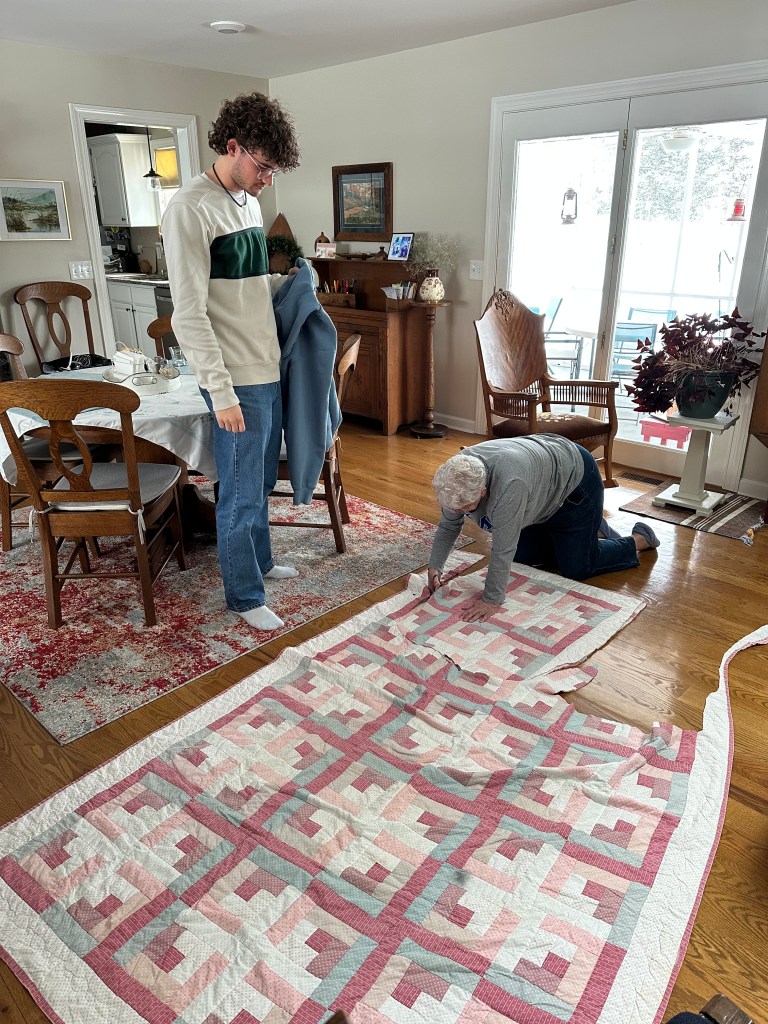
Our grandson had a specific plan. Inspired by a video he saw on YouTube, Davis wanted to make a hoody out of an old quilt. Fortunately, my thrifty wife had a few on hand, including the quilted bed covering she made that Davis’s mother used at bedtime growing up.
First, they cut up the quilt using a favorite hoody Davis brought along as a pattern. They had that job done in minutes.
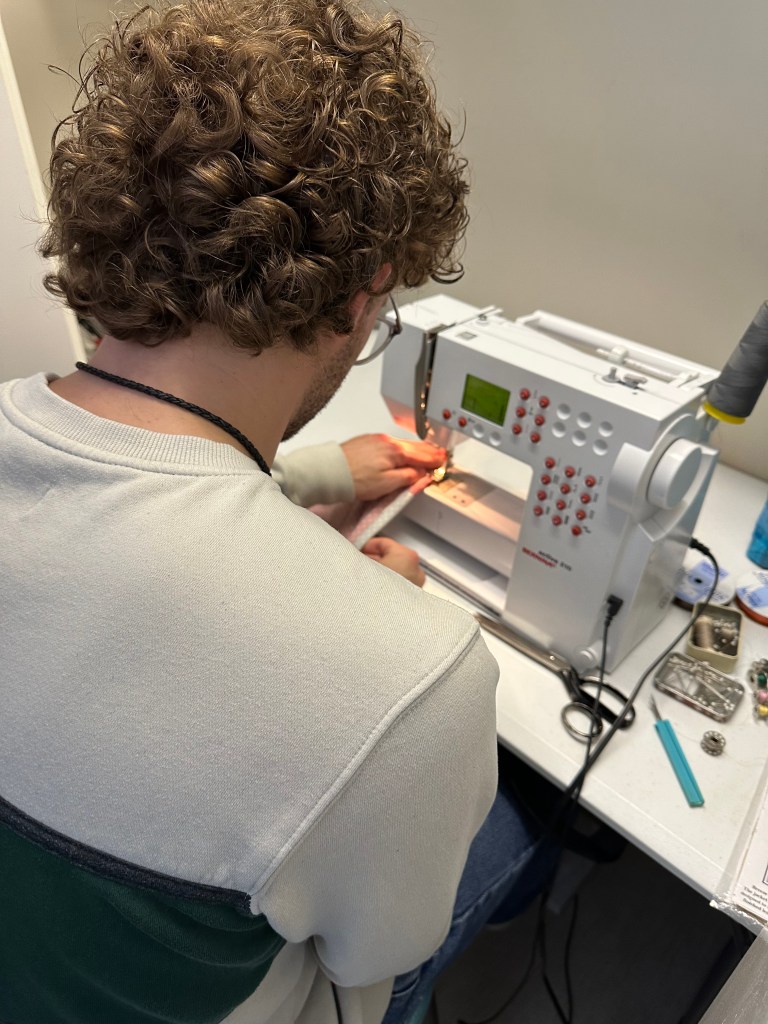
This young man had never sewn before. Nana showed him the basics and let him rip. Davis was determined, and he fixed his focus on the task at hand. No music played through smartphones, headsets, or earbuds as a distraction.
Davis sewing. Photo by Bruce Stambaugh
He carefully and cautiously bent over Nana’s machine and sewed one, two, or three stitches at a time, gaining confidence as he went. That was Davis’s best approach since he was stitching three layers of material together.
Curious and confident, Davis is also practical. He took his time sewing the sleeves, hood, and extra-large front pocket onto the main body of the hoody.
He diligently sat at the machine for twice the time Nana would have completed the task. But her look of satisfaction revealed a deep pleasure and grandmotherly pride in our grandson and the joy of being asked to help.
I occasionally popped in and out of the room, digitally documenting the entire process. Once finished, Davis’s smile of accomplishment matched Nana’s. I realized I was grinning, too.
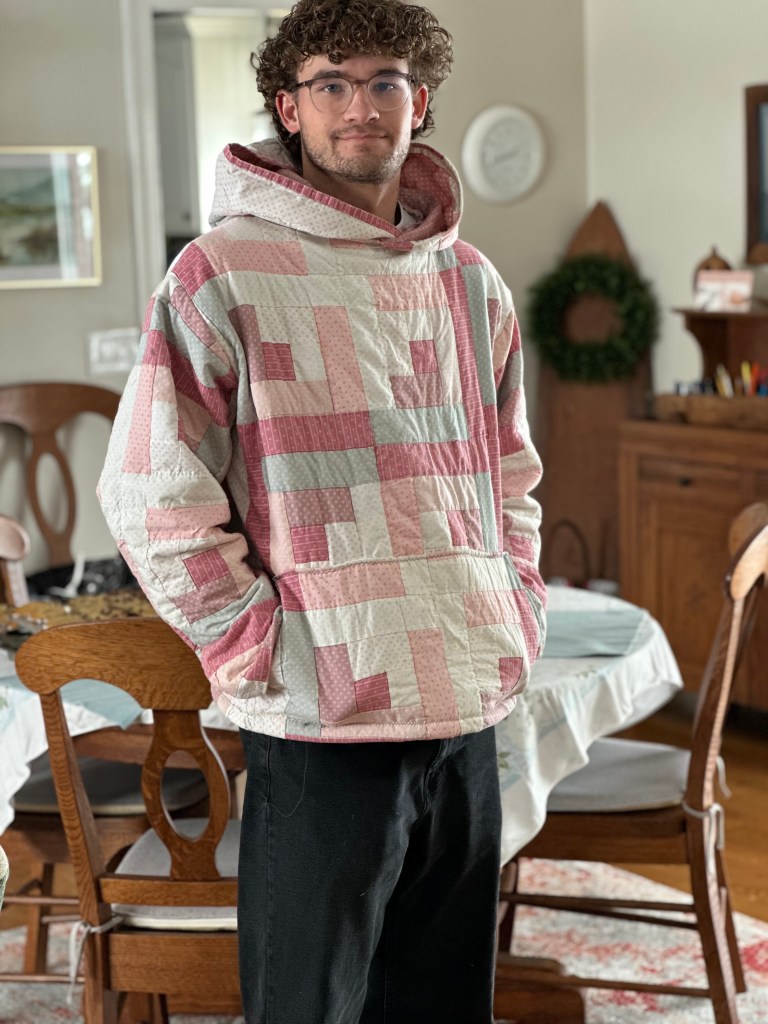
The next day, Davis sent another text to Nana. He wanted to shorten the colorful hoody, so he returned to her sewing machine and perfected his dream in just a few minutes. He was pleased as punch.
The finished product after alteration. Photo by Bruce Stambaugh
When Davis went to school the next day, his friends admired and desired his homemade mauve, pink and white hoody. They wanted him to make them one, too.
As far as I know, he didn’t take any orders. Completing this project and basking in the glow of achievement and admiration was more than sufficient for this young man.
My front yard birdfeeders are all on or under the red maple tree just outside my office window. That allows me to keep a keen eye on the comings and goings of the birds that frequent the feeders.
The birds really flock to the feeders before and during a snowstorm. The mix of birds includes the ground-feeding White-throated and White-crowned Sparrows and Dark-eyed Juncos. American Goldfinch, Purple Finch, and House Finch dominate the squirrel-proof hanging tube feeders. They also will feed on the ground, savaging for any seeds that drop from the feeders overhead.
If the army of European Starlings arrives, chaos ensues. The desired birds yield to the noisy and aggressive Starlings. That includes the dependable Northern Cardinals, which brighten the scene with their attractive colors. The female’s red-tinged olive feathers keep her camouflaged during nesting time, while her mate stands out in his all-red coat.
As brightly colored as the black-masked male Northern Cardinals are, they are fairly skittish and passive compared to other birds, like the Carolina Wrens and especially the Starlings.
The male Northern Cardinal in the photo waited on a branch above the feeding frenzy, awaiting an opportunity to fuel up undisturbed. That allowed me to capture the brilliant red in the falling snow.
My wife and I moved to Virginia’s lovely Shenandoah Valley seven and a half years ago. We wanted to be close to our three grandchildren, who were approaching their active teen years. We thought watching them play soccer, baseball, and volleyball and perform in concerts and recitals would be fun—and it has been.
But the weather has been irregular, to say the least. Now, our Virginia home is no farther south than Cincinnati, Ohio. So, we knew winters would be cold and snowy from time to time, but usually, the snow didn’t last long. The valley would get six inches of snow, and it would be gone in two days, thanks to the clear blue skies and warmer temperatures.
For the most part, that is what the winters have been like until this year. We might as well have stayed in Ohio, where we sometimes received lake effect snow from strong northerly winds blowing off Lake Erie even though we lived 75 miles south of Cleveland.
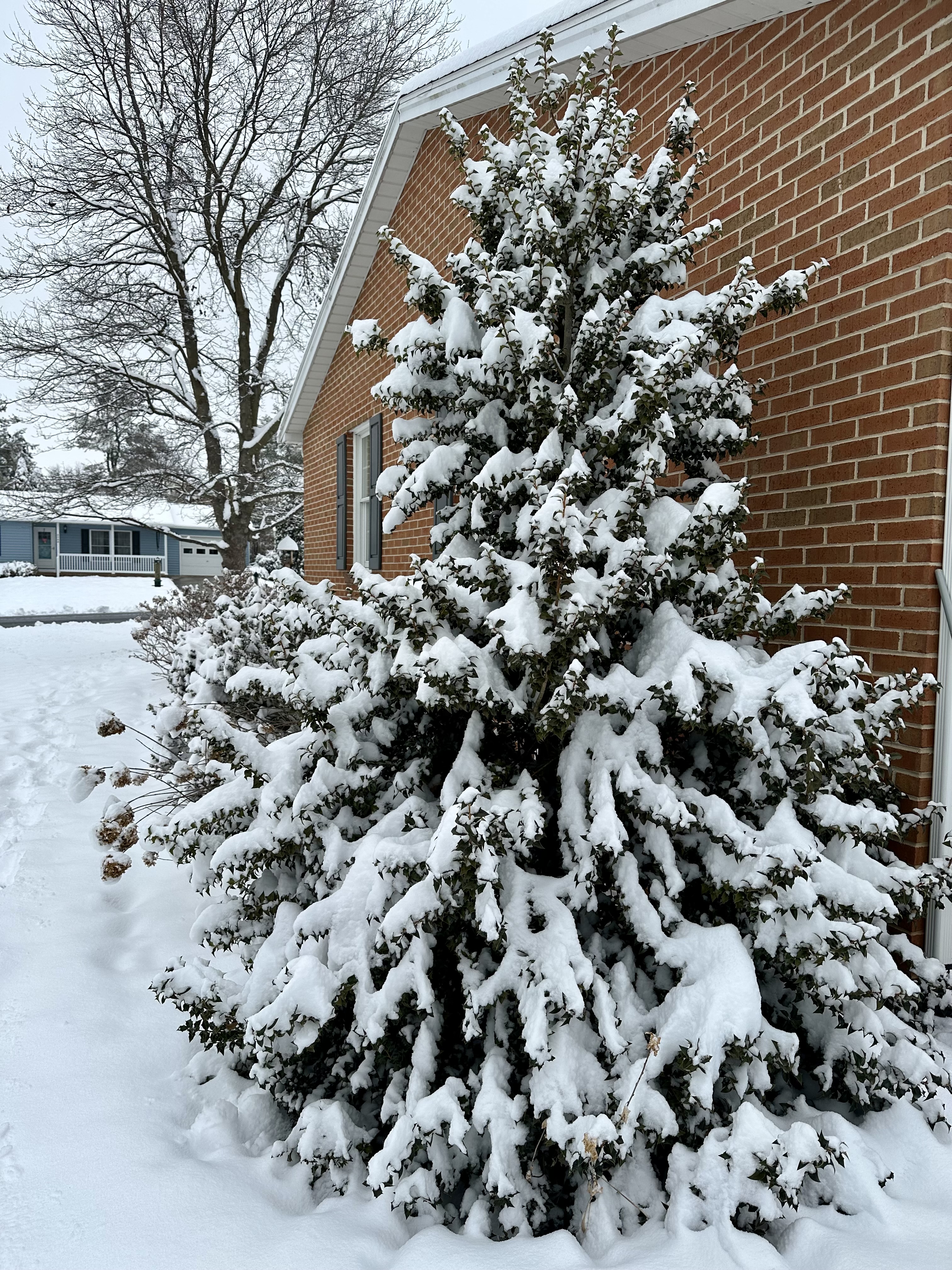
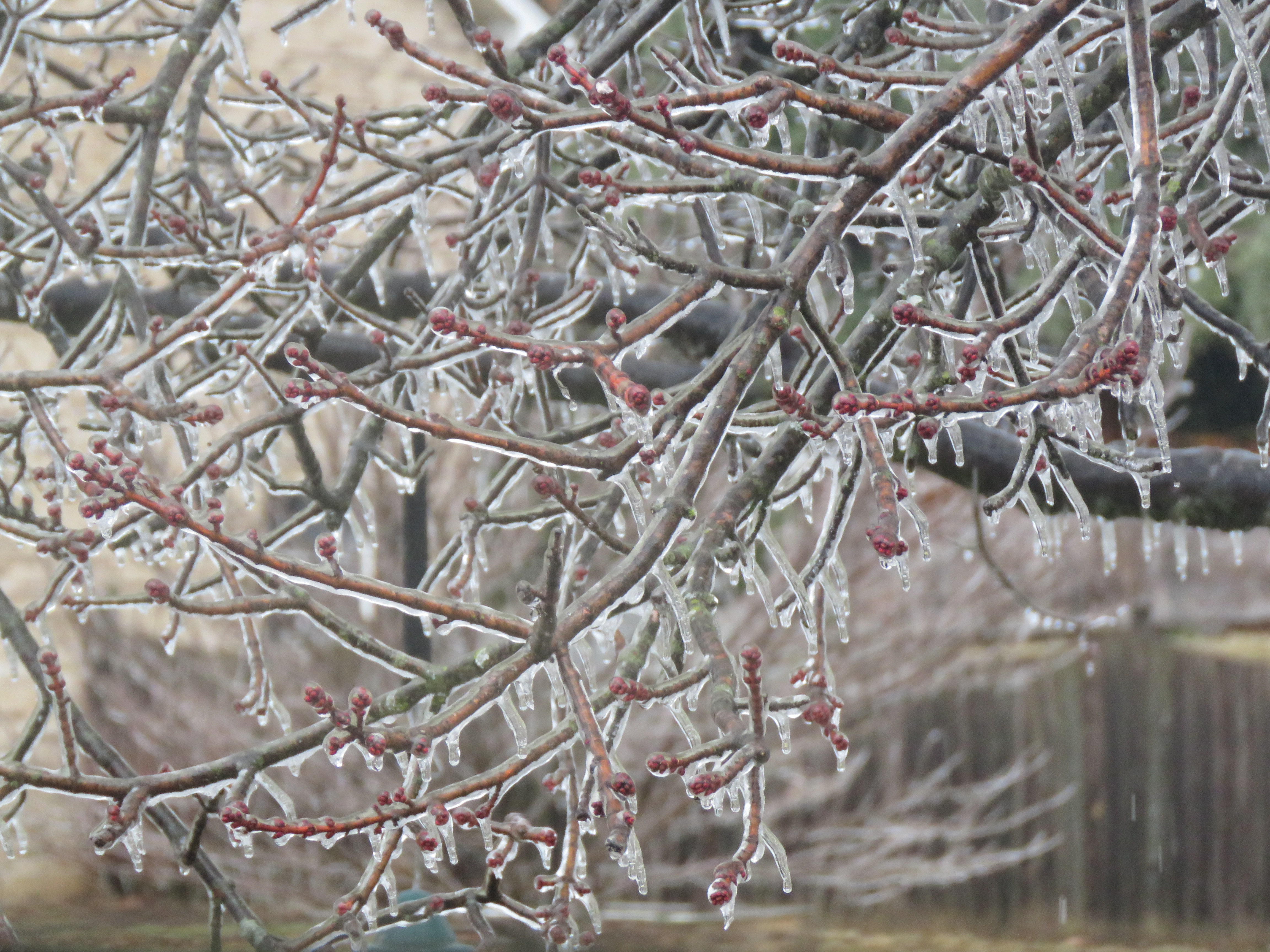
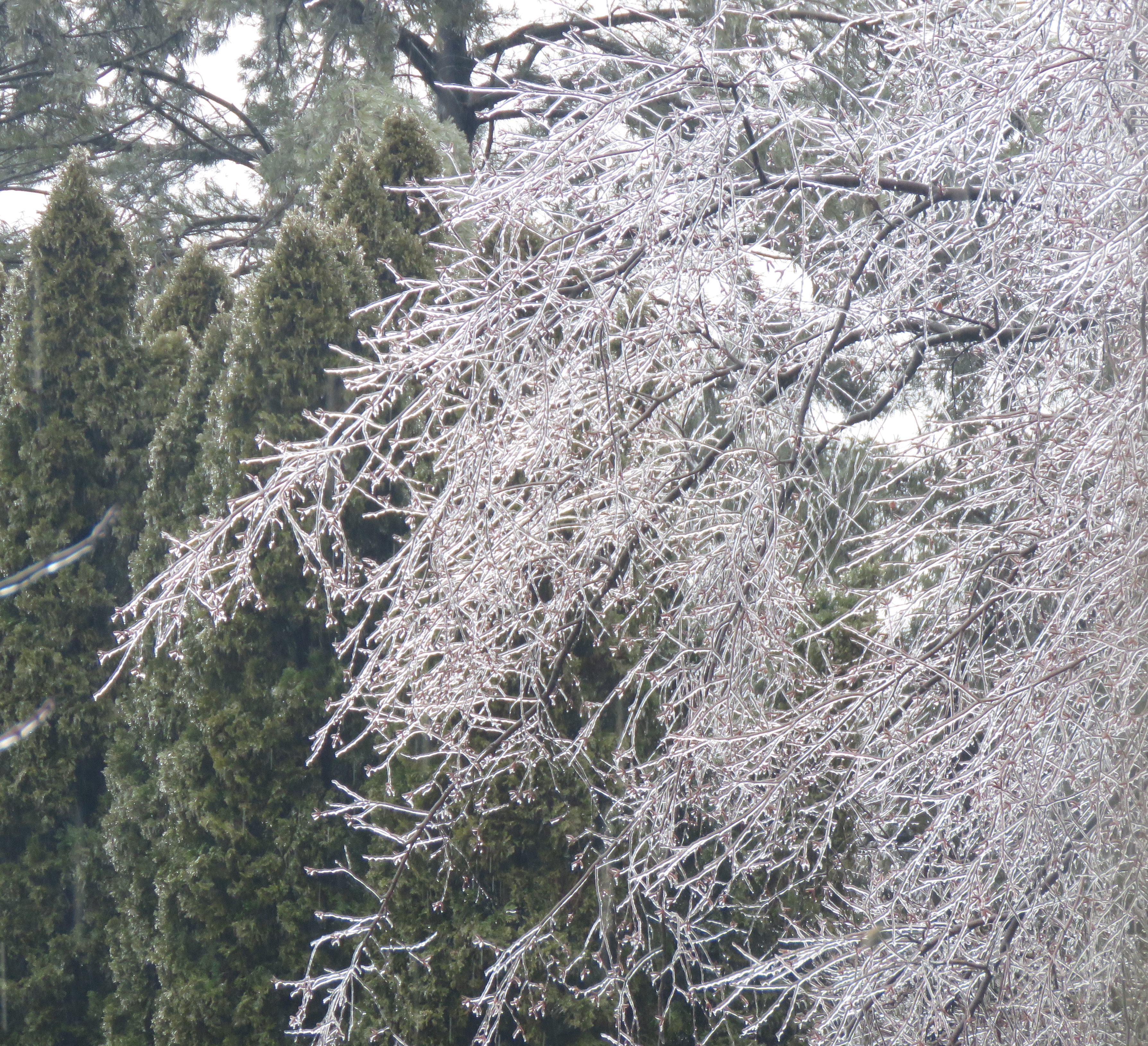
The winter here has produced multiple snowstorms that deposited snow ranging from one inch to seven inches. Some areas in the county had even more. We have also had two rounds of freezing rain that brought down large tree limbs and closed schools and businesses. And there’s still more winter weather to come.
Mind you, I am not complaining. I am just stating facts and perhaps a little frustration. Still, I greatly enjoy the beauty the blankets of snow create. I hope that joy is reflected in the photos.
Given this weather, though, we could have visited Upstate New York to play with our fourth grandchild, Teddy, a very curious two-and-a-half-year-old. I think we’ve had more snow than Teddy.
At least the birds have beenfaithful in visiting our birdfeeders and birdbaths.
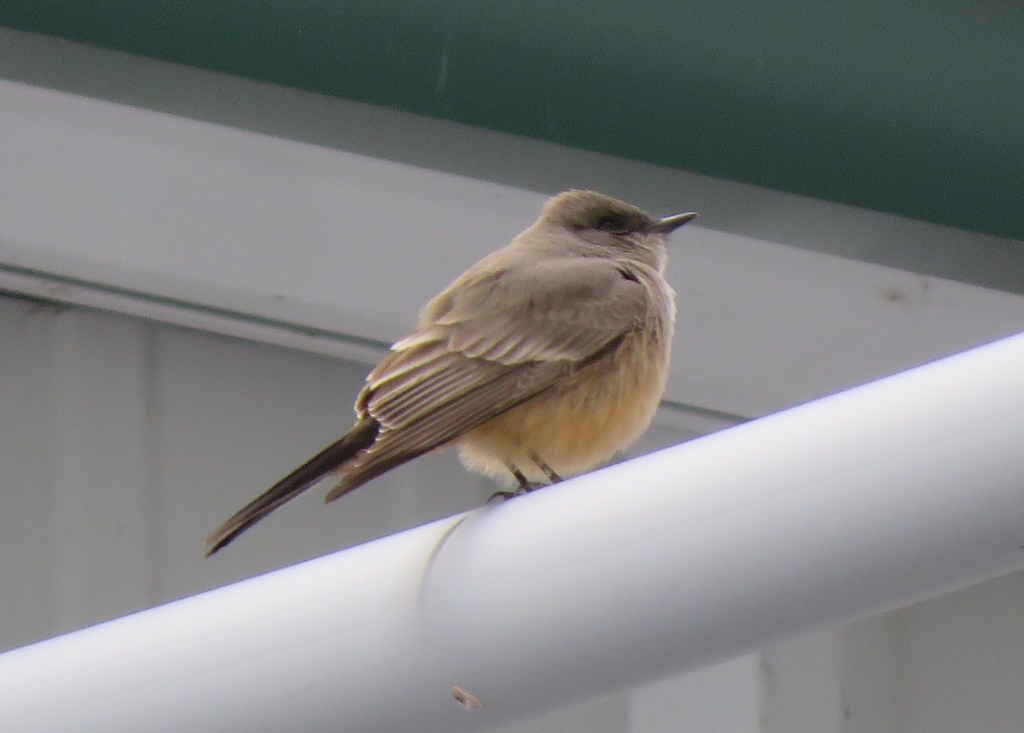
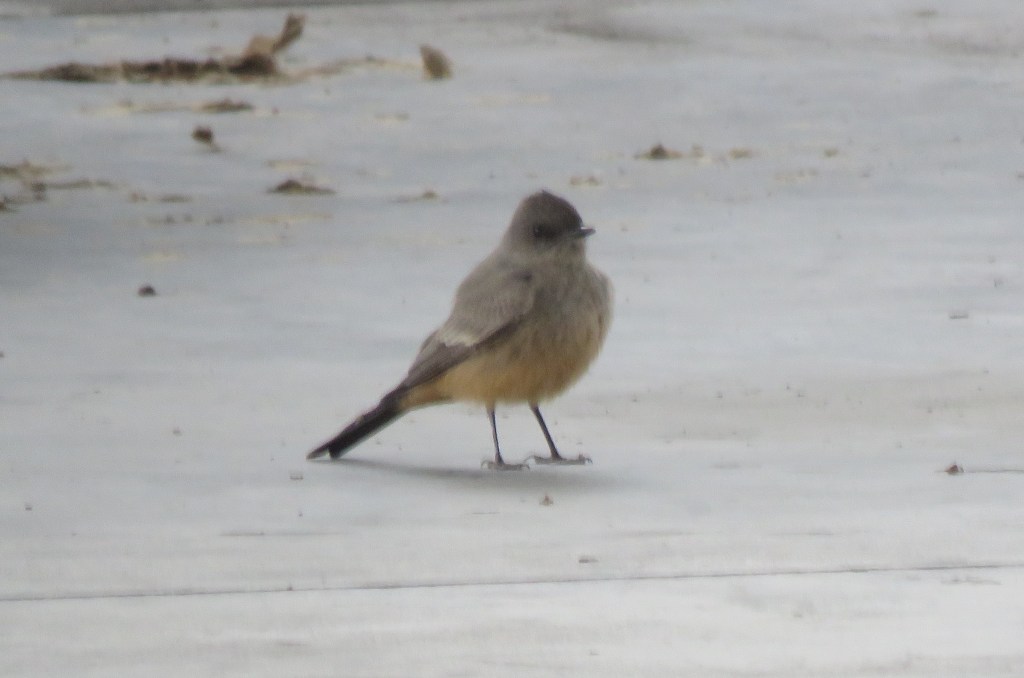
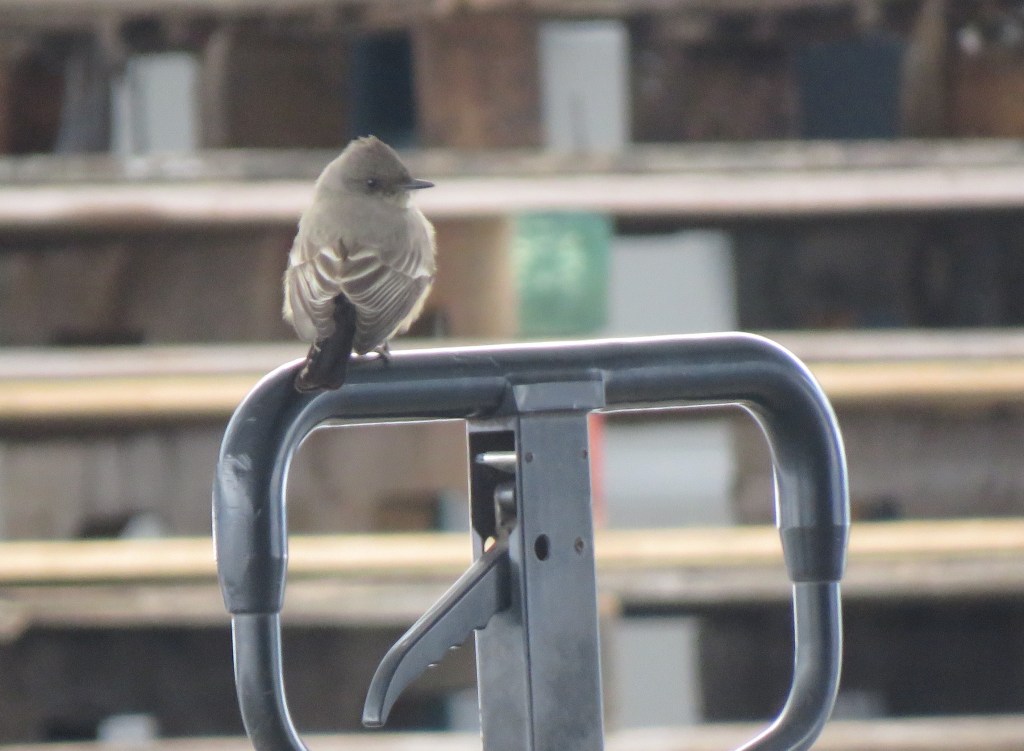
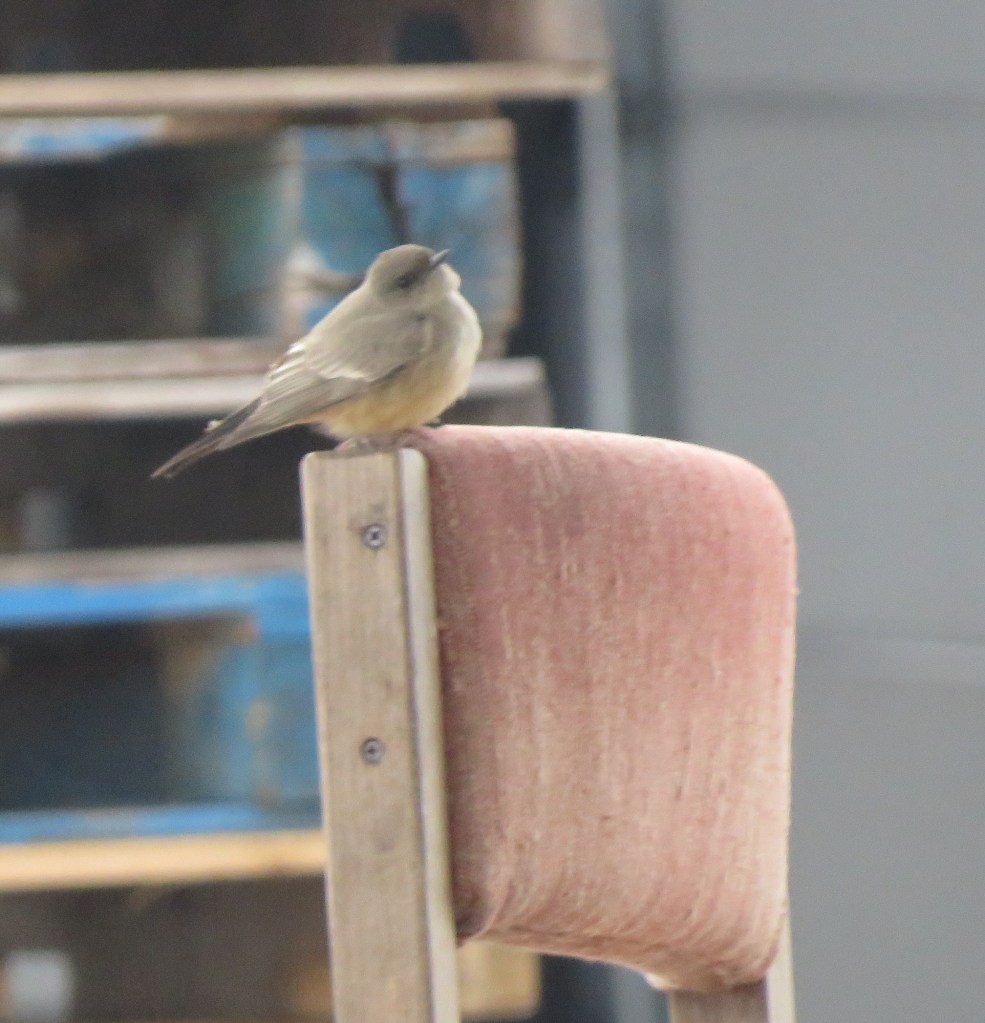
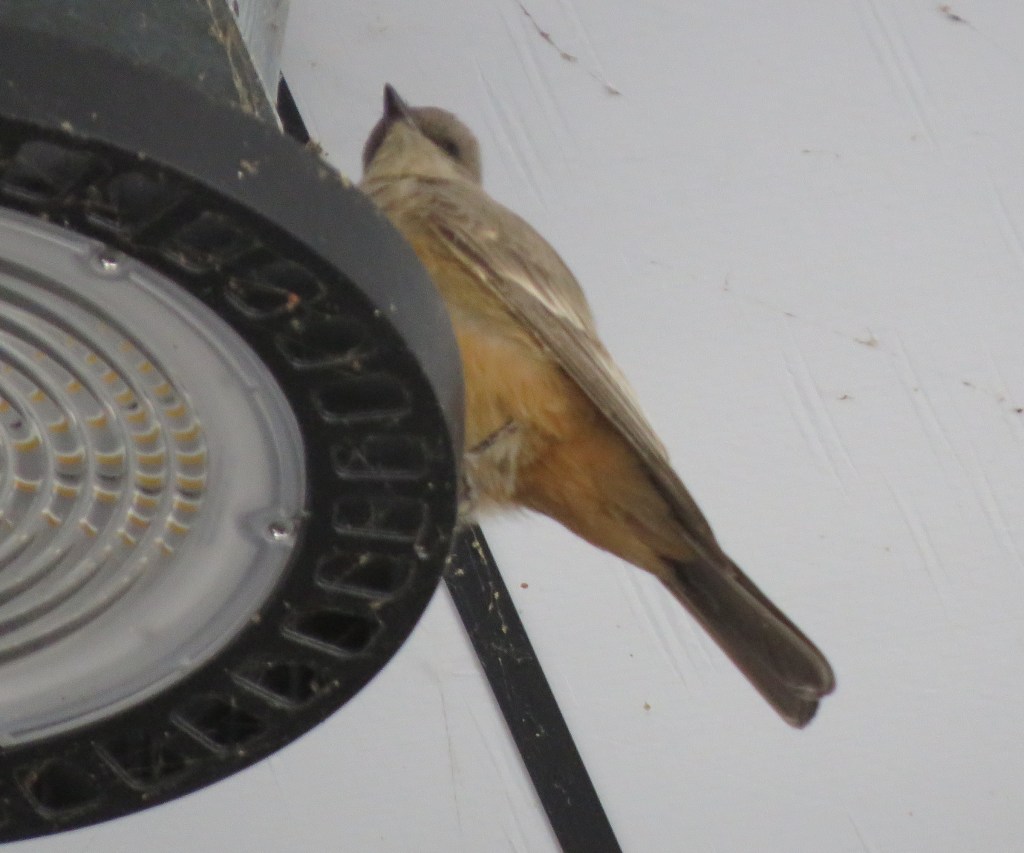
A Say’s Phoebe in Virginia’s Shenandoah Valley. Photo by Bruce Stambaugh
Finding rare birders is always a memorable experience, no matter one’s level of avian expertise. Since I consider myself an average birder, I always appreciate the opportunity to bird with those who are more knowledgeable than me.
That was the case recently when someone discovered a Say’s Phoebe five miles west of my home near Harrisonburg, Virginia. Having a Say’s Phoebe in the Shenandoah Valley was a rare treat, but seeing it in person became my goal since it would be a life bird.
I first learned about the Say’s Phoebe via an email listserv that reports rare bird sightings. I bundled up and headed to the property where the bird was seen. Several birders were already there scouting the bird. Ironically, the phoebe, which should have been in the southwest U.S. or Mexico, was across the road from where I photographed a Snowy Owl a few weeks earlier.
I walked as quietly as possible on the crunching snow and heard words that diminished my enthusiasm. “There it goes,” one of the birders said. It was late afternoon, and the guess was the phoebe was headed for a warmer roast than the steel pole buildings with three open sides.
I got eyewitness reports of the bird and details of its favorite haunts around the produce auction buildings it frequented during the day. The recommendation was to try in the morning when the bird foraged for dead insects.
That is precisely what I did. Only two other birders were present when I arrived. They had not found it yet. Discouraged, one birder headed to her car but soon turned around, waving her arms furiously.
She had spotted the bird sitting on the handle of a hand pump, a favorite spot for the bird. Say’s Phoebes perch lower to the ground to feed than their cousins, Eastern Phoebes. But both species pump their tales and fly to intercept the insects, often returning to the same or near the same perch. Say’s Phoebes have a long, dark tail and a distinctive orange-to-pink buff belly.
The bird flew into one of the open-sided buildings and continued to snatch dead insects stuck in spiderwebs around the ceiling and security lights. The lovely bird posed enough for us to capture several decent photos.
Satisfied, the woman who spotted the bird departed for other birding hot spots. That left two of us to follow the bird around, which we did for an hour. Given the bird’s feeding behavior, we soon learned to stand in a central location and let the bird fly to us. That strategy paid dividends. My birding companion even recorded the phoebe calling.
The Say’s Phoebe searched high and low for food. Winter in Virginia isn’t insect season, and several inches of snow covered the ground, too. No one knew what brought the bird to the valley, but we were grateful for the opportunity to view it.
I had the photos I wanted in an hour, so I headed home to share the good news with other birders by posting it on several Facebook birding pages. I was happy to add another bird to my life list. This exhilarating encounter was another birding experience I won’t forget.
The Say’s Phoebe perched on a wall header. Photo by Bruce Stambaugh
Look at this handsome guy! Isn’t he resplendent with his marvelous feather coloration?
This male Northern Flicker regularly visits the peanut butter suet feeder that hangs from the Red Maple tree in our front yard. I can easily see the feeder and the tree from my home office.
This bird has visited the feeder for several months. Unfortunately, the European Starlings have discovered the tasty suet, too. Outnumbered by the gang of noisy birds, the Northern Flicker sat patiently in the morning sunshine until the starlings thinned out. Then, he made his move for breakfast.
I got so busy with the holidays that I forgot to post this photo of a Snowy Owl that showed up in mid-November in western Rockingham County, Virginia, five miles from where I live. So, I thought I would let this beautiful bird wish you a Happy New Year!
When I heard about the Snowy Owl, my wife and I headed out, hoping to see it. I wanted to document the rarity with photos, too. A few other birders were already there when we arrived. In a matter of minutes, we were joined by several others, including two different school groups from nearby private elementary schools.
The bird sat on a 55-gallon steel drum near a pasture. Another birder had set up his scope and allowed me to take this photo with my iPhone 14 Pro. Otherwise, I would have had to heavily crop the images I took with my camera. The next day, the bird was gone, not to be relocated.
So, on behalf of the Snowy Owl, I wish you the best in 2025.
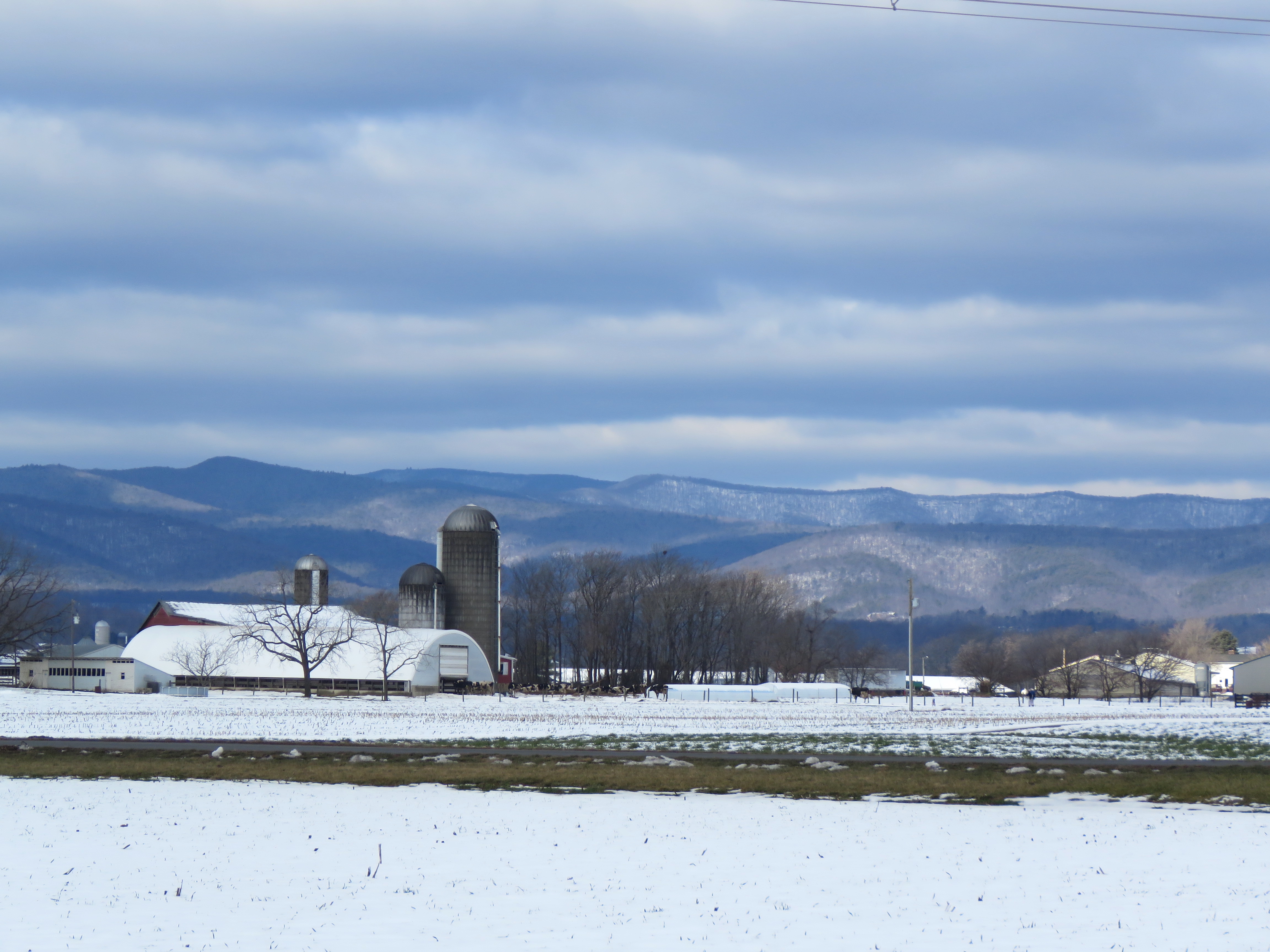
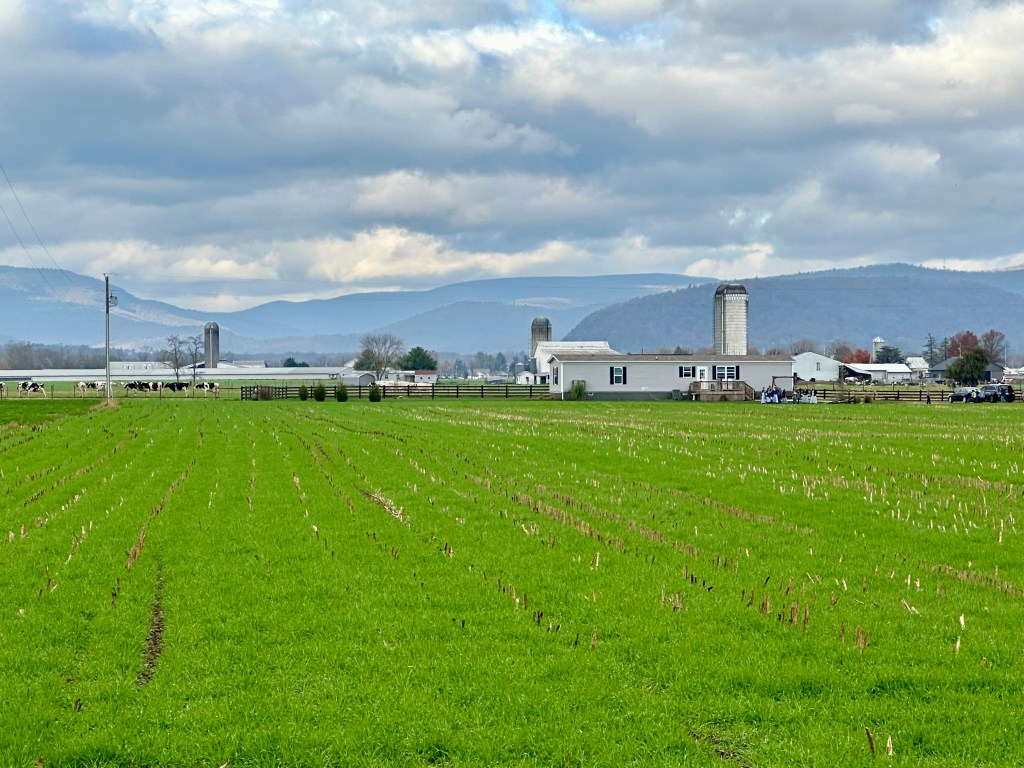
This is where the owl was found and what we saw with the naked eye. Can you find the Snowy Owl?















 Roadkill Crossing
You must be logged in to post a comment.