My wife and I have enjoyed observing the various migrating butterflies that frequent the flowering butterfly bushes in our backyard. We had the three shrubs planted this spring. The fragrant, white blossoms have attracted several varieties of butterflies.
I especially enjoyed watching this Common Buckeye flit from flower to flower. I liked how the sun cast a shadow of the flower onto the Buckeye as it enjoyed the sweetness of the blossom.
If I have learned one thing in my seven decades on this marvelous planet of ours, it is to go with the flow. When I left the house, pleasant temperatures and partly cloudy skies ruled the sky. I intended to drive 10 miles to Paul State Forest near the crossroads known locally as Ottobine. I planned on walking the trails of this 172-acre gem of a woods to look for birds.
I packed my binoculars, birding hat and vest, and of course my travel camera, a Canon PowerShot SX530 HS. The camera is light, easy to use, and takes excellent shots, as long as sufficient light is available. I also had my iPhone along for safety sake. You never know when an old guy like me will need to make an emergency call.
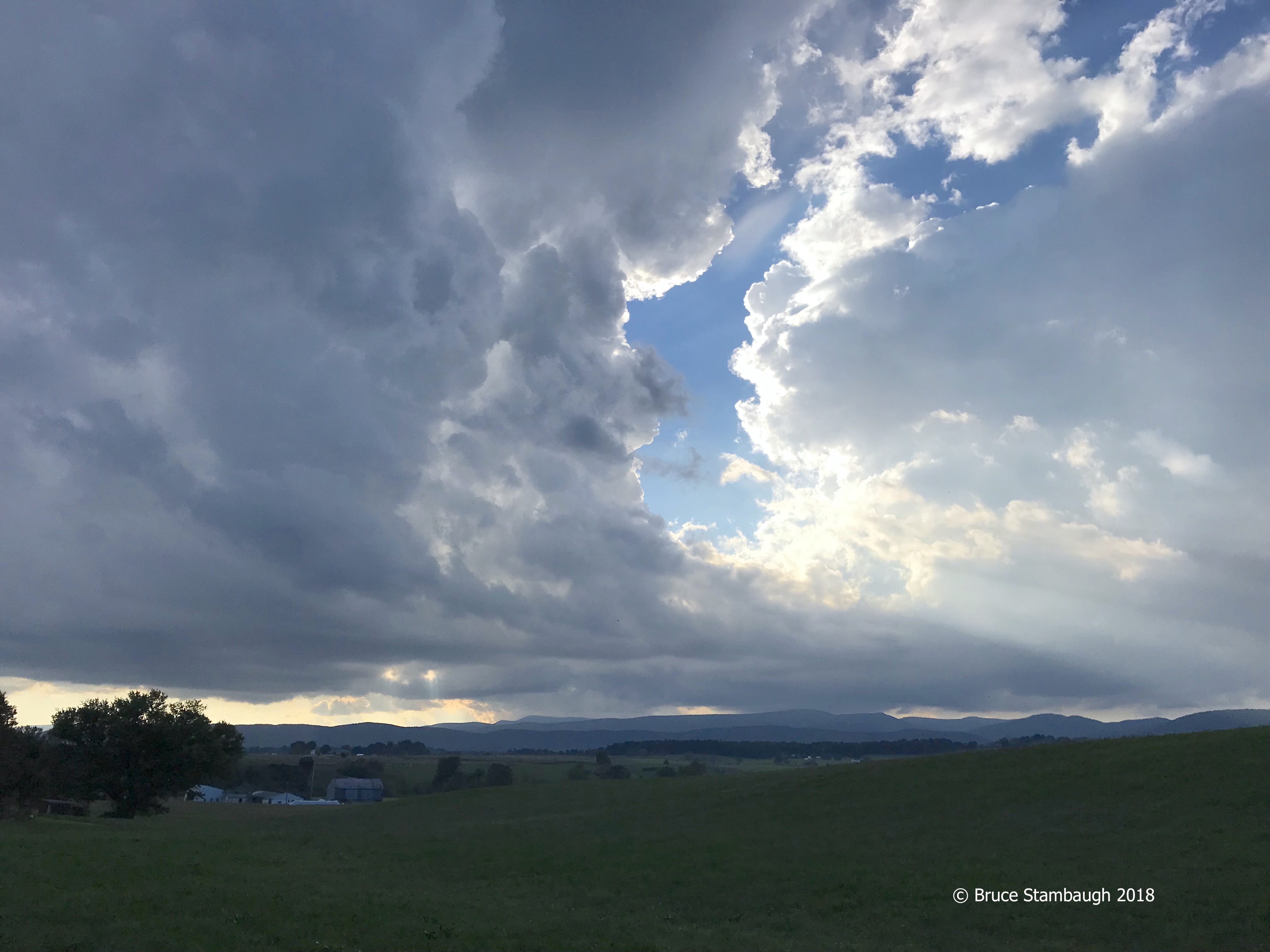
Not far from the forest, the roadway showed signs of recent rain. Indeed, the clouds that hung close to the Appalachian Mountains to the near west looked ominous. With the early evening sun occasionally peeping through, they also looked gorgeous. The billowing thunderheads showed every shade of gray. Sun rays streamed through breaks in the building cumulous clouds, creating a stunning rural scene.
When I reached the small parking lot of the forest, the bucolic view towards the mountains was surreal. I turned my attention to shooting the unfolding and rapidly changing scene. The valley played open to the west, giving me an excellent view. I snapped away with both my camera and phone. Satisfied with the shots, I returned to my original goal of walking the woods in search of any migrating birds settling in for the night.
I had only walked a short distance when the heavens opened up. I returned to my vehicle, contented with the pastoral scene of clouds, rain, and sun rays. The birds would have to wait for another day.
Heavy rains from the remnants of Hurricane Florence forced many bird species to lay low. This young female Ruby-throated Hummingbird hunkered down on the top rung of the tomato cage near our backyard hummingbird feeder.
I took a series of rapid-fire shots of the bird sitting in the rain. In one of those, the hummingbird shook the moisture off its feathers. I was fortunate to catch this awkward looking, twisting position.
My wife and I sat on our back porch enjoying a light lunch. A gentle breeze sifted through the backyard as monarch and skipper butterflies flitted about, buoyed by the day’s brightness and coaxed on by instincts humans have yet to understand fully.
The rhythmical hum of neighborhood lawnmowers joined in concert to drown out the hypnotic cadence of the cicadas and katydids. As if they were following instructions, the leaves of red maples and sugar maples were beginning to blush just a tinge of their real color hidden all spring and summer by the chlorophyll.
Try as it might, Daylight Savings Time can’t delay the inevitable. The sun and the moon, the stars and the planets, work their seasonal magic, triggering an unstoppable unfolding of goodness and allergies alike.
Even in the noontime heat and humidity, senior citizens and expectant mothers walk their dogs on the broad neighborhood streets. In some cases, it’s the other way around, leashes fully extended, human arms straining to keep control and still chat on their cell phones.
Dragonflies dart here and there, somehow avoiding being lunch for some hungry migrating birds. Black and turkey vultures circle overhead, letting the convection vortexes carry them higher and higher.
White and yellow Sulphur butterflies zigzag their way past my window as if imitating fallen leaves being blown through the yard. A few grasshoppers jump from one blade of grass to another in short flights like so many commuter planes.
This slideshow requires JavaScript.
Summer’s full corn moon has come and gone in one cool weekend, a pleasant relief from the storms and heat. But come Monday, the late summer swoon returned, ushering in more warm and muggy weather all across the eastern United States.
So intense was the dreaded combination of atmospheric siblings heat and humidity, some schools mercifully canceled or dismissed early. Without air conditioning, students and staff swelter, unable to conduct the proper learning processes.
That weather, however, eventually ends. Sooner or later, September’s customary, soothing elements do return. Blue-sky days precede comfortable evenings followed by starry nights. Unless infiltrated by tropical storm remnants, thunderstorms come and go without catastrophic consequences.
That’s what makes September the jewel in fall’s seasonal crown. It quietly but most assuredly melds August’s stubborn temperament into October’s Technicolor Dreamcoat landscape.
Until the first killing frost, September is the pollinators’ paradise. Squadrons of bees, flies, ants, butterflies, hummingbirds, and hummingbird moths follow the sweetness from fall bloom to fall bloom.
The mums’ warm colors have replaced the showy bubblegum petunias as the go-to domesticated floral display. Melons, gourds, pumpkins, and squash take center stage at produce stands. Thorny thistles and goldenrod populate the rural roadsides until they meet their sickled doom.
The furry critters must note the changes as well. The squirrels and chipmunks are bolder, more aggressive in their foraging, which is only appropriate. Their lives likely depend on the amount they stored if they can remember where they put their cache.
The morning and evening chatter at the backyard bird feeders is diminished to Song Sparrows and Northern Cardinals, with the Carolina wren making an occasional soliloquy. Now and then the northern mockingbird will chip in a few bars, too.
Once the winter migrants show up in a month or so, that scenario will change. Until then, we’ll enjoy the spontaneous choruses of the crickets, katydids, and cicadas. We’ll joyfully anticipate autumn’s arrival while summer’s pleasantries still linger.
August is rapidly coming to a close. For our family, that means that Neva is in her comfort zone doing what she does best.
Neva loves to help others. It’s in her DNA. In the fall, our daughter’s busy family becomes the center of our attention. In part, that is why we moved to the Shenandoah Valley.
Carrie is the women’s volleyball coach at Eastern Mennonite University. Her personal and professional schedules are head-spinners. Practices and meeting with players consume Carrie’s time. Once the regular season starts soon, it gets to be grueling.
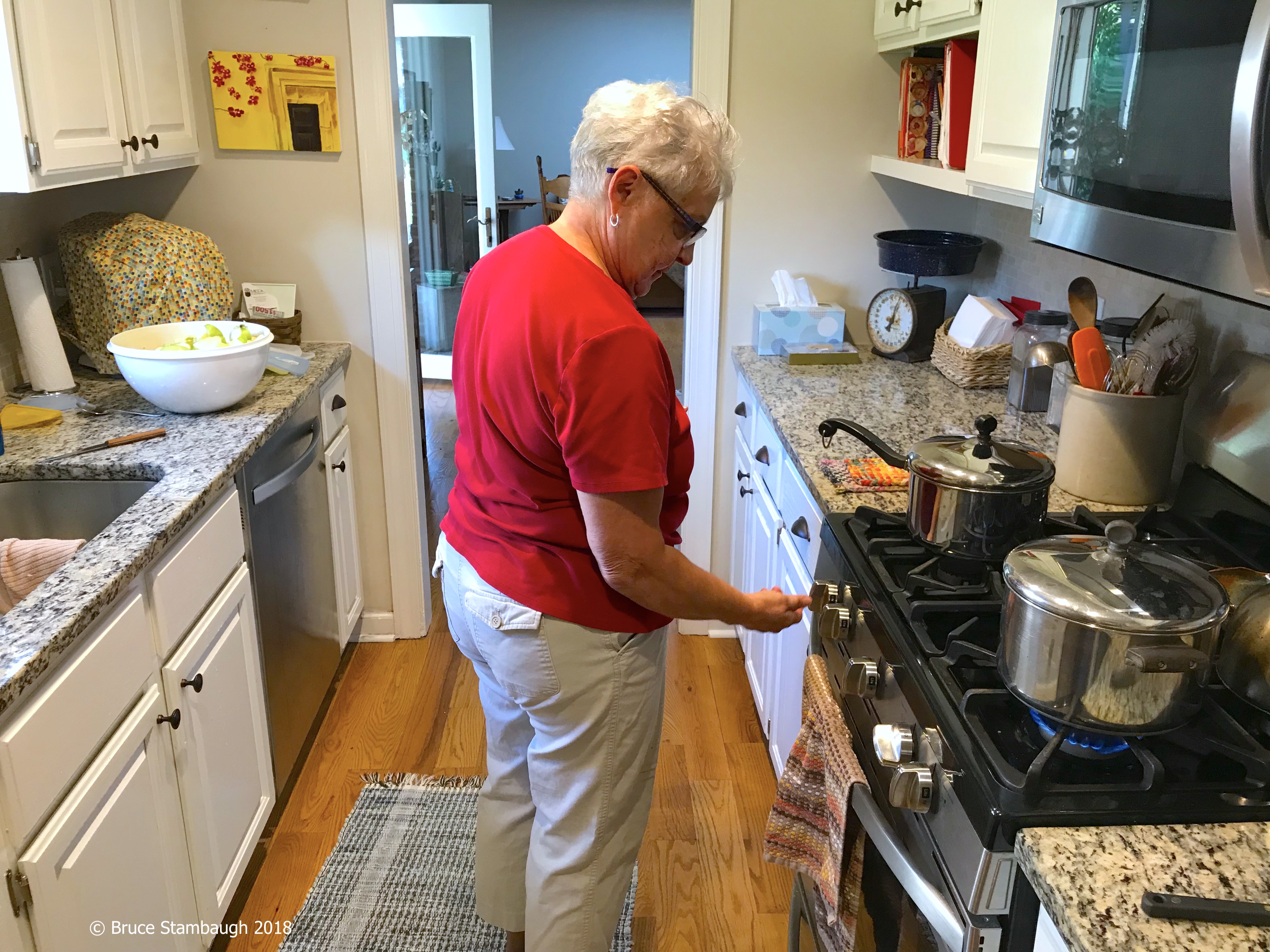
Neva spends much of her time in the kitchen preparing meals, frozen sweet corn, and applesauce for others.Of course, our daughter has a family to care for as well. That’s difficult to do, even with a helpful and talented husband. That’s where we come in, especially my wife.
Before our move from Ohio’s Amish country to the Commonwealth of Virginia, Harrisonburg became our temporary home in the fall. Neva lived there August into November. I shuttled back and forth during those months as work duties called.
Now that we are retired and live just five miles away, we can quickly assist our daughter and her family. When it comes to Neva, “assist” is an understatement.
My energetic wife puts all she has into helping our daughter’s home run as smoothly as possible. It’s a must do situation with three active grandchildren and both of their parents working full-time.
Neva added a repurposed screen door to a flowerbed.With Neva taking the lead, my wife and I gladly step in to do what we can. Me? I do whatever I’m asked or told to do. If you are a betting person, wager on the latter.
Of course, the grandkids and our son-in-law all do their part. We fill in the gaps when work and school schedules preclude household chores being completed.
When it comes to domestic skills, I can’t hold a candle to Neva though. She plans and prepares family meals. I set the table and clean up. Occasionally, Neva prepares food for the entire volleyball team. I’m the gopher. I go for this and go for that.
While Neva is cooking or cleaning or shopping, I might be running the oldest grandchild to the gym for workouts or picking up the middle grandkid from after-school activities or accompanying the youngest to her soccer practice.
See what I mean? All that coming and going keeps us active, energized, and helps us sleep well at night.
In addition to all of this activity, our son has taken a new job in a different state seven hours away from us. With Neva leading the way, we helped him ready for this significant transition in his life, too. We were glad to do what we could.
Why does Neva do all of this? It’s all she knows how to do. It’s how she loves. Her compassion manifests into tasty, nutritious meals, quality time spent sharing her gifts and wisdom with the grandkids, and a sense of security for our son, daughter, and son-in-law.
Every now and then, Neva takes a break.I marvel at Neva’s determination, fortitude, skills, and drive to aid others. It’s definitely that time of year again, and we all reap the benefits of Neva’s generous gift of hospitality.
Our fall schedules are hectic to be sure. Neva and I wouldn’t have it any other way.
To paraphrase the late Arthur Ashe, we do what we can with what we have right where we are. At our age, at any age really, that’s all that can be expected. In Neva’s case, she exceeds any and all expectations.
In last week’s Photo of the Week blog post, I featured a teenager photographing flowers. I told her parents how inspiring it was to see a young person so interested in photography, something far beyond selfies. When the young woman joined the conversation, I gave her some advice. I told her to look around when everyone else is looking at the obvious and showed her an example of what I meant. She and her parents thanked me, and we parted ways.
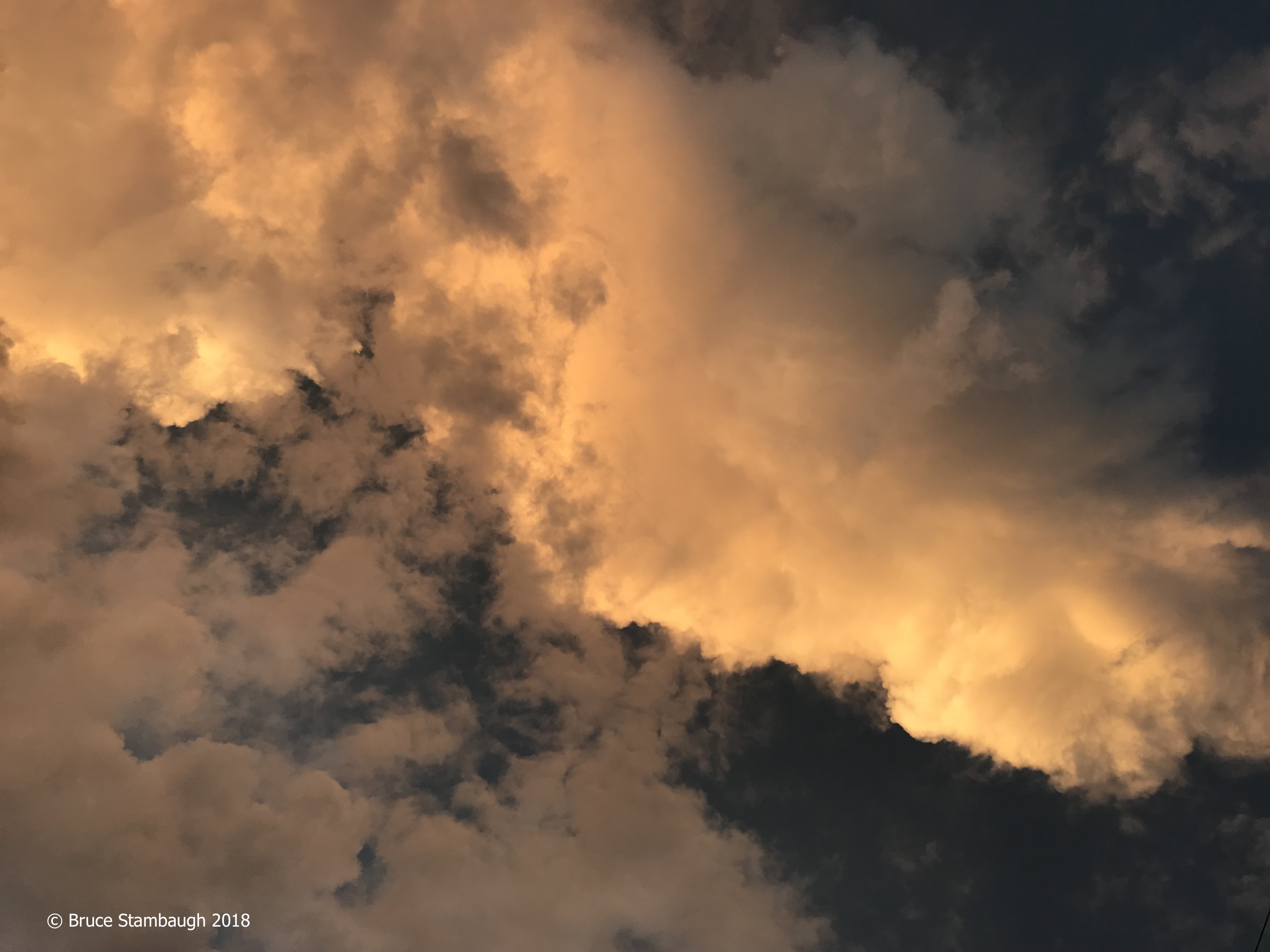
“Looking Up” is an example of taking my own advice, something I too often fail to do. Just ask my patient wife. While recently photographing a sunset after the passage of some summer thunderstorms, I was ready to leave when I happened to look overhead. This is what I saw, the remaining rays of the day highlighting some roiling cumulonimbus clouds.
I couldn’t believe all of the beauty that was right above me while I waited on a spectacular sunset that didn’t materialize. As I told the young photographer, look all around you. You just might find something spectacular to capture and share.
The afternoon’s sun illuminated this already impressive natural wonder near Lexington, Virginia. The unusual rock bridge formation, once owned by Thomas Jefferson, is the critical feature of Natural Bridge State Park.
I particularly liked how the sun’s deflected rays seem to glow beneath the arch of this natural wonder.
The night sky was bright and promising, at least where I live west of Harrisonburg, Virginia. It seemed near perfect conditions for photographing June’s Strawberry Full Moon rising over the Blue Ridge and Massanutten Mountains. But it wasn’t to be.
I arrived at my prearranged position high on a hill that overlooks the city and provides an excellent view to the east. I was in for a surprise, however. A broken layer of clouds hovered over the Blue Ridge Mountains. I knew the moon was to rise at 9:05 p.m. EST. As that time came and went, I still could not see even the faintest hint of the full moon.
Finally, just before 10 p.m., the clouds lightened from the moon’s glow. It wasn’t the shot I wanted or had hoped for, but it’s the one I got. I often take photos backlit by the sun. “Veiled beauty,” my Photo of the Week, was backlit by the moon.
I hiked the short trail with one thing in mind. I wanted to find the old cabin and take a photo of its chimney if it indeed had one. As so often happens in life, discovering what I was looking became secondary in this trek.
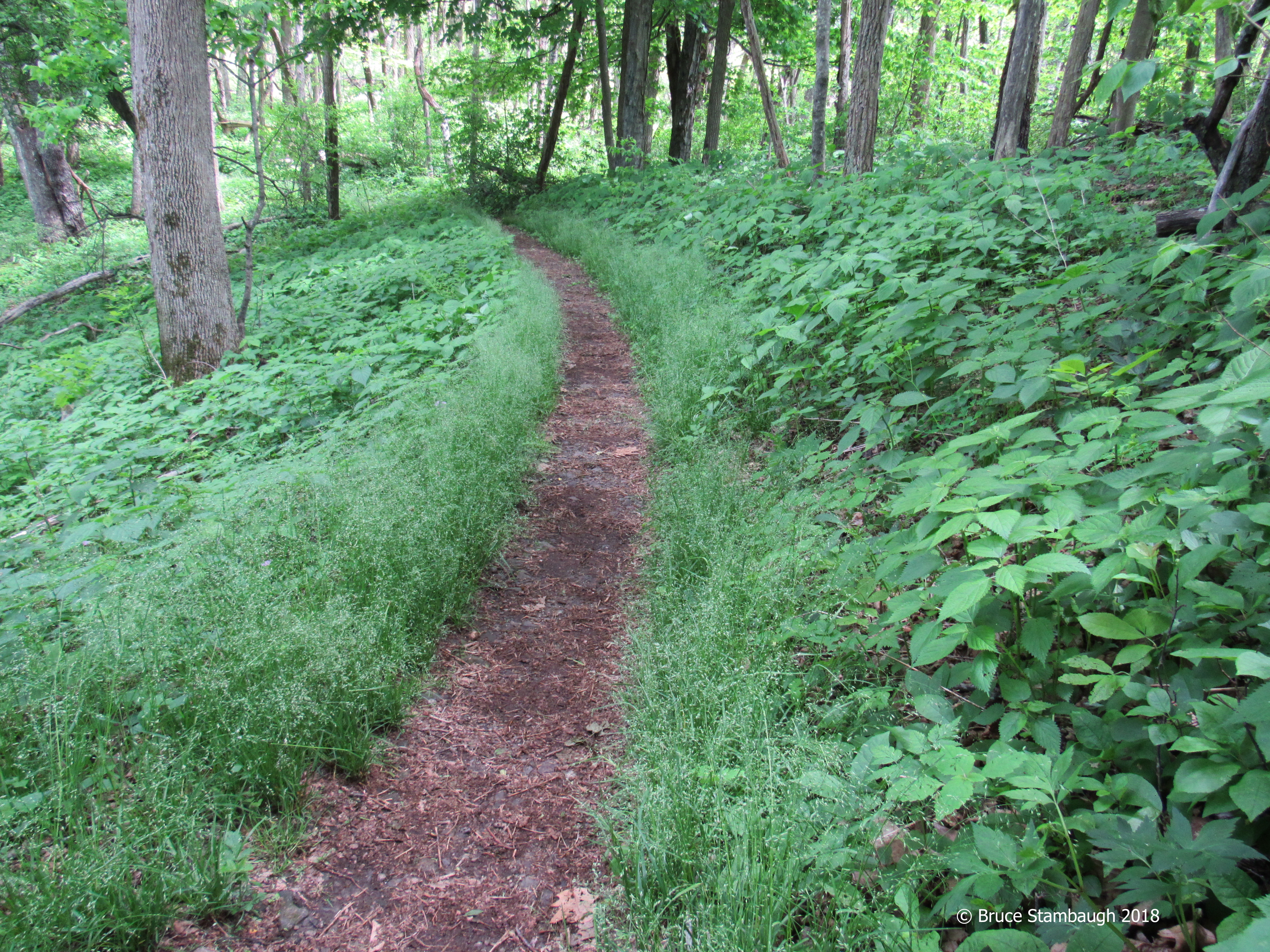
I took my time on the trail, soaking in all the glorious sights and sounds that I encountered along the way. There was a lot to absorb.
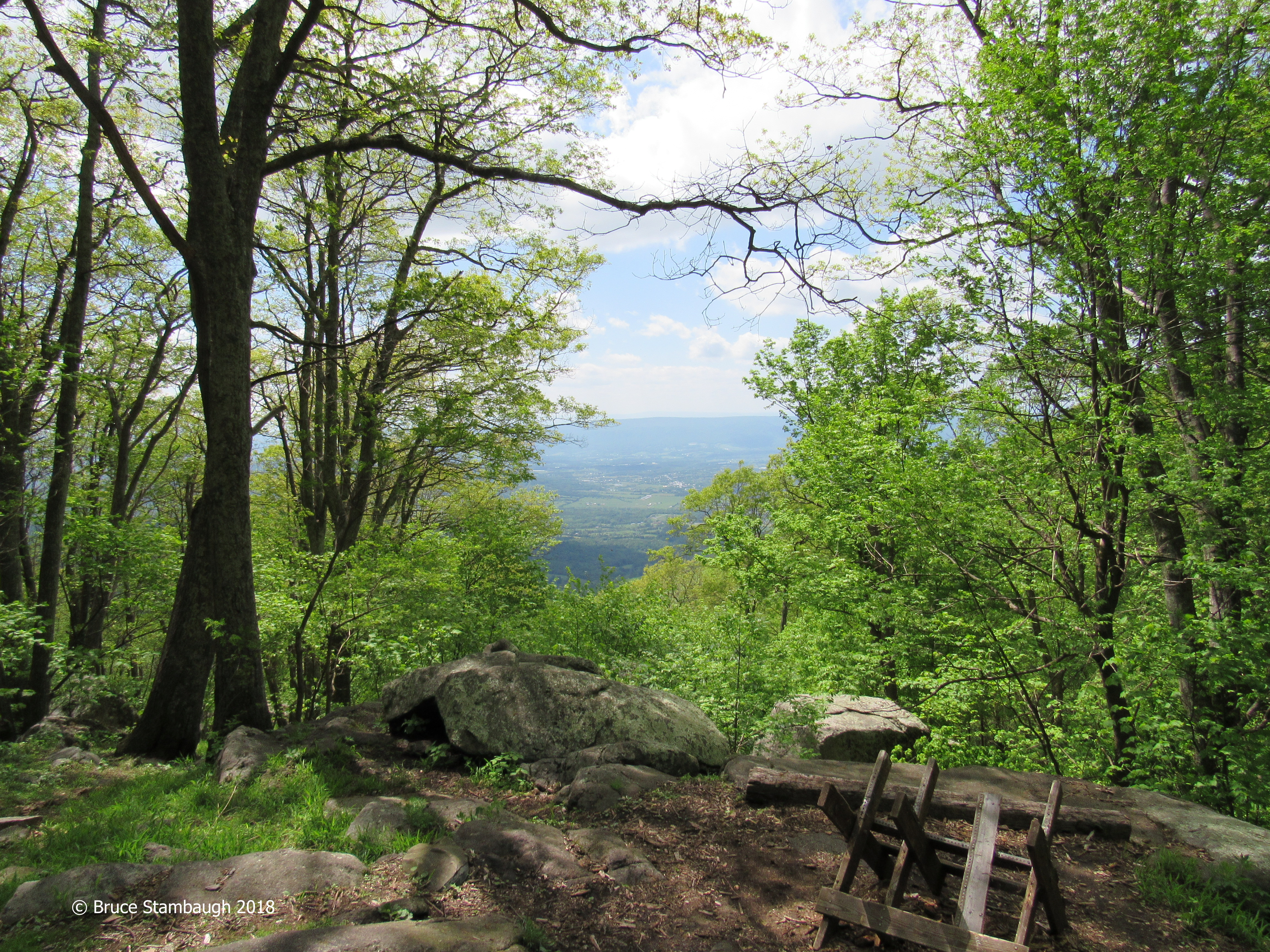
Rock Spring Cabin was a short distance away from a crude hut built for hikers along the Appalachian Trail in Virginia’s Shenandoah National Park. From the cabin’s covered front porch, the Page Valley played out in the patchwork patterns of fields far below.
The cabin at Rock Spring.The primitive log cabin did indeed have a stone chimney. I snapped my picture and headed for the spring of Rock Spring Cabin nearby.
When I arrived, I was stunned at what I saw. I stood there in both amazement and disbelief. There, high in the Blue Ridge Mountains, cold, clean, crystal clear water gurgled from beneath giant boulders as old as time. Human interaction, of course, had to plumb it with a PVC pipe.
Instantly, my mind flashed back to my childhood. I thought of the Old Testament Bible story of Moses striking a rock and water gushing forth for the assembly of disgruntled, thirsty Jews wandering in the desert. That ancient story always struck me as a blend of awe, mystery, and miracle.
I contemplated the moment. I couldn’t help but wonder why here at this spot, more than 3,000 feet above sea level did water run from rocks? The earth does fantastic, mysterious things. Explanations are not always required.
Still, I reckoned the answer to my rhetorical question. Clearly, the rock strata folded long before human history began and forged a channel for the water table below.
Water from a rock.
Cabin to spring.
Yet, there was something mystical about the rock spring, its waters trickling down the steep slope far into the valley below. I mentally traced its path from small stream to a creek that formed a tributary to the Shenandoah River. Farther north, it met the broad Potomac River at Harper’s Ferry, West Virginia, and then flowed east through rapids and placid waters alike, passing the nation’s hectic capital into the Chesapeake Bay and on into the Atlantic Ocean.
Noisy ravens awakened me from my lively daydreaming. Apparently, they viewed me as an intruder. Not wanting that title, I returned to the main trail, warblers, and thrushes flitting and singing in the leafy canopy high overhead.
I walked a short distance down the trail, and the raven followed me, swooped low, and continued its nasal banter. It was only then that I realized that I was not the target of its raucous concern.
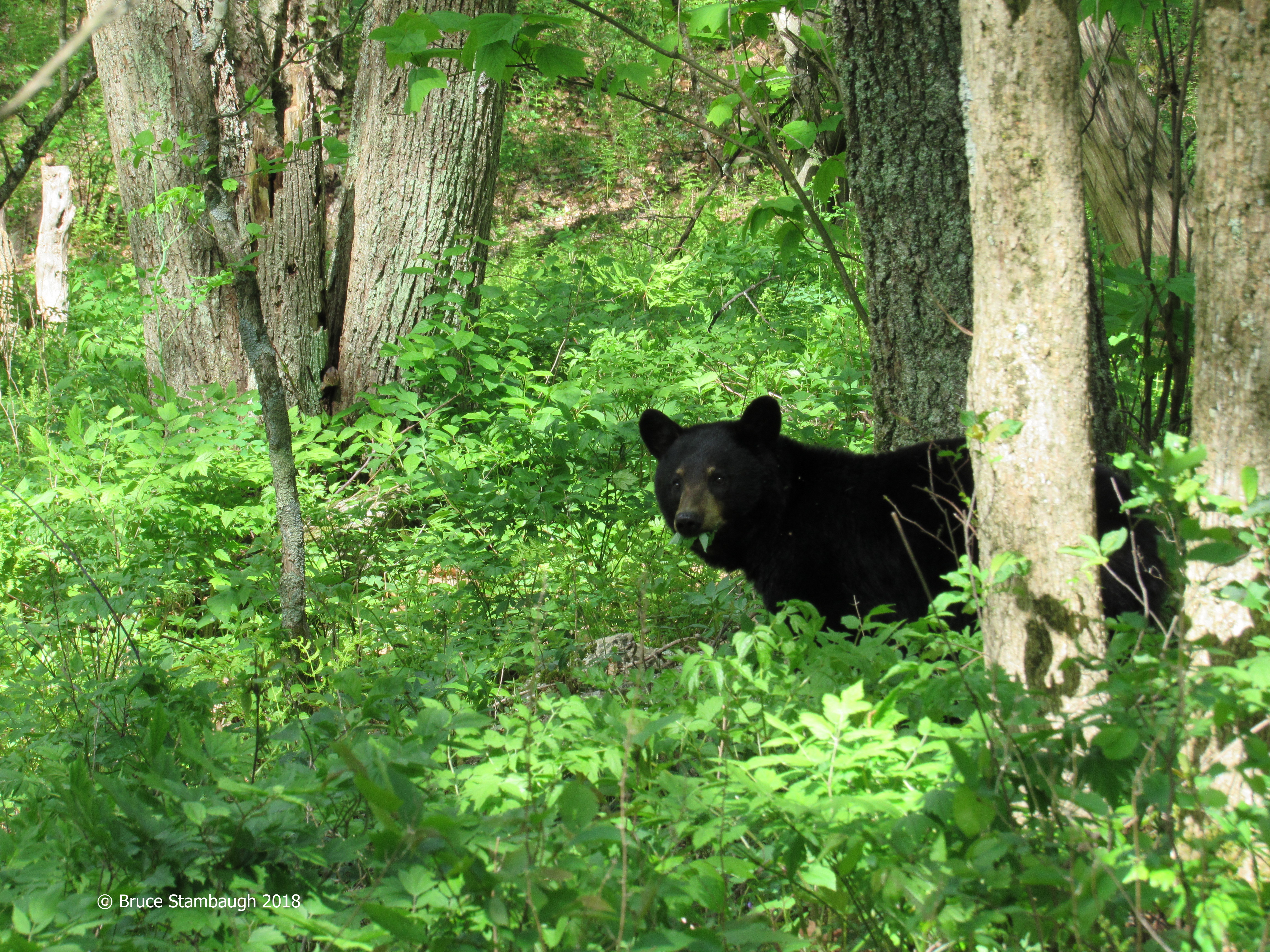
A motion drew my eyes downward. Not 30 feet away a young black bear grazed along the forest floor. My head instinctively swiveled in search of the mother bear. I saw only trees, plants, and rocks.
Young black bear.
I gingerly stepped a few feet down the trail where I could get a better view of the cub, likely in its second season given its size. One click of the camera shutter and the bear spied me and bounded down the hill towards the spring. Overflowing with wonder and joy, I headed in the opposite direction for the parking lot.
I went searching for a cabin and found so much more. An emerald forest. Water from a rock. Agitated ravens. A frightened bear cub.
Spring Sunset.
One thing about photographing sunsets is certain. You have to be at the right place at the right time to capture the beauty.
As I was driving desperately trying to find the perfect spot to capture the quickly fading sunset, the colors suddenly brightened. I pulled in the nearest farm lane, pointed my camera and clicked away. Once was enough, as this shot shows. Seconds later, the western sky went gray over the Allegheny Mountains that create the border between Virginia and West Virginia.









 Roadkill Crossing
You must be logged in to post a comment.