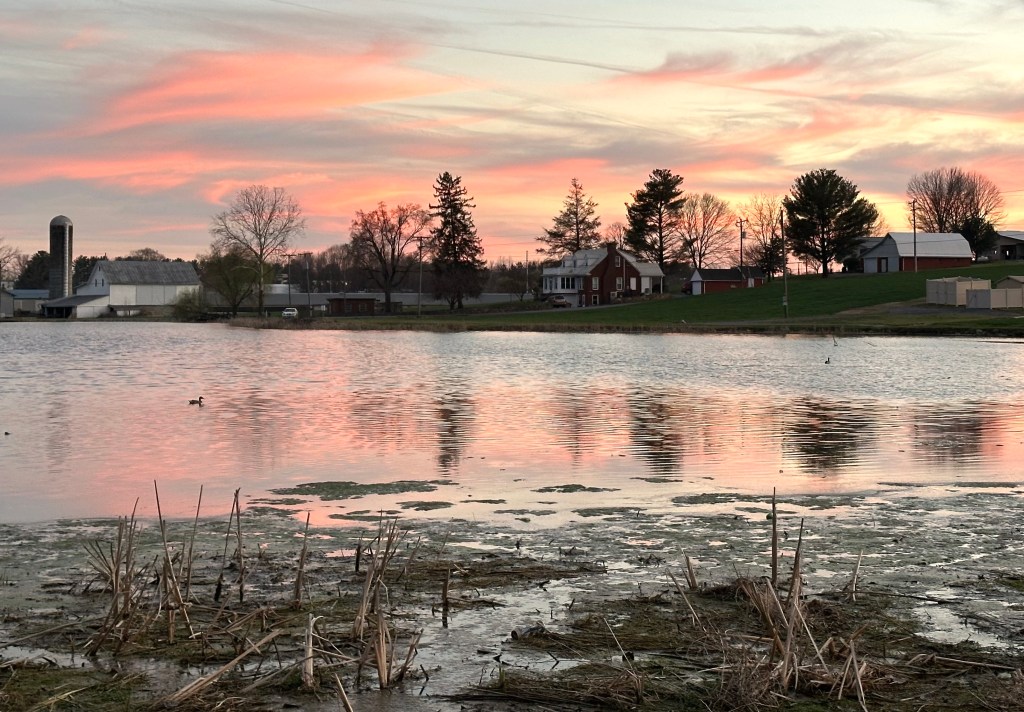
Silver Lake, Dayton, Virginia. Photo by Bruce Stambaugh
The broken cloud cover in the early evening looked promising for a decent sunset. It didn’t turn out that way.
When I reached Silver Lake in Dayton, Virginia, the puffy, cumulous clouds had dissipated, leaving only high, wispy cirrus clouds to reflect the sun’s rays. So, I looked east, north, and south instead of west.
The clouds in the southern sky particularly caught my attention. I hustled to the northern end of the popular fishing lake and was thrilled to find the evergreens reflected in the lea of the lake tinted by the mauve sky.
It wasn’t the photo I had expected, but I took what was given, which was all I could do.
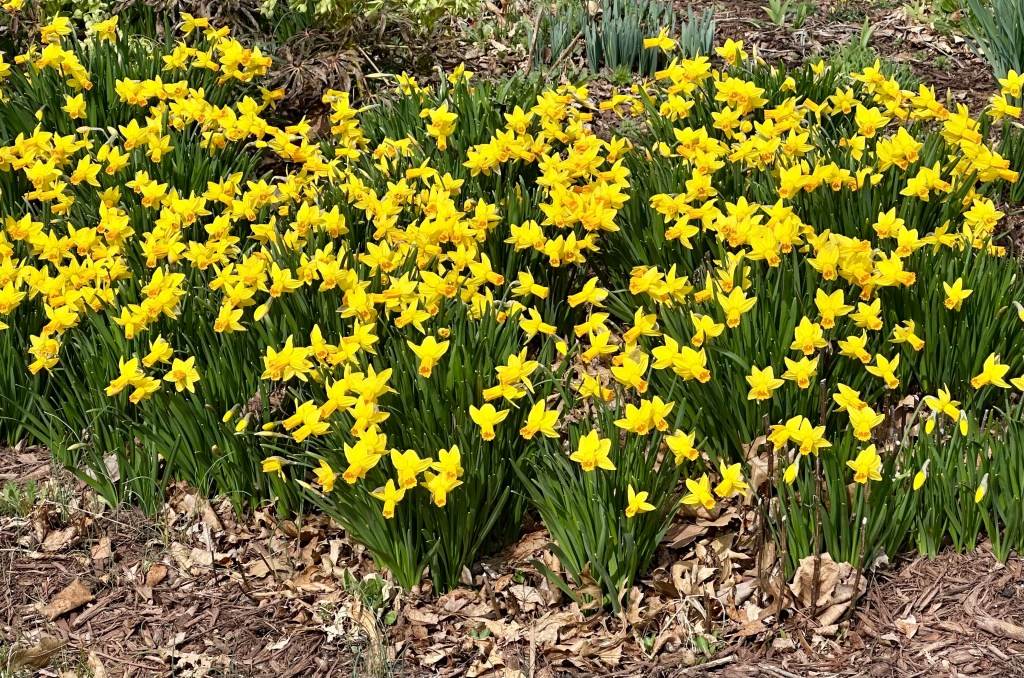
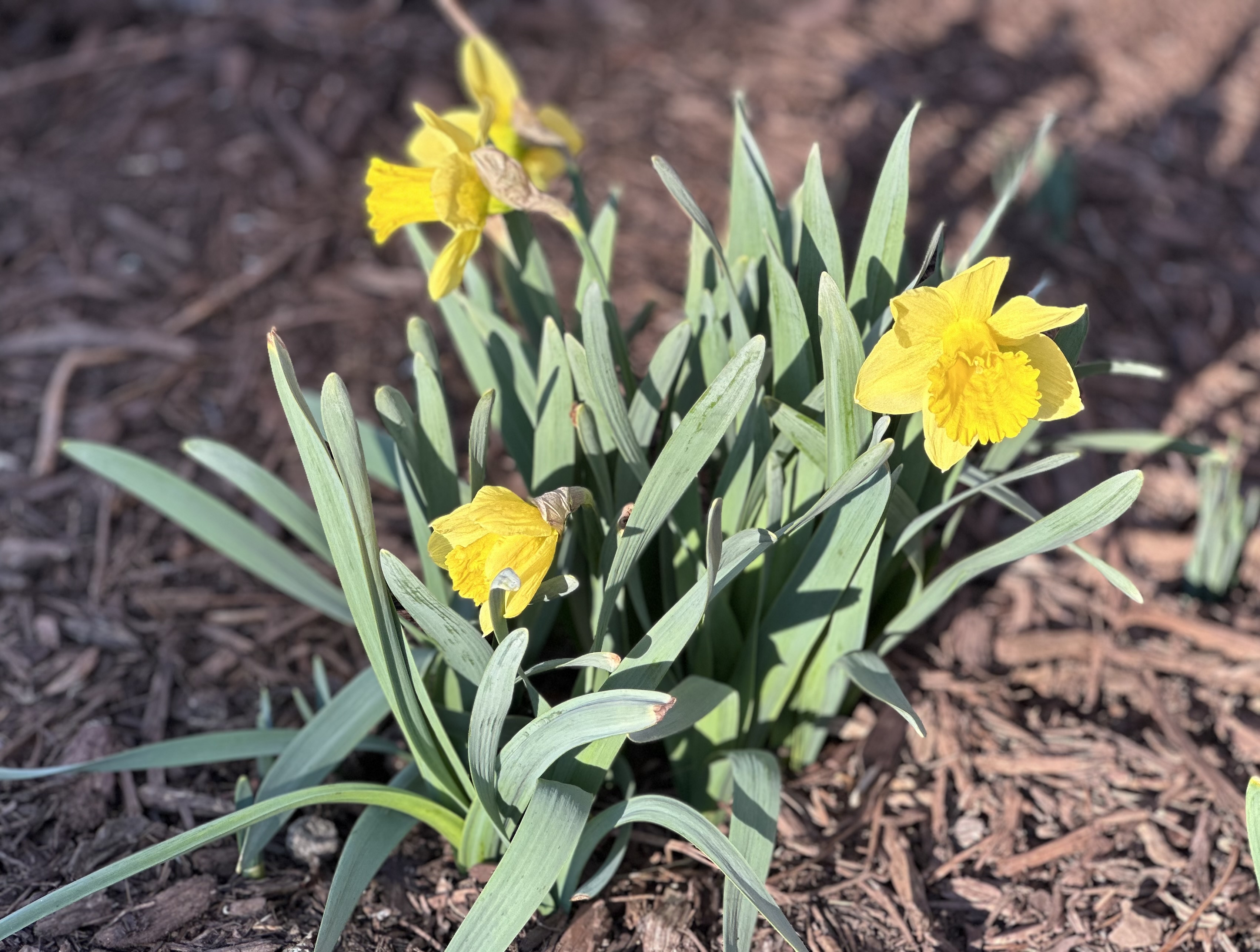
Cloudy or sunny, our neighbor’s daffodils brighten our day. Photo by Bruce Stambaugh
It’s spring! The vernal equinox arrived at 5:01 this morning.
Hopefully, that will put to rest winter’s worst weather. At this time of year, any snowfall won’t last long in Virginia’s Shenandoah Valley.
Of course, nature’s course doesn’t hold to mankind’s arbitrary seasonal demarkations. I have noticed from afar the hint of coloration of the once-dormant trees that populate Mole Hill, a local and revered landmark. The buds of its red maple trees are especially evident.
A walk around our yard and neighborhood reveals other signs of springtime. Deciduous tree buds are swelling, if not opening, ornamental trees bloom, and a lone Hyacinth blooms. Lenten Rose plants are also blooming right on time despite their winter-singed leaves. The grass is greening and growing. I’ll have to ready the lawnmower for action.
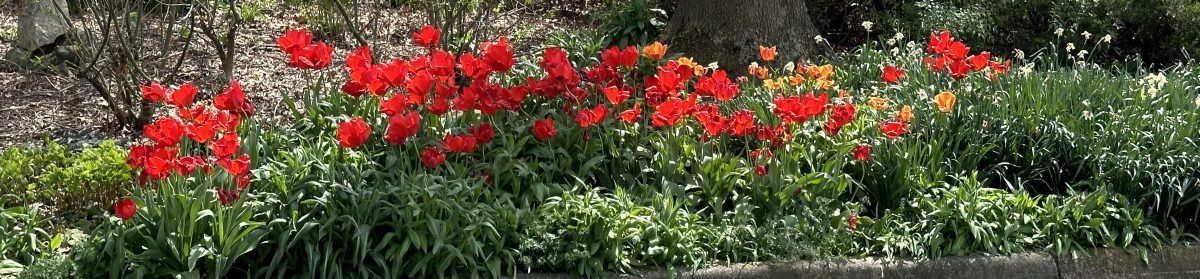
Tulip leaves have knifed through the chilly soil. Migratory birds are slowly arriving while the year-round residents begin to stake out their nesting territories.
It’s springtime, and I couldn’t be happier as long as my allergy medicines remain effective.
Yesterday, the western sky was hazy in the late afternoon. After supper, I kept watch and headed to my favorite spots for sunset photography in Rockingham County, Virginia.
Colorful sunsets aren’t always easy to come by here in the Shenandoah Valley. It may look promising early on, but clouds tend to hang over the Allegheny Mountains that mark the state line between Virginia and West Virginia.
Then, just when you want to give up, boom, the pinks and oranges glow, if only briefly. Other times, it’s a complete bust. Nevertheless, I’d rather be patient than miss a stunning sunset.
Last evening, I changed locations several times until the western sky popped with color. I wasn’t in the most desirable spot, but I am not complaining after capturing this muted beauty.
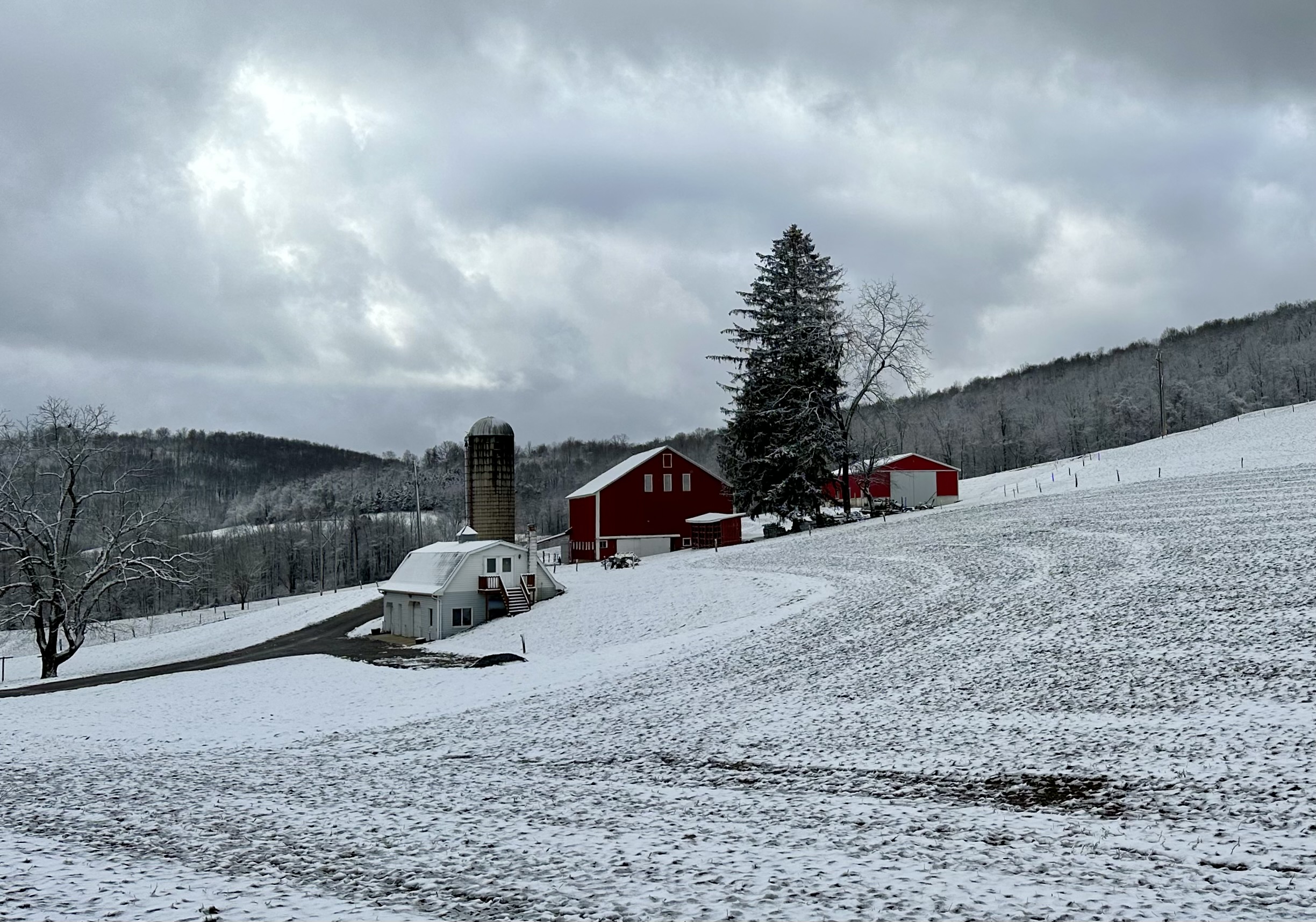
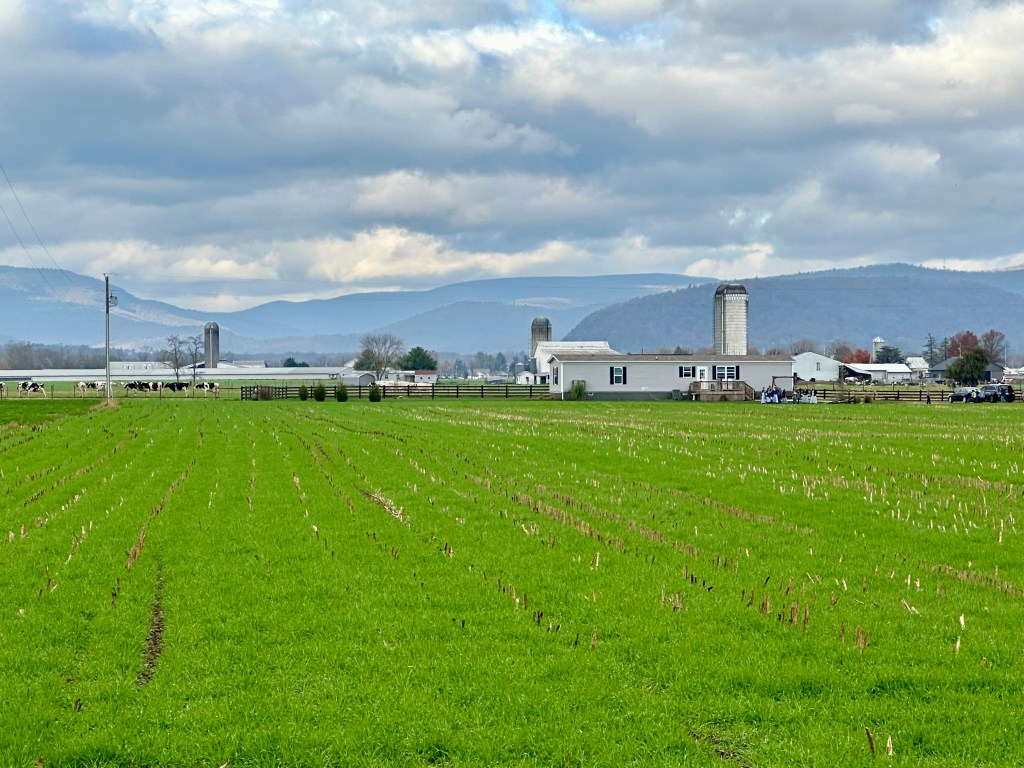
An Amish farmstead near Mt. Hope, Ohio. Photo by Bruce Stambaugh
I recently visited my old stomping grounds in Holmes County, Ohio, home to the world’s largest Amish population. Remnants of snow still covered part of the ground, contrasting with the barren, fallow fields.
I enjoyed finding a few Amish farms, like the one pictured, remaining amid the rapidly expanding tourist businesses scattered throughout the once pristine countryside.
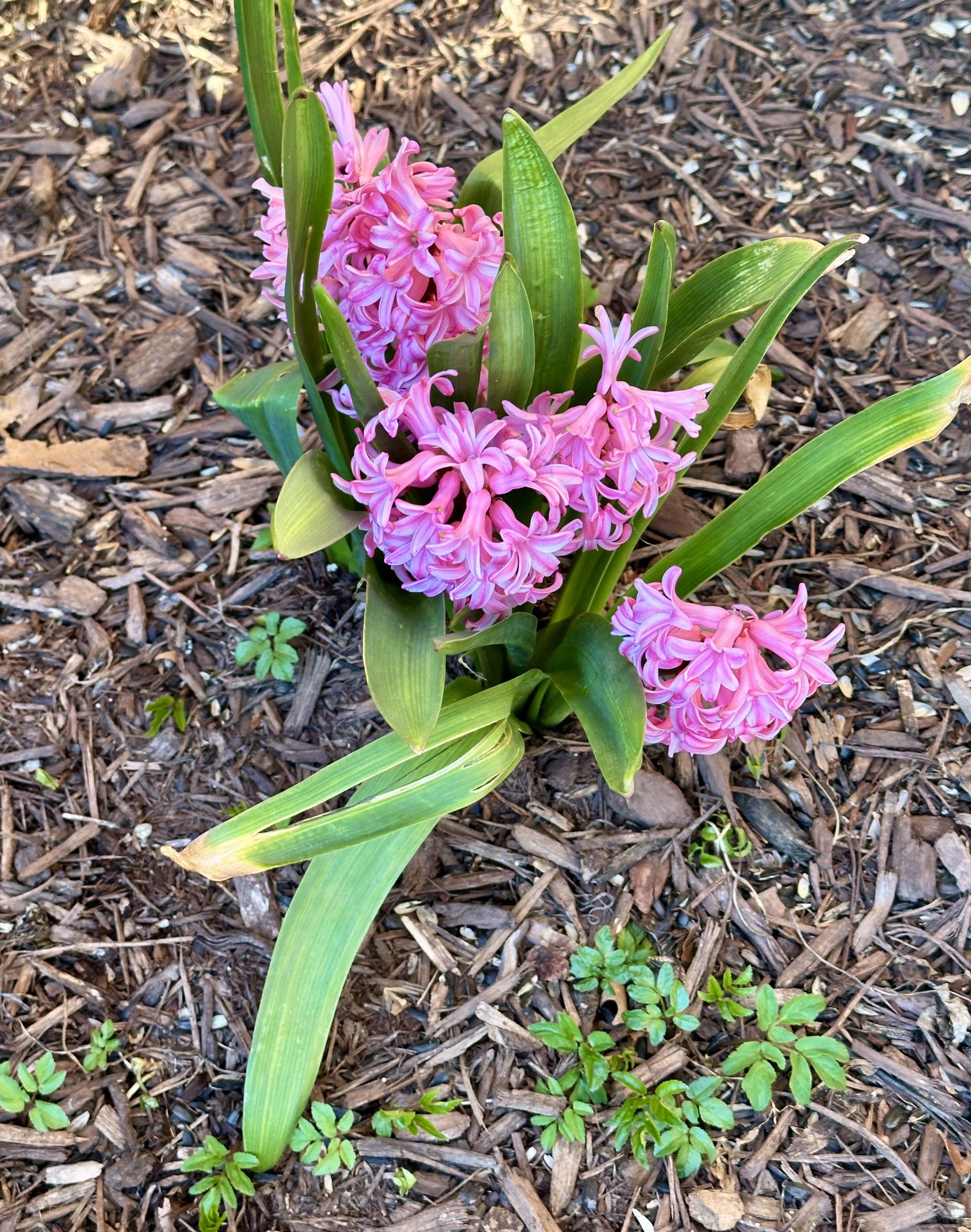
One of these is not the same as the others. Photo by Bruce Stambaugh
Our across-the-street neighbors have lovely flower gardens for all who pass by to enjoy. Since their house faces south, the winter sun, when it shines, warms the front yard.
This, in turn, encourages flowers to bloom when the days warm into the 50s and 60s, like they have for the last few days. I went over to photograph the Snow Drops and discovered that a lone Hyacinth had joined dainty white flowers in showing off its lavender beauty.
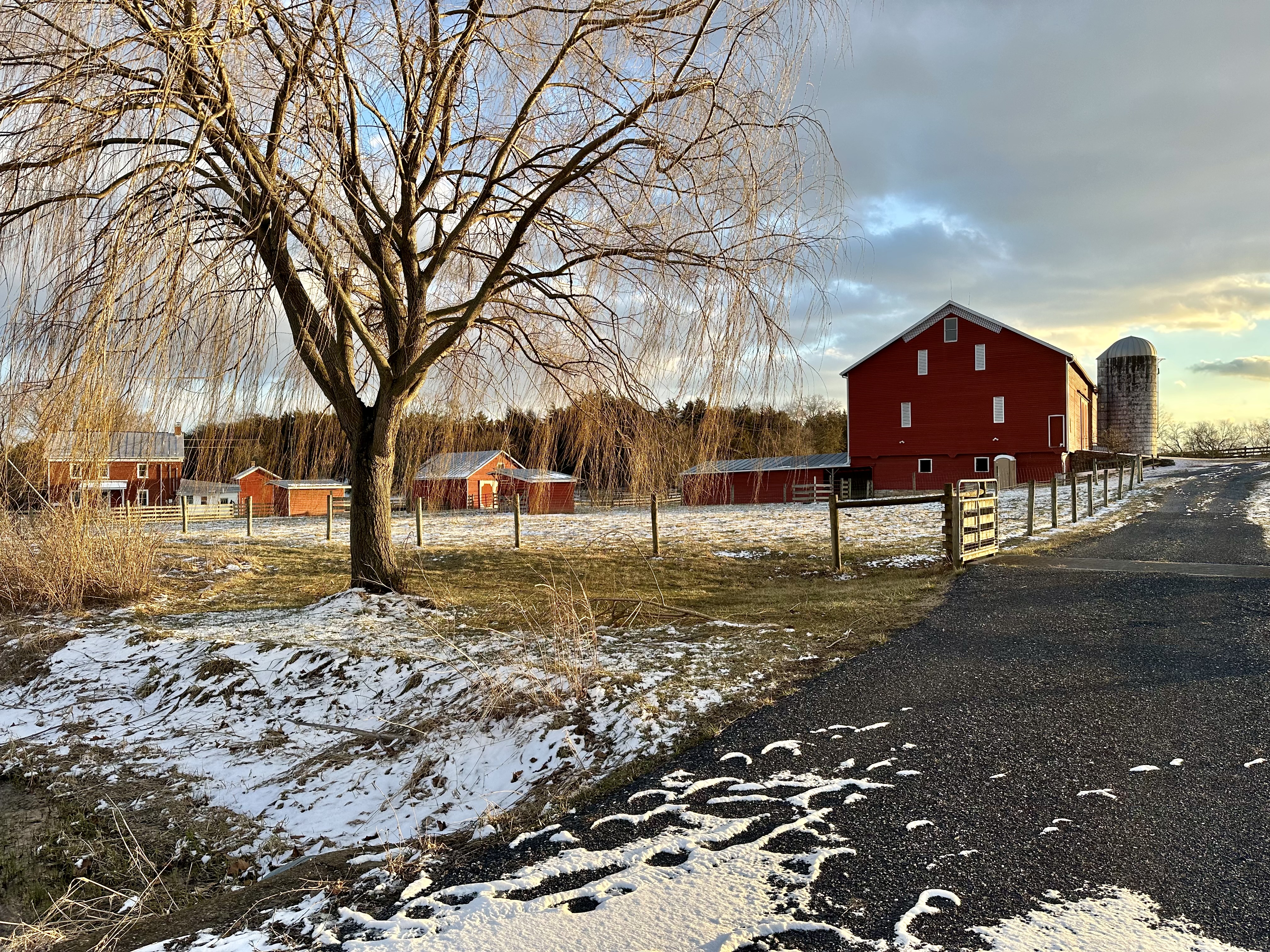
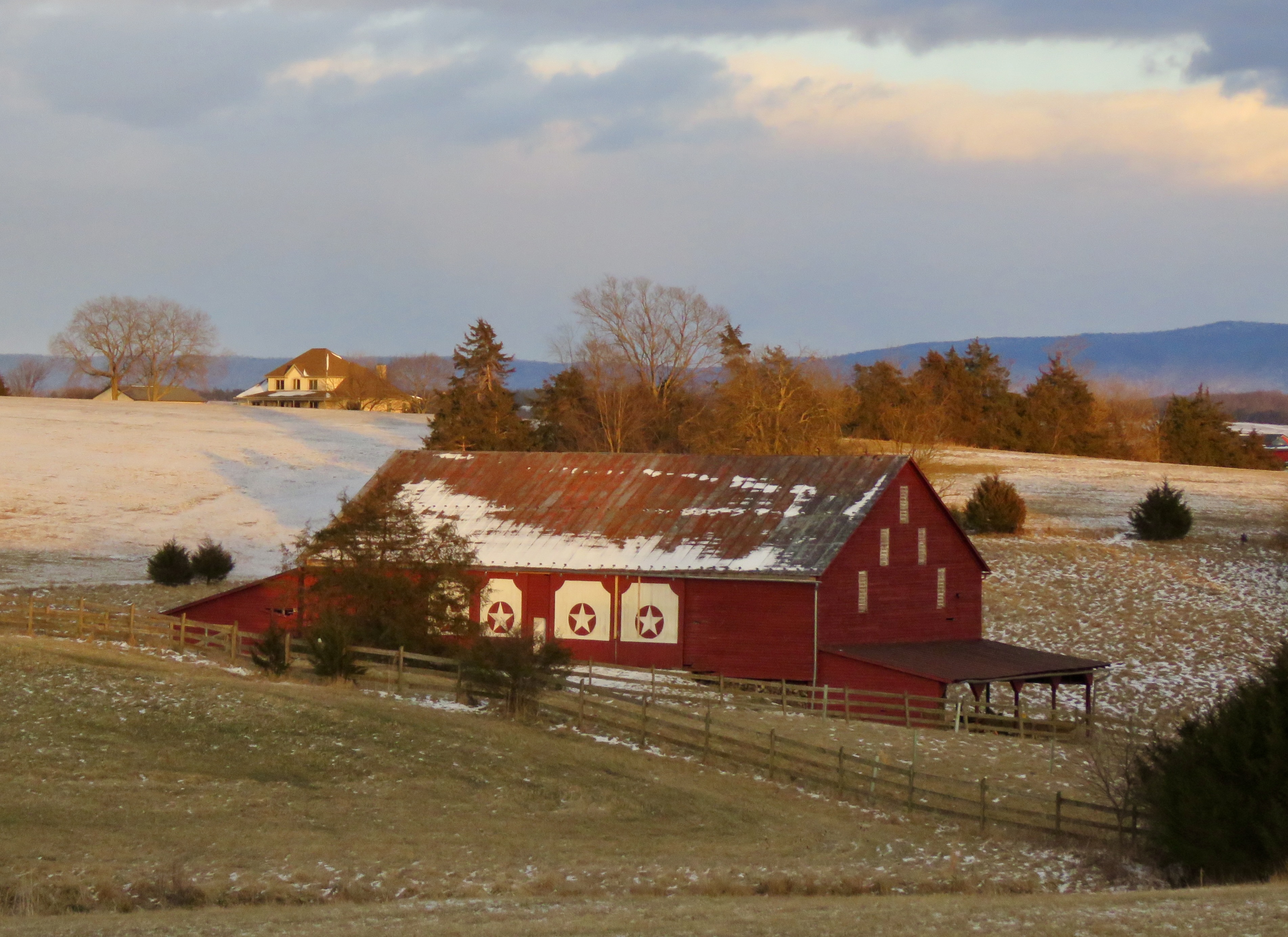
Barns have always intrigued me. The various sizes, shapes, colors, conditions, purposes, and settings combine to make photogenic captures. Wintertime is no exception.
My front yard birdfeeders are all on or under the red maple tree just outside my office window. That allows me to keep a keen eye on the comings and goings of the birds that frequent the feeders.
The birds really flock to the feeders before and during a snowstorm. The mix of birds includes the ground-feeding White-throated and White-crowned Sparrows and Dark-eyed Juncos. American Goldfinch, Purple Finch, and House Finch dominate the squirrel-proof hanging tube feeders. They also will feed on the ground, savaging for any seeds that drop from the feeders overhead.
If the army of European Starlings arrives, chaos ensues. The desired birds yield to the noisy and aggressive Starlings. That includes the dependable Northern Cardinals, which brighten the scene with their attractive colors. The female’s red-tinged olive feathers keep her camouflaged during nesting time, while her mate stands out in his all-red coat.
As brightly colored as the black-masked male Northern Cardinals are, they are fairly skittish and passive compared to other birds, like the Carolina Wrens and especially the Starlings.
The male Northern Cardinal in the photo waited on a branch above the feeding frenzy, awaiting an opportunity to fuel up undisturbed. That allowed me to capture the brilliant red in the falling snow.
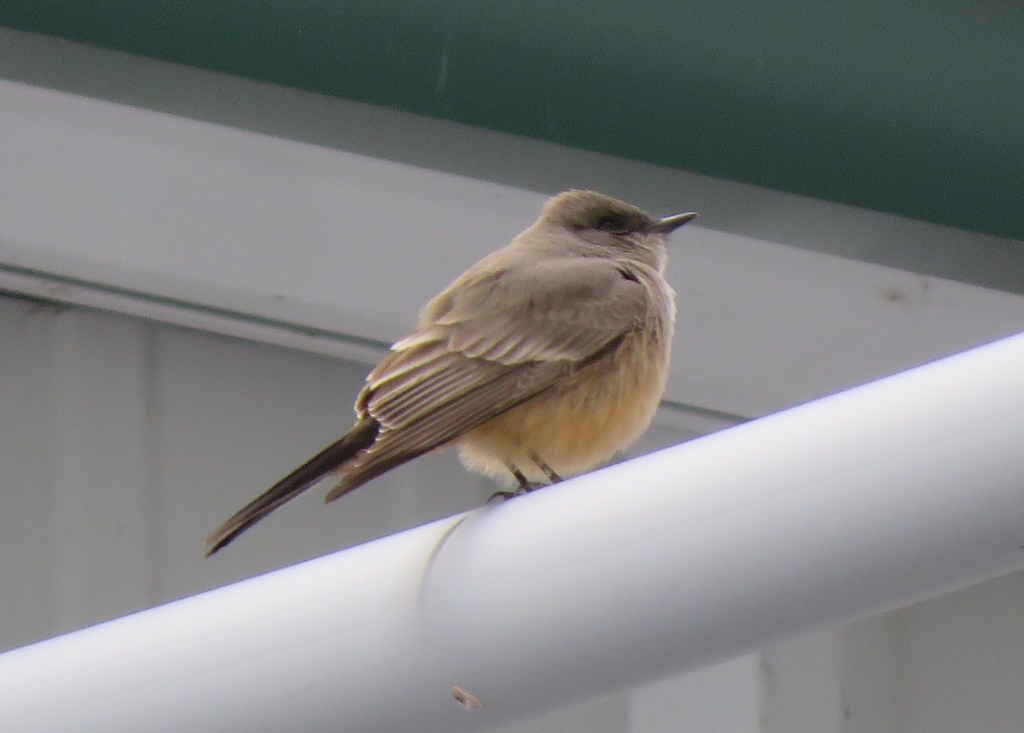
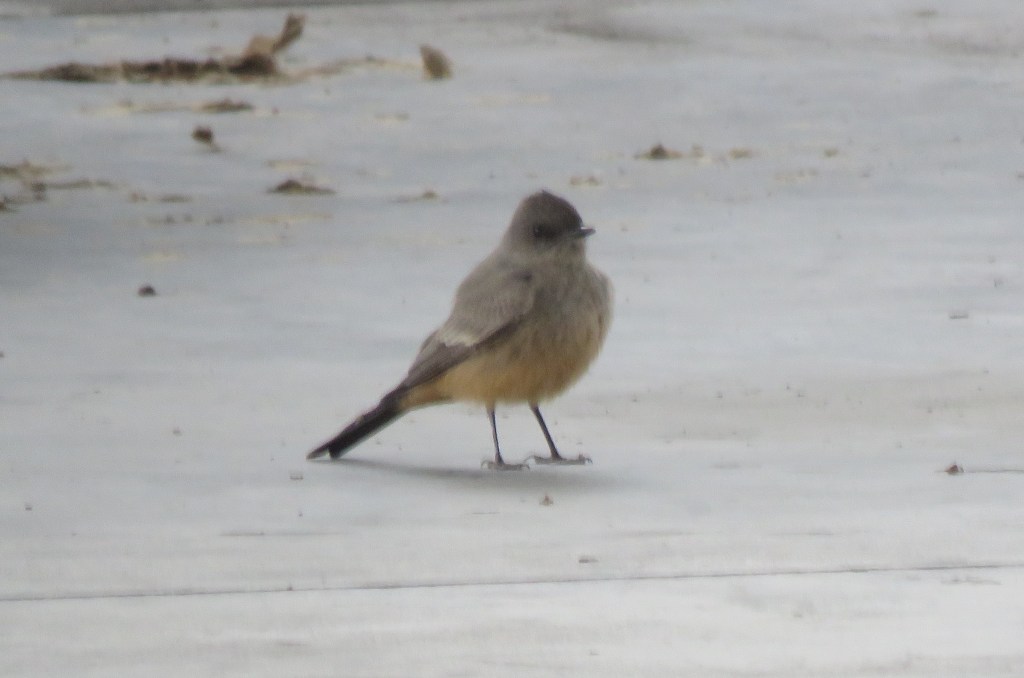
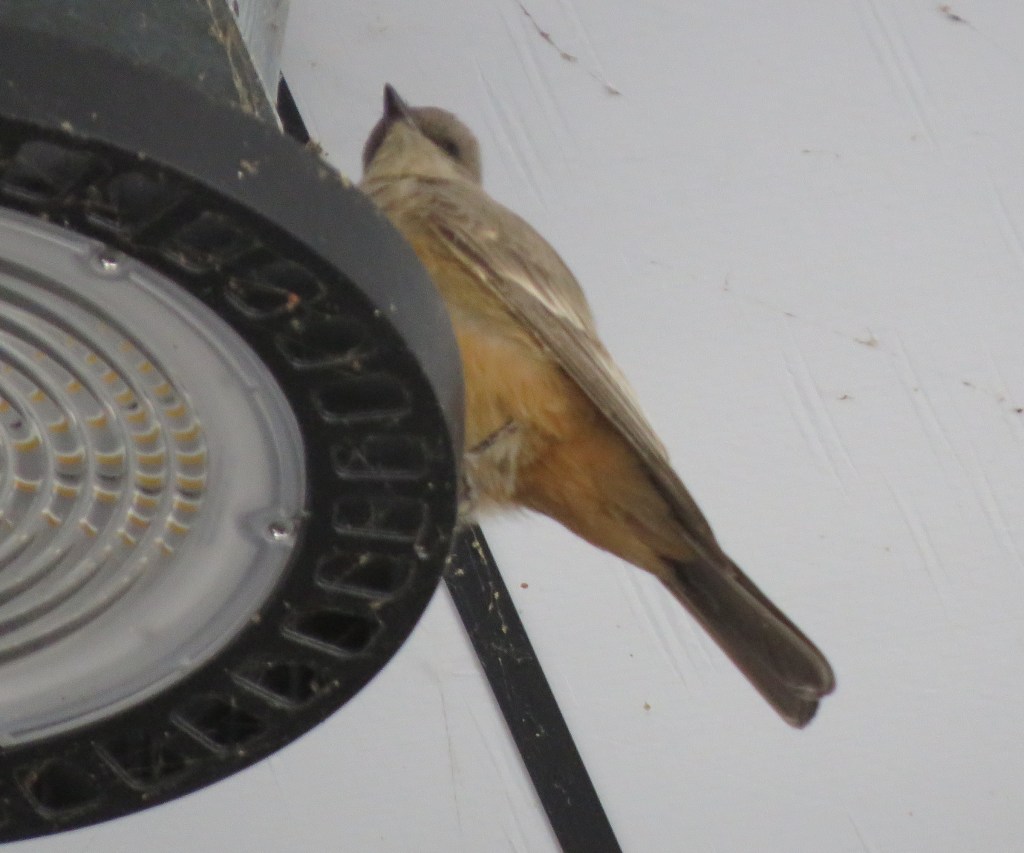
A Say’s Phoebe in Virginia’s Shenandoah Valley. Photo by Bruce Stambaugh
Finding rare birders is always a memorable experience, no matter one’s level of avian expertise. Since I consider myself an average birder, I always appreciate the opportunity to bird with those who are more knowledgeable than me.
That was the case recently when someone discovered a Say’s Phoebe five miles west of my home near Harrisonburg, Virginia. Having a Say’s Phoebe in the Shenandoah Valley was a rare treat, but seeing it in person became my goal since it would be a life bird.
I first learned about the Say’s Phoebe via an email listserv that reports rare bird sightings. I bundled up and headed to the property where the bird was seen. Several birders were already there scouting the bird. Ironically, the phoebe, which should have been in the southwest U.S. or Mexico, was across the road from where I photographed a Snowy Owl a few weeks earlier.
I walked as quietly as possible on the crunching snow and heard words that diminished my enthusiasm. “There it goes,” one of the birders said. It was late afternoon, and the guess was the phoebe was headed for a warmer roast than the steel pole buildings with three open sides.
I got eyewitness reports of the bird and details of its favorite haunts around the produce auction buildings it frequented during the day. The recommendation was to try in the morning when the bird foraged for dead insects.
That is precisely what I did. Only two other birders were present when I arrived. They had not found it yet. Discouraged, one birder headed to her car but soon turned around, waving her arms furiously.
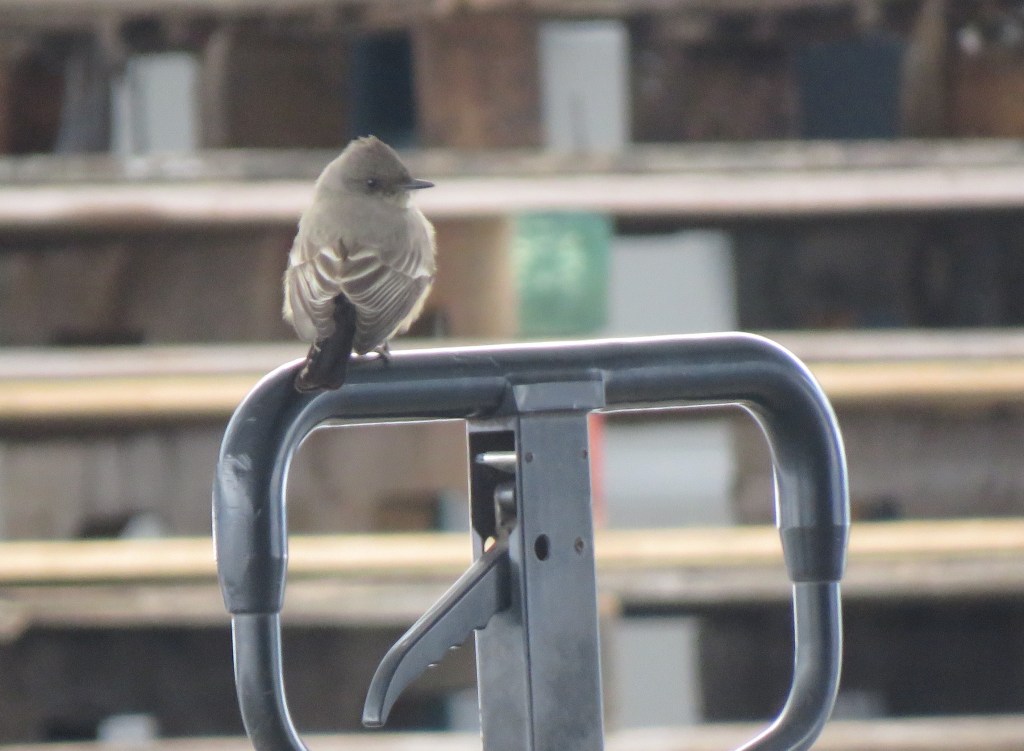
She had spotted the bird sitting on the handle of a hand pump, a favorite spot for the bird. Say’s Phoebes perch lower to the ground to feed than their cousins, Eastern Phoebes. But both species pump their tales and fly to intercept the insects, often returning to the same or near the same perch. Say’s Phoebes have a long, dark tail and a distinctive orange-to-pink buff belly.
The bird flew into one of the open-sided buildings and continued to snatch dead insects stuck in spiderwebs around the ceiling and security lights. The lovely bird posed enough for us to capture several decent photos.
Satisfied, the woman who spotted the bird departed for other birding hot spots. That left two of us to follow the bird around, which we did for an hour. Given the bird’s feeding behavior, we soon learned to stand in a central location and let the bird fly to us. That strategy paid dividends. My birding companion even recorded the phoebe calling.
The Say’s Phoebe searched high and low for food. Winter in Virginia isn’t insect season, and several inches of snow covered the ground, too. No one knew what brought the bird to the valley, but we were grateful for the opportunity to view it.
I had the photos I wanted in an hour, so I headed home to share the good news with other birders by posting it on several Facebook birding pages. I was happy to add another bird to my life list. This exhilarating encounter was another birding experience I won’t forget.
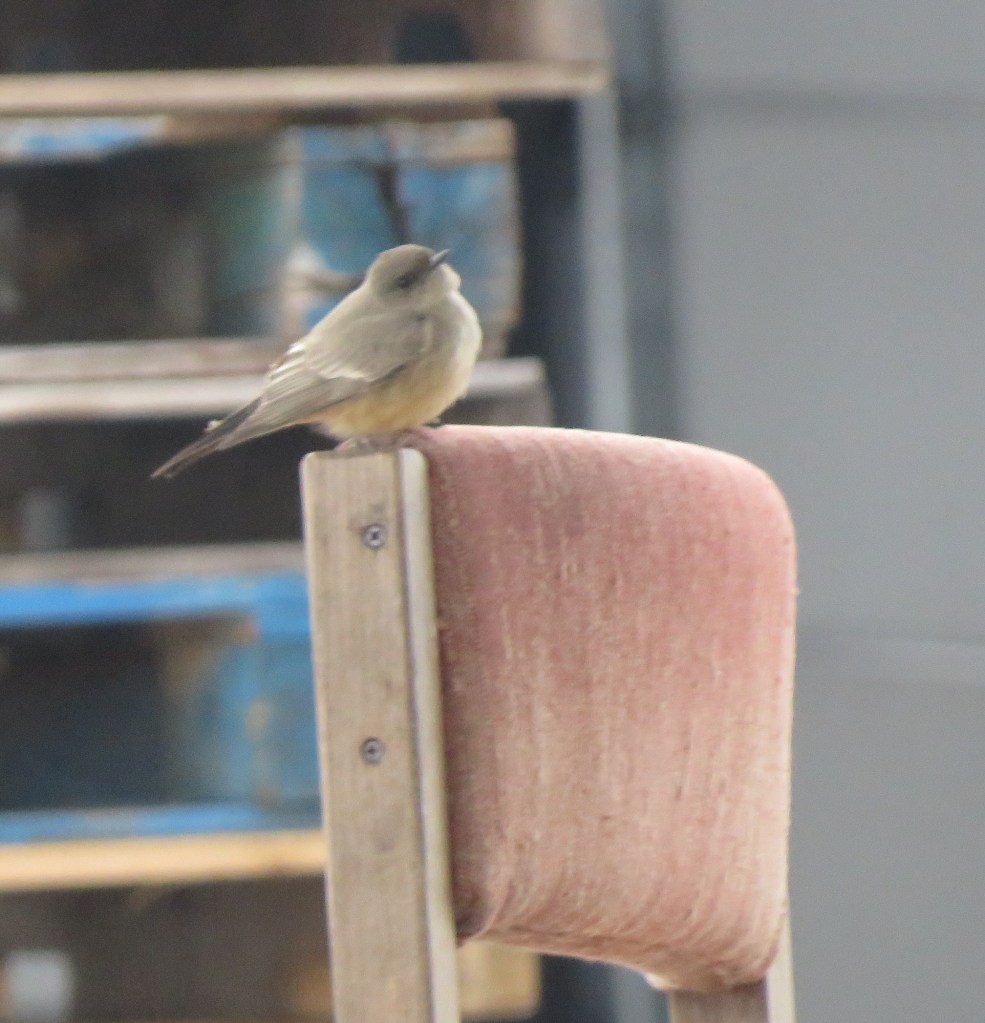
The Say’s Phoebe perched on a wall header. Photo by Bruce Stambaugh
I got so busy with the holidays that I forgot to post this photo of a Snowy Owl that showed up in mid-November in western Rockingham County, Virginia, five miles from where I live. So, I thought I would let this beautiful bird wish you a Happy New Year!
When I heard about the Snowy Owl, my wife and I headed out, hoping to see it. I wanted to document the rarity with photos, too. A few other birders were already there when we arrived. In a matter of minutes, we were joined by several others, including two different school groups from nearby private elementary schools.
The bird sat on a 55-gallon steel drum near a pasture. Another birder had set up his scope and allowed me to take this photo with my iPhone 14 Pro. Otherwise, I would have had to heavily crop the images I took with my camera. The next day, the bird was gone, not to be relocated.
So, on behalf of the Snowy Owl, I wish you the best in 2025.
This is where the owl was found and what we saw with the naked eye. Can you find the Snowy Owl?














 Roadkill Crossing
You must be logged in to post a comment.