I loved how the afternoon light highlighted the prickly details of this dense stand of spent teasel heads. Likely, several varieties of birds thrived on the seeds of these thorny remains.
I was happy that the farmer had let these beauties stand for all to enjoy. “Teasel” is my Photo of the Week.
Singing September’s song.
We’re already pushing to the middle of September. Have you heard the many melodies she’s already played?
If not, please don’t fret. If September plays her usual gig, she will beautifully and joyously harmonize her way into October.
We have to pay attention morning, noon, and night to fully appreciate September’s numerous odes. It’s a perpetual concert out there.
September has many modes of singing to us. That’s good news for those of us with diminished hearing. The seasonal songs are ubiquitous and indiscriminate.
Crickets, katydids, and locusts lull us with their winged cacophonies. Nature’s stringed rhapsody signals the season’s end and celebrates each day’s closing.
This slideshow requires JavaScript.
A tiny screech owl’s raspy soliloquy provides a brief interlude to the insect symphony. The chilling tune means trouble for little four-legged rodents romping around in summer’s last evenings.
If you listen carefully, you might be fortunate to catch the call of migrating birds piping on the wing high overhead. If you can’t hear them, aim your binoculars at the moon and enjoy the sideshow.
September croons to us in color, too. Her many blooms of gold, crimson, yellow, red, and even blue paint a many-colored musical in flower gardens, along roadsides, and in unkempt fields.
The month’s repertoire includes occasional towering thunderstorms. Their lightning dances and their thunder booms, drumming fear into almost every canine within miles.
At the storm’s end, perhaps she will surprise us with a dangling rainbow. Look quick before that high note fades. Remember to breathe in the aftermath, refreshing, clean, pure.
September invites us to sing along with her eclectic playlist. The crisp snap of husking the golden ears of sweetcorn is the prelude to perhaps the year’s last fresh corn on the cob.
Of course, the hiss of canners still sings, bubbling with goodness and a kaleidoscope of colors. Besides corn, salsa, beans, tomatoes, pickles, peppers, peaches, grapes, and apples all play their fruitful parts.
I adore the choruses in the outdoors the most. Find a pleasant spot in the woods, and just sit, watch, and listen as the sounds of silence come floating in decorative displays.
Migrating butterflies flutter to their specific tunes. Groups of Monarchs congregate in the coolness and safety of trees until the morning sun dries and warms their wings.
Swallowtails, fritillaries, Buckeyes, and skippers flutter their notes in their particular and various flights. It’s always amazing how they can find the slightest blooming speck to nourish them on their way south.
Brilliant sunrises and sunsets add magical backdrops to September’s forte. The trick is to rise in time to catch the morning show or to stop what you are doing and embrace heaven’s evening song.
The deciduous trees, of course, join the colorful choir one leaf at a time. Their intensity increases as the month wanes. They usually wait until October for their triumphant exit.
Still, whatever voice they can bring to September’s musical is much appreciated. We humans inadvertently join the band with our out of tune rakes and mechanical blowers.
Nevertheless, September’s concert is a joy to grasp. That’s true even if the neighborhood skunk makes an unwelcomed visit.
We can still enjoy the many classical notes of the year’s ninth month. At day’s end, the stars and planets twinkle their universal choruses, glorifying the heavens above.
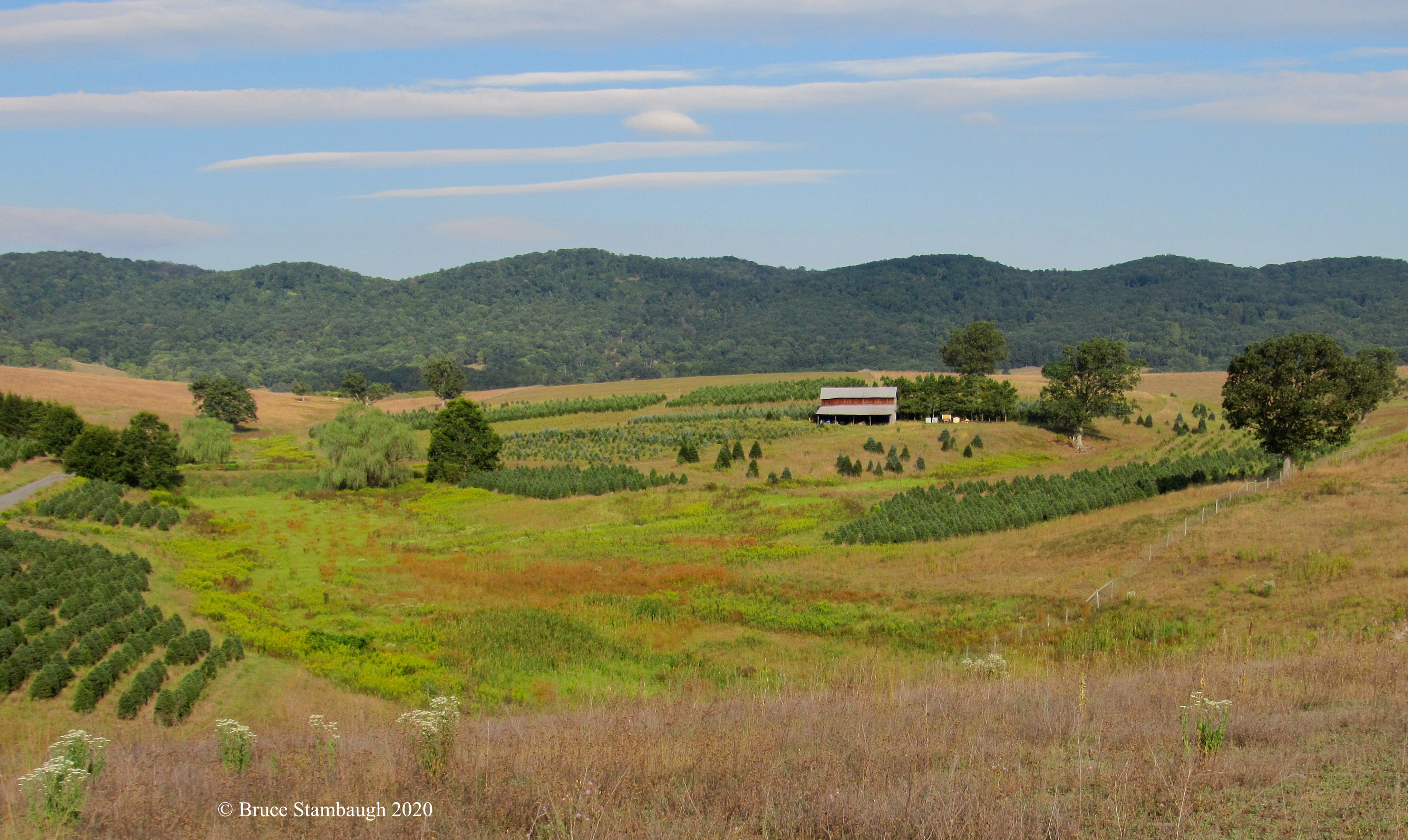
Touring around the Shenandoah Valley, we stopped at a local orchard and vineyard. Noted for both their apples and cider, both hard and regular, Showalter’s Orchard and Greenhouse has the perfect spot to while away a late summer afternoon.
The colors of summer are as pretty as they are delicious and nutritious.
Just as I began to write about the colors of summer, a friend posted on social media about her visit to a local farmers market. In one digital photo, she succinctly summarized what I intended to say.
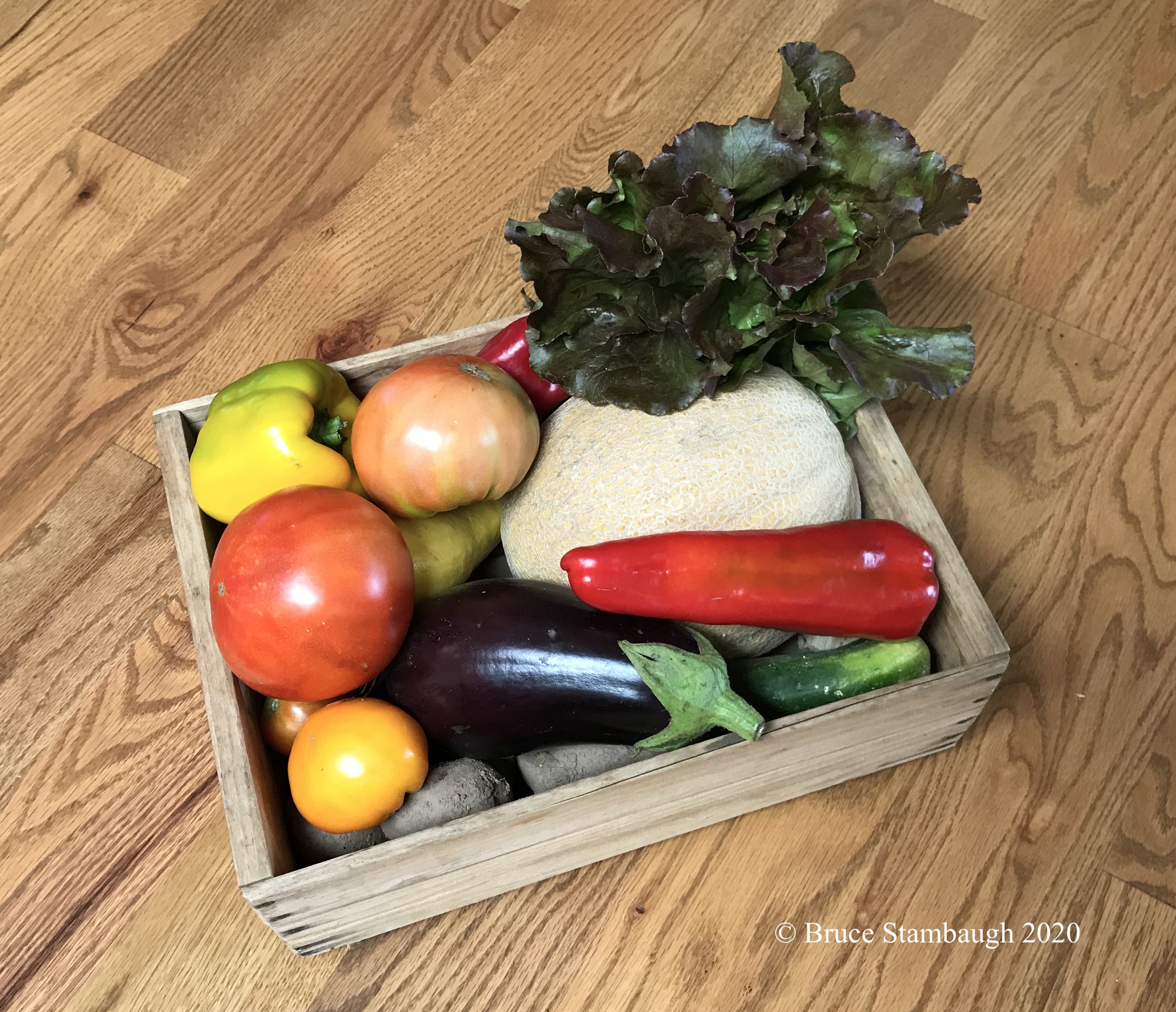
A cornucopia of vibrant colors from gardening harvests filled her photo. The variety of tomatoes alone captured nearly every hue of an artist’s paint pallet.
Ruby reds, luscious purples, warm yellows, and lime greens took center stage of their kitchen table. The light yellow of summer squash and the ribbed texture of a muskmelon represented the earthen tones.
A perfect emerald cucumber, the variegated rind of a watermelon, and a cluster of fresh basil leaves provided a generous sampling of the locally grown greens. The haul from your gardens, nearby produce stands, and farmers’ markets likely create similar still-life artistry.
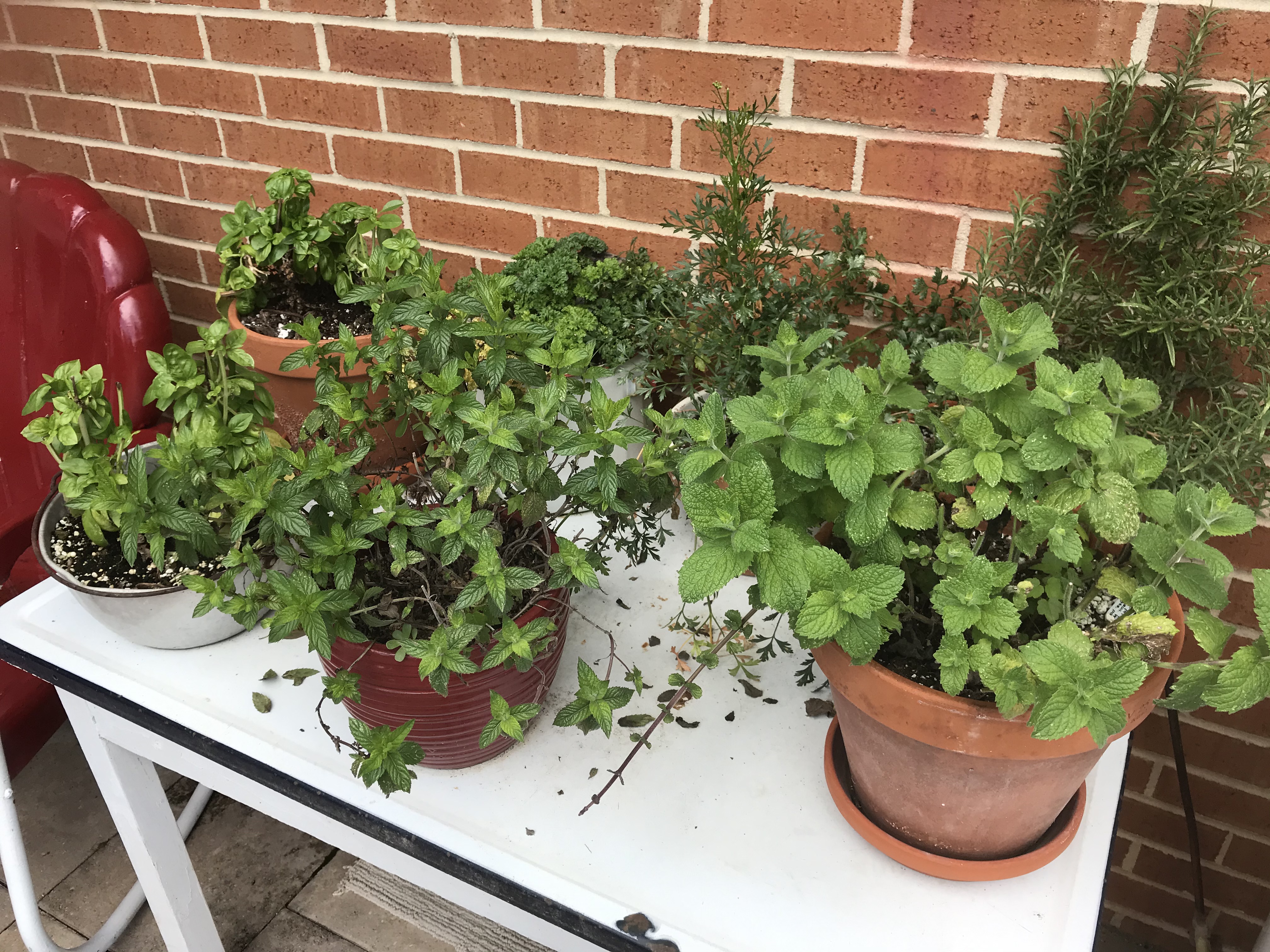
Our house is no different, despite not having a garden. My wife does pamper a half dozen potted herb plants sitting on the white enamel top of an inherited old table on our patio.
Our daughter supplies us with all the plump, juicy, and tasty tomatoes that we can use from her garden. Her blackberry plants have produced an abundance of delicious tartness, too.
The half-box of organic fruits and vegetables we get each Monday from our Community Supporting Agriculture program assures that we maintain a healthy, flavorful diet. We also frequent several local produce businesses, mostly operated by the Shenandoah Valley’s Old Order Mennonites.
It that regard, we are reminded of our Ohio home, where we knew many of the Amish and Mennonite vendors personally. Somehow that seemed to make their homegrown offerings all the tastier.
My energetic wife ensures that we celebrate the summer’s colorful bounty all year long. Canning and freezing are in her farmer genes.
When it comes to preserving the downhome goodness of food, we have noticed a difference between living in Ohio versus residing in Virginia. Instead of in spurts, everything seems to come ripe at once in the valley.
One day we are canning peaches and the next day tomatoes. Those jars have barely stopped popping their lids when the sweet corn comes ready, tender, tasty, and delicious. The varieties here are as delicious as our Ohio favorite, Incredible.
We’ve also learned a few new tricks living in a new culture in a new state. We husk the sweet corn, clean it, and cut the kernels straight from the cobs. Neva fills the plastic containers, and when we want fresh corn at Thanksgiving, that’s when it gets cooked and not before.
Apples are next on the list. The sweet tartness of the ginger golds more than satisfy our family’s taste buds. Neva freezes enough for the grandkids, who usually finish off their supply long before Nana can do another batch.
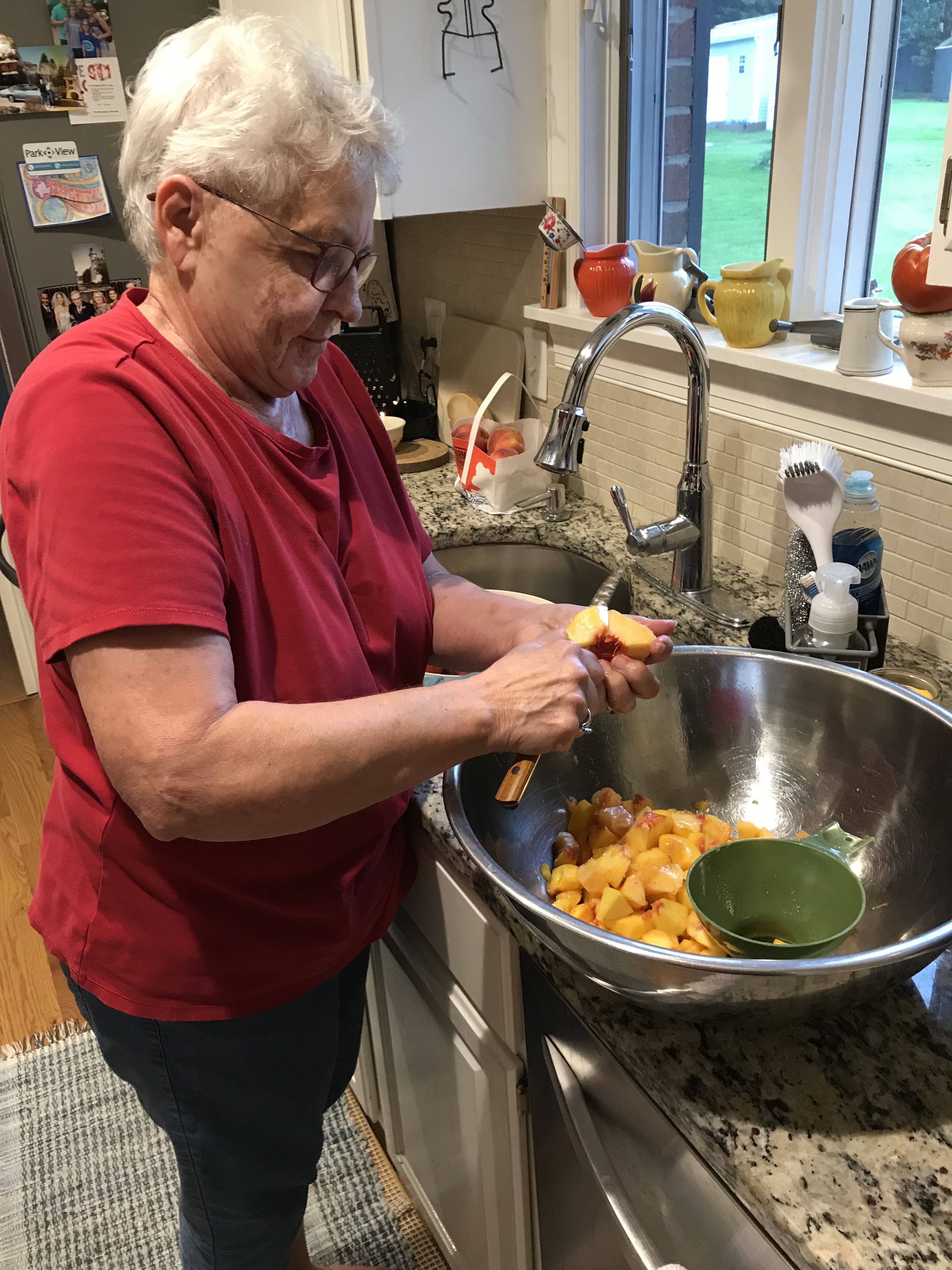
Of course, canning and freezing are a lot of hard work. Sterilizing the jars and lids, cleaning the fruit and veggies, and peeling when required, all take time and effort. Then there is enduring the sauna-like heat at the height of the canning process in our tiny galley kitchen.
The vent fan works overtime, expelling the heat and steam to help cool the temporary cannery. But in the long run, it’s all well-worth every drop of sweat.
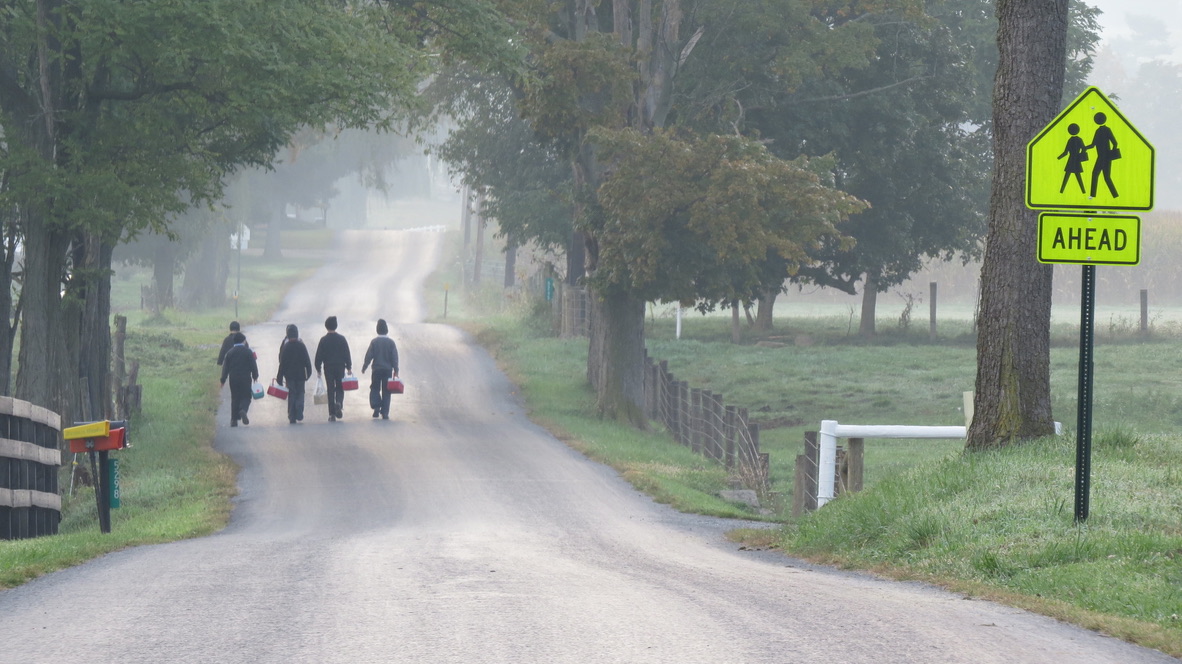
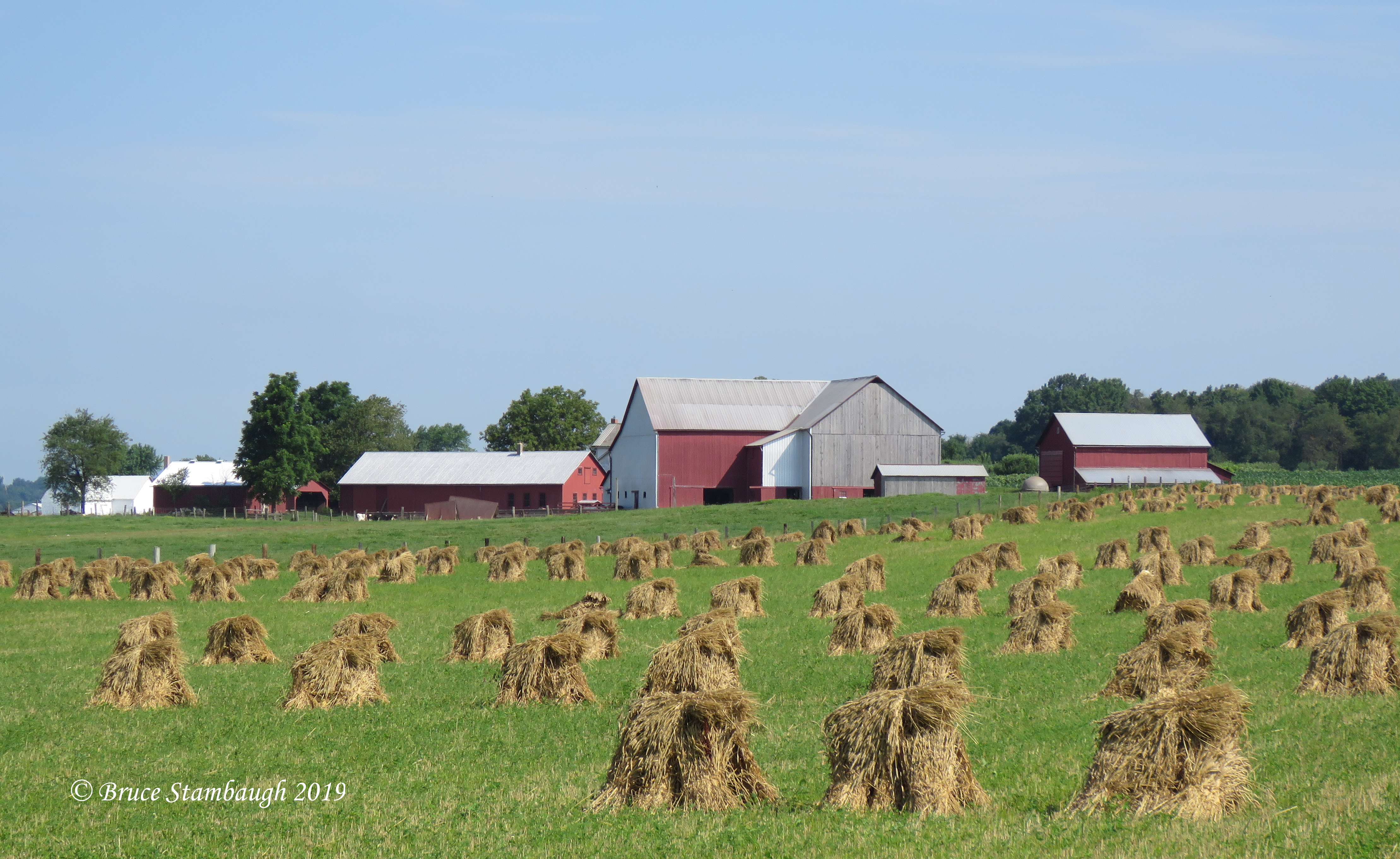
An Amish farmstead near Kidron, Ohio.
Jay Lehman was the kind of man that you might meet only once in a lifetime. He embodied the very values of the community in which he was born, lived, and worked.
Jay died recently at age 91. He was the founder of the old-time general store Lehman’s in Kidron, Ohio. I was fortunate to have known him as both a friend and a business leader. Scores of others can say the same thing about Jay.
Jay Lehman.That, however, is what impressed me so much about the man. We weren’t close as friends go, and we didn’t run in the same social circles. And, yet, whenever he saw me, he always went out of his way to call me by name, say hello, shake my hand firmly, and ask how I was doing. Jay was a good listener.
I got to know Jay the best through a cooperative marketing group that I facilitated. The original group included six Amish country, family-owned and operated businesses with a single location. Lehman’s was a founding member.
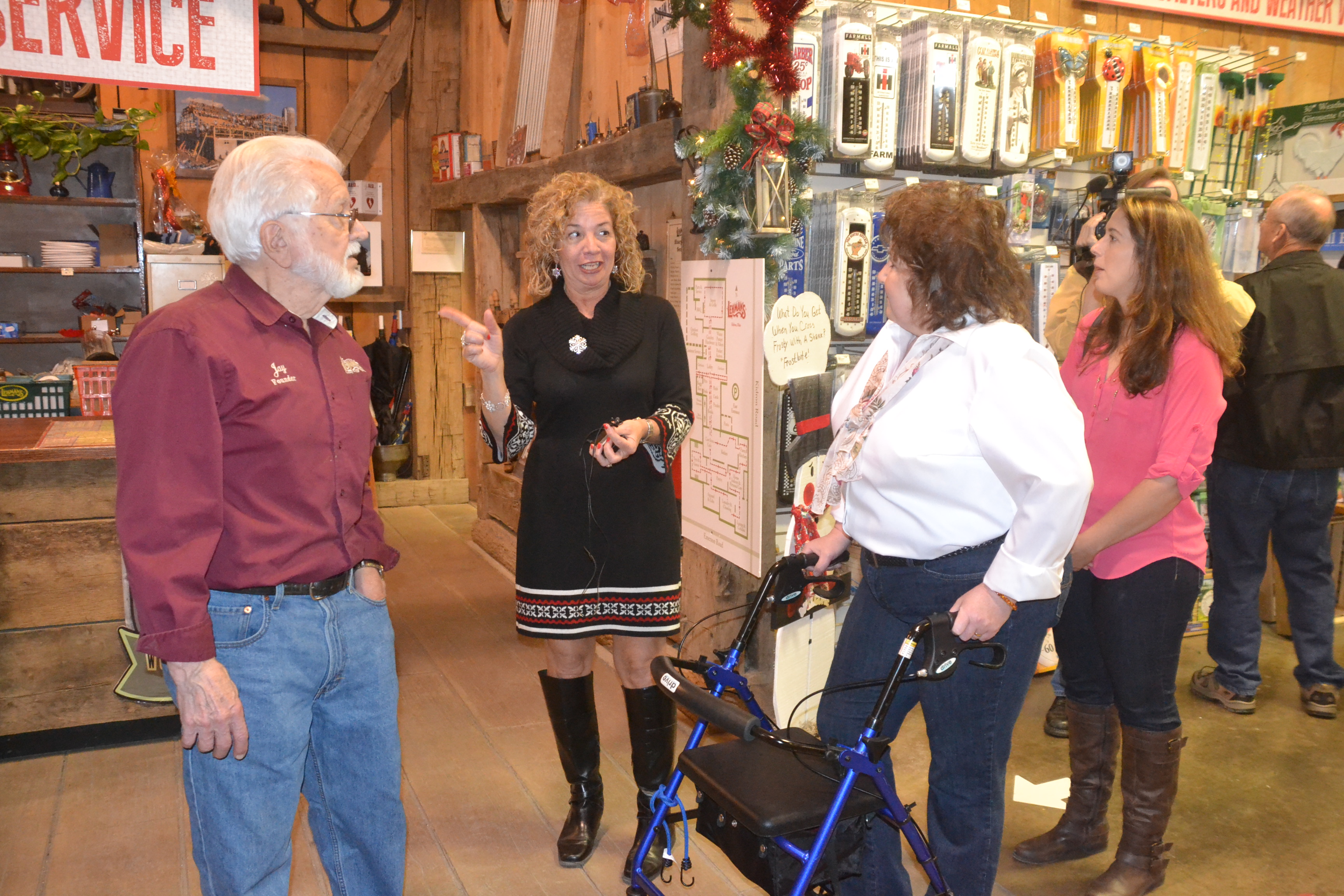
Jay pointing out one of the museum-quality pieces in the store he founded.Jay started his little hardware and household goods business in 1955 at the crossroads of his rural hometown village. His original purpose provided necessary lifestyle items for the Amish community that surrounded Kidron.
Over time, the store’s purpose ironically flipped, becoming more of a tourist destination in Amish country. Jay embraced that change without losing sight or letting go of his and the community’s core values.
Faith, family, community, and a strong work ethic fulfilled humbly reflected not only the area’s priorities but Jay’s, too. Jay modeled those qualities in his personal and business life. That’s what made both Jay and his company tick.
In that success, Jay honored those values. He lived his faith by supporting the church and charities that he cherished. Even in a crowd of hundreds at statewide church conferences, Jay would acknowledge people by name and ask how they were doing. It might have been years since he had seen them. He understood the worth of healthy relationships.
That, in part, is what drew folks to Jay. He possessed a quiet, confident demeanor, and yet humility formed the mantle of his character. Even Lehman’s tagline reflects that concept: “For a simpler life.”
Jay Lehman at Lehmans in Kidron, Ohio.Jay saw the future in the past. He preserved anything of locally historical value for posterity and education. A walk through the store reveals hundreds of antique relics that would have been lost were it not for Jay’s foresight. If you want, you can have lunch at Lehman’s while sitting in the old town jail.
Jay enjoyed the simple life, but he certainly was not a simple man. He loved a good “Rook” game with friends and family as much as he enjoyed traveling. Future generations were as vital to him as his Swiss ancestors, which he revered.
As the company grew and expanded, family members, friends from church and community joined in to help him run the store. When he reached retirement age, he passed the leadership on to the next generation. But he continued to be a dynamic presence at Lehman’s.
It was a joy to watch customers recognize Jay as he strolled around his much-expanded corner store. He was the living icon of Lehman’s, now an international business.
Jay’s legacy will live on through his successful entrepreneurship and his lifetime of kindness and generosity. Living those essential core values shaped that legacy.
His was a compassionate life. Jay lived not just for himself, but for all whom he so tenderly touched far beyond the little town of Kidron, Ohio.
Jay, shown with his daughter Glenda Lehman Ervin, often talked with visitors to the store.
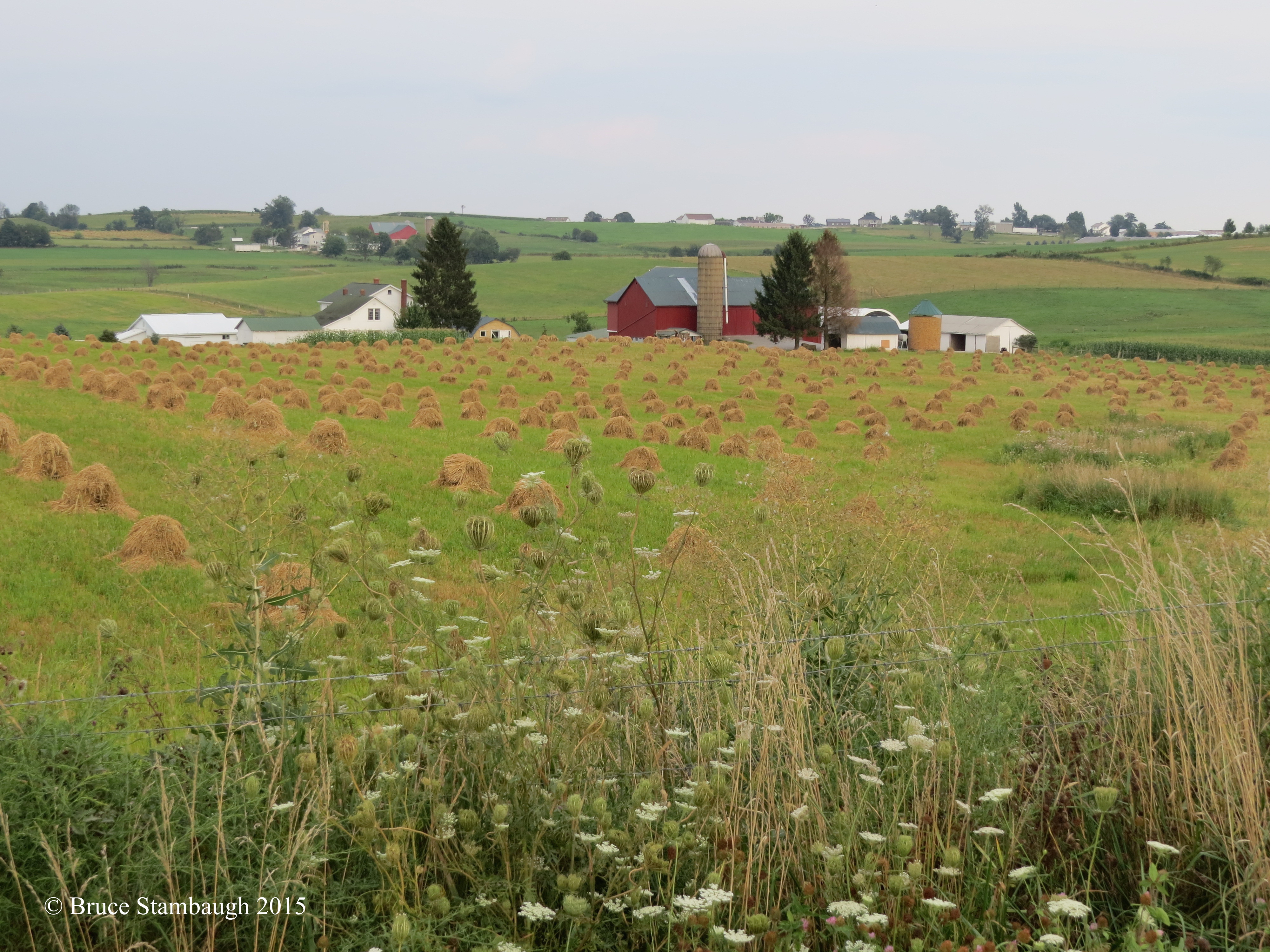
August in Ohio’s Amish country.
I’ve always been a bit ambivalent about August. I’m especially so this year, given all the ramifications of the ongoing pandemic.
When my wife and I lived in Ohio, August kept us busy as career public school educators. We each geared up for the start of a new academic year. As a principal, I created schedules and rosters and attended too many meetings. The excellent teacher that she was, my wife spent many hours preparing each classroom to be an inviting learning haven.
Canned peaches.August also ushered in the food preservation season. We froze dozens of containers of sweet corn and apple sauce. We waited for the canning lids to sound the seal of approval with satisfying “pops” for the tomatoes, grape juice, beets, and peaches. Rainbows of goodness adorned our shelves.
Of course, we weren’t alone in these endeavors. After I retired, I savored sale mornings at the local produce auction. I loved the hustle and bustle of men and women unloading their trucks and horse-drawn wagons. The rhythmical cadence of the auctioneers barking out their persuasive banter was sweet music to my ears.
The growing season here in the Shenandoah Valley where we live now is a couple of weeks ahead of Holmes County, Ohio. So, we don’t have to wait as long to enjoy our first taste of locally grown veggies. Auction in action.
August is more than agriculture, though. The three H’s rule the eighth month: hot, hazy, humid. That’s not the main reason for my ambivalence, however. With the coronavirus continuing to run rampant, uncertainty abounds in everyone’s life.
The city schools where our grandchildren attend here were set to open with a combination of in-person and online instruction. The latest surge in COVID-19 has altered that plan. They’ll start the year learning remotely.
Mask-wearing is the norm, especially when entering stores or buildings. Neva and I have continued to be extra cautious about keeping our physical distancing. We truly miss the close socialization of friends and family.
Some states are doing better than others at slowing the virus. States that reopened with too few restrictions or where few people followed the guidelines are unfortunately paying the price.
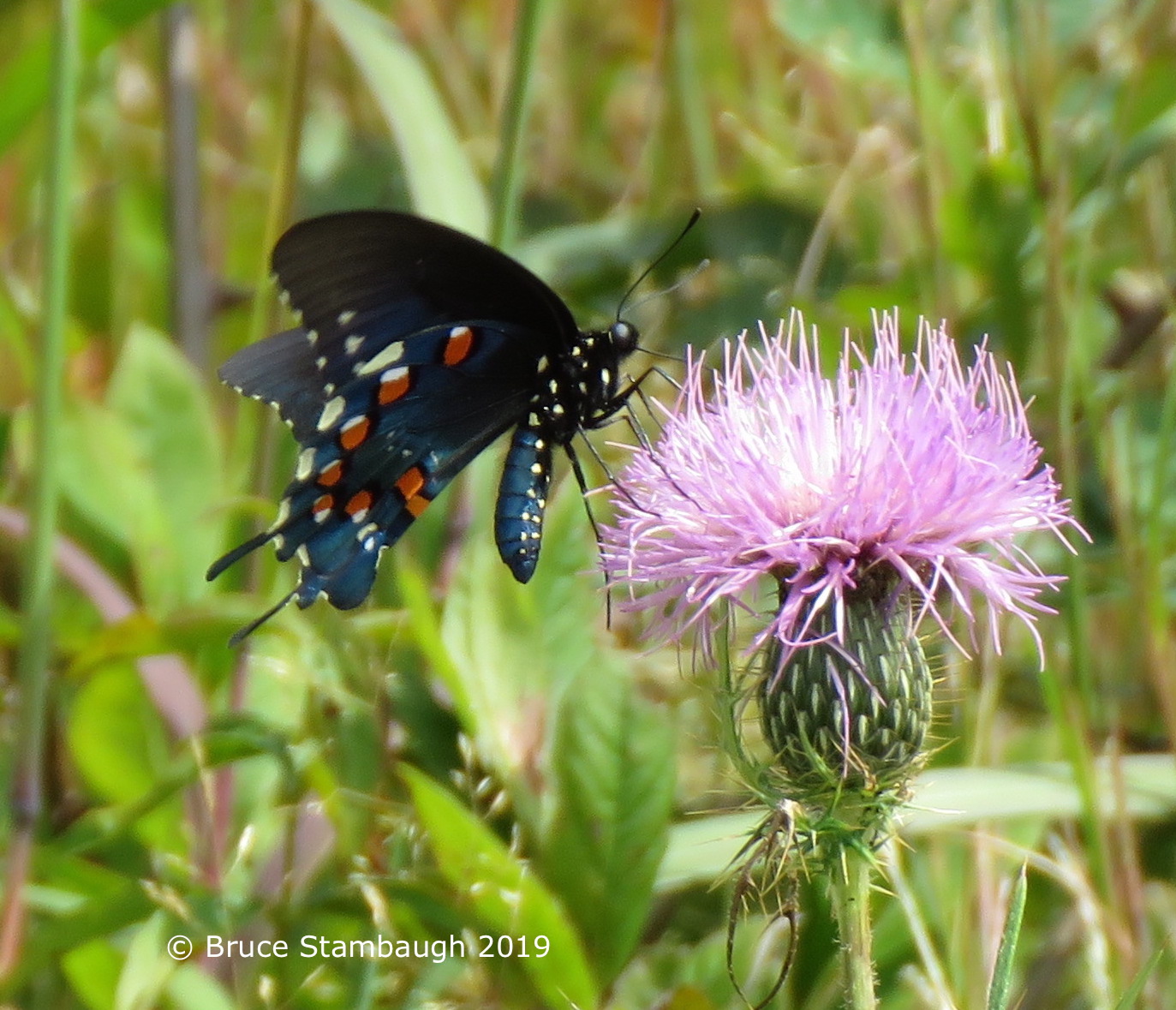
A migrating black tiger swallowtail butterfly.Since the governors have had to take the lead in issuing orders and health guidelines, rules and suggestions vary significantly from state to state. In part, that’s what has fueled our consternation.
We haven’t seen in person our son and his wife, who live in New York State, in more than a year. We have friends and relatives who have tested positive, but fortunately, they have all recovered so far. Too many others weren’t as fortunate.
County and street fairs, high school football, band shows, concerts, vacations, have all been canceled. Major League Baseball is trying to play a shortened season with no fans in attendance.
Virus or no virus, August will be August no matter what. Golden sunsets will blaze away in the hazy evening skies. Migrating birds and butterflies will begin to wing their way south.
We’ll continue to meet with friends, relatives, and worship remotely through technology.
Under the current dire circumstances, it’s the best and safest we can do. We’ll continue to do our shopping curbside.
Even given all that, I know that my August ambivalence must yield to patience, and patience to resolve. We have to see this global health crisis through for however long it takes. I’ll continue to be cautious, careful, and diligent. I am not ambivalent about COVID-19.
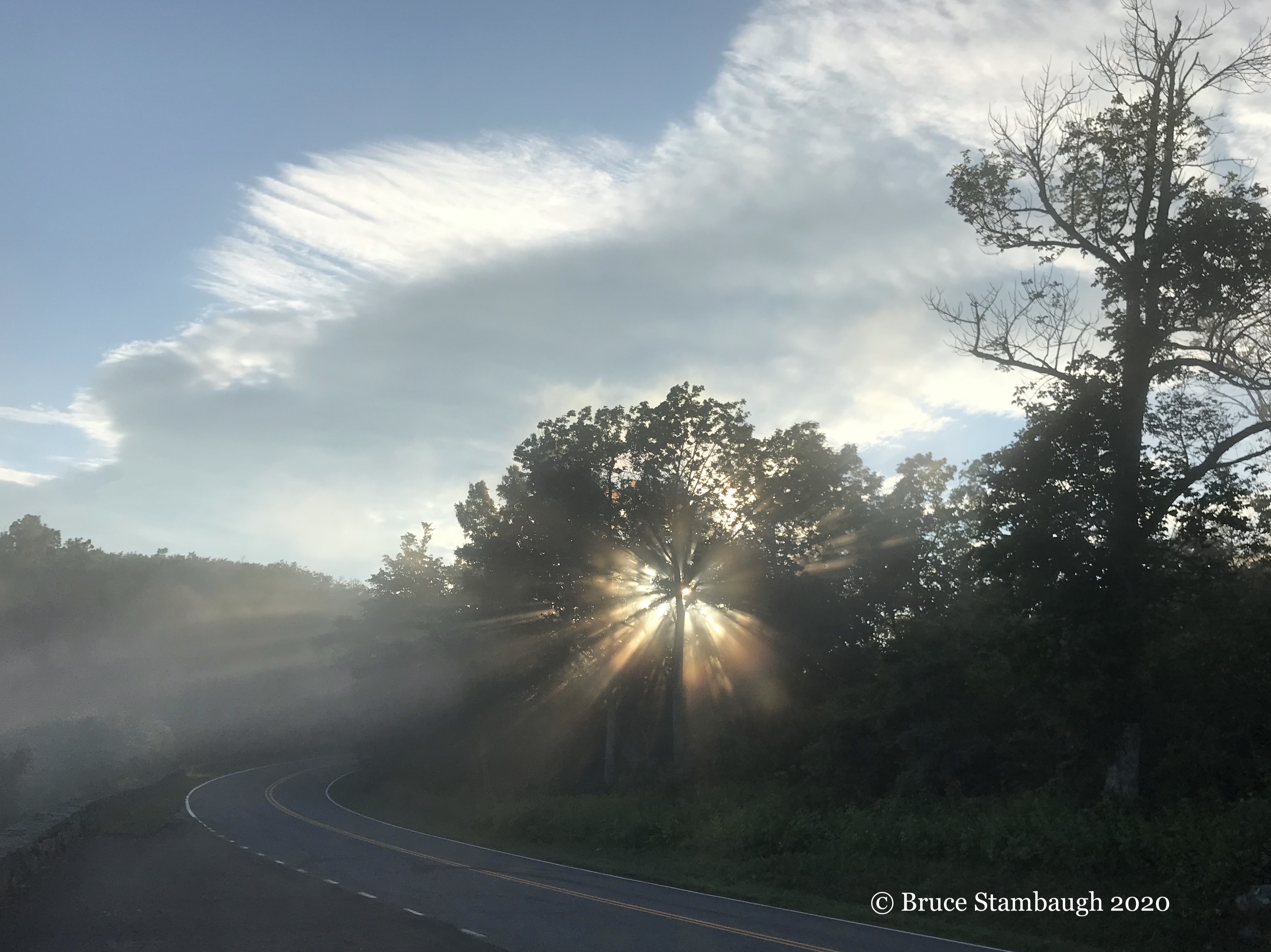
I was driving along the Skyline Drive in Shenandoah National Park early in the morning when I came upon this scene. Fortunately, the fog was rolling up the side of the Blue Ridge Mountains right at an overlook.
Watching the fog rise rapidly out of the Shenandoah Valley and up over the mountains was a treat. The sun was just peeking over the eastern ridge when I turned and caught this scene. The crown of the tree scattered the sun’s rays into the eerie fog, creating this spectacular scene. The high clouds perfectly framed my Photo of the Week, “Shining Through.”
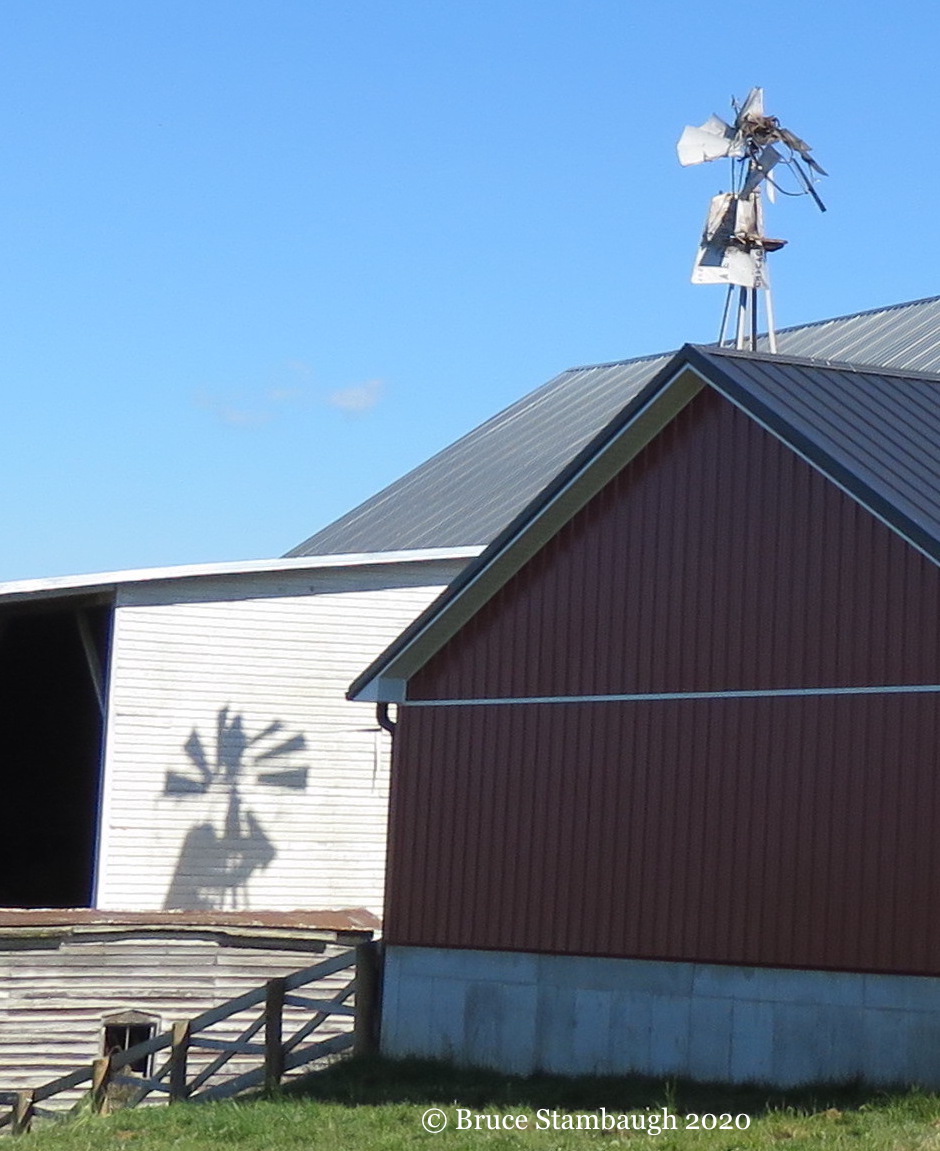
I loved how the morning’s sun cast a distinctive shadow on the bright, white siding of this Old Order Mennonite farmer’s barn. When I looked closer, it seemed like the shadow didn’t precisely match the shape of the mangled windmill. The fins appear to be collapsed. The shadow shows differently, however.
The difference between my vantage point and the sun’s position in the sky created the effect. “The Broken Shadow” is my Photo fo the Week.
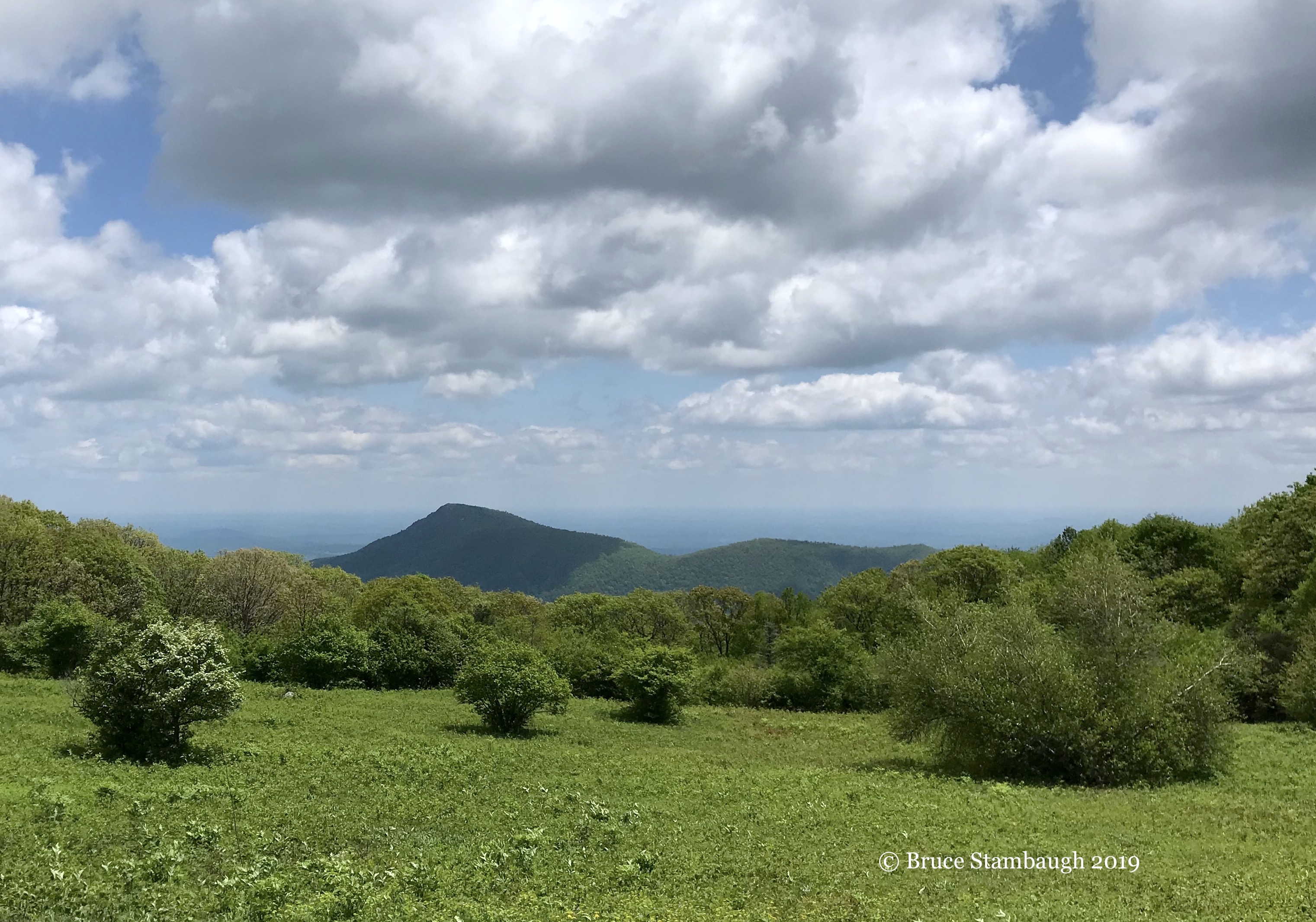
Old Rag is a popular hike in Shenandoah NP.
My wife and I have enjoyed Shenandoah National Park since we moved to Virginia three years ago. There’s a lot to love about the park, and it’s less than an hour away.
We’re not the only ones who appreciate it, of course. The estimates of annual visitors compare to those of Ohio’s Amish country, our former residence. Each location attracts millions of visitors a year.
Of course, the novel coronavirus pandemic has put a damper on tourist numbers everywhere. With the virus cases flattening out in Virginia, the park has mostly reopened.
When we want to break our stay-close-to-home routines, Neva and I head for the hills. Sometimes I will venture out alone, birding, hiking and shooting photos. It’s an enchanting place, a multi-sensory extravaganza.
This slideshow requires JavaScript.
I hear the beautiful song of an indigo bunting, and I raise my binoculars, scanning the area for the likely source of the melody. Novice that I am at identifying bird calls, I want to make sure I am matching the right species with the song. I’ve learned that, like human accents, bird calls of the same species vary geographically.
Once I find the bird, I switch to my camera to try to get a decent photo. With the trees in full summer canopy, that’s not easy to do. Now and then, I am fortunate to find a bird singing in the open, and I click away.
I catch a slight, silent movement out of the corner of my eye. Is it a doe with a fawn, or perhaps twins? Is it a black bear grazing before nightfall? One never knows. On warm days, keeping a lookout for a lounging timber rattler while scrambling on a rock outcropping is always a good idea.
Male Indigo Bunting.
South River.
Beauty in any season.
Hike rewarded.
Ridge view.
Gold and black.
Pink and blue.
Peregrine Falcons.
The park is a great place to take sunset photos, too. But sunsets in the mountains can be problematic.
The expansive, rolling Shenandoah Valley is bordered on the east and west by mountain ranges. Sunsets can be as disappointing as they are stunning. Weather plus geography equals a formula for the unknown.
When we lived in Ohio, all we had to do was look out our windows to know the potential for a spectacular sunrise or sunset. We were spoiled.
Here in the breadbasket of Virginia, the rising and falling topography makes it iffy to predict what the eastern and western skies will do at dawn or dusk, respectively. You hope, pray, and go for it. Sometimes you are disappointed. Other times, you are speechless.
From this…
…to this dreamland sunset in a matter of minutes.
(Mouse over the photos for the captions)
It can be cloudy and raining in the valley. The view from the mountains of the park, however, might be spectacular if you wait long enough. Pick one of the many west-facing overlooks along the majestic Skyline Drive, and prepare yourself for come-what-may.
The elevation of the old, folded mountains ranges up to 2,500 feet higher than that of the valley. From the park, you can see the Allegheny Mountains that mark the boundary between the Commonwealth and West Virginia.
Patience, intuition, and good fortune can be the formula for bathing in a dreamland. Even with a thick cloud cover, the sun can still break through, turning drabness into beautiful in the blink of an eye.
I’ve learned to be ready for the unexpected as the sun slinks below the jagged horizon. Will the clouds refract the sun’s rays into pinks and blues, lavenders and oranges? Or will they merely steal away the sun without fanfare?
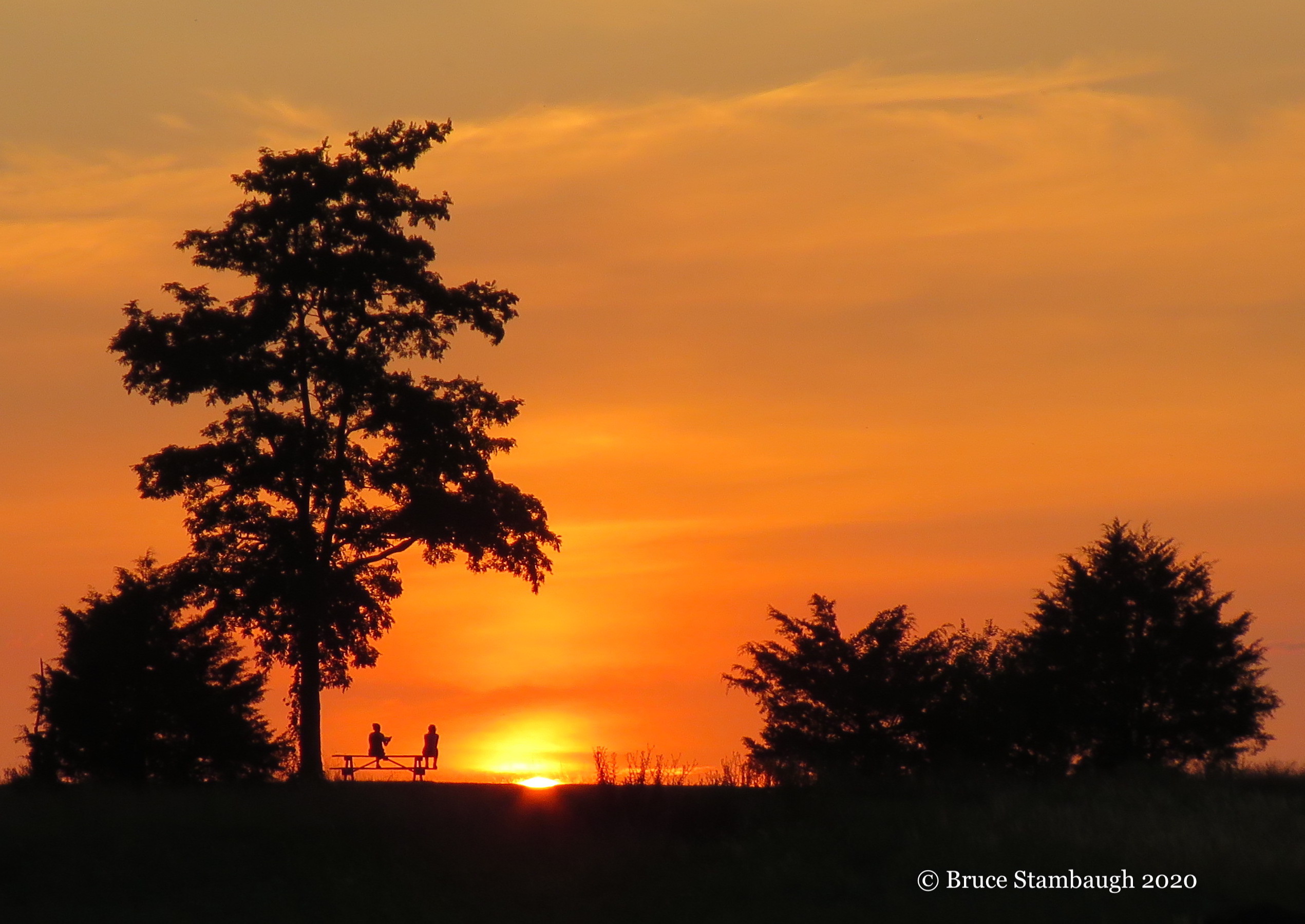
Sometimes a photogenic scene comes to you. In a way, that’s what happened in this photo. I was watching my grandchildren swim on a recent summer evening when the western sky caught my attention. With other adults present, I excused myself and walked to the only open spot on the property. The sky was rapidly turning orange with the sun nearing the tip of the Allegheny Mountains, which were beyond the little ridge before me.
I was entirely satisfied to let the tree and shrubs fill the foreground and let the sky do the rest. Out of the corner of my eye, I noticed two women walking towards the opening. They would provide the perfect scale for this frame if they stayed in view. Fortunately, they sat on the picnic table just as the sun disappeared below the ridge.
My subjects certainly had a better view of the sunset than I did. However, I was perfectly happy to capture this scene.
















 Roadkill Crossing
You must be logged in to post a comment.