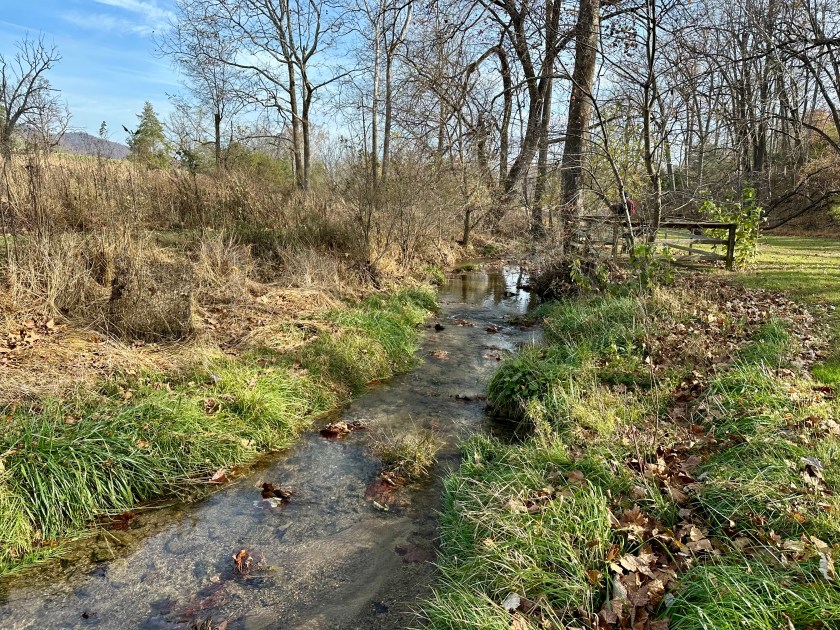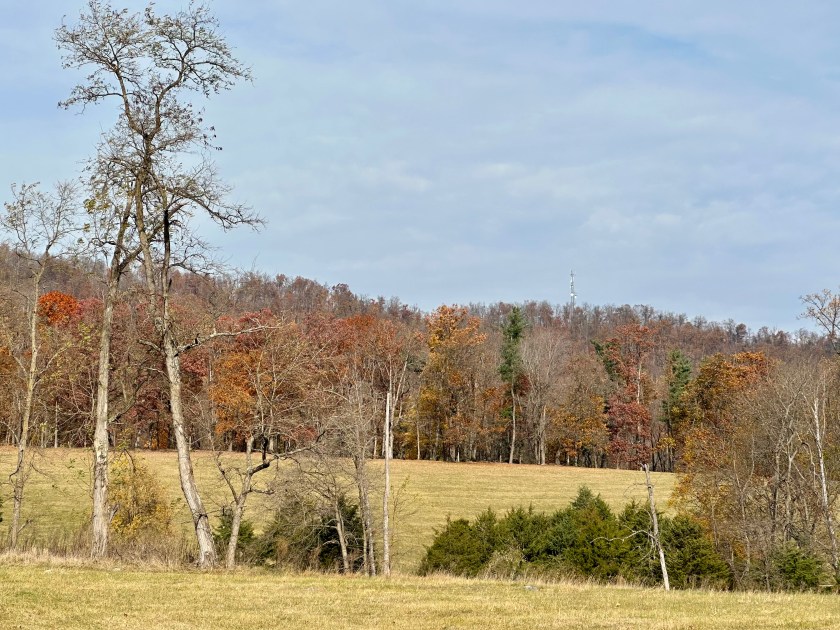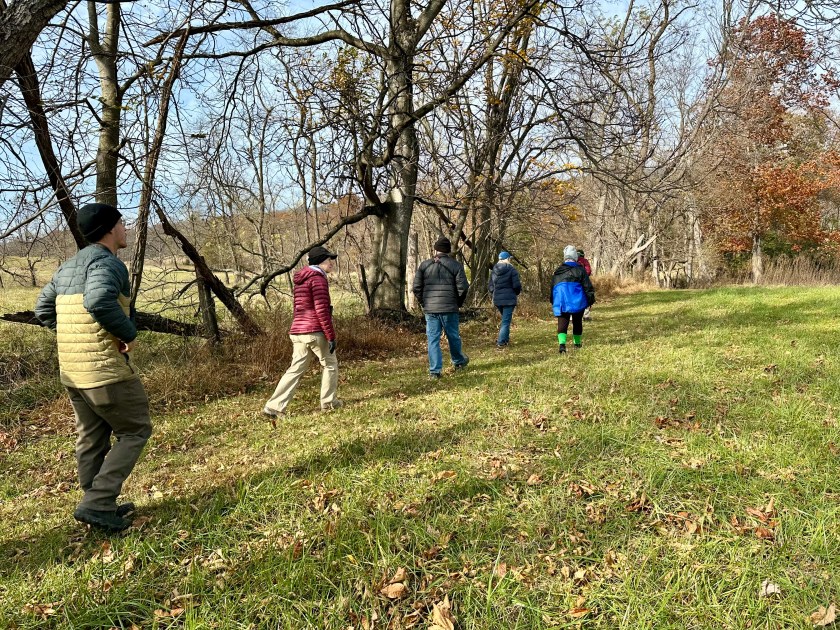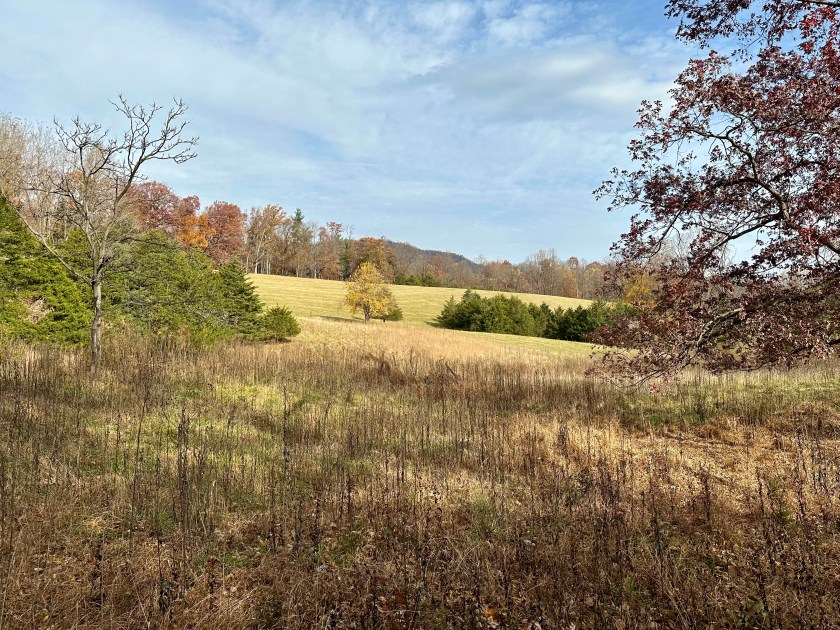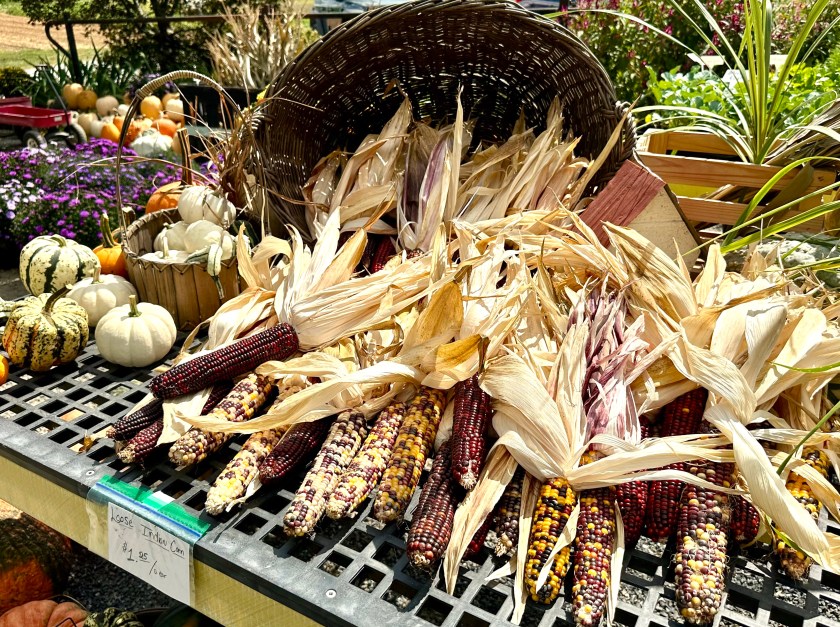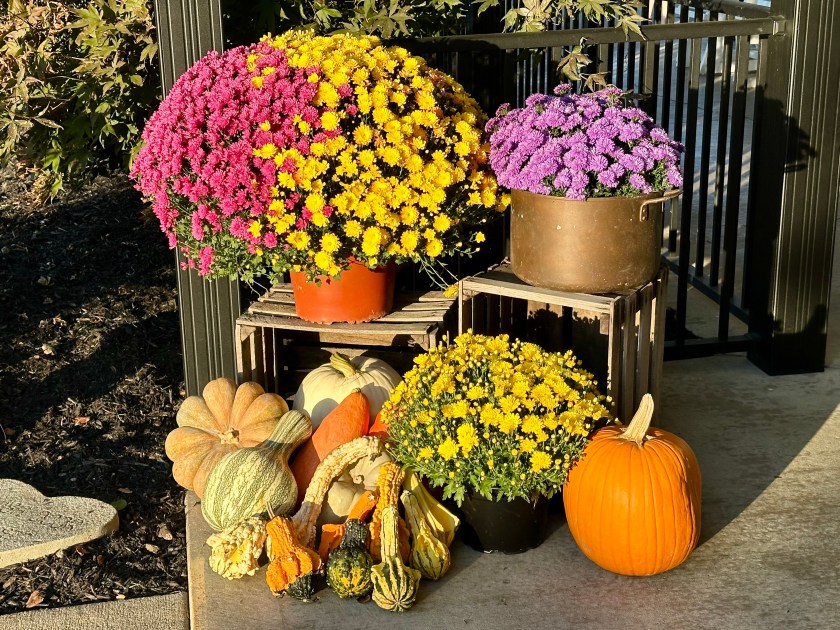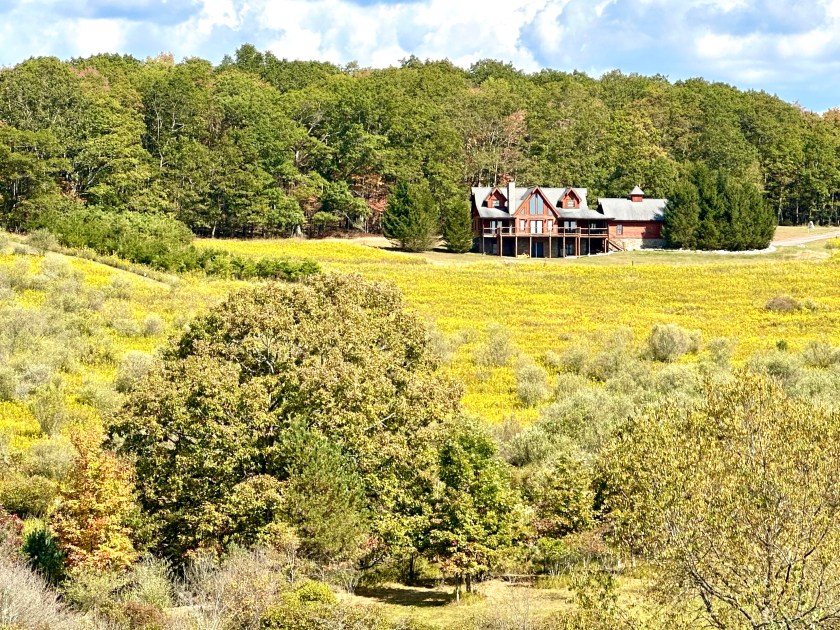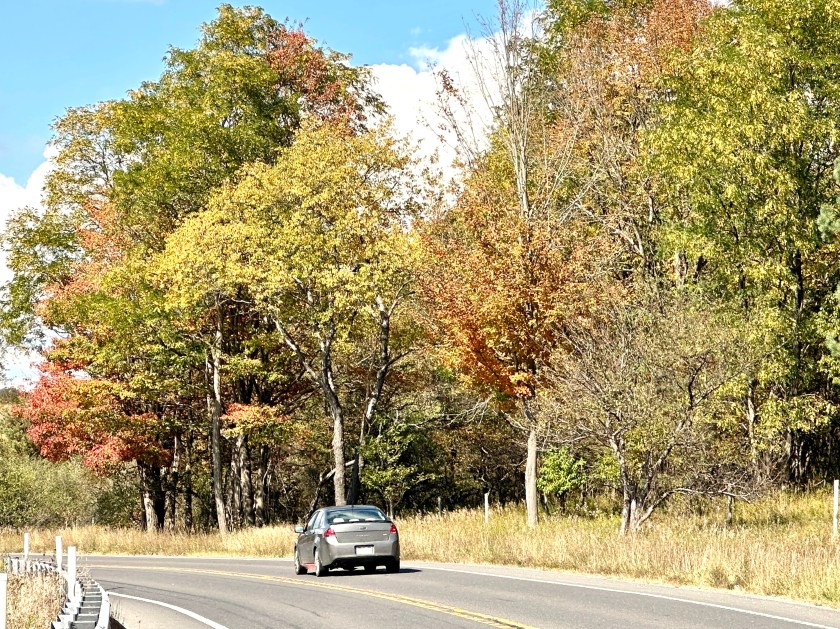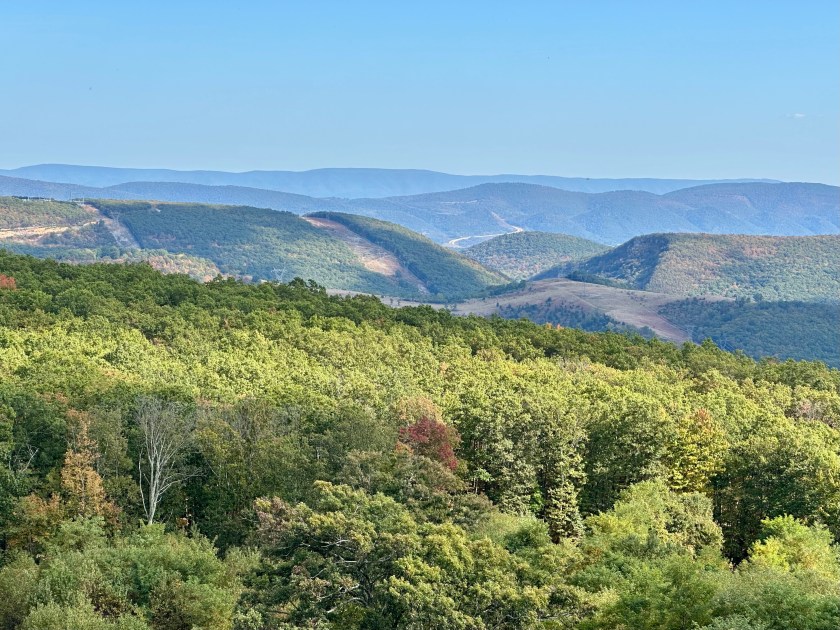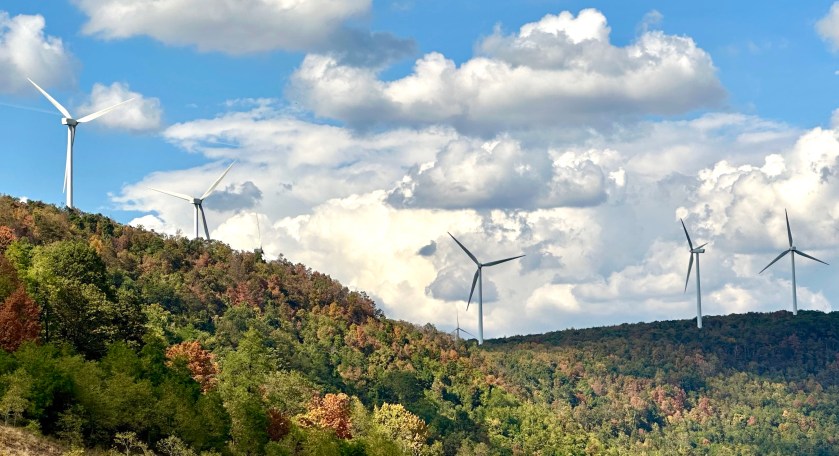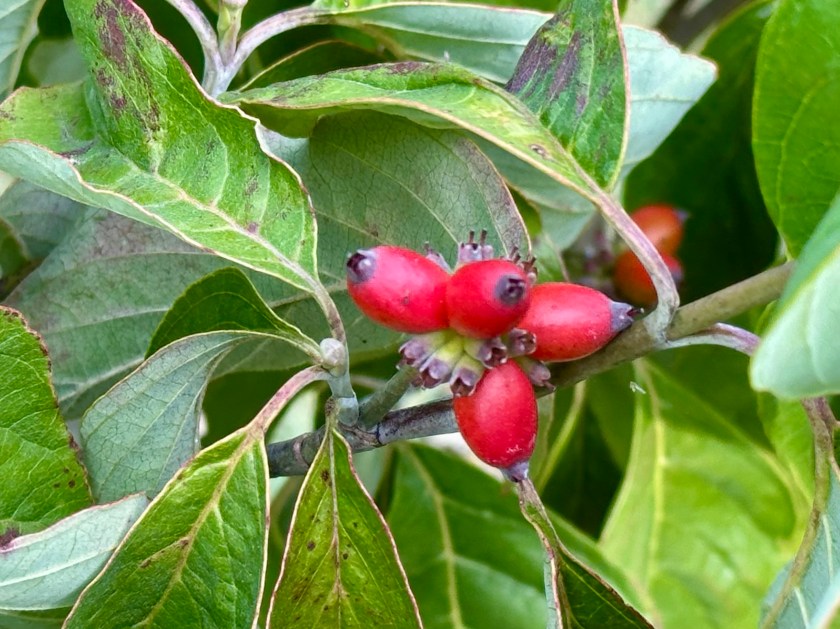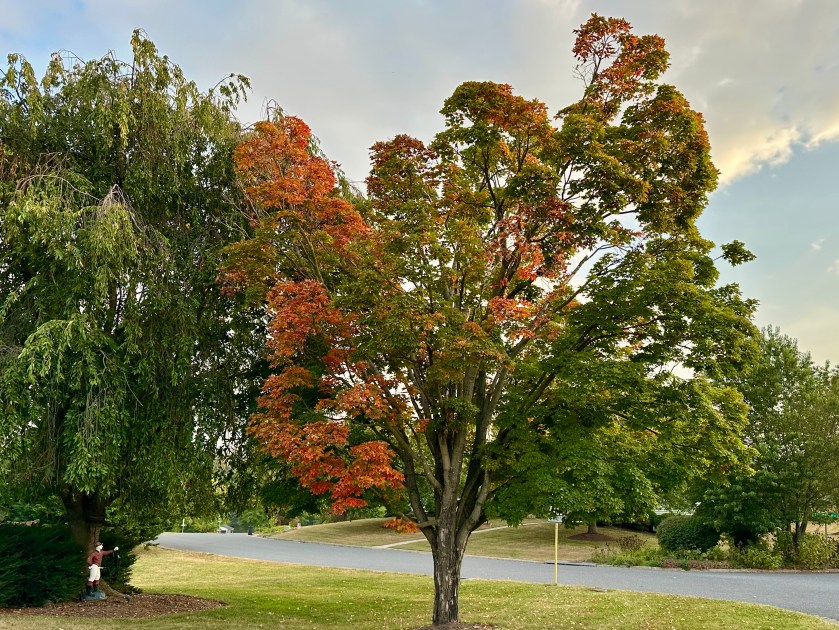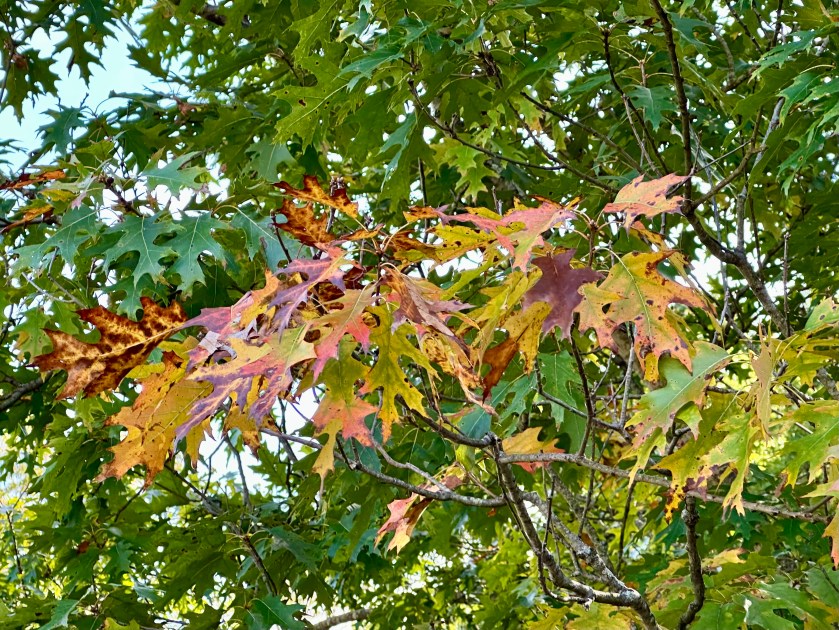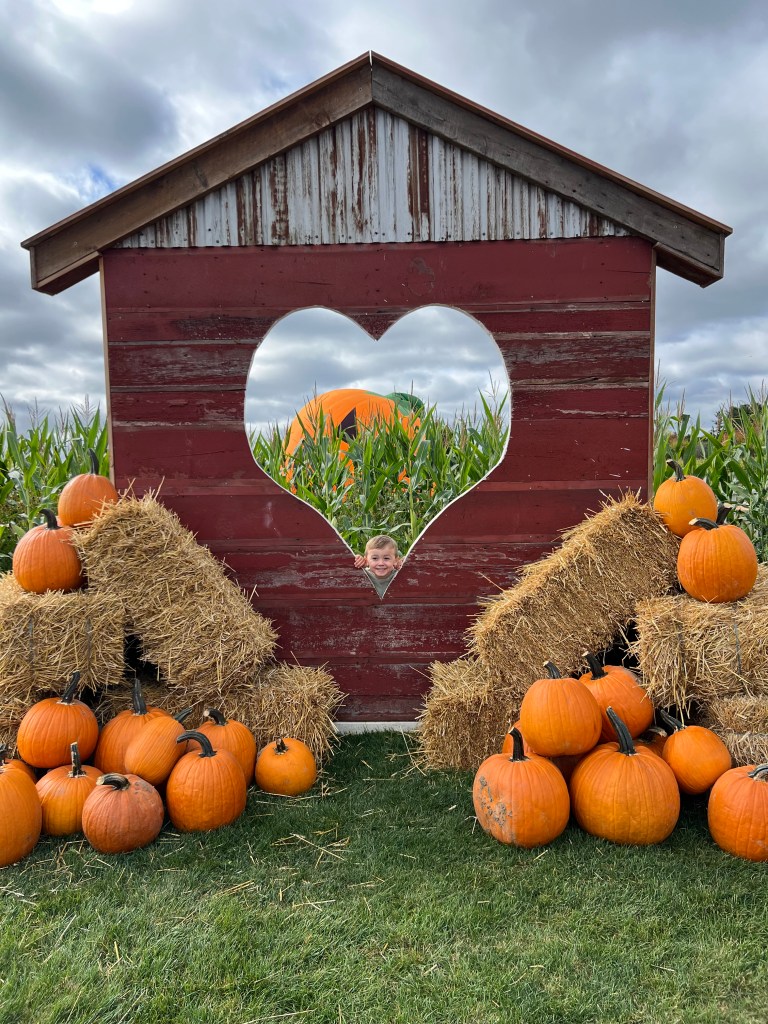
Our three-year-old grandson, Teddy, invites you to welcome in the Fall season, or if you live in the Southern Hemisphere, Spring. The Autumnal Equinox occurs at 2:19 p.m. EDT on Monday.
Welcome to Autumn!
© Bruce Stambaugh 2025

Our three-year-old grandson, Teddy, invites you to welcome in the Fall season, or if you live in the Southern Hemisphere, Spring. The Autumnal Equinox occurs at 2:19 p.m. EDT on Monday.
Welcome to Autumn!
© Bruce Stambaugh 2025

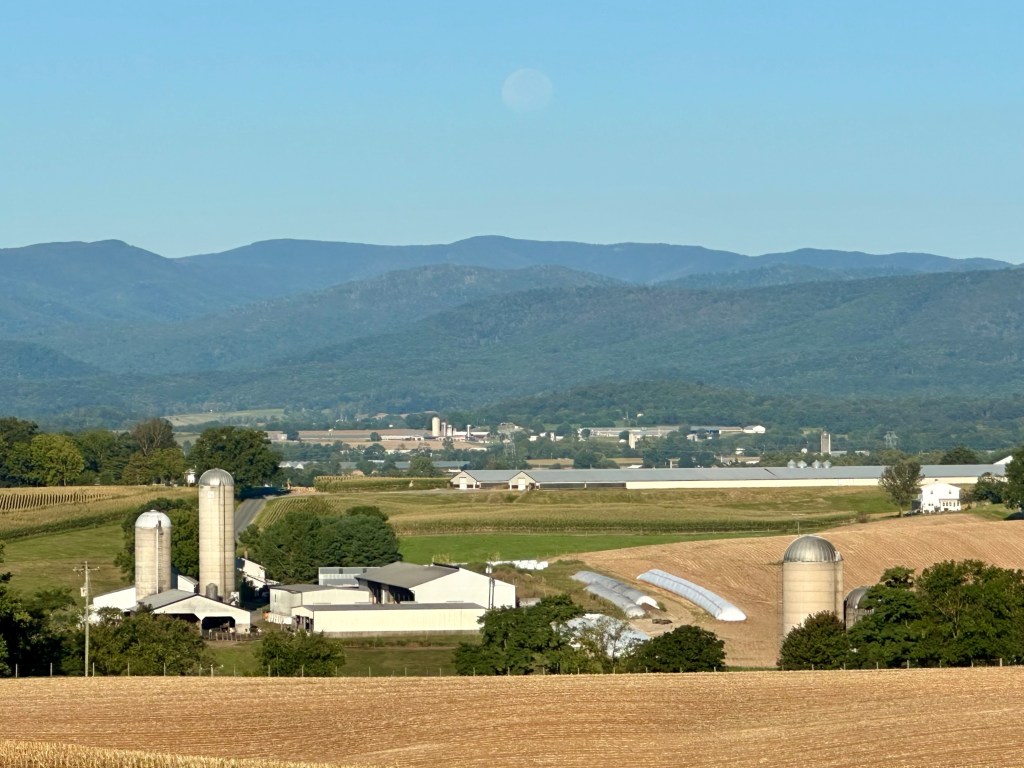
I had hoped to capture the Full Corn Moon setting over the Allegheny Mountains on the morning of September 7. However, the early morning’s sunrays blanched out the moon before it reached the western horizon.
Consequently, this is the best I could do. I hope you can find faint moon in the photo’s top center.
Enjoy your day!
© Bruce Stambaugh 2025

Driving home recently, a haze covered the late evening sun. It looked like a perfect orange ball.
By the time I arrived at a spot with a clear view to the west, the clouds had thickened, creating a surreal, shimmering scene. A minute later, the sun disappeared altogether.
Consequently, I felt fortunate to capture this shot.
© Bruce Stambaugh 2025

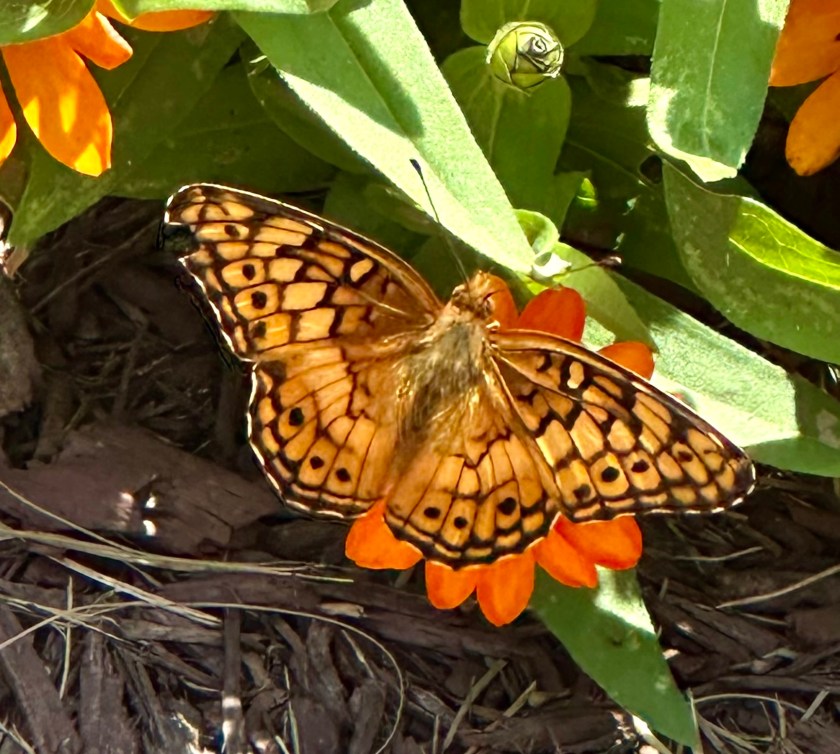
My wife and I were enjoying lunch on the back porch the other day when I spotted this lovely butterfly flit by. I had to get a photo, of course.
Variegated Fritillary butterflies fly low and love flowers. So, I stepped onto the patio and waited for this hyper little insect to alight on a blossom. It soon found one of the zinnias that bordered the patio to its liking, near where I was standing. It pumped its wings as it nourished on the flower.
According to Kenn Kaufman’s butterfly guide, the Variegated Fritillary butterfly is widespread over much of the United States. Their common zone for thriving spreads from Arizona to Florida, and as far north as Nebraska and Virginia. Some may find their way as far north as the central Canadian provinces.
It’s migration season, so be on the lookout for these flower-loving beauties.
© Bruce Stambaugh 2025

Finding fruition takes effort and patience. The latter is often the harder of the two.
Four years ago, I planted four swamp milkweed plants in our backyard, hoping to attract Monarch butterflies. In the first year, the seedlings sprouted tender, green shoots. Then, to my surprise, they disappeared.
It didn’t take me long to discover why. No sooner than the greenery emerged, a pair of neighborhood rabbits nibbled the fresh green leaves and stems. A three-foot wire-mesh cage around each plant promptly put a halt to that.
In the second year, the two biggest plants bloomed beautiful and fragrant blooms that only honeybees, bumblebees, and other insects enjoyed. I never saw a single butterfly, including Monarchs, even approach the flowers.
As fall arrived, I let the dried-up stalks stand. In February, I trimmed them back, hoping new branches would appear with spring’s arrival. I also learned that some birds used the thread-like insides of the old stalks for nest building. I smiled when American Robins tugged and tore long pieces and flew off.


The next two springs brought the same results. Beautiful flowers bloomed in June, but no Monarchs arrived. I enjoyed the flowers and insect pollinators, but grew mildly frustrated that none of my favorite butterflies came to the flowers.
This summer, I realized my blindness. The swamp milkweed was more useful to the orange and black-viened butterflies during fall migration.
The mature plants produced flowers, which developed into pods and yielded seeds covered in silvery silk. Large and small milkweed bugs outnumbered the many different insects on the plants.
In mid-August, migrating Monarchs began flitting around the milkweed plants. They landed on the plants just long enough to deposit eggs on the leaves’ undersides. Joy filled my soul.
In a matter of days, small greenish-yellow, white, and black striped caterpillars appeared and began munching on the leaves. More Monarchs repeated the process, and more and more caterpillars emerged. It didn’t take long for them to grow, inches long, in preparation for forming a mint green chrysalis. I counted 14 on the plants one afternoon.
Other insects on the Swamp Milkweed


Soon, a new generation of Monarchs would continue their journey south, overwinter in the central Mexico mountains, and fly back north, stopping along the way when it was time to lay the eggs on more milkweed plants.
In my desire to see Monarchs on the milkweed flowers, I had only envisioned one aspect of the amazing life cycle of these beautiful, useful butterflies. I was ecstatic to find a dozen caterpillars chomping on the milkweed leaves. When ready, they would then crawl off somewhere to form a chrysalis, ensuring the next generation.
Patience proved critical to fulfill my desire to help propagate the Monarch butterflies.

© Bruce Stambaugh 2025

No bigger than a 25-cent piece, this moth caught my eye as I walked out to get the mail. Its contrasting black and yellow wings stood out from the marbled pattern of our decades-old, well-worn concrete driveway.
Yet, the deceased insect seemed to blend in with the drive’s mishmashed surface. Perhaps it was the moth’s yellowish stripes that complemented the beige of the hardened concrete. The famous hard, blue limestone of the Shenandoah Valley, coupled with the crushed browns and grays of the area’s river rock, formed a flat tombstone of sorts that honored the dead moth’s demise.
Then again, maybe I am romanticizing my good fortune in spotting the moth at all. According to Kenn Kaufman’s “Field Guide to Insects of North America,” Nais Tiger Moths are widespread east of the Rocky Mountains.
Therefore, I hope you can also see this ubiquitous little moth, and trust it will be alive.
© Bruce Stambaugh 2025
I was out taking photos of some flowers my energetic wife has cultivated around our home. This patch of Zinnias caught my attention.
Just as I was ready to take the photo, this pretty Variegated Fritillary butterfly landed on a fuchsia-colored Zinnia in the middle of the patch. The lovely photobomb was a welcome addition to these bright flowers and a new focus to the photo.
© Bruce Stambaugh 2025

Our little tour group headed north out of Boston on the first full day of our land/cruise trip through parts of New England and into eastern Canada.
Looking at the itinerary, my wife and I realized that we would be seeing much of the same scenery that we had when we visited New Hampshire and Vermont six years ago. That didn’t deter our anticipation, however. We loved visiting both states and looked forward to new adventures.
We briefly visited Franconia State Park, and then drove eastward along the Kancamagus Highway that runs from Lincoln to Conway, New Hampshire. My wife and I drove it westbound in 2019.
It was much easier driving a personal vehicle than being a passenger in a large bus. I wanted to shout “stop” multiple times as we passed scenic overlooks and lovely White Mountain vistas. Of course, I didn’t do that.
The bus made two stops, both near the terminus of the famous scenic highway. Our first stop was at the Lower Falls on the Swift River that winds its way east toward Conway.
Because of the hot and humid weather, we weren’t alone at the falls. Families and couples, young and old, cooled off in the rushing waters of the aptly named river.
A boardwalk parallel to the river made it easy to observe the fun in the water. As a photographer, I sought a better angle near the refreshing waters, though I had no intention of joining the swimmers.
The above photo shows the majesty of Swift River and its gorgeous surroundings of lush evergreens and deciduous trees that climb the mountainsides. We were fortunate to have pleasant though warm weather.
I waited until the splashing went farther downstream before snapping this photo. The wavy boulders show the eons of wear and erosion from constant, fast-running water rushing down the valley.
Closer to Conway, where the terrain flattens out, the waters slow their pace and broaden their banks. Where the rapids and falls are is where the real action is. I was glad to see it again.
© Bruce Stambaugh 2025
Summer 2025 colors have not disappointed so far. We are only a month into the summer season in the Northern Hemisphere, and there have been plenty of opportunities to photograph her vibrant palette of hues and tones.
Here are two sets of my favorite representations of this brilliant calidoscope.
Landscapes


Please click on the photos to view them in full size.
Flowers
© Bruce Stambaugh 2025

Each year, a fairy ring or circle appears in our next-door neighbor’s backyard. They often don’t get to see it since they go camping as often as they can.
After several rounds of heavy recent rains, this circle of False Parosal fungi popped up. In the morning, only a couple of fungi appeared. By late afternoon, the fairy circle was nearly complete.
The circles are also known as an elf circle, an elf ring, or a pixie ring. They are naturally occurring rings or arcs of non-edible mushrooms. Some cultures consider these mushroom circles a bad omen, while others think they bring good luck.


This particular ring has occurred nearly every summer in the eight years we have lived in Virginia’s Shenandoah Valley. Shortly after taking these photos, the circle disappeared, not by some fairy’s magic trick, but by a lawnmower.
Have you ever seen circles like these where you live?
© Bruce Stambaugh 2025
Wildlife photos from the Chesapeake Bay region
Culture and Communities at the Heart Of India
Artist and nature journalist in the Shenandoah Valley of Virginia.
Photographer Of Life and moments
Personal Blog
Art is the only way to run away without leaving home. -Twyla Tharp
Writing generated from the rural life
writer. teacher. podcast cohost.
El amor cruza fronteras / Love crosses borders
You must be logged in to post a comment.