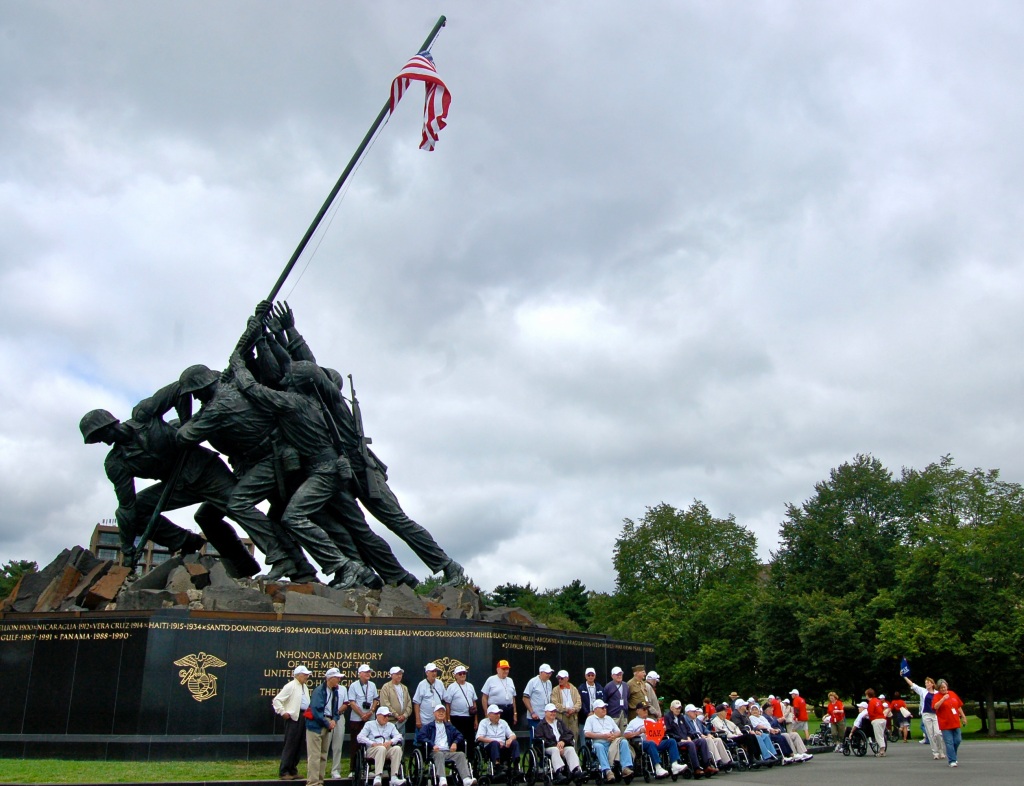
The U.S. Marine Corps Memorial, Washington, D.C. Photo by Bruce Stambaugh
Today is Memorial Day in the United States. It is a day designed to remember U.S. military personnel who have fought and died in wars.
The commemorative day originated as Decoration Day on May 30, 1868, in honor of Union soldiers who had died in the Civil War. It has since been renamed Memorial Day in memory of all loved ones who have died. Congress also set the day as the last Monday in May, making a three-day holiday.
Americans see the weekend as the start of summer. Many schools have already completed their academic year, making June vacations a real possibility for families who can afford them.
Memorial Day has evolved to include parades, 21-gun salutes at cemeteries, family gatherings, and picnics. Memorial Day falls on my wife’s birthday this year, so we will celebrate that with our family, too.
I took this photo on September 12, 2009, at the U.S. Marine Corps Memorial in Washington, D.C. The statue depicts the raising of the American flag on Iwo Jima during World War II.
My older brother and I had accompanied our late father on an Honor Flight out of the Akron-Canton Regional Airport in Ohio. The veterans on the flight gathered in front of the memorial for a group photo. Our father is third from the left in the front row.
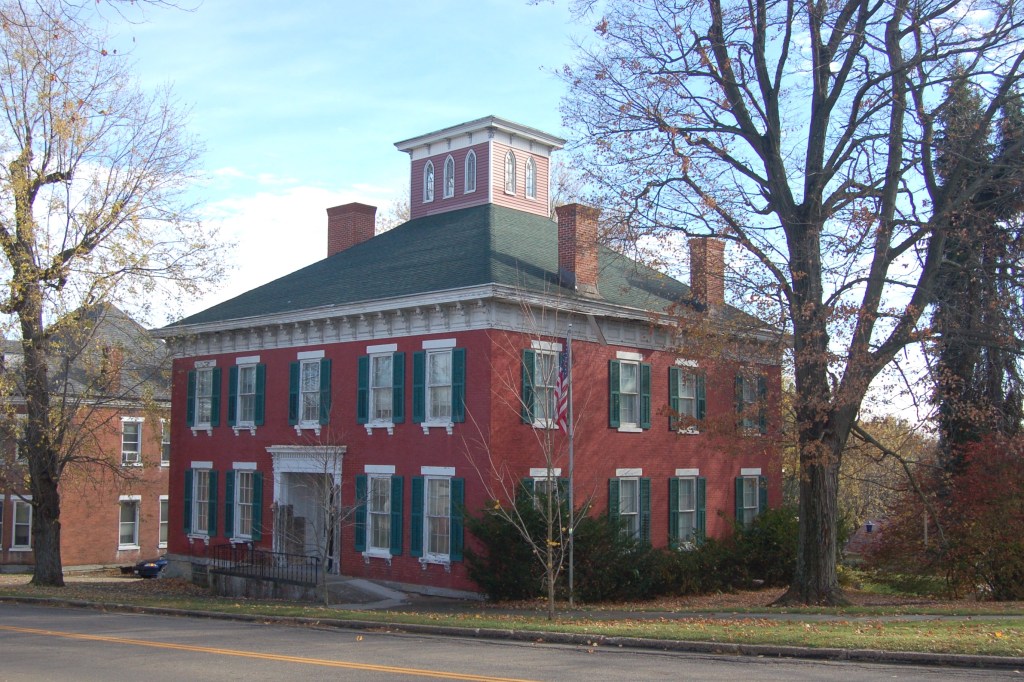
Lanterns lit in the cupula of this home led people on the underground railway to safety. Photo by Bruce Stambaugh
Would you be surprised if I told you that the great Jackie Robinson wasn’t the first African American person to play in Major League Baseball? Would you be even more surprised if I said he wasn’t even the second black player?
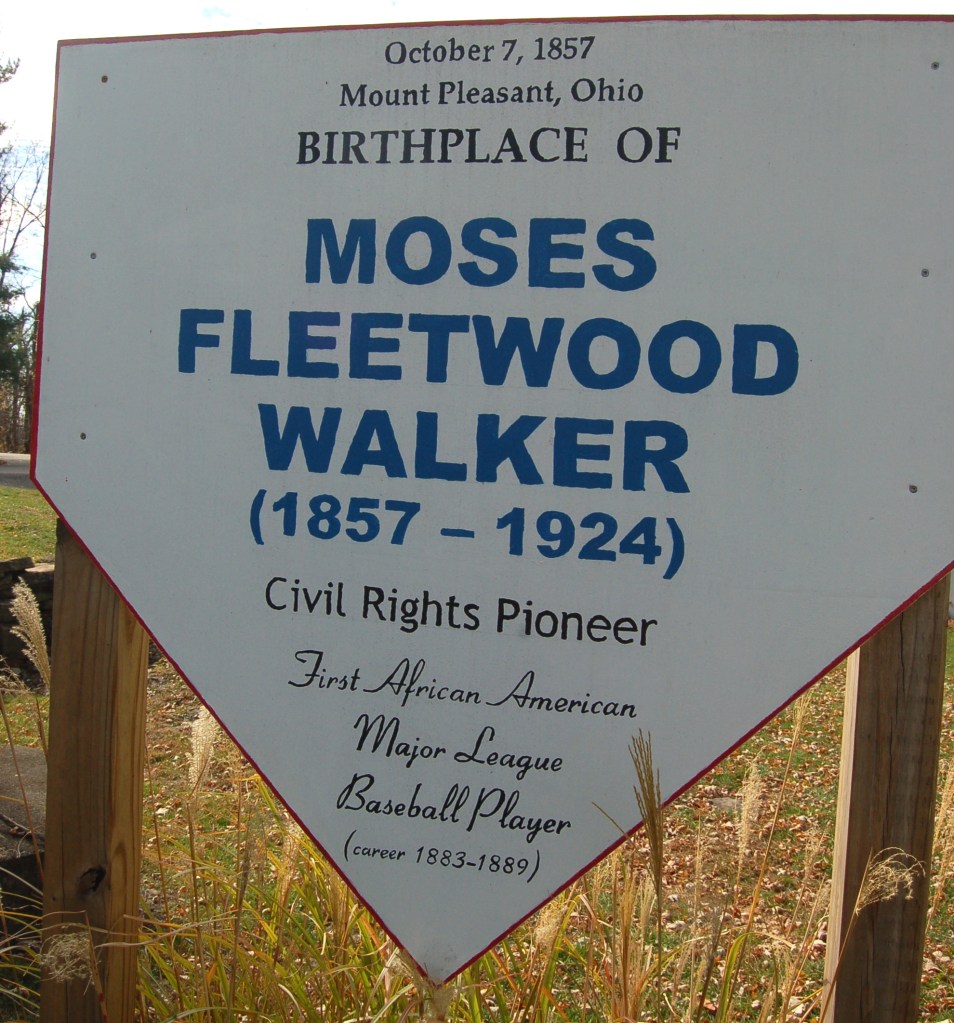
Hard to believe as it is, both comments are fact. Moses Fleetwood Walker, better known as Fleet, was the first Black player in the major leagues. He played catcher for the Toledo Blue Stockings in 1884. He signed with the team in 1883 after playing on the baseball teams of Oberlin College and the University of Michigan. Fleet’s brother Welday played a few games that same year, becoming the second Black player. That was 63 years before Jackie Robinson debuted with the Brooklyn Dodgers.
In the post-Civil War era, signing and playing Fleet and his brother was a bold move for the Toledo club, a member of the American Association, now the American League. In the Jim Crow era, it met with great hostility from Whites and, in an odd way, led to Fleet’s short career.
The plaque honoring Fleet Walker in the baseball Hall of Fame. Photo by Bruce Stambaugh
Hall of Famer Cap Anson, the star player and emboldened racist for the Chicago White Stockings, now the Chicago Cubs, refused to play with a Negro on the field. Toledo’s manager called his bluff, however. Knowing he wouldn’t get paid unless his team played, Anson relented. However, Fleet was injured and wasn’t scheduled to play that game. But because of the tense situation, his manager had Fleet play anyhow.
So, why isn’t Fleet recognized as the first Black Major League Baseball player? John Husman, a leading baseball historian, cites two reasons. Records in that era of baseball were not well kept. But more importantly, Jackie Robinson was a star player who played 10 seasons for the Dodgers, plus years in the Negro Leagues before that. The Negro Leagues didn’t exist when Walker and his brother played. Consequently, history forgot them.
Of course, Hall of Famer Jackie Robinson is rightly credited with being the first Black player in baseball. He broke the color barrier with his amazing baseball skills and longevity as a major league player. He earned his Hall of Fame enshrinement in Cooperstown, New York, and the annual recognition of Jackie Robinson Day every April 15th. It was the day he joined the Dodgers in 1947.
Moses Fleetwood Walker has a plaque in the Hall of Fame with a photo of him and his wife, recognizing his pioneer playing days. The plague also includes part of a threatening letter from the Richmond, Virginia, team. It is only one example of what he, his brother, and the teams he played for endured.
Part of one of the threatening letters Fleet Walker’s team received. Photo by Bruce Stambaugh
Despite the progress made by Robinson’s historic breakthrough, injustices to people and athletes of color continue. Only recently, a bronze statue of Jackie Robinson was stolen from a park in Wichita, Kansas. The perpetrators cut off the life-sized statue at the ankles, leaving only his shoes. The statue, valued at $75,000, was later found mutilated and burned at another area park. Clearly, the racist hatred expressed in the Richmond letter toward Fleet Walker so long ago still flares its ugly head too often today.
Ironically, Moses Fleetwood Walker was born in 1856 in the then-Quaker town of Mt. Pleasant, Ohio, a noted station on the underground railroad. Lantern-lite signals from the glass windows of a cupula atop a large brick home on the main street of the small village led travelers on the underground railroad to safety from the nearby Ohio River. Could his parents have been among them? It’s a query likely never to be answered.
At least their oldest son has a touch of recognition with a plague in the National Baseball Hall of Fame. It’s a footnote of baseball history, but at least he isn’t forgotten.
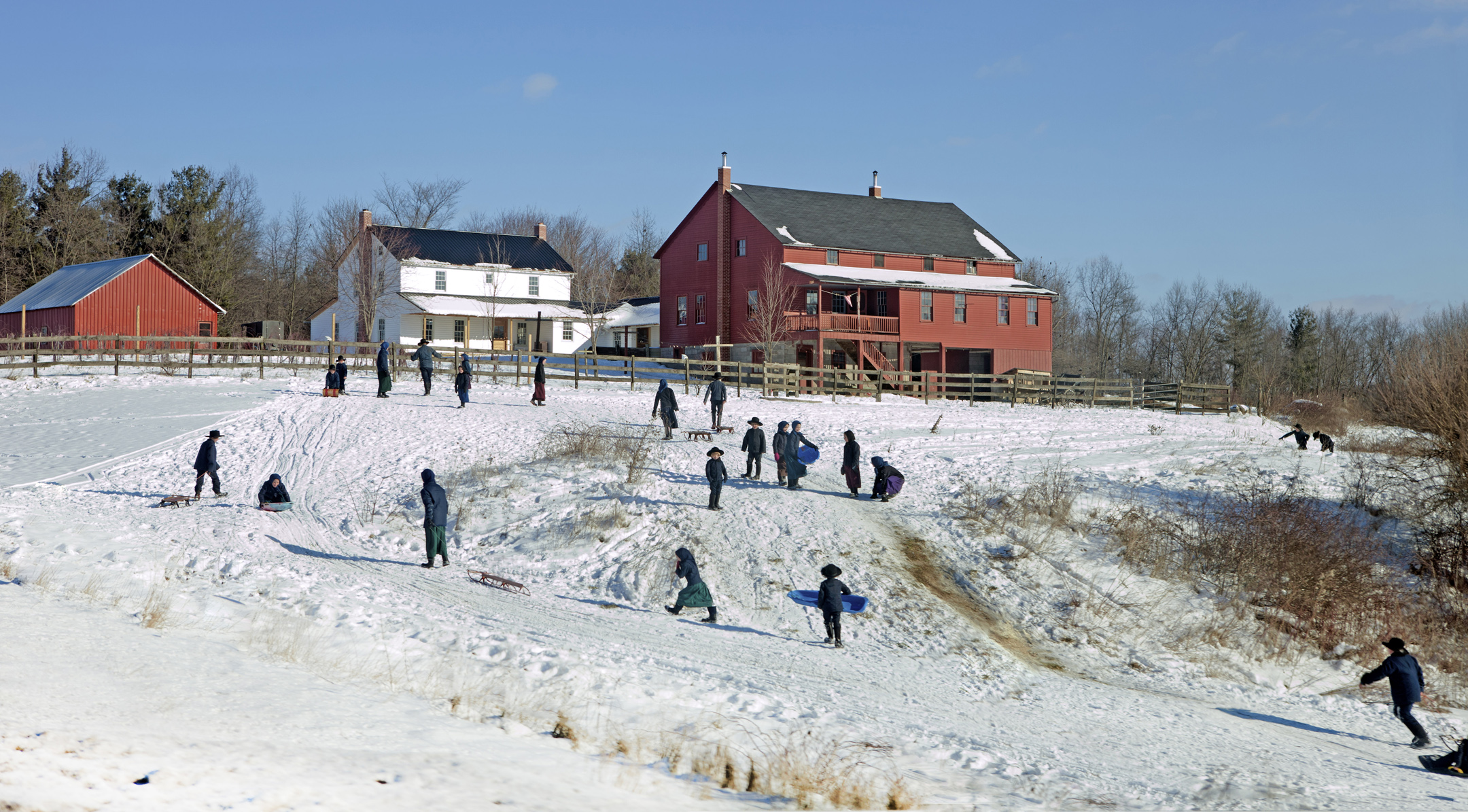
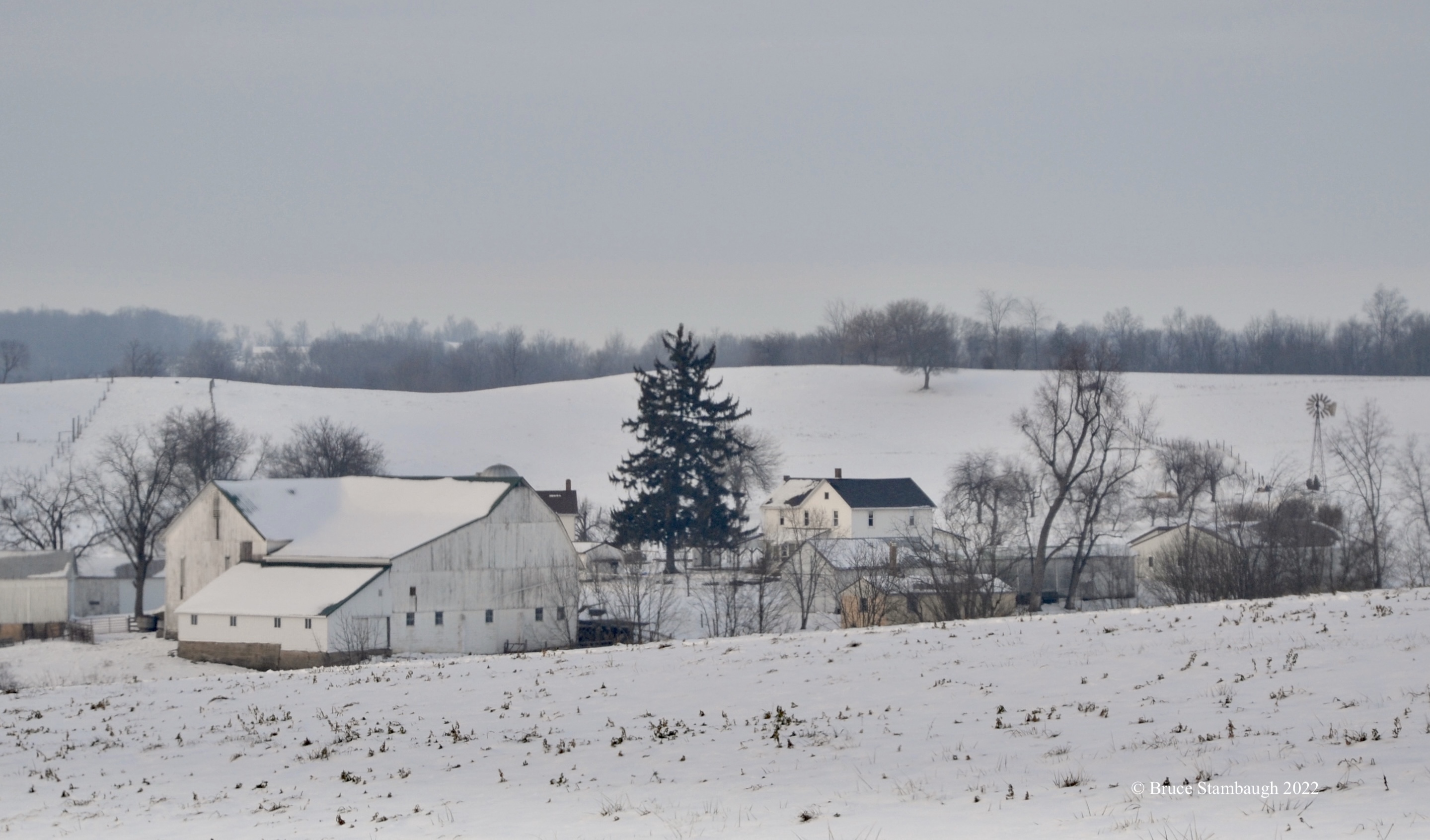
Swartzentruber Amish sled riding at recess in Wayne Co., Ohio.
There is “snow” better way to enjoy the January cold than sledriding. These Swartzentruber Amish students certainly enjoyed their afternoon recess gliding down a slippery hillside near their one-room schoolhouse.
After attending a meeting in Kidron, Ohio, 11 years ago, I decided to take some back roads home. It had snowed a few inches overnight, but the clouds had moved out by afternoon. The clear sky’s bright sun warmed the cold January day.
This scene came into view as I rounded a bend on a narrow township road. I knew I had to get a photo of these Amish schoolchildren sledding at recess. I also knew that I had to be discreet since I always tried to honor the Amish position of no photography.
I secured one photo undetected before moving on. The joyous laughter of the happy scholars made the satisfaction of this photo all the more enjoyable.
I had been struggling with high blood pressure for weeks. A prescription for pain set off a chain of events that has taken weeks to rectify.
The orthopedic surgeon prescribed pain medication for the discomfort in my hip, but only if my family physician approved. She did, but on the condition that I take my blood pressure morning and evening. The prescription tended to elevate people’s bp, she said.
It didn’t take long to prove my primary care doctor was correct. In a short time, my bp was sky-high. The physical symptoms I had foretold that it would be: a constant headache, lightheadedness, and my balance was off. Even though I was approaching age 75, I had always been steady on my feet. I wasn’t now.
The symptoms didn’t stop there. I was waking in the middle of the night and, occasionally, had pressure on my chest. Having served on the local volunteer rescue squad for 27 years, I knew that was a red flag. I stopped taking the pain med and returned to the doctor’s office.
Much to my chagrin, I was prescribed two more medications to help bring down my blood pressure. However, the symptoms and my elevated bp persisted.
Of course, all of this happened around the holidays. We had planned on attending a gathering of my siblings for the first time since the pandemic hit. Despite my uneasiness, we decided to go and drove the 350 miles from Virginia to Ohio. Fortunately, all went well, and we had an enjoyable time together.
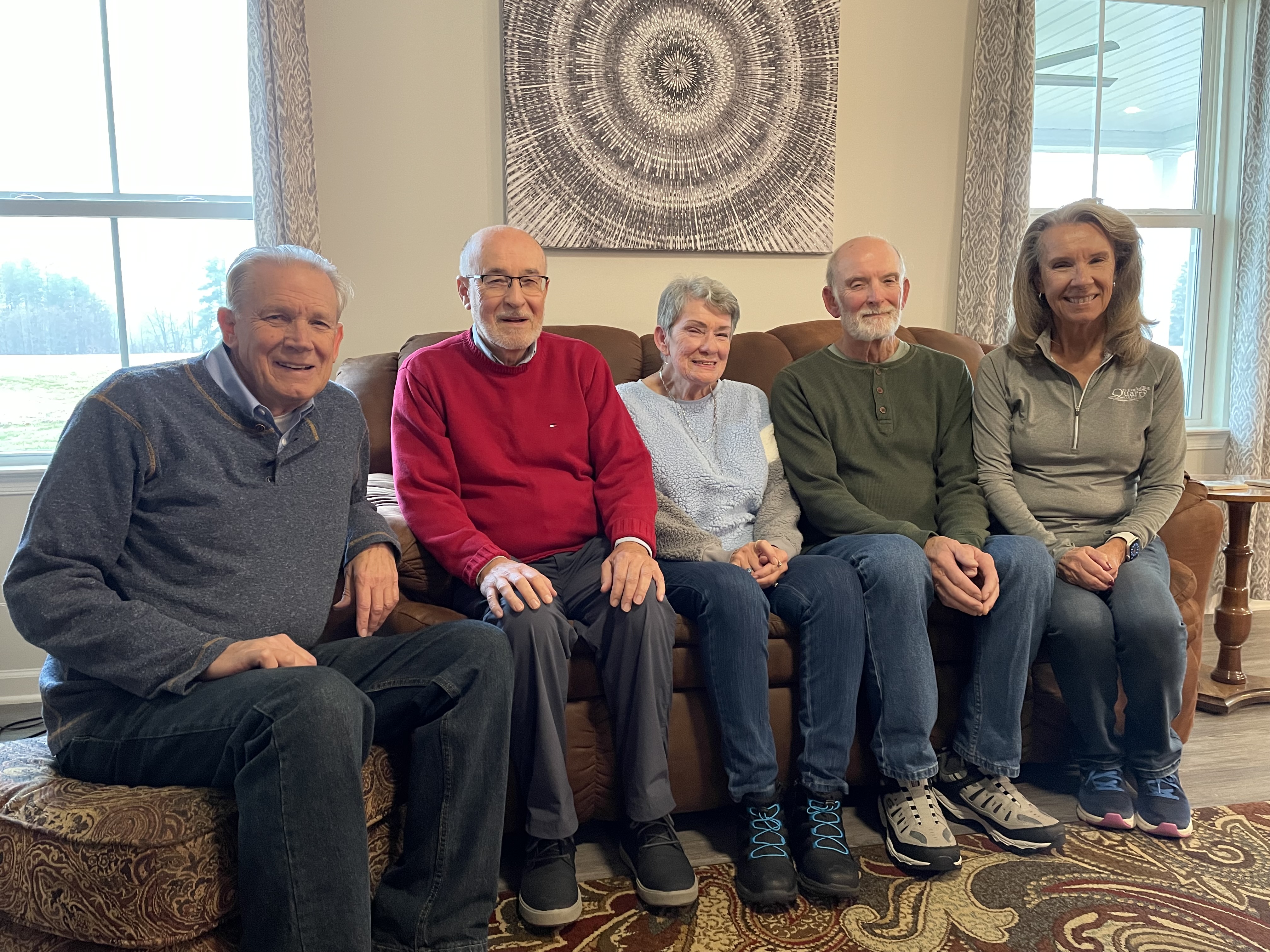
The Stambaaugh Five.
That evening, good friends invited us to a soup supper at their church in Holmes County, Ohio, where we had spent most of our lives and each completed 30-year education careers. We enjoyed more fellowship with other friends and acquaintances there. The soup was delicious, too.
As we were about to leave the church, however, I felt the heaviness in my chest again. My family doctor told me to head to the emergency room if that returned. The pressure had a habit of coming and going, so I just lived with it. However, the chest discomfort felt more intense this time. And it wasn’t the soup.
We had intended to return to Virginia the next day. Driving all those miles through primarily rural, mountainous terrain, with limited cellphone service, seemed risky. I didn’t want to put that burden on my loving wife. Our lifelong friends, who knew I was uncomfortable, encouraged us to go to the local small-town hospital instead. They reasoned I would get quick attention for my issue and receive excellent care. We took their advice, and headed to the little hospital’s emergency room. As soon as I mentioned pressure on my chest, I was ushered into a room and immediately examined.
I doubt the response would have been the same at a big city hospital, especially on a Saturday night. While the nurse and an EMT doing clinical time as part of his training got me settled, my wife checked me in. Later, she told me they already had our Virginia address, health insurance, and other information in their system.
Having lived in that rural community for 46 years, this was not my first visit to this facility. I had previously been treated there for assorted ailments over the years. Our daughter and son were both born there. I had also served on the hospital board for six years, almost two decades ago. So, yes, I had a particular affinity for this medical facility.
My blood tests and EKG came back normal, but with the chest pressure and my medical history, the caring ER doctor decided to admit me. She ordered a stress test and an echocardiogram. Unfortunately, those would have to wait until Monday morning.
Sunday passed surprisingly quickly. My wife sat by my side late morning into the evening. In between, nurses, aides, and a doctor came and went. The local social grapevine went into overdrive. Relatives and close friends helped the day zoom by with brief visits. My blood pressure lessened each time it was taken.
I was awakened early Monday by a cheery lab tech for the ordered tests. I passed the stress test with ease, and the echocardiogram revealed no blockage in the arteries to my heart. I was greatly relieved.
By early afternoon, the doctor on duty added a relaxing medication and sent us on our way. She also ensured we had all the documented results of every test I had taken. My family doctor was impressed when I saw her a couple of days later.
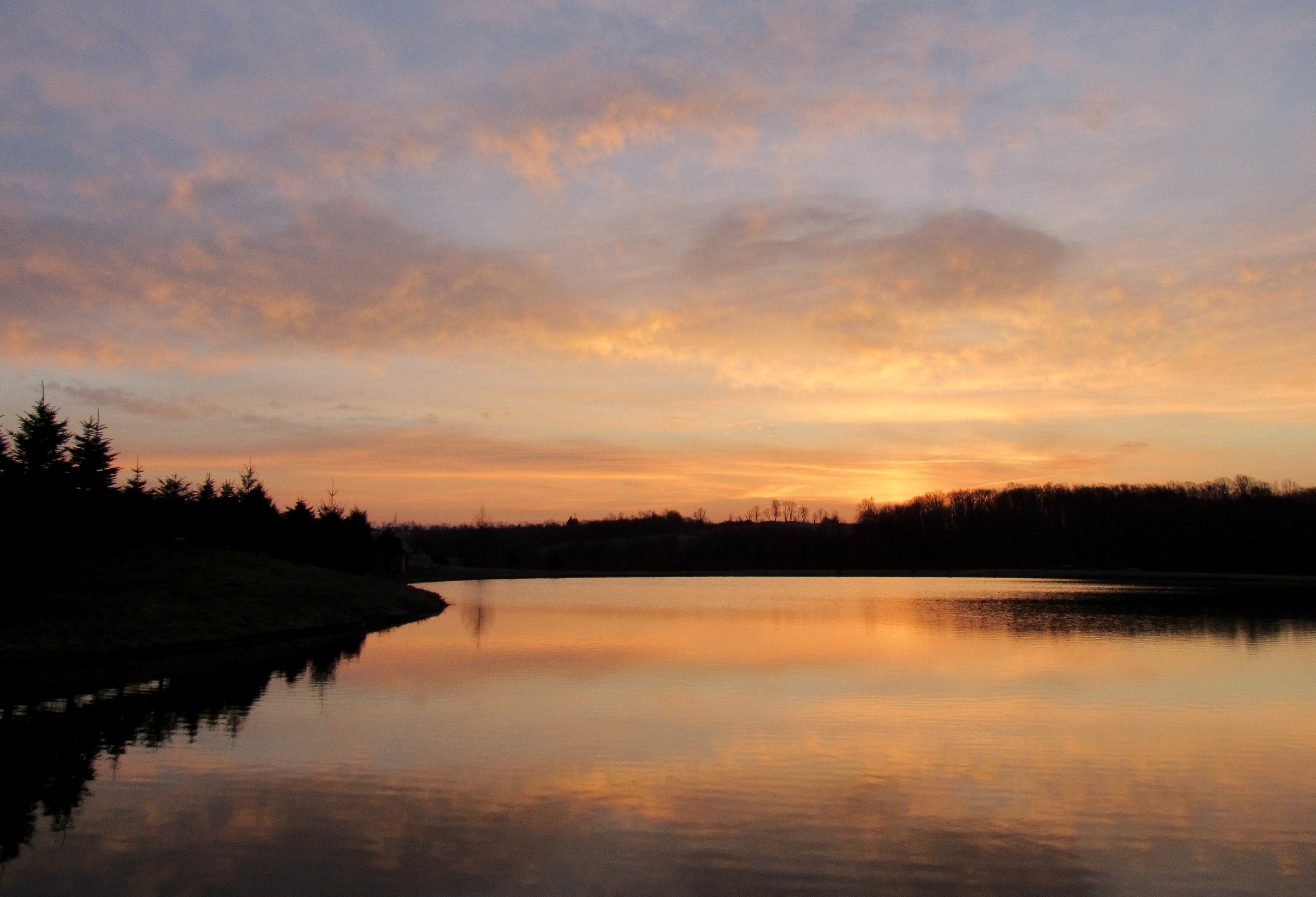
A Holmes County sunset.
I was so glad we had decided to let this small, rural hospital’s professional staff care for me. I am most grateful to my friends who encouraged us to vist Pomerene Memorial Hospital, and for its caring and professional personnel.
I was equally happy that I had heeded the warning signs. My blood pressure is back to normal, and so is my life.
So, if you have symptoms that don’t seem right, call your doctor or go to the nearest emergency room, no matter its size. Common sense always eclipses ego, no matter one’s age.
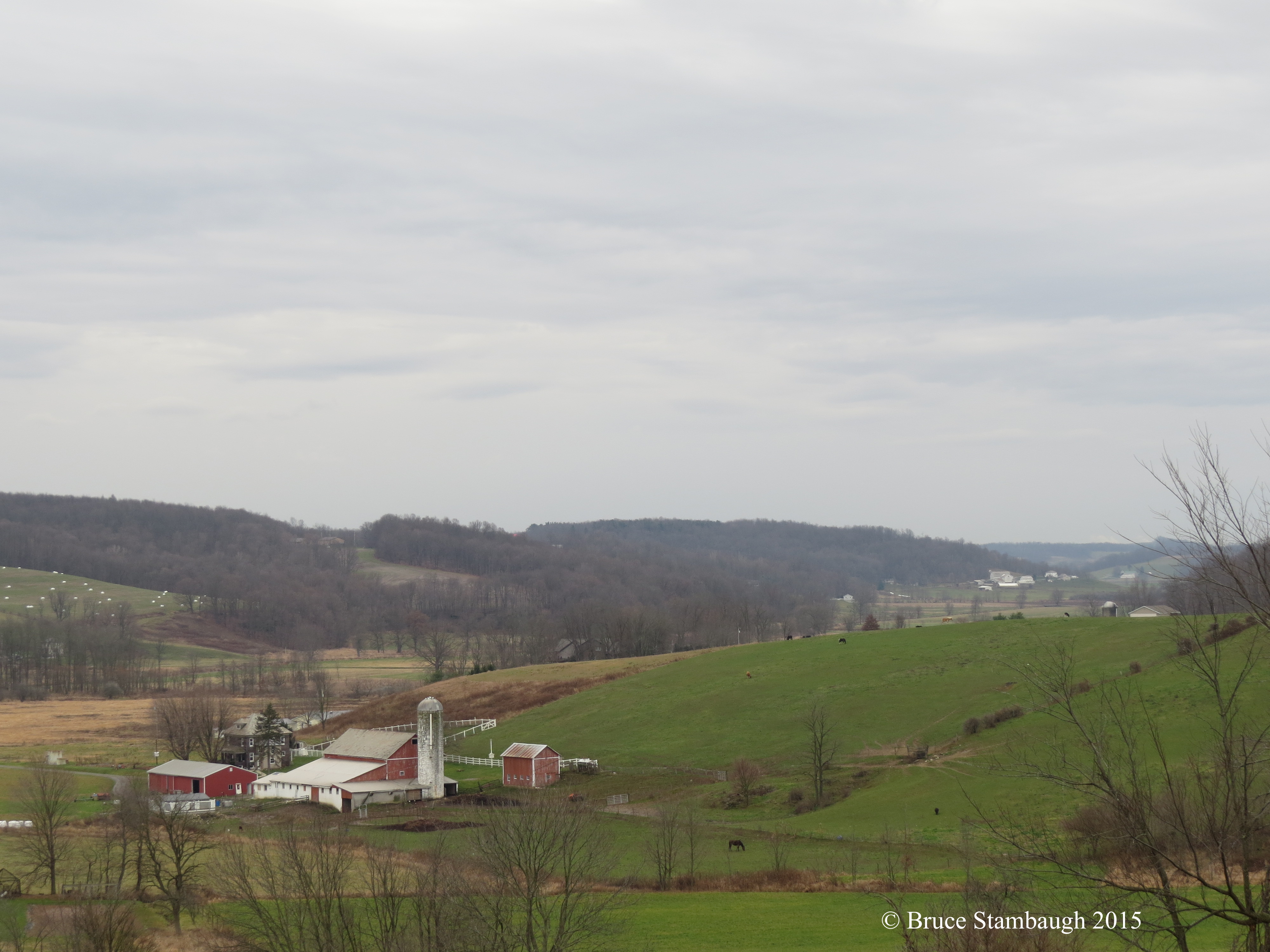
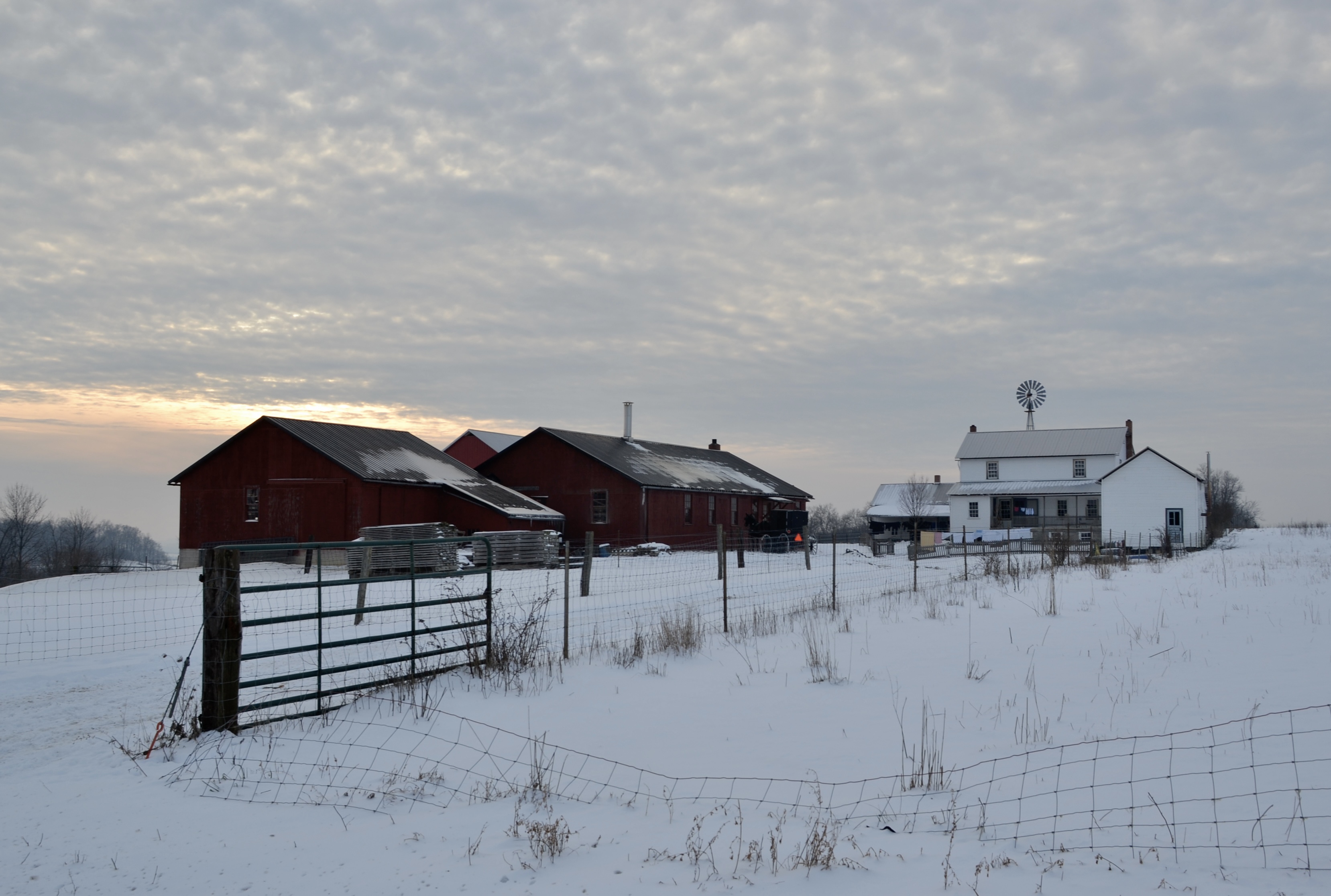
An Amish farm on Christmas Day in Holmes County, Ohio.
The Amish enjoy celebrating the holidays just as much as anyone else. However, they go about it a bit differently.
Defining how the Amish celebrate America’s most time-honored holidays deserves an introductory explanation. The Amish are divided into church groups, usually about 100 persons per church. And by “church,” they mean fellowship since they hold church in their homes, shops, or barns.
There are many different orders of Amish. The Swartzentruber Amish are considered the lowest order, with the New Order Amish the highest, since they hold Sunday school on alternate worship Sundays.
The terms “lowest” and “highest” are not intended to be derogatory or hierarchical. It simply is the way it is with the Amish. Those in between are the Old Order, the most numerous among the Amish population. The rules of the church leaders determine the orders.
Defining the Amish is a lot harder than their simple lifestyles might let on. Nevertheless, they all celebrate the holidays in one way or another.
The key to understanding how the Amish do so lies in this understanding. You can’t generalize about the Amish. Their holiday traditions and rituals vary from family to family, church to church, and sect to sect, not much different from any other culture or ethnic group.
Modesty is an essential principle in the values of the Amish. That fact can be seen in exactly how the Amish keep the holidays. In living out their faith beliefs, they do so joyously surrounded by food, family, and friends. Christmas decorations are insignificant.
Here is an overview of how any given Amish family might celebrate the holidays, save those in the Swartzentruber order.
Christmas
From the Amish perspective, anyone not Amish is considered “English.” The Amish recognize and respect Christmas’s universal demarcation on December 25. For them, Christmas is a sacred day in honor of the birth of God’s only son, Jesus Christ. Many, though not all, will fast before their family gathering.
Amish celebrate Christmas twice, once on the expected date of December 25 and again on January 6, commonly referred to as Old Christmas. In higher religions, that day is known as Epiphany.
The Amish appreciate natural holiday “decorations,” like this sundog, while a red-tailed hawk roosts on a distant tree.
Unlike the rest of society that celebrates Christmas, the Amish do not have Christmas trees or decorations. They will, however, burn Christmas candles in honor of the day.
After the usual Christmas meal of turkey or ham and all the trimmings, the Amish will spend the afternoon and evening playing table games, board games, and cards. None of the card games would involve using face cards, however.
Of course, it wouldn’t be Christmas without gifts, and the Amish also carry out this gift-giving tradition. The gifts will be wrapped, but usually nothing elaborate. Children will receive toys. There is, however, no mention of Santa.
Perhaps the closest to celebrating Christmas in contemporary fashion is done at the private or parochial Amish schools for grades 1 – 8. There are nearly 200 such schools in the Holmes County area. All are either one or two-room schools, where students walk to school. Before taking a couple of days off for Christmas, a program is held for parents, grandparents, and friends on the evening of the last day of school. The program usually consists of Christmas songs, poetic recitations, short plays, and possibly group singing.
Family and friends gather for a Christmas program at an Amish school near Mt. Hope, Ohio.
Old Christmas
Old Christmas harkens back to the change from the Julian calendar to the Gregorian calendar during the latter stages of the Reformation when Pope Gregory XIII switched Christmas to December 25. Out of tradition and reverence for their forefathers, the Amish have continued to honor Christ’s birth on January 6.
Unlike the more jovial December 25 celebrations, Old Christmas is more solemn. It begins with fasting, followed by another typical Christmas meal and more gift-giving. However, the emphasis is on reflecting and visiting as opposed to reveling.
No matter which holiday is celebrated, family is always essential in any get-together for the Amish. And that is true for any Amish order.
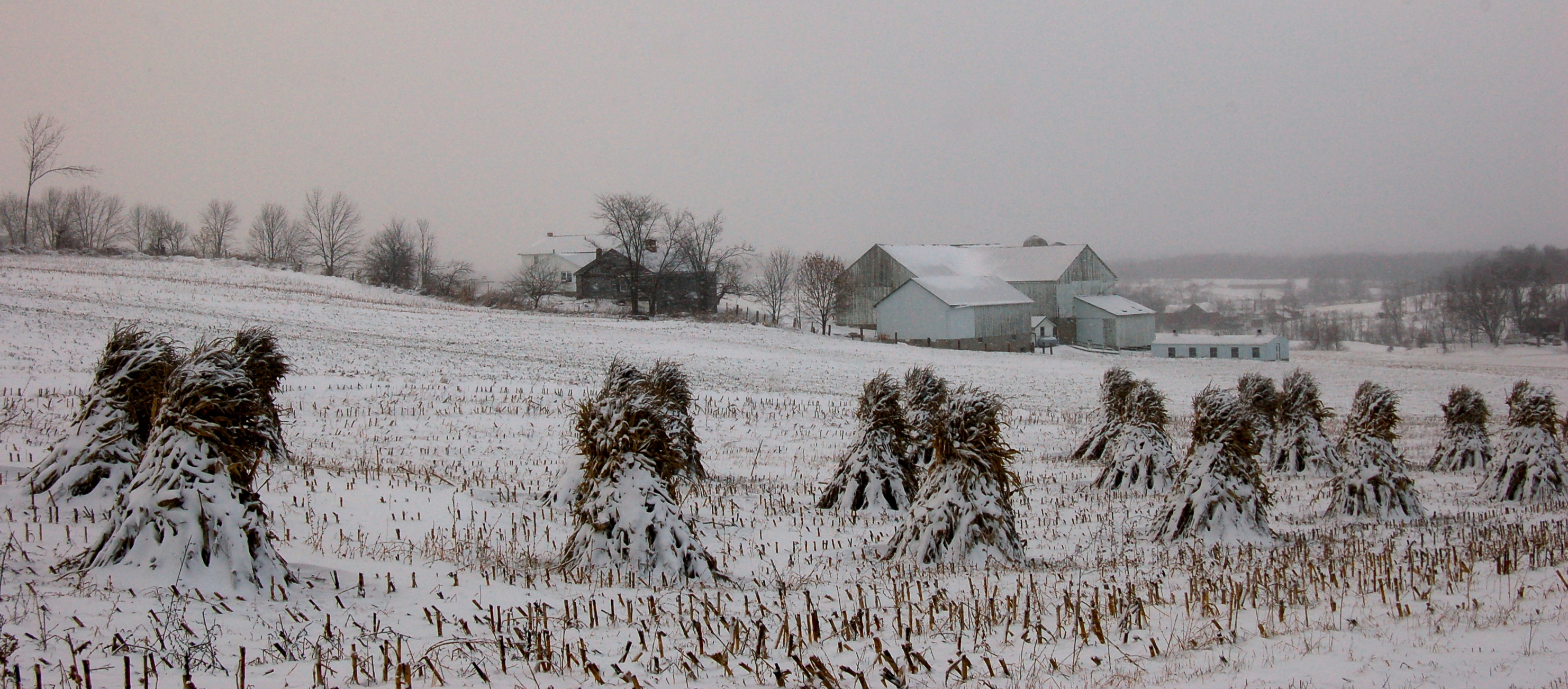
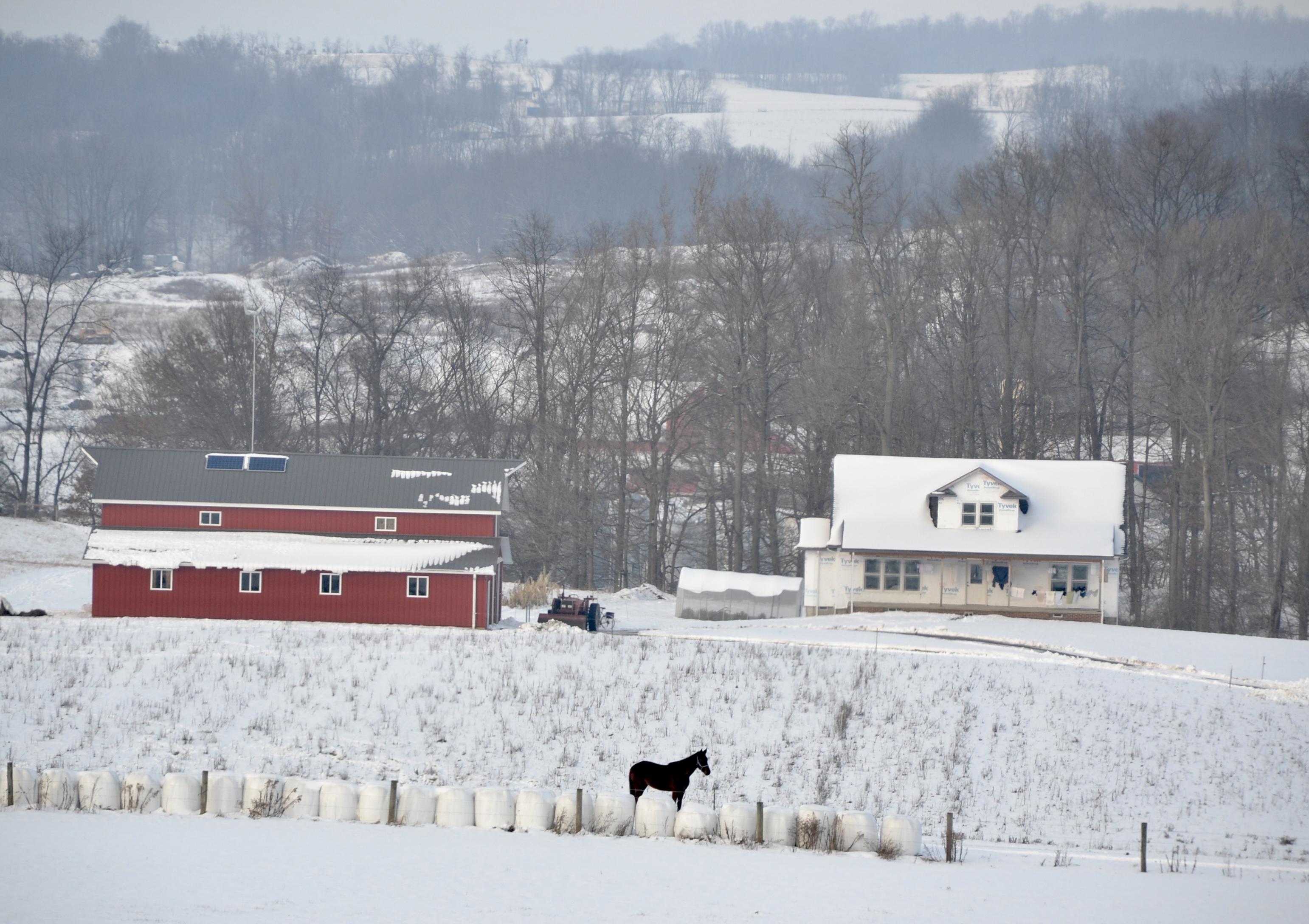
An Amish school sits empty on a snow hillside during a brief Christmas break.
What a difference just a few days make. A friend told me that the colors on Shenandoah Mountain were exceptional. A man I could trust, I took his comments to heart.
Viewing the colorful leaves of autumn is a long-standing tradition for me. Of course, living most of my life in Ohio’s Amish country spoiled me. I was surrounded by brilliant colors nearly every fall without having to leave home.
The view from our backyard at our former Ohio home in Amish country.
I needed to satisfy that desire to participate in autumn’s color fest. The Saturday morning after my excursion on Skyline Drive, I headed west on US 33. It’s not just the main route west out of Harrisonburg, Virginia. It is the only roadway west that traverses the Allegheny Mountains into West Virginia.
The drive to the summit of Shenandoah Mountain takes about half an hour from my home. I headed out mid-morning, and as I reached where the road runs parallel to Dry River, the main waterway of Shenandoah Mountain, I changed my course. It was evident that the afternoon light would better illuminate the beauty of the leaves.
Not wanting to waste my attempt, I turned into a locally popular park, Riven Rock. In the summer, families go there to cool down from the heat and humidity by playing in the clear, placid waters of the braided stream. Here the morning sun proved me correct. Only the southernmost leaves were highlighted while I stood in the shade on the eastern bank. I decided to try again in the afternoon.
The Dry River, Riven Rock Park, Rockingham Co., Virginia.
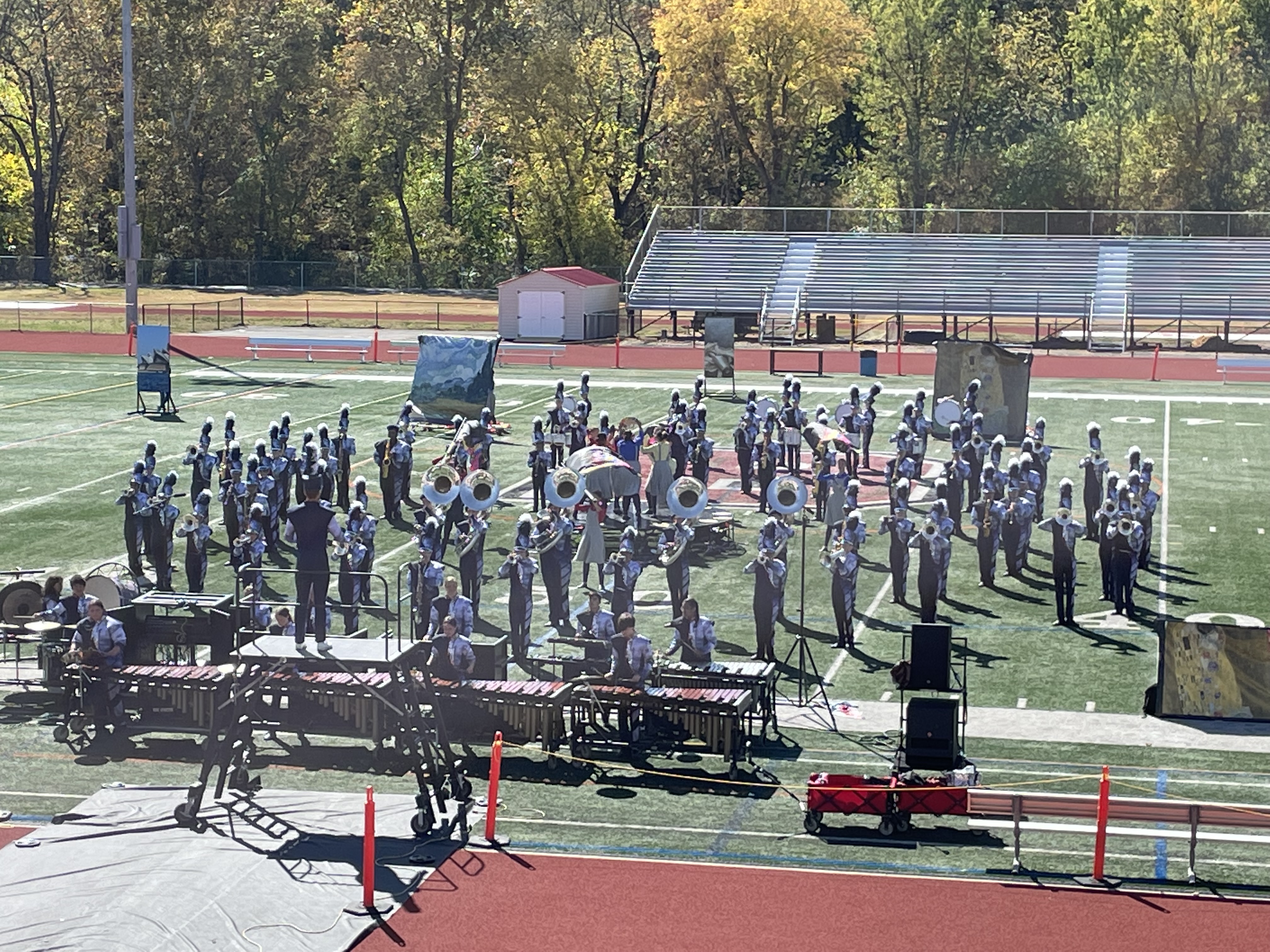
Before venturing out again, however, my wife and I attended a high school marching band concert at nearby Bridgewater College in the town from which it derives its name. We watched our second grandson and his bandmates perform a great show. So did some of the sugar maples on campus.
Our grandson after the performance, the marching band, and sugar maples.
I headed out again just after 3 p.m. I planned to drive to the top of Shenandoah Mountain, where there is a parking lot for a trailhead. On the way up the twisting road, I noted places where I could pull off to photograph nature’s glory. And I could see that the higher I went, the richer the colors. I was pumped.
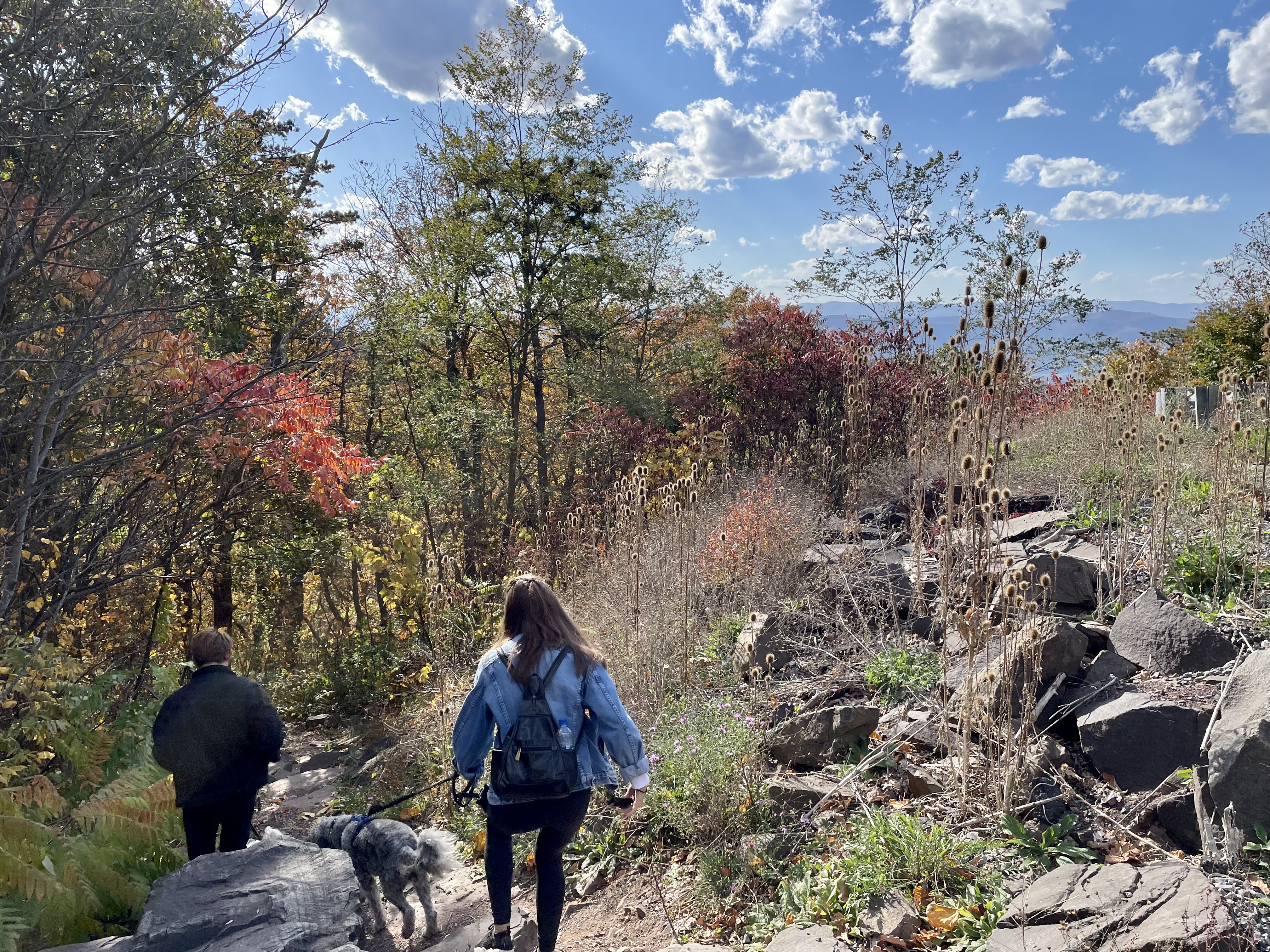
Vehicles nearly filled the small parking lot. I wasn’t surprised. It was a great day for hiking and enjoying nature’s beauty in the George Washington National Forest. The trailhead leads from the parking area to the only remaining fire tower on Shenandoah Ridge. The hike up to High Knob Fire Tower is popular. The crowded parking lot said plenty of hikers were on the trail.
Please click on the photos to enlarge them.
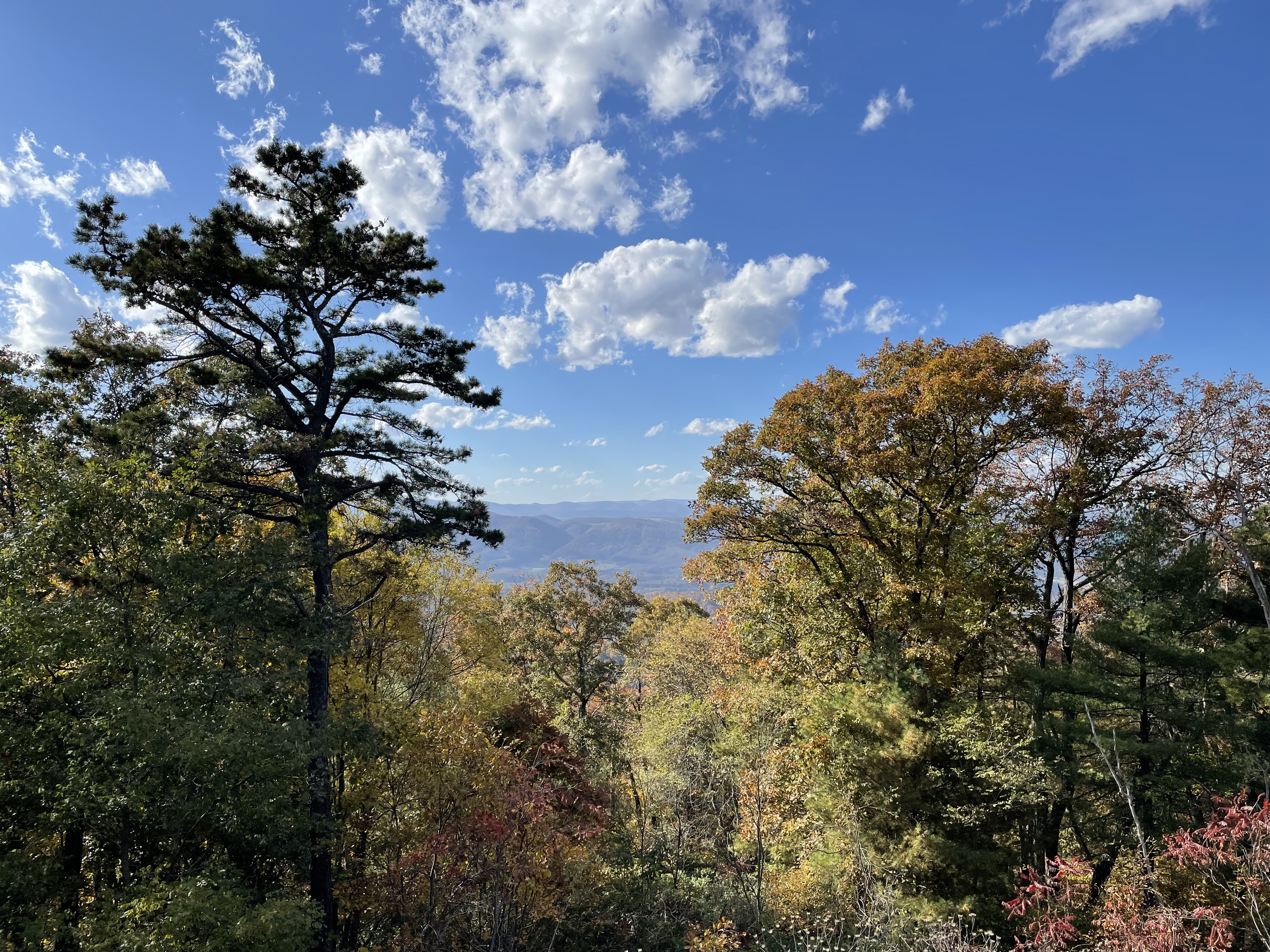
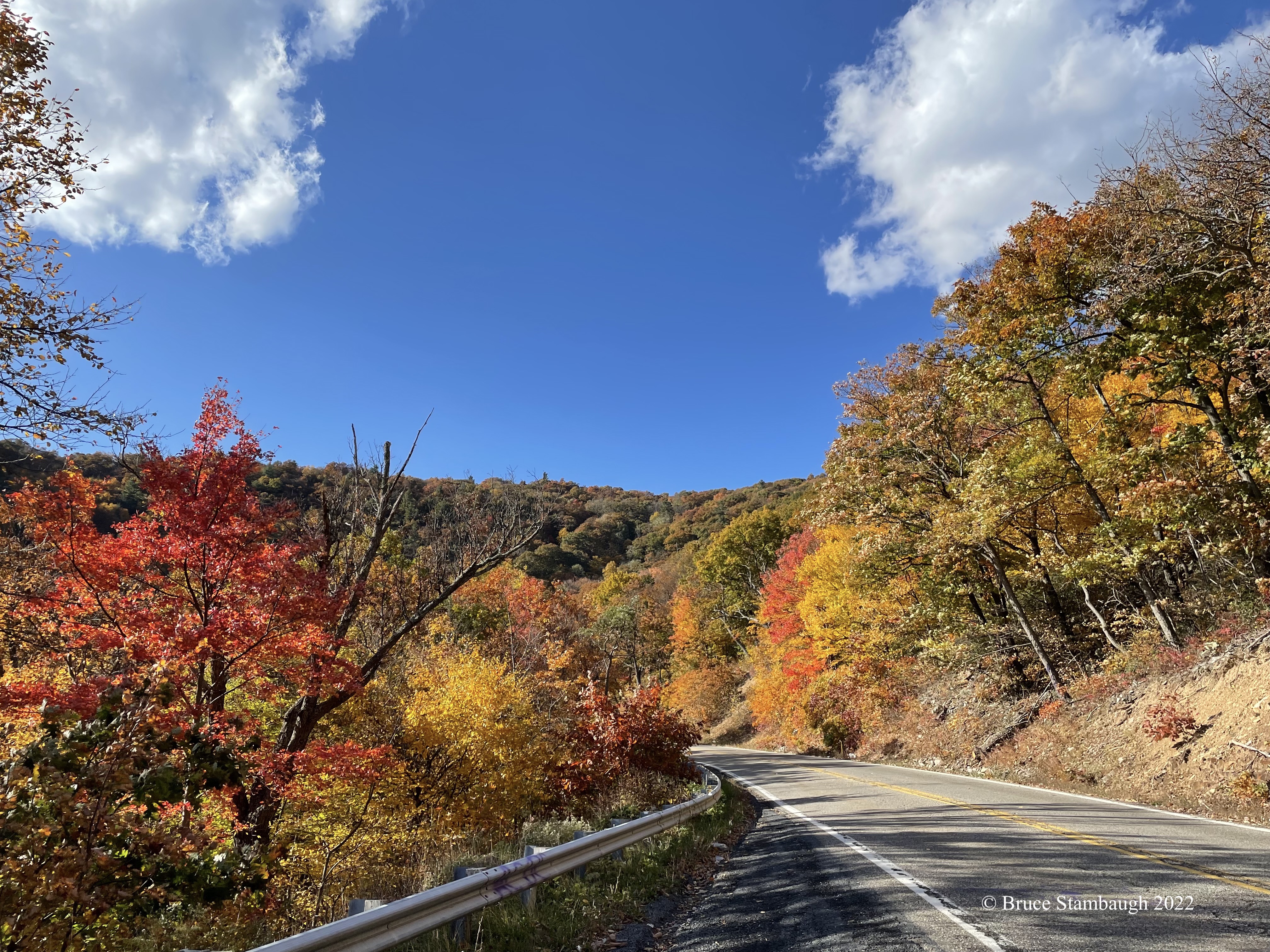
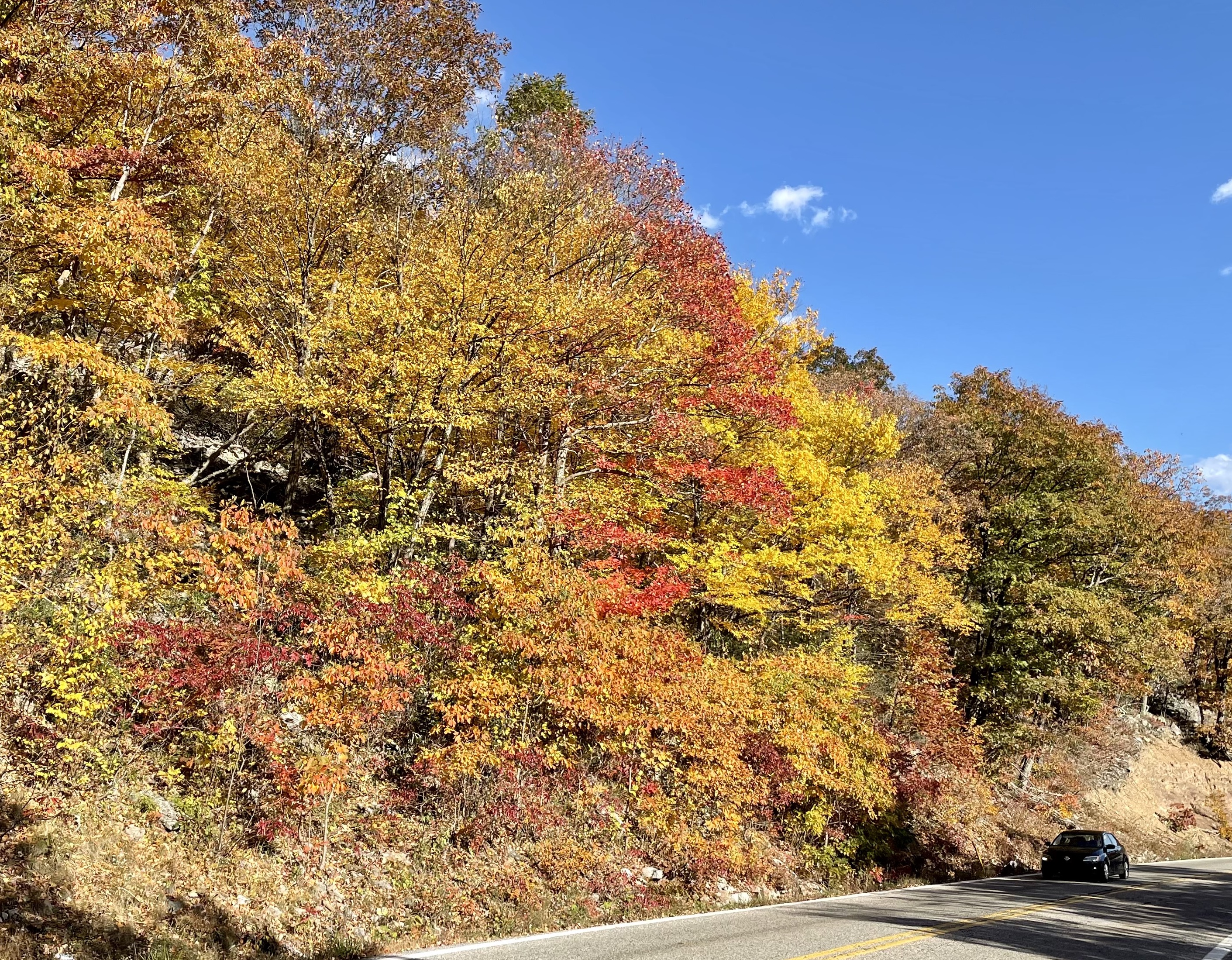
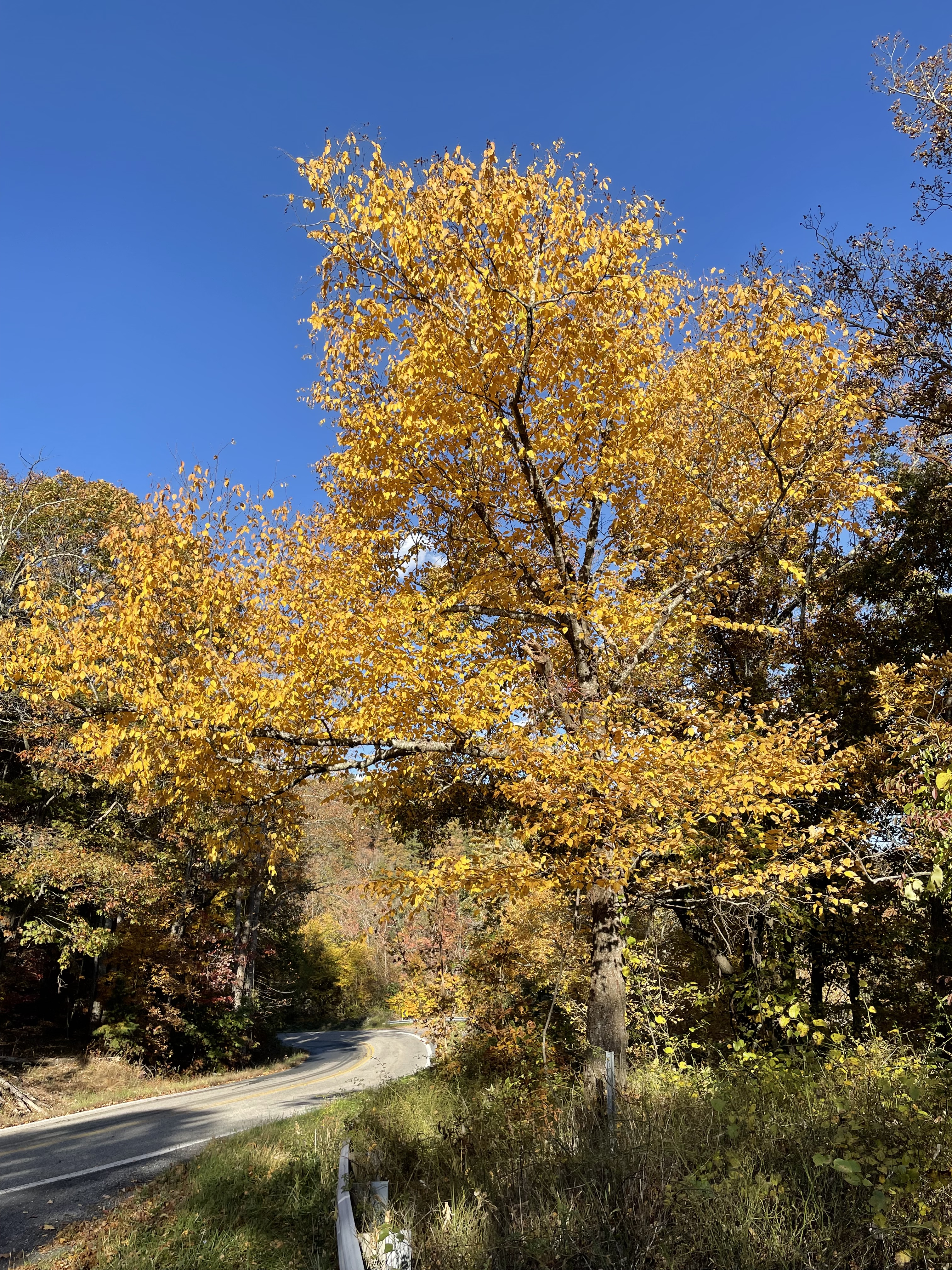
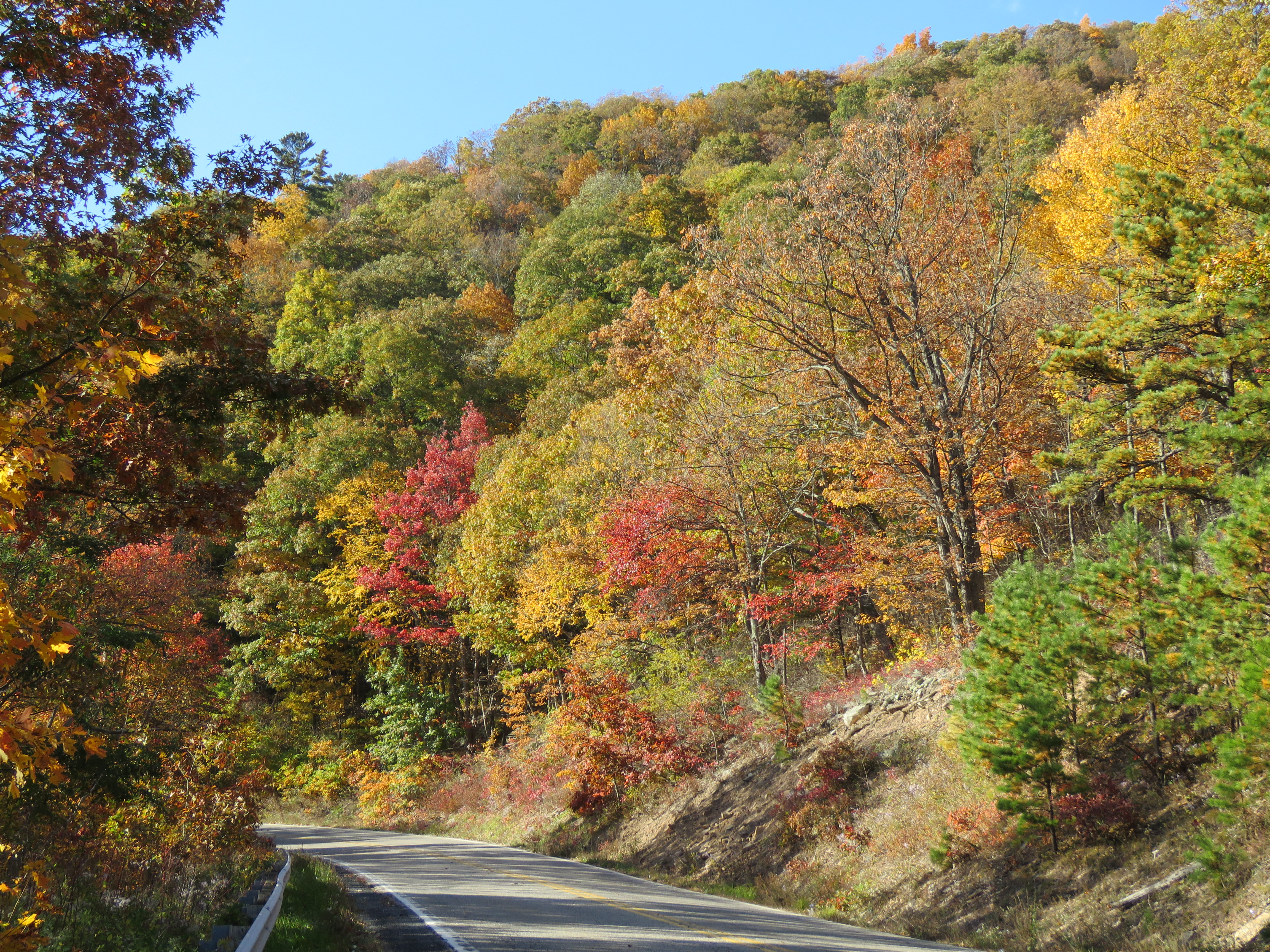
I took a few photos at the top of the mountain and returned to my car to capture the beauty. Going down showed me just how right my friend had been. The trees along the two-lane winding road were gorgeous.
Nature was in her glory, and so was I. I stopped in the few safe places I had spotted. The afternoon sun bathed the crimsons, golds, yellows, and reds. I tread carefully along the narrow, curvy roadway as cars and trucks whizzed by.
I rejoiced in my good fortune. The colors were incredible. The leaves that the afternoon sun backlit also caught my attention. I happily snapped away.
After only a few stops going a fourth of the way down the mountain, the colors drastically faded. Just as meeting people on Skyline Drive energized me, knowing that I had reached my goal of capturing the turning of the leaves filled my spirits.
Fall is my favorite time of year, and these experiences are why.
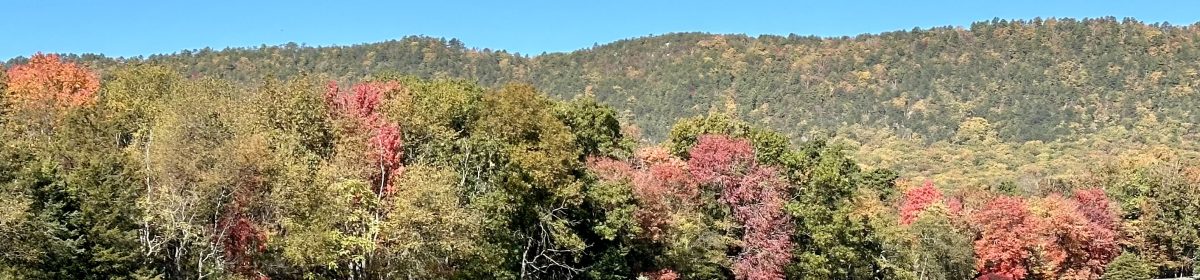
Autumn’s glory along US 33 on Shenandoah Mountain, Virginia.















You must be logged in to post a comment.