
Feeding the Winter Birds

A Northern Flicker at the peanut butter suet feeder. Photo by Bruce Stambaugh

Feeding the birds is one of our favorite winter pastimes. My wife and I enjoy watching college sports, but the colorful birds take precedence over the TV.

Feeding the birds provides us with plenty of entertainment from fall to spring, and we only have to look out our windows. We have done so for all of our nearly 55 years of marriage. We fed birds for the 48 years we lived in Holmes County, Ohio.

Our bird-feeding habit continued when we retired to Virginia’s Shenandoah Valley eight years ago to be close to our daughter’s family. But things were a little different. In Ohio, we lived in the country where natural bird habitats surrounded our property.

Here in Virginia, we live in a suburban setting, just outside the city limits of Harrisonburg. The habitat for birds is much different.

Like many housing developments, homes are close together. Fortunately, our backyard neighbors have mature stands of Colorado Blue Spruce and other evergreens. Plus, we have trees and shrubs around our home that provide cover for the birds.

Besides food and shelter, our avian friends need water, too. So, I added three birdbaths to provide drinking and bathing for the birds. Of course, it’s fun to watch them bathe and drink. It’s amazing how the different species drink.

Please click on the photos to enlarge them.

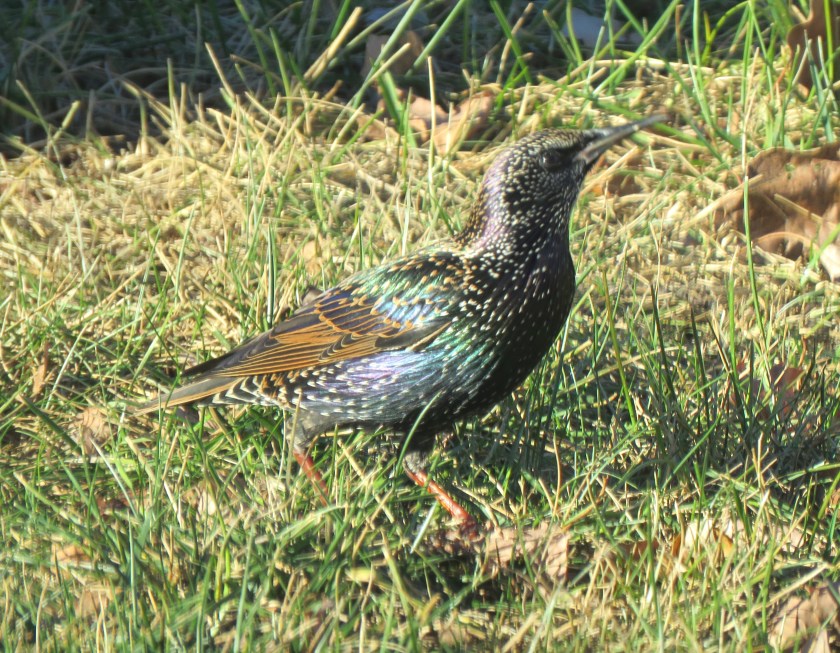
The number of bird species has increased over the eight years that we have lived near Harrisonburg. However, the number of birds has decreased, except for the dreaded European Starlings and the Brown-headed Cowbirds.

Still, I’ve been pleased with the birds that have frequented our feeders. I have four in the front yard, and four in the back. The feed and types of feeders are selected based on the diets and habits of the various species that have frequented our property.

Some bird species are solely ground feeders, so I make sure I spread the feed they eat on the surface near the other feeders. Tube-type feeders allow perching birds to access seeds through holes along the sides. The suet feeder contains cakes of peanut butter suet, encased in a wooden frame with wire-mesh facings on each side.

I place the feeders where the birds feel safe from predators, such as Sharp-shinned and Cooper’s Hawks, which occasionally strafe the neighborhood feeders in hopes of catching a songbird lunch. It’s the way nature works. The feeders and birdbaths are located where we can conveniently view the birds and where they can be easily refilled.

A tube feeder that holds a pound of black-oil sunflower seeds hangs from a limb on the west side of the front yard red maple tree. A suet feeder filled with peanut butter suet dangles from a limb on the east side of the tree. I scatter clean, cracked corn and safflower seeds below them.

The fourth feeder is suctioned to the window in front of my desk. It’s filled with safflower seeds, which only a few birds will eat. Fortunately, safflower seeds are a second-choice food for Northern Cardinals, which seem to have no fear if I’m at my computer on the inside of the window. If I move too quickly, however, they quickly scatter.

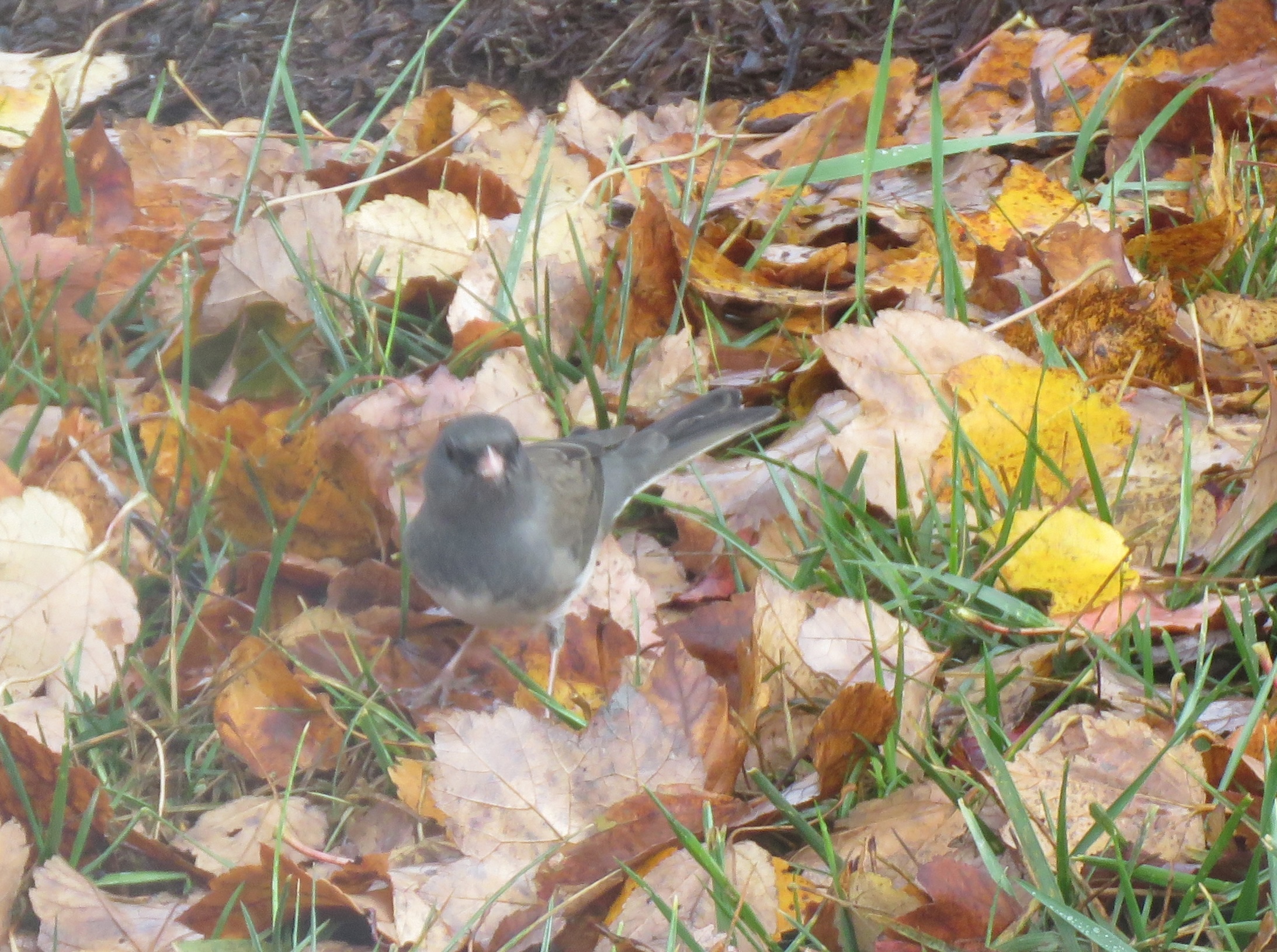
Why do I use these feeds? Black-oil sunflower seeds and hearts attract many species of birds. Northern Cardinals, House Finches, American Goldfinches, Purple Finches, Blue Jays, Dark-eyed Juncos, Downy Woodpeckers, Carolina Wrens, and Carolina Chickadees all choose this seed as a staple to their diet during the winter months.

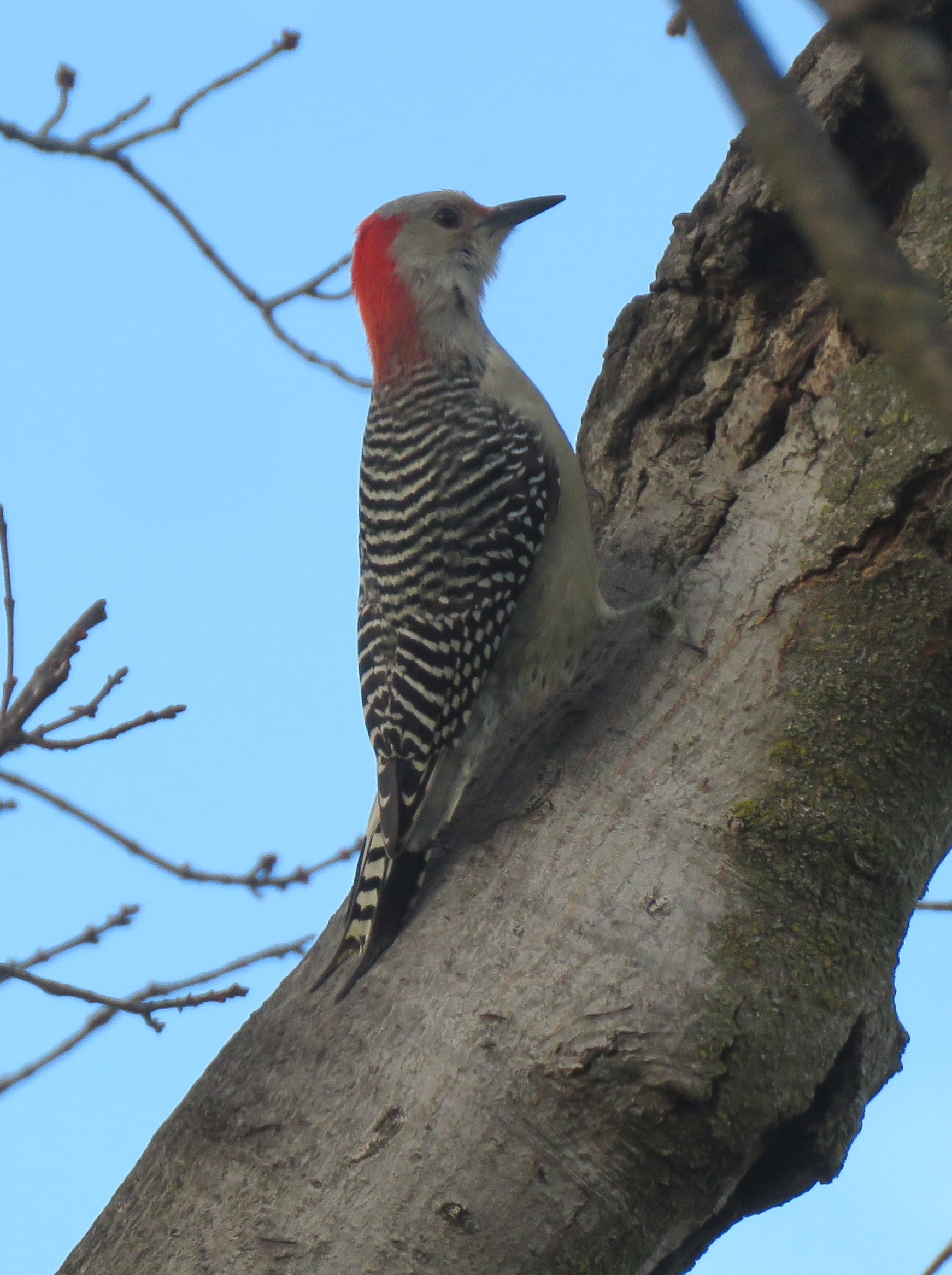
So far this year, Downy, Hairy, and Red-bellied Woodpeckers and Northern Flickers have come to the suet feeder. So have the Carolina Wrens, Carolina Chickadees, and small flocks of European Starlings and Brown-headed Cowbirds.

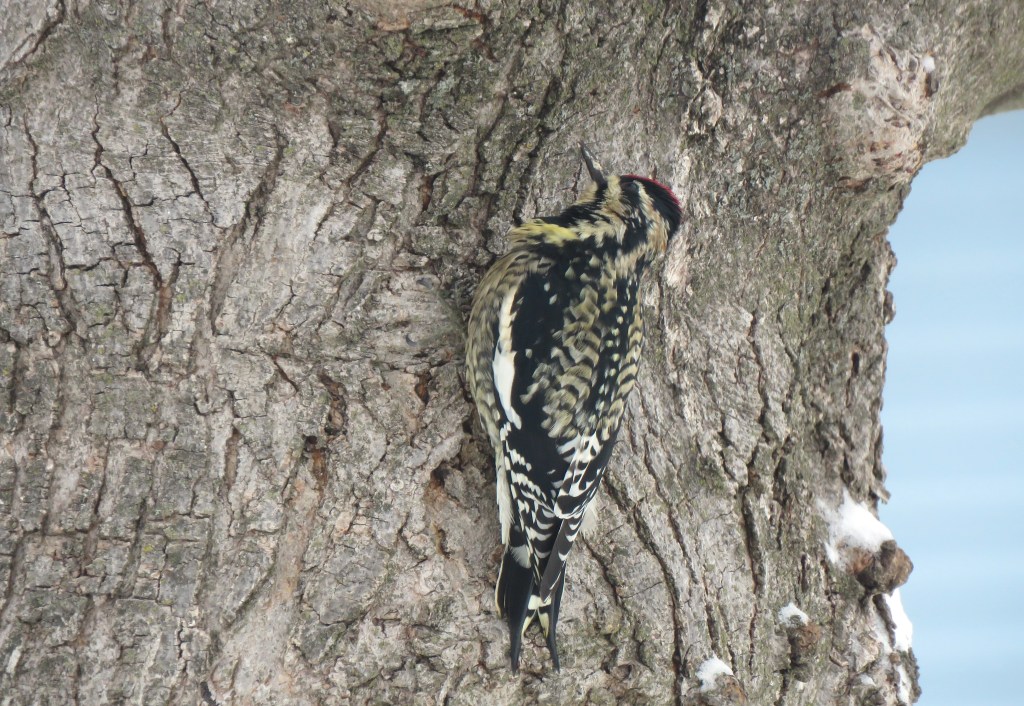
The star of the show, however, has been a Yellow-bellied Sapsucker. Its feeding pattern has been once in the morning and once in the afternoon. I stop what I’m doing and watch the sapsucker, knowing I’m fortunate to have it appear.

Yellow-bellied Sapsucker. Photo by Bruce Stambaugh

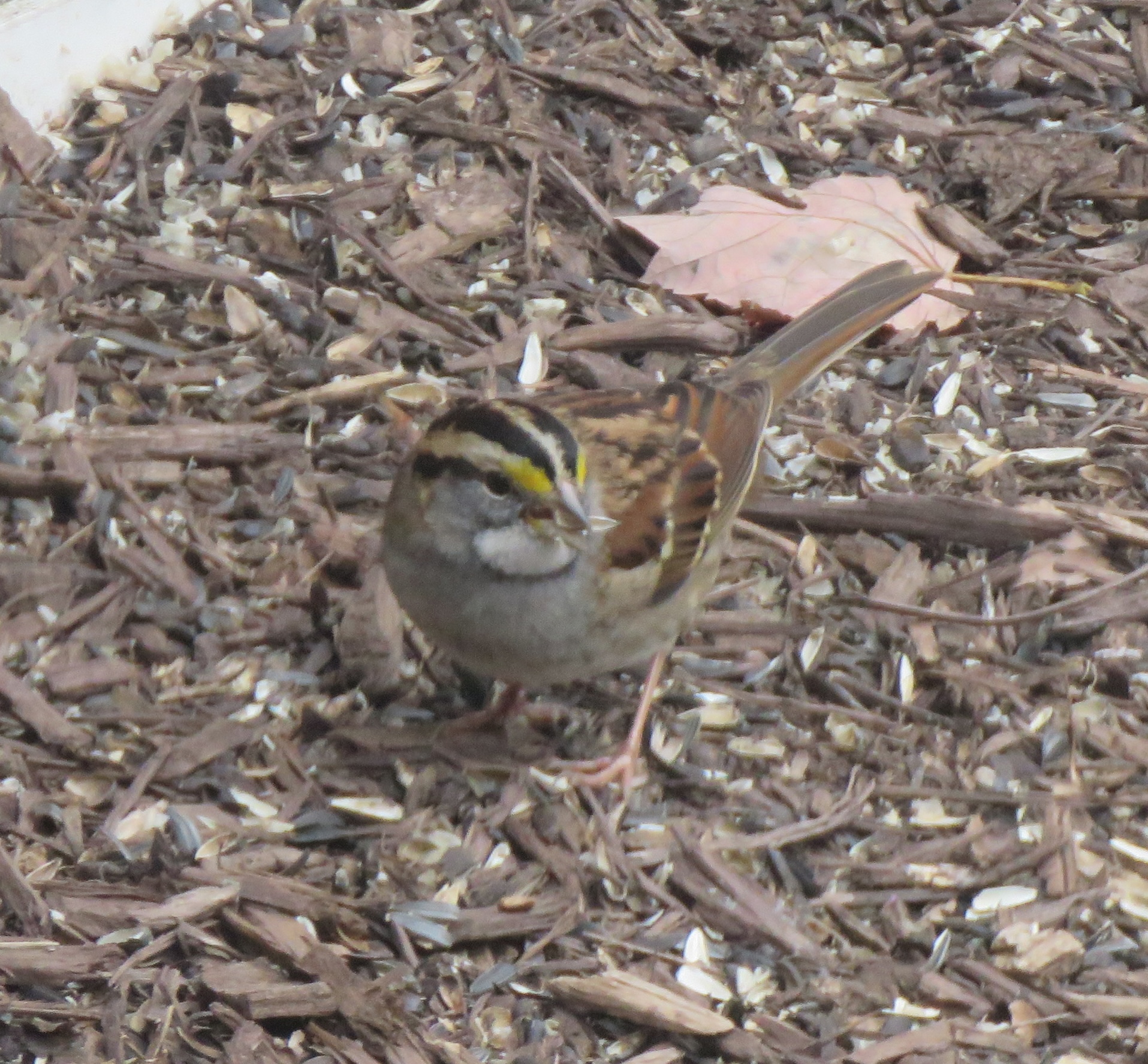
I spread corn to pacify the starlings and cowbirds. Unfortunately, their taste buds prefer the suet. The cardinals, White-throated Sparrows, White-crowned Sparrows, Song Sparrows, House Finches, and Blue Jays ensure the corn doesn’t go to waste.

Our home’s rear windows provide the best view of the feeders and heated birdbaths in the backyard, where most of the cover grows along the property lines. A tubed feeder hangs from the spouting of our screened-in porch, which serves as a shield from strong winds and the strafing hawks.

The hanging feeder holds a mix of black oil sunflower seeds and medium cracked sunflower hearts, which most of the seed-eating songbirds prefer. It’s also the most expensive feed. So, I mix the two seeds to make the precious offerings last longer.

I spread cracked corn on the ground between the feeder and the birdbath. Beyond that, in the yard, I placed a porcelain-topped table and set a homemade wooden feeder on top. More cracked corn goes in that feeder. I also spread some on the ground underneath the table.

Part of the beauty of feeding the birds is the surprises that happen. You never know what will show up at the feeders minute by minute. Like the time I happened to see a Pileated Woodpecker at the nearly empty suet feeder. In a flash, it was gone. But the joy was simply in its appearance, no matter how long it stayed.

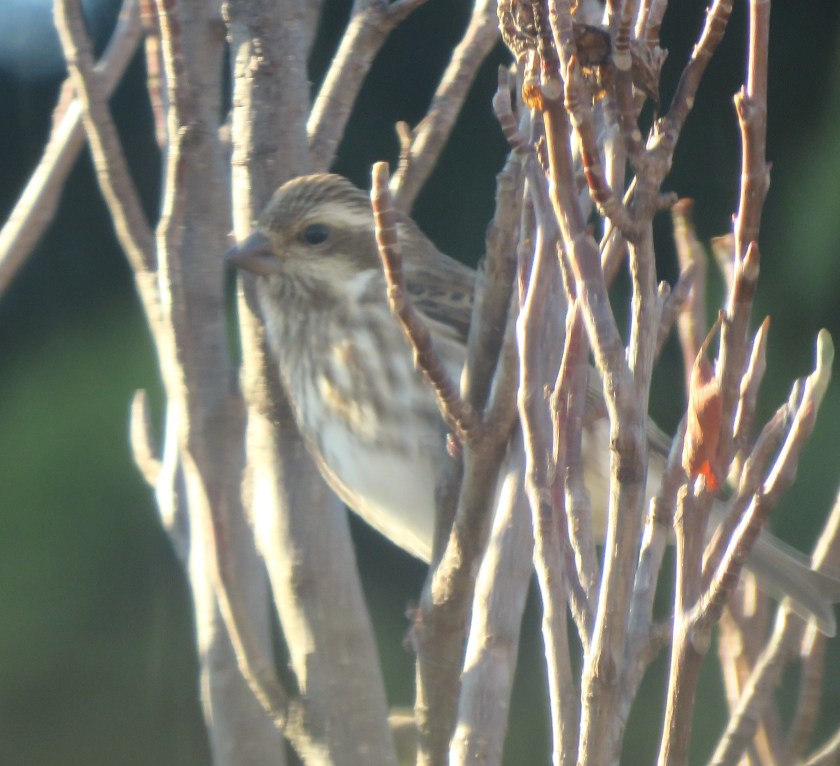
In previous years, small flocks of Purple Finches and Pine Siskins have graced the feeders. What a joy it was to see them.

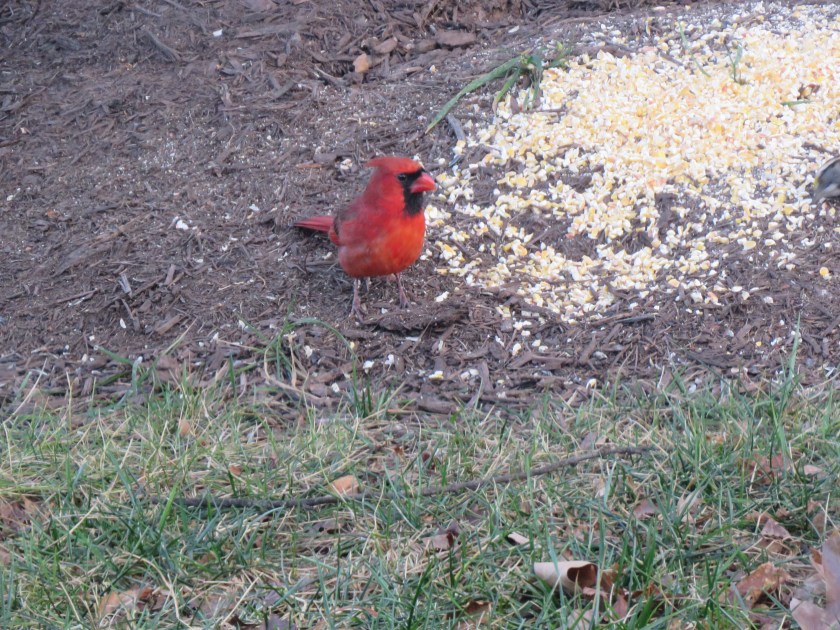
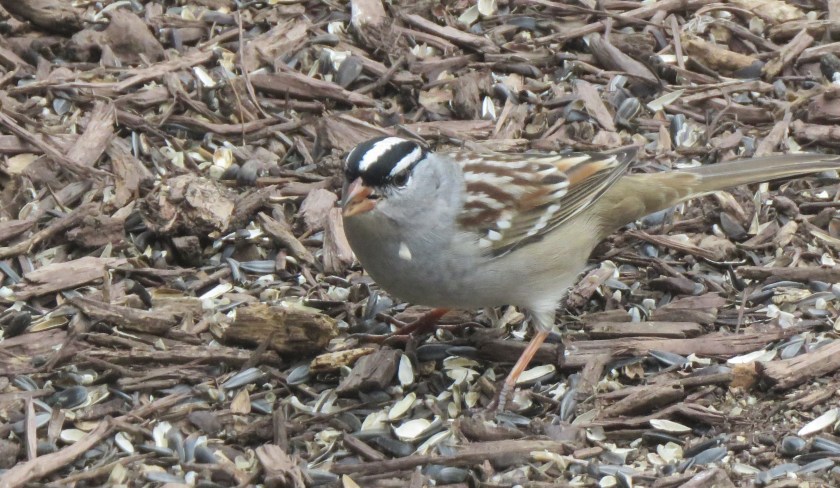
However, I am content with the regular visitors who shelter in the trees, shrubs, and bushes on or near our property. Who wouldn’t love to view a bright red male Northern Cardinal perched in a snow-laden evergreen branch or watch the regal White-crowned Sparrow scratch in the seed only a few feet away?

Of course, I realize that I miss birds when I’m not home or doing other things. I can’t be gazing out of the windows all of the time. Nevertheless, I am thrilled with the ones I do.

Male Northern Cardinal. Photo by Bruce Stambaugh

© Bruce Stambaugh 2025

A Ghostly Encounter I Can’t Forget

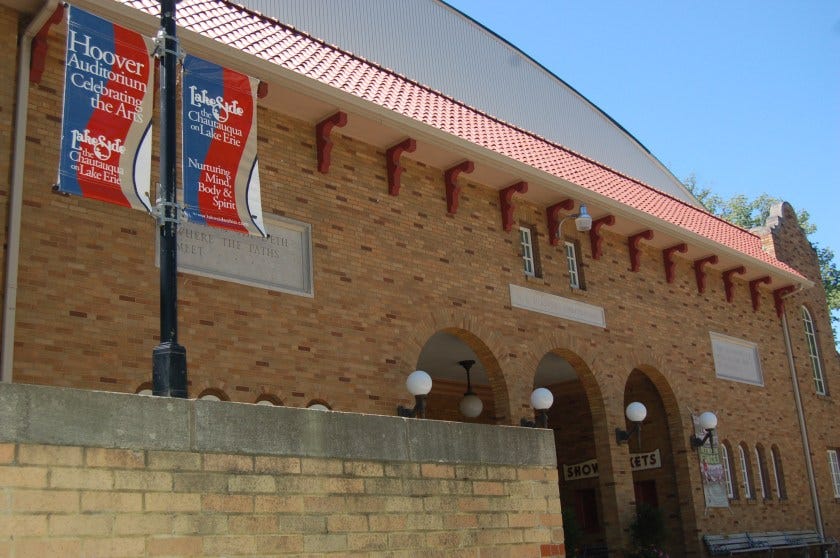
Hoover Auditorium, Lakeside, Ohio. Photo by Bruce Stambaugh

I didn’t believe in ghosts until I saw one.

It was July 3, 2010. My wife and I were enjoying our annual laidback week at Lakeside, Ohio, a Chautaqua community on the shores of Lake Erie.

Lakeside provided a respite away from the daily grind of life for thousands of families during its Memorial Day to Labor Day season. Founded in 1873 as a Methodist summer camp, the village has grown into a thriving community that promotes education, recreation, religion, and arts and entertainment.

My wife and I participated in selected activities from all four pillars of opportunity during our week-long stay. But we mostly relaxed with friends on the wrap-around front porch of the hospitality house where we stayed a week each year. We played dominoes for hours.

Across the street in the 100-year-old Hoover Auditorium, Lakeside offered a variety of entertainment and lectures each evening, Monday through Saturday. That’s where I saw the ghost.

A lively and loud Celtic group of singers and dancers nearly filled the 2,000-seat venue. We arrived early to secure seats where the breeze would provide relief from the hot and humid Ohio summer days. The old auditorium remained essentially unchanged from its construction in the late 1920s, including the absence of air conditioning.

The band busted out lively tune after tune. The music wasn’t my cup of tea, but experiencing new cultures was part of the Lakeside design. I was glad we had chosen front row seats in the second section of Hoover, where I could stretch my feet into the east-west aisleway.

About halfway through the program, the excessive noise emanating from the stage made me restless. Apparently, it bothered the ghost, too. For some reason, I looked up at the suspended triangular metal beam that held the speakers and the spotlights that illuminated the stage.

From stage left, a glowing, blueish-white figure appeared. A man walked casually across the beam, not built to hold any significant weight, to stage right.

As the music boomed out, I sat transfixed on this man from another era. He had the appearance of a maintenance man. The man looked to be in his 50s, clean-shaven, and I can never forget his ruddy face with that square jaw. His hair was slicked back, a style of the time, and parted on the left side.

He wore a work shirt with no label, thick denim work pants cinched with a thick leather belt, and heavy leather boots that laced up in the front. The apparition was dressed in the attire of an early 20th-century construction worker, the same era as when the storied auditorium was erected.

I followed the man as he casually stepped across the beam until its end. He knelt and appeared to be adjusting something. I wondered if he was attempting to turn down the sound.

Had the clanging and drumming of the uproarious music awakened this ghost? Was he annoyed at all the ruckus?

At that point, I briefly looked around at the audience. All eyes were fixed on the musicians and dancers on the stage. I glanced back up to the man, and he wasn’t there. In his place was a softball-sized glowing orb, the same blueish-white color as the man. The orb quickly arched back to where the man first appeared and then disappeared.

I looked at my wife beside me, but like the rest, she was focused on the performers. I had always wondered what I would do if I ever saw a ghost. I had my answer. I just sat there in disbelief.

Questions ran through my brain like a runaway train. What had I just seen? Had anyone else seen the same thing? Why did I see it? What did it mean? Was I crazy?

At the show’s end, we retreated to the porch across the street. I sat quietly as other guests discussed the show, waiting for someone to mention the ghostly maintenance man. No one did.

The next day, my curiosity got the best of me. I visited the village’s archive center housed in an old, white-clabbered church building. Besides the archivist, I was the only one there, which allowed me to speak candidly with the young woman about my existential experience.

She listened attentively to my story, nodding her head, seemingly believing every word I said. The young woman merely replied that she had never heard of a ghost in Hoover Auditorium.

“But,” she continued, “I’ve heard strange sounds while working alone here. And I have caught glimpses of what I thought were visitors, but no one had come in.” I felt heard and accepted.

The woman went on to tell of several sightings of ghosts in the old Lakeside Hotel. Guests had even reported them sitting on their bedsides. She sent me next door to where all of Lakeside’s records were kept.

I asked the village historian, an older woman, to review the architect’s plans for Hoover Auditorium. The employee led me to an architect’s metal cabinet, where the narrow, flat drawers pull straight out. I soon was reviewing the blueprints for the interior of the auditorium.

I found no structural beam that would have run across and above the stage where I saw the ghost. However, I did discover that the scaffolding used to build the inside of the auditorium reached approximately the same height as the metal frame where I saw the ghost. The woman, who also kindly listened to my story, said she had no record of anyone being injured or killed during the construction of Hoover.

So, I was back to where I started. Full of unanswered questions, and wondering why, out of an audience of 2,000 people, I was the only one to see this phantom. After fifteen years, the entire scene is still etched in my mind so keenly that I could still pick this guy out of a lineup.

I’m still baffled as to why I saw this ghost. But what it did do is open my eyes and my own spirit to a fuller understanding of life. Much to the contrary of today’s thinking and behaving, life isn’t simple black or white, or right or wrong.

This experience showed me that life is full of gray areas, questions without answers. Most of my life is now behind me. I strive to stay in each moment and embrace whatever comes my way, even if it is a ghost.

At the very least, I now know how I would respond if I saw a ghost. I just watched, wondered, and marveled at what I saw.

Hotel Lakeside. Photo by Bruce Stambaugh

Amish Farm in Late Winter

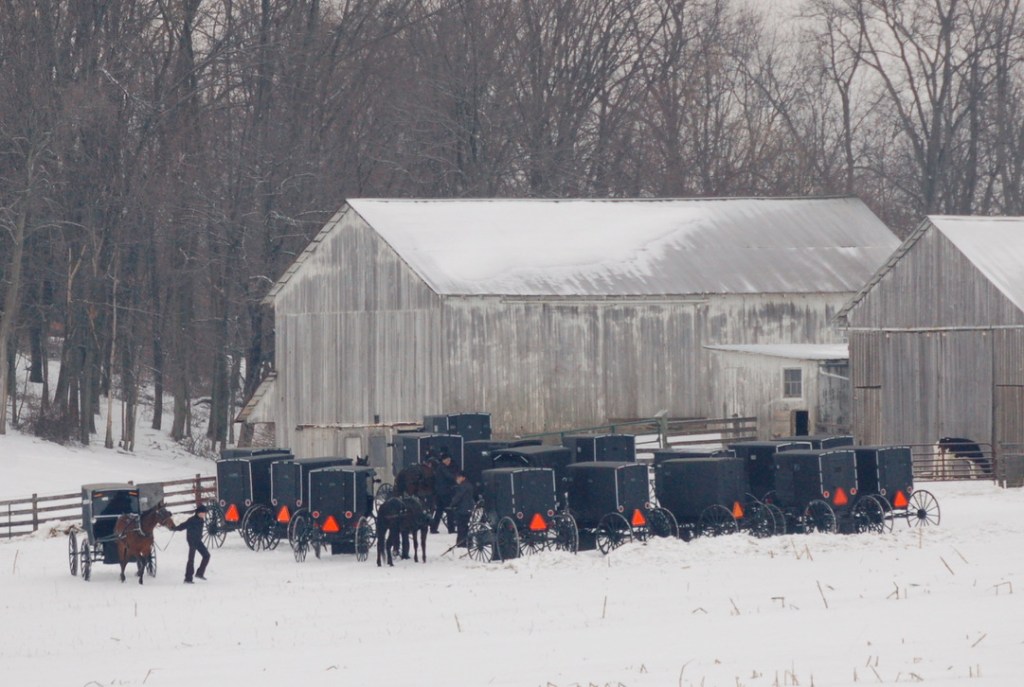
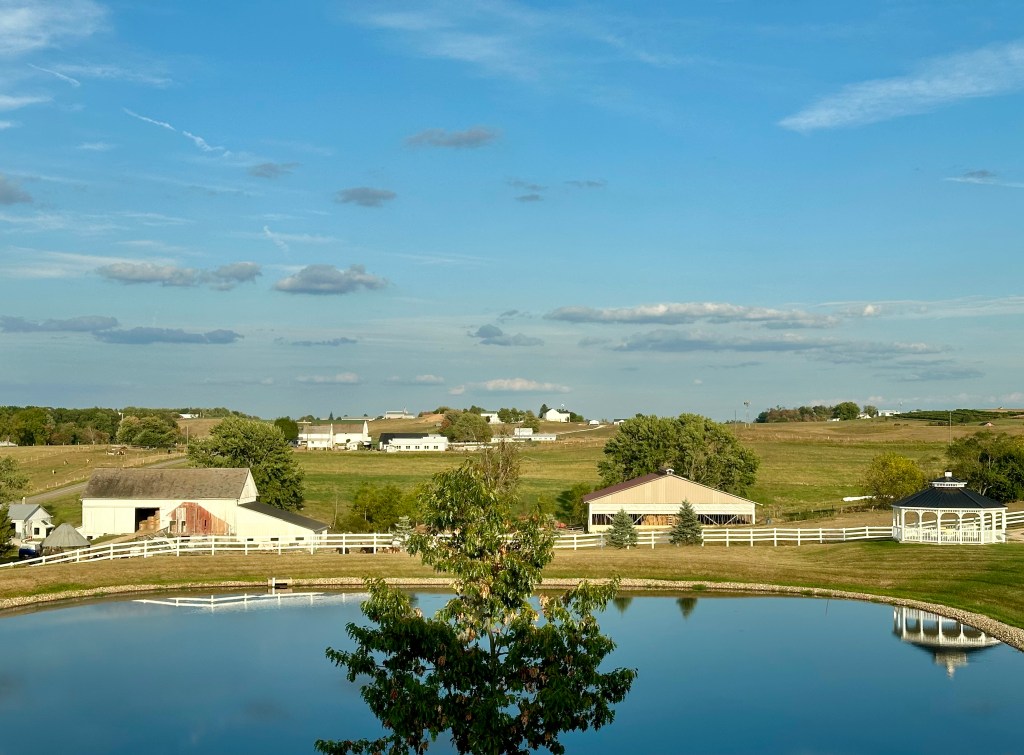
An Amish farmstead near Mt. Hope, Ohio. Photo by Bruce Stambaugh

I recently visited my old stomping grounds in Holmes County, Ohio, home to the world’s largest Amish population. Remnants of snow still covered part of the ground, contrasting with the barren, fallow fields.

I enjoyed finding a few Amish farms, like the one pictured, remaining amid the rapidly expanding tourist businesses scattered throughout the once pristine countryside.

© Bruce Stambaugh 2025

Golden Hour in Berlin, Ohio

Looking east during the Golden Hour in Berlin, Ohio. Photo by Bruce Stambaugh

This scene caught my attention as my wife and I arrived in Berlin, Ohio, at her sister’s place. The white of the Amish homes and barns glowed in the Golden Hour light.

© Bruce Stambaugh 2024

Recalling a Rare Family Vacation

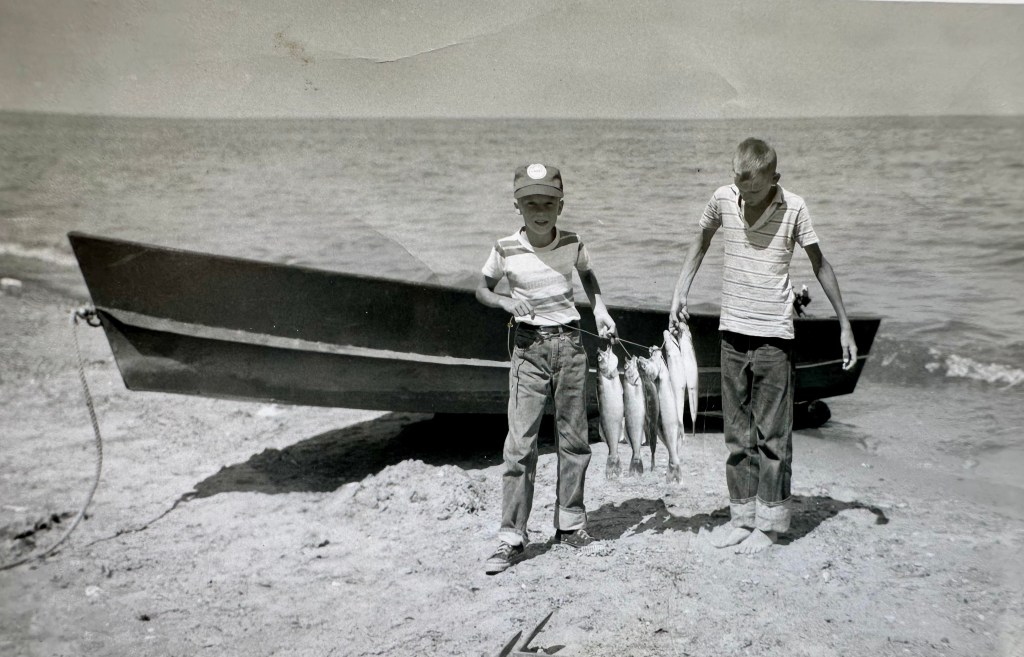
My older brother and I hauled in the walleye. Photo by Bruce Stambaugh

I fondly remember my family vacations in the 1950s and ’60s. I vividly recall them because we didn’t take many. We were a lower-middle-class family from a blue-collar city in northeast Ohio. My folks didn’t have the money to travel around the country too often, especially with five active and vocal children.

My most memorable trip as a youngster was a week on Pelee Island, Ontario, Canada, in Lake Erie. It was the middle of summer, sunny, hot, and humid.

As a 10-year-old, I was excited about our trip for multiple reasons. First, we had to take a ferry from Sandusky, Ohio, to the island. In those days, no passports or IDs were needed. You just paid the ferry fee and boarded the ship. I remember leaning over the side of the boat that foggy morning to watch crew members load cars and trucks onto the ferry.

Our dear mother couldn’t bear to watch because the drivers had to ease the vehicles from the dock to the ship over two unattached, thick wooden planks. I paid particular attention when our 1947 cream-colored, two-door Chevy coupe slipped across the void. Even as a kid, I saw that the car wasn’t centered on the planks. Still, it made it.

Our cousins and their parents accompanied us on the trip, along with our mother’s mother. Their three juveniles were nearly the same age as our three oldest. It was a guaranteed good time.

We enjoyed the voyage around other islands and through Lake Erie’s whitecaps. When we sighted Pelee, our excitement multiplied. From a distance, all I could make out were trees. A little cluster of attractive buildings appeared when the ferry drew closer to the dock. We disembarked and waited for our vehicles. I noted a general store with toys in its nine-pane front window during the downtime.

We piled in the car and headed south and then east on dirt roads, swirling dust clouds into the cerulean sky. As he drove, our outdoorsman father spotted pheasants in fields on the way to our little cottage without slowing down. How we all managed to fit into that two-bedroom, one-bath lake house, I don’t know. As a kid, it wasn’t my problem.

That week’s weather was sunny, hot, and humid, perfect for eight children ages four to 14 to play on the beach that served as our front yard. We enjoyed wading in the warm Lake Erie water when the tide went out. We built sand castles and took turns burying one another in the sand.

We spent hours scouring the beach for sea glass. My young mind couldn’t comprehend how the combination of water and sand could smooth sharp, jagged broken glass. I held the evidence in my hand, nevertheless.

A trio of fishermen rented the cottage south of ours. They used a beautiful wooden Lyman boat with an inboard motor to come and go. One afternoon, the fish must not have been biting because the boat came charging in at low tide.

Even as a kid, I could see by the men’s actions that they were drunk. One guy even fell overboard into the shallow water. Of course, the high-speed approach mired the boat into the wet sand. No matter how hard they tried, the boat wouldn’t budge until the tide came in.

Later, with the boat freed, I moseyed down the beach and found a silver cigarette lighter reflecting the afternoon sun in the clear, shallow water. A cigar lay nearby on the beach. Its paper wrapper with a bright red band still secured the stoggy. My uncle confiscated both when I revealed my treasures at the cottage.

Our father and uncle frequently went fishing for crappies and walleye. When the schools of fish moved a few hundred yards directly offshore of our cabin, my dad and uncle caught enough to feed the entire crew. The delicate white meat of the pan-fried fish filled our hungry bellies.

While our fathers fished, our mothers and grandmother watched us play hour after hour on the sandy beach. Those were the days before sunblock, and apparently, no one remembered to bring along suntan lotion. Before the week was over, the four oldest boys, including me, moaned and groaned in a darkened bedroom. The severe sunburns halted our lakeside romping. We were sore all over, unable to find a comfortable position to rest.

Still, it had been a memorable week. To top it off, our parents remembered the general store with toys. My eyes lit up when I saw the rotating stand displaying several kinds of English-made Matchbox toys. There was no plastic to be found in these miniatures of reality, and they were only a dollar each. I was ecstatic because our parents had given each of their five children a dollar before entering the store. So, I took my time and finally decided on an English-style fire truck as the ferry horn sounded for people to board.

We scurried to the dock across the road, and I carefully clutched my prize, not wanting to crush the colorful cardboard matchbox containing my precious purchase. I bid Pelee farewell as we walked up the ferry’s ramp for the return cruise to Ohio.

It had been a memorable week of fun in the sun, filled with ferry rides, fresh fish, and playing in the water with my siblings and cousins. Those pleasures successfully blocked the short-term memory of my painful sunburn.

These well-worn Matchbox toys are the only ones I have left. Photo by Bruce Stambaugh

© Bruce Stambaugh 2024

Three-for-One Sunset

Three-for-One Sunset

Whenever I visit Lakeside, Ohio, I always head to the dock around sundown. Even if it is cloudy, I never know what to expect.

Two blocks from the shore, the sky looked promising for another spectacular sunset. When I reached the dock, however, I noted the thick cloud bank to the west. Given past experiences at Lakeside, the Chautauqua on Lake Erie, I hung around.

Part of my interest was in the crashing waves driven by a strong northwest wind. Lakeside is on the western end of the lake, where Erie’s waters are the shallowest. Consequently, strong winds play havoc with the water, causing continuous erosion to Lake Erie’s southern coast.

The dramatic show of the wild waves assaulting the cement dock distracted me from the setting sun. A break in the clouds, however, gave me a shot at capturing a sunset.

The sun peeked through an opening in the clouds and sent a crepuscular ray upward, where it illuminated a high cloud. The fury of the waves colliding with the dock created a mirror-like reflection of the evening’s sun.

It was a three-for-one sunset!

© Bruce Stambaugh 2024

Memorial Day!

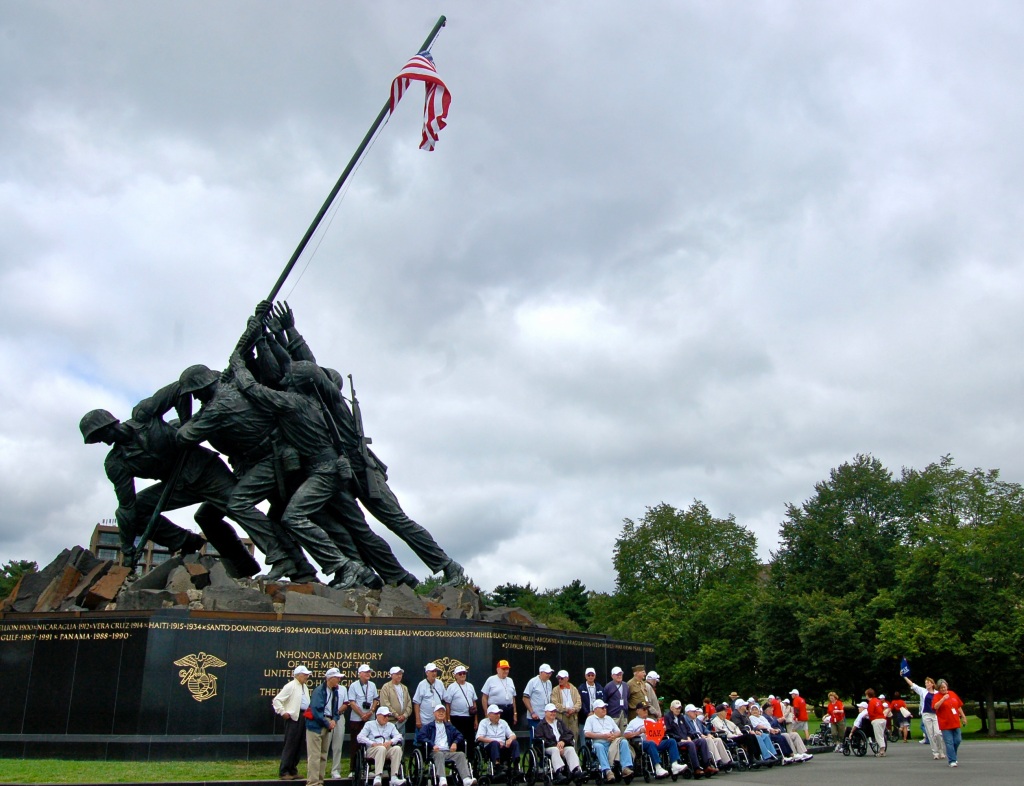
The U.S. Marine Corps Memorial, Washington, D.C. Photo by Bruce Stambaugh

Today is Memorial Day in the United States. It is a day designed to remember U.S. military personnel who have fought and died in wars.

The commemorative day originated as Decoration Day on May 30, 1868, in honor of Union soldiers who had died in the Civil War. It has since been renamed Memorial Day in memory of all loved ones who have died. Congress also set the day as the last Monday in May, making a three-day holiday.

Americans see the weekend as the start of summer. Many schools have already completed their academic year, making June vacations a real possibility for families who can afford them.

Memorial Day has evolved to include parades, 21-gun salutes at cemeteries, family gatherings, and picnics. Memorial Day falls on my wife’s birthday this year, so we will celebrate that with our family, too.

I took this photo on September 12, 2009, at the U.S. Marine Corps Memorial in Washington, D.C. The statue depicts the raising of the American flag on Iwo Jima during World War II.

My older brother and I had accompanied our late father on an Honor Flight out of the Akron-Canton Regional Airport in Ohio. The veterans on the flight gathered in front of the memorial for a group photo. Our father is third from the left in the front row.

© Bruce Stambaugh 2024

Welcome to Spring!

A spring equinox sunrise over Holmes Co., Ohio.

To those living in the Northern Hemisphere, welcome to the first full day of Spring 2024!

For those in the Southern Hemisphere, welcome to the first full day of autumn.

Enjoy your day wherever you live.

© Bruce Stambaugh 2024

Jackie Robinson Wasn’t the First African-American MLB Player

Lanterns lit in the cupula of this home led people on the underground railway to safety. Photo by Bruce Stambaugh

Would you be surprised if I told you that the great Jackie Robinson wasn’t the first African American person to play in Major League Baseball? Would you be even more surprised if I said he wasn’t even the second black player?

Hard to believe as it is, both comments are fact. Moses Fleetwood Walker, better known as Fleet, was the first Black player in the major leagues. He played catcher for the Toledo Blue Stockings in 1884. He signed with the team in 1883 after playing on the baseball teams of Oberlin College and the University of Michigan. Fleet’s brother Welday played a few games that same year, becoming the second Black player. That was 63 years before Jackie Robinson debuted with the Brooklyn Dodgers.

In the post-Civil War era, signing and playing Fleet and his brother was a bold move for the Toledo club, a member of the American Association, now the American League. In the Jim Crow era, it met with great hostility from Whites and, in an odd way, led to Fleet’s short career.

The plaque honoring Fleet Walker in the baseball Hall of Fame. Photo by Bruce Stambaugh

Hall of Famer Cap Anson, the star player and emboldened racist for the Chicago White Stockings, now the Chicago Cubs, refused to play with a Negro on the field. Toledo’s manager called his bluff, however. Knowing he wouldn’t get paid unless his team played, Anson relented. However, Fleet was injured and wasn’t scheduled to play that game. But because of the tense situation, his manager had Fleet play anyhow.

So, why isn’t Fleet recognized as the first Black Major League Baseball player? John Husman, a leading baseball historian, cites two reasons. Records in that era of baseball were not well kept. But more importantly, Jackie Robinson was a star player who played 10 seasons for the Dodgers, plus years in the Negro Leagues before that. The Negro Leagues didn’t exist when Walker and his brother played. Consequently, history forgot them.

Of course, Hall of Famer Jackie Robinson is rightly credited with being the first Black player in baseball. He broke the color barrier with his amazing baseball skills and longevity as a major league player. He earned his Hall of Fame enshrinement in Cooperstown, New York, and the annual recognition of Jackie Robinson Day every April 15th. It was the day he joined the Dodgers in 1947.

Moses Fleetwood Walker has a plaque in the Hall of Fame with a photo of him and his wife, recognizing his pioneer playing days. The plague also includes part of a threatening letter from the Richmond, Virginia, team. It is only one example of what he, his brother, and the teams he played for endured.

Part of one of the threatening letters Fleet Walker’s team received. Photo by Bruce Stambaugh

Despite the progress made by Robinson’s historic breakthrough, injustices to people and athletes of color continue. Only recently, a bronze statue of Jackie Robinson was stolen from a park in Wichita, Kansas. The perpetrators cut off the life-sized statue at the ankles, leaving only his shoes. The statue, valued at $75,000, was later found mutilated and burned at another area park. Clearly, the racist hatred expressed in the Richmond letter toward Fleet Walker so long ago still flares its ugly head too often today.

Ironically, Moses Fleetwood Walker was born in 1856 in the then-Quaker town of Mt. Pleasant, Ohio, a noted station on the underground railroad. Lantern-lite signals from the glass windows of a cupula atop a large brick home on the main street of the small village led travelers on the underground railroad to safety from the nearby Ohio River. Could his parents have been among them? It’s a query likely never to be answered.

At least their oldest son has a touch of recognition with a plague in the National Baseball Hall of Fame. It’s a footnote of baseball history, but at least he isn’t forgotten.

Photo by Bruce Stambaugh

© Bruce Stambaugh 2024

Amish at Recess

Swartzentruber Amish sled riding at recess in Wayne Co., Ohio.

There is “snow” better way to enjoy the January cold than sledriding. These Swartzentruber Amish students certainly enjoyed their afternoon recess gliding down a slippery hillside near their one-room schoolhouse.

After attending a meeting in Kidron, Ohio, 11 years ago, I decided to take some back roads home. It had snowed a few inches overnight, but the clouds had moved out by afternoon. The clear sky’s bright sun warmed the cold January day.

This scene came into view as I rounded a bend on a narrow township road. I knew I had to get a photo of these Amish schoolchildren sledding at recess. I also knew that I had to be discreet since I always tried to honor the Amish position of no photography.

I secured one photo undetected before moving on. The joyous laughter of the happy scholars made the satisfaction of this photo all the more enjoyable.

© Bruce Stambaugh 2024

Bay Photos by Donna

Wildlife photos from the Chesapeake Bay region

ROAD TO NARA

Culture and Communities at the Heart Of India

K Hertzler Art

Artist and nature journalist in the Shenandoah Valley of Virginia.

Maria Vincent Robinson

Photographer Of Life and moments

Gabriele Romano

Personal Blog

Jennifer Murch

Art is the only way to run away without leaving home. -Twyla Tharp

Roadkill Crossing

Writing generated from the rural life

ANJOLI ROY

writer. teacher. podcast cohost.

Casa Alterna

El amor cruza fronteras / Love crosses borders