
Palm Sunday!
There was a time when I enjoyed shoveling snow from our driveway and sidewalk. That was when we lived in Ohio, and I was much, much younger.
We had plenty of notice from the National Weather Service and the media about the most recent major winter storm that chugged eastward from Texas into New England.
Snow is the hardest precipitation for the NWS to predict. This storm was exceptionally so. The storm surged farther north than anticipated, and it had a “warm nose” that changed our precipitation from snow to sleet.
Despite the cold surface temperatures, the Shenandoah Valley had sleet all day. Since it is finer than snow, the sleet added two inches to our four inches of overnight snow.
Knowing the storm was going to deliver a nasty punch no matter what kind of frozen precipitation fell, we knew we would need help with the driveway and sidewalk.
By the next morning, the storm had cleared. When I went out to spread birdseed on the ground shortly after sunrise, the cold overnight temperatures had frozen the top layer of snow, so I could walk on it for a few steps before it gave way.
The Virginia Department of Transportation contracts with local farmers to plow our suburban streets. They often do it at night, and that was the case this time. The street was clear of snow, but a two-foot-high pile of large snow chunks blocked the driveway. I was glad we had a snowplow coming.
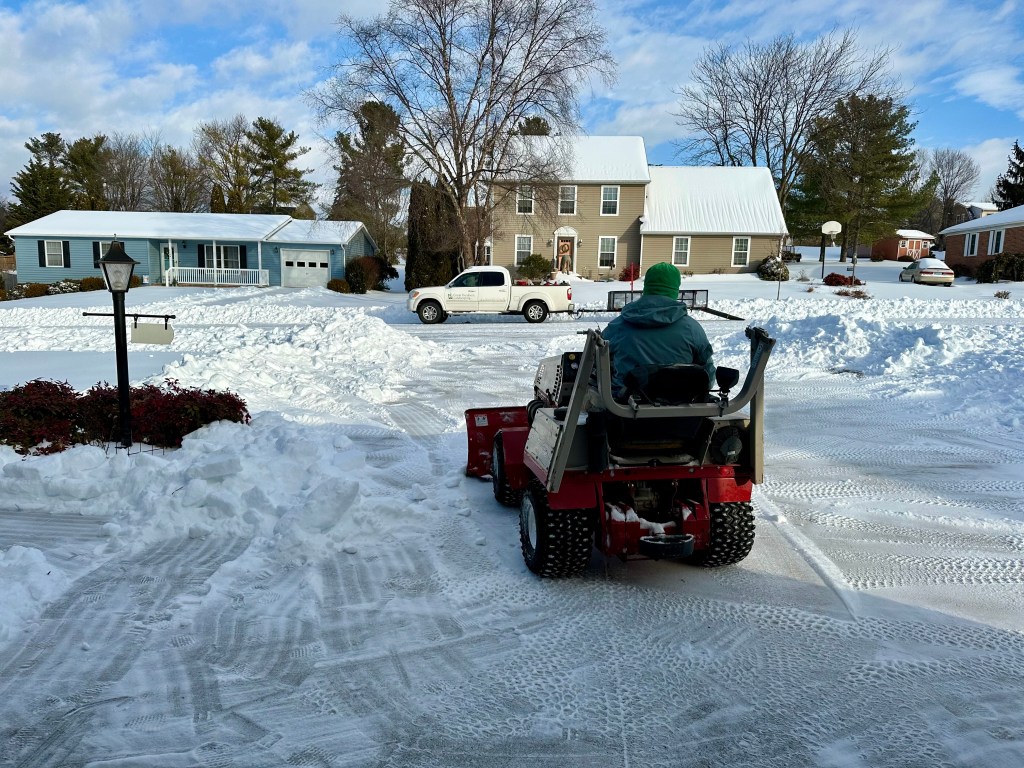
Our landscaper arrived mid-morning and immediately went to work cleaning the drive with a small tractor and plow. Its size and design allowed it to make sharp turns and push the snow out of the way while his helper shoveled our walk.
Of course, the neighbors heard the tractor’s engine, and soon two of them approached the plow operator to ask about clearing their drives as well. It wasn’t long until yet a third neighbor added to the workload.
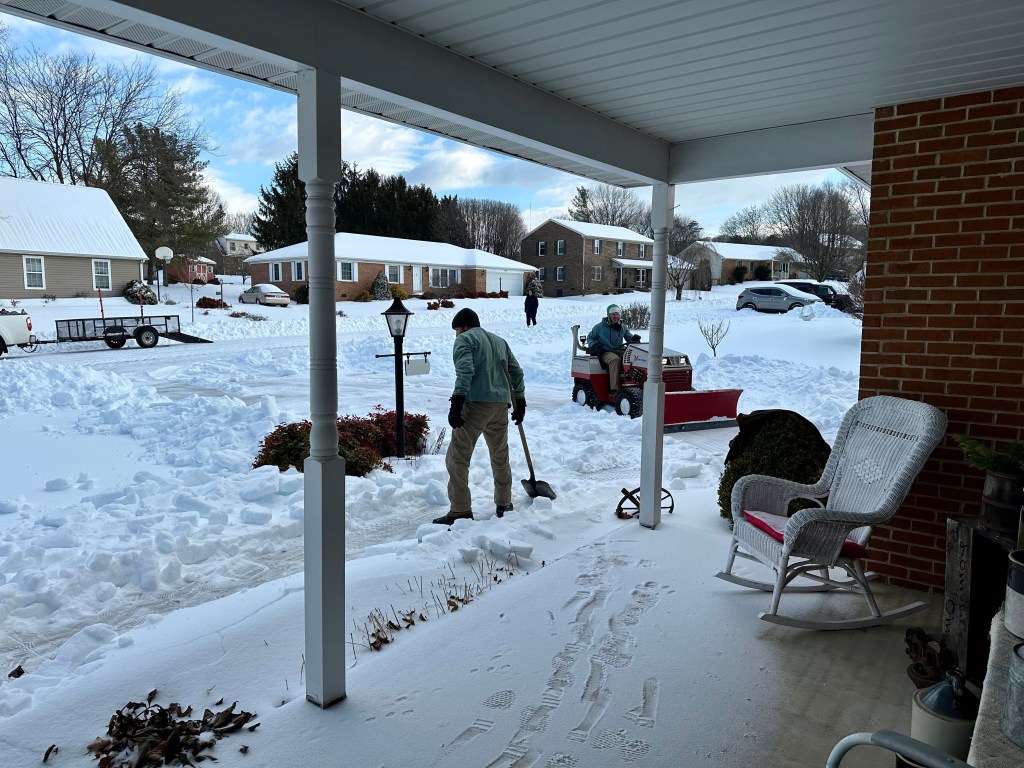
All of us were retirees, and we all knew it was much better to have a machine do what we used to do in our younger years. We were all more than glad to pay for this service rather than risk overdoing it or, even worse, hurting ourselves.
It’s nice to be in a position where we can afford to do that. As senior citizens, it was the right decision, regardless of the cost.
© Bruce Stambaugh 2026
I get excited when there’s a chance to see the northern lights or aurora borealis. I suspect I’m not alone. Why shouldn’t we be excited?
After all, the colorful lights are dancing in the sky over the polar north. That’s a long way from the Shenandoah Valley in western Virginia.
I follow social media posts closely for sun flares and alerts on possible northern light events. But being this far south, I keep my expectations in check.
History has shown, however, that seeing these beautiful phenomena is indeed possible in Virginia and points south. In fact, on October 10, 2024, at 10:30 p.m., I walked out the front door, and greens, reds, and pinks danced in the sky over my neighbors’ houses. Of course, the light display was much farther north than that.
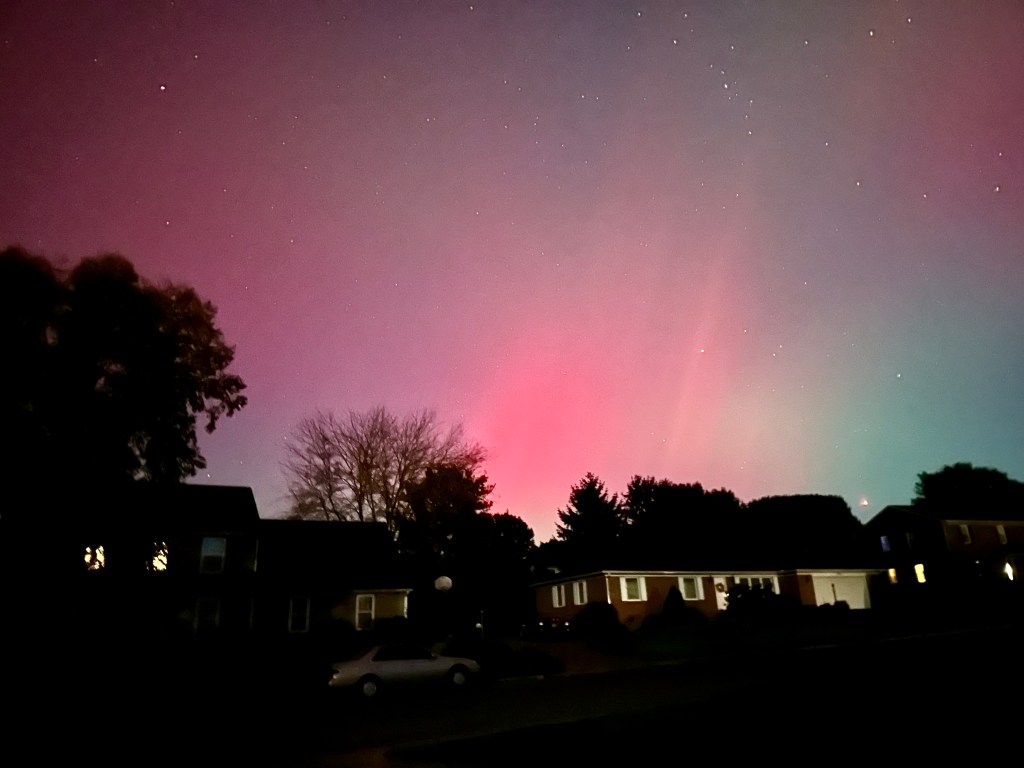
I snapped a couple of photos and went back to bed. The app on my cell phone had alerted me to the possibility of seeing the aurora borealis. And there it was.
Looking back on that experience, I wish I had chosen a better viewing location for more photos instead of going back to sleep. Still, I was happy with the pictures I got. They clearly showed the northern lights.
So, when the alert came out for Monday and Tuesday, January 19 and 20, this week, I was ready. However, being a man, and an aging one at that, I easily got distracted.
The NCAA National Championship football game between Indiana University and Miami University was on TV at 7:30. Because the IU coach had led James Madison University’s football team to exciting winning seasons, my wife and I were glued to the TV. JMU is located in Harrisonburg, Virginia.
However, my attention shifted when I saw a photo of the aurora borealis posted on Facebook by a friend who lives a few miles away. I walked outside, took a few pictures, and could see a little red in the sky.
So, I diverted my attention from football to photography and went in search of a decent view of the northern sky. It was harder than I thought. Rockingham County, where I live, may be in the Shenandoah Valley, but it certainly is not flat.
The landscape, predominantly agricultural west of the city, is rolling, dotted with high hills, and full of powerlines running every which way. With no moonlight, the night was dark, so even though I was familiar with the roadways, I had difficulty finding a place with a good view, free of light from security lights or buildings.
It didn’t take me long, however, to realize that the colors had faded since my friend took her photo two hours earlier. I headed home with fairly dull images of the night sky.
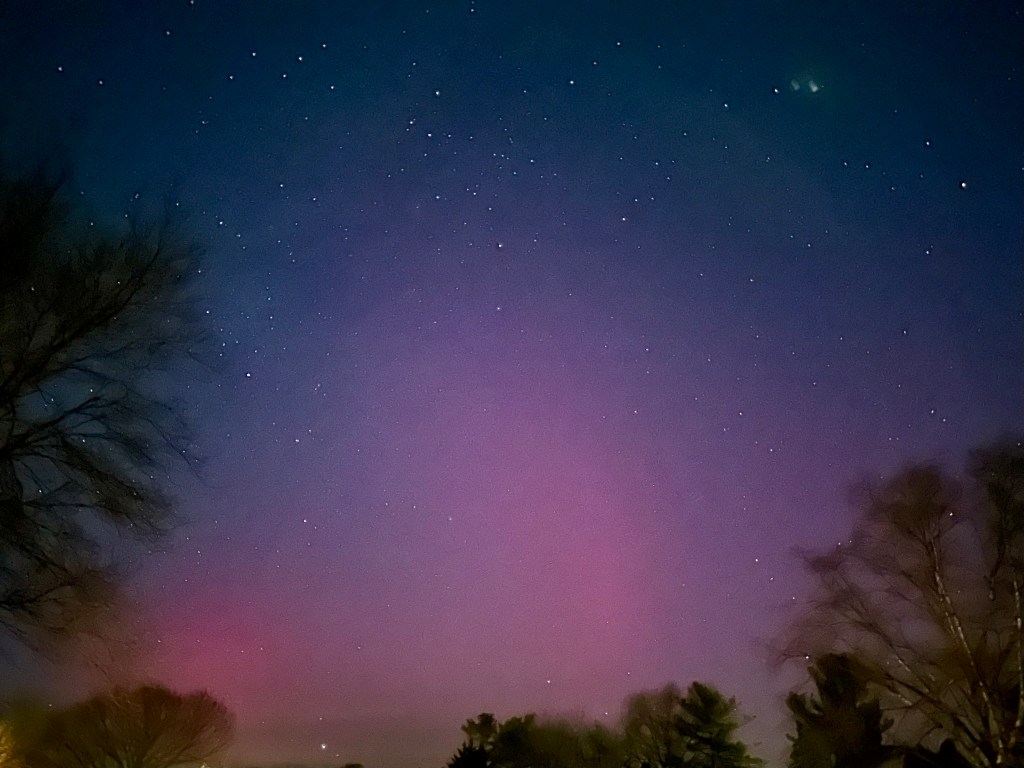
I was determined to make the aurora my priority after dark on Tuesday night. I again stepped into the darkness of our neighborhood and immediately saw reds and pinks in the sky, especially to the northwest. It is one advantage of having no street lights in our housing development. Of course, the colors I saw can’t compare to the amazing shots of curtains of colors dancing in the sky in the northernmost latitudes.
With temperatures below normal in our area, I bundled up and headed out, this time more certain about where I needed to go. But again, once I got out into the open countryside, the aurora colors seemed to dim.
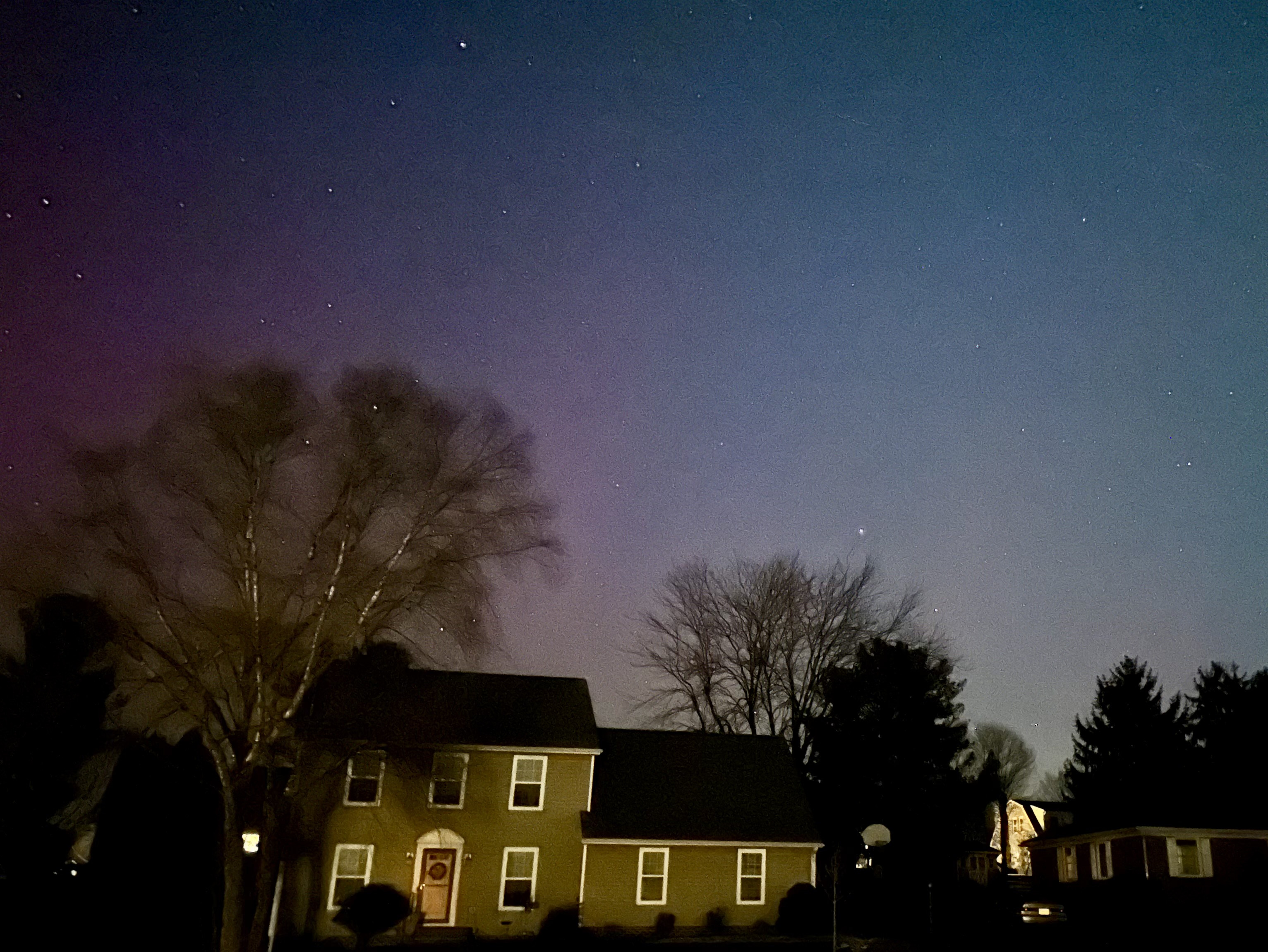
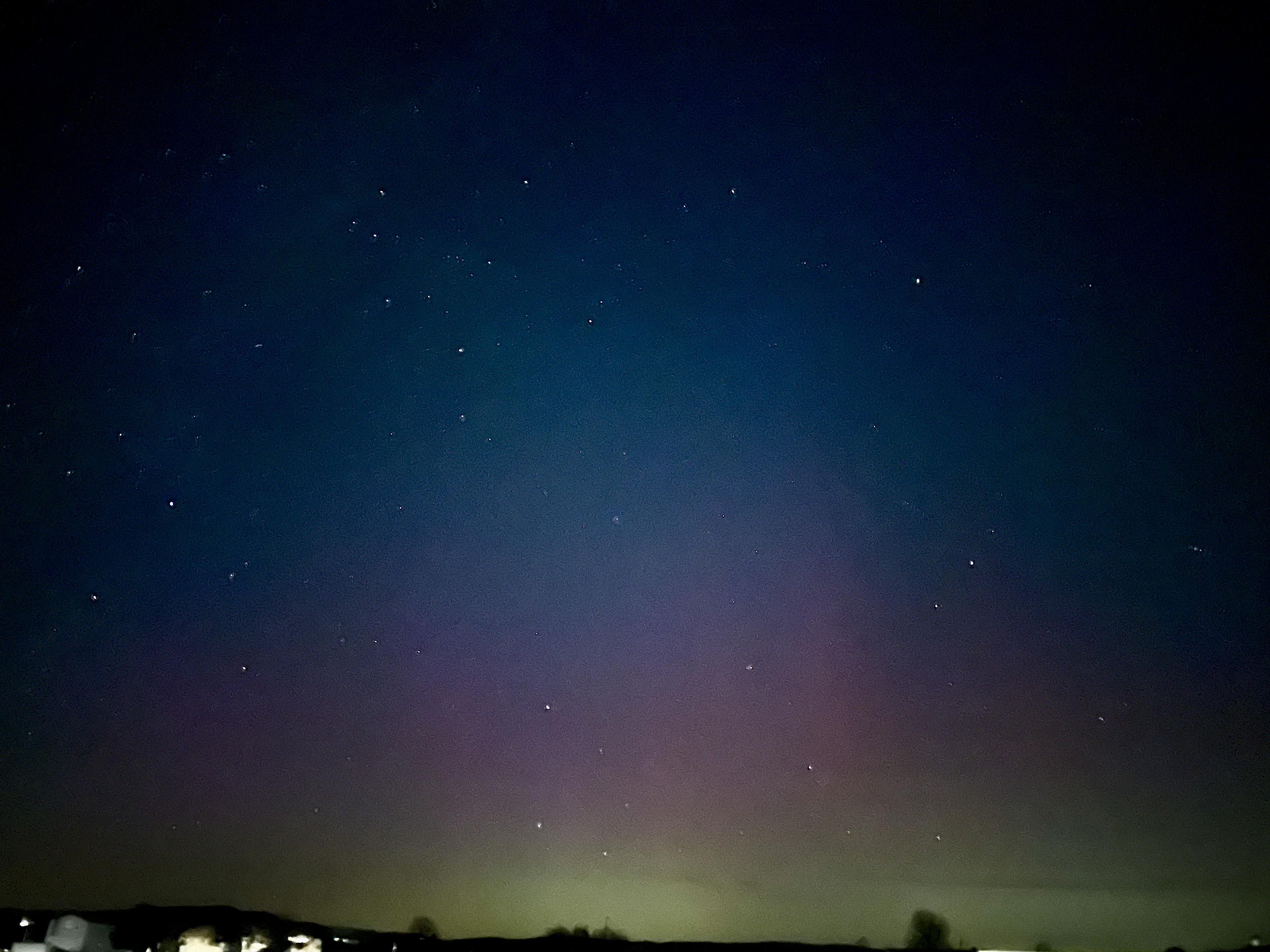
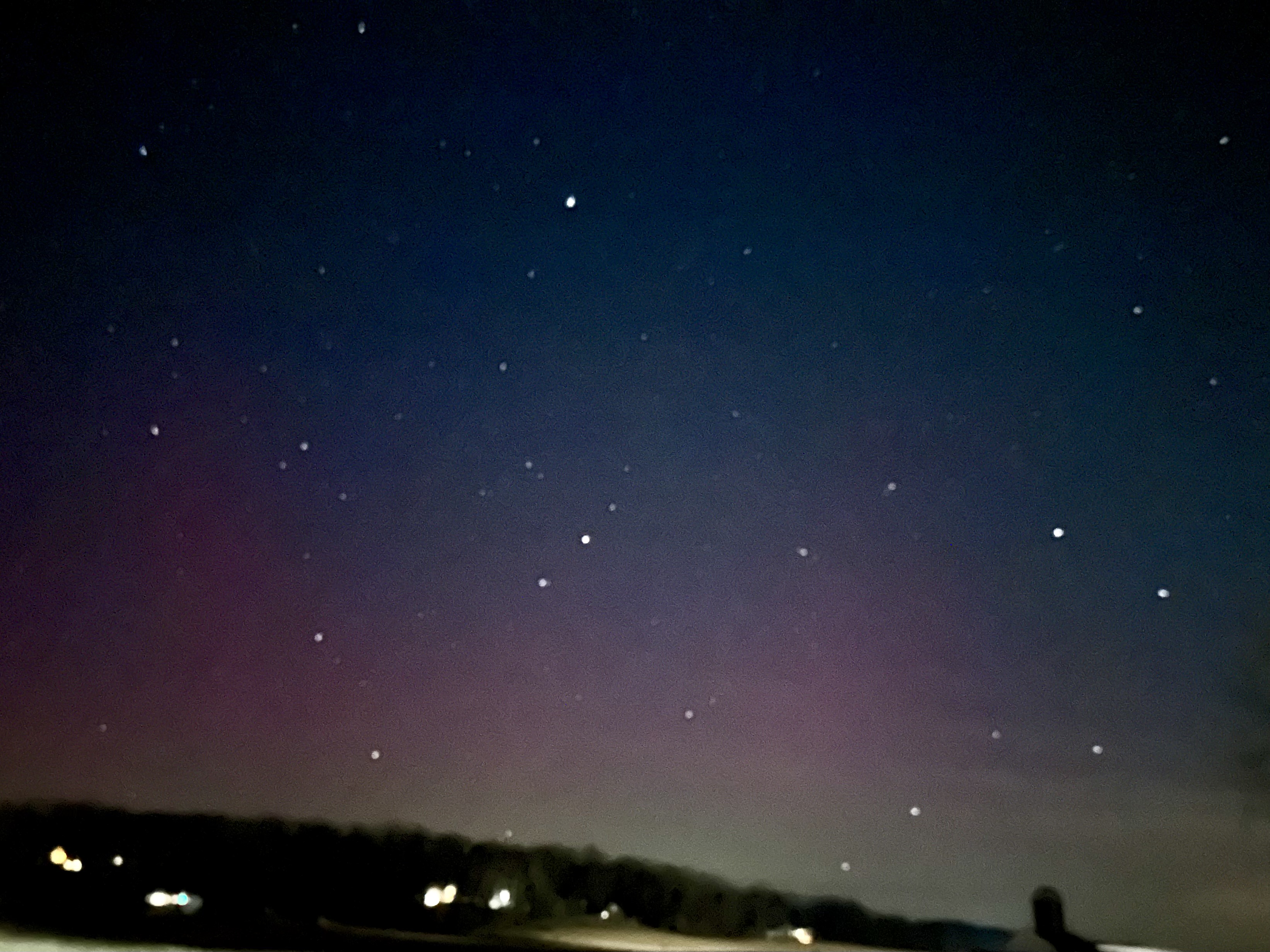
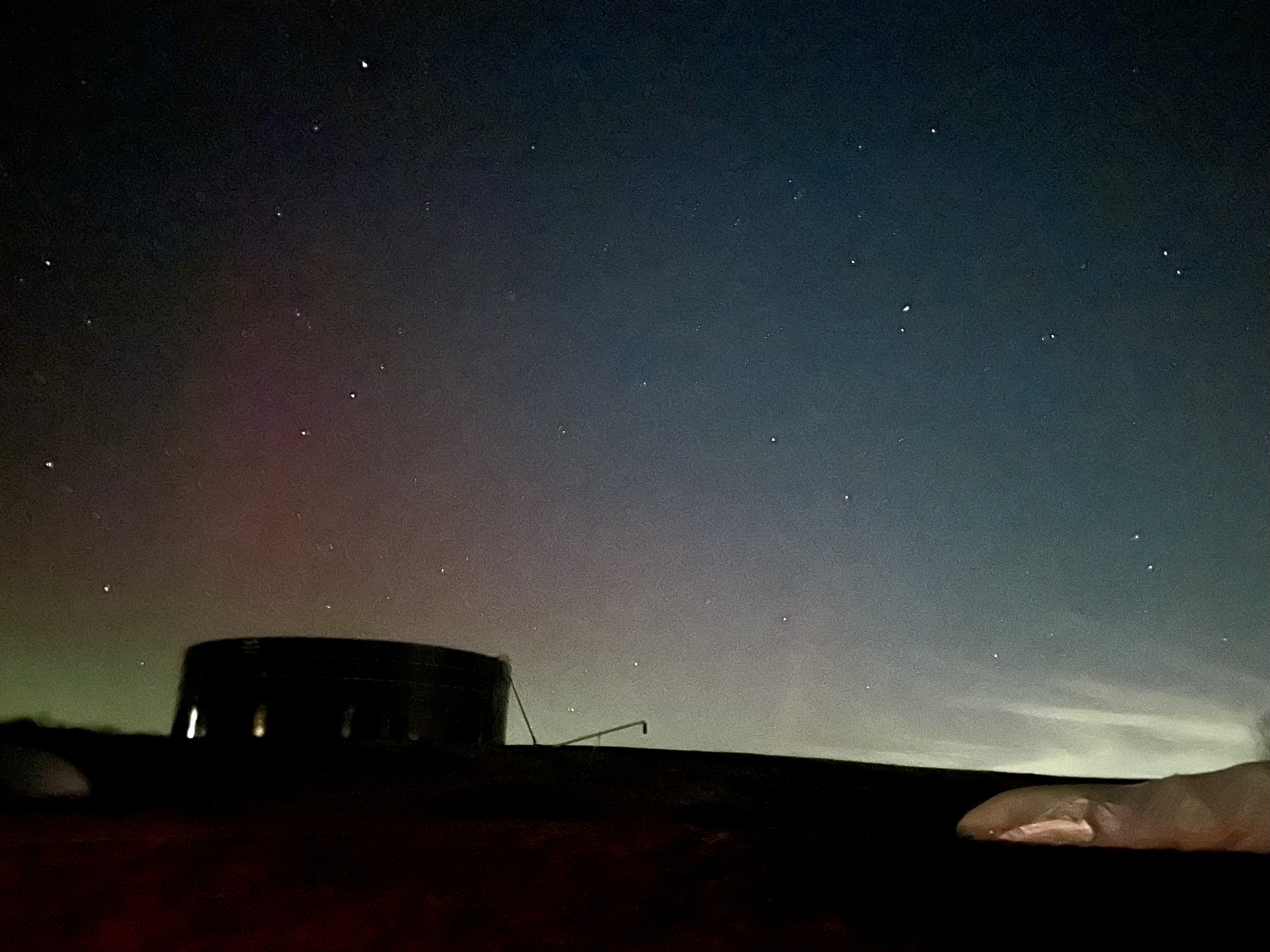
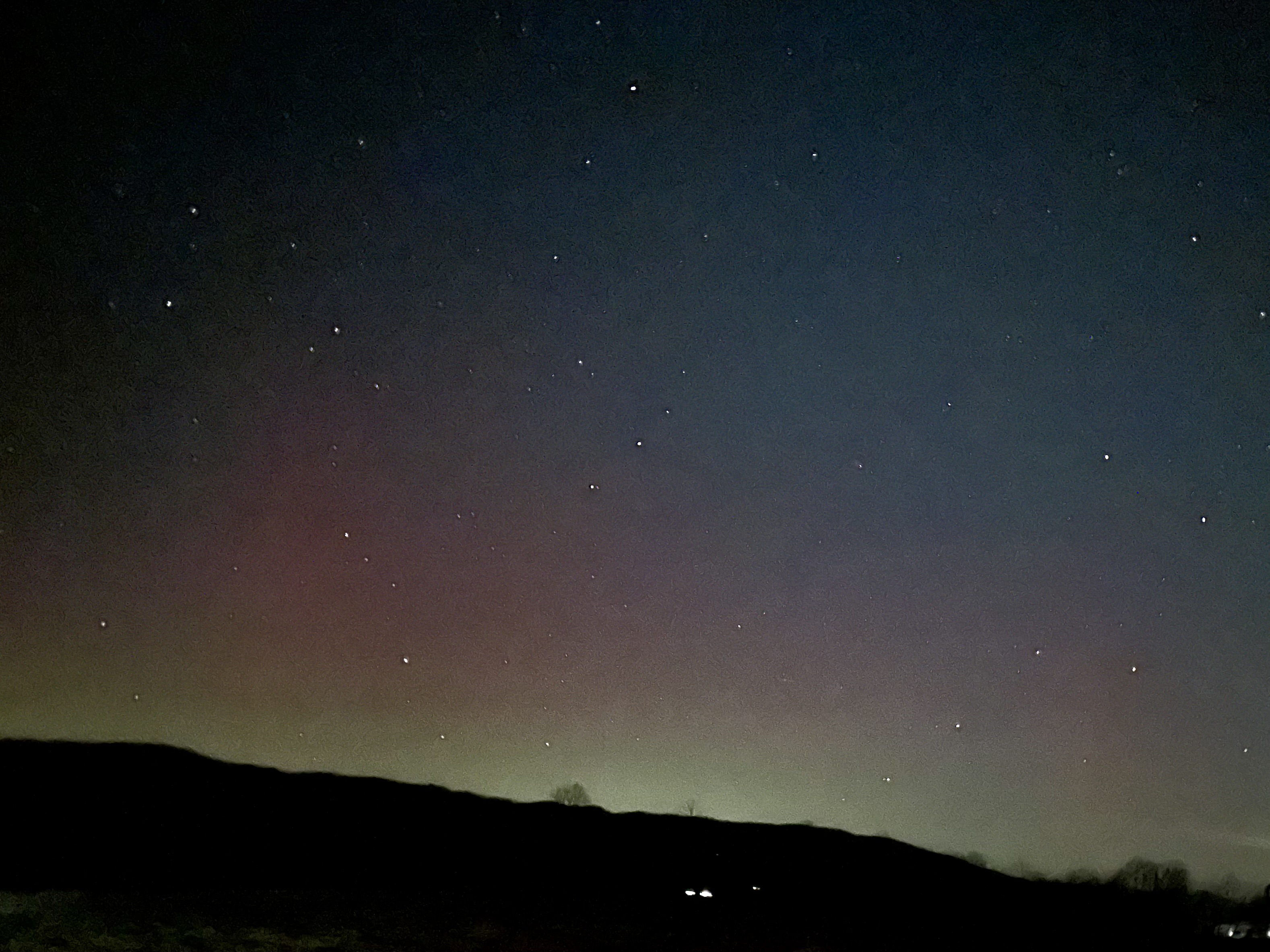
The photo with the house was my first hint of the northern lights. The rest are from my excursion in the county. Please click on the images to enlarge them.
They were brighter than the previous night, but not like I had seen in October 2024 or when I saw my first northern light in Ohio’s Amish country decades ago.
In that case, I was walking out to retrieve the evening paper from its roadside box when I first heard and then saw the northern lights. I stopped in my tracks when I heard a loud crackling sound, like a zap of electrical current.
I looked toward the sound, and in the southern sky, bright green zigzagging flashes danced low in the night sky. They lasted only seconds, but I realized what they were even though they appeared on the wrong horizon.
Soon, bulletins appeared on TV screens across northern Ohio about strange objects appearing in the sky. Witnesses who saw what I saw called the police and TV and radio stations to report the weird noises and lights.
There were all kinds of speculations, aliens included. Even the local weather service put out a special statement. When I saw that, I called the weather office at the Akron-Canton Airport to share what I observed.
I felt obligated to set the record straight, and since I was a trained severe weather spotter for the National Weather Service, they were familiar with where I lived.
Because of that experience, I longed to see the aurora borealis in its proper setting, the northern sky. Consequently, I was very pleased to be able to view them in Virginia, not once, but twice.
You can be assured I’ll remain on the lookout whenever the next aurora alert is issued, regardless of what time of night it is or what’s on TV.
© Bruce Stambaugh 2026
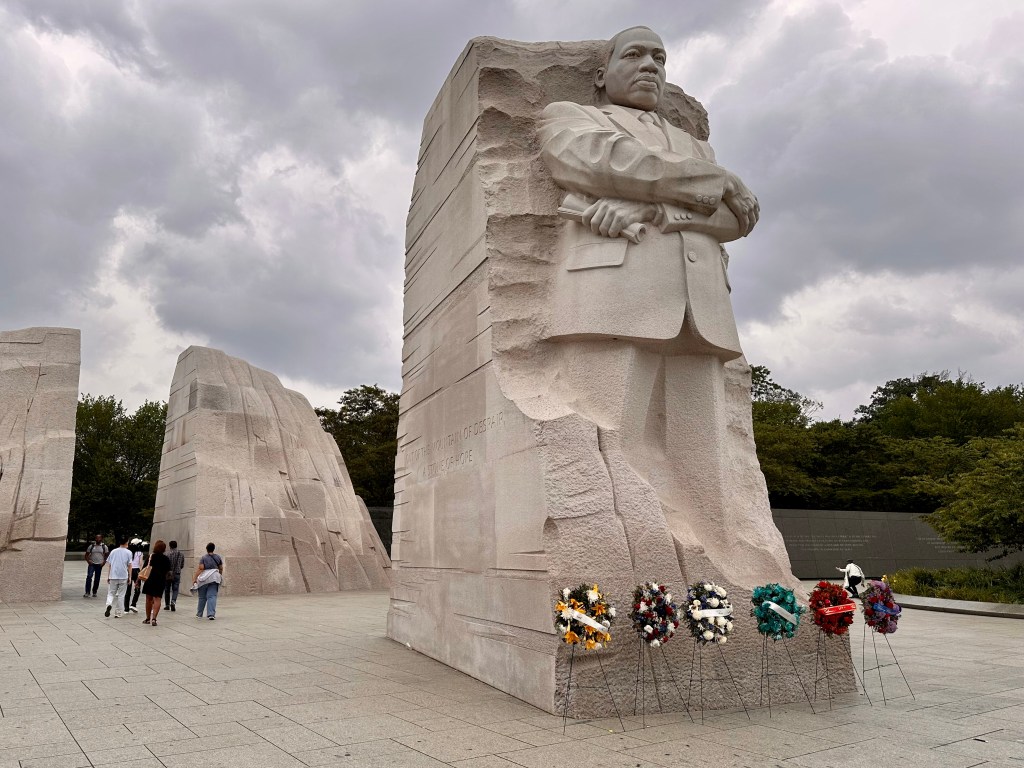
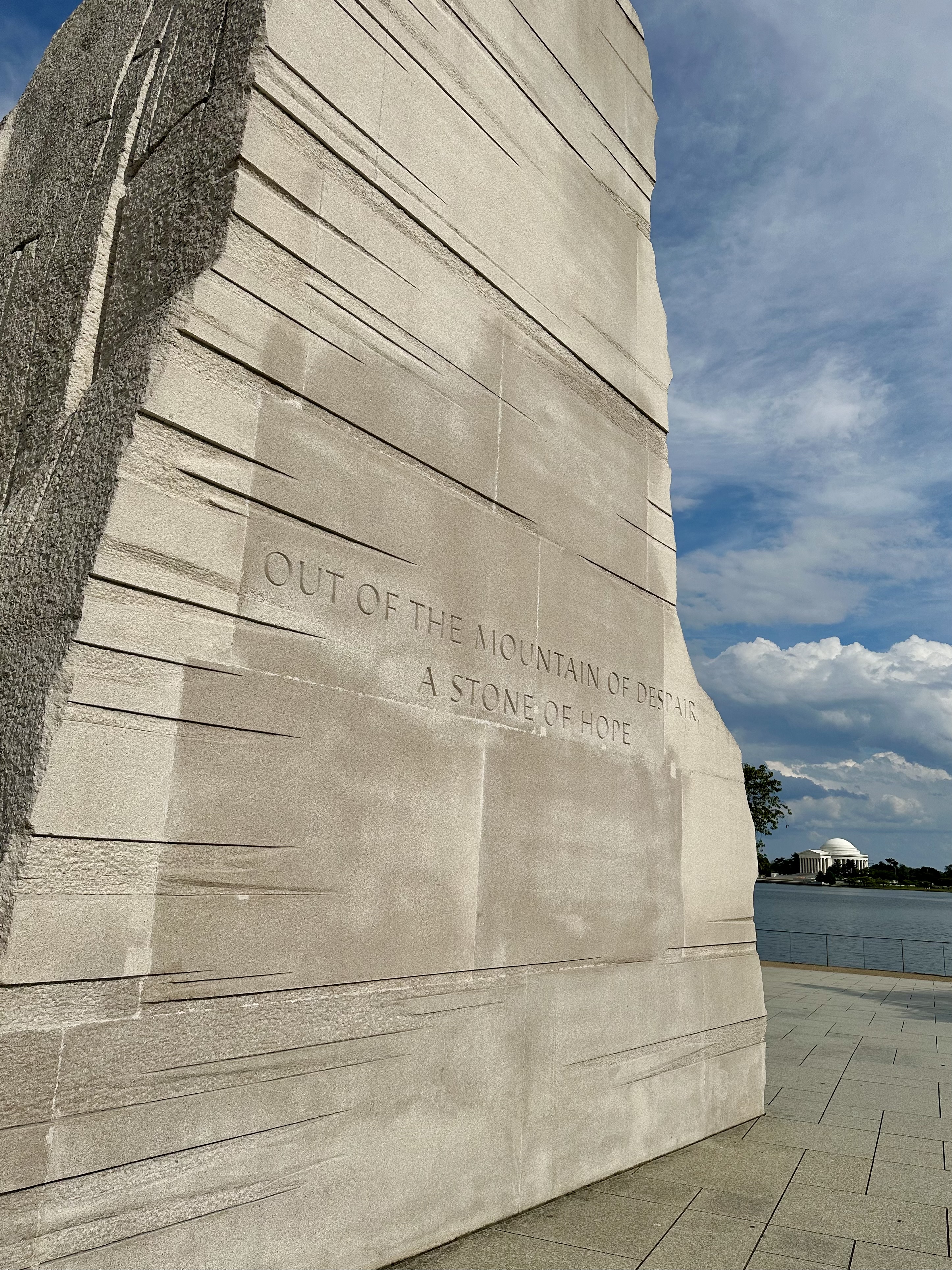
Though he was born on January 15, 1929, today is Martin Luther King, Jr. Day, a national holiday in the United States.
Through his tireless work, marches, and speaking, Dr. King rightly became an icon of the civil rights movement.
We honor him today.
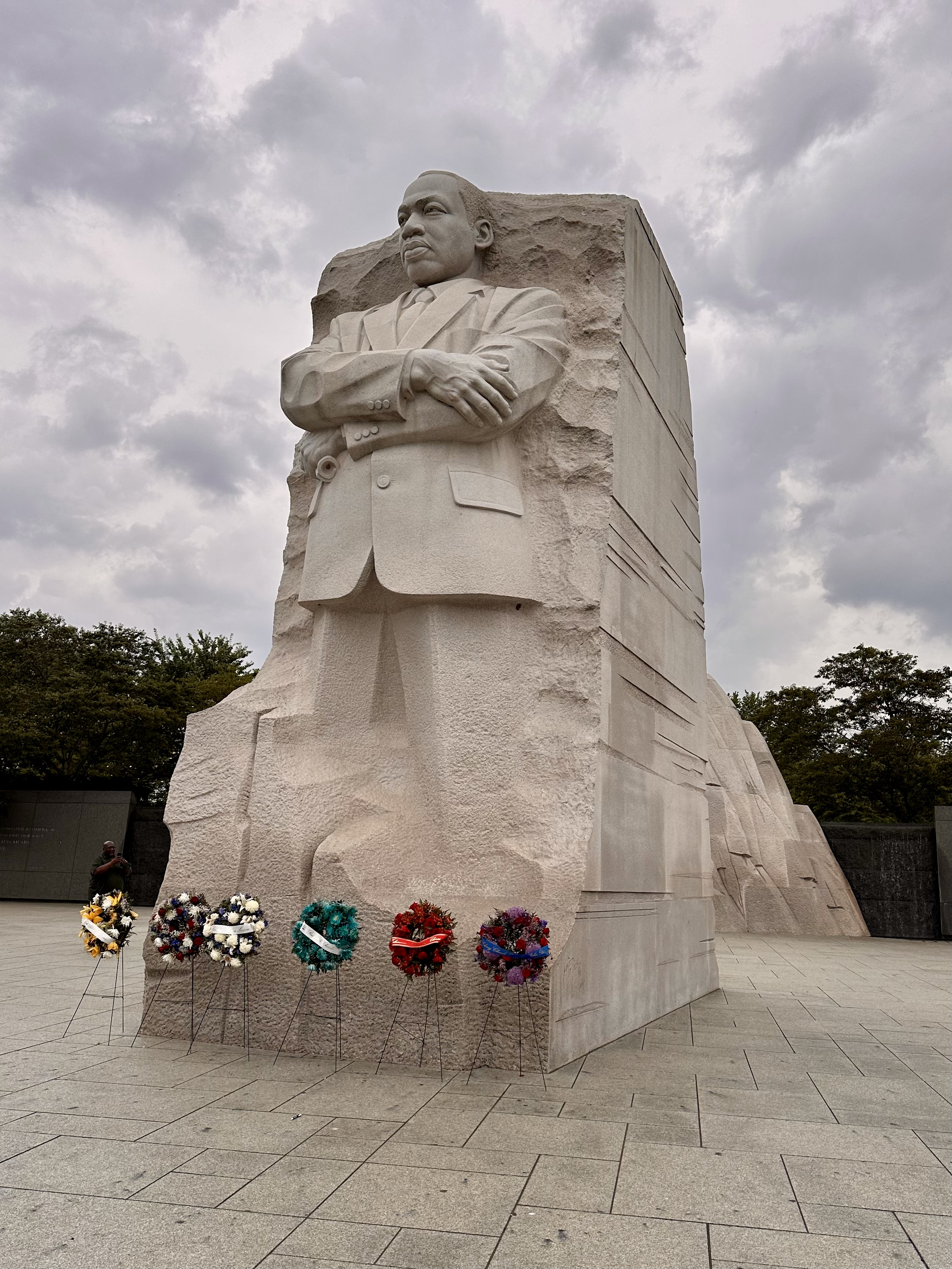
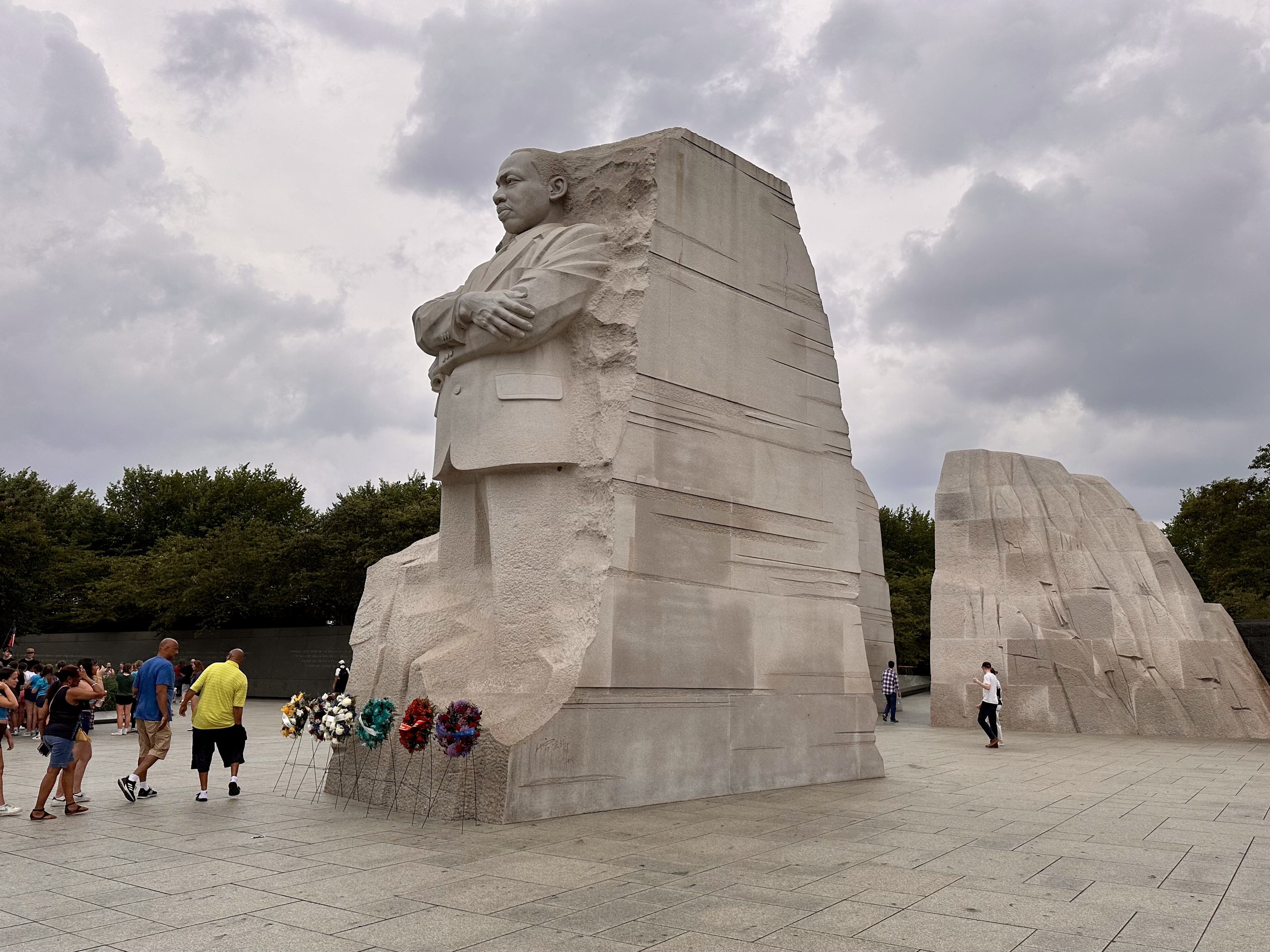
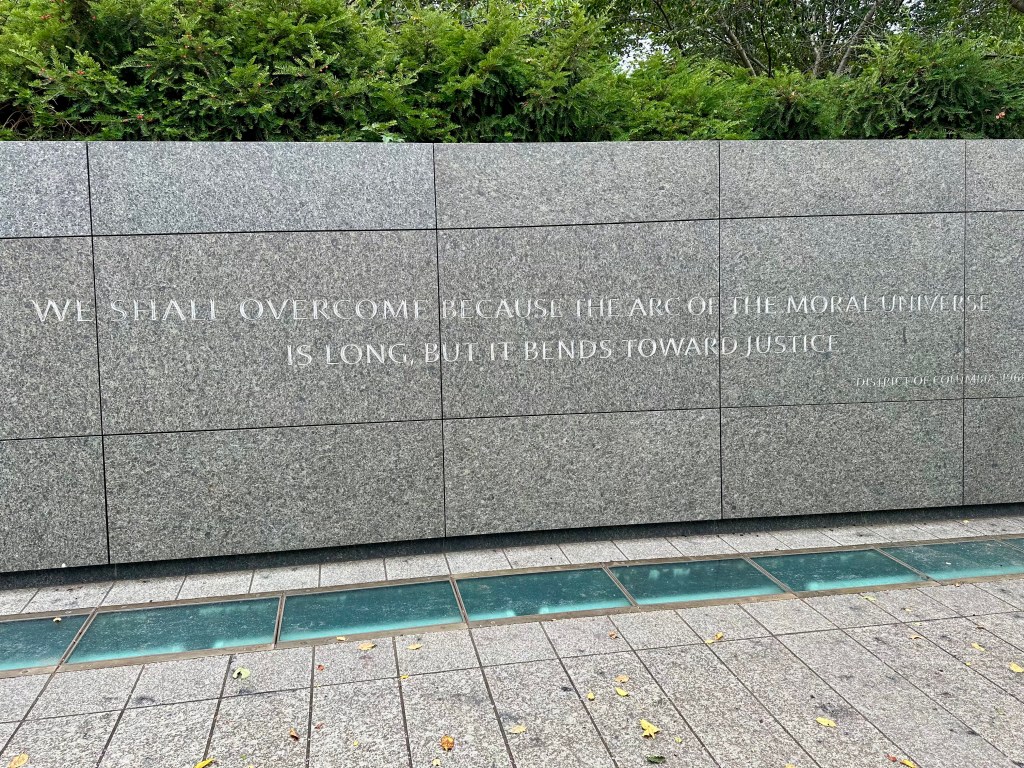
© Bruce Stambaugh 2026
We live in a crazy world that seems to grow crazier by the day. But we must not let the chaos get to us. We need to carry on as best we can. For me, photography is one outlet that shuts out the din of the world’s madness against itself.
I enjoy photographing the wonder all around me, the serendipitous joy that springs upon me. By capturing those affectionate moments, I can share them with others, including you.
Staying in the present moment allows me to see things that others might just pass by. Consequently, I took thousands of photos this year. My photos feature people, insects, birds, trees, mountains, flowers, sunsets, sunrises, boats, planes, and a sundry of other subjects.
I have chosen to select one image for each month to review 2025. I hope each photo speaks to you the way they all did to me. Here then is 2025 in photos. Enjoy.
January
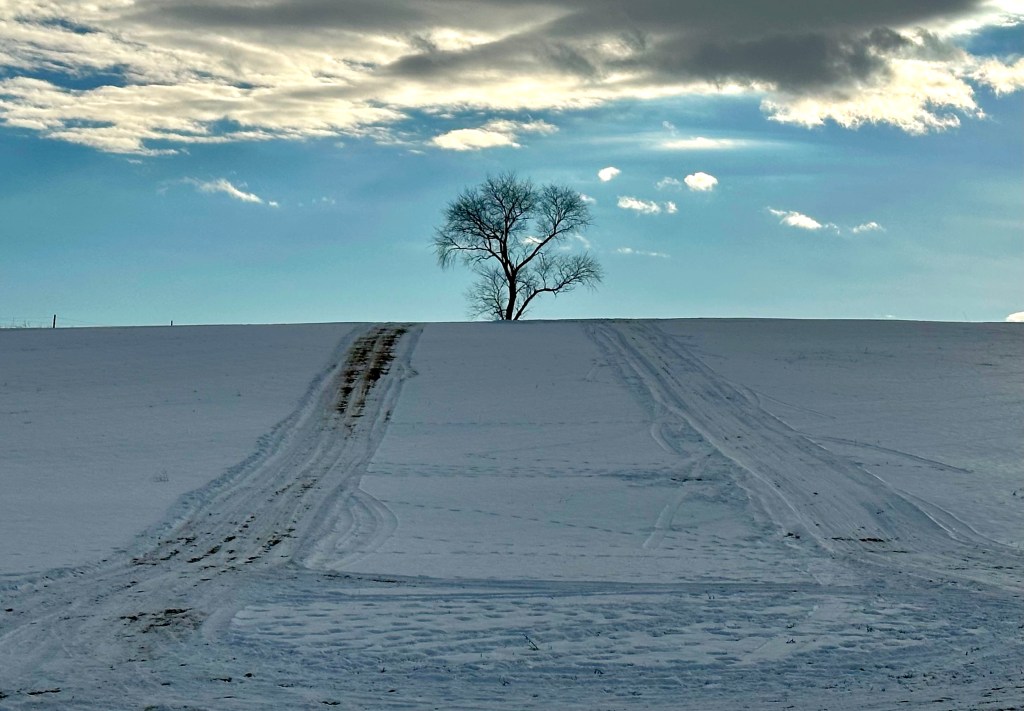
It’s only appropriate to begin this photo series with a snowy scene in January. This lone tree stood beneath the hovering clouds and was perfectly centered by the farm equipment tracks in the snow. The cerulean sky provided an excellent backdrop, like blue ice in a glacier.
February
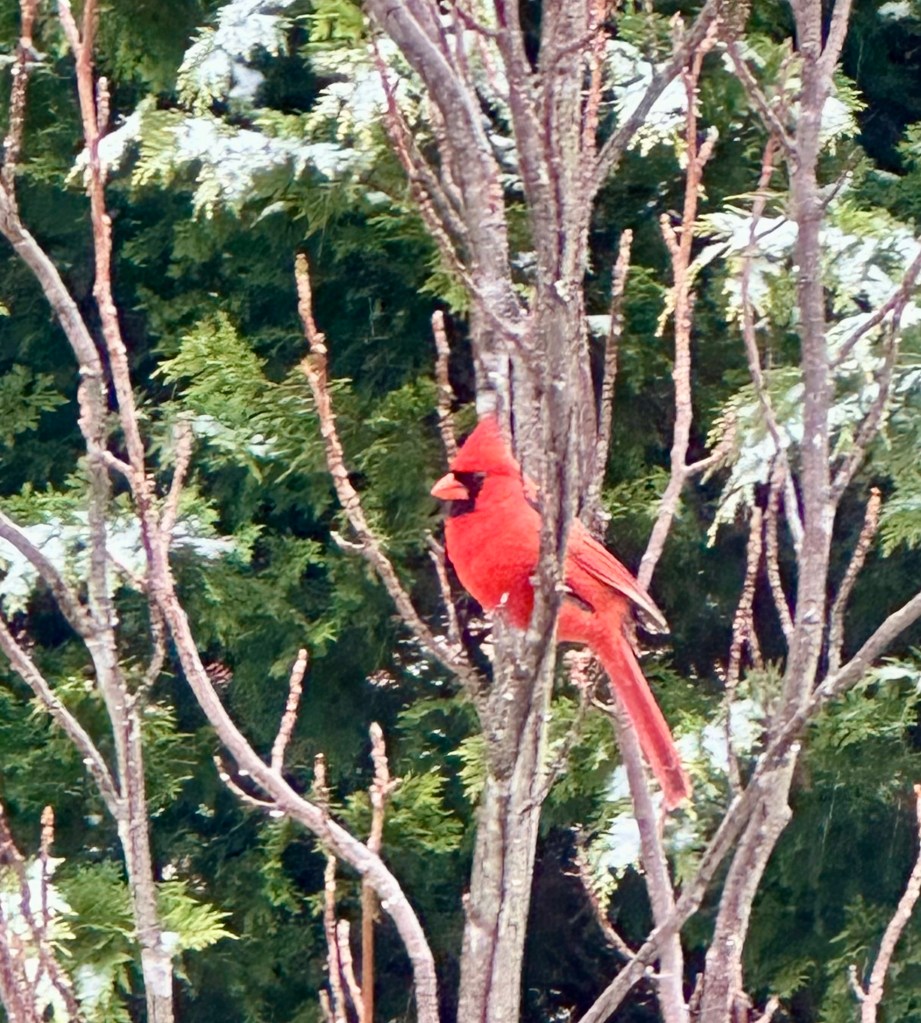
Is there anything more stunning than a bright red male Northern Cardinal in the midst of winter? Against evergreens laden with a skiff of snow, the bird shows even more colorfully. It’s just one of the reasons I love watching, feeding, and photographing birds.
That’s especially true when they grace your backyard with such natural beauty.
March
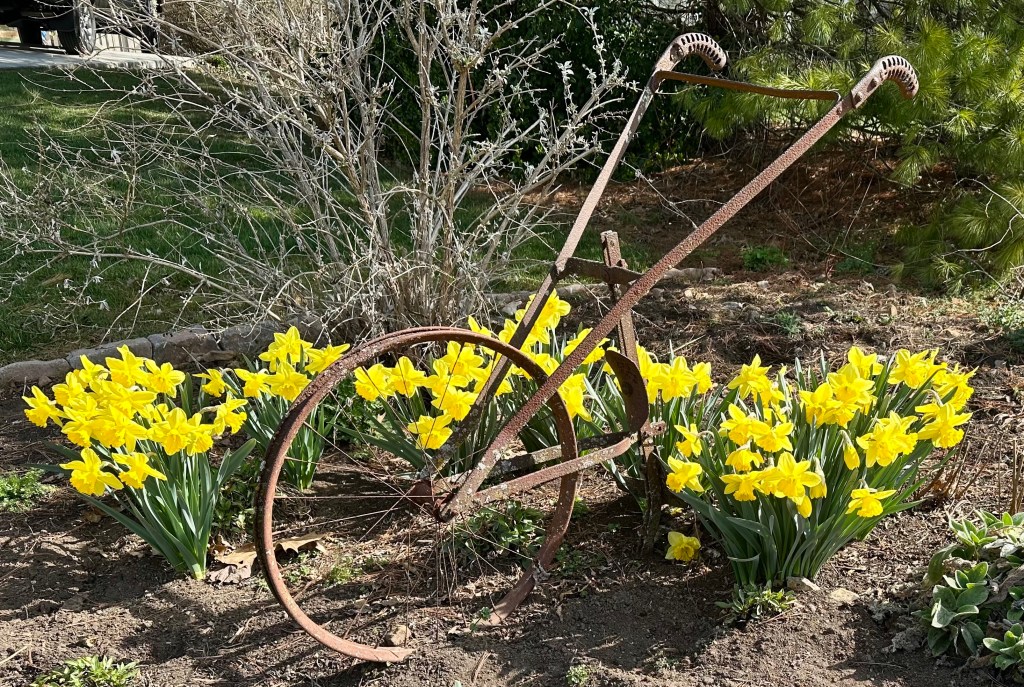
I enjoy walking in our suburban neighborhood of nearly 500 homes any time of year. Besides the required exercise, I encounter many photographic moments. This neighbor had the foresight to plant daffodil bulbs around an old hand cultivator, once used to till garden soil, which helped control the weeds.
Emerging from winter, the buttery yellow of the blooms added a splash of color that complemented the old, rusting implement.
April
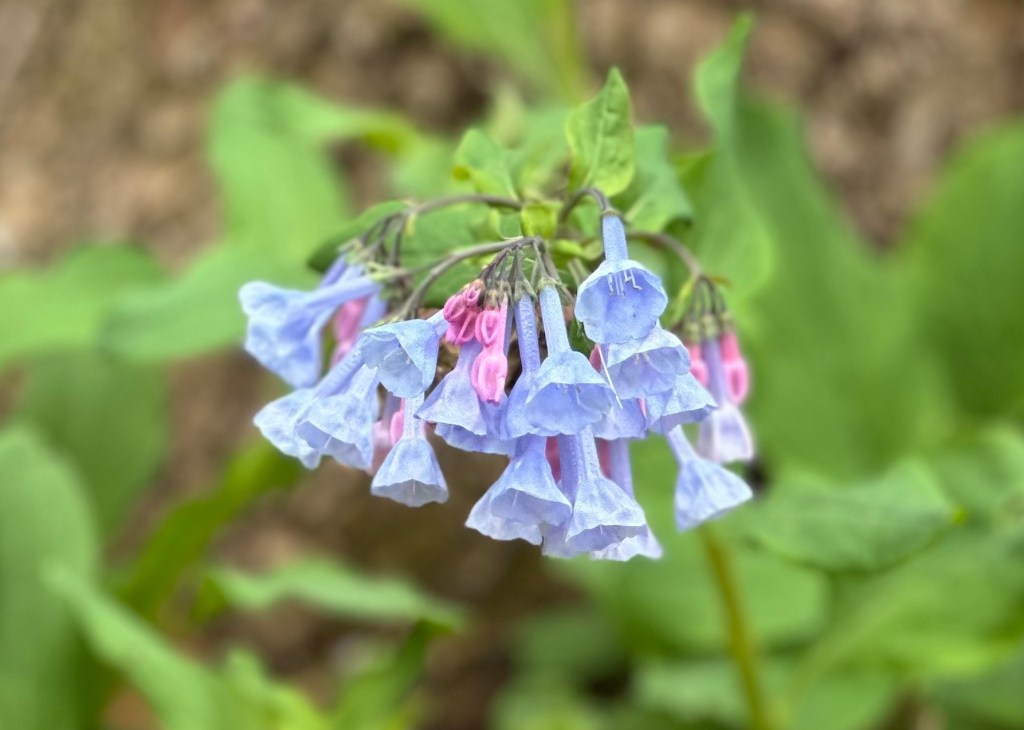
Though not the state flower, Virginia Bluebells should be. They are native to the state and are its namesake. Besides that, the flowers are simply beautiful. Their pink buds turn to azure blue blossoms, and they are a welcome sight wherever they bloom in spring.
May
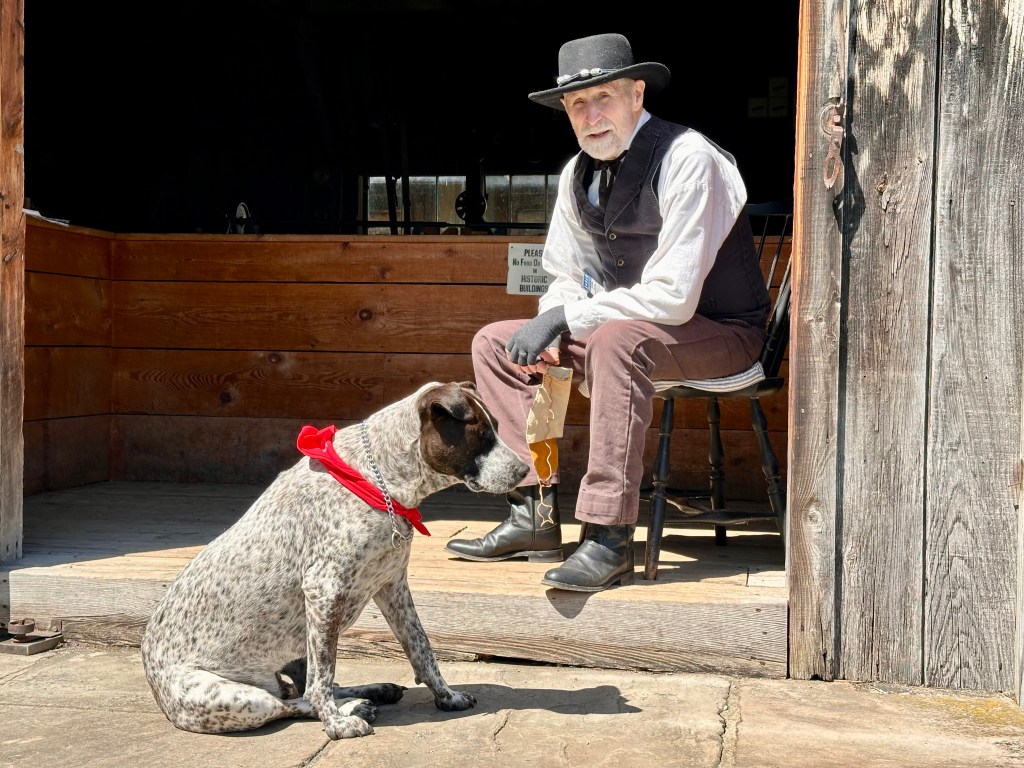
I captured this photo at a historic village in Mumford, New York. Since it was Mother’s Day, the Genese Country Village and Museum had people in period clothing doing demonstrations and providing information about their particular station.
While walking by a barn, I caught this man and his dog sitting in the morning sunshine. The darkness of the barn’s interior made them stand out all the more.
June
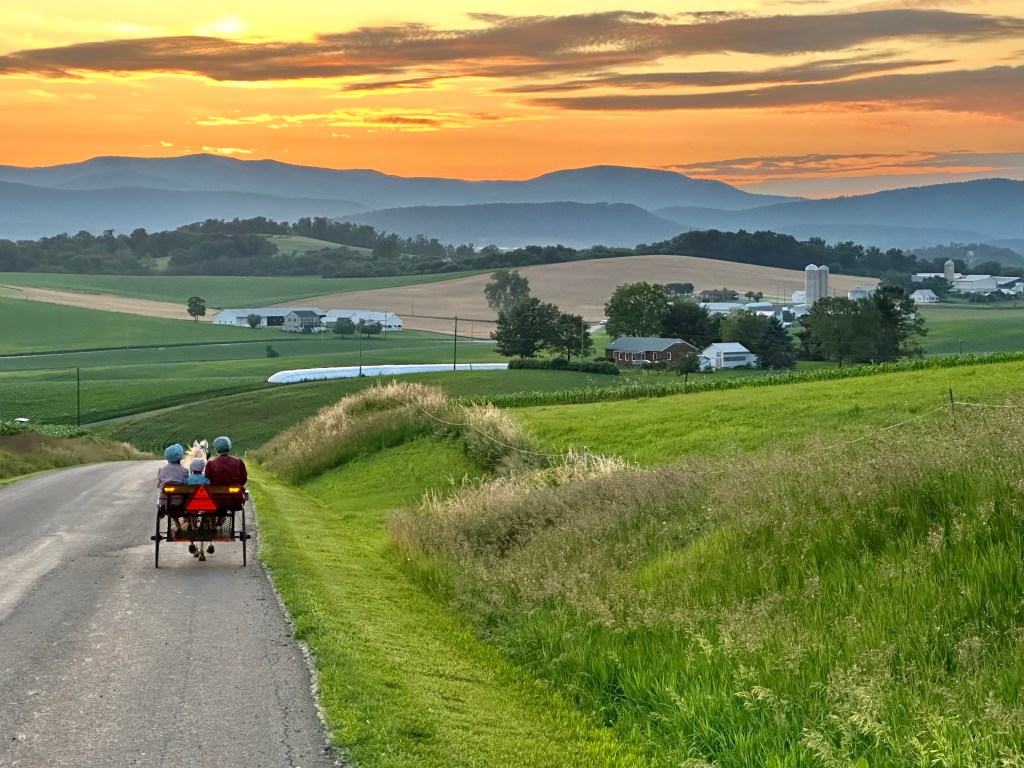
I’m a sucker for sunsets. With its fluffy-cloud days, June is often a good time to watch for glowing evening skies. June 20th was one such day. It just happened to be the summer solstice, when the sun would be at its northwestern-most point in the evening sky.
I headed to my favorite photo spot, the western slope of a local landmark, Mole Hill. Mole Hill is a prominent mound in Shenandoah Valley’s Rockingham County. You can see miles south, west, and northwest from the extinct volcanic core.
On the way there, I saw a pony cart tied to the trunk of a walnut tree at the peak of Mole Hill Road. I didn’t think much of it until I heard the distinct sound of hoves hitting the pavement. I turned and saw an Old Order Mennonite young woman and two girls in an open cart behind a blond-maned pony heading my way.
Knowing they would not want their photo taken, I waited until the cart was well past my location before I snapped the shutter. The setting sun illuminated the pony’s mane and the seeded heads of the tall grass north of the roadway.
With the evening quickly cooling, a light fog began lifting out of the river valley below the Allegheny Mountains that mark the boundary between Virginia and West Virginia.
The combination of the golden sky, the glowing clouds, the darkened mountains, the mist, the farmsteads, and the rolling valley floor created a once-in-a-lifetime scene. It felt like a holy moment, and I was thrilled to capture it for others to see.
July
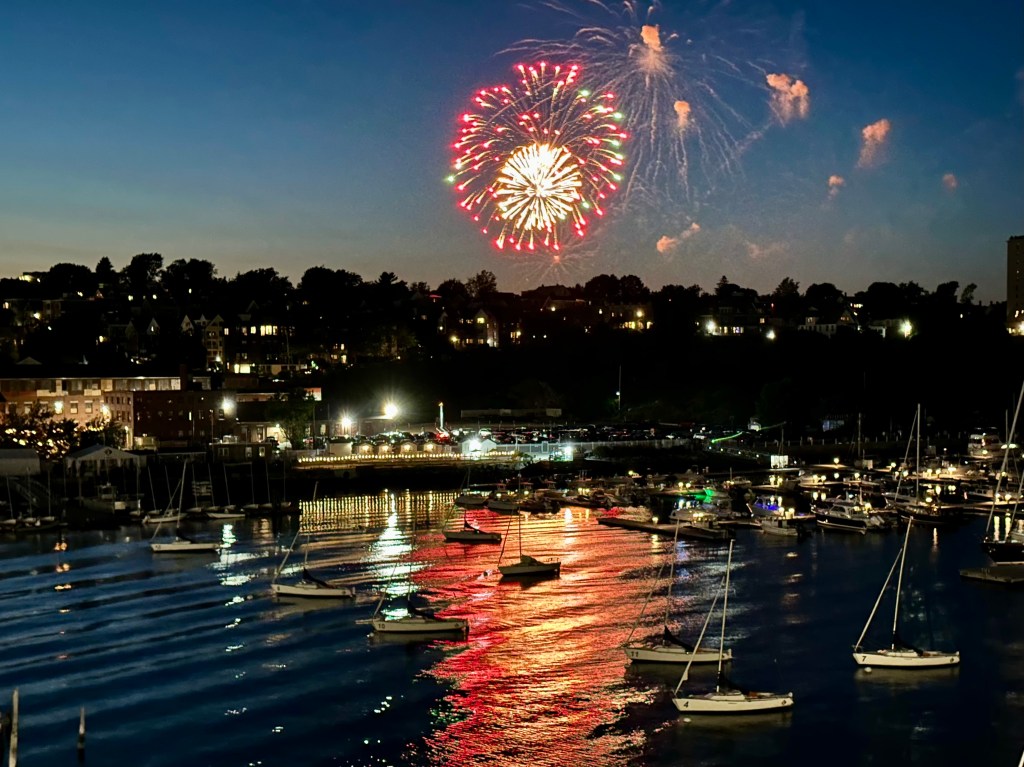
In the United States, July literally always starts out with a bang. July 4th is Independence Day, and it just so happened that the cruise ship my wife and I were on docked in Portland, Maine, on that hallowed day.
Fortunately, the ship’s starboard side, where our cabin was, faced the city’s harbor. We had a front-row seat to all the explosive colors reflected in the water. It was a fun way to close out our trip.
August
Like many other locales in the nation, August was a hot, humid, and all too dry month. Still, people ventured out, keeping their routines and schedules despite the withering temperatures.
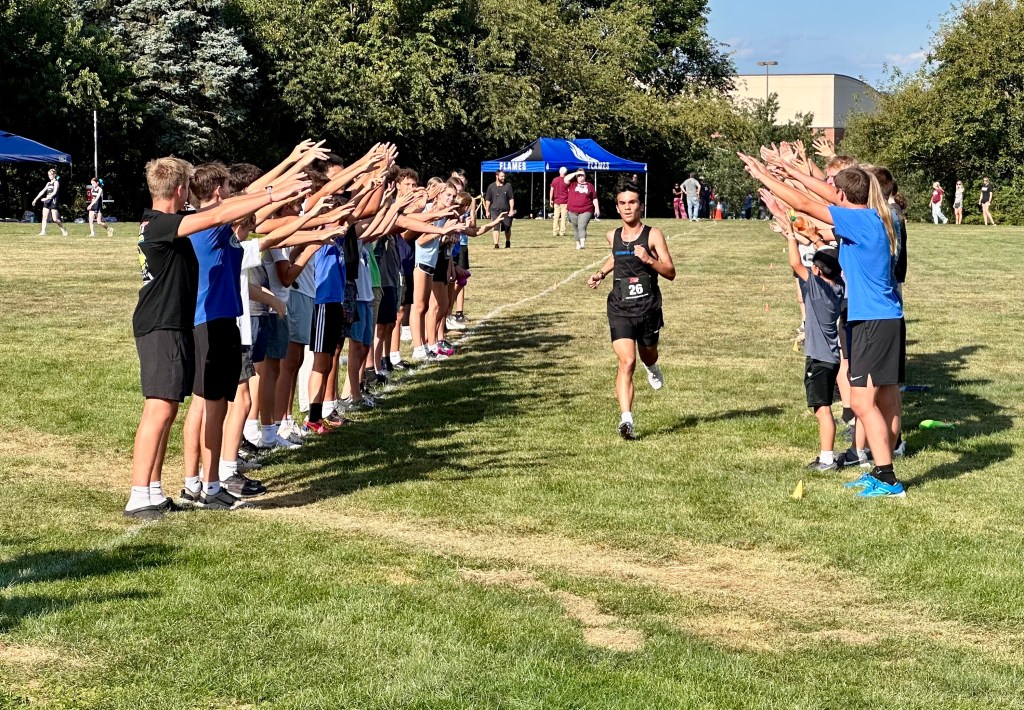
That was true for all kinds of outdoor sports. This photo shows the proud moment of the young man I mentor, far outpacing all the other high school runners in a cross-country meet. I wasn’t the only one who was pleased. Daniel’s classmates created a human gauntlet to welcome him as he approached the finish line.
September
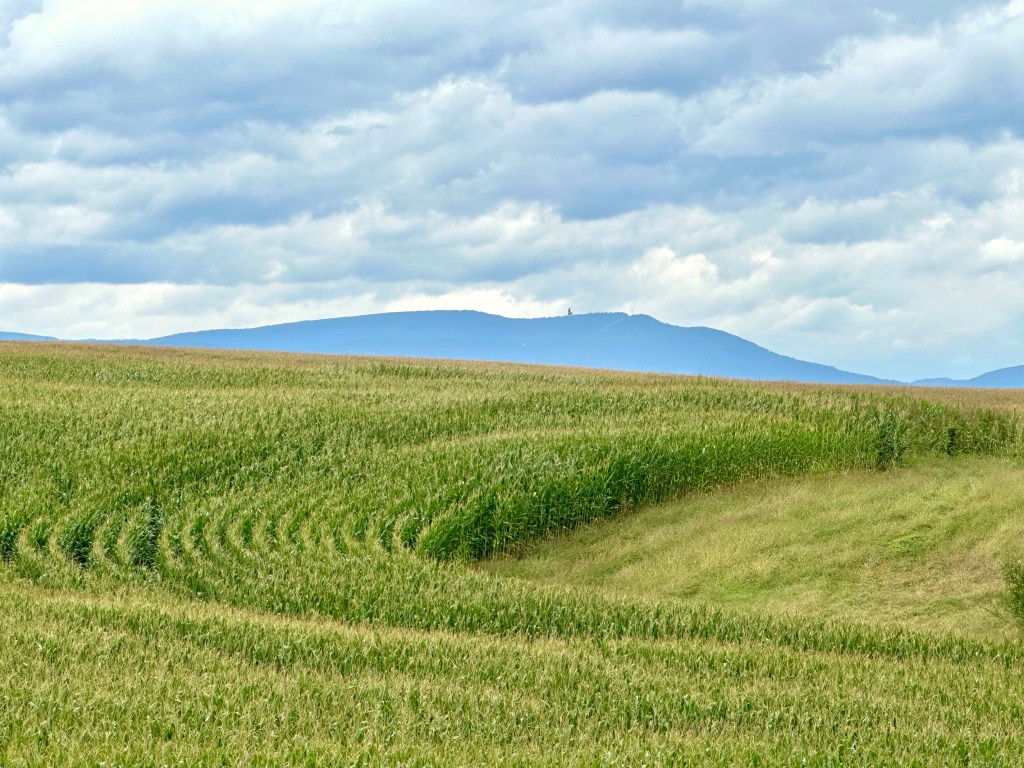
This September in Virginia’s lovely Shenandoah Valley was fabulous. After a hot, humid summer, September ushered in cooler temperatures and revealed the magnificent colors of her topography and vegetation, both natural and cultivated.
This was the view I saw as I exited my vehicle at a country store near the quaint town of Dayton. How could I not take this shot?
From the area’s fertile soil, curving rows of field corn and rolling contours led the eye to the Allegheny Mountains to the northwest and the cruising cumulus clouds above. Come harvest, it was a bumper crop of corn.
Though I didn’t see it at the time, an American Crow is near dead center in the pastoral photo.
October
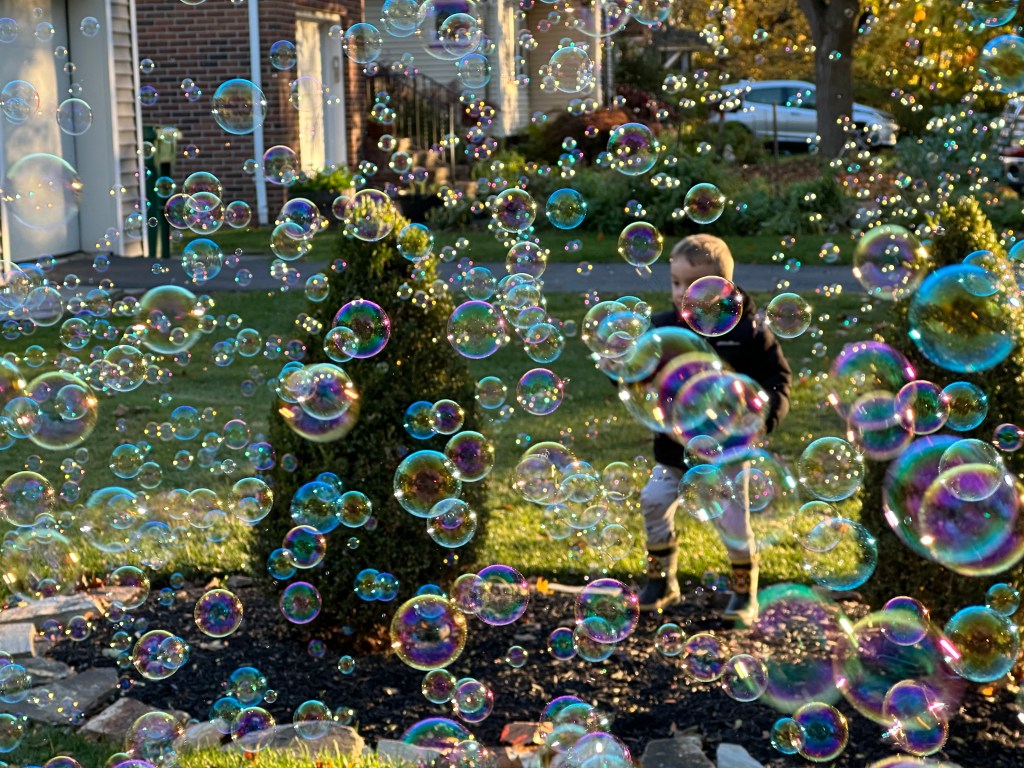
Our three-year-old grandson loves Halloween. He also loves bubbles, so his folks bought him a bubble machine. Teddy wanted to show off how the bubble maker worked when we visited him and his parents the week of Halloween.
When Teddy ran behind the bubbles, the sharply slanting sun highlighted the multi-colored, windblown bubbles. The various-sized bubbles and their proximity to my camera created a moment I can’t forget. It was one of my favorites of the year.
November
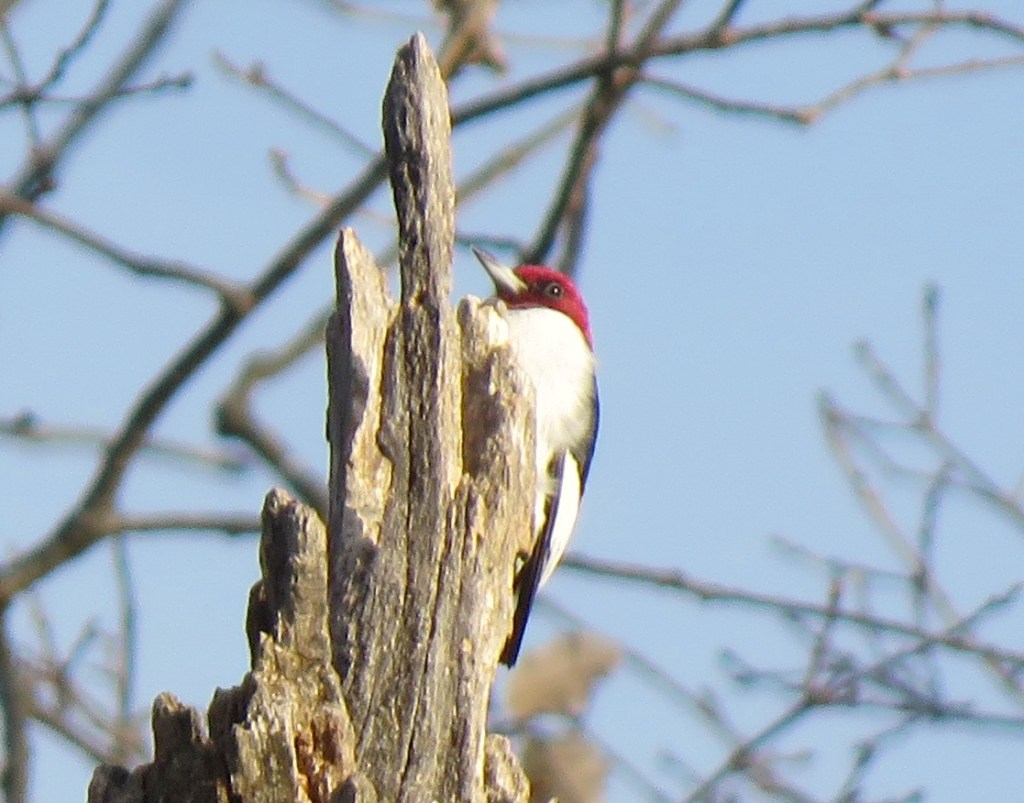
When a Red-headed Woodpecker poses for you, you have to take the shot. Of course, I am always ready with the camera when the moment arrives.
December
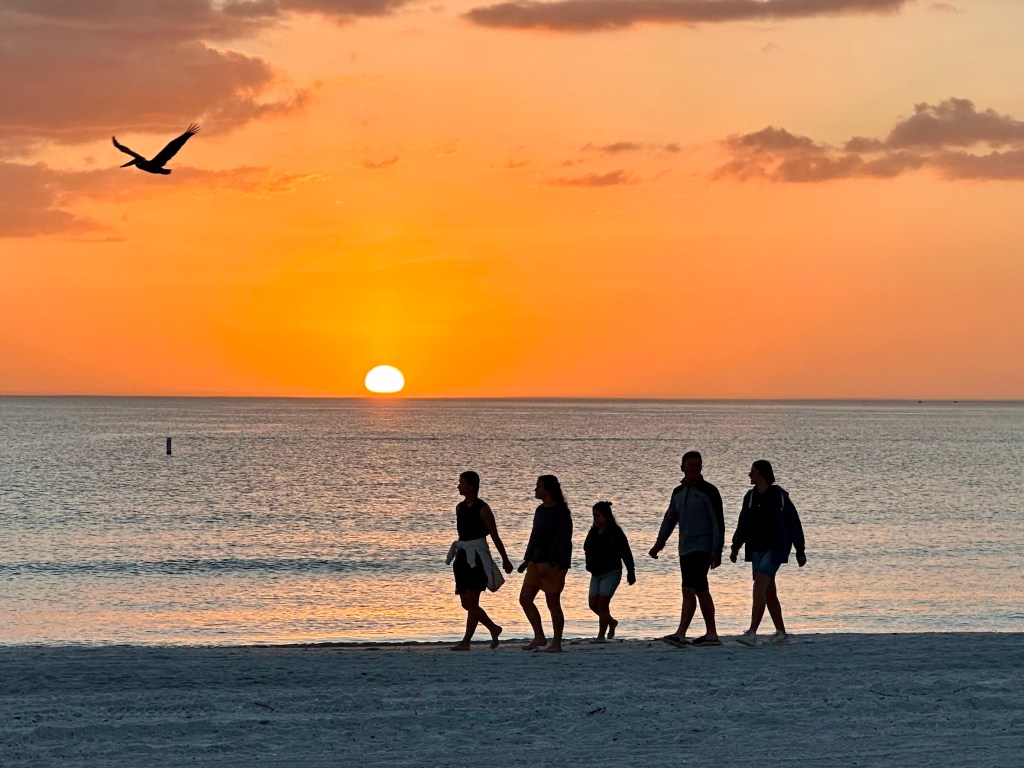
My wife and I spent Christmas week in Sarasota, Florida, with our daughter and her family. We wanted to devote holiday family time together somewhere warm. I’m happy to say the weather was perfect. With two college-aged grandsons and a teenage granddaughter, we hit the beach a few times.
After basking in the warm sunshine during the day, we returned a couple of times for the sunset. When the clouds didn’t cooperate, we settled for golden sundowns.
In this photo, a Brown Pelican appears to be leading the way home for this family walking along North Lido Beach. Sometimes the photo paints the picture for you. Plus, it’s only appropriate that we let the sun set on 2025.
I hope you and yours have a joyous and safe New Year.
© Bruce Stambaugh 2025

The Winter Solstice arrives at 10:03 this morning. Even among all the holiday celebrations, it’s a day many anticipate.
The Winter Solstice marks the official start of winter in the Northern Hemisphere. However, it also means that the shortest day has arrived, and hereafter, the days, minute by minute, grow longer in daylight.
Of course, the opposite is true in the Southern Hemisphere. Today marks the beginning of summer.
This photo was taken on the evening of the Winter Solstice on December 21, 2016. It’s a photo of the sunset behind our home when we lived in Ohio’s Amish country.
No matter where you live, today is a day to celebrate amid all the other more noted celebrations.
© Bruce Stambaugh 2025

Decades ago, when I was a youngster, I loved this time of year for many reasons. One was helping my dear mother prepare Christmas cards for mailing.
Doing so was one of the few times I didn’t have to compete with my two brothers and two sisters for the job. It was a different story at cookie-baking time, however.
If my recollection is correct, I had a monopoly on assisting Mom with the cards. She was a watercolor artist and took personal pride in selecting certain cards for specific individuals or families. Mom was very particular, even when picking out boxes of Christmas cards.
My juvenile brain interpreted selecting and sending the cards as an extra-special event. I sensed Mom felt that way, too.
Our mother had lovely handwriting, and she carefully penned people’s names and addresses on the envelopes. It was beyond my 10-year-old’s comprehension that the recipients would question the amateurish writing of a child’s attempt at addressing envelopes. Plus, Mom wanted to ensure the cards were delivered.
I assisted by sticking on the return address labels and, if you can believe it, licking and affixing the three-cent stamps to the upper right-hand corner of dozens of envelopes. Perhaps that’s the reason my siblings didn’t want to help. I can assure you the envelope glue wasn’t flavored.
The joyous satisfaction of assisting our mother in this annual seasonal endeavor overrode the yucky taste on my tongue. I may have sneaked a piece of peppermint candy halfway through the project, though. I popped in another piece after licking all the envelopes and ensuring they stayed closed.
Mom stuck a folded, handwritten letter into a few cards. Those went to relatives and friends who lived hundreds of miles away. It was the thing to do before email and Zoom.
As we slid the cards into the proper envelopes, I got a lump in my throat. I didn’t understand why, but I knew completing the project gave me great joy. I now know, of course, that feeling as contentment.
The final phase of this enterprise was to place the stack of addressed, stamped, and sealed envelopes into the mailbox on our front porch. That’s right. The mail carrier walked up our sidewalk to the porch to deliver the mail.
To make it easier for him, we sorted the Christmas cards by state and later by zip code. We also bound our prized season’s greetings with rubber bands.
Partnering with my mother gave me a sense of responsibility and achievement. She was always grateful for any help her five offspring provided.
Of course, the flip side of the joy of sending holiday cards was receiving them. My siblings and I enjoyed sorting through the cards that had arrived in our mailbox while we were at school.
Our parents gave the cards they received a special place for all to see, and to help decorate our modest brick bungalow for the holidays. They taped a sheet of festive red paper to the inside of the wooden front door, and the five of us took turns taping the cards to the door.
By Christmas, the door was either filled or nearly so with greetings from friends and relatives far and near. With the many colors, designs, and sequins on the cards, the once plain brown door now complemented our lavishly decorated Christmas tree as the centerpieces of our living room.
The cursive, printed, and typed notes to our family stood stacked in a pile on the antique table in the front window. I would have to ask my mother to read some of the scribbly handwriting.
I appreciate all the electronic and emailed Christmas wishes we receive during the holiday season now. But they can’t compare to the nostalgia of sending and receiving Christmas cards. That was a special kind of love.

© Bruce Stambaugh 2025

From the turkey capital of Virginia, Happy Thanksgiving!
Today is Thanksgiving Day in the United States. Families and friends will gather for food, fun, and fellowship. Simply, it’s a day to show gratitude for what life has offered.
What are you grateful for today?

© Bruce Stambaugh 2025

When I saw the high, thin clouds 30 minutes before sunset, I thought there might be a chance for spring to say farewell in color. As it turned out, it was more about the setting than spectacular sunset colors.
When I arrived at my favorite location to photograph sunsets, I wasn’t alone. Four other cars were ahead of me. However, they soon left, and I had the space all to myself, save for a passing horse-drawn cart with three young Old Order Mennonite ladies aboard.
We exchanged hellos, and I waited for the oranges that usually come when the sky is mostly clear over the Allegheny Mountains to the west. I wasn’t disappointed.
However, it was the big picture of the setting that got my attention. Below the glowing sky, another scene unfolded. The rolling, fertile farmland of western Rockingham County, Virginia, dotted by verdant woodlots, filled the foreground.
Beyond, mist rose from the valleys between forest-covered North Mountain and the higher Shenandoah Mountain. In the twilight, their iconic blue hues created a natural boundary between the golden sky and the farmsteads below.
Spring’s last sunset may have said goodbye, but it also set the stage for the joys of summer.
© Bruce Stambaugh 2025

Earth Day in Virginia’s Shenandoah Valley dawned with a steely gray overcast sky. It remained that way for the entire day. Still, I ventured out to celebrate the day set to honor Mother Earth.
Recently diagnosed with some unsettling health issues, I spontaneously decided to join the celebration. I hoped doing so would calm my nerves and help me settle my emotions.
I usually plan my daytrips so I’m ready to go at the crack of dawn. Consequently, I lost valuable time in the morning packing my lunch, birding equipment, and attire for the mountains. My destination was Reddish Knob, a peak on the front range of the Allegheny Mountains on the border of Virginia and West Virginia.
With reports of migrating shorebirds and songbirds returning, I wanted to see what I could find. Even though I have been birding for most of my life, I consider myself an average birder. As I age, my hearing has diminished, so I can no longer hear the higher-toned decibels of many songbirds.
I’m grateful for the birding apps on my smartphone. I especially like the Merlin app for identifying bird calls. It’s not always accurate, but it gets the job done for me. Better birders than I, most of whom are younger, are proficient in naming birds upon hearing and seeing them. It’s reason enough to bird in a small group of experienced birders.
However, today, I chose to go it alone. I needed the solitude and the solace. I did so, knowing that other birders would likely be out searching in the same areas. But it wasn’t to be. I spent the day on my own.
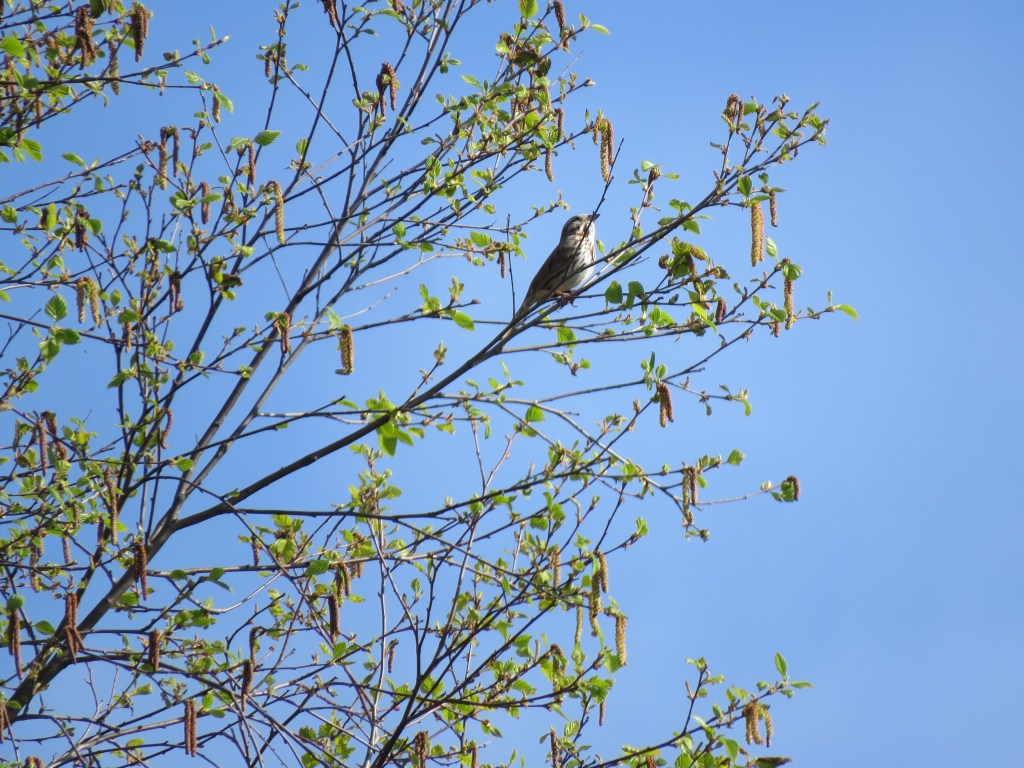
Before I even left, a Song Sparrow sang from a tree across the street. My first stop was a nearby lake renowned for its bird-watching and fishing opportunities. Wind-felled trees provided cover and roosting areas for birds and reptiles.
I spotted movement in the shadows along the shallow end of the lake’s shoreline. Beyond a downed tree where turtles rested, a Solitary Sandpiper stealthily stalked its prey. Closer to me, a pair of Spotted Sandpipers waded gingerly among the lily pads, reeds, and downed branches, searching for breakfast.


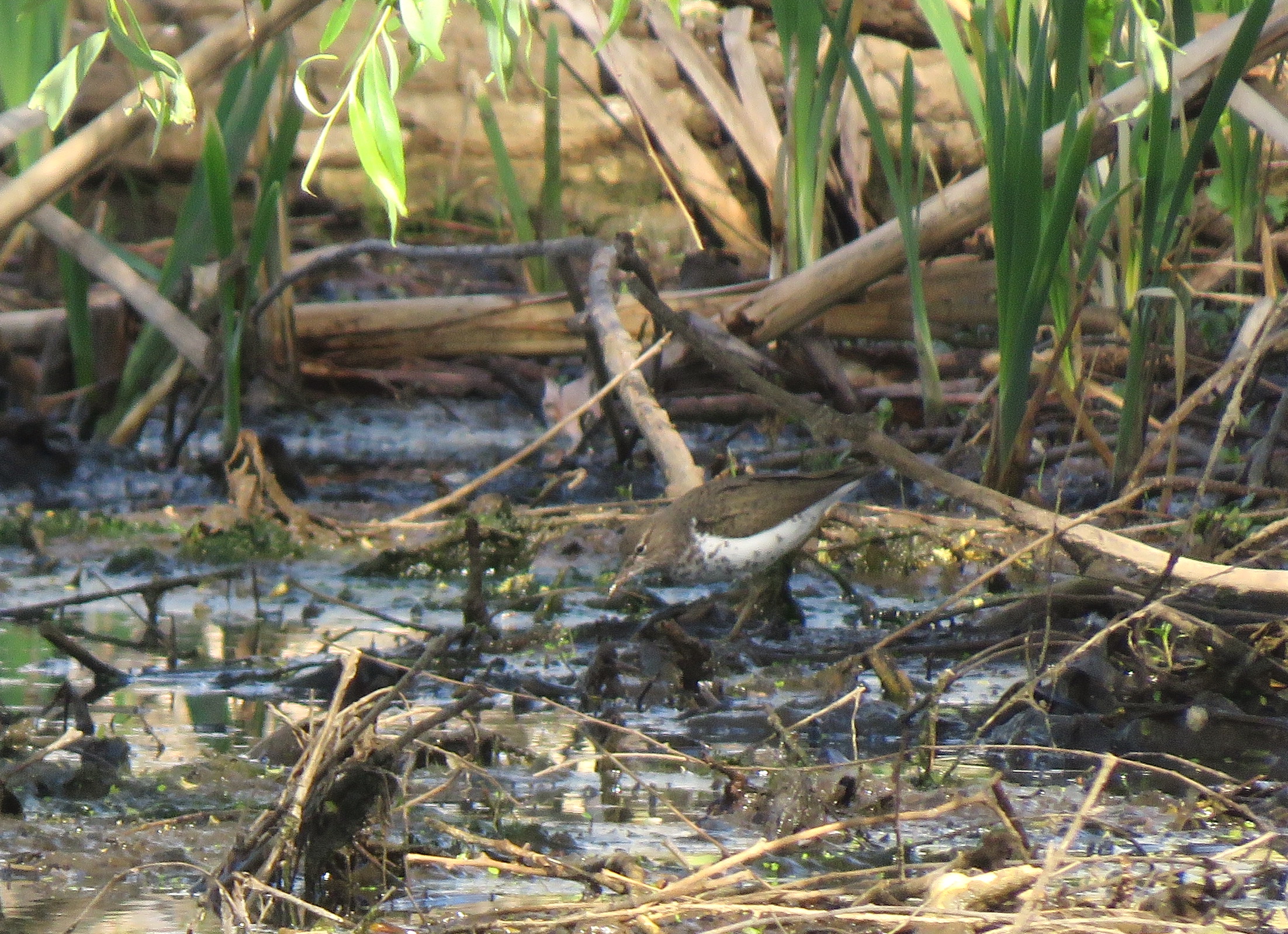


The lake is a hotspot for migrating ducks and other waterfowl, but there were none today. Above the spillway, however, a pair of Black-crowned Night Herons occupied separate branches on a giant sycamore tree. Soon, a stately-looking Osprey joined them. All eyes were on the lake.
A few miles away, I stopped at a marsh in a farmer’s pasture that allows visibility from the public highway. I heard the familiar calls of Killdeer, and a pair soon landed among the grasses sprouting from the marsh’s muck. Red-winged Blackbirds trilled while Black Vultures sailed silently overhead.

I passed through the rural burg of Briery Branch, and onto Reddish Knob Road. I drove at a snail’s pace with the windows and moonroof open. I turned on the Merlin birding app to listen for calls. When a Louisiana Waterthrush and Blue-headed Vireo popped up, I pulled off the narrow road, turned off the car, grabbed my binoculars, and scanned the tender, emerging leaves for birds. Though they continued to call, I couldn’t find them. The gray sky proved a harsh backdrop.
I continued the slow climb up the mountain. The valley gave way to steep forested hillsides, split by a rushing stream, as I drove higher and higher into the Allegheny Mountains. I stopped whenever a pull-off presented itself and scanned the trees and bushes for birds.
On the right, a recent controlled burn had left the landscape blackened. The underbrush was singed brown, and the needles of young pines hung yellow from the heat. The smell of the fire lingered in the air. Still, I found a Brown Thrasher perched in a tree singing its melodious song high above the scorched earth below.
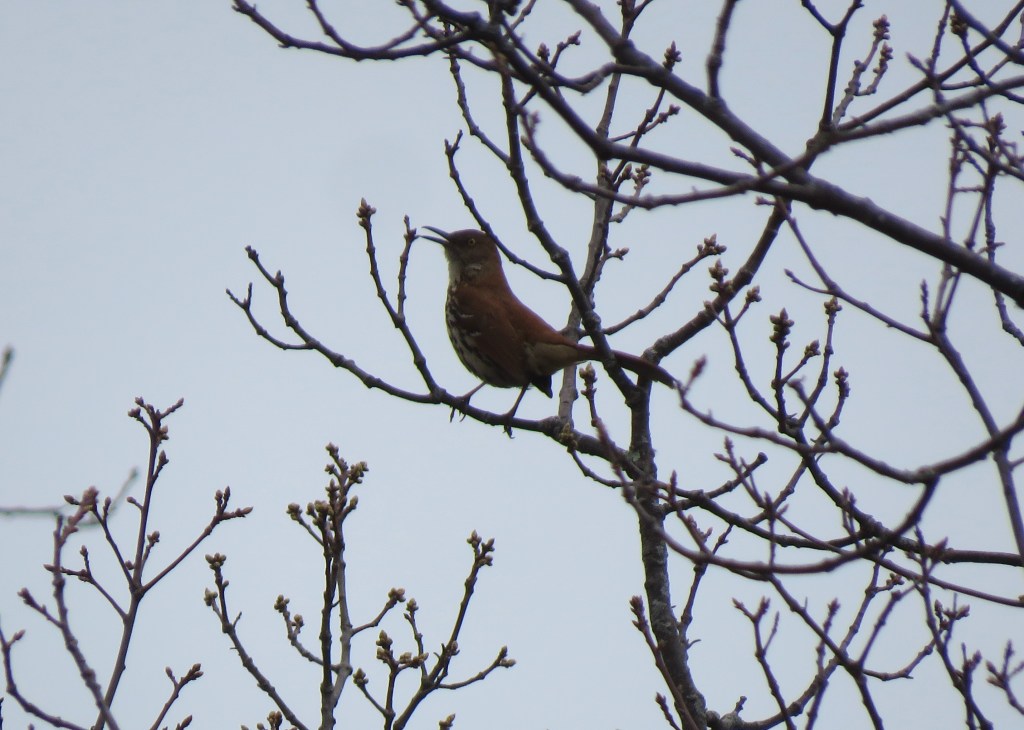
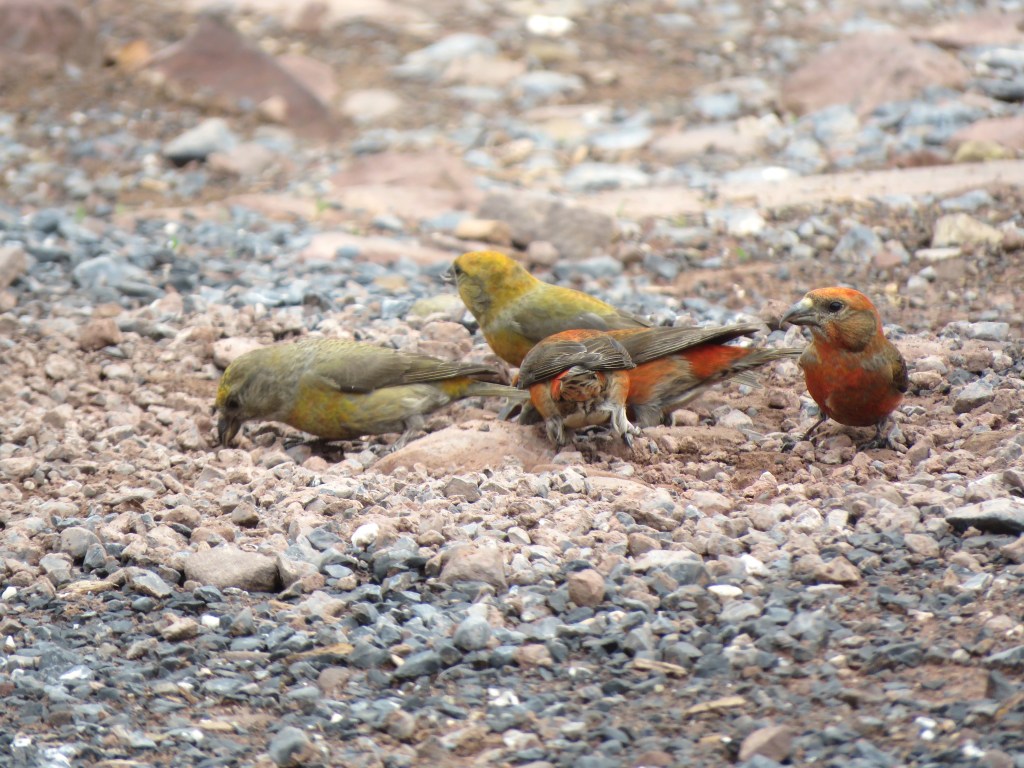
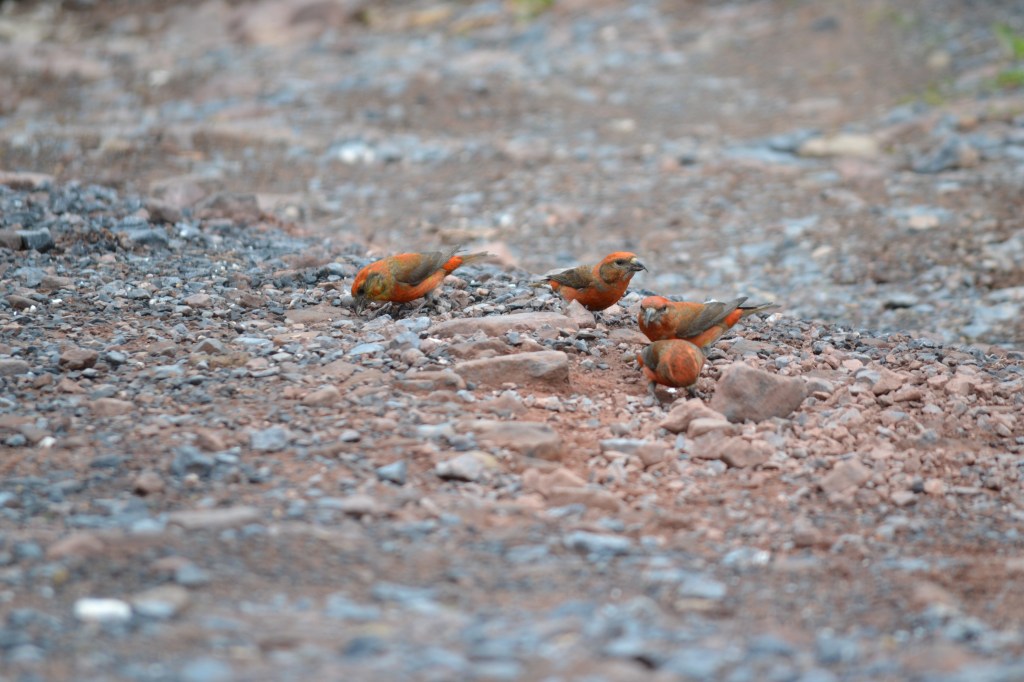
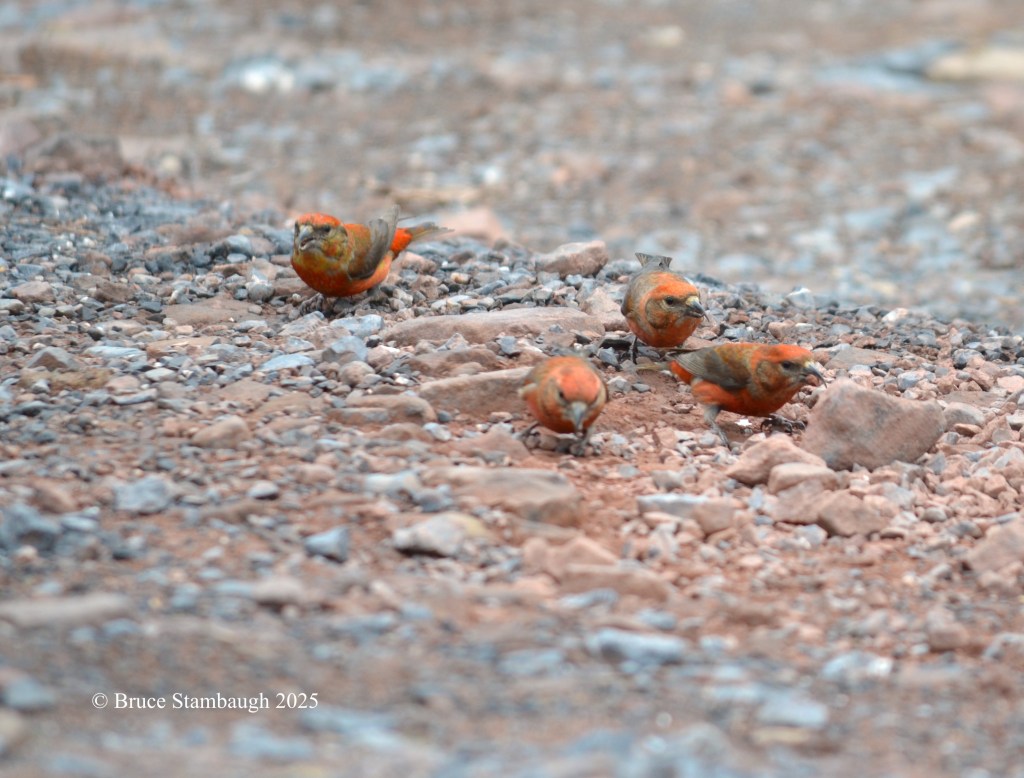
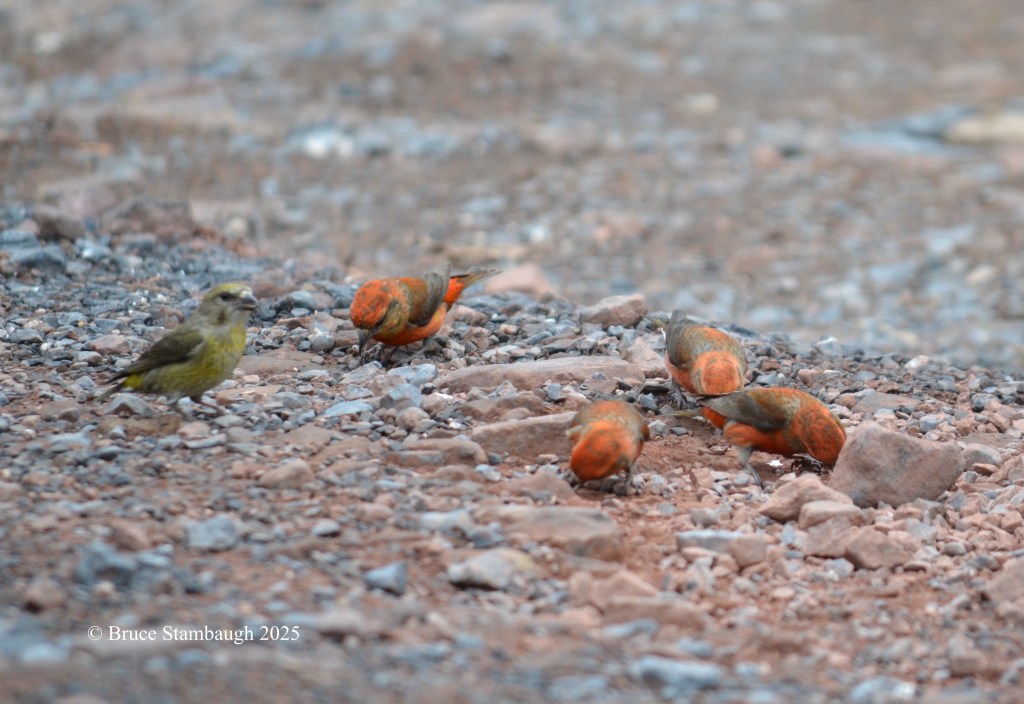
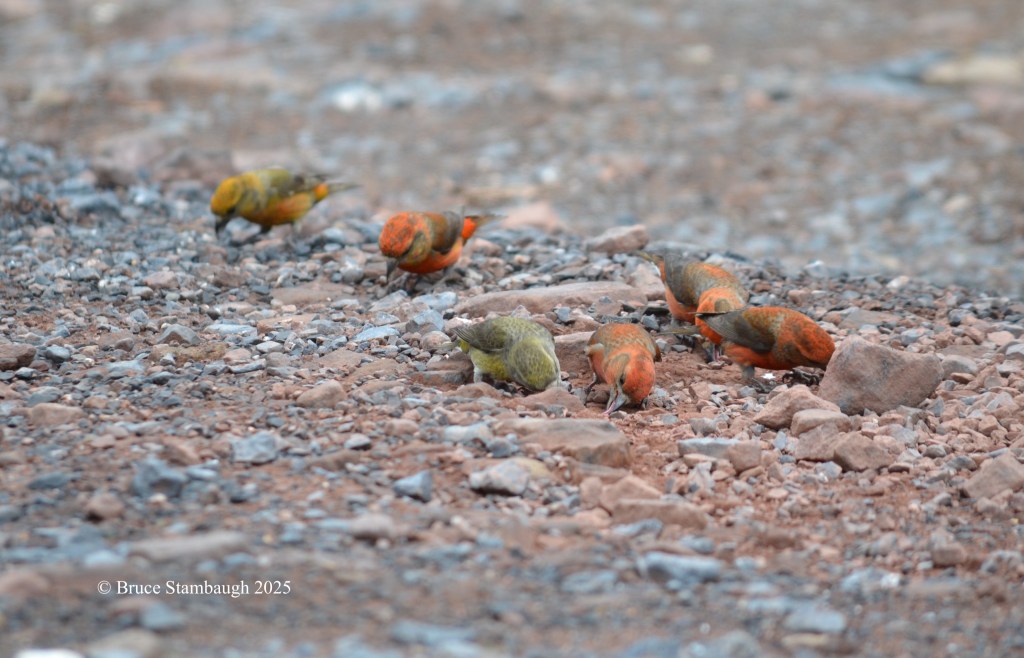
Just up the road, I reached my destination, the intersection of Reddish Knob Road and a US Forest Service fire road, which is a mix of dirt and gravel. As I pulled over to park, a small flock of Red Crossbills flew up in front of my vehicle. Those were the birds I had hoped to see and photograph.
I parked my vehicle a few feet away, excitedly exited with my camera, and the birds returned to the same spot on the side of the road. These beautiful birds were what I call “graveling.” Why do these lovely, social birds ingest grit and minerals along roadsides? The pebbles and dirt help them digest the pinecone seeds they eat.
The Red Crossbills gathering grit. Photos by Bruce Stambaugh
The birds settled in as I stayed as still as possible. I captured several photos of these magnificent birds gathering grit. The females are a yellowish-green, while the males are mostly a fire-engine red with dark wings. They can be found year-round in a small geographical area along the front range of the Alleghenies. They are scarce in most other regions of the US except the Rocky Mountains.
All the while, Common Ravens flew back and forth above the ridgeline. Blackburnian and Black-throated Green Warblers sang in the tree tops as they foraged for insects. Ovenbirds, Blue-headed Vireos, and Eastern Towhees joined the chorus.


Please click on the photos to view them in full size.
On my retreat down the mountain, I stopped at a camping area adjacent to a gurgling mountain stream. I heard many warblers, but saw only a few. I could have used other pairs of eyes to help spot the birds high in the emerging canopies.
Still, it was a fulfilling and satisfying Earth Day for this septuagenarian. I surrendered to my surroundings, the fresh air, the towering evergreens, and the budding deciduous trees. Bird calls replaced motor vehicle and lawnmower noises, and clear mountain streams rushed their way to the valley floor.
Thanks to the bird song choruses, inspiring mountain views, and the singing brooks, nature’s peace enveloped me. Isn’t that one of the goals of Earth Day?
© Bruce Stambaugh 2025
Wildlife Photos From The Chesapeake Bay Region
Culture and Communities at the Heart Of India
Artist and nature journalist in the Shenandoah Valley of Virginia.
Photographer Of Life and moments
Personal Blog
Art is the only way to run away without leaving home. -Twyla Tharp
Writing generated from the rural life
writer. teacher. podcast cohost.
El amor cruza fronteras / Love crosses borders



 Roadkill Crossing
You must be logged in to post a comment.