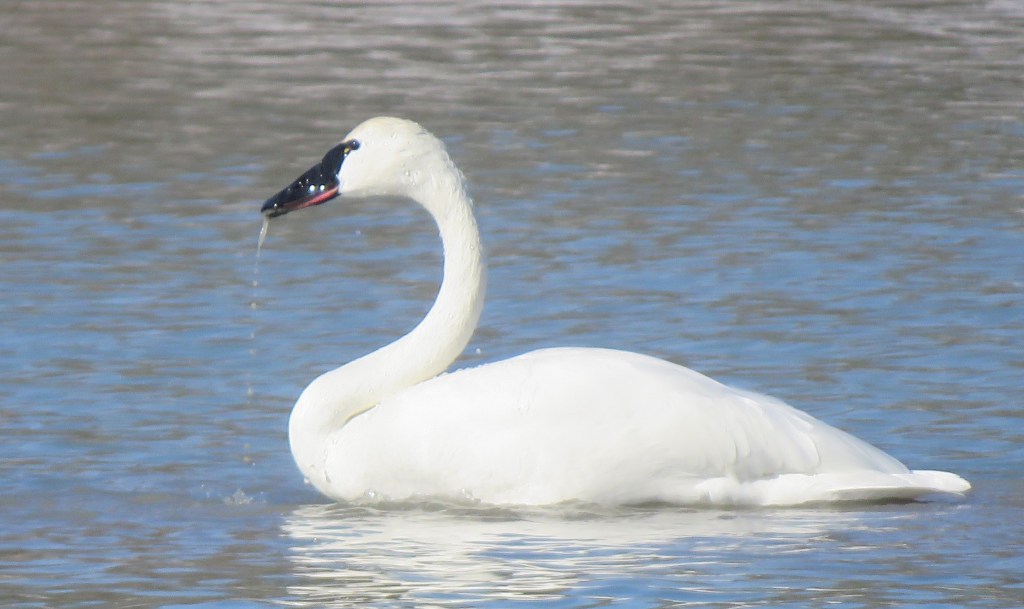
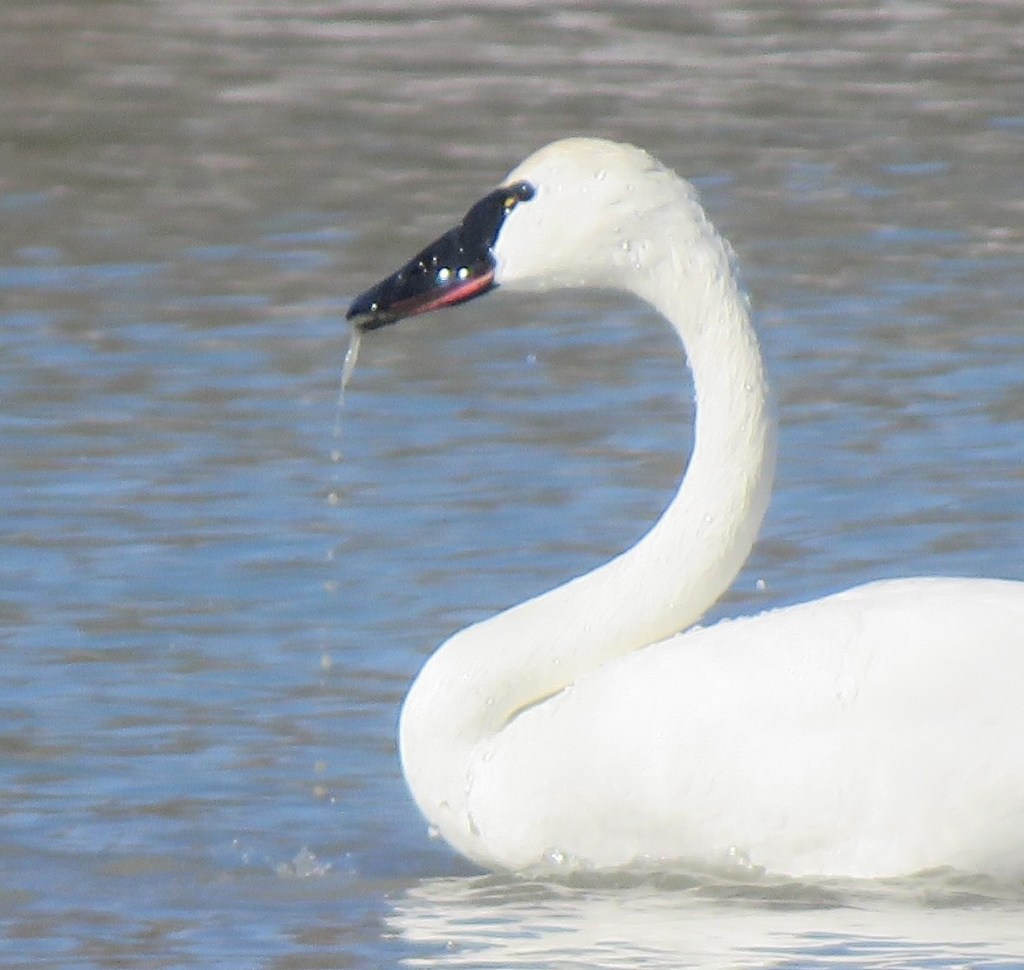
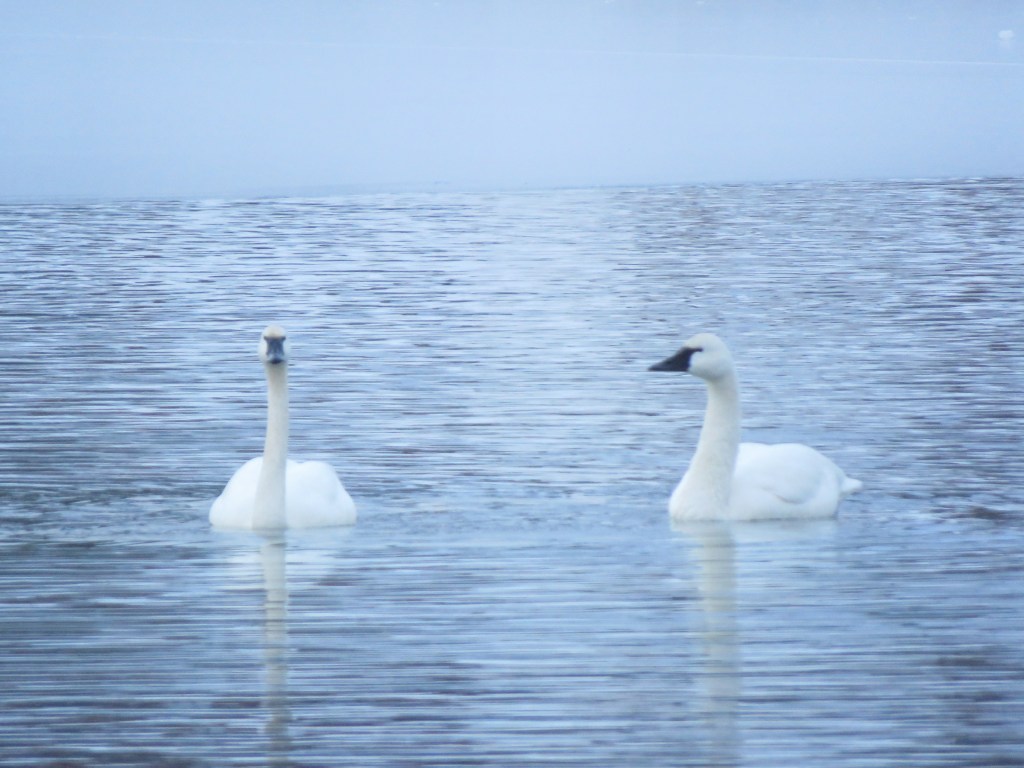
This is an adult Tundra Swan. Tundra Swans can easily be confused with the larger Trumpeter Swans, especially since they often overlap in the winter migration locations.
Unless the two species appear together, it is hard to tell them apart. Adult birds are both white and have black bills. However, the bills of Trumpeter Swans are much larger, as are their bodies. Trumpeter Swans are the heaviest native North American bird.
There is one distinctive way to tell the difference between the two impressive birds. Tundra Swans sometimes have a small yellow spot at the base of the bill below the eye.
Note the small yellow spot just below the swan’s eye.
The problem is that not all Tundra Swans have this identifying mark. So, relying on expert birders to help make a defining identification is recommended. Using a reliable birding field guide should also help.
I hope you get to see both Tundra and Trumpeter Swans. If you do, I also hope they are together so you can tell them apart more easily.
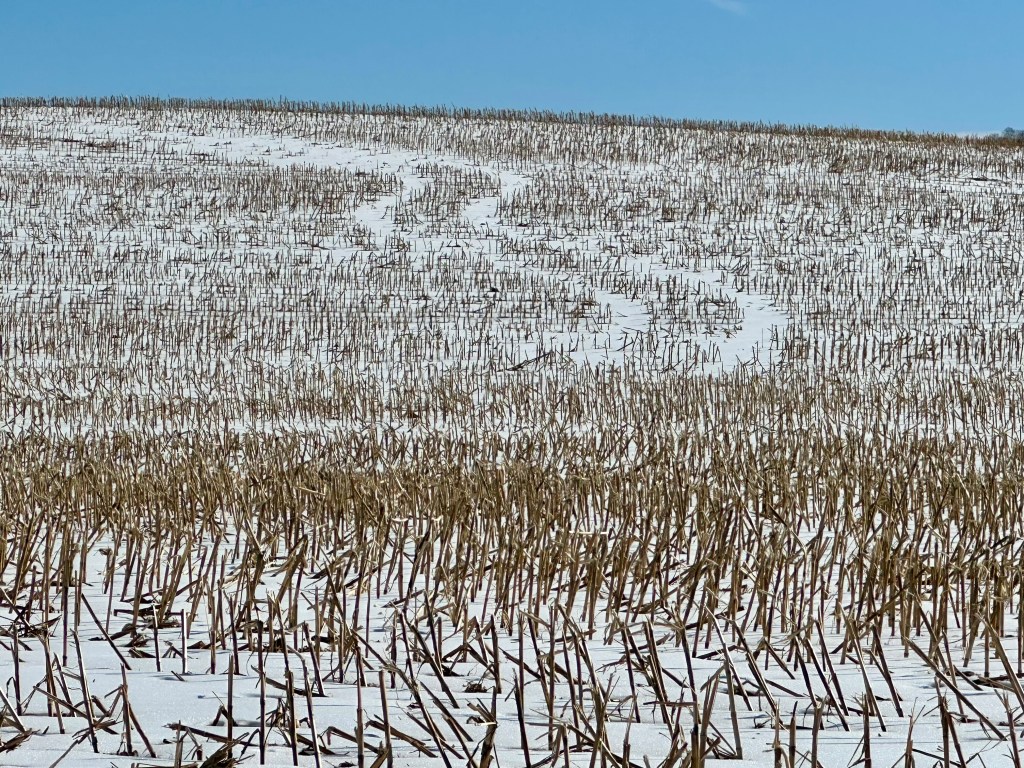
The lingering snow revealed the path of ancient tracks of a farm truck as it climbed through last fall’s corn stubble. The scene reminded me of an abstract painting.
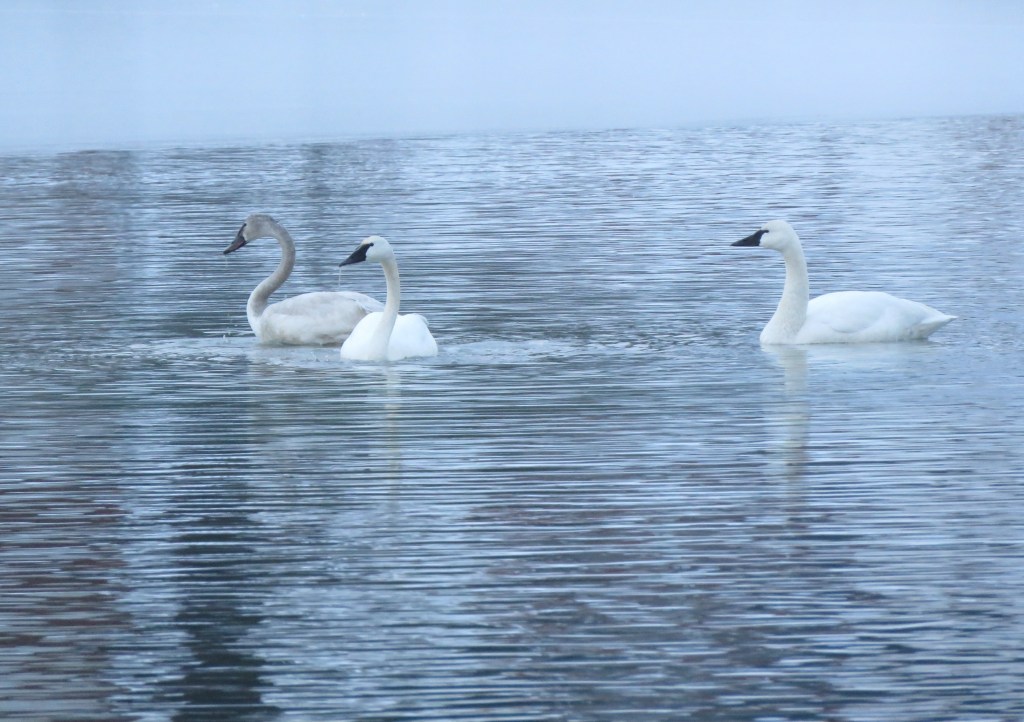
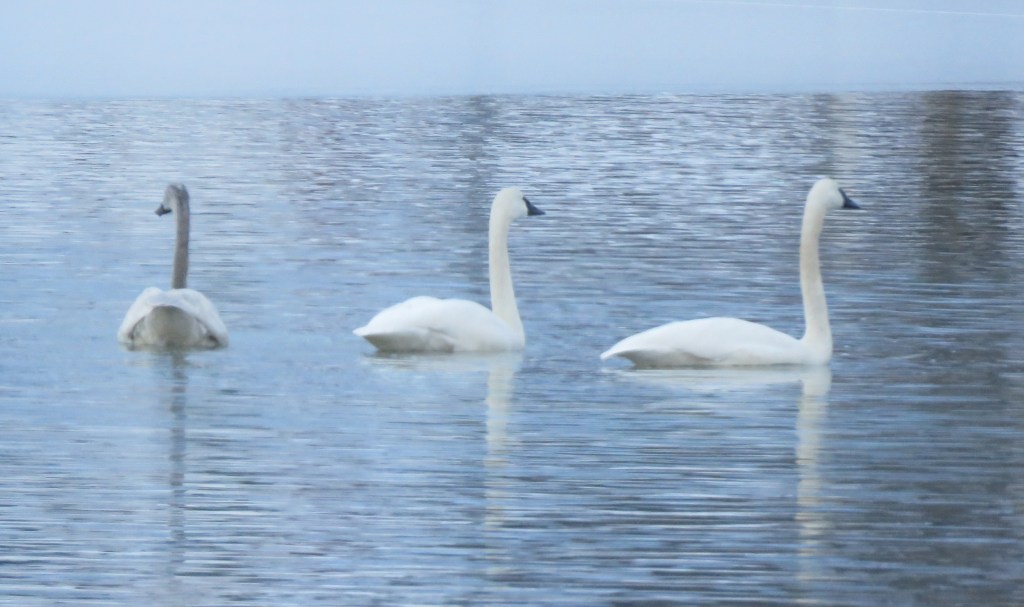
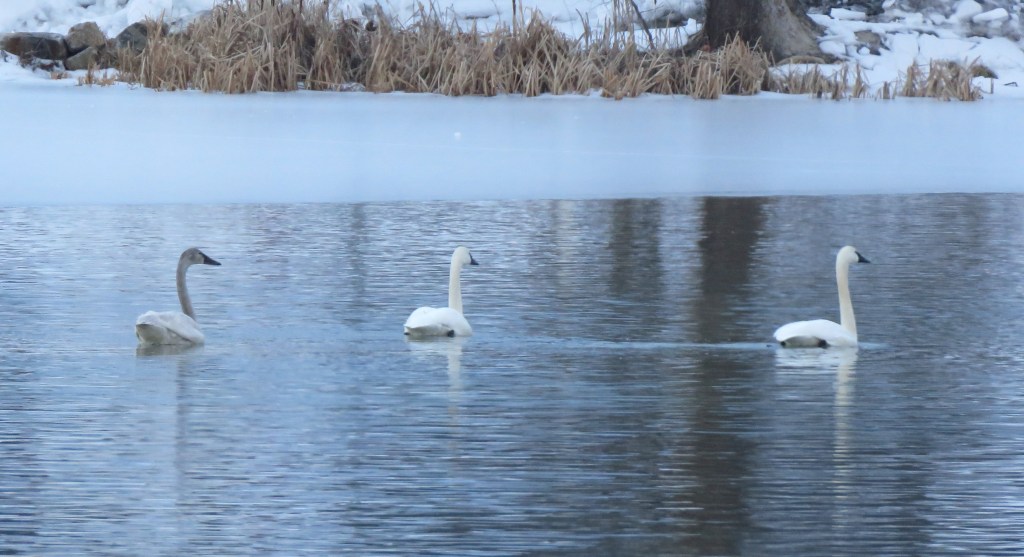
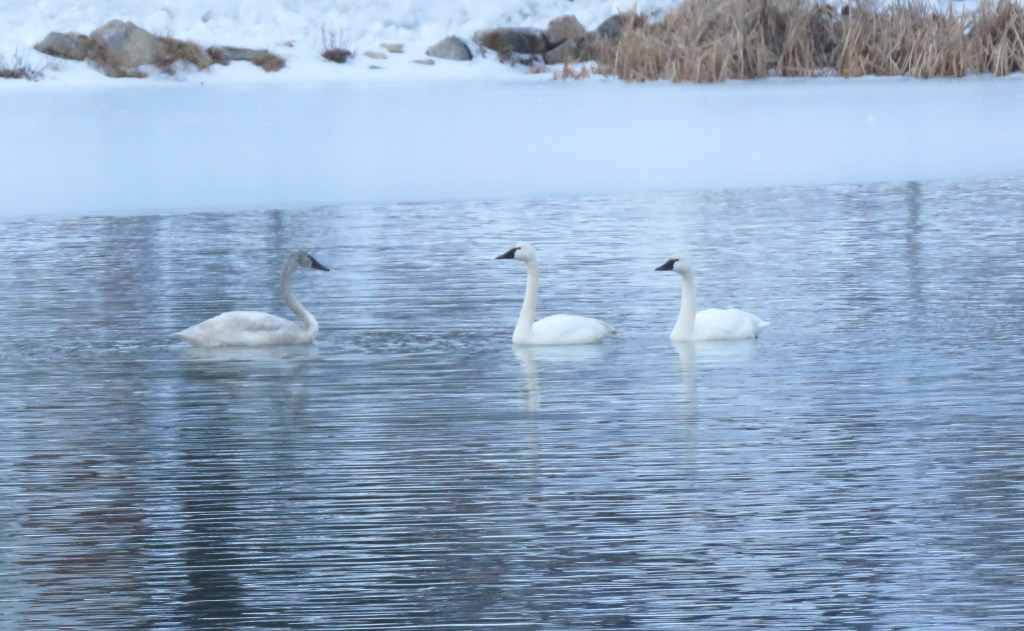
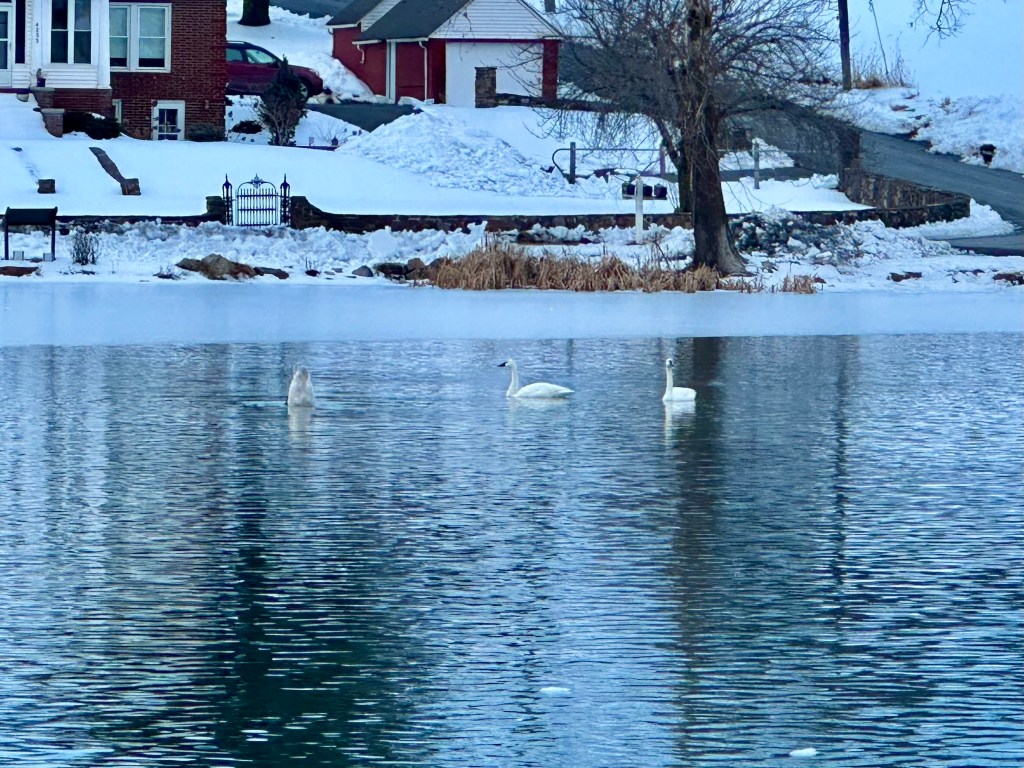
The trio of graceful Tundra Swans on Silver Lake. Photo by Bruce Stambaugh
We were about ready for dinner when a text from a birding group reported three Tundra Swans at Silver Lake. My wife turned off the stove burner, we dressed for the super cold weather, and out the door we went.
Located on the north edge of the small town of Dayton, Virginia, Silver Lake is a few minutes’ drive from our home. I approached the drive from the north, which afforded a full view of the lake.
A flock of dark colored ducks floated near the lake’s shallow north end. Fortunately, no vehicles approached from either direction. I slowed and soon spotted the large white swans in the middle of the lake.
Because it has been so cold for so long after the six inches of snow and sleet, there was little room to pull over for photos. However, I managed to pull on the ridge of plowed snow along the road so I wasn’t blocking the southbound lane.
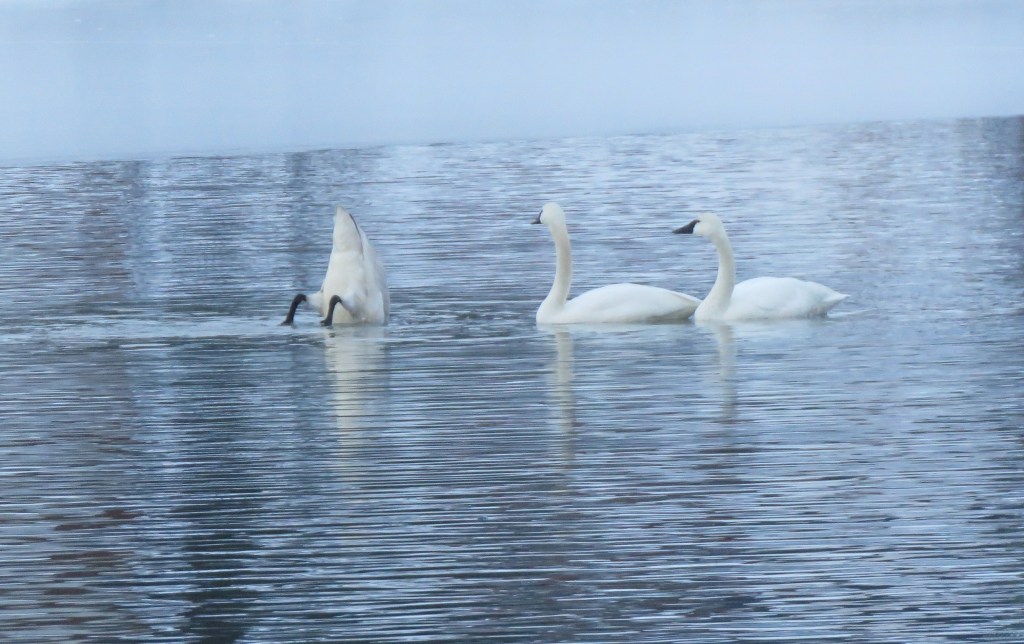
The Tundra Swans were about 30 yards away. The two adults and one juvenile swam gracefully on the placid water. The young one kept feeding by tipping its head into the water and foraging on the underwater vegetation.
Their closeness let me capture a few decent photos with both my camera and my iPhone before the light faded further. Given the precarious position of my SUV, I didn’t want to linger long.
Satisfied with the photos, we headed home, turned on the stove’s burner, and enjoyed a steaming bowl of soup. It completed a satisfying evening.
The juvenile Tundra Swan dipped into the water to feed several times. Photo by Bruce Stambaugh
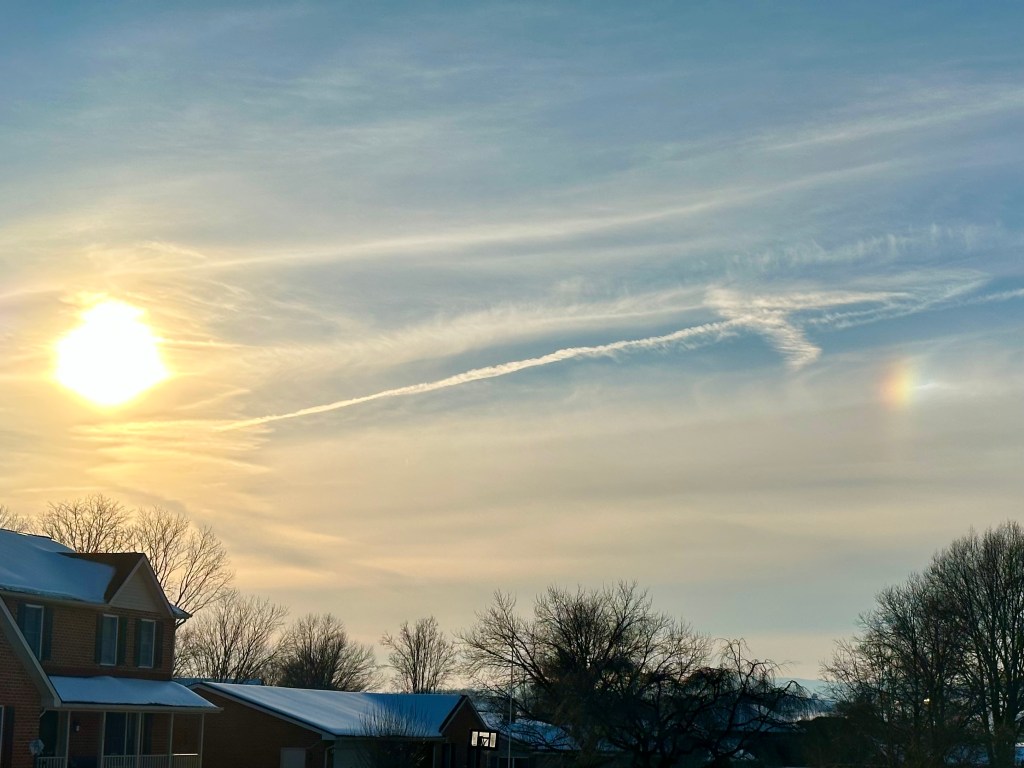
Sundogs, or parhelia, are among the many marvels of the sky. They are caused by the refraction of sunlight through millions of ice crystals high in the atmosphere.
The plate-like crystals are suspended in cold cirrus or cirrostratus clouds. The crystals align horizontally as they drift down and bend the sun’s light at 22-degree angles.
That is what creates the bright spots, often in rainbow colors on either side of the sun, and sometimes on both sides. On rare occasions, the crystals create a full arch over the sun. The spots can also be simply bright white.
Sundogs are most frequently observed in the winter, when the atmosphere is cold. They most often appear at sunrise or near sunset, as in this recently taken photo.
Parhelia is the Greek word for “beside the sun.” Sundogs are members of the halo family that occasionally form around the sun and moon.
The aurora borealis as seen from my driveway on January 20. Photo by Bruce Stambaugh
I get excited when there’s a chance to see the northern lights or aurora borealis. I suspect I’m not alone. Why shouldn’t we be excited?
After all, the colorful lights are dancing in the sky over the polar north. That’s a long way from the Shenandoah Valley in western Virginia.
I follow social media posts closely for sun flares and alerts on possible northern light events. But being this far south, I keep my expectations in check.
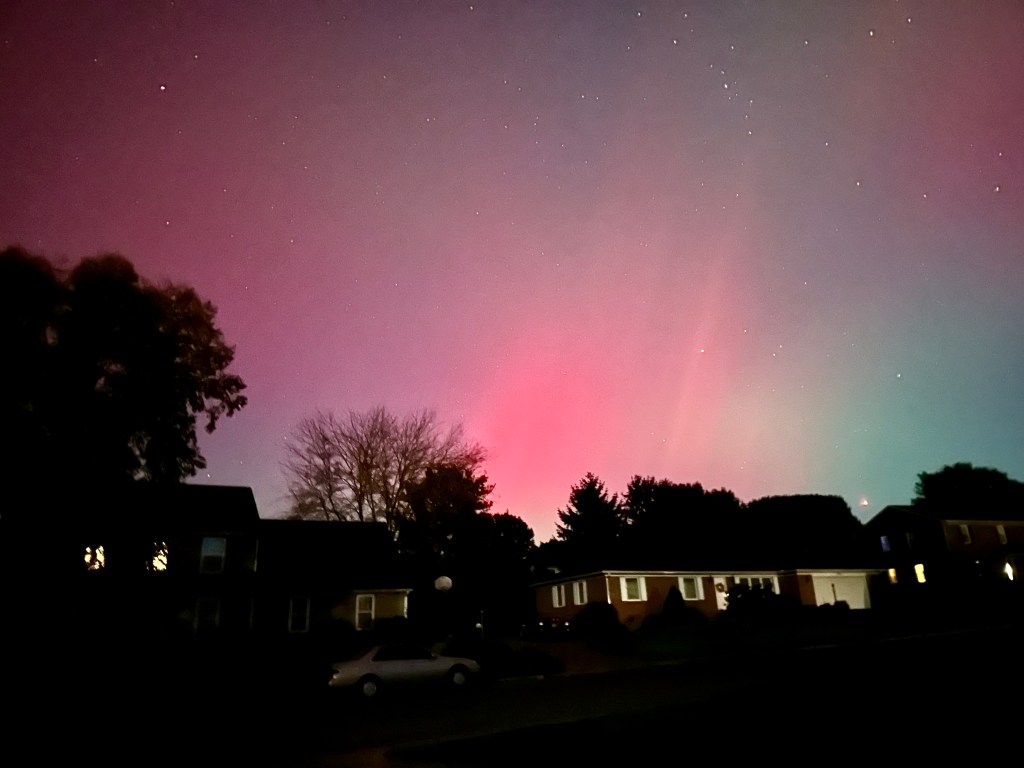
History has shown, however, that seeing these beautiful phenomena is indeed possible in Virginia and points south. In fact, on October 10, 2024, at 10:30 p.m., I walked out the front door, and greens, reds, and pinks danced in the sky over my neighbors’ houses. Of course, the light display was much farther north than that.
The aurora borealis as seen from my front porch on October 10, 2024. Photo by Bruce Stambaugh
I snapped a couple of photos and went back to bed. The app on my cell phone had alerted me to the possibility of seeing the aurora borealis. And there it was.
Looking back on that experience, I wish I had chosen a better viewing location for more photos instead of going back to sleep. Still, I was happy with the pictures I got. They clearly showed the northern lights.
So, when the alert came out for Monday and Tuesday, January 19 and 20, this week, I was ready. However, being a man, and an aging one at that, I easily got distracted.
The NCAA National Championship football game between Indiana University and Miami University was on TV at 7:30. Because the IU coach had led James Madison University’s football team to exciting winning seasons, my wife and I were glued to the TV. JMU is located in Harrisonburg, Virginia.
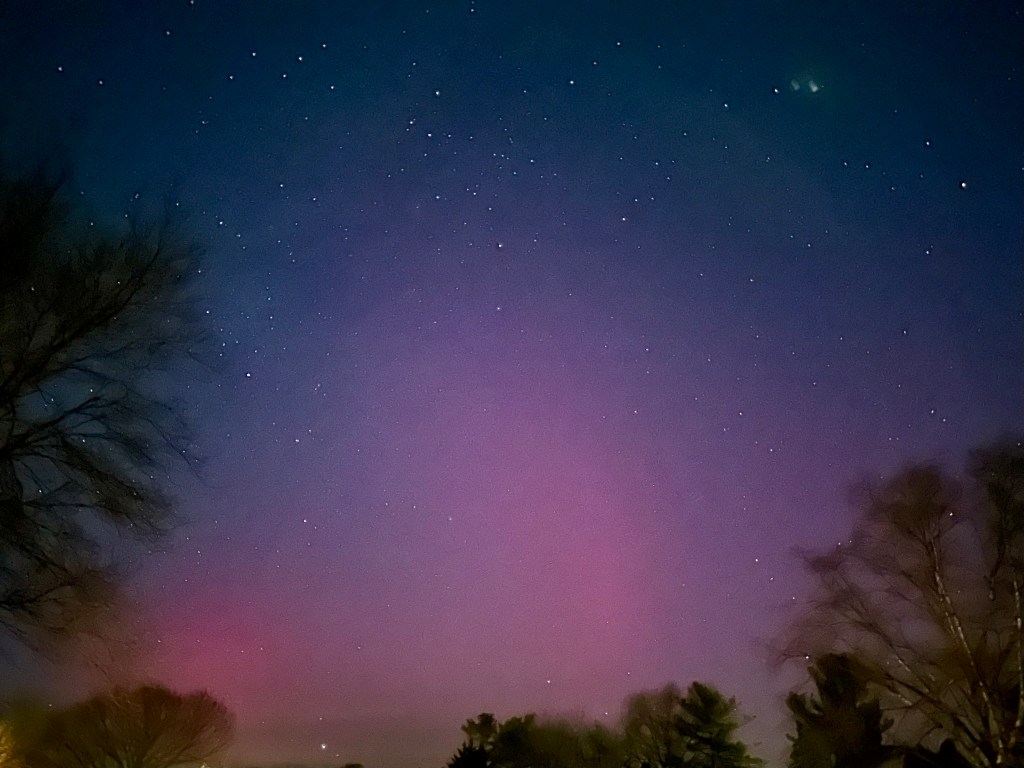
However, my attention shifted when I saw a photo of the aurora borealis posted on Facebook by a friend who lives a few miles away. I walked outside, took a few pictures, and could see a little red in the sky.
So, I diverted my attention from football to photography and went in search of a decent view of the northern sky. It was harder than I thought. Rockingham County, where I live, may be in the Shenandoah Valley, but it certainly is not flat.
The landscape, predominantly agricultural west of the city, is rolling, dotted with high hills, and full of powerlines running every which way. With no moonlight, the night was dark, so even though I was familiar with the roadways, I had difficulty finding a place with a good view, free of light from security lights or buildings.
It didn’t take me long, however, to realize that the colors had faded since my friend took her photo two hours earlier. I headed home with fairly dull images of the night sky.
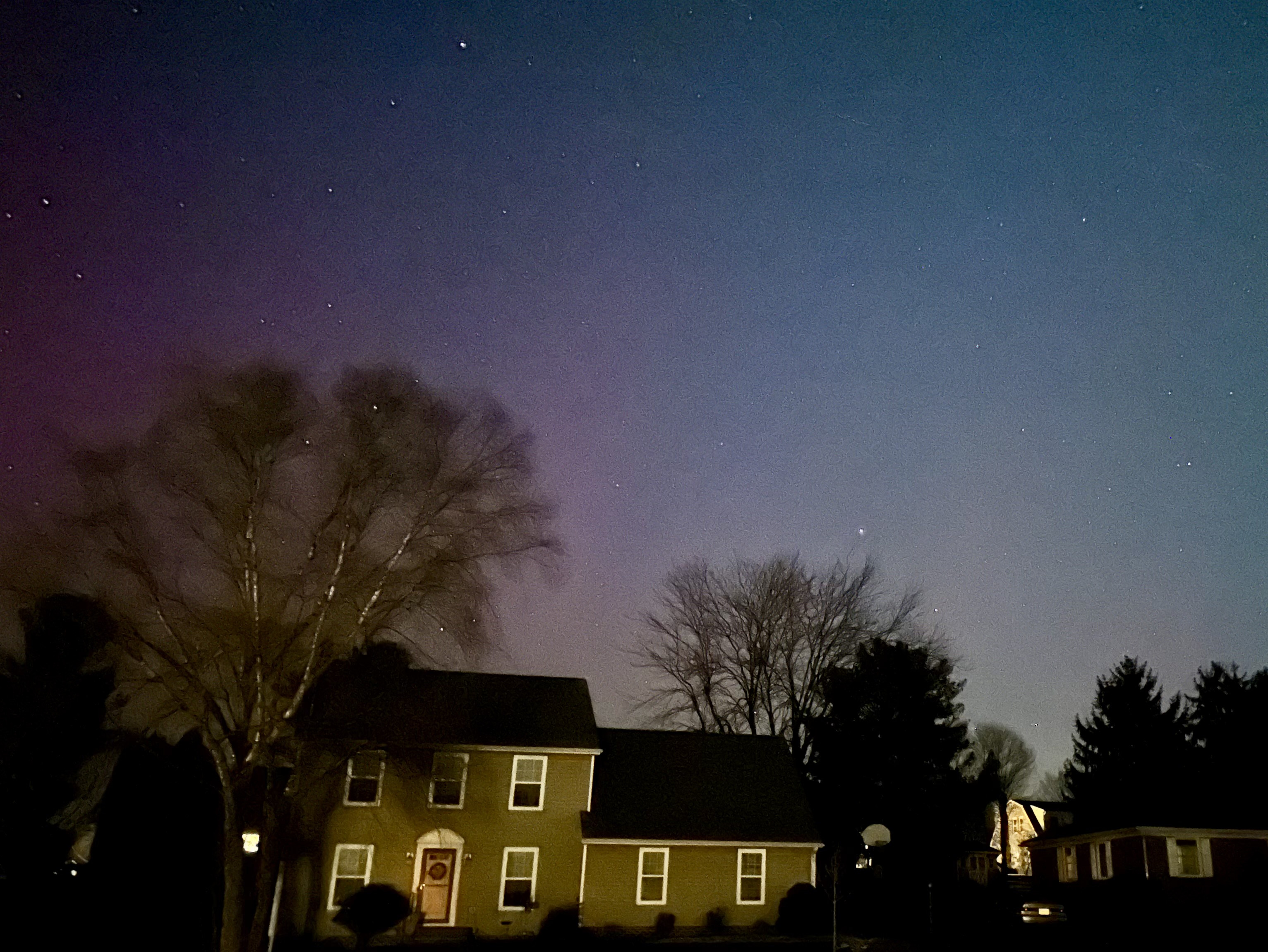
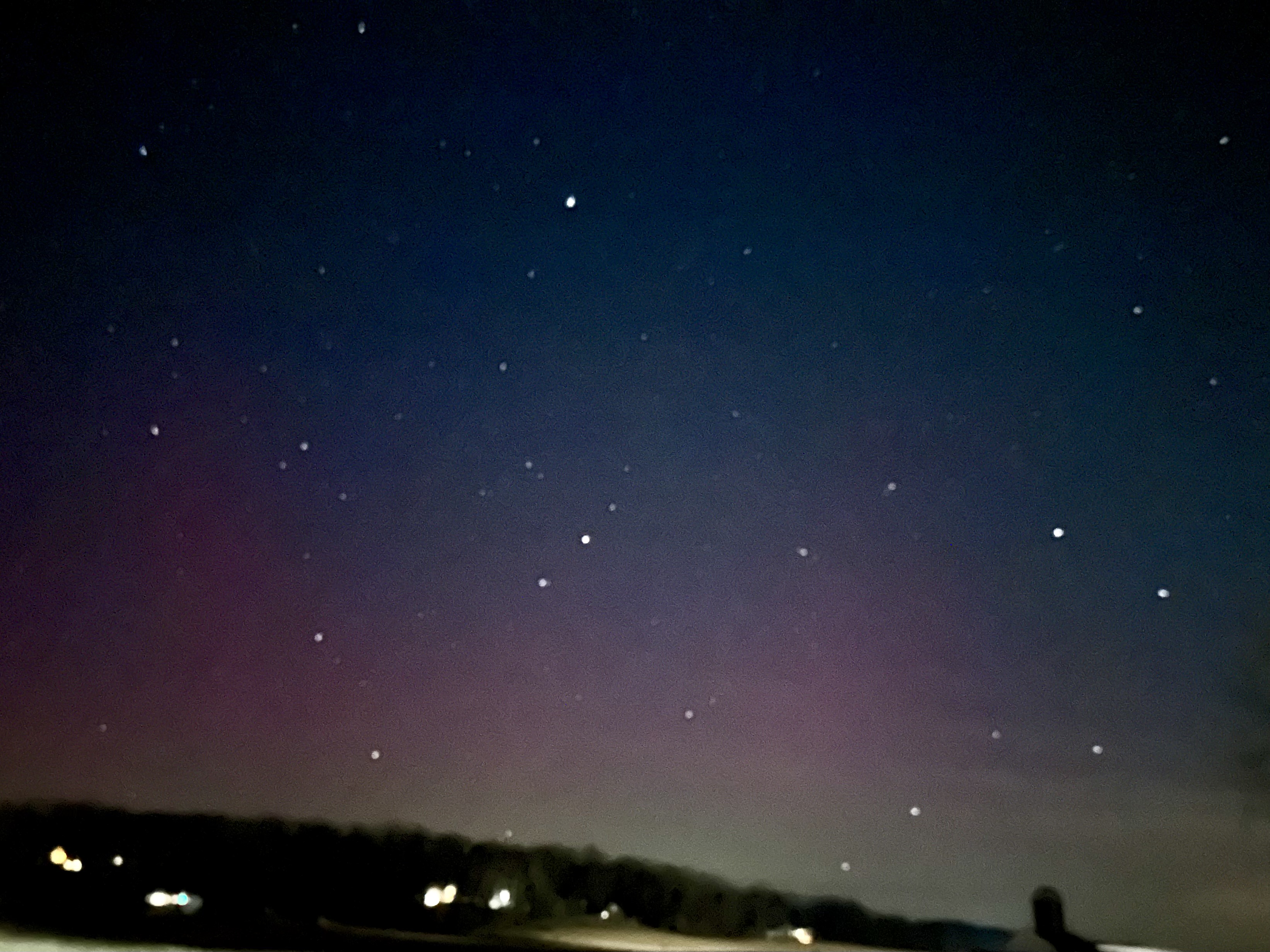
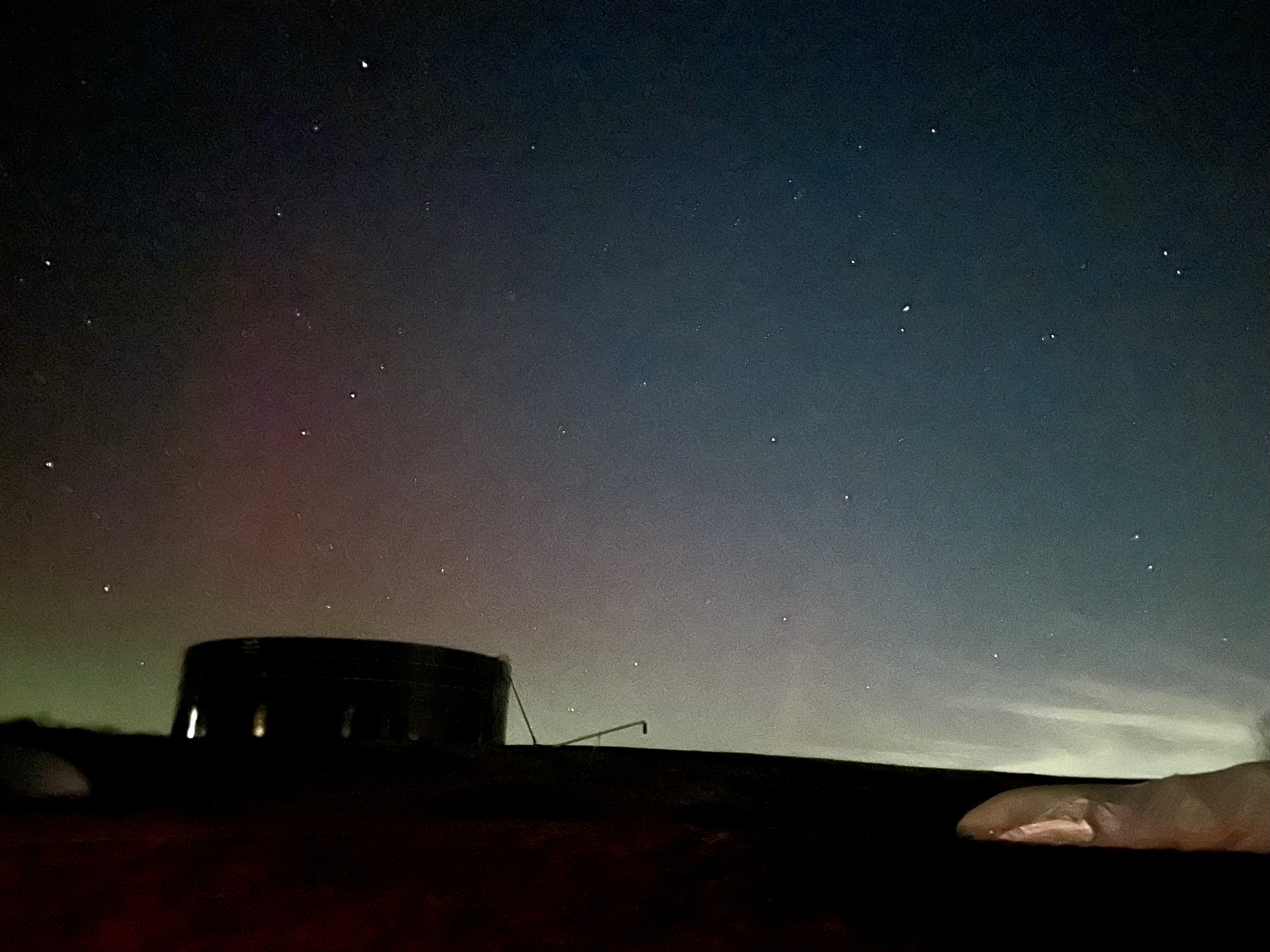
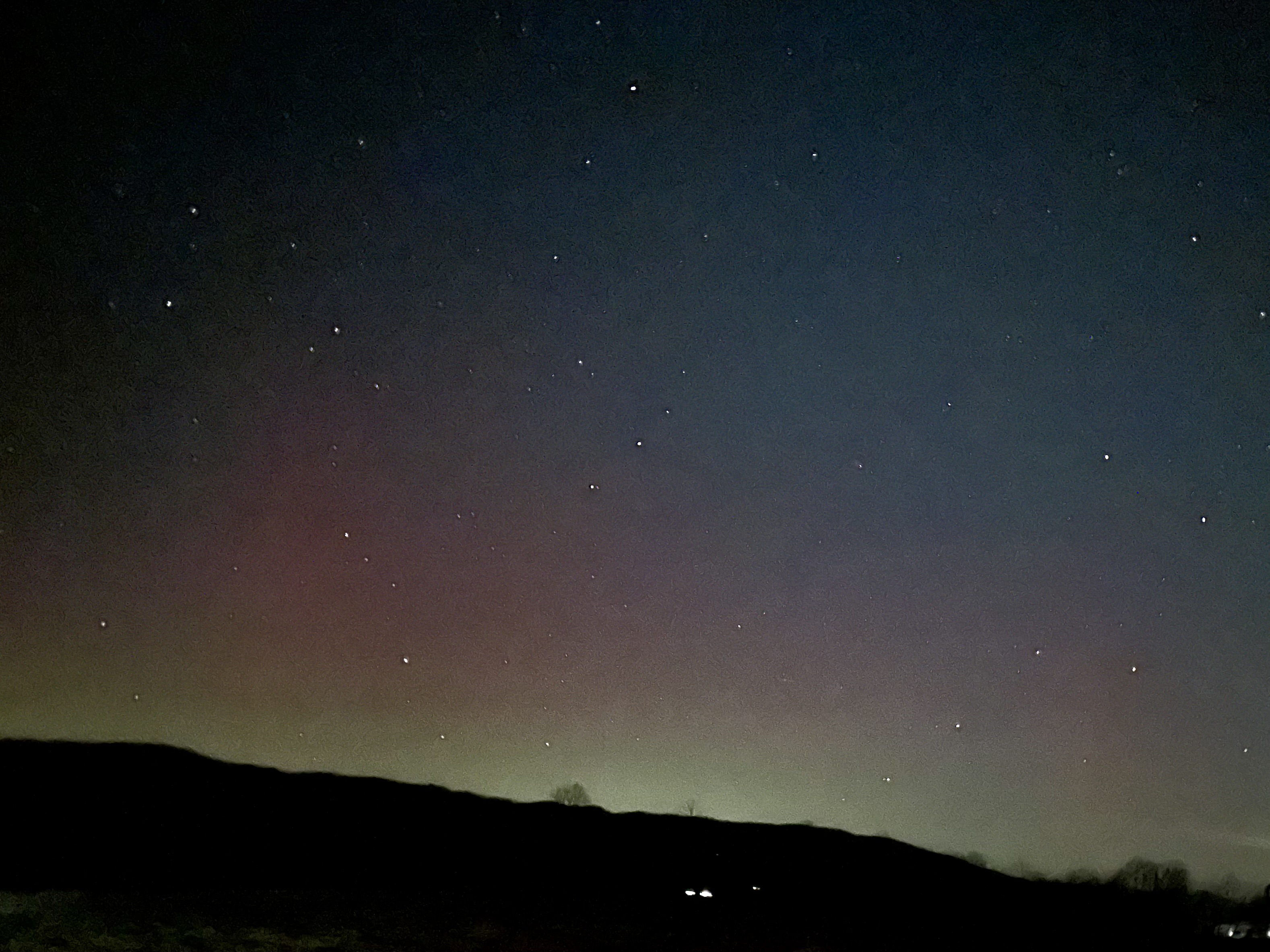
I was determined to make the aurora my priority after dark on Tuesday night. I again stepped into the darkness of our neighborhood and immediately saw reds and pinks in the sky, especially to the northwest. It is one advantage of having no street lights in our housing development. Of course, the colors I saw can’t compare to the amazing shots of curtains of colors dancing in the sky in the northernmost latitudes.
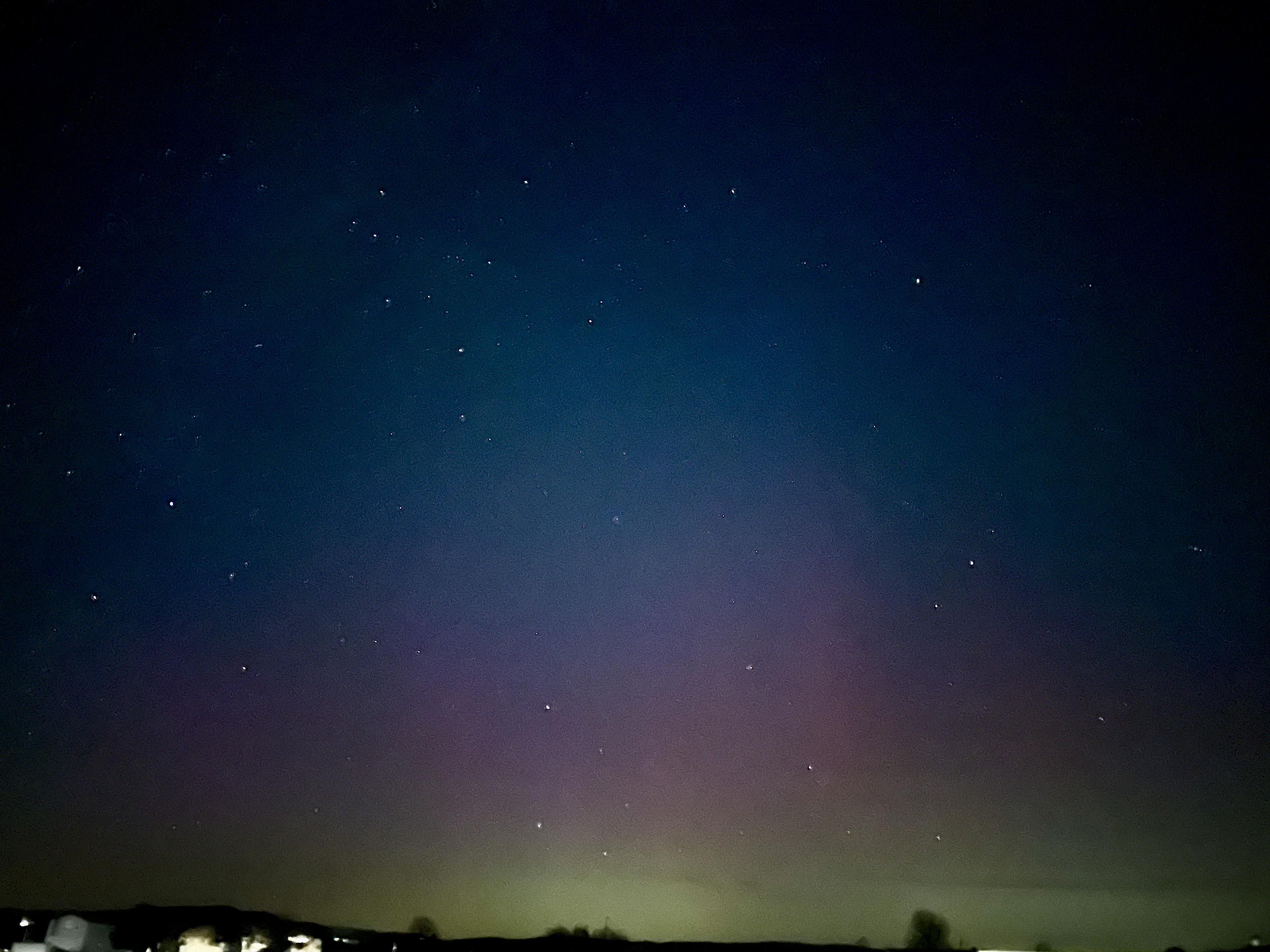
With temperatures below normal in our area, I bundled up and headed out, this time more certain about where I needed to go. But again, once I got out into the open countryside, the aurora colors seemed to dim.
The photo with the house was my first hint of the northern lights. The rest are from my excursion in the county. Please click on the images to enlarge them.
They were brighter than the previous night, but not like I had seen in October 2024 or when I saw my first northern light in Ohio’s Amish country decades ago.
In that case, I was walking out to retrieve the evening paper from its roadside box when I first heard and then saw the northern lights. I stopped in my tracks when I heard a loud crackling sound, like a zap of electrical current.
I looked toward the sound, and in the southern sky, bright green zigzagging flashes danced low in the night sky. They lasted only seconds, but I realized what they were even though they appeared on the wrong horizon.
Soon, bulletins appeared on TV screens across northern Ohio about strange objects appearing in the sky. Witnesses who saw what I saw called the police and TV and radio stations to report the weird noises and lights.
There were all kinds of speculations, aliens included. Even the local weather service put out a special statement. When I saw that, I called the weather office at the Akron-Canton Airport to share what I observed.
I felt obligated to set the record straight, and since I was a trained severe weather spotter for the National Weather Service, they were familiar with where I lived.
Because of that experience, I longed to see the aurora borealis in its proper setting, the northern sky. Consequently, I was very pleased to be able to view them in Virginia, not once, but twice.
You can be assured I’ll remain on the lookout whenever the next aurora alert is issued, regardless of what time of night it is or what’s on TV.
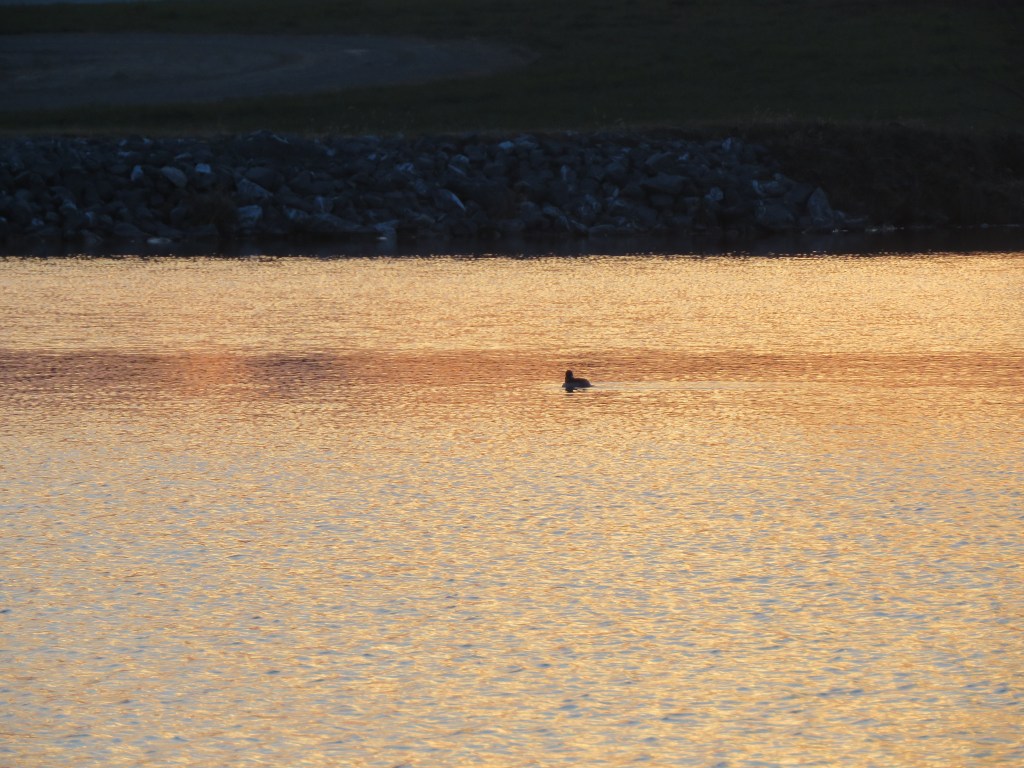
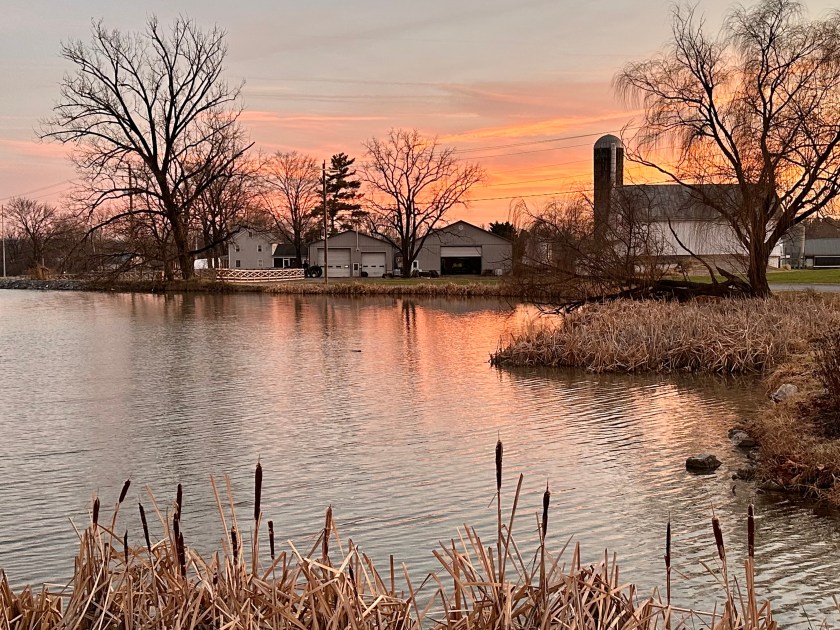
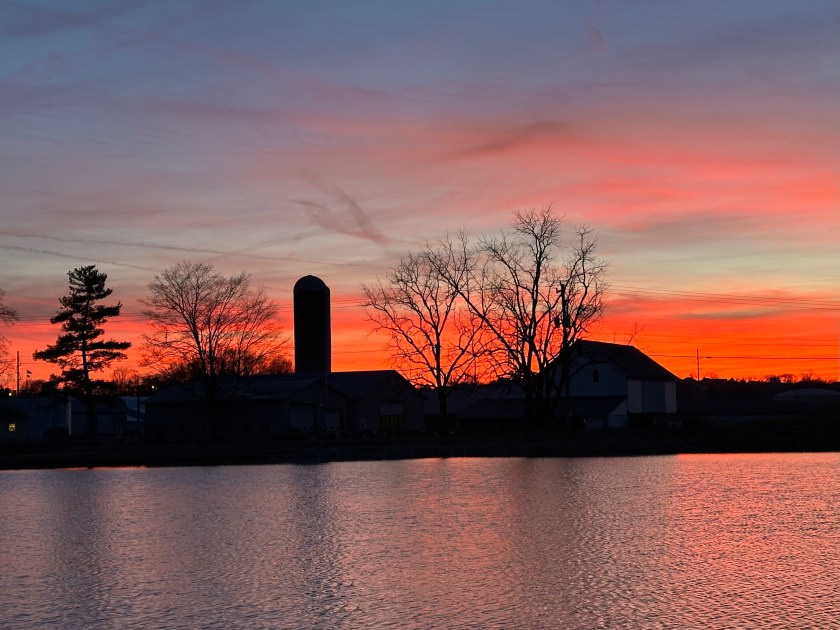
I had company while taking photos of the spectacular sunset at Silver Lake in Dayton, Virginia. A lone female Bufflehead repeatedly dove in the calm, shallow water for food.
The diving duck did what it was supposed to do to survive. It dove and surfaced so frequently that small ripples created a corduroy effect across the southern section of the lake. The warm light of the setting sun transformed Silver Lake into a golden pond.
A female Bufflehead floated on Silver Lake. Photo by Bruce Stambaugh
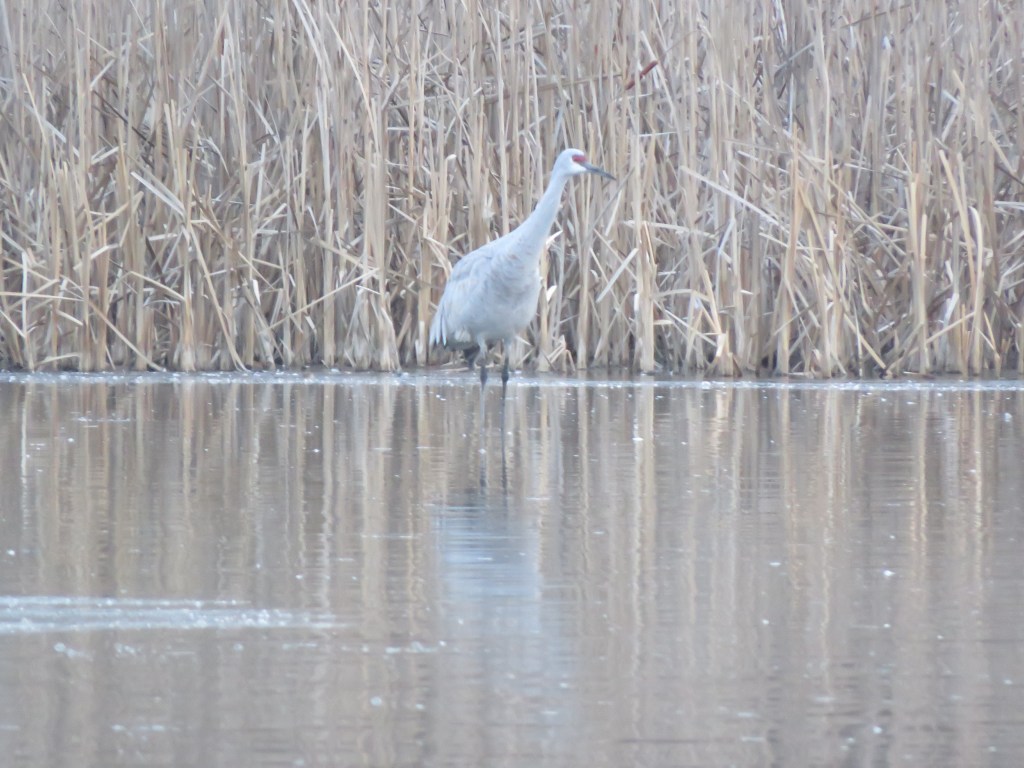
After an early morning lab test at the local hospital, I drove a couple of miles to a favorite lake that often affords decent birding. I found the bird I hoped would be there, a lone Sandhill Crane, plus I got a bonus.
The small lake lay east and west, with an opening to the east where the spillway falls into a natural ravine. The Blue Ridge Mountains in Shenandoah National Park are visible in the far distance.
As I began my search for the crane, the sun broke through a layer of low clouds. It wasn’t much, and it didn’t last long, but the mauve and orange caught my eye. It was a stunning but subtle scene.
Sunrise at Lake Shenandoah, Harrisonburg, Virginia. Photo by Bruce Stambaugh
Once I found the bird and pointed it out to a trio of young birders, I headed home. I kept my eye on the sky in hopes of an even prettier sunset.
With high broken clouds, I decided to visit Silver Lake in the quaint town of Dayton, just a few miles from my home. I arrived with the sun still hanging low in the southwest.
At first, I wasn’t impressed. I was fearful that the clouds that often congregate over the Allegheny Mountains to the west in the evenings might spoil any chance of a nice sunset. However, I have learned to be patient after years of chasing sunrises and sunsets.
That’s been even more true here in the Shenandoah Valley. With mountain ranges to the east and west of the county, the sun takes its time to paint the sky. That’s exactly what happened.
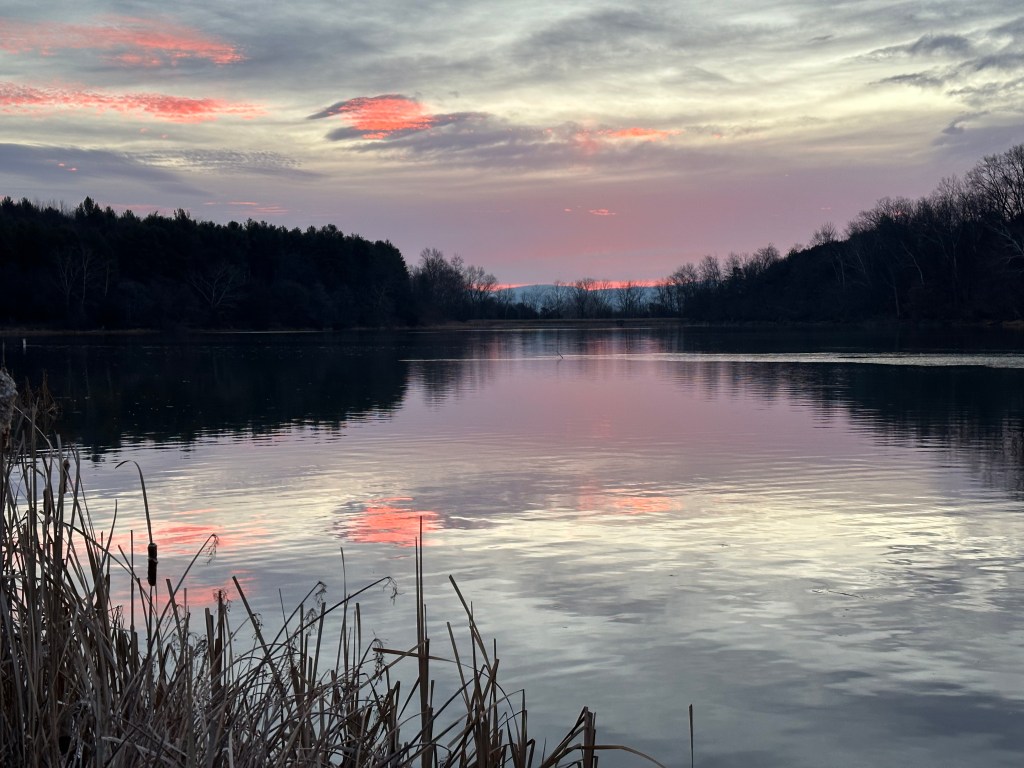
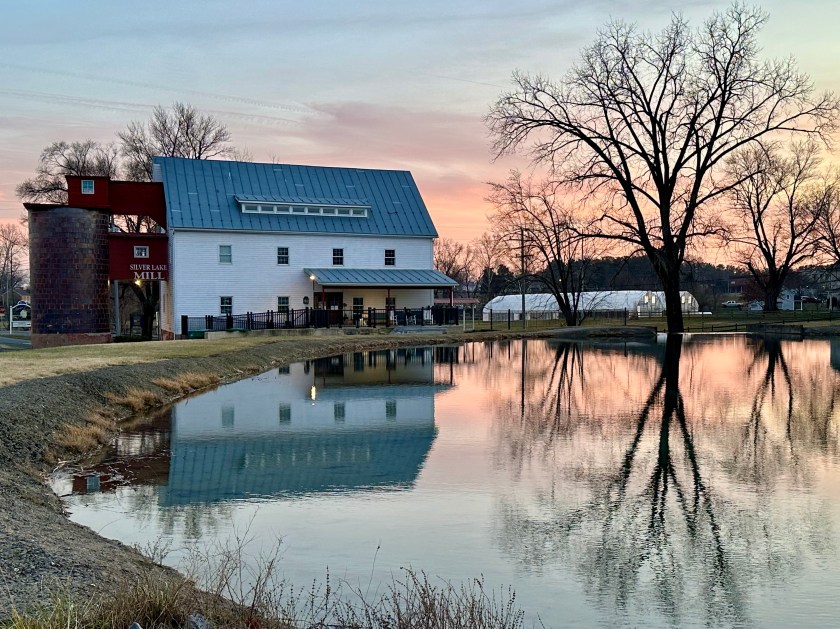
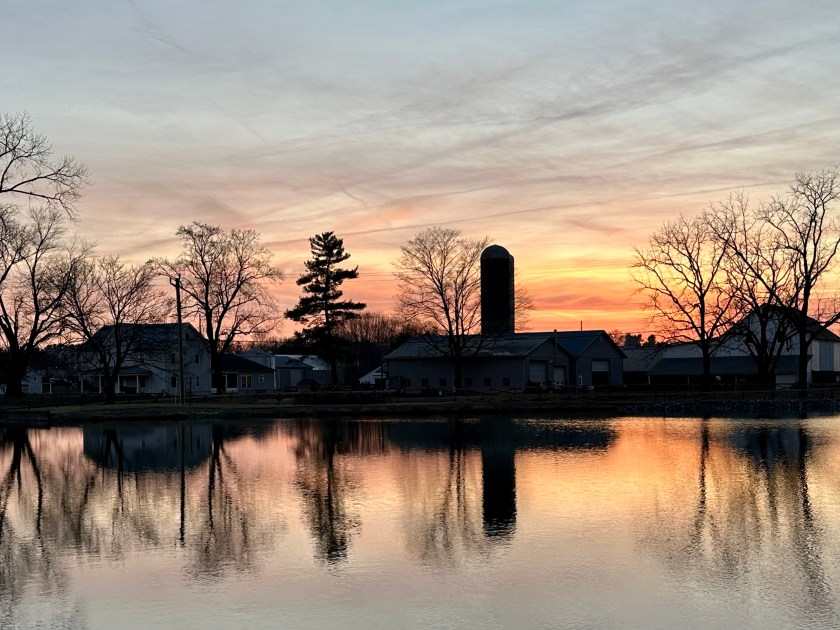
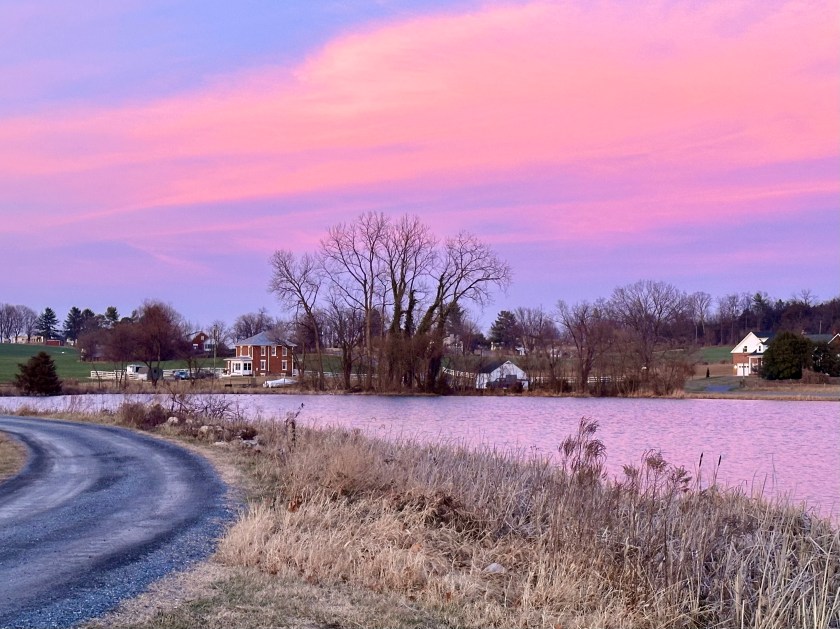
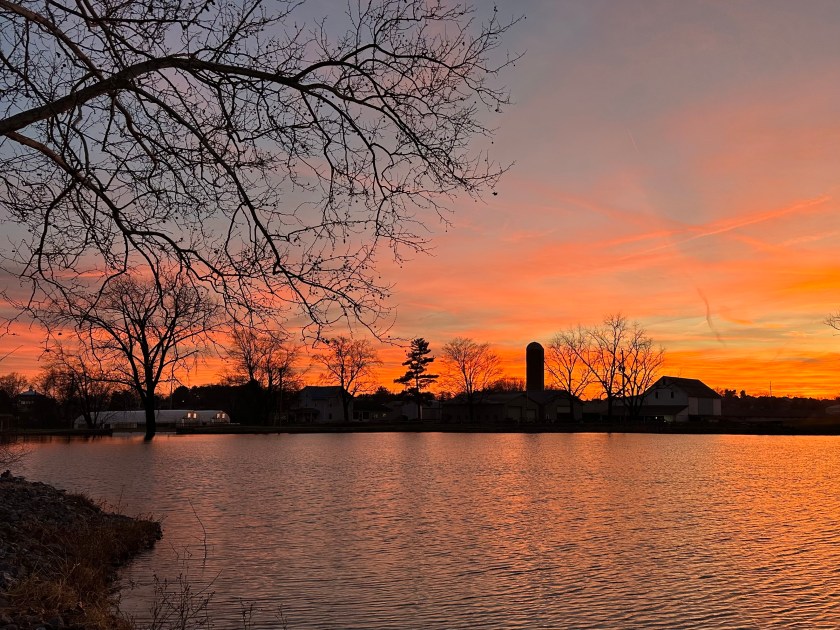
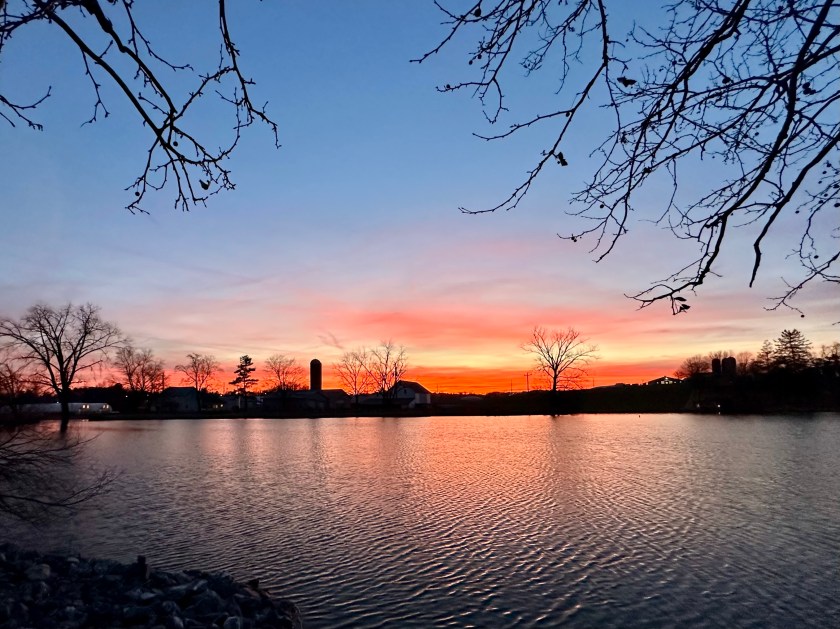
Things were still dull in the west, but I looked behind me, and the clouds in the eastern sky blushed in warm tones. I drove to the other side of the lake to capture the reflections.
The old mill
When I arrived
Colors in the east
The south bank
The reds begin
Across the lake
The farm
The long view
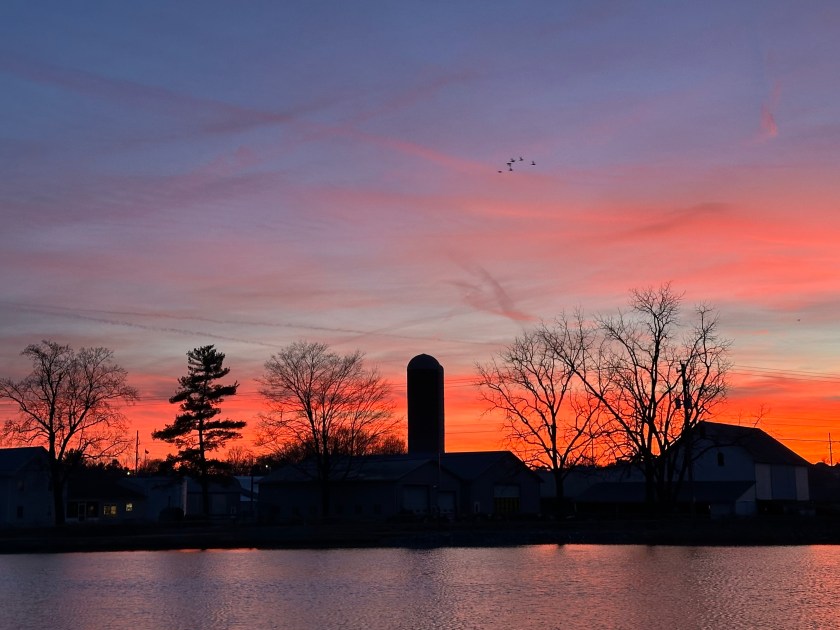
Silhouettes
The reds peak
I no sooner arrived there when the western horizon burst with fiery hues. I returned to my original spot and snapped away.
I was most grateful for nature’s wondrous morning and evening displays that day. It pays to keep an eye on the sky.
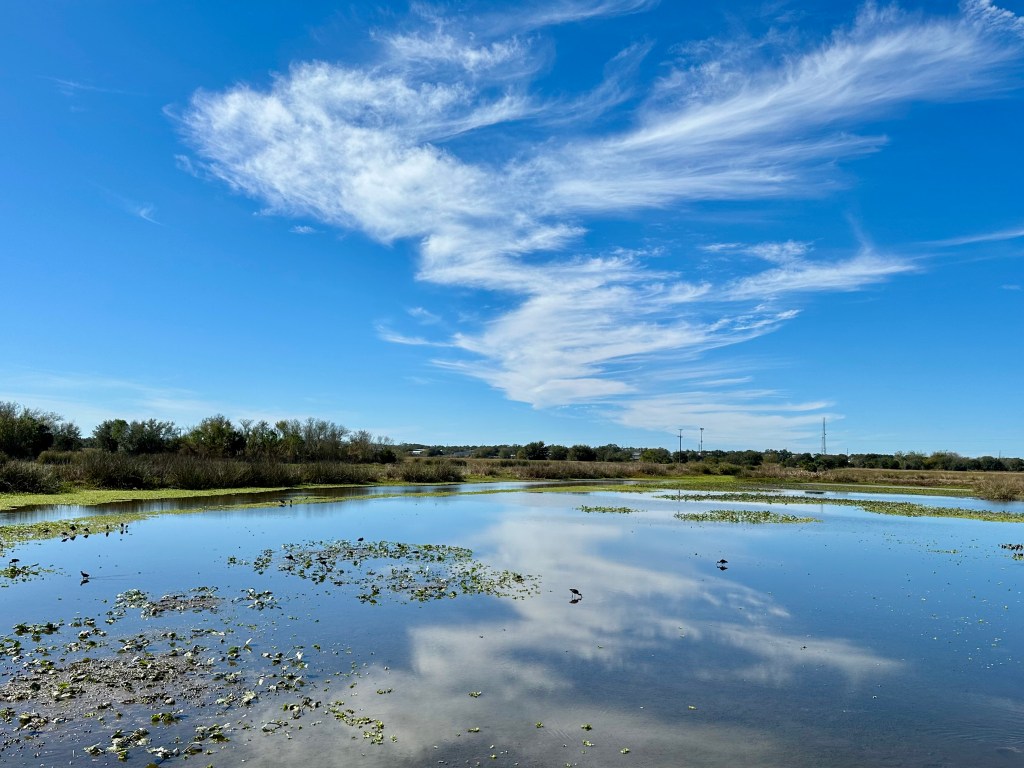
One of several large ponds at the Celery Fields, Sarasota, Florida. Photo by Bruce Stambaugh
I love birding. It’s one of my favorite hobbies, mostly because you can bird anywhere, anytime, including on family vacations.
My wife and I recently spent a week with our daughter’s family in Sarasota, Florida. That area is a birding paradise, with many parks, beaches, wetlands, and preserves that offer birding hotspots.
I knew I had to be considerate of what the others wanted to do. With three young adults, the beach would be a priority. So, I planned my bird-watching times accordingly so I could also spend time with family.
Since I preferred to bird in the morning, none of the others in our group of seven wanted to go with me, and I had no issue with going alone. I was sure to meet other birders on my outings.
While the others sunned on the beach, I had my binoculars at hand to try to identify the gulls and shorebirds I encountered. Of course, I listened for and watched a few birds near the house we rented for the week.
The designated preserves and parks provided the best birding opportunities. I headed to the area’s best birding spot, the Celery Fields in Sarasota. The county-owned marshland got its name because 100 years ago, celery was actually cultivated in the 400+ acre plots.
Today, the Celery Fields are a multi-purpose property for residents and visitors in the Sarasota area. The Celery Fields serve as Sarasota County’s primary flood mitigation zone. The county recognized the importance of preserving wildlife habitat, and today has an Audoban Visitors Center run by a score of dedicated volunteers.
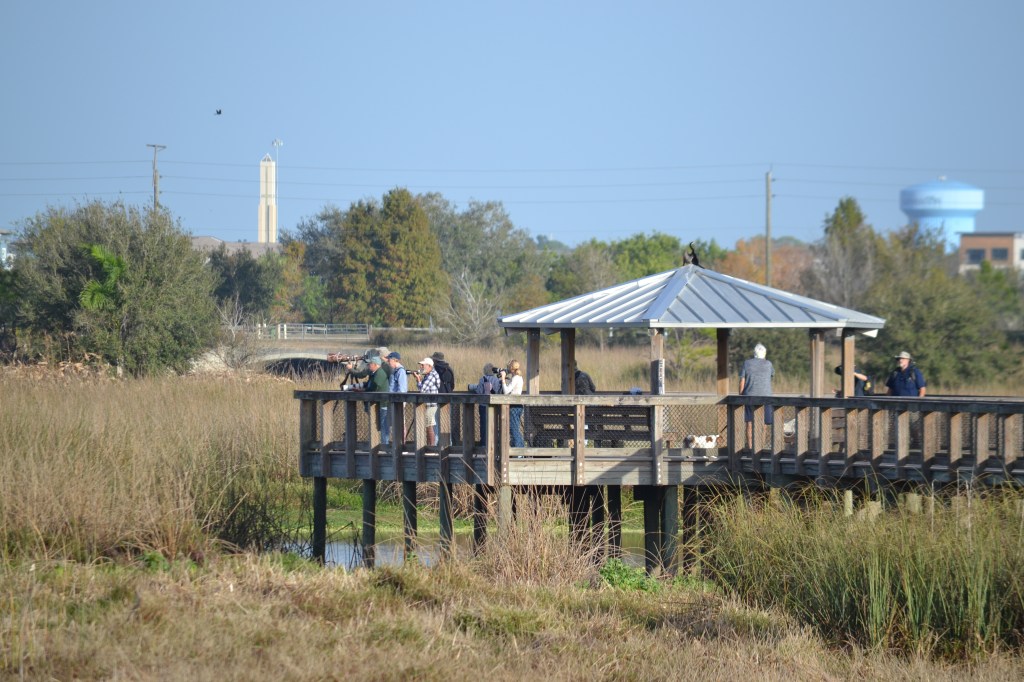
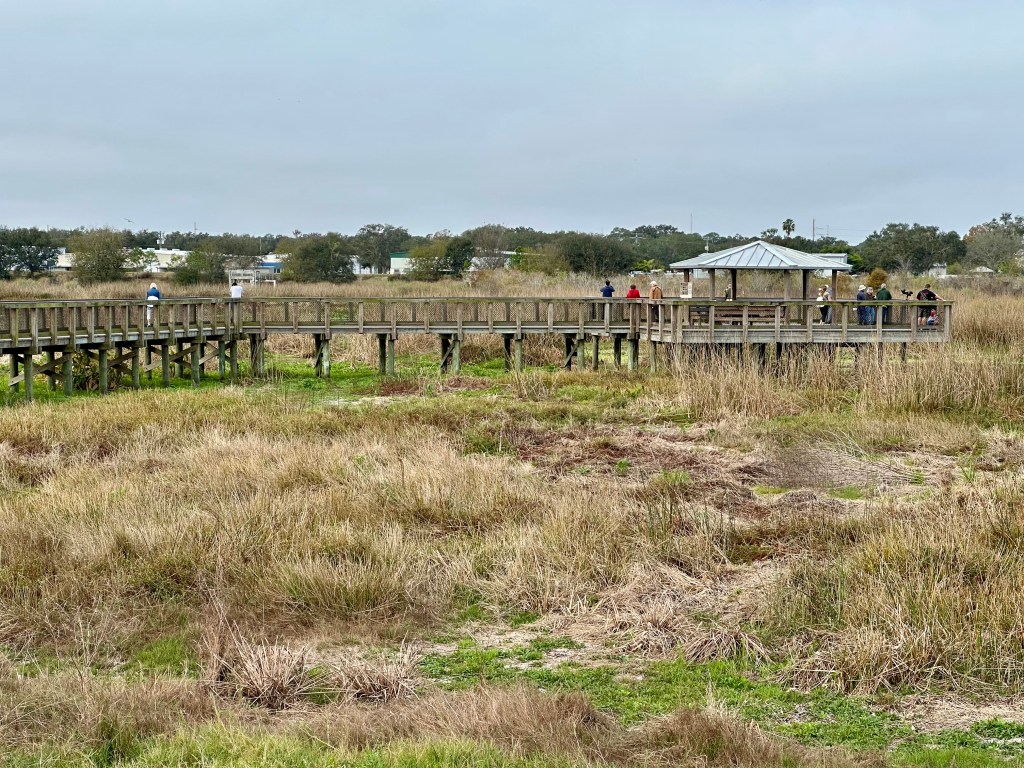
The different habitat areas of the Celery Fields.
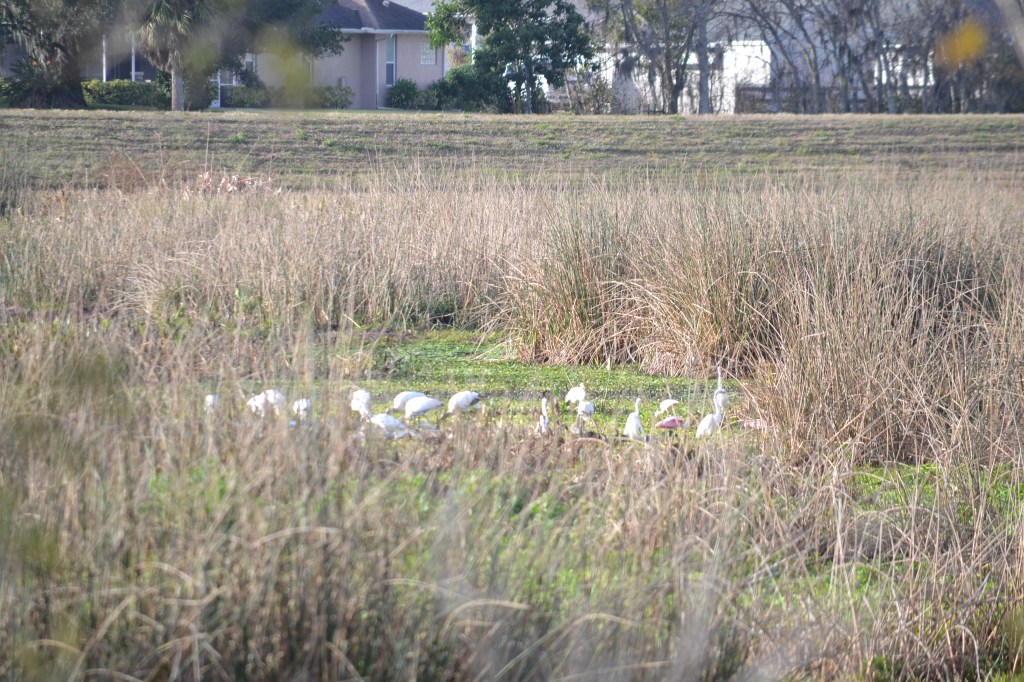
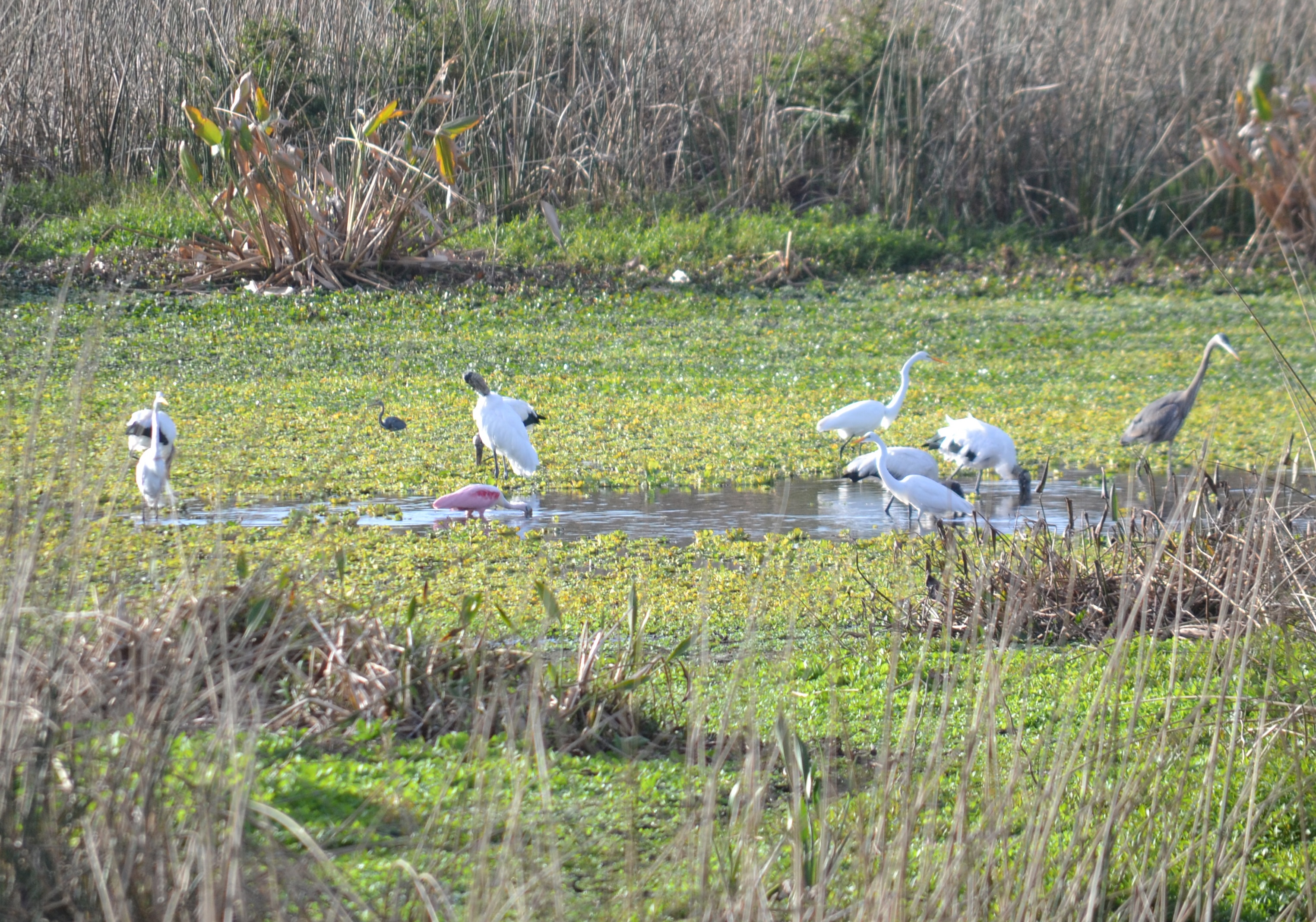
With areas of wetlands, mudflats, canals, ponds, a wide variety of marshland vegetation, and treelines, the Celery Fields attract several species of birds and wildlife. It’s a birding magnet for people like me.
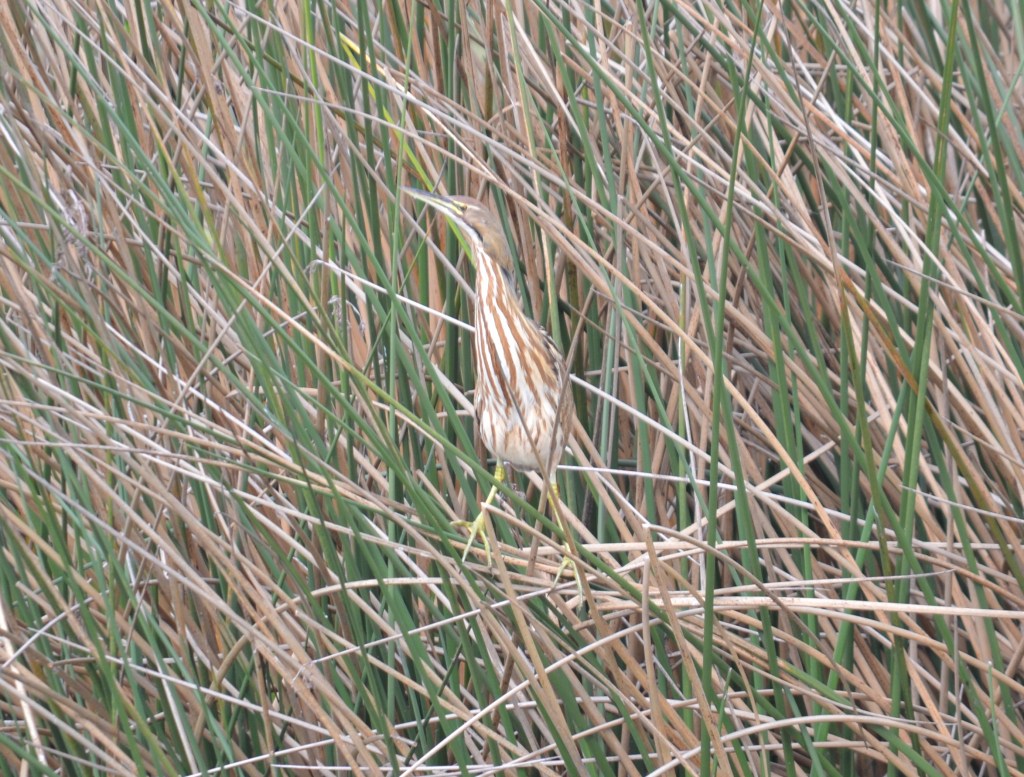
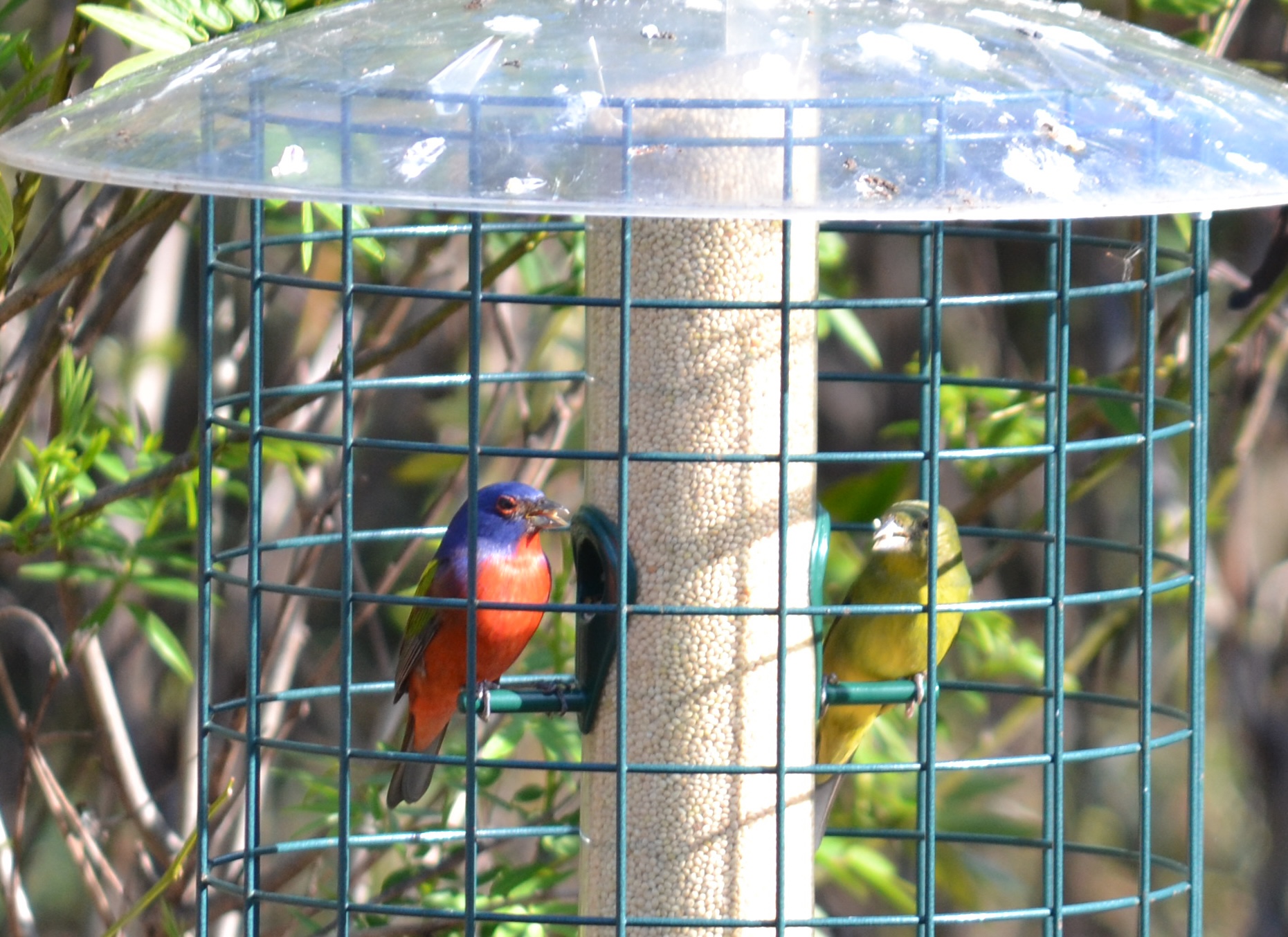
I visited the Celery Fields three times, aiming to see my spark birds, the gorgeous Painted Buntings, the social Sandhill Cranes, and the attractive Roseate Spoonbills. I got to see those and much more.
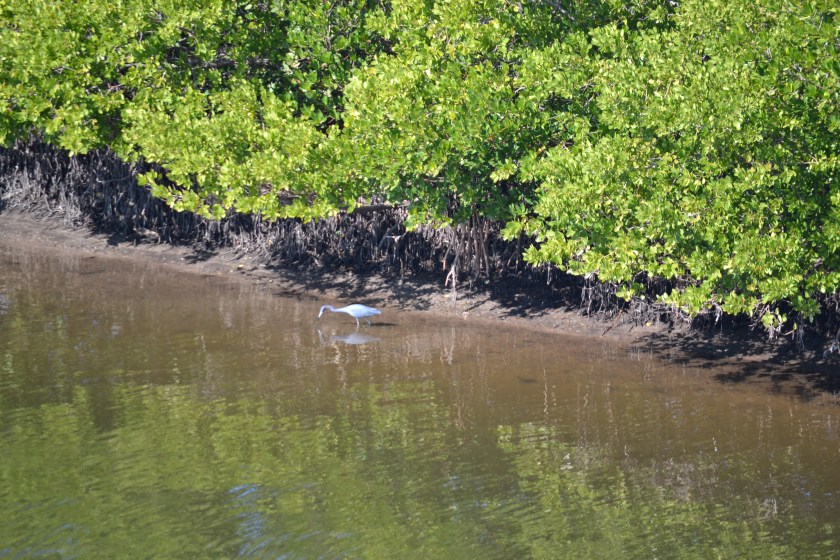
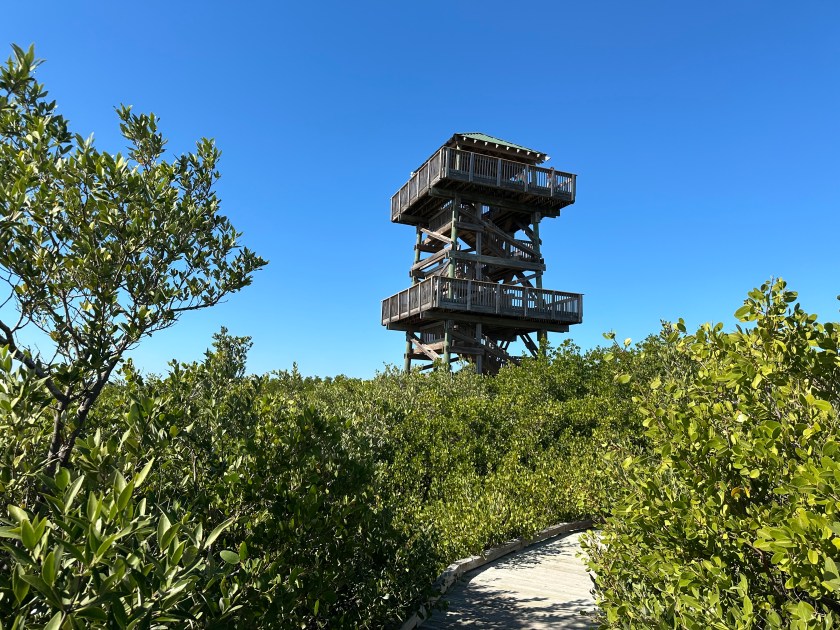
I also checked out two preserves along the coast near Bradenton. The first was small, and the other massive. Both had the kind of small trees, tropical vegetation, and wetlands that attract several species of birds.
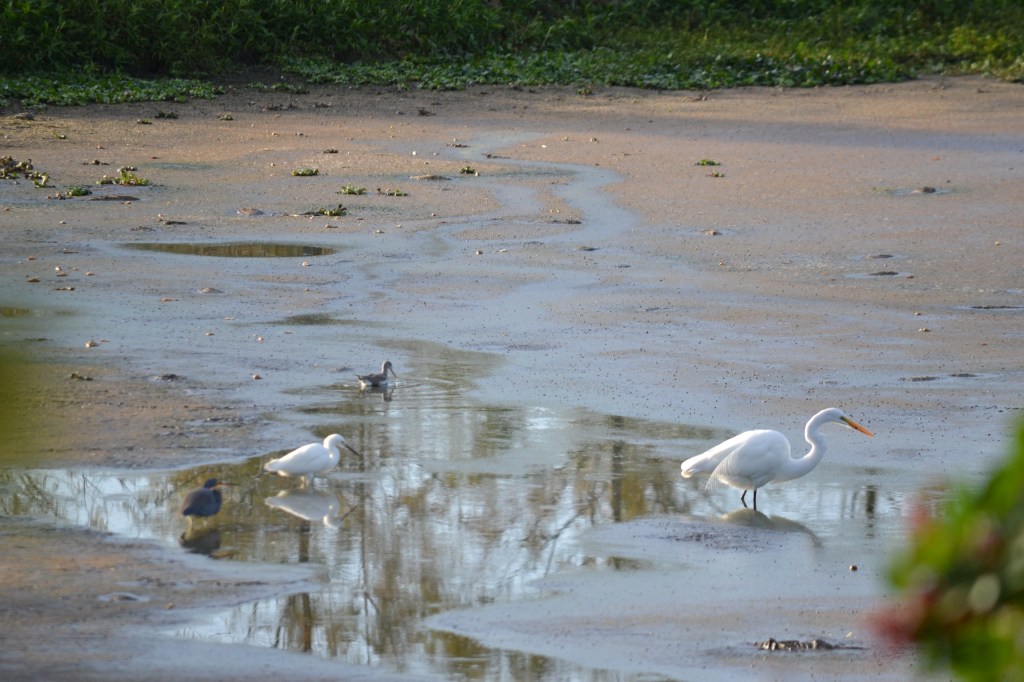
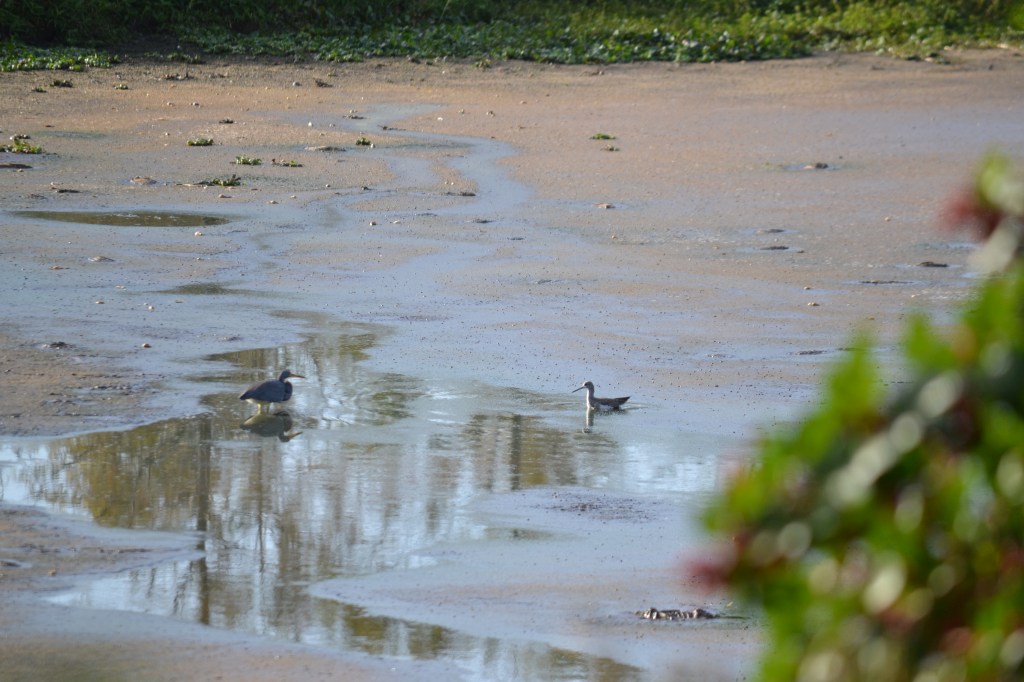
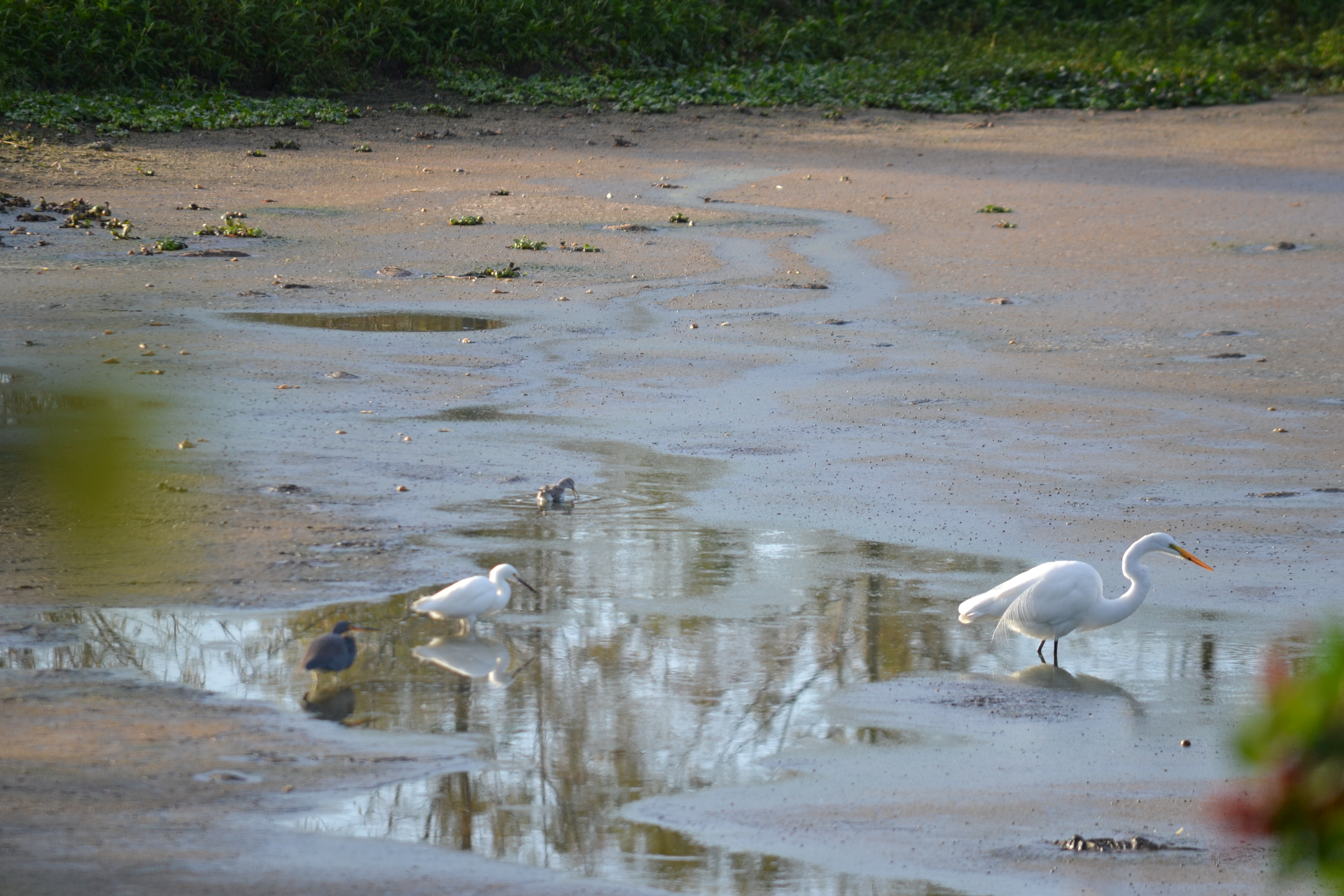
However, rainfall in Florida has been far below normal, and many areas of wetlands have dried up, forcing birds and other wildlife into small pools of water.
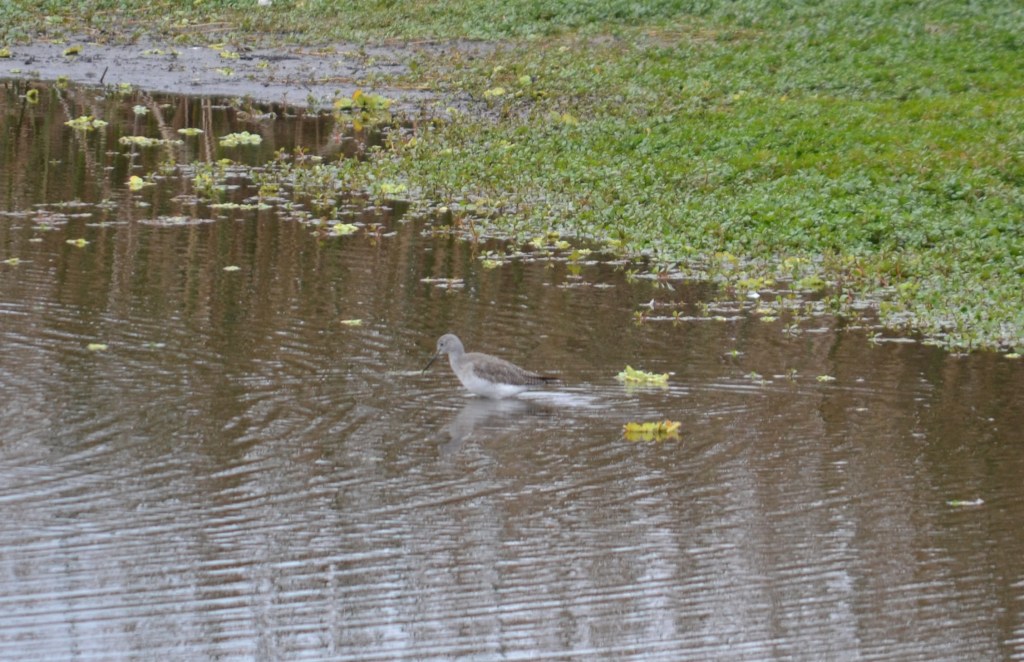
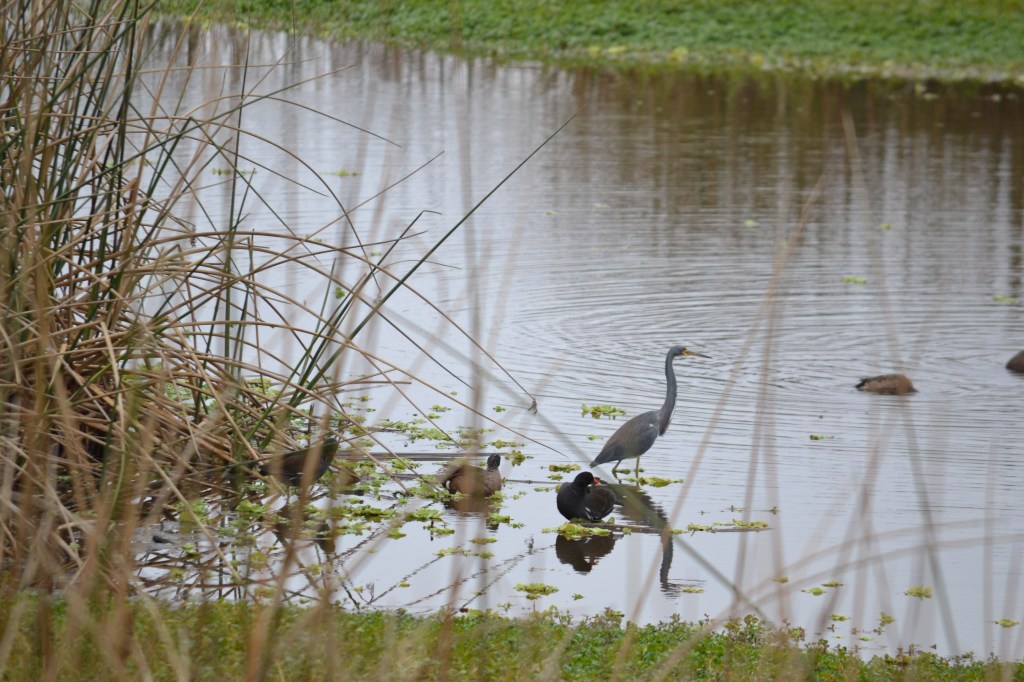
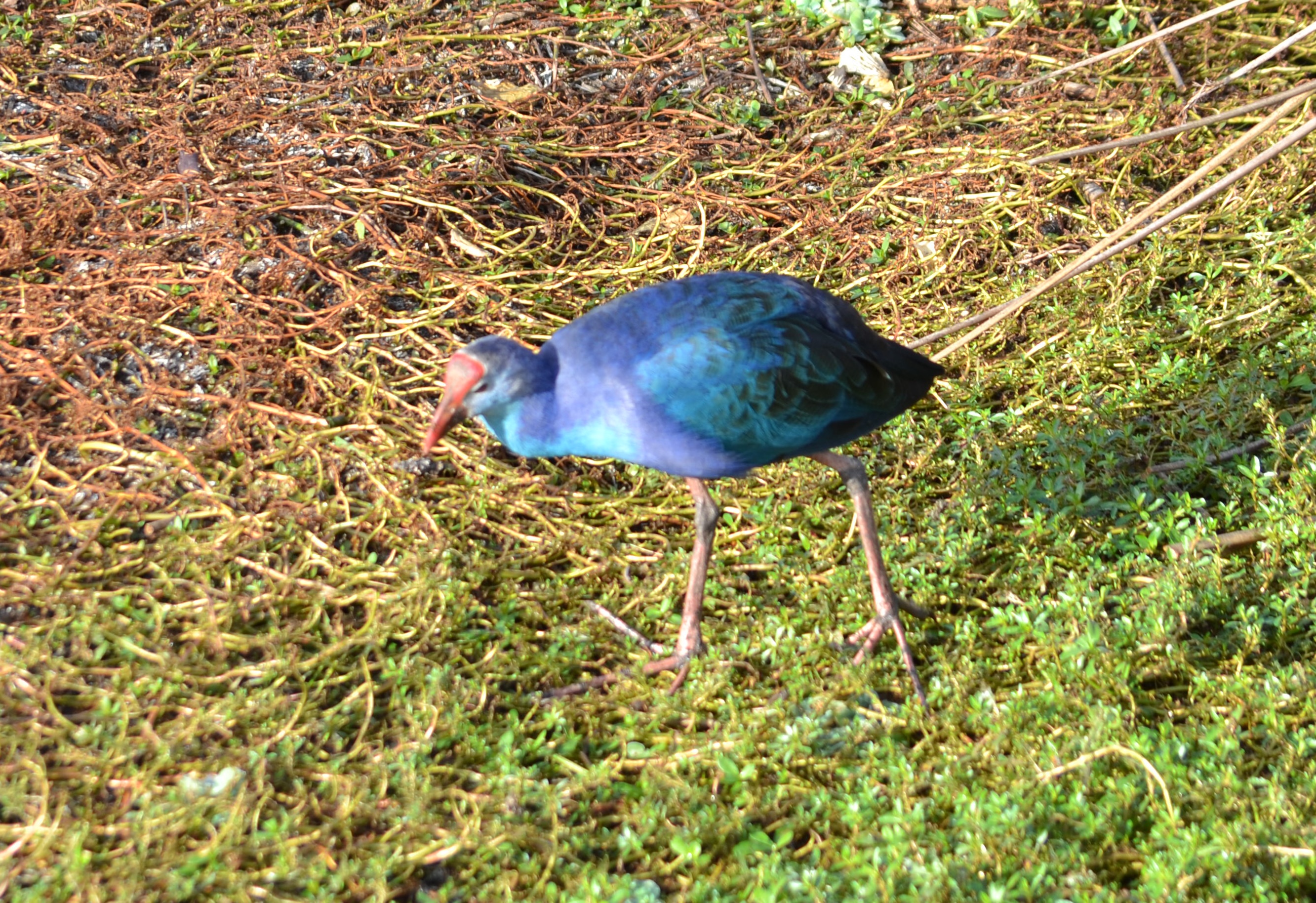
Still, I was able to see and photograph several bird species, and other animals, like an alligator and a snake. I’ll share those encounters in a separate post.
The Celery Field
The Celery Fields afforded the best opportunities to see a variety of wildlife up close via boardwalks, levees, and stone paths.
The place had changed significantly since my last visit years ago. An Audoban Visitors Center had been built to provide visitors with information and maps of the many walking and birding paths.
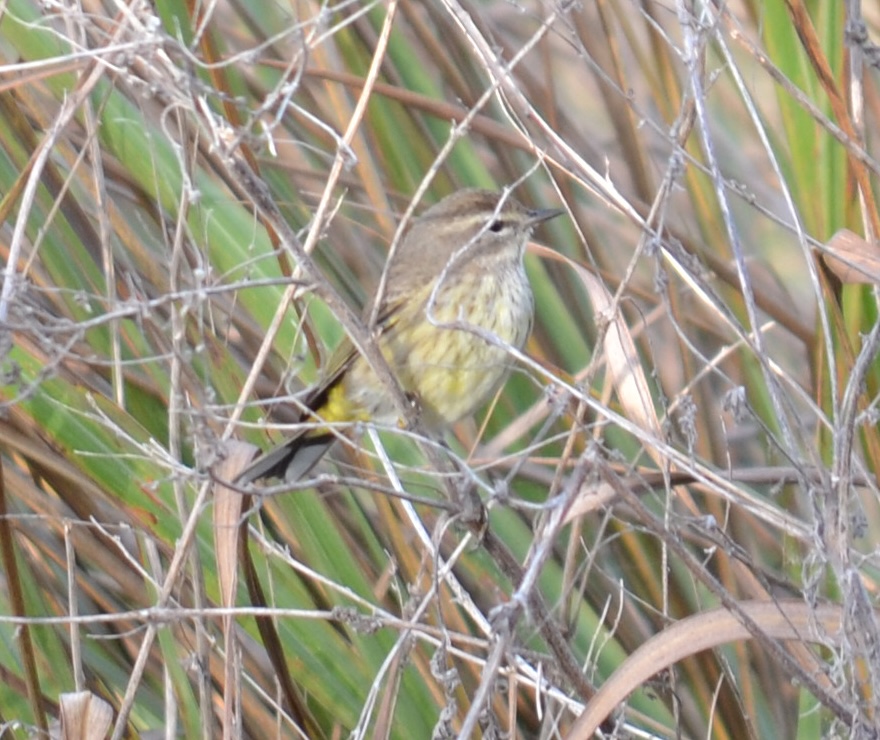
Bird feeders were strategically placed near the center, attracting several species of birds for a closer look. This included a handsome pair of Painted Buntings.
Volunteer naturalists were also available to answer questions and explain what was being seen. Ponds, canals, trees, bushes, and natural plants provided excellent habitat and cover for the birds and wildlife.
Beaches
Since it was the holidays and the weather was sunny and warm, the beaches were crowded. Consequently, I only captured a few photos.
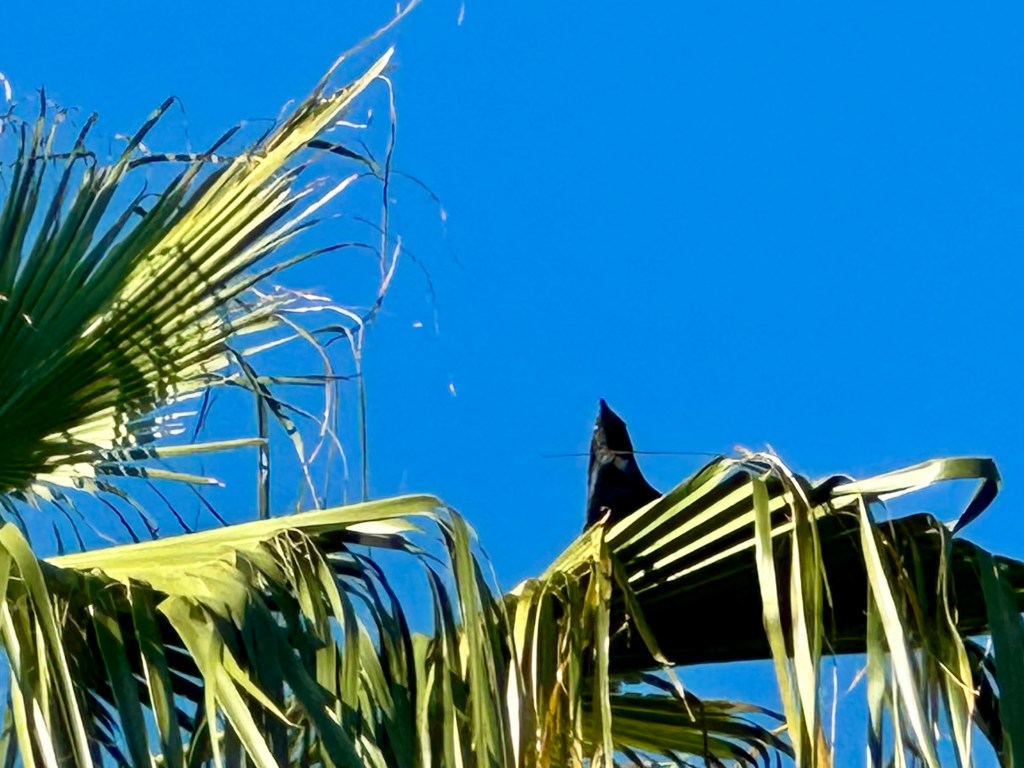
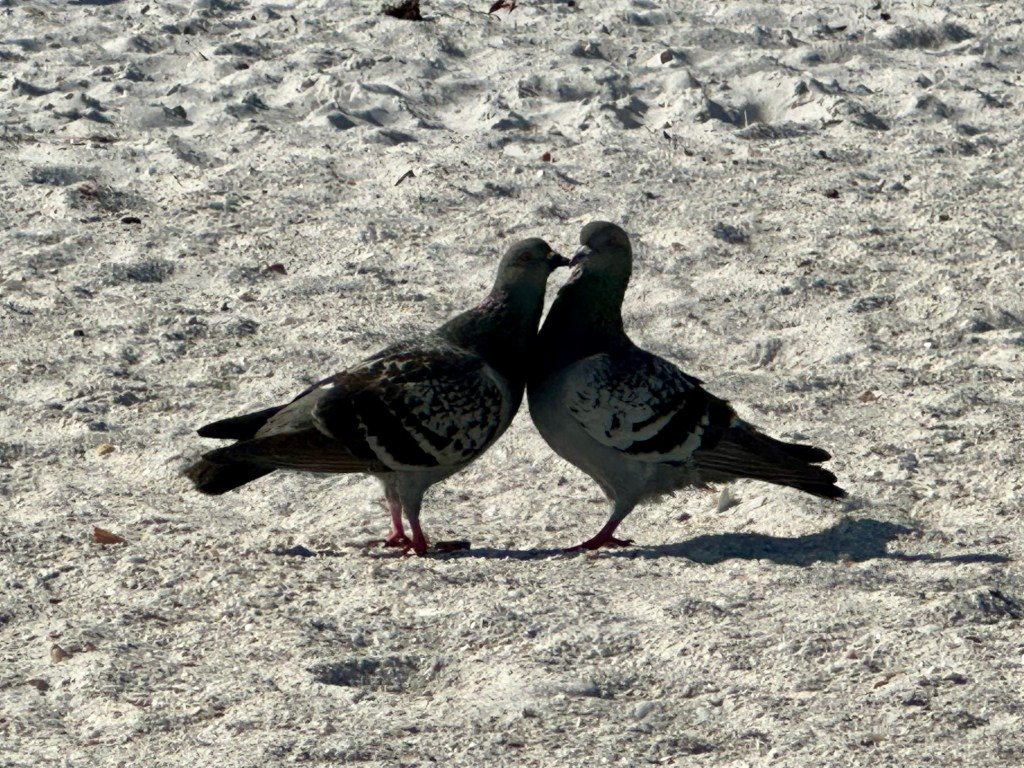
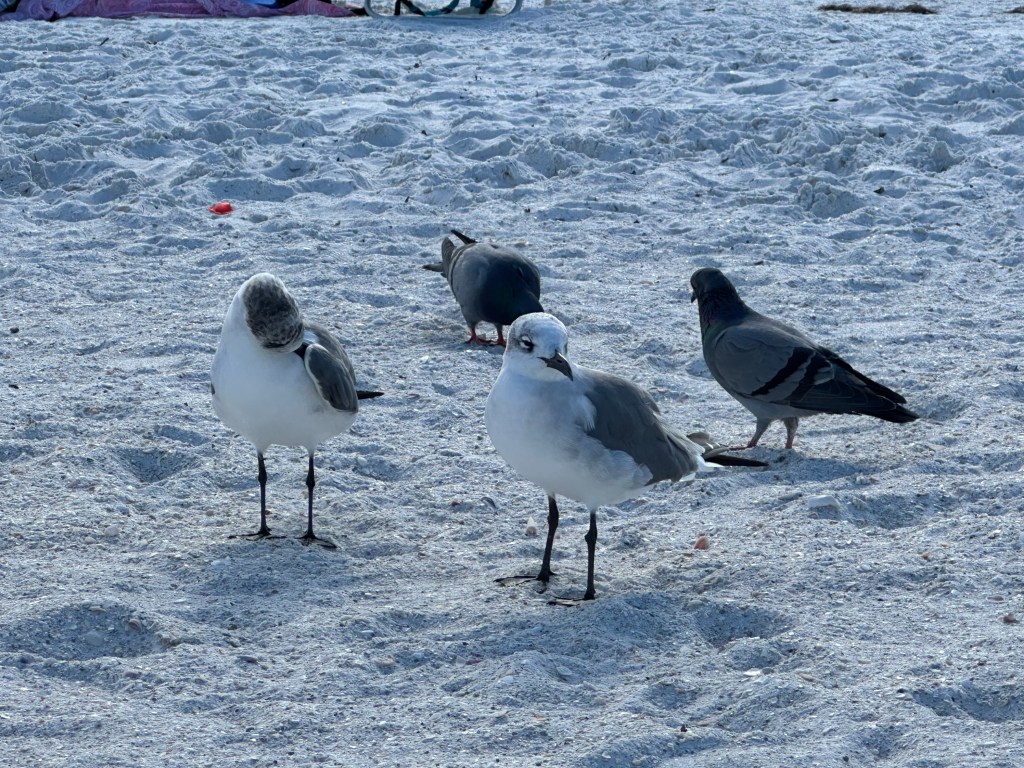
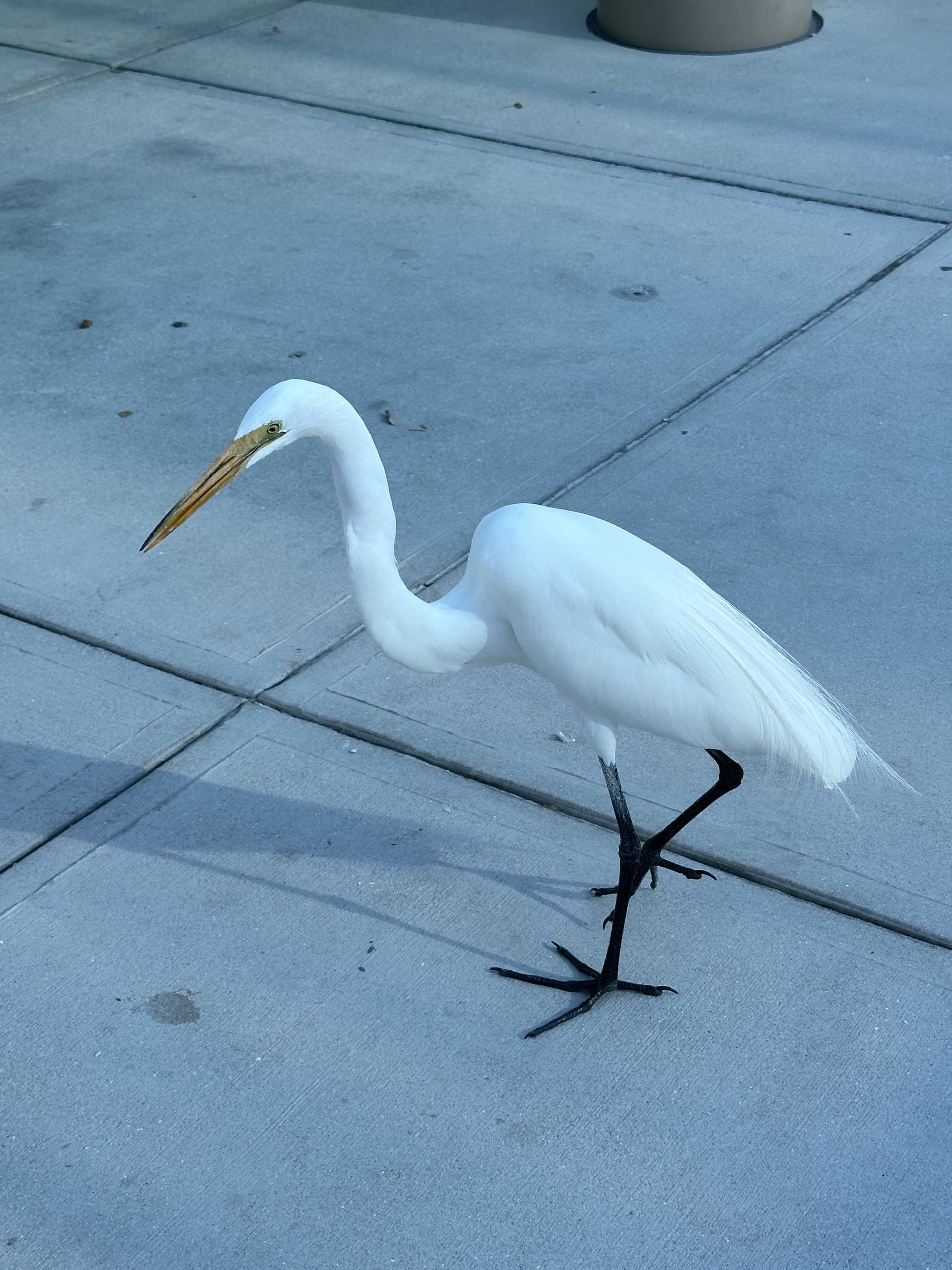
Great Blue HeronGreat EgretFish CrowLove BirdsLaughing Gulls and Rock DovesGreat Egret
Please click on the photos to enlarge them.
The Preserves
I discovered the Ungarelli and Robinson Preserves after dropping off my oldest grandson at a golf course. Again, due to the lack of rain, the water levels at both places were very low, and some of the mudflats had hardened.
Still, bird species were plentiful, and the people I met were friendly and inquisitive about birds they saw but couldn’t identify. The binoculars dangling around my neck over my birding vest gave me away. It was a pleasure to help them learn about Rosate Spoonbills and Red-shouldered Hawks.
Like the Celery Fields, the Robinson Preserve was a multi-use facility. Kayakers, bikers, joggers, and dog walkers far outnumbered birders like me. That didn’t deter my enjoyment of the time spent there.
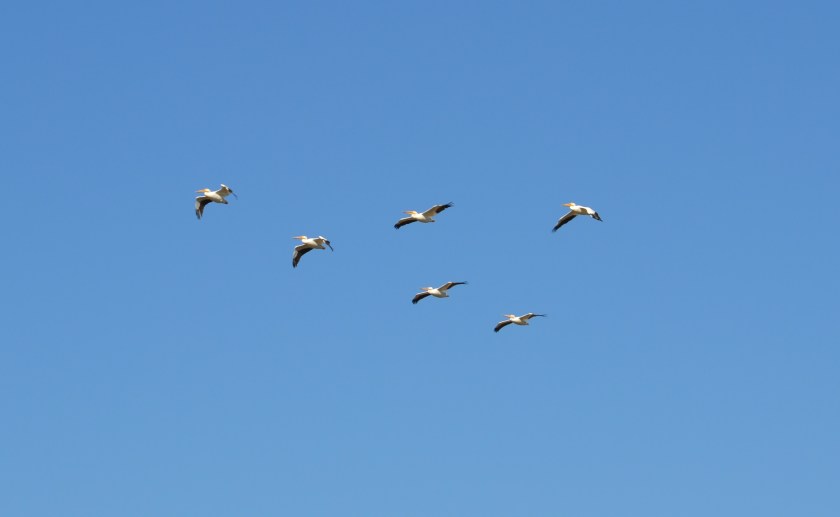
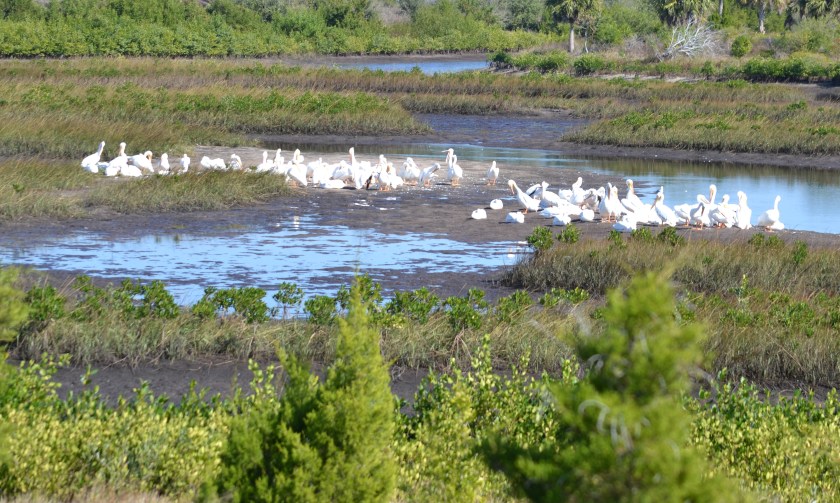
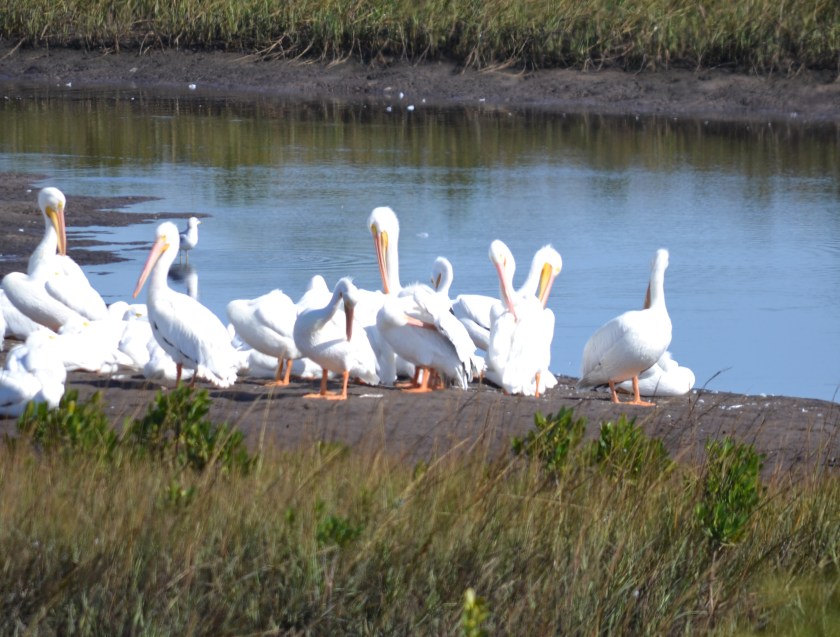
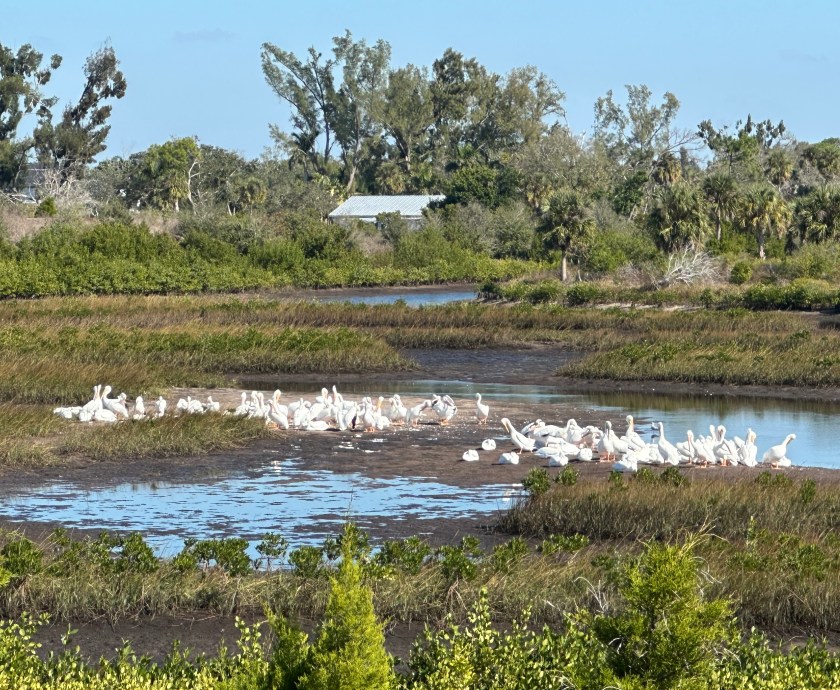
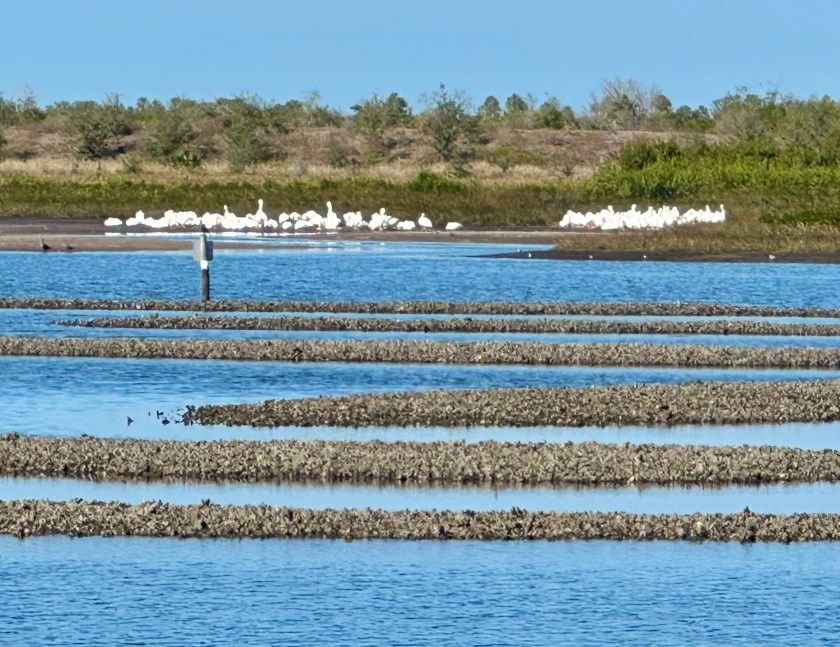
The highlight was discovering a large flock of American White Pelicans. I met a couple from Germany who equally enjoyed these fantastic birds. We watched as several pelicans flew into the flock, where many of them preened in the afternoon sunshine.
We live in a crazy world that seems to grow crazier by the day. But we must not let the chaos get to us. We need to carry on as best we can. For me, photography is one outlet that shuts out the din of the world’s madness against itself.
I enjoy photographing the wonder all around me, the serendipitous joy that springs upon me. By capturing those affectionate moments, I can share them with others, including you.
Staying in the present moment allows me to see things that others might just pass by. Consequently, I took thousands of photos this year. My photos feature people, insects, birds, trees, mountains, flowers, sunsets, sunrises, boats, planes, and a sundry of other subjects.
I have chosen to select one image for each month to review 2025. I hope each photo speaks to you the way they all did to me. Here then is 2025 in photos. Enjoy.
January
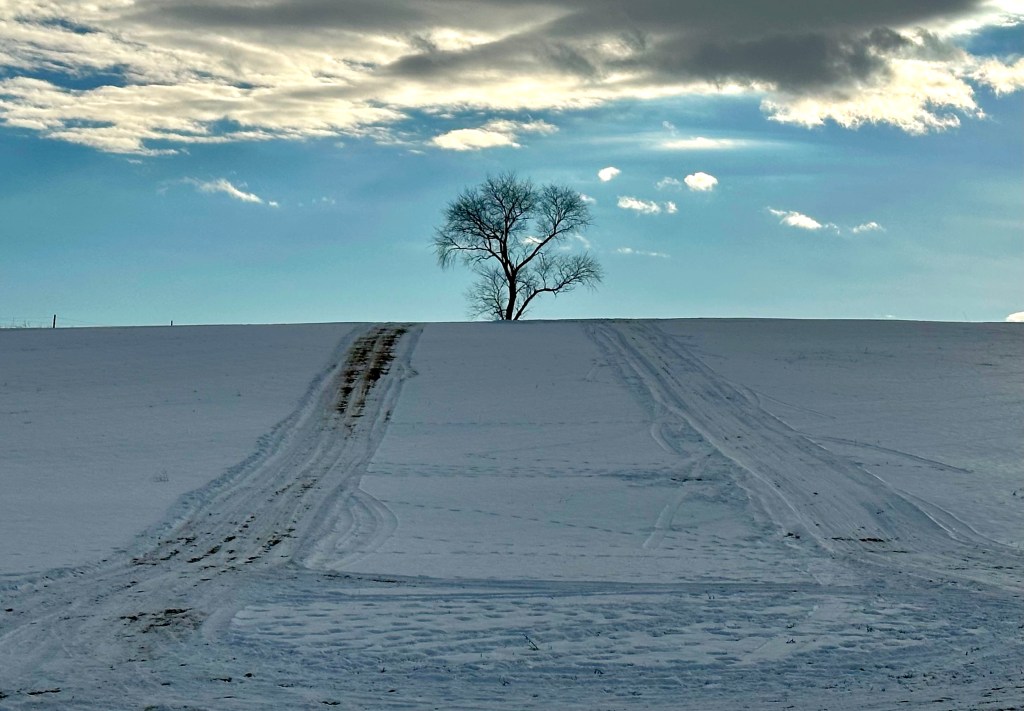
It’s only appropriate to begin this photo series with a snowy scene in January. This lone tree stood beneath the hovering clouds and was perfectly centered by the farm equipment tracks in the snow. The cerulean sky provided an excellent backdrop, like blue ice in a glacier.
The tree, January 15, Rockingham County, Virginia. Photo by Bruce Stambaugh
February
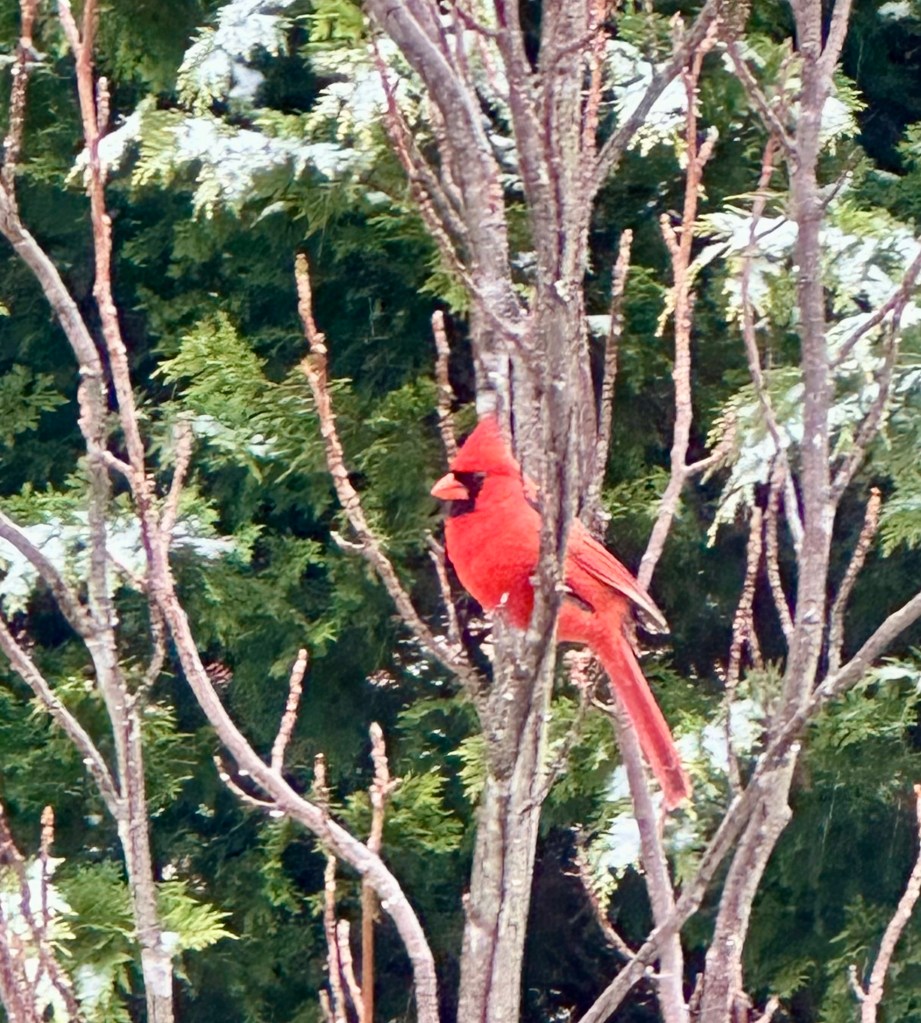
Is there anything more stunning than a bright red male Northern Cardinal in the midst of winter? Against evergreens laden with a skiff of snow, the bird shows even more colorfully. It’s just one of the reasons I love watching, feeding, and photographing birds.
That’s especially true when they grace your backyard with such natural beauty.
Male Northern Cardinal, Harrisonburg, Virginia. February 8. Photo by Bruce Stambaugh
March
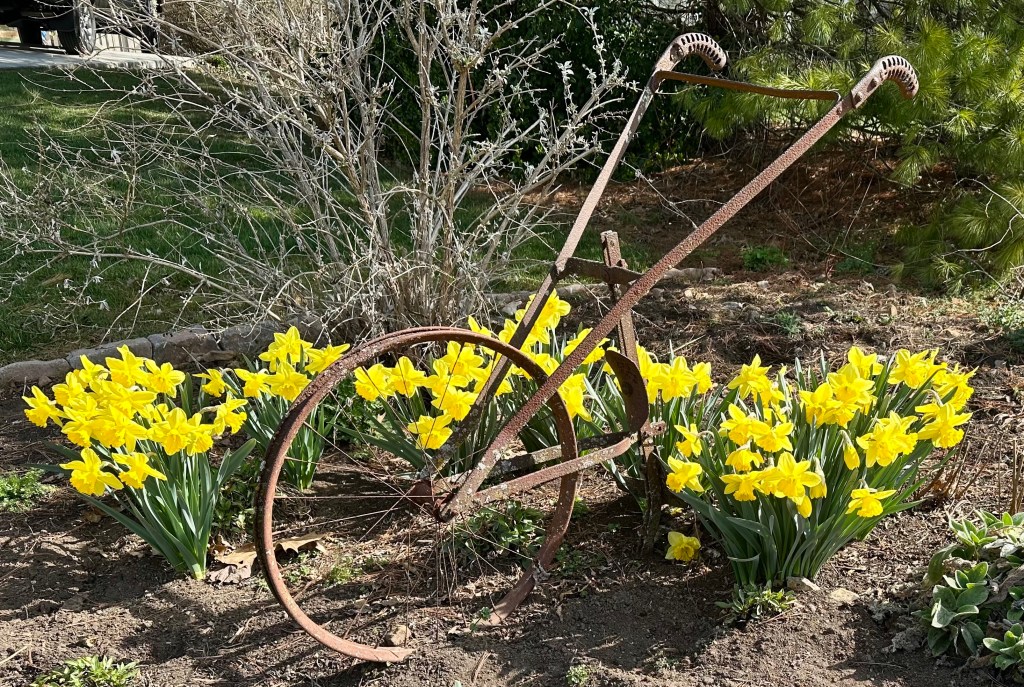
I enjoy walking in our suburban neighborhood of nearly 500 homes any time of year. Besides the required exercise, I encounter many photographic moments. This neighbor had the foresight to plant daffodil bulbs around an old hand cultivator, once used to till garden soil, which helped control the weeds.
Emerging from winter, the buttery yellow of the blooms added a splash of color that complemented the old, rusting implement.
Daffodils as accents, March 21, Harrisonburg, Virginia. Photo by Bruce Stambaugh
April
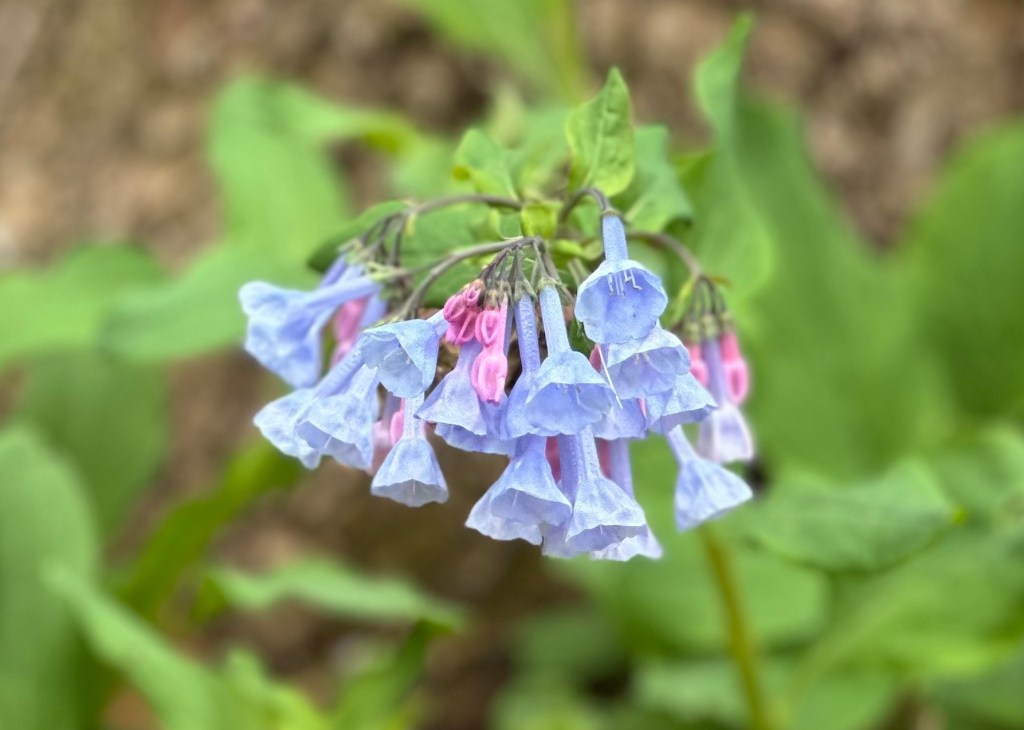
Though not the state flower, Virginia Bluebells should be. They are native to the state and are its namesake. Besides that, the flowers are simply beautiful. Their pink buds turn to azure blue blossoms, and they are a welcome sight wherever they bloom in spring.
Virginia Blue Bells, April 8, Edith J. Carrier Arboretum, Harrisonburg. Photo by Bruce Stambaugh
May
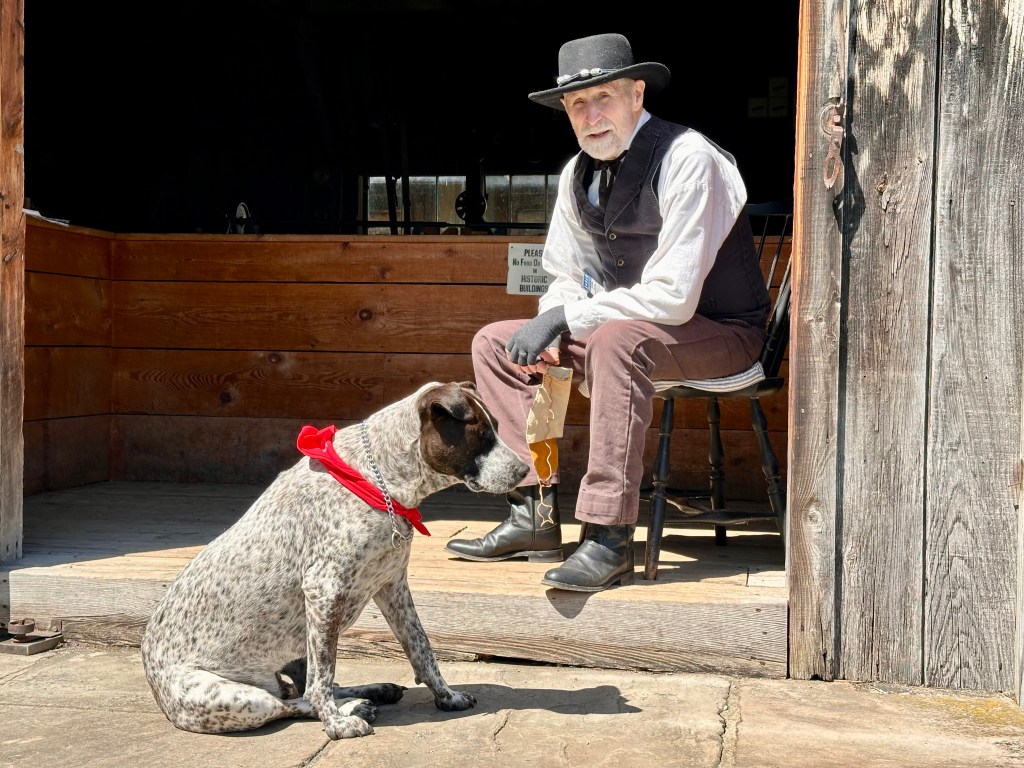
I captured this photo at a historic village in Mumford, New York. Since it was Mother’s Day, the Genese Country Village and Museum had people in period clothing doing demonstrations and providing information about their particular station.
While walking by a barn, I caught this man and his dog sitting in the morning sunshine. The darkness of the barn’s interior made them stand out all the more.
A man and his dog, Mumford, New York, May 11. Photo by Bruce Stambaugh
June
I’m a sucker for sunsets. With its fluffy-cloud days, June is often a good time to watch for glowing evening skies. June 20th was one such day. It just happened to be the summer solstice, when the sun would be at its northwestern-most point in the evening sky.
I headed to my favorite photo spot, the western slope of a local landmark, Mole Hill. Mole Hill is a prominent mound in Shenandoah Valley’s Rockingham County. You can see miles south, west, and northwest from the extinct volcanic core.
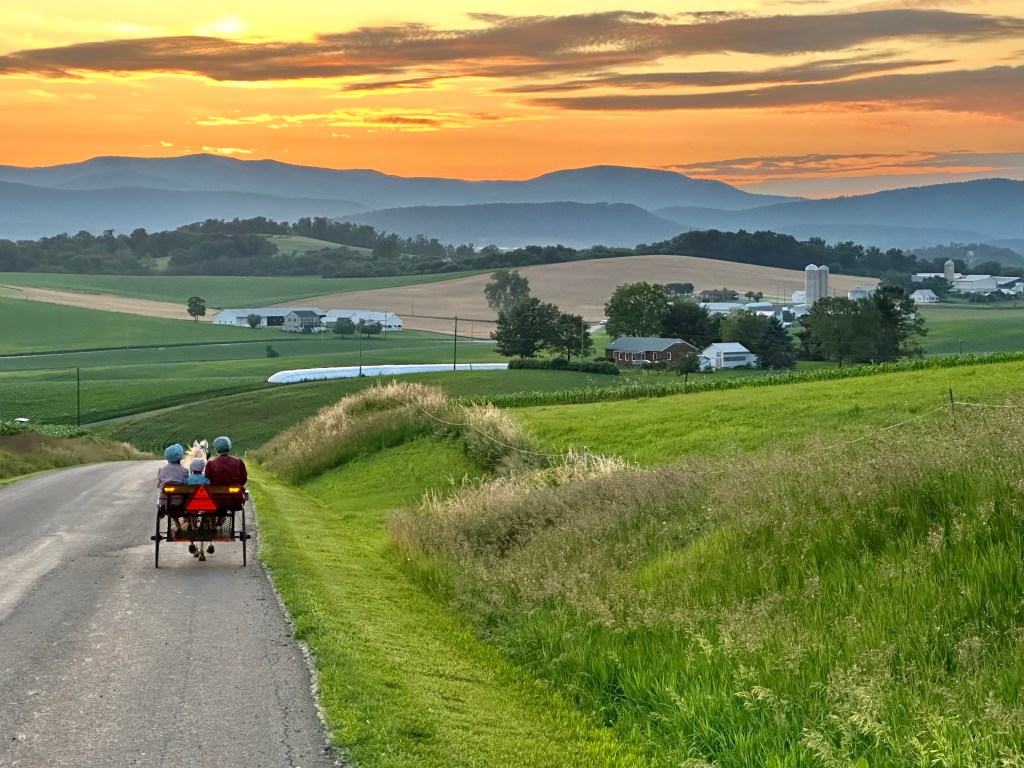
On the way there, I saw a pony cart tied to the trunk of a walnut tree at the peak of Mole Hill Road. I didn’t think much of it until I heard the distinct sound of hoves hitting the pavement. I turned and saw an Old Order Mennonite young woman and two girls in an open cart behind a blond-maned pony heading my way.
Knowing they would not want their photo taken, I waited until the cart was well past my location before I snapped the shutter. The setting sun illuminated the pony’s mane and the seeded heads of the tall grass north of the roadway.
With the evening quickly cooling, a light fog began lifting out of the river valley below the Allegheny Mountains that mark the boundary between Virginia and West Virginia.
The combination of the golden sky, the glowing clouds, the darkened mountains, the mist, the farmsteads, and the rolling valley floor created a once-in-a-lifetime scene. It felt like a holy moment, and I was thrilled to capture it for others to see.
Heading into the sunset, June 20, Dayton, Virginia. Photo by Bruce Stambaugh
July
In the United States, July literally always starts out with a bang. July 4th is Independence Day, and it just so happened that the cruise ship my wife and I were on docked in Portland, Maine, on that hallowed day.
Fortunately, the ship’s starboard side, where our cabin was, faced the city’s harbor. We had a front-row seat to all the explosive colors reflected in the water. It was a fun way to close out our trip.
July 4th, Portland, Maine. Photo by Bruce Stambaugh
August
Like many other locales in the nation, August was a hot, humid, and all too dry month. Still, people ventured out, keeping their routines and schedules despite the withering temperatures.
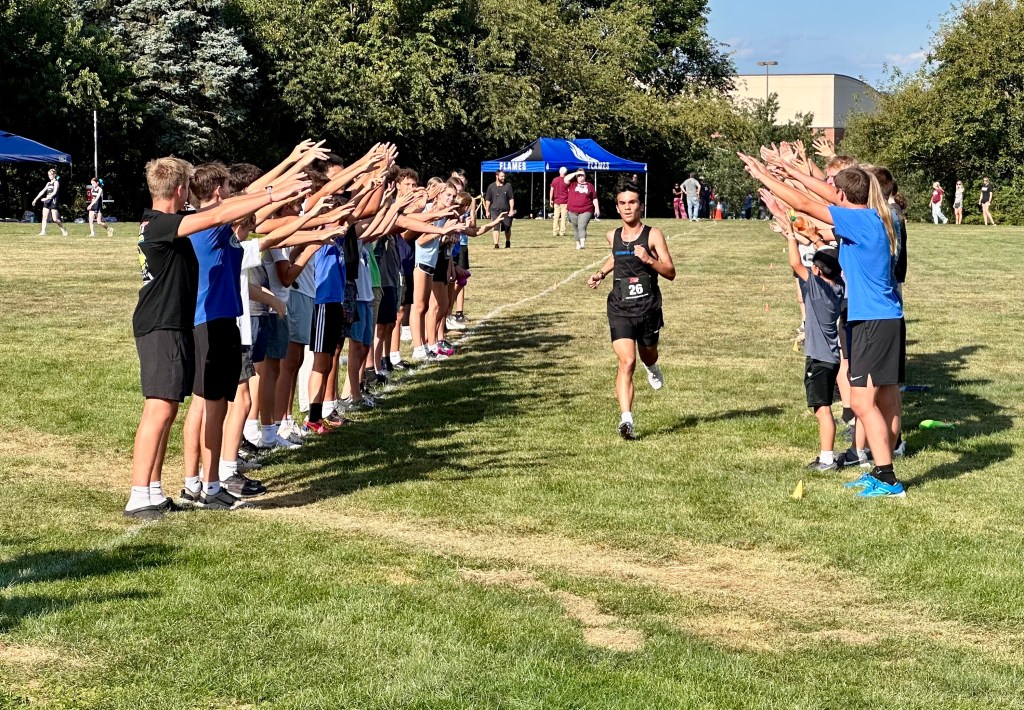
That was true for all kinds of outdoor sports. This photo shows the proud moment of the young man I mentor, far outpacing all the other high school runners in a cross-country meet. I wasn’t the only one who was pleased. Daniel’s classmates created a human gauntlet to welcome him as he approached the finish line.
Winning the race, August 29, Harrisonburg, Virginia. Photo by Bruce Stambaugh
September
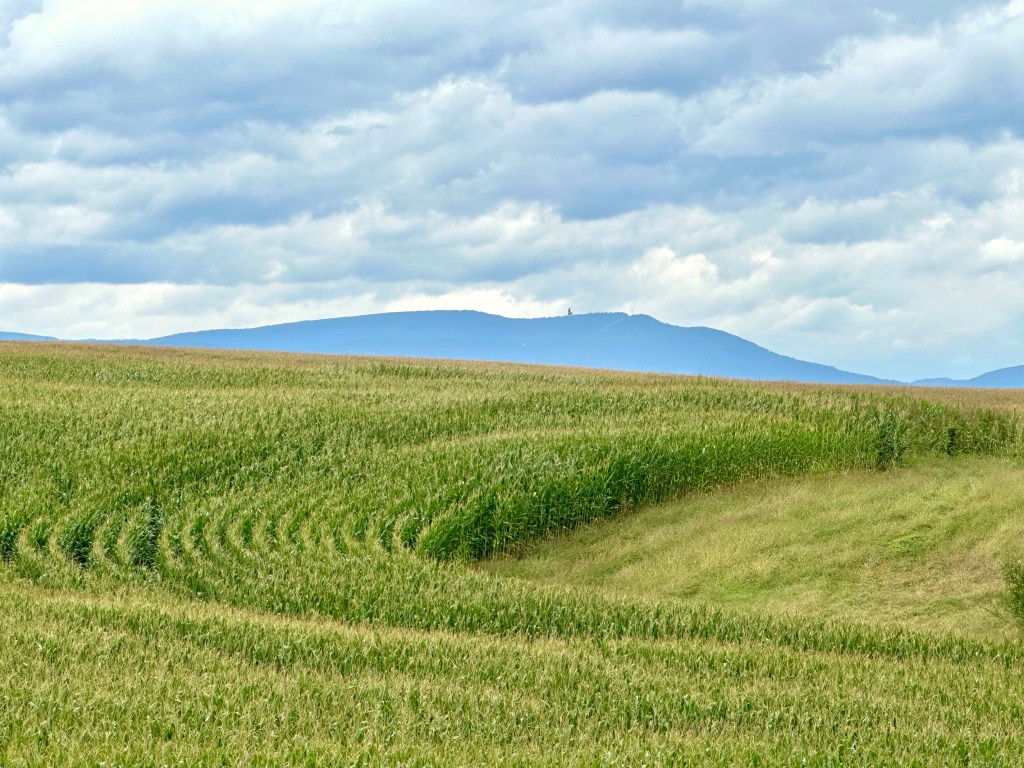
This September in Virginia’s lovely Shenandoah Valley was fabulous. After a hot, humid summer, September ushered in cooler temperatures and revealed the magnificent colors of her topography and vegetation, both natural and cultivated.
This was the view I saw as I exited my vehicle at a country store near the quaint town of Dayton. How could I not take this shot?
From the area’s fertile soil, curving rows of field corn and rolling contours led the eye to the Allegheny Mountains to the northwest and the cruising cumulus clouds above. Come harvest, it was a bumper crop of corn.
Though I didn’t see it at the time, an American Crow is near dead center in the pastoral photo.
Early September in the valley, September 4, Dayton, Virginia. Photo by Bruce Stambaugh
October
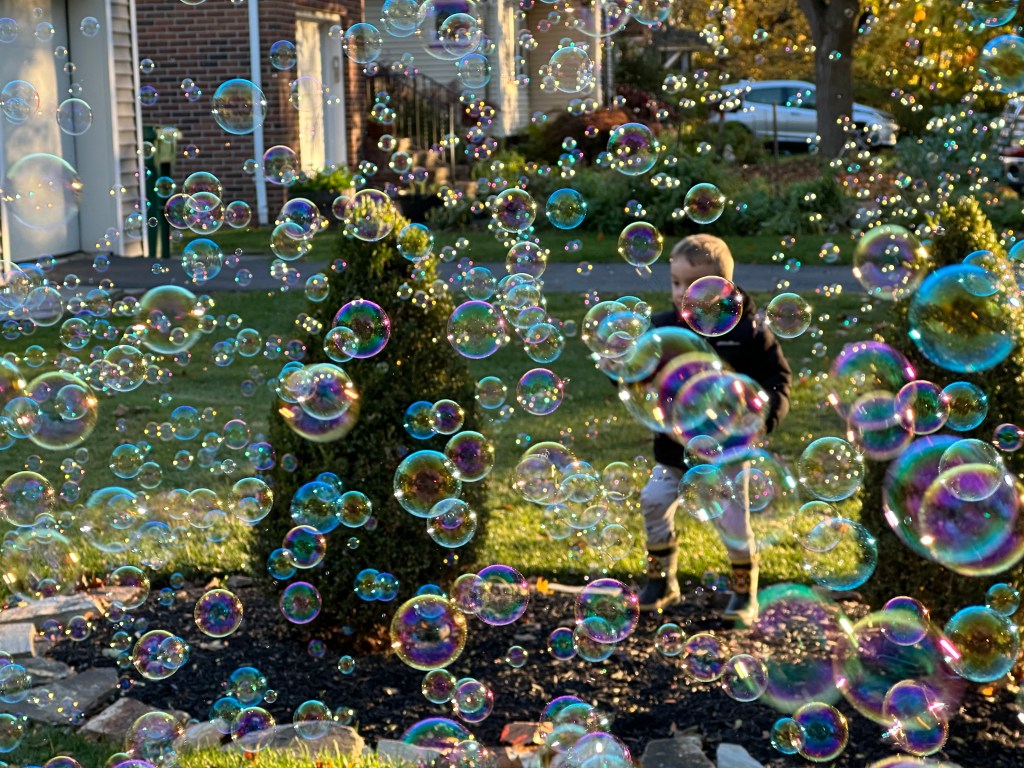
Our three-year-old grandson loves Halloween. He also loves bubbles, so his folks bought him a bubble machine. Teddy wanted to show off how the bubble maker worked when we visited him and his parents the week of Halloween.
When Teddy ran behind the bubbles, the sharply slanting sun highlighted the multi-colored, windblown bubbles. The various-sized bubbles and their proximity to my camera created a moment I can’t forget. It was one of my favorites of the year.
Teddy and his bubbles, Rochester, New York, October 26. Photo by Bruce Stambaugh
November
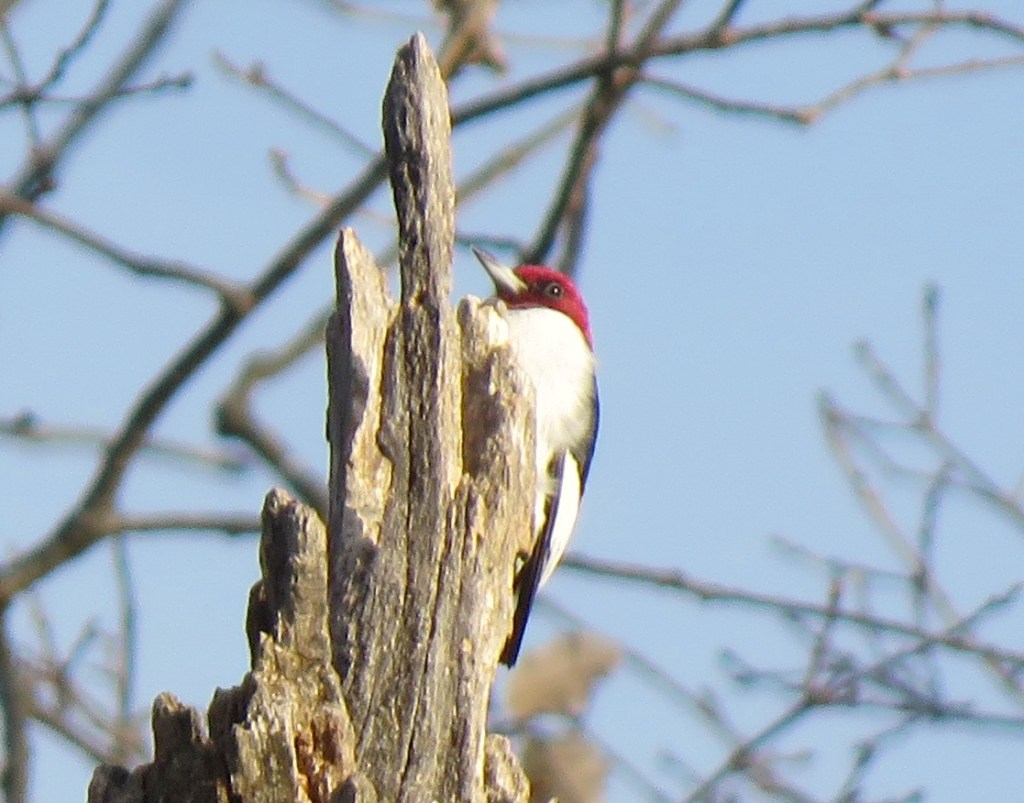
When a Red-headed Woodpecker poses for you, you have to take the shot. Of course, I am always ready with the camera when the moment arrives.
Red-headed Woodpecker, November 7, Linville, Virginia. Photo by Bruce Stambaugh
December
My wife and I spent Christmas week in Sarasota, Florida, with our daughter and her family. We wanted to devote holiday family time together somewhere warm. I’m happy to say the weather was perfect. With two college-aged grandsons and a teenage granddaughter, we hit the beach a few times.
After basking in the warm sunshine during the day, we returned a couple of times for the sunset. When the clouds didn’t cooperate, we settled for golden sundowns.
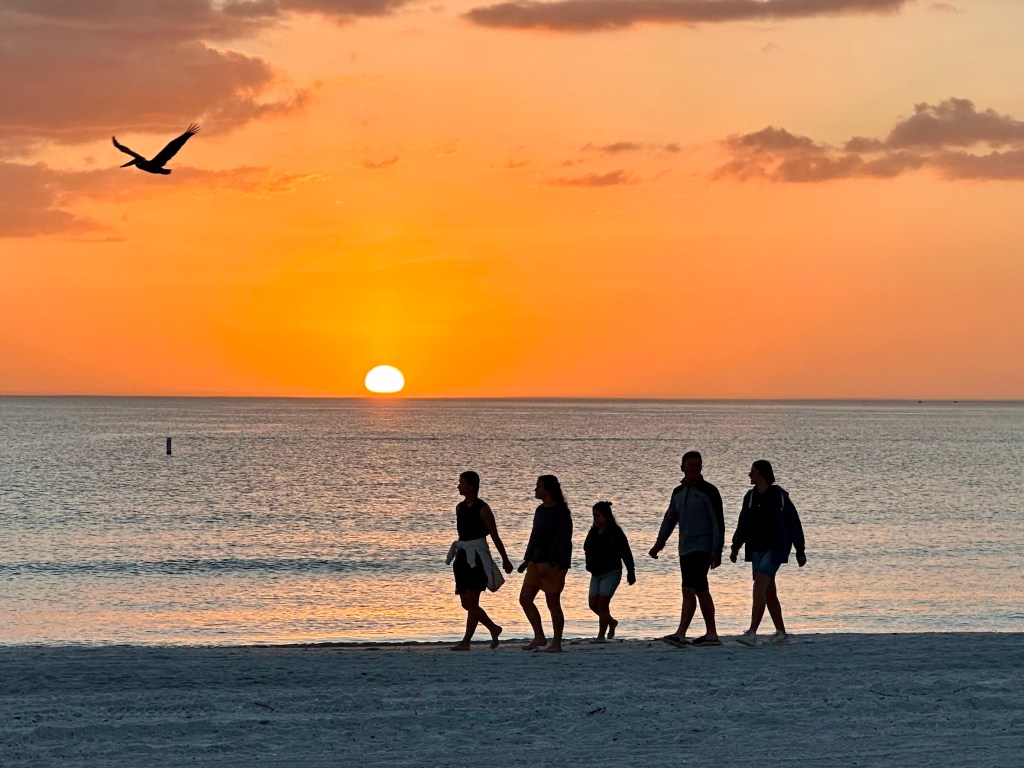
In this photo, a Brown Pelican appears to be leading the way home for this family walking along North Lido Beach. Sometimes the photo paints the picture for you. Plus, it’s only appropriate that we let the sun set on 2025.
Leading the way, December 23, Sarasota, Florida. Photo by Bruce Stambaugh
I hope you and yours have a joyous and safe New Year.











You must be logged in to post a comment.