In last week’s Photo of the Week blog post, I featured a teenager photographing flowers. I told her parents how inspiring it was to see a young person so interested in photography, something far beyond selfies. When the young woman joined the conversation, I gave her some advice. I told her to look around when everyone else is looking at the obvious and showed her an example of what I meant. She and her parents thanked me, and we parted ways.
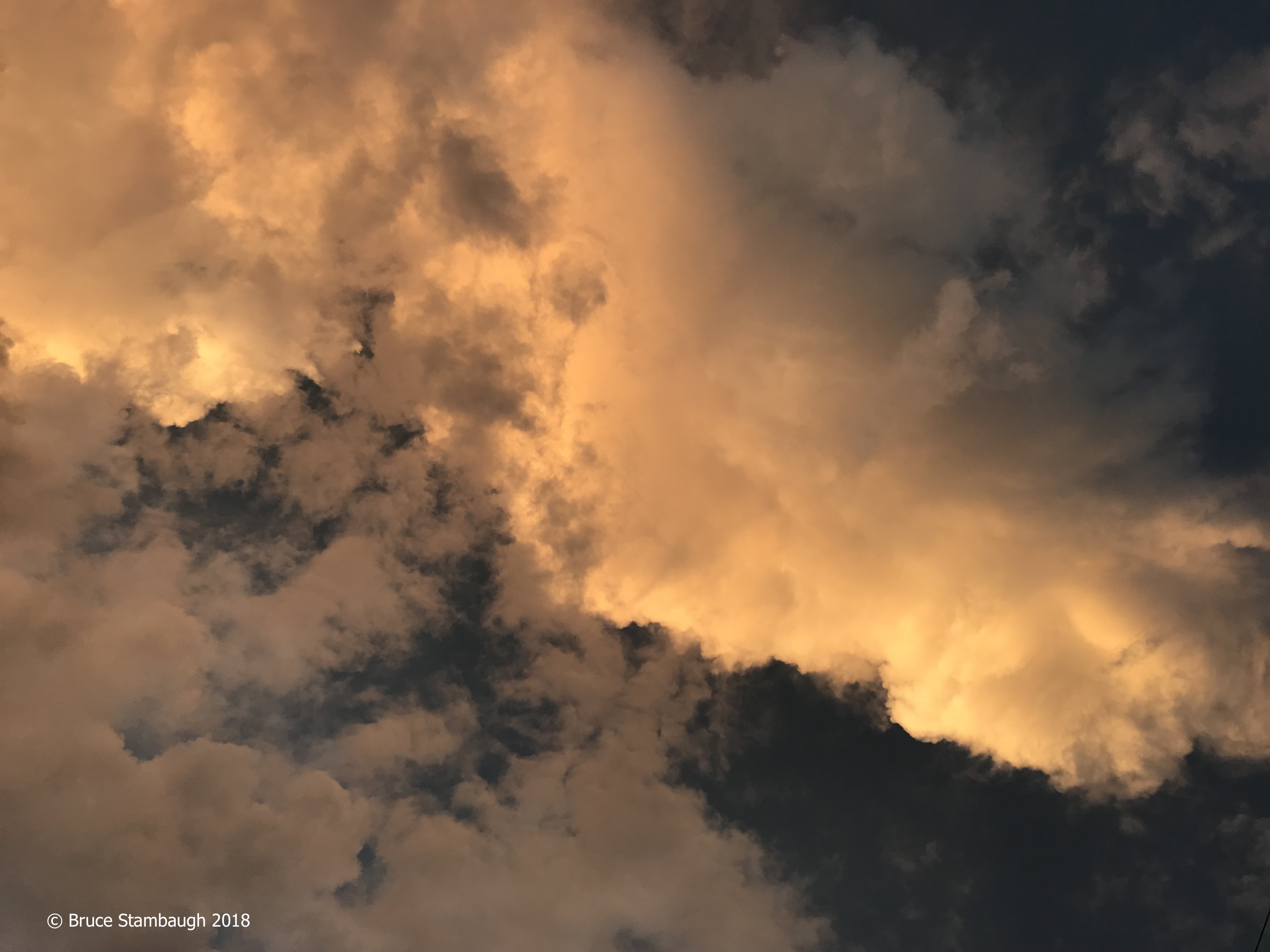
“Looking Up” is an example of taking my own advice, something I too often fail to do. Just ask my patient wife. While recently photographing a sunset after the passage of some summer thunderstorms, I was ready to leave when I happened to look overhead. This is what I saw, the remaining rays of the day highlighting some roiling cumulonimbus clouds.
I couldn’t believe all of the beauty that was right above me while I waited on a spectacular sunset that didn’t materialize. As I told the young photographer, look all around you. You just might find something spectacular to capture and share.
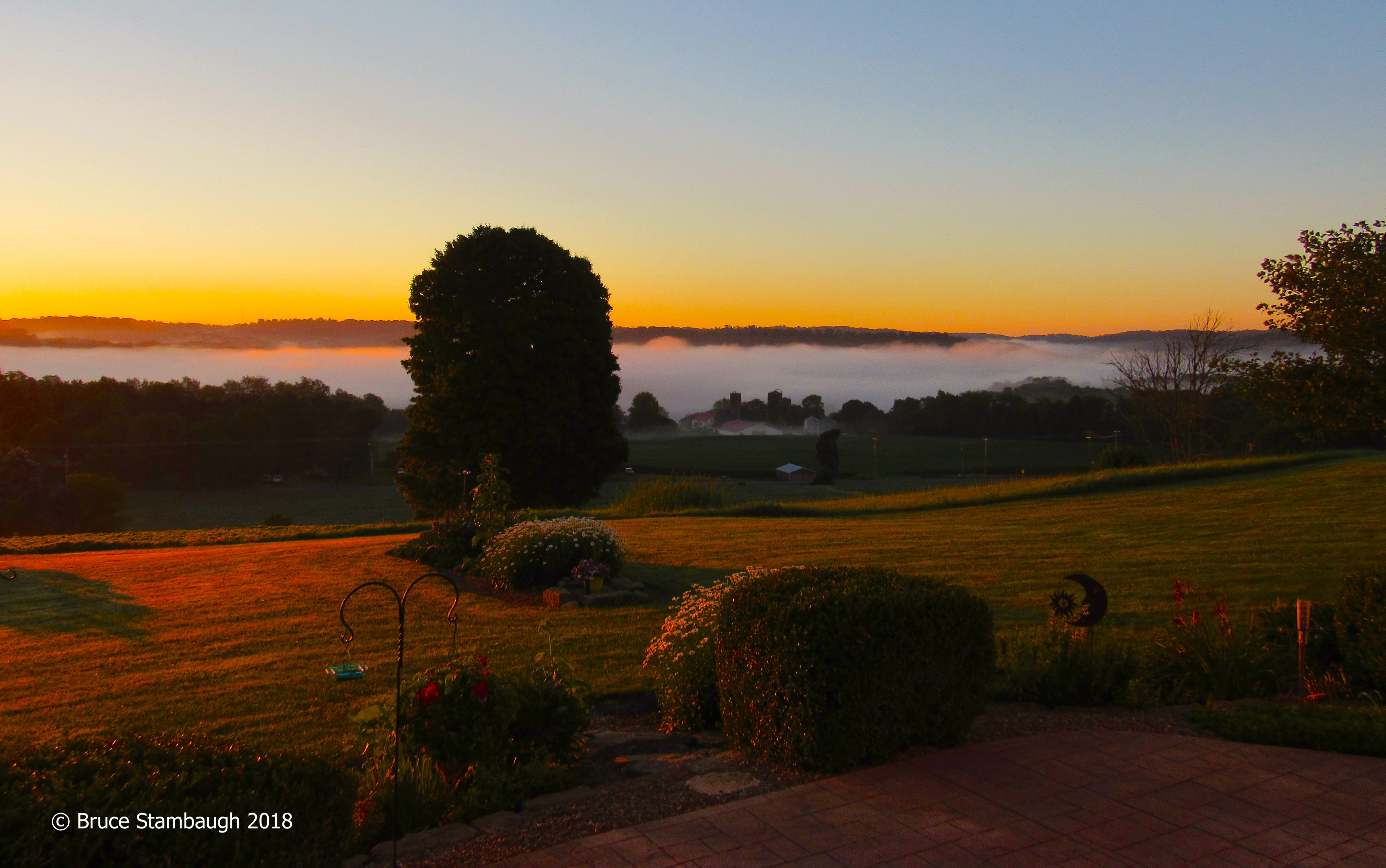
Several years ago, our lifetime friends Dave and Kate built their dream house on a hill overlooking Millersburg, Ohio. They picked the perfect spot.
From that lofty vantage point overlooking a lovely valley, Dave and Kate can see the county courthouse clock tower, the school where they both taught, and the hospital where their children were born.
The setting is marvelous, the view fantastic. Still, through hard work and creativity, the couple has managed to improve their surroundings, not only for themselves but for the wild things, too.
About five years ago, Dave decided to turn work into play so to speak. He kicked the cows out of the five-acre, pastured hillside that surrounded the house. His goal was simply to let nature take her course.
Before the European invasion 300 years ago, a dense, mature forest covered most of what is now Ohio. Dave wanted to test an old theory that the land would replenish itself if allowed to go fallow.
So instead of cows grazing, grasses, plants, and seedlings began to sprout freely. Today, the results are impressive, producing rewards that even the amiable couple could never have imagined.
This slideshow requires JavaScript.
On an all-too-brief return to our Ohio haunts, Dave led me on a walking tour of his mostly-spontaneous prairie. We traversed a looping pattern of mown paths that crisscrossed the rolling hillside topography.
Up and down and around we walked. All the while Dave pointed out some of the changes that had already naturally occurred. In some spots, he had helped things along with saplings and young trees he had planted. He checked on them like a mother hen guarding her chicks.
Of course, he encaged the plantings with wire mesh to stymie the ubiquitous and free-ranging deer that nibble the tender and tasty leaves and stalks. Sometimes it worked.
Wildflowers and plants now flourished in the prairie plots where heifers used to munch. The floral growth attracted appreciative pollinators that flitted and buzzed about while we ambled along. Bees and butterflies, flies, dragonflies, and damselflies all made appearances.
Eastern Bluebirds.Several pairs of eastern bluebirds tended to their nests in boxes Dave had erected. Some had eggs, some second brood hatchlings. Others were empty. When we cleaned out an old nest from one birdhouse, a bluebird pair began building anew a short time later. Dave’s face glowed.
At the bird feeders, Ohio’s smallest to largest woodpeckers and several species in between vied for the suet offerings. Both pileated and red-bellied even brought their young to learn to forage for the protein.
On the parameters of the property, red-tailed hawks dove from shaded oak perches, unsuccessful in snagging a mammal breakfast. An indigo bunting began its song but stopped short, a typical behavior this late in the summer.
Cedar waxwings preened in the morning sunshine on dead ash snags. American goldfinches harvested thistledown for their late-season nests.
The gnarled, amber trunks of giant Osage orange trees served as living statuaries in the young reclaimed landscape. Their coarse-skin fruit hung lime-green and eerie, like so many Martian brains.
Once dormancy dominates the prairie, Dave will mow down this marvelous and necessary wildlife habitat to eliminate the human-made nuisance multi-flowered rose bushes. Of course, he’ll save the trees, both those he planted and the multitude of volunteers that are thriving.
That adage is coming true. Left to grow on its own, this come-what-may former pasture is an ever-changing habitat for all things bright and beautiful. The environmentally friendly owners couldn’t be more grateful.
The afternoon’s sun illuminated this already impressive natural wonder near Lexington, Virginia. The unusual rock bridge formation, once owned by Thomas Jefferson, is the critical feature of Natural Bridge State Park.
I particularly liked how the sun’s deflected rays seem to glow beneath the arch of this natural wonder.
With all of its positive and pleasant attributes, summer makes it hard to be humble.
We all want to get out and take full advantage of the sunny days filled with warmer temperatures and a wide variety of activities. We fling ourselves full force into each day whether it’s for work or for play. We want to drink in every drop of sunshine, warmth, and blue skies, from dawn to dusk.
At the beach.Toddlers, children, and teens fill the local swimming pools, both public and backyard venues, while adults keep watchful eyes on the less careful youth. Construction workers bask in the fair weather, narrowing four lanes to one with an arsenal of orange barrels.
Lawnmowers hum morning, noon, and evening throughout global neighborhoods. Contractors and excavators work sunup to sundown. Farmers are in their glory, beginning to harvest the fruits of their labor.
In many places, the corn reached far beyond knee-high-by-the-Fourth-of-July standards. In others, stalks stood only inches tall, drowned out by the super wet spring and early summer rains.
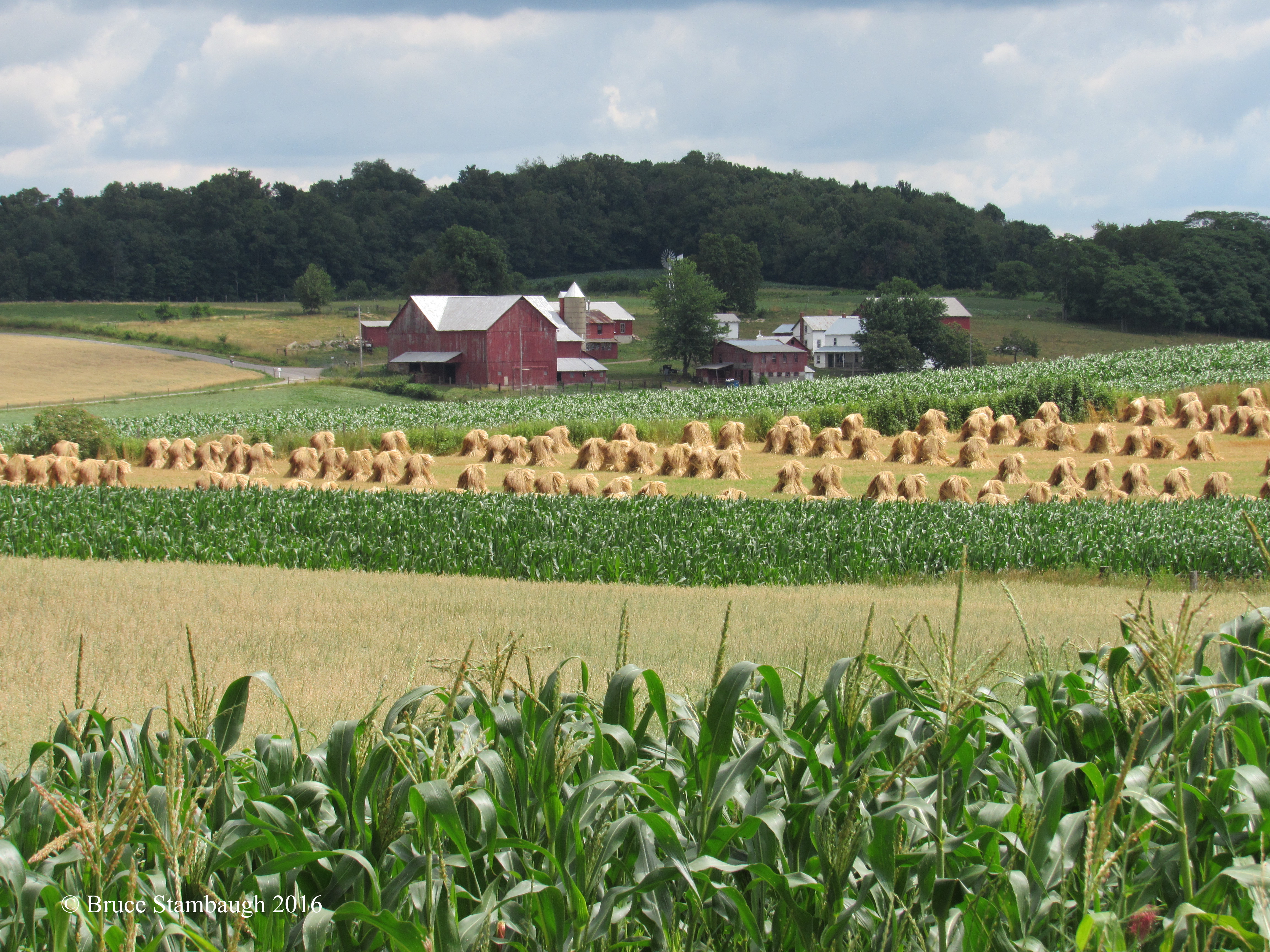
Amber waves of grain really did roll in the wind until giant combines gobbled them up or they formed rows of shocks like so many soldiers standing guard in Amish-owned fields.
Summer, however, has other, more drastic ways to get our attention with her weapons. Summer can humble us lowly humans in many ways. Think floods, wildfires, tornadoes, droughts, golf ball-sized hail, record heat and humidity.
No matter our stature or station in life, we all succumb to those prevailing conditions. Summer humbles us.
For those unfamiliar with E.B. White’s beloved children’s classic “Charlotte’s Web,” humility played a major role in the book’s plot and dialogue. The spider Charlotte wove “Humble” into the web that served to save the life of the precocious pig Wilbur. She wanted a word that meant “not proud” as Wilbur’s crowning characteristic.
But humility has a second meaning beyond the social one. Humble implies a willingness to learn, and thankfully summer has much to teach us. The lessons are all around us in a more pleasing, useful, and beautiful form than what disasters wrought.
Vegetable gardens and truck patches team with all sorts of goodies that nurture us. Tasty homegrown sweet corn, luscious red tomatoes, green, red, and yellow peppers, and tangles of zucchini are just a few examples.
Roadside produce stands and supermarkets tempt us with juicy peaches and vine-ripened melons. Generations ago indigenous Americans taught us to plant, tend, and harvest these marvels.
For those non-gardeners among us, we sniff and thump and feel and taste to select the best of the bunch like our parents and grandparents did. The poor fruits and veggies pay the ultimate price.
Please click on the photos to enlarge them.
Does and fawns.
Rose Campions.
The neighbor’s flowers.
Amber waves of grain.
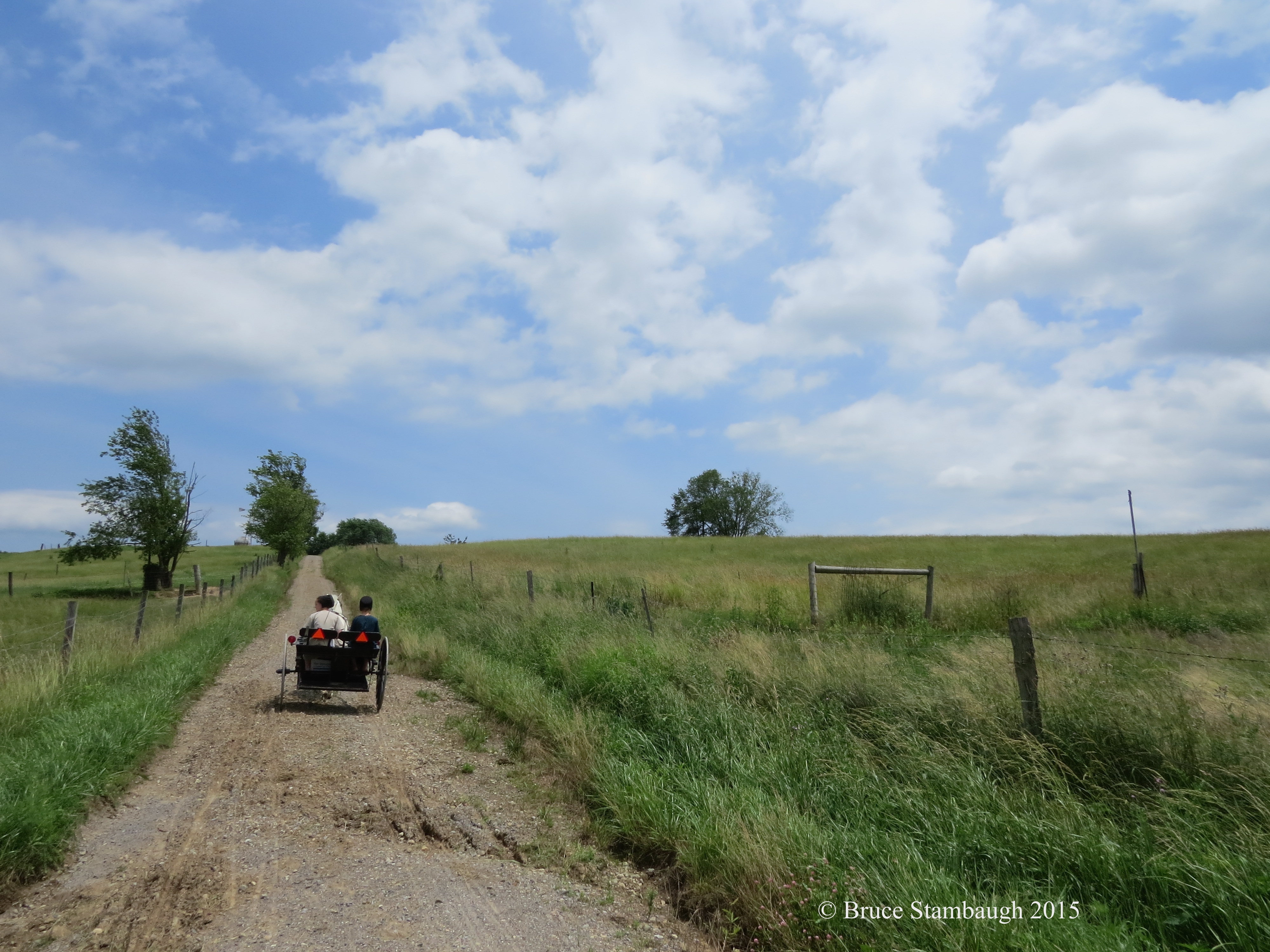
Home delivery.
Purple Coneflowers.
Flower gardens are peaking with hollyhocks and zinnias and cultivated flowers, too. Leafy hardwoods provide shade and refreshing coolness from the oppressive summer heat for humans and critters alike.
Wildflowers and wildlife, too, show their stuff. Dainty spotted fawns venture out on their own while mom watches from more secluded spaces. Parent bluebirds and house wrens ferry insects, worms, and berries to their youngsters nearly as big as the adult birds.
Families crowd beaches and climb mountains on vacations, exploring new venues or returning to old haunts discovered by previous generations.
Where is humility in all of this? Using the educational definition, it’s merely a reminder of the responsibility of the created to care for the creation. That is about as humbled as we can get.
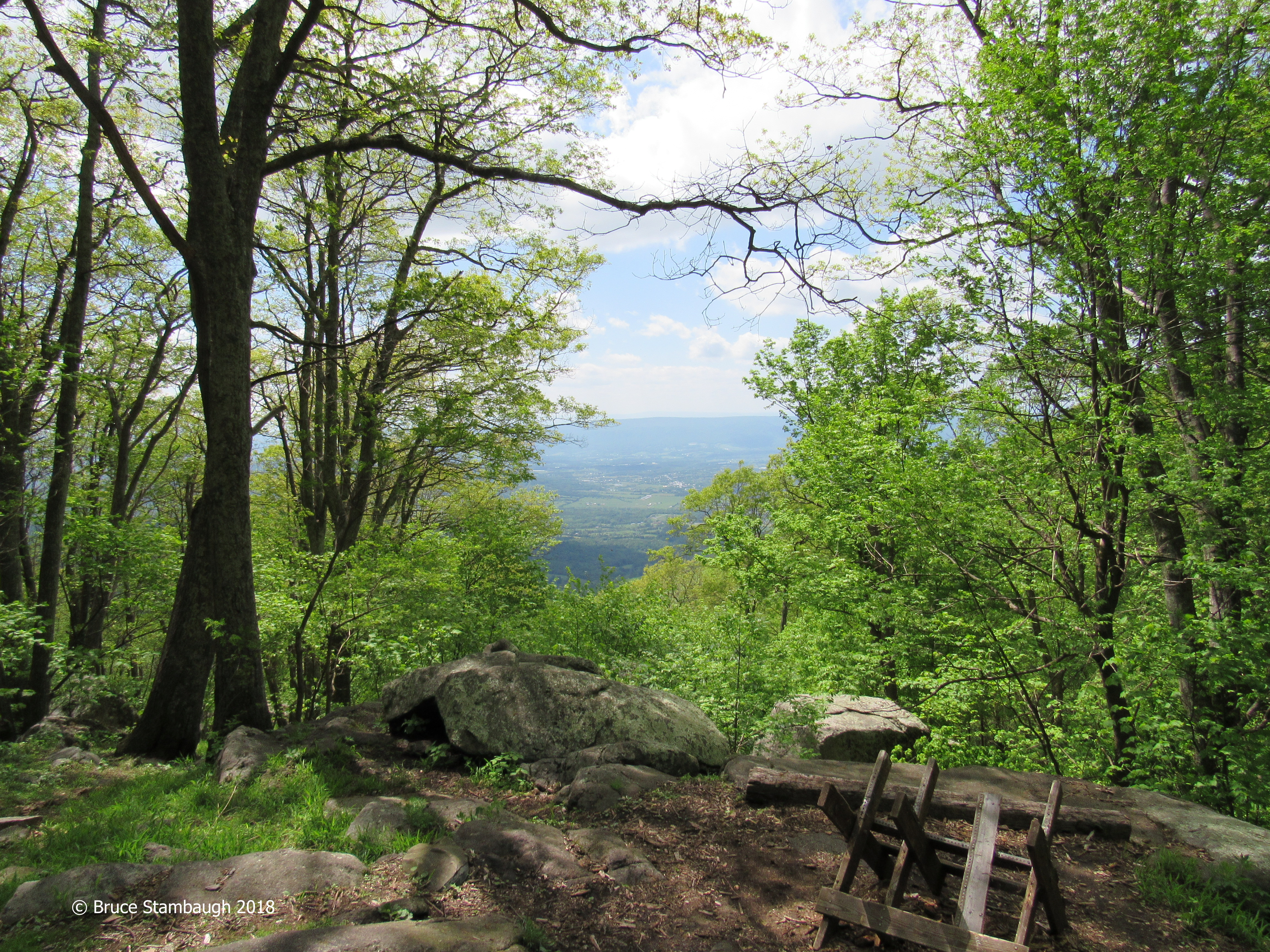
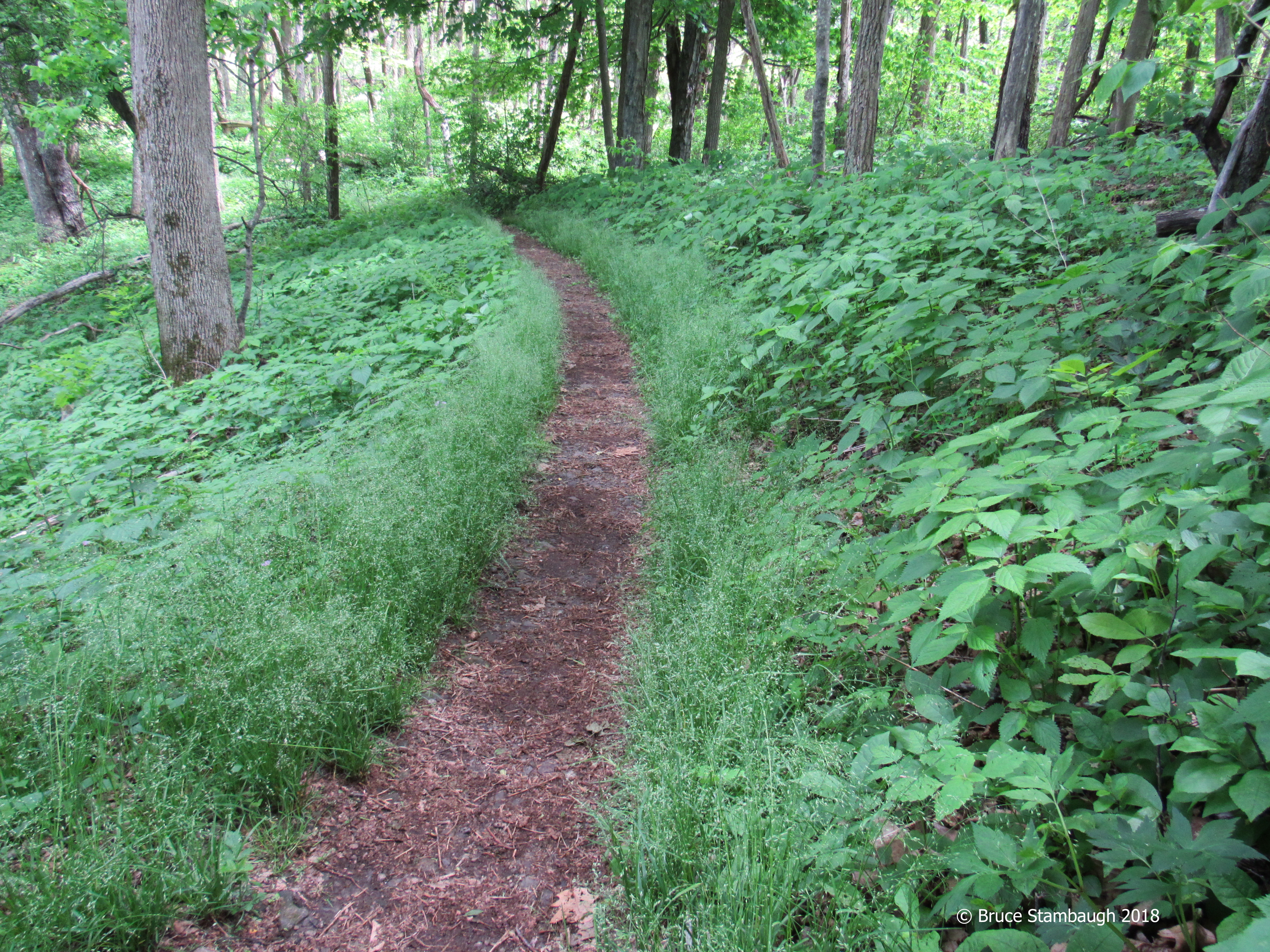
I hiked the short trail with one thing in mind. I wanted to find the old cabin and take a photo of its chimney if it indeed had one. As so often happens in life, discovering what I was looking became secondary in this trek.
I took my time on the trail, soaking in all the glorious sights and sounds that I encountered along the way. There was a lot to absorb.
Rock Spring Cabin was a short distance away from a crude hut built for hikers along the Appalachian Trail in Virginia’s Shenandoah National Park. From the cabin’s covered front porch, the Page Valley played out in the patchwork patterns of fields far below.
The cabin at Rock Spring.The primitive log cabin did indeed have a stone chimney. I snapped my picture and headed for the spring of Rock Spring Cabin nearby.
When I arrived, I was stunned at what I saw. I stood there in both amazement and disbelief. There, high in the Blue Ridge Mountains, cold, clean, crystal clear water gurgled from beneath giant boulders as old as time. Human interaction, of course, had to plumb it with a PVC pipe.
Instantly, my mind flashed back to my childhood. I thought of the Old Testament Bible story of Moses striking a rock and water gushing forth for the assembly of disgruntled, thirsty Jews wandering in the desert. That ancient story always struck me as a blend of awe, mystery, and miracle.
I contemplated the moment. I couldn’t help but wonder why here at this spot, more than 3,000 feet above sea level did water run from rocks? The earth does fantastic, mysterious things. Explanations are not always required.
Still, I reckoned the answer to my rhetorical question. Clearly, the rock strata folded long before human history began and forged a channel for the water table below.
Water from a rock.
Cabin to spring.
Yet, there was something mystical about the rock spring, its waters trickling down the steep slope far into the valley below. I mentally traced its path from small stream to a creek that formed a tributary to the Shenandoah River. Farther north, it met the broad Potomac River at Harper’s Ferry, West Virginia, and then flowed east through rapids and placid waters alike, passing the nation’s hectic capital into the Chesapeake Bay and on into the Atlantic Ocean.
Noisy ravens awakened me from my lively daydreaming. Apparently, they viewed me as an intruder. Not wanting that title, I returned to the main trail, warblers, and thrushes flitting and singing in the leafy canopy high overhead.
I walked a short distance down the trail, and the raven followed me, swooped low, and continued its nasal banter. It was only then that I realized that I was not the target of its raucous concern.
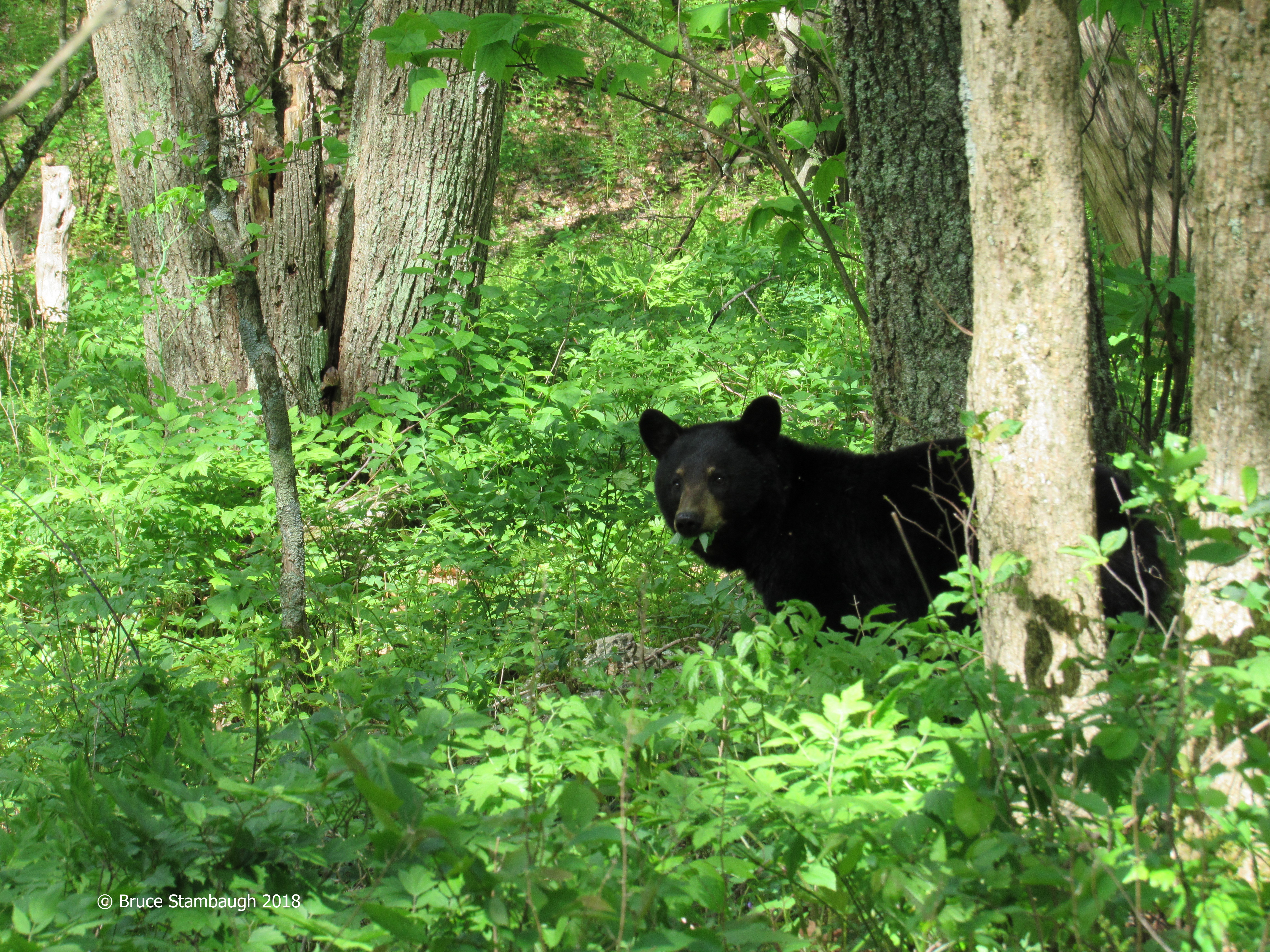
A motion drew my eyes downward. Not 30 feet away a young black bear grazed along the forest floor. My head instinctively swiveled in search of the mother bear. I saw only trees, plants, and rocks.
Young black bear.
I gingerly stepped a few feet down the trail where I could get a better view of the cub, likely in its second season given its size. One click of the camera shutter and the bear spied me and bounded down the hill towards the spring. Overflowing with wonder and joy, I headed in the opposite direction for the parking lot.
I went searching for a cabin and found so much more. An emerald forest. Water from a rock. Agitated ravens. A frightened bear cub.
Dad gave his last public presentation on Native Americans 10 years ago at age 88.
By Bruce Stambaugh
My late father wore a lot of hats in his long life. Husband, father, son, brother, uncle, engineer, sailor, hunter, fisherman, volunteer, traveler, archeologist, writer, photographer, teacher, leader, joiner, and planner. In short, Dad’s life was both full and fulfilling.
From these varied life experiences, Dad gained his most formidable reputation, that of a storyteller. No matter the situation, Dad loved to relive the past by telling one tale after the other. He could regale yarns with the best of them, embellishing the story when the facts needed a little flavoring. Perhaps that was one of the reasons people liked him so much.
Dad used his many interests and experiences to inform and entertain people of all ages and situations. He gave many presentations to school children and senior citizens alike about Native Americans who had lived in the Ohio region. Dad used arrowheads and other artifacts that he had found on nearby farms to make the talk as meaningful as possible for his audiences.
People often remarked to me that Dad was a great storyteller. With no disrespect, I’d reply by saying, “Yes, he was, and some of those stories were actually true.”
What Dad didn’t realize was that his adventurous life created a book of charming chapters all their own. Each one of my siblings likely has their personal favorite stories they could share.
Mom and Dad on their wedding day, August 1942.Dad loved to hunt, as much for the camaraderie with his fellow hunters as for bringing home game. That was especially true during deer season. Once when he actually shot a deer, he had a remarkable story to accompany the carcass.
Hunting in the hilly, steep terrain of southeast Ohio, Dad was tracking a nice buck through deep snow. With the buck quickly outdistancing Dad by going up the opposite hill across a ravine, Dad took a desperate shot just as the deer jumped a wire fence.
Dad saw the deer go down and schlepped to the spot as best he could in the wintery conditions. Dad was shocked by what he found when he climbed over the fence. Lying in the snow was a dead deer all right, only it was a doe. Dad happily retold that story every chance he could, with the snow getting deeper with each recap.
Another time Dad returned from hunting and showed us the game he had shot. He went out to feed Boots, our springer spaniel, but couldn’t find her. Thinking she had run off, we all looked and looked in vain. A week later Dad opened the car trunk, and there was Boots, faithfully and quietly waiting for her master to finally let her out. She had been in the trunk all that time without food or water.
On another hunting expedition in glacial kame and kettle topography, Boots ran a rabbit into the thicket of the marshy bottomland. The hunting party plunged into the briers and brambles in hot pursuit while Dad ordered me, just 10 or so at the time, to stay on the more open hillside. Soon I heard a shot, quickly followed by a yelp and then a shout from my father, “You shot my dog!”
Fortunately, Boots only had a few buckshot pellets in one paw and limped on. The poor rabbit, likely scared out of its fur, had actually jumped into the crook of a small tree a few feet from the ground. I don’t remember the fate of either the rabbit or the tree.
Dick Stambaugh was a fantastic storyteller. He also wrote some incredible, memorable tales through the exciting, engaging life he lived.
The cottage my parents built and where Dad loved to hunt and fish.
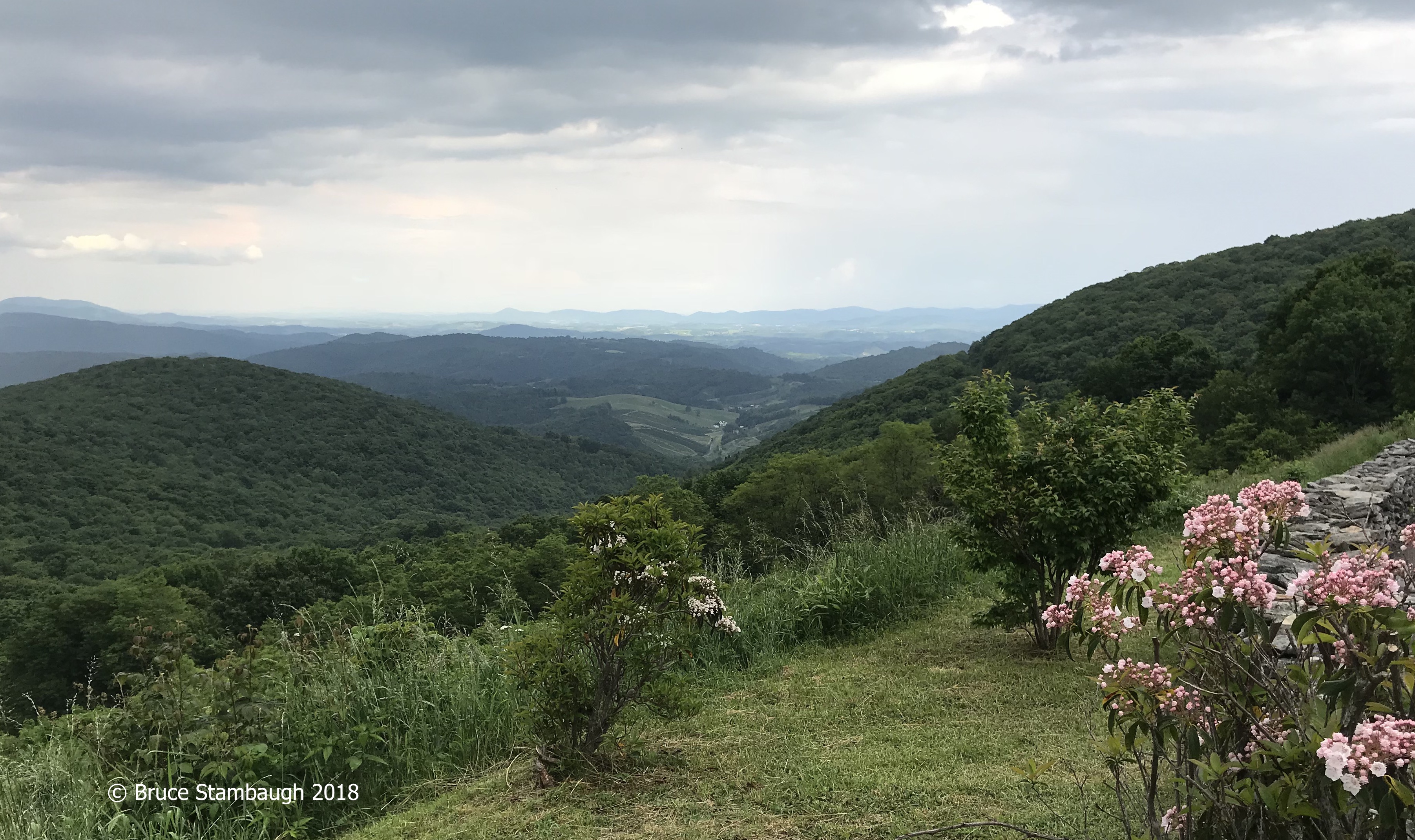
Traveling with friends, we wanted to reach the overlook at Grayson Highlands State Park near Whitetop, VA, before a front moved through bringing heavy rains. We just made it.
We were pleasantly surprised to see not only a marvelous view but that the Mountain Laurel bushes were blooming. No other clumps of them were in blossom as we drove up the mountain. These beauties just made the view all the more impressive.
The mountain range far in the distance is the Blue Ridge.
“Mountain Laurel with a view” is my Photo of the Week.
Spring Sunset.
One thing about photographing sunsets is certain. You have to be at the right place at the right time to capture the beauty.
As I was driving desperately trying to find the perfect spot to capture the quickly fading sunset, the colors suddenly brightened. I pulled in the nearest farm lane, pointed my camera and clicked away. Once was enough, as this shot shows. Seconds later, the western sky went gray over the Allegheny Mountains that create the border between Virginia and West Virginia.
Memorial Day has come and gone. You know what that means? It’s the traditional but unofficial start to summer in the United States.
Public swimming pools will open to the sounds of laughter and joyous splashing by youngsters fresh out of school. They are the envy of those still laboring over mandated tests and counting the days until they, too, can roam free.
Church camps and scout camps and Bible schools will open their floodgates and let the children pour in. Snipe hunts and dreaded memorizations will commence just to get to the real treasures, homemade snacks.
The warning chirps of robins disturbed from their nests resound until inattentive humans continue on their way. The first broods of fledglings squawk and beg for their parents to feed them despite being nearly as big. If a brown-headed cowbird has snuck into a song sparrow’s nest, the scene can be grotesque.
At the feeder.Lawn mowers, riding mowers, weed eaters, and leaf blowers join the summer society’s songfest, mostly off key. Those willing and able to expend the energy on their hands and knees for hours at a time do less intrusive weeding. Their rewards come in more than tidy flowerbeds. They enjoy the bees and butterflies flitting from bloom to bloom.
Ruby-throated hummingbirds zip from flower to flower, too. They supplement their diet with long sips at the local sugar water fountain to the delight of dedicated bird watchers everywhere.
Many times the best show is when the tiny birds chase one another high and low, zigzagging at light speed after one another even though there are plenty of places to perch and feed. Those in charge of refilling the feeders applaud the performances.
At night, the summer breezes diminish. Fireflies rise up out of the grasses and fields and light up the evening skies blinking their romantic messages. Overhead, commercial jets sail beneath the stars and planets that twinkle brightly.
This slideshow requires JavaScript.
On the horizon, faint yellow flashes children like to label heat lightning interrupt the nighttime play. In reality, storms a hundred miles away had already driven other children indoors long before dark.
The next day, the sunrise blazed crimson and orange, signaling a fabled warning to sailors and civilians alike that rain was on its way. Sure enough, a squall line raced through, bending trees to the stress point. A few sacrificed a limb to save the whole.
Lightning flashed and crashed, and hailstones pelted the ripening strawberries to the dismay of both growers and customers. In suburbs and cities, torrents rutted gardens and sump pumps ran overtime.
Those were minor issued compared to the storms that others endure. All of this romanticizing and reminiscing about summer pales in comparison to those whose nights are peppered with gunshots and emergency sirens.
Summer in the city is filled with garden plots, swimming pools, day camps, and library readathons, too. Picnics in the park and taking in a baseball game, Major League or Little League, are also part of the warm weather entertainment.
Bicycling along picturesque country roads or designated bike paths hits its peak. Helmets are always a safety requirement.
Isn’t everything merely a matter of perspective and geography and circumstances?
We still have nearly three weeks until the summer solstice, the scientific start of fun in the sun. It’s also the day with the most daylight, giving us plenty of opportunities to enjoy the sights and sounds of summer yet to come.
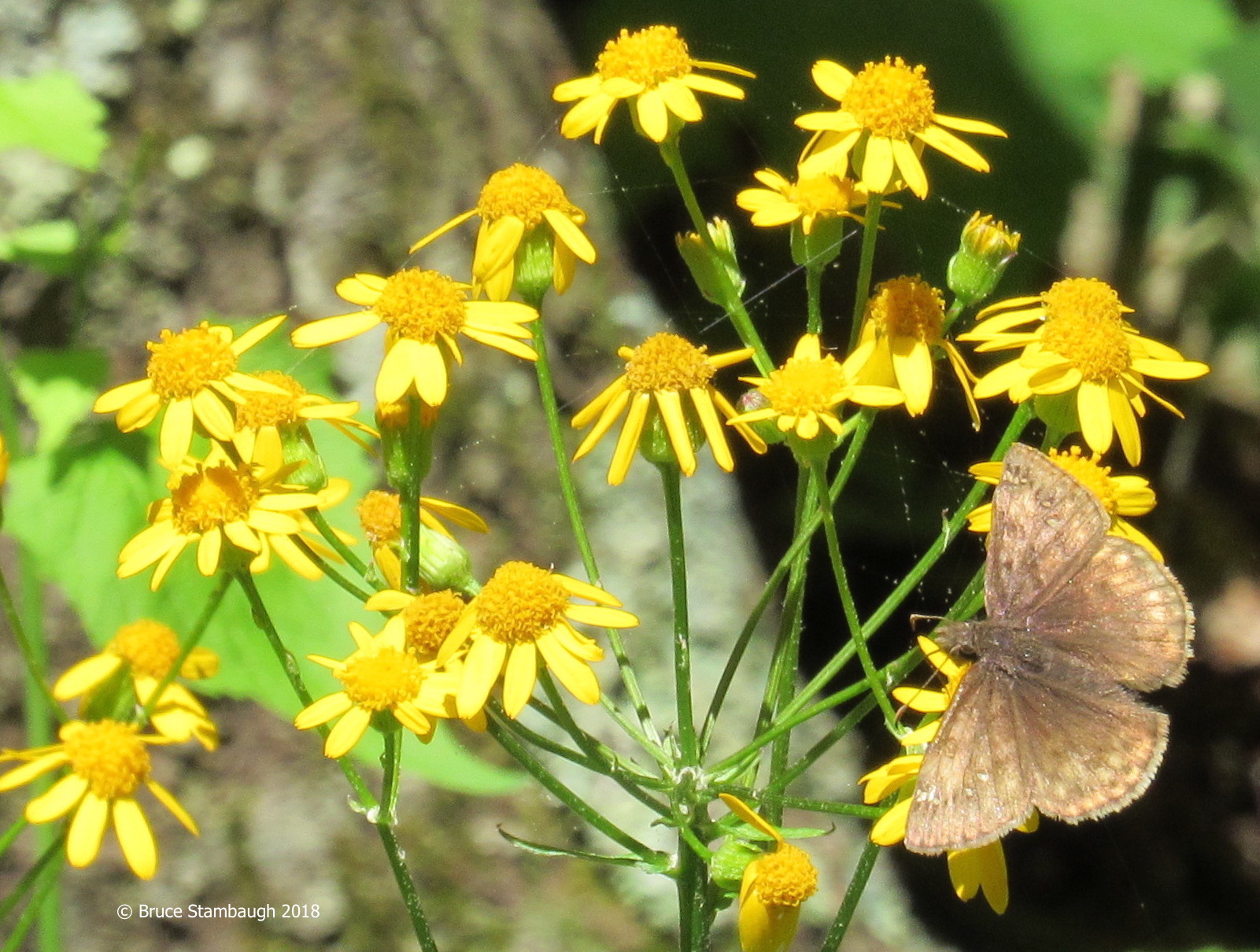
Butterflies and flowers are made for one another. On a recent hike in Virginia’s Shenandoah National Park, many wildflowers were in full bloom, and from their joyous, creative aerial dances the butterflies couldn’t have been happier.
Little skipper butterflies were most abundant. I found this one, which I believe to be a Confused Cloudywing, flitting from bloom to bloom on this patch of Golden Ragwort, a daisy-like flower.
The afternoon sun nicely illuminated this invigorating scene. “Brown on Yellow and Green” is my Photo of the Week.













You must be logged in to post a comment.