Defining Thanksgiving

The ways it has real meaning.

The iconic Thanksgiving turkey. Photo by Bruce Stambaugh

In the U.S., Thanksgiving Day is always the fourth Thursday in November.

Do we truly understand the breadth of what Thanksgiving means, though? Yes, we have our childhood memories of loving, familiar faces gathered around a dining room table ladened with savory food.

For me, and perhaps for you, I cherish those thoughts of the soothing fragrance of a steaming, hot turkey fresh out of the oven, tasty mashed potatoes and gravy, cranberry sauce, flavorful stuffing, and of course, homemade pumpkin pie. That mental picture never gets old.

In my case, it was usually Grandma Frith’s three daughters and their families who somehow found room to squeeze into one space to enjoy the feast and one another’s company. I hang on to those precious recollections, knowing that it was a different era then.

Times have changed as they should. We’ve all grown up. Our grandmother and all our parents have passed on. Even the oldest of the 17 baby boomer grandchildren died too young.

We are scattered all across the country now, still related but disconnected. We each have created new traditions with our own families. In effect, we are replicating what we knew, what we loved, only altered to fit our situations.

As our adult children married and have children of their own, holidays like Thanksgiving naturally take on new approaches. In our mobile age, families learn to share their loved ones. It’s the prudent thing to do.

So, one year we gather together on Thanksgiving Day with as many immediate family members as possible. The following year, Nana and Poppy find alternative ways to celebrate.

The ways it has real meaning
Thanksgiving with friends during the “off-year.” Photo by Bruce Stambaugh

We gather with our grandchildren and their parents when it is convenient. It’s still Thanksgiving, just not on the designated day. We are thankful nonetheless.

To me, the date and day are insignificant. I am thrilled to assemble with our intimate troupe wherever and whenever we can. While my stomach rumbles full of turkey, my soul is full of joy. The latter is the preferred nourisher.

For that, I am most grateful. I am also aware that all peoples are not equally blessed, and that thought alone humbles me. It stirs me to be more vigilant for opportunities to care and share with those less fortunate.

I count my blessings, indeed, grateful to be where I am, at this place in time, even if the times are hard for some. It is our responsibility to help others however and wherever possible, simply for the common good of all.

For no matter our circumstances, we are one nation indivisible. We must work hard to keep it that way, especially at Thanksgiving.

The word “thanksgiving” is derived from two words and blended for a singular meaning. The word “thanksgiving” dates back to the 1530s and is formed by combining the noun “thanks” with the verb “giving.”

“Thanks” is taken from the Old English “panc,” meaning grateful thought. “Giving” comes from the Old English “giefan,” or to bestow or grant.

Consequently, Thanksgiving is more than a mere term, more than a holiday. Thanksgiving is a sentence requiring appreciation, gratitude, and generosity.

So, Thanksgiving means much more than delicious food, genuine fellowship, and back-to-back-to-back football games. Thanksgiving involves praise, reflection, and acts of kindness.

The Thanksgiving command suggests a trio of actions for each of us. First, we must remember those who have helped us achieve what we have. Second, embrace and celebrate with your friends and family. Third, we need to share our blessings of abundance with others.

In so doing, Thanksgiving weaves the past, the present, and the future into a purposeful, warming lifestyle tapestry. That alone is reason to be thankful.

A tapestry of colors. Photo by Bruce Stambaugh

© Bruce Stambaugh 2021

The Old Hot Rod

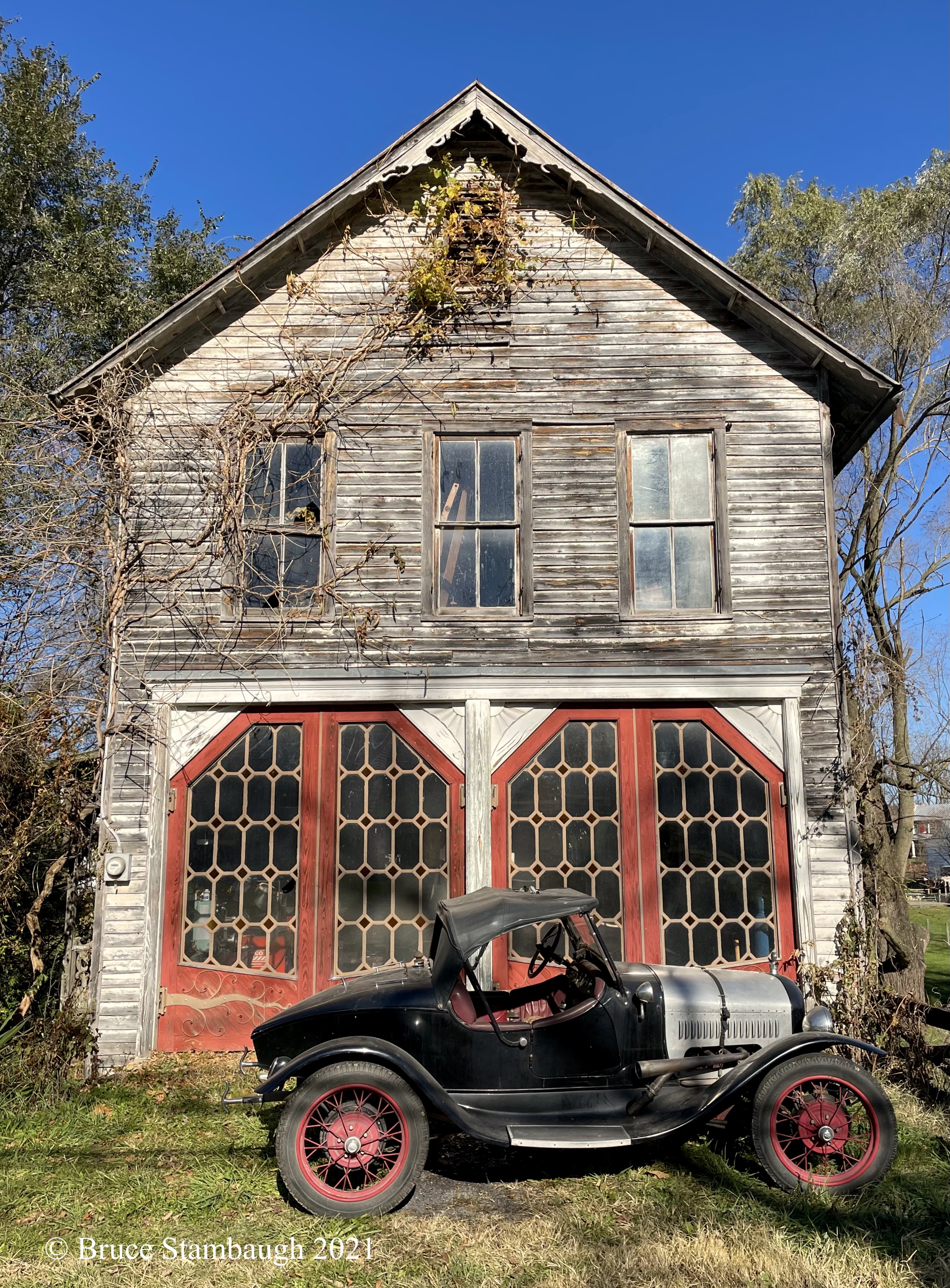
I came across this intriguing scene yesterday in a rural Virginia town. The car’s owner appeared from his residence across the street, so I asked permission to take photos of the old hot rod and building. He said he didn’t mind and continued toward the old structure’s entrance.

I asked him what kind of car it was. “A Model T,” he replied. Before he could take another step, I asked him about the building. He kindly told me that it had housed an insurance company’s office many years ago. When I further asked about the front doors, the man said he had installed those for better access to his workshop.

I loved how the color of the door fronts nearly matched the pink wheels of the Model T hot rod. And the shapes of the windows merely added to the building’s character.

© Bruce Stambaugh 2021
Fire Prevention Is Important

For me, it’s always been personal

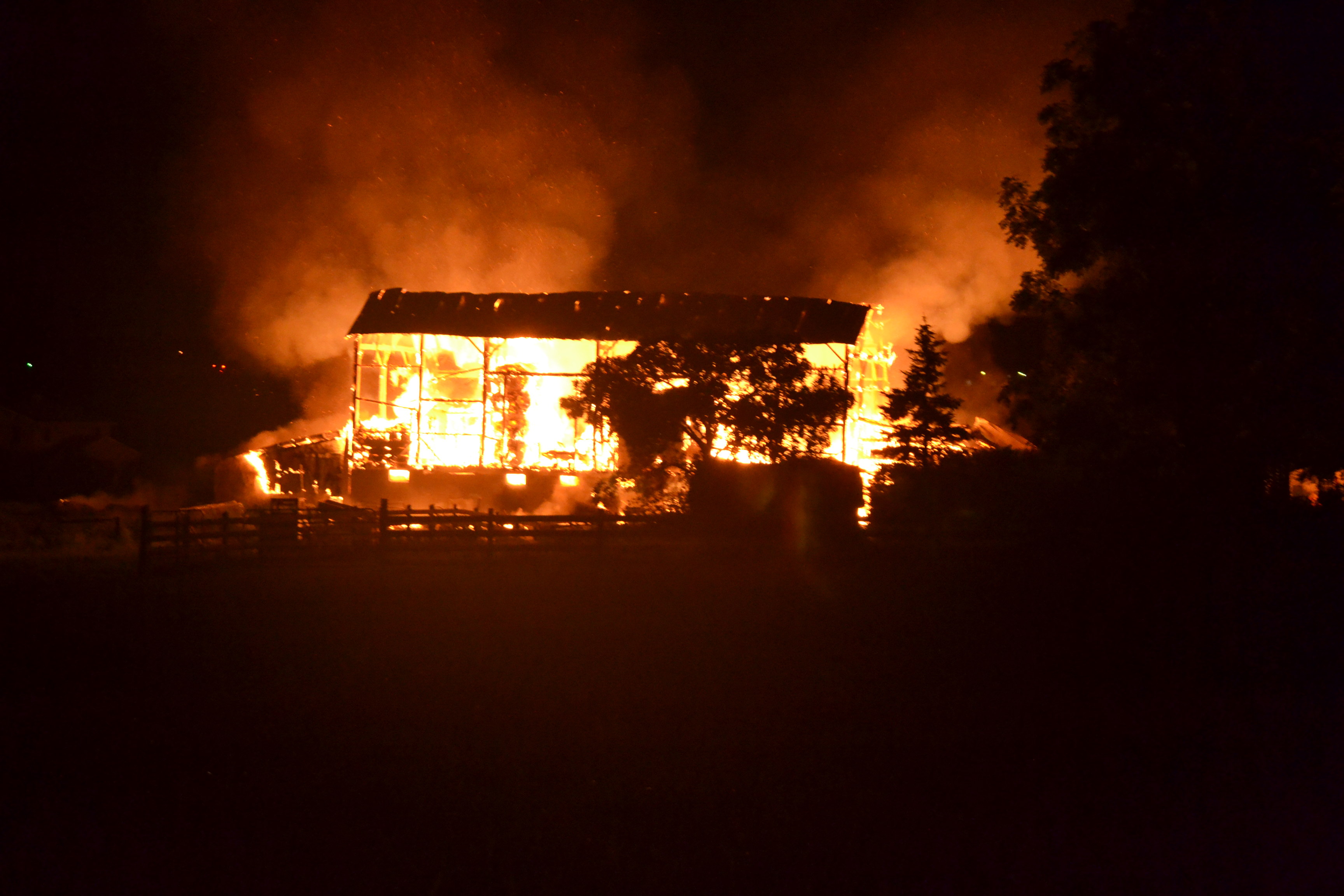
Fighting a barn fire in Holmes County, Ohio.

Fire Prevention Week, the first week of October, always had a special place in my heart. Belonging to the local volunteer fire department likely had a lot to do with that.

I remember, though, that that affinity began long before my firefighting days. I grew up three blocks from a fire station. When the siren sounded for the volunteers to respond, I was out our front door and at the end of our sidewalk, watching to see which way the trucks would go.

Students paid attention to when firefighters came to school for presentations in the post-World War II days before the internet, cell phones, pagers, boomboxes, and color television. We appreciated the coloring books and leaflets they gave us on what to do in case of a fire in our homes.

In response, I designed an exit plan for every room in our house. Fortunately, we never had to use it.

Ironically, the fire department mounted the fire siren on the roof of our elementary school. In the sixth grade, it was right over our classroom. When the siren rang, teaching and learning both stopped until the loud wailing subsided.

With that background, it’s no wonder I became a volunteer myself for 27 years in Holmes County, Ohio. When Fire Prevention Week rolled around, I combined my educator and firefighter knowledge with the students.

A fully involved barn fire in Holmes County, Ohio.

Other local firefighters came to the schools to share information and handouts, drawing me back to my youth. I asked my students to draw up an emergency exit plan the way I had done when I was their age.

Imagine my surprise when the house of one of my students caught fire during the night. Everyone got out exactly as Russell had planned, and the fire department extinguished the fire without extensive damage. I was proud of that young man.

I also remember a time during fire prevention week when I got another rude awakening. Wanting to surprise the students and me, the fire chief and a few firefighters held an unannounced fire drill at school.

When the fire alarm sounded, students began exiting, following their practiced routes until they couldn’t. Firefighters had blocked some of the exits, telling the students and staff that they had to use another door because a “pretend” fire blocked the way.

I remember it so well because I happened to be in the faculty lounge bathroom at the time. I got deservedly ribbed at the next fire meeting.

After I became a principal, firefighters enhanced their fire prevention lessons considerably. They brought a fire truck to school, and the students got to inspect it and even wear the firefighter’s turnout gear.

That approach greatly pleased the students. Besides the pamphlets, coloring books, and sitting in a fire truck, distributing candy to the kids didn’t hurt either.

Unfortunately, I responded to fires at the homes of some of those students, too. Besides helping douse the flames, I hoped that some of the education presented also helped minimize damage and injuries.

Of course, that wasn’t always the case. Barns, homes, shops, and outbuildings burned due to various causes. Some injuries occurred, too, along with one death that I can remember.

Perhaps that is the reason again to reemphasize the importance of fire prevention. Have a plan of evacuation with alternate routes and a prearranged reporting location outside the home. Change the batteries in smoke detectors at least twice a year and have the sensors adequately placed on all levels of your home.

I know personally that fire prevention helps to save lives, even if you’re in the bathroom.

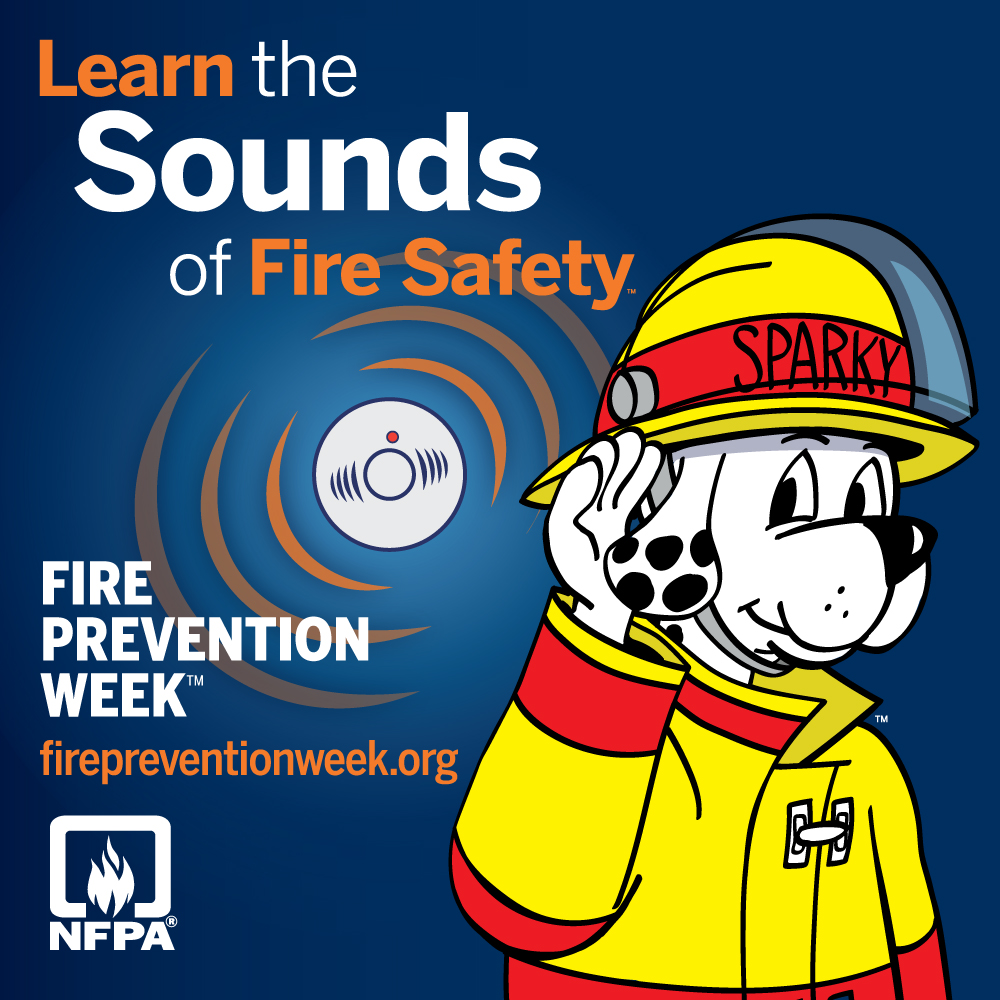
This year’s Fire Prevention Week theme.

© Bruce Stambaugh 2021
Celebrating Being Cancer-free

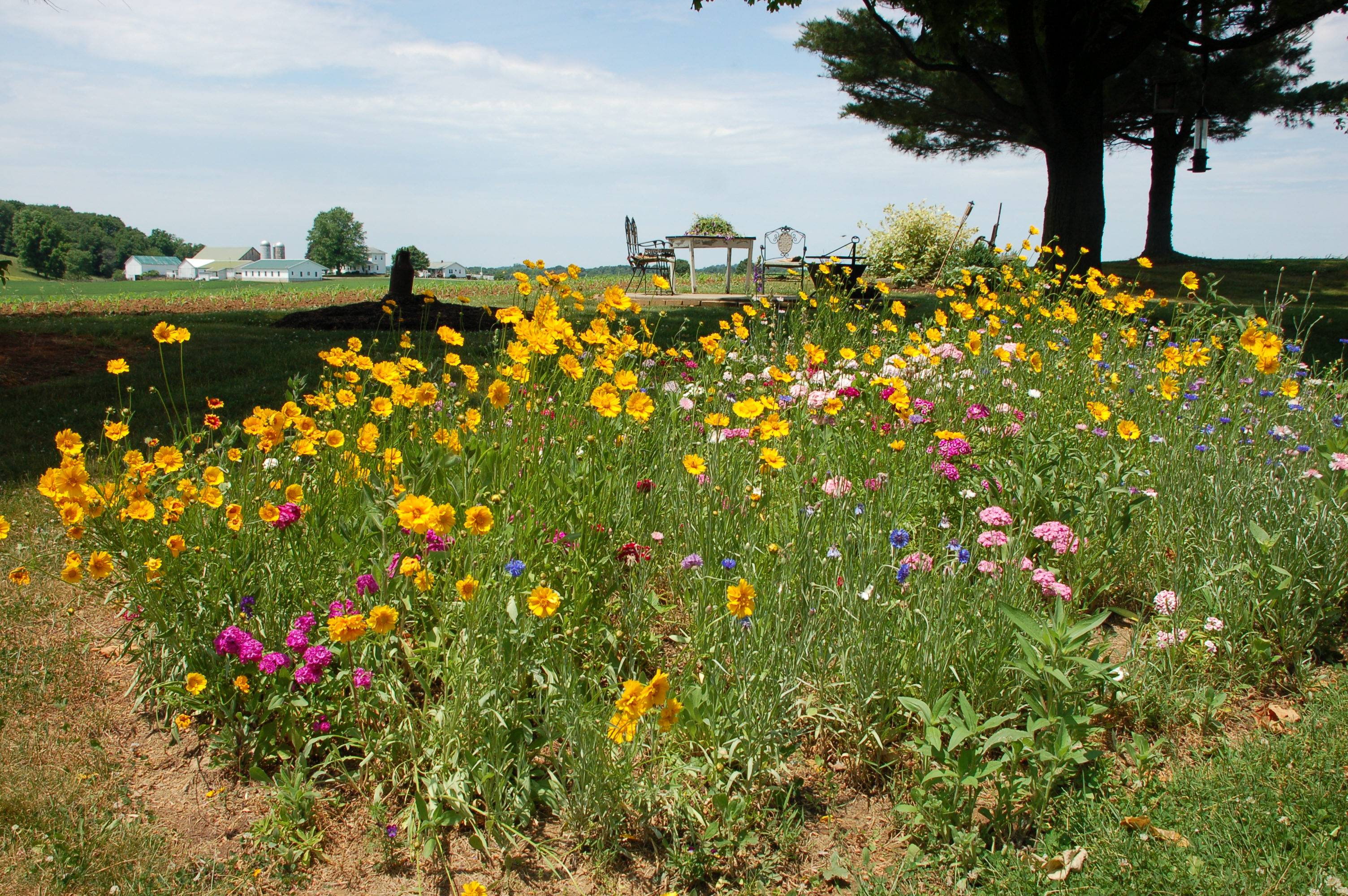
Anniversary flowers.

Anniversaries of momentous events are generally worth celebrating. Even though we kept it low-key, our 50th wedding anniversary earlier this year was a memorable milestone.

Birthdays fit the bill, too, especially if they end in zero or five. That’s our western culture for you.

Even the anniversary of a loved one’s death needs to be remembered, reverently, openly, and most certainly emotionally. My dear mother would have been 100 on June 22. I can still hear her comforting voice, soft and clear.

Some anniversaries, however, give me pause. I always feel that way each year I get the all-clear pronouncement from my urologist.

I have been cancer-free for 10 years post-robotic prostate cancer surgery. My PSA continues to be immeasurable, meaning no detectable cancer.

When I posted those results on social media, I did so with hesitancy. I hesitated because I know too many people who have not made it through their cancer journey or are currently struggling with the disease.

I am a sensitive old guy, and posting about my good fortune could be tantamount to rubbing it in. I certainly didn’t want to come across with that attitude.

Research shows that such a mindset stems from survivor’s guilt, also called survivor’s remorse. It’s a circumstance where a person survives while others in the same situation don’t, and you feel conflicted, guilty, and remorseful about your outcome versus theirs.

It might seem irrational, but the condition applies far beyond dealing with cancer. People who survive motor vehicle wrecks or a military conflict while others are maimed or killed exhibit survivor’s guilt.

A friend of mine survived the bombing of the Marine base in Beirut, Lebanon, in 1983. He happened to be away from the barracks at the time of the explosion. Guilt and anger ebbed and flowed throughout my friend’s life.

I empathized with him at the time but didn’t fully comprehend his feelings until I went through my own traumatic experience. When I met other prostate cancer patients who didn’t have the same successful outcome as me, I understood my Marine friend’s agony more fully.

Despite my reluctance, I am glad that I shared my decade of good fortune on social media. I credited my skillful surgeon and expressed thanks for the excellent medical insurance that got me through physically and financially.

A few of the comments in response to my post drew my attention and perhaps sent me over the hump of the lingering compunction. One particularly caught my eye. A former student shared about her current struggle with cancer.

She thanked me for sharing my good news. She said that seeing that others make it through the Big C gives her and other patients like her hope. Reading that brought me great joy.

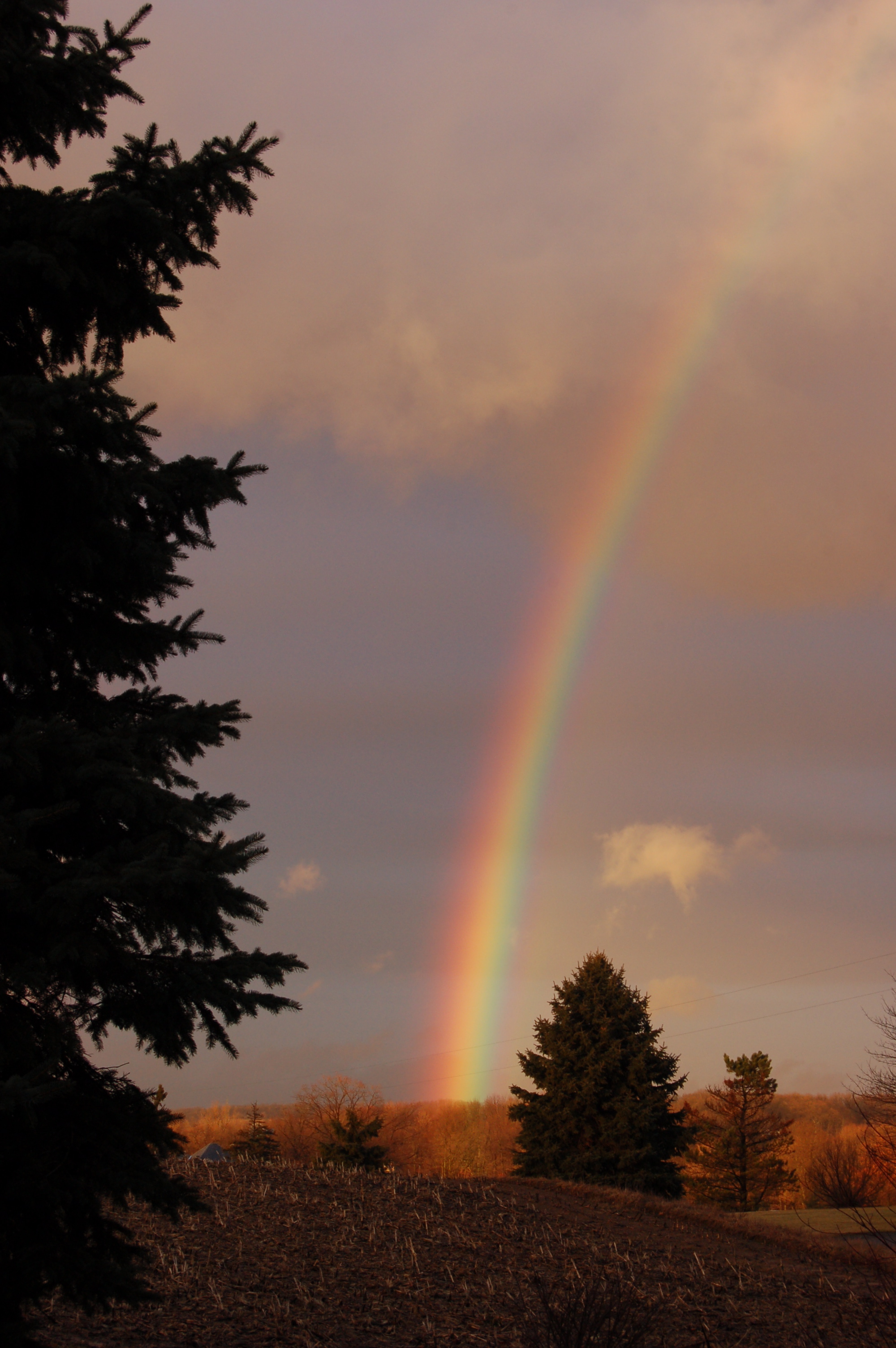
Signs of hope in nature.

Her response deeply touched me because she has already been through the cancer medical mill with her husband. As a young man, he fought the good fight and won. His humility concealed his challenging journey.

Now his wife is traveling down the cancer highway. I wish her and her family all the best and will endeavor to stay in touch.

Society can easily be dismissive of others without really knowing their unique situations, hardships, and achievements. Friends need to pay attention.

Venezuelan visual artist Carlos Medina captured my sentiment with this quote, “A soul that carries empathy is a soul that has survived enormous pain.”

We can empathize by recognizing and being with the hurting, listening to their stories, or simply holding them in prayer. In those encouraging actions, there is no remorseful guilt. 

© Bruce Stambaugh 2021

August came early this year

The calendar didn’t change, but the weather sure did.

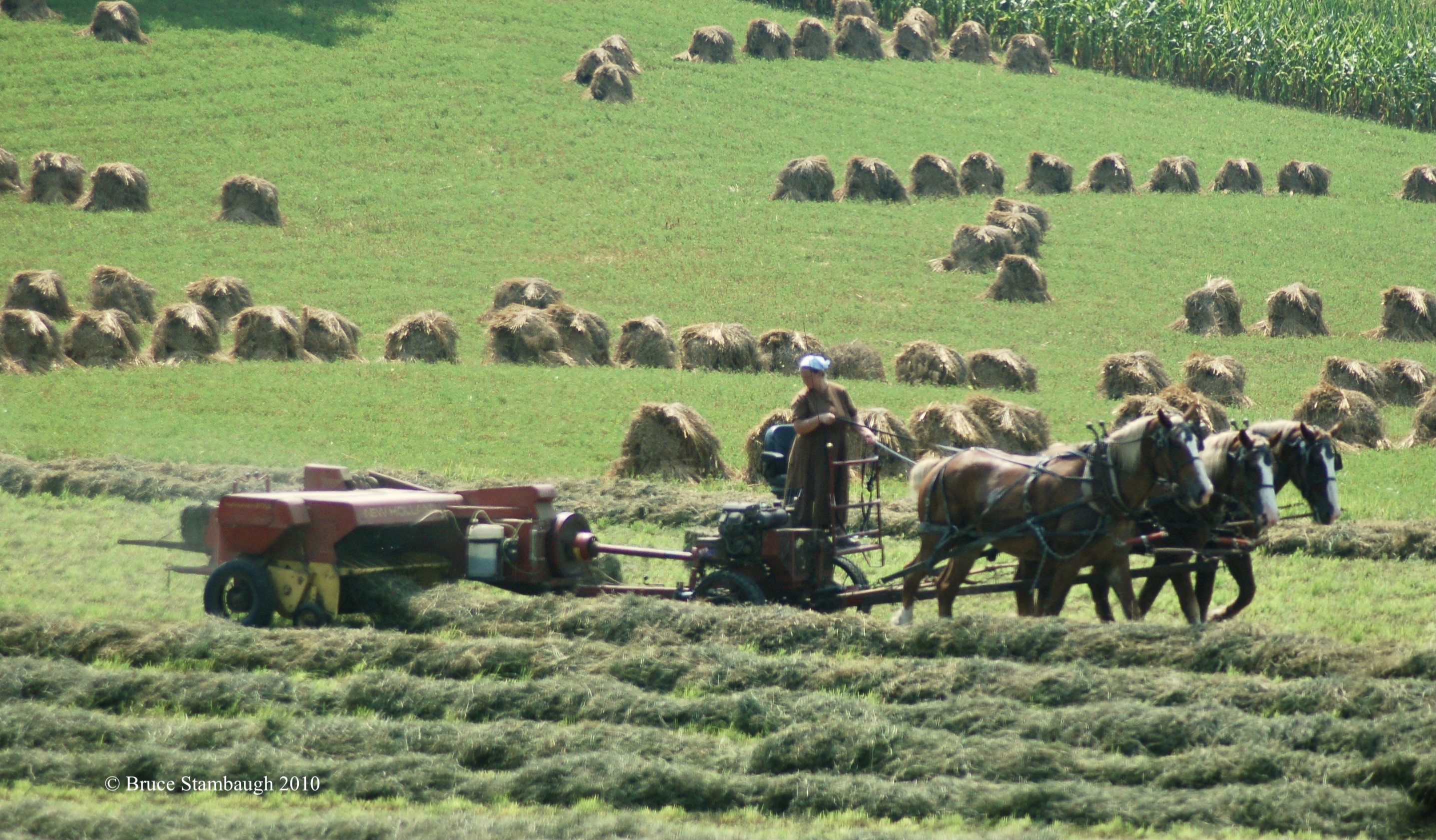
Wheat shocks glow in the evening sun in Holmes County, Ohio.

August came early this year. The calendar didn’t change, but the weather sure did.

The three H’s customarily associated with August, hot, humid, and hazy, have been around off and on since this June. Unfortunately, the dreaded trio has been mostly “on” all across the continent and beyond.

The results haven’t been pretty or even healthy. Record high temperatures fed massive wildfires, more typical for the fall months. The fires have been burning all across the West and in several Canadian provinces. A wildfire completely obliterated the small town of Lytton, B.C.

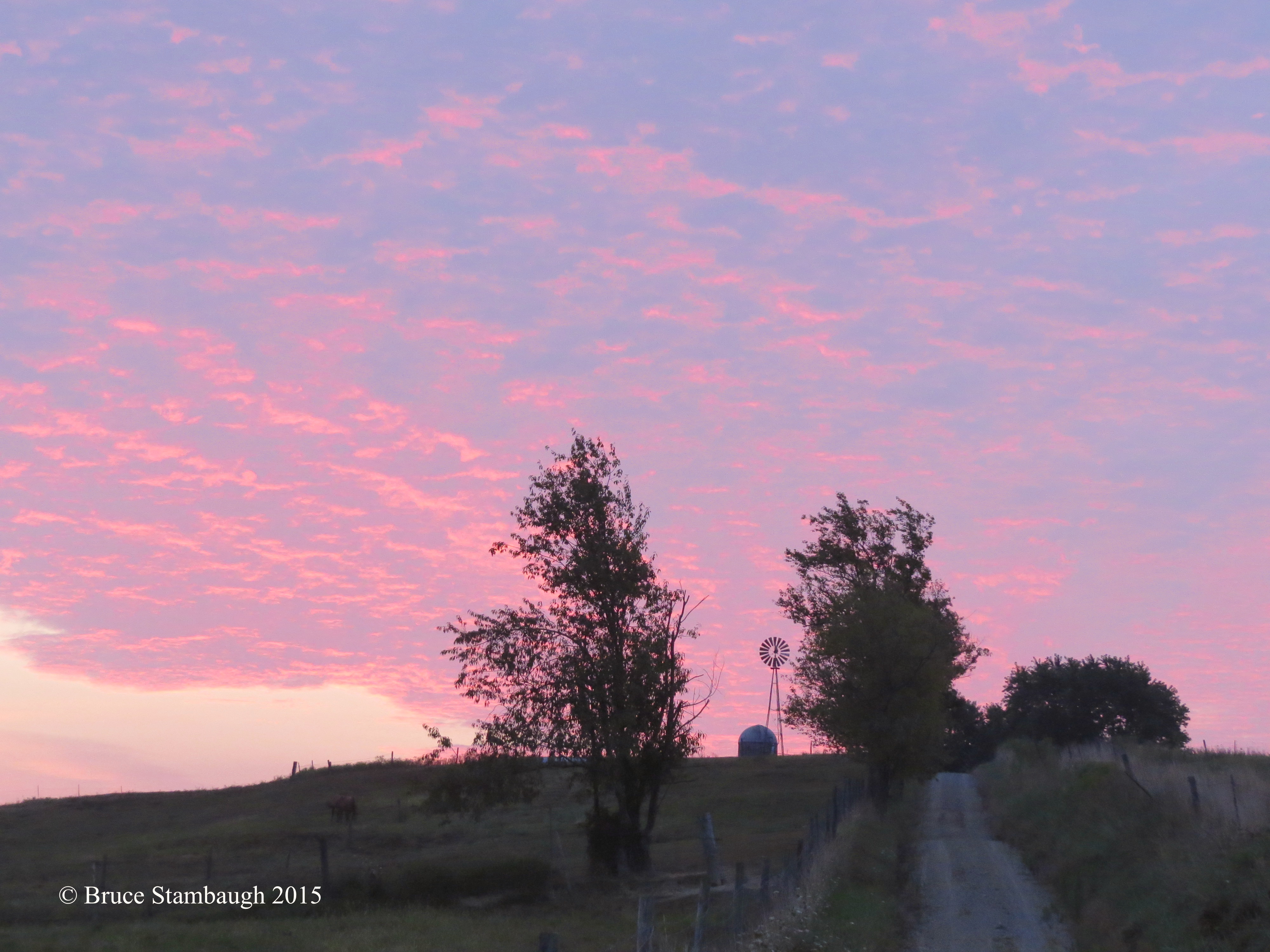
The wildfires have fed the brilliant sunrises and sunsets in recent days. Brisk winds aloft have spread soot particles eastward, creating that giant orange ball in the sky that we usually can’t look at directly. The August haze is extra heavy from Maine to Florida.

A wildfire-enhanced sunset.

August’s weather seemed both more predictable and tolerable a half-century ago. Global warming and climate change weren’t household phrases back then. They are now.

In those days, the school year ran from the day after Labor Day until Memorial Day weekend. The school district seldom used up the permitted allotment of snow days. So, we knew we had the whole summer season to enjoy.

As a youngster, I always welcomed August even though it was the last month of school vacation. The neighborhood gang of baby boomers took the hot, hazy, and humid weather in stride.

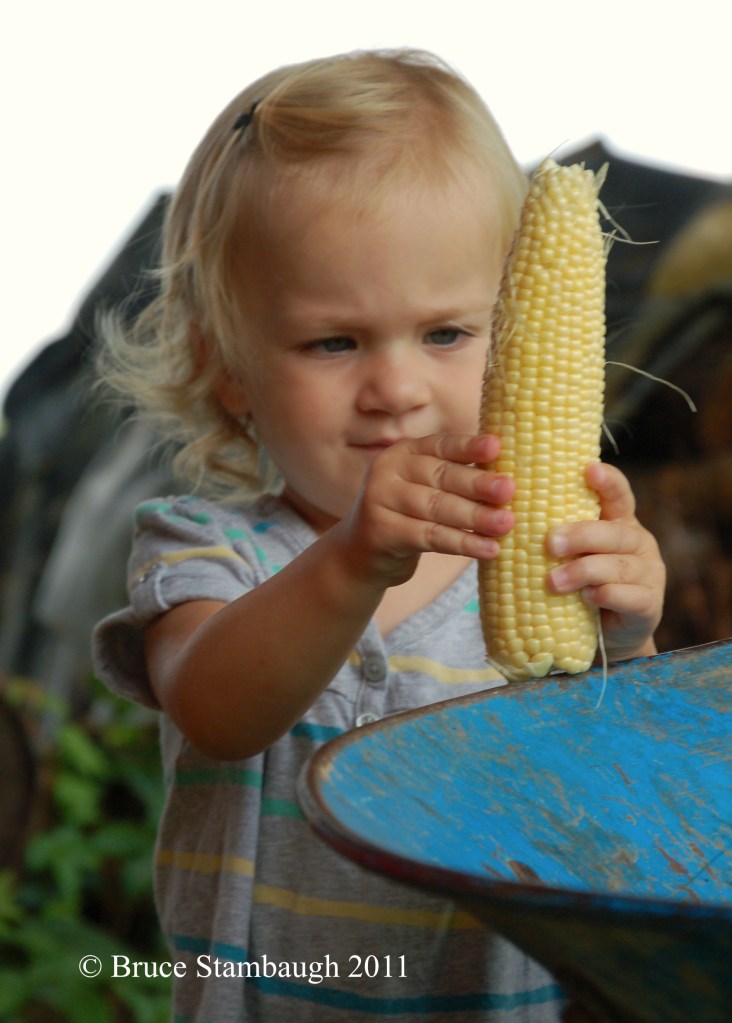
You are never too young to help husk corn.

We were content to sit beneath giant shade trees and play cards and board games instead of more strenuous adventures. We saved our more energetic shenanigans for cooler evenings. I’ll skip the details since the statutes of limitations haven’t expired. No harm to life or property occurred, however.

August always gave us suburban kids pause. August was our reality check. It forewarned us to use our last remaining days of freedom wisely. We usually didn’t.

A few of us, of course, had jobs associated with youth, like paper routes and mowing lawns. My older brother and I both delivered newspapers. In those days, I had ink on my fingers and not in my veins.

County fairs and street fairs began in earnest. Our county fair was always the last week of August and ended on Labor Day. When the fair closed, the schoolhouse doors opened.

Our father usually grew a garden well away from our suburban home. After supper, my siblings and I crowded into the family car, and off we would go to help hoe, weed, and hopefully pick my favorite vegetable, sweet corn.

If we had a bumper crop, we headed to a strip mall parking lot, popped the trunk, and sold our excess at a dollar a dozen. Dad usually threw in an extra ear for free, the gardener’s equivalent of a baker’s dozen.

Back home, our dear mother had the pressure cooker ready. All we had to do was husk the corn. It’s another job that I still relish. My wife says I will be applying that apt skill as soon as the bi-colored corn is ripe.

Occasionally, Dad would also load the family into the car, and we headed to Holmes County. I always admired the platoon of golden wheat shocks standing at attention in the fields of Amish farmers.

I had no idea then that I would be spending most of my adult life living there. It served as a foretaste of many good things to come for me.

I look back on my lifetime of Augusts with pleasant memories. None of the three H’s can bake, wilt, or obscure them.

An August sunrise in Ohio’s Amish country.

© Bruce Stambaugh 2021
Insights about my enigmatic father

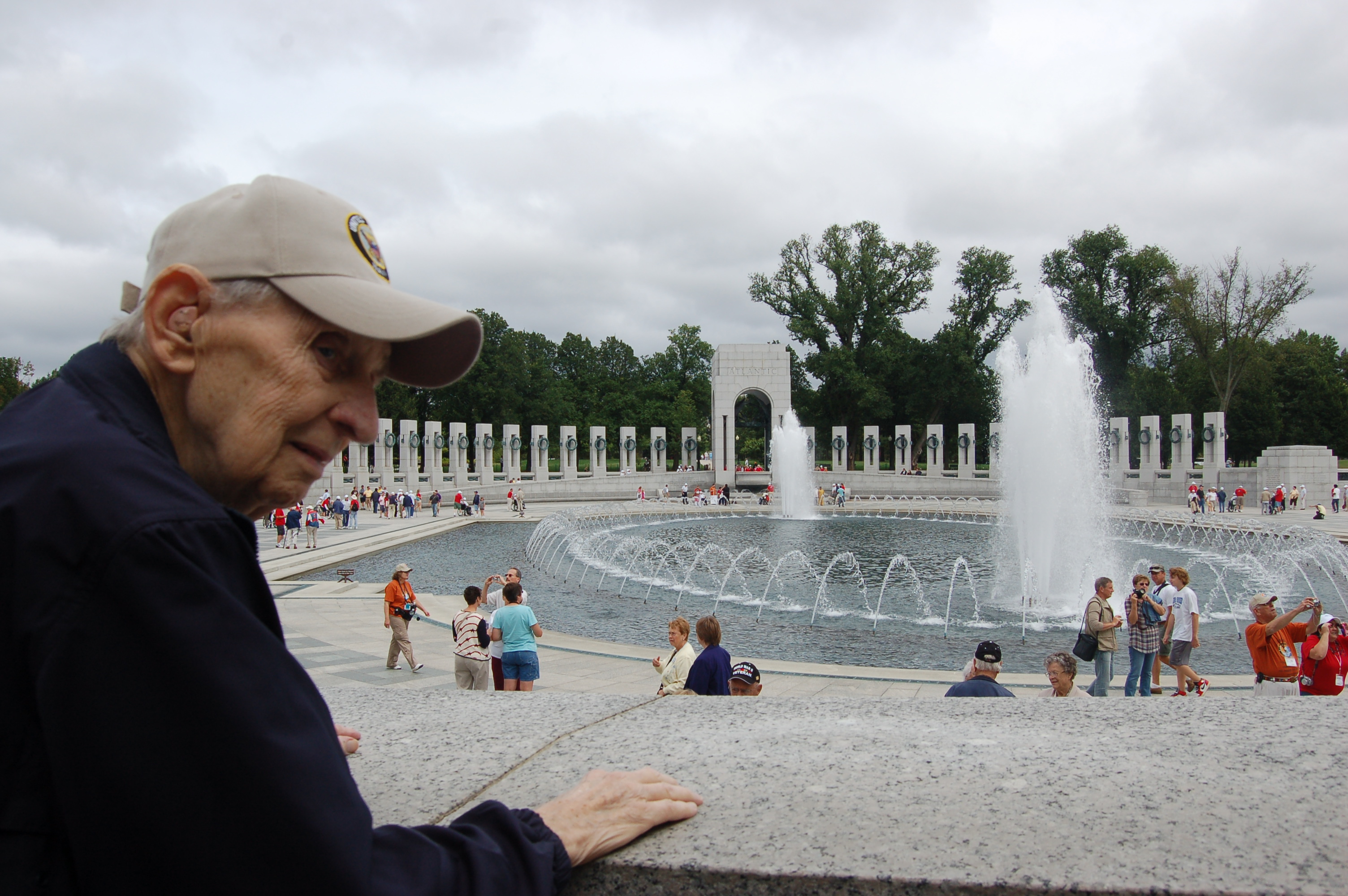
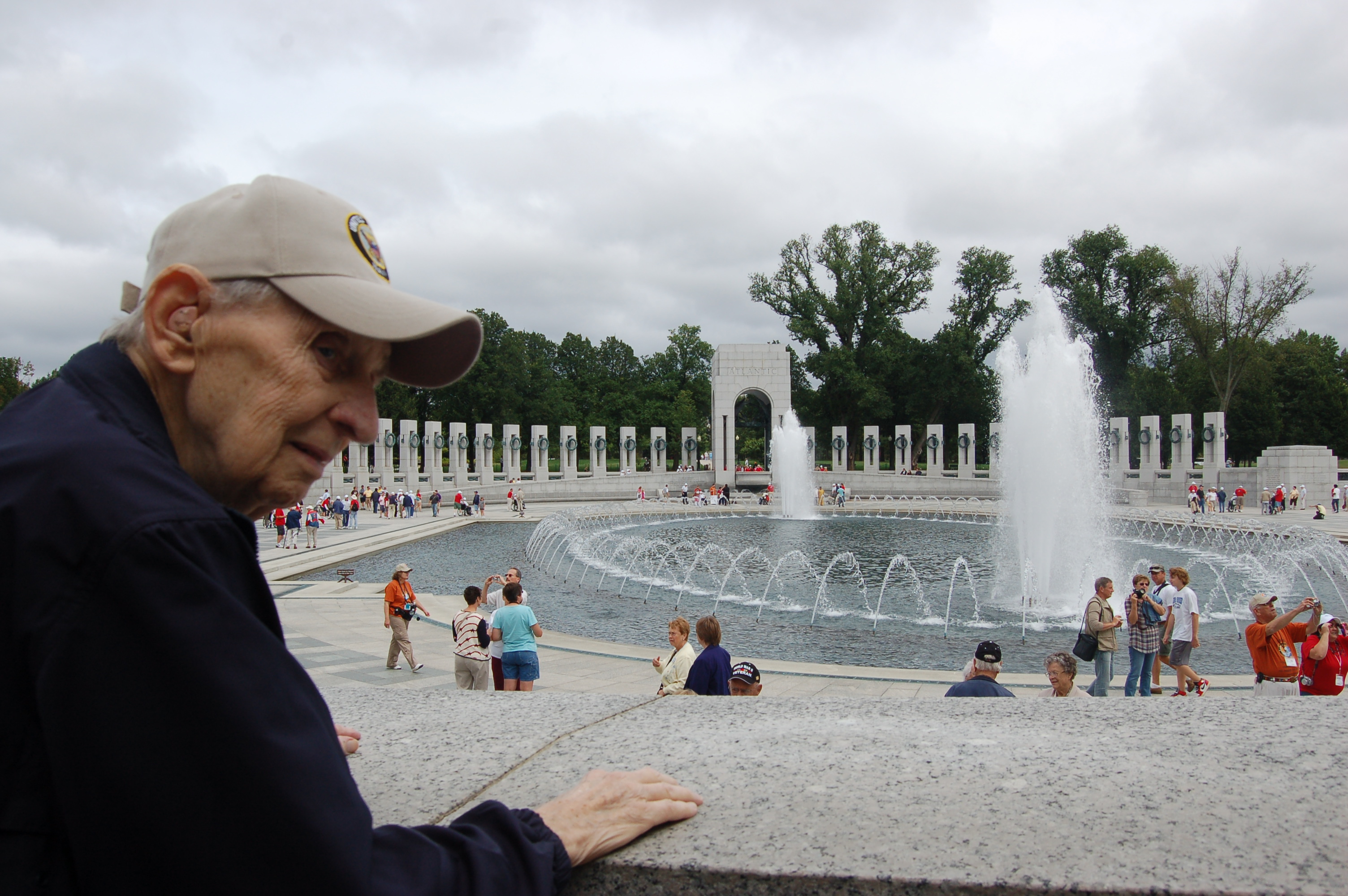
My father at the World War II Memorial three months before he died. Photo by Bruce Stambaugh

I don’t need a designated day to remind me of my late father. I see him in many of my machinations and manners. I walk, talk, and too often behave much as he did. I’m still working on that.

Understand me, though, that I loved my father unconditionally. It just took me too long to realize that I spent too much of my adolescent and young adult life trying to earn his affection when affection wasn’t his thing. I finally realized that Dad was already sharing his love in how he lived his life.

Dad had many interests. In his nearly nine decades of living, he squeezed in an array of activities. Unfortunately, assisting our dear mother around the house wasn’t high on his list.

My father had Ichabod Crane’s physique and Rip Van Winkle’s spirit. At six foot two inches in his prime, Dad was tall for his era. But his skinny build gave him a gangly appearance.

Dad was athletic and energetic, especially when it came to having fun. He loved to tell stories of dancing with Mom at Moonlight Ballroom in Meyers Lake Park in Canton. We played “Moonlight Serenade” at his memorial service as he danced into glory.

However, the only time I ever physically saw him dance was with Mom at a niece’s wedding. Though in their 80s, they glided across the floor as if they were 20.

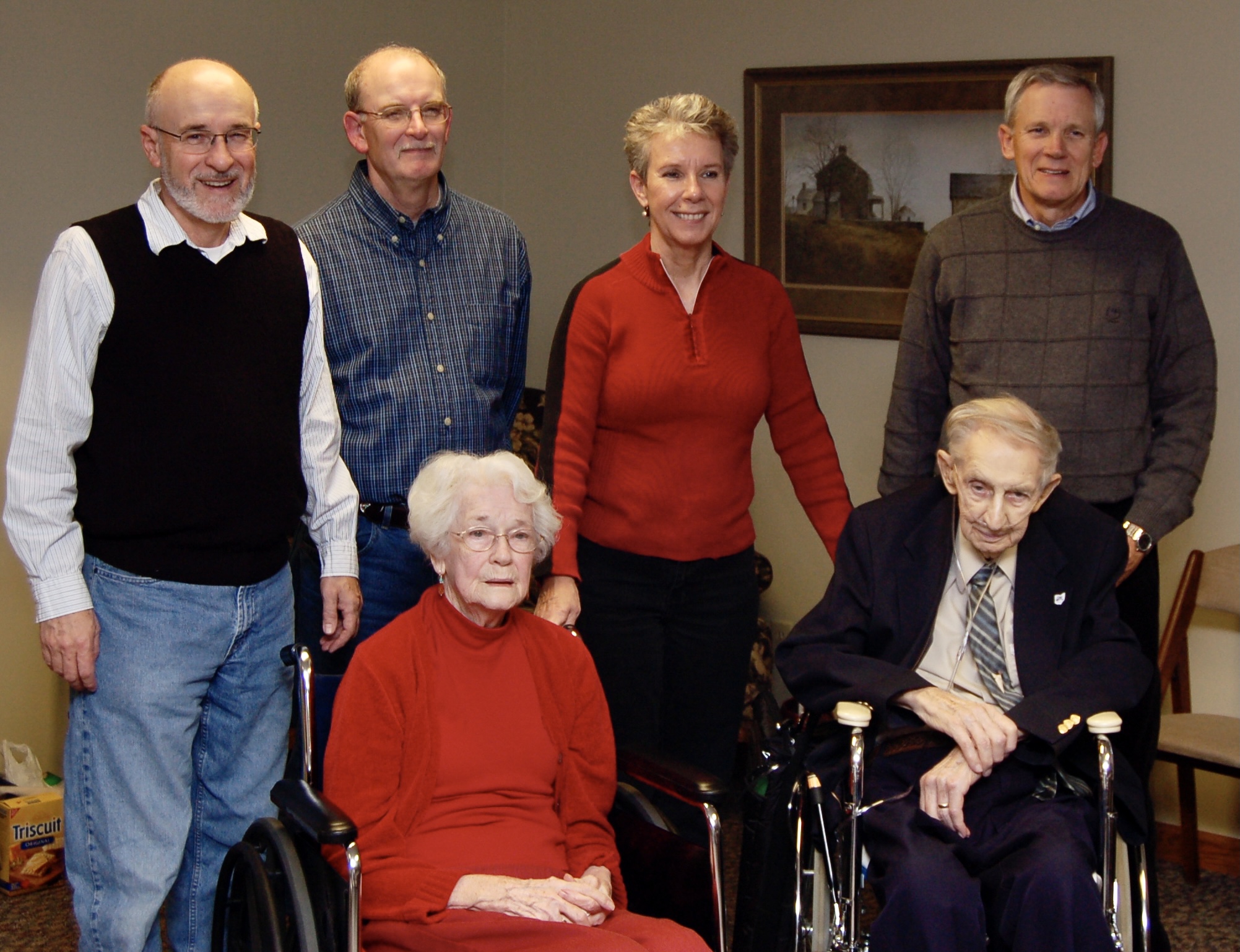
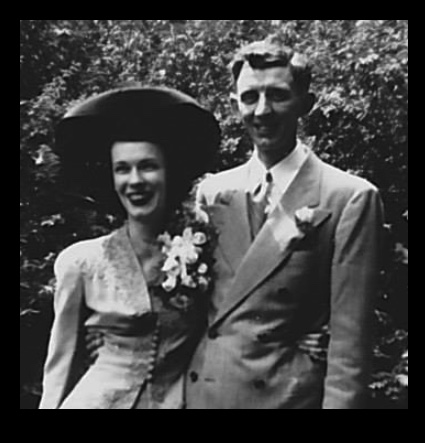
Top left: With our parents on Dad’s last Thanksgiving; Middle: Dad with my two brothers, sister and me before our other sister was born; Top right: Mom and Dad on their wedding day; Bottom: The home Dad helped build and where we all grew up.

Dad loved to tell stories. When we lived in Ohio, I would occasionally run into people who knew my father. Their complimentary comments often referenced Dad’s storytelling.

I always acknowledged that Dad was indeed a great storyteller and that some of those stories were actually true. I always smiled when I said it, though.

By profession, Dad was a project engineer. He helped build the red-brick bungalow where he and our mother raised their family. His pride and joy, though, was the inviting cottage he and Mom built at a lake in southeastern Ohio.

Although he couldn’t swim, Dad enlisted in the Navy in World War II. He did so because the Great Lakes Naval Base was only hours from home. However, he found himself in the engine room of the U.S.S. San Diego in the Pacific theater.

After the war, Dad worked on submarine missiles and was part of a team that designed a new gondola for the Goodyear blimp. Yet, projects around home went unfinished or were patch jobs. His favorite tool was duct tape.

Dad loved social gatherings. He took it upon himself to organize family reunions. He also once planned his high school class reunion and then forgot to go.

Dad and Mom visited us frequently in rural Holmes County, Ohio. His pretense was to see his grandchildren, but he spent his time scouring fields for arrowheads. In his excitement to show us what he had found, Dad tracked dirty footprints into the house.

Even as cancer overtook his body, Dad’s passion for life remained. He was ready to go but didn’t want to leave this life he loved.

Though unconscious, the Hospice nurse encouraged me to tell Dad that it was alright to let go. So, I did.

Dad’s reaction didn’t surprise me. Unable to speak or open his eyes, he just waved me away. I took it as an indication that he wanted to die on his terms and time. And that is what he did. Early the following morning, while the nurse left his side for five minutes, Dad took his final breath. I don’t need Father’s Day to remind me of my father, but I am thankful for the day and my dad nonetheless.

Dad gave a presentation to retirement home residents on his favorite topic, Native Americans. Photo by Bruce Stambaugh.

© Bruce Stambaugh 2021

Memorial Day is for remembering

A Virginia man prepares his Memorial Day decorations.

Memorial Day is for remembering. As a septuagenarian, the bulk of my life is behind me. Memories fill my daily life, but especially so on this solemn weekend.

In the years between ages 21 and 51, I started my career as a public school educator. I met and married my energetic and valiant wife. Our daughter and son were born. I simultaneously served 27 years as a volunteer firefighter and emergency medical technician.

I consider those the best years of my life. That is true, not because of anything I did, but because of the people I met and interacted with in the communities where I lived, worked, and served.

To list all the folks would surely be impossible. So, I’ll share a few meaningful examples of those who helped me along life’s way.

Of course, I have to start with my parents, Dick and Marian. In the post-World War II era, men were the breadwinners, and women were for the most part housewives, teachers, nurses, or secretaries. That’s just how it was, and I am exceedingly glad those societal expectations are no longer the norm.

Dick and Marian Stambaugh at their 65th wedding celebration.

At 6 foot 2 inches, Dad cut an imposing figure for that era. But he lived like a child turned loose in the world. He loved our mother dearly, but he never saw the need to help much around the house.

Mom always had supper ready when Dad came home from work. After we ate, Dad would often go on some adventure, whether to tend the garden we had on a friend’s property two miles away or to a church softball game.

Mom took things in stride as best she could. None of us five kids ever doubted her love, but we sure tested her limits. Mom was as kind and sweet as she was stalwart and unafraid to have a necessary word or two with Dad or us when needed.

Dad served in World War II on the U.S.S. San Diego, a Navy light cruiser that saw action in 16 major Pacific battles. They never lost a man. Dad was proud of his service but seldom talked much about it. His father, Merle, served in the Army in France in World War I.

Grandpa was gassed by German forces and treated in a field hospital that kept no medical records. He suffered from those damaged lungs until he died at age 72. He never received the financial or medical help that he needed and consequently lived a hard life.

My wife’s parents, Wayne and Esther, took me in like the son they never had. I knew Wayne liked me right away because he ushered me to the barn to see the pigs on my first visit to the farm. My wife said it usually took suitors three trips before they got that introduction.

Family members weren’t my only influencers. I boarded with Helen, a kindly woman, the first year that I taught. We became lifelong friends. Never married, Helen graciously adopted our family as her own. Our daughter and son were the grandchildren she never had.

Many others guided me through life, too: teachers, friends, other family members, even strangers. I cherish the times they spent with me. They all revered the past, never feared the future but sensibly lived in and for the moment at hand. So should we.

You have your saints, too. Remember them we must, for that is what they would want us to do. It is what we all want once we are gone. It’s why we have Memorial Day.

Dad at the World War II Memorial in Washington, D.C., Sept. 12, 2009 as part of an Honor Flight.

© Bruce Stambaugh 2021

Mole Hill Sunset

Mole Hill is a landmark in Shenandoah Valley’s Rockingham County. The forested nob is actually the remnants of a volcano’s core. That hasn’t deterred locals from farming and living around its base.

Mole Hill is properly named. The Allegheny Mountains in the western background dwarf it in comparison. Still, Mole Hill attracts birders, bikers, and sunset gazers alike.

This photo was taken about two miles east of Mole Hill near Harrisonburg, Virginia. With evening fog setting in, the fiery sky looked as if it had recently erupted from this local favorite hotspot.

“Mole Hill Sunset” is my Photo of the Week.

© Bruce Stambaugh 2021

The Bridge to Willow Grove Mill

Just south of the quaint village of Luray, Virginia, Willow Grove Mill stands between the east and west branches of the Hawksbills Creek. As interesting as the old mill was, it was the old, one-lane bridge that crossed the creek that intrigued me. The bridge was straight as an arrow, but as soon as you crossed it, the road took a sharp left turn.

“The Bridge to Willow Grove Mill” is my Photo of the Week.

© Bruce Stambaugh 2021
April is a character

In a family of months

Redbuds in full bloom.

I’ve known a few characters in my lifetime. I bet you have, too.

By character, I mean a unique individual who enjoys life outside the expected societal norms. Every family, workplace, and even church seems to have at least one individual who fits the profile.

I’ve learned that you don’t have to be human to be a character either. Our long-departed rat terrier Bill fit that category.

Bill’s personality far outsized his small frame. He once jumped up to try a catch a Canada goose that flew low over our Ohio home.

Other non-human characters include our backyard blonde squirrel and a pair of mallard ducks that frequent our neighborhood.

Just being blonde and a squirrel is character enough. When other squirrels approach, Blonde rapidly flips her beautiful golden tail to defend her territory. Satisfied that all is clear, she stretches out on the cool grass in the shadow of the maple, relishing in her most recent victory.

The ducks are a different story. Even though our suburban home’s closest water sources are swimming pools, this pair flies around the neighborhood, landing on rooftops. From there, they scout out nearby birdfeeders and go house to house foraging for breakfast, lunch, and supper.

Characters, however, don’t have to be living beings or animals.

Take our Julian calendar, for example. Months have dynamic personalities, too. April earns head of the class and not necessarily for alphabetical reasons.

Among her 11 siblings, April can often be a bit obnoxious. That’s especially true when it comes to weather.

April showers bring much more than May flowers. April’s repertoire dishes out tornadoes, snow, frost, floods, 80 degree days, and more. Sometimes only hours separate those diverse conditions.

No matter where you live in the United States or Canada, April can be a stinker. She doesn’t rely only on April 1 to fool you. One day, it’s 15 degrees above average. The sun is shining in a clear blue sky, while songbirds fill the warm air with luxurious melodies. The sound of lawnmowers echoes far and wide.

The next day the fog is so thick the sun can’t even breakthrough. Soon the wind picks up, and storm clouds race across the landscape, pelting rain, hail, and producing winds that exceed the speed limit. It would be justifiable if the weather service issued an arrest warrant for April for perpetrating days like this.

It’s not that we don’t expect variety in the weather. It is spring, after all. But it would be pure pleasure to know it’s safe to store the ice scrapers and snow shovels for at least a few months.

I have anecdotal evidence of such events. One early April day, 20 inches of heavy, wet snow brought much of Ohio to a halt. Volunteer fire departments ferried medical workers to and from hospitals.

On April 3 and 4, 1974, massive and deadly tornados hit Xenia, Ohio, and many other locations in more than a dozen states. Holmes County was in the path of the storm, too.

The sky turned pea green, and everything grew still. The tornado never touched down, but instead, tattered and torn objects from Xenia drifted to earth. People found checks and personal effects from 150 miles southwest.

April continues to be a Jekyll and Hyde. Just as our redbuds were about to bloom pink and bold, back-to-back days of 20-degree mornings deadened their potential pink beauty. I hope they can recover from their frigid encounters.

April is a character, all right. She still has time to repent, however.

Creeping phlox and a lone blue anemone.

© Bruce Stambaugh 2021

Bay Photos by Donna

Wildlife photos from the Chesapeake Bay region

ROAD TO NARA

Culture and Communities at the Heart Of India

K Hertzler Art

Artist and nature journalist in the Shenandoah Valley of Virginia.

Maria Vincent Robinson

Photographer Of Life and moments

Gabriele Romano

Personal Blog

Jennifer Murch

Art is the only way to run away without leaving home. -Twyla Tharp

Roadkill Crossing

Writing generated from the rural life

ANJOLI ROY

writer. teacher. podcast cohost.

Casa Alterna

El amor cruza fronteras / Love crosses borders