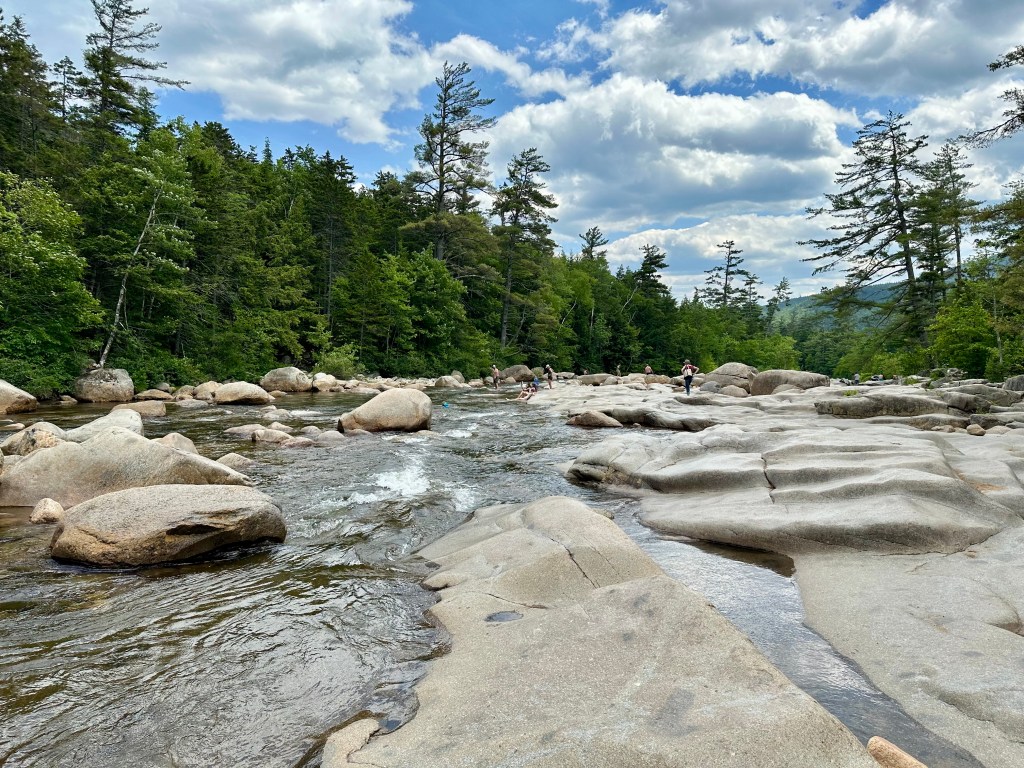
The Swift River along the Kancamagus Highway. Photo by Bruce Stambaugh
Our little tour group headed north out of Boston on the first full day of our land/cruise trip through parts of New England and into eastern Canada.
Looking at the itinerary, my wife and I realized that we would be seeing much of the same scenery that we had when we visited New Hampshire and Vermont six years ago. That didn’t deter our anticipation, however. We loved visiting both states and looked forward to new adventures.
We briefly visited Franconia State Park, and then drove eastward along the Kancamagus Highway that runs from Lincoln to Conway, New Hampshire. My wife and I drove it westbound in 2019.
It was much easier driving a personal vehicle than being a passenger in a large bus. I wanted to shout “stop” multiple times as we passed scenic overlooks and lovely White Mountain vistas. Of course, I didn’t do that.
The bus made two stops, both near the terminus of the famous scenic highway. Our first stop was at the Lower Falls on the Swift River that winds its way east toward Conway.
Because of the hot and humid weather, we weren’t alone at the falls. Families and couples, young and old, cooled off in the rushing waters of the aptly named river.
A boardwalk parallel to the river made it easy to observe the fun in the water. As a photographer, I sought a better angle near the refreshing waters, though I had no intention of joining the swimmers.
The above photo shows the majesty of Swift River and its gorgeous surroundings of lush evergreens and deciduous trees that climb the mountainsides. We were fortunate to have pleasant though warm weather.
I waited until the splashing went farther downstream before snapping this photo. The wavy boulders show the eons of wear and erosion from constant, fast-running water rushing down the valley.
Closer to Conway, where the terrain flattens out, the waters slow their pace and broaden their banks. Where the rapids and falls are is where the real action is. I was glad to see it again.
The Tea Party Museum, Boston, Massachusetts. Photo by Bruce Stambaugh
My wife and I recently did a land/sea tour of part of New England and eastern Canada. Our small group covered a lot of ground in two weeks.
Instead of inundating you with multiple photographs and detailed descriptions of the places we visited, I challenged myself to choose one photo from each day. That’s not an easy task when you see so many historical spots and scenic landscapes.
Nevertheless, I hope you enjoy this attempt at super-summarizing our two-week trip.
Boston, Massachusetts, was our first stop. Neither my wife nor I had ever been to this historic city that played such an essential part in the development of the United States of America. So, we flew in a day early to get settled.
Like much of the rest of the country, Boston was unusually hot for the end of June. Consequently, we opted for a trolley tour of the bustling, unfamiliar city to avoid excessive walking. That limited my usual way of photographing our trip’s highlights. Still, I was able to capture the combination of the deep history and fast pace of this 21st-century city.
I chose the photo of the replica sailing ships moored at the docks of the Boston Tea Party Ships and Museum because it best represented both the history and the current vibe of Boston.
The Sons of Liberty set in motion the American Revolution by dumping 342 chests of East India Company tea into the harbor. The War of Independence began two years later near Boston.
But look beyond the vessels to the green space along the waterfront to the modern office buildings. See the bridges that connect the many commercial and business areas on and near the waterfront. This scene is but a microcosm of the thriving port city of Boston as it was in the early colonial days and is today.
In our all too brief stay in Boston, we saw historic spots and locations, city parks, monuments, lovely rowhouses, government buildings like the state capitol, and modern skyscrapers. We also found the good people of Boston to be friendly, helpful, and hospitable.
Boston proved the perfect place to begin our trip into New England and on to eastern Canada.
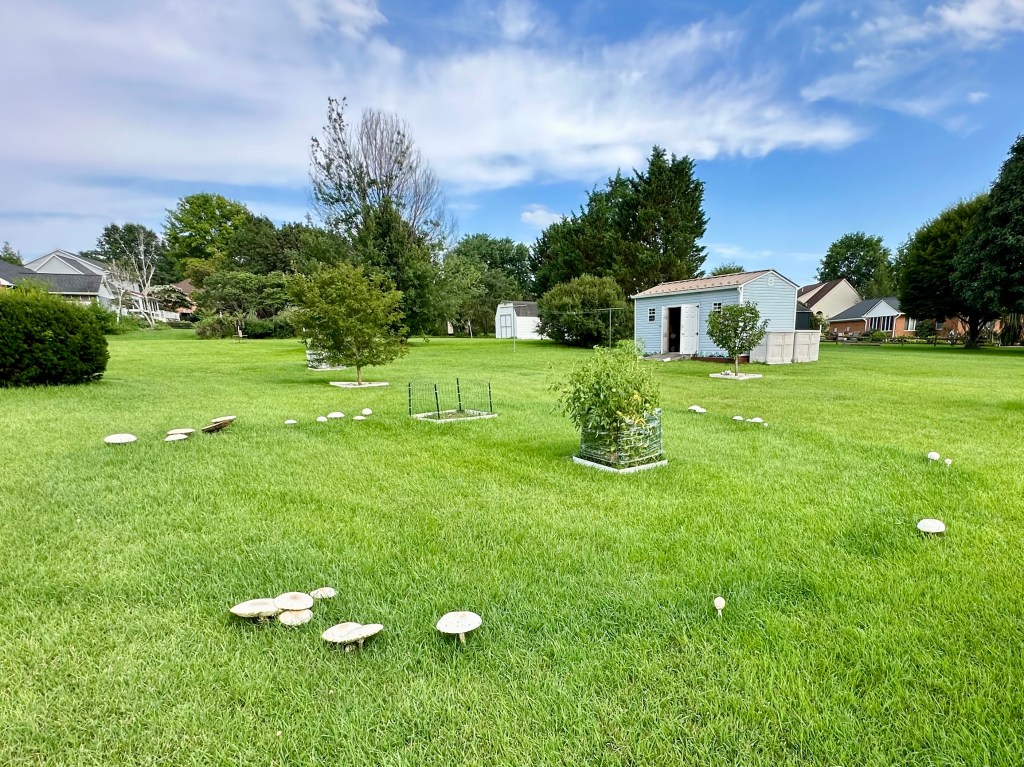
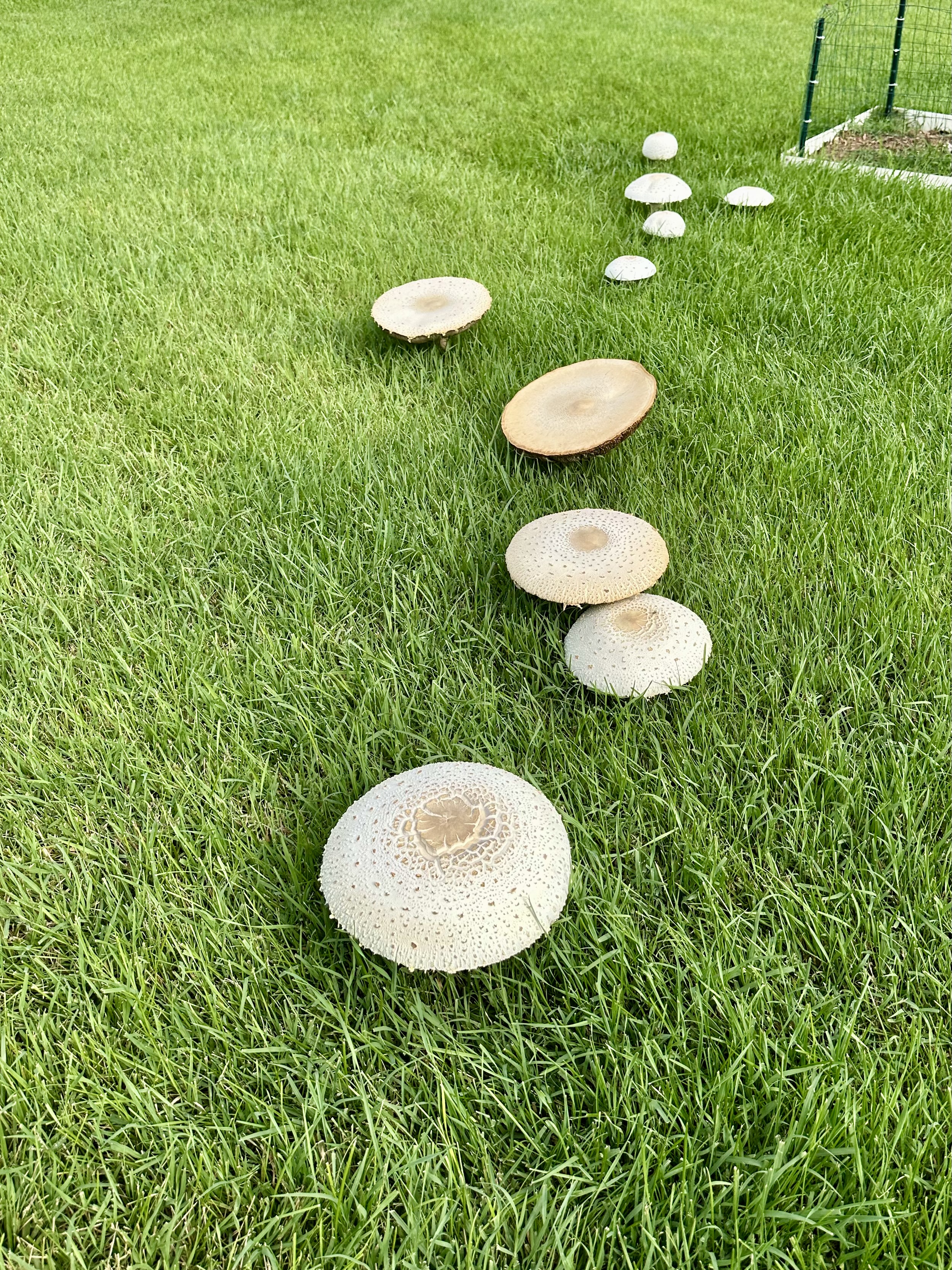
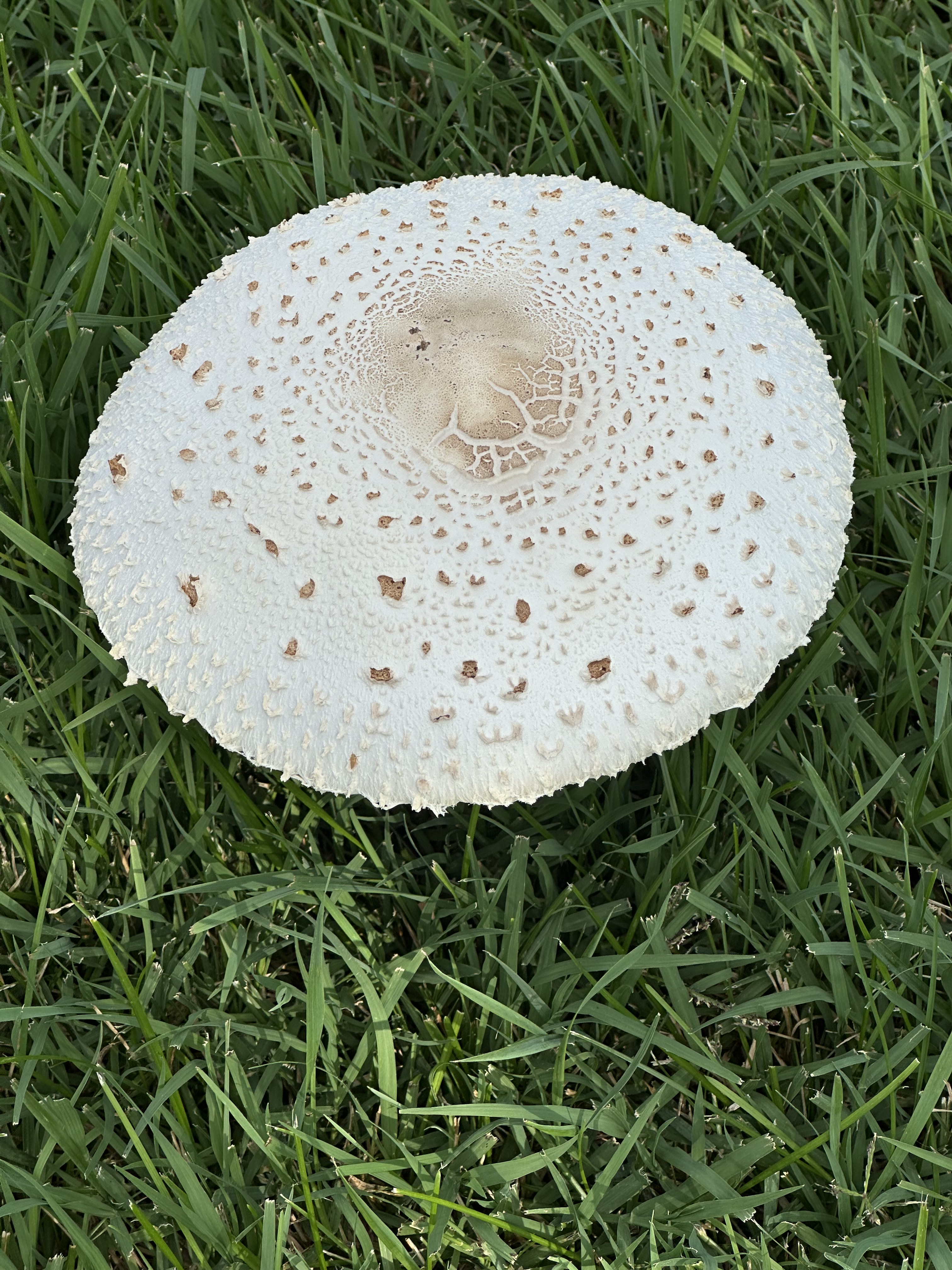
A fairy ring or circle in our neighbor’s backyard. Photo by Bruce Stambaugh
Each year, a fairy ring or circle appears in our next-door neighbor’s backyard. They often don’t get to see it since they go camping as often as they can.
After several rounds of heavy recent rains, this circle of False Parosal fungi popped up. In the morning, only a couple of fungi appeared. By late afternoon, the fairy circle was nearly complete.
The circles are also known as an elf circle, an elf ring, or a pixie ring. They are naturally occurring rings or arcs of non-edible mushrooms. Some cultures consider these mushroom circles a bad omen, while others think they bring good luck.
This particular ring has occurred nearly every summer in the eight years we have lived in Virginia’s Shenandoah Valley. Shortly after taking these photos, the circle disappeared, not by some fairy’s magic trick, but by a lawnmower.
Have you ever seen circles like these where you live?
My wife and I enjoyed a walk around the Genesee Country Village and Museum on Mother’s Day with our son, his wife, and their three-year-old grandson. Jess’s family also joined us on the lovely Sunday.
With wide open spaces and many attractions to investigate, several of us scattered to do our own thing. That’s when I spotted this gentleman, dressed in 19th-century attire, basking in the late-morning sunshine. His obedient dog did the same. Along with the setting and their positioning, they made the perfect composition that fit the setting.
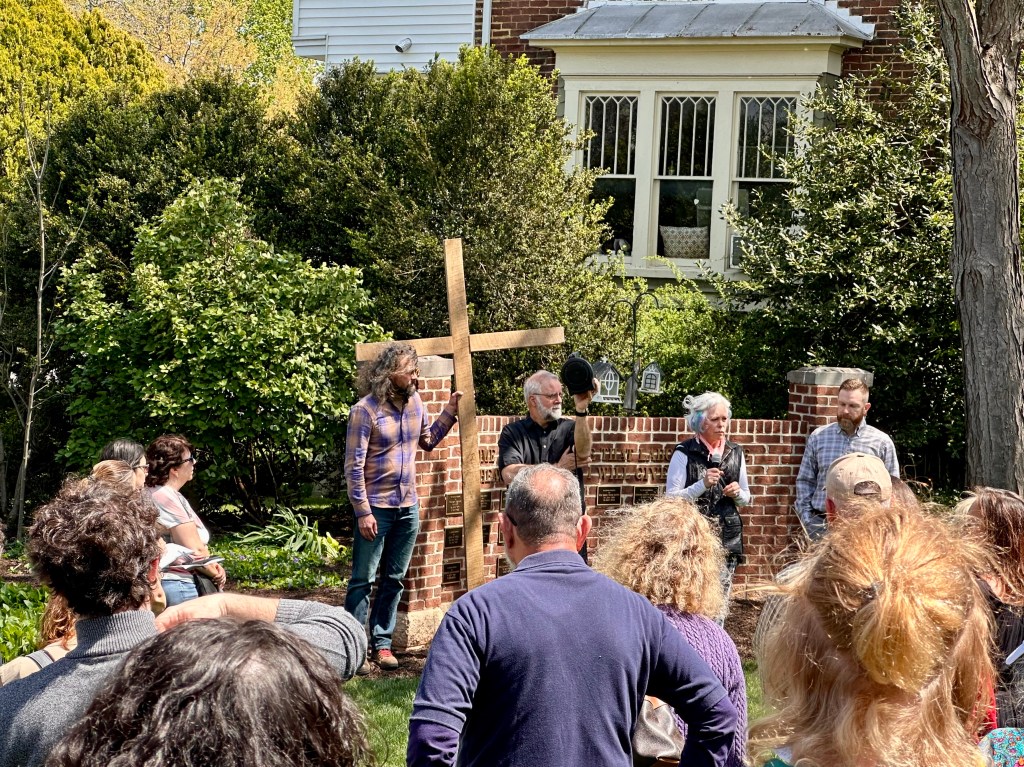
For the last 38 years, churches in Harrisonburg, Virginia, have joined together on Good Friday at noon to walk the Stations of the Cross. This is an ecumenical service of public prayer and witness on Christianity’s most solemn day.
It was the perfect afternoon to walk in downtown Harrisonburg. With a bright blue sky overhead and the temperatures in the 70s, more than 150 people chose to walk the 10 stations.
I was most impressed by the cross-generational gathering. Toddlers in strollers, teenagers in shorts, parents, and grandparents walked narrow sidewalks and across city streets to the various stations representing the final hours of Jesus’s life.
Luke 22:39-46. Jesus prays on the Mount of Olives.
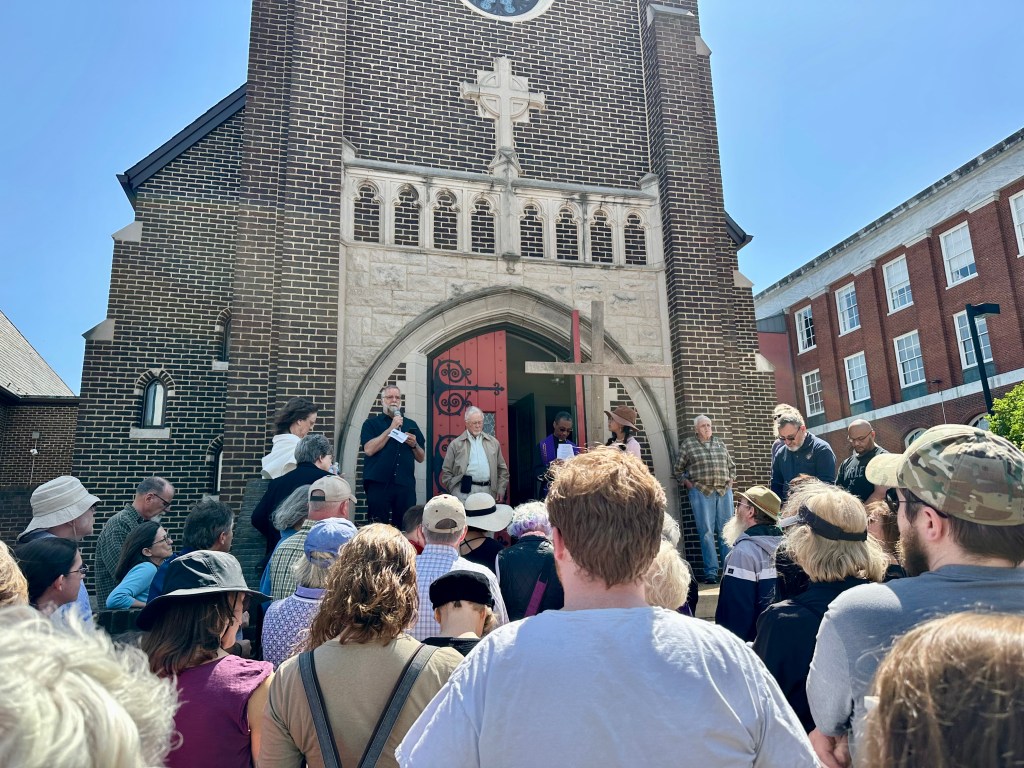
Retired pastor Phil Kniss gave safety instructions to the crowd before the service began on the steps of Blessed Sacrament Catholic Church. Members of the Shenandoah Valley Biblical Storytellers dramatically shared appropriate scriptures at each stop. A prayer by local clergy was recited before proceeding to the next station.
Luke 22:47-53. Jesus is betrayed and arrested.
We didn’t have to go far for the second stop. The U.S. Federal Courthouse was just steps away. Note the court official peering out of the window on the right.
Luke 22:54-62. Peter denies Jesus.
The third stop was just a short distance away at the local television station. Besides places of worship, the walk included stops representing the media and local, state, and federal agencies.
Luke 22:63-71. Jesus is mocked and questioned.
The following two stops brought us to the First Presbyterian Church on Court Square. It is literally the city center. We bathed in the warm sunshine of the early afternoon, listening to the scripture presentation and the prayer.
Luke 23:1-5. Jesus stands before Pilate.
The procession moved across the street to the west side of the Rockingham County Courthouse. Doing so allowed the group to gather without blocking any doorways, as the only public entrance is located on the east side.
Luke 23:6-12. Jesus stands before Herod.
We moved from the courthouse to the jail and administrative building across the street. A few onlookers joined the troupe of walkers.
Luke 23:13-25. Jesus is sentenced to death.
From the jail, the group followed the cross to an open area near Blacks Run, a stream that meanders through the town’s center. While the scripture was shared and the prayer said, an American Goldfinch sang high from a nearby cottonwood tree, and a pair of Mallards swam upstream. The church steeple in the background was the next destination.
Luke 23:26-43. Jesus is nailed to the cross.
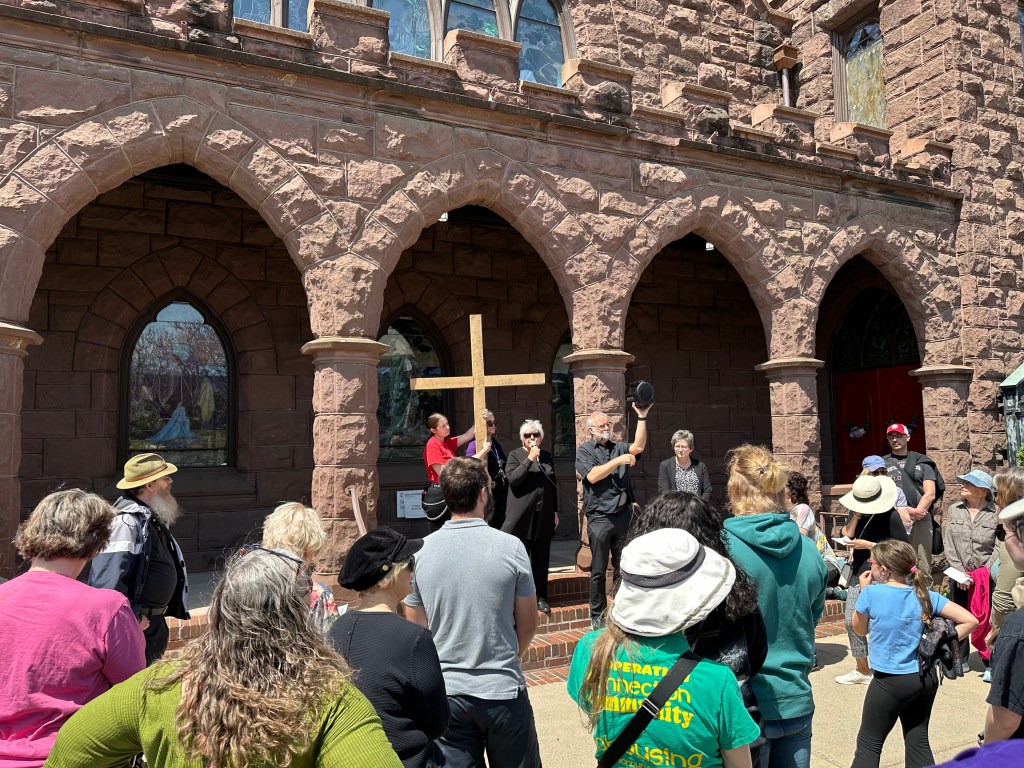
At the historic Asbury United Methodist Church, we heard the hard words of Jesus being nailed to the cross. The walk became more solemn than it had been when we had started a half hour earlier.
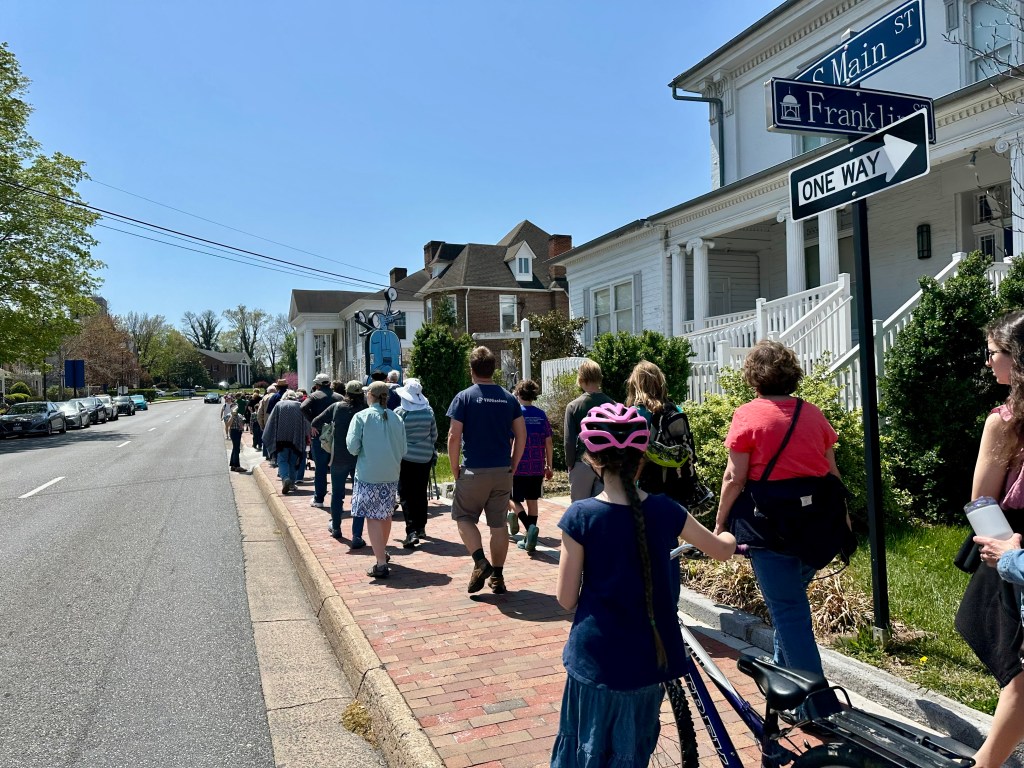
The path to the next station.
Following the prayer, the participants trekked along South Main St. to City Hall. Fortunately, the street is a one-way, northbound roadway, which allowed excellent visibility for oncoming traffic. The street is also U.S. 11, the old Valley Pike, where Confederate and Union soldiers marched and occasionally fought. The ancient history overshadowed that of the more recent.
The group crossed S. Main St. to the last stop, the lovely courtyard behind St. Stephen’s United Church of Christ.Luke 23:50-56. Jesus is buried.
The inviting backyard garden of St. Patrick’s United Church of Christ hosted the last scripture and prayer of the afternoon’s commemoration. By now, people were tired from the heat and the walk, which totaled a mile round trip. Still, all were attentive to the cherished story. With the final benediction, the people scattered quietly, individually, pondering all that we had seen and heard.
The pastoral landscape we enjoyed. Photo by Bruce Stambaugh
The weather was similar to the day we married 54 years ago, mostly sunny and warm. So, we decided to celebrate our anniversary by enjoying the scenic outdoors in Virginia’s Shenandoah Valley.
We drove the country roads in two Virginia counties, where Old Order Mennonite farms dominate rolling landscapes at the foot of the Allegheny Mountains. Those families have kept the farms intact for the most part. Generations have raised crops and livestock, including poultry, without selling off their prized road frontage for homes or small businesses. They must enjoy the scenery and quiet, too.
Despite the lack of rainfall, succulent green grasses for beef cattle, dairy cows, and plump sheep brimmed beneath tree-dotted pastures. Cottony clouds sailed overhead in the cerulean sky.
We visited a local birding hotspot across from a plain but pristine Old Order Mennonite church, where the men and women sit in benches on opposite sides after filing through separate doorways. Killdeer, Pectoral Sandpipers, and Canada Geese called and preened in the morning’s warmth, while pairs of Tree Swallows divebombed me for being too close to their birdbox.
Pectoral Sandpipers. Photo by Bruce Stambaugh
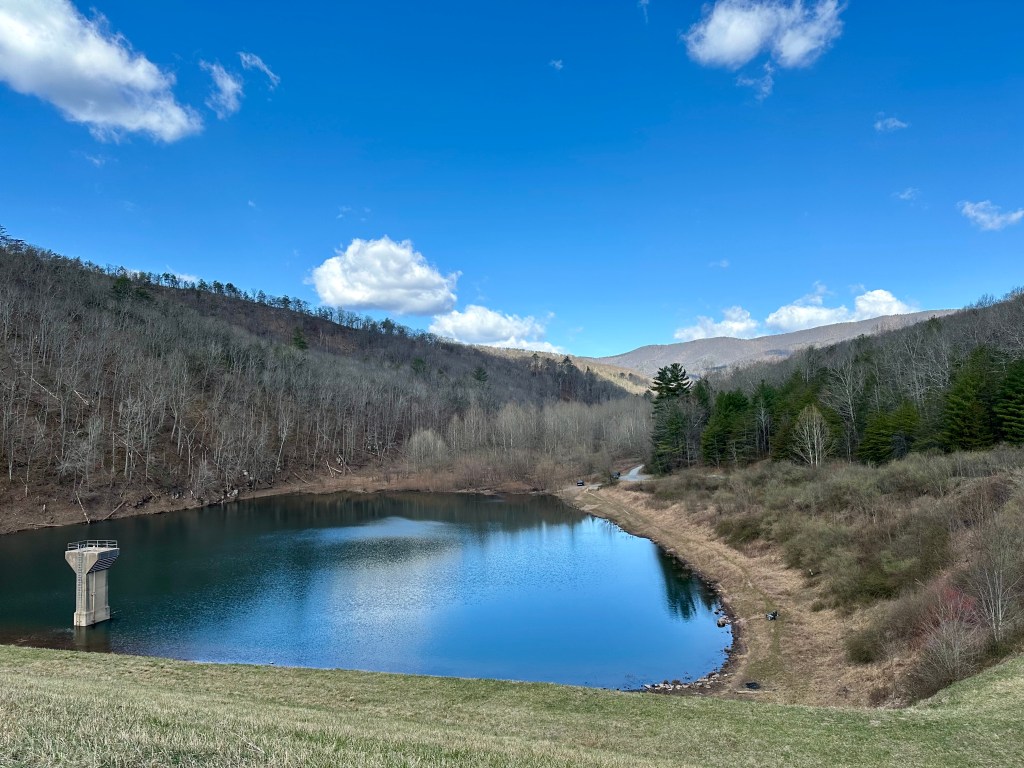
We turned onto a narrow, notoriously bumpy road that led to a mountain reservoir. A stream rushed between the mountains’ steep, forested foothills, marking the boundary between Virginia and West Virginia. Mint-colored leaves had only sprouted, allowing views of rock-filled talus slopes.
At the reservoir, the azure sky commanded the scene. Far below on its shores, fishermen plied the still water that mirrored the blue canopy overhead.
Though in no hurry, we kept driving south to our lunchtime destination. We wound up, down, and around onto primary roads and entered a historic, small southern city where artists and restaurants have replaced millineries, general stores, and saloons. We spied the old railroad station two city blocks away, where Amtrak and excursion trains still stop.
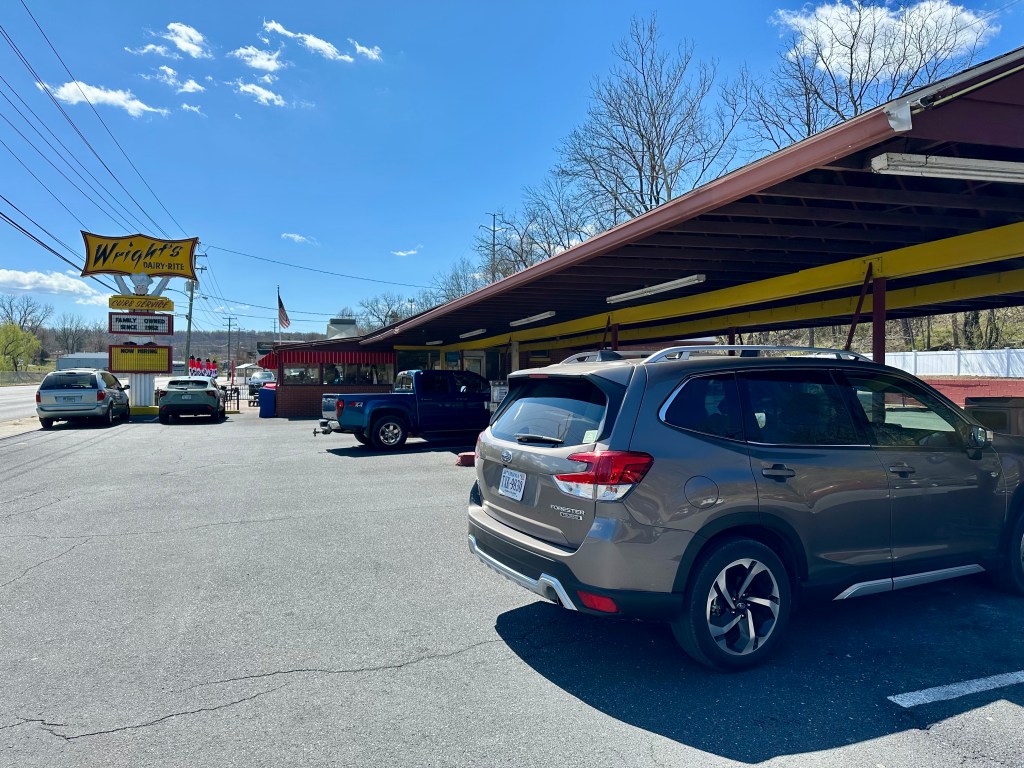
We were delighted to find a restaurant serving fresh seafood and luscious desserts. However, my wife diligently discovered an old-fashioned drive-in a mile away serving the best hot fudge sundaes.
It had been decades since I had to push a button to order food. The speakers looked like those we had at drive-in movie theaters in the 1960s. Our sundaes arrived just as we ordered, with chocolate ice cream.
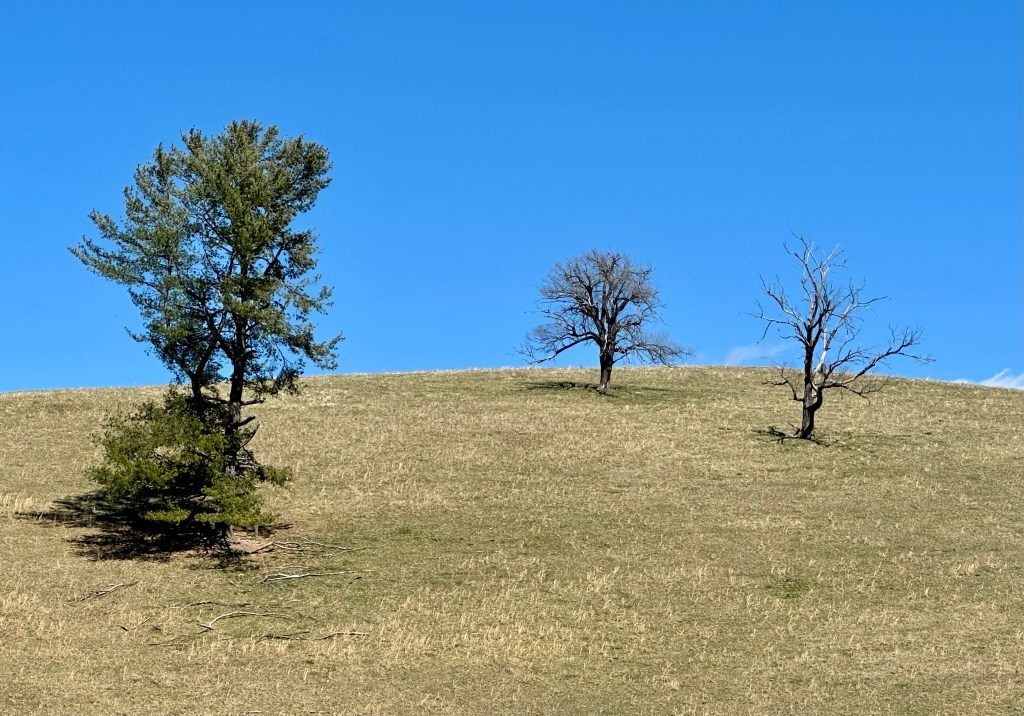
After the nostalgic pleasures, we headed west again toward the mountains before turning north. We passed ranches with lazy brooks snaking through green pastures occasionally speckled with grazing Black Angus cattle. Experienced farmers kept hilltop trees for cattle to gather on hot, humid Virginia days.
Drivers of the few vehicles that passed us waved the familiar index finger hello. If they know you, they point at you as a sign of recognition. We were fine with being admiring strangers.
Abandoned farmsteads stood on steep hillsides surrounded by trees planted ages ago. The houses were weathered and had broken windows, while many old outbuildings and barns had collapsed.
The long farm lanes that ended at white two-story houses and red bank barns reminded me of the happy, innocent Ohio days I drove down to pick up my fiancée. Like her lane, a small ridge of stubble grass divided the tire tracks.
The weather nearly matched the day we married all those years ago. Sunny skies and unseasonably warm temperatures dominated that precious day, too. However, the pungent smell of manure that the farmer had sprayed on the fields across from the country church was missing.
We made our way home happy, contented, and glad we had chosen to renew our vows so quietly, personally, amid welcome familiarity.
Steers graze on greening grass. Photo by Bruce Stambaugh
If there was one day I dreaded each school year for the three decades I spent in education, it was April 1, better known as April Fool’s Day.
The students and even a few teachers were merciless with their inane April Fools jokes. I only celebrated the day when April 1 fell on a weekend.
But five times out of seven, it did not. As a teacher and then principal, I endured the school-wide silliness. I gave a little more slack to the younger children who dared approach the principal to trick him. I did my best to play along.
I fondly remember their coy smiles and giddy calls of “your shoe’s untied.” I always took the bait, looked down, waited for the giggles, and continued down the hall until the next juvenile ambush.
It was harder for me to tolerate the older students who tried unsuccessfully to be more sophisticated with their trickery. I didn’t have much patience with students who released the distracted teacher’s pet garter snake in the room or those who put tacks on teachers’ seats.
I wondered who invented such a silly day, so I put my curiosity to work and investigated. My due diligence involved a thorough, if not speedy, Google search.
The results didn’t lead to any definite conclusions. However, multiple resources surmised that the antics of the crazy day likely began with the introduction of the Gregorian calendar. This significant change from the Julian calendar, which had to make immigration reform seem simple, revamped the annual timetable of the entire civilized world.
On February 24, 1582, Pope Gregory instituted the switch by issuing a bull, which I found humorously appropriate. A bull is an edict from the Pope. This proclamation created January 1, not April 1, as the beginning of a new year. Of course, there were problems. In the 16th century, communications were not what they are today. Of course, given the state of the current TikTok world, that may have been a good thing.
Another contributing factor was that Protestant countries like England and Scotland didn’t recognize the Pope’s authority and initially refused to make the calendar conversion, religious reference intentional.
Word of the calendar change took several months, even years, to spread throughout Europe and beyond. Not surprisingly, some resisted the change and preferred to maintain the status quo, which included celebrating a new year beginning on March 25 and culminating on April 1. Just imagine New Year’s Eve lasting eight days. It sounds a lot like Mardi Gras to me.
Those who refused to honor January 1 as the beginning of the New Year and continued to use the April 1 demarcation became known as April Fools for their obstinacy and resistance to change. As the lore goes, April 1 was dubbed April Fool’s Day for those who clung to their old ways.
Those poor fools, excuse the pun, who refused to accept the new calendar were sent off on ridiculous errands and were made the butt of practical jokes, like sticking signs on their backs that said: “Kick me.” My former students kept alive such tricks.
Perhaps because the new calendar took so long to be accepted, the practice of nonsense on April 1 became an annual event. The silliness gradually spread to the British and French colonies in America.
Since then, students have pestered teachers, principals, and parents on April’s first day. With that in mind, come April 1, check your seat before you sit down.
Found along the Dry River, which wasn’t dry. Photo by Bruce Stambaugh
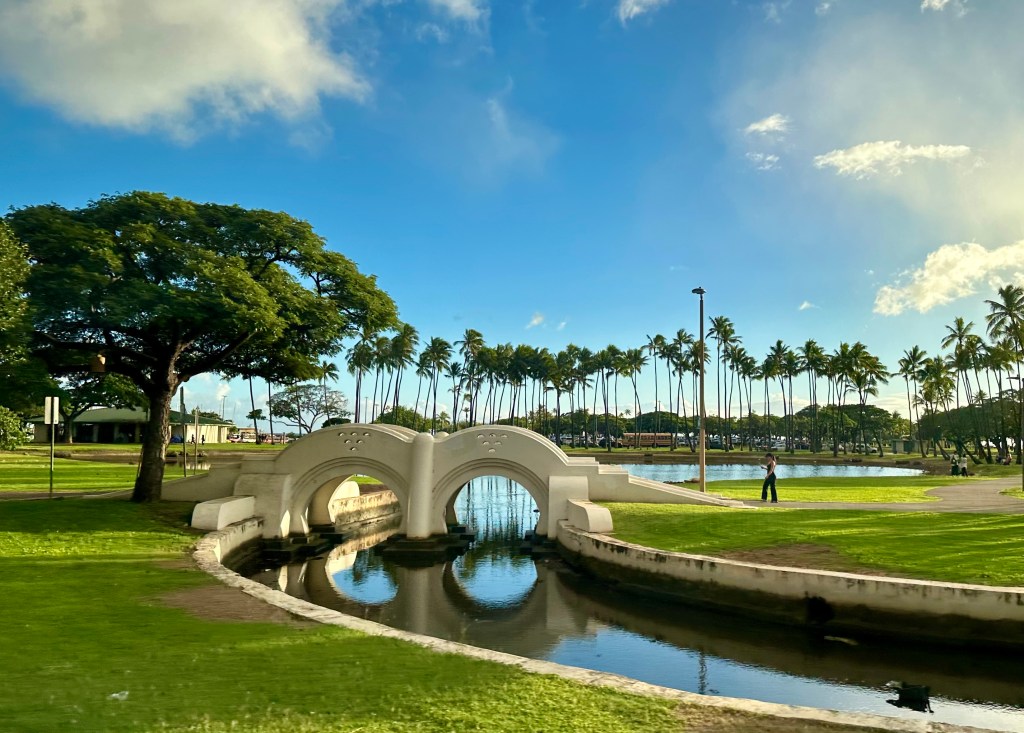
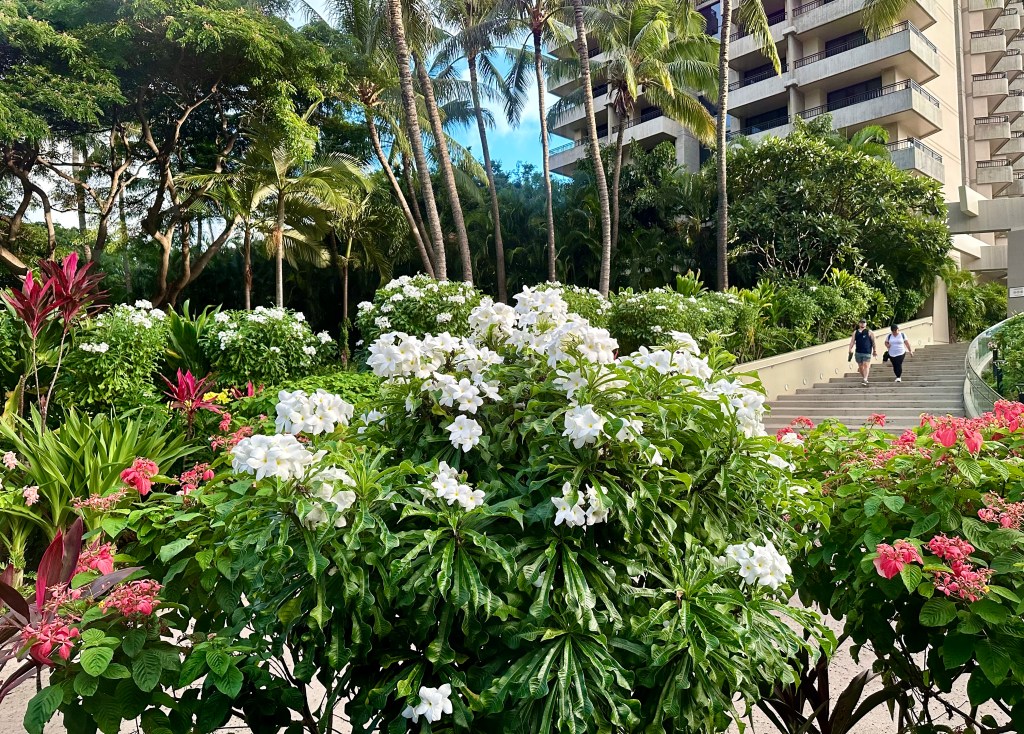
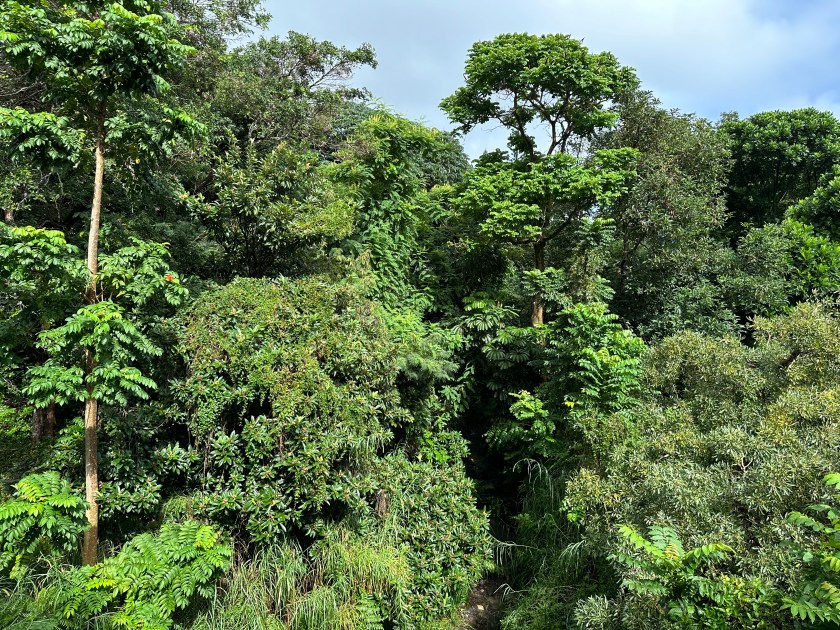
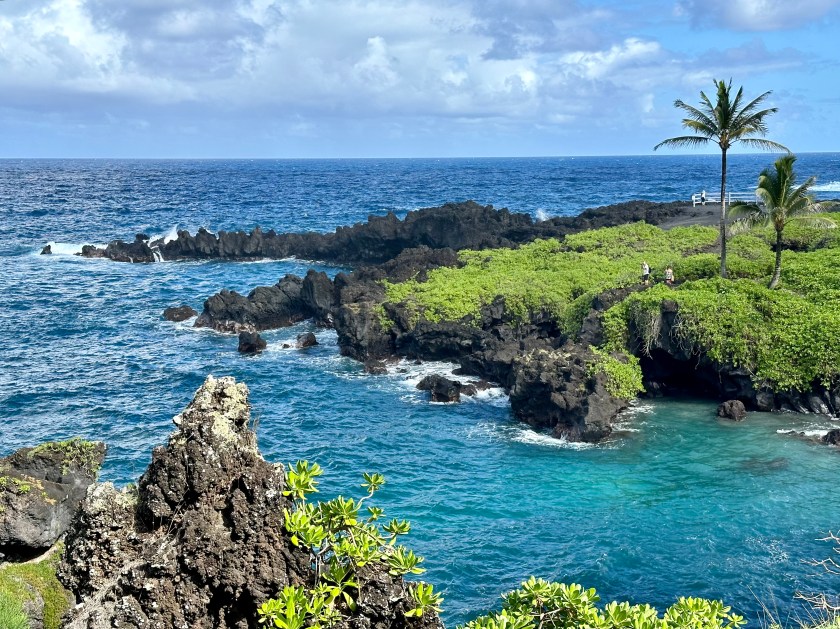
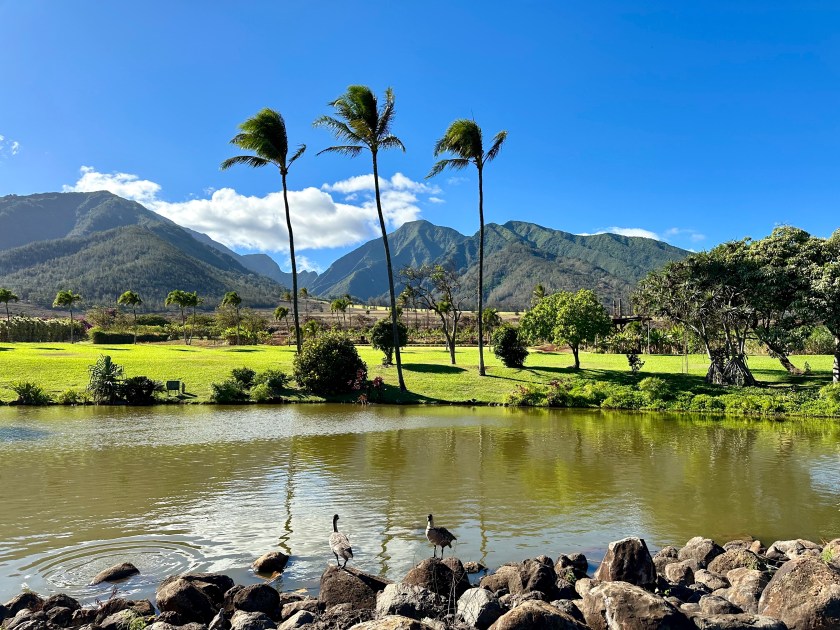
Hawaii preserves its lush vegetation with city, county, and state parks. Photo by Bruce Stambaugh
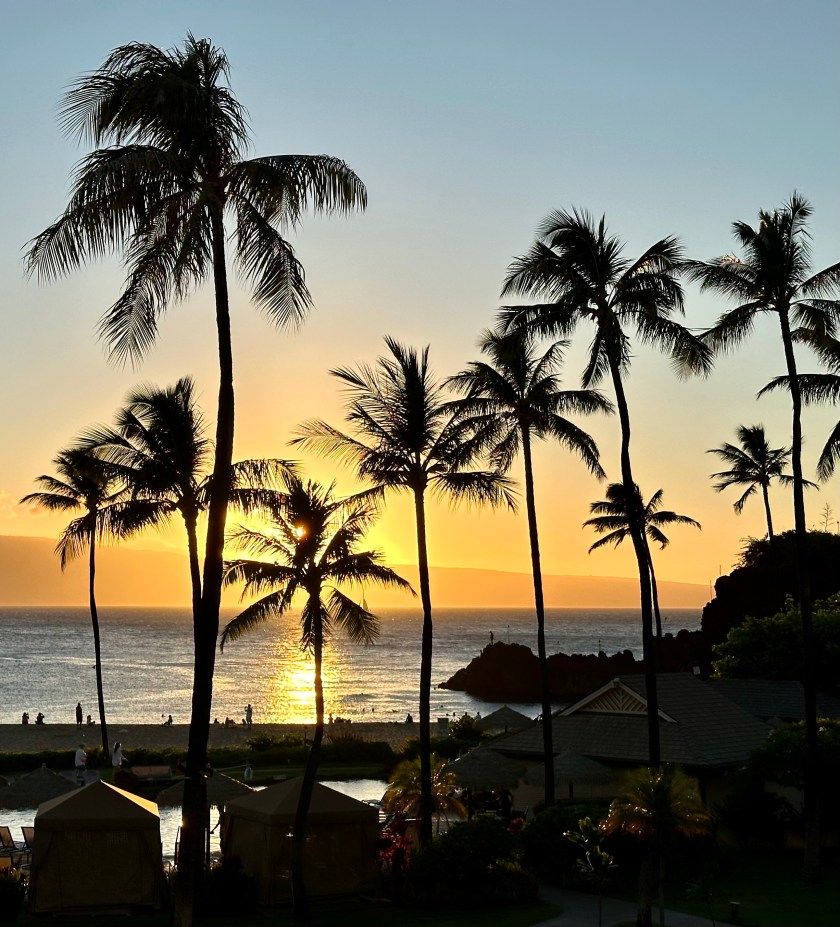
Turquoise waters, large, rolling waves crashing into coves with hidden pristine beaches, majestic palms, and friendly, inclusive residents who love their history and land are reasons enough to visit Hawaii.
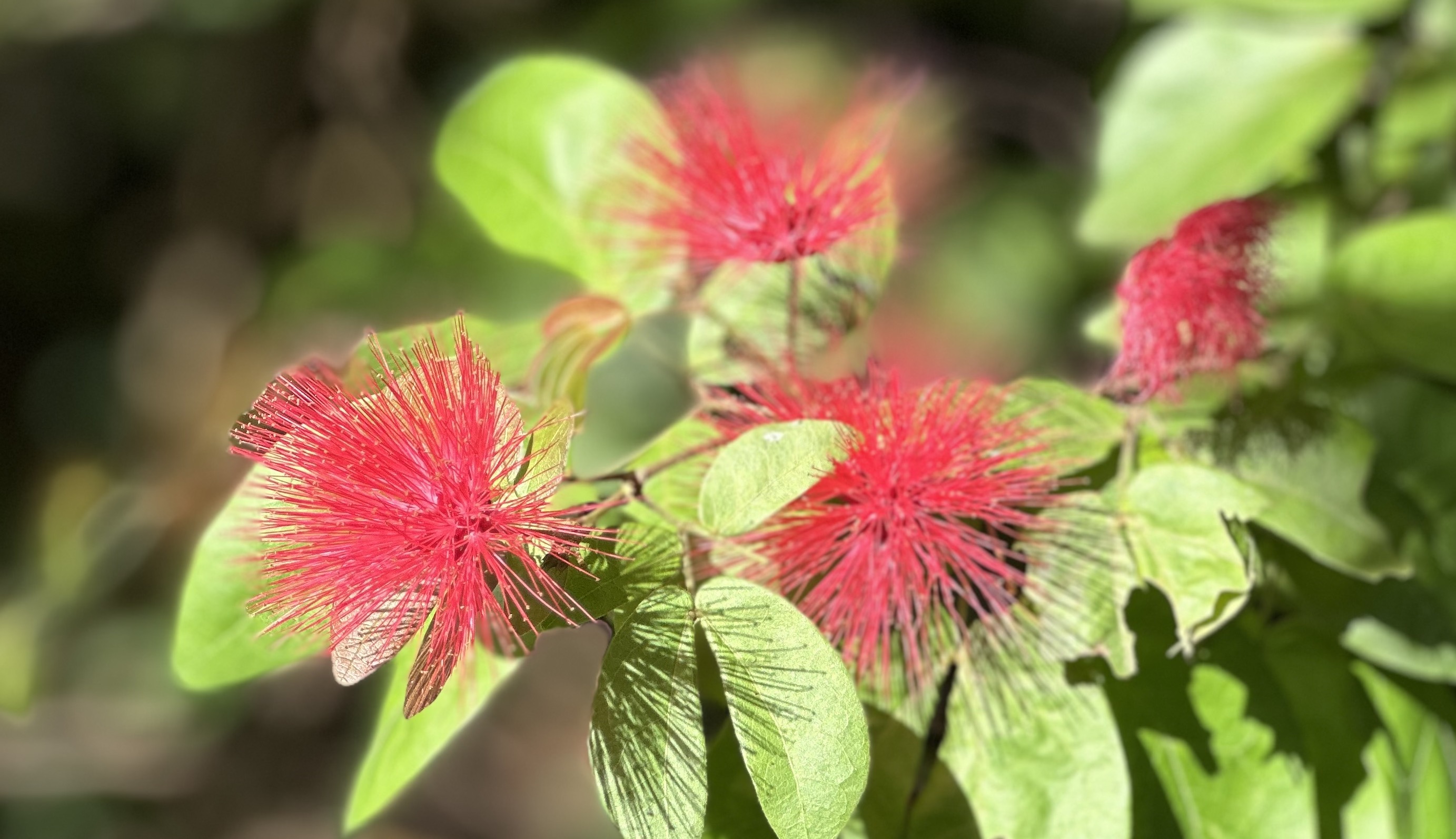
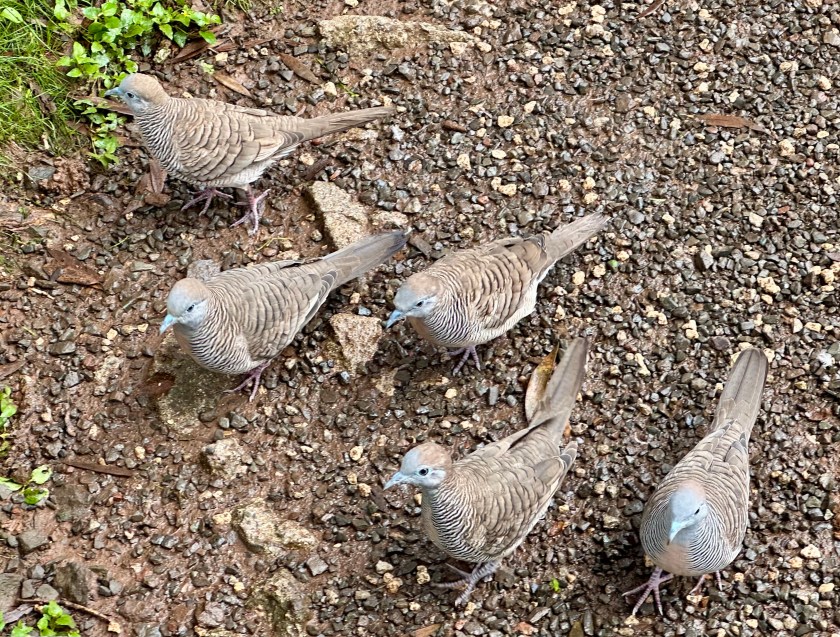
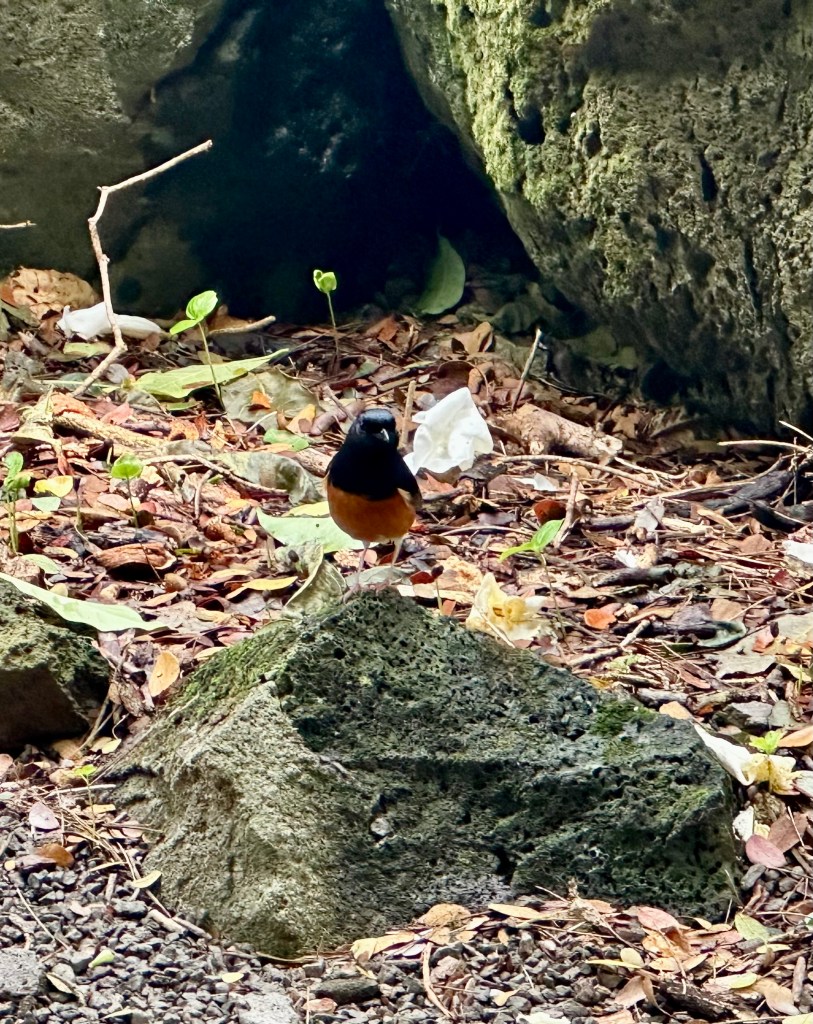
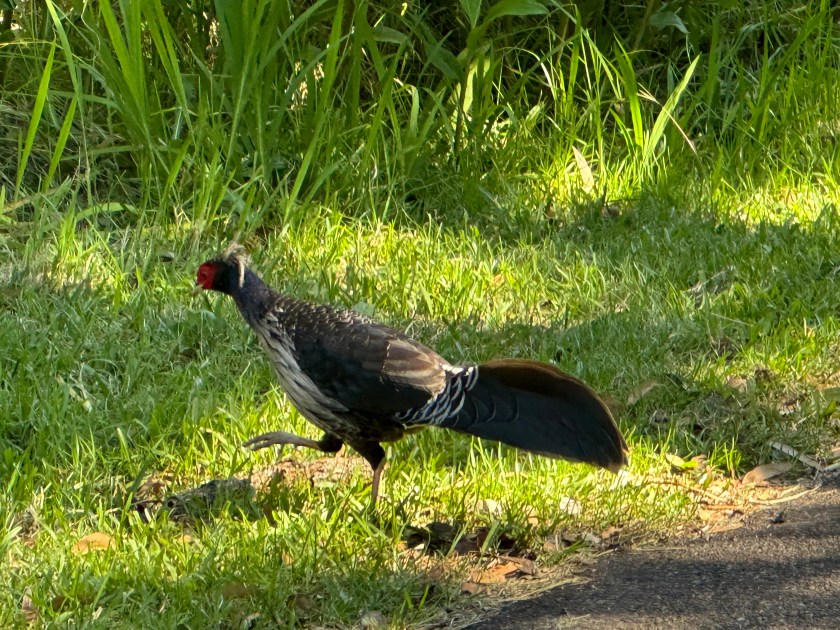
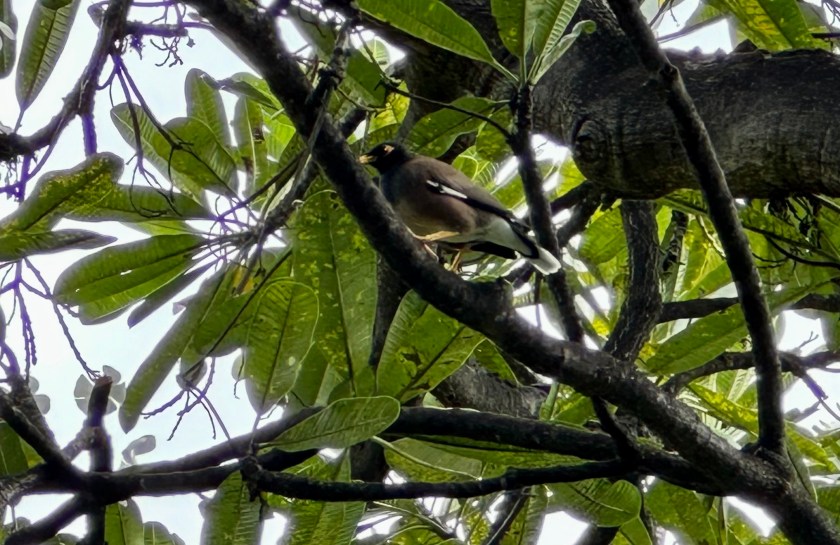
However, our 50th state’s flora and fauna also stand out, as I discovered on a recent trip there. The vegetation, flowers, and wildlife ignited my senses, and I snapped over 1,200 photos. It was that beautiful, and I only visited three islands: Oahu, Kona, and Maui.
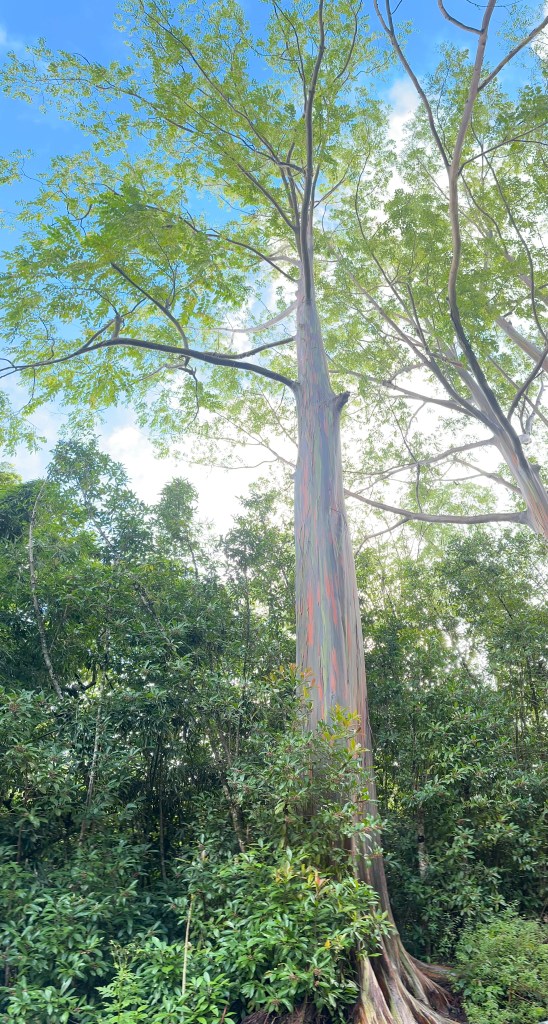
You don’t need to be a botanist to appreciate the abundance of lush plants, trees, and flowers on the 132 Hawaiian islands. Hawaii’s wildlife thrives in these varied tropical habitats.
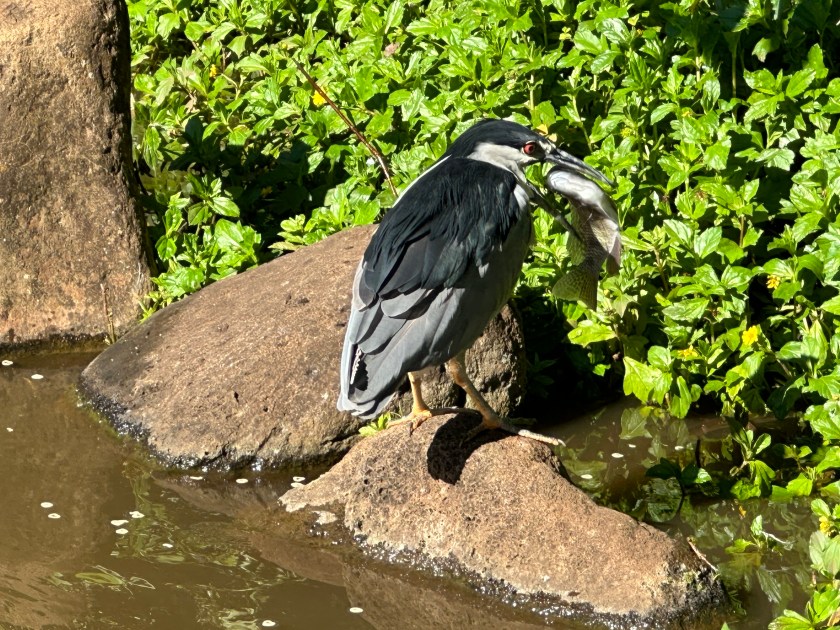
As an avid but amateur birder, I focused on birds. However, since I was on a group tour, my opportunities to do much bird watching were limited. I listened to and looked for birds as much as possible in my free time at the various stops on every excursion.
I was most impressed with how Hawaiians honor sacred lands by caring for them through public parks, wildlife preserves, and national parks. The lack of trash along roadsides, sidewalks, beaches, and in rainforests proved this point.
In the capital city of Honolulu, flowers were ubiquitous. They bloomed in neatly manicured flowerbeds, bushes, hedges, and trees, and native flowers filled vases inside nearly every building we entered.
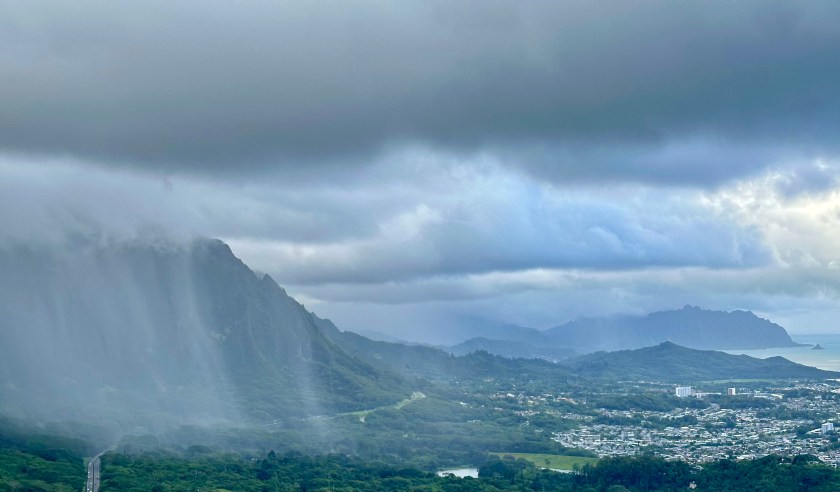
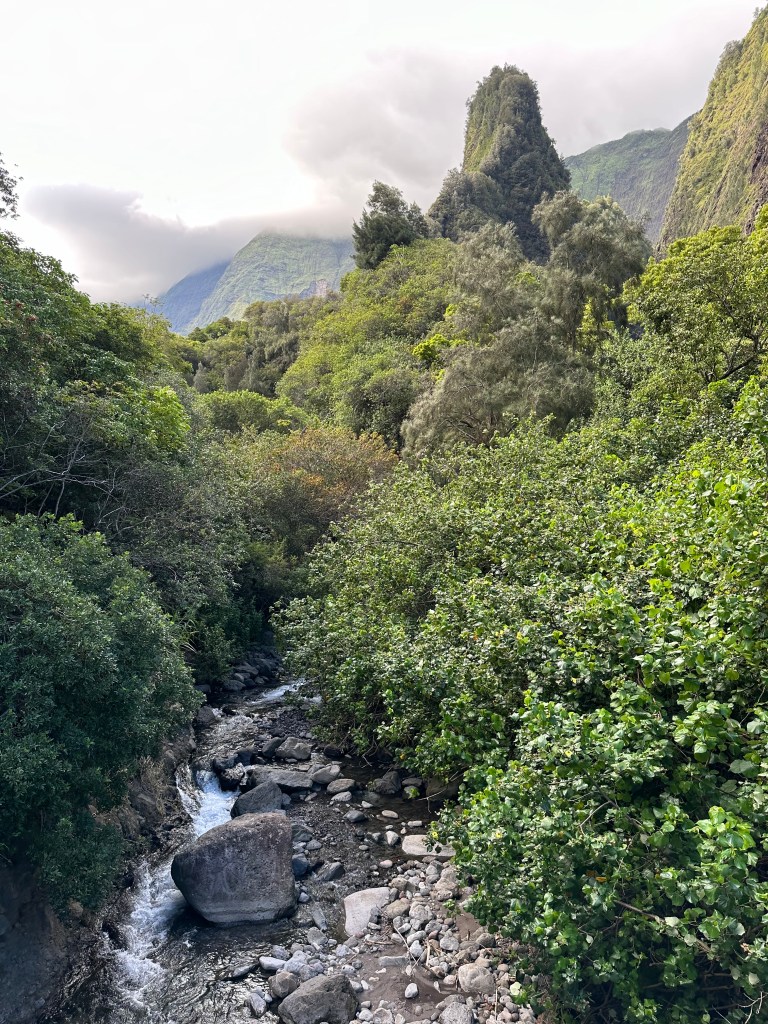
However, the countryside was where the flora and fauna ruled. Thanks to frequent tropical rains, dense rainforests grew on the windward sides of these mountainous islands. Since the clouds had spent their moisture, only scrubby trees, bushes, and grasses grew on the leeward slopes. There was that much difference in the annual rainfall.
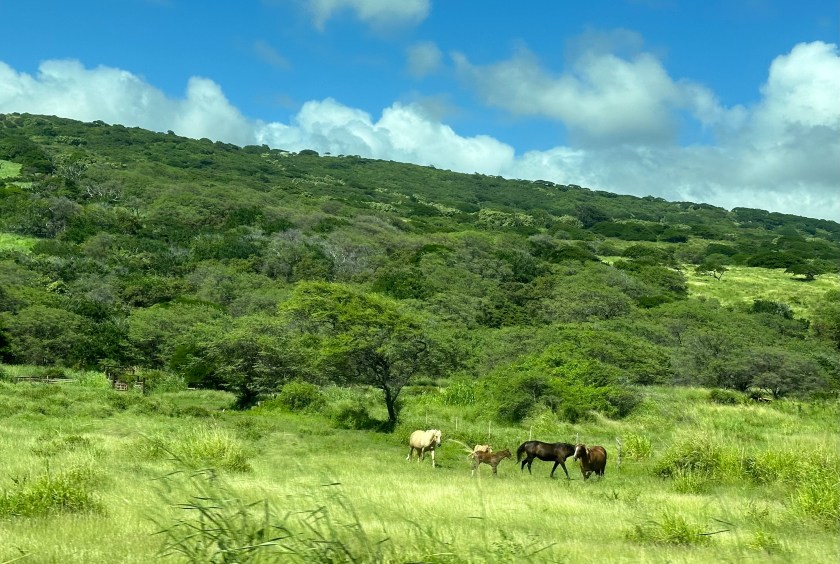
The transition between lush and barren was usually pronounced. However, in some rural locations, ranchers fenced off large, sloping pastures dotted with scrubby trees where cattle, cows, and horses congregated.
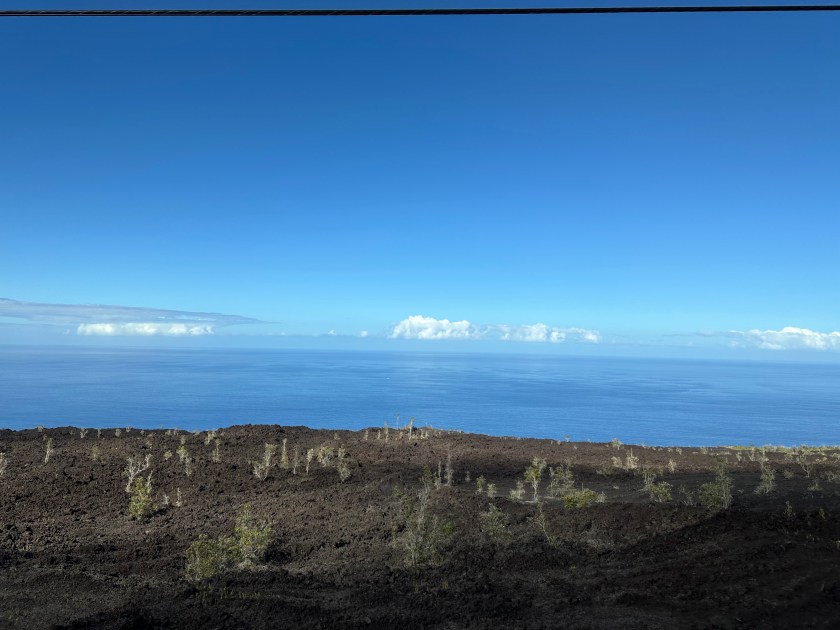
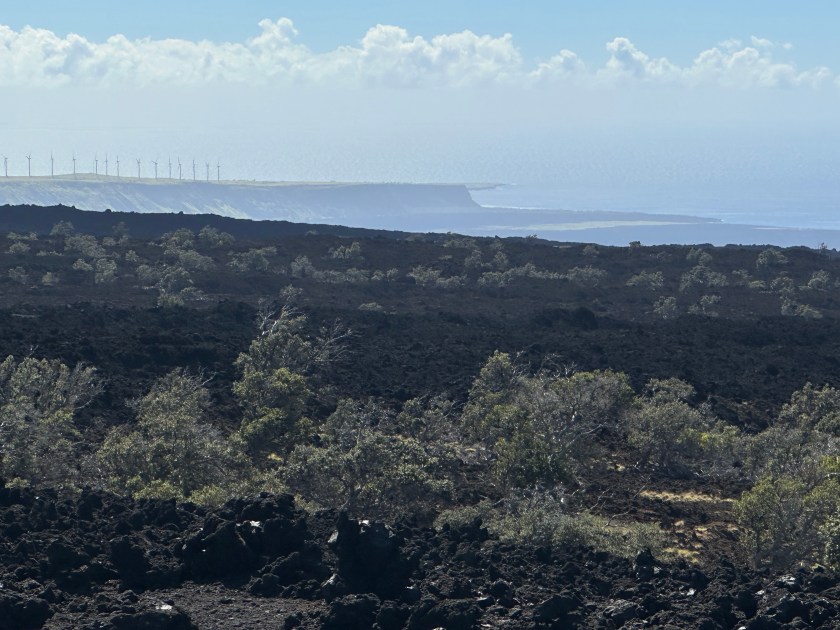
Ancient and recent lava flowed to the sea down the mountainsides, disrupting most plant growth. Still, grasses poked through, helping to break down the rock with assistance from winds and rain.
Lush foliage covered steep, sharp mountains while a half mile to the coast, shorebirds waded for any morsel they could snag. That’s the natural consequence of life on the tip of a submerged volcano that would tower over all land-based mountains, including Mount Everest. Animals and birds flourished all around Hawaii Volcanos National Park.
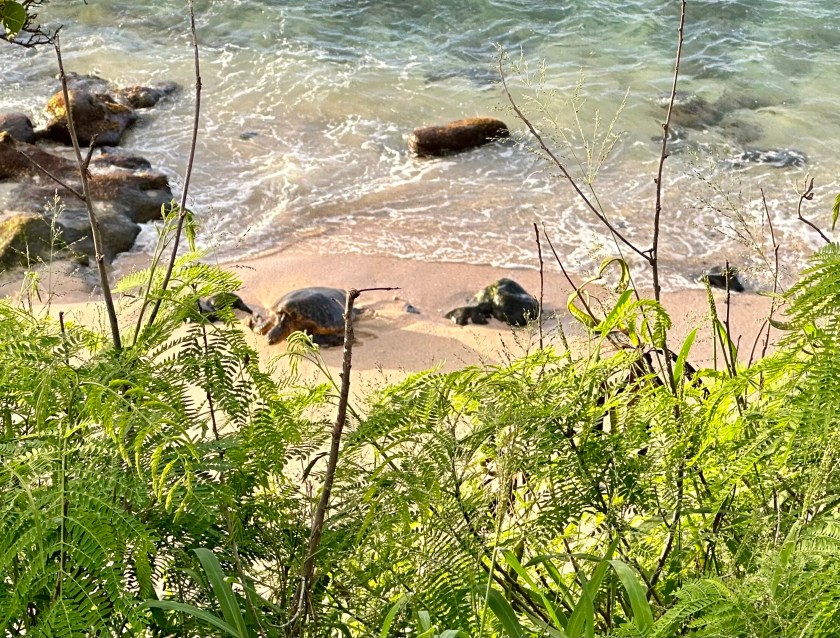
As the vegetation types changed, so did the animal life. In the adjacent ocean waters, manta rays cruised the shorelines for food, and giant Green Sea Turtles basked on sunny beaches to warm themselves.
At a historical coffee plantation, songbirds darted from tree to tree, singing and calling high above the shaded coffee bushes. Years ago, I experienced similar scenes multiple times in Honduran coffee farms.
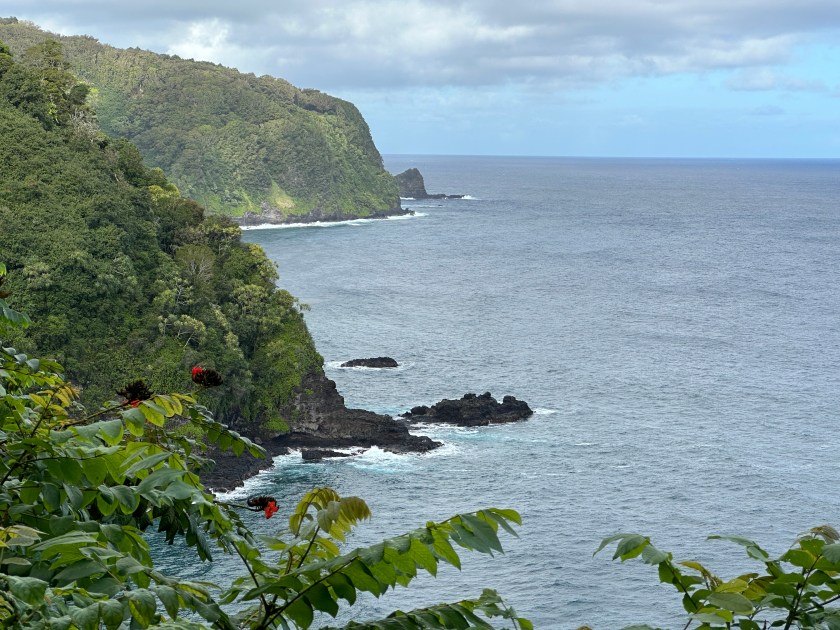
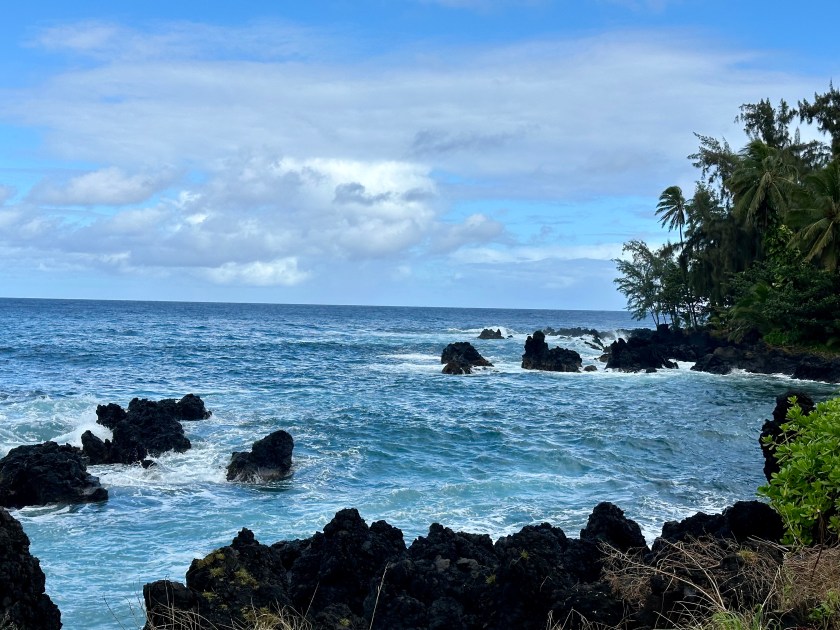
The last full day on Maui proved the most thrilling for scenery and fauna. Driving the Road to Hana and back will do that. Steep mountainsides filled with 50 shades of green surrounded majestic waterfalls, and sharp-angled cliffs dove into inviting waters.
Hidden coves with fine black or white sand beaches held their secrets. Crashing waves instantly transformed into a brilliant white froth that quickly disappeared.
I spied a colony of terns that spend most of the year out to sea fishing. They claimed an old, rugged lava rock that protruded above the sea’s surface, providing a handy, protected nesting sight. Behind me, a small flock of finches waddled through the park’s manicured grasses.
I would be negligent not to mention the free-range hens and roosters roaming the islands. Like many other island animals and plants, they are not native but are now part of the culture.
In my few days in this island paradise, nature’s flora and fauna overwhelmed me with joy. Surrounded by such enchanting environments, who wouldn’t be?
A black sand beach along the Road to Hana. Photo by Bruce Stambaugh
The Marting Luther King, Jr. Memorial in Washington, D.C. Photo by Bruce Stambaugh
Today is Rev. Dr. Martin Luther King, Jr. Day in the United States.
Dr. King was a leader in the civil rights movement in the U.S. from 1955 until he was assassinated on April 4, 1968, in Memphis, Tennessee. He was born on January 15, 1929. Consequently, the federal holiday was designated on the third Monday in January.
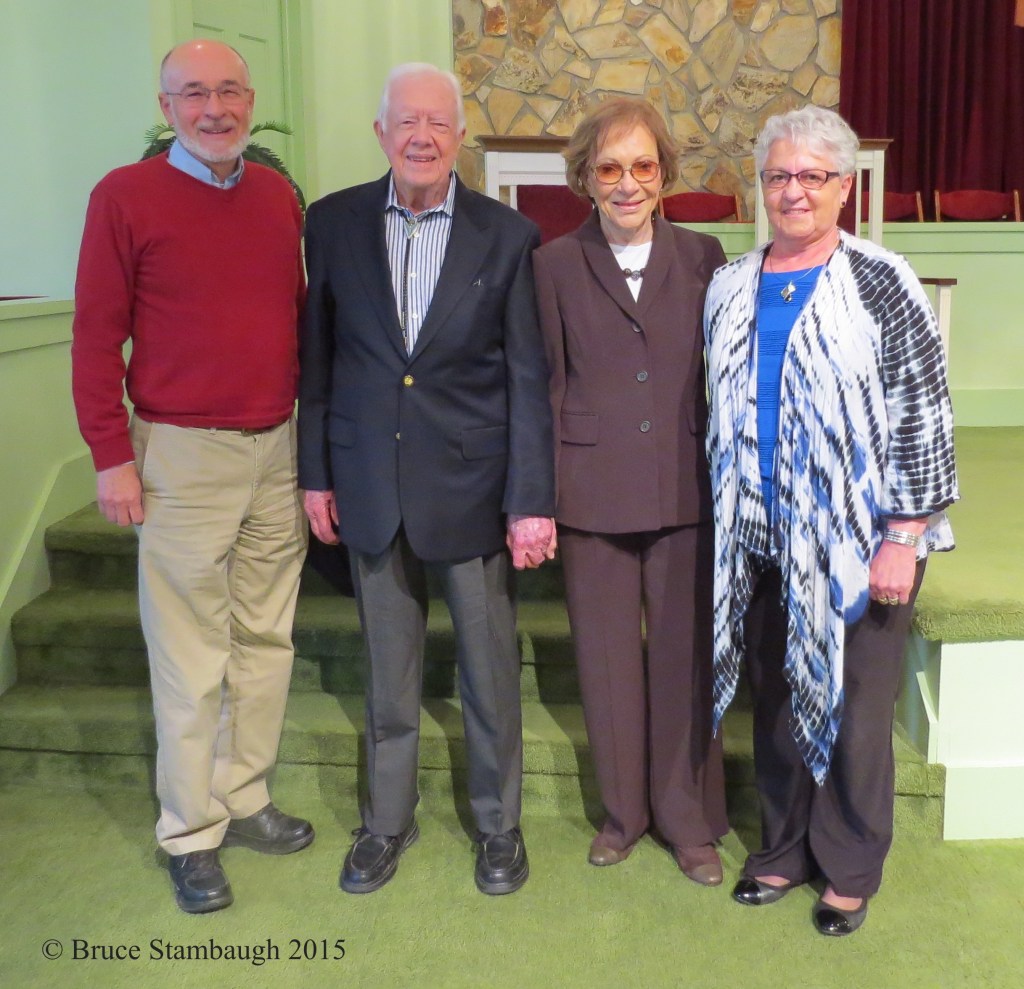
My wife and I with Jimmy and Rosalynn Carter at Maranatha Baptist Church, Plains, Georgia.
Today, the nation says farewell to its 39th president. The state funeral will be held in the National Cathedral in Washington, D.C.. In contrast, a private service will be held tomorrow at Maranatha Baptist Church in Plains, Georgia, where Jimmy and Rosalynn attended and Jimmy taught Sunday school.
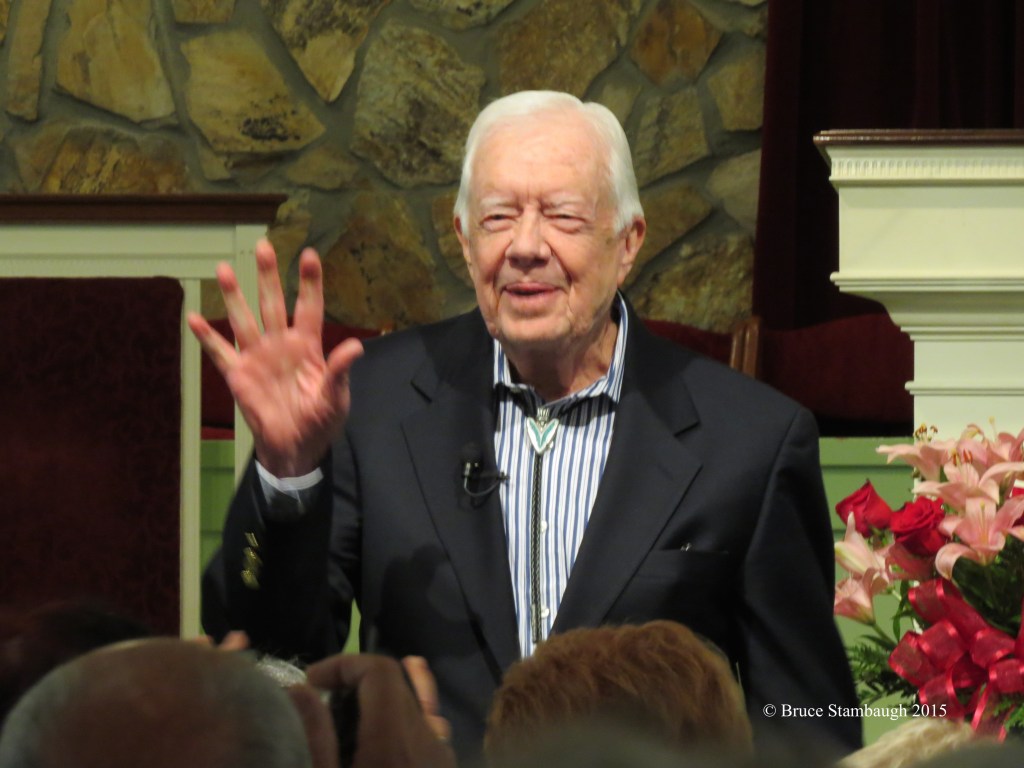
That’s where the above photo was taken on March 1, 2015. While vacationing in northeast Florida, Neva and I decided to visit Plains and attend the Sunday school class taught by the former president. At age 90, he was reducing how often he led the class.
Jimmy was scheduled to teach the day after we needed to leave Florida, so we drove the four-and-a-half-hour drive from Fernandina Beach to Plains. When we arrived, we drove around Plains, which didn’t take long given the town’s small size. We also visited the Jimmy Carter National Park, where the visitor’s center is the old Plains High School.
We enjoyed our brief tour there and saw the Nobel Peace Prize that Jimmy was awarded in 2002. The old schoolhouse is much like it was when Jimmy attended there.
We also wanted to stay overnight in Plains, but the bed and breakfast had no vacancies. The perk to staying there gave patrons a front-row seat at the church, where the owner, Miss Jan, also attended. Plus, she was Amy Carter’s third-grade teacher.
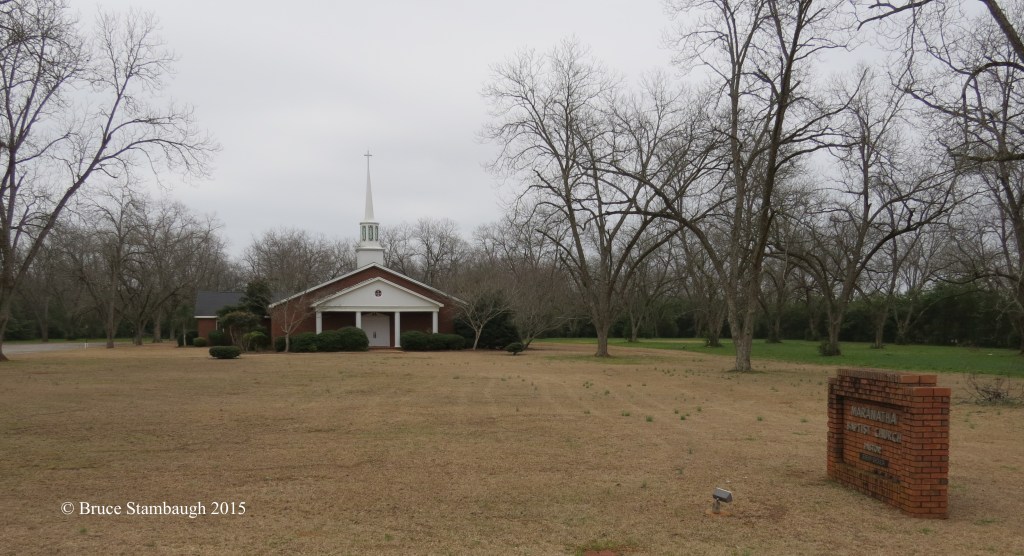
Maranatha Baptist Church, Plains, Georgia.
We met Miss Jan the next day after standing in line for a while. She took charge and barked out the procedures for entering the church, starting with passing through the Secret Service agents’ inspection. Much like filing through TSA at an airport, we emptied our pockets, and agents ran a wand up, down, and around everyone. So, the long line was slow going.
We had arrived early, but many others had arrived earlier. Perhaps they had the same idea. Like us, they had heard the praises of Jimmy’s teaching, and given that he was 90, they wanted an opportunity to listen to this humble former president’s wisdom.
Once in the church, we sat near the back since so many were ahead of us. The modest brick church surrounded by pecan trees wasn’t that large, so we could still see and hear well. Suddenly, Miss Jan appeared again and, like a drill sergeant, metered out the rules of the morning. Once Jimmy began teaching, no photos were permitted.
Since the church was packed, latecomers had to sit in the fellowship hall and watch a live stream of Jimmy Carter’s lesson. That’s how popular his teaching was.
If you wanted a picture with Jimmy and Rosalynn, you had to also stay for the church service. His class was the hour before the worship service. Then, Miss Jan asked us to bow our heads, and she said a lovely prayer. When the “Amen” was announced, we looked up, and Jimmy stood there smiling and waving to the congregation.
Jimmy Carter at Maranatha Baptist Church on March 1, 2015.
A collective “awe” echoed through the sanctuary, and Jimmy began his lesson. I don’t remember the scripture he used, but I can never forget the meaning of his message. Be humble and serve others.
That perfectly summed up Jimmy and Rosalynn’s life after leaving the White House. They established the Carter Center in Atlanta, whose purpose mirrored that of the Carters: peacebuilding, working for democracy in global countries, and improving human rights. Other goals include improving health and economies in third-world countries, ensuring fair elections, and educating people about the effects of climate change.
Jimmy and Rosalynn spent years supporting and assisting on sight Habitat for Humanity projects. They were great humanitarians. From my perspective, Jimmy was the most effective former president the United States ever had.
We stayed for the church service, and afterward, nearly everyone wanted a photo with Jimmy and Rosalynn. Miss Jan had the method down pat, and we got our photo. It was one of the proudest moments of my life to stand next to such loving human beings, an ex-president and a first lady.





























 Roadkill Crossing
You must be logged in to post a comment.