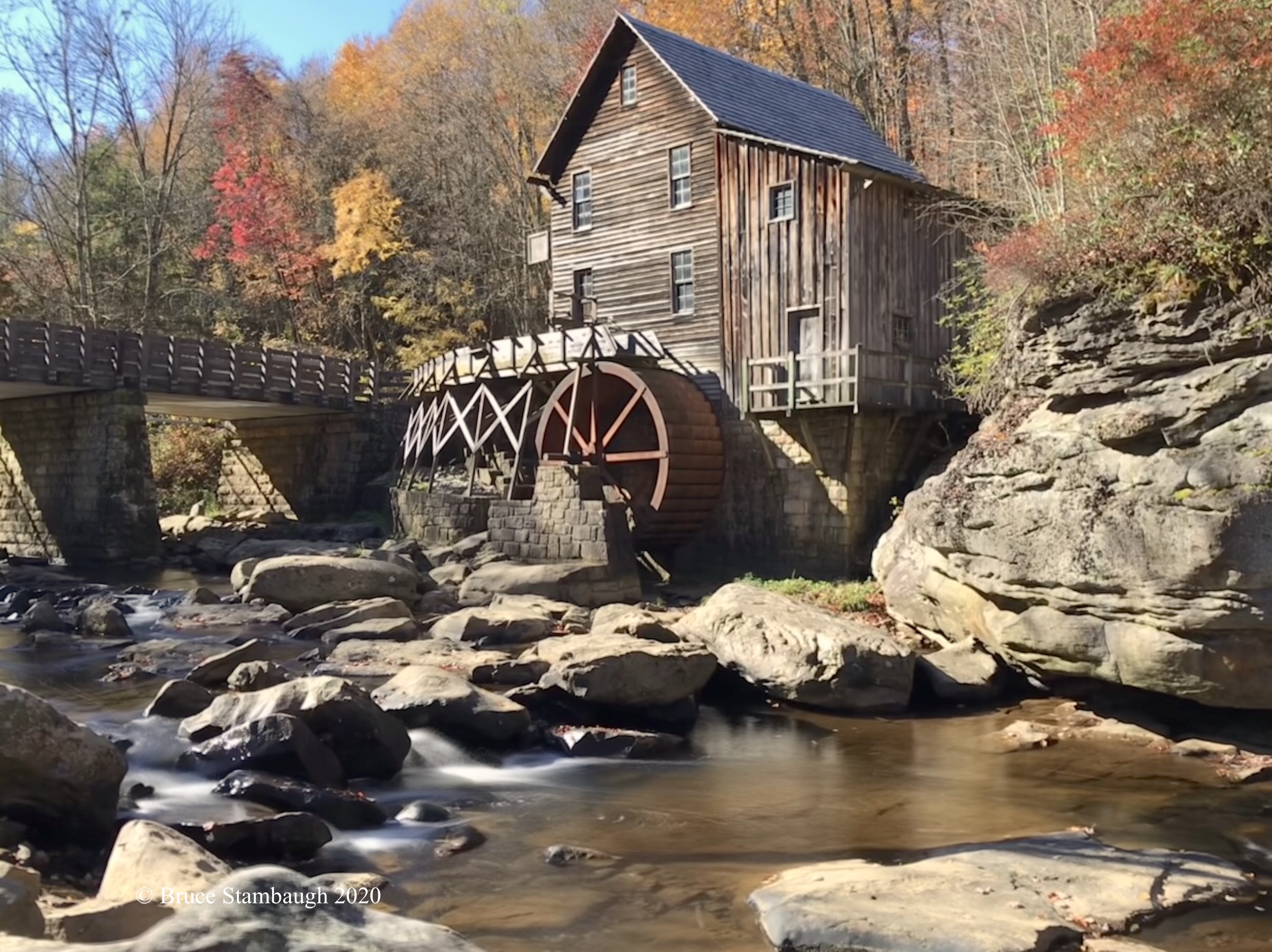
The Glade Creek Grist Mill in West Virginia’s Babcock State Park is on most photographer’s “must do” list. I was no exception, especially since moving to Virginia’s Shenandoah Valley more than three years ago.
The old mill is most often photographed in fall and winter. I missed the peak of the leaf color by just a few days. Still, I was pleased with the residual colors that framed the mill along its namesake stream.
We don’t need a calendar to remind us that Halloween is just around the corner, quickly followed by the U.S. presidential election. Do we get doubly spooked this year?
I can’t decide which is worse, all of the Halloween related commercials or the political campaign ads on television. Sometimes it’s hard to distinguish between the two.
Halloween has had a history of inspiring misbehavior, reference Ichabod Crane. Unfortunately, ghoulish nonsense gradually replaced good-natured orneriness over time.
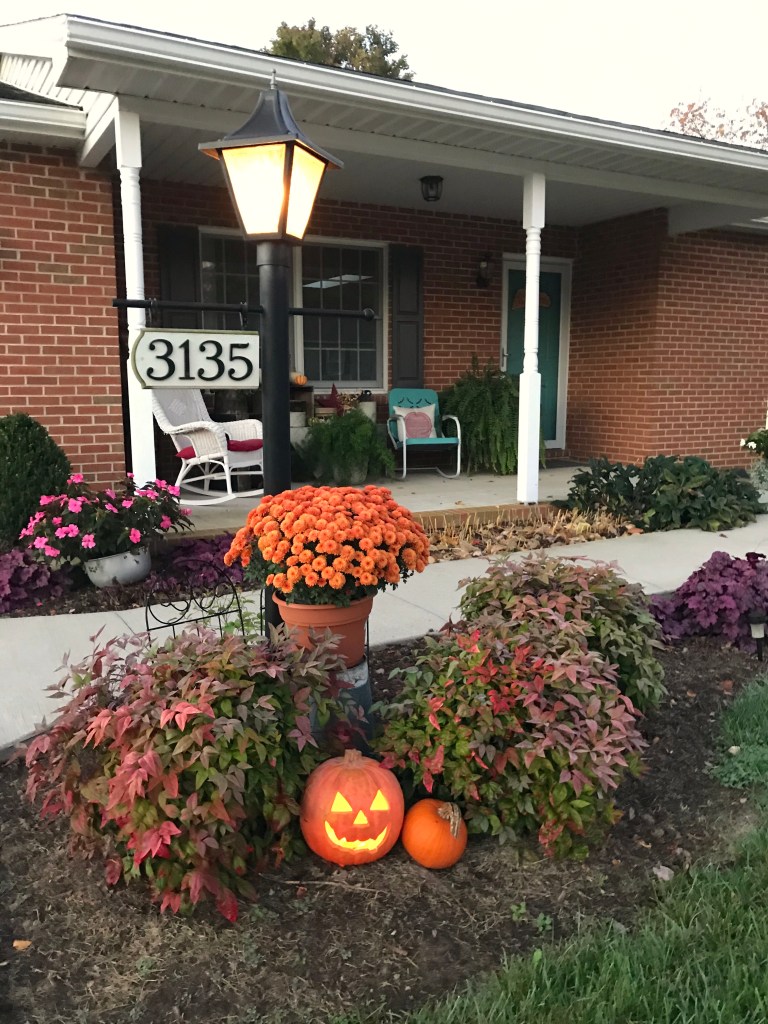
When I was a youngster, a hooligan once stole a pumpkin right off of our front porch. My younger siblings and I happened to see the teenage culprit dashing down Winton Ave. with our jack-o-lantern still flickering with each stride the young man took.
Once we arrived back home after a two-hour trick or treat raid of the neighborhood, we forgot about the lowly pumpkin. Our childish attention turned to comparing who got the most and the best candy.
Our family dentist declared the winner at our next checkups. The one with the fewest cavities won.
Growing up in suburbia in the 1950s and 60s was mild compared to today, however. Usual Halloween tricks included throwing shelled field corn against people’s windows to scare them. Soaping windows was also a common prank. Those who traded soap for paraffin were considered mean.
I found out what real Halloween tomfooleries were when we moved to Holmes County, Ohio, in the heart of Amish country. Torching corn stalks in the middle of the night and burning tires on highways were major annoyances, not to mention illegal and dangerous. The county sheriff added extra patrols to try to quell the orneriness.
I remember one story, vividly. A sheriff’s deputy that I knew was driving his cruiser through dense fog late one night. An egg thrown from a passing Amish buggy hit his vehicle, and a short pursuit ensued. The black buggy with no lights quickly disappeared into the thick fog.
Teens took turns tormenting different towns. It would be Berlin one night, Mt. Hope the next. Then it was Benton, followed by Farmerstown, and on and on it went.
There never seemed to be any rhyme or reason to the order of towns adorned. Toilet paper streaming from trees and utility lines decorated each village. I hope that doesn’t occur during the pandemic, or they’ll be another shortage of toilet paper.
Pranksters would hoist farm equipment atop buildings and corral “borrowed” livestock in town squares. At least they provided hay and straw for the animals. The critters and buggies usually found their way back to the rightful owners.
Trick or treating was more controlled in the rural areas. Community organizations and volunteer fire departments hosted gatherings for children and handed out candy in pre-stuffed bags. Hundreds of costumed kids paraded before judges, who then awarded cash prizes for the funniest, the most creative, and the scariest costumes.
This year community-based parties like those that our children attended will replace trick or treating. With the pandemic still raging, many communities around the country are rightly canceling traipsing door-to-door.
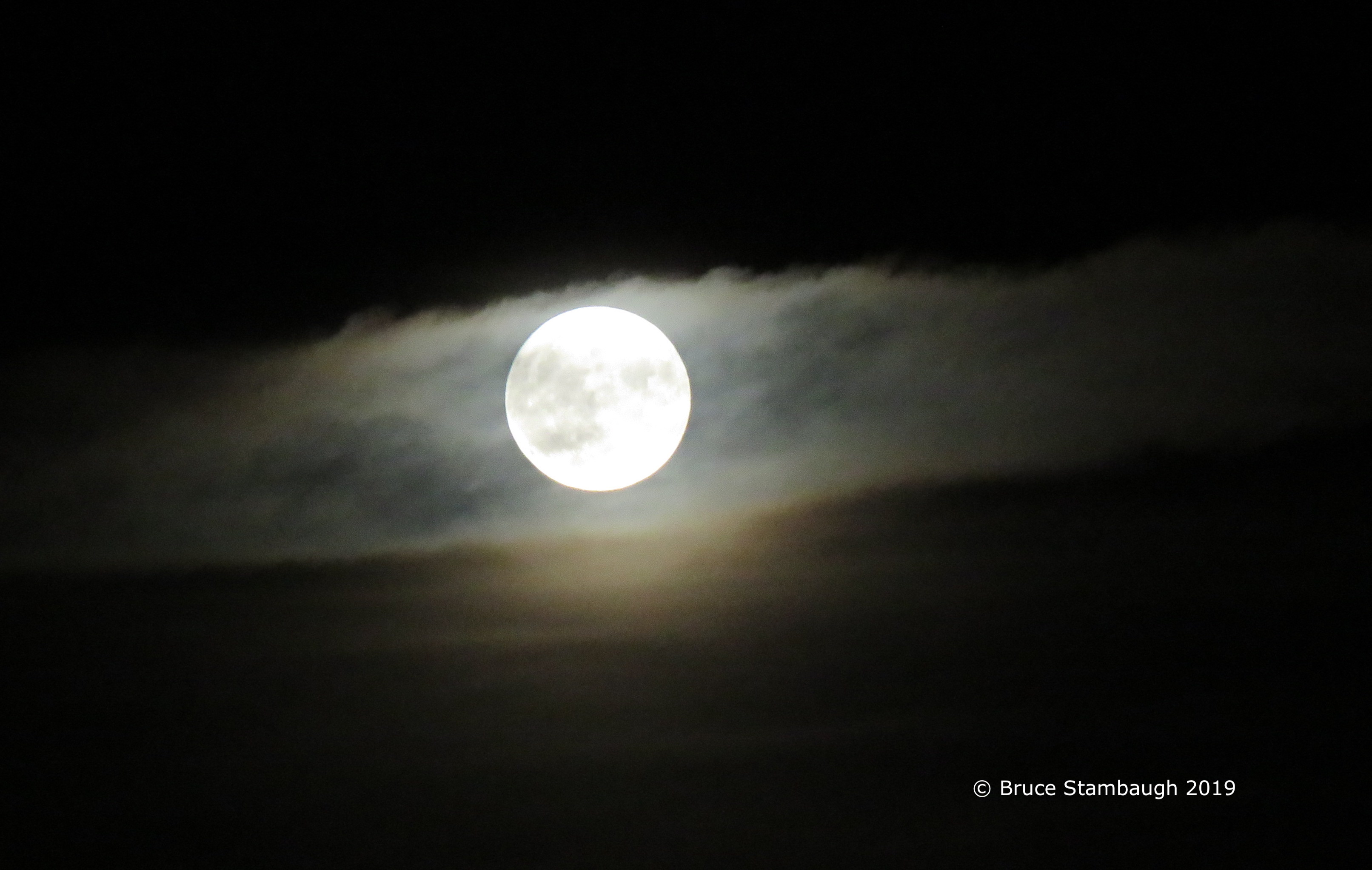
But don’t worry. This year Halloween night has some extra special celestial treats for everyone. The night sky will scare up a Blue Moon. The October 1 Harvest Moon was the month’s first full moon.
There’s more. Mars won’t be this close to Earth again for a long time. The red planet will cozy up to the full Blue Moon on Halloween night.
Let’s hope for a clear sky so that we can enjoy the heavenly show. Just don’t gaze skyward too long. Someone might steal your pumpkin.
Looking west from a point in Big Meadows in Shenandoah National Park.
Even though the morning’s southeast breeze was gentle, the leaves rained down like ticker-tape parade confetti. I was in my favorite outdoor space, Shenandoah National Park’s Big Meadows.
Big Meadows is an anomaly. No logical or scientific reasons can explain why the expansive meadow sits in the middle of this popular national gem.
Scientists have determined that there is nothing unique about the soil’s geologic makeup or bedrocks below that would create a meadow in the middle of a forest. In a matter of yards, the foliage changes from plants of a kettle-like marsh to wooded hillsides. I imagined Big Meadows as God’s thumb stamp of approval on these ancient mountains.
In the short time we have lived in Virginia, I’ve found fall is my favorite time to visit this gorgeous spot. From our valley home, the weather appeared to be perfect. But when you visit the mountains, conditions can be changeable at any time of year. I packed for the unexpected, and that’s what I got. With every step, creation’s glory unfolded.
You could hardly call my creeping along as hiking. I followed the parameter of the southern part of Big Meadows. In three hours, I covered only a mile and a half. A wooly worm would have made more progress, but likely not shared my joy.
I wasn’t out to break any endurance records. I went to see whatever came to me as I strolled along and through the area’s various topography. In the mountains, just a change in altitude of a few feet makes a big difference in the kinds of vegetation that grow.
This gently sloping mead is home to flowers, grasses, reeds, trees, and assorted creatures great and small. As an invader of their varied habitat, I tried to remain obscure.
With fall’s migration, I knew plenty of bird species might be passing through on their way south. I expected year-round residents, too, along with a few lingering butterflies.
Resident eastern bluebirds and handsome field and song sparrows greeted me. Eastern phoebes, magnolia warblers, blue-headed vireos, Carolina chickadees, and dark-eyed juncos darted about, too.
Dressed in their duller non-breeding feathers, some birds, especially the warblers, went unidentified by this average birder. Chirps near and far came from other species that I couldn’t locate.
I crept along the raggedy edge that separated fields from woods, exhilarated. I lingered in a high place beneath a sweeping white oak at the meadow’s southernmost border, where I could see near and far.
Contentment filled me as I sensed all the life around me. Instead of hiker, birder, or photographer, I was an uninvited but appreciative guest. Every moment bore existential meaning.
The first frosts of the season created a festive carpet of fall’s primary colors that spread across the landscape. The leafy trees and evergreens looked on in envy. Red-tinted green leaves, spent wildflowers, delicate ferns frosted golden, ruby-colored blueberry leaves, and russet grasses decorated the earth like it was Christmas.
Overhead, the sky also joined nature’s artistry. One minute, it was pure cerulean, the next white fluffy clouds.
Suddenly, a fog rolled in from the eastern piedmont. The steady breeze soon carried it to the western slope of the Blue Ridge Mountains.
I breathed an appreciative silent prayer of gratitude for all these sights and sounds. The old withered away, yet the promise of rebirth remained.
At every step that I took, I was delighted to have observed all that found me.
The fog that hung over Shenandoah National Park even after I left.
October offers up some of the year’s best weather. It often claims ownership of the year’s first killing frost, too, and the first snow. Sometimes it’s both.
October and I have a lot in common.
Weather is one of my favorite hobbies. I have satisfied that itch as a volunteer severe weather spotter for half a century for the National Weather Service. However, October is usually one of the quieter weather months unless a tropical storm plays havoc across the eastern U.S. Evidence 2012’s Superstorm Sandy.
The western edge of Superstorm Sandy exits Holmes Co., Ohio.
October tends to be the calendar’s buffer between fairer weather and the more barren, colder months that follow. In other words, the tenth month foretells the winding down of every year. There can be no better year than the present to draw to a close. I doubt that I need to elaborate or provide the gory details.
Enough of the quixotic shenanigans. October and I have much more in common than climatological conditions.
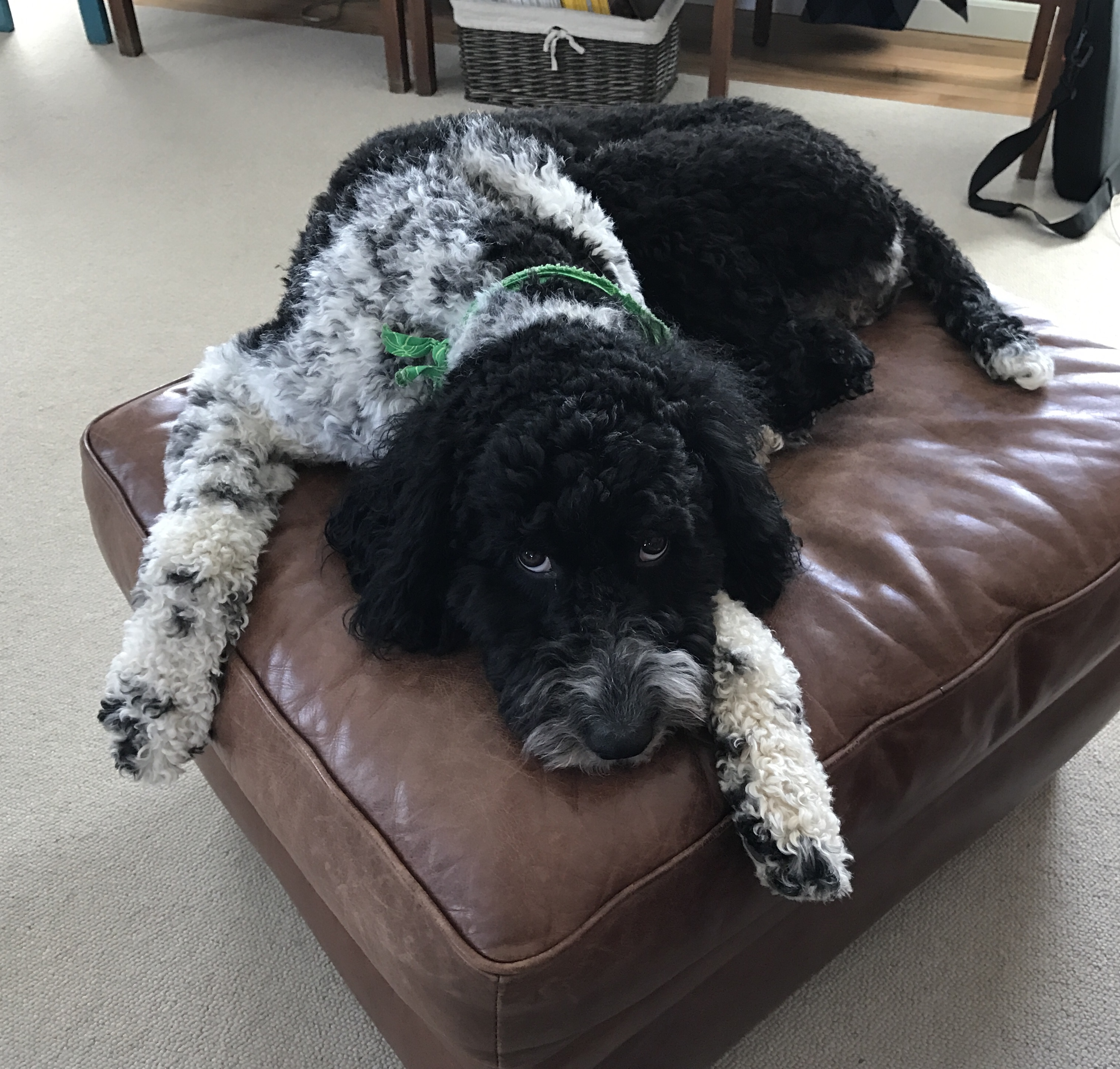
I’ve entered the October of my life. I stay as active as I can, but it’s pitiful to watch me throw a tennis ball for our granddog to fetch. Millie is so unimpressed that she often refuses to give up the retrieved ball I’ve thrown.
Millie.
Millie knows that my toss can’t compare to that of our oldest grandchild, the 16-year-old with a pitcher’s arm. Millie gets to run far beyond one of my feeble efforts.
Before and since my knee replacement a year ago, I have maintained a regular exercise routine. I also do yoga twice a week. I try to walk a mile every day. I ride my bike around and up and down our inclined neighborhood. To look at me, you wouldn’t know that I do any of that.
I have never been a muscular guy. But I usually could hold my own in most physical activities. Not anymore.
I am not ashamed to admit it. I’ve accepted where I am in life. I also kindly relent to any assistance from passersby when I’m toting multiple bags of mulch or birdseed, or anything heavier than a gallon of milk. I’m old, and I want to get older. So I quash my male ego and accept offers to help.
A few years ago, Walter C. Wright wrote a book, “The Third Third of Life: Preparing for Your Future.” It’s a workbook to help you ready for retirement and beyond. It’s an easy, practical read. The hardest part is accepting the fact that you are in that senior citizen-stage of life. For some, it comes sooner than it does for others.
When I was young, I’d spouted off that I would live until I was 100. I have longevity on both sides of the family to back that up. But I also have ancestors who never reached retirement age.
Like leaves on deciduous trees, I want to keep on hanging on as long as I can. However, the leaves, of course, eventually color, fade, and fall.
I also understand that that is where October and I differ. After the foliage tumbles, buds protrude for next year’s crop to unfurl, and once again nurture the growing tree with a thriving canopy.
Humans don’t have that option. We get one shot at life unless you believe in reincarnation. For the record, I don’t. But if I did, I would return either as a chiropractor or a meteorologist.
October is a fine month of the year. I have fond memories of her from childhood to the present. Here’s to many more nostalgic Octobers for everyone.
A balmy day in the Shenandoah Valley.
When I drive alone, I often meditate.
It’s not what you might think. I don’t close my eyes, of course. I just enjoy the peace and the time alone to think. I don’t forget about driving. It would be both foolish and dangerous to do so.
I try to allow extra time for a more leisurely drive. I avoid superhighways. Backroads are my preference because I never know when I might need to stop to take a few photos of the fantastic scenery that Virginia’s Shenandoah Valley affords.
Unlike my younger years, I drive silently. No radio, no CDs playing. I enjoy the quiet unless the road surface is too rough. Then I take in the music that my tires sing to the tune over the various macadam surface textures. The octaves change by the mile.
I’ll use the GPS when I have to. Once I know the way, however, I am on my own, like the other day when I had a doctor’s appointment 35 miles away. A typical farm in the Shenandoah Valley.
I left nearly two hours before my 2 p.m. appointment. Besides a couple of brief planned stops, I knew there would be photo opportunities along the way. I had been that route before.
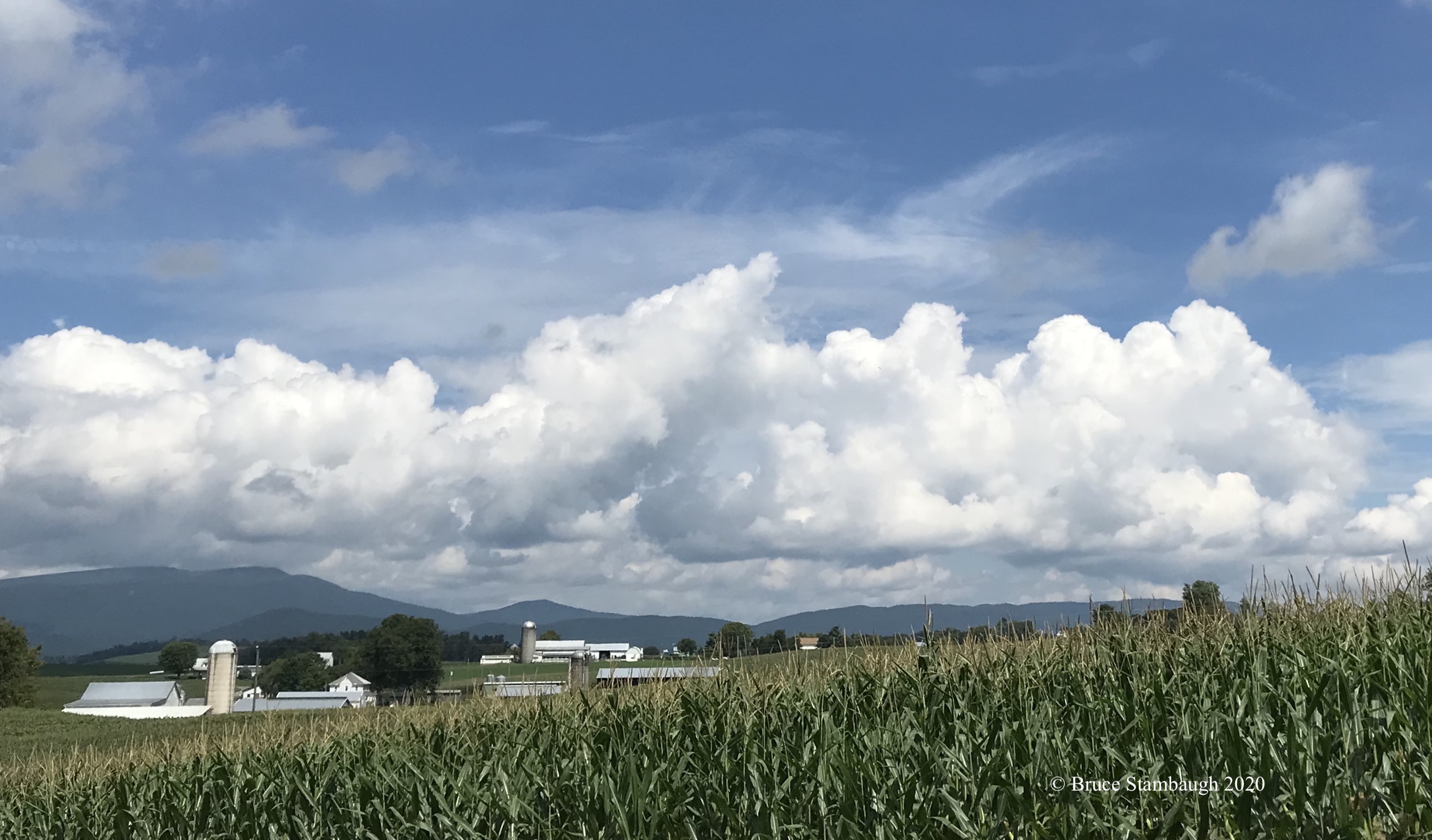
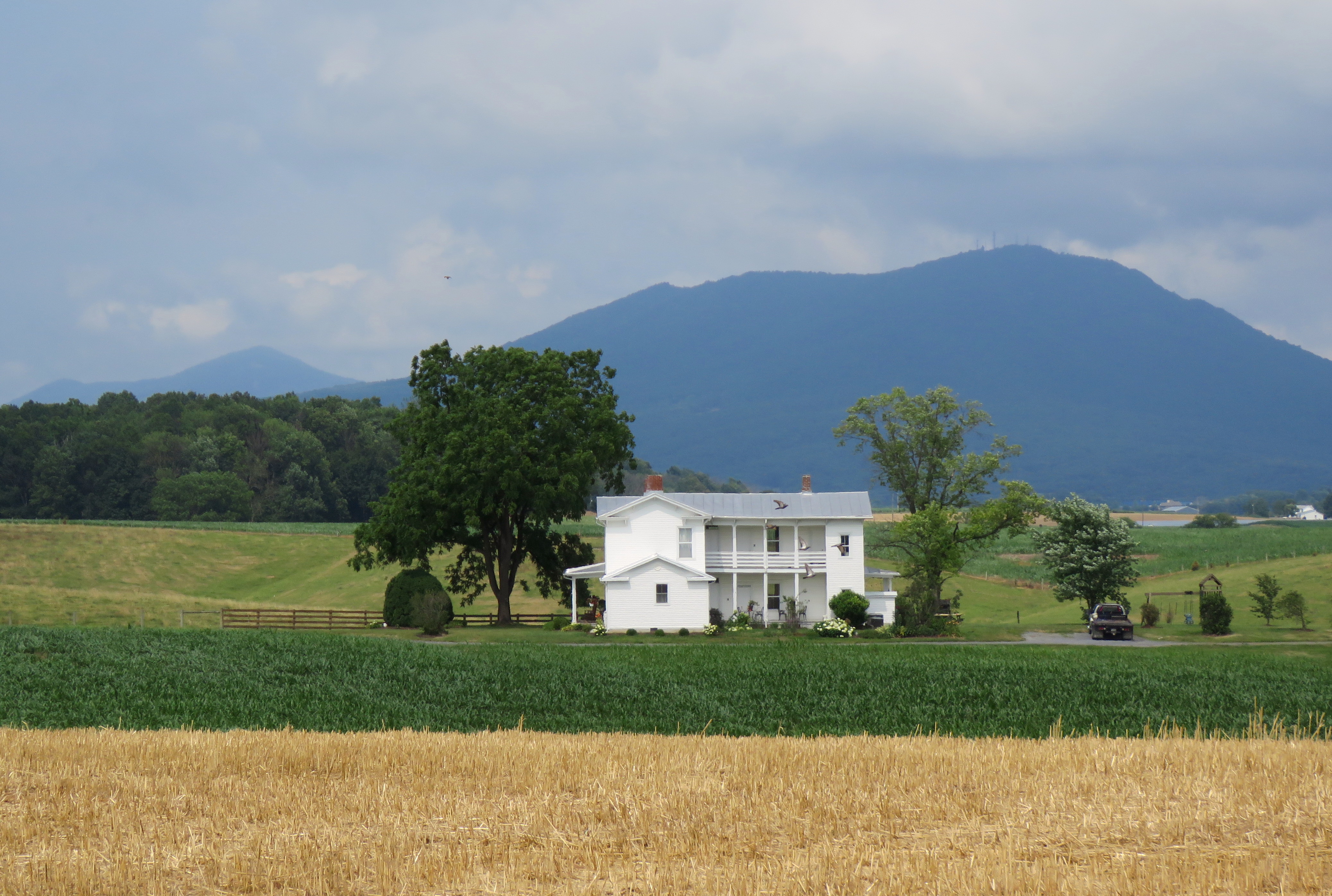
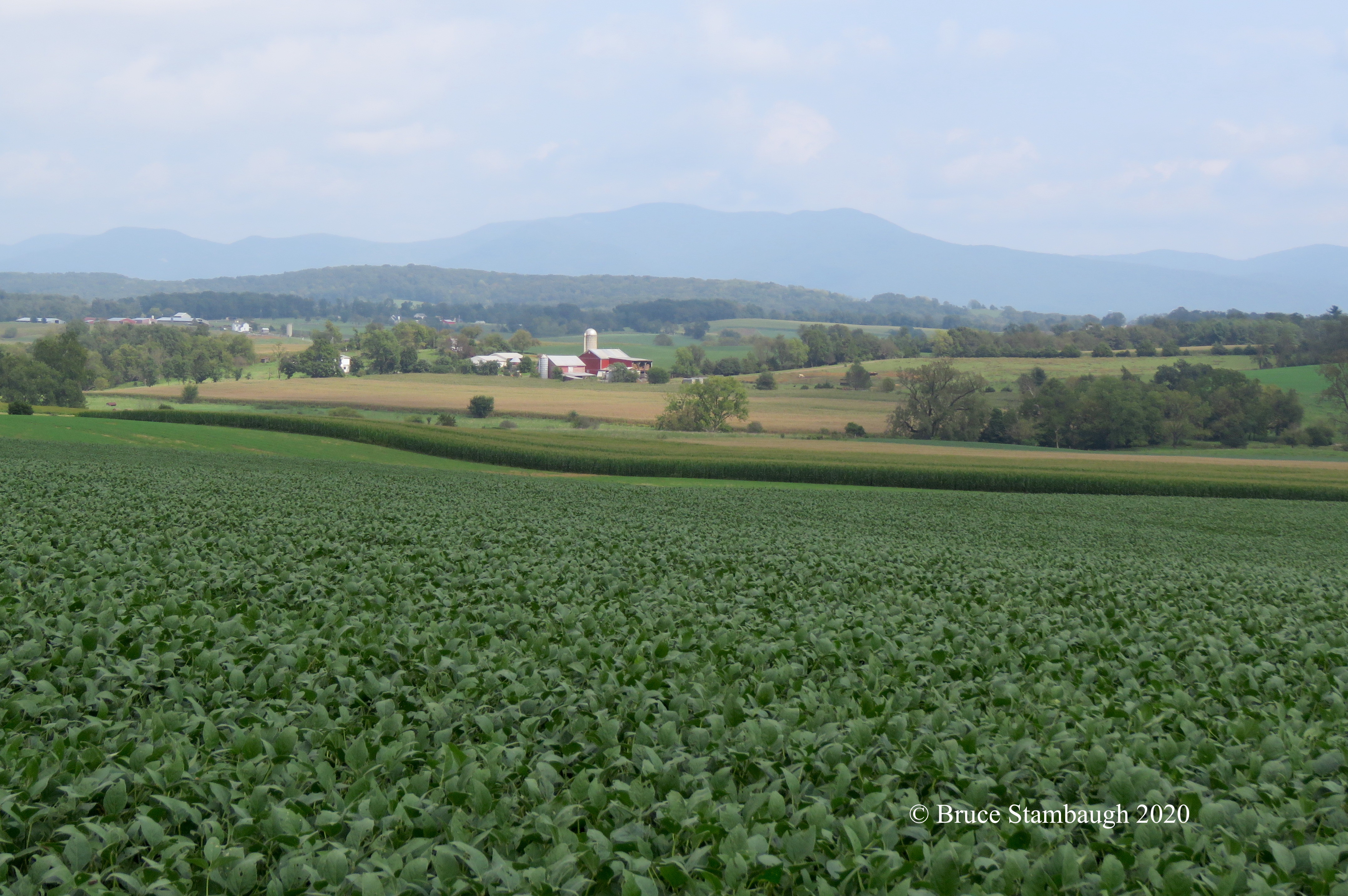
Driving in that contemplative state helps to clear my mind from all of life’s noisiness. Plus, I get to enjoy the mountains to my left and mountains to my right. In between, there is nothing but gently rolling countryside dotted by farms, fields, forests, and more gigantic chicken houses than I care to count.
Weather permitting, I ride with the windows down and the sunroof open. I sometimes pay the price if I pass a freshly manured field.
This trip turned extra-special. Once I passed Sulphur Pump Road, I turned south on the narrowest windy way with no ditches and farmers’ fences hard against the blacktop.
The paved path twisted and turned, rolled up, down, and around until I made a slight right onto Battlefield Road. In less than a half a mile, I crossed a short narrow bridge in the curve of the road. Ahead, an old plantation sat high on a ridge behind a grove of mature pines. The spot where young men died in the Civil War Battle of Bonnie Doon.
At this exact spot at the bottom of the hill, Americans fought Americans in a Civil War skirmish. Hand-to-hand combat ensued, with heavy casualties on both sides. Today, fruit trees and fence line trees waved in the wind.
No historical marker identified the bloody spot. I knew it from a Civil War class that I am taking remotely. It was this week’s lesson.
Farther south, a couple of miles, two different historical markers on opposite sides of the road defined the facts and sight of a deadlier clash, the Battle of Piedmont. Field corn and an impressive planting of soybeans nearly hid both plaques, while the Blue Ridge Mountains and Shenandoah National Park created an enchanting backdrop.
I wondered if people knew what had taken place here, the massive loss of life, the many casualties, and prisoners of war, the consequence of the Union victory. If they knew, did they still hold a grudge or even care?
Did they appear only as fields of corn and beans to them? Were people merely on their way from point A to point B in their daily lives as they passed?
I pondered all of this as I arrived at the impressive multi-storied medical office building. I donned my mask, had my temperature taken, responded in the negative to all of the required COVID-19 questions, and waited my turn for my 21st-century exam.
After the first year’s first sunrise, it has seemed all downhill from there.
Here we are at the end of August. Is it just me, or have these been the longest eight months ever?
With 2020 being a presidential election year, we knew things could be wacky. However, they quickly became excruciating with the arrival of the novel coronavirus pandemic.
The virus has drastically altered all of our lives, some in catastrophic ways. Hundreds of thousands of deaths, millions of cases, and both founded and unfounded fear have permeated our lives together on planet Earth.
We have all made changes in our lives, whether they be out of safety or fear, or perhaps both. Most health and government officials have done their best at providing direction and directives to keep us well against a previously unknown health threat.
Some of us have tried to follow the guidelines as best we can. Others have not.
Technology has helped relieve some of the tension of being faced with shutdowns, physical distancing, and other health guidelines by allowing us to share virtually. We have gathered remotely for school, worship, business, and community meetings rather than in-person.
My wife and I have participated that way with church services, yoga, college classes, doctor appointments, weddings, memorial services, and visiting with friends and family. Though we would prefer meeting in person, face-to-face via technology has had to suffice for now.
How long will it last? Las Vegas hasn’t even placed a bet on that one.
As a career public educator, I always looked forward to the start of school. I pity today’s teachers, administrators, and school support staff who have to make hard decisions that are for the best and safest for all.
Some schools, including colleges and universities, are starting with in-person instruction. Others will open with a hybrid version, alternating between in-person and online education. Still, others have chosen all remote learning.
I wish them all well, and the safest of school years. Likely, backup plans are in place if the COVID-19 numbers spike again as students gather.
Parents, grandparents, and other caregivers try to balance the worlds of work, household chores, and instruction for youngsters if schools are not entirely in-person. They need our sincere support.
Employment is another issue that has so far muddled 2020. Many people who were working have been laid off or furloughed. Ironically, some sections of the economy are going gangbusters, while others flounder.
First-responders, nurses, doctors, and all their helpers must take extreme precautions just to treat the sick. I try to be mindful of them every day.
I am most thankful that technology certainly has helped to keep society operating. This old guy even ordered groceries from an app on his cell phone.
Storm clouds have hung over most of 2020.Of course, the pandemic isn’t the only life-changing event of the year. Historic wildfires have raged in the United States, Australia, and Siberia. Hurricanes and tropical storms have caused death and destruction in their path. Those storms are both more powerful and more frequent than in the past.
Professional sports aren’t the same, either. The NBA is holdings its playoffs in a Florida bubble, while MLB is playing a 60-game season with seats occupied with human cardboard cutouts instead of real paying fans.
I always welcomed September’s arrival with the hope of fairer weather and the sights and sounds of autumn’s appearance. But with the pandemic still raging and the presidential campaign heating up, a face mask won’t be the only accessory in my wardrobe.
A clothespin, a blindfold, and earplugs might also be warranted to reach 2021.
An evening thunderstorm over a neighboring county.
In case you haven’t noticed, we have entered those dreaded dog days of summer. It’s hot, humid, and dry almost everywhere across the country.
The Shenandoah Valley hasn’t been excluded from the stifling temperatures and muggy air. Rains have been sporadic, all or nothing events.
The look says it all.The few times it has rained at our place near Harrisonburg, I could have walked through the widely dispersed drops and not gotten wet. Our backyard is so brown that it resembles a beach more than it does a lawn. Only, the grass crunches rather than squishes beneath your feet.
I understood the meaning of dog days even as a child but also wondered where that term originated. I knew that when adults talked about the dog days, it meant sunny, hot, humid, and dry times.
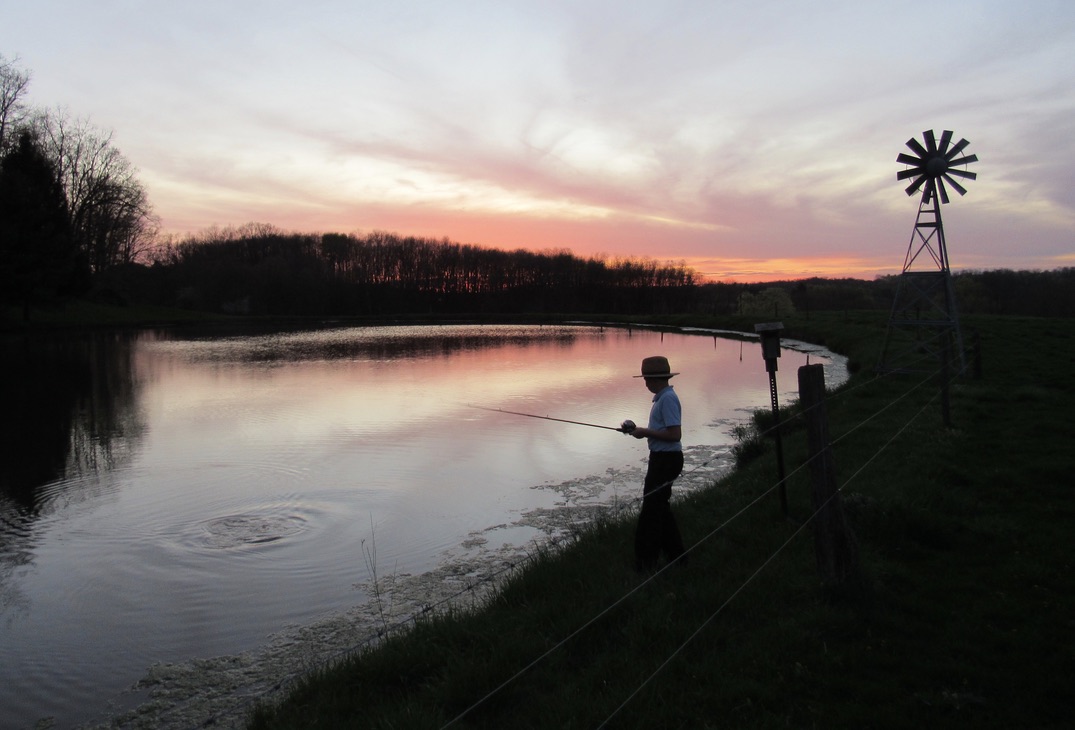
The Amish still don’t have air conditioning.Those were days when the neighborhood kids would head for the woods or the creek down over the hill from our little red brick house. Mom wanted us outside playing, and with no air conditioning then, we were glad to oblige her.
But I sensed dog days meant something more profound than being so dastardly hot that the dogs wouldn’t whimper. Naturally, I Googled to find out the source of the saying. As simple as the phrase may sound, its origin is a bit complex.
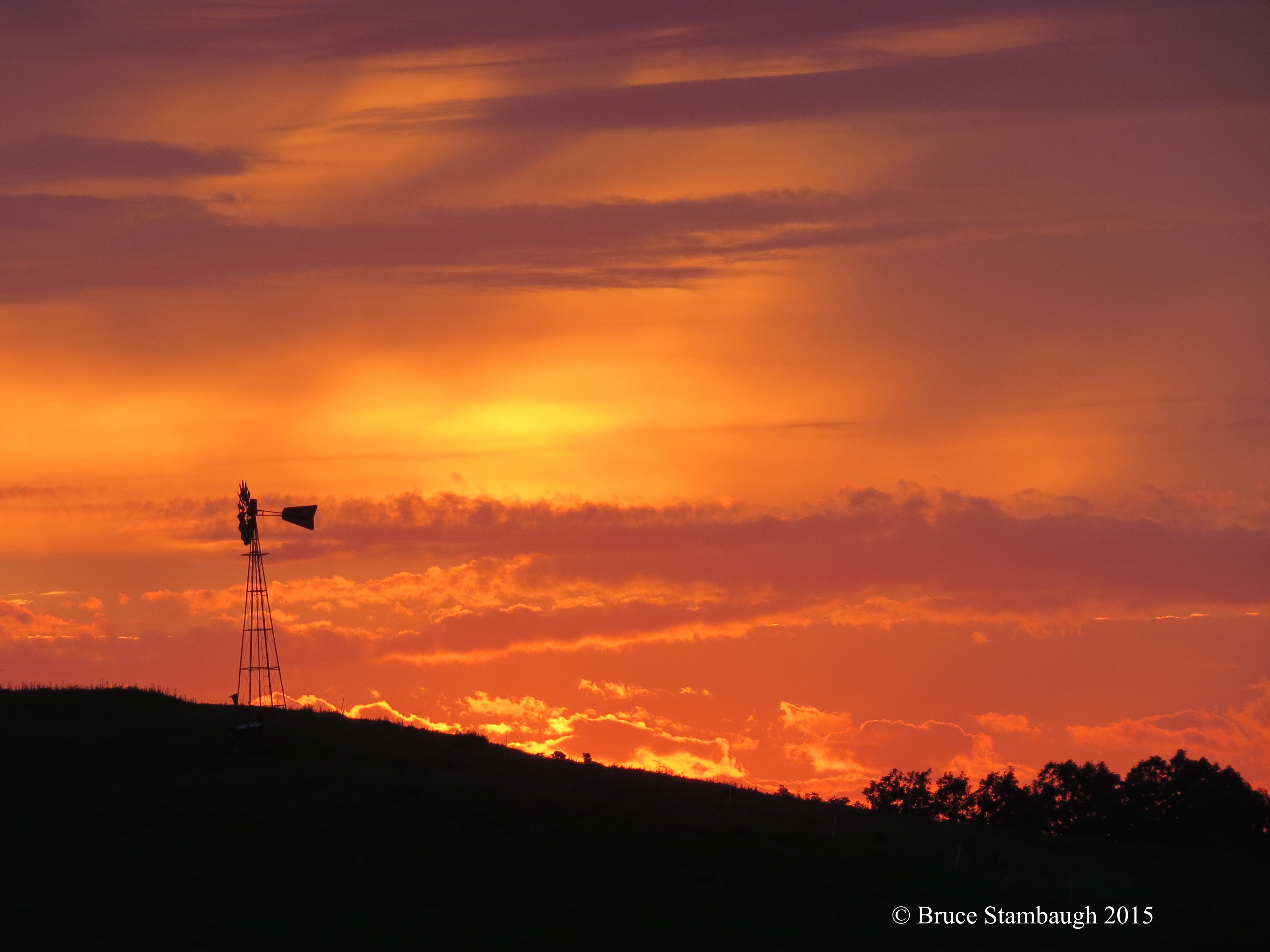
It turns out that the phrase had little to do with dogs panting or even the lazy, hazy days of summer. There was a muddled mix of astronomy and fantasy involved in bringing in the dog days, not necessarily a heatwave. A blazing dog day sunset in Ohio’s Amish country.
Dog days first referred to Sirius, the dog star. The appearance of Sirius in the early morning sky just before sunrise ushered in the dog days for the ancient Greeks and Romans. In their time, that occurred in late July.
Back then, sailors, travelers, and stargazers didn’t have to deal with light pollution. They worshiped the heavens, establishing names and stories for stars and constellations.
In Homer’s “The Iliad,” Sirius is referred to as Orion’s dog star. Then, the dog star brought wars and disasters of all sorts. I guess they had to blame something. It might as well be an imaginary culprit.
Still, I can just imagine families gathered around a fire long ago, staring skyward, as an elder told the story of the dog star. Today, of course, most of us couldn’t find Sirius even if we could see the stars.
Whatever tradition you acknowledge and expound, the dog days of summer are here. They have gotten off to a roaring start in more ways than the hot weather.
The comet Neowise has been thrilling people for a couple of weeks now. It should be at its brightest. If you haven’t taken time to check it out, all you need are some binoculars, some keen eyes, and be willing to enjoy the cooler evening air with a good view of the western horizon. You won’t be disappointed.
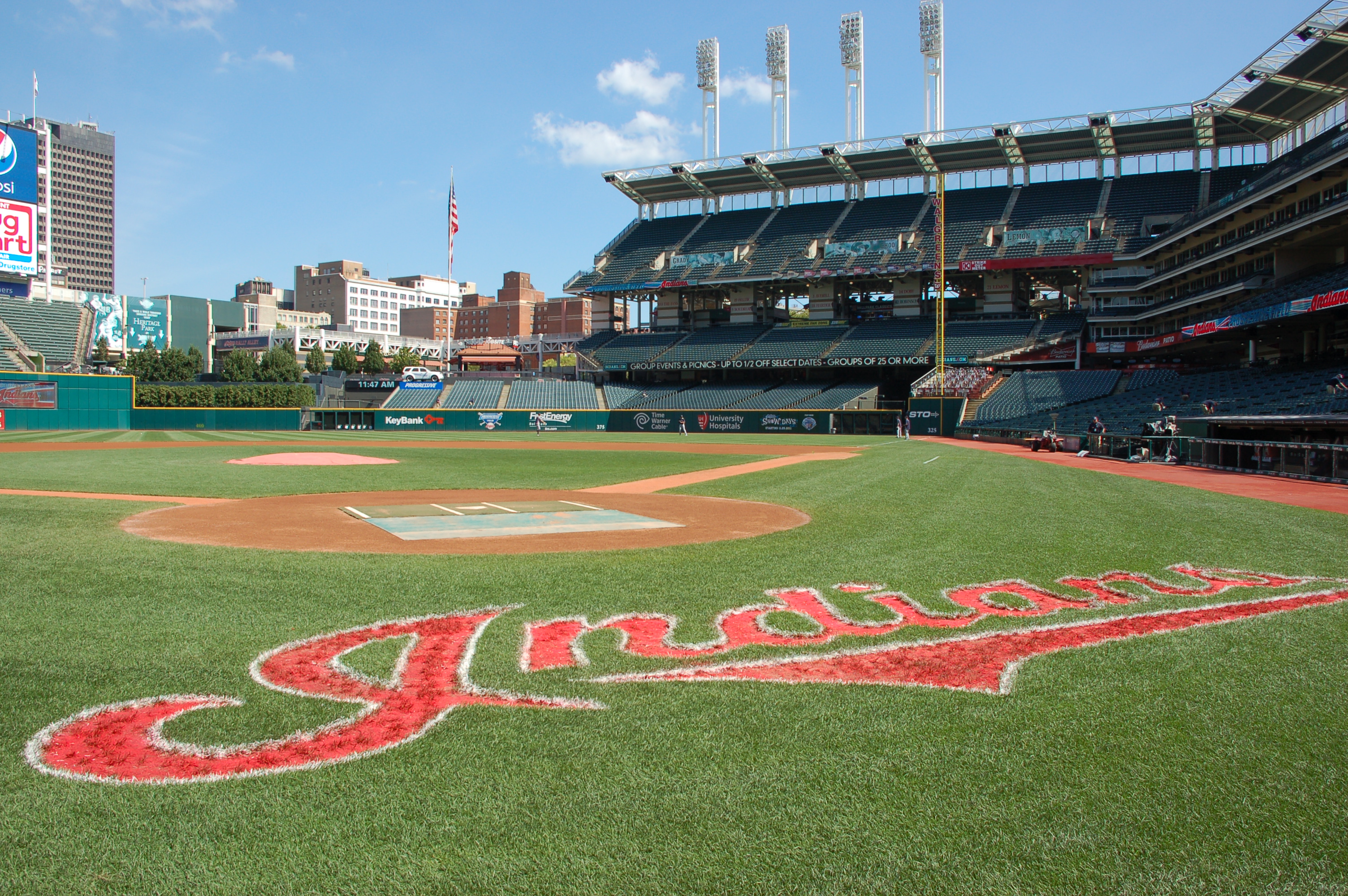
Summer’s dog days are also hosting the debut of the delayed Major League Baseball season. Even with a 60-game schedule, I’m not holding out much hope for my favorite team, the Cleveland Indians.
Authorities thought that the warmer months would slow the spread of the cursed Covid-19 virus. Instead, the number of U.S. cases and, unfortunately, coronavirus-caused deaths are both increasing as the summer steams along.
Summer is here. That short sentence constructed of three little words strung together usually conjures up fond anticipation of good things to come with the passing of the summer solstice.
Summer usually means vacations to both familiar and foreign places, family reunions, children joyously shouting as they splash each other in the local public swimming pool.
Summer means a lazier time with no school for students, and longer, warmer days to garden, read, visit, and work. It means weddings and picnics, hikes in state and national parks, children sleeping in tents instead of their beds.
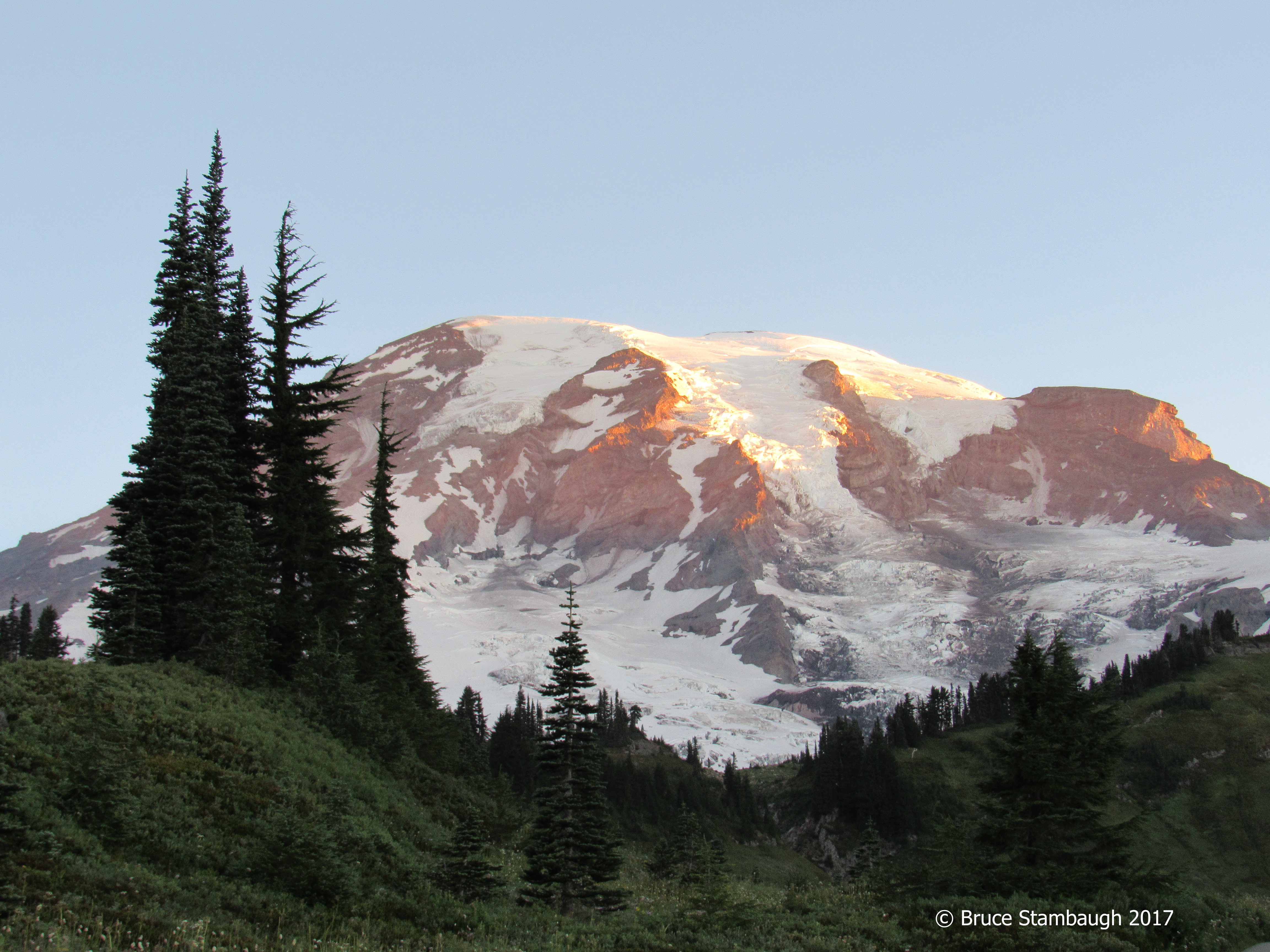
Alpenglow at Mt. Rainier National Park won’t be on our summer schedule.
All of this and much more usually comes on the heels of graduation celebrations and Memorial Day gatherings. We graduated, partied, and then commenced into summer. This year, not so much.
The summer of 2020 is shaping up to be very different thanks to the pandemic. We saw that coming in so many ways, given the sequestering and necessary physical distancing of the last three months.
It’s going to be a different kind of summer for all of us. My wife and I have already missed our grandchildren’s canceled spring plays, concerts, and soccer and baseball games. Summer opportunities for their sporting events also seem limited.
Sadly, we won’t be attending our son’s forthcoming wedding in New York State. Out of an abundance of caution, my wife and I will watch the small ceremony via Zoom. We’ll offer a silent blessing with the exchanging of the vows.
For the first time since 1987, we will skip our annual summer stay at our beloved Lakeside, Ohio. The Chautauqua on Lake Erie canceled most programming due to the Covid-19.
Since my wife and I are in the high-risk category, we have to put our health ahead of our desires. We will dearly miss our Lakeside friends and the gorgeous sunrises and sunsets, not to mention the magical Lakeside spell of peace and calm.
A summer sunset at Lakeside, OH.
Despite those disappointments, we will not lament those paradigm shifts. We will approach this summer with open arms and cautious optimism and careful actions. Our focus must be adjusting for the long haul, on celebrating each moment, whether in person six feet apart or via Zoom.
What will the summer of 2020 hold for us all? I suppose it depends on your age, situation, location, and just how seriously you consider the coronavirus crisis to be.
As for us, my wife and I will pray for a summer of calm, healing, and reconciliation, given the political rankling and the global unrest due to racial tensions. Each one of us must make every effort to confront our prejudices, hear the criticisms of others without harsh rhetorical defense.
For the summer of 2020 to be a success, each one of us bears the responsibility to restore civility. It is incumbent upon each one of us to treat everyone we meet and encounter with respect, fairness, and honor, just the way we want to be treated. Decency and kindness must prevail regardless of skin color, race, religion, and cultures.
“Love your neighbor as yourself” (Leviticus 19:18 and Mark 12:31). In other words, let’s live summer to the full as best we can for everyone’s safety, health, and well-being.
We can begin to make that happen by practicing these five suggestions:
1. Ask others, how can I help?
2. Be a positive person.
3. Communicate in uplifting ways.
4. Be thankful.
5. Express your appreciation of others personally.
Summer has begun. Let’s all work together to make it the best one possible.
The kind of field my father hunted for artifacts.
After three years, my wife and I have finally unpacked all of the boxes since we moved from Ohio’s Amish country to Virginia. It’s another coronavirus sequestering accomplishment that we can check off our “to-do” list.
We weren’t negligent or procrastinating. We knew what those heavy cardboard boxes contained. We just didn’t have a place to display or properly store them. Now that they are unpacked, we still don’t.
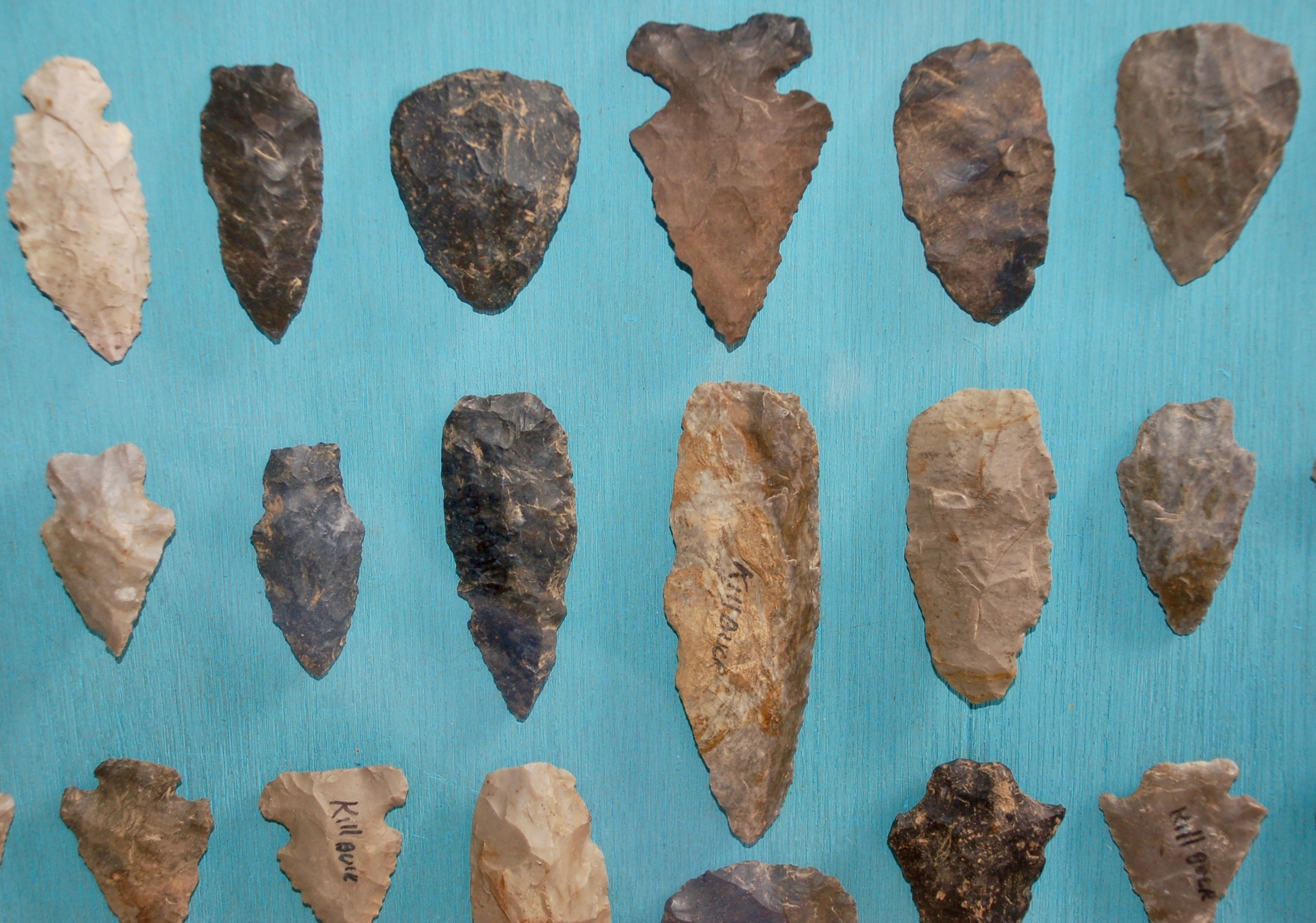
My late father divided his extensive Native American artifact collection among his offspring and the grandchildren. He designated who got what primarily based on geography.
Dad marked where he found each artifact he considered “good.” Consequently, Neva and I ended up with the majority of the ones discovered in Holmes County, Ohio, and those from near my wife’s home farm east of Louisville, Ohio. How Dad marked his finds.
I can’t tell you how many plowed fields Dad and those of us who joined him walked. With heads down and separated six-feet apart, we ambled one end of the field to the other. Yes, we socially distanced before it was even a thing. Doing so allowed us to cover an area more efficiently.
Dad delved deep into historic Native American cultures. His love for history and the near half-century he spent collecting made him a noted amateur archeologist.
As his knowledge and collection grew, Dad began to share what he learned and what he had found. He joined archeology groups. Professional archeologists even invited Dad to join digs to save Indian encampments that would be destroyed for various construction projects or by strip mining.
Dad even spent his lunchtimes on lovely days looking for surface finds near his workplace in Akron, Ohio. When his job required travel, Dad scoured fields in Arizona, California, and many other states.
Dad accompanied our mother on artists retreats to North Carolina. While the artists painted, Dad visited local farmers to inquire about hunting their fields.
The landowners often showed him what they had already found, and Dad would gladly identify and date the points and pottery shards for the farmers. For that, he gained access to their land, made new friends, and expanded his collection.
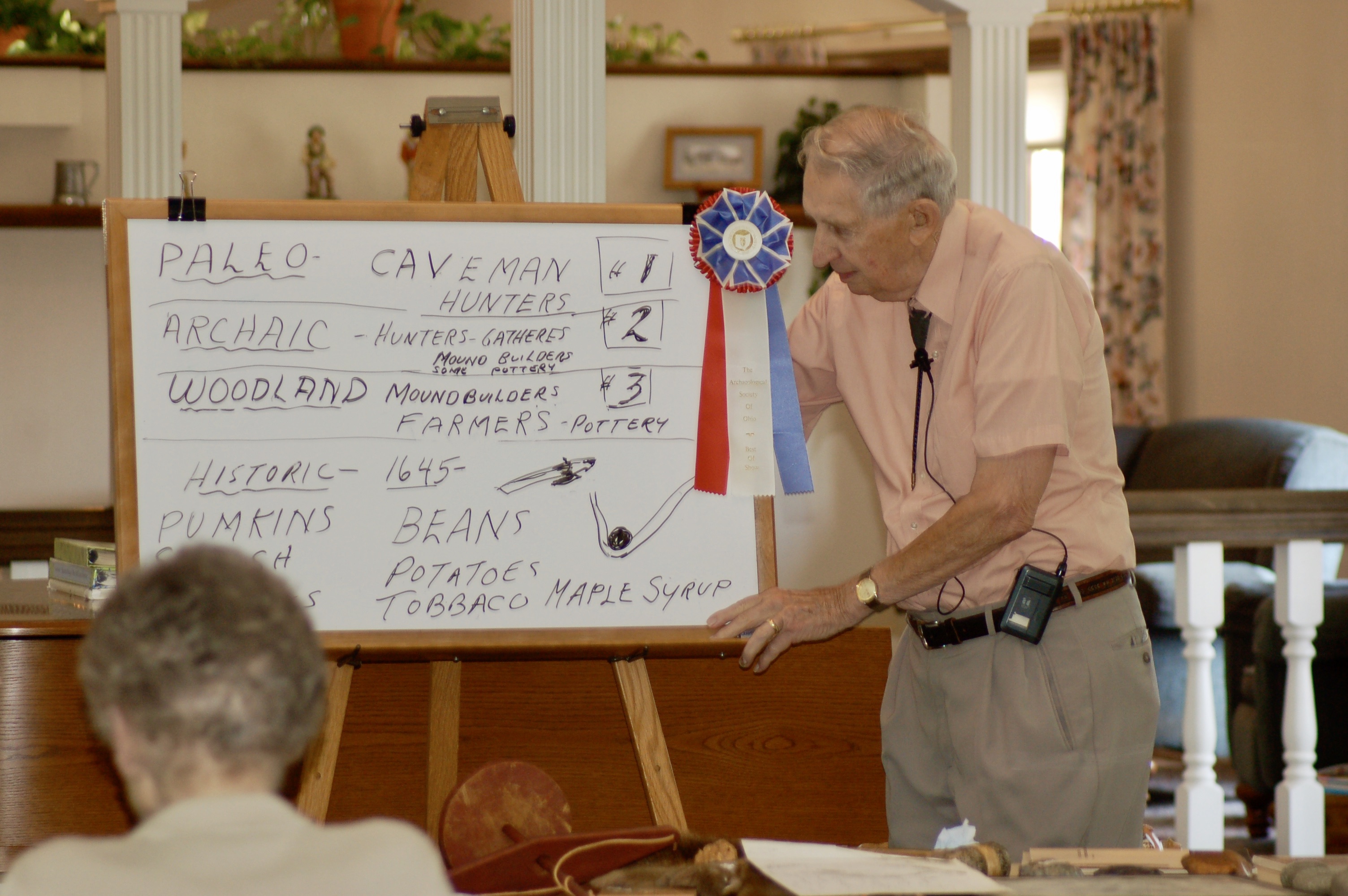
Our artist mother would occasionally return the favor by accompanying Dad on a dig. One of her paintings graced the book cover that documented one significant excavation. Dad lecturing at the retirement home.
Dad lectured at schools, church meetings, service organizations, presented at historical society gatherings, and at the retirement home where he died. He even won a few awards for his displays at archeology shows.
I found one of Dad’s notecards that he used in his presentations. It was an impressive list of how indigenous peoples used natural renewable resources. Dad shared how the Indians used the entire animal that they had killed. They ate the meat, fashioned clothing and shelter from hides, and used bones for tools.
Ironically, Dad privately questioned why Native Americans, as intuitive and ingenious as they were, didn’t develop the country the way European immigrants did. With his Germanic linage, I sensed it was a rhetorical question.
I found it curious, even disconcerting that Dad admired and taught about a people and their cultures, and yet he didn’t comprehend their devotion to preserving the environment they so cherished. Nor did he address the horrendous treatment of indigenous peoples that even continues today. In retrospect, I should have pressed my father on those issues.
Marian and Dick Stambaugh. One of my mother’s paintings is on the wall behind her.I loved my father, and I love that he bequeathed so many of his artifacts to the family. For me, they serve as tangible reminders to universally respect all peoples, no matter their color or creeds, then and now.
I am glad we have Memorial Day. Its intent is like no other U.S. public holiday.
There is no popping of champagne bottles, no chocolate bunnies, no fireworks, no unwrapping presents. Originally known as Decoration Day, Memorial Day was set to honor the Union soldiers lost in the Civil War.
Now, of course, Memorial Day has a much broader purpose. In 1968, Congress established the last Monday in May as Memorial Day to honor all who served. The legislation also created a three-day weekend for federal employees.
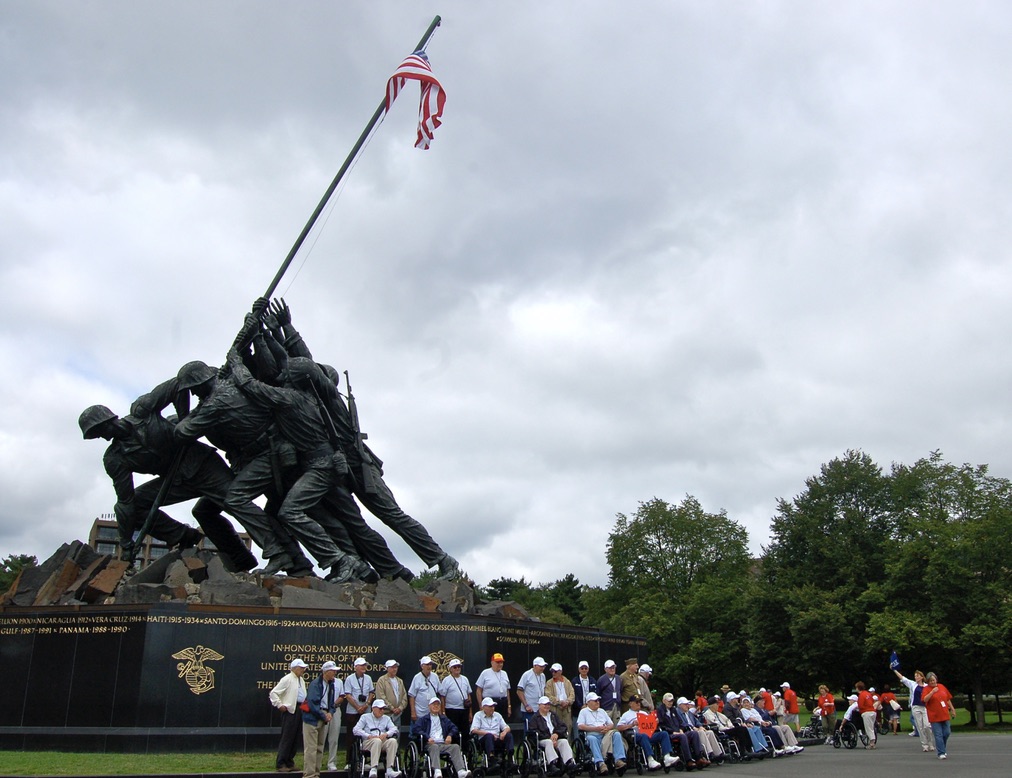
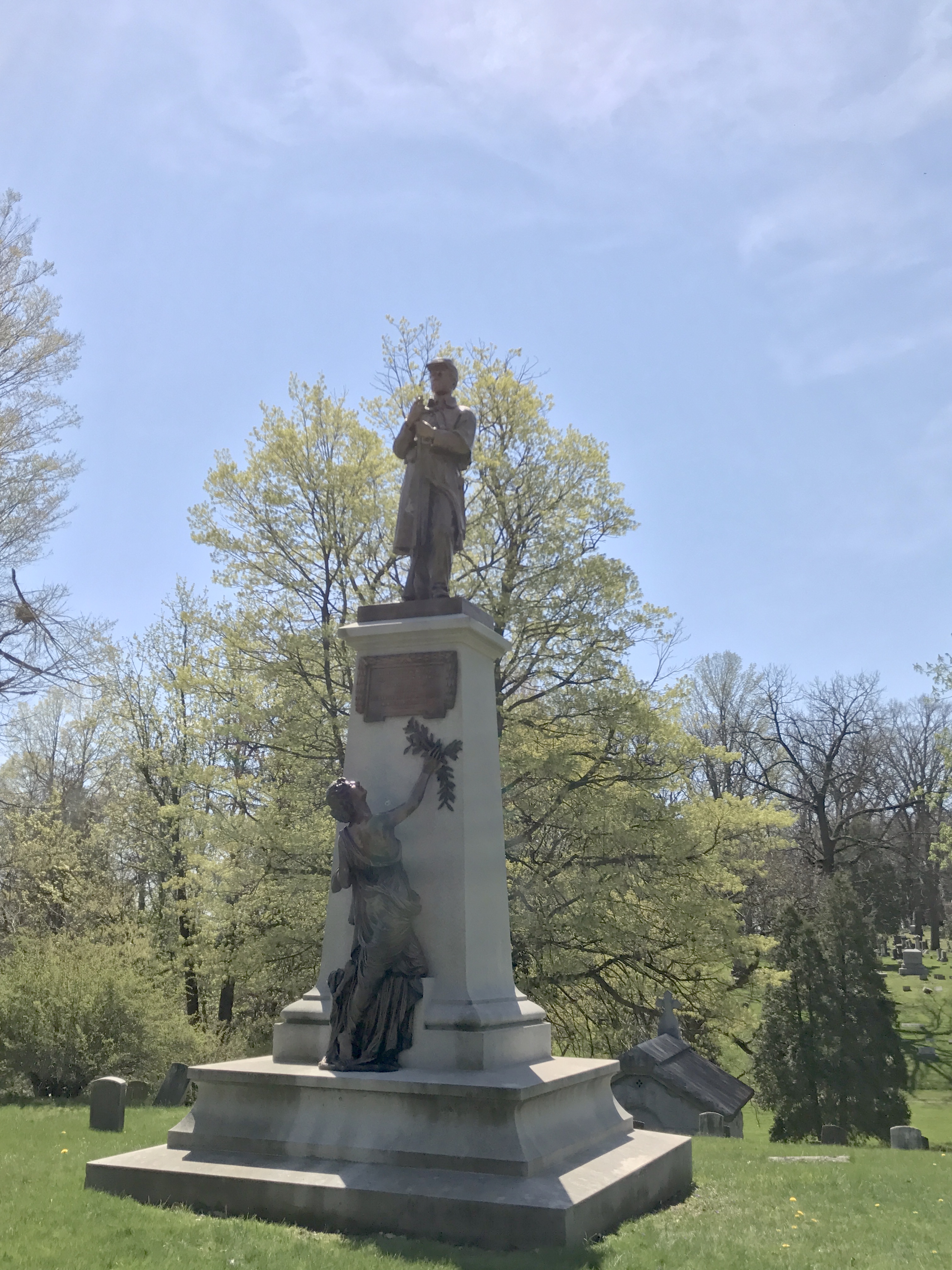
A Civil War monument.Consequently, Memorial Day morphed into a long weekend with picnics, barbeques, family gatherings, patriotic parades, and other assorted gatherings. Miniature American flags mark the graves of veterans.
Memorial Day always meant a lot to my parents. They made sure fresh flowers were placed or planted at the graves of close relatives. It was a time of solemn, respectful remembrances.
I embraced that lesson. After Dad died, I took it upon myself to carry on the family tradition of commemorating family graves with flowers. By then, most cemetery rules had changed to only allow artificial arrangements and wreaths at headstones, and only for so long.
I suppose real or plastic floral displays weren’t the point. The act of remembering was what mattered.
Since we no longer live in Ohio, that physical act of remembering has ended for me. Like most everything else in our current COVID-19 world, I’ll do a virtual visit through my photo library to pay my respects and refresh my memories.
The pandemic will definitely make this a different kind of Memorial Day for most. Many parks and playgrounds will rightly remain closed as a necessary precaution against the spread of this invisible virus.
There will be no baseball games to attend or watch, no picnics to enjoy the fellowship of family and friends. Concerts and parades have been canceled. Nevertheless, we can still carry on the intended spirit of the day.
I will sit on our patio and contemplate the good times of the past. I will especially remember those who are gone. I’ll recall memorable family stories that my parents told about relatives that I never met. Grandpa Frith died from accidental electrocution six months before I was born. A thoughtless prank in a steel factory killed a great uncle. Every family has similar sad stories.
In many places, our western society views Memorial Day as the end of the school year and the unofficial start of summer. Both of those may be true, but the classes of 2020 won’t have the pomp and circumstance of traditional commencement ceremonies or the celebration of graduation parties.
As much as we would like to be out and about for such events, my wife and I will continue to play it safe. We will continue to social distance and mostly stay at home for the duration.
Vacations, weddings, celebrations, and sports activities, to name a few, have all been canceled, delayed, or postponed due to the spread of the deadly virus. Many may happen virtually using today’s innovative technology.
For that, I am happy. However, many will mourn either a recent loss or a loved one who died long ago. I will grieve, too.
Memorial Day is for remembering and honoring. For those who survive this momentous universal event, however long it lasts, I hope they look back to this Memorial Day in awe. I hope, too, the day will etch a more meaningful, profound, and indelible mental mark.

























 Roadkill Crossing
You must be logged in to post a comment.