From the turkey capital of Virginia, Happy Thanksgiving!
Today is Thanksgiving Day in the United States. Families and friends will gather for food, fun, and fellowship. Simply, it’s a day to show gratitude for what life has offered.
Once again, our three-year-old grandson led the way. He loves Halloween, and while visiting him and his parents in Rochester, New York, we attended several trick-or-treat events in the greater Rochester area.
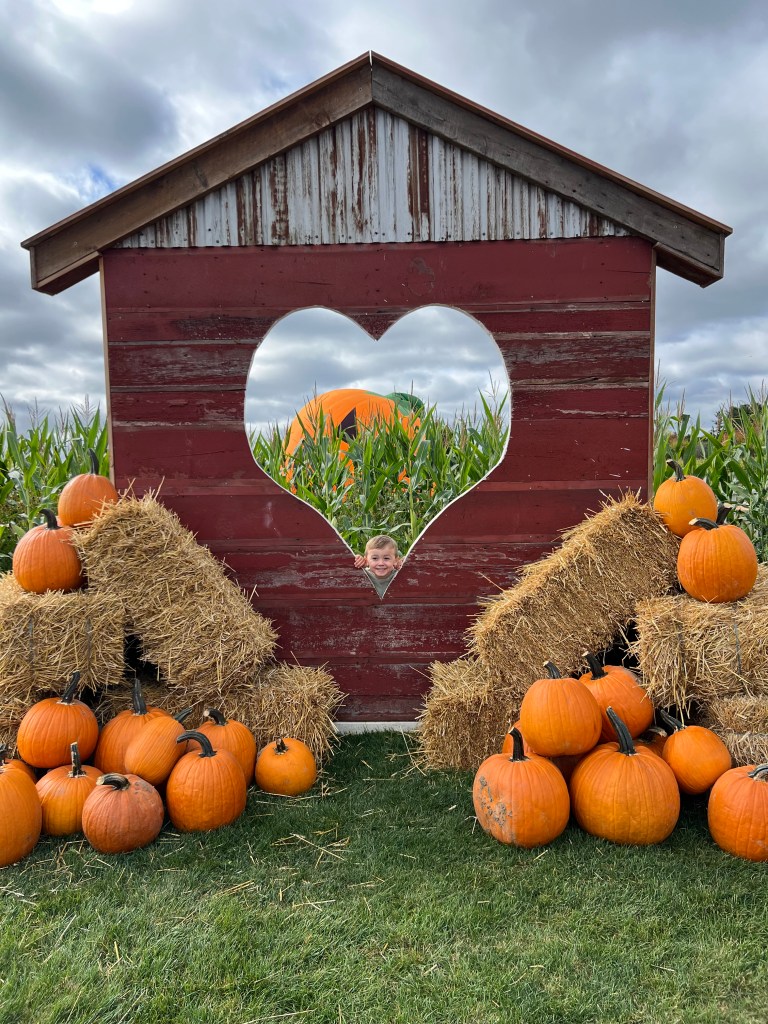
The one at the Tink Park in Henrietta, where this photo was taken, was a highlight. We had trouble keeping up with young Teddy, who was excited to see the trail of scores of candle-lit pumpkins that wound through the woods. Teddy wasn’t scared a bit.
As you can see, Teddy used his flashlight to beckon us onward. Based on his full Halloween bucket, Teddy hit several trick-or-treat stands before we walked the pumpkin gauntlet.
Little Teddy’s enthusiasm lit the way to Halloween before we had to return to Virginia.
Our three-year-old grandson, Teddy, invites you to welcome in the Fall season, or if you live in the Southern Hemisphere, Spring. The Autumnal Equinox occurs at 2:19 p.m. EDT on Monday.
Departing Halifax, Nova Scotia, Canada. Photo by Bruce Stambaugh
I love giving and receiving hugs, especially as I age. The fact that my four siblings and I received little physical affection growing up might play a significant role in my desire to be a hugger in my senior years.
There’s nothing better than giving my grandchildren a hearty hug after an athletic event or concert in which they have participated. And too, I melt when they hug me for simply being their grandfather. That momentary embrace says more than any card or note of appreciation.
The same is true for close friends, especially as we endure the aging process with all its expected and unexpected ailments. When we gather in small groups, whether at church or in our homes, the first question often asked is, “How are you?”
My wife and I are in two different small groups of peers, most of whom have Ohio roots like us. We now live in Virginia’s Shenandoah Valley, close to three of our four grandchildren.
When with other seniors, we chat around a meal or a table of snacks and drinks about our health. Sharing and listening become equivalent hugs, emotional squeezes, if you will. As septuagenarians and octogenarians, we all need those affirmations as we deal with our latest ailments.
Our ship, the Zuiderdam, docked at Portland, Maine. Photo by Bruce Stambaugh
However, since we returned from a recent cruise, I’ve had to learn to be happy accepting verbal greetings instead. I cracked three ribs in a freak fall near the end of our trip.
All was going well until our ship approached Halifax, Nova Scotia. Before we left, friends cautioned us not to fall. I had every intention of complying.
As I stepped into the shower, and please don’t try to imagine that, my left foot hit the shower mat just as the ship pitched in the opposite direction. I flew through the air like Superman, only not as gracefully.
My arm stopped my flight by hitting the sink, and I crashed to the floor with a loud thud. Excruciating pain shot through my right side. My wife said I made noises she had never heard before from any creature.
After the initial shock, I composed myself and finished getting ready for the day. However, after breakfast, my ribs pained me greatly. We headed to guest services, and I was immediately wheeled to the ship’s medical center.
The friendly and competent medical staff quizzed me, took my vitals, and gave me medication to ease the pain. X-rays showed a cracked rib, but the doctor wanted me to go ashore to the hospital. Doing so would effectively end our vacation, and I didn’t want that to happen.
Painful as it was, a cracked rib wasn’t a life-or-death situation. We enjoyed Halifax as best we could from our veranda. I checked in the next two mornings for additional shots of pain medication, and we were able to fly home on schedule.
But because I had also hit my head in the crazy fall, we went to our local hospital’s emergency room after we arrived home. CT scans showed not issues with my head, though my wife questioned those results. I did, however, have three cracked ribs, not one.
We took it easy the next few days before I felt like venturing out. Friends who didn’t know about my accident greeted us with the usual hugs, but I politely waved them off and explained.
I have developed a new appreciation for the importance of the rib cage to the rest of the body. I measure my moves and watch my steps. I also recognize that three cracked ribs are insignificant when compared to more consequential diagnosis of cancer and other diseases of friends and family.
I’m still healing and greatly looking forward to when I can once again hug and be hugged without pain. Until then, a fist bump will do.
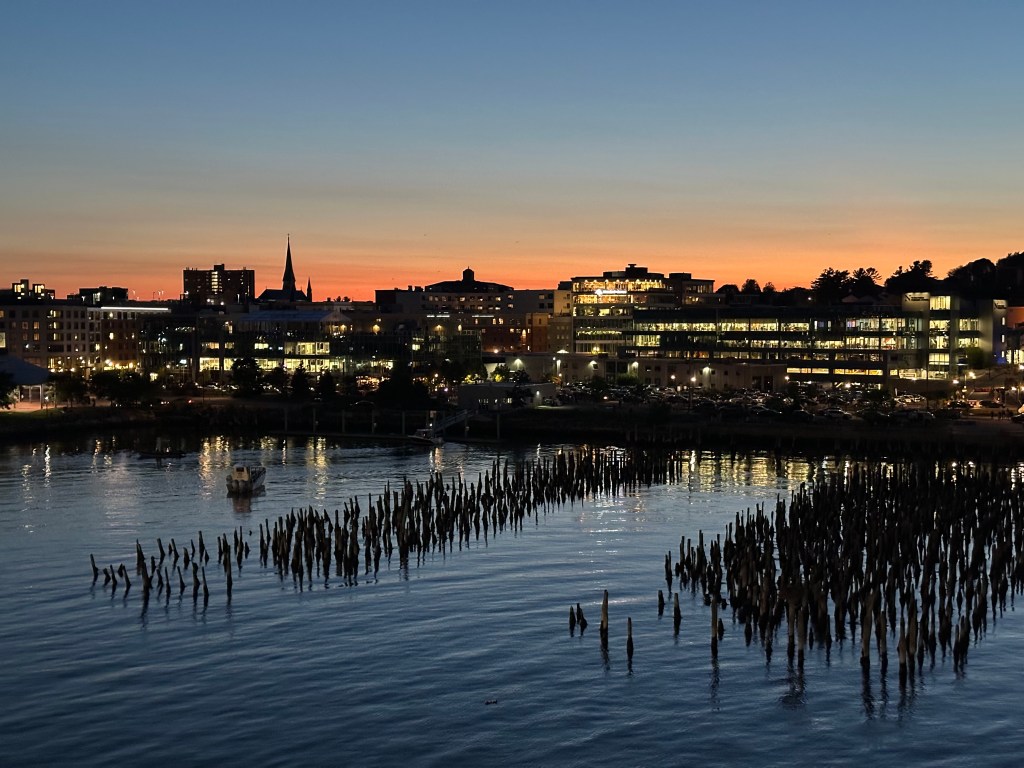
The Portland, Maine waterfront at dusk. Photo by Bruce Stambaugh
I got the cruelest call on April Fool’s Day. My doctor’s office informed me that the MRIs I had the previous day indicated an aneurysm on my left carotid artery and some disturbing white spots on my brain.
My head spun with all sorts of possibilities, none of them good. My primary care physician (PCP) referred me to a hospital in another city. I anxiously waited for a call to schedule an appointment at the hospital. It never came.
Instead, my PCP notified me days later that the hospital declined to see me. I needed something they didn’t have: a neuro intervention team. That made me even more concerned.
My PCP then referred me to a teaching hospital in the same city, more than an hour away. She also told me not to do anything strenuous, and to begin to take a baby aspirin.
I started the 81 mg aspirin right away. I also curtailed my nearly daily exercises for my lower back, which had bulged and degenerative discs. And I waited, and waited.
Days passed, and I didn’t hear anything. So, I called the hospital’s neurosurgeon department to ask about the referral. They couldn’t find it.
Of course, I contacted my doctor via the patient portal to indicate that the hospital didn’t have my referral. She faxed another one, this time stamped urgent.
After two weeks had passed with still no communication from the hospital, I called them, but had to leave voicemails, which were not returned. I decided to check for other hospitals that specialized in my condition. I found three in the United States.
Fortunately, one hospital was only three hours away. So, I called the head neurosurgeon’s office, and the receptionist answered the phone on the second ring. She provided me with easy-to-understand instructions on how to send my records to them. I contacted my doctor to provide the hospital’s fax number to forward my records.
There was one catch. I had to deliver the MRI images myself, but not necessarily in person. The hospital had a link where I could upload the images and the written diagnoses.
I contacted our local hospital where I had the MRIs, and they said I could pick them up the next day, which I did.
I placed the disc in the external DVD player since my laptop, like most nowadays, doesn’t have a slot for CDs or DVDs. I tried uploading the images, but the webpage wouldn’t take them.
I called the hospital, and by some good fortune, I was connected with a very understanding and helpful technician who kindly guided me through the process. She said I wasn’t the first patient to have the same issue.
I immediately received emails confirming that the hospital had received my images and documents, which I found reassuring. Finally, I thought to myself, an institution that gets how frustrating technology can be for their senior patients.
However, I waited several more days. I called the neurosurgeon’s office again. The office manager told me the doctors were deciding which one would review my records.
Finally, more than a month later, I received a call from the hospital to set an appointment. The good news was that it would be a remote video session with the neurosurgeon. The bad news was that my wife and I would be traveling on the dates they offered.
However, I settled on one, which happened to be exactly six weeks since my MRIs. It was also our son’s birthday, and the 14th anniversary of my prostate cancer surgery. Taking that appointment meant we had to alter our travel plans slightly. It was a small sacrifice to make if I wanted to see the neurosurgeon.
When the late-afternoon appointment arrived, my wife and daughter-in-law joined me. I relied on them to keep notes and to ask questions, since at 77 years old, my memory wasn’t what it once was.
My wife was of great help to me as we navigated my cancer episode together. She attended every appointment with me and took excellent notes. She helped me at every step of the way from biopsy to surgery to rehab. So, she attended this appointment without hesitation.
The neurosurgeon was excellent. He said I had a pseudo-aneurysm, and the spots on my brain were not unusual for my age. He reassured me that the chance of the pseudo-aneurysm rupturing was near zero. And he listened to and answered all our questions.
However, he did refer me to a stroke neurologist due to the bulge in my carotid. He did so in case I had a blood clot, which would potentially block the carotid at the pseudo-aneurysm’s location. I have a scheduled appointment for that.
I recognize that my experience is anecdotal. I also know that many of my peers have had similar experiences with the medical system.
So, what did I learn through all of this?
I learned to be persistent if doctors’ offices or hospitals don’t follow up with patients as expected. I also learned to be patient. They are busy after all.
Through it all, I tried my best to be kind to everyone I spoke with. Medical personnel work with many patients and other staff members daily. Why add to their frustration by being rude or angry? That wouldn’t help my blood pressure, and probably not theirs either.
I also tried to be as gracious and courteous as possible, even if it was simply putting me on hold on the phone for a few minutes. Gratitude benefits everyone.
Don’t go it alone. Having a spouse, relative, or friend attend a medical appointment with you helps the patient better understand what is being said and what the patient should and should not do. In my case, it also helped catch any information I missed. When diagnoses cause consternation, one can only absorb so much. Designate a person to advocate on your behalf if you are unable to do so yourself.
In all of this, be communicative. That ensures everyone is on the same page and prevents you from getting lost in the system. Too often, medical digital systems don’t talk to one another, so you have to speak up for yourself. But the communications need to be considerate and respectful.
The bottom line is to be proactive for yourself and your health. A positive and respectful approach goes a long way with professionals who too often hear just the opposite.
Finally, I wanted to share my story in the hope that patients who have experienced similar challenges will understand that they are not alone. And for other retirees who may encounter the same roadblocks that I did, I hope they recognize the importance of persistence and self-advocacy in achieving their best medical outcomes.
After an 8 a.m. doctor’s appointment, I took a long and much-needed walk in the woods. It happened that the doctor’s office was adjacent to one of my favorite places in the Shenandoah Valley.
The Edith J. Carrier Arboretum on the James Madison University campus in Harrisonburg, Virginia, is a life-giving oasis among 21st-century din. There, birdsong, blossoms, and the verdant forest provide a temporary sanctuary from life’s bustling and boisterous busyness.
To be sure, you still hear the sirens, the traffic’s hum on the interstate that cuts the campus and town in half, the train horns, even the airliners cruising into airports two hours away.
The forest canopy covers you with its sacred, healing goodness. It’s life’s true purpose. Use your senses to enjoy the rapturous unfolding.
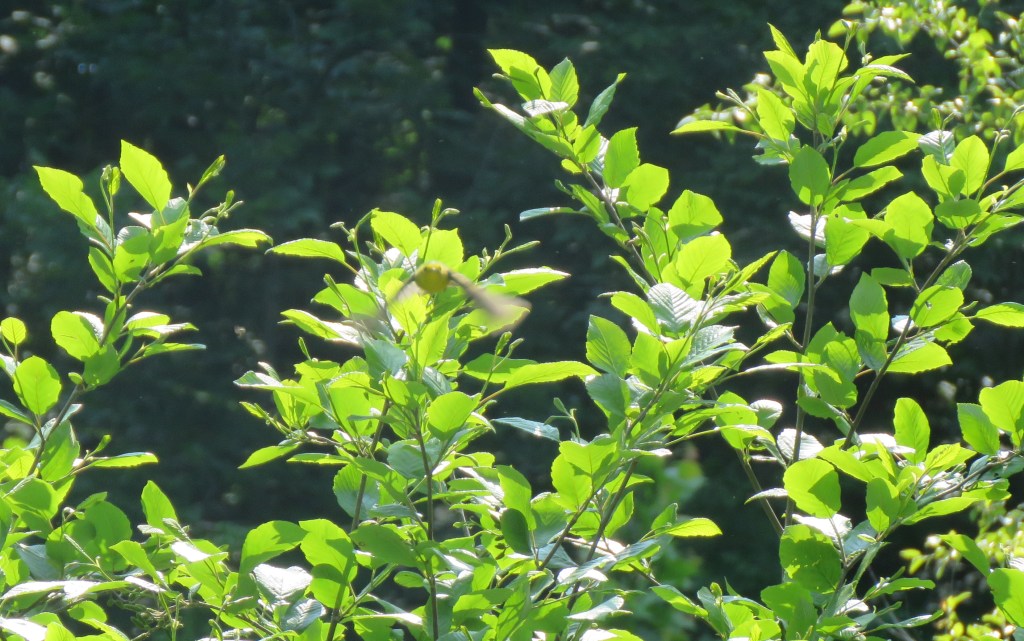
A late-migrating Wilson’s Warbler flits and feeds on insects deep in the recesses of dense elderberry bushes. Wood Thrushes sing their multiphased cheery song in the shadows of the mixed deciduous woodlots. American Robins scold one another as they defend their nesting territory.
A Wood Thrust sheltered in the shade of a hickory tree. Photo by Bruce Stambaugh
A slight mist rises from the forest floor, beckoned by the strengthening morning light. White-breasted Nuthatches, Eastern Wood-Pewees, Tufted Titmice, Northern Cardinals, Carolina Wrens, and Song Sparrows fill the wooded ravine with glorious, variegated tunes. A Red-bellied Woodpecker’s vocalization echoes deep from the hillside woodlot while an American Crow sails through the trees, cawing from one perch to the other.
Each in their own way, joggers, birders, parents with toddlers, grandparents, and college students enjoy this preserved paradise. Time in the arboretum is an equal opportunity home with a smorgasbord of enjoyment. Some are passing through. Some are exploring the flora and fauna. Others simply sit, look, listen, and smile.
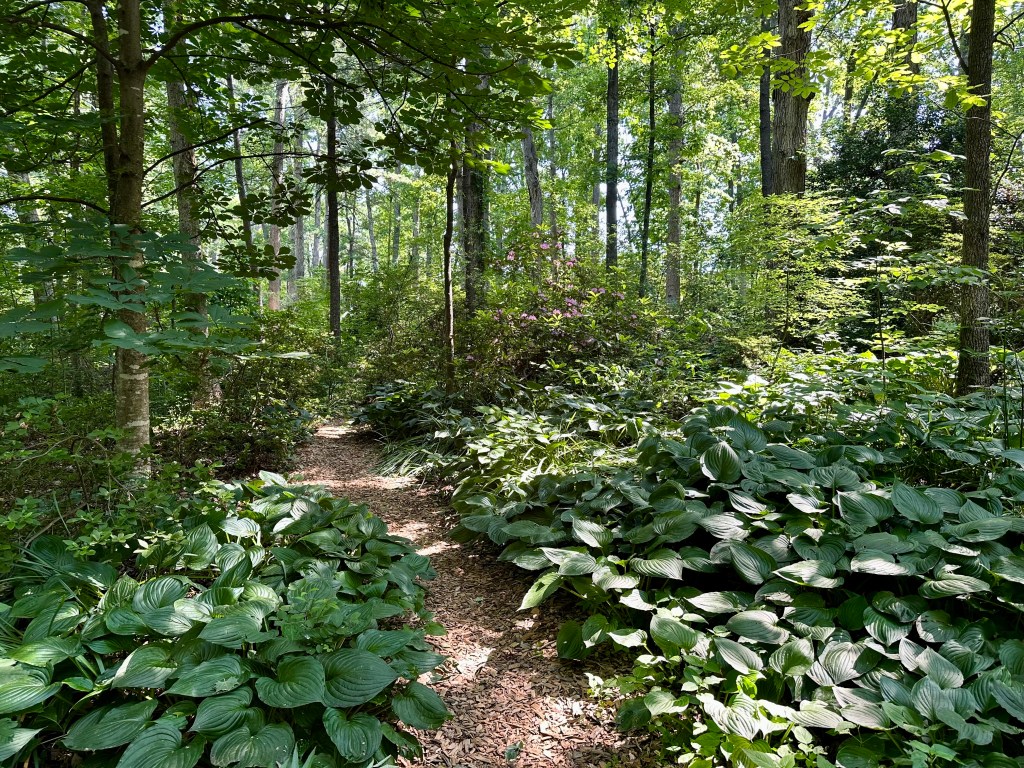
A lone rhododendron holds onto its precious purple blossoms along a wood-chipped path in the shade of the congregation of hardwoods. Here and there, morning light filters through the giants’ canopy, speckling the forest floor.
The broad leaves of huge hosta plants invite you to explore, hike, relax, reflect, listen, and admire all that nature has to offer. A well-located bench beckons you to sit a spell and breathe in the cool freshness before summer’s heat and humidity arrive.
My only shot of a reclusive male Wilson’s Warbler. Photo by Bruce Stambaugh
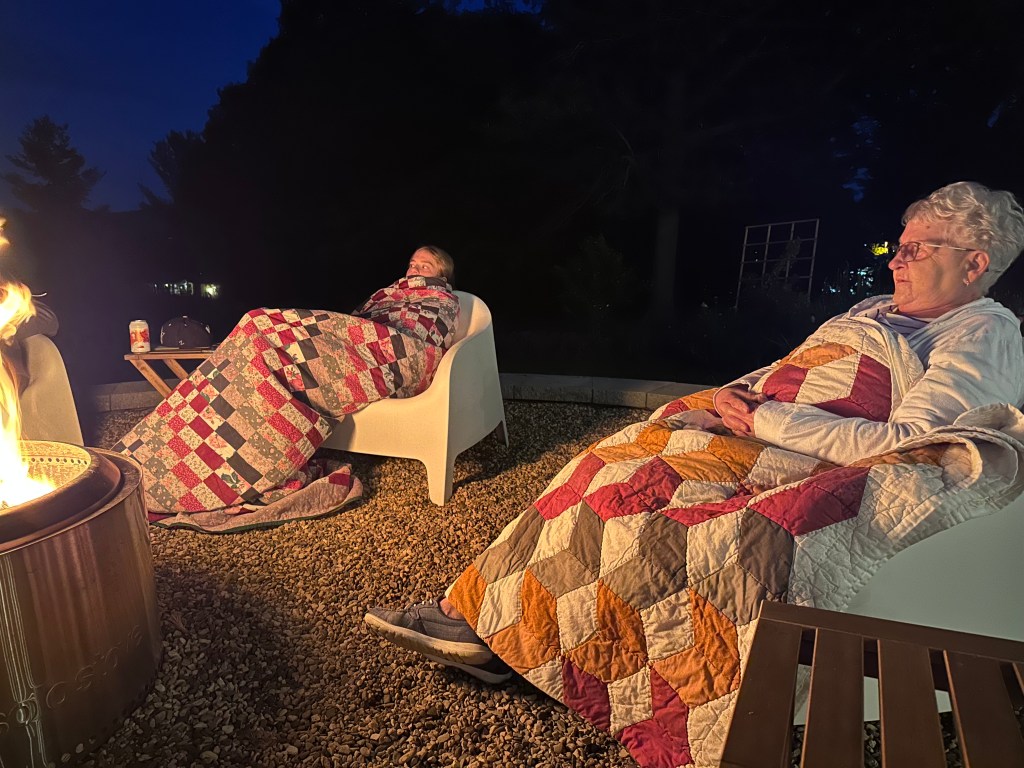
The quilt we gave our grandson for his high school graduation. Photo by Bruce Stambaugh
Today is my wife’s birthday. How is she celebrating? By doing what she does every day: helping others.
Whether it’s her birthday or not, she spends the better part of nearly every Tuesday volunteering at a local thrift store. She runs the cash register, sorts clothing and knick-knacks, and answers customers’ queries about the store, the city, and the Shenandoah Valley, where we live.
As we both approach 80, we strive to be proactive with our bodies, minds, and spirits. Assisting others helps us in all three areas. At the store, Neva engages with new folks, which she greatly enjoys. For the local elementary school, she helps pack nonperishable food for families in need.
She uses her skills to make comforters for people she will never meet. A church organization sends them around the world to those who have little to nothing.
Neva also demonstrates her altruistic talents for the family. Last night, she delivered a quilt that she had pieced and had quilted for our grandson’s high school graduation. She helped him pick the fabric and arrange the pattern. Neva even stitched in music notes on the quilt’s backside for our musically talented grandson.
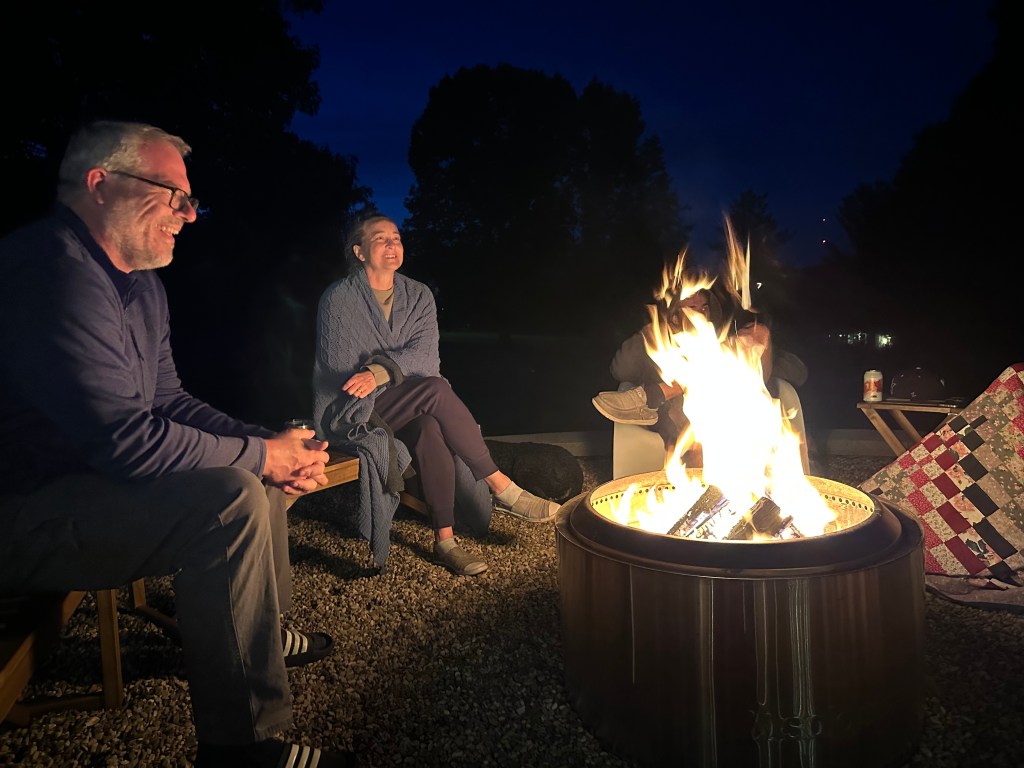
After that presentation, we sat around a campfire with our daughter’s family covered in quilts and blankets for no other reason than to enjoy one another’s company on an unusually chilly evening. Mere presence is another gift of giving.
Neva connects with a friend who has several children. With the ding of a text, Neva can be off providing rides from school to doctor’s offices and back. Now and then, she prepares a meal for them. Neva seems to run on opportunity, and when opportunity beckons, she responds more often than not.
Neva sends birthday, get-well, sympathy cards, and ‘thinking of you’ notes to those who need to be remembered. She often receives a return note or text of appreciation.
Yesterday, our freezer gave out. We hustled the thawing food over to our neighbor across the street, who graciously allowed us to temporarily store it in her freezer until our new one arrives.
In recognition of Neva’s birthday, that same neighbor brought a salad basket for Neva. She had picked the lettuce from her garden and included all the fixings for a delicious salad.
Neva’s salad birthday gift.
So, tonight, she and I will quietly celebrate her birthday with that salad and a few other food items that were too thawed to refreeze. It will be a satisfying end to another day of opportunities to serve.
No doubt, Neva is a trooper. She is determined not to let age deter her from doing what needs to be done to improve the lives of others, even on her birthday.
My wife and I enjoyed a walk around the Genesee Country Village and Museum on Mother’s Day with our son, his wife, and their three-year-old grandson. Jess’s family also joined us on the lovely Sunday.
With wide open spaces and many attractions to investigate, several of us scattered to do our own thing. That’s when I spotted this gentleman, dressed in 19th-century attire, basking in the late-morning sunshine. His obedient dog did the same. Along with the setting and their positioning, they made the perfect composition that fit the setting.
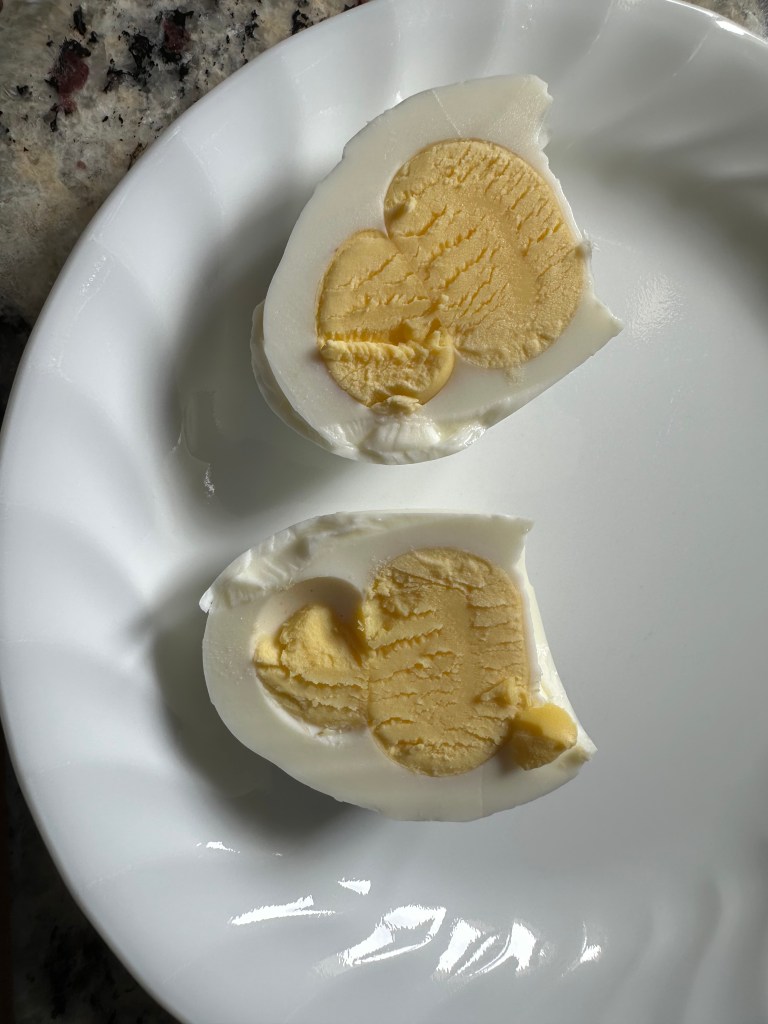
Our 15-year-old granddaughter had her suspicions. While helping my wife prepare for our family Easter meal, Maren found an egg that she thought might have a double yoke. She wanted to break it open to see, but instead placed it in the pot of boiling water with the other eggs.
When my wife sliced open the egg, she found a surprise. The egg didn’t contain a double yolk, but a yolk and a half. I’m not sure how rare that is, but extensive Google research showed that a double yolk is a 1 in 1,000 chance.









 Roadkill Crossing
You must be logged in to post a comment.