Trying to make sense of things


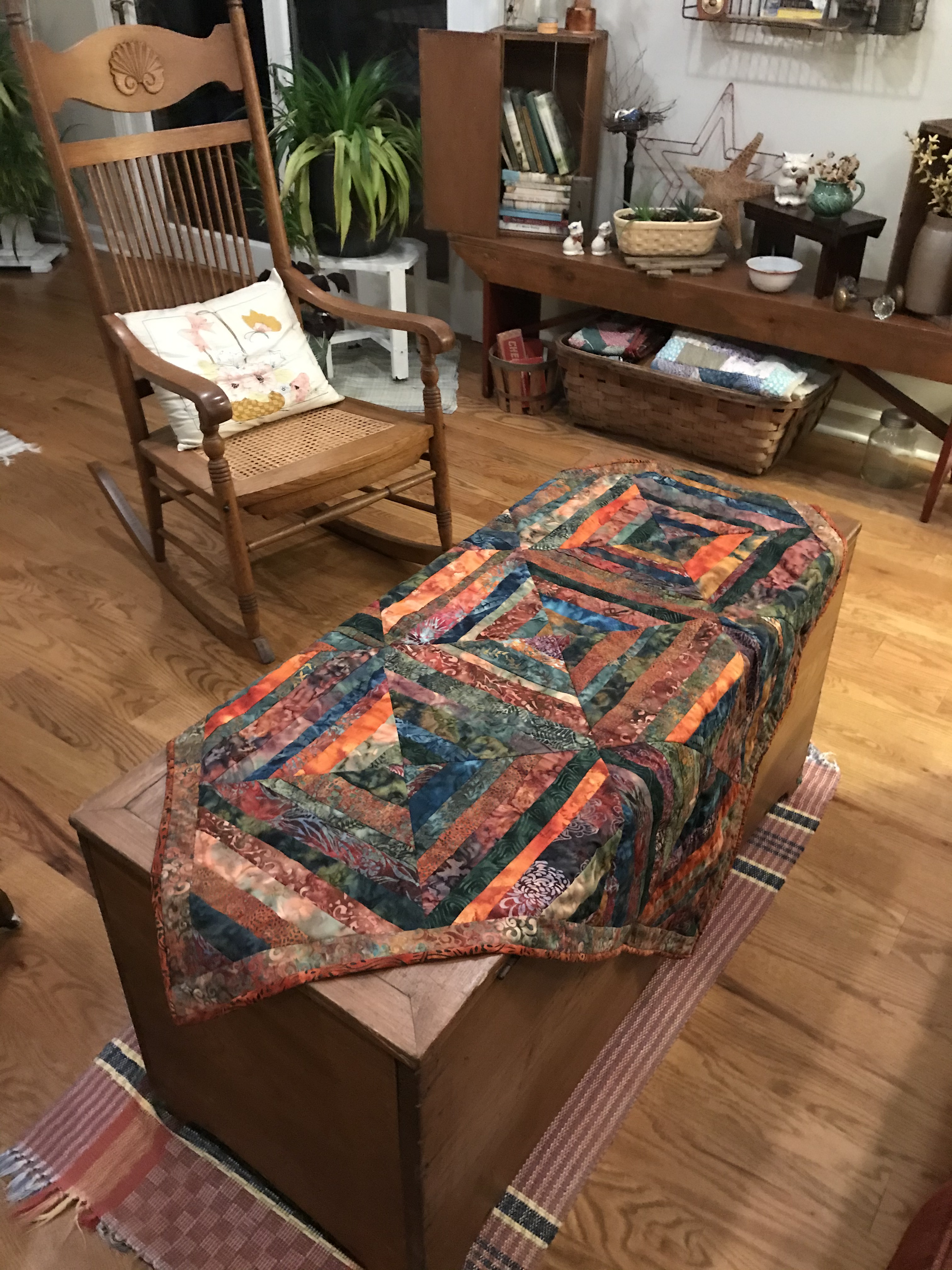
I could hear my wife’s sewing machine humming in the guest bedroom. Neva was piecing together yet another one of her lovely wall-hangings or comforters. She hadn’t yet decided which it would be.

I frequently darted out of the room that is my office and announced to her breaking news about the coronavirus pandemic. None of it was good.

The disturbing information flowed in like a tsunami. It arrived on the TV, the internet, text messages, emails, and social media. The latter was a jumble of emotions, some folks trying to keep comments on the lighter side of life, while others were angry, confused, hurt, disbelieving.

All of those reactions were legitimate, and through this global pandemic, we all have no doubt experienced the full range of human emotions. It feels like September 11, 2001, all over again, only in slow motion.

One of my wife’s many creations.

However, unlike that infamous day, we could see this coming. The many forms of media basically did their job. They kept and are keeping us informed with the latest updates. That’s their job. Some people openly denied the warnings of the obvious, while others tried humor to relieve the tensions. Nothing seemed appropriate. Nothing seemed right.

So much news came in so fast that my head spun. It all felt like a bad dream, only I couldn’t wake up. It just kept getting worse.

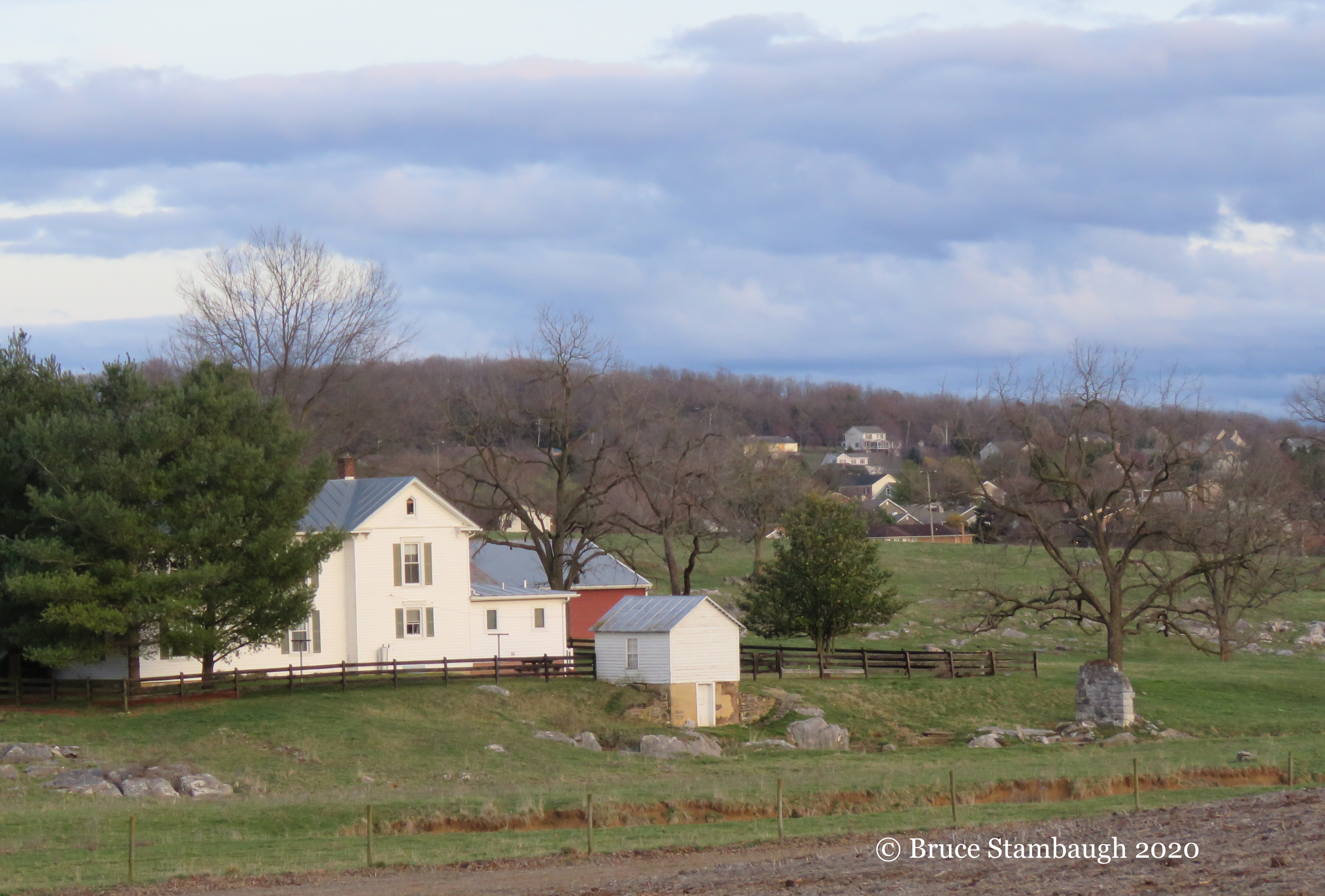
Here in Virginia’s bucolic Shenandoah Valley, the weather was spring-like. I needed to get outside, away from all of the clatter and news of economic, medical, and political calamity. I told Neva that I was going for a walk, and she eagerly joined me. She, too, needed a break.

Neva and I immediately became aware that this was no ordinary stroll. Though sound occurred, the atmosphere felt eerily strange and heavy. It was like an episode of the Twilight Zone.

As we ambled along, we saw no other people. No vehicles passed us. Social distancing was a moot point. We usually see several others as we wander around the paved streets of our sprawling neighborhood. Today, not even the usual dog walkers were out.

A thousand robins chirped with every step. Other sounds caught our attention in the eeriness. A quarter-mile away, a pile-driver pounded away at the thick blue limestone bedrock at a construction site.

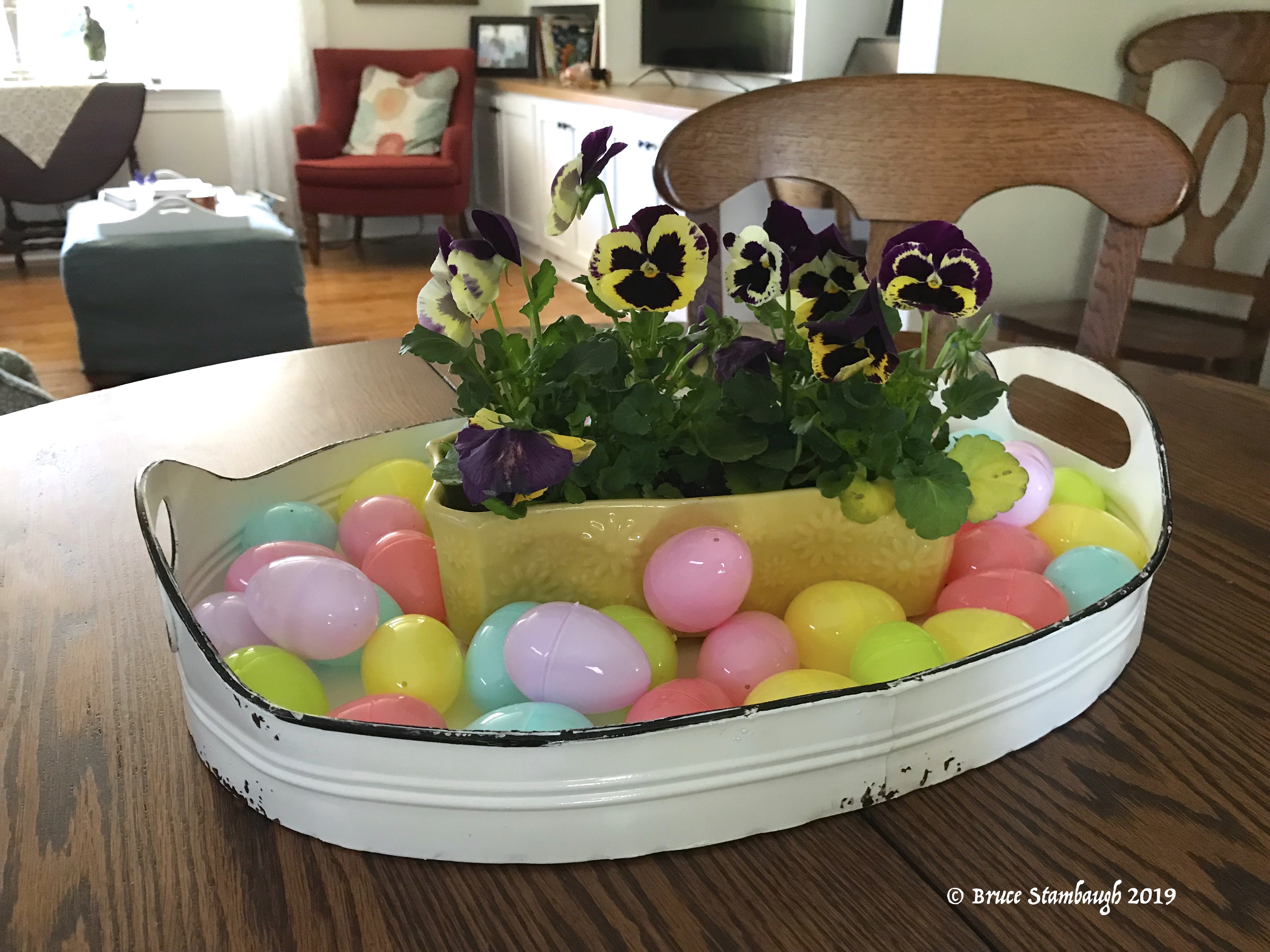
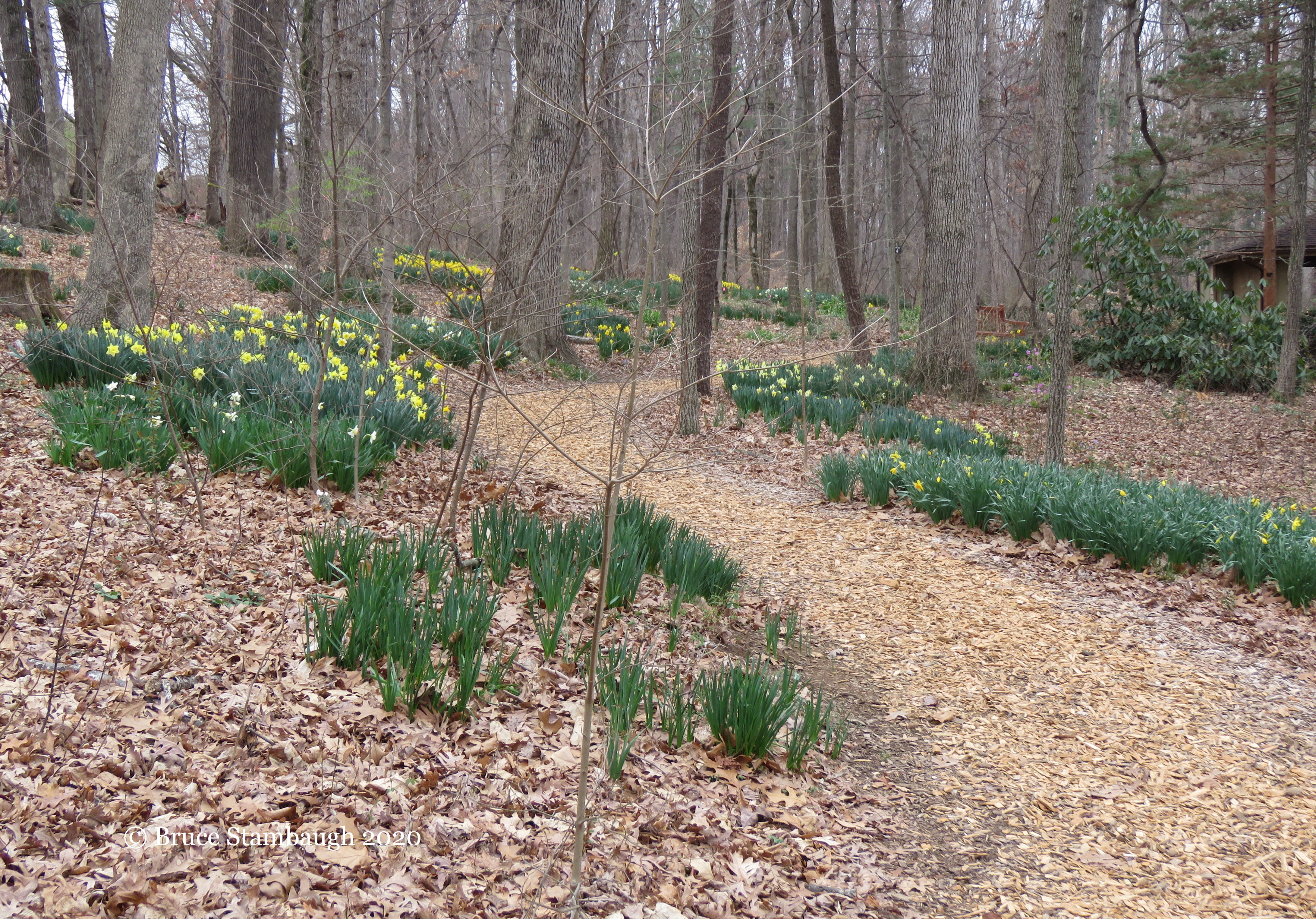
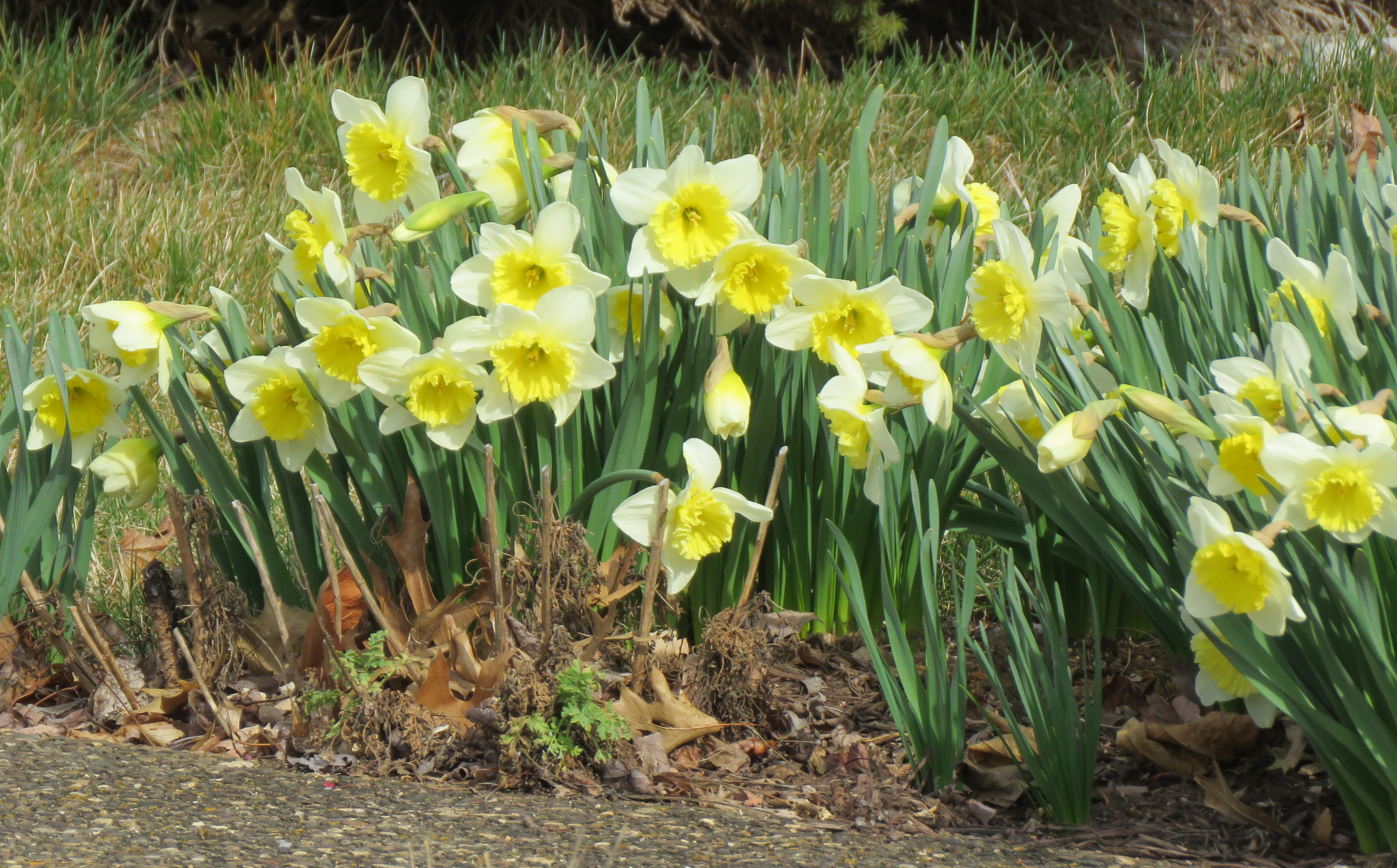
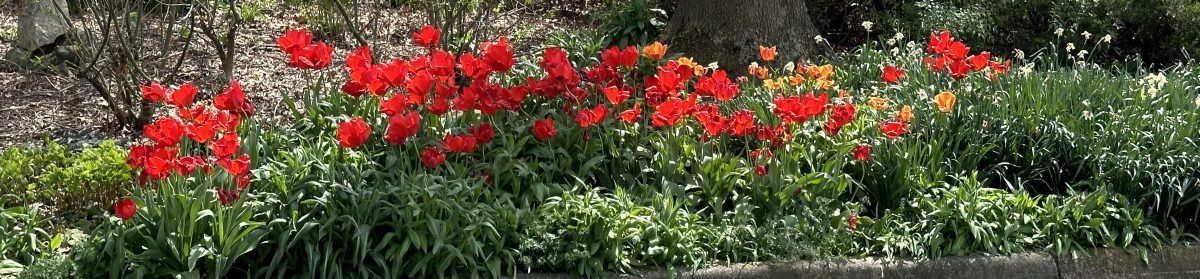
A neighbor’s daffodils.

So did a single hammer at a new home going up three streets over. It drew us like two curious kids wanting to check out the action. We surveyed the house already framed and roofed, intrigued by the noises of wood against wood, metal against metal preparing for the next building stages.

When we returned home, the news continued to pour in. The NCAA canceled the men’s and women’s basketball tournaments canceled. The Major League Baseball season would be delayed. An acquaintance from our church had died. Nursing homes were quarantined. Schools were closing one state after the other.

Governors of multiple states prohibited large gatherings. No more than 25 in California. It was 500 in New York, 100 in several other places. The stock market continued to plunge in fear of the unknown.

That’s what fear does to humans. It riles us up, makes us think, do, and say crazy, unhealthy, panicky things. It’s no way to live.

That’s why we took our little walk to clear our hearts, minds, and souls of the fallout from the cascading crisis. All we could do at that moment was to breathe. Out of new habit, I washed my hands for the longest time before Neva’s sewing machine began to hum again.

It was the sweetest, most comforting sound of the day.

© Bruce Stambaugh 2020
The best time to enjoy nature is now


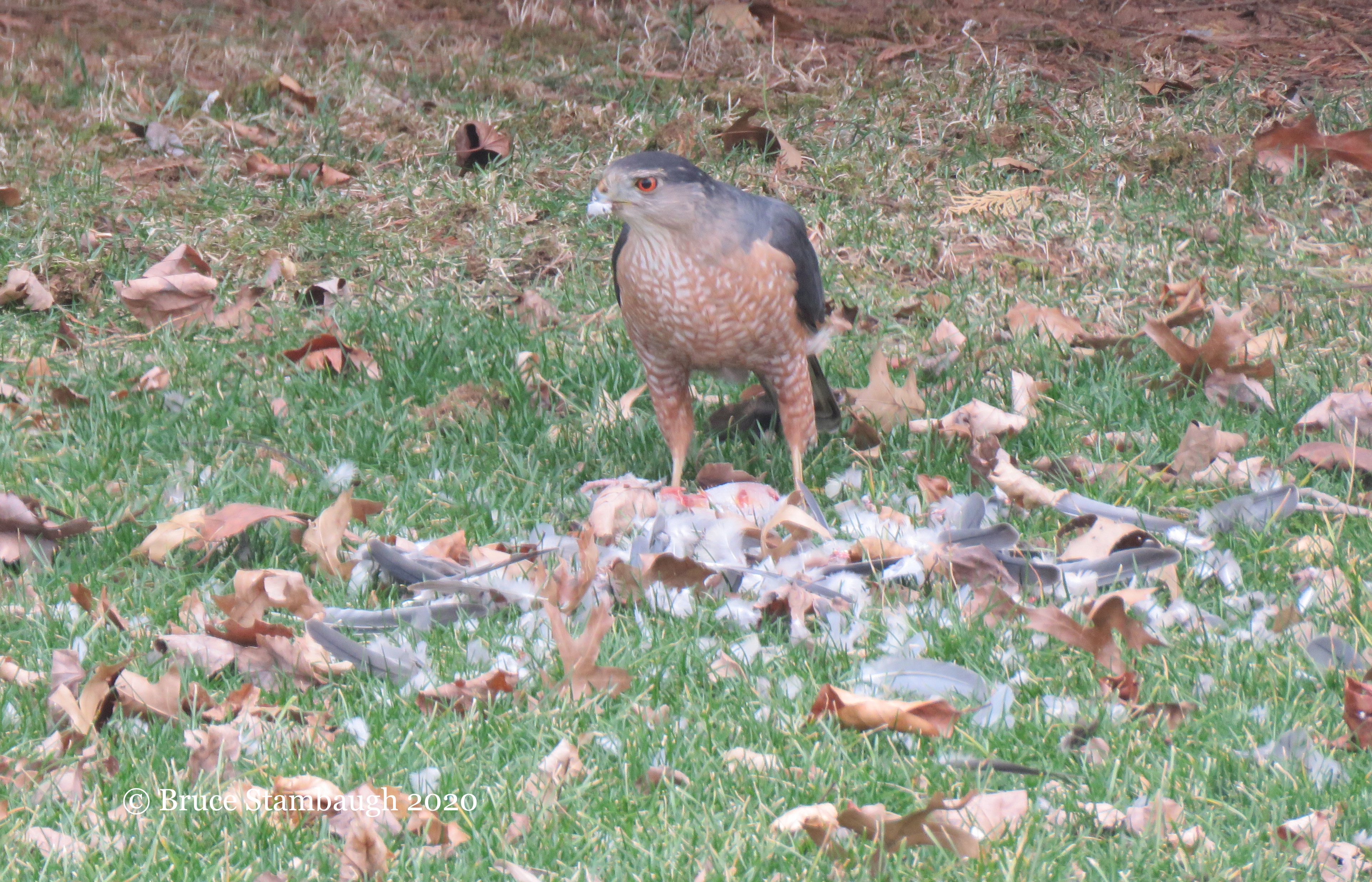
“There’s a hawk in the backyard,” my wife hollered from the other end of the house. I rushed to where she was. The bird was on the ground near the line of evergreens that divide our yard from a neighbor’s.

It was the neighborhood Cooper’s hawk. I had seen it before swooping low over homes in search of its favorite target, songbirds that frequented backyard feeders. I had briefly seen it in our backyard before.

The hawk’s blood-red eyes shown even from that distance without my binoculars. It was too big for another similar accipiter, the stealth sharp-shinned hawk. This beautiful Cooper’s had made a kill and was ripping it apart with its sharp, hooked bill.

I hurried to retrieve both my binoculars and my camera to watch the unfolding drama. I need not have rushed. The hawk remained in the same spot undisturbed, devouring its catch for nearly an hour.

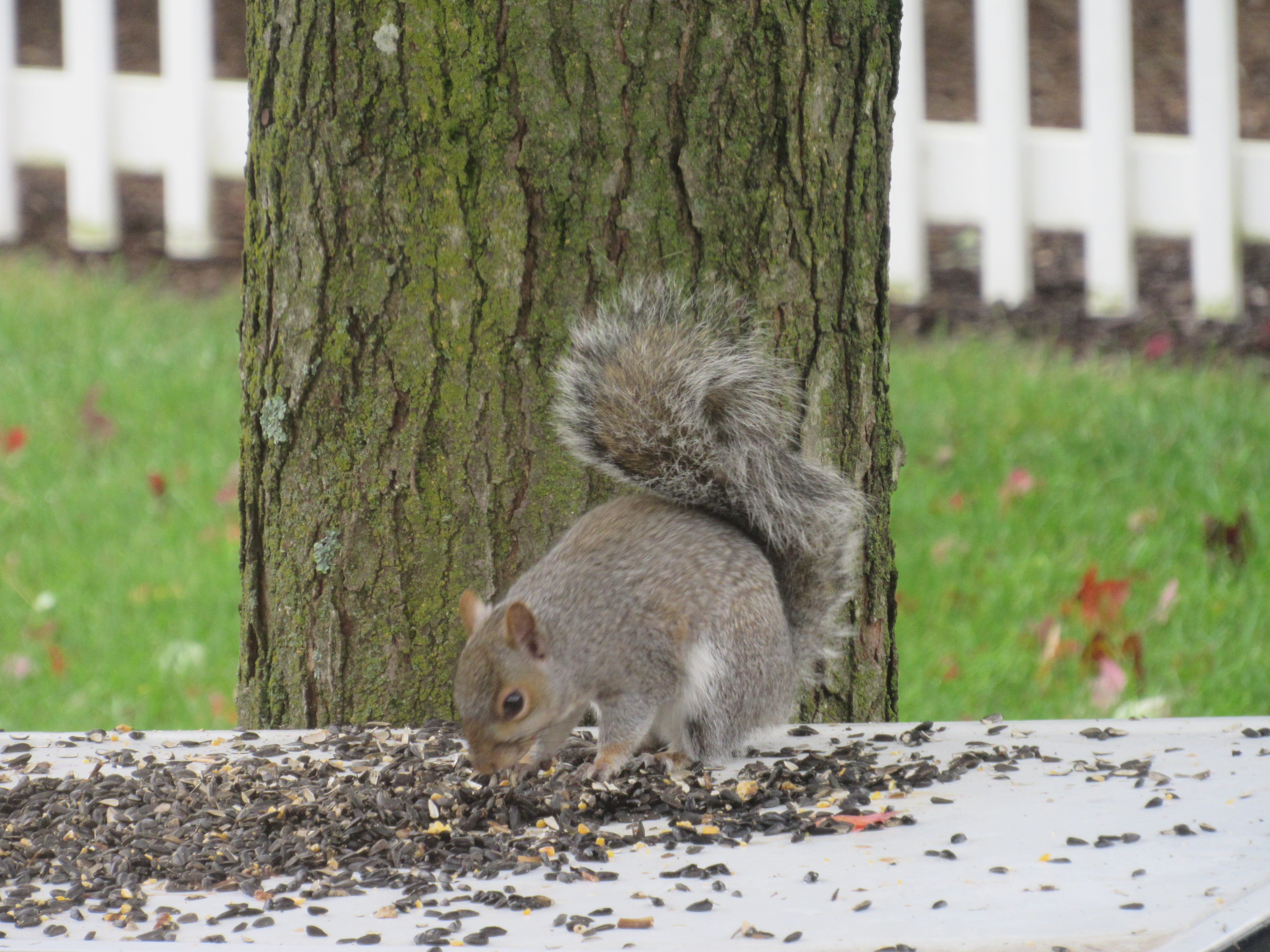
At first, I thought the Cooper’s had captured one of the many grey squirrels that frequent our yard in search of food or to drink from the birdbaths placed around the exterior of the house. As soon as I lifted the binoculars to my eyes, I knew it wasn’t a squirrel.

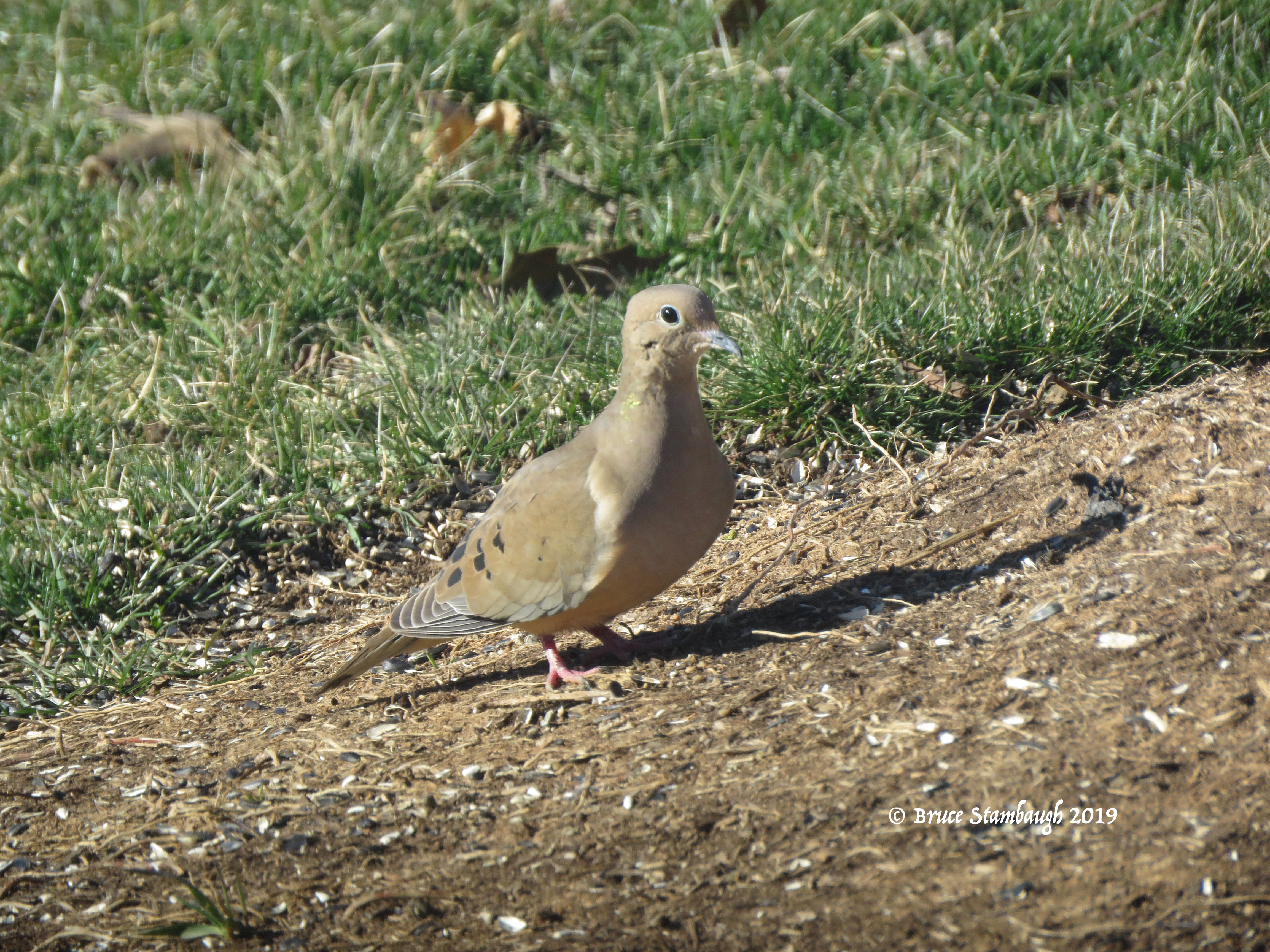
I could see feathers scattered on the ground around the hawk. It had captured one of the mourning doves that come to the feeders or roost in our trees.

I wasn’t sad, nor did I think the scene gruesome. Neva and I had witnessed the balance of nature in progress, “survival of the fittest,” as some refer to it. Just as the dove needed food, water, and shelter, so did the hawk. In this case, the dove was at the wrong end of the food chain.

Empath that I am, I felt a little sorry for the poor mourning dove, but not that sorry. After all, the Cooper’s hawk needed to eat, too. That’s the way of nature.

I try to not get too attached to birds and other wildlife that I encounter. Instead, I just try to enjoy them and their various antics. Each one seems to have a personality all its own, behaviors that set it apart from others of the same species. The riotous European starlings might be the exception to that observation.

I marvel at how nature unfolds, sometimes at her own expense. Once, while watching sandhill cranes walk toward me in Florida, I heard a commotion behind me. A bald eagle had snatched an American coot from a channel. The eagle landed in a large tree where black feathers flew as the eagle ripped apart its breakfast.

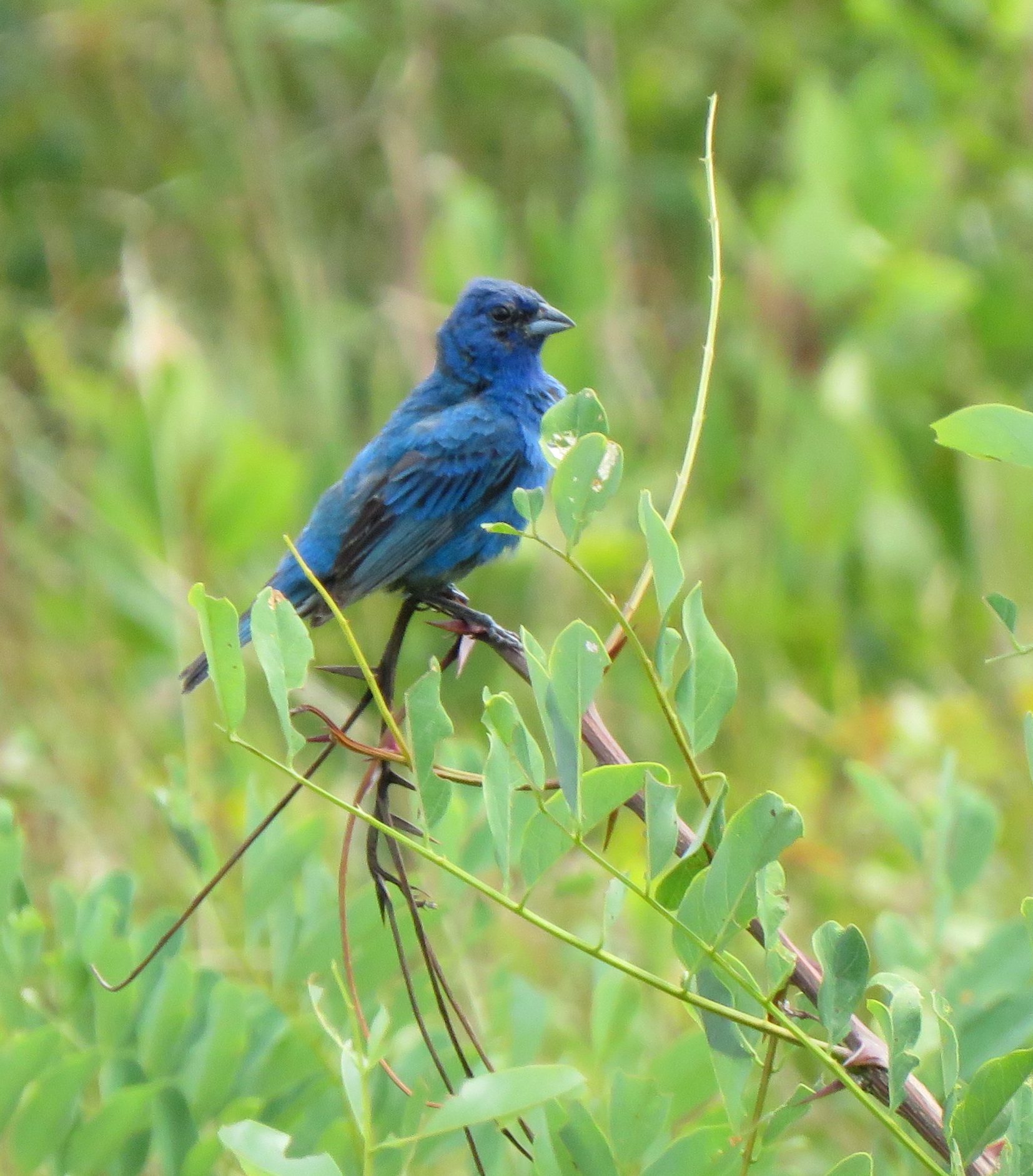
Songbirds like this Indigo Bunting devour weed seeds.
It’s important to remember the big picture when it comes to nature. Where would we be if birds didn’t eat insects or weed seeds or other animals? That alone is reason enough for humans to take better care of planet earth.

I watched the Cooper’s hawk off and on for the duration of its dining. It ate judiciously, pausing every now to check its surroundings. It would return to its meal, pulling sinew, flesh, and bones from the carnage.

After it flew off, I went out to inspect the crime scene. All that remained of the mourning dove were two circles of feathers. One fanned out where the dove was snagged, and the other only inches away from where the hawk dined. The hawk had eaten every other part of its victim.

That is the way nature works. It is a joy and an honor to admire her at each opportunity that she affords.

This slideshow requires JavaScript.


© Bruce Stambaugh 2020
In like a lion, out like a lamb, or not

March snow in the mountains.

March is famous for its variable weather. After all, the familiar saying, “In like a lion, out like a lamb” references the month of March.

There’s a good reason for that. It’s easy to imagine our log cabin ancestors being more than ready for spring after enduring snowstorm after snowstorm. However, pioneer-era folklore was based more on hope than meteorological compilations.

They professed that if March began with yet more lion-like elements, then it had to end with gentler, calmer, warmer, more welcoming weather. Who could blame them?

It’s only natural to want more appealing weather than another cold spell. In animalizing weather, it’s much safer to deal with a lamb than a lion, especially if you were a 19th-century settler with a bad case of cabin fever.

Likely, there was more to it than that. Those hardy people believed in a balance of life. Aristotle’s “moderation in all things” was their mantra. So, they logically applied that theory to the weather as well. If March was harsh in the beginning, it should be mild by month’s end.

Unfortunately, the weather doesn’t work that way. We take what we get, and given what we have gotten in the past, March’s weather could be a doozy. A lot of factors come into play.


March’s normal weather, whatever normal is these days, has historically played hijinks with global societies. March is known to deliver every variety of weather in its 31 days, and not always where or when you might think.

My family has personal experience with March’s fickleness. Seven years ago, we traveled from Ohio to Virginia’s Shenandoah Valley to babysit our three grandkids, then ages eight, six, and three. Their parents went on a much-needed vacation to Florida.

Shortly after we arrived, a strong cold front moved through the eastern U.S. causing chaos. While Florida froze, the storm dumped a foot of heavy, wet snow on us. Babysitting was never so much fun as we frolicked in the winter wonderland. Sled riding, building snow forts, and snowmen filled much of our time.

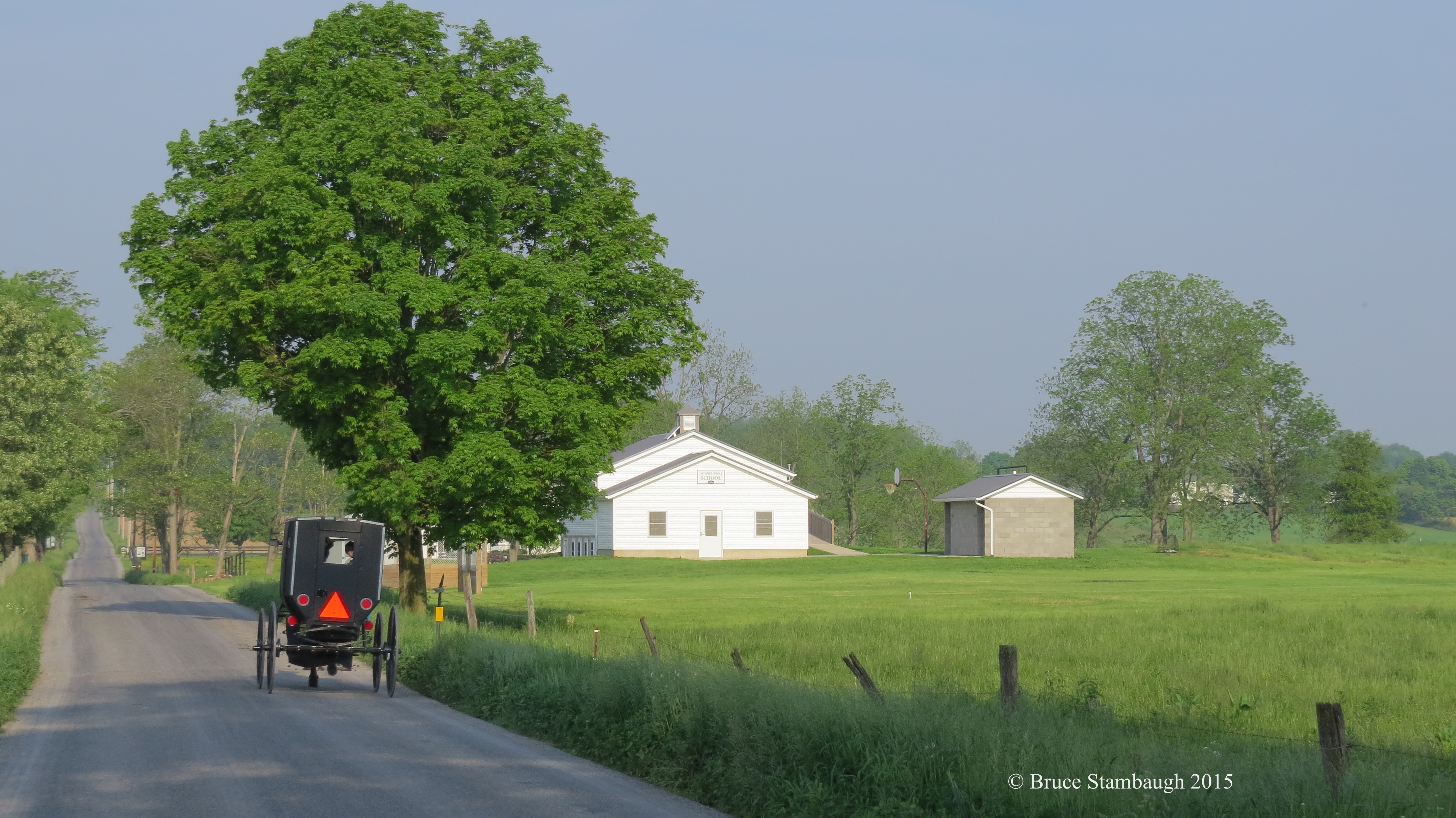
When we returned home a week later to Holmes County, Ohio, the weather was dreamy. Under sunny skies, Amish farmers were plowing fields with horses. Now those seem like the good old days.

When we arrived home.

It’s easy to be nostalgic about March. I always thought of the third month as the bridge between winter and spring. Hoes and rakes replaced sleds and ice skates. The snow on the daffodils never lasted long.

It’s much harder to face the reality of the Marches of the 21st century. Now, severe storms are occurring more frequently and are much stronger than in previous times.

More than a hundred years of industrialization have drastically changed global climate patterns. Tropical areas that usually receive regular rains have been drought-stricken, resulting in catastrophic wildfires. Think Australia and California.

Globally, the last 10 years have produced nine of the warmest years on record. In fact, this January was the warmest ever. That could explain in part why many skiers, ice skaters, and ice fishermen far and wide had to feel abandoned by the nearly winterless winter weather.

That said, March will still be March. It just might be wilder than in olden years. Our forebearers rhymes may have had some wishful reasoning to them. The reality in the early 21st century may deliver more dramatic climatological results.

If we are fortunate, perhaps the meteorological lion and lamb will lie down together peaceably. That might bring spring weather of biblical proportions.

The signs say it all.

© Bruce Stambaugh 2020
It’s always good to be home

A new day dawns in Ohio’s Amish country.

Home. It’s a four-letter word that conjures up both good and sad emotions. It all depends on one’s circumstances.

I was fortunate. Returning home has always been a rewarding, meaningful experience for me.

I have no recollection of living in my first home on a channel of a lake near Akron, Ohio. But I recall many stories told to me in my adolescent years. I still get chided for grinding up coal cinders from the driveway. Apparently, I thought they tasted good.

My earliest childhood recollection was when I was about four years old. My father handed me a cold Coca Cola while I sat overhead on a rafter of the house my folks were building.

I spent my formative years in the little red-brick bungalow in Canton, Ohio. Baby boomer families like ours filled that middle-class neighborhood. Pick up Whiffle ball, baseball, and football games were commonplace, along with hide and seek sessions that went long into warm summer evenings.

That modest home was always a welcome sight returning home from college. Though the house was sometimes filled with shouting and disagreements, I always felt safe there. It was my home and my family, after all.

All of that changed once I graduated and started teaching in Killbuck, Ohio. I met and married my wife, and we built our own home just out of town next to an old cemetery. My school principal built right next to us. I loved to tell people that at least we had good neighbors on one side of our home.

We spent 10 incredible years there. It’s where our daughter and son learned to walk, talk, and play. Oh, the stories I could tell of those good old days in that hardscrabble town. For now, it’s best to let them remain dormant.

After I became a principal in East Holmes Local Schools, we moved to near Berlin, Ohio. The house we bought was on an Amish farm, and all of our neighbors spoke Pennsylvania Dutch as their primary language. That wasn’t a hindrance at all.

Just like when I grew up, our daughter and son had plenty of children to play with. They often met at the giant old black oak tree across the road from us. It was a joy to be able to watch them interact and quickly solve any squabbles without an adult having to intervene.

We lived there for 38 years, longer than any other place, including our childhood homes. Our neighbors were friendly and helpful. Amazing sunrises and sunsets enhanced the already beautiful views that we enjoyed.

Despite our deep roots in the community, we decided it was time to be nearer to our three grandchildren, who were growing all too fast. We found a home only five miles away from them in Harrisonburg, Virginia.

We bought and remodeled a little ranch house amid nearly 500 other homes. Just like their owners, each one has a personality all its own. Instead of being in the heart of Ohio’s Amish country, we now live in the heart of the beautiful Shenandoah Valley.

We can watch our high school grandson strike out batters in a baseball game. We enjoy a middle school concert in which our other grandson plays the French horn. We watch and listen with pride as our granddaughter sings in a prestigious children’s choir.

In the words of Maya Angelo, “I long, as does every human being, to be at home wherever I find myself.”

Indeed, it’s good to be home, wherever that is. I hope that’s true for you as well.

At home in Virginia’s Shenandoah Valley.

© Bruce Stambaugh 2020

Drawn to the seashore


Why are people drawn to the edge of the sea? It’s not a frivolous question.

Spending the heart of the winter at a rented condo on the beach, I have observed the ocean lure people of all ages to her shore. There seems to be something magical, magnetic to where frothy waters lap at sandy beaches.

People young and old seek that seemingly sacred spot that wavers with every collapsing wave. Even the shorebirds covet that undulating, elusive line in the sand.

The tiny and swift sanderlings poke and prod the moist sand for nutritious crustaceans on the shore’s surface or just below. They always scurry ahead of the washing water as if they are afraid of getting their feet wet.


The larger willets saunter along probing for the same bounty with their sturdy black bills. They, too, avoid the ebb and flow as if their lives depended on it. Perhaps they do, instinctively knowing the consequences of being swept away.

Humans of all ages, however, take a wide variety of approaches while at the shore. Throwing caution to the sea breezes, children rush squealing to the water’s edge. Whether in street clothes or swimsuits, the youngsters wade right in, much to the horrors of their adult overseers.

Jogger at dawn.
Are they lulled by the rhythmical sound of the waves? Does the foamy surf beckon them to come to see the sea? Do they thrill at the sensation of surviving the rushing, rolling water?

I suspect all of that and more. Unlike most parents, the children have no fear of undertows or rip currents. The adults quickly catch up and take charge, even at the expense of getting their own feet wet, shoes, or no shoes.

Teens, of course, don’t care. They, too, wade or rush or plunge right in, regardless of attire, or the water’s temperature. In February, it may match the chilly air temperatures, made cooler still by the persistent winds.

The adults also are intrigued by the sea, each in their own way. Some jog while others walk along the water’s edge for exercise and fresh air.

Conversely, the snowbirds take their time. They have earned it, after all. They relish being away from the cold and snow up north. Retirees prefer to traverse the firm, moist sand closest to the water for its support.

This slideshow requires JavaScript.


Many walk with their heads bent forward, searching for colorful shells or sharks teeth. A few long for treasures of a different sort. They sweep the sand with metal detectors seeking what others have lost.

Some beachcombers spend many minutes inspecting one spot before they slowly move on. Others are content to stroll more for the exercise than the shells. All, however, are careful to mind the lapping sea, especially if the tide is coming in.

Other beach walkers have another purpose in mind. Their canine pets demand to be taken on their necessary jaunts. Dogs of all shapes, sizes, and breeds head to the shoreline.

A few folks are content to simply sit and enjoy all their senses in one spot. They watch, read, sleep, or chat with companions for hours.

Hardy souls ply their skills at fishing. I think the dolphins, ospreys, and terns are more successful.

Like all the others, I also answer the sea’s siren call. I join them in their multi-faceted love affair with the seaside.

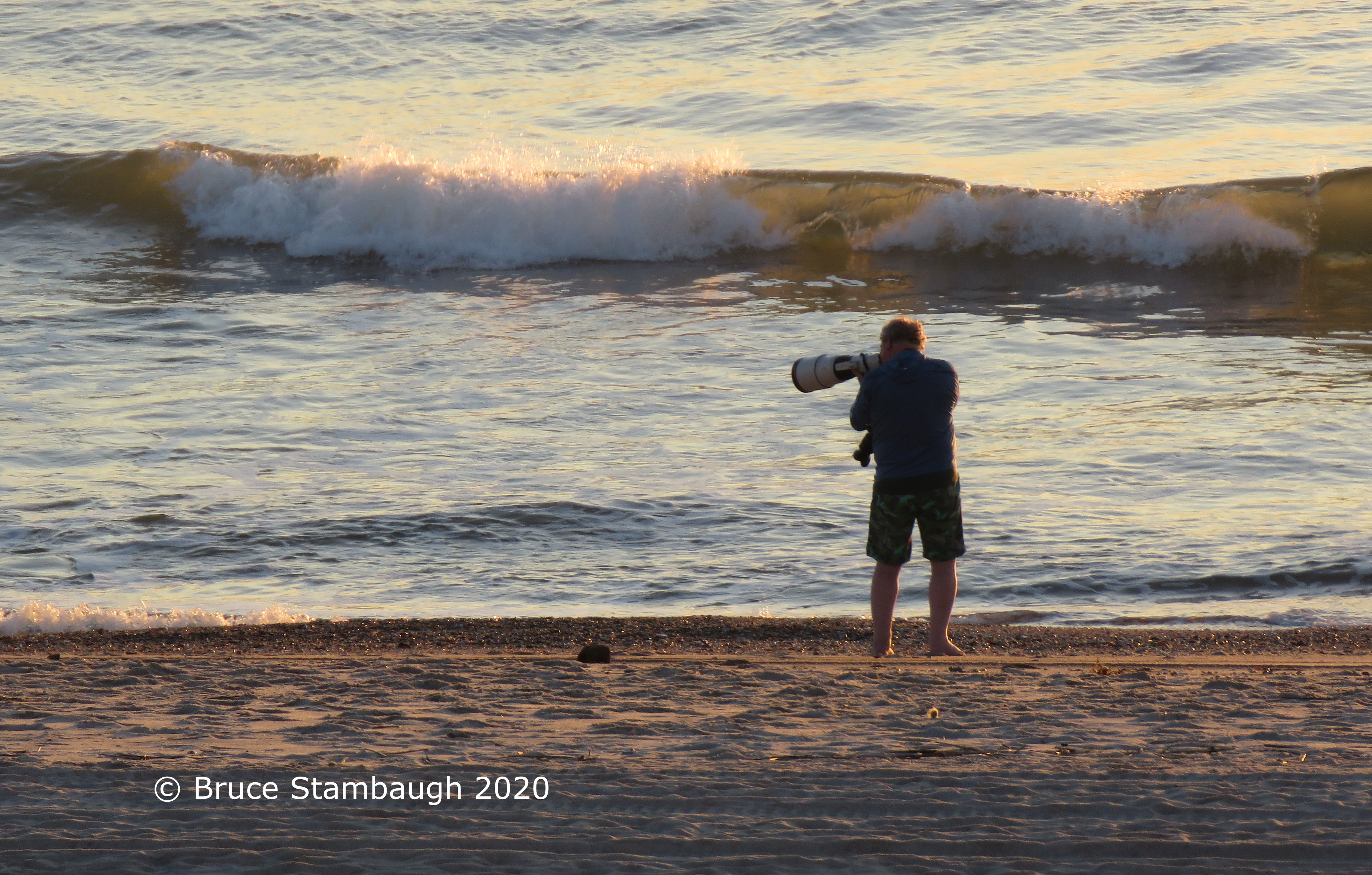
At dawn, I let my camera document all the unfolding radiance. Nothing beats a dazzling sunrise, except sharing it with others.

Why are people drawn to the seashore? For all the right reasons.

© Bruce Stambaugh 2020

January dreaming


As a youngster, I remember those cold, blustery January days of sitting as close to the living room heat register as possible. I would grab the latest seed catalog that had arrived in the mail, and while myself away with luscious visions of warmer days ahead, corn on the cob, and fresh lima beans.

My brothers and sisters would sometimes join me in this communal dreaminess. We couldn’t wait to be harvesting our own fresh-picked pickles, ripe red tomatoes, and those buttery-colored ears of sweet corn. Of course, a lot of time, hard work, and patience would have to pass before all that deliciousness happened.

grandkids sled ridingBesides, we would often get interrupted when one of the neighbor kids arrived at our doorstep to ask us to go sledding. Kids being kids, we usually traded future pleasantries for present ones.

With the advent of technology and electronic interconnection, emails seem to have replaced those slick, thick printed advertisements. The contents have changed, too.

Smart marketers know most baby boomers now prefer discovery to husbandry, although I have plenty of peers who still love to get their hands dirty. It’s usually on a much smaller scale than 30 years ago, however.

My wife and I gave up gardening for the most part when we moved to Virginia. For a woman who loved her flower gardens, Neva furrows her forehead at any mention of planting a patch of wildflowers on our little slice of America.

Maybe the marketers have seen that expression, too. That could explain why we don’t get those tempting seed publications anymore. Travel brochures, invitations, emails, booklets, and yes, catalogs have replaced their agrarian counterparts, promoting fun-filled cruises, exciting explorations, and exotic destinations.

There’s a good reason for that. Since most boomers are retired or semi-retired, a majority of us apparently like to travel. Besides the printed and electronic information, television and computer pop up ads besiege us with romantic places to go.

That’s all right with us. Neva and I both like to travel, and since we fit the retired category, we try to visit as many places as we can as time and money allow.

This slideshow requires JavaScript.


We also have to consider our age, our station in life, and our health, not necessarily in that order. We both know we are fortunate when it comes to our overall physical fitness. We also know that that may not last. So we must get in as much travel as possible while we still can.

Neva and I both enjoy learning about new places, cultures, languages, traditions, history, geography, and enticing locales. We also like familiarity, which is why we keep returning to our beloved Lakeside, Ohio, every summer.

Traveling allows us to enrich ourselves in all those subjects and much more. We know we aren’t alone because many of the offers we receive fill up quickly.

The land and ocean cruise we took to Alaska and the Yukon last summer was proof of that. Boomer-aged trekkers predominated at every stop and venue of the trip. In our group, only one young millennial couple dared to join our silver-haired entourage. Poor things, they were even on their honeymoon.

Because traveling is now so trendy and relatively easy, despite the security screening delays, cruises and group traveling are often planned a year or more in advance. You can dream in January, but if you don’t book right away, you may get shut out.

My touristy point comes full circle with personal disclosure. This January, I’m writing from Florida.

© Bruce Stambaugh 2020.

Christmas Morning in Amish Country


This is one of my favorite Christmas morning shots. It’s also very personal and sentimental. After 37 years in the same house, December 25, 2016 was our last Christmas here before we moved to Virginia’s Shenandoah Valley to be near the grandkids.

This photo shows our granddog, a Sproodle (English Springer Spaniel/Poodle mix), watching a horse-drawn Amish buggy trotting by the house. It was a familiar scene for us all those years. The clop, clop, clop of the horses’ hooves on the payment of the busy road on which we lived soothed our souls. We miss that a lot.

I suppose, in part, that is why I chose this peaceful Christmas morning photo to share. I took it in the calm of the blessed morning before the grandkids awoke one last time at our Holmes Co., Ohio, home.

“Christmas Morning in Amish Country” is my Photo of the Week.

© Bruce Stambaugh 2019

Putting mystery back in the holidays of miracles and light


December’s mainstay holidays are cloaked in mystery and miracles. Darkness to light summarizes the current holiday season theme regardless of which ones you observe.

Hanukkah, Christmas, and even the winter solstice share those common qualities. They each come with their own history, a bit of mystery, and a requisite for reverence. The three even overlap in time, traditions, and symbols.

Hanukkah and Christmas each have deep, overlapping religious roots, while the winter solstice has pagan origins. All three, however, connect winter’s darkness with some concept of light. In fact, the triumvirate celebrates light in authentic, yet distinctive practices.

Besides illuminating light in the year’s darkest time, this triune of holidays has another commonality. The celebration of all three can last for days in keeping their specific purposes.

The winter solstice occurs when the sun reaches its farthest southward point for the year. That is precisely 9:19 p.m. EST on December 21. In Universal Time, the winter solstice is December 22 at 4:49 a.m.

The winter solstice marks the latest dawn and the earliest sunset. It is the longest night and shortest day for those of us who live in the Northern Hemisphere. Of course, it’s just the opposite for those south of the equator.

History and archeology show us that earth’s early peoples recognized this critical point in whatever way they marked time. They understood that the sun’s path could be predicted on a regular route across the sky.

Archeological wonders like England’s Stonehenge and Peru’s Machu Picchu stand as evidence of this. Indigenous peoples in America’s southwest also marked the end of darkness in similar light-filled ceremonies.

Historians are still unraveling the mysteries of these cultural rituals. Fire and light were essential symbols in most of these ancient celebrations. I marvel at how those two entities connect to Hanukkah and Christmas.

This year Hanukkah is celebrated by the Jewish faith from December 22 to 30. Hanukkah is the commemoration of a historic miracle involving light.

The Jewish holiday arose after the temple in Jerusalem was recaptured from cruel ruler Antiochus. Wanting to rededicate the holy temple, the Judah victors found only enough olive oil to burn sacred candles for one night. Mysteriously, the menorah candle burned for eight consecutive nights, establishing the miracle of Hanukkah.

Christmas, of course, is December 25, most likely assigned that date to coincide with the winter solstice and Hanukkah celebrations, according to some historians. They reasoned that if the shepherds were guarding the grazing sheep, the season would have been one other than winter.

Regardless, Christmastime is a celebration of another kind of light. It, too, is rooted in a miracle, that of Mary’s virgin birth of Jesus, meaning, “God with us.”

Christians begin the Yuletide season with the Advent preparation four weeks ahead of Christmas Day. Some sects of Christianity then extend the celebration to January 6 or Epiphany or Old Christmas, which the Amish humbly celebrate.

For me, in this blend of holidays, the light brings anticipation of better things to come: lighter, longer days, a hope for a better, sunnier new year, the joy of personal peace by walking with the light, and the love of all Creation.

The vibrant spirits of the season, miracle and mystery, gently weave the interconnected holiday celebrations together with the threads of hope, joy, peace, and love. Will we allow ourselves to be wrapped lovingly in this warm garment more radiant than the brightest star?

I pray that the mystery of miracle envelops you and yours in joy and light this holiday season.

Winter solstice sunset.

© Bruce Stambaugh 2019

Reach out to those who can’t celebrate

As joyous and fun as the holidays are, not everyone can celebrate. All of the holiday hype merely adds fatigue and angst for those who have no family or who have lost loved ones this time of year.

Amid our own holiday celebrations, my wife and I have our moments of remembrances. My father died a few days before Christmas a decade ago. So did my father-in-law nine years earlier. A young adult friend, studying to be a doctor, succumbed to cancer, also at Christmastime.

I’m not writing this for sympathy. I’m sharing our story and asking for awareness. For us, the holidays bring mixed emotions. We can be joyously celebrating one moment, and suddenly out of nowhere, we are pricked with the painful reminder of those whom we loved but are now gone.

The sadness, the loss, the hurt all appear uninvited. What sets off the sensation is unpredictable. It could be a familiar fragrance, an innocent comment, or a peculiar sound. It could be nothing more than the thought of missing a father, mother, brother, sister, or friend.

In the cases of my father-in-law and my father, we were relieved when they finally could cross over to the other side. Dementia and cancer can be cruel, gut-wrenching deaths. Even if life’s end does come during the holidays, there is comfort in knowing their physical misery has finally ended.

It was especially so for my father. Dad loved Christmas. When he died 10 years ago, the Ohio winter weather was brutal. An extended cold snap and heavy snow guaranteed a white Christmas. Dad would have loved the brightly decorated church welcoming the holidays.

We said our goodbyes to Dad on December 26, which was a Saturday. We understood if folks couldn’t come. To our surprise, scores of people young and old braved the weather. We were glad they had taken time out of their own holiday plans to pay their respects and share their sympathies with our family at the visiting time and attending the service.

Every year, as we approach this most hallowed time, there are moments when I hear Dad’s voice as clear as if he were still with us. I think it’s a reminder of how childlike Dad embraced Christmastime his entire life. The thought brings a smile to my face every time. That’s the way our father would want to be remembered.

But for others, it can be different. When you lose a loved one no matter the age or situation, the loss can be a shock from which some never recover. If the death or traumatic accident happens during the holidays, the grief can even be more profound.

We must give both space and grace to those who grieve. They need their time alone to mourn, whether their personal loss was recent or decades ago.

However, we must also be inclusive of them, especially if they were left to live alone. That may mean including those who grieve in family gatherings, or it may mean visiting them on their own time and in their own surroundings. Whichever, they must not be forgotten.

The holiday season is meant to be a joyous time, one of celebration, good cheer, and gracious giving. We should always honor it that way.

We must remember, however, that not everyone can celebrate in that manner. Personal loss changes people. In our reveling, we must recognize and embrace their grieving.

Doing so may be the most appropriate gift that we give them.

© Bruce Stambaugh 2019

Go ahead and ring those bells!


Whenever I hear those old sleigh bells, I know it’s officially the holiday season.

It’s not hyperbole in describing those silver bells as old either. My wife’s grandfather used them on his horse-drawn sleigh. Their pleasing tinkle, tinkle, tinkle conjures up all that’s good and joyous about Christmastime. Visions of Rudolph and the rest of his reindeer team pulling jolly Old Saint Nick in his gift-laden sleigh danced in my head.

That enchanting tinkling sound returns every year as Neva gets the urge to decorate the house inside and out for the holidays. That usually happens on a whim, based on our busy schedules and the weather forecast. This year it was a few days before Thanksgiving.

The jingling of the bells is her unintentional announcement that the holiday display initiative has begun. Neva often completes the jolly decorating on her own, whether I’m home or not.

The sound of the bells, however, drew me away from a writing malaise to join in the fun. With the late November weather sunny and warmish, Neva already had the exterior decorating underway.

We had earlier agreed to simplify both the outdoor and indoor displays. Even then, our previous ones were modest by comparison.

Out came holiday quilted wall hangings, seasonal books, and Christmas candles. Up went the artificial holly wreaths and our late friend Helen’s ceramic Christmas tree upon her antique oak end table. The tree’s red lights stay continuously lit against its shiny green bows all tipped with white for snow.

With each completed display, the memories flowed. Barn wood-framed antique Christmas postcards hang near the front door, welcoming all for the holidays. My late father made the frame years ago.

No room goes untouched with Neva’s artistry. A rustic steel nativity scene adorns her grandmother’s china closet.

Dashes of snipped holly and boxwood grace the front porch and family room. A garland of shiny red beads and artificial greenery accompany the sleigh bells that surround the table lamp in the front window. It’s only appropriate that that string of bells take center stage.

Holiday candles and soap caddies gussied up the bathrooms. In the dining area, Christmas tree knickknacks serve as bookends to the candy dish, where red and white peppermint candies tempt me from atop the antique dry sink.

Salt and pepper shakers disguised as Mr. and Mrs. Snowman oversee the kitchen. Holly stenciled water glasses, festively decorated serving bowls, and platters all wait their turn in the cupboards to serve their cheerful purposes.

Neva already had completed most of this by the time the sleigh bells rang. I arrived in time to decorate the tall and skinny artificial Charlie Brown Christmas tree sequestered in the corner of the open spaced living area.

I enjoyed hanging an assortment of ornaments that represent nearly every year of our togetherness. Neva completed the adorning with thin, red-striped candy canes, also an annual tradition.

Next to the tree, strings of little white lights tactfully wind through stacked books resting on the wooden bench a friend had restored. Strings of green garland and white lights and Christmas tchotchke brightened both the back porch and the utility room.

I can’t overlook the subtle but most prominent and meaningful holiday symbol of all. By night, little battery-powered candles flicker from the windowsills. Their glow is small, but mighty, brightening the darkest December nights and the starriest.

That evening I took my tea in an oversized holiday mug. It’s hand-painted smiling snowman enjoyed every sip right along with me.

When it comes to Christmas, our welcome sign is out. My wife always makes sure of that.

© Bruce Stambaugh 2019

Bay Photos by Donna

Wildlife Photos From The Chesapeake Bay Region

ROAD TO NARA

Culture and Communities at the Heart Of India

K Hertzler Art

Artist and nature journalist in the Shenandoah Valley of Virginia.

Maria Vincent Robinson

Photographer Of Life and moments

Gabriele Romano

Personal Blog

Jennifer Murch

Art is the only way to run away without leaving home. -Twyla Tharp

Roadkill Crossing

Writing generated from the rural life

ANJOLI ROY

writer. teacher. podcast cohost.

Casa Alterna

El amor cruza fronteras / Love crosses borders