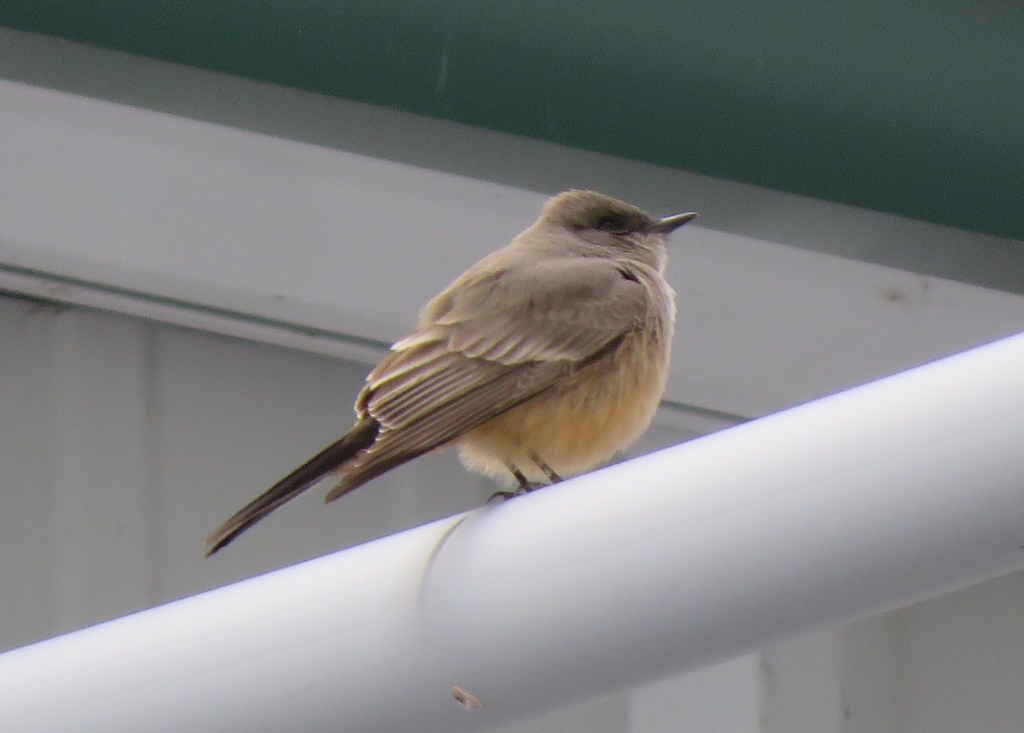
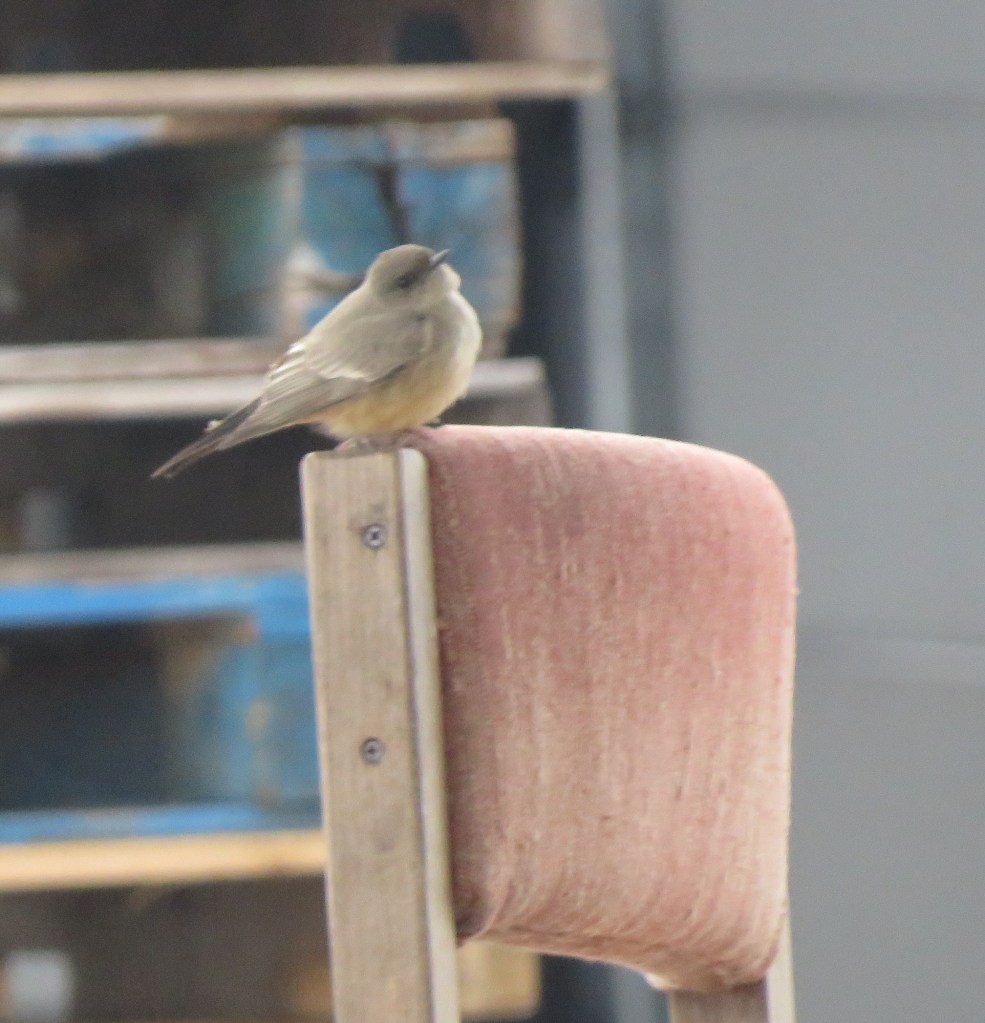
A Say’s Phoebe in Virginia’s Shenandoah Valley. Photo by Bruce Stambaugh
Finding rare birders is always a memorable experience, no matter one’s level of avian expertise. Since I consider myself an average birder, I always appreciate the opportunity to bird with those who are more knowledgeable than me.
That was the case recently when someone discovered a Say’s Phoebe five miles west of my home near Harrisonburg, Virginia. Having a Say’s Phoebe in the Shenandoah Valley was a rare treat, but seeing it in person became my goal since it would be a life bird.
I first learned about the Say’s Phoebe via an email listserv that reports rare bird sightings. I bundled up and headed to the property where the bird was seen. Several birders were already there scouting the bird. Ironically, the phoebe, which should have been in the southwest U.S. or Mexico, was across the road from where I photographed a Snowy Owl a few weeks earlier.
I walked as quietly as possible on the crunching snow and heard words that diminished my enthusiasm. “There it goes,” one of the birders said. It was late afternoon, and the guess was the phoebe was headed for a warmer roast than the steel pole buildings with three open sides.
I got eyewitness reports of the bird and details of its favorite haunts around the produce auction buildings it frequented during the day. The recommendation was to try in the morning when the bird foraged for dead insects.
That is precisely what I did. Only two other birders were present when I arrived. They had not found it yet. Discouraged, one birder headed to her car but soon turned around, waving her arms furiously.
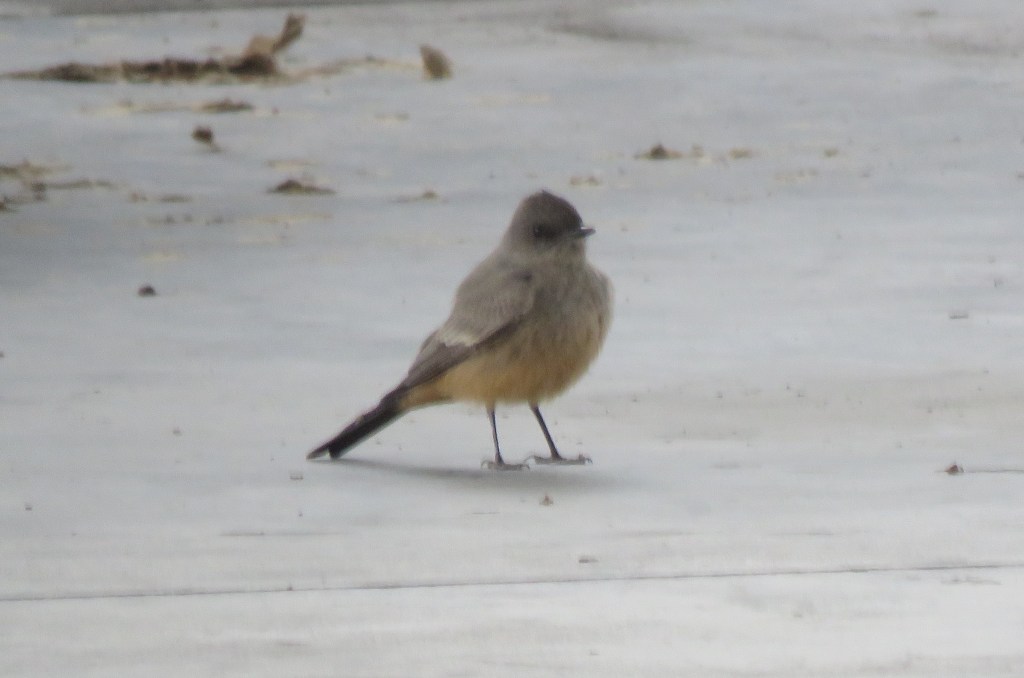
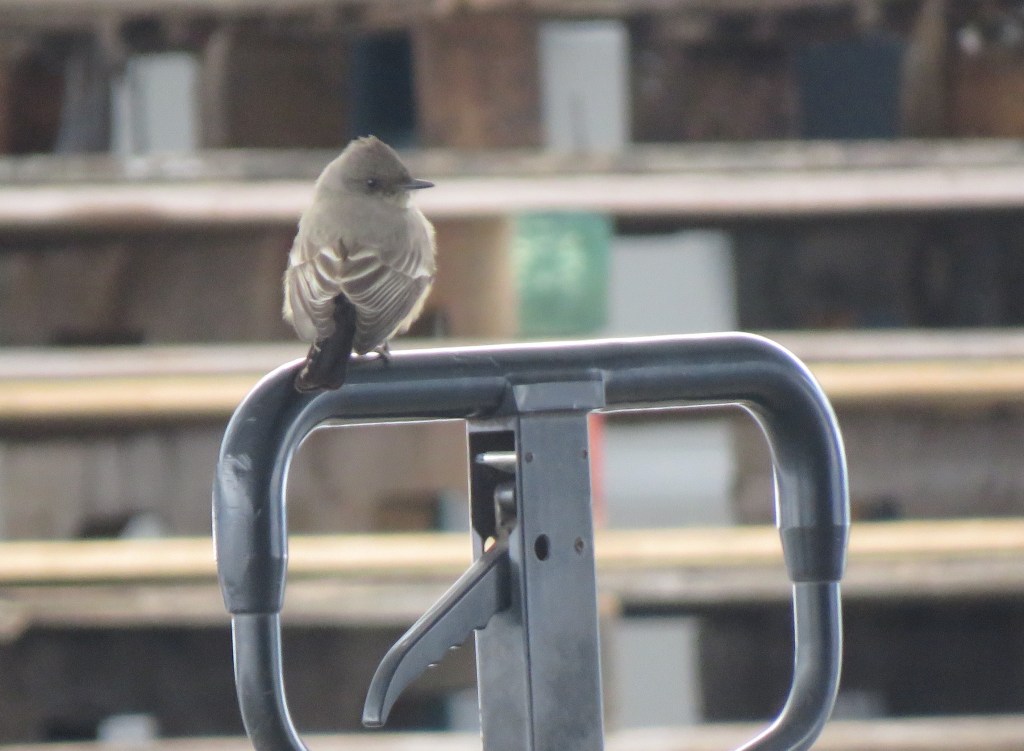
She had spotted the bird sitting on the handle of a hand pump, a favorite spot for the bird. Say’s Phoebes perch lower to the ground to feed than their cousins, Eastern Phoebes. But both species pump their tales and fly to intercept the insects, often returning to the same or near the same perch. Say’s Phoebes have a long, dark tail and a distinctive orange-to-pink buff belly.
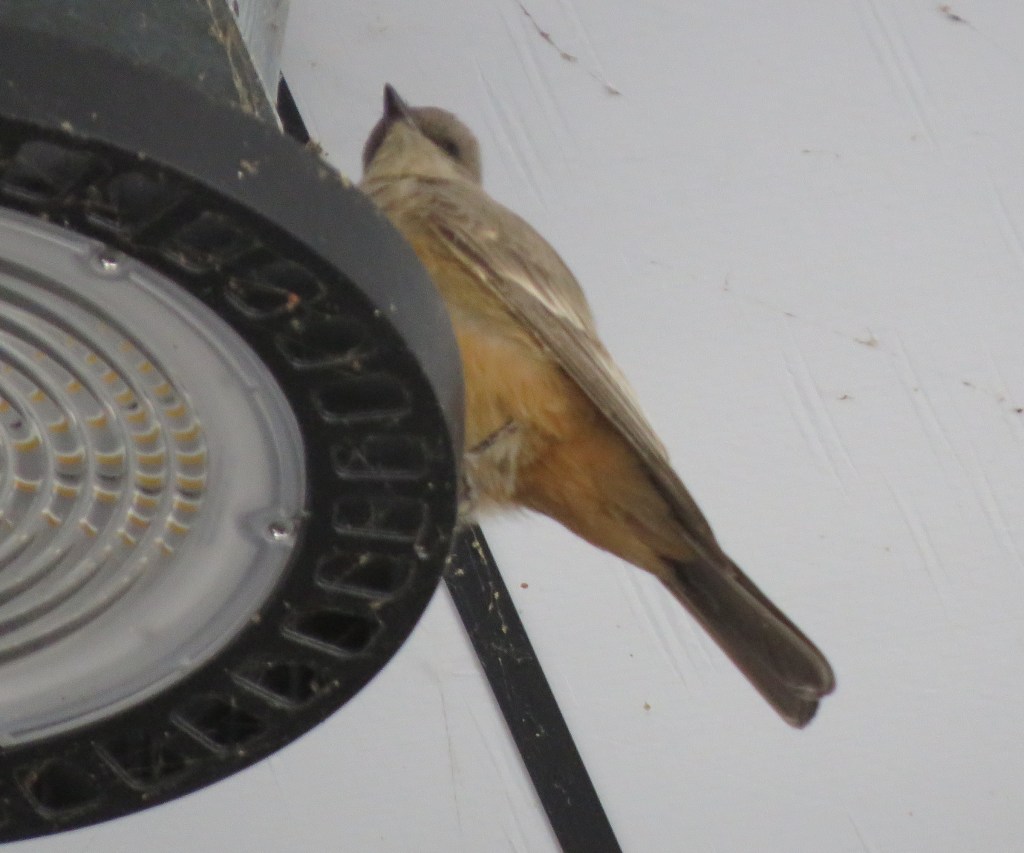
The bird flew into one of the open-sided buildings and continued to snatch dead insects stuck in spiderwebs around the ceiling and security lights. The lovely bird posed enough for us to capture several decent photos.
Satisfied, the woman who spotted the bird departed for other birding hot spots. That left two of us to follow the bird around, which we did for an hour. Given the bird’s feeding behavior, we soon learned to stand in a central location and let the bird fly to us. That strategy paid dividends. My birding companion even recorded the phoebe calling.
The Say’s Phoebe searched high and low for food. Winter in Virginia isn’t insect season, and several inches of snow covered the ground, too. No one knew what brought the bird to the valley, but we were grateful for the opportunity to view it.
I had the photos I wanted in an hour, so I headed home to share the good news with other birders by posting it on several Facebook birding pages. I was happy to add another bird to my life list. This exhilarating encounter was another birding experience I won’t forget.
The Say’s Phoebe perched on a wall header. Photo by Bruce Stambaugh
Look at this handsome guy! Isn’t he resplendent with his marvelous feather coloration?
This male Northern Flicker regularly visits the peanut butter suet feeder that hangs from the Red Maple tree in our front yard. I can easily see the feeder and the tree from my home office.
This bird has visited the feeder for several months. Unfortunately, the European Starlings have discovered the tasty suet, too. Outnumbered by the gang of noisy birds, the Northern Flicker sat patiently in the morning sunshine until the starlings thinned out. Then, he made his move for breakfast.
The relaxing view from our lanai. Photo by Bruce Stambaugh
After a hardy breakfast of veggie omelets and fresh fruit, we left for the Maui Ocean Center. We drove through the burned-out section of Lahaina, and I didn’t realize it at first with all the rebuilding that had been done.
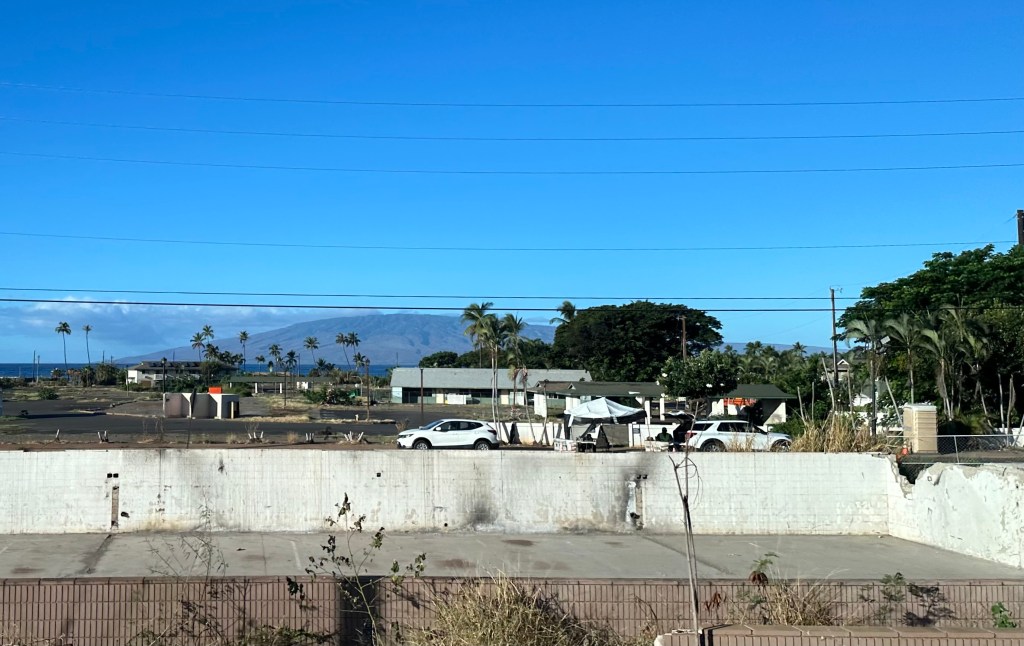
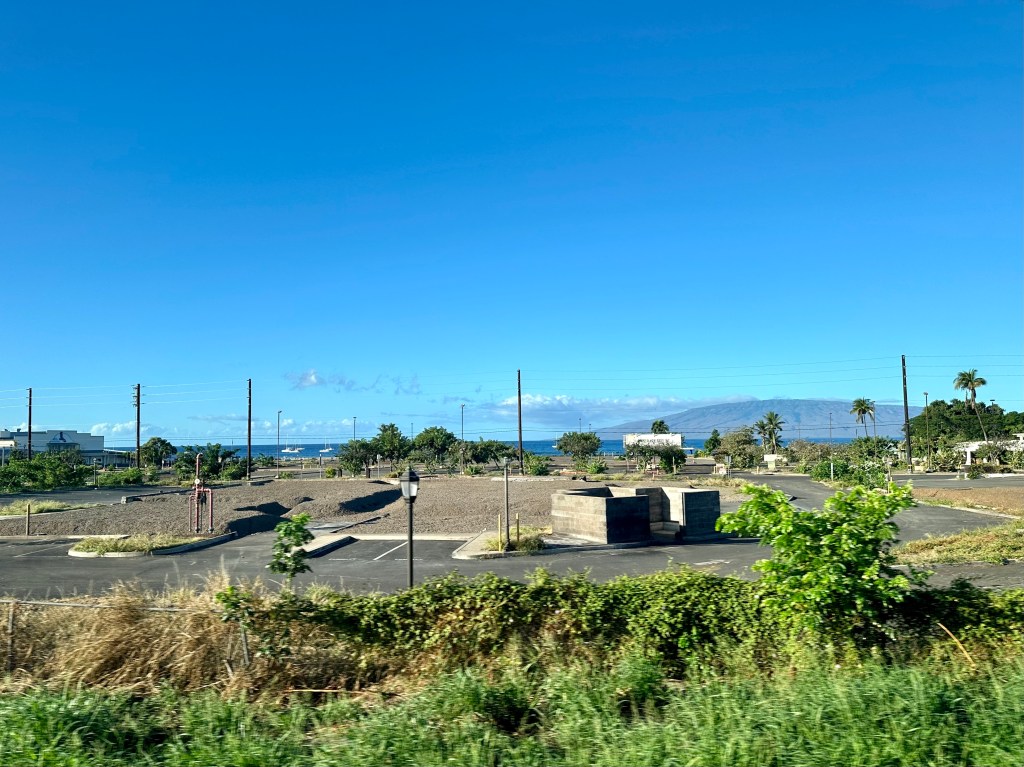
However, the many empty lots and scorched concrete block walls bore witness to the devastation. A respectful hush came over the bus. Everyone sensed the apparent dichotomy. As tourists, we embraced the beauty of the islands, its rhythmic language, the friendliness of its handsome people, and pride in their cultures. Yet, they had no homes, and still, they welcomed us. They needed the tourism jobs.
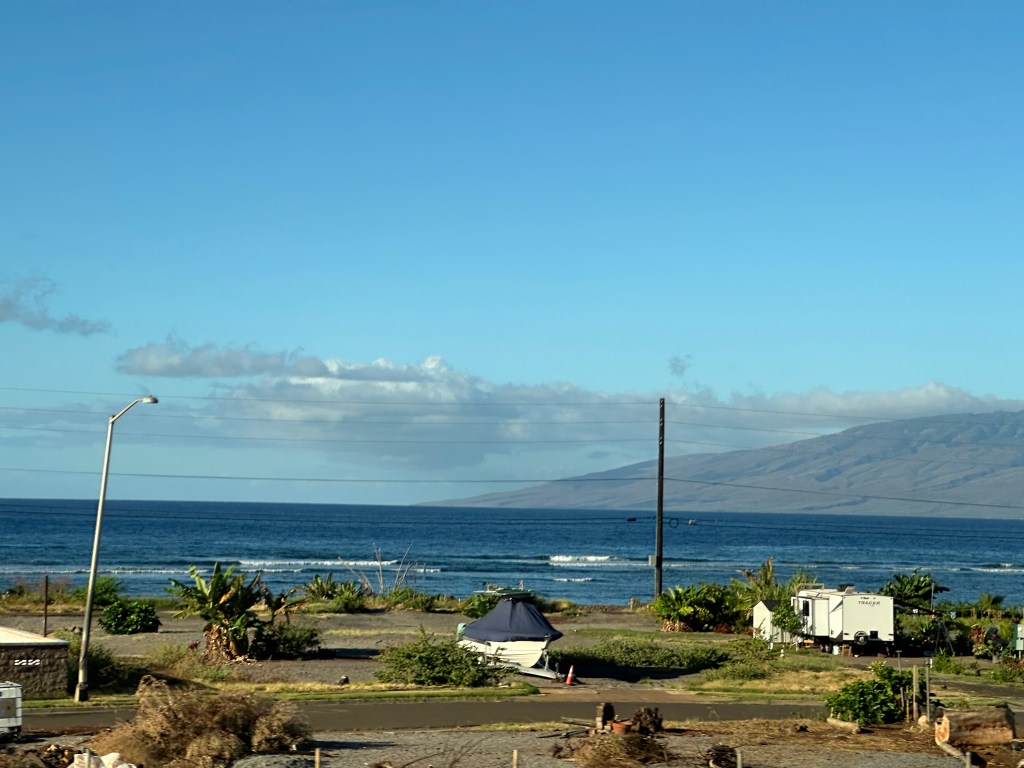
Sections of Lahaina still waiting to be rebuilt. Photos by Bruce Stambaugh
Though we left the hotel early, we arrived at the ocean center late. An accident caused a long traffic jam on the two-lane highway to the bay where the aquarium is located. The bus driver said accidents along this stretch of road are frequent.
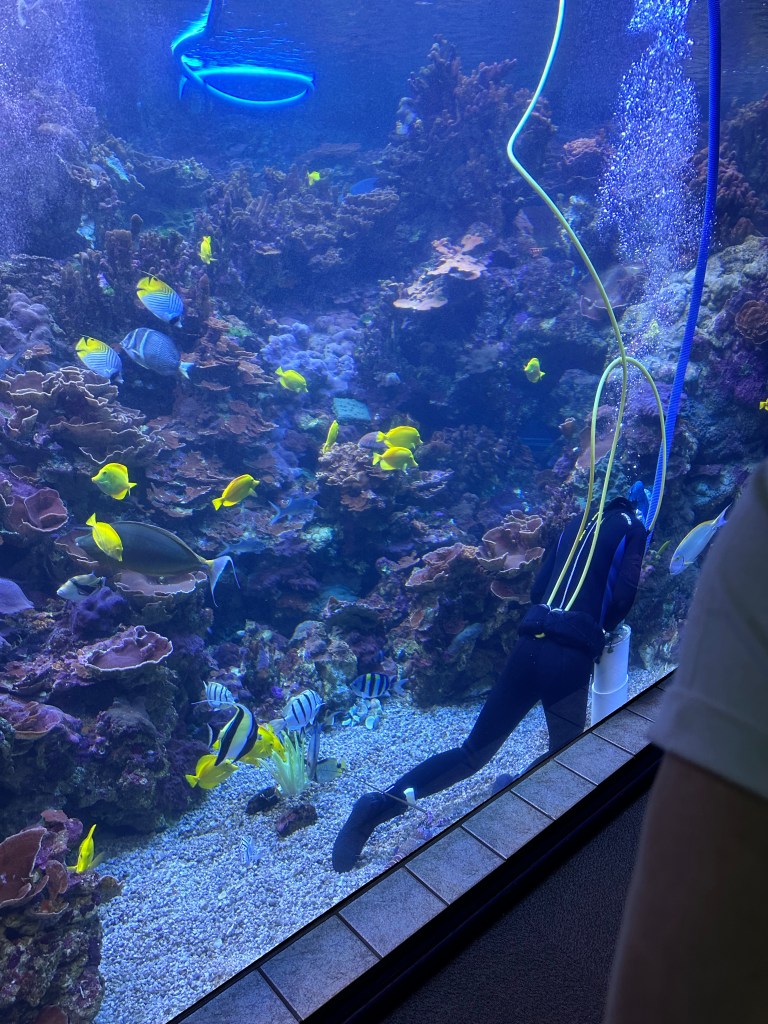
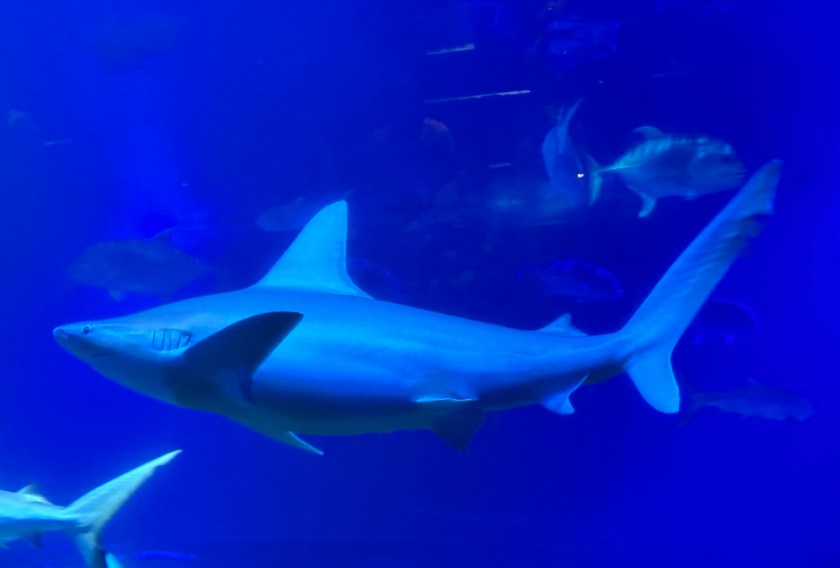
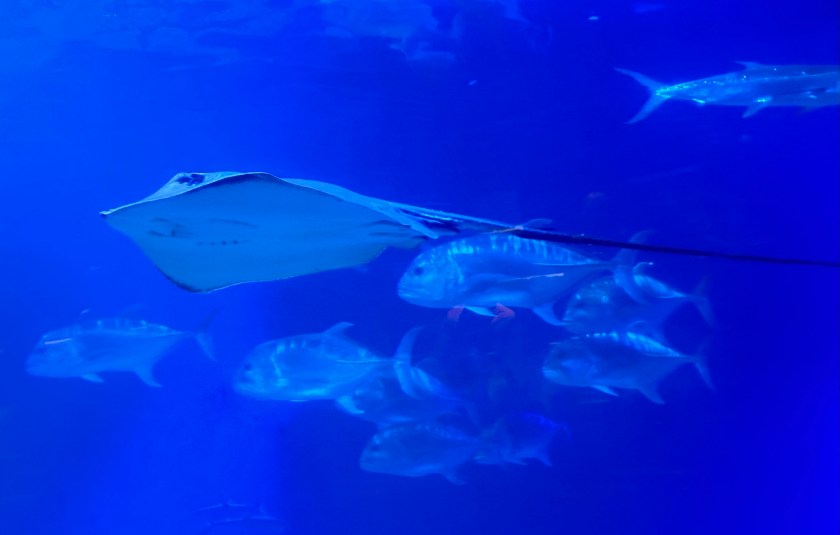
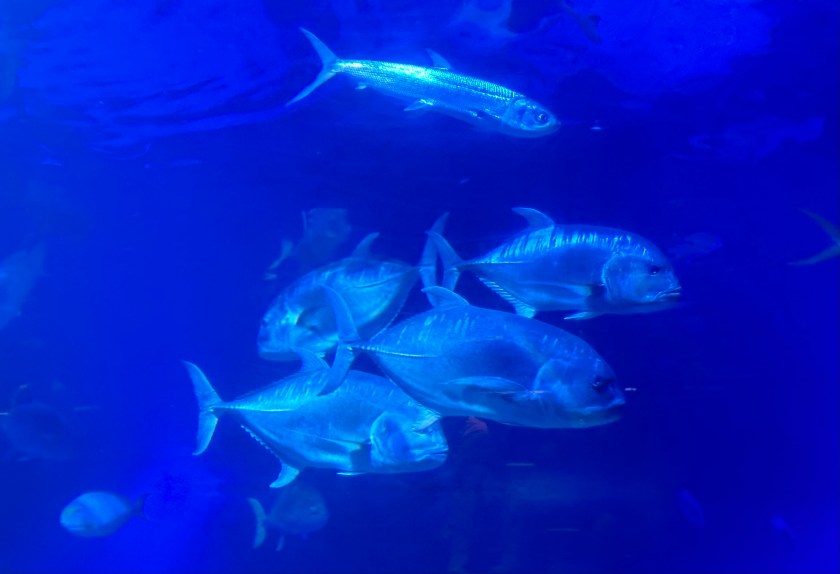
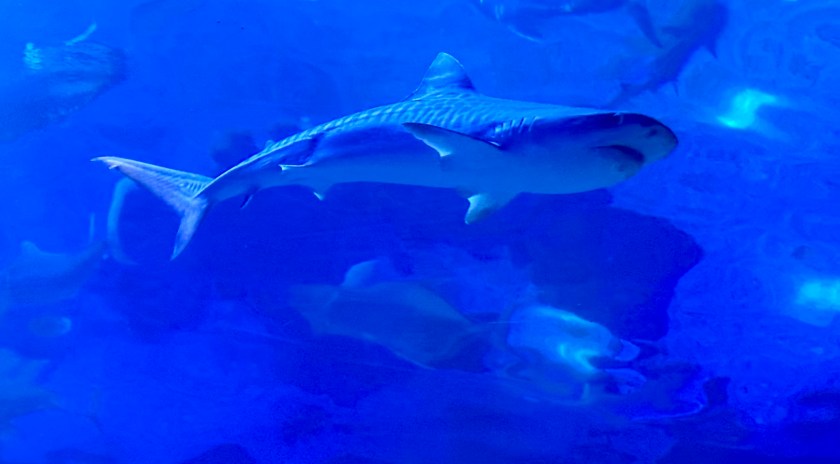
A guided tour of the Maui Ocean Center gave us a good understanding of the sealife around Hawaii. We watched various fish, sharks, and stingrays swim past the aquarium’s large underwater windows. Humpback Whales breed and give birth in the waters off Maui, but we were a little early to see any whales.
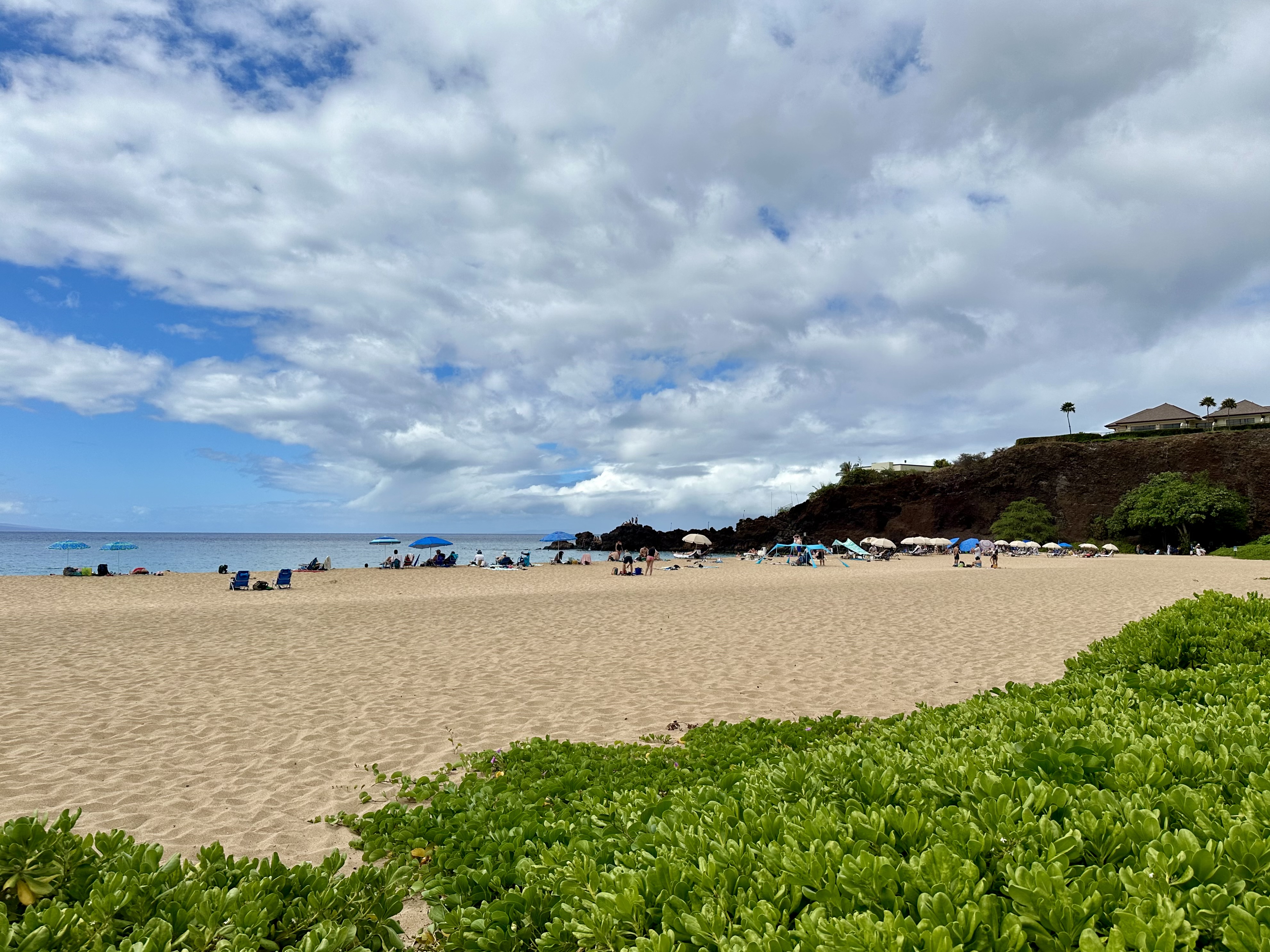
Back at the hotel, we strolled down Black Rock Beach to a seaside restaurant. The locals were getting a headstart on celebrating the holidays. A large Christmas tree stood fully decorated at the end of a walkway to the beach.
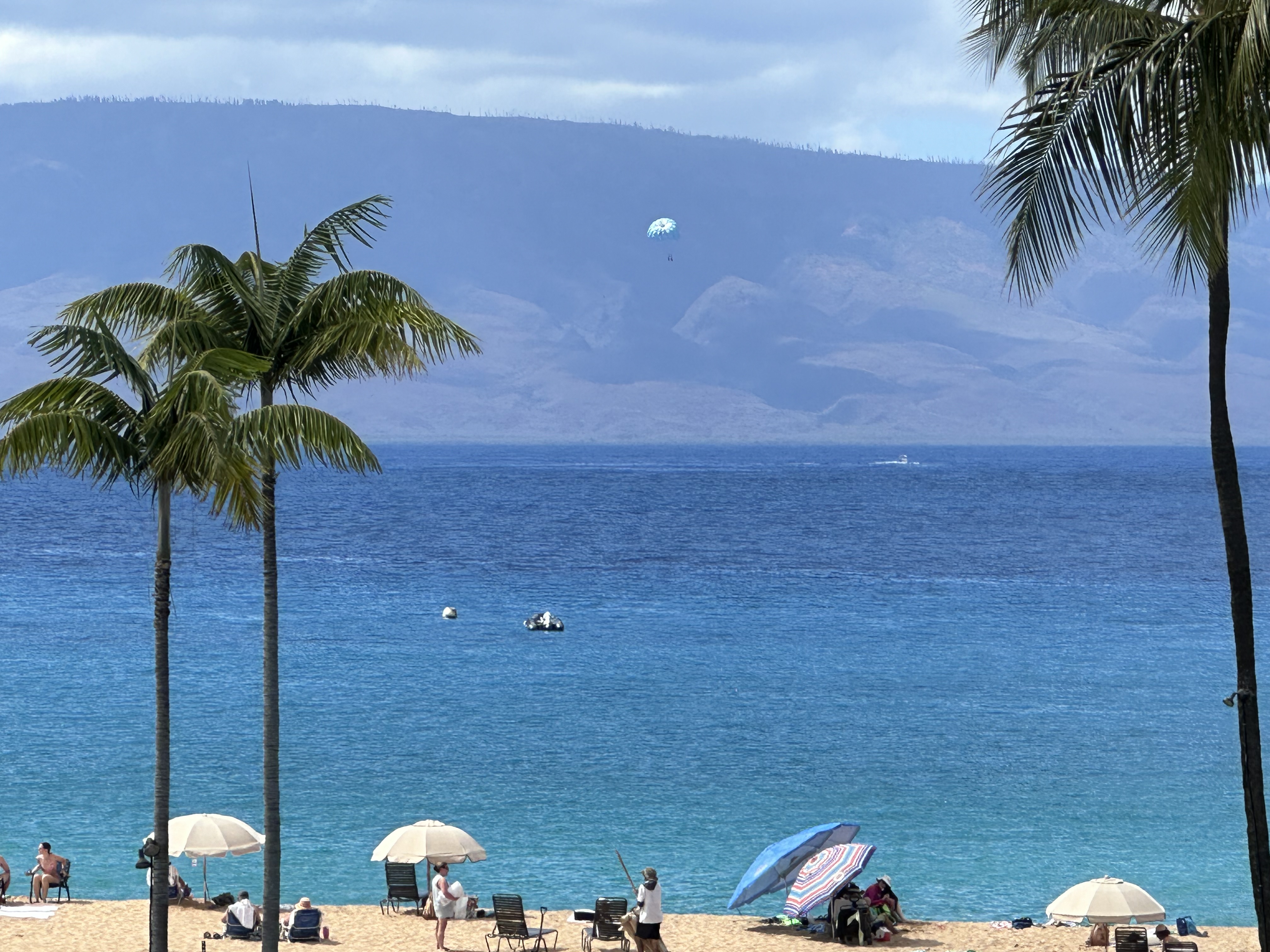
The setting, the views, the flowers—everything was gorgeous. Parasails caught the trade winds offshore and glided high above the intoxicating indigo ocean.
After a bit of shopping, we continued to take it all in. We rested on the balcony of our third-floor room, which gave us great views of the catamarans sailing by, teenage boys taking turns jumping off the black lava rocks, and the soothing tropical breeze. We had to pinch ourselves to ensure we weren’t dreaming.
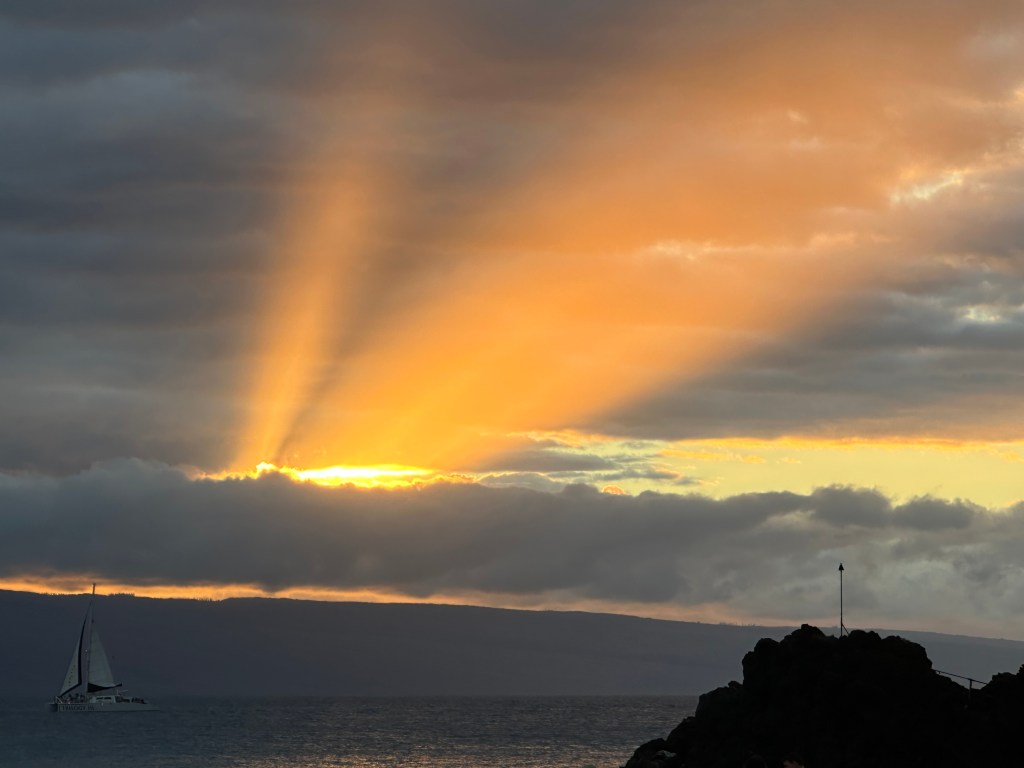
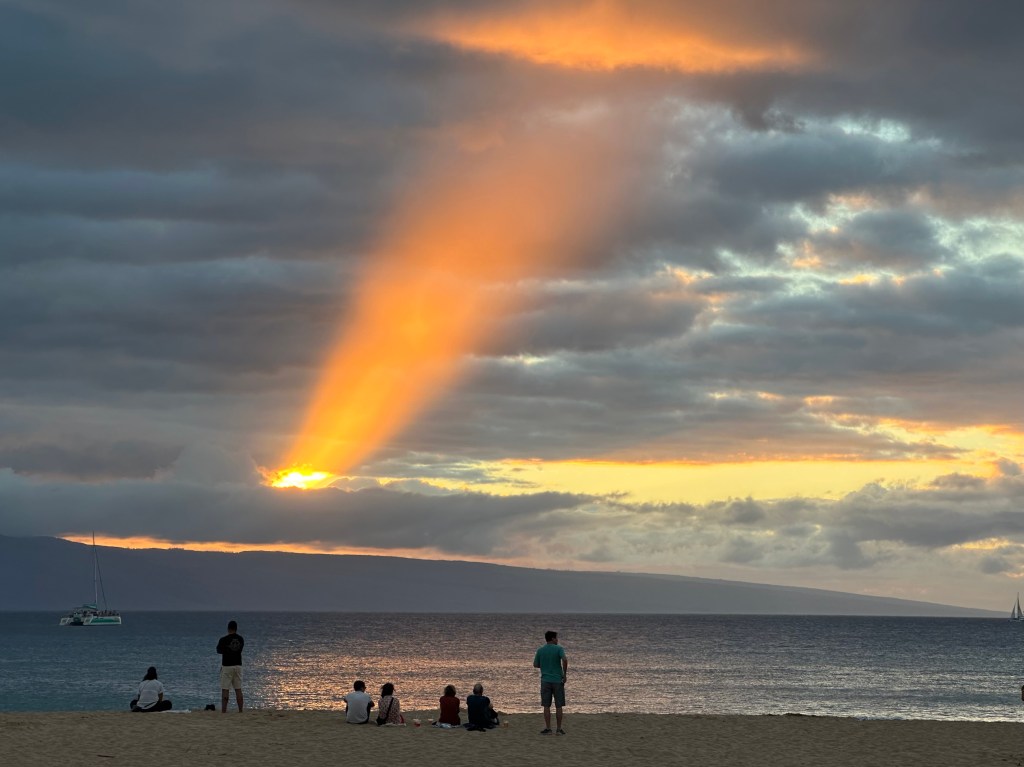
As evening approached, I wanted to get some sunset shots from the beach. I went down early, surprised to see how few people were out and about. Clouds began filling the sky, and I feared the sunset would be a bust. I need not have worried.
Over Pineapple Island, opposite the channel, warm, amber crepuscular rays began to filter through the clouds. They appeared like spotlights against the higher clouds, creating a surreal scene. I wondered what the natives long ago would have thought had they experienced this. Was this a sign from the gods? If so, what did it mean?
I snapped away at my good fortune. Could this vacation get any better? Yes, it did.
Water Lilies bloomed outside the hotel restaurant. Photo by Bruce Stambaugh
Our first sunset on Maui. Photo by Bruce Stambaugh
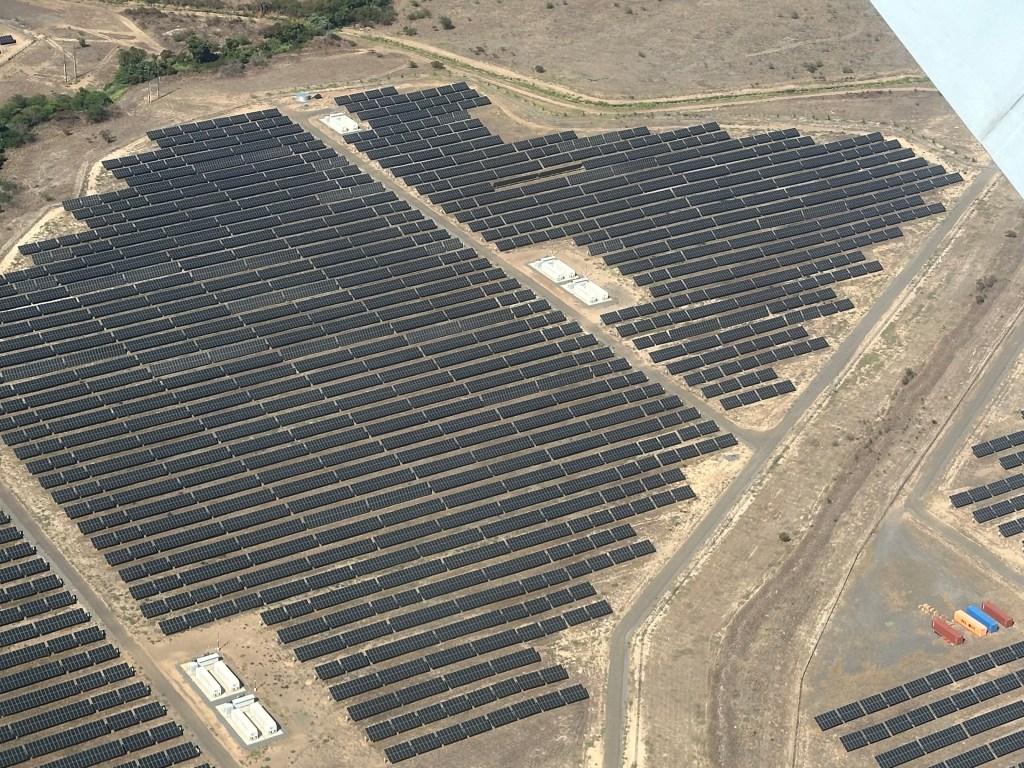
I knew I would like Maui. From the air, Hawaii’s commitment to green energy was evident. Giant white windmills stood out on the black lava mountainsides, and acres of solar panels and agricultural fields stood side by side.
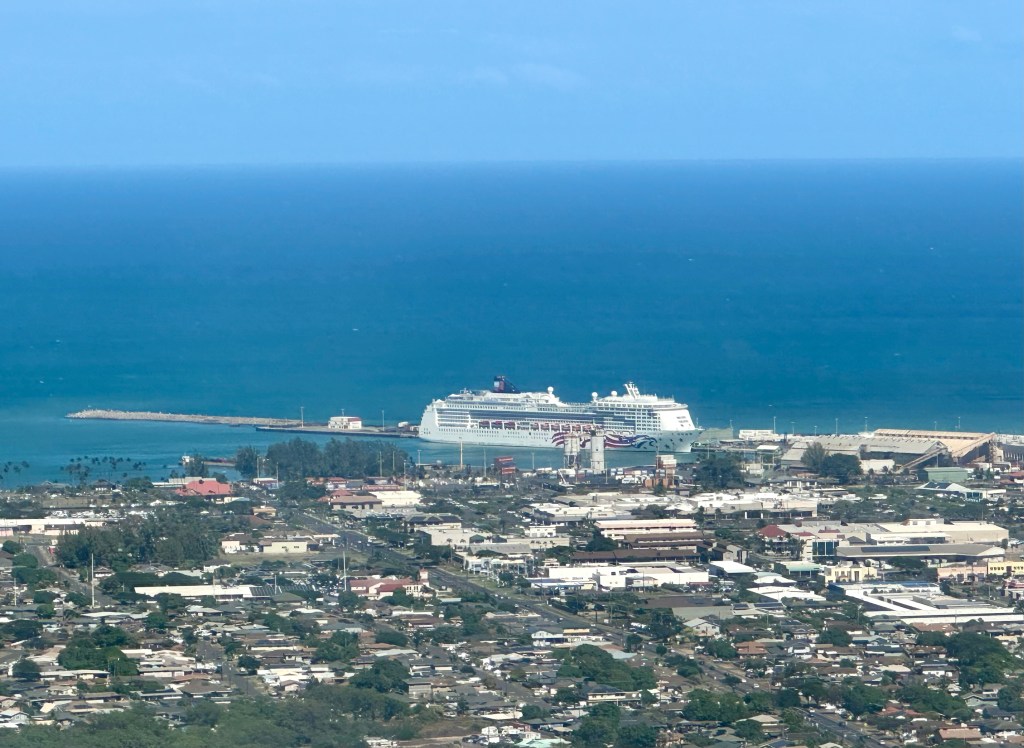
The bright morning sunshine highlighted two cruise ships docked at the small harbor. I was glad there weren’t more.
Windmills.Agriculture.Solar farm.Cruise ships.
Lunchtime called when we left the busy little airport that looked more like a Hollywood movie set. We boarded the bus and headed to Paia on Maui’s north coast. Paia’s fame hails back to 1870 when the first sugar cane crop was planted there.
The old town wasn’t built for tourist buses, so we had to exit expediently to avoid blocking traffic. With only 14 passengers, the bus emptied in record time, mainly because we were hungry.
Most of us walked to the Paia Fish Market for fresh seafood. Lunch was on our own, and our tab demonstrated the high cost of living in Paradise. However, given the quality of our seafood, we didn’t quibble.
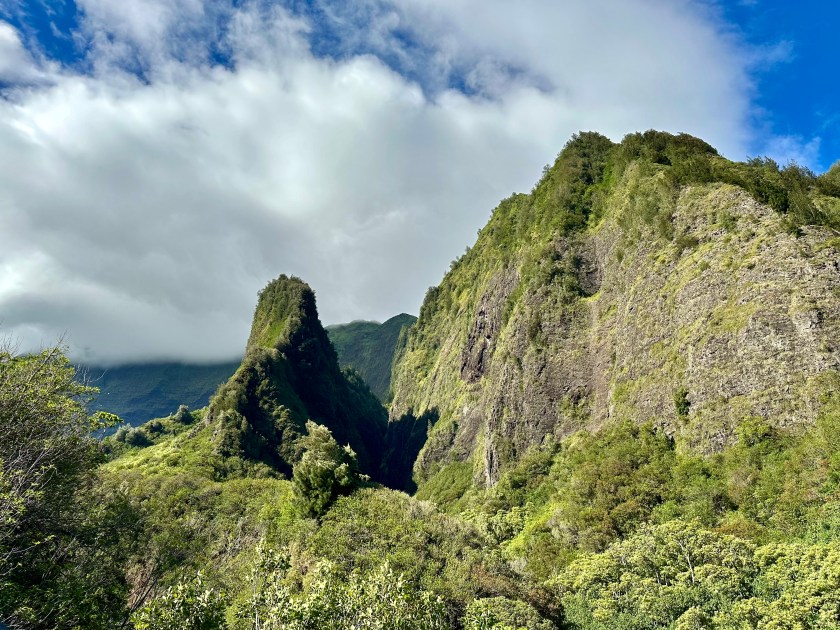
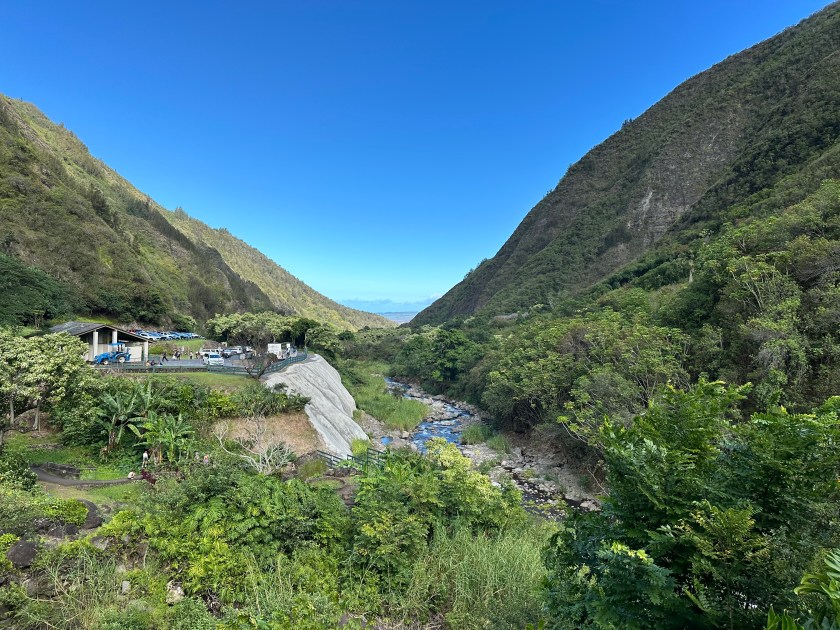
Soon, we headed to Iao Valley State Monument, which features a phallic rock nicknamed “the Needle,” which the ancients worshiped. I didn’t ask any questions. Once there, I enjoyed an easy hike to the viewing area, which provides a lovely view back down the valley we climbed to reach the monument.
Visitors and their pet dogs lounged in the refreshing, cool waters of a stream that carved the valley millennia ago. I enjoyed the pleasant views and the invigorating air. The adorned natural monument stands between two steep mountainsides.
From there, we drove to the Maui Tropical Plantation, a campus with a restaurant, a large gift shop, and an impressive pond that allowed me to see the Hawai’i state bird, the Hawaiian Goose, or Nene. I also spotted a Black-crowned Night Heron attempting to swallow a big, fat fish. It was still wrestling with the fish when it was time to head to our hotel to check-in.
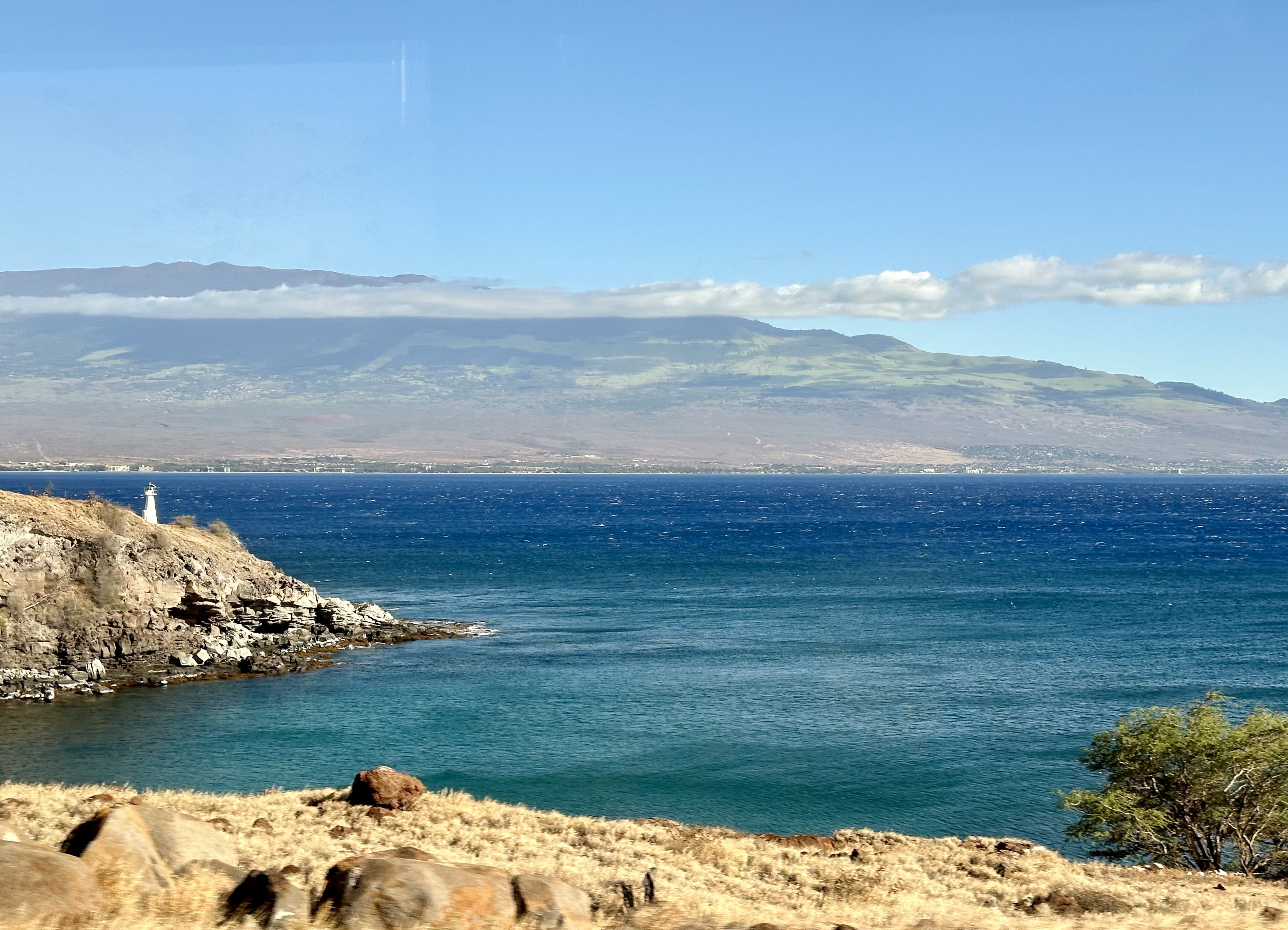
I secured a seat on the bus’s ocean side and enjoyed the views of the turquoise Pacific Ocean and the many parks and beaches along the way. The island of Lanai, or Pineapple Island, was just across the way.
The bus took the bypass around Lahaina, where the devastating fires broke out and burned much of the historic town. Still, we saw vacant lot after vacant lot. Only a small percentage of buildings and a few homes have been rebuilt. A few hardy people live in campers where their houses once stood.
Please click on the photos to enlarge them.
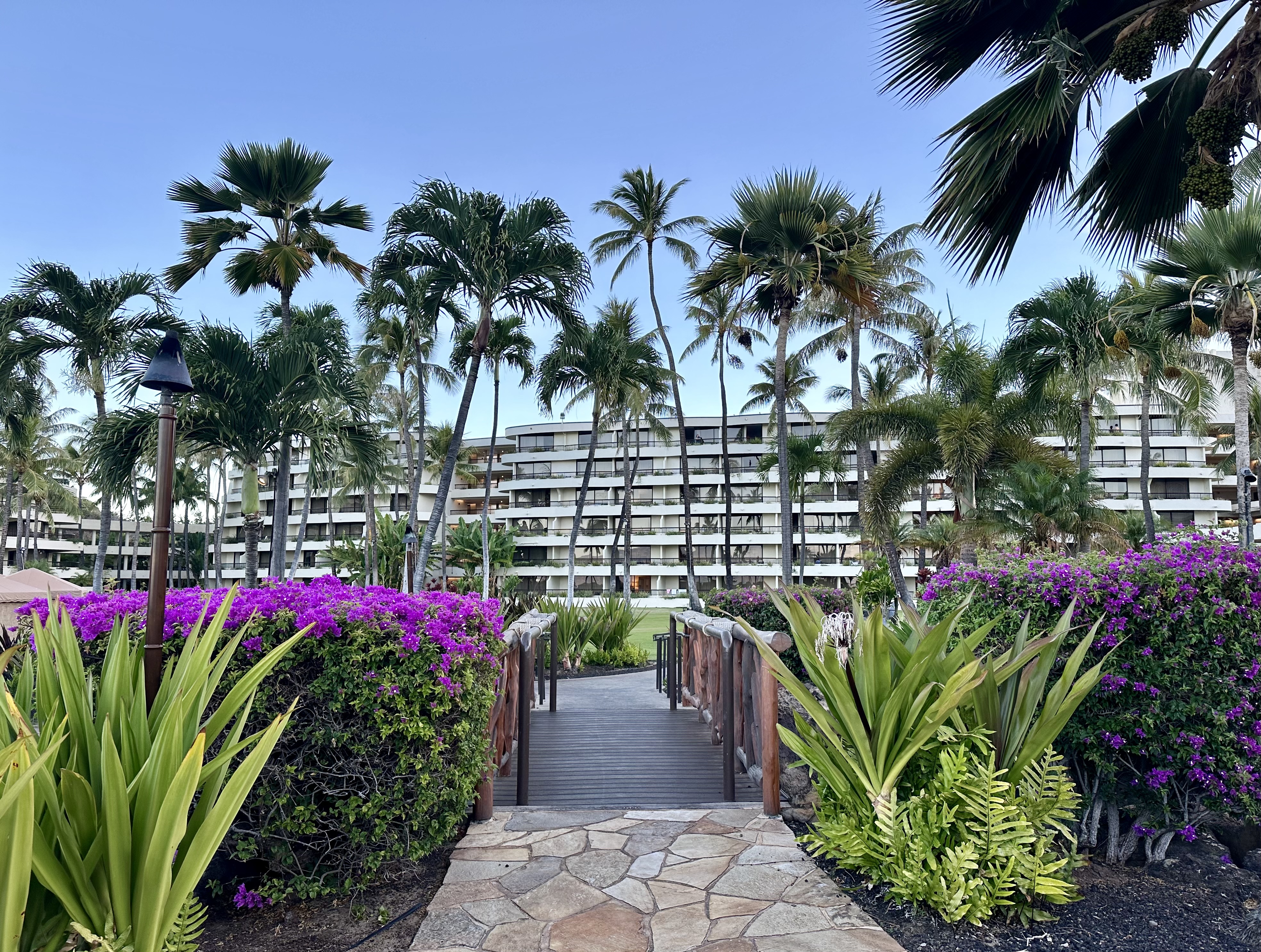
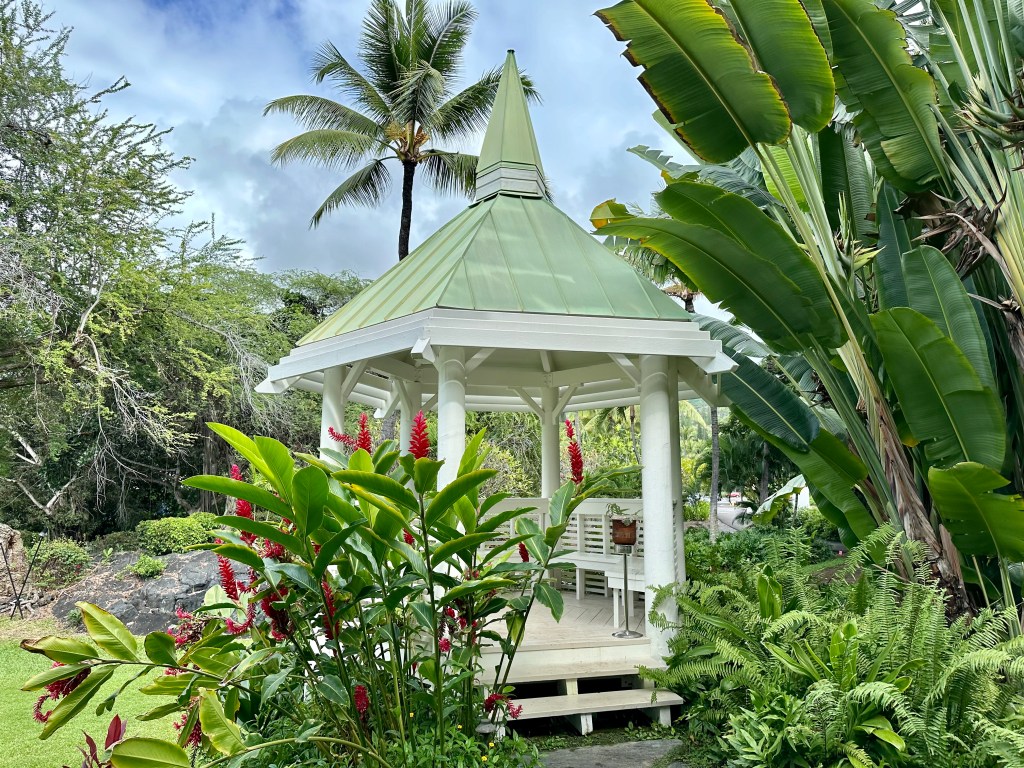
When we arrived at our hotel, we found our room had an ocean view in the middle of the resort. We walked around the charming property to orient ourselves and couldn’t believe our good fortune. With these arrangements and the balmy breezes, it was an absolute Paradise. But we were only beginning our incredible stay in Maui.
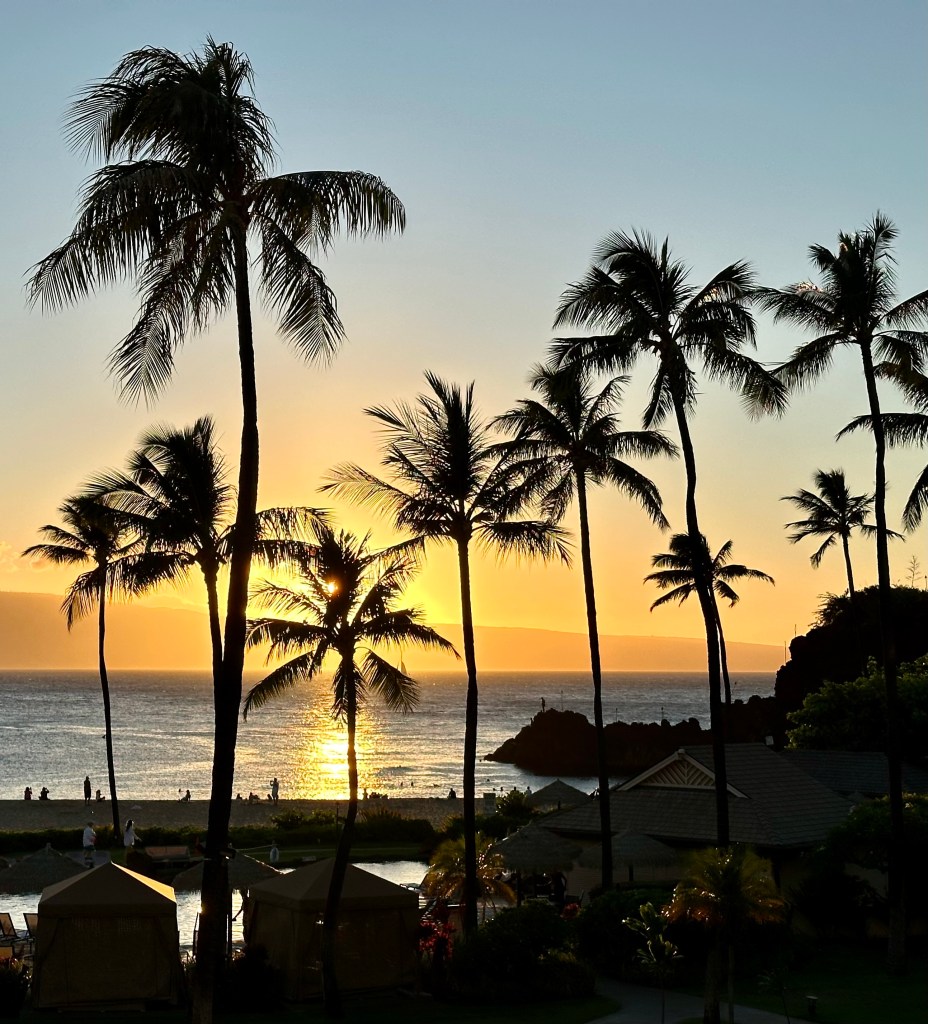
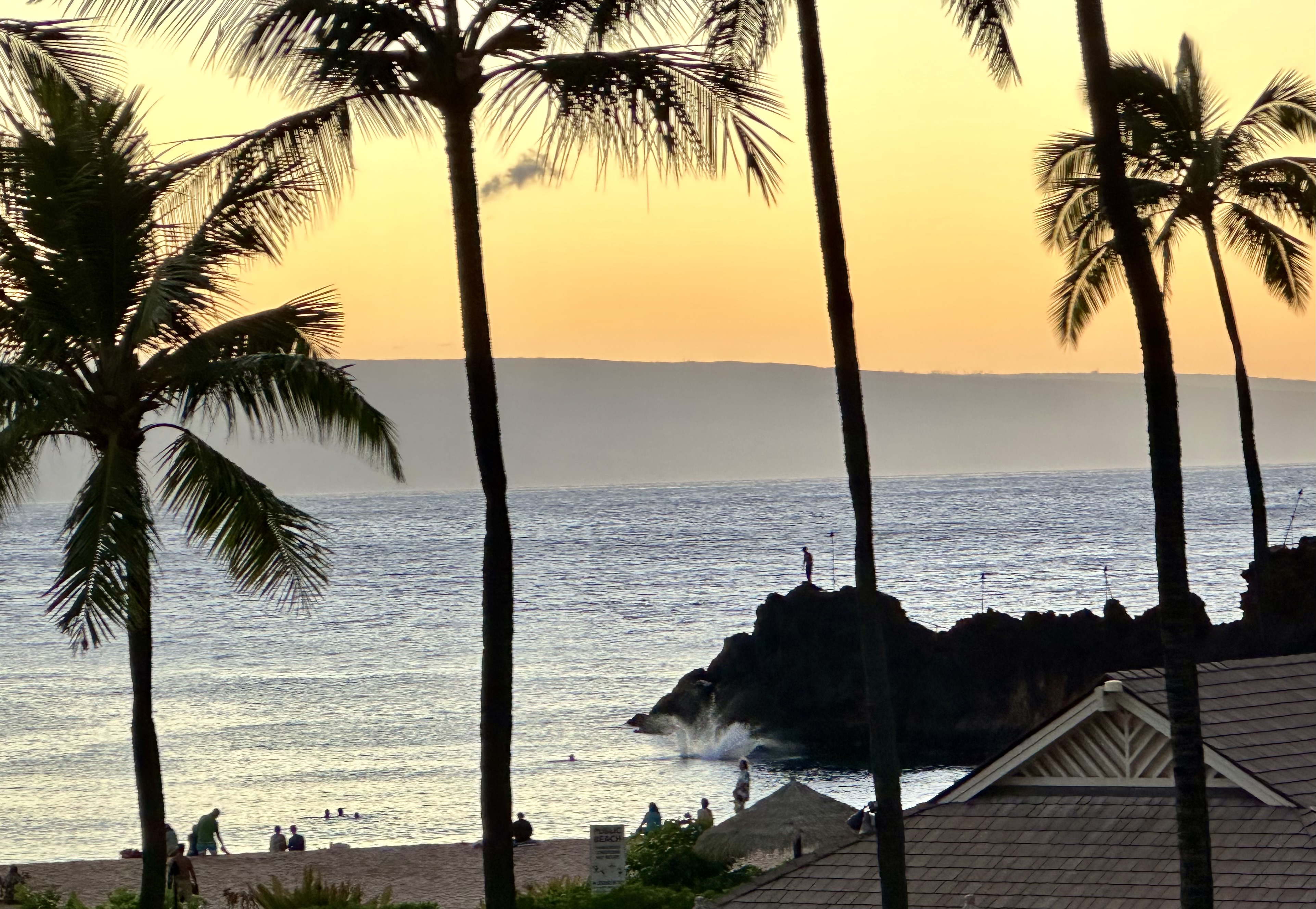
That evening, we experienced our first sunset and then watched the nightly reenactment of young men diving from the black rocks that jut into the ocean. A single young man with a lighted torch climbed the rocks, reached his arms high to the gods in appreciation of another day, and jumped into the sea. The tradition started from much higher cliffs, but the demonstration was still impressive.
A video of jumping from the rocks.
The experience was a marvelous way to finish our first day in Maui, especially with my wife feeling better. We happily wondered what was ahead.
Kehena Bland Sand Beach, Kona. Photo by Bruce Stambaugh
Our fifth day in Hawaii was filled with many wonders and one big downer. My wife woke up not feeling well. She encouraged me to go on the scheduled excursion to explore much of the Big Island. I did so, but reluctantly.
Our day trip had multiple stops, and the local bus driver added some of his favorites, making the exploration day a success. Our first stop wasn’t far from the hotel.
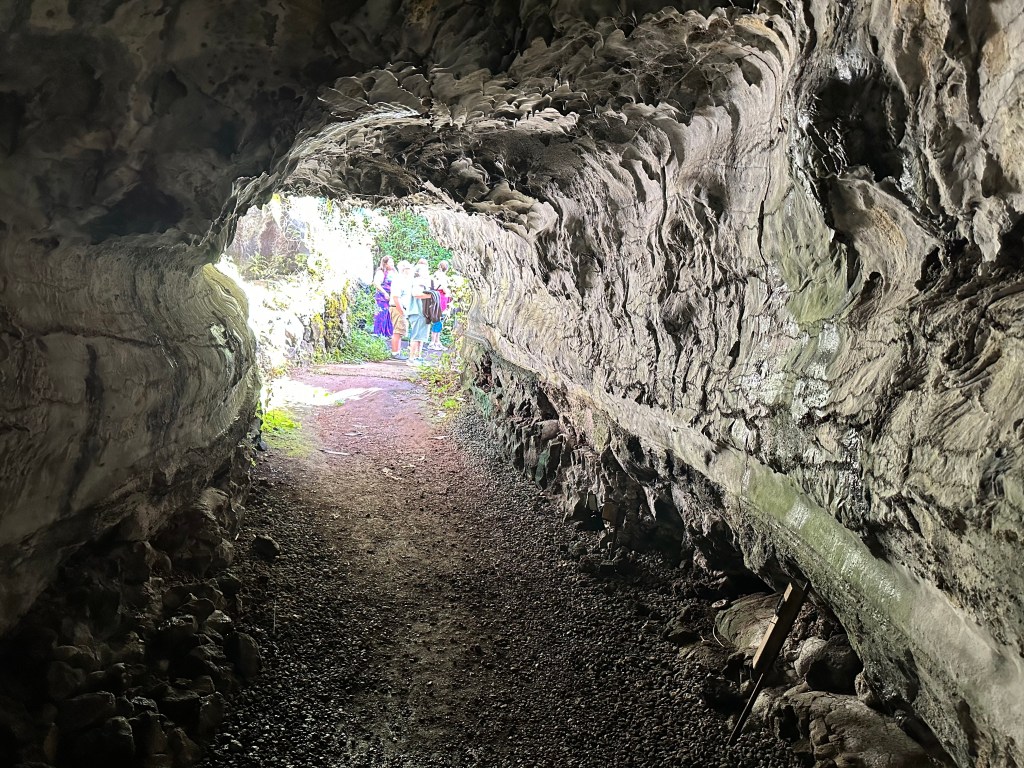
It was a tourist stop, but our guide wanted us to experience a geologic phenomenon. We explored a lava tube formed by molten lava flowing from a volcanic vent through existing lava rock that had solidified years before. Once the lava flowed out, only the outer shell of the flowing lava remained, leaving the tube-like feature. It was the first of several intriguing stops.
The lava tube. Photo by Bruce Stambaugh
We drove south high above the ocean to our west. Lucious vegetation captured our attention as the bus maneuvered the two-lane highway on it wound its way up, down, and around the parameters of the island.
The island’s official name is Hawaii, and it is located in the county of Hawaii in the state of Hawaii. Consequently, the locals prefer Kona to avoid confusion, and I concur.
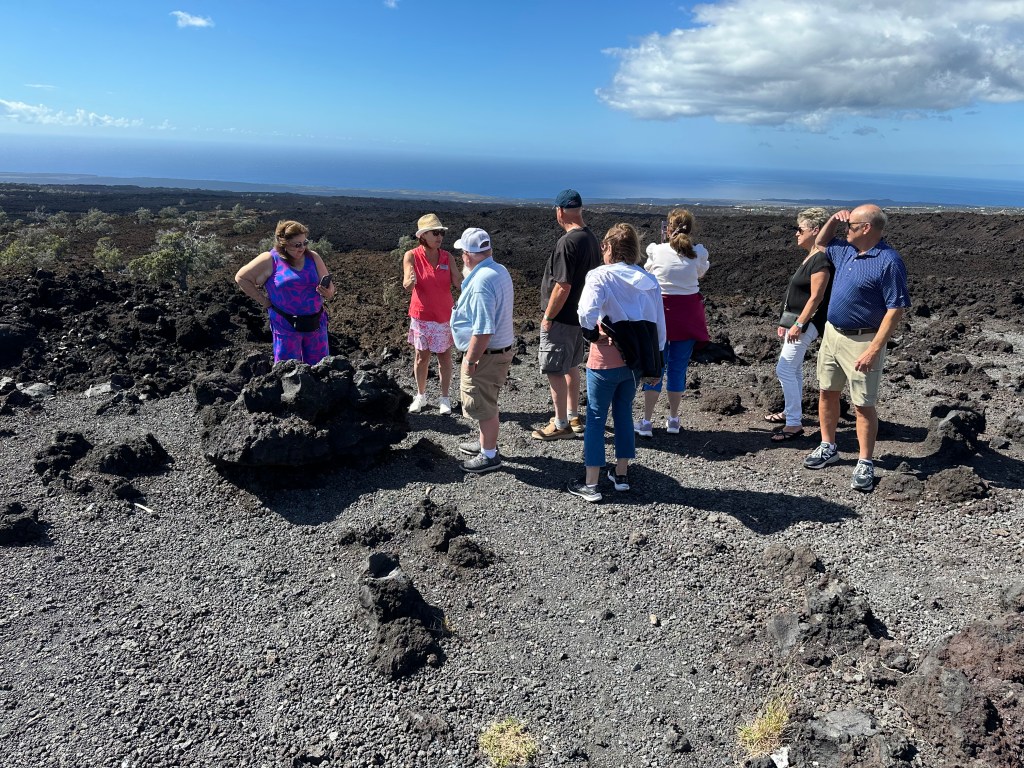
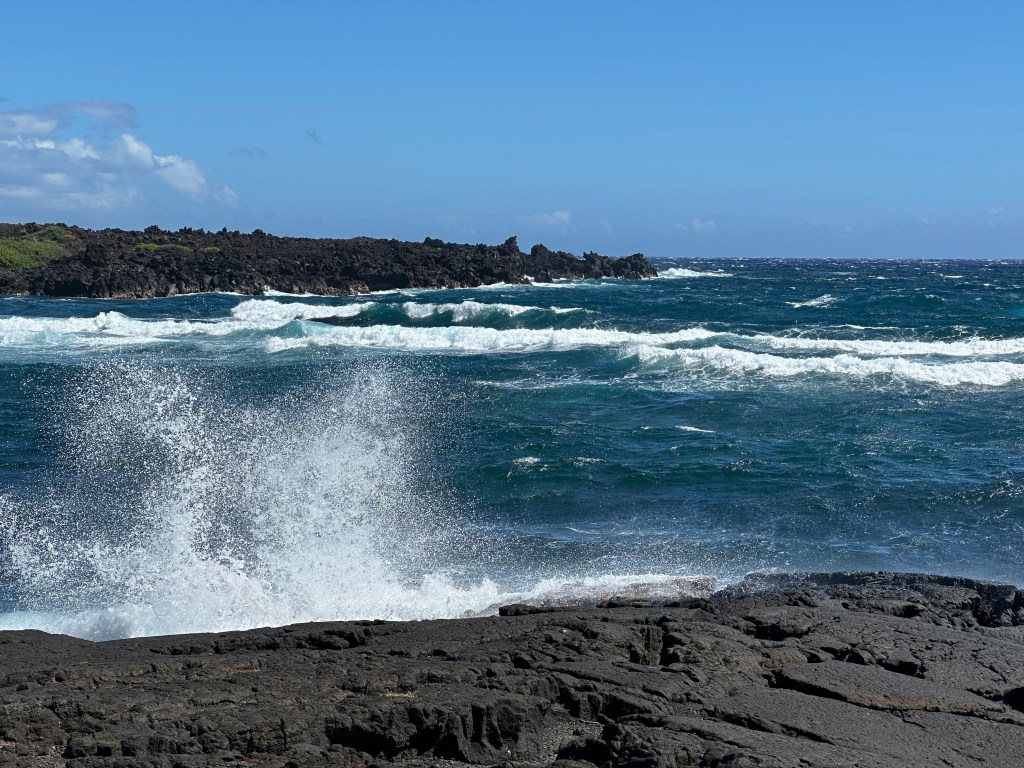
Near the island’s southern tip, an overlook affords splendid views of previous lava flows and the blue Pacific. Miles away, we could see the southernmost point of the US. Sorry, Key West. No haze, cell towers, or skyscrapers spoiled the view. Giant windmills turned in the tropical wind. From our vantage point, they looked like children’s pinwheels.
Please click on the photos to enlarge them.
I wished my wife could have seen this. I kept wondering how she was doing and hoped for a signal to check in with her. I would have to wait a while longer than I wanted.
The landscapes and foliage changed drastically as the bus driver adeptly navigated the undulating and winding curves. The land was either barren and chunked up black lava or many shades of green with pastures, shrubs, and trees of all shapes and sizes.
Every now and then, we saw another Hawaiian human-caused phenomenon. Because of the rural nature of the islands and the tricky terrain for motorized vehicles to maneuver, crashes are frequent. Instead of towing the wrecked cars, they are pushed off the roadway and over the hillside where they stay. This only applies to vehicles deemed not worth towing.
Many demolished cars, trucks, and vans were either stripped of their valuables, burned out, or both. They had been there long enough for young trees to grow through the tipped-over junkers. This practice seems to run counter to the nearly litter-free islands. Recycling is the norm in Hawaii, with old, crashed vehicles apparently exempted.
When we reached the tiny village of Naalehu, we stopped at the southernmost bakery in the US. The Portuguese donuts were scrumptious. I only ate one but took one back for my wife.
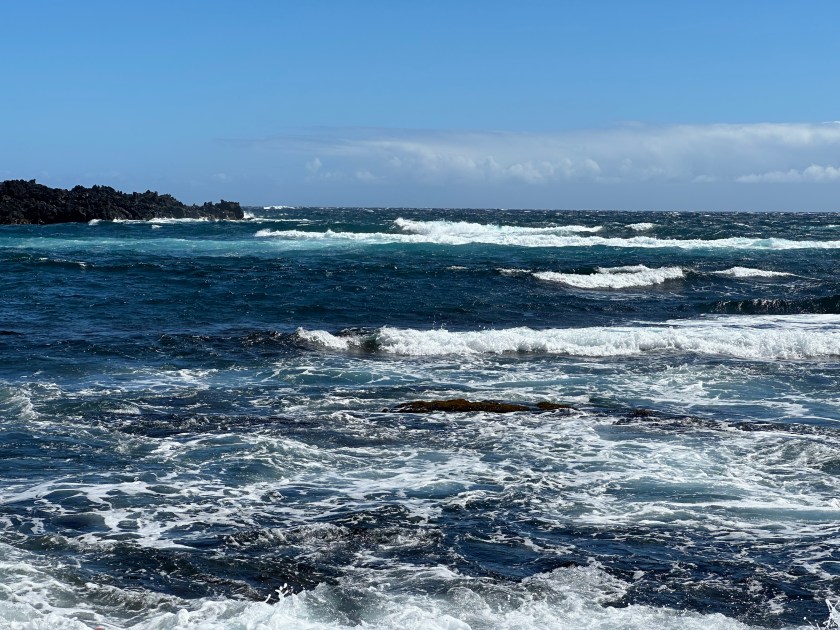
Too soon, we were back on the road, heading north. The ocean was on the right, and slush pastures dotted with windswept and stunted trees on the steep slope of a volcano on the left. This was the windward east side of Kona, where the prevailing winds bring ample rains compared to the western part of the island.
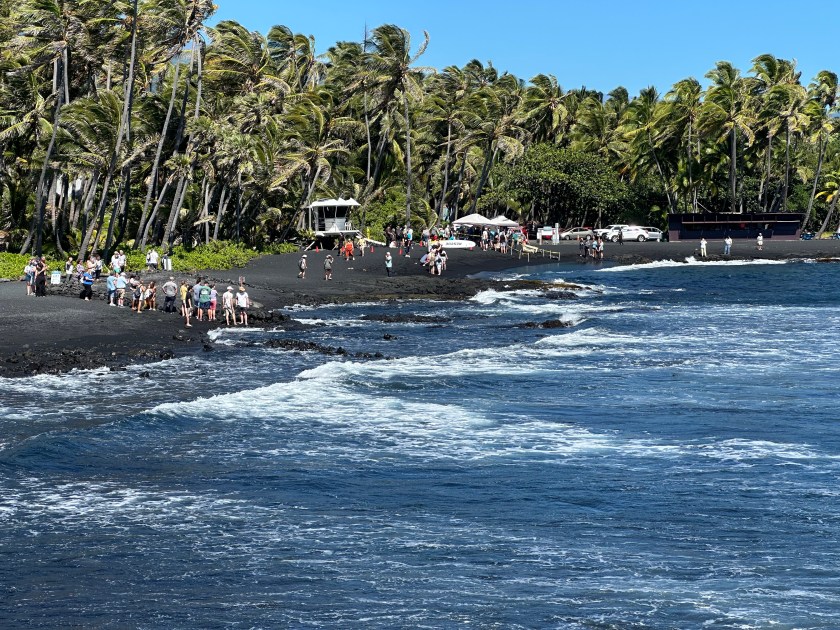
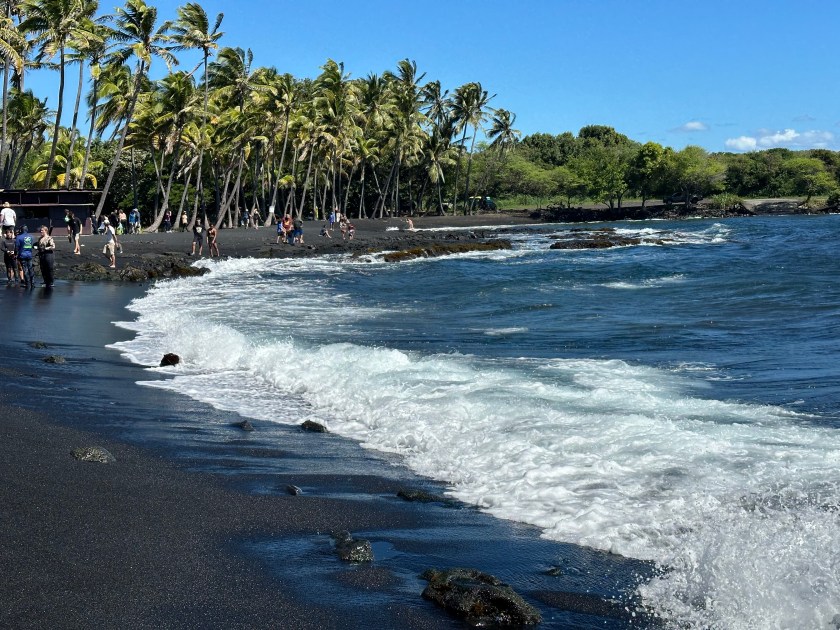
We arrived at Punalu’u Black Sand Beach Park and were pleasantly surprised. As we approached the beautiful beach, I noticed popup canopies, and many people stood around observing.
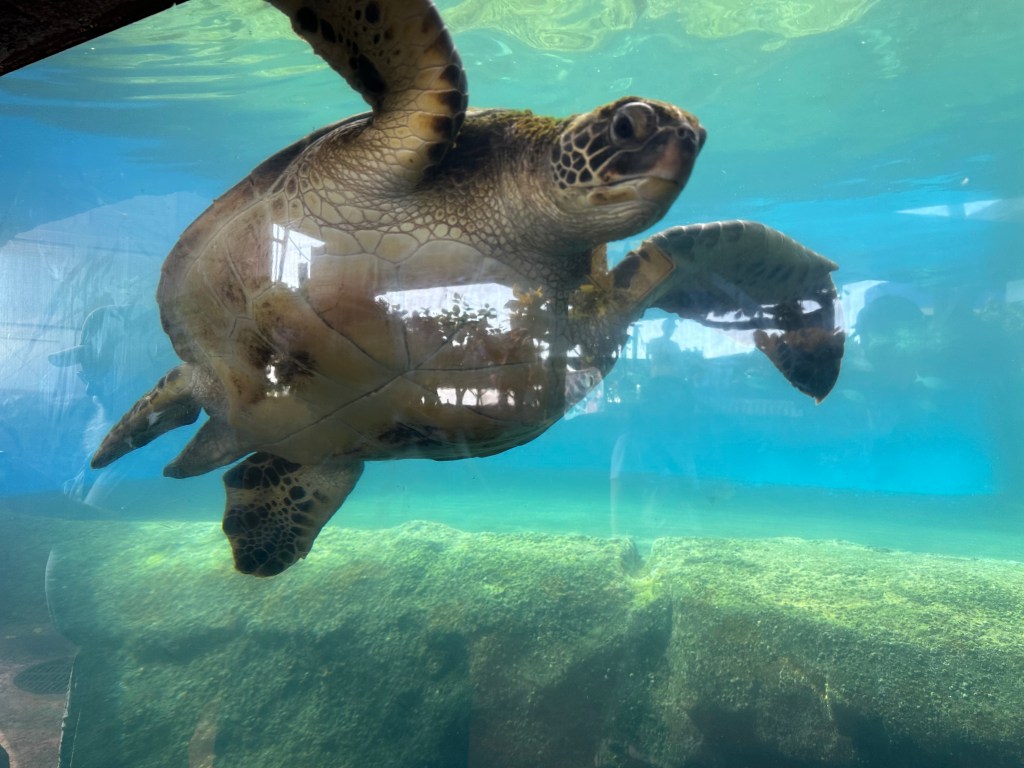
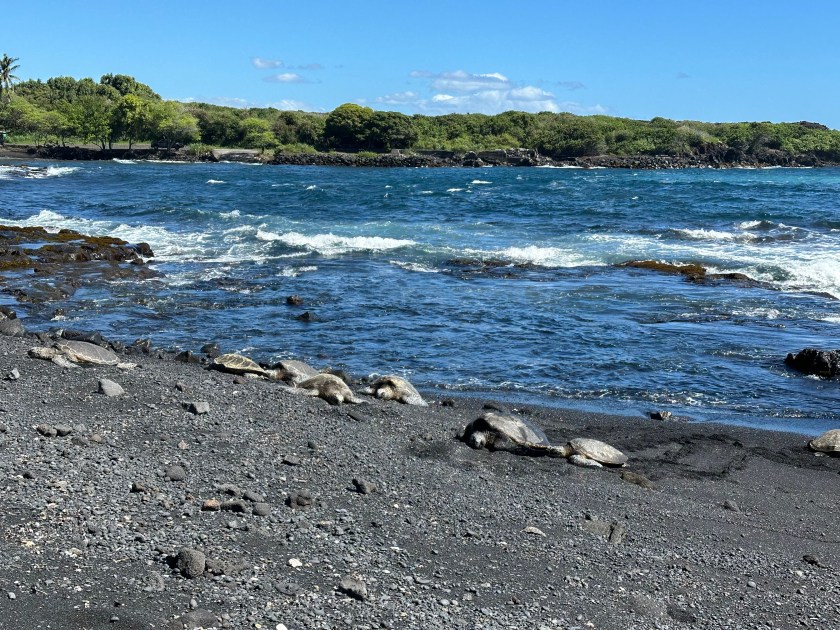
Our visit was well-timed. Scientists, professors, and marine biology students from the University of Hawaii were capturing, evaluating, and tagging Green Sea Turtles. In fact, a few large ones lay on the beach, absorbing the warmth of the noontime sun.
Since we had lunch reservations at our primary destination, our time on the beach was limited. The black sand is the product of lava being eroded and pulverized many times to form the beach.
The bus steadily climbed the gradual slope to the Hawaii Volcanos National Park’s visitors center, where a tasty lunch awaited us. After lunch, we joined our guide outside.
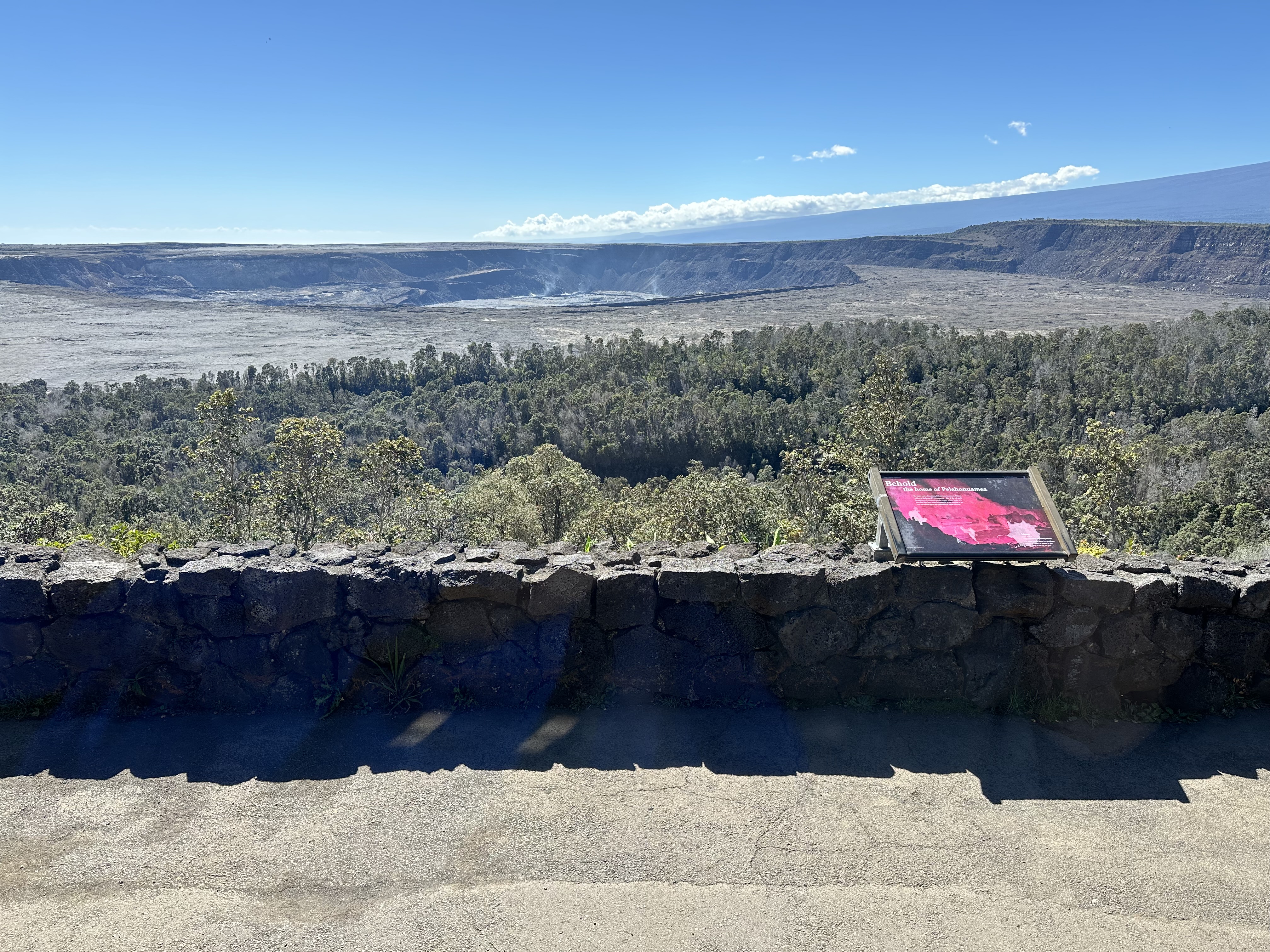
I was expecting a tall volcanic cone where we peered over the edge to look down into the crater. I underestimated the size and power of these massive domes. It was at least a half mile away. I think Manhattan could fit inside Kilauea’s gigantic crater.
Please click on the photos to enlarge them.
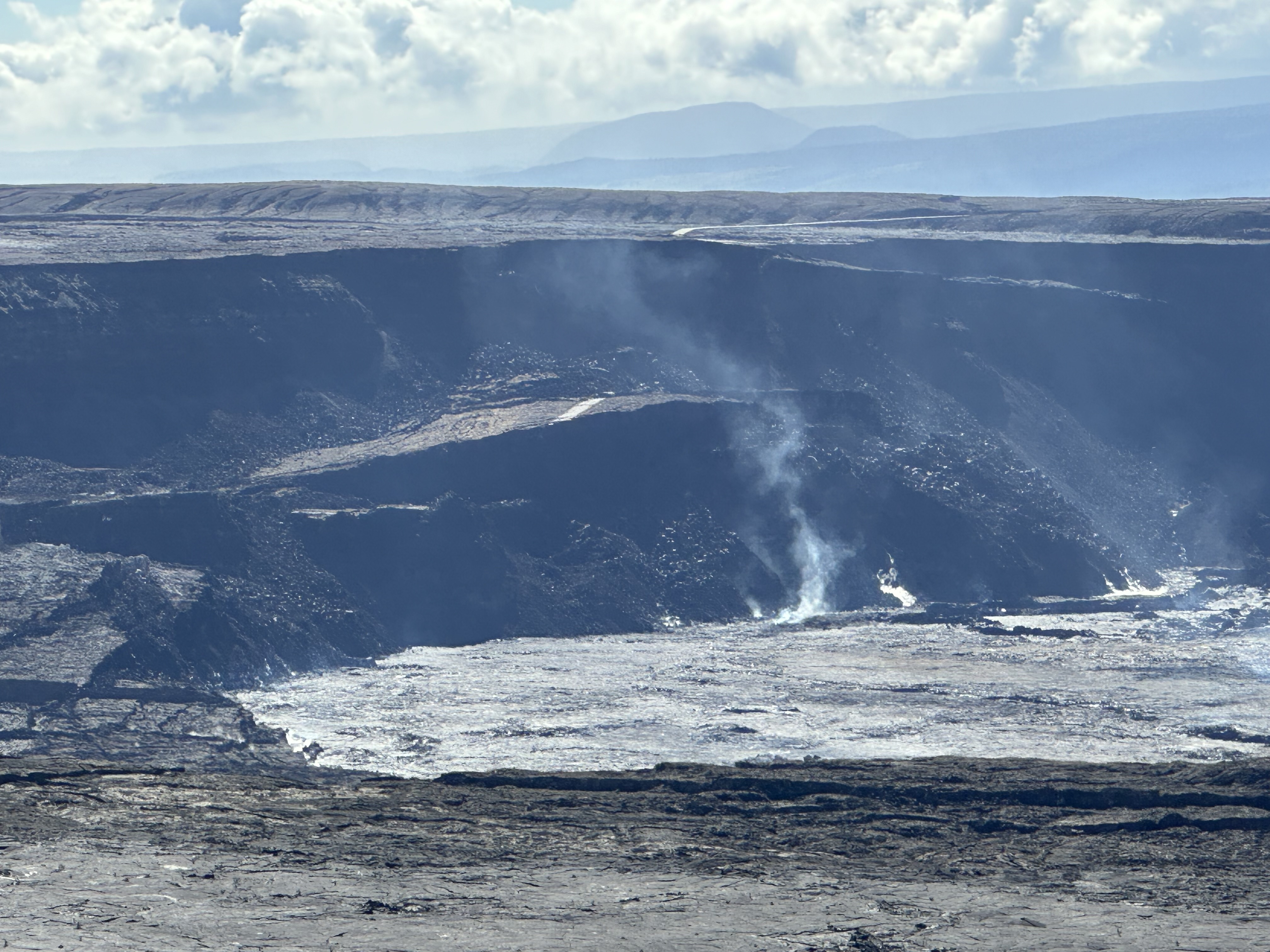
I also expected strong odors to emit from the caldera. Instead, it mainly was steam from vents along the volcano’s sides, although the fumes from Kilauea’s center would have been noxious.
To get a closer look, some of the group walked with our guide along an abandoned highway about half a mile. We could more closely see the steam rising from the crater’s center.
Several birds popped out before us on our way back to the bus. We headed back down the mountain, through the aptly named little burg of Volcano, and on to Hilo, the island’s largest town.
We stopped at Rainbow Falls in Wailuku River State Park, and I finally had a signal to contact my wife. She had Covid. Our guide jumped into action and tried to find an urgent care facility where Neva could be seen. However, all three were either closed or about to close, so my dear wife had to take a cab to the local hospital emergency room, where she spent four hours before being seen. All she wanted was a prescription for Paxlovid, which the ER doctor faxed to the local pharmacy.
Our guide assured us Neva and I could continue on the tour. She said the tour company treats COVID-19 like the flu. We would isolate on the bus and wear masks when around others. With only 14 people on the tour and riding a bus for 46 passengers, we could easily comply. I informed the other group members, and they were most understanding and concerned.
Darkness began to fall as we headed west up over a pass that took us past several volcano domes. The twilight gave them an eerie appearance. My poor wife didn’t arrive back at the hotel until 11 p.m.
We spent the next day relaxing around the hotel after I retrieved Neva’s prescription. I did some birding and enjoyed exploring the nooks and crannies on the hotel property while my wife rested. We finished the day watching mantarays feed in the shallow waters along the lava rocks in front of the hotel.
I got so busy with the holidays that I forgot to post this photo of a Snowy Owl that showed up in mid-November in western Rockingham County, Virginia, five miles from where I live. So, I thought I would let this beautiful bird wish you a Happy New Year!
When I heard about the Snowy Owl, my wife and I headed out, hoping to see it. I wanted to document the rarity with photos, too. A few other birders were already there when we arrived. In a matter of minutes, we were joined by several others, including two different school groups from nearby private elementary schools.
The bird sat on a 55-gallon steel drum near a pasture. Another birder had set up his scope and allowed me to take this photo with my iPhone 14 Pro. Otherwise, I would have had to heavily crop the images I took with my camera. The next day, the bird was gone, not to be relocated.
So, on behalf of the Snowy Owl, I wish you the best in 2025.
This is where the owl was found and what we saw with the naked eye. Can you find the Snowy Owl?
My wife and I were busy last week. Everywhere we went, we saw color, literally and metaphorically. Color dominated, from flowers to birds to people to landscapes to food to sunsets.
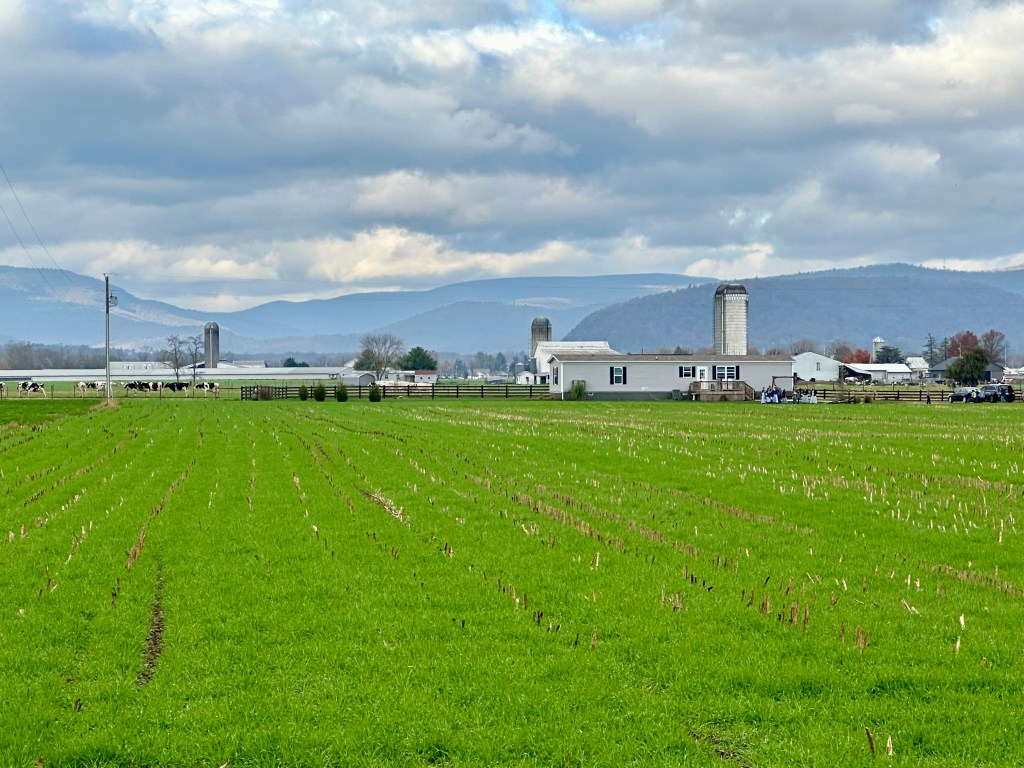
Here are a few samples of the vivid, muted, and impressive hues we encountered as we traveled from Virginia’s Shenandoah Valley to the Piedmont of North Carolina and back.
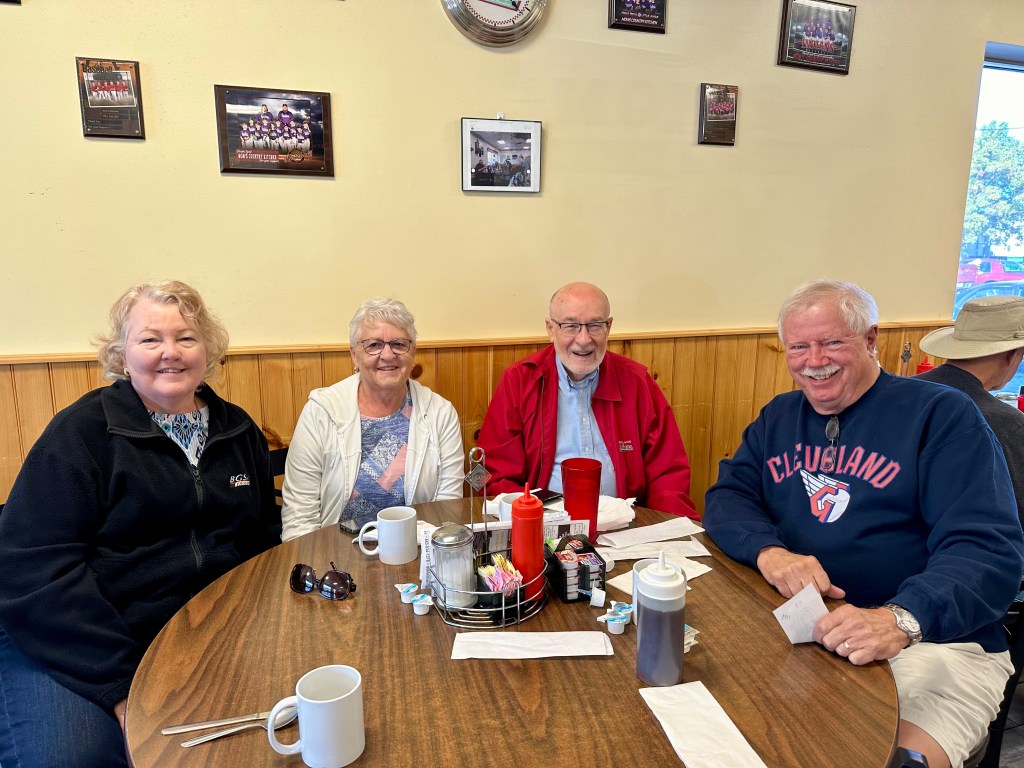
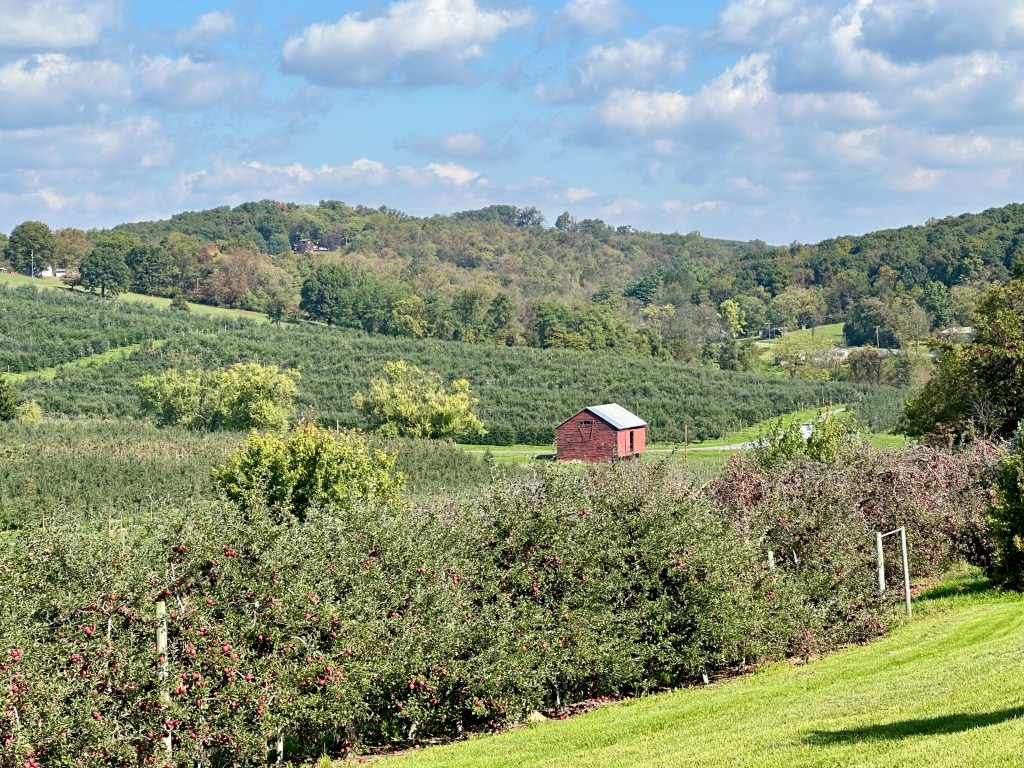
We met good friends from Ohio for breakfast in Front Royal, Virginia.We bought apples and fresh cider at a local orchard.We enjoyed lunch with cousins from California and North Carolina.
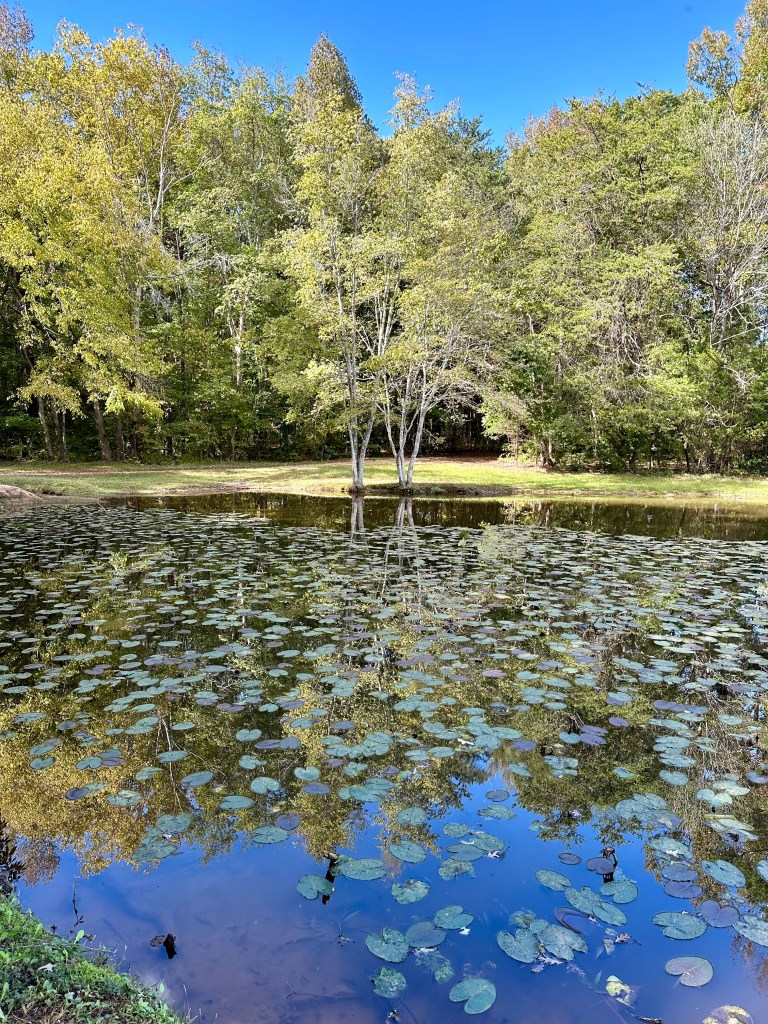
Dan Nicholas Park Lake.
Textures and colors.
The Foot Bridge.
A multitude of greens.
A pristine lake.
Reflections.
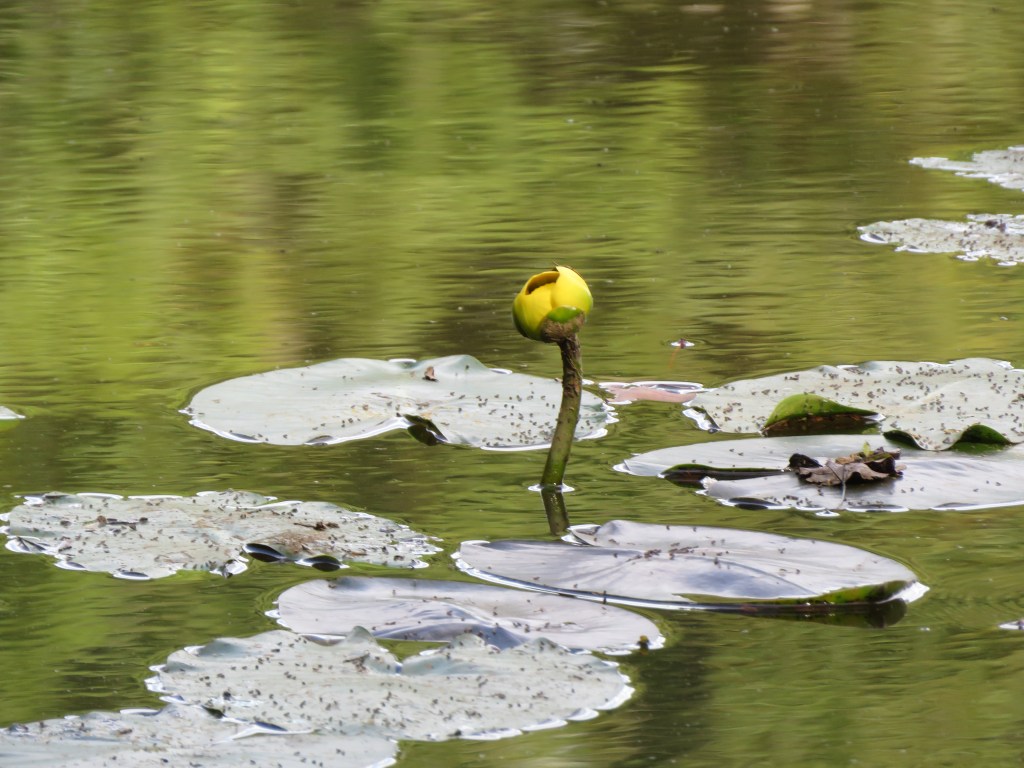
The last lily bloom.
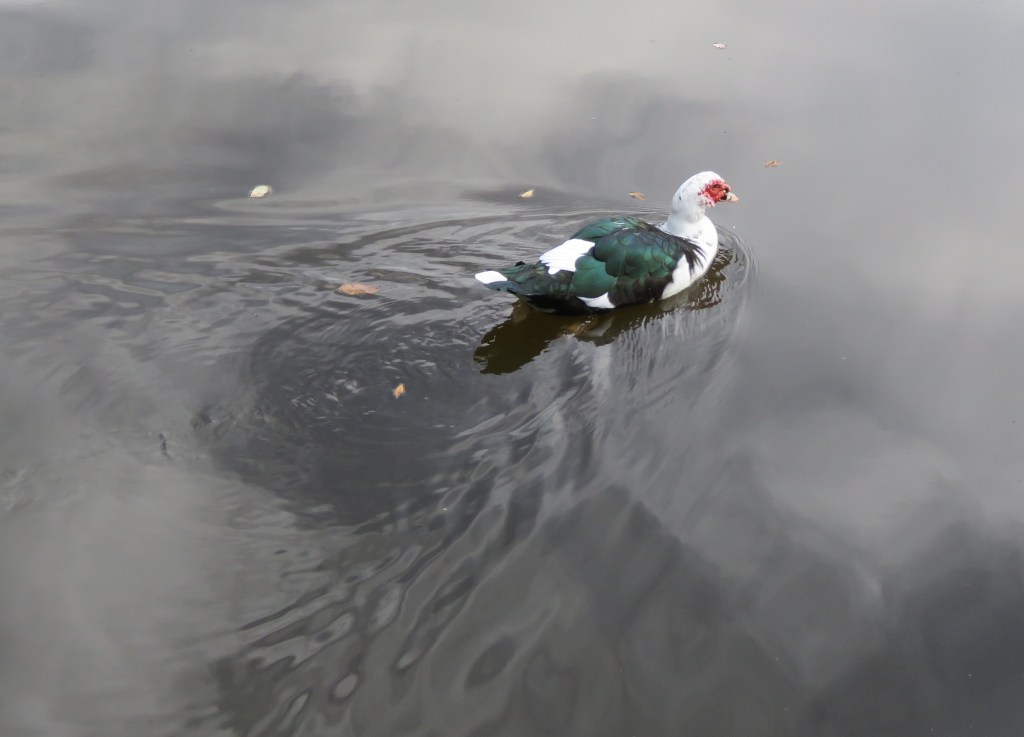
Muscovy Duck.
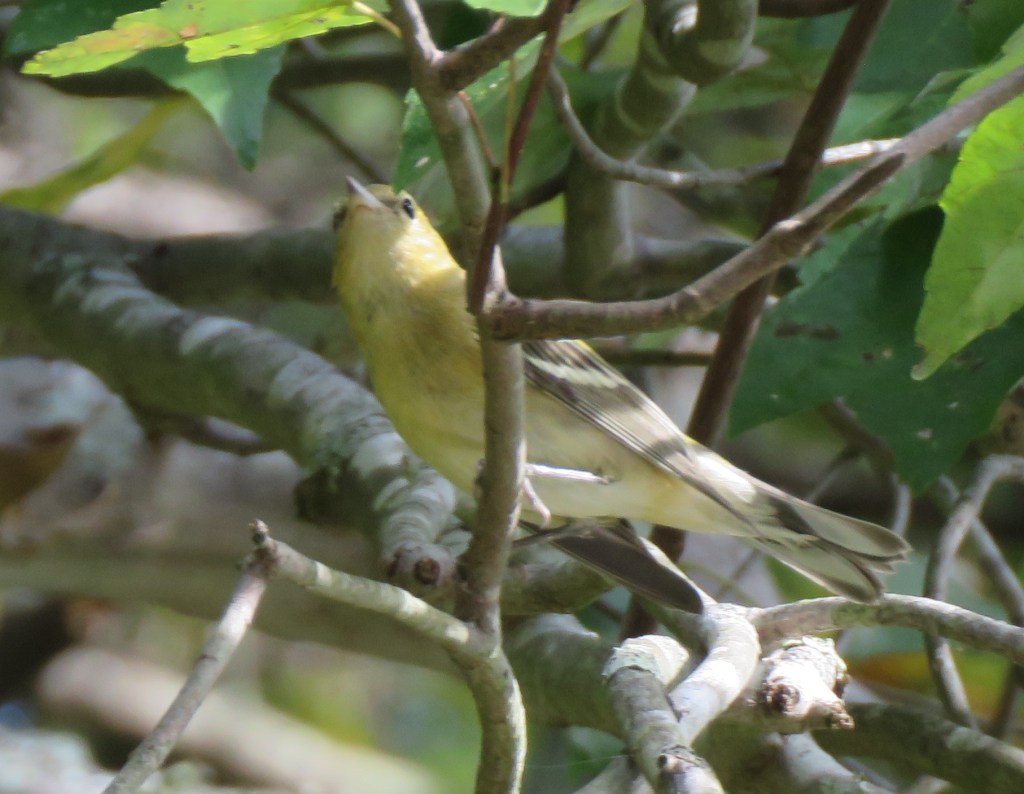
A migrating Bay Breasted Warbler.
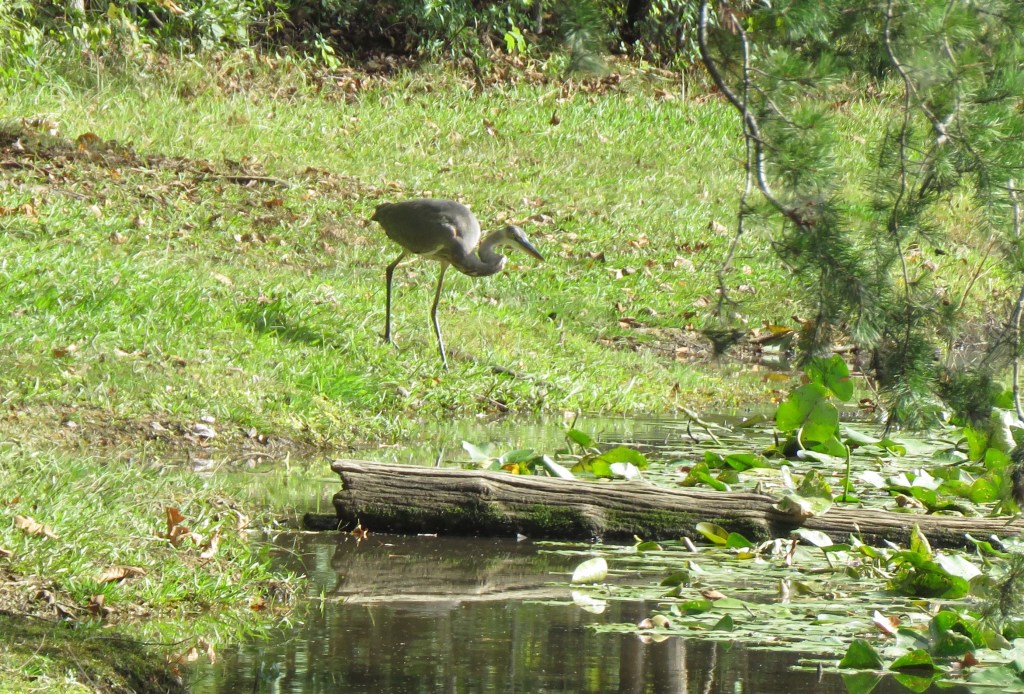
A Great Blue Heron.
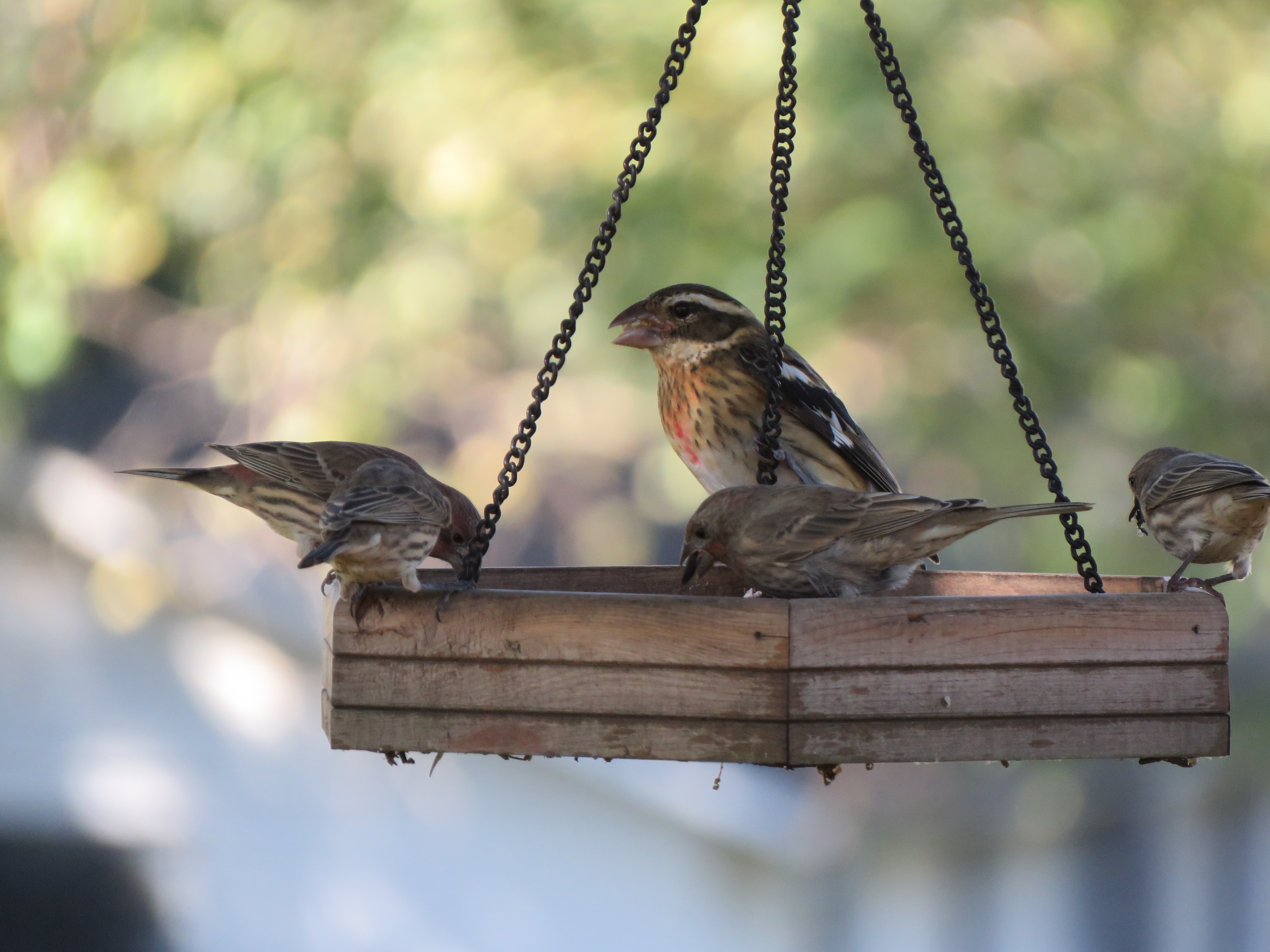
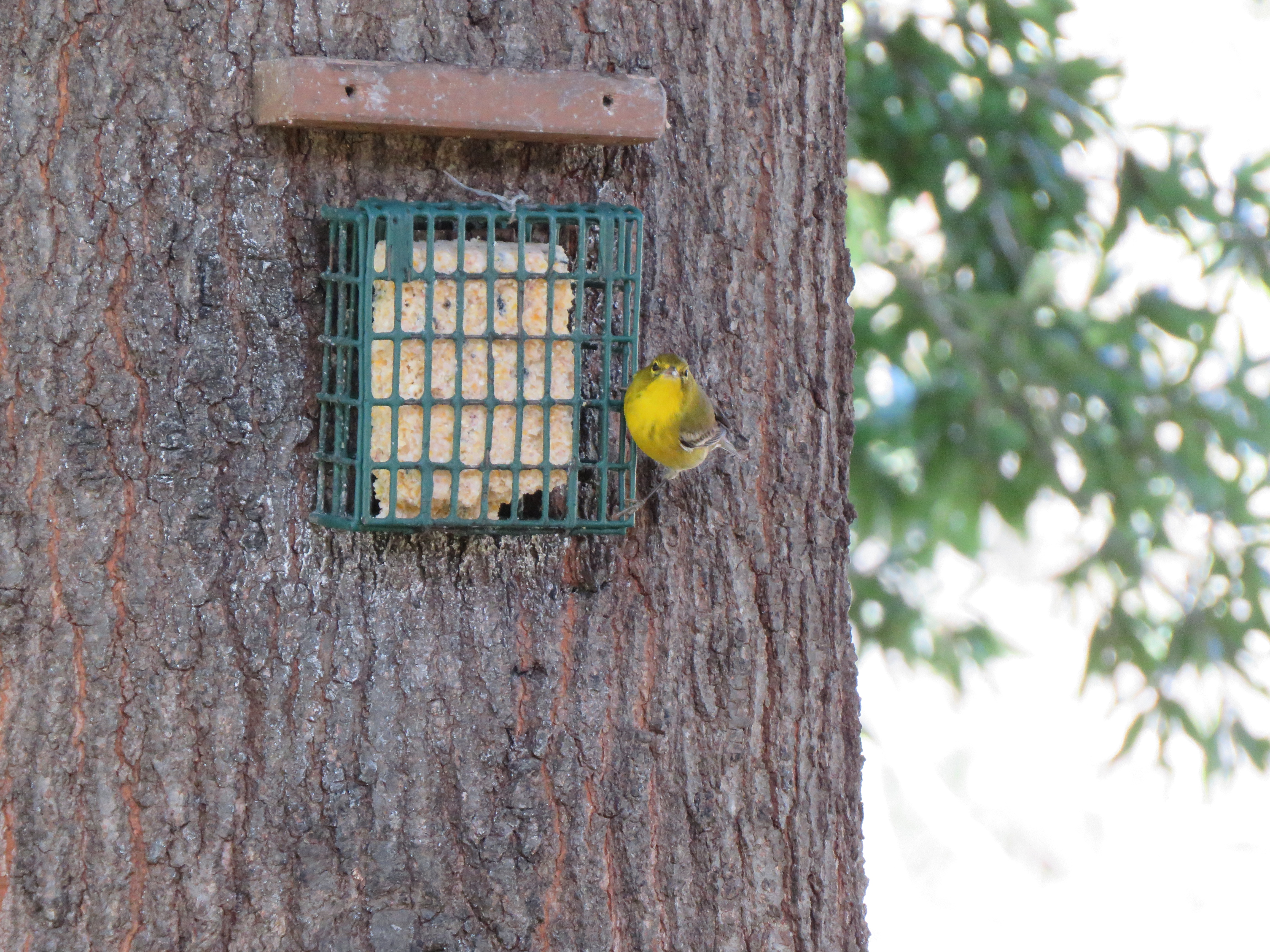
Dan Nicholas Park wasn’t the only place we saw birds. We sat in the shade and chatted while various species of birds visited our hosts’ backyard feeders.
Please click on the photos to enlarge them.
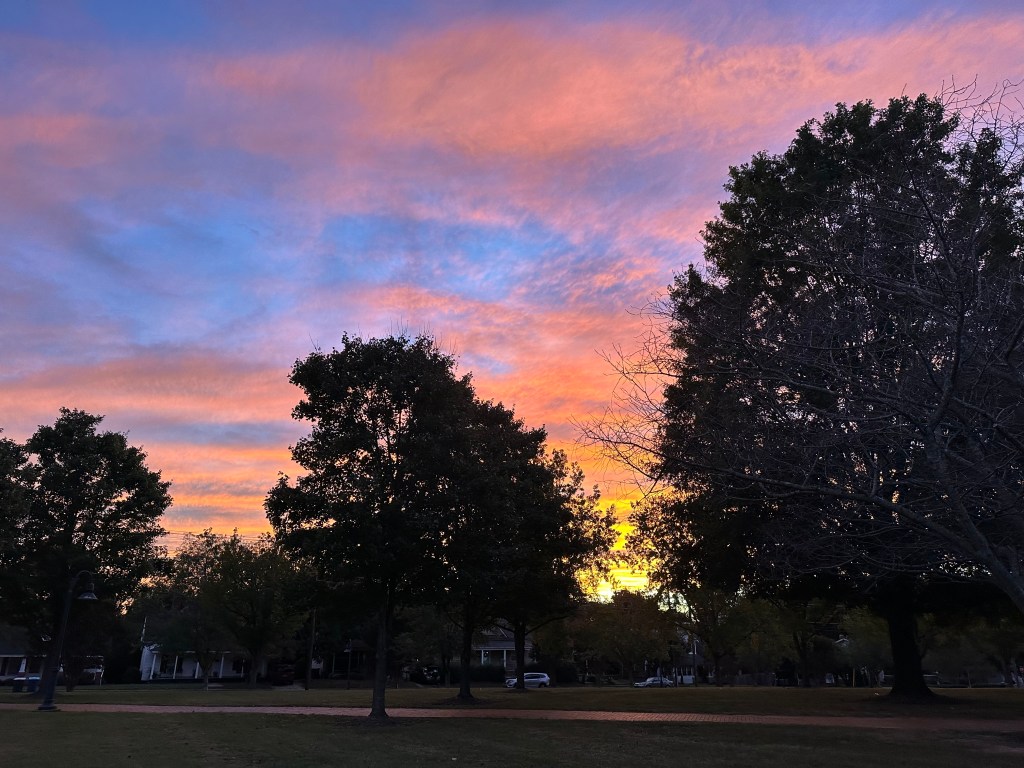
Of course, I had to include a sunset from Cannon Park in Salisbury, North Carolina.
Please click on the photos to enlarge them.
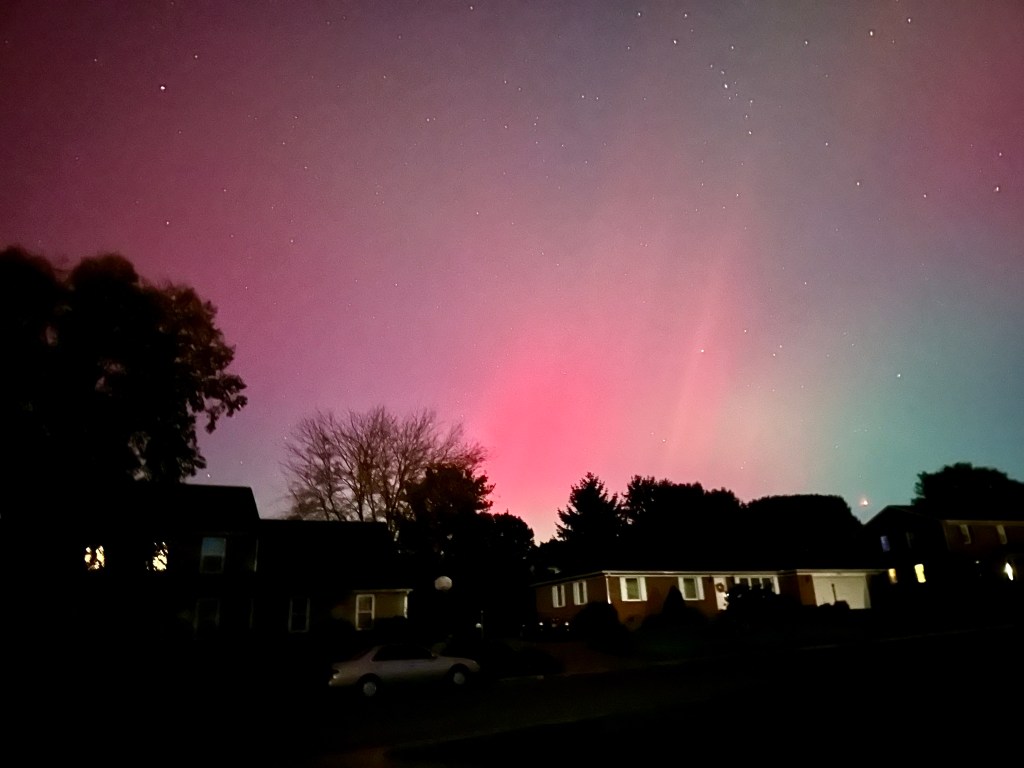
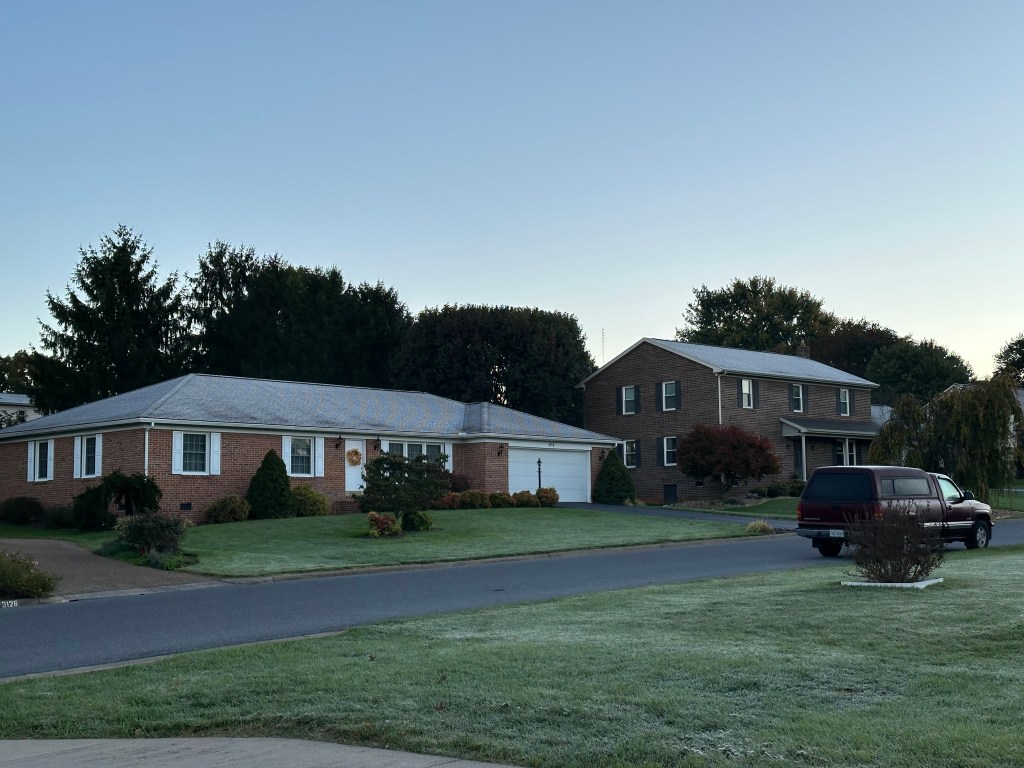
The evening we arrived home in Harrisonburg, Virginia, the aurora borealis brightened the night sky. The following morning, we had the first frost of the season.
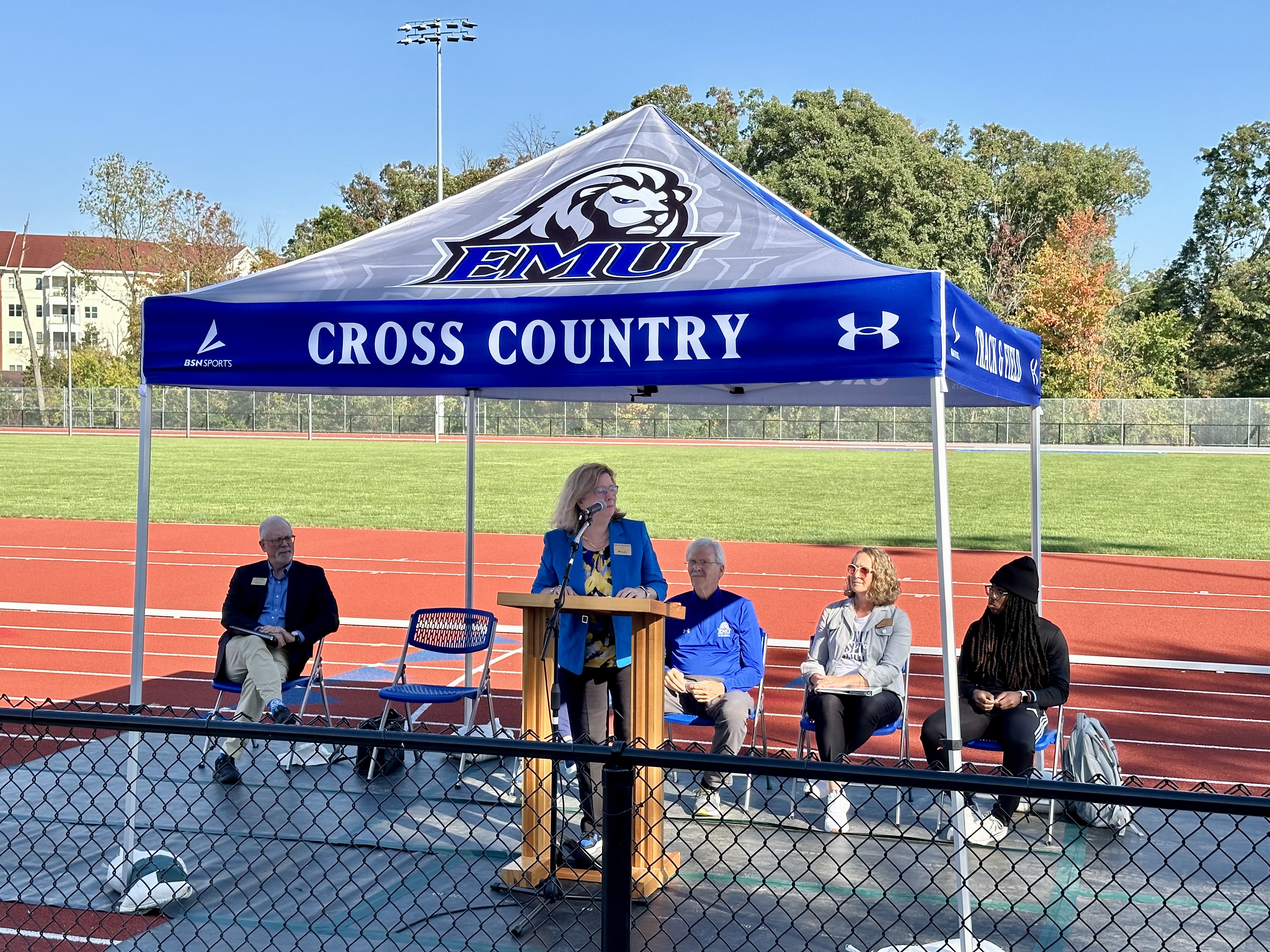
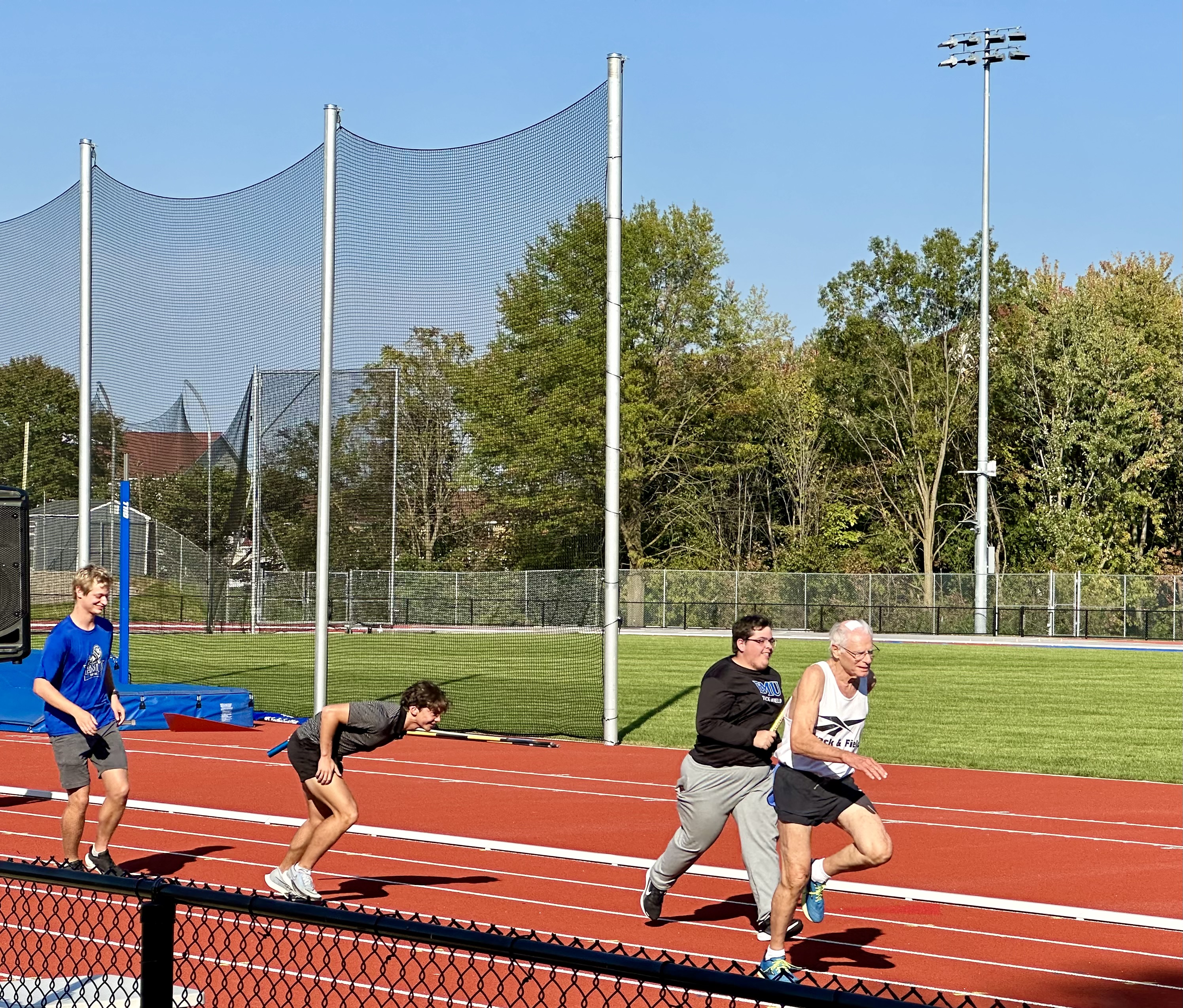
On Saturday, we hustled from one event to another. It was Homecoming at Eastern Mennonite University, where our daughter is the athletic director. The highlight for us was the dedication of the new state-of-the-art track. The ceremonies culminated with a ceremonial lap around the track by significant donors, former track members, and current track members. The oldest participant to run was in his 80s. He runs every day.
Please click on the photos to enlarge them.
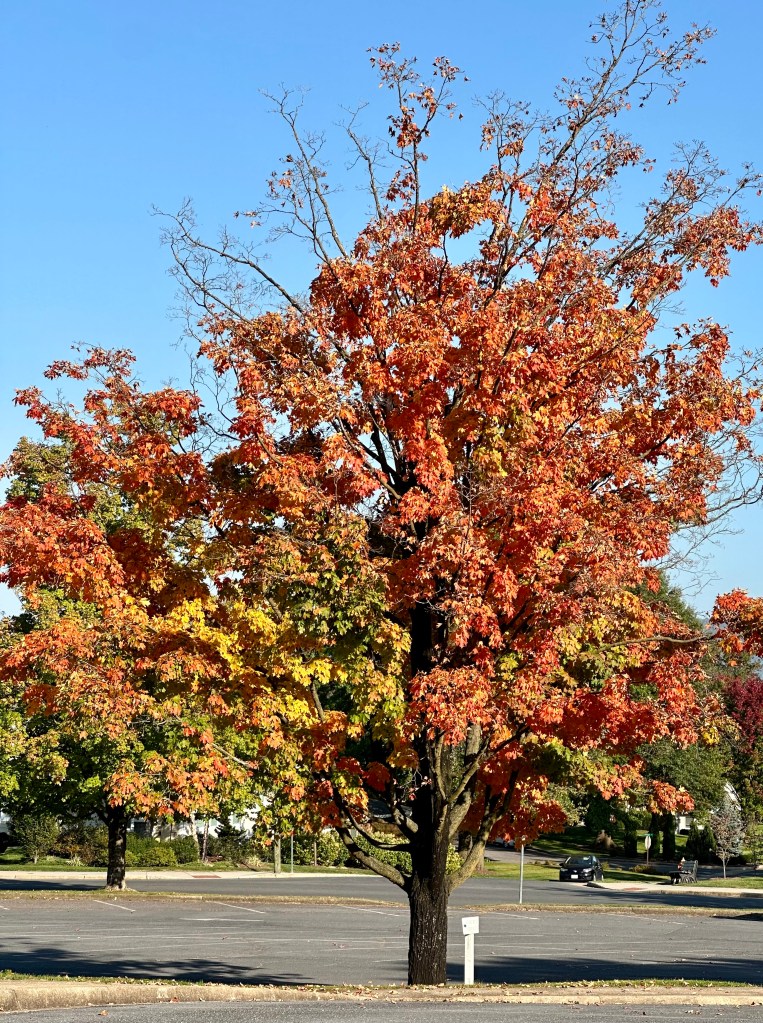
Sugar Maple leaves are peaking.
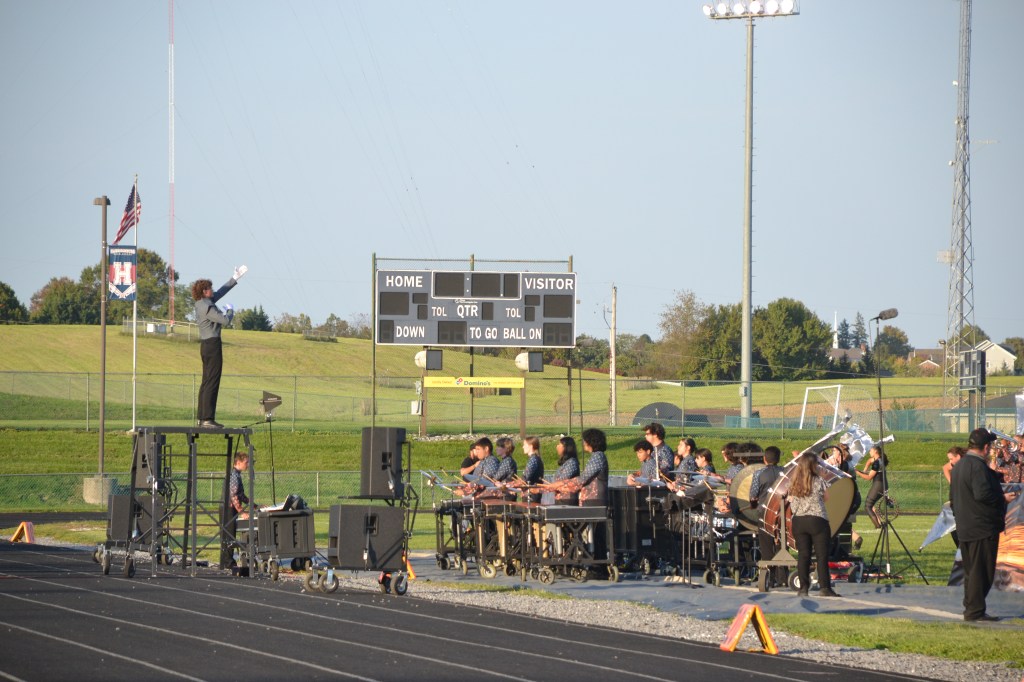
That evening, we watched our grandson lead the Rock City Regime as the drum major at a high school band competition.
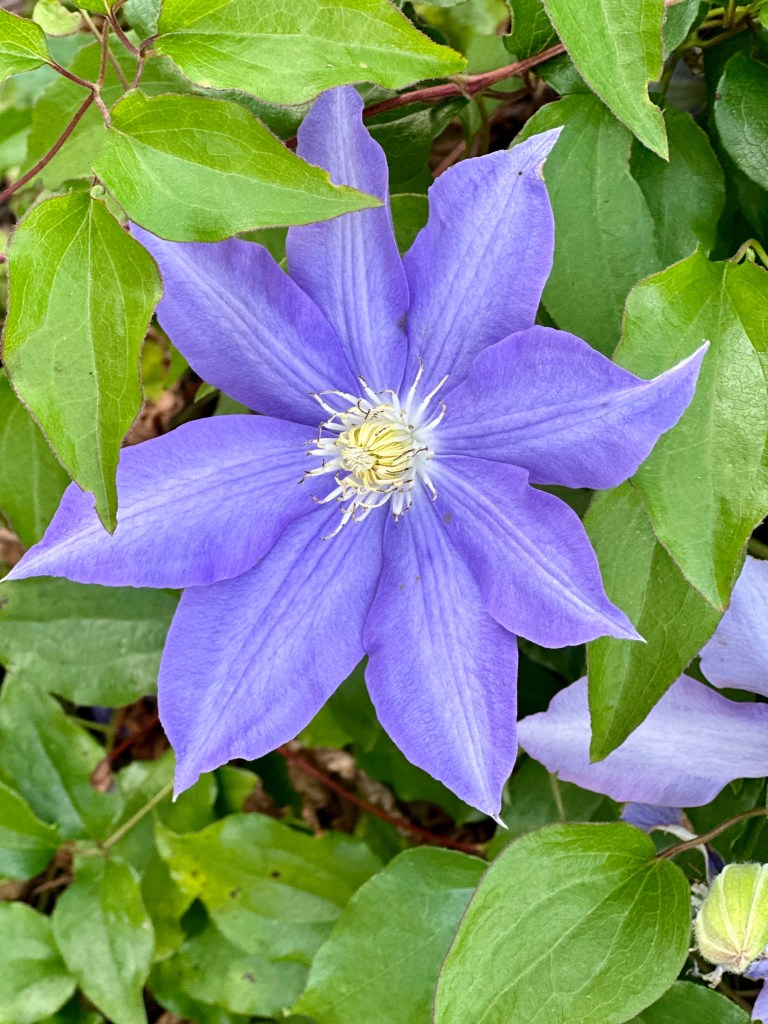
The colorful week ended with a welcome home by late-blooming clematis.
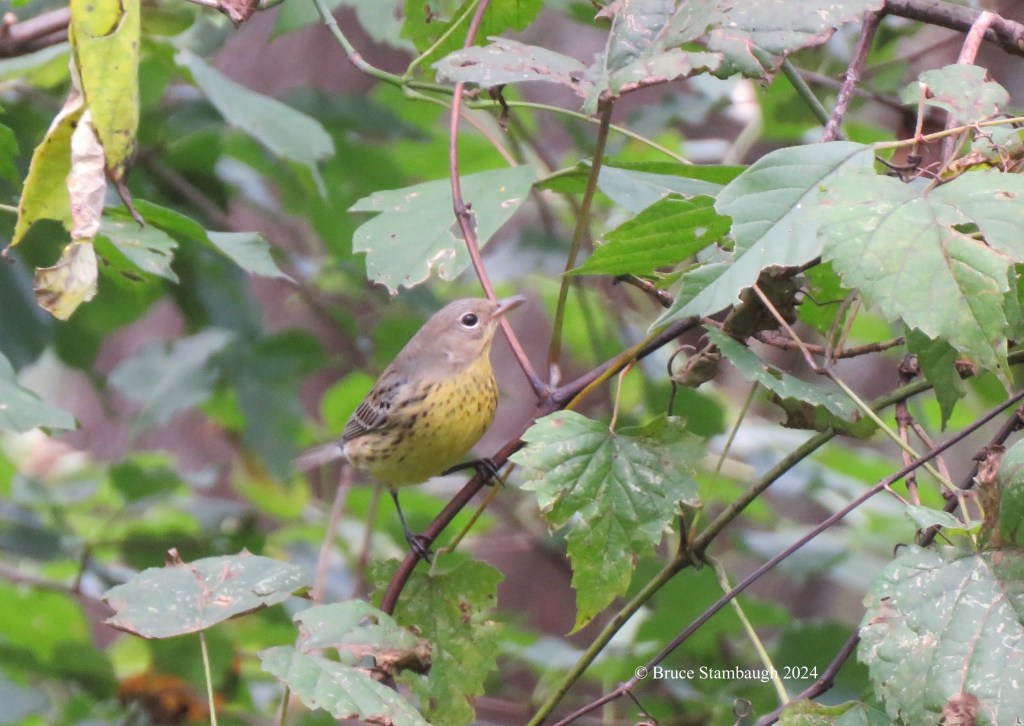
Kirtland’s Warbler, Waynesboro, Virginia. Photo by Bruce Stambaugh
When I opened the email from the birding listserv this morning, I knew I would pursue this rare bird. Fall bird migration was in full swing, and it’s a real rarity when a Kirtland’s Warbler is spotted. Experts estimate that only 1,500 of this species remain today.
It turned out that this bird was in a park only a mile from the wildlife rescue center where I took the injured Cape May Warbler last week. I had never been to the park where the Kirtland’s had been spotted.
My wife and I headed southwest toward Waynesboro, taking familiar back roads. Crossing over I-81 told us we had made the right decision. The busy highway was nearly bumper to bumper in both north and south lanes.
The GPS took us right to the park. The small parking lot was full, but fortunately, a space opened up right after we pulled in. Another birder arrived right after us and wondered where the bird was. I had no idea until we saw a small group emerge from the trees and thicket carrying binoculars and cameras with baseball bat-sized lenses.
They stopped and pointed their cameras and bins toward the thicket as we joined them. They spotted the bird immediately, and as good birders are want to do, they helped newcomers like us find the bird.
My wife had the rare bird in her binoculars before I did. Once it popped into the open, I saw the bird through my binoculars and then tried to capture images on my camera. Documentation is essential in birding, especially rare birds.
The bird darted up and down, in and out of the jungle of vines, saplings, and mature trees. It foraged on insects and berries. The bird finally popped into my viewfinder, and I got this photo and a few other less desirable ones.
Seeing a Kirtland’s Warbler is always exciting, especially if it is a life bird, meaning the first time you have seen the elusive bird. It’s a birder’s dream come true. Indeed, this bird was a lifer for several in the cooperative group.
Birding is all about finding and sharing, which Neva and I experienced today. On our way home, we celebrated with a delicious late lunch at our favorite burger place.
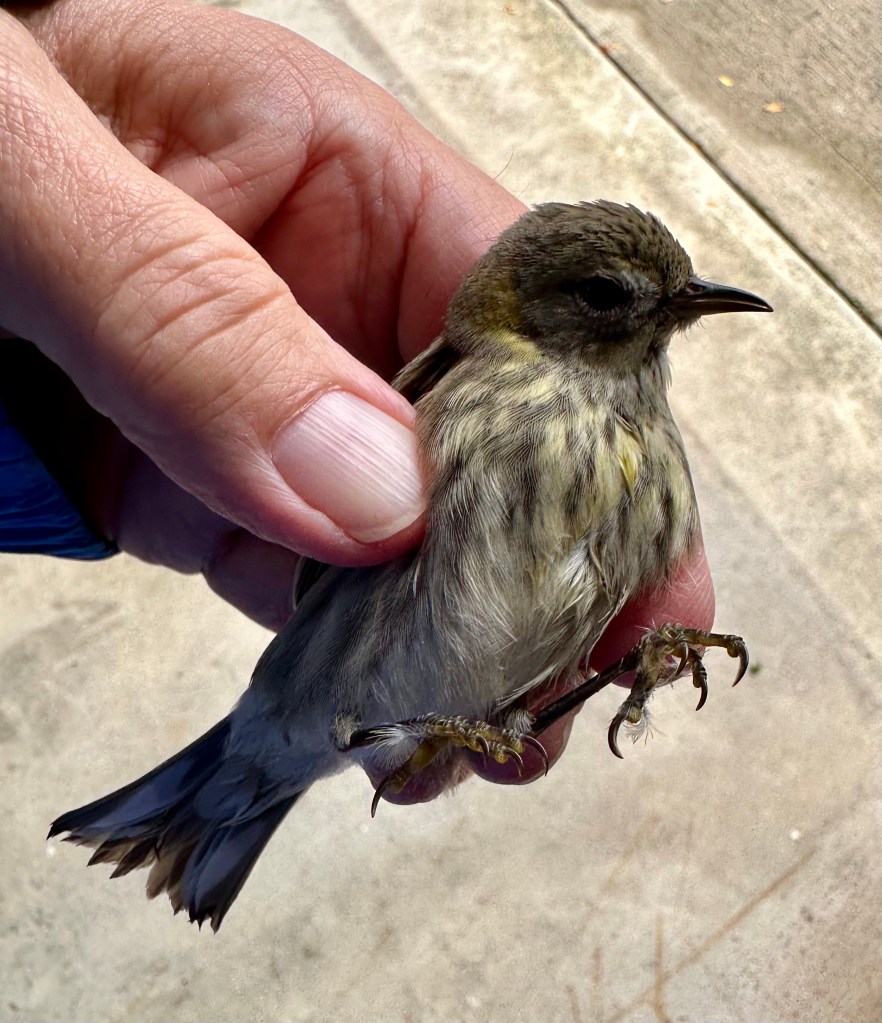
The Cape May Warbler after it hit a window. Photo by Bruce Stambaugh
I had lots to do. My first destination was the pharmacy, where I was to pick up a couple of prescriptions. As I started inside, a little bird stopped me.
The bird lay on the sidewalk upside down, twitching. I looked up and saw a large plate glass window. Another bird strike, I thought to myself.
I decided to leave the bird there. If it were still there when I returned after getting my prescriptions, I would see if I could help the poor critter. The other items on my to-do list could wait.
The tiny bird was still in the same spot in the few minutes I was away. It had managed to flop onto its feet but gave every sign of being injured. I bent down and gently picked it up. I thought the stripes on its belly and a faint yellow color indicated a Pine Siskin. I shared a photo of the bird with better birders than me and was happy to learn it was a Cape May Warbler.
This bird’s coloration would be much brighter in springtime, dressed in its mating attire. It was fall migration, and Cape May Warblers, like many other songbirds, turned dull for protection on their way to the Caribbean Islands from their summer nesting grounds in the far north’s spruce forests.
I returned to my vehicle and placed the stunned bird in the only thing I had: a grocery store tote bag. I called the nearest bird rehab center and was instructed to put the bird in a small box with airholes and secure it to keep it in place.
Back home, I found an appropriate box, laid a hand towel in the bottom, and placed another smaller box with slits over it so the bird could breathe. I headed for the rehab center 40 minutes away.
A mile from the rehab center, more rain from the remnants of Hurricane Helene began to fall. This wildlife hospital was in a mountainside woods outside a small city in Virginia’s Shenandoah Valley. I pulled up to the front door, and a volunteer soon arrived. Because I had called, they were waiting for me.
Just like a human hospital, I had forms to fill out. I wrote down my contact information and specific details on where and when I had found the bird. I was handed a card with the patient’s number on it to use should I inquire about the bird’s status. And just like that, I was on my way home.
I emailed the rehab center to correct my misidentification, but I didn’t hear back until two days later when I received a phone call. They thanked me for taking the time to bring them the warbler. The lab tech confirmed that the bird injured itself by hitting the window.
It was having trouble breathing and had internal inflammation. The rehabbers gave it oxygen, water, food, and the proper medication. The bird responded to the expert treatment and was ready for release, and their protocol requested that it be set free close to where it was found.
The caller wanted to know if I would pick up the bird and take it to a park near where I found the warbler. Without hesitation, I again cast aside my plans for the afternoon and gladly drove down to pick up the bird and release it at the park.
Returning with my healed patient, I wondered what my reaction might be. I was glad the bird had recovered, but emotionally, there was more to it than that. As a long-time avid bird watcher, I had found many birds dead from window strikes. I would freeze their bodies until I could take them to a local wilderness education center. The carcasses would be preserved and put on display for schoolchildren to inspect. As a birder and a retired educator, that gave me satisfaction.
But this case was different. I checked both the rescuer and transporter boxes on the form I filled out at the rehab center entrance. I felt joy for the bird and the rehabbers’ successful efforts. As for me, I rejoiced that I had forgone those errands to save the dainty bird.
I wasn’t any avian hero. Still, I was thrilled when I opened the box. After a brief hesitation, the recovered Cape May Warbler beautifully flew into the woods nearby, never to be seen again. I couldn’t stop smiling.
The Cape May Warbler quickly flew to a stand of trees nearby. Photo by Bruce Stambaugh
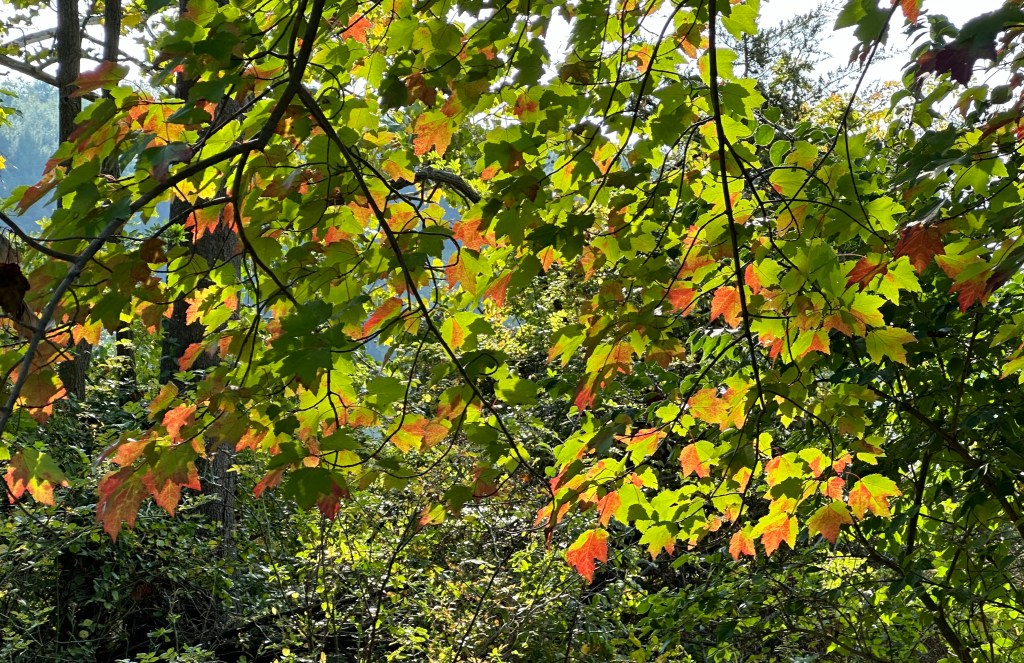
Morning sunshine tinted Sugar Maple leaves. Photo by Bruce Stambaugh
The signs of fall are everywhere in Virginia’s Shenandoah Valley. Whether hiking in a park, walking around the neighborhood, or taking a country drive, hints of autumn’s imminent arrival catch people’s attention.
Impatient warm colors tint the once vibrant green of sugar maple leaves. Other maples blush reds on one branch and greens on the rest of the canopy. Scan hillside woodlots, and it’s clear autumn’s rapid approach has infringed on the once variety of hues of greens.
Some of the dulling and browning result from the severe summer drought. Rain has been sparse. Large and small trees continue to be stressed, some to the point of no return.
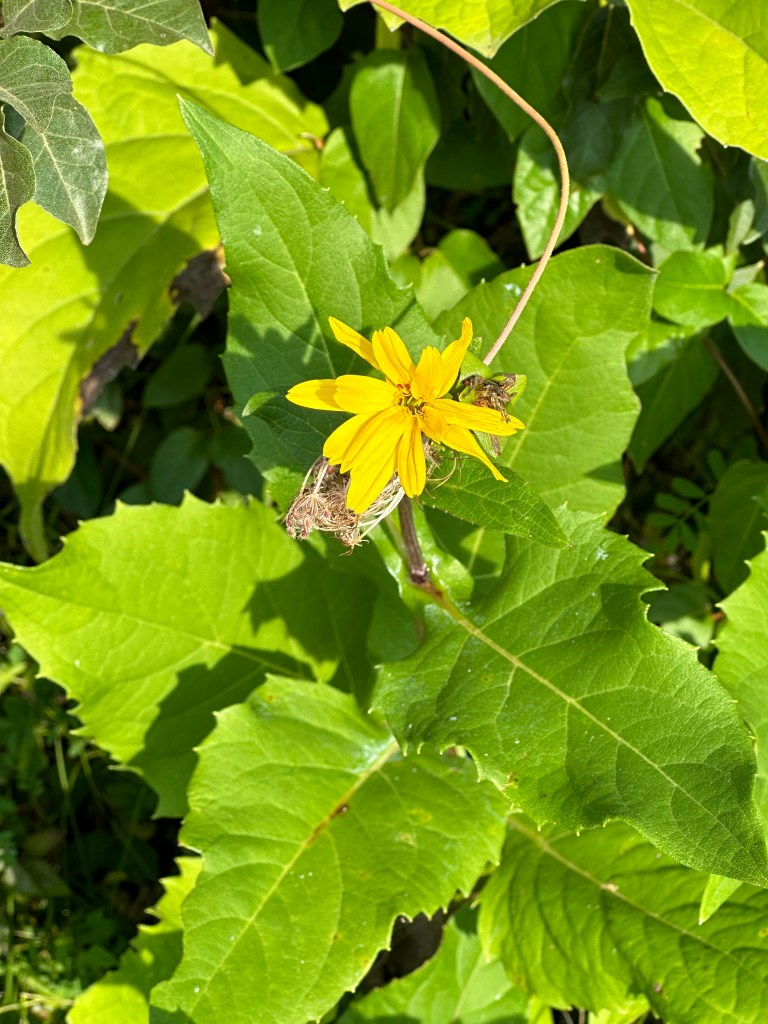
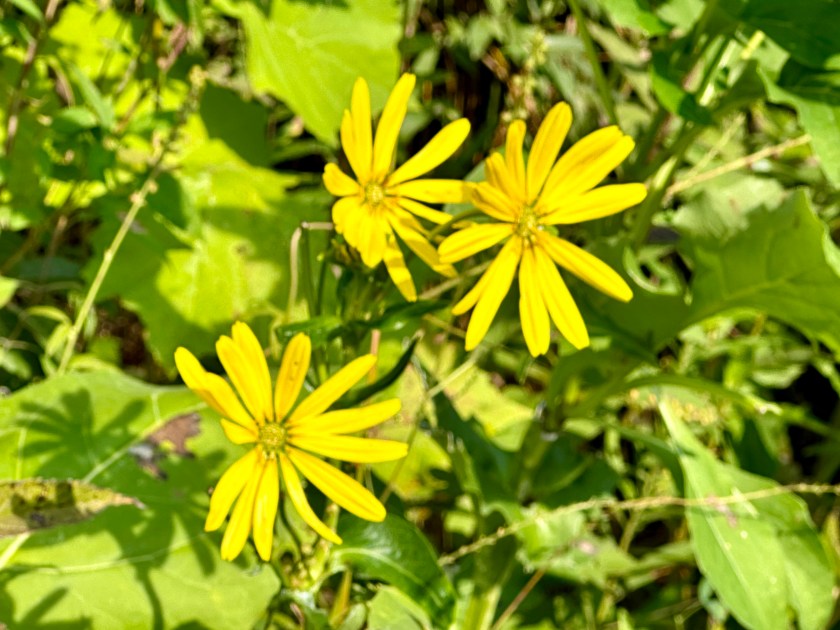
The wildflowers seem bedraggled, save for multiple stands of goldenrods waving in the wind. Still, blossoms persist despite the dryness and display their showy blooms.
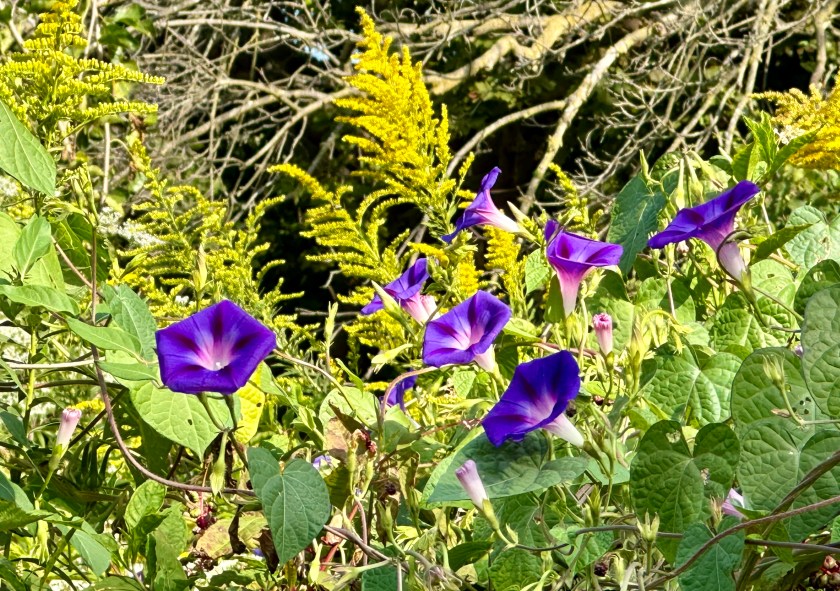
The deep purple of wild morning glories contrasts beautifully with the ubiquitous goldenrod blooms. Different species of wildflowers display various versions of yellow only feet apart.
Sunsets come too soon. Even on cloudless days, the western horizon glows golden. Unfortunately, particles from wildfires hundreds of miles away, carried by the jetstreams, subdue the grateful human emotions.
The heat and dryness, not the season’s first frost, have stunted too many stands of cornstalks and singed their long, drooping leaves. Going consecutive weeks with little to no precipitation has that effect.
A hazy sunset. Photo by Bruce Stambaugh
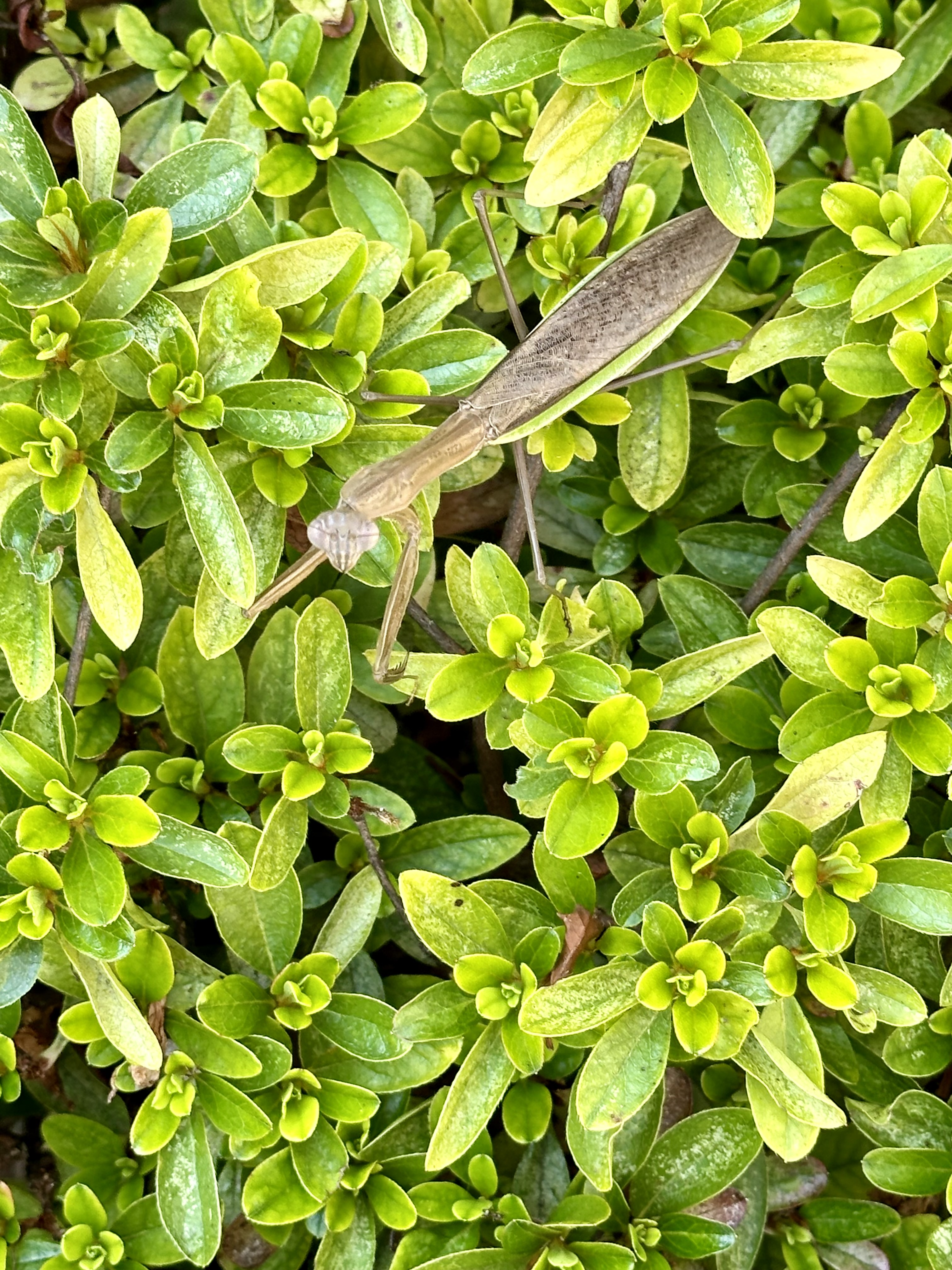
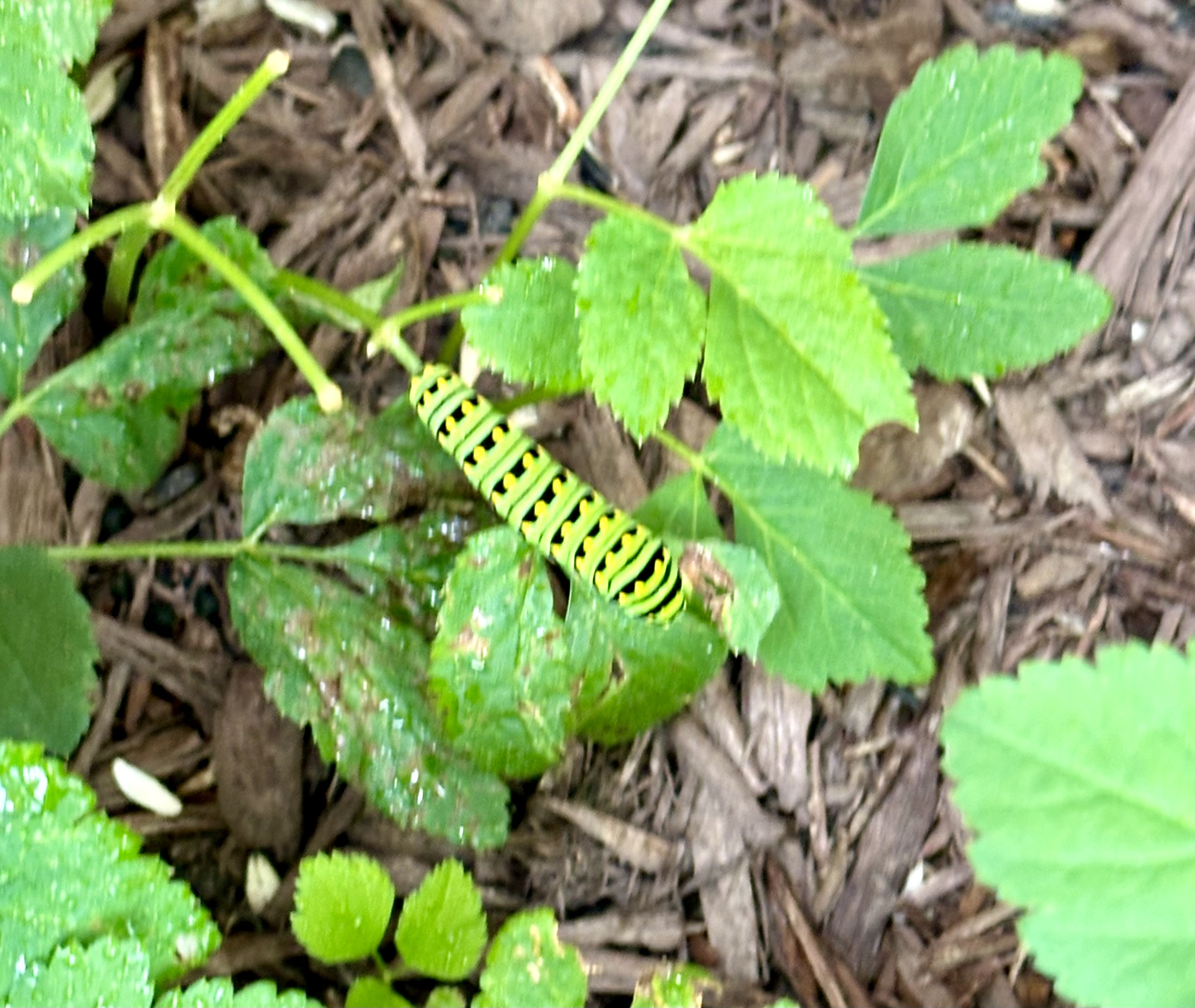
Insects also make their annual fall appearances. Caterpillars gorge on their host plants to prepare for the next phase of the metamorphosis. Praying mantis look for any opportunity to dine among the garden foliage.
The heavy dews of cool mornings reveal the stealthy spider webs with their glistening moisture. As the dew evaporates from the warming air, butterflies search for nector, powering up for their southern journies.
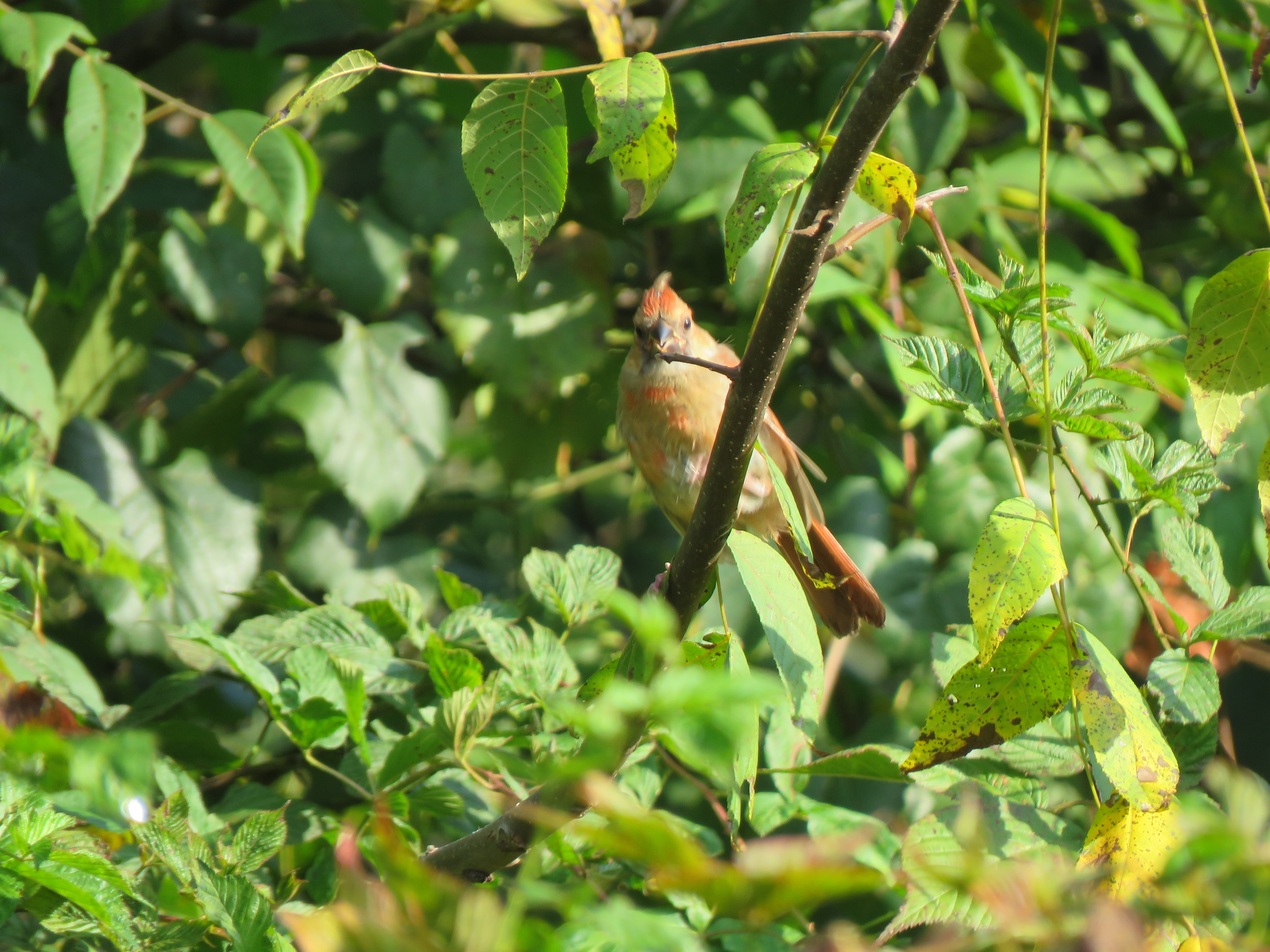
Scores of warbler species dressed in duller, non-breeding colors migrate to their southern haunts. Other species, including singers and shorebirds, also flee for more moderate climes.
It won’t be long until northern snowbirds, primarily the gray-haired versions, follow behind them in cram-packed cars and campers of all shapes, sizes, and colors. Warmer weather attracts all kinds of birds.
Of course, the turning of the leaves, the blooming wildflowers, the trimming of daylight, and cooler temperatures is as it should be. Fall is officially around the corner. The autumnal equinox is Sunday, September 22, at 8:47 a.m. EDT.


























































You must be logged in to post a comment.