Finding gratitude from on high

fromjeffersonrockbybrucestambaugh
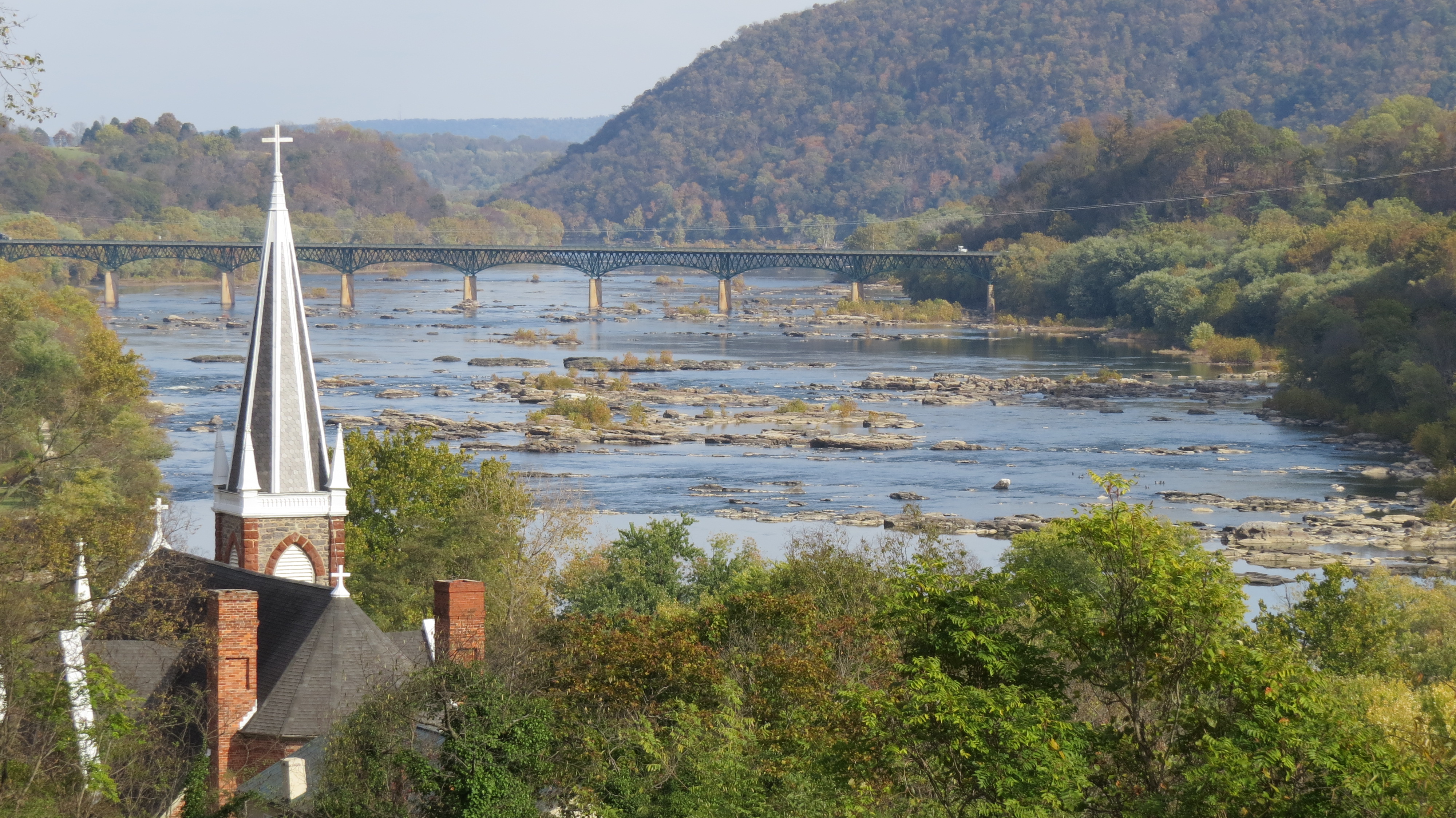
The view from Jefferson Rock of the confluence of the Shenandoah and Potomac rivers.

By Bruce Stambaugh

There are times when a life experience far exceeds our expectations.

I had just such an encounter recently on a junket my wife and I made to Harpers Ferry National Historic Park in extreme eastern West Virginia. This tiny, old town had played a small but important part in our country’s big history.

On a precipice 800 feet above the confluence of the Potomac and Shenandoah rivers, more flowed together for me than two charming waterways. I had previously seen scenic shots of historic Harpers Ferry from this vantage point in Maryland, and had fancied a few of my own. I departed with more than picturesque photos.

The beauty of the bright morning itself was stunning. I basked in the warmth of the morning sunshine looking down on history. The strengthening sun drenched the charming village in a golden wash. It was a map come alive where famous Americans had all made important imprints on our country’s checkered history.
confluencebybrucestambaugh
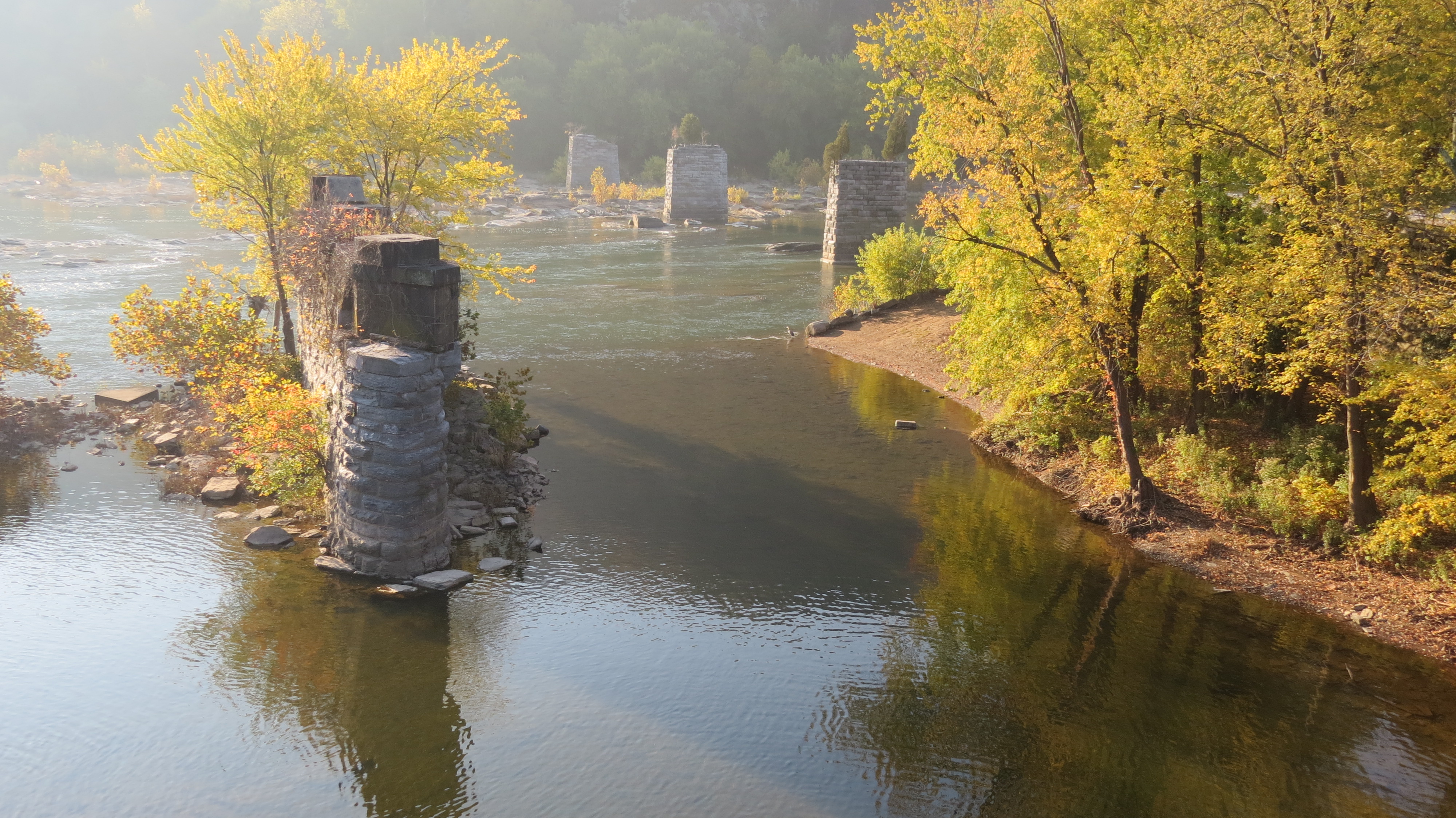
A Great Blue Heron preened in the morning light at the confluence of the Potomac and Shenandoah rivers.

The three-mile hike from Harpers Ferry to the overlook was exhilarating. A hint of haze hung above the surface of the churning rivers on the cool morning.

My goal was to arrive at the scenic overlook opposite the town as the day’s sun rose above the Appalachian foothills. I crossed the footbridge, a part of the Appalachian Trail, which paralleled the bridge of the railroad tracks. The tracks split at the town and followed the two majestic rivers, one south, the other west.

Once across the Potomac, its melodious rapids singing all the while, the Appalachian Trail followed the river and the old C & O Canal east. I walked west along the towpath to the trailhead that led up the rocky, forested hillside.

I couldn’t imagine how soldiers, Confederate and Union alike, had muscled heavy artillery up these steep slopes. Massive rock outcroppings protruded everywhere beneath the hardwood forest. The rich greens of mountain laurel and cedars complemented the coloring leaves of the mixed deciduous trees.

I arrived at the overlook in less than an hour. The view, as Thomas Jefferson once declared, “was perhaps one of the most stupendous scenes in Nature.”

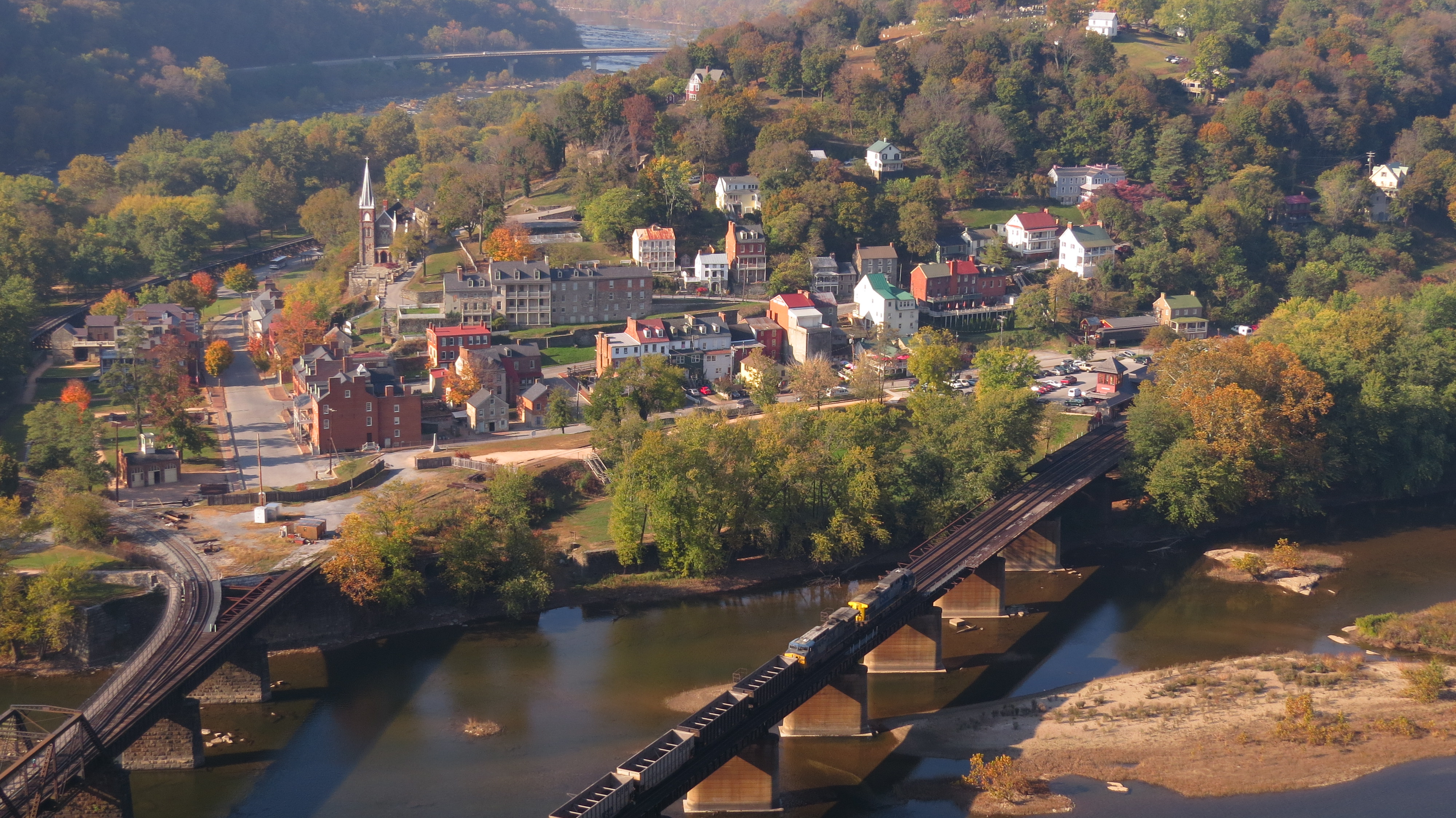
As I sat on the cool rocks I looked down on the spot where John Brown had made his ill-fated raid in 1859. I envisioned Jefferson, George Washington, Robert E. Lee, Thomas “Stonewall” Jackson and all the others who had made their lasting marks there striding along the slanting, narrow streets.

Harpers Ferry was a strategic town in the Civil War since it housed the federal arsenal. Both armies occupied the town intermittently during the war. It was the sight of the largest surrender of United States troops in the Civil War.

Behind me birds of the forest searched for breakfast amid golden, backlit leaves. Carolina Wrens, chickadees, cardinals, robins, Tufted Titmice, White-breasted Nuthatches and Brown Creepers scavenged the forest floor and trees.

A Black Vulture sailed west above the Potomac just off of the cliff. A Red-shouldered Hawk, its black and white striped tail fanned out, glided east. Beneath me a freight train rumbled through the tunnel, across the bridge and whistled past the old station.

I had gone up to the sheer cliff for some pictures. I came down with a renewed spirit of gratitude for all that has transpired and will transpire in my life, in our lives.

Together we have a lot for which to be grateful this Thanksgiving.
harpersferrywvbybrucestambaugh
Harpers Ferry, WV from the Maryland Heights overlook.

© Bruce Stambaugh

How did we get to November already?

harvestingcornbybrucestambaugh
Many Amish now use a gasoline engine to power a horse drawn corn picker.

By Bruce Stambaugh

It’s November, the eleventh month of the year. How did we get here already?

Only yesterday we were putting away our holiday trappings, thankful for the fun times with family. With the winter full upon us, we wistfully anticipated warmer days ahead.

And now it’s November again. How did that happen?

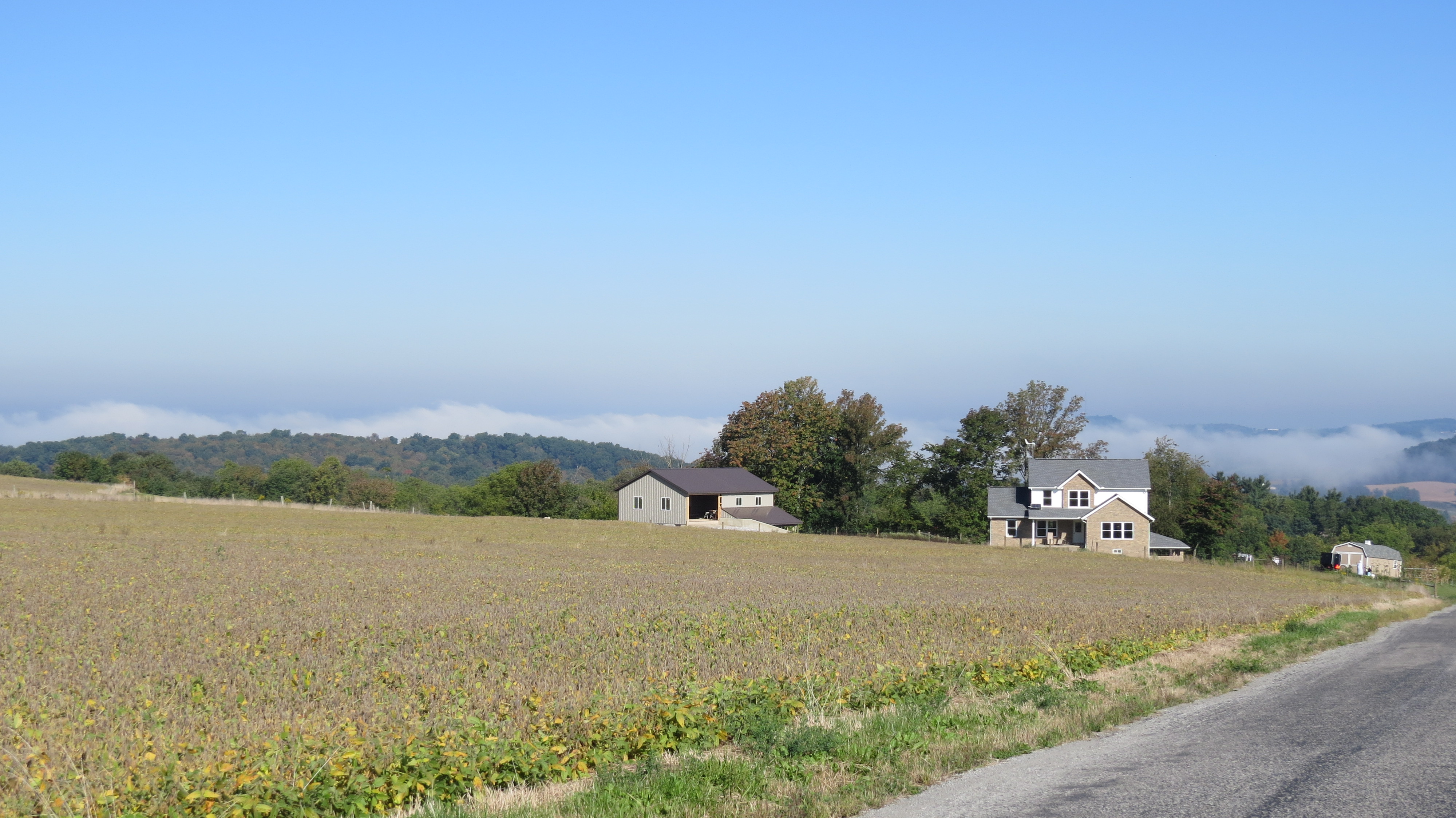
Our house is built on an Amish farm, and we have an excellent view of the sweeping farm fields between the farmhouse and our own. After the year’s first significant snowfall, out came the manure spreader creating a Currier and Ives brown on white painting, horses snorting steam as they pulled the spewing wagon through the cold air.

The backyard birds raided the many feeders deployed in strategic locations for them and me. They eat in the cold. I photographed through the windows from the warmth of our home. That was yesterday, right?

The snows came, melted, and came again. The cycle of freezing and thawing and freezing again took a toll on the roads. The orange barrels are still up, and yet snowplows are already being prepared for another go-round. Can it be already?

It seems like just the other day horses pulling the one-bottom plows retraced their manure spreading steps. Dark, rich soil turned one row at a time. They went, and they went until the upturned richness embraced the sun and the rain, sometimes both in the same day. Didn’t that just happen, too?

As a fundraiser, the youth group from our church picked up winter’s debris deposited by gale after gale. I’m glad we didn’t have to pay them per pinecone. I thought we just wrote that check.

I remember distinctly how long, chilly and wet the spring was. It seemed like it hung around until last week. Obviously it didn’t. We haven’t had summer yet. Or did we?

A pair of Pileated Woodpeckers began to raid the peanut butter suet feeders in the backyard. I was astonished the huge, shy birds would even come that close to a home. But they did. A few weeks later, mother and dad led their youngster to the free food. I’m positive it was just the other day that happened.

Maybe not.

This slideshow requires JavaScript.

Once the field corn sprouted, it shot up, the tallest corn I can remember. The ears were long and full, and now they are being picked. Did I miss something?

I know our energetic granddaughter spent a few glorious days with us just before her preschool started. We had loads of fun together before I returned Maren to her Virginia home. Was that really at the end of August?

How is it that I distinctly remember sitting on our favorite porch in Lakeside, Ohio, playing dominoes with our usual gang, and yet, the calendar says it is November? Something is not right here.

I can still taste those amazing homemade glazed donuts at the customer appreciation day at the produce stand we frequented time and again during growing season. Yet, checking my records, that was at September’s end. That can’t be right.

I do remember October was filled with meetings and appointments and celebrations, all intertwined around a little travel. In fact, without looking it up, I can tell you exactly the time and date of my last doctor’s appointment. I didn’t have to wait long, and I recall it went really well. But that was a month ago.

Someone please tell me, how did we get to November already? Anybody?

novembersunrisebybrucestambaugh
A November sunrise in Ohio’s Amish country.

© Bruce Stambaugh 2013

Cozying up to that time of year

cottagelanebybrucestambaugh
The lane to the cottage.

By Bruce Stambaugh

It’s that time of year again, and I’m not referring to the general election. A dutiful citizenry casting ballots is critical to maintaining our democracy, dysfunctional as it sometimes is. I relish a more personal season now.

The Chimney Swifts are gone, and I can once again stoke up a roaring fire in the family room fireplace. It’s my favorite leisurely pursuit of the colder months, and one that I eagerly share with family and friends.

This year I had to wait longer than usual to build my first fire. After the resident nesting Chimney Swifts flew south a week after Labor Day, another family of migrating swifts promptly moved in and basked in our fine early fall weather.

I didn’t mind at all. The affable little birds daily devour scores of insects.

I enjoy hearing the flying cigars, as birders affectionately refer to them, chatter as they dive bomb into the stubby brick chimney. I find it fascinating that these birds seem to never sleep. Their powerful swooshing into the chimney rattles the hearth’s damper day and night.

cottagefireplacebybrucestambaugh
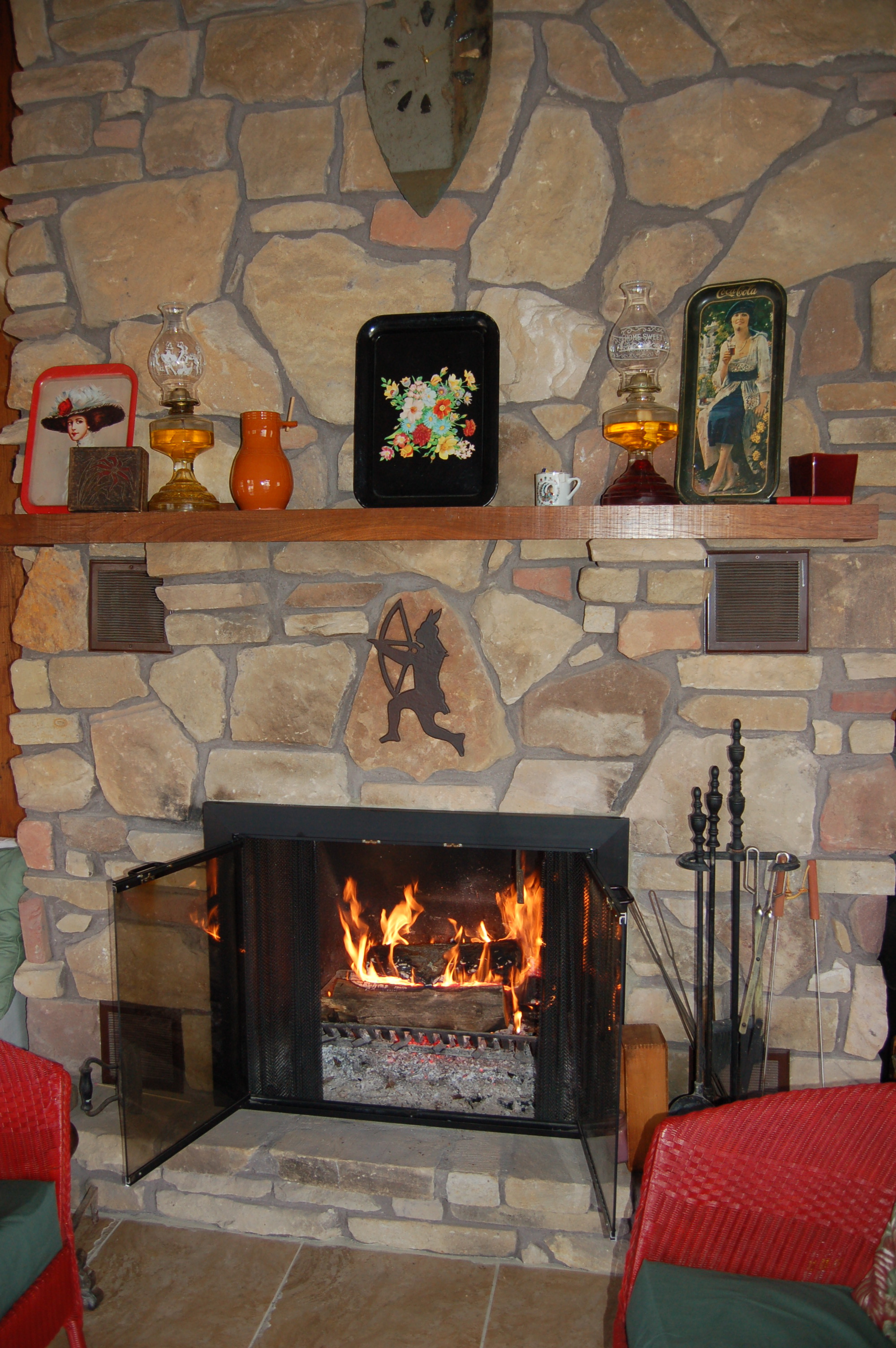
The cottage fireplace.
After the chattering subsides, I usually wait a while before building a fire just to be certain no slackers are bringing up the rear of the annual southerly trek. I need not have worried. They all had gone before the first hard frost.

That said, my first fireplace fire this fall wasn’t at home. That honor went to the main fireplace at our getaway cottage in southeast Ohio. Since the fireplace is faced with Briar Hill sandstone, I didn’t feel far from home, however. The stone is mined in the county where I live.

Like my folks who built the cottage, my wife and I embrace autumn there. Set on the north slope of a steep hillside that runs down to a peaceful flood control lake, a forest of mature hardwoods surrounds the family cottage.

The day we arrived was overcast and damp. A cold front was forecast to push rain through Ohio and gradually cool the temperatures enough to warrant a fire.

The soothing warmth of a fireplace fire adds to the cottage ambiance. I gathered the kindling and well-seasoned logs and with one match, my fireplace season began.

The dancing and laughter of the consuming flames, the invigorating pungency of the burning logs, and penetrating heat mesmerized and inspired me. In an hour the inside temperature of the cottage had increased seven degrees.

There is a satisfying routine in my fireplace ritual. Kindling and logs are assembled on the grate. A match is struck, and a transformation from mostly smoke to flames ensues. The fiery hardwood fuel spontaneously hisses, pops, and showers sparks. It’s a fireplace Fourth of July.

I like to let the fire die down to where the glowing embers throw out more heat than the small blue, orange and yellow flares themselves. That’s when marshmallows toast golden brown.

rainingleavesbybrucestambaugh
As the wind picked up, a golden shower of leaves rained down.
After a few nudges of the shrinking logs with the poker, more cordwood is added, and the process begins all over again. Over time, the accumulation of the glowing coals means less wood to keep the room comfy.

The conditions for this year’s first fireplace fire couldn’t have been better. Just as the flames reached their peak inside, outside the wind gusted, and golden leaves and a drenching cloudburst rained down together.

It’s that time of year again. Home or cottage, I’ll rejoice and be glad in cozying up to the captivating charisma of a fireplace fire.

© Bruce Stambaugh 2013
Loving fall: Let me count the ways

fallinamishcountrybybrucestambaugh
A typical fall scene in Ohio’s Amish country.

By Bruce Stambaugh

Plain and simple, autumn has her way with me. I’m in love with fall for so many reasons. Let me count the ways.

The dazzling leaves mesmerize me. I could sit and ponder the various color patterns and striations of a single leaf for hours on end, but only if my wife isn’t home.

I am captivated by how rapidly the leaves on some trees alter their colors, while the same species nearby stands pat as if it were still July. Still others give up the ghost altogether, and simply shed all of their leaves within hours. It’s both a marvel and a mystery.

mixedresultsbybrucestambaugh
Leaves at various stages of color in Ohio’s Amish country.

Neighbors have a lovely sugar maple shade tree that holds a majority of its leaves verdant well into October. The rest blush blotches of fire engine red as if the tree’s perfect canopy had chicken pox. In the end, all the leaves succumb, temporarily covering the ground below with a warm blanket of red, yellow and orange.

The usually boisterous and bossy Blue Jays fly stealthily in pairs from one hardwood grove to the next. Back and forth they go in pairs, uncommonly silent. Are they storing acorns for the winter ahead? They wouldn’t say.

Not so with a gang of American Robins, long absent from our yard. They suddenly reappeared, chirping and chasing one another from treetop to yard to creek bank like it was spring again. I enjoyed their little entreaty even though, like the Blue Jays, I had no idea what they were up to.

blackcappedchickadeebybrucestambaugh
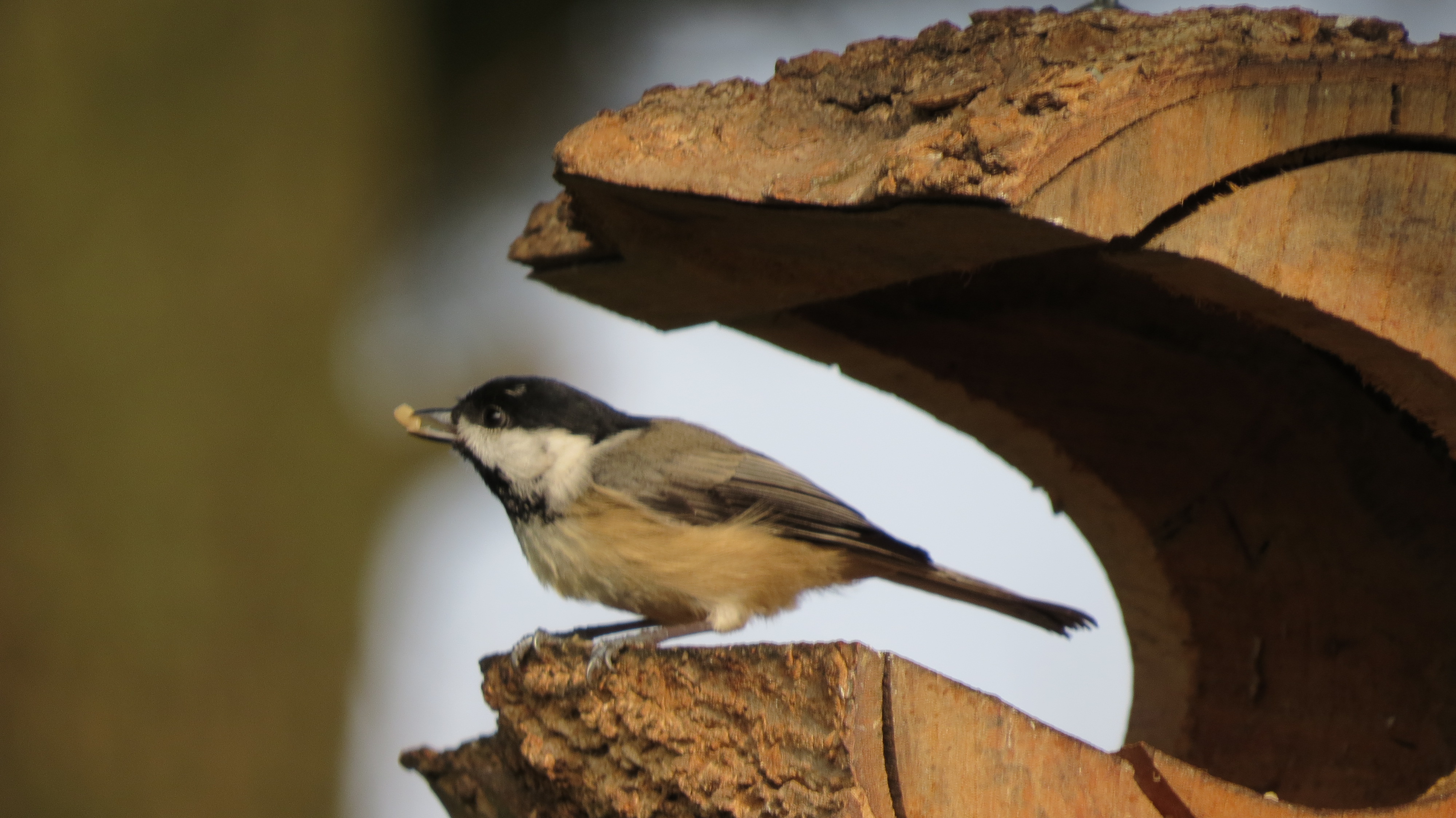
Black-capped Chickadee with sunflower heart.
I’m content to sit on the porch during fall’s balmy weather, watch the American Goldfinches, Black-capped Chickadees and White-breasted Nuthatches devour the expensive sunflower hearts. So doing enhances my daydreamer image.

With windows open on temperate nights, the crickets and the luscious coolness lull me to sleep until my wife pokes me to stop the snoring, or the Screech Owl startles me from the backyard pines. I note both admonitions, roll onto my side and dream on.

The grass is spring green one week and dull and prickly the next. Blessed fall rains ensure the difference.

Fox squirrels and chipmunks scurry to find whatever they can to hoard for the coming cold. I wish they had better memories. Next May dozens of red oak and black walnut saplings will verify the varmints’ mental lapses.

canadageesebybrucestambaugh
Canada Geese on the wing.

Flocks of Canada Geese sail in imbalanced V’s over burnished treetops, cackling their way from one farm pond to the other. Lore says that near-sighted and neurotic Puritans imagined them as witches flying on broom handles. It’s ironic that the religious runaway paranoia inadvertently created a very successful commercial Halloween tradition.

cobwebsbybrucestambaugh
Heavy morn dew reveals overnight cobwebs.
Foggy mornings bring cool moisture that transforms secreted spider’s webs into glistening gems. The stunning natural artistry leaves me speechless, which may be for the best.

A sudden gust blows through the fragile leaves of a poplar tree, cascading a golden shower onto an emerald carpet that had only been raked hours before. Eventually, heavy rains or perhaps an early snow will bring them all down, ringing in the barren times once again. It’s a necessary part of life’s endless cycle.

Fields of corn, once huge waves of tasseled emerald, now show more brittle brown. Corn shocks already dot fields farmed by those who distain machinery.

Hungry birds have devoured all of the bright red berries of the dogwood trees. In protest, the dogwoods’ crimson leaves have one by one fluttered to the ground.

I’m in love with fall. Can you tell?

fieldcornbybrucestambaugh

© Bruce Stambaugh 2013
Autumn is upon us in more ways than one

foggymorningbybrucestambaugh
Foggy morning.

By Bruce Stambaugh

Fall is definitely in the air here in northern Ohio. The telling signs of autumn are everywhere.

A drive through our luscious countryside or a leisurely hike or ride along the Holmes County Trail or just a peek out a window all sing the same song. Fall has arrived.

The leaves have begun to change. Dense morning fog magically gives way to bright, sunny days, only to reappear the next morning to begin the misty process anew. The days cool, warm and cool again in alluring rhythm.

I marvel at nature’s humor.

I bask in the warmth of the morning sun high on a rural road. To the west, residents have to feel socked in. A thick, cottony cloud stretches the full length of the Killbuck Valley. The morning’s colder, heavier air spreads the wet blanket over the precious marsh teeming with its mix of migrants and year-round residents.

foginthevalleybrucestambaugh
Fog in the valley.

Fields of golden rod and patches of wild daisies bring a warming brilliance to the once verdant landscapes. The lessening sunlight and cooler temperatures tell the foliage it’s time to morph into the secreted richer colors. Once emerald stalks fade fast from a sickly yellow to a dormant brown even before the first frost of the season.

Wildlife sense nature’s urgings, too. Small flocks of Eastern Bluebirds, still flashing their azure brilliance, congregate, searching for both sustenance and winter cover. A few Cedar Waxwings still buzz from the tops of their favorite playgrounds, while the chatty Chimney Swifts have already checked out for the season.

changingleavesbybrucestambaugh
Changing leaves.
Despite having access to calendars and electronic device reminders, humankind seems to be in denial. Men and women clad themselves in t-shirts and shorts as if it were still July. Are they naïve or hopeful that fall will imitate summer? I’ll give them the benefit of the doubt.

No matter my activity, I dress in layers or carry extra apparel with me. I suspect it’s more me than the weather. I’ve noticed that the older I get the colder the days seem, even though the temperatures remain near their seasonal norms.

Further reflecting tells me that I am entering the October of my life as well. Transitioning from the long summer of busy workdays mingled with family meals and overlapping activities have evaporated like those morning mists. My good wife seems to have made the adjustments better than me.

waningmoonbybrucestambaugh
The waning Harvest Moon.
I enjoyed my career as an educator. In the 30 years of serving youngsters and cajoling adults, I learned a lot. I embraced my second career in marketing and writing with equal zeal.

Now reality is finally setting in for me. My parents are gone. My wife’s parents are gone. Friends from the Greatest Generation are fading fast, not to mention acquaintances from my own generation. I must ready to face the fall.

This certain transition hasn’t been easy. At times I have emotionally struggled with entering life’s October time. Yet facts are facts. My diminished hearing, loss of nimbleness and achy knees tell me that my autumn has arrived, too.

However long I have, I want to live life out with zest, energy and productivity. Fall is in the air. The harvest full moon is waning.

Whatever your age, together let us greet each day with a song and a smile. Let us celebrate the goodness that surrounds us regardless of whatever circumstances or personal season we encounter.

© Bruce Stambaugh 2013

Walking with the grandsons generates more than exercise

davisandevanbybrucestambaugh
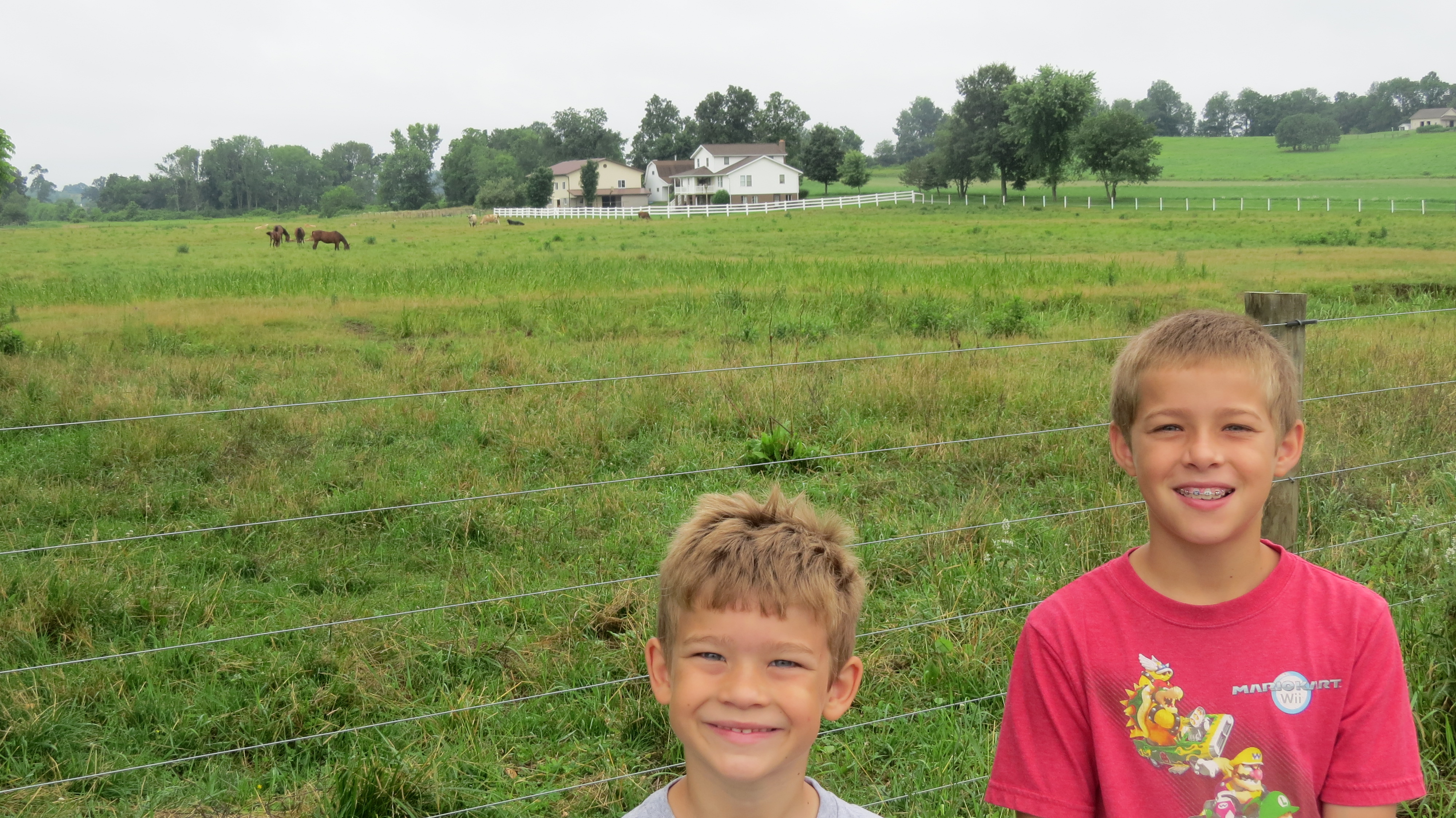
Grandsons Davis and Evan posed for a photo along the way.

By Bruce Stambaugh

Unlike their little sister, my grandsons, Evan, age nine, and Davis, now seven, wake early. No matter how late they stay up the previous night, they always rise with the cows.

On a recent visit from their city-situated home in Virginia to our Ohio rural one, I found the boys quietly playing in the living room as I prepared for my morning stroll.

I asked them if they wanted to walk with me. Davis said he would. Evan said not. So Davis changed his mind. As I headed for the front door, they both reevaluated the situation, likely based on previous walks with Poppy. They joined me after all.

Both are smart, observant boys, full of vim and vinegar. At their age, you never know what’s going to pop into their brains and tumble out of their mouths. They know that the saunter down the chip and sealed country road can resemble an amble in a zoo, with both domestic and wild animals appearing at various spots along the way.

checkingitoutbybrucestambaugh
The boys carefully checked out the dead Screech Owl along the roadway.
Practicing good safety habits, we walked single file. I took the lead on the initial stretch of the stroll along our busy county road. Most motorized vehicles seem to seldom adhere to the posted 45 m.p.h. speed limit.

That is particularly true of cars, vans and trucks heading north toward us down what we affectionately call the Number Ten Hill ski slope. Fortunately, in the quiet countryside, you can generally hear the acceleration approaching well before you see it. We stepped to the side until the traffic passed.

As we did so, we discovered a dead Screech Owl in the neighbor’s grass. It most likely had been hit overnight as it hunted for food. On the way home, I picked up the bird, placed it in a plastic sack and put it in the freezer until delivery could be made to the Wilderness Center in Wilmot where it would be preserved as a hands on educational tool for children like my grandchildren.

purplemartinsbybrucestambaugh
A family of Purple Martins perched high on the snag of a dead decidious tree at the beginning of our walk
We turned east on the township road and soon spied a family of Purple Martins perched high in the limbs of an old snag. Upon our arrival to their station, the gregarious birds greeted us by circling and chattering overhead.

Boys being boys, all things gross always intrigue them. The flattened brownish-green plops of horse manure left on the roadway drew their attention. Davis, the more scientific one of the two, wanted specific details of how it got there. I encouraged him to be patient, that maybe he would learn first-hand how that particular organic operation functioned.

At one homestead, I praised a meticulously manicured vegetable garden. Apparently too tame, the exploring boys barely gave it a glance.

wagonloadofwoodbybrucestambaugh
Always the exacting young man, Evan had to point to the wagonload of firewood to be sure that was the wood that would be delivered to the house.

Further down the road at our neighbor’s farm, I showed them the wagonload of chopped firewood that awaited delivery to our house. Their eyebrows shot up at the bulging cargo.

The mention of home seemed to trigger the fact that we had walked far enough, though we still had a quarter of a mile to go to complete my usual route. Not wanting to disturb the morning’s peacefulness, I relented. Knowing that breakfast awaited, the boys kept a steadier pace on the return trip, virtually ignoring the chestnut mares and Holstein heifers.

Though a horse drawn buggy did pass us, Davis must have forgotten his question, negating having to describe the unappetizing depositing process to their admiring sister. She’s a dainty enough eater as it is.

This slideshow requires JavaScript.

© Bruce Stambaugh 2013
Birds and birders: Two of a kind

boardwalkentrancebybrucestambaugh
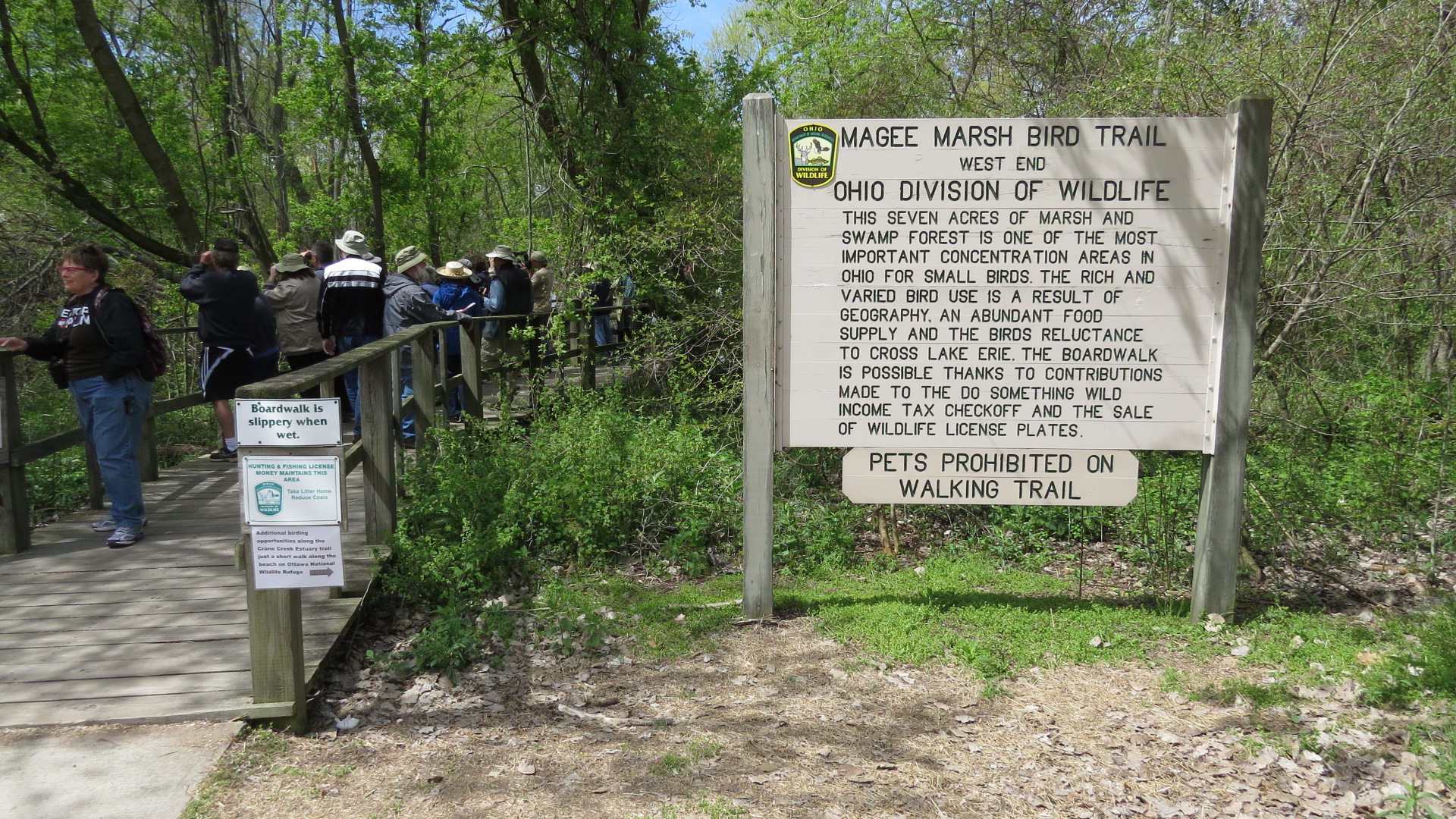
The west entrance to the Magee Marsh boardwalk is a great place to begin the birding.

By Bruce Stambaugh
Birds and birders have a lot in common. This thought struck me on my latest trip to northwest Ohio’s birding mecca, Magee Marsh Wildlife Area.

Billed as the Greatest Week in American Birding, the event coincided with the peak of the spring warbler migration. Warblers, and other migrating birds, use Ohio’s airspace as their launching pad to their northern breeding grounds.

Before the birds cross Lake Erie, they tend to rest along its shores. There they replenish their strength by devouring insects that flit around the budding and blooming deciduous trees, shrubs and wildflowers. Shorebirds scour the marshes and shores for their nourishment.

woodcockbybrucestambaugh
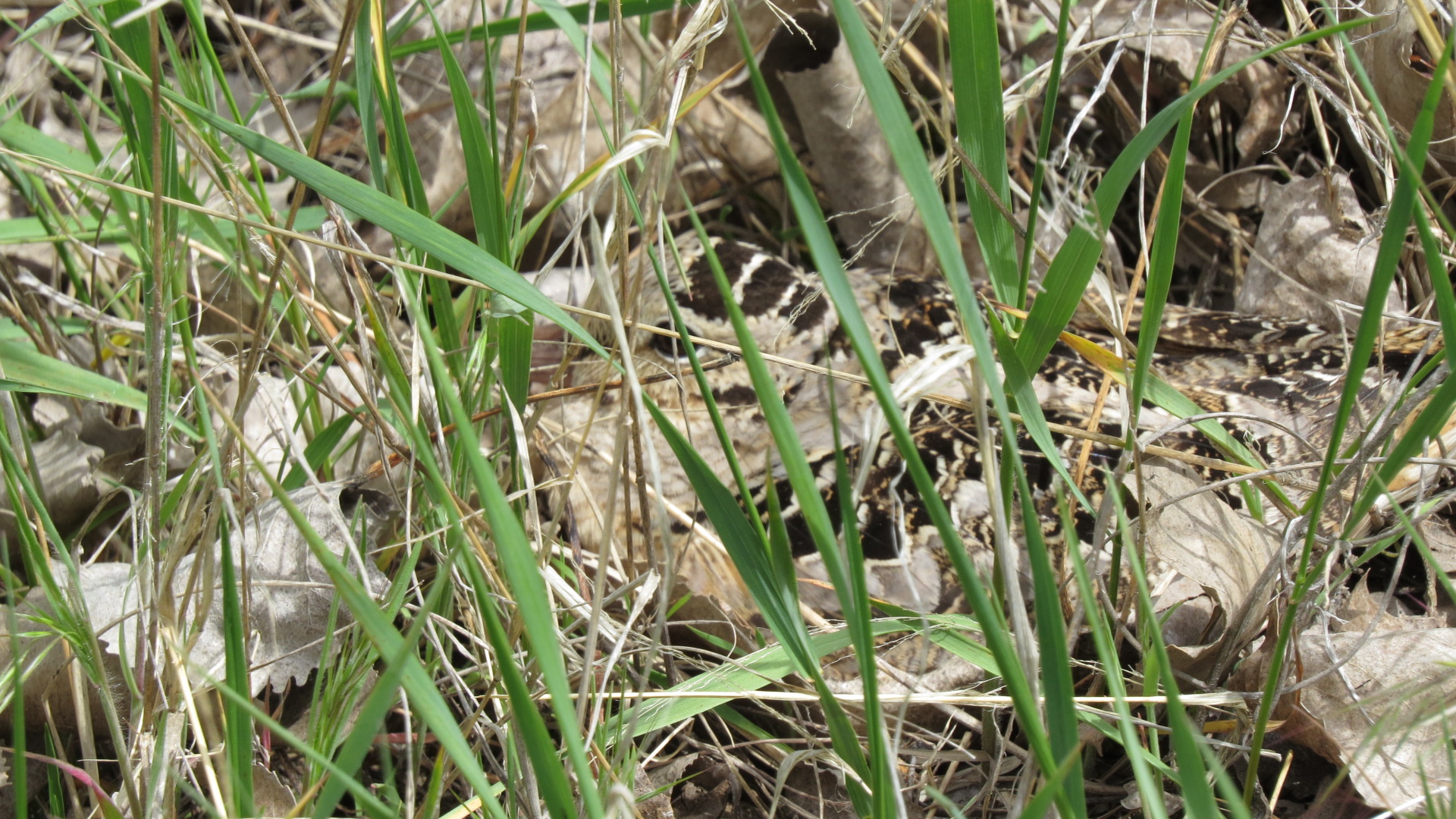
This American Woodcock chose the median of the parking lot to make her nest.

As an amateur birder, I enjoy watching backyard birds and observing passers through with equal zeal. But if I want to see a multitude of colorful migrating birds packed into one location, Magee Marsh is the place to go.

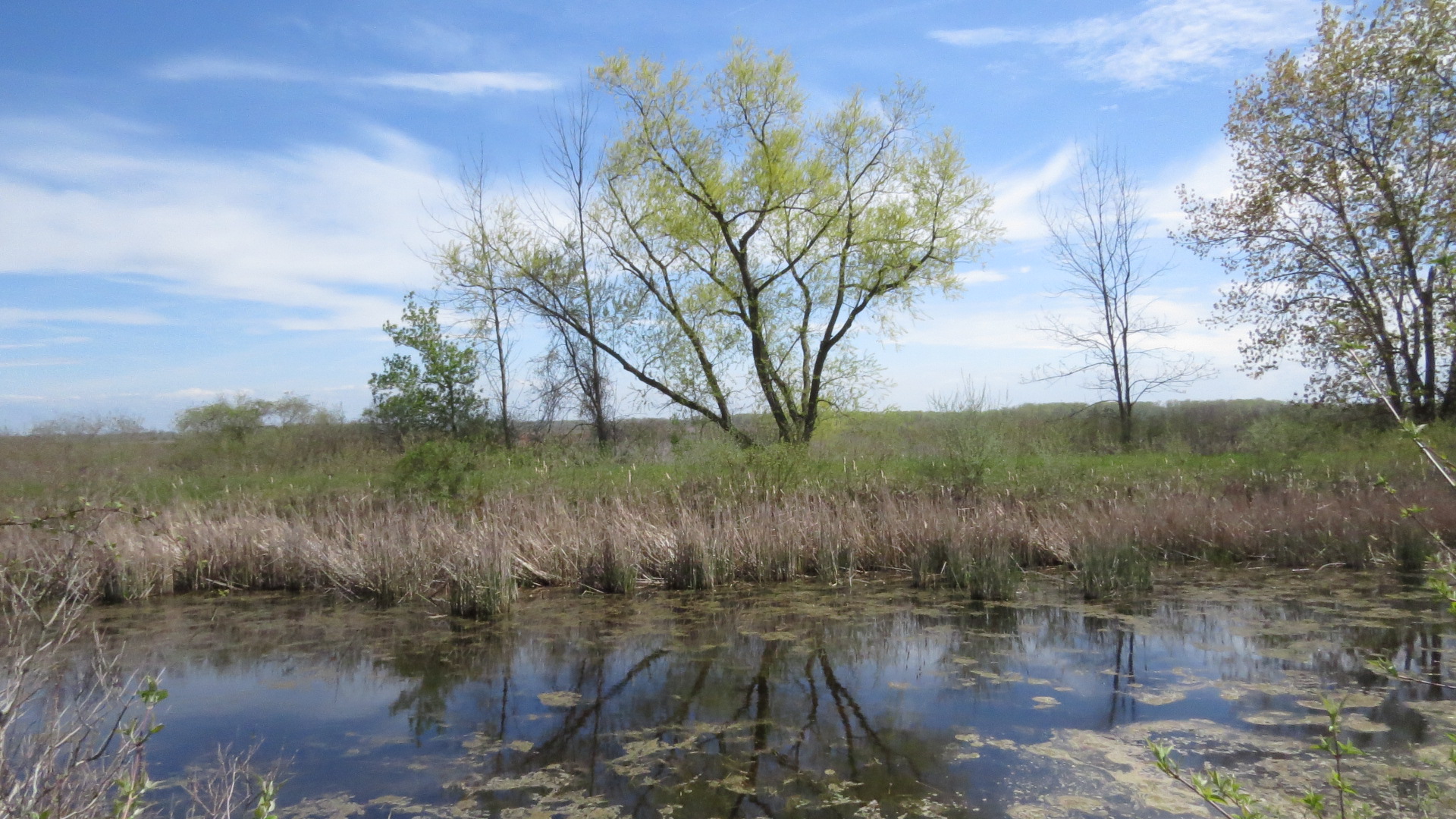
The marsh and its 2,200 surrounding acres serve as a sprawling wildlife sanctuary with varied habitat types, including estuaries, marshes, scrub lands, woodlots, rocky areas, beaches and of course the lake itself. The area also provides sportsmen with seasonal controlled hunting and fishing.

birdhabitatsbybrucestambaugh
Magee Marsh has many habitats that attract several species of migrating birds.

During bird migration season, the only shooting of birds permitted is with cameras. Believe me, plenty of shots are fired in search of the perfect picture of the incredible songbirds, shorebirds, and birds of prey.

In my meandering around the boardwalk, trails and beach, I discovered something that should have been obvious. Birders have a lot in common with the birds they watch.

boardwalkbirdersbybrucestambaugh
Birders checked out warbler on the boardwalk at Magee Marsh

Like their feathered friends, birders come in all shapes, sizes and ages. Just like the birds, birders sport different hues and clothe themselves in a variety of colors, including camouflage, worn more to soothe the birds than hide from predators.

There are other comparisons, too. Some birders maneuver and forage in solitude for their targets. Others travel in organized groups. Most birders are quiet, but some let loose with an effusive chatter when a flashy warbler or rare bird is spotted.

When a shorebird captures a fish, it often finds itself quickly surrounded by others hoping to also steal a bite. When a birder discovers a coveted find, others gather around hoping to capture the image through their spotting scopes, binoculars, or cameras. Those without scopes are graciously invited to better view the often-concealed bird. Birders are genuinely kind people.

youngbirdersbybrucestambaugh
A young family took a break from their birding at Magee.
When a bird is located along the boardwalk at Magee, birders bob and weave, stretch and stoop to get just the right viewing angle. Birds do the same in search of food or checking out habitat. Most birders go in search of birds, like the many warblers that flit from limb to limb decreasing the insect population. Others sit and wait for the birds to come to them, like a Great Blue Heron patiently waiting for a fish to spear.

Camaraderie and sharing are normal in the sport of birding. Staunch birders make life lists, month lists, day lists, yard lists,

capemaywarblerbybrucestambaugh
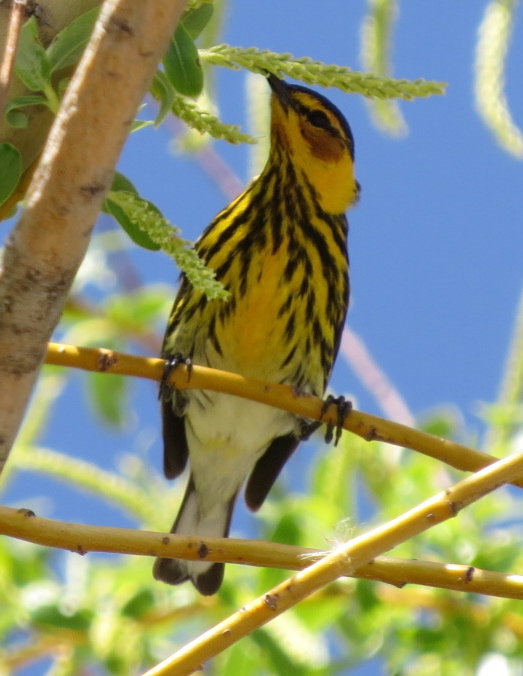
This Cape May Warbler dined on insects before heading across the lake.
state lists, annual lists, and just about any other kind of list you might imagine. That’s how serious they take this popular sport.

If someone finds a bird they can’t identify, a more expert birder gladly assists in teaching how to properly confirm just what species it is. Teaching and learning are just as important as appreciating the birds and their habitats.

Perhaps that is why birding is one of the most popular sports in the world. During the Biggest Week in American Birding, global citizens flock to northwest Ohio in hopes of seeing a special species.

To hear the various lyrical birdsongs and behold the flashy mating plumages first hand is truly a treat. To see the smiles and satisfaction on the faces of the elated birders is equally rewarding.

happybirdersbybrucestambaugh
Birders tend to be pleasant, engaging people.

© Bruce Stambaugh 2013
The little things of spring are spring

springinholmescoohiobybrucestambaugh
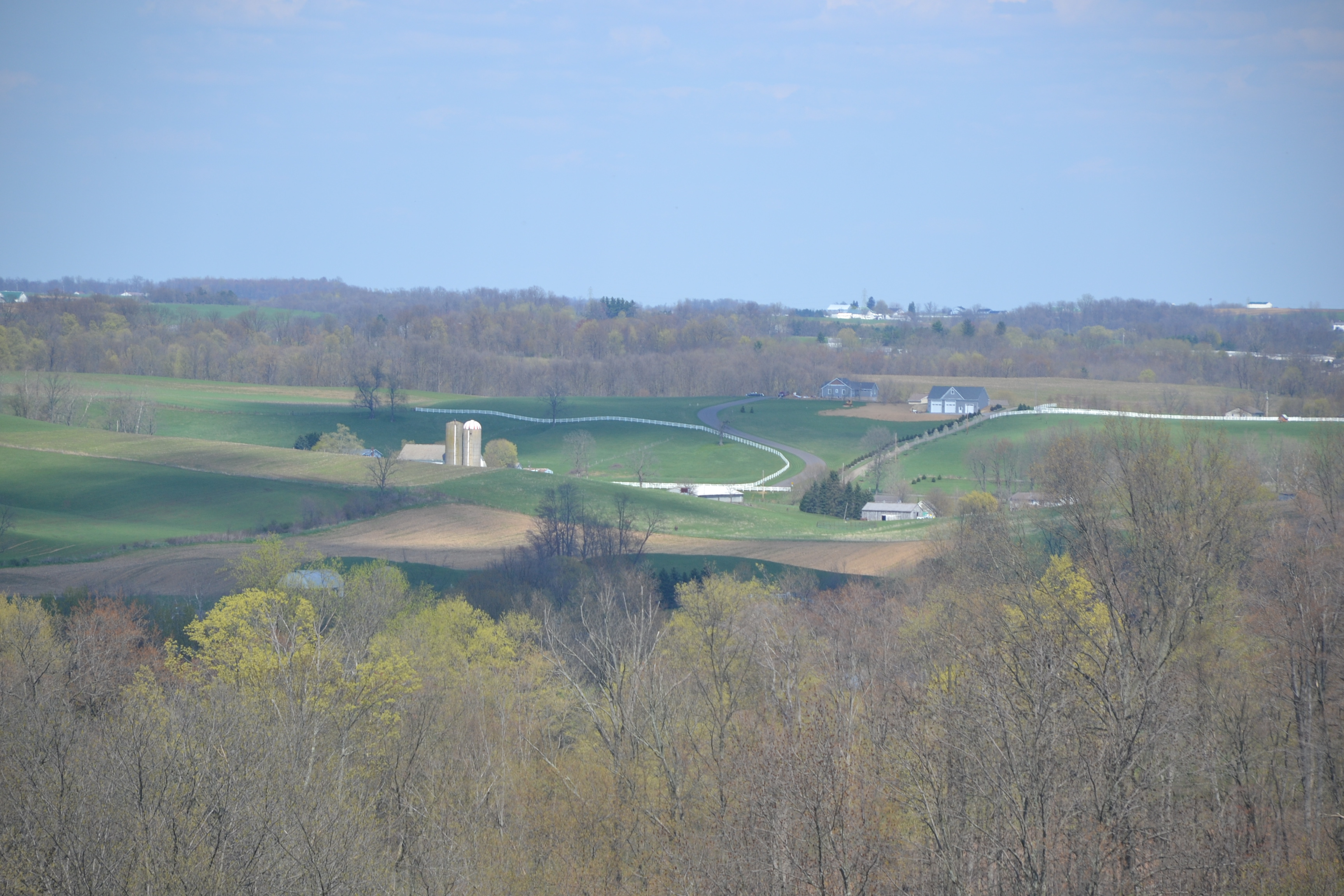
After a long, chilly and wet winter and early spring, true spring has arrived in Ohio’s Amish country.

By Bruce Stambaugh

Finally, it really is spring! I was beginning to think we would never receive its blessings.

I for one am certainly glad to embrace May. In Ohio, it’s the calendar’s conduit between a long cold, wet winter and early spring, like we have experienced this year, and summer’s usual balmy offerings.

Springtime has much to offer nature lovers. She is especially mesmerizing. Spring lulls you to sleep with her vivaciousness, her lusty beauty and verdant perfumes.

unfurlingleavesbybrucestambaugh
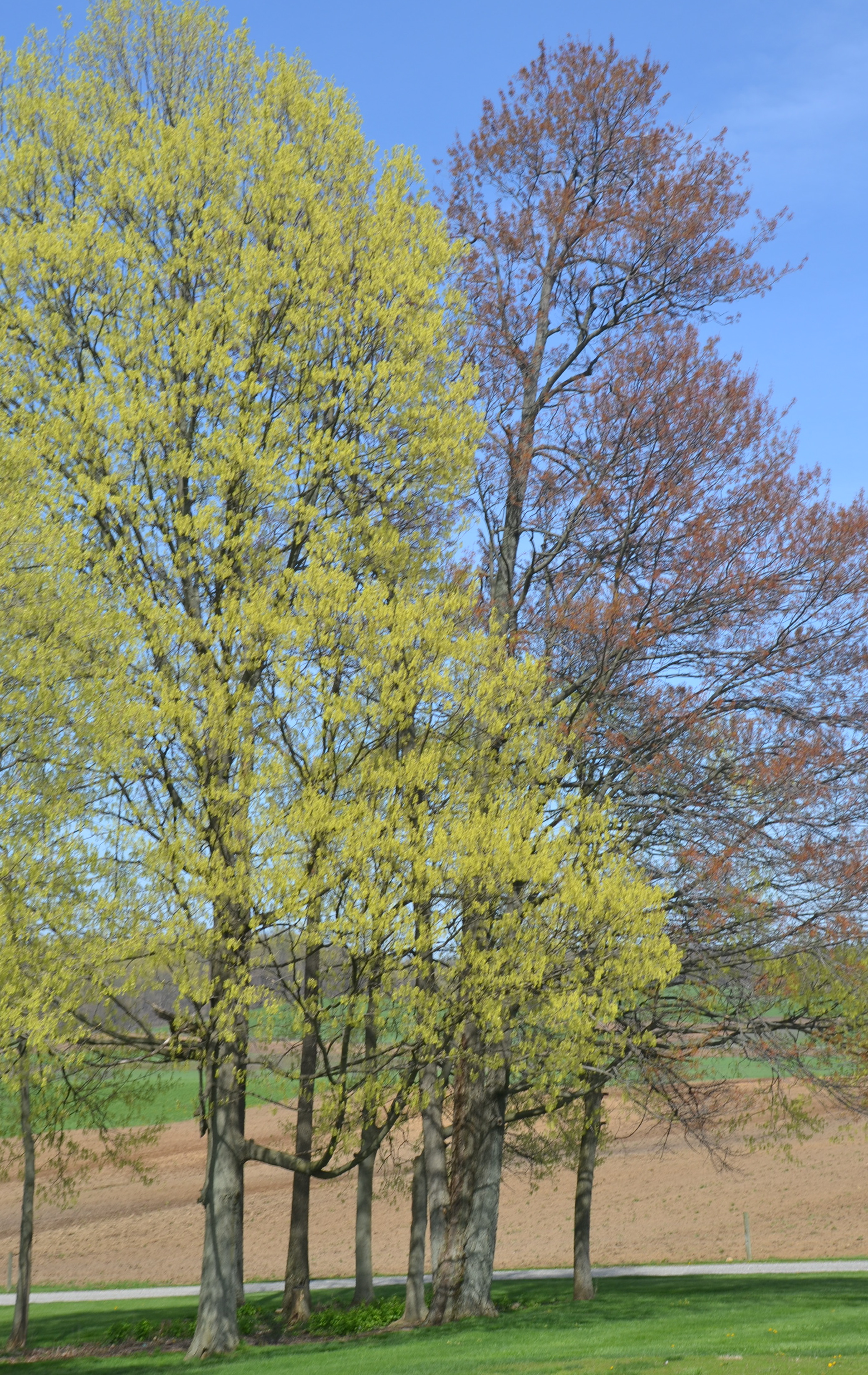
Once the weather warmed and the days brightened, the leaves of the deciduous trees quickly unfurled.
However, you have to be alert, or you could miss a few of her best offerings. In our hustle and bustle to catch up to what we think is important we may miss her most amiable samplings.

May is one of the main accomplices to this annual transition from hibernation to horticulture. The month has a lot to offer.
We have to pay attention though to absorb it all because the transforming processes evolve so quickly. One day we notice the maple tree buds swelling. The next, it seems, the full canopy has unfurled. How and when did that happen?

To grasp the full measure of spring requires the honing of all of our senses. For those poor souls with pollen or grass allergies, no reminder is likely needed.

Spring, and especially May, is anything but quiet. The spring peepers are the first to break loose. Their noisy outbursts are their celebrative acknowledgements that spring has arrived. The amphibious cacophony is music to our ears.

wildvioletsbybrucestambaugh
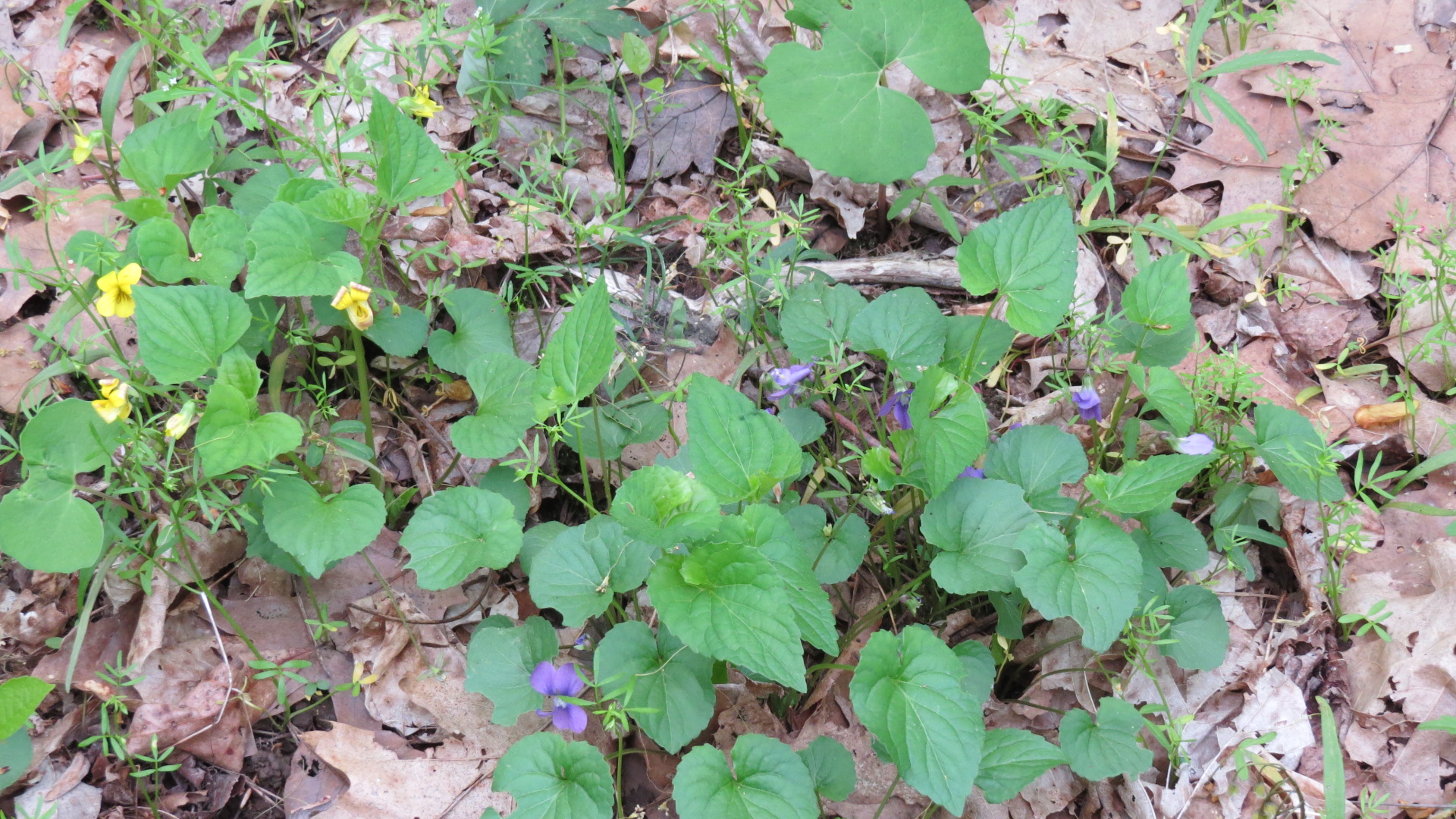
Wild yellow and purple violets are in full bloom now in Ohio’s woodlots.

Just one sunny spring day beckons buttery coltsfoot and dainty spring beauties. They brighten dusky roadsides and carpet forest floors and spacious yard-lots alike. Yellow and purple wild violets and lacy trilliums soon follow in all their grace and glory.

Clumpy lawns have already been mowed, evening the emerald patchwork from one neighborhood to the next until the prodigious dandelions appear and reappear. Try as you might, there is no obliterating them. Overnight, their yellowy blooms turn to silky seedpods, which succumb to certain spring gales and find a home just around the corner.

malebaltimoreoriolebybrucestambaugh
The beautiful sights and calls of the Baltimore Orioles fill the woods and neighborhoods in Ohio’s Amish country in and around Millersburg, OH.
For avid bird lovers, this is prime time for migrating birds, especially songbirds. A whole host of magnificently colored wood warblers, Golden-winged, Yellow-rump, and Black and White among them, pass through our area on their way north. A few, like the convivial Yellow Warbler and gregarious Baltimore Orioles, will stay to nest and brighten the days with their vigorous choruses.

American Robins have already chosen their first nesting spots, and not always in the choicest locations. Mud-based nests on door wreaths or porch lights are only temporary inconveniences to those who enjoy their early morning wake up calls without setting the alarm clock.

The sooty Chimney Swifts have returned and chatter as they snatch dinner with spring’s first batch of insects. American Goldfinches seemingly changed to their day glow yellow and contrasting black overnight.

magnoliainbloombybrucestambaugh
For once the magnolias bloomed without fear of a killing frost in northern OH.
Native shrubs and ornamental flowering trees light up the landscape with their rainbow of colors. One day the neighbor’s giant Magnolia is bursting in pink bloom. The next, her Cinderella gown morphs into a colorful comforter spread on the ground beneath.

Just like a fast moving thunderstorm, the rubies of spring don’t last long. Will we grant ourselves the privilege to gather them in?

It pays huge personal dividends to be alert and watch as spring magnifies the hills and hollows with sights and sounds and fragrances for all to behold. Spring is here. Let’s enjoy it before it’s gone.

© Bruce Stambaugh 2013

Bluebirds make me anything but blue

bluebirdsandfishbybrucestambaugh
Eastern Bluebirds take turns getting a drink at the little waterfalls of the backyard garden pond with an orange audience.

By Bruce Stambaugh

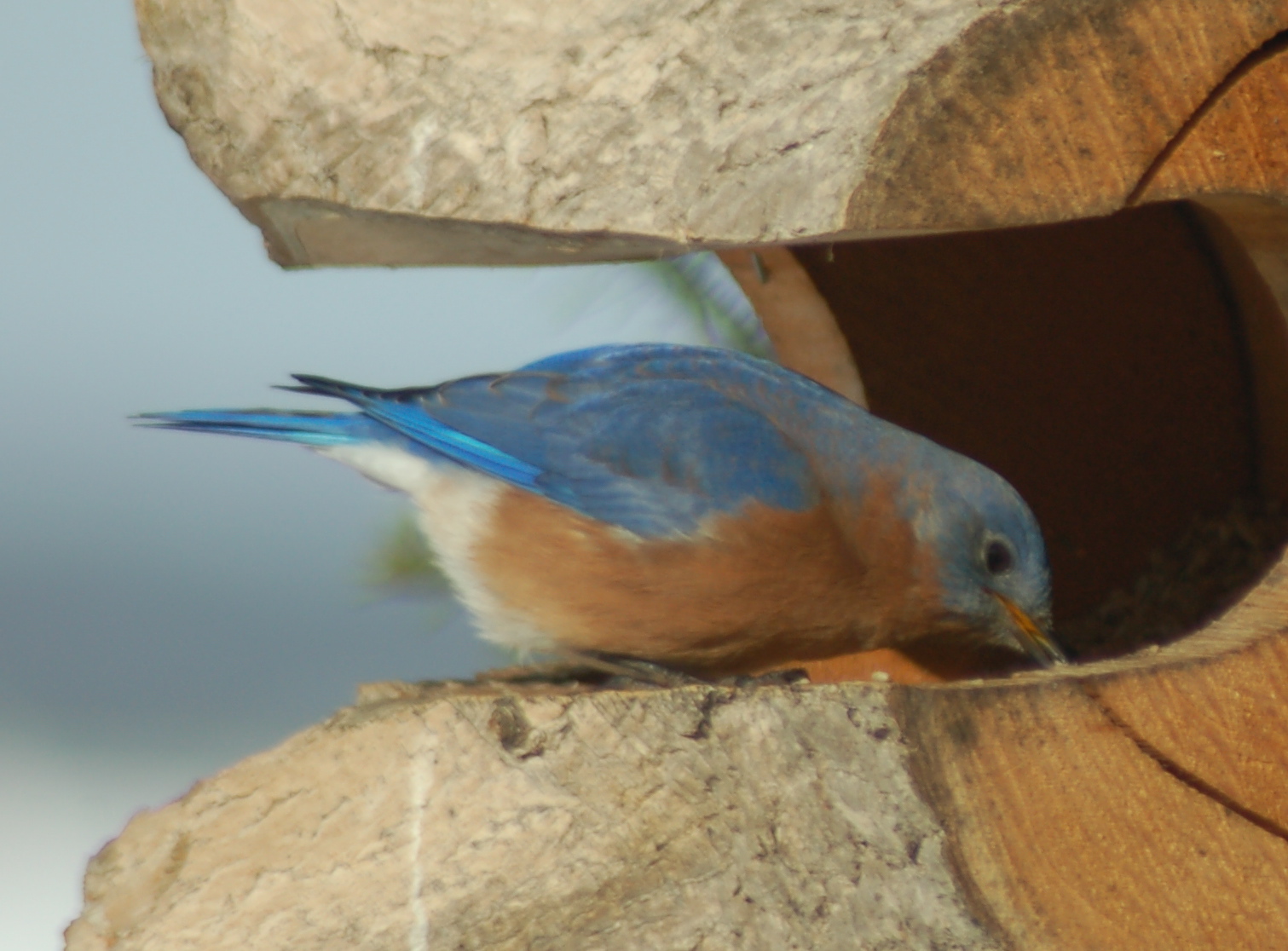
Out of the corner of my eye, I caught a familiar blue flash. A male Eastern Bluebird had landed awkwardly on the wooden framed feeder that held peanut butter suet cakes.

That same scene had been repeated in my backyard many times over the years. Intended for woodpeckers, chickadees, nuthatches and titmice, Eastern Bluebirds and other avian species have also enjoyed the rich protein offerings.

The first time I observed the bluebirds attack the suet, I took special notice. Eastern Bluebirds dine on protein-rich insects and their larvae. Suet apparently helped fill the void when insects, or berries for that matter, were unavailable in Ohio’s cold season, which this year has lasted much too long.

maleeasternbluebirdsbybrucestambaugh
Even in the winter, the colors of male Eastern Bluebirds radiate.

In the springtime, the male bluebirds burst into an iridescent, radiant blue that glows in the morning sun. They are in their flamboyant mating plumage, brilliant on head, back, wings and tail feathers. Their orange breasts contrast nicely with the showy blue. A splash of white on their wing shoulders and a snowy fringe along the birds’ bottom feathers nicely accent the flashy ensemble.

femaleeasternbluebirdbybrucestambaugh
The female Eastern Bluebirds have a beauty all their own.
Even the more subdued and shyer females could hold their own in a bird beauty contest. Their dullness, of course, is for natural protection from predators. Bluebirds are beautiful to say the least, and their cheery chatter and lyrical calls only enhance their artistry.

Bluebirds are not designed to cling to a typical suet feeder the way woodpeckers do by bracing themselves with their firm tail feathers. I marvel every time I see the bluebirds lunching at the suet.

The bluebirds often land atop the wood-framed feeder with wire mesh sides designed for easy access to the nutritious food. They

bluebirdonsuetbybrucestambaugh
The bluebirds perch as best they can to steal a bit of peanut butter suet.
perilously cling to the sides or bottom brace of the feeder, flapping their wings wildly as they peck at the soft suet. Since they keep returning over and over, day after day, to the suet, I have to assume that they aren’t expending more energy than is gained in the tricky process.

As their main course, the bluebirds and other songbirds regularly down chipped sunflower hearts that are offered at other feeders. They apparently use the peanut butter suet as dessert, and then wash it all down with occasional visits to the little waterfalls of the garden pond.

A half dozen pairs of Eastern Bluebirds frequent my feeders, shrubs and trees in the yard. If they choose to inhabit some of the bluebird houses erected around the property, I rejoice and stay vigilant. It’s a never-ending battle with the pesky House Sparrows to keep the bluebirds nesting.

bluebirdnestbybrucestambaugh
The nests built by Eastern Bluebirds are usually made of soft grasses or pine straw, like this nest in progress.
In the spring, I check the boxes regularly. If I find a finely structured nest of soft grasses and pine needles, I know the bluebirds have won the battle. If the nest is disheveled and constructed with a junkyard of materials, I pitch it in hopes of discouraging the House Sparrows.

Often the bluebirds will perch in the large sugar maple in our backyard above the dangling suet feeder. After just a few bites of suet on this chilly April morn, this male bluebird instead took wing and swooped low across the wide stretch of open, freshly plowed farm fields, making a beeline for my Amish neighbors.

Were they using a different feed? Was the bluebird nesting in one of their boxes? The answers were really insignificant. What did matter was that the bluebirds were thriving for all to enjoy.

Watching that bluebird arch across those fields in the morning sunshine couldn’t have made me happier.

© Bruce Stambaugh 2013

Ohio Society of Bluebirds conference sets attendance record

thirstybluebirdsbybrucestambaugh
Eastern Bluebirds frequented a backyard water feature during a cold spell in Ohio.

By Bruce Stambaugh

Marcella Hawkins of Glenmont, Ohio has a passion for Eastern Bluebirds. That passion became productively evident Feb. 23 at the Ohio Society of Bluebirds (OSB) annual conference in Wooster, Ohio. Hawkins is the executive director of OSB.

From the record number of people who attended the conference held Feb. 23, Hawkins is not alone. More than 300 bluebird enthusiasts participated in the all day event, held at the Shisler Conference Center on the campus of the Ohio Agricultural and Research Development Center.

doorprizesbybrucestambaugh
Adrienne Hopson-Gaston of Mansfield, Ohio surveyed the door prizes available at the Ohio Bluebird Society conference.
The day was filled with exhibits, vendors, speakers and presentations, with only a few breaks. Experts and amateurs alike shared their research and experiences regarding some aspect of bluebirds, their predators and habitats.

Darlene Sillick, a conservationist and birder from Powell, Ohio, related her years of experiences with the Ohio Wildlife Center with owls. She explained that owls could turn their head 270 degrees because they have 14 vertebrate, twice the number of humans.

Sillick said owls depend on their keen sense of hearing and large eyes to track prey. She shared that it is the force of the owl’s talons that kills its prey.

Sillick introduced Matthew Wiese of Dublin, Ohio. Wiese, 17, did a nest box project on Safari Golf Club for his Eagle Scout badge. Wiese said he put in a total of 319 volunteer hours in planning, mapping and checking the numerous bluebird boxes he installed. He also learned to band the hatchlings in several of the boxes.

jasonmartinbybrucestambaugh
Jason Martin, head of Cornell’s Nest Watch project, answered questions from participants.
Roger Downer of Wooster, a retired entomologist from the OARDC, gave a presentation on moths. He said the important connection between moths and bluebirds are the caterpillars that serve as a food source for the bluebirds. Those that survive become moths, which other birds also use as food.

Chuck Jakubchak of Strongsville, Ohio gave a pep rally style presentation about how birds know when to migrate. In the case of Eastern Bluebirds, he proposed three scenarios. He said studies show that some bluebirds migrate to the southeastern states with habitat similar to what they have in Ohio. Others only partially migrate, going to warmer but closer states where they compete for food with non-migrating birds.

leucisticredtailedhawkbybrucestambaugh
Volunteers at the Medina Raptor Center displayed several species of injured birds at the conference, including this leucistic Red-tailed Hawk.
Jakubchak said the bluebirds seen in Ohio during the winter are non-migrating.

“They stay put, perhaps because they have had a successful breeding history,” he said. “But we really don’t know for sure, other than the fact that they choose to stay.”

Jason Martin of the Cornell Lab of Ornithology in Ithaca, N.Y., spoke on the importance of documenting Eastern Bluebirds by monitoring their nesting boxes. He invited participants to join his project, Nest Watch, by keeping track of what is happening inside the nesting boxes.

“Inside the boxes,” Martin said, “is where the action is.” The Nest Watch project began in 1960 and has progressed to online reporting of nesting activity from around the country.

gregmillerbybrucestambaugh
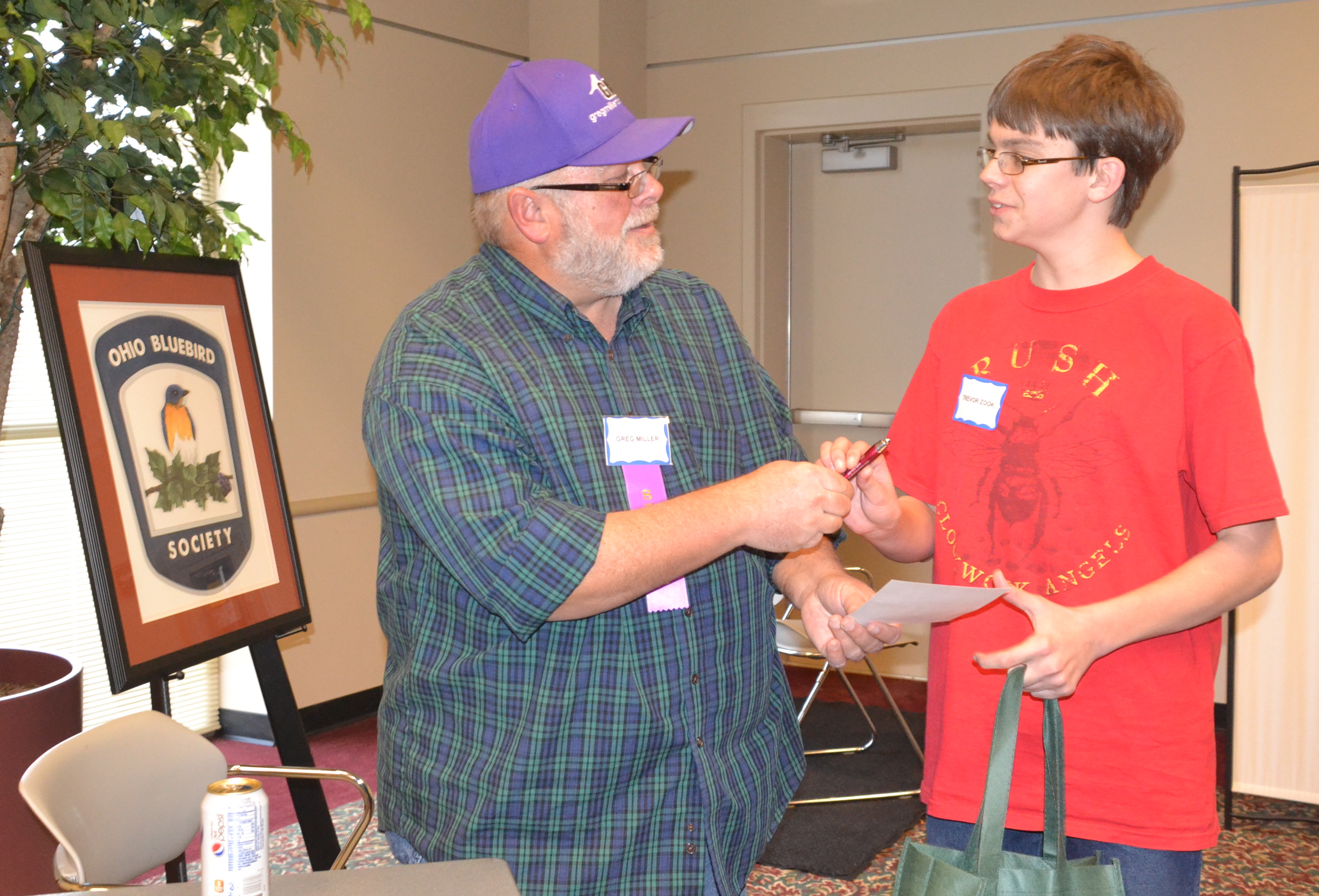
Noted birder Greg Miller from Sugarcreek, Ohio gave an autograph to Trevor Zook of Mansfield, Ohio.

Greg Miller of Sugarcreek, Ohio closed out the session with a spellbinding account of his Big Year experience. He especially focused on the time he spent as the bird consultant on the set of the movie, The Big Year. He told personal accounts of meeting the movie producers and stars, including Jack Black, who played Miller in the movie.

Allen and Nina Bower of Britton, Mich., received OBS’s Blue Feather Award for their effort in spreading the importance of proper nest boxes for Eastern Bluebirds. The group’s Wildlife Conservation Award went to Charlie Zepp of Dublin. Zepp has built more than 6,000 bluebird boxes with wood he gathered from refuge bins at construction sites.

After announcing several winners of donated raffle prizes, Hawkins thanked the volunteers and sponsors of the conference, which was free of charge for those who had preregistered.

© Bruce Stambaugh 2013

Bay Photos by Donna

Wildlife Photos From The Chesapeake Bay Region

ROAD TO NARA

Culture and Communities at the Heart Of India

K Hertzler Art

Artist and nature journalist in the Shenandoah Valley of Virginia.

Maria Vincent Robinson

Photographer Of Life and moments

Gabriele Romano

Personal Blog

Jennifer Murch

Art is the only way to run away without leaving home. -Twyla Tharp

Roadkill Crossing

Writing generated from the rural life

ANJOLI ROY

writer. teacher. podcast cohost.

Casa Alterna

El amor cruza fronteras / Love crosses borders