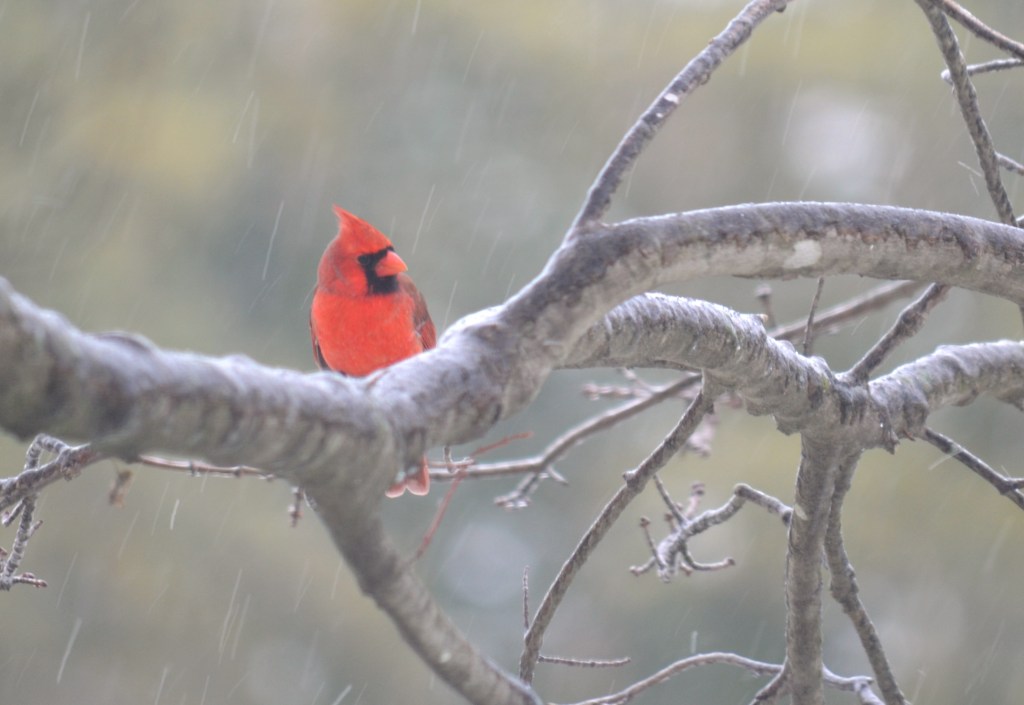
May the Christmas Spirit of Love, Joy, Peace, and Hope fill you this sacred day.
Christmas Blessings to you and your family.
© Bruce Stambaugh 2025
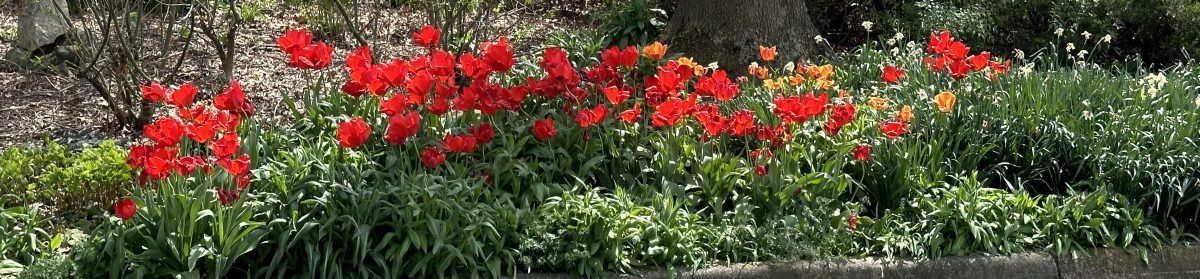
May the Christmas Spirit of Love, Joy, Peace, and Hope fill you this sacred day.
Christmas Blessings to you and your family.
© Bruce Stambaugh 2025

Feeding the birds is one of our favorite winter pastimes. My wife and I enjoy watching college sports, but the colorful birds take precedence over the TV.
Feeding the birds provides us with plenty of entertainment from fall to spring, and we only have to look out our windows. We have done so for all of our nearly 55 years of marriage. We fed birds for the 48 years we lived in Holmes County, Ohio.
Our bird-feeding habit continued when we retired to Virginia’s Shenandoah Valley eight years ago to be close to our daughter’s family. But things were a little different. In Ohio, we lived in the country where natural bird habitats surrounded our property.
Here in Virginia, we live in a suburban setting, just outside the city limits of Harrisonburg. The habitat for birds is much different.
Like many housing developments, homes are close together. Fortunately, our backyard neighbors have mature stands of Colorado Blue Spruce and other evergreens. Plus, we have trees and shrubs around our home that provide cover for the birds.
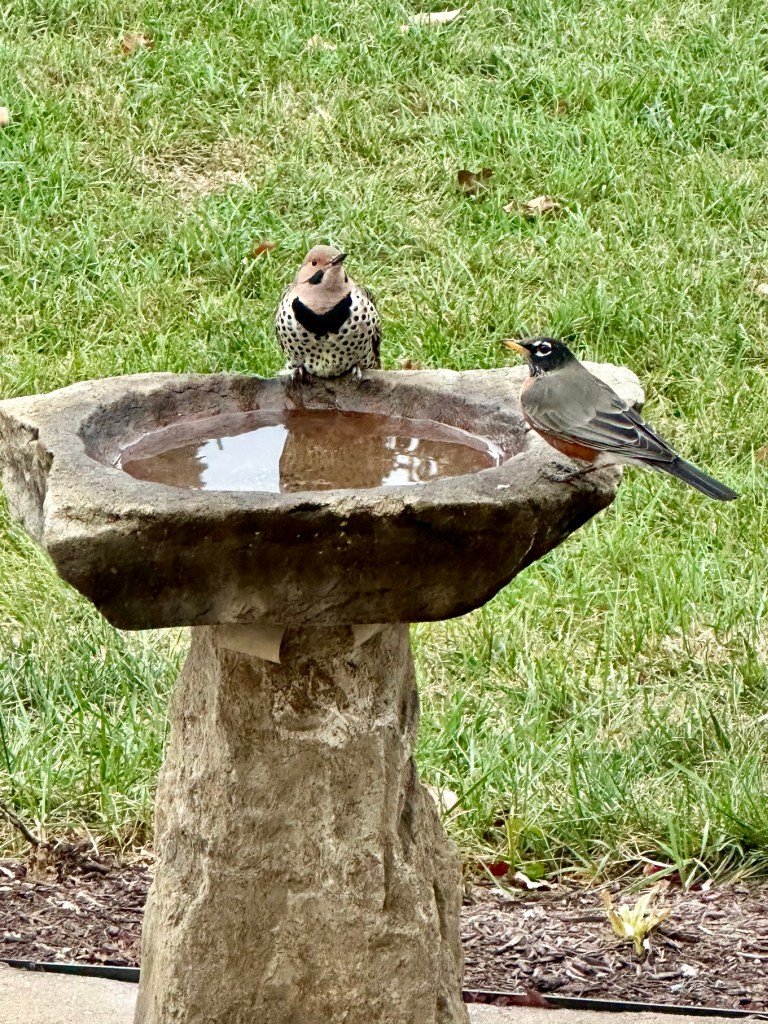
Besides food and shelter, our avian friends need water, too. So, I added three birdbaths to provide drinking and bathing for the birds. Of course, it’s fun to watch them bathe and drink. It’s amazing how the different species drink.
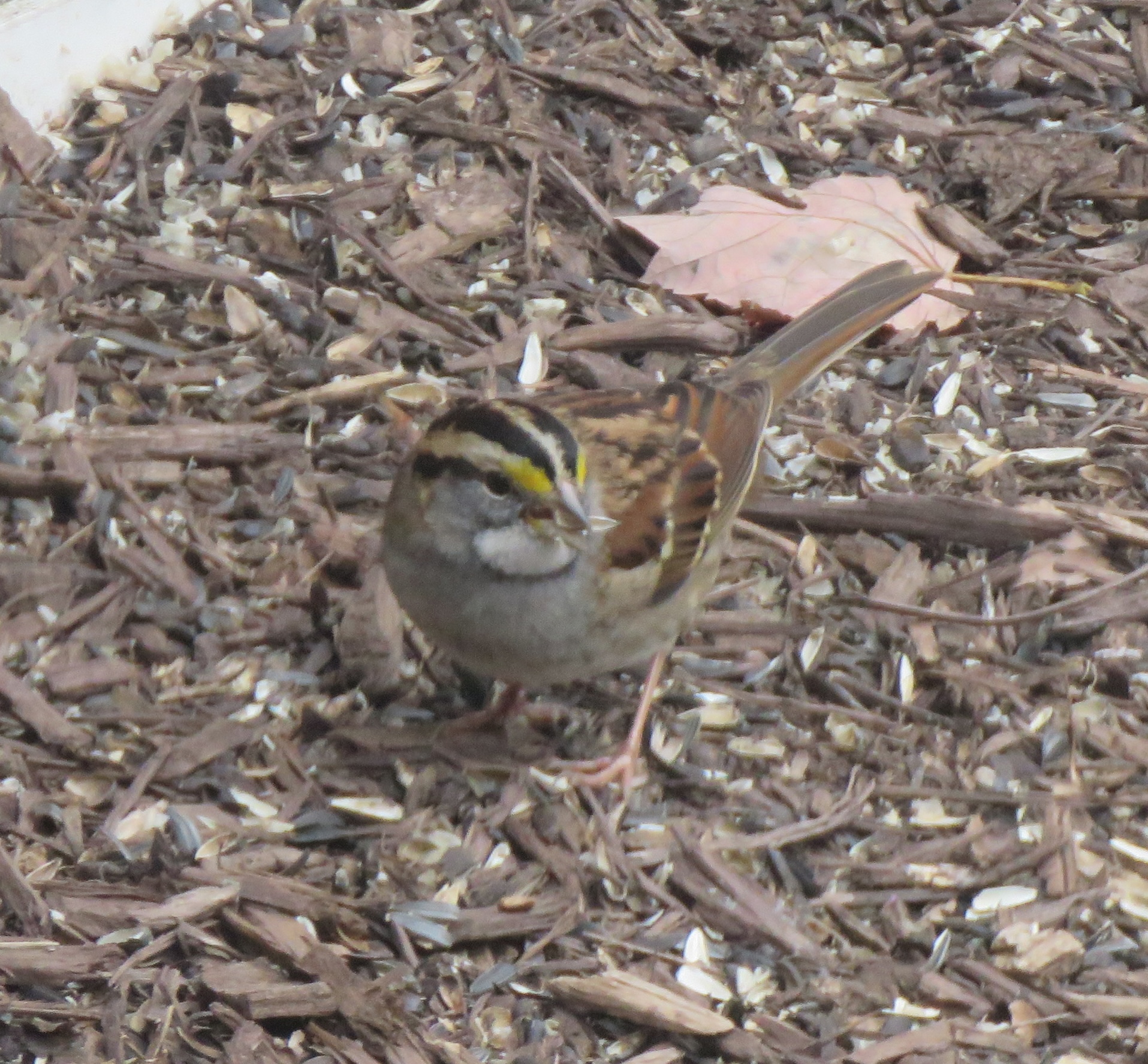

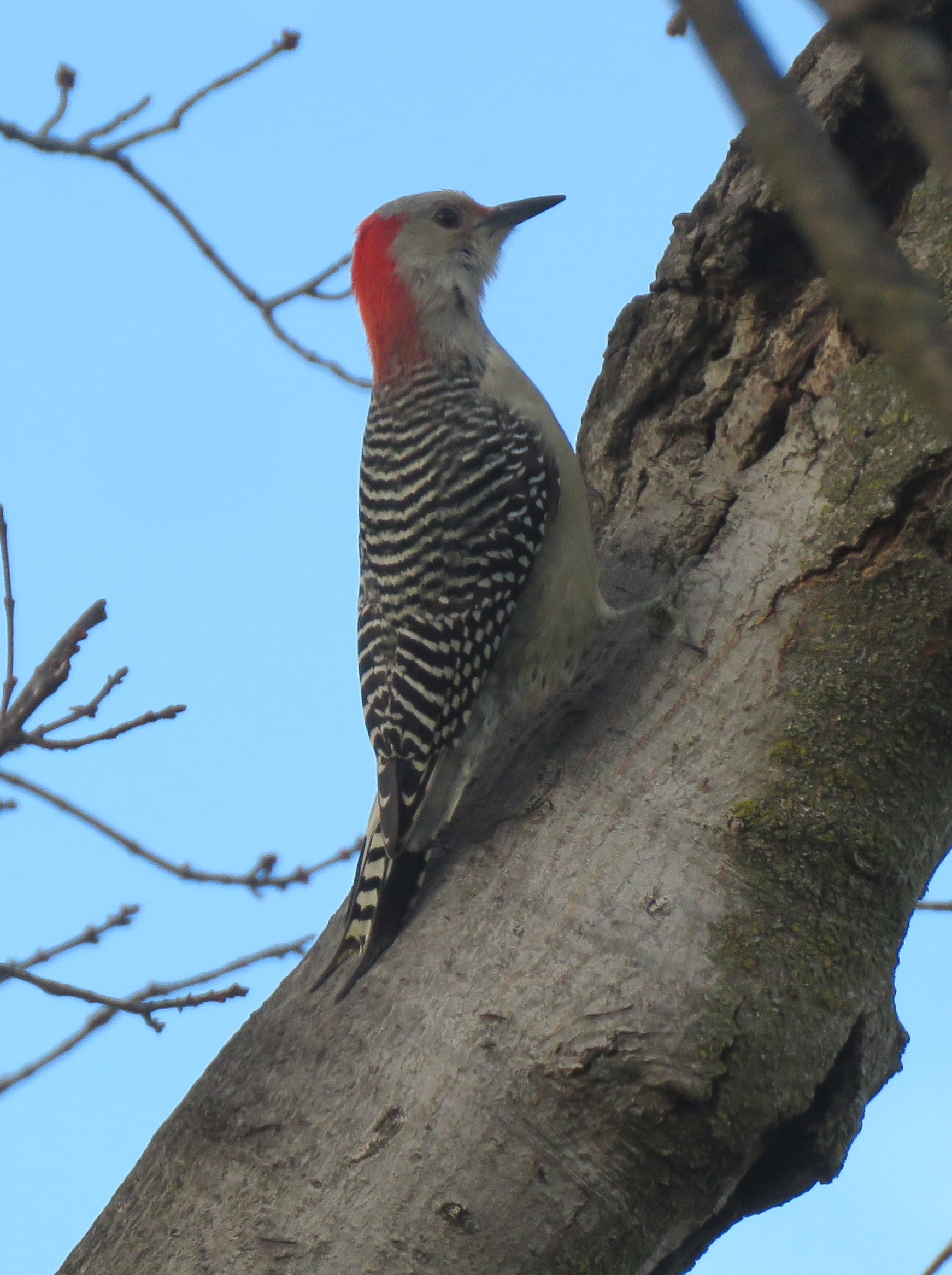
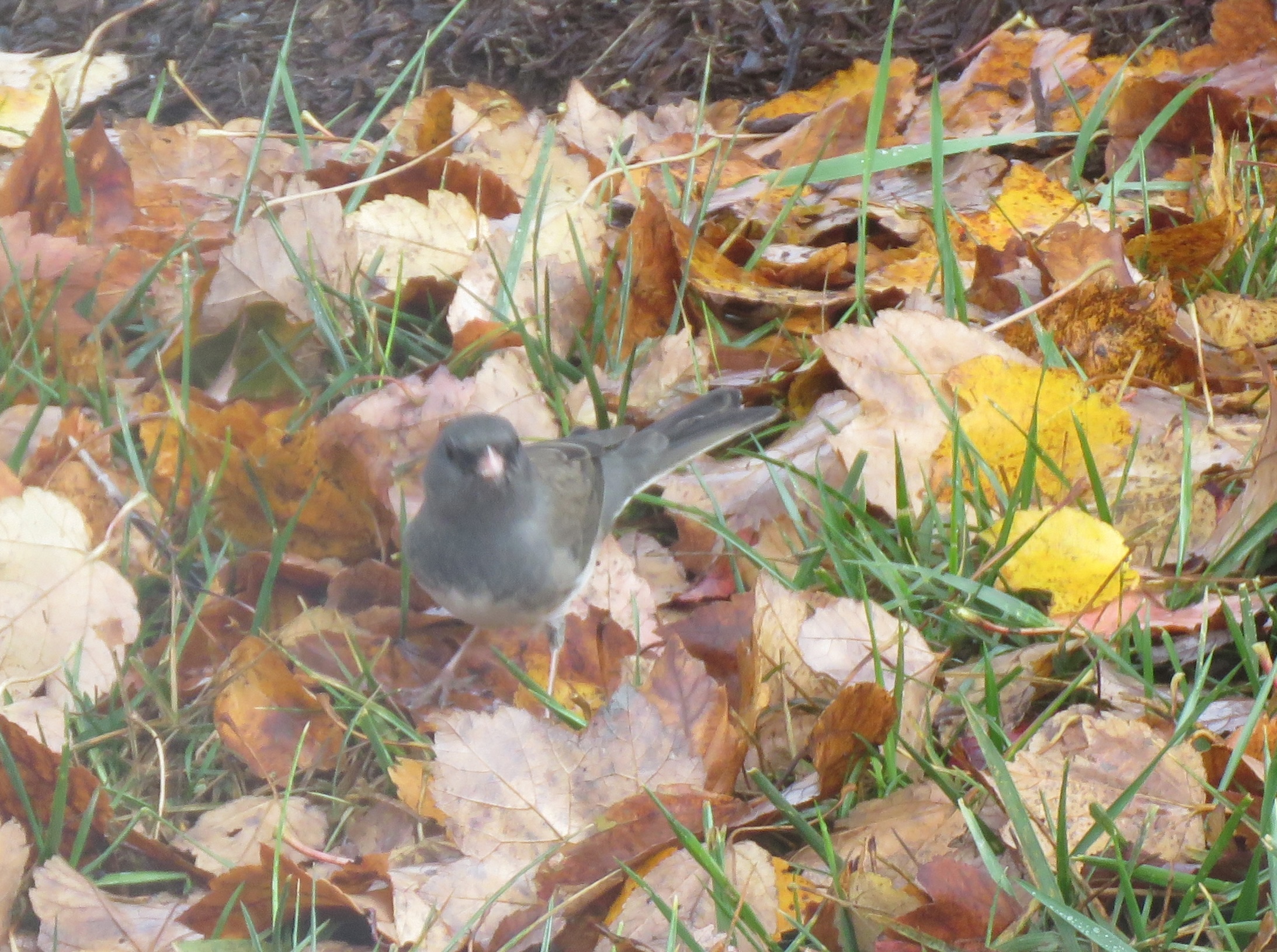


Please click on the photos to enlarge them.
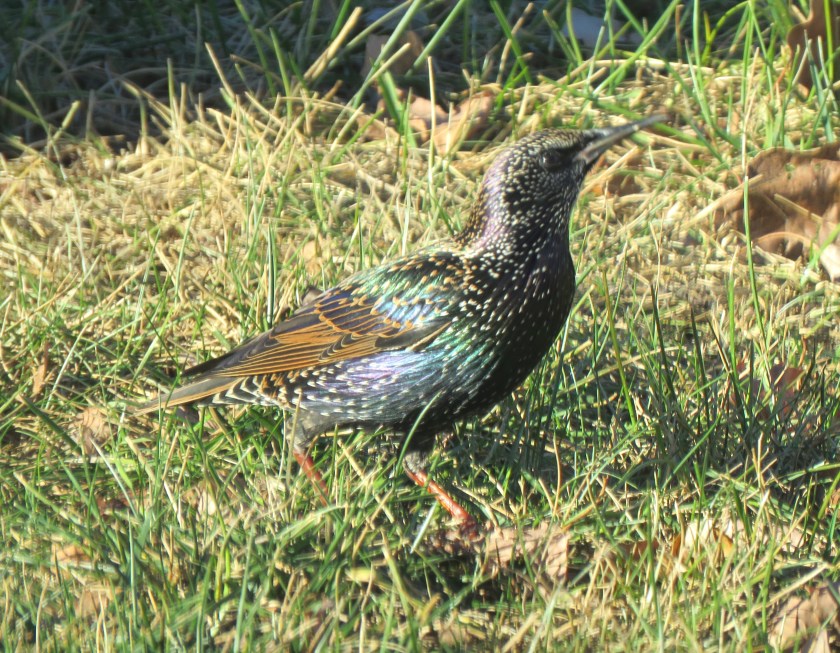
The number of bird species has increased over the eight years that we have lived near Harrisonburg. However, the number of birds has decreased, except for the dreaded European Starlings and the Brown-headed Cowbirds.
Still, I’ve been pleased with the birds that have frequented our feeders. I have four in the front yard, and four in the back. The feed and types of feeders are selected based on the diets and habits of the various species that have frequented our property.
Some bird species are solely ground feeders, so I make sure I spread the feed they eat on the surface near the other feeders. Tube-type feeders allow perching birds to access seeds through holes along the sides. The suet feeder contains cakes of peanut butter suet, encased in a wooden frame with wire-mesh facings on each side.
I place the feeders where the birds feel safe from predators, such as Sharp-shinned and Cooper’s Hawks, which occasionally strafe the neighborhood feeders in hopes of catching a songbird lunch. It’s the way nature works. The feeders and birdbaths are located where we can conveniently view the birds and where they can be easily refilled.
A tube feeder that holds a pound of black-oil sunflower seeds hangs from a limb on the west side of the front yard red maple tree. A suet feeder filled with peanut butter suet dangles from a limb on the east side of the tree. I scatter clean, cracked corn and safflower seeds below them.
The fourth feeder is suctioned to the window in front of my desk. It’s filled with safflower seeds, which only a few birds will eat. Fortunately, safflower seeds are a second-choice food for Northern Cardinals, which seem to have no fear if I’m at my computer on the inside of the window. If I move too quickly, however, they quickly scatter.
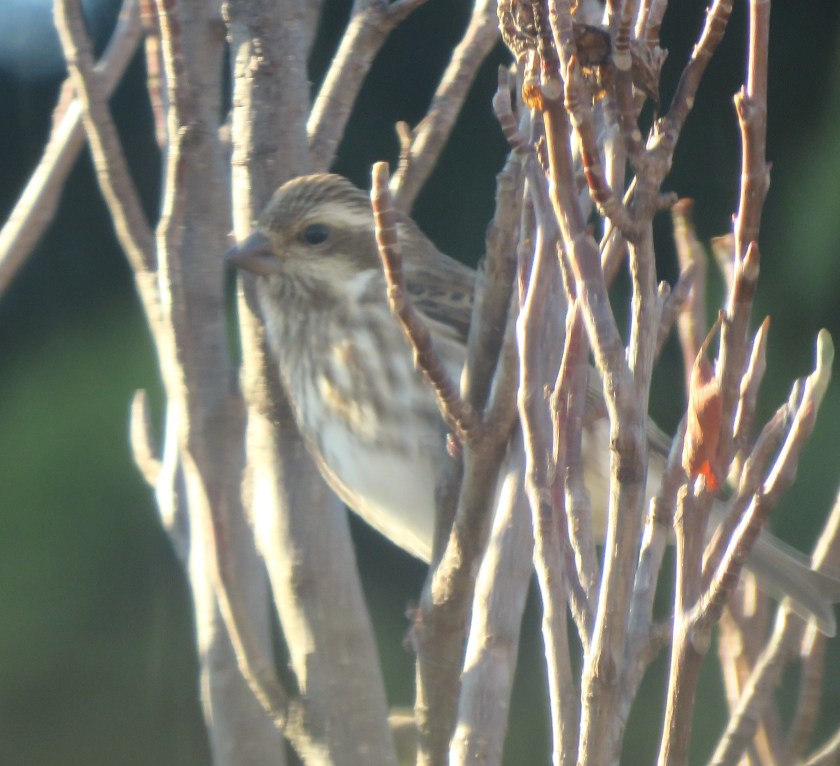
Why do I use these feeds? Black-oil sunflower seeds and hearts attract many species of birds. Northern Cardinals, House Finches, American Goldfinches, Purple Finches, Blue Jays, Dark-eyed Juncos, Downy Woodpeckers, Carolina Wrens, and Carolina Chickadees all choose this seed as a staple to their diet during the winter months.
So far this year, Downy, Hairy, and Red-bellied Woodpeckers and Northern Flickers have come to the suet feeder. So have the Carolina Wrens, Carolina Chickadees, and small flocks of European Starlings and Brown-headed Cowbirds.
The star of the show, however, has been a Yellow-bellied Sapsucker. Its feeding pattern has been once in the morning and once in the afternoon. I stop what I’m doing and watch the sapsucker, knowing I’m fortunate to have it appear.
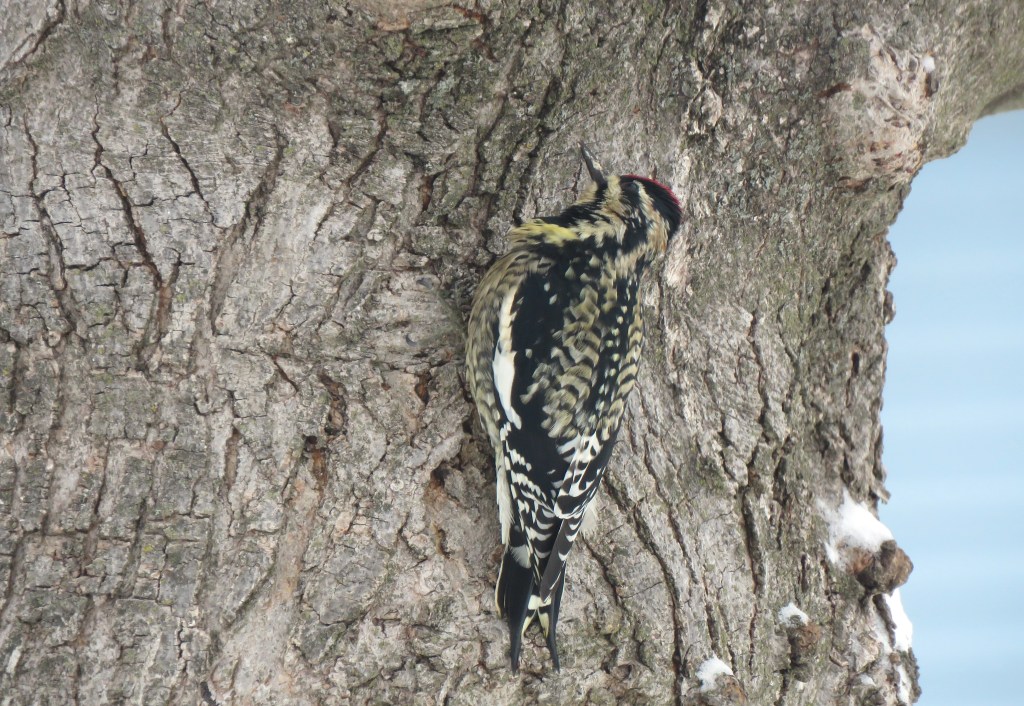
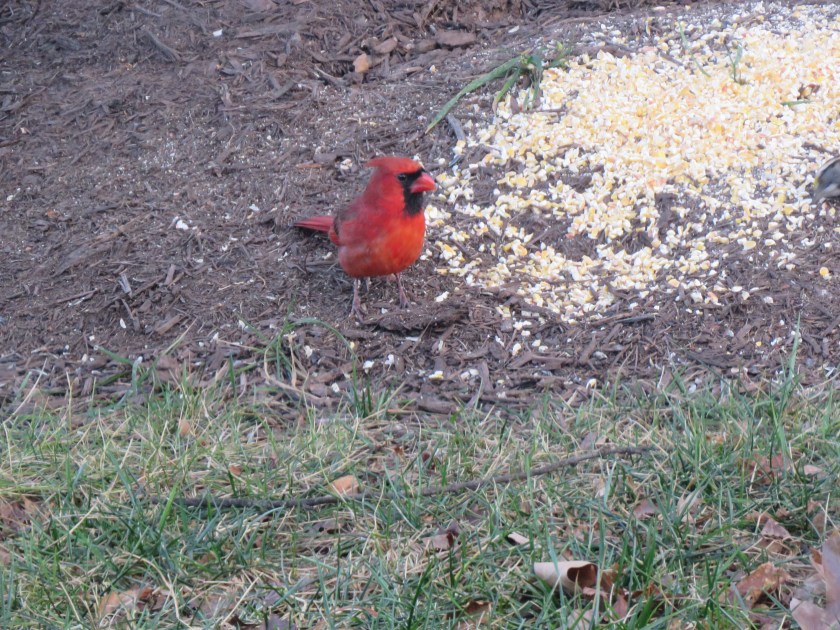
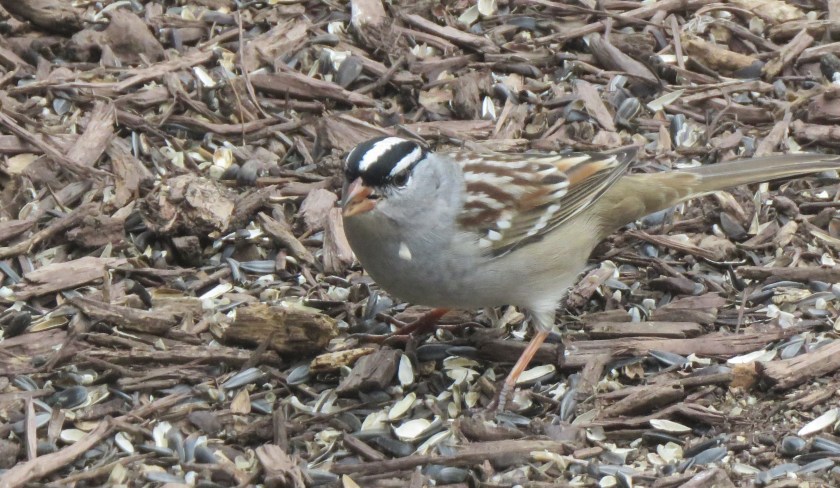
I spread corn to pacify the starlings and cowbirds. Unfortunately, their taste buds prefer the suet. The cardinals, White-throated Sparrows, White-crowned Sparrows, Song Sparrows, House Finches, and Blue Jays ensure the corn doesn’t go to waste.
Our home’s rear windows provide the best view of the feeders and heated birdbaths in the backyard, where most of the cover grows along the property lines. A tubed feeder hangs from the spouting of our screened-in porch, which serves as a shield from strong winds and the strafing hawks.
The hanging feeder holds a mix of black oil sunflower seeds and medium cracked sunflower hearts, which most of the seed-eating songbirds prefer. It’s also the most expensive feed. So, I mix the two seeds to make the precious offerings last longer.
I spread cracked corn on the ground between the feeder and the birdbath. Beyond that, in the yard, I placed a porcelain-topped table and set a homemade wooden feeder on top. More cracked corn goes in that feeder. I also spread some on the ground underneath the table.
Part of the beauty of feeding the birds is the surprises that happen. You never know what will show up at the feeders minute by minute. Like the time I happened to see a Pileated Woodpecker at the nearly empty suet feeder. In a flash, it was gone. But the joy was simply in its appearance, no matter how long it stayed.
In previous years, small flocks of Purple Finches and Pine Siskins have graced the feeders. What a joy it was to see them.
However, I am content with the regular visitors who shelter in the trees, shrubs, and bushes on or near our property. Who wouldn’t love to view a bright red male Northern Cardinal perched in a snow-laden evergreen branch or watch the regal White-crowned Sparrow scratch in the seed only a few feet away?
Of course, I realize that I miss birds when I’m not home or doing other things. I can’t be gazing out of the windows all of the time. Nevertheless, I am thrilled with the ones I do see, and am happy to share them with you.

© Bruce Stambaugh 2025

It was ready, set, go for these two birds perched on a withered sunflower stalk.
Just as I hit the shutter button on my camera, the female Purple Finch decided to lung for the birdfeeder a few feet away. The American Goldfinch in the foreground soon followed.
I still liked the photo even though the Purple Finch is a bit blurry.
© Bruce Stambaugh 2025

My wife and I did our fall cleanup around our house before the colder weather set in. The one item we left in place was a dried-up sunflower stalk near a hanging birdfeeder in our backyard flowerbed.
I hoped that the stalk would serve as a perch for the birds wanting to approach the birdfeeder. That’s precisely what has happened.
Several species of birds use the stalk either before or after going to the feeder filled with chipped and whole black oil sunflower seeds. So far, Northern Cardinals, House Finches, American Goldfinches, Blue Jays, and Carolina Wrens are some of the birds that use the withered stalk to perch.
The stalk is only a few feet from the house and near a window, giving me an excellent view of the stalk. The only drawback is that I have to photograph through the double-paned window with white grids. So, I have to get the right angle to avoid reflections from inside or from the white panes.
I happened to have my camera at the ready when this handsome American Goldfinch in winter plumage landed on the curve of the stalk and posed for several minutes. When the bird looked back at the feeder, I captured its perfect pose..
© Bruce Stambaugh 2025
A peanut butter suet feeder hangs from the limb of the red maple tree in our front yard. I have a perfect view of it from my desk in the study.
Since the feeder is midway between our home and the street, the birds that visit the feeder are often cautious. People walking dogs, runners, and passing vehicles frighten the birds.

The neighborhood Cooper’s Hawk and Sharp-shinned Hawk also pose threats with stealth-like swoops at unsuspecting birds at the other nearby feeders. So, all the avian species remain on high alert.

On one recent afternoon, a striking male Northern Flicker was the lone bird at the suet feeder. First, however, it approached carefully. Male flickers have a prominent black mustache on both sides of their bills. It landed on a limb near the feeder and sat perched before it shimmied down the shady side of the tree trunk.

Soon, it moved closer, with part of its lovely, patterned body in the sun. It turned its head toward the feeder and quickly flitted onto it. The magnificent bird only took a few pecks of the suet before a car spooked it, and off it flew.

© Bruce Stambauhg 2025

There’s a certain intangible satisfaction in birdwatching. That’s especially true when I venture out into the hills and valleys of Rockingham County, Virginia, the third-largest county in the Commonwealth.
That contentment only escalates when I have the opportunity to bird with others. My experience with birding in small groups has consistently found a friendly camaraderie.
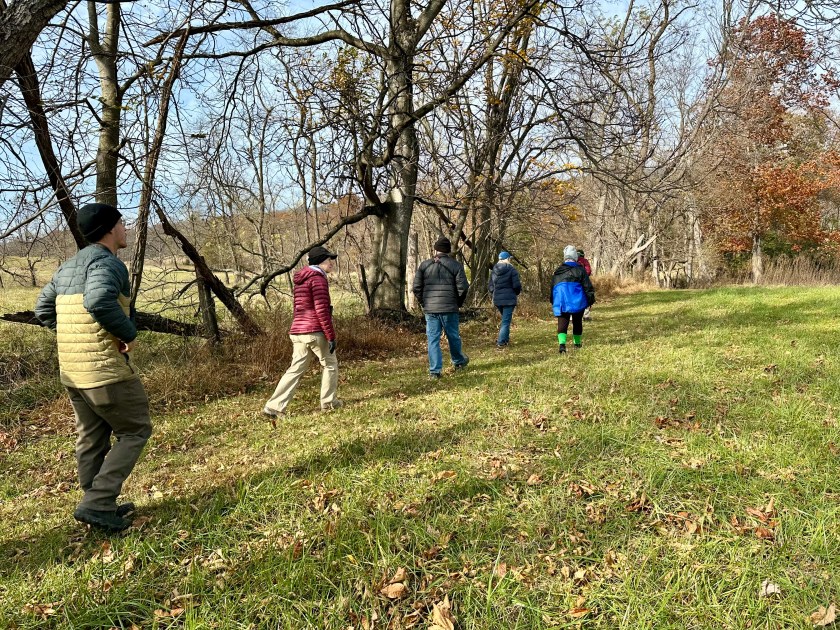
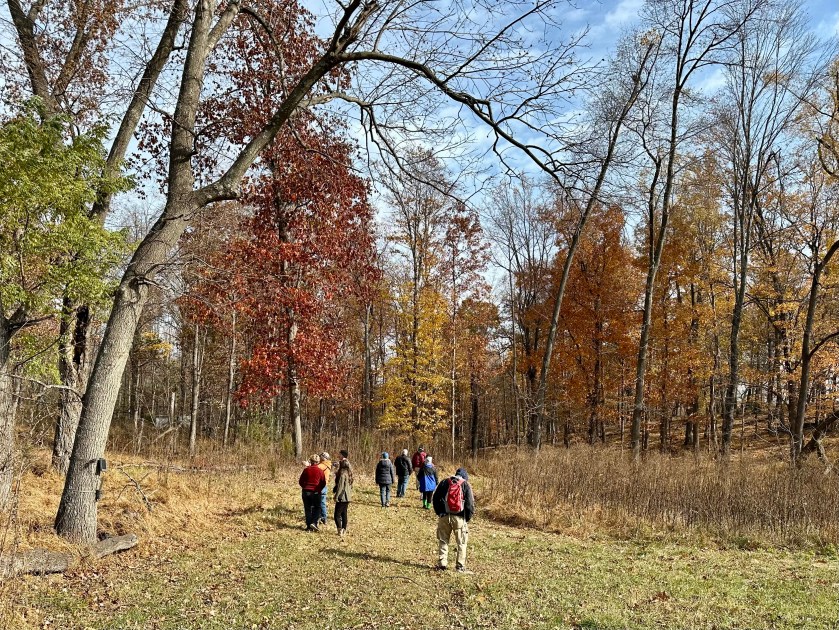
I recently participated in an outing on a certified wildflower farm in the western part of the county. The ages of the 16 members in the bird walk ranged from teenage to octogenarian. Among them were both novice and expert birders, which always enhances the quality of the field trip.
Most birders are patient and obey the unwritten rules of the sport. Conversations, usually about birds, are hushed so the chatting doesn’t interfere with the overall birding experience.
Birders help others find the bird. That is not always easy, so patience and communication are essential.
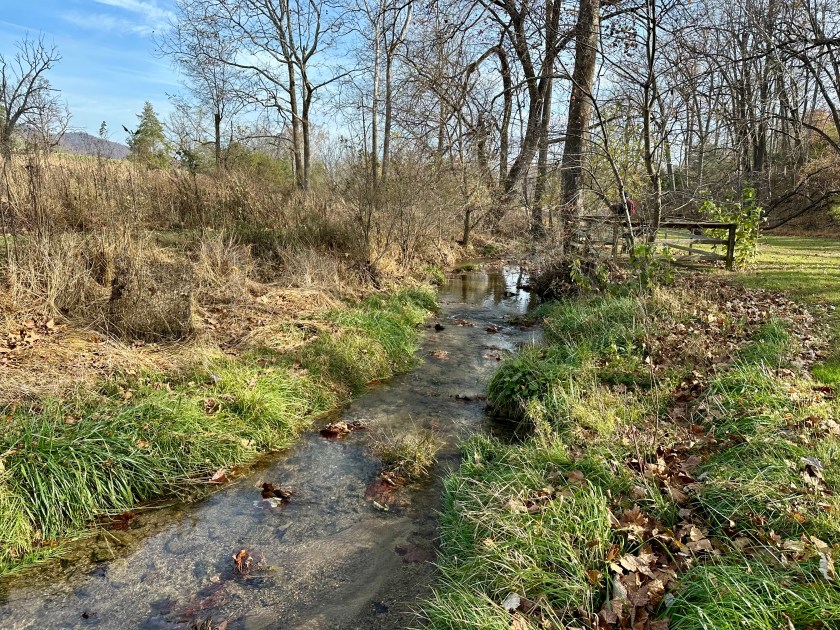
The day started in the 30s as we walked down the farmer’s recently graded half-mile lane towards the creek that splits his acreage. With two consecutive dry seasons, the native Indian grass had overtaken the native seeded wildflowers.
However, the grass provided excellent cover for the birds who use the dense grassy clumps for habitat. I was the last one to spot a field sparrow perched high on the six-foot-tall perennial. The birds feed on the rich seeds that form at the top of the grass’s yellow blades.
I only saw the bird that blended in with the tall prairie grass with the help of another birder, who was younger and had better eyes than I did. Using a tree in the far background, he lined me up and told me to follow the trunk down to just below the crest of the grass. Bingo. The bird was still there, posing.
We continued down to the creek, where small flocks of Cedar Waxwings, Eastern Bluebirds, and several sparrow species gathered nervously in the large creek-side sycamore trees. Another birder speculated that the waxwings must be thirsty from devouring all of the cedar tree berries.
Nearby, a Red-headed Woodpecker, one of the birds I had hoped to see, flew to an old standing dead snag punctuated with multiple holes. It was clear that the Red-headed Woodpeckers preferred this tree for nesting.
The bird landed in the morning sun on the east side of the snag and quickly disappeared. Good birders are patient. In a matter of seconds, the regal bird appeared at the very top of the dead tree, and just like the Field Sparrow, posed for a photo op. I couldn’t have been happier.
I turned around and a pair of Purple Finches perched on branches of the forested slope west of the Indian grass. They didn’t sit long enough for a photo, however.

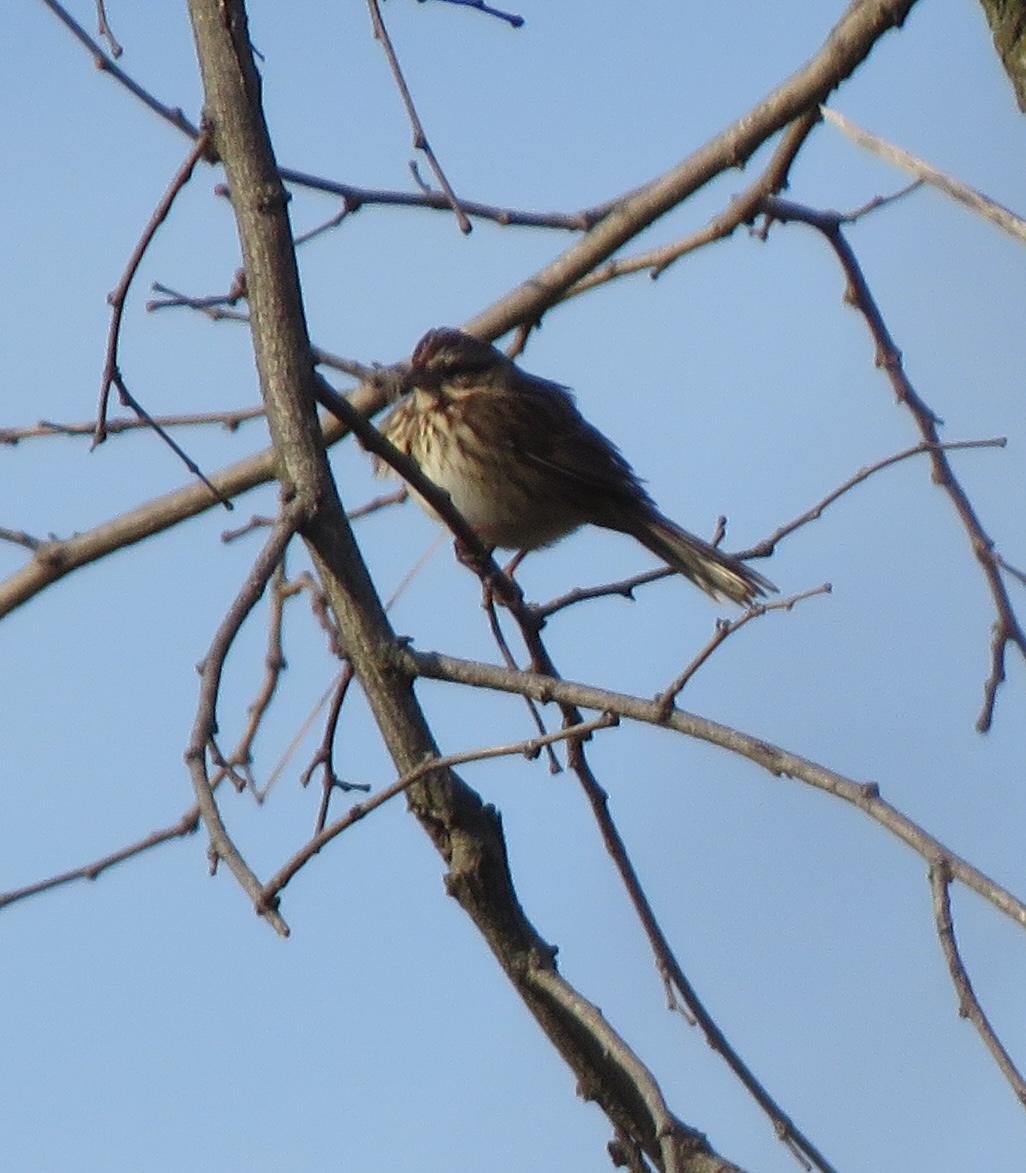
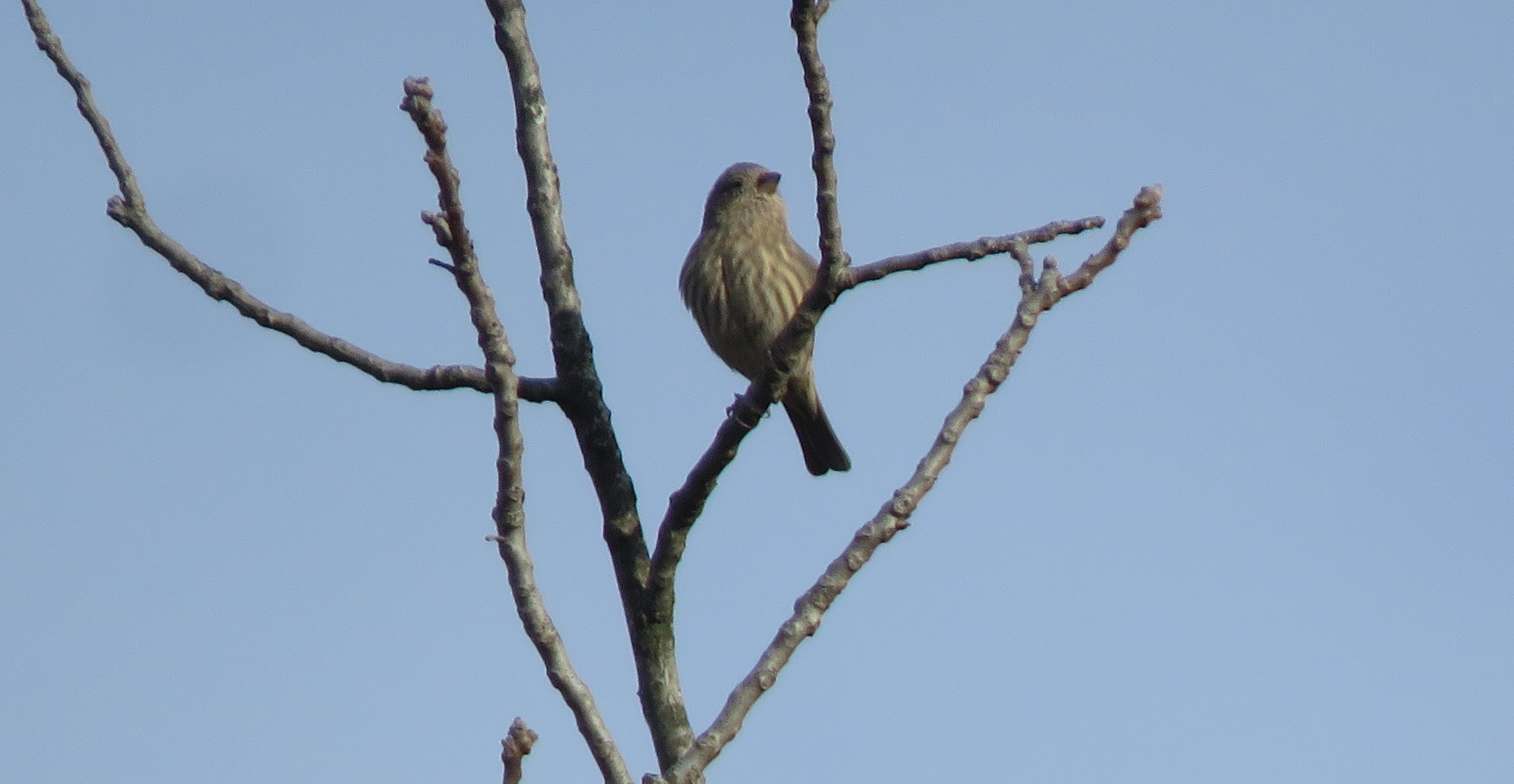


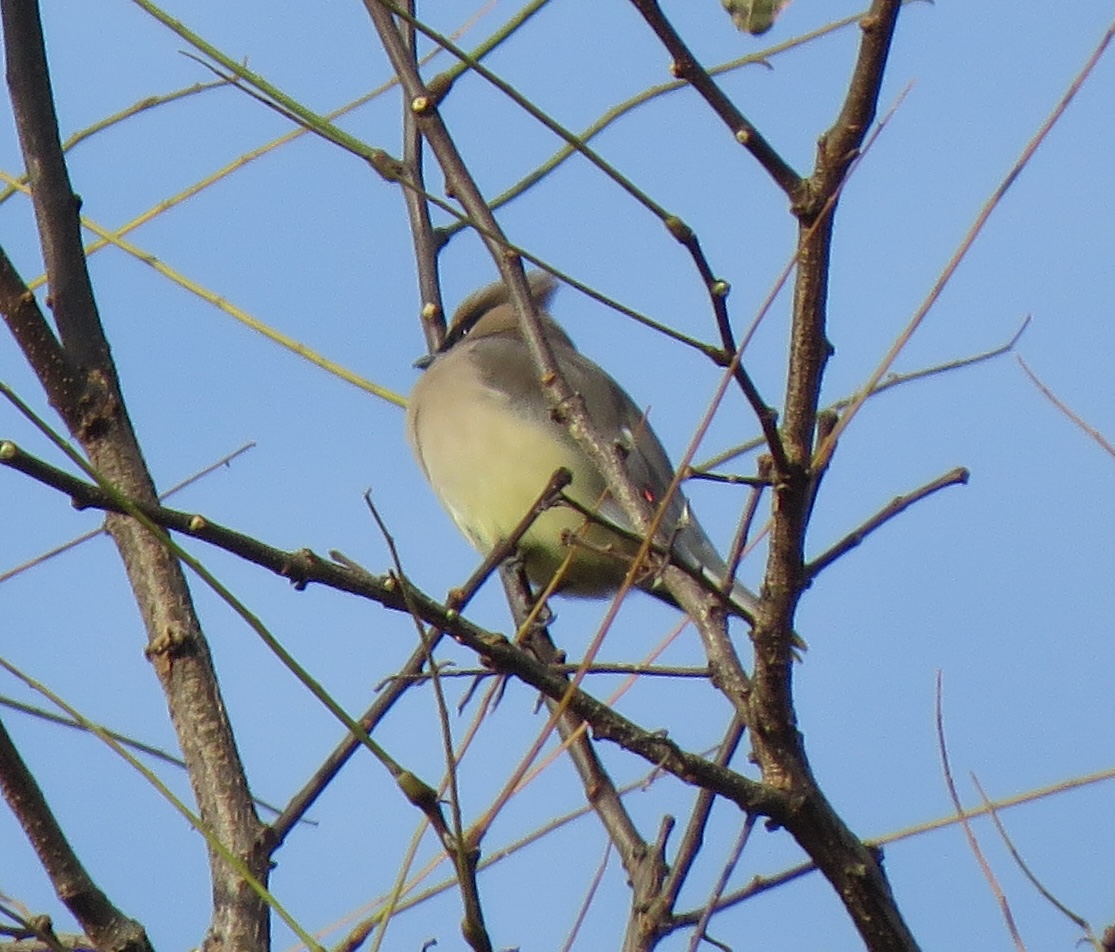
Please click on the photographs to view them in full size.
We crossed the footbridge over the creek and trudged up hill and down, along the southern property fenceline. The wind had picked up, and the strong southerly flow kept the birds low and out of sight.
A few vultures, both Black and Turkey, took advantage of the strong winds and sailed overhead. A pair of Red-tailed Hawks joined them in the kettling, the gliding on the thermals around and around like an avian tornado.
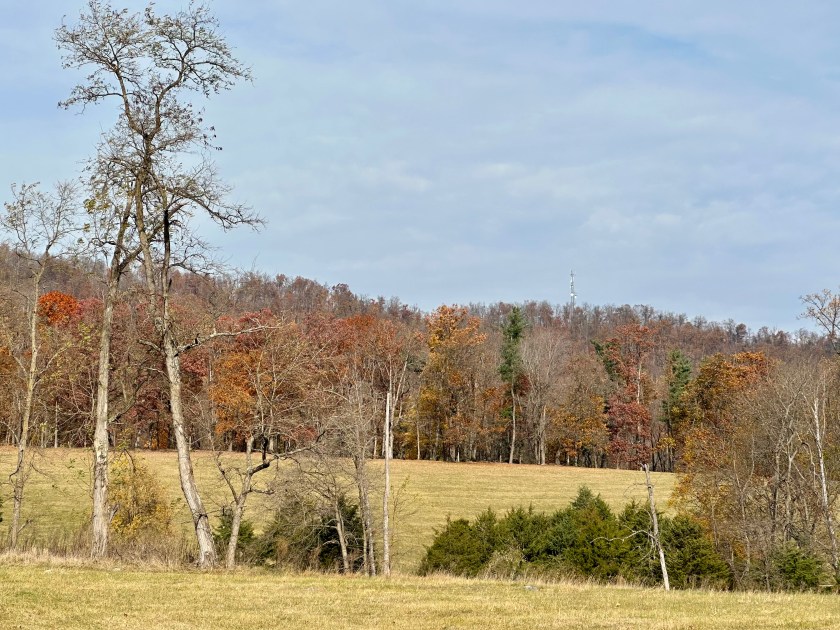
At the top of the ridge, some of the birders broke off to return home or head to their workplace. The rest of us walked on, admiring the varying landscape, vegetation, and mix of deciduous and evergreen trees.
In less than a quarter of a mile, we had traversed through prairie grass, a few late-blooming flowers, grassy fields, and then into a second-growth woods. A Pileated Woodpecker’s deep-throated call echoed against the base of North Mountain.
After nearly three hours, we arrived back at the meeting place, tired but thrilled to be in the outdoors with gracious hosts and an excellent guide. In that time, we had seen or heard 33 species.
We were all pleased with that number for a chilly, windy day in Virginia’s Shenandoah Valley. Additionally, it was an excellent way to connect with nature and get some much-needed exercise, especially for those of us who are older.
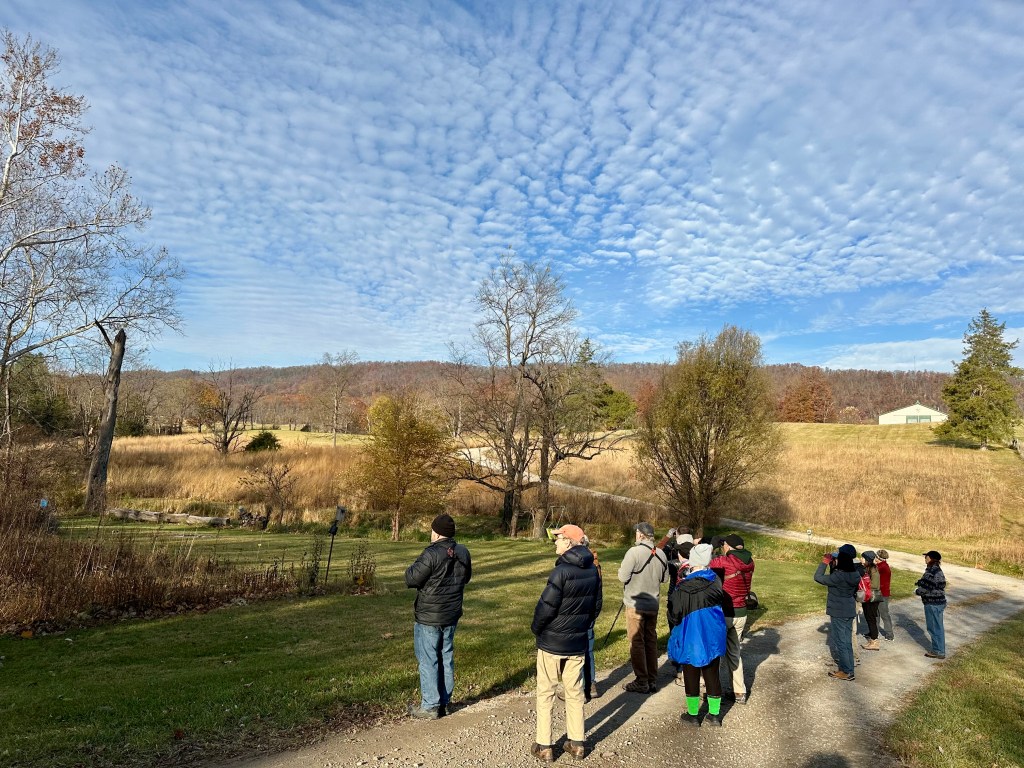
© Bruce Stambaugh 2025

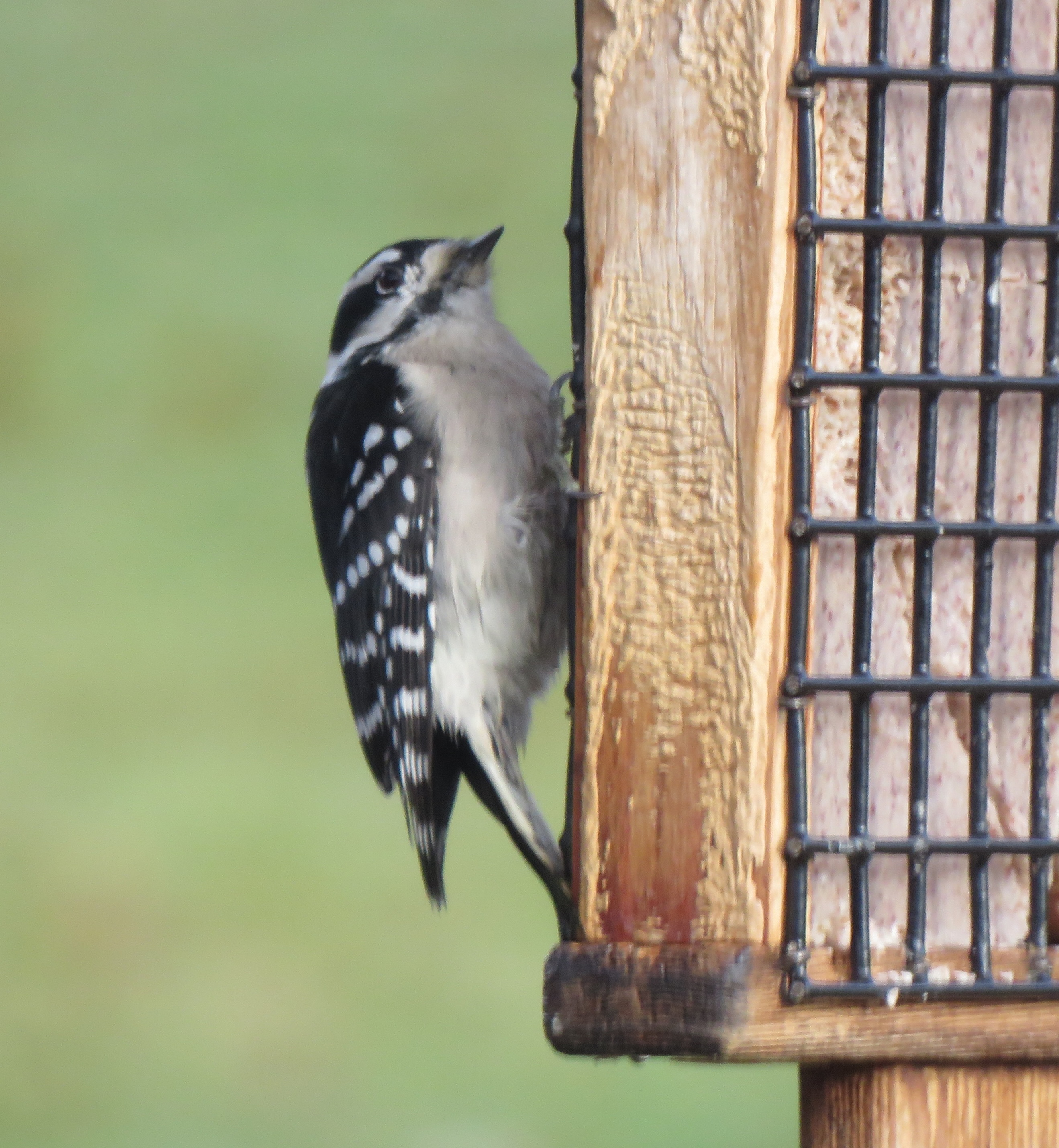
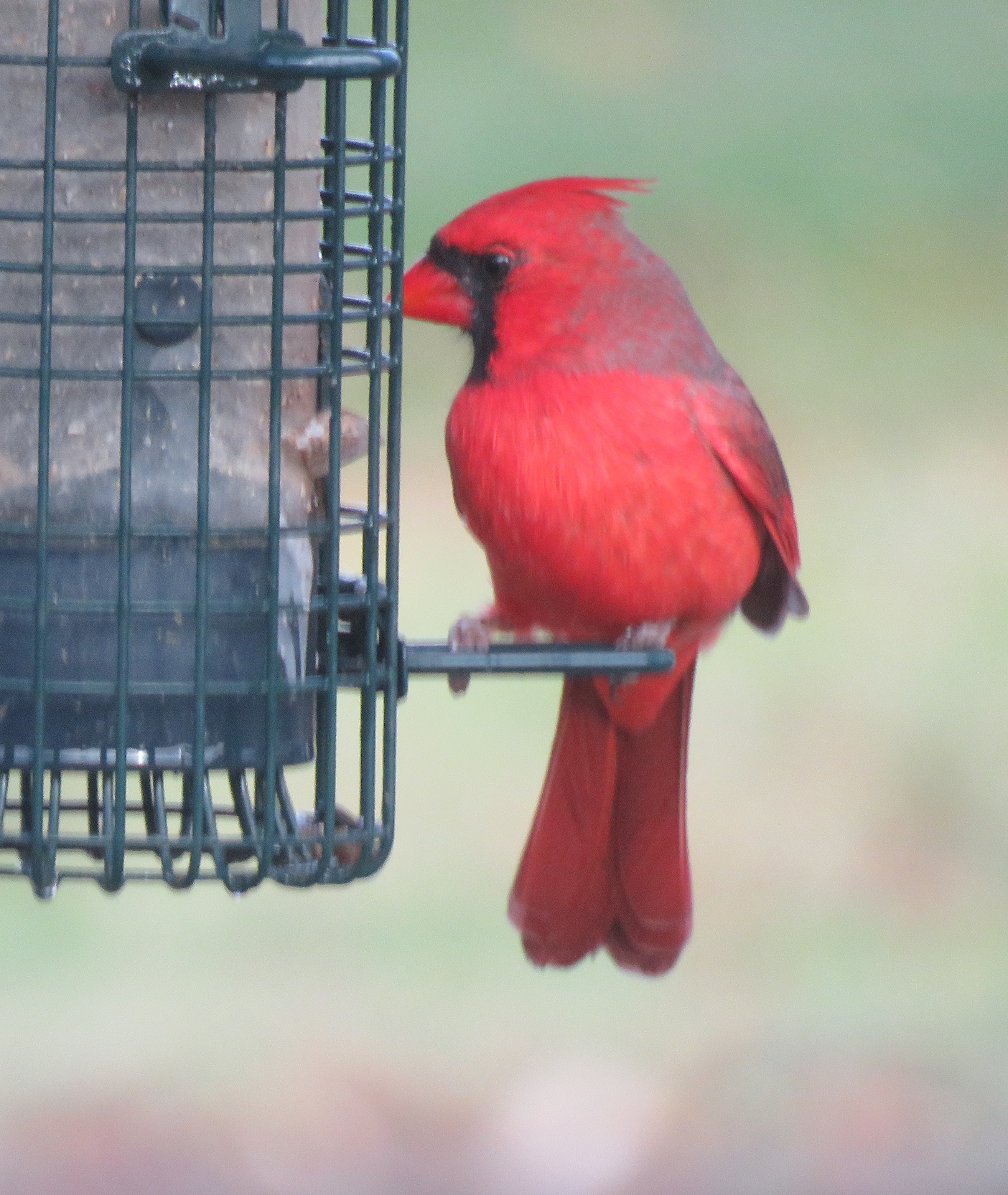
I have had only a few opportunities to go birding this autumn. Here are a few of the birds I’ve seen so far as the fall migration nears its end.
Click on the photos to enlarge and ID them.


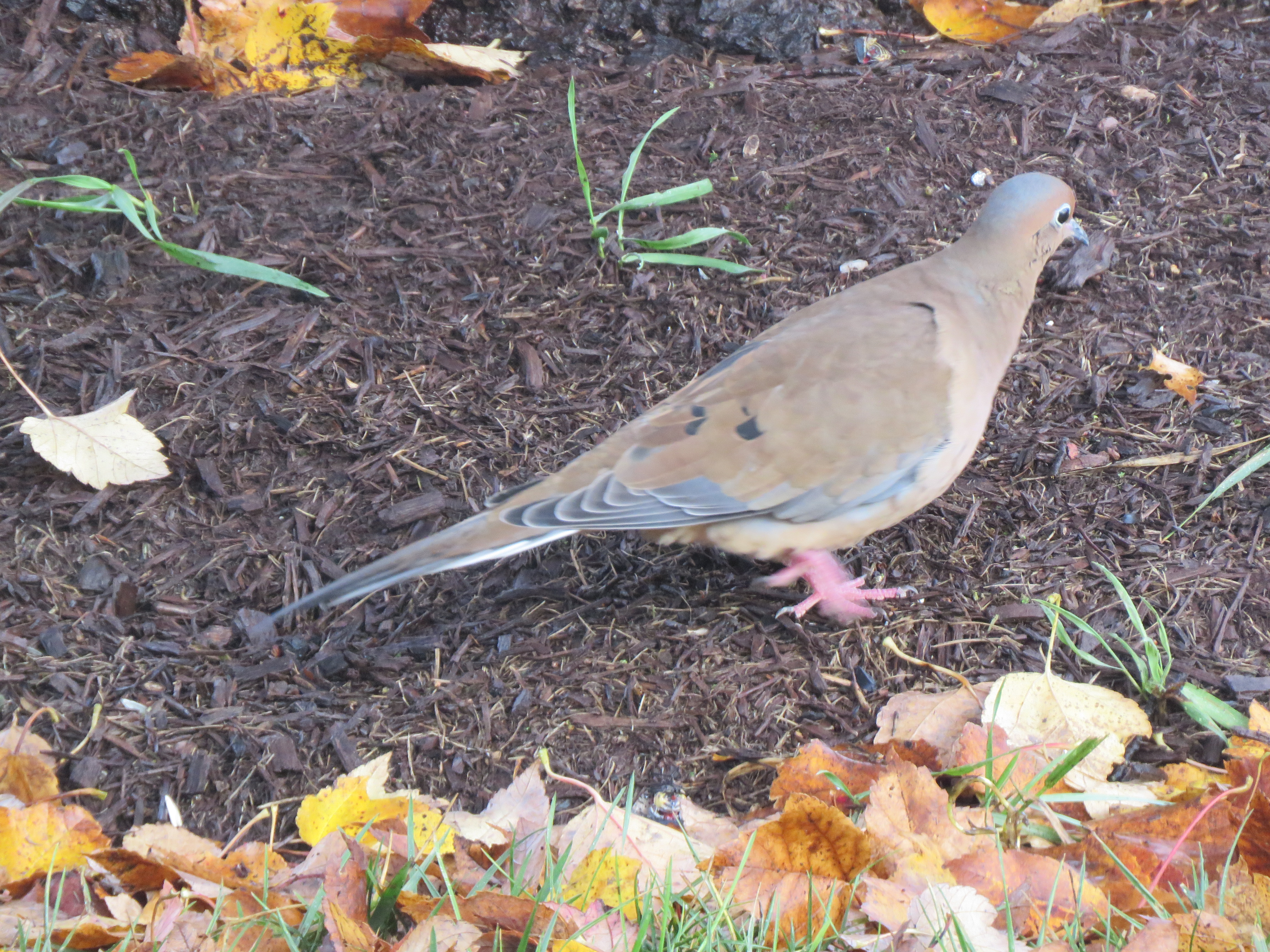
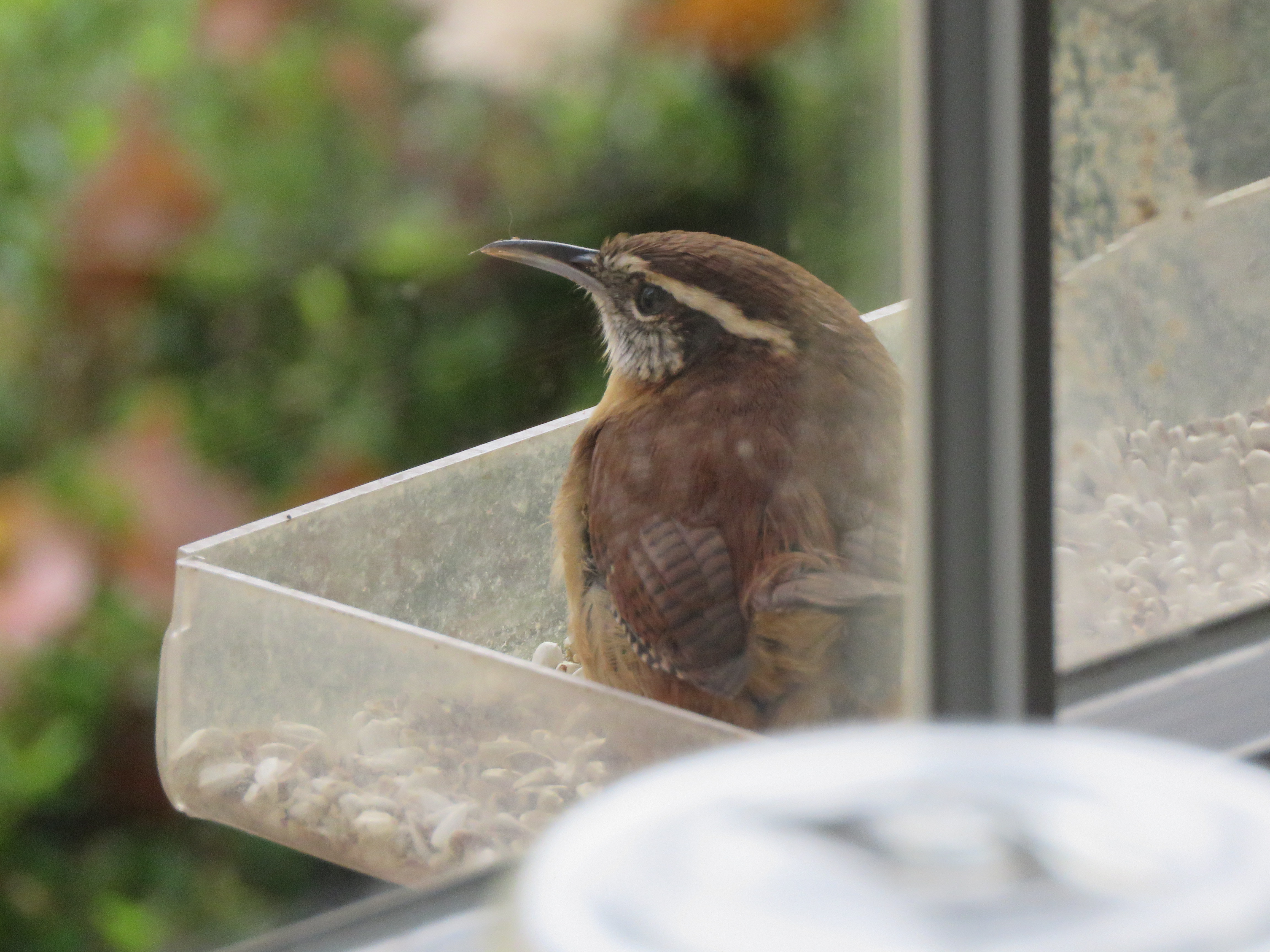
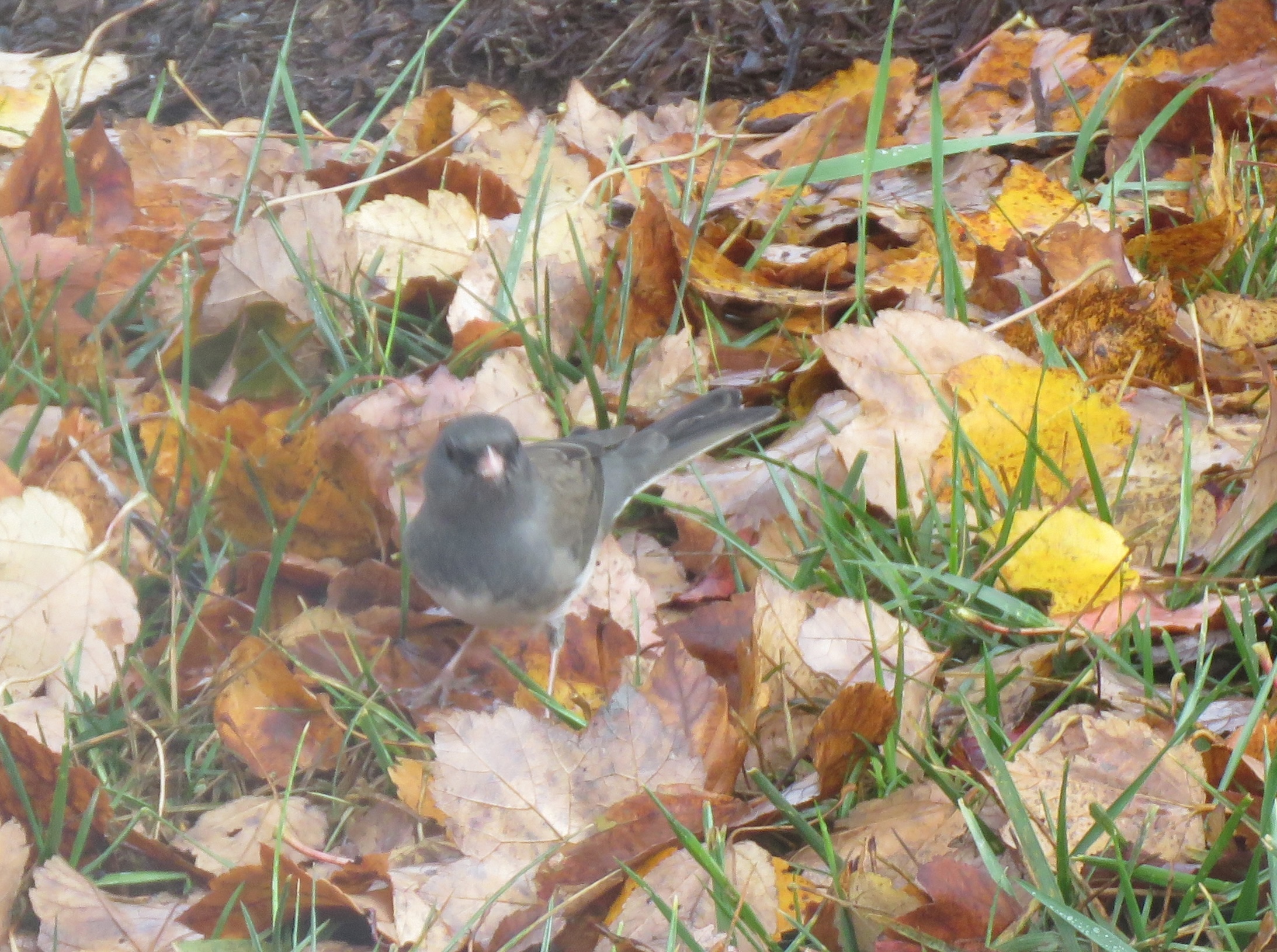
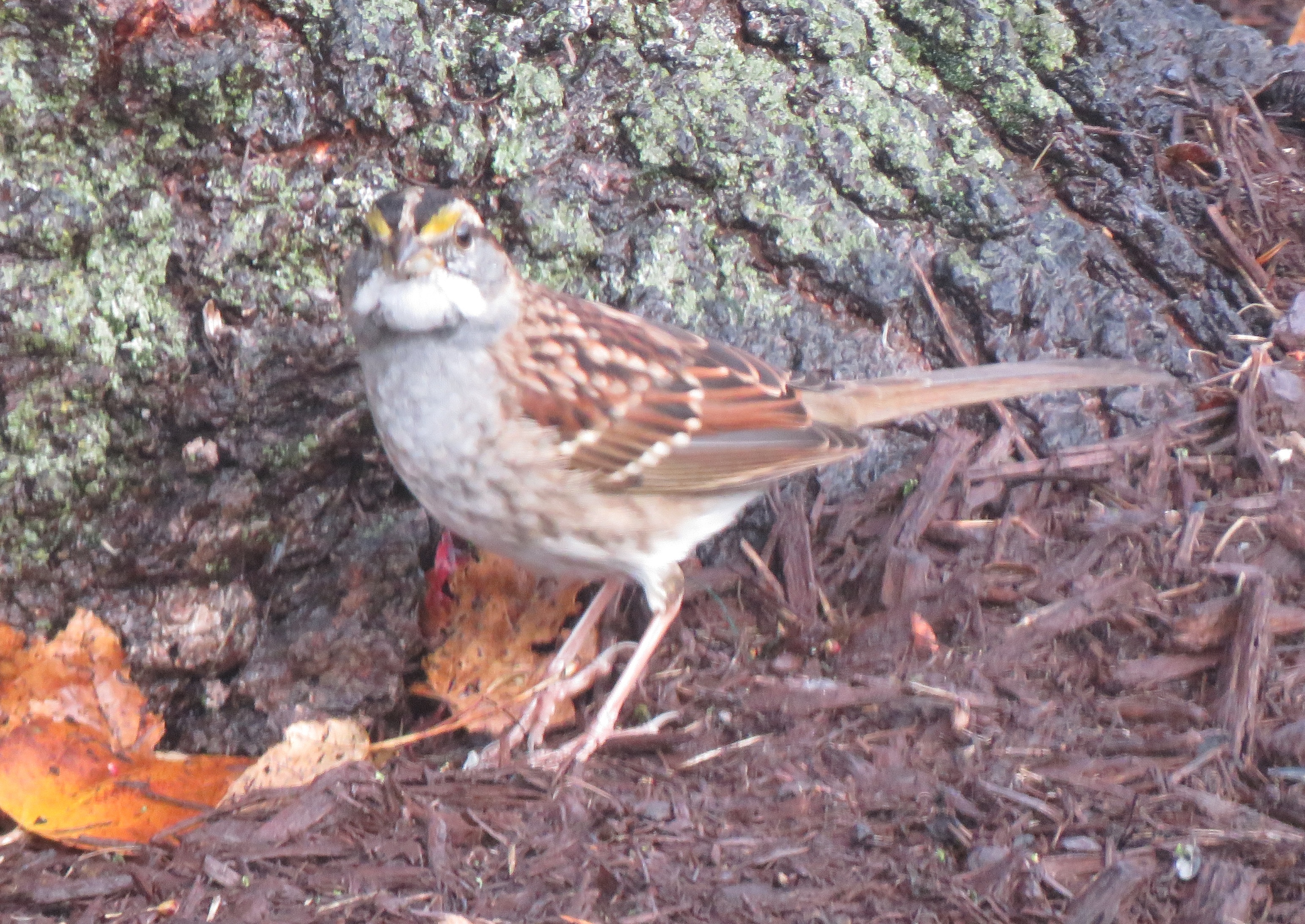


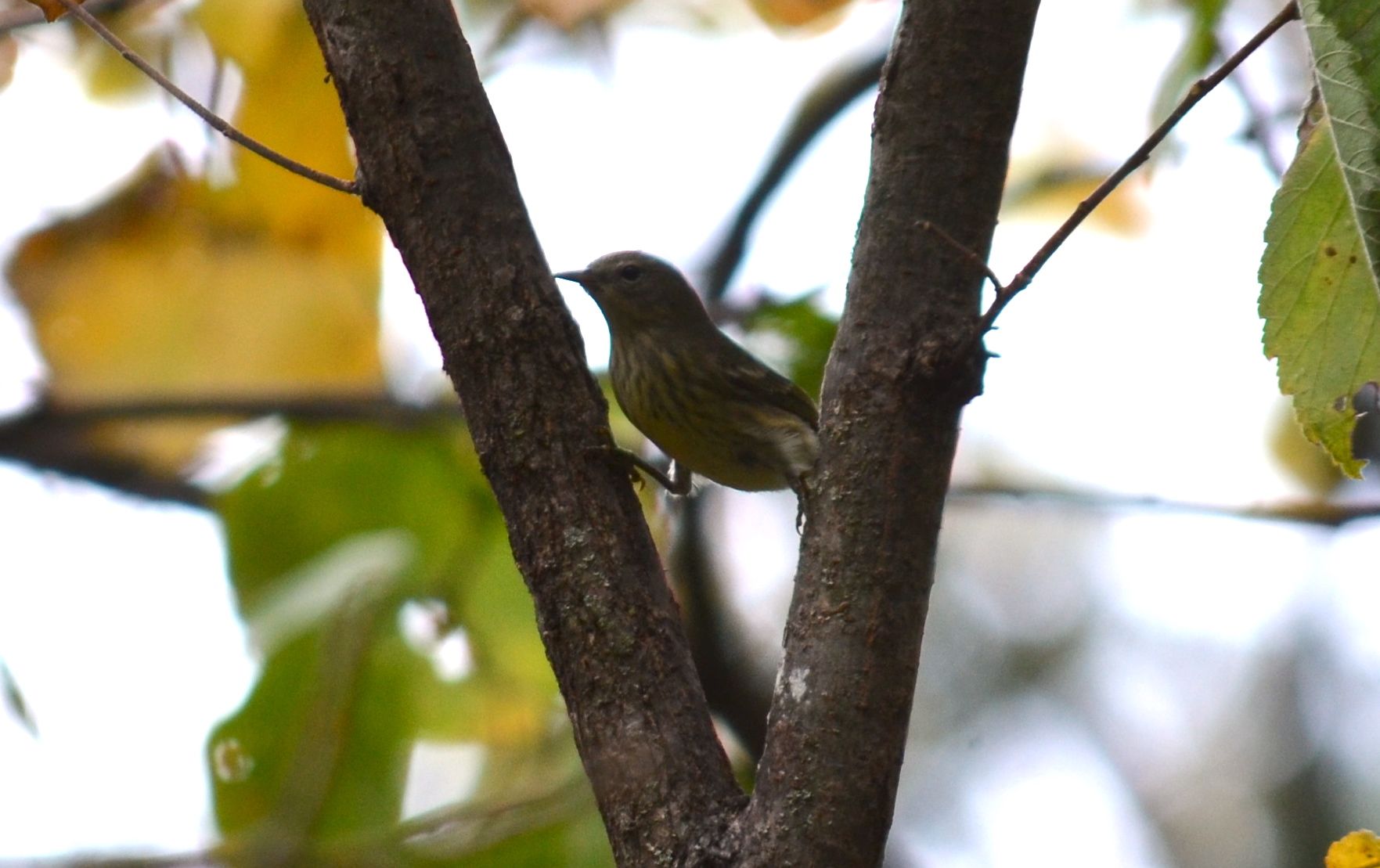

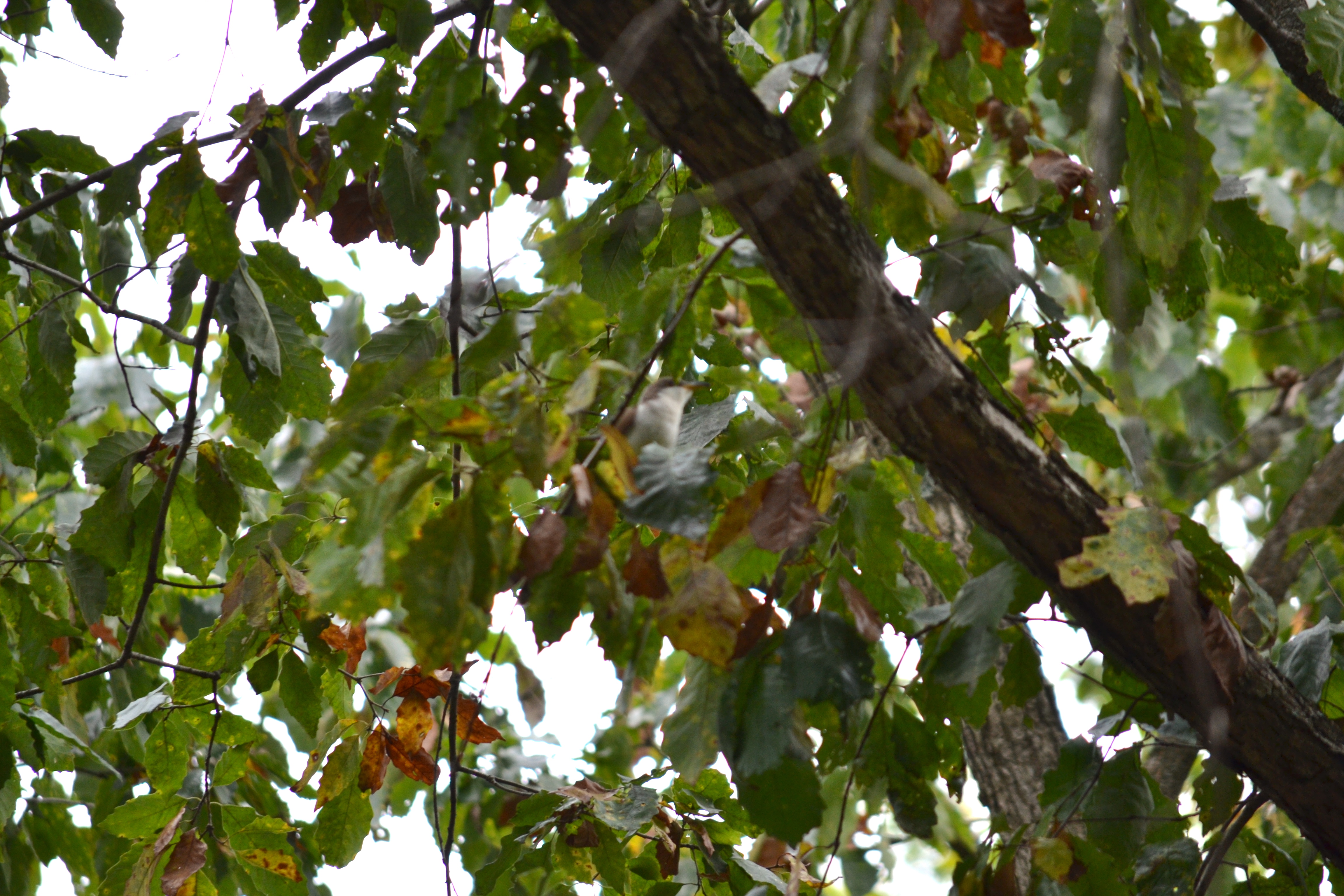
© Bruce Stambaugh 2025

I spotted a female Monarch butterfly in the woods of a park near my home the other day. Actually, the Monarch saw me first, and flitted from a lower limb with dried leaves to this one higher up. It likely was resting up for the next day’s flight south.
Because of the darkness under the canopy of trees and the distance the butterfly was from me, I was amazed that the camera was able to focus on the subject I wanted. I had to lighten the photo slightly so that the beautiful butterfly stood out.
It must have been a good omen because I soon began to find several species of birds feeding on bugs high and low in the trees. All this took place in a well-maintained city park in Harrisonburg, Virginia.
© Bruce Stambaugh 2025
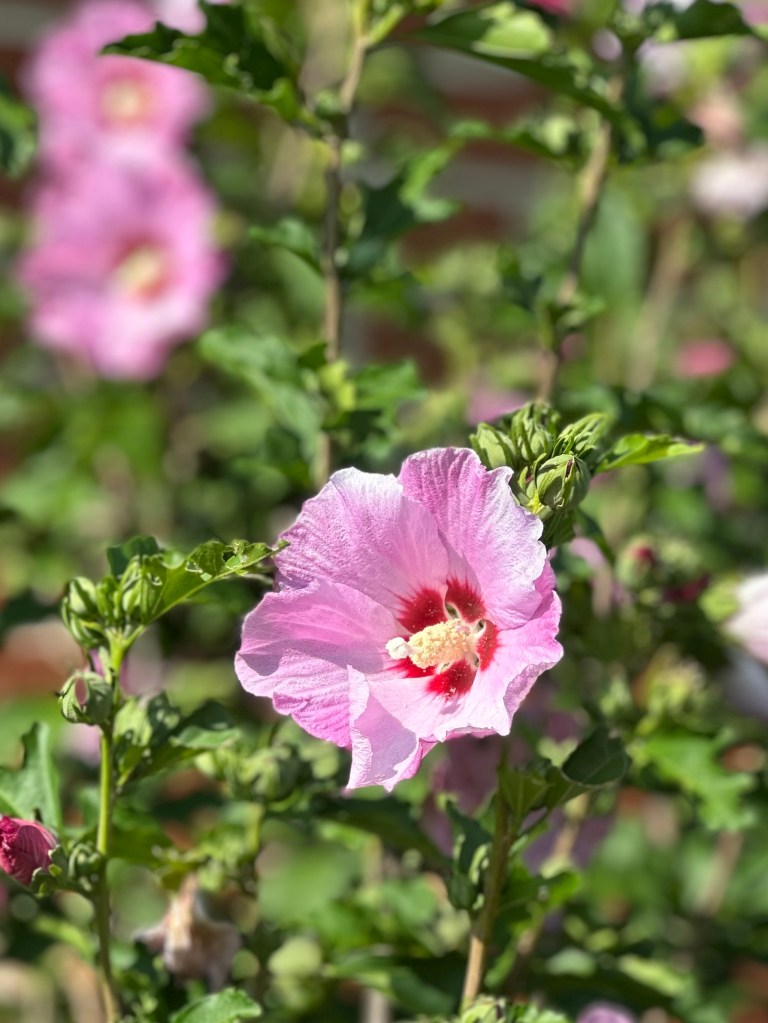
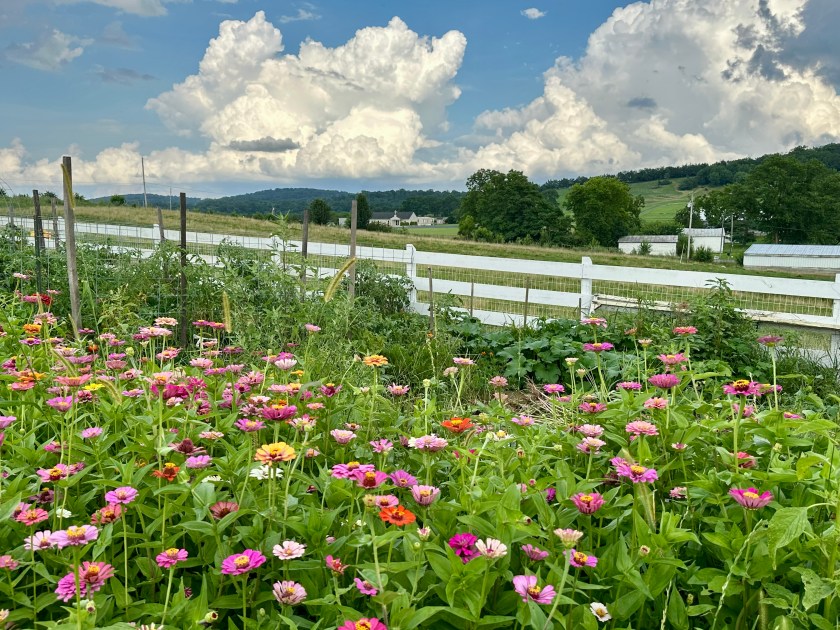
Summer 2025 colors have not disappointed so far. We are only a month into the summer season in the Northern Hemisphere, and there have been plenty of opportunities to photograph her vibrant palette of hues and tones.
Here are two sets of my favorite representations of this brilliant calidoscope.
Landscapes

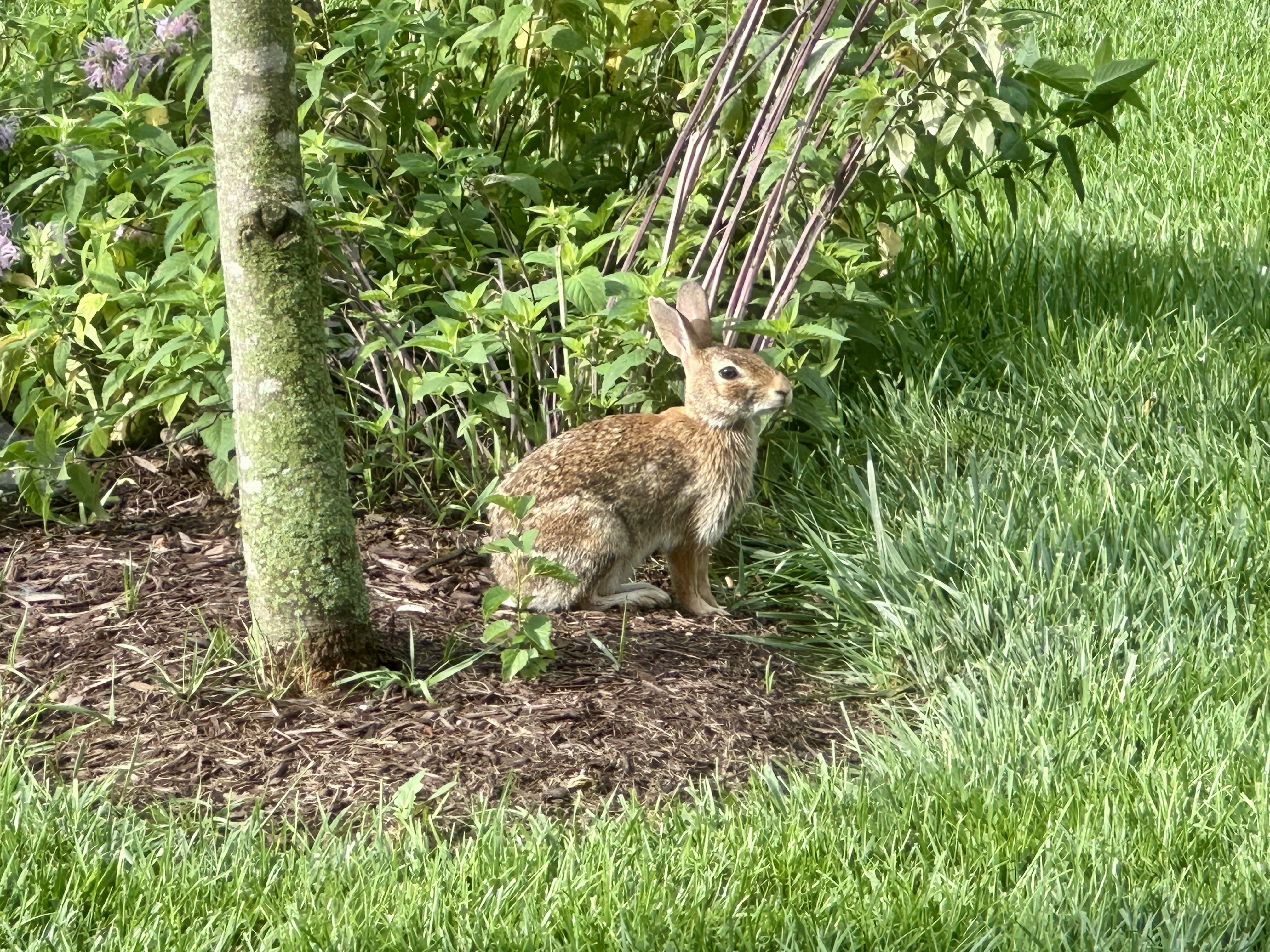
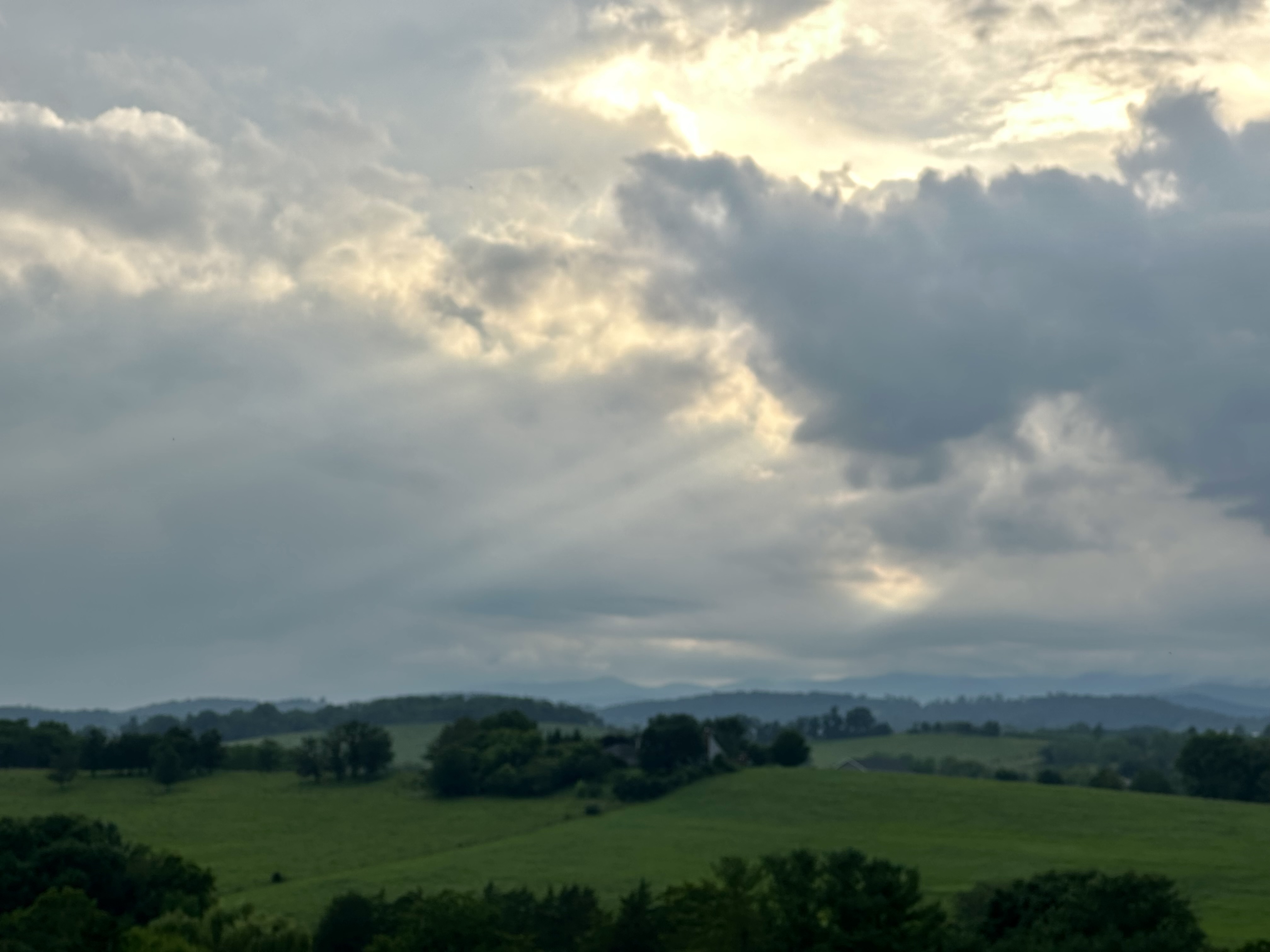
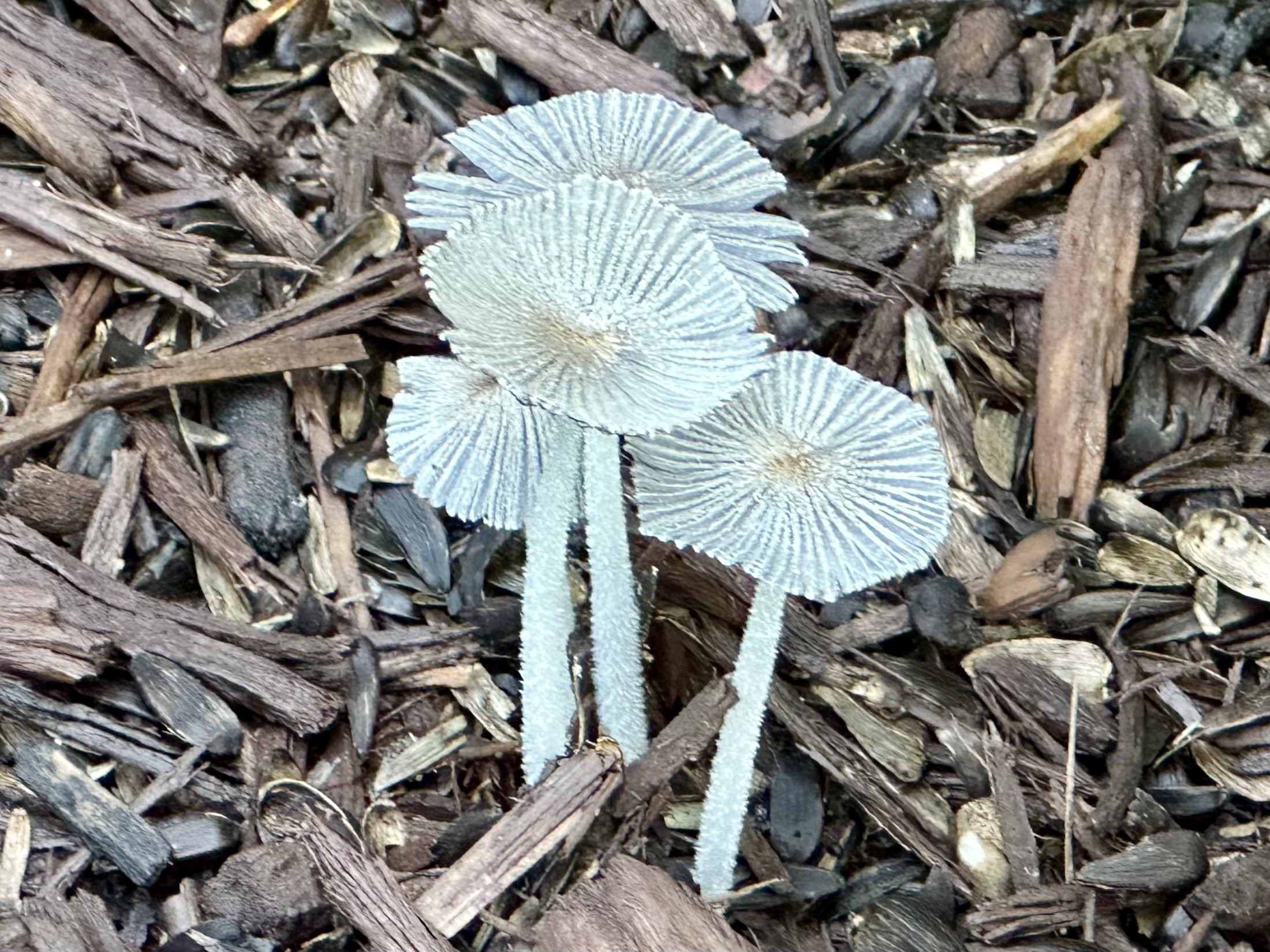
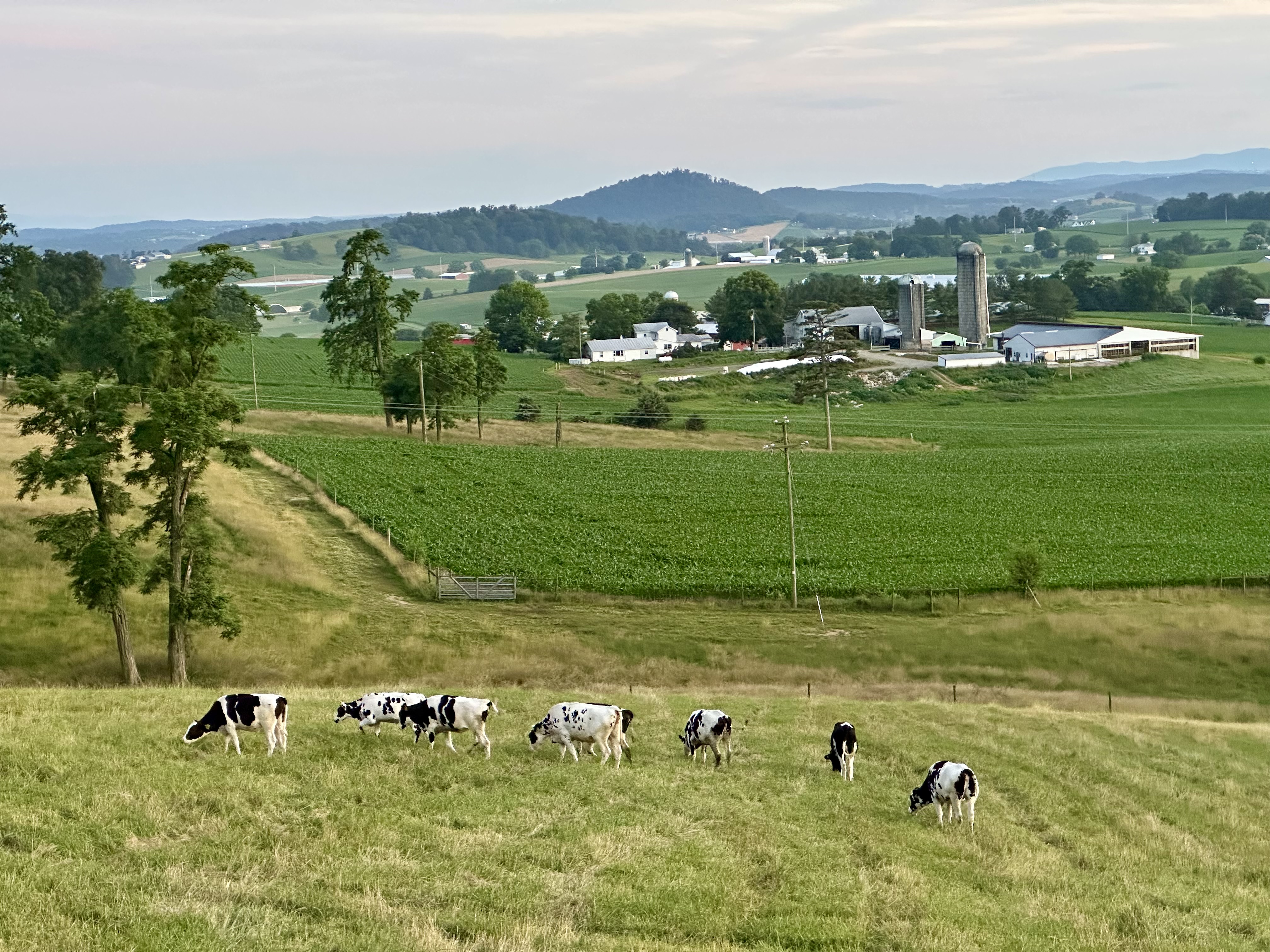
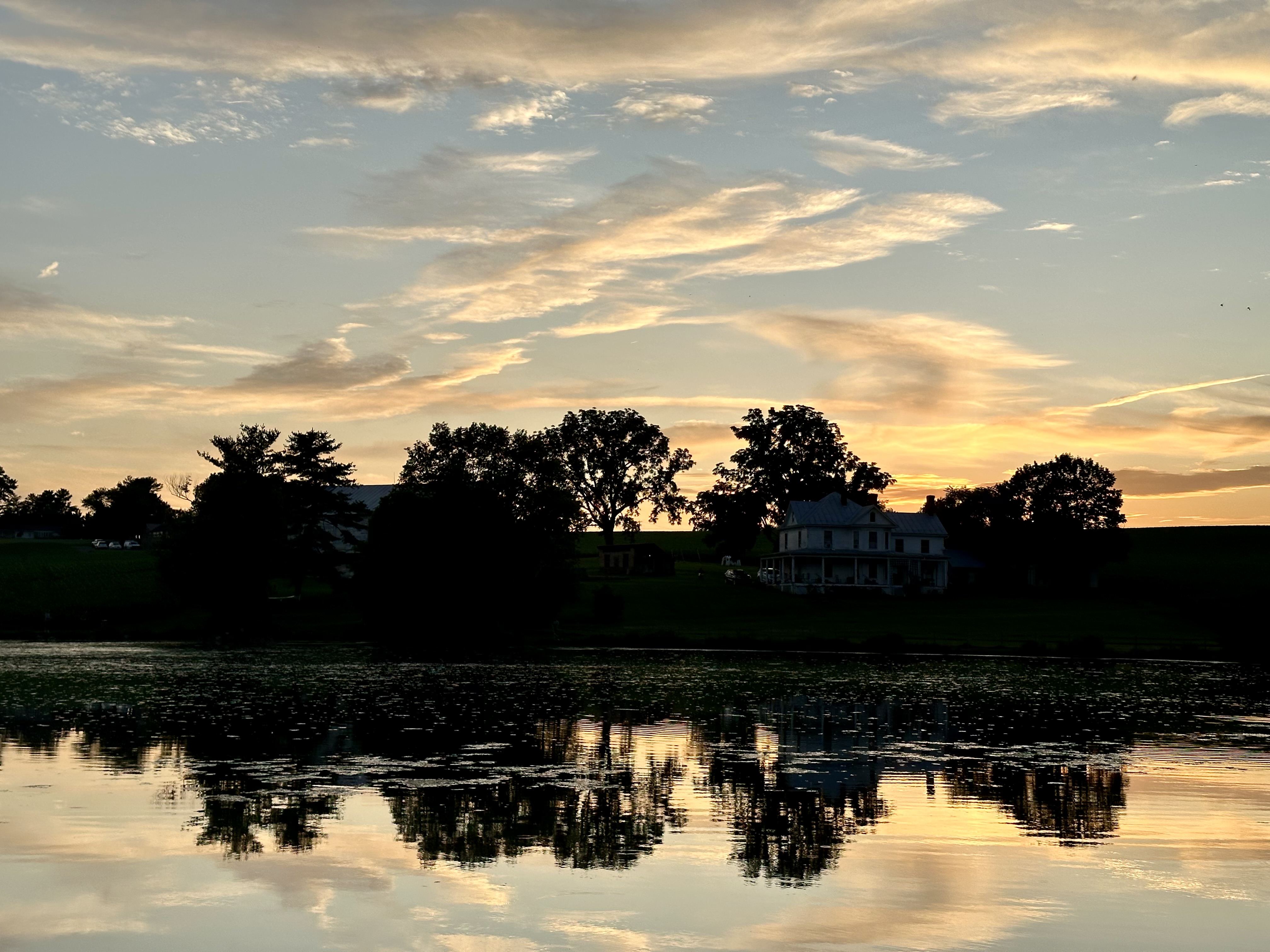

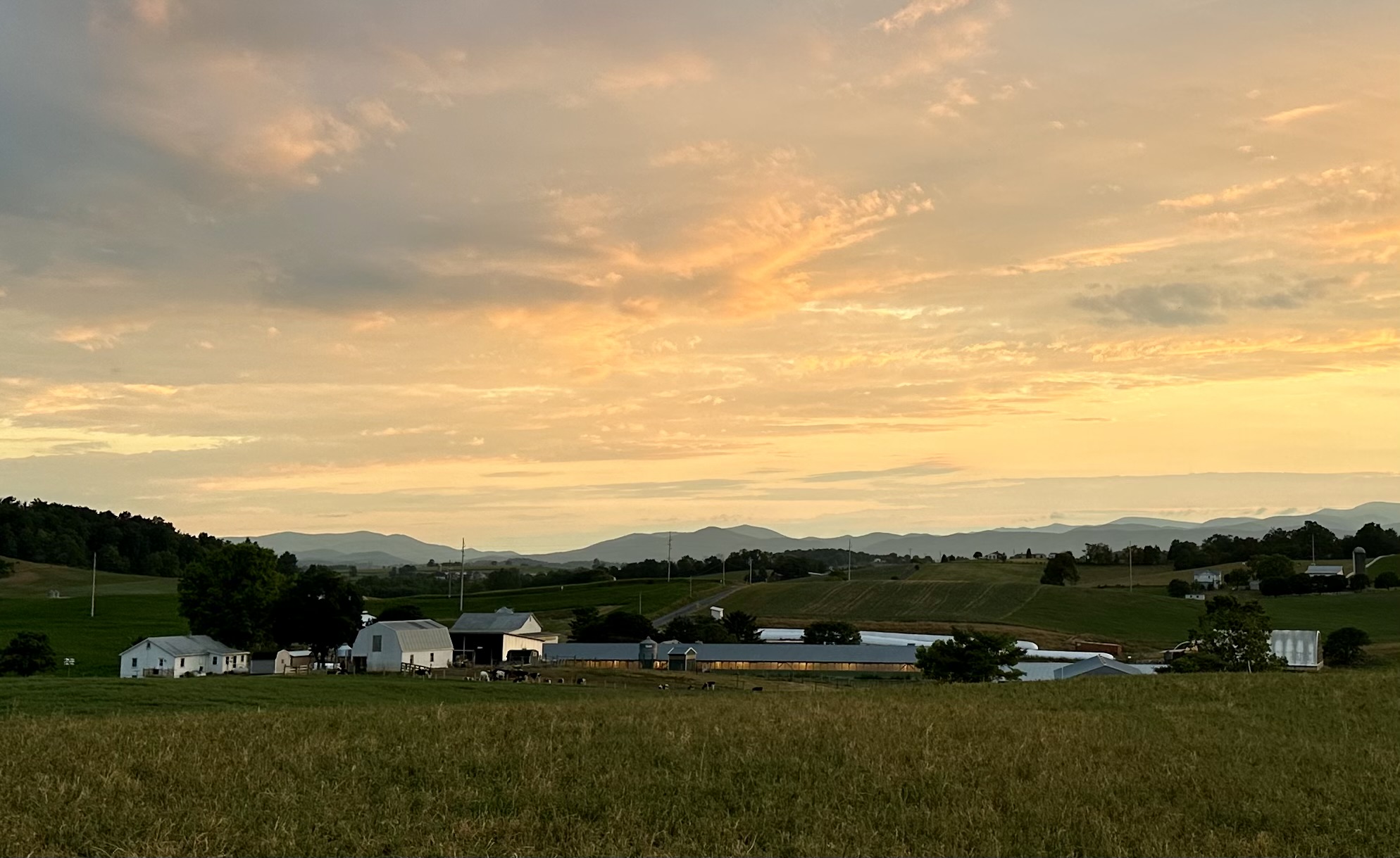


Please click on the photos to view them in full size.
Flowers
© Bruce Stambaugh 2025

I went for the birds and the blossoms, but forgot about the bugs. They didn’t deter me, however.
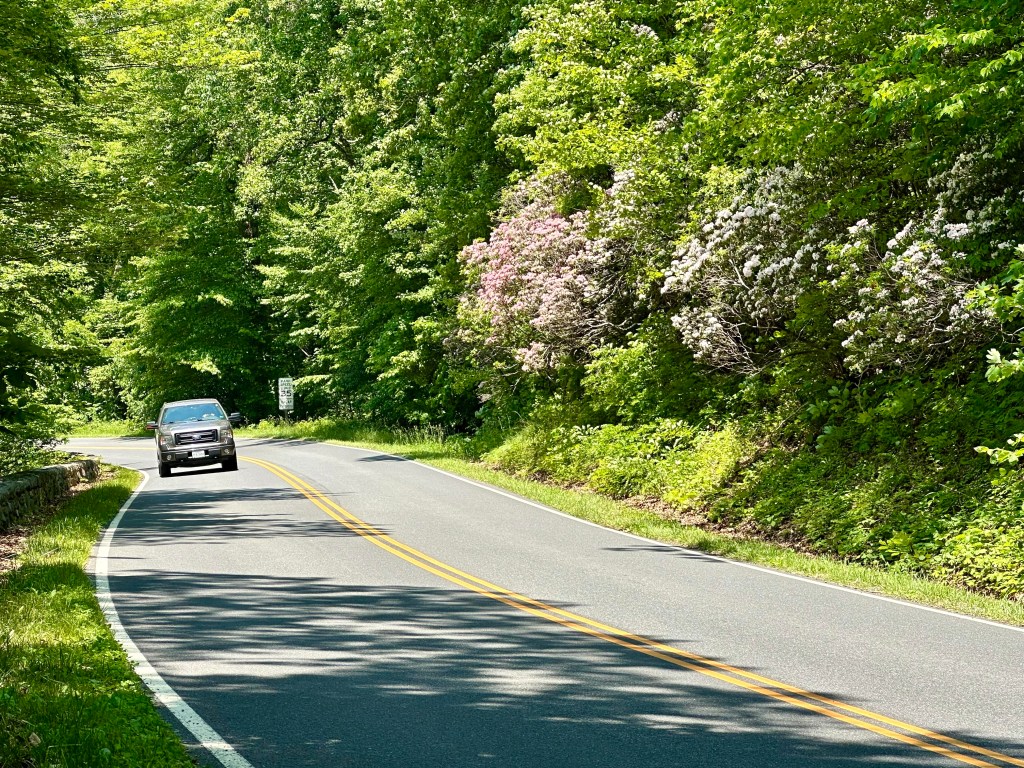
My neighbor had told me that the Mountain Laurel bushes were blooming at various locations in Shenandoah National Park, just a short drive from my home. The laurel blooms from late May into mid-June, depending on elevation.
Of course, I had to see for myself. I fixed a hiker’s lunch, packed my binoculars, camera, and a couple of jackets, and headed out. It’s often 10 degrees or more cooler in the mountains than in the Shenandoah Valley, where I live.
I didn’t need to bother with the jackets. The temperature was 70 degrees when I arrived, and it was humid, with little to no breeze. It was 79 when I left.
A small black bear cub greeted me not long after I entered the park. Fortunately, it scampered back off the old stone wall away from the road and into the forest.
I soon reached my first destination. Just a short distance off Skyline Drive, I reached the Appalachian Trail, which crossed a fire road. I didn’t see any Mountain Laurel, but songbirds were plentiful. So were the knats and mosquitoes.

I strolled along the AT, swatting at the pesky bugs and trying to locate the many warblers I was hearing and recording on my smartphone’s birding app. Singing its unmistakable “drink your tea” melody, a male Eastern Towhee posed for a photo on a limb hanging right over the trail.
I met a lone through-hiker from South Carolina. She hoped to reach Mt. Kadadhin in Maine by mid-September. She told me she had passed many stands of Mountain Laurel on her hike so far, which began at the Appalachian Trail’s traditional starting point, Springer Mountain, in Georgia.
She headed north while I retraced my steps to my vehicle. The birdsong was terrific, but the forest’s full foliage made it challenging for this old guy to spot the warblers as they flitted from one branch to another, munching on their insect smorgasbord.
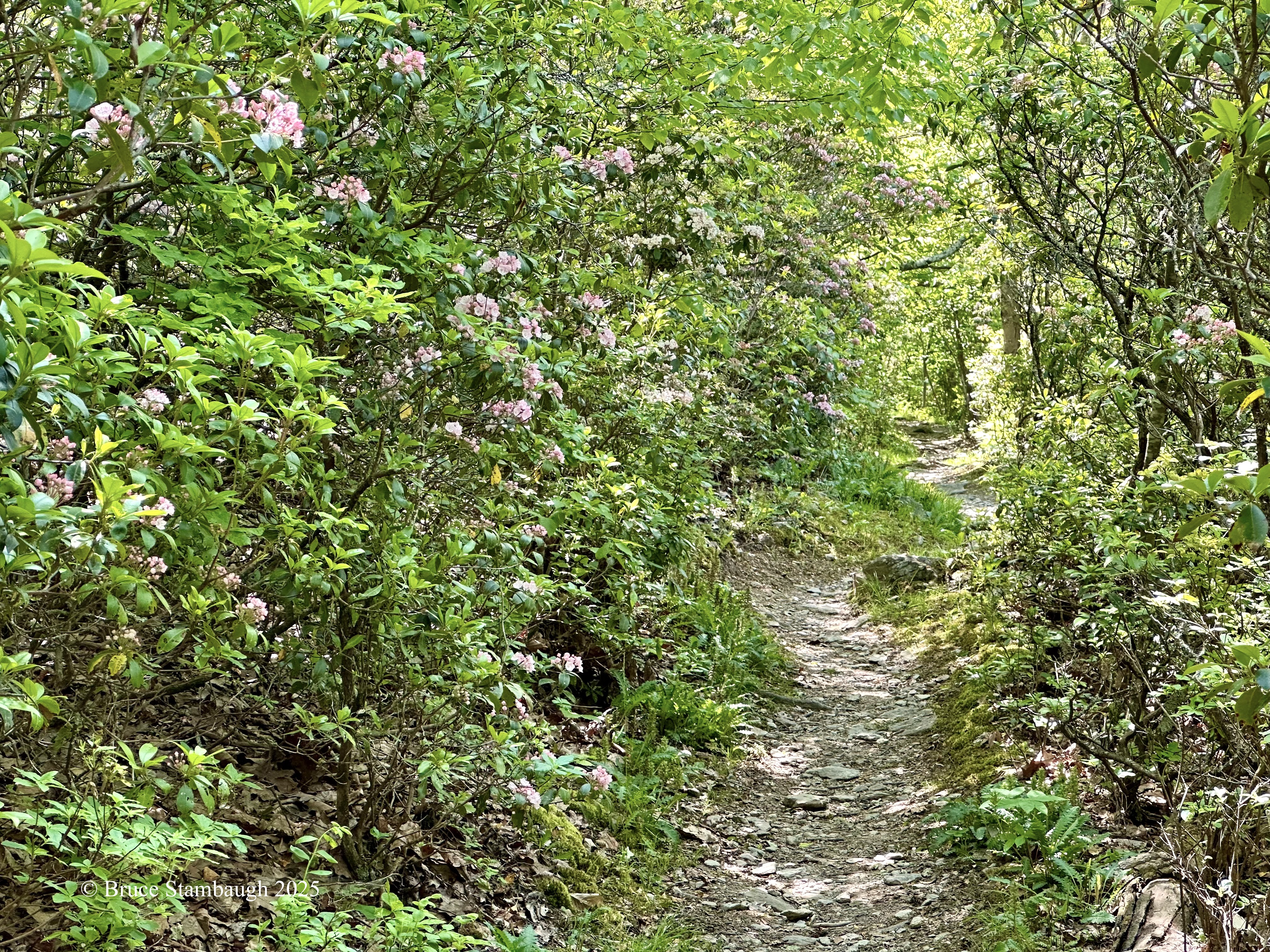


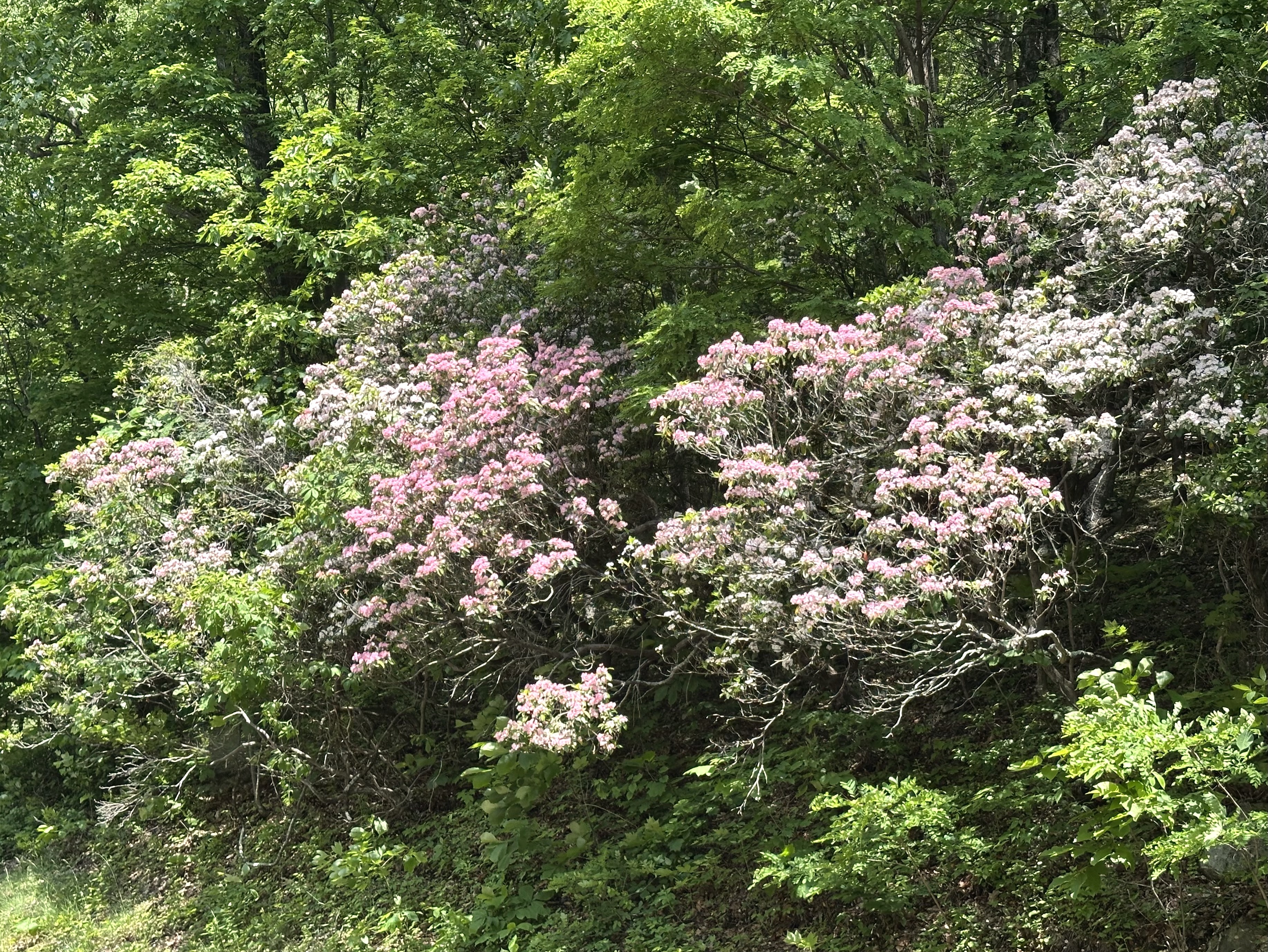
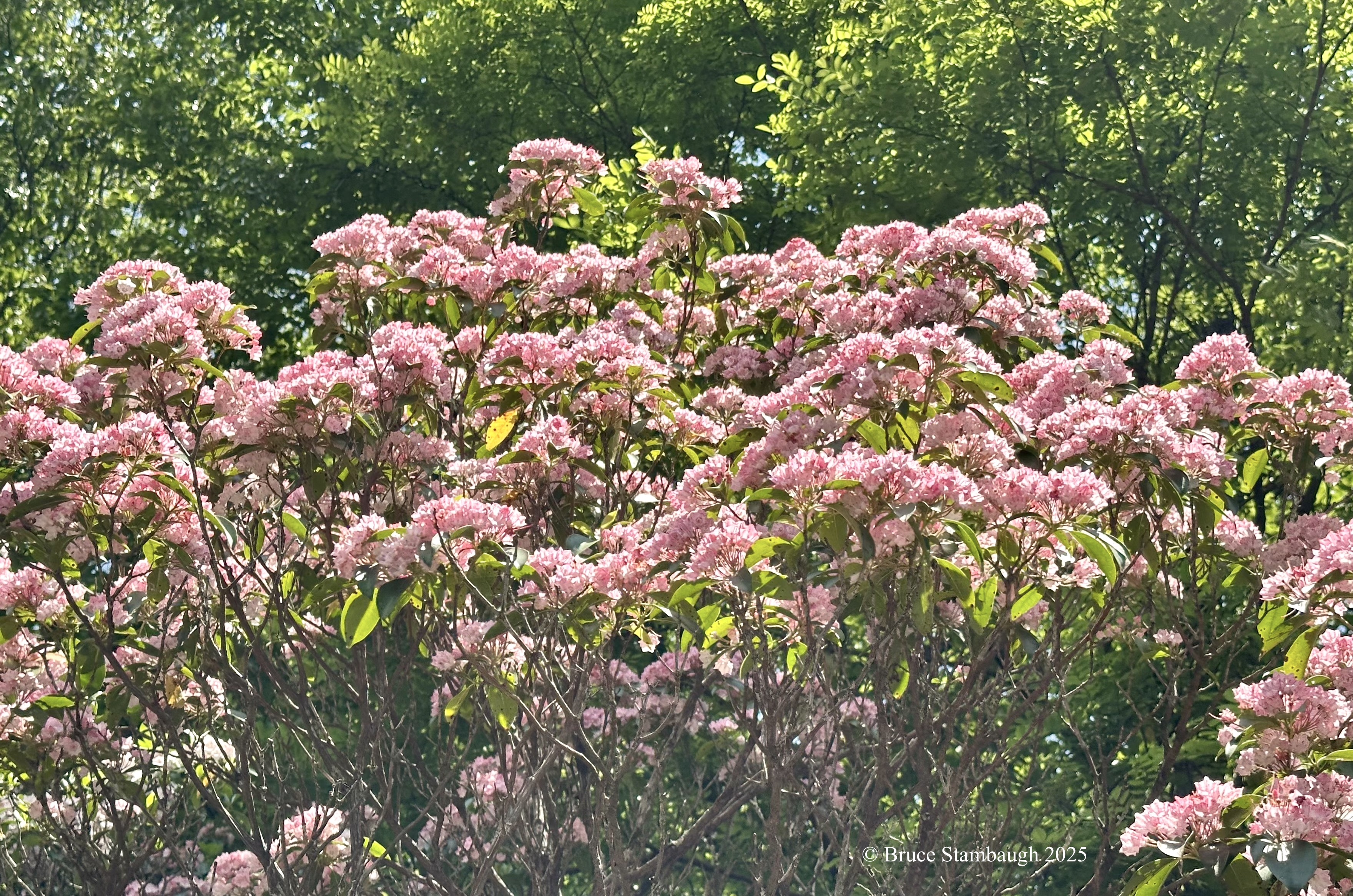
Besides, my main goal was to photograph the blooming Mountain Laurel. I followed my neighbor’s directions to another section of the AT, where the Mountain Laurel was so prolific that it formed a floral tunnel.
The laurels were in all stages of blooming, from tight pink buds to hexagonal flowers in full bloom. In places, the sun filtered through the forest canopy, highlighting the beauty before me.
The laurel blooms offered no fragrance, and I never saw an insect of any kind on any of the hundreds of blossoms. There was a good reason for that. As pretty as the prized flowers are, they are poisonous to any living creature. Every part of the plant is toxic.
So, if someone offers you Mountain Laurel honey, politely decline. Merely enjoy the flowers with their evergreen leaves. If you go, make sure you take your favorite bug spray.
© Bruce Stambaugh 2025
Wildlife Photos From The Chesapeake Bay Region
Culture and Communities at the Heart Of India
Artist and nature journalist in the Shenandoah Valley of Virginia.
Photographer Of Life and moments
Personal Blog
Art is the only way to run away without leaving home. -Twyla Tharp
Writing generated from the rural life
writer. teacher. podcast cohost.
El amor cruza fronteras / Love crosses borders









 Roadkill Crossing
You must be logged in to post a comment.