We were up early to catch a short flight to the island of Samos. In fact, the trip to the airport took longer than the flight.
Morning traffic on the way to the Athens airport.
We went to Samos because it was one of the ports where a ship carrying the Apostle Paul stopped. From Acts 20, verse 15, it appears it was simply an overnight stay. The island was the birthplace of two influential men, Pythagoras and Epicurus.
The town where Paul stayed is called Pythagoreio in honor of the famous mathematician. A statue honoring Pythagoras is situated midway on one of the town’s harbor piers.
It wasn’t just his math abilities that garnered great respect for Pythagoras. A giant underground aqueduct was dug through the mountainside in the 6th century B.C. to gain a regular fresh water supply. The Eupalinian Tunnel ran nearly 3,400 feet through Mount Kastro to bring potable water from the island’s west side.
The Cup of Justice.
Conditions for digging the tunnel were horrible, and workers argued about the fairness of their wages, paid in wine and bread. Workers claimed they had slaved harder than others. To solve this dilemma, Pythagoras invented the Cup of Justice, also called the Pythagorean Cup, so that all workers received their fair share.
The cup has a protrusion in its middle and a line around the inside to show how much wine should be poured into it. Should a worker fill the cup beyond the line, the cup would rapidly drain its contents via a siphon system. That ingenious device halted the arguing and greed of some of the workers. Artisans produce the cups and decorate them to be sold to tourists. Of course, we bought one.
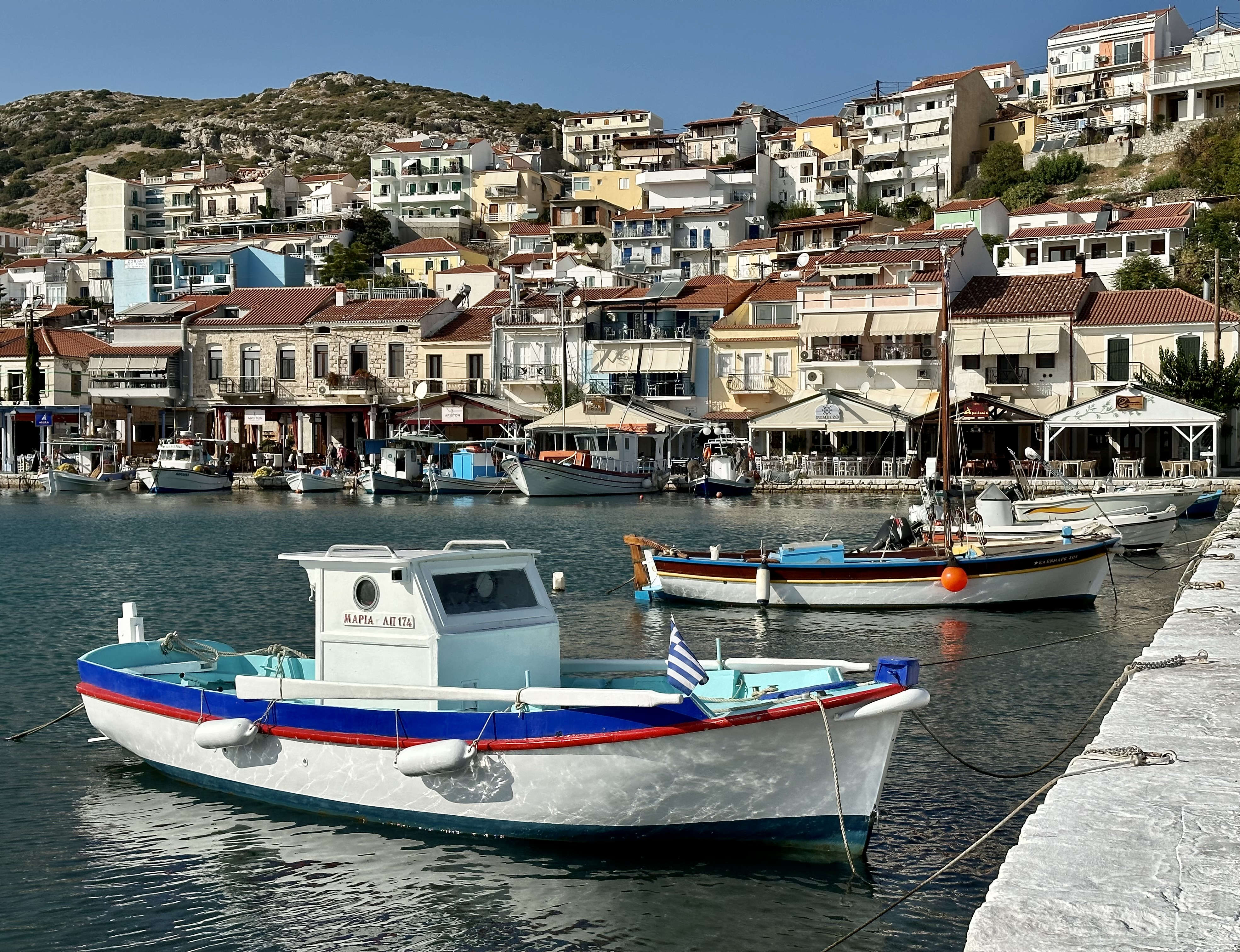
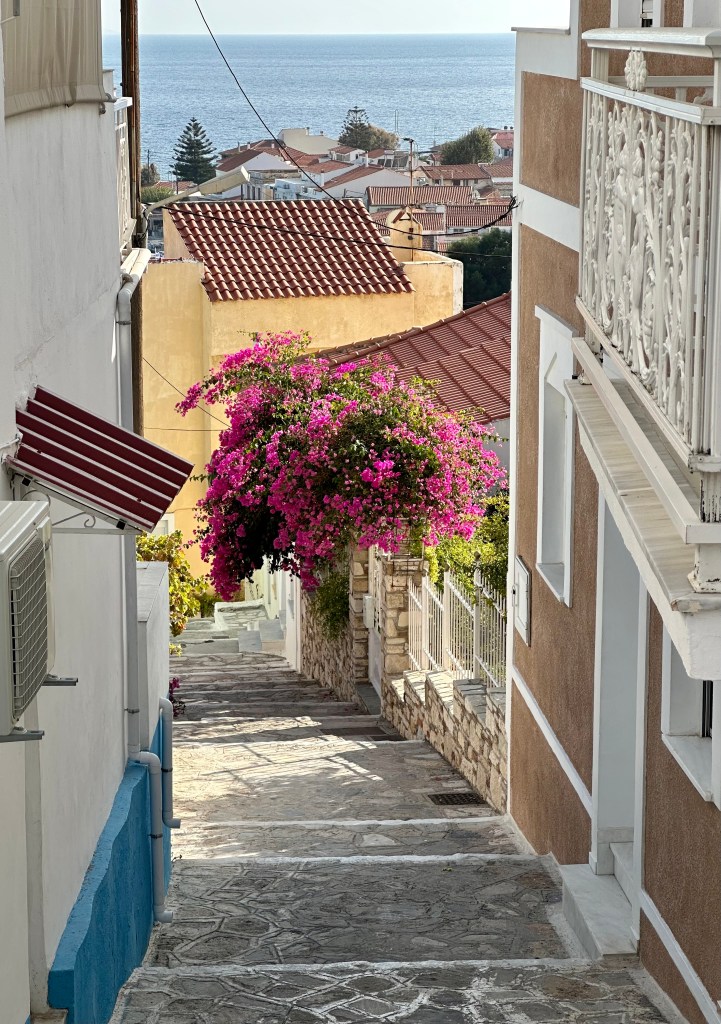
Our time in Samos was joyous and relaxing. We had lots of free time to explore the town with its cobblestone streets and sidewalks, find our own restaurants, and enjoy the quiet and beauty.
As we explored Pythagereio, we discovered many wonderful alleys and buildings. An old castle and the adjacent church were still closed due to damage from an earthquake a few years ago.
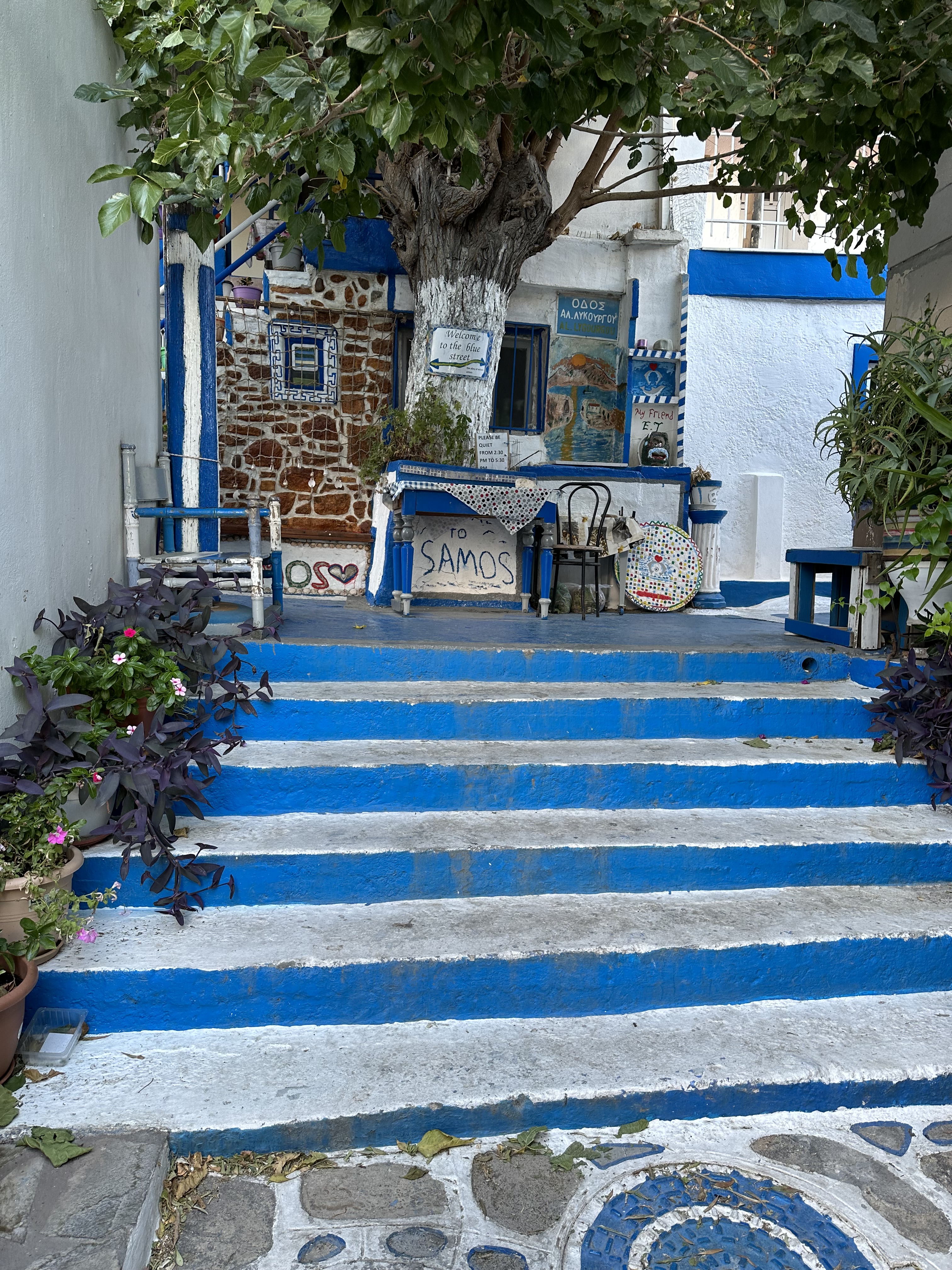
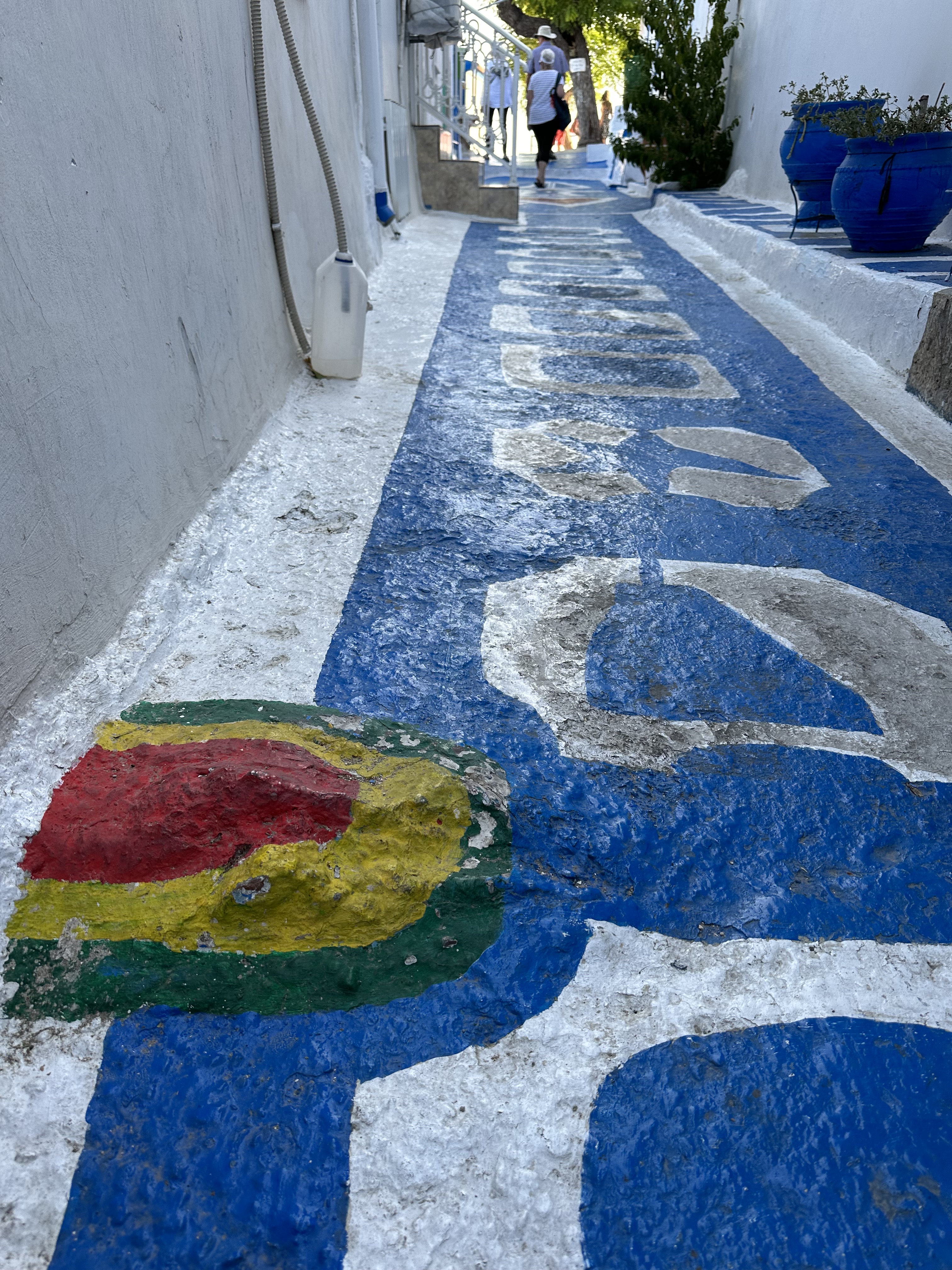
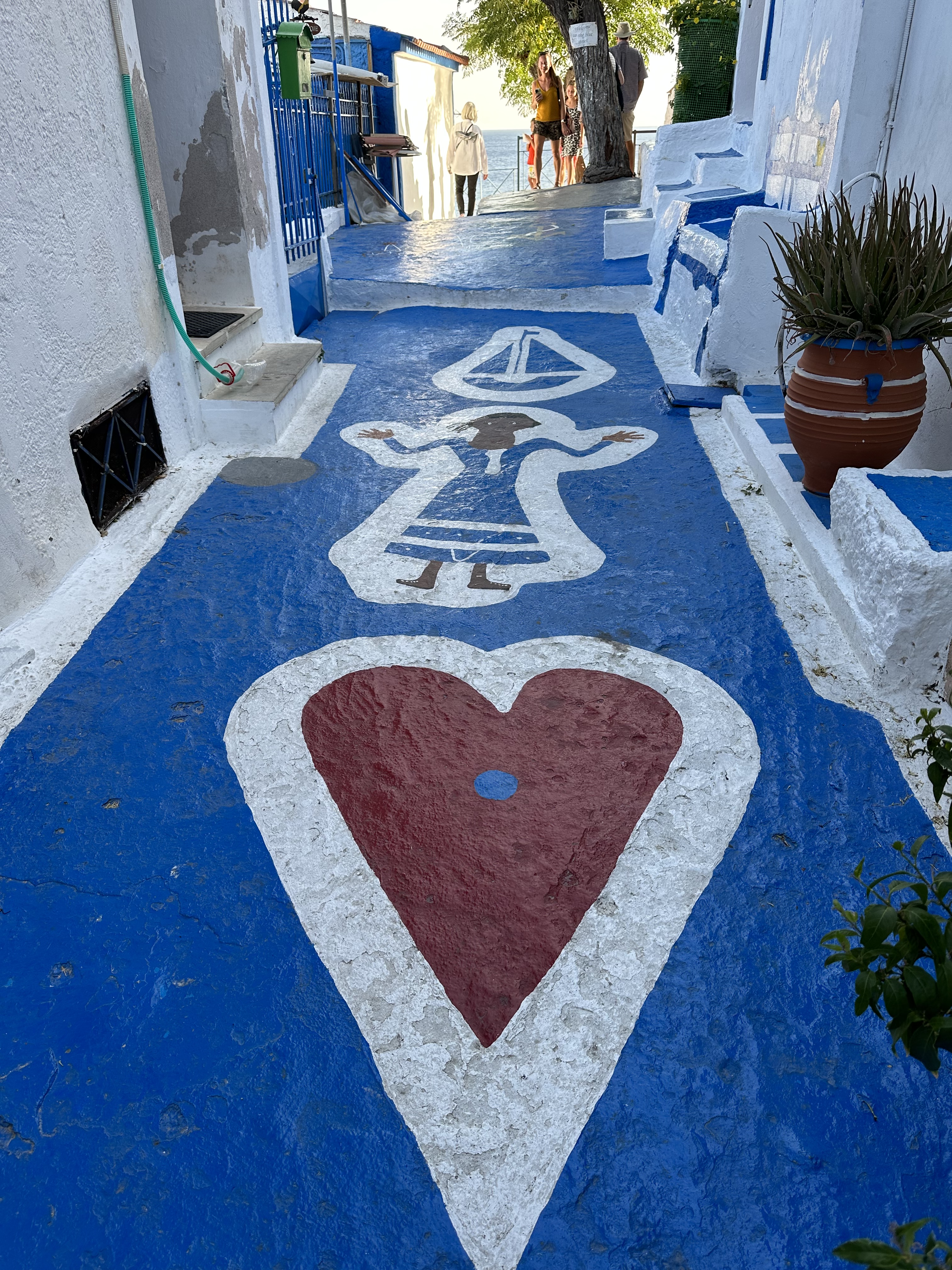
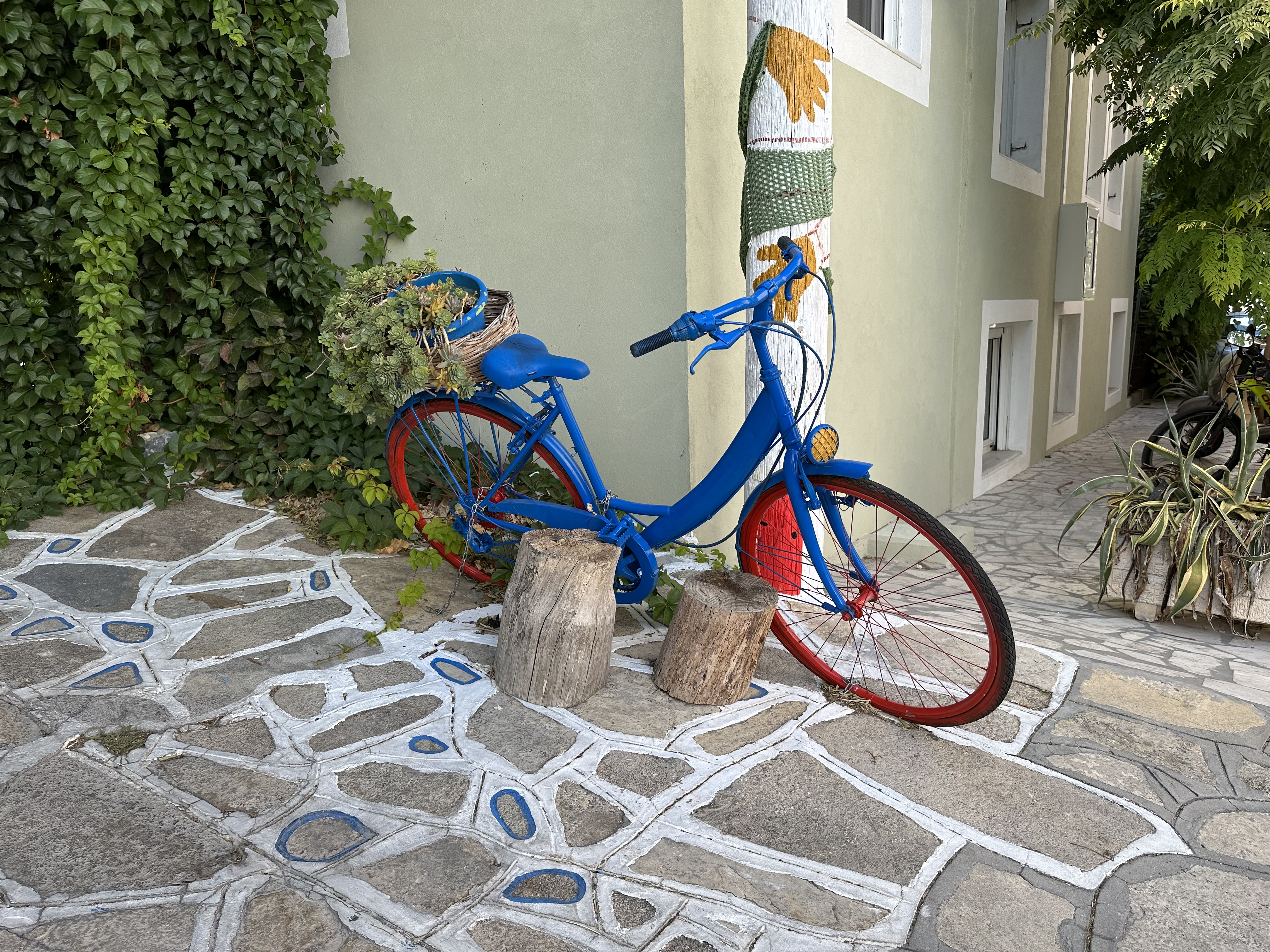
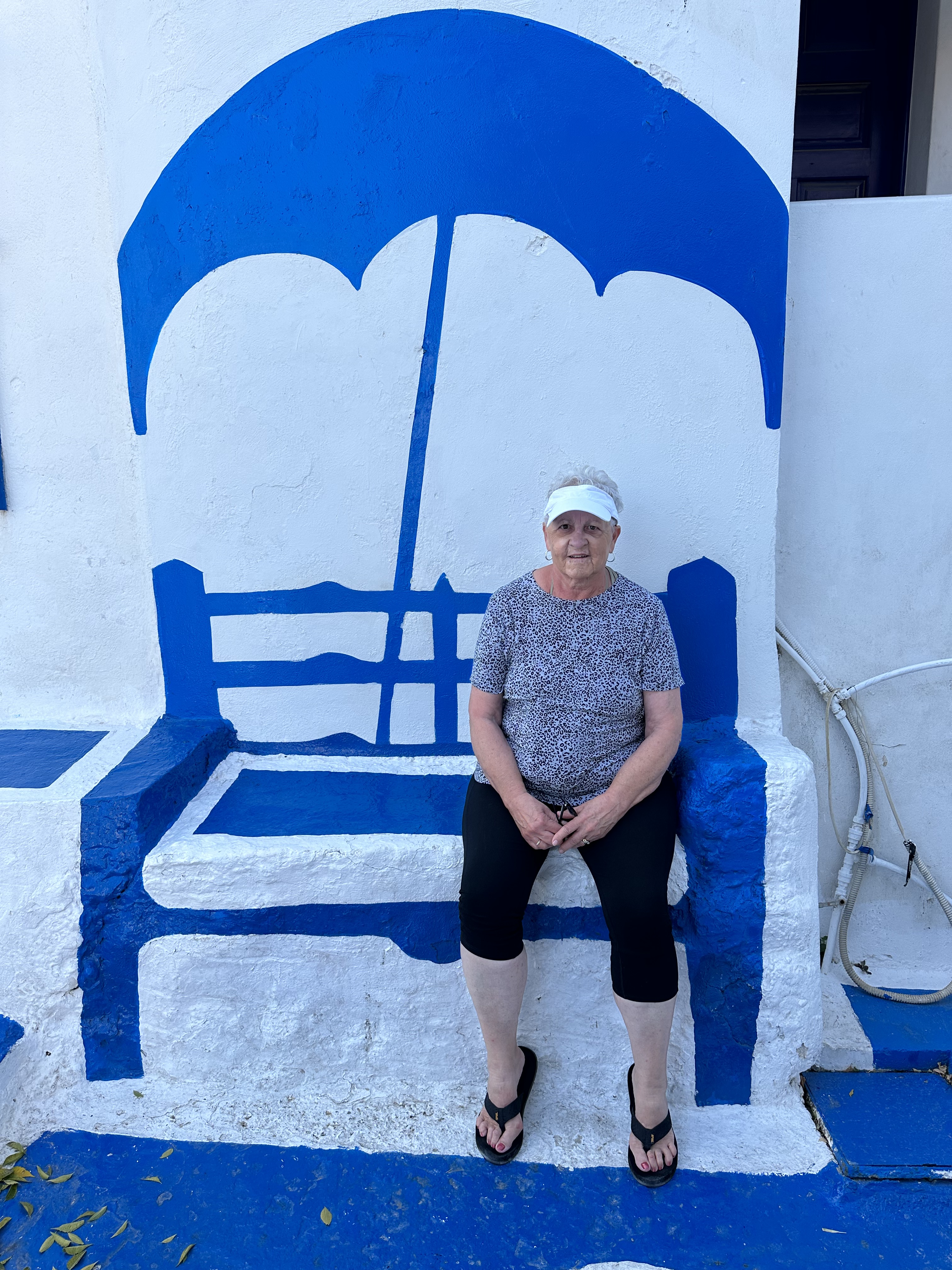
Just down the hill was Blue Street, not much more than a sidewalk with most everything painted blue by the local retired artists who lived there. We found their creations fun and attractive. They painted everything from manhole covers to doorways.
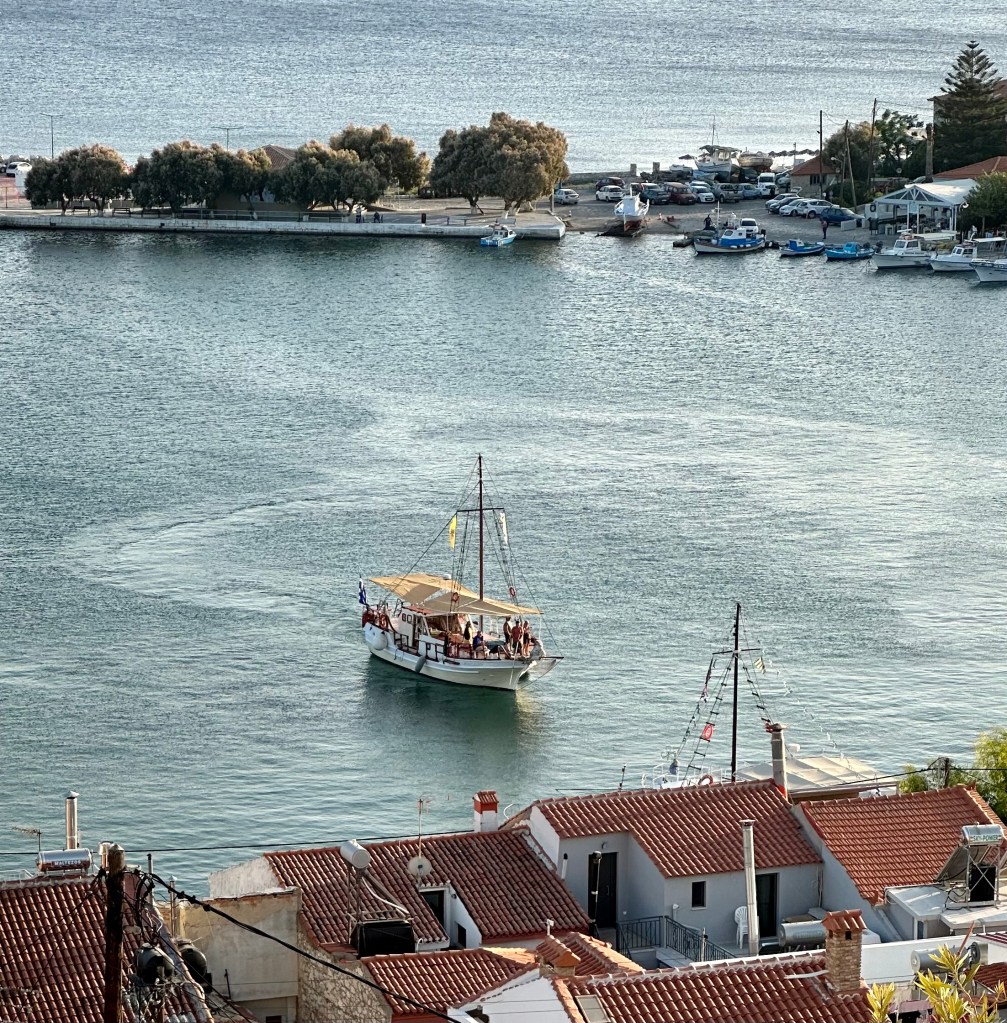
Most of all, though, my wife and I simply enjoyed sitting on a bench near the customs station on the harbor. We viewed the quaint town from our seats and enjoyed watching a few boats come and go.
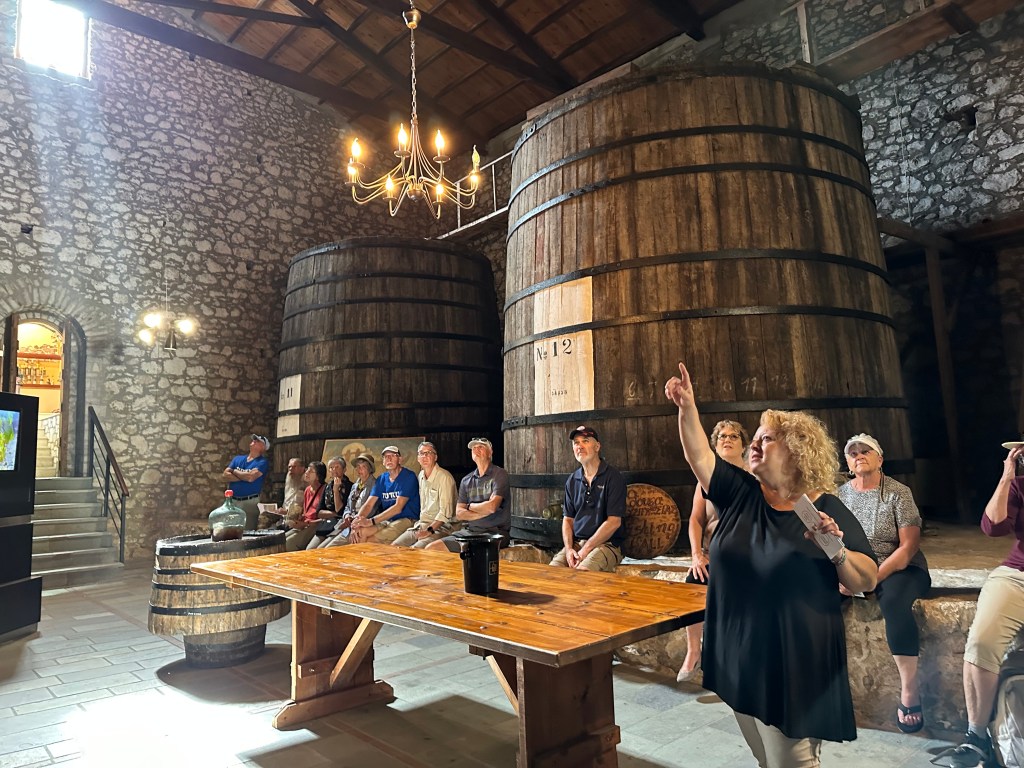
On the second day, we rode a bus to the western part of the island and toured a wine museum. Samos is famous for its sweet Muscot wine. The island’s western side is much more lush than the leeward side since it rains more.
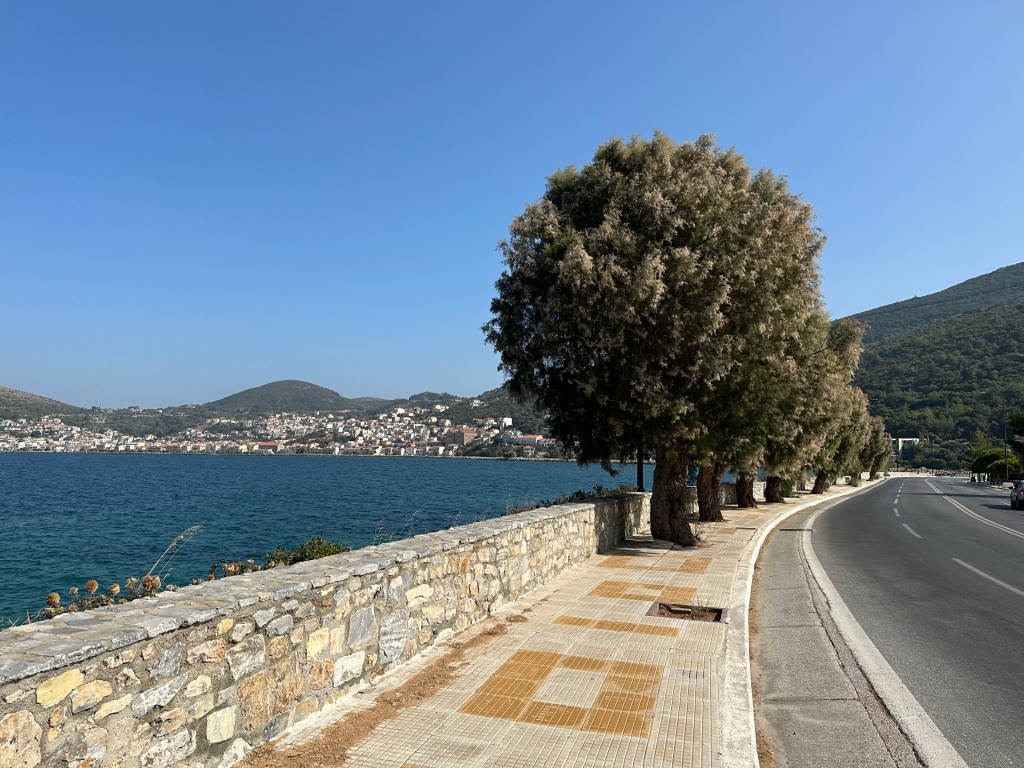
Once we started downhill toward the town of Vathy, the greenery of trees, shrubs, and grasses stood in stark contrast to the arid brushy topography on the eastern side. We also visited a monastery above Pythagereio containing a cave and a chapel. It wasn’t far from the aqueduct tunnel.
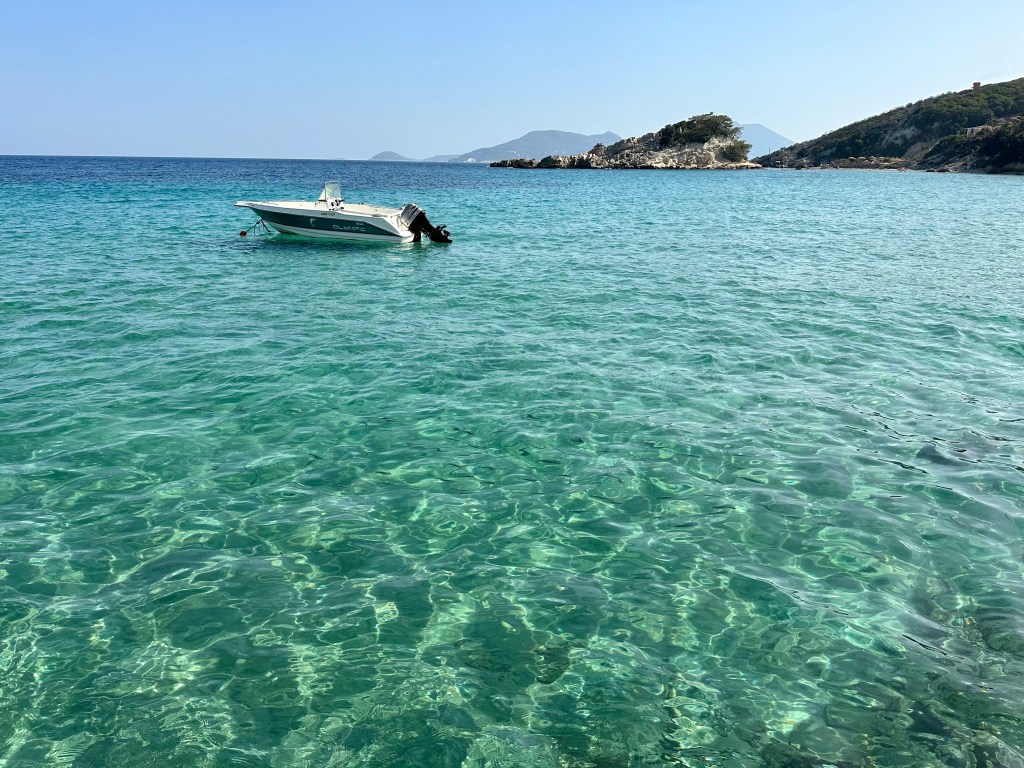
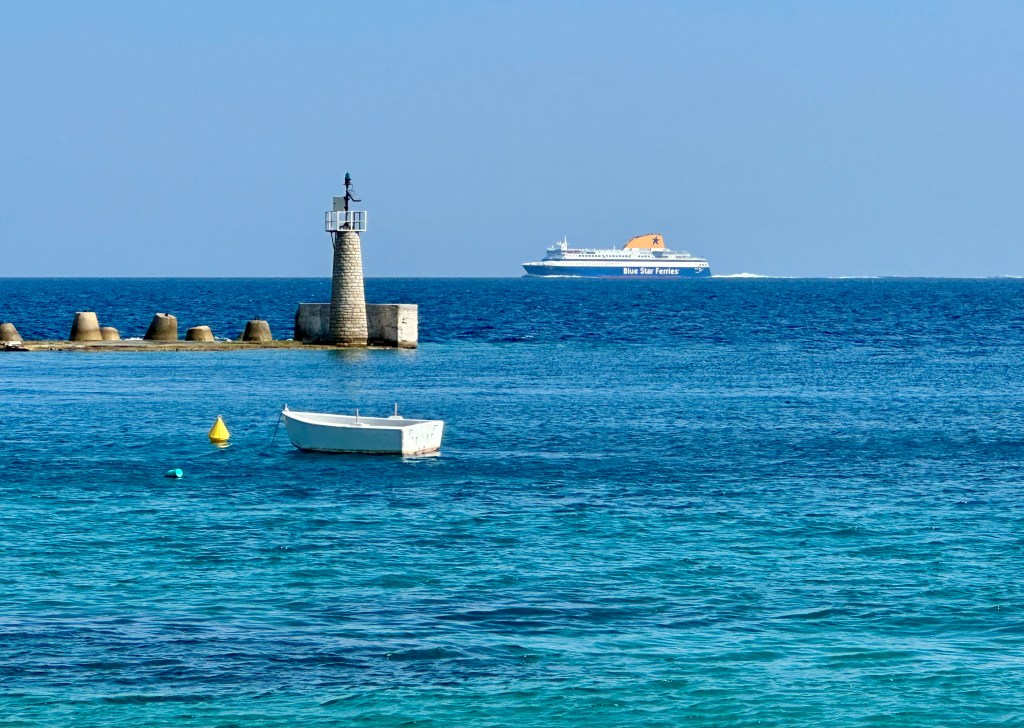
Samos is separated from Turkey by the mile-wide Mycale Strait in the eastern Aegean Sea. The Greek navy maintains a station on Samos with several boats moored in the harbor. We enjoyed the sunrises over the mountains in Turkey.
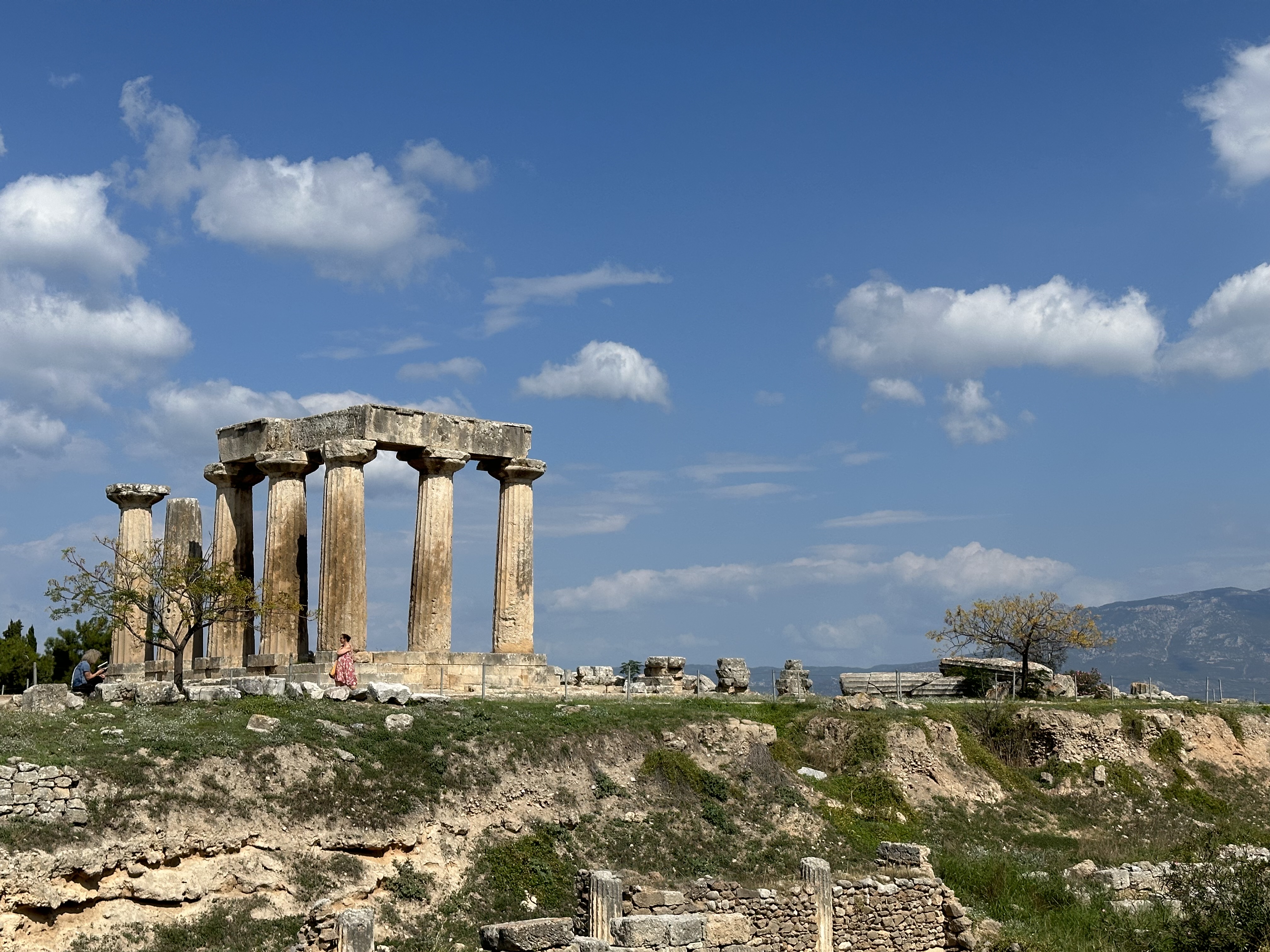
On the third day, we boarded a bus and drove to Ancient Corinth, where the Apostle Paul spent at least a year and a half. He joined Aquila and Priscilla, who were also tentmakers. Emperor Claudius had banned them and all other Jews from Rome, so they fled to Corinth.
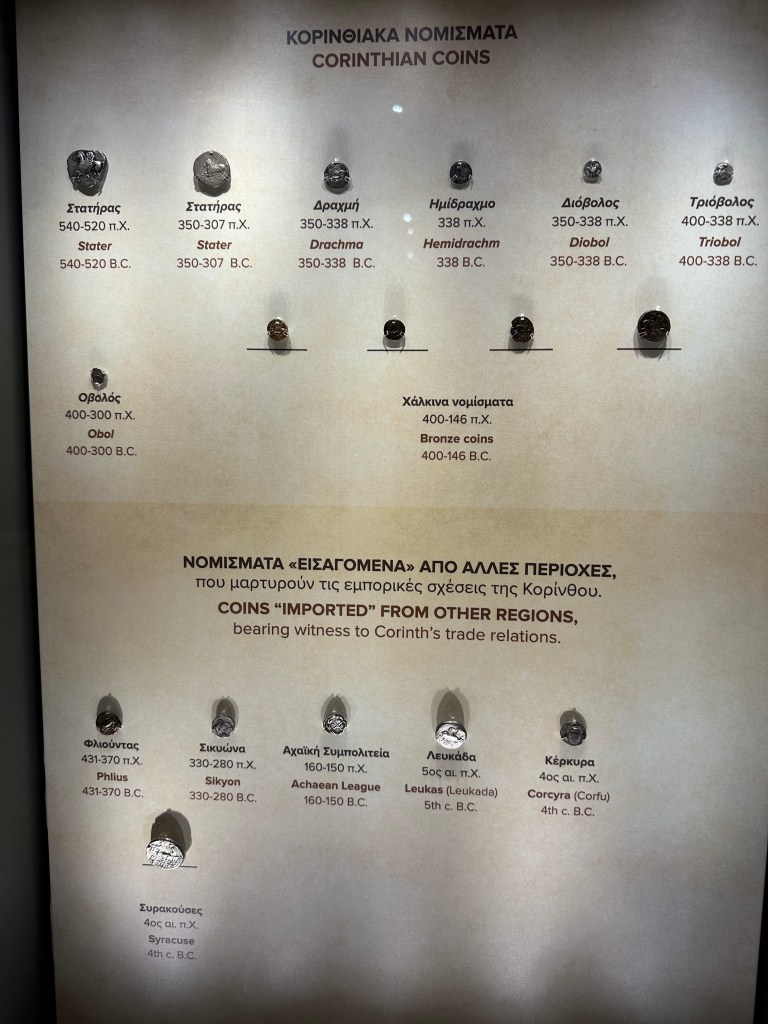
In its time, Corinth was a prominent trading port for goods going east and west. Consequently, Corinth buzzed with the wide assortment of folks, many sailors happy to have their feet back on the ground. Paul took note of the various cultures, ethnic groups, and religions represented in this mass of people coming and going.
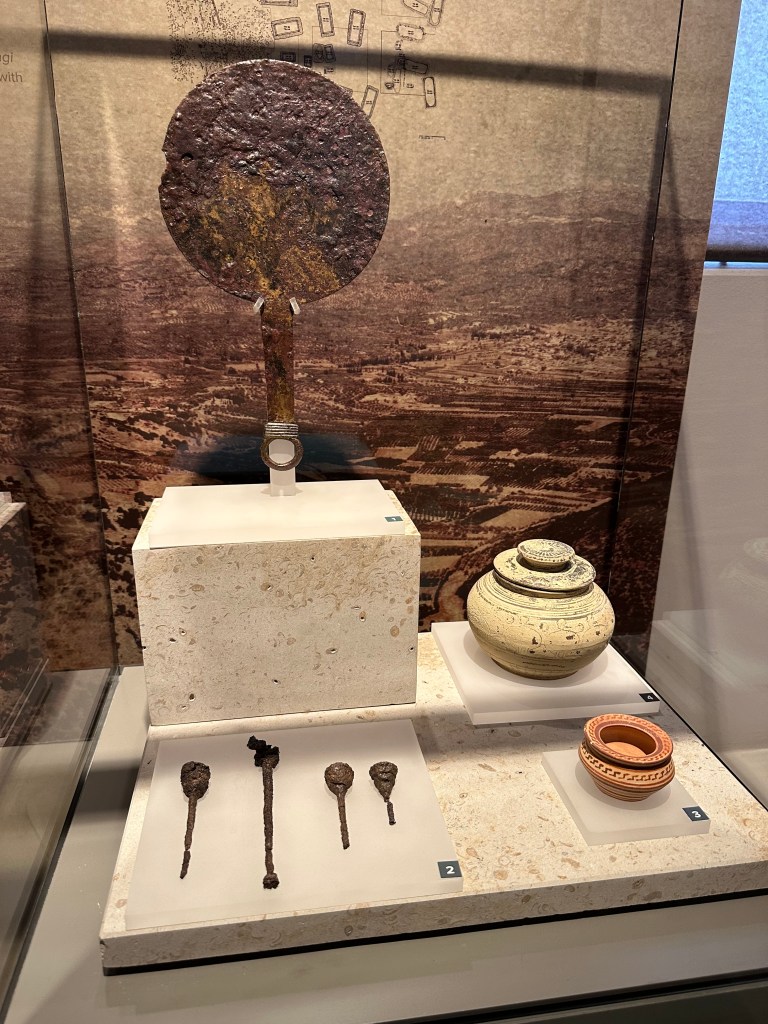
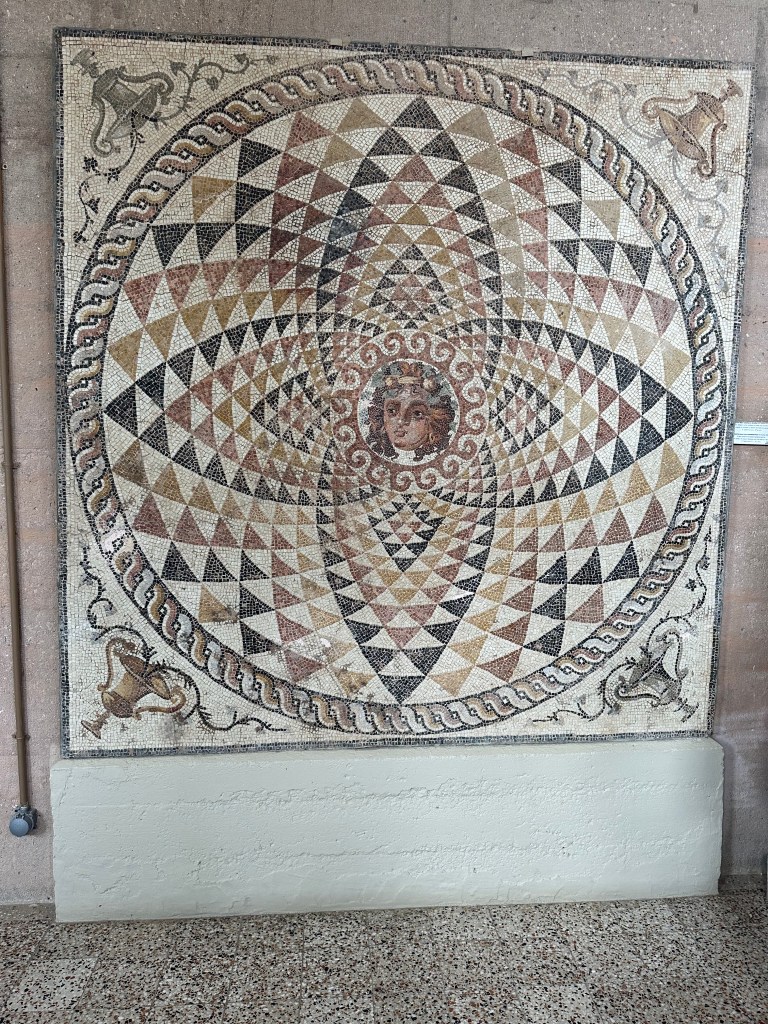
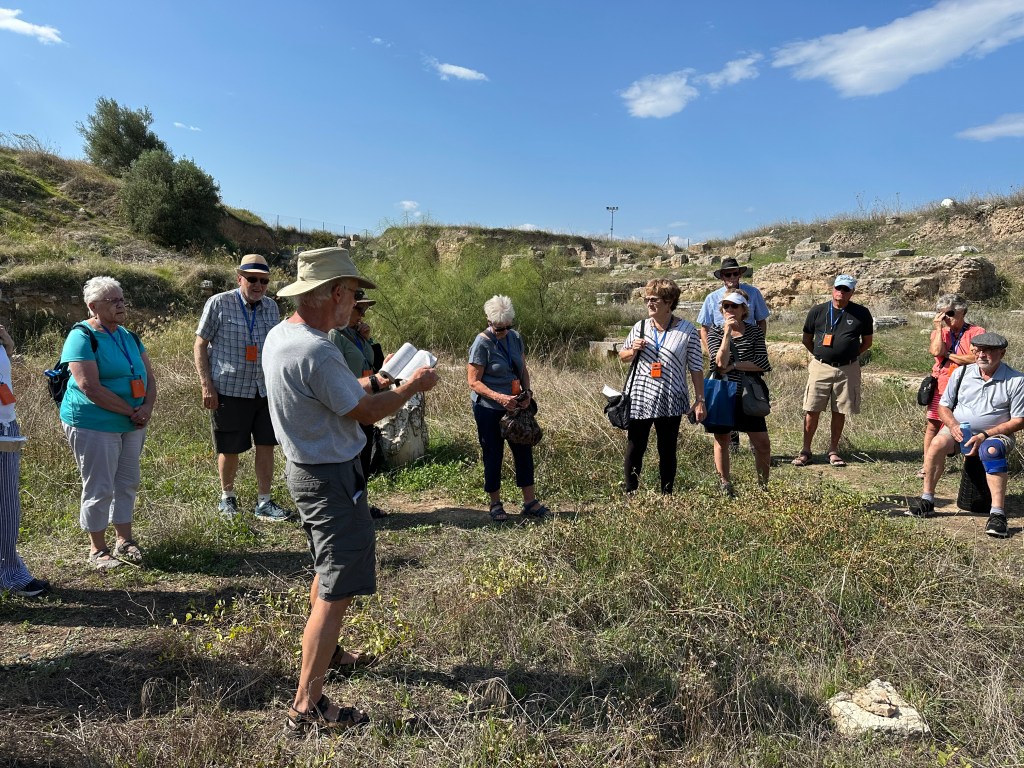
Our local guide gave us a tour of the Corinthian Museum, which displayed many curious artifacts. We sat under the shade of a large tree as our tour guide, Linford, gave us the biblical background and scriptures of Paul’s time in Corinth.
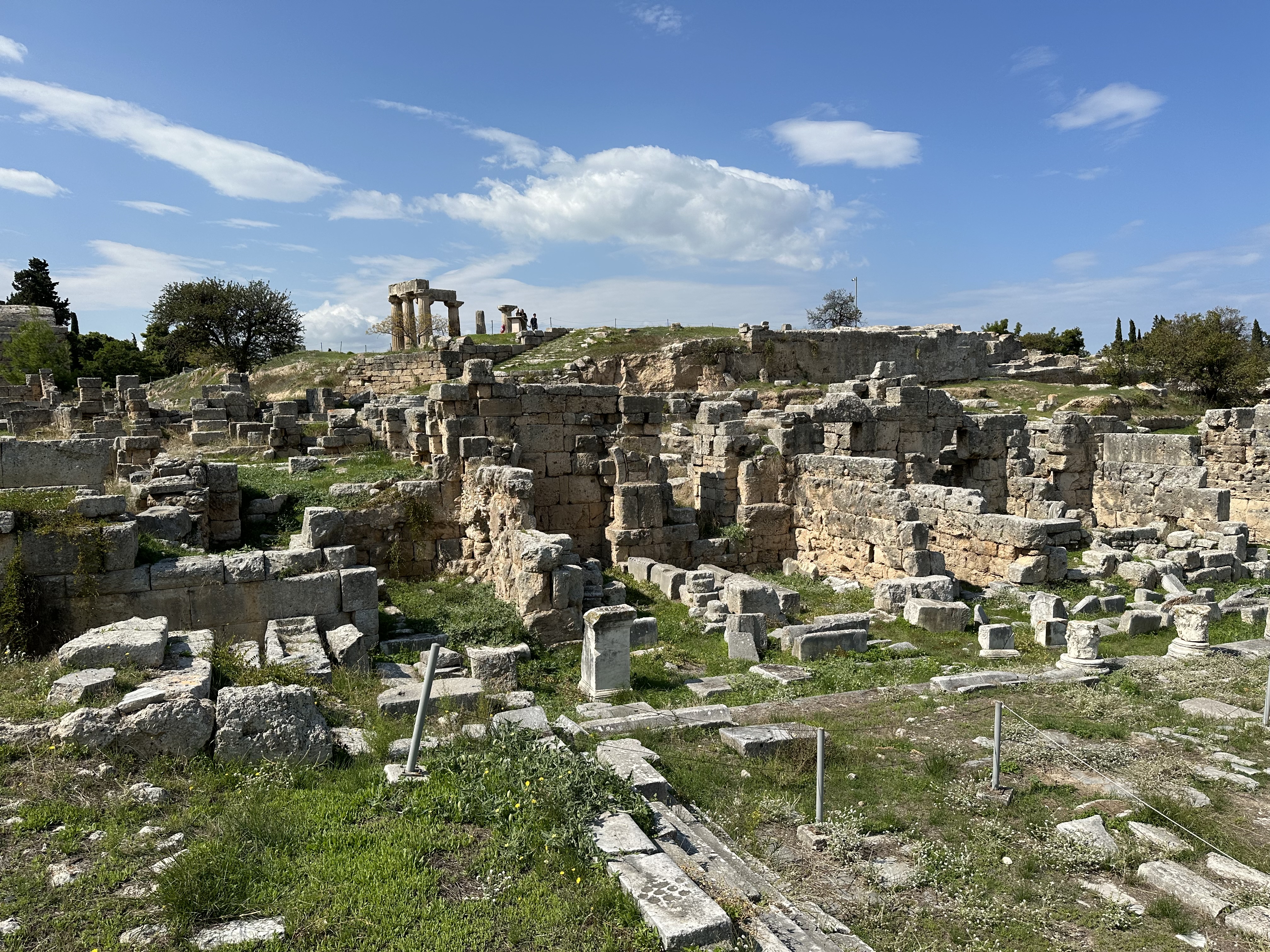
We were then free to roam the ruins under a beautiful blue sky. It was clear that Corinth was booming when Paul lived there in the first century.
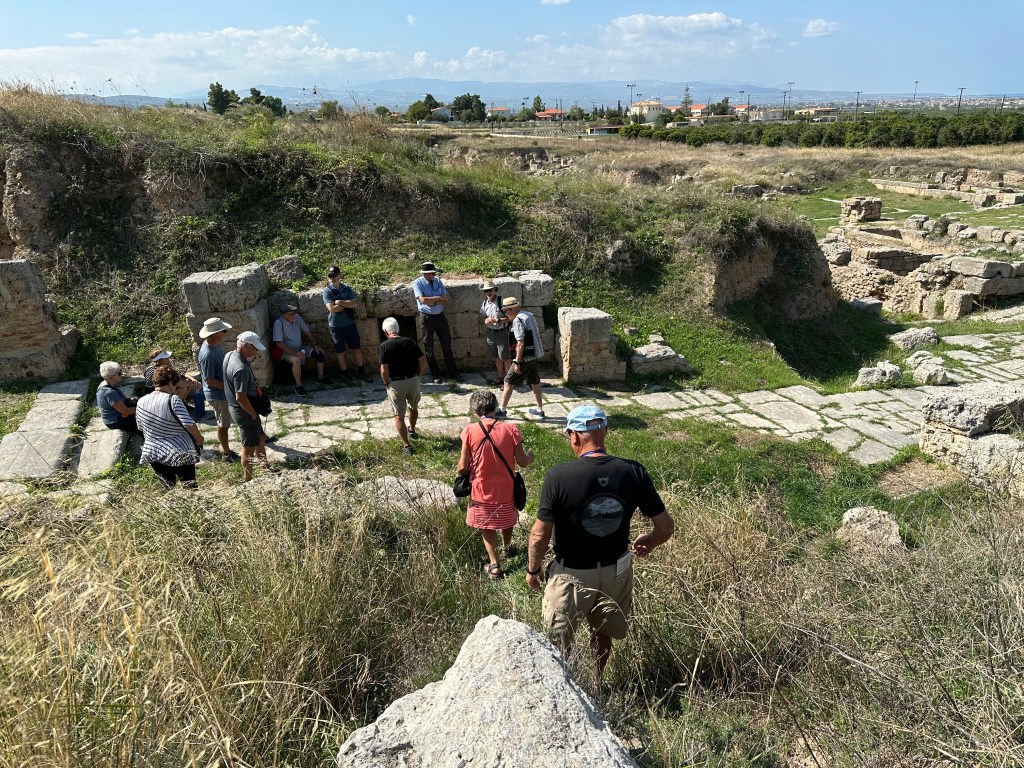
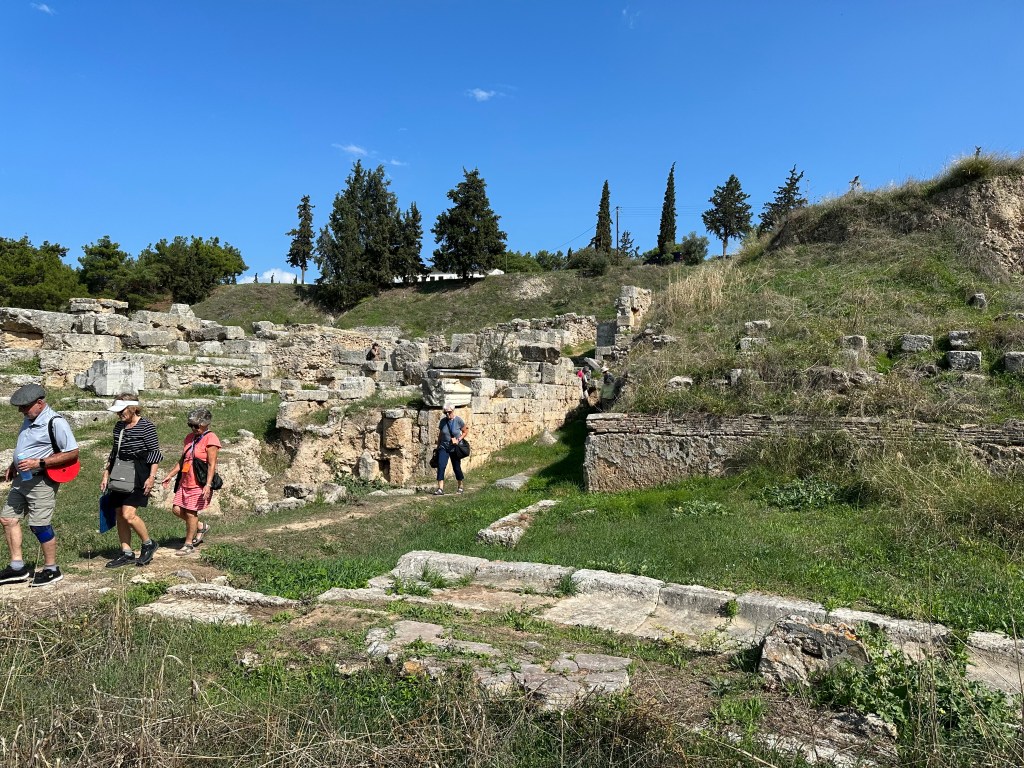
After a light lunch in a family-owned cafe outside the gates of Corinth, Linford led us down a hill towards the Gulf of Corinth. He had a couple surprises for us. We walked across an ancient Roman road into the ruins of an old theater, where the sailors, merchants, and residents were entertained.
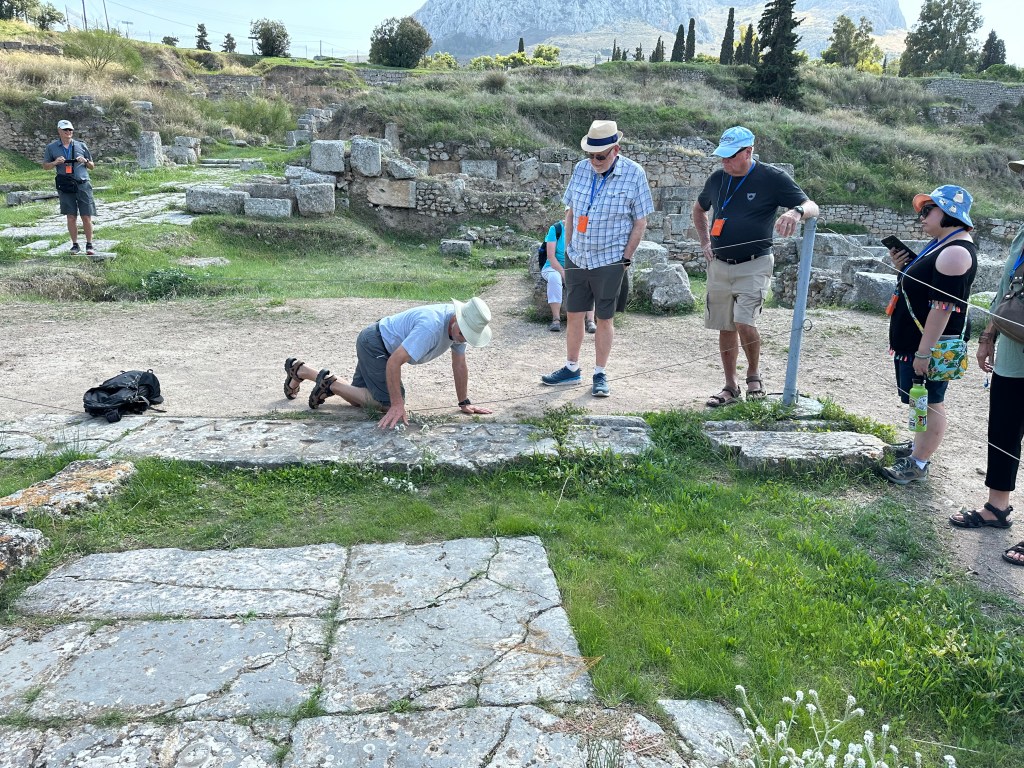
The first surprise was that this theater could be flooded to allow for seafaring-themed performances with which the sailors in the audience could connect. The second surprise was an etching on a large stone that bordered the road just outside the theater.
The engraving honored Erastus, the city’s director of public works. Paul mentioned Erastus in Romans 16:23, giving unequivocal evidence that Paul was indeed in Corinth.
Please click on the photos to enlarge them.
Before leaving the area, the bus took us to the Acrocorinth, a fortification on the mountain beyond Old Corinth. We had a beautiful view of the sea below. On the way to Cornith, we had stopped at the Cornith Canal, a four-mile-long channel cut through solid rock designed to shorten the route for sailing boats.
This was a day I had long anticipated. Neither my wife nor I had ever been to Greece, and I especially looked forward to visiting the Acropolis. Our tour group of two dozen people saw some of the locations the Apostle Paul did on his multiple trips around the Mediterranean Sea. Linford Stutzman, a retired professor from Eastern Mennonite University in Harrisonburg, Virginia, and his wife, Janet, led the trip.
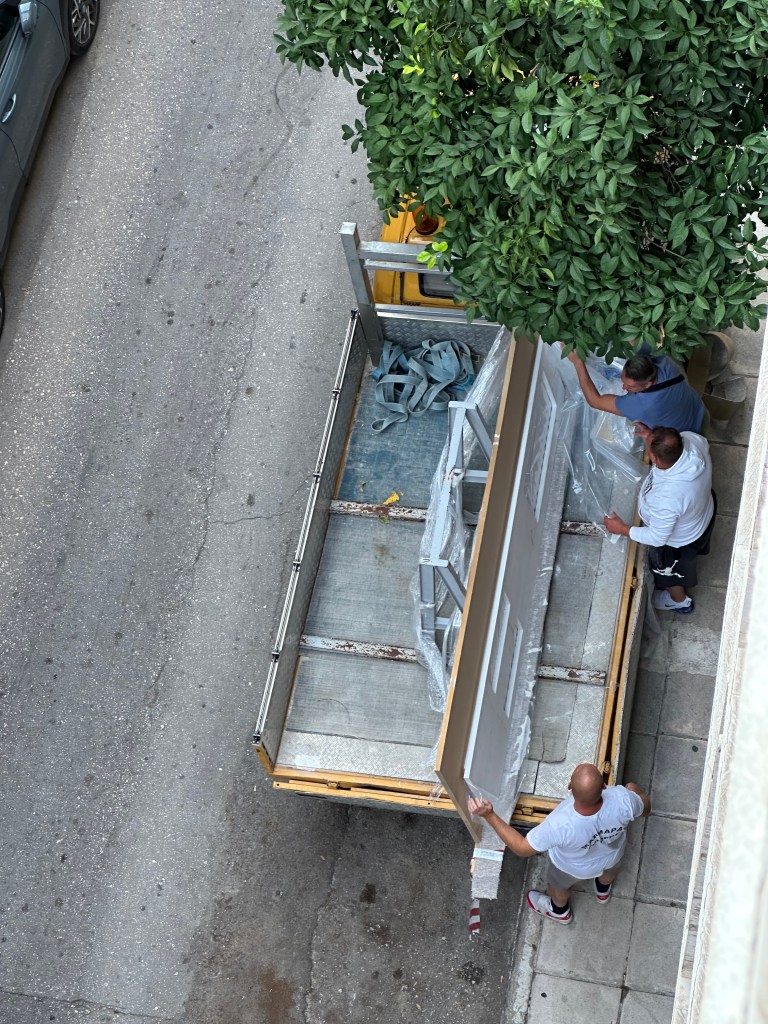
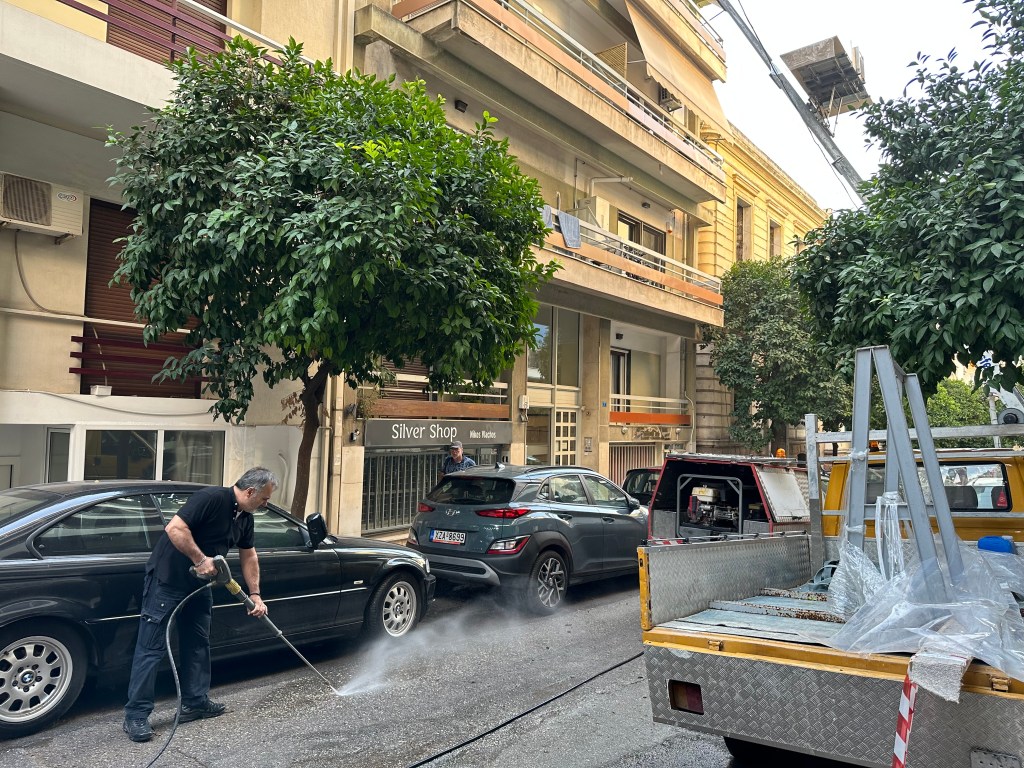
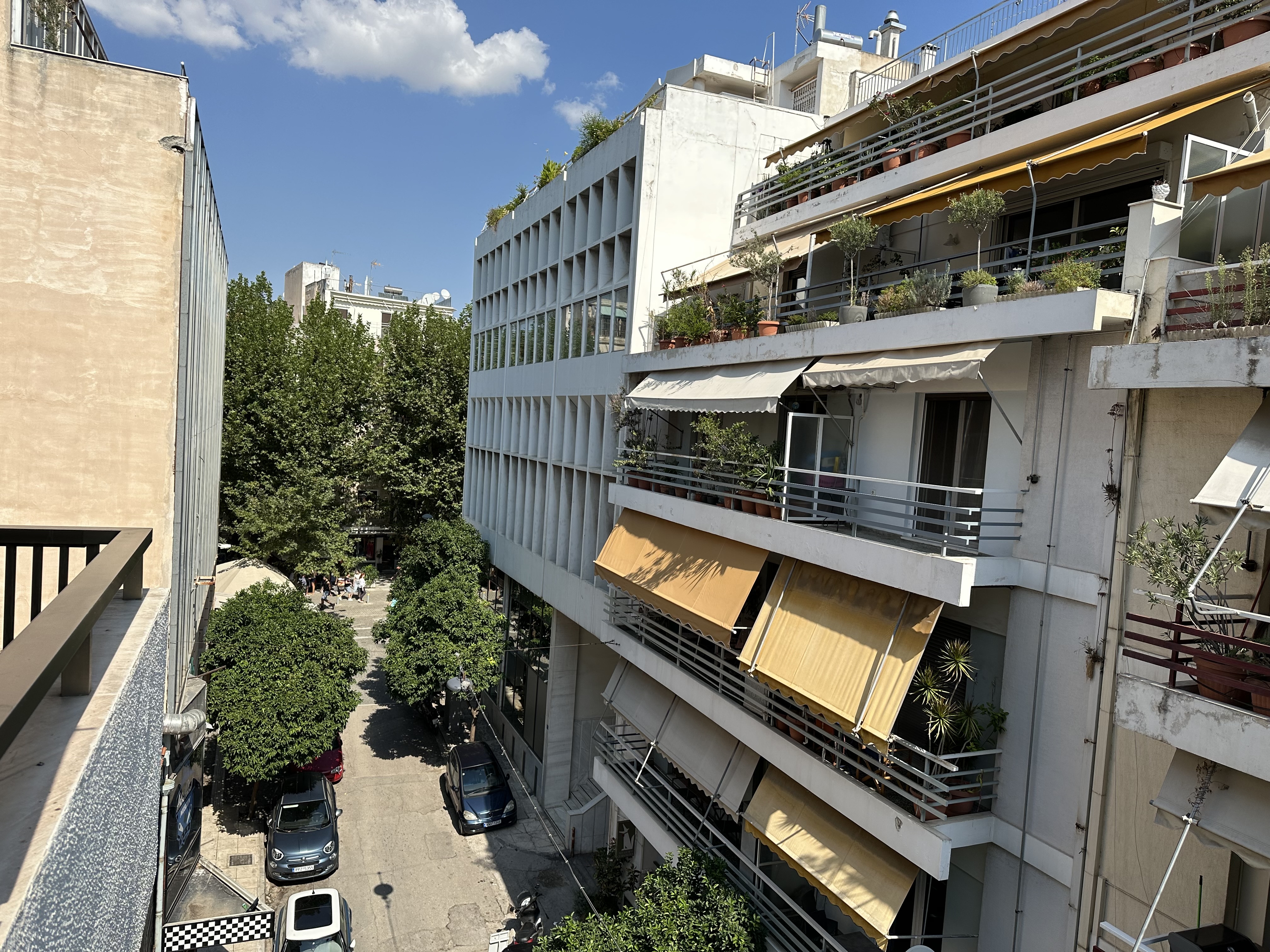
The Acropolis was an easy walk from our hotel in Athens. Before we gathered on the narrow street in front of the hotel, I noticed a large crane extending from our side of the street to the top floor of the apartment building across the way. It was set up to deliver some heavy marble countertops for the kitchen that was being remodeled.
Walking down to street level, I noticed a young woman photographing every step. I asked her if that was her apartment, and she said she was a civil engineer in charge of the project. She was documenting how the crane would get the heavy pieces up to the apartment for another client in London, England, who would do the same thing.
About that time, city workers came down the alley, pressure washing the sidewalks and the street. No construction crew would stop them. They merely worked around them and kept going.
The rest of the group arrived, and we were off for the Acropolis. However, before entering the historic grounds, Linford wanted to give us some background on Paul and the sermon he delivered on Aropagus Hill, sometimes referred to as Mars Hill, as outlined in Acts 17:22–31.
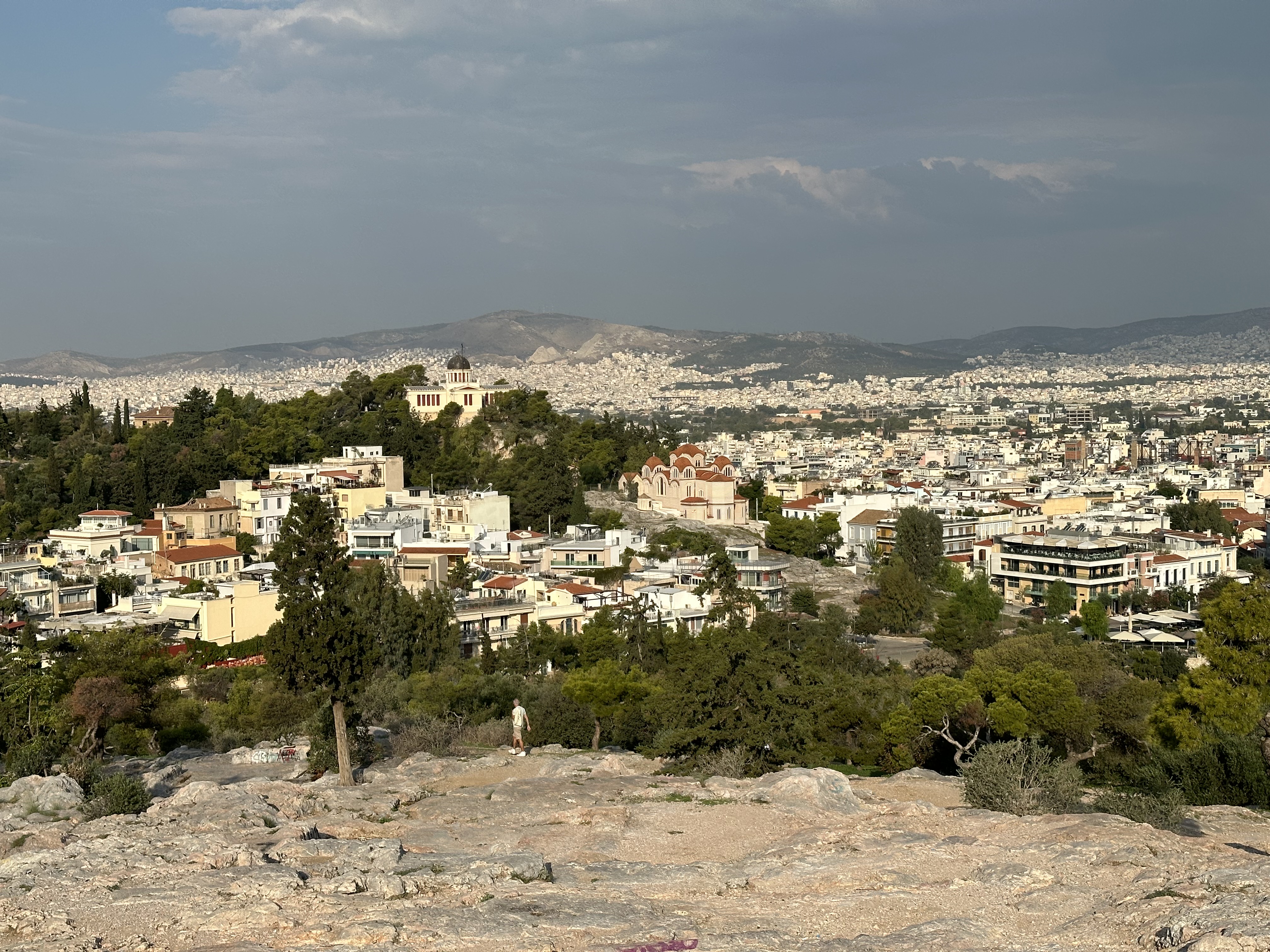
From the hill, we could see the reconstructed Stoa of Attalos next to the Ancient Agora of Athens, where Paul spent time observing and conversing. Beyond was the sprawling city of modern Athens.
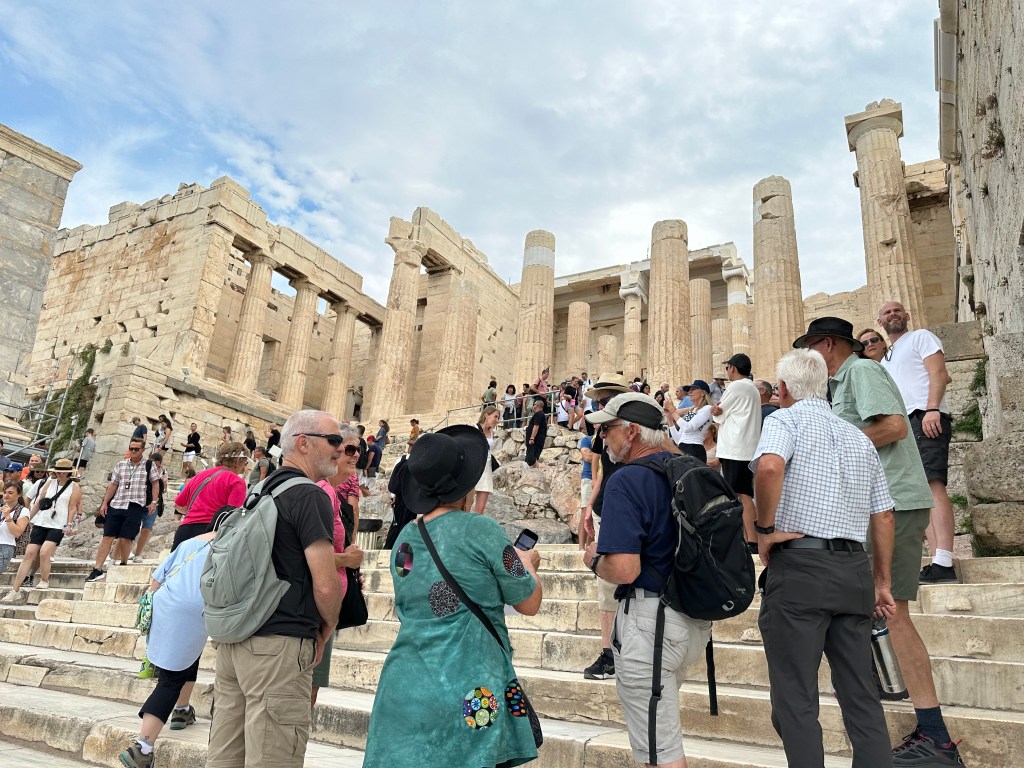
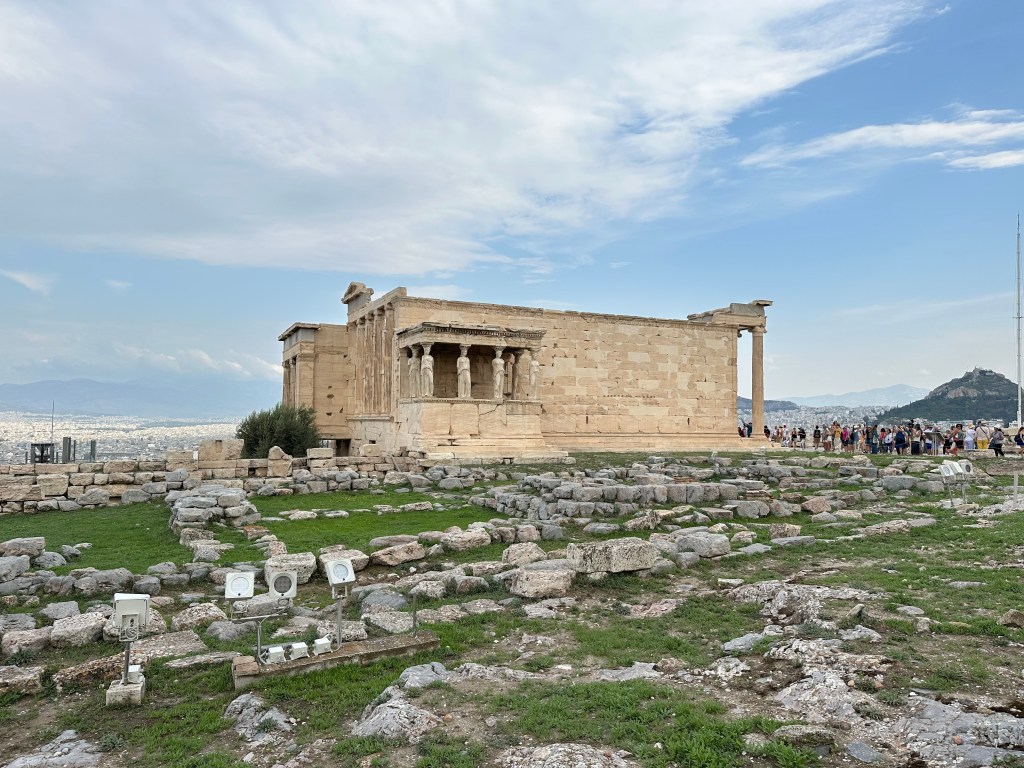
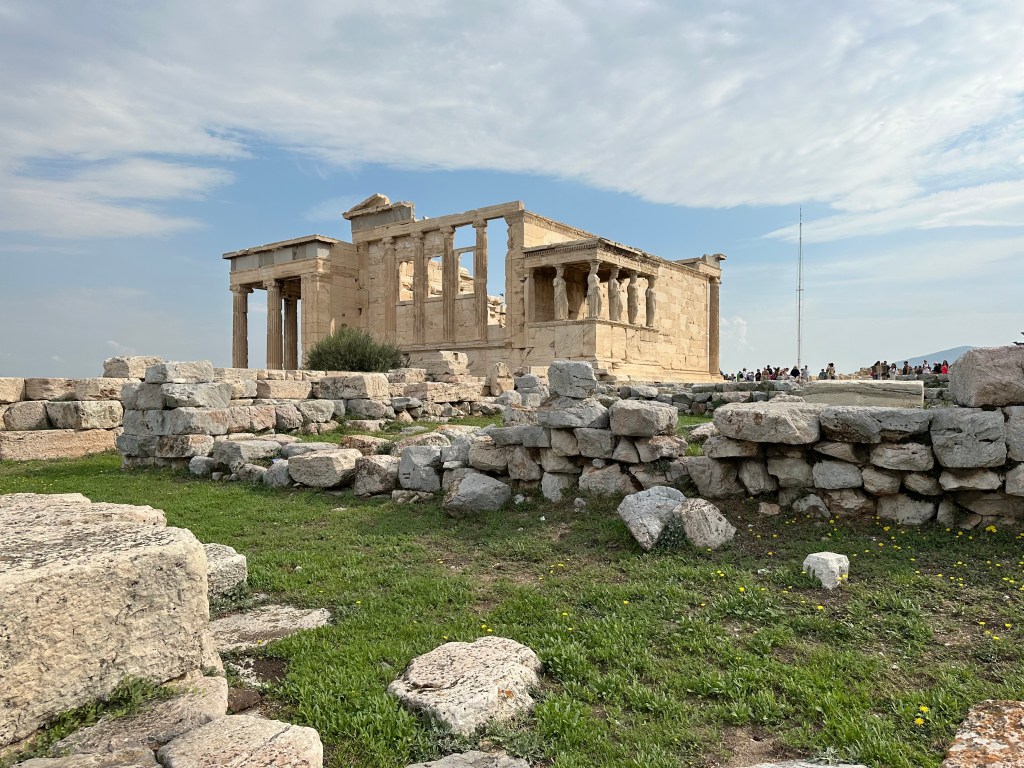
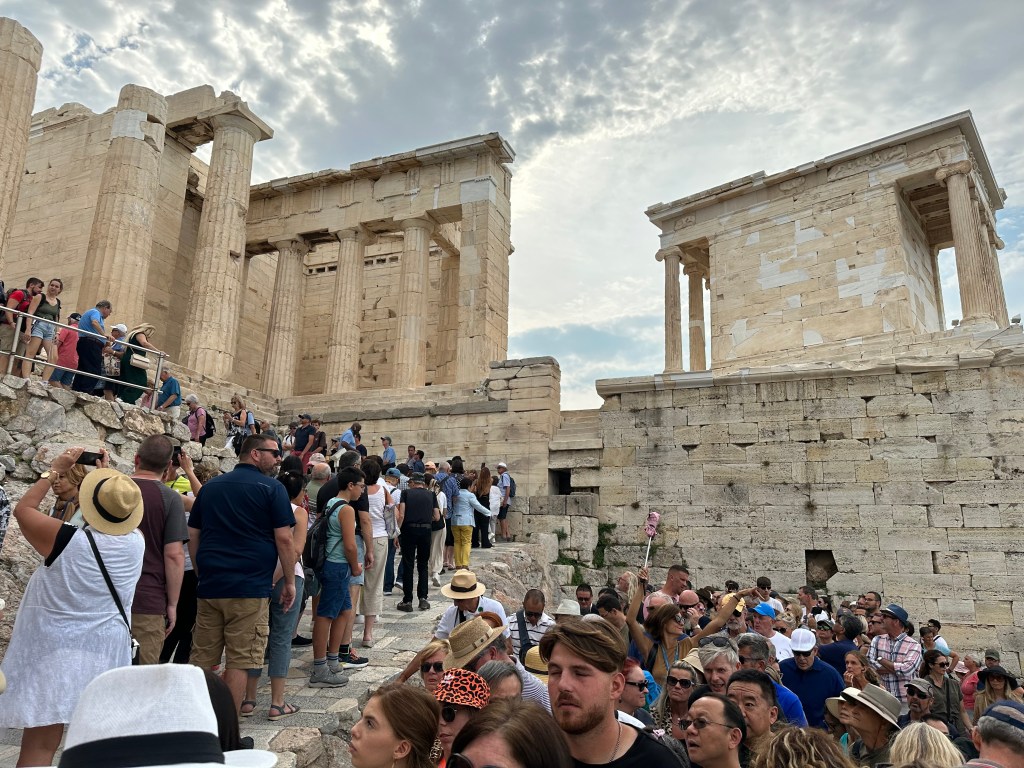
After Linford’s talk, we were free to explore the Acropolis independently. The lines for tickets were long, but since we had tickets for mid-morning, we walked right in. Climbing the steps through and around those ancient columns was thrilling. When we reached the top, the Parthenon dominated the view.
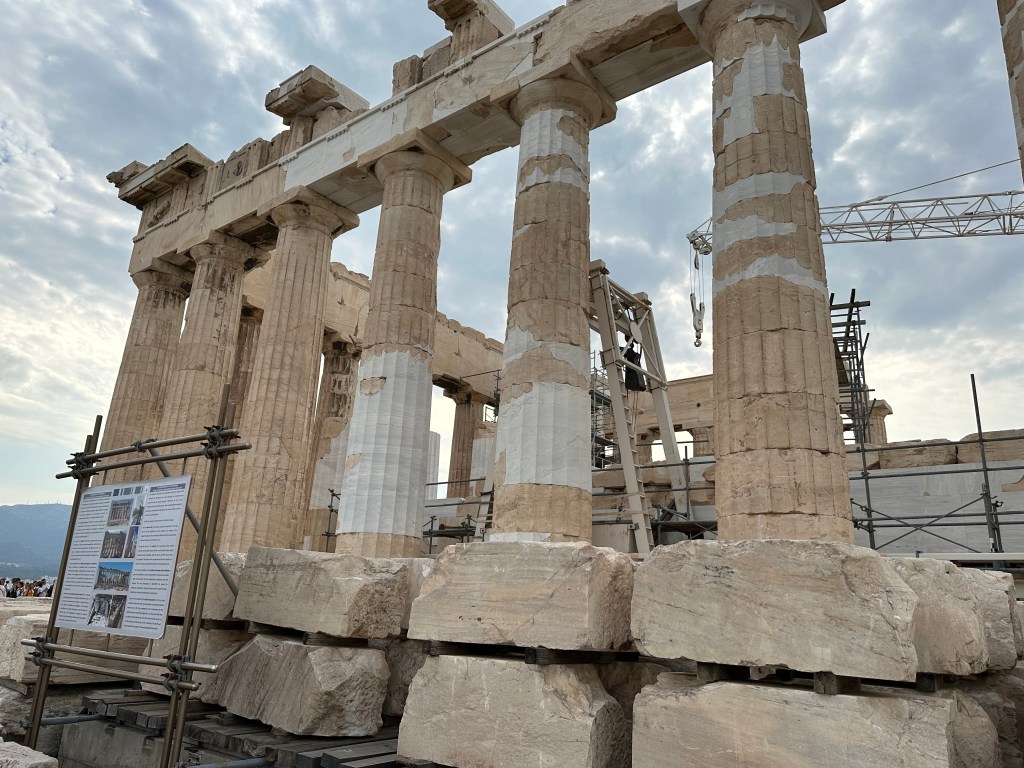
Like many old structures, the Parthenon is being repaired and stabilized for future generations. We had to watch our steps as we went. Old and worn rocks protruded from the walkways or were sunken into them. On the far side of the Parthenon, one elderly lady had fallen because of the uneven footing. Trained emergency personnel were working with her.
I was amazed at all the broken columns and cornices lying around. Most were roped off so visitors wouldn’t bother them. Many were piled up and cataloged in other areas atop the Acropolis.
As the sun rose higher in the sky, the temperature heated up. We decided to head back down the way we came. I was shocked at the number of people working their way up, making our exit difficult.
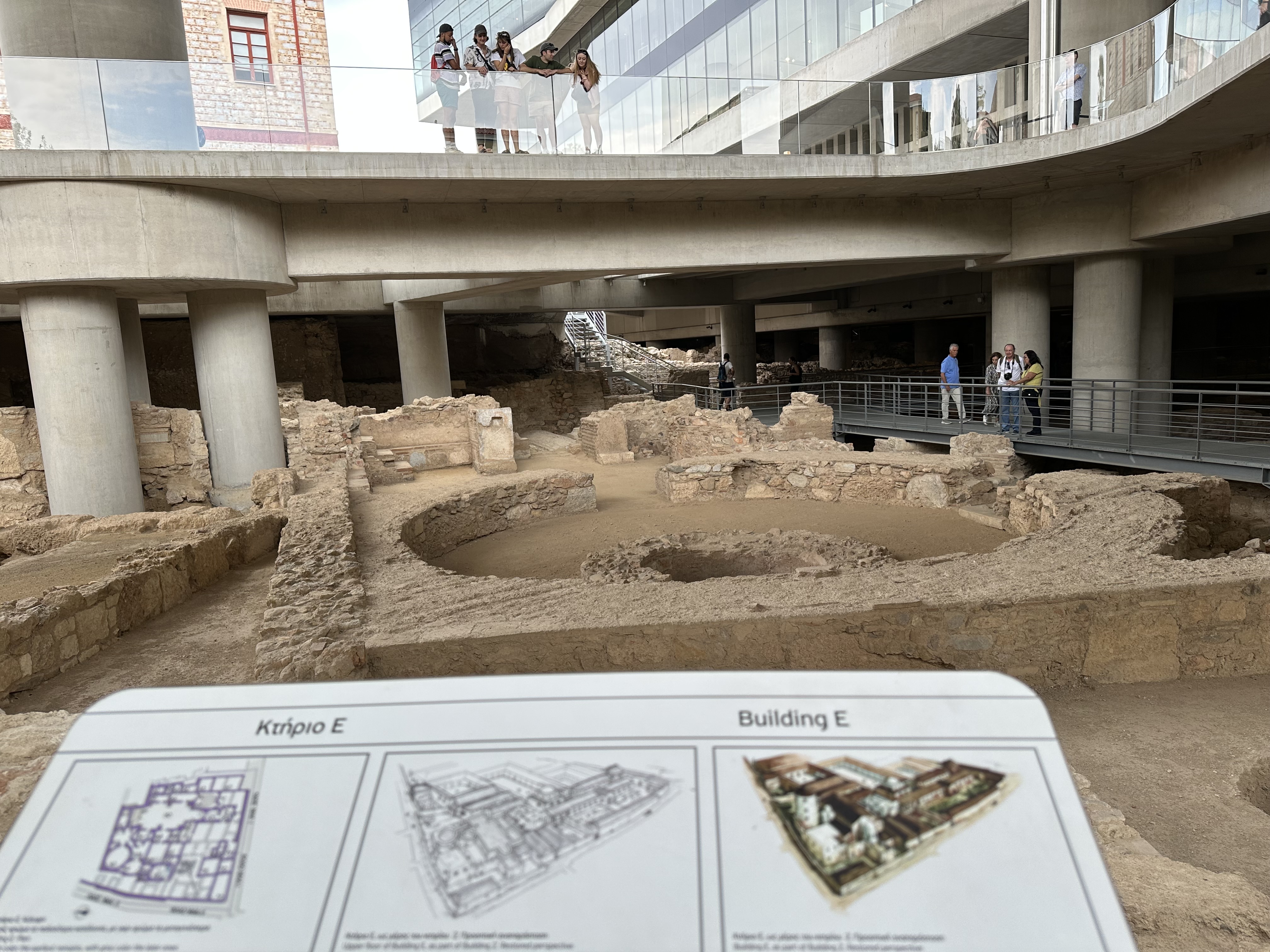
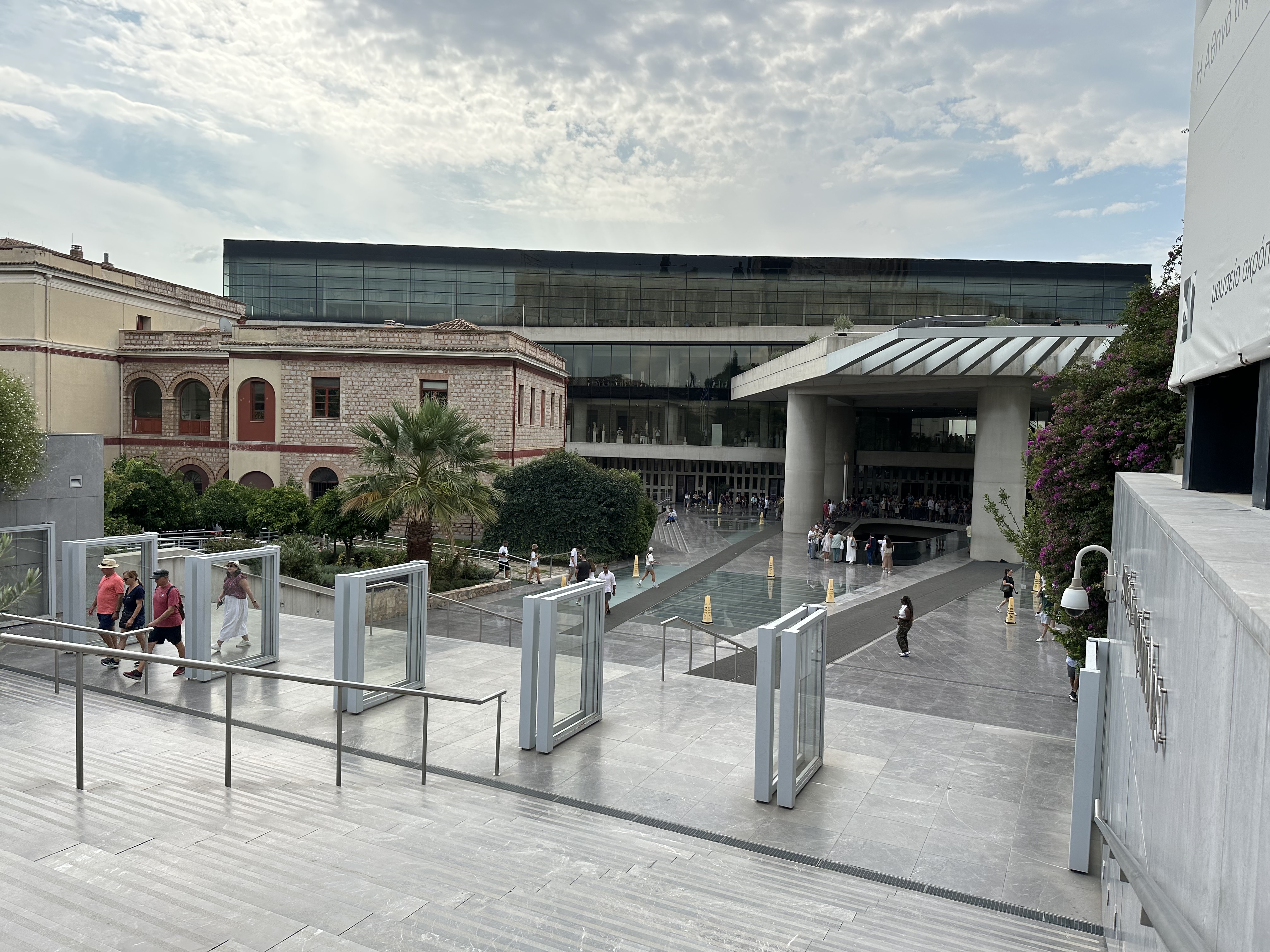
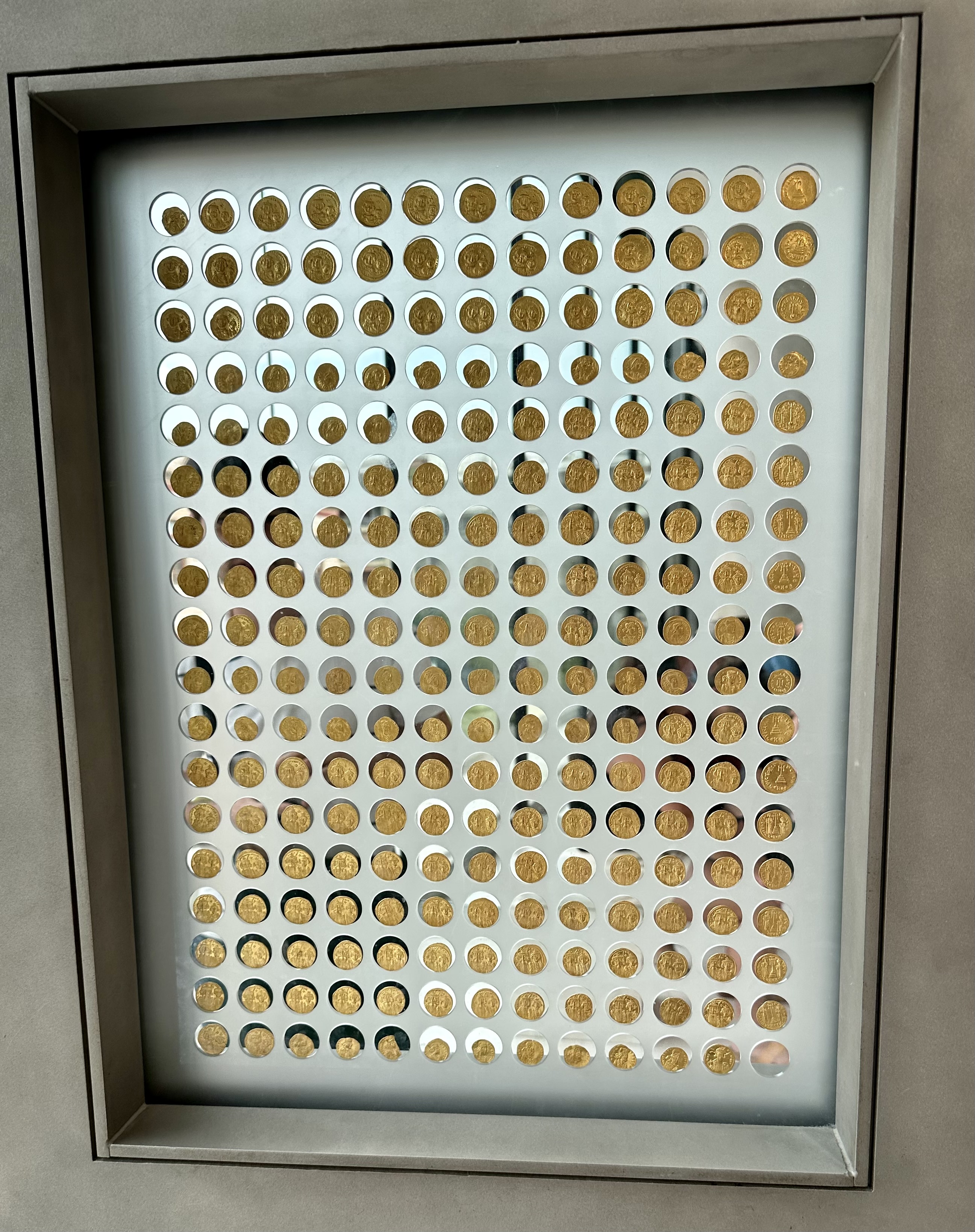
We headed for the Museum of the Acropolis just down the hill. Our first stop was the cafe for a light lunch and to cool off. The museum was huge and had thousands of artifacts from the Acropolis and explanations of their meaning and importance.
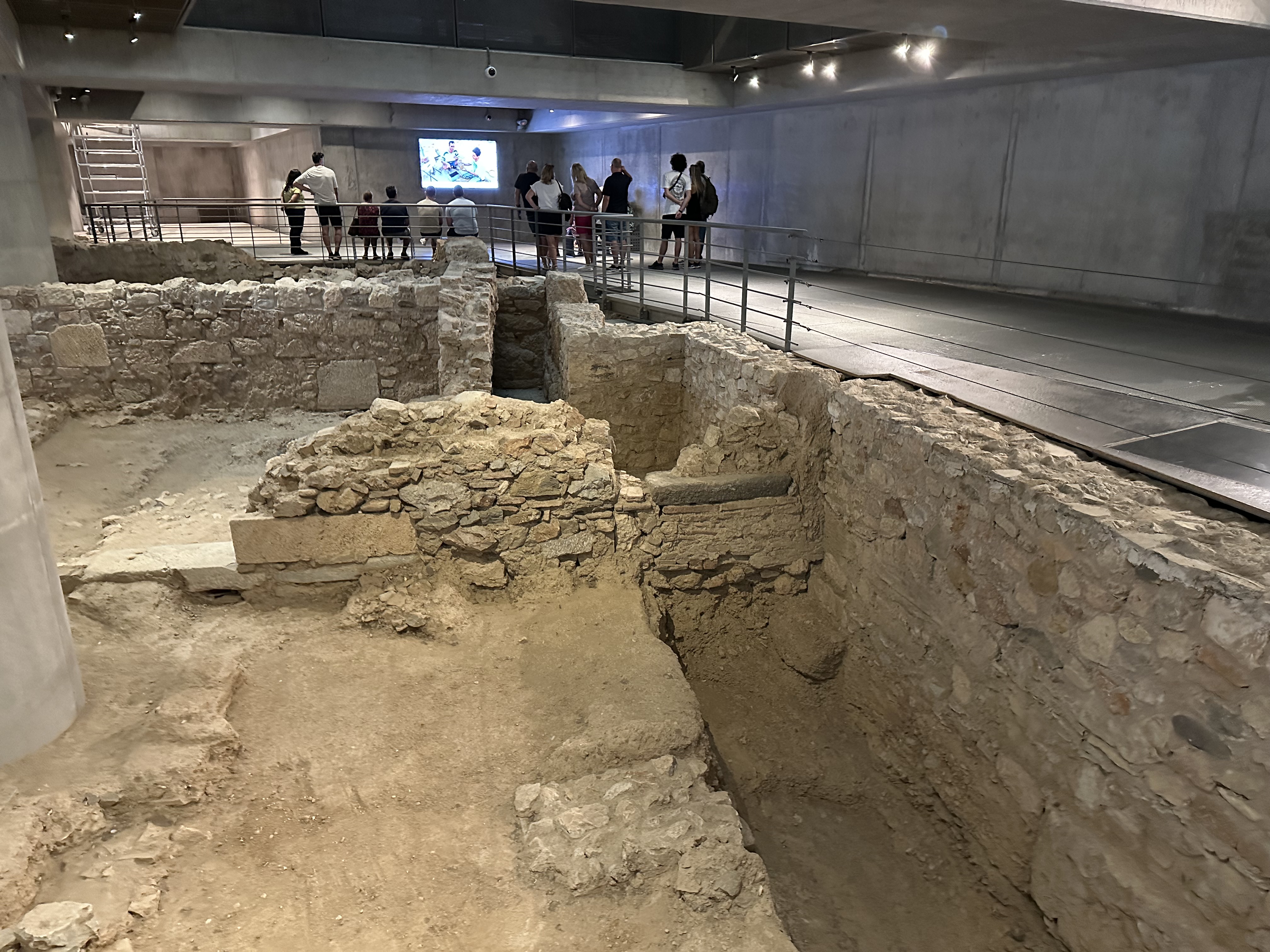
Another interesting feature was that the museum was built over an active archeological dig. I found that fascinating and enjoyed seeing the various rooms of the homes being excavated. The water and sewer systems were equally interesting.
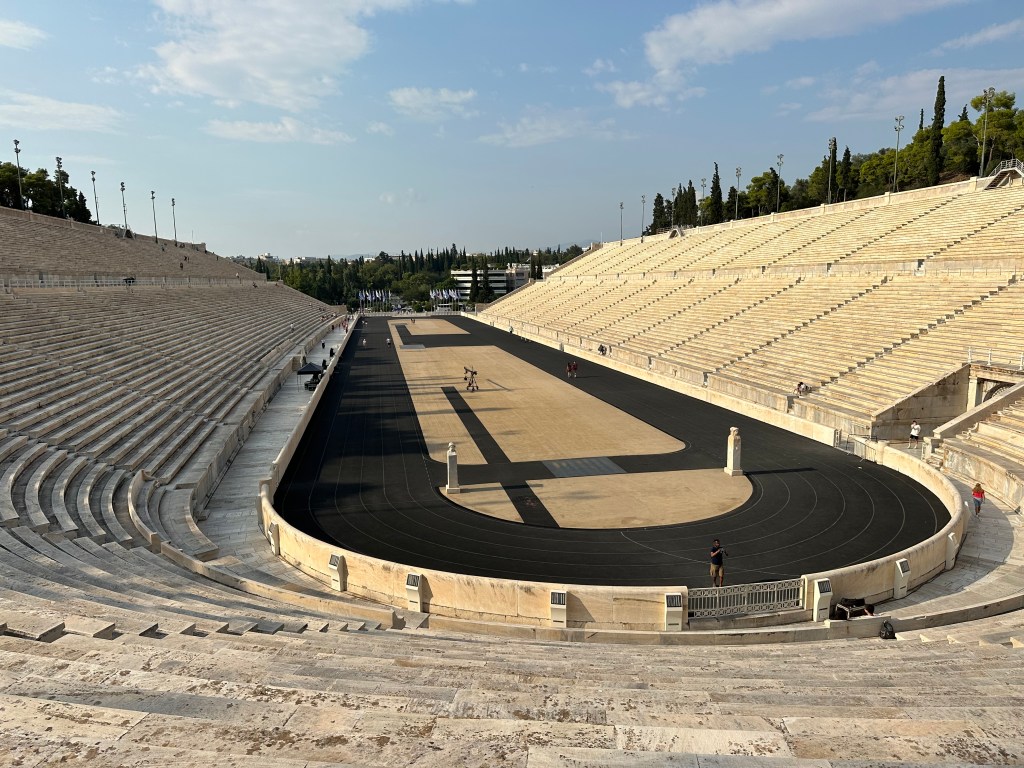
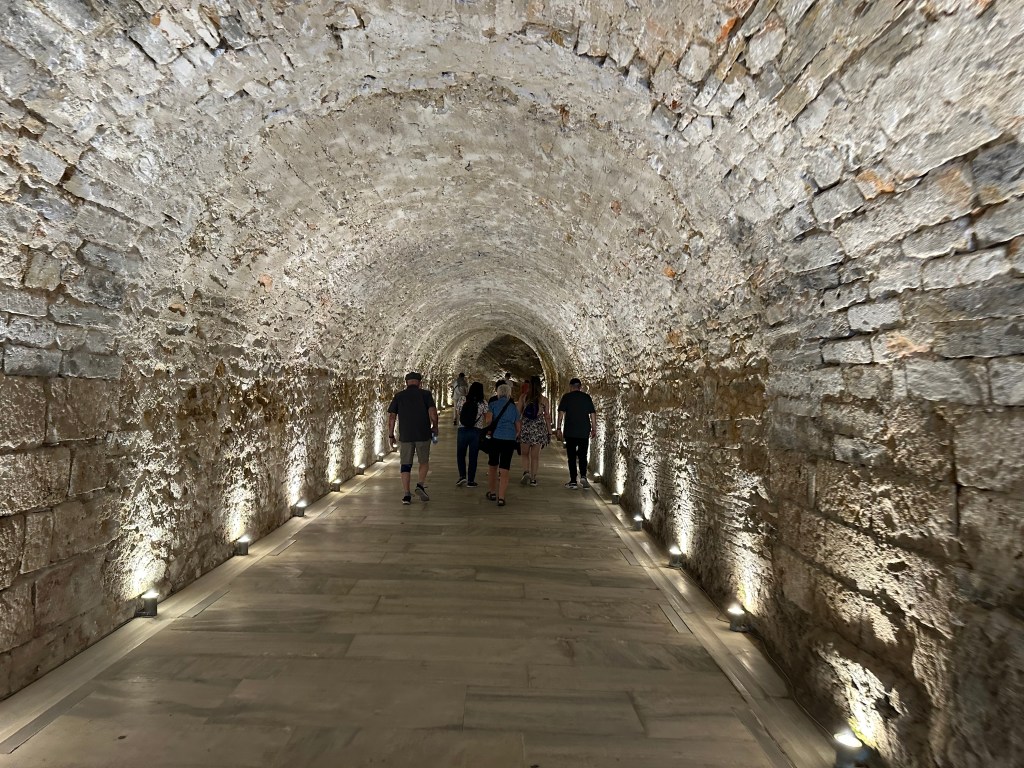
After resting a while, the group hiked to the site of the original modern-day Olympics, which began in 1896. The stadium is now reconstructed but does contain a few pieces of masonry from the original Olympic stadium. Of course, we visited the museum and gift shop. Our group ended the day with a nice meal together.
My wife and I recently returned from a two-week trip to Greece and Rome. I will share our experiences through a series of photo essays beginning today.
The trip’s theme was to follow parts of the Apostle Paul’s three trips between Jerusalem and Rome. Our guides were Linford and Janet Stutzman.
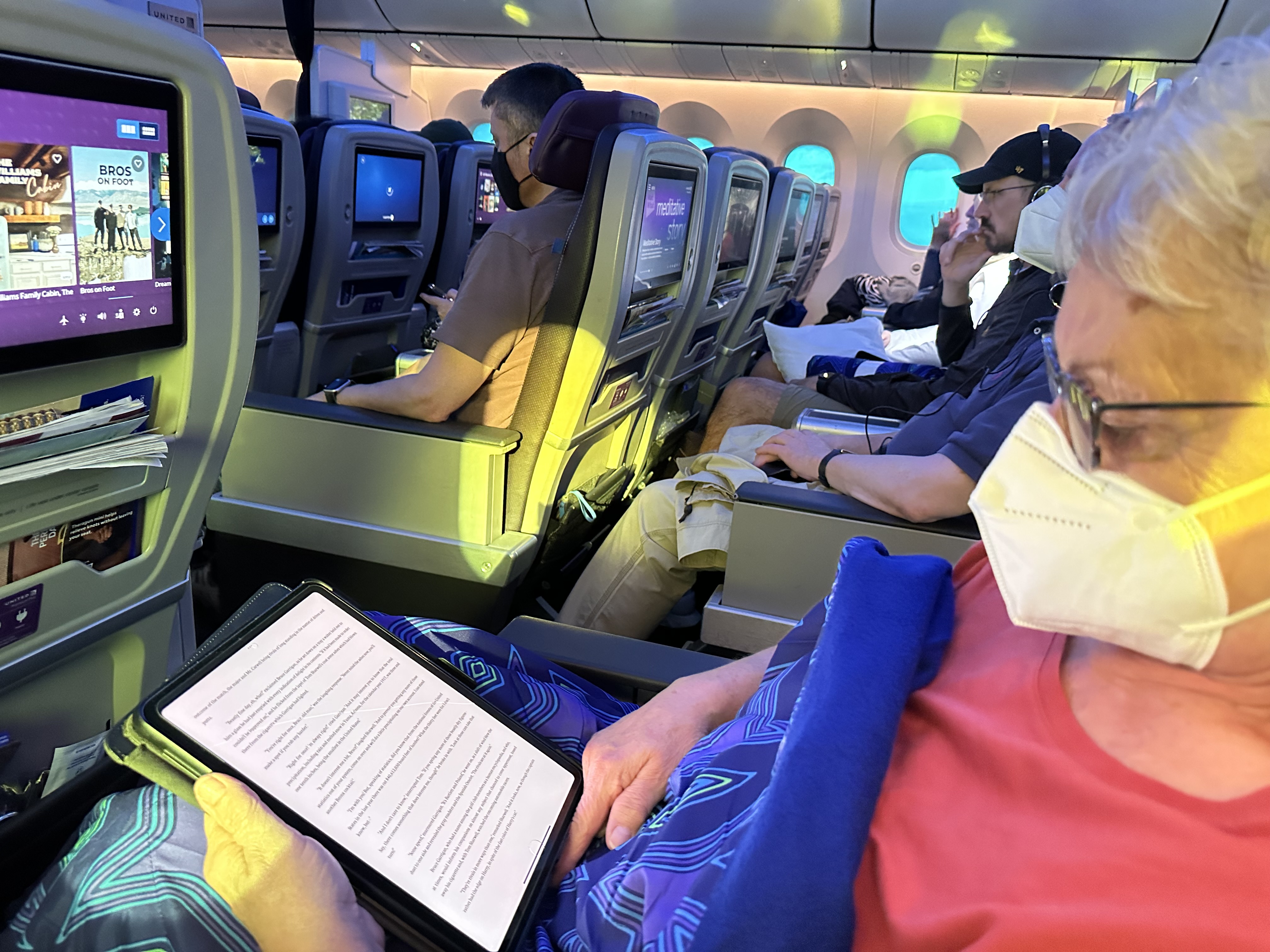
My wife spent part of the nearly 10-hour flight reading.
In 2004, Linford and Janet bought an old sailboat in Greece, fixed it up, and sailed the paths and ports of Paul while on sabbatical from Eastern Mennonite University, where Linford was a professor of religion. Their epic trip led to Linford writing an excellent book about their adventures, SailingActs.
Our itinerary began in Athens, where Paul preached a sermon on Aropagus Hill, just south of the Acropolis and the Parthenon. But first, we had to wait for all 24 group members to arrive, which they did by nightfall.
Consequently, our first day of the trip was spent traveling by air from Washington/Dulles International Airport to Athens. Once on the ground in Greece, our taxi took a circuitous route from the airport to the hotel due to a race for a cancer cure near the Acropolis. Many streets were blocked off for the 40,000 race participants.
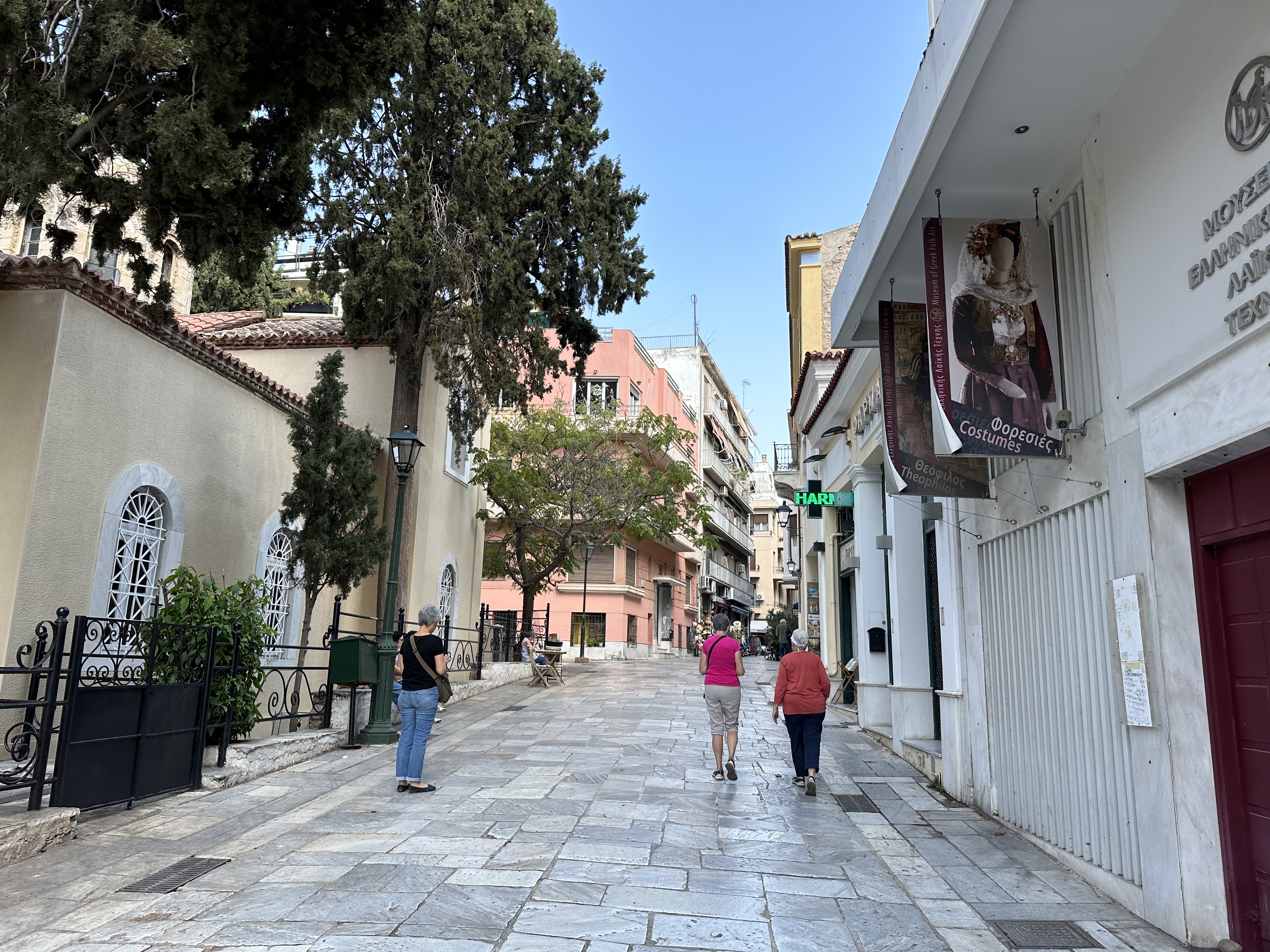
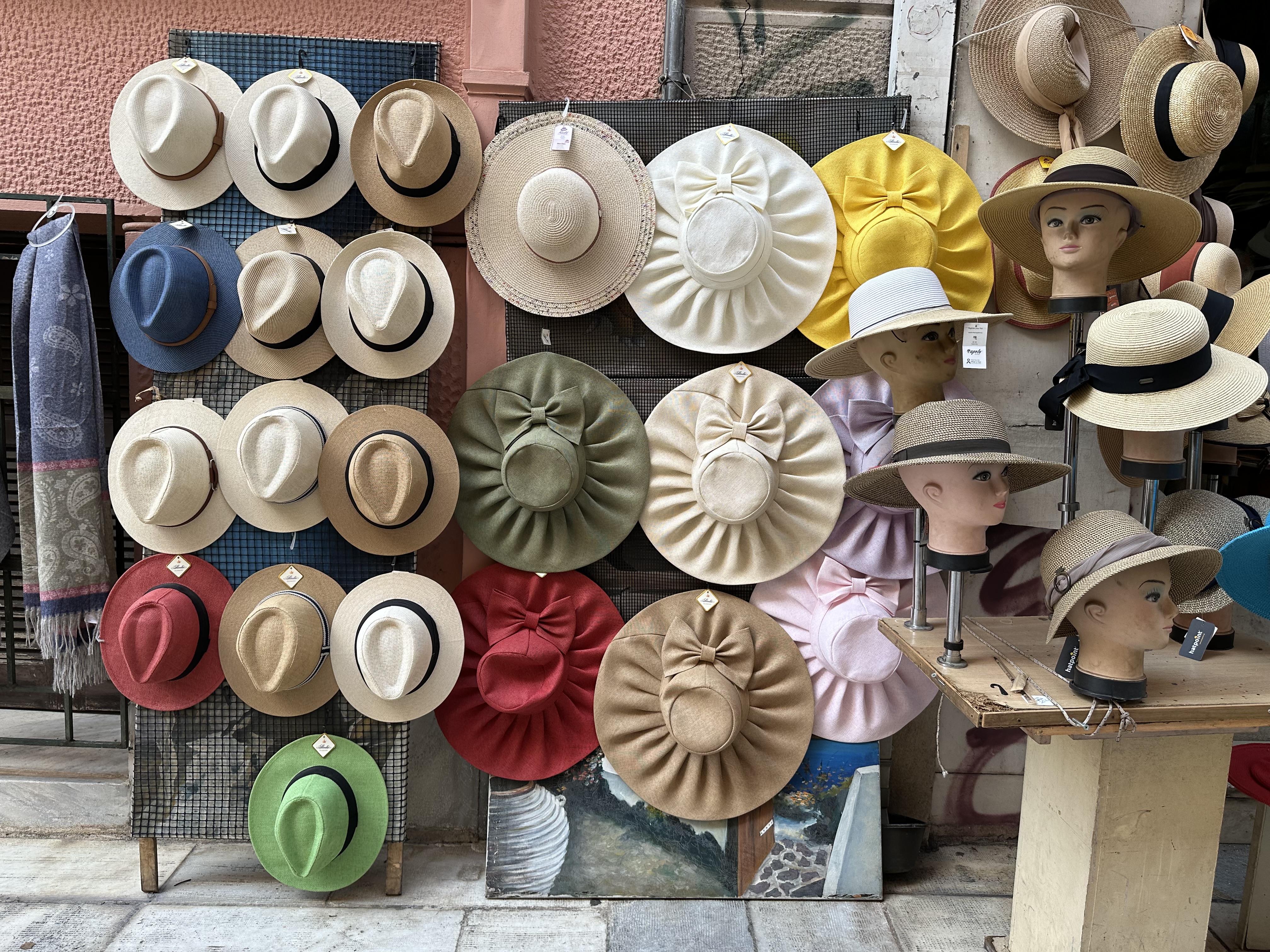
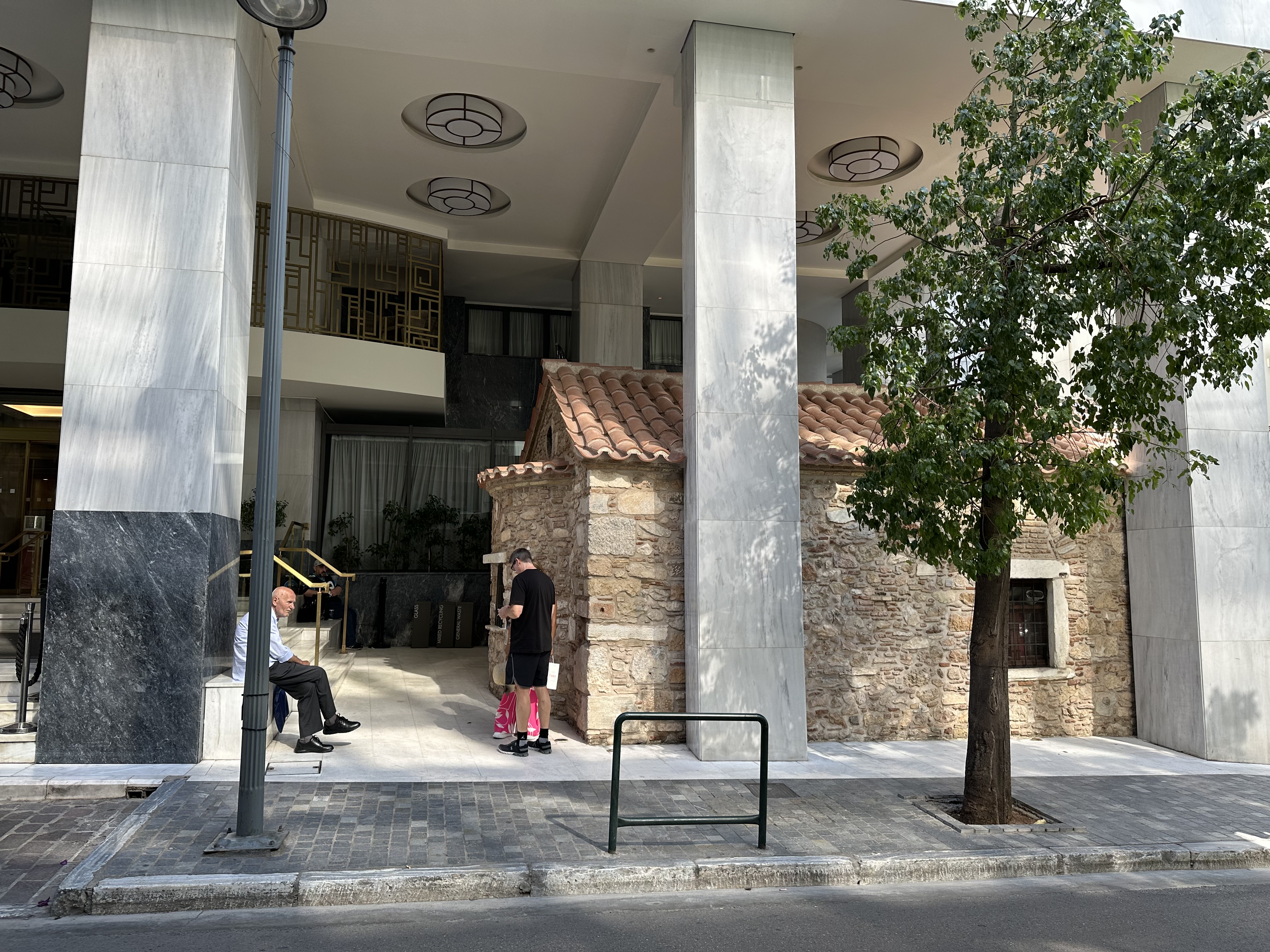
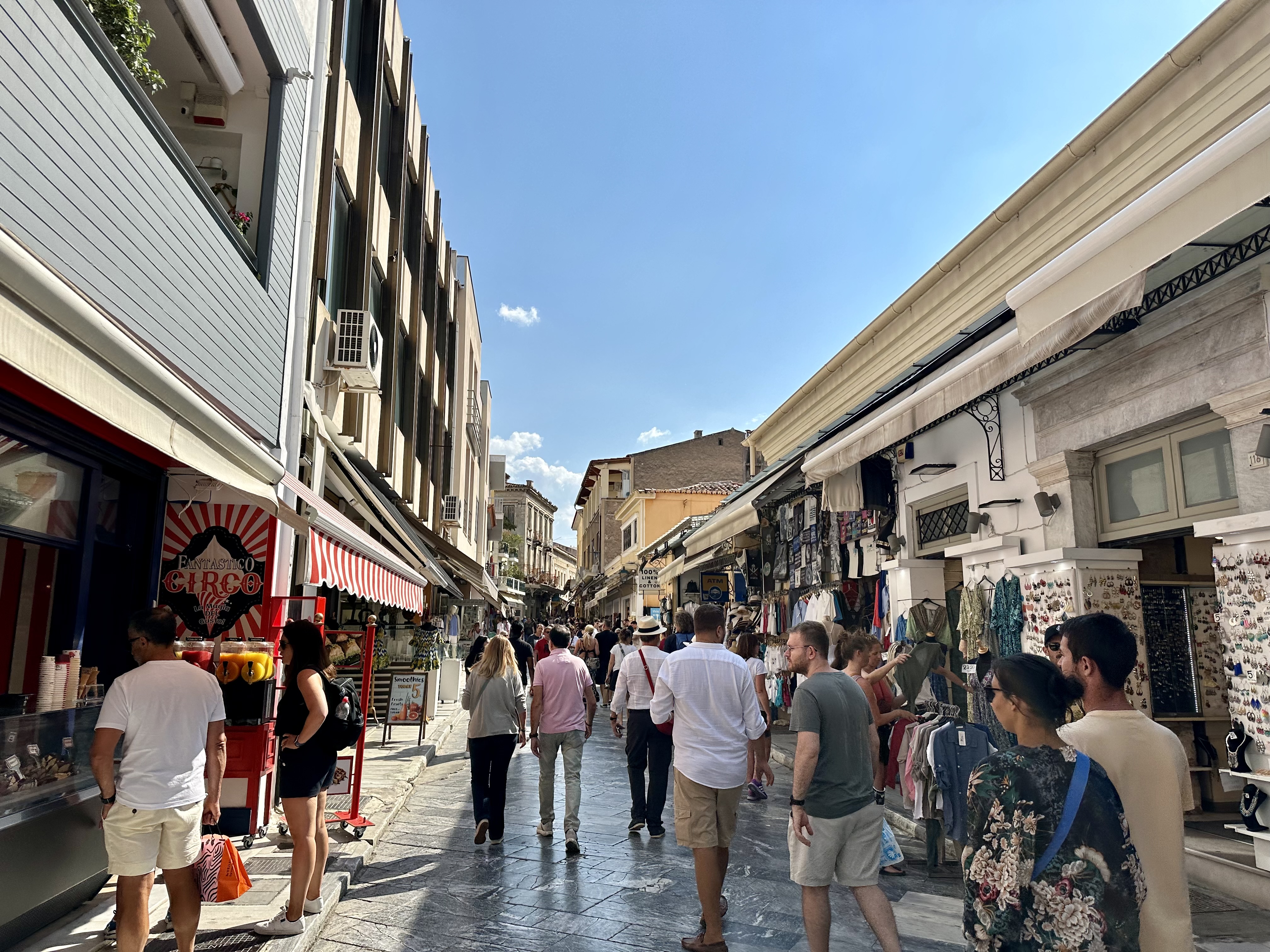
We spent the evening familiarizing ourselves with the area and shopped in the Plaka, a market/restaurant area between the Acropolis and our hotel. On our stroll around the area, we did get our first glimpse of the Acropolis.
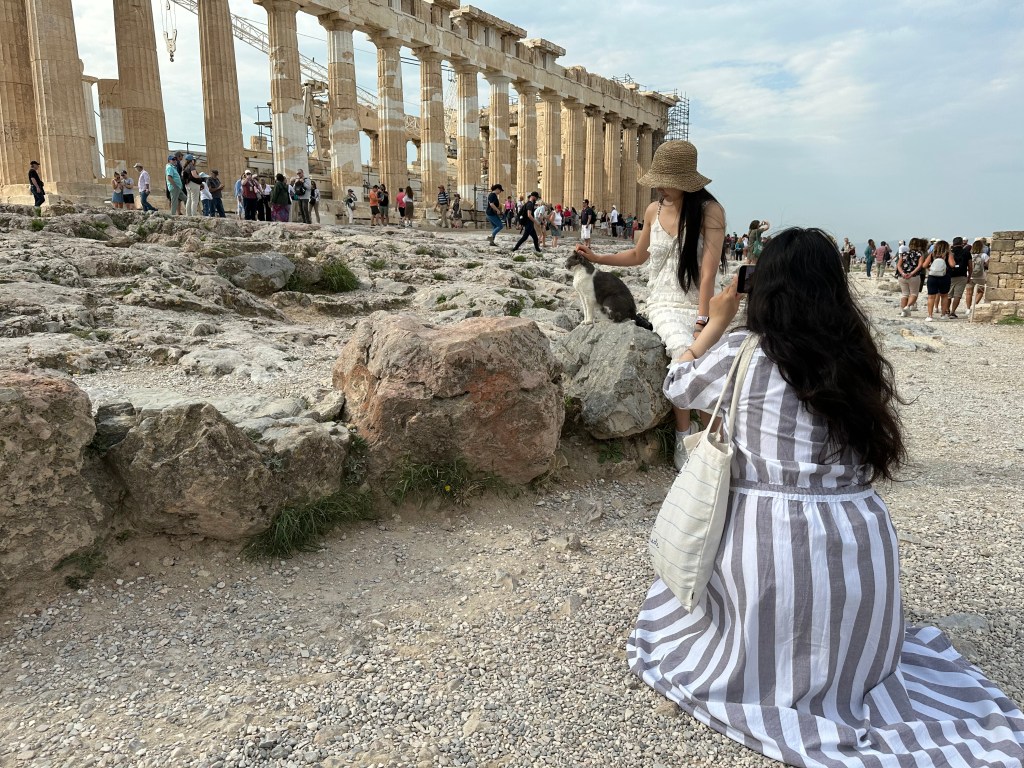
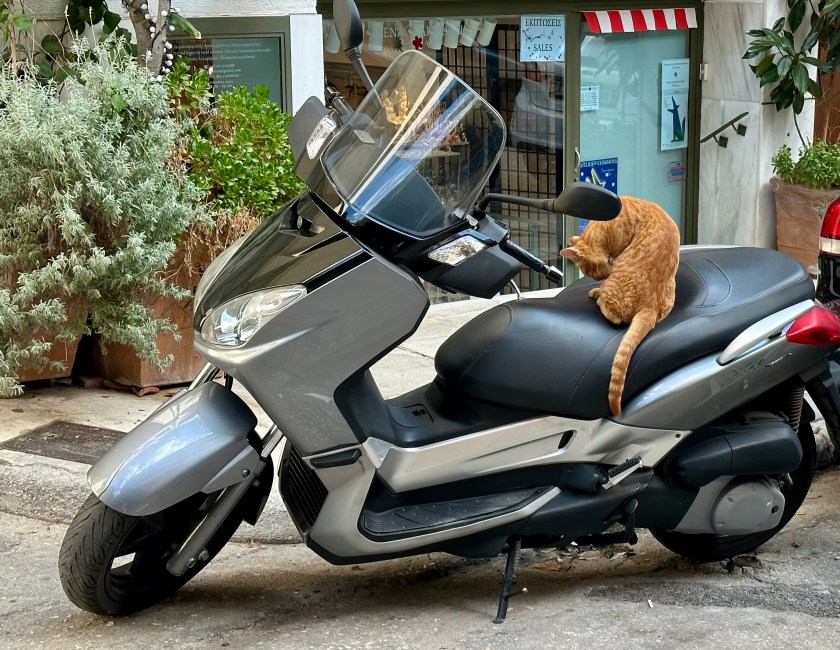
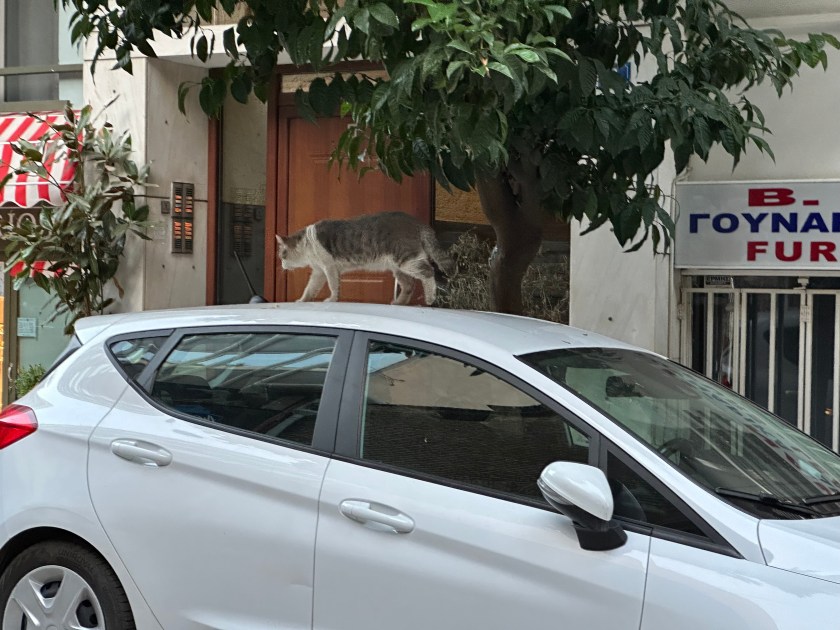
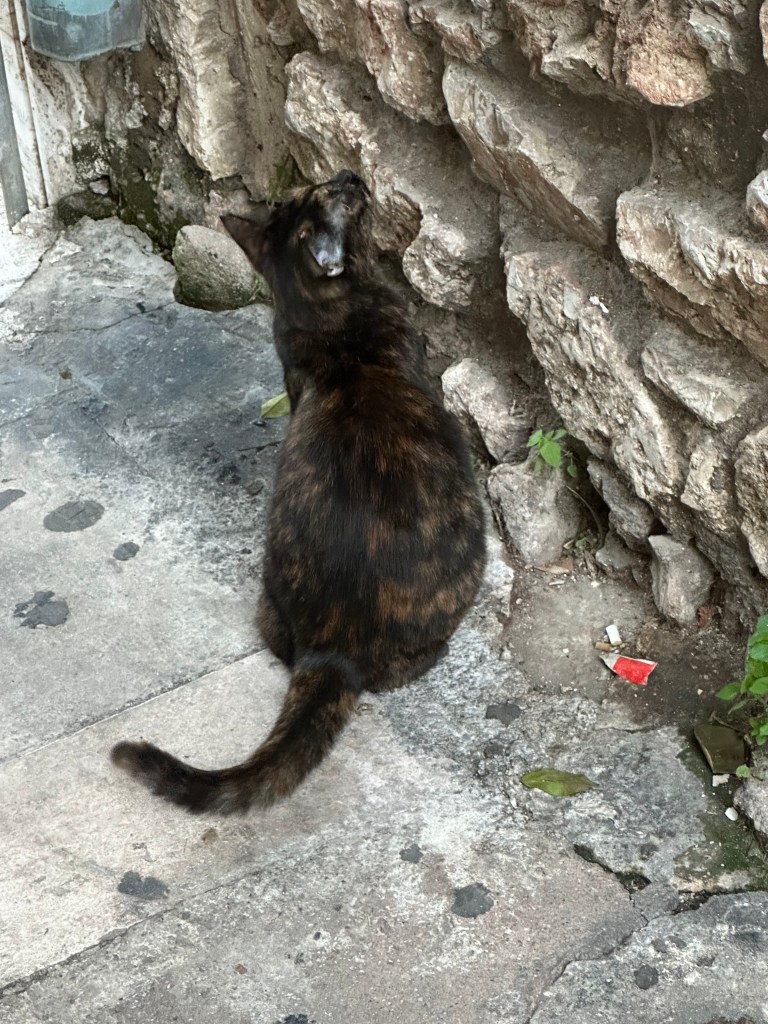
I was surprised to see so many cats running loose in the city. Apparently, felines are revered in Athens and likely help keep the critter population down. Many cats roamed the narrow streets, businesses, apartment buildings, and restaurants.
The view from Grandview Point. Photo by Bruce Stambaugh.
Located east of Beckley, West Virginia, New River Gorge National Park and Preserve is a gem of a place. My wife and I recently visited there for two days. Our goal was to see the New River Gorge Bridge. We experienced much more than that. Also, I finally learned an important life lesson.
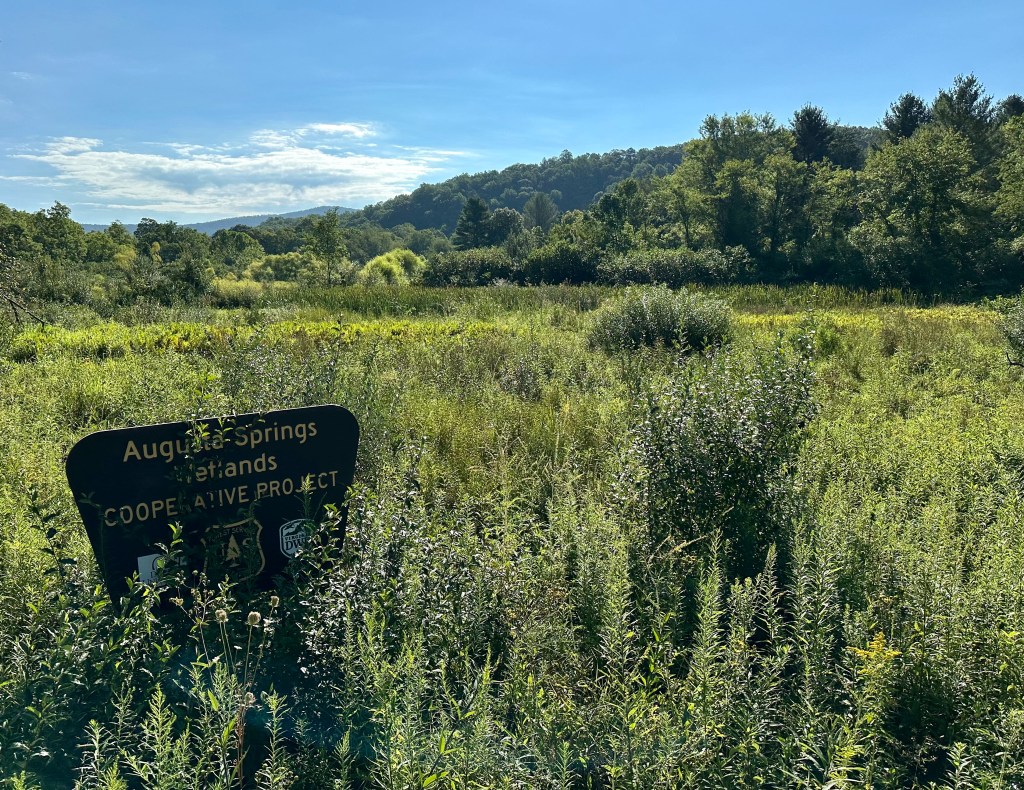
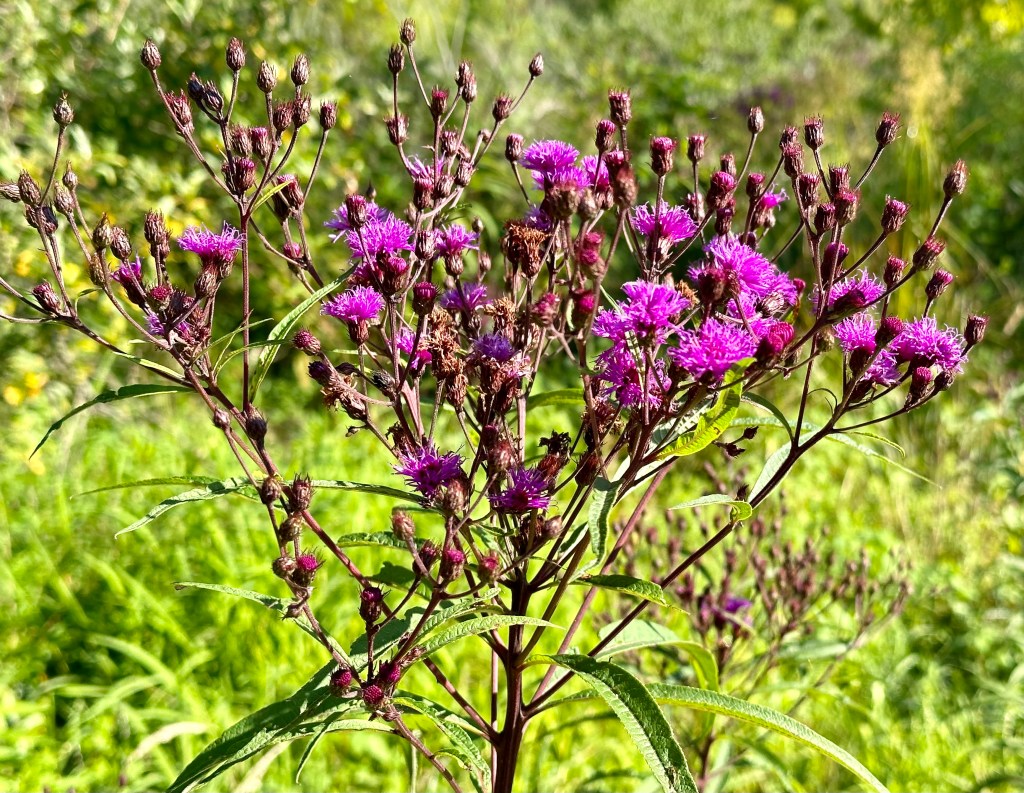
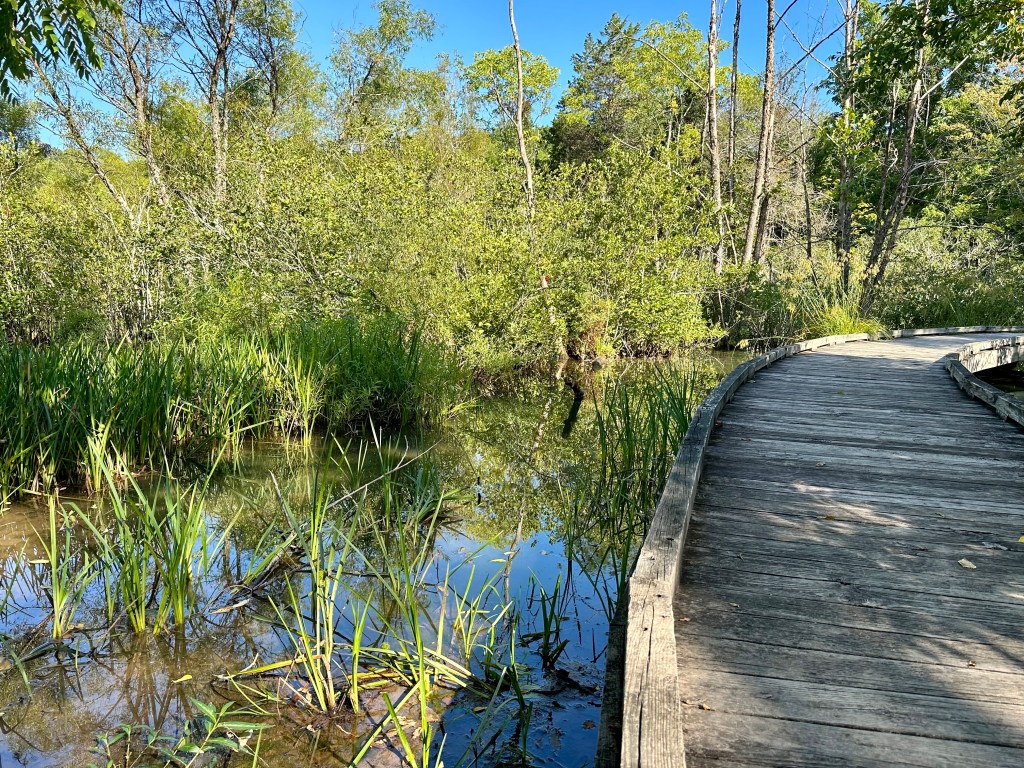
Because we usually avoid driving on I-81, we took Virginia 42 southwest through the Allegheny Highlands’ beautiful hills, valleys, small towns, and mountain gaps. We stopped at Augusta Springs Wetlands to bird along the boardwalk. We saw a number of lovely wildflowers and 21 species of birds. The next stop was the Humpback Covered Bridge west of Covington, Virginia.
Humpback Bridge.
Interior of the Humpback Bridge.
Humpback Bridge
But it was the national park we wanted to see most. The park has four visitor centers because of its mountainous terrain and steep gorge. Sandstone Visitor Center was our first stop just off I-64. The helpful ranger gave us excellent advice on the roads to travel and what to expect.
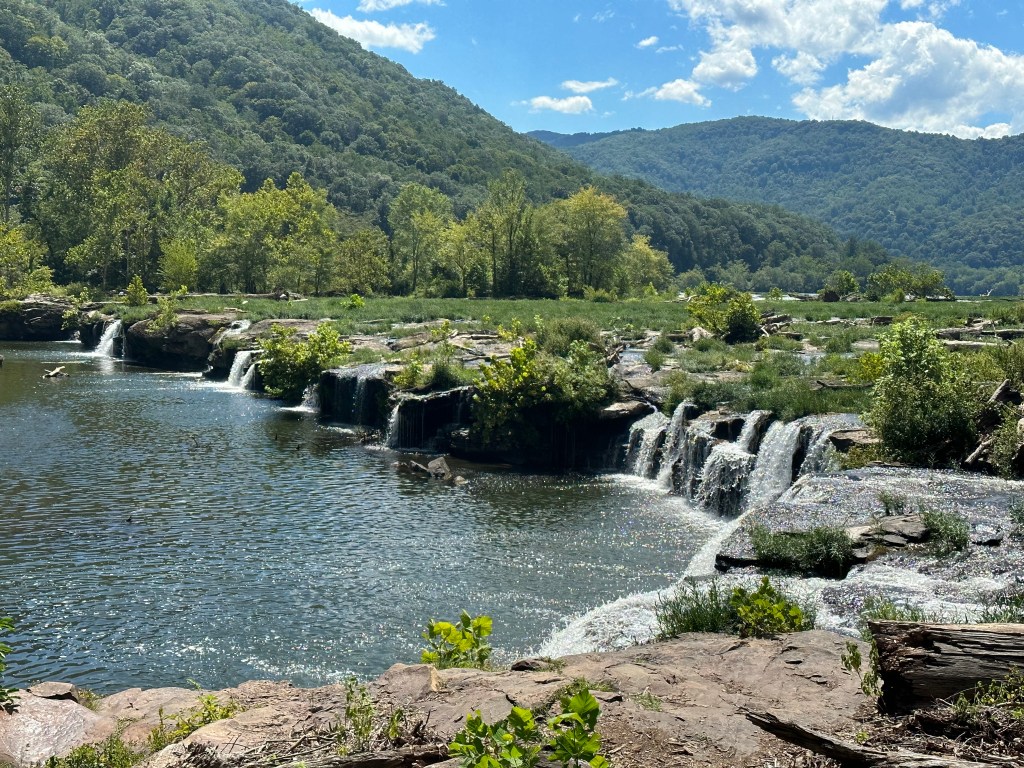
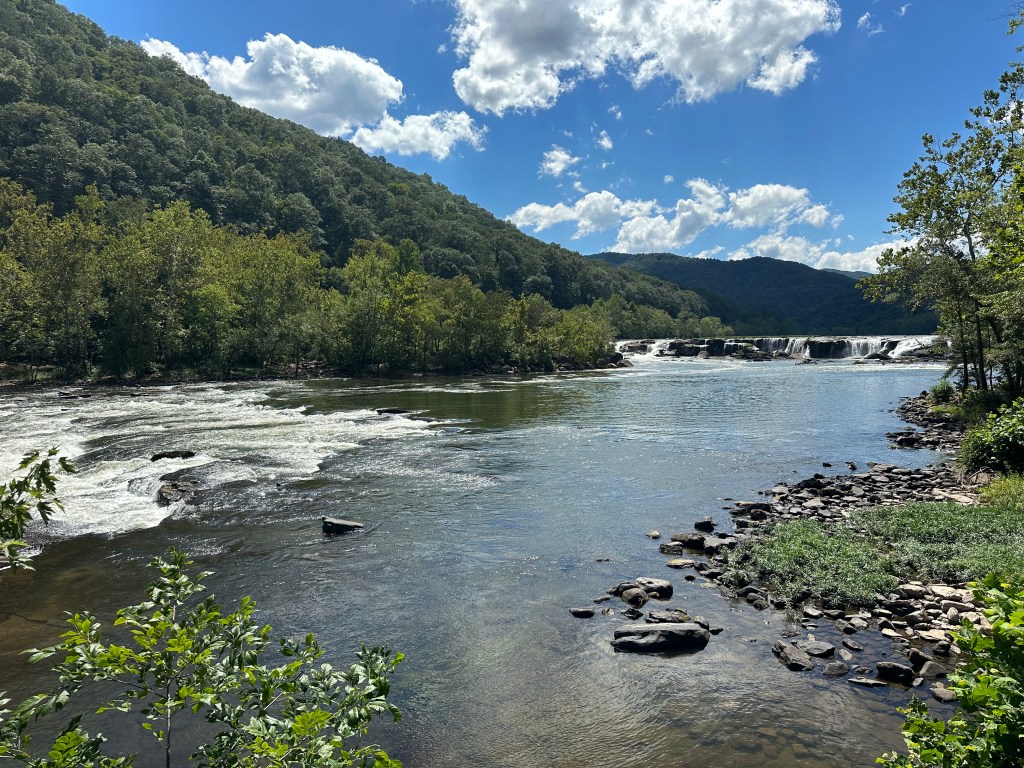
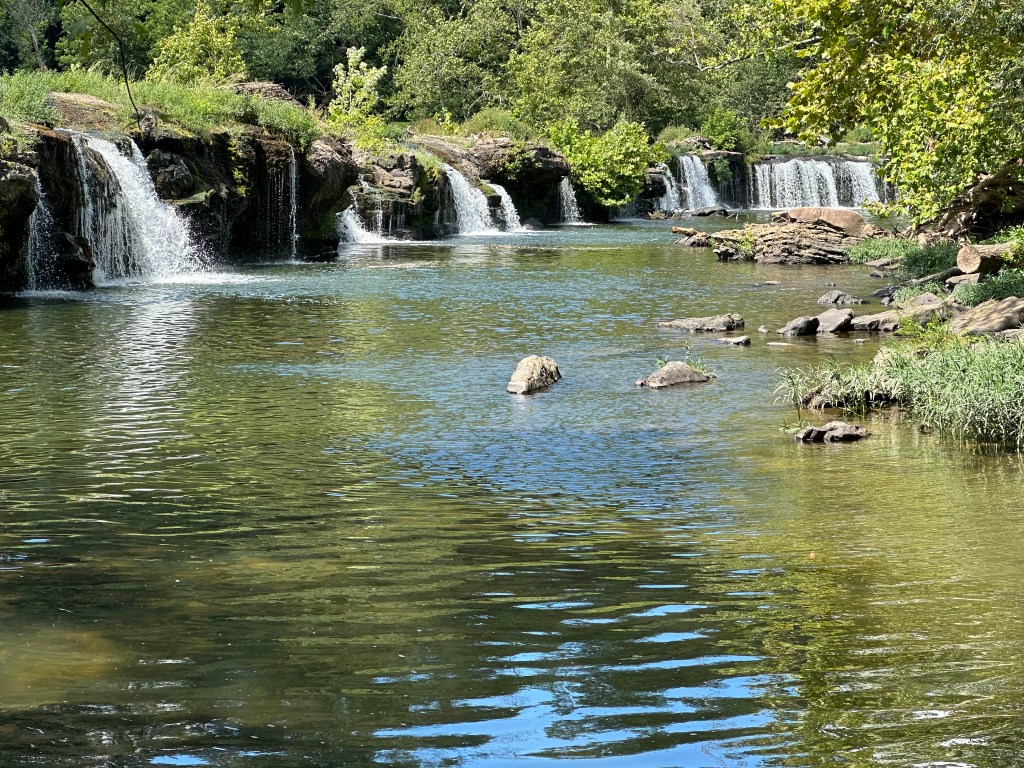
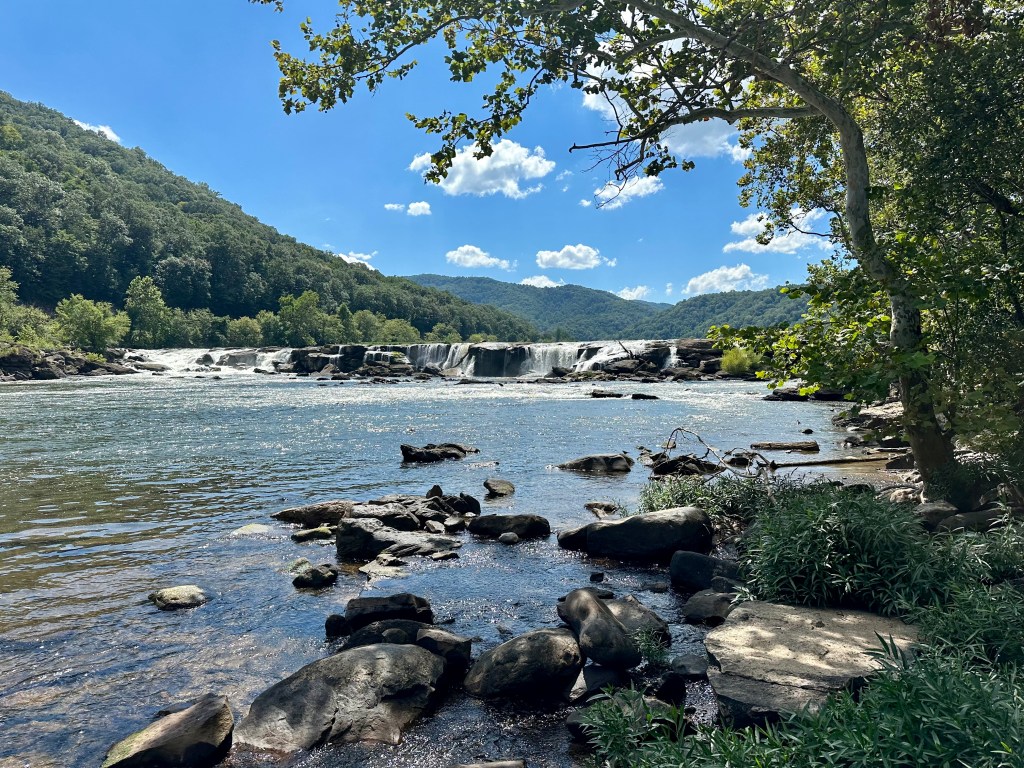
Our first stop was the observation area of Sandstone Falls. They were as beautiful as advertised, but the falls weren’t running at full force with so little rain this summer. We drove along the railroad tracks to the quaint town of Hinton, where we crossed to the west side of the New River. We drove north a few miles to reach the boardwalk that took us near the river’s main flow.
Eastern section of Sandstone Falls.
Rapids and Sandstone Falls.
Eastern side of Sandstone Falls.
Spicebush Swallowtail on Cardinal Flower.
The western section of Sandstone Falls.
Western section of Sandstone Falls.
The fastest flow.
I wanted to get a closer shot, so I headed across an island of ancient debris of huge boulders smoothed by years of flowing water. Scattered among the rocks were large trunks of trees, their bark long scoured away. It finally hit me that I shouldn’t have attempted this trek. I eased my way over rocks and rivulets to the shore of the river’s main course. I got the shots I wanted and returned to the boardwalk via an easier route.
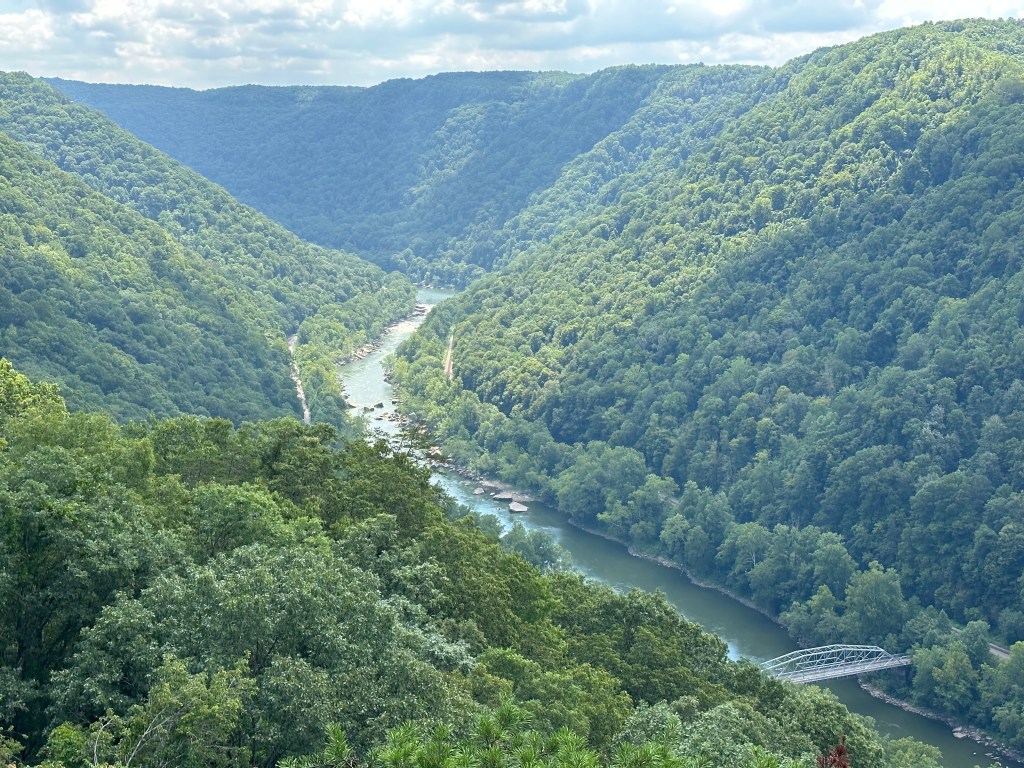
Our next stop was Grandview, and what a view it was. We looked down 1,000 feet to see one of the horseshoe bends of the New River. The sun bathed the hillside forests and illuminated the riverside train tracks.
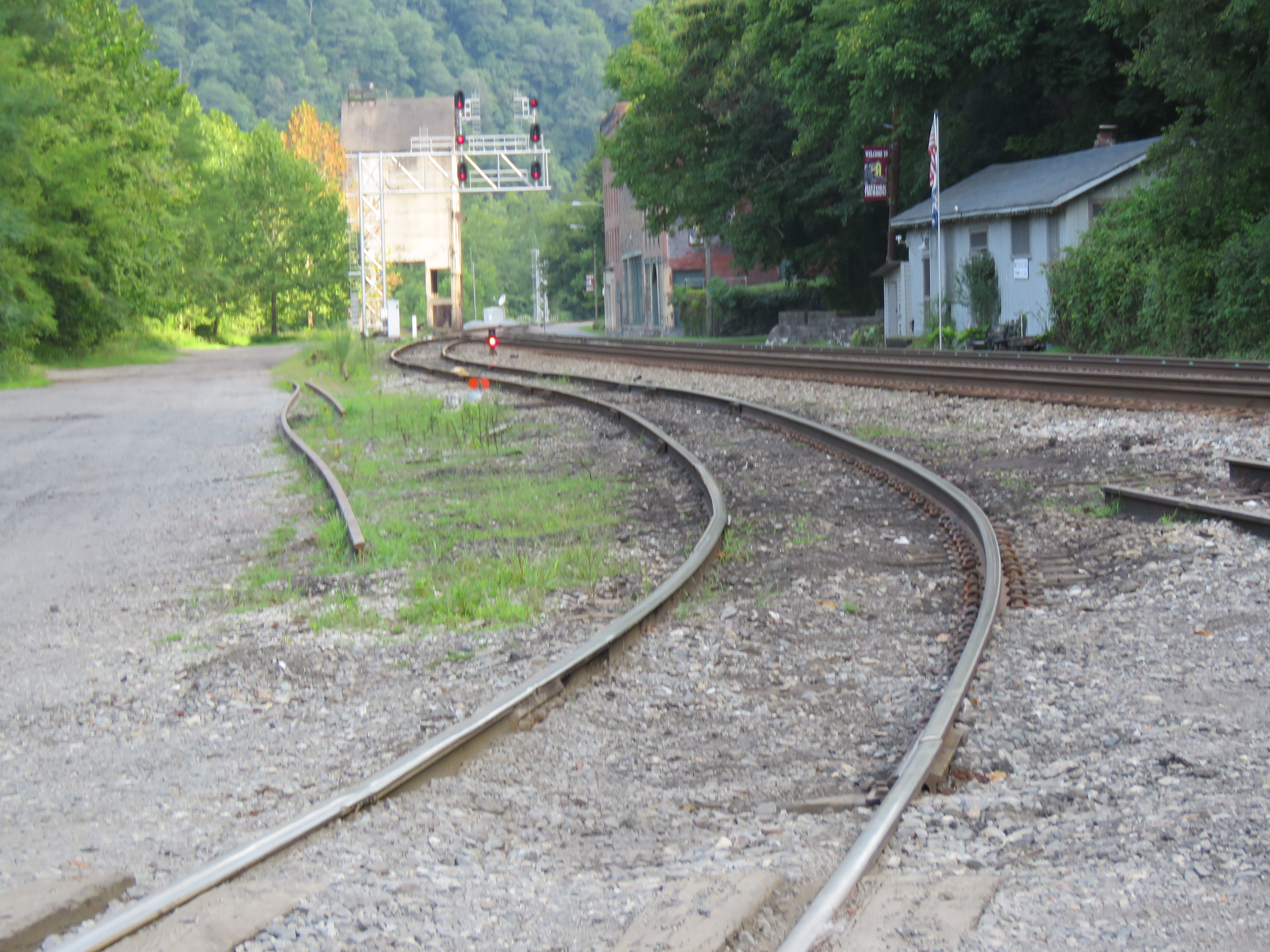
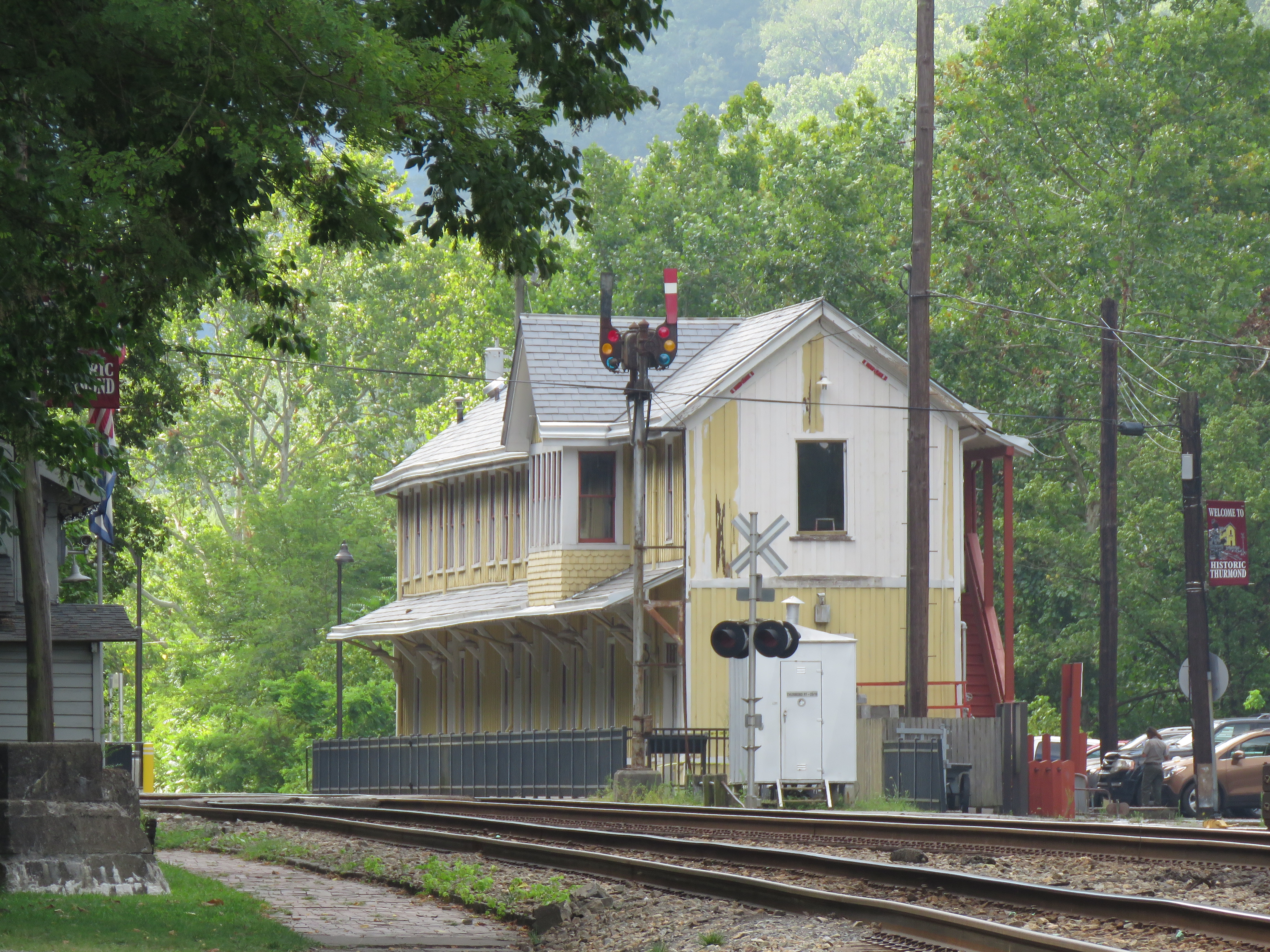
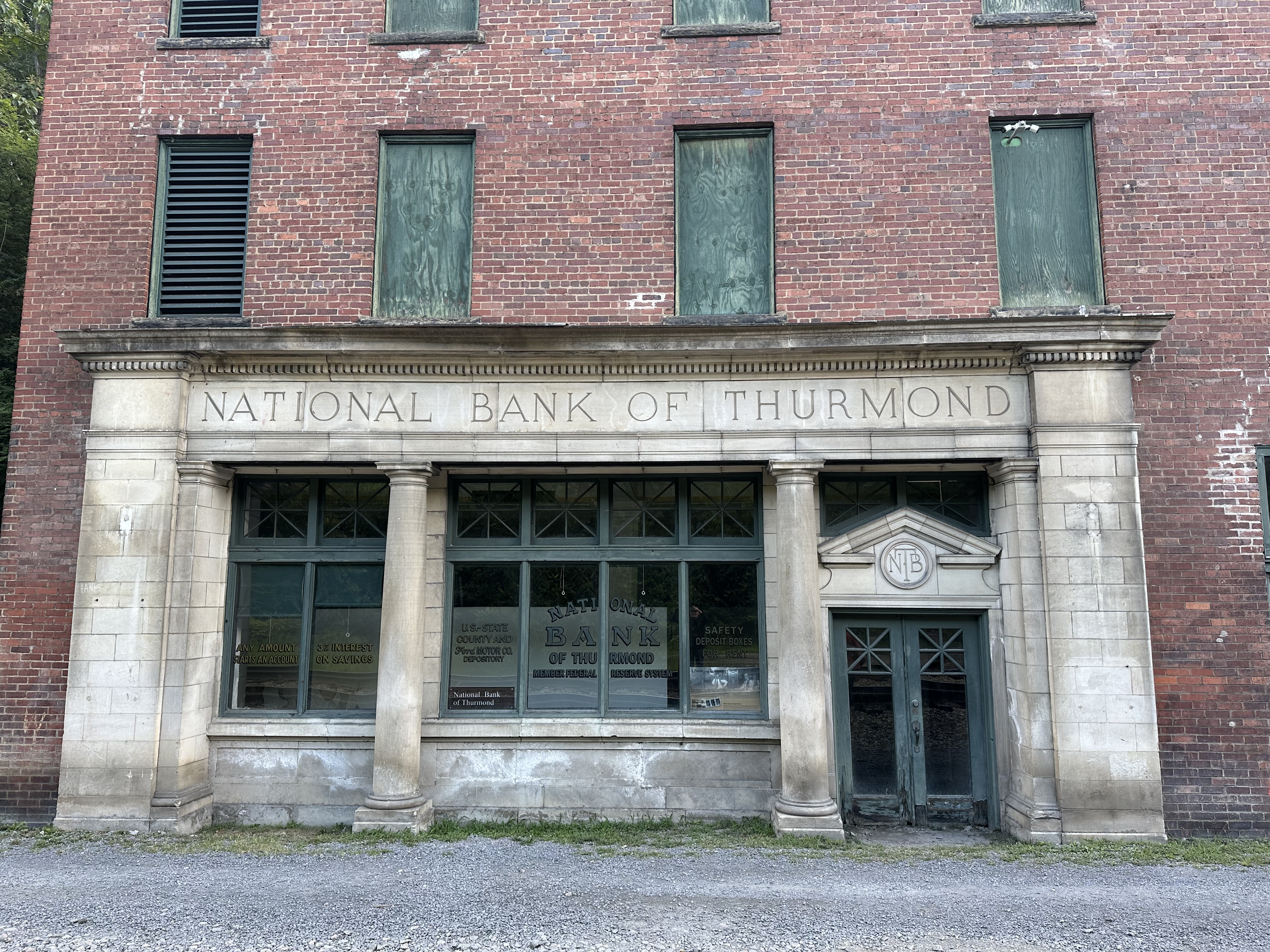
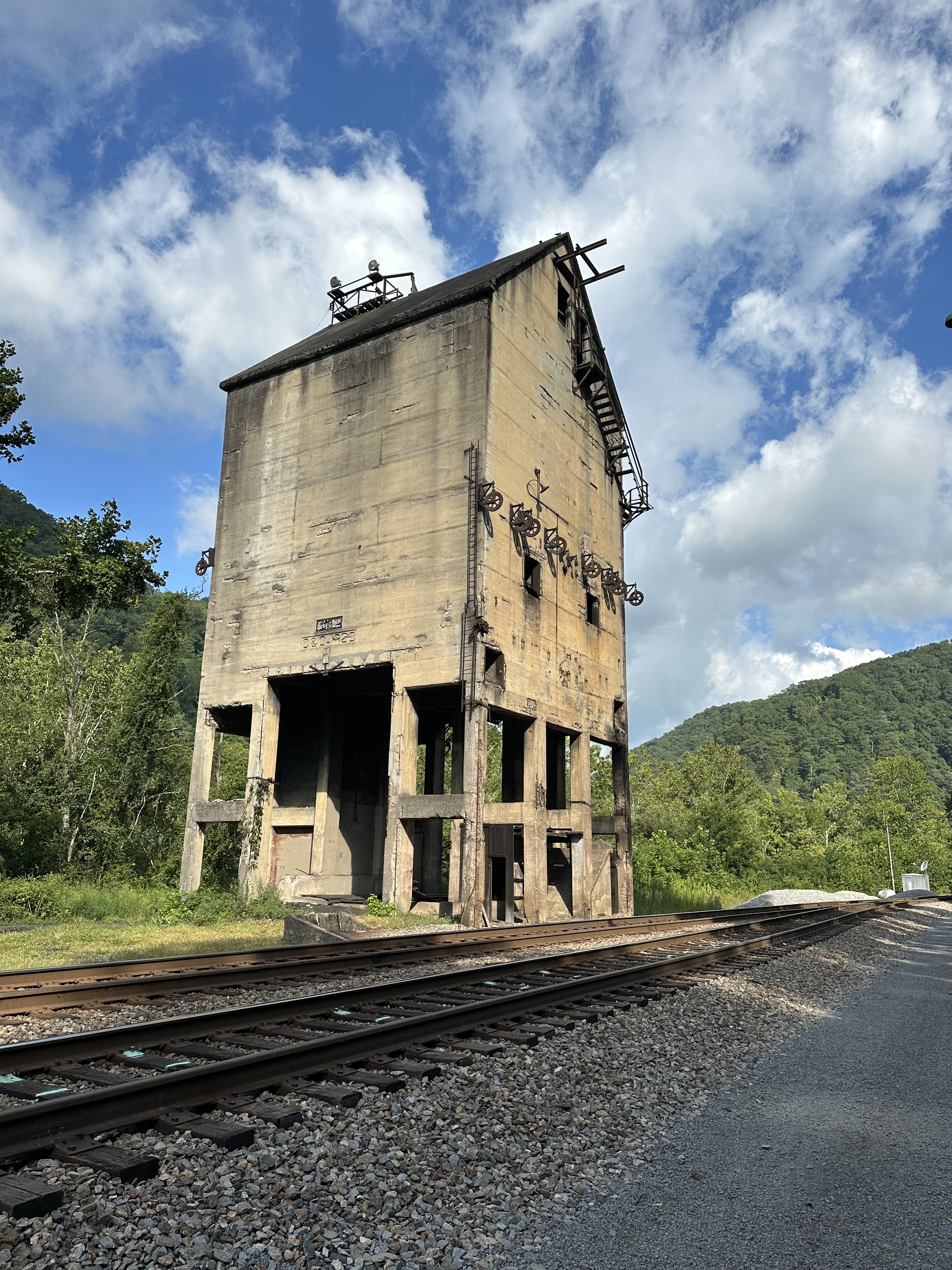
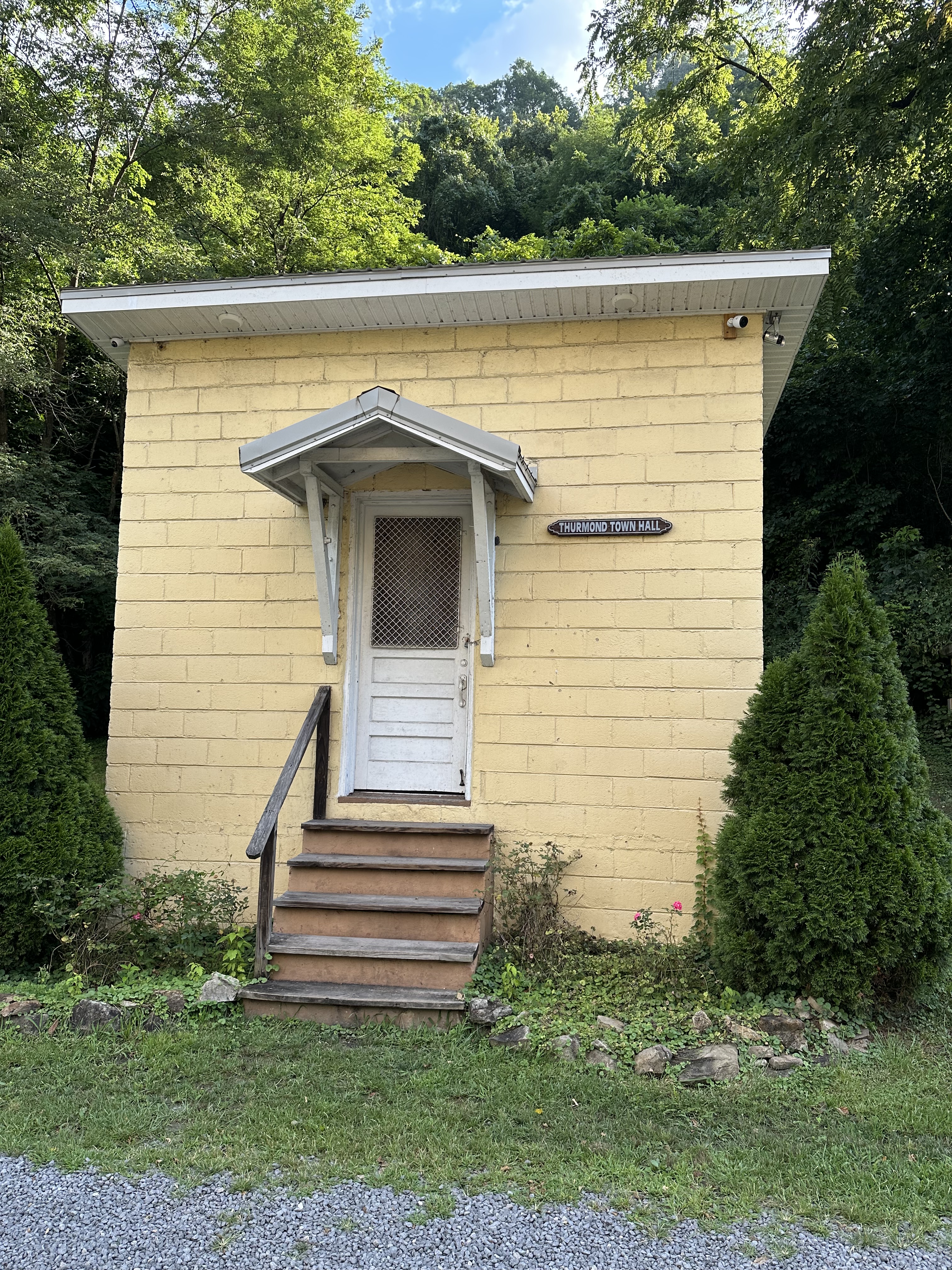
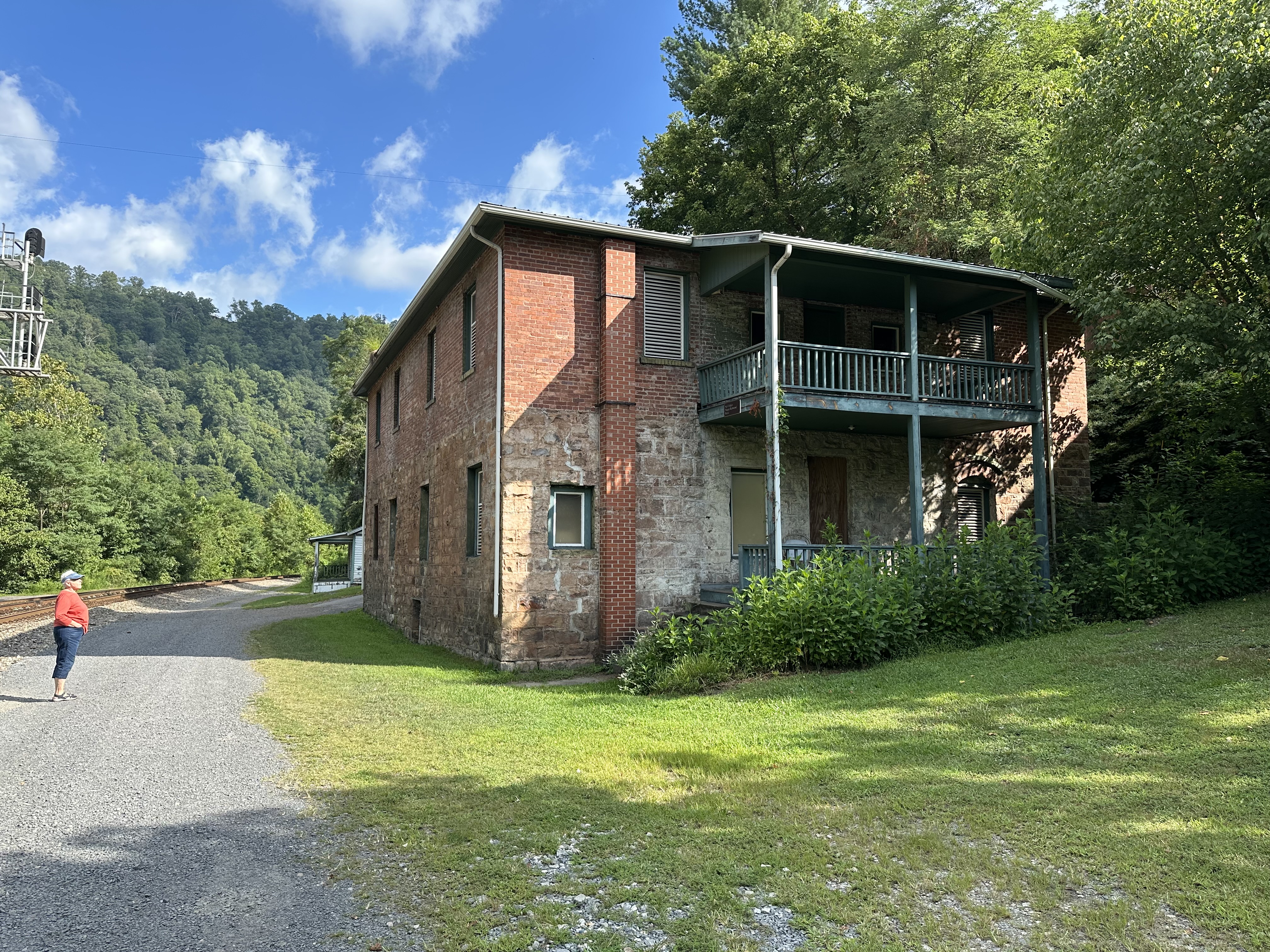
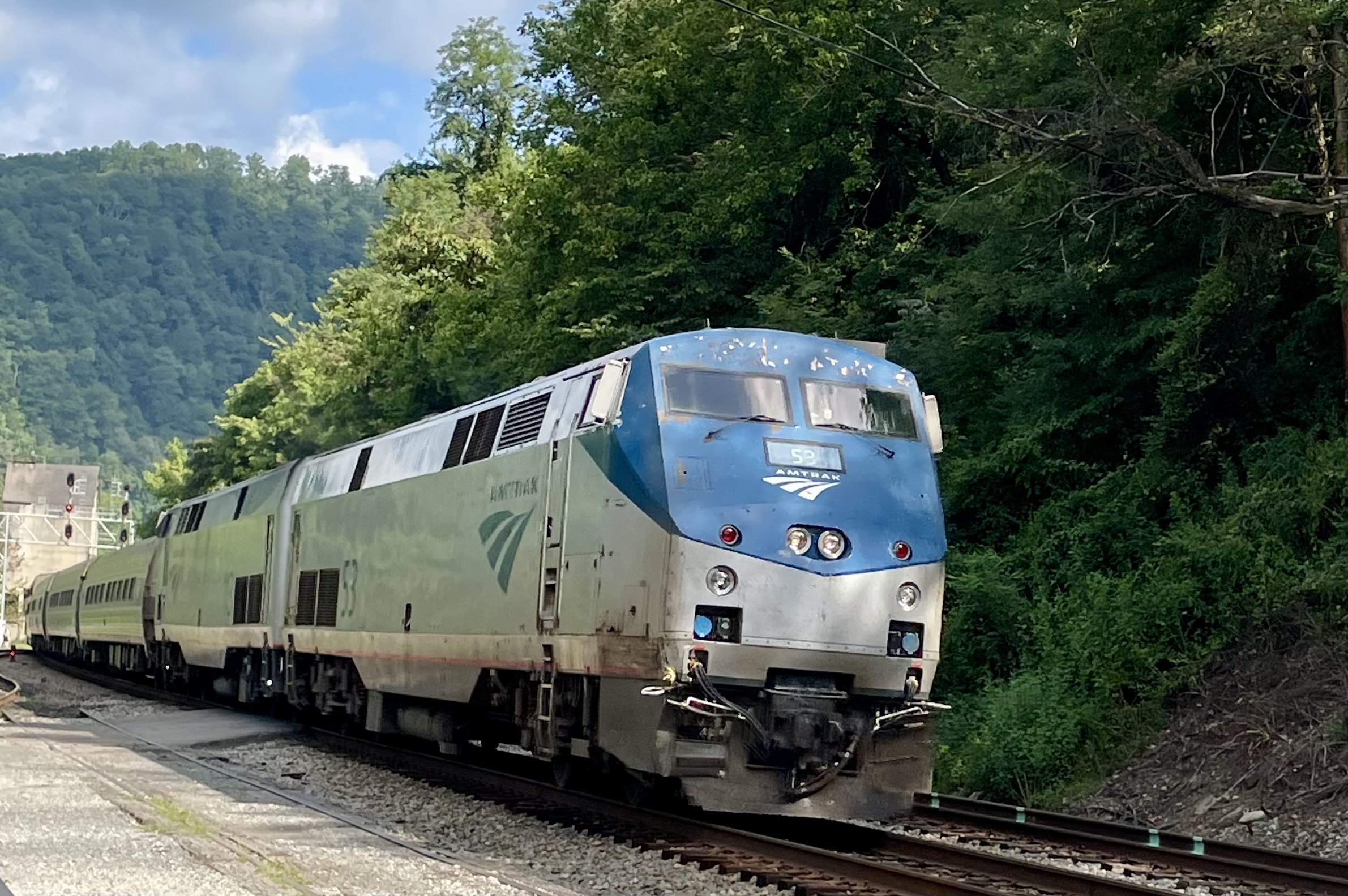
On the second day, we headed to the nearly abandoned town of Thurmond, a boomtown in the coal mining heydays. Today, only five folks live there. They all serve on the town council. One is the mayor, one is the secretary and the other three serve as council members. It was fascinating to walk the town of the once thriving businesses. Fortunately, the daily Amtrak train stopped to pick up a lone passenger while we were there. As the train pulled away, I realized a freight train had stopped on the mainline, allowing the Amtrak train to pass. It was a double treat for this train enthusiast.
On the way out of Thurmond, the road snaked along Dunlop Creek and a train track. Because of the steep descent of the topography, the creek had many rapids and small waterfalls. The sun broke through the thick tree canopy to highlight one of the falls.
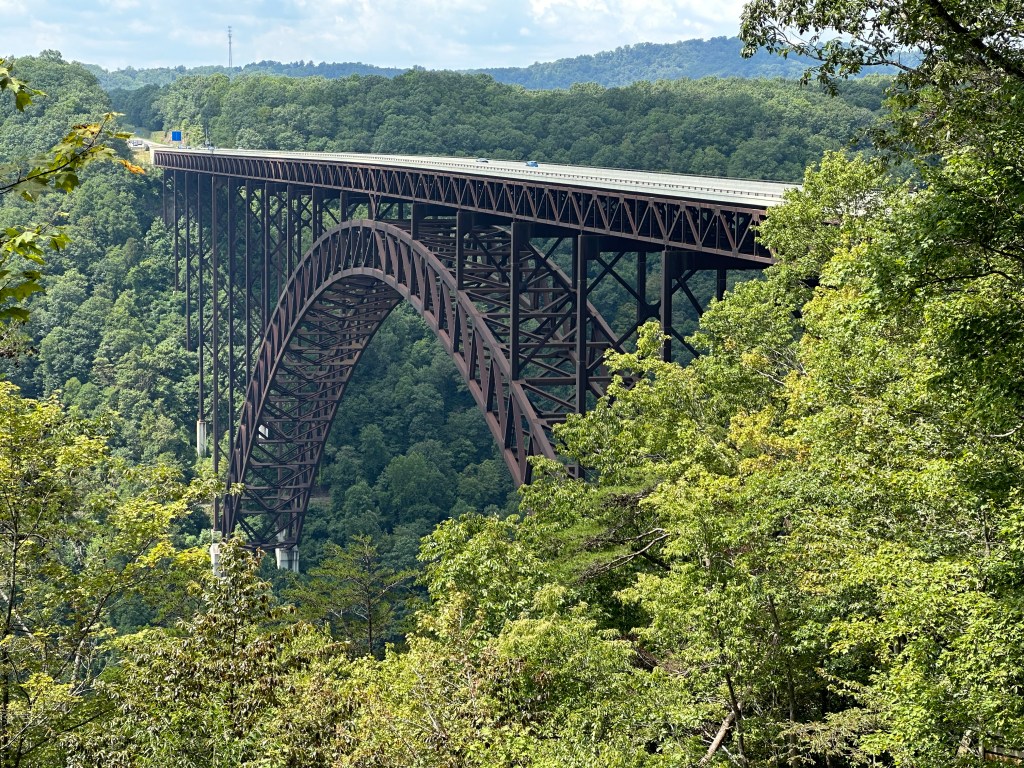
Finally, we took in the magnificence of the historic New River Gorge Bridge. The bridge carries U.S. 19. Consequently, the visitor center and the observation boardwalks were much more crowded than the other locales.
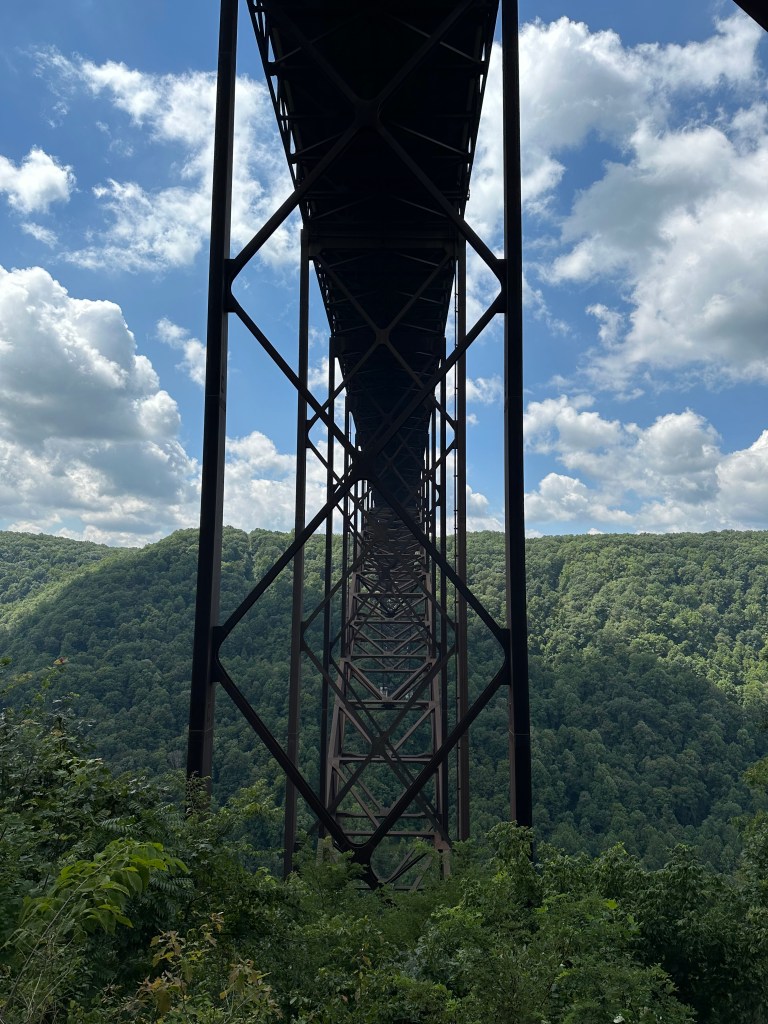
I wanted to get a photo of the bridge from the river view. The only way to do that was to wind our way down narrow roadways with several sharp switchbacks. There were a few places to stop along the way, including one right under the famous bridge.
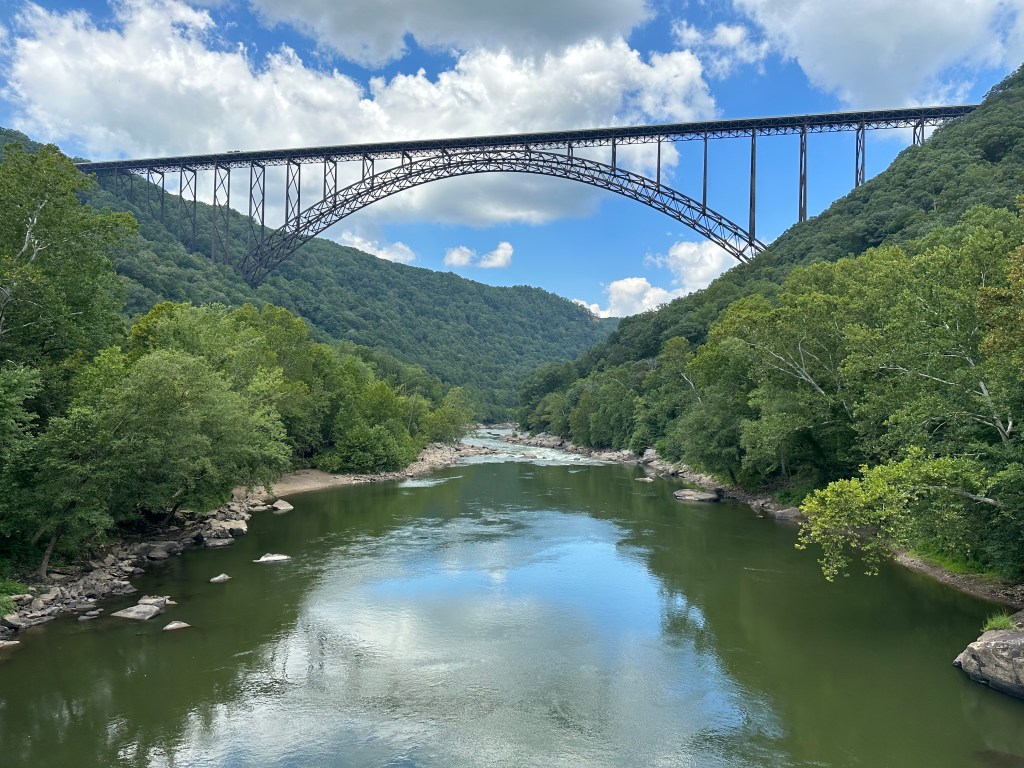
We continued down the twisting road, the river’s rapids on the right, bearing their white teeth. Soon we made a sharp, right-hand turn and drove across the old bridge to the designated parking lot. I told my wife I was heading to the bridge we had just crossed to photograph the New River Gorge Bridge, which spans 3,030 feet across the New River Gorge and is 876 feet above the river. The bridge is the longest single-span arch bridge in the world.
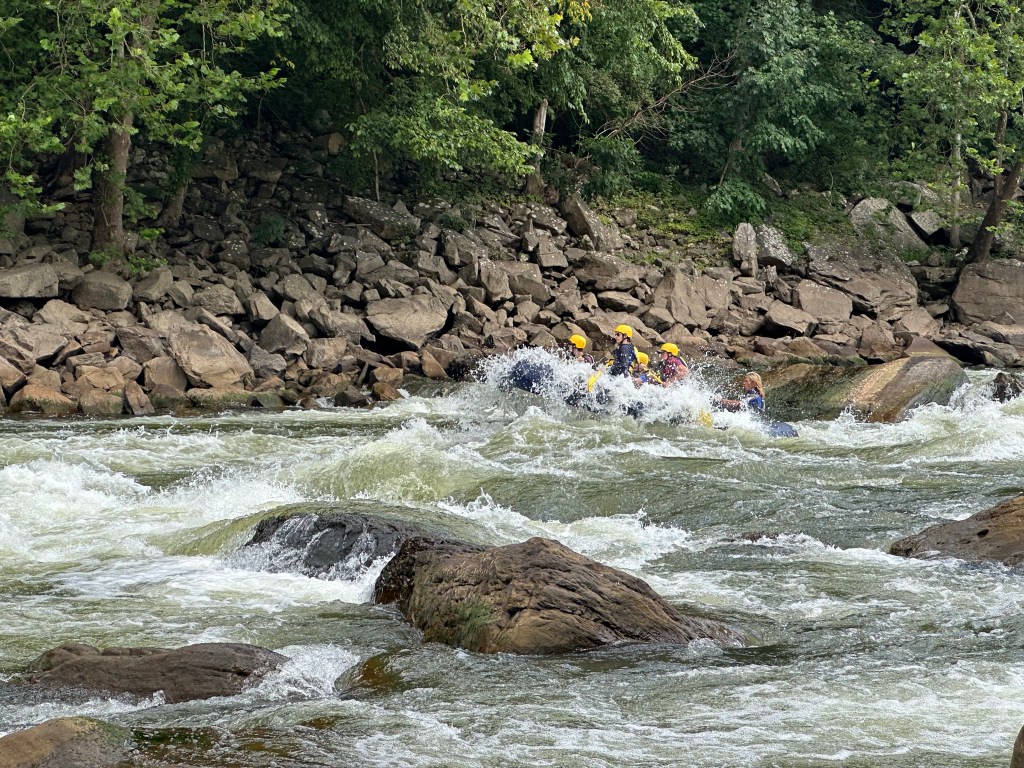
Rafters about to hit the rapids.
The New River Gorge Bridge.
The New River Gorge with the old bridge in the lower right.
Under the bridge.
Rafters and the old bridge.
The size of the boulders and the old bridge.
Running the rapids.
The New River Gorge Bridge taken from the old bridge.
However, I got distracted. I first heard and then saw whitewater rafters running the rapids with others waiting their turn. So, I hustled toward the water’s edge only to discover even bigger boulders than I had at Sandstone Falls. Wanting close-up shots, I scrambled across the rocks as carefully as I could. But the rafters were faster than this 75-year-old grandfather with a bad back and weak knees. Though only 50 feet from the water, I knew I should stop for safety’s sake. I got a few photos, including one lone kayaker who got turned around and bounced through the whitewater backward, just missing a giant rock. As soon as he hit calm water, he headed to the eastern shoreline to compose himself. I was doing the same in preparation for meeting my wife since I had been gone long enough to take the bridge photos and be back already.
After 52 years of marriage, I knew that look when I told her what I had done. I confessed that I should not have gone down there alone on those large slippery rocks. I hustled to get the coveted New River bridge photos. We drove back under the bridge on the switchback narrow roadway until we reached US 19.
The thrills I got from these two days easily could not block out my aches and pains. We learned a lot about the newest national park. And finally, after seven and a half decades, I realized I wasn’t 25 anymore.
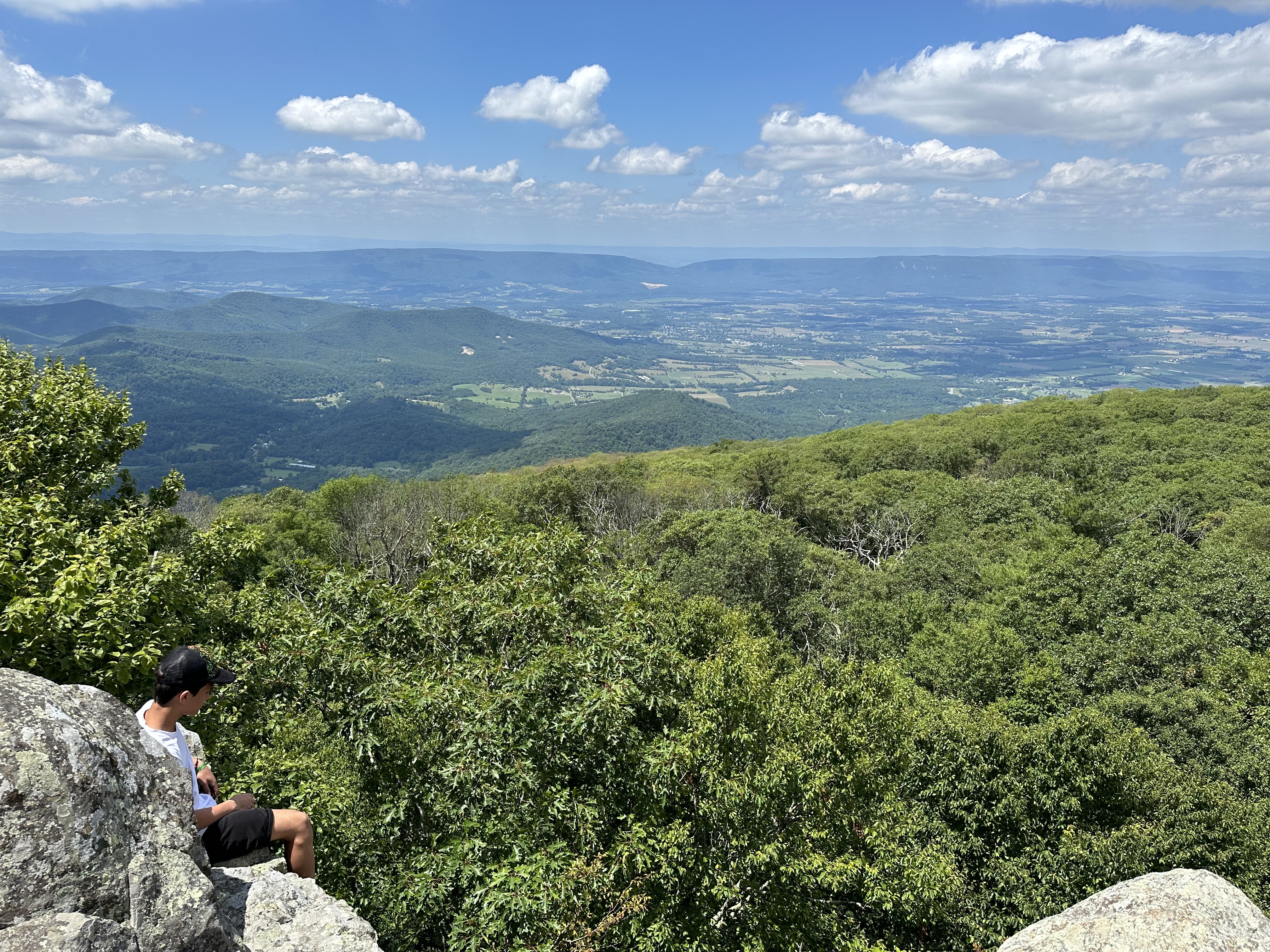
Viewing the Shenandoah Valley from an overlook in Shenandoah National Park.
Several recent studies have proved the obvious. Regularly spending time in and with nature dramatically enhances people’s mental health and appreciation for life.
That wasn’t news to me. Fortunately, I grew up in a family that spent time hunting, fishing, and vacationing in the great outdoors. I continued that pattern with my own family, minus the hunting. I prefer to shoot animals and everything else with cameras. It saves on taxidermy costs.
We moved to Virginia’s lovely Shenandoah Valley six years ago to be close to our grandchildren. Besides spoiling them, I also make regular trips to the nearby mountains. I multitask. On my hikes, I bird and photograph what I encounter.
Every outing, I discover new birds, wildflowers, and paths to explore. I often go alone, but I also enjoy sharing the fun with others. A group trip into the wild affords opportunities to explore nature together.
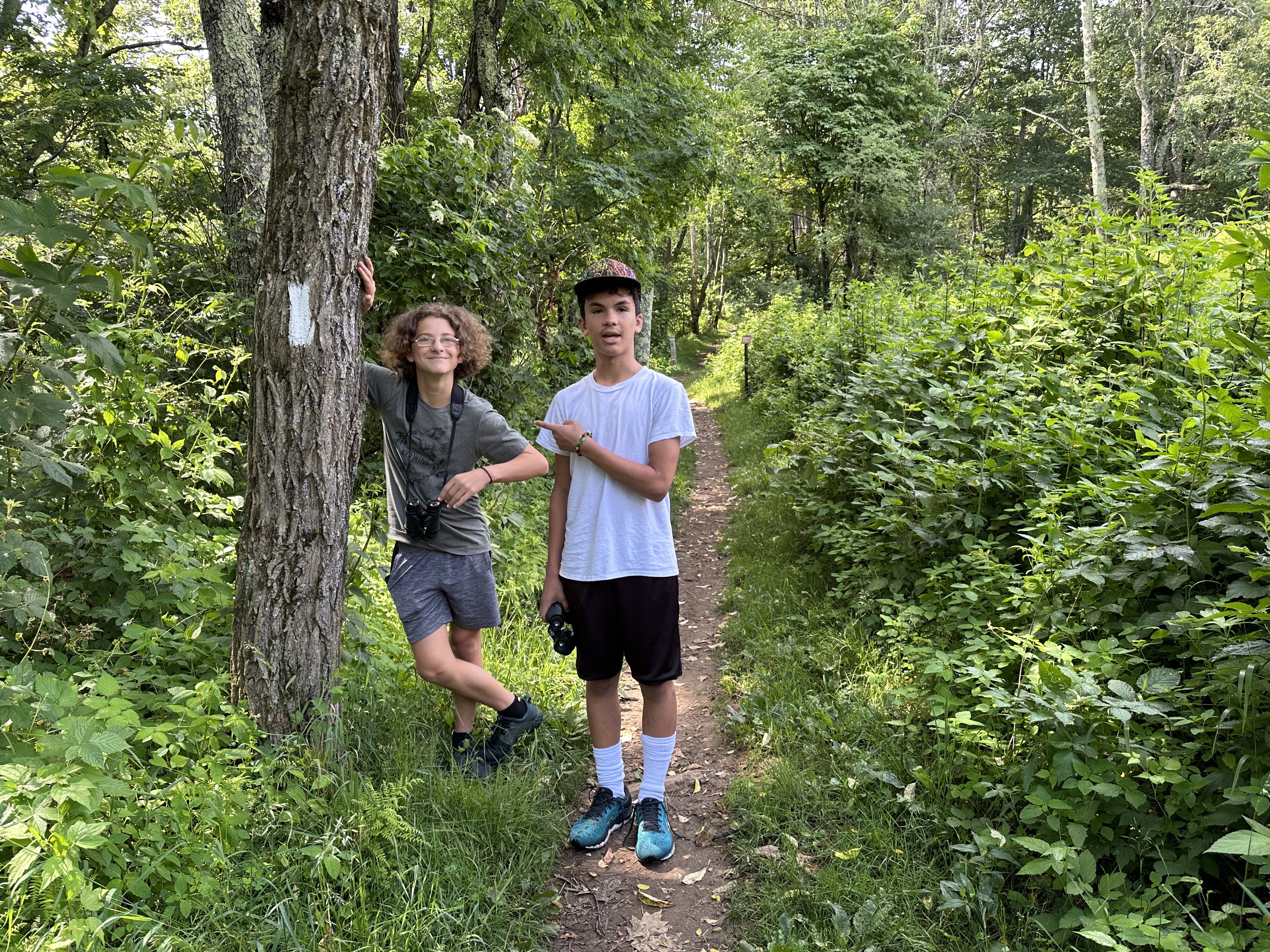
A recent outing to Shenandoah National Park with another senior friend and our teenage mentees from church allowed us to reengage with all the benefits of nature. I don’t know why the boys picked us, but we immediately hit it off. We all enjoy hiking and exploring, so the park was a natural destination for a day trip.
Once in the park, we veered off the famous Skyline Drive to Lewis Mountain Campground. I wanted to show the boys the only location in the park where Blacks were permitted during segregation. Even then, a few Whites complained that they should have access to the entire park.
At Big Meadows, we toured the exhibit of the park’s contentious founding at the Byrd Visitors Center. Not surprisingly, the youngsters showed more interest in the gift shop.
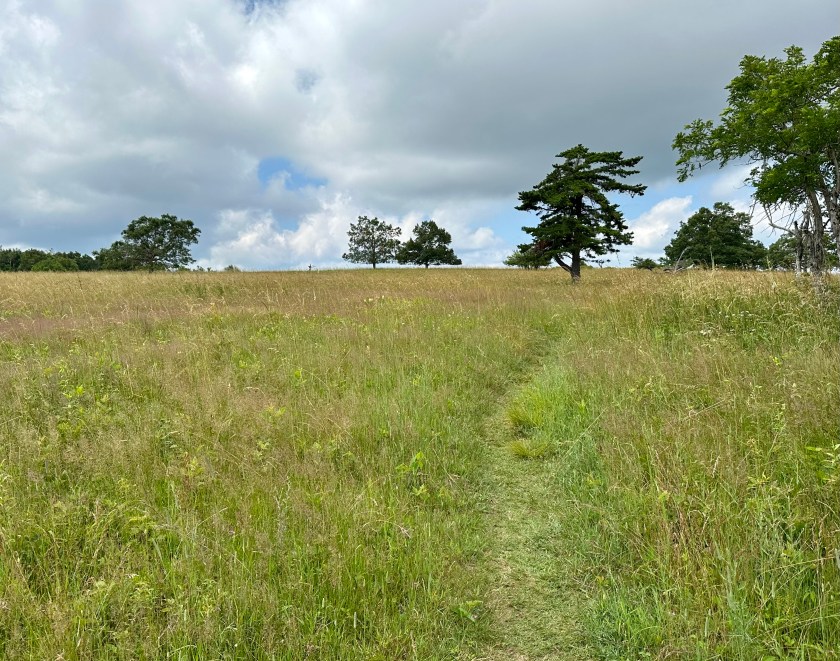
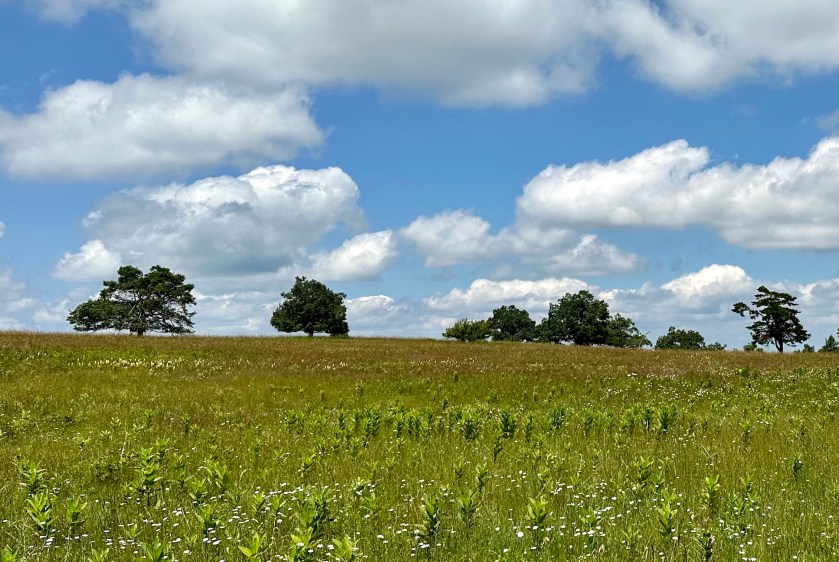
Then we got serious. We walked the southern parameter of the meadow. Its variety of habitats piqued their interest, from stands of trees to prairie grasses to artistic cairns. On the southernmost trail, the view of the Shenandoah Valley was spectacular.
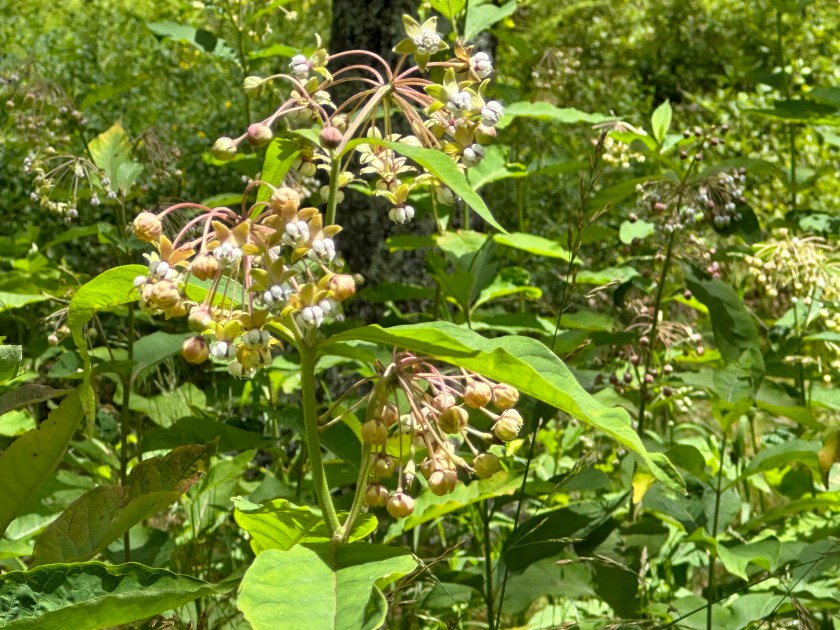
As we walked the cowpath-like trails, we encountered several bird species by sight and song and saw several butterflies that visited the wildflowers growing everywhere. Bright red wild columbines, vibrant woodland sunflowers, and common milkweed showed their colors and aired their fragrances.
Where the meadow met the forest, we spooked twin fawns. They only ran a short distance since they were foraging on shrub leaves. They seemed as intrigued with us as we were with them.
After a picnic lunch, we chose a short but magnificent trail. The Shenandoah Valley glimmered in the afternoon sunshine as we reached the summit and a massive rock outcropping. We basked in the comfortable, crisp 73 degrees of the Blue Ridge Mountains while the valley baked in the humid 80s.
It was good to commune with nature again, especially while sharing it with friends across generations. We breathed in cool, fresh air, were lulled by birdsong, enchanted by colorful flora and fauna, humbled by history, and energized by the needed exercise.
I was also glad we could personally verify the legitimacy of those extensive studies.
A memorial to those displaced when Shenandoah National Park was formed.
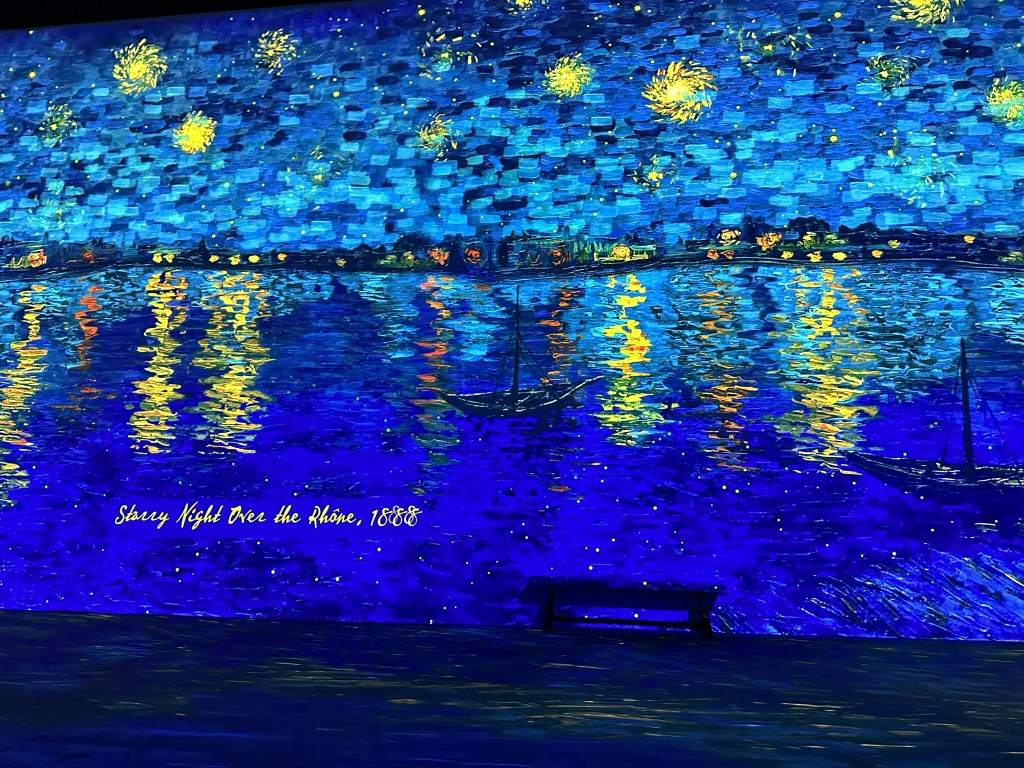
I gladly handed over my iPhone to the ticket-taker at the Van Gogh Immersive Experience in Washington, D.C. We had only just gathered everyone together at the entrance when she had offered to take our family photo, an image I dearly wanted.
It had been four years since the three families had all been together, and in that time, another grandchild had joined our ranks. Our two oldest grandsons had never met the youngest. I wanted this precious moment to be documented for perpetuity. As mobile as today’s societies are, especially the younger generations, I wasn’t taking any chances. I considered the family photograph as my personalized Father’s Day present.
As it turned out, this was the only photo of all of us together at the same place at the same time we got in the three-day gathering in our nation’s capital. The comings and goings of our active crew mirrored the busy lives of our adult children, their spouses, and teenagers. I certainly wasn’t disappointed.
I had my shot and could now relax into the follow-the-crowd mode. The other adults, our daughter, son, son-in-law, and daughter-in-law, would share the responsibility of setting the agenda for the Sunday through Tuesday reunion. I’m usually the one to suggest and plan trips. However, this time I silently relished my grandfatherly role. Though not surprised, I marveled at their skills in managing offspring, arranging transportation, and finding restaurants to suit everyone.
Of course, they consulted Nana and Poppy about places we wanted to go, do, visit, and tour. I was more than happy to go with the flow. Shoot. I would have been pleased if we had stayed in the hotel. A certain familial satisfaction overcame me.
The pandemic played a significant role in keeping us apart all this while. Our son, his wife, and the newest grandson, Teddy, live in upstate New York, a seven-hour drive from the lovely Shenandoah Valley, where my wife and I live. We moved there six years ago from our home of 38 years in Ohio’s Amish country to be close to our daughter and her family.
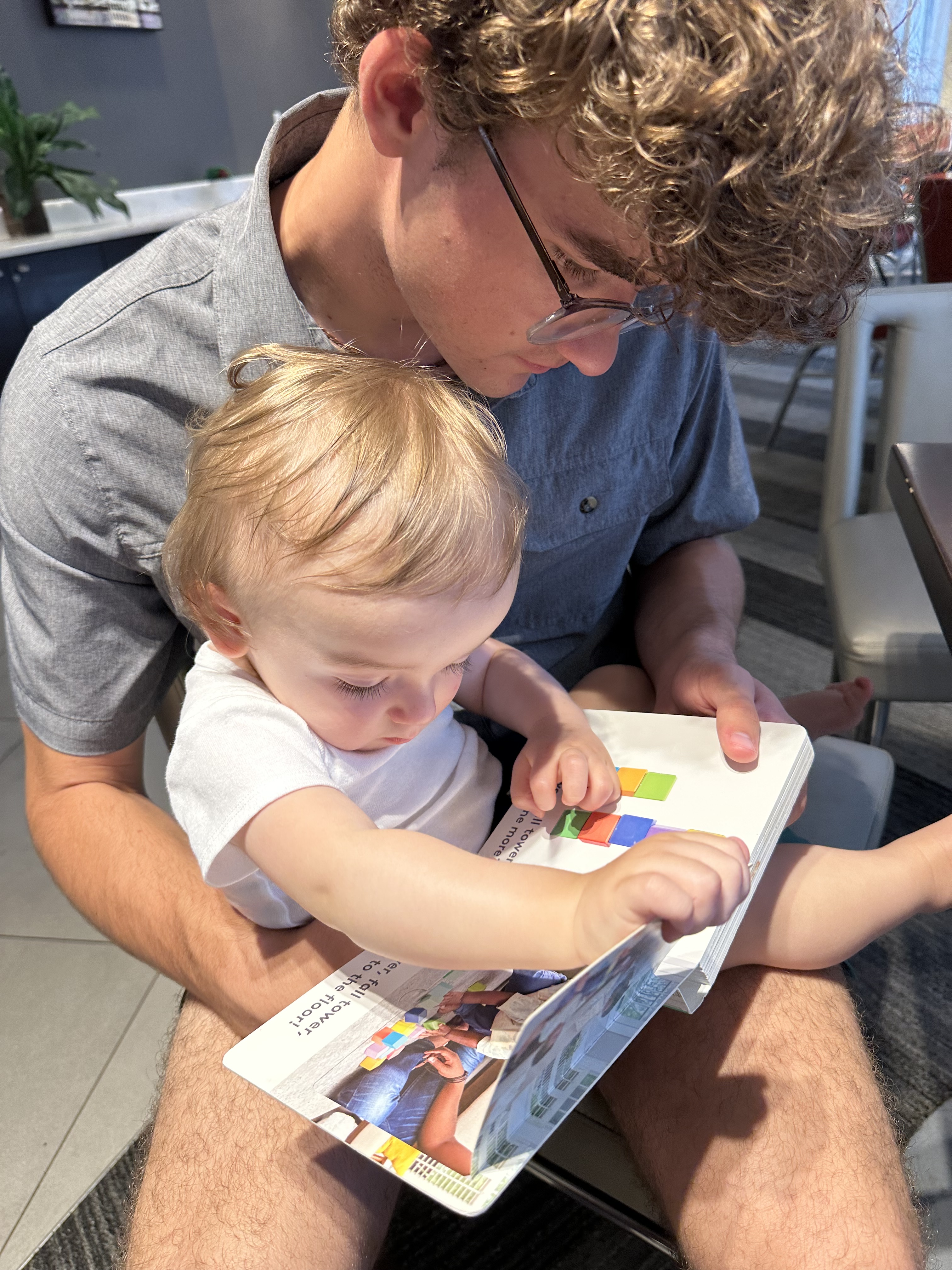
Teddy arrived over a year ago, complicating our Nana and Poppy roles. Our son and his wife have done an exceptional job keeping us informed of Teddy’s progress, and we travel north as we can.
But here we all were, assembled together. Everyone agreed to make the Van Gogh experience our initial group event. The New Yorkers intended to take the Metro from Dulles International Airport to the hotel. Due to track maintenance, that plan got derailed. It took them longer to get from the airport to the hotel than from Rochester to Dulles.
With air temperatures heating up, the Van Gogh Immersion became the perfect place to chill and smother Teddy with plenty of attention. To enhance the experience, lounge chairs, bean bags, small ottomans, and blankets were scattered around the gymnasium-sized, carpeted room. We all found our relaxation niche and enjoyed the show. Teddy loved showing off his newly found walking and running skills. The rest of us merely basked in the moments as they unfolded.
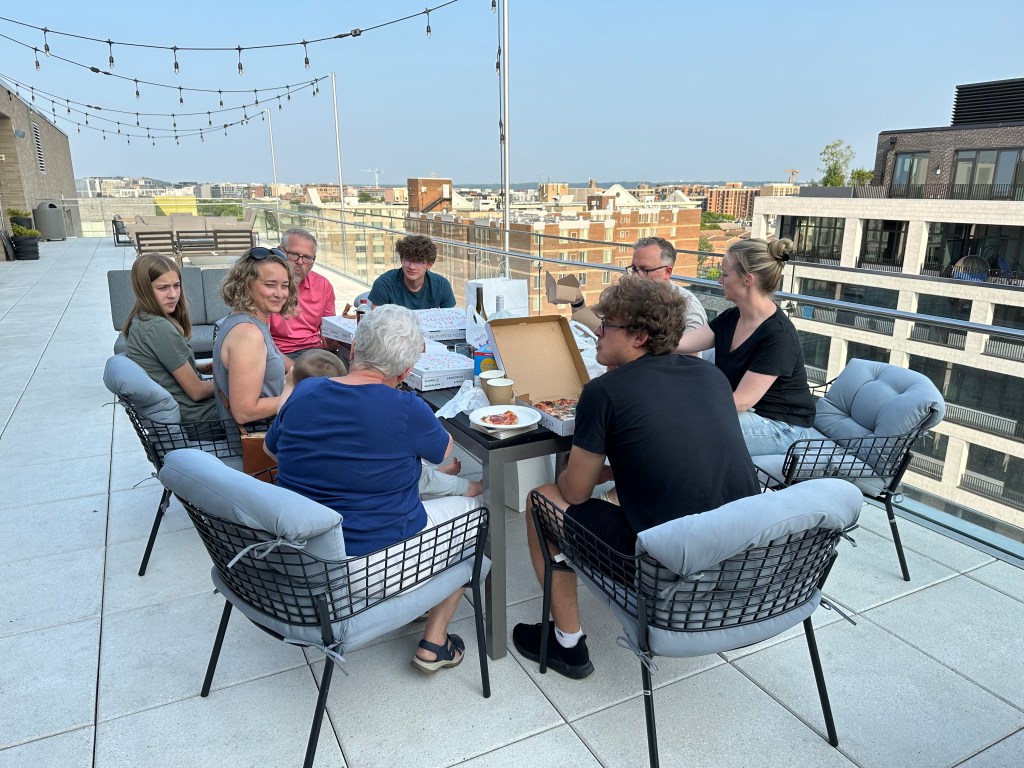
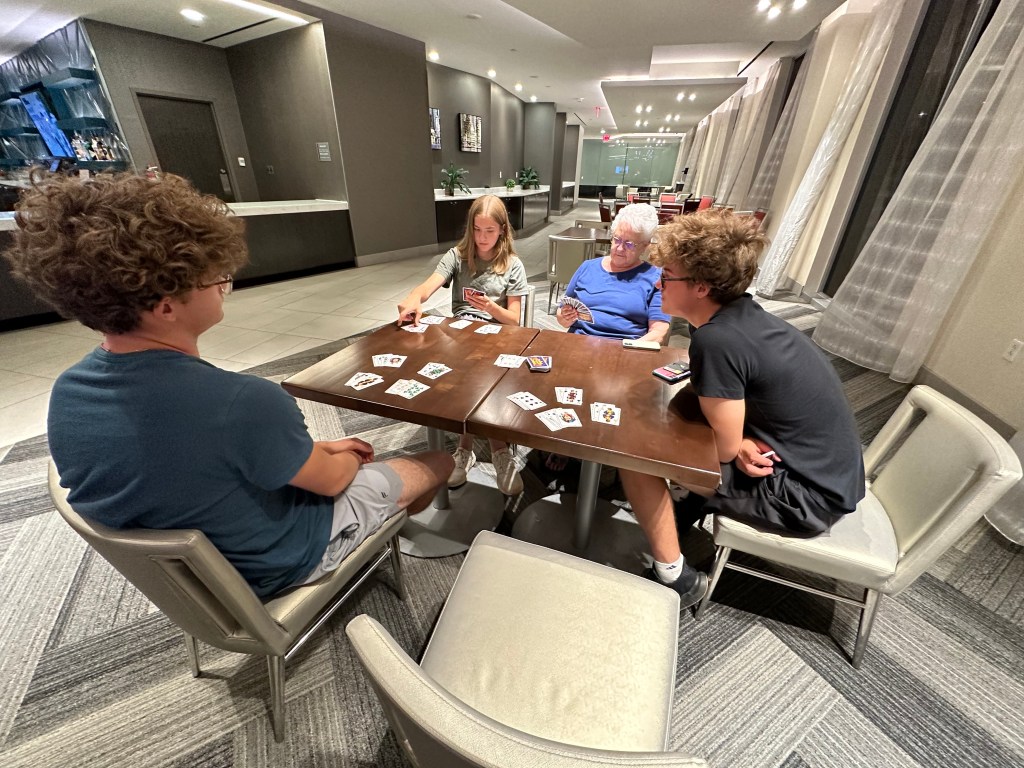
That was plenty for the first day. Returning to the hotel, we ordered dinner from a local pizzeria. We found the perfect place to hold a pizza party and enjoy each other’s company, the building’s rooftop. I relished the lively chatter, the food, and the cityscape views. We finished the day with gelato and a rousing game of cards with the teens. It was a balance we all needed to complete the day.
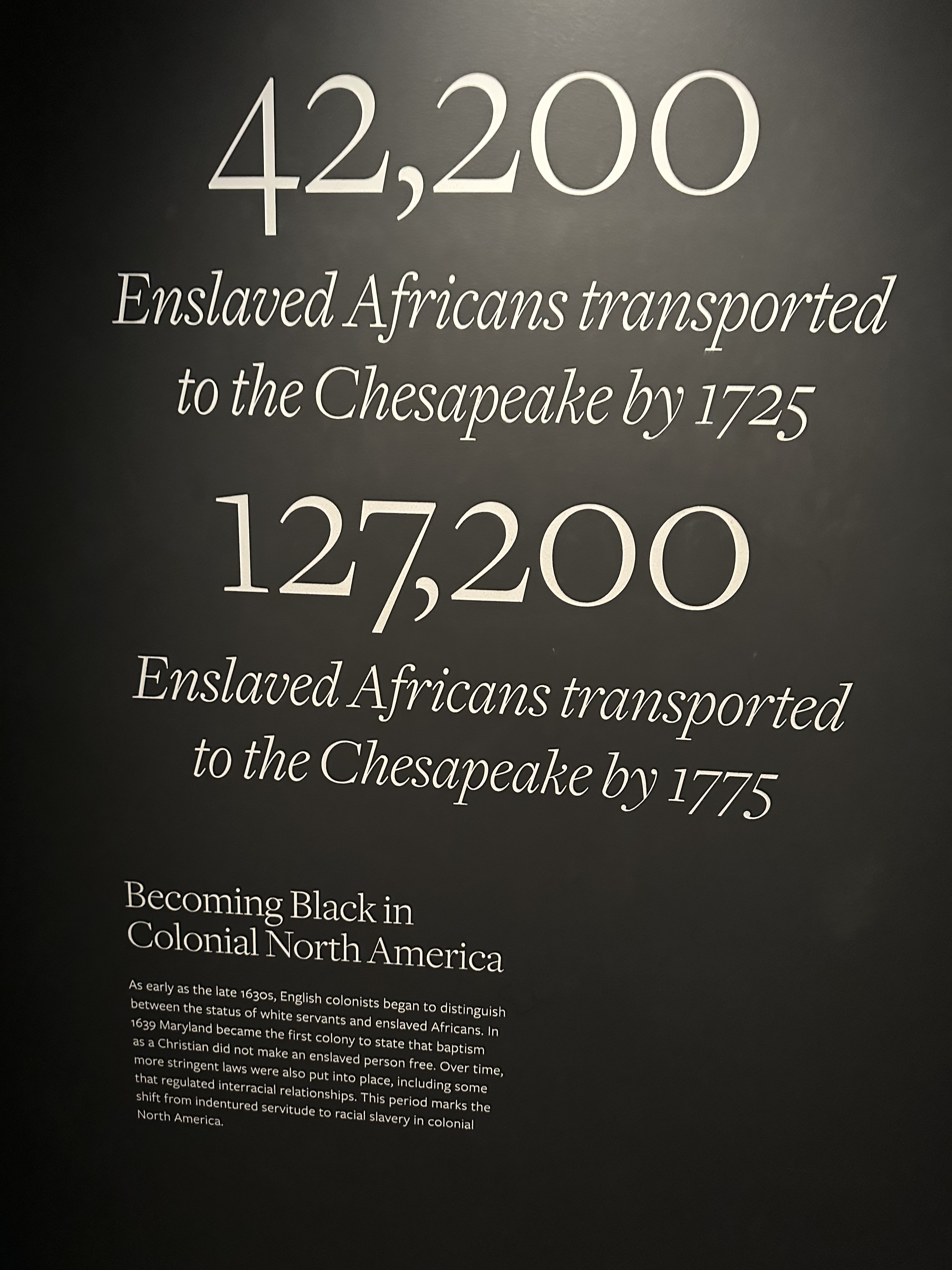
We walked a mile in the morning’s coolness the next day for a delicious breakfast spread. The portions were so large that only the teens cleaned their plates. We stayed so long that the day’s heat had already begun as we worked our way toward the National Mall. It was Juneteenth, and we had tickets for the National Museum of African American History and Culture. We wanted the youngsters to see first-hand the sad history of how African Americans arrived in this country and what they endured in slavery, the Jim Crow era, and the present. The chronology began on the lower floors, and we worked our way up in small groups. Is there another choice when you have a toddler and septuagenarians in the same family? We didn’t have time to do the outstanding museum justice.
We exited into the early afternoon heat and humidity commonplace for D.C. summer days. Teddy’s parents found a refreshment truck parked near some massive shade trees, and the rest of us soon joined them for some shaved ice and smoothies. Nana was in her glory feeding Teddy some of her cool mango drink. Teddy’s eager reaction showed his gratitude.
Colorful murals were abundant.
Mural.
The Washington Monument from the Jefferson Memorial.
At the FDR Memorial.
Colorful canopy.
A short walk brought us to the World War II Memorial in the shadow of the Washington Monument and at the reflecting pool’s eastern end. I spied a group of Amish circling the memorial’s parameter and recognized the older leader. Unfortunately, I was too far away to say hello.
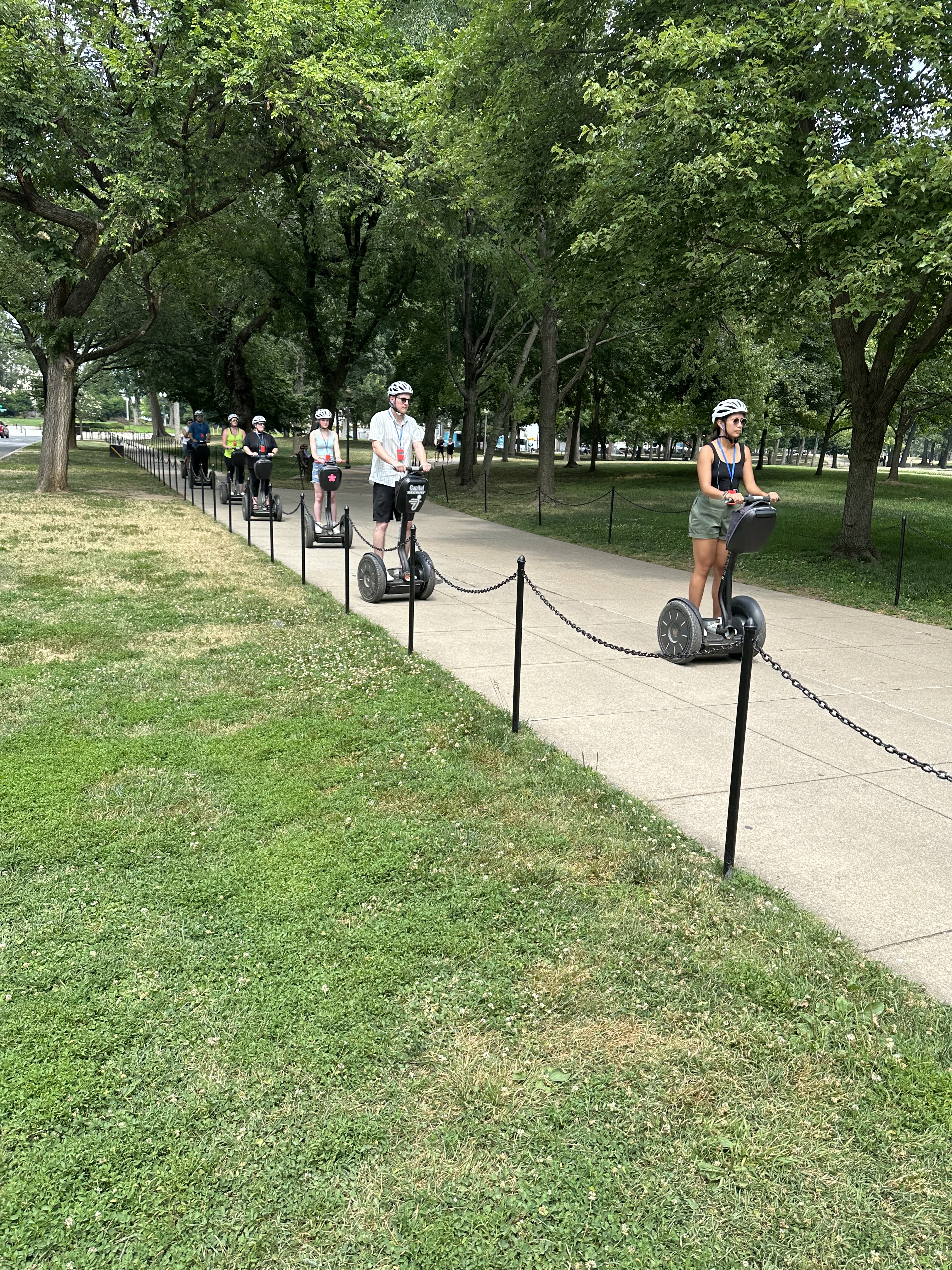
We continued walking west to the Lincoln Memorial for the older grandkids to experience. Before we left the area, we pointed out the impressive yet solemn Vietnam War Memorial from a distance.
By now, everyone was tired, and we headed back to the hotel via three modes of transportation. Some of us took an Uber, while two adventurous teens followed their father to the Metro. Since Teddy needed a nap, his parents chose to push the stroller three miles.
With the day’s heat and humidity, we were glad for the hotel’s air conditioning in which to rest. However, the teenagers all wanted to play cards, a vacation tradition since they were young. We ordered burgers from a local restaurant and reclaimed the hotel’s rooftop. The banter and passing around Teddy put a punctuation mark on a fulfilling day. The games played on, but we seniors called it a night, our hearts full.
As I settled in for the night, I reflected on the day’s interactions. Everyone we met, hotel, restaurant, museum staff, and Uber drivers, were engaging and courteous. They made this country boy feel right at home in the city.
The adults headed for a lighter breakfast than the previous day while the teens slept in. Afterward, they had to be awakened to say goodbye to Teddy and his parents, who had to leave for their return flight. We hugged and kissed and thanked them for making the trip, and then they were gone.
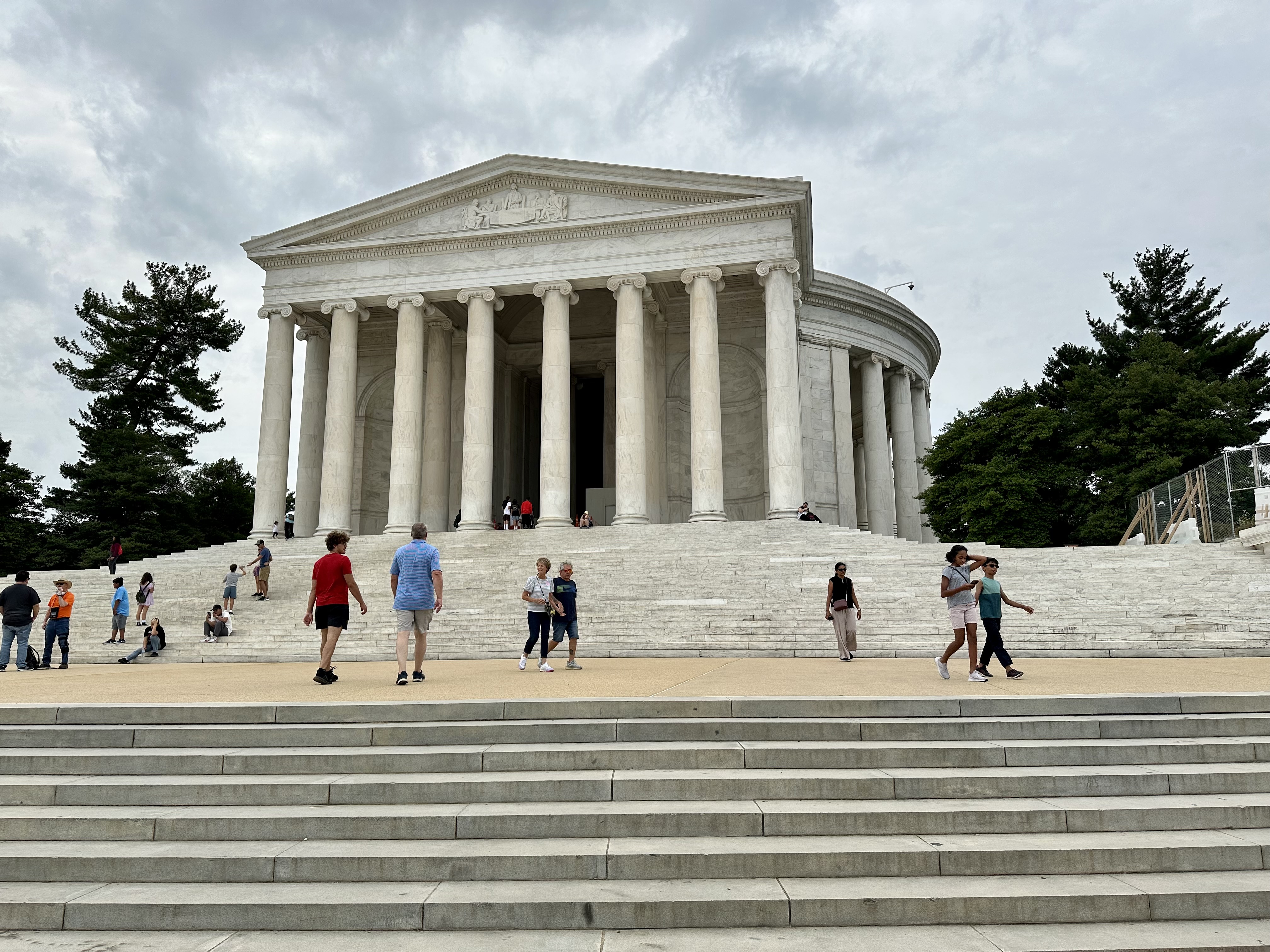
Those that remained returned to the monument area. Our first stop was the Jefferson Memorial. The day was warm again, but a steady east wind made it bearable.
Please click on the photos to enlarge them.
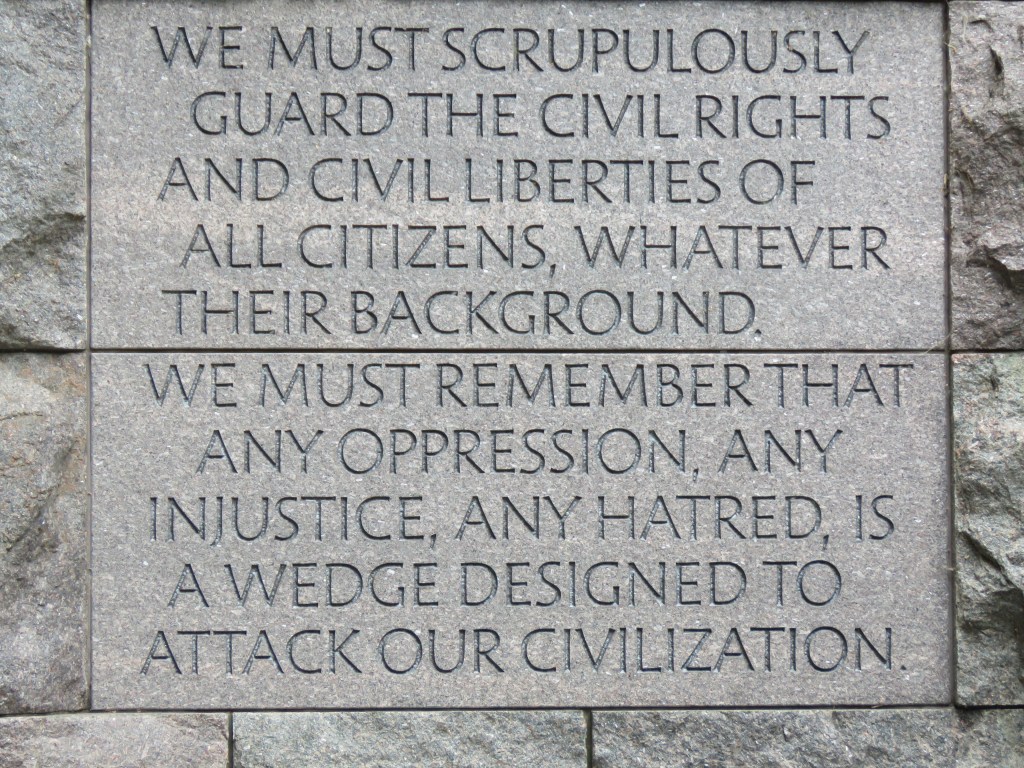
We walked to the Franklin Delano Roosevelt Memorial, which my late father truly enjoyed when I first visited it with him as part of an Honor Flight for World War II veterans. I told the grandkids how their great-grandfather, who used a wheelchair, nearly rose to his feet when he saw the statues of the longest-serving president. Dad even knew the name of Roosevelt’s dog, which also had an oversized bronze.
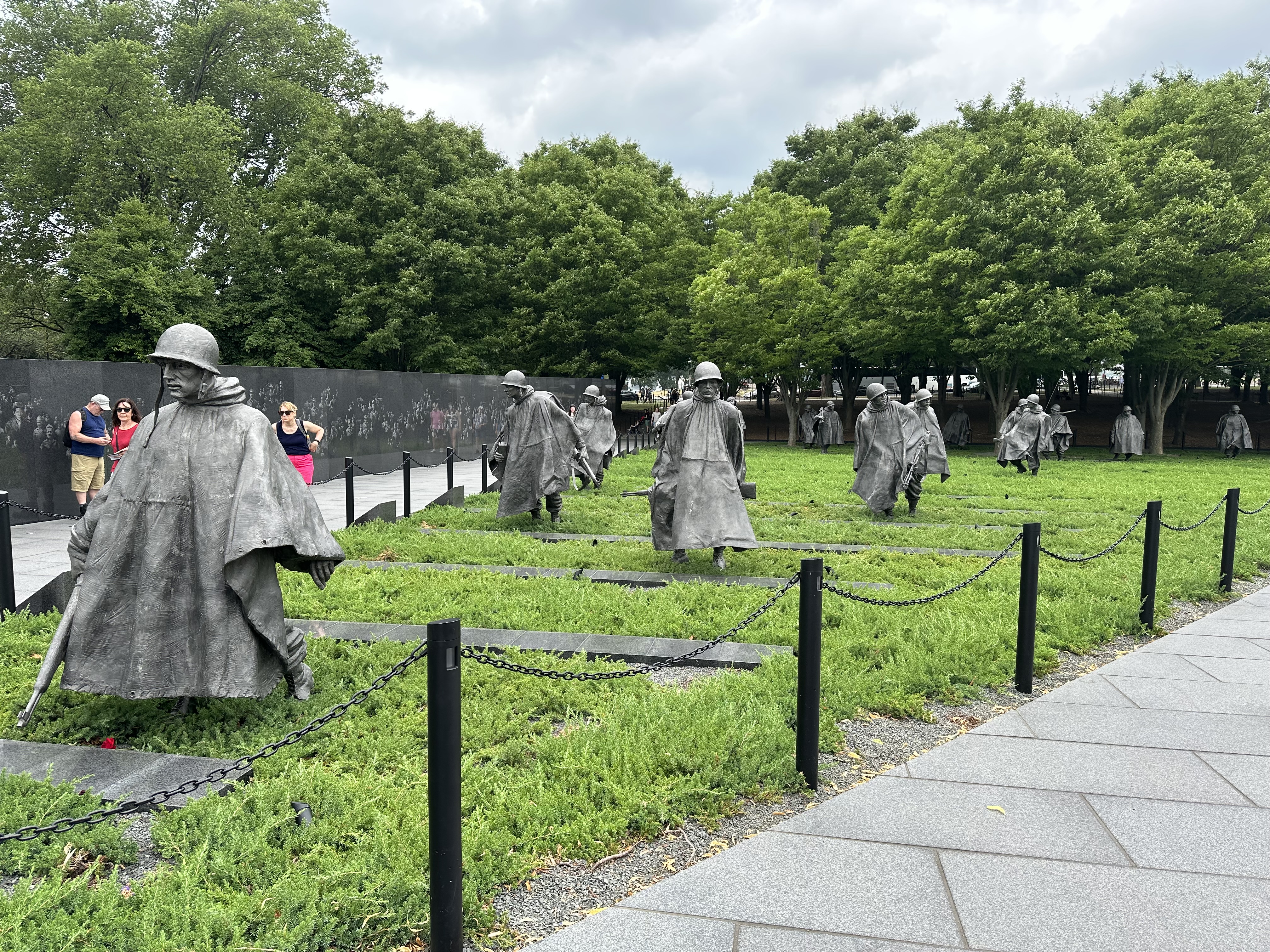
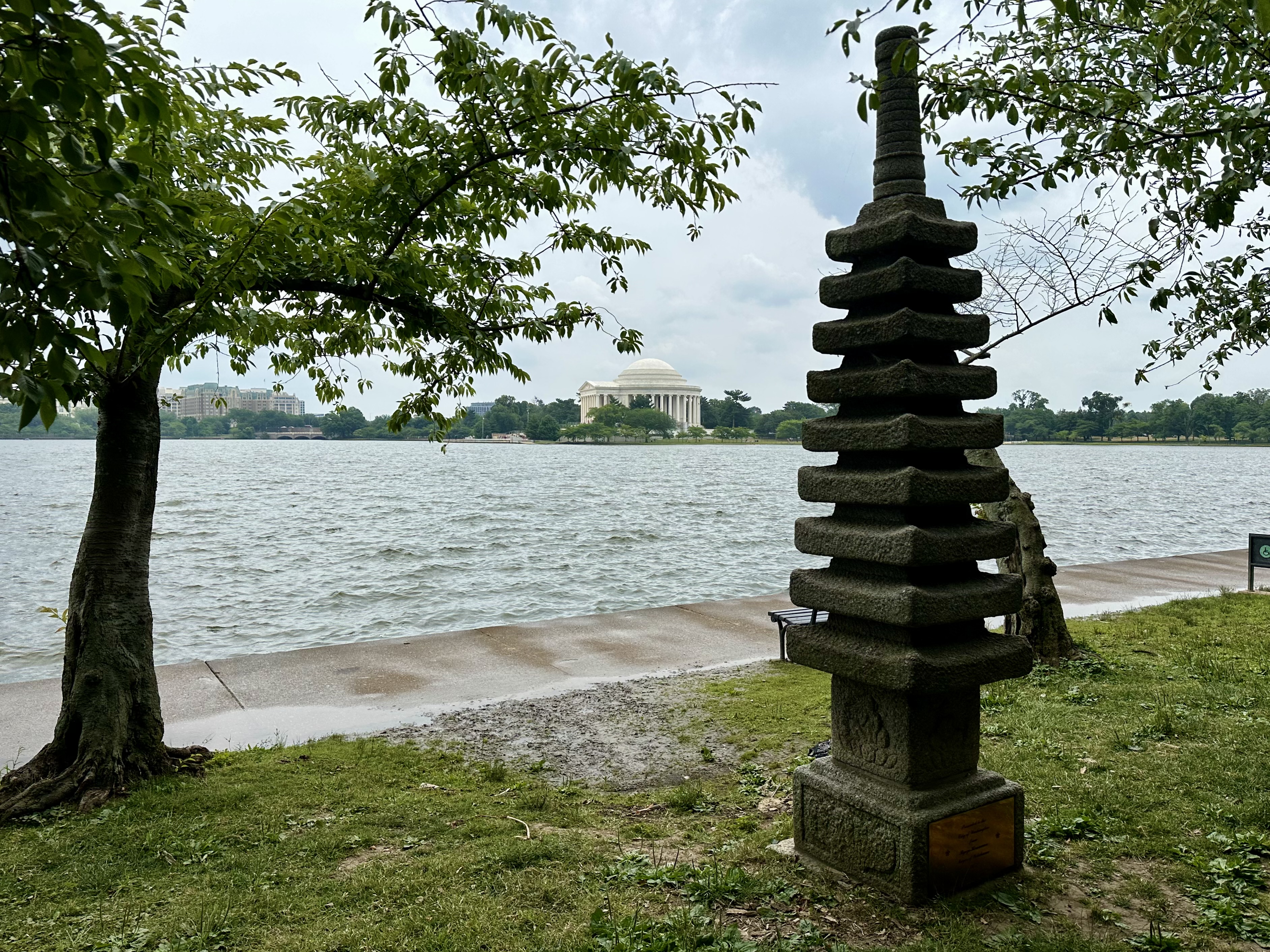
The Martin Luther King, Jr. Memorial stood a short walk away. We were a few months late for the blooming of the famous cherry trees along the path. The impressive King Memorial faced the Jefferson Memorial across the choppy basin. From there, we strolled to the Korean War Memorial. With its platoon of soldier statues, the setting gives you pause about the futility of war.
It was time to head home. We retraced our steps through the FDR Memorial and back to the van. As we rolled south down the interstate, I enjoyed the commotion of the card games with Nana and teenage grandchildren in the back seats. I was happy to have my son-in-law drive and most grateful for our joyous times together.
We had so much fun that we had already made tentative plans for next year’s get-together. In the meantime, I’ll bask in the joyous afterglow of our little family’s reunion.
A surprise beneath the bridge. Photo by Bruce Stambaugh
You never know when you’ll find unexpected color. I was birding on the James River Heritage Rail Trail in Lynchburg, Virginia. After crossing the river, you enter Percival’s Island Nature Area.
Wanting closer to the water, I followed a path that led under the bridge. I stopped short when I saw this vivid street graffiti art painted on one of the bridge’s cement supports. It was the dinosaur that caught my eye.
Though I was searching for bird species, this unexpected splash of color was a pleasant surprise.
Daffodils at the arboretum. Photo by Bruce Stambaugh.
My wife and I recently celebrated our 52nd anniversary. We did so quietly.
Initially, we considered driving to Washington, D.C., to view the cherry blossoms at their peak. We had never done that, and living only two hours away, we could easily view the iconic flowers and be home before dark. We weighed our options and decided instead to stay close to home, which was my wife’s preference.
That decision paid dividends we didn’t expect. First, we slept in, which is not our routine. We usually awaken at first light. It felt good to start our big day well-rested.
After a quiet, light breakfast, we continued with a habit we started during the pandemic. We played cards and drank our morning decaf coffee. With the temperature hovering slightly above freezing, we were in no hurry to head outside for a few local adventures.
Traffic was light for the 10-minute drive downtown for an early lunch at a favorite restaurant. Since it was a Monday and not yet noon, there was no wait. We enjoyed our meals and the quiet atmosphere. They even had gluten-free bread for my brisket sandwich. It was nice to sit in the serenity of the ordinarily bustling restaurant. Our waitress even took her time bringing the check.
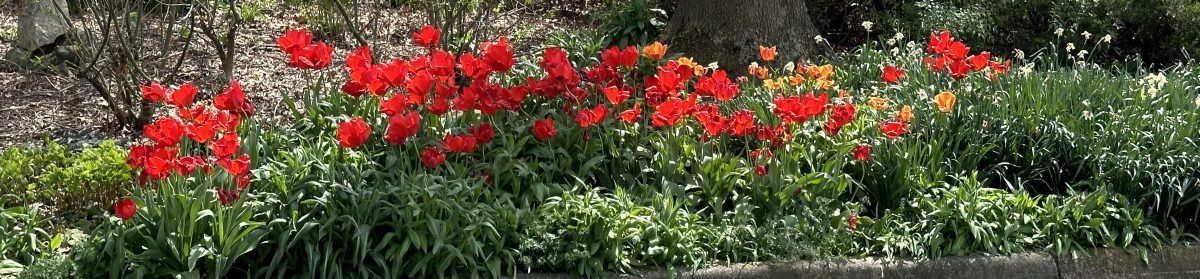
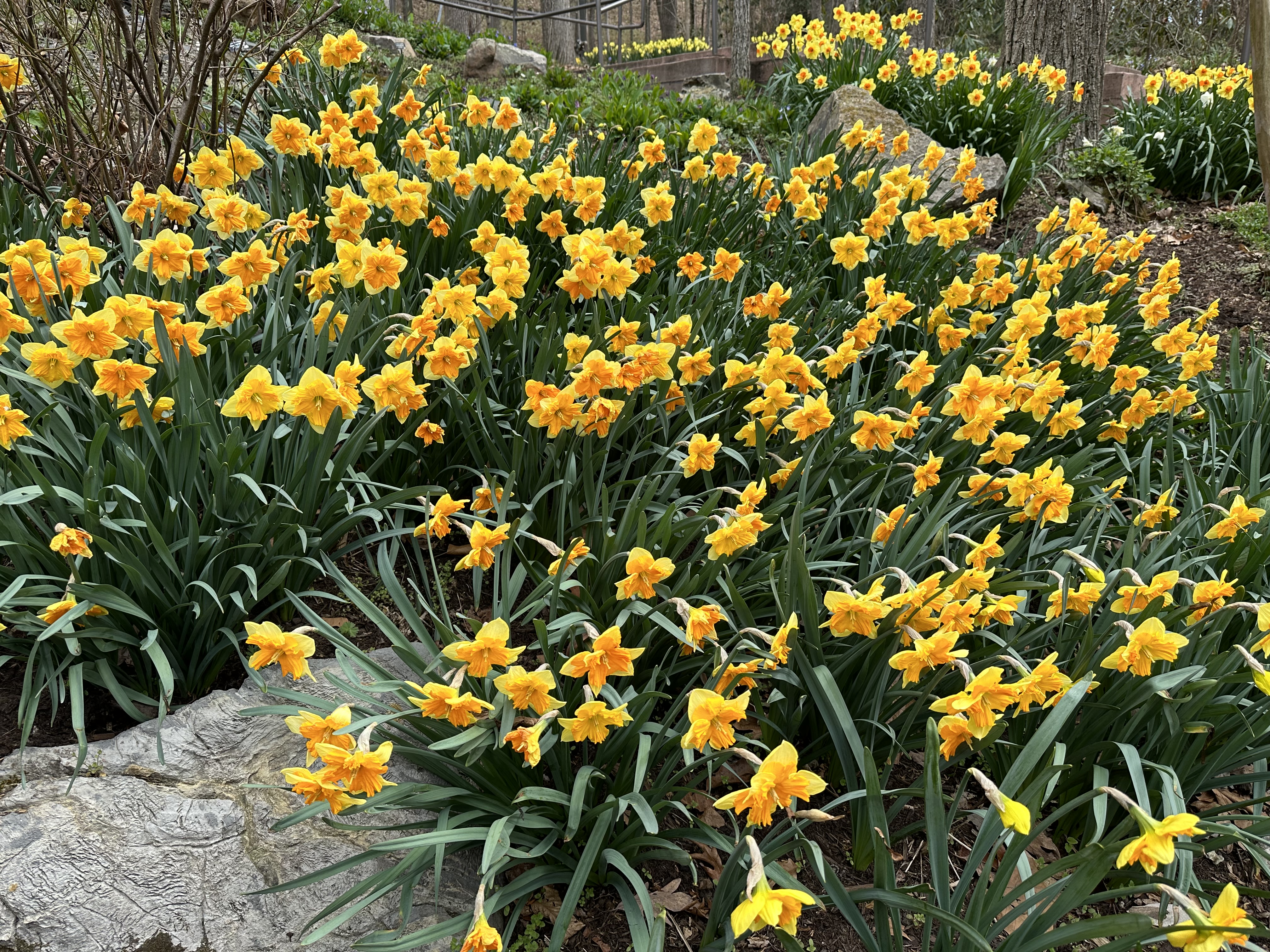
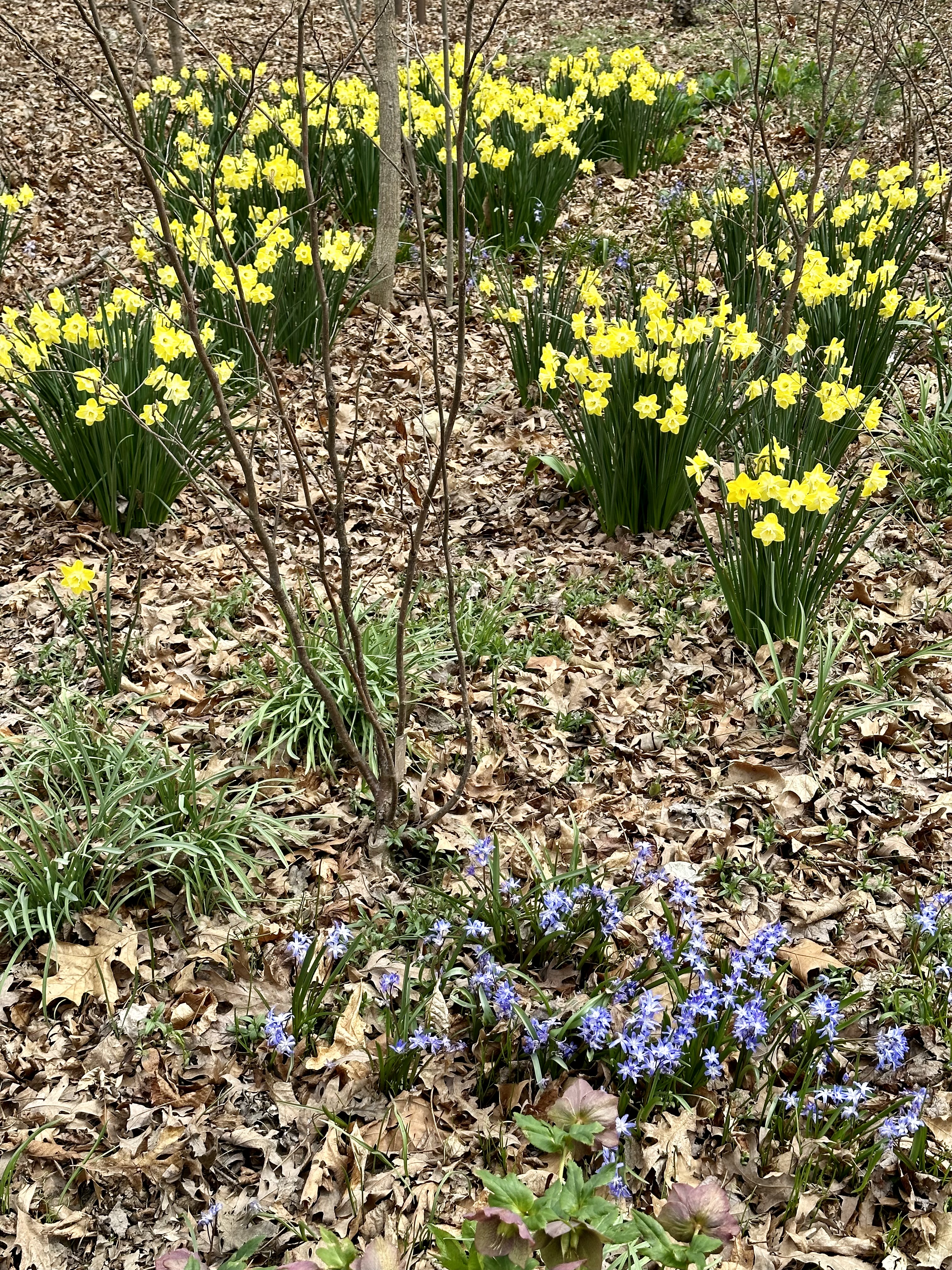
After lunch, we drove to a local arboretum and strolled around the artificial pond. Both buttery yellow and white daffodils colored the forested hillside surrounding the murky pond. Some flowers were already fading, while others were beginning to bud.
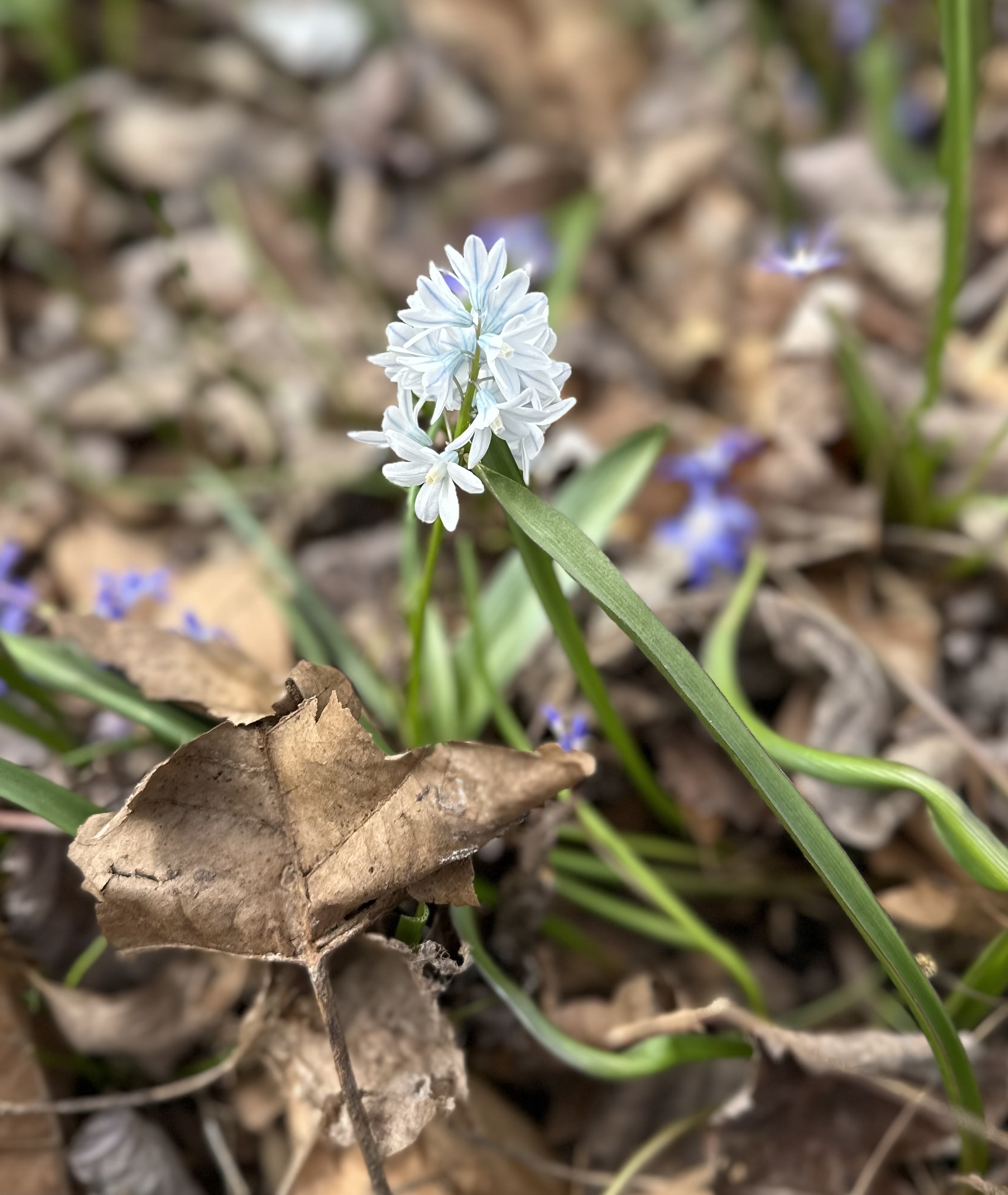
The aptly named star magnolias were also losing their luster. We admired some snappy-looking white and orange daffodils and various wildflowers beginning to grace the forest floor.
A young man approached us as we sniffed the blooms. He was the new marketing person for the arboretum, and we enjoyed an extended conversation with him about photography. My constant snapping of the shutter gave me away.
By then, the sun had taken the chill out of the air. That meant one thing: ice cream. We drove to a local ice cream parlor in a neighboring town. A kid’s cup is suitable for us now. My wife was more adventurous and ordered a caramel salted chocolate chunk while I stuck with my tried and true chocolate. We chose a table outside where my wife sat in the shade while I preferred the sun on my back.
On the way home, we stopped at another smaller arboretum at the north end of the small town. The place is more park than a botanical garden. A small, tree-lined stream called Cooks Creek winds lazily through a green space. Cooks Creek Arboretum is sandwiched between a hillside condo complex and a farmer’s still-fallow field stretching up to a big red barn.
Once the flock of pesky common grackles flew off, we heard a barred owl calling softly from inside an owl box fastened to a giant sycamore on the creek’s bank. The harmony of the owl’s twittering and the silvery gurgling of the stream brought a smile to both of us.
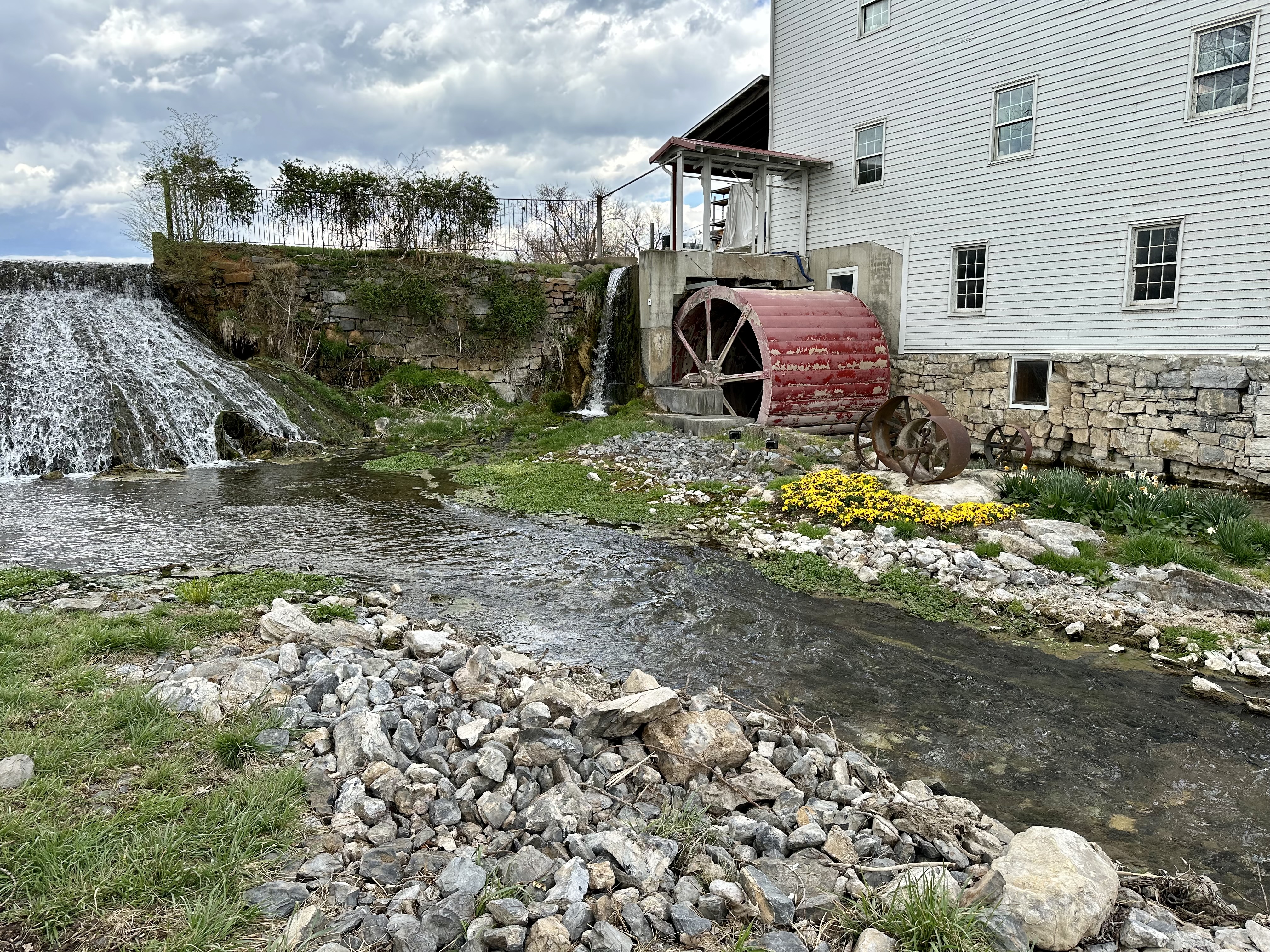
Ring-necked DucksSilver Lake MillThe old waterwheel
Please click on the photos to enlarge them.
With the return of the noisy grackles, we detoured to Silver Lake to check for migrating waterfowl. A quartet of ring-necked ducks floated and dived, floated and dived on the shallow lake’s surface. The lake’s Civil War-era mill attracts people far and wide.
Shortly after we arrived back home, the doorbell rang. A young woman handed my wife a bouquet from her sister and her husband, who live in Ohio. We appreciated their kind and loving gesture.
We snacked for supper, and after sunset, I drove to a high point in the countryside to take photos of three planets. Venus shown bright in the night sky, but I couldn’t find the conjunction of Saturn and Mars near the horizon. An invisible haze hung over the Allegheny Mountains, obscuring any starry beauty.
When I returned home, another kind of darkness fell. We learned of the horrific mass shooting at the Covenant School in Nashville. The sad news snapped us out of our anniversary bliss into the reality of today’s life in the United States. Our peaceful, quiet, and enjoyable anniversary day with my loving wife ended with a tearful thud.























































































 Roadkill Crossing
You must be logged in to post a comment.