Rooted to the earth

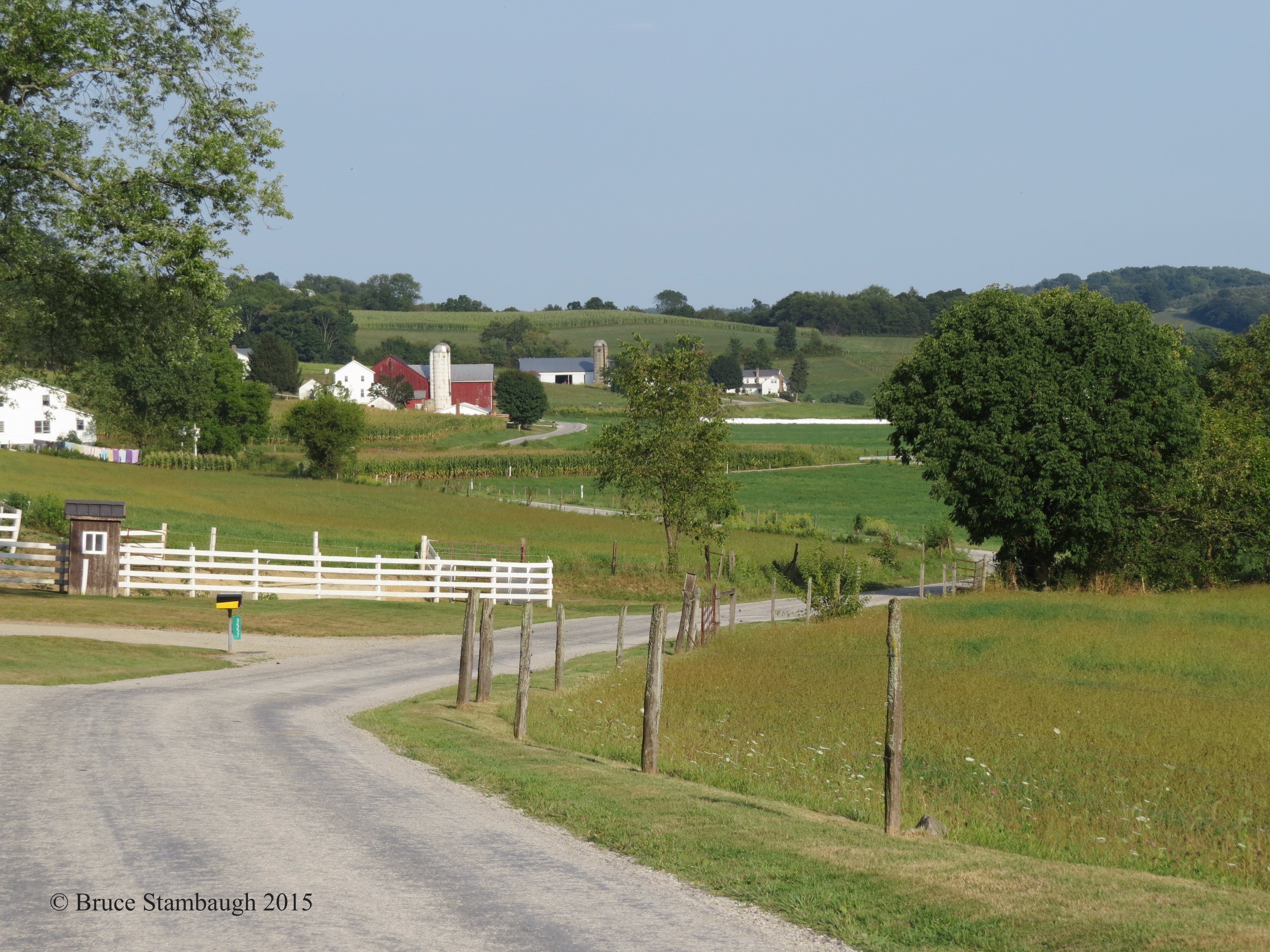
Amish farms, Holmes Co. OH
Pastoral scene.

By Bruce Stambaugh

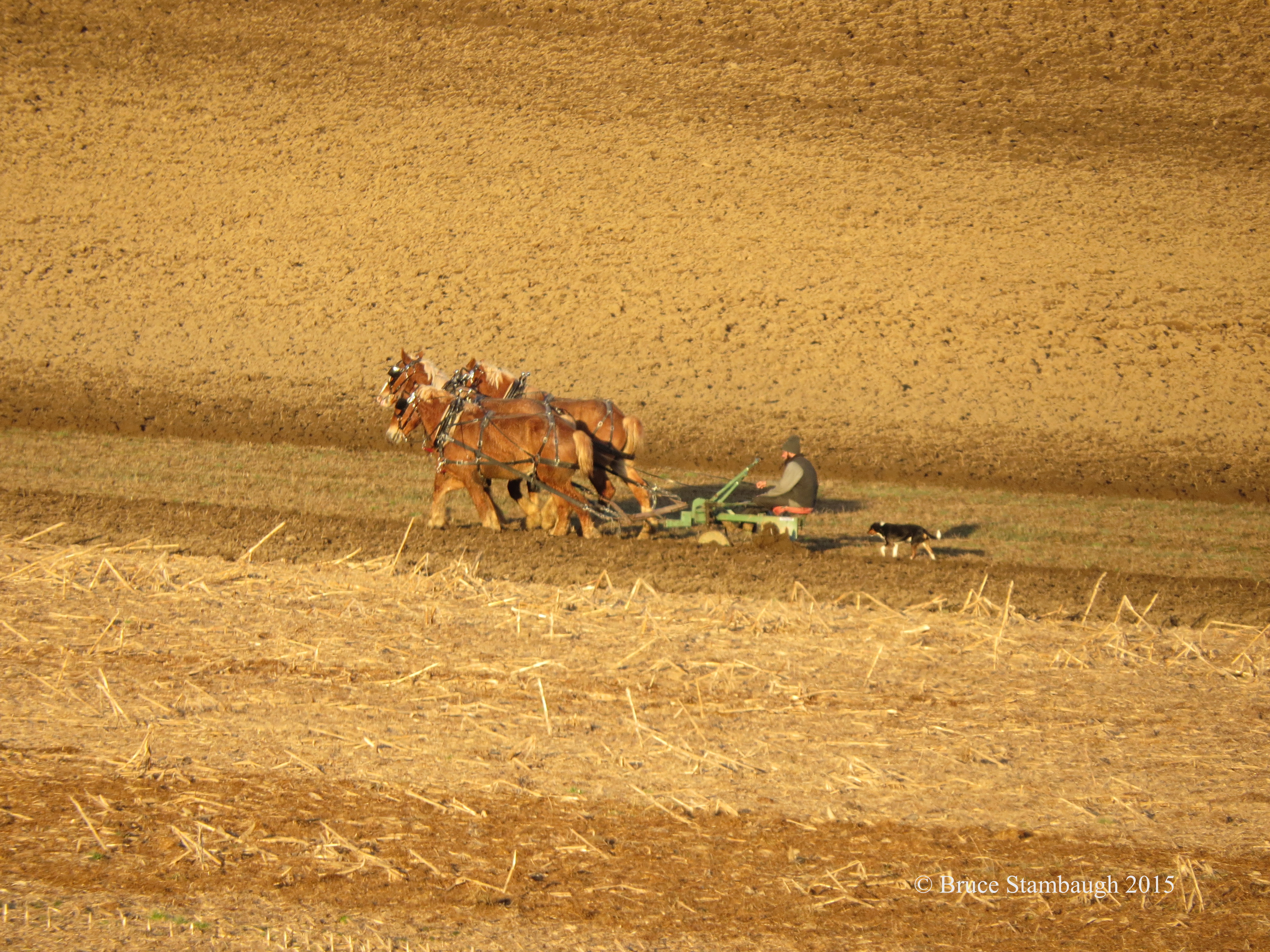
I stood and talked with the farmer as he rested his team of horses beneath a tree along the road. For the end of May, the morning was muggy. Both he and the horses needed a break from their bucolic labor.

The horses stamped and snorted and swished their tails to discourage any bothersome insects. The conversation with the Amish gentlemen turned toward appreciation and care for the environment.

Across the weedy fencerow, we lapsed into a philosophical discussion on how we all are rooted in the soil regardless of where we live. The setting was perfect for such a stirring chat.

The musky smell of the sweated horses, the pungent fragrance of fresh earth turned, the sprouting leaves of the black walnut tree that served as our shady shelter together fueled our ideas and ideals. We were of one mind.

We concurred that it was too easy to ignore such a simple concept as caring for the good earth. We wondered if society’s reliance on modern technology and our fast-paced global order have dulled us into forgetting our roots.

He pointed out all the construction in our local area, the continued depletion of farmland and wildlife habitat. Little by little, our pastoral landscape was transitioning.
Amish, plowing
Plowing. © Bruce Stambaugh 2015

He wondered if people today understood where their food originated. Did they know all of the effort or any of the processes needed to put food on their table? Was the younger generation becoming so fixated on electronic screens to even care?

We both shook our heads in wonderment of what lay ahead, not so much for us, but for future generations. Will they get to enjoy the beauty of the natural world the way we do?

And with that, my friend encouraged his workhorses to giddy up. Soon a squadron of winged insect eaters swooped overhead, exacting an instinctive aerial harvest.

As I continued my morning walk, I mulled over the conversation. A scene from 35 years ago popped into my head. My family and I were at Old Sturbridge Village, Massachusetts. The place is a living museum where folks can go to see how rural life used to be long before the industrial revolution. Another option would be to visit Holmes County, Ohio.

Amish farmstead, Holmes Co. OH
Amish farmstead.

We stood outside the dairy barn near a group of school children and their teacher, who pointed to the Holsteins.

“That’s where milk comes from,” he said.

His students were in disbelief. One even countered that milk came from the store. We walked away quietly.

The sweet-sour aroma of fermenting silage stirred my senses and brought me back to reality. That earthy smell represented the soil, the seeds, harvesting, the manpower and machinery needed to feed the cows to provide milk or meat.

That’s what being rooted to the earth does. It makes you take note and absorb and appreciate all that is around you.

The creeks and ponds, the marshes, and the mudflats are of equal import as much as the grain fields and pastures. Together they provide habitat and balance to earth’s fullness.

Rooting yourself to the soil is critical in caring for the earth no matter where we live or what our occupation. Yes, we need industry and growth to feed, clothe and house the planet’s population. We also need the earth to be healthy and respected to accomplish that goal.

If you want to feel rooted to the earth, you are welcome to walk by my neighbor’s barnyard. I’m sure neither he nor his herd will mind.

rural sunrise
Rural sunrise.

© Bruce Stambaugh 2015

A strong work ethic is a universal trait

Amish produce stand
Produce stand.

By Bruce Stambaugh

I’ve been working since I was eight years old. To earn a little spending money of my own, my first job I went door-to-door selling seed packets. I’ve been working ever since, and that’s a very good thing.

There is great satisfaction in earning money through hard work. That was especially true as a youngster who grew up in a family that had pittance left over for life’s extravagances. We weren’t poor, but we weren’t rich by earthly standards either.

Rather, our wealth came in the joy of working together as a family and learning to enjoy work’s energy and accomplishments, whether we earned money or not. If it benefited others, payment was received in ways that far exceeded any monetary gain.

If my siblings and I earned money helping others at businesses or homes, you could be sure we used the profits for wise choices. The candy store was just five minutes away. Of course, our folks taught us the advantages of saving and giving, too.

I have my parents and grandparents, and likely generations before them, to thank for instilling work as a personal core value. Dad worked 43 years for the same company as a tool engineer. Mom was a household engineer before the profession was so christened.

Living in Holmes County, Ohio, all of my adult life, I have come to appreciate the community’s emphasis on exercising a robust work ethic. I marvel at seeing it played out every day.

This slideshow requires JavaScript.

I only have to observe my neighbor’s family gathering crops. Three generations are often literally bringing in the sheaves.

That should be no surprise. Having a strong work ethic is common and a highly valued principle here. It’s one of the reasons our region consistently has one of the lowest monthly unemployment rates in Ohio.

County residents pride themselves on enthusiastically employing their work ethic. That’s ironic for a society that holds humility in equally high esteem. Folks manage to balance that apparent contradiction for self and others successfully.

The method to instilling the work ethic to the next generation is simple. Folks here both model and include younger generations in work. In other words, the adults give the youngsters responsibilities that result in projects completed.

Children on farms help with chores. Feeding the livestock, gathering eggs, walking the dog all count as productivity. Drive around and you’ll likely see children including work in their play.

I always get a chuckle when I see Amish children playing horse and buggy. A couple of toddlers sit in a wagon while an older sibling plays the horse. A short piece of rope serves as the reins.

Amish children playing
At play.
From time to time as a principal, I would get a note from home asking that Johnny be permitted to visit the local store to buy some grocery items needed for that evening’s supper. I usually approved the request by driving to the store and letting the sixth grader do his deed.

At the produce stand we frequent, the entire family chips in to make the business go. From time to time, a request is made for an item not available on the shelf. Junior will gladly fetch the requested item from the field to accommodate the customer.

It’s all in a day’s work. Of course, the work ethic extends far beyond our insulated world. Working and earning are universally esteemed characteristics.

I’m glad we have Labor Day to remind us of that fact.

© Bruce Stambaugh 2015

August’s end means new beginnings

walk to school, Amish boys
Back to school. © Bruce Stambaugh 2015

By Bruce Stambaugh

A Belted Kingfisher flew furiously over the fresh mown hay towards a neighbor’s pond. Breakfast was likely on its mind.

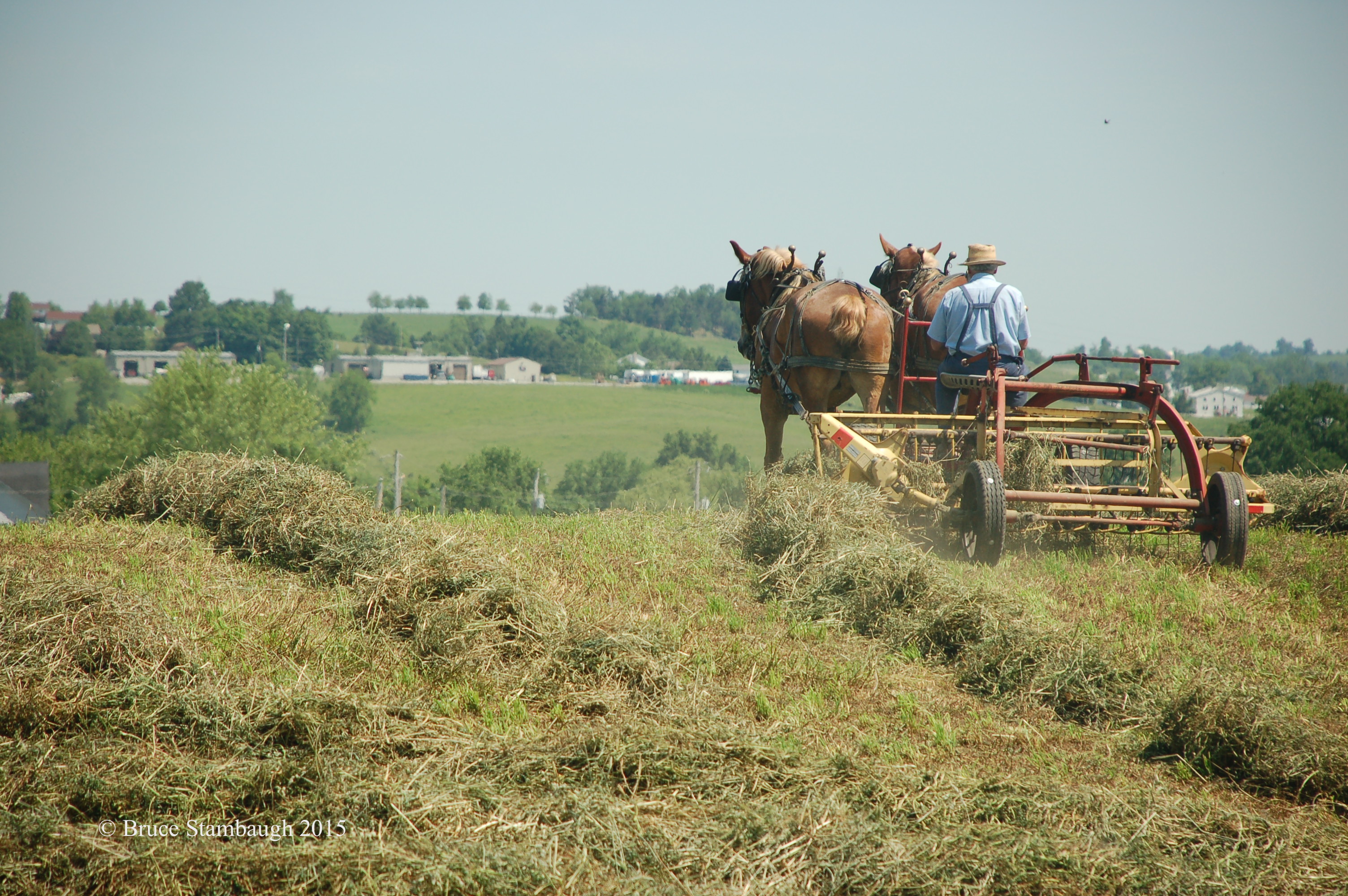
My farmer neighbor hitched his workhorses and teddered the hay to help it dry. The Barn Swallows, Tree Swallows, and Cliff Swallows circled the productive locomotion and devoured every insect the man, the machine and his faithful team dispersed.

A refreshing north wind eased the day’s early humidity. No need for a calendar. All signs pointed to August’s end.

A few trees had already begun to transition from their chlorophyll green to their disguised shades. Even before the berries on the dogwoods blushed bright red, the trees’ leaves curled and revealed hints of crimson and lavender.

blooming hydrangea
The hydrangea. © Bruce Stambaugh 2015
My energetic wife had already deadheaded the once lovely hosta blooms that adorned the leafy plants in her luscious flower gardens. The Ruby-throated Hummingbirds, hummingbird moths, and various butterflies, bees, and other pollinating insects had completed their instinctive work.

The hydrangea bush bloomed full and pure against the garden shed. It demanded daily watering in August’s heat and dryness.

Juvenile birds, Red-headed Woodpeckers, Song Sparrows and Blue Jays among them, found the feeders and the birdbaths on their own. Another aviary generation will forge into fall and winter without knowing what lies ahead as if any of us do.

American Goldfinch on sunflower
Eating fresh. © Bruce Stambaugh 2015
The acrobatics of the American Goldfinches provided free entertainment as they worked over the volunteer sunflowers that sprouted from bird feeder droppings. Fresh food is not just a human preference.

The big yellow school buses began carting anxious and enthusiastic children alike to and from school. I waved to the drivers as they passed me on my walk.

People often ask me if I miss those days; if I don’t have some innate longing to return to my first career. The short answer is, “No, I don’t.”

I loved the children, whether teaching or being their principal. I greatly enjoyed the interactions of parents and staff members, even when we disagreed. I have no resentments or regrets. Neither do I have any wish to reenlist.

oat shocks
Straw soldiers. © Bruce Stambaugh 2015
My life has moved on. I am the same person, just at a different place in my turn at life’s cycle. I have fond, fond memories of my teaching days and principal days. But now I have neither the desire nor energy to compete in today’s educational whirlwind too often driven by politics instead of common sense.

I would rather sit on my back porch, as I am now, taking in the world as each moment flashes by. I don’t want to miss anything. I want to rise each day to enjoy the sunrise and bid farewell to the evening light that dims all too soon.

fluffing hay, teddering hay
Teddering the hay. © Bruce Stambaugh 2015
Each day is an opportunity to live, to be alive, to help others, to listen, to look, to breath, to pray silently, to work diligently for peace in a troubled world. That is my challenge now.

August has come and gone, always too fast, always too hot and dry. August melds into September.

We can only embrace it, for there are marvelous days ahead. I’ll watch for them whether from my back porch or wherever I might be, knowing that too many in the world will not have the pastoral view or luxuriousness of trusting neighbors that like mine.

It’s my duty to share goodness and joy with others as my life, too, passes from August into September. Isn’t that the real responsibility of all of us at any age?

August, sunset, Holmes Co. OH
August sunset. © Bruce Stambaugh 2015

© Bruce Stambaugh 2015

August in Amish country

oat shocks, Holmes Co. OH,
Oat shocks. © Bruce Stambaugh 2015

Scenes such as these make iconic Amish country photographs. However, fields of shocked grain like this are less and less frequent. Rules for the Amish farmers are changing, allowing them to make use of equipment like combines to harvest oats and wheat.

Only the lower order Amish still shock wheat and oats. This method permits the grain to dry in the warm, often hot, August sun. Once the moisture content is low enough, the shocks are pitchforked onto a wagon and hauled to the barn. There a thrasher separates the grain from the chaff.

I hope this process remains, if only for its marvelous beauty.

“August in Amish country” is my Photo of the Week.

© Bruce Stambaugh 2015

Summer solstice sunset

summer solstice, sunset
Summer solstice sunset. © Bruce Stambaugh 2015

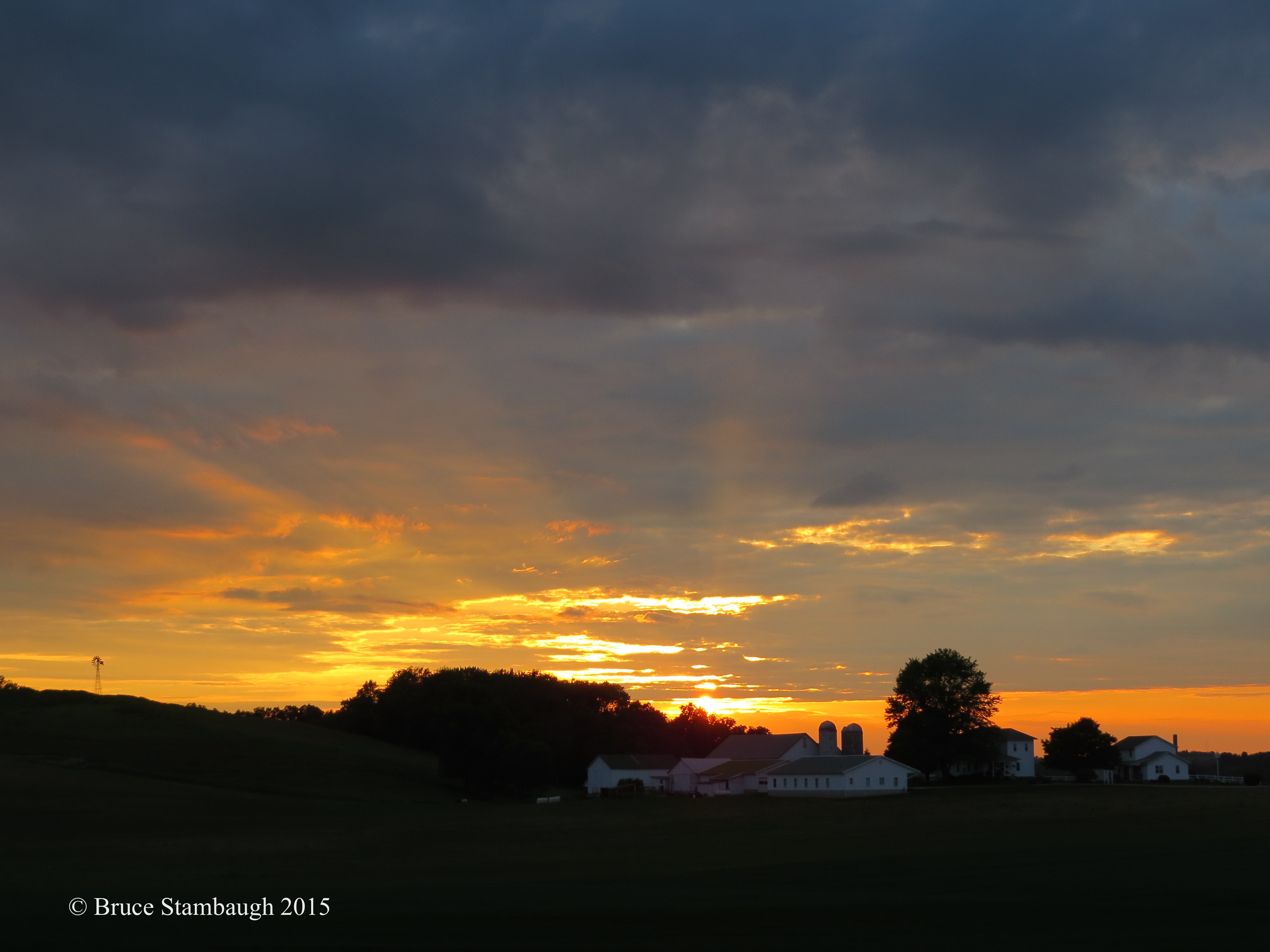
Each summer solstice, I stand at the northwestern corner of our property here in Ohio’s Amish country and watch the sun sink between the twin silos on our Amish neighbor’s farm. I guess it’s my version of Stonehenge. Normally, if the sky is clear, I often see a golden orange glow. Not this year.

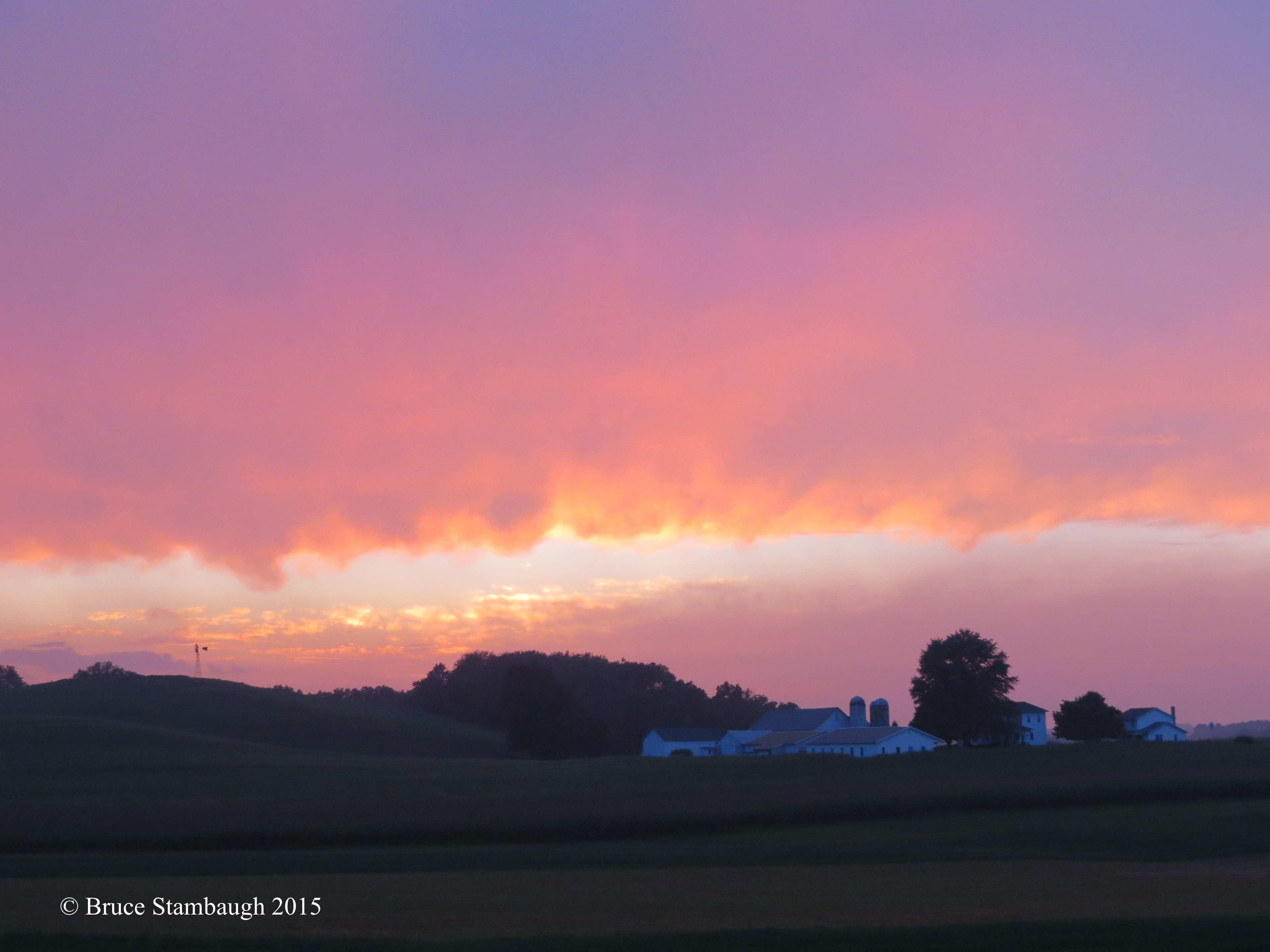
I watched the sunset on the summer solstice again last Sunday evening. As sunsets will do, the colors in the evening sky seemed to change by the minute. I kept shooting and shooting photos. I thought the roses, violets and baby blues painted above the silhouetted farmstead in this shot created an amazing scene.

“Summer solstice sunset” is my Photo of the Week.

© Bruce Stambaugh 2015

Some days are simply for the birds and more

Amish farm
The farm. © Bruce Stambaugh 2015

By Bruce Stambaugh

Some days are simply for the birds.

Recently, I had a couple of days that were exactly that. I helped out a friend by leading a few birding field trips to a local farm.

The target birds were young Barn Owls, a couple of fuzzy baby American Kestrels, and bubbly Bobolinks. In a rather rare situation, both Barn Owls and Kestrels had hatched their young in nesting boxes the farmer had erected in his old bank barn. The meadow across the road remained uncut so the tinkling Bobolinks could frolic and flourish.

The farmer and his family went out of their way to accommodate both the birds and us. Their farmstead was neat as a pin. Flower beds and gardens were nearly pristine. The three generations that called this place home welcomed us with open arms and hearts.

Both the farm’s setting and the intentional agricultural techniques employed accounted for the diversity of birds and other wildlife. Surrounded by rounded hills dotted with emerald woodlots, the land rolled away from the farm buildings more like waves than fields.

This slideshow requires JavaScript.

I imagined in a birdseye view a quilted panorama. Broad patches of variegated greens and tans from forested hills, alternating fields of pasture and croplands stitched together by brushy fencerows created a pastoral patterned effect.

Such a landscape also enhanced the desired habitats and food sources needed for the various avian species. It was obvious the farmer, typical of many in our area, understood the balance between conservation and productivity. Sad to say, some deem that approach as inefficient or even old-fashioned.

The days were precious in so many ways. Cottony clouds hung in salient skies over windswept grasses nearly as tall as the weathered wooden fence posts that delineated their boundaries.

The meadow’s high grasses mingled with seedy weeds, and wildflowers danced in the wind beneath while the Bobolinks, Eastern Meadowlarks, Song and Savannah Sparrows and Red-winged Blackbirds let loose. The birds’ melodious chorus easily drew the attention and appreciation of each group. All the birders, spanning three generations, thought the birds and their songs beautiful and luxurious.

(Click on the photos to enlarge them.)

Though he said he wasn’t a birder, the kind farmer had erected nesting boxes in his ancient barn for the owls. That is what attracted folks from near and far for this special chance to view the birds. It was indeed rare to have both owls and falcons nesting in the same barn.

Participants hailed from cities. Others lived nearby. Their ages ranged from preschoolers to octogenarians. A courageous woman on crutches in the midst of cancer treatments even ventured forth. I drew strength from their enthusiasm.

Atop wobbly ladders, we viewed the baby birds one by one through a pencil-sized peephole drilled in the plywood boxes made by students at a local vocational school. A small, square hole cut into the barn siding permitted the adults to enter and exit to feed their young.

Below, hushed conversations ensued in each group. Sunlight streamed through the intentional spaces between the horizontal clapboards. Still the barn was dark and steamy.

No one complained whatsoever. All realized what a privilege it was to view the birds and enjoy the genial hospitality of this marvelous family who welcomed all of God’s creatures.

These glorious days were definitely for the birds, obviously in a juxtaposed sense. The smiles on the faces of all the birders declared each visit a joyous success. None of us could have asked for more.

meadow, Amish farm
The meadow. © Bruce Stambaugh 2015

© Bruce Stambaugh 2015

Blue and pink

Amish boy and girl,
Blue and pink. © Bruce Stambaugh 2015

Of all the photos I shot this day, I thought this one was the finest. With the help of Ian and his sister, Lydia, I had been leading birding field trips to their grandfather’s bank barn. Birders from near and far wanted a glimpse at some baby Barn Owls and some recently hatched Kestrel chicks.

Amish are noted for being conservationists. This family was no different. Besides the boxes for the owls and kestrels, they had several bird feeders filled with seeds for backyard birds. In addition, Ian and Lydia pointed out a Ruby-throated Hummingbird’s nest and a nest just now being constructed by Cedar Waxwings. The nests were only feet apart in the same tree in their front yard.

Across the road Bobolinks, Eastern Meadowlarks, Savannah Sparrows, Red-winged Blackbirds, Brown Thrashers and other birds of the field sang. They put on a great show for the folks on the birding tours. Some even posed for photos, which I took advantage of.

The Barn Owls and Kestrels were “lifer” birds for several of the folks on the tours. But for me, it was this shot of Ian and Lydia during a lull between groups that I cherished the most. Since they were youngsters, I was permitted to take their photo. The relaxed poses of Ian and Lydia, and the bright colors of the shirt and dress contrasting with the barn’s white-washed siding and the darkness of the barn’s opening made “Blue and pink” my Photo of the Week.

© Bruce Stambaugh 2015

Remembering to be grateful for each new day

Amish buggy, Holmes County OH
Horseless carriage. © Bruce Stambaugh 2015

By Bruce Stambaugh

On my morning walk, my neighbor’s grandsons exited the house well before 9 a.m. They each had their necessary baseball gear in tow, gloves, bat, and ball.

I called out to them, “Baseball for breakfast, boys?”

They just smiled and ran to their imaginary Major League park, the grass groomed immaculately by their grandfather. I walked on, lifted by the sound of bat striking ball.

Because the local greenhouse was having a sale, more traffic than normal traveled the tiny rural road. Believe me, they were busy.

eastern meadowlark, songbirds
Eastern Meadowlark. © Bruce Stambaugh 2015
The chorus from the Song Sparrows, Eastern Meadowlarks, Red-winged Blackbirds, and Red-headed Woodpeckers helped balance the roar of engines and jake brakes accelerating and descending hills on highways a mile away.

That’s one of the luxuries of living in the country. The sounds of life’s contrasts become all too obvious.

Young Amish girls, all three sisters that I knew, pulled an empty wagon toward the greenhouse.

“Going shopping this morning?” I asked them. A simple “Yes” and a few giggles was their retort. I silently lauded the mother for allowing the girls to pick out the desired plants.

This opportunity gave them responsibility, decision making, and experience in money exchanging, all valuable life skills. It was just one example of raising children in the way they should go.

As I reached Jonas’ farm, his wife walked down the sidewalk to the gravel driveway where her husband waited in the buggy. I waved, and Jonas returned the common greeting.

All the while I strolled and interacted with these good folks, I kept thinking of my friends far away in Syria, Iraq, Honduras, Texas, California, and other foreign countries.

How I wished they could be walking with me to experience this goodness that I take for granted far too often. Instead, some of them were just trying to stay alive, work diligently for peace, help the needy, and recover from massive flooding.

Amish, Amish boy, bicycle
Biking by. © Bruce Stambaugh 2015
At that point, I embraced them and the day the only ways I knew how. I thought and prayed for them as I walked along on this lovely morning. I hoped it was as divine for them whatever their current situation.

When I passed by the greenhouse on the return trip, there was Jonas again. He was sitting in the buggy while his wife looked for flowers and plants.

I kiddingly cried out to him, too. “Don’t you like shopping, Jonas?”

“I trust my wife,” he said. I bet he helped her plant whatever she bought though. That’s the kind of betrothed devotion I admire.

Potting shed, landscape decorations
The potting shed. © Bruce Stambaugh 2015
Down the homestretch, where traffic gets busier and louder, an Indigo Bunting sang from deep within a woodlot. I stepped to the road’s side to let the vehicles zip by, and to listen to this magical sound. I wished the drivers could hear it as well.

When I reached our property, my heart sang in harmony with the birds. My energetic wife was watering a variety of colorful flowers, some she had purchased at the greenhouse sale earlier that morning.

The Eastern Bluebirds flew from the birdhouse I had put up for them. My heart rejoiced all the more. I was glad they had won out over the pesky House Sparrows. A House Wren chattered atop another birdhouse nearby.

I have a lot for which I am grateful. This walk reminded me that each morning I open my eyes I need to say a joy-filled thanks.

rural sunset, Holmes County OH
Rays of hope. © Bruce Stambaugh 2015

© Bruce Stambaugh 2015

At long last, summer has arrived

summer flowers, flower gardens
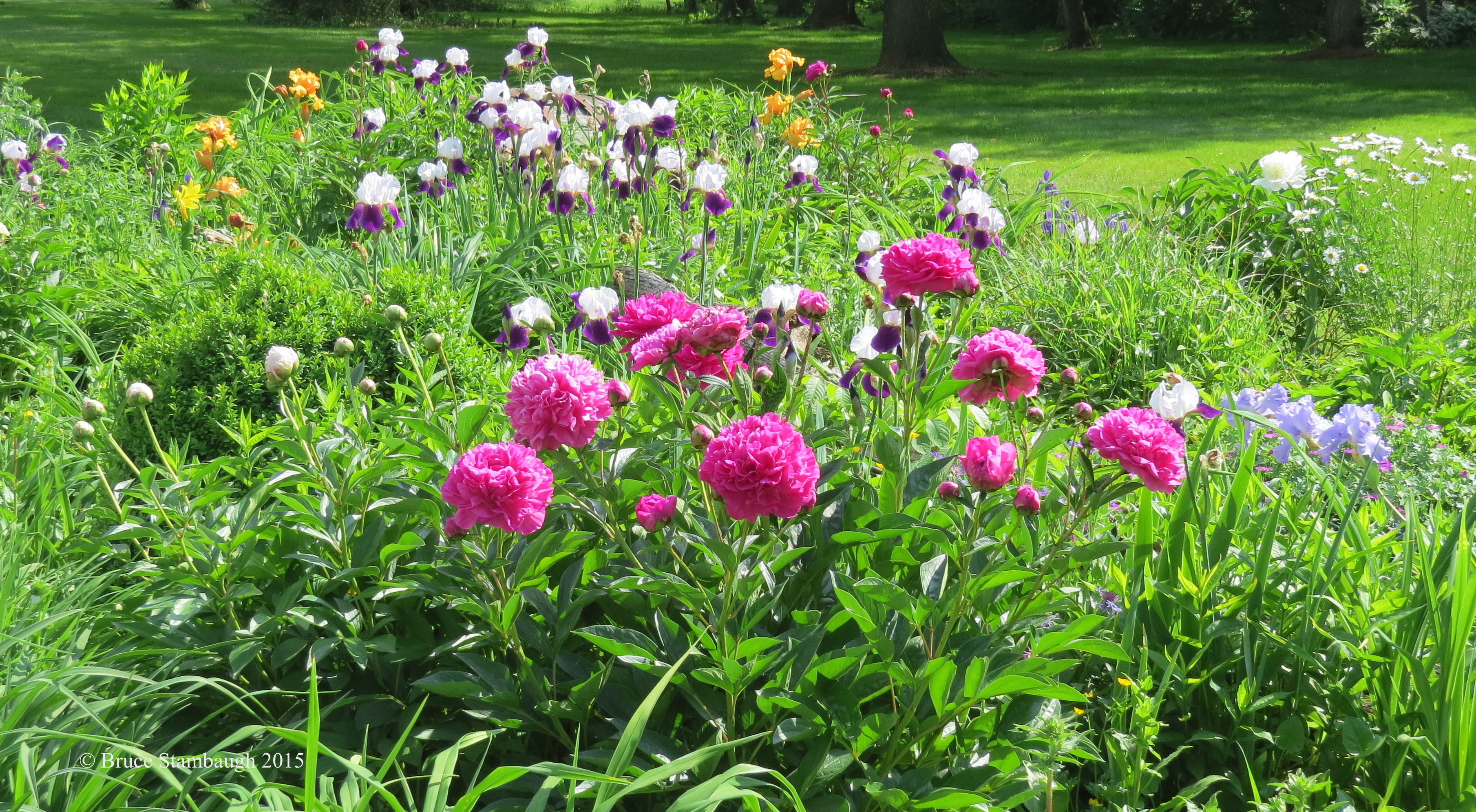
Early summer flowers. © Bruce Stambaugh 2015

By Bruce Stambaugh

Summertime. Isn’t that an absolutely gorgeous word? Let it roll off of our tongues and past our moist lips slowly, magnificently, joyfully.

Those of us who reside east of the Mississippi River and north of Disney World endured a long, hard, cold, snowy, record-setting winter. It’s truly a blessing to say that lovely word, summertime.

It’s not like we’ve earned summer either. We just have longed for the expected warmer, more pleasant weather, plus its immeasurable benefits.

Though the summer solstice doesn’t officially arrive until June 21, that’s become insignificant, even obsolete. Here in commercialized America, we’re accustomed to the definition of summer as the days between Memorial Day and Labor Day.

I know I am not the only one that is thankful that June is here. With apologies to Walt Whitman, I can indeed see and hear America singing. All I have to do is be attentive.

The early summer flowers, the irises, poppies, and petunias are or soon will be blooming. So are the weeds.

raking hay, Amish, making hay
Making hay. © Bruce Stambaugh 2015
The days are not only longer when measured in daylight hours; they are warmer and more humid, too. That is the norm.

Of course as part of America has already experienced, we’ll likely have our share of hazardous weather. That, too, is within the season’s nomenclature.

The first cutting of hay, whether by horse and sickle or tractor and big round baler, has commenced. School years have ended, except for educational institutions that offer additional classes. They are appropriately called summer school.

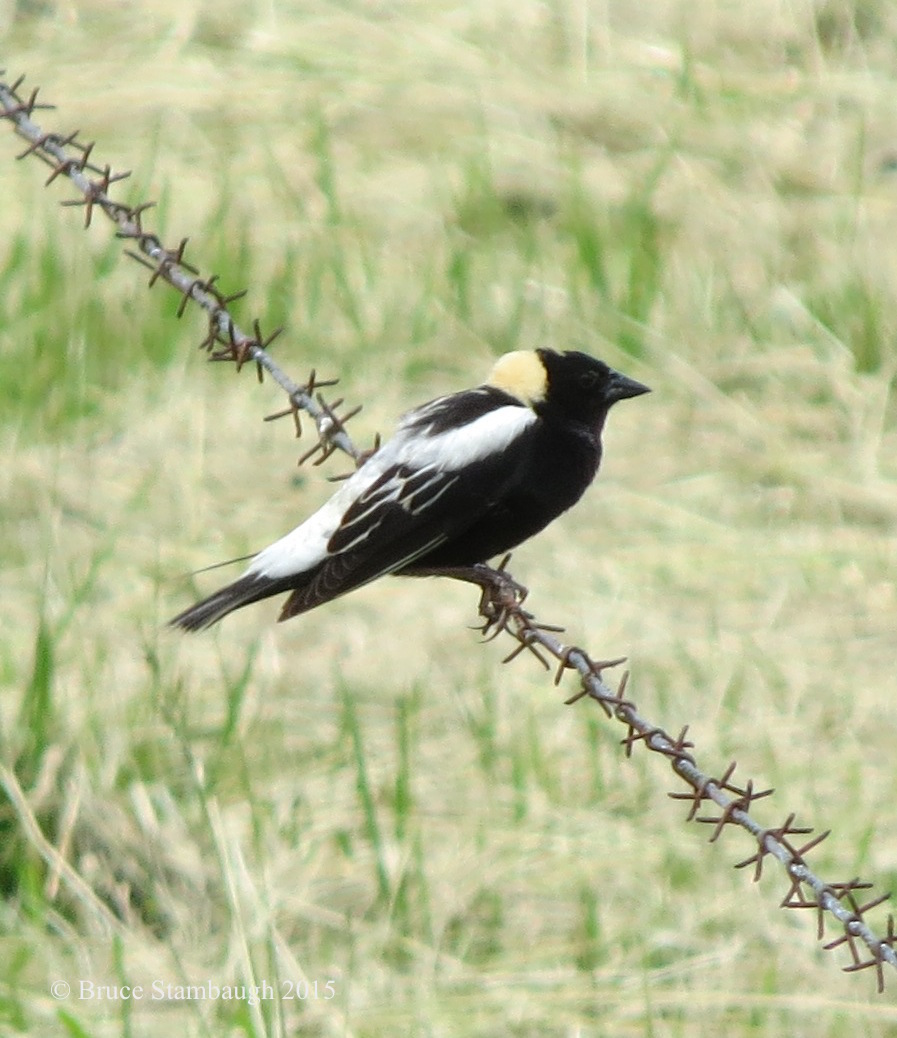
Bobolink, song birds
Male Bobolink. © Bruce Stambaugh 2015
We humanoids aren’t the only one’s happy about the transformation. The birds and the bees have gotten a head start on articulating their predestined survival behaviors. Shorebirds, songbirds, and yard birds will fledge their young, and begin a second brood if there is time.

Soon lightning bugs will be rising from fields and grasses, blinking under spacious, starry skies. It’s a scene of which I hope I never tire. If the grandkids visit, we’ll fill jars and watch the incredible insects glow, and then release them to do their thing, the bugs not the grandkids, that is.

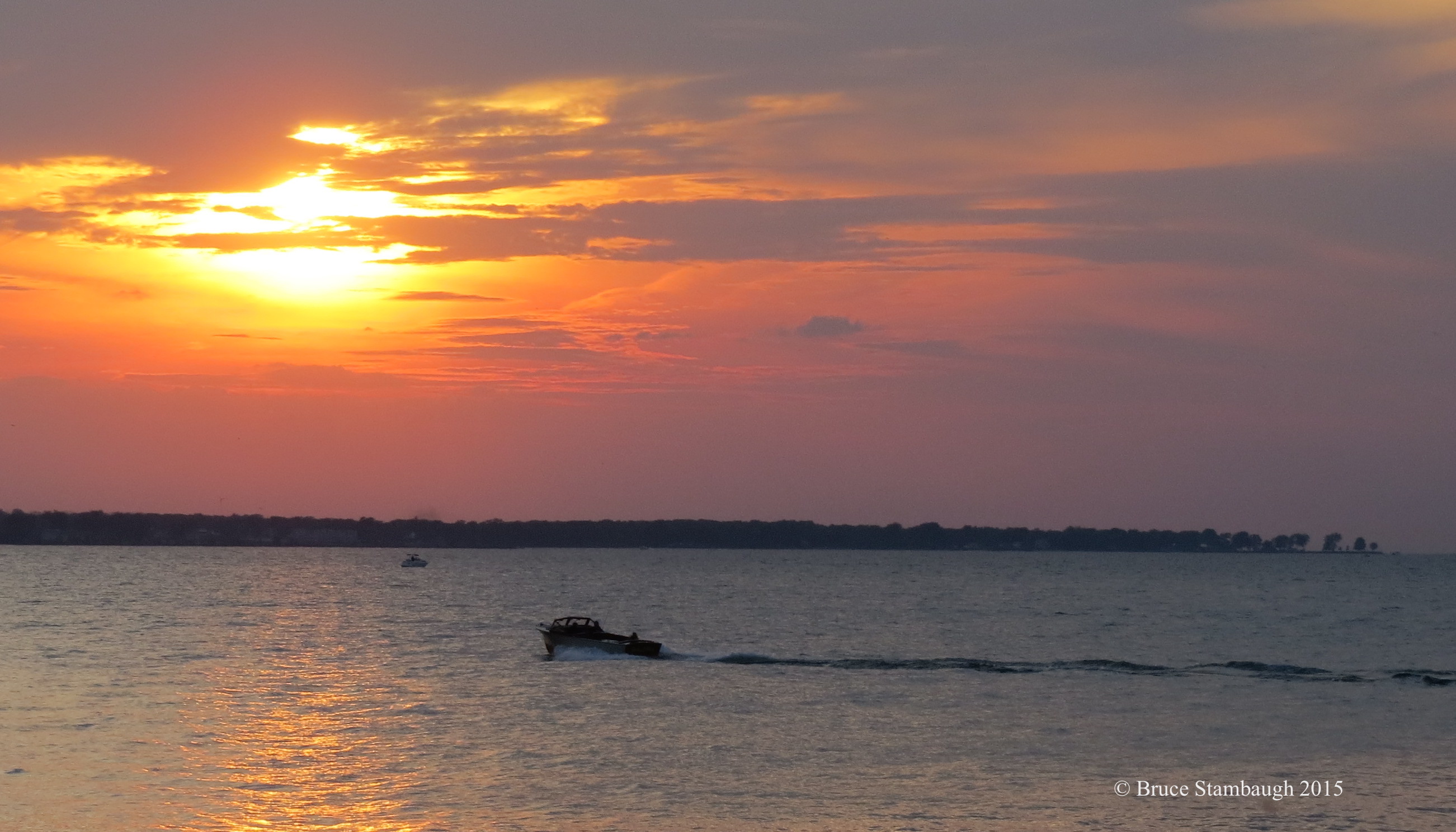
Boats big and small will cut temporary wounds into placid waters, which will heal themselves with no thought whatsoever by either the offender or the offended. The squeals of a toddler’s first catch of the year or the rich laughter of children diving into tepid water at dusk will confirm summer’s presence.

boat at sunset, wake
Slicing through. © Bruce Stambaugh 2015
Produce stands have already begun to present seasonal rewards. Patient diligence will yield even juicier, tasty results. I gladly anticipate fresh buttered beets, succulent heirloom tomatoes and savory, sweet mint tea, leaves right from the garden.

Long-delayed chores can finally be completed. Weathered house siding will be revived with fresh coats of brightness to complement immaculate gardens full of rainbows of color and busy insects and critters.

I’ll sit on my back porch on a luxurious summer’s Sunday evening and listen to the clip-clopping of the horses as they carry home families early and courting teens late. I can hear the latter coming from a half-mile away, boom boxes blaring.

Vacations will bring thousands of tourists to Ohio’s Amish country, where I live, to witness some of those native interactions. Wise locals will flee to beaches or mountains or solitude.

As I write, a framed placard on the wall of the summer home of a friend succinctly summed it up. “Miracles are as close as the heavens above and the blossoms beneath.”

Amen to that and a hardy welcome to all that summer has to offer.

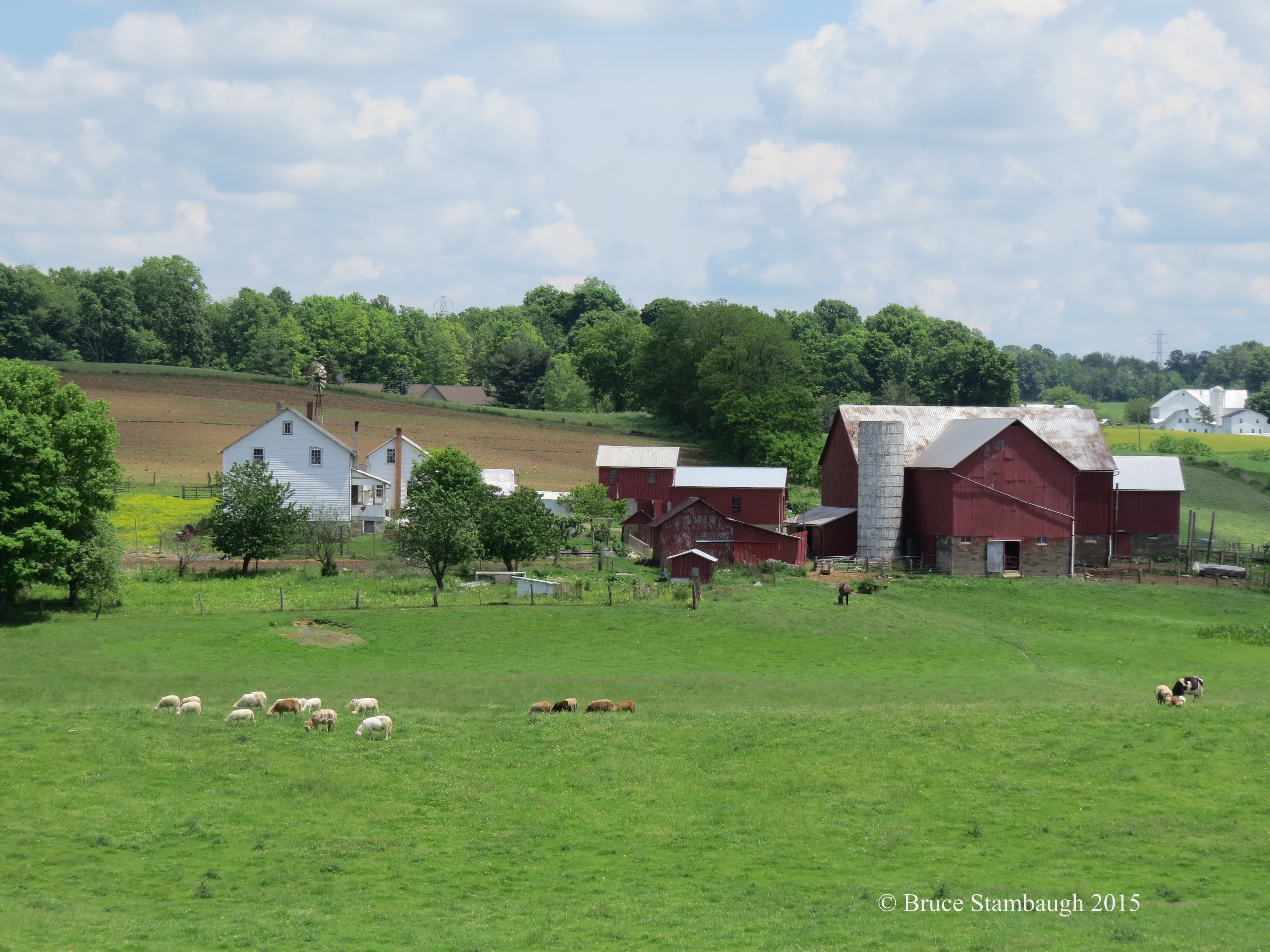
pastoral scene, Holmes County Ohio, sheep grazing
Pastoral scene. © Bruce Stambaugh 2015

© Bruce Stambaugh 2015

Angry sunset

sunset in Ohio's Amish country
April sunset. © Bruce Stambaugh 2015

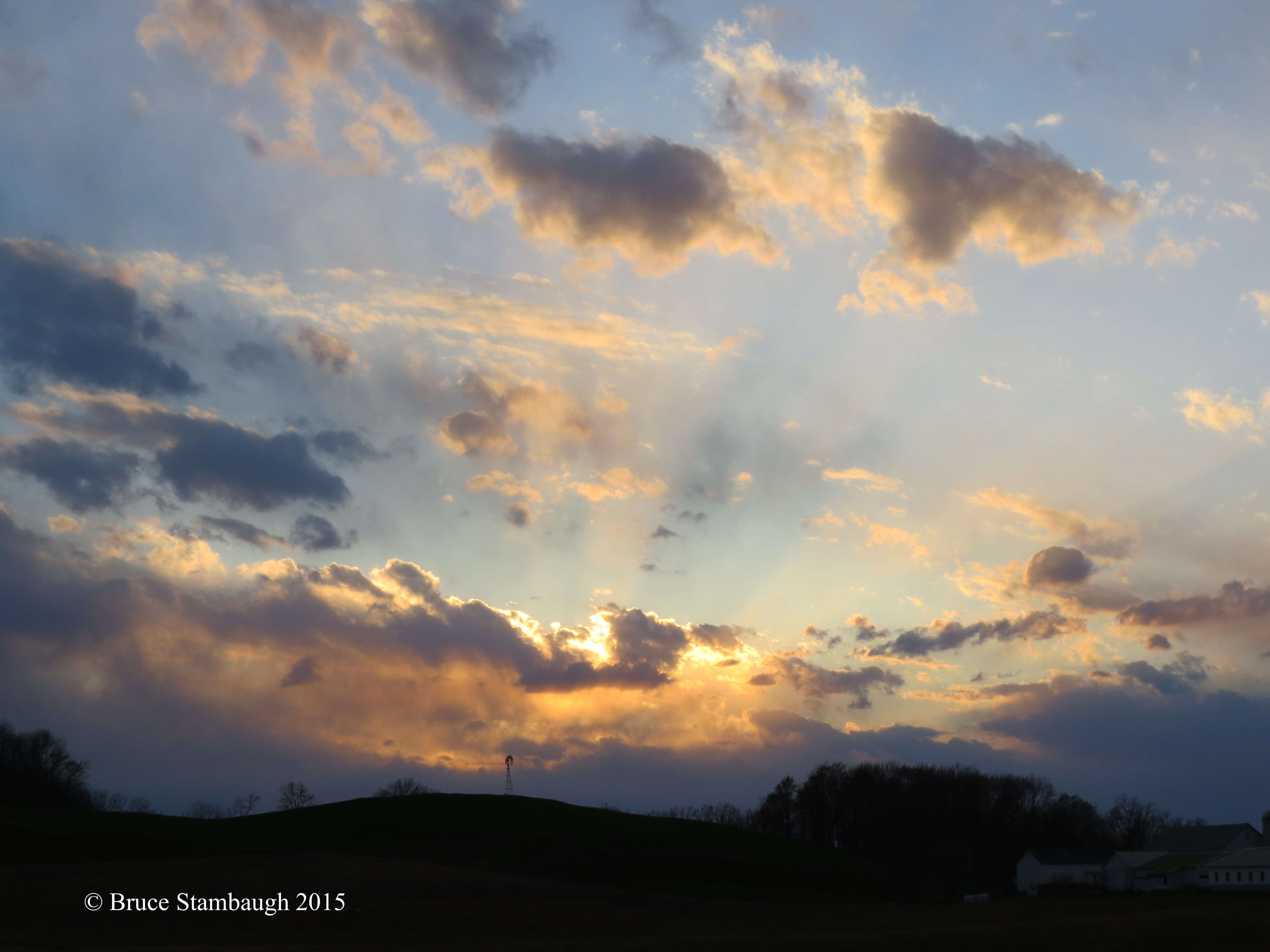
Each evening around sunset, I usually look out the kitchen window to the west to gauge whether the sunset will be colorful or not. After yet another of our cloudy, wet and chilly days here in Ohio’s Amish country, I wasn’t expecting much of a sunset. That was until I took a peek out the window. I grabbed my camera and captured this fast-moving cloud blocking the setting sun.

The deflected rays shooting up, the light and dark contrasts in the cloud made it almost appear to have an angry look about it. Throw in the hill, the windmill, and treeline, all nearly in silhouette, and the cloud seemed to radiate its own personality.

“Angry Sunset” is my Photo of the Week.

© Bruce Stambaugh 2015

Bay Photos by Donna

Wildlife Photos From The Chesapeake Bay Region

ROAD TO NARA

Culture and Communities at the Heart Of India

K Hertzler Art

Artist and nature journalist in the Shenandoah Valley of Virginia.

Maria Vincent Robinson

Photographer Of Life and moments

Gabriele Romano

Personal Blog

Jennifer Murch

Art is the only way to run away without leaving home. -Twyla Tharp

Roadkill Crossing

Writing generated from the rural life

ANJOLI ROY

writer. teacher. podcast cohost.

Casa Alterna

El amor cruza fronteras / Love crosses borders