I am a writer, author, photographer, birder, walker, hiker, husband, father, grandfather, brother, Anabaptist, and community activist. My life is crammed with all things people and nature and wonder. My late father gave me this penchant for giving and getting the most out of life, my late mother the courtesy, kindness, and creativity to see the joy in life. They both taught me to cherish the people I am with. I try and fail and try again.
As I sat at my computer, I heard a familiar roar. I grabbed my camera and raced outside. But I was too late for the shot I wanted.
The low-flying DC-3 airplane had already zoomed west and out of range for a photo. However, I had seen this pattern before. I figured the plane was on landing approach to a private airport eight miles southeast of us.
Sure enough, the plane turned south and then southeast into view. I snapped three quick photos, but the aircraft was again out of sight. When I viewed the pictures on my laptop, I was pleased that everything was in focus.
This photo stood out. The dappled, gray clouds seemed to frame the old airplane, and the late afternoon sun reflected off the underside of its fuselage. In a way, it looks like the plane is on fire, but I’m sure it landed safely.
There’s a lot to like about Hawaii: the views, the surf, the coral-blue ocean, the wildlife, the food, the quietness, the history, and the cultures. Each is wondrous to behold.
On a recent vacation there, my wife and I learned that the people of Hawaii make all of those incredible features sparkle all the more. They are a gracious amalgamation of Polynesians, warm, welcoming, and immediately inclusive.
We were among a relatively small group of travelers. None of the 13 senior citizen travelers had met before, but that made no difference to the guides and bus drivers who showed us the beautiful Oahu, Kona, and Maui islands.
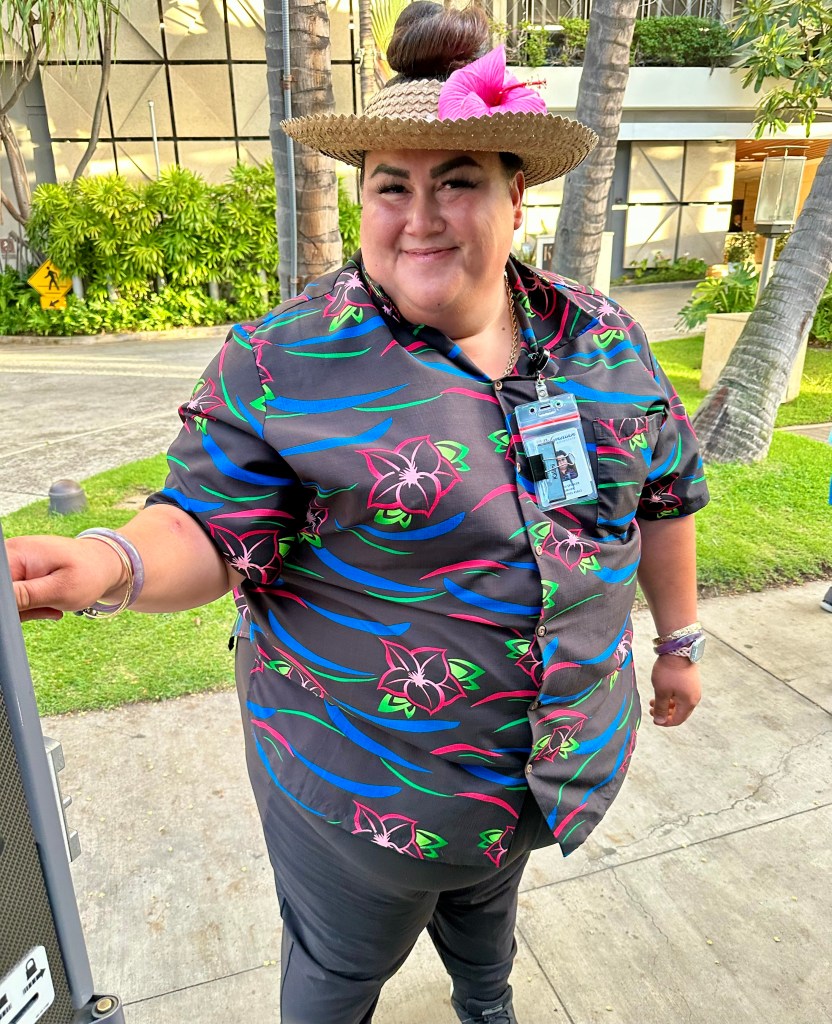
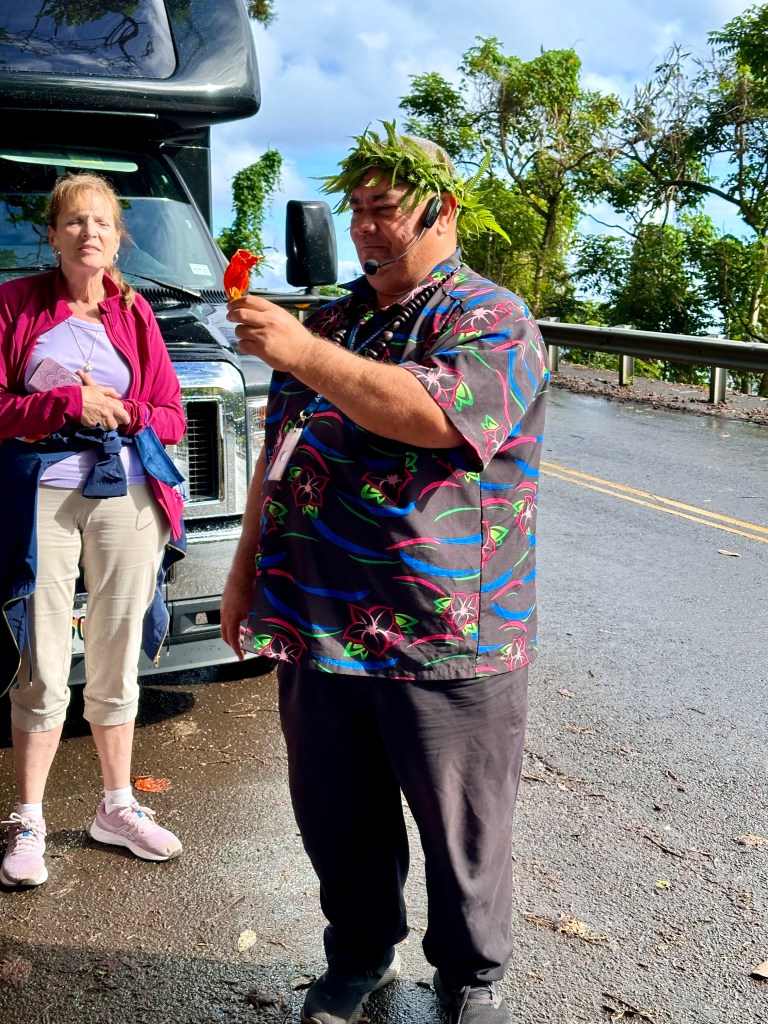
Three of our able and knowledgable bus drivers.
Each one, independent of the other, welcomed us as family. We weren’t tourists. We were cousins. That’s what they called us, and they treated us with the utmost respect, which quickly earned them ours. It set the tone for the entire 10-day trip.
Why would they do this? Native Hawaiians and those who embrace Hawaiian culture understand that we are all connected to each other and to the beautiful world around us.
They know the fragility of life and try to live each day to the full. Hawaiians realize they need one another and us to survive and thrive. It’s in their DNA to do so. Consequently, we felt welcome everywhere we went and by everyone we met.
Each guide and driver shared similar stories, not from a script but from their personal lives and hearts. The drivers took us through areas not on the scheduled itinerary, and in some cases, we passed through their neighborhoods.
They wanted us to experience what they experience daily. When we stopped in small towns, they told us their favorite places to eat and where the best ocean views were and gave us recommendations for shopping.
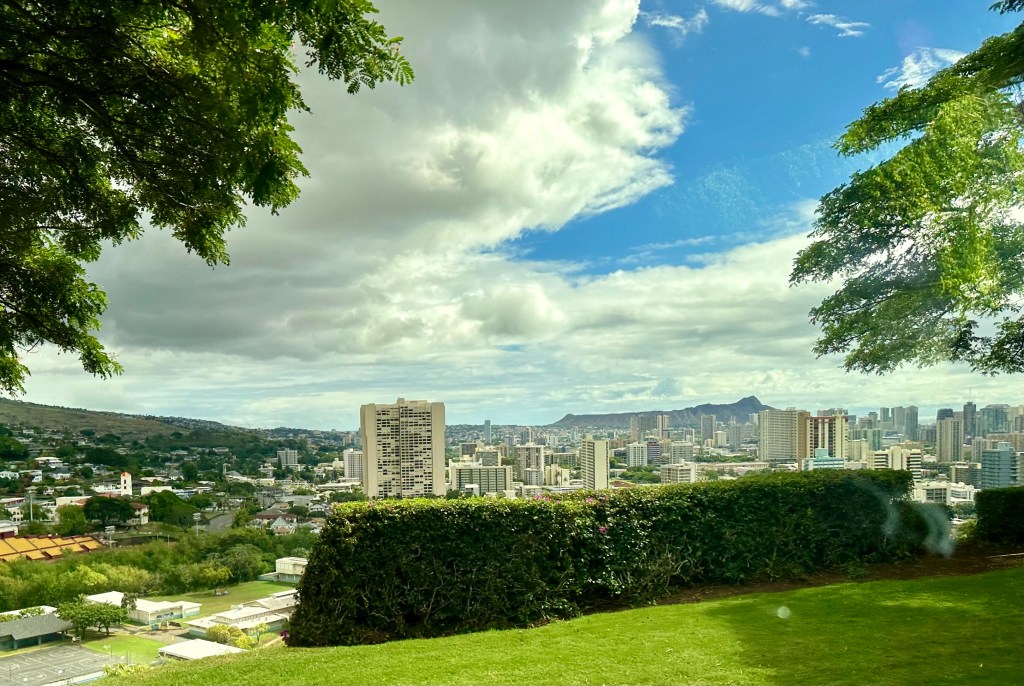
Honolulu from the Punch Bowl with Diamondhead in the background.
They made stops where they knew the owners and where we would experience authentic Hawaiian food, art, and history. Each guide and driver was proud of their history and culture of inclusion and respect for all, their ancestors, and Creation itself.
Polynesians arrived in waves to the Hawaiian Islands from all over the Pacific Ocean, searching for a better life. They didn’t find one but instead made a good life by respecting their differences and embracing their similarities. That tradition continues today.
All of our tour guides shared from their personal lives. They volunteered how they survived the high cost of living in such a paradise as Hawaii.
Individualism isn’t their thing. Community, centering on family, is. Many live communally in households of multiple generations to share the living costs. In one instance, our driver showed us a poorly maintained home on the exterior and asked us to guess the price of the old bungalow. The answer was $1.1 million. The house had two bathrooms and four bedrooms, one family per bedroom.
Hawaiians work hard to enhance their community, no matter which island you are on. They work two, three, or four jobs to make ends meet. They pool their earnings, their joys, their sorrows. Yet, they somehow still keep family central.
The crime rate in Hawaii is low compared to other states. Indeed, we seldom heard sirens blaring, even in congested Honolulu, our first stop. Little graffiti or trash was seen, reflecting their unified regard for nature and the lovely land on which they live.
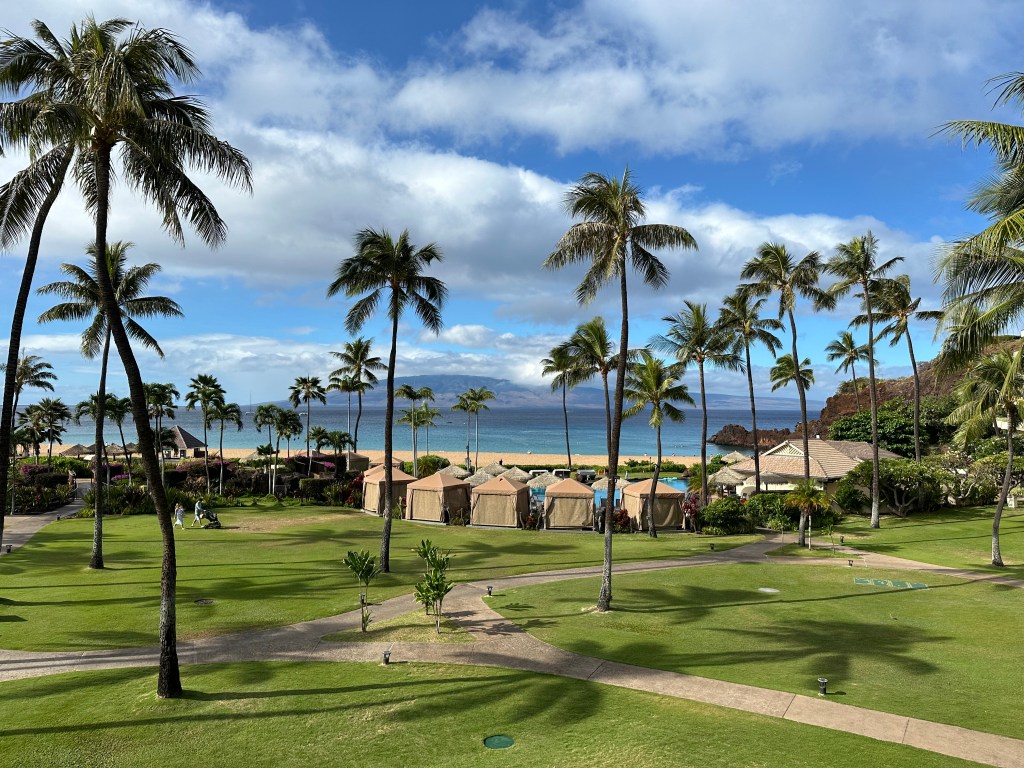
The view from our Maui hotel room.
Hawaiians fully understand the natural course of evolution. With each volcanic erruption, their ancient islands continue to grow, sometimes at the peril of residents who inhabit this magical paradise as the roiling lava flows to the sea.
The state of Hawaii consists of 132 islands. Many smaller islands, and even some larger ones, are owned by wealthy individuals, a conglomerate of partners, or corporations. Most islands are uninhabited, mainly because they lack drinking water. That’s especially true if the island is situated where rain is scarce.
The windward and leeward portions of each island we visited were prominent. Where the tropical rains fell regularly, sometimes daily, life thrived. Green was ubiquitous in all shades and shapes. On the leeward sides, trees were fewer and shorter, and vegetation was more sparse.
I will attempt to share the beauty and spirit of our Hawaiian vacation in subsequent posts. I admired how the Hawaiian values reflected the Advent lessons of Hope, Peace, Joy, and Love as we experienced them.
My wife and I, both in our 70s, were most grateful to experience this tropical nirvana and its amazing, humble people. I hope you enjoy the upcoming series that shares more details about our trip.
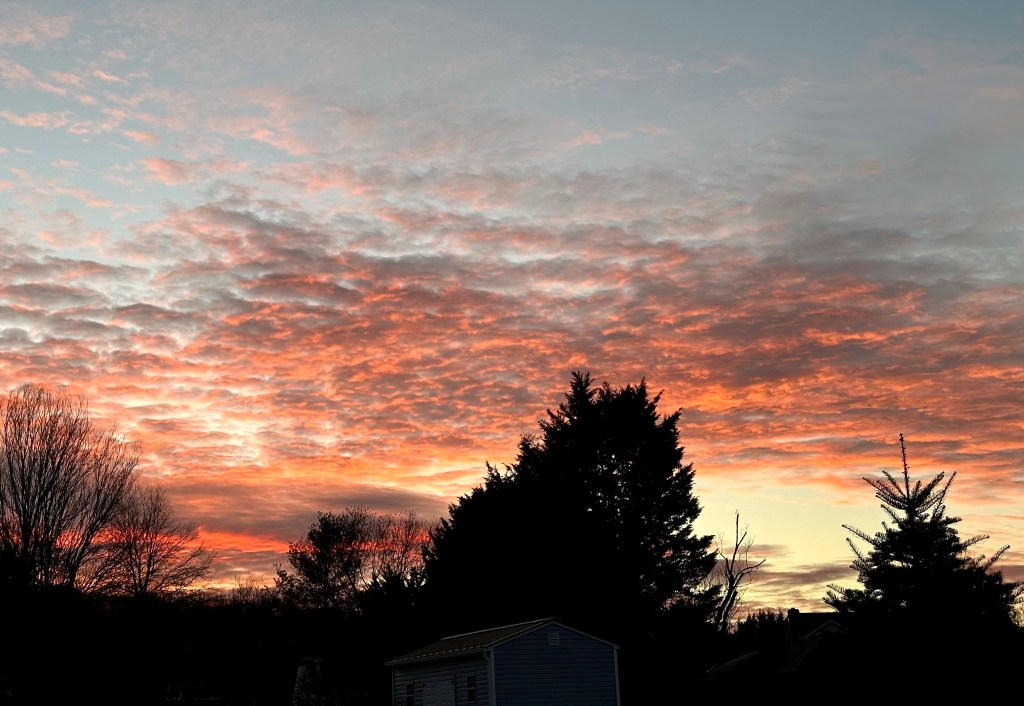
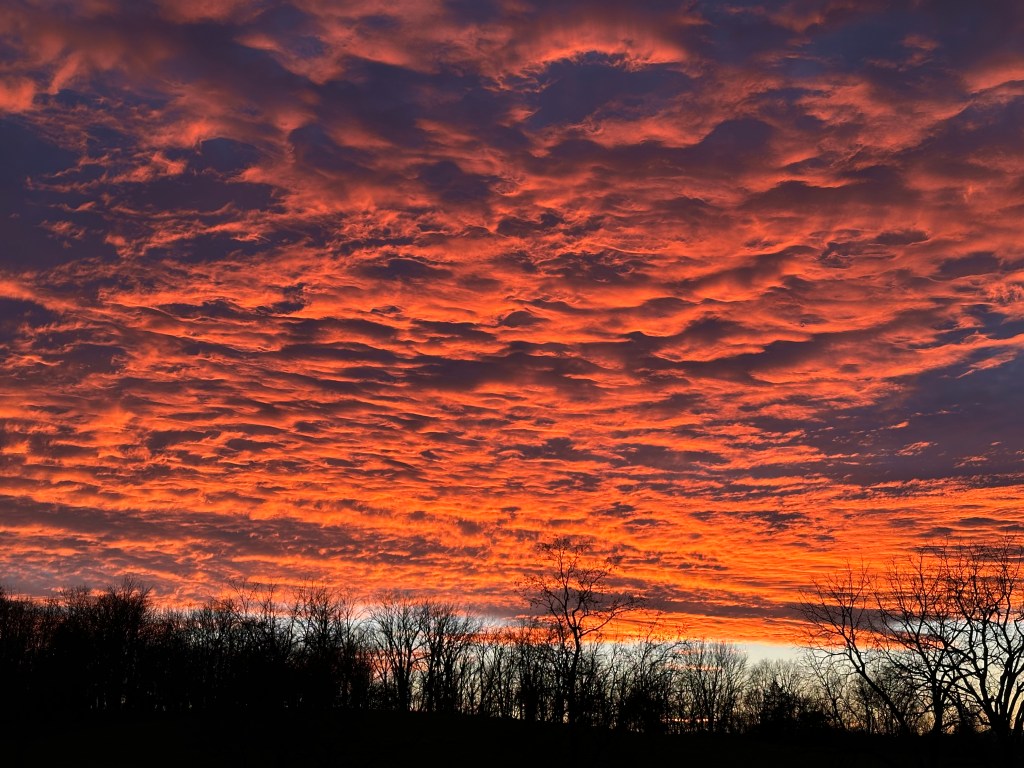
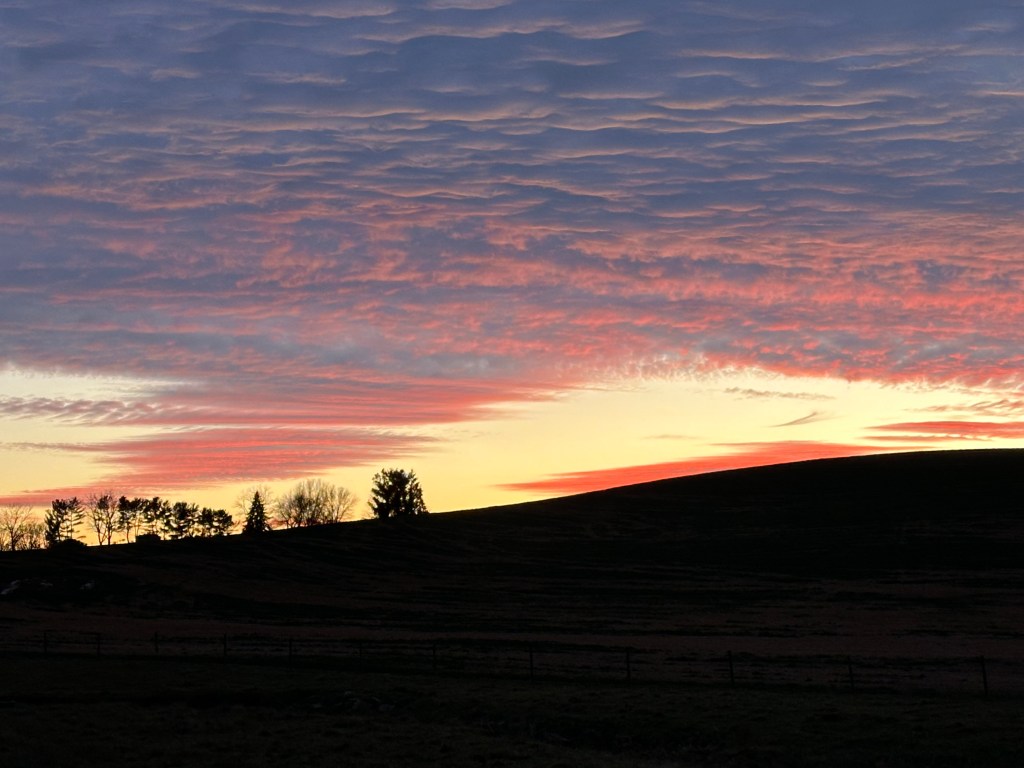
These recent Shenandoah Valley sunrises and sunsets were too beautiful not to share with you, especially on gray, chilly December days.
This glowing sunset on December 2 included a sun pillar. The setting sun’s rays backlit the virga that appeared around the sun pillar.
I rose early enough on my birthday to capture the tale end of a lovely sunrise from the backyard. Red in the morning, sailors take warning proved true. Low rain clouds moved in and blessed us with some much-needed precipitation.
We didn’t get much, but every little bit helps.
The soft pastel sunset on December 4 added to my happy birthday.
In contrast, the December 7 sunset was explosive. As sunsets want to do, the colors transformed minute-by-minute as I changed locations to photograph the gorgeous scenes. This photo was taken from a roadside near my home.
Only six minutes later, the sky had transitioned to bright orange and scalloped grays over a local landmark: Mole Hill, a long-dormant volcanic core.
As I drove farther west, the sun sank behind the old, folded Appalachian Mountains. Still, earth and sky combined to provide photographic offerings.
Finally, it was time to head home, basking in the satisfaction of a marvelous sunset.
The following day, I woke in time to catch the last of a glorious dawn. A high hill blocked our view to the east, so I had to rely on peeking out a window to see what the sky had to offer. A friend who lives on a hill facing east posted the full sunrise on social media, replicating the previous night’s sunset beauty. So, I had to be happy with my backyard shot.
That’s how we live each day. We embrace whatever we discover, capture its essence, and share the blessing with all we meet.
Morning light shines into a darkened kitchen on a historical farm. Photo by Bruce Stambaugh
When I walked into the old farmhouse, the tour guide went right. My head, however, looked left, drawn by the stark contrast of the bright morning light shining into the dark kitchen of this century-old farmhouse.
Paula, our 78-year-old guide, worked in the home and on the farm as a child.
Our guide lived and worked in this home, starting at age four. We couldn’t have had a more authentic authority on how this former family coffee farm operated.
Today, Hawaii’s Kona Historical Society welcomes visitors via reservations to explore the Kona Coffee Living History Farm on Hawaii’s Big Island firsthand. Everything is as it was when Paula began helping around the house and on the farm.
I’ll share additional photos from the farm in a future post as I begin a series on a recent trip to Hawaii, our nation’s 50th state.
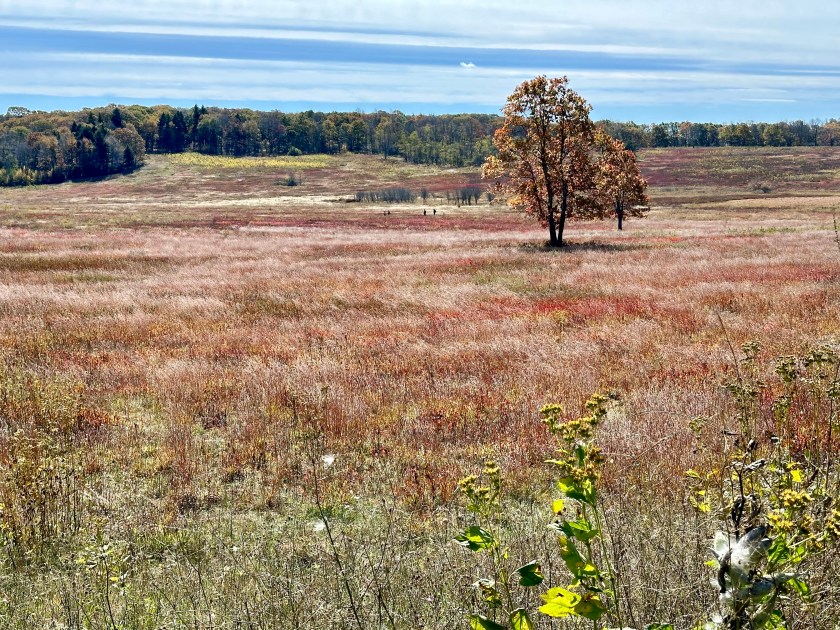
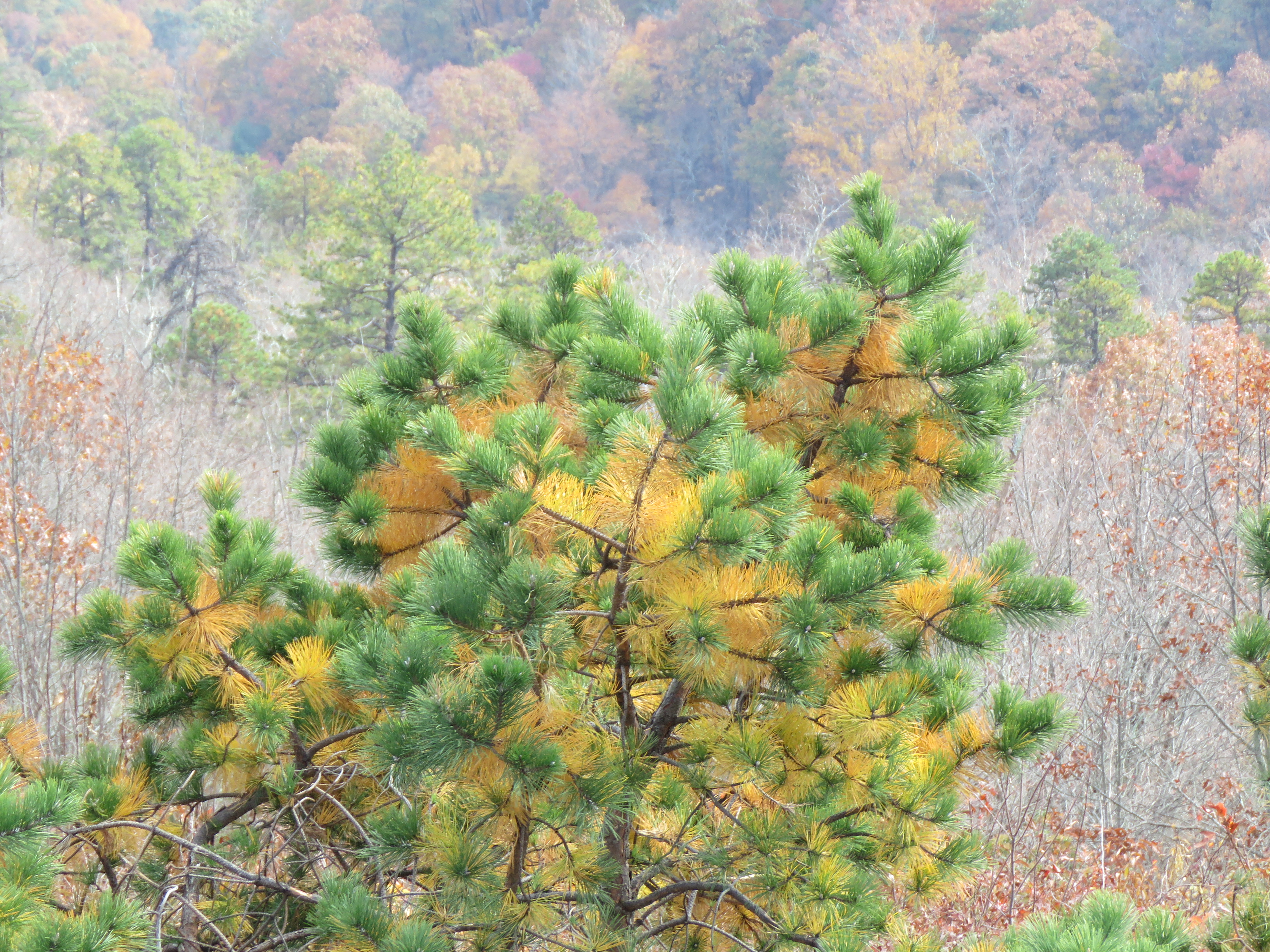
Nature’s beauty reigned even after the peak colors had faded. Photo by Bruce Stambaugh
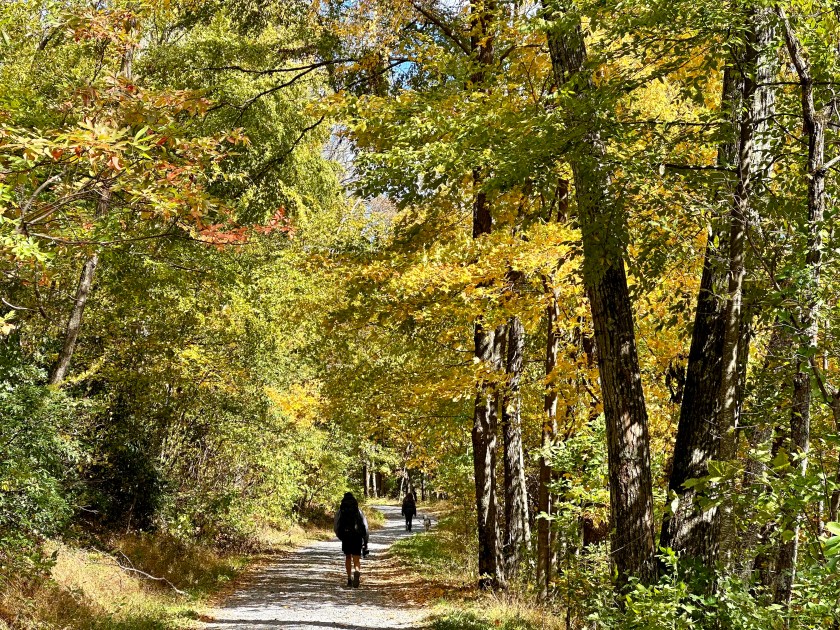
Fall is a great time to hike, bird, and shoot photos. Shenandoah National Park is my go-to place to combine all three hobbies in one trip.
However, I have learned to avoid the peak color time due to crowds. People from around the world visit the park to admire its autumn glory, which means traffic is also at its peak on the iconic Skyline Drive.
By mid-morning, lines of vehicles form at entrance stations. Overlook parking spaces fill up quickly, forcing people to park along the busy roadway. The same is true for trailhead parking lots.
Before the peak of leaf colors.
So, I chose to catch the leaf colors before and after the peak. The park is still busy, but it is tolerable, and I am satisfied with a stirring hike filled with picturesque views, unexpected wildlife, and migrating birds.
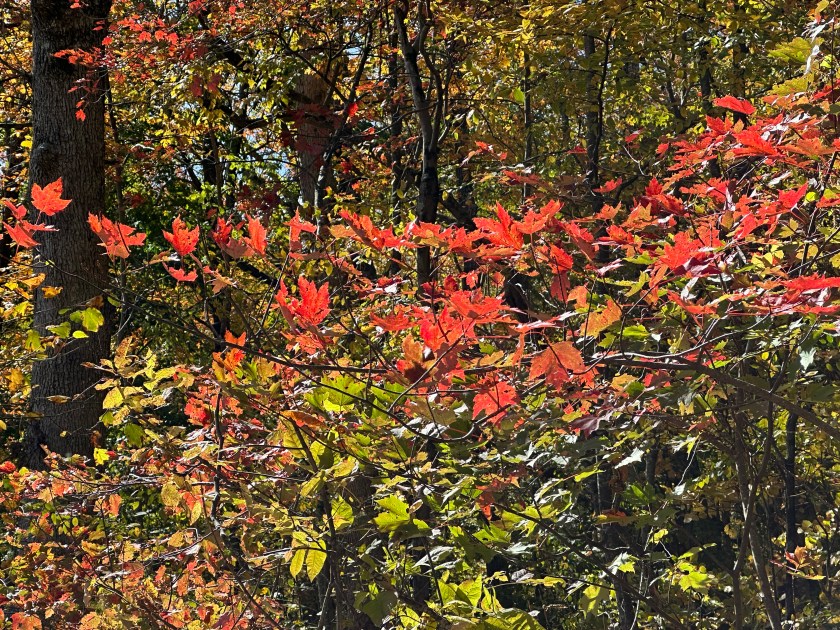
In the mountains, altitude affects the coloring as much as sunshine, cooler nighttime temperatures, and morning frosts. So, the trees might be dull or even bare at the hike’s beginning, and a half mile down the trail, a blaze of color brightens the way.
After the peak. Please click on the photos to enlarge them.
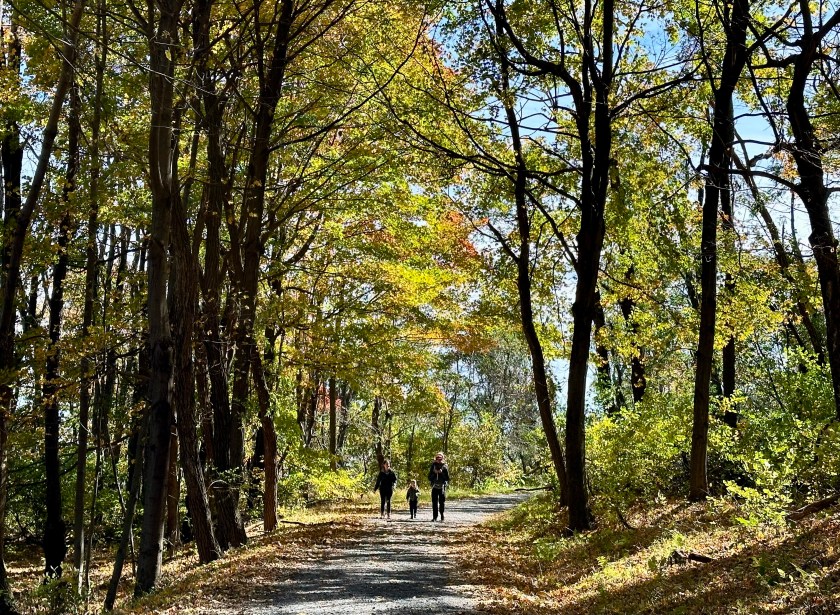
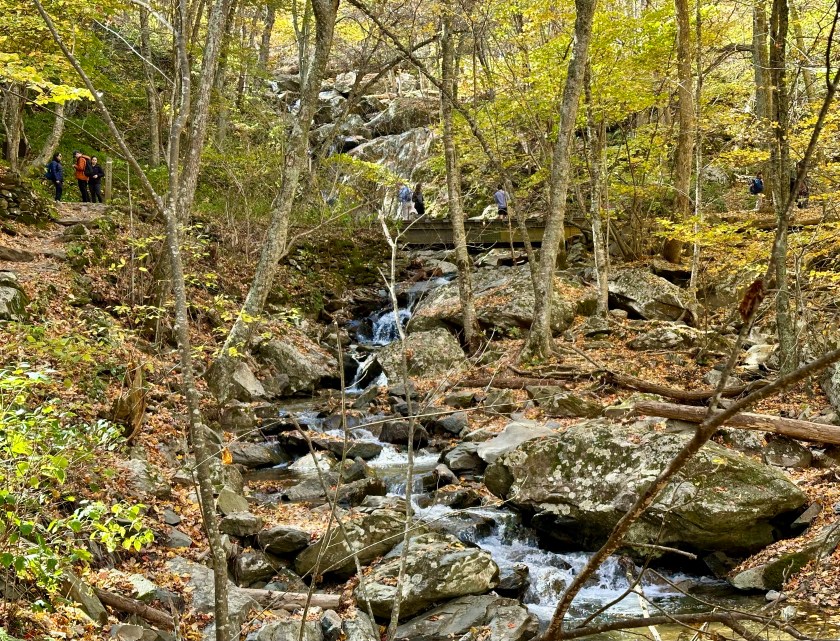
Though I have missed the height of the turning leaves, I enjoy the before-and-after with equal zeal. It’s fun to note the differences I discover and meet friendly folks along the way. The park’s beauty has energized them, too.
Besides, I admired nature’s colorful summit in other locales in Virginia’s lovely Shenandoah Valley. It is the perfect place to enjoy hiking, birding, and photography all in one joyous day trip.
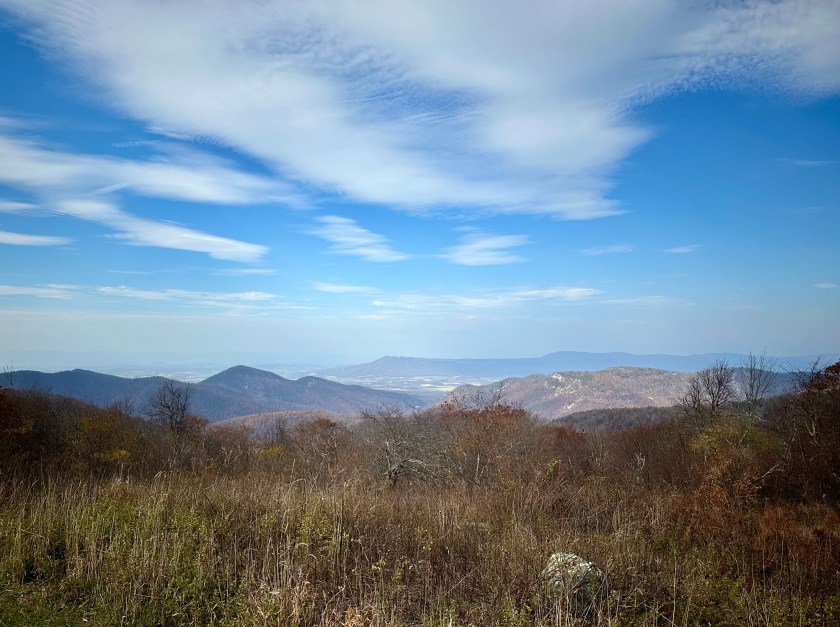
A view west into the Shenandoah Valley. Photo by Bruce Stambaugh
Earlier this fall, my wife and I visited Gettysburg National Military Park with friends from Australia. We used the National Park Service’s free self-guided app to tour the sacred grounds at this tipping point of the American Civil War.
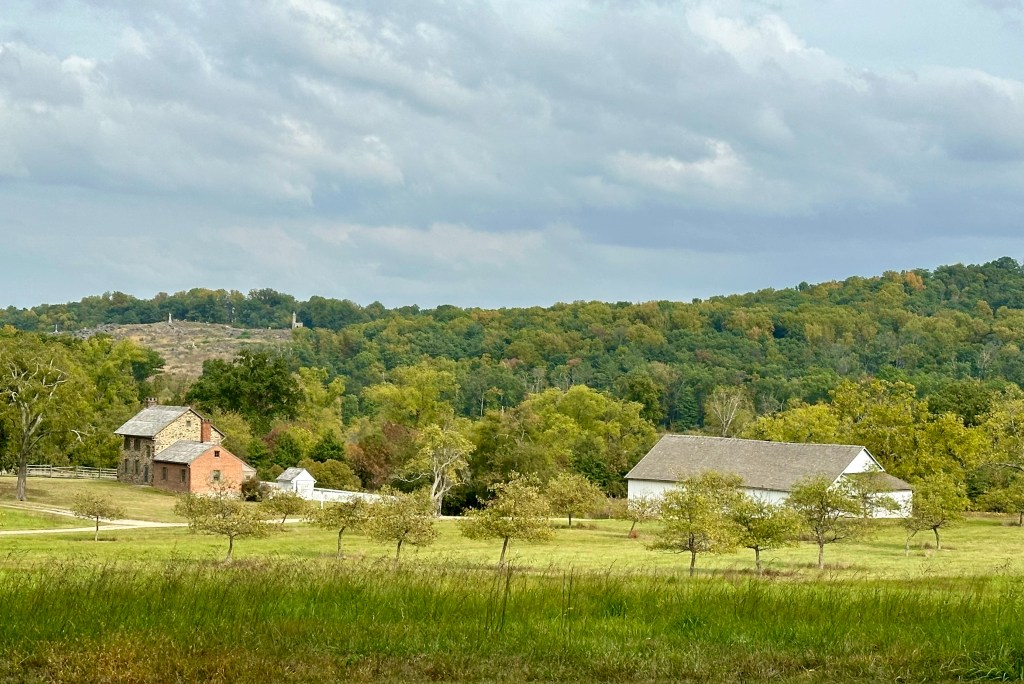
Interestingly, our Auzzie friends were most taken by the 1,300 monuments on the battlefields and beyond. On the other hand, I was amazed at the number of farmsteads overrun by Union and Confederate troops, and often both, as the battles raged. The Park Service has done a magnificent job of restoring them, and that restoration continues today.
Many of the farms where the fighting took place were small by today’s standards, often 50-80 acres. Of course, the buildings from other farms have long disappeared.
The McPherson Farm
The replica fences and the sorghum fields created a feeling of authenticity.The McPherson barn.The Codori farm saw heavy fighting on July 2 and was at the at the center of Picket’s Charge on July 3, 1864.The Phillip Snyder farm. Note the location of the outhouse. Big Round Top is the most prominent hill in the background.The Bushman farmstead. Note Little Round Top above the farmhouse.
Tree angles of the Trostle farm.
The Klingel farm on the east side of Emmitsburg Road.
The Sherfy farm on Emmitsburg Road. The 50-acre farm included the Peach Orchard, Big and Little Round Top, and Devil’s Den. The original barn burned during the battle.
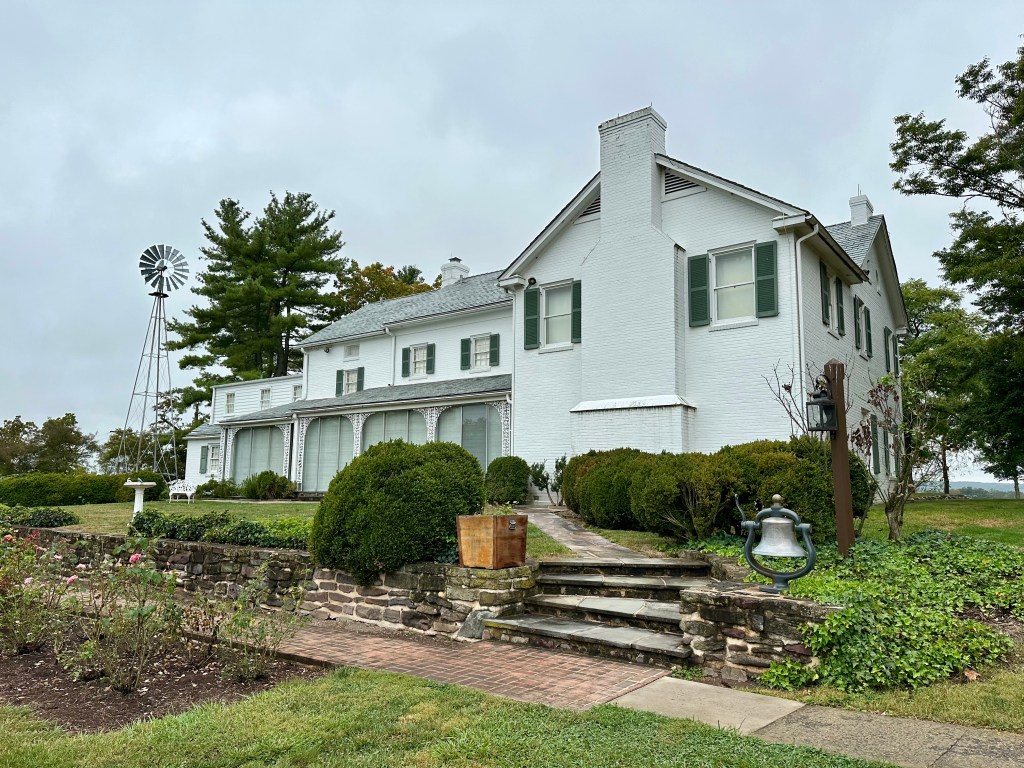
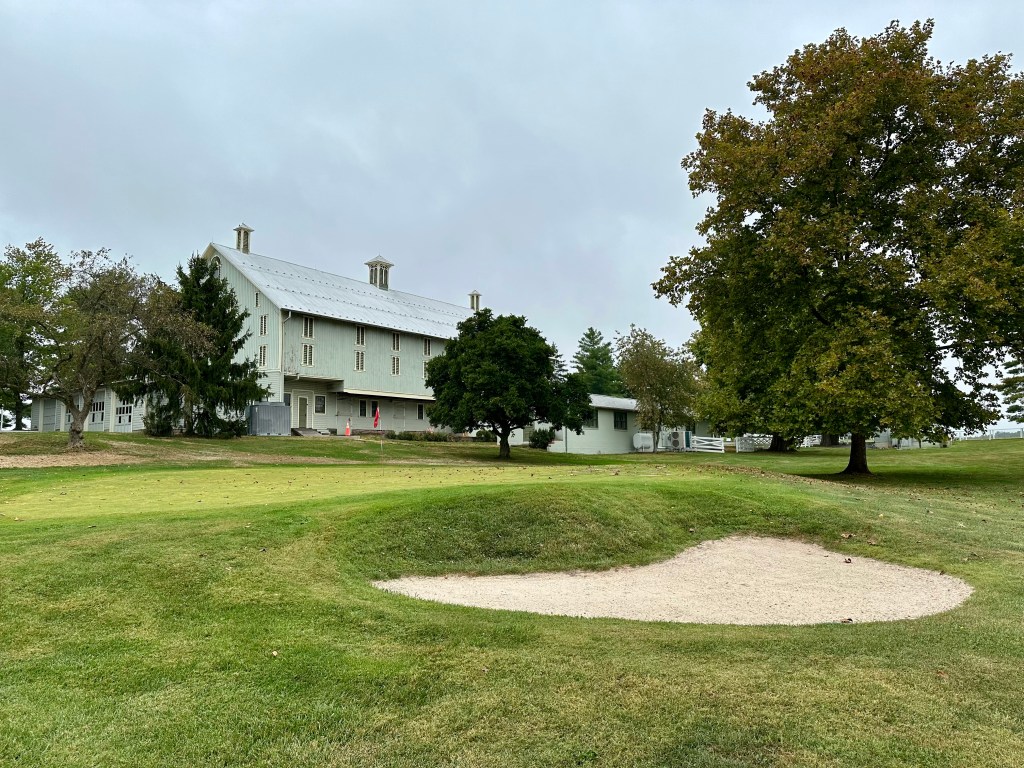
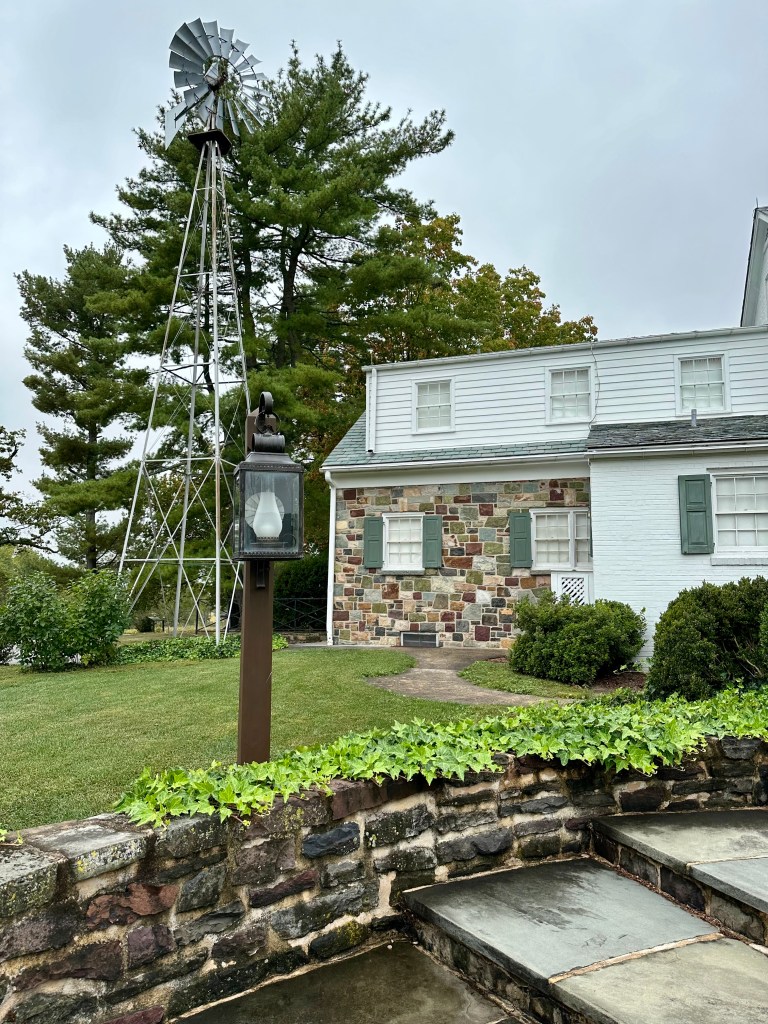
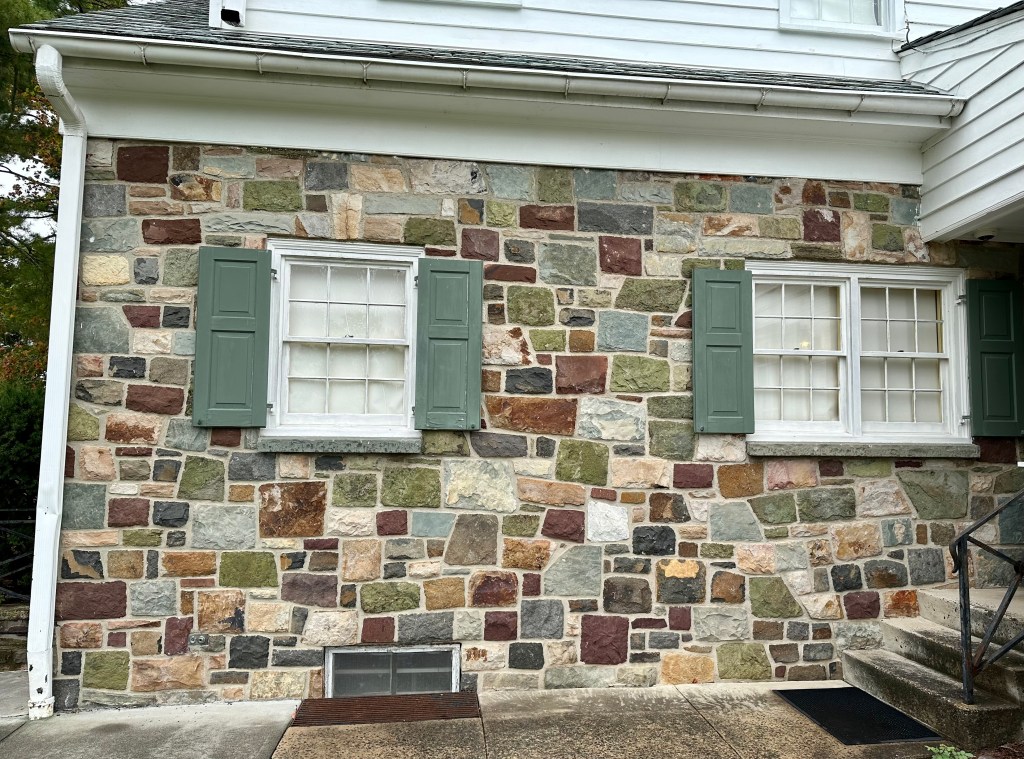
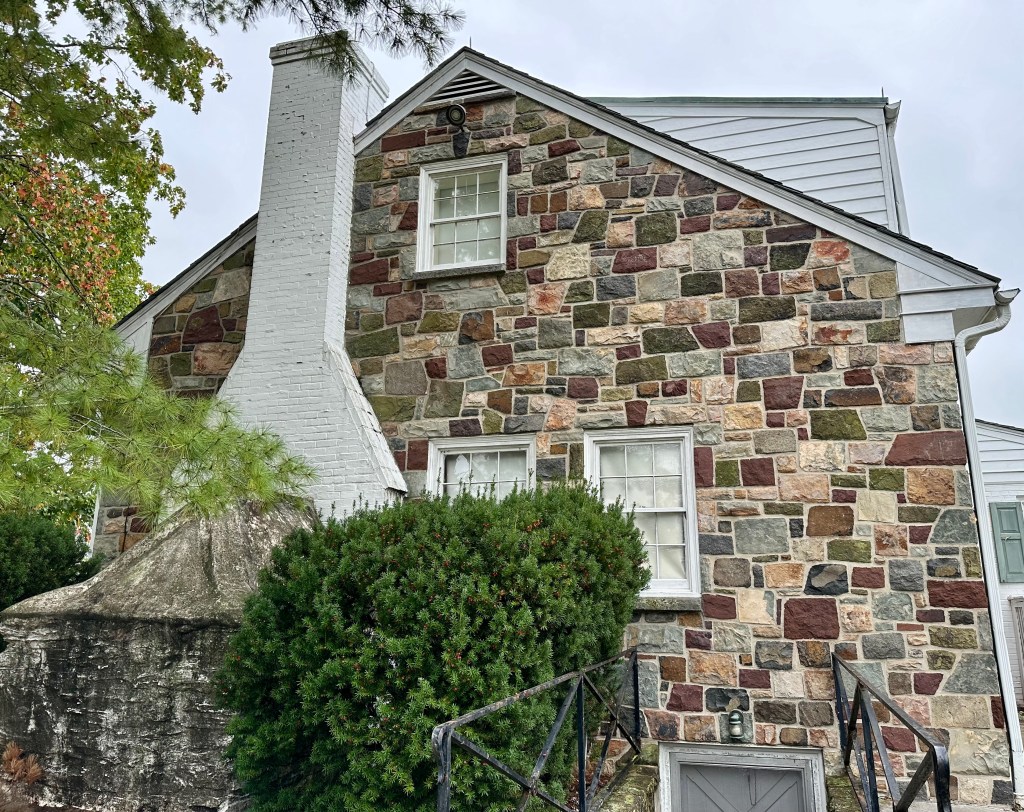
The Eisenhower farms on the southwestern edge of the battlefields.
Time did not permit me to explore the history of each farm in-depth, but that’s another reason to return to this hallowed ground.
The top photo of grandson Teddy, age 2.5, was taken this fall. The photo of the two ghosts and their sister pumpkin was taken on October 31, 2009. They are now 18, 15, and 20.
A typical scene in Rockingham Co., Virginia. Photo by Bruce Stambaugh
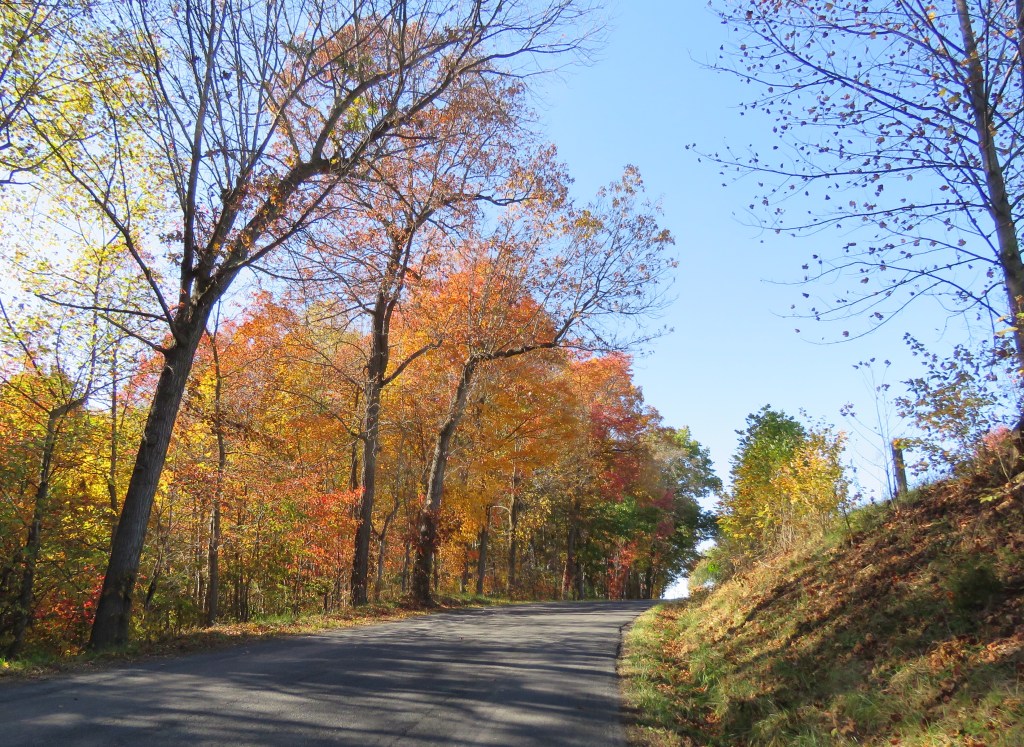
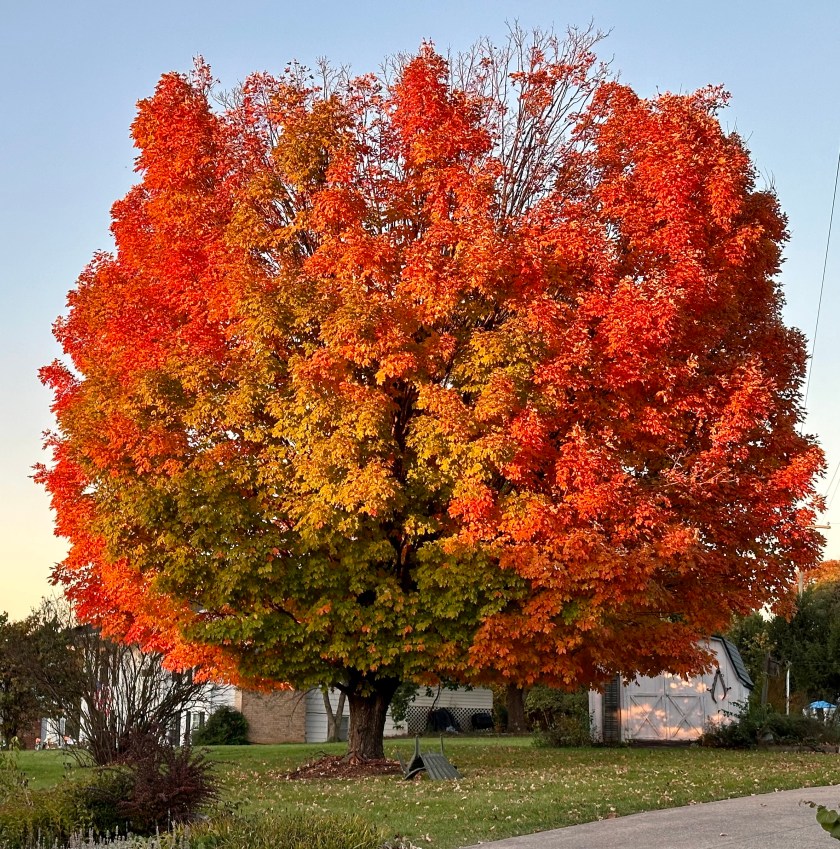
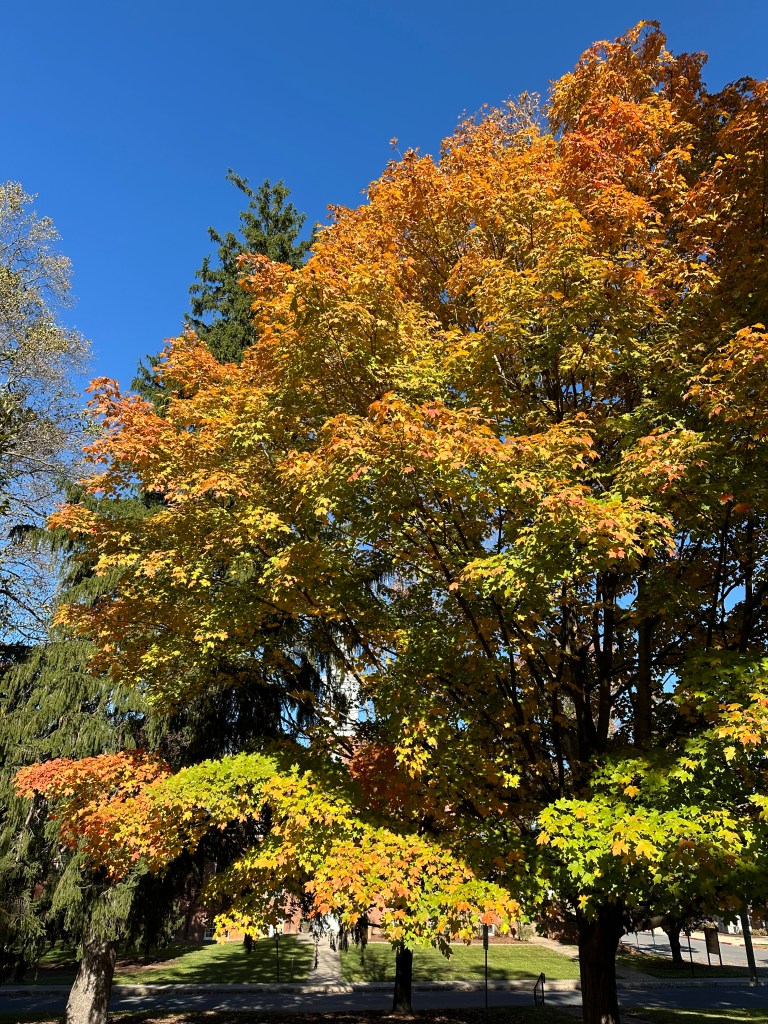
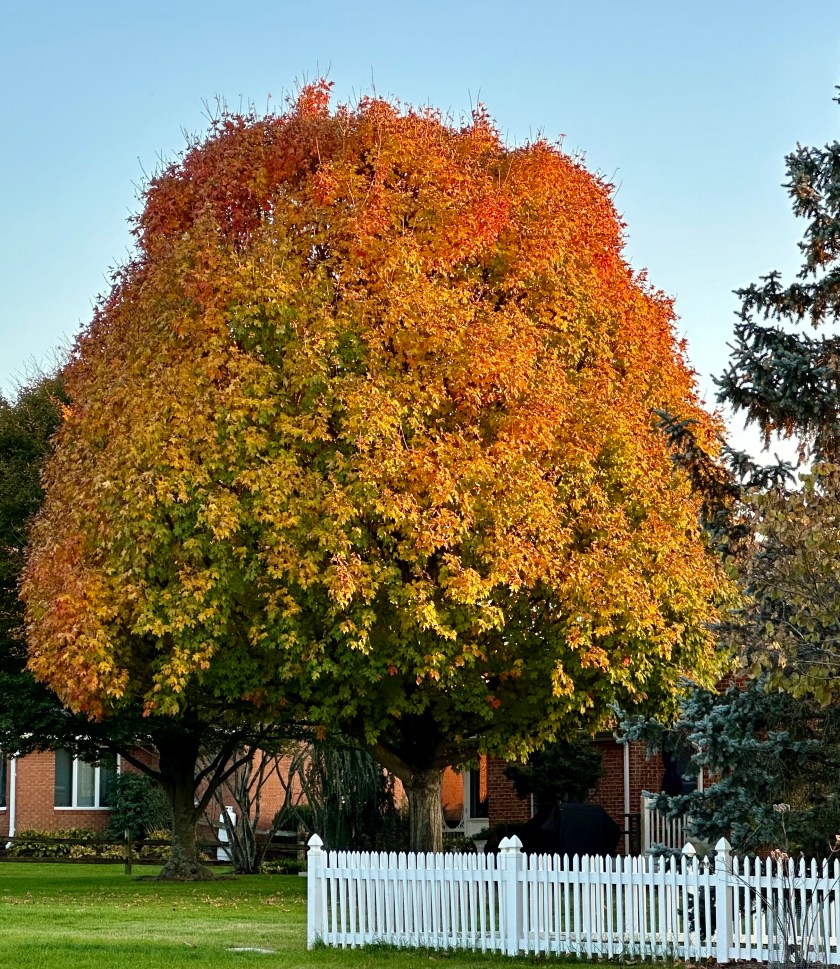
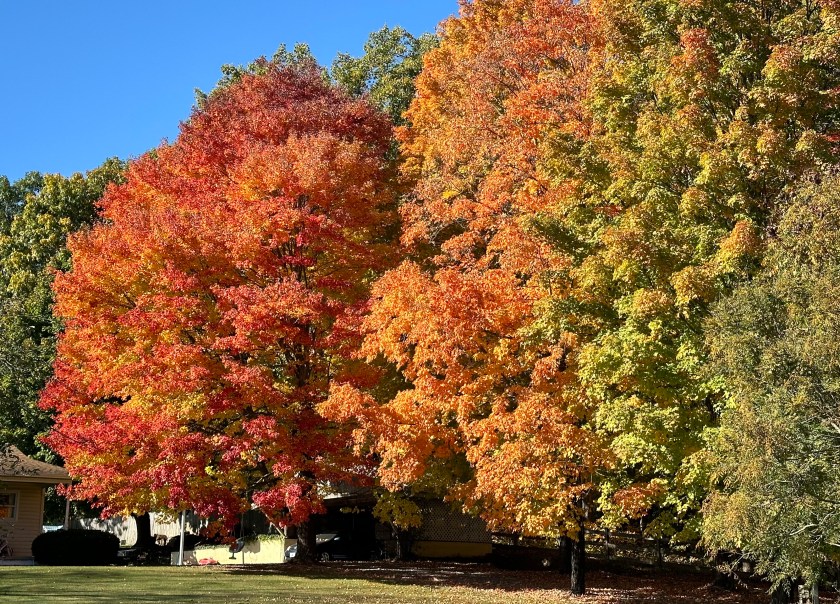
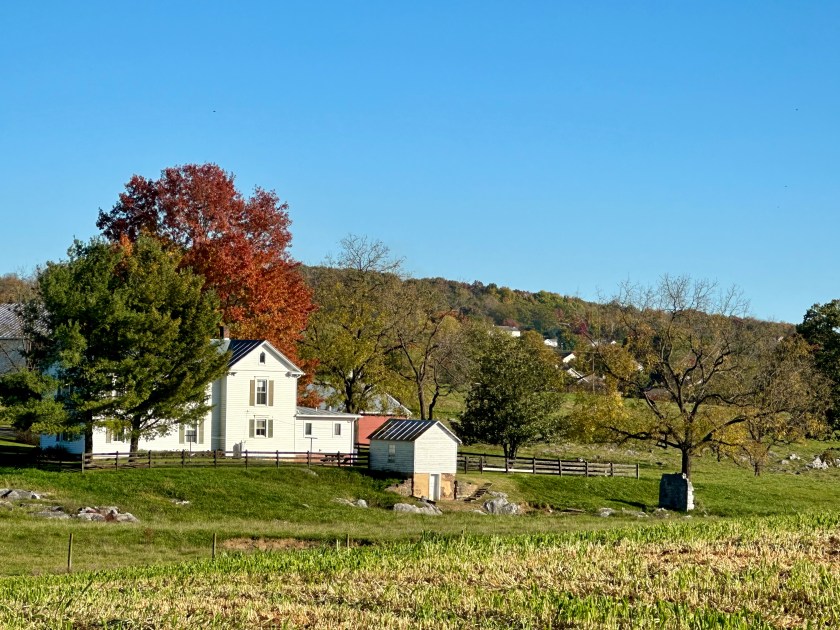
In the fall, traveling the rural roads in Rockingham County, Virginia, reveals Nature’s autumnal beauty. The trees along the highway’s edge bask in the sun’s more direct rays than if they grew more deeply in the forests.
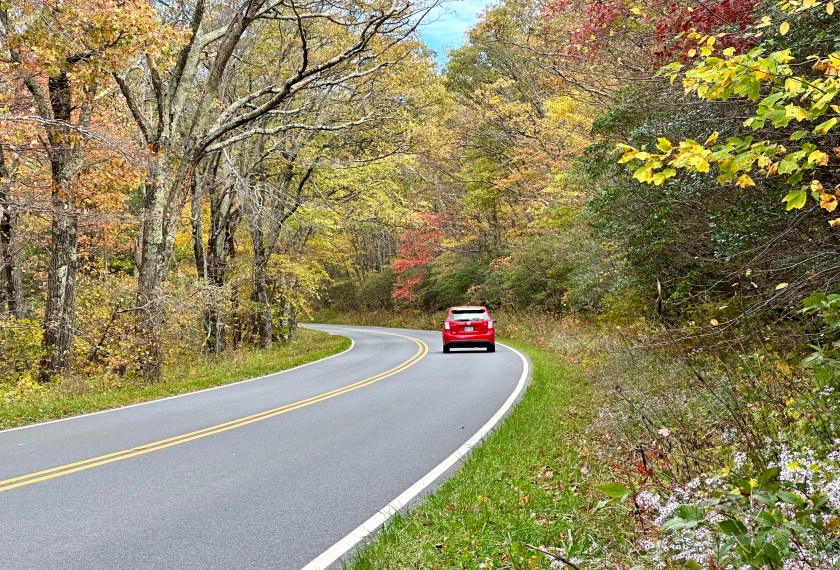
Driving on Skyline Drive in Shenandoah National Park has the same effect. However, it is also much more crowded with global visitors in the fall. Traversing the local roadways usually means less traffic, which makes it safer to pull over, exit your vehicle, and snap away.
Skyline Drive in Shenandoah National Park earlier in October. Photo by Bruce Stambaugh
Doing so allows photographers to capture the fall’s breathtaking beauty. Occasionally, I encounter opportunities to spot some migrating birds and interact with local residents. Once I explained my purpose, I never had an issue. Of course, I choose my spots carefully.
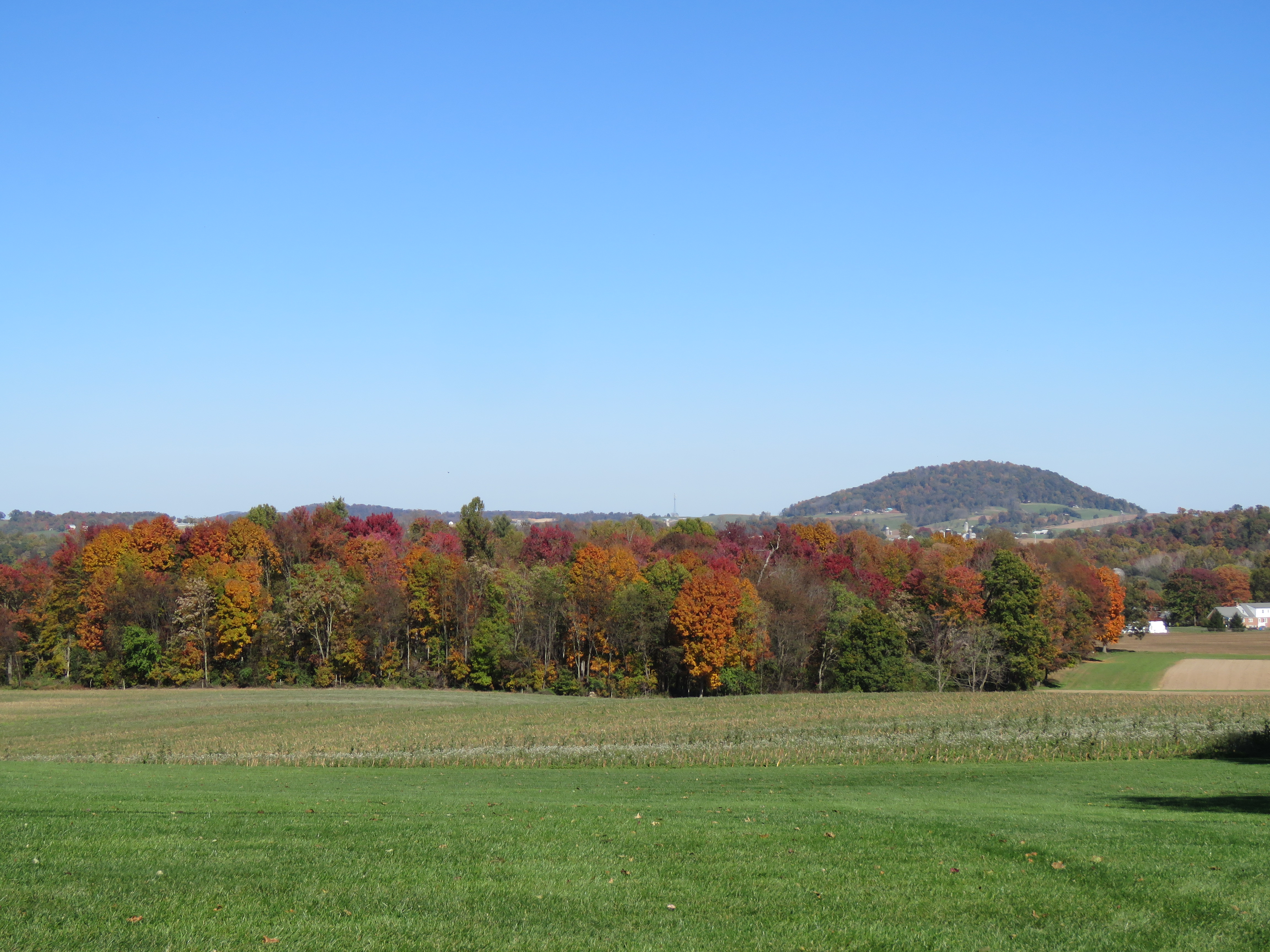
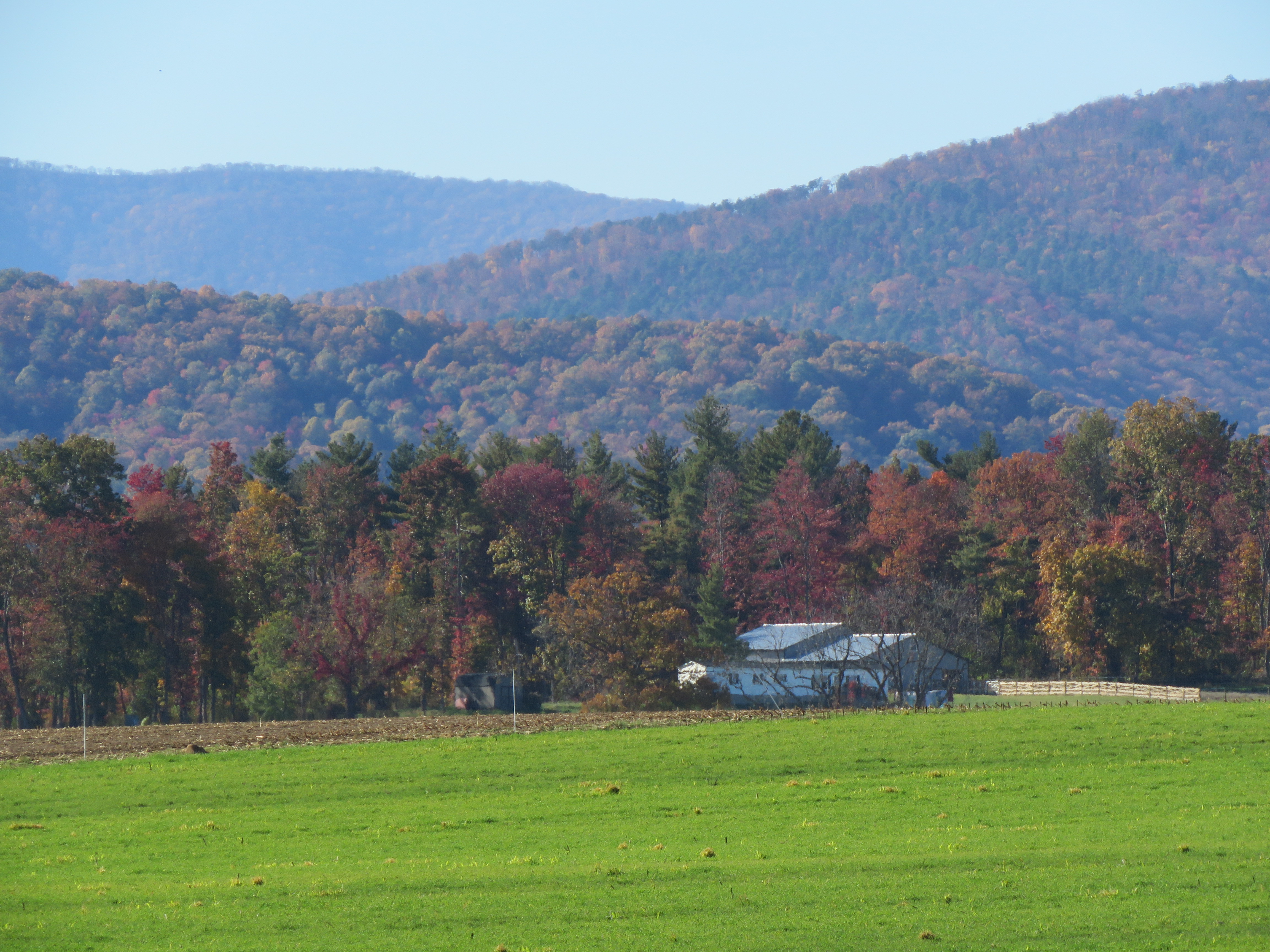
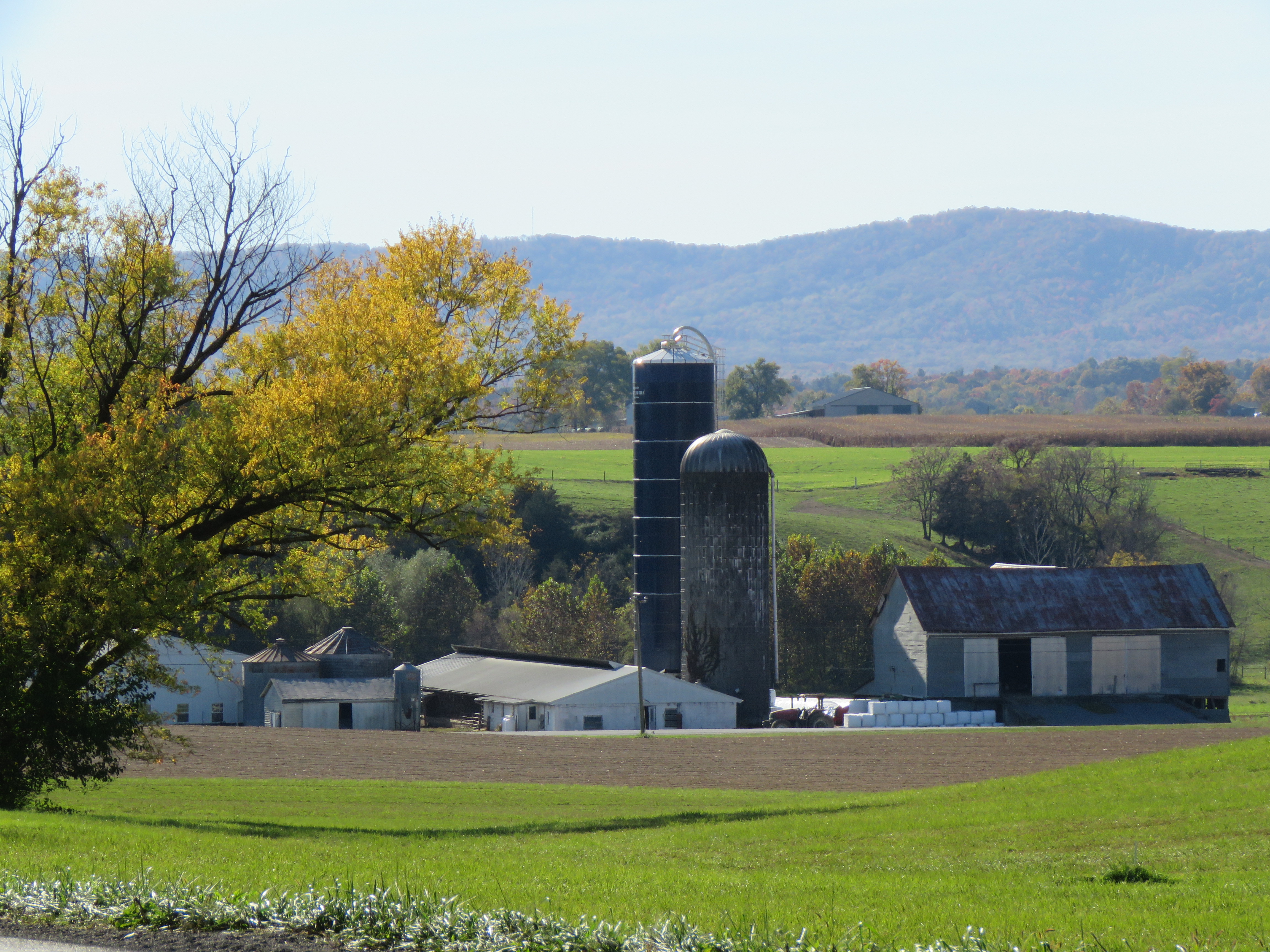
The secondary roads of Rockingham County wind, climb, and descend through the rich agricultural lands that have been farmed for generations, sometimes by the same families and their descendants. I find that fact as rich and satisfying as the colorful leaves.
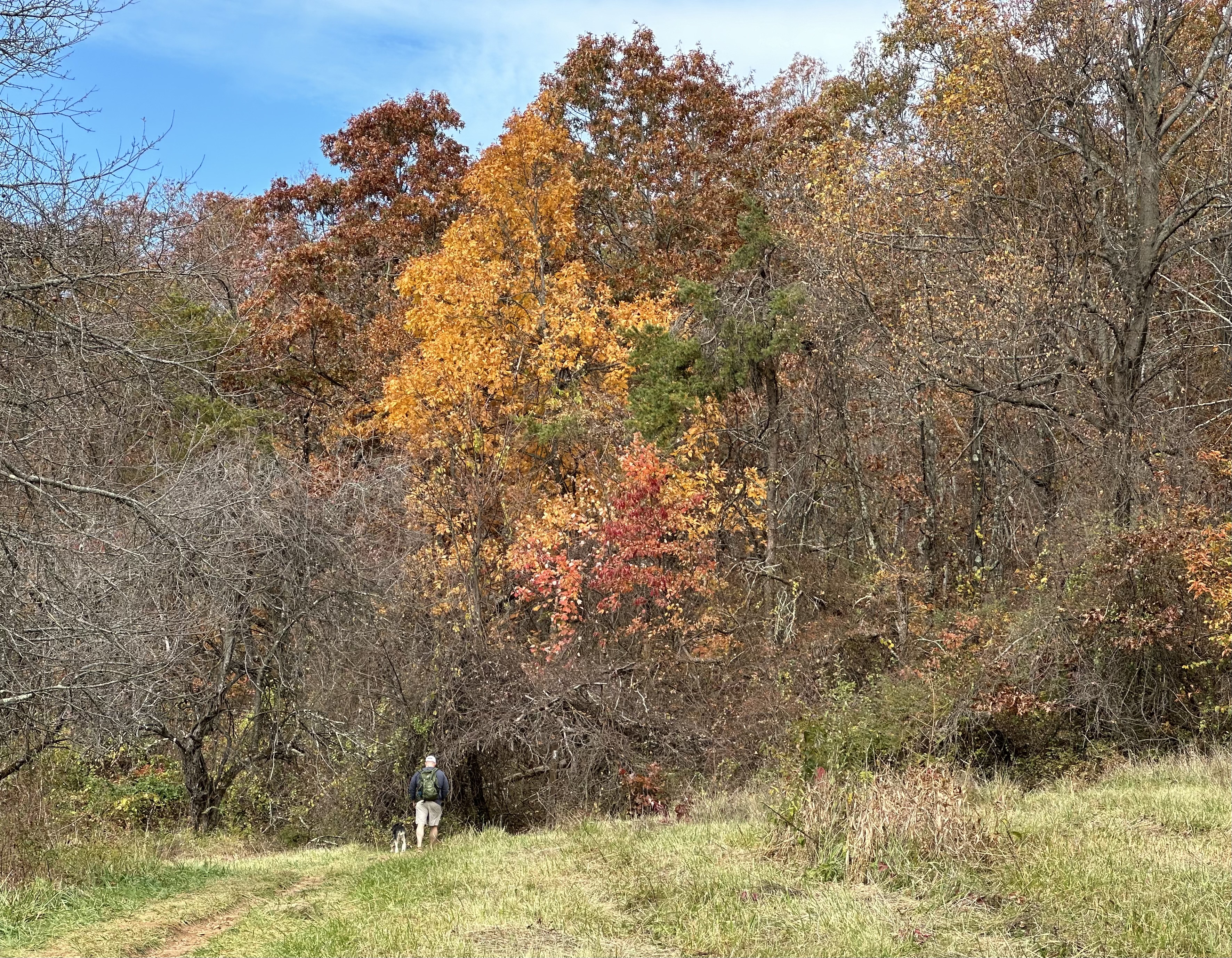
The joy of photographing the glorious fall colors is mainly in the sharing. I hope you enjoy this series of photos of birds, buildings, and leaves at their peak colors.
Please click on the photos to enlarge them.
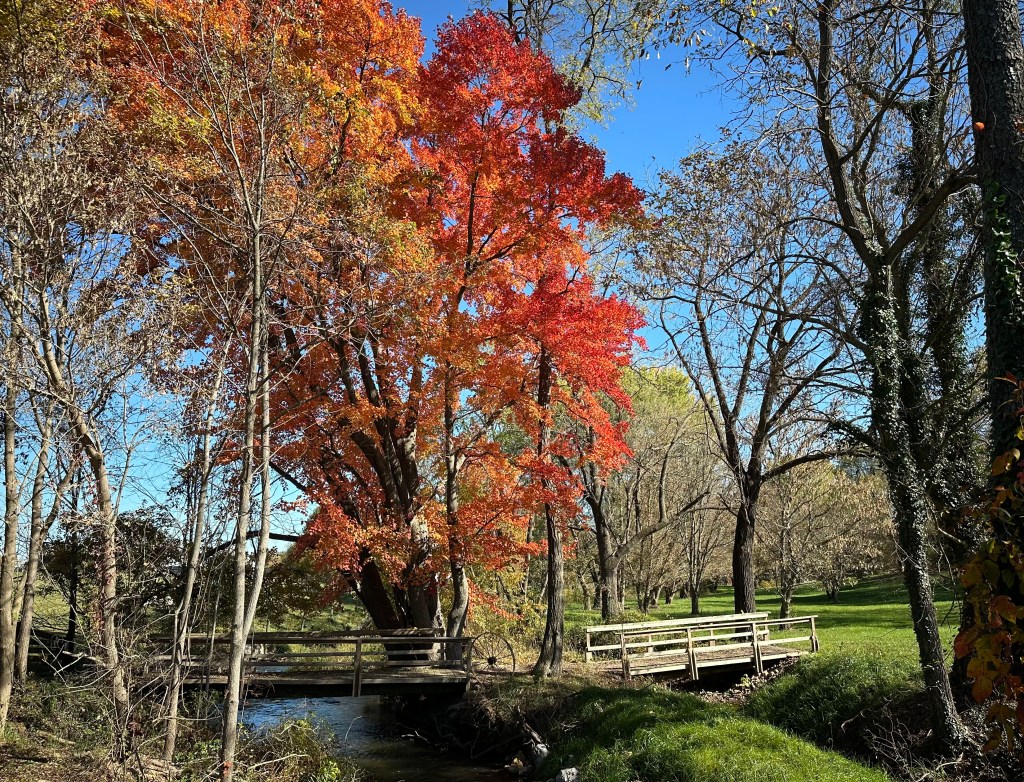
I often find the brightest colors closer to home. The brilliant leaves show off houses, churches, cemeteries, and roadsides.
Of all the rural roads I traveled, this scene at the little hamlet of Spring Creek took the prize.




































 Roadkill Crossing
You must be logged in to post a comment.