Sailboats on the Charles River, Boston, Massachusetts. Photo by Bruce Stambaugh
My wife and I had a lovely view overlooking the Charles River in Boston, Massachusetts. I chuckled when I saw this lone sailboat with the white sail when all the others were red. I’m sure the colors had some meaning, but I wasn’t able to discover what it was.
Being different is really insignificant. Regardless of the sails’ color, they still got the sailors where they want to be.
I got the cruelest call on April Fool’s Day. My doctor’s office informed me that the MRIs I had the previous day indicated an aneurysm on my left carotid artery and some disturbing white spots on my brain.
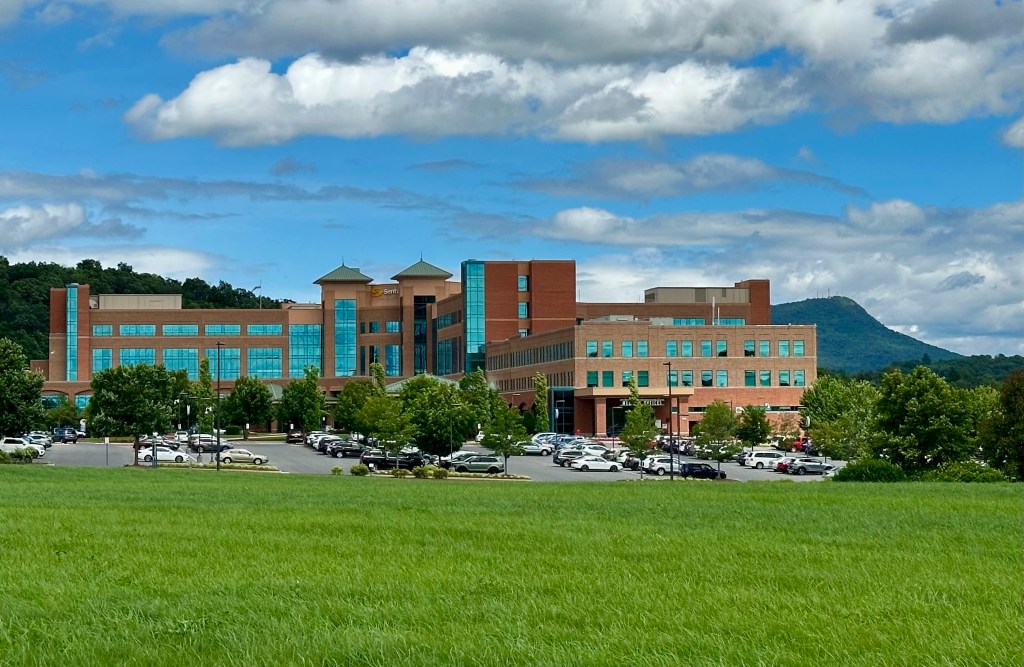
My head spun with all sorts of possibilities, none of them good. My primary care physician (PCP) referred me to a hospital in another city. I anxiously waited for a call to schedule an appointment at the hospital. It never came.
Instead, my PCP notified me days later that the hospital declined to see me. I needed something they didn’t have: a neuro intervention team. That made me even more concerned.
My PCP then referred me to a teaching hospital in the same city, more than an hour away. She also told me not to do anything strenuous, and to begin to take a baby aspirin.
I started the 81 mg aspirin right away. I also curtailed my nearly daily exercises for my lower back, which had bulged and degenerative discs. And I waited, and waited.
Days passed, and I didn’t hear anything. So, I called the hospital’s neurosurgeon department to ask about the referral. They couldn’t find it.
Of course, I contacted my doctor via the patient portal to indicate that the hospital didn’t have my referral. She faxed another one, this time stamped urgent.
After two weeks had passed with still no communication from the hospital, I called them, but had to leave voicemails, which were not returned. I decided to check for other hospitals that specialized in my condition. I found three in the United States.
Fortunately, one hospital was only three hours away. So, I called the head neurosurgeon’s office, and the receptionist answered the phone on the second ring. She provided me with easy-to-understand instructions on how to send my records to them. I contacted my doctor to provide the hospital’s fax number to forward my records.
There was one catch. I had to deliver the MRI images myself, but not necessarily in person. The hospital had a link where I could upload the images and the written diagnoses.
I contacted our local hospital where I had the MRIs, and they said I could pick them up the next day, which I did.
I placed the disc in the external DVD player since my laptop, like most nowadays, doesn’t have a slot for CDs or DVDs. I tried uploading the images, but the webpage wouldn’t take them.
I called the hospital, and by some good fortune, I was connected with a very understanding and helpful technician who kindly guided me through the process. She said I wasn’t the first patient to have the same issue.
I immediately received emails confirming that the hospital had received my images and documents, which I found reassuring. Finally, I thought to myself, an institution that gets how frustrating technology can be for their senior patients.
However, I waited several more days. I called the neurosurgeon’s office again. The office manager told me the doctors were deciding which one would review my records.
Finally, more than a month later, I received a call from the hospital to set an appointment. The good news was that it would be a remote video session with the neurosurgeon. The bad news was that my wife and I would be traveling on the dates they offered.
However, I settled on one, which happened to be exactly six weeks since my MRIs. It was also our son’s birthday, and the 14th anniversary of my prostate cancer surgery. Taking that appointment meant we had to alter our travel plans slightly. It was a small sacrifice to make if I wanted to see the neurosurgeon.
When the late-afternoon appointment arrived, my wife and daughter-in-law joined me. I relied on them to keep notes and to ask questions, since at 77 years old, my memory wasn’t what it once was.
My wife was of great help to me as we navigated my cancer episode together. She attended every appointment with me and took excellent notes. She helped me at every step of the way from biopsy to surgery to rehab. So, she attended this appointment without hesitation.
The neurosurgeon was excellent. He said I had a pseudo-aneurysm, and the spots on my brain were not unusual for my age. He reassured me that the chance of the pseudo-aneurysm rupturing was near zero. And he listened to and answered all our questions.
However, he did refer me to a stroke neurologist due to the bulge in my carotid. He did so in case I had a blood clot, which would potentially block the carotid at the pseudo-aneurysm’s location. I have a scheduled appointment for that.
I recognize that my experience is anecdotal. I also know that many of my peers have had similar experiences with the medical system.
So, what did I learn through all of this?
I learned to be persistent if doctors’ offices or hospitals don’t follow up with patients as expected. I also learned to be patient. They are busy after all.
Through it all, I tried my best to be kind to everyone I spoke with. Medical personnel work with many patients and other staff members daily. Why add to their frustration by being rude or angry? That wouldn’t help my blood pressure, and probably not theirs either.
I also tried to be as gracious and courteous as possible, even if it was simply putting me on hold on the phone for a few minutes. Gratitude benefits everyone.
Don’t go it alone. Having a spouse, relative, or friend attend a medical appointment with you helps the patient better understand what is being said and what the patient should and should not do. In my case, it also helped catch any information I missed. When diagnoses cause consternation, one can only absorb so much. Designate a person to advocate on your behalf if you are unable to do so yourself.
In all of this, be communicative. That ensures everyone is on the same page and prevents you from getting lost in the system. Too often, medical digital systems don’t talk to one another, so you have to speak up for yourself. But the communications need to be considerate and respectful.
The bottom line is to be proactive for yourself and your health. A positive and respectful approach goes a long way with professionals who too often hear just the opposite.
Finally, I wanted to share my story in the hope that patients who have experienced similar challenges will understand that they are not alone. And for other retirees who may encounter the same roadblocks that I did, I hope they recognize the importance of persistence and self-advocacy in achieving their best medical outcomes.
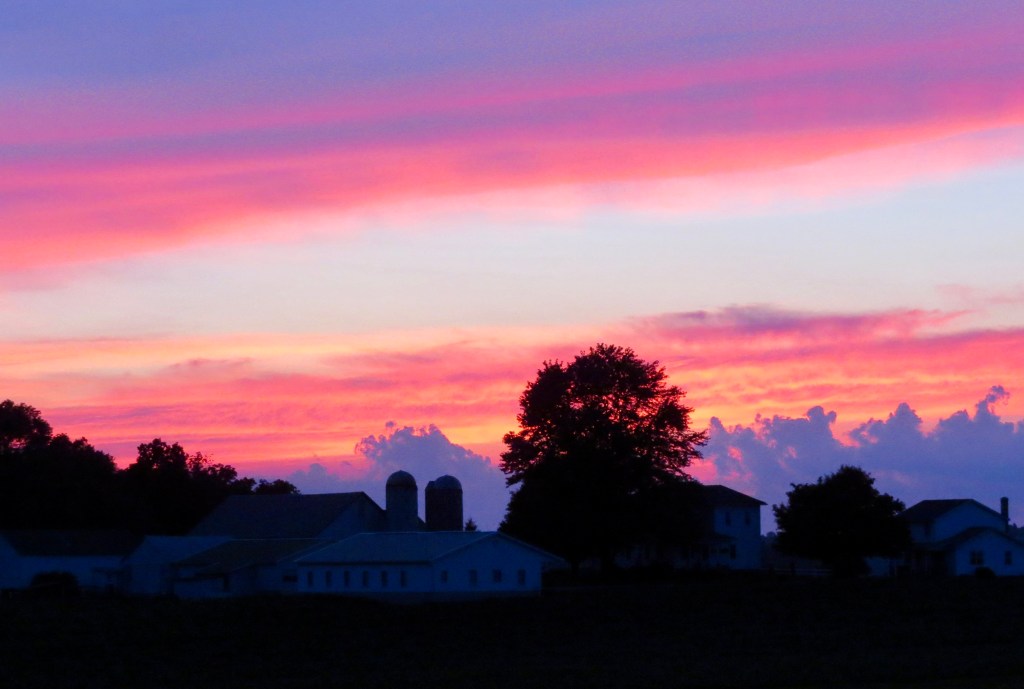
When I saw the high, thin clouds 30 minutes before sunset, I thought there might be a chance for spring to say farewell in color. As it turned out, it was more about the setting than spectacular sunset colors.
When I arrived at my favorite location to photograph sunsets, I wasn’t alone. Four other cars were ahead of me. However, they soon left, and I had the space all to myself, save for a passing horse-drawn cart with three young Old Order Mennonite ladies aboard.
We exchanged hellos, and I waited for the oranges that usually come when the sky is mostly clear over the Allegheny Mountains to the west. I wasn’t disappointed.
However, it was the big picture of the setting that got my attention. Below the glowing sky, another scene unfolded. The rolling, fertile farmland of western Rockingham County, Virginia, dotted by verdant woodlots, filled the foreground.
Beyond, mist rose from the valleys between forest-covered North Mountain and the higher Shenandoah Mountain. In the twilight, their iconic blue hues created a natural boundary between the golden sky and the farmsteads below.
Spring’s last sunset may have said goodbye, but it also set the stage for the joys of summer.
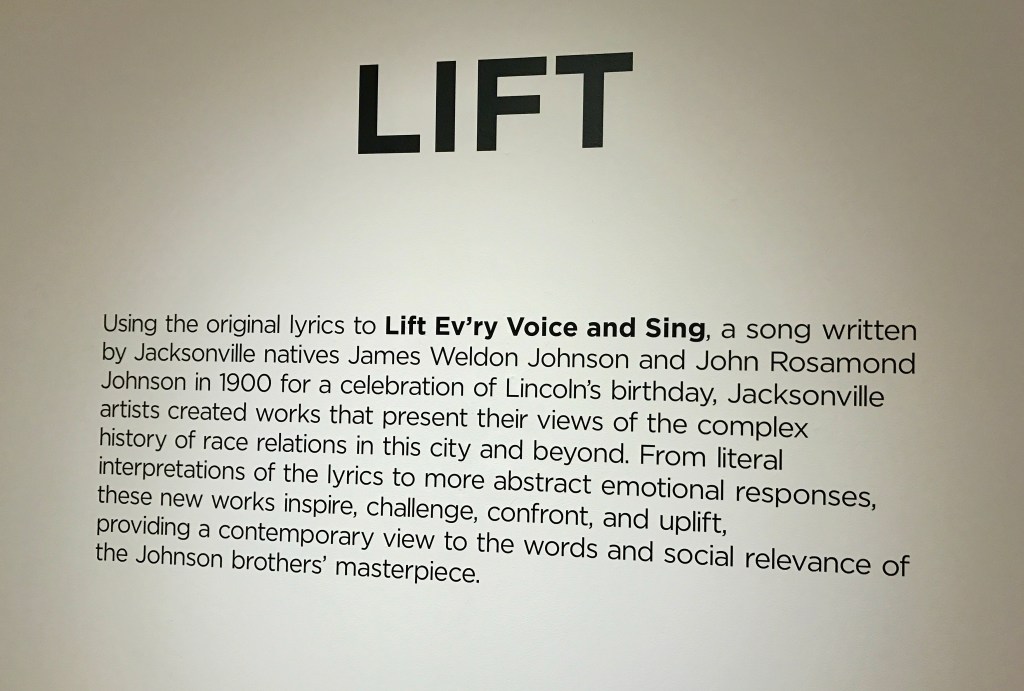
An artistic presentation of “Lift Every Voice and Sing.” Photo by Bruce Stambaugh
When I took this photo at an art museum in Jacksonville, Florida, several years ago, I had no idea of the depth of the meaning of the song. It’s known as the Black National Anthem. The song was initially composed to celebrate Abraham Lincoln’s birthday, but quickly became popular in Black communities. It was adopted by the NAACP in 1919 for its powerful lyrics about resistance and hope. Consequently, it resonated with those involved in the Civil Rights Movement in the 1950s and 1960s.
The song celebrates its 125th Anniversary this year. I was happy to learn that “Lift Every Voice and Sing” is in our church hymnal. Sheryl Lee Ralph performed my favorite rendition of the song at Super Bowl LVII. You can look it up on YouTube, as I am not permitted to post it here.
Flowers, wild or propagated, flourish this time of year. With warmer temperatures, cooler nights, and well-watered fields and forests, floral colors brighten neighborhoods, countrysides, and forest floors.
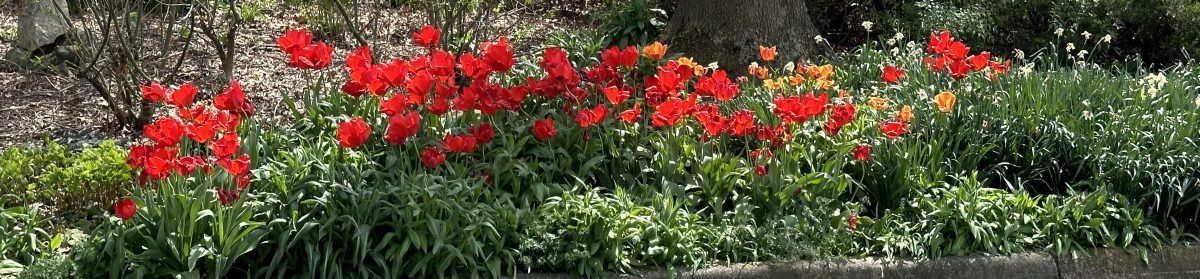
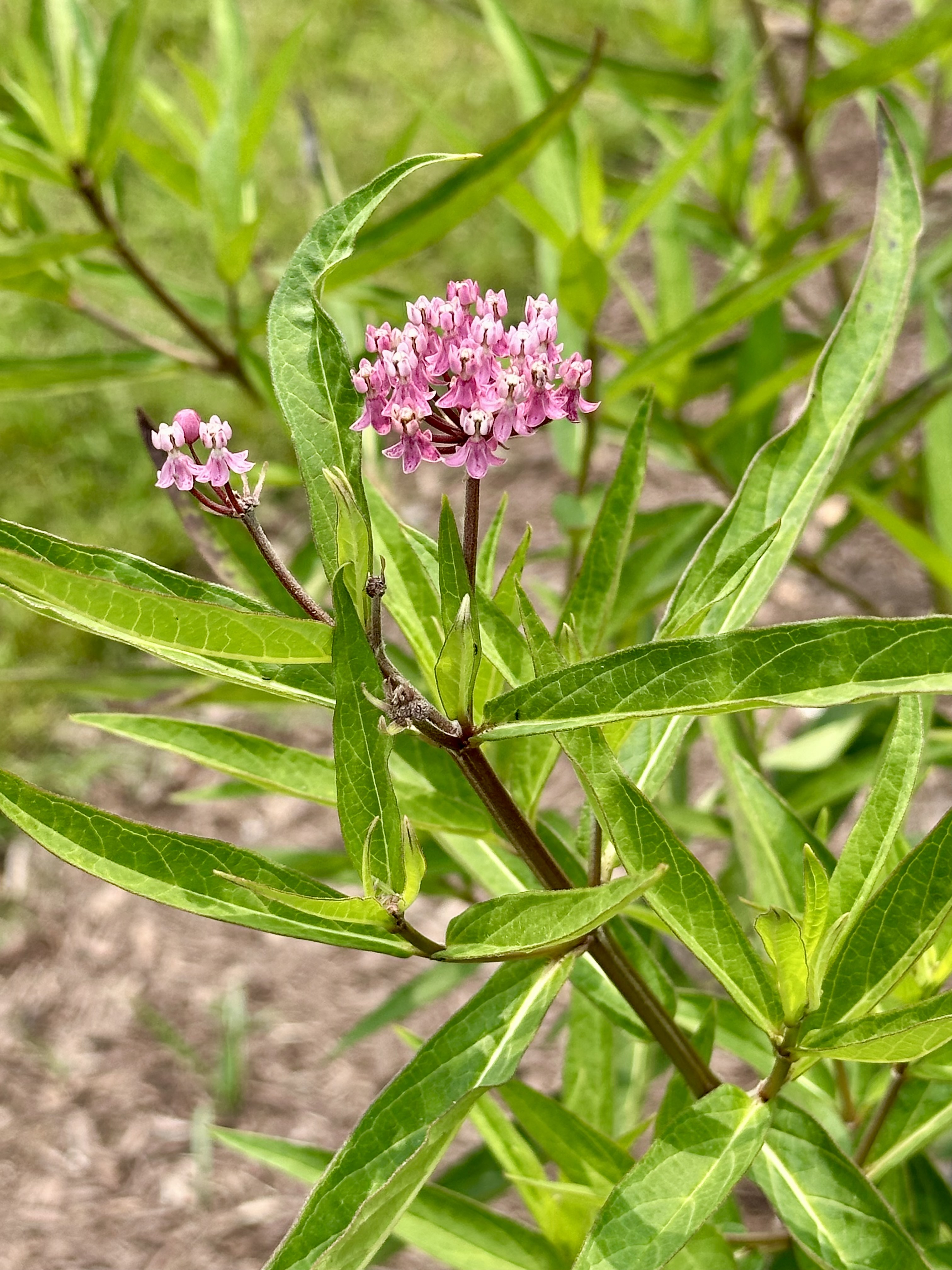
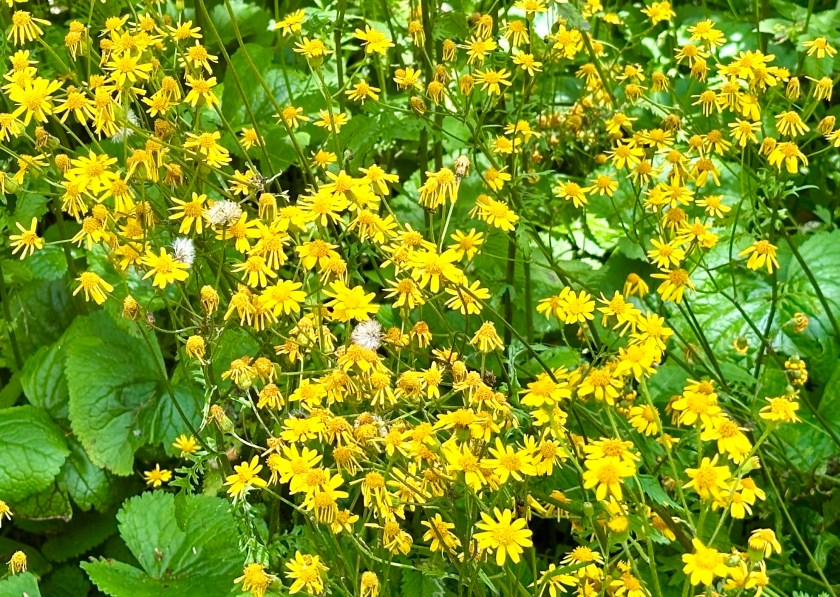
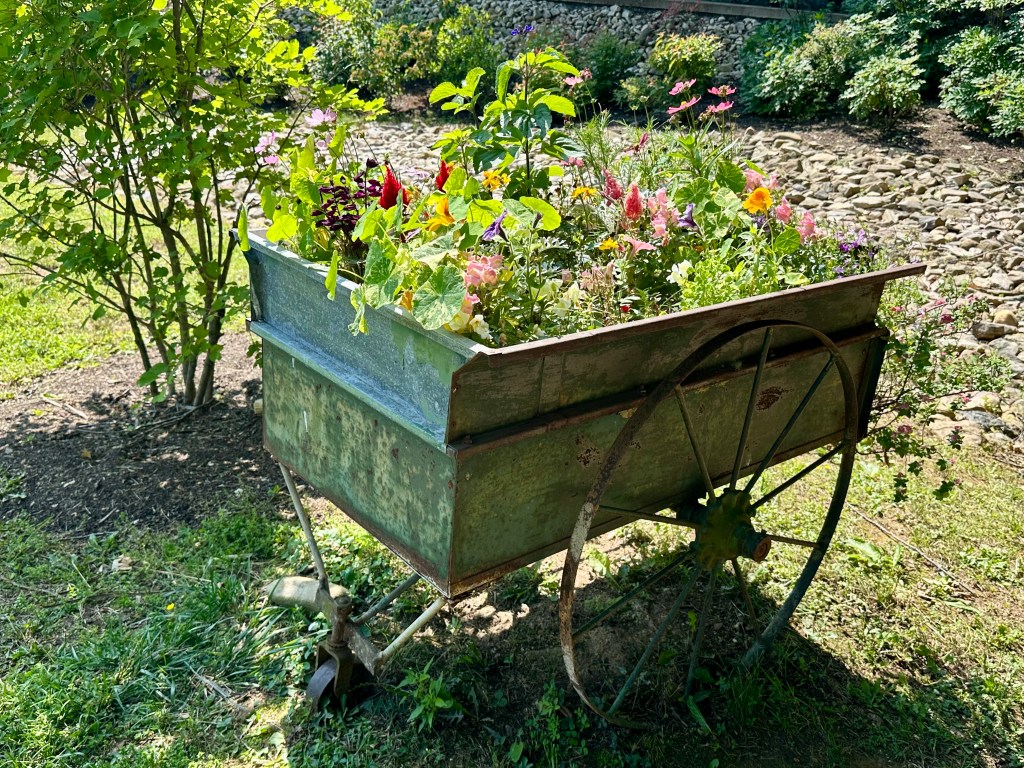
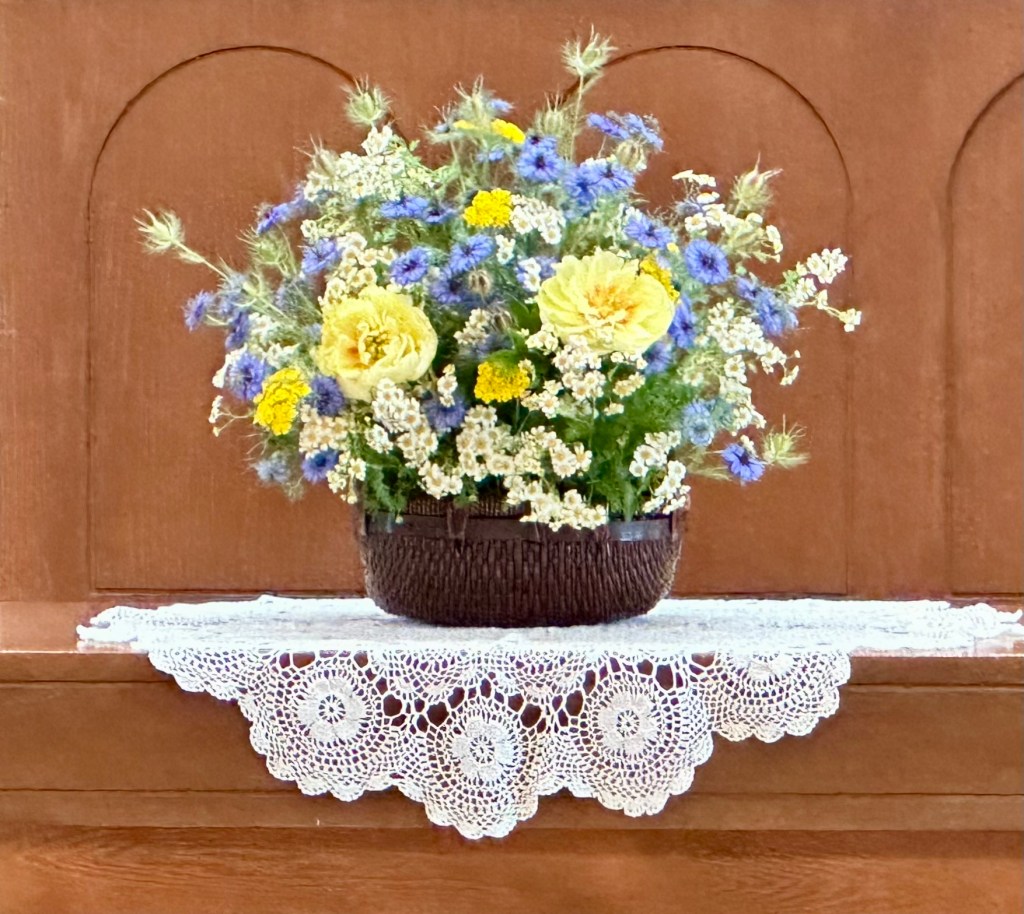
Here are a few photos of flowers I spotted wherever I went.
Around our house.
Wildflowers.
Along the path.
Honeysuckle.
Mountain Laurel.
Foxglove Beardtongue
Delphinium.
Golden Ragwort.
Cultivated.
At the arboretum.At the neighbor’s.Calla Lililies. Planter.Climatis.Rose Campion.Church decor.
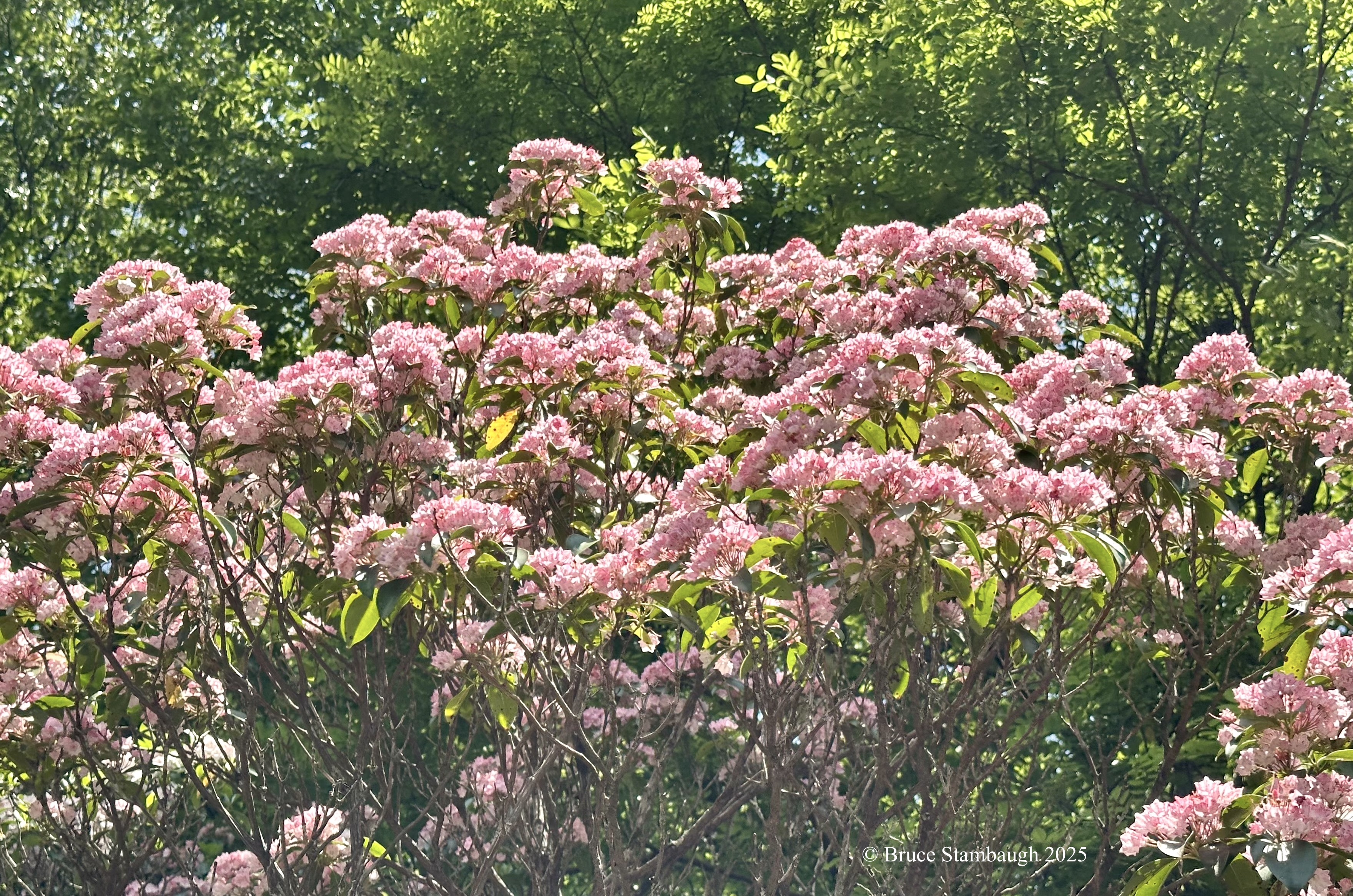
Mountain Laurel blossoms. Photo by Bruce Stambaugh
I went for the birds and the blossoms, but forgot about the bugs. They didn’t deter me, however.
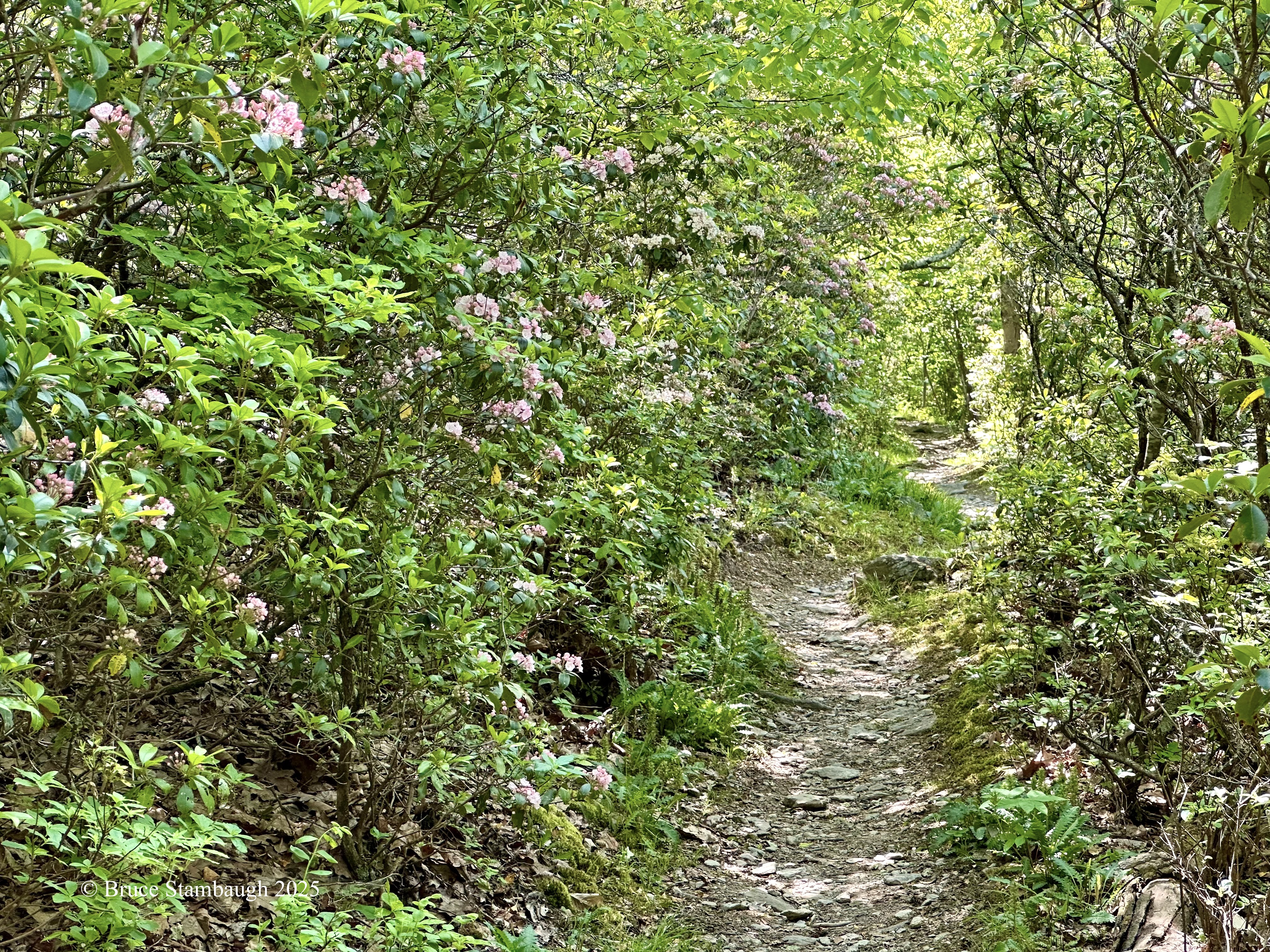
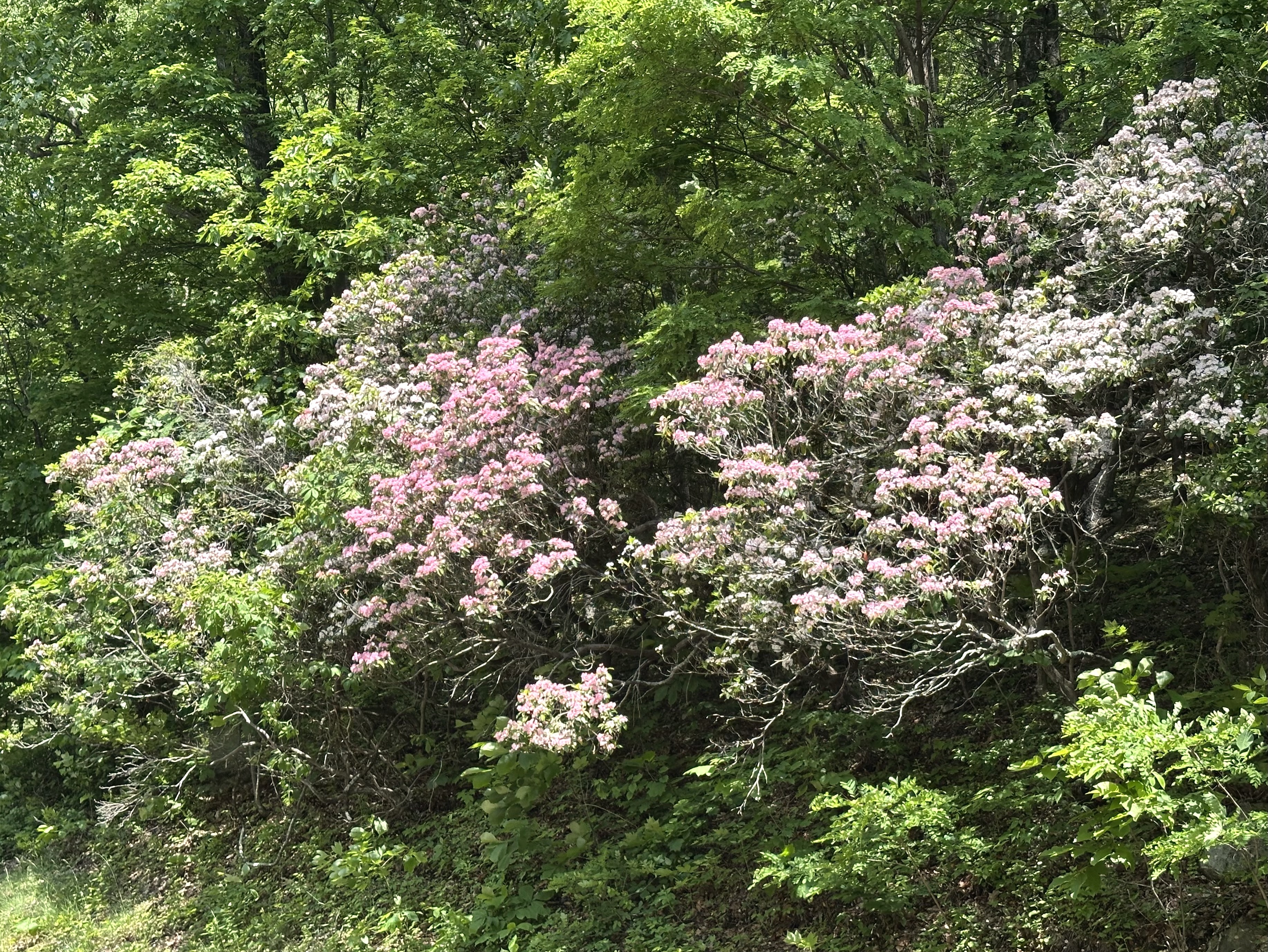
My neighbor had told me that the Mountain Laurel bushes were blooming at various locations in Shenandoah National Park, just a short drive from my home. The laurel blooms from late May into mid-June, depending on elevation.
Of course, I had to see for myself. I fixed a hiker’s lunch, packed my binoculars, camera, and a couple of jackets, and headed out. It’s often 10 degrees or more cooler in the mountains than in the Shenandoah Valley, where I live.
I didn’t need to bother with the jackets. The temperature was 70 degrees when I arrived, and it was humid, with little to no breeze. It was 79 when I left.
A small black bear cub greeted me not long after I entered the park. Fortunately, it scampered back off the old stone wall away from the road and into the forest.
I soon reached my first destination. Just a short distance off Skyline Drive, I reached the Appalachian Trail, which crossed a fire road. I didn’t see any Mountain Laurel, but songbirds were plentiful. So were the knats and mosquitoes.
A male Eastern Towhee. Photo by Bruce Stambaugh
I strolled along the AT, swatting at the pesky bugs and trying to locate the many warblers I was hearing and recording on my smartphone’s birding app. Singing its unmistakable “drink your tea” melody, a male Eastern Towhee posed for a photo on a limb hanging right over the trail.
I met a lone through-hiker from South Carolina. She hoped to reach Mt. Kadadhin in Maine by mid-September. She told me she had passed many stands of Mountain Laurel on her hike so far, which began at the Appalachian Trail’s traditional starting point, Springer Mountain, in Georgia.
She headed north while I retraced my steps to my vehicle. The birdsong was terrific, but the forest’s full foliage made it challenging for this old guy to spot the warblers as they flitted from one branch to another, munching on their insect smorgasbord.
Besides, my main goal was to photograph the blooming Mountain Laurel. I followed my neighbor’s directions to another section of the AT, where the Mountain Laurel was so prolific that it formed a floral tunnel.
The laurels were in all stages of blooming, from tight pink buds to hexagonal flowers in full bloom. In places, the sun filtered through the forest canopy, highlighting the beauty before me.
The laurel blooms offered no fragrance, and I never saw an insect of any kind on any of the hundreds of blossoms. There was a good reason for that. As pretty as the prized flowers are, they are poisonous to any living creature. Every part of the plant is toxic.
So, if someone offers you Mountain Laurel honey, politely decline. Merely enjoy the flowers with their evergreen leaves. If you go, make sure you take your favorite bug spray.
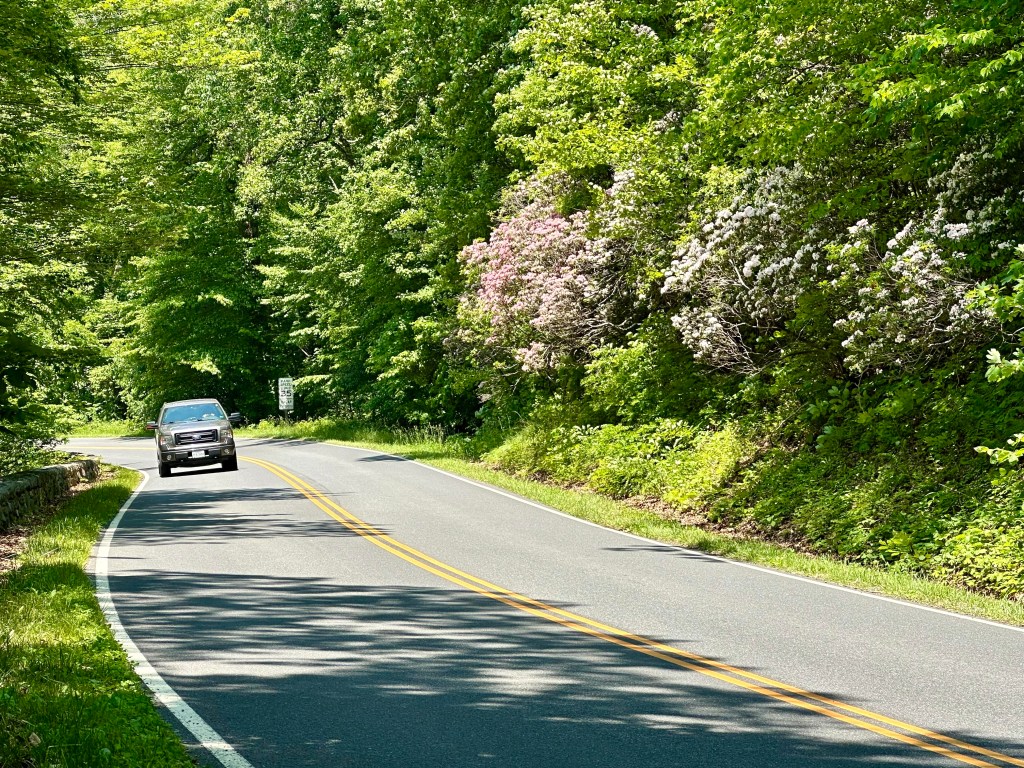
Mountain Laurel grows along the Skyline Drive in several locations. Photo by Bruce Stambaugh
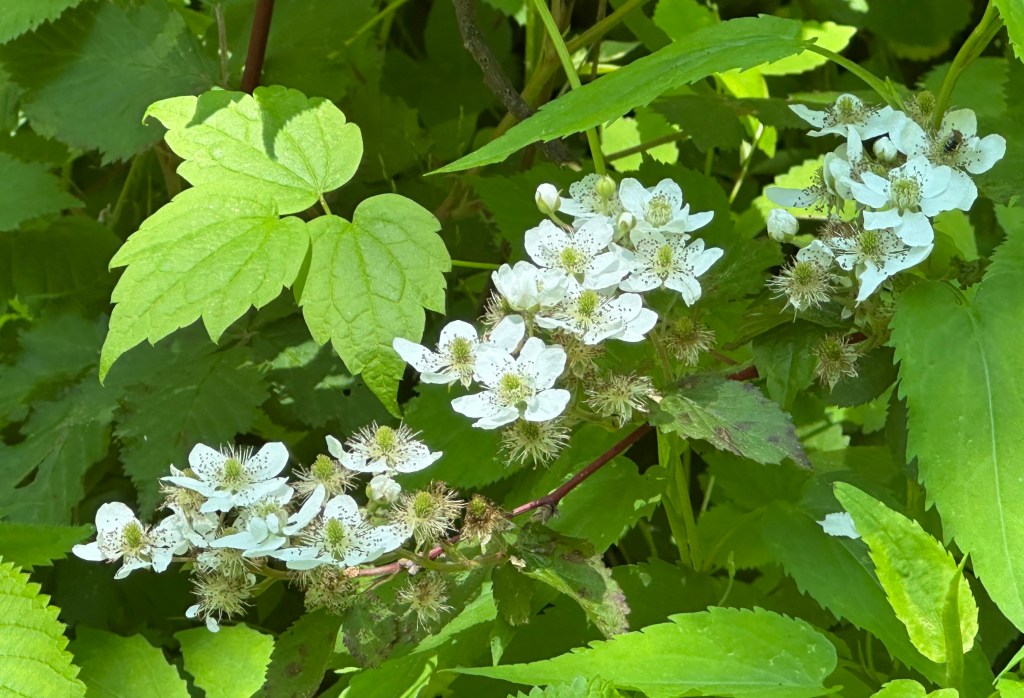
Appalachian Blackberry blossoms. Photo by Bruce Stambaugh
On a recent day hike on the Appalachian Trail in Shenandoah National Park, I came upon these lovely flowers. They are the blooms that, in a month or so, will turn into Appalachian Blackberries. With all the birds and black bears around, they likely won’t last long.
After an 8 a.m. doctor’s appointment, I took a long and much-needed walk in the woods. It happened that the doctor’s office was adjacent to one of my favorite places in the Shenandoah Valley.
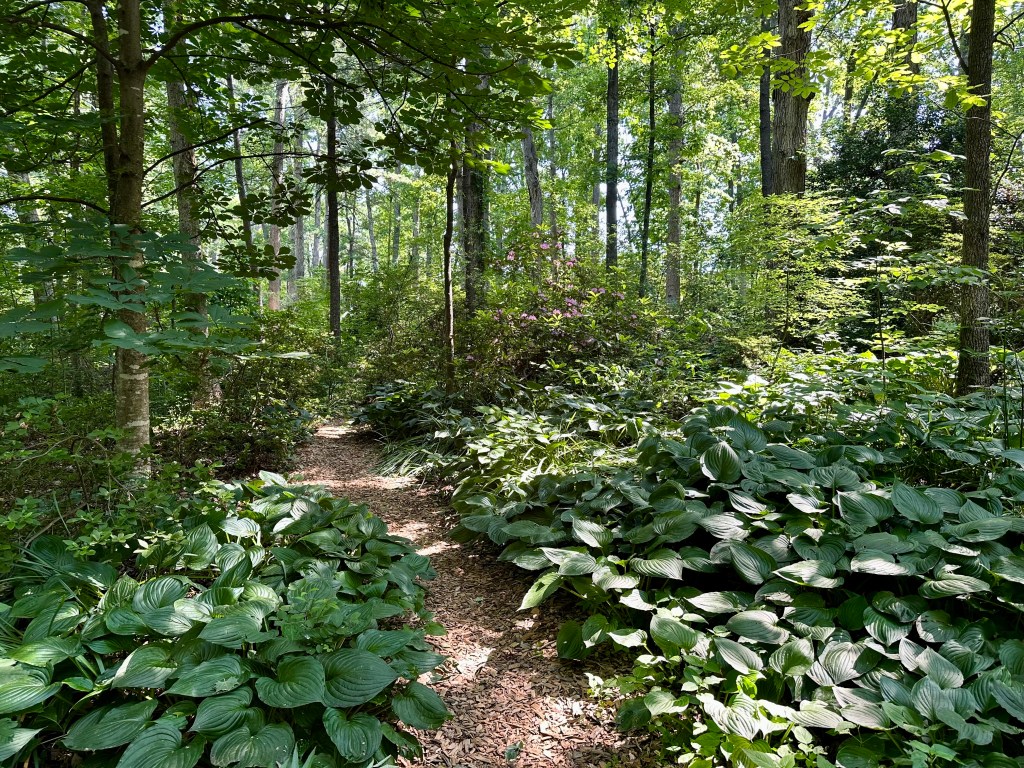
The Edith J. Carrier Arboretum on the James Madison University campus in Harrisonburg, Virginia, is a life-giving oasis among 21st-century din. There, birdsong, blossoms, and the verdant forest provide a temporary sanctuary from life’s bustling and boisterous busyness.
To be sure, you still hear the sirens, the traffic’s hum on the interstate that cuts the campus and town in half, the train horns, even the airliners cruising into airports two hours away.
The forest canopy covers you with its sacred, healing goodness. It’s life’s true purpose. Use your senses to enjoy the rapturous unfolding.
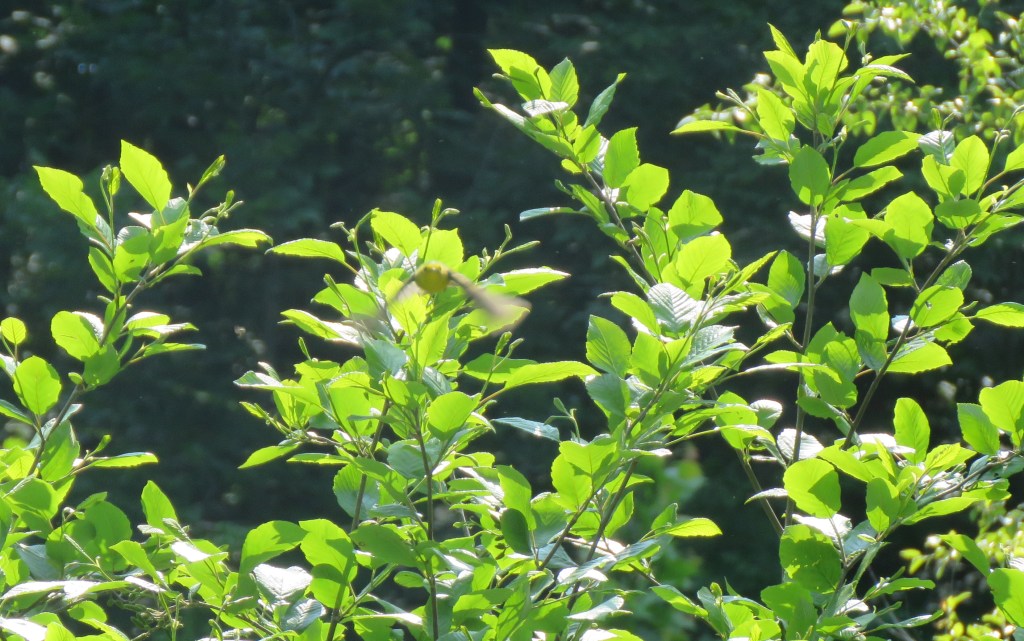
A late-migrating Wilson’s Warbler flits and feeds on insects deep in the recesses of dense elderberry bushes. Wood Thrushes sing their multiphased cheery song in the shadows of the mixed deciduous woodlots. American Robins scold one another as they defend their nesting territory.
A Wood Thrust sheltered in the shade of a hickory tree. Photo by Bruce Stambaugh
A slight mist rises from the forest floor, beckoned by the strengthening morning light. White-breasted Nuthatches, Eastern Wood-Pewees, Tufted Titmice, Northern Cardinals, Carolina Wrens, and Song Sparrows fill the wooded ravine with glorious, variegated tunes. A Red-bellied Woodpecker’s vocalization echoes deep from the hillside woodlot while an American Crow sails through the trees, cawing from one perch to the other.
Each in their own way, joggers, birders, parents with toddlers, grandparents, and college students enjoy this preserved paradise. Time in the arboretum is an equal opportunity home with a smorgasbord of enjoyment. Some are passing through. Some are exploring the flora and fauna. Others simply sit, look, listen, and smile.
A lone rhododendron holds onto its precious purple blossoms along a wood-chipped path in the shade of the congregation of hardwoods. Here and there, morning light filters through the giants’ canopy, speckling the forest floor.
The broad leaves of huge hosta plants invite you to explore, hike, relax, reflect, listen, and admire all that nature has to offer. A well-located bench beckons you to sit a spell and breathe in the cool freshness before summer’s heat and humidity arrive.
My only shot of a reclusive male Wilson’s Warbler. Photo by Bruce Stambaugh














 Roadkill Crossing
You must be logged in to post a comment.